Category Archives: world war two in europe

In Memoriam: Professor Helmut Haeussler the Most influential Teacher in my Life

I received an e-mail from the History Department of California State University at Northridge this week that a memorial service is to be held for Professor Helmut Haeussler. Dr. Haeussler was my primary professor in the department during my undergraduate years at the school as well as one year of graduate work before I was commissioned as an Army Second Lieutenant and reported for active duty in 1983.

I studied under Dr. Haeussler for three years taking courses such as German History, World War II and the Holocaust followed by an extensive number of independent study courses where I concentrated on Germany from the end of the First World War until the fall of the Third Reich. In this my primary focus was the Weimar Republic and the relationship of the German Army to the Government and the various political parties.

Dr. Haeussler was unique. He was born in Germany in 1922 during the turmoil of the early Weimar Republic and his family immigrated to the United States in the early 1930s. He was attending the University of Wisconsin when the Second World War broke out and served as an intelligence analyst and interpreter with the 82nd Airborne Division and as an interrogator at the Nuremburg trials. After leaving the Army he continued his education eventually graduating with a Ph.D. from in History from the University of Wisconsin.  He joined the faculty at Northridge in 1963 and he retired in 2005, having taught many courses in German History, Modern European History, World War II, the Holocaust, Anti-Semitism, and Military History.  He also taught at California Lutheran College on occasion. He was a tremendous teacher and for our class on the Holocaust he had a survivor of Auschwitz named Mel Mermelstein who challenged Holocuast deniers in court and won. Mermelstein’s fight was dramatized in the television movie called Never Forget in which he was played by Leonard Nimoy.  Dr. Haeussler, a Lutheran from Germany and veteran of the United States Army was a man who did not want the crimes of the Nazis to be forgotten and the dangers of a divided society which has lost its sense of identity.

He wrote a book on the life of General Wilhelm Groener who was a key figure in the formation and preservation of the Weimar Republic from forces on the Left and Right in its fragile early years. Along with the Majority Socialist President Friedrich Ebert and Defense Minister Gustav Noske he forged an alliance between the very conservative Army Officer Corps and the Socialist Government which endured until Ebert’s untimely death in 1925.

Dr. Haeussler spent many hours with me recommending research resources and writers, looking over my work and challenging my conclusions at many points. I still have all of the books from his classes as well as books that he recommended. When I went on to a second Masters Degree, this one in Military History and the work that I did under him paid dividends in those studies. I appreciate what Dr. Haeussler taught me and how he pushed me to constantly pursue learning. Readers of this site can find much of his influence in my writings on Weimar and the Nazi era and application for the present day, especially as our society becomes increasingly divided and the government as ineffective and the Weimar Government after the death of Ebert.

Dr. Haeussler’s passing is also a watershed. He was the last faculty member at Northridge who had served in the Second World War. This is yet another reminder to us of the members of that generation who are passing away at an ever increasing rate.

The information on the memorial is below. I am simply pasting it from the e-mail that I received.

The History Department will hold a reception on Sunday, March 27, at 2 P.M. in the Whitsett Room, Sierra Hall 451.  Emeritus Professor Michael Meyer, a long-time friend and colleague, will bring his violin and play German songs that Helmut would have liked. Faculty, friends, and former students of Professor Haeussler are cordially invited to attend and share their memories. Refreshments will be served.  Please call the History Department, 818-677-3566, so that we may plan accordingly. Parking will be available in the lots west of Sierra Hall.  Visitors must stop at the parking kiosk on Prairie Street, just east of Darby, to obtain a permit.

I wish that I could attend the memorial and spend time with those that worked alongside him and fellow students. I was privileged to have a professor who has continued to influence my learning almost 30 years after my last class with him. I wish that every student would have such a teacher at some point in their life.

Peace

Padre Steve+


7 Comments

Filed under History, remembering friends, world war two in europe

Harbingers of the Future: The German Type XXI Electroboote U-Boats

Throughout history there have been ships that have changed the course of Naval strategy and made previous types of ships obsolete overnight, the USS Monitor, the HMS Dreadnought and USS Nautilus are three, but add to the list the German Type XXI U-Boats which forever changed the way that submarines were built around the world.

The Type XXI was designed in 1943 in order to regain the initiative and thereby reassert German naval power in the Atlantic in order to turn the tide against the Allies.  By 1943 the Allies had turned the tide against the Germans as the Type VII and Type IX U-Boats took heavy losses against naval units and convoys which now had air support at every stage of their trek across the North Atlantic. These boats had to surface for prolonged periods in order to recharge their batteries and had limited range, speed and endurance when submerged. The advent of the Escort Carrier, long range patrol bombers and hunter killer groups of Destroyers and the new Destroyer Escorts took a great toll on the U-Boat Force.

U-3008 in U.S. Navy Service

In order to meet the challenge the Germans opted for new technology based on the high speed hydrogen powered Walter turbines for underwater operations.  Since these turbines which could produce a high underwater speed had a short endurance the designers modified the design to use conventional diesels but equip the boats with batteries that had three times the capacity of previous boats. The boats were a radical change from all previous submarine designs which were basically surface ships with the ability to operate underwater for limited periods of time. The Type XXIs were really the first true submarines. They could operate at underwater speeds that were faster than many of their opponents, had a streamlined design which facilitated higher submerged speed of 18 knots and silent running making them very difficult to track.  They could remain underwater for 11 days while only needing 5 hours to recharge their batteries when using the schnorkel device.

The Wilhelm Bauer the former U-2540 in 1960

The Type XXI had a full streamlined hull and conning tower and even equipment which were externally mounted such as the radio antennae, hydrophones, DF Ring and forward planes were fully retractable. They had no deck guns and their twin 20mm flak guns mounted in a streamlined housing on the conning tower. The German designers eliminated the traditional open bridge in favor of three small openings for the watch officer and 2 lookouts. They had a superior silent running ability and at 15 knots were quieter than the US Navy Balao Class doing 8 knots.  They had a 1 inch thick steel aluminum alloy pressure hull with a designed crush depth of 280 meters (919 feet), a greater designed crush depth than any previous submarine.

They incorporated other innovations which would be incorporated into the post-war submarines of the victorious Allied powers. Among these innovations were semi-automatic hydraulic torpedo reload system which allowed three 6 torpedo salvos to be fired in less than 20 minutes where prior U-Boats had manual reloads and took over 10 minutes to reload a single torpedo. To make the fullest use of this capability the German equipped the boats with an advanced passive and active sonar system called the called Gruppenhorchgerät and Unterwasser-Ortungsgerät NIBELUNG mounted in the bow. The improved passive system enabled the boats to close to where they could emit short active sonar bursts to fix the target location. They could fire from a depth of 160 feet. The torpedoes themselves were an advanced design called the LUT or Lageunabhängiger Torpedo. The LUT was a guided torpedo that could be fired from the U-Boat regardless of the target’s bearing as it was programmed to steer an interception course programmed by the torpedo computer.

Submarines influenced by the Type XXI

USS Gudgeon a Tang Class submarine

Polish Submarine ORP Orzel a WHISKEY Type Submarine

USS Nautilus on trials

The Type XXI boats were unique in production as they had no prototype and went directly in production. They were assembled from prefabricated sections built from factories around Germany and transported to the major shipbuilding yards. This was efficient but caused problems that slowed final assembly as many of the factories had no experience building U-Boats and quality suffered because the exacting specifications required by the Kriegsmarine.  Likewise Allied air strikes on German factories and rail networks hampered production. Yet even in spite of these difficulties 119 Boats were completed although only four were rated as combat ready and only two were fully operational at war’s end. Of these only one embarked on a war patrol.  Most were destroyed in air attacks while in port or scuttled by the Germans to prevent their capture.  Eight Type XXIs were taken over by Allied navies at the end of the war where they were used to evaluate technology for use in future submarines. The U.S. Navy Tang Class boats were heavily influenced by the Type XXI as were the GUPPY upgrades to Balao and Tench class boats.  The first nuclear submarines of the U.S. Navy, the Nautilus, Seawolf and the Skate Classes all incorporated design features of the Type XXIs. The Soviet Union developed its 613 and 614 project submarines which became the type known by NATO as the WHISKEY class from the Type XXIs that they received following Germany’s surrender. In 1957 the Federal Republic of Germany raised the scuttled U-2540 and commissioned her as the research submarine Wilhelm Bauer. That boat was operated by both the Bundesmarine and civilian crews until her decommissioning in 1982. She is now a museum ship open to the public in Bremerhaven.

The Type XXIs were the first true submarines and influenced every submarine constructed since. Though introduced too late in the war to make a difference they were truly a wonder-weapon.

Peace

Padre Steve+


1 Comment

Filed under History, Military, Navy Ships, world war two in europe

Predators of the High Seas: The Type IX U-Boats

U-123 returning from patrol

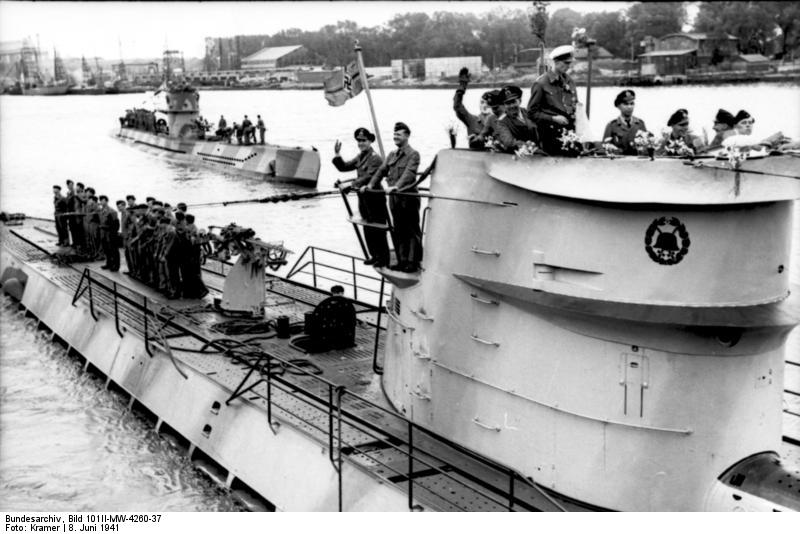
As the Kriegsmarine began its expansion in the mid-1930s the new U-Boat arm developed several types of submarines. The Type IX class was designed in 1935-36 as a long range attack boat and was larger had a greater range and were more heavily armed than the more numerous Type VII boats.  The Kreigsmarine designers envisioned a submarine capable of operating far from German bases for extended periods of time.  The design of these boats was derived from the two boat Type 1 class and incorporated lessons learned from that class.  283 boats of the type were constructed between 1937 and 1944 and the Kriegsmarine continuously sought to improve the type which resulted in five distinct models within the class.

Type IXA The first group referred to as the Type IXA or simply the Type IX was comprised of 8 boats built by AG Weser of Bremen.  Ordered in 1936 the group was part of the Kriegsmarine’s Plan Z rearmament plan which began when the Nazi Government announced that it would no longer abide by the Treaty of Versailles.  The initial 8 boats had a 1032 ton standard displacement were 251 feet long and were armed with six 21” torpedo tubes with 22 torpedoes.  They had a 105mm deck gun with 110 rounds as well as a 37mm and 20mm anti-aircraft gun.  They were the first German submarines equipped with a double hull which increased survivability and seaworthiness.  They were powered on the surface by two MAN M9V40/46 supercharged 9-cylinder diesel engines that produced 4,400 shp as well as two SSW GU345/34 double-acting electric motors for underwater operations. As in all diesel-electric boats the diesels were used to recharge the batteries for the electric motors while the boat was operating on the surface. They had a maximum speed of 18.2 knots on the surface and a range of 22,354 miles at 10 knots. Underwater they had a maximum speed of 7.7 knots and range of 166 miles at 4 knots.  The official maximum diving depth was 230 meters or 750 feet.  Of the 8 boats of this type 6 were sunk during combat operations and two scuttled at the end of the war by their crews to prevent their capture by the Allies. The most successful of the Type IXA boats was the U-37 was the most successful boat of the type sinking 53 merchant ships for a total of 200,124 tons as well as two warships, the Sloop HMS Penzance and French Submarine Q-182.

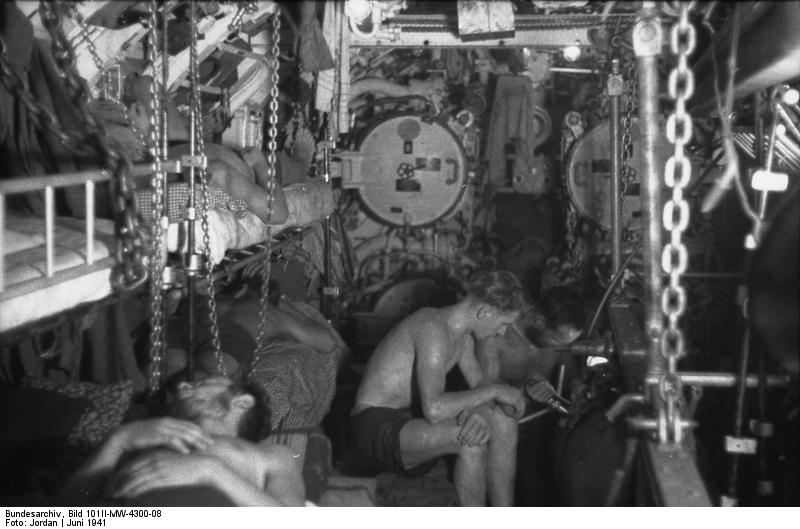
Crew members  of U-107 in Torpedo Room

Type IXB The next group was the IXB of which 14 boats were built by AG Weser Bremen. This was the most successful class of U-boats, or for that matter any class of submarines based on tonnage sunk per boat during the Second World War. Each of these ships sank over 100,000 tons of Allied shipping.  They were slightly larger than the IXA boats and had a significantly longer operational range of 24,600 miles on the surface at 10 knots. The U-107 of this class had the most successful war patrol of any U-Boat in the war sinking nearly 100,000 tons of Allied shipping off Freetown Sierra Leone while U-103 sank over 237,000 tons of Allied shipping during 11 war patrols over the course of 4 years. These boats were involved in Operation Drumbeat off the coast of the United States in early 1942.

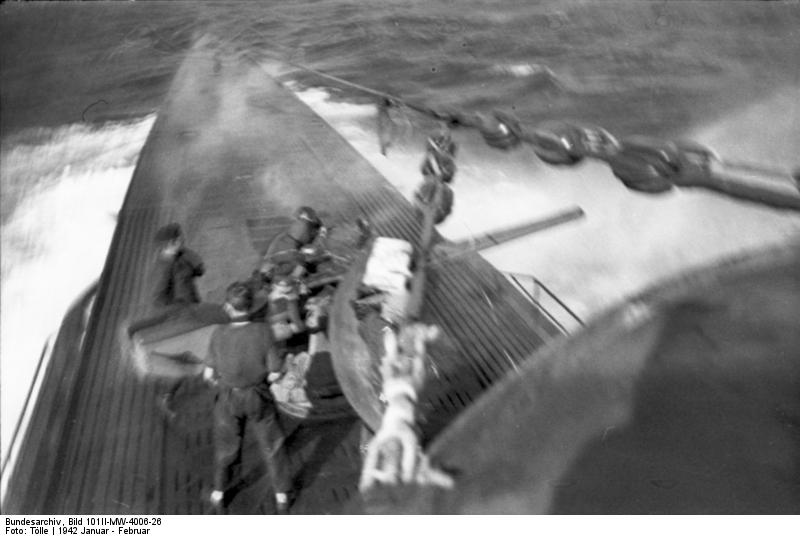
U-123 Gun Crew

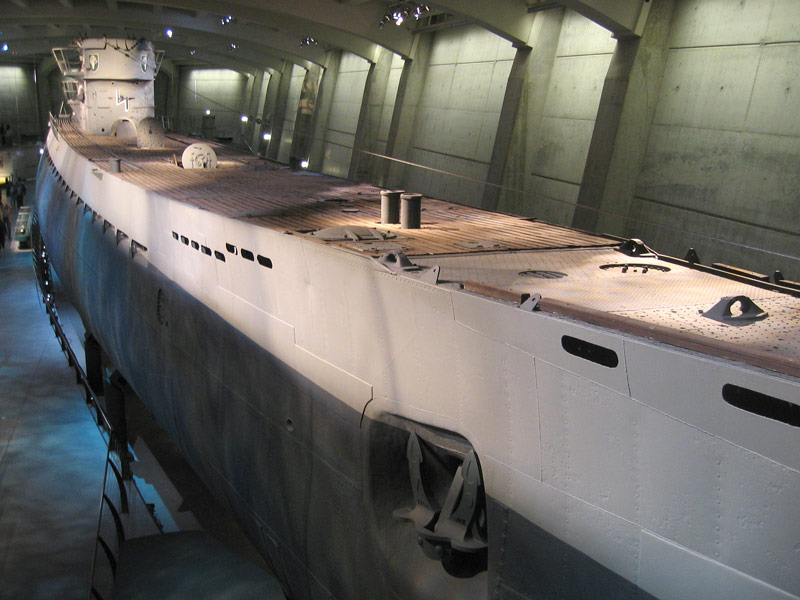
Type IXC The Type IXC was a further improvement of the type with additional fuel capacity and longer range. They displaced 1120 tons and 54 of the boats were commissioned of which 19 were equipped as minelayers with a capacity of 44 TMA or 66 TMB mines. The boats were built by AG Weser Bremen, Seebeckwerft Bremen and Deutsche Werft Hamburg.  The U-505 of this type is the only surviving Type IX and was captured by a boarding team from the Escort Carrier USS Guadalcanal on June 4th 1944. Her capture was kept secret from the Germans and her crew kept as POWs in a separate POW Camp. The story of the crew and their encounter with the game of baseball is recorded in Gary Moore’s book, Playing with the Enemy: A Baseball Prodigy, a World at War, and a Field of Broken Dreams. The book is being turned into a movie entitled Playing with the Enemy which is scheduled to be released in 2011. She is preserved at the Museum of Science and Industry in Chicago.

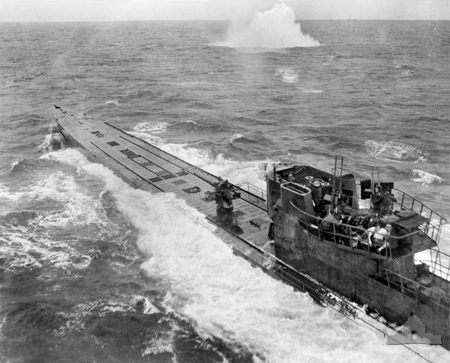
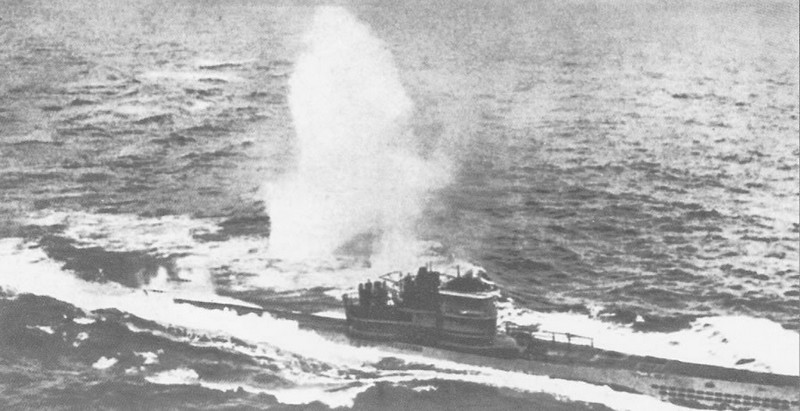
U-848 under attack by USN Aircraft

Type IXC/40 This was a further refinement of the IXC with slightly greater range and surface speed. It was the most numerous type of the class built with 87 being built by AG Weser Bremen, Seebeckwerft Bremen and Deutsche Werft Hamburg.  The remains of the U-534 of the class are displayed at Woodside Ferry Terminal in Birkenhead England after being raised from the North Sea in 1986.

Type IXD The final type in the Type IX Series was the Type IXD.  This was a significantly larger boat than the others in the class 287 feet long with a standard displacement of 1610 tons. They were unique in that they had two sets of diesel engines, one for cruising and the other for high speed runs and battery recharge. There were three variants within the type, the IXD1 which were all converted to transport use due to problems with their engines, the most numerous variant the IXD2 and the IXD42 which had greater horsepower.  Thirty Type IXs were commissioned with a further six Type IXD42s which were ordered with only one commissioned by the end of the war.

U-505 at the Museum of Science and Industry in 2005 (Jerry Atherton)

During the war surviving boats would receive increased anti-aircraft armament, the Schnorkel device which allowed them to operate on diesel power while submerged as well as better electronics and detection devices. Most of the boats which survived the war were scuttled by the Allies in Operation Deadlight.  The U-511 was sold to Japan in 1943 and U-862 taken over by the Japanese after the German Surrender in May 1945. Both survived the war and were scuttled by the Allies. U-1231 was taken over by the Soviet Navy and served as the B-26 after the war.

The sailors of these U-Boats like all submarine sailors endured many hardships and during the war approximately 75% of the 40,000 U-Boat sailors never returned from patrol, forever interred in the deep with their proud boats.

1 Comment

Filed under History, Military, Navy Ships, world war two in europe

Flush Decks and Four Pipes: The Wickes and Clemson Class Destroyers

USS Pope DD-225

The destroyers of the Wickes and Clemson classes defined the destroyer force of the U.S. Navy. In 1916 with the advent of the submarine as an effective weapon of war the Navy realized that its pervious classes of destroyers were insufficient to meet the new threat. Likewise the lack of endurance of earlier destroyers kept them from vital scouting missions since the U.S. Navy unlike the Royal Navy or Imperial German Navy maintained few cruisers for such missions.

USS Paul Jones DD-230 late war note 3 stacks and radar

The Naval Appropriation Act of 1916 included the authorization of 50 Wickes Class destroyers to compliment 10 new battleships, 6 battlecruisers and 10 light cruisers with the goal of building a Navy second to none.  The new destroyers were designed for high speed operations and intentionally designed for mass production setting a precedent for the following Clemson class as well as the destroyer classes built during the Second World War.

USS Boggs DMS-3

The Wickes Class had a designed speed of 35 knots in order to be able to operate with the new Omaha Class light cruisers and Lexington Class Battlecruisers in the role of scouting for the fleet. They were flush-decked which provided additional hull strength and their speed was due to the additional horsepower provided by their Parsons turbines which produced 24,610 hp.  They were 314’ long and had a 30 foot beam. Displacing 1247 tons full load they were 100 tons larger than the previous Caldwell class ships.  They were armed with four 4 inch 50 caliber guns, one 3” 23 caliber gun and twelve 21” torpedo tubes.

USS Crosby APD 17

Although they were very fast they proved to be very “wet” ships forward and despite carrying an additional 100 tons of fuel they still lacked range.  Due to the realization the U-Boat war required more escorts the order for Wickes Class ships was increased and 111 wear completed by 1919.

The Wickes Class was followed by the Clemson Class which was an expansion of the Wickes class being more tailored to anti-submarine warfare.  They had a greater displacement due to additional fuel tanks and mounted the same armament had identical dimensions and were capable of 35 knots but had a larger rudder to give them a tighter turning radius. 156 ships of the class were completed.

In the inter-war years a number of each class were scrapped and 7 of the Clemson Class from DESRON 11 were lost in the Honda Point Disaster of September 8th 1943.

Many of the ships never saw combat in either war as numerous ships were scrapped due to the limitations of the London Naval Treaty. Of the 267 ships of the two classes only 165 were still in service in 1936. As new destroyers were added to the navy in the 1930s a number of ships from each class were converted to other uses. Some became High Speed Transports (APD) and carried 4 LCVP landing craft and a small number of troops, usually about a company sized element. Others were converted to High Speed Minelayers (DM) or High Speed Minesweepers (DMS). A few were converted to Light Seaplane Tenders (AVD).  Those converted to other uses had their armament reduced with dual purpose 3” 50 caliber guns replacing the 4” guns and the removal of their torpedoes. Those which remained received 6 of the 3” guns to replace their original gun armament and lost half of their torpedo tubes.  During the war all would have light additional anti-aircraft armament and radar installed.

USS Stewart DD-22after return from Japanese service

In 1940 19 of the Clemson Class and 27 of the Wickes Class were transferred to the British Royal Navy under the Lend Lease program.  Some of these would see later service in the Soviet Navy being transferred by the Royal Navy serving after the war with those ships being scrapped between 1950 and 1952.

The ships of these classes performed admirably during the Second World War despite their age.  The USS Ward DD-139 fired the first shots of the war when it engaged and sank a Japanese midget sub outside of Pearl Harbor.  The 13 ships of the Asiatic Fleet’s DESRON 29 took part in six engagements against far superior Japanese Navy units while operating in the Philippines and then in the Dutch East Indies as part of the ABDA Command including the Battle of Balikpapan where the John D Ford DD-228, Pope DD-225, Paul Jones DD-230 and Parrot DD-218 sank 4 Japanese transports.   During that campaign 4 of these gallant ships were sunk in battle and a 5th the USS Stewart DD-224 was salvaged by the Japanese after being damaged and placed in a floating drydock at Surabaya following the Battle of Badung Strait. She was placed in service as a patrol ship by the Imperial Navy. She was discovered by U.S. Forces after the surrender and returned to the U.S. Navy.

HMS Cambeltown (ex USS Buchanan DD-131) at St Nazaire

Whether in the Atlantic or the Pacific the ships contributed to the Allied victory. The former USS Buchanan DD-131 which had been transferred to the Royal Navy where she was re-named the HMS Campbeltown and used in the Saint-Nazaire Raid. For the raid she was altered in appearance to look like a German Möwe class destroyer was rammed into the only drydock on the Atlantic capable of holding the Battleship Tirpitz. The mission was successful and the drydock was unusable by the Germans for the rest of the war.

During the war they served in every major campaign and when no longer fit for front line service were used in escort roles in rear areas as well as in a variety of training and support roles.  By the end of the war the surviving ships of both classes were worn out and a number were decommissioned and some scrapped even before the end of hostilities. Those that survived the war were all decommissioned by 1946 and most scrapped between 1945 and 1948.

During Second World War 9 of the Wickes Class were sunk in battle, and 7 were sunk or destroyed in other ways. 5 were later sunk as targets and the remaining ships were all scrapped. A total of 20 of the Clemson Class were lost either in battle or to other causes including those lost and Honda Point.

USS Peary Memorial

The brave Sailors that manned these ships in peace and war become fewer in number every day as the Greatest Generation passes. It is a sad testimony that none of these ships were preserved as a memorial; however the Australians have a memorial at Darwin dedicated to the USS Peary DD-226 which was sunk with 80 of her crew during the Japanese raid on that city’s port on 19 February 1942. The memorial has one of her 4” guns pointed in the direction of the wreck of the Peary. A memorial to the USS Ward, her #3 4” gun which sank the Japanese midget sub is located on the Capitol Grounds in St. Paul Minnesota.

10 Comments

Filed under History, Military, Navy Ships, US Navy, world war two in europe, world war two in the pacific

The U-Boat Type VIIC: Workhorse of the Kriegsmarine

U-96

The signature warship of the German Kreigsmarine of the Second World War has to be the U-Boat Type VIIC, the most numerous type of submarine ever produced by any Navy.  568 of these U-Boats would be commissioned between 1940 and 1945 as well as 91 of the Type VIIC/41.  The Type VIIC was developed from the prewar Type I and Type VIIA and VIIB classes.

Compared to contemporary American submarines of the Gato class they were smaller, mounted fewer torpedo tubes and had a shorter range. However the American boats were designed for the vast expanse of the Pacific while the German boats for the most part were operated in the smaller confines of the Atlantic and Mediterranean.

U-1023

They displaced a mere 769 tons on the surface and 871 tons submerged and were 67.1 meters (220.14 feet) long. The boats had a single pressure hull and the VIIC could dive to a maximum depth of 230 meters (754 feet) and had a crush depth of 250-295 meters (820-967 feet).  The VIIC/41 could dive to 250 meters or 820 feet and a crush depth of 275-325 meters (902-1066 feet).  This was deeper than any allied submarines of the period and a testament to their sound construction.

Admiral Dönitz greeting U-94 in 1941

The Type VIICs were armed with a C35 88 mm/L45 gun with 220 rounds for surface actions and various types and numbers of anti-aircraft guns. The standard configuration for torpedo tubes was 4 bow mounted tubes and 1 stern mounted tube although a small number only carried 2 forward and none aft. They carried a maximum of 14 torpedoes and could carry 26 TMA Mines which would be laid at approaches to various ports.

U-966 under air attack

The Type VIIC was powered by two supercharged Germaniawerft, 6 cylinder, 4-stroke M6V 40/46 diesel engines on the surface producing between 2,800 to 3,200 horsepower which gave the boats a 17.7 knot maximum speed on surface. For submerged operations the boats were powered by one of a number of different electric motors whose batteries were charged by the diesels. The electric motors produced 750 horsepower (560 kW) and could drive the boats a maximum of 7.6 knots. In 1944 many of the surviving boats were equipped with the schnorkel apparatus which allowed them to use their diesel engines underwater at shallow depths.  The had a range of 8190 miles at 10 knots surfaced which gave them a decent amount of operational flexibility for their Atlantic operations.

The last Type VII- U-995 (Type VIIC/41) German U-Boat Memorial Laboe Germany

During the war the German U-Boat force suffered grievous losses many of which were Type VIICs. The VIICs performed excellently in combat and many survived engagements that would have sunk less tough boats. The most famous of the Type VIICs of all variants is probably the U-96 which was featured in the epic submarine film Das Boot. A number had post war careers in several navies and the last active VIIC the U-573 which served in the Spanish Navy as the G-7 was decommissioned in 1970 and sold for scrap over the objections of those that wanted to purchase her as a memorial.  The only surviving Type VIIC is the U-995 at Laboe Germany where she is a memorial to all the U-Boat Sailors of the Second World War.  Two full sized mock ups one for exterior scenes and one for interior scenes were constructed for Das Boot and the exterior mock up was also used in Raiders of the Lost Ark.

During the war U-Boats of all types sank nearly 3000 Allied ships including 175 warships among which were the carriers HMS Glorious, HMS Ark Royal and HMS Eagle and the Battleships HMS Barham and HMS Royal Oak. The Germans lost nearly 800 U-Boats of all types and over 28,000 U-Boat Sailors, about 75% of the force.

The films Das Boot and The Enemy Below are excellent reminders of the courage of the men that operated these submarines during the war. Though the Nazi Regime was evil the men of the U-Boat Service often displayed courage and ingenuity in the face of overwhelming odds and they nearly won the war for the Germans.

9 Comments

Filed under History, Military, Navy Ships, world war two in europe

Lili Marlene: The Song of Soldiers and Sailors away from their Homes and Lovers

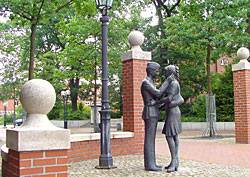
Lili Marleen Statue in Munster Germany

Lili Marleen – Original version

Vor der Kaserne vor dem grossen Tor
Stand eine Laterne, und stebt noch davor,
So wolln wir uns da wiedersehn
Bei der Laterne wolln wir stehn,
Wie einst Lili Marleen, wie einst Lili Marleen.

Unsre beide Schatten sahn wie einer aus.
Dass wir so lieb uns hatten, das sah man gleich daraus
Un alle Leute solln es sehn,
Wenn wir bei der Laterne stehn,
Wie einst Lili Marleen, wie einst Lili Marleen.

Schon rief der Posten: Sie blasen Zapfenstreich
Es kann drei Tage kosten! Kam’rad, ich komm ja gleich.
Da sagten wir auf Wiedersehn.
Wie gerne wollt ich mit dir gehn,
Mit dir Lili Marleen, mit dir Lili Marleen.

Deine Schritte kennt sie, deinen zieren Gang
Alle Abend brennt sie, mich vergass sie lanp
Und sollte mir ein Leids geschehn,
Wer wird bei der Laterne stehn,
Mit dir Lili Marleen, mit dir Lili Marleen?

Aus dem stillen Raume, aus der Erde Grund
Hebt mich wie im Traume dein verliebter Mund.
Wenn sich die spaeten Nebel drehn,
Werd’ ich bei der Laterne stehn
Wie einst Lili Marleen, wie einst Lili Marleen

German Singer Lale Andersen recorded the song that touched the lives of Axis and Allied Soldiers alike

Lili Marleen Original Lale Andersen 1939

http://www.youtube.com/watch?v=vL0KniirXHM&feature=related

Lili Marlene- Marlene Dietrich German version

http://www.youtube.com/watch?v=W7J6OPurrtw&feature=fvwrel

Lili Marlene – English version

Underneath the lantern by the barrack gate,
Darling I remember the way you used to wait;
‘Twas there that you whispered tenderly,
That you lov’d me, you’d always be,
My Lilli of the lamplight,
My own Lilli Marlene.

Time would come for roll call time for us to part
Darling I’d carress you and press you to my heart.
And there ‘neath that far off lantern light
I’d hold you tight we’d kiss goodnight,
My Lillie of the lamplight,
My own Lilli Marlene.

Orders came for sailing somewhere over there,
All confined to barracks was more than I could bear;
I knew you were waiting in the street,
I heard your feet, but could not meet,
My Lillie of the lamplight,
My own Lilli Marlene.

Resting in a billet just behind the line
Even tho’ we’re parted your lips are close to mine,
You wait where that lantern softly gleams
Your sweet face seems to haunt my dreams,
My Lillie of the lamplight,
My own Lilli Marlene.

Lale Andersen English Version (1942)

http://www.youtube.com/watch?v=y0P_m7SZBvQ&feature=related

It is seldom in the history of war that something transcends hatred and touches hearts of soldiers of opposing sides.  In the Second World War a song did just that. Sometimes called the Soldatenlieder it was written as a poem by a World War One soldier of the Imperial German Army named Hans Liep, a school teacher drafted into the Army.  It was recorded in 1939 by Lale Anderson but was not liked by the Nazi Propaganda Minster Josef Goebbels. However it was liked by those in the military and it found its way into the programming of the German Military Radio Service which had taken over Radio Belgrade. A lieutenant working for the station picked up a copy of the recording in a Vienna record store and began to play it. Goebbels ordered it banned but reluctantly changed his mind in response to a barrage of letters sent to the station by German and other Axis soldiers across Europe. Field Marshal Erwin Rommel of the Afrika Korps had a soft spot for the song and requested that it be played nightly and from then on the song was played at 9:55 PM every night by Radio Belgrade.

Field Marshal Erwin Rommel requested that Lili Marleen be played nightly

The song was not just popular among the Axis it was popular among Allied soldiers beginning with the Australians and New Zealanders serving with the British 8th Army in North Africa.  One has to imagine his longing for his own “Dearest Lu” his wife in Germany.  The popularity of the song spread to others including Americans. The British High command did not appreciate soldiers singing it in German and songwriter Tommy Conner wrote an English version which was recorded by Anne Shelton in 1944.

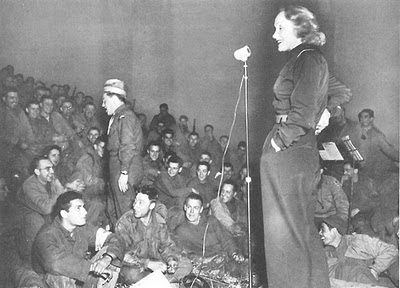
Marlene Dietrich performing in front of American Soldiers in World War II

Marlene Dietrich performed it often in USO shows for US Servicemen during the war. It has been reported translated and performed in 48 languages around the world.  Her recordings of the song are still popular.

The never has been a war where military men, Soldiers, Sailors, Marines and Airmen who have left their loves behind have not dreamed of them. Lili Marlene expressed that dream perhaps more than any song in history.

Today soldiers from many countries serve away from their loved ones in combat or deployed far from home.  I think that many have their Lili Marleen waiting for them and when they close their eyes can see that special person.

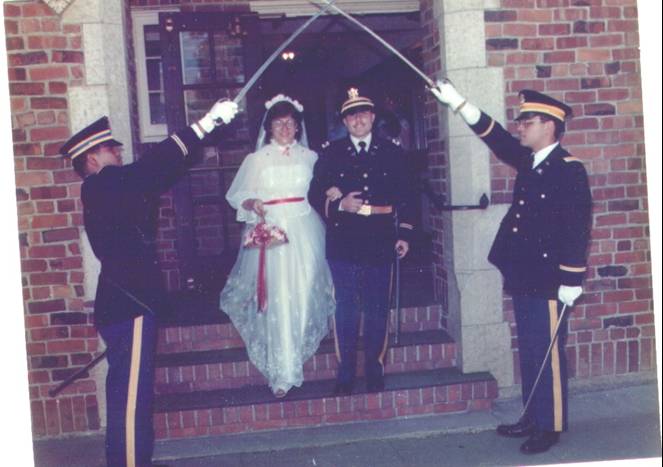
Me with my Bride Judy in 1983

Since I have served away from my wife many times for longer than I can count in the past 27 years I can relate to the feelings expressed in this song for I still remember the first time that served away from her when three weeks after we were married I departed for active duty as a new Army Second Lieutenant back in 1983.  Years later in Iraq I still could see my young bride. Sometimes our loves never change.

Peace

Padre Steve+


8 Comments

Filed under History, marriage and relationships, music, world war two in europe

Remembering Challenger

http://www.youtube.com/watch?v=j4JOjcDFtBE

About 5:30 PM on January 28th 1986 I was a young Army Medical Service Corps 1st Lieutenant in command of the 557th Medical Company (Ambulance) which was based on Wiesbaden Air Base in Wiesbaden Germany. I was hoping to close out the day by 7PM which was early for me as well as most officers in the 68th Medical Group and 3rd Support Command of the Imperial Army on the Rhine.

I had a stack of work in my inbox, NCO evaluations, criminal investigations, maintenance reports and upcoming missions, not to mention trying to get a head start on my Unit Status Report. Most of my soldiers except those on duty had finished for the day.

Back then communications and television for military personnel stationed overseas was primitive. The Armed Forces Network had one channel then and only recently had added live needs feeds from stateside news programs on CNN and morning shows such as NBC’s Today Show. By 1986 the Space Shuttle missions had become routine but this one was different because of a school teacher, Christa McAuliffe who was a payload specialist on the flight.

The Challenger was making her 10th flight in less than 3 years having first flown on April 4th 1983.  The mission STS-51-L had been delayed due to weather on the 22nd and rescheduled several times due to weather or in one case due to problems with an exterior access hatch.  The morning of the launch the weather was predicted to be at or below the 31 degree minimum safe launch threshold. Engineers from the builder of the Challenger’s Solid Rocket Boosters (SRBs) Morton Thiokol contacted NASA with their concerns that the O-Rings which sealed the joints on the SRBs which they believed might not seal properly.  NASA engineers argued that even if the primary O-Ring failed that the secondary O-Ring would be sufficient even though this was an unproven theory. Eventually Thiokol management overruled their engineers influenced by NASA management which demanded that Thiokol prove that it was not safe to launch rather than prove that it was safe to launch. Considering it was a “Criticality 1” component meaning that there was no backup in case of a failure of both joints. It was a clear violation of protocol but the later Rogers Commission would show that NASA managers frequently ignored or evaded safety regulations to meet their very ambitious mission schedule. This decision doomed Challenger and her crew of seven.

I had heard that the Challenger was to launch that morning in Florida which of course was the early evening for us in Germany.  However I had seen numerous shuttle launches on television, considered them routine and by then rather uninteresting.  Since I was a very junior 1st Lieutenant commanding a company forward deployed with a mission to race to the Fulda Gap in the event of a Soviet invasion of West Germany up to my ears in work I had no interest in watching another one.

Challenger disintegrates (BBC Photo)

About 20 minutes until 6 my senior duty person at the company, the Charge of Quarters or CQ in Army parlance came to my door which was at the far end of the hallway from where the CQ was stationed. Specialist Lisa Daley was a solid medic and outstanding soldier who had a great personality that caused her to be well liked in the company.  She came to my door and blurted out “Lieutenant Dundas! The Space Shuttle just blew up!”

I looked up from my desk and I remember my words to this day. “Specialist Daley, Space Shuttles don’t blow up.” She then said, “No sir they do, it’s on TV right now!” That startled me. I grew up with the space program and remembered the Apollo 11 Moon landing. Although I remember the fire on Apollo 1 which killed three astronauts on the launch pad, but that was different, no American spacecraft had ever been lost though Apollo 13 was nearly lost while on a Moon mission.

I got up and followed her as she told me what had happened. While I reached the CQ desk I saw the small television which she and her assistant CQ were watching. There was a live feed from CNN replaying the disaster, the twin plumes of smoke careening across the screen.  I was stunned and will never forget the image that I saw with my soldiers that day.

Seventeen years after that event I was waiting at the Naval Air Station at Mayport Florida for General Peter Pace.  General Pace who was then the Vice Chairman of the Joint Chiefs of Staff was coming to be the guest speaker at the Battle of Hue City Memorial weekend hosted by the USS Hue City. I got to the ship early and while drinking coffee in the Wardroom saw the news of the breakup of the Space Shuttle Columbia. It brought back the images of the Challenger disaster. General Pace was delayed as the Joint Chiefs and National Security Council held an emergency meeting and arrived several hours late and when he arrived he spoke of the Challenger disaster along with the Columbia.

There are two more shuttle flights scheduled before the program ends this year. An era will be ever. The shuttles will pass into history and unfortunately for many the signature moment of the program will not be the many successes it will be the Challenger disaster and the images shown on CNN that cold and clear Tuesday in 1983.

The brave astronauts of all of our space programs deserve our highest admiration. The Mercury, Gemini, Apollo and Shuttle programs pioneered space travel. We should not forget their sacrifices especially those that gave the last full measure especially those that we remembered yesterday. Ronald Reagan ended his short speech the evening of the Challenger’s demise with this line:

“The crew of the space shuttle Challenger honored us by the manner in which they lived their lives. We will never forget them, nor the last time we saw them, this morning, as they prepared for the journey and waved goodbye and ‘slipped the surly bonds of earth’ to ‘touch the face of God.’”

As a child I grew up with the space program and Star Trek. It is my hope that manned missions aboard better and more capable space ships capable of reaching the far reaches of this solar system and the galaxy will be built and humanity’s constant desire for exploration and discovery will herald a better future.

Peace

Padre Steve+


1 Comment

Filed under History, traumatic national events

The South Dakota Class Battleships: The Best of the Treaty Battleships

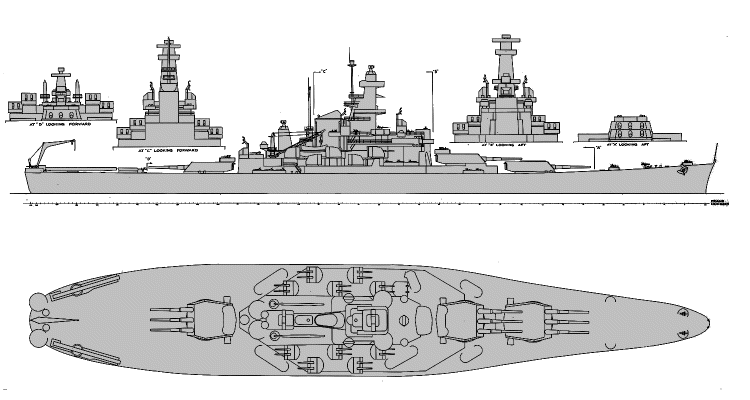
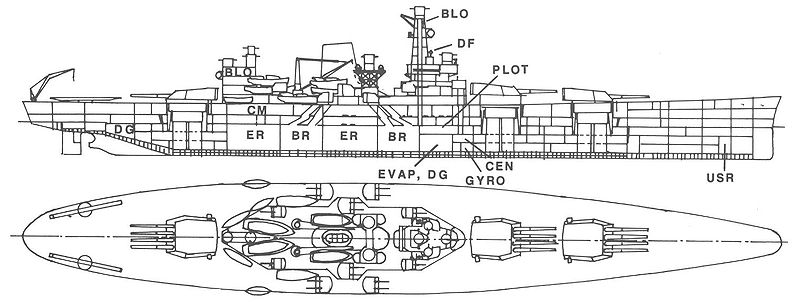
USS South Dakota Class Line Drawing

This is the fifth in a series of six articles on the battleships built under the provision of the Washington and London Naval Treaty limitations in the 1930s. I am not including the ships which were completed in the immediate aftermath of the Washington Treaty limitations. This series looks at the modern battleships that the World War II combatants would produce in the 1930s which saw service in the war. Part one covered the Italian Vittorio Veneto class entitled The Pride of the Regina Marina: The Vittorio Veneto Class Battleships. Part two French Firepower Forward: The unrealized potential of the Dunkerque and Richelieu Class Battleships covered the French Dunkerque class and Richelieu class Battleships. Part three covered the British Royal Navy King George V Classbattleships entitled British Bulwarks: The King George V Class Battleships Part Four  which was about the North Carolina Class is entitled The Next Generation: The North Carolina Class Battleships. I have already published the final part which covers the German Scharnhorst Class entitled Power and Beauty the Battle Cruisers Scharnhorst and Gneisenau . The German Bismarck, Japanese Yamato, British Vanguard and American Iowa

Classes will be covered in a subsequent series.

As the world edged closer to war in the late 1930s the U.S. Navy followed up its decision to build the two ship North Carolina class battleships with additional fast battleships. Initially the General Board wanted two additional North Carolina’s but the Chief of Naval Operations William H. Standley wanted a different design.

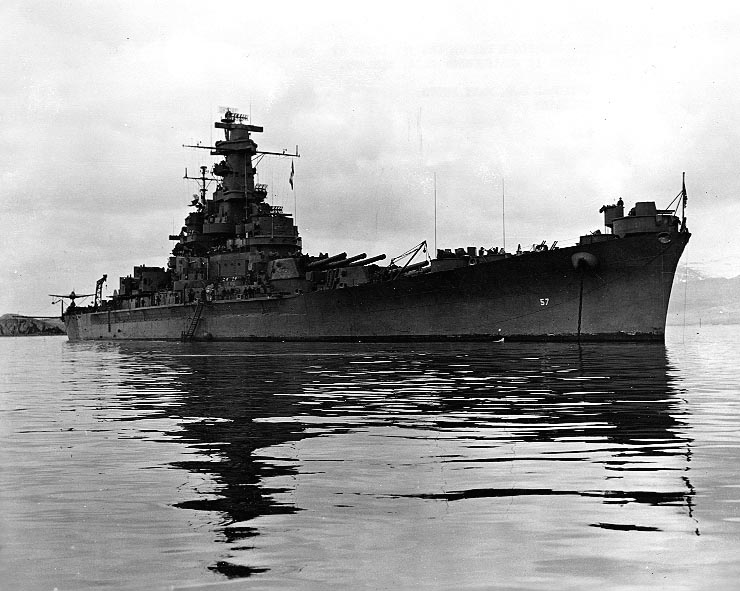
USS South Dakota BB-57 in 1943

Design work started in 1937 and several designs were proposed in order to correct known deficiencies in the preceding North Carolina class to include protection and the latest type of steam turbines.  As in the North Carolina’s the Navy struggled to find the optimal balance between armament, protection and speed. In the end the Navy decided on a shorter hull form with greater beam which necessitated greater power to maintain a high speed. The armor protection was maximized by using an interior sloped belt of 12.2 inch armor with 7/8” STS plates behind the main belt which made the protection the equivalent to 17.3 inches of vertical armor. The Belt continued to the bottom of the ship though it was tapered with the belt narrowing to 1 inch to provide addition protection against plunging fire which struck deeper than the main belt. As an added feature to protect against torpedo hits a multi-layered four anti-torpedo bulkhead system was included, designed to absorb the impact of a hit from a 700 pounds of TNT.

In order to accommodate the machinery necessary to provide the desired speed of 27 knots on the shorter hull the machinery spaces were rearranged.  The new design placed the boilers directly alongside the turbines with the ship’s auxiliaries and evaporators also placed in the machinery rooms. Additional design changes made to save space included making the crew berthing areas smaller. This included that of officers as well as the senior officers and shrinking the size of the galley’s and the wardroom from those on the North Carolina’s. The resultant changes allowed the ships to achieve the 27 knot speed, improved protection and the same armament of the North Carolina’s within the 35,000 treaty limit.

Two ships of the design were approved and with the escalator clause invoked by the Navy two more ships were ordered all with the nine 16” gun armament of the North Carolina’s.  The leading ship of the class the South Dakota was designed as a fleet flagship and in order to accommodate this role two of the 5” 38 twin mounts were not installed leaving the ship with 16 of these guns as opposed to the 20 carried by the rest of the ships of the class. The final design was a class of ships capable of 27.5 knots with a range of 17,000 miles at 15 knots mounting nine 16” guns with excellent protection on the 35,000 tons and full load displacement of 44,519 tons.

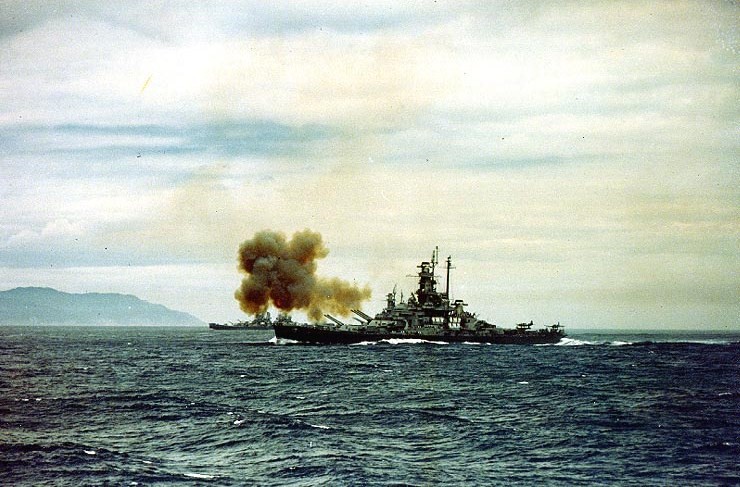
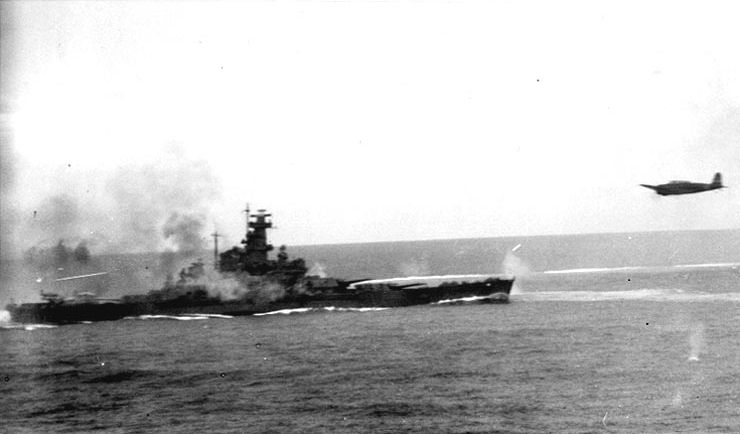
The lead ship of the class the USS South Dakota BB-57 was laid down 5 July 1939 at New York Shipbuilding in Camden New Jersey, launched on 7 June 1941 and commissioned on 20 March 1942.  Following her commissioning and her shakedown cruise South Dakota was dispatched to the South Pacific. Soon after her arrival she struck a coral reef at Tonga which necessitated a return to Pearl Harbor for repairs.  When repairs were complete she was attached to TF 16 escorting the USS Enterprise CV-6 during the Battle of the Santa Cruz Islands on 26 October 1942.  During the battle she was credited with shooting down 26 Japanese aircraft but was struck by a 500 lb bomb on her number one turret. She joined TF-64 paired with the battleship USS Washington during the Second Naval Battle of Guadalcanal on14-15 November 1942. During the action South Dakota suffered a power outage and was hit by over 40 shells from Japanese ships which knocked out 3 fire control radars, her radio and main radar set. 3 destroyers were also lost but the Washington mortally wounded the fast battleship Kirishima and destroyer Ayanami which were scuttled the next day and damaged the heavy cruisers Atago and Takao. She returned to New York for repairs which completed in February 1943 and joined the carrier USS Ranger CV-4 for operations in the Atlantic until April when she was attached to the British Home Fleet. She sailed for the Pacific in August 1943 and rejoined the Pacific Fleet in September and joined Battleship Divisions 8 and 9 and supported the invasion of Tarawa providing naval gunfire support to the Marines. The rest of the war was spent escorting carriers as well as conducting bombardment against Japanese shore installations. She was present at the Japanese surrender in Tokyo Bay and returned to the United States in 1945 and was decommissioned and placed in reserve on 31 January 1947. She was stricken from the Naval Register on 1 June 1962 and sold for scrap in October of that year. Various artifacts of this gallant ship to include a propeller, a 16” gun and the mainmast are part of the USS South Dakota Memorial Park in Sioux Falls South Dakota and 6,000 tons of armored plate were returned to the U.S. Atomic Energy Commission for use in civilian nuclear programs and a second screw is displaced outside the U.S. Naval Museum in Washington D.C.  She received 13 battle stars for World War II service.  South Dakota had the dubious distinction of having the youngest sailor of the war 12 year old Calvin Graham who confessed lying about his age to the Gunnery Officer Sergeant Schriver. Graham was court-martialed and given a dishonorable discharge spending 3 months in the ship’s brig before he was able to be returned to the United States where just after his 13th birthday he entered 7th grade.

USS Indiana BB-58 Bombarding Japan in 1945

The second ship of the class the USS Indiana BB-58 was laid down at Newport News Naval Shipyard on 20 November 1939 launched on 21 November 1941 and commissioned on 30 April 1942.  She served throughout the Pacific War by serving with the fast battleships of Vice Admiral Willis Lee’s TF-34, escorting carriers during major battles such that the Battle of the Philippine Sea or as it is better known the Marianas Turkey Shoot. She returned to the United States for overhaul and missed the Battle of Leyte Gulf but served at Iwo Jima, Okinawa and operations against the Japanese home islands.  Following the war she was decommissioned in 1947 and sold for scrap in September 1963.   A number of her relics are preserved at various locations in Indiana and her prow is located in Berkeley California.

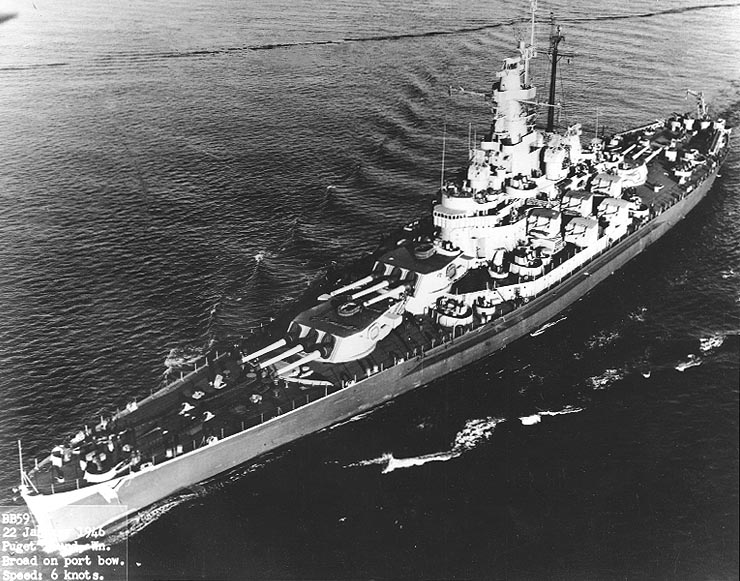
USS Massachusetts BB-59 in January 1946 in the Puget Sound

The third ship of the class the USS Massachusetts BB-59 was laid down on 20 July 1939 at Bethlehem Steel Corporation Fore River Yard in Salem Massachusetts and launched on 23 September 1941 and commissioned on 12 May 1942. After her shakedown cruise she was assigned to the Atlantic Fleet where she took part in Operation Torch, the Allied invasion of French North Africa. During the operation she engaged French shore batteries, damaged the battleship Jean Bart and sank 2 cargo ships and along with the heavy cruiser Tuscaloosa sank the destroyers Fougueux and Boulonnais and the light cruiser Primauguet. Following her assignment in the Atlantic she sailed for the Pacific where she began operations in January 1944. She took part in almost every major operation conducted by the Pacific Fleet escorting the Fast Carrier Task Forces and operating as a unit of TF-34 the Fast Battleship Task force including the Battle of Leyte Gulf.  She ended the war conducting operations against the Japanese home islands.  She was decommissioned in 1947 and stricken from the Naval Register on 1 June 1962. She was saved from the fate of Indiana and South Dakota as the people of Massachusetts with the assistance of schoolchildren who donated $50,000 for her renovation and preservation as a memorial. She became that in 1965 at Battleship Cove in Fall River Massachusetts and she remains there designated as a National Historic Landmark.  During the naval build up of the 1980s much equipment common to all modern battleships was removed for use in the recommissioned battleships of the Iowa class.

USS South Dakota at the Battle of the Santa Cruz Islands


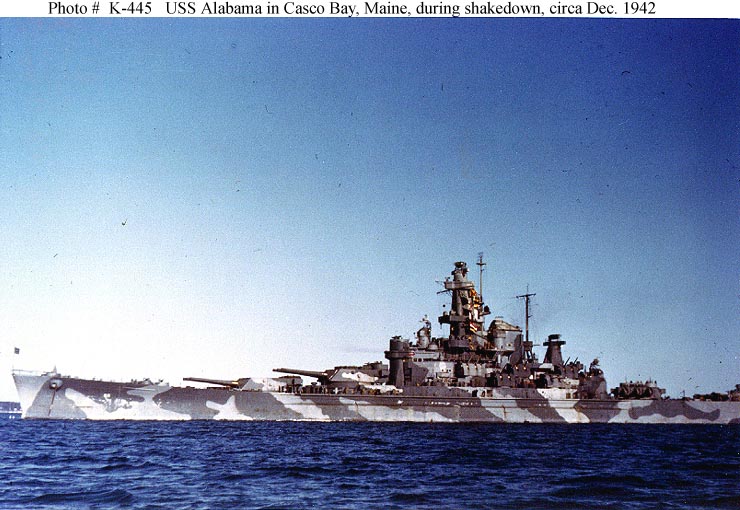
The final ship of the class the USS Alabama BB-60 was on 1 February 1940 at Norfolk Naval Shipyard. She was launched on 21 February 1942 and commissioned 16 August 1942. Following her shakedown cruise and initial training off the Atlantic coast she joined the repaired South Dakota and operated as part of TF 22 attached to the British Home Fleet. She conducted convoy escort operations, participated in the reinforcement of Spitsbergen and in an operation which attempted to coax the German battleship Tirpitz out of her haven in Norway. Tirpitz did not take the bait and Alabama and South Dakota returned to the United States in August 1943.  After training with the fast carriers she took part in the invasion of the Gilberts taking part in Operation Galvanic against Tarawa and the Army landings on Makin Island. As 1944 began Alabama continued her operations with the fast carriers and the fast battleships of TF-34.  She took part in operations against the Marshalls and took part in the invasion of the Marianas Islands and the Marianas Turkey Shoot. From there she supported the invasion of Palau and other islands in the Caroline Islands followed by operations against New Guinea and the invasion of the Philippine and the Battle of Leyte Gulf before returning to the United States for overhaul. She returned to action during the invasion of Okinawa and in shore bombardment operations against the Japanese Mainland. When the war ended the Alabama had suffered no combat deaths and only 5 wounded following the misfire of one of her own 5” guns earning her the nickname of “Lucky A.”  Hall of Fame pitcher Bob Feller served as a Chief Petty Officer and gun mount captain on Alabama during the war. She was decommissioned on 9 January 1947 and stricken from the Naval Register on 1 June 1962. The people of the State of Alabama formed the “Alabama Battleship Commission” and raised $1,000,000 including over $100,000 by schoolchildren to bring her to Alabama as a memorial.  She was turned over to the state in 1964 and opened as a museum on 9 January 1965. She was declared a National Historic Landmark in 1986.  She has been used as a set in several movies and continues to serve as a museum preserving the legacy of the men that served aboard her and all of the battleship sailors of World War II.

In the 1950s a number of proposals were considered to modernize the ships of the class to increase their speed to 31 knots using improved steam turbines or gas turbines. The Navy determined that to do this would require changes to the hull form of the ships making the cost too prohibitive.  The ships were certainly the best of the treaty type battleships produced by any nation in the Second World War. The damage sustained by South Dakota at the Second Naval Battle of Guadalcanal would have not only put most battleships of her era out of action but might have caused enough damage to sink them. Their armament was equal or superior to all that except the Japanese Yamato Class and their protection was superior to most ships of their era.

It is good that both the Massachusetts and the Alabama have been preserved as memorials to the ships of the class, their sailors and the United States Navy in the Second World War. Because of the efforts of the people of Massachusetts and Alabama millions of people have been able to see these magnificent ships and remember their fine crews. Both have hosted reunions of their ships companies since becoming museum ships and with the World War Two generation passing away in greater numbers every day soon these ships as well as the USS Texas, USS North Carolina, USS Missouri, USS New Jersey and USS Wisconsin will be all that is left to remember them unless a home can be found for the USS Iowa which stricken from the Naval Register awaits an uncertain fate as a resident of the “Ghost Fleet” in Suisun Bay California.  No other nation preserved any other dreadnought or treaty battleship thus only these ships remain from the era of the Dreadnought.

10 Comments

Filed under History, Military, Navy Ships, US Navy, world war two in europe, world war two in the pacific

The Next Generation: The North Carolina Class Battleships

This is the fourth in a series of six articles on the battleships built under the provision of the Washington and London Naval Treaty limitations in the 1930s. I am not including the ships which were completed in the immediate aftermath of the Washington Treaty limitations. This series looks at the modern battleships that the World War II combatants would produce in the 1930s which saw service in the war. Part one covered the Italian Vittorio Veneto class entitled The Pride of the Regina Marina: The Vittorio Veneto Class Battleships. Part two French Firepower Forward: The unrealized potential of the Dunkerque and Richelieu Class Battleships covered the French Dunkerque class and Richelieu class Battleships. Part three covered the British Royal Navy King George V Class battleships entitled British Bulwarks: The King George V Class Battleships Part Five which was to be a subsection of this article will be on the South Dakota Class. I have already published the final part which covers the German Scharnhorst Class entitled Power and Beauty the Battle Cruisers Scharnhorst and Gneisenau . The German Bismarck, Japanese Yamato, British Vanguard and American Iowa Classes will be covered in a subsequent series.

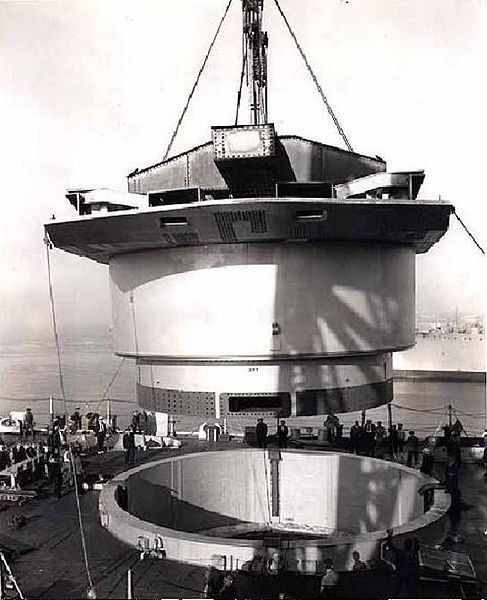
Turret base of USS Washington being lowered into barbet

The United States finished the First World War as the rising economic and potential military power in the world. The British Empire was economically reeling beset by massive debts, heavy loss of life and an empire which was beginning to smell the fresh breezes of independence.  The United States retreated into isolationism and a naïve and unfounded optimism that war could be outlawed while turning its back on the one organization that might have helped bring nations together, the League of Nations. In this environment the United States sponsored the Washington Naval Conference of 1922 which produced the Washington Naval Treaty.  The treaty stipulated limitations on total battleship tonnage, main armament and the maximum tonnage allowed per ship. Ships already in existence could not be replaced until they reached the age of 20 years. A battleship “building holiday” of 10 years was mandated with the major signatories allowed to complete a few ships that were already under construction. Whole classes of new construction were cancelled and many ships under construction were scrapped on the ways or completed only to be scrapped or sunk as targets. The Royal Navy completed two ships of the Nelson Class, the United States completed the 3 ship Maryland Class using a 4th vessel the incomplete USS Washington as a target and the Japanese were allowed to complete two ships of the Nagato Class. The Royal Navy completed the Battleship Eagle and Battle Cruisers Furious, Glorious and Courageous as Aircraft Carriers, the U.S. Navy the incomplete Battle Cruisers Lexington and Saratoga and the Japanese the Battle Cruiser Akagi and Battleship Kaga as carriers. The treaty limits of the Washington Conference were renewed in the London Treaty which also sought to limit the main batteries of new battleships to 14 inch guns.

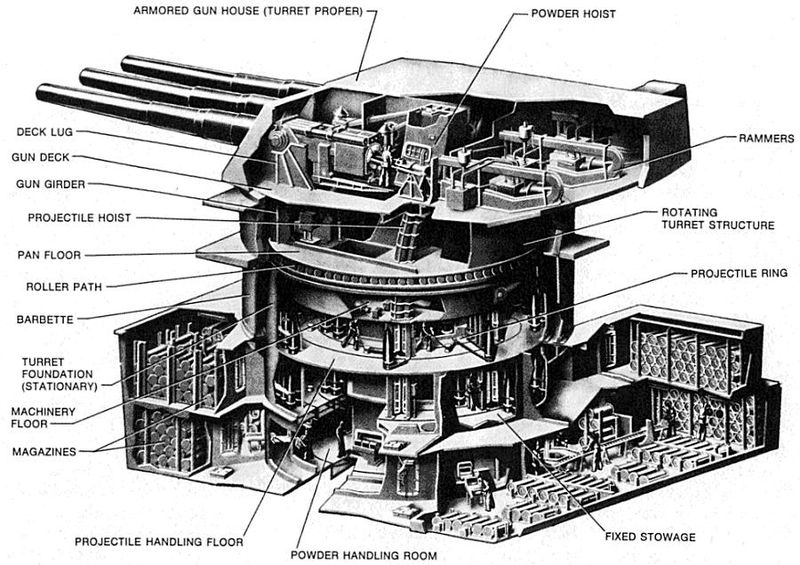
North Carolina Class 16″ Gun Turret

The U.S. Navy began a study of new designs for a fast battleship class to comply with the treaty restrictions in May to July of 1935.  A minimum of 35 different designs were submitted and reviewed by the Navy and also reviewed by the faculty of the Naval War College. After a considerable amount of debate a design called the Type XVI was selected. The design originally called for twelve 14” guns mounted in three quadruple turrets. Other designs considered called for twelve 14″ guns in triple turrets. When the Japanese opted out of the treaty and the Italians began building the Vittorio Veneto Class with 15” guns the U.S. Navy adopted the “escalation clause” and the design was modified to mount nine 16” guns in triple turrets primarily due to the expectation that the Japanese Imperial Navy would mount larger guns in its new ships.

Initial Type XVI design with 14″ guns

The Navy worked to achieve the maximum speed, armament and protection that it could within the 35,000 ton treaty limitations. There was debate among Admirals and designers as to how to solve the problem with some factions leaning toward greater speed and lighter armor and armament and others weighing in on a slightly slower ship with greater firepower and protection. The Type XVI (modified) design original called for twelve 14” guns in quadruple turrets but this was changed to nine 16” guns in triple turrets. The main armor belt was 12” inclined 15 degrees with 16” armor on the turret faceplates and barbets having 16” side armor.  Their conning tower was also protected by 14” armor.  This gave them heavier armor than the Italian Vittorio Veneto Class. They had a lighter belt than the British King George V Class but more protection accorded to their turrets, barbets and conning tower while they had slightly less armor than the French Richelieu class due to those ships all guns forward and all or nothing armor protection.

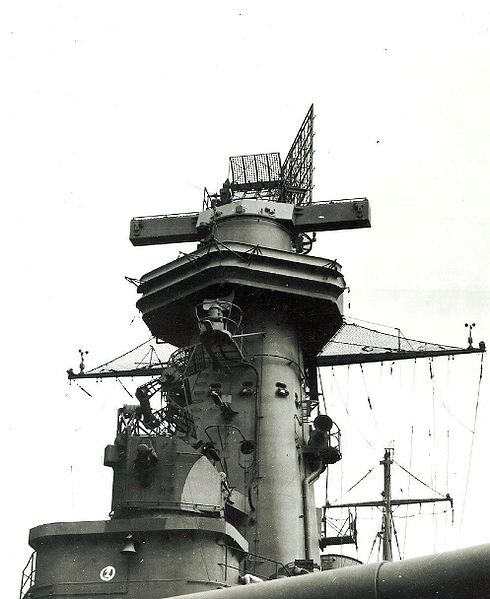
View of USS Washington Conning Tower showing Mk 38 5″ gun directors and SG Surface Search Radar

Their top speed of 27 knots was slower than their European counterparts but their range was far superior to all being able to steam over 20,000 miles at 15 knots and 6,610 miles at 25 knots. Their top speed and ranged decreased slightly during the war with the addition of more anti-aircraft guns and sensors.  Most of the designs considered had speeds from 27-30 knots depending on whether the designers sacrificed speed for armament and protection or protection and firepower for speed. One design, the Type VII resembled earlier classes of battleships with a speed of only 23 knots in favor of much heavier protection on a shorter hull.

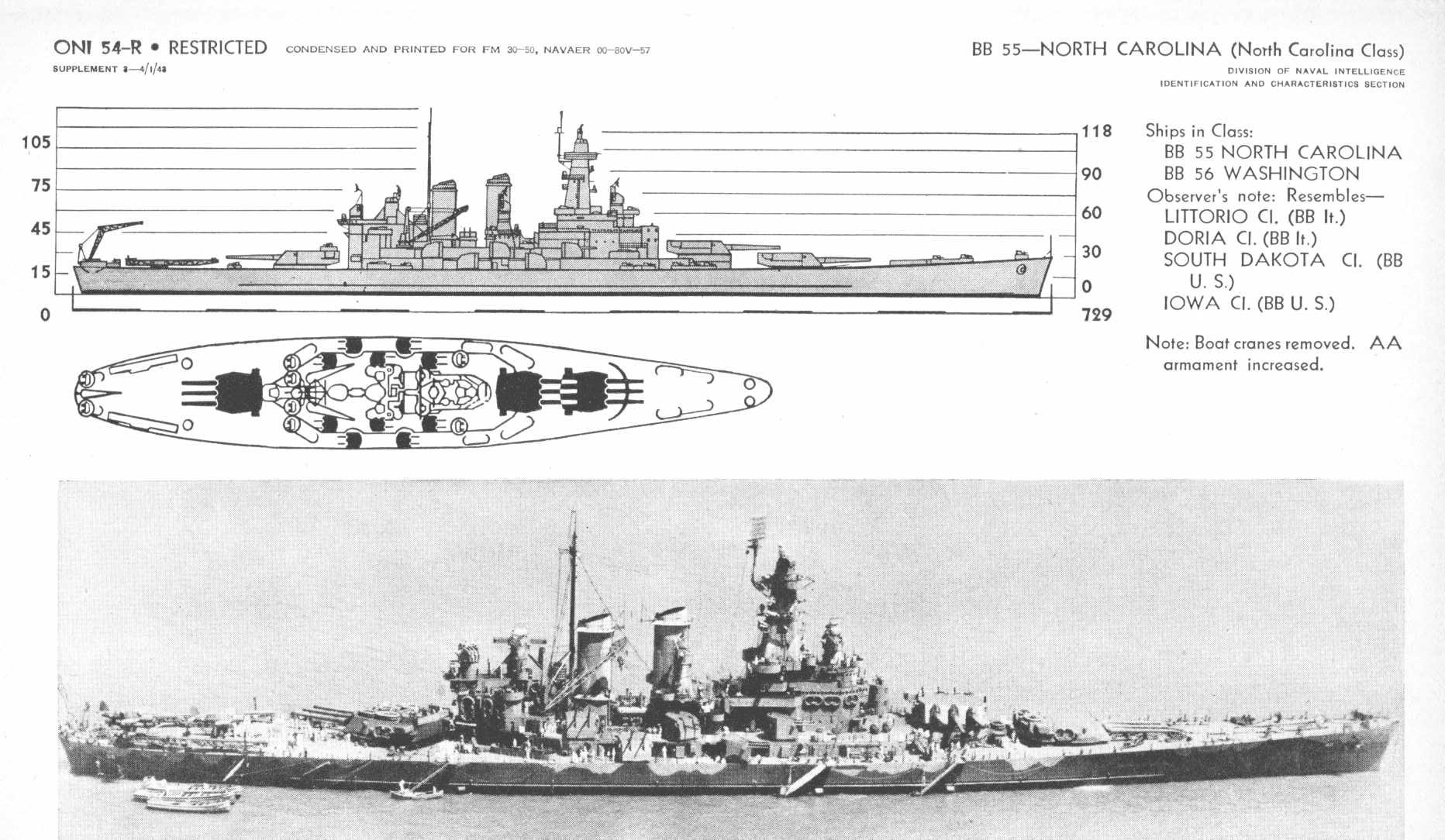
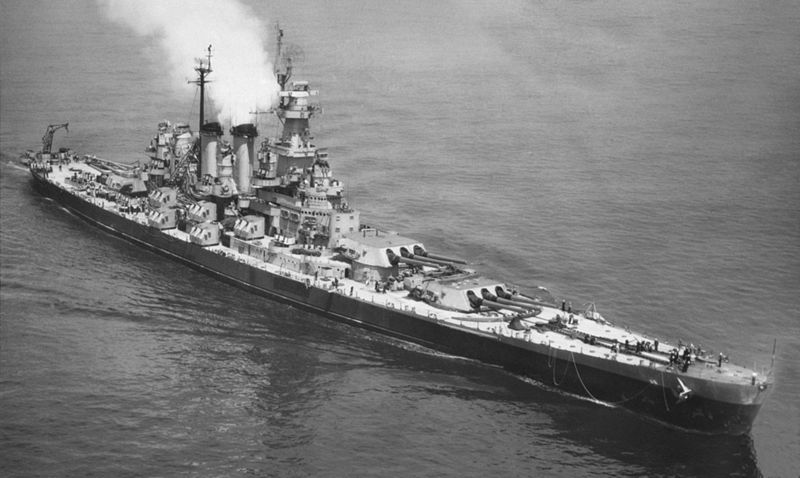
USS North Carolina BB-55

The North Carolina Class was comparable in many ways with the Japanese Nagato Class in speed, protection and armament but with a far greater cruising range.

The North Carolina’s also were superior to their contemporaries in their anti-aircraft armament as well as their electronics, radar and fire direction suites which were all continuously upgraded throughout the war.

The construction of the ships was slow due to material shortages, the design change to 16” guns and labor issues which not only lengthened the length of their construction but raised their cost from $50 million to $60 million dollars each.

North Carolina during underway replenishment in the Pacific

USS North Carolina was laid down on 27 October 1937 launched on 13 June 1940 and commissioned 9 April 1941 though it was months before she was operational due to severe longitudinal vibration of her propeller shafts which was corrected by a modified propeller design.  Despite the efforts to keep to the treaty limitations the ships displaced 36,600 long tons and had a full load displacement of 44,800 long tons. By 1945 the ships full load displacement had increased to 46,700 long tons for North Carolina and 45,370 long tons for Washington.

Torpedo Damage to North Carolina

When she completed her shakedown cruise she was sent to the Pacific where she joined Task Force 16 and the USS Enterprise on 6 August 1942.   She defended Enterprise during the Battle of the Easter Solomons on 24 August and during an 8 minute period she shot down between 7 and 14 Japanese aircraft. On 15 September she was badly damaged by a torpedo from the Japanese submarine I-15 which necessitated her withdraw to Pearl Harbor for repairs. The gravity of the hit sparked great debate in the Navy regarding her protection with some wondering if too much had been sacrificed in her design.  Upon her return to service she operated with TF 38 and TF 58 protecting the carrier task forces in their operations against the Japanese as well as with TF 34 the Fast Battleship Task Force under the command of Vice Admiral Willis Lee.  Serving throughout the Pacific campaign she took part in every major operation in the Central Pacific except Leyte Gulf and against the Japanese mainland.  Her Marines and Sailors took part in the initial occupation of Japan.  She was decommissioned and placed in reserve on 1 June 1960 and survived scrapping to be bought by the State of North Carolina for $250,000 and turned into a memorial at Wilmington North Carolina.  She remains a National Historic Landmark and is maintained by the USS North Carolina Battleship Commission. She is exceptionally well maintained and much of the ship is open for tours.

USS Washington BB-56 on high speed run in 1945

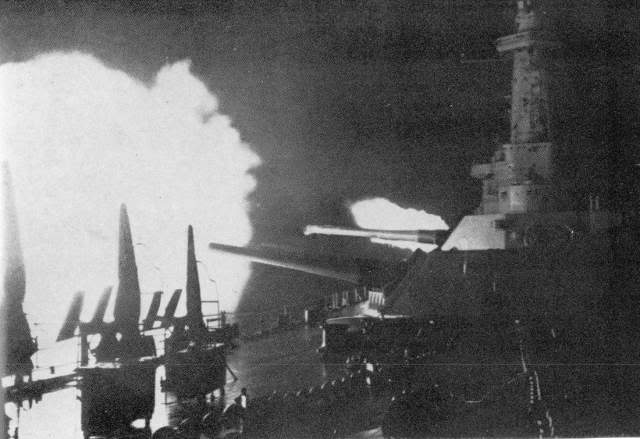
The USS Washington was laid down 14 June 1938 launched on 1 June 1940 and commissioned 15 May 1941 though like North Carolina had propeller shaft vibrations which delayed her operational availability.  She became the first U.S. Navy Battleship to take an active part in the war when she joined the British Home Fleet in March 1942 operating with the Royal Navy escorting Arctic convoys bound for the Soviet Union against possible forays of the Battleship Tirpitz and other heavy German surface units until 14 July when she returned to the United States for a brief overhaul.  She then was deployed to the South Pacific to join U.S. Forces operating against the Japanese at Guadalcanal and became the Flagship of Rear Admiral Willis Lee.  During the Naval Battle of Guadalcanal on the night of 14-15 November she and the USS South Dakota sailed with 4 destroyers to intercept a Japanese task force.  The Japanese force led by the Battleship Kirishima included 2 heavy and 2 light cruisers as well as 9 destroyers.  The Japanese hit the Americans hard early in the battle sinking 3 of the 4 American destroyers and inflicting significant topside damage to South Dakota which caused a power outage and knocked her out of the action.  Washington sailed on undetected by the Japanese and opened a devastating barrage against Kirishima scoring hits with 9 16” shells and 40 5” shell. Kirishima was mortally wounded and was scuttled by her crew the following day.  Washington then drove off the other Japanese ships sparing Henderson Field from certain damage.

Washington blasting Kirishima at the Naval Battle of Guadalcanal 14-15 November 1942

Washington’s victim the IJN Battleship Kirishima

Washington continued operations in the South and Central Pacific until she was damaged in a collision with USS Indiana which resulted in her losing nearly 60 feet from her bow on 1 February 1944. She received temporary repairs before returning to the Puget Sound Naval Shipyard to receive a new bow and other modernizations returning to action in May 1944. She remained in operation against the Japanese the rest of the war. She was decommissioned in 1947 and struck from the Naval Register on 1 June 1960 and sold for scrap.

Various improvements and ideas were suggested while the ships remained in reserve as some in the Navy wished to reactivate them to include lightening them to increase their speed and conversion into Helicopter Carriers all of which were rejected.

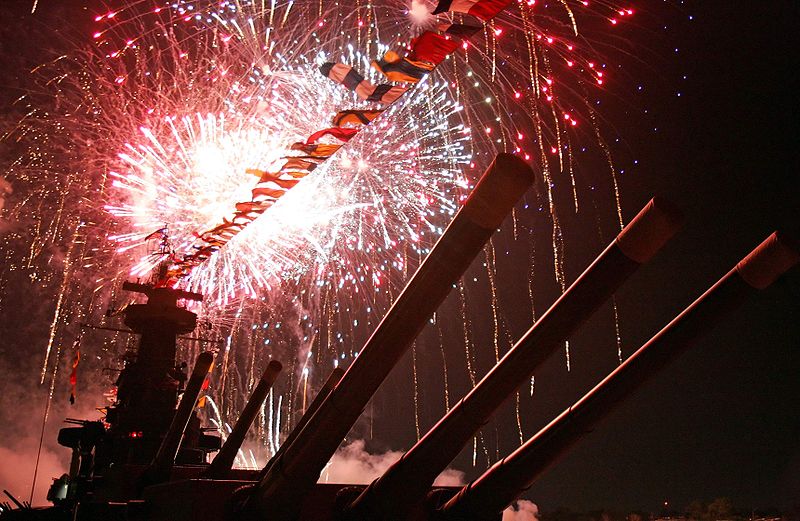
Fireworks over the North Carolina in Wilmington (US Navy Photo)

Though the North Carolina’s were a compromise design they performed admirably throughout the war.  They and their brave crews are remembered in Naval History and the preservation of North Carolina has ensured that they will never be forgotten.

9 Comments

Filed under History, Military, Navy Ships, world war two in europe, world war two in the pacific

British Bulwarks: The King George V Class Battleships

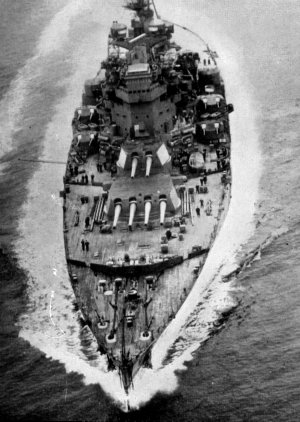
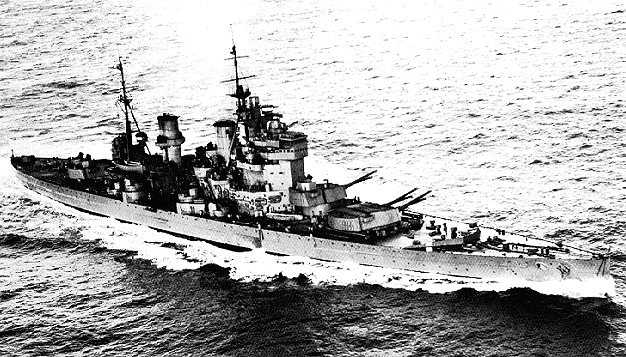
HMS King George V

This is the third in a series of five articles on the battleships built under the provision of the Washington and London Naval Treaty limitations in the 1930s. I am not including the ships which were completed in the immediate aftermath of the Washington Treaty limitations. This series looks at the modern battleships that the World War II combatants would produce in the 1930s which saw service in the war. This article covers the British Royal Navy King George V Class battleships. Part one covered the Italian Vittorio Veneto class entitled The Pride of the Regina Marina: The Vittorio Veneto Class Battleships. Part two French Firepower Forward: The unrealized potential of the Dunkerque and Richelieu Class Battleships covered the French Dunkerque class and Richelieu class Battleships. Part Four the American North Carolina and South Dakota Classes. I have already published the final part which covers the German Scharnhorst Class entitled Power and Beauty the Battle Cruisers Scharnhorst and Gneisenau . The German Bismarck, Japanese Yamato, British Vanguard and American Iowa Classes will be covered in a subsequent series.

HMS King George V in 1941

In the wake of the First World War the major naval powers entered into an agreement restricting the construction of capital ships and limiting the numbers that treaty signatories were allowed to keep. As a result numerous ships were scrapped or disposed of and the majority of planned ships were either cancelled while building or never laid down. In some cases to comply with treaty restrictions ships such as the Royal Navy’s Nelson Class which was a compromise design which sacrificed speed for protection and firepower.  By the late 1920s the Royal Navy’s battle force was comprised of the Nelson’s, the fast Battlecruisers Hood, Renown and Repulse and 10 ships of the Queen Elizabeth and Revenge classes all designed before the First World War.

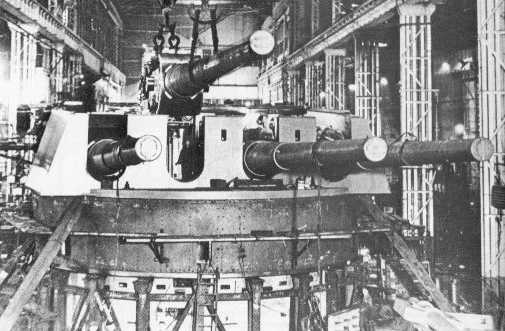
King George V Class Quad Turret being built

The Royal Navy began planning for a new class of battleships in 1928 but the plans were shelved with the signing of the London Naval Treaty which continued the “building holiday” on capital ship construction as well as size and armaments until 1937.  With the realization that its battle force was becoming dated as other nations laid down new classes of battleships the Royal Navy recommenced planning in 1935.  The Navy planned to build to the maximum of the 35,000 displacement limitation and placed a great measure of emphasis on armor and protection. The ships were designed to achieve a 28 knot speed which made them faster than all British battleships although slower than the Battlecruisers. The planners had alternative designs to use 14”, 15” or 16” guns with the Navy favoring the 15” models which had equipped all of their other ships with the exception of the Nelson’s. However the Admiralty to use 14” as the government was endeavoring to negotiate with other powers to impose a 14” limitation on armament for new battleships.  While the Americans and French agreed to the limit neither the Japanese nor Italians followed suit and as a result all new battleships of other powers had larger guns than the King George V Class ships with the French and Italians opting for 15”on the Vittorio Veneto Class, the Americans 16” on the North Carolina, South Dakota and Iowa Classes and the Japanese 18” guns for their Yamato Class. The Germans who were not a signatory built their Scharnhorst Class with 11” although they were planned as 15” ships and would equip the Bismarck Class with 15” guns.  The Royal Navy attempted to rectify this by placing more guns on the ships than those of other navies but the planned armament of twelve 14” guns mounted in quadruple turrets but this was impossible on the 35,000 platform without compromising protection or speed.  Thus the Admiralty compromised on 10 guns mounted in 2 quadruple and 1 twin turret.

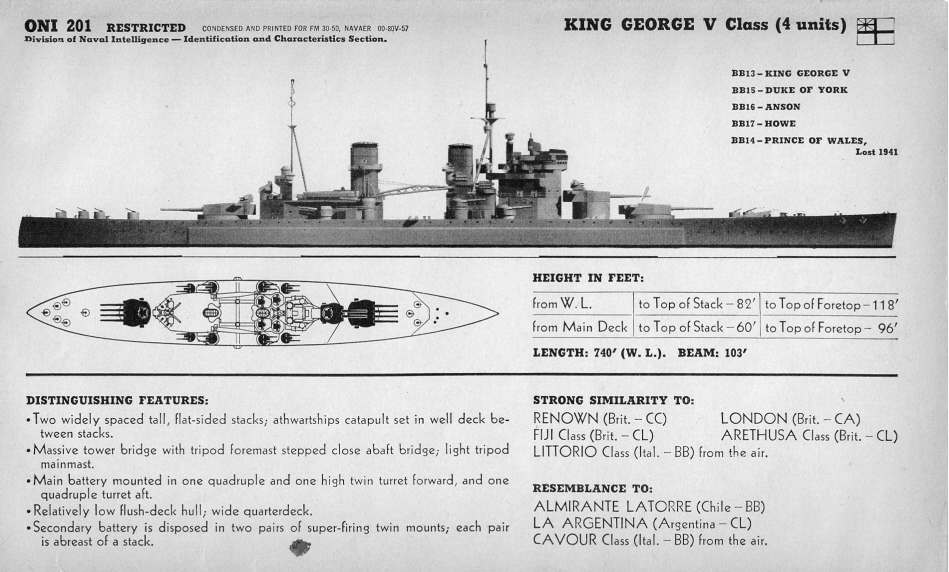
ONI Drawing of King George Class

The ships displaced a full load displacement of 42,237 tons in 1942 which had increased to 44,460 tons in  1944. The were 745 feet long had a beam of 103 feet, a top speed of 28 knots with a cruising range of 5,400 nautical miles at 18 knots. Their relatively poor endurance limited their operations in the Pacific and even nearly caused King George V to have to abandon the chase of the Bismarck in May 1941.

The main batteries of the ships proved problematic in combat with the quadruple turret design causing all the ships problems. This was demonstrated in the engagement of the Prince of Wales against the Bismarck as well as the King George V in its duel with the German behemoth when A turret became disabled and completely out of action for 30 minutes and half of the main battery being out of action for most of the engagement for mechanical reasons.  The Duke of York achieved excellent results against the Scharnhorst but even in that engagement the main battery was only able to be in action 70% of the time.  One of the other drawbacks of the design was that in order to replace a gun due to wear that the turret itself had to be dismantled in order to remove and replace the guns.

The main secondary armament of 5.25” dual purpose guns in twin mounts suffered from poor rate of fire and slow traverse well below their designed standards.

The mounting of the armament was designed to provide protection against turret explosions which could potentially detonate the ship’s magazines.  The main side and underwater protection scheme was sound and protected the ships well in combat.  The vertical protection was also sound as was the protection afforded to the turret barbets and placement of the magazines to shield them from plunging fire.  Only the Prince of Wales was lost due to enemy action had later examination of her wreck revealed that the culprit was a torpedo which detonated in a propeller shaft outside of the armored belt which caused uncontrolled flooding when she was attacked by Japanese aircraft on 8 December 1941.

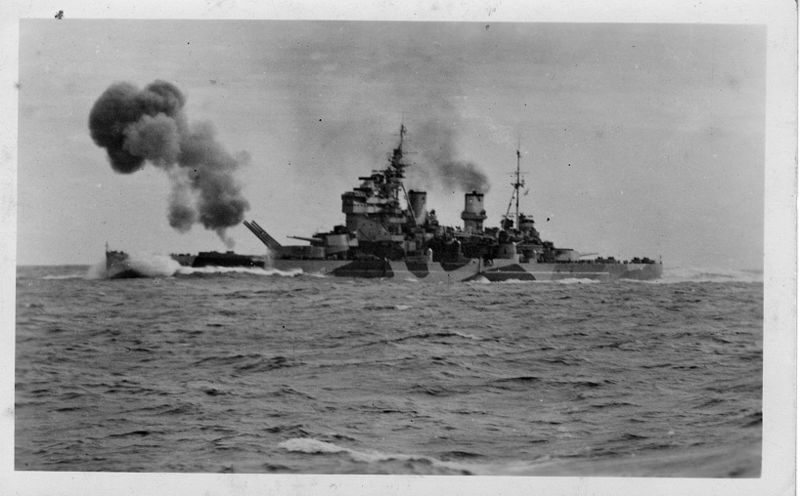
HMS Anson conducting gunnery exercises

The propulsion systems developed problems after 1942 when fuel oil quality was decreased because of the need for aviation gas.  The new mixtures which were higher viscosity and contained more water than the boilers could effectively burn increased maintenance costs and decreased efficiency. To compensate the Admiralty designed new higher pressure fuel sprayers and burners which returned the boilers to full efficiency.

The lead ship of the class the King George V was laid down on 1 January 1937, launched on 21 February 1939 and commissioned on 11 December 1940.  As the flagship of the Home Fleet she took part in the unsuccessful search for the Scharnhorst and Gneisenau and in the hunt for the Bismarck in which she earned lasting fame in helping to sink that ship.  She took part in the Murmansk convoy protection as well as Operation Husky, the invasion of Sicily before sailing to the Far East for operations against the Japanese. She finished the war with the British Pacific Fleet and was present at the Japanese surrender in Tokyo Bay.  She returned as flagship of Home Fleet until she was decommissioned in 1949. She was subsequently sold for scrap in 1957.

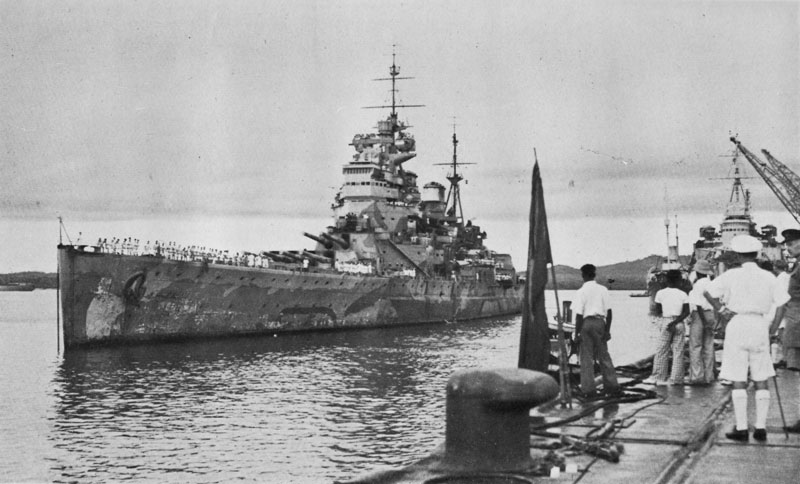
Prince of Wales pulling into Singapore

The second ship the Prince of Wales laid down on 1 January 1937, launched on 3 May 1939 and commissioned 19 January 1941 although she was not officially completed until March 1941. Her initial operation came in May 1941 when she sailed with the HMS Hood to intercept the Bismarck. When she sailed she still had shipyard technicians aboard.  Damaged in the action she did score an important hit on Bismarck which cut a fuel line making her forward tanks inaccessible and causing her to make her run for Brest which she did not complete. Another hit damaged her aircraft catapult and a third an electric dynamo.

Church Service on Prince of Wales at Argentia Bay with Churchill and Roosevelt in attendance

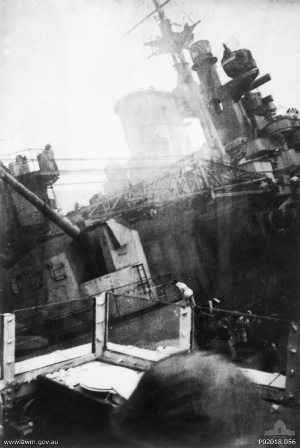
Following repairs she carried Winston Churchill to the Argentia Bay Newfoundland where he met with Franklin D. Roosevelt and together drafted the Atlantic Charter. She accompanied the HMS Repulse to Singapore to bolster the British presence in the Far East but without air cover was sunk by Japanese aircraft which struck her with 4 torpedoes and a bomb, the key hit being a lucky hit on her propeller shaft which caused flooding that caused a loss of power to pumps and anti-aircraft defenses.

Prince of Wales sinking and being abandoned

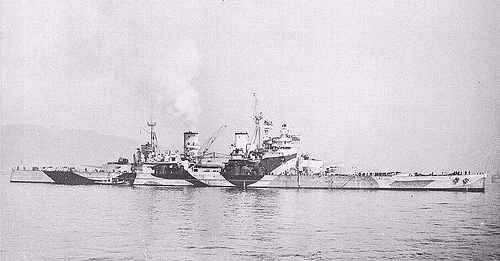
The third ship the Duke of York was laid down 5 May 1937, launched on 28 February 1940 and commissioned 4 November 1941. She provided convoy escort for the Lend Lease convoys to the Soviet Union as well the sinking of the Scharnhorst on 26 December 1943 during the Battle of North Cape. She was transferred to the Pacific in 1944 and served at Okinawa.  She was decommissioned in 1949 and scrapped in 1957.

Duke of York

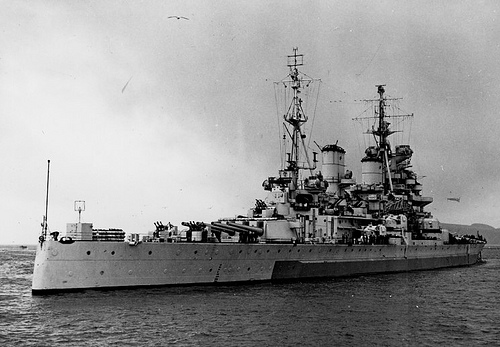
The fourth ship of the class the Howe was laid down on 1 June 1937, launched 9 April 1940 and commissioned on 29 August 1942.  She served with the Home Fleet and in the Mediterranean until she was transferred to the Pacific in August 1944. She was stuck by a Kamikaze in May 1945 and Howe was sent for refit at Durban South Africa. She was still in refit when the war ended. She returned home and was placed in reserve in 1950 and scrapped in 1958.

HMS Howe

The last of the class the Anson was laid down 20 July 1937, launched 24 February 1940 and commissioned on 22 June 1942. She operated in the Mediterranean and the North Atlantic and was sent to the Pacific in 1945 where she accepted the surrender of the Japanese Forces at Hong Kong. She returned to Britain and was decommissioned in 1941 and scrapped in 1957.

HMS Anson

The ships had rather unremarkable careers for the most part with the exception of the Prince of Wales and King George V in the hunt for the Bismarck and the Duke of York sinking the Scharnhorst. They had a number of technical problems which limited their operations in the war. However they and their brave crews deserve to be remembered as helping to hold the line against the Axis in the early years of the war and sank two of the four German Battleships lost during the war.  This alone was as remarkable achievement as of their contemporaries only the USS Washington sank an enemy battleship in combat.


12 Comments

Filed under History, Military, Navy Ships, world war two in europe, world war two in the pacific