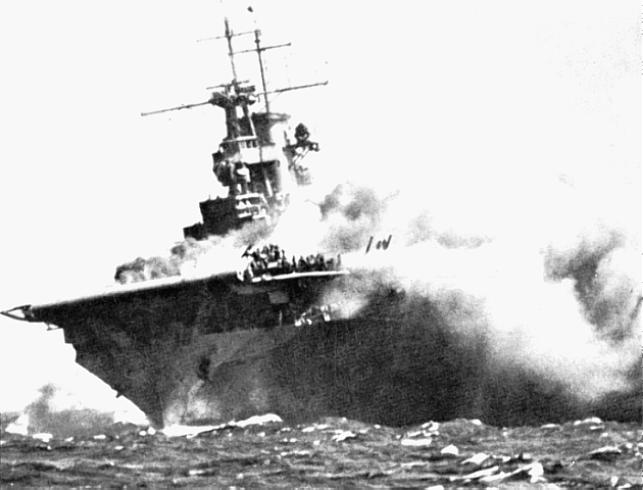
Tag Archives: admiral yamamoto

Departure to Infamy: The Kido Butai Sails for Pearl Harbor

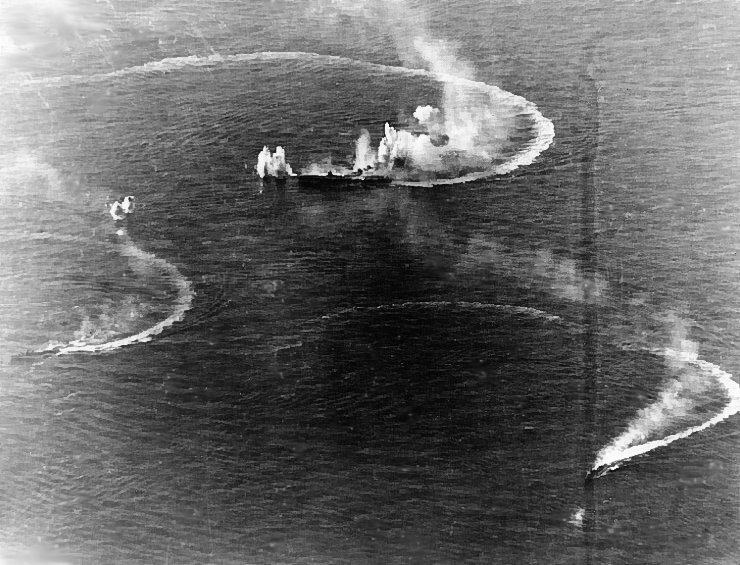
Early in the morning on November 26th 1941 the ships of the Japanese Carrier Strike Force, the Kido Butai under the command of Vice Admiral Chuichi Nagumo weighed anchor from Tankan Bay in the northern Kurile Islands of Japan. The plan was top secret and very few Japanese officers knew of the target. Many officers presumed that war was immanent but most assumed the target would be the Philippines or other targets in Southeast Asia.

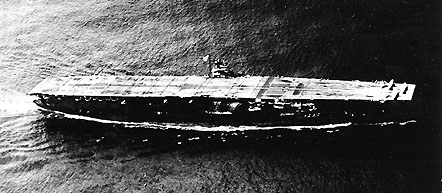
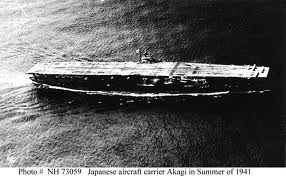
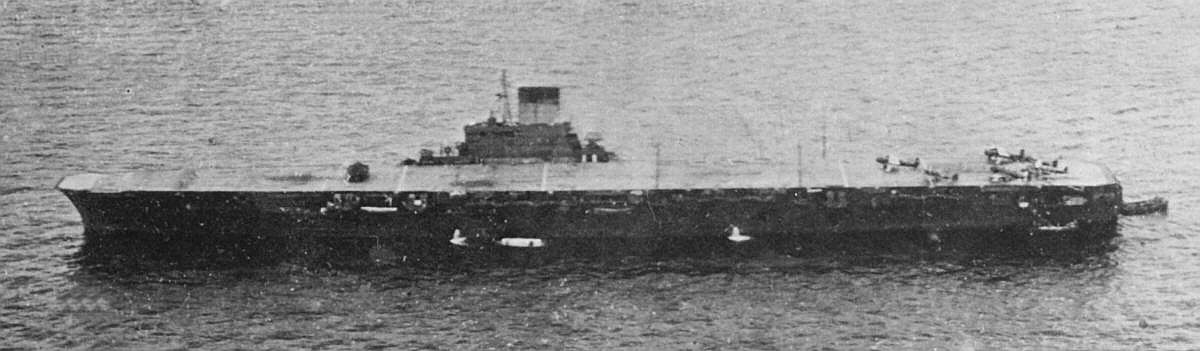
IJN Akagi

It was an attack that was designed to be pre-emptive in nature. The plan was to deal the United States Navy such a crushing blow that the Japanese could complete their Asian conquests before it could recover. It was a plan of great risk that doomed Japan to horror never before imagined when the United States dropped Atomic bombs on Hiroshima and Nagasaki less than four years later. By then the bulk of the Imperial Navy   would lay at the bottom of the Pacific and millions of people killed.

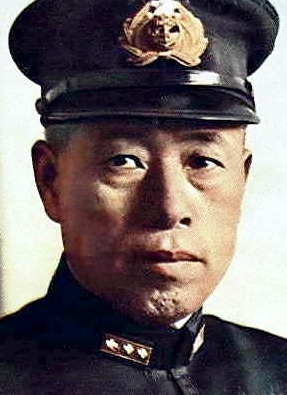
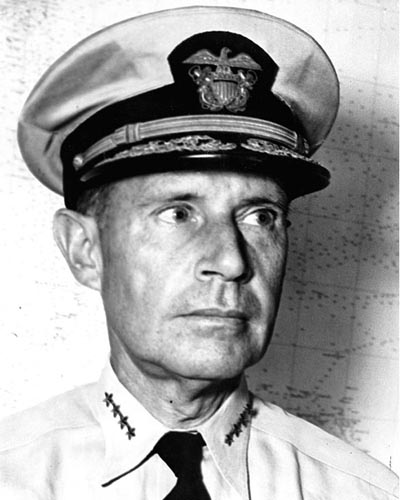
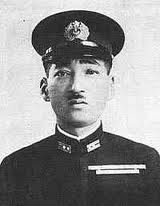
Admiral Isoruku Yamamoto 

The Japanese, even Admiral Yamamoto, the man behind the plan assumed that it entailed great risks. A simulation of the plan conducted in early September by the senior officers of the Combined Fleet and the Kido Butai calculated that two of Japan’s precious aircraft carriers could be lost in the operation. But despite the opposition and reservations of key officers, including the Kido Butai commander, Admiral Nagumo Yamamoto pressed forward.

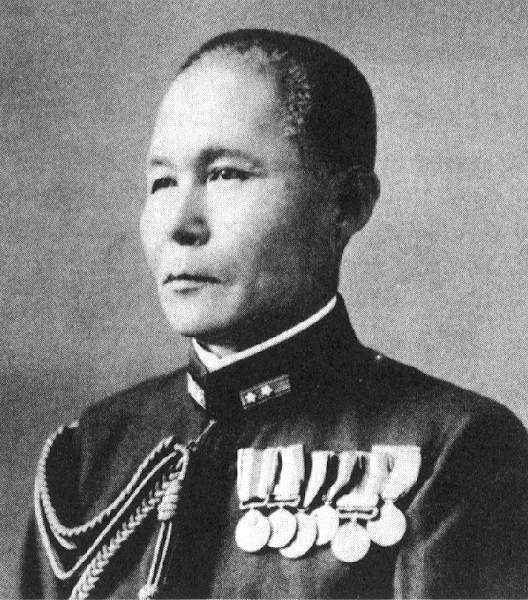
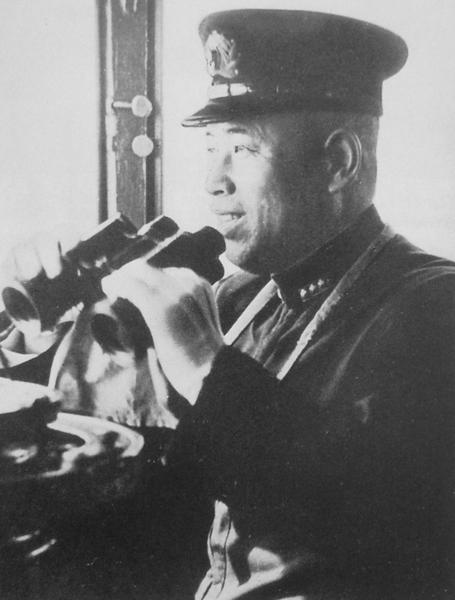
Vice Admiral Chuichi Nagumo

The Kido Butai was the most powerful carrier strike group assembled up to that time. Comprised of six aircraft carriers, the massive flagship Akagi, and the Kaga, the fast 18,000 ton Soryu and Hiryu and the most modern Shokaku and Zuikaku. The carrier embarked over 400 aircraft, of which over 350 were to be used in the two aerial assault waves. Most of the pilots and aircrew were experienced, many with combat experience in China. The carriers were escorted by the old but fast and modernized battleships Kirishima and Hiei, the new heavy cruisers Tone and Chikuma, the light cruiser Abukuma, the new Kagero Class destroyers, Urakaze, Isokaze, Tanikaze, Hamakaze, Kagero and Shiranuhi,the Asashio classdestroyers Arare and Kasumi.Two additional destroyers the Fubuki class Sazanami and Ushiowere assigned to neutralize the American base on Midway Island. The submarines I-19, I-21and I-23 and 8 oilers were assigned to the force. Five additional submarines the I-16, I-18, I-20, I-22 and I-24 each embarked a Type-A midget submarine.

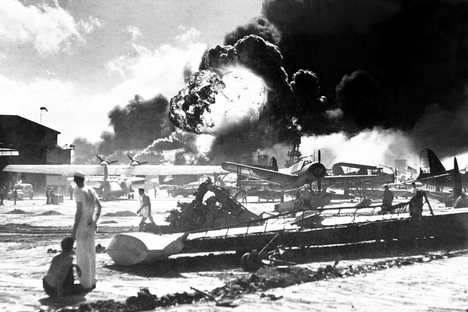
Pearl Harbor during the Attack

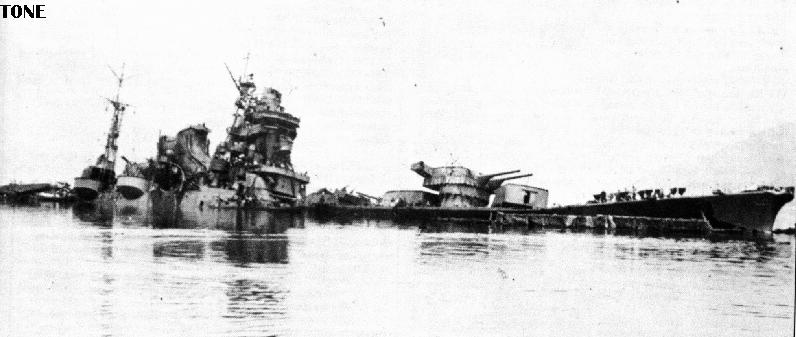
On December 7th the force delivered a devastating blow to the American Pacific Fleet at Pearl Harbor, however no American aircraft carriers were present. It would go on for the next several months on a rampage across the Pacific and Indian Oceans. However their success would be short lived. Within a year Akagi, Kaga, Soryu and Hiryu had been sunk at Midway by the carriers not present. Hiei and Kirishima were lost at the Naval Battle of Guadalcanal and over the course of the war every ship of the attack force was lost. Shokaku was torpedoed and sunk at the Battle of the Philippine Sea and Zuikaku, Chikuma and Abukuma were lost at Leyte Gulf, most of the destroyers and submarines were lost in various engagements. However three destroyers, Isokaze, Hamakaze and Kasumi accompanied the great Battleship Yamato on her suicide mission at Okinawa and were sunk on April 7th 1945. The heavy cruiser Tone was sunk at her moorings at Kure during air strikes by the US 3rd Fleet on July 24th 1945. All of the submarines were lost during the war, however I-19 sank the USS Wasp CV-7 and USS O’Brien DD-415 while damaging the USS North Carolina BB-55 on September 15th 1942 off Guadalcanal. Only the destroyer Ushio survived the war and was broken up for scrap in 1948.

IJN Zuikaku sinking at the Battle of Cape Engano (Leyte Gulf)

Among the leaders of the Japanese strike force, Admiral Yamamoto was killed on April 18th 1943 when his aircraft was shot down at Buin. Nagumo died at Saipan on July 6th 1944.  Most of the sailors who took part in the attack would be dead by the end of the war.

Few present at Tankan Bay on that fateful November morning could have expected the triumph and tragedy ahead. However Yamamoto was probably more of a realist than many in the Japanese government and military leadership when he told Prime Minister Fumimaro Konoe “In the first six to twelve months of a war with the United States and Great Britain I will run wild and win victory upon victory. But then, if the war continues after that, I have no expectation of success.” Yamamoto was eerily prophetic and those that counsel pre-emptive war need to never forget his words or the results of his decisions.

Peace

Padre Steve+

3 Comments

Filed under Loose thoughts and musings

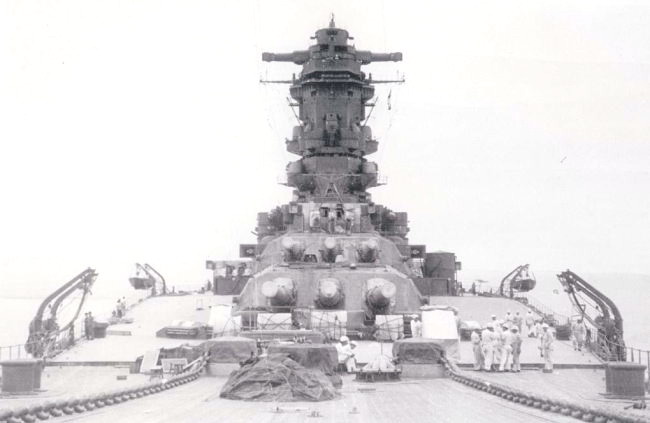
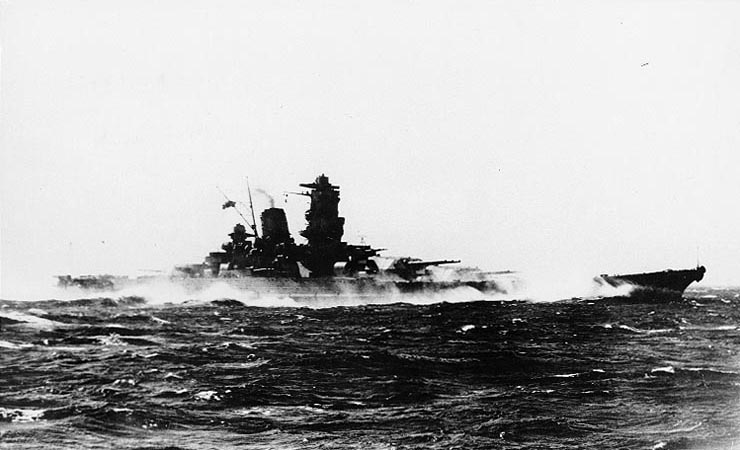
Requiem of Empire: The Yamato Class Battleships

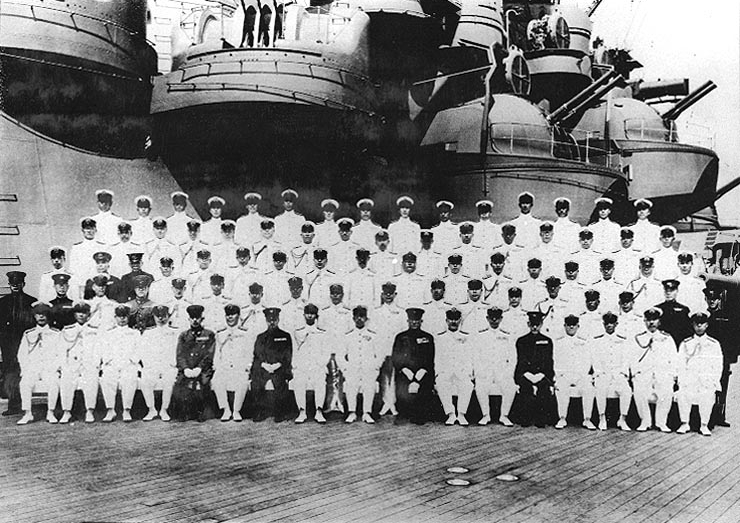
Emperor Hirohito on Musashi in 1943

The is a long delayed installment of my series on Battleships. Previous were about the Battleships constructed under conditions of the London Naval Conference.  These have dealt with the British King George V Class, French Dunkerque and Richelieu Classes, Italian Vittorio Vento Class and the American North Carolina and South Dakota ClassesI then wrote an introduction to the Post Treaty Super-Battleships. This article is the first in that series which will include articles on the German Bismarck and Tirpitz, British Vanguard and American Iowa Class.

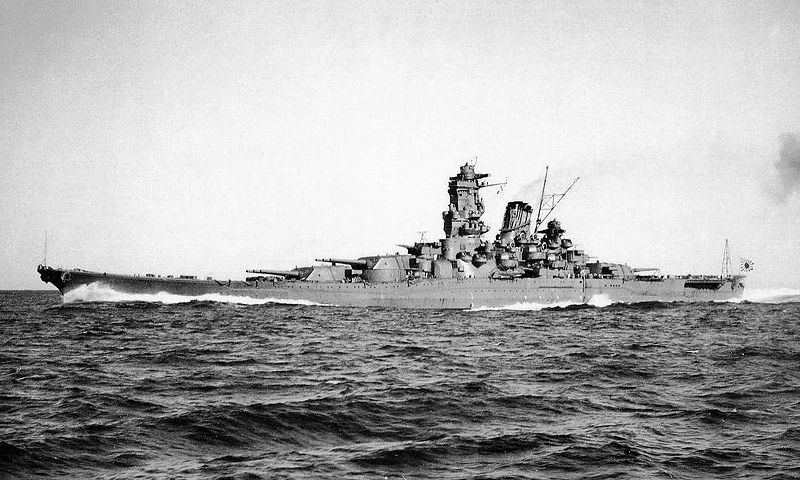
They were the largest and most heavily armed battleships ever built. Shrouded in secrecy by the Imperial Japanese Navy and Government the ships were designed to offset projected American numerical superiority. Their names were symbolic of Japan’s history. Yamato was named after Yamato Province, the ancestral home of the Yamato People, the dominant native ethnic group in Japan. Musashi was named after Musashi Province in which lays Tokyo Prefecture.  A third ship of the class, Shinano, was named after Shinano Province in central Japan which was the home of the prestigious Taketa Shingen family during the Senguku period.

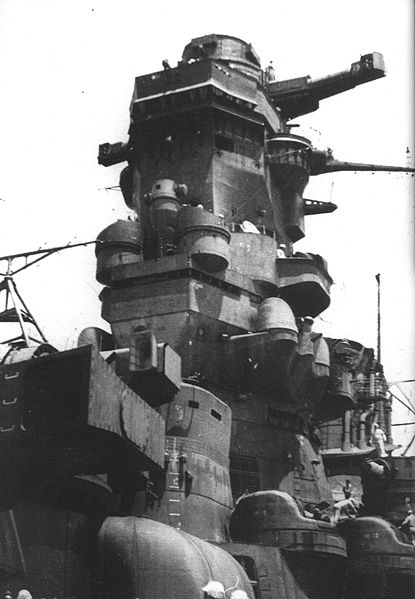
The Conning Tower and Bridge of Musashi

The secrecy surrounding their design and construction was unprecedented. Those charged with their deign and construction were thoroughly checked out by Japan’s secret police and sworn to an oath of secrecy. The oath sworn by builders of Musashi at the Mitsubishi Heavy Industries  Nagasaki Shipyard were sworn to the oath shown below:

I am aware that all work work involving the construction of the No. 2 Battleship is vital to national security. I will make utmost effort to maintain the  secrecy of the project, and swear that I will leak no information relating to the said battleship, even to relatives and close friends. In the event I violate this oath,  I will submit to the punishment determined by the company and the Navy.  

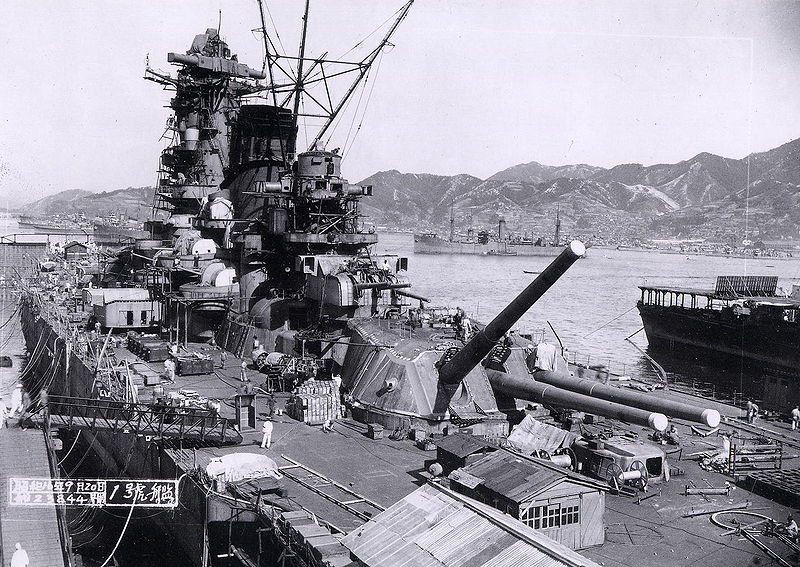
Yamato during Consrtuction

Security measures around the shipyards where Yamato and Musashi were constructed  were immense. At Nagasaki where there was a large foreign business and missionary population where the shipyard was visible from most of the city at hemp screen of 75,000 square meters was constructed to shield the ship from prying eyes and spies.

Musashi under Construction

When actual preparations for construction were taken in 1937 secret police swept the areas of foreign, especially Chinese workers. Security was increased inside and outside the shipyard, all blueprints accounted for and placed under strict guard while all shipyard workers were photographed with any having knowledge of the plans or supervising the construction sworn to the secrecy oath.

When a top secret blueprint went missing in 1938 at Nagasaki an intense investigation that included the torture of numerous suspects and the jailing of a blueprinter who accidentally swept the document into the trash was sentenced to 3 years in prison.

Armor and Protection of Yamato Class

Few pictures exist of the ships and Japanese Naval Officers destroyed many of the records of the ships design and construction just prior to the end of the Second World War. Throughout their existence they were a mystery to the American Navy. During the war the U.S. Navy estimated them to carry nine 16” guns and displace between 40,000-57,000 tons. Even the highly regarded Jane’s Fighting ships listed them at just 45,000 tons.

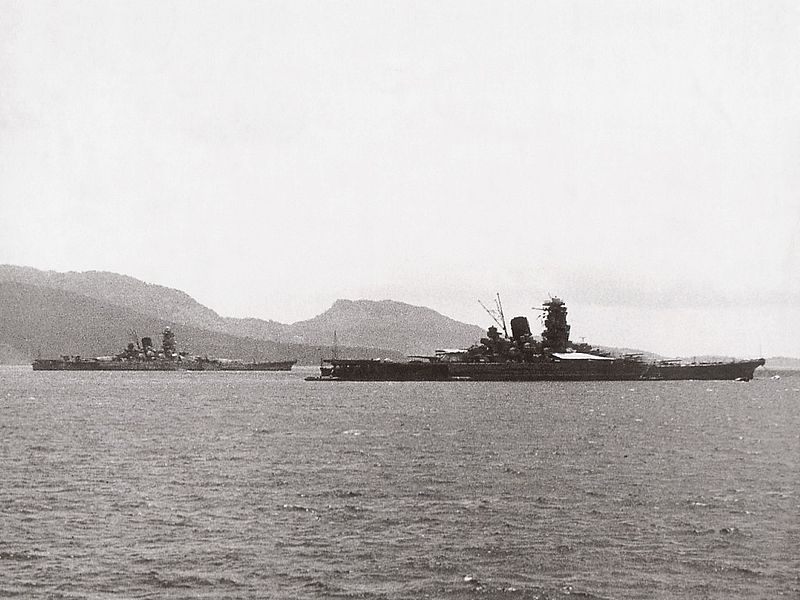
Yamato and Musashi together in 1943

Preliminary design work began in 1934 and progressed rapidly following Japan’s withdraw from the League of Nations and renunciation of the Washington and London Naval Treaties and withdraw from the 1936 naval talks in London. The early designs varied in the caliber of guns, size and armor, propulsion systems and endurance. Gun calibers ranged from 16” to 18.1” and a combined diesel-turbine system was considered but rejected in favor of traditional steam turbines.

The final design was for a class of five ships. Each would displace 64,000 tons standard displacement and 72,000 tons at full load. They were 862 feet long with a beam of 127 feet.  They were so large that the docks they were built needed to be expanded and special extra large launch platforms had to be built.  At Nagasaki the dock at to be expanded by cutting into the hill adjacent to it.

They were armed with nine 18.1 inch guns in triple turrets which could fire a projectile weighing over a ton. The secondary armament consisted of 12 6.1 inch guns mounted in triple turrets formerly mounted on the Mogami Class cruisers when those ships were equipped with 8” guns. Anti-aircraft defense included twelve 5” guns and twenty-four 25mm anti-aircraft guns. During the war two of the 6.1 inch turrets were removed and replaced with twelve more 5” guns and the 25mm battery was raised to 162 guns. Fire control systems were designed in such a way that the ships could engage multiple surface targets at the same time.

The ships were protected by a massive armored belt ranging from 16 inches to 8 inches with 26 inch armor on the face plates of the main gun turrets. The armor was advanced with excellent sloping but had a flaw where the upper and lower belts connected just below the waterline which exposed them to damage from torpedoes.

Yamato and Musashi viewed beside Battleship Nagato (foreground) just before the Battle of Leyte Gulf

They were powered by 12 Kampon boilers which powered 4 steam turbines and four three bladed propellers. These developed 150,000 shp and could drive the ship at a top speed of 27 knots.

Yamato

Construction of Yamato began on November 4th 1937 at Kure Naval Shipyard. Musashi on March 28th 1938. Traditionally such events were large public ceremonies but these were limited to just a few Naval Staff and Shipyard executives.  Yamato was Launched on August 8th 1940 and commissioned on December 16th 1941, just 9 days after Pearl Harbor. Musashi was launched on November 8th 1940 and commissioned on August 5th 1942 just two days before the U.S. Marines invaded Guadalcanal and two months after the disaster at the Battle of Midway.

Yamato served as Admiral Yamamoto’s flagship at Midway where she saw no action. The next two years she was and Musashi alternated as fleet flagship and conducted operations with Battleship Division One in operations between Mainland Japan and the major Japanese base at Truk. On December 25th 1943 while escorting a convoy she was torpedoed by the submarine USS Skate and suffered heavy damage which flooded a magazine.  On March 29th while underway Musashi was struck near the bow by a torpedo from the USS Tunny.

Musashi Under Attack at the Battle of Sibuyan Sea

Both ships participated in the Battle of the Philippine Sea and were part of Vice Admiral Takeo Kurita’s Central Force in the Battle of Leyte Gulf. Musashi was sunk by U.S. Navy Carrier aircraft from the Third Fleet on October 24th 1944 during the Battle of the Sibuyan Sea. Hit by 17 bombs and 19 torpedoes she sank with the loss of nearly 1100 of her crew of almost 2400 men. The survivors were rescued by destroyers and disembarked at Corregidor. Some were sent by troop transport to Japan but one of the ships was torpedoed and sunk leaving her survivors adrift for 19 hours before rescue. Those who reached Japan were isolated from the population while about half of the survivors remained in the Philippines where 117 of 146 of those assigned to the defense of Manila were killed in action.

Yamato or Musashi under air Attack

Yamato saw action in the surface engagement on October 25th against the Escort Carriers and Destroyers of Taffy-3 during the Battle off Samar. Her guns helped sink the Escort Carrier USS Gambier Bay but was forced away from the action by torpedo attacks from the valiant destroyers of Taffy-3.

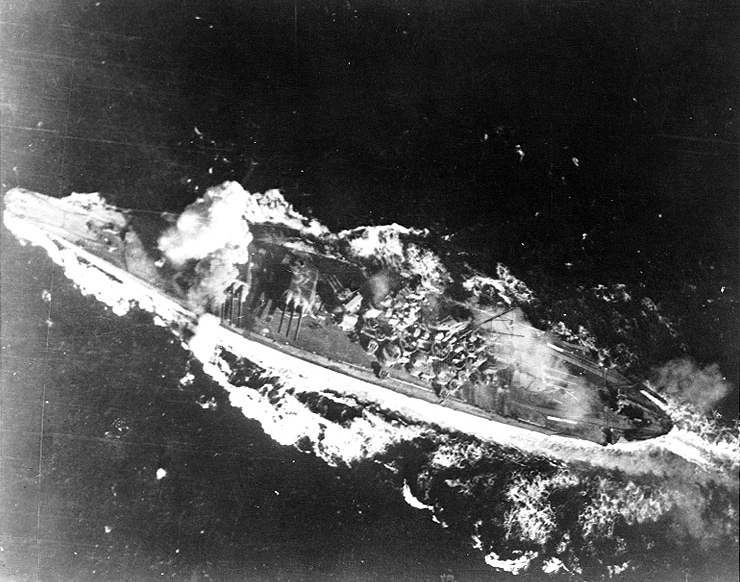
Yamato under Attack April 7th 1945

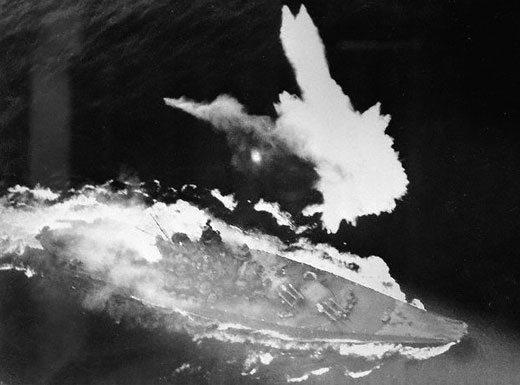
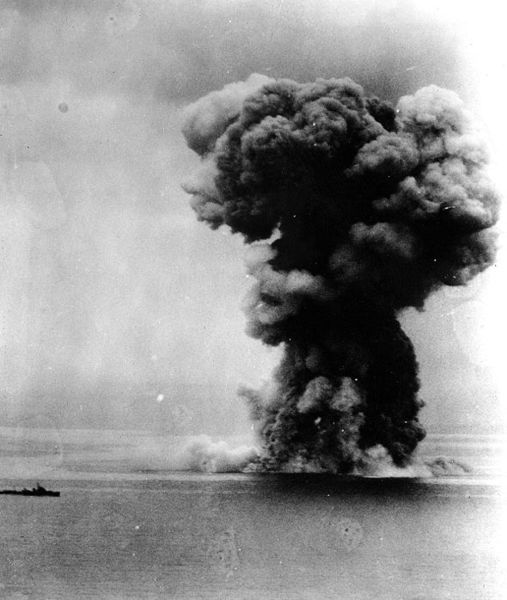
By April 1944 Japan’s Navy was decimated and U.S. Naval Forces were raiding Mainland Japan. When the United States landed on Okinawa the Japanese Navy and air force launched wave after wave of Kamikaze attacks on the ships in the waters around the island. Yamato, along with Light Cruiser Yahagi and eight destroyers were designated the Surface Special Attack Force and loaded with a full load of ammunition but only enough fuel for a one way trip got underway on April 6th. The mission was for Yamato to reach Okinawa, beach herself and serve as an “unsinkable” gun battery until she was destroyed. The force was spotted by U.S. Navy flying boats hours after their departure and on April 7th over 400 aircraft launched from Task Groups 58.1 and 58.3. The first wave began its attack at 1230 and by 1400 the ship was mortally wounded. Stuck by at least 8 torpedoes and 11 bombs she was dead in the water and began to capsize at 1405. At 1420 she turned turtle and at 1423 exploded when her forward blew up sending up a mushroom cloud nearly 20,000 feet.  Under 300 of her crew of nearly 2400 were rescued.

The End: Yamato Explodes

The ships were the largest battleships ever built, designed when naval experts planned for a war where the battleship would rule and aircraft carriers play a supporting role. Instead both never faced enemy battleships in combat and both were destroyed by the weapon that the battleship admirals had discounted. It is somewhat fitting that each was commissioned shortly after the triumphs of Japanese and American Naval air power at Pearl Harbor and Midway. However they have attained an almost mythic status in naval lore and are symbols to many Japanese of the sacrifice and futility of the war. Both of the cities where the ships were constructed were destroyed by Atomic bombs. They are tragic reminders of the cost of war in human lives, suffering, economic cost and destruction.

In a sense their poetic names and the myth ascribed to them are a tragic requiem to the Japanese Empire and the cost of war. They and their brave sailors were sacrificed when the war was already for all intents and purposes lost. They, especially the Yamato were sacrificed for no military purpose save a convoluted sense of honor.

Let us pray that it never happens again.

Peace

Padre Steve+

3 Comments

Filed under Military, Navy Ships, world war two in the pacific

Compounding Disaster: The Loss of the Mikuma at Midway

Mikuma as Built

Admiral Isoroku Yamamoto was still attempting to digest the calamity that had befallen Admiral Nagumo’s carrier task force. In the shocked atmosphere of the mighty Super Battleship Yamato’s command center the Staff of the Combined Fleet was hastily attempting to arrive at a solution which might reverse the disaster and bring victory.  Admiral Ugaki, Yamamoto’s Chief of Staff despite his personal doubts ordered Vice Admiral Nobutake Kondo to prepare for a night surface engagement with the US Fleet and to dispatch a strong surface force to bombard Midway in order to prevent the Americans from reinforcing it and to prevent its further use against his forces should the invasion move forward.  Kondo organized his fleet to attempt to find the American carriers and bring them to battle before dawn.

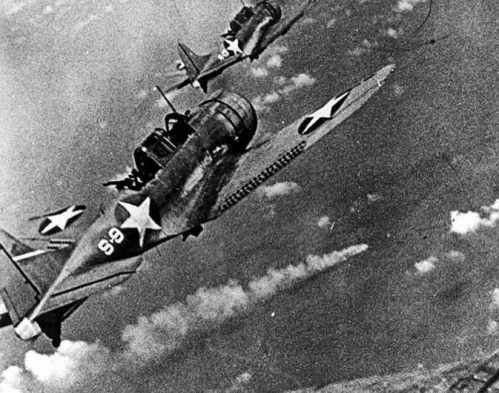
SBD Dauntless Dive Bombers from Hornet attacking Mogami and Mikuma 

Kondo detached Vice Admiral Takeo Kurita’s Close Support Group composed of Cruiser Seven, the fastest and most modern cruisers in the Imperial Navy proceed at full speed to attack Midway.  Kurita’s cruisers, the Kumano, Suzuya, Mikuma and Mogami were each armed with 10 8” guns and were escorted by the two destroyers.

Kurita’s force was 80 miles from Midway when Yamamoto realizing that his plan was unrealistic ordered Kondo’s forces to retreat and rendezvous with his main force shortly after midnight. The order was met with a measure of relief by most officers in the force and the force turned northwest and steamed at 28 knots to meet the Main Body.  At 0215 lookouts on Kumano sighted a submarine on the surface which turned out to be the USS Tambor which had been shadowing the group, and made a signal for the force to make a emergency 45 degree turn to port.

During the process Mogami’s Navigator took over from the watch to oversee the tricky maneuver. In doing so he thought that there was too much distance between him and the ship ahead, the Mikuma. So he adjusted his course to starboard and then realized his mistake. The ship he thought was Mikuma was actually Suzuya and Mikuma was directly ahead. As soon as he recognized his mistake Mogami’s Navigator ordered a hard turn to port and reversed the engines but it was too late. Mogami’s bow crashed into Mikuma’s port quarter. The impact caused minimal damage to Mikuma but Mogami was heavily damaged. She lost 40 feet of her bow and everything else was bent back to port at right angles to her number one turret.

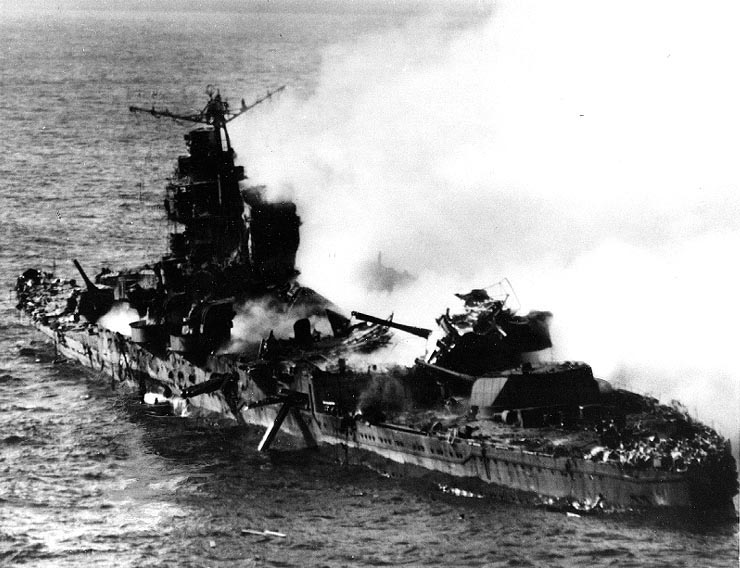
Ariel Photo of Mikuma damaged

Mogami’s damage control teams isolated the damage and worked the ship up to 12 knots. This was not fast enough for Kurita to make his rendezvous so he left Mikuma and the destroyers to escort Mogami while he steamed ahead with Kumano and Suzuya.

Mikuma adrift and sinking. The wreckage of Captain Fleming’s Vindicator can be seen on X- Turret 

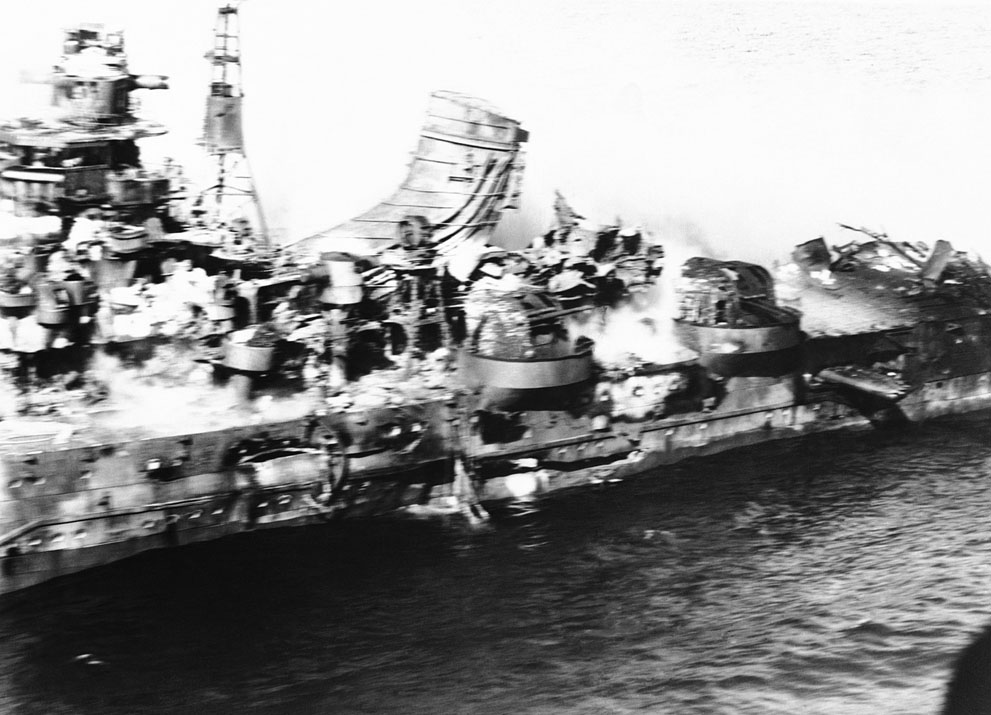
Tambor’s skipper LCDR John W Murphy sent a contact report at 0300 reporting “many unidentified ships.” He followed this with more detailed information and the Americans on Midway began to launch its remaining serviceable aircraft to attack the threat. A flight of B-17 Bombers launched at 0430 could not find the Japanese ships but at 0630 a PBY Catalina found the Japanese and radioed Midway “two Japanese battleships streaming oil.”  The remaining 12 aircraft of VSMB-241 under command of Captain Marshall Tyler a mix of SBD Dauntless and SB2U Vindicators took off at 0700. His force attacked at 0808 scoring no hits but Captain Richard Fleming, his Vindicator on fire dropped his bomb and then crashed his aircraft into Mikuma’s after turret. The fire was sucked down air intakes into the starboard engine room with disastrous results. The engineers were suffocated by the smoke and fumes and Mikuma was greatly reduced in speed.

Close up shot of Mikuma with survivors visible 

The two ships limped northwest at 12 knots escorted by the destroyers and were unmolested through much of the day with the exception of an ineffective attack by the B-17s at 0830. The following morning the Dive Bombers of Enterprise and Hornet were at work and found the crippled Japanese ships. Waves over US Dive Bombers attacked the cruisers throughout the morning and into the afternoon. Mikuma was hit at least 5 times and secondary explosions of ammunition and torpedoes doomed the ship. Mogami was also heavily damaged but remained afloat while both destroyers received bomb damage.  At sunset the tough cruiser rolled over to port and sank into the Pacific. Mogami whose damage control teams had performed miracles to keep their ship afloat helped the destroyers rescue survivors from Mikuma.  Only 240 were rescued with 650 officers and sailors going down with the ship.

The action against the cruisers ended the combat operations at Midway. The Japanese ships were doomed by Yamamoto’s decision to try to salvage victory from defeat and the error of Mogami’s Navigator during the emergency turn when Kumano sighted Tambor. The only thing that kept the result from being total was the efficacy of Mogami’s damage control teams.  Mogami was out of the war for 10 months following repairs and conversion to an Aircraft Cruiser in which her aft turrets were removed to increase the number of float plane scouts that the ship could carry. She rejoined the fleet in April 1943 and was sunk following the Battle of the Surigao Strait on 25 October 1944.

The Mogami and Mikuma proved to be tough ships to sink. Unprotected by friendly aircraft they fought hard against the unopposed American Dive Bombers. They suffered massive damage from 500 and 1000 pound bombs, both direct hits and near misses. Mogami was saved by the skill of her damage control teams and the foresight of her Damage Control Officer to jettison her torpedoes so that they did not explode and compound the damage wrought by the American bombs.

For the Americans it was a fitting end to the Battle of Midway and revenge for the Battle of the Sunda Strait where Mikuma and Mogami sank the USS Houston.

Peace

Padre Steve+

3 Comments

Filed under History, Military, Navy Ships, US Navy, world war two in the pacific

70 Years: Celebrating the Miracle at Midway

It is hard to imagine now but in June of 1942 it seemed a good possibility that the Americans and British could be on the losing side of the Second World War.

In June 1942 the Japanese onslaught in the Pacific appeared nearly unstoppable. The Imperial Navy stormed across the Pacific and Indian Oceans in the months after Pearl Harbor decimating Allied Naval forces that stood in their way.  The British Battleships HMS Prince of Wales and HMS Repulse were sunk by land based aircraft off of Singapore. A force of Royal Navy cruisers and the Aircraft Carrier HMS Hermes were sunk by the same carriers that struck Pearl Harbor in the Indian Ocean.  Darwin Australia was struck with a devastating blow on February 19th and on February 27th the Japanese annihilated the bulk of the American, British, Dutch and Australian naval forces opposing them at the Battle of the Java Sea. American forces in the Philippines surrendered on May 8th while the British in Singapore surrendered on February 15th.

In only one place had a Japanese Naval task force been prevented from its goal and that was at the Battle of the Coral Sea.  Between 4-8 May the US Navy’s Task Force 11 and Task Force 17 centered on the Carriers USS Lexington and USS Yorktown prevented a Japanese invasion force from taking Port Moresby. Their aircraft sank the light carrier Shoho, damaged the modern carrier Shokaku and decimated the air groups of the Japanese task force. But it was the unexpected raid by US Army Air Corps B-25 Bombers launched from the USS Hornet under command of Colonel Jimmy Doolittle on April 18th 1942 which embarrassed Yamamoto so badly that he ordered the attack to take Midway and destroy the remaining US Naval power in the Pacific.

In May US Navy code breakers discovered the next move of the Imperial Navy an attack on Midway Island and the Aleutian islands.   Since the occupation of Midway by Japanese forces would give them an operational base less than 1000 miles from Pearl Harbor Admiral Chester Nimitz committed the bulk of his naval power, the carriers USS Enterprise CV-6, USS Yorktown CV-5 and USS Hornet CV-8 and their 8 escorting cruisers and 15 destroyers.  His force of 26 ships with 233 aircraft embarked to defend Midway while a force of 5 cruisers and 4 destroyers was dispatched to cover the Aleutians.  Midway itself had a mixed Marine, Navy and Army air group of 115 aircraft which included many obsolete aircraft, 32 PBY Catalina Flying Boats and 83 fighters, dive bombers, torpedo planes and Army Air Force bombers piloted by a host of inexperienced but resolute airmen.

The Japanese Fleet was led by Admiral Isoroku Yamamato and was built around the elite First Carrier Striking Group composed of the Pearl Harbor attackers Akagi, Kaga, Soryu and Hiryu. Led by Vice Admiral Chuichi Nagumo its highly trained and combat experienced air groups composed of 273 aircraft. This force was escorted by 2 Battleships, 3 Cruisers 12 Destroyers. Yamamoto commanded a force of  2 light carriers, 5 Battleships, 11 cruisers and 27 destroyers.  Meanwhile a  force of 4 battleships, 12 destroyers assigned screen to the Aleutian invasion force which was accompanied by 2 carriers 6 cruisers and 10 destroyers. The other carriers embarked a further 114 aircraft.  The Japanese plan was ambitious but it was so ambitious that the Japanese Task forces were scattered over thousands of square miles of the Northern Pacific Ocean from which they could not rapidly come to the support of each other.

With the foreknowledge provided by the code breakers the US forces hurried to an intercept position northeast of Midway. They eluded the Japanese submarine scout line which the Japanese Commander Admiral Yamamoto presumed would find them when they sailed to respond to the Japanese attack on Midway.  Task Force 16 with the Enterprise and Hornet sailed first under the command of Rear Admiral Raymond A Spruance in place of the ailing William “Bull” Halsey. Task Force 17 under Rear Admiral Frank “Jack” Fletcher was built around the Yorktown which had been miraculously brought into fighting condition after suffering heavy damage at Coral Sea. Fletcher assumed overall command by virtue of seniority and Admiral Nimitz instructed his commanders to apply the principle of “calculated risk” when engaging the Japanese as the loss of the US carriers would place the entire Pacific at the mercy of the Japanese Navy.

On June 3rd a PBY Catalina from Midway discovered the Japanese invasion force and US long range bombers launched attacks against but inflicted no damage. On the morning of the 4th the Americans adjusted their search patterns in and the Japanese came into range of Midway and commenced their first strike against the island.  In response land based aircraft from Midway attacked the Japanese carrier force taking heavy casualties and failing to damage the Japanese task force.

The American Carrier task forces launched their strike groups at the Japanese fleet leaving enough aircraft behind of the Combat Air Patrol and Anti-submarine patrol.  As the Americans winged toward the Japanese fleet the Japanese were in confused.  A scouting report by an aircraft that had been delayed at launch discovered US ships but did not identify a carrier until later into the patrol.  This was the Yorktown and TF 17. The Japanese attempted to recover their strike aircraft and prepare for a second strike on the island and then on discovery of the carrier embarked on the task of unloading ground attack ordnance in favor of aerial torpedoes and armor piercing bombs.  The hard working Japanese aircrew did not have time to stow the ordnance removed from the aircraft but by 1020 they had the Japanese strike group ready to launch against the US carriers.

As the Japanese crews worked the Japanese carriers were engaged in fending off attacks by the US torpedo bomber squadrons, VT-6 from Enterprise, VT-8 from Hornet and VT-3 from Yorktown.  The Japanese Combat Air Patrol ripped into the slow, cumbersome and under armed TBD Devastators as they came in low to launch their torpedoes.  Torpedo Eight from Hornet under the command of LCDR John C Waldron pressed the attack hard but all 15 of the Devastators were shot down.  Only Ensign George Gay’s aircraft was able to launch its torpedo before being shot down and Gay would be the sole survivor of the squadron.

Torpedo 6 under the command of LCDR Eugene Lindsey suffered heavy casualties losing 10 of 14 aircraft with Lindsey being one of the casualties.  The last group of Devastators to attack was Torpedo 3 under the command of LCDR Lem Massey from the Yorktown.  These aircraft were also decimated and Massey killed but they had drawn the Japanese Combat Air Patrol down to the deck leaving the task force exposed to the Dive Bombers of the Enterprise and Yorktown.

There had been confusion among the Americans as to the exact location of the Japanese Carriers, the Bombing 8 and Scouting 8 of Hornet did not find the carriers and had to return for lack of fuel with a number of bombers and their fighter escort having to ditch inn the ocean and wait for rescue.  The Enterprise group under LCDR Wade McClusky was perilously low on fuel when the wake of a Japanese destroyer was spotted.  McClusky followed it to the Japanese Task Force.  The Yorktown’s group under LCDR Max Leslie arrived about the same time.  The found the skies empty of Japanese aircraft. Aboard the Japanese ships there was a sense of exhilaration as each succeeding group of attackers was brought down and with their own aircraft ready to launch and deal a fatal blow to the American carrier wondered how big their victory would be.

At 1020 the first Zero of the Japanese attack group began rolling down the flight deck of the flagship Akagi, aboard Kaga aircraft were warming up as they were on the Soryu.  The unsuspecting Japanese were finally alerted when lookouts screamed “helldivers.” Wade McClusky’s aircraft lined up over the Akagi and Kaga pushing into their dives at 1022. There was a bit of confusion when the bulk of Scouting 6 joined the attack of Bombing 6 on the Kaga.  The unprepared carrier was struck by four 1000 pound bombs which exploded on her flight deck and hangar deck igniting the fully fueled and armed aircraft of her strike group and the ordnance littered about the hangar deck.  Massive fires and explosions wracked the ship and in minutes the proud ship was reduced to an infernal hell with fires burning uncontrollably. She was abandoned and would sink at 1925 taking 800 of her crew with her.

LT Dick Best of Scouting 6 peeled off from the attack on Kaga and shifted to the Japanese flagship Akagi. On board Akagi were two of Japans legendary pilots CDR Mitsuo Fuchida leader of and CDR Minoru Genda the architect of the Pearl Harbor attack and subsequent string of Japanese victories.  Both officers were on the sick list and had come up from sick bay to watch as the fleet was attacked.  Seeing Kaga burst into flames they stood mesmerized until Akagi’s lookouts screamed out the warning “helldivers” at 1026.  Best’s aircraft hit with deadly precision landing tow of their bombs on Akagi’s flight deck creating havoc among the loaded aircraft and starting fires and igniting secondary explosions which turned the ship into a witch’s cauldron.  By 1046 Admiral Nagumo and his staff were forced to transfer the flag to the cruiser Nagara as Akagi’s crew tried to bring the flames under control. They would do so into the night until nothing more could be done and abandoned ship at 2000.  Admiral Yamamoto ordered her scuttled and at 0500 on June 5th the pride of the Japanese carrier force was scuttled.

VB-3 under LCDR Max Leslie from the Yorktown stuck the Soryu with 17 aircraft, only 13 of which had bombs due to an electronic arming device malfunction on 4 of the aircraft including the squadron leader Leslie.  Despite this they dove on the Soryu at 1025 hitting that ship with 3 and maybe as many as 5 bombs. Soryu like her companions burst into flames as the ready aircraft and ordnance exploded about her deck. She was ordered abandoned at 1055 and would sink at 1915 taking 718 of her crew with her.

The remaining Japanese flattop the Hiryu attained the same fate later in the day after engaging in an epic duel with the Yorktown which her aircraft heavily damaged. Yorktown was abandoned after a second strike but when she did not sink her her returned to attempt to save her. However despite their efforts she and the destroyer USS Hamman DD-412 were torpedoed by the Japanese Submarine I-168. Hamman sank almost immediately with heavy loss of life while Yorktown sank on the morning of the 7th.

It was quite miraculous what happened at Midway in those five pivotal minutes.  Authors have entitled books about Midway Incredible Victory and Miracle at Midway and the titles reflect the essence of the battle.  A distinctly smaller force defeated a vastly superior fleet in terms of experience, training and equipment and when it appeared that the Japanese Fleet would advance to victory in a span of less than 5 minutes turn what looked like certain defeat into one of the most incredible and even miraculous victories in the history of Naval warfare.  In those 5 minutes history was changed in a breathtaking way.  While the war would drag on and the Japanese still inflict painful losses and defeats on the US Navy in the waters around Guadalcanal the tide had turned and the Japanese lost the initiative in the Pacific never to regain it.   The Japanese government hid the defeat from the Japanese people instead proclaiming a great victory while the American government could not fully publicize the information that led to the ability of the US Navy to be at the right place at the right time and defeat the Imperial Navy.

When one looks at implications of the victory it did a number of things. First it changed the course of the war in the Pacific probably shortening it by a great deal.  Secondly it established the aircraft carrier and the fast carrier task force as the dominant force in naval warfare which some would argue it still remains.  Finally those five minutes ushered in an era of US Navy dominance of the high seas which at least as of yet has not ended as the successors to the Enterprise, Hornet and Yorktown ply the oceans of the world and the descendants of those valiant carrier air groups ensure air superiority over battlefields around the world.

Peace

Padre Steve+

4 Comments

Filed under History, Military, Navy Ships, US Navy, world war two in the pacific

The Great Marianas Turkey Shoot

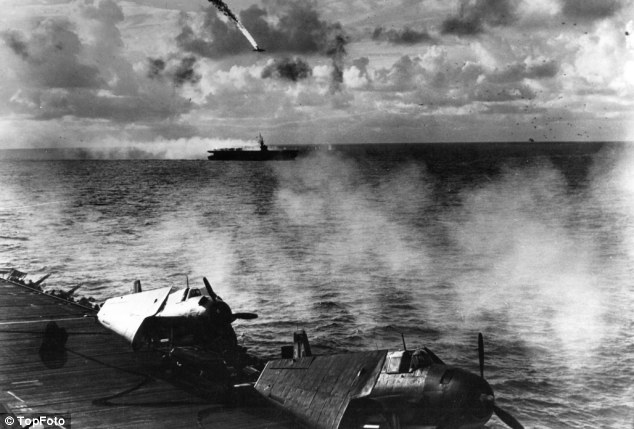
U.S. Navy personnel observe the Air Battle from a Carrier

The Battle of the Philippine Sea of 19-20 June 1944 was the largest carrier battle in history.  Twenty four aircraft carriers, 15 American and 9 Japanese embarking over 1400 aircraft dueled in the Central Pacific in a battle that so decimated Japanese Naval Aviation that it never recovered. The battle and the subsequent fall of Saipan brought down the government of General Tojo and was the beginning of the collapse of the Japanese Empire and the “Greater Asia Co-Prosperity Sphere.”  

http://dsc.discovery.com/videos/destroyed-in-seconds-marianas-turkey-shoot.html

In late 1943 the Japanese realized that they needed to recover the initiative in the Pacific.  Between the Battle of the Coral Sea and the Battle of Santa Cruz Japanese Naval aviation suffered crippling losses especially among the elite pilots and aircrews with who they had begun the war.  These losses were compounded when the Navy attempted to support the operations of the Army to defend the Solomons and New Guinea.  Squadrons sent to battle the United States Navy, Marine Corps and Army Air Corps suffered at the hands of the every more skilled and well equipped American fighter squadrons the victims of which included Admiral Isoruku Yamamoto the Commander of the Combined Fleet when the Betty bomber that he was traveling on was ambushed by U.S. Army Air Corps P-38 Lightening fighters.

Vice Admiral Jisaburō Ozawa

By late 1943 the Japanese were attempting to train new pilots and aircrews to man the carriers of the Combined Fleet’s Carrier Striking Forces.  Admiral Soemu Toyoda, the new commander of the Combined Fleet and its third commander in less than a year developed “Plan A-Go” as a means to mass carrier and land based aviation assets to defeat the Fast Carrier Task Forces of the United States Navy.  The rebuilt Carrier Striking Groups built around 9 carriers embarking 473 aircraft was commanded by Vice Admiral Jisaburō Ozawa who had taken over from Vice Admiral Chuichi Nagumo.

D4Y3 “Judy” Dive Bomber

The Japanese discerned the intentions of the Americans when American Carrier aircraft struck Saipan and Guam. The Japanese had expected the Americans to strike further south and the Marianas had few land-based aircraft in the area. Toyoda made the decision to engage the Americans and ordered the fleet to attack. American submarines discovered the gathering Japanese forces. The Japanese forces were assembled by the 17th and by the 18th the 5th Fleet under the command of Admiral Raymond Spruance spearheaded by Task Force 58 Commanded by Vice Admiral Marc Mitscher had assembled west of Saipan to meet the Japanese.  The Americans fielded 15 carriers including 9 Fleet Carriers of which 6 were the new Essex Class Fleet Carriers which embarked 956 aircraft.

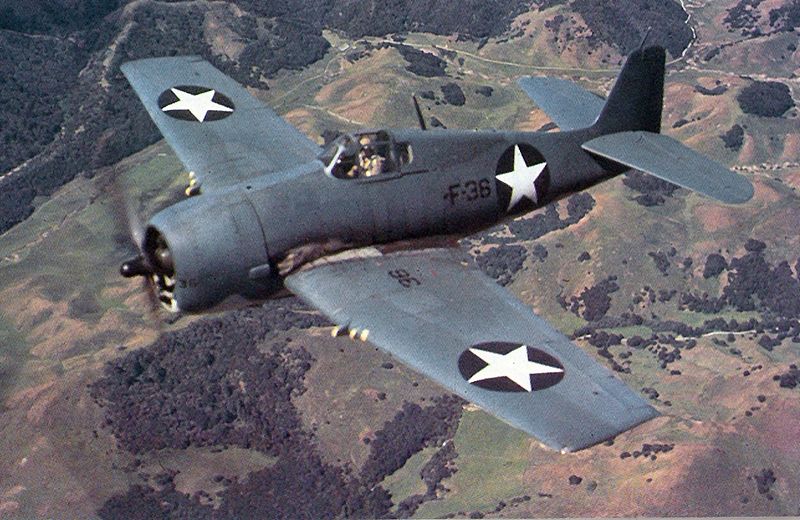
The F6F Hellcat cemented its place as the premier fighter plane of the Pacific war during the “Turkey Shoot”

The Americans held both a quantitative and qualitative advantage against the Japanese. The American fighter squadrons were equipped with the F6F Hellcat which was far superior to the now obsolescent Japanese Zero fighters and their pilots and aircrews were now more experienced and proficient than the newly minted Japanese aviators who by and large had little combat experience and were flying inferior aircraft.  The Japanese had not planned for a long war and had done little to systemically address the heavy losses that their force experienced during 1942 and 1943 at Coral Sea, Midway, Eastern Solomons, Santa Cruz and in the Solomons campaign.

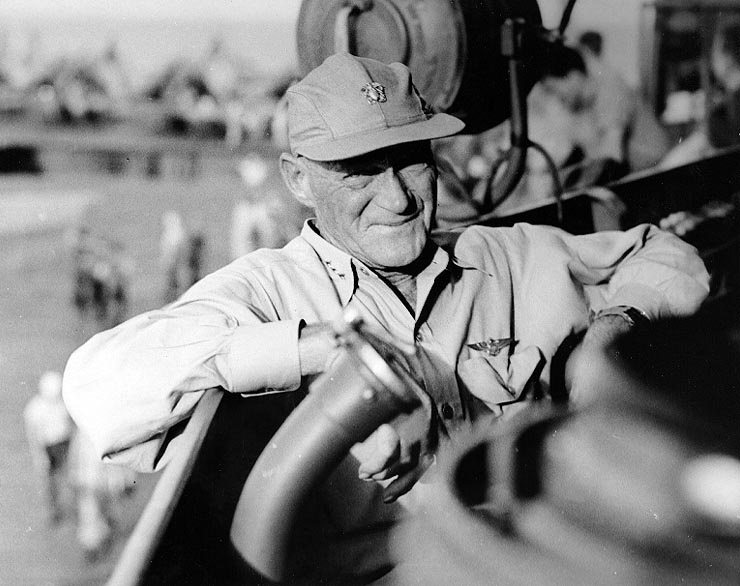
Vice Admiral Marc Mitscher aboard the USS Lexington

Mitscher desired to move aggressively against the Japanese. However he was overruled by Spruance who acting on the advice of his Battle Line Commander Vice Admiral Willis Lee decided that a possible night surface action with the Japanese was not desirable. Spruance instead directed Mitscher to be ready to defend against Japanese air strikes knowing that his carriers and carrier based air groups was more than a match for the Japanese air groups.   Spruance has been criticized for his decision but the words of Willis Lee, a veteran of the Naval Battle of Guadalcanal where he defeated a Japanese force sinking the Battleship Kirishima.  He prevailed in his flagship the USS Washington but losing three of four escorting destroyers and seeing his second battle wagon the USS South Dakota heavily damaged. A night surface engagement was not worth the risk as in Lee’s eyes it evened the playing field for the Japanese and took away the American air power advantages.

A Japanese aircraft goes down in flames

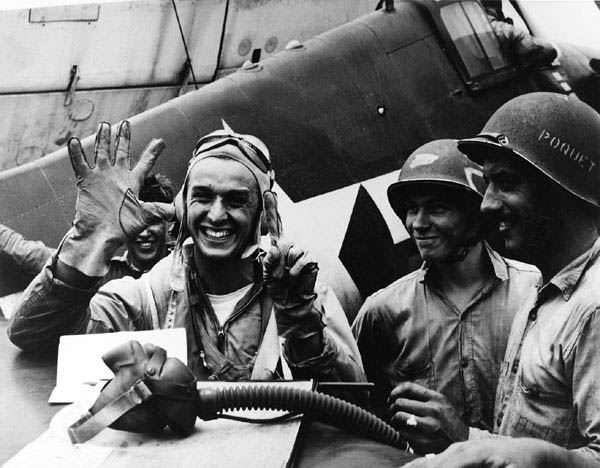
The Japanese began the action on the 19th sending successive attack waves against Task Force 58. They were met by massed formations of Hellcats vectored in by air controllers in the Combat Information Centers of the American carriers using their superior air search radar systems.  In less than two hours well over 200 Japanese aircraft were downed by the Hellcats.  Lieutenant Alexander Vraicu shot down 6 “Judy” dive bombers in minutes before low on fuel he returned to the USS Lexington.

Lieutenant Alexander Vraicu holds up six fingers on board the USS Lexington

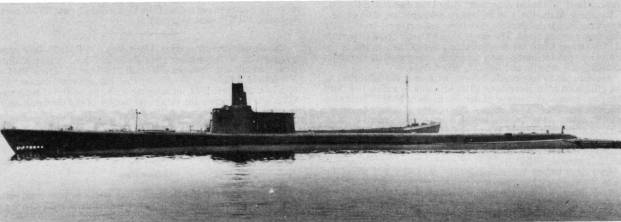
While the Hellcats were chewing up the Japanese squadrons the American submarines USS Albacore and USS Cavalla each sank a Japanese Fleet Aircraft Carrier.  The Albacore hit the Ozawa’s flagship, the new Tiaho with a torpedo which caused minimal damage, but ruptured fuel lines. The Japanese damage control officer opened vents in the ship which allowed the fumes to spread throughout the carrier. They were ignited by a generator causing massive explosions and forcing Ozawa to abandon his flagship. Tiaho would sink by late afternoon after being ripped apart by a series of massive explosions taking with her 1650 of 1750 officers and crew. Cavalla hit the Pearl Harbor veteran Shokaku with a spread of three torpedoes causing that ship to burst into flames with aircraft and ordnance adding to the conflagration. A massive explosion ripped through the ship causing her to sink with a loss of over 1200 officers and crew.

The Japanese flagship Tiaho and her killer the USS Albacore

Toyoda desired that Ozawa retire from the battle before he suffered more losses but Ozawa wanted to stay around and hit the Americans with everything that he had left. The Americans sailed west during the night to seek out the Japanese Fleet. It took the majority of the day to find the Japanese. With only 75 minutes of daylight remaining Mitscher launched a strike despite the risk to his aircrew the majority whom were not trained in night landings.  The American strike sank the carrier Hiyo and two tankers and damaged the carriers Zuikaku, Chitoyda and Junyo as well as the battleship Haruna.  By the end of the day Ozawa had 35 aircraft in flyable condition.

The Japanese Fleet under attack, carrier Zuikaku and two destroyers on June 20th

The final part of the drama was the return of the American strike group to the carriers. Knowing that if he maintained darken ship he would lose many aircraft and the men that flew them Mitscher ordered that the fleet turn on its lights. This act though incredibly risky helped bring the majority of the aircraft to land or ditch near the task force.  The Americans lost less than 100 aircraft many due to the night landings and many of the aircrew were rescued. The Japanese also lost nearly 200 land based aircraft.

Admiral Raymond Spruance

The battle was the death-kneel of Japanese Naval Aviation. Later in the year the carriers again under Ozawa sailed against the Americans only this time they were a decoy force at the Battle of Leyte Gulf, a role that they succeeded in admirably. The American carriers now had free run of the Pacific only opposed by land based aircraft many used in a Kamikaze role until the end of the war. These would cause fearful losses among the American ships heavily damaging a number of carriers.

The battle is often forgotten by due to its proximity to the Normandy landings but was a significant step in the fight against Japan. The islands captured by the Americans, Saipan, Tinian and Guam would provide major sea and air staging areas for the final assault against Japan. Tinian would become the base of many Army Air Corps B-29 “Superfortress” bombers including those that dropped the Atomic bombs less than 14 months later. It was a turning point both militarily and politically. With the fall of the Tojo government the Japanese leaders began to slowly tell the truth about wartime setbacks and losses to a people that it had lied to since their invasion of China and occupation of Mongolia.  It was a setback that even Tojo and the highest leadership of Japan knew that they could not recover.

5 Comments

Filed under History, Military, US Navy, world war two in the pacific

An Invincible Fleet and a Flawed Plan: The Japanese at Midway

Note: This is the first of a series of articles coming over the next few days about the Battle of Midway, a major turning point of the Second World War.

The Battleship Yamato, Flagship of the Combined Fleet and symbol of Japanese Naval Power

The Imperial Japanese Navy under the command of Admiral Isoruku Yamamoto had been humiliated. On April 18th 1942 16 B-25 bombers under the command of Colonel Jimmy Doolittle were launched from the deck of the USS Hornet and bombed Tokyo.  Though the physical damage was insignificant the psychological impact was massive on the Japanese military establishment. Yamamoto and his deputy Rear Admiral Matome Ugaki had explored the possibility of attacking Midway in the early months of 1942 as the Japanese armed forces competed with each other to determine an overall strategy for the war effort. The Army was insistent on a China strategy while the Navy preferred expansion in the Western, South and Central Pacific.  Yamamoto’s idea envisioned seizing Midway and using it as a forward base from which an invasion of Hawaii could be mounted as well as the bait to draw the carrier task forces of the U.S. Navy into battle and destroy them.

Admiral Isoruku Yamamoto, CinC Combined Fleet

The Japanese certainly had the forces to accomplish the mission outnumbering the U.S. Navy which had taken heavy losses at Pearl Harbor and in the Far East.  Following the Doolittle raid Yamamoto went ahead with the plan to invade Midway. The operation, named MI was coupled with an invasion of the islands of Attu and Kiska in the Aleutians which would form a picket line to prevent future attacks on the Japanese mainland. Fuchida

Yamamoto’s plan was not without its critics, the majority of the Staf of the First Air Fleet embarked on the First Carrier Striking Force was not in favor including the leader of the Pearl Harbor attack Commander Mitsuo Fuchida who considered it “grammar school strategy.”   Despite objections from them as well as his Fleet Operations Officer Yamamoto directed that the plan be implemented.  The plan was to have the First Carrier Striking Force attack Midway and reduce its defenses so that the Invasion Force could undertake the task of invading and occupying Midway.  Supporting these forces was the Main Body built around Battleship Division One included Yamamoto’s flagship the 72,000 ton behemoth Yamato.  Another strong force was assigned to the Aleutian operation. The task forces were spread out across the North Pacific and would not able to provide mutual support to each other in a timely manner.

Japanese Forces were organized in the following manner.

Main Body, Admiral Yamamoto

BatDiv 1, Admiral Yamamoto

BB Yamato (flagship, Yamato), Captain

BB Nagato (Nagato), Captain Hideo Yano

BB Mutsu (Nagato), Captain Teijiro Yamazumi

Carrier Group, Captain Kaoru Umetani

CVL Hosho (Hosho), Captain Umetani

Air Unit (8 bombers), Lieutenant Yoshiaki Irikiin

DD Yukaze (Minekaze), Lieutenant Commander Shizuka Kajimoto

Special Force, Captain Kaku Harada

Chiyoda (seaplane carrier, Chitose), Captain Harada

Nisshin (seaplane carrier, Nisshin), Captain Katsumi Komazawa

Screen (DesRon 3), RADM Shintaro Hashimoto

CL Sendai (flagship, Jintsu), Captain Nobue Morishita

DesDiv 11, Captain Kiichiro Shoji

DD Fubuki (Fubuki), Captain Shizuo Yamashita

DD Shirayuki (Fubuki), Captain Taro Sugahara

DD Hatsuyuki (Fubuki), Captain Lieutenant Commander Junnari Kamiura

DD Murakumo (Fubuki), Captain Commander Hideo Higashi

DesDiv 19, Captain Ranji Oe

DD Isonami (Fubuki), Commander Ryokichi Sugama

DD Uranami (Fubuki), Commander Tsutomu Hagio

DD Shikinami (Fubuki), Commander Akifumi Kawahashi

DD Ayanami (Fubuki), Commander Eiji Sakuma

1st Supply Unit, Captain Shigeyasu Nishioka

Naruto (Oiler), Captain Nishioka

Toei Maru (Oiler)

It was Yamamoto’s plan to use this force to polish off U.S. Forces that would only enter the fight after he had taken Midway. Despite the success of his carrier task forces at his heart Yamamoto was still a Battleship Sailor and believed that his battleships would be the deciding factor in the final destruction of the U.S. Navy forces in the Pacific.  This force could be augmented by the Aleutian Guard Force, detached from the Main Body under the command of Vice Admiral Shiru Takasu and was composed of the following fleet units:

GUARD (Aleutians Screening) FORCE, VADM Shiro Takasu in Hyuga

Chief of Staff, Rear Admiral Kengo Kobayashi

BatDiv 2

BB Hyuga (flagship, Hyuga), Captain Chiaki Matsuda

BB Ise (Hyuga), Captain Isamu Takeda

BB Fuso (Fuso), Captain Mitsuo Kinoshita

BB Yamashiro (Fuso), Captain Gunji Kogure

Screen, RADM Fukuji Kishi

CruDiv 9, Rear Admiral Kishi

CL Kitakami ( flagship, Kuma), Captain Saiji Norimitsu

CL Oi (Kuma), Captain Shigeru Narita

DesDiv 20, Captain Yuji Yamada

DD Asagiri (Fubuki), Commander Nisaburo Maekawa

DD Yugiri (Fubuki), Captain Masayoshi Motokura

DD Shirakumo (Fubuki), Commander Toyoji Hitomi

DD Amagiri (Fubuki), Captain Buichi Ashida

DesDiv 24, Captain Yasuji Hirai

DD Umikaze (Shiratsuyu), Commander Nagahide Sugitani

DD Yamakaze (Shiratsuyu), Commander Shuichi Hamanaka

DD Kawakaze (Shiratsuyu), Commander Kazuo Wakabayashi

DD Suzukaze (Shiratsuyu), Commander Kazuo Shibayama

DesDiv 27, Captain Matake Yoshimura

DD Ariake (Hatsuharu), Commander Shoichi Yoshida

DD Yugure (Hatsuharu), Commander Kiyoshi Kamo

DD Shigure (Shiratsuyu), Commander Noboru Seo

DD Shiratsuyu (Shiratsuyu), Lieutenant Commander Kimmatsu Hashimoto

2nd Supply Unit, Captain Matsuo Eguchi

San Clemente Maru (oiler), Captain Eguchi

Toa Maru (oiler)

The force that was the true heart of the Japanese Navy in early 1942 was the First Carrier Striking Force which at Pearl Harbor and in the months following had run roughshod over all Allied opposition.  Initially composed of 6 flattops the force was reduced to four when the Shokaku was heavily damaged and Zuikaku’s air group decimated at the Battle of the Coral Sea on 8 May 1942.  Nevertheless it was still a formidable and experienced force in its own right.  Commanded by Vice Admiral Chuichi Nagumo it was composed of the following units:

FIRST CARRIER STRIKING FORCE (1st Air Fleet), VADM Chuichi Nagumo

Carrier Group, VADM Nagumo

CarDiv 1

CV Akagi  (flagship, Akagi) 21 Zero fighters, 21 dive bombers, 21 torpedo bombers

CV Kaga (Kaga) 21 Zero fighters, 21 dive bombers, 30 torpedo bombers

CarDiv 2 — RADM Tamon Yamaguchi

CV Hiryu (flagship, Hiryu) 21 Zero fighters, 21 dive bombers, 21 torpedo bombers

CV Soryu (Hiryu) 21 Zero fighters, 21 dive bombers, 21 torpedo bombers

Support Group — RADM Hiroaki Abe CruDiv 8

CA Tone (flagship, Tone)

CA Chikuma (Tone)

2nd Section, BatDiv 3 —

BB Haruna (Kongo)

BB Kirishima (Kongo)

Screen (DesRon 10) — RADM Susumu Kimura

CL Nagara (flagship, Nagara)

DesDiv 4 — 4 DDs

DesDiv 10 — 3 DDs

DesDiv 17 — 4 DDs

Supply Group — 5 oilers, 1 DD

The Invasion Force under the command of Vice Admiral Nobutake Kondo was a formidable surface strike group in its own right and was built around 2 Fast Battleships, 9 Heavy Cruisers and a light carrier.

MIDWAY INVASION FORCE, (2nd Fleet), VADM Nobutake Kondo

Invasion Force Main Body

CruDiv 4 (less 2nd section)

CA Atago (flagship, Takao),

CA Chokai (Takao)

CruDiv 5 (less 2nd section)

CA Myoko (Myoko)

CA Haguro (Myoko)

BatDiv 3 (less 2nd section) —

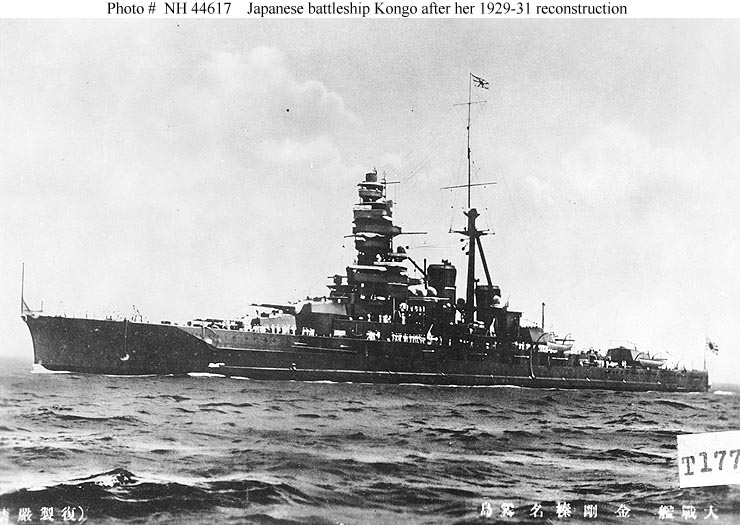
BB Kongo (Kongo)

BB Hiei (Kongo)

Screen (DesRon 4) — RADM Shoji Nishimura

CL Yura (flagship, Nagara)

DesDiv 2 — 4 DDs

DesDiv 9 — 3 DDs

Carrier Group Zuiho (CVL) — 12 Zero fighters, 12 torpedo bombers; 1 DD

Supply Group — 4 oilers, 1 repair ship

Close Support Group — VADM Takeo Kurita

CruDiv 7

CA Kumano (flagship, Mogami)

CA Suzuya (Mogami)

CA Mikuma (Mogami)

CA Mogami (Mogami)

DesDiv 8 — 2 DDs 1 oiler

Transport Group — RADM Raizo Tanaka

12 transports carrying troops

3 patrol boats carrying troops

1 oiler

Escort (DesRon 2) — RADM Tanaka

CL Jintsu (flagship, Jintsu)

DesDiv 15 — 2 DDs

DesDiv 16 — 4 DDs

DesDiv 18 — 4 DDs

Seaplane Tender Group — RADM Riutaro Fujita

Seaplane Tender Div 11

Chitose (CVS) — 16 fighter seaplanes, 4 scout planes

Kamikawa Maru (AV) — 8 fighter seaplanes, 4 scout planes

1 DD;

1 patrol boat carrying troops

Minesweeper Group

4 minesweepers

3 submarine chasers

1 supply ship

2 cargo ships

The Northern Force which was assigned to the invasion and occupation of Attu and Kiska was commanded by Vice Admiral Moshiru Hosogaya included the carriers Ryujo and Junyo which had they accompanied the First Carrier Striking Force might have given the Japanese the edge that they would have needed to recover when that force was destroyed on June 4th.  This force was composed of the following units:

NORTHERN (Aleutians) FORCE (5th Fleet) — VADM Moshiro Hosogaya

Northern Force Main Body

CA Nachi (flagship, Myoko)

Screen —

2 DDs

Supply Group —

2 oilers, 3 cargo ships

Second Carrier Striking Force — RADM Kakuji Kakuta

Carrier Group (CarDiv 4)

CVL Ryujo (flagship, Ryujo) — 16 Zero fighters, 21 torpedo bombers

CV Junyo (Junyo) — 24 Zero fighters, 21 torpedo bombers

Support Group (2nd section, CruDiv 4) —

CA Maya (Takao)

CA Takao (Takao)

Screen (DesDiv 7) —

3 DDs

1 oiler

Attu Invasion Force — RADM Sentaro Omori

CL Abukuma (flagship, Nagara)

DesDiv 21 —

4 DDs

1 minelayer

1 transport carrying troops

Kiska Invasion Force — Capt. Takeji Ono

CruDiv 21 —

CL Kiso

CL Tama 

AMC Asaka Maru (auxiliary cruiser)

Screen (DesDiv 6) —

3 DDs

2 transports carrying troops

Minesweeper Div. 13 —

3 minesweepers

Submarine Detachment — RADM Shigeaki Yamazaki

SubRon 1 — I-9 (flagship)

SubDiv 2 — 3 submarines

SubDiv 4 — 2 submarines

Note all Japanese Fleet information obtained online at http://www.microworks.net/pacific/orders_of_battle/midway_japan.htm

These forces were augmented by a submarine screening force and land based naval air forces stationed at Wake and Kwajalein.

The plan was complicated and depended on the Americans reacting exactly as the plan anticipated them doing.  Yamamoto never expected that the Americans would be waiting for his forces and had knowledge of his plans due to the efforts of U.S. Navy code breakers under the direction of Commander Joseph Rochefort and the Fleet Intelligence Officer Captain Edwin Layton had broken the top secret Japanese Navy JN-25 Code.  Thus despite the massive amount of forces involved the plan was seriously flawed and left the advanced forces vulnerable to unexpected American moves.

Next: Calculated Risk: The American Forces and Strategy at Midway

6 Comments

Filed under History, Navy Ships, US Navy, world war two in the pacific

Five Minutes that Changed History: The Battle of Midway 1022-1027 hours June 4th 1942

Instruments of Death SBD Dauntless Dive Bombers at Midway

Six months after Pearl Harbor the United States Navy met the Imperial Japanese Navy in battle on the seas and in the airspace around Midway Island. It was a battle between a fleet that had known nothing but victory in the months after Pearl Harbor, sweeping across the Pacific and the Indian Oceans and decimating Allied Naval forces that stood in their way, the HMS Prince of Wales and HMS Repulse off of Singapore, a force of Royal Navy cruisers and the Aircraft Carrier HMS Hermes in the Indian Ocean, the bulk of the US Asiatic Fleet in the waters around the Philippines and the Dutch East Indies culminating in the Battle of the Java Sea where the bulk of the American, British, Dutch and Australian naval forces engaged were annihilated.  In only one place had a Japanese Naval task force been prevented from its goal and that was at the Battle of the Coral Sea where Task Force 11 and Task Force 17 centered on the Carriers USS Lexington and USS Yorktown prevented a Japanese invasion force from taking Port Moresby sinking the light carrier Shoho, damaging the modern carrier Shokaku and decimating the air groups of the Japanese task force.

In May US Navy code breakers discovered the next move of the Imperial Navy an attack on Midway Island and the Aleutian islands.   Since the occupation of Midway by Japanese forces would give them an operational base less than 1000 miles from Pearl Harbor Admiral Chester Nimitz committed the bulk of his naval power, the carriers USS Enterprise CV-6, USS Yorktown CV-5 and USS Hornet CV-8 and their 8 escorting cruisers and 15 destroyers, a total of 26 ships with 233 aircraft embarked to defend Midway along with a force of 5 cruisers and 4 destroyers to cover the Aleutians.  Midway had a mixed Marine, Navy and Army air group of 115 aircraft which included many obsolete aircraft, 32 PBY Catalina Flying Boats, of which the 83 fighters, dive bombers, torpedo planes and Army Air Force bombers piloted by a host of inexperienced pilots.

The Japanese Flagship Akagi

The Japanese sent a force of 7 battleships, 7 carriers including the elite First Carrier Striking Group composed of the Pearl Harbor attackers Akagi, Kaga, Soryu and Hiryu and their highly trained and combat experienced air groups composed of 273 aircraft along with 14 cruisers and 39 destroyers assigned to take Midway and destroy the US Navy when it came out to fight as well as a force of 4 battleships, 12 destroyers assigned screen to the Aleutian invasion force which was accompanied by 2 carriers 6 cruisers and 10 destroyers.   The other carriers embarked a further 114 aircraft.  A factor which aided the Americans was the distance between the Japanese Task forces which were scattered over thousands of square miles of the Northern Pacific Ocean from which they could not rapidly come to the assistance of any other group.

With the foreknowledge provided by the code breakers the US forces hurried to an intercept position northeast of Midway eluding the Japanese submarine scout line which the Japanese Commander Admiral Yamamoto presumed would find them when they sailed to respond to the Japanese attack on Midway.  Task Force 16 with the Enterprise and Hornet sailed first under the command of Rear Admiral Raymond A Spruance and Task Force 17 under Rear Admiral Frank “Jack” Fletcher with the Yorktown which had been miraculously brought into fighting condition after suffering heavy damage at Coral Sea. Fletcher assumed overall command by virtue of seniority and Admiral Nimitz instructed his commanders to apply the principle of calculated risk when engaging the Japanese as the loss of the US carriers would place the entire Pacific at the mercy of the Japanese Navy.

On June 3rd a PBY Catalina discovered the Japanese invasion force and US long range bombers launched attacks against it causing no damage.  The morning of the 4th the Americans adjusted their search patterns in and the Japanese came into range of Midway and commenced their first strike against the island.  In response land based aircraft from Midway attacked the Japanese carrier force taking heavy casualties and failing to damage the Japanese task force.  The American Carrier task forces launched their strike groups at the Japanese fleet leaving enough aircraft behind of the Combat Air Patrol and Anti-submarine patrol.  As the Americans winged toward the Japanese fleet the Japanese were in confused.  A scouting report by an aircraft that had been delayed at launch discovered US ships but did not identify a carrier until later into the patrol.  This was the Yorktown and TF 17. The Japanese attempted to recover their strike aircraft and prepare for a second strike on the island and then on discovery of the carrier embarked on the task of unloading ground attack ordnance in favor of aerial torpedoes and armor piercing bombs.  The hard working Japanese aircrew did not have time to stow the ordnance removed from the aircraft but by 1020 they had the Japanese strike group ready to launch against the US carriers.

AM6-2 Zeros Mauled the US Torpedo Bombers

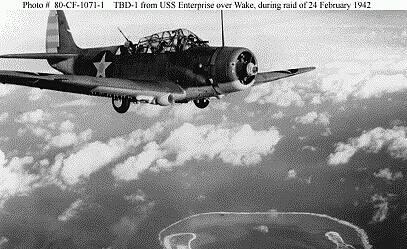
As the Japanese crews worked the Japanese carriers were engaged in fending off attacks by the US torpedo bomber squadrons, VT-6 from Enterprise, VT-8 from Hornet and VT-3 from Yorktown.  The Japanese Combat Air Patrol ripped into the slow, cumbersome and under armed TBD Devastators as they came in low to launch their torpedoes.  Torpedo Eight from Hornet under the command of LCDR John C Waldron pressed the attack hard but all 15 of the Devastators were shot down.  Only Ensign George Gay’s aircraft was able to launch its torpedo before being shot down and Gay would be the sole survivor of the squadron.

Hopelessly obsolete 40 of 44  TBD Devastators were lost in action

Torpedo 6 under the command of LCDR Eugene Lindsey suffered heavy casualties losing 10 of 14 aircraft with Lindsey being one of the casualties.  The last group of Devastators to attack was Torpedo 3 under the command of LCDR Lem Massey from the Yorktown.  These aircraft were also decimated and Massey killed but they had drawn the Japanese Combat Air Patrol down to the deck leaving the task force exposed to the Dive Bombers of the Enterprise and Yorktown.

TBD Devastator attacking Akagi

There had been confusion among the Americans as to the exact location of the Japanese Carriers, the Bombing 8 and Scouting 8 of Hornet did not find the carriers and had to return for lack of fuel with a number of bombers and their fighter escort having to ditch inn the ocean and wait for rescue.  The Enterprise group under LCDR Wade McClusky was perilously low on fuel when the wake of a Japanese destroyer was spotted.  McClusky followed it to the Japanese Task Force.  The Yorktown’s group under LCDR Max Leslie arrived about the same time.  The found the skies empty of Japanese aircraft. Aboard the Japanese ships there was a sense of exhilaration as each succeeding group of attackers was brought down and with their own aircraft ready to launch and deal a fatal blow to the American carrier wondered how big their victory would be.

At 1020 the first Zero of the Japanese attack group began rolling down the flight deck of the flagship Akagi, aboard Kaga aircraft were warming up as they were on the Soryu.  The unsuspecting Japanese were finally alerted when lookouts screamed “helldivers.” Wade McClusky’s aircraft lined up over the Akagi and Kaga pushing into their dives at 1022. There was a bit of confusion when the bulk of Scouting 6 joined the attack of Bombing 6 on the Kaga.  The unprepared carrier was struck by four 1000 pound bombs which exploded on her flight deck and hangar deck igniting the fully fueled and armed aircraft of her strike group and the ordnance littered about the hangar deck.  Massive fires and explosions wracked the ship and in minutes the proud ship was reduced to an infernal hell with fires burning uncontrollably. She was abandoned and would sink at 1925 taking 800 of her crew with her.     LT Dick Best of Scouting 6 peeled off from the attack on Kaga and shifted to the Japanese flagship Akagi. On board Akagi were two of Japans legendary pilots CDR Mitsuo Fuchida leader of and CDR Minoru Genda the architect of the Pearl Harbor attack and subsequent string of Japanese victories.  Both officers were on the sick list and had come up from sick bay to watch as the fleet was attacked.  Seeing Kaga burst into flames they stood mesmerized until Akagi’s lookouts screamed out the warning “helldivers” at 1026.  Best’s aircraft hit with deadly precision landing tow of their bombs on Akagi’s flight deck creating havoc among the loaded aircraft and starting fires and igniting secondary explosions which turned the ship into a witch’s cauldron.  By 1046 Admiral Nagumo and his staff were forced to transfer the flag to the cruiser Nagara as Akagi’s crew tried to bring the flames under control. They would do so into the night until nothing more could be done and abandoned ship at 2000.  Admiral Yamamoto ordered her scuttled and at 0500 on June 5th the pride of the Japanese carrier force was scuttled.

Scouting 6 gets the Akagi

VB-3 under LCDR Max Leslie from the Yorktown stuck the Soryu with 17 aircraft, only 13 of which had bombs due to an electronic arming device malfunction on 4 of the aircraft including the squadron leader Leslie.  Despite this they dove on the Soryu at 1025 hitting that ship with 3 and maybe as many as 5 bombs. Soryu like her companions burst into flames as the ready aircraft and ordnance exploded about her deck. She was ordered abandoned at 1055 and would sink at 1915 taking 718 of her crew with her.

The remaining Japanese flattop the Hiryu attained the same fate later in the day after engaging in an epic duel with the Yorktown which her aircraft heavily damaged.

It was quite miraculous what happened at Midway in those five pivotal minutes.  Authors have entitled books about Midway Incredible Victory and Miracle at Midway and the titles reflect the essence of the battle.  A distinctly smaller force defeated a vastly superior fleet in terms of experience, training and equipment and when it appeared that the Japanese Fleet would advance to victory in a span of less than 5 minutes turn what looked like certain defeat into one of the most incredible and even miraculous victories in the history of Naval warfare.  In those 5 minutes history was changed in a breathtaking way.  While the war would drag on and the Japanese still inflict painful losses and defeats on the US Navy in the waters around Guadalcanal the tide had turned and the Japanese lost the initiative in the Pacific never to regain it.   The Japanese government hid the defeat from the Japanese people instead proclaiming a great victory while the American government could not fully publicize the information that led to the ability of the US Navy to be at the right place at the right time and defeat the Imperial Navy.

When one looks at implications of the victory it did a number of things. First it changed the course of the war in the Pacific probably shortening it by a great deal.  Secondly it established the aircraft carrier and the fast carrier task force as the dominant force in naval warfare which some would argue it still remains.  Finally those five minutes ushered in an era of US Navy dominance of the high seas which at least as of yet has not ended as the successors to the Enterprise, Hornet and Yorktown ply the oceans of the world and the descendants of those valiant carrier air groups ensure air superiority over battlefields around the world.

Peace

Padre Steve+

7 Comments

Filed under History, Military, US Navy, world war two in the pacific

Adjusting Strategy to Reality: The Pacific War- Why the Japanese Lost

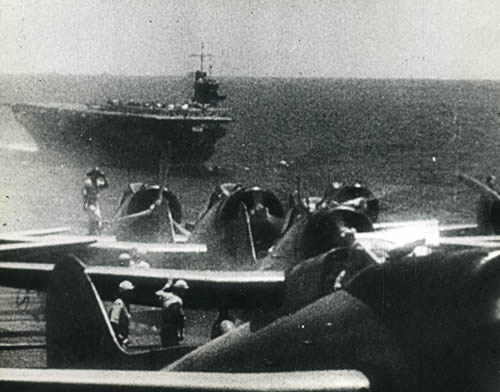
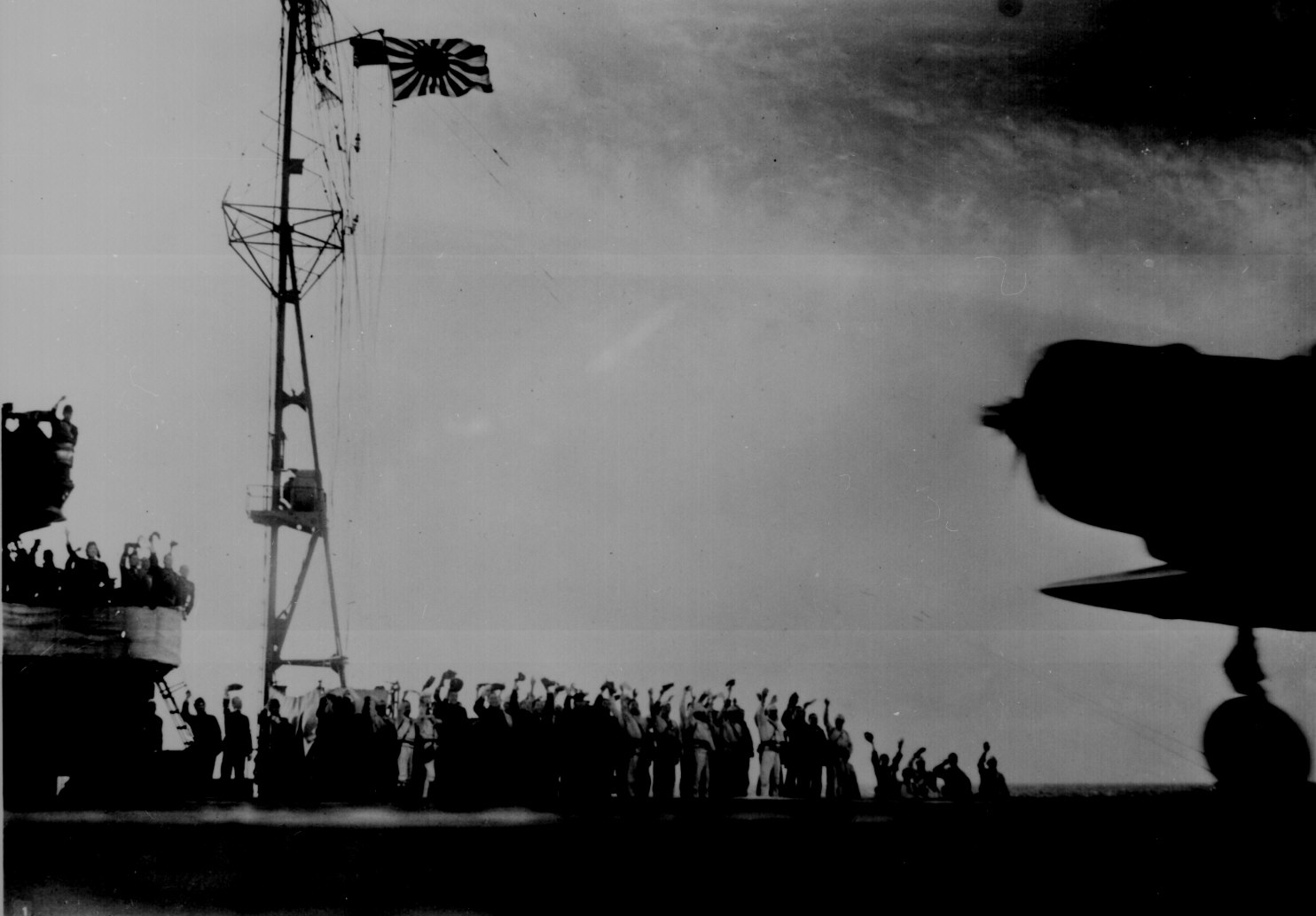
Lead aircraft ready to take off of IJN Carrier Akagi to attack Pearl Harbor beginning a 6 month chain of Japanese victories in the Pacific

The outcome of the Pacific war was directly related to the ability of the Americans to adjust strategy to the realities of the Pacific war, a unity of effort directed by the National Command Authority and superior industrial, technological and logistical capabilities. The Japanese after initial success did little to adapt and were hamstrung by inter-service rivalries and inadequate industrial capacity and limited natural resources.

US Destroyer USS Pope being blasted out of the water by Japanese Cruisers at the Battle of Java Sea

The Japanese and the Americans each had war plans in place for the Pacific campaign.  The American plans, Plan Orange had been developed since the early part of the 20th Century after the Spanish-American War and Russo-Japanese War.  Predicated on holding the Philippines until relief could arrive Orange assumed that the US Pacific Fleet would sail across the Pacific and fight the Japanese Navy in a manner written about by Alfred Thayer Mahan; see Weigley in The American Way of War and Ronald Spector in “Eagle Against the Sun: The American War Against Japan.”

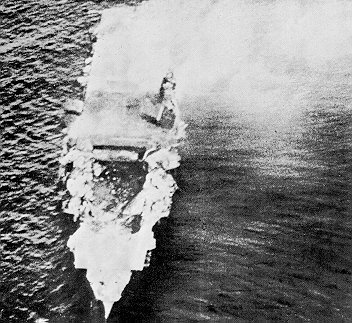
IJN Carrier Hiryu heavily damaged and abandoned at Midway. Hiryu, Akagi, Kaga and Soryu the creme of the Japanese carrier fleet were lost at Midway, the Japanese found it hard to replace them or their decimated air crews

The Japanese were conflicted.  The Navy desired a campaign that would destroy the American Navy and expand the Empire to the East and to Southeast Asia and the Indian Ocean. The Army was fixated on the China strategy having been embroiled on the Asian continent since the early 1930s. John Toland discusses this in good detail in his book “Rising Sun: The Decline and Fall of the Japanese Empire 1936-1945” In addition other Japanese Army leaders had designs on Siberia and fought a brief campaign against the Soviets which ended in a defeat.

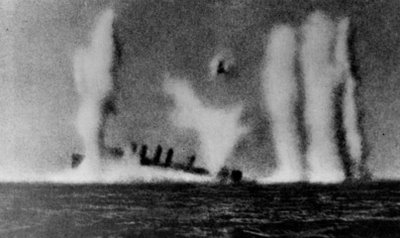
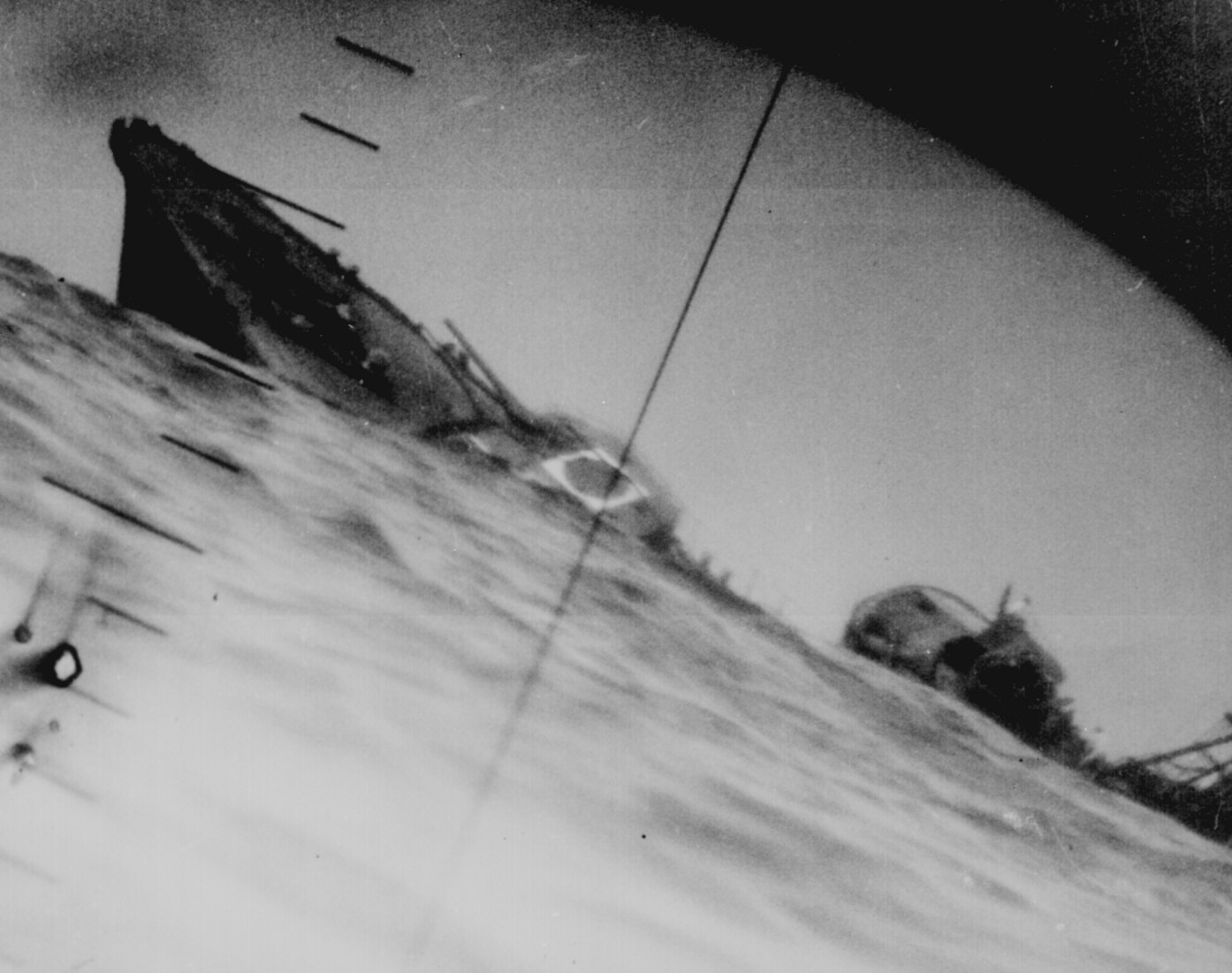
Japanese destroyer shown sinking after being torpedoed by a US submarine

When the Japanese attacked Pearl Harbor as well as the Philippines and Southeast Asia defeating American and Allied forces in detail, crippling the American Navy and dooming the Philippines the Americans were able to adjust strategy to first a defensive one supplemented by raids against the Japanese perimeter by carrier forces and the beginnings of a nascent submarine campaign against Japanese merchant shipping.  The Americans were able to parry the Japanese thrust at the Coral Sea and inflict a major defeat on the Japanese Carrier Forces at Midway prior to launching the first limited offensive by the Navy and the Marines at Guadalcanal.

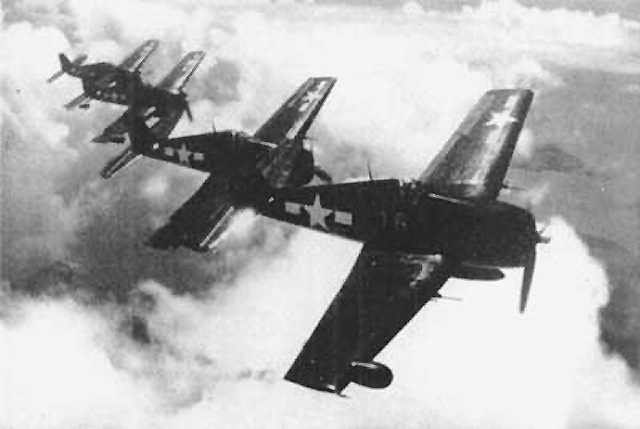
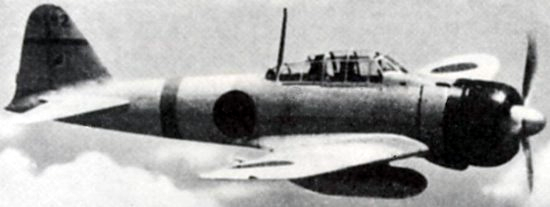
Aircraft like the F6F Hellcat drove Japanese aircraft such as the A6M2 Zero from the skies in the Pacific


The Japanese remained mired in their conflicting strategies with the Navy primarily fighting the Pacific campaign aided by limited Army and Army Air Forces on the islands Japan had occupied or fortified while the bulk of the Army was engaged in China, Southeast Asia or sitting on the Manchurian-Soviet border.

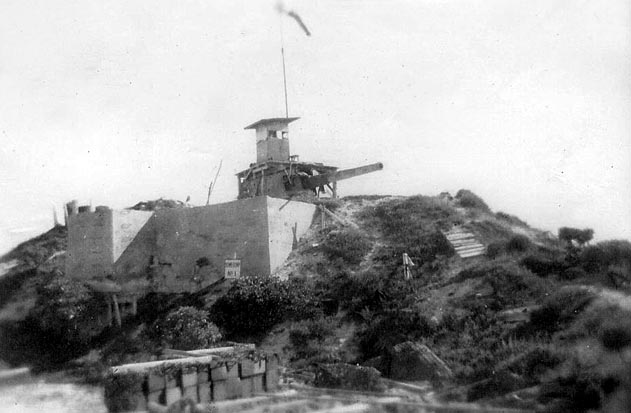
Heavily fortified Japanese islands were either bypassed or taken in bloody assaults, here a 8″ gun on Tarawa

Once the Americans shifted to the offensive a campaign of island hopping coordinated between the Southwest Pacific Area under General MacArthur and the Central Pacific Area under Admiral Nimitz focused on gaining control of islands which contained airbases and anchorages capable of sustaining the American advance while bypassing islands not necessary for this along with their Army garrisons. Both American advances in the South Pacific and Central Pacific focused on retaking the Philippines and cutting the Japanese lines of communication and supply with Southeast Asia. From late 1942 on the Japanese strategy was focused on individual areas of danger versus a overall coordinated defensive effort.

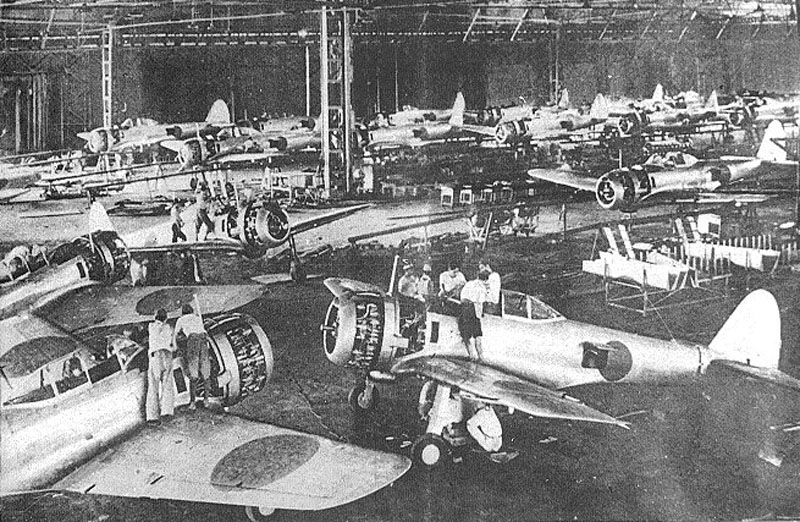
Japanese war industries were woefully ill equipped to match US war production. Here a factory producing Oscar fighter planes

The Japanese were hamstrung from the beginning of the war by limited natural resources, especially oil and oil refining capacities, limited industrial capacity, especially in the realm of the manufacture of steel and machining tools.  All of these were supplied in large part by their opponents and were cut off once the war began.

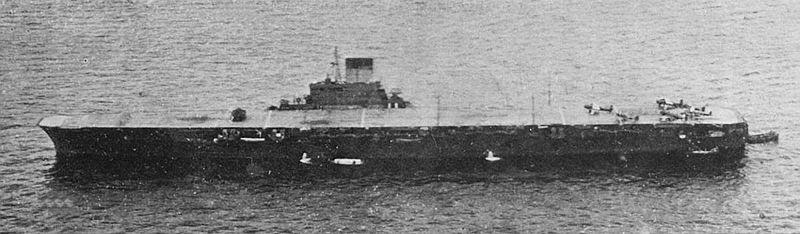
The Carrier Taiho was the equivalent of the Essex Class but the Japanese could only produce one unit

Michael Barnhart in his book Japan Prepares for Total War” has an excellent account of the limitations of Japanese economic, industrial and natural resource capacities, as well as the continual struggle by the Army and the Navy for priority in access to them and the inability of Japanese planners, both civilian and military to resolve this conflict. The Americans had a different situation; although American industrial capacity was enormous it had to be split between to Theaters of Operations and support the needs of American Allies, Britain, the Soviet Union, Canada and China.

An Armada of US Essex Class Carriers in 1944 the Japanese could not keep pace with US Naval production

Despite this the Americans in a relatively short time were able to amass forces equal to or great than the Japanese who were unable to replace losses in ships, aircraft or the highly trained personnel needed to man them.  At the beginning of the war Japanese Air and Naval forces in the Pacific outmatched everything the Allies could offer, however once they began to experience significant losses at Midway and during the Guadalcanal Campaign their air and naval capabilities diminished to the point that they had to conserve ships and aircraft hoping to be able to gain local advantage in critical defensive areas.

The US Amphibious warfare capacity was a key factor in the ability of the United States to take the war to Japan

New American ships and aircraft introduced during the war were superior to Japanese designs, many of which had reached their apex by 1942.  American advantages in radar, communications equipment added to American advantages throughout the war.  Japanese ground forces in the Pacific were dependant on the Navy and merchant marine for supply and reinforcements. As the American submarine campaign became better organized this became more difficult as the American submarines copying German Wolf pack tactics decimated the Japanese merchant Marine. I particularly like Samuel Elliott Morrison’s account of this in “The Two Ocean War” and “The History of US Navy Operations in World War II” which has a volume devoted to this subject.

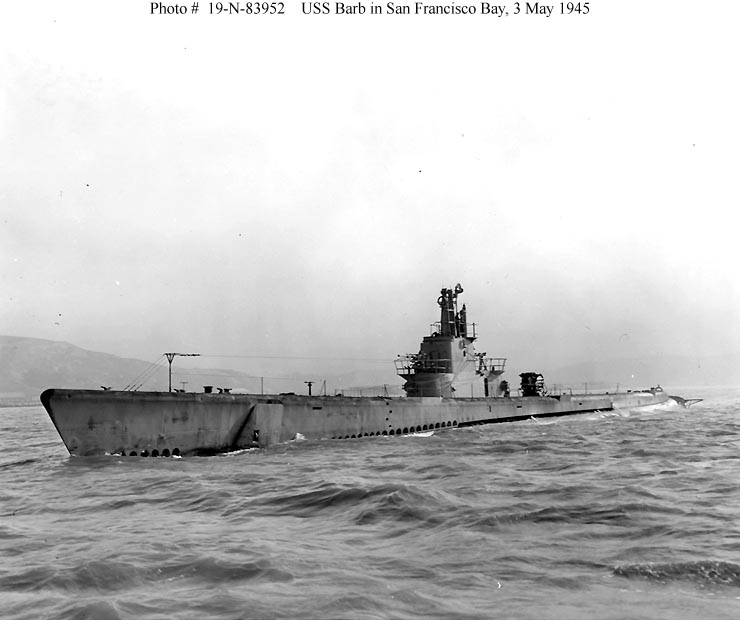
US Navy Submarines cut off Japan from its vital natural resources in Southeast Asia. A Sub Squadron above and USS Barb below

Japanese forces would always fight determined battles but they often expended great amounts of manpower in senseless Banzai charges rather than make the Americans force them out of well prepared positions.  Where the Japanese maintained excellent defense such as at Tarawa and Iwo Jima they made the Americans pay greatly for their gains.  American Marines were apart from the 82nd and 101st Airborne Divisions were the best infantry in the US Military and their skill at amphibious operations and integrated air-ground and naval warfare increased as the war went on.  The Americans were well equipped with modern weapons while the Japanese operated antiquated tanks and often substandard artillery.

Japanese leadership at the strategic and political level was inept throughout the war. They failed to coordinate any strategy with the Germans and failed to enunciate any sort of Grand Strategy.  On the operational and tactical levels the Japanese forces, especially the surface navy performed well, however as the American numeric and technologic advantage increased the Navy became less effective.  After the death of Admiral Yamamoto in 1943 Japanese Naval Leadership became far less effective. The Americans as mentioned before were able to devise a Grand Strategy which not only dealt with Japan but also Germany and coordinated the efforts of forces, war production, planning and logistics to advance their war aims.  At the operational and tactical level American forces, especially the Navy and Marines and later the Army Air Forces and Army became more skilled and than their Japanese counterparts with the possible exception of General Simon Bolívar Buckner at Okinawa. See Spector and Thomas Costello “The Pacific War.” In the air the Americans continued to increase their combat capabilities at the tactical and strategic level and used massed fire bombing raids to devastate the Japanese homeland.  The Japanese in contrast due to inexperienced pilots and fewer competitive aircraft were forced into suicide or Kamikaze missions as the war neared Japan.

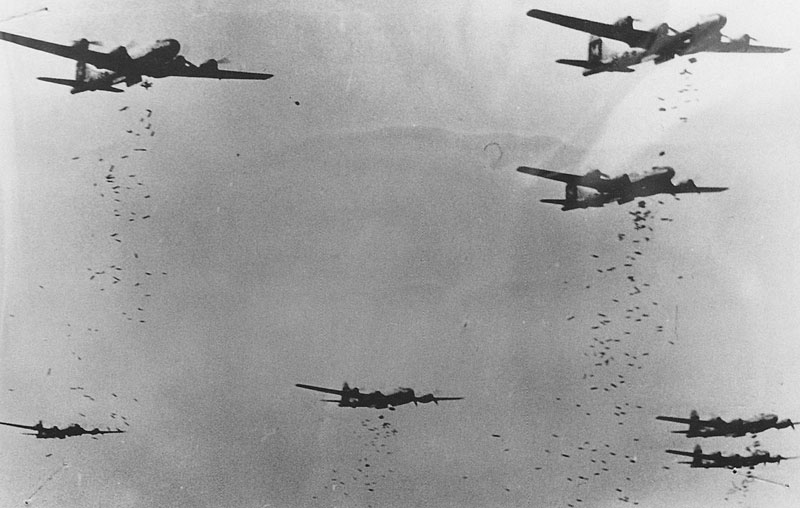
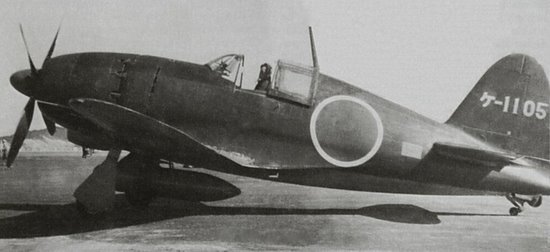
B-29 Super-fortresses leveled Japanese cities and even excellent fighters like the Mitsubishi J2M Raiden could not stop them


The outcome of the Pacific war was directly related to the ability of the Americans to adjust strategy to the realities of the Pacific war as well as the unity of effort which enabled the American superiority in industrial, technological and logistical capabilities to overwhelm the Japanese. The Japanese after initial success did little to adapt and were hamstrung by inter-service rivalries and inadequate industrial capacity and limited natural resources, fell behind in technology and were unable to replace losses among the ships, men and aircraft that they needed to fight an effective war.  Japanese leaders at many levels failed to adapt strategy, tactics or methods to match the reality of the war and the places that they did do so were done by local commanders and never instituted throughout the Japanese military.

2 Comments

Filed under History, Military, world war two in the pacific

Background on the Pacific Part Two: Guadalcanal the Marines take the Offensive

This is the second “backgrounder” that I am posting to help my readers not acquainted with the War in the Pacific who desire to whet their whistle so to speak get an introduction to this war. While the series appears to be very well done it cannot provide the broad overview and references needed if a person really wants to know more. I believe that those who appreciate the story of the Marines portrayed in the series can help pass this on to others by learning more themselves about the subject.  I hope that this will encourage you  my readers never to forget the Marines depicted in “The Pacific.”
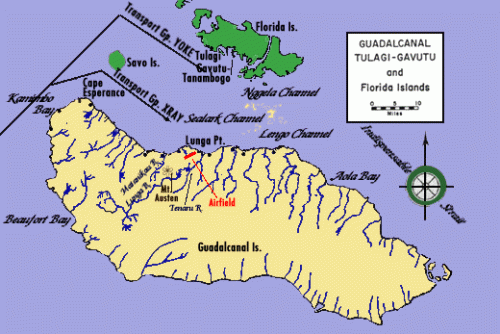

Decision

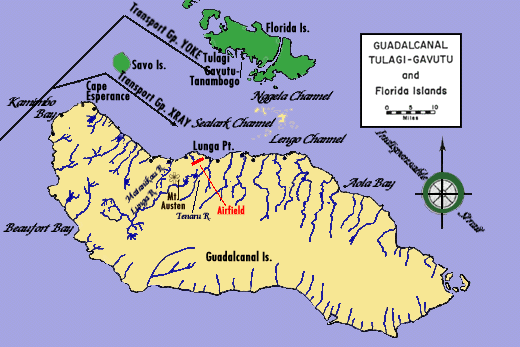
Guadalcanal came to American attention in early 1942 as a result of the Japanese South Pacific advance, which “threatened the Allied line of communications with Australia.”[1] Admiral King believed that “the Japanese must not be permitted to consolidate the formidable prizes” that they were then in the course of gathering.”[2] General MacArthur and Admiral Nimitz both wanted to “exploit the Midway victory by a speedy change-over from the defensive to the counter offensive.”[3] MacArthur wanted to strike Rabaul directly using Navy carriers. The Navy, not wanting to give up control of its carriers proposed a strategy of working up through the Solomon Islands, under Navy control.[4] The debate was at times acrimonious.  Eventually King and General Marshall worked out a compromise that divided the campaign between the Navy and MacArthur,[5] the Navy in charge of taking Guadalcanal and Tulagi.[6] OPERATION WATCHTOWER was approved in a Joint Chief’s of Staff directive on July 2nd 1942.[7]

Partners Rear Admiral Richmond K. Turner and Major General Alexander Vandegrift

The Japanese had not initially placed a high priority on the Solomons, “as they did not expect a counteroffensive in the Pacific for months.”[8] However, after Coral Sea and Midway, they authorized operation “SN” to “strengthen the outer perimeter of Japan’s advance by constructing airfields at key strategic points….”[9] The Japanese sent a contingent of troops, which arrived on June 8th[10] to build an airfield on Guadalcanal, in addition to the seaplane base on Tulagi, as part of a strategy to take the offensive in the South Pacific with an attack on Port Moresby in mid-August.[11]

Coastwatchers

Japanese commanders were impatient for the airstrip to be completed, yet work began at a leisurely pace, with the Japanese unaware that every move was being “watched and reported to Allied headquarters in Australia,” by coast-watchers.[12] As the Japanese on Guadalcanal dithered the Americans rushed their preparations for the invasion[13] nicknamed “SHOESTRING” by American officers.

The Landings and Initial Actions through the Ilu (Tenaru) River

Marines coming ashore at Guadalcanal

Preparations, though rushed enabled the 1st Marine Division under General Vandegrift to embark on transports for Guadalcanal, despite not being combat loaded and having been assured that they “need not expect a combat mission before 1943.”[14] The invasion force under the overall command of Admiral Fletcher and Admiral Richmond “Kelly” Turner set sail on July 25th and cloaked by heavy rain and clouds[15] remained undetected by the Japanese until they arrived in the waters off Guadalcanal, achieving complete surprise.[16] The invasion force landed on both Tulagi and Guadalcanal.  On Tulagi, 1st Raider Battalion under Colonel Edson and 2nd Battalion 5th Marines quickly drove off the 350 Japanese defenders of the 3rd Kure Special Naval Landing Force,[17] and in three days eliminated the Japanese garrison which resisted to the death, with only 23 prisoners.[18] On nearby Gavutu-Tanambogo 1st Parachute Battalion subdued the Japanese personnel operating the seaplane base, though not without difficulty, the naval bombardment was ineffective[19] and the Parachutists suffered heavy casualties[20] and forcing the commitment of the 1st and 3rd Battalions, 2nd Marines.[21] Across the sound the main force of 1st Marine Division went ashore near Lunga Point with 5 infantry battalions.  The Marines rapidly ran into difficulty, not due to the Japanese garrison, which melted into the jungle,[22] but to a lack of maps, the thick jungle and kuni grass, their own “deplorable physical condition” from being shut up in the holds of the transports for two weeks and overburdened with full packs and extra ammunition.[23]

Japanese “Betty” Bombers attacking US Transports

While the Marines advanced inland, supplies built up on the landing beaches due to the limited number of cargo handlers.  Additionally, the Japanese launched a number of heavy air raids which caused minimal damage to the destroyer Mugford on the 7th but were more successful on the 8th damaging a transport badly enough that it had to be abandoned.

Marine M3 Stuart Light Tank and Crew at Guadalcanal

The Marines on Guadalcanal, comprised of the 1st and 5th Marine Regiments consolidated a bridgehead around the captured airfield on the 8th, but the next day found that their situation had changed dramatically.  The Japanese Navy had attacked and mauled the covering force, sinking four cruisers and damaging one at the Battle of Savo Island.[24] The destruction of the covering force and Admiral Fletcher’s withdraw of the carriers forced the transports to depart on the 9th, still bearing much equipment, supplies and nearly 1800 men of the 2nd Marines.[25] Vandegrift was left with only 5 infantry and 3 artillery battalions, and the 3rd Defense battalion on the island as well as some tanks, engineers and Navy “Seabees.”[26] When the Navy left Vandegrift went over to the defensive and organized a line from the Ilu river on the east to Lunga point and the airfield to a point about 1000 yards past Kukum.[27] Defenses were prepared to defend against potential Japanese amphibious attacks.  1st Marines held the eastern perimeter and 5th Marines (-) the west. One battalion with tanks and half-tracks was reserve.  The line was thin and not continuous, thus Vandegrift could only watch and wait for the Japanese strike and move “part of his mobile reserve to meet it when it came.”[28] On the 12th a prisoner reported that Japanese near Matanikau were willing to surrender and LtCol Goettge the G-2 led a 25 man patrol to investigate.  The patrol was ambushed and decimated with only three survivors.[29] The Japanese landed the advance party of the 5th Special Naval Landing Force in broad daylight on the 16th, and Vandegrift decided to bring 2/5, and the Raider and Parachute battalions from Tulagi as soon as he had ships to do it.[30] On the 20th the airfield was opened and a squadron each of Marine Fighters and Dive Bombers landed on Guadalcanal.[31]

Makeshift Obstacles: With no barbed wire the Marines used the ingenuity

General Hyakutake of the 17th Army was allotted 6,000 men of the Special Naval Landing Force, and the Kawaguchi and Ichiki detachments to re-take Guadalcanal.   17th Army also had the Sendai 2nd and the 38th Divisions, tank and artillery units, but they were scattered from Manchuria, to Borneo and Guam.[32] Hyakutake was ordered to use only the Ichiki detachment, a move which some at Imperial GHQ vigorously opposed.[33] Kawaguchi, recognized Guadalcanal’s importance and told a reporter that “the island would be a focal point in the struggle for the Pacific.”[34] On the 18th Colonel Ichiki landed with half of his unit, 915 men, 25 miles east of the Marines.  Overconfident, he disobeyed orders to wait for the rest of his troops, left 125 men behind to guard his bridgehead and set off to attack.[35]
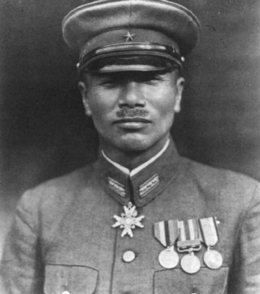
Colonel Ichiki whose elite 5th Special Naval Landing Force was annihilated at the Tenaru River

Ichiki’s force attacked shortly after 0100 on the 21st.  He thought that he had achieved surprise[36], but, opposing him was 2nd Battalion 1st Marines under LtCol. Al Pollock.  Warned by patrols that encountered the oncoming Japanese, and by Sergeant Major Vouza,[37] the Marines were on alert, well dug in, though lacking barbed wire, of which a single strand was emplaced across their front.  The Japanese ran into the barbed wire and were mowed down as they attempted to cross the sandspit against G/2/1 and a weapons platoon. About 0300 artillery joined the action, catching the Japanese bunched together near the sandspit inflicting heavy casualties.[38] Around 0500 Ichiki made another attempt, sending a company through the surf, which was engulfed in machine gun and artillery fire.[39] At daylight the Marines counter attacked. Colonel Cates ordered Lt.Col. Cresswell’s 1st Battalion 1st Marines, to envelop the Japanese along the beach.  Pollock’s Marines ranged mortars and small arms fire on Japanese survivors to their front, picking them off “like a record day at Quantico”

Dead Japanese of the Ichiki Detachment at the Tenaru

[40] Marine aircraft made their first appearance, strafing the Japanese survivors.  A light tank platoon crossed the Ilu and began to mop up the Japanese with 1/1 at 1530.  At 1630 Ichiki burned his regimental colors and committed suicide.  The Battle of the Ilu was over, the Japanese suffering at least 777 dead,[41] 15, 13 of whom were wounded were captured, only a Lt. Sakakibara and one soldier escaped to join those at the landing site.[42] The Marines suffered 35 dead and 74 wounded.[43] Ichiki made critical mistakes; he failed to reconnoiter, made a frontal attack against a dug in enemy and repeated it, with disastrous results.[44] Hyakutake informed Tokyo: “The attack of the Ichiki detachment was not entirely successful.”[45] The Americans were shocked at the Japanese fight to the death, and Griffith would note: “from this morning until the last days on Okinawa, the fought a ‘no quarter’ war. They asked none for themselves. They gave none to the Japanese.”[46]

Bloody Ridge

Artists depiction of Sgt Mitchell Paige assaulting attacking Japanese units at Bloody Ridge

A round of minor engagements was fought in late August and early September as each side sent reinforcements.  Kawaguchi’s brigade landed between August 29th and September 4th, but many troops were lost due to air attacks on the destroyers, transports and barges.  Kawaguchi received the remainder of Ichiki’s force, bringing his force to 6200 men. He refused Hyakutake’s offer of an additional infantry battalion, believing intelligence that only 2000 Marines remained on Guadalcanal.[47] In fact Vandegrift had already moved the Raiders, Parachutists from Tulagi to Guadalcanal.  Most of Kawaguchi’s force was east of the Marines; elements of 4th Regiment under Colonel Oka were on the Matanikau.[48] Vandegrift used the Raiders to attack Kawaguchi’s rear areas, capturing Tasimboko and killing 27 Japanese, destroying many of his troop’s supplies and foodstuffs.[49] Kawaguchi was infuriated by the attack and 17th Army prepared to send troops from the Sendai 2nd Division to the island.

Vandegrift and Key Marine Leaders

The Raiders and Parachutists took positions on a ridge south of Henderson field on their return from the raid against Kawaguchi’s rear.  Vandegrift placed his “Amtrackers” to the west of the ridge with 1st Pioneer Battalion.[50] Colonel deValle’s artillery was emplaced to give close support and observers attached to Edson’s battalion.  The artillery was registered on pre-plotted points.[51] Edson’s force had little time to prepared defenses and due to the ridge and jungle prevented him from having “anything like a continuous line.”[52] First Marines held the line from Edson’s left to the sea along the Ilu.  Unlike Ichiki, Kawaguchi avoided an attack on the strong 1st Marines position, and headed across the jungle to attack the airfield from the south with the 124th Infantry Regiment.  Due to the difficult approach his battalions had a hard time reaching their start positions, two of the three reached the assembly areas two and three hours after the start time.  When they did attack they lost their way, became scattered and intermingled; and Kawaguchi his battalion commanders lost all control.[53] The attack on the 12th was frustrating to Kawaguchi who later wrote “In all my life I have never felt so helpless.”[54] The attack was so ineffective that Edson thought the Japanese were “testing” him.[55]
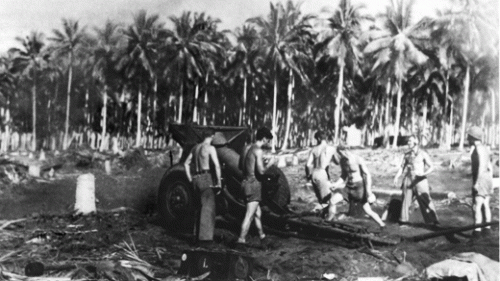
Marine Artillery on Guadalcanal

Kawaguchi regrouped as did Edson, who pulled back his line 200 yards to a stronger point on the ridge, reorganizing the line and command and control.[56] This improved fields of fire for his automatic weapons.[57] 2nd Battalion 5th Marines, the only reserve was moved south of the airfield so it could relieve Edson on the 14th.[58] As darkness fell, the Japanese attacked. I/124 attacked the ridge and the area to the west.  Marines withdrew up the ridge under heavy pressure supported by artillery, which dropped fires almost on top of the Raider positions.[59] During the withdraw the Parachutists became confused and continued to withdraw, and only stopped when Edson’s operations officer, Major Bailey stepped in and halted it.

Artists depiction of the Battle of Bloody Ridge

Artillery pounded I/124 and halted its attack even as companies of the reserve, 2nd battalion 4th Regiment attacked forcing the Raiders back to a knoll, the last defensive position before Henderson Field.[60] Edson exhorted the Marines who threw the Japanese back, and parachutists under Captain Torgerson counterattacked. Two more attacks were repulsed with assistance from 2/5 which had moved up in support.[61] The third Japanese battalion did not get into action[62] and Colonel Oka in the west made a weak attack that was handily defeated. The Japanese lost over 1200 men in their attack on the ridge.[63] The demoralized Japanese retreated west to join Oka’s men, taking a week and costing even more casualties.[64] Short on food, Oka pushed the survivors west and so he could defend the river line.[65]On the 18th Vandegrift was reinforced with 4700 men of the 7th Marines along with trucks, heavy equipment and supplies.[66] Edson was promoted to command 5th Marines.[67]

Matanikau Battles and the Fight for Henderson Field

Marine F4F Wildcat on Henderson Field

The Japanese now decided to send the Sendai and 38th divisions and heavy artillery to the island. Hyakutake went to the island to direct the campaign. The decision resulted in the suspension of 17th Army’s offensive against Port Moresby.[68] Admiral Yamamoto committed the fleet to cover the operations[69] setting up a major air, land and sea confrontation with the Americans.  However before these forces could reach the island Vandegrift launched a series of attacks against Oka’s force on the Matanikau using the Raiders, and elements of 5th and 7th Marines.[70] The first attacks took place 24-27 September.  The Matanikau position was important to future Japanese operations as their artillerymen stressed that they could not effectively shell the airfield unless guns were emplaced across the river.[71] The Raiders attacked at the log bridge[72] supported by C/1/7 and were repulsed by Oka’s 12th Company with heavy casualties.[73] Puller’s attack by 2/5 and parts of 1/7 at the mouth of the river was rebuffed by 9th Company.  An amphibious assault by three companies of 1/7 was ordered by Edson who mistakenly believed that his Marines had crossed the river.[74] The force isolated by Oka’s II/124 and 12th Company, its commander killed and the Marines had to be rescued by Navy units.[75]
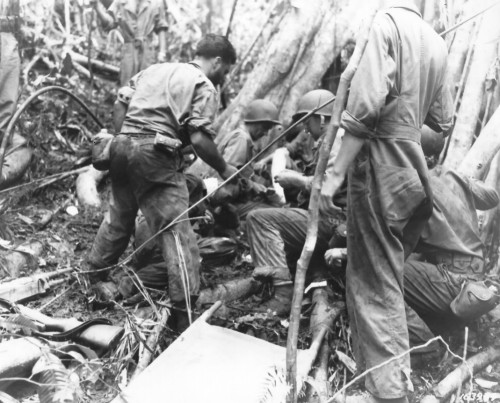
Navy Corpsmen preparing to evacuate a wounded Marines (above) and the 1st Marine Divsion Field  Hospital

A second attack by the Marines on the Japanese, now reinforced by 4th Infantry Regiment on 6-9 October dealt them a crushing blow.  An attack by 2/5 and 3/5 along the coast met heavy Japanese resistance and General Nasu decided to push across the river. While this was taking place, 7th Marines and the Whaling Group[76] outflanked the Japanese on the river and pushed to the coast.  The Marines mauled the 4th Infantry, a Japanese report noting at least 690 casualties.[77] The action had decisive impacts on the next phase of Japanese operations.

General Hyakutake Commander of the Japanese 17th Army defending Guadalcanal

7th Marines and the 164th Regiment of the Americal Division arrived allowing Vandegrift to mount a full perimeter defense while Admiral Halsey replaced Ghormley as COMSOPAC.[78] Arriving on 10 October with the Sendai Division and 17th Army Artillery, Hyakutake, was notified that “American artillery had ‘massacred” the Fourth Infantry Regiment”[79] and found Ichiki and Kawaguchi’s units in an emaciated condition, the total effectives of the 6 battalions numbering less than a full strength battalion.[80] He radioed Rabaul “SITUATION ON GUADALCANAL IS MUCH MORE SERIOUS THAN ESTIMATED, and asked for more reinforcements and supplies at once.”[81] The Navy turned back a Japanese bombardment group on the 12th, but battleships and cruisers blasted Henderson Field on the 13th, 14th and 15th, destroying many aircraft.[82]

The 14″ guns of the Japanese Battleship Kongo and her sister Haruna pounded Henderson Field

Hyakutake received reinforcements including tanks and an infantry-artillery group and prepared to attack.  General Sumiyoshi[83] was to make a diversionary attack along the coast with Army artillery and 5 infantry battalions.  The Sendai Division under General Maruyama[84] with 9 infantry battalions moved inland along a route “the Maruyama road,”[85] to make the main effort to attack the airfield from the south.  Sumiyoshi divided his artillery to support the bombardment of Henderson Field and support his infantry attacks, but was short ammunition.[86] The Marines had fortified the eastern side of the Matanikau and Sumiyoshi probed the Marines with infantry and tanks and artillery fire on the 20th and 21st, giving the Marines their first taste of concentrated artillery.[87] Sumiyoshi’s demonstration on the coast was effective, and Maruyama’s division remained undetected throughout its advance avoiding Marine and native patrols.[88]

Japanese dead after the failed attack on Henderson Field

The attack began on the 23rd with Sumiyoshi attacking on the Matanikau; but he did not get the word that the attack for that night had been postponed until the 24th since Kawaguchi’s units had not gotten to assembly areas on the right of Sendai division.[89] His tanks advanced at 1800 and all but one were destroyed by deValle’s artillery as soon as they moved across the sandspit. The supporting infantry withdrew, and most never went forward as they were hit hard in assembly areas by Marine artillery losing over 600 men.[90] The action succeeded in the Marines shifting 2/7 and 3/7 north leaving Puller’s 1/7 alone on “Bloody Ridge.”[91] Fortunately for the Marines these Japanese forces were detected by Scout-Sniper’s[92] and Puller dug in his battalion deeper and set out a platoon in an outpost 1500 meters south of his position.[93]

Chesty Puller

On the 24th Maruyama’s Sendai troops attacked the ridge.  He divided his force into two wings each of three infantry battalions commanded by General Nasu on the left and Colonel Shoji[94] on the right, three battalions served as a reserve. He advanced at 1900 but a storm turned the jungle into a vast mud bog exhausting the Japanese.  Shoji’s wing advanced tangential to the Marine line and only one battalion made contact with Puller’s battalion.[95] Nasu’s troops hit Puller’s who realized that he was facing a major attack; he fed platoons from 3rd Battalion 164th Infantry, a National Guard unit into his lines and requested reinforcements.[96] The Marines and Guardsmen beat back all but one attack, that of LtCol. Furimiya of III/29 who got into the Marine perimeter and held out 48 hours, colors flying, leading Hyakutake to believe that they had captured the airfield.[97] The Japanese were driven off 9th Company of the 29th Regiment was wiped out primarily by the efforts of Sgt. John Basilone’s machine gun section.[98]

Wrecked Aircraft on Henderson Field

The next day was known as “Dugout Sunday”[99] and that night the Japanese renewed the attack.   This was better coordinated, but the Marines, reinforced by 3/164 and 3/2, and backed by artillery, devastated the Sendai division.  Nasu and the commander of 16th Infantry were killed with at least 2000 of their soldiers.[100] Colonel Oka attacked 2/7 and was driven off with heavy casualties. Marine Sgt. Mitchell Paige won the Medal of Honor for single handedly manning his platoon’s machine guns after his troops became casualties, going gun to gun.[101] The attacks were crushed leaving more than 3000 dead or dying Japanese on the battlefield.[102]

On the Offensive

Marines pause during advance

As the Japanese struggled out of jungle to the coast the Marines began preparations to attack as each side brought in reinforcements, the Americans receiving the 8th Marine Regiment and 2nd Raider Battalion of 2nd Marine Division, as well as the 2nd Marines who had been on Tulagi and more of the Americal Division.[103] On November 1st and  5th Marines attacked across the Matanikau and by the 4th had eliminated a Japanese pocket on Point Cruz.[104] To the east 1/7 and 2/7 along with 2/164 and 3/164 attacked Col. Shoji’s force and fresh troops sent to relieve him near Koli Point. The battle lasted until the 9th when Shoji broke through the American cordon with 3000 men pursued by 2nd Raider Battalion. Shoji eventually made it back to 17th Army with 700-800 soldiers, most unfit for combat after battling the Raiders and the jungle.[105] The Japanese attempted to reinforce the island during the Naval Battle of Guadalcanal from 13-15 November.  Out of 11,000 troops of 38th Division on 11 transports only 2000 got ashore after 7 of the 11 were sunk enroute by Henderson Field aircraft and the surviving ships beached.[106]

The Americans received the rest of 2nd Marine and Americal Divisions and parts of 25th Division and Vandegrift decided to attack, his command now being a de-facto Corps.[107] Though they still numbered 30,000 the Japanese were incapable of offensive operations but still full of fight.[108]On 18 November the 8th Marines and the Army and elements of the 164th and 182nd regiments attacked on the Matanikau. They met heavy resistance from Col. Sakai’s 16th Infantry and in a 6 day battle and lost 134 dead with minimal gains.[109] The new arrivals allowed 1st Marine Division to be withdrawn[110] as it was no longer combat effective.[111] On 9 December Vandegrift[112] turned over command to General Alexander Patch of the Americal Division.

Advancing across a improvised pontoon bridge

Patch used early December to conduct aggressive patrolling[113] and decided to clear the Japanese from Mt Austen, which they had nicknamed “Gifu” and in a 22 day battle the 132nd Infantry eliminated the 38th Infantry Group.[114] With the 25th, Americal and 2nd Marine Division Patch now headed XIV Army Corps.[115] Although the Americans were unaware the Japanese had decided to withdraw from Guadalcanal on 31 December, after a heated debate.[116]

Major General Vandegrift, Colonel Edson, 2nd Lt Mitchell Paige and Sgt John Basilone all awardees of the Medal of Honor

The final offensive began on 10 January.  Patch hoped to clear out the Japanese by April.[117] The 2nd Marine Division attacked along the coast while General Lawton Collins led his 25th Division in a flanking movement heavily supported by artillery and air. 6th Marine Regiment relieved 2nd Marines flanking the Japanese enveloped the majority of the 4th and 16th Regiments.[118] The Japanese began withdrawing on the 17th moving west shielded by the Yano battalion.[119] Collins troops finally reduced and eliminated the Japanese on the Gifu by the 23rd.[120] “The annihilation of Japanese detachments from regimental size down” characterized operations over the final phase of the command.[121] A characteristic of American operations now included the use of heavy massed artillery including time on target or “TOT” missions.[122] On the 22nd the Japanese began to extricate their troops via the Tokyo Express at Cape Esperance.[123] On 1 February Patch landed 2/132 at Verahue on the southwest tip of the island and the 25th and Americal Divisions continued their push to the west against the rearguards of 17th Army.  On the 8th of February the last survivors were withdrawn[124] in a move described by the Chief of Staff 17th Army as a “minor miracle.”[125] The Japanese were shocked that the Americans “press them hard” and turn the withdraw “into a bloody rout.”[126] Still expecting a fight Patch’s troops found nothing on Cape Esperance but abandoned boats and supplies.[127]

Japanese Prisoners

The Guadalcanal campaign had ended with the loss of nearly 30,000 Japanese. Japan lost the psychological advantage it had possessed from the beginning of the war.[128] It was an action that was an offensive won with defensive actions. The Americans seized a strategic point that the Japanese could not afford to lose and then fought a defensive battle of attrition to grind the Japanese down.  The American Marines and Soldiers showed themselves to be the equals of the Japanese in one of the most demanding campaigns of the war. Kawaguchi would comment to a reporter in Manila; “We lost the battle. And Japan lost the war.”[129]

Appendix: Leaders On Guadalcanal

Major General Alexander A. Vandegrift: (1887-1973) Commander of 1st Marine Division on Guadalcanal.  He served in the Corps 40 years and retired in 1949 as Commandant of the Marine Corps.  After Guadalcanal he commanded 1st Marine Amphibious Corps at Empress Augusta Bay.  He was a key player in the congressional debates regarding the Marine Corps in 1946 when President Truman supported by the Army pushed to eliminate the Marine Corps as a ground combat force.  He was awarded the Medal of Honor for his service at Guadalcanal.  USS Vandegrift FFG-48 was named after him.  That ship made the first visit of a US warship to Vietnam since the Vietnam War in 2003.

Major General Alexander Patch: (1889-1945) Commander of XIV Army Corps at Guadalcanal.  He assumed command of forces on island from Vandegrift on 9 December 1942.  General Marshall ordered him to Europe in 1943 to take command of 7th Army from General Patton.  He commanded 7th Army in the south France and the Rhone campaign of 1944, leading that army across the Rhine in 1945.  He was to take command of 4th Army in the United States but died of Pneumonia.  He was considered a very good commander in both the Pacific and Europe.  Patch Barracks in Stuttgart Germany is named after him.

Major General Lawton Collins: (1896-1987) “Lightning Joe” Collins commanded 25th Infantry Division (Tropical Lightening) at Guadalcanal.  He commanded VII Corps and distinguished himself in France and was instrumental in Operation COBRA and the breakout from Normandy.  He was considered by many to be one of the outstanding Corps commanders in the Second World War. During Korea he was Army Chief of Staff and later served with NATO and as a special representative to Vietnam.

Lieutenant Colonel Lewis B. “Chesty” Puller: (1898-1971) “Chesty Puller commanded 1st Battalion 7th Marines at Guadalcanal and was instrumental in the fight for Henderson Field against the Sendai Division.   His early career was marked by much time in Haiti and Nicaragua where he was awarded his first and second Navy Crosses. He served with the “China Marines” (the 4th Marines) He was wounded on Guadalcanal and later served as Executive Officer 1st Marine Regiment and commanded that Regiment at Peleliu.  In Korea he again commanded 1st Marines at the epic Battle of the Chosin Reservoir. He was promoted to Brigadier General and served as Assistant Division Commander for that Division.  He was promoted to Major General and Lieutenant General prior to his retirement in 1955.  He is considered one of the most iconic and beloved Marines who have ever lived earning 5 Navy Crosses and numerous other awards for valor in combat include the Bronze and Silver Stars and Distinguished Service Medal and the Purple Heart.  The USS Puller (FFG-23) a Perry Class Frigate was named after him.  His uniforms and many of his medals and citations were displayed at the former Marine Corps Barracks, Naval Weapons Station Yorktown until 2006 when they were transferred to the custody of the Marine Corps Museum following the death of his wife Virginia who insisted that they be displayed in Yorktown.

General Harukichi Hyakutake: (1888-1947) Commanded 17th Army on New Guinea and Guadalcanal.  He was an infantry officer who studied crypto analysis and served with the Kwantung Army in Manchuria before the war and following Guadalcanal he remained in command of Japanese Troops in the Solomons.  He returned to Japan at the end of the war and died in 1947.

Major General Kiyotake Kawaguchi: (1892-1961) Commanded 35th Infantry Brigade on Guadalcanal and was senior officer until the arrival of General Hyakutake and the Sendai Division.  Led the unsuccessful battle at “Bloody Ridge” and was relieved of his command just prior to the October attack on Henderson Field.  Was one of the few Japanese officers who expressed an early understanding of the importance of Guadalcanal to the overall war effort.  Following his evacuation from Guadalcanal and return to Japan he was transferred to the reserve. Convicted of war crimes in 1946 for actions committed in the Philippines in 1941-42  he was released in 1953 and died in 1961.

Notes


[1] Spector, Ronald H. Eagle Against the Sun: The American War With Japan, The Free Press, New York, NY p.185

[2] Morison, Samuel Elliott, The Two Ocean War: A Short History of the United States Navy in the Second World War, Little, Brown and Company, Boston and Toronto, 1963. p.164

[3] Liddle-Hart, B.H. History of the Second World War G.P. Putnam’s Son’s. New York, NY 1970. 356

[4] Ibid. Spector. p.185

[5] Ibid. Spector comments that “MacArthur declared that the navy’s obstinacy was part of a long time plot to bring about ‘the complete absorption of the national defense function to the Navy, the Army being regulated to merely base, training, garrisoning, and supply purposes.’” (p.185)

[6] Toland, John. The Rising Sun: The Decline and Fall of the Japanese Empire 1936-1945, Random House Publishers, New York, 1970. p.346

[7] Ibid. Morison. p.165

[8] Ibid. p.350

[9] Frank, Richard B. Guadalcanal: The Definitive Account of the Landmark Battle, Penguin Books, New York, NY 1990. p.30

[10] Ibid. p.31

[11] Ibid. Morison. p.166

[12] Griffith, Samuel B II. The Battle for Guadalcanal originally published by Lippincott, New York, 1963, University of Illinois Press, Champaign IL, 2000. p.19

[13] Costello, John. The Pacific War 1941-1945, Quill Publishers, New York, NY. 1981. p.320.

[14] Ibid. Spector. p.186

[15] Ibid. Frank. p.60

[16] Ibid. Spector. p.191

[17] Ibid. Frank. p.72

[18] Ibid. Costello. p.323

[19] Ibid. Griffith. p.49

[20] Ibid. Frank. p.72. 1st Raider Battalion took 22% casualties and 1st Parachute Battalion 50-60%.

[21] Ibid. Frank. p.74.  Frank notes that of the 536 Japanese defenders that only about 50, a platoon from the 3rd Kure Naval Landing force were trained for ground combat.

[22] Ibid.

[23] Ibid. Griffith. p.45

[24] Savo Island was the worst defeat suffered by the US Navy.  In a short engagement the heavy cruisers Astoria, Quincy and Vincennes and the RAN Canberra were sunk and the Chicago badly damaged, leaving the covering force but one heavy cruiser and some AA Cruisers and Destroyers to cover the transports. Over 1000 sailors lost their lives.

[25] Ibid. Frank. p.125

[26] Costello notes the presence of the Seabees, but neither Franks nor Griffith mentions them by name.  The discrepancy appears to be the date of their arrival on the island. Morrison notes that 387 men of the 6th Seabee Battalion landed on September 1st with 2 bulldozers and other equipment and that they then took over the improvement of Henderson Field. Morison, Samuel Elliott. The Struggle for Guadalcanal: August 1942-February 1943, Volume V of History of United States Naval Operations in World War II, Copyright 1949, Samuel Elliott Morison, Castel, Books New York, NY 2001, published in arrangement with Little Brown and Company. p.76

[27] Ibid. Griffith.  p.68

[28] McMillan, George. The Old Breed: A History of the First Marine Division in WWII, The Infantry Journal Incorporated, Washington DC. 1949. p.50

[29] Ibid. Frank. p130, Griffith. p.70. McMillan pp.52-56.  This incident is still shrouded in mystery as no Japanese records survive to record the outcome of the incident. According to McMillan, when Goettge went out he believed he was also on a humanitarian mission and took the assistant division surgeon and a language officer.  The Goettge Field House at Camp LeJeune NC is named in his honor.

[30] Ibid. Griffith. p.74

[31] Ibid. McMillan. pp.56-57

[32] Ibid.. p.59

[33] Ibid. Griffith. pp.79-80 some believed the commitment of small numbers inadequate to the task would repeat the defeats suffered at the hands of the Russians and in China.  Ichiki himself was given poor intelligence stating that there were only about 2000 Americans on the Island and that they suffered from low morale and were trying to flee Guadalcanal to Tulagi. (p.81)

[34] Ibid. Toland. p.364

[35] Ibid. p.365

[36] Ibid. p.366

[37] Ibid. McMillan. p.61. Vouza, a native constable had actually been captured and interrogated by the Japanese, who bayoneted him and left him for dead.

[38] Ibid. pp.61-62

[39] Ibid. Griffith. p.84

[40] Ibid. p.86

[41] Ibid. Frank. p.156. Richard Tregaskis in Guadalcanal Diary reports that he heard there were 871 Japanese dead in the battle area.   Tregaskis, Richard, Guadalcanal Diary, Originally published by Random House, 1943. Modern Library Paperback edition, Random House Publishers, NY 2000, with an introduction by Mark Bowden.  p.130

[42] Ibid. Toland. p.367  Griffith reports that a Captain Tamioka survived. (p.87)

[43] Various accounts give slightly different figures for the Marine casualties. This number is taken from McMillan.

[44] Ibid. Griffith. pp.87-88.  Griffith comments: “there was something more fundamental involved here than action taken on the basis of poor information, a reckless and stupid colonel, dedicated soldiers, and a disparity in weapons. This was ‘face.’ Once committed to the sword, Ichiki must conquer or die. This was the code of the Samurai, ‘The Way of the Warrior’: Bushido. (p.88)

[45] Ibid. McMillan. p.64

[46] Ibid. Griffith. p.88

[47] Ibid. Frank. p.218. Toland reports that he received intelligence that 5000 Marines were on the island but he believed that he could be victorious. (p.378)

[48] Ibid. Toland. p.376. Oka’s force was particularly hard hit by the air attacks during transit, losing 650 out of 1000 men, and his survivors had little food and ammunition and were not in good condition to attack.

[49] Ibid. Frank. pp.221-222. They also brought back documents, Kawaguchi’s dress uniforms and beer.

[50] Vandegrift rusted in the understanding that every Marine is a rifleman.

[51] Ibid. Griffith. p.115

[52] Ibid. Frank. p.229

[53] Ibid. p.231

[54] Ibid. p.232

[55] Ibid. Griffith. p.117

[56] Ibid. Frank. p.235 He still lacked the manpower to form a continuous line.

[57] Ibid. Griffith. p.117

[58] Ibid. Frank. p.235

[59] Ibid. Griffith. p.119

[60] Ibid. Frank. p.239

[61] Ibid. p.240

[62] This was III/124 under Colonel Wanatabe, suffering from old war wounds he failed to get his unit into the fight and Kawaguchi told him to commit Hari-Kari. (Griffith .121)

[63] Ibid. Griffith. p.121. The Marines lost 263 men of which 49 were killed and 10 missing. The Parachute battalion which began the campaign with 397 men had only 86 ambulatory after “Bloody Ridge” and were withdrawn. (Frank. p.241)

[64] Ibid. Costello. p.346  Frank also notes that another of Kawaguchi’s battalions, the Kuma battalion and his artillery fared even worse while trying to move to the west, becoming lost in the jungle for three weeks, losing all their weapons and becoming severely malnourished. (Frank. p.246)

[65] Ibid. Griffith. p.125

[66] Ibid. Toland. p.385 The Japanese began to call the island Starvation Island.

[67] Edson and Bailey both were awarded the Congressional Medal of Honor for their actions on the ridge. (McMillan p.81)

[68] Ibid. Griffith. pp.126-127

[69] Ibid. Spector. p.199 and Costello. p.348

[70] Ibid. Frank. p.269.

[71] Ibid.

[72] Ibid. Griffith. p.135. Griffith refers to this as the “Jap bridge.” I use Frank’s the name given by Frank.

[73] Ibid. Frank. p.272

[74] Ibid. Toland.p.390

[75] Ibid. Frank p.273-274.  Frank analyzes: “In a retrospective assessment, the Marines found that the operation had an improvised purposeless flavor. It had been initiated without meaningful intelligence on the enemy situation or the terrain, and the attack was characterized by the commitment of battalions along unreconnoitered axes, beyond mutual support range, and without coordination of movements or of air and artillery support.” (p.274)Griffith comments: “Here Edson, as always supremely confident, had dispersed his force haphazardly to assault an enemy well armed, well concealed, and at each pointing superior strength. Second Matanikau hammered home to Vandegrift that a commander who allows himself or a subordinate, to drift aimlessly into any action will pay the price. (Griffith p.137)

[76] Ibid. Griffith. p.283. The Whaling Group consisted of 3rd Bn 6th Marines and the Scout Sniper detachment.

[77] Ibid. 289.  The Division history of 1st Marine Division reported over 900 Japanese killed. (McMillan p.96)

[78] Ibid. McMillan. p.99

[79] Ibid. Griffith. p.148

[80] Ibid. p.338

[81] Ibid. Toland. p.392

[82] Ibid. Griffith. p.157. By the 15th the Marines only had 27 aircraft left, but by the evening a Navy fighter squadron had reinforced them.

[83] Artillery commander 17th Army.

[84] Ibid. Toland. p.393. Maruyama noted before the division departed from Japan that Guadalcanal was the “Decisive battle between Japan and the United States, a battle in which the fate of the Japanese Empire will be decided.”

[85] Ibid.p.340 Toland notes how this “road” had been hacked out of the jungle in the proceeding month. (Toland. p.393)

[86] Ibid. p.342.  The 15 150mm guns targeted the airfield and the remaining 17, 75mm and 100mm guns and howitzers targeted the infantry.

[87] Ibid. Griffith. p.165-166

[88] Ibid. Frank. p.348

[89] Ibid. Griffith. pp.166-167. Sumiyoshi was not at fault as he had fallen into a coma brought on by Malaria.  Kawaguchi was relieved by Hyatutake for this failure.

[90] Ibid. p.167

[91] Ibid. McMillan. p.105

[92] Ibid. Toland. p.401. Frank notes that even this discovery did not alert the Marine command to the Japanese presence south of the ridge and he credit’s Puller’s lack of complacency.

[93] Ibid. Frank. p.352

[94] Ibid. Frank. Shoji had relieved Kawaguchi.

[95] Ibid. Frank. pp.352-353

[96] Ibid.. p.355-356

[97] Ibid. p.356.  Furimiya would eventually commit suicide when he had lost the rest of his troops.  His diary, found by the Americans made a note that “we must not overlook firepower.” (p.366)  Griffith notes the officer as Ishimiya and notes that only 9 men were with him. (p.169)

[98] Ibid. p.356. Basilone won the Congressional Medal of Honor.

[99] The day was marked by a fierce air-sea battle between American aircraft and a Japanese naval task force sent to shell Henderson Field and supporting fighters.  A number of Japanese ships were damaged and the light cruiser Yura sunk. See Morison. History of Naval Operations in WWII vol V. pp.197-198

[100] Ibid. Frank. pp.364-365

[101] Ibid. pp.363-364.  I met Paige in 2000 at Camp LeJeune.  This icon of the Corps remained an outspoken Marine until the day that he died.

[102] Ibid. Toland. p.404

[103] Ibid. Liddle-Hart. p.361

[104] Ibid. Griffith. p.184

[105] Ibid. Frank. pp.421-424.

[106] Ibid. Morison. History of Naval Operations. p.182. Frank backs this number and Liddle-Hart gives 4000.

[107] Ibid. McMillan. p.135

[108] Ibid. Griffith. p.212-213

[109] Ibid. Frank. pp.495-497.

[110] The 1st Marine Division lost 621 KIA, 1,517 WIA and 5601 Malaria cases. Its Marines earned 5 Congressional Medals of Honor, 113 Navy Crosses and 4 Distinguished Service Medals. (McMillan pp.138-139)

[111] Ibid. Griffith. p.216

[112] Vandegrift would become Commandant of the Marine Corps in 1944.

[113] Johnston, Richard W. Follow Me! The Story of the Second Marine Division in World War II, Copyright 1948 by the 2nd Marine Division Historical Board and published by Random House, New York, NY. 1948.  p.69

[114] Ibid. Frank. pp.528-534.

[115] Ibid. Johnston. p.72

[116] Ibid. Toland. pp. 421-426.  Generals Sato and Tanaka engaged in a fist-fight ended by Tojo and the Emperor himself probed the High Command about the defeat and personal approved the Japanese withdraw.

[117] Ibid. Spector. p.213

[118] Ibid. Frank. p.557

[119] Ibid. p.560

[120] Ibid. p.566

[121] Ibid. p.567

[122] Bergerud, Eric. Touched With Fire: The Land War in the South Pacific,  Penguin Books, New York, NY 1996. p.192

[123] Ibid. p.570

[124] Ibid. p.595 Depending on the source the Japanese withdrew anywhere from 10,000 to 13,000 troops from the island.

[125] Ibid. Griffith. p.244

[126] Ibid.

[127] Ibid. Morison. History of Naval Operations, p.371.

[128] Murray, Williamson and Millett, Allan R. For the Common Defense: Fighting the Second World War, The Belknap Press or Harvard University Press, Cambridge, MA 2000. p.215

[129] Ibid. Toland. p.431

Bibliography

Bergerud, Eric. Touched With Fire: The Land War in the South Pacific,  Penguin Books, New York, NY 1996

Costello, John. The Pacific War 1941-1945, Quill Publishers, New York, NY. 1981

Frank, Richard B. Guadalcanal: The Definitive Account of the Landmark Battle, Penguin Books, New York, NY 1990

Griffith, Samuel B II. The Battle for Guadalcanal originally published by Lippincott, New York, 1963, University of Illinois Press, Champaign IL, 2000

Johnston, Richard W. Follow Me! The Story of the Second Marine Division in World War II, Copyright 1948 by the 2nd Marine Division Historical Board and published by Random House, New York, NY. 1948

Liddle-Hart, B.H. History of the Second World War G.P. Putnam’s Son’s. New York, NY 1970

McMillan, George. The Old Breed: A History of the First Marine Division in WWII, The Infantry Journal Incorporated, Washington DC. 1949

Morison, Samuel Elliott, The Two Ocean War: A Short History of the United States Navy in the Second World War, Little, Brown and Company, Boston and Toronto, 1963

Murray, Williamson and Millett, Allan R. For the Common Defense: Fighting the Second World War, The Belknap Press or Harvard University Press, Cambridge, MA 2000

Spector, Ronald H. Eagle Against the Sun: The American War With Japan, The Free Press, New York, NY

Toland, John. The Rising Sun: The Decline and Fall of the Japanese Empire 1936-1945, Random House Publishers, New York, 1970

Tregaskis, Richard, Guadalcanal Diary, Originally published by Random House, 1943. Modern Library Paperback edition, Random House Publishers, NY 2000, with an introduction by Mark Bowden

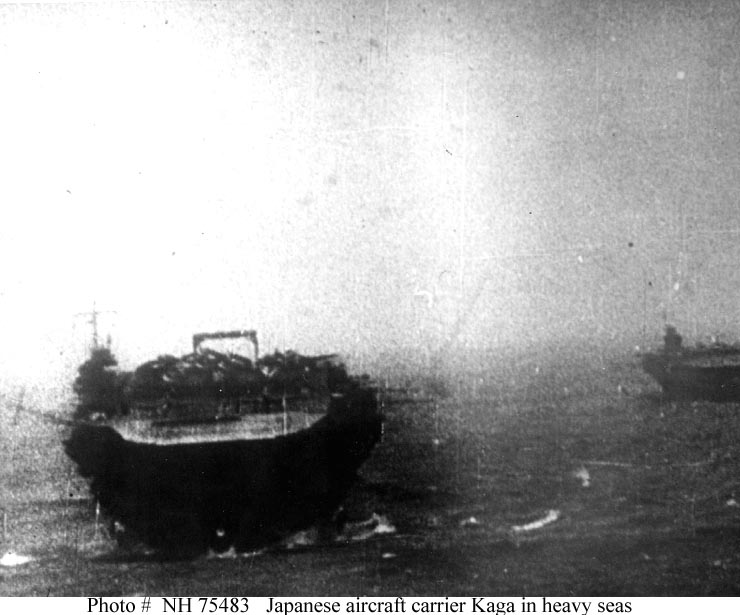
1 Comment

Filed under History, Military, world war two in the pacific

Background to “The Pacific” Part One: The Guadalcanal Campaign and the Beginning of Joint Operations

The Battle of Bloody Ridge

Note: This is the first of a series that I will post on the campaign in the Pacific.  Some are older articles that I wrote for my Masters Degree program and others will be new material dealing with specific topics in this long neglected campaign.  I was watching the second episode this evening and found it quite powerful…so much that I was in tears as the Marines of 1st Marine Division and John Basilone came aboard the troop transport and went to the Mess Deck.  I have served with the Marines for around six years including with Marine advisers in Iraq and been the Chaplain for the USS HUE CITY which is named after the Battle of Hue City.  I love the Marines and this series has touched me already.  I hope everyone watches it on HBO.
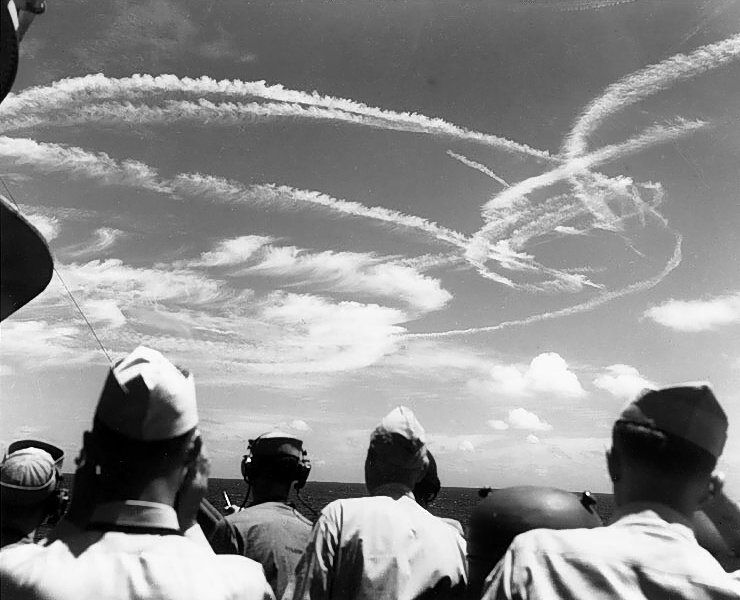
The Guadalcanal Campaign and the Beginning of Joint Operations

Marines on Guadalcanal

The Guadalcanal campaign was the first experiment by the United States of conducting a “joint” campaign in modern warfare involving Naval and Naval Air, Ground combat units, Army air assets and amphibious operations. The campaign involved numerous land, sea and air battles. It was under the command of Admiral Nimitz as CINCPACFLT and included commanders for ground, air and sea forces engaged.  For brevity and simplicity sake I will discuss the campaign and sea even though they are interconnected with the sea and air campaigns directly affecting the outcome of the land campaign.

Designated OPERATION WATCHTOWER and aptly called OPERATION SHOESTRING the campaign was launched on short notice, approved on 2 July the commanders of the operation first learned of it on 7 July. Utilizing the 1st Marine Division, which would later be reinforced by the Americal Division, landed on Guadalcanal and the neighboring island of Tulagi on 7 August.  The Marines took Tulagi after a brief but bloody fight and the few Japanese troops on Guadalcanal fled inland allowing the Marines to seize the airfield.  Unfortunately, the commander of the supporting US carrier task force, Admiral Frank Fletcher fearing danger to his carriers and withdrew following the landings. The forces in direct support were surprised by a Japanese cruiser force under Admiral Mikawa losing 3 American and 1 Australian heavy cruiser in one of the worst American naval defeats in history at the Battle of Savo Island. The next morning the transports, many still full of supplies left the Marines.  Admiral Fletcher’s action, which left the Marines without air cover and carrier support gave the Marines a new term, still in use today, for being left high and dry: “to be Fletchered.”
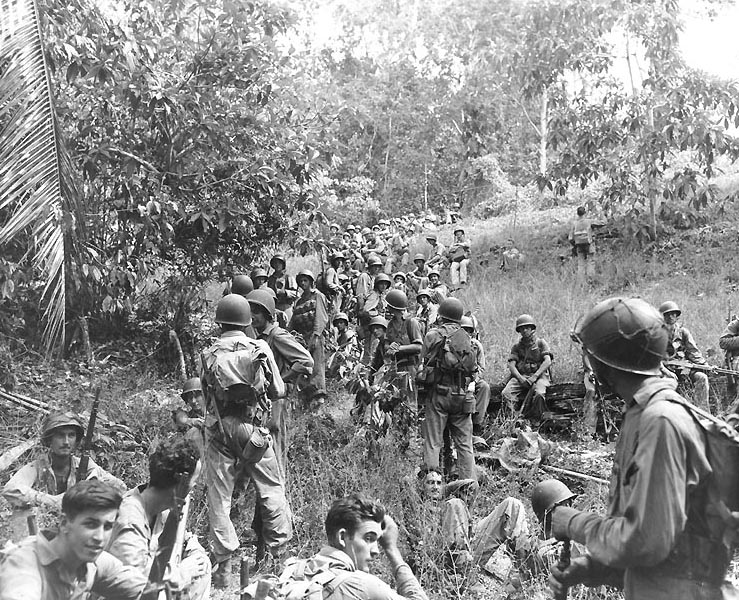
Japanese dead of the Ichiki Detachment after the Battle of the Tenaru (Ilu) River

The Land Battles: The Japanese quickly responded sending in Naval Landing forces which went in light without all their troops or equipment. The Ichiki detachment was wiped out in the battle of the Tenaru (Ilu) river on 20 August.  The Kawaguchi detachment of 3,500 men landed in two groups, again short of men, material and equipment landed in the closing days of August and attempted to seize the now operational “Henderson” field on September 13 to 14th after one of its supporting units had been destroyed by the 1st Raider Battalion in a small amphibious assault.  Kawaguchi’s attack was disjointed and his units dispersed.  He was defeated in detail by the Marines in the Battle of “Edson’s ridge” or “Bloody Ridge.”

Chesty Puller

The Marines attacked and destroyed another Japanese force at the Mataniko river on 9 October.  The Marines were further reinforced by the 7th Marine Regiment while Kawaguchi was reinforced by the HQ of 17th Army under General Hyakutake who brought the 2nd Division onto the Island under the command of General Maruyama.  Kawaguchi would then be relieved and sent home following disagreements with Maruyama and his chief of staff prior to the next major Japanese attack which took place 23-25 October along the same ridgeline that Kawaguchi had assaulted. Though the Japanese now had 15,000 troops with good artillery support, the attacks were fierce but uncoordinated. Defended by 7th Marines under Chesty Puller as well as troops from the recently arrived Americal, the Marines again effectively destroyed the attacking Japanese force.

Sergeant John Basilone USMC with Medal of Honor

Despite additional reinforcements of the 38th Division, the Japanese, due to severe food, supply and ammunition shortages would not make any more major attempts to take the airfield.  The Americans would shift to the offensive with the Army XIV Corps composed of the 25th Division, Americal Division and Second Marine Division under Major General Lawton J “Lightening Joe” Collins commanding in December.

The US Navy paid a heavy price for the victory at Guadalcanal. Here the USS Wasp sinks after being hit by Japanese torpedoes

The Sea Battles: The sea campaign in the waters surrounding Guadalcanal would be marked by some of the bloodiest sea battles in the history of the US Navy.  So many ships from both navies would be sunk offshore that the waters would become known as “Ironbottom Sound.” Following the previously mentioned “Battle of Savo Island” the Americans lost the carrier Saratoga to torpedo damage and the Wasp was sunk while escorting a convoy. In the Battle of Eastern Solomon’s of 24 August the Americans have the Enterprise knocked out of action for 2 months and while sinking a Japanese light carrier and inflicting heavy aircraft losses on the Japanese. The Americans surprised a Japanese force on 11 October off Cape Esperance sinking a heavy cruiser and destroyer and heavily damaging a second heavy cruiser. The Japanese effort, now directed by Yamamoto brought battleships to support operations around Guadalcanal, including bombardments of the airfield on 13-14October in support of Maruyama. The attacks damaged but did not close Henderson field which was able to continue air support to the Marines and soldiers.  On 26 October a carrier engagement would be fought, the Battle of Santa Cruz Islands would be a tactical Japanese victory sinking the Hornet and damaging Enterprise, while losing no ships. Two Japanese carriers were damaged but they lost a large number of pilots and aircrews who could not be readily replaced. They also not succeed in their amphibious efforts to retake the island or Henderson field, gaining the Americans badly needed time.  On 13 November the Japanese attempted to repeat the bombardment of Henderson field but would be stopped from doing so by a task force under Admiral Daniel Callaghan.  The First Naval Battle of Guadalcanal cost the Japanese the battleship Hiei and two destroyers, additionally many of the transports bringing Japanese reinforcements would be sunk by aircraft from Henderson field and Enterprise.  The Americans lost 2 cruisers and 4 destroyers sunk and every other ship save the destroyer Fletcher damaged. Admiral Callaghan and Admiral Norman Scott, the victor of Cape Esperance were both killed.  The following night the Japanese would lose the battleship Kirishima to the USS Washington task group under the command of Admiral Willis Lee.  Further Japanese naval activity would be limited to attempts to reinforce the island with destroyers; during one of these operations on 29 November they would clash with a force of American cruisers and destroyers at Cape Tassafaronga, sinking 1 cruiser and badly damaging three more at the cost of one destroyer, but was unable to complete his supply run.  Though the Americans lost more total warships, the Japanese could not replace what they lost.

USAAF B-17E over the Solomons

Air Operations: The air operations would be decisive to the effort, land based aircraft of the Japanese played a key role in destroying some US shipping and sinking warships in waters off Guadalcanal however they could not maintain air superiority over the island which was maintained and increased by the Americans as Henderson field’s capacity grew and additional Army, navy and Marine aircraft were stationed there.  Naval air was extremely important in the sea battles around the island.

Beached and destroyed Japanese transport ship at Guadalcanal

Japanese Reaction: The Japanese reaction was one of dismay; they could not fulfill their promise to the emperor to retake the island.  They had lost many ships and aircraft as well as ground troops. From this time on the Japanese would go over to a strategic defensive in the Pacific.  Japanese losses were devastating as they could not be made up.

Importance for the Americans: This was important in a number of ways. For the navy it showed that they could defeat Japanese surface ships in night engagements and gave the navy great experience as it moved forward in the South and Central Pacific. American carrier air crews had become experienced and gained superiority over the Japanese.  On the ground the myth of the Japanese “superman” was destroyed, yet American commanders also began to appreciate the skill, endurance and tenacity of the Japanese soldier in future operations.

Importance for Joint Operations: The campaign also was a triumph for the Americans in the fact that they were able to overcome inter-service rivalries undertake a difficult operation against a stronger opponent far from major fleet logistics and support basis.  To be sure this was Joint Operations in its infancy and until the arrival of significant Army forces on the island to relieve the Marines was for the most part a Navy, Marine Corps and Army Air Corps operation.  When Major General Lawton “Lightning Joe” Collins assumed command of the island from Marine Major General Alexander Vandergrift it became a true-inter service operation and the beginning of Joint Operations.

12 Comments

Filed under History, world war two in the pacific