Tag Archives: afghanistan

Our Bottom Line is our Honor: Padre Steve Talks About Wall Street

“It was the mystical dogma of Bentham and Adam Smith and the rest, that some of the worst of human passions would turn out to be all for the best. It was the mysterious doctrine that selfishness would do the work of unselfishness.” G.K. Chesterton

The United States is one of the most religious of Nations especially in what we worship. I’m not talking about God her I’m talking about money. The High Priests of this religion are those that run the financial institutions as well as much of what is sometimes described as “American” business. The bottom line is their honor and profit their goal.

I tell you what there is no such thing as an “American” Banker, Investor, Broker or President of any major corporation based in the United States they are men and women without a country with their only loyalty being their profits and what benefits their bottom line. The truth is as Napoleon Bonaparte said so succinctly “Money has no motherland; financiers are without patriotism and without decency; their sole object is gain.”

This has never been in more evidence than today.  The situation has been worsening since the end of the Cold War when under the name of “Free Trade” financial institutions and multinational corporations based in the United States have been selling us short once they figured that they could do better elsewhere like in Communist China as well as Third and Second World countries controlled by tyrants and despots who couldn’t give a damn about human rights.  Mind you that for many years it was American money, the American people and military power that enabled them to prosper particularly in the days when Presidents like Theodore Roosevelt maintain protectionist policies that actually helped them and the country at the same time.

The United States was never stronger than when we practiced protectionism. It benefited out people as well as businesses.  But when people like Teddy Roosevelt saw things that business did which were criminally irresponsible either in the treatment of workers or the environment business cried foul and it has been that way ever since. All “good” conservatives and libertarians have worshiped at the foot of the God of Capitalism and its prophets and the sacred doctrine of Free Trade.

The end of the year numbers are out and it looks like Wall Street and Major U.S. based corporations are doing quite well thank you while doing everything that they can to avoid being good citizens to the people of this country that made them what they are. Profits are up as are stocks and Wall Street is living high on the hog despite having made a mess of things to the point that the American Government had to give them our money, and lots of it to stay solvent and not crash the entire economy. It is as Thomas Jefferson once said “I sincerely believe, with you, that banking establishments are more dangerous than standing armies; and that the principle of spending money to be paid by posterity, under the name of funding, is but swindling futurity on a large scale.” To be blunt “American” financial institutions have raped this country and now that they are done with us are willing to take our money, use our military to protect or even enhance their operations overseas are willing to throw us under the bus because they can make more money elsewhere.

Well it seems that there is happiness in Mudville or shall I say on Wall Street as the year end numbers roll in.  Unfortunately for many Americans those profits won’t benefit this country.  Unemployment remains high, our personal and government debts are skyrocketing and deficits are killing the country while good paying technical and industrial jobs are moved overseas as supposedly American business shutters their U.S. production centers.  Meanwhile business and financial leaders carp about the United States not being a “friendly corporate environment” with “too much government regulation” and too many “powerful unions” as the reason for them to invest elsewhere.  Little things such as safety, the environment and even God forbid the lives of the people that work for them are of little concern, if the citizens of the U.S. or any other country decide that they want a bit more control of such issues then they are thrown under the bus by the financial institutions and corporations. If the U.S. Government asks them for anything it is “screw you” we’ll move to India where incidents what happened like the Union Carbide plant in Bhopal India don’t matter too much and Communist China which does its damndest to violate the human rights of its own people and run roughshod over its neighbors.

Andrew Jackson, perhaps the last President with the guts and moral principles to stand up to the likes of such people said:

“Every man is equally entitled to protection by law; but when the laws undertake to add… artificial distinctions, to grant titles, gratuities, and exclusive privileges, to make the rich richer and the potent more powerful, the humble members of society — the farmers, mechanics, and laborers — who have neither the time nor the means of securing like favors to themselves, have a right to complain of the injustice of their government.”

What Jackson said then is just as applicable now. Nearly every law that is passed in Washington is full of loopholes and benefits for the rich who then after bankrupting the country have the nerve to complain about government social programs. Usually they say that caring for the poor is the voluntary responsibility of individuals, churches and private charities which on principle I agree with, but on the whole is not practical because the need is too great mostly due to the power of the financials and the incompetence of government agencies.

The attitude of these supposedly “American” financial institutions and corporations seems to be all about “Free Trade.” The sad thing is that the moniker of “Free Trade” is somewhat Orwellian if you ask me.  The reality of “free trade” is that these interests should be able to do whatever they want, however they want without anyone being able to regulate them of tell them what to do.  In reality their carping about this not being a “business friendly environment” is them dictating to us that they should be able to operate for free from here while trading wherever they want without any responsibility or return to the country and people that made their success possible in the first place.  I would argue it is the financial houses and multi-national corporations based in the United States that are the real power in the world and that they have used us up and are now in the process of dumping us like they have so many World powers before us.

Napoleon saw this and said: “When a government is dependent upon bankers for money, they and not the leaders of the government control the situation, since the hand that gives is above the hand that takes. The late Marine Corps Major General and two time Medal of Honor winner Smedley Butler said back in 1933 concerning the way that financiers use the government, in particular the military to advance their interests:

“I spent thirty- three years and four months in active military service as a member of this country’s most agile military force, the Marine Corps. I served in all commissioned ranks from Second Lieutenant to Major-General. And during that period, I spent most of my time being a high class muscle- man for Big Business, for Wall Street and for the Bankers. In short, I was a racketeer, a gangster for capitalism….I helped make Mexico, especially Tampico, safe for American oil interests in 1914. I helped make Haiti and Cuba a decent place for the National City Bank boys to collect revenues in. I helped in the raping of half a dozen Central American republics for the benefits of Wall Street. The record of racketeering is long. I helped purify Nicaragua for the international banking house of Brown Brothers in 1909-1912. I brought light to the Dominican Republic for American sugar interests in 1916. In China I helped to see to it that Standard Oil went its way unmolested.”

Let’s fast forward on this while American soldiers get killed by Improvised Explosive Devices in Iraq and Afghanistan, many made with the assistance of Iranian agents the Treasury Department granted over 10,000 permits for U.S. corporations to trade with Iran with you guessed it my friends, some of the Largest U.S. banks reaping the profit.  This has been going on for years and while the bulk of such trade is limited to food items like Louisiana Hot Sauce it has also included deals which allowed other U.S. corporations to trade with Iranian companies that are suspected of involvement in terrorism or weapons proliferation.  http://www.foxnews.com/world/2010/12/23/report-treasury-okd-business-iran/#ixzz19SAQIwIu Pardon my ignorance but isn’t that like blood money when our troops die from Iranian assisted attacks?

Don’t worry though, we are in good company as such people have done the same to those that came before us as well, just look at Britain, once business bled her dry they cast her aside.  You see my friends our government doesn’t really control anything. It is the corporate and financial elites that run the country and dare I say the world.  James Madison saw it coming noting that “History records that the money changers have used every form of abuse, intrigue, deceit, and violent means possible to maintain their control over governments by controlling the money and its issuance.”

Financial institutions and many multinational corporations have acted in the most unseemly of fashions literally bankrupting nations and individuals while they continue to prosper and it seems that they can never get enough.  Great Americans have warned of the dangers of the financial elites controlling both national as well as private lending institutions. In fact if you look at the leadership of the Federal Reserve and the Treasury Department there is an almost incestuous link between them and Wall Street. Dwight Eisenhower talked about the danger of the “military-industrial complex” but that threat is nothing compared to the control that those that come out of Wall Street Investment Banks have over the nations’ economic and monetary policy and over the legislators that supposedly exercise oversight of such institutions. Thomas Jefferson noted that:

“If the American people ever allow private banks to control the issue of their money, first by inflation and then by deflation, the banks and corporations that will grow up around them (around the banks), will deprive the people of their property until their children will wake up homeless on the continent their fathers conquered.”

While Andrew Jackson lectured the leaders of the 2nd Bank of the United States before (probably unwisely) withdrawing U.S. assets from the Bank and eventually destroying it:

“Gentlemen, I have had men watching you for a long time and I am convinced that you have used the funds of the bank to speculate in the breadstuffs of the country. When you won, you divided the profits amongst you, and when you lost, you charged it to the bank. You tell me that if I take the deposits from the bank and annul its charter, I shall ruin ten thousand families. That may be true, gentlemen, but that is your sin! Should I let you go on, you will ruin fifty thousand families, and that would be my sin! You are a den of vipers and thieves.”

I think that even though Jackson’s decision hurt the economy which resulted in the Panic of 1837 but his reasons were sound:

It concentrated the nation’s financial strength in a single institution.

It exposed the government to control by foreign interests.

It served mainly to make the rich richer.

It exercised too much control over members of Congress.

It favored northeastern states over southern and western states.

Banks are controlled by a few select families.

Banks have a long history of instigating wars between nations, forcing them to borrow funding to pay for them.

Now tell me what has changed in this? If I hadn’t said that Jackson used these reasons to abolish the Second Bank of the United States one might think that I am talking about Wall Street and the Federal Reserve.  Let’s see….it looks to me like the only people getting rich are the Wall Street financiers and those that they favor. It seems that foreign nations, particularly the Chinese Communist have us by the balls holding a huge amount of our debt.  It seems that Congress under both Democratic and Republican control is in their power and will do anything that they want in order to “help the economy” but in reality secure their own power and I could go on but won’t.

Now I’m sure that some of my conservative friends and readers will label me as a liberal or Socialist but I’m not, I just want to see those that benefit from the security that our military provides and the hard work of Americans just actually start helping our side rather than looking to their our filthy money grubbing interests. Some things never change do they?

Peace

Padre Steve+
2 Comments

Filed under economics and financial policy, History, laws and legislation, Military, national security, philosophy

Christmas at the Front 1776-2010

Note: I wrote most of this on Christmas but didn’t finish it until a bit after 1AM on the 26th.

Today as on so many Christmas Days in days gone by military personnel serve on the front lines in wars far away from home and sometimes not far from their homes. Today American and NATO troops engage a resourceful and determined enemy in Afghanistan. To the west Americans support our Iraqi allies in their continued battle to end terrorism in that country while in many corners of the globe others stand watch on land, at sea and in the air. Unfortunately wars continue and until the end of time as we know it there will likely be war without end.

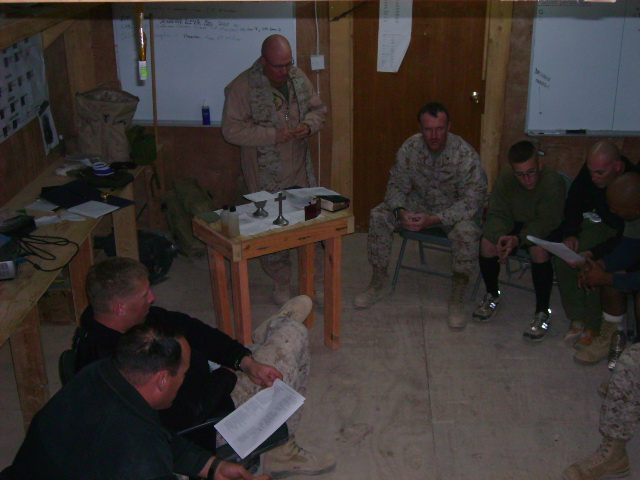
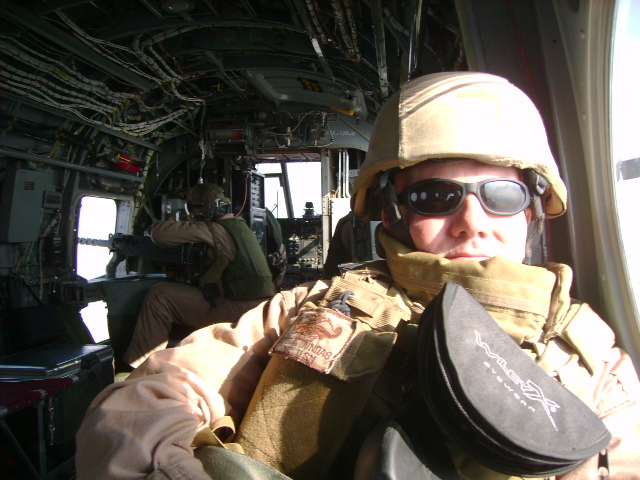
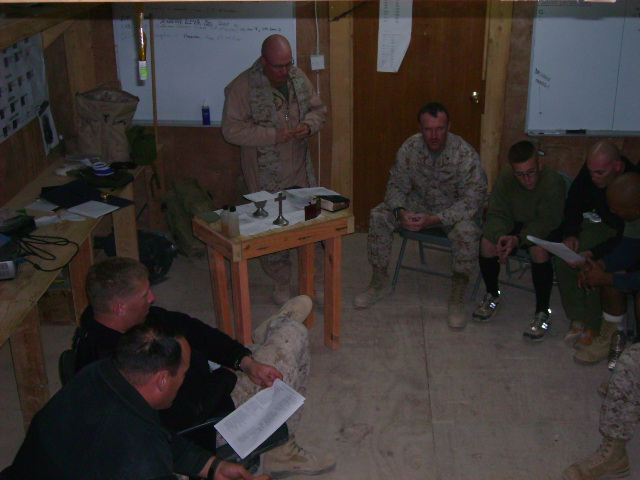
I have done my time in Iraq at Christmas on the Syrian-Iraqi Border with our Marine advisors and their Iraqis.  Since returning home have thought often of those that remain in harm’s way as well as those soldiers, sailors, Marines and airmen, American and from other nations that have spent Christmas on the front lines. Some of these events are absolutely serious while others display some of the “light” moments that occur even in the most terrible of manmade tragedies.

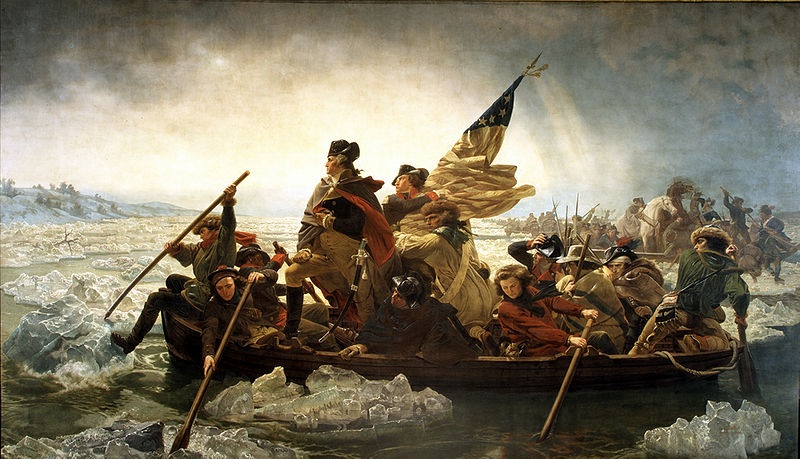
In American history we can look back to 1776, of course we could go back further but 1776 just sounds better. On Christmas of 1776 George Washington took his Continental Army across the Delaware to attack the British garrison at Trenton. Actually it was a bunch of hung over Hessians who after Christmas dinner on the 24th failed to post a guard but it was an American victory. In 1777 Washington and his Army had a rather miserable Christmas at Valley Forge where they spent the winter freezing their asses off and getting drilled into a proper military force by Baron Von Steuben.

While not a battle in the true sense of the word the Cadets at West Point wrote their own Christmas legend in the Eggnog Riot of 1826 when the Cadets in a bit of holiday revelry had a bit too much Eggnog and a fair amount of Whiskey and behaved in a manner frowned upon by the Academy administration. Needless to say that many of the Cadets spent the Christmas chapel services in a hung over state with a fair number eventually being tossed from the Academy for their trouble.

In 1837 the U.S. Army was defeated at the Battle of Lake Okeechobee by the Seminole Nation, not a Merry Christmas at all.  In 1862 the Army of the Potomac and Army of Northern Virginia faced each other across the Rappahannock River after the Battle of Fredericksburg while to the south in Hilton Head South Carolina 40,000 people watched Union troops play baseball some uttering the cry of many later baseball fans “Damn Yankees.” In 1864 the Army of the Potomac and Army of Northern Virginia faced each other again in the miserable trenches of Petersburg while General William Tecumseh Sherman enjoyed Christmas in Savannah Georgia after cutting a swath of destruction from Atlanta to the sea. He presents the city to Lincoln who simply says “nice, but I really wanted Richmond.”

Napoleon had something to celebrate on December 25th 1801 after surviving an assassination attempt on Christmas Eve and 1809 he was celebrating his divorce from Empress Josephine which had occurred on the 21st.

Meanwhile in Europe the 1914 “Christmas Truce” began between British and German troops and threatened to undo all the hard work of those that made the First World War possible.  Thereafter the High Commands of both sides ensured that such frivolity never happened again.

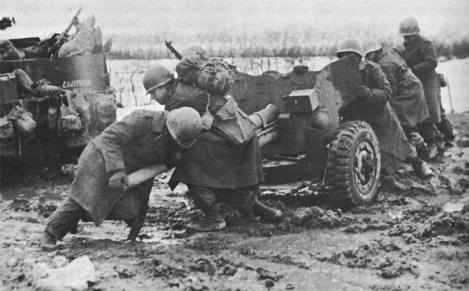
U.S. Soldiers and Anti-Tank Gun at the Battle of the Bulge

World War II brought much suffering in 1941 after Pearl Harbor the Japanese forced the surrender of Hong Kong and its British garrison while two days later the Soviets launched their counterattack at Moscow against Hitler’s Wehrmacht and the British were retaking Benghazi from the Afrika Corps.  A year later the Americans were clearing Guadalcanal of the Japanese and the Red Army was engaged in a climactic battle against the encircled German 6th Army at Stalingrad. At Stalingrad a German Physician named Kurt Reuber who is also a Lutheran minister draws “The Madonna of Stalingrad.”

The drawing which was taken out of Stalingrad by one of the last German officers to be evacuated now hangs in the Kaiser Wilhelm Memorial Church in Berlin. Reuber would draw another in 1943 while in a Soviet POW camp in which he would die in less than a month after that Christmas. Reuber wrote:

“I wondered for a long while what I should paint, and in the end I decided on a Madonna, or mother and child. I have turned my hole in the frozen mud into a studio. The space is too small for me to be able to see the picture properly, so I climb on to a stool and look down at it from above, to get the perspective right. Everything is repeatedly knocked over, and my pencils vanish into the mud. There is nothing to lean my big picture of the Madonna against, except a sloping, home-made table past which I can just manage to squeeze. There are no proper materials and I have used a Russian map for paper. But I wish I could tell you how absorbed I have been painting my Madonna, and how much it means to me.”
“The picture looks like this: the mother’s head and the child’s lean toward each other, and a large cloak enfolds them both. It is intended to symbolize ‘security’ and ‘mother love.’ I remembered the words of St.John: light, life, and love. What more can I add? I wanted to suggest these three things in the homely and common vision of a mother with her child and the security that they represent.”

In 1943 the Marines were battling the Japanese at New Britain while the Red Army was involved in its winter offensive against the Wehrmacht. In 1944 the Russians were advancing in Hungary, the Americans were engaged in a desperate battle with the Germans in the Ardennes with the German 2nd Panzer Division running out of gas 4 miles from the Meuse River and were destroyed by the American 2nd Armored Division. In the Pacific McArthur’s forces were battling the Japanese in the Philippines.

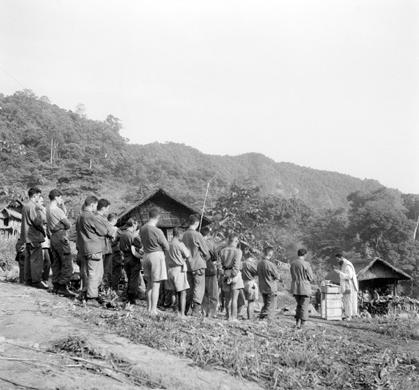
French Chaplain and Soldiers in Indochina

In the years following the Second World War Christmas was celebrated even while armies continued to engage in combat to the death. Christmas of 1950 was celebrated in Korea as the last American forces were withdrawn from the North following the Chinese intervention which the 1st Marine Division chewed up numerous Red Chinese divisions while fighting its way out of the Chosin Reservoir.  In the following years a stalemate along the front brought no end to the war and In French Indo-China the French garrison of Dien Bien Phu celebrated Christmas in primitive fashion unaware that General Giap was already marshalling his forces to cut them off and then destroy them shortly after Easter of 1954.   In 1964 the U.S. commits to the war in Vietnam and for the next 9 years American Soldiers, Marines, Sailors and Airmen will battle the North Vietnamese and Viet Cong with Marines fighting the North at Khe Sanh during Christmas of 1967.

Christmas on the Syrian Border with USMC Advisors

In the years after Vietnam American troops would spend Christmas in the Desert of Saudi Arabia preparing for Operation Desert Storm in 1990, in Somalia the following year and in the Balkans. After September 11th 2001 U.S. Forces spent their first of at least 10 Christmas’s in Afghanistan and in 2003 begin the first for at least 8 Christmas’s in Iraq.

Today Americans serve around the world far away from home fighting the war against Al Qaeda and its confederates and some will die even on this most Holy of Days while for others it will be their last Christmas.

Please keep them and all who serve now as well as those that served in the past, those that remain and those that have died in your prayers.

Peace

Padre Steve+
 

1 Comment

Filed under faith, History, Military

The Most Perilous of Assignments: Six Members of U.S. Border Training Team Killed By Afghan Border Policeman

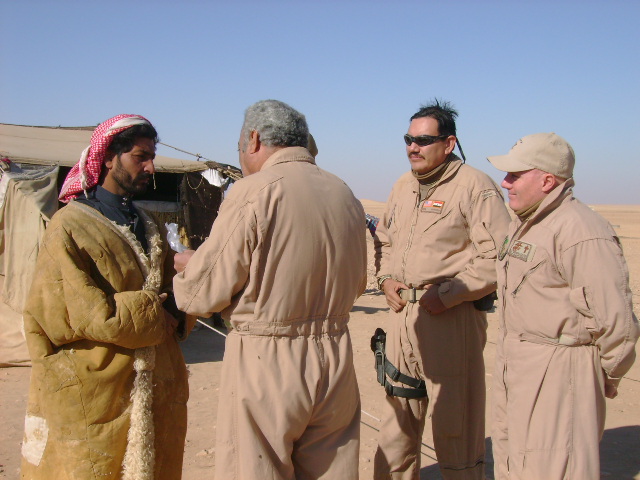
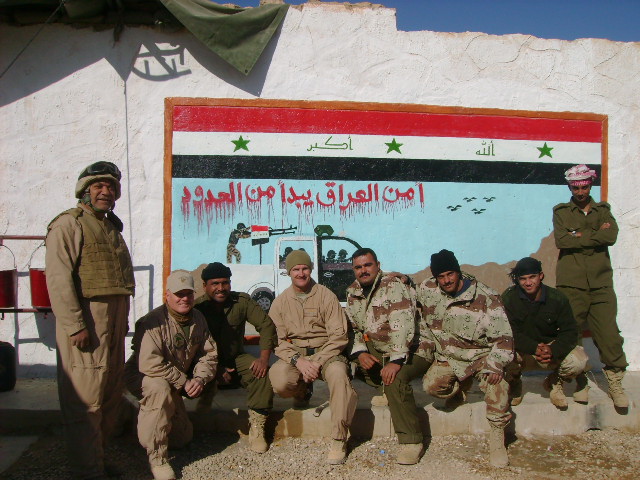
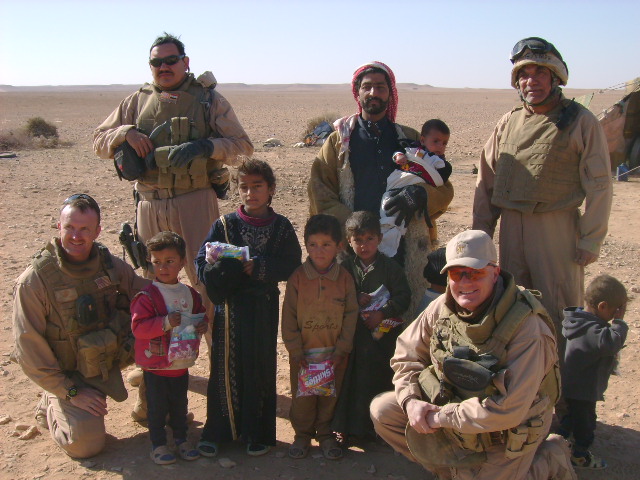
Me on Right with Border Team Members talking with a Bedouin on the Iraqi-Syrian Border

The big battalions get the press but in counter-insurgency operations in a very unstable environment such as Afghanistan the most perilous duty is often done by advisors.  Having served with our Marine and Army in Iraq in 2007 and 2008 I can say without equivocation that the advisors that serve with the Border and Port of Entry Police, as well as Police Training Team personnel serve in some of the most perilous and exposed locations imaginable usually far from quick support of combat units.

With an Iraqi Border Team

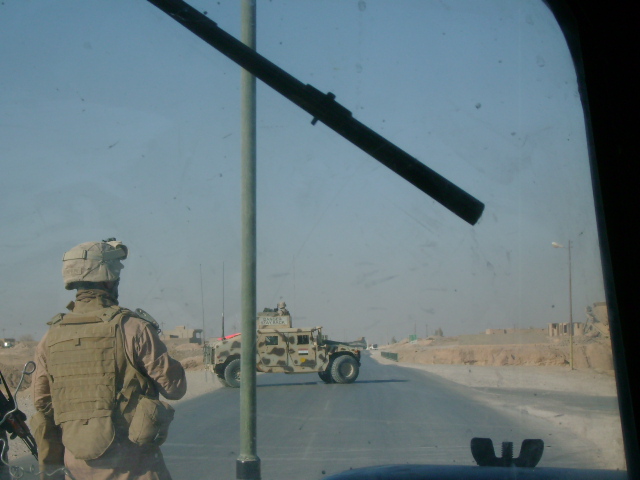
The Border teams typically cover large sectors and are composed of 15-20 personnel with a Captain or Major in command of the team and a number of junior officers or Staff Non-Commissioned Officers and junior enlisted personnel sometimes augmented by U.S. Border Patrol and Customs agents or contractors retired from those organizations.  They are not heavily armed and usually are based with the indigenous security forces.  Travelling in HUMMVS they visit and work with the indigenous Border Police and Port of Entry Police along long borders constantly exposed to possible ambush by insurgents or being attacked by the very personnel that they train and support.  This happens more frequently than we would want to see.

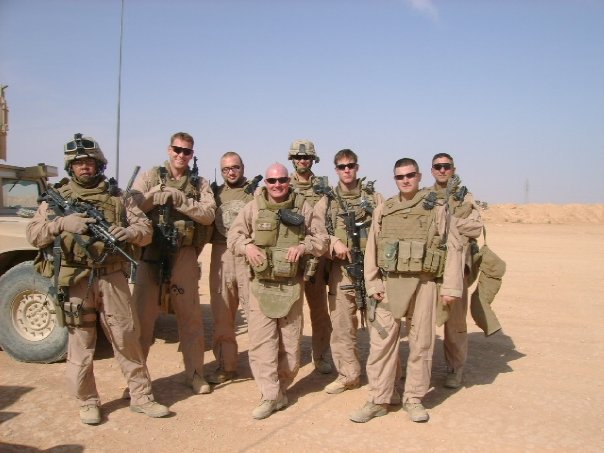
A Port of Entry Team after finishing an assistance visit at the Al Waleed Port of Entry. That evening the team went out and intercepted arms, drugs and money bound for Iraqi insurgents

The most recent case of this happened Monday the 29th when an Afghani Border Patrol Officer opened fire during a training mission Monday in the Pachir Wagam district of Nangarhar province near the border with Pakistan. The gunman was also killed during the incident according to NATO and Zemeri Bashary, a spokesman for the Afghan Interior Ministry, said the gunman was indeed a border police officer, and not an insurgent wearing a uniform. The Taliban claimed that the man was a Taliban member who had joined the Border Police to “kill foreign soldiers.” This has been a recurrent theme in the world of Afghanistan’s security forces, more so Police and Border forces than Army but a danger that grows as Afghanistan and NATO seek to quickly bolster the numbers of troops in the Afghan security forces.

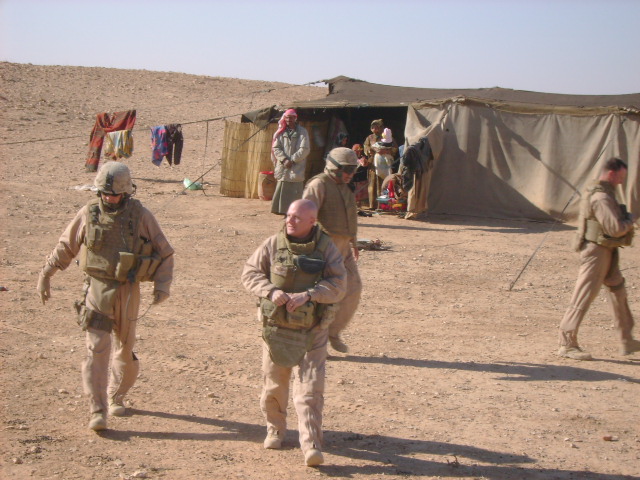
Leaving a Bedouin Camp

The attack was the latest in a series against advisors by their Afghani charges. In July, a rogue Afghan soldier fired a rocket-propelled grenade on NATO troops, killing three British soldiers and wounding four others.  In November 2009, an Afghan policeman killed five British soldiers at a checkpoint in Helmand. A month earlier, an Afghan policeman on patrol with U.S. soldiers fired on the Americans, killing two.

These Marines and Soldiers do not deploy for the most part with their own units, they deploy with their team and much of the time return to another assignment after their deployments separate from their comrades with whom they served in harm’s way.

I have been there in Iraq and involved with some very tense situations at Waleed as well as the border. The men that serve on these teams in Afghanistan are always on my mind and in my prayers.

On Monday the United States lost six brave soldiers on Afghanistan’s eastern border.  Please pray for the surviving members of this team which has been decimated by the attack as well as the families of the fallen.

Peace

Padre Steve+
Leave a comment

Filed under iraq,afghanistan, Military, national security

Veterans Day 2010: Counting the Cost of War

“It is well that war is so terrible, or we should get too fond of it.” General Robert E. Lee

Veterans Day had become a rather somber occasion for me over the past decade and since returning from Iraq in 2008 has taken on added personal significance.  I have noticed that I have become much more reflective about the sacrifices made by our military and the terrible coasts of war on our Soldiers, Marines, Sailors, Airmen and their families in this age of the all volunteer military.  The military which has about 2,225,000 members including the Reserves and National Guard is just 0.7% of the total population, the lowest percentage of military personnel compared to total population during any war in our history.  As a result this force has borne the brunt of a war that no politicians or bureaucrats figured would last half as long as it has.  As a result the “few” have been asked to do more for longer than and military that this nation has ever fielded during a war.

Thus for me Veterans Day has become a rather somber and reflective occasion as I ponder all the sacrifices made by our military and their families. In Afghanistan the U.S. Military has lost 1378 killed and our allies another 825.  In Iraq 4427 U.S. Military personnel have died along with 318 allied soldiers, not including the Iraqi military losses.  For each of the killed there are about 8 more wounded a total of over 38,000 wounded.  Of course the wounded numbers do not include 170,000+ cases of hearing damage; 130,000+ cases of mild traumatic brain injuries; and 200,000+ cases of serious mental health problems, over 30,000 serious disease cases, including a disfiguring, parasitic disease called Leishmaniasis, which results from bites of sand flies; thousands of cases of respiratory disease linked to exposure to toxic burn pit smoke and hundreds of suicides.  Then there are the injuries related to road and aviation accidents not in direct combat.  In my recent assignments in Iraq and Naval Medical facilities I have seen the human cost of the war.  I have friends who suffer as the result of Traumatic Brain Injury, PTSD and Pulmonary diseases as well as those that have been wounded as the result enemy action.  I have a dear friend with a rare and irreversible pulmonary condition from two tours in Iraq. He is 41 his lungs are those of a 70 year old man.  My best friend, a senior Naval Officer is still suffering from the effects of TBI and PTSD incurred while serving with the Marines in Al Anbar Province.

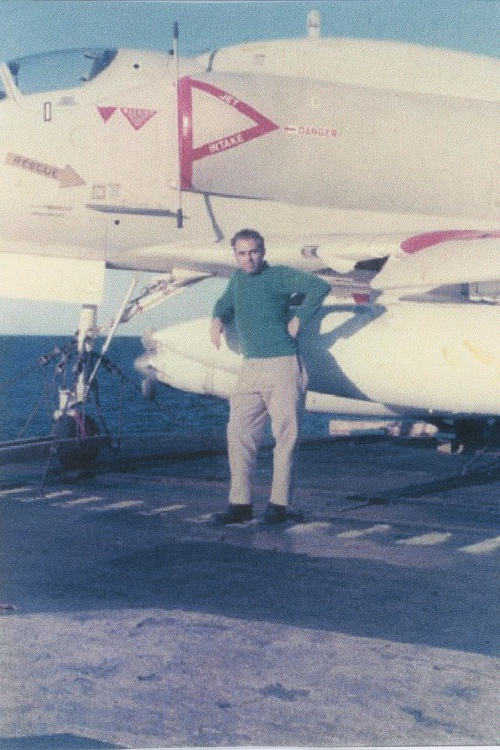
My Dad Aviation Storekeeper Chief Carl Dundas aboard USS Hancock CVA-19 off Vietnam circa 1971-72

A year ago on Veterans Day I was at with my parents in Stockton California to visit my mom and my dad who was then in a nursing facility due to the ravages of Alzheimer’s disease.  It was a terrible visit conflict with my mother due to witches’ brew of my PTSD and grief for my dad and my mother’s struggles with my dad’s condition and her own physical condition.  I visited my dad every day when in two and unfortunately he did not know who I was, Alzheimer’s had robbed him of everything that made him my dad.  He died on June 23rd of this year a day after I found out that I had been selected for promotion to Commander.  My dad was a retired Navy Chief Petty Officer who served in Vietnam on a beach detachment manning an emergency airfield in the besieged city of An Loc in 1972.  He never talked about that tour or what happened there except to tell me that he saw the Communists executing civilians in the city from his observation point.  He came home a changed man.  Thankfully he is now out of his suffering and our family is beginning to find its way back from the abyss of his illness.

I have served for over 29 years in the Army and the Navy and have witnessed many things and been blessed to have my life enriched by many veterans.  Unfortunately many of these brave men have since passed away, some having lived many years and others that have died far too young as a result of service connected injuries.

With advisors to the 3rd Bn, 3rd Brigade 7th Iraq Division COP South 2008

In my current work I see many young men that wear the Purple Heart for being wounded in combat. I see those that need assistance to walk, amputees, men with obvious scars from burns and others suffering blindness from their injuries. Our hospital’s Medical Board sees 40-60 Marines and Sailors a day, quite a few of whom that will be medically retired due to their injuries.  There are also those that have died by their own hand suffering from psychological and spiritual injuries too deep to fathom, we had one of our own Corpsman suicide last week.

The cost of war is terrible, as General William Tecumseh Sherman so eloquently put it: “War is Hell.”

Despite this our brave men and women that serve in all branches of the military as well as those that have gone before us in the 235 year history of our military have shouldered the load, for most of that history depending on volunteers who often served in obscurity often derided by their fellow Americans who believed that the military was a place to go if you could not be successful in the civilian world. The pay was low, the duty arduous and benefits few. In the Civil War, the World Wars and up until 1974 the professionals were augmented by draftees who outnumbered the professionals by a huge margin.  Since 1974 the force has been an all volunteer force.

Health and Comfort Board Team USS Hue City, Northern Arabian Gulf May 2002

Regardless of whether our Veterans were draftees or volunteers they have served this country well and on the whole to use the current Navy description are “A Global Force for Good.” The countries liberated from oppressors and helped in humanitarian operations by American Soldiers, Sailors, Marines and Airmen are many and varied.  They have represented the spectrum of our society and represent the best the country has to offer.  Unfortunately they have not always been honored by some of their our countrymen and women and sometimes the children and grandchildren of the peoples that they liberated from Nazi, Fascist or Communist oppressors who often use the wrongdoing of a few military personnel or the decisions or actions of American politicians or businessmen to label American military personnel as criminals.

Unfortunately since the military is such a small part of our population and concentrated in a few large bases it is invisible to most Americans as they live their daily lives. Often in isolated from the bulk of America such as Killeen Texas home of the U.S. III Corps and Jacksonville North Carolina the home of the 2nd Marine Expeditionary Force and Second Marine Division are quintessential military towns but neither are near major population centers and thus the sacrifice of these Soldiers, Marines and Sailors goes unnoticed by most of the nation.  In a sense the human cost of the war falls inordinately upon these military communities where there are few strangers.

In spite of this the current men and women of the American Military train, deploy, fight and return every day as they have since the 9-11-2001 attacks, many if not most have made multiple combat tours.  I have been pleased to see more support of the military in the media, especially sports media and leagues.  Many businesses are taking time to offer things of value to servicemen and women and those businesses should be commended and patronized.  I was touched by many stories that I saw about our veterans on ESPN over the past few days.  http://www.espnmediazone3.com/us/2010/11/espn%E2%80%99s-weeklong-salute-to-veterans-day/

Many of our Reserve component personnel give up civilian employment and chances for promotion to serve in the military, particularly when they are mobilized for service. When they return home most return to towns and cities that have little of the support afforded to active duty members when they return.  I pray that our political leaders in the future will exercise discernment and wisdom before committing us to another war. Otto Von Bismarck said: “Anyone who has ever looked into the glazed eyes of a soldier dying on the battlefield will think hard before starting a war.” Unfortunately the current members of the House, Senate and Executive branch have little connection to the military as very few have served and I wonder if any really comprehend this maxim.  In the 111th Congress 120 members had some form of military service.  The number of veterans in the 111th Congress reflects the trend of a steady decline in the number of Members who have served in the military. For example, there were 298 veterans (240 Representatives, 58 Senators) in the 96th Congress (1979-1981); and 398 veterans (329Representatives, 69 Senators) in the 91st Congress (1969-1971).  Those who have served a full military career are far fewer; the number of congressmen with military careers will remain relatively constant for the 112th Congress. In the Senate there will be one (as compared with two in 2006 and one in 2008) and in the House there will be eight (as compared with four in 2006 and six in 2008).  Some of these Congressional Veterans have been vilified by some broadcasters and pundits of the extreme right wing media most of whom who have never served in the military.  On the positive side nine members of the new Congress will have served in the current wars which hopefully will help promote the sacrifice of our current Veterans and help with programs that will help returning Veterans.

I have seen the cost of war up close and personal in Iraq and back here in the States. I suffer some the afflictions described as a result of my service and see the young men and women many of whom were not yet born when I enlisted in the Army, or when I was commissioned as an Army Officer, when I was a Company Commander or when I was a senior Captain in the Army. These young men and women are heroes.

Please take a moment to thank a Veteran.  If you have time volunteers are always welcome at organizations such as the USO and American Red Cross working with our troops, join or support organizations which promote the causes of Veterans including the Iraq Afghanistan Veteran’s Association www.iava.org the Veterans of Foreign Wars http://www.vfw.org/, American Legion http://www.legion.org/ , Marine Corps League http://www.mcleague.org/, the Fleet Reserve Association http://www.fra.org/, the Association of the U.S. Army http://www.ausa.org and the Disabled American Veterans http://www.dav.org/. There are also many charitable organizations that provide assistance to Veterans and their families’ one of the best being the Fisher House Foundation http://www.fisherhouse.org/ which provides comfortable and free lodging to the families of wounded, injured or sick military personnel on bases adjacent to military hospitals. I found these ten ways that you can help on Yahoo.com:

1. At 11 a.m., observe a moment of silence for those who’ve fought and died while in service to the country

2. Display an American flag

3. Attend a Veterans Day parade

4. Thank a vet for his/her service

5. Send a letter to troops through the U.S. Department of Defense Website

6. Work in a homeless shelter or soup kitchen

7. Visit a veteran’s grave or pick up trash at a veterans cemetery

8. Visit with the family of a veteran who’s serving overseas

9. Visit with a wounded vet at a local VA facility

10. Donate to the USO, the American Legion, Veterans of Foreign Wars USA or other organizations that honor and assist vets

Keep us all in your prayers and please when Veterans Day is past do not forget those of us that serve and our families, especially those men and women serving in harm’s way.  To my friends and comrades I echo the words of the German commander to his troops in captivity at the end of the Band of Brother’s mini-series:

“Men, it’s been a long war, it’s been a tough war. You’ve fought bravely, proudly for your country. You’re a special group. You’ve found in one another a bond that exists only in combat, among brothers. You’ve shared foxholes, held each other in dire moments. You’ve seen death and suffered together. I’m proud to have served with each and every one of you. You all deserve long and happy lives in peace.”

Peace

Padre Steve+
3 Comments

Filed under iraq,afghanistan, Military, PTSD, shipmates and veterans

Happy 235th Birthday Marines!

In 1775 a committee of the Continental Congress met at Philadelphia’s Tun Tavern to draft a resolution calling for two battalions of Marines able to fight for independence at sea and on shore.  The resolution was approved on November 10, 1775, officially forming the Continental Marines. The first order of business was to appoint Samuel Nicholas as the Commandant of the newly formed Marines. Robert Mullan the owner and proprietor of the said Tun Tavern became Nicholson’s first captain and recruiter. They began gathering support and were ready for action by early 1776.  They served throughout the War for Independence and like the Navy they were disbanded in April 1783 and reconstituted as the Marine Corps in 1798. The served on the ships of the Navy in the Quasi-war with France, against the Barbary Pirates where a small group of 8 Marines and 500 Arabs under Lieutenant Presley O’Bannon made a march of 500 miles across the Libyan Desert to lay siege Tripoli but only reached Derna. The action is immortalized in the Marine Hymn as well as the design of the Marine Officer’s “Mameluke” Sword. They served in the War of 1812, the Seminole Wars and in the Mexican-American War where in the storming of the on Chapultepec Palace they continued to build and enduring legacy. In the months leading up to the Civil War they played a key role at home and abroad.  In October 1859 Colonel Robert E. Lee led Marines from the Marine Barracks Washington DC to capture John Brown and his followers who had captured the Federal Armory at Harper’s Ferry.

The Corps would serve through the Civil War and on into the age of American Expansion serving in the Spanish American War in the Philippines, Puerto Rico and Cuba where they seized Guantanamo Bay at the battle of Cuzco Wells.  The would serve in China and be a key component of the international force that defended foreign diplomats during the Boxer Revolt as well as the international force that would relieve the diplomatic compound in Peking (Beijing).  In World War One the Marines stopped the German advance at Chateau Thierry and cemented their reputation as an elite fighting force at Belleau Wood where legend has it that the Germans nicknamed them Teufelhunden or Devil Dogs, a name that they Marines have appropriated with great aplomb.

During the inter-war years the Marines were quite active in the Caribbean and Asia and also developed amphibious tactics and doctrine that would be put to use in the Pacific Campaign.  During the war the Marines served in all theaters but won enduring fame at Wake Island, Guadalcanal, Tarawa, Iwo Jima, Okinawa and numerous other battles in the Pacific war. Marine Aviators flew in some the most desperate actions in the war to support the Navy and amphibious operations ashore.

After the war the Truman Administration sought to eliminate the Marine Corps but the Corps was saved by the efforts of Americans across the country and Marine supporters in Congress.  That was a good thing because the Marines were instrumental in keeping the North Koreans from overrunning the South during the Korean War on the Pusan Perimeter, turned the tide at Inchon and helped decimate Communist Chinese forces at the Chosin Reservoir.  After Korea the Marines would serve around the World in the Caribbean and Lebanon and in Vietnam where at Da Nang Keh Sanh, Hue City, Con Thien fighting the North Vietnamese and their Viet Cong allies.  The Marines took the initiative to implement innovative counter insurgency measures such as the Combined Action Platoons which enjoyed tremendous success until they were shut down by the Army high command.  These lessons would serve the Marines well in the new millennium during the Anbar Awakening in Iraq which changed the course of that insurgency and war.

The Marines would again be involved around the World after Vietnam serving in the Cold War, in Lebanon and the First Gulf War which was followed by actions in Somalia, the Balkans and Haiti. After the attacks of September 11th 2001 the Marines were among the first into Afghanistan helping to drive the Taliban from power. In the Iraq Campaign the Marines had a leading role both in the invasion and in the campaign in Al Anbar Province.  After theirwithdraw from Iraq the Marines became a central player in Afghanistan where today they are engaged around Khandehar and in Helmand Province.

The Marines are elite among world military organizations and continue to “fight our nations battles on the air and land and sea.” The Corps under General John LeJeune institutionalized the celebration of the Marine Corps Birthday and their establishment at Tun Tavern. General LeJeune issued this order which is still read at every Marine Corps Birthday Ball or observance:

MARINE CORPS ORDER No. 47 (Series 1921)
HEADQUARTERS
U.S. MARINE CORPS Washington, November 1, 1921

The following will be read to the command on the 10th of November, 1921, and hereafter on the 10th of November of every year. Should the order not be received by the 10th of November, 1921, it will be read upon receipt.

On November 10, 1775, a Corps of Marines was created by a resolution of Continental Congress. Since that date many thousand men have borne the name “Marine”. In memory of them it is fitting that we who are Marines should commemorate the birthday of our corps by calling to mind the glories of its long and illustrious history.

The record of our corps is one which will bear comparison with that of the most famous military organizations in the world’s history. During 90 of the 146 years of its existence the Marine Corps has been in action against the Nation’s foes. From the Battle of Trenton to the Argonne, Marines have won foremost honors in war, and in the long eras of tranquility at home, generation after generation of Marines have grown gray in war in both hemispheres and in every corner of the seven seas, that our country and its citizens might enjoy peace and security.

In every battle and skirmish since the birth of our corps, Marines have acquitted themselves with the greatest distinction, winning new honors on each occasion until the term “Marine” has come to signify all that is highest in military efficiency and soldierly virtue.

This high name of distinction and soldierly repute we who are Marines today have received from those who preceded us in the corps. With it we have also received from them the eternal spirit which has animated our corps from generation to generation and has been the distinguishing mark of the Marines in every age. So long as that spirit continues to flourish Marines will be found equal to every emergency in the future as they have been in the past, and the men of our Nation will regard us as worthy successors to the long line of illustrious men who have served as “Soldiers of the Sea” since the founding of the Corps.

JOHN A. LEJEUNE,
Major General
Commandant

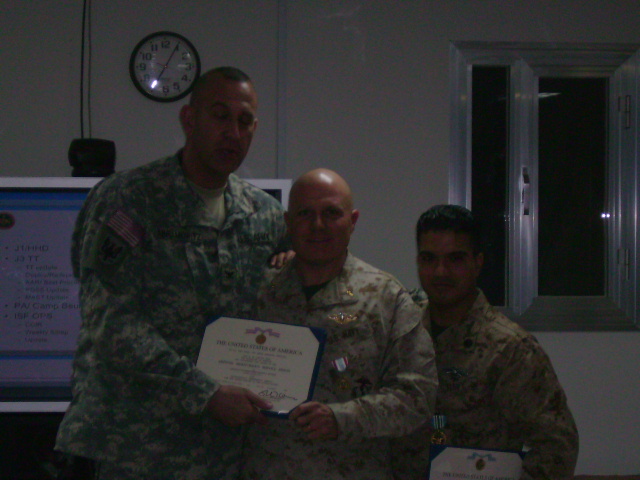
I have had the privilege of serving with the Marines in peace and war and the most memorable Marine Corps Birthday celebrations for me were in Ramadi with the Marine advisors to the Iraqi 7th Division and with the Marine Security Force Company at Guantanamo Bay Cuba. The highlight of my career was serving with the Marines in Iraq and I wear my Iraq Campaign Medal with pride.  The Marines have helped my professional development as an office through the Amphibious Warfare Course, Command and Staff College and the Fleet Marine Force Officer Qualification. I count my Marines as some of my most enduring friends.

Happy Birthday Marines. Thank you for all you do.

Peace

Padre Steve+
 

Leave a comment

Filed under History, iraq,afghanistan, Military

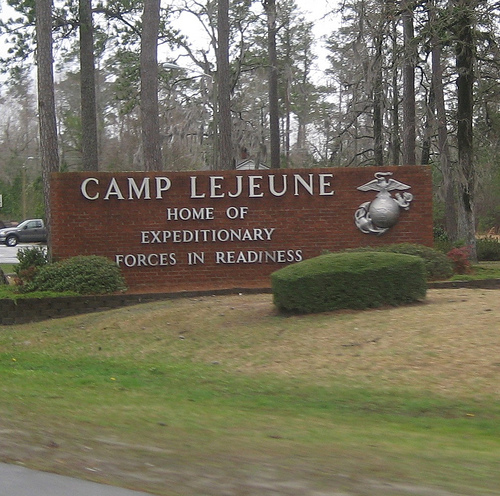
A Base at War: First Impressions of Camp LeJeune Nine Years after my First Tour

This is just a brief post on some first impressions on my assignment to Camp LeJeune after a nine year absence from the base. When I left LeJeune and my assignment with the Second Marine Division I had just completed twenty years in the military though I was not even three years into my service as a Naval Officer.

Today I was part of a Casualty Assistance Team meeting with the family of a young Navy Corpsman and Afghanistan veteran who killed himself in his apartment last night.  The Corpsman was part of a family with a long tradition of Naval Service who in his time in the Navy had gone to war with a Marine Battalion in Afghanistan’s Helmand Province and returned home changed by the war and struggling with PTSD and all the related symptoms of it.  This is something that I can understand having come back from Iraq in a rather bad way about two and a half years ago.  In my time with this young man’s parents today I found a young man that loved life but was wracked by his experiences of war.  He was well liked at his Marine Battalion as well as at the hospital and his death shocked the community almost as much as it did his family.  The sad thing is that this young man is emblematic the suicide problem in the military.  He is not alone, far too many Soldiers, Sailors, Marines and Airmen on active duty, in the Reserves or those that have left the service suffer so much from the unseen wounds of war that they commit suicide.  Since I have been here just a bit under two weeks this was a confirmation of what I knew just walking around the hospital, getting around the base and the local area.  Camp LeJeune is a base at war with Marines and Sailors fighting in Afghanistan and unfortunately many suffering from deep wounds of war at home living with physical, psychological, spiritual and moral injuries that don’t go away just because they return home.

When I left LeJeune in compliance with orders to the USS Hue City CG-66 in December 2001 we were just 3 months into the current war and barley two months into the Afghanistan campaign.  Marine morale was high though most Marines had not been to combat and those that had were veterans of Operation Desert Shield and Desert Storm, Somalia or the Balkans. Of course none of these actions lasted as long nor caused the amount of deaths as either the campaign in Iraq or Afghanistan.  Marines wanted to get a shot at the Al Qaeda terrorists that had attacked the United States and killed nearly 3000 Americans.

The Marines answered the call and have performed magnificently in every theater of the current war but the Corps has changed. Back in the late 1990s and early 2000s the Marines had a swagger that was typical of the work hard; train hard and play hard attitude of the Corps.  The Corps is now composed of many battle hardened veterans that have made deployment after deployment to the hottest combat zones in both Iraq and Afghanistan in which they took the initiative in both offensive operations in taking the battle to the enemy and employing solid counterinsurgency techniques especially in Al Anbar Province where the Iraqi Army performed quantitatively better under their tutelage in helping to turn the tide during the Anbar awakening.  Navy Corpsmen, Doctors and Chaplains serve alongside the Marines as they have done throughout our history.

I served with Marine and Army advisors in Al Anbar in 2007 and early 2008 in many of the remotest parts of the province and have dealt with individual Marines since. The Marines still have much of their swagger but it seems more fatalistic now.  An expert in trauma and moral injury told me of a recent visit to Camp Pendleton where Marines referred to themselves as “the walking dead” in an almost cavalier manner. The sad thing is that for many Marines this is only half a joke. The Corps in 2009 had the highest suicide rate in the military at 24 per 100,000 and suicides continue at a similar pace in 2010.  http://www.yuma.usmc.mil/desertwarrior/2010/03/11/feature6.html One occurred on Camp LeJeune where a Marine Sergeant pulled out a pistol and shot himself after being pulled over by Military Police in front of the base Fire Station.

As I made my way around the base the past week or so, I saw a lot more Marines with canes and obvious physical injuries from their combat injuries incurred in Iraq or Afghanistan. The Marines as always were professional but appeared to be much more serious than 9 years ago, many seeming to be old beyond their years. I love serving with and around Marines because they have a unique sense of professionalism combined with humor that is unlike almost any found in any part of the United States Military. However that positive is sometimes offset by a need to maintain an image of toughness even when they are dying on the inside which leads many not to seek help because it might make them look weak or broken, terms that no self-respecting Marine wants associated with his or her name.

In addition to the obvious injuries I noticed that while there was a much more serious tenor around the base that the Staff Sergeants and Gunnery Sergeants are a lot younger than they used to be back 9 years ago. With the war lasting as long as it has and the coupled with the expansion of the Marines during the war coupled with casualties and attrition by other means these young men and women are being promoted sooner than they were in the prewar days. Their leadership experience is mostly combat-related and they are in general superb combat leaders. However, this does not always translate well in a garrison setting especially if they are dealing with their own untreated PTSD or TBI nor is it helpful on the home front. As a result many of these young leaders are suffering the breakups of families at a record rate as well as substance abuse when they return home.

As Secretary of Defense Robert Gates noted in a speech at Duke University on September 29th of this year:

“There are a number of consequences that stem from the pressure repeated of deployments – especially when a service member returns home sometimes permanently changed by their experience.  These consequences include more anxiety and disruption inflicted on children, increased domestic strife and a corresponding rising divorce rate, which in the case of Army enlisted has nearly doubled since the wars began.  And, most tragically, a growing number of suicides.

While we often speak generally of a force under stress, in reality, it is certain parts of the military that have borne the brunt of repeat deployments and exposure to fire – above all, junior and mid-level officers and sergeants in ground combat and support specialties.  These young men and women have seen the complex, grueling, maddening face of asymmetric warfare in the 21st century up close.  They’ve lost friends and comrades.  Some are struggling psychologically with what they’ve seen, and heard and felt on the battlefield.  And yet they keep coming back.” http://www.defense.gov/speeches/speech.aspx?speechid=1508

These young men and women have forged a bond in combat and in many cases multiple combat tours. The have served well with honor and many don’t feel that people who have not been “in the shit” understand them or what they have been through.  There is a comradeship that comes out of war. There is segment at the end of the Band of Brothers mini-series where a German Commander is speaking to his soldiers after they have surrendered to the Americans. As the German Commander speaks to the survivors of his unit Corporal Joe Liebgott is asked to translate by another American. As he translates the German officer’s words the Americans know that he also speaks for their experience of war:

“Men, it’s been a long war, it’s been a tough war. You’ve fought bravely, proudly for your country. You’re a special group. You’ve found in one another a bond that exists only in combat, among brothers. You’ve shared foxholes, held each other in dire moments. You’ve seen death and suffered together. I’m proud to have served with each and every one of you. You all deserve long and happy lives in peace.”

I think that sums up what many feel today except unlike the Germans our war drags on with no end in sight.

The Marines are still tough and a force to be reckoned with on any battlefield. They, especially the Marine Divisions are an elite force but I believe that many are losing some of their resilience as the war goes in Afghanistan goes on.  Many from reports that I have read as well as those that I have talked with are concerned that much of the country doesn’t support the war nor appreciate their sacrifice. Many are concerned that their sacrifices as well as those of their friends, those killed and wounded will be wasted and the suffering that goes on after the war will be swept aside by politicians, the media and the public at large. They are also concerned that the people that they have worked with against the Taliban and Al Qaeda in Afghanistan and those that they have tried to protect and care for will suffer even more if the Taliban return to power.  I can say that I worry about my Iraqi friends and fear for them when I hear news of more attacks.

In the midst of this war we went through a number of elections and it troubles me that in the last election that the war and those fighting it were hardly ever mentioned by candidates from either party.  We mentioned it was usually for show to help politicians gain favor with voters.  We deserve better, we are not just a something to talk about at political rallies that when the election is over simply budget item to be slashed because the country is in a mess. These young men and women, as well as old guys like me are the sons, daughters, husbands and wives and brothers and sisters that have volunteered to serve this country.  The wounds that these young men and women, their experiences in combat that have left their souls scared will not go away when the last American leaves Iraq or Afghanistan.

This young man that we lost last night will be buried by his family and we will have a memorial service in his honor.  His many friends will grieve and those of us who are caring for his family will not forget them. I don’t want this young man or any other to be forgotten like so many who have returned from war before them.

Peace,

Padre Steve+


Leave a comment

Filed under iraq,afghanistan, Military, PTSD

“Victory” and Reality: Never think that War will be Easy

“No one starts a war-or rather, no one in his senses ought to do so-without first being clear in his mind what he intends to achieve by that war and how he intends to conduct it.” – Karl von Clausewitz

I was talking with a friend recently and the subject came to the support of a certain church for the war in Iraq back in 2003.  My friend, who is very thoughtful, spiritual and circumspect made the comment that “they were even against the war” when we discussed the merits of this particular church.  I thought for a second and said “after the past nine years of war was that wrong?” He paused a moment and said “I see your point.” I think that in the early months and years of this war, where we quickly deposed the Taliban in Afghanistan and Saddam Hussein in Iraq that we made unfounded assumptions about our “successes” with the end result that we have had to fight a much more protracted, bloody and costly series of wars than we had ever imagined. Like so many nations who entered into wars believing that they would have easy victories achieved at a cheap price in blood and treasure we have discovered once again that the serpent of the fog and friction of war coupled with hasty or politically expedient decisions has come to cause us great pain as a nation and after nine years a foreboding sense that we might not win in Afghanistan.

Like most Americans after the attacks of 9-11-2001 on the World Trade Center and the Pentagon I was all in favor of going after those that attacked this country wherever they were to bring those that planned these vile attacks to justice.  Within a month the United States had driven the Taliban out of power in Afghanistan and put the leaders of Al Qaida on the run.  By 2002 the US Government had began making a case against Iraq, one of a trio of nations identified as the “Axis of Evil.”  In 2003 we went to war with Iraq after failing to convince many allies of the necessity of the attack. When the “shock and awe” campaign was launched, Iraq forces defeated, Baghdad captured and Saddam Hussein driven from power there was a heady feeling of success.  Even those opposed to the invasion were amazed at the speed of and apparent ease of the conquest as pictures of cheering Iraqis filled the screen as the statues of Saddam came down.  In May President Bush landed on the USS Abraham Lincoln to proclaim “mission accomplished.” “We support the troops” ribbons and bumper stickers were the rage, victory has many friends and some churches even ascribed the victory to God.  But as the muse would say to the returning Roman conquerors, “victory is fleeting.”

We thought that we had achieved a “revolution in warfare” in the two campaigns but within months the tide had shifted in Iraq as in a colossal mistake of epic proportions a decision was made either in Washington DC or by the head of the Coalition Provisional Authority Ambassador Paul Bremer. A decision was made to disband the Iraqi Military, Police and Civil Service offices without having enough troops in place to police Iraq or civilians including NGOs and the UN available to fill the civil service gaps.  This was in direct contravention to years of CENTCOM plans. To make matters worse we had gone in so light that we had not disarmed or demobilized the Iraqi forces, thus we sent the people who could best help us restore Iraq to working order home. We sent them home and as anyone that knows Arab culture can tell you we dishonored them and created enemies out of potential friends while placing corrupt opportunists in power.  It was if we were making things up as we went rather than thinking things through and the result was a disaster.  By the end of 2004 a full-fledged insurgency had broken out an insurgency that would cost thousands of Americans and Iraqis their lives with tens of thousands of others wounded.  It was not until late 2007 and 2008 that the tides turned in Iraq as Iraqi Sunnis realized that Al Qaida backed insurgents were more of a threat to them than the American forces were.

Over the course of the war the thrill of the early days was forgotten as American Soldiers and Marines engaged a resourceful enemy that was willing to fight us in ways that we had neither expected nor planned.  War loses its luster when the thrill of victory is gone.  With the transition of the mission in Iraq and a renewed focus on Afghanistan where the Taliban had come back with a vengeance we are now moving toward being at war for 10 years.  We have fought the war with a military force that is well under 1% of the US population.  The military has fought well. We have not been defeated in open combat despite losing many troops to IEDs and ambushes; though in Afghanistan there have been a couple of near run events where small bases were nearly overrun by Taliban forces. We should remember General Hans Guderian, the creator of the Blitzkrieg and his words about the German campaign in Russia after the Battle of Kursk in 1943: “We have severely underestimated the Russians, the extent of the country and the treachery of the climate. This is the revenge of reality.” General Heinz Guderian

Nine plus years after 9-11 most of the American public as well as the political class of both parties have soured on the wars even while others seek war with Iran and maybe North Korea. I wonder about the wisdom of taking on even more enemies when the military is stretched to the breaking point and the nation is heading into bankruptcy.

But such things are not new from a historic point of view, if only we would look to history. Back in 1940 after their victories in France and the Low Countries the Germans felt as if they were invincible. By 1941 their troops were bailing out the Italians in North Africa and the Balkans while engaging the British in the air above Great Britain and in the seas around it. That did not stop Hitler from attacking the Soviet Union where as in France and the Balkans the German Army enjoyed amazing success until winter arrived and the Soviets counter-attacked.  Thereafter the German Army would not enjoy the same success and millions of German Soldiers; not to mention at least 20 million Soviet citizens and Red Army Soldiers died. Eventually the Wehrmacht was shattered, defeated and Europe devastated.

I am not saying that this will happen to the US, but it can.  We need to learn from history and look at how good people were enticed by the aphrodisiac of the “victory disease” that accompanied supposedly easy victories.  If one looks at Germany many officers, soldiers and civilians drank the aphrodisiac of victory and had their faith in Germany, their leaders and their cause destroyed as the war turned against them and they experienced defeat even while many times getting the best of their enemies on the battlefield.  Honorable men that had served their country well were either cashiered by the Nazi government and many killed by that instrument of evil because they voiced opposition to the regime.  Initially many had been lured into the trap of easy victory.

Back in 2001 and into 2003 I was like many of those men who served in the German military.  I was excited about the apparent easy victories in both Afghanistan and Iraq.   But like some German officers of that day who realized as the campaign in Russia was going badly into the fall of 1941 by late 2003 I began to sense that something was going terrible wrong in Iraq.  I think it was the moment that I heard that we had disbanded the Iraqi Army, Security forces and Civil Service as I started my course of study with the Marine Command and Staff College program held at the Joint Forces Staff College.  The experience of serving with thoughtful Marines in my unit and my fellow students; Marine, Navy, Coast Guard and Allied officers at the school helped me see the danger that was developing in our campaigns.  By the time I arrived in Iraq in the summer of 2007 the tide was beginning to turn but I saw the devastation of the country, ministered to wounded Marines and Soldiers and seen the affect of the war on Iraqis.  My duties with our advisors and their Iraqi counterparts were enlightening as I travelled about Al Anbar Province.

In the end I think that the Iraqis despite everything will do okay. I believe that most are tired of war and will not succumb again to sectarian violence on a large scale. I do not think that they have an easy road ahead but I believe the words of Brigadier General Ali as I left him for the final time: “You come back to Iraq in five years, as tourist, it will be better then.” I am not so optimistic about Afghanistan or Pakistan and I do not think we have yet seen the worst in those countries, but at least despite all of our mistakes Iraq most likely will do well.

The experience of war coupled with my study of history and military theory at the Command and Staff College as well as in my studies from my Master’s degree in Military History changed my perspective. I still serve faithfully and hope and pray for a conclusion to the wars that leaves us in better shape and brings peace to the lands that we have shed the blood of our Soldiers, Sailors, Marines, Airmen and other Federal intelligence, diplomatic and police agencies and treasure in.  I pray for my friends serving in harm’s way and those preparing to deploy and I pray for the safety of my Iraqi military friends and their families.

I am not a defeatist should someone level that charge at me.  I agree with Ralph Peters who made this comment: “We will not be beaten. But we may be shamed and embarrassed on a needlessly long road to victory.” However, I wonder if this country has the will to win and to make the sacrifices to do so and not just shovel them off on those that serve and have served throughout this war, a war which appears to have no end and which may expand to other countries.

Like the Germans we are engaged in a multi-front and multi-theater war but we have been trying to do so upon the backs of less than one percent of the population. This allows the rest of the country to live under the illusion of peace and prosperity with the bitter losses and memories of 9-11 fade into a yearly remembrance called “Patriot Day” by politicians of all stripes who often mouth empty words to eulogize the victims and thank the troops and then move on to their next fundraiser.  By doing this we have worn out the force without the full support of the nation which is absolutely necessary for the successful prosecution of a war, especially a long drawn out war such as we have now.  Unfortunately most Americans have little patience and while we mythologize a lot about World War Two one has to remember that there was a strong lobby that desired to end the war in 1944 even if victory had not been achieved.

We have a military now composed of many battle hardened and deployment weary soldiers who live in a world that the bulk of the nation does not understand nor really wants to understand.  We have seen the cost of the war multiply to the point that it has drained the ability of the military to prepare for other wars and modernize itself.  What happens if God forbid we are forced into a war with Iran or North Korea?  With what will we fight those wars?

When the Allies were cracking the German front in Normandy and the Red Army was decimating Army Group Center in the East, Field Marshall Gerd Von Rundstedt was asked what needed to be done by a General at Hitler’s military headquarters. The old Prussian warhorse simply said “make peace you idiot.” He was fired shortly thereafter. We certainly have not reached that point but should anything else break out while we are still engaged in Afghanistan and maintain a large number of troops in Iraq that could change.

One always needs to be careful when getting into “easy” and “quick” wars as more often than not they are neither easy nor quick.

Peace

Padre Steve+

Leave a comment

Filed under Foreign Policy, History, iraq,afghanistan, Military, national security

Suicide isn’t Painless: The Epidemic of Suicide in the Military

I leave the Naval Medical Center Portsmouth Virginia tomorrow and toward the end of October report as the Command Chaplain for Naval Hospital Camp LeJeune North Carolina. My last time at Camp LeJeune was as part of the Portsmouth SPRINT (Special Psychiatric Rapid Intervention Team) mission to care for Emergency Department personnel at the Naval Hospital and Base Fire/EMS responders to a particularly gruesome suicide of a young Marine who had recently served in Iraq and was preparing for another tour.

As a Chaplain and in my previous life as a Medical Service Corps officer commanding a Medical Company in Germany and Brigade Adjutant in Texas I have dealt with a lot of suicides, attempted suicides and the lives left shattered by suicide.  Likewise I have seen the results of suicide attempts as a trauma, emergency and critical care chaplain in major medical centers. I have attended the DOD Suicide Prevention Conference on a number of occasions and gotten to know many of the experts working in the field.

As I said I began my career as an officer in the Army Medical Service Corps. We had a close connection to the movie and television series M*A*S*H and the theme music to that movie is emblematic of the feelings of many combat vets who continue to deploy even after making many combat deployments. http://www.metacafe.com/watch/3444418/suicide_is_painless_johnny_mandel/

Through early morning fog I see
visions of the things to be
the pains that are withheld for me
I realize and I can see…
[chorus]:

That suicide is painless
It brings on many changes
and I can take or leave it if I please.

I try to find a way to make
all our little joys relate
without that ever-present hate
but now I know that it’s too late, and…
[Chorus]

The game of life is hard to play
I’m gonna lose it anyway
The losing card I’ll someday lay
so this is all I have to say.
[Chorus]

The only way to win is cheat
And lay it down before I’m beat
and to another give my seat
for that’s the only painless feat.
[Chorus]

The sword of time will pierce our skins
It doesn’t hurt when it begins
But as it works its way on in
The pain grows stronger…watch it grin, but…
[Chorus]

A brave man once requested me
to answer questions that are key
‘is it to be or not to be’
and I replied ‘oh why ask me?’

‘Cause suicide is painless
it brings on many changes
and I can take or leave it if I please.
…and you can do the same thing if you choose.

Last week four soldiers, one a highly decorated senior NCO and all combat veterans are believed to have committed suicide at Fort Hood Texas.  The base which has already seen more than its fair share of tragedy with 14 confirmed suicides this year is stunned that these occurred in one weekend.

Defense Secretary Robert Gates commented about the stress on the all-volunteer force: “No major war in our history has been fought with a smaller percentage of this country’s citizens in uniform full-time — roughly 2.4 million active and reserve service members out of a country of over 300 million, less than 1 percent,” as a result the wars have been fought by a small proportion of the country, for many they are “a distant and unpleasant series of news items that does not affect them personally.” While the distance grows between those that serve and the general population military families are under even more stress, with anxiety and disruption inflicted on children, increased domestic strife and a growing number of suicides. Divorce rates in the Army have doubled since the wars in Afghanistan and Iraq began.

In the years prior to about 2004-2005 the military suicide rate was almost always below civilian rates in all demographics.  This is something that we took legitimate pride in.  That began to change as the war in Iraq shifted from a “Shock and Awe” campaign to a rather nasty and intractable insurgency this began to change as the deployment tempo increased and the Army increased its “boots on ground” time from a year to 15 months with a one year dwell time between deployments. Even as Iraq calmed down and the US role shifted many troops remain and Afghanistan has become a much more difficult war than it was even a few years ago. The Marines retained a 6-7 month deployment schedule but as the war went on and personnel requirements increased many Marine units were doing 6 months in country and 6 months home.  The difficult of what was described as “dwell time” for the Army and Marines was that for all intents and purposes it wasn’t. The units would get a few weeks leave and stand down time on their return home and then begin preparing for their next deployment. These preparations out of necessity entailed much time in the field training including trips to the Fort Irwin National Training Center (NTC) or the Marine Corps Air Ground Combat Training Center at 29 Palms.  Speaking from experience before 9-11 I can say that a Marine battalion going to 29 Palms in reality makes a short but intense deployment which is taxing on the organization even as it sharpens combat skills.  The same can be said for Army units going to NTC.  Thus the time that is nominally considered time at home to recuperate is not that and instead serves to keep the pressure on already stressed units, leaders and soldiers/Marines.  In the intervening time those that present to mental health providers or chaplains are provided with care to get them back in shape for the next deployment but never really get to deal with the deeper psychological and spiritual wounds. These include “moral injury”  which often involves unresolved grief for the loss of comrades and real or imagined guilt for their own actions in war.  Such wounds ultimately create despair, loss of faith and eventually cause some service members to make attempts on their life with varying degrees of “success” in “completing” the suicide.

The result is that those who have experienced the moral injuries that come as a result of combat, seeing comrades killed and wounded, participating in actions where they are directly or indirectly involved in killing the enemy, see the “collateral damage” of civilians, including children killed and maimed go right back into to fight.  Since this war has now gone on longer than any war in US history and we are fighting it with an all volunteer force of limited numbers with many making multiple deployments, some as many as 5 or more these wounds are pushed aside.  The effect of this is a cumulative grinding down of those that serve in harm’s way. Many suffer from some form of psychological, neurological or even spiritual injury that in combination with other life stressors make them particularly vulnerable to taking their lives.  In regard to moral injury “Many of the troops kill themselves because they feel that those kinds of experiences have made them unforgivable,” said Dr. William Nash, a top PTSD researcher. “It’s a lot harder for most people to forgive themselves than to forgive others.”

Unfortunately there is a stigma attached to seeking treatment or admitting that one is suffering from depression, anxiety or any other condition associated with either seeking help on their own or being “command referred” for psychological/psychiatric help.  Since that stigma is real many war fighters don’t seek help and take “refuge” in destructive behaviors such as alcohol abuse, drug abuse (to include prescription drugs) and risky behaviors.  One wonders how many of the single vehicle accident fatalities that occur late at night to combat vets are not accidental at all but are suicides by another more “socially acceptable” means.  If a forensic psychological profile was done on every service member that dies in such events I would guess that the finding would be a lot more suicides not an accidental deaths as we would like to believe. Yes all of these deaths are tragic but it is far easier to rationalize death in an auto accident than death by gunshot, knife wounds, overdose or hanging.

I am not proposing any solutions for this problem.  I do believe that somehow the deployment tempo needs to be slowed down to allow troops to actually recover and get help.  This is one of the suggestions of the DOD Suicide Prevention Task Force.  Their report is linked here: http://www.health.mil/dhb/downloads/Suicide%20Prevention%20Task%20Force%20report%2008-21-10_V4_RLN.pdf

When I go to LeJeune I know that as a Chaplain at the Naval Hospital I will be collaborating with our mental health professionals to provide care to Marines, Sailors and their families that are living this daily.  The Marine situation is poignantly show in this article: http://www.nctimes.com/news/local/military/article_3dc03ec3-6a37-5608-8563-aca88f635271.html

I have served with the Marines almost 6 years and from what I see the Corps has changed.  It is battle hardened but less resilient than it used to be.  The Marine Corps’ suicide rate has reached 24 per 100,000, a rate that surpasses all the other services. The rate was 13 per 100,000 in 2006 when I finished my tour at Marine Security Forces. The latest available figures put the civilian suicide rate at 20 per 100,000.  The problem extends past active duty as Veterans Affairs Secretary Eric Shinseki, the former Army chief of staff, said the suicide rate for men aged 18-29 who have been discharged had gone up by 26% from 2005-07. Likewise, “of the more than 30,000 suicides in this country each year, fully 20% of them are acts by veterans.” This means as Shinseki said “on average 18 veterans commit suicide each day. Five of those veterans are under our care at VA. So losing five veterans who are in treatment every month, and then not having a shot at the other 13 who for some reason haven’t come under our care, means that we have a lot of work to do.”

There is also an effect on military health care providers of all kinds and chaplains. These individuals not only have to deal with their trauma but the trauma and hopelessness that they see in many of their patients or parishioners. These caregivers have no respite between deployments because their reason for being is to care for the Soldiers, Marines, Airmen and Sailors that present to them be they deployed or back in a military hospital or clinic.

The work will be hard and long after the last Marine, Sailor, Soldier or Airman leaves Iraq and Afghanistan we will be dealing with this for years to come.

Peace

Padre Steve+

3 Comments

Filed under healthcare, iraq,afghanistan, Military, Pastoral Care, PTSD

Fighting a World Wide Insurgency: The Problem Fighting Revolutionary Terrorists and Insurgents- Part One

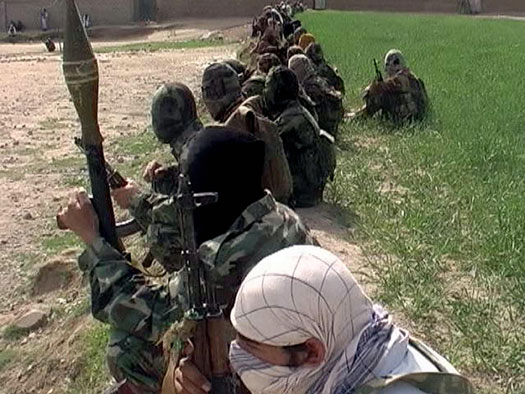
Taliban Insurgents

“Warfare is now an interlocking system of actions political, economic, psychological; military that aims at the overthrow of the established authority in a country and its replacement by another regime.  To achieve this end, the aggressor tries to exploit the internal tensions of the country attacked ideological, social, religious, economic, any conflict liable to have a profound influence on the population to be conquered.” Roger Trinquier Modern Warfare

The United State and our allies have been at war with Islamic terrorists as well as nationally based insurgencies for over nine years.  The war that we are fighting is not like the Second World War where we fought a conventional war against enemies that were defined by national, political and geographic boundaries.  That war as well as the First World War and most recently the 1991 Gulf War but rather is a global insurgency in which we are pitted against a number of sometimes disparate groups One of the things that seems to be misunderstood by much of the media as well as the public

Muslim terrorist groups they use some tenants of Islam, mostly from the Wahabi school that emerged on the Arabian Peninsula in the late 1700s to justify what they do. Hezbollah and the Iranian Revolutionary Guard use the Islam taught by the school of the Ayatollah to do the same.

However that being said there are a sizable number of Muslims worldwide that oppose the terrorists and their brands of Islam but still can be offended and driven to the other side by Americans doing just what pastor Jones got started. The radicals take this and use it as propaganda against us.

The fact is that it is all about using propaganda effectively and not giving the terrorists the grist they need to use against us. The terrorist or the insurgent has no need to tell the truth and usually will not and will twist any “truth” to his own end. This is true in every revolutionary war, which is what all of these groups are waging. They are fighting to turn all of Islam and anyone else they can against us. This is the case since the beginning of time and not limited to Muslims.

We as Americans have been pretty lousy at this except when we were the revolutionaries. It is a fact, not just with the Muslims but all revolutionaries that since they are on the weak side of the military equation that they use propaganda, especially what any of our people do to radicalize people on the fence against us. Jones and others played into their hands and by doing so jeopardize the mission and endanger our troops. The fact is that we neither have the resources or people to allow this to become a war against all of Islam. Thus we have to exploit natural divisions and cultural divides in the Moslem world to isolate and neutralize the radicals of Al Qaeda, Hamas, the Taliban, Hezbollah and the Iranian Revolutionary Guard.

It may seem on the surface to be politically correct appeasement but a true strategic purpose is served. The counter-insurgent cannot do what the insurgent can as they will lose the propaganda war and with it the broader war. We are fighting a world-wide revolutionary war against Moslem fundamentalist extremists that want us to make it a war against all of Islam. If that were to be the case we would have to go to a total war footing, ignore our own economy renew the draft and prepare for a war that in the long run we cannot win and will leave us as broken as Germany after WWII.

The problem with Islam as that for the most part much of Islam especially in the Middle East still lives in the 14th century with fancy technology. They did not have the Renaissance, Reformation or the enlightenment thus the appeal of the fundamentalist sects and radical Islam. That makes our job hard and that of Bin Laden easy as their world-view  promotes a black and white understanding of the world which makes recruitment of youthful idealists easy especially when the conflict is framed as against “Crusaders” or “Imperialists” opposed to Islam.

The war that we are engaged in is not conventional and we do not have a good record in recent times of fighting this kind of war. We lost in Vietnam because we ignored this. We won all the battles and lost the war. Despite what some pundits believe this is not like WWII and no new incarnation of George Patton will win it.

As I said we are engaged in a revolutionary war which is different than other types of war. In revolutionary wars the revolutionary no matter what his cause is able to use propaganda to influence opinion, usually of people that they are trying to bring to their side. Our founders were very good in portraying the British as violent and brutal occupiers. We used British excess especially in Boston and in the South against them very well. The Jihadists are promoting a revolutionary cause, that cause being the overthrow of established governments in the Middle East and bringing about a radical and fundamental brand of Islamic rule. This happened in Iran and after 30 years the young people are beginning to revolt against the Ayatollahs. It is also revolutionary because they are actively promoting the overthrow of established states and have a goal of establishing their brand of Islam over the entire world. The use revolutionary techniques and strategies used successfully by other revolutionaries attempting to control the populations where they operate through both terror and by discrediting unpopular or corrupt governments.

One of the problems that we in the United States have in understanding Al Qaida and other Islamic groups that rely on terrorism as their primary means of conducting warfare is the nature of the terrorist himself.  Roger Trinquier who observed and fought against such groups in the 1940s and 1950s wrote one of the fundamental books on this type of warfare.  Trinquier said something that will undoubtedly be taken wrong by some readers of this essay but if one understands the nature of Revolutionary war has been true going back for centuries and is not confined to militant Islamic Fundamentalism.   Trinquier observed that “the terrorist should not be considered an ordinary criminal.  Actually he fights within the framework of his organization, without personal interest, for a cause he considers noble and for a respectable ideal, the same as soldiers in the armies confronting him.”

One can see how this is demonstrated in history in such disparate groups as the Israeli Irgun fighters who used terrorist tactics from 1931 until the founding of the state of Israel in 1948 against the British occupiers, the Irish Republican Army.  This is even part of the American experience in the post Civil War South of the Reconstruction era.  Then many Southern whites organized into guerrilla terrorist units such as the Klan in Tennessee, the Red Shirts in South Carolina, the Knights of the White Camellia in Louisiana, the Young Men’s Democratic Club in Florida in order to attack anyone associated with Reconstruction. Their targets included newly free blacks, carpetbaggers, Scalawags, teachers from the North, Freedmen Bureau officials, northern troops, and Republicans.  If you read their writings or even query their current day descendants you will find that none believed that they were criminals and their actions, while unacceptable to many were justified.  One does not have to agree that the terrorists cause is right to acknowledge that terrorists believe this to be true.  Thus in fighting the terrorist organizations one has to employ a wide variety of tactics to protect the populations targeted by terrorists to include police, limited military involvement, the use of propaganda, and “soft” methods to provide aid to these populations and isolate the terrorists from them.

The current batch of Jihadists are actually fairly disparate and not necessarily allies as we found out in Iraq where Al Qaeda and the foreign fighters turned the population of Al Anbar Province against them and brought that Sunni population to our side. They also have sometimes conflicting goals or limit their cause to local areas. The Sunni and the Shi’a have a hard time working together so while this is a global revolution it is not monolithic. Thus if we are smart we can exploit natural divisions in these groups. To do so we have to play smart in how we fight them recognizing that the “soft” approach often is better as the French found out too late in Vietnam but did well with in Algeria. See books by David Galula “Counterinsurgency in Algeria 1956-1954” “Counterinsurgency Warfare”, Roger Trinquier’s “Modern Warfare” as well as the book by Alister Horne “A Savage War of Peace” all are excellent reads. Bernard Fall’s book “Street Without Joy” is a good study of how this happened in French Indochina. The US Counterinsurgency Manual is available online or in bookstores as is “Learning to Eat Soup with a Knife” by John Nagl, a major writer of US Counterinsurgency doctrine.

US Advisors with Afghan Army Officers

In a world-wide insurgency even actions which seem logical to Americans at home can be detrimental to US Forces and political goals in Afghanistan, Pakistan, and Iraq and throughout the Muslim world. I’m not a fan of the Mosque near the World Trade Center even though it is the equivalent of 6 normal city blocks away and not visible from the site. Many Americans if not an outright majority oppose this building project yet the builders don’t seem to understand the raw wounds that the project has opened for many Americans. I’m sure for them that much of it is a business, they are developers in New York City and the land was available. Yet the project can quite rightly be seen as insensitive because of what it means to the victims.

At the same time politicians and protesters by naming it the “Ground Zero Mosque” has raised its propaganda value exponentially, that is why Hamas and Hezbollah have also raised the ante in their talk about it. Thus what was an annoyance and hurtful to the victims has become a propaganda victory for the terrorists. In a sense we have let our collective outrage play into the terrorist’s hands. When he pastor of a small church in Florida threatened to burn a large number of copies of the Koran he helped ignite a firestorm of protest in many parts of the Islamic world especially in the epicenter of our current struggle in Afghanistan and neighboring Pakistan.

We are at war with the warlike highly militant strains of Islam and trying to keep the more Western leaning peaceful variants on the sidelines or enlist them to our side. This is a hard path for our leaders to walk as President Bush found out and President Obama is finding out is that most Americans don’t see it that way.  To many Americans all of Islam is the enemy and nothing can change that and the heated passion of our population often plays into the hands of our enemies.  Thus both Presidents’ comments about Islam have usually fallen on deaf ears and both have been excoriated for straddling this fence.

Anyway as you gather I have spent a considerable amount of time studying this type of warfare. I admit that this is pretty unusual for a chaplain, but I also have a Masters degree in Military History as well as the Marine Corps Command and Staff College. When I was in Iraq I knew more than many Marine and Army officers about fighting this type of war. Kind of weird I know but what can I say?

One of the most famous and successful practitioners of Counterinsurgency Warfare was French Colonel David Galula.  Galula in a sense is the “voice crying in the wilderness” of counterinsurgency doctrine and his methods have been used with some measure of success during the “Surge” in Iraq and the “Anbar Awakening” which turned the tide of the Iraqi insurgency.  Galula commented about terrorist tactics, tactics that have not changed in either Iraq or Afghanistan:

“The rebels realized that they could achieve the greatest psychological effect on the French and on world opinion at the cheapest price by stepping up terrorism in the main cities, notably in Algiers, which served as headquarters to most French and foreign correspondents and thus acted as a natural amplifier. A grenade or a bomb in a café there would produce far more noise than an obscure ambush against French soldiers in the Ouarsenis Mountains.” Galula “Counterinsurgency in Algeria”

One of the most frustrating aspects for military and police personnel fighting insurgencies that employ terrorist tactics is that quite often superior forces cannot finish off the insurgents. Galula provides an answer to this question.

“Our forces were vastly superior to the rebels. Then why couldn’t we finish with them quickly? Because they managed to mobilize the population through terror and persuasion . . . It was therefore imperative that we isolate the rebels from the population and that we gain the support of the population.  This implied that under no circumstances could we afford to antagonize the population even if we had to take risks for ourselves in sparing it.”

This is a lesson that we have not always learned as incidents such as the Abu Ghraib torture and most recently a series of targeted killings of Afghan civilians by a squad of Army Soldiers in Afghanistan in which they allegedly planned the killings in advance and kept body parts of their victims.  Unfortunately atrocities like this as was demonstrated at Mei Lai in Vietnam do little to the enemy and everything to turn the populations that we are trying to protect and world opinion against us. It also provides grist for the terrorist propaganda purposes and aids him in recruiting more insurgents to his cause.

Galula recognized the quandary that commanders of police and military units involved in counterinsurgency operations face when dealing with populations where terrorists operate. Galula was a realist about this and noted “If we distinguish between people and rebels, then we have a chance. One cannot catch a fly with vinegar. My rules are this: outwardly treat every civilian as a friend; inwardly you must consider him as a rebel ally until you have positive proof to the contrary.” This may seem contradictory but the concept was used by Ronald Reagan during the Cold War using the term “trust but verify” in relationship to the Soviet Union and arms control.

David Kilcullen an Australian Army Lieutenant Colonel and counterinsurgency expert and advisor to General David Petreus noted

Colonel Dennis Drew writing in 1988 understood the linkage of all parts of insurgency and how well an insurgency represents the essence of the thought of Prussian theorist Carl von Clausewitz: “Although theorists consider insurgent warfare to be anti-Clausewitzian, such warfare is the very embodiment of the Prussian master’s most famous dictum. Insurgency represents the total integration of political and military factors, but with political factors always in complete domination.” (INSURGENCY AND COUNTERINSURGENCY American Military Dilemmas and Doctrinal Proposals- Air University Press Maxwell Air Force Base, Alabama 1988)

Thus attempting to fight an insurgency and terrorist groups thinking that one can defeat them in the style of world War Two, as is so often espoused by pundits and amateur military theorists that crowd the airwaves and cyber space is foolish and only leads to the defeat of the counter-insurgent and the loss of the population targeted by the insurgent. The wars in Afghanistan and Iraq are not conventional wars and the political outweighs the military in every respect.  As Drew noted:

“Although the military aspect of the struggle may ebb and flow, the source of insurgent strength–a covert political infrastructure–remains constant. This infrastructure, the bitter fruit resulting from the perceived political and economic inequities sown much earlier, is the most important ingredient in the insurgent recipe for success. The political infrastructure performs at least six major functions vital to the survival, growth, and eventual success of the insurgency: (1) intelligence gathering and transmission; (2) provision of supplies and financial resources; (13) recruitment; (4) political expansion and penetration; (5) sabotage, terrorism, and intimidation; and (6) establishment of a shadow government.”

This is exactly what has happened in Afghanistan and why we have such difficulty in fighting the insurgency.

One of the most common tactics that the United States has attempted in attacking the insurgents is the strategy of decapitation. In this the U.S. has attempted to kill the leaders at the top echelons of the insurgency with limited success. Even when we kill off a senior Al Qaida or Taliban leader others rapidly take their place with little affect in their operations against us. Galula recognized the fallacy of this approach in Algeria when the French government succeeded in capturing five top leaders of the Algerian rebellion. “Then, five top leaders of the rebellion, including Ben Bella, had been neatly caught during a flight from Rabat to Tunis. Their capture, I admit, had little effect on the direction of the rebellion, because the movement was too loosely organized to crumble under such a blow.” The lesson here is that should we ever succeed in capturing or killing Osama Bin Laden or Mullah Omar that this will not lead to victory unless we are able to protect the population of Afghanistan.

Protecting the population Iraqi Police and Civilians in Ramadi

To do this the population must come to our side because they know that we will stay the course and that we can be counted on to help them.  This cannot just be the military aspect of protecting them against the terrorists as well as economic and political reforms that is consistent with their traditional way of life which is not necessarily consistent with Western political and social traditions or practices. In fact the difficulty for the United States and NATO in Afghanistan is the political struggle on the home front where as Drew states:

“American military dilemma concerns time, public support, and image. Time is the ally of the insurgent; the longer an insurgent survives, the stronger its chances of growing. Meanwhile, as time drags on, the American military position is weakened by declining support, impatience, and war weariness at home, particularly if there is no perceived progress in the struggle. Maintaining public support is clearly a responsibility of the political side of the equation and involves factors far beyond the battlefield–although military progress is a key ingredient. The connection between the duration of the struggle and public support is the image of the insurgency presented to the American body politic.”

To be continued….

Peace

Padre Steve+

1 Comment

Filed under counterinsurency in afghanistan, History, iraq,afghanistan, Military, national security, Political Commentary

Raw Edges: Are there other Chaplains out there Like Me?

Before a Convoy

The past week or so I have had to go back and revisit my Iraq experience. Part of this is due to work, we have had seminars on the spiritual and moral affects of trauma, the challenge of forgiveness and most recently discussing best spiritual care practices for those who suffer from PTSD or Traumatic Brain Injury (TBI).  The training has been excellent but has kicked up a lot of stuff in me.  Added to this have been reports out of Afghanistan about more casualties in particular of a helicopter that crashed that killed 9 Americans, the Taliban claim credit for downing the aircraft but the circumstances are not fully known.

One of many helicopter flights, this a daylight flight in a Marine CH-46

The course last week on the spiritual and moral affect of trauma and the challenge of forgiveness brought up issues from Iraq but not upsetting.  In fact the seminar taught by Dr. Robert Grant author of The Way of the Wound was helpful to me in sorting out what I have been going through for the past couple of years.  The training this week is also good, good information but for me it is more unsettling because it deals with images, videos of convoys, burning vehicles and other things like that.  The convoy images coupled with the news of the helicopter crash actually had me pretty shaken as I spent a large amount of time in small convoys with small groups of Americans and Iraqis in pretty dangerous areas of Al Anbar Province stretching from Fallujah to the Syrian border as well as a couple of hundred hours in the air, usually at night in various Marine and Army helicopters as well as the MV-22 Osprey.  During those experiences we took fire a couple of times and had a few experiences on some of our flights that were a bit sporty.  So for a while I was lost in my own stuff but was able to pull out in not too long of time.

Convoy stopped near Al Qaim

Some of our discussions revolved around how trauma and war can impact a person’s image and relationship with God, whatever that may be.  The focus was on us as pastoral care givers caring for those in our charge.  Once again this really good information for me as I will be dealing with a lot of PTSD and TBI cases are Camp LeJeune.  But there was one thing that got me.  I came back from Iraq as most of my readers know in pretty bad shape dealing with PTSD and issues of abandonment feeling disconnected with the Navy and my church.  Part of that was what amounted to be a loss of faith so severe that I was for all practical purposes an agnostic for almost two years because I couldn’t make sense of anything to do with God, I felt God forsaken it was to use the image of St. John of the Cross, my Dark Night of the Soul.  I am doing better now and feel like my faith has returned to some degree, certainly not like it was before but while I have doubts I am okay with that part of the journey now.

Christmas Eve not far from Syria

I know a number of military Chaplains from the Navy and Army that have returned from Iraq or Afghanistan in some sort of faith crisis many suffering from PTSD or TBI.  I am actually wondering how many are out there.  I know that I am not alone, but I need to know if others are going through this experience too.  It was for me a desperate feeling to be the Chaplain, Priest, Pastor and spiritual care giver when I was struggling having no answers and only questions, when people asked me about God and I didn’t even know if God existed.  This is the unspoken cry of at least some and possibly quite a few Chaplains and other ministers who have experienced trauma and moral injury.  One thing my incoming CO at my old unit asked me was “where does the Chaplain go for help?”  At that point I said that I didn’t know.  The sad thing is that I know many chaplains and ministers that have a basic lack of trust in their fellow clergy and do not feel safe confiding in them because they feel that they will be judged, not listened to or blown off.

A different war with the Bedouin in the western desert of Iraq about 5 km from Syria.

When I was diagnosed with PTSD in the summer of 2008 I made it my goal to grow through this and hopefully as I go through this to be there for others. Part of my recovery came through sharing experiences, the good and the bad on this site.  Elmer the Shrink asked me back when I started this if I thought that it would be helpful to me in my recovery, but he also asked if I was okay in opening up about this topic.  Since I didn’t see many people writing about this from the perspective of being a “wounded healer” I told him that I thought that I had to do it.  The experience has been terribly painful but at the same time I think that it has been worth it because as a Priest and Chaplain I think now more than ever in my weakness I can be with people in their difficult times without trying to “fix” them.

Colonel David Abramowitz with me and RP2 Nelson Lebron after presenting me with the Defense Meritorious Service Medal and Nelson the Joint Service Commendation Medal for our service with our advisors and Iraqis in Al Anbar with the Iraq Assistance Group. After this we both dealt with abandonment and other issues on our return home.

So who is there for “damaged” Chaplains? Who takes care of us? I was lucky or maybe blessed. I had Dr Chris Rogan ask me if I was okay. I had Elmer the Shrink do a lot of the hard work with me. At Naval Medical Center Portsmouth I had a Command Chaplain that was wise enough to protect me while I went through the deepest and darkest valley of my life.   As I recovered he challenged much like a Baseball Manager would challenge a pitcher who had been very successful on other clubs coming off the disabled list to regain his self confidence and ability to get back on the mound with a winning attitude. Not every Chaplain gets what I got and I am blessed.  I still have work to do and I need to recognize my limits, much as a pitcher who has recovered from Tommy John surgery makes adjustments.

So this is my question:  Are there others other there like me?  Are there other Chaplains experiencing such feelings after Iraq or Afghanistan? I’d really like to know because I believe that in what might be termed “a fellowship of the forsaken” that we can rediscover faith, belief and hope again and in doing so be there for others.

If you want please let me know if this encourages you or feel free to comment. Prayer is still hard for me but I promise that if someone asks that I will pray and to the best of my ability be available for them as others were for me because I don’t want any Chaplain to experience the abandonment that I felt went I returned from Iraq having felt that it was the pinnacle of my military career. To those Chaplains I just want to say that you are not alone.

Peace

Padre Steve+

4 Comments

Filed under faith, iraq,afghanistan, Military, Pastoral Care, philosophy, PTSD, Religion, Tour in Iraq, US Navy