Tag Archives: barbara tuchman

Books The Window to My Soul and the Guard of my Conscience

Friends of Padre Steve’s World,

George R.R. Martin wrote in his book A Dance With Dragons:  “A reader lives a thousand lives before he dies, said Jojen. The man who never reads lives only one.”

I constantly read and because I try to imagine what I am reading so that in a way I live it. I have been to places that have never traveled to before and on entering them I know exactly where everything is and what happened there. I remember leading a group from my Army chapel in Wurzburg Germany to Wittenberg, where Martin Luther began the Protestant Reformation. As I led the group through the town a couple of people asked me how many times I had been there. I told them, “physically, never until today, but I have been here a thousand times before because of books. I saw Wittenberg in my minds eye before I ever saw the city.” They were surprised and both said that it seemed like I had been there many times.

I have had the same thing happen other places that I have visited, and again, it is because I read, and as I read, I imagine and occasionally dream.

I have a huge number of my books in my office most dealing with the history, especially the American Civil War and Reconstruction, the World Wars, and the insurgencies and counter-insurgency wars of the past seventy or so years. I have a lot of biographies, books on American history, military theory, sociology, philosophy, psychology related to war and PTSD, and a few theological works, though most of my theology books are at home because I don’t have room for them in the office.

Coupled with mementos of my military career, other militaria, artwork, and baseball memorabilia the sight and smell can be both overwhelming and comforting at the same time. I hear that a lot from my visitors, including those who come in for counseling, consolation, or just to know someone cares. They tell my visitors volumes about me without them ever asking a question or me telling them, and occasionally someone will ask to borrow a book, and most of the time I will lend them the book, or if I have multiple copies even give it to them.

In a sense my books are kind of a window to my soul, the topics, and even how I have them organized, and they are not for decoration. Many times while I am reflecting on a topic, a conversation, or something that I read in the news I peruse my books and pull one or more out to help me better understand it, or relate it to history. sometimes when in conversation something will come up and I can pull out a book. One of my Chaplains said that he should “apply for graduate credit” for what he learns in our often off the cuff talks. But, for me that is because I read so much and absorb it.

Likewise my memorabilia is there to remind me of all the people in my past who I have served with. I don’t have all my medals, honors, and diplomas up for everyone to see, instead I have pictures and collages, many signed by people who made a difference in my life. When I see the signatures and often all too kind words on them I am humbled, and in some cases a tear will come to my eye, but I digress…

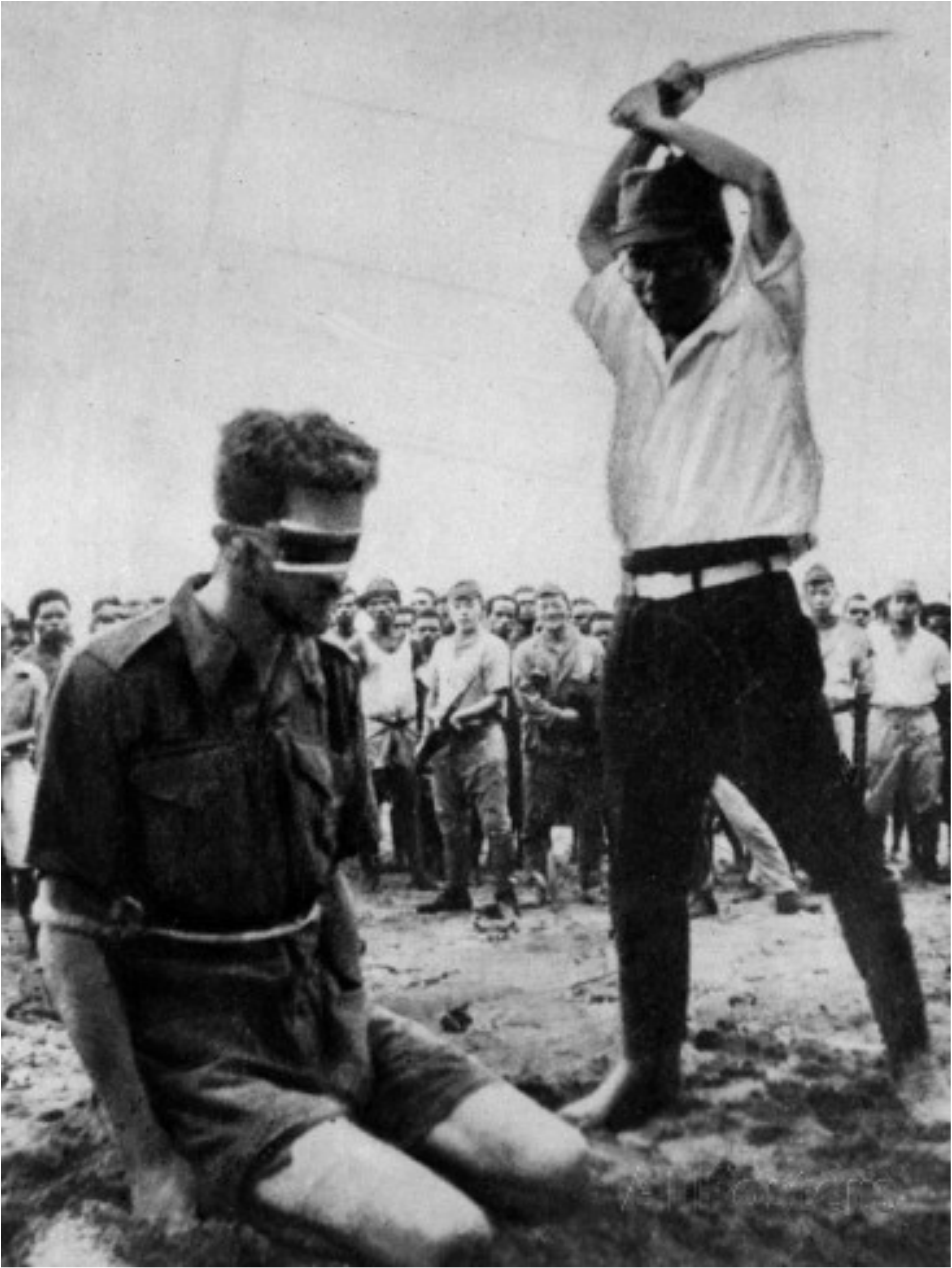
I always try to read a decent amount everyday. I in the past couple of weeks I have finished reading a number of very good books dealing with different historical dramas. I have mentioned a number of my recent reads. Today I finished reading a very good book called Hidden Horrors: Japanese War Crimes In World War II, by Yuki Tanaka. The book is primarily focused on Japanese War Crimes In the Southwest Pacific against Allied POWs, civilians, including German missionaries, and indigenous peoples. I will be referring to it in future articles as I deal with Japanese War Crimes In the Second World War. I am well versed in the Nazi War crimes and only somewhat familiar with Japanese war crimes, but the the takeaway from the book was that both the German War Crimes and Japanese War Crimes committed during the Second World War were committed by men who placed unconditional loyalty to a supreme leader, in the case of the Germans, Hitler’s Fuhrer cult, and in the case of the Japanese, Emperor worship, much like the present day Trump Cult. But I digress, I will go into that in a future article.

I love reading and writing about complex characters, people who may be heroes and at the same time scoundrels. I like the contradictions and the feet of clay of people, because I am filled with my own, and truthfully saints are pretty boring. Unfortunately I haven’t read any biographies of late, although most of my reading deals a lot with biography as the characters weave their way through history.

Last year we observed the Centenary of the end of World War One. As a result I re-read Edmond Taylor’s The Fall of the Dynasties: The Collapse of the Old Order, 1905-1922 and Richard Watt’s The Kings Depart: The Tragedy of Germany: Versailles and the German Revolution. Both of these are very important reads which should help us to reflect reflect on what is happening in our world today. There are many similarities and reading them causes me to wonder if world leaders will allow hubris, arrogance, greed, and pride to drag the world into another catastrophic war. Sadly President Trump, doesn’t read, and doesn’t learn from history. Unfortunately, his ignorance is very much a reflection of our twenty-first century media culture.

But to me, books are important, far more important than anything that is shouted at me on television. Unfortunately, the latter is how most people get information today. I often sit at the bar and on quiet days simply listen to those near me repeat ad-nauseam the bullshit echoed by badly educated and historically ignorant conservative pundits, usually from Fox News. Historian Timothy Snyder wrote in his little but profound book, On Tyranny:

“Staring at screens is perhaps unavoidable, but the two-dimensional world makes little sense unless we can draw upon a mental armory that we have developed somewhere else. When we repeat the same words and phrases that appear in the daily media, we accept the absence of a larger framework. To have such a framework requires more concepts, and having more concepts requires reading. So get the screens out of your room and surround yourself with books. The characters in Orwell’s and Bradbury’s books could not do this—but we still can.”

Likewise, Barbara Tuchman wrote:

“Books are the carriers of civilization. Without books, history is silent, literature dumb, science crippled, thought and speculation at a standstill. Without books, the development of civilization would have been impossible. They are engines of change (as the poet said), windows on the world and lighthouses erected in the sea of time. They are companions, teachers, magicians, bankers of the treasures of the mind. Books are humanity in print.”

But anyway, I signed in to my final duty station today where not only my Chaplain skills, but my historical knowledge will be appreciated. I immediately felt at home, far more than I did in my last assignment.

So have a great day and a better tomorrow, so pick up a book and read.

Peace

Padre Steve+

6 Comments

Filed under ethics, faith, History, imperial japan, life, Military, national security, nazi germany, Political Commentary, world war two in the pacific

History, Biography, and Organizing my Library at Home


Friends of Padre Steve’s World,

Today has been a very difficult day where I worked in the house, the storage space, and. helped Judy and some of her friends break down their wares at the end of a craft show. This evening I did some more work organizing books in my library here at home. This week while doing my transfer I also caught up with some reading since my orders didn’t actually show up until late Wednesday. I read Mark Rosen’s “The Wannsee Conference and the Final Solution: a Reconsideration”; “The Participants: the Men of the Wannsee Conference” edited by Hans Christian Jasch and Christopher Kreutzmuller; finished reading “Our Declaration: a Reading of the Declaration of Independence in Defense of Equality” by Danielle Allen; and began reading Stefan Kühls “The Nazi Connection: Eugenics, American Racism, and German National Socialism.” While browsing my books I pulled out “Hidden Horrors: Japanese War Crimes in World War II” by Yuki Tanaka.

In like of what I have been doing I am reposting an edited and expanded version of an older article emphasizing the connection between history and biography. This is something I try to do when I write. Tomorrow, I start my check-in process after having signed in to my new command, before they send me to Norfolk Naval Shipyard in Portsmouth.

So until tomorrow, 

Peace,

Padre Steve+

English historian and military theorist Colin Gray noted that “people matter most” when we deal with history, policy, or politics, but especially in the matter of war.

I think one of the sad things about history is that many authors, especially in military history, but other areas as well, seem to treat the participants as bit players in a series of events, rather than a prism from which to understand and view history.

I cannot tell you how many times I have had students, and even colleagues tell me that history is dry, boring and uninteresting to them. I will not condemn them, for certainly if it is that is case, it is not their fault, but rather those who write and teach history. If all history is, is arbitrary dates, lists of disconnected events and names of people, without any context to their lives, why should they care about it?

When I first began to study history I was much more concerned about events than people. However, over the past couple of years I have began to develop what I call my philosophy of history. That has come about through my study of the events leading to the American Civil War and in particular my study of the Battle of Gettysburg, but also in other historical events such as the Arab Revolt of 1917,  the French adventures in Indochina and Algeria, and the Holocaust.

In doing all of my research I have read a large number of books, articles and primary sources on these subjects and my personal library appears to be growing at an exponential rate. I have noticed that much of what I have read deals very little with the people involved, unless I am reading a biography, and even some of the biographies seem to be event heavy, and person light and sometimes it seems that the subjects of the biography are often one dimensional, and almost caricatures of who they really were. Some of the alleged biographies that I read would be better described as hagiography, to make the subjects appear saintlike, the type of writing used by religious writers to make saints a lot less human. There are others who go to the opposite extreme and do all they can to demonize their subject. In either case the method is less than honest, but for many people, profit and propaganda value mean more than truth. Of course either type of writing appeals to the masses who do not care about nuance, or for that matter truth.

But such is not history. Neither are “histories” which are designed to support a particular ideology, be it political, religious, or economic. Such works are not history, but propaganda. When I see people, in this country forbidding the teaching of history because it is not patriotic enough I want to scream. It is like I am watching the propagandists of Stalin’s Soviet Union, Hitler’s Third Reich, or any of many other nations that used ideology or religion to supress history that didn’t meet their definition of “patriotic.” But then I digress…

My gut feeling says that such artificial divisions between history and biography do a disservice to the reader. I take a tremendous pleasure in writing, and I like to try to communicate and interpret facts, which is indeed the vocation of the historian, in a manner that makes them interesting. What I am finding is that when telling the stories of events we must also tell the stories of the people who make these events.

Without such a connection there is little to interest most readers. People tend to be interested in people because there is a connection. The human being is still the human being, no matter what age, country, culture, religion that they belong to. I learned a lot of this from reading the works of Barbara Tuchman who in her writings about events, never forgot importance of people, and refused to turn them in to one dimensional caricatures.

In my writing now I attempt to bring the prism of the biography into the events that I write about.

I had a fellow faculty member note that he liked what I wrote about Gettysburg because it was more than just the events, it was the personal connection he felt to the people.

People matter because they have so many layers. I guess one of the things that makes my writing approach a bit different is that while I am a historian, I am also trained in philosophy, pastoral care and psychology, all of which deal with existential matters.In the next few days you will be seeing some of my Gettysburg work, and hopefully as you read it you will notice that I attempt to find that nuance in the various men, on both sides of the conflict, who are part of the story.

I found that the complexities and contradictions of the subjects of history, the people help me understand the events more than anything. I think my epiphanies came in reading about the lives, as well at writings of men like T.E. Lawrence and Gouvereur Warren whose triumphs, struggles, weaknesses and injuries mirror my own. In learning about these men as people, in the context of what they accomplished helps me to understand their history and the era that they lived far more than simply recounting how they influenced a battle.

Likewise, I find that the lives, beliefs, motivations, relationships, and experiences of people to be paramount to understanding events. People are complex, multi-layers and often contradictory. All of my heroes all have feet of clay, which in a sense makes their stories even richer, and the events that they helped bring about more fascinating, because then I gain a holistic perspective and develop an empathy for them. Even good and honorable people who find themselves due to race, religion, or nationality fighting for an evil cause, or evil people fighting for a good cause. Both are troubling, I think that good and honorable men who submit themselves to criminal and evil causes are more troubling.

We are seeing much of that today in regard to various members of the Trump Administration. When I was reading the article on Friedrich Kritzinger, the State Secretary for the Reich Chancellery, a conservative Prussian Civil Servant who served under the Kaiser, the Weimar Republic and Nazi Germany. In his position he made sure that the bureaucracy of the Reich ran efficiently, and also wrote legal justifications for the absorption of the rump of Czechoslovakia, and western Poland into the Reich. He also took part in the Wannsee Conference, for which he was the only participant to express remorse. Stefan Paul-Jacobs and Lore Kleiber, wrote about him in The Participants:

“Justice being taken away, then, what are kingdoms but great robberies?” (St. Augustine). This might not be a quote from Kritzinger, but it serves as a reminder that, by working as a lawyer for a regime, which he has known from the start to be criminal, he made himself a stooge.” (The Participants p.217”) 

The story of Kritzinger, is very pertinent for anyone trapped by ideological or religious constraints, or commitment to a leader that they know is corrupt, acting criminally, or undermining the law and Constitution. That may confuse or even offend you, but it is a part of the human condition. That my friends is history.

Barbara Tuchman noted “that if the historian needs to submit himself to his or her material instead of trying to impose himself on his material, then the material will ultimately speak to him and supply the answers.”

This is very important, because when we do this we discover the answers to the why questions, especially the why questions that are so very uncomfortable, are necessary if we want to discover truth.

I know that I can find connections in the strengths as well as their weaknesses of people that I admire. Thus when I see ordinary people taking part in events, for good or for evil,I can say that given the same set of circumstances that that could be me. Context matters, nuance matters, people matter. If we do not understand that, history becomes nothing more than a set of manipulated facts, devoid of context that can be used to buttress the most evil intentions.

I do plan on developing these thoughts over the coming weeks and months, but for now it will suffice to say that when I write about history, that people matter. That is why I write.

6 Comments

Filed under books and literature, civil war, History, life, Military, philosophy, racism

“I Have Not Yet Begun to Fight” John Paul Jones and the American Naval Tradition


                 Battle off Flamborough Head September 23rd 1779

Friends of Padre Steve’s World,

On October 13th the United States Navy celebrated its 244th Birthday. At Naval commands, stations, and aboard ships the Navy Birthday is marked by the cutting of a cake. Traditionally, the oldest and youngest sailors present make the first two cuts to the cake. This year, at the age of 59 I was the once again oldest, the youngest was a lad who just turned 19. I thought I would be retired by now but knee injuries and failed treatments I am still around. I thought that I would be retired on September 1st, but because of the knees that was extended to what the Navy calculated was my mandatory retirement date, to 1 April of 2020. I called Tuesday to find out when I would get my orders so I can start my medical process with the VA, and found out that they miscalculated, my new date is 1 August 2020. Unless we get in a major war and a “stop loss” is declared I should be retired by this time next year, but I don’t discount anything anymore about my career.

That being said, I have spent the better amount of this week moving out of my work office to home while waiting to see where I will be going. It looks like I will get orders over to the historic Norfolk Naval Shipyard within the next few days. The Chaplain billet there has been gapped for well over a decade. I will not have a Religious Program Specialist, but I will be doing ministry where it is needed and where I am wanted, in a very historic place. It is the oldest active Naval Shipyard in the country and since I am both a historian and a dinosaur in terms of my age and years of service it seems to fit. But, until I get orders God only knows, but I digress…

The Navy Birthday is a time for Sailors to reflect on their heritage by remembering the lives and actions of those who came before them. One of those men, in fact the man who represents the heart and soul of that tradition was Captain John Paul Jones. As the commanding officer of the Sloop of War USS Ranger he received the first salute of the American flag by a foreign power, in this case our first ally, France. There had been an earlier salute to the USS Andrea Doria, a converted merchantman which was one of the first four ships of the new Navy by the Dutch governor of St. Eustasius in the West Indies. That occurred on November 16th, 1776. But the flag she flew was the red and white striped banner of the Continental Congress, not the Stars and Stripes.

That is a story told well by Barbara Tuchman in her book The First Salute: a View of the American Revolution. Tonight’s essay is about John Paul Jones.

Two hundred thirty nine years ago a small naval battle occurred off the coast of Yorkshire England. From a purely military perspective the battle was rather insignificant. A squadron of five American and French ships intercepted a convoy guarded by two British ships. However, the battle was one that had immense psychological significance for the Americans as a ramshackle converted French East India ship with an inferior main battery forced a materially superior British warship to strike her colors.

In fact the battle is so significant to the United States Navy that the body of the victor, Captain John Paul Jones was returned to the United States in 1905 from an abandoned site in northeastern Paris known as the former St. Louis Cemetery for Alien Protestants to be interred in Bancroft Hall at the United States Naval Academy.

Jones had an unusual career as a British merchant skipper accused of murdering a mutinous crewman at Tobago and escaped to Fredericksburg Virginia out of fear that he would be tried in a local versus and Admiralty Court.

Jones went to the United States and due to his friendship with Henry “Lighthorse” Lee and other friends in the Continental Congress including a man who became a lifelong friend, Benjamin Franklin obtained a commission in the Continental Navy as a First Lieutenant.  At that time the “First Lieutenant” was the senior officer among the Lieutenants on a ship and often served as the First Officer or Executive Officer.

His first assignment was on the fleet flagship Alfred where he hoisted the first US Ensign aboard an American Naval vessel.  He took part in the raid on Nassau and upon his return assumed command of the Sloop of War Providence where he captured 16 prizes of war and escaped capture by the a British Frigate. He then assumed command of Alfred for a brief time capturing a key supply vessel that had winter clothing for British troops commanded by General Burgoyne in New York.  Following this he took command of the 18 gun Sloop of War Ranger in France received the first ever salute to an American man-of-war by a foreign power 8 days after the French had recognized the American Colonies as an independent nation.

Ranger receives the first salute rendered to an American warship by a foreign power

The nine-gun salute fired from Admiral Piquet’s flagship recognized this and the new Franco-American alliance. Jones wrote of the event: “I accepted his offer all the more for after all it was a recognition of our independence and in the nation.” After this sailed directly in harm’s way making an epic raid on the port of Whithaven, and then defeating and capturing and the British 20 gun Brig HMS Drake in an hour long fight.

Jones’ raid on Whithaven struck fear into the British populace and forced the British to allocate more resources to the defense of British seaports than had previously been the case.  The capture of the Drake was of immense psychological importance and along with Jones’ other victories would ultimately lead to the formation of the United States Navy.

Bonhomme Richard

Jones’ exploits made him a celebrated figure. He gave up command of Ranger to take command of a powerful frigate under construction in Amsterdam, but the British pressured the Dutch into preventing the transfer of the ship. Instead, Jones took command of the Bonhomme Richard a converted 42 gun former French East India ship. He named her after Benjamin Franklin’s book “Poor Richard’s Almanac” and he became commodore of a mixed squadron of American and French ships including the 36 gun American Frigate Alliance, the 32 gun French Frigate Pallas and two 12 gun warships the Vengeance and Le Cerf. 

His orders were to provide a diversion for a combined French and Spanish fleet the squadron menaced Ireland and Scotland before moving into the North Sea. As they came into English waters the Americans intercepted a 50 ship convoy on September 22nd. The convoy was enroute to the Baltic was escorted by the 44 gun two-decker HMS Serapis. Serapis was brand new and more powerful than Bonhomme Richard. A second ship, the 20 gun privateer Countess of Scarborough accompanied Serapis.

Jones directing the battle from the Bonhomme Richard

The battle was joined about 1800 on the 23rd of September. Serapis which was more maneuverable than Jones’ flagship, pounded the Bonhomme Richard holing her below the waterline and seriously damaging her, suffering little damage to herself. Jones’ s problems were compounded when with the first broadside two of Bonhomme Richard’s elderly 18 pounders burst damaging the ship and killing most of the gun crews on the lower deck.

Jones attempted to close the range in order to grapple Serapis and make the battle a close aboard action. Eventually the bow of Bonhomme Richard ran into the stern of Serapis and Jones’s crew succeeded in grappling the British ship. With cannons blazing the two ships were locked in a struggle to the death. Firing at point blank range the ships tore great holes in one another, though the Serapis, built as a warship suffered less than Richard.

As the cannonade raged, the Marines of Bonhomme Richard swept the decks of Serapis killing and wounding many of her crew. A grenade thrown by one of her Marines sailed down an open hatch on the British ship and landed on a pile of powder charges. The explosion set off a chain reaction which disabled many of Serapis’s guns, killing and wounding many of the gunners.

In the confusion and carnage, thinking that Jones was dead, the Chief Gunner of the of Bonhomme Richard cried out for “quarter,” meaning surrender. Hearing this, Jones threw a pistol felling the man. Likewise, Richard’s colors were shot away giving the impression that she make have struck her colors.

The Captain of Serapis Captain Richard Pearson hailed Jones to ask if he had struck his colors (surrendered.) The First Lieutenant of Bonhomme Richard Richard Dale recorded Jones’ response for posterity “I have not yet begun to fight!” Another account recorded Jones as replying  “I have not yet thought of it, but I am determined to make you strike.” 

The battle continued and the Alliance under the command of a Frenchman with an American commission, Pierre Landais, having been absent for most of the action came up and delivered a devastating broadside much of which hit Bonhomme Richard, holing her again below the waterline and causing her to settle rapidly. At the same time she caused additional damage to Serapis. Jones loaded and fired one of the 9 pounders whose crew was killed or wounded, striking the mainmast of Serapis twice and causing it to fall over the side.

Alliance pens fire on Serapis and Bonhomme Richard

Bonhomme Richard had taken a severe beating with most of her guns knocked out, taking water and burning from fires ignited by the British onslaught and Alliance’s devastating broadside. With his ship badly damaged and Alliance threatening Pearson stuck his colors in person at 2230 hours.  Pallas forced the surrender of the Countess of Scarborough, but the convoy escaped.

Jones took possession of Serapis, but the badly damaged Bonhomme Richard sank the on September 25th despiteher crew’s best efforts to save her.  Jones made temporary repairs to Serapis and sought refuge in the Netherlands.

The battle was militarily insignificant but again a major psychological victory as Jones had for the second time defeated a British warship in British waters within sight of the local population.  Even though Jones had taken Serapis the British warships completed their mission of protecting the convoy.

Jones’s post war career left him embittered. His opportunity to command the first US Navy Ship of the Line, the 74 gun America disappeared when that ship was given to France after the war. He was made a Chevalier of France by Louis the XVI and awarded a gold medal by Congress, but the U.S. Navy was disbanded. Unable to serve his adopted country, Jones found employment in the Imperial Russian Navy of Catherine the Great. Though he was successful against the Turks, jealous Russian commanders conspired against him and had him removed from command of the Black Sea Fleet.  He retired to France where he lived on his Russian pension. He was appointed to serve as Counsel to the Dey of Algiers to negotiate the freedom of captive American merchant mariners in June 1792. Before he could take up that position he died in his Paris apartment of interstitial nephritis of on July 18th 1792.

Frenchman Pierrot Francois Simmoneau donated over 460 francs to mummify the body. It was preserved in alcohol and interred in a lead coffin “in the event that should the United States decide to claim his remains, they might more easily be identified.” He was buried in the St. Louis Cemetery for Alien Protestants which was owned by the French King. After the French Revolution the cemetery was abandoned and forgotten.

General Horace Porter, the United States Counsel to France spent six years and his own money to locate and identify Jones’s body in 1905. His coffin was transported aboard the USS Brooklyn in 1906 and his body was interred at the United States Naval Academy. President Theodore Roosevelt spoke at the internment. He noted something of profound importance for anyone sworn to defend this nation and its Constitution:

We have met to-day to do honor to the mighty dead. Remember that our words of admiration are but as sounding brass and tinkling cymbals if we do not by steady preparation and by the cultivation of soul and mind and body fit ourselves so that in time of need we shall be prepared to emulate their deeds. Let every midshipman who passes through this institution remember, as he looks upon the tomb of John Paul Jones, that while no courage can atone for the lack of that efficiency which comes only through careful preparation in advance, through careful training of the men, and careful fitting out of the engines of war, yet that none of these things can avail unless in the moment of crisis the heart rises level with the crisis. The navy whose captains will not surrender is sure in the long run to whip the navy whose captains will surrender, unless the inequality of skill or force is prodigious. The courage which never yields can not take the place of the possession of good ships and good weapons and the ability skillfully to use these ships and these weapons.

In the years since that victory the United States Navy went from a militarily insignificant force to the most powerful Navy in the world. Jones and the ships that he captained would not be forgotten. Two Aircraft Carriers were named after Jones’ Sloop of war Ranger, while several destroyers have born his name.

The odds against Jones in his battle with Serapis were heavily weighted against him. Jones’s victory over Serapis was another demonstration that the Americans should not be taken lightly by the great powers of Europe. It helped begin a tradition of valiant service for the Navy that has endured throughout the centuries.  The victory off Flamborough Head reaches into the present as American sailors and their ships ply the world’s oceans keeping the sea lanes open and protecting American interests abroad.

Peace

Padre Steve+

1 Comment

Filed under History, leadership, Military, Navy Ships, US Navy

The Dystopian Darkness Of Trump’s World: The Lights are Going Out…

Friends of Padre Steve’s World,

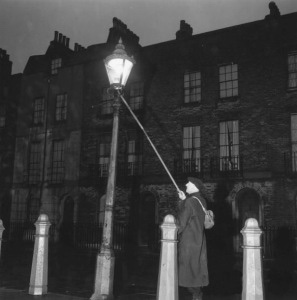
We are in Munich and after a nice day out with Judy decided to catch up on the news. So I go to bed tonight with a sense of foreboding for our country and the world and I cannot shake it. I feel darkness enveloping the United States as the President creates the dystopian world that he enunciated in his inaugural address. As I observe events on I am reminded of Barbara Tuchman’s description of Sir Edward Gray on the eve of the First World War, “Watching with his failing eyes, the lamps being lit in St. James Park, Grey was heard to remark that “the lamps are going out all over Europe; we shall not see them again in our lifetime.”

Jews and other minorities are being targeted and killed by Right Wing domestic terrorists, the President himself says that the free ree press is the enemy of the people, bombs are being sent to political opponents that he has targeted in his Twitter storms, and even a U.S. Army soldier was arrested and charged with violent political threats aimed at Democratic Presidential hopeful Beto O’Rourke, and suggesting the truck bombing of a major news network headquarters, and discussing plans for IEDs that could be used against military or civilian targets. All this, coupled with the President’s admission that he had been trying to force the President of the Ukraine to provide information that could damage the campaign of Democratic Candidate Joe Biden by threatening to withhold military aid to that county which was already approved by Congress unless they complied. I to believe that the latter rises to the threshold of high crimes and misdemeanors, but I digress. There was much else to shake my head about in the news after several days of just skimming the wave tops.

I cannot shake the deep sense of foreboding I have regarding the country and the world as President Trump’s continues to attack the character of all that oppose him or simply want to ferret out the truth plethora of allegations concerning what appears to be treasonous activities by his closest advisers and his apparent attempts quashed with the acquiescence of a large number of Republican members of Congress.  There is something very wrong going on and it almost feels that I can see the disaster unfolding before it happens.

Hannah Arendt wrote: “When evil is allowed to compete with good, evil has an emotional populist appeal that wins out unless good men and women stand as a vanguard against abuse.

She was right. We are seeing a populist appeal that is embracing evil around the world and it is happening before our very eyes.

I am not the only one to notice, leading conservative writers, foreign policy experts, and constitutional scholars have pointed out the same things that I have been saying for over two years. I do try to be positive and to believe that things will work out for the best, but the more I observe the more my confidence in our leaders and for that purpose many of our people to do the right thing is diminished.

That being said I do not give in to the feelings of foreboding or intend give up without a fight. I want my country to live up to its ideals and I am concerned about the real world, our alliances, our environment, and especially the real threat to freedom posed by the unrestrained words and actions of our 45th President. He has proven that he has no regard for the Constitution, our laws, or simple human decency. With every tweet and remark he demonstrates that he believes that he is above the law. He demonstrates every trait of a sociopath incapable of empathy and capable of the greatest evil.

With every new day I become more convinced than ever that Mr. Trump will find a way to seize power absolute power and that he will get away with it. This may come in a Reichstag Fire moment where he, during a “national emergency” uses the powers given to the executive through standing Executive Orders, or legislated in the Patriot Act. Conversely he might do it with the help of his current GOP majority in the Senate, especially if Democrats in the House cannot find the backbone to unite and stand together, even if it means that they doom themselves to irrelevance as a co-equal branch of government.

But even if that doesn’t happen, the poisonous and corrosive aspect of the President’s repeated lies, distortions, falsifications, and attacks on the Constitution, our laws, institutions, the free press, and individuals will doom us.

The President not only uses his spokespeople and twitter account to stoke fear and hatred, but he uses the pundits of Fox News to do so. As such Fox has become nothing more than Trump’s personal propaganda ministry indoctrinating millions of gullible and desperate people to do his bidding. Arendt wrote about such behavior and its effect on people:

“In an ever-changing, incomprehensible world the masses had reached the point where they would, at the same time, believe everything and nothing, think that everything was possible and that nothing was true. … Mass propaganda discovered that its audience was ready at all times to believe the worst, no matter how absurd, and did not particularly object to being deceived because it held every statement to be a lie anyhow. The totalitarian mass leaders based their propaganda on the correct psychological assumption that, under such conditions, one could make people believe the most fantastic statements one day, and trust that if the next day they were given irrefutable proof of their falsehood, they would take refuge in cynicism; instead of deserting the leaders who had lied to them, they would protest that they had known all along that the statement was a lie and would admire the leaders for their superior tactical cleverness.”

I believe in a particular universal ideal enunciated in the Preamble of the Declaration of Independence that All men are created equal. Likewise I believe the words of the Constitution matter and that it is all of our obligation to labor to build “a more perfect union.” As such that I must continually stand for what is right, what is true, and what is enduring for that is the oath that I swore and have re-affirmed for over 37 years of military service.

I am more worried than ever about our democracy and I agree with Timothy Snyder who wrote:

“Democracy failed in Europe in the 1920s, ’30s, and ’40s, and it is failing not only in much of Europe but in many parts of the world today. It is that history and experience that reveals to us the dark range of our possible futures. A nationalist will say that “it can’t happen here,” which is the first step toward disaster. A patriot says that it could happen here, but that we will stop it.”  

We Americans do not like to think that what has happened to so many other countries can happen here; and in fact I never used to believe that it could. I believed that our system of checks and balances and the nature of our institutions could weather any threat. Today I question if they will hold. I agree with Russian exile and Chess Grand Master Gary Kasparov who wrote:

“First of all, people here should understand that nothing is for granted. There were many warnings in the past, you know, but every time, Americans and Europeans—they believe that it’s like bad weather. It comes and goes. But the danger is real. I always want to quote Ronald Reagan, who said, “Freedom is never more than one generation away from extinction.” Now, probably, it’s not even one generation. Things can happen very quickly, because there’s so much power that comes in the hands of people who have very little affection for the values that make up the core of liberal democracy and the free world.” 

Because of that I believe that we must stand for principle and work for a new birth of freedom even as it seems that freedom itself is in danger due to the actions of the American President. We must stand or we will lose everything that generations of Americans as well as others have fought so hard to preserve, but it is difficult. As Max Boot wrote back in March of last year:

“Trump is sucking a substantial portion of America into his Orwellian universe. The rest of us have to struggle simply to remember that war isn’t peace, freedom isn’t slavery, ignorance isn’t strength.”

Until tomorrow,

Peace

Padre Steve

8 Comments

Filed under History, News and current events, Political Commentary

A Heap Of Swords Piled as Delicately as Jackstraws: One Cannot Be Pulled Out Without Moving the Others: The Middle East 2019

Friends of Padre Steve’s World,

I have been watching the events unfolding in Saudi Arabia and the Middle East with a fair amount of apprehension. Seldom has a region been so similar to Barbara Tuchman’s words in her epic work The Guns Of August:

Europe was a heap of swords piled as delicately as jackstraws; one could not be pulled out without moving the others.

Armed to the teeth the militaries of Iran, Saudi Arabia, the Gulf States, Israel, vast numbers of powerful Sunni and Shia militias: the Islamic State, Hezbollah, Houthi, and so many more, scattered from Yemen, to Lebanon, Iraq, Gaza, and Syria, not to mention the vast power of the United States, its now somewhat recalcitrant allies, as well as elements of Russian, Turkish, and even Chinese military power prowl the region on the land, sea and air.

Ancient hatreds and rivalries, Sunni versus Shia, Persian versus Arab, Muslim versus Christian, Jew versus Muslim, Turk versus Arab, and even Christian versus Jew. Ancient hatreds that go beyond mere religious quarrels; not to say that wars of religion have been some of the most bloody and malevolent in history.

These ancient hatreds and rivalries have been aided directly by the United States and Europe following the World Wars. The Sykes-Picot Agreement, the triumph of the British Indian Office over the British Foreign Ministry which allowed the House Of Saud to conquer most of the Arabian Peninsula and drive out the House Of Faisal Hussein which were relegated to Jordan and Iraq after helping the British defeat the Ottoman Turks in the Middle East.

I fear that the President Trump’s unjustified and highly questionable support of Saudi Crown Prince Mohammed Bin Salman bin Saud, who ordered the murder of an Saudi Arabian Journalist and resident of the United States, Jamal  Khashoggi, and for who all purposes seems to be of a business partner of, than the President of the United States.

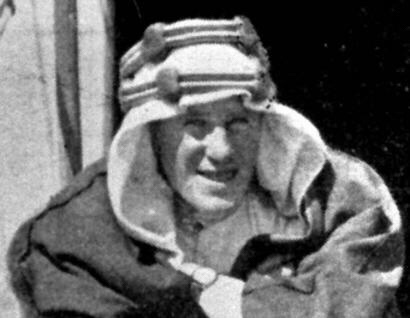
T.E. Lawrence wrote during the early phases of the British occupation of Mesopotamia (Iraq) less than two years after the war:

“The people of England have been led in Mesopotamia into a trap from which it will be hard to escape with dignity and honour. They have been tricked into it by a steady withholding of information. The Bagdad communiqués are belated, insincere, incomplete. Things have been far worse than we have been told, our administration more bloody and inefficient than the public knows. It is a disgrace to our imperial record, and may soon be too inflamed for any ordinary cure. We are to-day not far from a disaster.”

Lawrence’s words could be applied to the United States since 1990 and thereafter, especially beginning in 2003 during the invasion and occupation of Iraq. Now we have a President threatening to go to war by Tweet with Iran at the behest and on the word of his Saudi business partner without consulting Congress. At least the administration’s Of George H. W. Bush and Bill Clinton worked within the confines of the United Nations and Congressional authorizations before committing the military in Harm’s way. Even George W. Bush when rebuffed by the U.N. in Iraq, got Congressional authorization for his actions, but we now have a President threatening a major war that could result in catastrophic harm to the world, including the men and women of the U.S. Military, by tweet.

Please don’t get me wrong. I no longer trust the words of any of the players involved, including the Iranians, Saudis, Israelis, Turks, Russians, and everyone else involved, and yes, even the Trump administration. What is scary is that many of Trump’s most ardent supporters are all in favor or bringing on the apocalypse.

I fear that war is coming, and there are too many players with swords in the pile to avoid it. Including an impulsive, unstable, habitual liar. Even if he doesn’t want war he may well lead us into it. Let the reader understand.

Until tomorrow,

Peace,

Padre Steve+


Leave a comment

Filed under Foreign Policy, History, iraq,afghanistan, middle east, Military, national security, News and current events, Political Commentary, Religion

Continuing my Reading and Writing Rainbow

Friends of Padre Steve’s World,

British historian Sir Max Hastings once made the comment: “I would be miserable if I went to bed without having written 1,000 words about something.” I am much the same way and hopefully one day I might be one tenth as good, and as successful writer as him or writers like Barbara Tuchman, William Shirer, and Laurence Rees.

I do most of my writing before I go to bed at night and usually set my articles to post at 6:30 in the morning, although of late I have been posting them as soon as I write them.

I have a hard time going to sleep without writing be it for this website or for one of the books that I am working on. I read voraciously whenever I get the chance sometimes going to a bar just to read a book while enjoying a good craft beer or German or Irish import. Likewise once I am done with whatever I am writing I go right back to reading, sometimes keeping whatever Papillon is sleeping with me from getting the sleep that they want. That’s what I will be doing tonight when I finish this article which you will be reading tomorrow when it posts. In a sense my writings are kind of like Schroedinger’s cat, they are written yet unwritten at the same time, but I digress…

But going back to writing and reading I have to say that I don’t know what I would do if I couldn’t do either, I think I would be in some sort of hell if I couldn’t write every night or read. Doing these things helps me keep my perspective and to more fully appreciate the events of the day. Honestly, if I had not consciously immersed myself in history from the time that I was a child, including the many days that I cut 10th grade Geometry class to read the history reference books that I couldn’t check out of the school library I wouldn’t be who I am today.

I like writing history because I become immersed in the people, the places, and the intricacies and complexity of the events. I like to incorporate the little known back stories of people help understand their actions at a given point. Likewise think that the lives of the individuals involved in the events I write about, both before, and after the event should they have lived through it, give my readers a more human connection to the events, as well as understanding of the people involved. I find that the stories of people allow readers to make those connections, maybe even inspiring in them a bit of sympathy for scoundrels or suspicion of supposed saints.

I think that the character of people, good, bad, or wherever it falls on the spectrum, and their basic humanity; their strengths, weaknesses, contradictions, and their feet of clay, matter immensely and need to be part a of the story. I hate it when I read a history where a given character’s actions during a given event are examined in detail, but who they are as a person never comes through because the authors didn’t give their readers the courtesy of introducing them as people because they included little or no biographical details to make them interesting. Instead they become one dimensional caricatures of who they were in life, which in my view does them, the story, and the reader a grave injustice. So when I write I try to find interesting parts of a person’s life that is not directly related to the event to paint the picture. Walter Lord, who wrote prolific books on some of the key events of the Twentieth Century including books about the Titanic, Pearl Harbor, Midway, Dunkirk, the desegregation of the University of Mississippi, and many more noted something that I have taken to heart, “I look for something that is highly unusual, involving ordinary people caught in extraordinary situations.”

That’s one reason I like the writings of both Tuchman and Hastings, they bring life to to the events they write about, they allow your imagination to run and to want discover more about the people and the events. The late Walter Lord, was also excellent at doing that, as was William Shirer, and I think that is how I would like my writings be remembered. But in order to do that I have to read and write, as Stephen King said “If you want to be a writer, you must do two things above all others: read a lot and write a lot.” 

In the past couple of months I have read Ian Kershaw’s To Hell and Back, Europe 1914-1949; Steven Levitsky and Daniel Ziblat’s How Democracies Die; Benjamin Cart Hett’s The Death Of Democracy: Hitler’s Rise to Power and the Downfall Of the Weimar Republic; Geoffrey Megargee’s Inside Hitler’s High Command; Christopher Browning’s Remembering Survival: Inside a Nazi Slave-Labor Camp; Bonnie Weinstein’s When Christians Break Bad: Letters from the Insane, Inane, and Profane; and I am just about done with Laurence Rees’s Hitler’s Charisma: Leading Millions into the Abyss. I plan on finishing it tonight.

I also need to get back to a submission to my agent on the book I started during the Spring, entitled Walk, Remember, Bear Witness: Remembering the Holocaust as the Last Survivors Pass Away. 

Until tomorrow,

Peace

Padre Steve+

Leave a comment

Filed under books, books and literature, History, holocaust, Teaching and education

“I am Death, the Destroyer Of Worlds” Hiroshima and the Genie that Will Not go Back in the Bottle at 74 years


Friends of Padre Steve’s World,

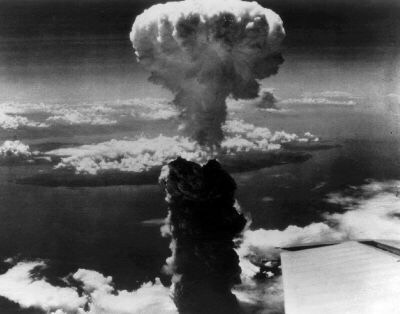
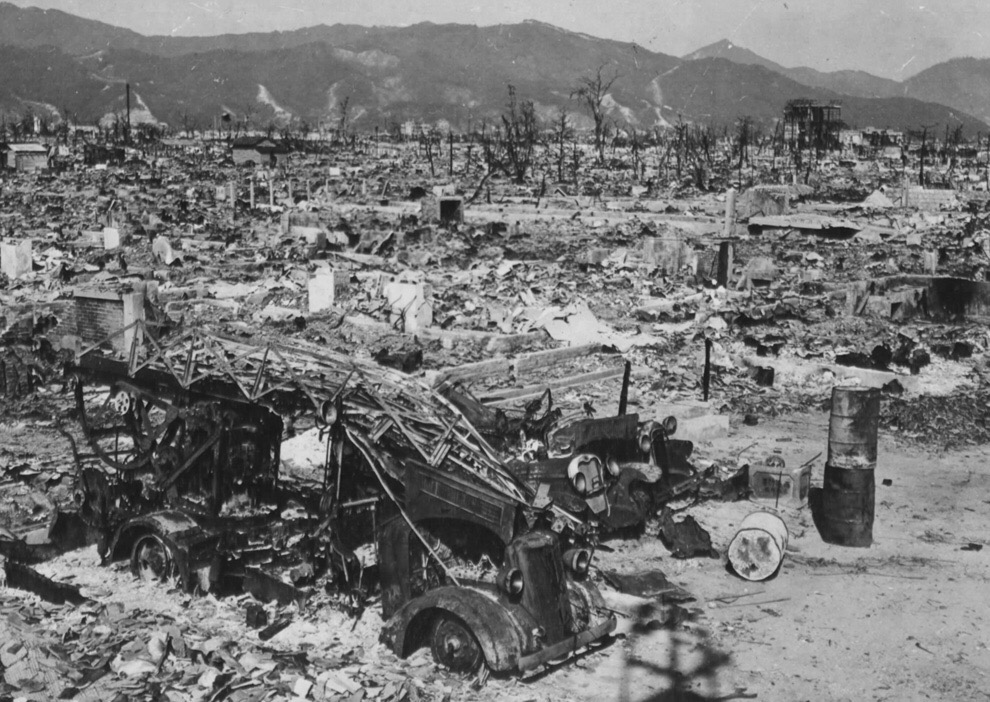
Seventy-four years ago the world changed. A remarkably destructive weapon was introduced in combat, a single bomb that annihilated the city of Hiroshima Japan. The effects were immediate, 70,000 to 100,000 people were killed, tens of thousands of others wounded, many of whom would suffer from the effects of radiation and radiation burns the rest of their lives. Within days a second bomb was dropped on Nagasaki with similar results, and Japan sued for peace. The Second World War was over and a new world was born, a world under the shadow of nuclear weapons.

The anniversary of that event today is something that all of us should ponder with great trepidation as the world seems to lurch towards a day when such a weapon will be used again. The question should not be one of mere military or tactical expediency, but must consider the moral dimension of the use of these weapons as well as the whole concept of total war.

In his book Hiroshima, John Hershey wrote:

“The crux of the matter is whether total war in its present form is justifiable, even when it serves a just purpose. Does it not have material and spiritual evil as its consequences which far exceed whatever good might result? When will our moralists give us an answer to this question?” 

His question is worth considering. It is no wonder that Robert Oppenheimer one of the members of the team that developed the bomb quoted a verse from the Bhagavad-Gita after he witnessed the test explosion “Trinity” on July 16th 1945: “Now, I am become Death, the destroyer of worlds.” 

Up until April of 2017 I spend the last three and a half years teaching the ethics of war to senior military officers at a major U.S. Military Staff College. One of the things that we do in the class is to have the officers do presentations on different historical, or potential ethical problems faced by national policy makers, military commanders and planners. The goal was to have these men and women dig deep and examine the issues, and think about the implications of what they will do when they go back out to serve as commanders, staff officers, advisors to civilian leaders and planners. Sadly, in the gutting of that institution after I departed the Ethics elective and all other electives were eliminated. They also cut back the number of seminars from 13 to five and limited the students to O-5s and O-6s, with command experience, directly contravening the intentions of the Goldwater-Nichols Act which was designed to prevent repeats of Vietnam, the failed Iran hostage rescue attempt, and the invasion of Grenada. The intent of the legislation was to better coordinate the efforts of the services and inculturation of younger officers to understand the capabilities of their sister services, as well as teach history, strategy, and ethics to rising leaders in the Defense Department, State Department, CIA, DIA, and other agencies charged with our national security.

In each class that I taught, at least one student dealt with the use of the Atomic bombs.  Most were Air Force or Navy officers who have served with nuclear forces. Unlike the depiction in the classic movie Dr. Strangelove or other depictions that show officers in these forces as madmen, the fact is that I was always impressed with the thoughtfulness and introspective nature of these men and women. They sincerely wrestle with the implications of the use of these weapons, and many are critical of the use of them at Hiroshima and Nagasaki. It is comforting to me to know that at least in the U.S. military that there are many who can reflect and do try to look at things not just from a purely military standpoint. Of course since I know humanity I figure that there are others in our ranks who are not so reflective or sensitive to the moral implications of the use of these weapons, among whom is our current President. The fact that President Trump acts on impulse and seems to have no moral compass, strategic sense, or anything apart than what benefits him causes me to shudder, especially when he has to actually confront North Korea on their ICBM and nuclear programs, not to mention the use of weapons of mass destruction by a terrorist group. As Barbara Tuchman wrote: “Strong prejudices and an ill-informed mind are hazardous to government, and when combined with a position of power even more so.”

I am no stranger to what these weapons, as well as chemical and biological weapons can do. Thirty-five years ago when I was a young Army Medical Service Corps lieutenant I was trained as a Nuclear, Chemical and Biological Defense Officer. I learned the physical effects of exposure to these weapons, how many Rads of radiation a person could receive before they became sick and died. I learned what radiation exposure does to people at each stage. We trained with maps to chart fallout patterns, and the maps had the cities and towns that we lived in, this was Cold War Germany and yes both NATO and the Warsaw Pact expected that tactical nuclear weapons and chemical weapons would be used and we had to be able to operate in contaminated environments. We operated under the idea of Mutual Assured Destruction or MAD as a deterrent to war. It was chilling and made me realize that the use of these weapons today would be suicidal. When Chernobyl melted down we were in the fallout zone and were given instructions on what we could and could not do in order to minimize any possible exposure to radiation poisoning.

So when it comes to the first use of the Atomic bomb I am quite reflective. As a historian, military officer, chaplain and priest who has been trained on what these weapons can do I have a fairly unique perspective. Honestly, as a historian I can understand the reasons that President Truman ordered its use, and I can understand the objections of some of the bomb’s designers on why it should not be used. I’ve done the math and the estimates of casualties had there been an invasion of the Japanese home islands is in the millions, most of which would have been Japanese civilians.


My inner lawyer can argue either point well, that being said the manner in which it was used at Hiroshima and Nagasaki troubles me. Hiroshima did have military targets, but a big part of the choice was its location, surrounded by hills, which created a bowl that would focus the explosion and maximized its effect. Many of the larger military and industrial targets lay outside the kill zone. The designers and officers on the committee wanted to show the Japanese, as well as the world the destructive power of the weapon. Those who opposed its use hoped that it would convince the leaders of nations that war itself needed to be prevented. These men wrestled with the issue even as they prepared the first bombs for deployment against Japan. The recommendations of the committee can be found here:

http://www.atomicarchive.com/Docs/ManhattanProject/Interim.shtml
Of the 150 scientists who were part of the bomb’s design team only 15% recommended the military use without a demonstration to show the Japanese the destructive power of the bomb and a chance to end the war. The poll of the scientists can be found here:

http://www.atomicarchive.com/Docs/ManhattanProject/Poll.shtml
Leo Szilard wrote a letter to Edward Teller seeking his support in sending a petition to President Truman regarding his opposition to the use of the weapon based on purely moral considerations. Szilard wrote:

“However small the chance might be that our petition may influence the course of events, I personally feel that it would be a matter of importance if a large number of scientists who have worked in this field want clearly and unmistakably on record as to their opposition on moral grounds to the use of these bombs in the present phase of the war.

Many of us are inclined to say that individual Germans share the guilt for the acts which Germany committed during this war because they did not raise their voices in protest against those acts, Their defense that their protest would have been of no avail hardly seems acceptable even though these Germans could not have protested without running risks to life and liberty. We are in a position to raise our voices without incurring any such risks even though we might incur the displeasure of some of those who are at present in charge of controlling the work on “atomic power.”

The entire text of Szilard’s letter can be found here:

http://www.atomicarchive.com/Docs/ManhattanProject/SzilardTeller1.shtml
The two petitions of the scientists to the President are here, the second letter concludes with this recommendation:

“If after the war a situation is allowed to develop in the world which permits rival powers to be in uncontrolled possession of these new means of destruction, the cities of the United States as well as the cities of other nations will be continuous danger of sudden annihilation. All the resources of the United States, moral and material, may have to be mobilized to prevent the advent of such a world situation. Its prevention is at present the solemn responsibility of the United States–singled out by virtue of her lead in the field of atomic power.

The added material strength which this lead gives to the United States brings with it the obligation of restraint and if we were to violate this obligation our moral position would be weakened in the eyes of the world and in our own eyes. It would then be more difficult for us to live up to our responsibility of bringing the unloosened forces of destruction under control.

In view of the foregoing, we, the undersigned, respectfully petition: first, that you exercise your power as Commander-in-Chief to rule that the United States shall not resort to the use of atomic bombs in this war unless the terms which will be imposed upon Japan have been made public in detail and Japan knowing these terms has refused to surrender; second, that in such an event the question whether or not to use atomic bombs be decided by you in the light of the consideration presented in this petition as well as all the other moral responsibilities which are involved.”

http://www.atomicarchive.com/Docs/ManhattanProject/SzilardPetition.shtml

http://www.atomicarchive.com/Docs/ManhattanProject/Petition.shtml

Ralph Bard, Undersecretary of the Navy wrote to Secretary of War Stimson his opinion on July 17th 1945:

“Ever since I have been in touch with this program I have had a feeling that before the bomb is actually used against Japan that Japan should have some preliminary warning for say two or three days in advance of use. The position of the United States as a great humanitarian nation and the fair play attitude of our people generally is responsible in the main for this feeling.”

I think that those who debate the history of this need to look at the entire picture and read the letters, the documents and take into account everything. My hope is that leaders, policy makers, legislators and we the people continue to work to eliminate nuclear weapons. It is true that the nuclear stockpiles of the United States and Russia are significantly smaller than when the Cold War ended, but even so what remain are more than enough to extinguish human life on the planet. Add to these the Chinese, French, British, Indian, Pakistani and the hundreds of undeclared weapons of Israel the fact is that there remains the possibility that they could be used. Likewise there are nuclear programs in other nations, especially North Korea, which given enough time or believing them necessary could produce weapons. But the North Koreans are not alone, they could easily be joined by others including Iran and Saudi Arabia. Add to this the possibility of a terrorist group producing or acquiring a weapon the world is still a very dangerous place.

That is the world that we live in and the world in which policy makers, legislators and educated people who care about the world must attempt to make safe. If you asked me I would say outlaw them, but that will never happen. Edward Teller wrote Leon Szilard:

“First of all let me say that I have no hope of clearing my conscience. The things we are working on are so terrible that no amount of protesting or fiddling with politics will save our souls…. Our only hope is in getting the facts of our results before the people. This might help to convince everybody that the next war would be fatal. For this purpose actual combat use might even be the best thing…. But I feel that I should do the wrong thing if I tried to say how to tie the little toe of the ghost to the bottle from which we just helped it to escape…”

We are on the brink again. India and Pakistan are once again girding themselves up for nuclear war over Kashmir. Iran, after having ceased its production of enriched uranium, has resumed it following the Trump Administration voiding the nuclear nonproliferation agreement signed during the Obama administration. Despite its promises to President Trump, North Korea still seems intent on developing nuclear weapons and delivery systems. The Russians are developing hypersonic missiles and torpedoes which could deliver nuclear warheads against American targets, and the Chinese are increasing their nuclear capability. The United States is now embarked on a plan to modernize its nuclear arsenal and under the Trump administration loosen the restraints on the use of nuclear weapons.

The ghost is out of the bottle, and nothing can ever get it back in. We can only hope and pray that reasonable people prevent any of these weapons from ever being used and that war itself would end. But then, General Of the Army Omar Bradley said in 1948:

“Ours is a world of nuclear giants and ethical infants. We know more about war than we know about peace, more about killing than we know about living. If we continue to develop our technology without wisdom or prudence, our servant may prove to be our executioner.”

I think that the “soldier’s General” was correct. Too many people just don’t care about life, Ethics, or peace.

So, until tomorrow, I leave you with that less than cheerful thought.

Peace

Padre Steve+

2 Comments

Filed under ethics, faith, Foreign Policy, History, leadership, middle east, Military, national security, News and current events, Political Commentary, world war two in the pacific

Truth and the Twilight Zone in the Age Of Trump: “Logic is an Enemy, and the Truth is a Menace”

Friends of Padre Steve’s World,

Judy and I have been binge watching the classic television series The Twilight Zone. The show, written by Rod Sterling first aired before either of us was born. If you have never watched it, suppose you were born too late, it wouldn’t be a bad thing to take some time to do.

But I should preface this with the words of the great historian, Barbara Tuchman:

Books are the carriers of civilization. Without books, history is silent, literature dumb, science crippled, thought and speculation at a standstill. Without books, the development of civilization would have been impossible. They are engines of change (as the poet said), windows on the world and lighthouses erected in the sea of time. They are companions, teachers, magicians, bankers of the treasures of the mind. Books are humanity in print.

There are a lot of truths buried in the various episodes, truths about reality and fantasy; religion and ethics; science and technology; human nature and yes, government too. The Twilight Zone is a strange place, you never know when you might end up there, in fact in Trump’s America every day feels like an experience in the Twilight Zone, in this case Season Two, episode 29, The Obsolete Man. In the episode the state determines who is obsolete and therefore condemned to death.

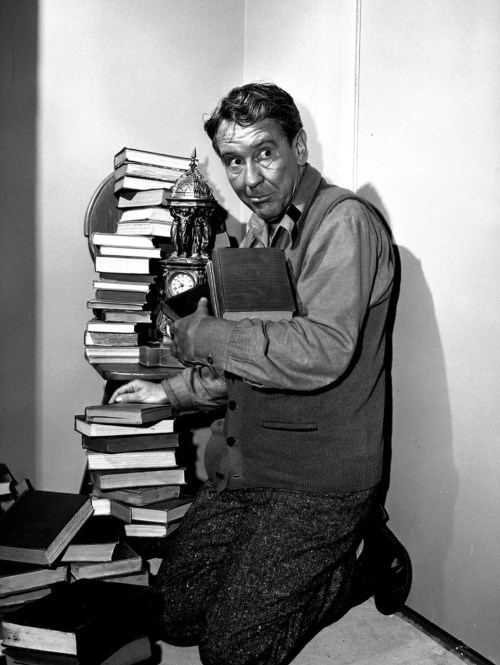
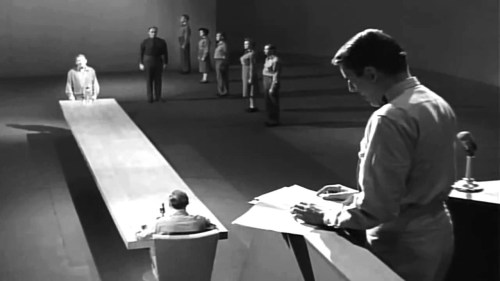
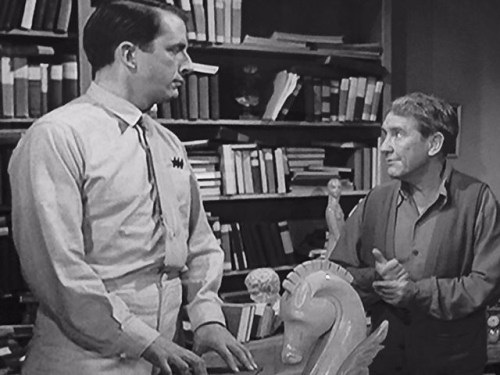
In the episode, Burgess Meredith plays a character named Romney Wordsworth, a librarian who has been declared obsolete by the state. Books have been banned as well as belief in a God that is not the no-God of the state. He is brought before the Chancellor, played by Fritz Weaver, and condemned to a death of his choosing.

The opening narration, spoken by Sterling sets the stage for the story:

You walk into this room at your own risk, because it leads to the future, not a future that will be but one that might be. This is not a new world, it is simply an extension of what began in the old one. It has patterned itself after every dictator who has ever planted the ripping imprint of a boot on the pages of history since the beginning of time. It has refinements, technological advances, and a more sophisticated approach to the destruction of human freedom. But like every one of the super-states that preceded it, it has one iron rule: logic is an enemy and truth is a menace. This is Mr. Romney Wordsworth, in his last forty-eight hours on Earth. He’s a citizen of the State but will soon have to be eliminated, because he’s built out of flesh and because he has a mind. Mr. Romney Wordsworth, who will draw his last breaths in The Twilight Zone

I won’t play the spoiler but I will end this brief article with the warning spoken by Sterling at the end of the episode. The episode can be found on Netflix. But, actually, this is unedited ending of that episode.

The chancellor, the late chancellor, was only partly correct. He was obsolete. But so is the State, the entity he worshiped. Any state, entity, or ideology becomes obsolete when it stockpiles the wrong weapons: when it captures territories, but not minds; when it enslaves millions, but convinces nobody. When it is naked, yet puts on armor and calls it faith, while in the Eyes of God it has no faith at all. Any state, any entity, any ideology which fails to recognize the worth, the dignity, the rights of Man…that state is obsolete. A case to be filed under “M” for “Mankind” – in The Twilight Zone.

So consider this a warning, especially for the followers of the authoritarians, fascists, and real or would be dictators, including the American President and his cult like supporters; a warning from the Twilight Zone.

Peace,

Padre Steve+

2 Comments

Filed under culture, enteratinment, ethics, faith, film, Loose thoughts and musings, News and current events, Political Commentary, televsion

The American Civil War and the Continuum of History, Humanity, and War

Friends Of Padre Steve’s World,

Barbara Tuchman wrote:

“No one is so sure of his premises as the man who knows too little.”

Finite human beings find themselves bound by time and space, we live in the present, but not the present alone, but rather three worlds: one that is, one that was, and one that will be. The German historian Ernst Breisach wrote, “In theory we know these three worlds as separate concepts but we experience as inextricably linked and influencing each other in many ways. Every new and important discovery about the past changes how we think about the present and what we expect of the future; on the other hand every change in the conditions of the present and in the expectations of the future revises our perception of the past. In this complex context history is born ostensibly as reflection of the past; a reflection which is never isolated from the present and the future. History deals with human life as it “flows” through time.”

Richard Evans wrote something in the preface to his book The Third Reich in History and Memory that those who study military history often forget. He noted: “Military history, as this volume shows, can be illuminating in itself, but also needs to be situated in a larger economic and cultural context. Wherever we look, at decision-making at the top, or at the inventiveness and enterprise of second rank figures, wider contextual factors remained vital.” Thus while this work is an examination of the American Civil War it is important to understand the various issues that were formative for the men who directed and fought the battle, as well as the vast continuum of often distant and seemingly unrelated events that come together at one time in the lives of the participants in any historic event.

This is important and it goes to a broader view of history and education rather that many people are comfortable with. We live in an age where much of education, even higher educations has been transformed into training for a particular skill to gain, or with which to enter the workforce, rather than teaching us to think critically. The social sciences, the liberal arts, philosophy, history are often considered by politicians and business leaders as skills which do not help people get jobs and have been the subjects of cuts in many public university systems.

Andy Chan, Vice President for Personal and Career Development at Wake Forest University wrote: “The prevailing argument is that students should study or major in something “employable,” something that is directly correlated to a job in a high paying career field. This view is espoused by many parents and national leaders, including politicians on both sides of the aisle. Many have called for additional STEM majors as well as eliminating funding for “softer” disciplines.” Like it or not such efforts impact the serious study of history and minimize the exsposure of students in the STEM disciplines to the broader aspects of intellectual study that happen provide them with a moral, ethical, and historic foundation for their disciplines. Giles Lauren in his introduction to B. H. Liddell-Hart’s classic Why Don’t We Learn from History?, wrote:

“Education, no longer liberal, has largely become a question of training in a skill for gain rather than teaching us how to think so as to find our own way. ‘It is strange how people assume that no training is needed in the pursuit of truth.’ We must learn to test and judge the information that comes before us. After all: ‘Whoever habitually suppresses the truth … will produce a deformity from the womb of his thought.’”

Liddell-Hart expressed the importance of a wide view of history as well as the importance of being able to dig deep into particular aspects of it, bit of which are important if we want to come as close to the truth as we can. He wrote:
“The benefit of history depends, however, on a broad view. And that depends on a wide study of it. To dig deep into one patch is a valuable and necessary training. It is the only way to learn the method of historical research. But when digging deep, it is equally important to get one’s bearings by a wide survey. That is essential to appreciate the significance of what one finds, otherwise one is likely “to miss the forest for the trees.””

This can be a particular problem for those who write about specific aspects of the American Civil War, especially about particular battles, technical developments, or individuals. Many writers dig deep into a particular subject, but despite their good work, miss important aspects because they have not done the groundwork of trying to put those subjects into the broader historical, as well as sociological context.

One cannot understand the determination the determination of Robert E. Lee to maintain the offensive without understanding his devotion to Napoleon, or his view of the war and the battles his men fought without understanding and taking into account his view of Divine Providence which was a part of his religious experience. One cannot understand the dogged persistence of Joshua Chamberlain or Strong Vincent to hold Little Round Top, without understanding their patriotic idealism and the nearly spiritual significance of the Union to them. One cannot understand William Tecumseh Sherman without understanding the often cold realism that shaped his world view. The same is true for any of the men, and women, soldier or civilian, slave, or free, who had some part, great or small in the war.

Thus it is important when digging deep, to also attempt to understand the broader perspective of history, and how factors outside their direct military training and experience, such as culture, politics, economics, religion, sociology, ideology, life experience, and all of those factors shaped these men and their actions. By such means we get closer to the truth and by doing so avoid the myths which even after a century and a half, still clutter the works of many people who write about the Civil War.

Likewise, in order to understand the context of the battles of the Civil War, or for that matter the battles in any war, one has to understand the events, ever distant events which play a role in the battle. All too often those that delve into military history, or a particular battle see that as separate event, often disconnected from other historical events. But as historian Edward Steers Jr. correctly notes, history “does not exist in a series of isolated events like so many sound bites in a newscast. It is a continuum of seemingly unrelated and distant events that so often come together in one momentous collision of time.”

To explain this in a different way, let us look at the Battle of Gettysburg as a case in point, but needless to say that no-matter what battle we study there are other factors, that influence it. In the case of the Battle of Gettysburg events like Lincoln’s publication of the Emancipation Proclamation, are important, as it resets the political and diplomatic narrative of the war in a way that influences both domestic politics, and diplomacy.

Diplomacy is another aspect that must be considered, and the incompetence of Confederate diplomats was a major factor. These men were unsuccessful in bringing France or Great Britain into the war, nor could they persuade any European power to recognize the Confederacy. Both of these failures were brought about by their provincialism and by their lack of understanding of the domestic politics of France and England. Both nations had abolished slavery, banned the slave trade, and had populations that were overwhelmingly against slavery.

On the military front, the failures of the Confederate armies in the West to maintain their hold on the Mississippi River, played a crucial role in Robert E. Lee’s ill-advised decision to launch an invasion of Pennsylvania, as did the failing Confederate economy. None of these events can be disconnected from it without doing violence to the historical narrative and thereby misunderstanding why the battle was important.

Another element that must be connected in order to understand the American Civil War is the part that policy, strategy, war aims, as well as operational doctrine, tactics, and technology played in every campaign of the war. When we examine those dimensions of the war and of specific campaigns we go back to the human factor: the people whose ideas, character, and personalities, influenced the conduct of the war and how it was waged.

Finally, events such as the battles of Antietam, Chancellorsville, Gettysburg, Vicksburg, and Atlanta, or the Overland Campaign or Sherman’s March to the Sea cannot be looked at as a stand-alone events for their military value only. The clash at Gettysburg as the armies of the Confederacy battled the Army of the Potomac, and surged and then ebbed back from their “high water mark,” is important. What happened there influences the rest of the war. However, it does not take place in isolation from other battles and events. While the war would go on for nearly two more years, the Union victory at Gettysburg coupled with the victory of Grant at Vicksburg ensured that the Confederacy, no matter how hard it tried would not be able to gain its independence through military means. It was no longer the master of its fate, it needed the Northern “Peace” Democrats to successfully win the election of 1864, and it needed intervention from Europe, neither which was forthcoming.

Maybe even more importantly the story of the Civil War is its continued influence today. The American Civil War was America’s greatest crisis. It was a crisis that “has cast such a shadow over the relations between the North and the South that the nation’s identity and its subsequent history have been considerably influenced by it.” One cannot underestimate its importance, it was the completion of the American Revolution and the birth of a modern nation. The successes and failures, the victories and defeats, and the scars that remain resonate in American cultural, political, and social divide, be it in the minds and hearts of the descendants of freed slaves, Southerners weaned on the myth of the Lost Cause, or the progeny of the Irish and German immigrants who fought for a country where they were despised and discriminated against by the adherents of the anti-immigrant Know Nothing movement. The remains of three-quarters of a million Union and Confederate soldiers interred in cemeteries across the North and South, the monuments devoted to them in town squares, the preserved battlefields with their now silent cannon are a constant reminder of this war that made a nation.

Many people pore over the accounts of the battles of the war, while the legions of devoted Civil War historians, re-enactors, military history buffs, and members of organizations such as the Sons of Confederate Veterans testify to the war’s continued hold on Americans and their fascination with it. The military struggle was important, but we always have to keep it in the context of why the war was fought and why so many of the issues that it was fought over remain issues today, as Ted Widmer noted; “What Lincoln called a “new birth of freedom” felt like a straitjacket to those who opposed it, and their legacy is still felt, in the many forms of opposition to the federal writ that we witness on a daily basis.”
It is important to understand how the war was fought, but it even more important to understand the relationship of how it was fought with why it was fought and in some ways is still being fought, as was evidenced by the vast numbers of Confederate battle flags proudly displayed outside of the historic Confederacy during much of the 2016 Presidential campaign.
Historian David Blight wrote:

“The boundaries of military history are fluid; they connect with a broader social, cultural, and political history in a myriad of ways. In the long run, the meanings embedded in those epic fights are what should command our greatest attention. The “war of ideas” as Douglass aptly called it, has never completely faded from our nation’s social condition or historical memory. Suppress it as we may, it still sits in our midst, an eternal postlude playing for all who deal seriously with America’s past and our enduring predicaments with race, pluralism and equality.”

The battles of the American Civil War are enshrined in American history and myth, and are woven deeply into the story of the nation. In this story the Battle of Gettysburg is often viewed different ways depending on one’s perspective. For many in the North the battle is viewed as a victory that helps brings an end to the institution of slavery, and with it freedom for enslaved African-Americans, and the preservation of the Union. In the South it is often part of the myth of the Noble Confederacy and the Lost Cause where the South was defeated by the Northern superiority in men and war making ability. At Gettysburg there is a certain irony that in the shadow of the cemetery where over 3,500 Union soldiers lay in hallowed repose and where Abraham Lincoln gave the Gettysburg Address that Confederate memorabilia vastly outsells that of the side that won the battle. People wearing t-shirts emblazoned with the image of the Confederate battle flag, and sayings like “I Will Not be Reconstructed” are bought at local gift shops, and their wearers parade past the graves of the Union soldiers who lie just a few hundred yards up the slope of West Cemetery Hill.

Yet in both cases, the truth is not so simple; in fact it is much more complex, and the truth is we are still in the process of learning from and interpreting the historical records of the events that led to the American Civil War, the war itself, and the aftermath. They are all connected and for that matter still influence Americans today more than any other era of our history. In fact James McPherson who is one of the nation’s preeminent scholars on the Civil War and Reconstruction wrote:

“I became convinced that I could not fully understand the issues of my own time unless I learned about their roots in the era of the Civil War: slavery and its abolition; the conflict between North and South; the struggle between state sovereignty and the federal government; the role of the government in social change and resistance to both government and social change. These issues are as salient and controversial today as they were in the 1960s, not to mention the 1860s.”

The prolific American military historian Russell Weigley wrote of how the war, and in particular how the Battle of Gettysburg changed the American Republic.
“The Great Civil War gave birth to a new and different American Republic, whose nature is to be discovered less in the Declaration of Independence than in the Address Delivered at the Dedication of the National Cemetery at Gettysburg. The powerful new Republic shaped by the bayonets of the Union Army of the Civil War wears a badge less benign aspect than the older, original American Republic. But it also carries a larger potential to do good for “the proposition that all men are created equal” both at home and around the world.”

Thus it is important for Americans to learn about the American Civil War, but not solely for its military significance, nor for clear-cut answers or solutions. The lessons go far deeper than that and span the spectrum of the world that we live in today. The fact is that “situations in history may resemble contemporary ones, but they are never exactly alike, and it is a foolish person who tries blindly to approach a purely historical solution to a contemporary problem. Wars resemble each other more than they resemble other human activities, but similarities can be exaggerated.”

British military historian Michael Howard warned, “the differences brought about between one war and another by social or technological changes are immense, and an unintelligent study of military history which does not take into account these changes may quite easily be more dangerous than no study at all. Like the statesman, the soldier has to steer between the dangers of repeating the errors of the past because his is ignorant that they have been made, and of remaining bound by theories deduced from past history although changes in conditions have rendered these theories obsolete.” The ideal that we reach for is to understand the battles of the American Civil War in context, which includes understanding what led to the war as well as the period of Reconstruction, and the post-Reconstruction era and the continued reverberations today.

The American Civil War determined much of the history that followed, not only in the United State, but around the world both in its military advances which transformed war into a mechanized conflict that continues to grow more deadly, and in terms of politics, and social development.

The lessons of this period go far beyond military and leadership lessons gained in studying the battles themselves. They go to our understanding of who we are as a people. They are social, religious, political, economic, diplomatic, and informational. From a strategist’s perspective they certainly help inform the modern policy maker of the DIME, the diplomatic, informational, military, and economic elements of national power, but they are even more than that; the period provides lessons that inform citizens as to the importance of liberty, responsibility, and the importance of both fighting for and defending the rights of the weak and the oppressed.

They also deal with the lives of people, and throughout this volume you will find biographical portraits of some of the key people woven into the story for without them, there really is no story. The one constant in human history are real human beings, some driven by passion, ideology, religion, wealth, or power. There are others who in their quest for knowledge discover things that change the world, invent machinery that alters history, and create weapons which make killing easier. There are men and women who fight for truth, and seek justice for the oppressed. There are the honest and the hucksters, those with character and those that are charlatans. Then to are those who live in fantasy words, cloud-cuckoo lands of unreality that cause them to believe in and pursue causes that can only end in tragedy for them and in many cases others, and finally there are the realists who recognize situations for what they are and are willing to do the hard thing, to speak truth and to act upon it.

All of these types of people can be found in this great war in what was undoubtedly a revolutionary age of change, an age which has influenced the life of this nation, our people, and the world for over a century and a half. Its ghosts haunt our laws and institutions, the sacrifices of soldiers, and the actions of men like Abraham Lincoln have inspired people in this country and around the world.
In writing this volume I attempt to draw lessons from the Civil War era and the people who helped create the world in which we live. Even so I try to do so without making the mistake of assuming that what we learn and know about them is immutable and thus not subject to change; for the past influences the present, even as the present and future will influence how we view and interpret the past.

Until tomorrow,

Peace,

Padre Steve+

Go back

Your message has been sent

Warning
Warning
Warning
Warning

Warning.

Leave a comment

Filed under civil rights, civil war, Gettysburg, History, Military

Wanted, One Senator Of Courage: Will Any Republican Make a Principled Stand Against Trump?

Stephen A. Douglas

Friends of Padre Steve’s World,

I wrote this in June of last year and as we go into the fourth week of a pointless partial government shutdown, the effects of which are now beginning to be felt, I thought it pertinent. So I did a few edits The shutdown and the President’s determination to find a way to build his wall, even publicly musing about declaring an imaginary national emergency to get his way, would be enough by themselves without all the charges that will be proven against him will certainly will enshrine his place as the worst President in American history. As such, James Buchanan is probably rejoicing in his grave that he has competition.

Likewise, it has become apparent that it is very unlikely anyone in his Trumpified Republican Party will rise to the occasion to lead a principled opposition against him, as Senator Stephen Douglas did against Buchanan. But then, Douglas was willing to stake his political career on defending the country and Constitution against the unconstitutional actions of a President of his own political party.

As I watch President Trump’s administration attack the law, the Constitution, and violate the civil rights and human rights of citizens as well as people who have come to the United States to flee oppression and danger at home; to threaten freedom of speech and freedom of the press; to categorize political opponents inside and outside of his party as traitors; to legitimize the most repressive dictatorial regimes while attacking longstanding allies; even as he works to destroy the work of American Presidents and diplomats to build a world order that has brought great benefit to the United States and the world by defeating the Nazis, Imperial Japan, and eventually the Soviet Union. He has chosen the choice of being a rogue superpower rather than being the moderating and stabilizing force in the world that it has played since World War Two. Robert Kagan wrote in the Washington Post on June 14th:

“The United States’ adversaries will do well in this world, for Trump’s America does not want war. It will accommodate powers that can harm it. It will pay them the respect they crave and grant them their spheres of interest. Those that depend on the United States, meanwhile, will be treated with disdain, pushed around and used as pawns. At times, they will be hostages to be traded for U.S. gain. The United States and the postwar liberal order protected them and helped them prosper, but it also left them vulnerable to any American leader willing to offer them up as sacrifices to appease aggressors. That is a kind of realism, too… It recognizes no moral, political or strategic commitments. It feels free to pursue objectives without regard to the effect on allies or, for that matter, the world. It has no sense of responsibility to anything beyond itself.”

The President and his administration show little regard for the Constitution and established law in this country and our treaties and agreements with other nations. He appoints men and women who had they been Germans after the Second World War would have been charged with war crimes and crimes against humanity to high office. He defends White Nationalists and Neo-Nazis. He confounds loyalty to himself with patriotism and loyalty to the country. His threat of declaring a national emergency if he doesn’t get his Wall demonstrates that fact to a tee.

He uses propaganda to demonize those who seek law and justice. In any normal time a cry would arise from his own party saying “no more,” but his party does nothing, and even those leaders who occasionally speak out against his policies take no actions because they are afraid of retribution. That happened to long time conservative Congressman Mark Sanford in South Carolina this week when the President tweeted his support for his primary opponent. During the primary season White Nationalists, self-proclaimed Nazis, and other Trump supporters advocating the most extreme, unconstitutional and abhorrent positions often swept the field against conservatives who themselves would have been considered extremists just a few years ago. The GOP is on the Party if Trump and it took less than two years to become so.

Barbara Tuchman wrote in her book The March of Folly: From Troy to Vietnam something that we are observing up close and personal as President Trump and his administration flounder in a sea of make believe, a cloud cuckoo land of alternative facts, alternative truth, and alternative history:

“Wooden-headedness, the source of self-deception, is a factor that plays a remarkably large role in government. It consists in assessing a situation in terms of preconceived fixed notions while ignoring or rejecting any contrary signs. It is acting according to wish while not allowing oneself to be deflected by the facts.”

To be true, the Trump administration is not the first in history, in fact not even in our own country to ignore facts when making decisions. However, it is remarkable in its ability not only to shun facts but to make up its own narrative that depends on denying reality while impugning the character, honesty, and decency of those who present facts and truth that is verifiable. To be sure, competence and prudence are not and probably will never be marks of President Trump, his closest advisors, or his enablers in Congress. My hope is that some Republican in either the House or Senate rises up to confront the ineptitude and folly being demonstrated on a daily basis.

President James Buchanan

In some ways the incompetence and refusal to deal with reality by the Trump administration reminds me of the administration of James Buchanan during the years before the American Civil War. Buchanan’s collusion with Chief Justice Roger Taney regarding the Dred Scott decision before his inauguration stained him from the beginning and poisoned his relationship with Congress by declaring that the Congress never had the right to limit slavery as it had in the Missouri Compromise. Buchanan’s presidency is considered by most historians to be the worst in American history, incompetent, arrogant, and ineffective.

Likewise, Buchanan’s attempt to jam the Lecompton Constitution through Congress as a reward to Southern Democrats blew up in his face. The Lecompton Constitution was a gerrymandered bill which ignored the will of the vast majority of Kansas’s settlers who were anti-slavery. The work of the pro-slavery element in Kansas was so onerous that it brought Republicans and Northern Democrats together for the first time as Southern Democrats threatened secession if Kansas was not admitted as a Slave State. Ignoring warnings that supporting a measure that would open the door to slavery in all the western territories would split his party, Buchanan pushed on. His intransigence on the matter brought Democratic Senator Stephen A. Douglas of Illinois to the fore in opposing it. Nicknamed “the Little Giant,” Douglas was the odds on favorite to be the Democratic nominee for the Presidency. Douglas was not against the institution of slavery, and he was a racist, but he had no tolerance for those who would upend carefully crafted compromises to expand it through the whole country. Thus he  took his case to the floor of the Senate and to the President himself.

The Confrontation between the Senator and the President was unparalleled. Douglas recalled:

The Lecompton constitution, I told Buchannan bluntly, was a blatant fraud on the people of Kansas and the process of democracy, I warned him not to recommend acceptance of it. With his head titled forward in that bizarre habit of his, he said that he intended to endorse the constitution and send it to Congress. “If you do,” I thundered, “I’ll denounce it the moment that it is read.” His face turned red with anger. “I’ll make Lecompton a party test,” he said. “I expect every democratic Senator to support it.” I will not, sir!

Angry and offended by the confrontation of Douglas, Buchanan cut the senator off and issued his own threat to Douglas and his political career saying:

“But I desire you to remember that no Democrat ever yet differed from an administration of his own choice without being crushed….Beware of the fate of Tallmadge and Rives,” two senators who had gone into political oblivion after crossing Andrew Jackson.” The redoubtable Senator from Illinois was undeterred by the President’s threat and fought back, “Douglas riposted: “Mr. President, I wish to remind you that General Jackson is dead, sir.”  

Douglas,s action was unprecedented. Never before had a sitting Senator, to confront a President of his own party and threatened to oppose him in Congress. It was simply not done, but now Douglas was doing it, but doing so to his President’s face, and the consequences for him, his party, and the country would be immense.

Undeterred by facts, Buchanan and Southern Democrats fought for the bill’s passage. When Buchanan’s supporters pushed for Lecompton’s approval and the admission of Kansas as a Slave State, Douglas fired back, warning:

 “You do,” I said, “and it will lead directly to civil war!” I warned the anti-Lecompton Democrats of the North that the President intended to put the knife to the throat of every man who dared to think for himself on this question and carry out principles in good faith. “God forbid,” I said “that I ever surrender my right to differ from a President of the United States for my own choice. I am not a tool of any President!”

Under Douglas the Northern Democrats joined with Republicans for the first time to defeat the admission of Kansas as a Slave State. Douglas recalled the battle:

“After the Christmas recess, the Administration unleashed its heavy horsemen: Davis, Slidell, Hunter, Toombs, and Hammond, all southerners. They damned me as a traitor and demanded that I be stripped of my chairmanship of the Committee on Territories and read out of the Democratic party. Let the fucking bastards threaten, proscribe, and do their worst, I told my followers; it would not cause any honest man to falter. If my course divided the Democratic party, it would not be my fault. We were engaged in a great struggle for principle, I said, and we would defy the Administration to the bitter end.”

Douglas and his supporters did just that, Buchanan and his supporters were outfought and outmaneuvered by Douglas’s Democrats and their Republican allies. The bill was sent back to Kansas where in a new election the people of Kansas voted solidly against the Lecompton Constitution. In the following Congressional elections the thoroughly discredited Democrats lost their majority, their party now hopelessly divided with Southerners determined to destroy Douglas at any cost, even if it meant losing the presidency, the conflict opened the door for the election of Abraham Lincoln in 1860.

I wonder if there will be a Republican in the Congress with the courage that Stephen A. Douglas displayed in confronting the incompetent and vindictive President Buchanan during the Lecompton Crisis. Will there be a Republican with enough courage to stop the insanity of the Trump administration even if it means in the short term to divide the party and doom their political future? Honestly I doubt it as does conservative Republican political strategist Rick Wilson. Wilson wrote:

“Nothing you do matters to this Congress. No matter what damage you inflict on our economy, our alliances, trade, our stature in the world, our role as an exemplar of democratic values, our ability to serve as an honest broker in the international community, and our security, Paul Ryan and Mitch McConnell will lay supine before you.” 

But if Trump’s march of folly is to be stopped, someone in the Republican Senate or House will have to have the courage to stand up and defend the necessity of thinking for themselves, and doing what is right, sadly there is no Stephen Douglas in today’s GOP.

Have a great day.

Peace

Padre Steve+

3 Comments

Filed under civil war, History, laws and legislation, News and current events, Political Commentary