Tag Archives: Bier Hall Putsch

Law Should not Stop with the Punishment of Petty Crimes Committed by Little People, but Reach to Men of Great Power and Use it to Commit Great Evil: Robert Jackson’s Opening Statement at Nuremberg


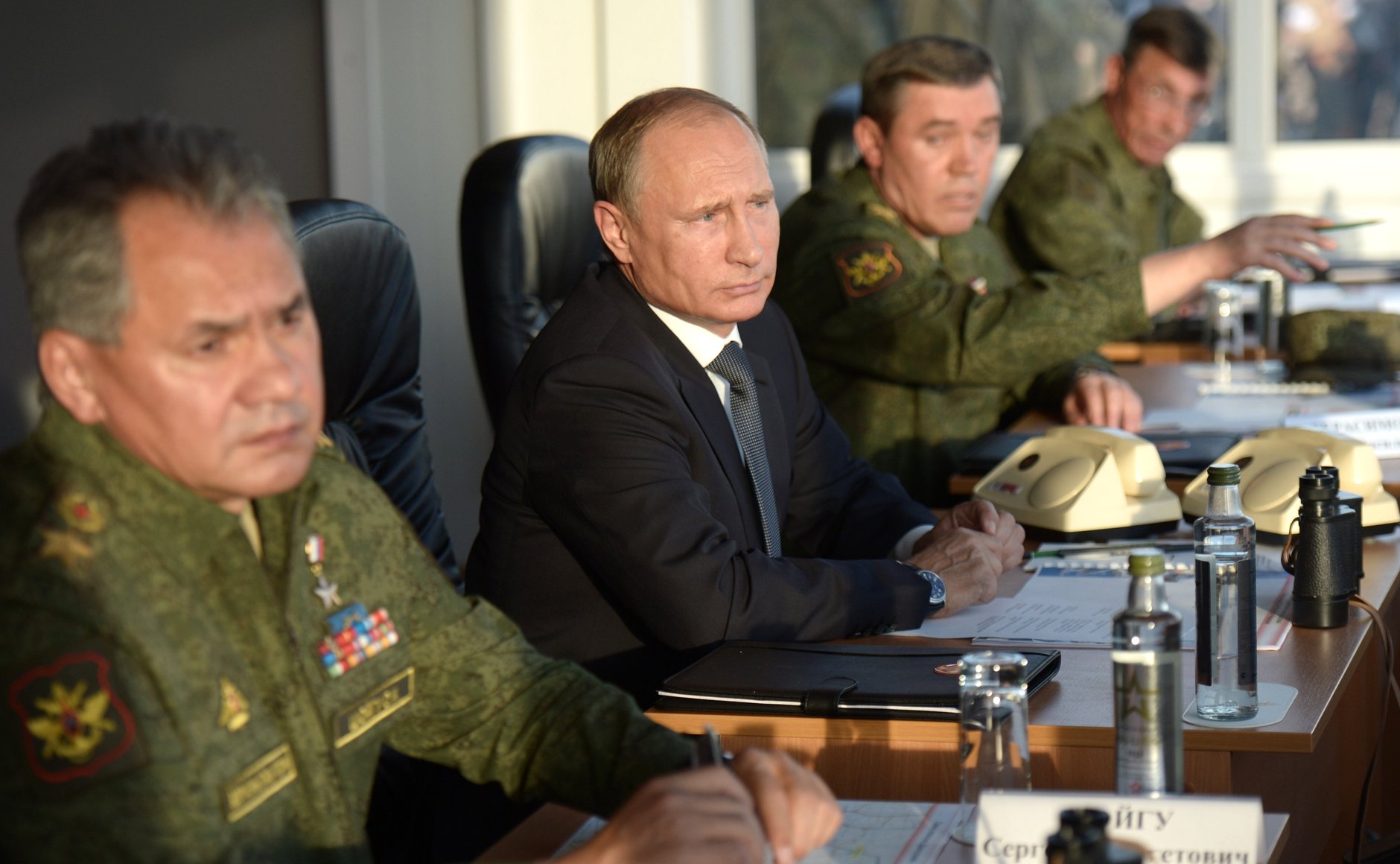
Putin with his Generals


Friends of Padre Steve’s World,

In light of Vladimir Putin’s genocidal campaign against Ukraine and its people, I am revisiting the war crimes trials held in Nuremberg, Germany between 1945 and 1948. It is my considered opinion as a historian and subject matter expert in military ethics, that Putin and the Russian leaders now conducting a genocidal war against Ukraine need to be brought to justice before an international war crimes tribunal. Such a trial could be convened at the International Criminal Court in The Hague, or a specially convened international tribunal similar to the International Military Tribunal that brought high ranking Nazi officials and military officers to justice at Nuremberg.

I also think of former President Donald Trump and his supporters that made a concerted attempt to overthrow the newly elected President by an planned assault on the Capitol that the President urged on and failed to stop, and his supporters who still support such actions today.

Associate Justice of the Supreme Court was appointed by President Harry S. Truman as the Chief American Counsel. Jackson helped draft the London Charter of the International Military Tribunal which created the legal basis for the Nuremberg Trials. During the trial Jackson served as the lead American prosecutor.

Before those Trials Jackson noted something incredibly profound, which too many Americans, regardless of their political party or ideology fail to comprehend.

“If certain acts of violation of treaties are crimes, they are crimes whether the United States does them or whether Germany does them, and we are not prepared to lay down a rule of criminal conduct against others which we would not be willing to have invoked against us.” Justice Robert Jackson International Conference on Military Trials, London, 1945, Dept. of State Pub.No. 3080 (1949), p.330.

On November 20th, 1945 twenty Nazi leaders took their seats in the dock in Saal 6oo (Courtroom 600) at the Palace of Justice in Nuremberg. The men were among the top leaders of the Third Reich, though there were a number of conspicuous absences. Adolf Hitler, Joseph Goebbels, and Heinrich Himmler had committed suicide as the Reich collapsed. Martin Bormann was missing and was believed to have escaped. Reinhard Heydrich died of wounds caused by Czech partisans in 1942.

Now, the men who ruled over most of Europe just three years before presented a sad sight. Deprived of their opulent uniforms and power they looked terrifyingly ordinary.

At 10 A.M., Presiding Judge, Sir Geoffrey Lawrence banged his gavel on his desk looking across the courtroom at the defendants and made his opening statement, saying:

“Before the defendants in this case are called upon to make their pleas to the indictment which has been lodged against them, and in which they are charged with Crimes against Peace, War Crimes, and Crimes against Humanity, and with a Common Plan or Conspiracy to commit those Crimes… The trial which is now about to begin is unique in the history of the jurisprudence of the World and it is of supreme importance to millions of people all over the globe…” 


Five years ago during I stood next to that same defendant’s dock where Hermann Goering and nineteen other men sat. Goering had been Hitler’s number two man and designated successor until the last days of the war. The others in the dock with Goering were Governor General of Poland, Dr. Hans Frank; Minister of the Interior and Reich Protector of Bohemia-Moravia, Dr.Wilhelm Frick; General Alfred Jodl, Chief of Staff of the Oberkommando Der Wehrmacht; Field Marshal Wilhelm Keitel, Chief of the Oberkommando der Wehrmacht; Foreign Minister Joachim von Ribbentrop; Gauleiter of Thuringia, and head of Slave Labor programs, Fritz Sauckel; Dr. Arthur Rosenberg, Reich Minister for the Occupied Easter Territories, Dr. Arthur Seyess-Inquart, Reichskommissar of occupied Netherlands; Julius Streicher, Gauleiter of Franconia and publisher of the Nazi propaganda paper, Der Sturmer; Commander of the German Navy and Hitler’s successor, Grand Admiral Karl Donitz; Minister of Economics, Dr. Walter Funk; Deputy Fuhrer Rudolf Hess;;Foreign Minister, Baron Konstantin von Neurath; the First Commander of the German Navy under Hitler, Grand Admiral Erich Raeder; Head of the Hitler Youth, and Gauleiter of Vienna, Baldur von Schirach; Armaments Minister, Albert Speer; Hans Fritzsche of the Propaganda Ministry, Dr. Hjalmar Schlacht pre-war head of the Reichsbank, and Economics Minister, Franz von Papen, who also had served as Vice Chancellor, Ambassador to Austria and later Turkey.

Also indicted but not in the dock, were SS Obergrüppenfuhrer and Chief of the Reich Security Main Office, Ernst Kaltenbrunner, who was recovering from a mild stroke; Gustav Krupp von Bohlen und Halbach, Head of the Armaments and heavy industry conglomerate Friedrich Krupp AG, and Chief of The Nazi Party Chancellery Martin Bormann. Robert Ley, leader of The German Labor Front committed suicide in his cell before the trial began. Krupp was too sick and senile to go to trial.

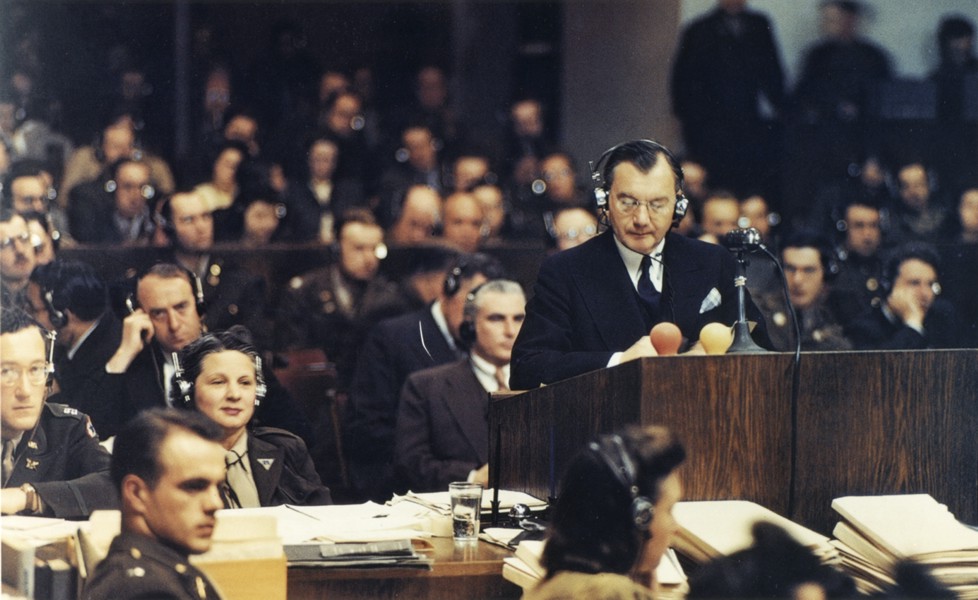
On the second day of trial Associate Justice of the United States Supreme Court, Robert Jackson who was serving as Chief Prosecutor for the United States gave one of the most powerful opening statements in any trial. He said:

May it please Your Honour, the privilege of opening the first trial in history for crimes against the peace of the world imposes a grave responsibility. The wrongs which we seek to condemn and punish have been so calculated, so malignant and so devastating, that civilisation cannot tolerate their being ignored, because it cannot survive their being repeated. That four great nations, flushed with victory and stung with injury, stay the hands of vengeance and voluntarily submit their captive enemies to the judgement of the law, is one of the most significant tributes that Power ever has paid to Reason. 

This Tribunal, while it is novel and experimental, is not the product of abstract speculations nor is it created to vindicate legalistic theories. This inquest represents the practical effort of four of the most mighty of nations, with the support of seventeen more, to utilise International Law to meet the greatest menace of our times -aggressive war. The common sense of mankind demands that law shall not stop with the punishment of petty crimes by little people. It must also reach men who possess themselves of great power and make deliberate and concerted use of it to set in motion evils which leave no home in the world untouched. It is a cause of that magnitude that the United Nations will lay before Your Honour. 

In the prisoners’ dock sit twenty-odd broken men. Reproached by the humiliation of those they have led, almost as bitterly as by the desolation of those they have attacked, their personal capacity for evil is forever past. It is hard now to perceive in these miserable men as captives the power by which as Nazi leaders they once dominated much of the world and terrified most of it. Merely as individuals their fate is of little consequence to the world. 

What makes this inquest significant is that these prisoners represent sinister influences that will lurk in the world long after their bodies have returned to dust. We will show them to be living symbols of racial hatreds, of terrorism and violence, and of the arrogance and cruelty of power. They are symbols of fierce nationalism and of militarism, of intrigue and war-making which embroiled Europe, generation after generation, crushing its manhood, destroying its homes, and impoverishing its life. They have so identified themselves with the philosophies they conceived, and with the forces they have directed, that tenderness to them is a victory and an encouragement to all the evils which attached to their names. Civilisation can afford no compromise with the forces which would gain renewed strength if we deal ambiguously or with the men in whom those forces now precariously survive. 

What these men stand for we will patiently and temperately disclose. We will give you undeniable proofs of incredible events. The catalogue of crimes will omit nothing that could be conceived by a pathological pride, cruelty, and lust for power. These men created in Germany, under the “Fuehrerprinzip,” a National Socialist despotism equalled only by the dynasties of the ancient East. They took from the German people all those dignities and freedoms that we hold natural and inalienable rights in every human being, The people were compensated by inflaming and gratifying hatreds towards those who were marked as “scapegoats.” Against their opponents, including Jews, Catholics, and free labour the Nazis directed such a campaign of arrogance, brutality, and annihilation as the world has not witnessed since the pre-Christian ages. They excited the German ambition to be a “master race,” which of course implies serfdom others. They led their people on a mad gamble for domination. They diverted social energies and resources to the creation of what they thought to be an invincible war machine. They overran their neighbours. To sustain the “master race” in its war-making, they enslaved millions of human beings and brought them into Germany, where these hapless creatures now wander as “displaced persons.” At length, bestiality and bad faith reached such excess that they aroused the sleeping strength of imperilled Civilisation. Its united efforts have ground the German war machine to fragments. But the struggle has left Europe a liberated yet prostrate land where a demoralised society struggles to survive. These are the fruits of the sinister forces that sit with these defendants in the prisoners’ dock.

In justice to the nations and the men associated in this prosecution, I must remind you of certain difficulties which may leave their mark on this case. Never before in legal history has an effort been made to bring within the scope of a single litigation the developments of a decade covering a whole continent, and involving a score of nations, countless individuals, and innumerable events. Despite the magnitude of the task, the world has demanded immediate action. This demand has had to be met, though perhaps at the cost of finished craftsmanship. In my country, established courts, following familiar procedures, applying well-thumbed precedents, and dealing with the legal consequences of local and limited events, seldom commence a trial within a year of the event in litigation. Yet less than eight months ago to-day the courtroom in which you sit was an enemy fortress in the hands of German S.S. troops. Less than eight months ago nearly all our witnesses and documents were in enemy hands. The law had not been codified, no procedures had been established, no tribunal was in existence, no usable courthouse stood here, none of the hundreds of tons of official German documents had been examined, no prosecuting staff had been assembled, nearly all of the present defendants were at large, and the four prosecuting powers had not yet joined in common cause to try them. I should be the last to deny that the case may well suffer from incomplete researches, and quite likely will not be the example of professional work which any of the prosecuting nations would normally wish to sponsor. It is, however, a completely adequate case to the judgement we shall ask you to render, and its full development we shall be obliged to leave to historians.

Before I discuss particulars of evidence, some general considerations which may affect the credit of this trial in the eyes of the world should be candidly faced. There is a dramatic disparity between the circumstances of the accusers and of the accused that might discredit our work if we should falter, in even minor matters, in being fair and temperate.

Unfortunately, the nature of these crimes is such that both prosecution and judgement must be by victor nations over vanquished foes. The world-wide scope of the aggressions carried out by these men has left but few real neutrals. Either the victors must judge the vanquished or we must leave the defeated to judge themselves. After the First World War we learned the futility of the latter course. The former high station of these defendants, the notoriety of their acts, and the adaptability of their conduct to provoke retaliation make it hard to distinguish between the demand for a just and measured retribution, and the unthinking cry for vengeance which arises from the anguish of war. It is our task, so far as is humanly possible, to draw the line between the two. We must never forget that the record on which we judge these defendants today is the record on which history will judge us tomorrow. To pass these defendants a poisoned chalice is to put it to our lips as well. We must summon such detachment and intellectual integrity to our task that this trial will commend itself to posterity as fulfilling humanity’s aspirations to do justice.

At the very outset, let us dispose of the contention that to put these men to trial is to do them an injustice entitling them to some special consideration. These defendants may be hard pressed but they are not ill used. Let us see what alternative they would have to being tried.

More than a majority of these prisoners surrendered to or were tracked down by the forces of the United States. Could they expect us to make American custody a shelter for our enemies against the just wrath of our Allies? Did we spend American lives to capture them only to save them from punishment? Under the principles of the Moscow Declaration, those suspected war criminals who are not to be tried internationally must be turned over to individual governments for trial at the scene of their outrages. Many less responsible and less culpable American-held prisoners have been and will continue to be turned over to other United Nations for local trial. If these defendants should succeed, for any reason, in escaping the condemnation of this Tribunal, or if they obstruct or abort this trial, those who are American-held prisoners will be delivered up to our continental Allies. For these defendants, however, we have set up an International Tribunal, and have undertaken the burden of participating in a complicated effort to give them fair and dispassionate hearings. That is the best known protection to any man with a defence worthy of being heard. If these men are the first war leaders of a defeated nation to be prosecuted in the name of the law, they are also the first to be given a chance to plead for their lives in the name of the law. Realistically, the Charter of this Tribunal, which gives them a hearing, is also the source of their only hope. It may be that these men of troubled conscience, whose only wish is that the world forget them, do not regard a trial as a favour. But they do have a fair opportunity to defend themselves -a favour which, when in power, they rarely extended even to their fellow countrymen. Despite the fact that public opinion already condemns their acts, we agree that here they must be given a presumption of innocence, and we accept the burden of proving criminal acts and the responsibility of these defendants for their commission.

When I say that we do not ask for convictions unless we prove crime, I do not mean mere technical or incidental transgression of international conventions. We charge guilt on planned and intended conduct that involves moral as well as legal wrong. And we do not mean conduct that is a natural and human, even if illegal, cutting of corners, such as many of us might well have committed had we been in the defendants’ positions. It is not because they yielded to the normal frailties of human beings that we accuse them. It is their abnormal and inhuman conduct which brings them to this bar.

We will not ask you to convict these men on the testimony of their foes. There is no count in the Indictment that cannot be proved by books and records. The Germans were always meticulous record keepers, and these defendants had their share of the Teutonic passion for thoroughness in putting things on paper. Nor were they without vanity. They arranged frequently to be photographed in action. We will show you their own films. You will see their own conduct and hear their own voices as these defendants re-enact for you, from the screen, some of the events in the course of the conspiracy.
We would also make clear that we have no purpose to incriminate the whole German people. We know that the Nazi Party was not put in power by a majority of the German vote. We know it came to power by an evil alliance We would also make clear that we have no purpose to incriminate the whole German people. We know that the Nazi Party was not put in power by a majority of the German vote. We know it came to power by an evil alliance between the most extreme of the Nazi revolutionists, the most unrestrained of the German reactionaries, and the most aggressive of the German militarists. If the German populace had willingly accepted the Nazi programme, no Storm-troopers would have been needed in the early days of the Party, and there would have been no need for concentration camps or the Gestapo, both of which institutions were inaugurated as soon as the Nazis gained control of the German state. Only after these lawless innovations proved successful at home were they taken abroad.

The German people should know by now that the people of the United States hold them in no fear, and in no hate. It is true that the Germans have taught us the horrors of modern warfare, but the ruin that lies from the Rhine to the Danube shows that we, like our Allies, have not been dull pupils. If we are not awed German fortitude and proficiency in war, and if we are not persuaded of their political maturity, we do respect their skill in the arts of peace, their technical competence, and the sober, industrious and self-disciplined character of the masses of the German people. In 1933, we saw the German people recovering prestige in the commercial, industrial and artistic world after the set-back of the last war. We beheld their progress neither with envy nor malice. The Nazi regime interrupted this advance. The recoil of the Nazi aggression has left Germany in ruins. The Nazi readiness to pledge the German word without hesitation and to break it without shame has fastened upon German diplomacy a reputation for duplicity that will handicap it for years. Nazi arrogance has made the boast of the “master race” a taunt that will be thrown at Germans the world over for generations. The Nazi nightmare has given the German name a new and sinister significance throughout the world, which will retard Germany a century. The German, no less than the non-German world, has accounts to settle with these defendants.

The fact of the war and the course of the war, which is the central theme of our case, is history. From September 1st, 1939, when the German armies crossed the Polish frontier, until September, 1942, when they met epic resistance at Stalingrad, German arms seemed invincible. Denmark and Norway, the Netherlands and France, Belgium and Luxembourg, the Balkans and Africa, Poland and the Baltic States, and parts of Russia, all had, been overrun and conquered by swift, powerful, well-aimed blows. That attack on the peace of the world is the crime against international society which brings into international cognizance crimes in its aid and preparation which otherwise might be only internal concerns. It was aggressive war, which the nations of the world had renounced. It was war in violation of treaties, by which the peace of the world was sought to be safeguarded. 

This war did not just happen -it was planned and prepared for over a long period of time and with no small skill and cunning. The world has perhaps never seen such a concentration and stimulation of the energies of any people as that which enabled Germany, twenty years after it was defeated, disarmed and dismembered, to come so near carrying out its plan to dominate Europe. Whatever else we may say of those who were the authors of this war, they did achieve a stupendous work in organisation, and our first task is to examine the means by which these defendants and their fellow conspirators prepared and incited Germany to go to war. 

In general, our case will disclose these defendants all uniting at some time with the Nazi Party in a plan which they well knew could be accomplished only by an outbreak of war in Europe. Their seizure of the German State, their subjugation of the German people, their terrorism and extermination of dissident elements, their planning and waging of war, their calculated and planned ruthlessness in the conduct of warfare, their deliberate and planned criminality toward conquered peoples -all these are ends for which they acted in concert; and all these are phases of the conspiracy, a conspiracy which reached one goal only to set out for another and more ambitious one. We shall also trace for you the intricate web of organisations which these men formed and utilised to accomplish these ends. We will show how the entire structure of offices and officials was dedicated to the criminal purposes and committed to the use of the criminal methods planned by these defendants and their co-conspirators, many of whom war and suicide have put beyond reach.

It is my purpose to open the case, particularly under Count One of the Indictment, and to deal with the Common plan or Conspiracy to achieve ends possible only by resort to Crimes against Peace, War Crimes, and Crimes against Humanity. My emphasis will not be on individual perversions which may have occurred independently of any central plan. One of the dangers ever present in this trial is that it may be protracted by details of particular wrongs and that we will become lost in a “wilderness of single instances.” Nor will I now dwell on the activity of individual defendants except as it may contribute to exposition of the Common Plan. 

The case as presented by the United States will be concerned with the brains and authority behind all the crimes. These defendants were men of a station and rank which does not soil its own hands with blood. They were men who knew how to use lesser folk as tools. We want to reach the planners and designers, the inciters and leaders without whose evil architecture, the world would not have been for so long scourged with the violence and lawlessness, and racked with the agonies and convulsions, of this terrible war.
The case as presented by the United States will be concerned with the brains and authority behind all the crimes. These defendants were men of a station and rank which does not soil its own hands with blood. They were men who knew how to use lesser folk as tools. We want to reach the planners and designers, the inciters and leaders without whose evil architecture, the world would not have been for so long scourged with the violence and lawlessness, and racked with the agonies and convulsions, of this terrible war. 

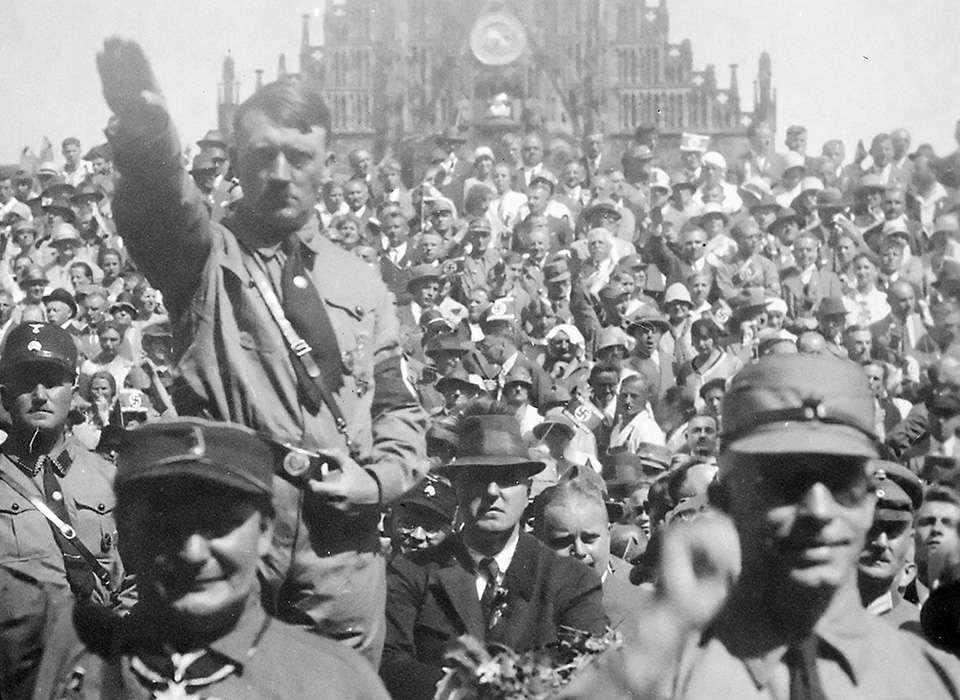
I shall first take up the lawless road by which these men came to possess the power which they have so used. The chief instrumentality of cohesion in plan and action was the National Socialist German Workers Party, known as the Nazi Party. Some of the defendants were with it from the beginning. Others joined only after success seemed to have validated its lawlessness or power had invested it with immunity from the processes of the law. Adolf Hitler became its supreme leader or “Fuehrer” in 1921. 

On the 24th February, 1920, at Munich, it publicly had proclaimed its programme (1708-PS). Some of its purposes would commend themselves to many good citizens, such as the demands for “profit-sharing in the great industries,” “generous development of provision for old age,” “a land reform suitable to our national requirements,” and “raising the standard of health.” It also made a strong appeal to that sort of nationalism which in ourselves we call patriotism and in our rivals chauvinism. It demanded “equality of rights for the German people in its dealing with other nations and the evolution of the peace treaties of Versailles and St. Germain.” It demanded the “union of all Germans on the basis of the right of self-determination of peoples to form a Great Germany.” It demanded “land and territory (colonies) for the enrichment of our people and the settlement of our surplus population.” All of these, of course, were legitimate objectives if they were to be attained without resort to aggressive warfare.

The Nazi Party from its inception, however, contemplated war. It demanded the “abolition of mercenary troops and the formation of a national army.” It proclaimed that “in view of the enormous sacrifice of life and property demanded of a nation by every war, personal enrichment through war must be regarded as a crime against the nation. We demand, therefore, ruthless confiscation of all war profits.” I do not criticise this policy. Indeed, I wish it were universal. I merely wish to point out that in a time of peace, war was a preoccupation of the Party, and it started the work of making war less offensive to the masses of the people. With this it combined a programme of physical training and sports for youth that became, as we shall see, the cloak for a secret programme of military training. 

The Nazi Party declaration also committed its members to an anti-Semitic programme. It declared that no Jew or any person of non-German blood could be a member of the nation. Such persons were to be disfranchised, disqualified for office, subject to the alien laws, and entitled to nourishment only after the German population had first been provided for. All who had entered Germany after 2nd August, 1914, were to be required forthwith to depart, and all non-German immigration was to be prohibited. 

The Party also avowed, even in those early days, an authoritarian and totalitarian programme for Germany. It demanded creation of a strong central power with unconditional authority, nationalisation of all businesses which had been “amalgamated,” and a “reconstruction” of the national system of education, which “must aim at teaching the pupil to understand the idea of the State (state sociology).” Its hostility to civil liberties and freedom of the Press was distinctly announced in these words: “It must be forbidden to publish newspapers which do not conduce to the national welfare. We demand the legal prosecution of all tendencies in art or literature of a kind likely to disintegrate our life as a nation, and the suppression of institutions which might militate against the above requirements.”

The forecast of religious persecution was clothed in the language of religious liberty, for the Nazi programme stated “We demand liberty for all religious denominations in the State.” But it continued with the limitation, “so far as they are not a danger to it and do not militate against the morality and moral sense of the German race.” 

The Party programme foreshadowed the campaign of terrorism. It announced, “we demand ruthless war upon those whose activities are injurious to the common interests,” and it demanded that such offences be punished with death. 

It is significant that the leaders of this Party interpreted this programme as a belligerent one, certain to precipitate conflict. The Party platform concluded: 

“The leaders of the Party swear to proceed regardless of consequences -if necessary, at the sacrifice of their lives -toward the fulfilment of the foregoing points.” 

It is this Leadership Corps of the Party, not its entire membership, that stands accused before you as a criminal Organisation. 

We have not sought to include every person who may, at some time, have supported the Nazi Party, but only the leadership core which pledged itself to achieve its ends at the risk of their lives. 

Let us now see how the leaders of the Party fulfilled their pledge to proceed regardless of consequences. Obviously, their foreign objectives, which were nothing less than to undo international treaties and to wrest territory from foreign control, as well as most of their internal programme, could be accomplished only by possession of the machinery of the German State. The first effort, accordingly, was to subvert the Weimar Republic by violent revolution. An abortive “putsch” at Munich in 1921 landed many of them in jail. A period of meditation which followed produced “Mein Kampf,” henceforth the source of law for the Party workers and a source of considerable revenue to its supreme leader. The Nazi plans for the violent overthrow of the feeble Republic then turned to plans for its capture.
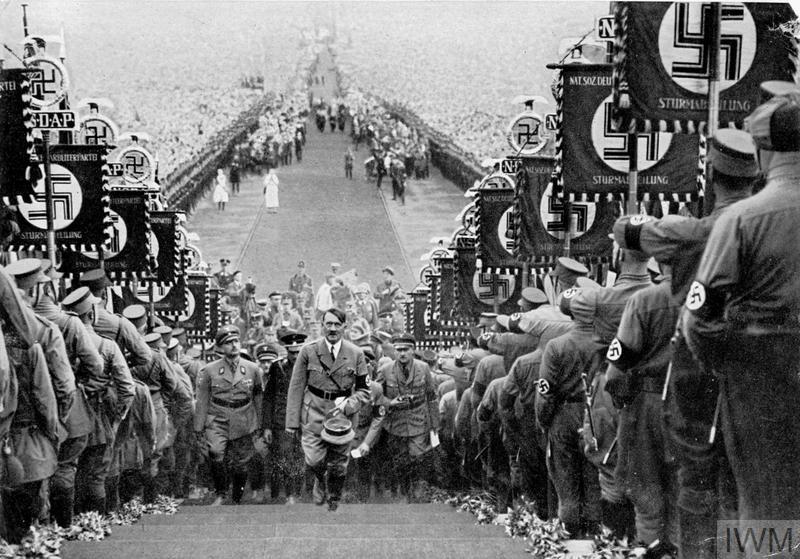
No greater mistake could be made than to think of the Nazi Party in terms of the loose organisations which we of the Western world call “political parties.” In discipline, structure, and method the Nazi Party was not adapted to the democratic process of persuasion. It was an instrument of conspiracy and of coercion. The Party was not organised to take over power in the German State by winning the support of a majority of the German people; it was organised to seize power in defiance of the will of the people. 

The Nazi Party, under the “Fuehrerprinzip,” was bound by an iron discipline into a pyramid, with the Fuehrer, Adolf Hitler, at the top and broadening into a numerous Leadership Corps, composed of overlords of a very extensive Party membership at the base. By no means all of those who may have supported the movement in one way or another were actual Party members. The membership took the Party oath which in effect amounted to an abdication of personal intelligence and moral responsibility. This was the oath: “I vow inviolable fidelity to Adolf Hitler; I vow absolute obedience to him and to the leaders he designates for me.” The membership in daily practise followed its leaders with an idolatry and self-surrender more Oriental than Western. We will not be obliged to guess as to the motives or goal of the Nazi Party. The immediate aim was to undermine the Weimar Republic. The order to all Party members to work to that end was given in a letter from Hitler of 24th August, 1931, to Rosenberg, of which we will produce the original. 

Hitler wrote:-“I am just reading in the Volkischer Beobachter, edition 235/ 236 page 1, an article entitled ‘Does Wirth intend to come over?’ The tendency of the article is to prevent on our part a crumbling away from the present form of government. I myself am travelling all over Germany to achieve exactly the opposite. May I therefore ask that my own paper will not stab me in the back with tactically unwise articles …” (047-PS)

Captured film enables us to present the defendant, Alfred Rosenberg, who from the screen will himself tell you the story. The S.A. practised violent interference with the elections. We have here the reports of the S.D., describing in detail how its members later violated the secrecy of elections in order to identify those who opposed them. One of the reports makes this explanation:

“The control was effected in the following way: some members of the election-committee marked all the ballot-papers with numbers. During the ballot itself, a voters list was made up. The ballot-papers were handed out in numerical order, therefore it was possible afterwards with the aid of this list to find out the persons who cast no-votes or invalid votes. One sample of these marked ballot-papers is enclosed. The marking was done on the back of the ballot-papers with skimmed-milk.” (R-142) 

The Party activity, in addition to all the familiar forms of political contest, took on the aspect of a rehearsal for warfare. It utilised a Party formation, “Die Sturmabteilungen,” commonly known as the S.A. This was a voluntary organisation of youthful and fanatical Nazis trained for the use of violence under semi-military discipline. Its members began by acting as bodyguards for the Nazi leaders and rapidly expanded from defensive to offensive tactics. They became disciplined ruffians for breaking up opposition meetings and the terrorisation of adversaries. They boasted that their task was to make the Nazi Party “master of the streets.” The S.A. was the parent organisation of a number of others. Its offspring included “Die Schutzstaffeln” commonly known as the S.S., formed in 1925, and distinguished for the fanaticism and cruelty of its members; “Der Sicherheitsdienst,” known as the S.D.; and “Die Geheime Staatspolizei,” the Secret State Police, the infamous Gestapo formed in 1934 immediately after Nazi accession to power.

A glance at a chart of the Party Organisation is enough to show how completely it differed from the political parties we know. It had its own source of law in the Fuehrer and it had its own courts and its own police. The conspirators set up a government within the Party to exercise outside the law every sanction that any legitimate State could exercise and many that it could not. Its chain of command was military, and its formations were martial in name as well as in function. They were composed of battalions set up to bear arms under military discipline, motorised corps, flying corps, and the infamous “Death Head Corps,” which was not misnamed. The Party had its own secret police, its security units, its intelligence and espionage division, its raiding forces, and its youth forces. It established elaborate administrative mechanisms to identify and liquidate spies and informers, to manage concentration camps, to operate death vans, and to finance the whole movement. Through concentric circles of authority, the Nazi Party, as its leadership later boasted, eventually organised and dominated every phase of German life -but not until they had waged a bitter internal struggle characterised by brutal criminality. In preparation for this phase of their struggle they created a party police system. This became the pattern and the instrument of the police State, which was the first goal in their plan. 

The Party formation, including the Leadership Corps of the Party, the S.D., the S.S. the S.A. and the infamous Secret State Police, or Gestapo -all these stand accused before you as criminal organisations; organisations which, as we will prove from their own documents, were recruited only from the recklessly devoted Nazis, ready in conviction and temperament to do the most violent of deeds to advance the common programme. They terrorised and silenced democratic opposition and were able at length to combine with political opportunists, militarists, industrialists, monarchists and political reactionaries. 

A glance at a chart of the Party Organisation is enough to show how completely it differed from the political parties we know. It had its own source of law in the Fuehrer and it had its own courts and its own police. The conspirators set up a government within the Party to exercise outside the law every sanction that any legitimate State could exercise and many that it could not. Its chain of command was military, and its formations were martial in name as well as in function. They were composed of battalions set up to bear arms under military discipline, motorised corps, flying corps, and the infamous “Death Head Corps,” which was not misnamed. The Party had its own secret police, its security units, its intelligence and espionage division, its raiding forces, and its youth forces. It established elaborate administrative mechanisms to identify and liquidate spies and informers, to manage concentration camps, to operate death vans, and to finance the whole movement. Through concentric circles of authority, the Nazi Party, as its leadership later boasted, eventually organised and dominated every phase of German life -but not until they had waged a bitter internal struggle characterised by brutal criminality. In preparation for this phase of their struggle they created a party police system. This became the pattern and the instrument of the police State, which was the first goal in their plan. The Party formation, including the Leadership Corps of the Party, the S.D., the S.S. the S.A. and the infamous Secret State Police, or Gestapo -all these stand accused before you as criminal organisations; organisations which, as we will prove from their own documents, were recruited only from the recklessly devoted Nazis, ready in conviction and temperament to do the most violent of deeds to advance the common programme. They terrorised and silenced democratic opposition and were able at length to combine with political opportunists, militarists, industrialists, monarchists, and political reactionaries.

On January 30,1933 Adolf Hitler became Chancellor of the German Republic. An evil combination, represented in the prisoner’s dock by its most eminent survivors, had succeeded in possessing itself of the machinery of the German Government, a facade behind which they thenceforth would operate to make reality of the war of conquest they so long had plotted. The conspiracy had passed into its second phase. 

We shall now consider the steps, which embraced the most hideous of crimes against humanity, to which the conspirators resorted In perfecting control of the German State and in preparing Germany for the aggressive war indispensable to their ends. 

The Germans of the 1920′ s were a frustrated and baffled people as a result of defeat and the disintegration of their traditional government. The democratic elements, which were trying to govern Germany through the new and feeble machinery of the Weimar Republic, got inadequate support from the democratic forces of the rest of the world. It is not to be denied that Germany, when world-wide depression added to her other problems, was faced with urgent intricate pressures in her economic and political life, which necessitated bold measures. 

The internal measures by which a nation attempts to solve its problems are ordinarily of no concern to other nations. But the Nazi programme from the first was recognised as a desperate programme for a people still suffering the effects of an unsuccessful war. The Nazi policy ends recognised as attainable only by a renewal and more successful outcome of war. The conspirators’ answer to Germany’s problems was nothing less than to plot the the regaining of territories in the First World War and the acquisition of other fertile lands of Eastern Europe by dispossessing or exterminating those who inhabited them. They also contemplated destroying or permanently weakening all other neighbouring peoples so as to win virtual domination over Europe and probably over the world. The precise limits of their ambition we need not define, for it was and is as illegal to wage aggressive war for small stakes as for large ones. 

We find at this period two governments in Germany-the real and the ostensible. The form of the German Republic was maintained for a time, and it was the outward and visible government. But the real authority in the State was outside of and above the law and rested in the Leadership Corps of the Nazi Party.
On February 27, 1933, less than a month after Hitler became Chancellor, the Reichstag building was set on fire. The burning of this symbol of free parliamentary government was so providential for the Nazis that it was believed they staged the fire themselves. Certainly when we contemplate their known crimes, we cannot believe they would shrink from mere arson. It is not necessary, however, to resolve the controversy as to who set the fire. The significant point is in the use that was made of the fire and of the state of public mind it produced. The Nazis immediately accused the Communist Party of instigating and committing the crime, and turned every effort to portray this single act of arson as the beginning of a Communist revolution. Then, taking advantage of the hysteria, the Nazis met this phantom revolution with a real one. In the following December, the German Supreme Court, with commendable courage and independence, acquitted the accused Communists, but it was too late to influence the tragic course of events which the Nazi conspirators had set rushing forward. 

Hitler, on the morning after the fire, obtained from the aged and ailing President von Hindenburg a Presidential decree suspending the extensive guarantees of individual liberty contained in the constitution of the Weimar Republic. The decree provided that “Sections 114, 115, 117, 118, 123, 124, and 153 of the constitution of the German Reich are suspended until further notice. Thus, restrictions on personal liberty, on the right of free expression of opinion, including freedom of the Press, on the right of assembly and the right of association, and violations of the privacy of postal, telegraphic, and telephonic communications and warrants for house searches, orders for confiscation as well as restrictions on property, are also permissible beyond the legal limits otherwise prescribed.” (1390-PS) 

The extent of the restriction on personal liberty under the decree of 28th February, 1933, may be understood by reference to the rights under the Weimar Constitution which were suspended:

Article 114. The freedom of the person is inviolable. Curtailment or deprivation of personal freedom by a public authority is only permissible on a legal basis. Persons who have been deprived of their personal freedom must be informed at the latest on the following day by whose authority and for what reasons the deprivation of freedom was ordered. Opportunity shall be afforded them without delay of submitting objection to their deprivation of freedom. 

Article 115. Every German’s home is his sanctuary and is inviolable. Exceptions may only be made as provided by law. 

Article 117. The secrecy of letters and all postal, telegraphic and telephone communications is inviolable. Exceptions are inadmissible except by Reich law. 

Article 118. Every German has the right, within the limits of the general laws, to express his opinions freely in speech, in writing, in print, in picture form or in any other way. No condition of work or employment may detract from this right and no disadvantage may accrue to him from any person making use of this right.

Article 123. All Germans have the right to assemble peacefully and unarmed without giving notice and without special permission. A Reich law may make previous notification obligatory for assemblies in the open air, and may prohibit them in the case of immediate danger to the public safety. 

Article 124. All Germans have the right to form associations or societies for purposes not contrary to criminal law. This right may not be curtailed by preventive measures. The same provisions apply to religious associations and societies. Every association may become incorporated (Erwerb der Rechtsfaehigkeit) according to the provisions of the civil law. The right may not be refused to any association on the grounds that its aims are political, social-political or religious. 

Article 153. Property is guaranteed by the Constitution. Its content and limits are defined by the laws. Expropriation can only take place for the public benefitand on a legal basis. Adequate compensation shall be granted, unless a Reich law orders otherwise. In the case of dispute concerning the matter to the ordinary civil courts, unless Reich laws determine otherwise. Compensation must be paid if the Reich expropriates property belonging to the Lands, Communes, or public utility associations. Property carries obligations. Its use shall also serve the common good.” (2050-PS) 

It must be said, in fairness to von Hindenburg, that the Constitution itself authorised him temporarily to suspend these fundamental rights “if the public safety and order in the German Reich are considerably disturbed or endangered.” It must also be acknowledged that President Ebert previously had invoked this power. 

But the National Socialist coup was made possible because the terms of the Hitler-Hindenburg decree departed from all previous ones in which the power of suspension had been invoked. Whenever President Ebert had suspended constitutional guarantees of individual rights, his decree had expressly revived the Protective Custody Act adopted by the Reichstag in 1916 during the previous war. This Act guaranteed a judicial hearing within twenty-four hours of arrest, gave a right to have counsel and to inspect all relevant records, provided for appeal, and authorised compensation from Treasury funds for erroneous arrests.

The Hitler-Hindenburg decree of 28th February, 1933, contained no such safeguards. The omission may not have been noted by von Hindenburg. Certainly he did not appreciate its effect. It left the Nazi police and party formations, already existing and functioning under Hitler, completely unrestrained and irresponsible. Secret arrest and indefinite detention without charges, without evidence, without hearing, without counsel, became the method of inflicting inhuman punishment on any whom the Nazi police suspected or disliked. No court could issue an injunction, or writ of habeas corpus, or certiorari. The German people were in the hands of the police, the police were in the hands of the Nazi Party, and the Party was in the hands of a ring of evil men, of whom the defendants here before you are surviving and representative leaders.

ADN-ZB: Im faschistischen Deutschland 1933-45 Unmittelbar nach der faschistischen Machtergreifung werden im Frühjahr 1933 überall im Land Konzentrationslager errichtet. SA-Männer als Lagerwache des KZ’s Oranienburg bei Berlin.

The Nazi conspiracy, as we shall show, always contemplated not merely overcoming current opposition, but exterminating elements which could not be reconciled with its philosophy of the State. It not only sought to establish the Nazi “new order” but to secure its way, as Hitler predicted, “for a thousand years.” Nazis were never in doubt or disagreement as to what those dissident elements were. They were concisely described by one of them, Col. General von Fritzsche, on 11th December, 1938, in these words:

“Shortly after the first war I came to the conclusion that we should have to be victorious in three battles if Germany were to become powerful again: (1) The battle against the working class -Hitler has won this; (2) Against the Catholic Church, perhaps better expressed against Ultramontanism (3) Against the Jews.” (1947-PS)

The warfare against these elements was continuous. The battle in Germany was but a practice skirmish for the world-wide drive against them. We have here in point of geography and of time two groups of crimes against humanity -one within Germany before and during the war, the other in occupied territory during the war. But the two are not separated in Nazi planning. They are a continuous unfolding of the Nazi plan to exterminate peoples and institutions which might serve as a focus or instrument for overturning their “new world order” at any time. We consider these Crimes against Humanity in this address as manifestations of the one Nazi Plan and discuss them according to General von Fritsche’s classification… 

Jackson would continue his statement and address the battle against the Working Class, the battle against the churches, the crimes committed against the Jews, crimes in the conduct of war. I will deal with each of these In later articles.

Jackson concluded his opening statement with this words, and they are important, not only to the Nuremberg Process, but in our day today:

While the defendants and the prosecutors stand before you as individuals, it is not the triumph of either group alone that is committed to your judgement. Above all personalities there are anonymous and impersonal forces whose conflict makes up much of human history. It is yours to throw the strength of the law behind either the one or the other of these forces for at least another generation. What are the forces that are contending before you? 

No charity can disguise the fact that the forces which these defendants represent, the forces that would advantage and delight in their acquittal, are the darkest and most sinister forces in society-dictatorship and oppression, malevolence and passion, militarism and lawlessness. By their fruits we best know them. Their acts have bathed the world in blood and set civilisation back a century. They have subjected their European neighbours to every outrage and torture, every spoliation and deprivation that insolence, cruelty, and greed could inflict. They have brought the German people to the lowest pitch of wretchedness, from which they can entertain no hope of early deliverance. They have stirred hatreds and incited domestic violence on every continent. There are the things that stand in the dock shoulder to shoulder with these prisoners.

The real complaining party at your bar is Civilisation. In all our countries it is still a struggling and imperfect thing. It does not plead that the United States, or any other country, has been blameless of the conditions which made the German people easy victims to the blandishments and intimidations of the Nazi conspirators.

But it points to the dreadful sequence of aggression and crimes I have recited, it points to the weariness of flesh, the exhaustion of resources, and the destruction of all that was beautiful or useful in so much of the world, and to greater potentialities for destruction in the days to come. It is not necessary among the ruins of this ancient and beautiful city with untold members of its civilian inhabitants still buried in its rubble, to argue the proposition that to start or wage an aggressive war has the moral qualities of the worst of crimes. The refuge of the defendants can be only their hope that International Law will lag so far behind the moral sense of mankind that conduct which is crime in the moral sense must be regarded as innocent in law. 

Civilisation asks whether law is so laggard as to be utterly helpless to deal with crimes of this magnitude by criminals of this order of importance. It does not expect that you can make war impossible. It does expect that your juridical action will put the forces of International Law, its prospects, its prohibitions and, most of all, its sanctions, on the side of peace, so that men and women of good will, in all countries, may have “leave to live by no man’s leave, underneath the law.”


Following the trials of the major war criminals, eleven more trials were held, including the Doctor’s Trial, a General’s Trial, also known as the Hostage Trial, and the Einsatzgruppen Trial, as well as others.

To stand in the courtroom where such evidence was presented and powerful testimony given was humbling. To see where learned men, powerful, and even respected men, who had so willingly sacrificed any trace of personal honor and morality, men who aided and abetted a regime which committed the most heinous crimes committed by a civilized “Christian” nation in history left me silent. I have studied these trials since I was in college over 35 years ago. My primary professor, Dr. Helmut Haeussler was an interpreter at the trials.

Since that time I have continued to study them and today as I see the rise of Right Wing movements in Europe, as well as the United States, movements which have at their core many of the same beliefs and principles held by Hitler, the Nazi Party, and the men who stood trial at Nuremberg I find myself frightened.

This is especially so in the United States where former President Donald Trump during and after office made repeated policy statements similar to Hitler and the Nazis. They included: limiting civil rights and freedom of speech, the role of the courts, curtailing freedom of the press, favoring one religion above others, curtailing the legal and civil rights of whole groups of people, expelling millions of people, banning whole groups of other people entry into the country, promising to rid the government of his opponents, to fire military leaders who disagreed with him in mass, and to commit the military to use methods that are condemned as war crimes, war crimes such as were prosecuted by the United States and her Allies at Nuremberg. Many of his radical supporters, and rivals in the Republican Party are legislating such policies at state level, while members of the House of Representatives are using the same tactics as Nazi members of the Reichstag before and during the Nazi seizure of power.

To make matters more frightening, many of Trump’s supporters see no problem with this and are often shown on video threatening opponents, advocating even more extreme and violent measures than Trump himself. They justify their proposed polices by saying that these measures are to “protect the country,” and to Make America Great Again.” 

But at what price?

In Judgement at Nuremberg, the film version of the Judges’ Trial, Spencer Tracy played Judge Dan Heywood. In the scene at which the verdicts were read, he gave this speech, some of which echoed the words of Justice Robert Jackson’s closing argument in the Major War Criminal Trial.

“Janning, to be sure, is a tragic figure. We believe he loathed the evil he did. But compassion for the present torture of his soul must not beget forgetfulness of the torture and the death of millions by the Government of which he was a part. Janning’s record and his fate illuminate the most shattering truth that has emerged from this trial: If he and all of the other defendants had been degraded perverts, if all of the leaders of the Third Reich had been sadistic monsters and maniacs, then these events would have no more moral significance than an earthquake, or any other natural catastrophe.

But this trial has shown that under a national crisis, ordinary – even able and extraordinary – men can delude themselves into the commission of crimes so vast and heinous that they beggar the imagination. No one who has sat through the trial can ever forget them: men sterilized because of political belief; a mockery made of friendship and faith; the murder of children. How easily it can happen. There are those in our own country too who today speak of the “protection of country” – of ‘survival’. A decision must be made in the life of every nation at the very moment when the grasp of the enemy is at its throat. Then, it seems that the only way to survive is to use the means of the enemy, to rest survival upon what is expedient – to look the other way. Well, the answer to that is ‘survival as what’? A country isn’t a rock. It’s not an extension of one’s self. It’s what it stands for. It’s what it stands for when standing for something is the most difficult! Before the people of the world, let it now be noted that here, in our decision, this is what we stand for: justice, truth, and the value of a single human being.”

A nation is what it stands for. Russia in all of its guises has never been a beacon of liberty. It has from the times of the Czars, to the Soviet State, to Putin has always been an autocratic state built on terrorizing its own people and conquering its neighbors. The Russian genocide against Ukraine is simply another chapter in a long history of brutality.

The ideals that have marked the American experiment have never been perfectly practiced by the United States, but they are still the hallmark of the last and greatest hope of civilization. They are the ideals which lead people around the world to want to become Americans, they are the ideals which sustain us. But what Trump, his followers, and many Republicans in Congress is that they are not important, and in fact should be limited or abrogated entirely. But this is the way of expediency, and the end of the American experiment.

Standing beside the dock at Nuremberg I was humbled by the fact that I was where such history had been made, and at the same time I was frightened for my country and the world. This is important because the United States is not immune from going down the path of the Third Reich. Historian Timothy Snyder wrote:

“The European history of the twentieth century shows us that societies can break, democracies can fall, ethics can collapse, and ordinary men can find themselves standing over death pits with guns in their hands. It would serve us well today to understand why.”

The Nuremberg trials help us to understand why. We cannot forget them.

Peace,

Padre Steve+

Leave a comment

Filed under crimes against humanity, History, holocaust, nazi germany, News and current events, Political Commentary, russia, terrorism, ukraine, war crimes, war crimes trials

Genocide Does Not Happen In a Vacuum: The Ideological Background of the Einsatzgruppen and Other Mass Killers. Poland 1939 r l

babi yar

The Massacre at Babi Yar

Introduction 

Friends of Padre Steve’s World,

Since I recently wrote about the invasion of Poland, the T4 Euthanasia Program, and the actions of the Einsatzgruppen in Poland, I thought that it would be a good thing to lay the foundations for the German campaign in the East which began in Poland on September 1st 1939.

As part of my academic work when I taught ethics at the Joint Forces Staff College a few years, I dealt with military ethics as related to the Just War Theory. In the class on jus post bellum or justice after war I dealt with the legal implications of participating in war crimes.

It is a serious subject and in the class I attempted  to make my students, all relatively senior officers from the United States and allied nations as uncomfortable as possible. I used a number of examples from the major war crimes trials at Nuremberg as well as the Generals Trial. I had some exceptionally good class over those years which motivated me me to go back and do some revisions to a number articles that I wrote in the past, beginning during my time working towards my Masters Degree in Military History, since then I have published a version of this before but I continue, between my other writing to make revisions and additions which I often post here.

As I went through previous notes and research I felt a tenseness and revulsion for the actions of those that ordered, committed or condoned these crimes; many of who were men who like me were professional career officers. I realize how easily it is for normal, rational, and even basically decent people to succumb to either participating in or turning a blind eye to crimes against others, even on a massive scale, in fact the bigger they are they seem easier to dismiss, because the victims cease be human, and simply a statistic. Sadly, Josef Stalin probably got human nature right when he said “The death of one man is a tragedy. The death of millions is a statistic.” That comment causes great revulsion in my soul, but I have to admit it seems to be the way that many people deal with such great crimes.

September 29th 2020 was the 79th anniversary of the Babi Yar massacre. It was committed by members of the SS Einsatzgruppen C near Kiev shortly after the German Army captured that city. In total some 33,771 Jews were exterminated by the members of Sonderkommando 4b of Einsatzgruppen C as well as attached Ordungspolizei battalions. About 10,000 others, mainly Communist Officials and Gypsies were rounded up and killed in the same operation. The victims were stripped of all of their belongings taken to a ravine and shot. It was the second largest killing action by the various Einsatzgruppen in the war. It was committed by men who either believed that the people that they were killing were sub-human, or did not have the courage to stand up and say no.

These issues are still with us. Hannah Arendt made the comment that “The sad truth is that most evil is done by people who never make up their minds to be good or evil.” Likewise, Historian Gerhard Weinberg wrote:

“It’s very, very important for people to get a sense of what the potentialities of people really are, what the dangers of ignorance can be. It is in this context, that a supposedly advanced society risks descending into the sewer, that the Holocaust is a warning to people who think of themselves as an advanced, modern society.” 

These are uncomfortable subjects. We like to say that the Nazis were different than us or others. To some extent this is true, but the real truth is that most of the Christian Western European countries, and I include the United States have also committed gross crimes against humanity against peoples that we believed were less than human and not afforded human rights or protections. In the movie Judgement at Nuremberg Spencer Tracy makes a comment that should send chills through any of us. He spoke concerning one of the judges on trial, “Janning, to be sure, is a tragic figure. We believe he loathed the evil he did. But compassion for the present torture of his soul must not beget forgetfulness of the torture and the death of millions by the Government of which he was a part. Janning’s record and his fate illuminate the most shattering truth that has emerged from this trial: If he and all of the other defendants had been degraded perverts, if all of the leaders of the Third Reich had been sadistic monsters and maniacs, then these events would have no more moral significance than an earthquake, or any other natural catastrophe. But this trial has shown that under a national crisis, ordinary – even able and extraordinary – men can delude themselves into the commission of crimes so vast and heinous that they beggar the imagination….”

American Associate Supreme Court Justice Robert Jackson spoke these words in his opening arguments during the Major War Crimes Trials at Nuremberg:

“The persecution of the Jews was a continuous and deliberate policy. It was a policy directed against other nations as well as against the Jews themselves. Anti-Semitism was promoted to divide and embitter the democratic peoples and to soften their resistance to the Nazi aggression. As Robert Ley declared in Der Angriff on 14 May, 1944, “the second German secret weapon is Anti-Semitism because, if it is constantly pursued by Germany, it will become a universal problem which all nations will be forced to consider.”

Anti-Semitism also has been aptly credited with being a “spearhead of terror.” The ghetto was the laboratory for testing repressive measures. Jewish property was the first to be expropriated, but the custom grew and included similar measures against Anti-Nazi Germans, Poles, Czechs, Frenchmen, and Belgians. Extermination of the Jews enabled the Nazis to bring a practised hand to similar measures against Poles, Serbs, and Greeks. The plight of the Jew was a constant threat to opposition or discontent among other elements of Europe’s population -Pacifists, Conservatives, Communists, Catholics, Protestants, Socialists. It was in fact, a threat to every dissenting opinion and to every non-Nazi’s life.” 

Babi Yar is just one example of how civilized people can get can commit great atrocities in the name of ideology and race, and it does not stand alone. The tragic fact is that it really doesn’t take much to condition people to go commit such crimes; just teach people from childhood that people of certain races or religions are less than human. Then subjugate them to incessant propaganda and then turn them loose using the pretext that they are killing terrorists or insurgents. But the more troubling question is about the adults in the room, the politicians, the career government officials and military officers who had once taken oaths to uphold the Constitution, and laws of their countries. Men who were not subjected to the incessant propaganda of a dictatorship until it arose in the middle or toward the end of their careers.

Beginning tonight I will be exploring the ideological as well as existing military doctrines that brought about Babi Yar and so many other atrocities committed by the Nazis during the campaigns in Poland and the Soviet Union. That is because Genocide and mass murder does not occur in a vacuum. It doesn’t just happen. There are pre-existing racial, ethnic and religious hatreds that often define how a country and culture view their enemies that can play into the domestic persecution of those people, and their actions during war, especially as to how the observe the Geneva and Hague Conventions, especially in terms of their treatment of civilians and non-combatants.

What happened at Babi Yar and the thousands of other massacres committed by the Nazi units, the Einsatzgruppen, Ordungspolizei, Waffen SS, the German Army of Heer, Luftwaffe Field Divisions, and locally recruited auxiliaries, is just one example of how civilized people can get can commit great atrocities in the name of ideology and race, and it does not stand alone. The tragic fact is that it really doesn’t take much to condition people to go commit such crimes; just teach people from childhood that people of certain races or religions are less than human. Then subjugate them to incessant propaganda and then turn them loose using the pretext that they are killing terrorists or insurgents.

The series of articles deal with the ideological as well as military reasons that brought about Babi Yar and so many other atrocities committed by the Nazis during the campaigns in Poland and the Soviet Union.

hitler

Introduction to Genocidal Race War 

The German war against the Soviet Union was the first truly race-based ideological war in history with the campaign against Poland its precursor. Adolf Hitler’s racial theories and beliefs played a dominant role in Germany’s conduct of the war in the East in both the military campaign and occupation. This has become clearer in recent years as historians have had the opportunity to examine Hitler’s writings, those of senior Nazi officials and military officers and documents which had been unavailable until the end of the Cold War.

Understanding the Nazi ideological basis and the underlying cultural prejudice against the Jews and eastern Europeans in general is foundational to understanding Hitler’s conduct of the war and why the destruction of the Jews figured so highly in his calculations. One must also understand the military and police cultures and doctrines that enabled them to cooperate so closely in the conduct of the war.

The German war in the east would differ from any previous war. Its underlying basis was ideological. Economic and geopolitical considerations were given importance in relationship to the understanding of the German “Master Race.” Race and Lebensraum was the goal of the State that “concentrates all of its strength on marking out a way of life for our people through the allocation of Lebensraum for the next one hundred years…the goal corresponds equally to the highest national and ethnic requirements.” 1

Hitler believed that Germany was “entitled to more land…because it was the “mother of life” not just some “little nigger nation or another.”” 2 The Germans planned to “clear” the vast majority of the Slavic population and the “settlement of millions of hectares of eastern Lebensraum with German colonists” complimented by a short term exploitation of the land to “secure the food balance of the German Grossraum.” 3 Joachim Fest notes that Hitler called it a “crime” to wage war only for the acquisition of raw materials. Only the issue of living space permitted resort to arms. 4

Following the Peace of Westphalia wars in Europe typically emphasized conquest of territory and natural resources either to expand empires or promote some kind of self-sufficiency. The Thirty Years War, which was ended by the Treaty of Westphalia had a heavy religious component which added to its brutality. However the root of much of this conflict was about increasing the power of emerging nation states led by men not necessarily loyal to their religious brethren. 5

The American and Russian Civil wars had some ideological basis and helped usher in the brutality of total war. Both had major effect in these nations’ development and both were bitterly contested with the winners imposing to various degrees political changes on their vanquished brothers they were civil wars. 6

Economic Historian Adam Tooze sees the Holocaust as the first step of the “last great land grab in the long and bloody history of European colonialism…” 7 This does have merit, Hitler’s desire for Lebensraum or living space was a type of colonialism. However, Tooze’s argument does not take away from the basic premise that Germany’s war in the east was at its heart motivated by ideological factors, mostly in Hitler’s belief in the mythical Aryan Supermen of the German Race, and their üntermenschen (sub human) foes, Jews, Gypsies, Blacks and Slavic people. In Hitler’s world  their existence was a threat, and they were occupying lands that rightly belonged to Germany and the Germans.

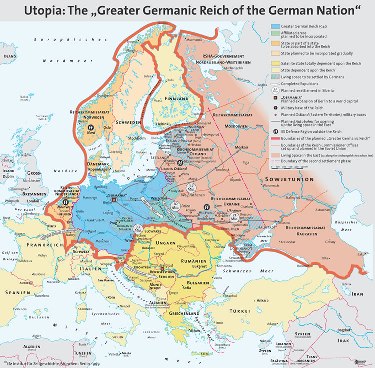
Lebensraum

Lebensraum

German Anti-Semitism and Adolf Hitler

The root cause of this war was in the mind of Adolf Hitler himself. Hitler was born in Linz Austria during a time when various Pan-German and Ant-Semitic groups, publications and propaganda were widespread. As a young man Hitler moved to Vienna hoping to become an artist, something that he found little commercial success. While struggling to make a living in Vienna he was exposed to a culture far different from the provincial city of his youth, a cosmopolitan metropolis that had much culture but was also a meeting ground for the various conglomerate of peoples that populated the Austro- Hungarian Empire, including Slavs and many Jews. While many of the Germanic or Austrian Jews were outwardly little different from their Christian neighbors the Jews from Eastern Europe repulsed Hitler.

This attitude was not unique to German but found its roots in the various anthropologies written by other Europeans as well as Germans regarding the lack of rights of “inferior cultures” as related to their colonial expansion as well as the westward expansion of Americans. Friedrich Ratzel a German anthropologist and a founder of the Pan-German League paired the Jews with “the stunted hunting people of the African interior” into “the class of scattered people with no land.” 8 Ratzel’s work also examined the conquest of the Native American tribes by whites. This helped form the basis of Hitler’s Understanding of Lebensraum, a concept that he borrowed from Ratzel. Ratzel was originally a zoologist. In his concept of Lebensraum Ratzel “linked the biological theory of life with the geographical theory of space.” Ratzel believed that to “conquer and hold sufficient Lebensraum, others have to be displaced.” Ratzel noted how European settles had taken over land from the Native Americans to take it for themselves. He noted that “the result was an annihilating struggle, the prize for which was the land, the space.” 9

Another German academic and lecturer at the University of Glasgow Alexander Tille, wrote in 1893 that it is “the right of the stronger race to annihilate the lower…when that race does not maintain its ability to resist then it has no right to exist, for anyone who cannot maintain himself must be content to go under.” Tille’s “laws” were easily applied to both primitive peoples as well as to “the economically less successful peoples of Europe.” 10

Hitler’s lack of success in Vienna and continued struggle, despite a decent inheritance, with poverty and resentment of others led him to the writings of the Pan-Germanic and Anti-Semitic movements. Hitler’s  years in Vienna were foundational as he as he absorbed the ideas of these Pan-German, anti-Semitic groups through newspapers like the Deutsches Volksblatt. 11 In Vienna Hitler began to connect the Jews with Marxism.12 Joachim Fest noted that in Vienna Hitler became obsessed by the fear of the Slavs and Jews, hated the House of Hapsburg, the Social Democratic Party, and “envisioned the end of Germanism.” 13

Hitler’s racial views were amplified after the war in turbulent Weimar Germany, while serving as a political operative of the German Army, the Reichswehr, was assigned to watch a small but radical political party, the National Socialist, Democratic Workers Party, or NDSAP.  He soon left the army and became a member of the NDSAP, where he rose rapidly within it through is nearly hypnotic oratory skills. It was not long before he took over the party leadership. He reorganized it so that it “became the instrument of Hitler’s policies.” 14

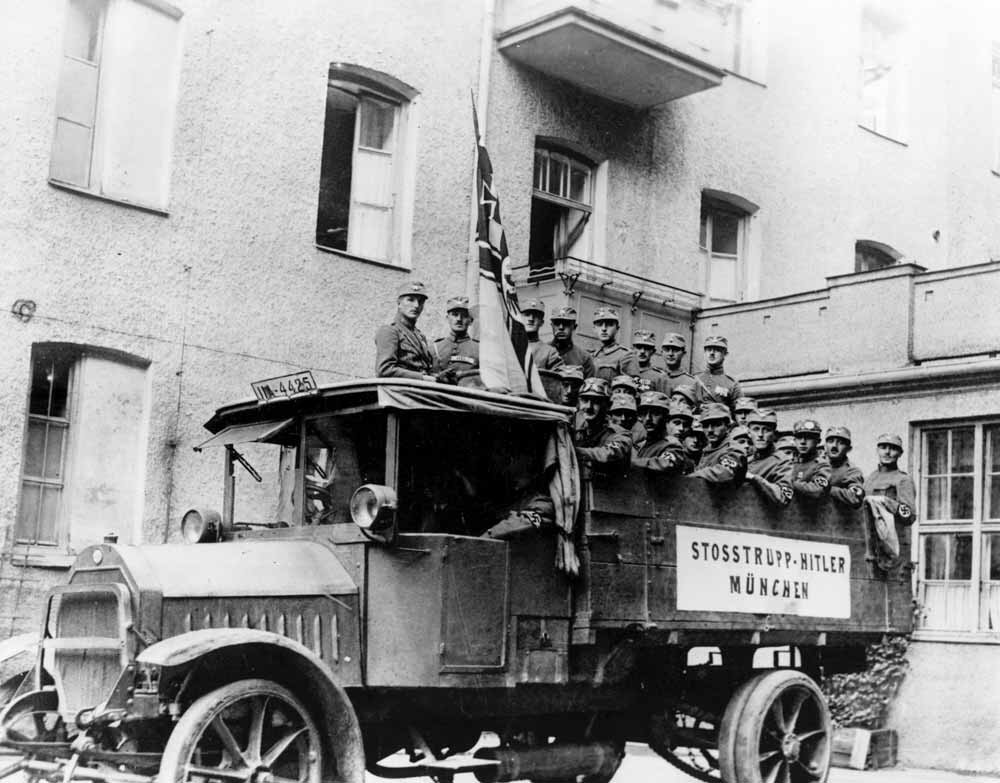
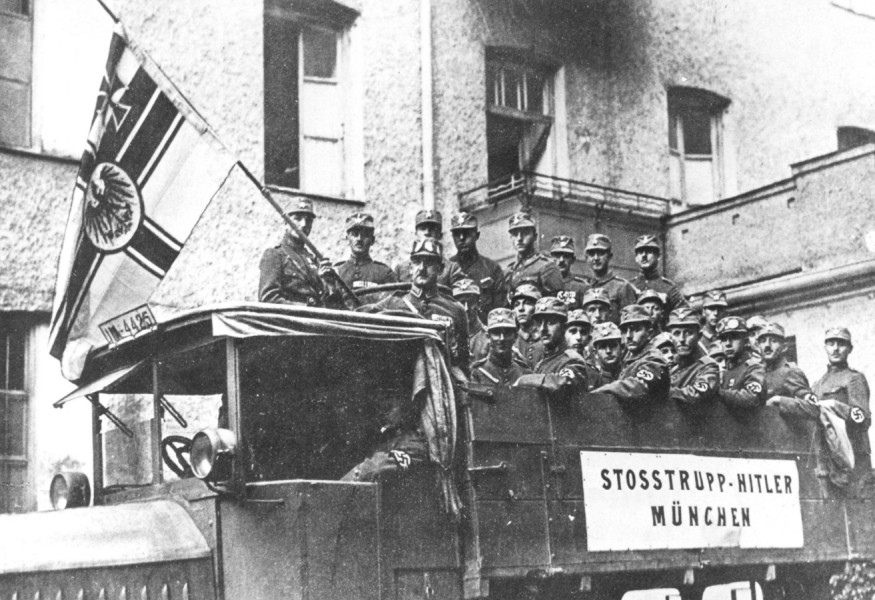
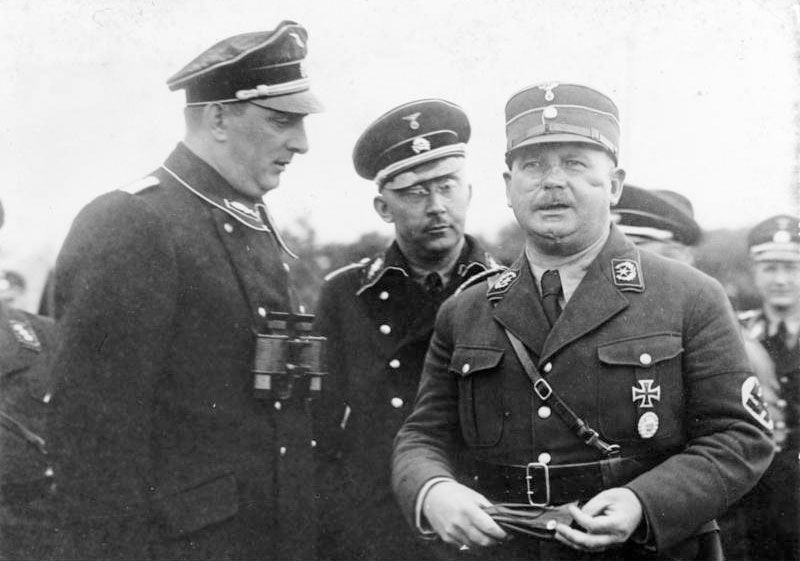
The Bier Hall Putsch, Note Heinrich Himmler holding Flag and Ernst Röhm to Himmler’s left 

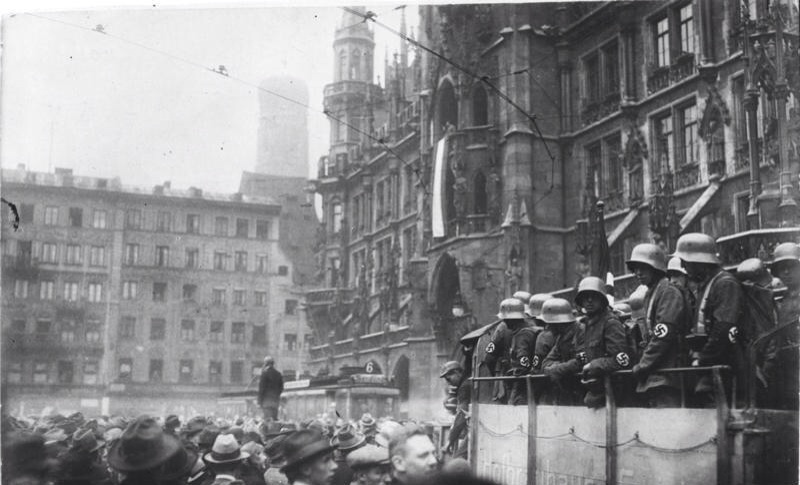
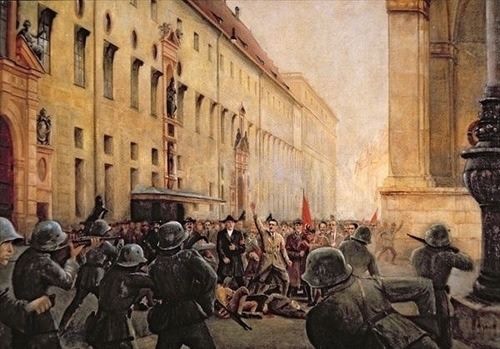
Munich Police Breaking Up Hitler‘ Bier Hall Putsch

The party rapidly gained strength under his leadership and Hitler made connections with other prominent right wing groups and leaders, including General Erich Ludendorff and became powerful enough in Munich that he believed that he and his Stürmabteilung (S.A.) would successfully gain the support of other right wing groups, paramilitaries, and possibly the support of the Army. But Hitler overplayed his hand, and his revolt was stopped in Munich’s Odeonsplatz by a company of Police who would not yield. In the resulting firefight a number of Hitler’s men were killed or wounded. Among the wounded was Hermann Goering whose wounds were attended to by a Jewish doctor. Hitler tried to flee but was arrested, tried and convicted of trying to overthrow the government. He was sentenced to five years imprisonment at Landsberg Prison where he was treated as a celebrity and released after serving just nine months in prison.

During his stay at Landsberg Hitler wrote Mein Kampf  in which he enunciated his views about the Jews, Slavs and Lebensraum. Hitler believed that Imperial Germany had been “hopelessly negligent” in regard to the Jews 15 and that the Jews in conjunction with the Catholic Center Party and Socialists worked together for “maximum damage to Germany.” 16

The book was filled with the standard tropes of the anti-Semitism that had swept Europe for decades, it enunciated little in the way of a political plan, except his hatred of the Jews and the need of Germany for Lebensraum, or living space, and was terribly written. It did not prove to be a best seller but Hitler received enough in royalties to live more comfortably, supported by an ever growing ring of financial supporters.

Hitler wrote that the Jews as being the leaders of the “main ideological scourges of the nineteenth and twentieth century’s.” 17 It was the ideology of Hitler’s “obsessive anti-Semitism” 18 that drove Nazi Germany’s policy in regard to the Jews and against Jewish-Bolshevism.

By the 1920s Hitler had “combined his hatred of the Jews and of the supposedly Jewish dominated Soviet state with existing calls to conquer additional Lebensraum, or living space, in the east.” 19 Hitler wrote: “The fight against Jewish world Bolshevism requires a clear attitude toward Soviet Russia. You cannot drive out the Devil with Beelzebub.” 20 Richard Evans noted that Mein Kampf clearly enunciated that “Hitler considered racial conflict…the essence of history, and the Jews to be the sworn enemy of the German race ….” Likewise, Evans wrote that the “Jews were now linked indissolubly in Hitler’s mind with “Bolshevism” and “Marxism.” 21

When Hitler became the dictator of Germany “his ideology and strategy became the ends and means of German foreign policy.” 22 His aims were clear, Hitler remarked to Czech Foreign Minister Chvalkovsky on 21 January 1939: “We are going to destroy the Jews.” 23

It was clear that Hitler understood his own role in this effort telling General Gotthard Heinrici that “he was the first man since Charlemagne to hold unlimited power in his own hand. He did not hold this power in vain, he said, but would know how to use it in the struggle for Germany…” 24

To be continued…

Notes

1 Weinberg, Gerhard L. Ed. Hitler’s Second Book: The Unpublished Sequel to Mein Kampf by Adolph Hitler.  Translated by Krista Smith, Enigma Books, New York, NY 2006. Originally published as Hitlers zweites Buch, Gerhard Weinberg editor, 1961 p. 159

2 Davidowicz, Lucy S. The War Against the Jews 1933-1945 Bantam Books, New York, NY 1986. p.91

3 Tooze, Adam. The Wages of Destruction Penguin Books, New York, NY, 2008. First Published by Allen Lane Books, Penguin Group, London UK, 2006. p.463

4 Fest, Joachim, Hitler. Translated by Richard and Clara Winston. Harcourt Brace Jovanovich Publishers, San Diego,

New York, London, 1974. German Edition by Verlag Ullstein 1973 pp. 607-608

5 Note the actions of Cardinal Richelieu in France who worked to expand French power at the expense of other Catholic nations and the Vatican itself.

6 In the United States the Reconstruction policies produced great resentment in the south with decidedly negative

results for the newly freed slaves which lasted another 100 years, while in the Soviet Union great numbers of “opponents of Socialism” were killed, imprisoned or driven out of the county

7 Ibid. Tooze. The Wages of Destruction p.462

8 Lindqvist, Sven Exterminate All the Brutes: One Man’s Oddessy into the Heart of Darkness and the Origins of European Genocide Translated from the Swedish by Joan Tate, The New Press , New York and London 1992 p.145

9 Ibid. Lindqvist p.154 It is interesting to note that the current American “historian” of the American Religious right

David Barton made the same arguments recently about the American Indians. Barton said: “You have to deal, a lot of it, with how the enemy responds. It’s got to be based on what the enemy responds [to,] you cannot reason with certain types of terrorists; and see that’s why we could not get the Indians to the table to negotiate with us on treaties until after we had thoroughly whipped so many tribes …” “People complain about the fact that the American military and buffalo hunters went out and wiped out all the buffalo in the western plains. Doing that was what brought the Indians to their knees because the Indians lived on those wide western plains where there were very few towns; Indians didn’t go into town to buy supplies, they went to the buffalo herds, that’s where they got their meat, that’s where they got their coats, the hides provided coats, they provided covering for their teepees.

If you don’t have the buffalos, those Indians cannot live on the open western plains without those buffalo and so what happened was the military wiped out the supply line by wiping out the buffalo. That’s what brought those wars to an end, that’s what brought the Indians to their knees and ended all the western conflict.” Retrieved from Barton’s Wallbuilders Live broadcast http://www.wallbuilderslive.com/Historic.asp?cdate=77515 9 May 2014 and text   from   http://www.rightwingwatch.org/content/david-barton-explains-just-war-theory-we-had-destroy-indian-  tribes-until-they-became-civiliz

10 Ibid. Lindqvist p.148

11 Ibid. Davidowicz, The War Against the Jews pp.8-9 12 Ibid. Davidowicz. The WarAgainst the Jews p.12 13 Ibid. Fest Hitler. p.47

14 Bracher, Karl Dietrich. The German Dictatorship: The Origins, Structure, and Effects of National Socialism.

Translated by Jean Steinberg, Holt Rinehart and Winston, New York, NY 1979. Originally Published under the title Die Deutsche Diktatur: Entstehung, Struktur,Folgen des Nationalsocialismus. Verlag Kiepenheuer & Witsch. Koln and Berlin, 1969 p.93

15 Weinberg, Gerhard L. Germany Hitler and World War II . Cambridge University Press, New York, NY 1995 p.61

16 Ibid. Weinberg, Hitler’s Second Book p.60

17 Friedlander, Saul Nazi Germany and the Jews 1939-1945: The Years of Extermination. Harper Perennial, New York, NY 2007 p.xviii

18 Ibid. Friedlander, The Years of Extermination p.xvii Friedlander called this anti-Semitism “Redemptive anti- Semitism” in which “Hitler perceived his mission as a kind of crusade to redeem the world by eliminating the Jews.

19 Megargee, Geoffrey P. War of Annihilation: Combat and Genocide on the Eastern Front 1941.Bowman and

Littlefield Publishers Inc. Lanham, Boulder, New York. 2007 p.4

20 Hitler, Adolf Mein Kampf translated by Ralph Manheim. Mariner Books, Houghton Mifflin Company, New York, NY 1999. Houghton Mifflin Company 1943, copyright renewed 1971. Originally published in Germany by Verlag Frz.

Eher Nachf. GmbH 1925. p.662.

21 Evans, Richard J. The Coming of the Third Reich Penguin Books, New York 2004. First published by Allen Lane 2003 p.197

22 Ibid. Davidowicz The War Against the Jews pp. 88-89

23 Rhodes, Richard. Masters of Death: The SS Einsatzgruppen and the Invention of the Holocaust. Vintage Books a division of Random House, New York, NY 2002 p.37

24 Speer, Albert. Inside the Third Reich. Collier Books, a Division of MacMillan Publishers, Inc. New York, NY 1970 p.166

Leave a comment

Filed under anti-semitism, authoritarian government, crimes against humanity, ethics, euthanasia, germany, History, holocaust, Military, nazi germany, Political Commentary, war crimes trials, world war two in europe

A Day of Fate: November 9th “Der Schicksaltag” in Germany


Hitler-Putsch, M¸nchen, Marienplatz

                                   Schicksalstag: The Fateful Day

Friends of Padre Steve’s World,

There are some days in history that are crammed full world changing events, and sometimes those events occur, for good or bad and sometimes good and bad in different countries. In the United States July 4th is not only Independence Day, but eighty-seven years later marked the surrender of Vicksburg and the retreat of Robert E. Lee’s army from Gettysburg. Likewise it was the day that the Louisiana Purchase was announced in 1803 and that in 1826 the Thomas Jefferson and John Adams died.

Since 1918 November 9th has been a day in German history that has impacted both Germany and the world in many ways. In a sense it is almost hard to believe that so much occurred on that day. It is known by many in Germany as Der Schicksalstag (the fateful day).

robert-blum-03

                                                        Robert Blum

In 1848 a member of the Frankfurt Parliament, Robert Blum was arrested and executed executed for traveling to Vienna to support the 1848 democracy uprising there. A liberal, humanist and democrat Blum advocated German unification without Prussian dominance, protested Prussian oppression of Poles, stood against anti-Semitism and for the rights of Catholics in heavily Protestant German kingdoms. Blum’s dream remained unfulfilled for over a century after his death. Many of the men and women who took part in the failed revolution of 1848 would come to the United States where during the American Civil War they would fight for the emancipation of slaves and later the Civil rights of freed blacks. Among them was Carl Schurz.


Kaiser Wilhelm II Cross
es the Dutch Border Following his Abdication

November 9th, 1918 was gloomy day at the military headquarters of Kaiser Wilhelm II. General Wilhelm Groener, Quartermaster General of the Army looked his sovereign in the eye and told Kaiser Wilhelm that the war was lost, and that he no longer had the support of the Army. The Kaiser, reeling from battlefield defeats and the mutiny of his precious High Seas Fleet, was stunned. Field Marshal Paul von Hindenburg, who had for all practical intents had headed a military dictatorship with General Erich Ludendorff since 1916, meekly nodded his concurrence with Groener. The Kaiser abdicated the throne and departed in his private train to the Netherlands the next day.

ausrufung-der-republik-in-berlin-preview-image_900x510

                         Phillip Scheidemann Proclaims the Republic 

Meanwhile in Berlin, Majority Socialist parliament member Philip Scheidemann proclaimed the Republic to prevent a Soviet takeover. Unfortunately, Scheidemann’s bold move upset a plan for a smooth transition of power between Friedrich Ebert and the outgoing Chancellor Theobald von Bethmann-Hollweg. Chaos ensued and the Republic, known as the Weimar Republic struggled for its existence in the face of a Soviet Revolution and Conservative reaction.

However, the promise of democracy was soured by events that the leaders of the Republic were blamed: a continued allied blockade, a humiliating peace treaty, the loss of territory, the occupation of the industrial areas of the Ruhr and Saar by France and Belgium, heavy war reparations, and the war guilt clause of the Treaty of Versailles. This was compounded by civil war between various right and left wing factions and major economic problems including massive hyper-inflation of 1920-21 and the Great Depression doomed the young Republic.

                                                Beer Hall Putsch

Five years to the day following Scheidemann’s proclamation a charismatic Austrian in Munich who had fought and been wounded fighting for Germany in the First World War gathered with his political sympathizes and para-military street thugs to attempt a putsch. The man was Adolf Hitler, the head of the small and radical National Socialist Deutches Arbeiter Partei, or National Socialist German Workers Party. Hitler hoped that his putsch would result in a popular uprising against the German government in Berlin. The putsch was a failure and ended in bloodshed at the Feldherrnhalle monument on Munich’s Odeonsplatz.

Hitler fled the scene but arrested and put on trial. The case was tried in Munich rather than Berlin and convicted of treason. He was given a light sentence and jailed for nine months at the Landesberg prison where he wrote his book Mein Kampf. In prison he continued to recruit others to his cause. Less than ten years later Hitler was appointed Chancellor by President Hindenburg. Hitler quickly banned political opposition and began his persecution of Jews and others that he believed to be sub-human and upon Hindenburg’s death in 1934 merged the office of Chancellor and President become the leader of Nazi Germany.

In November 1938 Hitler and his henchmen were looking for a reason to openly begin persecuting the Jews. They had been doing so since the seizure of power, but 1938 marked a turning point. Instead of unofficial pogroms launched by his undisciplined Stormtroopers, this was orchestrated by the top men in the Nazi regime.

One of the chief reasons for this was to seize the property and financial resources of German Jews. This coincided with the expulsion of Polish Jews from Germany. A reason for the action was furnished when a young Polish man, Herschel Grynszpan, whose parents were expelled from Germany on November 3rd went to the German embassy in Paris and shot and mortally wounded Ernst von Rath, a young diplomat, who reportedly had some anti-Nazi sentiments. When Von Rath died the the Nazis unleashed their fury.

kristallnacht1

Kristallnacht 

Joseph Goebbels unleashed the storm troopers and others in civilian clothes on the night of November 9th. They were supposedly spontaneous demonstrations, but the Police and Fire Departments were ordered not to intervene except to save German property. Stormtroopers ransacked Jewish businesses, homes and synagogues causing hundreds of millions of Reichsmarks in damage, destroying over 200 synagogues and 7000 businesses. About 100 Jews were killed during the rampage, which went unchecked by police. Another 2000-3000 subsequently died either by suicide or in concentration camps in which 30,000 Jewish men were incarcerated.

To add to the insult to injury Jews were charged for the damage done to their property and insurance payments that should have gone to them were collected by the state. The night became known as Kristallnacht, the night of broken glass and marked a major turn in the open Nazi persecution of Jews in Germany, which would extend throughout Europe and end in the Final Solution and the systematic murder of nearly six million Jews. World War Two ended with the total defeat of Germany and the Nazi regime.

berlin_wall_02

Building the Berlin Wall

Following Germany’s defeat in the Second World War, it was occupied by the Allied powers. Germany was split in two, the East under the domination of the Soviet Union which became the German Democratic Republic, and the West which supported by the United States and Britain became the Federal Republic of Germany.

The divided country became the focal point of what became the Cold War, the fortified border became infamous as the Iron Curtain. The Berlin was blockaded by the Soviets in 1948 and the subsequent airlift kept West Berlin Free. However in August 1961 as the Cold War escalated the leaders of East Germany erected a fence which became the Berlin Wall, a wall which was effectively a means to imprison the population. It seemed to be a fixture that would never come down.

berlin-wall_1412605c

                                              The Wall Comes Down 

But in the late 1980s the Cold War began to thaw. Mikhail Gorbachev took power in the economically strapped Soviet Union which was bogged down in a costly war in Afghanistan, and a struggle against a Polish democratic movement. Premier Gorbachev sought to relieve the situation with a policy of openness. It backfired, and throughout Eastern Europe, pro-democracy and pro-freedom groups began to protest the status quo.

The once feared Warsaw Pact began to disintegrate. As borders were opened hundreds of thousands of Eastern Europeans including thousands of East Germans went west through Hungary and Czechoslovakia. East Germans began to gather at the Berlin Wall and on November 9th 1989 the tottering East German government decided to open border crossing points with restrictions. On hearing the news hundreds of thousands of people gathered at the six crossings demanding to be let through, and finally, ignoring orders, Stasi Lieutenant Colonel Harald Jäger who commanded the Bornholmer Strasse crossing opened the gates. The Berlin Wall had fallen and 339 days later East Germany was dissolved. On October 3rd 1990, Germany was reunited.

The new Germany is the economic heart of the European Union and has become a champion of human rights and social progress. But that could be in danger with the splintering of the major political parties that guided Germany to its position and the rise of a new nationalistic, racist, and anti-Semitic movement built around the AfD, or Alternative for Germany Party. Some leaders and members of this party express admiration for the Third Reich.

It has now been twenty-nine years since the Berlin Wall fell, eighty years since Kristallnacht, ninety-five years since the Beer Hall Putsch, and one hundred years since the abdication of Kaiser Wilhelm II.

These are all important events, and our challenge as citizens of the world is never to forget just how important and fateful each was, and why November 9th is indeed the “fateful day.” One wonders if a future November 9th will become another Schicksalstag that will again shake Germany to its foundations. The reunited Germany is still struggling with its identity thirty years after the Wall came down. Apart from Berlin, much of the former East seems like a different country than the west. It will be a full generation or more before that identity is settled, especially in the former East.

But then, maybe what is going on in the United States today is much more threatening than anything going on in Germany. We have a President who admires the former KGB dictator of Russia and who constantly tries to undermine Germany, NATO, and the European Union and is suggesting that he attend the Soviet/Russian May Day Parade next year, a parade that mixes a celebration of Soviet Communism and Russian Nationalism, with a profound hatred of the United States, NATO, and the European Union. One has to question the loyalties of the American President this Schicksalstag

It is truly a bizarro world. Harry Truman, Dwight Eisenhower, John F Kennedy and Ronald Reagan, not to mention Barry Goldwater must be spinning in their graves.

Peace,

Padre Steve+
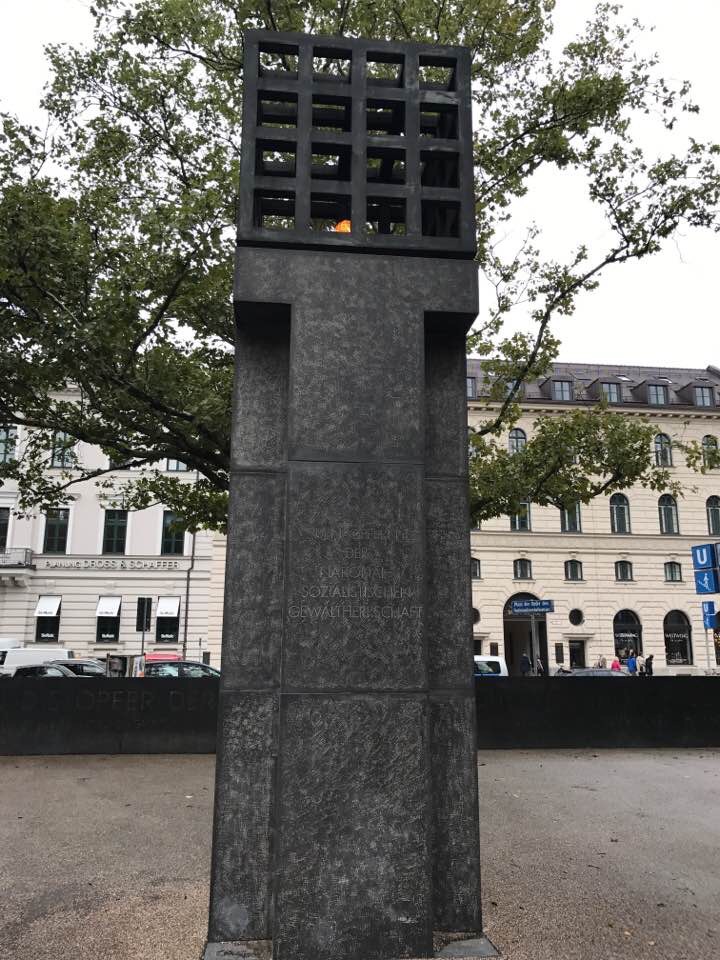
3 Comments

Filed under germany, History, nazi germany, Political Commentary

Der Schicksaltag, November 9th in History: Revolutions, Abdication, Republics, Repression, and A Wall Falls

Hitler-Putsch, M¸nchen, Marienplatz

Schicksaltag: The Fateful Day and the Beer Hall Putsch November 9th 1923

Friends of Padre Steve’s World,

There are some days in history that are crammed full world changing events, and sometimes those events occur, for good or bad and sometimes good and bad in different countries. In the United States July 4th is not only Independence Day, but eighty-seven years later marked the surrender of Vicksburg and the retreat of Robert E. Lee’s army from Gettysburg. Likewise it was the day that the Louisiana Purchase was announced in 1803 and that in 1826 the Thomas Jefferson and John Adams died. In Russia however it was on July 4th 1918 that Czar Nicholas and his family were killed by the Bolsheviks.

Since 1918 November 9th has been a day in German history that has impacted both Germany and the world in many ways. In a sense it is almost hard to believe that so much occurred on that day. It is known by many as Der Schicksaltag (the fateful day).

robert-blum-03

Robert Blum

In 1848 a member of the Frankfurt Parliament, Robert Blum was arrested and executed executed for traveling to Vienna to support the 1848 democracy uprising there. A liberal, humanist and democrat Blum advocated German unification without Prussian dominance, protested Prussian oppression of Poles, stood against anti-Semitism and for the rights of Catholics in heavily Protestant German kingdoms. Blum’s dream remained unfulfilled for over a century after his death.

Wilhelm II. (4.v.l.) geht am Tag der Unterzeichnung seiner Abdankung über die Grenze in das holländische Exil

Kaiser Wilhelm II Cross the Dutch Border Following his Abdication

It was a gloomy day at the military headquarters of Kaiser Wilhelm II on November 9th 1918 when General Wilhelm Groener looked his sovereign in the eye and told Kaiser Wilhelm that the war was lost, and that he no longer had the support of the Army. The Kaiser, reeling from battlefield defeats and the mutiny of the High Seas Fleet was stunned, and Field Marshal Paul von Hindenburg, who had for all practical intents directed the war effort meekly nodded his concurrence with Groener. The Kaiser abdicated the throne and departed in his private train to the Netherlands the next day.

ausrufung-der-republik-in-berlin-preview-image_900x510

Phillip Scheidemann Proclaims the Republic 

In Berlin Majority Socialist parliament member Philip Scheidemann proclaimed the Republic, in part to prevent a Soviet takeover, which became known as the Weimar Republic. However, the promise of democracy was soured by a continued allied blockade, a humiliating peace treaty, loss of territory, and occupation of the industrial areas of the Ruhr and Saar by France and Belgium, heavy reparations, and war guilt; compounded by civil war between various right and left wing factions and major economic problems including massive hyper-inflation doomed the young republic.

Beer Hall Putsch

Beer Hall Putsch Re-enactment 

Five years later an Austrian in Munich who had fought and been wounded fighting for Germany in the First World War gathered with his political sympathizes and para-military street thugs and attempted a putsch. The man was Adolf Hitler, the head of the small and radical National Socialist Deutches Arbeiter Partei, or National Socialist German Workers Party, which he hoped that his putsch would result in a popular uprising against the German government in Berlin. The putsch was a failure and ended in bloodshed at the Feldherrnhalle on Munich’s Odeonsplatz.

Hitler was wounded, convicted of treason and jailed for nine months at the Landesberg prison where he wrote his book Mein Kampf and continued to recruit others to his cause. Under ten years later Hitler was appointed Chancellor by President Hindenburg. He quickly banned political opposition and began his persecution of Jews and others that he believed to be sub human and on Hindenburg’s death in 1934 merged the office of Chancellor and President become the leader of Nazi Germany.

In November 1938 Hitler’s and his henchmen were looking for a reason to openly begin persecuting the Jews, something that they had already been doing since the seizure of power. One of the chief reasons for this was to seize the property and financial resources of German Jews, which coincided with the expulsion of Polish Jews from Germany. A reason was furnished when a young Polish man, Herschel Grynszpan, whose parents were expelled from Germany on November 3rd went to the German embassy in Paris and shot and mortally wounded Ernst von Rath, a young diplomat, who reportedly had some anti-Nazi sentiments.

kristallnacht1

Kristallnacht 

The murder was what Josef Goebbels needed and on the night of November 9th Nazi storm troopers ransacked Jewish businesses, homes and synagogues causing hundreds of millions of Reichsmarks in damage, destroying over 200 synagogues and 7000 businesses. About 100 Jews were killed during the rampage, which went unchecked by police. Another 2000-3000 subsequently died either by suicide or in concentration camps. About 30,000 Jewish men were incarcerated. To add to the insult to injury Jews were charged for the damage done to their property and insurance payments that should have gone to them were collected by the state. The night became known as Kristallnacht, the night of broken glass and marked a major turn in the open Nazi persecution of Jews in Germany, which would extend throughout Europe and end in the Final Solution and the systematic murder of nearly six million Jews. World War Two ended with the total defeat of Germany and the Nazi regime.

berlin_wall_02

Occupied by the allied powers Germany was split in two, the East under the domination of the Soviet Union which became the German Democratic Republic, and the West which supported by the United States and Britain became the Federal Republic of Germany. The divided country became the focal point of what became the Cold War, the fortified border became infamous as the Iron Curtain. The divided Berlin was blockaded by the Soviets in 1948 and the subsequent airlift kept West Berlin Free. However in August 1961 as the Cold War escalated the leaders of East Germany erected a fence which became the Berlin Wall, a wall which was effectively a means to imprison the population. It seemed to be a fixture that would never come down.

berlin-wall_1412605c

But in the 1980s the Cold War began to thaw, the economically strapped Soviet Union was bogged down in a costly war in Afghanistan, and a struggle against a Polish democratic movement; Premier Gorbachev sought to relieve the situation with a policy of openness. It backfired, throughout Eastern Europe, pro-democracy and pro-freedom groups began to protest the status quo, and as borders were opened hundreds of thousands of Eastern Europeans including thousands of East Germans went west through Hungary and Czechoslovakia. East Germans began to gather at the wall and on November 9th 1989 a tottering East German government decided to open border crossing points, but on hearing the news hundreds of thousands of people gathered at the six crossings demanding to be let through, finally, ignoring orders, Stasi Lieutenant Colonel Harald Jäger who commanded the Bornholmer Strasse crossing opened the gates. The wall had fallen and 339 days later East Germany was dissolved and Germany reunited.

The new Germany is the economic heart of the European Union and has become a champion of human rights and social progress. It has now been thirty years since the Wall fell, eighty-one years since Kristallnacht, ninety-four years since the Beer Hall Putsch and one hundred and one years since the abdication of Kaiser Wilhelm II. These are all important events, and our challenge as citizens of the world is never to forget just how important and fateful each was, and why November 9th is indeed the “fateful day.”

Peace,

Padre Steve+
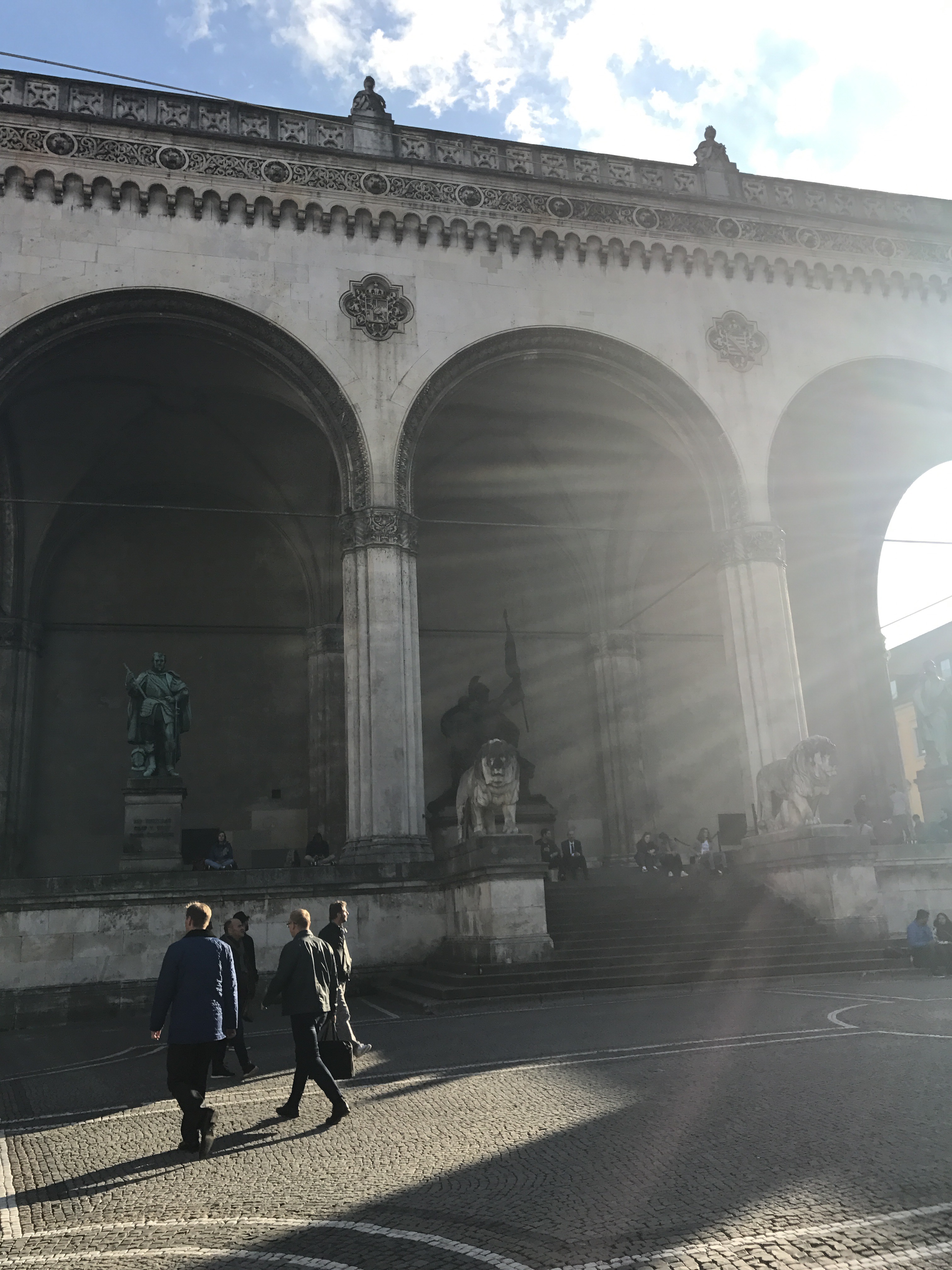
Leave a comment

Filed under History, holocaust, nazi germany, Political Commentary

Momentous Days

Friends of Padre Steve’s World,

The past few days have been pretty busy both at work and socially so try as I might I was too tired to write anything but even so to quote Hedley Lamarr (Harvey Kormann) in Blazing Saddles, “My mind is a raging torrent, flooded with rivulets of thought cascading into a waterfall of creative alternatives”.

The period of time from November 9th to 12th is filled with historical events that when one just takes a moment to step back and look at them are amazing to comprehend.

Let’s look at November 9th to start with, in 1918 Kaiser Wilhelm II abdicated the German throne as a popular revolution began the Weimar Republic. Just five years later Adolf Hitler attempted to overthrow the Republic in what is know known as the Bier Hall Putsch. In 1938 the Nazis, using the excuse of the death of a German diplomat in Paris unleashed the Kristallnacht terror against German Jews, but in 1989 the same day was when the Berlin Wall fell.

November 10th is the birthday of the United States Marine Corps at Tun Tavern in Philadelphia, it is also the anniversary of the wreck of the S.S. Edmund Fitzgerald.

November 11th is Veteran’s Day which began as Armistice Day in 1918. The armistice ended the fighting on the Western Front but the subsequent collapse of the old order, economic, political, and social chaos that followed brought about further wars and remade the world with consequences that are still being felt today. Today in the United States we use the holiday to honor all of our military veterans, but somehow most people don’t understand the real reason why we celebrate this day.

November 11th is also recognized as Independence Day in Poland when it declared its independence from German, Austrian, and Russian control in 1918.

November 12th begins the 75th anniversary of one of the bloodiest naval battles of the Second World War, the Naval Battle of Guadalcanal.

I should be putting something out in honor of the Marines later tonight as well as Veteran’s Day tomorrow as I hang out with Judy and the puppies and start getting our home ready to host friends on Thanksgiving and my staff for a holiday get together the following week.

So as the Germans say bis spater.

Peace,

Padre Steve+

2 Comments

Filed under Loose thoughts and musings

A Stamtisch, a March, and a Memorial: Time in Munich

Friends of Padre Steve’s World,

Just a short post before turning in for the night and getting ready to drive from Munich to see old German friends in the area north of Wiesbaden, in the German state of Hessen where we spent much of my first tour in Germany from January 1984 to the end of December 1986. My friend has battled prostate Cancer for a few years and told me that his doctor has given him bad news. I can only imagine that it has spread, so this part of our visit may be more somber than usual.

Today was a good day, we slept late, had a last dinner at our favorite restaurant here where one of the women Judy has become friends with sat us at the Stamtisch which is a table reserved for customers that are regulars. Today we shared it with a number of older German men, all locals and had a nice talk. Afterward Judy went back to the hotel while I went went walking. Today I left the S-Bahn at Rosenheimer Platz, which put me near where the Burgerbraukeller once stood. That place, where Hitler and the early Nazis gathered to overthrow the Weimar Republic on November 9th 1923 was the beginning point of what is now known as the Bier Hall Putsch. Hitler and his storm troopers marched from there, across the Ludwigsbrucke, through the Isar Tor, to Marienplatz and the Rathaus, and from there turning North up Theatnerstrasse, to Residenzestrasse to the Odeonsplatz where they were met by a contingent of well armed police. The Nazis began a fight when the police refused to give way and were repulsed with casualties. Hitler was uninjured but was arrested, tried, and convicted for his role in the putsch, serving a minimal sentence of nine months in prison, free to receive visitors and write his book Mein Kampf.


It is always weird for me when I go to these places, to think that not even one hundred years ago that Hitler and his followers attempted to overthrow the German government right where I was walking. Of course Hitler changed his tactics to get enough of the vote so that President Paul von Hindenburg was persuaded to appoint him Chancellor, and of course the rest is history.


This was the second of two days where I walked and visited places that are important in history so that we do not forget. Yesterday I went to the National Socialist Documentation Center near the Konigsplatz. This is a great place to go for anyone serious about studying the Nazi era. Like all museums in Germany it pulls no punches about the country’s Nazi past and just how evil it was while also confronting the same threats from similar people today.

I wish that I could have spent several days there doing nothing but studying and reading original documents and records from the era. The center is build where Hitler and the Nazis made their headquarters in Munich in the years before the seizure of power, the Brown House. Around it the Nazis either occupied or built other buildings to house various party offices, including the SA and SS. I walked around that quarter of the city, and also went to the Monument to the Victims of National Socialism, which are commemorated by an eternal flame. I only wish that more Americans could take this in and then apply the lessons to our own genocide of the Native American tribes, American Slavery, and America medical experiments in Eugenics, Medical sterilization, and infectious diseases which involved human subjects, mostly African Americans. If we did we might have fewer memorials to the perpetrators of these crimes and more things about remembering the crimes and the victims, rather than hundreds of monuments dedicated to the mythologized and sanitized past in which we remember the perpetrators as military heroes or great Americans, even those that rebelled against the United States in a war that cost about three quarters of a million lives.

But anyway. The hour is late, and yes I have more to write about my time in Munich, including a this evening at the Neil Diamond 50th Anniversary Tour Concert at the Olympia Halle, but tomorrow is a travel day.

So until tomorrow,

Peace

Padre Steve+

1 Comment

Filed under History, holocaust, nazi germany, travel

Munich, the Bier Hall Putsch and American Parallels

IMG_2051

This is another one of my pre-posted articles for while we are traveling in Munich.

I have spent a total of about four years of my life in Germany. I enjoy the country and the people and I love traveling here because for me it is relaxing. When I have a car I enjoy driving on the Autobahn, and I find the mass transportation more than effective and convenient but a great way to travel.

I am a historian who for many years specialized in the study of the latter years of the Kaiser Reich, the German revolution and civil war, the Weimar Republic and the Nazi period. I always find visiting Munich intellectually stimulating. Munich is a very interesting and sometimes contradictory city, rich in culture, music, art, literature and scientific-technological achievements. Likewise it has always been a more cosmopolitan center of a very conservative state, especially religiously conservative as Bavaria is the heart of Catholic Germany. Thus there has always been a tension in the city, between the local more religious conservatives and business leaders and the more secular and progressive inhabitants, and the immigrants from Eastern Europe, especially more traditional and conservative Orthodox Jews.

This tension continues today with the large numbers of foreigners that live and work in the city. Many are Turkish guest workers and their descendants that have been in Germany almost half a century. But many are new immigrants from the Middle East and Africa, some who have embraced German life in a secular state, but many who have not and stand out in the crowd. In particular I think of the number of Moslems who retain their traditional dress and ways, which in many ways is reminiscent of the Eastern European Orthodox Jews, who likewise stood out as they attempted to maintain their cultural and religious identity.

Hitler-Putsch, M¸nchen, Marienplatz

Munich is the capital city of Bavaria, or as it is known here, Bayern. It was ruled for centuries by the Wittelsbach dynasty, which included “Mad King Louis” who built the amazing Neuschwanstein and Linderhof castles. That dynasty, with the rest of the German royalty was overthrown at the end of the  First World War. It was replaced for about three months by what was known as the Bavarian Soviet led by Kurt Eisner, an “independent socialist.” Eisner could not hold power and resigned in February 1919 and on the way to his resignation he was assassinated by a right wing extremist who held the views of the racist Thule Society. Eisner was replaced by a Majority Socialist leader who could not form a government and then by an Independent Socialist and Communist government. This government was both inept and brutal, it took hostages from the elite of the city as well as conservative reactionaries and had them executed. This brought a response from Berlin which sent a force of 30,000 Weimar Government employed Freikorps troops, including many Bavarians from rural areas, under the command of Ritter Von Epp to crush the Munich Soviet. After hard fighting against the Communist troops Epp’s men crushed the opposition and executed hundreds of the Communists and Independent Socialist fighter and leaders.

stosstruppe

The city was still rife with revolutionary and reactionary elements and in 1919 a new political party was established. This party became the National Socialist Workers Party of Germany, or the NSDAP. Adolf Hitler joined the party and quickly became its head. He along with General Erich Ludendorff led a coup, or “putsch” against the government on the 8th and 9th of November 1923. The putsch originated at the NDSAP headquarters and Hitler led about 2000 armed members of the party to the Burgerbrau Keller beer hall where the Gustav Von Kahr, who had been appointed with dictatorial powers due to the unrest, was making a speech.

himmler-bier-hall

Hitler took Kahr and other members of the government hostage and declared a revolution and enjoined those present to “join in this grave eleventh hour for our German Fatherland.” While many present were turned by his speech, the revolt did not gain momentum and in desperation Hitler ordered a march to overthrow the government. At Odeonsplatz at the bridge over the Isar River near the Feldherrenhalle his group of nearly 2000 followers including future Nazi Leaders Hermann Goering and Rudolf Hess were confronted by about 100 Bavarian police, and defeated. Hitler was arrested and tried, spent nine months in prison during which he wrote Mein Kampf. The Burgerbraukeller and the Feldherrenhalle became Nazi shrines which after Hitler’s takeover became places where Hitler would return yearly to mark his failed putsch.

All of these events took place in a small area of the Munich city center. Sadly most people who come to Munich are aware of the events that occurred here, and many fail to realize how easily a city know for so many cultural and scientific achievements can become the locus of evil for a man like Adolf Hitler.

While I love Munich my love is tempered by how many events which still affect us today occurred here just eight to ninety years ago. To use a German expression, that amount of in the sense of history is merely an “augenblick” or “blink of an eye”. It is hard to believe that so much has happen here, and just how few people understand just how easily such events can happen again.

neo_nazis_in_north_dakota-si_

When I look at my own country I see parallels between some of the more deplorable of Donald Trump’s supporters, the White Supremacists, Neo-Nazis, Racists, and members of the so-called “Alt-Right” which is nothing more than a cover for its member’s Nazi ideology with the people that followed Hitler to the Burgerbraukeller. The hatred that they express towards liberals, racial minorities, immigrants and Moslems is so similar to the words of those precursors to the Nazi party rule in Germany that it is frightening. Comforting myths are substituted for history. Race, ideology and xenophobic nationalism, often clothed in the language of tradition “Christian” beliefs are used to demonize those who are different. Sadly too I see some of my fellow progressives inflamed with such a hatred of conservatives that they cannot see the dangers inherent in such polarization. As a historian, I find the parallels disturbing.

But despite that we are here to have fun, and that I am. After all, I choose to believe in the power of acceptance, tolerance and inclusiveness. Those are found in the words that are imprinted on the modern German Army belt buckles and in the German National anthem “eingekeit, recht  und freiheit” or “unity, Justice and freedom.” Those words are also implicit in our own Declaration of Independence which states that “all men are created equal.” Thus for me, not believe that good can overcome evil is central to who I am.

And from Munich, I am your friend,

Peace

Padre Steve

1 Comment

Filed under Loose thoughts and musings