Tag Archives: depression

Friends, Puppies & Laughter: the Cure for the Celtic Funk 


Friends of Padre Steve’s World

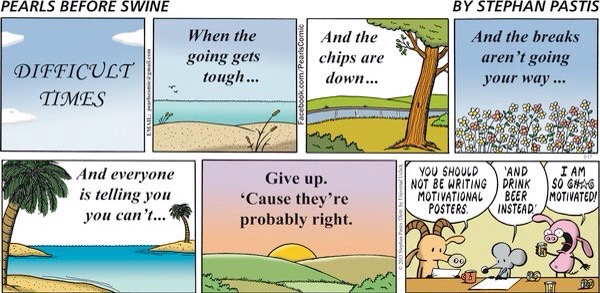
Last week really sucked and I do want to thank those of you who have been so kind to offer words of encouragement on the site or on other social media platforms. Last night was a contuation of the funk. I did not sleep well, had very strange dreams and nightmares and when I got up this morning I was in a deeper funk than I was anytime during the past week. So I just want to say thank you for the love, concern, support and prayers. 

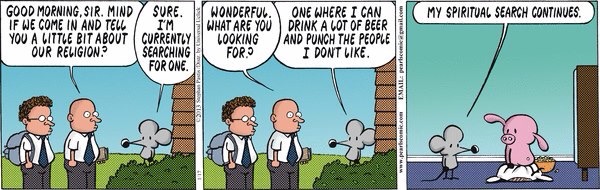
For those that don’t know my family background, we are mostly Scotish, Irish and English with a little bit of French Hugenot and a smidgen of Scandnavian mixed in. Thus I am predominately of Celtic stock which can take a melancholy mood and make it worse, the only fixes for such a foul temper is some irreverent humor and beer. The humor I have enjoyed and I will enjoy the beer in not too long. 

Without reciting the litany of all the events that happened last week, including some that we will still have to face that could make last week look good, I have to say that I am in a far better state of mind that I was just a few hours ago. There are three things for this. First are the friends, many who have known me for years who have offered uncouragement and did not preach at me. Likewise there are my friends that I am getting to know who follow and comment on what I write here, as well as those on Twitter. It would take so much time to mention everyone who has been so kind and I fear that I would leave someone out. But you all know who you are and I have responded individually to all of you. God bless you and thank you. 


That being said last week I felt like my life was a bad country and western song and kind of reminded me of the opening scene of the movie “Stripes” starring Bill Murray. After losing his job, his car, his girlfriend and having dropped his pizza on the ground he simply said “and then depression set in.” I have been so depressed this past week, and I am sure that when I see her next that my shrink will note in my chart that I am officially suffering from clinical depression. But my friends I digress…

Today started out as crappy as any of the past week. I got in to work early, checked my e-mail and then went down to my empty chapel having locked my keys in my office. I had to get security to get the master key to let me in so I could open up the chapel for the throngs of people who do not show up. Then I had to get an external hard drive to take to the Apple Store as my old MacBook Pro went crazy and crapped out on me yesterday. I can either spend big bucks to have it repaired or pay a couple of hundred buck more for the new and improved model. 


I got to the mall where the Apple Store is located and found out that it did not open until eleven a.m. I mean that they don’t even unlock the doors until eleven. So I am standing in Barnes and Noble, which by the way is open wondering just why the hell I can’t walk the mall even if no stores are open. So in frustration I go to the Starbucks inside Barnes and Noble to get a cup of coffee. In front of me is a couple who looked far older than me though I am sure they were probably about my age. The difference is that they were dressed like grown ups, something that to Judy’s consternation I am incapable of doing. This couple were either on their way to or on their way from church and the wife was agonizing over what type of tea to purchase, maybe it was for a gift or for their own consumption by the woman was deeply serious about what would be a key decision in life. 

So the girl behind the counter, the barista, I think that is what we call them now asks me what I would like. 

I responded with my standard line, “plain black coffee.” When she asked if I wanted her to leave room for creame or sugar I responded “no I drink it dark and bitter like my life.” That was more true than usual this morning, usually I mean it as a joke, but today I was quite serious. When I said it the church lady looked up from her quest for the perfect tea and almost in shock said “you poor man.” Somehow that cheered me up a bit. I attempted to assuage her obviously genuine concern by giving her a big smile and a wink. gave her a big smile and wink. 

I sat down and had my dark and bitter coffee and as I did so my Facebook and Twtter friends were offering words of encouragement. Finally the mall open its doors and I was able to go to the Apple Store and drop off the external hard drive to get all my data from the old computer. 

When I got home I was treated by Minnie and Izzy. There is nothing like the greeting of sweet puppies to melt one’s heart and to cheer one up. That was nice. Of course Judy and I were able to talk about the week, reflect on Molly and our concerns about what she might face. We had some good laughs and then I saw a quote that made me laugh harder than I have all week. It is from Stephen King.

“When his life was ruined, his family killed, his farm destroyed, Job knelt down on the ground and yelled up to the heavens, ‘Why God? Why me?’ And the thundering voice of God answered ‘There’s just something about you that pisses me off.’

I about hurt myself laughing and now I feel so much better. I’m sure I will quote it the next time Job is in the lectionary readings for a Sunday. Perhaps a tiny bit of blasphemy is the best medicine after all. 


Have a great Sunday, and thank you for everything.

Peace

Padre Steve+ 


1 Comment

Filed under dogs, faith, ministry

“You Don’t Want to Be That Sick” Pastors Who Ignore

themiddle

Back when I was doing my Clinical Pastoral Education Residency at Parkland Memorial Hospital I was astounded to hear my pastor make a comment which I think was one of the most heartless that I have ever heard said from a pulpit.  The church was a large and trendy Evangelical-Charismatic Church which I had attended throughout seminary and had ordained my in October 1991.  The Pastor was recounting an incident where one of our members had been critically ill in hospital and had not been visited by him.  After the parishioner was released from hospital he asked the pastor: “How sick do I have to be for you to visit me in the hospital?”  The pastor told us his response: “Sir, you don’t want to be that sick.”

The congregation laughed at the pastor’s story and he went on to talk about how he and other senior pastors should not be doing that kind of work because it “distracted them from bigger Kingdom tasks.”  You see according to the pastor the care of sick parishioners did not contribute to the “growth” of the church and thus was a “distraction and better left to others.”

The comment struck a raw nerve now that I was dealing with the suffering and death every day of people who had been abandoned by the churches and pastors.  I lost all respect for him as a man and pastor during that sermon.  My philosophy of religion professor at Southwestern Baptist Seminary, Dr. Yandall Woodfin said: “You have not done Christian theology until you have dealt with suffering and death.”

Unfortunately my old pastor, and many more like had stopped doing Christian theology in order to be an “Apostle” and CEO.  He was “growing” the church and managing programs, but had for the most part stopped caring as in being a pastoral care giver.

Now this pastor is not alone and nor is the issue of the lack of care confined to Evangelical or Charismatic churches. The trend has has found its way across the denominational spectrum.  Sometimes this is by design as is the case of the Mega-churches.

Pastors of mega-churches are for all practical purposes CEOs of large organizations and have a multiplicity of specialized staff, but often which do little for pastoral care. Having attended a number of these churches, and worked for a prominent television evangelist I can sadly report seeing this first hand many times.

Sometimes this problem it is by default in cases such as the Roman Catholic Church.  In that church the ever worsening shortage of Priests is forcing the closure of smaller parishes and the increase of large parishes with a corresponding decrease in what Priests can do for their people.   Even very good Priests cannot keep pace with the demand of both Sacramental needs as well as pastoral care.

No matter if it is by design or default the result is similar.  The least, the lost and the lonely those “lambs” that Jesus talks about who need care and feeding are shunted aside.  In one case, that of the Catholic Church it is primarily a lack of Priests, Deacons and Sisters to provide this care, although sadly there are Catholic priests who do not see themselves as care givers.

The “by design” issue is more far more troubling as the focus of the church is growth, sustaining numbers, programs and buildings.  This requires that pastors spend their time with members who can supply the vast financial need that those plans require.  I have seen this in numerous congregations across the spectrum, which sometimes as was the case at a church that I attended in Florida results in a financial meltdown and collapse of the congregation, many of whom gave up and went elsewhere when the extent of the scandal became known.  Likewise the ripple effects that this caused in the denomination were like a Tsunami, it was disastrous and the church is still in recovery mode.  Going back to my pastor back when I was in residency I got the feeling that had he been the shepherd in the Parable of the lost sheep (Luke 15) that he would have let it go as hunting for it might have distracted him from the others.

When I was in seminary there were quite a number of my fellow students who chafed about having to take courses on pastoral care.  I remember friends and fellow students complaining that what they needed were more “practical courses” such as “church growth, evangelism and Sunday School program management.”  Courses dealing with Pastoral Care were seen as a bother and distraction.  Not to mention academic courses such as Systematic Theology, Philosophy of Religion and Church History which offer timeless lessons for pastors.  One friend talked about his Master of Divinity only having a “shelf-life of 5 years” because what he learned would be outdated.

Well in a way he was right.  His focus was on classes that dealt with programs and methods of church growth, programs and management.   From that perspective his degree would rapidly be obsolescent as soon as the next trend in church growth came along and everyone jettisoned the last method in favor of the new.

With the ubiquity of the Mega-church which unlike the Leisure Suit is not going away anytime soon.  The rise of the “Superstar” Pastors such as Bill Hybels, Joel Osteen and Rick Warren and the proliferation of massive “Ministry Media” conglomerates and stand-alone television ministries are actually dangerous to the vitality and health of the Christian Church in the United States.  They propagate methods which have the sole intent of getting people into church or giving to a ministry and keeping them there, doctrine, worship, sacraments or ordinances, and pastoral care of the least, lost and lonely be damned.  The methods are pragmatic and impersonal.   Numbers and crowds define expertise, credibility and worth. The bigger the church the better the church, it’s that simple.

Unlike others who pick these ministers apart for their theology or business practices my problem with what is happening is what happens to regular people in these large and often very impersonal churches.  It is easy for people to get lost, forgotten and when they are going through difficulty abandoned when the church stops making a conscious effort to do real pastoral care and focus purely on the programs which lend to growth.  Often the substitute for pastoral care is found in the home cell group, or care group or whatever cute name a church can pin on a meeting at a member’s house.

The home groups or cell groups have a noble intention.  They attempt to build community in an otherwise very impersonal organization.  There are some really good things that can come out of healthy home groups as well as long lasting friendships.  We have a couple from our time in San Antonio that is still a very real part of our lives, they showed us genuine love and care and we remain friends.  Of course this couple had an advantage over most home group leaders; he was a clinical social worker by trade who was heading off to seminary.

Most home groups are not that fortunate.  There are unhealthy groups which are led by people who are poorly trained and equipped to deal with broken people.  The good group leaders recognize their limitations and try to get help for those who are really hurting.  Others who do not know their limitations end up abusing these dear lambs of God. Often this is because sick, depressed or lonely people take too much time, are too needy, or that their problems don’t match up with their church theology.

My wife and I know this from personal experience as my wife suffered from a number of ailments throughout seminary and we were going through tremendous health and financial difficulties and in some places we felt cast aside and like we did not matter.  We were fortunate that some people did care and we did make it through, however it was not something that I would ever want to repeat.  I have heard similar stories from hundreds of people that I have come across in my life and work over the years.

I don’t care what you call it, but any church which has multiple services of several thousand or a major service of close to 20,000 as occurs at Osteen’s Lakewood Church is no longer focused on caring for people but sustaining their growth and market share.

I remember reading Charisma Magazine back in the mid-1990s when I still read it regularly about a church in North Dallas that has a period of incredible church growth in which it grew from 1,200 members to well over 7,000.  In the article the pastor touted the church programs which drew people to the church.  What the dirty little secret which was not mentioned was that two exits south of this church a Mega-church of some 10,000 members imploded when the Pastor, one Bob Tilton got caught doing some pretty bad stuff.  This church despite its claims of great programs simple picked up about 6,000 of these people because they were close by and a similar type of church.

All of this is dangerous as to its impact on people.  One only has to look at the latest Barna Polls about what is going on in churches to see that these large churches are alienating people even as they grow.  People come, but others either burn out trying to keep pace with the manic pace of programs proliferated by these churches or they get lost in the crowd and forgotten.  I meet a least a person every day who is a displaced Christian, often hurt, lonely and broken, not only by what they have experienced in life, but by the cold emptiness that they feel when a church surrounded by thousands of people who don’t even know their name.

Some churches do recognize that people have issues that need to be addressed and have in-house Christian counseling programs or refer members to Christian counseling services.   I think that there certainly is a place for clinically trained therapists in the life of a church; however this is not really pastoral care, even when they use “Biblical” methods.   In a sense it is the outsourcing by pastors of one of the most vital missions entrusted to a church, the pastoral care of the flock of God to others, in a sense, “hirelings.”  Again my issue is not with the therapists or Christian counselors, but rather pastors who refuse to do pastoral care as part of their ministry.

Ultimately it is people that are important, even those who are not rich, powerful and who have problems that don’t fit nicely into theological boxes or paradigms promoted by church growth experts. It is high time that churches start reclaiming one of the most vital missions given by Jesus to his Disciples, to care for the least, the lost and the lonely.
The onus for this falls on pastors who cannot simply outsource one of their primary missions as given by Jesus himself to others.  If pastors do not set the example of being caring pastoral care givers, it will not matter that they are supposedly “empowering” laypeople to do ministry.  Instead it sends another more ominous message, that if it is not important for the pastor, why should it be important to me?

Every member of the church at some time goes through a crisis when their faith, family, health or vocation.  Sometimes these are not isolated events but rather prolonged periods of anguish, as what Saint John of the Cross described as “the Dark Night of the Soul” where it seems that God has even abandoned the person.  Unfortunately people in this situation are often abandoned by their church as things fail to improve.  Despairing they become the lost sheep whose shepherd has abandoned.  This is the hardest time for pastoral care, the times where we as pastors are called to stand with someone as Mary the Mother of Jesus did at the Cross, just simply being there though nothing else can be done.

Now do I understand that the demands of running a large church can be sometimes become such that pastors have difficulty making time for pastoral care?

Of course I understand this, at the same time pastors, even those who function primarily as pastor-teacher/CEOs still have the responsibility of caring for people, not simply administering programs and preaching.  Pastors need to set the example of care for people, real people, the regular people who populate their pews, by their books and give to their ministry, even if it is only in small ways, not just the super-givers or the wealthy and powerful.

James’s “right strawy epistle” (Martin Luther’s words) has much to say about favoring the rich and powerful and neglecting the poor and seemingly insignificant people hanging about the peanut galleries of their large “Worship Centers.”  Even if the pastor has limited time he or she must be about the flock, or they will forget what the needs of the flock really are and instead of the People of God, the lambs who Jesus says to care for they will simply be the consumers of a religious message who we have to keep coming back to keep the operation going.

Peace,

Padre Steve+

2 Comments

Filed under christian life, faith, ministry, Pastoral Care, Religion

Epiphanies and Struggles at 2000

10570298_10152872503382059_5058681841617456899_n

I posted an article last night about three Union heroes of the Battle of Little Round Top in the Civil War; Colonel Strong Vincent, Colonel Joshua Lawrence Chamberlain and Colonel Patrick “Paddy” O’Rorke. That was the 1999th article that I have posted here, this is number 2000.

I have wondered for weeks what I was going to write about on such an auspicious occasion, and I thought of a lot. However, recent events have brought me to an emphany based on my own experiences to be sure, but also through the study of the post Civil War life of Joshua Chamberlain and Gouverneur Warren as well as the British leader of the Arab Revolt in the First World War, T.E. Lawrence.

The frailties and struggles of these men with life after war in relation to their calling, chosen vocations and family lives have stuck a chord in me that the mere study of them as iconic military leaders had never done. Well over a century after their death of Chamberlain, the lives and words of these men have spoken to me in ways that few things, including the words of scripture and the lives of the great saints have ever done,

I am currently re-writing another article about on another Union hero of that battle, Brigadier General Gouverneur Warren. I expect that after I complete that and get some edits from my wife Judy that it should be posted Sunday or Monday.

I find it fascinating and even ironic how much I learn from the lives of these men, especially the two men who serviced to battle to both great glory and heartache.

If you are a regular reader of this site you probably have picked up how much that I relate to complex, contradictory and often troubled historical figures. My world is a world of various shades of gray. My heroes are usually flawed men, men of great brilliance and intelligence who may on some occasions rise to greatness and other times struggle in the most basic elements of life.

I have written many times and shared my struggles with faith, belief in God, acceptance, meaning and depression. These are things that honestly I did not struggle with, or that I could have imagined before I returned from Iraq. If you had told me in early 2007 that I would struggle with these things I would have told you just how wrong that you were.

I cannot do that now. Although I have been very successful in life as well as my military and academic career I often feel like a complete failure. I struggle to believe that I am not, especially in regard to my service in the Chaplain Corps, an organization that since my return from Iraq I have felt disconnected from and in some cases rejected by. Now I do have to own that as my own issue. In my more recent interactions with some senior Chaplains I have found that my perception may not be true of how I am viewed may not be true.

Alexander Dumas wrote in his literary classic The Count of Monte Cristo:

“Moral wounds have this peculiarity – they may be hidden, but they never close; always painful, always ready to bleed when touched, they remain fresh and open in the heart.”

That kind of got thrown in my face when the contractors preparing the annual Navy Chaplain Corps professional development training conference contacted me. They plan on using my story from the DOD Real Warriors website as a “discussion starter during the training event. The irony is that I told a number of people recently that I felt like the “poster child” for PTSD that no one wants to admit exists. Now it looks like I might be the poster child that everyone sees. The irony is too rich.

bedouin

I understand from a senior Chaplain who attended the validation of the project, that it was perceived in a very positive manner by the senior leaders of the Chaplain Corps present. My friend whose judgment I trust was surprised by how I perceived that I have been seen by senior leaders. Truthfully my feelings are quite negative and I admit based on how depressed that I have been that those feelings might not be correct.

I am humbled, but kind of embarrassed as you can imagine for a number of reasons, first that I could be wrong about my perception. That is the easier conundrum. The second is that though I have tried to be transparent in sharing my experience on this website as well as in person the fact is that in every case where others picked up and ran with my story, it was on their initiative, not mine. All of those events,including the Real Warriors video and story were scary, because I had to “drop my shields” so to speak and let others tell and interpret my story. Honestly if I was to become famous for anything I would prefer it to be my writing about history, ethics, and of course Gettysburg.

As I told the people for the contracting team I am happy to help in any way that I can so long as those who hear my story are inspired, or even guilted into ensuring those in the Chaplain Corps and those that we serve are cared for and do not experience the hell of what I went through when I returned from Iraq feeling so rejected, abandoned and uncared for by my peers and superiors. So even though the prospect of my story being shared among a community that I have little trust of, I am willing to allow them to use it, so long as it helps ensure that others do not experience what I did on their return from war.

My wife Judy told me that I need to stop my negative self talk, which I probably should try to do but find it hard to do. However,I guess from my clinical experience that I should know better. However, being chronically depressed for years while suffering from PTSD does skew one’s perspective on life and reality. It also can effect how they believe that they are perceived by others, usually in ways that correspond to their own beliefs.

For me I often feel as T.E. Lawrence wrote after he had left the Royal,Air Force where he had served for twelve years under an assumed name following his voluntary exit from the world stage. Lawrence wrote:

“You wonder what I am doing? Well, so do I, in truth. Days seem to dawn, suns to shine, evenings to follow, and then I sleep. What I have done, what I am doing, what I am going to do, puzzle and bewilder me. Have you ever been a leaf and fallen from your tree in autumn and been really puzzled about it? That’s the feeling.”

I do understand what Lawrence meant by this, but I understand what Judy says too. When she says tells me to stop the negative self talk, I know what she says to be true, That being said many times I have a hard time believing it or acting upon it. Of course Judy is quite correct, despite how I feel I am capable of being logical and analytical. That was something that I was always good at doing, thus in spite of myself she has me trapped.

It is somewhat fascinating to me that coming up on seven years after I left Iraq, a country that I would gladly go back to again to help my Iraqi friends that I still seem to be emotionally stuck at the place that I returned. The quote by Captain Picard that I led this article with is an excellent place to end tonight.

Honestly I just want to work my way through this, but I struggle. Since I now seem to be rambling I will close for the night.

Thank you as always for taking the time to include my writings into your life. All of our time is limited and the fact that many of you chose to spend time reading what I write means a great deal to me.

So until tomorrow,

Peace

Padre Steve+

Leave a comment

Filed under Loose thoughts and musings, Military, ministry, PTSD

Depression Kills: RIP Robin Williams

williams

Robin Williams during his 2007 USO Tour to Iraq and Afghanistan 

Tonight I found out about the unexpected death of the great Robin Williams. It was shocking and upsetting to hear that it was believed that Williams had recently suffered from severe depression and that he was believed to had committed suicide.

I guess I can say that I almost met Williams when I was in Iraq, in between missions at Ta’Qaddum airbase west of Fallujah in 2007. Williams was with a number of celebrities and the former chairman of the Joint Chiefs of Staff, Admiral Mike Mullen touring Iraq and Afghanistan. I had just come in from a mission and could not see his show, but the following morning I walked by Williams as he was walking back from the dinning facility. I recognized him, but I am loathe to interrupt a person’s time alone. I simp gave him a “good morning” which he returned and both of us went on our ways. I could have stooped him and detained him, but in good conscience could not do it. My friend Fr Jose Bautista, a Navy Chaplain had Williams and Lance Armstrong sign a baseball cap for me. I treasure it.

Robin Williams was brilliant, talented and brought much you to many people. Unfortunately. like so many brilliant and caring people he was afflicted with his own personal “demons.” He struggled with depression ands substance abuse.

I understand. Since returning from Iraq in 2008 I have dealt with the effects of PTSD, including depression, anxiety, hyper-vigilance, insomnia, nightmares and night terrors. I know why people commit suicide, and at times considered it myself. Most recently less than two weeks ago when dealing with the inhuman machine that is the Navy mental health system, something that is common to the rest of the military and VA systems.

The fact is that depression is a killer and it disproportionally afflicts the most talented, brilliant, artistic and insightful people.  Van Gogh, Hemingway, Williams and so many others, including men and women that distinguished themselves in combat, some of whom I knew, have taken their lives.

The death of Robin Williams has shaken me. I pray for his wife and children and all those who loved him, or who were touched by him.

Please, if you are suffering from anything that makes you think that suicide is the only option, please seek help. If you have no one else, contact me. I may not be able to do much but I will listen. You are not alone.

Rest in Peace Robin Williams. You brought much joy to my life and to so many others.

Peace

Padre Steve+


4 Comments

Filed under celebrities, mental health, suicide

Churches that Ignore: The Mega-Church and the Least, the Lost and the Lonely

Lakewood-Church-1024x768-2

“Every sacramental encounter is an evangelical occasion. A smile warm and happy is sufficient. If people return to the pews with a smile, it’s been a good day for them. If the priest smiles after the exchanges of grace, it may be the only good experience of the week.”  (The Archbishop in Andalusia p.77)

Back when I was doing my Clinical Pastoral Education Residency at Parkland Memorial Hospital I was astounded to hear my pastor make a comment which I think was one of the most heartless that I have ever heard said from a pulpit.  The church was a large and trendy Evangelical-Charismatic Church which I had attended throughout seminary and had ordained my in October 1991.  The Pastor was recounting an incident where one of our members had been critically ill in hospital and had not been visited by him.  After the parishioner was released from hospital he asked the pastor: “How sick do I have to be for you to visit me in the hospital?”  The pastor told us his response: “Sir, you don’t want to be that sick.”

The congregation laughed at the pastor’s story and he went on to talk about how he and other senior pastors should not be doing that kind of work because it “distracted them from bigger Kingdom tasks.”  You see according to the pastor the care of sick parishioners did not contribute to the “growth” of the church and thus was a “distraction and better left to others.”

The comment struck a raw nerve now that I was dealing with the suffering and death every day of people who had been abandoned by the churches and pastors.  I lost all respect for him as a man and pastor during that sermon.  My philosophy of religion professor at Southwestern Baptist Seminary, Dr. Yandall Woodfin said: “You have not done Christian theology until you have dealt with suffering and death.”

Unfortunately my old pastor, and many more like had stopped doing Christian theology in order to be an “Apostle” and CEO.  He was “growing” the church and managing programs, but had for the most part stopped caring as in being a pastoral care giver.

Now this pastor is not alone and nor is the issue of the lack of care confined to Evangelical or Charismatic churches. The trend has has found its way across the denominational spectrum.  Sometimes this is by design as is the case of the Mega-churches.

Pastors of mega-churches are for all practical purposes CEOs of large organizations and have a multiplicity of specialized staff, but often which do little for pastoral care. Having attended a number of these churches, and worked for a prominent television evangelist I can sadly report seeing this first hand many times.

Sometimes this problem it is by default in cases such as the Roman Catholic Church.  In that church the ever worsening shortage of Priests is forcing the closure of smaller parishes and the increase of large parishes with a corresponding decrease in what Priests can do for their people.   Even very good Priests cannot keep pace with the demand of both Sacramental needs as well as pastoral care.

No matter if it is by design or default the result is similar.  The least, the lost and the lonely those “lambs” that Jesus talks about who need care and feeding are shunted aside.  In one case, that of the Catholic Church it is primarily a lack of Priests, Deacons and Sisters to provide this care, although sadly there are Catholic priests who do not see themselves as care givers.

The “by design” issue is more far more troubling as the focus of the church is growth, sustaining numbers, programs and buildings.  This requires that pastors spend their time with members who can supply the vast financial need that those plans require.  I have seen this in numerous congregations across the spectrum, which sometimes as was the case at a church that I attended in Florida results in a financial meltdown and collapse of the congregation, many of whom gave up and went elsewhere when the extent of the scandal became known.  Likewise the ripple effects that this caused in the denomination were like a Tsunami, it was disastrous and the church is still in recovery mode.  Going back to my pastor back when I was in residency I got the feeling that had he been the shepherd in the Parable of the lost sheep (Luke 15) that he would have let it go as hunting for it might have distracted him from the others.

When I was in seminary there were quite a number of my fellow students who chafed about having to take courses on pastoral care.  I remember friends and fellow students complaining that what they needed were more “practical courses” such as “church growth, evangelism and Sunday School program management.”  Courses dealing with Pastoral Care were seen as a bother and distraction.  Not to mention academic courses such as Systematic Theology, Philosophy of Religion and Church History which offer timeless lessons for pastors.  One friend talked about his Master of Divinity only having a “shelf-life of 5 years” because what he learned would be outdated.

Well in a way he was right.  His focus was on classes that dealt with programs and methods of church growth, programs and management.   From that perspective his degree would rapidly be obsolescent as soon as the next trend in church growth came along and everyone jettisoned the last method in favor of the new.

With the ubiquity of the Mega-church which unlike the Leisure Suit is not going away anytime soon.  The rise of the “Superstar” Pastors such as Bill Hybels, Joel Osteen and Rick Warren and the proliferation of massive “Ministry Media” conglomerates and stand-alone television ministries are actually dangerous to the vitality and health of the Christian Church in the United States.  They propagate methods which have the sole intent of getting people into church or giving to a ministry and keeping them there, doctrine, worship, sacraments or ordinances, and pastoral care of the least, lost and lonely be damned.  The methods are pragmatic and impersonal.   Numbers and crowds define expertise, credibility and worth. The bigger the church the better the church, it’s that simple.

Unlike others who pick these ministers apart for their theology or business practices my problem with what is happening is what happens to regular people in these large and often very impersonal churches.  It is easy for people to get lost, forgotten and when they are going through difficulty abandoned when the church stops making a conscious effort to do real pastoral care and focus purely on the programs which lend to growth.  Often the substitute for pastoral care is found in the home cell group, or care group or whatever cute name a church can pin on a meeting at a member’s house.
The home groups or cell groups have a noble intention.  They attempt to build community in an otherwise very impersonal organization.  There are some really good things that can come out of healthy home groups as well as long lasting friendships.  We have a couple from our time in San Antonio that is still a very real part of our lives, they showed us genuine love and care and we remain friends.  Of course this couple had an advantage over most home group leaders; he was a clinical social worker by trade who was heading off to seminary.

Most home groups are not that fortunate.  There are unhealthy groups which are led by people who are poorly trained and equipped to deal with broken people.  The good group leaders recognize their limitations and try to get help for those who are really hurting.  Others who do not know their limitations end up abusing these dear lambs of God. Often this is because sick, depressed or lonely people take too much time, are too needy, or that their problems don’t match up with their church theology.

My wife and I know this from personal experience as my wife suffered from a number of ailments throughout seminary and we were going through tremendous health and financial difficulties and in some places we felt cast aside and like we did not matter.  We were fortunate that some people did care and we did make it through, however it was not something that I would ever want to repeat.  I have heard similar stories from hundreds of people that I have come across in my life and work over the years.

I don’t care what you call it, but any church which has multiple services of several thousand or a major service of close to 20,000 as occurs at Osteen’s Lakewood Church is no longer focused on caring for people but sustaining their growth and market share.

I remember reading Charisma Magazine back in the mid-1990s when I still read it regularly about a church in North Dallas that has a period of incredible church growth in which it grew from 1,200 members to well over 7,000.  In the article the pastor touted the church programs which drew people to the church.  What the dirty little secret which was not mentioned was that two exits south of this church a Mega-church of some 10,000 members imploded when the Pastor, one Bob Tilton got caught doing some pretty bad stuff.  This church despite its claims of great programs simple picked up about 6,000 of these people because they were close by and a similar type of church.

All of this is dangerous as to its impact on people.  One only has to look at the latest Barna Polls about what is going on in churches to see that these large churches are alienating people even as they grow.  People come, but others either burn out trying to keep pace with the manic pace of programs proliferated by these churches or they get lost in the crowd and forgotten.  I meet a least a person every day who is a displaced Christian, often hurt, lonely and broken, not only by what they have experienced in life, but by the cold emptiness that they feel when a church surrounded by thousands of people who don’t even know their name.

Some churches do recognize that people have issues that need to be addressed and have in-house Christian counseling programs or refer members to Christian counseling services.   I think that there certainly is a place for clinically trained therapists in the life of a church; however this is not really pastoral care, even when they use “Biblical” methods.   In a sense it is the outsourcing by pastors of one of the most vital missions entrusted to a church, the pastoral care of the flock of God to others, in a sense, “hirelings.”  Again my issue is not with the therapists or Christian counselors, but rather pastors who refuse to do pastoral care as part of their ministry.

Ultimately it is people that are important, even those who are not rich, powerful and who have problems that don’t fit nicely into theological boxes or paradigms promoted by church growth experts. It is high time that churches start reclaiming one of the most vital missions given by Jesus to his Disciples, to care for the least, the lost and the lonely.
The onus for this falls on pastors who cannot simply outsource one of their primary missions as given by Jesus himself to others.  If pastors do not set the example of being caring pastoral care givers, it will not matter that they are supposedly “empowering” laypeople to do ministry.  Instead it sends another more ominous message, that if it is not important for the pastor, why should it be important to me?

Every member of the church at some time goes through a crisis when their faith, family, health or vocation.  Sometimes these are not isolated events but rather prolonged periods of anguish, as what Saint John of the Cross described as “the Dark Night of the Soul” where it seems that God has even abandoned the person.  Unfortunately people in this situation are often abandoned by their church as things fail to improve.  Despairing they become the lost sheep whose shepherd has abandoned.  This is the hardest time for pastoral care, the times where we as pastors are called to stand with someone as Mary the Mother of Jesus did at the Cross, just simply being there though nothing else can be done.

Now do I understand that the demands of running a large church can be sometimes become such that pastors have difficulty making time for pastoral care?

Of course I understand this, at the same time pastors, even those who function primarily as pastor-teacher/CEOs still have the responsibility of caring for people, not simply administering programs and preaching.  Pastors need to set the example of care for people, real people, the regular people who populate their pews, by their books and give to their ministry, even if it is only in small ways, not just the super-givers or the wealthy and powerful.

James’s “right strawy epistle” (Martin Luther’s words) has much to say about favoring the rich and powerful and neglecting the poor and seemingly insignificant people hanging about the peanut galleries of their large “Worship Centers.”  Even if the pastor has limited time he or she must be about the flock, or they will forget what the needs of the flock really are and instead of the People of God, the lambs who Jesus says to care for they will simply be the consumers of a religious message who we have to keep coming back to keep the operation going.

Peace,

Padre Steve+

2 Comments

Filed under christian life, faith, leadership, Pastoral Care

Easter and the Outcasts: For Many the Season is Painful

barmherzigkeit

Sieger Köder
“Barmherzigkeit” (Mercy)

“Let us not underestimate how hard it is to be compassionate. Compassion is hard because it requires the inner disposition to go with others to place where they are weak, vulnerable, lonely, and broken. But this is not our spontaneous response to suffering. What we desire most is to do away with suffering by fleeing from it or finding a quick cure for it.” Henri Nouwen

It is now Holy or Maundy Thursday, the beginning of the Easter Triduum. Mid-way through Holy Week and I am doing some thinking about Christians that have suffered a crisis in faith or loss of faith. I meet them all the time and read their stories on blogs, books and social media. Of course I run across more now because I have gone through such a crisis and have written about it and through that had my story publicized. As a result I am contacted by people who have suffered trauma, especially related to PTSD as well as those that care for such people.

For many Christians Holy Week and Easter can be particularly painful. Having known plenty of these people I can say that this phenomenon is one of the more tragic aspects of the season. People who at one time felt the presence of God in their life only sense emptiness and loneliness. For some this loneliness can transition to a feeling of hopelessness where even death appears more comforting than life in the present.

I say this because so many people suffering people often go unnoticed or are ignored in church. Their loss could be that of a spouse or child, the loss of something else significant or another type of trauma that devastates them. Others find that they are rejected by the communities of faith that they had been part of all of their lives because of divorce or because of their sexual preference. However, no matter the cause of the suffering many people discover that they are outcasts in the place where they should be cared about more than anywhere else.

Many pastors and priests are either unaware of them, uncomfortable around them or irritated by them because they don’t respond like “normal” people to the message of Easter. I have found from my own experience returning from Iraq that Easter despite the message of resurrection and hope often triggers a despair of life itself. It is not so bad this year for me but I can remember coming home from Iraq and going through an extended period of time where I felt absolutely alone and no longer sensed the presence of God. I have to say that as a Priest and Chaplain that experience was one of the most frightening of my life.

Years ago I believed that if someone was in the midst of a crisis in faith if they read the Bible more, prayed more and made sure that they were in church that things would work out. I believed then that somehow with a bit of counseling, the right concept of God and involvement in church activities that God would “heal” them.

Call me a heretic but I do not believe that now. That line of thinking is nice for people experiencing a minor bump in their life. However it is absolutely stupid advice to give people who are severely traumatized, clinically depressed, and suicidal or who no longer perceive the presence of God in their lives. This is especially true for those abused by parents or clergy. That kind of wound does damage to the victim’s very concept and understanding of God which can last a lifetime, and in some churches leads to continued re-victimization as the victims are blamed for their plight.

Thus I cannot condemn those who have lost their faith or are wavering in their faith due to trauma, abuse or any other psychological reason. The numbers of people victimized by family, teachers, clergy other authority figures is mind numbing. Likewise we don’t even bother to count the vast numbers of people in our churches who have lost children or other loved ones, experienced some kind of physical trauma related to accidents, had near death experiences or combat deal with the wounds of war. They are all over the place and many go unnoticed in the church.

Sometimes the damage makes it nearly impossible for people to comprehend a God who both cares about them and who is safe to approach. To some God is at best a detached and uncaring being who allowed them to be hurt, and those that serve him in positions of authority are willing accomplices and are no safe.

My experience of coming home from Iraq and the trauma of my return and were absolutely frightening. I was in such bad shape that I left Christmas Eve Mass in 2008 before it started and walked through the dark wondering if God even existed. My isolation from other Christians and the church community and despair that I experienced showed me that such a loss of faith is not to be trifled with by care givers. Nor is it to be papered over with the pretty wallpaper or neat sets of “principles” drawn up by “pastors” who refuse to deal with the reality of the consequences of a fallen world and their impact on real people.

Those that I have talked to and read about who have suffered a crisis or loss of faith almost always express how they feel cut off and even abandoned by God. It is also something that I experienced, thus for me it is not an academic exercise. It is not simply depression that people are dealing with, but despair of life itself. Sometimes it seems that death or just going to sleep is preferable to living. This overwhelming despair impacts almost all of life. It is if they never are able to leave the “God-forsakenness” of Good Friday and cannot climb out of the tomb. For some the pain is so much that suicide becomes an option and the belief that their family, friends and loved ones would be better off without them. I have seen this too many times to count.

It is hard to reach for the person experiencing this pain to reach out but it is also difficult for those who care enough to reach out to them. I can say that I was not easy to deal with and because of my distrust it was hard to believe that anyone cared, even when they did. However the people who chose to remain with me and walk with me through the ordeal in spite of my frequent crashes, depression, anger and even rage helped get me through the worst of this. I’m sure that some who had to deal with me in that condition got burned out as I was not easy to deal with. Some chose not walk with me as I began to go down this road in early 2008 and the sad thing is that many were ministers and fellow chaplains. In some ways I don’t blame them. However it is telling that the first person that asked me about my spiritual life “or how I was with the Big Guy” was my first therapist.

The topic of a loss of faith or the reality of feeling God forsaken is had to deal with but is something that we need to face especially during Holy Week. The Cross necessitates this, Jesus was considered “God-Forsaken” and that is what is so perplexing about Good Friday. He is the battered and abandoned victim on that day, a day when all hope appears to be gone. German theologian Jurgen Moltmann wrote something quite profound:

“When God becomes man in Jesus of Nazareth, he not only enters into the finitude of man, but in his death on the cross also enters into the situation of man’s godforsakenness. In Jesus he does not die the natural death of a finite being, but the violent death of the criminal on the cross, the death of complete abandonment by God. The suffering in the passion of Jesus is abandonment, rejection by God, his Father. God does not become a religion, so that man participates in him by corresponding religious thoughts and feelings. God does not become a law, so that man participates in him through obedience to a law. God does not become an ideal, so that man achieves community with him through constant striving. He humbles himself and takes upon himself the eternal death of the godless and the godforsaken, so that all the godless and the godforsaken can experience communion with him.” 

Scripture plainly teaches that we are to “bear one another’s burdens, and in this way you will fulfill the law of Christ.” But this can be hard to do, we don’t like dealing with suffering. But as Dietrich Bonhoeffer said “We must learn to regard people less in light of what they do or omit to do, and more in the light of what they suffer.” It is our willingness to be with people in their suffering that is one of the true marks of the Christian. Being with someone in triumph is far easier than with walking with and holding on to those who suffer the absence of God. It is presence and love not sermons that people who have lost their faith need as Bonhoeffer so eloquently said “Where God tears great gaps we should not try to fill them with human words.”

I do pray that as we walk with Jesus this Holy Week that we will not forget those who despair of live and feel as if they are “God-forsaken.”

Peace

Padre Steve+

1 Comment

Filed under christian life, faith, Pastoral Care, PTSD, Religion

Muddling Through PTSD Recovery: A Chaplain’s Story of Return from War

400236_10151328400862059_541742014_n

“Captain, you do need time. You cannot achieve complete recovery so quickly. And it’s perfectly normal after what you’ve been through, to spend a great deal of time trying to find yourself again” Counselor Troi to Captain Picard in Star Trek the Next Generation after his encounter with the Borg.

Coming home from war can be harder than going. At least it was for me. I have always been a hard charger. When I was at war in Iraq I was at the top of my game but when I came back I was broken. I experienced things there that changed me forever and it has taken a long time to find myself again.

I came home with chronic, severe PTSD, anxiety and depression. I suffer severe Tinnitus and pathetic speech comprehension. The ringing in my ears is non-stop and in any kind of group setting or conference I struggle to understand what is going on even though my hearing loss measured in decibels is minimal. The loss is neurological and when tested I measured in the third percentile of people, meaning that 97% of people understand speech better than me.

I still suffer from chronic insomnia, vivid nightmares and night terrors. I still struggle with agoraphobia, hyper-vigilance and occasional road rage. Thankfully none of them are as bad as they used to be but they are ever present. I have had my ups and downs with prescription medications that were used by my doctors to manage my PTSD symptoms and sleep disorders.  For a while drank too much just to help me make it through the nights. I am told that this is common for many who return from war.

When I came home I felt abandoned, especially by church leaders and many chaplains, many who I had thought were my friends. That is understandable as I was radioactive.  My faith had collapsed and for two years I was an agnostic desperately hoping to find God. As such I have a certain bond with those that struggle with God or even those that do not believe. This makes a lot of religious people uncomfortable, especially ministers. I think the reason for this is that is scares the hell out of people to think that they too might have a crisis of faith because they too have doubts. 

The first person who asked me about how I was doing spiritually was not anyone from my church or a chaplain, but rather my first shrink, Elmer Maggard. When faith returned around Christmas 2009 it was different and so was I. I tried to express it and began to write about it. For my openness I got in trouble with my old denomination and asked to leave because I was “too liberal.” Thankfully a bishop from the Episcopal Church who knew me recommend that I seek out Bishop Diana Dale of the Apostolic Catholic Orthodox Church. Thanks to that I have a loving new denomination and since we do not have a local parish of the ACOC I have found  St James Episcopal Church in Portsmouth Virginia as a place of refuge. It is the historically African American parish in the area and I love the people there. They helped me when I was in my deepest times of struggle. 

6095_128718107058_2713239_n-1

My struggle was really hard on my wife Judy. Before I deployed I was the strong one. Afterward my contribution to our marriage was minimal and I was often a complete ass. I was in survival mode and and barely making it. I couldn’t reach out to her, I was collapsing on myself and she felt it as rejection. Our marriage suffered terribly and both of us thought that it might not survive. But over the past 18 months or so it has been getting better. I can share with her again and she has become a source of added strength. We enjoy being together again and we recently celebrated our 30th anniversary with many of the friends who helped us make it through the hard times. 

In time I gathered a support network. There are some Chaplains that I can be absolutely honest with, as well as my Command Master Chief, Ed Moreno. Likewise I have friends outside the military, including people I have known for years who still, despite all my flaws care for me. I have found other places of refuge where I have relationships with people, one is Harbor Park, home of the Norfolk Tides Baseball team, another was Grainger Stadium, former home of the Kinston Indians. I have a couple of places as well that are like my real life version of the TV show Cheers

Baseball brings me a great deal of peace, especially when I can go to the ballpark. When I was in dire straits the management of the Tides allowed me to go wander Harbor Park during the off season, just to take it in.  Running on the beach is something that I have come to cherish here in North Carolina, I will miss the easy access that I have here when I return home to Virginia in two weeks. 

Writing on my blog has been good therapy. As an introvert I process information by taking things in. Being constantly around people wears me out. I am good at what I do but it takes a great deal of effort to do it. 

941704_10151661130572059_1706100059_n

My unflappable little dog Molly has been a life saver, she insisted on coming to stay with me about halfway through my tour. She helped me recover my humanity and her presence gave me something outside of me to care for and because of that I ended up seeking out people again instead of holing up in my apartment.

My spiritual life still has its ups and downs and I discovered that I am far from perfect, and I hate that sometimes. However, that being said I do feel more connected with God, people and at peace despite my ongoing struggles.

images-53

Picard breaking down

It has not been an easy road, but it has been worth it. I find it interesting that the Star Trek the Next Generation, Deep Space Nine and Voyager series help me process many of my feelings, thoughts and emotions. I quoted part of a Next Generation episode at the beginning of this article, one where Captain Picard is recovering from the trauma of being abducted by the Borg. I find the episode compelling on many levels. Part of that episode deals with Picard trying to figure out his life again. After a tumultuous visit with his family he and his older brother engage in a fight, during which he breaks down. Picard’s brother realizing the importance of what was happening said to him “So – my brother is a human being after all. This is going to be with you a long time, Jean-Luc. A long time. You have to learn to live with it…”

Peace

Padre Steve+

3 Comments

Filed under faith, iraq,afghanistan, Military, PTSD, Tour in Iraq

Reaching the Lost Christian Generation

“God weeps with us so that we may one day laugh with him.” Jürgen Moltmann

Over the past couple of weeks I have been thinking about encounters that I have had with Christians of various denominations who have suffered a crisis in faith or loss of faith due to some kind of trauma in their lives.  These people are the unseen, unheard and ignored part of our religious landscape.  In theUnited Stateswe have a very vibrant religious culture which finds its way into much of everyday life.  In fact listening to most of our Presidential candidates you would think that most are in fact Evangelical Christian preachers.

The fact is that despite the popularity of the mega-church and pop-psychology driven church world directed by “pastors” that function more as CEOs, motivational speakers and authors that churches are losing adherents at an increasing rate.  Many of those that are being lost are those that have suffered silently doing everything that is supposed to fulfill a Christian and make them healthy, wealthy and popular get left in the dust because they don’t “get better.”  I call them the “Lost Christian Generation.” There are many times that I totally empathize with author Anne Rice in saying that she has left Christianity yet still has faith in Christ.  For Rice it was the lack of love shown by the institutional church for people that are marginalized and treated as if they were unredeemable by often well meaning Christians.

For the wounded the church itself becomes their little acre of Hell on earth.  Having known plenty of these people I can say that this phenomenon is one of the more tragic aspects of life.  Those that at one time felt the presence of God in their life only sense emptiness and aloneness.   But most remain in the church for years living in pain thinking that they must be doing something wrong, that maybe they have angered God or that God has abandoned them.  In fact I would challenge my readers that attend church to take a look around the pews and see that person sitting alone, maybe staring into space, maybe with an expression of deep sadness on their face even as people talk and laugh around them.  The problem is most of us have very little situational awareness and don’t see them and of we do feel uncomfortable or inadequate so we leave them hoping that maybe they’ll get their act together or just go away.

I know what it feels like to be marginalized after I came back fromIraqbecause many of my Christian friends seemed, at least in my view to be tied to the absolute hogwash that spews from talk radio hosts and allegedly “Christian” politicians.  I remember having some Christians question my patriotism and even my faith because I disagreed with them regarding certain aspects of the war, despite the fact that I had been on the ground in harm’s way serving with our advisors and Iraqis in Al Anbar province.  The fact that not a clergyman, civilian or military, took time to care for me when I was in a major PTSD meltdown and crisis of faith before I went to Naval Medical Center Portsmouth didn’t seem to matter because a political agenda was given primacy over the simple truths and hard demands of the Gospel.

I went through a period after Iraq where feeling abandoned and isolated from those of a like faith that I was for all practical purposes an agnostic.  That was a really difficult time in my life and if you think that anything sucks try to be a Chaplain when you no longer know if God exists and the only person asking how you are doing with “the Big Guy” is your therapist. I can say without a doubt that it sucks and I know that I am not alone in my feelings.  I have met others whose experience is similar to mine but those that are struggling right now, caught between our faith and the feeling of being abandoned by God and his people because our experience of seeing the human suffering caused by war has shaken us.  That experience changed me enough that my former church told me to leave because I had become “too liberal.”

This “God Forsakenness” sometimes leads those people that are part of the “lost Christian generation” to believe that death appears more comforting than life in the present. For such people, they live “Good Friday” everyday feeling that they are truly God Forsaken.   I write this because I really believe that these often very sensitive and wonderful people are either ignored or not even seen by most of their fellow church members. Likewise I believe that many if not most pastors and priests are either unaware of them, uncomfortable around them or irritated by them because they don’t respond like “normal” people do.   I have found from my own experience returning from Iraq that Easter despite the message of resurrection and hope often triggers a despair of life itself when one no longer senses the presence of God and feels alone against the world, especially in church.

Many times the crisis of faith is caused by prolonged depression, PTSD or other trauma often involving family members, clergy or other trusted authority figures in their lives.  Sometimes the trauma is due to a physical injury, perhaps a near death experience due to an illness, combat or accident and can be neurological as in the case of Traumatic Brain Injury or TBI not something that routine counseling either psychological or pastoral or an anti-depressant medication will correct.  In my case it was PTSD and chronic pain and insomnia which overwhelmed me and along with a crisis of faith triggered such hopelessness that I barely held on for almost two years.

I remember when I first started dealing with this in others while in seminary that I was of the mind that if someone was in the midst of a crisis in faith if they read the Bible more, prayed more and made sure that they were in church that things would work out.  I believed then that somehow with counseling, the right concept of God and involvement in church activities that God would “heal” them.  Call me a heretic but that line of thinking is nice for people experiencing a minor bump in their life but absolutely stupid advice for people who are severely traumatized or clinically depressed and suicidal who no longer perceive the presence of God in their lives.

I cannot condemn those who have lost their faith or are wavering in their faith due to trauma, abuse or other psychological reason. So many people like this have been victimized by family, teachers, clergy other authority figures or physical trauma related to accidents, near death experiences or combat that it is mind numbing.  The fact that I went through a period for the nearly two years where I was pretty much an agnostic praying to believe again because of my PTSD injury incurred in Iraq that felt hopelessly isolated for the first year after my return until I finally reconnected with others and began to feel safe again gives me just a bit of an idea at what these people are going through.  My isolation from Christian community and sense of despair during that time showed me that such a loss of faith is not to be trifled with or papered over with the pretty wallpaper or neat sets of “principles” drawn up in the ivory theological towers by theologians and “pastors” who refuse to deal with the reality of the consequences of a fallen world and their impact on real people.

Sometimes the damage wrought on people makes it nearly impossible to comprehend a God who both cares about them and who is safe to approach.  My experience was due to from my time in Iraq and the trauma of my return.  That time was absolutely frightening.  Church was no longer a comfort and my long established spiritual practices no longer brought peace or a feeling of communion with God. It was so bad that I left a Christmas Eve Mass in 2008 and walked through the dark wondering if God even existed.

For those clergy this is an even deeper wound one in which the very concept and understanding of God becomes skewed in the minds and hearts of the victims.  It becomes worse when church institutions deny or ignore their claims which has been an unfortunate occurrence in many Roman Catholic dioceses around the world, particularly in Europe and North America where new revelations of clerical abuse seem to show up with alarming frequency.

The feeling that people who go through a crisis or loss of faith almost always mention to me is that they feel God feel cut off and even abandoned by God.  This is not simply depression that they are dealing with but despair of life itself when thoughts of death or just going to sleep are much preferable to living.  This overwhelming despair impacts their relationships especially with their family and frequently will destroy families as the spouse grows weary and loses hope seeing their loved one get better.  It is if they never are able to leave the “God forsakenness” of Good Friday and cannot climb out of the tomb.   For some the pain is so much the last and previously unthinkable alternative of suicide becomes the only course of action that they think will help.  Such thoughts are not simply narcissism as some would believe but from the “logical” belief that their family, friends and loved ones would be better off without them.  I have seen this too many times to count.

It is hard to reach out to people in this situation.  I have to admit in my case that it was only people who chose to remain with me and walk with me through the ordeal in spite of my frequent crashes, depression, anger and even rage that helped get me through the worst of this.  However I’m sure that my condition burned some people out.  There are some that would not walk with me as I first began to go down and the sad thing is that many were ministers and fellow chaplains.  In some ways I don’t blame them at the same time the first person that asked me how my spiritual life “or how I was with the Big Guy” was my therapist.  When I reported to my current duty station I was shocked to find Chaplains who were willing to come alongside of me, even when they didn’t have the answers and remain with me.

The topic of a loss of faith or the reality of feeling God forsaken is had to deal with.  It is seldom dealt with in many seminaries or Bible schools because it is not comfortable or something that you can “grow your church” with.  But the reality is there are more people going to church praying for an answer who no one reaches out to; in fact they are often invisible amid the busyness of program oriented ministry.

I do not think that it is enough simply to tell them that “God won’t give you more than you can bear” or quote other scriptures when they have been pushed beyond the “red line” and are breaking down.  They want to believe that scriptural principle but no longer believe because God is no longer real to them.

Yet scripture plainly teaches that we are to “bear one another’s burdens, and in this way you will fulfill the law of Christ.” As Dietrich Bonhoeffer said “We must learn to regard people less in light of what they do or omit to do, and more in the light of what they suffer.”  It is our willingness to be with people in their suffering that is one of the true marks of the Christian.  Being with someone in triumph is far easier than with those who suffer the absence of God.  It is presence and love not sermons that people who have lost their faith need as Bonhoeffer so eloquently said “Where God tears great gaps we should not try to fill them with human words.”

We have to be honest and not turn a blind eye to the transgressions of Christians over the centuries.  We cannot turn a deaf ear to the cries of those that are living their own dark night of the soul or have given in to despair.

I do pray that as we celebrate the joy of the Resurrection that we will not forget those who despair of live and feel as if they are “God-forsaken.”  It is not easy as those who walked with me can testify but in doing so there is the chance that such action will prevent tragedy and maybe, just maybe give hope to this “Lost Christian Generation” that may allow them to return.

Peace

Padre Steve+

7 Comments

Filed under christian life, faith, Pastoral Care, PTSD, Religion

I Think I Feel a Sermon Coming On: Padre Steve Looks at the Corporate Church Leadership Model and Finds it Wanting

“When they had finished breakfast, Jesus said to Simon Peter, ‘Simon son of John, do you love me more than these?’ He said to him, ‘Yes, Lord; you know that I love you.’ Jesus said to him, ‘Feed my lambs.’ A second time he said to him, ‘Simon son of John, do you love me?’ He said to him, ‘Yes, Lord; you know that I love you.’ Jesus said to him, ‘Tend my sheep.’7He said to him the third time, ‘Simon son of John, do you love me?’ Peter felt hurt because he said to him the third time, ‘Do you love me?’ And he said to him, ‘Lord, you know everything; you know that I love you.’ Jesus said to him, ‘Feed my sheep.” John 21: 15-17

“Take care that you do not despise one of these little ones; for, I tell you, in heaven their angels continually see the face of my Father in heaven.” Matthew 18.10

Back when I was doing my Clinical Pastoral Education Residency at Parkland Memorial Hospital I was astounded to hear my pastor make a comment which I think was one of the most heartless that I have ever heard said from a pulpit.  The church was a large and trendy Evangelical-Charismatic Church which I had attended throughout seminary and had ordained my in October 1991.  The Pastor was recounting an incident where one of our members had been critically ill in hospital and had not been visited by him.  After the parishioner was released from hospital he asked the pastor: “How sick do I have to be for you to visit me in the hospital?”  The pastor told us his response: “Sir, you don’t want to b e that sick.”

The congregation laughed at the pastor’s story and he went on to talk about how he and other senior pastors should not be doing that kind of work because it “distracted them from bigger Kingdom tasks.”  You see according to the pastor the care of sick parishioners did not contribute to the “growth” of the church and thus was a “distraction and better left to others.”  The comment struck a raw nerve now that I was dealing with the suffering and death every day of people who had been abandoned by the churches and pastors.  I lost all respect for him as a man and pastor during that sermon.  The words of my Philosophy of Religion Professor at Southwestern Baptist Seminary Dr. Yandall Woodfin said: “You have not done Christian Theology until you have dealt with suffering and death.”  This pastor had stopped doing Christian Theology in order to be an “Apostle” and CEO.  He was “growing” the church and managing programs, but had for the most part stopped caring as in being a pastoral care giver.

Now this pastor is not alone and nor is the issue confined to Evangelical or Charismatic churches. The trend has found its way across the denominational spectrum.  Sometimes this is by design as is the case of the Mega-churches.  Pastors of mega-churches are for all practical purposes CEOs of large organizations and have a multiplicity of specialized staff, but often which do little for pastoral care.  Those that posit themselves as “Apostles” are the worst examples because of the spiritual superiority that they presume they have over those that follow them.

Sometimes it is the intentional adopting of the secular model and sometimes it is by default in cases such as the Roman Catholic Church where a lack of priests forces the closure of small parishes and expansion of large ones.  Here the ever worsening shortage of Priests is forcing the closure of smaller parishes and the increase of large parishes with a corresponding decrease in what Priests can do for their people.   Even very good Priests cannot keep pace with the demand of both Sacramental needs as well as pastoral care.

No matter if it is by design or default the result is similar.  The least, the lost and the lonely those “lambs” that Jesus talks about who need care and feeding are shunted aside.  In one case, that of the Catholic Church it is simply a lack of Priests, Deacons and Sisters to provide this care, although there are many parishes where Priests apart from doing the basic sacramental functions avoid caring for the parishioners.

The other is more troubling issue especially in Evangelical, Charismatic and Dominionist type churches is the focus of the church is on numerical growth and market share, financial growth sustaining numbers, programs and buildings.  This requires that pastors spend their time with members who can supply the vast financial need that those plans require.  I have seen this in numerous congregations across the spectrum, which sometimes as was the case at a church that I attended in Florida results in a financial meltdown and collapse of the congregation, many of whom gave up and went elsewhere when the extent of the scandal became known.  Likewise the ripple effects that this caused in the denomination were like a Tsunami, it was disastrous and the church is still in recovery mode.

Going back to my pastor back when I was in residency I got the feeling that had he been the shepherd in the Parable of the lost sheep (Luke 15) that he would have let it go as hunting for it might have distracted him from the others.

When I was in seminary there were quite a number of my fellow students who chafed about having to take courses on pastoral care.  I remember friends and fellow students complaining that what they needed were more “practical courses” such as “church growth, evangelism and Sunday School program management.”  Course such as Pastoral Care were seen as a bother and distraction.  Not to mention academic courses such as Systematic Theology, Philosophy of Religion and Church History.  One friend talked about his Master of Divinity only having a “shelf-life of 5 years” because what he learned would be outdated.

Well in a way he was right.  His focus was on classes that dealt with programs and methods of church growth, programs and management.   From that perspective his degree would rapidly be obsolescent as soon as the next trend in church growth came along and everyone jettisoned the last method in favor of the new.  With the ubiquity of the Mega-church which unlike the Leisure Suit is not going away anytime soon.  The rise of the “Superstar” Pastors such as Bill Hybels, Joel Osteen and Rick Warren and the proliferation of massive “Ministry Media” conglomerates and stand-alone television ministries are actually dangerous to the vitality and health of the Christian Church in the United States.  They propagate methods which have the sole intent of getting people into church or giving to a ministry and keeping them there, doctrine, worship, sacraments or ordinances, and pastoral care of the least, lost and lonely be damned.  The methods are pragmatic and impersonal.   Numbers and crowds define expertise, credibility and worth. The bigger the church the better the church, it’s that simple.

Unlike others who pick these ministers apart for their theology or business practices my problem with what is happening is what happens to regular people in these large and often very impersonal churches.  It is easy for people to get lost, forgotten and when they are going through difficulty abandoned when the church stops making a conscious effort to do real pastoral care and focus purely on the programs which lend to growth.

Often the substitute for pastoral care is found in the home cell group, or care group or whatever cute name a church can pin on a meeting at a member’s house.  The cell groups have a noble intention.  They attempt to build community in an otherwise very impersonal organization.  There are some really good things that can come out of healthy home groups as well as long lasting friendships.  We have a couple from our time inSan Antoniothat is still a very real part of our lives, they showed us genuine love and care and we remain friends.  Of course this couple had an advantage over most home group leaders; he was a Clinical Social Worker by trade who was heading off to seminary.  Most home groups are not that fortunate.

While some good home or cell group leaders are fit to lead and care there are many unhealthy leaders that are poorly trained and equipped to deal with broken people.  The good group leaders recognize their limitations and try to get help for those who are really hurting.  Those that do not know their limitations end up abusing these dear lambs of God.

Frankly most churches of the corporate leadership model don’t want the hurting people.  They get in the way of the “successful Christian life” that they market.  To many of these leaders sick, depressed or lonely people take too much time, are too needy, or suffer from problems don’t match up with their church theology.  The leader’s attitude usually filters down to the rank and file and the people in the most need of spiritual care are cast aside.

We know this from personal experience as my wife suffered from a number of ailments throughout seminary and we were going through tremendous health and financial difficulties and in some places we felt cast aside and like we did not matter.  We were fortunate that some people did care and we did make it through, however it was not something that I would ever want to repeat.  I have heard similar stories from hundreds of people that I have come across in my life and work over the years.  Another thing some churches do is to either add a “Christian Counseling” program or refer members to “Christian Counseling” services instead of doing pastoral care.  In a sense it is the outsourcing of one of the most vital missions entrusted to a church, the pastoral care of the flock of God.

I don’t care what you call it, but any church which has multiple services of several thousand or a major service of close to 20,000 as occurs at Osteen’s Lakewood Church is no longer focused on caring for people but sustaining their growth and market share.  I remember reading Charisma Magazine back in the mid-1990s when I still read it regularly about a church in North Dallas that has a period of incredible church growth in which it grew from 1,200 members to well over 7,000.  In the article the pastor touted the church programs which drew people to the church.  What the dirty little secret which was not mentioned was that two exits south of this church a Mega-church of some 10,000 members imploded when the Pastor, one Bob Tilton got caught doing some pretty bad stuff.  This church despite its claims of great programs simple picked up about 6,000 of these people because they were close by and a similar type of church.

All of this is dangerous as to its impact on people.  One only has to look at the latest Barna Polls about what is going on in churches to see that these large churches are alienating people even as they grow.  People come, but others either burn out trying to keep pace with the manic pace of programs proliferated by these churches or they get lost in the crowd and forgotten.  I meet a least a person every day who is a displaced Christian, often hurt, lonely and broken, not only by what they have experienced in life, but by the cold emptiness that they feel when a church surrounded by thousands of people who don’t even know their name.  Some churches do recognize that people have issues that need to be addressed and have in-house “Christian Counseling” programs or refer members to “Christian Counseling” services.   I think that there certainly is a place for clinically trained therapists in the life of a church; however this is not really pastoral care, even when they use “Biblical” methods.   In a sense it is the outsourcing by pastors of one of the most vital missions entrusted to a church, the pastoral care of the flock of God to others, in a sense, “hirelings.”  Again my issue is not with the therapists or Christian counselors, but rather pastors who refuse to do pastoral care as part of their ministry.

Ultimately it is people that are important, even those who are not rich, powerful and who have problems that don’t fit nicely into theological boxes or paradigms promoted by church growth experts. It is high time that churches start reclaiming one of the most vital missions given by Jesus to his Disciples, to care for the least, the lost and the lonely. The onus for this falls on pastors who cannot simply outsource one of their primary missions as given by Jesus himself to others.  If pastors do not set the example of being caring pastoral care givers, it will not matter that they are supposedly “empowering” laypeople to do ministry.  Instead it sends another more ominous message, that if it is not important for the pastor, why should it be important to me?  Every member of the church at some time goes through a crisis when their faith, family, health or vocation.  Sometimes these are not isolated events but rather prolonged periods of anguish, as what Saint Johnof the Cross described as “the Dark Night of the Soul” where it seems that God has even abandoned the person.  Unfortunately people in this situation are often abandoned by their church as things fail to improve.  Despairing they become the lost sheep whose shepherd has abandoned.  This is the hardest time for pastoral care, the times where we as pastors are called to stand with someone as Mary the Mother of Jesus did at the Cross, just simply being there though nothing else can be done.

Now do I understand that the demands of running a large church can be sometimes become such that pastors have difficulty making time for pastoral care?  Of course I understand this, at the same time pastors, even those who function primarily as pastor-teacher/CEOs still have the responsibility of caring for people, not simply administering programs and preaching.  Pastors need to set the example of care for people, real people, the regular Joe’s and Jane’s who populate their pews and buy all their spiritual wares even if it is only in small ways, not just the super-givers or the wealthy and powerful.  James’s “right strawly epistle” (Martin Luther’s words) has much to say about favoring the rich and powerful and neglecting the poor and seemingly insignificant people hanging about the peanut galleries of their large “Worship Centers.”  Even if the pastor has limited time he or she must be about the flock, or they will forget what the needs of the flock really are and instead of the People of God, the lambs who Jesus says to care for they will simply be the consumers of a religious message who we have to keep coming back to keep the operation going.

My sermon is over and I do hope that there will be more “amen’s” than calls for burning me as a heretic.

Peace, Steve+

4 Comments

Filed under christian life, faith, leadership, Pastoral Care, Religion

The Deal is Done and are We? There are Always Results

Spartacist revolutionaries and Freikorps in action. Is this our fate? 

“but this momentous question, like a fire bell in the night, awakened and filled me with terror. I considered it at once as the knell of the Union. it is hushed indeed for the moment. but this is a reprieve only, not a final sentence. a geographical line, coinciding with a marked principle, moral and political, once conceived and held up to the angry passions of men, will never be obliterated; and every new irritation will mark it deeper and deeper.” Thomas Jefferson on the Missouri Compromise

I believe that Thomas Jefferson in describing the results of the Missouri Compromise aptly describes the mood of our times and the consequences of politicians that lead us to the dark abyss of hatred and civil war.   There are times that I wish that I was not a historian or theologian for then I could simply be ignorant of the place that our elected leaders are leading us.

Yesterday and today I sat convalescing at home trying to stay off of my injured leg as the final actions were taken in the House and the Senate on the Debt Ceiling Compromise. I felt as if I was watching a national tragedy being marketed as by some as a triumph of cooperation.  I was amazed that talk which was paired with the opponents of the measure in both parties.  I felt that those praising their actions to pass the increase and related budgetary cuts were saying it all for show even as they sharpened their swords for the next battle even as the vast majority of Americans expressed anger and frustration with the behavior of their elected officials.  A Pew Research poll indicated “72 percent of American characterized the recent budget negotiations as “ridiculous, disgusting, stupid, and frustrating.”

But we have no one to blame but ourselves. We voted them all into office and we have encouraged their repugnant behavior with our votes which more often than not were purchased by the fear mongering engaged by each side and our desire to have our special interests and or ideology come out on top. We have been engaged in what conservative columnist Pat Buchanan declared a “culture war” for the past two decades and wars be they cultural, ideological, and economic or military have consequences.  The longer they go on the worse and more violent they become until one side finally loses and the landscape is destroyed. A conservative German newspaper noted “It is this war-like rhetoric that has so poisoned American politics.” The Germans should know something of this.  The “Kulturkrieg” and the violent hatred of their countrymen in the wake of the defeat of the First World War and humiliation of Versailles brought about civil war.  The pursuit of radical ideologies in the following years is what doomed the ill-fatedWeimarRepublicwhen the economic calamity of the Great Depression struck and led to the tragedy of the Nazi takeover and ultimately led to World War Two.

I believe that the actions of all parties in this forced crisis were a disservice to the citizens of this country, the memory of all who have gone before us and done more to damage our standing in the world than I could ever imagine.  It is as if the leaders of the country have forgotten why they are even in Washington.  There is no unity of purpose, only the language of war being used against fellow Americans.  A German newspaper wrote “No one can forget the Civil War atmosphere in which this debt fight has taken place. It weighs on America’s international reputation. From the point of view of financial markets, the dysfunctional nature of Washington is a risk factor that must be calculated for in the future.”

The sad thing is that there is so much work that has to be done and it is more than reducing Federal Government spending. Our industries have been shipped wholesale overseas using the treaties that business has foisted upon their willing accomplices in both parties in the name of “free trade.”  Our unemployment continues to rise and many economic experts believe that we are entering a “double dip” recession which some believe could easily become a depression. The infrastructure of the nation crumbling with the businesses that benefit from them refusing to contribute to their maintenance unless they receive government contracts and money in return.  We are committed to long term ground wars that have sapped the economy and worn out the military which now seem to serve little strategic purpose.   In fact the position of the Army in Afghanistan could be disastrous if Pakistan decides to stop cooperating and not allow us to supply the Army through it.

It is apparent to me that those that can afford it the least and the military will bear the brunt of the cuts that will come and that it will be a long time before this crisis passes.  No one seems to be addressing the major issue of unemployment or economic growth without which there is no recovery.  I heard the President and Senate Majority Leader McConnell repeat what they have said for years but no plans and no action.  As for the military we are worn to a nub, our equipment needs to be replaced and modernized and our troops still deserve the best that we can give them, but even this is on the chopping block, military retirement is called “an expensive entitlement program” by those advocating that the military adopt a private sector pay and benefit plan of little value especially to those that have spent 10 years at war paying with their minds, bodies and spirit fighting wars that the Wall Street bunch has benefited from, the same Wall Street leaders that now call for reductions in military pay and benefits.  It is obscene.

I would like to believe that this is a rough patch that we will get through, but right now with the terrible acrimony present in Washington and all the State Capitols I have a hard time believing that we will.  The President has failed to enunciate any kind of plan or vision and the Tea Party leadership is acting like the Jacobins in Revolutionary France.

I have no idea who will “win” this “culture war” and does it really matter? The result will be a Pyrrhic victory with the winners celebrating on the ruins of the country.  I only know that we all lose.

God help us,

Peace

Padre Steve+

4 Comments

Filed under History, leadership, Military, Political Commentary