Tag Archives: dietrich bonhoeffer

Not Alone: The Real Warriors Campaign

“Grant stood by me when I was crazy, and I stood by him when he was drunk, and now we stand by each other.” William Tecumseh Sherman 

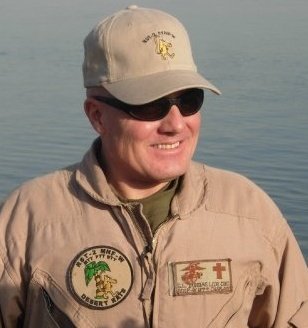
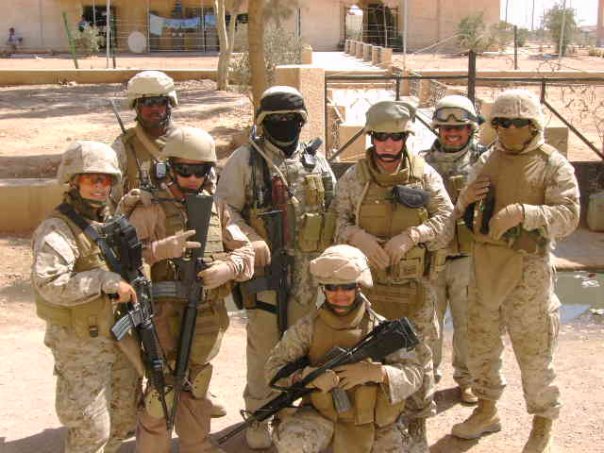
When I returned from Iraq in February 2008 it began the most difficult period of my life. Suffering from PTSD and a crisis in faith I felt alone, isolated, suffered terrible depression, anxiety was hyper-vigilant and angry. I felt abandoned by my former church as well as God. When I think about it now I can get still feel the deep emotions of those years. I am doing better now compared to how I was doing then.  Thankfully I have some friends that are to me what Grant was to Sherman.

Life is about living in the real world. Dietrich Bonhoeffer wrote from prison “I discovered later, and I’m still discovering right up to this moment, that is it only by living completely in this world that one learns to have faith. By this-worldliness I mean living unreservedly in life’s duties, problems, successes and failures. In so doing we throw ourselves completely into the arms of God, taking seriously, not our own sufferings, but those of God in the world. That, I think, is faith.”

When I started getting help after I fell apart in the summer of 2008 I was really struggling and the first person that asked about how I was doing with God was my therapist Dr. Elmer Maggard. It was during those initial months when I discovered that there were others out there like me that I decided that I could not be silent. Those that have followed this blog since its early days have followed me as I detailed my struggles, experience and tried to be as transparent as possible within the limits of my emotional state at any given time.  I was helped by a number of friends especially by my friends Greg and David, both Chaplains who have experienced things similar to me and without whom I would have been hard pressed to make it through my difficult times.

That was hard to do because I am a pretty introverted and private person.  So I wrote what I could when I could. Sometimes very raw and unfiltered emotions came to the front, other times I was able to get back into my comfort zone and write from a more detached point of view, a particular virtue and failing of being a historian. I wrote an article in September 2010 titled Raw Edges: Are there other Chaplains out there Like Me?  The next day I was asked to leave my former church although the two were not directly linked being ask to leave a day after I was talking to people about them not being alone even if they felt abandoned by God, their church or faith community or even the military.

A few months later in March of 2011I was interviewed by Hope Hodge of the Jacksonville Daily News after their editor had read that article and found that I was at camp LeJeune.  The article appeared on the front page of their print edition and online. This was a big step for me because by doing it I allowed someone else to write the story. Now Hope and the editors at the Daily News handled it very well and I felt that they produced a very good article.

A couple months later I was asked by the good folks at the Real Warriors Campaign which is an initiative of the Defense Centers of Excellence for Psychological Health and Traumatic Brain Injury (DCoE) if I would share my story to a wider audience. I wrestled with that because things like this are scary, I am not a televangelist I don’t go in front of a camera for a living. I was helped by our public affairs officer Raymond Applewhite and the team that did the filming handled it well.

The video was released on the Real Warriors website as one of a number of videos featuring veterans sharing their stories of war and return.  The video is found at this link http://www.realwarriors.net/multimedia/profiles/dundas.php and I viewed the final draft a couple of weeks ago before it went online.

My hope is that others struggling will be encouraged and know that there are indeed others out here that know something of their experience and that there is light at the end of the tunnel. My story is still being written. I am doing much better than I was but I am changed by war and while I still struggle that is not necessarily a bad thing. I have like Bonhoeffer so well put it that it is “only in living completely in the world that one learns to have faith.” Sometimes that faith comes at great cost and certainly is not something that is something that is done without help, spiritual, emotional and from people that are willing to suffer with you.  The cost to families and relationships is difficult.  My wife Judy has had to struggle with my issues and I know that what happens in war affects those that we love in profound and often painful ways. Bonhoeffer said:

“In normal life we hardly realize how much more we receive than we give, and life cannot be rich without such gratitude. It is so easy to overestimate the importance of our own achievements compared with what we owe to the help of others.” 

There are a number of people who have helped me through very dark times. To those that struggle, especially those struggling with faith and God following experience the trauma of war I just want to say that you are not alone.

Peace

Padre Steve+



4 Comments

Filed under faith, iraq,afghanistan, Military, PTSD, Tour in Iraq

Faith for those that Struggle with Faith

“When we honestly ask ourselves which person in our lives mean the most to us, we often find that it is those who, instead of giving advice, solutions, or cures, have chosen rather to share our pain and touch our wounds with a warm and tender hand. The friend who can be silent with us in a moment of despair or confusion, who can stay with us in an hour of grief and bereavement, who can tolerate not knowing, not curing, not healing and face with us the reality of our powerlessness, that is a friend who cares.” 
― Henri J.M. Nouwen, The Road to Daybreak: A Spiritual Journey

I’m taking a few minutes tonight even while watching primary returns and political punditry from Michigan and Arizona to muse a bit on faith during Lent.  I’ll post my analysis of tonight’s results tomorrow.

I have found over the past couple of years that there are many people that grew up in some kind of Christian home that for a host of reasons are struggling with faith, God and  the church. It is something that I find interesting from more than a theoretical premise because I went through a period after returning from Iraq where I struggled and could best be described as an agnostic struggling to recover faith.  Faith for me is still a work in progress, I can fully relate to father of the child Jesus healing in Mark 9:24 saying “I believe help my unbelief” and Thomas who after the Resurrection that he would not believe without being able to put his hands in the wounds of Christ.  Saint Anselm of Canterbury talked about faith seeking understanding and I think that is the mark of theological honesty.  I believe but seek understanding but even if I don’t understand I can have faith even if it is imperfect and plagued with doubts as well as frustration about things I see done in the church and in the name of Jesus.

When people come to me and admit their struggles I simply try to listen and let them be honest about their doubts and to know that even if they struggle that God still cares about them. I think that people, at least from what I hear are tired of the lack of honesty that characterizes much of what is being sold as Christianity in America.  What they struggle with is that “faith” marketed  by the health, wealth and political power preachers, pundits and politicians that make up the Unholy Trinity of American religious life.

Lent is one of those times of reflection where hopefully those that call on the name of Jesus can deepen faith or in the case of many that struggle, return to faith.  I really believe that honesty with God, each other and the world is one of the keys to faith and for those of us that struggle absolutely vital.

Part of that honesty to recover faith is to realize that God does love the real and very imperfect world that we live in. God loves wounded, doubting and imperfect people. Dietrich Bonhoeffer the German pastor, theologian and martyr said it this way “God loves human beings. God loves the world. Not an ideal human, but human beings as they are; not an ideal world, but the real world. What we find repulsive in their opposition to God, what we shrink back from with pain and hostility, namely, real human beings, the real world, this is for God the ground of unfathomable love.” 

Peace

Padre Steve+

1 Comment

Filed under christian life, faith, Religion

A Memorial Service for HM1 David Graney and the End of a Long Week

This has been a busy week. It began with an unexpected emergency to baptize the grandchild of a dear friend injured in a terrible household accident.  I drove from North Carolina on Sunday to Virginia Beach and returned Monday evening. When I returned I was getting ready and preparing for the memorial service for a shipmate who died just two months from retirement, a service that we conducted today. After the service I was able to drive back to see my wife Judy and our nephew Adam, an Army Sergeant who is taking a course at Fort Lee and who is visiting for the weekend.

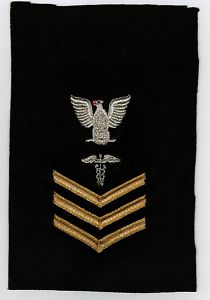
I am tired but blessed. Despite the hectic schedule I do love what I do and the people that I have the honor of serving.  Today was no exception as I had the honor of conducting the memorial service for Hospital Corpsman First Class David Graney, a Cardiovascular Technician at Naval Hospital Camp LeJeune.

David was preparing for retirement and was just two months away from when he would retire when he passed away. He was beloved among his fellow sailors, a mentor, friend, shipmate and leader. He was so knowledgable about his work that many people that he met in professional settings assumed that he was a fellow Cardiologist and not a technician who was attending conferences with the Cardiologists that he worked for and with. He was a leader who took care of his sailors teaching, caring and helping. He was a model Corpsmen. He was honest, forthright and did not hesitate to give his professional opinion and had a devastating sense of humor. I did not know him well, I had only met him a few times but from what his friends, shipmates and co-workers said I realized that David was a gem of a human being ad wonderful sailor.

His memorial service was attended by his family as well as former shipmates who travelled from across the country to attend. With our sailors drawn up in ranks in their dress blues David’s friends and shipmates recounted his impact on their lives.  I had the honor of conducting the service as well as preaching the homily.  I was really touched by the words of a young Corpsman who David led, as well as the words of our staff Cardiologist and a Petty Officer who had attended the Cardiovascular Technician course with David. What was consistent was that David was honest, forthright, knew his job, cared about those that were in his charge and was incredibly funny.  His death, sudden and unexpected reminded us all of our own mortality.

David will be missed by all those whose lives he touched. His death tore a hole in the fabric of the community that he served and in his family. I know that I wonder and ask the “why” question when someone like David dies seemingly before he should. Of course the “why” question cannot be answered except that for all of us death is a certainty, but not necessarily the end. Likewise that God will not fill the hole that is left in our lives when we lose someone dear to us. We can try to do it but that is ultimately self defeating because as long as that hole remains we remain connected to the one that we have lost. Dietrich Bonhoeffer said that:

“There is nothing that can replace the absence of someone dear to us, and one should not even attempt to do so. One must simply hold out and endure it. At first that sounds very hard, but at the same time it is also a great comfort. For to the extent the emptiness truly remains unfilled one remains connected to the other person through it. It is wrong to say that God fills the emptiness. God in no way fills it but much more leaves it precisely unfilled and thus helps us preserve — even in pain — the authentic relationship. Further more, the more beautiful and full the remembrances, the more difficult the separation. But gratitude transforms the torment of memory into silent joy. One bears what was lovely in the past not as a thorn but as a precious gift deep within, a hidden treasure of which one can always be certain.” 

I am tired right now, but have been privileged to be a part lives of the people that I have be able to serve this week. The are friends, they are shipmates, they are family.  They are part of the tapestry of my life.

Tonight I was able to celebrate the birthday of a friend at Gordon Biersch and I will check in on my friend whose grandson was injured while I am home. It should be a nice and hopefully relaxing weekend wit Judy, Molly and our nephew Adam before I return to North Carolina on Monday.

Have a blessed weekend.

Peace,

Padre Steve+

3 Comments

Filed under faith, Military, remembering friends, shipmates and veterans

Advent and Incarnation: Merry Christmas!

“It might be easy to run away to a monastery, away from the commercialization, the hectic hustle, the demanding family responsibilities of Christmas-time. Then we would have a holy Christmas. But we would forget the lesson of the Incarnation, of the enfleshing of God—the lesson that we who are followers of Jesus do not run from the secular; rather we try to transform it. It is our mission to make holy the secular aspects of Christmas just as the early Christians baptized the Christmas tree. And we do this by being holy people—kind, patient, generous, loving, laughing people—no matter how maddening is the Christmas rush…” Andrew Greeley

I really do love the seasons of Advent and Christmas.  This year it has been so busy that Advent has gone by way too fast. Advent which begins four Sundays before Christmas is the season of preparation, it is the season for the Christian of the promise of Christ, his coming in the flesh or “Incarnation” being born of Mary and also his coming at the consummation when as the Creed says “He shall come again….”

Advent is a time which has pretty much been stomped all over by the religion of commercialism and its high holy day of Black Friday which falls the Friday before Advent begins.  However it is really important if one wants to comprehend the full religious significance of Christmas.  It helps the Christian place Christmas in its appropriate context, not as “Jesus’ Birthday party” where we wear a little button that says “Happy Birthday Jesus” but that day where God became human as Paul wrote so eloquently:

“But when the fullness of time had come, God sent his Son, born of a woman, born under the law, in order to redeem those who were under the law, so that we might receive adoption as children. And because you are children, God has sent the Spirit of his Son into our hearts, crying, “Abba! Father!” So you are no longer a slave but a child, and if a child then also an heir, through God.” (Gal. 4:4-7) 

In the fullness of time…Advent helps point us to that time when God humbled himself to become a human being.  It is the time where in an ideal world we would slow down just a bit and begin to prepare ourselves for his coming. However our culture often with the blessing of Christians and the Church has eliminated that time of reflection.  It is a time where God not only makes us his children but his brothers and sisters and I think even more importantly friends.

Advent as a season is a period of patient expectation, a season of hope in the midst of despair. It is the message that God still cares and that what we wait for is not far off, the nativity of Emmanuel, God with us which is expressed so well in my favorite hymn of the season O Come O Come Emmanuel 

Oh, come, oh, come, Emmanuel,
And ransom captive Israel,
That mourns in lonely exile here
Until the Son of God appear.
Rejoice! Rejoice! Emmanuel
Shall come to you, O Israel!

The Irish singer Enya has a wonderful version of this song which I have placed the link here:  http://www.youtube.com/watch?v=DPHh3nMMu-I&feature=share

German pastor, theologian and martyr Dietrich Bonhoeffer wrote from prison in 1943

that “A prison cell like this is a good analogy for Advent: one waits, hopes, does this or that—ultimately negligible things—the door is locked and can only be opened from the outside.”

This year has been like brutal prison for many people and nations in the world. Wars, natural disasters, economic problems and political instability have caused much suffering.  Man’s inhumanity to man has been demonstrated time and time again by terrorists, criminals and repressive governments.  Our lack of control over nature as was shown in Fukishima Japan when a massive Earthquake and Tsunami destroyed cities and a nuclear power plant killing thousands.  At the same time we have seen the best people rising to meet disaster and persecution, poverty and unrest with courage, faith and mercy motivated by love in the face of death.  In spite of all, love still triumphs.

The Advent season which is now drawing to an end leads us to the hope of the God who chooses to be with us.  Tomorrow evening we celebrate when “the Word was made flesh and we beheld his glory.” It is a time when the world is reminded even in the most secular ways that God choses to be with us in the babe born in a dingy stable in a town that few cared about.  In that humble beginning God draws near to us and his creation.

It is a time to rejoice for Jesus the Christ is born.

Merry Christmas,

Padre Steve+

1 Comment

Filed under christian life, faith, Religion

The Church Maintained in Love: Thoughts on Life a Year after Being Asked to Leave a Church

“There comes a time when one must take a position that is neither safe, nor politic, nor popular, but he must take it because his conscience tells him it is right….” Martin Luther

It has been a year since I was asked to leave my former church.  While I choose not to rehash the events of that time now I feel a need to reflect on where I am now as a Priest and Christian living in a tumultuous time in our nation and in the world.

In the past year I have rediscovered a passion for ministry especially to and speaking out for those that are marginalized by much of the church.  Since I understand to some degree what it is to have been marginalized by the church for voicing positions that as Luther said that are “neither safe, nor politic, nor popular” but because my conscience tells me that it is right.

I am still a Christian, even though some have questioned that, after I left that church some called me an “apostate.”  Yet I believe in the God of Scripture, the Creeds and the Councils. At the same time that belief is not as rigid as it once was. I used to consider those that didn’t believe like I did in relation to Scripture, the Creeds and Councils not to be Christians.  I cannot say that now. I am much more to have the Grace and Mercy of God be my default position and let other things fall out where they may.

As far as my daily spiritual life and relationships I am still sorting things out.  When I returned fromIraqI went through an intense time of spiritual despair during the depths of depression, anxiety, grief and abandonment related to my time inIraqand my battle with the injury of PTSD.  That period left me even wondering if God existed, for all practical purposes I was an agnostic.  While faith has returned there are still many things that I struggle with and as I wrestle with this I know that part of this has nothing to do with faith but to my basic personality and personality type. I am a Myers Briggs INTJ.  This means that I am basically logical, distant and more at home dealing with theory, imagining things as they could be and solving problems rather than “staying in the lines.”  It also means that I can appear cold or or standoffish even when I am not trying to do so. If you want to see a classic INTJ watch House MD.  Likewise I need much solitude and not always the most sociable person on the planet.  In the past year I have not moved much closer than I was last year to figuring how I do the spiritual disciplines and relationships. Last fall  I did try and liked the Celtic Daily Prayer when I tried it. Perhaps I should actually go out and buy a copy and really give it a try. So after a year I am searching for a spiritual method or practice that will work for me and I will probably seek out a qualified spiritual director to help me in this process.

But not all has been difficult.  My faith in some ways, especially the theological, ethical and philosophical aspects of it is much more connected to how I live.  These aspects of my faith also inform the way that I live and relate to this world. I am Catholic and I am happy to be a priest of the Apostolic Orthodox Catholic Church which an expression of the Old Catholic Church. I am most fortunate to be part of that small but loving church. My theological and philosophic ethos is much more ecumenical and democratic than it was in the past. I remember when I tended toward a more triumphant and monarchical view of church.

I believe that the Church is a community centered on Jesus and bound together by our baptism, One Lord, One Faith, One Baptism, One God and Father of All.  I believe in this community that there are many expressions of that faith.  We maintain the faith that comes passed to us in the Gospel “that God was in Christ, reconciling the world to himself, no longer counting people’s sins against them. And he gave us this wonderful message of reconciliation.” (2 Cor. 5:19 NLT).

The Jesus that I follow and that I believe in is present in body, soul and spirit in the Eucharist which is one of the most profound expressions of we are connected to the Trinity as individuals and as a faith community.  I believe like Hans Kung and others that this table belongs to the baptized community of faith and not to an exclusive Priestly class who dictate who can come to the table.  It is not the exclusive property of any denomination or Church organization especially those that most loudly state this to be the case.

Likewise as I have written before I do not like ecclesiastical bullies that use faith as a bludgeon to enforce their religious on others using the power of government to do so.  As such I have found much consolation and inspiration in the life and work of the German pastor, theologian and martyr Dietrich Bonhoeffer.  Bonhoeffer wrote:

“God loves human beings. God loves the world. Not an ideal human, but human beings as they are; not an ideal world, but the real world. What we find repulsive in their opposition to God, what we shrink back from with pain and hostility, namely, real human beings, the real world, this is for God the ground of unfathomable love.”

I guess I find comfort in that because I know that I am a flawed human being.  However I gain inspiration from this statement because it makes me remember that no matter how I feel about someone that God loves them. It reminds me that love of God extends to them even if I oppose or have no respect for them, or loathe their actions against the least the lost and the lonely, those on the margins of society. Since I have had plenty of opportunity to criticize such people in recent months I need to temper my opposition to what I find repulsive in their attitudes, behavior and actions against the weak, poor and powerless in society and remember that God loves them and desires their redemption as well.  It also allows me to hear friends when they point out that my criticisms of such people might be over the top. Those were things that got me thrown out of my former church a year ago, pretty amazing actually.

So it has been an interesting year but I am somewhat conflicted.  I look forward to what is ahead because I know that in spite of all the injustice, turmoil, hatred and division that exists in our nation and the world that there is a God who loves us as we are.  At the same time I  fear the things I see occurring here and around the world.  The thing that I fear the most is evil and injustice promoted under the guise of religion, be it Moslem, Christian or Jewish. The same is true of the practical atheism of economic Darwinism practiced by government, multi-national corporations and financial institutions.  Likewise the inhuman actions of those in any nation who use the power of government violence and oppression or the terrorism promoted by political and religious radicals regardless of their ideology worries me immensely.  Those things scare me but at the same time to motivate me to speak out as men like Bonhoeffer have done in the past regardless of where it leads.

Pray for me a sinner.

Peace

Padre Steve+

3 Comments

Filed under christian life, faith, Religion

I Don’t Like Bullies: The Troubling Trend in Conservative Politics

I don’t like bullies. I didn’t like them as a child and I certainly don’t like them any better now.  Unfortunately the bullying that I address is not the simple schoolyard type, but a kind that has infected our politics and religion to such an extent that I fear the worst for our country.

Last night there was a most troubling moment during the Republican debate.  Fox news anchor Megan Kelly aired a video from a soldier inIraqasking what candidates would do regarding the recent repeal of the Don’t Ask Don’t Tell (DADT) policy.   What followed was shocking. First a number of people in the audience booed the soldier. Second, former Senator Rick Santorum answered Kelly’s question about DADT saying that he would reinstate the policy which he called “social experimentation” which was “detrimental” to gays and lesbians.

Sanorum also mischaracterized the repeal saying that that “I would say any type of sexual activity has absolutely no place in the military. The fact they are making a point to include it as a provision within the military that we are going to recognize a group of people and give them a special privilege to, and removing don’t ask don’t tell. I think tries to inject social policy into the military. And the military’s job is to do one thing: to defend our country….”  The repeal didn’t give gays a special privilege but merely allows them to serve as others in the military do without fear of being thrown out if someone discovered that they were gay.

Santorum also showed his ignorance by ending his comments with this “sex is not an issue. It should not be an issue. Leave it alone. Keep it to yourself whether you are heterosexual or homosexual.” Well that is the policy that was enacted, except we don’t throw people out because they are homosexual.  The military is built on discipline and professionalism, if heterosexual military personnel cannot do something the same applies to homosexuals. The policy actually makes the case that sexuality is not an issue. It was under DADT and it put honorable men and women that wanted to serve their country under a rule that no-one else in the military had to live with. That policy emphasized that they were different and made their sexual orientation the issue so that they could be prosecuted at any time should a person turn them in or they make any statement that they were gay.

The repeal was voted by congress and DADT has been found unconstitutional by a number of Federal Courts.  It was going to go away one way or another and the way it was done the military had a chance to get ready for it.  Because of this nothing changed on September 20th. The military still continues to do its job without any disruption, Soldiers, Marines, Sailors and Airmen are being professional and perhaps the one shock will have is when they find out that men and women that they admire and that they have served in close quarters or in combat with are gay. They will adjust and realize that all the hyperbole put out by people like Santorum was politically and sometimes religiously motivated bigotry.  The same happened in 1948 when President Truman integrated the military. Military personnel adjusted over time and now compared to most of society the military stands as a beacon to the rest of the nation.

When Santorum finished his answer he was greeted with thunderous applause and not one candidate stopped during the debate to call out the people that launched the chorus of boos.  A few notably John Huntsman and a spokesman for Rick Perry commented after the debate about how “unfortunate” the incident was, later on Friday candidate Gary Johnson condemned the action. Unfortunately most of the other candidates by their silence showed that they either agreed with the hecklers or that they are too afraid of political retribution to speak out against such behavior.

I was told by a Christian friend whose opinion I value that he thought that I was over-reacting to the actions of a few people.  God how I wish it was just a few knuckleheads doing this.  However I have seen many bloggers and quite a few allegedly “conservative alternative media” sites and “Christian” ministries blasting the same message ever since Secretary Gates and Admiral Mullen announced that the military was moving toward the repeal.

The fact that others in the crowd did not challenge the boo-birds and Santorum didn’t censure them was scary. Later Santorum said that he didn’t hear the people that booed but they were loud and I have a hard time believing him. In light of his many other statements on this subject.

Part of the problem is that I am a historian and my focus was on Weimar Germany and the Nazi era. I have studied that period since I was an undergraduate as well as in seminary and for my second Masters in Military History. I talk about this with my German friends and they see parallels to their history. It unnerves them to see it happening here.

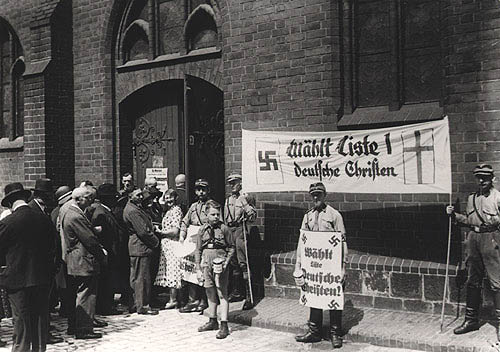
The tactics being employed by these “few” are eerily reminiscent of what the Brownshirts did to their opponents. If I “over react” as my friend said it was because acts like this do breed discrimination and violence.  Those that take power after having used or tolerated such behavior from their followers tend to become tyrants and oppressors in their own right, especially religious people.  Simply look at history to see how badly these events turn out.

But this is bigger than the repeal of DADT and gays.  Last week in another debate, the same type of crowd people shouted “let them die” in relation to a debate question about an uninsured man.  The week at another Republican debate people cheered the use of the death penalty even in cases where reasonable doubt was obvious. And then Pat Robertson told a caller that divorcing a spouse with Alzheimer’s disease was justified. It is about the lack of outcry from Christians or even the willing participation of Christians in brutal behavior. These are scary things and it is the totally of them that brings my reaction.  This has happened in other countries and I fear that we are going down the same path.

We have a great number of very angry people including many Evangelical Christians that feel that the left has marginalized and persecuted them.  To some extent there has been some of that.  But the answer cannot be found in vengeance.  From what I read on many “conservative” or “Christian” websites the issue is revenge.   The revenge is in that they intend to take over by the ballot and if need be by the bullet to “take dominion” over every arena of public life and rid us of those that do not agree with them or strip them of any influence in society.

The people in the “Dominionist” movement and those that preach the “7 Mountains Theology”  have said that they are intent on establishing a theocracy in this country and others. In their new society people that disagree with them are the enemy, not only of them but of God, even other Christians. Rick Joyner, one of the leaders of this movement and one of the players in Rick Perry’s “The Response” said: “On February 23rd of this year I was shown for the third time that the church was headed for a spiritual civil war … the definition of a complete victory in this war would be the complete overthrow of the accuser of the brethens’ strongholds in the church … this will in fact be one of the most cruel battles the church has ever faced. Like every civil war brother will turn against brother like we have never witnessed in the church before … this battle must be fought. It is an opportunity to drive the accuser out of the church and for the church then to come into unity that would otherwise be impossible … what is coming will be dark. At times Christians almost universally will be loath to even call themselves Christians. Believers and unbelievers alike will think it is the end of Christianity as we know it and it will be through this the very definition of Christianity will be changed for the better.”

Others of this theological bent advocate chilling police state type methods in dealing with opponents and those that dissent and justify themselves by say that they are “doing God’s work” or “ushering in the Kingdom.

So this is not just about the gays, it is about protecting the weak and those that dare to dissent from a party line. It is about the use of  Brownshirt type tactics to intimidate and silence opposition.  The combination of radial politics and radical religion never produces anything good.

Dietrich Bonhoeffer wrote from a Nazi Prison:

“Radicalism always springs from a conscious or unconscious hatred of what is established. Christian radicalism, no matter whether it consists in withdrawing from the world or in improving the world, arises from the hatred of creation. The radical cannot forgive God his creation. He has fallen out with the created world, the Ivan Karamazov, who at the same time makes the figure of the radical Jesus in the image of the Grand Inquisitor. When evil becomes powerful in the world, it infects the Christian, too, with the poison of radicalism. It is Christ’s gift to the Christian that he should be reconciled with the world as it is, but now this reconciliation is accounted to be a betrayal and denial of Christ. It is replaced by bitterness, suspicion and contempt for men and the world. In place of the love that believes all and hopes all, in the place of the love which loves the world in its very wickedness with the love of God (John 3:16), there is now the pharisaical denial of love to evil, and the restriction of love to the closed circle of the devout. Instead of the open Church of Jesus Christ which serves the world till the end, there is now some allegedly primitive Christian ideal of a Church, which in its turn confuses the ideal of the living Jesus Christ with the realization of a Christian ideal. Thus a world which is evil succeeds in making the Christians become evil too. It is the same germ that disintegrates the world and that makes the Christians become radical. In both cases it is hatred towards the world, no matter whether the haters are the ungodly or the godly. On both sides it is a refusal of faith in the creation. But devils are not cast out through Beelzebub.” (Letters and Papers from Prison p.386)

It is time that we recognize this before it is too late because the train has left the station.

Peace

Padre Steve+

3 Comments

Filed under faith, History, laws and legislation, leadership, Military, Political Commentary, Religion

A Few Concerns Regarding Matters of Faith and Morality

“The fearful danger of the present time is that above the cry for authority, we forget that man stands alone before the ultimate authority, and that anyone who lays violent hands on man here, is infringing eternal laws, and taking upon himself superhuman authority, which will eventually crush him.” Dietrich Bonhoeffer

I think I feel a sermon coming on….

I am increasing appalled at the statements of Christians and those that they have allied themselves with in the political arena.  Mind you that almost all of these folks claim to be “pro-life” because they are anti-abortion. However just because someone is against abortion does not mean that they are necessarily pro-life.  They may be pro-life in the instance of abortion but if that is all then they are one dimensionally pro-life, which means that in many other areas they are pro-death.

Several examples I will note and they are so abominable, so un-Christian and so evil that they have to be called out. I am refraining from politics because this is a matter of faith and morals that have had to categorically oppose throughout our history, even when our Christian brothers and sisters are the perpetrators.

I the past couple of weeks alone we have seen bold faced immoral and distinctly un-Christian comments being made in full public view on television for all, even God to see.

First there were the cheers when Governor Rick Perry said that he never “loses sleep” over any of the 234 men and women that he has signed the death warrants of in Texas, not even worrying that some might have been innocent.  When Perry pronounced this authoritative statement “But in the state of Texas, if you come into our state and you kill one of our children, you kill a police officer, you’re involved with another crime and you kill one of our citizens, you will face the ultimate justice in the state of Texas, and that is, you will be executed.” The cheers were raucous.  This despite the fact that the witness of the Christian Church before Constantine was universally against the use of capital punishment, evidently the fact that Jesus was unjustly crucified had some play in their beliefs.   But of course one the Church became part of the establishment that began to change and well we know how that worked out, if you disagreed with the Church the crime was also against the State and those who did not recant well enough were summarily executed, often with a clergyman pronouncing eternal damnation.

You would think that someone who is pro-life would at least reserve the ultimate justice to God, and at least wrestle with the implications of each death warrant that he signs.  The death penalty may be capital punishment but it is still temporal justice, God alone has the right of deciding “ultimate justice.” For anyone not to understand that shows a callous disregard for the earliest witnesses of the Christian faith and cannot in any way be considered to be “pro-life.”  Pope John Paul II in his Papal Encyclical “Evangelium Vitae (The Gospel of Life) said this

“Public authority must redress the violation of personal and social rights by imposing on the offender an adequate punishment for the crime, as a condition for the offender to regain the exercise of his or her freedom. In this way authority also fulfills the purpose of defending public order and ensuring people’s safety, while at the same time offering the offender an incentive and help to change his or her behaviour and be rehabilitated.

It is clear that, for these purposes to be achieved, the nature and extent of the punishment must be carefully evaluated and decided upon, and ought not go to the extreme of executing the offender except in cases of absolute necessity: in other words, when it would not be possible otherwise to defend society. Today however, as a result of steady improvements in the organization of the penal system, such cases are very rare, if not practically non-existent.

In any event, the principle set forth in the new Catechism of the Catholic Church remains valid: ‘If bloodless means are sufficient to defend human lives against an aggressor and to protect public order and the safety of persons, public authority must limit itself to such means, because they better correspond to the concrete conditions of the common good and are more in conformity to the dignity of the human person.'”

The Second little instance was when a question was asked of Ron Paul about what he would do if an uninsured 30 year old man suddenly slipped into a coma and needed care and people in the audience started yelling “Let him die, let him die!”  To be fair Ron Paul as a physician would treat the man, but the fact that people in the audience which was in large part drawn from Evangelicals shouted such epithets in a debate televised for the whole nation to see revealed a sentiment that was in no way pro-life or Christian.  In fact it reminded me of the shouts “crucify him, crucify him!”

The Third and last for tonight’s sermon, I do occasionally like the three point sermon, was prominent televangelist and one time Presidential Candidate Pat Robertson’s comment today on his show The 700 Club. Robertson gave this warm and cuddly advice to a man asking what to say to a friend who had started seeing someone else because his wife had Alzheimer’s Disease “I know it sounds cruel, but if he’s going to do something, he should divorce her and start all over again, but make sure she has custodial care and somebody looking after her.” Citing the Gospel of Mark, Robertson continued “If you respect that vow, you say `til death do us part, this is a kind of death.”  That statement is neither pro-life nor pro-family, nor can it find any support in the Christian tradition, nowhere.

All of these statements that I have described show no respect for the human person and betray what Hannah Arendt called “the fearsome word-and-thought-defying banality of evil” because those that utter them do not believe that they are evil words or acts. The “banality of evil” was  a term she coined about Adolf Eichmann who made sure that the wheels of the Holocaust moved smoothly forward.  Of course Eichmann said in his defense that he didn’t have anything against the Jews, he even had Jewish friends, and it was just his job and that he had done nothing wrong because he acted within the law.

These expressed thoughts and sentiments of Rick Perry, Pat Robertson and those in the debate crowds that cheered for death show a terrible dark side to our supposedly “Christian” nation.  It is easy to use scripture to condemn abortionists as well as those that are considered sexually deviant or to condemn those of foreign creeds enemies, but when the questions are the treatment of the poor, the sick, the aliens among, the prisoners, or to the children of people that we see as enemies far away who just happen to be in the same tent as their woebegone parents who might or might not be terrorists when a drone launched Hellfire missile tears their bodies to shreds we scarcely see the moral, ethical and religious principles that are violated.

Bonhoeffer was indeed correct “that above the cry for authority, we forget that man stands alone before the ultimate authority, and that anyone who lays violent hands on man here, is infringing eternal laws, and taking upon himself superhuman authority, which will eventually crush him.”

Just some things to think about….

Peace

Padre Steve+

5 Comments

Filed under faith, History, philosophy

Reaching the Lost Christian Generation

“God weeps with us so that we may one day laugh with him.” Jürgen Moltmann

Over the past couple of weeks I have been thinking about encounters that I have had with Christians of various denominations who have suffered a crisis in faith or loss of faith due to some kind of trauma in their lives.  These people are the unseen, unheard and ignored part of our religious landscape.  In theUnited Stateswe have a very vibrant religious culture which finds its way into much of everyday life.  In fact listening to most of our Presidential candidates you would think that most are in fact Evangelical Christian preachers.

The fact is that despite the popularity of the mega-church and pop-psychology driven church world directed by “pastors” that function more as CEOs, motivational speakers and authors that churches are losing adherents at an increasing rate.  Many of those that are being lost are those that have suffered silently doing everything that is supposed to fulfill a Christian and make them healthy, wealthy and popular get left in the dust because they don’t “get better.”  I call them the “Lost Christian Generation.” There are many times that I totally empathize with author Anne Rice in saying that she has left Christianity yet still has faith in Christ.  For Rice it was the lack of love shown by the institutional church for people that are marginalized and treated as if they were unredeemable by often well meaning Christians.

For the wounded the church itself becomes their little acre of Hell on earth.  Having known plenty of these people I can say that this phenomenon is one of the more tragic aspects of life.  Those that at one time felt the presence of God in their life only sense emptiness and aloneness.   But most remain in the church for years living in pain thinking that they must be doing something wrong, that maybe they have angered God or that God has abandoned them.  In fact I would challenge my readers that attend church to take a look around the pews and see that person sitting alone, maybe staring into space, maybe with an expression of deep sadness on their face even as people talk and laugh around them.  The problem is most of us have very little situational awareness and don’t see them and of we do feel uncomfortable or inadequate so we leave them hoping that maybe they’ll get their act together or just go away.

I know what it feels like to be marginalized after I came back fromIraqbecause many of my Christian friends seemed, at least in my view to be tied to the absolute hogwash that spews from talk radio hosts and allegedly “Christian” politicians.  I remember having some Christians question my patriotism and even my faith because I disagreed with them regarding certain aspects of the war, despite the fact that I had been on the ground in harm’s way serving with our advisors and Iraqis in Al Anbar province.  The fact that not a clergyman, civilian or military, took time to care for me when I was in a major PTSD meltdown and crisis of faith before I went to Naval Medical Center Portsmouth didn’t seem to matter because a political agenda was given primacy over the simple truths and hard demands of the Gospel.

I went through a period after Iraq where feeling abandoned and isolated from those of a like faith that I was for all practical purposes an agnostic.  That was a really difficult time in my life and if you think that anything sucks try to be a Chaplain when you no longer know if God exists and the only person asking how you are doing with “the Big Guy” is your therapist. I can say without a doubt that it sucks and I know that I am not alone in my feelings.  I have met others whose experience is similar to mine but those that are struggling right now, caught between our faith and the feeling of being abandoned by God and his people because our experience of seeing the human suffering caused by war has shaken us.  That experience changed me enough that my former church told me to leave because I had become “too liberal.”

This “God Forsakenness” sometimes leads those people that are part of the “lost Christian generation” to believe that death appears more comforting than life in the present. For such people, they live “Good Friday” everyday feeling that they are truly God Forsaken.   I write this because I really believe that these often very sensitive and wonderful people are either ignored or not even seen by most of their fellow church members. Likewise I believe that many if not most pastors and priests are either unaware of them, uncomfortable around them or irritated by them because they don’t respond like “normal” people do.   I have found from my own experience returning from Iraq that Easter despite the message of resurrection and hope often triggers a despair of life itself when one no longer senses the presence of God and feels alone against the world, especially in church.

Many times the crisis of faith is caused by prolonged depression, PTSD or other trauma often involving family members, clergy or other trusted authority figures in their lives.  Sometimes the trauma is due to a physical injury, perhaps a near death experience due to an illness, combat or accident and can be neurological as in the case of Traumatic Brain Injury or TBI not something that routine counseling either psychological or pastoral or an anti-depressant medication will correct.  In my case it was PTSD and chronic pain and insomnia which overwhelmed me and along with a crisis of faith triggered such hopelessness that I barely held on for almost two years.

I remember when I first started dealing with this in others while in seminary that I was of the mind that if someone was in the midst of a crisis in faith if they read the Bible more, prayed more and made sure that they were in church that things would work out.  I believed then that somehow with counseling, the right concept of God and involvement in church activities that God would “heal” them.  Call me a heretic but that line of thinking is nice for people experiencing a minor bump in their life but absolutely stupid advice for people who are severely traumatized or clinically depressed and suicidal who no longer perceive the presence of God in their lives.

I cannot condemn those who have lost their faith or are wavering in their faith due to trauma, abuse or other psychological reason. So many people like this have been victimized by family, teachers, clergy other authority figures or physical trauma related to accidents, near death experiences or combat that it is mind numbing.  The fact that I went through a period for the nearly two years where I was pretty much an agnostic praying to believe again because of my PTSD injury incurred in Iraq that felt hopelessly isolated for the first year after my return until I finally reconnected with others and began to feel safe again gives me just a bit of an idea at what these people are going through.  My isolation from Christian community and sense of despair during that time showed me that such a loss of faith is not to be trifled with or papered over with the pretty wallpaper or neat sets of “principles” drawn up in the ivory theological towers by theologians and “pastors” who refuse to deal with the reality of the consequences of a fallen world and their impact on real people.

Sometimes the damage wrought on people makes it nearly impossible to comprehend a God who both cares about them and who is safe to approach.  My experience was due to from my time in Iraq and the trauma of my return.  That time was absolutely frightening.  Church was no longer a comfort and my long established spiritual practices no longer brought peace or a feeling of communion with God. It was so bad that I left a Christmas Eve Mass in 2008 and walked through the dark wondering if God even existed.

For those clergy this is an even deeper wound one in which the very concept and understanding of God becomes skewed in the minds and hearts of the victims.  It becomes worse when church institutions deny or ignore their claims which has been an unfortunate occurrence in many Roman Catholic dioceses around the world, particularly in Europe and North America where new revelations of clerical abuse seem to show up with alarming frequency.

The feeling that people who go through a crisis or loss of faith almost always mention to me is that they feel God feel cut off and even abandoned by God.  This is not simply depression that they are dealing with but despair of life itself when thoughts of death or just going to sleep are much preferable to living.  This overwhelming despair impacts their relationships especially with their family and frequently will destroy families as the spouse grows weary and loses hope seeing their loved one get better.  It is if they never are able to leave the “God forsakenness” of Good Friday and cannot climb out of the tomb.   For some the pain is so much the last and previously unthinkable alternative of suicide becomes the only course of action that they think will help.  Such thoughts are not simply narcissism as some would believe but from the “logical” belief that their family, friends and loved ones would be better off without them.  I have seen this too many times to count.

It is hard to reach out to people in this situation.  I have to admit in my case that it was only people who chose to remain with me and walk with me through the ordeal in spite of my frequent crashes, depression, anger and even rage that helped get me through the worst of this.  However I’m sure that my condition burned some people out.  There are some that would not walk with me as I first began to go down and the sad thing is that many were ministers and fellow chaplains.  In some ways I don’t blame them at the same time the first person that asked me how my spiritual life “or how I was with the Big Guy” was my therapist.  When I reported to my current duty station I was shocked to find Chaplains who were willing to come alongside of me, even when they didn’t have the answers and remain with me.

The topic of a loss of faith or the reality of feeling God forsaken is had to deal with.  It is seldom dealt with in many seminaries or Bible schools because it is not comfortable or something that you can “grow your church” with.  But the reality is there are more people going to church praying for an answer who no one reaches out to; in fact they are often invisible amid the busyness of program oriented ministry.

I do not think that it is enough simply to tell them that “God won’t give you more than you can bear” or quote other scriptures when they have been pushed beyond the “red line” and are breaking down.  They want to believe that scriptural principle but no longer believe because God is no longer real to them.

Yet scripture plainly teaches that we are to “bear one another’s burdens, and in this way you will fulfill the law of Christ.” As Dietrich Bonhoeffer said “We must learn to regard people less in light of what they do or omit to do, and more in the light of what they suffer.”  It is our willingness to be with people in their suffering that is one of the true marks of the Christian.  Being with someone in triumph is far easier than with those who suffer the absence of God.  It is presence and love not sermons that people who have lost their faith need as Bonhoeffer so eloquently said “Where God tears great gaps we should not try to fill them with human words.”

We have to be honest and not turn a blind eye to the transgressions of Christians over the centuries.  We cannot turn a deaf ear to the cries of those that are living their own dark night of the soul or have given in to despair.

I do pray that as we celebrate the joy of the Resurrection that we will not forget those who despair of live and feel as if they are “God-forsaken.”  It is not easy as those who walked with me can testify but in doing so there is the chance that such action will prevent tragedy and maybe, just maybe give hope to this “Lost Christian Generation” that may allow them to return.

Peace

Padre Steve+

7 Comments

Filed under christian life, faith, Pastoral Care, PTSD, Religion

Silent Witnesses

“We have been silent witnesses of evil deeds; we have been drenched by many storms; we have learnt the arts of equivocation and pretence; experience has made us suspicious of others and kept us from being truthful and open; intolerable conflicts have worn us down and even made us cynical. Are we still of any use? What we shall need is not geniuses, or cynics, or misanthropes, or clever tacticians, but plain, honest, and straightforward men. Will our inward power of resistance be strong enough, and our honesty with ourselves remorseless enough, for us to find our way back to simplicity and straightforwardness?” — Dietrich Bonhoeffer (Letters and Papers from Prison)

It has been an exhausting summer for most Americans and much of the Western World. We are witnessing events that most of us could not imagine happening.  We are tired of war but seem to be unable to extricate ourselves from the most expensive and least strategically important wars we have undertaken inAfghanistan.  The numbers of killed and wounded continue to mount even as it becomes apparent that there is no way to win the war given that more troops, time and money would have to be employed none of which we have.

Our economy is in terrible shape with sustained high unemployment, a massive debt, decaying infrastructure and little prospects for improvement.  Standard and Poor’s downgraded long term U.S. debt creating even more uncertainly and fear in U.S.and world markets.  Several European Union countries are on the verge of economic collapse threatening the Euro Zone and causing a ripple effect around the world.

We demand that governments do something but seem to ignore the fact that governments control almost nothing because they are in the thrall of the financial industry which really does control what governments can and cannot do. They even dictate how governments should manage their debts as in the case of SP downgrading the United States.  Our founders understood the dangers and the control that bankers have over governments.  Thomas Jefferson noted “I sincerely believe, with you, that banking establishments are more dangerous than standing armies; and that the principle of spending money to be paid by posterity, under the name of funding, is but swindling futurity on a large scale.” His fellow Virginian and drafter of the Bill of Rights James Madison said “History records that the money changers have used every form of abuse, intrigue, deceit, and violent means possible to maintain their control over governments by controlling the money and its issuance.”  Across the Atlantic a leader of a different sort, Napoleon Bonaparte had a similar insight “When a government is dependent upon bankers for money, they and not the leaders of the government control the situation, since the hand that gives is above the hand that takes.”

Catholic philosopher G. K. Chesterton wrote about how the worst vices and passions, selfishness, greed, lust and power were supposed to somehow bring about the best in people.  “It was the mystical dogma of Bentham and Adam Smith and the rest, that some of the worst of human passions would turn out to be all for the best. It was the mysterious doctrine that selfishness would do the work of unselfishness.” 

In the middle of this rapidly worsening situation we see the Unholy Trinity of politicians, pundits and preachers as they pontificate about and blame one another for things that they refuse to take responsibility for and of which they really have little understanding.  Stirred up by them we too have become polarized, angry and distrustfully of our neighbor to the point of hatred.  Conservatives now hate liberals, liberals hate conservatives, the radicals on both sides have pushed their more moderate colleagues into adopting their position because those “moderates” are even more afraid of the ideologues in their own party than they opposition party.

Our government if we can call it that anymore is hopelessly divided and set against each other and none of the most prominent political “leaders” seem to have any morale center or courage of conviction.  They all seem to be Bonhoeffer cynics, misanthropes, or clever tacticians.

Religion is even used a trump card by the right with erstwhile “pastors” blessing the most ungodly adventures, preemptive war, use of weapons of mass destruction, while cozying up to and advocating for the most powerful financial interests.  Some of the more blatant of these “pastors” like C. Peter Wagner advocate a Christian theocracy based on the Seven Mountains theology by which Christians must take dominion over seven key spheres of society which are government, arts and entertainment, media, education, family, religion, and business with business being the most important.  If he was an isolated case it would not be worth commenting on but Wagner and his allies in the Dominionist movement are closely connected to a number of Republican Presidential candidates and one who will likely declare, Texas Governor Rick Perry.

We have witnessed it all and we have to say what we have seen is not working and in fact is an embodiment of evil and anarchy as each group positions itself to gain the most. We have exulted power, vice, avarice and greed as the highest ideals Bonhoeffer said:

“Unless we have the courage to fight for a revival of wholesome reserve between man and man, we shall perish in an anarchy of human values…. Socially it means the renunciation of all place-hunting, a break with the cult of the “star,” an open eye both upwards and downwards, especially in the choice of one’s more intimate friends, and pleasure in private life as well as courage to enter public life. Culturally it means a return from the newspaper and the radio to the book, from feverish activity to unhurried leisure, from dispersion to concentration, from sensationalism to reflection, from virtuosity to art, from snobbery to modesty, from extravagance to moderation.” 

Peace

Padre Steve+

2 Comments

Filed under christian life, faith, History, philosophy, Political Commentary, Religion