Tag Archives: iraq war

The Long and Winding Road of 31 Years of Commissioned Service

hogansheroeslook

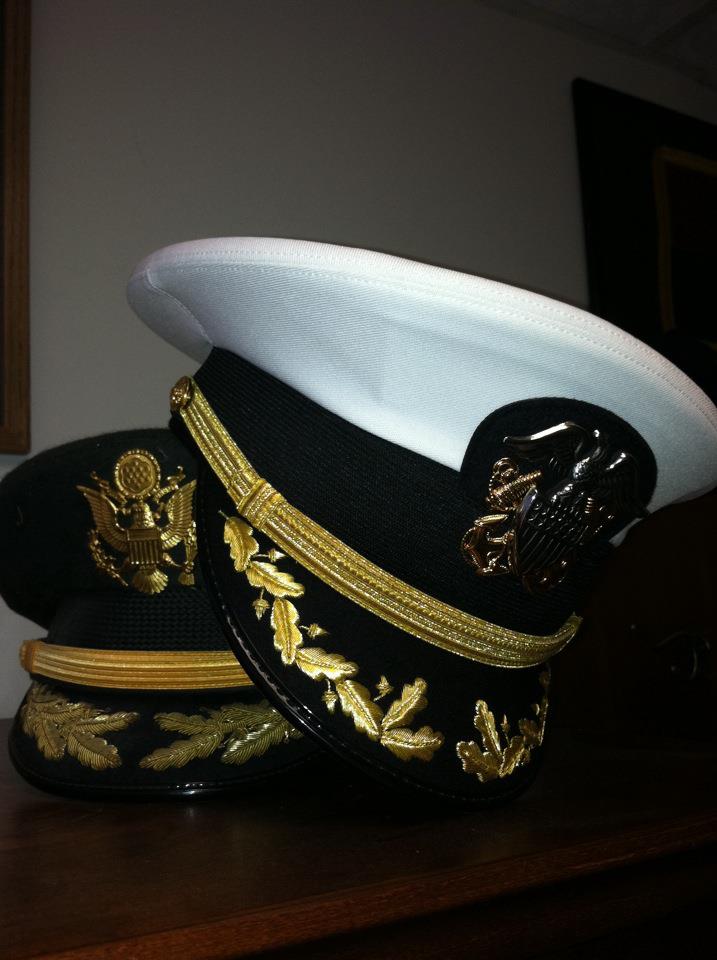
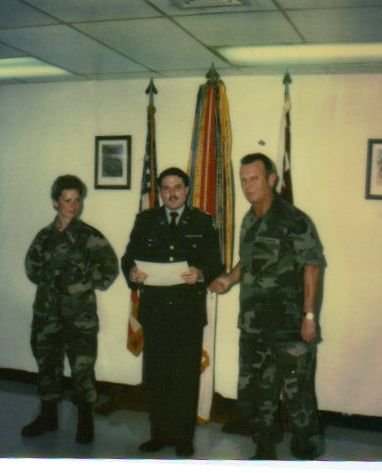
Today marks another milestone in my life and career, at least in terms of longevity. Thirty-one years ago today I was with my soon to be wife Judy, as well as my dad and brother at UCLA where I was being commissioned as a Second Lieutenant in the U.S. Army. Six days later I married Judy who has over the past 31 years seen me go my down the long and winding road of my military career. Truthfully the long and winding road has been to use the words of Jerry Garcia a “long strange trip” and usually not the Yellow Brink Road.

commissioningmeandjudy557thcmdpic2ndplt557motorofficerpromotiontocpt

Let’s see…service as a Medical Service Corps Officer, platoon, leader, company executive officer, maintenance officer, NBC officer, and company commander, and brigade adjutant. Texas Army National Guard, Armor officer, Chaplain Candidate (Staff Specialist Branch) and Chaplain serving with Combat Engineers, and Chaplain in the Virginia National Guard with the Light Infantry. Army Reserve Chaplain, drilling and mobilized to support Bosnia mission, Installation Chaplain at Fort Indiantown Gap Pennsylvania.

checkpointcharliekoreandmzbrabdenburgertornegate

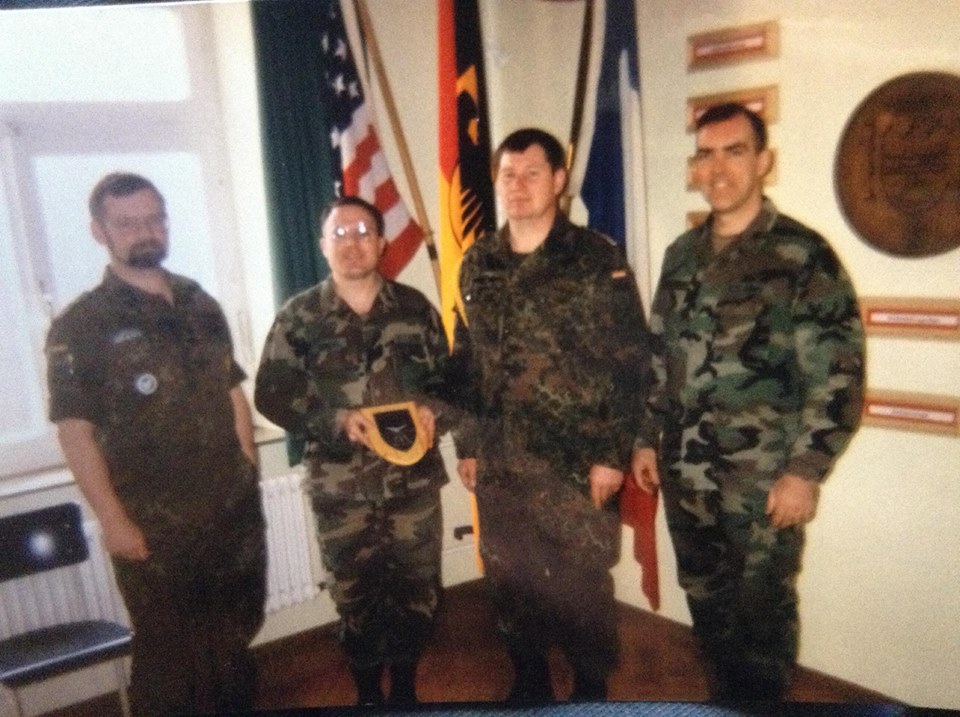
The Army, Cold War Germany, the Fulda Gap and the Berlin Wall, supporting the Bosnia mission, exercises, and active duty for training, even doing an exchange program with the German Bundeswehr.

flakfeuerwurzburg

AHSparadeeasterboardingteamfujibostonhuecityscotland

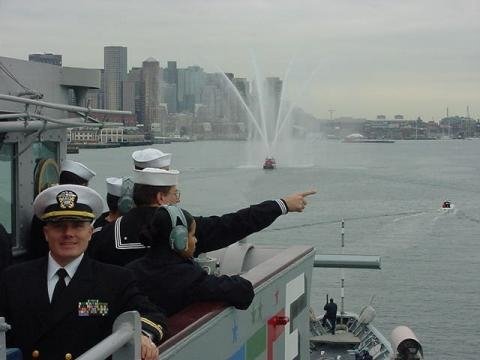
Then the path took a different direction. After 17 1/2 years in the Army Judy was looking forward to the day that I would retire from the reserves and she would have me back. Instead, I took off my rank as an Army Reserve Major and became a Navy Chaplain. Two tours with the Marine Corps, Second Marine Division and Marine Security Forces, Sea Duty on the USS Hue City, a tour with EOD, interspersed with an individual augmentee in Iraq followed by 5 years working in Medical Naval Centers or hospitals and finally serving as Chaplain and doing teaching in military ethics and military history at the Joint Forces Staff College.

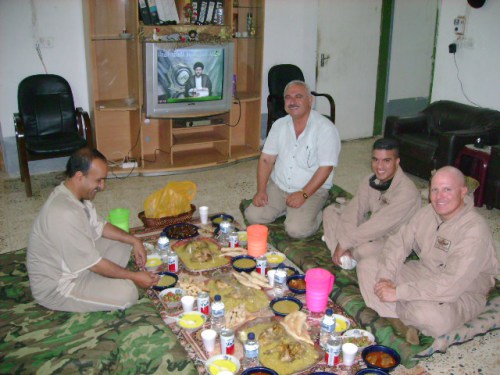
jordannellieandmeiraqramadibettertimesdinner-w-bg-sabah1

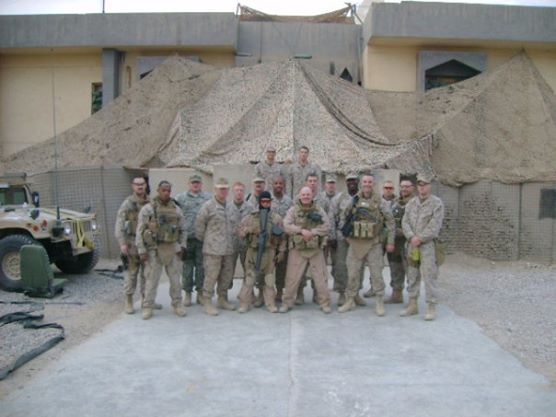
Lots of field exercises and underway periods at sea, travel around the world to support deployed Marines, a Marine Deployment to Okinawa, mainland Japan and Korea including the DMZ. Then along came the 9-11-2001 attacks and war. A deployment to the Horn of Africa, the Gulf of Oman and the Northern Arabian Gulf in support of Operation Enduring Freedom and Operation Southern Watch aboard the Hue City, served as a member of a boarding team making 75 missions to detained Iraqi Oil Smugglers and helping keep peace on those miserable ships. Traveling to Europe, the Middle East, Asia and Guantanamo Bay Cuba with the Marine Security Forces, standing at Gitmo’s Northeast Gate, and completing the “Commie Trifeca” of Cold War German, Korea and Cuba.

easterramadi2boarding teamnellieandme

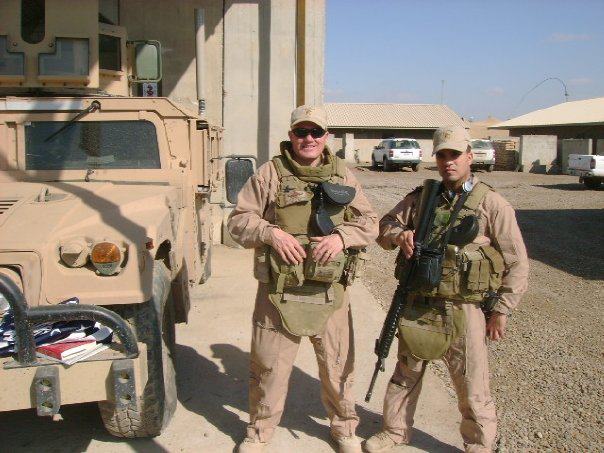
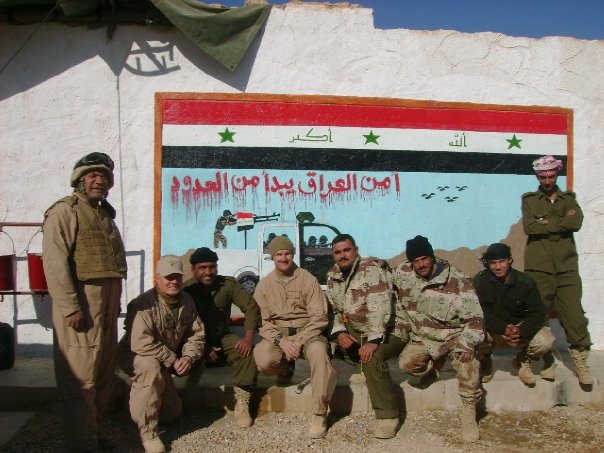
Then there was EOD, serving with some of the most amazing men and women I have ever met, a tour in Iraq with my trusty assistant, bodyguard and friend Nelson Lebron. Of course as any reader of this site knows the time in Iraq changed me forever, the aftereffects of that tour remain with me every day, the battle with PTSD, anxiety, hyper-vigilance, depression and the shattering effect of seeing that my government leaders had lied about the reasons for war and by their actions devastated a country and helped throw a region into chaos. I saw the suffering of Americans as well as Iraqis in Al Anbar Province, death, badly injured Marines, soldiers and Iraqis, poorly treated third world nationals working for Halliburton and other contractors. After coming home dealing with all of my shit while trying to care for others in back to back tours at two different Naval Medical centers or hospitals. The ongoing violence in Iraq and the fact that that unfortunate country and its people are going to suffer more haunts me. I miss Iraq, I would go back not because I love war, but because I care about the Iraqi people.

normandysstaffridestaffride

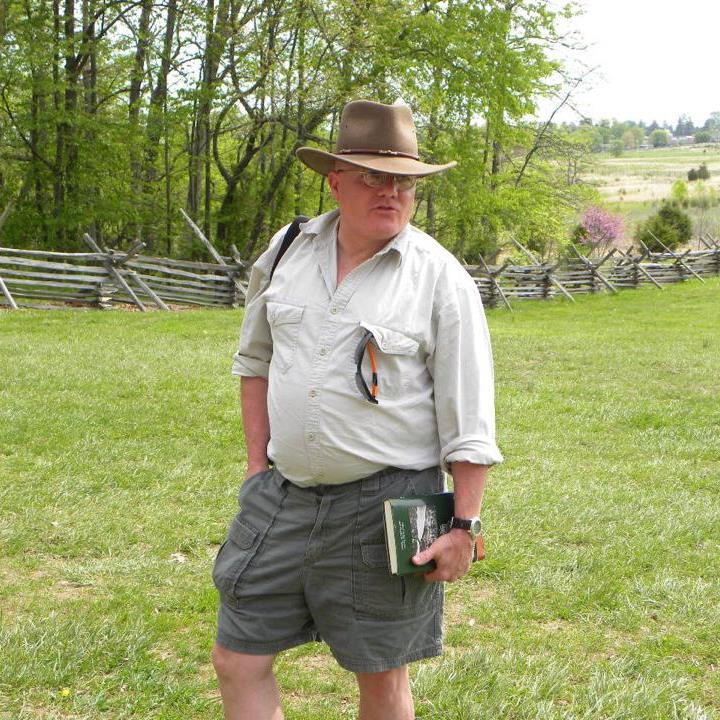
Now I minister, celebrate Eucharist in my little chapel, care for people and teach. The highlight of my life is leading our institution’s Gettysburg Staff Ride and being able to research, read, ponder, analyze and write about that campaign, the Civil War and relate it to what we teach at our institution.

meandjudyLCDRusmcballgitmojudynellieme

Throughout my career there have been two constants, my long suffering wife Judy who has spent close to ten of the last 17 or 18 years without me and those who I served alongside, many of who I am still in contact with through Facebook. I am amazed at the quality of men and women who have served alongside of me since 1981. The funny thing is that even though I probably still have another five to six years until I finally retire to civilian life, that I am watching men and women who entered the military 10-13 years after me retiring from the military.

antichaps

Thankfully I still love what I do and serve in a great place. To those who have served alongside me all these years in any capacity I thank you. You don’t get to where I am in life without a good deal of help, sage advice from men and women not afraid to speak the truth and without a bit of good luck and fortune and maybe a bit of the grace and mercy of God.

Yes it has been a long strange trip down a long and winding road, but it has been more than I could ever imagine.

Have a great night and thanks for reading,

Peace

Padre Steve+


1 Comment

Filed under Loose thoughts and musings, Military, ministry

Counting the Cost: Reflections on Armed Forces Day 2014

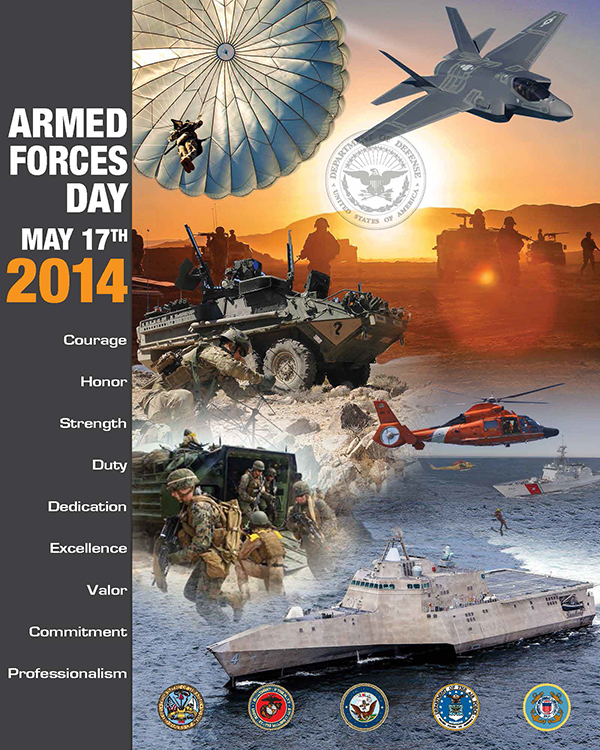
Event-Armed-Forces-Day-poster-2014

“What is the cost of war? what is the bill?…“This bill renders a horrible accounting. Newly placed gravestones. Mangled bodies. Shattered minds. Broken hearts and homes. Economic instability. Depression and all of its attendant miseries. Back -breaking taxation for generations and generations. For a great many years as a soldier I had a suspicion that war was a racket; not only until I retired to civilian life did I fully realize it….” Major General Smedley Butler USMC

Today is Armed Forces Day and unfortunately most of the country will not notice unless they are attending a Baseball game where it is being observed or some special event on a base, national cemetery, monument or VFW hall.

There are also a fair number of local celebrations to honor members of the Armed Forces across the country but for the most part they are small and not well publicized. As a career officer and son of a Vietnam veteran Navy Chief I appreciate those events and the people that put them together. Being a veteran of Operation Iraqi Freedom and Operation Enduring Freedom, especially those that have taken the time to honor Iraq and Afghanistan veterans.

At any given time less than 1% of Americans are serving in all components of the military. For over 10 years we have been at war in Afghanistan and Iraq as well as other locations that we don’t like to talk about too much. However this has not been the effort of a nation at war, it is the war of a tiny percentage of the population.

As a nation we are disconnected from the military and the wars that the military fights. The fact is that most Americans do not have a personal or vested interest in these wars, they have been insulated by political leaders of both parties from them. There is no draft, and no taxes were raised to fund the wars and the military is now worn out.

We have been at war for nearly 14 years and truthfully there is no end in sight. In that time every single Soldier, Sailor, Marine and Airman volunteered for duty or reenlisted during this time period. Motives may have varied from individual to individual, but unlike the World Wars, Korea and Vietnam every single one volunteered to serve in time of war. I think that this makes the current generation of veterans quite unique, we are no longer a military composed of citizen soldiers we are now, even our reserve components a Warrior caste, set apart from the society that we serve.

There is a tragic disconnection between the military and civilian society in the United States. This is the result of deliberate public policy since the end of the Vietnam War supported by both political parties. For almost 40 years we have relied on an all volunteer force. It is that relatively small and socially isolated military which is sent to fight wars while the bulk of the population is uninvolved and corporations, lobbyists and think tanks get rich.

Andrew Bacevich wrote in his new book Breach of Trust: How Americans failed their Soldiers and their Country:

“Rather than offering an antidote to problems, the military system centered on the all-volunteer force bred and exacerbated them. It underwrote recklessness in the formulation of policy and thereby resulted in needless, costly, and ill-managed wars. At home, the perpetuation of this system violated simple standards of fairness and undermined authentic democratic practice. The way a nation wages war—the role allotted to the people in defending the country and the purposes for which it fights—testifies to the actual character of its political system. Designed to serve as an instrument of global interventionism (or imperial policing), America’s professional army has proven to be astonishingly durable, if also astonishingly expensive. Yet when dispatched to Iraq and Afghanistan, it has proven incapable of winning. With victory beyond reach, the ostensible imperatives of U.S. security have consigned the nation’s warrior elite to something akin to perpetual war.”

Bacevich, a retired Army Colonel and Vietnam veteran who lost a son in Iraq is dead on, as is Rachel Maddow who wrote in her outstanding book Drift: The Unmooring of American Military Power:

“The reason the founders chafed at the idea of an American standing army and vested the power of war making in the cumbersome legislature was not to disadvantage us against future enemies, but to disincline us toward war as a general matter… With citizen-soldiers, with the certainty of a vigorous political debate over the use of a military subject to politicians’ control, the idea was for us to feel it- uncomfortably- every second we were at war. But after a generation or two of shedding the deliberate political encumbrances to war that they left us… war making has become almost an autonomous function of the American state. It never stops.” 

The lobbyists, pundits, politicians and preachers that promote war don’t care about the troops. This is because no matter who is in office or who controls congress these people and corporations will promote policies that keep them employed and their businesses enriched. Marine Major General and Medal of Honor winner Smedley Butler was quite right when he said:

“War is a racket. It always has been. It is possibly the oldest, easily the most, surely the most vicious. It is the only one international in scope. It is the only one in which the profits are reckoned in dollars and the losses in lives. A racket is best described, I believe, as something that is not what it seems to the majority of the people. Only a small ‘inside’ group knows what it is about. It is conducted for the benefit of the very few, at the expense of the very many. Out of war a few people make huge fortunes.”

I think that the reason that our current wars have gone on so long is the that misguided policies have brought about a chronic disconnection in our society between those that serve in the military. But how can there not be when in the weeks after 9-11 people like President Bush and others either directly or in a manner of speaking told people to “go shopping” * as we went to war in Afghanistan? When I returned from Iraq I returned to a nation that was not at war whose leaders used the war to buttress their respective political bases.

The results are terrible. Suicide rates are continuing to rise among veterans who have returned to find that neither the VA nor the civilian mental health care sector is prepared to care for them.

I think that Armed Forces Day should be better celebrated and I am grateful to the people that do things every day to thank and support military personnel. These wonderful people that do this come from across the political spectrum. Some are veterans and others non-veterans. But they care for and appreciate the men and women that serve in and fight the wars that no-one else can be bothered to fight.

481801_10151367001287059_1003164983_n-2

Of course the politicians, pundits, preachers and the defense contractors, banks and lobbyists will find a way to profit. They will do so no matter how many more troops are killed, wounded or injured and how badly it affects military personnel or their families and will push to abandon those who fought as they do after every war. After all, to quote Smedley Butler, “war is a racket.”

Peace

Padre Steve+

President Bush’s actually words were “Now, the American people have got to go about their business. We cannot let the terrorists achieve the objective of frightening our nation to the point where we don’t — where we don’t conduct business, where people don’t shop…” http://georgewbush-whitehouse.archives.gov/news/releases/2001/10/20011011-7.html

2 Comments

Filed under History, iraq,afghanistan, leadership, Military, national security, Political Commentary

Padre Steve’s World at Five Years: Writing My Way to Freedom as a Passionate Moderate

1622612_10152232336042059_727365308_n

“If you want to be a writer, you have to write every day… You don’t go to a well once but daily. You don’t skip a child’s breakfast or forget to wake up in the morning…” Walter Moseley

Friends of Padre Steve’s World. Five years ago I began to write on Padre Steve’s World…Musings of Passionate Moderate.

The name was chosen for a number of reasons. Padre Steve’s World hearkened back to one of my favorite Saturday Night Live skits and later films, Wayne’s World. The idea of musings is fairly self explanatory, these are, regardless of the subject my musings, inspired by whatever muse inhabits me. Finally the idea of a “Passionate Moderate” hearkened back to my days in seminary. Passionate and moderate are not terms that one generally links together, in fact when I was in seminary the term moderate was a term of distain used by some Christian Conservatives and Fundamentalists to vilify those that did not match their definition of a conservative. I chose the two ideas because to many people, on the right and the left cannot imagine a “Moderate” being passionate.

403194_10150592726767059_1694849983_n

However that moderation does not mean that I do not have strong ideas, beliefs and convictions, even when I can see truth in what others who do not agree with me have to say. Over the past five years my identity has become more established. I am a moderate, but in some ways I am a progressive liberal, in others a conservative. Regardless of where I fall in the religious, social and political continuum I am passionate about what I believe, I do seek the truth, but at the same time I attempt to maintain a moderate view that allows me to hear what others say and believe with an open heart.

66676_10151588314727059_1328768518_n

Padre Steve’s World began as a place to share my struggles with faith, PTSD and its effects on my life and coming home from war changed. It was something that was born out of pain, but also born out of love, love for writing, love for truth, love for justice and love of knowledge.

599056_10151549893822059_1921818584_n

As I began to write my life was coming apart, and writing became a place where could express my inner angst, find community and begin to heal. Engaging my creative muse enabled me to share those things that it was hard to do anywhere else. Many times those were the hardest things to say, the hardest things to put down in pen and ink, the things that were the secrets of my heart. Sometimes, just trying to write them was gut wrenching and filled my eyes with tears. But as I wrote, I discovered myself, discovered people for whom what I wrote resinated, and others that Stephen King said something that finds an echo in my life and heart:

“The most important things are the hardest to say. They are the things you get ashamed of, because words diminish them — words shrink things that seemed limitless when they were in your head to no more than living size when they’re brought out. But it’s more than that, isn’t it? The most important things lie too close to wherever your secret heart is buried, like landmarks to a treasure your enemies would love to steal away. And you may make revelations that cost you dearly only to have people look at you in a funny way, not understanding what you’ve said at all, or why you thought it was so important that you almost cried while you were saying it. That’s the worst, I think. When the secret stays locked within not for want of a teller but for want of an understanding ear.”

That being said when I began much of what I wrote about was either dealing with my struggles or about things I knew a lot about. Those subjects included history, military subjects, theology and the Christian life and baseball. As I began to expand my writings the topics broadened to include political commentary, music, civil rights and the role of religion in public life.

n671902058_1153828_4309

When I did this I decided not to shy away from controversial topics and to risk the rejection of some. The consequences of this his became quite real in September of 2010 when I was told to leave a church that I had served for 14 years as a Priest. Since then I still write about topics that are controversial, though I do try my best to be fair when I do so.

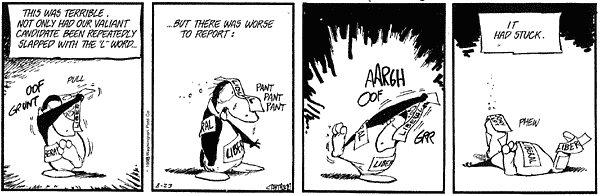
bloom-county-the-label-stuck

Mark Twain advised writers to “write what they know.” Fortunately for me that was not hard, I know a lot about a lot of subjects. That is not a boast, but merely a recognition that between a lot of academic study, a lot of reading and a lot of life experience I have a pretty good repository of knowledge, including a lot of odd knowledge. That would make me a Keeper Of Odd Knowledge, or KOOK. I can live with that too.

971505_10151793473982059_531695883_n

That being said I am not one to think that I know it all, I follow the advice of the late manager of the Baltimore Orioles, Earl Weaver that “It’s what you learn after you know it all that counts.” Since PTSD and the Moral Injury that I had suffered in Iraq was kicking my ass when I began to write, and I was finding that I really didn’t know much of anything that I thought I knew about life I did take this advice to heart.

Stephen King noted that “If you want to be a writer, you must do two things above all others: read a lot and write a lot.”  The fact is I have always been an avid reader, mostly of history, military history and theory, church history, theology, biography and other more academic writings from the social and political sciences. I do not read a lot of fiction, however that being said there are some books as well as book series that I like. I love fiction that deals with history, as well as mysteries and science fiction, the latter because both lure me into the realm of possibility and mystery, subjects that fascinate me.

321466_10151445269932059_173643368_n

The fact that I read a lot inspires me to write on a wide variety of subjects. Likewise the more I write the more I become conscious of life as well as a desire to seek out truth, and when I write, whether it is something to do with history, faith, baseball or even my occasional forays into fiction and fantasy. As I do this it makes me appreciate the other writers even more, because I no longer see them just in light of what they write, but how they struggle with the same things I struggle with, I can appreciate the truth and beauty in what they write, and it decreases my sense of isolation, which since Iraq has often been crushing. I can agree with Annie Lamott wrote:

“Becoming a writer is about becoming conscious. When you’re conscious and writing from a place of insight and simplicity and real caring about the truth, you have the ability to throw the lights on for your reader. He or she will recognize his or her life and truth in what you say, in the pictures you have painted, and this decreases the terrible sense of isolation that we have all had too much of.”

I read all the time and I try to write every day, if I cannot do that I feel that I have missed out on something. If I do not write it is almost if I have missed breathing. My mind is constantly musing on things to write about and sometimes it is only the fact that I have a day job that keeps me from writing even more than I do. Like Hedley Lamarr (Harvey Korman) in Blazing Saddles I have to admit that “My mind is aglow with whirling, transient nodes of thought careening through a cosmic vapor of invention.” But I digress…

Admittedly I do write a lot and I do try to write every day. Not counting what I do for work, academic pursuits or teaching I have posted over 1700 articles on this website since I started it in February 2009. If I ever take the time to organize and edit what I have on this site there is probably enough for several books.

530402_10151878451172059_1439813480_n

For me writing has been part of my quest for healing, the discovery of truth and the desire to be part f a community of people that is bigger than me, or anything that I can do on my own.  It really is about life, and if as some would think that I am a fool for doing this, then that is their loss. I don’t mind being considered a fool in this quest. Ray Bradbury, author of Fahrenheit 451 wrote:

“If you want to write, if you want to create, you must be the most sublime fool that God ever turned out and sent rambling. You must write every single day of your life. You must read dreadful dumb books and glorious books, and let them wrestle in beautiful fights inside your head, vulgar one moment, brilliant the next. You must lurk in libraries and climb the stacks like ladders to sniff books like perfumes and wear books like hats upon your crazy heads.”

I can agree with Bradbury’s thoughts on this. I do not know what the future holds. If I were God I would live to be one hundred years old and be active reading, writing, thinking and interacting with others who seek truth.

994899_10151847060517059_47934649_n

So tonight I wish the writers, artists and thinkers who read this the best. To close I provide you the benediction of Bradbury:

“I wish you a wrestling match with your Creative Muse that will last a lifetime. I wish craziness and foolishness and madness upon you. May you live with hysteria, and out of it make fine stories — science fiction or otherwise. Which finally means, may you be in love every day for the next 20,000 days. And out of that love, remake a world.”

Peace

Padre Steve+


1 Comment

Filed under faith, Loose thoughts and musings

The Continuing Journey: Reflections of 6 Years Dealing with PTSD Faith and Life

tom-clancy-look-2

“You wonder what I am doing? Well, so do I, in truth. Days seem to dawn, suns to shine, evenings to follow, and then I sleep. What I have done, what I am doing, what I am going to do, puzzle and bewilder me. Have you ever been a leaf and fallen from your tree in autumn and been really puzzled about it? That’s the feeling.” T. E. Lawrence, Letter 1935

It has been six full years since I descended into the hell of the abyss that is PTSD. Back in the late spring and early summer of 2008 just a few months after my return from what I still consider my best tour of duty in over 30 years of military service with US advisors and Iraq Army and Security forces in Al Anbar Province in 2007-2008 I was in a state of emotional and spiritual collapse.

I really couldn’t believe then what was happening to me or they way that it would end up shaping my life to the present day. In retrospect my return from Iraq marked a beginning of a personal hell that for a number of years seemed like that it would never end. It was painful, it was isolating and it marked a profound change in the way that I saw God, faith, politics and social justice. It changed me in ways that I never could have imagined when I got on a bus heading for Fort Jackson South Carolina following the July 4th holiday of 2007.

Those brave souls that have followed me on this website as well as those that are still my friends despite occasional disagreements and misunderstandings, those that may not understand me but still are my friends have seen this.

So six years later what is it like?

I still have trouble sleeping, not as much as I used to but enough to impact my life. I don’t take heavy doses of sleep meds anymore, just some Melatonin as well as a mild dosage of an anti-anxiety medication and anti-depressant. A far better combination than medications that made me feel like I was hung over without that benefit of sharing too many drinks with friends at the local watering hole.

As opposed to the years immediately following my time in Iraq I have to say that I am no longer self medicating with alcohol. I remember in 2009 going out for dinner, having a few beers, then going to a ball game and drinking a few more and coming home with Krispy Kreme donuts and drinking more beer on a regular basis and usually taking a couple of shots or Jaegermeister or glasses of Spanish Brandy just to get to sleep so I could go back to facing life and death situations the next day in our ICUs. I don’t need that anymore, even though sleep can be problematic and dreams and nightmares rivaling anything I can watch on my HD TV…

I still love to pony up to the bar and share a couple of pints with friends but I don’t need it to numb myself into feeling no pain. Talking with many other vets who have served in Iraq, Afghanistan or even Vietnam I know that I wasn’t alone in those dark days.

I have become a bit less hyper-vigilant though when I come home to Virginia Beach than I was just three years ago and most certainly five years ago in May of 2008. However, that being said I do notice that I am more on guard on the roads and that little things, sirens, emergency vehicles, loud noises and traffic still set me off more than when I lived in rural North Carolina while stationed at Camp LeJeune from 2010 until August of 2013.

I absolutely hate air travel. I don’t like the crowds, the stress of security or the constant delays, changes and overcrowding. Truthfully I felt more comfortable flying the skies of Iraq on Marine, Army and Air Force fixed and rotor wing aircraft and on occasion being shot at in Iraq’s Al Anbar Province than I do on any airline today in this country.

I have become exceptionally sensitive to tragedy, death and suffering. The loss of friends or major incidents where military personnel are killed in combat, training missions or just doing their job hits me hard. The worst times are when friends, or others that I know die by their own hand. When they are veterans who suffer from PTSD, TBI or Moral Injury it is like a dagger plunging into me.

Physical fitness matters more than it did before, even though I was in very good shape before and during my time in Iraq. But when I came home from that I was not only wounded in mind and spirit, but my body was beaten up. Chronic nagging injuries and chronic pain kept me from doing what I liked doing and what helped me keep my physical-spiritual and emotional balance. Those nagging injuries took a long time to heal, and they took some adjustments on my part which took me several years to adapt to and compensate in my physical regimen.  I can say now that I am in as good or better shape than I was before I left for Iraq in 2007. Maybe I’ll write a best selling book and do an exercise video like Jane Fonda…

Whereas in 2008 through 2010 and even until 2011 I was exceptionally sensitive to criticism to the changes that were occurring in my life including my move to the “left” both theologically and politically I have gotten to the point that I realize that it is more important to be honest and authentic as to who I am and what I believe. I have found that those that really matter to me don’t care so much about those things and that relationships maintained with people who don’t always agree with each other where all remain their personal integrity are far more rewarding than relationships that are first and foremost decided by allegiance to political or religious orthodoxy no matter what side of the spectrum it is from. I hate group think. Thus though I have to now consider me to be on the “liberal” side of the political and theological divide I still have to be considered a moderate simply because I refuse to make people my enemy simply because I disagree with them or they with me.

When I began this site in the spring of 2009 I named it Padre Steve’s World…Musings of a Passionate Moderate. I think I did that because it actually described me then, and now, even though I am pretty passionately liberal about some things and that doesn’t bother me in any way because it comes from my wrestling with God and faith and realizing that integrity matters more than about anything else. I have toyed with changing the title of the site but have decided against that because I am a moderate liberal committed to a Christian faith that speaks for the oppressed and is willing to confront those that would use faith, political or economic power to oppress the weak or those different from us.

Since I returned from Iraq in 2008 I discovered what it was to really question faith and God. To become for a couple of years a man who was for all practical purposes an agnostic praying that God still existed and cared. I discovered that in doing so that faith returned, different but more real than I had ever experienced in a life spent in the Christian faith and ministry.

My agnostic period gave me an immense empathy and appreciation for those who have lost faith, struggle with faith or reject any concept of God. I value reason as much, maybe if not more than faith now, not that reason is infallible or perfect, but it does allow me to evaluate my faith, and appreciate the amazing mysteries of the universe that our science and technology continue to reveal in ever more complex detail.

That brought change because my rediscovered faith brought me into conflict with people in the church denomination and faith community where I had been ordained as a priest. I was asked to leave and found a new home church and denomination that fit my life, faith experience and where I could live and minister in complete integrity. In the church that took me in during the fall of 2010 I can be faithful to the Gospel and care for the lost, the least and the lonely, especially those who have been abused by churches and ministries that have sold their soul to right wing political ideologues whose only concern is their political power and influence and would use churches and Christians to do their evil bidding. I guess that I learned that just because someone wraps the Bible in an American Flag, believes that Jesus brought us the Constitution and says that they “support the troops” it doesn’t necessarily mean that they care a whit about the Bible, the Flag, the Constitution or the Troops. I hope that isn’t too harsh….

Oh well, I feel that I am beginning to ramble so I will say good night and “God Bless,” no matter what God that you profess or for that matter don’t profess.

Peace

Padre Steve+

Leave a comment

Filed under faith, iraq,afghanistan, Military, PTSD

God in the Empty Places, Six Years After Iraq

313_34838767058_2205_n

Leaving Iraq, January 31st 2008

Six years ago I arrived home from Iraq. It was the beginning of a new phase in my life.  I wrote an article shortly after my return for the church that I belonged to at the time and I have republished it around this time of year a number of times.

When I wrote it I really had no idea how much I had changed and what had happened to me. When I wrote it I was well on my way to a complete emotional and spiritual collapse due to PTSD.  Things are better now but it was a very dark time for several years and occasionally I still have my bad days.

These wars in Iraq and Afghanistan have been terribly costly in lives, treasure and they have lost almost all sense of public support. I have been in the military almost all of my adult life, over 32 years. I am also a historian and the son of a Vietnam Veteran. Thus, I feel special kinship with those that have fought in unpopular wars before me. French Indochina, Algeria and Vietnam, even the Soviet troops in Afghanistan before we ever went there. 

533506_10151366982462059_34997654_n

I am honored to have served with or known veterans of Vietnam, particularly the Marines that served at the Battle of Hue City, who are remembering the 44th anniversary of the beginning of that battle.  My dad also served in Vietnam at a place called An Loc. He didn’t talk about it much and I can understand having seen war myself. 

When I look up at the moonlit sky I think about seeing all of those stars and the brilliance of the moon over the western desert of Iraq near Syria. Somehow, when I see that brilliant sight it comforts me instead of frightens me. 

295_26912092058_3949_n

Tonight our Soldiers, Marines, Sailors and Airmen serve in harm’s way nearly 35,000 in Afghanistan alone. We are sort of out of Iraq but Lord knows how things will turn out in the long run, and it appears that another major Battle of Fallujah is shaping up.  

Tonight I am thinking about them, as well as those men who fought in other unpopular wars which their nation’s government’s sent them. 

dien-bien-phu6

When I left Iraq I was traumatized. All that I had read about our Vietnam veterans, the French veterans of Indochina and Algeria and the Soviet veterans of Afghanistan resonated in my heart. The words of T. E. Lawrence, Smedley Butler, Erich Maria Remarque and Guy Sager also penetrated the shields I had put around my heart. 

So I wrote, and I wrote, and I still write. But tonight here is God in the empty Places.

262_29132262058_8844_n-2

God in the Empty Places. 

I have been doing a lot of reflecting on ministry and history over the past few months. While both have been part of my life for many years, they have taken on a new dimension after serving in Iraq. I can’t really explain it; I guess I am trying to integrate my theological and academic disciplines with my military, life and faith experience since my return.

The Chaplain ministry is unlike civilian ministry in many ways. As Chaplains we never lose the calling of being priests, and as priests in uniform, we are also professional officers and go where our nations send us to serve our Soldiers, Sailors, Marines and Airmen. There is always a tension, especially when the wars that we are sent to are unpopular at home and seem to drag on without the benefit of a nice clear victory such as VE or VJ Day in World War II or the homecoming after Desert Shield and Desert Storm.

french-chaplain-and-soldiers-2

It is my belief that when things go well and we have easy victories that it is easy for us to give the credit to the Lord and equally easy for others to give the credit to superior strategy, weaponry or tactics to the point of denying the possibility that God might have been involved. Such is the case in almost every war and Americans since World War Two have loved the technology of war seeing it as a way to easy and “bloodless” victory. In such an environment ministry can take on an almost “cheer-leading” dimension. It is hard to get around it, because it is a heady experience to be on a winning Army in a popular cause. The challenge here is to keep our ministry of reconciliation in focus, by caring for the least, the lost and the lonely, and in our case, to never forget the victims of war, especially the innocent among the vanquished, as well as our own wounded, killed and their families.

377

But there are other wars, many like the current conflict less popular and not easily finished. The task of chaplains in the current war, and similar wars fought by other nations is different. In these wars, sometimes called counter-insurgency operations, guerrilla wars or peace keeping operations, there is no easily discernible victory. These types of wars can drag on and on, sometimes with no end in sight. Since they are fought by volunteers and professionals, much of the population acts as if there is no war since it does often not affect them, while others oppose the war.

Likewise, there are supporters of war who seem more interested in political points of victory for their particular political party than for the welfare of those that are sent to fight the wars. This has been the case in about every war fought by the US since World War II. It is not a new phenomenon. Only the cast members have changed.

legion-algeria1

This is not only the case with the United States. I think that we can find parallels in other militaries. I think particularly of the French professional soldiers, the paratroops and Foreign Legion who bore the brunt of the fighting in Indochina, placed in a difficult situation by their government and alienated from their own people. In particular I think of the Chaplains, all Catholic priests save one Protestant, at the Battle of Dien Bien Phu, the epic defeat of the French forces that sealed the end of their rule in Vietnam. The Chaplains there went in with the Legion and Paras. They endured all that their soldiers went through while ministering the Sacraments and helping to alleviate the suffering of the wounded and dying. Their service is mentioned in nearly every account of the battle. During the campaign which lasted 6 months from November 1953 to May 1954 these men observed most of the major feasts from Advent through the first few weeks of Easter with their soldiers in what one author called “Hell in a Very Small Place.”
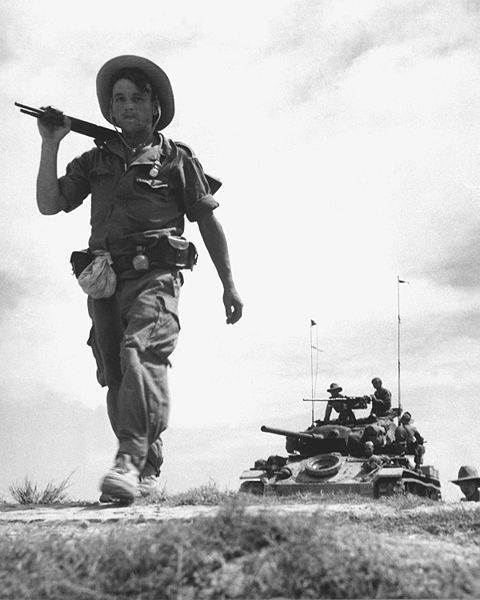
frenchforeignlegionairevtnamdod-2

Another author describes Easter 1954: “In all Christendom, in Hanoi Cathedral as in the churches of Europe the first hallelujahs were being sung. At Dienbeinphu, where the men went to confession and communion in little groups, Chaplain Trinquant, who was celebrating Mass in a shelter near the hospital, uttered that cry of liturgical joy with a heart steeped in sadness; it was not victory that was approaching but death.” A battalion commander went to another priest and told him “we are heading toward disaster.” (The Battle of Dienbeinphu, Jules Roy, Carroll and Graf Publishers, New York, 1984 p.239)

Of course one can find examples in American military history such as Bataan, Corregidor, and certain battles of the Korean War to understand that our ministry can bear fruit even in tragic defeat. At Khe Sahn in our Vietnam War we almost experienced a defeat on the order of Dien Bien Phu. It was the tenacity of the Marines and tremendous air-support that kept our forces from being overrun.

You probably wonder where I am going with this. I wonder a little bit too. But here is where I think I am going. It is the most difficult of times; especially when units we are with take casualties and our troops’ sacrifice is not fully appreciated by a nation absorbed with its own issues.

legion-indo-china

For the French the events and sacrifices of their soldiers during Easter 1954 was page five news in a nation that was more focused on the coming summer. This is very similar to our circumstances today because it often seems that own people are more concerned about economic considerations and the latest in entertainment news than what is going on in Iraq or Afghanistan.

french-at-dien-bien-phu

The French soldiers in Indochina were professionals and volunteers, much like our own troops today. Their institutional culture and experience of war was not truly appreciated by their own people, or by their government which sent them into a war against an opponent that would sacrifice anything and take as many years as needed to secure their aim, while their own countrymen were unwilling to make the sacrifice and in fact had already given up their cause as lost. Their sacrifice would be lost on their own people and their experience ignored by the United States when we sent major combat formations to Vietnam in the 1960s.

In a way the French professional soldiers of that era, as well as British colonial troops before them have more in common with our current all volunteer force than the citizen soldier heroes of the “Greatest Generation.” Most of them were citizen soldiers who did their service in an epic war and then went home to build a better country as civilians. We are now a professional military and that makes our service a bit different than those who went before us.

943043_10151694525692059_632653331_n

Yet it is in this very world that we minister, a world of volunteers who serve with the highest ideals. We go where we are sent, even when it is unpopular. It is here that we make our mark; it is here that we serve our Soldiers, Sailors, Marines and Airmen. Our duty is to bring God’s grace, mercy and reconciliation to men and women, and their families who may not see it anywhere else. Likewise we are always to be a prophetic voice within the ranks.

When my dad was serving in Vietnam in 1972 I had a Sunday school teacher tell me that he was a “Baby Killer.” It was a Catholic Priest and Navy Chaplain who showed me and my family the love of God when others didn’t. In the current election year anticipate that people from all parts of the political spectrum will offer criticism or support to our troops. Our duty is to be there as priests, not be discouraged in caring for our men and women and their families because most churches, even those supportive of our people really don’t understand the nature of our service or the culture that we represent. We live in a culture where the military professional is in a distinct minority group upholding values of honor, courage, sacrifice and duty which are foreign to most Americans. We are called to that ministry in victory and if it happens someday, defeat. In such circumstances we must always remain faithful.

For those interested in the French campaign in Indochina it has much to teach us. Good books on the subject include The Last Valley by Martin Windrow, Hell in a Very Small Place by Bernard Fall; The Battle of Dienbeinphu by Jules Roy; and The Battle of Dien Bien Phu- The Battle America Forgot by Howard Simpson. For a history of the whole campaign, read Street Without Joy by Bernard Fall. I always find Fall’s work poignant, he served as a member of the French Resistance in the Second World War and soldier later and then became a journalist covering the Nuremberg Trials and both the French and American wars in Vietnam and was killed by what was then known as a “booby-trap” while covering a platoon of U.S. Marines.

madonna-of-stalingrad-2

There is a picture that has become quite meaningful to me called the Madonna of Stalingrad. It was drawn by a German chaplain-physician named Kurt Reuber at Stalingrad at Christmas 1942 during that siege. He drew it for the wounded in his field aid station, for most of whom it would be their last Christmas. The priest would die in Soviet captivity and the picture was given to one of the last officers to be evacuated from the doomed garrison. It was drawn on the back of a Soviet map and now hangs in the Kaiser Wilhelm Memorial Church in Berlin where it is displayed with the Cross of Nails from Coventry Cathedral as a symbol of reconciliation. I have had it with me since before I went to Iraq. The words around it say: “Christmas in the Cauldron 1942, Fortress Stalingrad, Light, Life, Love.” I am always touched by it, and it is symbolic of God’s care even in the midst of the worst of war’s suffering and tragedy. I have kept a a copy hanging over my desk in my office since late 2008. It still hangs in my new office.

Peace

Padre Steve+

1 Comment

Filed under History, iraq,afghanistan, middle east, ministry, PTSD, Tour in Iraq

Gratitude, Relationships and Hope; Even in Death

n671902058_1219154_8844

“Gratitude changes the pangs of memory into a tranquil joy.” Dietrich Bonhoeffer

Today I was able to attend the Celebration of Life for Captain Tom Sitsch. It was good to be able to attend. I was able to meet his brother Mike and Sister Karen as well as many others who knew and loved Tom. These included men that I know from my time with EOD Group Two, some of whom have since retired from the military.

I was touched by the words that Mike and Karen spoke about Tom, as well as the remembrances of others. There were times during the service that I felt tears coming down my cheeks, and when I needed to wipe them from my eyes.

The pastor who spoke mentioned something that resonated with me. He noted that when he talked with Tom about God and faith, that Tom commented to him that “after all he had seen and experienced he didn’t know if he could believe in God.” That I can understand, there is something about the moral injury of war, not just the the physical injuries sustained or the clinical diagnosis of PTSD, or Traumatic Brain Injury that does terrible damage to the soul. A good number of people noted that they thought that he saw something, or experienced a loss in his last tour in Iraq that shook him beyond anything he had ever anticipated. That too I can understand.

It was good to be able to be invited to attend and for me it was a good chance to remember the life of a man who was there for me when I needed it. There was a slide show that depicted Tom’s life, his love for is family, his military career and the life that he attempted to life after his retirement. Between the stories, the shared memories and the pictures I gained an even greater appreciation for Tom Sitsch.

On a personal side it was just good to be there with people who knew and loved Tom. It was really good for me because for once I didn’t have any official role. I cannot remember the last time when I went to a memorial service where I was not involved in the planning, execution or participation in it, quite often as the primary speaker. For once I was able to grieve, remember and celebrate the man that I knew with others whose lives he touched.

It was just good to be with such good people, all of who loved and cared for Tom. There is something healing when people are able to grieve the loss of someone they love together. It is healing, even when tears are shed. Unfortunately, there is nothing any of us can do to bring Tom back. We all, his family, friends, and those that he served alongside all grieve, each in our own way, but we share a common grief, that of the loss of a man who touched our lives.

Dietrich Bonhoeffer noted about loss:

“There is nothing that can replace the absence of someone dear to us, and one should not even attempt to do so. One must simply hold out and endure it. At first that sounds very hard, but at the same time it is also a great comfort. For to the extent the emptiness truly remains unfilled one remains connected to the other person through it. It is wrong to say that God fills the emptiness. God in no way fills it but much more leaves it precisely unfilled and thus helps us preserve — even in pain — the authentic relationship. Further more, the more beautiful and full the remembrances, the more difficult the separation. But gratitude transforms the torment of memory into silent joy. One bears what was lovely in the past not as a thorn but as a precious gift deep within, a hidden treasure of which one can always be certain.” 

The loss of Tom Sitsch left all of us with many beautiful remembrances, which as Bonhoeffer so correctly noted that his separation from us s “more difficult.”

But in the midst of the deep feelings of loss that all of us felt, there were questions. Many wondered what they could have done to change the tragic outcome. The question of “what if?” bothers all of us. Likewise, there was the realization that there are others, who like Tom who need help and are probably not getting it.

My prayers go put to all those who feel the loss of Tom Sitsch, especially his family, friends and those that served with him.

Tonight I heard from a Navy Chaplain that I had not talked to in a long time. It was really good to spend time on the phone with him. I had the honor of baptizing his children back in 2000 when he was my Religious Program specialist. He went on to become a chaplain and do well, serving in the thick of the fighting in Al Anbar Province with a Marine Corps infantry battalion, just missing getting blown up in a large IED blast after completing a service for Marines at a Combat Outpost. He will be retiring later this year, and I hope that he can get on with the Veterans Administration to continue to care for our veterans.

I do hope that in some little way that I can be of help to those who grieve, and those whose lives have been torn apart by the trauma of war. Hopefully, in my own small way, even though I am often filled with doubt, unbelief, and usually have more questions than I have answers, I can at least be there for people who struggle.

I go to bed tonight grateful for what Tom Sitsch did for me; for being invited to attend the service today, to be with others who grieve, and to reunite with an old friend. Those are some of the remarkable things about military life that I am thankful.

Well, that is all for tonight, except for a prayer:

Keep watch, dear Lord, with those who work, or watch, or
weep this night, and give your angels charge over those who
sleep. Tend the sick, Lord Christ; give rest to the weary, bless
the dying, soothe the suffering, pity the afflicted, shield the
joyous; and all for your love’s sake. Amen. (From the Book of Common Prayer) 

Peace

Padre Steve+

Leave a comment

Filed under Loose thoughts and musings

“A Foreign World”: The High Cost of Coming Home from War

295_26912117058_5652_n

For me it began in February 2008 when on the way back from Iraq the military charter aircraft bringing us home stopped in Ramstein Germany. After a few hour layover we re-boarded the aircraft but we were no longer alone, the rest of the aircraft had been filled with the families of soldiers and airmen stationed in Germany. Just days before most of us had been in Iraq or Afghanistan. The cries of children and the intrusion of these people, not bad people by any means on our return flight was shocking, it was like returning to a world that I no longer knew.

I think that coming home from war, especially for those damaged in some way, in mind, body or spirit is harder than being at war. In that thought I am not alone. Erich Maria Remarque in his classic novel All Quiet on the Western Front wrote:

“I imagined leave would be different from this. Indeed, it was different a year ago. It is I of course that have changed in the interval. There lies a gulf between that time and today. At that time I still knew nothing about the war, we had been only in quiet sectors. But now I see that I have been crushed without knowing it. I find I do not belong here any more, it is a foreign world.” Erich Maria Remarque in All Quiet on the Western Front

Likewise, Guy Sager a French-German from the Alsace and veteran of the Grossdeutschland Division on the Eastern Front in World War II noted at the end of his book The Forgotten Soldier: 

“In the train, rolling through the sunny French countryside, my head knocked against the wooden back of the seat. Other people, who seemed to belong to a different world, were laughing. I couldn’t laugh and couldn’t forget.” Guy Sager in The Forgotten Soldier

I have been reminded of this several times in the past week. It began walking through a crowded Navy commissary on Saturday, in the few minutes in the store my anxiety level went up significantly. On Tuesday I learned of the death of Captain Tom Sitsch my last Commodore at EOD Group Two, who died by his own hand. His life had come apart. After a number of deployments to Iraq as the Commander EOD Mobile Unit 3 and of Task Force Troy he was afflicted with PTSD. Between June of 2008 and the end of 2009 he went from commanding an EOD Group to being forced to retire.  Today I had a long talk with a fairly young friend agonizing over continued medical treatments for terminal conditions he contracted in two tours in Iraq where he was awarded the Bronze Star twice.

I have a terrible insomnia, nightmares and night terrors due to PTSD. My memories of Iraq are still strong, and this week these conditions have been much worse. Sager wrote:

“Only happy people have nightmares, from overeating. For those who live a nightmare reality, sleep is a black hole, lost in time, like death.”

Nearly 20 years after returning from war, a survivor of the 1st Battalion 308th Infantry, the “Lost Battalion” of World War One, summed up the experience of so many men who come back from war:

“We just do not have the control we should have. I went through without a visible wound, but have spent many months in hospitals and dollars for medical treatment as a result of those terrible experiences.”

Bradley-12-2

Two time Medal of Honor winner Major General Smedley Butler toured Veterans hospitals following his retirement from the Marine Corps. He observed the soldiers who had been locked away. In his book War is a Racket:

“But the soldier pays the biggest part of this bill. If you don’t believe this, visit the American cemeteries on the battlefields abroad. Or visit  any of the veterans’ hospitals in the United States….I have visited eighteen government hospitals for veterans. In them are about 50,000 destroyed men- men who were the pick of the nation eighteen years ago. The very able chief surgeon at the government hospital in Milwaukee, where there are 3,800 of the living dead, told me that mortality among veterans is three times as great as among those who stayed home.”

Similarly Remarque wrote in All Quiet on the Western Front:

“A man cannot realize that above such shattered bodies there are still human faces in which life goes its daily round. And this is only one hospital, a single station; there are hundreds of thousands in Germany, hundreds of thousands in France, hundreds of thousands in Russia. How senseless is everything that can ever be written, done, or thought, when such things are possible. It must be all lies and of no account when the culture of a thousand years could not prevent this stream of blood being poured out, these torture chambers in their hundreds of thousands. A hospital alone shows what war is.”

Lt.ColonelCharlesWhiteWhittlesey

Sometimes even those who have been awarded our Nation’s highest award for valor succumb to the demons of war that they cannot shake, and never completely adjust to life at “home” which is no longer home. For them it is a different, a foreign world to use the words of Sager and Remarque. Lieutenant Colonel Charles Whittlesey won the Congressional Medal Medal of Honor as Commander of 1st Battalion 308th Infantry, the “Lost Battalion” in France. After the war he was different. He gave up his civilian law practice and served as head of the Red Cross in New York. In that role, and as the Colonel for his reserve unit, he spent his time visiting the wounded who were still suffering in hospitals. He also made the effort to attend the funerals of veterans who had died. The continued reminders of the war that he could not come home from left him a different man. He committed suicide on November 21st 1921not long after serving as a pallbearer for the Unknown Soldier when that man was interred at Arlington National Cemetery.

In the eulogy Judge Charles L. Hibbard noted:

“He is sitting on the piazza of a cottage by the sea on a glorious late September day but a few weeks ago. . . He is looking straight out to sea, with naught but sea between him and that land where lie so many of his boys. The beating surf is but an echo, the warm, bright sunshine, the blue sky, the dancing waves, all combine to charm. But a single look at his face and one knows he is unconscious of this glory of Nature. Somewhere far down in the depths of his being or in imagination far off across the waters he lives again the days that are past. That unconscious look has all the marks of deep sorrow, brooding tragedy, unbearable memories. Weeks pass. The mainspring of life is wound tighter and tighter and then comes the burial of the Unknown Soldier. This draws the last measure of reserve and with it the realization that life had little now to offer. This quiet, reserved personality drew away as it were from its habitation of flesh, thought out the future, measured the coming years and came to a mature decision. You say, ‘He had so much to live for – family, friends, and all that makes life sweet.’ No, my friends, life’s span for him was measured those days in that distant forest. He had plumbed the depth of tragic suffering; he had heard the world’s applause; he had seen and touched the great realities of life; and what remained was of little consequence. He craved rest, peace and sweet forgetfulness. He thought it out quietly, serenely, confidently, minutely. He came to a decision not lightly or unadvisedly, and in the end did what he thought was best, and in the comfort of that thought we too must rest. ‘Wounded in action,’ aye, sorely wounded in heart and soul and now most truly ‘missing in action.’”

Psychologist and professor Dr Ari Solomon analyzed the case of Colonel Whittlesey and noted:

“If I could interview Whittlesey as a psychologist today, I’d especially have in mind … the sharp discrepancy between the public role he was playing and his hidden agony, his constant re-exposure to reminders of the battle, his possible lack of intimate relations, and his felt need to hide his pain even from family and dearest friends.”

I wish I had the answer. I have some ideas that date back to antiquity in the ways that tribes, clans and city states brought their warriors home. The warriors were recognized, there were public rituals, sometimes religious but other times not. But the difference is that the warriors were welcomed home by a community and re-integrated into it. They were allowed to share their stories, many of which were preserved through oral traditions so long that they eventually were written down, even in a mythologized state.

But we do not do that. Our society is disconnected, distant and often cold. Likewise it is polarized in ways that it has not been since the years before our terrible Civil War. Our warriors return from war, often alone, coming home to families, friends and communities that they no longer know. They are misunderstood because their experience is not shared by the population at large. The picture painted of them in the media, even when it is sympathetic is often a caricature.  Their camaraderie with the friends that they served alongside is broken by distance and the frenetic pace of our society. Remarque wrote “We were all at once terribly alone; and alone we must see it through.”

If we wonder about the suicide epidemic among veterans we have to ask hard questions. Questions like why do so many combat veterans have substance abuse problems and why is it that approximately one in ten prisoners serving time are veterans? It cannot be simply that they are all bad eggs. Many were and are smart, talented, compassionate and brave, tested and tried in ways that our civilian society has no understanding for or clue about. In fact to get in the military most had to be a cut above their peers. We have to ask if we are bringing our veterans home from war in a way that works. Maybe even more importantly we have to ask ourselves if as a culture if we have forgotten how to care about each other. How do we care for the men and women who bear the burden of war, even while the vast majority of the population basks in the freedom and security provided by the soldier without the ability to empathize because they have never shared that experience.

For every Tom Sitsch, Charles Whittlesey or people like my friend, there are countless others suffering in silence as a result of war. We really have to ask hard questions and then decide to do something as individuals, communities and government to do something about it. If we don’t a generation will suffer in silence.

Peace

Padre Steve+
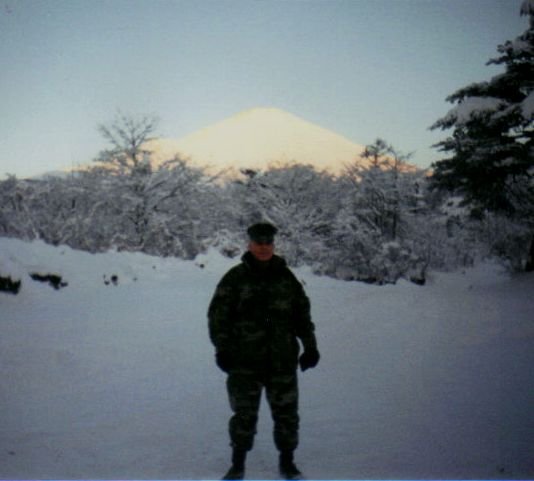
2 Comments

Filed under History, iraq,afghanistan, Military, PTSD

Ending the Stigma: PTSD, TBI and Moral Injury in Senior Leaders

295_26911892058_4301_n

Yesterday I wrote about the death of my former Commodore at EOD Group Two, Captain Thomas Sitsch who committed suicide on Monday outside a New Hampshire Hospital. Captain Sitsch was another casualty of the longest wars this nation has engaged.

Many senior leaders in the military, officers and senior enlisted of every service have frequently deployed to Iraq, Afghanistan as well as other locations in the war on terror. Since the war has been going over 12 years many have spent over half of their careers preparing for, engaging in, or recovering from wartime deployments. Many have suffered physical injuries as well as the unseen injuries of war, PTSD, Traumatic Brain Injury and Moral Injury. Unfortunately they are often the last people to seek help.

In the past few years I have personally known or know of a number of senior officers and senior enlisted personnel who have committed or attempted suicide or had their careers destroyed because of their actions. Some like Captain Sitsch were diagnosed with PTSD, others displayed some or all of the indicators but either refused help or put getting help aside in order to “stay in the fight.”

In the past couple of years the Commanding Officer of a deployed SEAL Team committed suicide in Afghanistan, two Marine Expeditionary Unit commanding officers were relieved after incidents that probably have their genus in PTSD, or Moral Injury. I would almost bet that some of the issues that some of our senior leaders have been relieved of their duties for are also the result of untreated PTSD, TBI, Combat Stress Injury or Moral Injury.

dallaire-rwanda

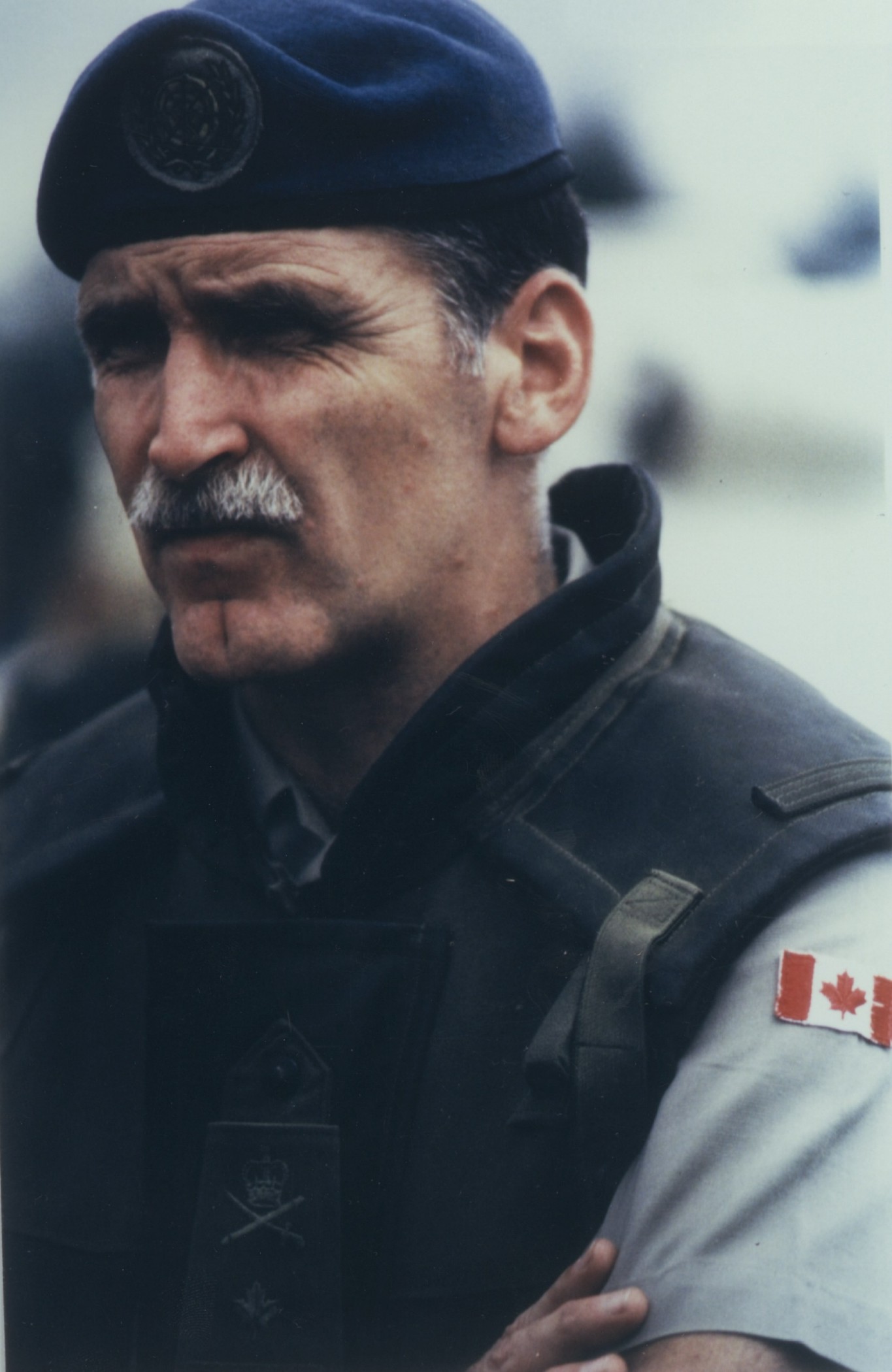
Retired Canadian General Romeo Dallaire still suffers from PTSD following his command of the UN Rwanda force in the middle of that country’s genocide. He attempted suicide in 2000 and still suffers. Last month he was involved in a car accident on his way to work in the Canadian Senate when he fell asleep at the wheel of his car. He had not slept the previous night due to reliving the horrors of that experience. As someone who still suffers chronic insomnia related to my PTSD I understand how this can happen.

The PTSD of T. E. Lawrence’s experience of war in the Middle East in the First World War shows in the pages of his classic Seven Pillars of Wisdom and various letters. Lawrence, who could have risen to high rank in the military or the foreign service basically went underground under an assumed name to serve in the ranks of the Royal Air Force in the 1920s. He wrote to Eric Kennington in 1935 not long before his death in a motorcycle accident:

“You wonder what I am doing? Well, so do I, in truth. Days seem to dawn, suns to shine, evenings to follow, and then I sleep. What I have done, what I am doing, what I am going to do, puzzle and bewilder me. Have you ever been a leaf and fallen from your tree in autumn and been really puzzled about it? That’s the feeling.”  

That is a part of our military culture. Leaders are under a great deal of pressure to accomplish often impossible missions and to take care of their troops. Many have been exposed to repeated combat trauma and had to bury more than one of their troops, often after the person commits suicide. Many anguish over the deaths, blame themselves and heap guilt on top of grief on top of traumatic or moral injury.

As I said many do not seek help due to an overwhelming cultural stigma against getting help, or “going to the wizard.” Likewise they know that that the reality is that if they seek help them may never command or be assigned to sensitive career enhancing billets again. As one senior leader told me “its hard when they say if you have issues and they are known that you can still have a successful career, but you will never be promoted or selected to a critical position, again.” 

1517080376

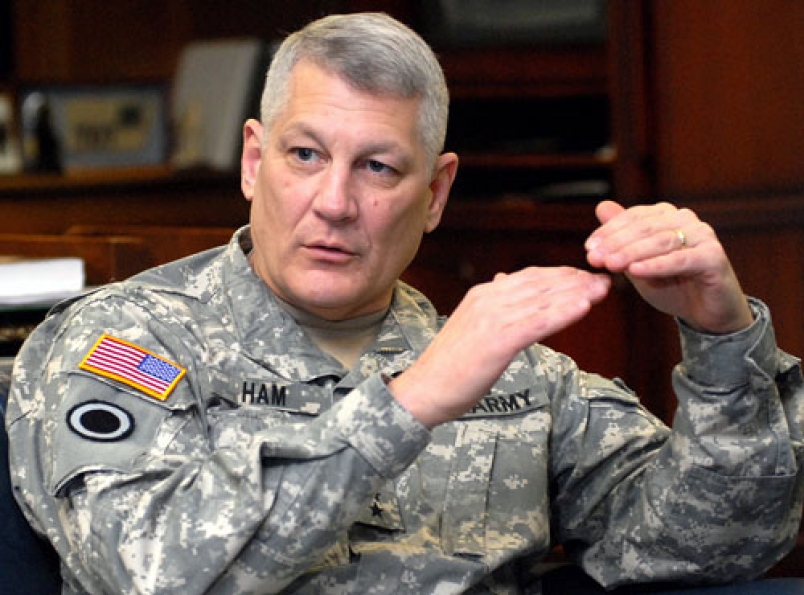
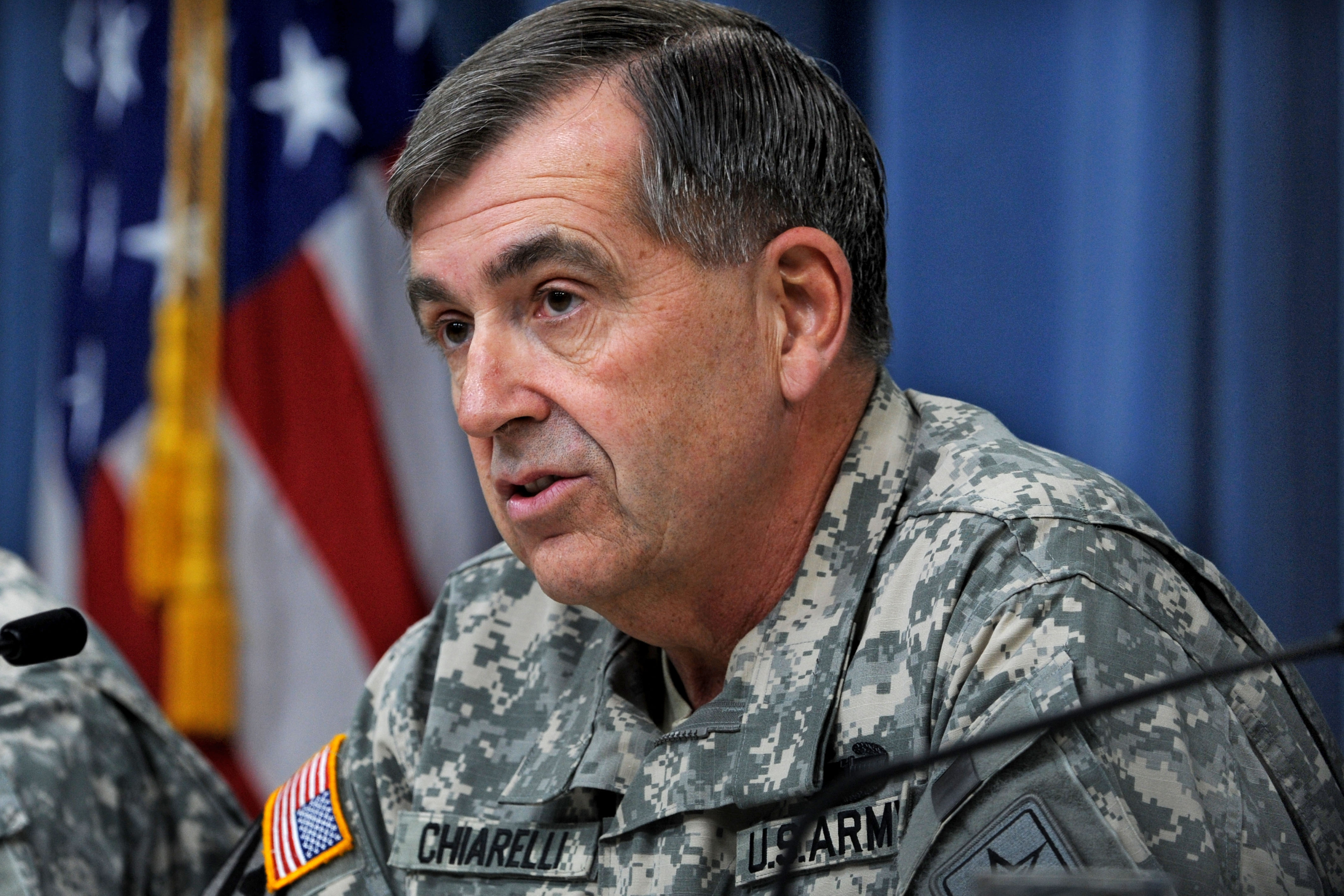
A few senior leaders have admitted to suffering from the symptoms of Combat Stress Injury and sought treatment. The most senior was General Carter Ham who began to suffer symptoms following his deployment to Mosul Iraq in 2004. Major General Gary Patton has also sought help for PTSD. Lieutenant General Peter Chiarelli, now retired has taken up the cause to reduce the stigma seeking to have PTSD renamed Post Traumatic Stress Injury instead of “disorder” because it is an injury.

110119-D-9880W-005.JPG

I wish I had an answer. For me it took a complete crash to get help as well as the assistance of two fine EOD officers, Admiral Frank Morneau and Captain Sitsch. Even with that initial assistance I still feel a certain stigma. My experience is that senior leaders who admit to this and seek treatment often become radioactive. I feel this most often around other chaplains. I am sure that senior leaders probably feel the same way when they are around others who either do not have the experience or who are trying to bury theirs.

One thing that I do think would be helpful is that instead of promoting stigma would be to stand alongside each other. Relationships are key to this and while professional help is good the only thing that can take away the stigma is to get back to standing beside each other in crisis rather than abandoning those who struggle. We are the willing participants in a zero defect culture which sees struggle as weakness and a mark of failure. The sad thing is that under our current system many of the greatest military leaders in history would not be promoted. It is no wonder the leaders who we have invested so much in developing and have sacrificed so much of themselves do not seek help.

grant-and-sherman-122304

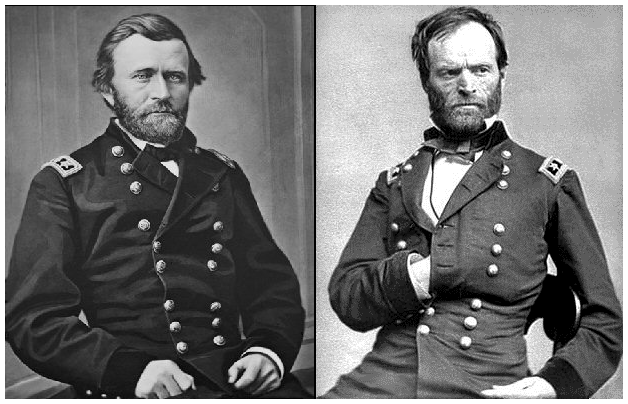
I like the example of Ulysses Grant and William Tecumseh Sherman. Both had significant problems after they left the Army after the Mexican War and in the early days of the Civil War. Grant struggled with drinking and Sherman suffered terrible depression. Sherman said of their relationship: “Grant stood by me when I was crazy, and I stood by him when he was drunk, and now we stand by each other.”

The reality is that in today’s more corporate military culture that neither of these men would have ever been promoted to high command. They would have been shunted aside.

Something has to change if we are to end this terrible scourge. I hope that General Ham and General Chiarelli are working with mental health professionals are able to help change the culture, but then by themselves they cannot. That has to start as we say in the Navy “at the deck plates.” It is up to us to change our culture, to be warriors who look after our fellow warriors in their time of need and who by our actions take away the stigma that keeps our brothers and sisters from getting help.

Peace

Padre Steve+

2 Comments

Filed under iraq,afghanistan, Military, News and current events, PTSD

Living the Nightmares: PTSD and Iraq Six Years Later

481801_10151367001287059_1003164983_n-1.jpg

“Only happy people have nightmares, from overeating. For those who live a nightmare reality, sleep is a black hole, lost in time, like death.”  Guy Sajer, The Forgotten Soldier

Last week I woke up screaming thanks to some nightmare brought to me in high definition by PTSD. It woke Judy and both of the dogs up and well, it wasn’t exactly pleasant. Unfortunately this happens more often than I would like it to. When I was stationed away from home in North Carolina it was only Molly my faithfully dog who was disturbed by this, now I wake up Judy and our younger Papillon Minnie, or Minnie Scule as is her full name.

This afternoon I read a story of a Marine veteran who lost his battle with PTSD, taking his own life. I see a lot of these stories and each one makes me wonder what s going on and gives me pause when I think just how bad I was doing not too long ago.

It is hard for me to believe that nearly six years after I returned from Iraq that I still have a lot of trouble sleeping, though less trouble than a couple of years ago and that my nightmares associated with war still return with more regularity than I would like. Likewise it is hard for me to believe how much my life is impacted by this. I still experience a fair amount of hyper-vigilance, crowds of people are difficult and the craziness of traffic on the local freeways causes me a fair amount of distress.

n671902058_1153829_4642

Despite that I am doing a lot better than I was even a year or so ago when I was still struggling a lot more than I am now and let’s say 4 years ago when there were times I wondered why I was still alive. Of course the time from 2008-2010 was probably the worst time of my life when it seemed that everything that I had believed in had melted away. I didn’t know if God existed, I felt abandoned by my former Church and even by many peers. The only thing that kept me going was a deep sense of call and vocation as a Priest and Chaplain, even though I was for all practical purposes an agnostic who was praying that maybe God still might exist.

Those who have been with me on this blog over the years know how central that struggle has been. I have written about it many times.

Though I am doing much better than I was I still have my times of doubt, times of fear and times of absolute panic. I do what I can to manage but once in a while something will trigger a response. The biggest problem still is sleep and vivid dreams and nightmares. Once I finish the course I am in I am going to get back into therapy a couple of times a month. Thankfully my new job after I complete the school will be more academic with a small chapel where I serve the Students of the Joint Forces Staff College.

Physically I am doing much better, in terms of overall health and physical fitness. I am playing softball again and my PT regimen is much better. Spiritually I can say that being active in having a Chapel where I celebrate Eucharist in a small setting has been good for me. Having to preach again from the lectionary readings is a good thing. Likewise getting a break from five years of hospital ministry, dealing with death, suffering and psychological issues is good. After Iraq I threw myself into the most difficult areas of hospital ministry, the critical care Intensive Care Units hoping that such work would help bring me out of my own issues. Unfortunately, it made it more difficult.

Being at home again is good. I just wish that my nightmares would not cause distress to the rest of my little family. However, it is nice when after they look at me like I am nuts one or both dogs come to me and help calm me down.

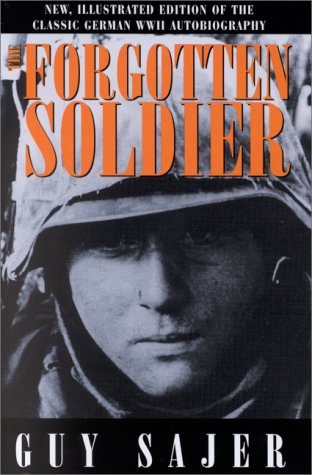
I quoted Guy Sajer, the author of the classic book The Forgotten Soldier. If anyone wants to understand something about what war does to a person and see PTSD in non-clinical terms I think it is possibly the best book to read.

Forgotten_Soldier

Since I have gone to war and experienced fear on a daily basis out in the hinterlands of Al Anbar Province with small groups of American Marines and Soldiers and Iraqi troops I understand a bit of what Sajer writes. My war was different, out with advisors on small Iraqi basis, traveling in dangerous areas far from any big American units, occasionally being shot at and seeing the devastation of war in that unfortunate country,  though my experience of war pales in comparison with what Sager describes.

That being said I do understand in ways that I never did before. Sajer makes a comment which I think is incredibly appropriate for those that read of war without having ever experienced it. too often is the case in the United States and Western Europe where very few ever put on a uniform and even fewer experience war. Sager wrote:

“Too many people learn about war with no inconvenience to themselves. They read about Verdun or Stalingrad without comprehension, sitting in a comfortable armchair, with their feet beside the fire, preparing to go about their business the next day, as usual.

One should really read such accounts under compulsion, in discomfort, considering oneself fortunate not to be describing the events in a letter home, writing from a hole in the mud. One should read about war in the worst circumstances, when everything is going badly, remembering that the torments of peace are trivial, and not worth any white hairs. Nothing is really serious in the tranquility of peace; only an idiot could be really disturbed by a question of salary. 

One should read about war standing up, late at night, when one is tired, as I am writing about it now, at dawn, while my asthma attack wears off. And even now, in my sleepless exhaustion, how gentle and easy peace seems!”

This weekend I will visit the Gettysburg Battlefield as part of a staff ride. I have been there a good number of times but not since I returned from Iraq. Thus in a sense it will take on new meaning, especially when I walk those hallowed fields of battle where so many died and so many more were maimed in our own terrible Civil War.

295_26911892058_4301_n

That being said I wonder if the solution to my nightmares is to go back to Iraq someday like so many WWII, Korea and Vietnam veterans have done to the places that they served. That has to remain in the future, but hopefully I will get the chance and maybe by then Iraq will at last be at peace.

Tonight I will attempt to sleep and hopefully what dreams I have, though they be high definition will at least not be nightmares that disturb Judy or the dogs.

Peace

Padre Steve+
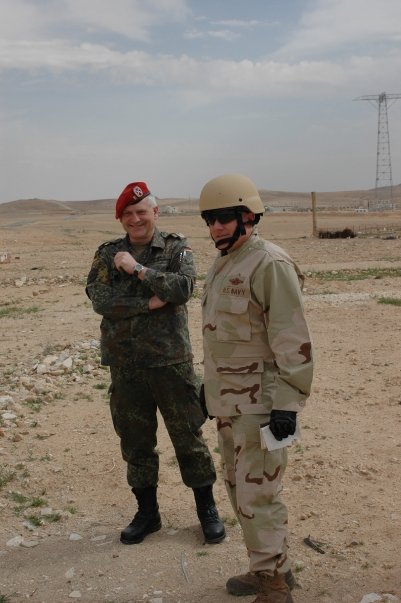
2 Comments

Filed under civil war, faith, Military, ministry, Pastoral Care, PTSD

The Real Conflict: Ethics and American Values Versus Realpolitik

Syria03_GQ_07Dec12_getty_b_642x390

“A country that demands moral perfection in its foreign policy will achieve neither perfection nor security” Henry Kissinger

There are a times in a nation’s life that its leaders are confronted with situations that present conflicts between a nation’s values and realpolitik.

The fact is that there are “tribes” in foreign policy and national security debates. Some are the idealists, others pragmatists and some realists. There are gradients between the levels and sometimes depending on the situation an idealist might gravitate toward pragmatism or even realpolitik and visa versa. Sometimes it is a matter of politics, sometimes ideology and sometimes even  and no leader of no political is immune from these tensions.

The situation in Syria is one of those times where the conflicting agendas of the different foreign policy tribes conflict and where no matter what happens in Syria the conflicts between the tribes will remain and perhaps even grow more pronounced. The fact is that I often can find myself on several sides of the same argument. It might be the PTSD “Mad Cow” is causing these conflicts but it could also be that there are good arguments to be made on all sides of the argument. What is ultimately the right course or the wrong course is actually hard to say.

If we argue for the idealist position, which would argue that American values of stopping human rights violations and the use of chemical weapons, something prohibited under the Hague convention and the more recent Chemical Weapons Convention of 1992 against the realpolitik of what are the actual National Security interests of the United States, the vital interests which involve the survival of the nation itself, major interests which could impact national security or tertiary interests which might have some importance but do not threaten the survival of the nation, even of they are terrible crimes against humanity.

Whether one likes it or not these are legitimate ethical and policy conflicts. On one hand there is the position that the United States has taken following World War Two and the Nuremberg trials as well as its participation in the International Criminal Courts has a moral obligation to confront the use of chemical weapons even if other nations or international bodies stand aside. On the other hand the argument that what happens in Syria is not in the vital interests of the United States and that the United States should not take military action to stop the use of those weapons. The fact is that those that advocate military action in Syria be they politicians, pundits, preachers or profiteers need to remember the words of Carl Von Clausewitz that “No one starts a war – or rather, no one in his senses ought to do so – without first being clear in his mind what he intends to achieve by that war and how he intends to conduct it.” I really don’t think that we have thought this through as a nation.

Of course these two positions are not exclusive. There are also ranges of action which span the full spectrum of action between the either or situation that most Americans seem to find themselves caught between. The fact is that the National Security Strategy of the United States is not based on military might alone, no matter how much it has been used as the first choice by American leaders. The reality is that military force is only one element, and perhaps the weakest element of the elements of national security police known as the “DIME.” That is the Diplomatic, the Informational, the Military and the Economic power of the nation. What we seem to have forgotten is that the other elements of the DIME other than the gut level military response have value and are perhaps even more important.

I think that a large part of this conundrum is found in the reflexive use of military force as the preferred means of action since the attacks of September 11th 2001. On that day the United States was attacked by the terrorist attacks of Al Qaeda militants and while the victims of those attacks were overwhelmingly American the citizens of over 60 other nations we killed in the attacks.

Those attacks demonstrated the vulnerabilities of this nation. When one looks at our actual national security policy it is clear that those vulnerabilities are not always fixed by military action in other countries. In fact they sometimes can become even more glaring as resources required for Homeland Defense and economic recovery are spent on military operations of dubious strategic value and which at times undermine efforts to build trust with other nations, build coalitions based on shared values and to undercut the efforts of extremists using diplomacy, information and economic power.

What we have to answer now is how we address a situation in Syria that is both a violation of international law but which military force alone cannot solve. Of course there is a conflict between our ideals and what are vital national security concerns. I would suggest that the real threat of military action can be a part of the answer if it helps the United States and the world make the case through diplomacy, information and economic pressure not only to stop the slaughter but to hold those responsible for it accountable in International Criminal Courts for the commission of war crimes. At the same time the reality is that the United States and the world cannot allow an Al Qaeda dominated organization such as the Al Nursa Front gain control of Syria.

The fact is that despite how clear cut we want things to be as Americans that much of what happens in the world takes place in a world of more than 50 shades of gray. Unfortunately American conservatives and liberals alike prefer to see foreign policy in the “either or” world of using pure military force or doing nothing, neither of which of themselves are the answer. The full continuum of national and international power must be brought to bear in these kind of situations, recognizing that not everyone shares our values or has the same strategic interests.

It may not be comfortable for anyone but it is reality. How we navigate it is key, maintaining our values while ensuring that our nation survives. If military action is decided on one has to remember what Clausewitz said: “The political object is the goal, war is the means of reaching it, and the means can never be considered in isolation from their purposes.”

To make a decision without understanding this or as we did in Iraq ignoring it is to risk disaster. Such are the stakes. I personally would rather see more negotiation in the hopes that the Syrian chemical and biological weapons are secured and those responsible for using them, be they Assad, his government or even the rebels attempting to frame the Syrians and deceive the United States against the Syrian people are brought to justice.

This is a messy business and not for the faint of heart. Lives of thousands of people in Syria, the region and potentially around the world are at stake and a military strike that fails to accomplish the political object would be worse than none at all.

Peace

Padre Steve+
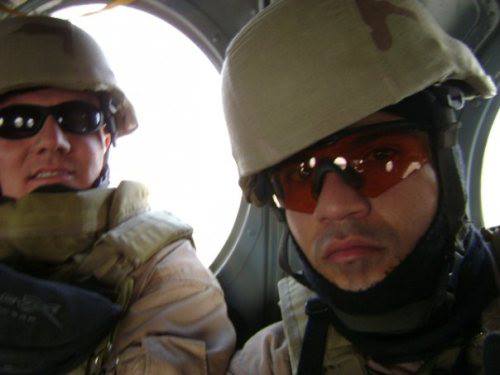
4 Comments

Filed under Foreign Policy, History, middle east, Military, national security, News and current events