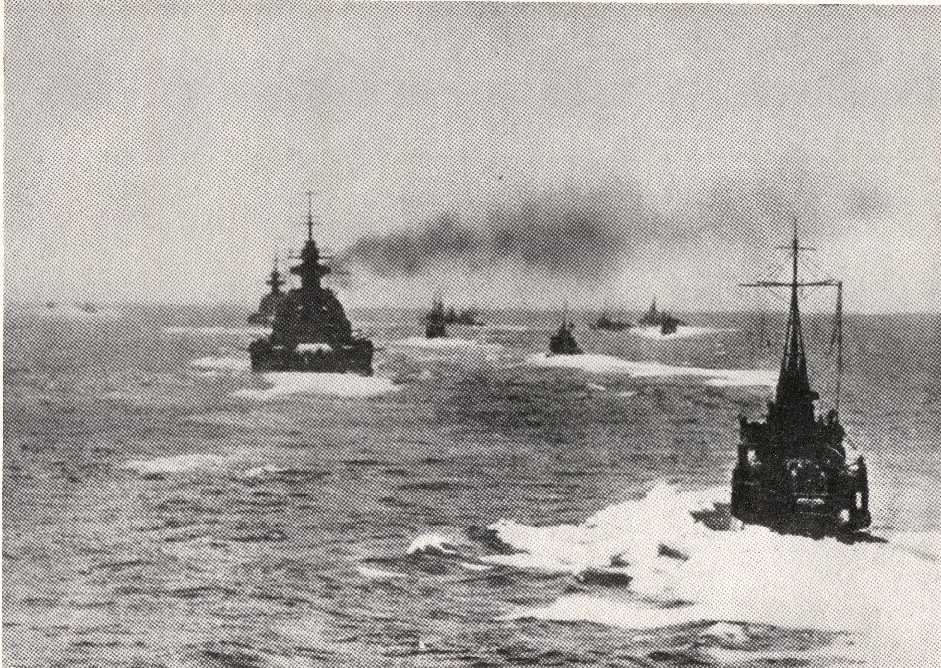
Tag Archives: king george v class

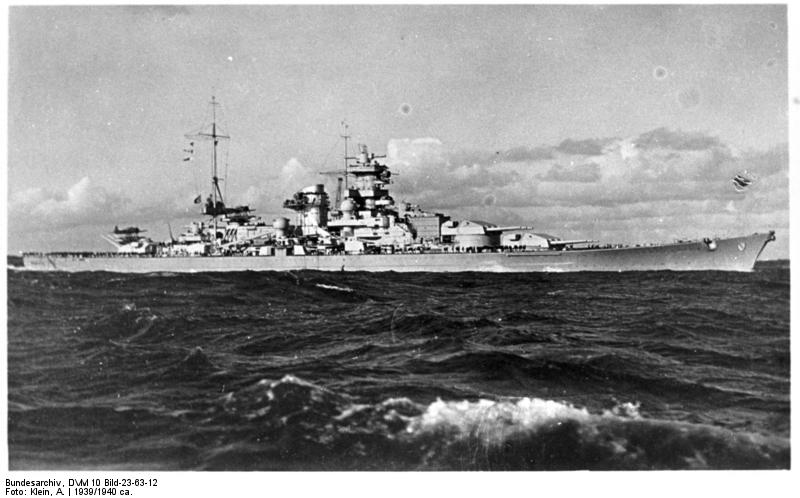
Death in the Arctic: Scharnhorst at North Cape

Schlachtschiff "Scharnhorst"

Christmastide is a joyous time for many, but in the course of history there have been times that military men have fought and died in hopeless battles far from their families. Thus it is often a time of sorry, especially for those that die alone. Among those who died alone in the Arctic darkness of December 26th 1943 were the officers and crew of the German battlecruiser Scharnhorst.
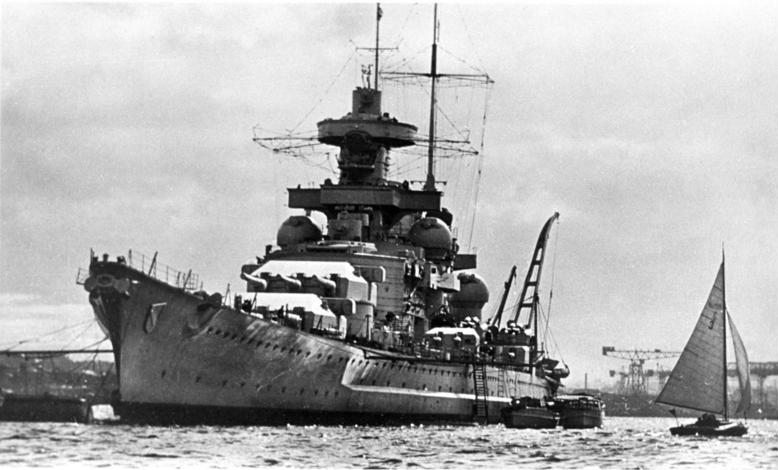
Schlachtschiff "Scharnhorst"

Scharnhorst in port

The Scharnhorst along with her sister ship Gneisenau were the product of the naval architects of Germany who in the early 1930s designed some of the most beautiful as well as deadly warships of the Second World War.  Following Germany’s rejection of the provisions of the Treaty of Versailles the Kreigsmarine enacted a building program to enlarge and modernize the German Navy which then was composed of obsolete pre-Dreadnaught battleships and a few modern light cruisers and destroyers.   The first major units constructed were actually begun by the predecessor to the Kreigsmarine, the Reichsmarine of the Weimar Republic.  These were the Deutschland class Armored Ships, sometimes called “Pocket Battleships” and later reclassified as Heavy Cruisers. These ships were designed to replace the old pre-Dreadnaught battleships and incorporated electric welds to reduce displacement, diesel engines for extended cruise range to enable them to serve as commerce raiders and a battery of six 11” guns.  While an advance over anything in the German inventory they were outclassed by the British battle cruisers Hood, Renown and Repulse.

However, the first truly capital ships built by the Kriegsmarine were the Scharnhorst and Gneisenau Rated as battleships, in reality they were battle cruisers because of their light main battery of 11” guns as opposed to the 14”, 15” or 16” batteries of other nations battleships.  Despite this in displacement and armor protection of the ships was comparable to other battleships of the era and their designed speed of 31.5 knots was superior to almost all other battleships of the era including the British King George V Class and the US Navy’s  North Carolina class.  Only the massive battlecruiser HMS Hood was their superior in speed and firepower.

As built Scharnhorst and Gneisenau displaced 31,000 toms, however at full combat load they both weighed in at nearly 38,000 tons and were 772 feet long.  They had an armor belt that was nearly 14 inches thick.  Armed with a main battery of nine 11” guns and a secondary armament of twelve 5.9 inch guns they also mounted a powerful for the time anti- aircraft battery of fourteen 4.1 inch guns, 16 37mm and 16 20mm anti-aircraft cannons.  Additionally they mounted six 21” torpedo tubes and carried three Arado 196 A3 scout planes.  The main battery was eventually to be replaced by six 15” guns but this never occurred although Gneisenau was taken in hand to mount the new weapons but the conversion was never completed.

scharnhorst2

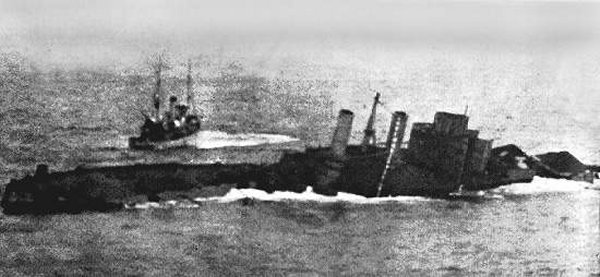
Scharnhorst firing at HMS Glorious 

Laid down on 15 June 1935 and launched 3 October 1936 Scharnhorst was commissioned 7 January 1939.  Her sister Gneisenau was laid down 6 May 1935, launched 8 December 1936 and commissioned 21 May 1938.  Upon the commencement of the Second World War the two sisters began a reign of destruction on British shipping. In November they sank the Armed Merchant Cruiser HMS Rawalpindi During Operation Weserübung the pair surprised sank the aircraft carrier HMS Glorious and her two escorting destroyers, the only time a Fleet carrier was caught and sunk by battleships during the war.   From January to March 1941 they conducted Operation Berlin against British merchant shipping in the North Atlantic sinking 22 ships before returning to base.
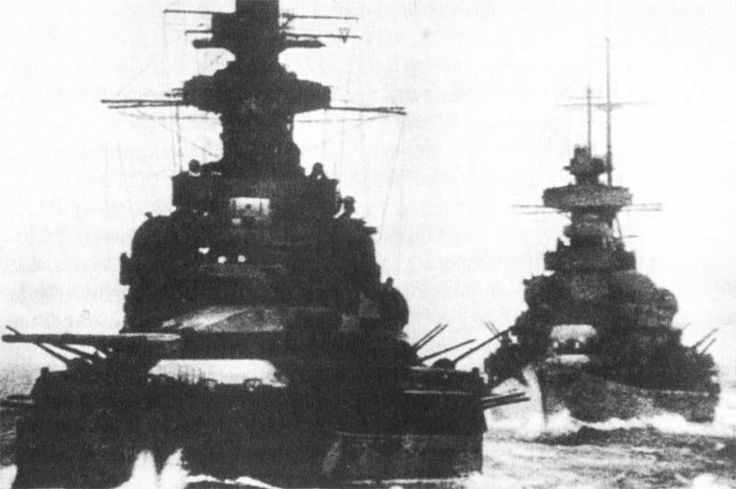
eeb893a0b92de4ae595de56fe0fd90ca

Scharnhorst and Gneisenau during Operation Cerebus

While in the port of Brest Gneisenau was bombed and torpedoed requiring extensive repairs.  Due to the exposed location of the port the German high command decided to return the ships to Germany along with the Heavy Cruiser Prinz Eugen.  The operation was called Operation Cerberus and it took place from 11-13 February 1942. The ships made a dash up the English Channel which was unsuccessfully contested by the British Royal Air Force and Royal Navy. However, both Scharnhorst and Gneisenau were damaged by mines and needed subsequent repairs.  While undergoing repairs in Kiel Gneisenau was further damaged by the Royal Air Force requiring repairs in or to steam to the port of Gotenhafen for repair and conversion.  Although some work was completed she was decommissioned and sunk as a blockship on 23 March 1945.  Following the war she was raised by the Poles and scrapped.

Scharnhorst was repaired following Operation Cerberes and in March 1943 was transferred to Norway where along with Tirpitz, Admiral Scheer, Lutzow (the former Deutschland), Admiral Hipper and Prinz Eugen she became part of a “fleet in being” poised to strike the Allied convoys bound for Russia.
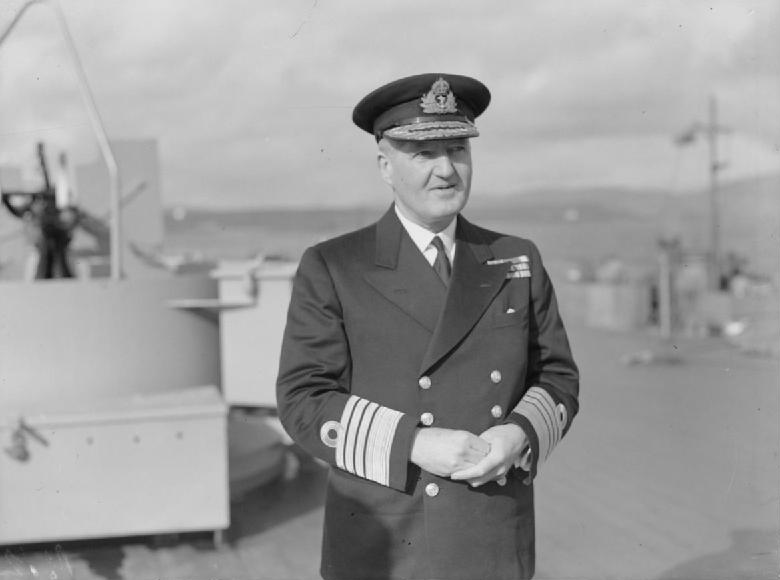
Admiral_Bruce_Fraser_1943_IWM_A_16489

Admiral Bruce Fraser

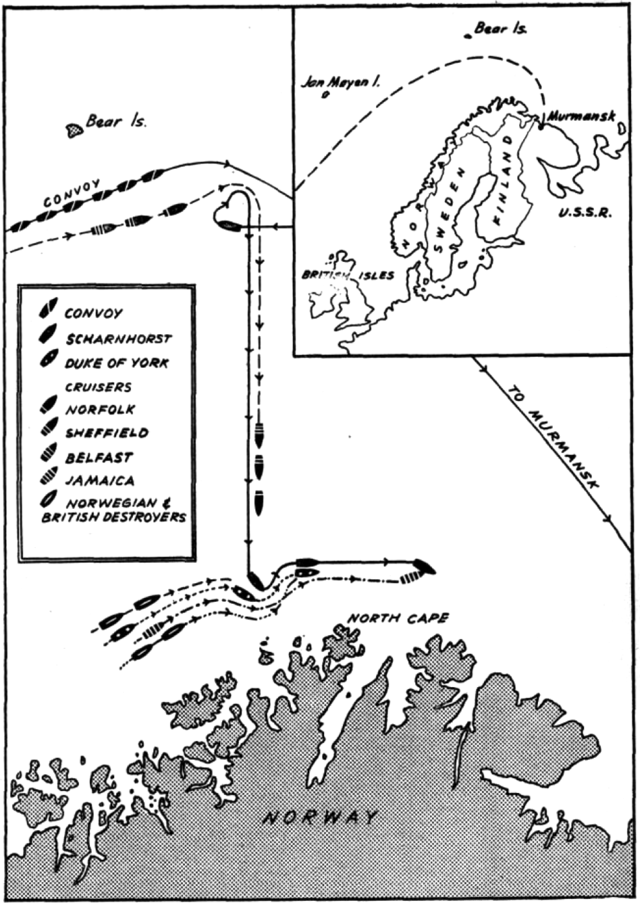
The German surface ships were a potent force that if the circumstances allowed could devastate the Russia bound convoys and the Commander of the British Home Fleet, Admiral Bruce Fraser was determined to entrap and destroy any of these ships that threatened any convoy. As such in December 1943 Fraser formed a task group built around the HMS Duke of York to be ready to pounce on any German raider that threatened the convoys. His intent was to catch any of these ships, especially Scharnhorst and trap them between the convoys and their base, in conduction with a second task group centered around the cruisers HMS Belfast, HMS Norfolk, and HMS Sheffield, Known as Force One, and destroy the German battleship.

The key to British the British operation was Enigma the German code machine and cipher system which they had acquired from captured U-Boats, and which British code-breakers had mastered. The Germans decided to send Scharnhorst and five destroyers to locate and destroy convoy JW-55B which had been spotted by Luftwaffe reconnaissance aircraft. Because of Enigma Fraser knew that Scharnhorst would attempt to intercept the convoy and put his plan in motion.
Battle_of_North_Cape_26_December_1943_map


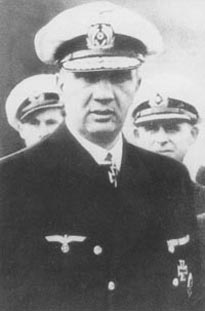
Scharnhorst and her escorts set sail on Christmas Day 1943 under the command of Rear Admiral Erich Bey to conduct Operation Ostfront. Since Fraser knew that the Germans were coming he had the convoy to temporarily reverse course which caused the Germans to miss the convoy. When he did not find the convoy in the expected location Bey detached his destroyers to expand the search area, leaving Scharnhorst alone to face the enemy.
scharnhort_operation_ostfront_5

Rear Admiral Erich Bey

At about 0900 on December 26th 1943 the cruisers of Force One discovered Scharnhorst and the  Battle of North Cape was on. Though little damage was suffered in the first engagement, the radar of Scharnhorst was knocked out, leaving her not only without air support or escort, but blind.
6050465664_e1f42ac7f8_o

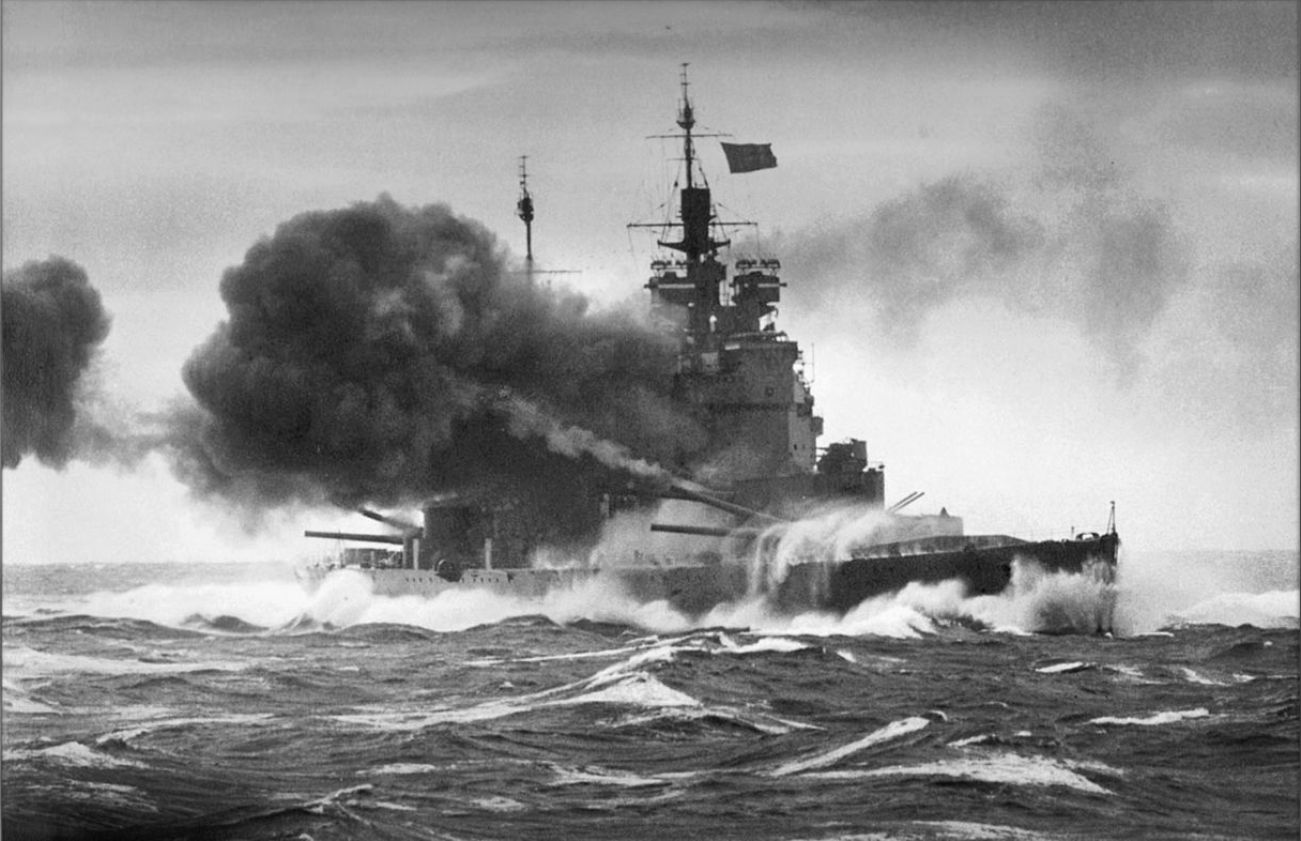
HMS Duke of York firing at Scharnhorst

Scharnhorst attempted to flee but Fraser’s Duke of York  and her four escorting destroyers destroyers intercepted her. Without radar in the blinding snow squalls Scharnhorst was surprised. Duke of York’s first radar direct salvos knocked out her forward main battery but the German ship appeared to be making a getaway when a shell from Duke of York hit her number one boiler room and reduced her speed to barely ten knots. Although the German engineers and damage control teams made some repairs and were able to bring her speed back up to 22 knots, the British ships rapidly made up the distance enabling the British destroyers to launch torpedo attacks.

Knowing the ship was doomed Admiral Bey dispatched a message to the high command of the Kriegsmarine: “We will fight on until the last shell is fired.”

While she still attempted to fight off her attackers and escape she was struck by torpedoes from several destroyers as well as was pummeled by the at at distance of under 10,000 yards by Duke of York’s 14″ shells, as well as the 6″ shells of HMS Belfast and HMS Jamaica. Savaged by hits and incapable of further resistance the German ship capsized and sank at 1945 hours with the loss of all but 36 of her 1968 man crew.  Her wreck was discovered 3 October 2000 some 70 miles north of North Cape Norway.
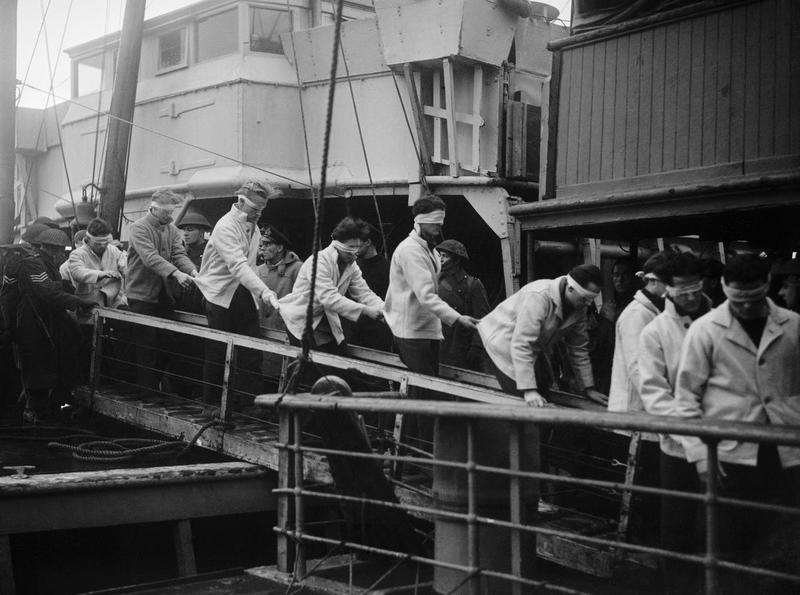
Scharnhorst_survivors_A_021202

Survivors of Scharnhorst 

Admiral Fraser praised the gallantry of the German ship to his officers later that night saying: “Gentlemen, the battle against Scharnhorst has ended in victory for us. I hope that if any of you are ever called upon to lead a ship into action against an opponent many times superior, you will command your ship as gallantly as Scharnhorst was commanded today”

After the battle Grand Admiral Erich Raeder who had authorized the sortie was relieved as commander in chief of the navy and was replaced by Grand Admiral Karl Donitz who commanded the U-Boat forces. Hitler was furious and ended most surface naval operations.
800px-Scharnhorst-WHV-April-2011

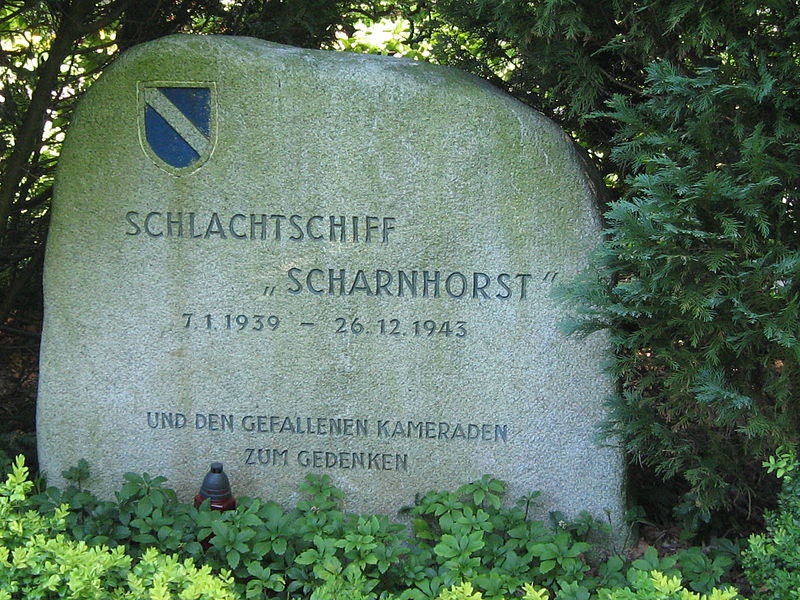
Memorial to Scharnhorst and her crew at Kiel

I have written many times about the tragedy of war, on land and at sea. Having served in combat zones on land and having been shot at by the enemy, as well as having served at sea on a cruiser I have a sense of what these men must have gone through on that final day of their lives. Though I am a realist and know that such tragedies will likely occur again, I do pray for the day that war will be no more and that those who serve in harm’s way will never have to again.

Peace

Padre Steve+
3 Comments

Filed under Military, History, Navy Ships, world war two in europe, nazi germany

The Post Treaty Super Dreadnought Battleships: Introduction

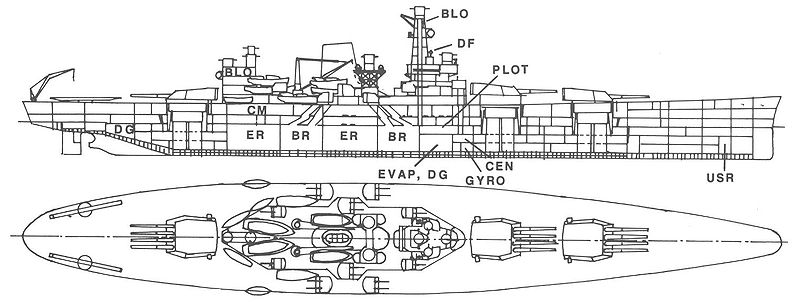
Line Drawing of the German H-39 Class Battleship

Note: This is the introductory article for a series of 8 articles on the classes of battleships built or planned by the major powers following the expiration of the Second London Naval Treaty. A previous series of articles dealt with the battleships constructed in compliance or close compliance with the treaty. This series will cover the Japanese Yamato Class, the British Lion Class and the Vanguard, the German Bismarck Class and H39 Class, the Soviet Sovyetskiy Soyuz Class and the American Iowa and Montana classes.

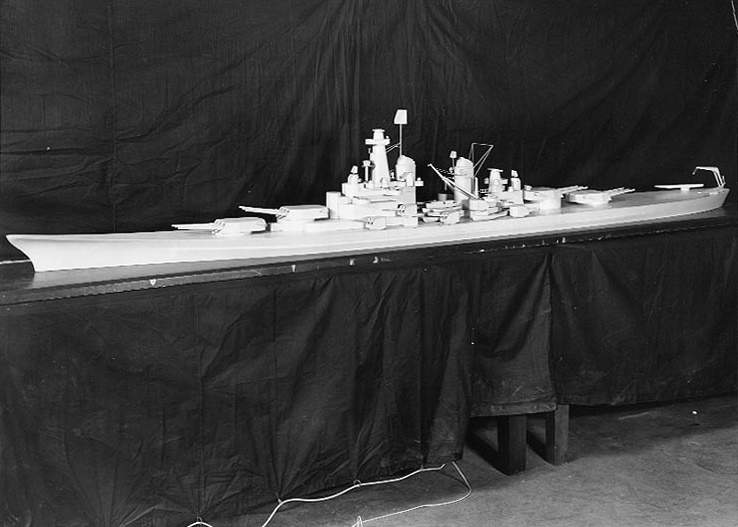
Model of the Montana Class

All of these ships were designed and built or designed in the late 1930s and early 1940s and with the exception of the Sovietetskiy Soyuz Class built on each navy’s experience. The Japanese had constructed no treaty battleships in the 1930s so the Yamato’s were the first battleships constructed by Japan since the Nagato Class which had been completed in the 1920s and the incomplete Tosa Class.

The Bismarck

The Second London Naval Treaty of 25 March 1936 was signed by France, Britain and the United States. Japan walked out on the conference and the Italians did not sign because of the outcry that their invasion of Abyssinia had evoked.  The treaty called for ships to have a standard displacement of no more than 35,000 tons and main armament of 14” guns, a reduction in size of armament from the previous London and Washington treaties. When the Japanese pulled out and the Italians refused to sign the United States invoked the escalator clause which permitted them to disregard treaty limitations.

USS Iowa lead ship of the Iowa class

The Americans who invoked only the armament part of the clause on the North Carolina and South Dakota classes but took full advantage of it to construct the 45,000 ton Iowa class. The Montana Class of 65,000 tons mounting twelve 16” guns and protection proof against that type of shell. Those ships were never laid down but will be covered in this series of articles.

Line Drawing of the Lion Class

The British Royal Navy planned the Lion Class which was in essence an enlargement of the King George V Class armed with nine 16” guns.  The Lion class of which 4 ships were to built was cancelled early in the war and only one further battleship the 44.500 ton HMS Vanguard would be completed by the Royal Navy but not until 1946.

HMS Vanguard

The Germans, who were not a signatory to the treaty but had an agreement with Britain to limit their total naval tonnage to 35% of Britain’s had build the Scharnhorst Class Battlecruisers in the mid 1930s and began the Bismarck Class the largest capital ships completed in Europe. These were to be followed by the H39, H41, H42, H43 and H44 classes ranging in displacement from 56,444 tons to 131,000 tons with armament ranging from eight 16” to eight 20” guns. Only two of the H39’s were laid down and cancelled while in the early stages of construction and I will only discuss the H39 class in this series.

Sovyetskiy Soyuz Class

The Soviet Union which was never a signatory to any of the naval treaties and had not built a battleship since the First World War planned the massive Sovyetskiy Soyuz Class which would have displaced 58,220 tons and mounted nine 16” guns. The four initial ships of the class but were never completed.

Yamato

The Japanese Yamato Class, the largest battleships ever constructed of 69,998 tons standard displacement armed with nine 18” guns, the largest main battery ever installed on battleships were the largest capital ships built before the second generation of U.S. Navy super carriers.

The first article I write will be about the Bismarck Class and that will appear later this week.


10 Comments

Filed under History, Military, Navy Ships

The Next Generation: The North Carolina Class Battleships

This is the fourth in a series of six articles on the battleships built under the provision of the Washington and London Naval Treaty limitations in the 1930s. I am not including the ships which were completed in the immediate aftermath of the Washington Treaty limitations. This series looks at the modern battleships that the World War II combatants would produce in the 1930s which saw service in the war. Part one covered the Italian Vittorio Veneto class entitled The Pride of the Regina Marina: The Vittorio Veneto Class Battleships. Part two French Firepower Forward: The unrealized potential of the Dunkerque and Richelieu Class Battleships covered the French Dunkerque class and Richelieu class Battleships. Part three covered the British Royal Navy King George V Class battleships entitled British Bulwarks: The King George V Class Battleships Part Five which was to be a subsection of this article will be on the South Dakota Class. I have already published the final part which covers the German Scharnhorst Class entitled Power and Beauty the Battle Cruisers Scharnhorst and Gneisenau . The German Bismarck, Japanese Yamato, British Vanguard and American Iowa Classes will be covered in a subsequent series.

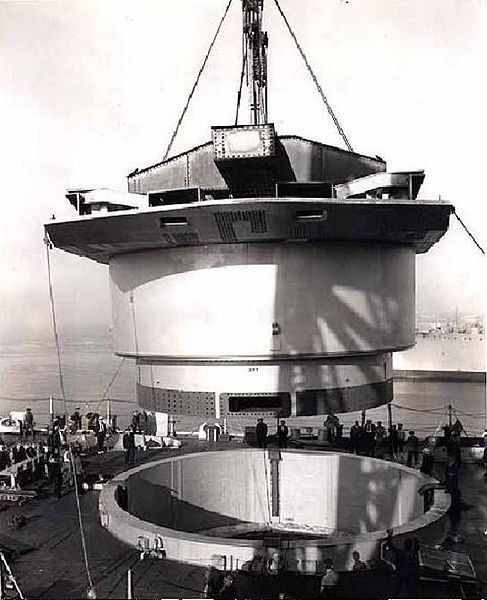
Turret base of USS Washington being lowered into barbet

The United States finished the First World War as the rising economic and potential military power in the world. The British Empire was economically reeling beset by massive debts, heavy loss of life and an empire which was beginning to smell the fresh breezes of independence.  The United States retreated into isolationism and a naïve and unfounded optimism that war could be outlawed while turning its back on the one organization that might have helped bring nations together, the League of Nations. In this environment the United States sponsored the Washington Naval Conference of 1922 which produced the Washington Naval Treaty.  The treaty stipulated limitations on total battleship tonnage, main armament and the maximum tonnage allowed per ship. Ships already in existence could not be replaced until they reached the age of 20 years. A battleship “building holiday” of 10 years was mandated with the major signatories allowed to complete a few ships that were already under construction. Whole classes of new construction were cancelled and many ships under construction were scrapped on the ways or completed only to be scrapped or sunk as targets. The Royal Navy completed two ships of the Nelson Class, the United States completed the 3 ship Maryland Class using a 4th vessel the incomplete USS Washington as a target and the Japanese were allowed to complete two ships of the Nagato Class. The Royal Navy completed the Battleship Eagle and Battle Cruisers Furious, Glorious and Courageous as Aircraft Carriers, the U.S. Navy the incomplete Battle Cruisers Lexington and Saratoga and the Japanese the Battle Cruiser Akagi and Battleship Kaga as carriers. The treaty limits of the Washington Conference were renewed in the London Treaty which also sought to limit the main batteries of new battleships to 14 inch guns.

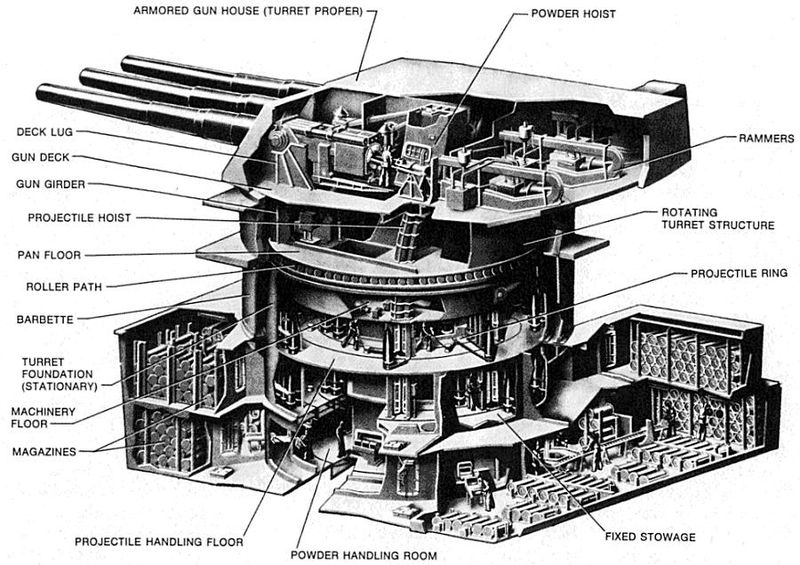
North Carolina Class 16″ Gun Turret

The U.S. Navy began a study of new designs for a fast battleship class to comply with the treaty restrictions in May to July of 1935.  A minimum of 35 different designs were submitted and reviewed by the Navy and also reviewed by the faculty of the Naval War College. After a considerable amount of debate a design called the Type XVI was selected. The design originally called for twelve 14” guns mounted in three quadruple turrets. Other designs considered called for twelve 14″ guns in triple turrets. When the Japanese opted out of the treaty and the Italians began building the Vittorio Veneto Class with 15” guns the U.S. Navy adopted the “escalation clause” and the design was modified to mount nine 16” guns in triple turrets primarily due to the expectation that the Japanese Imperial Navy would mount larger guns in its new ships.

Initial Type XVI design with 14″ guns

The Navy worked to achieve the maximum speed, armament and protection that it could within the 35,000 ton treaty limitations. There was debate among Admirals and designers as to how to solve the problem with some factions leaning toward greater speed and lighter armor and armament and others weighing in on a slightly slower ship with greater firepower and protection. The Type XVI (modified) design original called for twelve 14” guns in quadruple turrets but this was changed to nine 16” guns in triple turrets. The main armor belt was 12” inclined 15 degrees with 16” armor on the turret faceplates and barbets having 16” side armor.  Their conning tower was also protected by 14” armor.  This gave them heavier armor than the Italian Vittorio Veneto Class. They had a lighter belt than the British King George V Class but more protection accorded to their turrets, barbets and conning tower while they had slightly less armor than the French Richelieu class due to those ships all guns forward and all or nothing armor protection.

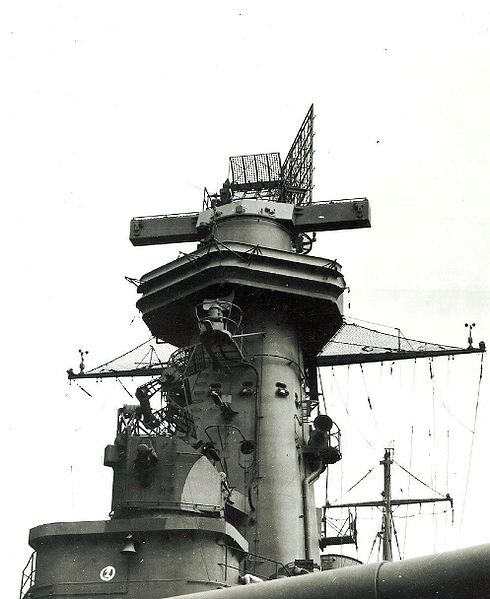
View of USS Washington Conning Tower showing Mk 38 5″ gun directors and SG Surface Search Radar

Their top speed of 27 knots was slower than their European counterparts but their range was far superior to all being able to steam over 20,000 miles at 15 knots and 6,610 miles at 25 knots. Their top speed and ranged decreased slightly during the war with the addition of more anti-aircraft guns and sensors.  Most of the designs considered had speeds from 27-30 knots depending on whether the designers sacrificed speed for armament and protection or protection and firepower for speed. One design, the Type VII resembled earlier classes of battleships with a speed of only 23 knots in favor of much heavier protection on a shorter hull.

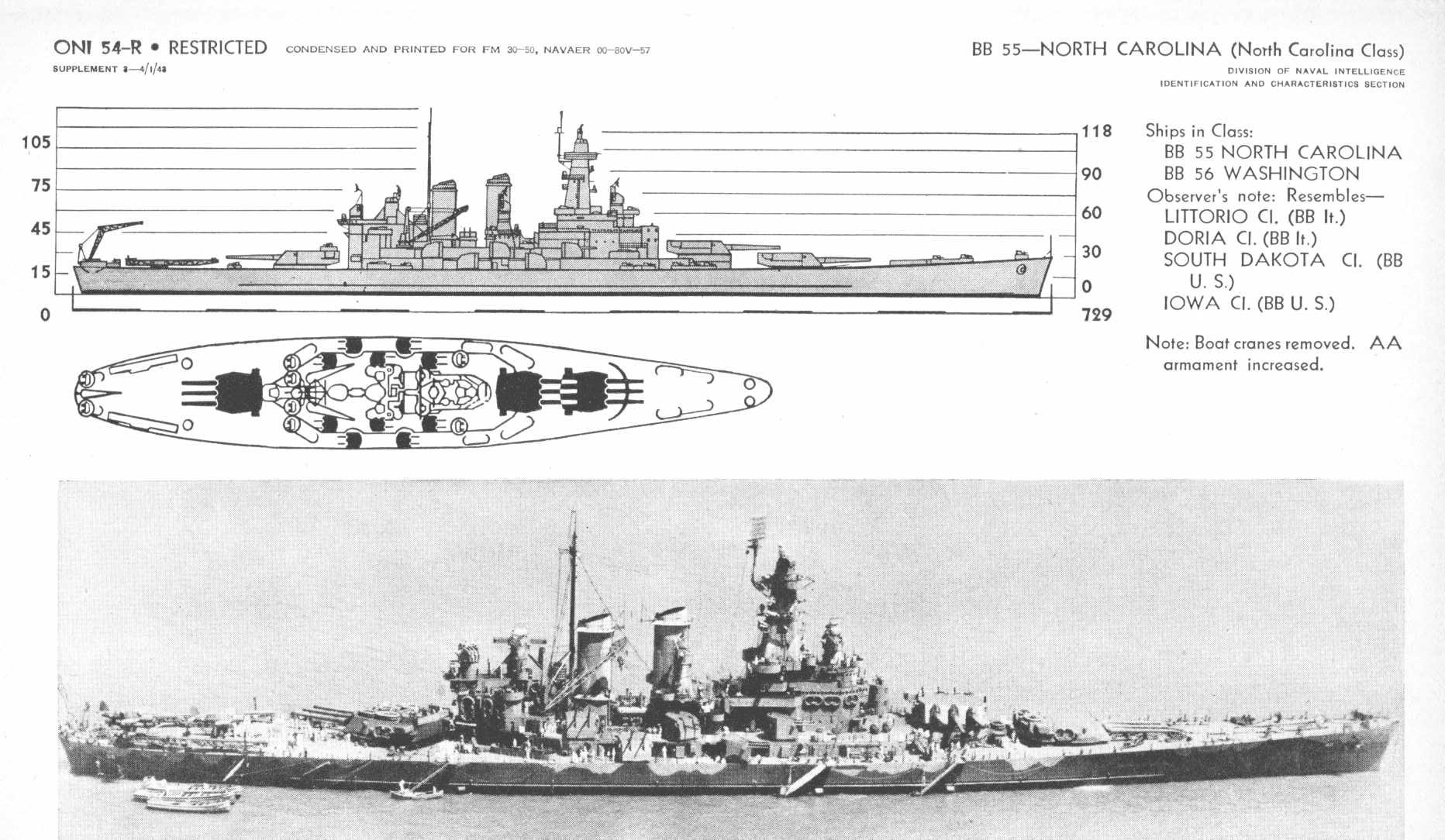
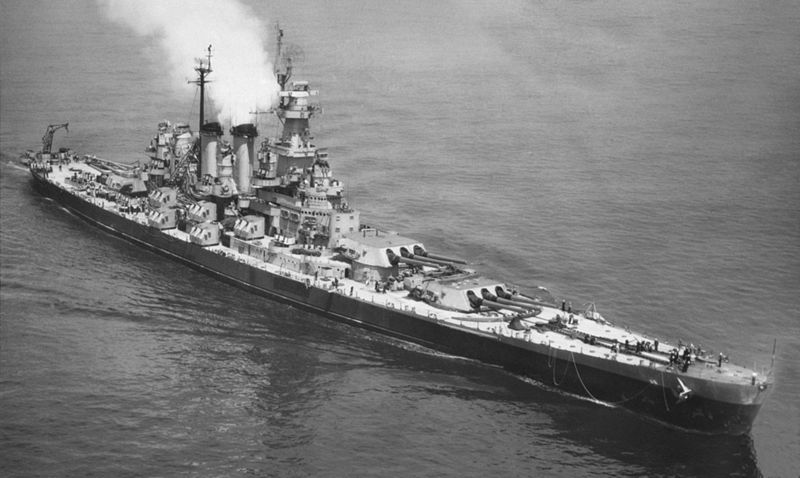
USS North Carolina BB-55

The North Carolina Class was comparable in many ways with the Japanese Nagato Class in speed, protection and armament but with a far greater cruising range.

The North Carolina’s also were superior to their contemporaries in their anti-aircraft armament as well as their electronics, radar and fire direction suites which were all continuously upgraded throughout the war.

The construction of the ships was slow due to material shortages, the design change to 16” guns and labor issues which not only lengthened the length of their construction but raised their cost from $50 million to $60 million dollars each.

North Carolina during underway replenishment in the Pacific

USS North Carolina was laid down on 27 October 1937 launched on 13 June 1940 and commissioned 9 April 1941 though it was months before she was operational due to severe longitudinal vibration of her propeller shafts which was corrected by a modified propeller design.  Despite the efforts to keep to the treaty limitations the ships displaced 36,600 long tons and had a full load displacement of 44,800 long tons. By 1945 the ships full load displacement had increased to 46,700 long tons for North Carolina and 45,370 long tons for Washington.

Torpedo Damage to North Carolina

When she completed her shakedown cruise she was sent to the Pacific where she joined Task Force 16 and the USS Enterprise on 6 August 1942.   She defended Enterprise during the Battle of the Easter Solomons on 24 August and during an 8 minute period she shot down between 7 and 14 Japanese aircraft. On 15 September she was badly damaged by a torpedo from the Japanese submarine I-15 which necessitated her withdraw to Pearl Harbor for repairs. The gravity of the hit sparked great debate in the Navy regarding her protection with some wondering if too much had been sacrificed in her design.  Upon her return to service she operated with TF 38 and TF 58 protecting the carrier task forces in their operations against the Japanese as well as with TF 34 the Fast Battleship Task Force under the command of Vice Admiral Willis Lee.  Serving throughout the Pacific campaign she took part in every major operation in the Central Pacific except Leyte Gulf and against the Japanese mainland.  Her Marines and Sailors took part in the initial occupation of Japan.  She was decommissioned and placed in reserve on 1 June 1960 and survived scrapping to be bought by the State of North Carolina for $250,000 and turned into a memorial at Wilmington North Carolina.  She remains a National Historic Landmark and is maintained by the USS North Carolina Battleship Commission. She is exceptionally well maintained and much of the ship is open for tours.

USS Washington BB-56 on high speed run in 1945

The USS Washington was laid down 14 June 1938 launched on 1 June 1940 and commissioned 15 May 1941 though like North Carolina had propeller shaft vibrations which delayed her operational availability.  She became the first U.S. Navy Battleship to take an active part in the war when she joined the British Home Fleet in March 1942 operating with the Royal Navy escorting Arctic convoys bound for the Soviet Union against possible forays of the Battleship Tirpitz and other heavy German surface units until 14 July when she returned to the United States for a brief overhaul.  She then was deployed to the South Pacific to join U.S. Forces operating against the Japanese at Guadalcanal and became the Flagship of Rear Admiral Willis Lee.  During the Naval Battle of Guadalcanal on the night of 14-15 November she and the USS South Dakota sailed with 4 destroyers to intercept a Japanese task force.  The Japanese force led by the Battleship Kirishima included 2 heavy and 2 light cruisers as well as 9 destroyers.  The Japanese hit the Americans hard early in the battle sinking 3 of the 4 American destroyers and inflicting significant topside damage to South Dakota which caused a power outage and knocked her out of the action.  Washington sailed on undetected by the Japanese and opened a devastating barrage against Kirishima scoring hits with 9 16” shells and 40 5” shell. Kirishima was mortally wounded and was scuttled by her crew the following day.  Washington then drove off the other Japanese ships sparing Henderson Field from certain damage.

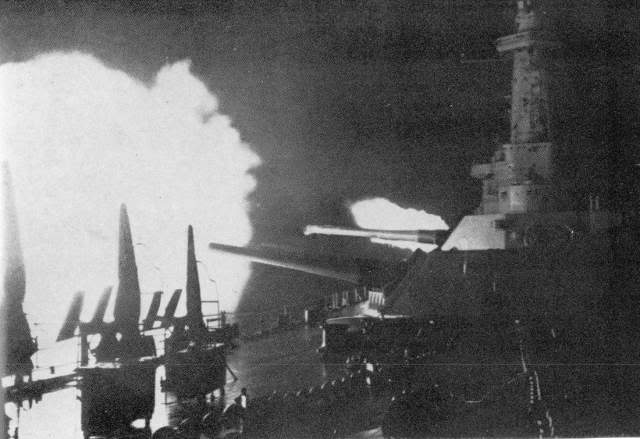
Washington blasting Kirishima at the Naval Battle of Guadalcanal 14-15 November 1942

Washington’s victim the IJN Battleship Kirishima

Washington continued operations in the South and Central Pacific until she was damaged in a collision with USS Indiana which resulted in her losing nearly 60 feet from her bow on 1 February 1944. She received temporary repairs before returning to the Puget Sound Naval Shipyard to receive a new bow and other modernizations returning to action in May 1944. She remained in operation against the Japanese the rest of the war. She was decommissioned in 1947 and struck from the Naval Register on 1 June 1960 and sold for scrap.

Various improvements and ideas were suggested while the ships remained in reserve as some in the Navy wished to reactivate them to include lightening them to increase their speed and conversion into Helicopter Carriers all of which were rejected.

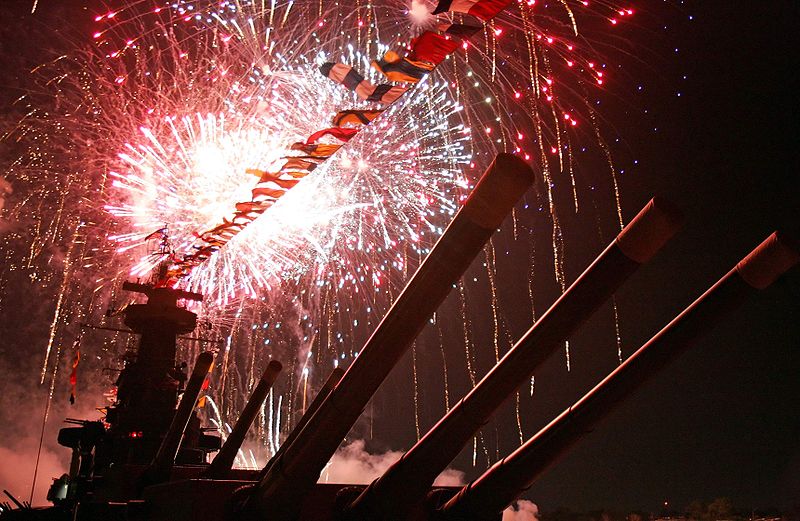
Fireworks over the North Carolina in Wilmington (US Navy Photo)

Though the North Carolina’s were a compromise design they performed admirably throughout the war.  They and their brave crews are remembered in Naval History and the preservation of North Carolina has ensured that they will never be forgotten.

9 Comments

Filed under History, Military, Navy Ships, world war two in europe, world war two in the pacific

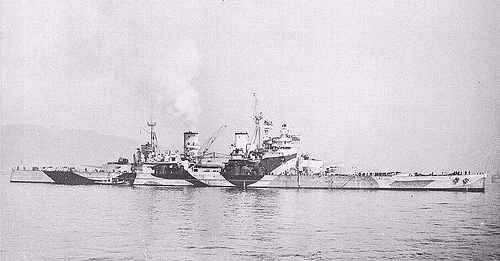
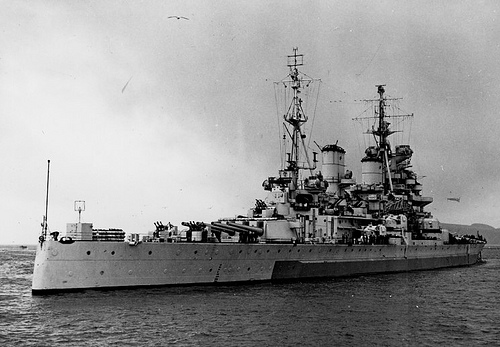
British Bulwarks: The King George V Class Battleships

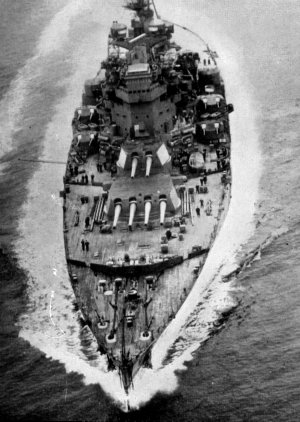
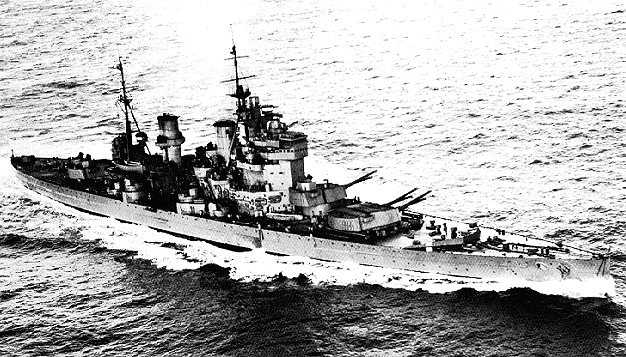
HMS King George V

This is the third in a series of five articles on the battleships built under the provision of the Washington and London Naval Treaty limitations in the 1930s. I am not including the ships which were completed in the immediate aftermath of the Washington Treaty limitations. This series looks at the modern battleships that the World War II combatants would produce in the 1930s which saw service in the war. This article covers the British Royal Navy King George V Class battleships. Part one covered the Italian Vittorio Veneto class entitled The Pride of the Regina Marina: The Vittorio Veneto Class Battleships. Part two French Firepower Forward: The unrealized potential of the Dunkerque and Richelieu Class Battleships covered the French Dunkerque class and Richelieu class Battleships. Part Four the American North Carolina and South Dakota Classes. I have already published the final part which covers the German Scharnhorst Class entitled Power and Beauty the Battle Cruisers Scharnhorst and Gneisenau . The German Bismarck, Japanese Yamato, British Vanguard and American Iowa Classes will be covered in a subsequent series.

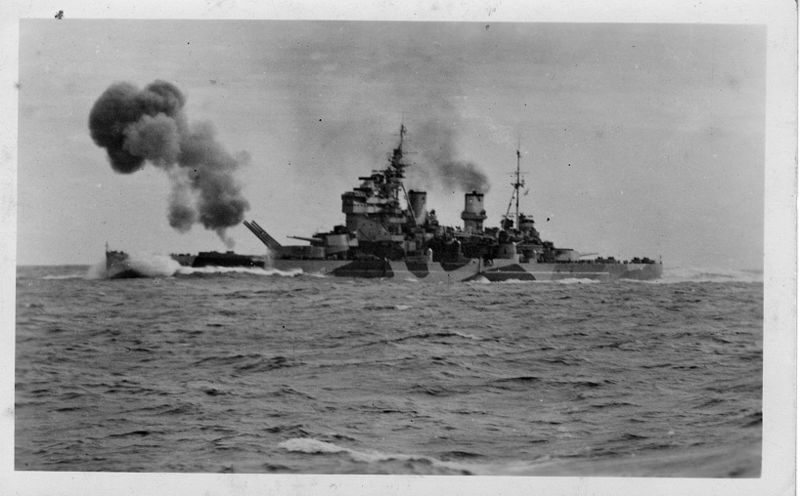
HMS King George V in 1941

In the wake of the First World War the major naval powers entered into an agreement restricting the construction of capital ships and limiting the numbers that treaty signatories were allowed to keep. As a result numerous ships were scrapped or disposed of and the majority of planned ships were either cancelled while building or never laid down. In some cases to comply with treaty restrictions ships such as the Royal Navy’s Nelson Class which was a compromise design which sacrificed speed for protection and firepower.  By the late 1920s the Royal Navy’s battle force was comprised of the Nelson’s, the fast Battlecruisers Hood, Renown and Repulse and 10 ships of the Queen Elizabeth and Revenge classes all designed before the First World War.

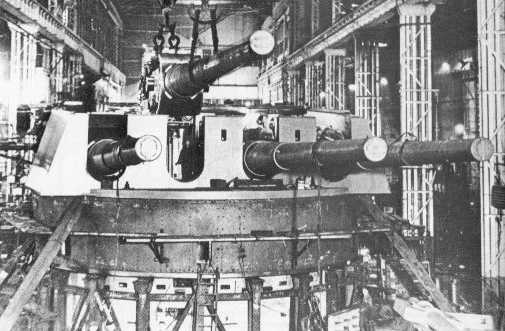
King George V Class Quad Turret being built

The Royal Navy began planning for a new class of battleships in 1928 but the plans were shelved with the signing of the London Naval Treaty which continued the “building holiday” on capital ship construction as well as size and armaments until 1937.  With the realization that its battle force was becoming dated as other nations laid down new classes of battleships the Royal Navy recommenced planning in 1935.  The Navy planned to build to the maximum of the 35,000 displacement limitation and placed a great measure of emphasis on armor and protection. The ships were designed to achieve a 28 knot speed which made them faster than all British battleships although slower than the Battlecruisers. The planners had alternative designs to use 14”, 15” or 16” guns with the Navy favoring the 15” models which had equipped all of their other ships with the exception of the Nelson’s. However the Admiralty to use 14” as the government was endeavoring to negotiate with other powers to impose a 14” limitation on armament for new battleships.  While the Americans and French agreed to the limit neither the Japanese nor Italians followed suit and as a result all new battleships of other powers had larger guns than the King George V Class ships with the French and Italians opting for 15”on the Vittorio Veneto Class, the Americans 16” on the North Carolina, South Dakota and Iowa Classes and the Japanese 18” guns for their Yamato Class. The Germans who were not a signatory built their Scharnhorst Class with 11” although they were planned as 15” ships and would equip the Bismarck Class with 15” guns.  The Royal Navy attempted to rectify this by placing more guns on the ships than those of other navies but the planned armament of twelve 14” guns mounted in quadruple turrets but this was impossible on the 35,000 platform without compromising protection or speed.  Thus the Admiralty compromised on 10 guns mounted in 2 quadruple and 1 twin turret.

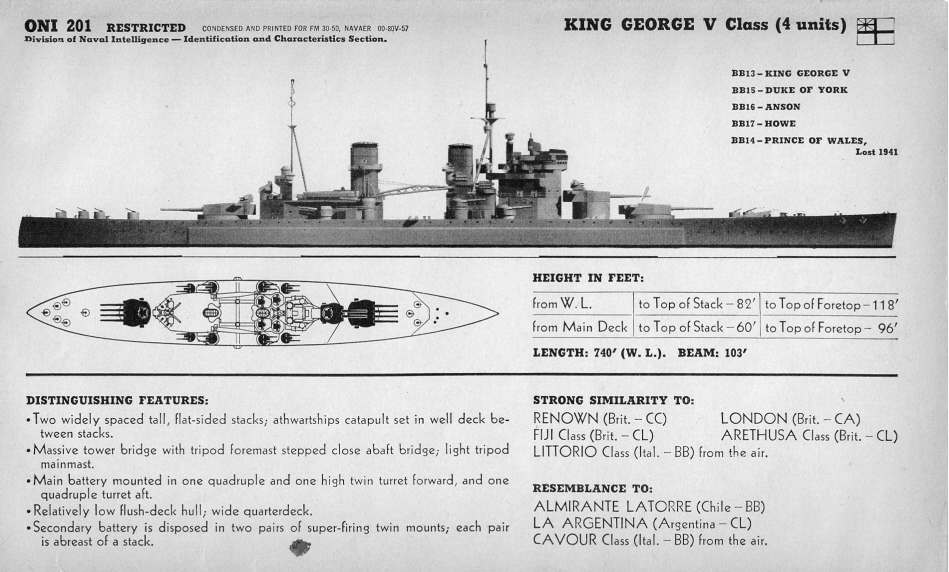
ONI Drawing of King George Class

The ships displaced a full load displacement of 42,237 tons in 1942 which had increased to 44,460 tons in  1944. The were 745 feet long had a beam of 103 feet, a top speed of 28 knots with a cruising range of 5,400 nautical miles at 18 knots. Their relatively poor endurance limited their operations in the Pacific and even nearly caused King George V to have to abandon the chase of the Bismarck in May 1941.

The main batteries of the ships proved problematic in combat with the quadruple turret design causing all the ships problems. This was demonstrated in the engagement of the Prince of Wales against the Bismarck as well as the King George V in its duel with the German behemoth when A turret became disabled and completely out of action for 30 minutes and half of the main battery being out of action for most of the engagement for mechanical reasons.  The Duke of York achieved excellent results against the Scharnhorst but even in that engagement the main battery was only able to be in action 70% of the time.  One of the other drawbacks of the design was that in order to replace a gun due to wear that the turret itself had to be dismantled in order to remove and replace the guns.

The main secondary armament of 5.25” dual purpose guns in twin mounts suffered from poor rate of fire and slow traverse well below their designed standards.

The mounting of the armament was designed to provide protection against turret explosions which could potentially detonate the ship’s magazines.  The main side and underwater protection scheme was sound and protected the ships well in combat.  The vertical protection was also sound as was the protection afforded to the turret barbets and placement of the magazines to shield them from plunging fire.  Only the Prince of Wales was lost due to enemy action had later examination of her wreck revealed that the culprit was a torpedo which detonated in a propeller shaft outside of the armored belt which caused uncontrolled flooding when she was attacked by Japanese aircraft on 8 December 1941.

HMS Anson conducting gunnery exercises

The propulsion systems developed problems after 1942 when fuel oil quality was decreased because of the need for aviation gas.  The new mixtures which were higher viscosity and contained more water than the boilers could effectively burn increased maintenance costs and decreased efficiency. To compensate the Admiralty designed new higher pressure fuel sprayers and burners which returned the boilers to full efficiency.

The lead ship of the class the King George V was laid down on 1 January 1937, launched on 21 February 1939 and commissioned on 11 December 1940.  As the flagship of the Home Fleet she took part in the unsuccessful search for the Scharnhorst and Gneisenau and in the hunt for the Bismarck in which she earned lasting fame in helping to sink that ship.  She took part in the Murmansk convoy protection as well as Operation Husky, the invasion of Sicily before sailing to the Far East for operations against the Japanese. She finished the war with the British Pacific Fleet and was present at the Japanese surrender in Tokyo Bay.  She returned as flagship of Home Fleet until she was decommissioned in 1949. She was subsequently sold for scrap in 1957.

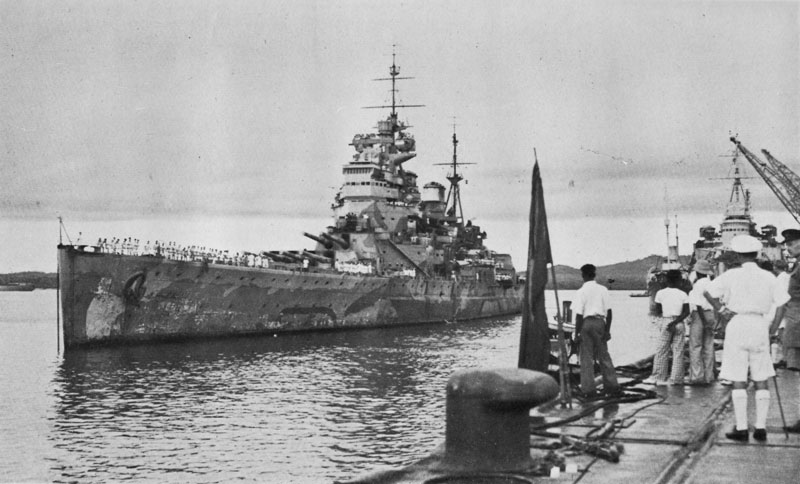
Prince of Wales pulling into Singapore

The second ship the Prince of Wales laid down on 1 January 1937, launched on 3 May 1939 and commissioned 19 January 1941 although she was not officially completed until March 1941. Her initial operation came in May 1941 when she sailed with the HMS Hood to intercept the Bismarck. When she sailed she still had shipyard technicians aboard.  Damaged in the action she did score an important hit on Bismarck which cut a fuel line making her forward tanks inaccessible and causing her to make her run for Brest which she did not complete. Another hit damaged her aircraft catapult and a third an electric dynamo.

Church Service on Prince of Wales at Argentia Bay with Churchill and Roosevelt in attendance

Following repairs she carried Winston Churchill to the Argentia Bay Newfoundland where he met with Franklin D. Roosevelt and together drafted the Atlantic Charter. She accompanied the HMS Repulse to Singapore to bolster the British presence in the Far East but without air cover was sunk by Japanese aircraft which struck her with 4 torpedoes and a bomb, the key hit being a lucky hit on her propeller shaft which caused flooding that caused a loss of power to pumps and anti-aircraft defenses.

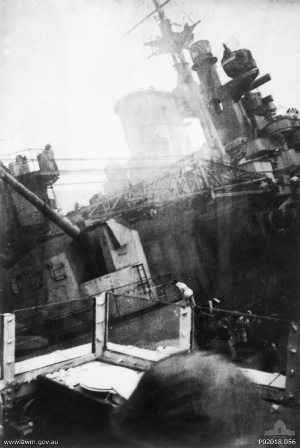
Prince of Wales sinking and being abandoned

The third ship the Duke of York was laid down 5 May 1937, launched on 28 February 1940 and commissioned 4 November 1941. She provided convoy escort for the Lend Lease convoys to the Soviet Union as well the sinking of the Scharnhorst on 26 December 1943 during the Battle of North Cape. She was transferred to the Pacific in 1944 and served at Okinawa.  She was decommissioned in 1949 and scrapped in 1957.

Duke of York

The fourth ship of the class the Howe was laid down on 1 June 1937, launched 9 April 1940 and commissioned on 29 August 1942.  She served with the Home Fleet and in the Mediterranean until she was transferred to the Pacific in August 1944. She was stuck by a Kamikaze in May 1945 and Howe was sent for refit at Durban South Africa. She was still in refit when the war ended. She returned home and was placed in reserve in 1950 and scrapped in 1958.

HMS Howe

The last of the class the Anson was laid down 20 July 1937, launched 24 February 1940 and commissioned on 22 June 1942. She operated in the Mediterranean and the North Atlantic and was sent to the Pacific in 1945 where she accepted the surrender of the Japanese Forces at Hong Kong. She returned to Britain and was decommissioned in 1941 and scrapped in 1957.

HMS Anson

The ships had rather unremarkable careers for the most part with the exception of the Prince of Wales and King George V in the hunt for the Bismarck and the Duke of York sinking the Scharnhorst. They had a number of technical problems which limited their operations in the war. However they and their brave crews deserve to be remembered as helping to hold the line against the Axis in the early years of the war and sank two of the four German Battleships lost during the war.  This alone was as remarkable achievement as of their contemporaries only the USS Washington sank an enemy battleship in combat.


12 Comments

Filed under History, Military, Navy Ships, world war two in europe, world war two in the pacific

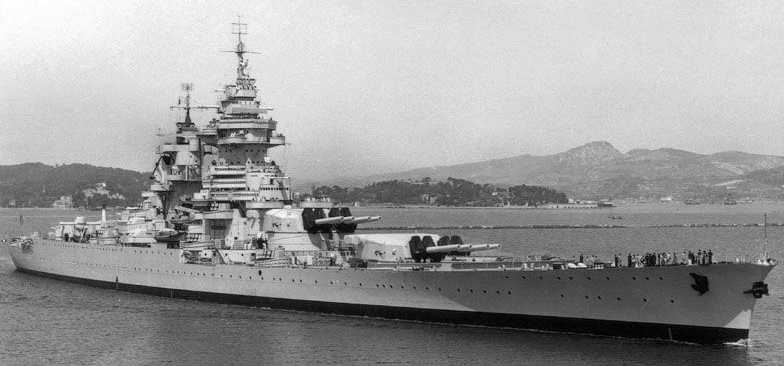
French Firepower Forward: The unrealized potential of the Dunkerque and Richelieu Class Battleships

Richelieu in the 1950s © Photo Marius BAR – Toulon (France) site internet : http://www.mariusbarnumerique.fr  

This is the second in a series of five articles on the battleships built under the provision of the Washington and London Naval Treaty limitations in the 1930s. I am not including the ships which were completed in the immediate aftermath of the Washington Treaty limitations. This series looks at the modern battleships that the World War II combatants would produce in the 1930s which saw service in the war. Part one covered the Italian Vittorio Veneto class entitled The Pride of the Regina Marina: The Vittorio Veneto Class Battleships. This article covers the French Dunkerque class and Richelieu class Battleships. Part Three will deal with the British King George V Class and Part Four the American North Carolina and South Dakota Classes. I have already published the final part which covers the German Scharnhorst Class entitled Power and Beauty the Battle Cruisers Scharnhorst and Gneisenau . The German Bismarck, Japanese Yamato, British Vanguard and American Iowa Classes will be covered in a subsequent series.

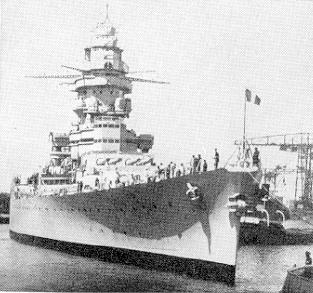
Dunkerque 1937

In the late 1920s the French Navy having concentrated on cruiser construction following the war realized the need to develop a class of Fast Battleships to counter the German Deutschland class Pocket Battleships but was limited by the Washington Treaty to just 70,000 tons which meant that in order to have a number of battleships that they would have to be smaller but still mount a significant armament. The new class of ship which the French termed a Fast Battleship was more like a battle cruiser being less heavily armed or armored than current battleships and less so than the new classes of ships being developed by other navies in the mid-1930s.  The Dunkerque class had a designed displacement of 26,500 tons and a top speed of 31 knots the ships mounted 8 13” guns in two quadruple turrets both mounted forward. This allowed all guns to fire forward during engagements to present the smallest possible silhouette to the enemy.  They employed all or nothing armor protection ensuring the strongest protection over vital spaces with their armor designed to protect the ships against German 11” gunfire from the Pocket Battleships or the Scharnhorst Class Battlecruisers. They also mounted a powerful dual purpose armament recognizing the need for defense against aircraft as well as surface ships.

Dunkerque Class:


Dunkerque was laid down on 24 December 1932, launched on 2 October 1935 and commissioned on 1 May 1937. Her sister Strasbourg followed and was laid down in 1934 and launched on 12 December 1936 and commissioned in 1939. When war was declared the two ships spent their time operating with the Royal Navy searching for German raiders and to escort convoys.

Strasbourg

When the Germans overran France in June 1940 the ships took refuge at Mers-el-Kibir where with other French Fleet units they were the target of the Royal Navy to keep them from being taken over by the Germans on 3 July 1940. Dunkerque was heavily damaged in the attack and sank with the loss of 210 sailors after being hit by 4 15” shells from the Battlecruiser HMS Hood and Battleships HMS Resolution and HMS Valiant a testament to their light armor protection.  Strasbourg escaped to Toulon with 5 destroyers where she joined the bulk of the French Fleet in the so called “Free Zone” of Vichy France. She was joined by Dunkerque following the completion of temporary repairs in February 1942.

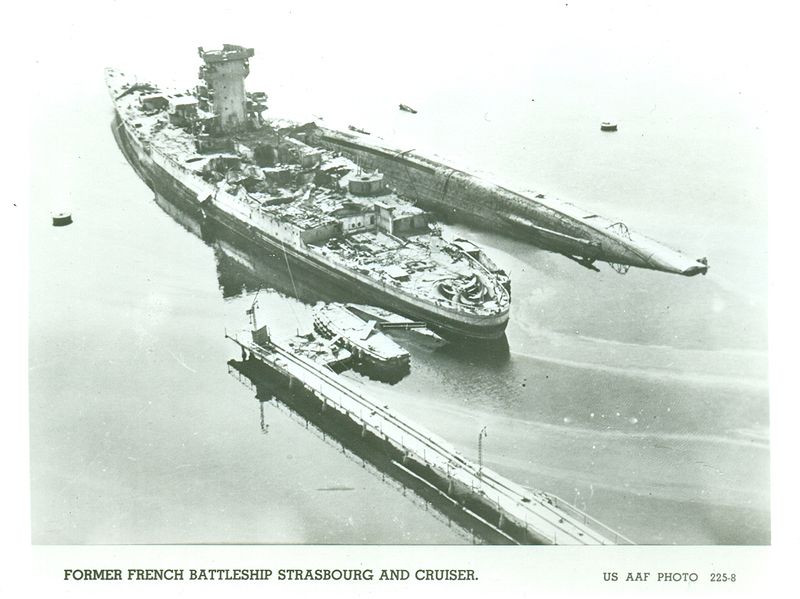
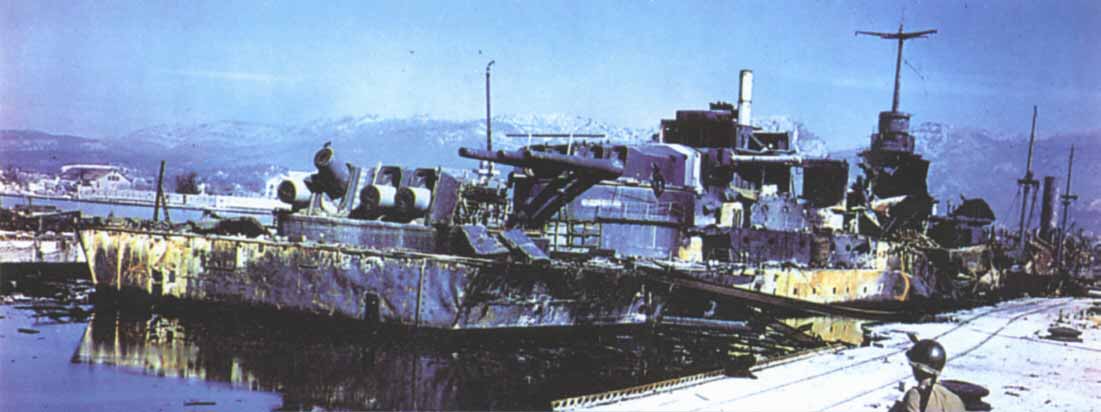
Dunkerque entered drydock for permanent repairs and was there when the Germans occupied Vichy. Under threat of capture the Fleet was scuttled. Dunkerque was destroyed in drydock and declared a total loss. Both the Germans and Italians attempted scrapping operations and the wreck was further damaged by Allied bomber attacks.

The Hulk of the Dunkerque in1944

What was left of the hulk was refloated and finally scrapped in 1958. Strasbourg was scuttled but refloated by the Italian Navy in July 1943 and after the Italian surrender taken over by the Germans. Sunk again in an American air attack in August 1944 she was refloated and used as a test bed for underwater explosions until she was condemned.  She was sold for scrapping in 1955.

Richelieu Class


The Richelieu class was derived from the Dunkerque class in response to the Italian Vittorio Veneto Class.  With a standard displacement of 35,000 tons and a full load displacement of 48,950 tons the ships were the largest build for the French Navy until the commissioning of the Nuclear Aircraft Carrier Charles DeGaulle.  The ships shared the layout of the Dunkerque Class with their main battery of 8 15” guns mounted in quadruple turrets forward which like the Dunkerque’s allowed them to present the smallest silhouette possible to an opposing ship while being able to employ their entire main battery.   Their speed, protection and design were state of the art and comparable to their contemporaries in other navies.  They were capable of 32 knots at full speed and had a cruising range of 7671 miles at 20 knots.  The main battery was spaced far enough apart to ensure that a single hit could not put both turrets out of action and each turret was internally subdivided to prevent a single hit from knocking out all four guns. The mounted 9 6” dual purpose guns in three triple turrets aft and 24 4” AA guns in 12 twin-mounts located amidships.  During the war Richelieu was repaired and refitted in the US receiving 56 40mm Bofors AA guns in quadruple mounts and 48 20mm Oerlikon AA guns in place of her original 37mm cannons and 13.2 inch machine guns.

Richelieu arrives in New York in 1943

Richelieu was laid down in October 1935, launched in January 1939 and began sea trials in January 1940. When the Germans broke through the French defenses and threatened Brest Richelieu put to sea to French North Africa and was commissioned in June at Dakar. She was damaged by an aerial torpedo launched by a Swordfish Torpedo bomber from the HMS Hermes and received emergency repairs in Dakar. On 24 September she fought an engagement against the Royal Navy at the Battle of Dakar and was damaged by two 15” shells fired by the HMS Barham and was further damaged by a misfire in one of her turrets. Following the French return to the Allied camp she was sailed to New York for major repairs and modernization from January to November of 1943. Following this she operated with the British Home Fleet until March of 1944 when she was sent to the India Ocean to serve with the British Far East Fleet in operations against the Japanese until the end of the war. Following the war she took part in the initial stages of the campaign in French Indochina. She was placed in reserve in 1956 and struck from the Navy list and scrapped in 1968.

The Damaged Jean Bart at Casablanca

Her sister Jean Bart was laid down in December 1936 and launched on 6 March 1940.  Only 75% complete with untested engines and only one of her main battery turrets and no secondary armament installed Jean Bart put to sea to escape the German advance and sailed to Casablanca.  The navy attempted to ship her second main battery turret on a freighter but that ship was sunk by a U-boat enroute to Casablanca. She was at Casablanca when the Allies invaded North Africa and was attacked by the U.S. Navy when the Vichy government refused to surrender on 8 November 1942.  She was engaged by the Battleship USS Massachusetts and aircraft from the carrier USS Ranger and was damaged by several bombs and shells from the 16” guns of Massachusetts. She engaged Massachusetts with her one working turret but scored no hits. On the 10th she opened fire on the USS Augusta and was attacked again by aircraft from the Ranger which damaged her so that she had to be run aground to prevent her from sinking.  She remained in Dakar for the duration of the war as it was not feasible to sail her to the United States for completion. Following the war it was suggested that she be converted to an aircraft carrier but that was rejected and she was completed as a battleship and commissioned in 1949.  She took part in the Suez crisis of 1956, was decommissioned in 1957 and finally sold for struck in 1969 and sold for scrap in 1970.

Jean Bart in the 1950s

Both the Dunkerque and Richelieu class were ships of unrealized potential due to the French surrender and the deep divisions between the Vichy and Free French governments.  Had circumstances been different they might have played an important role in the Battle of the Atlantic or in the Mediterranean during the war. Once wonders how they might have done in open combat with their Italian contemporaries or even the German Bismarck and Tirpitz. Instead they and their brave crews had to battle the Axis powers as well as former allies in circumstances in which all the cards were against them. One of Richelieu’s 15” guns is mounted on the waterfront at Brest as a memorial to these brave ships and the men that sailed them.

20 Comments

Filed under History, Navy Ships, world war two in europe

The Pride of the Regina Marina: The Vittorio Veneto Class Battleships

Vittorio Veneto and Littorio

This is the first in a series of five articles on the battleships built under the provision of the Washington and London Naval Treaty limitations in the 1930s. I am not including the ships which were completed in the immediate aftermath of the Washington Treaty limitations. This series looks at the modern battleships that the World War II combatants would produce in the 1930s which saw service in the war. Part one covers the Italian Vittorio Veneto class, Part Two the French Dunkerque and Richelieu Classes, Part Three the British King George V Class and Part Four the American North Carolina and South Dakota Classes. I have already published the final part which covers the German Scharnhorst Class entitled Power and Beauty the Battle Cruisers Scharnhorst and Gneisenau The German Bismarck, Japanese Yamato, British Vanguard and American Iowa Classes will be covered in a subsequent series.

Technically many of these ships were constructed after the expiration of the treaties but since most of the navies at least attempted to maintain a façade of compliance with them most were officially listed as complying with the treaty restrictions.

The Washington Treaty placed a limit on the displacement and armament of battleships. The London Treaty continued them which limited the displacement of new ships to 35,000 tons with the main battery being limited to 16” guns. Each of the treaty signatories as well as the Germans who had been bound by the much more stringent Treaty of Versailles restrictions endeavored to build to the limit of the treaty and if possible skirt the limitations in terms of displacement which allowed them to increase protection as well as more powerful engineering plants.

The Royal Italian Navy had not completed a battleship design since the Andria Doria Class which were constructed between 1912 and 1915 and modernized given an extensive modernization between 1937 and 1940.  A subsequent class the Francesco Caracciolo class was started during the First World War but no ships of the class were completed.

In the 1930s a new naval arms race was underway in the Mediterranean as the French Navy had begun a new class of Fast Battleships, the Dunkerque class which were designed to defeat the German Deutschland class “pocket battleships” and the follow on Richelieu Class. Mussolini saw the new French ships as a threat to the control of the Mediterranean and ordered the construction of a new class of battleships to help Italy achieve naval dominance in the Mediterranean.

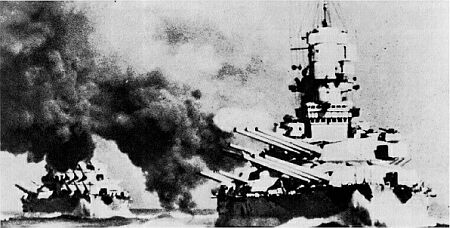
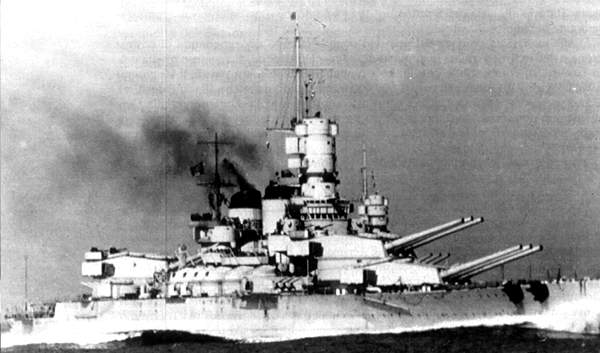
The new ships were of a breathtaking design, large, fast and heavily armed officially listed as meeting the prescribed treaty limit of 35,000 tons they actually would displace 41,177 tons standard displacement and 45,963 tons full load. Armed with a main battery of 9 15” guns in triple turrets and a secondary armament of 12 6” and 12 3.5” guns along with 20 37mm and 30 20mm anti-aircraft guns and capable of 29 knots in service and with a relatively short range of 3900 miles at 20 knots they were formidable ships for operations in the Mediterranean. They were well protected although their Pugliese torpedo defense system proved inferior to traditional designs.

Their main armament though formidable was not without its flaws. The 15” guns had a very long range of 42 km or 26.6 miles and high muzzle velocity of 2900 fps. The high muzzle velocity led to a barrel life of only about half that of their counterparts and inconsistent shell fall patterns.  The guns also suffered from a slow rate of fire of only 1.3 rounds per gun a minute.

The Ships:

Vittorio Veneto in 1943

Vittorio Veneto: The Vittorio Veneto was laid down 1934 along with her sister the Littorio and was launched on 25 July 1937 and commissioned on 28 April 1940. She would see action numerous times and give a good account of herself against the British taking part in 56 war missions. She fought at the Battle of Cape Spartivento (Teulada) where she fired 19 salvos to drive off a 7 ship British cruiser squadron in a pitched battle that also included the battleship HMS Ramillies and battle cruiser HMS Renown. In 1941 she took part in the Battle of Cape Matapan where she was damaged by an aerial torpedo after driving off a British cruiser squadron. After repairs she was back in action and on 15 June 1942 participated in the Battle of Mid-June, where she and her sister ship Littorio successfully fenced off a large British convoy from Alexandria by their mere presence at sea.  She was also the first Italian battleship equipped with radar. She surrendered with the Italian fleet to the Allies on 8 September 1943 surviving furious German air attacks. She was interred at the Great Bitter Lakes in the Suez Canal. After the war she taken as war compensation and was returned to Italy and scrapped beginning in 1948.

Littorio

Littorio (later Italia): Littorio was laid down in 1934 and launched on 22 August 1937 and commissioned on 6 May 1940.  She participated in 43 operations including the Battle of Sirte and several actions against British convoys.  Following the Battle of Mid-June she was struck by an aerial torpedo dropped by a Wellington bomber. She was repaired and upon the removal of Mussolini from power was renamed Italia and surrendered with the Italian Fleet on 8 September 1943 being damaged by a Fritz-X radio controlled bomb. With her sister Vittorio Veneto she was interred in the Great Bitter Lake and was returned to Italy where she was decommissioned and scrapped beginning in 1948.

Roma

Roma: Roma was laid down 18 September 1938, launched on 9 June 1940 and commissioned 14 June 1942.  Despite her addition to the fleet she was not deployed due to a fuel shortage. She sailed with the Italian Fleet to surrender on 8 June under the guise of the fleet sailing to attack the Allied invasion fleet off Salerno. The Germans discovering the ruse launched air attacks by Dornier Do-217s armed with Fritz-X radio controlled bombs attacked the fleet as it transited the Strait of Bonafacio.

Roma exploding after being hit by Fritz-X radio guided bomb

Roma was hit by two of the missiles the first which flooded two boiler rooms and the aft engine room.  She was hit soon after by a second Fritz-X which hit in the forward engine room causing catastrophic damage and igniting the number two turret magazine blowing the turret off the ship and causing the ship to capsize and break in two as she sank carrying 1255 of her crew including Admiral Carlo Bergamini to their death. Roma was the first ship sunk by a radio controlled bomb, the forerunner of our current air launched anti-ship missiles.

The Fritz-X Radio Guided Bomb

Impero: Impero was laid down but never completed and scrapped after the war.

The Vittorio Veneto class was a sound design and operationally successful against the Royal Navy and the brave sailors of the Regina Marina who manned these fine ships should not be forgotten.

10 Comments

Filed under History, Military, Navy Ships, world war two in europe

The Battle Fleet that Never Was: The USS Washington, the South Dakota Class and the Lexington Class Battle Cruisers

Artist depiction of the Lexington as Battle Cruiser

Note: This is the first of a series of articles on what might have happened if the Washington Naval Treaty had not been signed. This article is a look at the American fleet that never was, the following articles will be in the alternative history genre looking at a war breaking out in the Pacific in 1937.

Historians almost always muse on what might have been.  One of the most significant events of the years following the First World War was the Washington Naval Conference and Treaty. The treaty called by the President Harding and conducted under the auspices of the League of Nations was the first international disarmament conference and attended by none nations having interests in the Pacific. The major players in the conference from the naval power perspective were the British, Americans, Japanese, French and Italians.  Each nation had an agenda for the conference, for the United States it was to break the Anglo-Japanese naval accord and to limit the Japanese naval build up.  The British, exhausted and financially reeling from the effects of the First World War had a number of goals.  Though they had the largest navy and the most Dreadnaught type battleships and battle cruisers of any Navy many of its ships were obsolete or worn out from wartime service.  They had little capital to put into new ship construction, especially considering the vast resources of the United States which was already well into a vast naval buildup including ships that would be among the largest and most heavily armed in the world.  It was in the interest of Britain to limit the both the number, tonnage and armament of these ships.

Artist impression of South Dakota Class

The treaty which was ratified in 1922 limited the United States and Great Britain to a maximum of 525,000 tons in their battle ship fleets and 125,000 tons in aircraft carriers.  The Japanese agreed to a limit of 315,000 tons and the French and Italians 175,000 tons each.  Tonnage for battleships was limited to a maximum of 35,000 tons with a limitation on guns size to 16 inches.  Since the bulk of the ships planned or being built by the US and Japan exceeded those limits they would be effected more than the British whose post war shipbuilding program had not begun in earnest. For the US this had a dramatic effect on its planned fleet, which if built would have become the dominant Navy of the 1920s and 1930s.  It is fascinating to think what might have happened if the treaty had not been signed and what the battle fleets of the various nations would have looked like in 1941 had war not come sooner.

Plans for South Dakota Class

The American Navy went to war in 1941 with 18 battleships, the most modern of which were the new North Carolina and Washington and the rest averaging over 20 years old in 1941. The most modern of these ships were the Colorado class composed of the Colorado, Maryland and West Virginia each mounting eight 16”/50 guns.  The fourth ship of the class the Washington was sunk as a gunnery target when 75% complete under the terms of the Washington Naval Treaty.

The incomplete USS Washington sinking

However it was a battle force that could have been much larger and far more capable, a force that may not been regulated to convoy escort duties and shore bombardment but instead may have taken on the Imperial Navy on the high seas in battleship combat not seen since Jutland.  Yet this was not to be, the great fleet of super-battleships was never built and only two hulls completed the Lexington and Saratoga which instead of being completed as battle cruisers were completed as aircraft carriers.

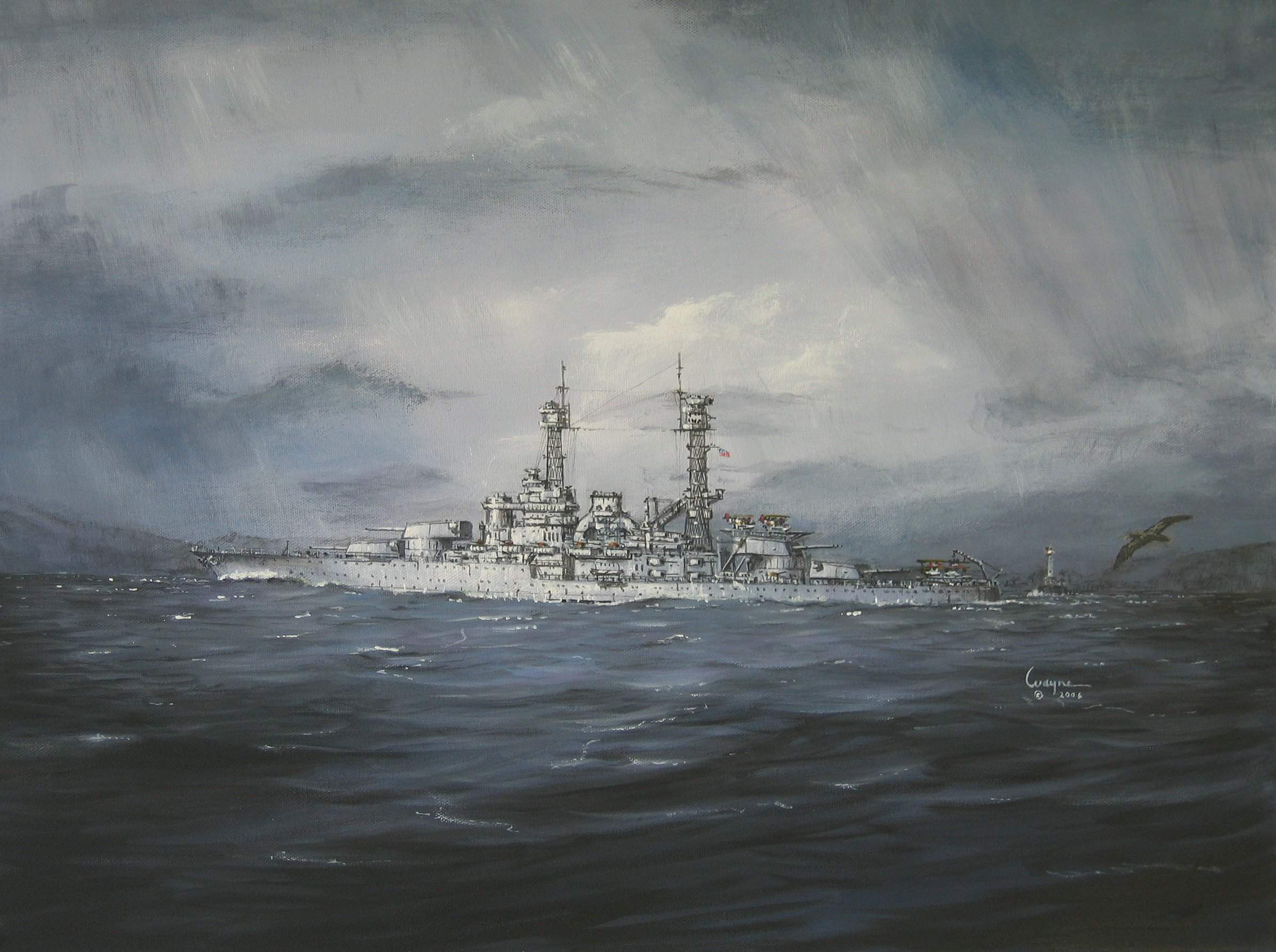
Artist impression of South Dakota Class

The Americans had set out to build the largest, most modern and powerful battleships and battle cruisers afloat.  The Navy had already produced the Colorado class super-dreadnaughts which were equal to or superior to any battleships of their era.  The Navy planned for a class of six battle cruisers which would be superior to any similar ship afloat, the Lexington class and a class of six battleships, the South Dakota class mounting twelve 16”/50 guns in triple turrets.

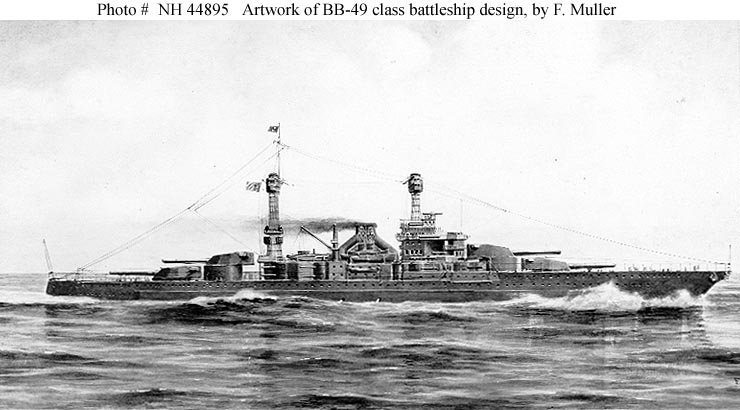
Artist impression of South Dakota Class as they might have appeared in 1938

The two classes were leviathans and to counter them the British made plans for a four ship 48,000 ton class of battleships, the N3 project mounting nine 18” guns and a class of battle cruisers mounting nine 16” guns.  The ships of both classes were designed with their main battery mounted forward in order to save weight on armor.  Both classes were canceled with the signing of the treaty and none were laid down.  It is suggested by some that the G3 battle cruiser design was a ploy to get the United States to agree to the cancellation of its capital ship projects. The guns planned for the G3 class were mounted on the Nelson class battleships which complied with treaty limits.  Although powerful ships they suffered from engineering problems which often reduced their speed from what was designed.  Along with the HMS Hood, the sole ship completed of the four ship Admiral class the Nelson and Rodney were the most modern battleships in the Royal Navy until the King George V class entered service in 1941.  The Japanese planned for eight battleships and eight battle cruisers centered on the two existing Nagato class battleships and 4 Kongo class battle cruisers to be joined by the two ship 40,000 ton Tosa class battleships, the Tosa and the Kaga, of which Kaga was completed as an aircraft carrier. They were to be joined by the 4 improved Tosa class or Kii class fast battleships of 42,000 which were ordered but never laid down.  These were to be joined by the four ship Amagi class battle cruiser class.  Amagi was destroyed during the Tokyo earthquake of 1922 and scrapped and Akagi completed as an aircraft carrier.  All of the planned Japanese ships were to mount ten 16” guns in five twin turrets.

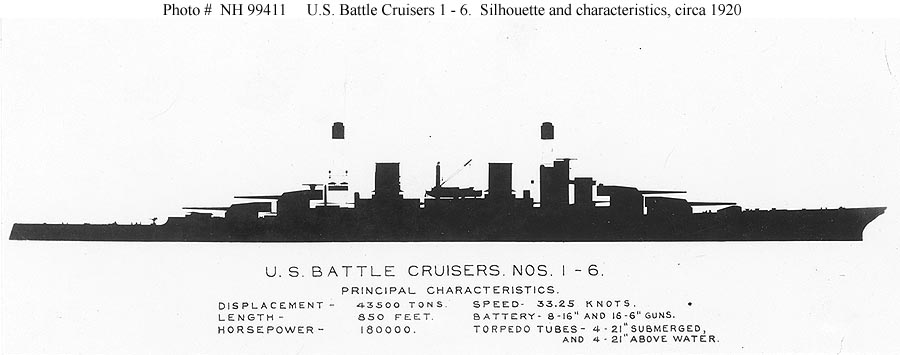
Lexington Class final design drawing

The American ships were to be powerful and based on main battery, protection and speed they would have acquitted themselves well had they been built.  The Japanese ships would have had a speed advantage over the South Dakota’s but this would have been offset by the gun power and protection of the latter.  The American Lexington class would have been faster than any of their competitors.

South Dakota Class Design Specifications
Displacement: 43,200 tons normal
Dimensions: 684 x 106 x 33 feet/208.5 x 32.3 x 10.1 meters
Propulsion: Turbo-electric, 12 285 boilers, 4 shafts, 50,000 shp, 23 knots
Crew: 1191
Armor: 8-13.5 inch belt, 3.5 inch deck, 4.5-13.5 inch barbettes, 5-18 inch turrets, 8-16 inch CT
Aviation: none
Armament: 4 triple 16″/50cal, 16 6″/53cal, 8 3″/50cal AA, 2 21 inch torpedo tubes (submerged)

The six ships in the Class, South Dakota, Indiana, Montana, North Carolina, Iowa and Massachusetts were all scrapped in accordance with the treaty when partially complete, the North Carolina being in the most advanced stage of construction, 37.8% when construction was halted.

Lexington class Battle Cruiser Design Specifications

Displacement 43,500 Tons, Dimensions, 874′ (oa) x 105′ 5″ x 31′ (max).
Armament 8 x 16″/50 16 x 6″/53 4 x 3″8 x 21″ torpedo tubes
Machinery, 180,000 SHP; G.E. Geared Turbines with Electric Drive, 4 screws
Speed, 35 Knots, Crew 1500

The ships with the exception of the Lexington and Saratoga were scrapped incomplete.  All were to be named after famous warships or battles, and the Constellation, Constitution, Ranger and the United States were to be named after some of the most illustrious ships ever to serve in the US Navy.

If all of the ships, including the Washington of the Colorado class been completed the US Navy would have had eight battleships and six battle cruisers mounting 16 inch guns to compliment the nine battleships of the Nevada, Pennsylvania, New Mexico and California classes which all mounted 14 inch batteries.  The fleet would have been superior to either the Royal Navy or the Imperial Japanese Navy even with the ships planned by those navies.  Economically the United States was the only nation in the world capable of sustaining a naval arms race of this magnitude, the British economy and political will would have been unable to sustain it and the limited industrial capacity and dependence on the United States for raw materials and machine tools needed to construct their ships would have limited their ability to produce such a fleet. Without the conversion of the Lexington, Saratoga and their Japanese counterparts the Akagi and Kaga into aircraft carriers the development of the carrier would likely have gone slower and that type of ship may not have risen to the prominence that they gained during the Second World War.

8 Comments

Filed under History, Military, Navy Ships

Power and Beauty the Battle Cruisers Scharnhorst and Gneisenau

Scharnhorst

The naval architects of Germany in the early 1930s designed some of the most beautiful as well as deadly warships of the Second World War.  Following Germany’s rejection of the provisions of the Treaty of Versailles the Kreigsmarine enacted a building program to enlarge and modernize the German Navy which then was composed of obsolete pre-Dreadnaught battleships and a few modern light cruisers and destroyers.   The first major units constructed were actually begun by the predecessor to the Kreigsmarine, the Reichsmarine of the Weimar Republic.  These were the Deutschland class Armored Ships, sometimes called “Pocket Battleships” and later reclassified as Heavy Cruisers. These ships were designed to replace the old pre-Dreadnaught battleships and incorporated electric welds to reduce displacement, diesel engines for extended cruise range to enable them to serve as commerce raiders and a battery of six 11” guns.  While an advance over anything in the German inventory they were outclassed by the British battle cruisers Hood, Renown and Repulse.

Gneisenau

The next and first truly capital ships built by the Kriegsmarine were the Scharnhorst and Gneisenau battleships which in reality were battle cruisers because of their light main battery of 11” guns as opposed to the 14”, 15” or 16” batteries of other nations battleships.  Despite this in displacement and armor protection of the ships was comparable to other battleships of the era and their designed speed of 31.5 knots was superior to almost all other battleships of the era including the British King George V Class and the US North Carolina class.  Only the British Hood was their superior in speed.

Gneisenau Main Battery

As built they displaced 31,000 toms, however at full combat load they both weighed in at nearly 38,000 tons and were 772 feet long.  They had an armor belt that was nearly 14 inches thick.  Armed with a main battery of nine 11” guns and a secondary armament of twelve 5.9 inch guns they also mounted a powerful for the time anti- aircraft battery of fourteen 4.1 inch guns, 16 37mm and 16 20mm anti-aircraft cannons.  Additionally they mounted six 21” torpedo tubes and carried three Arado 196 A3 scout planes.  The main battery was eventually to be replaced by six 15” guns but this never occurred although Gneisenau was taken in hand to mount the new weapons but the conversion was never completed.

Scharnhorst in Action Against HMS Glorious

Laid down on 15 June 1935 and launched 3 October 1936 Scharnhorst was commissioned 7 January 1939.  Her sister Gneisenau was laid down 6 May 1935, launched 8 December 1936 and commissioned 21 May 1938.  Upon the commencement of the Second World War the two sisters began a reign of destruction on British shipping. In November they sank the Armed Merchant Cruiser HMS Rawalpindi During Operation Weserübung the pair surprised sank the aircraft carrier Glorious and her two escorting destroyers, the only time a Fleet carrier was caught and sunk by battleships during the war.   From January to March 1941 they conducted Operation Berlin against British merchant shipping in the North Atlantic sinking 22 ships before returning to base.

The Channel Dash Seen from Prinz Eugen

While in the port of Brest Gneisenau was bombed and torpedoed requiring extensive repairs.  Due to the exposed location of the port the German high command decided to return the ships to Germany along with the Heavy Cruiser Prinz Eugen.  This was Operation Cerberus and it took place from 11-13 February 1942 and involved the ships making a dash up the English Channel which was unsuccessfully contested by the British Royal Air Force and Royal Navy although both Scharnhorst and Gneisenau were damaged by mines and needed subsequent repairs.  While undergoing repairs in Kiel Gneisenau was further damaged by the Royal Air Force requiring repairs in or to steam to the port of Gotenhafen for repair and conversion.  Although some work was completed she was decommissioned and sunk as a blockship on 23 March 1945.  Following the war she was raised by the Poles and scrapped.

Gneisenau Sunk as Blockship

Scharnhorst was repaired following Operation Cerberes and in March 1943 was transferred to Norway where along with Tirpitz, Admiral Scheer, Lutzow (the former Deutschland), Admiral Hipper and Prinz Eugen she became part of a “fleet in being” poised to strike the Allied convoys bound for Russia. On Christmas Day 1943 under the command of Rear Admiral Erich Bey the Scharnhorst set sail with several destroyers undertook Operation Ostfront and the ensuing battle became known as the Battle of North Cape. This was to be an attack on two Russia bound convoys; however the orders were intercepted and decoded by the British which allowed Scharnhorst to be intercepted by the battleship HMS Duke of York four cruisers and a number of destroyers as she closed with the convoy after Bey had detached his escorting destroyers.  While attempting to escape she received damage that impacted her speed and maneuvering capabilities and was sunk with the loss of all but 36 of her 1968 man crew.  Her wreck was discovered 3 October 2000 some 70 miles north of North Cape Norway.

Thus ended the careers of two of the most beautiful ships to grace the seas, though their careers were short they both survived frequent heavy battle damage to return and fight again.  Perhaps their greatest weakness was the inability of the German Navy to provide them adequate escort and the Luftwaffe being unable to protect them against air strike while in port.

9 Comments

Filed under History, Military, Navy Ships, world war two in europe