Tag Archives: t e lawrence

The Long Road: Nine Years of Padre Steve’s World

Friends of Padre Steve’s World,

Tonight a short pause to reflect on the 9th anniversary of Padre Steve’s World, especially for my new readers who might not know how this blog came about.

The blog came out of a question my first shrink asked me as I was beginning to melt down with PTSD and TBI after my tour in Iraq which ended in February 2008. His question, “Well chaplain, what are you going to do with your your experience?” forced me to think, and get outside of myself.

iraq-2007

bedouin

I certainly wasn’t in great shape, in fact I was falling apart. Chronic insomnia, nightmares, night terrors, depression, anxiety, hyper-vigilance, fear of everyday activities, all took their and my doctors trying different combinations of medicines, each with their own side effects, even while I was undergoing different psychiatric and neurological test. I was a total wreck and often impossible to be around. I was always on edge and prone to anger. I threw myself into work in the ICU sixty to one hundred hours a week depending on my call schedule. That didn’t help, and I got worse. It would take years to see measurable improvement, and even then, with periodic crashes, often connected to the deaths of friends, including those who suffered from what I suffered.

In contemplating my therapist’s question I knew that I wanted to share what I was going through, even while I was in the middle of it.

But there was a risk, and he pointed it out, and I had seen it before; anyone who opens up and talks of their brokenness when they themselves are supposed to be one of the “healers” often ends up ostracized by their community. Their fellow professionals frequently withdraw from them, old friends distance themselves, and sometimes their family lives fall apart. This happens to physicians, nurses, hospital corpsmen, mental health providers, law enforcement officers, as well as highly trained Special Forces, EOD, and other military professionals. It also happens to Chaplains.

Henri Nouwen wrote: “But human withdrawal is a very painful and lonely process, because it forces us to face directly our own condition in all its beauty as well as misery.” That happened to me, and I am better for it.  In the depths of my struggle I found a strange solace in the words of T.E. Lawrence who toward the end of his life wrote a friend: “You wonder what I am doing? Well, so do I, in truth. Days seem to dawn, suns to shine, evenings to follow, and then I sleep. What I have done, what I am doing, what I am going to do, puzzle and bewilder me. Have you ever been a leaf and fallen from your tree in autumn and been really puzzled about it? That’s the feeling.”

So that’s how things began. I wrote about what was going on with me. That included my spiritual struggles, as well as writing about baseball which is as much a part of my spirituality as anything. As I continued to write I began to address social and political issues, and then on to my real love about writing history.  I completed my second Master’s degree in military history a year after I started this blog.

My historical writings have been both educational because of the vast amount of research required, as well as therapeutic. In my reading, research, and writing, I discovered fellow travelers from history whose stories helped me find myself again, men with feet of clay, doubts, depression, often masked by triumph. My examples included T.E. Lawrence, Gouveneur Warren, Joshua Lawrence Chamberlain, Ulysses Grant, and William Tecumseh Sherman. I found a measure of comfort as well as solace in their lives, experience, and writings.

My immersion in history was further motivated by being able to teach and lead the Gettysburg Staff Ride at the Staff College for three and a half years. That is unusual for a chaplain, but I am an unusual chaplain, as one of my fellow professors said, “You’re a historian masquerading as a chaplain, not that there is anything wrong with that.” 

So that’s how, some 3,225 posts, and three draft books later I got to this point. Hopefully my first book, Mine Eyes Have Seen the Glory! Race, Religion, Politics, and Ideology in the Civil War Era get published sometime in the next year.

While I still suffer symptoms of PTSD I have stabilized for the most part, much of it I attribute to a decent combination of meds, a renewed love and friendship with my wife, and my Papillons Izzy and Pierre who are both therapy dogs in every sense of the word. Likewise there have been a few people who stood by me through thick and thin. I have expressed to them how much I appreciate them and because of them I really began to appreciate the words of William Tecumseh Sherman who noted: “Grant stood by me when I was crazy. I stood by him when he was drunk, now we stand together.” Since I have been both at times, I find that such camaraderie is more important than about anything else.

I still suffer from a lot of crazy dreams, nightmares, and occasional night terrors which are so physically violent that I trash around or even throw myself out of bed. Thankfully I haven’t physically hurt myself lately, or had to go to the emergency room as a result as I have on two occasions. I also remain somewhat hyper-vigilant, get anxious in crowded or confined spaces, and there are just some places that I avoid if at all possible. But that is life with PTSD.

I appreciate all the people who subscribe to this blog, those who follow it through social media sites like Facebook and Twitter, and who take the time to comment, as well as to provide words of encouragement. For that I thank all of you.

Have a great night,

Peace

Padre Steve+

9 Comments

Filed under mental health, Military, PTSD, Tour in Iraq

Epiphanies

Friends of Padre Steve’s World,

Yesterday I preached at my chapel. The message was one that had it not been for a snow event that closed our base would have been delivered last week. Now if it was up to me I would have simply moved along to this week’s lectionary readings, but my soon to be deputy command chaplain who I had the opportunity to promote to the rank of Lieutenant Commander and administer the oath of office to is not nearly the liturgical fanatic that I am so we stayed with the readings for the Epiphany. Truthfully I would have done this weeks readings because I am such a slut for liturgical correctness but since the bulletins were already done and it meant a lot to my young Padawan. Actually he’s not that young but he is a good deal younger than me but I digress.

In the Christian tradition the Epiphany commemorates the revelation of Jesus the Christ to the gentiles, usually represented by three Magi, or wise men, actually astrologers from somewhere in Persia. Now I personally would like to think of them being three Wise Guys from East Jersey and name them Guido, Fredo, and Giuseppe bringing who were bringing gifts of gold, non-sequentially numbered $100s, and untraceable bonds, but I digress…

Following a star they came to Jerusalem where they went to see the corrupt, corpulent, and paranoid King Herod to ask him about the whereabouts of the Messiah.

Now Herod, there’s a character for you. He was a gentile appointed by the Roman Senate to run Judea. By some accounts converted to Judaism without really embracing the moral tenets or beliefs of the religion, but he did his best to placate his religious base by building a splendid temple while building massive palaces, stables, and a state of the art seaport at Caesarea to enrich himself and his Roman overlords and because he wasn’t afraid to tax his people unmercifully he never went bankrupt.

To make a long story short, Herod wanted the Magi to tell him where Jesus might be. After Herod secured their promise to do so the Magi went on their way and made their visit to Mary, Joseph, and the now nearly two year old Jesus.

Now I know that a two year old Jesus plays hell with our beautiful nativity displays. My goodness a two year old Jesus would be in the terrible twos and we all have seen how that works out when important guests come over, but again I digress…

So after delivering their gifts to Jesus the Magi got word, supposedly in a dream, but maybe from an informer of some kind that Herod wanted to kill Jesus, so they hauled ass out of Judea. Herod got pissed off and according to the Christian tradition had his goons kill all the male toddlers in Bethlehem since he didn’t have a Twitter account. Meanwhile Joseph and Mary took Jesus off to Egypt to sojourn as refugees for a couple of years, but again I digress, there are far better Bible scholars and theologians who can do much better with the material than me so I am going to leave the Biblical account and Christian tradition for them to explain.

So, today I am writing less about the Epiphany, than the epiphanies that many of us experience in our spiritual or life journeys. Epiphanies surprise us, they come when we are neither looking for them or expecting them.

I have had my own epiphanies at various times in my life, some spiritual and well, some less than spiritual; but they were all important. One of the most important was what I discovered when I was serving in Iraq; that in war truth is one of the first casualties. Since then my eyes have been opened to many other things and my life has changed, in the long run for the better, but not without much difficulty and turmoil dealing with chronic PTSD, TBI, moral injury and all of their excruciating consequences, but I am doing better now for the most part and what I have learned has become invaluable in my spiritual journey.

The German Lutheran theologian Juergen Moltmann discussed his personal epiphany in his book The Source of Life: The Holy Spirit and the Theology of Life:

“The friend standing next to me at the firing predictor was torn to pieces by the bomb that left me unscathed. That night I cried out to God for the first time: `My God, where are you?’ And the question `Why am I not dead too?’ has haunted me ever since. Why are you alive? What gives your life meaning? Life is good, but to be a survivor is hard. One has to bear the weight of grief. It was probably in that night that my theology began, for I came from a secular family and knew nothing of faith. The people who escaped probably all saw their survival not just as a gift but as a charge too.”

Moltmann was a teenager and not yet eligible for military service and like thousands of others of his generation was enlisted as a Flakhilfer a conscript that manned anti-aircraft batteries in order to free up soldiers for duties at the front. In that capacity he experienced war, death, and eventually was taken prisoner when the allies overran Germany. He spent a number of years in a British POW Camp in Scotland where he came to faith.

There are times that I wonder why I am alive and others, including friends and men that I served with are not. I wonder what happened if the rocket that passed over my head in Baghdad had just Jharel a slightly lower trajectory, if allies of the crooked Iraqi Lieutenant Colonel who we confronted at Al Waleed had opened fire in the new Iraqi commander’s office, or if the fire that our helicopter took over Ramadi had been more accurate. I wonder about all of those things and more. Like Moltmann I now find my experiences to be both a gift and a charge to keep.

T. E. Lawrence wrote:

“The rare man who attains wisdom is, by the very clearness of his sight, a better guide in solving practical problems than those, more commonly the leaders of men, whose eyes are misted and minds warped by ambition for success…”

That is what getting one’s eyes opened by war will do to you.

So until tomorrow,

Peace,

Padre Steve+

1 Comment

Filed under faith, Military, ministry

Padre Steve’s Reading Rainbow: Some of the Most Important Books in my Life

Friends of Padre Steve’s World,

I think that it important to read, and read, and did I say read?

Barbara Tuchman wrote:

“Books are the carriers of civilization. Without books, history is silent, literature dumb, science crippled, thought and speculation at a standstill. Without books, the development of civilization would have been impossible. They are engines of change (as the poet said), windows on the world and lighthouses erected in the sea of time. They are companions, teachers, magicians, bankers of the treasures of the mind. Books are humanity in print.”

Since I write about a lot of topics and because I am a historian as well as a stand up theologian, I read a lot and I frequently quote from other people in anything that I write. Sometimes I find that those who have gone before me have said things I want to say much better than I could on my own. Thus I am not afraid or ashamed to give attribution to them, after all, it is only fair.

But today I want to share some of the books that I think are important for anyone seeking to understand our world. In a sense, this is my Reading Rainbow moment.

Most of my picks deal with history, military, diplomacy, civil rights, politics, as well as baseball. Despite the fact that I am a priest I don’t have many books on theology, religion, or faith on my list, but then the fact is that I don’t see a lot, including many of the so called classics that hold up over time. So today just some of my reading rainbow.

Here they are in no particular order:

The Guns of August by Barbara Tuchman

Street Without Joy by Bernard Fall

A Savage War of Peace by Alistair Horne

A Bridge Too Far by Cornelius Ryan

Battle Cry of Freedom by James McPherson

The Hot Zone by Richard Preston

The Nanking Massacre by Iris Chang

Seven Pillars of Wisdom by T.E. Lawrence

Hero: A Life of Lawrence of Arabia by Michael Korda

Our Declaration: A Reading of the Declaration of Independence in Defense of Equality by Danielle Allen

A Soldier Once… and Always by Hal Moore

To Kill an Mockingbird by Harper Lee

Meditations by Marcus Aurelius

The Centurions by Jean Larteguy

The True Believer by Eric Hoffer

The Past that Would Not Die by Walter Lord

The Autobiography of Frederick Douglass by Frederick Douglass

The Origins of Totalitarianism by Hannah Arendt

On Tyranny by Timothy Snyder

The Rise and Fall of the Third Reich by William Shirer

The Summer of ’49 by David Halberstam

Men at Work: The Craft of Baseball by George Will

Team of Rivals by Doris Kearns Goodwin

Why Don’t We Learn from History? By B.H. Liddell-Hart

They Thought they Were Free by Milton Mayer

Once an Eagle by Anton Meyer

Conduct Unbecoming: Gays and Lesbians in the U.S. Military by Randy Shilts

The Cost of Discipleship by Dietrich Boenhoffer

Black Earth: the Holocaust as History and Warning by Timothy Snyder

This Republic of Suffering by Drew Gilpin Faust

All Quiet on the Western Front by Erich Maria Remarque

Forever Free: the Story of Emancipation and Reconstruction by Eric Foner

The Caine Mutiny by Herman Wouk

The Wounded Healer by Henri Nouwen

Nuremberg: Infamy on Trial by Joseph Perisco

In the Name of War: King Philip’s War and the Origins of American Identity by Jill Lepore

On Being a Christian by Hans Kung

The Crucified God by Juergen Moltmann

The Mystery of the Cross by Alister McGrath

Drift: The Unmooring of American Military Power by Rachel Maddow

War is a Racket by Smedley Butler

The Iowa Baseball Confederacy by W.P. Kinsella

The Forgotten Soldier by Guy Sajer

The Boys of Summer by Roger Kahn

American Scoundrel: The Life of the Notorious American Civil,War General, Daniel Sickles by Thomas Keneally

Lincoln at Gettysburg by Gary Wills

Ordinary Men by Christopher Browning

Perpetrators Victims Bystanders: The Jewish Catastrophe 1933-1945 by Raul Hilberg

And the Band Played On by Randy Shilts

Lincoln’s Lieutenants: The High Command of the Army of the Potomac by Stephen Sears

The Nazi Doctors by Robert Jay Lifton

Sorry, no descriptions or intros included, but trust me. They are all worth the read. Anyway, those are just some of my favorites on from my Reading Rainbow. Yes, there are plenty more, but that’s all for now.

Have a great day and as always,

Peace,

Padre Steve+

2 Comments

Filed under History, Loose thoughts and musings, philosophy

There Are Still Nightmares: Reliving the Inner Terror of War 


Friends of Padre Steve’s World

It was a good but exhausting weekend and yesterday at work was very busy and challenging. So this I am posting just a note today.

Saturday night, or rather early Sunday morning I had another of my high definition Iraq nightmares. Very realistic and terrifying. Once again I found myself being attacked while in a HUMMV and being thrown out of the vehicle with enemy gunmen closing in. During the nightmare I threw myself out of bed and looked up to see a gunman dressed in black with an AK pointed at me, so I tried to tackle him and when I awoke in a very groggy state I found that I was wrestling my television to the ground. All of this in my sleep. It took about thirty minutes to calm down. Minnie, Izzy and Pierre all came in to check on me and the left. Izzy gave me a short snuggle and I finally got back to sleep in enough time to get back up, go to breakfast and finish my sermon preparation. 

I find it amazing that ten years after I departed for Iraq that I still relive my greatest fears from when I was over there, traveling with small groups of American advisors and Iraqi troops throughout the badlands of Al Anbar. I was always afraid that our tiny convoys, usually just two or three HUMMVs and maybe an Iraqi vehicle or two would get ambushed by an IED and attacked. Being so small and mostly away from big concentrations of American troops with significant firepower we were very vulnerable. We got shot at from a distance a few times, mostly in Ramadi, and couldn’t return fire because we couldn’t see who was shooting at us. 

While we were there I seldom slept, even when we were back at our home base at Ta Qaddum to plan our next mission. That base was relatively secure but it had taken rocket and mortar fire before we got there. Thankfully that had ended but it was always in the back of our minds when we heard gunfire coming from the nearby town of Habbinyah. I remember doing a run around the airfield one day when I heard gunfire coming from the town with me in plain view of it. I ran faster than I think I ever have before to get out of the line of sight. T. E. Lawrence wrote of his time with the Arabs in the First World War “We lived always in the stretch or sag of nerves, either on the crest or in the trough of waves of feeling.” Those words well describe my time in Iraq. 

My nightmares include fragments of what happened as well as my fears that thankfully never materialized. Over the past three years I have ended up in the emergency room twice, once with a broken nose from these episodes. I suppose if I had been sleeping in my own bed, which I am not because my snoring has gotten so loud that Judy, who is profoundly deaf could not sleep even wearing ear plugs that took another 30 decibels off her hearing, that I would have gone to the ER again. In the guest room I didn’t run into my nightstand with my face. Even so it is not fun. 

In the past I have quoted James Spader’s character Raymond Reddington from the television series The Blacklist. Reddington told an FBI agent who had seen his fiancée murdered: “There is nothing that can take the pain away. But eventually, you will find a way to live with it. There will be nightmares. And every day when you wake up, it will be the first thing that you think about. Until one day, it’s the second.” 

That being said I am not depressed or in a funk and life is relative good. I am rather fortunate, despite the often terrifying reality of living with my PTSD and these bloody nightmares, things could be a lot worse. I do have nightmares but at least at the moment they are not dominating my waking hours.

Tonight I plan on watch the Major League Baseball All Star Game. I’ll write about that for tomorrow before moving on to other things. 

Peace

Padre Steve+ 

5 Comments

Filed under iraq, PTSD, Tour in Iraq

God In the Empty Places: Remembering Iraq

bedouin

Friends of Padre Steve’s World,

In the midst of all I have been writing lately, when I recalled yesterday that I had been writing on this site for eight years, it brought back a lot of memories. Those memories kept me up a lot of last night, and I realized that many of my newer readers don’t know about some of the events that brought me to where I am today. In December of 2007 while I was in Iraq I wrote an e-mail to my former denomination that was published in the denomination newsletter.

When I wrote it I was between missions and getting ready to head out to the Syrian border of Iraq for an extended visit with five of our Military Training Teams of advisors who were working with Iraqi Army and Border troops.

This is the unedited post from that article that I posted here in early March 2009. It is amazing to me, on this day that is also the 50th anniversary of the death of Bernard Fall who I quote in the original article, that so little has changed, except possibly for the worse.

Have a great night, tomorrow my series on civil rights and African American history continues.

Peace,

Padre Steve+

I have been doing a lot of reflecting on ministry and history over the past few months. While both have been part of my life for many years, they have taken on a new dimension after serving in Iraq. I can’t really explain it; I guess I am trying to integrate my theological and academic disciplines with my military, life and faith experience since my return.

The Chaplain ministry is unlike civilian ministry in many ways. As Chaplains we never lose the calling of being priests, and as priests in uniform, we are also professional officers and go where our nations send us to serve our Soldiers, Sailors, Marines and Airmen. There is always a tension, especially when the wars that we are sent to are unpopular at home and seem to drag on without the benefit of a nice clear victory such as VE or VJ Day in World War II or the homecoming after Desert Shield and Desert Storm.

It is my belief that when things go well and we have easy victories that it is easy for us to give the credit to the Lord and equally easy for others to give the credit to superior strategy, weaponry or tactics to the point of denying the possibility that God might have been involved. Such is the case in almost every war and Americans since World War Two have loved the technology of war seeing it as a way to easy and “bloodless” victory. In such an environment ministry can take on an almost “cheer-leading” dimension. It is hard to get around it, because it is a heady experience to be on a winning Army in a popular cause. The challenge here is to keep our ministry of reconciliation in focus, by caring for the least, the lost and the lonely, and in our case, to never forget the victims of war, especially the innocent among the vanquished, as well as our own wounded, killed and their families.

But there are other wars, many like the current conflict less popular and not easily finished.The task of chaplains in the current war, and similar wars fought by other nations is different.In these wars, sometimes called counter-insurgency operations, guerilla wars or peace keeping operations, there is no easily discernable victory. These types of wars can drag on and on, sometimes with no end in sight. Since they are fought by volunteers and professionals, much of the population acts as if there is no war since it does often not affect them, while others oppose the war.

Likewise, there are supporters of war who seem more interested in political points of victory for their particular political party than for the welfare of those that are sent to fight the wars. This has been the case in about every war fought by the US since World War II. It is not a new phenomenon. Only the cast members have changed.

dien-bien-phu6

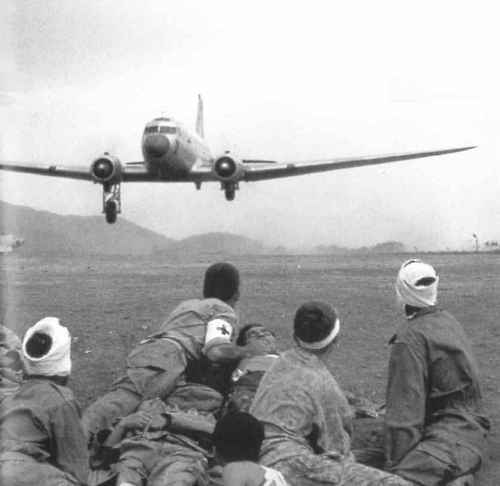
This is not only the case with the United States. I think that we can find parallels in other militaries. I think particularly of the French professional soldiers, the paratroops and Foreign Legion who bore the brunt of the fighting in Indo-China, placed in a difficult situation by their government and alienated from their own people. In particular I think of the Chaplains, all Catholic priests save one Protestant, at the Battle of Dien Bien Phu, the epic defeat of the French forces that sealed the end of their rule in Vietnam. The Chaplains there went in with the Legion and Paras. They endured all that their soldiers went through while ministering the Sacraments and helping to alleviate the suffering of the wounded and dying. Their service is mentioned in nearly every account of the battle. During the campaign which lasted 6 months from November 1953 to May 1954 these men observed most of the major feasts from Advent through the first few weeks of Easter with their soldiers in what one author called “Hell in a Very Small Place.”

Another author describes Easter 1954: “In all Christendom, in Hanoi Cathedral as in the churches of Europe the first hallelujahs were being sung. At Dienbeinphu, where the men went to confession and communion in little groups, Chaplain Trinquant, who was celebrating Mass in a shelter near the hospital, uttered that cry of liturgical joy with a heart steeped in sadness; it was not victory that was approaching but death.” A battalion commander went to another priest and told him “we are heading toward disaster.” (The Battle of Dienbeinphu, Jules Roy, Carroll and Graf Publishers, New York, 1984 p.239)

Of course one can find examples in American military history such as Bataan, Corregidor, and certain battles of the Korean War to understand that our ministry can bear fruit even in tragic defeat. At Khe Sahn in our Vietnam War we almost experienced a defeat on the order of Dien Bien Phu. It was the tenacity of the Marines and tremendous air-support that kept our forces from being overrun.

You probably wonder where I am going with this. I wonder a little bit too. But here is where I think I am going. It is the most difficult of times; especially when units we are with take casualties and our troops’ sacrifice is not fully appreciated by a nation absorbed with its own issues.

french troops indochina

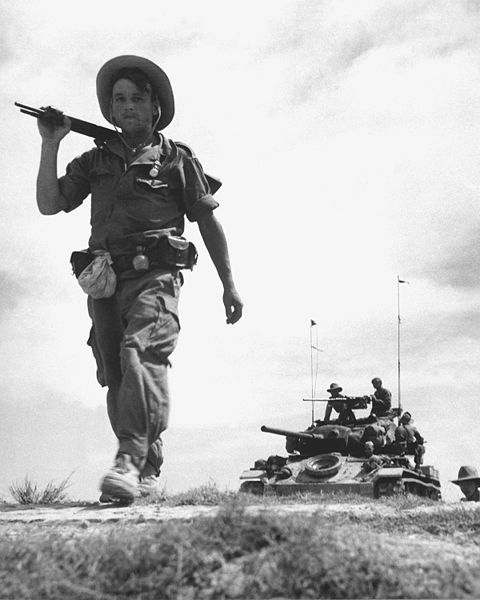
For the French the events and sacrifices of their soldiers during Easter 1954 was page five news in a nation that was more focused on the coming summer. This is very similar to our circumstances today because it often seems that own people are more concerned about economic considerations and the latest in entertainment news than what is going on in Iraq or Afghanistan. The French soldiers in Indo-china were professionals and volunteers, much like our own troops today. Their institutional culture and experience of war was not truly appreciated by their own people, or by their government which sent them into a war against an opponent that would sacrifice anything and take as many years as needed to secure their aim, while their own countrymen were unwilling to make the sacrifice and in fact had already given up their cause as lost. Their sacrifice would be lost on their own people and their experience ignored by the United States when we sent major combat formations to Vietnam in the 1960s. In a way the French professional soldiers of that era have as well as British colonial troops before them have more in common with our force than the citizen soldier heroes of the “Greatest Generation.” Most of them were citizen soldiers who did their service in an epic war and then went home to build a better country as civilians. We are now a professional military and that makes our service a bit different than those who went before us.

Yet it is in this very world that we minister, a world of volunteers who serve with the highest ideals. We go where we are sent, even when it is unpopular. It is here that we make our mark; it is here that we serve our Soldiers, Sailors, Marines and Airmen. Our duty is to bring God’s grace, mercy and reconciliation to men and women, and their families who may not see it anywhere else. Likewise we are always to be a prophetic voice within the ranks.

When my dad was serving in Vietnam in 1972 I had a Sunday school teacher tell me that he was a “Baby Killer.” It was a Catholic Priest and Navy Chaplain who showed me and my family the love of God when others didn’t. In the current election year anticipate that people from all parts of the political spectrum will offer criticism or support to our troops. Our duty is to be there as priests, not be discouraged in caring for our men and women and their families because most churches, even those supportive of our people really don’t understand the nature of our service or the culture that we represent. We live in a culture where the military professional is in a distinct minority group upholding values of honor, courage, sacrifice and duty which are foreign to most Americans. We are called to that ministry in victory and if it happens someday, defeat. In such circumstances we must always remain faithful.

For those interested in the French campaign in Indo-China it has much to teach us. Good books on the subject include The Last Valley by Martin Windrow, Hell in a Very Small Place by Bernard Fall; The Battle of Dien Bein Phu by Jules Roy; and The Battle of Dien Bien Phu- The Battle America Forgot by Howard Simpson. For a history of the whole campaign, readStreet Without Joy by Bernard Fall. I always find Fall’s work poignant, he served as a member of the French Resistance in the Second World War and soldier later and then became a journalist covering the Nurnberg Trials and both the French and American wars in Vietnam and was killed by what was then known as a “booby-trap” while covering a platoon of U.S. Marines.

There is a picture that has become quite meaningful to me called the Madonna of Stalingrad. It was drawn by a German chaplain-physician named Kurt Reuber at Stalingrad at Christmas 1942 during that siege. He drew it for the wounded in his field aid station, for most of whom it would be their last Christmas. The priest would die in Soviet captivity and the picture was given to one of the last officers to be evacuated from the doomed garrison. It was drawn on the back of a Soviet map and now hangs in the Kaiser Wilhelm Memorial Church in Berlin where it is displayed with the Cross of Nails from Coventry Cathedral as a symbol of reconciliation. I have had it with me since before I went to Iraq. The words around it say: “Christmas in the Cauldron 1942, Fortress Stalingrad, Light, Life, Love.” I am always touched by it, and it is symbolic of God’s care even in the midst of the worst of war’s suffering and tragedy.

1 Comment

Filed under faith, History, iraq,afghanistan, Military, ministry, Political Commentary, Tour in Iraq

Padre Steve’s World at Eight Years: I’m Still Standing

img_3414

Friends of Padre Steve’s World,

Tonight a short pause to reflect. I was reminded by my WordPress, the company that hosts my site that I began this blog eight years ago today.

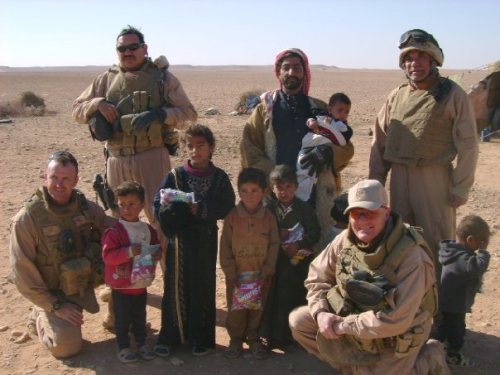
The blog came out of a question my first shrink asked me as I was beginning to melt down with PTSD and TBI after my tour in Iraq which ended in February 2008. His question, “Well chaplain, what are you going to do with your your experience?” forced me to think, and get outside of myself.

iraq-2007

bedouin

I certainly wasn’t in great shape, in fact I was falling apart. Chronic insomnia, nightmares, night terrors, depression, anxiety, hyper-vigilance, fear of everyday activities, all took their and my doctors trying different combinations of medicines, each with their own side effects, even while I was undergoing different psychiatric and neurological test. I was a total wreck and often impossible to be around. I was always on edge and prone to anger. I threw myself into work in the ICU sixty to one hundred hours a week depending on my call schedule. That didn’t help, and I got worse. It would take years to see measurable improvement, and even then, with periodic crashes, often connected to the deaths of friends, including those who suffered from what I suffered.

In contemplating my therapist’s question I knew that I wanted to share what I was going through, even while I was in the middle of it. But there was a risk, and he pointed it out, and I had seen it before; anyone who opens up and talks of their brokenness when they themselves are supposed to be one of the “healers” often ends up ostracized by their community. Their fellow professionals frequently withdraw from them, old friends distance themselves, and sometimes their family lives fall apart. This happens to physicians, nurses, hospital corpsmen, mental health providers, law enforcement officers, as well as highly trained Special Forces, EOD, and other military professionals. It also happens to Chaplains. Henri Nouwen wrote: “But human withdrawal is a very painful and lonely process, because it forces us to face directly our own condition in all its beauty as well as misery.” That happened to me, and I am better for it.  In the depths of my struggle I found a strange solace in the words of T.E. Lawrence who toward the end of his life wrote a friend: “You wonder what I am doing? Well, so do I, in truth. Days seem to dawn, suns to shine, evenings to follow, and then I sleep. What I have done, what I am doing, what I am going to do, puzzle and bewilder me. Have you ever been a leaf and fallen from your tree in autumn and been really puzzled about it? That’s the feeling.”

So that’s how things began. I wrote about what was going on with me. That included my spiritual struggles, as well as writing about baseball which is as much a part of my spirituality as anything. As I continued to write I began to address social and political issues, and then on to my real love, writing history, which I completed my second Master’s degree in a year after I started this blog.

The latter which has been both educational, as well as therapeutic. In my reading, research, and writing, I discovered fellow travelers from history whose stories helped me find myself again, men with feet of clay, doubts, depression, often masked by triumph. My examples included T.E. Lawrence, Gouveneur Warren, Joshua Lawrence Chamberlain, Ulysses Grant, and William Tecumseh Sherman. I found a measure of comfort as well as solace in their lives, experience, and writings.

My historical writings been further motivated by being able to teach and lead the Gettysburg Staff Ride at the Staff College. That is unusual for a chaplain, but I am an unusual chaplain, as one of my fellow professors said, “You’re a historian masquerading as a chaplain, not that there is anything wrong with that.” 

So that’s how, some 2,862 posts, and three draft books, I got to this point. I still do suffer symptoms of PTSD but I have stabilized for the most part, much of it I attribute to a decent combination of meds, a renewed love and friendship with my wife, and my Papillon Izzy, who is a therapy dog in every sense of the word. Likewise there have been a few people who stood by me through thick and thin. I have expressed to them how much I appreciate them and because of them I really began to appreciate the words of William Tecumseh Sherman who noted: “Grant stood by me when I was crazy. I stood by him when he was drunk, now we stand together.” Since I have been both at times, I find that such camaraderie is more important than about anything else.

I appreciate all the people who subscribe to this blog, those who follow it through social media sites like Facebook and Twitter, and who take the time to comment, as well as to provide words of encouragement. For that I thank all of you.

Have a great night,

Peace

Padre Steve+


1 Comment

Filed under faith, mental health, Military, PTSD

Veteran’s Day 2016: They Thanked us Kindly and Made Their Peace…

Remembrance_Day___Poppy_Day_by_daliscar

Friends of Padre Steve’s World,

Ninety-eight years ago the war that was supposed to end all wars came to an end. Barely two years later, T.E. Lawrence wrote of its end:

We were fond together because of the sweep of open places, the taste of wide winds, the sunlight, and the hopes in which we worked. The morning freshness of the world-to-be intoxicated us. We were wrought up with ideas inexpressible and vaporous, but to be fought for. We lived many lives in those whirling campaigns, never sparing ourselves: yet when we achieved and the new world dawned, the old men came out again and took our victory to remake in the likeness of the former world they knew. Youth could win, but had not learned to keep, and was pitiably weak against age. We stammered that we had worked for a new heaven and a new earth, and they thanked us kindly and made their peace.”

That seems to be the way that it always is.

In November 1914 millions of soldiers were fighting in horrible conditions throughout Europe. From the English Channel to Serbia, Poland and Galicia; French, British, German, Austro-Hungarian, Serbian and Russian troops engaged each other in bloody and often pointless battles. Often commanded by old men who did not understand how the character of war had changed, millions were killed, wounded, maimed or died of disease.

481801_10151367001287059_1003164983_n-1.jpg

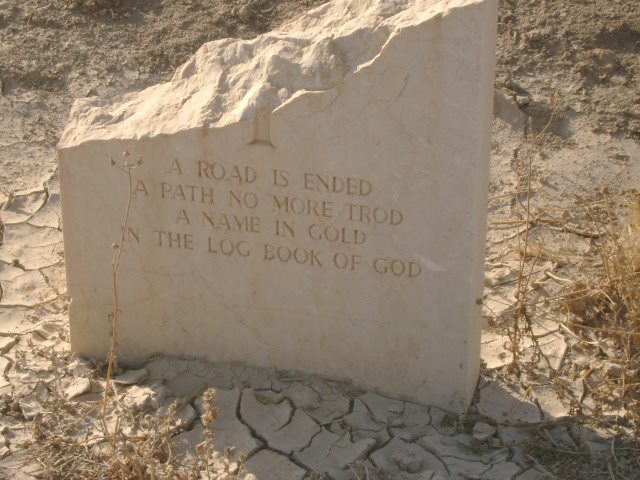
Grave of a British Airman in Habbinyah Iraq

After four years, with the Empires that were at the heart of the war’s outbreak collapsing one after the other there was an armistice. On the eleventh  hour, of the eleventh day, of the eleventh month the shooting stopped and the front lines quieted. By then over 20 million people, soldiers and civilians alike had died. Millions more had been wounded, captured, seen their homes and lands devastated or been driven from there ancestral homelands, never to return.

The human cost of that war was horrific. Over 65 million soldiers were called up on all sides of the conflict, of which nearly 37.5 million became casualties, some 57.5% of all soldiers involved. Some countries saw the flower of their manhood, a generation decimated. Russia sustained over 9 million casualties of the 12 million men they committed to the war, a casualty rate of over 76%. The other Allied powers suffered as well.  France lost 6.4 million of 8.5 million, or 73%, Great Britain 3.1 million of nearly 9 million, 35%; Italy 2.2 million of 5.6 million, 39%. Their opponents, Germany, Austria-Hungary and the Ottoman Empire suffered greatly. Germany sustained 7.1 million casualties of 11 million men called up, or nearly 65%, Austria 7 million of 7.8 million, 90% and the Ottoman Empire 975,000 of 2.8 million or 34% of the soldiers that they sent to war.

lawrence-of-arabia

T.E. Lawrence

It was supposed to be the War to end all War…but it wasn’t, it was the mother of countless wars, wars which continue to this day in the vast expanses of desert where Lawrence served.

It has been a century since that bleak November of 1914, and ninety-six years since the time where for a brief moment, people around the world, but especially in Europe dared to hope for a lasting and just peace. But that would not be the case…

The victors imposed humiliating peace terms on the vanquished, be it the Germans on the Russians, or the Allies on Germany and her partners. The victors divided up nations, drew up borders without regard to historic, ethnic, tribal or religious sensibilities. But then, it was about the victors imposing themselves and their quest for domination, expanding colonial empires and controlling natural resources rather than seeking a just and lasting peace. The current war against the Islamic State is one of the wars spawned by the Sykes-Picot agreement which divided the Middle East between the French and the British at the end of the war. It was a war that keeps on giving.

Of course we have known the disastrous results of their hubris, a hubris still carried on by those who love and profit by war…war without end which continues seemingly with no end in sight.

img_0220

I am a veteran of Iraq and Operation Enduring Freedom, as well as the Bosnia mission and the Cold War. My dad was a Vietnam veteran who enlisted during the Korean War. I serve because it is the right thing to do, not because I find war romantic or desirable. It is as General William Tecumseh Sherman said “Hell.” If called to go back to Iraq, where I left so much of my soul, I would in a heartbeat.

Today we pay our day of homage to our honor veterans, especially in the United States, Great Britain, Canada and France. But sometimes it seems so hollow, for in all of our countries those that serve are a tiny minority of those eligible to serve, who are much of the time ignored or even scorned by those that feel that providing for them after they have served is too much of a burden on the wealthy who make their profits on the backs of these soldiers, sailors, marines and airmen.

memorial-day1-300x225

I have walked about since returning from Iraq often in a fog, trying to comprehend how a country can be at war for so long, and there is such a gap between the few who serve and the vast majority for whom war is an abstract concept happening to someone else, in places far away, and whose experience of war is its glorification in video games. Personally I find that obscene, and feel that I live in a foreign world. Erich Maria Remarque wrote in All Quiet on the Western Front: 

“I imagined leave would be different from this. Indeed, it was different a year ago. It is I of course that have changed in the interval. There lies a gulf between that time and today. At that time I still knew nothing about the war, we had been only in quiet sectors. But now I see that I have been crushed without knowing it. I find I do not belong here any more, it is a foreign world.”

Similarly Guy Sager wrote in his classic The Forgotten Soldier: 

“In the train, rolling through the sunny French countryside, my head knocked against the wooden back of the seat. Other people, who seemed to belong to a different world, were laughing. I couldn’t laugh and couldn’t forget.”

Major General Gouverneur Warren wrote to his wife two years after the American Civil War:

“I wish I did not dream that much. They make me sometimes dread to go to sleep. Scenes from the war, are so constantly recalled, with bitter feelings I wish to never experience again. Lies, vanity, treachery, and carnage.”

Sometimes I find it obscene that retailers and other corporations have turned this solemnity into another opportunity to profit. But then why should I expect different? Such profiteers have been around from the beginning of time, but then maybe I still am foolish enough to hope for something different. Please don’t get me wrong, I do appreciate the fact that some businesses attempt in at least some small way to thank veterans. I also know there are many businesses and business owners who do more than offer up tokens once a year, by putting their money where their mouth is to support returning veterans with decent jobs and career opportunities; but for too many others the day is just another day to increase profits while appearing to “support the troops.”

As Marine Corps legend and two time Medal of Honor winner Major General Smedley Butler Wrote:

“What is the cost of war? what is the bill? “This bill renders a horrible accounting. Newly placed gravestones. Mangled bodies. Shattered minds. Broken hearts and homes. Economic instability. Depression and all of its attendant miseries. Back -breaking taxation for generations and generations. For a great many years as a soldier I had a suspicion that war was a racket; not only until I retired to civilian life did I fully realize it….”

But the marketers of war do not mind, almost Orwellian language is used to lessen its barbarity. Dave Grossman wrote in his book On Killing:

“Even the language of men at war is the full denial of the enormity of what they have done. Most solders do not “kill,” instead the enemy was knocked over, wasted, greased, taken out, and mopped up. The enemy is hosed, zapped, probed, and fired on. The enemy’s humanity is denied, and he becomes a strange beast called a Jap, Reb, Yank, dink, slant, or slope. Even the weapons of war receive benign names- Puff the Magic Dragon, Walleye, TOW, Fat Boy, Thin Man- and the killing weapon of the individual soldier becomes a piece or a hog, and a bullet becomes a round.”

There is even a cottage industry of war buffs, some of who are veterans seeking some kind of camaraderie after their service, but most of whom have little or know skin in the real game, and at no inconvenience to themselves. As far as the veterans I understand, but as for the others I can fully understand the words of Guy Sager, who wrote:

“Too many people learn about war with no inconvenience to themselves. They read about Verdun or Stalingrad without comprehension, sitting in a comfortable armchair, with their feet beside the fire, preparing to go about their business the next day, as usual…One should read about war standing up, late at night, when one is tired, as I am writing about it now, at dawn, while my asthma attack wears off. And even now, in my sleepless exhaustion, how gentle and easy peace seems!”

It was to be the War to end all war” but I would venture that it was the war that birthed countless wars, worse tyrannies and genocides; That war, which we mark the end of today, is in a very real and tragic sense, the mother of the wars that have followed. War without end…Amen.

As so to my friends, my comrades and all that served I honor you, especially those that I served alongside. We are a band of brothers, no matter what the war profiteers do, no matter how minuscule our number as compared to those who do not know what we do, and those who never will.  We share a timeless bond and no-one can take that away.

I close with the words of a German General from the television mini-series Band of Brothers which kind of sums up how I feel today. The American troops who have fought so long and hard are watching the general address his troops after their surrender. An American soldier of German-Jewish descent translates for his comrades the words spoken by the German commander, and it as if the German is speaking for each of them as well.

Men, it’s been a long war, it’s been a tough war. You’ve fought bravely, proudly for your country. You’re a special group. You’ve found in one another a bond that exists only in combat, among brothers. You’ve shared foxholes, held each other in dire moments. You’ve seen death and suffered together. I’m proud to have served with each and every one of you. You all deserve long and happy lives in peace.

In hopes of peace,

Padre Steve+

1 Comment

Filed under History, Military

Everything Has Changed: The Aftermath of 9-11-2001 and Fifteen Years of War

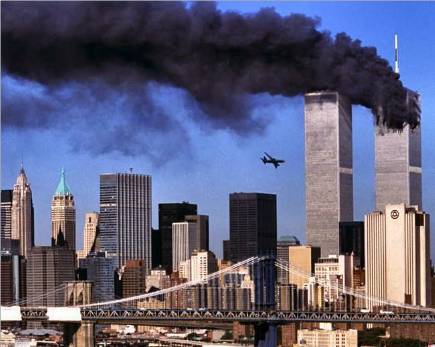
Explodierendes World Trade Center III

Friends of Padre Steve’s World

I posted a reflection yesterday on some of my reflections on the 9-11-2001 attacks on the World Trade Center and the Pentagon, today a continuation of those thoughts. Yesterday morning after chapel and taking care of things I needed to for the opening day of our new class at the Staff college this morning I went to breakfast with Judy. We talked about how it was hard to believe that it had been fifteen years since the attacks of 9-11-2001. Judy mentioned that everything had changed since then.

As I recalled yesterday I can still remember the day like it had just happened, the images are burned into my memory and will never go away. I was getting out of my office at Camp LeJeune after an early morning counseling case and some administrative duties I was getting ready to head to the French Creek gym. I was about to close out my browser when I saw a little note on the Yahoo.com homepage: “Airplane crashes into World Trade Center.” It was about 0900 that tragic morning. I thought to myself, “Some dumb ass just crashed his Cessna into the building.”

The day was clear and absolutely gorgeous, a slight north wind and low humidity, a well-deserved break from what had been a hot and humid summer. Not that I had seen much of the Carolina summer having returned from a deployment to Okinawa, Mainland Japan and Korea in late July. When I got to my car the local talk radio station was broadcasting a second or third tier national talk radio host and he was screaming “oh my God another plane just flew into the towers!”

I was stunned and I drove over to the gym where I joined a large crowd of Marines and Sailors transfixed as we watched the towers burn. I went back to my office showered and went over to my battalion headquarters and was there when the South Tower went down at 0959.

Since then a lot has changed. I have made two deployments and traveled to the Middle East many more times. I came back from my deployment to Iraq with a serious case of PTSD and a health distrust of the right wing media, politicians, preachers, and especially the talk radio hosts that I used to listen to as often as I could. I remember being in Iraq in between missions to the far reaches of Al Anbar Province and watching the news on the televisions at the dining facility and wondering just what war that they were covering.

Before Iraq I could be considered a pretty solid “conservative” but eight years after going to war I am decidedly liberal. However, despite many allegedly conservative talk pundits, politicians and right wing preachers say just because a person is “liberal” does not mean that they are unpatriotic or do not care about our country or freedom. After serving in Iraq and seeing how certain people have equated patriotism with adherence to their political agenda I wholeheartedly believe that a person’s patriotism has nothing to do with their politics or their religious beliefs.

Before Iraq I was jaded by what happened to my dad’s generation after Vietnam when liberals called returning Veterans “baby killers” or “Nazis.” In fact I had a Sunday school teacher tell me that my dad was a “baby killer” in 1972 and in 1981 had some ass at UCLA call me a “ROTC Nazi.” As a result I had little love for the Left. After September 11th I followed the “conservative” talk radio crowd and Fox News more than I had ever before. The emotions that they stirred up were primal. But experience and reflection caused me to get beyond the pain of my past and the emotion of the present. Just as I detest those that characterized my dad’s service or my service as being criminal I also detest those that say one cannot be critical of those that advocate for war regardless of the human and economic cost or actual strategic benefit.

kaseasbeh-4

daesh-girls-slaves-isis-4

A man (C) identified in the subtitiles as Al Karar the Iraqi gestures as he speaks at an undisclosed location in this image taken from undated video footage released by Islamic State. Islamic State warned in the new video on November 16, 2015 that countries taking part in air strikes against Syria would suffer the same fate as France, and threatened to attack in Washington. The video, which appeared on a site used by Islamic State to post its messages, begins with news footage of the aftermath of Friday's Paris shootings in which at least 129 people were killed. REUTERS/Social Media Website via Reuters TVATTENTION EDITORS - THIS PICTURE WAS PROVIDED BY A THIRD PARTY. REUTERS IS UNABLE TO INDEPENDENTLY VERIFY THE AUTHENTICITY, CONTENT, LOCATION OR DATE OF THIS IMAGE. THIS PICTURE IS DISTRIBUTED EXACTLY AS RECEIVED BY REUTERS, AS A SERVICE TO CLIENTS. FOR EDITORIAL USE ONLY. NOT FOR SALE FOR MARKETING OR ADVERTISING CAMPAIGNS. NO RESALES. NO ARCHIVE.      TPX IMAGES OF THE DAY

I rejoiced when our SEALs killed Osama Bin Laden and every Al Qaeda leader that we have ushered into the arms of Allah. They have caused unmitigated suffering around the world, not just to us but to their own Islamic neighbors and deserve no pity and since they refuse to give quarter should be shown none. I feel the same way about ISIS and ISIL who are killing the Iraqis that I served alongside and their families, and if that sounds harsh I can’t help it. The attacks of 9-11 and the wars that have followed are all too personal and as far as the extremists of ISIl, Al Qaeda, and their affiliates around the world I am unapologetic, we should annihilate them. I would apply the words of the hero of the Battle of Little Round Top at Gettysburg, Colonel Strong Vincent concerning the Confederates to the supporters of Al Qaeda and ISIL wherever the are:

“We must fight them more vindictively, or we shall be foiled at every step. We must desolate the country as we pass through it, and not leave a trace of a doubtful friend or foe behind us; make them believe that we are in earnest, terribly in earnest; that to break this band in twain is monstrous and impossible; that the life of every man, yea, of every weak woman or child in the entire South, is of no value whatever compared with the integrity of the Union.”

This will sound hard, but the life of every supporter of ISIL or Al Qaeda is of no value whatsoever to freedom and democracy.  I would apply that standard to any supporter of authoritarian dictatorship in any guise, not just militant Islamists, lest there be any doubt.

At the same time I question the strategic purpose and value of the campaign in we conducted in Iraq which seems to me has opened the gates of hell. I still think that the words that T.E. Lawrence wrote in 1920 about the British in Iraq are as applicable today as when he penned them; only the empires are different:

“The people of England have been led in Mesopotamia into a trap from which it will be hard to escape with dignity and honour. They have been tricked into it by a steady withholding of information. The Bagdad communiqués are belated, insincere, incomplete. Things have been far worse than we have been told, our administration more bloody and inefficient than the public knows. It is a disgrace to our imperial record, and may soon be too inflamed for any ordinary cure. We are to-day not far from a disaster.”

The British who Lawrence wrote about, gave their people reasons for going into Mesopotamia which were similar to those of the Bush administration over 80 years later. They cloaked their intentions in the words of liberation and protection, the British from the Turks, and the Americans from Saddam. Lawrence noted in words that are hauntingly familiar to those that paid attention to the American war in Iraq:

“Yet our published policy has not changed, and does not need changing. It is that there has been a deplorable contrast between our profession and our practice. We said we went to Mesopotamia to defeat Turkey. We said we stayed to deliver the Arabs from the oppression of the Turkish Government, and to make available for the world its resources of corn and oil. We spent nearly a million men and nearly a thousand million of money to these ends. This year we are spending ninety-two thousand men and fifty millions of money on the same objects.”

At the fifteen year mark I grieve for those that have lost their lives as well as loved ones in the attacks or in the wars that have followed. On September 11th 2001 2977 people were killed at the World Trade Center, the Pentagon or on United Flight 93 which went down in Pennsylvania. One of those killed at the Pentagon was Lieutenant Colonel Karen Wagner who I had served with at the Academy of Health Sciences Brigade in 1987-1988.

481801_10151367001287059_1003164983_n1

Since then about 4500 American military personnel have given their lives in Iraq and another 2400 in Afghanistan. NATO or coalition allies, excluding the Iraqi and Afghani military or police forces have lost about another 1300 military personnel and that does not count the soldiers of Iraq and Afghanistan who fought at our side. More than 45,000 American servicemen an women have been wounded in this fight. I know a decent number of those wounded and some of those that have died. The losses are intensely personal and to think that we have lost well over twice the number killed on September 11th 2001 in two wars; many of whom were children aged 8-12 years old on that tragic September day. Of course the numbers do not count those that died by their own hand after they returned from the war, a number that grows daily. I have known too many of them as well, heroes who could not make the adjustment coming home. Likewise I cannot forget the devastation that I saw in Iraq, the deaths of so many, some estimates of over a million civilian casualties, not county what has happening during the current ISIS/ISIL era.

That is why I am in favor of a hard war against these people. Some would say that a hard war would endanger civilians, and yes I agree with that. But then what is the alternative? To leave those same people under a regime that crushes them, enslaves them, takes their children and schools them to be child soldiers and Islamic Kamikazes? William Tecumseh Sherman told the mayor of Atlanta after ordering the civilian population expelled that “we are not only fighting hostile armies, but a hostile people, and must make the old and young, the rich and poor, feel the hard hand of war.”

That may seem hard, but I have been changed by that tragic event and the wars that have followed. I still shudder when I see the video of United Air Lines Flight 175 crashing into the South Tower or see the videos of the towers crashing down on that September day fifteen years ago.

The events of that tragic day changed me, and changed countless numbers of other Americans as well as others around the world. While we yearn to return to the day’s before 9-11-2001 that is impossible, there is too much water and too much blood that has passed under the bridge to go back, and those who advocate the same ideology as the attackers of 9-11 will not go back either.

As for me, I know that I can’t go back. But as much as I wish that I could I will have to live with reality, as I have for the last fifteen years, and I will continue to learn to live with it.  To live with the reality that this war will not end anytime soon and that far too many more people will die before this war ends. For those that find my opinions about this war repulsive or less than informed, I would actually hope and pray that you are right. But as my Iraqi friends say,

“Inshallah (إن شاء الله)”

Peace

Padre Steve+
1 Comment

Filed under afghanistan, Foreign Policy, History, iraq,afghanistan, middle east, Military, national security, News and current events, terrorism, War on Terrorism

There Lies a Gulf Between that Time and Today: Remembering 9-11-2001

flight_175_photo

Friends of Padre Steve’s World,

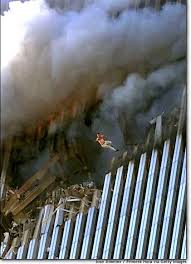
September 11th is a day that always makes me more introspective. It brings back so many memories, some that I wish I could forget; but I cannot get the images of that day out of my mind. The burning towers, the people jumping to their deaths to escape the flames, and the scenes of devastation. I knew one of the victims in the attack on the Pentagon, an Army Lieutenant Colonel, Karen Wagner who commanded a Medical training company at Fort Sam Houston where I was serving as the Brigade Adjutant in 1987 and 1988. She was a very nice person, very gracious and decent, admired by everyone who knew her; I was shocked to see her name on the casualty list after the attack.

The emotions that I feel on the anniversary of these terrorist attacks which claimed the lives of so many innocent people, and which devastated so many families, still haunts me, and my subsequent service, especially in Iraq has changed me. Years after he returned from his time in the Middle East, T.E. Lawrence; the immortal Lawrence of Arabia wrote to a friend, “You wonder what I am doing? Well, so do I, in truth. Days seem to dawn, suns to shine, evenings to follow, and then I sleep. What I have done, what I am doing, what I am going to do, puzzle and bewilder me. Have you ever been a leaf and fallen from your tree in autumn and been really puzzled about it? That’s the feeling.” I often feel that way.

Fifteen years ago I was getting ready to go to the French Creek Gym at Camp Le Jeune North Carolina where I was serving as the Chaplain of Headquarters Battalion 2nd Marine Division. I had returned from a deployment to Okinawa, Mainland Japan and Korea just two months before and was preparing to transfer to the USS Hue City, a guided missile cruiser stationed in Mayport, Florida.

At the time of the attack I had already been in the military for over 20 years and I had actually taken a reduction in rank to transfer from the Army, where I was a Major in the reserves, to the Navy to serve on active duty. In those previous 20 years I had served overseas during the Cold War along the Fulda Gap. I had been mobilized to support the Bosnia mission in 1996, and I had just missed being mobilized for Operation Desert Storm as my unit was awaiting its mobilization orders when the war ended. I had done other missions as well as the deployment to the Far East that returned from in July 2001; but nothing prepared me for that day. Like other career military officers I expected that we would be at war again and thought it might be back in the Middle East, and probably a result of some fool’s miscalculations; but like the American officers who were serving at the time of the Pearl Harbor attack, I never expected what happened that morning.

Tuesday, September 11th 2001 had started like so many days in my career. Routine office work, a couple of counseling cases and what I thought would be a good PT session. I was about to close out my computer browser when I saw a little headline on Yahoo News that a plane had crashed into the World Trade Center. I paid little attention and figured that a private plane, something like a Cessna piloted by an incompetent had inadvertently flown into the building.

9-11 jumpers

That delusion lasted about two minutes. I got in my car and the radio, tuned to an AM talk station had a host calling the play by play. He started screaming “oh my God another airliner flew into the other tower.” Seeking to see what was happening I went to the gym where there were many televisions. I got there and saw the towers burning, with stunned Marines and Sailors watching silently, some in tears. I went back out, drove to my office and got into uniform. After checking in with my colonel a made a quick trip to my house for my sea bags and some extra underwear, and personal hygiene items. When I got back the headquarters we went into a meeting, and the base went on lock down mode. The gates were closed and additional checkpoints, and roadblocks established on base. Marines in full battle-rattle patrolled the perimeter and along the waterfront. I did not leave the base until the night of the 15th when things began to settle down and we all went into contingency planning mode for any military response to the attacks.

My wife, who as waiting for a doctor’s appointment with a friend saw the attacks on live television and knew when the first plane struck she told her friend that it was terrorism. Her friend responded “that damned Saddam Hussein.” Like so many of us who initially thought this, my wife’s friend was wrong.

LutjensHonors

Those were tumultuous days, so much fear; so much paranoia; and so much bad information as to who committed the attacks and what was going to happen next.

hue city boarding party


A few months later I deployed aboard Hue City to the Middle East where we supported the air operations in Afghanistan, anti-terrorist operations off the Horn of Africa and in Operation Southern Watch and the U.N. Oil Embargo against Iraq. I then did three years with Marine Security Forces, traveling around the world to support Marine Fleet Anti-Terrorism Security Team companies. For three years I was on the road one to three weeks a month traveling to the Middle East, Europe, the Pacific and many parts of the United States. Then I was promoted and transferred to Explosive Ordnance Disposal Group Two, from which I was deployed with my assistant to Iraq, where we served as members of the Iraq Assistance Group in all Al Anbar Province supporting small teams of Marine Corps, Army and Joint Force adviser teams to the Iraqi Army, Border troops, Port of Entry police, police and highway patrol.

with-mtt-3-7-ronin


When I returned from Iraq I was a changed man and while I am proud of my service I am haunted by my experiences. One cannot go to war, see its devastation, see the wounded and dead, as well as the innocents traumatized by it. One cannot get shot at, or be in enclosed rooms, meeting with people that might be friends, or might be enemies, and while everyone else is armed, you are not.

War changed me, and my homecoming was more difficult than I could have imagined. I never felt so cut off from my country, my society, my church, or even other chaplains. My experience is not uncommon among those who have served in Iraq or Afghanistan, or for that matter those who have served in almost any modern war. Erich Maria Remarque in his classic All Quite on the Western Front wrote:

“I imagined leave would be different from this. Indeed, it was different a year ago. It is I of course that have changed in the interval. There lies a gulf between that time and today. At that time I still knew nothing about the war, we had been only in quiet sectors. But now I see that I have been crushed without knowing it. I find I do not belong here any more, it is a foreign world.”

That being said I would not trade my experience for anything. The experience of PTSD and other war related afflictions has been a blessing as well as a curse. They have changed my world view and made me much more emphatic to the suffering and afflictions of others, as well when they are abused, mistreated, terrorized and discriminated against. These experiences along with my training as a historian, theologian, and hospital chaplain clinician before and after my tour have given me a lot bigger perspective than I had before.

But I have to live with all of the memories. Guy Sajer wrote in his book The Forgotten Soldier, “Only happy people have nightmares, from overeating. For those who live a nightmare reality, sleep is a black hole, lost in time, like death.” General Gouverneur Warren, a hero of many Civil War battles including Gettysburg wrote to his wife after the war “I wish I did not dream so much. They make me sometimes to dread to go to sleep. Scenes from the war, are so constantly recalled, with bitter feelings I wish never to experience again. Lies, vanity, treachery, and carnage.”

As hard as this has been these are good things, and as I go on I wonder what will happen next. I do not think that the wars and conflicts which have followed in the wake of the 9-11 attacks will be over for years, maybe even decades. I pray for peace, but too many people, some even in this country seem to live for the bloodlust of war. One can only hope and as my Iraqi friends say, Inshallah, (إن شاء الله) God willing…

I wonder too, if the words of T.E. Lawrence reflecting on his service in the Arab Revolt are not as applicable to me and others who came back from Iraq, “We had been hopelessly labouring to plough waste lands; to make nationality grow in a place full of the certainty of God… Among the tribes our creed could be only like the desert grass – a beautiful swift seeming of spring; which, after a day’s heat, fell dusty.” I have lost too many friends in these wars, including men who could not readjust to home, many like me. I have seen the men and women, broken in body, mind and spirit and I wonder if any of it was worth it, and if in some of our response, especially the invasion of Iraq has not made a bad situation even worse, and turned the war into a generational conflict.

As for me, I am now an old guy by military standards. I recently celebrated 35 years of service. Sadly, I know all too well that those who I have worked with, and those who are yet to enlist will be continuing to fight a war which seems to be without end long after I retire in about four years.

Yesterday and today there were and will be many ceremonies and services to remember the victims of the attacks. I think that is fitting. President Obama has declared this a of prayer and remembrance which is also good. I will not attend the ceremonies because I still get too emotional, but I will be there in spirit, even though much of me is still in Iraq.

I will quietly reflect as I conduct my chapel services today, and as I get ready for our incoming class at the Staff College. I will also try to get a good run in and then spend some time with Judy, and then have a few beers with some friends at Gordon Biersch.

So please, have a good day and whatever you do do not forget those whose lives were forever changed by those dastardly attacks and all that has transpired in the years since. I do hope that things will get better and that some semblance of peace will return to the world.

Inshallah, (إن شاء الله) God willing…

Peace

Padre Steve+

Leave a comment

Filed under History, iraq,afghanistan, middle east, Military, PTSD, remembering friends, terrorism, War on Terrorism

The Courageous vs. the Ideologues 


Friends of Padre Steve’s World,

Being an ideologue of any kind is easy, you adopt an ideology and then use it to interpret the world. That is why there are so many of them of so many different varieties: right wing, left wing, religious and so many more. In fact if you take a look at the most strident supporters of any ideology, politician, or religious leader you can see that they are little different from one another. 

The fact is that there is a difference between people who lean a certain way politically or religiously, and the people Eric Hoffer called, the “true believers,” the people who chose a side and never wrestle with the hard choices of life. They simply declare all who oppose their ideology or theology to be unworthy of life. 

It’s funny, I am a liberal and a progressive, but I often find left-wing ideologues to be as off putting as militant right wingers. I guess that is because despite everything I am a realist. I wake up every day to try to do the hard thing of deciding what is right and what to believe. 

My favorite television character, Raymond Reddington, played by James Spader in The Blacklist once said “I know so many zealots, men and women, who chose a side, an ideology by which to interpret the world. But, to get up every single day and to do the hard work of deciding what to believe. What’s right, today? When to stand up or stand down. That’s courage.” The fact is, no matter how stridently they espouse their beliefs, ideologues are by definition not courageous, because courage takes critical thinking, something that ideologues of any persuasion are incapable of doing. I see examples of this every day, especially in my Twitter feed. While I’m sure that many, if not most of these people are good and well meaning people, they seldom display any originality of thought or true character. I had one left wing Twitter follower attack repeatedly me because to her I was supposedly a sellout. I have had right wing religious friends and followers on social media do the same, but the intellectual commonality they share is the fact that they are ideologues and zealots, and while they espouse different beliefs they are almost indistinguishable in their inability to think critically. 

I guess that is one of the things that bothers me the most about so much of what I see going on in the United States today. Too many ideologues, not enough critical thinkers. Too many people who value absolute consistently of thought without asking if what they preach is still true today, or if it might be tomorrow. 

One thing that I have learned over the past eight years or so is that I have to ask what is right today, and make a choice of when to stand up, or to stand down. Sometimes, I don’t like those choices, but I make them. 

I guess that is why I like reading about the lives of complicated and often conflicted people; men like T.E. Lawrence, William Tecumseh Sherman, and the fictional Raymond Reddington. I find much to admire and to criticize in all of them even as I empathize and understand each one of them. Interestingly, each of my heroes all have feet of clay. As Reddington said, “We become who we are. We can’t judge a book by its cover… But you can by its first few chapters, and most certainly by its last.” 

Have a great day and weekend.

Peace,

Padre Steve+ 

3 Comments

Filed under philosophy, televsion