Tag Archives: taliban

The Gathering Storm: Shades of 1914 as War Threatens in the Middle East

Israeli Navy Dolphin Class Submarine

“The world tells Israel ‘Wait, there’s still time.’ And I say, ‘Wait for what? Wait until when?’” Benjamin Netanyahu 

The question is not if but when. The tensions between Iran and Israel continue to boil over even as the rest of the Middle East begins to melt down.

Last week on the 11th anniversary of the September 11th attacks Al Qaeda backed forces attack the US Consulate in Benghazi Libya killing Ambassador Christopher Stevens and three others. Militants in Egypt laid siege to the US Embassy while newly elected Egyptian President and Moslem Brotherhood leader Mohammed Morsi dithered torn between his party ideology and the pragmatic reality of the dependency of Egypt on the United States for military and economic assistance. Throughout the region from Tunisia to Indonesia protests, some marked by violence broke out at United States and other Western nations diplomatic outposts.

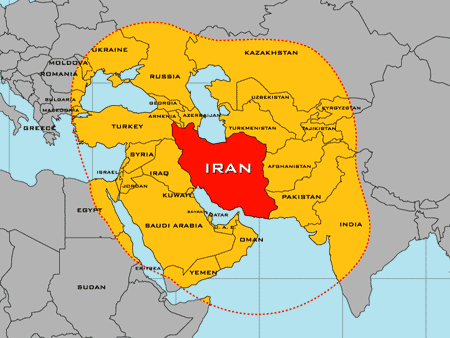
Shahab III Missile Ranges

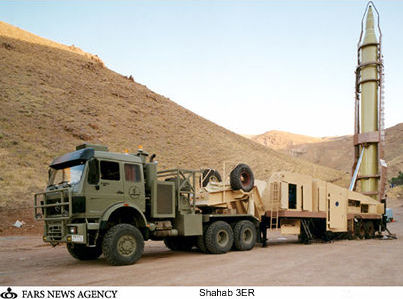
The Iranians and their Hezbollah allies have repeatedly threatened Israel with destruction and have improved their missile forces significantly ever the past number of years even without nuclear weapons. Prime Minister Benjamin Netanyahu is demanding the United States and the west set “Red Lines” regarding the Iranian nuclear program that would trigger an automatic attack on Iran by the United States.

Like the First World War the tensions, provocations and rhetoric increase even as military forces mobilize and gather in the region. Iran is preparing for massive military exercises involving land, air defense and ballistic missile units from the Iranian military and Revolutionary Guards to begin in October.  Iran admitted this weekend that forces from their Revolutionary Guards are currently operating in Syria placing them in position to directly engage Israeli forces in the event of conflict.

By October the United States will have three Carrier Strike Groups, the USS Enterprise, USS Dwight D. Eisenhower and USS John C Stennis and an Expeditionary Strike Group with an embarked Marine Expeditionary Unit in the region. Additionally warships from more than 25 countries are gathering for exercises designed to counter any blockade of the strategic Straits of Hormuz by Iran. Other ships, including the French Aircraft Carrier Charles DeGaulle battle group and the British HMS Illustrious  “Response Task Forces Group” are in the Eastern Mediterranean and could be in the region within a week. US Navy submarines, both attack and ballistic missile are never far from a threatened area. US Air Force  Fighter Squadrons have been reinforced and it is certain that strategic air force units of B-2, B-52 and B-1 bombers are certainly deployed where they can respond as needed. The build up by all sides is unprecedented.

The countries of the region are on hair trigger alert. Any act, intentional or unintentional by any party could trigger a war that would most certainly bring great destruction to the region but would likely sink the global economy and spread around the world through acts of terror and revolutionary violence.

Numerous reports and Israel government official statements indicate that Israel is ready, to strike Iran, if need be alone to prevent what they believe is an existential threat to Israel. While some believe that any Israeli attack on Iran would be precision strikes aimed at Iran’s nuclear program and ballistic missiles sites. However, most experts believe that an Israeli strike would at best set back the Iranian nuclear weapons program a couple of years and trigger a regional war with very unpredictable outcomes. If the Israeli strike is conventional in nature the Iranians will strike back against Israel, as well as US targets in the region. The US would certainly respond but any war would affect the region and the world economy as oil prices would rise exponentially.

With that in mind it is possible that the Israelis fearing the existential threat of Iranian nukes might use their nuclear forces in a first strike role.

Most experts believe that the Israelis would only use nuclear weapons in a retaliatory “second strike” capacity. The reasoning is that the first use of nuclear weapons by Israel would be against their national interests. That is logical but history is replete with times that nations have acted in ways contrary to logic because the action is deemed “necessary.” It is the same logic that said that the Germans would not violate Belgian neutrality in 1914 knowing that such an action would trigger British intervention on the side of France and Russia. It was believed by most that “the Germans are dangerous but they are not maniacs….” The Germans faced war on more than one front and felt that they had to deliver a swift blow to knock France out of the war in order to defeat Russia. It was a risk that they were willing to take and one which helped lose them the war and set about a series of events that made the 20th Century the bloodiest in human history.

In the current situation many in Israeli leadership may view the use of nuclear weapons to stop an existential threat as a legitimate use of the weapons. Israel does face real threats and those threats are increasing as Iran increases in strength and no longer has traditional rival Iraq to worry about. Likewise the instability of Egypt and the anti-Israeli animus of the Moslem Brotherhood which now leads Egypt has increased the real and perceived threat from that country. An Egypt openly hostile to Israel armed to the teeth with advanced American weapons is a dagger pointed at the heart of Israel. Israel’s leaders may be willing to suffer international condemnation in order eliminate what they consider an existential Iranian threat to ensure their survival and ability to defend against Egypt as well as conventional and unconventional Hizbollah forces operating out of Lebanon and those of Hamas in Gaza.

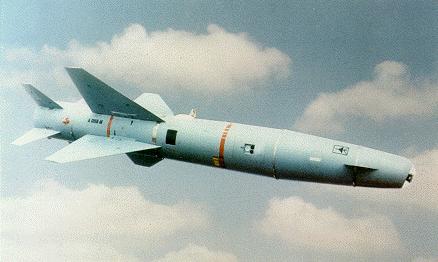
If they were to use nuclear weapons the primary delivery system in such a strike would most likely be Dolphin Class submarines armed with nuclear capable Popeye cruise missiles. These missiles have a 1500 km range and while the missiles could be used in a conventional strike their utility would be limited to precision strikes against unfortified headquarters buildings housing Iranian leadership, or command and control facilities. The numbers of Popeye missiles the Dolphins carry is limited since the majority of Iranian nuclear sites are hardened facilities or deep underground their use against them in a conventional manner would be a waste.

The threat to United States and NATO forces in Afghanistan is great if a broader war erupts. US and NATO forces, already fighting an increasing Taliban insurgency are for all practical purposes surrounded if a war spreads and Pakistan shuts down the southern supply route. Even this week Taliban insurgents scored a victory successfully attacking the strongly fortified joint US Marine and British base Camp Leatherneck-Camp Bastion destroying 6 AV-8B Harrier jets on the ground, damaging more aircraft, valuable hangers and support facilities while killing 2 Marines. A war with Iran would threaten to turn Afghanistan into a trap for nearly 100,000 US and NATO coalition troops.

It could as Barbara Tuchman said of the the Germans of 1914 that the Israelis have “staked everything on decisive battle in the image of Hannibal….” but that the ghost of Hannibal might have reminded the Germans and the Israelis that though Hannibal and “Carthage won at Cannae, Rome won the war.” In mid May and early June of 1914 even before the assassination of Franz Ferdinand Field Marshal Von Molkte and others felt that the scales were tipping against them. He told his Austrian counterpart Field Marshal Conrad Von Hotzendorf that “from now on ‘any adjournment will have the effect of diminishing our chances of success.’” On June 1st Von Molkte said to Baron Eckhardstein,“We are ready, and the sooner the better for us.”

The storm clouds of war are thickening and darkness hovers as the storm gathers. In 1914 the politicians, diplomats and soldiers that realized war would be disastrous were a minority in their respective governments and their warnings went unheeded. In 1914 “war pressed against every frontier. Suddenly dismayed, governments struggled and twisted to fend it off. It was no use….” As the sun set and the lamps of London were lit on August 4th 1914 Sir Edward Grey said to a friend “The lamps are going out all over Europe; we shall not see them lit again in our lifetime.” It is as if we are watching the same drama play out in the Middle East now.

Peace

Padre Steve+


3 Comments

Filed under Foreign Policy, middle east, Military, national security, News and current events

The Afghanistan Quagmire and the Escalation of “Green on Blue” Attacks

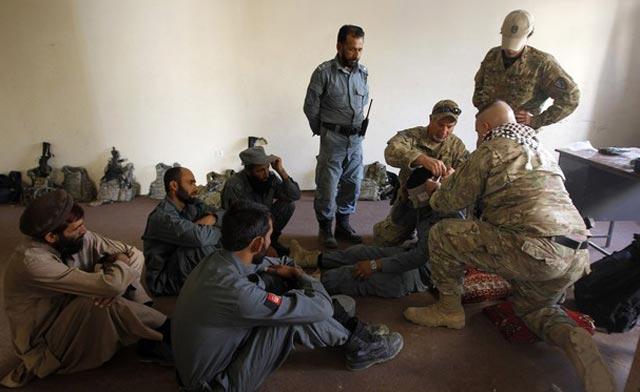
US Army Advisors training Afghan Police

We have forgotten what it is to be wise when it comes to foreign policy and have over the past ten years failed to learn from history when it comes to fighting in Afghanistan. A survivor of the horrific disaster that befell the British in the First Anglo-Afghan War, Chaplain G.R. Gleig wrote after that war:

“a war begun for no wise purpose, carried on with a strange mixture of rashness and timidity, brought to a close after suffering and disaster, without much glory attached either to the government which directed, or the great body of troops which waged it. Not one benefit, political or military, was acquired with this war. Our eventual evacuation of the country resembled the retreat of an army defeated.” 

This week has been another particularly horrific week for American troops in Afghanistan with our Afghan “partners” killing more Americans and NATO troops than our Taliban enemies. This week the command element of a combat brigade was attacked by a suicide bomber while going to a meeting with tribal leaders in Kunar province killing the Brigade Command Sergeant Major and two Majors from the Brigade staff. In a separate incident in Helmand Province three Marines were killed by a man described by an unnamed source to Reuters News as a Afghan National Police commander in charge of local police in Sangin district. They were at dinner with the Afghan when attacked. In a third attack a Afghan worker on an American base in Helmand killed three more Marines.

So far this year there have been at least 22 attacks by Afghan soldiers or police on US or NATO troops killing 33. In 2011 there were just 11 such attacks and 20 deaths. Any student of history should know that a foreign occupation force will never be accepted by most Afghans, especially tribal chieftains or elders. For them alliances with occupiers are only temporary measures to advance their own standing and power in Afghanistan. The British and Soviets both learned this the hard way and we seem to have forgotten the maxim that it is better to learn from the mistakes of others than make them yourself.

If there ever was a purpose to the Afghanistan campaign we seem to have forgotten it. We are in the process of withdraw. There is a danger inherent in any withdraw, especially in a geographically isolated place like Afghanistan. As we decrease in number and have fewer forces available to conduct operations our “partners” will make new alliances and turn against the forces that remain.

However we do not have the strategic or operational flexibility to send the number of troops needed to succeed in completely pacifying the country so we are in a double bind. The war saps our military strength, degrades our ground forces and pours money into an operation that we neither have, but need in order to modernize and strengthen forces for the wars that will certainly follow Afghanistan.

Soviet Advisors and Afghan Officers

The British met with debacle in the First Anglo-Afghan War and the Soviets were saved from disaster by a smartly executed withdraw that did not leave many forces exposed to Afghan treachery. British leaders were especially deceived by their Afghan partners. Shortly before his murder at the hands of Afghan tribal elders who had supposedly agreed to protect withdrawing British forces and their camp followers, British envoy Sir William MacNaghten wrote: “We shall part with the Afghans as friends, and I feel satisfied that any government which may be established hereafter will always be disposed to cultivate a good understanding with us.” 

The Soviets had no such illusions after their advisers in Herat were attacked with great loss before the 1979 invasion. They had their “green on blue” incidents but exacted painful and brutal retaliation. They also kept Afghan security forces at arms distance neither trusting them or allowing them much access to their bases. Unlike Iraq where green on blue incidents were isolated the situation in Afghanistan is little changed from when the Soviets or the British occupied the country.

“The latter [Soviet military advisors] served in particularly daunting conditions. They faced difference of language and tradition as well as mujahadeen infiltration in the ranks of supposedly loyal Afghan troops….” (Kalinovsky, Artemy: The Blind Leading the Blind: Soviet Advisors, Counter-Insurgency and Nation-Building in Afghanistan, p.6)

American and NATO political leaders are deceiving themselves if they believe that whatever Afghan government that comes after we withdraw will be friendly. It will not be and when we leave the unfortunate thing is that the Afghans will return to doing what they always do best, fight with one another. Nothing good can now come from our involvement in Afghanistan. The often heroic and noble sacrifices of so many brave men and women will be wasted and for what gain?

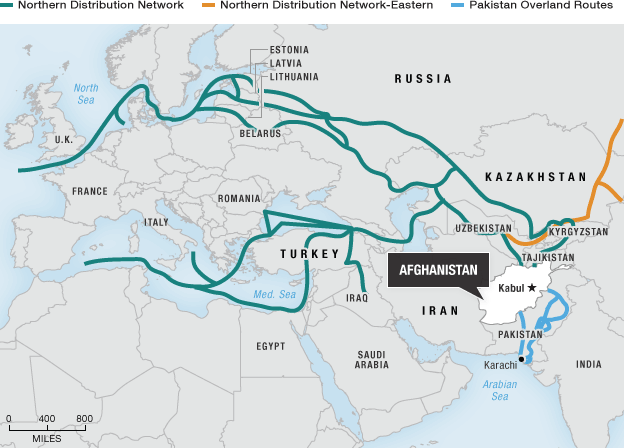
Otto Von Bismarck warned to “Beware of sentimental alliances where the consciousness of good deeds is the only compensation for noble sacrifices.” The situation in Afghanistan grows more precarious with each passing day. Our “alliance” with Pakistan is problematic and all supplies going into the Afghanistan must pass through either it or Russia. Our Afghan “partners” do not deserve the title of “Allies” we have made a Faustian bargain with the notorious Karzai government that has not helped our interests or those of the Afghan people an iota.

The situation in Afghanistan grows more precarious with each passing day.With the situation in Syria deteriorating and threatening to spill over into neighboring countries, with Iran and Israel blustering as we build up forces in the Arabian Gulf we do not have the luxury of simply keeping the status quo. We have to seriously ask why we are in Afghanistan and what we hope to accomplish for the great amount of blood and treasure that we are spending there.

That question must be asked of an answered by current political leaders in this country as well as those seeking to lead the country.

Peace

Padre Steve+

5 Comments

Filed under Foreign Policy, History, iraq,afghanistan, Military, national security

Fear and Hate in the Name of Jesus…Man I Need a Baseball Game

“It makes no sense, Hate .

It’s just fear. All it is.

Fear something different.

Something’s gonna get taken from you,

Stolen from you.

Find yourself lost.”

Buck O’Neil

I have been feeling rather morose the past few weeks. I haven’t slept well. Flashbacks, nightmares and anxiety from PTSD, mostly leftover from Iraq invade at the most unwelcome times. New anxieties unfold as I see friends heading to Afghanistan and see the wounded back at home. Even more appear as I see the situation in the Middle East developing to the point where someone or some nation miscalculates and takes us into an even more catastrophic war. Then there is the incessant political, religious and dare I say racial hatred that has become so manifest in my own country.

The past few weeks have been difficult. The suicide of one of my sailors affected me more than I thought it would. Likewise I looked into the eyes of a sailor accused of cold blooded execution style murder and realized that he felt no remorse.

My sense of foreboding is increased when I see those that should know better, leaders of churches and ministries not only echoing the worst of the peddlers of hate but outdo them by adding Jesus as their trump card.  It doesn’t seem to matter what the subject is these “Christian” leaders seem to have little else to do but incite hatred that benefits their political power and influence.

One of the most incendiary of these leaders is Randall Terry who said “Let a wave of intolerance wash over you. I want you to let a wave of hatred wash over you. Yes, hate is good…” I know the man. He believes what he says and he serves as a model to many leaders that have followed in his footsteps. These leaders are some of the most influential religious-political leaders in the nations and dehumanize those that they hate and portray them to be an existential threat to the United States and the “Christian” faith. Gays, Moslems, immigrants, women, “liberals” are not only labeled as their political “enemies” but the enemies of God. It makes it easier to hate and dehumanize people when you can proclaim that they are God’s enemies.

It seems to make a mockery of the Gospel and the words of Saint Paul That “in Christ God was reconciling the world to himself, not counting their trespasses against them, and entrusting the message of reconciliation to us” or the words of Saint Peter: “Do not repay evil for evil or abuse for abuse; but, on the contrary, repay with a blessing.” It seems to make a mockery of the great love of God to allow Jesus to be sacrificed for the sins of the world.

I despair for the state of the Church when I see prominent leaders spew the most vile hate and “baptize” it in the name of Jesus. Unfortunately that seems to be the new normal in today’s world. Who needs the Afghan Taliban when we have religious leaders acting the same way here?

I have a hard time hating people, even those with whom that I vehemently disagree. Maybe it is because I have seen too much suffering to want to inflict hate and suffering on anyone.  Hate as Buck O’Neil said is simply fear. Fear of something different. Those that indulge in it and even revel in it demonstrate that they are not at all confident in their message.  Love conquers fear and does not need to demonize or dehumanize those that oppose it. The German Pastor and Martyr Dietrich Bonhoeffer said:

“God loves human beings. God loves the world. Not an ideal human, but human beings as they are; not an ideal world, but the real world. What we find repulsive in their opposition to God, what we shrink back from with pain and hostility, namely, real human beings, the real world, this is for God the ground of unfathomable love.”

When I feel as I have over the past few weeks there is one thing that helps me and that is baseball. Tonight I am going to a Morehead City Marlin’s baseball game. The Marlin’s are a team of the independent Coastal Plains League, which is for college players and gives them a chance to play ball in the summer.  I can’t watch politics tonight. I need something peaceful. Buck O’Neil, the great Negor League player, manager and major league coach and scout while visiting Washington DC to testify in the congressional steroids hearings looked up at a television where partisan debates were occurring, stopped and said:

“If Willie Mays was up there

People would stop making laws.

They would stop running.

They would stop arguing about

Big things

Little things.

No Democrat or Republican,

No black or white

No North or South.

Everybody just stop,

Watch the TV,

Watch Willie Mays make that catch.

That’s baseball man.”

Tonight is a time for me to reconnect with baseball in person and in the process regain some perspective, remember that love is stronger than hate and that nothing bad accrues from baseball.

Peace

Padre Steve+

1 Comment

Filed under Baseball, christian life, faith, Political Commentary, PTSD

Remembering the Killing of Osama Bin Laden While Realistically Looking at Afghanistan and Pakistan

A year ago US Navy SEALs from SEAL Team Six and other Special Operations Forces made a daring night raid into Pakistan to kill Osama Bin Laden.  Bin Laden had orchestrated the Al Qaeda attacks on September 11th 2001 which killed over 3000 Americans, the near sinking of the US Navy Destroyer USS Cole, the Luxor Massacre of 1997 and the bombings of the US Embassies in Dar es Salaam Tanzania and Nairobi Kenya in 1998 and numerous other terror attacks throughout the Middle East. Bin Laden was the sworn enemy of the United States. The killing of Bin Laden was a victory, perhaps the biggest victory that we have achieved in over 10 years of war. In fact Bin Laden was the reason we went to war, the reason that we became embroiled in Afghanistan.

Bin Laden had been the “guest” of the Afghan Taliban government and used Afghanistan as his base of operations to train his fighters and plan his operations. After September 11th the United States attacked Afghanistan, toppled the Taliban and put Bin Laden on the run. Pakistan which had supported the Taliban government following the fall of the former Soviet supported Republic of Afghanistan and subsequent civil war which brought the Taliban to power. Pakistan’s President Musharraf quickly allied his country with the United States.  However over the course of the 10 year war in Afghanistan the government and certain elements of its security and intelligence services gave tacit support to the Taliban as well as Al Qaeda. The most damning was the fact that Bin Laden had resided in the Pakistani military town of Abbottabad with a significant amount of his family for five years.

President Obama gave the order for the SEAL team to kill Bin Laden over the objections of his Vice President and Secretary of Defense. It was a ballsy move. If it had gone wrong which it easily could have many US troops could have been killed, captured and placed on display by the Pakistani government.  The credit to the planning and execution of the operation has to go to the SEALs and Special Operations Command, but credit for the order to do it needs to be given to the President.  If President Bush had succeeded in killing Bin Laden I would feel the same way.

The fact is that President Obama has been successfully waging war against Al Qaeda, not only killing Bin Laden but other top leaders. Even Bin Laden before his death was concerned about the toll being taken on his organization by the reinvigorated US campaign.  The Pakistanis enraged by the United States taking the war against Al Qaeda and its Taliban allies inside Afghanistan, something that it should have been doing but had not despite Jihadist terrorist attacks on it cut the supply lines to US and NATO forces running through it months ago and have not reopened them. Some ally.

But that is not surprising. As far back as November 1979, before the Soviets intervened in Afghanistan the US Embassy was ransacked and burned by Pakistani mobs, an attack which killed a US Marine. The Pakistanis only began to reluctantly cooperate with the United States in supporting some of the Afghan Pashtun Mujahideen fighters.  After the Soviets left Afghanistan it continued to support its Pashtuns against Uzbek and Tajik Afghans, support which eventually allowed the Taliban to take over the country. Despite US protests in the 1990s the Pakistanis did little to nothing to hinder Bin Laden, Al Qaeda or the Taliban regime. While it quickly and officially “supported” the US under former President Musharraf factions within its ISI intelligence service are believed to have continued to support Taliban and Al Qaeda fighters and encouraged attacks on US, Afghan and  NATO troops.

Pakistan itself teeters on the edge of collapse. Its economy is in shambles, it cannot control its borders, its intelligence service is often at odds with the government while extremist groups gain more power every day. It is a rapidly failing state with nuclear weapons. Every day it grows more antagonistic towards the United States which under the Obama Administration had been persistent in using arial drones to attack suspected terrorists in Pakistan. The relationship between the United States and Pakistan is as bad or worse as it was in 1979.

In the mean time our former nemesis the Russian Federation, the former Soviet Union has been stalwart in allowing our troops and supplies to flow through their country and the neighboring Central Asian Republics into Afghanistan. The Russians having experienced the agony of Afghanistan and the reality of Jihadist terrorism emanating from it as well as Chechnya do not want the US and NATO mission to stabilize Afghanistan to fail.  Currently without the support of the Russians we would be unable to supply our troops in Afghanistan.

Today President Obama travelled to Afghanistan and announced the signing of a long term security and cooperation agreement with the Afghan government. The agreement will take effect after the current plan to withdraw most US and NATO troops by 2014. We have no idea how well this will turn out and despite all the good intentions on our part I doubt that the agreement stands the test of time because of the nature of Afghanistan and its competing ethnic, religious, political and tribal divisions. It is my belief that we will be lucky to get out as well as the Soviets did in 1989 because I do not see a truly united Afghanistan coming out of this and it is more than likely that Pakistan will descend into chaos making our presence in Afghanistan even more problematic.

The mission started to get Bin Laden after 9-11. In the process it became something different as we attempted to transform Afghanistan. A year ago we finally succeeded in killing Bin Laden and have significantly degraded Al Qaeda.  That is why we went to war.  That is probably the best it will get.

At some point President Obama or his successor will likely have to decide to withdraw completely from Afghanistan and like former Soviet Premier Gorbachev admit that “We are not going to save the regime. We’ve already transformed it.”

Peace

Padre Steve+

1 Comment

Filed under History, iraq,afghanistan, national security, News and current events

Unforced Errors: The Bane of the American-NATO Campaign in Afghanistan

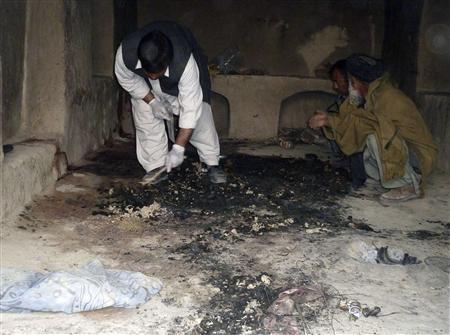
The Scene at one of the Houses (Reuters: Ahmad Nadeem) 

The efforts of the United States in Afghanistan and chances of coming out with anything resembling a successful conclusion to the longest war in its history are being destroyed by unforced errors. Of course anyone who watches any kind of sporting event knows that there are many times that the team that should win self destructs by committing unforced errors that result in them losing a game. In football they might be penalties, fumbles or badly thrown balls that result in interceptions. In basketball the errant pass, the bad foul, the unforced turnover in baseball the error that costs a game. However in war unforced errors cost precious lives, harm the strategic goals of a nation and lead to greater suffering of the populations affected.

Today we learned that a US Army Staff Sergeant went on a rampage in the Afghan villages near his base in Kandahar killing 15 or 16 Afghan civilians including 9 children and 3 women. The killings were particularly brutal. We don’t know details except that some reports indicate that the sergeant had recently had a breakdown and had deployed at least one other time to Iraq or Afghanistan. I would guess that he had multiple deployments.  The initial reports say that he was assigned to troops supporting a Special Forces team that was working with the local villagers.  Some Afghans say that more than one soldier was involved although NATO says that the soldier acted alone.

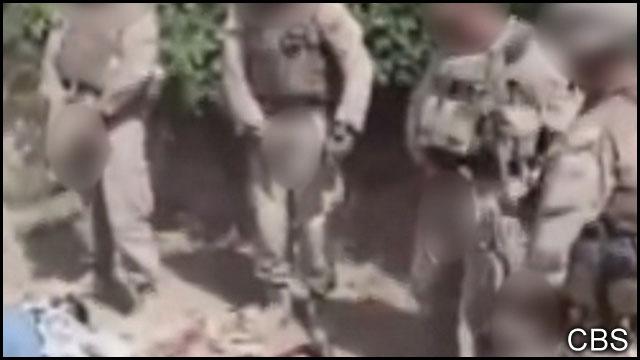
The murders come after the accidental burning of a Koran sparked riots and attacks on US and NATO forces killing 6 NATO soldiers including 2 US officers working inside a secure area of the Afghan interior ministry. They also follow the video display of Marines urinating on the bodies of dead Taliban and the trial and conviction of soldiers who had their own killing team. All the incidents were unrelated and none had the imprimatur of the American or NATO command.  However like the My Lai massacre committed by the platoon led by Lieutenant William Calley during the Vietnam War the crimes have tarnished the honor of the US military and are undermining all efforts to bring about a successful conclusion to the war in Afghanistan.

Unforced errors do not help when the strategic goals are totally dependent on the cooperation and goodwill of the populace of the country that you are operating in and trying to secure. The whole tenant of Counterinsurgency Warfare is securing the population and by doing that bringing them to cooperate with you. If you do not have the massive numbers of troops to actually secure the country yourself it is doubly important. In fact by doctrine there should be 4 times more troops to conduct a successful counterinsurgency campaign. In places where the indigenous forces are larger and more capable some or even much of the burden can be born by them, however the Afghan National Army and National Police are able to shoulder the burden. Riddled with corruption, plagued by incompetent leaders, poor discipline, high desertion rates and awash in Taliban sympathizers. A growing number of American and NATO soldiers have lost their lives in attacks from the Afghan soldiers and police working alongside of them.

Of course there are other factors such as that the government of the country must inspire the confidence of its own people in order to turn back an insurgency.  Afghanistan is “governed” if one can call it that by the regime of Mohammed Karzai. The government can most charitably be described as corrupt and incompetent.  However the Karzai government has little power or authority outside of Kabul.  It has little control over its own security forces or for that matter even regional governors who function in a near autonomous fashion as best benefits them personally or the tribe that they belong.  A shadow government of the Taliban factions often hold as much real power over the people as the “legitimate” government.  The biggest money maker is the Opium trade as Afghanistan is one of the top Opium producers in the world. The real truth is that for all practical matters Afghanistan is for all practical purposes a narco-State run by criminals and thugs of different factions.

Afghanistan also is a nation whose people believe that it is an offense against Islam foreigners to occupy the country. The Afghanis have shown their resolve against every invader and though successfully invaded they have never been long occupied nor cooperated well with their occupiers, even those that considered themselves liberators. As such the campaign to rid Afghanistan of the Taliban and bring about some form of democracy has had little chance of success after forces were diverted to the invasion of Iraq.

The latest incident will cause more American and NATO soldiers to die and will likely erase any possibility that we can succeed in our goal of an orderly train up of Afghan security forces and transfer of the conduct of the war to them.  It is very likely that the situation on the ground will get worse, perhaps markedly worse.  The American military will do the right thing regarding the investigation and prosecution of this case but that investigation may prove to show how bad things have become.

Unforced errors.  I don’t know how to overcome them.

Peace

Padre Steve+

Leave a comment

Filed under Foreign Policy, History, iraq,afghanistan, Military, national security

The War that Cannot Be Won: Afghanistan 2012

“There is no single piece of land in Afghanistan that has not been occupied by a Soviet soldier . . . no single military problem that has arisen and not been solved, and yet there is still no result.”  Sergei Akhromeyev, Soviet General Staff Chief 1986

Sometimes one wonders if anyone actually reads history and if they do whether they actually want to learn from it. Back in 1979 the Soviet Union had advisors in Afghanistan. A lot of them. A local and indigenous Communist Party had some measure of political power and this was before the Soviets invaded.

However in March 1979 a major unit of the Afghan National Army in the city of Herat mutinied against the Soviets and the Afghan government. Before the mutiny was put down 50 Soviet advisors as well as 300 of their dependents were brutally murdered by Afghan Army personnel. A further 5000 Afghans died in the revolt.

Since 2009 the trend of Blue on Green killings, that is Afghan Soldiers or Security Force members killing US or NATO personnel has been increasing at a troubling rate. We should not be surprised, the one thing that the Afghan loathes above all is the foreign soldier on Afghan soil.  While some Afghans may desire a more modern society and something more akin to the Western democratic political model to include women’s suffrage they are in a distinct minority.  The fact is that as General Barry McCafferty recently noted regarding the murder of two US military advisors in the supposedly secure Afghan Interior Ministry “we may be seeing a watershed event after billions of dollars and 16,000 u.s. casualties. we see how shallow the impact we have on this primitive society is.” 

Approximately 130,000 US and NATO troops including a number of my friends are deployed in penny-packets across Afghanistan and are increasingly isolated and in danger.  The “inadvertent” burning of copies of the Koran in a garbage dump by US personnel has resulted in the deaths of at least 4 US military personnel and the wounding of 8 more and put our bases on lockdown as thousands of Afghans protest and attack them.  More than two dozen Afghans have died in the recent violence.

As deployed they are able to achieve local success but unable to secure the country. Dependent on supplies delivered by air or along tenuous supply lines hundreds of miles long these forces though numerous are dispersed and deployed in areas where their inherent technological and operational superiority is negated by weather, terrain and restrictive rules of engagement as well as a counterinsurgency strategy in which these advantages matter little and that they do not have enough troops to accomplish.

US and NATO forces are embedded with the Afghan Army, Police and Border forces, many of whom are either incompetent, corrupt or allied with Taliban or Al Qaeda. Most Afghans feel that any foreign occupier is a mortal enemy and mistakes such as the recent Koran burning only add fuel to the fire of hatred no matter how many times our leaders apologize. Formerly unclassified but now classified reports easily available on the internet including at US Government websites paint a picture of mutual distrust and animosity that can only be described as toxic between the Afghans and NATO personnel, especially Americans.

To make matters worse the US and NATO forces in Afghanistan are surrounded to the west by an ever more bellicose Iran, to the south and east by an unstable and often adversarial “ally” Pakistan through which 30-40 percent of their supplies transit.  To the north the United States and NATO are dependent on agreements with the former Soviet Central Asian Republics Uzbekistan, Kazakhstan, Kyrgyzstan and Tajikistan with most having had to transit Russia.  In the 1980s the Soviets only had make a withdraw across the border into their own country.

Another potentially disastrous situation would be for a war to break out between Iran and Israel or with the United States and our allies. The way our troops are deployed means that they cannot be easily concentrated to parry any threats and their isolation prevents them from being used as an offensive asset should a war break out against Iran.

The fact is that US and NATO forces are now in a very similar position to the Soviets in the mid to late 1980s.  We are engaged in a war where military success is not going to win the war. No matter what any politician says there is nothing that can change that unless they would be willing to commit to greatly increasing the number of ground forces in Afghanistan with the costs and logistical problems that would entail.

President Obama is in a “damned if he does and damned if he doesn’t” position.  If he keeps the status quo the danger persists and maybe increases. If he were to begin a more precipitous withdraw there would be the same dangers and possibly more during the withdraw. But mitigating against a faster withdraw is the 2012 election in which his Republican challengers would accuse him of “losing the war and betraying our troops.” However the chance to end the Afghan War from a position of strength was lost in 2003 when we diverted our efforts to the invasion of Iraq. That action gave Al Qaeda and the Taliban the breathing space that they needed to make a comeback and that was not on President Obama’s watch.

Geopolitically the presence of 130,000 US and NATO forces does nothing for regional or US national security and prevents those forces and the attendant resources needed to support them unavailable for any other dangers in the region. The goal of “creating a stabile and secure Afghanistan” is a myth. Afghanistan is not Iraq and will for generations remain a backward, tribal and religiously intolerant society that will never embrace western ideals that conflict with their culture.

The question now is how do we get out of this place, seal it off to keep terrorist threats from emanating from it and endangering US, NATO and Allied interests in the region.  The reality is also that no matter what we do that any defeat or withdraw will be grist for Al Qaeda, Iran and other Islamist propaganda.  The inability of the Soviets to “win” in Afghanistan was of the factors that brought down the Soviet Empire and ended the myth that Soviet Communism was invincible. The same could happen to the United States.

When presented with a cataclysmic strategic situation on the Western Front in 1944 Field Marshall Gerd Von Rundstedt was asked what should be done. His simple response was “End the war you fools.” http://www.youtube.com/watch?v=ch56NAL1C-I

We are not yet in a cataclysmic situation but the time to make decisions is now not later because there is nothing that can change the strategic or operational conditions in or outside of Afghanistan. Facts are facts and politicians from both the Republican and Democrat parties should stop trying to turn this into short term political advantage and look at the actual strategic interests of our country as well as our broader security and economic interests in the region.

Peace

Padre Steve+

3 Comments

Filed under iraq,afghanistan, middle east, Military, national security, Political Commentary

Atrocity in War: The Afghanistan Video

“Our men can’t make this change from normal civilians into warriors and remain the same people … the abnormal world they have been plunged into, the new philosophies they have had to assume or perish inwardly, the horrors and delights … they are bound to be different people from those you sent away. They are rougher than when you knew them. Killing is a rough business.”  Ernie Pyle

Ernie Pyle was one of the most prolific wartime journalists that ever lived, in fact he was killed by Japanese machine gun fire on the island of Ie Jima while with the Army during the Okinawa campaign. Ernie Pyle understood war and the men that fight it. If he was alive today I imagine that his comments about what happens to men in combat would be no different now than it was then.

In the past two days we have heard much and seen a distressing video of four U.S. Marines from a Scout-Sniper Team of 3rd Battalion 2nd Marine Regiment urinating on dead Taliban fighters. The images are disturbing and because they are raw and offensive they have created a furor that could define the NATO campaign in Afghanistan as much as the Abu Ghraib torture photos harmed U.S. efforts in Iraq and the broader Middle East.  When I was in Iraq I heard Marine leaders talking about the Abu Ghraib incident with distain and saying that those few soldiers that recorded their torture of prisoners were costing us the war.

3/2 was deployed in the northern area of Helmand Province and lost 6 Marines and a Navy Corpsman during their deployment. According to the Marine Corps Times Battle Rattle Blog author Dan Lamothe, Major General John Toolan said that the Scout Snipers of 3/2 may have killed up to 100 insurgents each during their tour, which would mean that they were engaged in many dangerous combat engagements.  This in no way condones or excuses their actions but it does provide some context to view what happened.

However wrong the actions may be and how stupid it was for the Marines in this unit to record them and allow them onto the internet the truth is that war changes people. Ordinary men do things that they would not have contemplated before it including breaking the codes of honor that they pledge to uphold when volunteering to serve. Ernie Pyle understood this far better than most journalists before or since. In fact he understood it far better than the minuscule percentage of Americans who have ever served in the military much less in combat.  Pyle wrote:

“Their life consisted wholly and solely of war, for they were and always had been front-line infantrymen. They survived because the fates were kind to them, certainly — but also because they had become hard and immensely wise in animal-like ways of self-preservation.”

E.B Sledge who served throughout the Pacific War as a Marine infantryman and whose writings are dramatized in the HBO Series The Pacific wrote about fellow Marines that harvested gold teeth from dead Japanese soldiers, urinated in the mouths of the corpses of the Japanese and shot civilians.  He was patriotic, religious and after the war wrote in his book With the Old Breed: At Peleliu and Okinawa:

“The fierce struggle for survival in the abyss of Peleliu had eroded the veneer of civilization and made savages of us all. We existed in an environment totally incomprehensible to men behind the lines-service troops and civilians.” 

Mind you this is not an excuse for what these Marines did but it does offer an explanation for the act that they committed to video that we view without any context as to what led up to the incident or what they had been through.  It seems that people are rushing to judgement and that this will be compared to Abu Ghraib as a defining image of the Afghanistan as much as Abu Ghraib became symbolic of Iraq.  This is despite the fact that apart from being committed to video they are different. The Marines were infantrymen in one of the most desolate and dangerous combat zones of Afghanistan and the Abu Ghraib soldiers were jailers that had complete control of the prisoners.  There is a major difference between the actions as deplorable as both are.

I see the American wounded every day, Marines and Sailors whose lives have been radically changed by service in Iraq and Afghanistan.  They have seen horrors committed by Taliban, Al Qaida and other insurgents against their comrades as well as against Iraqi and Afghan civilians.  The war is every bit as brutal as was waged in the Pacific and they fight a brutal and unforgiving enemy that is intent on driving the infidels out of Afghanistan.

The uncomfortable fact is that an incredibly small number of Americans are fighting a war that at best will be a draw and quite probably a strategic and political defeat despite our troops not losing any battles.  The fact is that the action of these Marines will be used to not only prosecute them but to demonize them just as the actions of Lieutenant William Calley and his platoon at My Lai were used to demonize the Americans that fought in Vietnam.  The sad truth is that most of those that will engage in such demonization have never served in harm’s way or even known military service. Sledge wrote of critics of the Marines following the Second World War:

“In the post-war years, the U.S. Marine Corps came in for a great deal of undeserved criticism in my opinion, from well-meaning persons who did not comprehend the magnitude of stress and horror that combat can be. The technology that developed the rifle barrel, the machine gun and high explosive shells has turned war into prolonged, subhuman slaughter.”

I know that a thorough investigation will be conducted and that we will find out what happened in this unit that caused this obvious breakdown in discipline. Right now we don’t know who even posted the video on the internet and why they did so. Hopefully this is an isolated incident otherwise the incident will only grow in significance. During the investigation as well as news reports and interviews we will learn about the individual Marines involved in this action as well as their leaders. It will likely be uncomfortable and sad to watch.  It could well damage the reputation of the Marine Corps in the eyes of many even if it is an isolated incident.  What happened has already and will continue to reverberate here and in Afghanistan for a long time to come.  I just wish that we our media and politicians were as wise as Ernie Pyle and Eugene Sledge in judging these men as individuals before we know the whole story.

As someone that has served with Marines in harm’s way and know something of the stress that small teams of Marines can experience I have mixed feelings on this. I cannot approve of desecrating the remains of any human being at the same time I wonder what happened before this that might have contributed to the incident.  Of course we will hear more details than we want.

Peace

Padre Steve+

P.S. I have written a number of articles about the political, ideological strategic and moral aspects of war which I have listed here:

War Without Mercy: Race, Religion, Ideology and Total War

Why History Matters: The Disastrous Effects of Long Insurgency Campaigns on the Nations that Wage them and the Armies that Fight Them 

The Ideological War: How Hitler’s Racial Theories Influenced German Operations in Poland and Russia

1 Comment

Filed under iraq,afghanistan, Military, national security, News and current events

A Grievous Loss: CH-47 with 31 Americans believed Shot Down during Combat Operation in Afghanistan

CH-47 Making a Rooftop Pickup in Afghanistan

Yesterday a U.S. Army CH-47F helicopter from the elite 160th Aviation Regiment was shot down during a combat operation in Afghanistan’s Tangi Valley in the troubled Wardak Province killing 31 American Sailors, Soldiers and Airmen and 8 Afghan soldiers.U.S. officials have not confirmed the circumstances of how the aircraft was lost but a senior official speaking on condition of anonymity said it was apparently shot down said that 22 SEALS from SEAL Team 6 based inVirginia BeachVirginia, 3 Air Force Air Controllers, a dog handler and his dog and the air crew.

The Taliban have claimed the shoot down occurred when NATO forces were engaged in a heavy raid against their forces which were gathering in the Sayd Abad district and the head of the Afghan Police in the Province claimed that there was a two hour battle in the town of Jaw-e-mekh Zareen.  The Taliban official claimed that the aircraft was downed by a rocket propelled grenade as it was taking off from the roof of a building.  The Taliban official Zabihullah Mujahid said that 8 Taliban fighters were killed in the fight.

This morning I received a call from the chaplain that is my assistant at our hospital. She has the duty this weekend because I have had such a difficult time getting around when called in late on Wednesday night for the death of a newborn baby.  Since she was the duty she received the page that she was needed to accompany a Casualty Assistance Call Officer (CACO) to notify the family of one of these SEALS who lived in the local area.  We will be providing more assistance over the course of the coming weeks.  When she told me about the call I knew that it was in response to the SEALS lost in the crash because Sailors assigned to Marine units who become casualties are taken care of by their Marine Corps commands and the Navy Chaplains assigned to them. I thank God that I have been blessed having such an outstanding young Chaplain assigned to me.

This is a terrible loss of brave men and tragedy for their loved ones and shipmates.  That kind of loss tears a gaping hole in a small community.  Just on the practical side one does not produce the kind of skilled Special Operators assigned to SEAL Team Six, or DEVGRU overnight, these are the best of the best. They do not grow on trees.

The SEAL community will recover as they have done before but this loss hurts.  It hurts because even more because as a nation we don’t understand the war or how such sacrifices actually contribute to our national security.  We don’t even seem to know how we define “winning” or even if we can define what a “win” would look like if we can achieve it now.  I know combat hardened Marines who now fight for their fellow Marines and their brotherhood of war.   The same is true of Soldiers and Sailors that I know.  I would go to Afghanistan tomorrow if called in order to serve my fellow Sailors, Marines and Soldiers because for me after 10 years the war is personal.

I find it troubling that there are those that continue to act like cheerleaders and act as if the limited numbers of troops available can do a counterinsurgency mission that by doctrine requires far more troops, resources and time to do right and a national will to win.  The reality is we do not have the forces, the resources or the national will to “win” and we know from history that even winning militarily cannot be sustained unless Afghanistan itself changes and that history shows at best unlikely.

I am reminded of the words of General John Buford in opening part of the movie Gettysburg when I hear those that do the cheerleading from their comfortable political offices and think tank chairs when tragedies like this occur.

“They’ll be on his back in Washington. Wire hot with messages ‘Attack! Attack!” So he will set up a ring around these hills. And when Lee’s army is nicely entrenched behind fat rocks on the high ground, Meade will finally attack, if he can coordinate the army. Straight up the hillside, out in the open, in that gorgeous field of fire. We will charge valiantly… and be butchered valiantly! And afterwards men in tall hats and gold watch fobs will thump their chest and say what a brave charge it was…”

The cheerleaders may not wear tall hats anymore or have gold watch fobs. Instead they wear Armani suits and Rolexes. They always praise the bravery of the military from their luxurious perches as they gaze into the cameras of the parasitic media which only sees the story.  We will see hundreds of members of the Unholy Trinity of politicians, pundits and preachers thump their chest and praise the bravery of the SEALS and the Soldiers and Airmen that died alongside them in that ill fated Chinook on that tragic night over the next week, but this will fade quickly as these people go about the business of maintaining their power and position no matter what happens on the battlefields of Afghanistan and Iraq.

I have spent the day pondering the sacrifice of these men and praying for their loved ones and shipmates.  Since I have flown many night missions in Chinooks in Iraq including one that took fire I can readily imagine the last moments of these men.

I pray for the souls of these men and that somehow in tragedy that their loved ones and shipmates will find some measure of peace as they mourn the sacrifice of these heroes. I pray that we as their neighbors will do all that we can to help them.

Peace

Padre Steve+

1 Comment

Filed under iraq,afghanistan, Military, national security, US Navy

Why History Matters: The Disastrous Effects of Long Insurgency Campaigns on the Nations that Wage them and the Armies that Fight Them

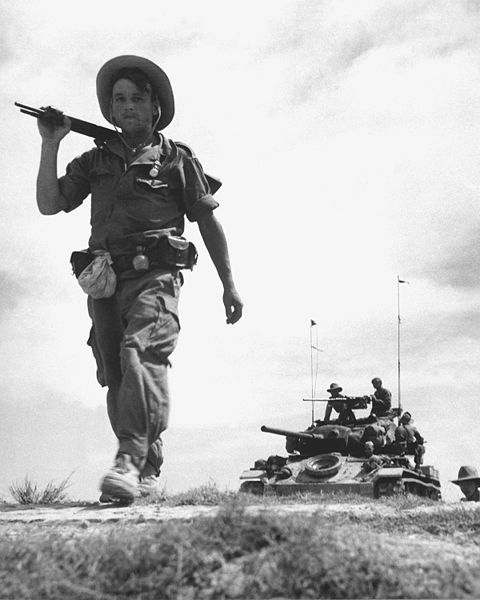
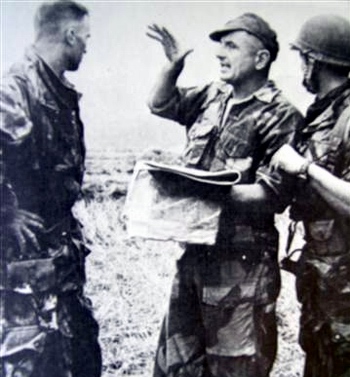
French Mobile Group in Indochina

“Any future defense secretary who advises the president to again send a big American land army into Asia or into the Middle East or Africa should ‘have his head examined,’ as General [Douglas] MacArthur so delicately put it.” Secretary of Defense Robert Gates

The effects of the wars Indo-China, Algeria and Vietnam on the French and American military organizations internally and in relationship to their nations piqued my interest in 2005. The wars in Iraq and Afghanistan forced me to start asking the question of what short and long term effect that these wars might have on the U.S. military. As such I wondered what historical precedent that there was for the question. My interest was furthered by my deployment with Marine and Army advisors to Iraqi Army and Security forces in 2007-2008. My search led to the French experiences in Indo-China and Algeria and the American experience in Vietnam. Recently with the Iraq war winding down and ongoing war in Afghanistan which has gone from apparent victory to mounting concern that we are losing the war in Afghanistan as Taliban and Al Qaida have regained momentum amid widespread corruption by the Afghan government and weakness of NATO forces.
The counterinsurgency campaigns conducted by the French and American militaries in Vietnam and Algeria had deep and long lasting effects on them as did the Soviet war in Afghanistan. The effects included developments in organization and tactics, relationship of the military to the government and people, and sociological changes. The effects were tumultuous and often corrosive. The French Army in Algeria revolted against the government. The US Army, scarred by Vietnam went through a crisis of leadership and confidence which eventually resulted in end of the draft and formation the all volunteer military. The Soviet not only lost their war but they saw their country collapse and the military with it. The effects of the Iraq and Afghanistan wars are yet unknown but could result in similar situations to the militaries and governments involved.
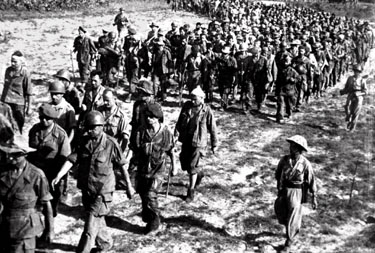
French Surrender at Dien Bien Phu

There is a wealth of data regarding these wars. There are several types of materials. The accounts of soldiers, diplomats and reporters who experienced these events contained in memoirs and diaries. The best include David Hackworth’s About Face and Steel My Soldiers Hearts; and General Harold Moore’s We Were Soldiers Once… and Young. French works include Jules Roy’s The Battle of Dien Bien Phu and General Paul Aussaresses’ The Battle of the Casbah. There are innumerable popular accounts written by NCOs and junior officers. These accounts may contain a wealth of information, but are limited by a number of factors. First, the authors, veterans of the wars, only saw part of the overall picture and first-hand experience in war can skew a writer’s objectivity. Those who have been through the trauma of war interpret war through their own experience. Physical and psychological wounds can have a major impact on the interpretation of these writers as can their experience and political ideology. Finally few of these writers are trained historians. Despite this they can be a valuable resource for the historian.

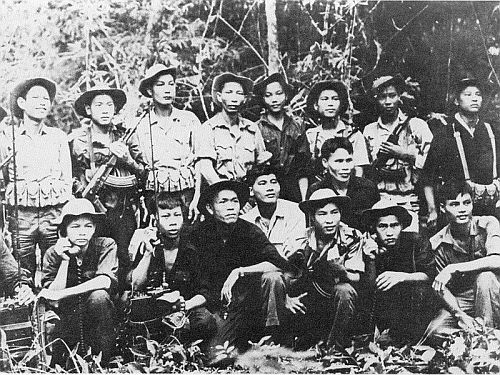
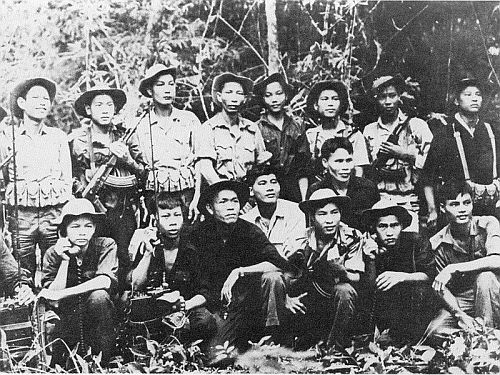
Viet Minh Main Force Soldiers

Another source is found in the official histories written by the military forces involved in the wars. Often these incorporate unit histories and individual narratives and analyze specific battles and the wider campaigns, but do little in regard to broader conditions that affected operations. While a good source, many are not as critical of their institutions as they should be.

Histories by trained historians and journalists provide another view. The most insightful of the journalist accounts include Bernard Fall’ Street Without Joy and The Siege of Dien Bien Phu: Hell in a Very Small Place. A limitation of all of these is that they are often heavily influenced by the political and societal events. This means that earlier accounts are more likely to be reactive and judgmental versus critical and balanced. Later accounts have the benefit of access to the opposing side and documents not available to earlier writers. Alistair Horn in A Savage War of Peace provides one of the most informative and balanced accounts of the war in Algeria. Martin Winslow does the same regarding Dien Bien Phu in The Last Valley.
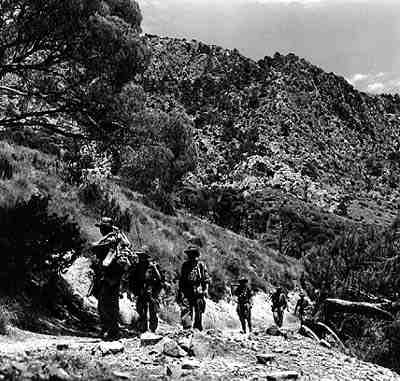
Foreign Legion in Algeria

Another source is the writings of participants who critically examine their participation in the wars. Many of these, French and American provide insights into the minds of leaders who are reflective and critically examine what happened to their military institutions in these wars. The best of these is French Colonel David Galula whose books Pacification in Algeria 1956-1958 and Counterinsurgency Warfare: Theory and Practice provide first-hand accounts of the subject combined with critical reflection. Galula’s works have been important to John Nagl, General David Petreus and others who helped write the U.S. Army and Marine Corps Counterinsurgency manual. Andrew Krepinevich in The Army and Vietnam provides a critical analysis of the U.S. Army in Vietnam. Other sources, both online and print, such as RAND, provide excellent analysis of selected topics within the scope of this essay, especially COIN.

Battles in the Streets of Algiers

The ability to dispassionately and critically examine and evaluate these sources over a period of several years was and integrate them with my own experience has been a critical to me. It has changed the way that I look at sources, and caused me to be much more aware of bias, the limitations of sources and the need to have a multiplicity of sources and points of view and to be suspicious of contemporary reports and accounts of the war in Afghanistan regardless of the source.

The conflicts in French Indo-China, Algeria and Vietnam had major effects on the French and American military institutions. These effects can be classified in a number of ways. First, the manner in which each military waged war, including tactics employed and use and development of weapons systems was changed. The use of airpower, especially helicopters and use of riverine forces provided an added dimension of battlefield mobility but did not bring victory. As John Shy and Thomas Collier noted regarding the French in Indo-China: “French mobility and firepower could take them almost anywhere in Vietnam, but they could not stay, and could show only wasted resources and time for their efforts.”[1]

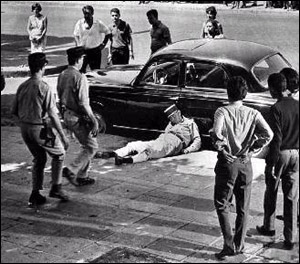
Assassination and Terrorism in Algiers

The use of intelligence and psychological warfare, including the use of torture became common practice in both the French and American armies. The wars had an effect on the institutional culture of these armed services; neither completely embraced the idea of counterinsurgency and for the most part fought conventionally. Galula notes how the “legacy of conventional thinking” slowed the implementation of proper counterinsurgency tactics even after most commanders learned that “the population was the objective.”[2] Krepinevich notes that “any changes that might have come about through the service’s experience in Vietnam were effectively short-circuited by Army goals and policies.”[3] Finally the wars had a chilling effect on the relationship between the both militaries and the state, veterans from each nation often felt betrayed or disconnected from their country and people. Unfortunately instances of all of these have occurred or can be seen in the current wars in Iraq and Afghanistan.

US Army in Vietnam

The French Army had the misfortune of fighting two major insurgencies back to back. The French military was handicapped even before it went into these wars. The Army came out of World War II defeated by the Germans, divided by loyalties to Vichy or one of the Free French factions. They were humiliated by the Japanese in Indo-China, while in Algeria France’s crushing defeat was devastating. “Muslim minds, particularly sensitive to prestige and baraka, the humiliation made a deep impression.”[4] French society was as divided as the Army; the economy in shambles, the government weak and divided. The Viet-Minh had prepared well making use of time and training to get ready for war. “Once full-scale hostilities broke out, the French, for budgetary and political reasons could not immediately make the large scale effort to contain the rebellion in the confines of small-scale warfare.”[5]

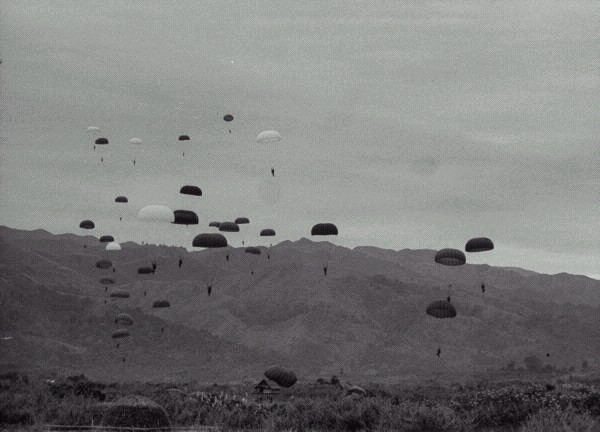
Paras of the 1st Colonial Parachute Regiment jump in Algeria

In both Indo-China and Algeria the French attempted to fight the budding insurgencies in a conventional manner. This was particularly disastrous in Indo-China when on a number of occasions battalion and regimental combat team sized elements were annihilated by Viet-Minh regulars. Between October 1st and 17th 1950 every French garrison along the Chinese border was over-run. The French lost over 6000 troops and enough equipment to outfit “a whole additional Viet-Minh division.” It was their worst colonial defeat since Montcalm at Quebec.[6] In Algeria when the fight began in earnest France’s “ponderous ponderous N.A.T.O forces found themselves at an impossible disadvantage,”[7] unable to have any influence off the main roads.

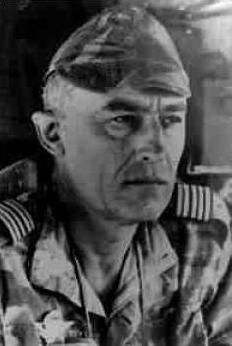
Marcel Bigard: One of the most effective French commanders in Indochina and Algeria

In Vietnam the French did not absorb the lessons of fighting a well established insurgent force. French forces hoped to draw the Viet-Minh main forces into battles of attrition where their superior firepower could be brought to bear. Such was the case at Na San in December 1952 where the French established an “Air ground base” deep in Viet-Minh territory to draw Giap’s forces into open battle. This worked, but just barely. General Giap, short of artillery and not planning on a long battle frittered away his troops in mass charges. However, the French, because of Na Son assumed they had found the key to victory. In their embrace of the “air ground base concept, French staff officers were following an intellectual tradition that had long been prone to seduction by elegant theories.”[8] The result was the disaster at Dien Bien Phu the following year. The destruction of the elite Group-mobile 100 near Pleiku in 1954 was the coup de grace. In Indo-China the French made limited use of helicopters, used paratroops widely, and developed riverine forces. One thing they were critically short of was significant tactical air support.[9]

Roger Trinquier helped develop tactics in Indochina which helped turn the tide in Algeria, until the French Government ended the war leaving their soldiers to feel betrayed

The most inventive French creation in Indochina was the GCMA/GMI forces composed of mountain tribesmen led by French NCOs and Junior Officers. They were designed to provide “permanent guerilla groups rooted in remote areas” to harass and interdict Viet-Minh forces.[10] Trinquier noted that at the time of the Dien Bien Phu defeat that these forces had reached over 20,000 trained and equipped maquis in the Upper Region of Tonkin and Laos. These forces achieved their greatest success retaking Lao Cai and Lai Chau May 1954 as Dien Bien Phu fell.[11] Trinquier stated that “the sudden cessation of hostilities prevented us from exploiting our opportunities in depth.”[12] The GMI units and their French leaders were abandoned fighting on for years after the defeat. One account noted a French NCO two years after the defeat cursing an aircraft patrolling the border “for not dropping them ammunition so they could die like men.”[13] In the end the French left Indo-China and Giap remarked to Jules Roy in 1963 “If you were defeated, you were defeated by yourselves.”[14]
Algeria was different being part of Metropolitan France; there the French had support of European settlers, the pieds-noir. Many French soldiers had come directly from Indo-China. There French made better adaptations to local conditions, and realized that they had to win the population and isolate the insurgents from it and outside support. As Galula said, victory is the destruction of the insurgent’s political and military structures, plus “the permanent isolation from the population, not forced upon the population, but by and with the population.”[15] The lessons learned by the French in both Algerian and Indo-China were lost upon the Americans.

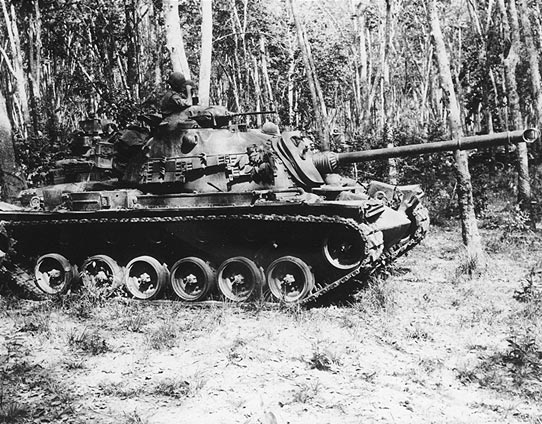
US Armored Cavalry in Vietnam

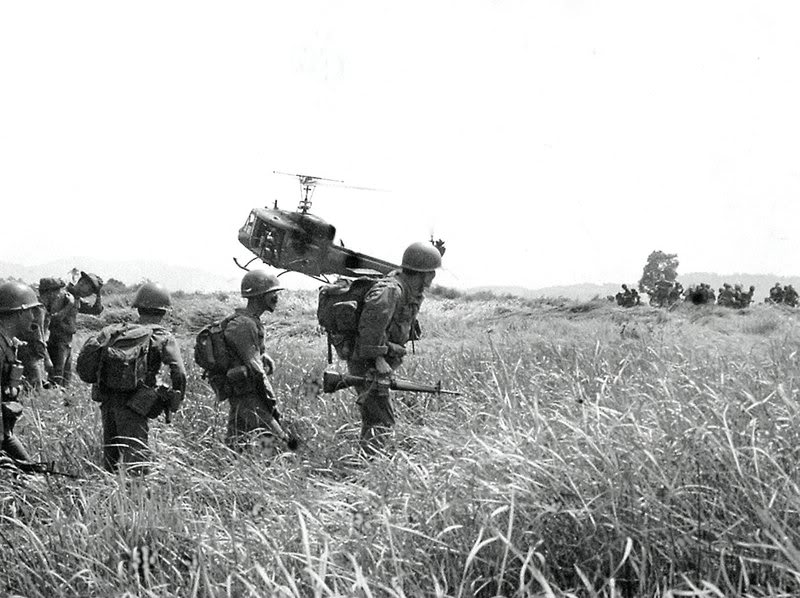
The United States military, especially the Army approached the Vietnam War with a conventional mindset, referred to as the “Army concept.” [16] It not only approached the war in this manner, but it trained and organized the South Vietnamese forces, ARVN into the American model. Americans re-organized ARVN into divisions “based upon the U.S. divisional force structure.”[17] Due to the imposition of an American template and organizational structure upon it, ARVN was not structured appropriately for the threat that it faced.”[18] The results were as to be expected. Large numbers of American troops poured in taking the lead against the North Vietnamese and Viet Cong . The American method of counterinsurgency was costly. It was “almost a purely military approach”[19] which ignored political and social realities on the ground. Instead of focusing on protecting the Vietnamese people and denying the Communists a safe haven the Army in particular believed that massive firepower was the best means to be “utilized by the Army to achieve the desired end of the attrition strategy-the body count.”[20] In the end the American defeat was a “failure of understanding and imagination.”[21] The one shining success was the Marine Corps experimentation with “Combined Action Program” platoons which lived in the villages with militia for long periods of time. This program produced great results “in eliminating local guerillas”[22] but was killed by the Army.
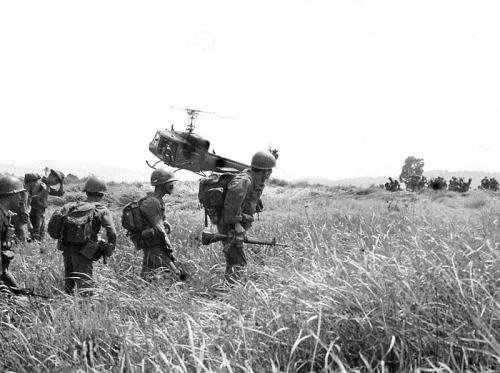
US and ARVN Soldiers in Joint Operation

These wars tore the heart out French and American armies. For the French the defeats inflicted a terrible toll. In Indo-China many French career soldiers felt that the government’s “lack of interest in the fate of both thousands of missing French prisoners and loyal North Vietnamese…as dishonorable.”[23] Divisions arose between those who served and those who remained in France or Germany and created bitter enmity between soldiers. France would endure a military coup which involved many who had fought in Vietnam and Algeria. Having militarily won that war, were turned into what Jean Lartenguy called The Centurions had been turned into liars.”[24] They were forced to abandon those who they had fought for and following the mutiny, tried, imprisoned, exiled or disgraced. Colonial troops who remained loyal to France were left without homes in their “independent” nations. They saw Dien Bien Phu as the defining moment. “They responded with that terrible cry of pain which pretends to free a man from his sworn duty, and promises such chaos to come: ‘Nous sommes trahis!’-‘We are betrayed.’”[25]
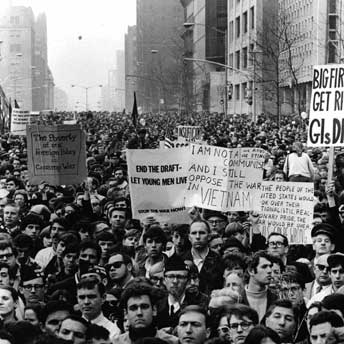
War Protests in the United States 

The U.S. Army left Vietnam and returned to a country deeply divided by the war. Vietnam veterans remained ostracized by the society until the 1980s. As Harold Moore recounts “in our time battles were forgotten, our sacrifices were discounted, and both our sanity and suitability for life in polite American society were publically questioned.” [26] The Army endured a massive reorganization that resulted in the formation of the All-Volunteer force, which would redeem itself and emerge from the ashes in the Gulf War.
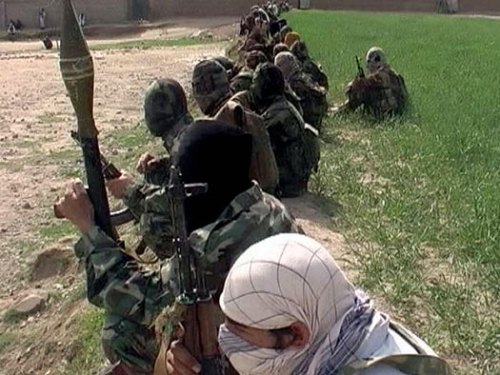
Taliban in Afghanistan

The Americans would not learn the lessons of revolutionary warfare and counterinsurgency until forced to do so in Iraq in 2004-2007. These lessons however were not applied to Afghanistan and the Taliban which seemed to have been defeated have regained the initiative, policy is being debated amid discord in the west and there are reports of American and NATO forces becoming discouraged by the course of the war and concern that their efforts will be in vain. This is a dangerous situation to be in and if we learn from anything from our own history as well as that of foreign military forces in Afghanistan we need to be very careful in implementing strategy to get whatever we do right.

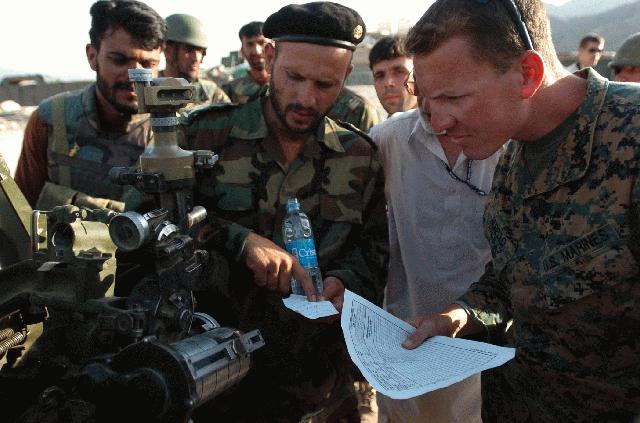
US Advisers with Afghanistan National Army Troops

The greatest success of the war was finally killing the leader of Al Qaeda, Osama Bin Laden at his Pakistani hide-out. That did not occur in Afghanistan and was the result of smart work by the CIA and other American intelligence services and the superb conduct of the mission by Navy SEAL Team Six. It was not the product of our costly counter-insurgency and nation building campaign in Afghanistan. There are many professional think tank “experts” that now urge continuing the Afghan mission indefinitely despite its massive cost and questionable strategic value. The costs of the war which are over 2 billion dollars a week are staggering with little to be shown from the hundreds of billions already spent in Afghanistan, much of which is spent on projects where corrupt Afghan government officials and tribal leaders are the only ones to benefit. Likewise the long term health of the military is imperiled. The money that should go to modernizing the force and replacing equipment worn out by war as well as the enormous costs in lives and the continuing care needed by military personnel wounding in body, mind and spirit remaining on active duty and those in the Veteran’s Administration system are imperiled.

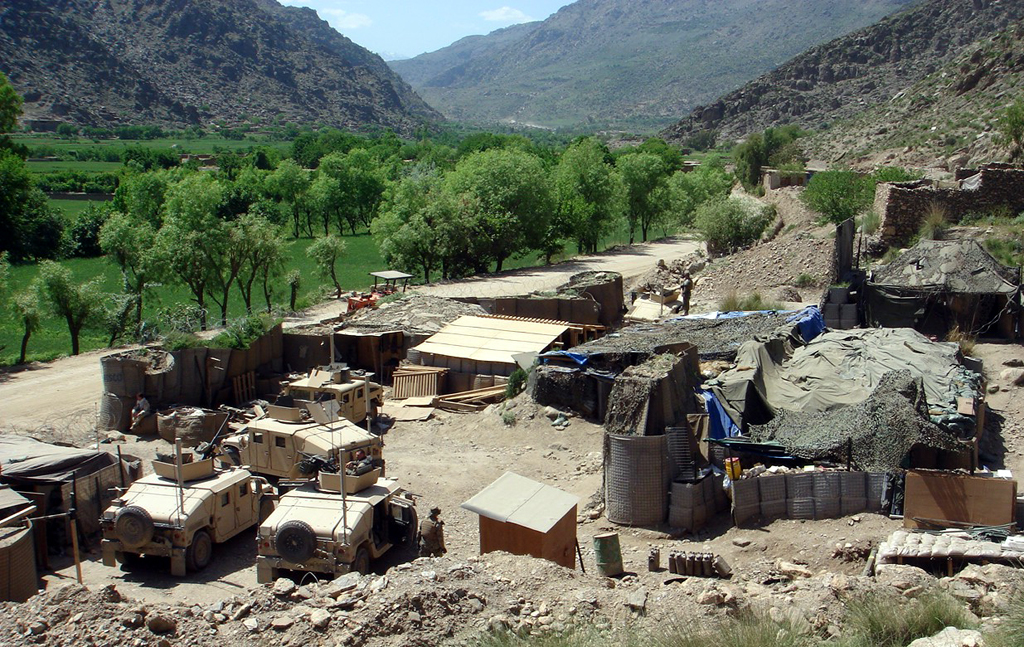
Remote Training Team Base in Afghanistan

The effects of the wars in French Indochina, Algeria and Vietnam on the French and American military establishments were long lasting and often tragic. The acceptance of torture as a means to an end sullied even the hardest French officers. Men like Galula and Marcel Bigeard refused to countenance it, while others like Paul Aussaresses never recanted. Americans would repeat the tactic at Abu Ghraib rallying the Iraqis against them and nearly losing the war because of it.
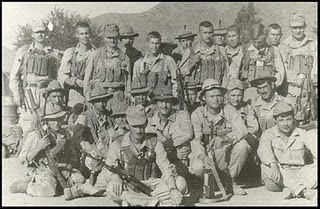
Soviet Paratroops in Afghanistan

For the Americans, the effects of Vietnam continued at home. Race riots tore at the force while drug addictions and criminal activities were rampant. Many incompetent leaders who had “ticket punched” their careers kept their jobs and highly successful leaders who became whistle blowers like Hackworth were scorned by the Army institution. The years following Vietnam were a severe test of the US Military and took years for the military to recover. Likewise it took years before either the French or American veterans again felt a part of their countries. They ended up going to war, and when it was over; feeling abandoned, their deepest bonds were to their comrades who had fought by their side.
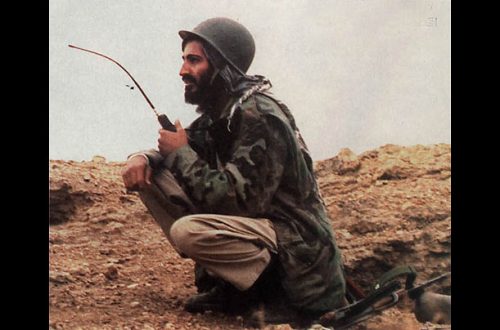
Osama Bin Laden leading Mujaheddin in 1984 

If this is not enough we have the experiences of the Soviet Union, the British Empire and others that have attempted to rule Afghanistan as plumb lines to gauge our effectiveness. Others have tried and failed miserably at this. The Soviets learned the hard way and found that Afghanistan was one of the major reasons for the collapse of the Soviet Union. Reading the history of Soviet operations in Afghanistan is frighteningly like reading the history of our campaign.
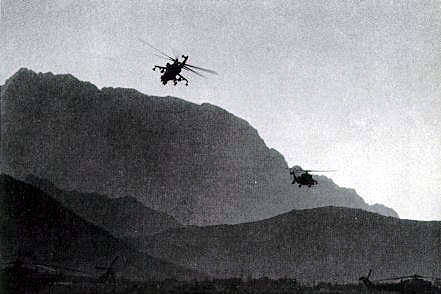
Two Soviet Mi-24 “Hind” attack helicopters flying in an Afghan Valley

The Soviets invaded Afghanistan in 1979 they used their 40th Army which initially was composed of “two motorized rifle divisions, an airborne division, an air assault brigade and separate motorized rifle regiments.”[27] These forces totaled about 52,000 troops and were “considered sufficient to guarantee the viability of Afghanistan.”[28] The 40th Army was a standard Cold War Soviet Combined Arms Army designed for high tempo conventional operations. It was not designed for nor trained in counterinsurgency operations or what the Soviets and Russians class as “anti-guerilla operations.” It was poorly suited to mountain and dessert combat and at the beginning “not only had no practical skills in the conduct of counter-guerilla warfare, they also did not have a single well-developed theoretical manual, regulation or tactical guideline for fighting such a war.”[29]

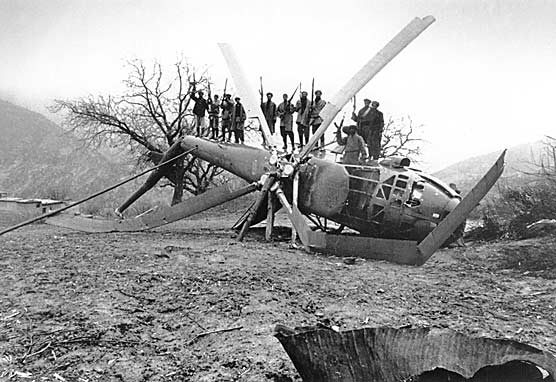
Downed Soviet Mi-4 “Hound” with Mujaheddin 

The Soviets did not expect to be involved in combat operations and the Afghan population reacted to their presence with resistance which spread across the country both against their own government which they viewed as a puppet of the Soviets but also against the Soviet Forces. As time went on the Soviets attempted to use raids and large scale operations to attempt to bring Mujahidin forces to battle, however the insurgents were very skillful and the Soviets attempted to increase the training of their forces as well as their numbers. By 1986 the numbers on the ground had increased to 108,000 personnel in four divisions, five separate brigades, four separate regiments and six separate battalions.[30] In the nearly 10 years of operations over a half million Soviet soldiers and support personnel served in Afghanistan. Tours for enlisted personnel who were primarily conscripts served 12-18 months in country and officers 2 years. Few returned for subsequent tours meaning that the 40th Army had few personnel very familiar with the country, its people and the challenges faced by Soviet forces. According to official sources the 40th Army suffered 13,833 killed in action or died of wounds, 49,985 wounded and 311 missing in action a figured of 1 in 8 Soviet Soldiers being casualties. 14.3 percent of the casualties were officers.[31] Of course the official figure is doubted many believing the number killed in action or died of wounds to be closer to 26,000.[32]
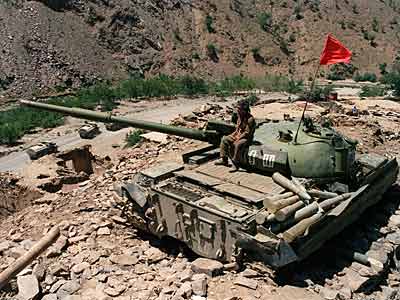
Soviet T-62 Tank guarding a convoy in a mountain pass

Like their American and French counterparts the Soviet veterans have experienced the unhealed wounds of war and a country that does not understand their experiences. The stigma of war wounds and PTSD haunt many Soviet veterans and were compounded by the collapse of the Soviet Union and Warsaw Pact in 1989. They returned home, lost their country and were by and large abandoned by their countrymen. A good number of these men and women travel to one of 5 centers across the country where according to one of the veterans come to for “social and psychological help.” He said that “The best thing about this place is that it provides us with a chance to share our Afghan memories with comrades who understand what we are talking about.” That camaraderie of being able to share their experiences with others that understand is helping some to return to something akin to “normal” life. They are joined by the soldiers that have experienced similar things in Chechnya. Russian veterans of the Afghan War are still so closely linked to it that they refer to themselves as “Afghans.”

Soviet Mi-8 “Hip” Helicopters in Afghanistan preparing for a mission

The Soviet Forces supported the Army of the Democratic Republic of Afghanistan which numbered at their peak on average between 120,000-150,000 soldiers.[33] The Afghan forces, then as now were at the mercy of tribal, familial and communist party affiliations. Over 70 percent of the DRA was conscripted, desertions averaged 1,500 to 2,000 soldiers a month and units were usually optimistically 25-40 percent under their TO&E strength.[34]Limitations on training and leadership meant that typically DRA units could not conduct large scale missions without Soviet help. As such most of the fighting was done by Soviet formations.
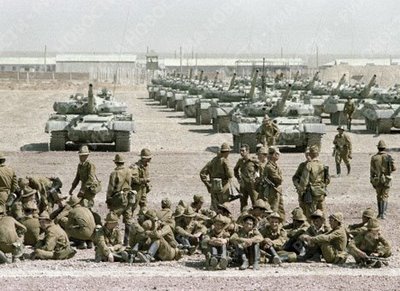
Soviet Troops preparing to leave Afghanistan

Many of these problems have plagued the United States and ISAF throughout the first 9 years of the current Afghan War. As former Afghanistan Commander General Stanley McChrystal noted in his assessment “ISAF is a conventional force that is poorly configured for COIN, inexperienced in local languages and culture, and struggling with the challenges inherent to coalition warfare. These intrinsic disadvantages are exacerbated by our current culture and how we operate.”[35]

We should have learned. A retired Red Army Colonel who served in Afghanistan from 1986-1988 who learned the Dari language in order to negotiate with the Afghan Mujahedeen warned what will happen when the Americans and NATO leave the country and the mistake that we made in entering Afghanistan. Frants Klinsevich now a member of the Russian Parliament comment to reporters at a wreath laying ceremony at a veteran’s convention that “they (NATO and the United States) are 100 percent repeating the same mistake we made by entering into a war in that country” and that “As soon as the Americans and Europeans leave, the Taliban will crack down on everything.” Klinsevich noted that he understood the American desire to tame Afghanistan but that “the problem of radical Islam will not be solved there, its violence cannot be solved. It is simply unsolvable.” He said that he wished that the United States had consulted the Russians about Afghanistan saying “they should have invited Russian specialists, involved Russia, really studied how they could use Russia. But unfortunately Americans think they know everything.” The former Russian commander understands far more that the majority of American policy makers on this subject. [36]

The fact is that we are hamstrung by the ongoing wars which limit our ability to respond to rapidly changing situations. We are in a similar situation to the Germans in 1942 and 1943 overcommitted, overstretched and lacking true strategic depth to respond to unanticipated situations as are now occurring across the Middle East. In 1942 and 1943 the Germans were always just short of the forces that would have turned the tide. Like the Germans our economy is laboring on the verge of collapse and we have to honestly answer the question “What is the strategic value in continuing to wage war in Afghanistan in the way that we are doing?”

What are the lessons to be learned from these campaigns as well as from the various accounts? Andrew Krepinevich prophetically noted that the failure to learn the lessons of Vietnam “represents a very dangerous mixture that in the end may see the Army again attempting to fight a conventional war against a very unconventional opponent.”[37] Obviously, there are lessons to be learned, especially in understanding the nature of revolutionary war as well as the culture and history of our opponents. The U.S. has made some improvement in this regard but there is still much to be learned, especially since after the war the Army was “erecting barriers to avoid fighting another Vietnam War.”[38] From these wars we learn that nations and incompetent governments who mismanage wars can alienate themselves from the soldiers that they send to fight, with serious consequences. As far as historiography we learn that certain historical fallacies are evident when one reads the accounts critically and recognize the bias and limitations of the various sources.

The fact is that we have learned little about such wars and are paying a terrible price for it. The debate now is should we continue the war as it is with minor withdraws of troops or begin a rapid exit in order to preserve and rebuild our force and to reduce the cost of these operations. But that debate and decision are well above my pay grade. But then maybe we need to remember what Field Marshall Gerd Von Rundstedt told his staff in September of 1944 when asked how to recover from the disastrous collapse of the German front following the Allied breakout from Normandy and dash across France. “Make peace you fools.” http://www.youtube.com/watch?v=ch56NAL1C-I

Peace
Padre Steve+
________________________________________
[1] Shy, John and Collier, Thomas W. “Revolutionary War” in Makers of Modern Strategy from Machiavelli to the Nuclear Age,” Peter Paret editor. Princeton University Press, Princeton N.J. 1986 p.849
[2] Galula, David. Counterinsurgency in Algeria: 1956-1958. RAND Corporation, Santa Monica, CA. 2006. First published by RAND in 1963. p.244
[3] Krepinevich, Andrew F. “The Army and Vietnam,” The Johns Hopkins University Press, Baltimore and London, 1986 p.213
[4] Horn, Alistair. “A Savage War of Peace: Algeria 1954-1962,” a New York Review Book published by the New York Review of Books, New York, 1977, 1987, 1996, and 2006 p 41
[5] Fall, Bernard B. “Street Without Joy: The French Debacle in Indochina.”Stackpole Books, Mechanicsburg PA, 2005, originally published by Stackpole Publications 1961 p.27
[6] Ibid. p.33
[7] Horn. p.100.
[8] Windrow, Martin. “The Last Valley: Dien Bien Phu and the French Defeat in Vietnam,” Da Capo Press, Novato, CA 2006, originally published by Weidenfeld and Nicholson, London 2004 p.63
[9] Fall, Bernard B. “The Siege of Dien Bien Phu: Hell in a Very Small Place.” Da Capo Press, New York an unabridged reprint of the 1st Edition reprinted in arrangement with Harper and Row Publishers, New York. 1967 pp. 456-457 Fall discusses in depth the lack of French Air support and the antecedents that led to the shortage following World War II.
[10] Pottier, Philippe(2005)’Articles: GCMA/GMI: A French Experience in Counterinsurgency during the French Indochina War’, Small Wars & Insurgencies,16:2,125 — 146http://dx.doi.org/10.1080/09592310500079874
[11] Simpson, Howard K. “Dien Bien Phu: The Epic Battle America Forgot,”Potomac Books Inc. Washington DC 2005, originally published by Brassey’s Inc. 1994 pp. 170-171
[12] Trinquier, Roger. “Modern Warfare: A French View of Counterinsurgency,” translated from the French by Daniel Lee with an Introduction by Bernard B. Fall. Praeger Security International, Westport CT and London. 1964 and 2006. Originally published under the title “La Guerre Moderne” by Editions Table Ronde. p.87
[13] Windrow. p.652.
[14] Roy, Jules. “The Battle of Dien Bien Phu” Carrol and Graf Publishers, New York 1984. Translated from the French by Robert Baldrick. English translation copyright 1965 by Harper and Row Publishers, New York. p.xxx
[15] Galula, David. “Counterinsurgency Warfare: Theory and Practice.”Praeger Security International, Westport CT 1964 and 2006 p. 54
[16] Krepinevich. p.213
[17] Ibid. p.24
[18] Nagl, John A. “Learning to East Soup with a Knife: Counterinsurgency Lessons from Malaya and Vietnam,” University of Chicago Press, Chicago and London, 2005 p.138
[19] Shy. p.856
[20] Krepinevich. p.202
[21] Spector, Ronald H. “After Tet: The Bloodiest Year in Vietnam,” Vintage Press, a division of Random House, New York, 1993 p.314
[22] Millett, Allan R. and Maslowski, Peter. “For the Common Defense: A Military History of the United States of America.” The Free Press, a division of Macmillian, Inc. New York, 1984 p.555
[23] Windrow. p.655
[24] Ibid. p.657
[25] Ibid.
[26] Moore, Harold G and Galloway, Joseph L. “We were Soldiers Once…and Young: Ia Drang: The Battle that Changed Vietnam,” Harper Collins Publishers, New York NY 1992 p. xx
[27] The Russian General Staff. The Soviet Afghan War: How a Superpower Fought and Lost” translated and edited by Lester A. Grau and Michael A. Gress, University Press of Kansas, Lawrence KS 2002 p.17.
[28] Ibid. p.18
[29] Ibid. p.43
[30] Ibid. p.28
[31] Ibid. p.309
[32] Ibid. p.xix
[33] Ibid. p.48
[34] Ibid. pp.48-51
[35] McChrystal, Stanley. “Commander’s Initial Assessment Commander International Security Assistance Force Afghanistan” dated 30 August 2009 pp. 1-2
[36] “Russian veteran warns of Afghan violence.” Reuters 16 May 2011. Edited by Paul Tait and Daniel Magnowski obtained 11 June 2011 at http://www.trust.org/alertnet/news/interview-russian-veteran-warns-of-unsolvable-afghan-violence/
[37] Krepinevich. p.275
[38] Ibid. p.274

3 Comments

Filed under Foreign Policy, History, iraq,afghanistan, middle east, Military, Political Commentary, vietnam, world war two in europe

A Quiet Remembrance: The Fall of Dien Bien Phu May 7th 1954

French Prisoners

On May 7th in Hanoi a small remembrance was held to mark the fall of Dien Bien Phu and honor the victor, 101 year old General Vo Nguyen Giap at his home.  It was one of the few remembrances held anywhere marking that battle which was one of the watersheds of the 20th Century. A half a world away in Houston Texas a small group of French veterans, expatriates and historians laid a wreath at the Vietnam War Memorial.  In Paris an ever shrinking number of French survivors gather each year on May 7th at 1815 hours for a religious service at the Church of Saint Louis des Invalides to remember the dead and missing of the French Expeditionary Corps lost in Indochina.  This battle is nearly forgotten by time even though it and the war that it symbolized is probably the one that we need to learn from before Afghanistan becomes our Indochina.

French Major Marcel Bigeard at Dien Bien Phu. A revered leader he died in 2010

On May 8th 1954 the last of the French garrison of Dien Bien Phu surrendered to the Viet Minh following the surrender of the main garrison the previous day.  It was the end of the ill-fated Operation Castor in which the French had planned to lure the Viet Minh Regulars into open battle and use superior firepower to decimate them.  The strategy which had been used once on a smaller scale the previous year at Na Son would prove to be the Göttdammerung of French colonial rule in Indochina.

French Paras landing at Dien Bien Phu

The French had thought they had come up with a template based on Na Son in how to engage and destroy the Viet Minh which had in the years between 1945 and 1954 had turned an insurgent force into a strong Army capable of taking on large French forces.  As a result the French decided that they would attempt to draw Giap’s Army into open combat where their superiority in heavy weaponry and in the air could be used to destroy the Viet Minh. The plan was called the “Air-land base.”  It involved having strong forces in a defensible position deep behind enemy lines supplied by air.  At Na Son the plan worked as the French were on high ground and had superiority in artillery and air forces.  They were also were blessed by General Giap using human wave assaults which made the Viet Minh troops fodder for the French defenders.  Even still Na Son was a near run thing for the French and had almost no effect on Viet Minh operations elsewhere in Indochina while tying down a almost a full division of troops and a large portion of French air power. They inflicted heavy losses on the Viet Minh but did not destroy them.

The French command assumed that they had found a way to defeat the Viet Minh.  They decided to repeat the strategy used at Na-Son at the remote the remote town of Dien Bien Phu near the Laotian border.  The French desired to use Dien Bien Phu as a base from which they could conduct offensive operations against the Viet Minh and to draw Giap’s forces into a conventional fight that they thought they could win.  Unfortunately the French chose badly. Dien Bien Phu lay in a marshy valley surrounded by mountains which were covered in dense nearly impassible jungle.  It was a poor location to conduct offensive operations from and a worse place to defend.

Viet Minh Main Force Regulars

The French elected to go light on artillery and due to the terrain it had to be deployed in nearly open conditions with neither cover not concealment.  Unlike Na Son the Dien Bien Phu air head was at the far end of the range of French aircraft, especially relatively weak tactical air assets.  French logistics needs were far greater than the French Air Force and American contractors could supply.  The French strong points in the valley were exposed and not mutually supporting and as such Giap and the Viet Minh were able to close with and attack each strong point in time overwhelming each after valiant French resistance.  The terrain was so poor that French units were incapable of any meaningful offensive operations against the Viet Minh.  As such they could only dig in and wait for battle.  Even so many positions were not adequately fortified and the artillery was exposed. The French garrison was a good force.  It was comprised of airborne units, the Foreign Legion, Colonial Paratroops (Marines), North Africans from Tunisia and Algeria as well as Vietnamese troops.  Many of the officers including Lieutenant Colonel Langlais and Major Bigeard commander of the 6th Colonial Parachute Battalion were among the best leaders in the French Army. Others who served in Indo-China including David Galula and Jacques Trinquier would write books which would help Americans in Iraq.  Unfortunately the French High Command badly underestimated the capabilities and wherewithal of the Giap and his divisions.

Giap rapidly concentrated his forces and built excellent logistics support.  He placed his artillery in well concealed and fortified positions which could use direct fire on French positions. Giap also had more and heavier artillery than the French believed him to have.  Additionally he brought in a large number of anti-aircraft batteries whose positions enabled the Viet Minh to take a heavy toll among French Aircraft.  Giap also did not throw his men away in human assaults.  Instead he used his Sappers (combat engineers) to build protective trenches leading up to the very wire of French defensive positions.  In time these trenches came to resemble a spider web.

Without belaboring this post the French fought hard as did the Viet Minh.  Many French positions were overwhelmed by accurate artillery and well planned attacks.  The French hoped for U.S. air intervention, even the possibility of using nuclear weapons against the Viet Minh.  They were turned down.  Relief forces were unable to get through.  The garrison died, despite the bravery of the Paratroops and Legionaries.  The French garrison was let down by their high command and their government and lost the battle due to inadequate logistics and air power.  The survivors endured a forced march of nearly 400 miles by foot to POW camps in which many died.  Many were subjected to torture and group discipline.  Few French caved to the Viet Minh interrogations but some would come away with the belief that one had to use such means to fight the revolutionaries.  French and their Algerian comrades would apply these lessons against each other within a year of their release.  French soldiers and officers were shipped from Indo-China to Algeria to wage another protracted counterinsurgency.  Militarily they had all but won the war when their government pulled out. French troops, especially the Legionaries and Paratroops felt betrayed by their nation, much like many Vietnam Vets felt about the United States government after that war.  I find today that both our government and people are caring for our returning troops in a far better manner than the past.  Even still the veterans of Iraq and Afghanistan share almost a spiritual link to our American and French brothers in arms who fought at Dien Bien Phu, the Street Without Joy and places like Khe Sanh, Hue City, the Ia Drang and the Mekong.

The lessons of the French at Dien Bien Phu and in Indo-China were not learned by the United States as it entered Vietnam.  In fact the US Army made a conscious effort to ignore the advice of those that they called “losers.”  It was an arrogance for which we paid dearly in that war.

Despite our efforts in Afghanistan and the valiant sacrifices of our Marines and Soldiers we seem to have difficulty learning the lessons of the Vietnam Wars.  Old habits die hard, counterinsurgency done right isn’t sexy and there are no easy formulas to make it work.  What works in one country may not work in another as we are found when we tried to emulate our counterinsurgency success in Iraq in Afghanistan.  Despite a lot of institutional resistance from traditionally minded Army officers we were able to apply the lessons of counterinsurgency in Iraq and work with Iraqis to make that country more secure than it was before we took this type of warfare seriously.  Despite its continued problems Iraq is doing better and will likely do well in the long run as it recovers from the damage caused by the war.  They have known civilization since antiquity and are a proud people.  Someday I hope to take up the invitation of Iraqi friends to go back as they say as a tourist.

I am concerned about Afghanistan, despite the killing of Osama Bin Laden in neighboring Pakistan because it seems that the Taliban spring offensive is off to a good start.  U.S. and NATO Forces in Khandehar and Helmand Province have been placed on a higher alert and confined to their bases following a major assault on the Afghan provincial government installations in Khandehar.  The Taliban and other Afghan insurgents are only concerned with Afghanistan and even though Bin Laden is dead the deepening rift between the United States and Pakistan will likely ensure that they will enjoy military, personnel, financial support from many in Pakistan including the Intelligence agency in the remote and ungovernable northwest territories of that country which are a safe haven much like Communist China was for the Viet Minh.

Will there be a situation where an isolated NATO garrison is overrun by Taliban forces as French forces were in Indochina?  An isolated outpost was nearly overrun at Wanat in July of 2008 and at two isolated outposts near the Pakistani border in October 2009.  One would hope not, but we cannot underestimate the Afghans and their ability to adapt to NATO tactics and weapons.   Their predecessors successfully drove out the Soviets, the British, the Persians and the Greeks.  Dien Bien Phu is a warning from history not to leave troops in places where their exposure leaves them vulnerable.

But even more Dien Bien Phu serves to remind us that in such wars it is not always the highly trained and organized Western forces that win.  These are local wars and once the momentum shifts to the insurgent they are difficult to turn around.  In a sense the French were trying to do what we are trying to do now in taking the fight to the enemy.  It turned out badly for them and it could turn out badly for us.  I hope that we don’t forget.

Peace

Padre Steve+

2 Comments

Filed under History, iraq,afghanistan, Military, vietnam