Tag Archives: united nations

Gaddafi Taunts the West and Kills his People: Our inaction speaks so loud he can’t hear a Word that we are Saying

Back when I was a sophomore in high school I played my one and one season of organized tackle football. I wasn’t very good and after seven weeks of not getting to play in a game, the last of which was a blowout where everyone got into the game but me I went to the coaches’ office in a rage. I confronted Coach Duke Pasquini demanding to know why I didn’t get in the game and he simply said “I can’t hear you.” So I complained louder and he repeated what he had said. That angered me so I was screaming and he finally said “your actions speak so loud I can’t hear a word you are saying.” I was dumbfounded as he told me that the reason that I wasn’t playing was that I my words didn’t match my play during practice.  It wasn’t until I took my anger out on the practice field and pushed harder than I ever thought possible that I got to play. Coach Pasquini taught me a valuable lesson with a lot of application for Western Leaders including President Obama.

That lesson is not to make pronouncements that you are not willing to back up with force. Unfortunately over the past two weeks statements by Western leaders as well as their actions of freezing assets and investigating the Gaddafi’s for war crime charges has emboldened the rebels and hardened the resolve of Gaddafi and his family.  In a nearly euphoric advance the rebels advanced to areas that they could not control if Gaddafi offered real resistance. Likewise when Gaddafi realized that the West was divided and unlikely to take action be it a no-fly zone or any assistance to the rebels he began an offensive that has devastated cities that the rebels had controlled and caused grievous casualties to civilians.  Gaddafi’s son Saif al Islam Gaddafi promised that the regime was coming after the rebels even the eastern part of the country using ground forces and air power.  He knows that he has a free hand until NATO and the Arab League or African Union decide to act even without a UN mandate as NATO did in Bosnia and Kosovo or the United States did in Iraq. He is openly taunting the United States, NATO and the international community and reveling in it. He has called our bluff.

The tide has turned against the rebels and in a war of attrition they cannot win unless the Libyan military switches sides, which does not seem likely in the light of international dithering.  The Libyan military after a period of wavering and defections appear to have fallen in line with Gaddafi even if they despise him.  Since that is the case Gaddafi now has the upper hand and unless Western Leaders, including President Obama back up their words the rebellion will be crushed a humanitarian catastrophe unleashed and a brutal dictator validated.

Now it is true that the United States above all nations must act with prudence because of our Iraq and Afghanistan adventures which have made the Administration shy away from any more military actions in the Muslim World. In fact we are overcommitted everywhere and there is a good reason militarily and politically not to go in.  That reason is simply that many radicals in the Islamic World will use it against us in a propaganda campaign and that is exactly how Gaddafi is already portraying the situation. Of course an air campaign which would begin with a no-fly zone should one be authorized would likely end up in bombing Libyan air defense installations and bring about what Gaddafi rightly calls a war. As a result the administration has for now decided not to act and to wait for the Europeans and the United Nations to take the lead. That inaction has emboldened Gaddafi and that inaction will turn Libya into a more important conflict than we ever wanted it to be.

If we do nothing after making a big show of calling Gaddafi a war criminal, freezing his assets and boldly stating that he has to go and the revolt fails then we will be seen by the same people that would condemn military action as weak.  This result would embolden tyrants and give our real enemies, Al Qaeda and Iran new life. Al Qaeda had been frozen out of the revolutions to this point but when those dying for freedom realize that we are all talk they will turn to the radical side to overthrow despotic regimes and when those regimes fall those that take power will not be our friends.

While doing something is fraught with peril the cost of inaction is worse and we could lose every Arab Ally that we have had for decades in a very short time. It will mean astronomical oil prices and collapse economies already weakened by the world wide banking and real estate crises. Israel will then be in the middle of a potential regional war because anti-western zealots will certainly carry their crusade against the Jewish state. There will be no more cold peace between the Arabs and Israel.

At least in the absence of US or NATO action French President Nicholas Sarkozy has recognized the provisional rebel government and is setting up an embassy in Benghazi and suggesting air strikes. British Prime Minister David Cameron is also pushing for action. The possibility is that some parts of the international community will take action but that is not certain. There are reports that the Libyan Provisional council is in clandestine talks with the United States.  If so that would be a start.

The reality is that this situation will not end well no matter what course of action is taken. The fact is that no matter which course the situation in Libya takes is that it is likely to spiral into a regional war with terrible consequences for everyone.  Americans will feel the pain of this in a big way when the oil prices go through the roof and the economy tanks.

Yes, our actions speak so loud that Gaddafi and the world can’t hear a word that we are saying.

God help us.

Peace

Padre Steve+


2 Comments

Filed under Foreign Policy, middle east, Military, national security

The Sinking of the Cheonan and the Escalation of Tensions on the Korean Peninsula

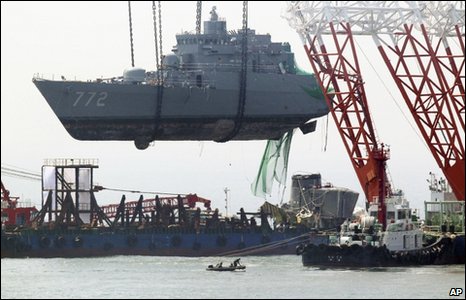
The forward half of teh hulk of the Corvette Cheoson being raised from the Yellow Sea

On March 26th at 2110 hrs local the 1200 ton South Korean Corvette Cheonan (PCC-722) was torpedoed by a North Korean Submarine about 1 nautical mile from Baengnyeong Island. The assailant appears to have been a North Korean Yeono Class miniature submarine using a North Korean CHT-02D 21” torpedo using acoustic homing mechanism set for a detonation under the hull of Cheonan at 6-9 meters depth.  There is the possibility that a Song class coastal submarine could have been involved but the likelihood is a Yeono class boat based on the proximity to land and the observation of a number of “small submarines” departing base a few days before and returning a few days after to their tender. The blast created an underwater shockwave and bubble effect which broke the back of the ship causing it to sink in less than 5 minutes with the loss of 46 crew members.

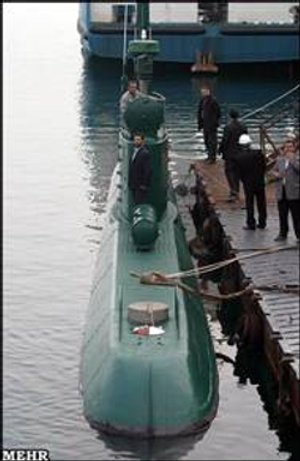
The probable assailant a Yeono or Yono class Miniature Sub and an Iranian variant below


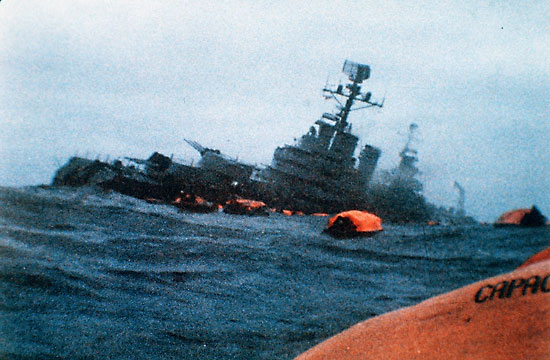
The sinking of Cheonan was the first sinking of a warship by a hostile submarine since the Argentine light cruiser the General Belgrano was sunk by the Royal Navy nuclear hunter-killer attack submarine Conqueror on May 2nd 1982 during the Falkland war.  The sinking of the Belgrano was controversial but occurred in the context of active hostilities and which posed no real threat to regional destabilization or a war that could easily escalate into a nuclear, chemical and biological conflict. The Cheonan was sunk by the North Koreans in a clear violation of the Korean Armistice and represents such a brazen move by the North Koreans that one has to wonder what purpose that it served.  There are reports that Kim Jong Il ordered the attack in retaliation for a confrontation in the same area in November 2009 in which a North Korean ship was heavily damaged.

The last warship sunk by a hostile submarine

The effects are now being felt following the May 20th release of the international investigation of the sinking which confirmed with hard evidence that the torpedo was North Korean and that there were no other possibilities for the sinking. (http://www.mnd.go.kr/mndEng_2009/WhatsNew/RecentNews/index.jsp#wrap ) The North Koreans reacted with anger toward the report while South Korea, the United States, Japan, Australia, Canada and the UN made statements condemning the sinking.  In the following days the US and South Korea announced naval exercises (http://news.bbc.co.uk/2/hi/world/asia_pacific/10150379.stm ) (http://www.csmonitor.com/USA/Military/2010/0524/Pentagon-dials-up-pressure-on-North-Korea-for-Cheonan-sinking ) and on the 24th the South Koreans suspended economic relations and assistance to the North and announced the renewal of psychological warfare against the North. The North Koreans have responded in kind severing all relations with the South, threatening to attack sites broadcasting into the North and announced that it gave its military the order to prepare for war.  http://news.yahoo.com/s/ap/20100525/ap_on_re_as/as_skorea_ship_sinks;_ylt=Alwl3biZwLFab7TyXX4HwRz9xg8F;_ylu=X3oDMTM5NTExM2R2BGFzc2V0A2FwLzIwMTAwNTI1L2FzX3Nrb3JlYV9zaGlwX3NpbmtzBGNjb2RlA21vc3Rwb3B1bGFyBGNwb3MDMgRwb3MDMgRzZWMDeW5fdG9wX3N0b3JpZXMEc2xrA25rb3JlYXNldmVycw

North Korean Torpedo components from the sinking of the Cheonan

The North on the 21st announced that “From this time on, we will regard the situation as a phase of war and will be responding resolutely to all problems in North-South relations,” and that “If the South puppet group comes out with ‘response’ and ‘retaliation’, we will respond strongly with ruthless punishment including the total shutdown of North-South ties, abrogation of the North-South agreement on non-aggression and abolition of all North-South cooperation projects.” (http://www.stuff.co.nz/world/asia/3725039/North-Korea-declares-phase-of-war-with-south )

Secretary General of the United Nations Ban Ki Moon said that the Security Council should take action against North Korea stating “I’m confident that the council, in fulfilling its responsibility for the maintenance of international peace and security, will take measures appropriate to the gravity of the situation.” (http://www.undispatch.com/node/9910 )

The situation seems to escalate by the hour as additional nations condemn the North Koreans and movement in the UN to do sop as well.  With the problem of succession in the North Korean leadership and potential struggles for internal power between the North Korean military and others within Communist Party and government it is hard to say who might gain in this situation. There are reports that part of the reason for the attack was the need for Kim Jong Il to secure the place of his son to leader the regime if he is incapacitated or dies.  The succession of Kim to the leadership was unusual as it was the first time in a Communist nation that the son of the national leader succeeded his father.  It is possibility that senior military or party leadership could oppose such a move.

There are a number of scenarios for this to play out.  Of course one would be for the North to stand down however that would be an act of weakness and loss of face for the regime after sinking a South Korean warship.  The other alternatives include the full fledged resumption of the Cold War on the peninsula or even the outbreak of a regional war which could draw in other nations and involve the use of nuclear, biological or chemical weapons on a large scale.   Any such situation would devastate the economies of much of Asia which in tour could cripple the world economy at a time when the European Union is in crisis, the United States is struggling its way out of a recession and many other nations are experiencing economic crisis or downturn.

This is a very dangerous situation and as one who has spent time on the Korean DMZ I can imagine almost nothing worse for the world than a war in Northeast Asia, perhaps a major showdown in the Arabian Gulf with Iran or a major conflict involving Israel and Iran or other Middle Eastern states, but not much other than those scenarios.  The situation has also demonstrated the threat to warships in the littorals from comparatively simple, cheap and deadly platforms firing weapons based on World War Two technology.  The reality for naval surface forces be they in the Korean littorals, the Arabian Gulf or Gulf of Oman is that low tech weaponry on low tech platforms in congested waters can deal deadly blows to unsuspecting warships.

This situation will need to be watched as it has the potential to get worse with dire consequences.

2 Comments

Filed under Foreign Policy, Military

Iran Makes Noise in Persian Gulf: Obama Dispatches Patriots and Ships to Deter

Mahmoud Ahamadinejad threatens a “harsh blow at global arrogance”

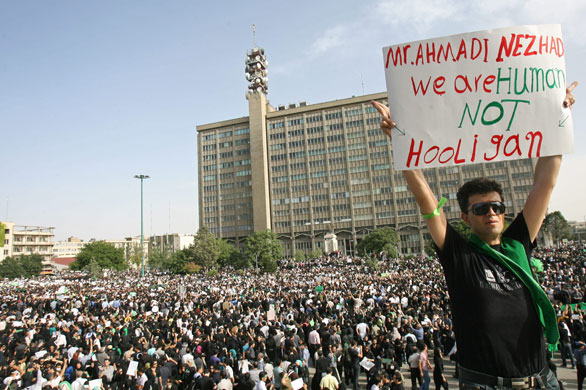
Something is going on in Iran.  The despotic regime of Mahmoud Ahamadinejad has been cracking down on dissidents and protestors over the last few months since the disputed presidential election.  Two opposition leaders were hanged yesterday.  The opposition is calling for protests on February 11th to coincide with the 31st anniversary of the Iranian Revolution.  At the same time government supporters and the Iranian Revolutionary Guard forces are planning both pro-regime activities as well as anti-opposition crackdowns in the days leading up to this event.  To add to the volatile mixture Iran’s President Mahmoud Ahamadinejad has threatened a “harsh blow against global arrogance” on the 11th.  There has been no explanation of what Ahamadinejad meant by his cryptic comments by the Iranian news service but  the Obama administration is taking them seriously by sending additional Aegis Missile ships equipped with anti-ballistic missile systems as well as Patriot air defense missiles to the Persian Gulf. To give you a glimpse of some of the confusion surrounding the current situation in Iran and in its implications for the West I have linked a number of articles from a wide variety of sources here:

http://www.guardian.co.uk/world/2010/jan/31/iran-nuclear-us-missiles-gulf

http://www.cnn.com/2010/WORLD/meast/01/31/iran.protests/index.html?section=cnn_latest

http://www.reuters.com/article/idUSTRE60U18R20100131?type=politicsNews

http://news.bbc.co.uk/2/hi/americas/8490929.stm

http://www.foxnews.com/politics/2010/02/01/missile-shield-gulf-ups-ante-iran/?test=latestnews

http://www.dailystar.com.lb/article.asp?edition_id=1&article_id=111329&categ_id=17

http://www.dailytimes.com.pk/default.asp?page=201022\story_2-2-2010_pg20_1

http://www.theaustralian.com.au/news/world/gulf-countries-accept-air-defences/story-e6frg6so-1225825224604

http://english.farsnews.com/newstext.php?nn=8811080764

http://www1.voanews.com/english/news/middle-east/Supreme-Leader-Claims-Iran-Remains-United-Against-Outside-Threat-82073702.html

http://www.rferl.org/content/Irans_Protesters_Must_Keep_Their_Eyes_On_February_11/1942248.html

http://www.opendemocracy.net/volker-perthes/iran-2010-11-four-scenarios-and-nightmare

http://en.rian.ru/world/20100129/157712614.html

http://www.rferl.org/content/Iran_Media_German_Diplomats_Involved_In_December_Riots_/1941229.html

http://www.haaretz.com/hasen/spages/1146909.html

http://www.energypublisher.com/article.asp?id=25925

http://www.presstv.ir/detail.aspx?id=116955&sectionid=3510303

http://www.google.com/hostednews/afp/article/ALeqM5hos0sGvW5l2cEN2xO2ex4fhamzIw

http://www.ynetnews.com/articles/0,7340,L3838323,00.htmlhttp://www.ynetnews.com/articles/0,7340,L-3838323,00.html

http://www.english.globalarabnetwork.com/201001284565/World-Politics/iran-morality-police-vanish-as-more-protests-loom-in-tehran.html

Massed Protests in Iran have been met by force

If you take a look at the details of these various reports there are a number of possibilities in regard to Iran, its internal political tensions and its repeated threats to US and Western interests. There are a myriad of possibilities many of which while directed outward are also directly related to the internal unrest in Iran in which a new generation who have grown up under the religious totalitarianism of the Mullah’s and men like Ahamadinejad who are convinced of the certainty of their beliefs and determined to impose them not only on their own people but their neighbors.  Ahamadinejad’s belief in the return of the 12th Mahdi to bring in a new era where the Caliphate will be established in Jerusalem is another wild card to factor into any equation.

Shahab-3 Missile test launch from mobile launcher

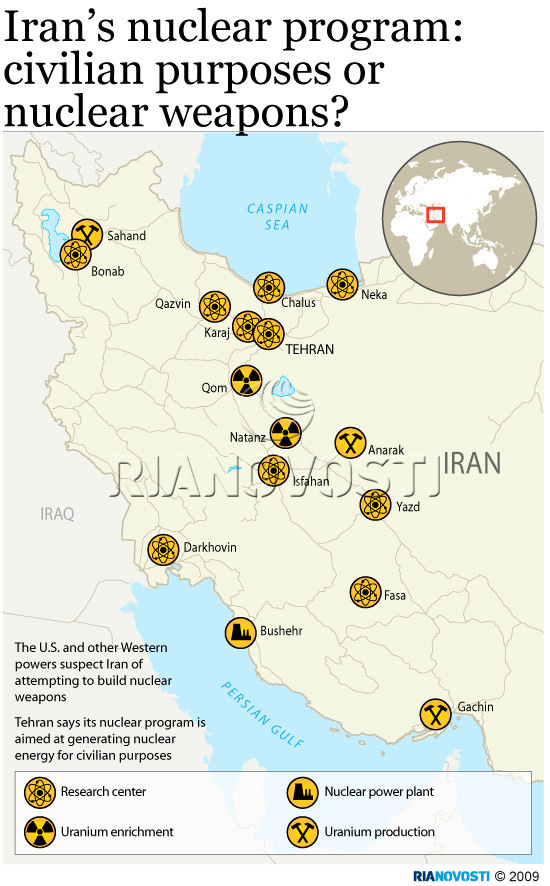
In the past year the Iranians have been increasingly more bellicose concerning their nuclear program and ballistic missile programs and have thwarted US, EU and UN initiatives to ensure that the nascent nuclear capacity is only capable of peaceful use and not capable of producing weapons grade uranium which could then be used in nuclear weapons.   They have expanded the number of centrifuges used for enriching uranium as well as continued to disperse and harden nuclear facilities against possible Israeli or US preventive strikes.  Additionally they have continued to increase their ballistic and cruise missile capabilities and the newer versions of the Shahab missile are capable of striking Western Europe.  The Revolutionary Guard forces have been actively supporting the Hezbollah terrorist group in Lebanon which in 2006 waged a successful war against Israel on the Israeli-Lebanese border.  It has continued to improve its asymmetric warfare capabilities as well as Naval and Revolutionary Guard Naval force capacity for disrupting shipping in the Straits of Hormuz through which a large percentage of the world’s oil is transported.

Iranian Missile Boat and Helicopter

Ahamadinejad’s latest remarks are ambiguous and could mean a number of things ranging from empty rhetoric designed to evoke a response from the United States or Israel up to military action.  Possible events within the continuum could be measures to destabilize Iraq where recently Iranian forces briefly occupied an Iraqi oil facility on the border near Basra before leaving when Iraq sent troops and threatened force to retake the facility.  Likewise a missile test of an upgraded or longer range Shahab could be planned, a military exercise in the Gulf or a test of a nuclear weapon which they might have succeeded in developing in their clandestine labs from previously enriched uranium.  The timing of the threat could also mean a military attack against Israel or US allies in the Persian Gulf including Kuwait, Bahrain, Qatar, the United Arab Emirates or Saudi Arabia.  Iran could in a “doomsday” strike launch a nuclear weapon (should it have an operation weapon) or chemical or biological weapons against Israel or even the rival Sunni Moslem Kingdom of Saudi Arabia, provoking a retaliatory strike which could embroil the region in a major war and might have worldwide implications. While I would think that the military attack would be a lower possibility the timing which coincides with the anniversary of the Revolution coupled with domestic unrest could mean that Ahamadinejad may feel that the benefit outweighs the risk.  It also could mean a stronger domestic crackdown on Iranian dissidents, whichever course of action the Iranians take it could make life even more interesting.

Shore based C-802 Surface to Surface Anti-Ship Missile in Iranian service

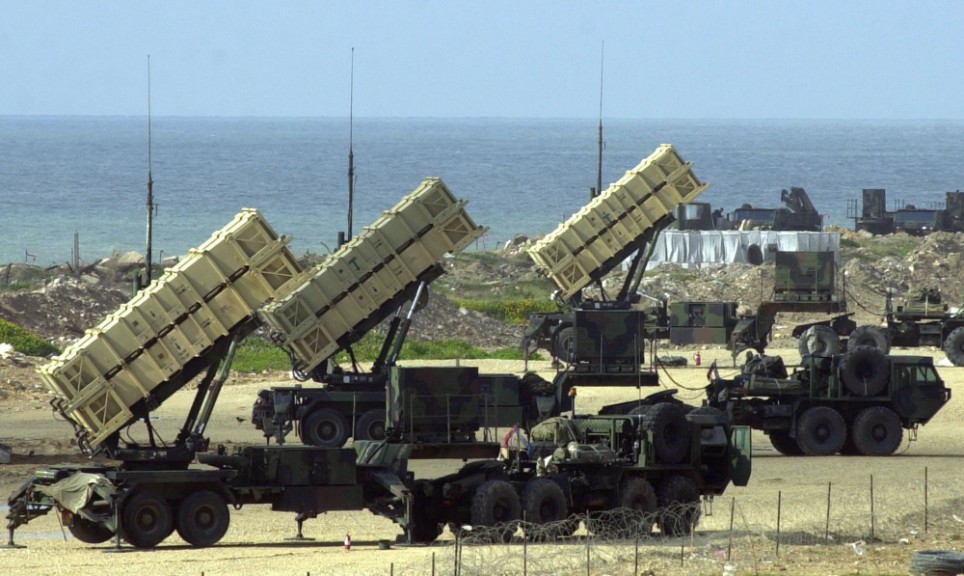
With the full spectrum of possibilities from simple rhetoric to a military strike laid out the Obama administration reportedly has sent Patriot Missile batteries to shield key Gulf allies and dispatched additional Aegis anti-ballistic missile capable ships from the US Navy to the Gulf.  Past remarks by the administration have been perceived as weak by the Iranians and the demonstration of US resolve by the dispatch of additional forces to the region may be designed to show that the Obama administration is not indecisive but capable of countering military threats to the region.

Additional ships of the Arliegh Burke Class that carry SM-3 missiles and Ant–Ballistic Missile systems have been moved into the Gulf along with Patriot Missile batteries

The administration’s move is prudent considering the potential threat.  Iran does not have the capabilities to fight a sustained war but could if fueled by the apocalyptic vision of Ahamadinejad mean that the Iranian government is willing to risk a confrontation with the United States because it perceives the Obama administration as weak.  I think that such an assumption by Ahamadinejad would be a serious mistake, however if he were to attempt a military or asymmetric-terrorist act of some kind he could create chaos until the United States and our allies eliminate his offensive capability.

Iranian Nuclear facilities are dispersed around the country and in hardened sites

Potential problems that Iran could cause the United States could include disruption of transition efforts in Iraq through military or terrorist activity as well as to cause casualties or damage US military forces in that country. Far less likely is the possibility that the Iranians could offer support to their rivals in Al Qaida and the Taliban in Afghanistan if for no other reason than to disrupt the US/NATO mission in that country. Likewise the Iranians could attempt to cause economic and diplomatic problems in the region that would adversely affect the US and world economy that could be done short of war.

To deal with all possibilities the United States must not only be militarily ready to respond to any military threat but also to be able to exercise the full spectrum of diplomatic, economic and intelligence resources of its own and our allies.

So in about a week and a half we will know what the cryptic Ahamadinejad meant by his latest outburst, hopefully there will be some clarification before then so the US and its allies in the region can coordinate an effective response.  With tensions rising and uncertainty in the air it is important for the US, Israel and the West to get this right and hopefully give the Iranian opposition time to force Ahamadinejad and his supporters in the Iranian clergy and the Revolutionary Guard from power.  There is both danger and opportunity in the coming days and one can only hope that the Iranian opposition will be successful.

Peace,

Padre Steve+

Leave a comment

Filed under Foreign Policy, Military, national security

The Anomaly of Operation Desert Storm and Its Consequences Today

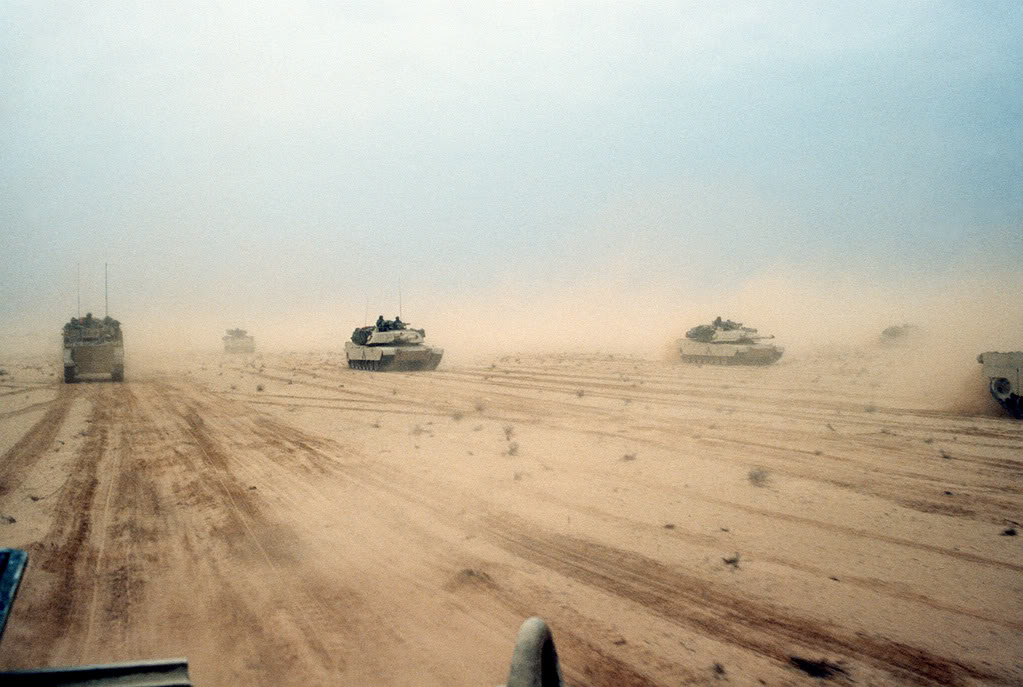
Armor Advancing During Operation Desert Storm

There are few occasions in history where an army is given exactly the scenario to which its organization, training and doctrine coalesce against an opponent that uses the template of organization and training that it has been designed to defeat.  Operation Desert Storm, the liberation of Kuwait by the United States and its coalition from Saddam Hussein’s Iraqi Army and Republican Guard was such a war. The operation was built up in the popular media to the extent that it created a false image of the cost of war and belief that wars can be won “one the cheap” because of superior technology and organization.  That belief was shattered during the Iraq insurgency which began in earnest following the occupation of Iraq following the defeat of Saddam in 2003 by a significantly smaller US force than was used to liberate Kuwait twelve years before.

Architects of Desert Storm

The superior performance of the Army in the Gulf War did not turn out to be the template of how future wars would be fought.  In the following years the US military has become embroiled in conflicts where opponents use inexpensive and often crude off the shelf technology to counter conventional US superiority in firepower and organization.

During the First Gulf War the Army was aided in that the doctrine that it developed to fight a war in Europe against the Warsaw Pact, the Airland Battle was “perhaps best suited to armored warfare in the open desert.”[i] Of course during Desert Storm this was exactly the setting that the Army would be called on to fight.  Unlike Vietnam where the Army attempted to fight an unconventional war with conventional tactics the Army had the chance to fight exactly the battle that it had trained for, against an enemy trained in the tactics and using the equipment of its former Soviet adversary.

The Army enjoyed the advantages of having “reached a high level of training and technological proficiency”[ii] against the Soviet threat. The fact that the Soviet Union and Warsaw Pact had melted down unexpectedly in 1989 and 1990 and removed any conventional threat in Europe which allowed the Army to concentrate massive amount of forces including the VII Corps from Germany to the Middle East was nothing short of incredible.  Additionally the Army had the advantages of superior weaponry and the fortuitous timing of the war before the effects of the post-Cold War drawdown were realized.

For the Army the “1980s were a golden age of military thought and debate,”[iii] and the Airland Battle concept “was greeted with enthusiasm throughout the Army.” Terms such as initiative, agility, synchronization and depth….soon became part of every officer’s vernacular.”[iv] Colonel Harry Summers who had written a critical history of the Vietnam War noted that FM 100-5, the Army’s primary manual of operations, was the “operational blueprint for Operation Desert Storm.”[v] That blueprint had a well trained and disciplined force schooled in the conduct of the Airland Battle concept enunciated in FM-100-5. David Halberstam noted that Operation Desert Storm was fought by a “professional army-a very professional army.”[vi] Seldom in the history of warfare was any army trained and equipped to fight the exact battle for which it found itself.
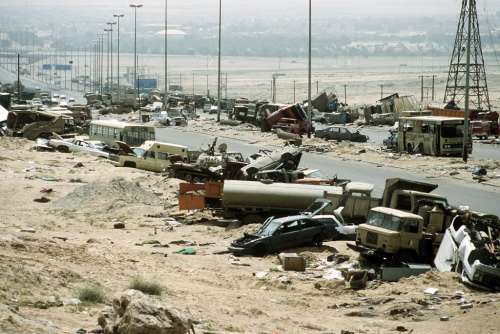
The Highway of Death

The foundation of doctrine, training, technology and organization laid in the 1980s was solid.  The Army was not only effective in the Gulf War, it was overwhelming.  This is not to say that the Army did not encounter problems.  It did, some which against a better trained and equipped force might have negatively impacts its operations. However the problems encountered did not keep it from dominating the battlefield.

The US rapidly deployed a blocking force of paratroops and Marines following the Iraqi invasion of Kuwait at the end of August.  While few in number they served as a deterrent that Saddam did not test. There was great concern that had Saddam pushed into Saudi Arabia when forces were small and lightly equipped that he might have succeeded in capturing the northeaster Saudi oil fields and production facilities.  The military leadership continually reinforced these forces first to a substantial defensive force and then with the addition of more forces a significant offensive force.  Thus when the decision was made to liberate Kuwait under the United Nations resolution the forces were there and ready.

When the war began advances in Joint warfare and C3 was evident in the effectiveness of the operations.[vii] Particular successes included the movement of VII and XVIII Airborne Corps into the desert to outflank the Iraqis in Kuwait[viii] and every actual engagement between Iraqi and American forces.  Of note was the performance of Major General Barry McCafferey’s 24th Mechanized Division,[ix] and the 2nd Armored Cavalry Regiment at 73 Easting against the Republican Guard’s Talwahkana Division.[x] Likewise the action of 2nd Brigade 1st Armored Division against the Guard’s Adnan Division at Madinah Ridge[xi] displayed the effectiveness and lethality of the Airland Battle and joint warfare concepts developed in the 1980s.

There were weaknesses and these included various aspects of command and control and fratricide[xii] brought about by the fast pace of operations and the fog of war. Likewise conflicts between General Schwartzkopf and some of his Army commanders, notably Generals Franks[xiii] and Yeosock hindered operations.  This occurred most notably in the failure to destroy the Republican Guard prior to the cessation of hostilities. This was partially was due to political considerations and faulty intelligence but was operational decision of Schwartzkopf to halt McCafferty’s  24th Mechanized Division before it could finish off Republican Guard units facing it or letting Franks complete his double encirclement of the Guard or encircle the key southern Iraqi city of  Basrah.[xiv]

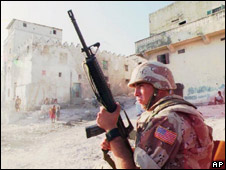
The New Face of War Somalia

Iraq

Rwanda Genocide

Deadly Large Shaped Charge IED

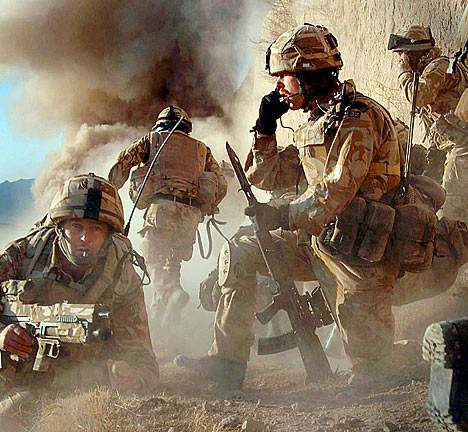
Afghanistan: Brits in Action Against Taliban Fighters

Despite the successes of Operation Desert Storm the planners failed to anticipate the end state of what would happen when hostilities had ceased.  The conditions of the cessation of hostilities were the chief contention of many against the end to the ground war at the 100 hour point. Some argue that the early end of hostilities allowed the victory to be less than it could have been.  Some even today argue that the offensive should have gone forward with the goal of overthrowing Saddam, however despite its success the Army was not prepared for an occupation nor would have the coalition supporting the US have survived an invasion and occupation of Iraq.  The actual mistakes were not in the stopping of the war, but rather the faulty conditions of the cease fire which enabled Saddam to recover the internal control of Iraq and put down attempts to revolt especially around Basra in the Shia south.  Rick Atkinson in his book Crusade notes that there were “errors would be made in establishing conditions of the ceasefire…but stopping the war was no mistake.”[xv]

While the debate about Operation Desert Storm still persists nearly 20 years after the fact the more important lesson was not learned.  That lesson was that Operation Desert Storm was not the new face of war, but rather an anomaly.  It was a war that was the swan song of the Cold War where the doctrine, technology, organization and trained to and practiced were inflicted on a less well trained and equipped version of the force that they were designed to defeat, forces which were badly deployed and already isolated by airpower even prior to the ground war. Once the ground war started the Iraqi forces in Kuwait and southern Iraq had little chance against the massive US and coalition force arrayed against it short of preemptively using the chemical and biological weapons of which Iraq had an ample supply.  It did not employ these weapons for a number of reasons, but without them Iraqi forces exposed in the open desert with no air support and cut off from much of their supply by constant air attacks were easily defeated.

In the past 20 years the United States and the west have only once been able to reprise the type of war displayed during Operation Desert Storm.  That was in the initial 2003 invasion of Iraq.  While the forces deployed were successful in defeating the Iraqi military and overthrowing Saddam Hussein they were insufficient to secure the country especially after the decision to disestablish all Iraqi police and military forces which might have assisted US forces in securing the country.  Perhaps planners forgot that German military police, police and civil servants were employed by the western allies in the period immediately after the war even during the period of “de-Nazification.”

Instead of a litany of Desert Storm like scenarios US forces as well as those of NATO and UN allies have had to deal with terrorism, insurgencies, revolutionary wars, tribal wars of genocide and wars waged by religious extremists. Despite more than a decade in dealing with these types of war, many in the military and political establishment as well as the media and public opinion believed that Desert Storm was the model for future wars. As such after the brief period of euphoria which occurred after the initial phase of Operation Iraqi Freedom the grim reality of war has stared Americans and others in the west in the face.  While the military has performed well, it has had to adjust and learn lessons about war that it wanted to avoid during and after Vietnam.  Those were the lessons of counterinsurgency, unglamorous and unexciting they were the lessons buried after Vietnam which were ignored until it was nearly too late in Iraq and possibly now too late in Afghanistan.  Desert Storm was an anomaly and one does not base the future of war on the swan song of the last war.


[i] Atkinson, Rick. Crusade: The Untold Story of the Persian Gulf War, Houghton Mifflin Company, Boston and New York 1993. p.253

[ii] Gordon, Michael R. and Trainor, Bernard E. The Generals’ War, Back Bay Books, Little Brown and Company, Boston and New York 1995. p.467

[iii] Peters, Ralph. Fighting for the Future: Will America Triumph. Stackpole Books, Mechanicsburg , PA p.xi

[iv] Ibid. Atkinson.

[v] Summers Harry G. On Strategy II: A Critical Analysis of the Gulf War, Dell Publishing a Division of Bantam Doubleday Dell Publishing Group, New York NY 1992. p.159

[vi] Halberstam, David. War in a Time of Peace: Bush, Clinton and the Generals, A Touchstone Book published by Simon and Schuster, New York 2001. p.153.  Gordon and Trainor note that the “never in the history of the Republic has a more competent and more professional military been fielded.

[vii] See Summers pp. 243-245.  Summers is very complimentary of the advances in the Joint aspects of command and control that impacted the campaign.  He notes several points at the strategic and operational levels which are complimentary of individuals including comparing General Colin Powell to General George Marshall. Gordon and Trainor writing a few years later are more critical of the “jointness” of the Americans including valid criticism of the air campaign, fire support coordination, and differences in doctrine between Marines and Army and the way the VII Corps and XVIII Corps operated based on the way that they trained and organized. Pp.471-473

[viii] Atkinson pp.309-310.  Atkinson discusses the fact that American commanders involved had seldom maneuvered units of battalion or brigade size prior to this operation.

[ix] The 24th made a great advance to the Euphrates but as Atkinson notes that it had “encountered no enemy resistance at all.” p.406

[x] See Atkinson pp. 441-448

[xi] See Atkinson pp.466-467.  In a 40minute fight the M1A1s destroyed 60 T-72s and dozens of APCs at a cost of one American KIA.  Atkinson notes that this battle like the action at 73 Easting “was waged with tactical acumen and devastating firepower….”

[xii] Ibid Atkinson pp.315-316.  Atkinson notes that there were 28 incidents with 35 killed and 72 wounded.

[xiii] Ibid. pp.405-407.  Schwartzkopf felt that Franks was not aggressive enough and that VII Corps was “sluggish” and “ceding the initiative to the Republican Guard.”  Schwatzkopf even threatened Yeosock that he would fire Franks.

[xiv] Ibid. Atkinson p.476

[xv] Ibid. p.477

Bibliography

Atkinson, Rick. Crusade: The Untold Story of the Persian Gulf War, Houghton Mifflin Company, Boston and New York 1993

Gordon, Michael R. and Trainor, Bernard E. The Generals’ War, Back Bay Books, Little Brown and Company, Boston and New York 1995

Halberstam, David. War in a Time of Peace: Bush, Clinton and the Generals, A Touchstone Book published by Simon and Schuster, New York 2001

Ralph. Fighting for the Future: Will America Triumph. Stackpole Books, Mechanicsburg , PA

Summers Harry G. On Strategy II: A Critical Analysis of the Gulf War, Dell Publishing a Division of Bantam Doubleday Dell Publishing Group, New York NY 1992.

8 Comments

Filed under Foreign Policy, History, iraq,afghanistan, Military, national security

Going to War: Reflections on My Journey to Iraq and Back- Part One

Two years ago today my assistant at EOD Group Two, RP2 Nelson Lebron and I began our Iraq adventure.  This is the first of a series of posts which will be published periodically to tell our story.  While they will not be daily posts, they will be sprinkled in on this site on a regular basis.  Hopefully they will be something that will help those who have not been in the remote parts of either Iraq or Afghanistan what it is for Navy personnel to go to war, not as ship’s company, not with their own unit, but as individual augments to other commands.  This is a different way to go to war…this is our story.

July 2nd 2007: I rolled into the parking lot for the Naval Mobilization Processing Site (NMPS) Norfolk.  As usual parking on Norfolk Naval Station was a bitch to find.  It had been a number of months since I had to make this commute having transferred from the Marine Security Force Battalion where I had served the past three years but thankfully I remembered to leave early because traffic was as gooned up as ever going down I-264, I-64 and I-564 to head into the base.  At that point I really missed my designated parking spot back at the battalion.

I looked around and finally found a spot and then after wandering around a bit found the NMPS offices.  I walked upstairs to the classroom in which we were to meet was located and found it empty, save for a couple of NMPS staff members.  I reported in my DCU’s, or Dessert Camouflage Uniform issued to me by EOD Group Two.   They are an older type uniform and unlike the Marine Pattern Digital Camouflage are not wash and wear.  I had worn them in March when I went to Jordan for the Jordanian Army/ UN Peace Operations Training Center course on Iraqi Culture, Religion, Politics and Language.  In fact until the Marines came out with their digital uniforms they were common to all of the services.  I looked around the empty classroom with every table stacked with folders filled with a butt-load of paperwork.  I found a spot, not hard to do with so many to choose from and sat down.  I took an aisle seat about three rows back and plunked my EOD issue Blackhawk backpack down, grabbed my Book of Common Prayer and did the morning office before anyone else arrived while drinking the large cup of black coffee I had gotten across the street.

Shortly thereafter others began to arrive in twos and threes, most dressed in utilities or officers in khakis.  A few Seabees had woodland BDUs on and a couple of folks wore DCUs which were obviously from previous deployments to the sandbox.  RP2 Lebron, who I will now refer to as Nelson from this point forward then showed up and we waited for the orientation and administrative stuff to start moving.  We surveyed the situation and looking upon our fellow sailors realized that this would be a different deployment.

What we noticed as we talked the varying ranks and uniforms really jumped out at both of us.  Most of our fellow sailors had never been deployed even in peacetime in such a manner.  Most of those who had deployed had done so on ship with the exception of the Seabees and maybe a Corpsman or two.  They spanned the spectrum of age, rank and rating.  There were the officers, mainly Lieutenants, Lieutenant Commanders and Commanders.  We also had one Captain.  These officers were Line Officers including Surface Warfare Officers and Aviators as well as a number of Doctors and Medical Service Corps Officers and some other Staff Corps officers.  The enlisted likewise spanned the spectrum of the Navy. Fire Control Technicians, Operations Specialists, Gunners Mates, Boatswains, Yeomen and Storekeepers, Intelligence Specialists, Corpsmen, and even Culinary Specialists.  They had qualifications as Submariners, Enlisted Surface Warfare, Aviation Warfare among others.  Some like me and Nelson had volunteered, others were voluntold.  The one that brought us all together was that we were US Navy Sailors and going to war, not with the shipmates that we had served with, but with strangers, well except for me and Nelson.

Now Nelson and I have deployed a lot and had served together in Okinawa and at EOD where I did a “drug deal” with his chaplain and the detailer to get him to EOD.  The guy is a hero, in the year and a half prior to our deployment he had been deployed to Afghanistan where he as an E-5 was awarded the Defense Meritorious Service Medal.  On his way back from Afghanistan he was pulled off of his flight to the states and sent back to his old ship, the USS Trenton to assist in the evacuation of Americans and others from Beirut. I think that he has done about nine or ten deployments now.  Unfortunately this has actually hurt his career since the biggest part of making rank as a Navy enlisted man is to do well on the advancement exam.  Unfortunately there were many times when he was forbidden to test because he was deployed, and when eventually allowed to test during a deployment was not provided the appropriate materials to study.  Even if he had them it would have been difficult since we were always on the road, just as he was in his last four or five deployments.

Nelson is a NY Rican and both a New York Golden Gloves boxing champ, a high school valedictorian, a full contact  kick boxer, martial artist, MMA fighter and has fought on Team USA and won last year’s Arnold Schwarzenegger Classic.   He is the real deal.  Proficient in many weapons systems from his service with the 3rd Recon Battalion, 4th Marine Regiment and Naval Special Warfare he is the ideal body guard for any Chaplain going to do the job we had been given to do, to work with Marine and Army advisers supporting two Iraqi Divisions.  Our mission would evolve and expand once we got there, but we didn’t know that yet.

As people filed in a Chief Petty Officer brought us to attention, the processing site Commanding Officer came in and spoke with us and then led us in the Sailors Creed.  With that we set down and began to get our orientation to how our mobilization, training and movement would unfold as we got ready to go to Iraq.

2 Comments

Filed under iraq,afghanistan, Military, Tour in Iraq