Tag Archives: us army

What Makes Padre Steve Tick: My Vocation, Life, Love and Baseball

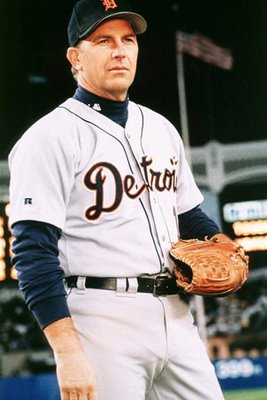
I’ve always related to the characters in Kevin Costner’s baseball films, Bull Durham, Field of Dreams and For the Love of the Game. The main characters in each of the films touch me each in different way.  Crash Davis and Billy Chapel are players at the end of their careers.  Davis is a career Minor Leagues journeyman who “played 21 days in the show.” and Chapel is other a future Hall of Famer at the close of a final season filled with disappointment.

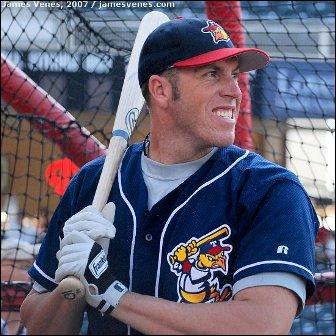
The character of Crash Davis strikes a particular chord in me.  Crash Davisis a journeyman minor league catcher with the dubious distinction of having the most minor league home runs, 227 to be exact. The real life Minor League Home Run King is Mike Hessman who played for 15 years in the Minors with a few trips to the Majors and the U. S. Olympic Baseball Team; he had 329 home runs and is now playing in Japan) I have seen Hessman belt numerous home runs and the man is a beast, but I digress…

Davis also played “21 days in the show.” In the film Davis is a consummate professional. He loves and respects the game and actually cares about the development of the young guys, even if they try his patience.  His dealings with Ebby Calvin “Nuke” LaLooche played by Tim Robbins are case in point.  Crash is demoted by the big team from his AAA contract to the single “A” Durham Bulls, back when Durham was in the Carolina League in order to help the team develop the young bonus baby.  Crash is not happy with the job, he’s proud, and threatens to leave the team, only to ask his new manager what time batting practice is.

He takes the new assignment on with a mixture of skill and humor in a manner that benefits not only the young pitcher but motivates the rest of the team.  It does not matter that he is in the minor leagues as he still plays his heart out and spends his time teaching the next generation.  He even gets thrown out of games if it helps motivate his team.  Likewise he is not hesitant to let his young charge learn the hard way when young “Nuke” decides to ignore his advice.  The thing that Crash has the hardest time in dealing with his young charge is that he feels that “Nuke” doesn’t respect the game. Respect matters to a professional.

Mike Hessman

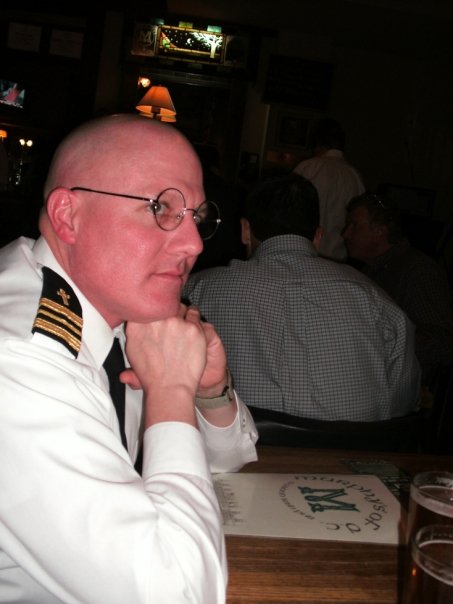
The comparison fits for me in more than one way. In a sense my life has been like a journeyman ball player.  I started my military career in the Army almost 30 years ago.  I come from a different generation of military than the vast majority of the Sailors and Marines that I serve with today.  I am “old school” in some ways but have learned to adapt, just as the men who were the old soldiers when I was a young enlisted man and officer. My career has been quite diverse and I have not always done the same job on the same team or at the same level.  I think this is the mark of a true journeyman, to keep playing because you love the game. Mike Hessman is doing that in Japan.

To continue the baseball journeyman analogy I played one position for a number of years and then so to speak left the big team to train for a new position while playing in the minors.  I left my active career as a Medical Service Corps Captain and transferred to the National Guard to attend seminary. When I graduated from seminary I became a National Guard and Reserve Chaplain.  I did not go on active duty. Back then the reserves were kind of like the minor leagues. Being a Reserve component Chaplain while doing my hospital residency and first hospital chaplain jobs it was like working my way up through the minors.  When I was promoted to the rank of Major in the Army Reserve it was like moving up to AAA ball.  When I got mobilized to support the Bosnia operation it was like getting called up during the regular season by the Major League team.  When that time ended and I returned to the reserves it was like being sent back to the minors.  I honestly thought that I would spend the rest of my career there, maybe getting called up for brief periods of time but knowing that my career was destined to end in the minor leagues.

That all changed when I was given a chance to go into the Navy.  I took a reduction in rank and came in with no time in grade. This meant that I was starting from scratch with a new team.  I had all of my experience but I was starting over.  It was like when a player gets traded or is sent back to the Minors by one team and has his contract picked up by another team in a different league in mid season. His slate is clear; it is a new start with the new team. That is what happened to me.

The analogy also fits because I do not like it when I feel that people do not respect “the game.”  By game of course I mean the vocation of serving as a Military Chaplain as a calling as well as their attitude toward the organization in which they serve. I have little tolerance for clergyman or women who enter the military with better education and natural or God given abilities than me who do not respect the institution, those in it and are out to push their agenda. This is how Crash feels about “Nuke” and I love this exchange from the film:

Ebby Calvin LaLoosh: How come you don’t like me?
Crash Davis: Because you don’t respect yourself, which is your problem. But you don’t respect the game, and that’s my problem. You got a gift.
Ebby Calvin LaLoosh: I got a what?
Crash Davis: You got a gift. When you were a baby, the Gods reached down and turned your right arm into a thunderbolt. You got a Hall-of-Fame arm, but you’re pissing it away.
Ebby Calvin LaLoosh: I ain’t pissing nothing away. I got a Porsche already; a 911 with a quadraphonic Blaupunkt.
Crash Davis: Christ, you don’t need a quadraphonic Blaupunkt! What you need is a curveball! In the show, everyone can hit heat.
Ebby Calvin LaLoosh: Well, how would you know? YOU been in the majors?
Crash Davis: Yeah, I’ve been in the majors.

Looking at Billy Chapel, the central character in For the Love of the Game I also find some connection though not quite the same as Crash Davis.  Billy has played the game a long time for the same team, 19 years. He came back from what should have been a career ending injury.  In the film and in the novel he pitches in what for his team is a meaningless last game of the season against the playoff bound Yankees in New York.  The story focuses on this last game, Billy’s relationships with current and former teammates as well as his long term relationship with the team’s owner who is selling the team.  The new management wants to deal Billy to another team in the off season and is asking him if he wants to continue in baseball.

While the game is going on, Chapel knows this is the end and spends a lot of time reflecting on his life, his parents, his World Series appearances and friendships. He thinks about things that have gone well and things that he regrets. He especially regrets his relationship with the woman he loves but has messed up.  While his mind visits these subjects he tries to maintain his focus on the game and block out the thoughts as well as the near hatred of the Yankee fans. “Clear the mechanism….”

The thing that hits me the most is relationship between Billy Chapel and Jane Aubrey played by Kelly Preston.  I have done a lot in my military career but at the same time have missed a lot of time with Judy.  From 1996-2001 we spent most of 40 of 60 months apart. Since September 11th 2001 we have spent many more months apart. We have only spent 12 of 28 wedding anniversaries together not to mention birthdays and other holidays such as Christmas and Thanksgiving.  So many times Judy has missed the high points of my career and I have missed out on being with her to celebrate her achievements and to be there when times were hard.  But as anyone who serves a full career in the military knows it goes with the game. Chapel’s words to Jane Aubrey played by Kelly Preston after his perfect game strike a chord with me, I don’t ever think that I have said that I didn’t need Judy, but I spent a lot of my life not needing anybody, so she probably thought at times that I didn’t need her. Thus Chapel’s words to Jane do get me and when I first saw the movie put tears in my eyes:

“I used to believe, I still do, that if you give something your all it doesn’t matter if you win or lose, as long as you’ve risked everything put everything out there. And I’ve done that. I did it my entire life. I did it with the game. But I never did it with you, I never gave you that. And I’m sorry. I know I’m on really thin ice but, when you said I didn’t need you… well last night should’ve been the biggest night of my life, and it wasn’t. It wasn’t because you weren’t there. So I just wanted to tell you, not to change your mind or keep you from going, but just so you know, that I know, that I do need you. “

The second thing that really gets me is where the owner tells Billy Chapel that he is selling the team and tells Chapel that “the game stinks.”  I’ve seen a lot of people throughout my career with that kind of attitude about the Church, the military, their vocation and life in general that I want to scream.  Yes there is much that is not perfect in life and the institutions that we serve, but neither life nor serving God one this country stinks. Chapel’s words back to him echo how I feel about so much of life.

“The game doesn’t stink, Mr. Wheeler. It’s a great game.” After all these years I still love the game, my vocation, my service as a chaplain in the military and the young people that I get to work with.

Since coming back from Iraq there have been plenty of times that I have felt like I had nothing left to give. In the times that I was really struggling I made my transfer to Naval Medical Center Portsmouth where I ran into a number of guys who were like Chapel’s catcher Gus Sinski (played by John C. Reilly) and let me know that they were not only with me but were going to take care of me:

Billy Chapel: I don’t know if I have anything left.
Gus Sinski: You just throw whatever you got, whatever’s left. The boys are all here for you. We’re gonna be awesome for you right now!

There are times in life where we think that we have nothing left and when we have people that challenge us and stand with us even painful situations where we don’t think that we don’t think we have anything left to give.

Finally there is the announcer, the legendary Vin Scully calling the game and realizes that something special is going on:

“And you know Steve you get the feeling that Billy Chapel isn’t pitching against left handers, he isn’t pitching against pinch hitters, he isn’t pitching against the Yankees. He’s pitching against time. He’s pitching against the future, against age, and even when you think about his career, against ending. And tonight I think he might be able to use that aching old arm one more time to push the sun back up in the sky and give us one more day of summer.”

Now I know that I am quite as far down the road career wise as Billy Chapel in the movie, but I do know that I am closer to the end of my military career than I was even a couple of years ago, but the thought that I could be on the last few years does cross my mind a lot.

I guess that there are three major things that I want to accomplish before the end of my military career. I want to take care of all of the people that God gives me and puts in my life.  Second is to help coach the young men and women that I meet along the way, especially clergy and chaplains as well as colleagues and friends, especially when they hit difficult patches.  In one scene Billy Chapel talks to a young player named Mickey Hart (played by Greer Barnes) who made a boneheaded play on a fly ball against the “Green Monster” in Boston.  The young man knows that his flub will be all over the news and chapel advises him:  There’s a bunch of cameras out there right now waiting to make a joke of this, Mick. So you can either stop, give them the sound bite, do the dance. Or you can hold your head up and walk by, and the next time we’re in Boston, we’ll go out there and work the wall together. Don’t help them make a joke out of you.” When I see young guys get in trouble or make mistakes I want to help them get back on their feet, especially the young chaplains and medical professionals that come into my life.

What is funny is that I am as old or older than most of our young Sailors and Marines parents.   I’ve been in the military since before many of the Sailors and Marines were born.  In a sense I’m a Crash Davis and Billy Chapel kind of guy. I want to finish well and have my last season be my best, to go out like Mike Mussina when he retired from the Yankees.

My career isn’t done yet. I should have a few more good years left. I’ll be promoted on September 1st to Commander in the Navy.

I love both films and characters and find a new connection every time that I watch them. I think that it is important when we have lived the often disconnected military life that we find things that help connect us to the people closest to us, those who have often have had to endure our choice of vocation.  Somehow in Her grace the Deity Herself allowed me to find this in baseball and somehow relate it to the rest of my life.  After all, it is for the Love of the Game.

Peace, Steve+

4 Comments

Filed under Baseball, film, Military, Pastoral Care, philosophy, sports and life

Pinning on the Gold Bars: 28 Years Later

On June 19th 1983 I was sworn in as a Second Lieutenant in the United States Army at the University of California Los Angeles.  I was a history major in college and had actually completed my degree the year prior and played around with Masters level classes as I took my last year of ROTC. I was commissioned into the Medical Service Corps and would report for active duty 22 days later at Fort Sam Houston Texas where I would complete the Army Medical Department Officer Basic Course for Medical Service Corps officers, go on to Fort Know Kentucky for the Junior Officer’s Maintenance Course and then in January 1984 head to Germany where I was assigned to the 557th Medical Company Ambulance in a little Kasserne on the Nahe River called Neubrücke.  The rest is history.

Looking back at what the world was like in 1983 is rather interesting. Ronald Reagan was President of the United States and George Herbert Walker Bush his Vice President. Thomas “Tip” O’Neill was Speaker of the House.  The internet and the TCP/IP was beginning to take flight as a program of the Department of Defense, Sally Ride had just become the first female Astronaut and the United States sent the Marines into Lebanon as part as a peacekeeping force.  The Soviets were deeply embroiled in Afghanistan while Jedi returned, destroyed the new Death Star, killed the Emperor and Darth Vader while redeeming Anakin Skywalker.

The Cold War was reaching its zenith as the United States using its great economic power built up its military and developed technologies that the Soviets went broke trying to keep up with.

We still wore Olive Green fatigues; the BDUs were just being introduced and the Army still worn Greens sans jaunty Black Beret.

The Billboard Top Singles were led by Michael Jackson who released Billie Jean http://www.youtube.com/watch?v=aBIfLxi5dLo, Culture Club with Karma Chameleon http://www.youtube.com/watch?v=JmcA9LIIXWw, Irene Cara joined in with Flashdance What a Feeling http://www.youtube.com/watch?v=ILWSp0m9G2U, David Bowie came out with Let’s Dance http://www.youtube.com/watch?v=OyVjdQXNs9sand the Police had Every Breath You Take http://www.youtube.com/watch?v=OMOGaugKpzs.

The Baltimore Orioles won the 1983 World Series taking down the Philadelphia Phillies in 5 games, Rick Dempsey was the MVP hitting .385 in the series and having a .923 slugging percentage. Dempsey who played across 4 decades as a catcher only hit .233 for his career.  Cal Ripken Jr. made the final putout of the series which was the last that the Orioles have won since then.  In the NFL the Washington Redskins defeated the Miami Dolphins in the Super Bowl. Larry Nelson edged out Tom Watson in the PGA U.S. Open while Jimmy Conners won the U.S Open Men’s Singles championship.

Terrorism, nuclear crises, political scandals and Tsunami in Japan were all part in the news.  AIDS was rearing its ugly head and by 1987 I was working with AIDS patients and dealing with personnel policy for HIV infected Soldiers.

Since that day I can only quote Jerry Garcia of the Grateful Dead that my life and career has been “a long strange trip.” I continue to serve in the military only having switched services to the Navy and going from being in the Medical Service Corps where I was a platoon leader, company XO and company commander as well as Brigade Adjutant to being a Chaplain.

Back in 1983 I had no intention of going into the ministry but somehow the Deity somehow worked that out much to my surprise.

Finally a mere six days after being commissioned I would marry the love of my life Judy Keiser and well somehow she has put up with me 28 years and hasn’t killed me yet, not that she didn’t want to a few times. Now we deal with a geographic separation due to my assignment after missing far more wedding anniversaries and birthdays than we have been together in our 28 year marriage.

Anyway, the future is still to be written and this long strange trip promises to go on. As Captain Kirk said in Star Trek VI “People think the future means the end of history, well, we haven’t run out of history just yet.” I don’t think that I have either.

Peace

Padre Steve+

3 Comments

Filed under Baseball, Batlimore Orioles, film, Military, movies, music

Why History Matters: The Disastrous Effects of Long Insurgency Campaigns on the Nations that Wage them and the Armies that Fight Them

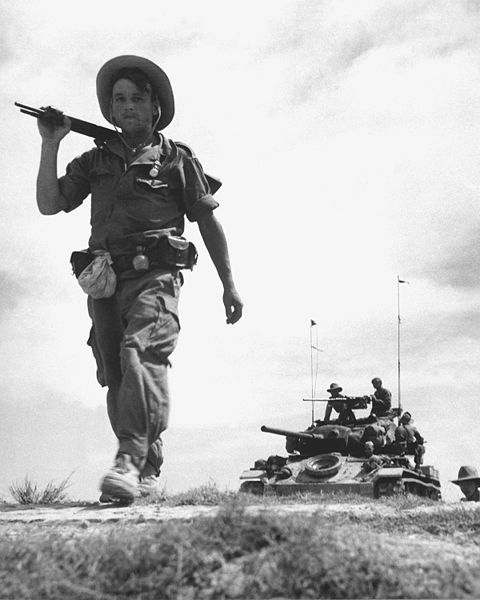
French Mobile Group in Indochina

“Any future defense secretary who advises the president to again send a big American land army into Asia or into the Middle East or Africa should ‘have his head examined,’ as General [Douglas] MacArthur so delicately put it.” Secretary of Defense Robert Gates

The effects of the wars Indo-China, Algeria and Vietnam on the French and American military organizations internally and in relationship to their nations piqued my interest in 2005. The wars in Iraq and Afghanistan forced me to start asking the question of what short and long term effect that these wars might have on the U.S. military. As such I wondered what historical precedent that there was for the question. My interest was furthered by my deployment with Marine and Army advisors to Iraqi Army and Security forces in 2007-2008. My search led to the French experiences in Indo-China and Algeria and the American experience in Vietnam. Recently with the Iraq war winding down and ongoing war in Afghanistan which has gone from apparent victory to mounting concern that we are losing the war in Afghanistan as Taliban and Al Qaida have regained momentum amid widespread corruption by the Afghan government and weakness of NATO forces.
The counterinsurgency campaigns conducted by the French and American militaries in Vietnam and Algeria had deep and long lasting effects on them as did the Soviet war in Afghanistan. The effects included developments in organization and tactics, relationship of the military to the government and people, and sociological changes. The effects were tumultuous and often corrosive. The French Army in Algeria revolted against the government. The US Army, scarred by Vietnam went through a crisis of leadership and confidence which eventually resulted in end of the draft and formation the all volunteer military. The Soviet not only lost their war but they saw their country collapse and the military with it. The effects of the Iraq and Afghanistan wars are yet unknown but could result in similar situations to the militaries and governments involved.
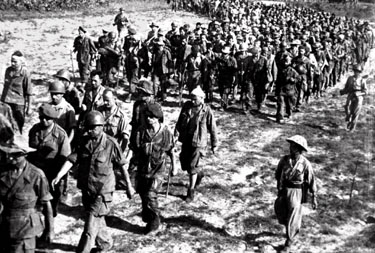
French Surrender at Dien Bien Phu

There is a wealth of data regarding these wars. There are several types of materials. The accounts of soldiers, diplomats and reporters who experienced these events contained in memoirs and diaries. The best include David Hackworth’s About Face and Steel My Soldiers Hearts; and General Harold Moore’s We Were Soldiers Once… and Young. French works include Jules Roy’s The Battle of Dien Bien Phu and General Paul Aussaresses’ The Battle of the Casbah. There are innumerable popular accounts written by NCOs and junior officers. These accounts may contain a wealth of information, but are limited by a number of factors. First, the authors, veterans of the wars, only saw part of the overall picture and first-hand experience in war can skew a writer’s objectivity. Those who have been through the trauma of war interpret war through their own experience. Physical and psychological wounds can have a major impact on the interpretation of these writers as can their experience and political ideology. Finally few of these writers are trained historians. Despite this they can be a valuable resource for the historian.

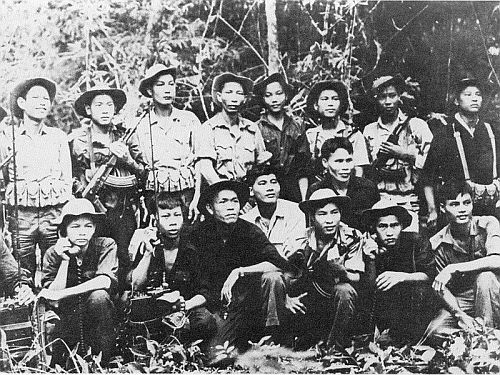
Viet Minh Main Force Soldiers

Another source is found in the official histories written by the military forces involved in the wars. Often these incorporate unit histories and individual narratives and analyze specific battles and the wider campaigns, but do little in regard to broader conditions that affected operations. While a good source, many are not as critical of their institutions as they should be.

Histories by trained historians and journalists provide another view. The most insightful of the journalist accounts include Bernard Fall’ Street Without Joy and The Siege of Dien Bien Phu: Hell in a Very Small Place. A limitation of all of these is that they are often heavily influenced by the political and societal events. This means that earlier accounts are more likely to be reactive and judgmental versus critical and balanced. Later accounts have the benefit of access to the opposing side and documents not available to earlier writers. Alistair Horn in A Savage War of Peace provides one of the most informative and balanced accounts of the war in Algeria. Martin Winslow does the same regarding Dien Bien Phu in The Last Valley.
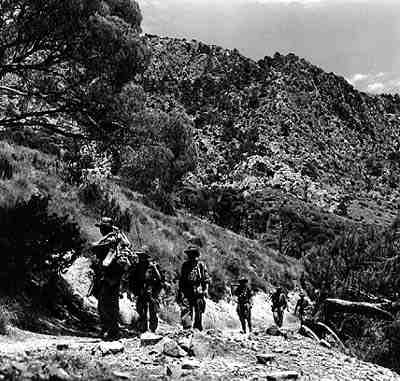
Foreign Legion in Algeria

Another source is the writings of participants who critically examine their participation in the wars. Many of these, French and American provide insights into the minds of leaders who are reflective and critically examine what happened to their military institutions in these wars. The best of these is French Colonel David Galula whose books Pacification in Algeria 1956-1958 and Counterinsurgency Warfare: Theory and Practice provide first-hand accounts of the subject combined with critical reflection. Galula’s works have been important to John Nagl, General David Petreus and others who helped write the U.S. Army and Marine Corps Counterinsurgency manual. Andrew Krepinevich in The Army and Vietnam provides a critical analysis of the U.S. Army in Vietnam. Other sources, both online and print, such as RAND, provide excellent analysis of selected topics within the scope of this essay, especially COIN.

Battles in the Streets of Algiers

The ability to dispassionately and critically examine and evaluate these sources over a period of several years was and integrate them with my own experience has been a critical to me. It has changed the way that I look at sources, and caused me to be much more aware of bias, the limitations of sources and the need to have a multiplicity of sources and points of view and to be suspicious of contemporary reports and accounts of the war in Afghanistan regardless of the source.

The conflicts in French Indo-China, Algeria and Vietnam had major effects on the French and American military institutions. These effects can be classified in a number of ways. First, the manner in which each military waged war, including tactics employed and use and development of weapons systems was changed. The use of airpower, especially helicopters and use of riverine forces provided an added dimension of battlefield mobility but did not bring victory. As John Shy and Thomas Collier noted regarding the French in Indo-China: “French mobility and firepower could take them almost anywhere in Vietnam, but they could not stay, and could show only wasted resources and time for their efforts.”[1]

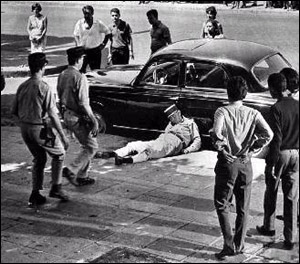
Assassination and Terrorism in Algiers

The use of intelligence and psychological warfare, including the use of torture became common practice in both the French and American armies. The wars had an effect on the institutional culture of these armed services; neither completely embraced the idea of counterinsurgency and for the most part fought conventionally. Galula notes how the “legacy of conventional thinking” slowed the implementation of proper counterinsurgency tactics even after most commanders learned that “the population was the objective.”[2] Krepinevich notes that “any changes that might have come about through the service’s experience in Vietnam were effectively short-circuited by Army goals and policies.”[3] Finally the wars had a chilling effect on the relationship between the both militaries and the state, veterans from each nation often felt betrayed or disconnected from their country and people. Unfortunately instances of all of these have occurred or can be seen in the current wars in Iraq and Afghanistan.

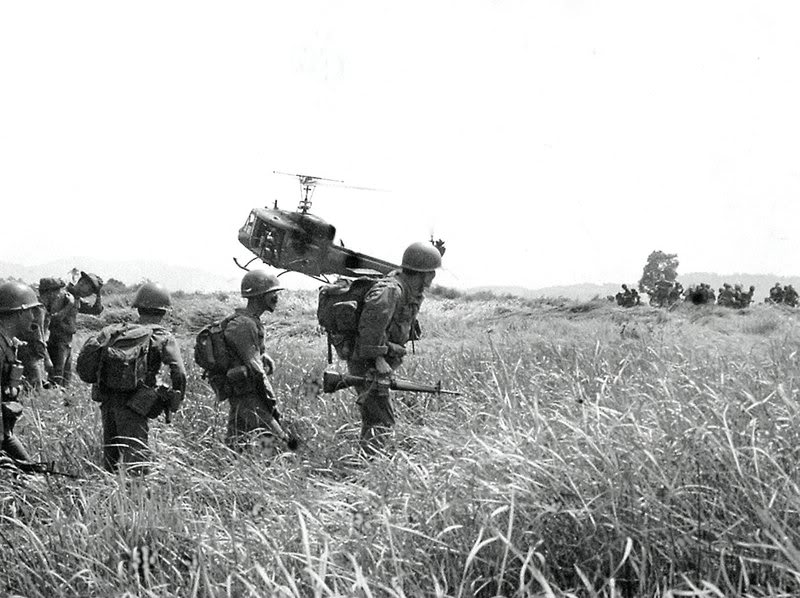
US Army in Vietnam

The French Army had the misfortune of fighting two major insurgencies back to back. The French military was handicapped even before it went into these wars. The Army came out of World War II defeated by the Germans, divided by loyalties to Vichy or one of the Free French factions. They were humiliated by the Japanese in Indo-China, while in Algeria France’s crushing defeat was devastating. “Muslim minds, particularly sensitive to prestige and baraka, the humiliation made a deep impression.”[4] French society was as divided as the Army; the economy in shambles, the government weak and divided. The Viet-Minh had prepared well making use of time and training to get ready for war. “Once full-scale hostilities broke out, the French, for budgetary and political reasons could not immediately make the large scale effort to contain the rebellion in the confines of small-scale warfare.”[5]

Paras of the 1st Colonial Parachute Regiment jump in Algeria

In both Indo-China and Algeria the French attempted to fight the budding insurgencies in a conventional manner. This was particularly disastrous in Indo-China when on a number of occasions battalion and regimental combat team sized elements were annihilated by Viet-Minh regulars. Between October 1st and 17th 1950 every French garrison along the Chinese border was over-run. The French lost over 6000 troops and enough equipment to outfit “a whole additional Viet-Minh division.” It was their worst colonial defeat since Montcalm at Quebec.[6] In Algeria when the fight began in earnest France’s “ponderous ponderous N.A.T.O forces found themselves at an impossible disadvantage,”[7] unable to have any influence off the main roads.

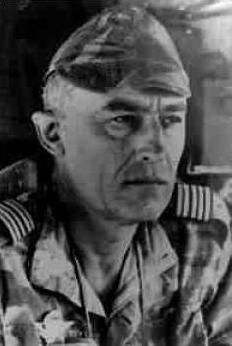
Marcel Bigard: One of the most effective French commanders in Indochina and Algeria

In Vietnam the French did not absorb the lessons of fighting a well established insurgent force. French forces hoped to draw the Viet-Minh main forces into battles of attrition where their superior firepower could be brought to bear. Such was the case at Na San in December 1952 where the French established an “Air ground base” deep in Viet-Minh territory to draw Giap’s forces into open battle. This worked, but just barely. General Giap, short of artillery and not planning on a long battle frittered away his troops in mass charges. However, the French, because of Na Son assumed they had found the key to victory. In their embrace of the “air ground base concept, French staff officers were following an intellectual tradition that had long been prone to seduction by elegant theories.”[8] The result was the disaster at Dien Bien Phu the following year. The destruction of the elite Group-mobile 100 near Pleiku in 1954 was the coup de grace. In Indo-China the French made limited use of helicopters, used paratroops widely, and developed riverine forces. One thing they were critically short of was significant tactical air support.[9]

Roger Trinquier helped develop tactics in Indochina which helped turn the tide in Algeria, until the French Government ended the war leaving their soldiers to feel betrayed

The most inventive French creation in Indochina was the GCMA/GMI forces composed of mountain tribesmen led by French NCOs and Junior Officers. They were designed to provide “permanent guerilla groups rooted in remote areas” to harass and interdict Viet-Minh forces.[10] Trinquier noted that at the time of the Dien Bien Phu defeat that these forces had reached over 20,000 trained and equipped maquis in the Upper Region of Tonkin and Laos. These forces achieved their greatest success retaking Lao Cai and Lai Chau May 1954 as Dien Bien Phu fell.[11] Trinquier stated that “the sudden cessation of hostilities prevented us from exploiting our opportunities in depth.”[12] The GMI units and their French leaders were abandoned fighting on for years after the defeat. One account noted a French NCO two years after the defeat cursing an aircraft patrolling the border “for not dropping them ammunition so they could die like men.”[13] In the end the French left Indo-China and Giap remarked to Jules Roy in 1963 “If you were defeated, you were defeated by yourselves.”[14]
Algeria was different being part of Metropolitan France; there the French had support of European settlers, the pieds-noir. Many French soldiers had come directly from Indo-China. There French made better adaptations to local conditions, and realized that they had to win the population and isolate the insurgents from it and outside support. As Galula said, victory is the destruction of the insurgent’s political and military structures, plus “the permanent isolation from the population, not forced upon the population, but by and with the population.”[15] The lessons learned by the French in both Algerian and Indo-China were lost upon the Americans.

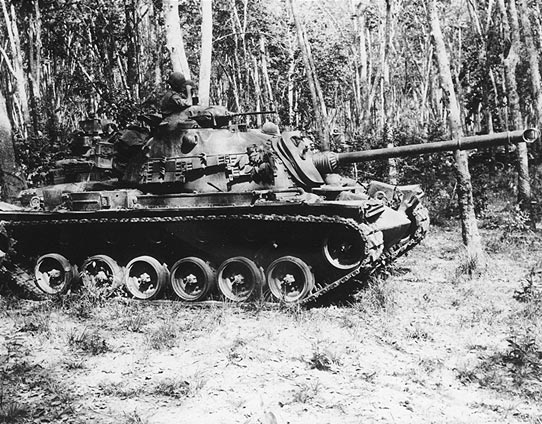
US Armored Cavalry in Vietnam

The United States military, especially the Army approached the Vietnam War with a conventional mindset, referred to as the “Army concept.” [16] It not only approached the war in this manner, but it trained and organized the South Vietnamese forces, ARVN into the American model. Americans re-organized ARVN into divisions “based upon the U.S. divisional force structure.”[17] Due to the imposition of an American template and organizational structure upon it, ARVN was not structured appropriately for the threat that it faced.”[18] The results were as to be expected. Large numbers of American troops poured in taking the lead against the North Vietnamese and Viet Cong . The American method of counterinsurgency was costly. It was “almost a purely military approach”[19] which ignored political and social realities on the ground. Instead of focusing on protecting the Vietnamese people and denying the Communists a safe haven the Army in particular believed that massive firepower was the best means to be “utilized by the Army to achieve the desired end of the attrition strategy-the body count.”[20] In the end the American defeat was a “failure of understanding and imagination.”[21] The one shining success was the Marine Corps experimentation with “Combined Action Program” platoons which lived in the villages with militia for long periods of time. This program produced great results “in eliminating local guerillas”[22] but was killed by the Army.
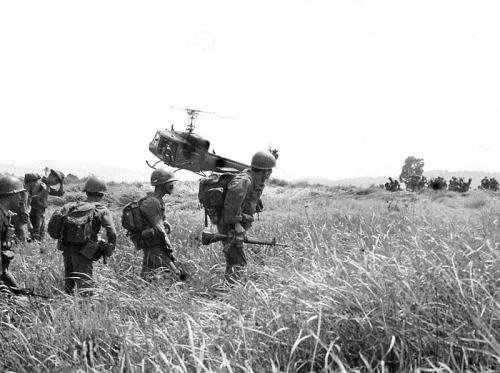
US and ARVN Soldiers in Joint Operation

These wars tore the heart out French and American armies. For the French the defeats inflicted a terrible toll. In Indo-China many French career soldiers felt that the government’s “lack of interest in the fate of both thousands of missing French prisoners and loyal North Vietnamese…as dishonorable.”[23] Divisions arose between those who served and those who remained in France or Germany and created bitter enmity between soldiers. France would endure a military coup which involved many who had fought in Vietnam and Algeria. Having militarily won that war, were turned into what Jean Lartenguy called The Centurions had been turned into liars.”[24] They were forced to abandon those who they had fought for and following the mutiny, tried, imprisoned, exiled or disgraced. Colonial troops who remained loyal to France were left without homes in their “independent” nations. They saw Dien Bien Phu as the defining moment. “They responded with that terrible cry of pain which pretends to free a man from his sworn duty, and promises such chaos to come: ‘Nous sommes trahis!’-‘We are betrayed.’”[25]
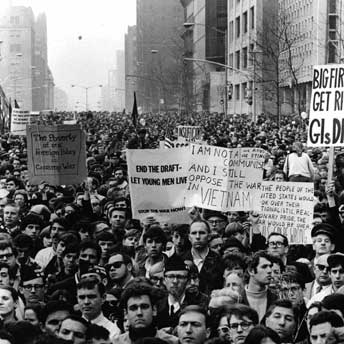
War Protests in the United States 

The U.S. Army left Vietnam and returned to a country deeply divided by the war. Vietnam veterans remained ostracized by the society until the 1980s. As Harold Moore recounts “in our time battles were forgotten, our sacrifices were discounted, and both our sanity and suitability for life in polite American society were publically questioned.” [26] The Army endured a massive reorganization that resulted in the formation of the All-Volunteer force, which would redeem itself and emerge from the ashes in the Gulf War.
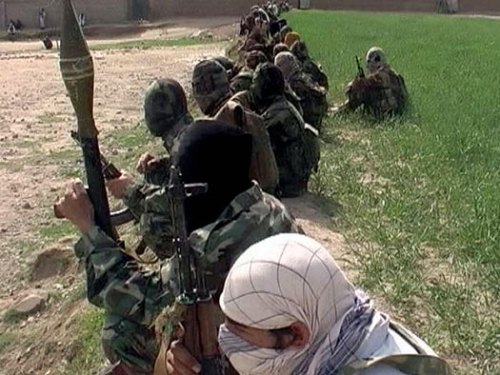
Taliban in Afghanistan

The Americans would not learn the lessons of revolutionary warfare and counterinsurgency until forced to do so in Iraq in 2004-2007. These lessons however were not applied to Afghanistan and the Taliban which seemed to have been defeated have regained the initiative, policy is being debated amid discord in the west and there are reports of American and NATO forces becoming discouraged by the course of the war and concern that their efforts will be in vain. This is a dangerous situation to be in and if we learn from anything from our own history as well as that of foreign military forces in Afghanistan we need to be very careful in implementing strategy to get whatever we do right.

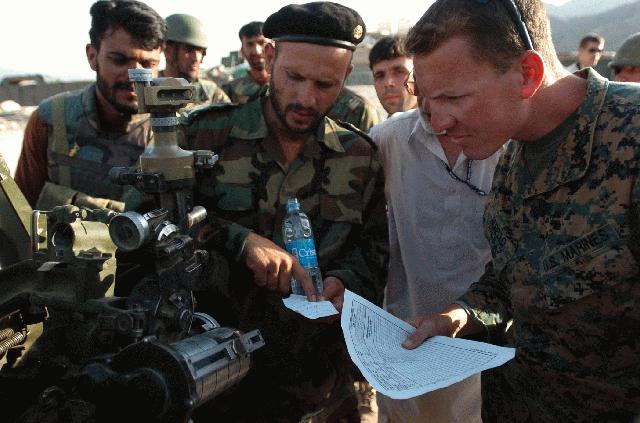
US Advisers with Afghanistan National Army Troops

The greatest success of the war was finally killing the leader of Al Qaeda, Osama Bin Laden at his Pakistani hide-out. That did not occur in Afghanistan and was the result of smart work by the CIA and other American intelligence services and the superb conduct of the mission by Navy SEAL Team Six. It was not the product of our costly counter-insurgency and nation building campaign in Afghanistan. There are many professional think tank “experts” that now urge continuing the Afghan mission indefinitely despite its massive cost and questionable strategic value. The costs of the war which are over 2 billion dollars a week are staggering with little to be shown from the hundreds of billions already spent in Afghanistan, much of which is spent on projects where corrupt Afghan government officials and tribal leaders are the only ones to benefit. Likewise the long term health of the military is imperiled. The money that should go to modernizing the force and replacing equipment worn out by war as well as the enormous costs in lives and the continuing care needed by military personnel wounding in body, mind and spirit remaining on active duty and those in the Veteran’s Administration system are imperiled.

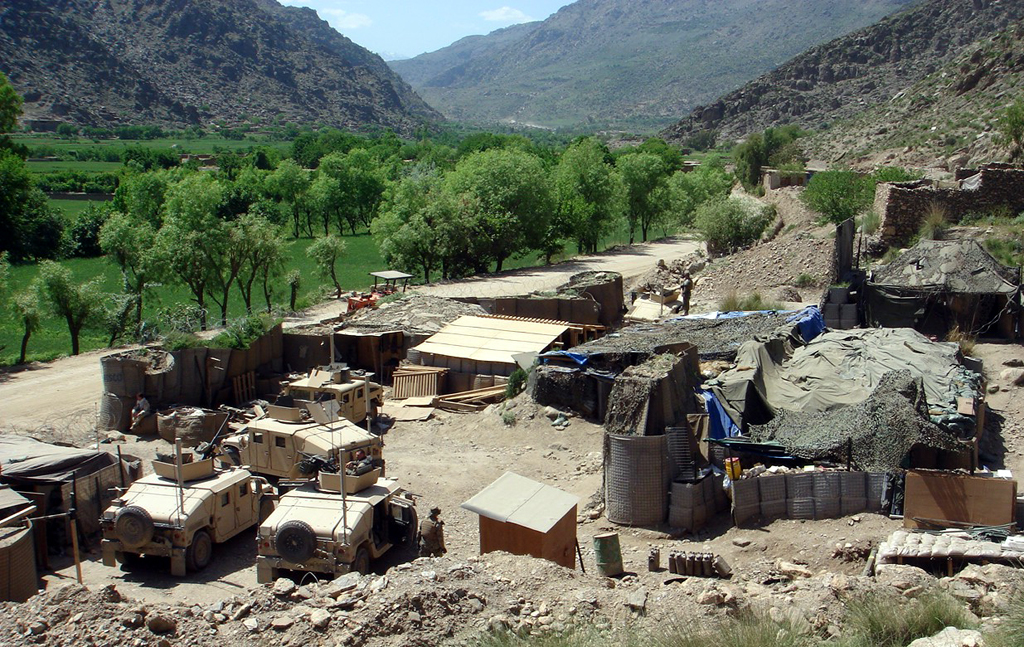
Remote Training Team Base in Afghanistan

The effects of the wars in French Indochina, Algeria and Vietnam on the French and American military establishments were long lasting and often tragic. The acceptance of torture as a means to an end sullied even the hardest French officers. Men like Galula and Marcel Bigeard refused to countenance it, while others like Paul Aussaresses never recanted. Americans would repeat the tactic at Abu Ghraib rallying the Iraqis against them and nearly losing the war because of it.
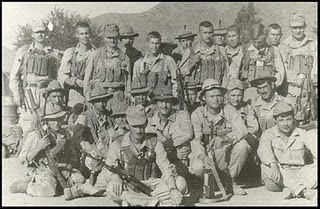
Soviet Paratroops in Afghanistan

For the Americans, the effects of Vietnam continued at home. Race riots tore at the force while drug addictions and criminal activities were rampant. Many incompetent leaders who had “ticket punched” their careers kept their jobs and highly successful leaders who became whistle blowers like Hackworth were scorned by the Army institution. The years following Vietnam were a severe test of the US Military and took years for the military to recover. Likewise it took years before either the French or American veterans again felt a part of their countries. They ended up going to war, and when it was over; feeling abandoned, their deepest bonds were to their comrades who had fought by their side.
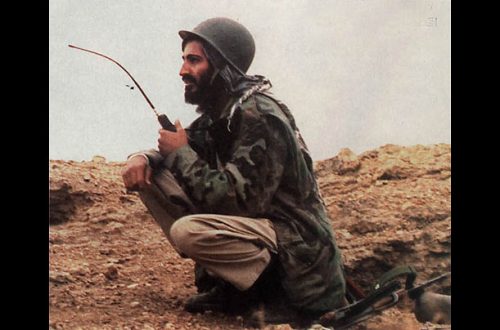
Osama Bin Laden leading Mujaheddin in 1984 

If this is not enough we have the experiences of the Soviet Union, the British Empire and others that have attempted to rule Afghanistan as plumb lines to gauge our effectiveness. Others have tried and failed miserably at this. The Soviets learned the hard way and found that Afghanistan was one of the major reasons for the collapse of the Soviet Union. Reading the history of Soviet operations in Afghanistan is frighteningly like reading the history of our campaign.
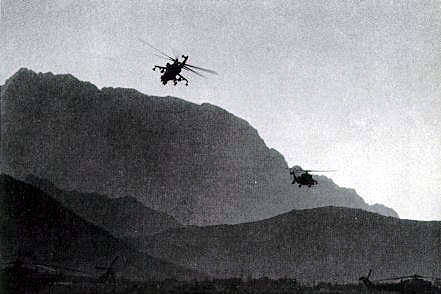
Two Soviet Mi-24 “Hind” attack helicopters flying in an Afghan Valley

The Soviets invaded Afghanistan in 1979 they used their 40th Army which initially was composed of “two motorized rifle divisions, an airborne division, an air assault brigade and separate motorized rifle regiments.”[27] These forces totaled about 52,000 troops and were “considered sufficient to guarantee the viability of Afghanistan.”[28] The 40th Army was a standard Cold War Soviet Combined Arms Army designed for high tempo conventional operations. It was not designed for nor trained in counterinsurgency operations or what the Soviets and Russians class as “anti-guerilla operations.” It was poorly suited to mountain and dessert combat and at the beginning “not only had no practical skills in the conduct of counter-guerilla warfare, they also did not have a single well-developed theoretical manual, regulation or tactical guideline for fighting such a war.”[29]

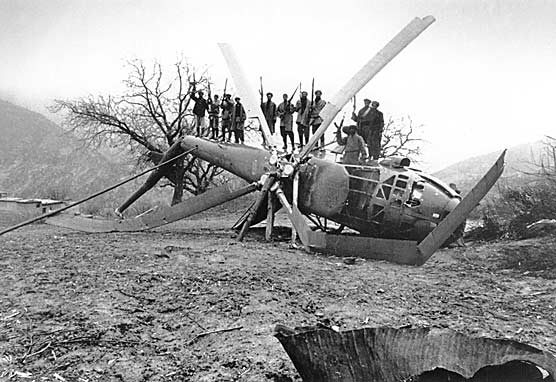
Downed Soviet Mi-4 “Hound” with Mujaheddin 

The Soviets did not expect to be involved in combat operations and the Afghan population reacted to their presence with resistance which spread across the country both against their own government which they viewed as a puppet of the Soviets but also against the Soviet Forces. As time went on the Soviets attempted to use raids and large scale operations to attempt to bring Mujahidin forces to battle, however the insurgents were very skillful and the Soviets attempted to increase the training of their forces as well as their numbers. By 1986 the numbers on the ground had increased to 108,000 personnel in four divisions, five separate brigades, four separate regiments and six separate battalions.[30] In the nearly 10 years of operations over a half million Soviet soldiers and support personnel served in Afghanistan. Tours for enlisted personnel who were primarily conscripts served 12-18 months in country and officers 2 years. Few returned for subsequent tours meaning that the 40th Army had few personnel very familiar with the country, its people and the challenges faced by Soviet forces. According to official sources the 40th Army suffered 13,833 killed in action or died of wounds, 49,985 wounded and 311 missing in action a figured of 1 in 8 Soviet Soldiers being casualties. 14.3 percent of the casualties were officers.[31] Of course the official figure is doubted many believing the number killed in action or died of wounds to be closer to 26,000.[32]
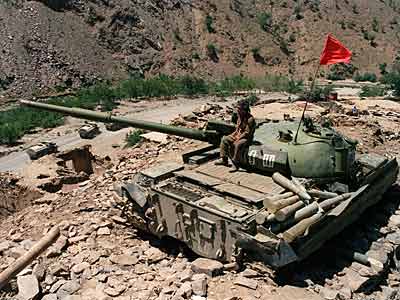
Soviet T-62 Tank guarding a convoy in a mountain pass

Like their American and French counterparts the Soviet veterans have experienced the unhealed wounds of war and a country that does not understand their experiences. The stigma of war wounds and PTSD haunt many Soviet veterans and were compounded by the collapse of the Soviet Union and Warsaw Pact in 1989. They returned home, lost their country and were by and large abandoned by their countrymen. A good number of these men and women travel to one of 5 centers across the country where according to one of the veterans come to for “social and psychological help.” He said that “The best thing about this place is that it provides us with a chance to share our Afghan memories with comrades who understand what we are talking about.” That camaraderie of being able to share their experiences with others that understand is helping some to return to something akin to “normal” life. They are joined by the soldiers that have experienced similar things in Chechnya. Russian veterans of the Afghan War are still so closely linked to it that they refer to themselves as “Afghans.”

Soviet Mi-8 “Hip” Helicopters in Afghanistan preparing for a mission

The Soviet Forces supported the Army of the Democratic Republic of Afghanistan which numbered at their peak on average between 120,000-150,000 soldiers.[33] The Afghan forces, then as now were at the mercy of tribal, familial and communist party affiliations. Over 70 percent of the DRA was conscripted, desertions averaged 1,500 to 2,000 soldiers a month and units were usually optimistically 25-40 percent under their TO&E strength.[34]Limitations on training and leadership meant that typically DRA units could not conduct large scale missions without Soviet help. As such most of the fighting was done by Soviet formations.
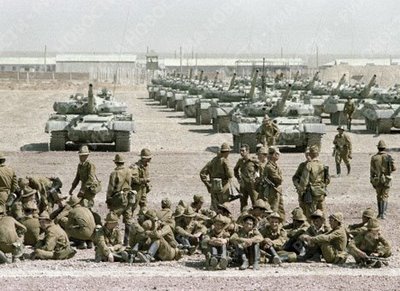
Soviet Troops preparing to leave Afghanistan

Many of these problems have plagued the United States and ISAF throughout the first 9 years of the current Afghan War. As former Afghanistan Commander General Stanley McChrystal noted in his assessment “ISAF is a conventional force that is poorly configured for COIN, inexperienced in local languages and culture, and struggling with the challenges inherent to coalition warfare. These intrinsic disadvantages are exacerbated by our current culture and how we operate.”[35]

We should have learned. A retired Red Army Colonel who served in Afghanistan from 1986-1988 who learned the Dari language in order to negotiate with the Afghan Mujahedeen warned what will happen when the Americans and NATO leave the country and the mistake that we made in entering Afghanistan. Frants Klinsevich now a member of the Russian Parliament comment to reporters at a wreath laying ceremony at a veteran’s convention that “they (NATO and the United States) are 100 percent repeating the same mistake we made by entering into a war in that country” and that “As soon as the Americans and Europeans leave, the Taliban will crack down on everything.” Klinsevich noted that he understood the American desire to tame Afghanistan but that “the problem of radical Islam will not be solved there, its violence cannot be solved. It is simply unsolvable.” He said that he wished that the United States had consulted the Russians about Afghanistan saying “they should have invited Russian specialists, involved Russia, really studied how they could use Russia. But unfortunately Americans think they know everything.” The former Russian commander understands far more that the majority of American policy makers on this subject. [36]

The fact is that we are hamstrung by the ongoing wars which limit our ability to respond to rapidly changing situations. We are in a similar situation to the Germans in 1942 and 1943 overcommitted, overstretched and lacking true strategic depth to respond to unanticipated situations as are now occurring across the Middle East. In 1942 and 1943 the Germans were always just short of the forces that would have turned the tide. Like the Germans our economy is laboring on the verge of collapse and we have to honestly answer the question “What is the strategic value in continuing to wage war in Afghanistan in the way that we are doing?”

What are the lessons to be learned from these campaigns as well as from the various accounts? Andrew Krepinevich prophetically noted that the failure to learn the lessons of Vietnam “represents a very dangerous mixture that in the end may see the Army again attempting to fight a conventional war against a very unconventional opponent.”[37] Obviously, there are lessons to be learned, especially in understanding the nature of revolutionary war as well as the culture and history of our opponents. The U.S. has made some improvement in this regard but there is still much to be learned, especially since after the war the Army was “erecting barriers to avoid fighting another Vietnam War.”[38] From these wars we learn that nations and incompetent governments who mismanage wars can alienate themselves from the soldiers that they send to fight, with serious consequences. As far as historiography we learn that certain historical fallacies are evident when one reads the accounts critically and recognize the bias and limitations of the various sources.

The fact is that we have learned little about such wars and are paying a terrible price for it. The debate now is should we continue the war as it is with minor withdraws of troops or begin a rapid exit in order to preserve and rebuild our force and to reduce the cost of these operations. But that debate and decision are well above my pay grade. But then maybe we need to remember what Field Marshall Gerd Von Rundstedt told his staff in September of 1944 when asked how to recover from the disastrous collapse of the German front following the Allied breakout from Normandy and dash across France. “Make peace you fools.” http://www.youtube.com/watch?v=ch56NAL1C-I

Peace
Padre Steve+
________________________________________
[1] Shy, John and Collier, Thomas W. “Revolutionary War” in Makers of Modern Strategy from Machiavelli to the Nuclear Age,” Peter Paret editor. Princeton University Press, Princeton N.J. 1986 p.849
[2] Galula, David. Counterinsurgency in Algeria: 1956-1958. RAND Corporation, Santa Monica, CA. 2006. First published by RAND in 1963. p.244
[3] Krepinevich, Andrew F. “The Army and Vietnam,” The Johns Hopkins University Press, Baltimore and London, 1986 p.213
[4] Horn, Alistair. “A Savage War of Peace: Algeria 1954-1962,” a New York Review Book published by the New York Review of Books, New York, 1977, 1987, 1996, and 2006 p 41
[5] Fall, Bernard B. “Street Without Joy: The French Debacle in Indochina.”Stackpole Books, Mechanicsburg PA, 2005, originally published by Stackpole Publications 1961 p.27
[6] Ibid. p.33
[7] Horn. p.100.
[8] Windrow, Martin. “The Last Valley: Dien Bien Phu and the French Defeat in Vietnam,” Da Capo Press, Novato, CA 2006, originally published by Weidenfeld and Nicholson, London 2004 p.63
[9] Fall, Bernard B. “The Siege of Dien Bien Phu: Hell in a Very Small Place.” Da Capo Press, New York an unabridged reprint of the 1st Edition reprinted in arrangement with Harper and Row Publishers, New York. 1967 pp. 456-457 Fall discusses in depth the lack of French Air support and the antecedents that led to the shortage following World War II.
[10] Pottier, Philippe(2005)’Articles: GCMA/GMI: A French Experience in Counterinsurgency during the French Indochina War’, Small Wars & Insurgencies,16:2,125 — 146http://dx.doi.org/10.1080/09592310500079874
[11] Simpson, Howard K. “Dien Bien Phu: The Epic Battle America Forgot,”Potomac Books Inc. Washington DC 2005, originally published by Brassey’s Inc. 1994 pp. 170-171
[12] Trinquier, Roger. “Modern Warfare: A French View of Counterinsurgency,” translated from the French by Daniel Lee with an Introduction by Bernard B. Fall. Praeger Security International, Westport CT and London. 1964 and 2006. Originally published under the title “La Guerre Moderne” by Editions Table Ronde. p.87
[13] Windrow. p.652.
[14] Roy, Jules. “The Battle of Dien Bien Phu” Carrol and Graf Publishers, New York 1984. Translated from the French by Robert Baldrick. English translation copyright 1965 by Harper and Row Publishers, New York. p.xxx
[15] Galula, David. “Counterinsurgency Warfare: Theory and Practice.”Praeger Security International, Westport CT 1964 and 2006 p. 54
[16] Krepinevich. p.213
[17] Ibid. p.24
[18] Nagl, John A. “Learning to East Soup with a Knife: Counterinsurgency Lessons from Malaya and Vietnam,” University of Chicago Press, Chicago and London, 2005 p.138
[19] Shy. p.856
[20] Krepinevich. p.202
[21] Spector, Ronald H. “After Tet: The Bloodiest Year in Vietnam,” Vintage Press, a division of Random House, New York, 1993 p.314
[22] Millett, Allan R. and Maslowski, Peter. “For the Common Defense: A Military History of the United States of America.” The Free Press, a division of Macmillian, Inc. New York, 1984 p.555
[23] Windrow. p.655
[24] Ibid. p.657
[25] Ibid.
[26] Moore, Harold G and Galloway, Joseph L. “We were Soldiers Once…and Young: Ia Drang: The Battle that Changed Vietnam,” Harper Collins Publishers, New York NY 1992 p. xx
[27] The Russian General Staff. The Soviet Afghan War: How a Superpower Fought and Lost” translated and edited by Lester A. Grau and Michael A. Gress, University Press of Kansas, Lawrence KS 2002 p.17.
[28] Ibid. p.18
[29] Ibid. p.43
[30] Ibid. p.28
[31] Ibid. p.309
[32] Ibid. p.xix
[33] Ibid. p.48
[34] Ibid. pp.48-51
[35] McChrystal, Stanley. “Commander’s Initial Assessment Commander International Security Assistance Force Afghanistan” dated 30 August 2009 pp. 1-2
[36] “Russian veteran warns of Afghan violence.” Reuters 16 May 2011. Edited by Paul Tait and Daniel Magnowski obtained 11 June 2011 at http://www.trust.org/alertnet/news/interview-russian-veteran-warns-of-unsolvable-afghan-violence/
[37] Krepinevich. p.275
[38] Ibid. p.274

3 Comments

Filed under Foreign Policy, History, iraq,afghanistan, middle east, Military, Political Commentary, vietnam, world war two in europe

The “Comfortable” Experts and the Real Soldiers

“Too many people learn about war with no inconvenience to themselves. They read about Verdun or Stalingrad without comprehension, sitting in a comfortable armchair, with their feet beside the fire, preparing to go about their business the next day, as usual…One should read about war standing up, late at night, when one is tired, as I am writing about it now, at dawn, while my asthma attack wears off. And even now, in my sleepless exhaustion, how gentle and easy peace seems!” 

Guy Sajer “The Forgotten Soldier”

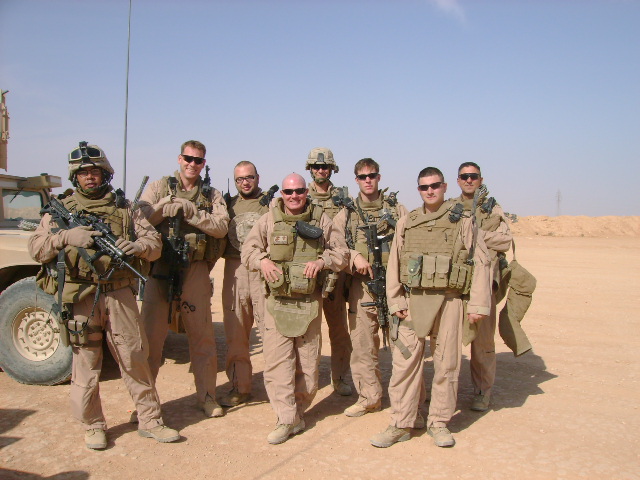
Currently well under one percent of Americans are serving in any branch of the military and of these not all have served with boots on the ground.  There is no shame for those that have not as land war is the prevue of the Army and Marines though a significant number of Sailors and some Air Force personnel have served alongside their Soldier and Marine comrades in arms.

Of those that serve there is not one who has not enlisted, reenlisted or renewed their Officer Oath of Office at least once since September 11th 2001.  There are those of us who have been in far longer but even we have made the commitment to continue in the service of our country knowing that anyone can be sent into harm’s way at any time.

Those that serve especially those that have served at the point of the spear in the remote badlands, or dangerous cities of Iraq and Afghanistan are a true minority group. We are a minority group composed of the best our nation has to offer. We represent every state and territory; we are citizens or in the case of many immigrants’ men and women seeking citizenship by risking their lives for a country that often despises their relatives based on their race, nationality or religion.  In fact this is not new; men have come to this country since our revolution from far countries because of the ideals that this nation represents.

This is a minority group composed of all races and whose families helped colonize this nation, came here in the following centuries and those that were here before the Europeans landed on this continent. We represent almost every religion and creed known to human kind. We come from cities, small towns, rural areas and island territories.  We are Democrats, Republicans, Libertarians and Independents.  We are Americans and we know war not from books, though many of us study military history, strategy and the lives of those great Soldiers, Sailors, Marines and Airmen that have gone before us. We know war because we have seen it. We have lost friends and seen others maimed or injured in mind, body or spirit. We have seen the wounded and the destruction which war inflicts on often innocent people who have the misfortune of living in a combat zone.

We do not make policy we carry out the orders of our national leaders and obey the laws passed by Congress. We are professionals.  We are not perfect but we serve.  In a sense we embody what the character of Colonel Joshua Chamberlain of the 20th Maine said at Gettysburg in Michael Shaara’s novel The Killer Angels and its film adaptation Gettysburg.

“This is a different kind of army. If you look at history you’ll see men fight for pay, or women, or some other kind of loot. They fight for land, or because a king makes them, or just because they like killing. But we’re here for something new. This has not happened much, in the history of the world: We are an army out to set other men free. America should be free ground, all of it, from here to the Pacific Ocean. No man has to bow, no man born to royalty. Here we judge you by what you do, not by who your father was. Here you can be something. Here is the place to build a home. But it’s not the land. There’s always more land. It’s the idea that we all have value, you and me. What we’re fighting for, in the end… we’re fighting for each other. Sorry. Didn’t mean to preach.” 

We serve at a time that our nation has been engaged in two very costly wars in terms of lives and treasure. We never thought that they would last as long as they have after all we were promised that and even told that the mission was “completed.” But the wars didn’t end and now our nation is involved in one, maybe two more in Libya and possibly Yemen.

We are told in spite of what we know from experience that the wars are going well and that we have turned a corner in Afghanistan even as the situation on the ground tells us otherwise.  We have the professional military experts in the think tanks telling us that the wars have to continue. Of course these men have never served in combat and what they know is gleaned from their interpretation of history and often dictated by their ideology and sometimes even worse by their connections to the defense industry, that which President and General of the Army Dwight D. Eisenhower so charmingly called “the military industrial complex.” Of course now we can and the media and elected officials who promote war to sustain their political power and enrich the powerful in their home districts.

Then there are those, especially the young that grow up with war as a series of video games and since very few meet the standards to serve in the military for a wide variety of reasons think that war is cool.  Look at the top selling games, almost all deal with virtual close combat, without any cost to those that play them.

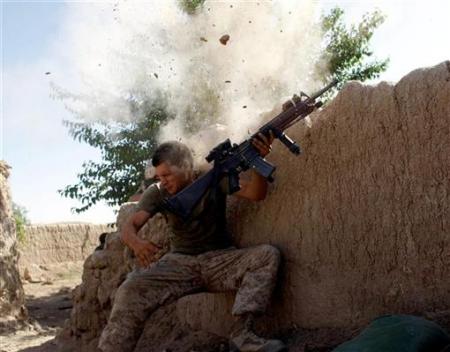
Marines in Afghanistan under attack

Such men and in some cases women need to learn about war in the uncomfortable manner described by Sajer, a Frenchman that served in the German Army on the Eastern Front because one of his parents was German.  The problem is that those that promote war as a business and those that sell war to kids via the entertainment industry really don’t care about the real human beings, the men and women who serve knowing that these wars are unlikely to end anytime soon.  Even more frightening are people of strong religious convictions who promote war in order to see their views, especially about the Middle East vindicated.

Such are the comfortable experts who debate in comfort and write with a detached certitude that they alone have the correct view of the world.  There is a good case to be made that such people be held accountable for the wars that they advocate and the lives lost because of their hubris.

Peace

Padre Steve+

4 Comments
Filed under Foreign Policy, History, iraq,afghanistan, middle east, Military, Political Commentary

Stunned Silence and Tears: The Death of a Marine, Soldier and Comrade

Staff Sergeant Ergin Osman, US Army, former USMC Rest in Peace

I am stunned right now as the cost of war and sacrifices made by our Soldiers, Sailors, Marines and Airmen became personal yet again. I was writing something rather cheeky when I saw a Facebook message that Staff Sergeant Ergin Osman who I served with when he was a Marine. I met him when he was in the S-1 section of 3rd Battalion 8th Marines in my relief pitcher tour with the Second Marine Division. The Chaplain section fell under the S-1 for administrative purposes so I got to know him fairly well. Since I had served in the Army he would come to me to talk about his father who served as a Green Beret in Vietnam. His family was Turkish immigrants to the United States and he was thoroughly an American, and a hero. He was funny, witty, friendly and always helpful. My assistant was a criminal and without the help of Ergin as well as Marines like 2nd Lieutenant, now Major Jodie Moser and Lance Corporal, now Gunnery Sergeant Bory Chan and others in that section and our Logistics section my job would have been even more difficult as we deployed to 29 Palms, Okinawa, Japan and Korea in 2000 and 2001.

I don’t know what to say. I have trouble compartmentalizing the deaths of young Americans, especially those that I have served with in wars that most people don’t seem to give a damn about.  I really can’t say more right now except to ask prayer for his family and friends. I am holding back the tears right now so I will sign off.

Peace

Padre Steve+

2 Comments

Filed under iraq,afghanistan, Military, remembering friends

Memorial Day 2011: Counting the Cost of War and Remembering its Brotherhood

“We few, we happy few, we band of brothers; for he to-day that sheds his blood with me shall be my brother…” William Shakespeare “Henry V”

“Heroism is latent in every human soul – However humble or unknown, they (the veterans) have renounced what are accounted pleasures and cheerfully undertaken all the self-denials – privations, toils, dangers, sufferings, sicknesses, mutilations, life-” Joshua Lawrence Chamberlain

Monday is Memorial Day, the ninth that we have observed during our current series of wars which officially began on September 11th 2001.  One could argue that they had begun sooner with attacks on U.S. Forces and installations overseas and even the attempted truck bombing of the World Trade Center in 1993.  But we really did not go to war until that fateful Tuesday in September 2001.  As we come to Memorial Day I am a bit melancholy as the war continues, force reductions loom, threats abound and I observe my first Memorial Day without my father, a retired Navy Chief Petty Officer who served in Vietnam who died of complications of Alzheimer’s Disease in June 2010.

Iraq Military Training Team in West Al Anbar

We did go to war but it was not like wars past where we relied on a true national effort to win the wars. The wars have been fought by a force profession force of Active and Reserve Component Soldiers, Sailors, Marines, Airmen and Coastguardsmen that hovers a bit above a half a percent of the total population. Of those eligible for service most do not meet the entrance requirements for military service meaning that the prosecution of the war has been the task of a miniscule portion of the population.  Shortly after the 9-11 attacks President George Bush urged Americans to do their civic duty “go shopping” to get the economy moving.  As a career military officer I was aghast at his words. While he praised the military at every turn and increased military budgets, much of which went to defense contactors the actual heavy lifting was and continues to be done by men and women who volunteer to keep going back.  While the military fights the war Wall Street does business in a manner that is good for it and the vast majority of Americans are totally immersed in self-entertainment, the latest video gaming system or imbibing on a constant diet of “reality TV.”  Others on both sides of the political spectrum elect to shred their political opponents to itty bitty sheds and maneuver to gain political advantage and power without really caring what is happing to the country despite their proclamations of doing what is right for America.  In regard to the troops most of the political classes only seem to care when it affects their state, district or party.

Advisors in Afghanistan 

This Thursday 9 more Americans were killed in Afghanistan, eight in an IED blast while on a mission to root the Taliban out of a suspected strongpoint and another in a helicopter crash.  In Afghanistan we have lost 1514 military personnel killed in action or died of wounds. Another 11191 have been wounded. Additionally or NATO Allies have lost 889 military personnel listed as killed or died of wounds. In Iraq 4454 U.S troops have been killed and another 32227 troops have been wounded.  Additionally 318 Coalition troops have been killed in Iraq.  None of these figures include the high number of personnel with PTSD, mild to moderate TBI or other psychological and spiritual wounds.  5968 Americans have been listed as killed or died of wounds in Iraq and Afghanistan while another 43,418 have been officially listed as wounded.

Memorial Day is a day to remember the fallen.  It is a day to reflect on the sacrifice of those that have died in the service of our country.  Originally established as Decoration Day and its roots stretch back to the Civil War.  Other nations have similar remembrances for their war dead.  Unfortunately because our military is such a small part of our population and now concentrated into a few major bases often out of sight and out of mind of most Americans the observance has become a kick off to the summer for most Americans who are blissfully unaware of the real costs of war.  In a way I can’t really fault them because when the war began with an attack on our shores our President did not call the nation to make sacrifices to win the war he told people to go shopping while “the few” would take the war to the enemy and avenge the devastation of September 11th 2001.  It turned the vast majority of the country into cheerleaders or bystanders.  History shows time after time that nations that wage war this way seldom achieve their goals.

As Clausewitz so aptly observed that war the nature or the “remarkable trinity of war” violent emotion, chance and rational policy which are balanced with the social trinity of the people, the commander and the army and the government (or in the case of non-nation state actors tribal, social or revolutionary leaders) necessitates that the people have to be part of the equation if one is to successfully conduct a war.  While it is possible to win short wars without much support of the people any long conflict necessitates that the people be engaged as much as the military and the government policy makers, especially in a democracy. Vietnam was a classic example of the social trinity gone bad. Policy makers failed to set goals for the prosecution of the war, military leaders attempted to fight the war with operational theories and forces that were not adapted to the type of war being fought and ignored the lessons of history regarding the type of war and eventually the people turned on the policy makers and the military as the war ground on with no apparent victory in sight.  The same can be seen in the current conflict in Afghanistan with the government pushing a policy that seems to have little strategic benefit or chance of success.  A military that can inflict punishing losses on the Taliban without destroying them or due to limited resources hold onto areas that they drove the enemy and a public that is divided between cheerleaders, critics and bystanders.  Few of the latter have any personal stake in the war other than bearing some of the financial cost and having to it occasionally referred to in the news cycle.  Our “trinity” is dysfunctional and will be our undoing despite the heroic efforts of those who give their “last full measure” on the battlefields of Afghanistan, Iraq and now Libya.

While we can discuss ways bring functionality back to our social trinity and the “remarkable trinity” or essence of war we must understand that our enemies, even non state actors often have a much more congruent view of war than we do and how to connect their strategic goals, military strategy and leverage the energy of the people against the United States and our Western allies.  They do not have our military power and wherever we meet them on the battlefield where we can employ our tactical superiority in weapons and training we have success but we have been unable to translate battlefield success into victory because we do not understand the nature of the conflict, the heart and will of our enemy and are dysfunctional in our own social, military, policy and political understanding of this war and how to win it.

What does this mean to those that have given their “last full measure” and those “happy few” that bear the burden of prosecuting the war? It means that their sacrifices may not be enough and will like the veterans of Vietnam come home without victory despite never losing a battle.  After Vietnam the force was cut back, military personnel who gave all they had on the battlefield were turned out of the service and even officers reverted to enlisted status to remain in the Army and Marine Corps.  Today even as the war rages cuts are being made to the force and those cuts will only get bigger as time goes on. Like Vietnam we already have a substantial number of veterans suffering from wounds physical, psychological and spiritual unable to get adequate care or assistance from an overburdened, underfunded, under staffed and often dysfunctional or even worse uncaring Department of Veterans Affairs facilities. Others that have served most of their careers at war and are approaching retirement are seeing the benefits that they earned with their flesh and blood and the long sacrifice of themselves and their families being termed “a rich entitlement program” targeted for reductions in pensions and medical care.  People that make these decisions if they served in the military at all often served only in peacetime or in times of short military conflicts and thus really do not understand the terrible cost and burdens placed on those that serve and continue to serve in this “war without end.”

Since Monday is Memorial Day and I simply ask that people take a few minutes and reflect on sacrifices of those that served in this war, wars past or those that continue to volunteer and serve in harm’s way far from home in a cause that the government does not understand and the public no longer supports.  Yes people treat military personnel better than in times past, there is little hostility to the military but at the same time has little social connection to or understanding of, thus we are a small brotherhood forged by a war that most of our fellow citizens can comprehend.

One of my Brothers: RP2 Nelson Lebron in Iraq

As for all who served we are part of a Band of Brothers.  As William Shakespeare so well wrote in Henry V:

WESTMORELAND. O that we now had here
But one ten thousand of those men in England
That do no work to-day!

KING. What’s he that wishes so?
My cousin Westmoreland? No, my fair cousin;
If we are mark’d to die, we are enow
To do our country loss; and if to live,
The fewer men, the greater share of honour.
God’s will! I pray thee, wish not one man more.
By Jove, I am not covetous for gold,
Nor care I who doth feed upon my cost;
It yearns me not if men my garments wear;
Such outward things dwell not in my desires.
But if it be a sin to covet honour,
I am the most offending soul alive.
No, faith, my coz, wish not a man from England.
God’s peace! I would not lose so great an honour
As one man more methinks would share from me
For the best hope I have. O, do not wish one more!
Rather proclaim it, Westmoreland, through my host,
That he which hath no stomach to this fight,
Let him depart; his passport shall be made,
And crowns for convoy put into his purse;
We would not die in that man’s company
That fears his fellowship to die with us.
This day is call’d the feast of Crispian.
He that outlives this day, and comes safe home,
Will stand a tip-toe when this day is nam’d,
And rouse him at the name of Crispian.
He that shall live this day, and see old age,
Will yearly on the vigil feast his neighbours,
And say ‘To-morrow is Saint Crispian.’
Then will he strip his sleeve and show his scars,
And say ‘These wounds I had on Crispian’s day.’
Old men forget; yet all shall be forgot,
But he’ll remember, with advantages,
What feats he did that day. Then shall our names,
Familiar in his mouth as household words-
Harry the King, Bedford and Exeter,
Warwick and Talbot, Salisbury and Gloucester-
Be in their flowing cups freshly rememb’red.
This story shall the good man teach his son;
And Crispin Crispian shall ne’er go by,
From this day to the ending of the world,
But we in it shall be remembered-
We few, we happy few, we band of brothers;
For he to-day that sheds his blood with me
Shall be my brother; be he ne’er so vile,
This day shall gentle his condition;
And gentlemen in England now-a-bed
Shall think themselves accurs’d they were not here,
And hold their manhoods cheap whiles any speaks
That fought with us upon Saint Crispin’s day.

Kenneth Branagh Henry V: http://www.youtube.com/watch?v=A-yZNMWFqvM

At the same time I cannot count the number of men and women that have come to me and expressed their regret at never having served when they had the chance. By and large they are wonderful people that live with this regret. In a sense they know well the last part of the Henry V speech “And gentlemen in England now-a-bed shall think themselves accurs’d they were not here, and hold their manhoods cheap whiles any speaks that fought with us upon Saint Crispin’s day.” For such men and women I can bear no hostility because the regrets that they live with are more than I would want to live with. When spending time with people living in regret I simply to do what they do in an honorable manner, take care of their families and support the troops in any way that they can.

One of my Band of Brothers MTT with 3rd Battalion 3rd Brigade 7th Iraqi Division

As for me I continue to serve affected by war in ways that I never imagined when I enlisted nearly 30 years ago. All those who have served, past present and future are my brothers and sisters and it matters not their social status, race, religion or politics as Shakespeare noted  “For he to-day that sheds his blood with me Shall be my brother; be he ne’er so vile, this day shall gentle his condition….”

Guy Sager wrote in his book The Forgotten Soldier” about his return home from war, society and that brotherhood, something that many who have served in Vietnam, Iraq and Afghanistan can share:

“In the train, rolling through the sunny French countryside, my head knocked against the wooden back of the seat. Other people, who seemed to belong to a different world, were laughing. I couldn’t laugh and couldn’t forget.

I had looked everywhere for Hals, but hadn’t been able to find him. He filled my thoughts, and only my acquired ability to hide my feelings kept me from weeping. He was attached to me by all the terrible memories of the war, which still rang in my ears. He was my only friend in this hostile world, the man who had so often carried my load when my strength was failing, I would never be able to forget him, or the experiences we had shared, or our fellow soldiers, whose lives would always be linked to mine.”

Most of us that have served in combat zones have memories like that and like the people in the train most people don’t understand.  One thing that I do know is that I am part of a brotherhood that extends from time in memoriam to the consummation of time when war will be no more, death will be swallowed up in victory and every tear will be wiped from our eyes.

Peace

Padre Steve+

3 Comments

Filed under History, iraq,afghanistan, Loose thoughts and musings, Military, national security, PTSD, shipmates and veterans

The Week before Armed Forces Day 2011

Armed Forces Day is a holiday, sort of.  It is an official holiday but no-one gets a day of work off for it. It is a holiday where we as a nation honor those serving in the Armed Forces. Other nations also have Armed Forces Day commemorations.  Ours was established in 1949 after the establishment of the Department of Defense and replaced individual days for each of the five armed services.  Each service maintains its own celebration and some are marked with great fanfare particularly those of the Marine Corps and to a lesser extent the Navy.  It is celebrated the third Saturday in May and this year will occur May 21st.

It is different than Memorial Day where we pay homage to the fallen and Veteran’s Day where we remember all who have served because it really focuses on those currently serving.  When it occurs during a war as it has for the past nine years it tends to be more significant at least for those of us currently serving.

Many local and state governments as well as private organizations and businesses do special things to honor the Armed Forces.  There are parades, ceremonies at historic locations and even at baseball games. Fireworks and cookouts as well as discounts at various retailers are common.  At the same time in many places the day goes by without fanfare. This is in part due to the fact that we have had a volunteer military which due to force cutbacks since the end of the Cold War is smaller and based in fewer locations, generally concentrated on bigger bases as many smaller and mid-sized bases were closed or consolidated under the various iterations of the Base Realignment and Closure Act (BRAC).

As a result for many Americans the military is an institution set apart, a closed profession and community with its own culture and worldview.  Less than 1% of Americans serve in the military today. That number includes active and reserve forces. The lack of a draft or some other type of compulsorily military service ensures that those who do not want to serve in the military, those that prefer stability and the chance to make a lot of money don’t have to sully themselves with serving in the military.  As a result a pitiful few politicians and business leaders have any real understanding of the military, much to our detriment as a nation.  We lack the cultural cross leveling that the draft brought.  Personally I don’t think we would have a Red State-Blue State divide if more people served together in the military.  When you serve together in war it is much easier to treat your fellow veterans with respect when you get out.

At the same time our military has become a tremendously professional organization that had it not been an all volunteer force would probably not survived the wars that we have been in for the past 10 years.  Conversely our politicians may have been more prudent in committing us to major ground wars after 2001.

Thus as a profession the military is often misunderstood and what it does overseas often shrouded in mystery as very few news organizations take the time anymore to live with the troops and those reporters that do are few and far between.  The lack of a significant number of political, business, academic and religious leaders with military experience only serves to worsen the situation simply because those leaders are ignorant of the cost that our military members and their families bear.  World War Two was a war that made us Americans because so many people had to serve in the military and serve alongside of people from different parts of the country and economic classes.  Thus the men and women that served in that war had a bond that transcended politics, religion and with the desegregation of the Armed Forces in 1948 race which had divided the country since its inception.

Today the military is one of the most trusted institutions in the country.  It bears a special place in our society and even though many have not served there is an appreciation by many people of the sacrifice of those who serve at the present time.  I am glad for that because I remember when my father came home from Vietnam and the years following that war where the military was scorned and often vilified.

My plea is that as we approach Armed Forces Day that people will take the time to thank the serving Soldiers, Sailors, Airmen, Marines and Coast Guardsmen that they know or meet.  For those that do not serve there are ways to demonstrate your care by volunteering with the Red Cross or USO or donate to any of the military relief societies (Army Relief, Navy-Marine Corps Relief, Air Force Relief) or the Fisher House Foundation which helps the families of military personnel suffering from war wounds or life threatening conditions in hospital at military medical facilities.

It is a profound honor to continue to serve the Constitution and the people of the country. I have serve alongside the best America has to offer and as we continue to serve in Afghanistan, Iraq, Libya, the War on Terrorism and elsewhere around the world please remember us.

Peace

Padre Steve+

1 Comment

Filed under History, iraq,afghanistan, Military, shipmates and veterans

A New Start…Life off the Fat Boy Program

Back in Standards 

“Every day is a new opportunity. You can build on yesterday’s success or put its failures behind and start over again. That’s the way life is, with a new game every day, and that’s the way baseball is.” Bob Feller

One of the biggest effects of my post-Iraq PTSD crash was how I tried to cope with this multi-faceted beast. Of course psychologically and spiritually I was in the toilet so much so that I was in the midst of a spiritual crisis so great that I was for all practical purposes an agnostic.  I struggled to hold myself together during 2008 and early 2009 trying to believe again and keep in shape. To compensate for my lack of belief, depression and the other nasty effects of PTSD such as night terrors, insomnia, hyper-vigilance, flashbacks I threw myself totally into work on the critical care units of the hospital I was serving. I finished my Masters Degree program and worked hard to better our hospital’s Clinical Pastoral Education Program and served on various committees including the Ethics Committee.  It was too much and the collapse deepened so I sought other coping mechanisms. I turned to comfort food and drink as a way to cope, especially food that was bad for me and way too much very good beer.

After my physical fitness test and weigh in during April of 2009 I lost all control of the latter two. While I had been drinking more since my return from Iraq than before the deployment in the spring of 2009 it became a problem.  I would leave work and on days when the Norfolk Tides were in town I would take to my season ticket seat in Section 102 Row B Seat 2 and seek refuge from my problems.  The ballpark and baseball helped bring some peace to my soul, but it would only last for 3 hours.  At the ballpark I would drink two to three beers with a chili dog and fries and maybe a pretzel, peanuts or ice cream.  After the game I would swing by the Krispy Crème Donut shop on the way home and pick up a dozen hot and fresh glazed donuts. I would then get on my computer and write on this site. While writing I would down three to six of the donuts with another two to four beers and repeat the cycle the next day for the rest of the home stand. On other nights I would go over to get donuts and drink more beer with them often after eating a heavy meal with very good beer at the Gordon Biersch Brewery Restaurant in Town Center.  By November I weighed 194 pounds and though I passed the PT test with a very good score for someone my age I was way over my weight and body fat limits. Thereafter it was a struggle to get below 180 pounds. I failed my next body composition assessment by a percentage point and though scoring well enough to qualify for the DOD waiver which would have taken me off of the program it was not approved.  I weighed in weekly and continued to improve my physical condition to the point that I was within the body fat standard by the time I left that duty assignment I transferred before the next official physical fitness assessment and got to my new assignment after the period was over.  Thus I remained on the program.

To those that have never experienced life in any military branch Fat Boy or Girl program it is humiliating, at least if you are a military professional.  There is a stigma to being fat because the military is run by tall skinny people.  Those of us of the under tall variety understand this stigma very well even when we are within standards.  I know a good number of good Soldiers, Sailors and Marines put out of the military because they did not meet their service body fat and weight standards.  Many like me are those suffering the effects of war and just trying to cope with life.  Others are men and women who are suffering the effects of time with shrinking bodies due to spinal disc compression and other injuries, illnesses and the slowing of metabolism which conspire against them. The military is a young person’s game and 51 year old 30 year veteran relics like me are in the minority.  For me the physical requirements are little different than when I first went on active duty in 1983. Back then I thought that when you got older you would catch a few breaks. Well in the age of budget cutting and a shrinking military force those standards continue to tighten and few breaks are to be found.

Bursting at the seams in my Summer Whites in 2009, this was not a comfortable uniform at the time, now it is very loose

While I had lost weight and body fat I was still over my weight limit.  The body fat measurement in the Navy is the measuring tape around the neck and the fattest part of the belly.  It is a terribly subjective and according to many scientific studies inaccurate test.  Nonetheless if you are over the weight limit you must be taped.  I didn’t want to go through that again so I decided that I was going to start really eating healthy and diversifying my exercise regimen.  When I arrived at my new assignment I weighed 184 pounds and during the winter added a few more pounds. At the beginning of January I bought a digital scale and began to weigh myself several times a week. I stopped the comfort foods except for an occasional hamburger or piece of pizza.  Even if I ate a hamburger I omitted the fries and held the cheese and mayo. I began to look at the nutritional information on everything that I ate even looking up restaurant data to ensure that I had the healthiest food that I also liked, it does no good to eat healthy if you hate what you are eating because you don’t stick with it.  I cut back on my drinking a lot, even going to Yuengling Light Beer at home.  I counted every calorie and measured calories burned. If I went over on one thing I compensated rather than continuing as if I had not.

As winter became spring I noticed a difference, I was weighing less and all of my clothes continued to get loose to the point that things that I could not get into during the fall were baggy and some nearly falling off.  As the date approached my scales had me near the limit for a half inch below my real height just in case I got a bad measurement on my height, five pounds is five pounds.  I felt a lot of stress over the week and could feel every muscle in my back completely tense to the point that I was in pain. I weighed in Friday at 169 pounds and was six pounds below my weight limit and one pound below the lower height limit.  I have lost all 25 pounds that I gained during that horrible period of my life. On Monday I will take the physical fitness test something that I never have a problem doing well on.  When I do that I will be officially off the program.

Last night I was invited to do the invocation at the Navy Nurse Corps Birthday Ball at Camp LeJeune. I eased into my Mess Dress Blue uniform which last May I could barely squeeze my body into and in which I looked terrible.  The uniform was loose and fit very well. I went to the ball and had a wonderful time with my colleagues from the Naval Hospital and their guests.  I made sure that I had a friend take the picture which accompanies this post.

For me this is a comeback. I still have my struggles with PTSD but on the whole on the physical, psychological and spiritual aspects of life I am doing much better. Yes I still struggle at times and experience some of the manifestations of PTSD and of my spiritual crisis but I am not collapsing when something shakes me like I was between 2008 and even into 2010.

Had I failed the body composition assessment I could have been separated from the Navy and while I probably would have been able to retire it would have been a most humiliating way to leave the service.  Instead as long as I am alive and haven’t done anything incredibly stupid I will be promoted to Commander on September 1st and continue to be able to serve God’s people in the Navy for years to come. Of course I cannot fail a physical fitness assessment for the next two years but now that I have my diet stabilized and composed of things that I like and live in a place at the Island Hermitage where I love to run, walk and bike I do not expect to ever fail that again. My goal is to get back to the weight that I was when I was commissioned as an Army Officer in 1983, 158 pounds and keep it there. Thus my task is still incomplete.  I have succeeded in my first goal and now it is time to complete the deal and live healthy from here on out.

Today is a new opportunity and I am putting past failures behind.

Peace

Padre Steve+

3 Comments

Filed under faith, healthcare, Military, PTSD, US Navy

The Importance of the Navy Family

There are families and there are families. One family apart from my biological family that I think I treasure the most is my Navy family going back to when I was a Navy Brat and the friends of my parents who were in fact another family.  These were people that my dad served with at various times, mostly though from our tour in the Philippines that remained lifelong friends through thick and thin now for close to 50 years.  In my own life I have serve in the Army and the Navy.  We have a couple that we have known since my first month on active duty that we stay in contact with and hope in the near future to see again. Marty and Sue are part of my Army family we served together in Germany and I expect that we will remain friends the rest of our lives.  Then there is my Chapel family from Fort Indiantown Gap Pennsylvania many special people, some now with the Lord some of whom wrote letters of recommendation for me to transfer from the Army to the Navy.

I entered the Navy in February 1999 and there have been people that have been part of our lives since early in my Navy career. We will be seeing one of our best friend’s son’s graduate from high school next month, hard to believe how young that he was when we first met.  Judy loves both of their boys and we have been fortunate to share many special occasions with them. I also have friends that I have known since coming in the Navy.  Some are fellow Chaplains and though our careers have often taken divergent paths when we get together it is like yesterday. In an institution where denominational barriers and distrust sometimes disrupt relationships these are special relationships. Today during a training session aboard Camp LeJeune I was able to meet up with some old friends, many like me who have or are going through periods of great trial and pain.  I was able to share a couple of beers with one dear from my old denomination who was here from out of town for the training.  He was still shaking his head about how I had been tossed from the denomination and the subsequent events and scandal associated with the Bishop who had tossed me and the stories from others in the denomination who believed what the man had said about me.  He told them that it couldn’t be true but many did not know me as well as he did and evidently believed the lie. Even so it was good to see Dean again and I hope that we are able to meet again sometime soon.  Another friend that I saw is going walking with his wife through her terribly painful cancer treatments.  These are friends that I know if I need that I can go to and be honest.

Some are former shipmates from the USS HUE CITY CG-66 and Marines from any of the number of Marine Corps units that I have served and my friends EOD Group Two and from the Navy Medicine Community at Naval Medical Center Portsmouth and Naval Hospital Camp LeJeune.  I have baptized their babies, married them and been their when death took a spouse, counseled regarding personal, marital or spiritual issues many times long after we served together. I have been able to stay connected and I am happy to be their “Padre” or simply “Chaps.”

Yesterday I conducted the funeral of a retired Navy Master Chief and I talked about the Navy family and how important it was. There were many heads that nodded in agreement when I talked about this. I got an e-mail from the son of a man who was one of my parent’s closest friends in the Navy.  I mentioned Frank yesterday during the funeral how he had been my dad’s Chief and sponsored us in the Philippines nearly 50 years ago. He sent my mom an e-mail about a chance to the ID card system yesterday, a Yeoman he never missed administrative messages.  His son contacted me this evening on his e-mail account to tell me that he had passed away early this morning and asking me to contact my mother.

After I responded to the e-mail I called her and of course she was shocked and she wondered what would happen to Frank’s wife who has been chronically ill for many years.  Frank took care of her. He had a heart attack about 10 days ago and when he got out of the hospital he was told to take it easy and even stay off the internet.  He didn’t listen and he had to stay involved in the lives of his family as well as his Navy family.  He has been an encouraging person to me in my ministry as a Priest though he was a conservative Roman Catholic. He prayed for me and cared and I am sure that he will keep praying for me now that he is with the Lord.

While this was going on a sailor from a previous command popped in on me on Facebook regarding a pressing family matter. Another friend from Marine Corps Command and Staff College and Iraq responded to a friend request and sent me a couple of messages and another friend from the past chimed in on a humorous post that I had placed on Facebook regarding Osama Bin Laden’s Facebook account.  Another sailor who referred to me as the “Anti-Chaps” when I bought beer from him and some other sailors on a liberty call and stays in regular contact. What can I say? I do like the nickname.

What I find wonderful about my Navy family is that they have been there for me and my family over my entire life more so than most of my non-immediate biological family.  Those that don’t know this because they have not served in the Navy or another military branch of service are missing so much. For most it isn’t politics, religion or even if they are Dodgers’ fans we share a common bond serving in war and peace that transcends everything else.  They are my friends and I am their Chaplain or friend.  It is a most wonderful fellowship far better than most churches will ever known.

It has been a long day there were other things that happened in caring for Sailors and Marines over the past couple of days, some things that I can assist and others that I can only pray for and offer some guidance.

I am also exhausted by some of the commentators on the David Wilkerson article in which I postulated that his death could be a suicide. It is amazing how nasty some people can be when you even suggest that their idol was a human being.  Likewise I made the mistake of getting involved in a discussion with some pro-life activists who had to throw abortion into the death of Osama Bin Laden and been frustrated with how fellow Christians are wringing their hands about the killing of that perfidious bastard who killed so many of our people. The lack of moral clarity in these people who see the world in black and white dualistic terms and ignorant of philosophy, ethics and history as well as the nasty gray areas of life really pisses me off. Tomorrow I should get a good PT session in after physical therapy and play ball in the evening. Thanks be to God.

I’m now finish a big glass of Riesling and getting ready to prepare for tomorrow. Thankfully I have an appointment with my shrink in the afternoon.

Pray for me a sinner.

Peace

Padre Steve+

1 Comment

Filed under faith, Military, shipmates and veterans, US Navy

Once an Eagle: A Classic Novel of Military Life

“This classic novel of soldiers and soldiering ranks with Red Badge of Courage and All Quite on the Western Front as time-tested epics of war and warriors.”— John W. Vessey, Jr., Gen., US Army (Ret.)

Sam Damon (Sam Elliot) cries over a fallen friend

Tonight I started watching the NBC television mini-series adaptation of Anton Myrer’s classic novel of war military life and love Once an Eagle on DVD. I had been hoping to find the series on video or DVD for years and it was released again last year. I was introduced to the book through the series which I saw in High School when it came out in 1976. Back then I never missed an episode. I found the story which weaves the life of a soldier who rises from the ranks named Sam Damon who is played by Sam Elliott and a self-serving careerist named Courtney Massengale to be compelling then and caused me to get the book and read it back in High School and I found it even more compelling than the series.

Coutney Massengale (Cliff Potts)

Years later while deployed to Okinawa I saw a few episodes on AFN and purchased another copy which I took to Iraq with me in 2007. Reading the book there made even more of an impact on me.  I guess it was something about getting shot at and being out in locations with small groups of Americans and our Iraqis with the big battalions far away that made it more poignant. I was pleased to find it this week on DVD at the Camp LeJeune Marine Corps Exchange.

I guess for me the hook is that ever since I was a small child I dreamed of all things military and knew that I would probably spend a major part of my life in the military I was attracted to the story. Since I grew up in a Navy family and lived up and down the West Coast and the Philippines it was in my blood. Part of this was being surrounded by the Navy as well as the Marines. I remember seeing the movie The Green Berets when I was in second grade and listening to the Ballad of the Green Berets on the radio. A couple of my friends and I got sent to the principal’s office because we decided to play war a bit long at recess and didn’t go back to class. If there was something military on television I was going to watch it and I remember films like Patton, The Battle of the Bulge, Kelly’s Heroes, The Dirty Dozen, The Desert Fox, M*A*S*H, The Sands of Iwo Jima and tons of others. I built hundreds of model tanks and armored vehicles, ships and aircraft and lived for the day that I could join.

The idealistic and altruistic character of Sam Damon struck a chord in me. The Character of Sam Damon is man who worked his way up from the ranks and not afraid to speak his mind who is able to lead men in the worst situations and accomplish the mission. He cares for his troops but knows his job and knows that men, even friends die in war. At the same time he does not recklessly throw his men’s lives away and they believe that he will get them through. The book takes Damon along with his wife “Tommy” who is not a big fan of the Army despite being an Army Brat and the daughter of a General through their sometimes tumultuous marriage as they are stationed in many places both the glamorous and the not so glamorous in the United States and overseas. It follows Damon’s career from the days before World War One thorough the Great War, the doldrums of the 1920s and 1930s, World War Two, Korea and as a special envoy retired from the Army in a fictionalized Vietnam.  It also traces his relationship with the ambition driven Courtney Massengale.  To avoid spoilers I won’t go into detail but the two characters are in a sense stereotypical of the best and the worst types of men that populate the Officer Corps of the Army, but in a broader sense any military institution.

Tommy Damon (Darlene Carr)

The book is very real in its descriptions of combat as Myrer was an enlisted Marine who was wounded during the invasion of Guam and his descriptions of military life including the hardships endured by military families and while the novel is set in an earlier time where military personnel and their families did not have the communication abilities as we do now, but even with such niceties deployments and family separations, especially those where the military member deploys to a combat zone take a terrible toll on military families.

The novel is very pertinent for those of us in the military because it makes us ask the hard questions of what we will do to further our career and the cost of such a life on our families. I am coming up on 30 years service including about 10 years in the reserves and have made many deployments and my wife has had to endure many separations including my current geographic bachelor tour. Thankfully I am close enough to see her most weekends but we are apart more than we are together.  It is funny that knowing what I knew from my life as a Navy Brat and from books like Once an Eagle that I chose such a life. It is in a sense a calling for me. I know that I’ll never be an Admiral nor do I want to be it is enough to have the privilege to continue to serve when most or all of my contemporaries from my early days in the military have long since left the service or retired. I thank God for that privilege as well as a wife who when she was looking forward to me retiring from the Army Reserve saw me decide to join the Navy to go back on active duty following a mobilization tour where I lost my civilian job, without asking her first. She has endured years of me being gone.  Someday I’ll lay it down but not yet as I still feel that sacred call and thankfully despite the hardship she still loves me but is not unaware of my shortcomings.

In spite of this I am a realist when it comes to the institution of the military. It is not perfect. We have our Sam Damon’s and Courtney Massengale’s but most including me fall somewhere in between these polar opposites to one degree or another. I think that is why men or women who are too idealistic sometimes struggle when their leaders don’t measure up to those ideals.  I remember who my idealism was shattered.  After that I have endeavored to do the best as a Line Officer, Priest and Chaplain knowing that that I won’t always get it right but also knowing that I will try to always uphold the best ideals of the Navy and the military.

The book is required reading in many advanced military schools and is on the Army and the Marine Corps required reading lists.  There is much to learn from it and a lot of wisdom on its pages.  When I finish the mini-series I will read the book again. I recommend it highly.

Peace

Padre Steve+

4 Comments

Filed under books and literature, leadership, marriage and relationships, Military, movies