Tag Archives: veterans administration

Why History Matters: The Disastrous Effects of Long Insurgency Campaigns on the Nations that Wage them and the Armies that Fight Them

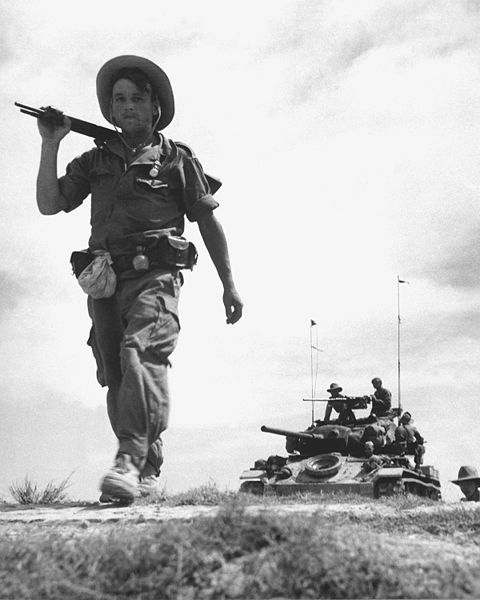
French Mobile Group in Indochina

“Any future defense secretary who advises the president to again send a big American land army into Asia or into the Middle East or Africa should ‘have his head examined,’ as General [Douglas] MacArthur so delicately put it.” Secretary of Defense Robert Gates

The effects of the wars Indo-China, Algeria and Vietnam on the French and American military organizations internally and in relationship to their nations piqued my interest in 2005. The wars in Iraq and Afghanistan forced me to start asking the question of what short and long term effect that these wars might have on the U.S. military. As such I wondered what historical precedent that there was for the question. My interest was furthered by my deployment with Marine and Army advisors to Iraqi Army and Security forces in 2007-2008. My search led to the French experiences in Indo-China and Algeria and the American experience in Vietnam. Recently with the Iraq war winding down and ongoing war in Afghanistan which has gone from apparent victory to mounting concern that we are losing the war in Afghanistan as Taliban and Al Qaida have regained momentum amid widespread corruption by the Afghan government and weakness of NATO forces.
The counterinsurgency campaigns conducted by the French and American militaries in Vietnam and Algeria had deep and long lasting effects on them as did the Soviet war in Afghanistan. The effects included developments in organization and tactics, relationship of the military to the government and people, and sociological changes. The effects were tumultuous and often corrosive. The French Army in Algeria revolted against the government. The US Army, scarred by Vietnam went through a crisis of leadership and confidence which eventually resulted in end of the draft and formation the all volunteer military. The Soviet not only lost their war but they saw their country collapse and the military with it. The effects of the Iraq and Afghanistan wars are yet unknown but could result in similar situations to the militaries and governments involved.

French Surrender at Dien Bien Phu

There is a wealth of data regarding these wars. There are several types of materials. The accounts of soldiers, diplomats and reporters who experienced these events contained in memoirs and diaries. The best include David Hackworth’s About Face and Steel My Soldiers Hearts; and General Harold Moore’s We Were Soldiers Once… and Young. French works include Jules Roy’s The Battle of Dien Bien Phu and General Paul Aussaresses’ The Battle of the Casbah. There are innumerable popular accounts written by NCOs and junior officers. These accounts may contain a wealth of information, but are limited by a number of factors. First, the authors, veterans of the wars, only saw part of the overall picture and first-hand experience in war can skew a writer’s objectivity. Those who have been through the trauma of war interpret war through their own experience. Physical and psychological wounds can have a major impact on the interpretation of these writers as can their experience and political ideology. Finally few of these writers are trained historians. Despite this they can be a valuable resource for the historian.
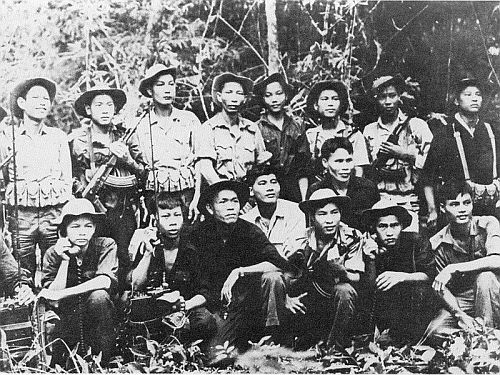
Viet Minh Main Force Soldiers

Another source is found in the official histories written by the military forces involved in the wars. Often these incorporate unit histories and individual narratives and analyze specific battles and the wider campaigns, but do little in regard to broader conditions that affected operations. While a good source, many are not as critical of their institutions as they should be.

Histories by trained historians and journalists provide another view. The most insightful of the journalist accounts include Bernard Fall’ Street Without Joy and The Siege of Dien Bien Phu: Hell in a Very Small Place. A limitation of all of these is that they are often heavily influenced by the political and societal events. This means that earlier accounts are more likely to be reactive and judgmental versus critical and balanced. Later accounts have the benefit of access to the opposing side and documents not available to earlier writers. Alistair Horn in A Savage War of Peace provides one of the most informative and balanced accounts of the war in Algeria. Martin Winslow does the same regarding Dien Bien Phu in The Last Valley.

Foreign Legion in Algeria

Another source is the writings of participants who critically examine their participation in the wars. Many of these, French and American provide insights into the minds of leaders who are reflective and critically examine what happened to their military institutions in these wars. The best of these is French Colonel David Galula whose books Pacification in Algeria 1956-1958 and Counterinsurgency Warfare: Theory and Practice provide first-hand accounts of the subject combined with critical reflection. Galula’s works have been important to John Nagl, General David Petreus and others who helped write the U.S. Army and Marine Corps Counterinsurgency manual. Andrew Krepinevich in The Army and Vietnam provides a critical analysis of the U.S. Army in Vietnam. Other sources, both online and print, such as RAND, provide excellent analysis of selected topics within the scope of this essay, especially COIN.

Battles in the Streets of Algiers

The ability to dispassionately and critically examine and evaluate these sources over a period of several years was and integrate them with my own experience has been a critical to me. It has changed the way that I look at sources, and caused me to be much more aware of bias, the limitations of sources and the need to have a multiplicity of sources and points of view and to be suspicious of contemporary reports and accounts of the war in Afghanistan regardless of the source.

The conflicts in French Indo-China, Algeria and Vietnam had major effects on the French and American military institutions. These effects can be classified in a number of ways. First, the manner in which each military waged war, including tactics employed and use and development of weapons systems was changed. The use of airpower, especially helicopters and use of riverine forces provided an added dimension of battlefield mobility but did not bring victory. As John Shy and Thomas Collier noted regarding the French in Indo-China: “French mobility and firepower could take them almost anywhere in Vietnam, but they could not stay, and could show only wasted resources and time for their efforts.”[1]
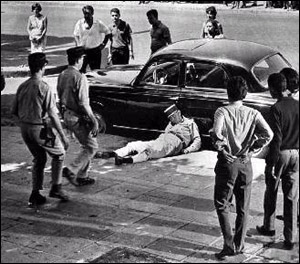
Assassination and Terrorism in Algiers

The use of intelligence and psychological warfare, including the use of torture became common practice in both the French and American armies. The wars had an effect on the institutional culture of these armed services; neither completely embraced the idea of counterinsurgency and for the most part fought conventionally. Galula notes how the “legacy of conventional thinking” slowed the implementation of proper counterinsurgency tactics even after most commanders learned that “the population was the objective.”[2] Krepinevich notes that “any changes that might have come about through the service’s experience in Vietnam were effectively short-circuited by Army goals and policies.”[3] Finally the wars had a chilling effect on the relationship between the both militaries and the state, veterans from each nation often felt betrayed or disconnected from their country and people. Unfortunately instances of all of these have occurred or can be seen in the current wars in Iraq and Afghanistan.

US Army in Vietnam

The French Army had the misfortune of fighting two major insurgencies back to back. The French military was handicapped even before it went into these wars. The Army came out of World War II defeated by the Germans, divided by loyalties to Vichy or one of the Free French factions. They were humiliated by the Japanese in Indo-China, while in Algeria France’s crushing defeat was devastating. “Muslim minds, particularly sensitive to prestige and baraka, the humiliation made a deep impression.”[4] French society was as divided as the Army; the economy in shambles, the government weak and divided. The Viet-Minh had prepared well making use of time and training to get ready for war. “Once full-scale hostilities broke out, the French, for budgetary and political reasons could not immediately make the large scale effort to contain the rebellion in the confines of small-scale warfare.”[5]

Paras of the 1st Colonial Parachute Regiment jump in Algeria

In both Indo-China and Algeria the French attempted to fight the budding insurgencies in a conventional manner. This was particularly disastrous in Indo-China when on a number of occasions battalion and regimental combat team sized elements were annihilated by Viet-Minh regulars. Between October 1st and 17th 1950 every French garrison along the Chinese border was over-run. The French lost over 6000 troops and enough equipment to outfit “a whole additional Viet-Minh division.” It was their worst colonial defeat since Montcalm at Quebec.[6] In Algeria when the fight began in earnest France’s “ponderous ponderous N.A.T.O forces found themselves at an impossible disadvantage,”[7] unable to have any influence off the main roads.

Marcel Bigard: One of the most effective French commanders in Indochina and Algeria

In Vietnam the French did not absorb the lessons of fighting a well established insurgent force. French forces hoped to draw the Viet-Minh main forces into battles of attrition where their superior firepower could be brought to bear. Such was the case at Na San in December 1952 where the French established an “Air ground base” deep in Viet-Minh territory to draw Giap’s forces into open battle. This worked, but just barely. General Giap, short of artillery and not planning on a long battle frittered away his troops in mass charges. However, the French, because of Na Son assumed they had found the key to victory. In their embrace of the “air ground base concept, French staff officers were following an intellectual tradition that had long been prone to seduction by elegant theories.”[8] The result was the disaster at Dien Bien Phu the following year. The destruction of the elite Group-mobile 100 near Pleiku in 1954 was the coup de grace. In Indo-China the French made limited use of helicopters, used paratroops widely, and developed riverine forces. One thing they were critically short of was significant tactical air support.[9]
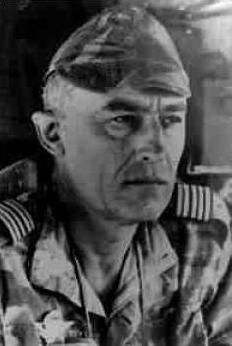
Roger Trinquier helped develop tactics in Indochina which helped turn the tide in Algeria, until the French Government ended the war leaving their soldiers to feel betrayed

The most inventive French creation in Indochina was the GCMA/GMI forces composed of mountain tribesmen led by French NCOs and Junior Officers. They were designed to provide “permanent guerilla groups rooted in remote areas” to harass and interdict Viet-Minh forces.[10] Trinquier noted that at the time of the Dien Bien Phu defeat that these forces had reached over 20,000 trained and equipped maquis in the Upper Region of Tonkin and Laos. These forces achieved their greatest success retaking Lao Cai and Lai Chau May 1954 as Dien Bien Phu fell.[11] Trinquier stated that “the sudden cessation of hostilities prevented us from exploiting our opportunities in depth.”[12] The GMI units and their French leaders were abandoned fighting on for years after the defeat. One account noted a French NCO two years after the defeat cursing an aircraft patrolling the border “for not dropping them ammunition so they could die like men.”[13] In the end the French left Indo-China and Giap remarked to Jules Roy in 1963 “If you were defeated, you were defeated by yourselves.”[14]
Algeria was different being part of Metropolitan France; there the French had support of European settlers, the pieds-noir. Many French soldiers had come directly from Indo-China. There French made better adaptations to local conditions, and realized that they had to win the population and isolate the insurgents from it and outside support. As Galula said, victory is the destruction of the insurgent’s political and military structures, plus “the permanent isolation from the population, not forced upon the population, but by and with the population.”[15] The lessons learned by the French in both Algerian and Indo-China were lost upon the Americans.
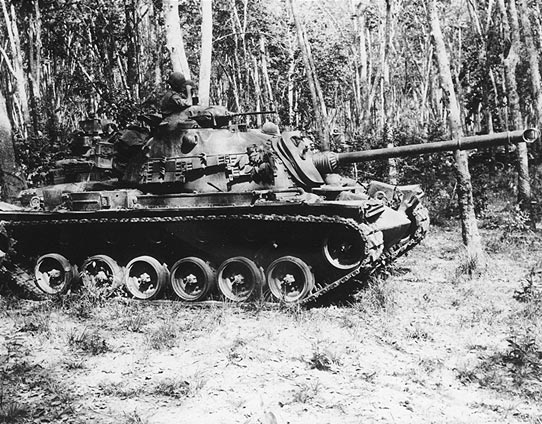
US Armored Cavalry in Vietnam

The United States military, especially the Army approached the Vietnam War with a conventional mindset, referred to as the “Army concept.” [16] It not only approached the war in this manner, but it trained and organized the South Vietnamese forces, ARVN into the American model. Americans re-organized ARVN into divisions “based upon the U.S. divisional force structure.”[17] Due to the imposition of an American template and organizational structure upon it, ARVN was not structured appropriately for the threat that it faced.”[18] The results were as to be expected. Large numbers of American troops poured in taking the lead against the North Vietnamese and Viet Cong . The American method of counterinsurgency was costly. It was “almost a purely military approach”[19] which ignored political and social realities on the ground. Instead of focusing on protecting the Vietnamese people and denying the Communists a safe haven the Army in particular believed that massive firepower was the best means to be “utilized by the Army to achieve the desired end of the attrition strategy-the body count.”[20] In the end the American defeat was a “failure of understanding and imagination.”[21] The one shining success was the Marine Corps experimentation with “Combined Action Program” platoons which lived in the villages with militia for long periods of time. This program produced great results “in eliminating local guerillas”[22] but was killed by the Army.
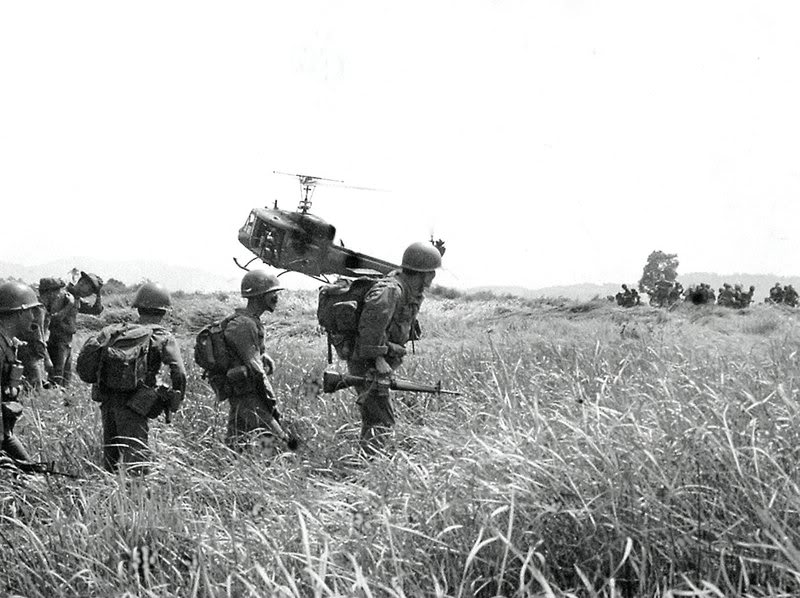
US and ARVN Soldiers in Joint Operation

These wars tore the heart out French and American armies. For the French the defeats inflicted a terrible toll. In Indo-China many French career soldiers felt that the government’s “lack of interest in the fate of both thousands of missing French prisoners and loyal North Vietnamese…as dishonorable.”[23] Divisions arose between those who served and those who remained in France or Germany and created bitter enmity between soldiers. France would endure a military coup which involved many who had fought in Vietnam and Algeria. Having militarily won that war, were turned into what Jean Lartenguy called The Centurions had been turned into liars.”[24] They were forced to abandon those who they had fought for and following the mutiny, tried, imprisoned, exiled or disgraced. Colonial troops who remained loyal to France were left without homes in their “independent” nations. They saw Dien Bien Phu as the defining moment. “They responded with that terrible cry of pain which pretends to free a man from his sworn duty, and promises such chaos to come: ‘Nous sommes trahis!’-‘We are betrayed.’”[25]

War Protests in the United States 

The U.S. Army left Vietnam and returned to a country deeply divided by the war. Vietnam veterans remained ostracized by the society until the 1980s. As Harold Moore recounts “in our time battles were forgotten, our sacrifices were discounted, and both our sanity and suitability for life in polite American society were publically questioned.” [26] The Army endured a massive reorganization that resulted in the formation of the All-Volunteer force, which would redeem itself and emerge from the ashes in the Gulf War.

Taliban in Afghanistan

The Americans would not learn the lessons of revolutionary warfare and counterinsurgency until forced to do so in Iraq in 2004-2007. These lessons however were not applied to Afghanistan and the Taliban which seemed to have been defeated have regained the initiative, policy is being debated amid discord in the west and there are reports of American and NATO forces becoming discouraged by the course of the war and concern that their efforts will be in vain. This is a dangerous situation to be in and if we learn from anything from our own history as well as that of foreign military forces in Afghanistan we need to be very careful in implementing strategy to get whatever we do right.
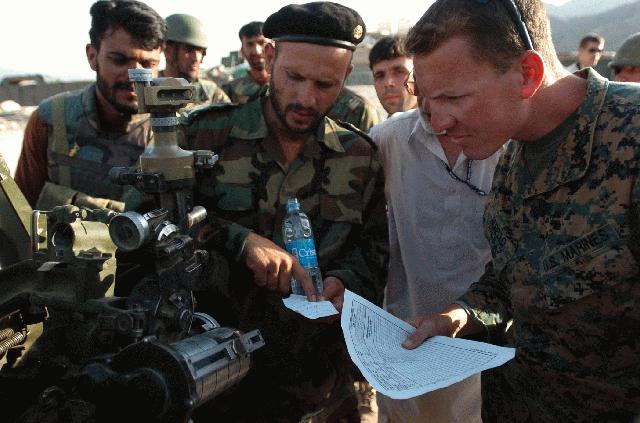
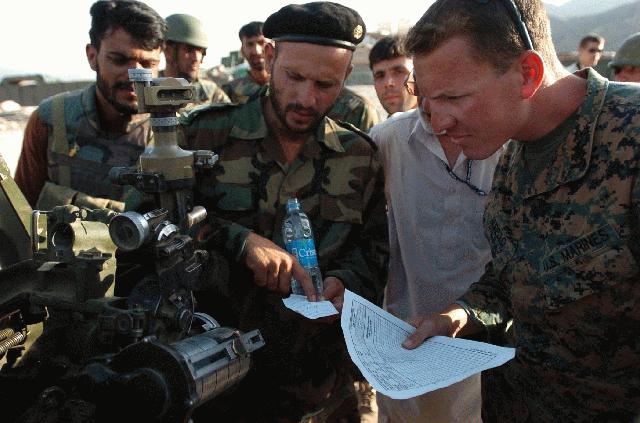
US Advisers with Afghanistan National Army Troops

The greatest success of the war was finally killing the leader of Al Qaeda, Osama Bin Laden at his Pakistani hide-out. That did not occur in Afghanistan and was the result of smart work by the CIA and other American intelligence services and the superb conduct of the mission by Navy SEAL Team Six. It was not the product of our costly counter-insurgency and nation building campaign in Afghanistan. There are many professional think tank “experts” that now urge continuing the Afghan mission indefinitely despite its massive cost and questionable strategic value. The costs of the war which are over 2 billion dollars a week are staggering with little to be shown from the hundreds of billions already spent in Afghanistan, much of which is spent on projects where corrupt Afghan government officials and tribal leaders are the only ones to benefit. Likewise the long term health of the military is imperiled. The money that should go to modernizing the force and replacing equipment worn out by war as well as the enormous costs in lives and the continuing care needed by military personnel wounding in body, mind and spirit remaining on active duty and those in the Veteran’s Administration system are imperiled.
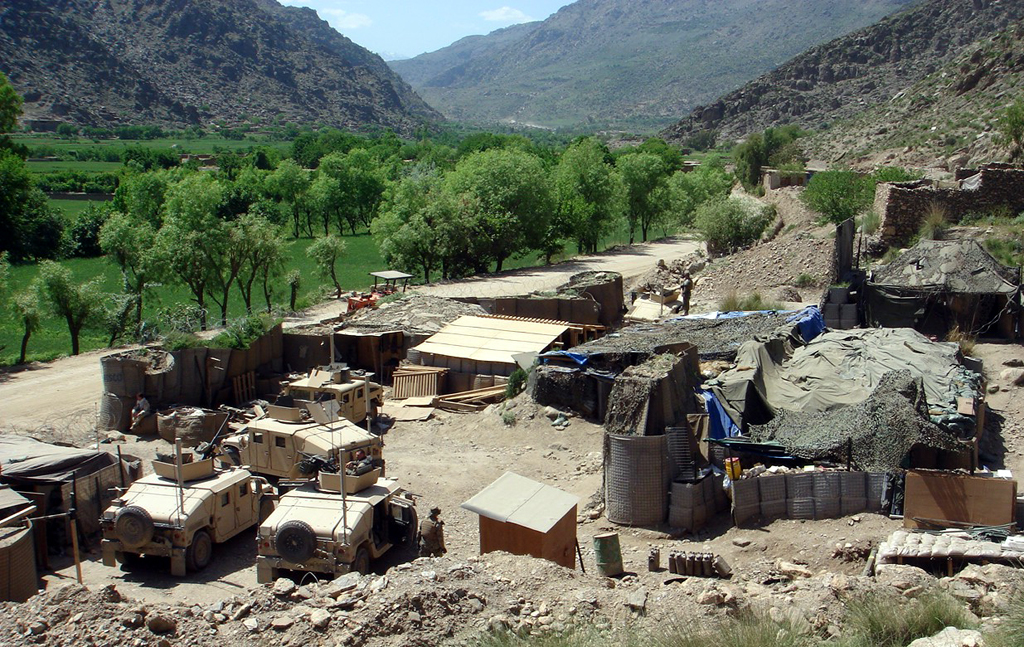
Remote Training Team Base in Afghanistan

The effects of the wars in French Indochina, Algeria and Vietnam on the French and American military establishments were long lasting and often tragic. The acceptance of torture as a means to an end sullied even the hardest French officers. Men like Galula and Marcel Bigeard refused to countenance it, while others like Paul Aussaresses never recanted. Americans would repeat the tactic at Abu Ghraib rallying the Iraqis against them and nearly losing the war because of it.
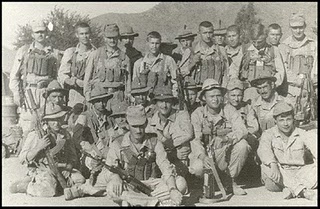
Soviet Paratroops in Afghanistan

For the Americans, the effects of Vietnam continued at home. Race riots tore at the force while drug addictions and criminal activities were rampant. Many incompetent leaders who had “ticket punched” their careers kept their jobs and highly successful leaders who became whistle blowers like Hackworth were scorned by the Army institution. The years following Vietnam were a severe test of the US Military and took years for the military to recover. Likewise it took years before either the French or American veterans again felt a part of their countries. They ended up going to war, and when it was over; feeling abandoned, their deepest bonds were to their comrades who had fought by their side.

Osama Bin Laden leading Mujaheddin in 1984 

If this is not enough we have the experiences of the Soviet Union, the British Empire and others that have attempted to rule Afghanistan as plumb lines to gauge our effectiveness. Others have tried and failed miserably at this. The Soviets learned the hard way and found that Afghanistan was one of the major reasons for the collapse of the Soviet Union. Reading the history of Soviet operations in Afghanistan is frighteningly like reading the history of our campaign.
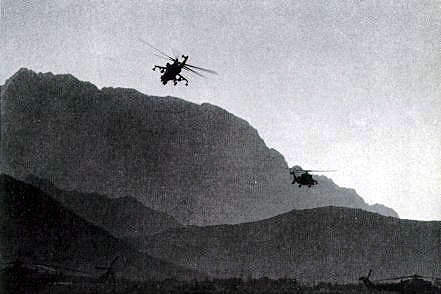
Two Soviet Mi-24 “Hind” attack helicopters flying in an Afghan Valley

The Soviets invaded Afghanistan in 1979 they used their 40th Army which initially was composed of “two motorized rifle divisions, an airborne division, an air assault brigade and separate motorized rifle regiments.”[27] These forces totaled about 52,000 troops and were “considered sufficient to guarantee the viability of Afghanistan.”[28] The 40th Army was a standard Cold War Soviet Combined Arms Army designed for high tempo conventional operations. It was not designed for nor trained in counterinsurgency operations or what the Soviets and Russians class as “anti-guerilla operations.” It was poorly suited to mountain and dessert combat and at the beginning “not only had no practical skills in the conduct of counter-guerilla warfare, they also did not have a single well-developed theoretical manual, regulation or tactical guideline for fighting such a war.”[29]
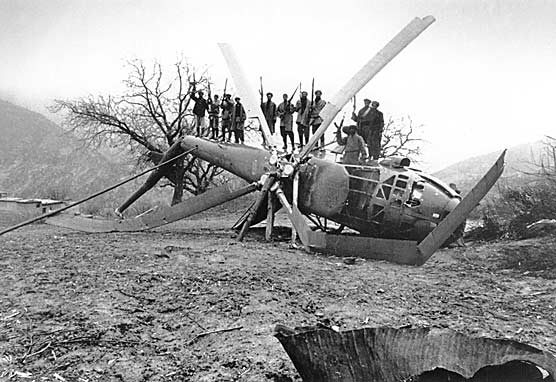
Downed Soviet Mi-4 “Hound” with Mujaheddin 

The Soviets did not expect to be involved in combat operations and the Afghan population reacted to their presence with resistance which spread across the country both against their own government which they viewed as a puppet of the Soviets but also against the Soviet Forces. As time went on the Soviets attempted to use raids and large scale operations to attempt to bring Mujahidin forces to battle, however the insurgents were very skillful and the Soviets attempted to increase the training of their forces as well as their numbers. By 1986 the numbers on the ground had increased to 108,000 personnel in four divisions, five separate brigades, four separate regiments and six separate battalions.[30] In the nearly 10 years of operations over a half million Soviet soldiers and support personnel served in Afghanistan. Tours for enlisted personnel who were primarily conscripts served 12-18 months in country and officers 2 years. Few returned for subsequent tours meaning that the 40th Army had few personnel very familiar with the country, its people and the challenges faced by Soviet forces. According to official sources the 40th Army suffered 13,833 killed in action or died of wounds, 49,985 wounded and 311 missing in action a figured of 1 in 8 Soviet Soldiers being casualties. 14.3 percent of the casualties were officers.[31] Of course the official figure is doubted many believing the number killed in action or died of wounds to be closer to 26,000.[32]
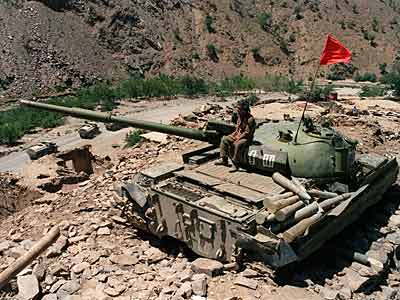
Soviet T-62 Tank guarding a convoy in a mountain pass

Like their American and French counterparts the Soviet veterans have experienced the unhealed wounds of war and a country that does not understand their experiences. The stigma of war wounds and PTSD haunt many Soviet veterans and were compounded by the collapse of the Soviet Union and Warsaw Pact in 1989. They returned home, lost their country and were by and large abandoned by their countrymen. A good number of these men and women travel to one of 5 centers across the country where according to one of the veterans come to for “social and psychological help.” He said that “The best thing about this place is that it provides us with a chance to share our Afghan memories with comrades who understand what we are talking about.” That camaraderie of being able to share their experiences with others that understand is helping some to return to something akin to “normal” life. They are joined by the soldiers that have experienced similar things in Chechnya. Russian veterans of the Afghan War are still so closely linked to it that they refer to themselves as “Afghans.”

Soviet Mi-8 “Hip” Helicopters in Afghanistan preparing for a mission

The Soviet Forces supported the Army of the Democratic Republic of Afghanistan which numbered at their peak on average between 120,000-150,000 soldiers.[33] The Afghan forces, then as now were at the mercy of tribal, familial and communist party affiliations. Over 70 percent of the DRA was conscripted, desertions averaged 1,500 to 2,000 soldiers a month and units were usually optimistically 25-40 percent under their TO&E strength.[34]Limitations on training and leadership meant that typically DRA units could not conduct large scale missions without Soviet help. As such most of the fighting was done by Soviet formations.
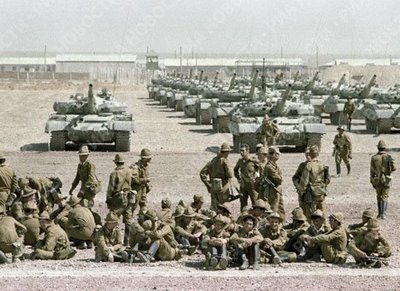
Soviet Troops preparing to leave Afghanistan

Many of these problems have plagued the United States and ISAF throughout the first 9 years of the current Afghan War. As former Afghanistan Commander General Stanley McChrystal noted in his assessment “ISAF is a conventional force that is poorly configured for COIN, inexperienced in local languages and culture, and struggling with the challenges inherent to coalition warfare. These intrinsic disadvantages are exacerbated by our current culture and how we operate.”[35]

We should have learned. A retired Red Army Colonel who served in Afghanistan from 1986-1988 who learned the Dari language in order to negotiate with the Afghan Mujahedeen warned what will happen when the Americans and NATO leave the country and the mistake that we made in entering Afghanistan. Frants Klinsevich now a member of the Russian Parliament comment to reporters at a wreath laying ceremony at a veteran’s convention that “they (NATO and the United States) are 100 percent repeating the same mistake we made by entering into a war in that country” and that “As soon as the Americans and Europeans leave, the Taliban will crack down on everything.” Klinsevich noted that he understood the American desire to tame Afghanistan but that “the problem of radical Islam will not be solved there, its violence cannot be solved. It is simply unsolvable.” He said that he wished that the United States had consulted the Russians about Afghanistan saying “they should have invited Russian specialists, involved Russia, really studied how they could use Russia. But unfortunately Americans think they know everything.” The former Russian commander understands far more that the majority of American policy makers on this subject. [36]

The fact is that we are hamstrung by the ongoing wars which limit our ability to respond to rapidly changing situations. We are in a similar situation to the Germans in 1942 and 1943 overcommitted, overstretched and lacking true strategic depth to respond to unanticipated situations as are now occurring across the Middle East. In 1942 and 1943 the Germans were always just short of the forces that would have turned the tide. Like the Germans our economy is laboring on the verge of collapse and we have to honestly answer the question “What is the strategic value in continuing to wage war in Afghanistan in the way that we are doing?”

What are the lessons to be learned from these campaigns as well as from the various accounts? Andrew Krepinevich prophetically noted that the failure to learn the lessons of Vietnam “represents a very dangerous mixture that in the end may see the Army again attempting to fight a conventional war against a very unconventional opponent.”[37] Obviously, there are lessons to be learned, especially in understanding the nature of revolutionary war as well as the culture and history of our opponents. The U.S. has made some improvement in this regard but there is still much to be learned, especially since after the war the Army was “erecting barriers to avoid fighting another Vietnam War.”[38] From these wars we learn that nations and incompetent governments who mismanage wars can alienate themselves from the soldiers that they send to fight, with serious consequences. As far as historiography we learn that certain historical fallacies are evident when one reads the accounts critically and recognize the bias and limitations of the various sources.

The fact is that we have learned little about such wars and are paying a terrible price for it. The debate now is should we continue the war as it is with minor withdraws of troops or begin a rapid exit in order to preserve and rebuild our force and to reduce the cost of these operations. But that debate and decision are well above my pay grade. But then maybe we need to remember what Field Marshall Gerd Von Rundstedt told his staff in September of 1944 when asked how to recover from the disastrous collapse of the German front following the Allied breakout from Normandy and dash across France. “Make peace you fools.” http://www.youtube.com/watch?v=ch56NAL1C-I

Peace
Padre Steve+
________________________________________
[1] Shy, John and Collier, Thomas W. “Revolutionary War” in Makers of Modern Strategy from Machiavelli to the Nuclear Age,” Peter Paret editor. Princeton University Press, Princeton N.J. 1986 p.849
[2] Galula, David. Counterinsurgency in Algeria: 1956-1958. RAND Corporation, Santa Monica, CA. 2006. First published by RAND in 1963. p.244
[3] Krepinevich, Andrew F. “The Army and Vietnam,” The Johns Hopkins University Press, Baltimore and London, 1986 p.213
[4] Horn, Alistair. “A Savage War of Peace: Algeria 1954-1962,” a New York Review Book published by the New York Review of Books, New York, 1977, 1987, 1996, and 2006 p 41
[5] Fall, Bernard B. “Street Without Joy: The French Debacle in Indochina.”Stackpole Books, Mechanicsburg PA, 2005, originally published by Stackpole Publications 1961 p.27
[6] Ibid. p.33
[7] Horn. p.100.
[8] Windrow, Martin. “The Last Valley: Dien Bien Phu and the French Defeat in Vietnam,” Da Capo Press, Novato, CA 2006, originally published by Weidenfeld and Nicholson, London 2004 p.63
[9] Fall, Bernard B. “The Siege of Dien Bien Phu: Hell in a Very Small Place.” Da Capo Press, New York an unabridged reprint of the 1st Edition reprinted in arrangement with Harper and Row Publishers, New York. 1967 pp. 456-457 Fall discusses in depth the lack of French Air support and the antecedents that led to the shortage following World War II.
[10] Pottier, Philippe(2005)’Articles: GCMA/GMI: A French Experience in Counterinsurgency during the French Indochina War’, Small Wars & Insurgencies,16:2,125 — 146http://dx.doi.org/10.1080/09592310500079874
[11] Simpson, Howard K. “Dien Bien Phu: The Epic Battle America Forgot,”Potomac Books Inc. Washington DC 2005, originally published by Brassey’s Inc. 1994 pp. 170-171
[12] Trinquier, Roger. “Modern Warfare: A French View of Counterinsurgency,” translated from the French by Daniel Lee with an Introduction by Bernard B. Fall. Praeger Security International, Westport CT and London. 1964 and 2006. Originally published under the title “La Guerre Moderne” by Editions Table Ronde. p.87
[13] Windrow. p.652.
[14] Roy, Jules. “The Battle of Dien Bien Phu” Carrol and Graf Publishers, New York 1984. Translated from the French by Robert Baldrick. English translation copyright 1965 by Harper and Row Publishers, New York. p.xxx
[15] Galula, David. “Counterinsurgency Warfare: Theory and Practice.”Praeger Security International, Westport CT 1964 and 2006 p. 54
[16] Krepinevich. p.213
[17] Ibid. p.24
[18] Nagl, John A. “Learning to East Soup with a Knife: Counterinsurgency Lessons from Malaya and Vietnam,” University of Chicago Press, Chicago and London, 2005 p.138
[19] Shy. p.856
[20] Krepinevich. p.202
[21] Spector, Ronald H. “After Tet: The Bloodiest Year in Vietnam,” Vintage Press, a division of Random House, New York, 1993 p.314
[22] Millett, Allan R. and Maslowski, Peter. “For the Common Defense: A Military History of the United States of America.” The Free Press, a division of Macmillian, Inc. New York, 1984 p.555
[23] Windrow. p.655
[24] Ibid. p.657
[25] Ibid.
[26] Moore, Harold G and Galloway, Joseph L. “We were Soldiers Once…and Young: Ia Drang: The Battle that Changed Vietnam,” Harper Collins Publishers, New York NY 1992 p. xx
[27] The Russian General Staff. The Soviet Afghan War: How a Superpower Fought and Lost” translated and edited by Lester A. Grau and Michael A. Gress, University Press of Kansas, Lawrence KS 2002 p.17.
[28] Ibid. p.18
[29] Ibid. p.43
[30] Ibid. p.28
[31] Ibid. p.309
[32] Ibid. p.xix
[33] Ibid. p.48
[34] Ibid. pp.48-51
[35] McChrystal, Stanley. “Commander’s Initial Assessment Commander International Security Assistance Force Afghanistan” dated 30 August 2009 pp. 1-2
[36] “Russian veteran warns of Afghan violence.” Reuters 16 May 2011. Edited by Paul Tait and Daniel Magnowski obtained 11 June 2011 at http://www.trust.org/alertnet/news/interview-russian-veteran-warns-of-unsolvable-afghan-violence/
[37] Krepinevich. p.275
[38] Ibid. p.274
3 Comments

Filed under Foreign Policy, History, iraq,afghanistan, middle east, Military, Political Commentary, vietnam, world war two in europe

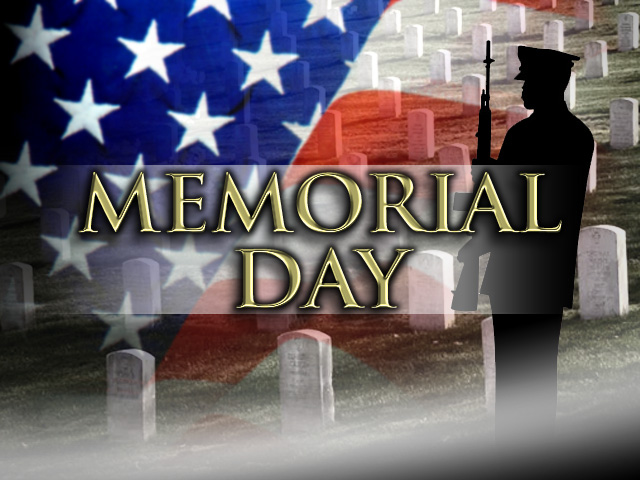
Memorial Day 2011: Counting the Cost of War and Remembering its Brotherhood

“We few, we happy few, we band of brothers; for he to-day that sheds his blood with me shall be my brother…” William Shakespeare “Henry V”

“Heroism is latent in every human soul – However humble or unknown, they (the veterans) have renounced what are accounted pleasures and cheerfully undertaken all the self-denials – privations, toils, dangers, sufferings, sicknesses, mutilations, life-” Joshua Lawrence Chamberlain

Monday is Memorial Day, the ninth that we have observed during our current series of wars which officially began on September 11th 2001.  One could argue that they had begun sooner with attacks on U.S. Forces and installations overseas and even the attempted truck bombing of the World Trade Center in 1993.  But we really did not go to war until that fateful Tuesday in September 2001.  As we come to Memorial Day I am a bit melancholy as the war continues, force reductions loom, threats abound and I observe my first Memorial Day without my father, a retired Navy Chief Petty Officer who served in Vietnam who died of complications of Alzheimer’s Disease in June 2010.

Iraq Military Training Team in West Al Anbar

We did go to war but it was not like wars past where we relied on a true national effort to win the wars. The wars have been fought by a force profession force of Active and Reserve Component Soldiers, Sailors, Marines, Airmen and Coastguardsmen that hovers a bit above a half a percent of the total population. Of those eligible for service most do not meet the entrance requirements for military service meaning that the prosecution of the war has been the task of a miniscule portion of the population.  Shortly after the 9-11 attacks President George Bush urged Americans to do their civic duty “go shopping” to get the economy moving.  As a career military officer I was aghast at his words. While he praised the military at every turn and increased military budgets, much of which went to defense contactors the actual heavy lifting was and continues to be done by men and women who volunteer to keep going back.  While the military fights the war Wall Street does business in a manner that is good for it and the vast majority of Americans are totally immersed in self-entertainment, the latest video gaming system or imbibing on a constant diet of “reality TV.”  Others on both sides of the political spectrum elect to shred their political opponents to itty bitty sheds and maneuver to gain political advantage and power without really caring what is happing to the country despite their proclamations of doing what is right for America.  In regard to the troops most of the political classes only seem to care when it affects their state, district or party.

Advisors in Afghanistan 

This Thursday 9 more Americans were killed in Afghanistan, eight in an IED blast while on a mission to root the Taliban out of a suspected strongpoint and another in a helicopter crash.  In Afghanistan we have lost 1514 military personnel killed in action or died of wounds. Another 11191 have been wounded. Additionally or NATO Allies have lost 889 military personnel listed as killed or died of wounds. In Iraq 4454 U.S troops have been killed and another 32227 troops have been wounded.  Additionally 318 Coalition troops have been killed in Iraq.  None of these figures include the high number of personnel with PTSD, mild to moderate TBI or other psychological and spiritual wounds.  5968 Americans have been listed as killed or died of wounds in Iraq and Afghanistan while another 43,418 have been officially listed as wounded.

Memorial Day is a day to remember the fallen.  It is a day to reflect on the sacrifice of those that have died in the service of our country.  Originally established as Decoration Day and its roots stretch back to the Civil War.  Other nations have similar remembrances for their war dead.  Unfortunately because our military is such a small part of our population and now concentrated into a few major bases often out of sight and out of mind of most Americans the observance has become a kick off to the summer for most Americans who are blissfully unaware of the real costs of war.  In a way I can’t really fault them because when the war began with an attack on our shores our President did not call the nation to make sacrifices to win the war he told people to go shopping while “the few” would take the war to the enemy and avenge the devastation of September 11th 2001.  It turned the vast majority of the country into cheerleaders or bystanders.  History shows time after time that nations that wage war this way seldom achieve their goals.

As Clausewitz so aptly observed that war the nature or the “remarkable trinity of war” violent emotion, chance and rational policy which are balanced with the social trinity of the people, the commander and the army and the government (or in the case of non-nation state actors tribal, social or revolutionary leaders) necessitates that the people have to be part of the equation if one is to successfully conduct a war.  While it is possible to win short wars without much support of the people any long conflict necessitates that the people be engaged as much as the military and the government policy makers, especially in a democracy. Vietnam was a classic example of the social trinity gone bad. Policy makers failed to set goals for the prosecution of the war, military leaders attempted to fight the war with operational theories and forces that were not adapted to the type of war being fought and ignored the lessons of history regarding the type of war and eventually the people turned on the policy makers and the military as the war ground on with no apparent victory in sight.  The same can be seen in the current conflict in Afghanistan with the government pushing a policy that seems to have little strategic benefit or chance of success.  A military that can inflict punishing losses on the Taliban without destroying them or due to limited resources hold onto areas that they drove the enemy and a public that is divided between cheerleaders, critics and bystanders.  Few of the latter have any personal stake in the war other than bearing some of the financial cost and having to it occasionally referred to in the news cycle.  Our “trinity” is dysfunctional and will be our undoing despite the heroic efforts of those who give their “last full measure” on the battlefields of Afghanistan, Iraq and now Libya.

While we can discuss ways bring functionality back to our social trinity and the “remarkable trinity” or essence of war we must understand that our enemies, even non state actors often have a much more congruent view of war than we do and how to connect their strategic goals, military strategy and leverage the energy of the people against the United States and our Western allies.  They do not have our military power and wherever we meet them on the battlefield where we can employ our tactical superiority in weapons and training we have success but we have been unable to translate battlefield success into victory because we do not understand the nature of the conflict, the heart and will of our enemy and are dysfunctional in our own social, military, policy and political understanding of this war and how to win it.

What does this mean to those that have given their “last full measure” and those “happy few” that bear the burden of prosecuting the war? It means that their sacrifices may not be enough and will like the veterans of Vietnam come home without victory despite never losing a battle.  After Vietnam the force was cut back, military personnel who gave all they had on the battlefield were turned out of the service and even officers reverted to enlisted status to remain in the Army and Marine Corps.  Today even as the war rages cuts are being made to the force and those cuts will only get bigger as time goes on. Like Vietnam we already have a substantial number of veterans suffering from wounds physical, psychological and spiritual unable to get adequate care or assistance from an overburdened, underfunded, under staffed and often dysfunctional or even worse uncaring Department of Veterans Affairs facilities. Others that have served most of their careers at war and are approaching retirement are seeing the benefits that they earned with their flesh and blood and the long sacrifice of themselves and their families being termed “a rich entitlement program” targeted for reductions in pensions and medical care.  People that make these decisions if they served in the military at all often served only in peacetime or in times of short military conflicts and thus really do not understand the terrible cost and burdens placed on those that serve and continue to serve in this “war without end.”

Since Monday is Memorial Day and I simply ask that people take a few minutes and reflect on sacrifices of those that served in this war, wars past or those that continue to volunteer and serve in harm’s way far from home in a cause that the government does not understand and the public no longer supports.  Yes people treat military personnel better than in times past, there is little hostility to the military but at the same time has little social connection to or understanding of, thus we are a small brotherhood forged by a war that most of our fellow citizens can comprehend.

One of my Brothers: RP2 Nelson Lebron in Iraq

As for all who served we are part of a Band of Brothers.  As William Shakespeare so well wrote in Henry V:

WESTMORELAND. O that we now had here
But one ten thousand of those men in England
That do no work to-day!

KING. What’s he that wishes so?
My cousin Westmoreland? No, my fair cousin;
If we are mark’d to die, we are enow
To do our country loss; and if to live,
The fewer men, the greater share of honour.
God’s will! I pray thee, wish not one man more.
By Jove, I am not covetous for gold,
Nor care I who doth feed upon my cost;
It yearns me not if men my garments wear;
Such outward things dwell not in my desires.
But if it be a sin to covet honour,
I am the most offending soul alive.
No, faith, my coz, wish not a man from England.
God’s peace! I would not lose so great an honour
As one man more methinks would share from me
For the best hope I have. O, do not wish one more!
Rather proclaim it, Westmoreland, through my host,
That he which hath no stomach to this fight,
Let him depart; his passport shall be made,
And crowns for convoy put into his purse;
We would not die in that man’s company
That fears his fellowship to die with us.
This day is call’d the feast of Crispian.
He that outlives this day, and comes safe home,
Will stand a tip-toe when this day is nam’d,
And rouse him at the name of Crispian.
He that shall live this day, and see old age,
Will yearly on the vigil feast his neighbours,
And say ‘To-morrow is Saint Crispian.’
Then will he strip his sleeve and show his scars,
And say ‘These wounds I had on Crispian’s day.’
Old men forget; yet all shall be forgot,
But he’ll remember, with advantages,
What feats he did that day. Then shall our names,
Familiar in his mouth as household words-
Harry the King, Bedford and Exeter,
Warwick and Talbot, Salisbury and Gloucester-
Be in their flowing cups freshly rememb’red.
This story shall the good man teach his son;
And Crispin Crispian shall ne’er go by,
From this day to the ending of the world,
But we in it shall be remembered-
We few, we happy few, we band of brothers;
For he to-day that sheds his blood with me
Shall be my brother; be he ne’er so vile,
This day shall gentle his condition;
And gentlemen in England now-a-bed
Shall think themselves accurs’d they were not here,
And hold their manhoods cheap whiles any speaks
That fought with us upon Saint Crispin’s day.

Kenneth Branagh Henry V: http://www.youtube.com/watch?v=A-yZNMWFqvM

At the same time I cannot count the number of men and women that have come to me and expressed their regret at never having served when they had the chance. By and large they are wonderful people that live with this regret. In a sense they know well the last part of the Henry V speech “And gentlemen in England now-a-bed shall think themselves accurs’d they were not here, and hold their manhoods cheap whiles any speaks that fought with us upon Saint Crispin’s day.” For such men and women I can bear no hostility because the regrets that they live with are more than I would want to live with. When spending time with people living in regret I simply to do what they do in an honorable manner, take care of their families and support the troops in any way that they can.

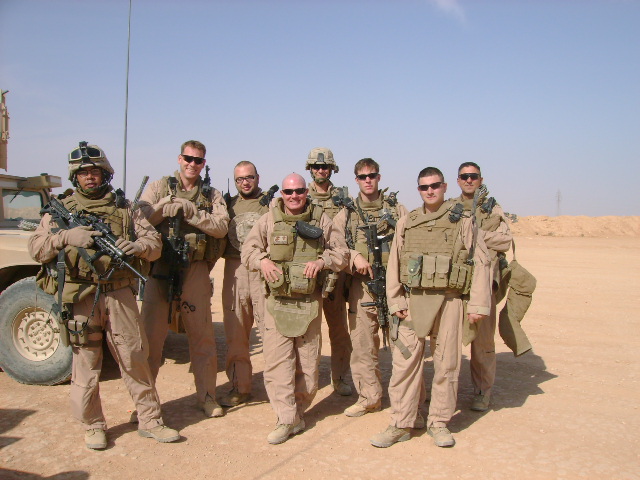
One of my Band of Brothers MTT with 3rd Battalion 3rd Brigade 7th Iraqi Division

As for me I continue to serve affected by war in ways that I never imagined when I enlisted nearly 30 years ago. All those who have served, past present and future are my brothers and sisters and it matters not their social status, race, religion or politics as Shakespeare noted  “For he to-day that sheds his blood with me Shall be my brother; be he ne’er so vile, this day shall gentle his condition….”

Guy Sager wrote in his book The Forgotten Soldier” about his return home from war, society and that brotherhood, something that many who have served in Vietnam, Iraq and Afghanistan can share:

“In the train, rolling through the sunny French countryside, my head knocked against the wooden back of the seat. Other people, who seemed to belong to a different world, were laughing. I couldn’t laugh and couldn’t forget.

I had looked everywhere for Hals, but hadn’t been able to find him. He filled my thoughts, and only my acquired ability to hide my feelings kept me from weeping. He was attached to me by all the terrible memories of the war, which still rang in my ears. He was my only friend in this hostile world, the man who had so often carried my load when my strength was failing, I would never be able to forget him, or the experiences we had shared, or our fellow soldiers, whose lives would always be linked to mine.”

Most of us that have served in combat zones have memories like that and like the people in the train most people don’t understand.  One thing that I do know is that I am part of a brotherhood that extends from time in memoriam to the consummation of time when war will be no more, death will be swallowed up in victory and every tear will be wiped from our eyes.

Peace

Padre Steve+

3 Comments

Filed under History, iraq,afghanistan, Loose thoughts and musings, Military, national security, PTSD, shipmates and veterans

The Disdain of American Business for Military Personnel and their Benefits

“What are you going to trade off — a rich entitlements program, or boots and bullets for the troops?” Richard Spencer Defense Business Review Board (quoted in the Navy Times 2 May 2011 print and internet edition)

The Federal Government is looking for ways to slash funding any way that it can. In light of the seriousness of the nation’s financial crisis previously sacrosanct areas are probably going to be cut.  Military pay and pension portion of the Defense Department budget continues to increase. For the active force due to inflation and medical care costs are the culprits and due to the fact that the pesky retirees just aren’t dying off fast enough.  Obviously something needs to be done otherwise we won’t be able to afford the “bullets” or rather the weapons systems that we use to fight our wars with.

But for a man who has made his money on Wall Street using other people’s money including government bailouts every time our financial, banking and real estate industries due their best to destroy the economy to call military retirement a “rich entitlements program” is simply obscene. If there is anything that has broken the back of the military budgets it is a series of wars that won’t end that somehow make contractors and defense industries rich.  Every day they find new ways to overbill the military for weapons systems that they cannot field on time, or are such money pits that the Defense Department tries to cancel them while our fiscally minded Congress makes the military buy them anyway.

Billions of dollars have been paid to defense contractors that employ a wide scope of companies many foreign owned to provide basic services at overseas bases such as food, transportation and even security supposedly because they can do it more efficiently than the military. The truth is that over the past 20 years the military personnel that would have performed these missions were cut from the force so much so that when we went into Iraq we didn’t have the forces to do all that was needed. Yes we could slap the snot out of the Iraqi or any other military that got in our way but we couldn’t sustain the force without employing and enriching companies like Halliburton, Kellogg Brown and Root (KBR) and dare I say Blackwater.  Additionally our defense contractors have ensured that nearly major weapons system produced in the past 20 years is plagued with problems and cannot be produced on time, are horribly over budget and due to their cost cannot be produced in the numbers needed by the military.  Then there are some projects that are so Rube Goldbergish that the technology needed to make them work isn’t attainable so compromises are made just to keep the programs alive.  Money is spent and weapons are produced that never meet the hype of their supporters in Congress, the defense industries and the army of lobbyists which I think number more than the actual Army. Then there are the weapons systems that are not only money pits but also never are deployed.  Congress and successive Presidential Administrations have made these countries wealthy while killing the defense budget and adding to the massive Federal Debt, which before the wars was actually shrinking, God bless you Bill Clinton.

But now we have a crisis and it is not the corporate welfare queens of the defense industry or the contracting vampires like Halliburton who will feel the pinch it is those who serve.  Yes my friends rather than these blood suckers it is the Soldier, Sailor, Marine or Airman who since 1990 have been deployed who if more that any generation of our military for a great length of time than any force in the history of our country. Count the places Panama, Desert Storm, Lebanon, Somalia, Haiti, Iraq, Afghanistan, Bosnia, Kosovo just to name a few. Then through in things like Operation Southern Watch, no-fly zones, humanitarian missions around the world that we have conducted over the same period.  By the way since these things are expensive and there is not enough money we are told to “work smarter not harder” and “leverage our synergies” so we can cut the force and still do the mission.  We look where that got us. We decided the get involved in massive ground combat operations without the manpower to do them effectively resulting in longer campaigns costing more lives and more money that the wise “smarter synergy” people ever estimated.

And now we have one of these barons of modern American-Global Capitalism which if I can remind you are the same people that have created the financial crises that enveloped the world that had to be bailed out by the taxpayer.  By the way most of these barons of business received exorbitant and obscene bonuses sometimes with the taxpayer’s bail-out money, the very people who brought the house financial house down now call military retirement a “rich entitlements program” while embracing tax cuts for themselves.

Well doesn’t that beat all? Is there anyone but me that has a problem with this? But let’s look at some facts.

Let’s see.  If someone retires at 20 years they get 50% of their high-three or basically the average of their last three years pay, not 50% of their highest pay but the last three years of pay. That was changed back in the late 1970s to save money by pretending to say that you got 50% of your base pay but really a bit less. If you serve 30 years you get 75% of you high three, of course by then you better be set for retirement because most military personnel with skills that are not directly transferrable to the civilian world will not be hired by anyone because they are too old. Mind you the retirement percentage is just from the base pay of the individual, not the housing allowance or other pays that you get for deployments or hazardous duty.  Likewise all those little perks from active duty disappear like state tax breaks for being in the military and by the way the health care costs they go up too. Military retirement is taxable and the Feds, the States and local taxing authorities are quite good at making sure they get their “fare share” of something that they never earned.

Speaking of healthcare what really interesting is that military personnel also pay into Social Security and Medicare. In fact when we are 65 our TRICARE health insurance is supposed to be secondary to Medicare or other insurance that we might have.  Since most of us currently serving are under 55 year old cut off that Congressman Paul Ryan has proposed in ending Medicare we lose that too.  So much for Medical Care unless a veteran is qualified to receive treatment in a Veteran’s Administration hospital.  But those hospitals face an increasing number of patients and a decreasing budget.  Who knows maybe they just give us the Soylent Green option.

Look out if Congressman Ryan and his band have their way as Social Security will go by the wayside too.  That is really a good deal isn’t it? Spend 20-30 years getting busted up for your country and put your family through hell as you constantly deploy to combat zones or on regular operational deployments or training exercises and then get told that the benefits that you worked hard to get are simply a “rich entitlement.” Then to top it all off find out all the money that you have paid into other people’s retirement and health care won’t be there for you.

But let’s take a look at why some of the cost of these “entitlements” is rising. It’s the wars stupid. A lot of money is now being paid to combat-wounded veterans that are medically retired from the service.  No one begrudges them this and I certainly don’t because they have paid their pound of flesh for it. They deserve it and most go through a lot of shit in the medical board and with the Veteran’s Administration to get that.  However, if you add up the tens of thousands of these pensions provided to these men and women that might have only served one or two tours it is a lot of money. This is an increase because in normal times many would have left the military without retirement benefits after they were done with their enlistments. Then there is the cost of paying the survivor pensions to the wives, husbands, children or parents of those that gave the last full measure and died while on active duty.

Some entitlement program huh? An entitlement program that often involves multiple tours in combat zones, separation from family, injuries that build-up simply because we are expected to stay physically active in physically and emotionally environments that wear people down.  Yet Mr. Spencer who served as a Marine Corps Aviator from 1976-1981 a period when we were not at war has the nerve to call this a “rich entitlement program.”  However a one term Congressman gets a retirement and benefits for life. We grind it out for 20 or more years and get told that we are leaches in so many words. Mr. Spencer didn’t use that word but that is exactly what he meant.  In the great World War Two film The Caine Mutiny LT Barney Greenwald played by Jose Ferrer chastised the members of the Caine’s Wardroom following the acquittal of the Executive Officer on the charge of mutiny.

“You know something… When I was studying law, and Mr. Keefer here was writing his stories, and you, Willie, were tearing up the playing fields of dear old Princeton, who was standing guard over this fat, dumb, happy country of ours, eh? Not us. Oh, no, we knew you couldn’t make any money in the service. So who did the dirty work for us? Queeg did! And a lot of other guys. Tough, sharp guys who didn’t crack up like Queeg.”

I don’t want to question the honor of Mr. Spencer but I will. Wait maybe I really want to question his honor so what the hell here it goes. According to his bio on the DOD website Mr. Spencer graduated from private college with a business degree in the middle of a really nasty economy. Gerald Ford was President and since the Vietnam War was over and a strong anti-war feeling lingered there was not much chance of seeing action.  So Mr. Spencer took his business degree and went in the Marines, not the grunts but as a Naval Aviator.   As soon as he finished his obligation and the Reagan boom began he left the service. After all he knew that you couldn’t make any money in the military.  I enlisted in 1981 and when I was commissioned as an Army officer in 1983 I had a base pay of $900.00 a month.  I didn’t do it for the money I did it because of what had happened in Iran and the Soviet moves all over the world.  Back then there was no GI Bill and limited tuition assistance or money for college when you got out of the service. I was not alone there were thousands maybe even hundreds of thousands that joined for similar reasons despite the low pay and benefits. We did it out of good old fashioned patriotism.

I resent the term “Entitlement program.” It is pejorative. It is a wonderful big business and fiscal conservative code word for “unearned and undeserving welfare program.”  Now there are programs that could legitimate targets of such a pejorative term especially corporate welfare but for Mr. Spencer and others of his ilk to lump the retirement pay of career military men and women is reprehensible.

How many military personnel and their families lose money every few years due to moving costs, changing the kid’s schools having spouse have to quit work to move to new locations? Let me see, almost all of us who serve a full career that’s who. But to Mr. Spencer we are the welfare queens and leaches. Again those are my words not his even though that is exactly what Mr. Spencer meant. We who serve and go into harm’s way so Mr. Spencer’s cronies on Wall Street can make the big bucks are the problem.  When a military officer fails his or her career is over and he or she suffers scorn, when the executives that Mr. Spencer rubs shoulders with destroy a company or defraud the public they get big bonuses multi-million dollar buyouts and move on to new hunting grounds.

So now we are on the chopping block. All the services are shedding personnel even as the mission demands have not gone down in order to save money.  In the Navy as we speak there are boards being held at almost every rank to send people home, including junior enlisted personnel.

It is a shame that we have come to this. A nation at war for 10 years and engaged all over the world in war and peacekeeping operations the 10 years prior to this using a smaller force percentage wise than we have had than at any time since the 1920s and 1930s.  Less than 1% closer to half a percent of Americans currently serve in the active or reserve components of the military and many have served one or more combat tours.  Meanwhile nearly 90% of people military age cannot meet entry standards to join.

This, my friends makes military personnel an easy target for bean counters. We don’t have a lot of votes and if people like Mr. Spencer and some in Congress have their way we will be thrown under the budget bus. They will throw us into wars that are unwinnable because we don’t have the resources to successfully prosecute them or the strategy and goals don’t match the forces that are there to accomplish them.  Meanwhile the defense industries and the big war contractors like Halliburton will continue to make money hand over fist. The late Marine Corps Major General Smedley Butler was absolutely correct when he said “War is a racket. It is the only one international in scope. It is the only one in which the profits are reckoned in dollars and the losses in lives.” 

In the past month another 50 or so American military personnel have died in Afghanistan nine in the latest attack on advisors to the Afghan Air Force just this week. The total losses in Iraq and Afghanistan combined are now over 6000 dead and almost 43,000 wounded not counting those suffering from mild to moderate Traumatic Brain Injury and the tens of thousands of others that suffer from PTSD.  Of course this does not count those that have died on their return to the United States due to suicide risky behaviors caused by their experience in combat.  Neither do the numbers count those that succumbed to their wounds after their return to civilian life or in the Veteran’s Administration system.  God knows how many of these uncounted casualties of war there are but remember this is just another “entitlement program” according to Mr. Spencer.

Meanwhile as Rome burns the Legions continue to serve while the world that the politicians, diplomats and business leaders put together falls apart. Wars and crises abounding into which they will gladly send us. The Middle East is threatening to explode and Mr. Spencer and those like him would call us parasites leaches and welfare queens, again my words not theirs even though that is exactly what they mean and call the benefits that we have sacrificed for over 20 or more years of service a “rich entitlement program.”

In fact as this drumbeat from the business leaders advising the Pentagon continues people will begin to believe it. Already polls are showing the American people think that the military budget needs to be slashed in order to pay for their entitlements.  We know that the defense industry, the lobbyists and the contracting Giants will suffer the least in this, as always it will be the men and women that have volunteered to do the job that no one else wants to do that will feel the brunt of the cuts.

We have been at war for 10 years with an 11 year lead up to it. In a sense we have been at war or heavily engaged in peacekeeping, humanitarian or actual war for 20 years. Your Soldiers, Sailors, Marines and Airmen are remarkable. In spite of an unending war, deployments that never seem to end and being forgotten by a population more caught up in the problems of Lindsey Lohan and Charlie Sheen, their own financial worries or trying to demonize their political opponents in our perpetual election cycle. Even so they serve selflessly and with distinction.  They don’t deserve to have their retirement called a “rich entitlement program.”

When I see the son’s of the wealthy that inhabit Wall Street and other financial centers say this I become incensed.  Many were born into wealth and all make themselves wealthy on other people’s money usually while exporting the industrial base of the United States overseas because they say that American workers are overpaid. Many simply see the military as the government arm which guards their overseas operations but really hold us in contempt and for the past 40 years have thrown the servicemen and women of the country under the bus if there is a possibility of them having to pay more taxes.

To read about such comments from businessmen and politicians I am reminded of a quote of General John Buford played by Sam Elliott from the movie Gettysburg:

“Meade will finally attack… Straight up the hillside, out in the open, in that gorgeous field of fire. We will charge valiantly, and be butchered, valiantly! And afterwards men in tall hats and gold watch fobs will thump their chest and say what a brave charge it was…I’ve never seen anything as brutally clear as this.”

Yes we will continue to serve and many will continue to die as the vampires of Wall Street consider those of us who serve as leaches and characterize military retirement programs as a “rich entitlement program.” They will thump their chests and say how much they support the troops but such words will only come from their marketing departments hoping to gain the military market share.

The attitude of Mr. Spencer and those like him needs to be confronted and challenged at every turn or they will dishonor those that serve so selflessly.  We need more men like Smedley Butler.

Peace

Padre Steve+

11 Comments

Filed under Foreign Policy, History, leadership, Military, national security, Political Commentary

The Front Page: Padre Steve talks about a Newspaper Interview on His Battle with PTSD

“Gratitude changes the pangs of memory into a tranquil joy.” Dietrich Bonhoeffer

I was interviewed about a week and a half ago by Hope Hodge a reporter for the Jacksonville Daily News. The paper had discovered me through an article I wrote last September entitled Raw Edges: Are there other Chaplains out there Like Me? The editor assigned Hope to the project. After thinking about the request a number of days I knew that I needed to do the interview and had Hope contact our Public Affairs Officer, Raymond Applewhite. When he secured the permission of my Commanding Officer Captain Daniel Zinder he set up the interview with Hope and photographer Chuck Beckley.  

The interview was a very healing experience and the article was well done and I have nothing but thanks to Hope and those that arranged this. While I have talked extensively about my tour in Iraq and subsequent battles with PTSD, loss of faith and my slow recovery on this site as well as with individuals but I have carefully avoided media until now.  While I write a lot tend to be somewhat reclusive in real life especially since coming home from Iraq with my safe places being Harbor Park in Norfolk and Gordon Biersch Virginia Beach.

I knew that the interview would trigger some memories and I knew that once the article was out in public that there would be varied reactions including some that I knew would be negative.  At the same time the negative has been far outweighed by the positive reactions, especially among those that have gone through similar dark times. As I read the comments I knew despite that any negative reactions or attacks on me that the interview was the right thing to do. I read the stories of those who told about their battles with PTSD, experiences with military and VA healthcare as well as their crisis’s of faith posted in comments section and was touched.  They were telling things that are hard to talk about, especially in a public forum of a local newspaper where people can be quite vicious.  I know that even in that forum when most remain anonymous there is a risk and an emotional cost in posting experiences that in a sense are holy to the people sharing them and should be respected so I am glad to see that for some the article was helpful and encouraging. I was also blessed and even comforted by those that spoke well of me.  The kindness, support and comradeship that one has with such people is amazing, there is a brotherhood of war and we will support each other.

There was one man that was particularly nasty and I do need to deal with his comment here, not because I am upset but rather because I know how war, especially was like Vietnam and the current wars can do to a person.  The man who is an anonymous poster to this and other articles on the Daily News website claims to be a veteran of Vietnam in 1969-1970. I have no reason to doubt him as there are a lot of Vietnam Era combat vets in the local area and since I am a child of a Vietnam combat veteran and remember the shameful way that these men were treated when they returned I would never disrespect his service or even his feelings about how he was treated and the abuses that he saw when he came home.  I am very close to the Marine veterans of the Battle of Hue City and still maintain correspondence with these men who I count as friends.

At the same time I think that this man’s comments need to be addressed, not because of his service or experience following his return but because of the use of character assassination that is so common in our national discourse now days. The last time I experienced an attack on this site of similar invective was when a Neo-Nazi or White Supremacist from East Tennessee went so far as to physically threaten me. That man claimed to be a former paratroop officer. I really don’t know what brings people to launch such attacks on people that they never have even met but it is part of life and I knew that I might get something like this so it is what it is.  This is what this man said:

“This man should never have been in the military as he is too weak-minded. And/or, he, like a surprising number of his fellow officers have found it is best to get out under a disability as it’s a tax free cream puff ride to the bank each month. Imagine if he was one of the thousands of trigger pullers afield and try to pull this off? Pathetic!!” Comment by Your62 on Jacksonville Daily News (This and other posts by this man was removed by the newspaper sometime today 3/30/11)

Needless to say he was pretty nasty to others who commented on the article as well so I cannot take it personally and some of them gave it back to him in spades. As for me I hope that this man finds peace someday.

As for me I figure that since I have been in the military, not only as a Navy chaplain but also an Army Officer for nearly 29 years and that I have volunteered for every combat, humanitarian or contingency mission that I could over the course of my career, much to the chagrin of my wife, family and friends that I am by no means weak or lack courage. I know that I didn’t volunteer to go to Iraq to come out of it with PTSD and all that I have gone through since and what I have put my wife through.

Much to the surprise of this veteran I am not looking for a “tax free crème puff” as I figure that 5-10 years from now when I actually retire that I will have maxed out about every pay scale that there is and probably will have another deployment or two in me before I am done.  I figure that the way things are going in the world I will get a shot in Afghanistan or North Africa before all is said and done.

I certainly do not claim to be anywhere or done anything that I did not do or experience and never claim that I experienced what many other veterans of our current wars or past wars have in any of their wounds.  I see too many young men and women who have suffered grievous wounds to body and soul as a result of war to do such a thing. Likewise the many veterans of previous wars that I know who still suffer their wounds I would never dishonor. I consider it an honor to have served alongside such fine men and women or to met them long after their service in Vietnam, Korea or the Second World War or at the end of their careers when I was a young and idealistic know nothing officer in the early 1980s.

My war was different than others. It was in a lot of places where many never went serving alongside small units of 15-20 American advisers stationed with Iraqi units.  These men were remarkable because they were incredibly exposed to danger and often far from big units that could help them if they ran into trouble. They were the men that help organize and train the Iraqi Army to help turn the tide against Al Qaeda in 2007 and 2008 as much as anyone they were responsible for helping build friendships with Iraqi military officers that will be a cornerstone of our friendship with Iraq in the future.

As for me I did not shrink from danger. I went on foot patrols, night convoys in the badlands and was in a helicopter that was shot at and returned fire. I have had rockets fly over my head and being on a convoy that took some fire. Thankfully I was never in a convoy hit by an IED or big coordinated ambush. Since the convoys that I travelled with usually had three HUMMVs with nothing heavier than a single .50 cal or 240 series machine gun that any such action would have been a battle for life and death and I know what I would have done had such a situation occurred. Since Al Qaeda Iraq had Chaplains as a high value target and since our Iraqis new that I was the “American Imam” and that such word would filter out of the camps the men that I served with took good care of me even in very exposed locations. Likewise even Iraqi officers sought my counsel and asked me to bless or to pray for their soldiers.  I will never forget the Iraqi soldiers that asked me to bless their vehicles on one of our convoys with Holy Water as I did for our advisers as we set off on Route Uranium west of Ramadi.

Through it all I can now say that I am grateful for what I have been through. It still is not easy as even though I continue to see improvement I still on occasion have flashbacks, nightmares and have to make the effort to go into places where I don’t feel safe.  At the same time I would gladly go back to Iraq or to Afghanistan or anywhere else to serve the men and women of the Navy, Marine Corps, Army and Air Force that I love and respect so much.  There is not a day that goes by when I don’t think about serving in combat again, much to the chagrin of my wife and family.  I am not a proponent of war, in fact the more I see I am against it.  I fully agree with General Robert E. Lee who said “It is good that war is so terrible. We should grow too fond of it.” However, I know my place until the day that I retire from the Navy is when my Marines, Sailors, Soldiers and Airmen are in harm’s way.

For those who are silently suffering the ravages of PTSD and moral injury related to their service I know the pressure. I didn’t seek help until the EOD Diving Medical Officer saw me falling apart and got me into the medical system.  Unfortunately there can be and often is a stigma attached to PTSD and for some to suffer in silence is preferable to the stigma of seeking help and being called weak.  I made the choice to get help when I couldn’t do it on my own any longer but have seen others be traumatized by other servicemen and women for seeking help, that whole thing about being “weak.” I got lucky when I was sent for help, not everyone has my experience.

Despite that I encourage those suffering from such injuries to seek help because there are a lot of us out here that really care because we know what it is like. I admit that it is not easy to seek help and sometimes getting it can be problematic simply because of the stress on the medical system, but help is there.

Blessings and Peace

Padre Steve+

7 Comments

Filed under faith, iraq,afghanistan, Military, Pastoral Care, philosophy, PTSD, Tour in Iraq

No Illusions: The Cost of the Long War and its Potential impact on the United States

Libya: One of Many unanticipated Crises

There has never been a protracted war from which a country has benefited. Sun Tzu

Don’t fight a battle if you don’t gain anything by winning. Erwin Rommel

The United States and its Allies have been at war for over 10 years and that war has worn us down. Even as we battle for minimal gains in Afghanistan while attempting to finish withdrawing from Iraq the costs of this war are now becoming evident to the most casual observer.

Over 5900 U.S. Military personnel have died in the Iraq and Afghanistan campaigns and over 40,000 wounded. Add to this over 2000 contractors, mostly foreign killed or died or wounds or illness and over 16,000 wounded while employed by firms contracted by the U.S. Government. This does not count Allied military personnel. Thousands more suffer from Traumatic Brain Injury or PTSD or moral injuries that impact their lives and those of their families’ years after serving and the necessary billions of dollars to pay for the medical and psychological wounds of war. Despite increases in funding and personnel the Veterans Administration has been overwhelmed by the numbers of discharged veterans requiring medical or psychological care.

The financial cost of the current wars is astronomical. The official cost is a trillion dollars since 2001 in excess of regular defense spending with Afghanistan costing over 190 million dollars a day. Military equipment including high end equipment such as aircraft are reaching the end of their service lives sooner that planned due to the high operations tempo and sustained combat operations in inhospitable climates. An ossified defense bureaucracy which Defense Secretary Robert Gates says had an “overwhelming tendency of our defense bureaucracy to focus on preparing for future high-end conflicts – priorities often based, ironically, on what transpired in the last century – as opposed to the messy fights in Iraq and Afghanistan,” and a military procurement system laden with pet projects pushed by legislators influenced by lobbyists from defense industries pushing the most expensive and often problem laden systems imaginable. Even those which eventually turn out to be great weapons come in way over budget and take far too long to go from the drawing board to the battlefield. Others turn out to be money pits which sometimes never enter production after years and sometimes decades of development.

Because of the national economic and financial crisis and huge national debts the military is being cut back even as the wars continue and more crises arise in critical regions.  Because of the commitments in Iraq and Afghanistan the United States is now lacking strategic and operational depth to react to new situations. We are fortunate that the ferry sent to rescue American citizens in Libya was not attacked while trapped in Tripoli harbor. The Marine Expeditionary Unit which would normally be at sea for contingency or humanitarian operations is engaged in Afghanistan and the Amphibious Group that supports it is operating east of the Suez.  Two Carrier Battle Groups are now required in the 5th Fleet Area of Operations putting additional strain on our ability to respond to other situations.

Defense Secretary Robert Gates

Very bluntly the long ground wars in Iraq and Afghanistan are taking away from our ability to respond if need be to situations in areas that are actually more important to us and the world in a strategic and economic way.  Secretary Gates knows how much these wars have weakened the military and the nation and in a speech to cadets at the United States Military warned his successors “Any future defense secretary who advises the president to again send a big American land army into Asia or into the Middle East or Africa should ‘have his head examined,’ as General [Douglas] MacArthur so delicately put it.”

The fact is that we are hamstrung by the ongoing wars which limit our ability to respond to rapidly changing situations. We are in a similar situation to the Germans in 1942 and 1943 overcommitted, overstretched and lacking true strategic depth to respond to unanticipated situations as are now occurring across the Middle East. In 1942 and 1943 the Germans were always just just short of the forces that would have turned the tide.

Gates said of our situation:

“We can’t know with absolute certainty what the future of warfare will hold, but we do know it will be exceedingly complex, unpredictable, and – as they say in the staff colleges – ‘unstructured’. Just think about the range of security challenges we face right now beyond Iraq and Afghanistan: terrorism and terrorists in search of weapons of mass destruction, Iran, North Korea, military modernization programs in Russia and China, failed and failing states, revolution in the Middle East, cyber, piracy, proliferation, natural and man-made disasters, and more.”

In September 1944 with the Western Front in ruins Field Marshal Gerd Von Rundstedt was appointed to command German forces in the West. After receiving a briefing from his staff about the situation a senior staff officer asked what they should do. Von Rundstedt reportedly said “Make peace, you fools.” I have placed a link to that incident from the film A Bridge too Far here.

http://www.youtube.com/watch?v=ch56NAL1C-I

I’m not arguing for a precipitous withdraw that would leave an even more chaotic situation in Afghanistan but we have to decide what the end game is there and how we will adjust our strategy to meet reality.

The long war in Afghanistan and the war which we are leaving in Iraq have hurt us in the long run in many ways.  We have to ask hard questions about the war as to whether the continued sacrifices of the Marines, Soldiers, Sailors and Airmen that fight it and the impact on our ability to respond to other crises are something that we think are in our best interests as a nation. At least Secretary Gates is asking the hard questions.

It was Britain’s involvement on the European Continent during the First World War which impoverished her and doomed the Empire. Britain was traditionally a naval power that tried not to become involved on the Continent whenever possible. It is entirely possible that our long war in Afghanistan and Iraq will reduce us as an economic and military power and leave our interests around the world vulnerable just as the World Wars did to Britain.

Peace

Padre Steve+


2 Comments

Filed under Foreign Policy, History, iraq,afghanistan, middle east, Military