Tag Archives: vietnam war

The Loss of an Icon: General Norman Schwarzkopf dies at 79

201212281047938734_20

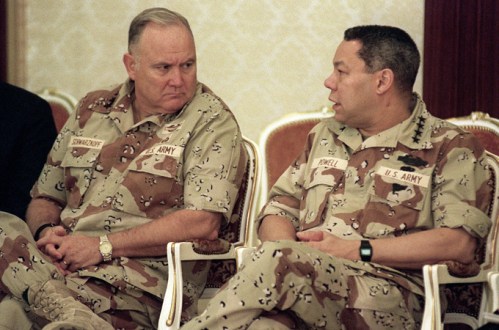
Schwarzkopf and Powell, the Eisenhower and Marshall of their Era

“Do what is right, not what you think the high headquarters wants or what you think will make you look good.” 

Americans lost a military hero and an icon yesterday. General Norman Schwarzkopf died in Tampa at the age of 79 due to complications of pneumonia.

Schwarzkopf was one of the most brilliant commanders of his era, a multi-dimensional character who was to many of us bigger than life.

Schwarzkopf was the quintessential Army Brat, growing up on military bases in the United States as well as in diplomatic posts overseas. The son of General he graduated from West Point, was commissioned as an infantry officer, became a paratrooper at Fort Campbell Kentucky before being assigned to the Berlin Brigade, a post he left just prior to the erection of the Berlin Wall by the Soviets and the East Germans. He completed a Masters degree in Mechanical Engineering from USC and was assigned as an instructor at West Point.

sch0-008a

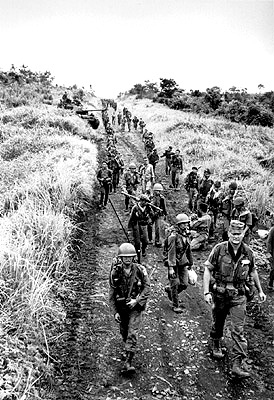
Schwarzkopf helping to carry a wounded South Vietnamese Paratrooper 

During that tour he volunteered to serve as an advisor with South Vietnamese paratroopers.  After that tour and the completion of his tour at West Point he was promote to Lieutenant Colonel and commanded the 1st Battalion 6th Infantry, 198th Brigade and was wounded while with his troops and who in the crisis kept his head and helped lead his troops, though seriously wounded out of the trap. He was known with affection by many soldiers as “the Bear,” a moniker that he appreciated much more than Desert Storm media nickname of “Stormin’ Norman.”
sch0-017

Schwarzkopf with ARVN Paratroops

It was during his time in Vietnam that Schwarzkopf came to a realization about men at war and his own personality. “I prided myself on being unflappable even in the most chaotic of circumstances,…That guise lasted until Vietnam, where I realized that I was dealing with human lives and if one were lost, it could never be replaced. I quickly learned that there was nothing wrong with being emotional.”

sch0-007a

Following his time in Vietnam he remained in the Army to help be a part of its rebuilding as an All Volunteer force. By the late 1970s he had served as a Brigade commander in the 9th Infantry Division and Assistant Division Commander in the 8th Infantry Division before taking command of the 24th Infantry Division in late 1982. He was appointed the Deputy Commander for the Joint Task Force that invaded Grenada in 1983 and in 1988 was appointed Commander for the US Central Command.
1general122812

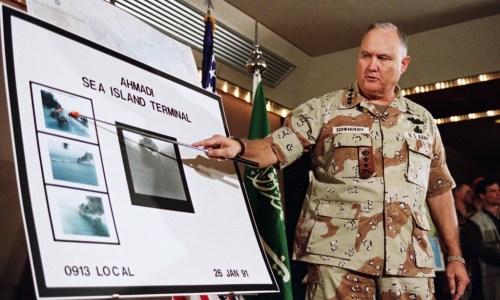
It was in this capacity that he took command of US and coalition troops gathering to respond to Saddam Hussain’s invasion of Kuwait in August 1981. His leaders and planning cells helped engineer a military campaign in conjunction with the admirable skill of President George H.W. Bush and his diplomats the successful expulsion and destruction of Saddam’s forces. While some criticize the decision not to continue the war and go on to Baghdad Schwarzkopf made a comment that those that invaded Iraq in 2003 might well have better heeded: had “we taken all of Iraq, we would have been like a dinosaur in the tar pit — we would still be there, and we, not the United Nations, would be bearing the costs of that occupation.”
20436634_BG1

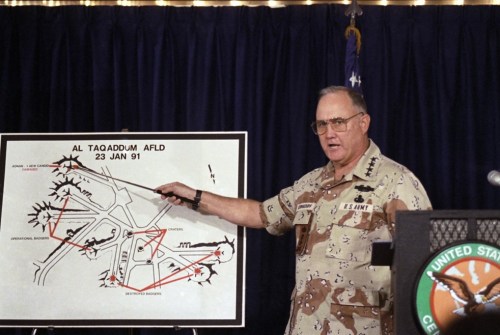
Schwarzkopf’s Briefings

After his retirement he was active in supporting cancer research programs, efforts to save the Grizzly Bear and was a military commentator and analyst for NBC. Although he supported the invasion of Iraq in 2003 he asked questions that few were asking. In early 2003 he told the Washington Post: “What is postwar Iraq going to look like, with the Kurds and the Sunnis and the Shiites? That’s a huge question, to my mind. It really should be part of the overall campaign plan.”  Following the invasion and the beginning of the insurgency he became a critic of the operation. He was particularly critical of Defense Secretary Donald Rumsfeld for not anticipating the consequences of the invasion and for Rumsfeld’s criticism of the Army and the deployment of reserve component troops into urban combat who did not have the correct training or equipment for the job. He also made another observation that few noted about Rumsfeld and much of the Pentagon staff and the Bush Administration appointees in Iraq, in that they “showed a total lack of understanding of the culture that we were dealing with.” 

Schwarzkopf was an original and though he was loathe to admit it a hero. He also knew that life was bigger than the military and that one has to be more than the sum of their career. He once told the Associated Press: “I may have made my reputation as a general in the Army and I’m very proud of that… “But I’ve always felt that I was more than one-dimensional. I’d like to think I’m a caring human being. … It’s nice to feel that you have a purpose.”
ip8CXZqG.OL8

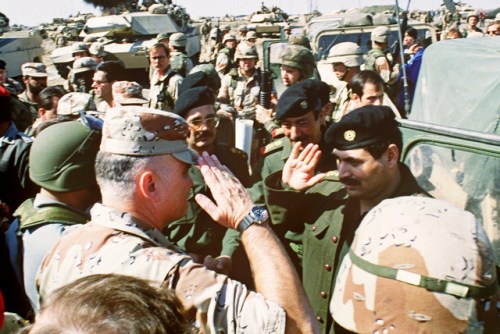
Schwarzkopf with Iraqi Generals at Cease Fire

Though I never served under his command while in the Army I knew many friends that did and my early career was shaped and molded by men life him.  He was not a perfect commander, analysis of his command in the Gulf show that he did make some mistakes, the greatest and most long lasting being the concession to allow the defeated Iraqi forces the use of helicopters which they used with great effect against the Shi’a tribes near Basra that sought independence.

However, in my mind it was Schwarzkopf’s public leadership that helped inspire his troops and encourage the nation which until that point had not recovered from all of the effects of the Vietnam War.  His briefings inspired confidence in America and with our Allies. He was as much of a diplomat in figuring out how to employ over 700,000 troops, military forces of 32 nation coalition, including numerous large Arab countries in a successful war.

Schwarzkopf also understood the full gravity of war and its effects on nations and people. He said: “I hate war. Absolutely, I hate war…Good generalship is a realization that … you’ve got to try and figure out how to accomplish your mission with a minimum loss of human life.”

He is remembered well. General Colin Powell who served as the Chairman of the Joint Chiefs during Desert Storm remarked after Schwarzkopf’s death “His leadership not only inspired his troops, but also inspired the nation. He was a good friend of mine, a close buddy. I will miss him.” From his hospital bed former President George H W Bush issued a statement saying that Schwarzkopf: “epitomized the ‘duty, service, country’ creed that has defended our freedom and seen this great nation through our most trying international crises….More than that, he was a good and decent man — and a dear friend.”  President Barak Obama praised him saying that “He was an American original” and “From his decorated service in Vietnam to the historic liberation of Kuwait and his leadership of United States Central Command, General Schwarzkopf stood tall for the country and Army he loved…”
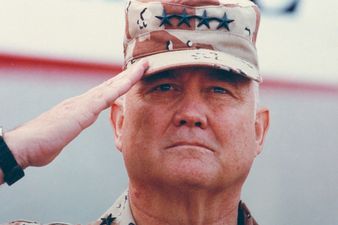
Norman+Schwarzkopf+

Rest in Peace General, Rest in Peace,

Peace

Padre Steve+
2 Comments

Filed under History, iraq,afghanistan, leadership, middle east, Military, News and current events, vietnam

Twilight of the Generals: The Deeper Implications of the Petraeus Scandal

“War with impersonal leadership la a brutal soul-destroying; business, provocative only of class animosity and bad workmanship. Our senior officers must get back to sharing danger and sacrifice with their men, however exalted their rank, just as sailors have to do. That used to be the British way, but, unfortunately, there was a grievous lapse from it in the last war.” Colonel C.S.O. Head, A Glance at Gallipoli 

It has been a strange week for the military. I will be writing some more on this over the next few days but in the wake of the scandals wracking the military.

Some of these things have been brewing for some time.  But the revelations of an extramarital affair of retired Army General and now former CIA Director David Petreus, the revelation that Petraeus’ successor in Afghanistan Marine General John Allen sending allegedly flirtatious e-mails with the woman whose complaints of e-mail harassment triggered the investigation that exposed the Petraeus and his mistress-biographer Paula Broadwell.

General William “Kip” Ward, the former commander of US AFRICOM was demoted following an investigation that tied him to “unauthorized expenses” and “lavish travel” to the tune of 129,000 on an 11 day “business trip” that only three days were actual business.

Meanwhile in Fort Bragg North Carolina Army Brigadier General Jeffery Sinclair is going through the military version of a grand-jury investigation for sexual harassment and other such crimes against a number of his female staff officers. One alleges that Sinclair forced her to have oral sex and that he threatened to kill her or her family if she told anyone.

As a career officer myself, having spent the last 31 years in the Army, the Reserve Components of the Army and the Active Duty Navy I am disappointed but not surprised. I spent almost over half my career as a company grade officer or enlisted man and a fan of the late Colonel David Hackworth, who called he senior leaders of the military “perfumed princes.”

I think part of the problem is that many of us in the military have become more supporters of the preservation of the institution of the military than we are of the Constitution or the country. This is not surprising and in a sense I can understand this and probably at more than one point in my career been guilty of this. We are afraid of cuts to the military institution because it impacts us.

The roots of the problem go back to Vietnam but can probably be traced further back. The revolt of liberals and young people against the war, the military and the draft forced an end to the draft and the beginning of the All Volunteer force. This was a two edged sword. On the positive side it allowed the military to reform, reorganize and become the premier fighting force in the world. On the minus side of the equation was the fact that the military became a society within the society. We became insular and in many cases, including mine distrusted liberals and Democrats on any national security issue. Those old enough can trace that back to how either we, or our fathers were treated by liberals, Democrats and the media during the Vietnam war and its aftermath. Others, younger than me simply have bought the lie that liberals and Democrats are inherently anti-military. This has been particularly the case since the end of the Reagan administration and the George H.W. Bush led Gulf War victory over Iraq which cemented a narrative that the military was invincible.

Over the course of the next 20 years, the 8 years of Bill Clinton, the 8 years of George W. Bush and the first 4 years of Barak Obama the esteem for the military by the general population has continued to go up, even as that population is increasingly divorced from the need to serve in the military. The military at any given times in the past 20 years numbered less than 1% of the American population. This statistic is unlikely to go up in the near future with the reduction of the military to its pre-Iraq war strength and the increase in the population.

While the military has been engaged in a protracted war since the attacks of 9-11 and heavily involved in other wars or “operations other than war” since the Gulf War it has continued to shrink in relative terms to the US population. At the same time the military has become a lot more top-heavy in  numbers of General and Flag Officers since before the Second World War. The percentage of Generals and Flag officers added to the military since the beginning of the War on Terror has only increased, especially at the 3 and 4 star level.

There were in 2011 a total of 964 Generals and Admirals in the US military down slightly from 1017 at the end of the Cold War when there were more than 600,000 more personnel in the military. In the Second World War there were about 1.7 Generals or admirals per 10,000 personnel, the line today is about 6.8 per 10,000. See ( http://www.pogo.org/pogo-files/testimony/national-security/ns-wds-20110914.html )

Regardless of the administration in power the senior ranks of the military have increased not only in numbers but in influence in the government. Highly respected by the public and with probably more power than at any time in our history the senior leadership of the Armed Forces has become insular and isolated. The senior ranks of the military have become a culture within a culture within the culture. The ongoing revelations of the Petraeus affair and possible involvement of General Allen regarding two women, most notably Jill Kelley a socialite who has cultivated close relationships with military leaders assigned to CENTCOM in Tampa as well as the culture of the Washington Beltway shows the depth of that disconnect.

At any given time there are well under 10% of flag and general officers commanding troops in combat. The rest are assigned to stateside units and staffs of various combatant commands, staffs and the Pentagon. In my service the Navy in World War II there were about 130 ships for every Admiral, today there are almost as many admirals as ships. While the ranks of the military have shrunk the numbers of Generals and Admirals has risen and the culture surrounding them has become more opaque. Generals and Admirals have become celebrities and power players in society in their own right. In fact I would guess that only the Great German Imperial General Staff of the Kaiser Reich had such influence in society at large or political power.

That respect which these men and women have earned in the nation which is often earned due to the incredible sacrifice of ordinary Soldiers, Sailors, Marines and Airmen. Likewise many General and Flag officer have done time in combat zones as lower ranking commanders and staff officers and have spent many years deployed and away from their families in direct combat or in supporting roles.

In spite of this there is obviously something amiss in the senior ranks of the military. The record numbers of the relief for cause of many senior officers and commanders due to various infractions, many of a personal, ethical or sexual nature is cause for concern. The concern that I hear from young men and women serving in the military and read about almost every day is that there is a separate set of standards for senior ranks than junior ranks. I have been fortunate that commands that I have been a part over the past 15 years have sensitive to this and have worked hard to ensure that standards are enforced regardless of rank but that is not always the case. High profile stories of scandal, privilege on the part of some have tarnished the hard work of many stellar officers and NCOs and the great sacrifice of those killed, maimed or wounded in mind, body and spirit in our current war.

The indiscreet and sometimes criminal actions of General Petraeus, General Ward, General Sinclair and fairly substantial number of other commanders who have been relieved for cause is is something to be concerned about.

Major General J.F.C. Fuller who served in the Royal Tank Corps in the First World War wrote a small but timeless book called “Generalship: Its Diseases and Their Cure: A Study of the Personal Factors of Command” in 1932. Fuller was quite critical of a culture in the higher ranks which had led to unnecessary slaughter and suffering during the First World War. It is a book that is well worth the read in such a time as ours. As the scandal continued to develop this week I remembered it and decided to re-read it.

The problems that we face are not unique to us. Scandals that are rocking the US Military are not new, they have been faced by other militaries before. The issue today is that the modern media and communications age has made it nearly impossible for those involved in salacious behavior to have it covered up. The Petraeus scandal has unfolded in large part due to the electronic media which almost all of us are dependent on, even for routine communications that never would have seen the light of day had they not been recorded in the cyber records of Google, Facebook, Twitter, text messages, e-mail providers or other electronic communication systems. There might have been insinuations, innuendo and accusations but many would have never seen the light of day.

The indiscretions of these men actually opened a door for honest questions and examination of the health of the American civil-military institutions. The military institution and those that swear to support and defend the Constitution of the United States cannot become just another special interest group. Yes it is important to maintain national security and to take care of the troops when they return to civilian society. We cannot allow ourselves to become a state within a state or culture within a culture. The exaggerated numbers of General and Flag Officers compared to the overall numbers of personnel in the military can only be justified by the necessary bureaucratic and institutional power provided by the rank, not by mission or responsibility.

The power of the institution is dangerous when its leaders subtly shift the mission from the defense of the Constitution and the people to the defense and maintenance of the institution itself and their own power.

This is not simply about sex, improper relationships, assault or financial indiscretions of leaders, it points to broader and perhaps more dangerous threats to our system of government, but the unbridled temptation of power and influence that believes that comes with the unquestioned adulation of politicians, pundits and preachers, the Unholy Trinity. So even as the scandals rock the military it is not a bad thing. If we do not address them they will become millstones about our necks that will drag us under and expose the people and Constitution that we are sworn to defend to untold disaster.

Dwight D. Eisenhower reminded us so well about this danger in his farewell address in 1961:

“In the councils of government, we must guard against the acquisition of unwarranted influence, whether sought or unsought, by the military-industrial complex. The potential for the disastrous rise of misplaced power exists and will persist. We must never let the weight of this combination endanger our liberties or democratic processes.”

Peace

Padre Steve+

2 Comments

Filed under History, leadership, Military, national security

A Loss for the Country and the World: A War Hero and Prophet of Peace George McGovern Dead at 90

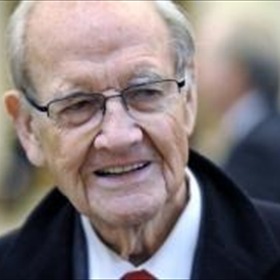
George McGovern in 2012 (AP File Photo)

The United States of America and the world lost a champion of peace and humanity this weekend when former Senator George McGovern died at the age of 90. If you had asked me if I would have written this article 10 or 15 years ago, I probably would not have, but war has a way of changing ones perspective about those that consistently labored for peace and justice.

The son of a Wesleyan Methodist Minister McGovern grew up in the South Dakota during the Great Depression and the Dust Bowl. He volunteered in the Second World War and flew 35 combat missions as the pilot of a B-24 Liberator bomber during which his aircraft was heavily damaged on a number of occasions and his skill as a pilot helped save the aircraft and crew.  For his service he was awarded the Distinguished Flying Cross and four awards of the Air Medal and his memories of being under fire from German FLAK and having his plane set afire during a mission caused him nightmares for years after the war.

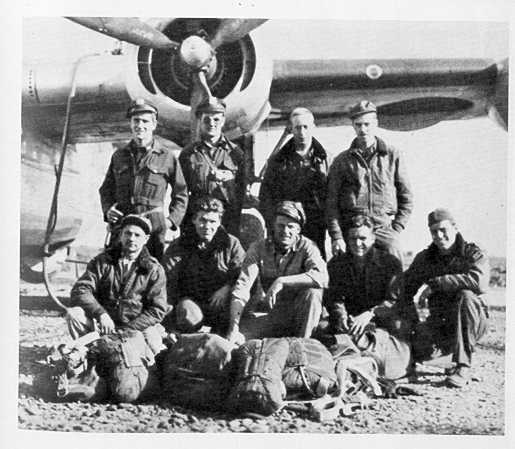
McGovern and his Aircrew (above) and with his Co-pilot and Navigator (below)

His experiences during the Depression and with the victims of war that he encountered in Italy made him a champion of people that suffer. He spent one year in seminary before switching to graduate studies in American History earning a Masters and Ph.D. in History. He served as a Congressman and Senator and represented the liberal wing of the Democratic Party. He served as the director of President Kennedy’s Food for Peace program. He was the first Senator to openly speak out against U.S. Military involvement in Vietnam when President Kennedy began to expand the mission. As a historian who actually studied what was going on in Vietnam for years he warned the Senate in September 1963 that:

“The current dilemma in Vietnam is a clear demonstration of the limitations of military power … [Current U.S. involvement] is a policy of moral debacle and political defeat … The trap we have fallen into there will haunt us in every corner of this revolutionary world if we do not properly appraise its lessons.”

After lending his vote to the Gulf of Tonkin Resolution which gave President Johnson a blank check to expand military involvement in Vietnam he realized that he had made a mistake. After and on January 15th 1965 as the U.S. forces entered into heavy combat against the North Vietnamese Army and the Viet Cong McGovern warned:

“We are fighting a determined army of guerrillas that seems to enjoy the cooperation of the countryside and that grow[s] stronger in the face of foreign intervention… We are further away from victory over the guerrilla forces in Vietnam today than we were a decade ago.” 

McGovern visiting Vietnam in 1965

He continued his outspoken opposition as the war continued and in November 1965 he spent three weeks in country carefully visiting and studying the situation with US military  and diplomatic officials as well as visiting the wounded. His visits to the hospitals in country made a huge impression on him causing him to become even more anti-war, though he voted for appropriations bills in order not to deprive the troops of what they needed.  In September 1969 with President Nixon looking to expand the war into Cambodia he deliberately offended his fellow Senators when fighting for the passage of the McGovern-Hatfield Amendment which would have forced the Administration to begin to end the war:

“Every Senator in this chamber is partly responsible for sending 50,000 young Americans to an early grave. This chamber reeks of blood. Every Senator here is partly responsible for that human wreckage at Walter Reed and Bethesda Naval and all across our land—young men without legs, or arms, or genitals, or faces or hopes. There are not very many of these blasted and broken boys who think this war is a glorious adventure. Do not talk to them about bugging out, or national honor or courage. It does not take any courage at all for a congressman, or a senator, or a president to wrap himself in the flag and say we are staying in Vietnam, because it is not our blood that is being shed. But we are responsible for those young men and their lives and their hopes. And if we do not end this damnable war those young men will some day curse us for our pitiful willingness to let the Executive carry the burden that the Constitution places on us.” 

He ran for President in 1972 and ran what was probably one of the worst campaigns ever. The Democratic party was deeply divided and in disarray and the Nixon campaign took advantage of both his “dovish” stance on the war as well as more progressive stances to demonize him as a person. The late columnist Robert Novak was a vicious critic working hand in hand with Nixon’s Chief of Staff Chuck Colson.

McGovern lost in the most lopsided defeat in modern American history only winning Massachusetts and losing 49 states and only garnering 38% of the vote. Following the defeat he won on more Senate campaign in 1974 and remained in the Senate until 1980 when he was defeated on the coattails of Ronald Reagan’s defeat of Jimmy Carter. He was demoted in the Democratic Party Senate hierarchy and never regained the power he had in the Senate that he had before the 1972 campaign.

In 1972 his campaign was a disaster and some of his policies not well thought out, Nixon and his cohort used everything against him, including some of the most dishonest campaign tactics, culminating in the Watergate break-in.

He remained an active voice in American politics until this year when age, illness and accidents finally caught up with him. He suffered the loss of his wife and two of his children before he died.

He was a voice for the powerless and for the common military man. He was anti-war but never anti-military or anti-troop. He had a great compassion for those that serve in uniform and was a critic of those that would send men and women into battle without taking the risk themselves. He was guided by his Christian faith in is beliefs especially about peace and the care of the poor. He was a Prophet of Peace.

Back in 1972 I was 12 years old and my dad was in Vietnam. Military personnel were frequently treated shamefully by anti-war activists who could not distinguish in their zealotry the difference between the policies of the government and the Soldiers, Marines, Sailors and Airmen that served in that unpopular war. I had a Sunday School Teacher tell me that my dad was a “baby killer.” For years I harbored much resentment for George McGovern. For years I did not appreciate the depth of his integrity and personal courage. In college I savored his loss of his Senate seat in 1980. When he came out against the invasion of Iraq in 2003 I figured that it was more of the same. However my views about him changed after my tour in Iraq and I now appreciate his honesty and foresight regarding both Vietnam and Iraq.

One does not have to agree with all of his policies to admire his personal courage and integrity as well as foresight about the tragedy that would unfold in Vietnam and Iraq. The man was a hero who served is country and the world and I hope someday that we will really come to appreciate him. I wish I had come to such an appreciation of him earlier in life.

Rest in peace,

Padre Steve+

3 Comments

Filed under History, News and current events, Political Commentary

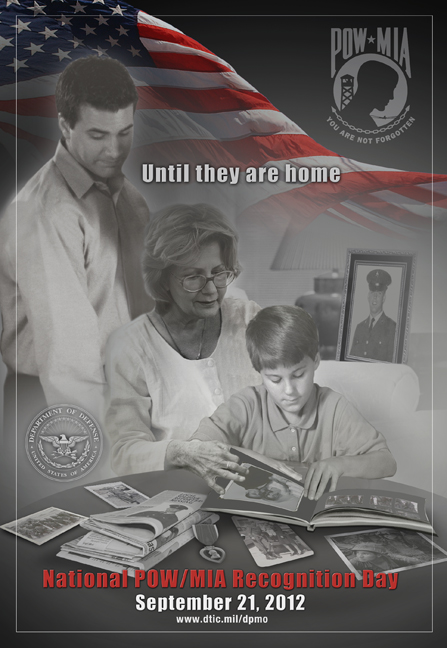
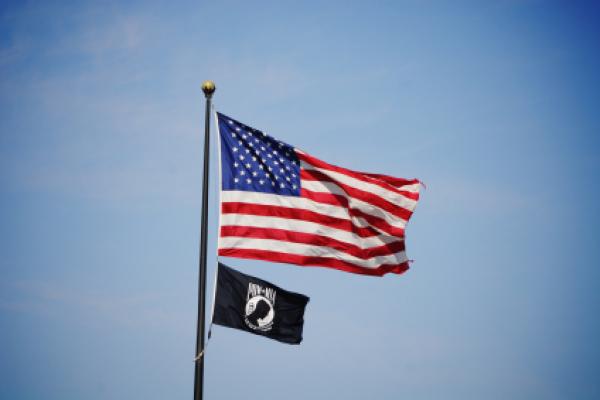
Never Forget: National POW-MIA Recognition Day September 21st 2012

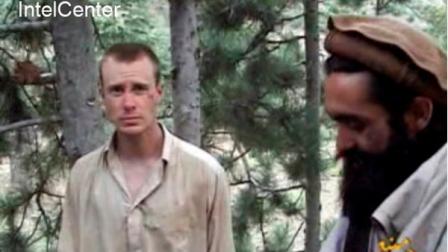
Over 80,000 American Soldiers, Sailors, Marines and Airmen who answered the call to the nation’s colors are still listed as Missing in Action. Currently there is one known Prisoner of War, Sergeant Bowe Bergdahl being held by Taliban Forces in Afghanistan.

Sht Bowe Bergdahl in Taliban captivity

Most of these men and women served in World War II, Korea and Vietnam. They went to war, many as conscripts and never came home. For many Americans they are not even a memory. We are so distanced from the concept of national service or sacrifice and these wars are so far in the past that most people have no concept unless they are closely connected to a military family that still looks at an empty place at a table and has not had the closure of knowing that their relative is alive or dead. They have memories of the day that someone told them that their loved one was missing in action or a prisoner of our enemies.

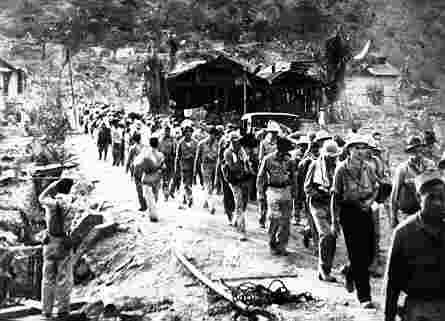
Bataan Death March

The wait endured by these families is unimaginable to most people. For those known to be POWs the wait is tempered by the knowledge that their loved on is still alive and might return. For the relatives of the missing, there is only hope that their loved one is alive. For most this is not the case, especially as the time between when they went missing and the present day grows ever longer.

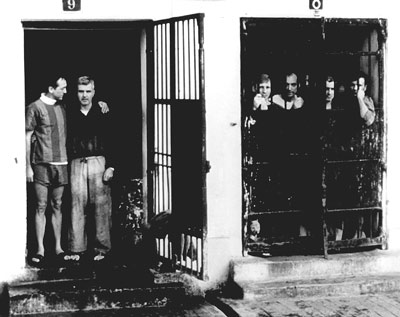
Captain James Stockdale (2nd from left) at the Hoa Lo Prison (Hanoi Hilton)

For those that experienced being a Prisoner of War the wait is one marked by isolation, constant enemy propaganda and the fear that they might not ever their their loved ones or home again. Most have endured those hardships and have survived torture at the hands of their captors. Vice Admiral James Stockdale who was a prisoner of the North Vietnamese for over seven and a half years. After his release he said something that I have always thought both remarkable and inspirational and representative of many of those who endured captivity: “The test of character is not ‘hanging in’ when you expect light at the end of the tunnel, but performance of duty, and persistence of example when you know no light is coming.”

Norman Eidsmoe

When I was a kid and my dad was in the Navy I went to school with the children of a Navy pilot, LCDR Norman Eidsmoe. Eidsmoe went missing on a night bombing mission over North Vietnam on January 26th 1968. Two of his sons would serve as aviators in the Navy or Marine Corps and in 1997 his remains,were recovered. On December 9th 1999 his remains as well as those of his bombardier-navigator LT Michael Dunn were positively identified by the Joint POW/MIA Accounting Command (JPAC).

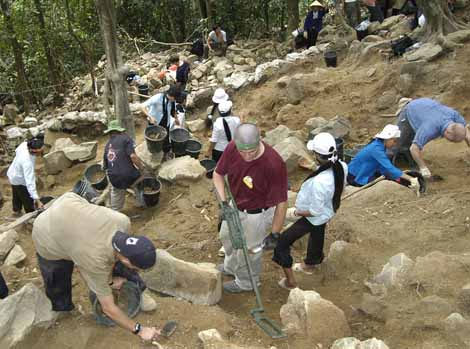
Members of the Joint POW-MIA Accounting Command near Dong Hoi Vietnam in 2006

For the Eidsmoe’s and the Dunn’s their long wait ended, but for tens of thousands of others the wait continues. Each day the men and women of the JPAC work around the world in to track down, recover and identify the missing. Working in the jungles of Southeast Asia, remote Pacific Islands and the battlefields of Europe and North Africa these men and women labor, often with our former enemies to locate, recover and identify our missing heroes. Almost every month the survivors and descendants of a MIA are notified that the remains of their loved one have been identified bringing needed closure to these families.

As this night ends let us not forget those who are still missing or held captive and those that currently serve in harm’s way.

Peace

Padre Steve+
 

1 Comment

Filed under History, Military, vietnam

Thoughts on Choosing a President and the Results of Not Getting it Right: Lieutenant General Harold Moore at West Point

Lt.Gen. Harold (Hal) Moore is a legitimate American hero. Moore was commissioned as an infantry officer in the closing months of the Second World War, served in Korea and later in 1965 ed the 1st Battalion 7th Cavalry, 1st Cavalry Division into combat at the Battle of Ia Drang in Vietnam. In that battle, the first major engagement of US forces against North Vietnamese Army Regulars Moore’s outnumbered battalion held off elements of two NVA regiments. Moore’s book We Were Soldiers Once, and Young was adapted and released as the film We Were Soldiers where Moore was portrayed by Mel Gibson. His second book, We are Soldiers Still: A Journey back to the Battlefields of Vietnam are must reads for anyone who wants an honest assessment of going to war and the costs involved.

In 2005 Lt. Gen. Moore was invited to speak at West Point. It was during some of the worst times of the Iraq insurgency and Moore had been a critic of the war and Defense Secretary Donald Rumsfeld. He recounted the question and answer session in We are Soldiers Still:

“In a long question-and-answer session following my speech I was asked about Iraq and then Defense Secretary Rumsfeld. In this place-where cadets live by a code that says they never lie, cheat, steal, or quibble-I was bound to speak the truth as I knew it.

The war in Iraq, I said, is not worth the life of even one American soldier. As for Secretary Rumsfeld, I told them, I never thought I would live long enough to see someone chosen to preside over the Pentagon who made Vietnam-era Defense Secretary Robert McNamara look good by comparison. The cadets sat in stunned silence; their professors were astonished. Some of these cadets would be leading young soldiers in combat in a matter of a few months. They deserved a straight answer.

The expensive lessons learned in Vietnam have been forgotten and a new generation of young American soldiers and Marines are paying the price today, following the orders of civilian political leaders as they are sworn to do. The soldiers and those who lead them will never fail to do their duty. They never have in our history. This is their burden. But there is another duty, another burden, that rests squarely on the shoulders of the American people. They should, by their vote, always choose a commander in chief who is wise, well read in history, thoughtful, and slow-exceedingly slow-to draw the sword and send young men and women out to fight and die for their country. We should not choose for so powerful an office someone who merely looks good on a television screen, speaks and thinks in sixty-second sound bites, and is adept at raising money for a campaign.

If we can’t get that part right then there will never be an end to the insanity that is war and the unending suffering that follows in war’s wake-and we must get it right if we are to survive and prosper as free Americans in this land a million Americans gave their lives to protect and defend.” (Lt. Gen. Harold Moore at West Point Spring 2005) http://www.dailypaul.com/81039/inspiring-quote-from-lt-gen-harold-hal-moore-usa-ret

I make many comments about politics on this site. I am a critic of both parties and and their Presidential candidates. I find much to be desired in the leadership being displayed by many in political office and those running for office. However no matter which party a candidate belongs to I expect, like Lt. Gen. Moore that they are “wise, well read in history, thoughtful, and slow-exceedingly slow-to draw the sword and send young men and women out to fight and die for their country.”

I completely agree with Moore that We should not choose “someone who merely looks good on a television screen, speaks and thinks in sixty-second sound bites, and is adept at raising money for a campaign.”  

We should know better by now. We have experienced the tragedy of leaders who failed their soldiers and this nation in Vietnam, Somalia, Iraq and Afghanistan. However it is the responsibility of the American people to elect well qualified men and women to office. It is not to simply for people vote for their special interests and vote for those that can play the electoral game the best regardless of their actual qualifications or for that matter their wisdom.

I have served as an officer for 29 years in the Army and the Navy. I have served under five Presidents all of whom I found reason to agree with and disagree with on matters of policy. But they were the President and I was and still am not. It is possible that I will serve a sixth President before I retire from the military. Regardless of who that is or which party they represent I will be faithful to my oath and to the Constitution and be respectful of Office of the President and the man, or woman who holds it and I will pray for them. Likewise I pray that the men, or women that they chose as the civilian leaders of the military are both wise and morally courageous, unlike Robert McNamara or Donald Rumsfeld. The same is true for senior officers that set policy and lead troops in combat. We do not need what David Hackworth called the “perfumed princes” as leaders.

That being said I do pray that whoever is elected this November will be more than a good campaigner and be wise and thoughtful before committing the nation, and especially those that serve in the military to war. Our men and women serving in harms’ way deserve as much. Too many American Soldiers, Marines, Sailors and Airmen have died or come back horribly maimed from Vietnam, Iraq and Afghanistan for us not to expect as much from those that seek to lead the nation regardless of their political party.

Moore’s co-author, journalist Joe Galloway, a critic of both President Bush and President Obama wrote concerning Afghanistan in 2010:

“For God’s sake, don’t ratchet up slowly, buying time with the bodies of dead and wounded American soldiers, while you try to sell the wrong war in the wrong place against the wrong enemy to the American people.

For eight years, we’ve heard presidents and other politicians talk about setting conditions for a democratic central government in a country — really a bunch of tribes and clans — that’s never had such a thing in 2,000 years and seemingly doesn’t want one now.” http://www.mcclatchydc.com/2009/09/03/74876/commentary-afghanistan-isnt-worth.html#storylink=cpy   

We should listen more to men like Lt. Gen. Moore and Joe Galloway than to those that use the military for their political or economic gain spouting sound bite foreign policy to mask their ignorance.

Peace

Padre Steve+

4 Comments

Filed under History, iraq,afghanistan, leadership, News and current events, Political Commentary

A Pause to Reflect on Iraq, Afghanistan and Unpopular Wars on a Sunday Night

This story shall the good man teach his son;
And Crispin Crispian shall ne’er go by,
From this day to the ending of the world,
But we in it shall be remembered-
We few, we happy few, we band of brothers;
For he to-day that sheds his blood with me
Shall be my brother; be he ne’er so vile,
This day shall gentle his condition;
And gentlemen in England now-a-bed
Shall think themselves accurs’d they were not here,
And hold their manhoods cheap whiles any speaks
That fought with us upon Saint Crispin’s day.

From the Speech of King Henry V at Agincourt in Shakespeare’s “Henry V” 1599

Five years ago I was in the process of deploying to Iraq.  It is hard to believe that it has been that long.

For me the past few weeks have been filled with sleepless nights, flashbacks and nightmares, mostly related to my time in Iraq.  I have been far more hyper-vigilant and anxious than I have been for a while.  Crowds and crowded places cause me great anxiety. I guess it is sort of like the Hotel California, you can check out anytime you want but you can never leave.  The experiences and places are forever in my mind. I can close my eyes and the images are fresh.

I jokingly refer to my continuing struggle with PTSD as the “Mad Cow,” somehow that takes some of the edge off for me.  But even my attempt at humor belies the fact that it does get old.

At the same time because of my service in Iraq I am part of a very special brotherhood, that brotherhood that Shakespeare’s Henry V voiced so well.

I have the wonderful opportunity to serve alongside men and women who have given much for this country, men and women who also bear the wounds of war, physical, psychological, spiritual and moral. I have the honor of serving with men and women who continue to deploy in harm’s way to Afghanistan and being stationed at one of the installations that have borne then heavy burden of this war I am reminded daily of the cost of it. I look at the casualty reports daily and last week yet another Marine Military policeman from Camp LeJeune was killed in Afghanistan. Two sailors from a Squadron based in Norfolk were killed in the crash of an MH-53 Helicopter in Oman, an aircraft sent to beef up capabilities against Iran in the Strait of Hormuz. This weekend at least 8 NATO troops or contractors were killed in Afghanistan, three being American contractors  killed by an Afghan policeman while training Afghan police in Herat. The war is never far away.

I am also grateful to people in the community who care to say a kind word when I am in public in uniform. Many people in the area have served in uniform, many during Vietnam as well as an ever dwindling number of World War II and Korea War vets.  I have had to make trips up to a local jail in a town up the road from us to see two of my sailors accused in a terrible crime.  I make those visits in uniform and on the way back one day I stopped to get a Coke at a store. As I walked in a man thanked me for my service.  While I was paying another man began to talk to me. He also thanked me and then went to describe his service in Vietnam.

Such encounters are humbling for me and a reminder of the very special brotherhood that I am just a part. That brotherhood for me is especially close for the that liked me served in Iraq but also Afghanistan, Vietnam and by extension the French veterans of Indochina and Algeria. We are veterans of unpopular wars that are fought by a minute segment of the population.

I saw a video of an advisor to Mitt Romney note that “real Americans don’t care about Afghanistan.” I did not take his remark personally but it did hit home. The man is a seasoned political advisor, his business is to look at numbers and polls. It was a remark that showed me what I already know, that for many Americans the war is not real.  Unfortunately as real as the war is to me and to many people that I know we are in the minority. The most recent opinion polls show that Afghanistan ranks 10th of 10 major issues that Americans are concerned about.  At the same time polls show that the military is the most trusted institution in the nation.

Tonight I will try to sleep and in the morning, Inshallah, I will wake up and go back to serve the men and women who serve this country caring for the Marines, Sailors, Soldiers, Airmen, Coastguardsmen, veterans and their families at Camp LeJeune.

The war is not over and despite what opinion polls and politicians say it is important to some of us.

Peace

Padre Steve+

1 Comment

Filed under iraq,afghanistan, Military, PTSD, Tour in Iraq

God in the Empty Places: Four Years Later

Four years ago I was leaving Iraq for Kuwait, the first stop in the process of coming home.  At that point I wanted to go home but I didn’t want to go either. It was the beginning of a new phase in my life.  I wrote an article shortly after my return for the church that I belonged to at the time. I am reposting article here tonight.  

When I wrote it I really had no idea how much I had changed and what had happened to me.  I feel s special kinship with those that have fought in unpopular wars before me. French Indochina, Algeria and Vietnam, even the Soviet troops in Afghanistan before we ever went there.  

I am honored to have served with or known veterans of Vietnam, particularly the Marines that served at the Battle of Hue City, who are remembering the 44th anniversary of the beginning of that battle.  My dad also served in Vietnam at a place called An Loc. He didn’t talk about it much and I can understand having seen war myself. 

There are no new edits to the article. When I wrote it I was well on my way to a complete emotional and spiritual collapse due to PTSD.  Things are better now but it was a very dark time for several years and occasionally I still have my bad days. Today was a day of reflection.  As I walked my little dog Molly down the street tonight to the beach I looked up at the moonlit sky and I was as I have been thinking lately about seeing all of those stars and the brilliance of the moon over the western desert of Iraq near Syria. Somehow that sight now comforts me instead of frightens me. 

Tonight our Soldiers, Marines, Sailors and Airmen serve in harm’s way nearly 100,000 in Afghanistan alone. We are out of Iraq but Lord knows how things will turn out in the long run there.  

Anyway. Here is is.

God in the Empty Places. 

I have been doing a lot of reflecting on ministry and history over the past few months. While both have been part of my life for many years, they have taken on a new dimension after serving in Iraq. I can’t really explain it; I guess I am trying to integrate my theological and academic disciplines with my military, life and faith experience since my return.

The Chaplain ministry is unlike civilian ministry in many ways. As Chaplains we never lose the calling of being priests, and as priests in uniform, we are also professional officers and go where our nations send us to serve our Soldiers, Sailors, Marines and Airmen. There is always a tension, especially when the wars that we are sent to are unpopular at home and seem to drag on without the benefit of a nice clear victory such as VE or VJ Day in World War II or the homecoming after Desert Shield and Desert Storm.

It is my belief that when things go well and we have easy victories that it is easy for us to give the credit to the Lord and equally easy for others to give the credit to superior strategy, weaponry or tactics to the point of denying the possibility that God might have been involved. Such is the case in almost every war and Americans since World War Two have loved the technology of war seeing it as a way to easy and “bloodless” victory. In such an environment ministry can take on an almost “cheer-leading” dimension. It is hard to get around it, because it is a heady experience to be on a winning Army in a popular cause. The challenge here is to keep our ministry of reconciliation in focus, by caring for the least, the lost and the lonely, and in our case, to never forget the victims of war, especially the innocent among the vanquished, as well as our own wounded, killed and their families.

French Paratroop Corpsmen treating wounded at Dien Bien Phu

But there are other wars, many like the current conflict less popular and not easily finished. The task of chaplains in the current war, and similar wars fought by other nations is different. In these wars, sometimes called counter-insurgency operations, guerrilla wars or peace keeping operations, there is no easily discernible victory. These types of wars can drag on and on, sometimes with no end in sight. Since they are fought by volunteers and professionals, much of the population acts as if there is no war since it does often not affect them, while others oppose the war.

Likewise, there are supporters of war who seem more interested in political points of victory for their particular political party than for the welfare of those that are sent to fight the wars. This has been the case in about every war fought by the US since World War II. It is not a new phenomenon. Only the cast members have changed.

This is not only the case with the United States. I think that we can find parallels in other militaries. I think particularly of the French professional soldiers, the paratroops and Foreign Legion who bore the brunt of the fighting in Indochina, placed in a difficult situation by their government and alienated from their own people. In particular I think of the Chaplains, all Catholic priests save one Protestant, at the Battle of Dien Bien Phu, the epic defeat of the French forces that sealed the end of their rule in Vietnam. The Chaplains there went in with the Legion and Paras. They endured all that their soldiers went through while ministering the Sacraments and helping to alleviate the suffering of the wounded and dying. Their service is mentioned in nearly every account of the battle. During the campaign which lasted 6 months from November 1953 to May 1954 these men observed most of the major feasts from Advent through the first few weeks of Easter with their soldiers in what one author called “Hell in a Very Small Place.”

Another author describes Easter 1954: “In all Christendom, in Hanoi Cathedral as in the churches of Europe the first hallelujahs were being sung. At Dienbeinphu, where the men went to confession and communion in little groups, Chaplain Trinquant, who was celebrating Mass in a shelter near the hospital, uttered that cry of liturgical joy with a heart steeped in sadness; it was not victory that was approaching but death.” A battalion commander went to another priest and told him “we are heading toward disaster.” (The Battle of Dienbeinphu, Jules Roy, Carroll and Graf Publishers, New York, 1984 p.239)

Of course one can find examples in American military history such as Bataan, Corregidor, and certain battles of the Korean War to understand that our ministry can bear fruit even in tragic defeat. At Khe Sahn in our Vietnam War we almost experienced a defeat on the order of Dien Bien Phu. It was the tenacity of the Marines and tremendous air-support that kept our forces from being overrun.

You probably wonder where I am going with this. I wonder a little bit too. But here is where I think I am going. It is the most difficult of times; especially when units we are with take casualties and our troops’ sacrifice is not fully appreciated by a nation absorbed with its own issues.

For the French the events and sacrifices of their soldiers during Easter 1954 was page five news in a nation that was more focused on the coming summer. This is very similar to our circumstances today because it often seems that own people are more concerned about economic considerations and the latest in entertainment news than what is going on in Iraq or Afghanistan. The French soldiers in Indochina were professionals and volunteers, much like our own troops today. Their institutional culture and experience of war was not truly appreciated by their own people, or by their government which sent them into a war against an opponent that would sacrifice anything and take as many years as needed to secure their aim, while their own countrymen were unwilling to make the sacrifice and in fact had already given up their cause as lost. Their sacrifice would be lost on their own people and their experience ignored by the United States when we sent major combat formations to Vietnam in the 1960s. In a way the French professional soldiers of that era have as well as British colonial troops before them have more in common with our force than the citizen soldier heroes of the “Greatest Generation.” Most of them were citizen soldiers who did their service in an epic war and then went home to build a better country as civilians. We are now a professional military and that makes our service a bit different than those who went before us.

Yet it is in this very world that we minister, a world of volunteers who serve with the highest ideals. We go where we are sent, even when it is unpopular. It is here that we make our mark; it is here that we serve our Soldiers, Sailors, Marines and Airmen. Our duty is to bring God’s grace, mercy and reconciliation to men and women, and their families who may not see it anywhere else. Likewise we are always to be a prophetic voice within the ranks.

When my dad was serving in Vietnam in 1972 I had a Sunday school teacher tell me that he was a “Baby Killer.” It was a Catholic Priest and Navy Chaplain who showed me and my family the love of God when others didn’t. In the current election year anticipate that people from all parts of the political spectrum will offer criticism or support to our troops. Our duty is to be there as priests, not be discouraged in caring for our men and women and their families because most churches, even those supportive of our people really don’t understand the nature of our service or the culture that we represent. We live in a culture where the military professional is in a distinct minority group upholding values of honor, courage, sacrifice and duty which are foreign to most Americans. We are called to that ministry in victory and if it happens someday, defeat. In such circumstances we must always remain faithful.

For those interested in the French campaign in Indochina it has much to teach us. Good books on the subject include The Last Valley by Martin Windrow, Hell in a Very Small Place by Bernard Fall; The Battle of Dienbeinphu by Jules Roy; and The Battle of Dien Bien Phu- The Battle America Forgot by Howard Simpson. For a history of the whole campaign, read Street Without Joy by Bernard Fall. I always find Fall’s work poignant, he served as a member of the French Resistance in the Second World War and soldier later and then became a journalist covering the Nuremberg Trials and both the French and American wars in Vietnam and was killed by what was then known as a “booby-trap” while covering a platoon of U.S. Marines.

There is a picture that has become quite meaningful to me called the Madonna of Stalingrad. It was drawn by a German chaplain-physician named Kurt Reuber at Stalingrad at Christmas 1942 during that siege. He drew it for the wounded in his field aid station, for most of whom it would be their last Christmas. The priest would die in Soviet captivity and the picture was given to one of the last officers to be evacuated from the doomed garrison. It was drawn on the back of a Soviet map and now hangs in the Kaiser Wilhelm Memorial Church in Berlin where it is displayed with the Cross of Nails from Coventry Cathedral as a symbol of reconciliation. I have had it with me since before I went to Iraq. The words around it say: “Christmas in the Cauldron 1942, Fortress Stalingrad, Light, Life, Love.” I am always touched by it, and it is symbolic of God’s care even in the midst of the worst of war’s suffering and tragedy.

Peace

Padre Steve+

Leave a comment

Filed under History, iraq,afghanistan, Military, PTSD, Tour in Iraq

Padre Steve’s World Top 12 of 2011: A Big Thank you to my Readers

Well my friends it is time for my annual look at what were the most popular articles on Padre Steve’s World.

This year I went over 3 million views since the site began in February 2009 and over a million since the last new year.  People from over 200 countries and territories that pretty much act like countries have visited my little cyber space world.

I do find it interesting to see what people are reading on this site, what search terms they are using and what search engines they are using to get to the site. The folks at WordPress.com which hosts this site have a great statistic page for a baseball stat person like me is like a blog statistic version of Saber Metrics.  Now if they can only find a way to calculate my site states like the OBP and Slugging percentage…but I digress.

In 2009 I published my top 10 list and in 2010 I did my top 25 list so this year I am doing my top 12 of 2011. All of the articles on this list had over 4000 views each in the last 12 months.  Since I have now published almost 1000 articles on this site these are just a taste of what a reader can find here.

The number one article of the year is “Revisionist” History and the Rape of Nanking 1937 .  This was something that interested me for a long time and it is rather academic in its focus but has been at the top of my stats most of the year. The article is about those that seek to cover up or minimize the atrocities committed by the Imperial Japanese Army in city of Nanking in 1937.  I do expect the article to remain at or near the top of the list in 2012 with the release of The Flowers of War http://www.theflowersofwarthemovie.comstaring Christian Bale in 2012.

Number two on the list is Why Johnny Can’t Read Maps: NCAA Tournament Geography for Dummies and a Solution which I wrote back in 2010 during the NCAA Men’s Basketball Tournament.  It is a humorous look at how the NCAA decides what cities represent the various regions of the country.  I for one do now see how anything in the Pacific Northwest is part of the Southeast Regional bracket.  No wonder people have no clue about the geographic regions of the United States.  At least they could do a GPS search.

Number three on the list is an oldie but goodie I Miss the Music of the 70’s and 80’s. The article itself is a musical look at the history of of 1970s and 1980s. Since I grew up with this music it is really a part of who I am. Unfortunately many of the links to the music videos are no longer operative but the article is interesting and anyone with half a brain can find the songs on You Tube or any number of various sources.  Since then I have published a number of other articles on the music of this time period which are filed in the Padre Steve’s Music page.

Number four on this site is an article about the death of the noted evangelist David Wilkerson who I had and still have a great deal of respect for; The Unexplained and Tragic Death of David Wilkerson.  I wrote the article because of the circumstances of his death.  I suggested after looking at the evidence including his writings and the actual accident report and suggested that it was possible that his death was a case of “suicide by car.”  I did not expect the reaction that I received. Some people were quite offended that I suggested that Wilkerson suffered from depression and that the circumstances of the accident pointed to either suicide or negligent driving on his part.  In fact some of the comments were so abusive and irrational that I finally for the first time and only in the history of this site closed the comments section.  I just got tired of the abuse and tired of answering the same abusive comments time and time again.  The article and a couple of follow up articles do point out the pressure that many ministers are under and how depression and crisis’s of faith can afflict people of great faith who have helped many people and were not in any way disparaging of Reverend Wilkerson. However I found that even suggesting such is tantamount to smashing idols.  Oh well…it is a good article and I do stand by it.

Fifth place goes to an article that I wrote about the nearly psychotic accusations hurled by Iran at the United States for our Navy’s official name for what they call the Persian Gulf, the Northern Arabian Gulf, it is a somewhat humorous look at a rather serious subject.  Why don’t we just call it the Gulf of Whatever we want to call it? Padre Steve Says the Iranians Whine too Much

Number six on the hit parade is a rather academic military history article about the Battle of Stalingrad The Anniversary of Disaster: Stalingrad 67 Years Later that I wrote in January 2010.  I find that Stalingrad and other campaigns are instructive even today.

Seventh place belongs to a short article about D-Day entitled D-Day: Omaha Beach which is a nice starting point for those interested in the Normandy campaign.

Coming in at number eight is an article about one of my favorite subjects Baseball and civil rights Jackie Robinson and Dr. Martin Luther King they Changed America.

The ninth most popular article on this site is a follow up to the number three article again involving the music of the 1970s and 1980s More about Why I Miss the Music of the 70’s and 80’s .

Number ten is my 2009 top ten article Padre Steve’s World: Top 10 articles of 2009.

Another academic military history article Wacht am Rhein: The Battle of the Bulge came in at number eleven on the list.

Slipping in at number twelve is an article about military recruiting slogans Memorable Recruiting Slogans and the All Volunteer Force.

There are other articles not in the top 12 for this year but that still get a lot of views and are worth reading. A good number are on military or naval history one of the best of which is The Ideological War: How Hitler’s Racial Theories Influenced German Operations in Poland and Russia while two other military theory article is Learning to Apply the Principles of Counterinsurgency Part One: Introduction to the Soviet-Afghan War and The Effects of Counter-Insurgency Operations on U.S. and French Forces in Vietnam and Algeria and Implications for Afghanistan.

Among the music articles I recommend Laughing to the Music: The Musical Genius of Mel Brooks and just for fun there is an article about a little church that gets pretty crazy, almost Iran Mullah crazy without the killing dissenters, Halloween Book Burning Update: Bring the Marshmallows Please!. One of my favorite faith and life articles Star Trek, God and Me 1966 to 2009. There are also a lot of articles on baseball, faith, religion, history and politics on the site.

Anyway, if you are new to the site and haven’t dug around too much just yet those are good starting points.  Hopefully anyone that stops by will find something to interest them, thought provoking or funny, academic or asinine, historical or hysterical.  Feel free to browse comment and if you like the site subscribe or join me on Facebook or Twitter.

Blessings on you and thanks to all of my readers as well as Cheru Jackson at Alpha Inventions and the folks at Kadency who help publicize this site. I do recommend both, especially Alpha Inventions to bloggers that seek a wider audience for their writings.

Hopefully 2012 will be a good year for all of us and somehow despite all problems that beset our world that 2012 will be better than 2011.

Peace

Padre Steve+

5 Comments

Filed under Loose thoughts and musings

Marking the Illusion of Peace: December 6th 1941

A great war was already going on in Europe, Asia and the Middle East but most Americans lived as if war would never happen.  It didn’t seem to matter that that Nazi Germany had conquered all of Western Europe and that the Soviet Union was on the Ropes even as the United States Navy was already in action escorting convoys in the Atlantic. Of course the Japanese had been busy and were entering their second decade of war in China and had occupied French Indochina earlier in 1941. No war was something that happened to other people and nations.  The United States of course was immune to what was going on overseas and isolationism dictated much of the political debate often hamstringing the Roosevelt administration.

While the Government and the military anticipated that war was immanent the bulk of the country acted as if war would never happen. Various parties in Congress and special interest groups actively lobbied for the United States to remain clear of war and resisted the Roosevelt administration as it sought to strengthen the military. Thus as December 6th passed the nation focused on  everyday life.  People went to football games did Christmas shopping and spent time with family.

Now the country had been preparing for war, the Army, the Army Air Corps and the Navy  were expanding at a rapid rate. Exercises were held by large Army formations across the South in 1941 and bases were being built around the country.  In the years before the war the Japanese had attacked and sunk the gunboat USS Panay in China and German U-Boats had torpedoed and sunk the Destroyers USS Ruben James and damaged the USS Kearny as well as numerous merchant ships. Despite this many people failed to comprehend that war was immanent.  In fact there were groups that actively supported the political cause of Nazi Germany right here in the United States. Thus when people found out in the morning or in the afternoon of December 7th 1941 there was a collective sense of shock that had was new to the nation.

December 6th 1941 was the last night of an old world, a world of fantasy. It was the temporary end of the belief that the United States could be isolated from the carnage of war in Europe, the Middle East and Asia.  For 70 years since we have fought to return to that fantasy world where if we close our eyes and mind our own business that nothing bad will happen.  After the fall of the Soviet Union and the Cold War we seemed to believe that the world was different and that somehow we were unique, it was told to us by Republicans and Democrats so it had to be true.

Then we were attacked on September 11th 2001 and we went to war, except this time we decided were the wars would be fought but unlike World War II we abdicated the responsibility for conducting the war to a small sliver of the population, never more than half of one percent of the nation to go do the fighting and dying for the rest of us. Instead of a call to service we were told to go shopping. We entered wars with no certainty of what the end state would be.  Ten years later we are still fighting and despite the many successes and the valiant efforts and sacrifices of our military we are nowhere close to where our nation was to winning the war as we were within two years of the attack on Pearl Harbor and unlike that war we now face bigger threats than we were facing then.  War beckons in other lands and the post Cold War world is in shambles.

I certainly don’t have the answers to this but I do know that we must not let ourselves be lulled into even more complacency thinking that what happens overseas stays overseas.

The memories of December 7th 1941 have faded away. Few survivors of that day remain and those of the Greatest Generation are passing away faster than we think possible.  The collective memory is being left to family members, friends and historians. For that matter our collective memory of the Korean War, Vietnam, the Cold War, the First Gulf War and even our current wars seems to be waning.  As a nation we seem to have forgotten everything and have returned to the illusions of December 6th 1941.

These are dangerous times and while there may not be a Japanese Carrier Striking Force making its final approach to Hawaii there are real threats that can make our present “crisis” look like a picnic on a summer day.

Peace

Padre Steve+

1 Comment

Filed under History, Military, national security, world war two in the pacific

The Brotherhood: Veterans Day 2013

I am always a bit on the melancholy side on Veterans Day.  This year is no different but is a bit different because for the United States the war in Iraq is over, at least for now while the war in Afghanistan grinds on as we prepare to transition.

For me our wars are more about the incredibly small number of Americans who for the past 12 years have borne the burden of these wars.  They are my brothers and sisters, the 0.45% of Americans that serve in the military.  While this is a terribly low number it is only marginally lower than most of our previous wars.

In fact for most of our history it has always been a small minority of Americans that have fought our wars.  Kind of funny when you think about how much our culture worships militarism. World War II was an anomaly as just over 16.1 million people or 9% of the population served in the military then.  That number while large pales in comparison with percentages of those that served in other nations involved in the Second World War. The reason that I point this out is just to say that as a nation it has always been the few that have borne the cost of war. We are “the few.”

This story shall the good man teach his son;
And Crispin Crispian shall ne’er go by,
From this day to the ending of the world,
But we in it shall be remembered-
We few, we happy few, we band of brothers;
For he to-day that sheds his blood with me
Shall be my brother; be he ne’er so vile,
This day shall gentle his condition;
And gentlemen in England now-a-bed
Shall think themselves accurs’d they were not here,
And hold their manhoods cheap whiles any speaks
That fought with us upon Saint Crispin’s day.

From the Speech of King Henry V at Agincourt in Shakespeare’s “Henry V” 1599

In the midst of the petty politics surrounding the Afghan War so so ponderously and pompously purveyed by politicians and pundits of all strains I feel the need to speak up for that small band of brothers that has served in these wars. They are to steal a phrase applied to a previous generation the “New Greatest Generation” something that I am loathe to apply to much of the population at large.  You see the cost of these wars is finally beginning to sink in, at least the financial cost. The real fact of the matter is that these ill advised wars have harmed us as a military and as a nation, our superpower status which was uncontested before 9-11-2001 is challenged because our military is hollowed out, economy weakened and our moral authority questioned by those wars, war crimes and spy scandals.

I’m not so sure that the human cost factors in for most Americans because the tiny percentage of the population that serve in the wars. The fact is that the volunteer military is an insular community which for the most part is based on bases away from most of the population. We have become a society apart from the society.

We used to have big bases in or near major cities, the New York Naval Yard, the Presidio of San Francisco, Long Beach Naval Shipyard, Fort Devens Massachusetts near Boston, Fort Benjamin Harrison Indiana at Indianapolis.  But after the Cold War they and hundreds of other bases were eliminated and with them a connection to the active duty military.  That is not the fault of the people in the big cities it just happened that way, no the military with a few exceptions is based away from most of the population. As a result people may support the troops but most have no idea what they do, how they live and what they suffer.

In spite of that this many of the new Greatest Generation’s accomplishments will largely go unheralded by history. Unlike the “Greatest Generation” of World War Two they will probably not receive the full honors and accolades due them.  This brotherhood of war who have served in the current War on Terror, Iraq and Afghanistan campaigns have now been serving in a war that is now twice as long as the American involvement in World War Two.  Many, like me have been in this since the beginning and many have made multiple deployments to the combat zones.  And many of us, if not most of us would go again. I know that I would because part of me is still in Iraq; for me this war is still un-won and un-finished.

The battles, Fallujah, Ramadi, Haditha, Mosul, Baghdad, Tal Afar, Marjah, Kandahar, Anaconda, Wanat and thousands of other places significant and insignificant are vivid in the minds of those that were there. Unfortunately for most of their countrymen they might as well be on a different planet.

With no disrespect to the Greatest Generation of World War Two, most who were drafted, all of the current Soldiers, Sailors, Marines, Airmen and Coast Guardsmen volunteered to serve in time of war.

At any given time only about one half of one percent is in uniform.  In the three years and ten months of the Second World War about 16.1 Million Americans served in the military, the vast majority being draftees.  Likewise the current generation has fought the war alone.  The vast bulk of the country has lived in peace untouched by any inconvenience to daily life such as gas and food rationing, requirements to work in war industries and the draft as were citizens in World War Two.

In the Second World War Americans shared the burden which in large part has not occurred in this war.  While many have pitched in to help and volunteered to help veterans and their families the vast majority of people in this country are untouched by the war, not that there is anything wrong with that.  This is simply a comparison of the situation that those who served in World War Two and the present conflicts faced.  So I have to say that our current “Greatest Generation” is only a small part of the generation, as the line in Henry V “we few, we happy few who fought together….”

These Soldiers, Sailors, Marines and Airmen from the United States as well as our Allies who serve alongside of us are my brothers and sisters.  They too are volunteers and represent a miniscule portion of their countries population. I am friends with military personnel from the UK, Canada and Germany who have served in the various combat zones or at sea and met quite a few others from France, the Netherlands and Australia. Of course my Iraqi friends who I served with while with our advisers in Al Anbar province who are not only trying to bring peace and stability back to their country but have to worry about the possibility that their families become the target of terrorists.

There are a number of things that unite us in this relatively small brotherhood.  However, I think that this brotherhood could also be extended to our brothers who fought in Vietnam, French, Vietnamese, Australian, South Korean and American, the French who served in Algeria and the Americans and others that served in Korea.  All of these wars were unpopular. All had little support on the home front and often returning veterans found themselves isolated and their sacrifices ignored or disrespected.  For those Americans who serve in the current wars I can say that at least to this point the public has been much more supportive than they were to our Vietnam brothers, many of who were even disrespected by World War Two vets who had fought in “a real war.”  I cannot count the Gulf War in this list as it was hugely successful and the returning vets were hailed as conquering heroes with ticker tape parades.

Our shared brotherhood includes our scars, physical, psychological, neurological and spiritual.  Those who served on the ground in Iraq and Afghanistan as well as those who served in Vietnam, French Indo-China and Algeria have a common shared experience.  All fought people who didn’t or don’t like foreigners no matter how noble our intentions and who by the way have a long history of outlasting people that they believe to be invaders or occupiers.  We have had to fight wars with no front lines, no major units arrayed against us, but rather asymmetrical threats propagated by creatively devious foes who use low tech easily available technology and a willingness to sacrifice themselves and others to force attempt to kill us.  Thus we have cleverly designed and often quite powerful IEDs or Improvised Explosive Devices which can obliterate a HUMMV.

These threats create a situation where there is no front line and thus where every excursion outside of a FOB (Forward Operating Base) or COP (Coalition Outpost) is automatically a trip into a potential danger zone.  Enemies can infiltrate bases posing as local nationals in either military uniform or as workers, rockets and mortars can be lobbed onto even the largest and most secure bases at any time and any vehicle driving by you on the road could be loaded with explosives and just waiting to blow you up while insurgents with automatic weapons and Anti-Tank Rocket Propelled Grenades (RPGs) have taken down helicopters.  When you have taken fire on the road, in the air and had rockets whiz over your head you this becomes a reality that you never forget.

As a result we many men and women with physical wounds as well as wounds that have damaged the psyche or the soul.  PTSD is very common either from a direct encounter or the continual wear and tear of being in a danger zone wondering if you were to get hit that day every day of a tour.  I have lost count now of people that I know who have mild to severe symptoms of PTSD.  Traumatic Brain injury is another condition men and women attacked by IEDs, mortars and rockets experience. Likewise there are the injuries that shatter the soul.  These are the images of ruined buildings, burned out vehicles, wounded bodies, injured children, refugees and wars desolation that can leave a person’s faith in God, or ideals that he or she believes in weakened or even destroyed.  There are the smells of smoke, death, diesel, garbage and sewage that when encountered far away from the combat zone send us back.

The wars have been costly in lives and treasure.  The “up front” casualty numbers are below; they do not include those with PTSD or mild to moderate TBI. They also do not count those that have died later after their service in VA or other civilian care, those that did not report their injuries and those that have committed suicide.

Iraq                   KIA    US  4483       UK 179    Other  139           Total  4801

Afghanistan     KIA  US  2290         UK 446     Other 659        Total  3395

US Wounded   Iraq  32224      Afghanistan   17674

The financial cost: over 1.2 trillion dollars and counting.

As many idealistic and patriotic military personnel question God, their National Leadership and even themselves because of their experience in Iraq or Afghanistan.  I cannot get the image of a refugee camp on the Iraqi Syrian border full of Palestinian refugees who have nowhere to go; they had been invited to Iraq under Saddam and have been sitting on the border trying to get home for years now.  The Palestinian authority wants nothing to do with them. I cannot smell smoke or hear a helicopter or pass a freshly fertilized field without being reminded of Iraq.

These men and women are my brothers and sisters.   I have seen quite a few of my colleagues at the Naval Medical Center and Naval Hospital deploy and deploy, the medical personnel don’t get much of a break.  These are my friends and I do get concerned for them and pray earnestly for their safe return.  I wish that I could go with them because I know them and have already walked with them through the dark valley of the shadow of death in the Medical Center ICU or the wards and clinics of the Naval Hospital.  We already have a bond that will not be broken.

It is now six years since I served in Iraq and five years since my PTSD crash.  However, I still would do it again in a heartbeat.  There is something about doing the job that you were both trained to do and called to do that makes it so.  Likewise the bonds of friendship and brotherhood with those who you serve are greater than almost any known in the human experience.  Shared danger, suffering and trauma bind soldiers together, even soldiers of different countries and sometimes with enemies.

I remember the conversation that I had with an Iraqi Merchant Marine Captain on a ship that we had apprehended for smuggling oil violating the United Nations sanctions.  The man was a bit older than me, in his early 60s.  He had been educated in Britain and traveled to the US in the 1960s and 1970s. He had the same concerns as any husband and father for his family and had lost his livelihood after Saddam invaded Kuwait in 1990.   He was a gentleman who provided for his crew and went out of his way to cooperate with us.  In our last meeting he said to me: “Someday I hope that like the Americans, British and the German soldiers at the end of the Second World War can meet after the war is over, share a meal and a drink in a bar and be friends.”  That is my hope as well.

In the final episode of the series Band of Brothers there is a scene where one of the American soldiers, Joseph Liebgott who came from a German Jewish family interprets the words of a German General to his men in the prisoner compound.  The words sum up what the Americans had felt about themselves and likewise the bond that all soldiers who serve together in war have in common, if you have seen the episode you know how powerful it is, I ended up crying when I heard it the first time and cannot help but do so now that I have been to the badlands of Al Anbar Province.

“Men, it’s been a long war, it’s been a tough war. You’ve fought bravely, proudly for your country. You’re a special group. You’ve found in one another a bond that exists only in combat, among brothers. You’ve shared foxholes, held each other in dire moments. You’ve seen death and suffered together. I’m proud to have served with each and every one of you. You all deserve long and happy lives in peace.”

As do we.

Peace

Padre Steve+

3 Comments

Filed under History, Military, shipmates and veterans