Tag Archives: world war i

Semper Fidelis! Happy 236th Birthday Marine Corps!

In 1775 a committee of the Continental Congress met at Philadelphia’s Tun Tavern to draft a resolution calling for two battalions of Marines able to fight for independence at sea and on shore.  The resolution was approved on November 10, 1775, officially forming the Continental Marines. The first order of business was to appoint Samuel Nicholas as the Commandant of the newly formed Marines. Robert Mullan the owner and proprietor of the said Tun Tavern became Nicholson’s first captain and recruiter. They began gathering support and were ready for action by early 1776.  They served throughout the War for Independence and like the Navy they were disbanded in April 1783 and reconstituted as the Marine Corps in 1798. The served on the ships of the Navy in the Quasi-war with France, against the Barbary Pirates where a small group of 8 Marines and 500 Arabs under Lieutenant Presley O’Bannon made a march of 500 miles across the Libyan Desert to lay siege Tripoli but only reached Derna. The action is immortalized in the Marine Hymn as well as the design of the Marine Officer’s “Mameluke” Sword. They served in the War of 1812, the Seminole Wars and in the Mexican-American War where in the storming of the on Chapultepec Palace they continued to build and enduring legacy. In the months leading up to the Civil War they played a key role at home and abroad.  In October 1859 Colonel Robert E. Lee led Marines from the Marine Barracks Washington DC to capture John Brown and his followers who had captured the Federal Armory at Harper’s Ferry.

The Corps would serve through the Civil War and on into the age of American Expansion serving in the Spanish American War in the Philippines, Puerto Rico and Cuba where they seized Guantanamo Bay at the battle of Cuzco Wells.  The would serve in China and be a key component of the international force that defended foreign diplomats during the Boxer Revolt as well as the international force that would relieve the diplomatic compound in Peking (Beijing).  In World War One the Marines stopped the German advance at Chateau Thierry and cemented their reputation as an elite fighting force at Belleau Wood where legend has it that the Germans nicknamed them Teufelhunden or Devil Dogs, a name that they Marines have appropriated with great aplomb.

During the inter-war years the Marines were quite active in the Caribbean and Asia and also developed amphibious tactics and doctrine that would be put to use in the Pacific Campaign.  During the war the Marines served in all theaters but won enduring fame at Wake Island, Guadalcanal, Tarawa, Iwo Jima, Okinawa and numerous other battles in the Pacific war. Marine Aviators flew in some the most desperate actions in the war to support the Navy and amphibious operations ashore.

After the war the Truman Administration sought to eliminate the Marine Corps but the Corps was saved by the efforts of Americans across the country and Marine supporters in Congress.  That was a good thing because the Marines were instrumental in keeping the North Koreans from overrunning the South during the Korean War on the Pusan Perimeter, turned the tide at Inchon and helped decimate Communist Chinese forces at the Chosin Reservoir.  After Korea the Marines would serve around the World in the Caribbean and Lebanon and in Vietnam where at Da Nang Keh Sanh, Hue City, Con Thien fighting the North Vietnamese and their Viet Cong allies.  The Marines took the initiative to implement innovative counter insurgency measures such as the Combined Action Platoons which enjoyed tremendous success until they were shut down by the Army high command.  These lessons would serve the Marines well in the new millennium during the Anbar Awakening in Iraq which changed the course of that insurgency and war.

The Marines would again be involved around the World after Vietnam serving in the Cold War, in Lebanon and the First Gulf War which was followed by actions in Somalia, the Balkans and Haiti. After the attacks of September 11th 2001 the Marines were among the first into Afghanistan helping to drive the Taliban from power. In the Iraq Campaign the Marines had a leading role both in the invasion and in the campaign in Al Anbar Province.  After theirwithdraw from Iraq the Marines became a central player in Afghanistan where today they are engaged around Khandehar and in Helmand Province.

The Marines are elite among world military organizations and continue to “fight our nations battles on the air and land and sea.” The Corps under General John LeJeune institutionalized the celebration of the Marine Corps Birthday and their establishment at Tun Tavern. General LeJeune issued this order which is still read at every Marine Corps Birthday Ball or observance:

MARINE CORPS ORDER No. 47 (Series 1921)
HEADQUARTERS
U.S. MARINE CORPS Washington, November 1, 1921

The following will be read to the command on the 10th of November, 1921, and hereafter on the 10th of November of every year. Should the order not be received by the 10th of November, 1921, it will be read upon receipt.

On November 10, 1775, a Corps of Marines was created by a resolution of Continental Congress. Since that date many thousand men have borne the name “Marine”. In memory of them it is fitting that we who are Marines should commemorate the birthday of our corps by calling to mind the glories of its long and illustrious history.

The record of our corps is one which will bear comparison with that of the most famous military organizations in the world’s history. During 90 of the 146 years of its existence the Marine Corps has been in action against the Nation’s foes. From the Battle of Trenton to the Argonne, Marines have won foremost honors in war, and in the long eras of tranquility at home, generation after generation of Marines have grown gray in war in both hemispheres and in every corner of the seven seas, that our country and its citizens might enjoy peace and security.

In every battle and skirmish since the birth of our corps, Marines have acquitted themselves with the greatest distinction, winning new honors on each occasion until the term “Marine” has come to signify all that is highest in military efficiency and soldierly virtue.

This high name of distinction and soldierly repute we who are Marines today have received from those who preceded us in the corps. With it we have also received from them the eternal spirit which has animated our corps from generation to generation and has been the distinguishing mark of the Marines in every age. So long as that spirit continues to flourish Marines will be found equal to every emergency in the future as they have been in the past, and the men of our Nation will regard us as worthy successors to the long line of illustrious men who have served as “Soldiers of the Sea” since the founding of the Corps.

JOHN A. LEJEUNE,
Major General
Commandant

I have had the privilege of serving with the Marines in peace and war and the most memorable Marine Corps Birthday celebrations for me were in Ramadi with the Marine advisors to the Iraqi 7th Division and with the Marine Security Force Company at Guantanamo Bay Cuba. The highlight of my career was serving with the Marines in Iraq and I wear my Iraq Campaign Medal with pride.  The Marines have helped my professional development as an office through the Amphibious Warfare Course, Command and Staff College and the Fleet Marine Force Officer Qualification. I count my Marines as some of my most enduring friends.

Happy Birthday Marines. Thank you for all you do.

Peace

Padre Steve+

1 Comment

Filed under History, Military

November 1918: The Month that Changed the World

November 1918

In November 1918 a world was ending and a new one beginning.  The Great War which had begun in August 1914 following the assassination of the heir apparent to the Throne of the Austro-Hungarian Empire wife on June 29th 1914 was in its final days, as was the Austro-Hungarian Empire and Imperial Germany.  It was a month saw the collapse of a long established order which through wanton ambition and unchecked arrogance had brought about a war that devastated Europe.

In the years following the war revolution and civil war enveloped much of Europe and led to the rise of Fascism, Communism and Nazism and a second world war.  The events of November 1918 led to changes that are still being felt today.

In fact the events that occurred over 90 years ago are the ghosts that haunt Europe today.  They are why the European Union is trying so hard to keep Greece from defaulting on its sovereign debt which most believe would destroy the EU and cause global economic and social disruption. Some key European leaders have even raised the specter of war should the Greeks default and the EU collapse.

To the Europeans the thought of such is frightful having been the epicenter of two world wars, continent changing revolutions, genocide and the division of the continent between NATO and the Warsaw Pact.  The very thought of social and economic chaos brought about by the collapse of the EU is a legitimate concern of the Europeans and it is something that should concern us too because we are so naïve when it comes to civil war.

Yes we had a great civil war which rent the country asunder and cost hundreds of thousands of Americans their lives and left scars that still exist.   We say that our civil war pitted brother against brother but it was really more region against region.  When civil war came toEuropein the aftermath of World War One it was a war that pitted neighbor against neighbor and it as often far more vicious and insidious in the way that it was waged. It was ideology and class warfare at its worst. People on the left and the right surrendered to their basest instincts and permitted themselves to the most brutal atrocities committed not against a foreign power, but their neighbors, and in the case of some men who had served together in the trenches against their former comrades in arms.

The deep scars lurk underneath Europe’s veneer of peace and prosperity.  Despite all its advances and the remarkable changes that have occurred in the years following the Second World War the scars of the wars remain. Europe is more fragile than than it looks and Europe’s leaders understand this.  They also understand that people in the smaller and weaker countries like Greece feel threatened by the power of Germany and France, nations that lead the EU and each at one time dominated the continent by the force of arms and have dominated it economically the past 20 years.

The leaders of Europe and many of its people are justifiably concerned about their future because their ancestors lived that future.  We should be concerned as well because same social, political and economic dynamics are in play in our country but our extremists on the left and the right cannot see the danger.  For both it has become a zero sum game.  Eventually as the Europeans found out in the 1920s and 1930s when it is a zero sum game no compromise is possible and one side will eventually crush their opponents until they themselves are crushed by forces that they unleash but cannot control.

In the mid 1920s an artificial a brief period of prosperity enabled by cheap credit extended by the United States provided Europeans the illusion that their fragile new democracies might take root.  Then in October 1929 the economic house collapsed and the world entered the Great Depression and with it the social order melted away. Governments collapsed under the weight of mass movements championed by radicals on the left and the right.  We know the rest of the story.  The question is will it happen again?

November 1918, November 2011.  Are we about to see Europe and the world plunged into another period of unrelenting economic turmoil, social and political unrest leading to civil wars and wars of conquest?  People like German Chancellor Angela Merkel warn of this with good reason and we should be concerned not just for Europe but for our own country.  If the EU collapses the consequences will wash upon our shores.

Peace

Padre Steve+
1 Comment

Filed under economics and financial policy, Foreign Policy, History, national security

The Stab in the Back: How Historical Myths, Lies and Propaganda Destroy Nations

The Stab in the Back

There are many times in history where leaders of nations and peoples embrace myths about their history even when historical, biographical and archeological evidence points to an entirely different record.  Myths are powerful in the way that they inspire and motivate people. They can provide a cultural continuity as a people celebrates the key events and people that shaped their past, even if they are not entirely true.  At the same time myths can be dangerous when they cause leaders and people to make bad choices and actually become destructive. Such was the case inGermanyfollowing the First World War.

While today I am writing about Germany it is important to know that historical myths can become powerful and terribly destructive forces when unleashed in troubled times. This is in fact a lot of what we are seeing in the American body politic at this time as the most extreme views on the political right and left now define the major parties in this country. Some of these myths are no more than appeals to patriotism and times that Americans assume had to be better than they are now. Others are defined by ideology and still others by lies, deceit and hatred directed upon those that the purveyors of such use to demonize and dehumanize those that oppose their agendas.  The scary part that I see as a historian, military officer and Priest is that what is happening now especially on the extreme political right could lead us as a nation down paths that others have gone down before, paths that only lead to destruction. The really scary part is that many people who are in no way extreme often fall for the lies of extremists on both sides of the political spectrum and suffer later for their complicity in allowing extremists to run roughshod.

After the war the belief that the German Army was not defeated but was betrayed by the German people, especially those of the political left.  Like all myths there was an element of truth in the “stab in the back” myth, there were revolts against the Monarchy of Kaiser Wilhelm II and even mutiny on elements of the German High Seas Fleet and Army units stationed in Germany. However the crisis had been brought about by General Ludendorff who until the last month of the war refused to tell the truth about the gravity of Germany’s position to those in the German government.  So when everything came crashing down in late October and early November 1918 the debacle came as a surprise to most Germans.  The myth arose because the truth had not been told by Ludendorff who was arguably the most powerful figure in Germanyfrom 1916-1918.  In the looming crisis which included Ludendorff’s collapse and relief, General Wilhelm Groener presented the facts to the Kaiser and insisted on his abdication.  The Republic that was proclaimed on the 9th of November was saddled with the defeat and endured revolution, civil war and threats from the extreme left and right.  When it signed the Treaty of Versailles it accepted the sole responsibility of  Germany for the war and its damages. Ordered to dismantle its military, cede territory that had not been lost in battle and pay massive reparations the legend of the “stab in the back” gained widespread acceptance in Germany.

Hitler always believed that the defeat of Germany in the First World War was due to the efforts of internal enemies of the German Reich on the home front and not due to battlefield losses or the entry of the United States.  This was a fundamental belief for him and was expressed in his writings, speeches and actions.  The internal enemies of Germany for Hitler included the Jews, as well as the Socialists and Communists who he believed were at the heart of the collapse on the home front.  Gerhard Weinberg believes that the effect of this misguided belief on Hitler’s actions has “generally been ignored” by historians. (Germany, Hitler and World War II p. 196)

Hitler believed that those people and groups that perpetrated the “stab in the back” were “beguiled by the by the promises of President Wilson” (World in the Balance p.92) in his 14 Points.  Thus for him Americans were in part responsible for undermining the German home front, something that he would not allow to happen again.  In fact Hitler characterization of Wilson’s effect on the German people in speaking about South Tyrol.  It is representative of his belief about not only the loss of that region but the war: “South Tyrol was lost by those who, from within Germany, caused attrition at the front, and by the contamination of German thinking with the sham declarations of Woodrow Wilson.” (Hitler’s Second Book p.221)

While others will note Hitler’s lack of respect for the potential power of the United States, no other author that I am familiar with links Hitler’s actions and the reaction of the German political, military and diplomatic elites to the entry of the United States into the war to the underlying belief in the “stab in the back.”   Likewise Hitler had little regard for the military abilities or potential of the United States. Albert Speer notes that Hitler believed “the Americans had not played a very prominent role in the war of 1914-1918,” and that “they would certainly not withstand a great trial by fire, for their fighting qualities were low.” (Inside the Third Reich: Memoirs by Albert Speer p.121)

Hitler not only dismissed the capabilities of the Americans but also emphasized the distance that they were from Germanyand saw no reason to fear the United Stateswhen “he anticipated major victories on the Eastern Front.” (Germany Hitler and World War II p.92)   Hitler’s attitude was reflected by the majority of the military high command and high Nazi officials. Ribbentrop believed that the Americans would be unable to wage war if it broke out “as they would never get their armies across the Atlantic.” (History of the German General Staff, Walter Goerlitz, p.408).  General Walter Warlimont notes the “ecstasy of rejoicing” found at Hitler’s headquarters after Pearl Harbor and the fact that the he and Jodl at OKW caught by surprise by Hitler’s declaration of war. (Inside Hitler’s Headquarters 1939-1945 pp.207-209) Kenneth Macksey notes Warlimont’s comments about Hitler’s beliefs; that Hitler “tended to dismiss American fighting qualities and industrial capability,” and that he “regarded anyone who tried to show him such information [about growing American strength] as defeatist.” (Why the Germans Lose at War, Kenneth Macksey, p.153.)

Others like Field Marshal Erwin Rommel record the disregard of senior Nazis toward American capabilities in weaponry.  Quoting Goering who when Rommel discussed 40mm anti-aircraft guns on aircraft that were devastating his armored forces Goering replied “That’s impossible. The Americans only know how to make razor blades.” (The Rommel Papers edited by B.H. Liddell-Hart p.295) Rommel was one of the few German commanders who recognized the folly of Hitler’s  declaration of war on the United States noting that “By declaring war on America, we had brought the entire American industrial potential into the service of Allied war production. We in Africa knew all about the quality of its achievements.” (The Rommel Papers p.296)

When one also takes into account the general disrespect of the German military for the fighting qualities of American soldiers though often with good reason (see Russell Weigley’s books Eisenhower’s Lieutenants and The American Way of War) one sees how the myth impacted German thought.  This is evidenced by the disparaging comments of the pre-war German military attaché to the United States; General Boeticher, on the American military, national character and capability. (See World in the Balance pp. 61-62)

The overall negative view held by many Germans in regard to the military and industrial power and potential of theUnited Statesreinforced other parts of the myth. Such false beliefs served to bolster belief in the stab-in-the back theory as certainly the Americans could not have played any important role in the German defeat saveWilson’s alleged demoralization of the German population.  This was true not only of Hitler, but by most of his retinue and the military, diplomatic and industrial leadership of the Reich. Hitler’s ultimate belief shaped by the stab-in-the back and reinforced by his racial views which held theUnited Statesto be an inferior mongrel people. This led him to disregard the impact that theUnited Statescould have in the war and ultimately influenced his decision to declare war on theUnited States, a decision that would be a key factor in the ultimate defeat of Germany.

The myths popularized by the extreme political right in Germany after the First World War led to a greater tragedy for the world when Hitler’s Nazi Party used myths, lies and distortion to demonize, marginalize and ultimately murder large segments of its own population and bring destruction to all of Europe.

Myth can have positive value, but myth which becomes toxic can and often does lead to tragic consequences. All societies have some degree of myth in relationship to their history including the United States. The myths are not all the same, various subgroups within the society create their own myth surrounding historic events.  It is the duty of historians, philosophers, ethicists, moral theologians and others in the society to ensure that myth does not override reality to the point that it moves policy both domestic and foreign in a manner that is ultimately detrimental to the nation.

The lesson of history demonstrated by myths surrounding the German defeat and role of the United States in that defeat shows just how myth can drive a nation to irrational, evil and ultimately tragic actions not only for that nation and its people, but for the world.  One can only hope that the American political leadership as well as media will be wiser than the leaders of Germany in the last few years of the Weimar Republic.  One has to be very careful when allowing overheated rhetoric and the use of myths, lies and distortion by political figures, pundits and even preachers no matter what political extreme they belong and just how much we may agree with their politics.

Peace,

Padre Steve+

4 Comments

Filed under History, leadership, Military, philosophy, Political Commentary, world war two in europe

The Naming of a New Aircraft Carrier and the Centrality of the Navy in Future National Security Strategy

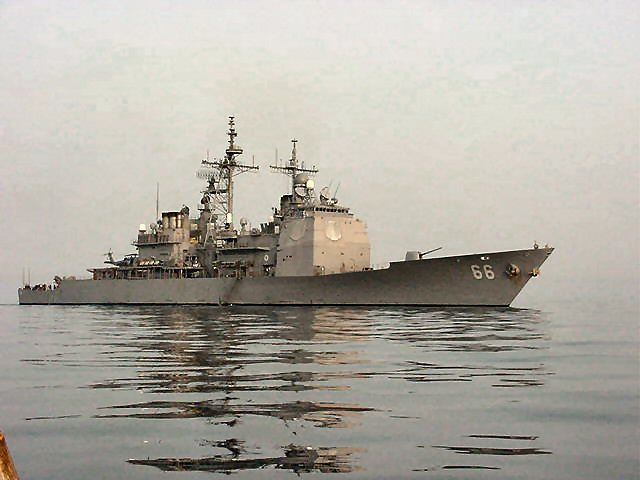
USS HUE CITY CG-66 Enforcing the UN Oil Embargo against Iraq in April 2002

“Control of the seas means security. Control of the seas means peace. Control of the seas can mean victory. The United States must control the sea if it is to protect our security.” —John F. Kennedy

“For in this modern world, the instruments of warfare are not solely for waging war. Far more importantly, they are the means for controlling peace. Naval officers must therefore understand not only how to fight a war, but how to use the tremendous power which they operate to sustain a world of liberty and justice, without unleashing the powerful instruments of destruction and chaos that they have at their command.” Admiral Arleigh Burke

Over the Memorial Day weekend Secretary of the Navy Ray Mabus announced the naming of the second ship in the Gerald R. Ford class aircraft carrier.  The name selected was significant as the ship will be named the USS John F. Kennedy CVN-79, her namesake being President John F. Kennedy who served as a junior officer in the Second World War commanding a Patrol Torpedo Boat, PT-109 in the Solomon Islands. Kennedy’s boat was rammed and split in two by the Japanese Fubuki class destroyer Amagiri in the early hours of August 2nd 1943.  Over a period of six days he made herculean efforts to save his crew and was awarded the Navy Marine Corps Medal and the Purple Heart.

The United States has always been a seafaring nation and today the vast majority of our commerce is borne by ships from the world over. The United States learned during the Revolution and the War of 1812 the importance of sea power when the Royal Navy for all intents and purposes rules the waves. Even the land victory of Washington at Yorktown was sealed by the intervention of the French Fleet which prevented the British from evacuating the garrison.  During the Civil War the Union Navy was the deciding factor as it blockaded Southern ports and forced the Mississippi River cutting the Confederacy in two and sealing its fate even as Confederate armies battled Union forces in the bloodiest battles ever seen on this continent. The Navy was the deciding factor in the Spanish American War sweeping the Spanish Navy from the seas and dooming its garrisons around the world.  The U.S. Navy began the First World War late but by the end was the ascendant naval power in the world and was one of the major reasons that the British in spite of the superiority that they had at the time agreed to the Washington and later London Naval accords.  When the Second World War erupted the United States was in the beginning stages of a Naval build up to reinforce and replace the fleet that was still dominated by the ships built prior to the Naval treaties.   In the Pacific the Japanese Navy steamrolled its scattered and ill equipped opposition while in the Atlantic German U-Boats decimated convoys very nearly breaking the back of Great Britain and the Soviet Union. However it was the Navy initially stretched to its limits by the Two Ocean War which regained the initiative which in an unprecedented build up of Naval Power defeated its adversaries and safeguarded the vast convoys of merchant ships carrying American troops and equipment into battle and bringing American Lend Lease aid to reach Britain and the Soviet Union. During the Cold War, Korea and Vietnam the Navy was a flexible and mobile response force to crises around the globe military, diplomatic and humanitarian, often diffusing situations without a shot having to be fired in anger and eliminating the need for large numbers of ground forces. In the 1980s the Navy secured the Gulf of Sirte against the threats of Libya’s Colonel Gaddafi and kept the Persian Gulf open during the Tanker Wars initiated by Iran on merchant ships transiting the Gulf. American naval power was again on display during the Gulf War and subsequent United Nations sanctions on Iraq.  After 9-11 the Navy has been a response force around the globe in the War on Terrorism as well as numerous natural disasters and humanitarian crises. When a crisis develops which might require a military response the first questions on the mind of every Presidential administration has been where is the nearest Carrier Strike Group and Marine Expeditionary unit.  Today the Navy supports military operations in Afghanistan, Iraq, and the Horn of Africa and against piracy.

The vast majority of the world’s populations now live on the littorals, or the land areas adjacent to the ocean.  The bulk of world commerce is maritime commerce; the United States depends on secure sea lanes to support our economy.

While sea power is essential to American national power, diplomatic, economic and military large standing armies are not. Yes our land forces must be strong and in quality the best in the world. At the same time whenever we have committed large numbers of land forces to ill defined campaigns we have squandered national power and prestige in wars that have been at best stalemates and at worst strategic defeats. This of course excemts the two World Wars where those large land forces were engaged they had a specific mission that was directly tied to national strategy.

We have come to a place in our national life where our strategic thinking still largely influenced by the World Wars and the Cold War has to be modified.  The major land wars launched by the Bush administration in Iraq and Afghanistan have proven incredibly costly in terms of manpower and economics and it is clear that the Obama administration and bipartisan Congress will seek to disengage sooner rather than later from those wars.  One knows that once those wars are over that land forces will shrink as plans are already on the table with cuts already beginning in some services.

Of course one has to ask what the military should be composed of in light of a coherent national security strategy that takes into account the full spectrum of threats to our nation many of which are not military in a traditional sense. To sustain large numbers of land forces on foreign territory is expensive and often fraught with peril when there are changes in the leadership of allied nations on which we depend for the basing of such forces. Even forward deployed Air Force assets are subject to these constraints.  Such basing was necessitated by the Soviet threat during the Cold War.  All previous overseas conflicts were viewed by American leaders as expeditionary in nature, land forces would go in with a specific goal for a limited time. If forces were left in place they were generally small and of a constabulary nature.

Only the Navy-Marine Corps team provides the flexibility to provide a rapid military or humanitarian response to overseas contingencies.  Critics call it “gunboat diplomacy” but then we have found what we are doing is not sustainable and we need an alternative.  That alternative is the Sea Services, which also include the Coast Guard and Merchant Marine.  The Bush administration reduced the Navy in terms of ships and personnel in order to support land wars of questionable strategic value, even turning thousands of Sailors into soldiers to support Army missions in Iraq and Afghanistan without reducing and even expanding the requirements of Naval forces.  This was a mistake of unmitigated proportions, no strategic goal that we have accomplished in either Iraq or Afghanistan could not have been accomplished by the Navy and Marine Corps and contingents of Special Forces, military and civilian advisors and the CIA.

Theodore Roosevelt had a saying, “speak softly and carry a big stick.” He was not an isolationist by any means; he advocated engagement with the world but also protections, military, economic and ecological for Americans.   A strong Navy was central to his thinking as were good relations with other nations.  He understood the importance of the Navy in supporting American interests. In his annual address to Congress on December 6th 1904 he stated:

“In treating of our foreign policy and of the attitude that this great Nation should assume in the world at large, it is absolutely necessary to consider the Army and the Navy, and the Congress, through which the thought of the Nation finds its expression, should keep ever vividly in mind the fundamental fact that it is impossible to treat our foreign policy, whether this policy takes shape in the effort to secure justice for others or justice for ourselves, save as conditioned upon the attitude we are willing to take toward our Army, and especially toward our Navy. It is not merely unwise, it is contemptible, for a nation, as for an individual, to use high-sounding language to proclaim its purposes, or to take positions which are ridiculous if unsupported by potential force, and then to refuse to provide this force. If there is no intention of providing and keeping the force necessary to back up a strong attitude, then it is far better not to assume such an attitude.”

Roosevelt understood better than most of his peers around the world of the necessity of worldwide engagement and the protection of American interests.  As interdependent as the United States and our allies are on international cooperation in anti-terrorism, humanitarian response and the free flow of commerce the Sea Services have to be the primary means of response.  Land forces are important but it is clear that they will need to be reorganized and rebuilt after the long and arduous conflicts that they have shouldered and ultimately they are dependent on the Navy for the bulk of their support when deployed overseas.

Any new national security strategy must prioritize our nation’s goals with diplomatic, intelligence, military and economic assets. We must leverage power and not squander it.  Naval forces are among the most flexible and economic means of exercising the military aspects of such strategy and are not hostage to unstable governments as are forward deployed land forces.   Naval power leverages national power in ways that forward deployed land forces cannot and are far more connected to goodwill than are ground forces which are seen by many around the world as occupying forces.

British Maritime strategist Julian Corbett in his book Some Principles of Maritime Strategyprovides a clear understanding of how sea power is best suited to the principle of a true national strategy for a maritime nation which emphasized limited and asymmetrical warfare.  Such strategy sustained the British Empire until it allowed itself to become mired in the trenches of Flanders and the shores of Gallipoli during the First World War killing off the flower of the nation’s youth and nearly bankrupting the nation and alienating much of the empire.

Corbett maintained that naval forces were best suited to controlling lines of communications, focus on the enemy, and maneuver for tactical advantage.  He also believed that naval forces best suited the political, economic and financial dimensions of waging war as well as war’s technological and material aspects.  One key aspect of this was the Corbett believed that continental war where large land armies are deployed inherently act against opponents limiting their political aims and increase the chance of total war with all of its destructive effects.  Corbett understood, as Clausewitz did before him the primacy of politics in war and necessity to devise appropriate strategies to protect the national interests while emphasizing efficiency in battle while preserving costly assets.

Ultimately the United States is a maritime power. When we try to become a continental power by engaging in protected land wars overseas we lose our strategic and economic advantage.  One can argue that we would not be in Iraq or Afghanistan today had it not been for the deployment of land and air forces on the Arabian Peninsula following the Gulf War.

The new USS John F. Kennedy when completed will be one of the key platforms of American power projection in the middle part of this century and it is important that we strengthen and modernize the Navy so that it might meet the tasks required of it by our nation and our friends around the world.  It is imperative that we as a nation remember our heritage and return to it as we develop a strategy that is at last freed from the World War and Cold War model.  The time for that is now.

Peace

Padre Steve+
2 Comments

Filed under History, Military, national security, Navy Ships, US Navy

Padre Steve’s Primer on the Muddle East

“When you are up to your arse in alligators it is hard to remember that your mission is to drain the swamp.” Old British Colonial Saying

During the dark days of World War Two when Field Marshal Erwin Rommel was making fools of a series of British commanders in North Africa people including senior British military and government leaders sometimes referred to the theater of operations as “the Muddle East.” Some things never seem to change. The Muddle East today is quite frankly speaking in a real muddled state if there ever was one with world leaders and regional leaders muddling about as if they were the New York Mets.

A large part of the muddle goes back to the fall of the Ottoman Empire at the close of the First World War when the victorious Allied Powers redrew the map of the Middle East and made alliances with various local tribal sheiks who many times were crowned king over other tribes who didn’t necessarily want them as king. This along with heavy handed European military actions such as the British using poison gas dropped from aircraft in Iraq and a real lack of effort to better the lives of the newly “liberated” peoples of the region was just the start. Add to the cesspool a bunch of oil presided over by major oil companies, the anti-colonial movements that flourished in the years after World War Two when the French, British and Italians had to divest themselves of their Middle Eastern holdings. The French had to fight a real war in Algeria but finally withdrew leaving Algeria’s new rulers to goof up the country and oppress their people for decades to come.  In the coming years many of these newly independent nations found that life still sucked so in a number of countries military officers overthrew the despised monarchs promising reforms but oppressing their people while blaming all their problems on the Israelis.  They got their asses kicked by the Israelis in a series of wars which did a number of things that made the Middle East Muddle even worse.

First it ensured that Palestinian Arabs ended up under Israeli rule and were used with great aplomb by the Middle Eastern despots to prop up support for their regimes while doing nothing to help the Palestinians other than to put them in camps in Lebanon.  Even when the Egyptians made a peace deal with Israel most of the Arab World ostracized them.  Then in 1979 the Shah of Iran was sent packing by a bunch of Mullahs and in 1981 Saddam Hussein’s Iraq attacked Iran in one of the bloodier wars of the late 20th Century which finally ended in 1988. Of course the United States was pissed at the Mullahs so Saddam became our favorite Arab despot for a while.  Add to the mix the Soviet Union and the United States arming their favorite Arab dictators who were given carte blanche to continue oppressing their people so long as it didn’t interfere with their support of either party or the oil supply. Finally the Soviets went Tango Uniform in 1989 not long after being forced out of Afghanistan by the U.S. supplied, Pakistani supported and Saudi Arabian fundamentalist financed Mujahedeen.

With the Soviets Tango Uniform and the Warsaw Pact nations trying to get into NATO the United States was now the uncontested Numero Uno country in the world Saddam presumed upon his late supporters and invaded Kuwait, albeit after thinking that the U.S. Ambassador to Iraq said that we wouldn’t mind. Well he was wrong we did mind and got a lot of countries from NATO and including a bunch of Arab countries like Egypt, Syria and Saudi Arabia to get on board on a mission to get Saddam’s troops out of Kuwait. It was a kick ass mission and since the United Nations didn’t authorize removing Saddam and because President George H.W. Bush was smart enough to not to drive on Baghdad to kick him out preferring the depot we knew to a quagmire despite Saddam’s crimes against his own people who thought we would help them.  So we stationed ground and air forces around the Gulf to keep Saddam and Iran in check and even put them in Saudi Arabia which a large number of radicals such as Osama Bin Laden equated to letting the Devil play in Allah’s Holy Sandbox.  So Osama went and set up a base with the Medieval bunch of Pashtun known as the Taliban in Afghanistan stirred up a bunch of shit killing Americans and blowing up stuff including the World Trade Center in 1993, the Khobar Towers barracks complex in 1996, the USS Cole in 2000 and then 2001 another attack on the World Trade Center which took down the towers with hijacked aircraft and also struck the Pentagon triggered an American response against Bin Laden and his Taliban hosts.  The United States then invaded in Iraq in 2003 and succeeded in taking out Saddam but also succeeded in alienating a good many Iraqis who greeted us with open arms because we goofed up the occupation and pissed a lot of them off by dissolving the Army, Police and Civil Service and letting thugs and opportunists take over. Unfortunately since we didn’t go in with enough troops to secure all the Iraqi bases, their weapons depots and actually take control of surrendering Iraqi units these newly unemployed and dishonored people launched an insurgency bolstered by Al Qaeda and other foreign fighters even as Sunni and Shi’a Moslems began to settle scores with each other. Insurgency and civil war, two great tastes that go great together, but what the heck right?

Of course it took years to get control of the situation on the ground and thankfully the United States forces in Iraq were helped when the Sunni Moslems in Al Anbar Province realized that these foreign fighters were a worse enemy than the United States and switched sides. This turned the tables in Iraq and the insurgency was brought under control and an elected government managed to start to get their stuff together and allow us to begin withdrawing from Iraq. Of course the focus on Iraq gave the Taliban a chance to regroup as the Afghani Government proved itself corrupt, incompetent and not to give a shit about the Afghani people. So the Taliban who had been hated made a comeback and made our lives much harder so that now almost 10 years into the fight we are having a really hard time.  Well enough about us there was plenty more going on in the Muddle East besides the Iraq and Afghanistan wars.

Let’s see….there was the law of unintended consequences in that by taking Saddam Down and weakening Iraq we took away Iran’s natural enemy and the key to the balance of power in the region. Iran was strengthened and began a nuclear program that everyone with half a brain knows in intended for military use and expanded its influence in Lebanon where the Iranian backed Hezbollah took power last year.  Now Hezbollah which actually has an experienced military force and probably owns 40,000 or so rockets and missiles a good number of which can hit deep in Israel seems to be ready for war especially because they fought the Israelis to a stalemate in 2008, the first time an Arab military ever did that.

Then was the effect that the wars in those countries made things harder for us in many other friendly Arab nations.  Of course there is the problem of a nuclear armed Pakistan which is about as stable as a Japanese nuclear reactor after getting hit by a tsunami and plays both sides of the street in the war on terror.  The Palestinians and Israelis continued their love affair and since Fatah which ran Palestinian Authority was so corrupt and gooned up a more militant group, Hamas took power in the Gaza strip. Hamas is a pretty bloodthirsty lot too but not the same level of threat as Hezbollah to the Israelis.  Of course the Israelis have done little to help the situation by their often heavy handed treatment of Palestinians and Israeli Arabs.

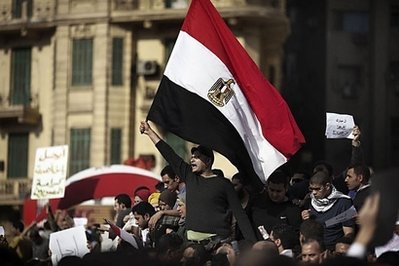
The witches’ cauldron of the Muddle East is getting even more muddled on a daily basis as young Arabs throughout the Muddle East are rising up against their despotic rulers and it doesn’t seem that any are safe, those allied with the United States and the West as well as those that have been a thorn in the side of the United States and the West. It just seems that despots and tyrants are no longer in vogue. The uprisings began in Iran after a disputed election where reformers were cheated of power and the revolt crushed by the Revolutionary Guard and other thugs of the Iranian regime. But then in December 2010 the people of Tunisia rose up and overthrew their President for Life Ben Ali in a peaceful uprising followed shortly after by the Egyptians who tossed out long term President and U.S. ally Hosni Mubarak.

This brought about spontaneous uprisings all over the Middle East with Libya and the long time pain in the ass Muammar Gaddafi being the current center of the action. However Yemen and Bahrain both are in trouble, Algeria, Jordan and Syria have or are experiencing demonstrations which look to be revolts in the making and even Saudi Arabia is trying to head off a potential popular uprising.

Yes my friends this is a mess and almost everybody that is anybody in the military and economic power houses of the world doesn’t have their handprints all over at least some part of this mess. All of these own some of the blame for what is going on, both the rulers of the nations in the region as well as world powers who all try to influence the nations and peoples for their own diplomatic, intelligence, military or economic gain. Almost no one is unsoiled by their involvement in the Muddle East over the past 90 years or so and so in a way all of world powers, as well as the despots who ran these countries are to blame.

The region is more volatile than at any time in recent history and events there could easily ignite a regional war with worldwide implications.  That is why the region has been called the Muddle East for decades.  We all hope and pray for the best and that somehow all of this will bring about a peaceful and democratic “Arab Spring” but there are better than even odds that things get way worse before they get better. There are just too many wild cards in this deck and the swamp is full of hungry alligators.

May God help us all and bring about peaceful change, or as my Iraqi friends simply say “Inshallah, God willing.”

Peace

Padre Steve+
4 Comments

Filed under Foreign Policy, History, middle east, national security

Damned if you do and Damned if you Don’t: The Allied Intervention in Libya

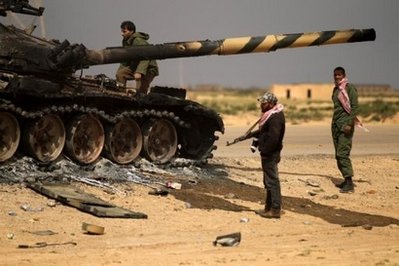
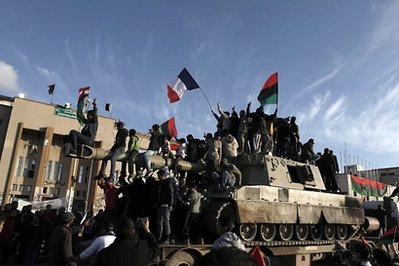
Libyan Rebels gather around a destroyed T-72 outside Benghazi

War is the unfolding of miscalculations.
Barbara Tuchman

Back on the 9th of March I wrote this closing line to an article entitled The Guns of March where I discussed the developing situation in Libya and the really terrible options that world and regional leaders had in response to Muammar Gaddafi’s criminal actions against his own people. I concluded that article with this statement.

There are many possibilities for the situation in Libya to get worse and potentially engulf the region in a war that no one wants or really is prepared for.

We can only see what develops but there are no good options only options of bad or worse. Will the region like Europe in 1914 be engulfed in war where there are no winners or will somehow the situation be resolved before it can get that far?”

It is obvious to all that the region stands a very good chance of becoming engulfed in a regional war unless the rebels drive Gaddafi from power, Gaddafi steps down on his own or he is killed or captured. Gaddafi has promised a “long war” against the “colonial and crusader” enemy.

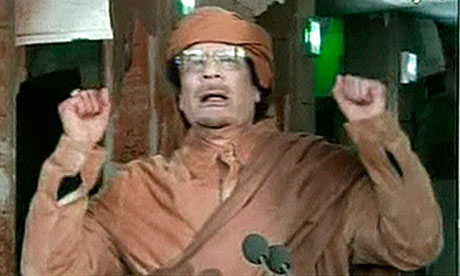
Gaddafi Defiant

In the days since I wrote the referenced article the Arab League spoke up in support of establishing a no-fly zone and the United Nations Security Council voted for member nations to enforce a no-fly zone and take “all necessary measures” in order to stop Gaddafi’s forces attacks on other Libyans. By the time the Security Council acted Gaddafi’s forces had retaken many rebel held cities inflicting great slaughter on civilians and were on the outskirts of the rebel capital Benghazi with Gaddafi threatening to send his forces “house to house” to kill the opposition and promising to show no mercy.  Within a day French and British aircraft were flying missions and striking the spearhead of Gaddafi’s forces outside of Benghazi and United States Navy ships were launching Tomahawk Cruise Missiles at the Libyan air defense system. They were joined by aircraft from the U.S. Navy, Marine Corps and Air Force as well as Canada, Spain, Italy, Belgium, Norway, Denmark and Qatar.  Gaddafi’s forces were decimated outside of Benghazi and forced to retreat and a renewed rebel force, this time acting more like a military organization began a pursuit which has reached Ajdabiya.  In the west Gaddafi’s forces continue to attack the towns of Misrata and Zintan and according to observers and medical personnel inflicting heavy casualties on civilians.

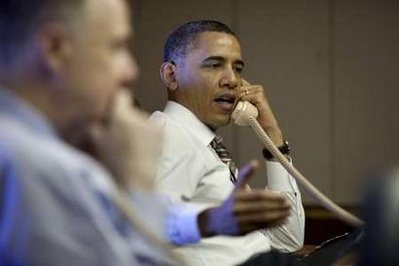
President Obama in a briefing

Around the world there is much criticism of the operation as well as support. In the United States representatives as diverse as Ron Paul and Dennis Kucinich are raising concerns on the Constitutional issues of the intervention in that President Obama did not secure the approval of Congress prior to sending American forces into battle. Kucinich even calls it an impeachable offense.  Likewise a diverse assembly of politicians, former military and executive branch officials including those with experience at the State Department, the United Nations, NATO and the Middle East are voicing their concerns about the fact that the end state of the operation is not defined and about the possibility of mission creep. The administration has not helped matters in sending a number of messages over the past few days of a desired end state. It is obvious that President Obama did not want this fight nor did he want it to appear that we were again leading an attack on an Arab nation.  His hesitancy has led to some conservatives attacking his lack of decisiveness even as other conservatives criticize his decision to join the military operations. Secretary of Defense Robert Gates has been outspoken in his opposition to becoming involved in another war and seems to want U.S. involvement to decrease sooner rather than later.

Rebels with damaged 152mm Self Propelled Howitzer

The situation is still evolving by the hour and one thing is clear. The outcome is very unclear and the repercussions across the region are also uncertain. One problem is the apparent discontinuity in U.S. and Western policy to various despotic Arab regimes, supporting the overthrow of Hosni Mubarak in Egypt, a military operation against Gaddafi in Libya and very muted and lukewarm support to popular political movements in Bahrain and Yemen. The Bahraini demonstrations have been put down with the help of Saudi forces but in Yemen numerous influential military officers have taken their units to support the Yemeni protestors. Of course the situation in all of these nations is different with the exception of the fact that all are ruled by long term undemocratic and repressive regimes of varying degree. Likewise actors in each country are different as are the geo-political interests of the United States.

A friend of mine pointed out to me that we are not viewed as “the good guys” in much of the Arab World as much as we see ourselves as such. I think that is true to a large extent because of foreign policy choices of the past century in regard to the Arab World as well as the past decade of war in Iraq and Afghanistan where even today photos taken by a rogue Army unit of soldiers posing with the mutilated and dead bodies enemies of the enemy further degrade opinion in the region against us.  But we are also the hope of many of those in Tunisia, Egypt, Libya and other nations and in those places and others popular uprisings have called out to us for political support and in the case of the Libyans military protection.

Parallels of 1989 in the fall of the Soviet Empire in Eastern Europe are drawn by the optimistic observers of what has been called the “Arab Spring.” However as much as I would like to believe that this is the case I think the miscalculations of 1914 are more readily apparent. There is nothing simple about what is going on and it seems to me that the region is sinking into a war with very unpredictable and grave consequences. Those consequences will probably with us for a generation was were the unanticipated outcomes of the First World War. Of course one of those outcomes was the breakup of the Ottoman Empire and the arbitrary redrawing of boundaries and selection of leaders in the newly created Arab nations and emirates by the victorious Allies. That is something that we are dealing with even as I finish this article.

As I wrote in another article I believe that acting to prevent the slaughter of Libyans by Gaddafi was the right thing to do.  Unfortunately as most observers know the people of Libya will not be safe unless Gaddafi leaves power. I think by backing Gaddafi into a corner early, even before he began his offensive against what were peaceful protestors and not giving him a face saving way out that we may have brought about a war that no one wanted and has few possible good endings. We are damned if we do and damned if we don’t.

Peace

Padre Steve+

3 Comments

Filed under Foreign Policy, History, middle east, Military, national security

The Minstrel Boy: The Song of Souls Changed by War

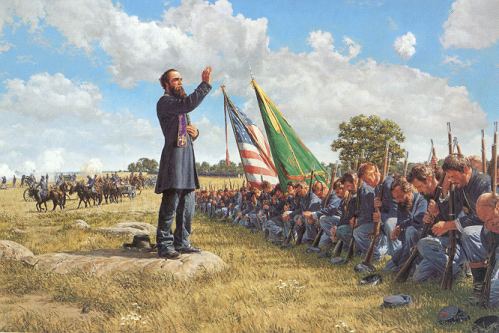
Fr Corby gives absolution to the Irish Brigade at Gettysburg

The Minstrel Boy (Thomas Moore)

The minstrel boy to the war is gone,
In the ranks of death ye will find him;
His father’s sword he hath girded on,
And his wild harp slung behind him;
“Land of Song!” said the warrior bard,
“Tho’ all the world betray thee,
One sword, at least, thy rights shall guard,
One faithful harp shall praise thee!”

The Minstrel fell! But the foeman’s chain
Could not bring his proud soul under;
The harp he lov’d ne’er spoke again,
For he tore its chords asunder;
And said “No chains shall sully thee,
Thou soul of love and bravery!
Thy songs were made for the pure and free
They shall never sound in slavery!”

The Minstrel Boy will return we pray
When we hear the news we all will cheer it,
The minstrel boy will return one day,
Torn perhaps in body, not in spirit.
Then may he play on his harp in peace,
In a world such as heaven intended,
For all the bitterness of man must cease,
And ev’ry battle must be ended.

(Last verse anonymous Civil War)

Three years ago I was in the process of returning home from Iraq spending my last couple of days in country before flying out to Kuwait and then the United States. I was already in a rather melancholy state knowing that the Chaplain incoming higher headquarters had turned off my relief for Al Anbar Province after I had paved the way for him with all of the teams of advisors that I had worked with during my time serving them. My relief a personal friend was diverted to the Army advisors with a different Iraqi Division in the north of the country. I felt that the incoming senior chaplain had betrayed and abandoned the men that I worked so hard to care for. Later I heard that he had disregarded my heavily detailed after action reports and told at least one senior chaplain that he “had heard that I was out there but didn’t know if I had done anything.”

On the Syrian Border with members of a Border Team and Bedouin family

It was at that point that I realized that you could do your job and sacrifice yourself to complete a mission only to have someone with their own agenda do what they could to discredit you.  Where the senior Chaplain that I worked for did all that he could to support my team’s mission and see that we were properly recognized at Multi-National Corps Iraq in Baghdad his successor dismissed our work. It was the first time in my Navy career that I had experienced that.  I think it was the fact that I worked for a non-traditional billet working for an Army led joint command outside the normal Navy-Marine Corps chain was a big part of this. Inter-service rivalries and the distain of those bound by conventional thinking are not new and those that have done such non-conventional work have frequently been treated in a similar manner.

Looking back there are some songs which are particularly meaningful to me after my time in Iraq that send a chill up my spine when I hear them. One of these is the patriotic Irish song The Minstrel Boy written by Thomas Moore while a student in honor of friends killed in the Irish Rebellion of 1798.  The song was very popular among soldiers of Irish descent in the American Civil War as well as soldiers fighting in Irish Regiments in World War One and World War Two.

The song is powerful when you hear it for it speaks of the reality of war, war that changes those, even those that return home are not unchanged by it.  It speaks of the sacrifices required by those that go to war and even the effects on the community, the loss of young people.  The final verse added by an anonymous author during the American Civil War in a sense is a prayer, a prayer of return as well as reconciliation. It has been recorded a number of times including an instrumental during the film Blackhawk Down. Another rendition is in the telvision mini-series Rough Riders about the 1st U.S. Volunteer Cavalry at the Battle of San Juan Hill.

http://www.youtube.com/watch?v=un_AVYB-GI8&feature=player_embedded

My life has been changed and faith challenged. When I went to Iraq I still maintained a sense of idealism.   After Iraq and having to deal with PTSD and a psychological, spiritual and physical breakdown as well as a profound sense of abandonment by some senior chaplains, my former church and even God I am a different person. My faith which had been shattered to the point of being a practical agnostic for nearly two years has returned. I don’t regret that and do believe that it is a good thing. If we are not changed by what God allows or by what life brings I don’t think that we grow. As a Priest I wonder if I could work in the environment that I work without having gone through what I did.

I see many of the “minstrel boys” and girls of our era and having also been to war and come back changed the last lines of the final verse is a prayer that I echo. One of the versions that I particularly like is the one sung in the Star Trek the Next Generation episode “The Wounded.” While it is only the first verse it deals with the lives of two officers whose lives are forever changed by war. http://www.youtube.com/watch?v=RJudJ9S579A

This is dedicated to all those who have served who have gone through the pain of war and return until war shall be no more.

Peace

Padre Steve+

5 Comments

Filed under faith, film, History, iraq,afghanistan, Tour in Iraq, US Navy

The Content of their Character: Brigadier General Benjamin O. Davis Sr. US Army and General Benjamin O. Davis Jr. US Air Force

Brigadier General Benjamin O Davis in France 1944

“I have a dream that my four little children will one day live in a nation where they will not be judged by the color of their skin, but by the content of their character.” Dr. Martin Luther King, Jr.

American History would not be the same without the life, work and prophetic ministry of Dr. Martin Luther King Jr. Dr. King was born in a time when most of the country was segregated when “separate by equal” was simply façade to cover the lie that in no way did African Americans have equal rights or privileges in the United States. Dr King was born less than 60 years after the secession of the Southern states from the Union and the beginning of the American Civil War. Though that blood conflict had freed the slaves it had not freed African Americans from prejudice, violence and discrimination.  When Dr. King began his ministry and was thrust upon the national stage as the strongest voice for equal rights and protections for blacks the discrimination and violence directed towards blacks was a very real and present reality in much of the United States.

However there were cracks beginning to appear in the great wall of segregation in the years preceding Dr. King’s ascent to leadership as the moral voice of the country in the matter of racial equality. In baseball Jackie Robinson became the first African American player in Major League Baseball opening a door for others who would become legends of the game as well as help white America begin its slow acceptance of blacks in sports and the workplace.

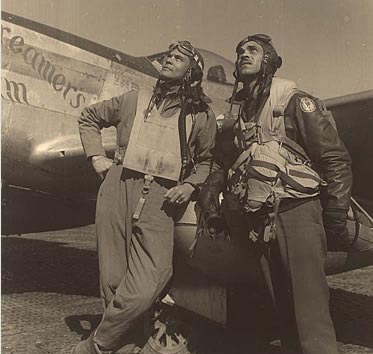
Likewise the contributions of a father and son Brigadier General Benjamin O. Davis Sr. and General Benjamin O. Davis Jr. were advancing the cause of blacks in the military which eventually led to the desegregation of the military in 1948.  The impact of these two men cannot be underestimated for they were trailblazers who by their lives, professionalism and character blazed a trail for African Americans in the military as well as society.

Benjamin O. Davis Sr. was a student at Howard University when the USS Maine exploded and sank in Havana Harbor.  He volunteered for service and was commissioned as a temporary 1st Lieutenant in the 8th United States Volunteer Infantry. He was mustered out of service in 1899 but enlisted as a private in the 9th United States Cavalry one of the original Buffalo Soldiers regiments.  He enlisted as the unit clerk of I troop of 3rd Squadron and was promoted to be the squadron Sergeant Major. He was commissioned while the unit was deployed to the Philippines and assigned to the 10th Cavalry.  He was assigned in various positions throughout his career including command, staff and instruction duties including as Professor of Military Science and Tactics in various ROTC programs.  He reached the rank of rank of temporary Lieutenant Colonel and Squadron Commander of 3rd and later 1st Squadron 9th Cavalry from 1917-1920 in the Philippines before reverting to the rank of Captain on his return as part of the post World War I reduction in force.  He continued to serve during the inter-war years and assumed command of the 369th Infantry Regiment New York National Guard in 1938. He was promoted to Brigadier General on 25 October 1940 becoming the first African American elevated to that rank in the United States Army and was assigned as Commander 4th Brigade 2nd Cavalry Division. He later served in various staff positions at the War Department and in France and was instrumental in the integration of the U.S. Military. He retired after 50 years service in 1948 in a public ceremony with President Harry S. Truman presiding. He was a member of the American Battle Monuments Commission from 1953-1961 and died in 1970.

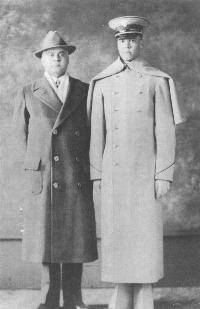
Colonel Davis with his son Cadet Benjamin O Davis Jr.

His son Benjamin O. Davis Jr. was appointed to West Point in 1932.  He graduated and was commissioned in 1936 graduating 35 out of 278, the fourth African American graduate of West Point. During his time at the Academy most of his classmates shunned him and he never had a roommate.  Despite this he maintained a dogged determination to succeed.  The Academy yearbook made this comment about him:

“The courage, tenacity, and intelligence with which he conquered a problem incomparably more difficult than plebe year won for him the sincere admiration of his classmates, and his single-minded determination to continue in his chosen career cannot fail to inspire respect wherever fortune may lead him.”

He was denied entrance to the Army Air Corps because of his race and assigned to the Infantry first to the all lack 24th Infantry Regiment at Ft Benning where he was not allowed in the Officers Club due to his race. Upon his commissioning the Regular Army had just 2 African American Line Officers, 2nd Lieutenant Davis and his father Colonel Davis. After completion of Infantry School he was assigned as an instructor of Military Science and Tactics and the Tuskegee Institute.  In 1941 the Roosevelt Administration moved to create a black flying unit and Captain Davis was assigned to the first black class at the Tuskegee Army Air Field and in March 1942 one his wings as one of the first 5 African Americans to complete flight training.  In July 1942 he was assigned as Commanding Officer of the 99th Pursuit Squadron which served in North Africa and Sicily flying Curtiss P-40 Warhawks. He was recalled to the United States in September 1943 to command the 332nd Fighter Group. However some senior officers attempted to prevent other black squadrons from serving in combat alleging that the 99th had performed poorly in combat. Davis defended his squadron and General George Marshall ordered an inquiry which showed that the 99th was comparable to white squadrons in combat and during a 2 day period over the Anzio beachhead the pilots of the 99th shot down 12 German aircraft.

Colonel Benjamin O Davis Jr (left) with one of his Tuskegee Airmen

Davis took the 332nd to Italy where they transitioned to P-47 Thunderbolts and in July 1944 to the P-51 Mustang which were marked with a signature red tail. During the war, the units commanded by Davis flew more than 15,000 sorties, shot down 111 enemy planes, and destroyed or damaged 273 on the ground at a cost of 66 of their own planes. Their record against the Luftwaffe was outstanding and their protection of the bombers that they escorted was superb with very few bombers lost while escorted by them men that the Luftwaffe nicknamed the Schwarze Vogelmenschen and the Allies the Red-Tailed Angels or simply the Redtails. Davis led his Tuskegee Airmen to glory in the war and their performance in combat helped break the color barrier in the U.S. Military which was ended in 1948 when President Truman signed an executive order to end the segregation of the military. Colonel Davis helped draft the Air Force plan and the Air Force was the first of the services to fully desegregate.

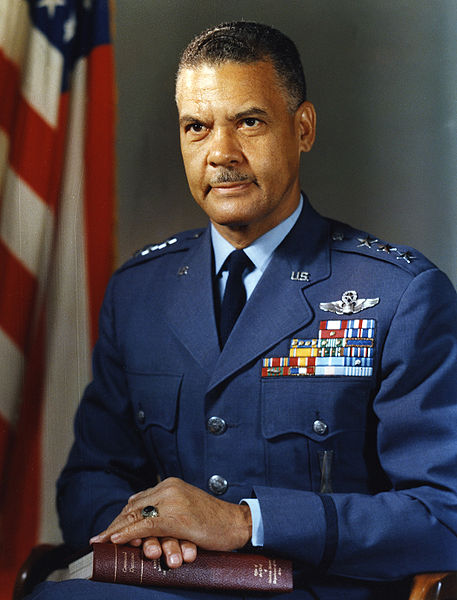
Lieutenant General Benjamin O Davis Jr

Colonel Davis transitioned to jets and let the 51st Fighter Interceptor Wing against Chinese Communist MIGs in the Korean War.  He was promoted to Brigadier General in 1954 and served in numerous command and staff positions. He retired in 1970 with the rank of Lieutenant General and was advanced to General while retired by President Clinton in 1998.  He died in 2002 at the age of 89.

The legacy of Benjamin O. Davis Senior and Benjamin O. Davis Junior is a testament to their character, courage and devotion to the United States of America. They helped pioneer the way for officers such as General Colin Powell and helped change this country for the better.  During times when discrimination was legal they overcame obstacles that would have challenged lesser men.  Benjamin O. Davis Junior remarked “My own opinion was that blacks could best overcome racist attitudes through achievements, even though those achievements had to take place within the hateful environment of segregation.”

Such men epitomize the selfless service of so many other African Americans who served the country faithfully and “by the content of their character” triumphed over the evil of racism and helped make the United States a more perfect union.

Peace

Padre Steve+


4 Comments

Filed under History, leadership, Political Commentary, world war two in europe

Christmas at the Front 1776-2010

Note: I wrote most of this on Christmas but didn’t finish it until a bit after 1AM on the 26th.

Today as on so many Christmas Days in days gone by military personnel serve on the front lines in wars far away from home and sometimes not far from their homes. Today American and NATO troops engage a resourceful and determined enemy in Afghanistan. To the west Americans support our Iraqi allies in their continued battle to end terrorism in that country while in many corners of the globe others stand watch on land, at sea and in the air. Unfortunately wars continue and until the end of time as we know it there will likely be war without end.

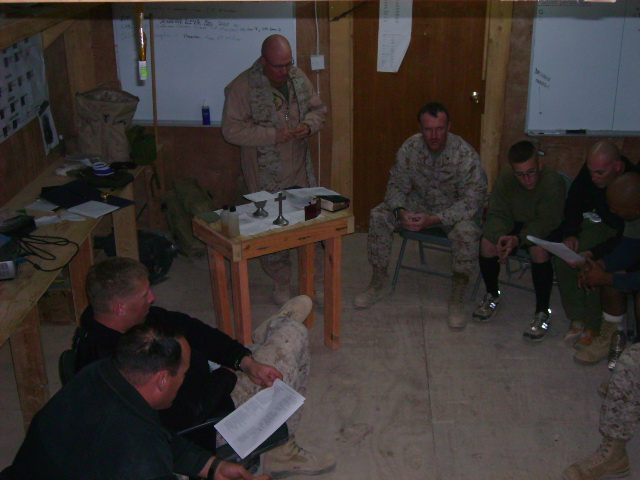
I have done my time in Iraq at Christmas on the Syrian-Iraqi Border with our Marine advisors and their Iraqis.  Since returning home have thought often of those that remain in harm’s way as well as those soldiers, sailors, Marines and airmen, American and from other nations that have spent Christmas on the front lines. Some of these events are absolutely serious while others display some of the “light” moments that occur even in the most terrible of manmade tragedies.

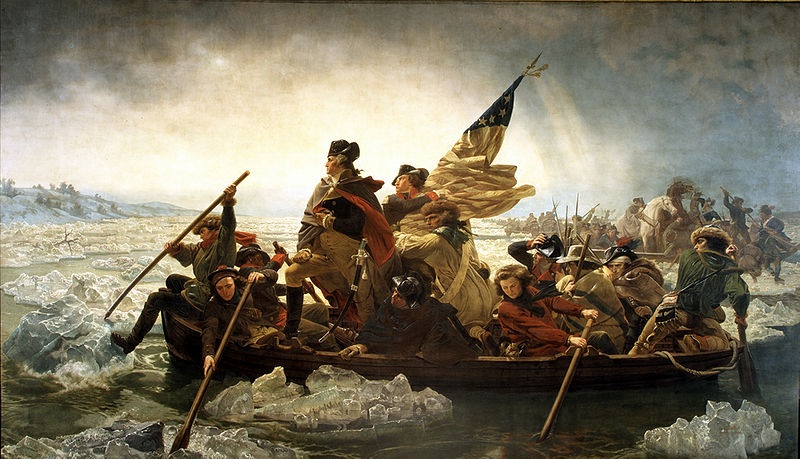
In American history we can look back to 1776, of course we could go back further but 1776 just sounds better. On Christmas of 1776 George Washington took his Continental Army across the Delaware to attack the British garrison at Trenton. Actually it was a bunch of hung over Hessians who after Christmas dinner on the 24th failed to post a guard but it was an American victory. In 1777 Washington and his Army had a rather miserable Christmas at Valley Forge where they spent the winter freezing their asses off and getting drilled into a proper military force by Baron Von Steuben.

While not a battle in the true sense of the word the Cadets at West Point wrote their own Christmas legend in the Eggnog Riot of 1826 when the Cadets in a bit of holiday revelry had a bit too much Eggnog and a fair amount of Whiskey and behaved in a manner frowned upon by the Academy administration. Needless to say that many of the Cadets spent the Christmas chapel services in a hung over state with a fair number eventually being tossed from the Academy for their trouble.

In 1837 the U.S. Army was defeated at the Battle of Lake Okeechobee by the Seminole Nation, not a Merry Christmas at all.  In 1862 the Army of the Potomac and Army of Northern Virginia faced each other across the Rappahannock River after the Battle of Fredericksburg while to the south in Hilton Head South Carolina 40,000 people watched Union troops play baseball some uttering the cry of many later baseball fans “Damn Yankees.” In 1864 the Army of the Potomac and Army of Northern Virginia faced each other again in the miserable trenches of Petersburg while General William Tecumseh Sherman enjoyed Christmas in Savannah Georgia after cutting a swath of destruction from Atlanta to the sea. He presents the city to Lincoln who simply says “nice, but I really wanted Richmond.”

Napoleon had something to celebrate on December 25th 1801 after surviving an assassination attempt on Christmas Eve and 1809 he was celebrating his divorce from Empress Josephine which had occurred on the 21st.

Meanwhile in Europe the 1914 “Christmas Truce” began between British and German troops and threatened to undo all the hard work of those that made the First World War possible.  Thereafter the High Commands of both sides ensured that such frivolity never happened again.

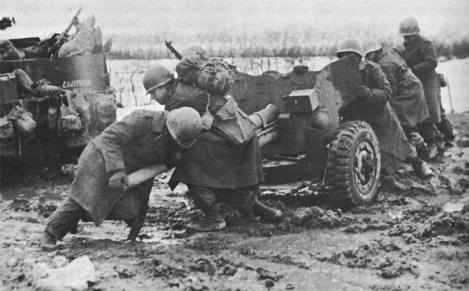
U.S. Soldiers and Anti-Tank Gun at the Battle of the Bulge

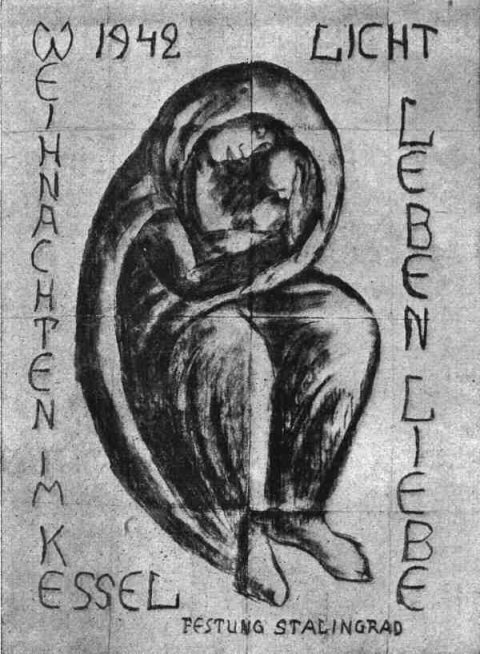
World War II brought much suffering in 1941 after Pearl Harbor the Japanese forced the surrender of Hong Kong and its British garrison while two days later the Soviets launched their counterattack at Moscow against Hitler’s Wehrmacht and the British were retaking Benghazi from the Afrika Corps.  A year later the Americans were clearing Guadalcanal of the Japanese and the Red Army was engaged in a climactic battle against the encircled German 6th Army at Stalingrad. At Stalingrad a German Physician named Kurt Reuber who is also a Lutheran minister draws “The Madonna of Stalingrad.”

The drawing which was taken out of Stalingrad by one of the last German officers to be evacuated now hangs in the Kaiser Wilhelm Memorial Church in Berlin. Reuber would draw another in 1943 while in a Soviet POW camp in which he would die in less than a month after that Christmas. Reuber wrote:

“I wondered for a long while what I should paint, and in the end I decided on a Madonna, or mother and child. I have turned my hole in the frozen mud into a studio. The space is too small for me to be able to see the picture properly, so I climb on to a stool and look down at it from above, to get the perspective right. Everything is repeatedly knocked over, and my pencils vanish into the mud. There is nothing to lean my big picture of the Madonna against, except a sloping, home-made table past which I can just manage to squeeze. There are no proper materials and I have used a Russian map for paper. But I wish I could tell you how absorbed I have been painting my Madonna, and how much it means to me.”
“The picture looks like this: the mother’s head and the child’s lean toward each other, and a large cloak enfolds them both. It is intended to symbolize ‘security’ and ‘mother love.’ I remembered the words of St.John: light, life, and love. What more can I add? I wanted to suggest these three things in the homely and common vision of a mother with her child and the security that they represent.”

In 1943 the Marines were battling the Japanese at New Britain while the Red Army was involved in its winter offensive against the Wehrmacht. In 1944 the Russians were advancing in Hungary, the Americans were engaged in a desperate battle with the Germans in the Ardennes with the German 2nd Panzer Division running out of gas 4 miles from the Meuse River and were destroyed by the American 2nd Armored Division. In the Pacific McArthur’s forces were battling the Japanese in the Philippines.

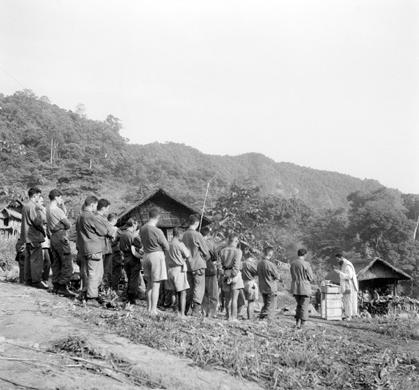
French Chaplain and Soldiers in Indochina

In the years following the Second World War Christmas was celebrated even while armies continued to engage in combat to the death. Christmas of 1950 was celebrated in Korea as the last American forces were withdrawn from the North following the Chinese intervention which the 1st Marine Division chewed up numerous Red Chinese divisions while fighting its way out of the Chosin Reservoir.  In the following years a stalemate along the front brought no end to the war and In French Indo-China the French garrison of Dien Bien Phu celebrated Christmas in primitive fashion unaware that General Giap was already marshalling his forces to cut them off and then destroy them shortly after Easter of 1954.   In 1964 the U.S. commits to the war in Vietnam and for the next 9 years American Soldiers, Marines, Sailors and Airmen will battle the North Vietnamese and Viet Cong with Marines fighting the North at Khe Sanh during Christmas of 1967.

Christmas on the Syrian Border with USMC Advisors

In the years after Vietnam American troops would spend Christmas in the Desert of Saudi Arabia preparing for Operation Desert Storm in 1990, in Somalia the following year and in the Balkans. After September 11th 2001 U.S. Forces spent their first of at least 10 Christmas’s in Afghanistan and in 2003 begin the first for at least 8 Christmas’s in Iraq.

Today Americans serve around the world far away from home fighting the war against Al Qaeda and its confederates and some will die even on this most Holy of Days while for others it will be their last Christmas.

Please keep them and all who serve now as well as those that served in the past, those that remain and those that have died in your prayers.

Peace

Padre Steve+


1 Comment

Filed under faith, History, Military

Forgotten on the Far Side of Ford Island: USS Utah, USS Detroit, USS Raleigh and USS Tangier

USS Utah BB-31 in 1920s

When you visit Pearl Harbor most eyes are drawn to the USS Missouri and the USS Arizona Memorial on Battleship Row.  On the mooring quays the names of the Battleships California, Oklahoma, Maryland, West Virginia, Tennessee and Arizona mark the places where the proud Battle Force of the U.S. Pacific fleet was moored on the fateful morning of December 7th 1941.  Movies such as Tora! Tora! Tora!, In Harm’s Way and Pearl Harbor have recorded the attack in varying degrees of accuracy for audiences worldwide in the 1960s, 1970s and 2000s. All record the attack on Battleship row and the attacks on the Army Air Corps at Hickam Field but all overlook the former battleship moored on the west side of Ford Island, the two elderly light cruisers and the Seaplane Tender moored nearby.

USS Utah AG-16 in 1935

Of course these ships hold little interest to most people, they were elderly, Utah had been converted to a gunnery training ship years before and the Omaha Class light cruisers Raleigh and Detroit were obsolescent and after Pearl Harbor would serve in the backwaters of the Pacific war.  The Tangier a new Seaplane Tender occupied the berth aft of Utah.


The USS Utah AG-16, ex-BB-31 was one of the early U.S. Navy Dreadnought battleships of the Florida Class. Utah was 521 feet long, displaced 21,825 tons and mounted 10 12” guns making her comparable to British Dreadnoughts of the Neptune and Colossus class and slightly inferior to the German Helgoland class.  Utah was commissioned on 31 August 1911 and served at the Vera Cruz incident where a Naval “battalion” of 17 officers and 371 her prevented the delivery of arms from Germany to Mexican dictator Victoriano Huerta.  The in the clash with Huerta’s forces the sailors distinguished themselves earning 7 Congressional Medals of Honor.

Utah served as part of the U.S. Battle Squadron sent to operate with the Royal Navy operating out of Ireland conducting convoy protection missions and preparing to engage the German High Seas Fleet if called upon.  Utah served from 1919-1931 as a battleship conducting training and goodwill missions to Europe and South America before being converted to a gunnery training and target ship (AG16) in 1931 per the stipulations of the Washington Naval Conference. In 1941 she was modernized and equipped with weapons being installed on modern destroyers before resuming training duties with the fleet at Pearl Harbor.

On the morning of December 7th Utah was moored on the West side of Ford Island and at colors the ship was struck by a torpedo forward and began to heal to port. With the flooding causing the list to increase the senior officer on the ship, LCDR Isquith the Chief Engineer ordered Utah abandoned and while most of the crew was able to escape some were trapped below including Chief Water Tender Peter Tomich who remained below to ensure that the boilers were secured and his sailors safely out of the boiler rooms.  Tomich was awarded the Congressional Medal of Honor for his sacrifice.  By 0812 the mooring cables had snapped and Utah lay on her beam sinking into the harbor her war over.  6 Officers and 58 crewmen died the majority trapped in the ship.  The ship would be partially righted to clear an adjacent berth in 1944.

The Raleigh and Detroit were Omaha Class Light Cruisers 555 feet long, displacing 7050 tons and mounting 12 6” guns and 10 21” torpedo tubes and were capable of 3 knots. This made them more heavily armed than the contemporary Japanese Nagara Class or the British C, D  or E Class light cruisers and larger than all but the two ship E Class. However by the beginning of the war they were inferior to all newly constructed ships.

USS Raleigh CL-7 fighting to stay afloat

The cruiser Raleigh took a torpedo that caused her to list so sharply that it was feared she would capsize, however the heroic efforts of her crew and service force craft and sailors kept her afloat and allowed her to fight another day. Most of her war would be fought in the Aleutians and following the war she would be decommissioned and scrapped.

USS Detroit CL-8 1945, final configuration

Detroit was able to get underway during the attack and avoid damage to join other ships which had escaped to form an ad hoc task group to find the Japanese strike force.  She would also serve in the Aleutians through 1944 when she became flagship of the Replenishment Group servicing the U.S. Carrier Task Forces of the 3rd and the 5th Fleets. She would be present in Tokyo Bay for the signing of the peace treaty ending the war. She too would be decommissioned and scrapped shortly after the war.

Tangier would serve in many parts of the Pacific as a mobile base for PBY Catalina’s which conducted reconnaissance, anti-submarine and search and rescue operations in support of the fleet for the duration of the war. She was decommissioned in 1947 and sold for scrap in 1961.

USS Utah Memorial (Google Earth)

Today a monument is located on Ford Island near the rusting hulk of the Utah. It replaced a bronze plaque which had been placed on the wreck in the late 1940s. The Memorial was officially dedicated on Memorial Day 1972.  The monument is not listed on most tourist brochures and the memorial attracts few visitors. I was able to visit the memorial in 1978 while on a Navy Junior ROTC Cadet Cruise to Pearl Harbor and back.  The official USS Utah association website is linked here: http://ussutah.org/ and the Historical Naval Ships Association webpage on Utah is here: http://hnsa.org/ships/utah.htm and the Naval History and Heritage Webpage is here: http://www.history.navy.mil/photos/sh-usn/usnsh-u/bb31-y.htm

The Raleigh, Detroit and Tangier have no memorials.  Despite the anonymity of these ships and the men who served on them they all played a role in the war and they should not be forgotten.

Peace

Padre Steve+


33 Comments

Filed under History, Military, Navy Ships, world war two in the pacific