Monthly Archives: October 2015

Disaster at Blocher’s Knoll

Friends of Padre Steve’s World

Today another section from my Gettysburg text, this on the disaster the befell the Union Eleventh Corps north of the town on the afternoon of July 1st 1863.

Have a great day,

Peace

Padre Steve+

barlow_gordon

Schurz placed his own Second division under the acting command of Brigadier General Alexander Schimmelpfennig his senior brigade commander. Schimmelpfennig was a former Prussian Captain, an engineering officer, who had left the Prussian army to fight in the 1848 Revolution where he met Schurz and the two men became fast friends. When the revolution was crushed Schimmelpfennig, like Schurz fled Germany and was sentenced to death in absentia by the government of the Palatine region. He immigrated to the United States in 1853 “where he wrote military history and secured a position as an engineer in the War Department.” [1] He volunteered to serve at the outbreak of the war, and was appointed as colonel of the German 74th Pennsylvania Volunteers. Schimmelpfennig took command of the brigade when his brigade commander was killed at Second Bull Run, and he was promoted to Brigadier General by Lincoln in November 1862. According to an often told fable Lincoln supposedly promoted the German “because he found the immigrant’s name irresistible,” [2] but unlike so many other volunteer generals Schimmelpfennig was no novice to soldiering. It “took him aback to discover that American-born generals “have no maps, no knowledge of the country, no eyes to see where help is needed.” [3] He also criticized the method by which many American staff officers were selected, from their “relations, some of old friends, or men recommended by Congressmen,” [4] as compared to Molkte’s Prussian General Staff which prided itself on producing competent staff officers who could also direct troops in the heat of battle.

He too was a Chancellorsville and warned of the danger of the hanging flank and his troops were routed by Jackson’s, but as one writer noted “The brigade’s list of casualties indicates that it deserves more credit than it has been generally given.” [5] Schimmelpfennig too wanted to redeem himself and the Germans of his command as they marched to meet Lee again.

The First Division of Eleventh Corps was under the command of Brigadier General Francis Barlow. Barlow was a twenty-nine year old Harvard law graduate and Boston Brahmin was well connected politically with the more radical abolitionists of the Republican Party and had an intense dislike of Democrats. He volunteered for service and became the regimental commander and of the 61st New York Infantry. Though he did not have prior military training he “was a self-taught officer of resolute battlefield courage.” [6] His courage and competence were recognized and was promoted to Brigadier General after Antietam where he had been wounded in the groin by canister in the vicious battle for the sunken Road.

Due to his abilities the “Boy general” was convinced by his fellow abolitionist, Howard to command an Eleventh Corps division after Chancellorsville, but Barlow soon regretted his decision. Barlow, was to use modern terminology somewhat of an elitist and snob. He disliked army life and developed a reputation as a martinet with a boorish personality, who life in the army “very tedious living so many months with men who are so little companions for me as our officers are.” [7]

“Billy” Barlow was not happy with commanding the Germans, and he “disliked the beery and impenetrable Germans in his division as much as he disliked Democrats.” He admitted that he had “always been down on the ‘Dutch’ & I do not abate my contempt now.” [8] The feeling was reciprocal, his men considered him a “petty tyrant” and one wrote “As a taskmaster he had no equal. The prospect of a speedy deliverance from the yoke of Billy Barlow filled every heart with joy.” [9] As Barlow marched with his men into Gettysburg he had in his pocket a letter requesting to be given command of one of the new brigades of U.S. Colored Troops which were then being raised, something he felt was more attuned to his abolitionist beliefs and temperament.

Brigadier General Adolf von Steinwehr was another of the German’s and he enjoyed a solid reputation as a soldier. Steinwehr was a German nobleman, actually “Baron Adolf Wilhelm Augustus Friedrich von Steinwehr, a onetime officer in the army of the Duke of Brunswick-Wolfenbutel.” [10] Steinwehr was a graduate of the Brunswick Military Academy came to the United States seeking to serve in the United States Army and served in the Coastal Survey as an engineer, but was not able to get a commission. He settled in Connecticut and volunteered to serve at the beginning of the war. He raised the heavily German 29th New York Infantry. He was made a brigadier general in October 1861 and took command of the Eleventh Corp’s Second division in in the summer of 1862 when the Corps was still under the command of Franz Sigel. A Pennsylvania soldier noted that Steinwehr was “accomplished and competent, and deserv[ing] of more credit than he ever received.” [11] At Chancellorsville his troops performed well and did some hard fighting before being driven back, Howard considered Steinwehr’s conduct and bearing at Chancellorsville as “cool, collected and judicious.” [12]

As Howard and Schurz consulted on Cemetery Hill, it was decided that Schurz would advance Schimmelpfennig and Barlow’s divisions to the north of the town in order to anchor the right flank of Doubleday’s embattled First Corps. “As Schurz remembered it, he was to take the “First and Third Divisions of the Eleventh Corps through the town and … place them on the right of First Corps, while he {Howard} would hold back the Second Division… and the reserve artillery on Cemetery Hill and the eminence east of it as a reserve.” [13] Schimmelpfennig’s division led the way through the town and deployed to the north, Barlow’s division followed moving to its right.

Schurz had two missions, to protect First Corps right flank and also to “guard against the anticipated arrival of Confederates from the northeast.” [14] Schurz intended to bring his two divisions into line each with one brigade forward and one in reserve. Schimmelpfennig’s brigade was placed at a right angle to the flank of Robinson’s division. It was Schurz’s intention that Barlow’s division “extend Schimmelpfennig’s front facing north” by keeping Ames’ brigade as a reserve in the right rear “in order to use it against a possible flanking movement by the enemy.” [15]

Both divisions were very small, especially compared to their Confederate opponents, consisting of just two brigades apiece. Schurz estimated that the two divisions numbered “hardly over 6,000 effective men when going into battle…” [16] and the ground that they had to occupy, being flat and open without and without any geographic advantage was hardly conducive for the defense, but it was necessary in order to attempt to secure the flank of First Corps and to prevent Doubleday’s command from being rolled up by Ewell’s Corps.

With the heavy pressure being put on First Corps by the Confederate divisions of Heth, Pender and Rodes; and the arrival of Jubal Early’s division of Ewell’s Second Corps Howard had few choices, and realistically Howard’s “only course was to delay the enemy.” [17] Howard has been faulted by historians Stephen Sears and Edwin Coddington for allowing Doubleday and First Corps to continue to fight on McPherson’s Ridge instead of withdrawing back to Seminary Ridge or even Cemetery Ridge during the lull in fighting early in the afternoon. [18] However, in defense of Howard, the only Confederate troops on the field when he met with Doubleday between Seminary and McPherson’s Ridge during the lull were those of Heth and Pender, as Rodes’ division had not yet arrived. As such, Howard promised to protect Doubleday’s flank without full knowledge of the situation, a promise that “would soon prove rash.” [19]

In making his decision to advance it was Howard’s intention was to get Schimmelpfennig and Barlow’s divisions up to Oak Hill to secure the right flank, but by the time his troops were moving into the open country north of the town, Rodes’s division was already there and the guns of Carter’s artillery battalion soon found the range on the Union troops. Because of this Schimmelpfennig “had to post his troops on the plain facing northwest off the right and rear of First Corps” [20] and his troops were never able to “make their link up with Robinson and the dangling flank of First Corps.” [21]

Schurz’s small divisions now found themselves facing elements of two veteran Confederate divisions; those of Robert Rodes and Jubal Early. Unlike the battle on McPherson’s and Seminary Ridge the Eleventh Corps troops did not have the advantage of good defensible ground. Likewise they had to cover a front that was much too wide for their numbers without fast reinforcements from Third or Twelfth Corps, which would not come.

Oliver Howard was counting on the timely arrival of either Slocum’s Twelfth or Sickles’ Third Corps which were in reasonable marching distance of Gettysburg, however Sickles was attempting to sort out conflicting orders from Meade and Howard, while Slocum who had just gotten the now hopelessly out of date Pipe Creek Circular waited for hours after receiving Howard’s message before putting his troops on the road to Gettysburg. Coddington argues that Howard’s hope for reinforcement at this point “was both unrealistic and unfair to the commanders of the other corps,” [22] but others have questioned that point of view, especially in regard to Slocum. Slocum’s most recent biographer Brian Melton notes that Slocum seemed to believe that “Reynolds and Howard were actively disobeying orders” [23] and wanted Slocum to do the same, and “because he deemed it contrary to Meade’s wishes, he did not want to come forward himself to take responsibility for the fight, or “of becoming a scapegoat for a lost, politically important fight someone else started against standing orders.” [24]

Melton attributes Slocum’s reluctance to take command and send his troops forward was that he had been McClellanized as a result of learned behavior in the politically charged Army of the Potomac. As such he was hesitant to jump into a situation that he had no control and then be blamed for the defeat.

“What historians see in Slocum at Gettysburg is not so much a failure of nerve (though it can be described as such) but, rather, the triumphant moment of his McClellanism. Slocum, with his tendency to absorb the philosophies of his powerful superiors, displayed conduct on day one and day two of Gettysburg that looks like McClellan in microcosm. He was absorbed with maneuver, over-cautious, focused on retreat, and scrupulously concerned with the chain of command (sometimes conveniently so). Like McClellan on the Peninsula he found excuses that kept him away from the fight, and therefore the responsibility.” [25]

What the Union command situation does show is that in a rapidly changing tactical environment that orders, no matter how well thought out, can become obsolete as soon as soon as contact is made. There it is imperative that commanders and staff officers adapt to changing situations. However, in the Army of the Potomac, which had been formed and taught by McClellan, and had endured command shake ups and the political machinations of many of its senior commanders, Slocum found that he could not take that risk. Melton wrote, “no matter what his reasons, Slocum missed an important opportunity to play an important role in the most famous battle fought on this continent, Acoustic shadows and conflicting orders kept him away from the fighting when other corps desperately needed him. Instead of covering himself with glory that day, the best he can hope for is to be quietly excused.” [26]

barlow

Major General Francis Barlow

“A Portrait of Hell”

Without reinforcements Schurz’s divisions moved north out of the town. Schurz had two missions as he moved north, “to protect Doubleday’s right and to guard against the anticipated arrival of Confederates from the northeast.” [27] to do this he had to keep his line compact enough on bad defensive ground with little natural advantage and maintain a reserve to parry any emerging Confederate threats from the northeast. The first issue was that to meet these missions Schurz only had about 6,000 troops, and these had to be spread along a line beginning at the Mummasburg Road to the York Pike. Even so there was a gap of about a quarter of a mile between Schurz’s left and Doubleday’s troops on Oak Ridge. It was the best he could do and for practical purposes the two Eleventh Corps divisions were only able to form “the equivalent of a strong skirmish line along their broad front.” [28] Had Barlow remained in place his troops would have been in a better position to receive the Confederate attack and protect Doubleday’s right flank.

However, this did not happen. Barlow did not comply with Schurz’s orders to simply extend Schimmelpfennig’s line and keep Ames’s brigade as a reserve to parry any attack on his right flank. Instead, as he moved his division through the town, Barlow secured the permission of Howard to take a small portion of high ground about a mile further north, called Blocher’s Knoll. There was a certain logic to the move, “to prevent the Rebel troops then visible to the north – George Doles’s brigade, of Rodes’s division – from occupying it and using it as an artillery platform.” [29] But the advance was to be a disastrous mistake as it left Barlow’s division exposed to Doles’s advancing troops, as well as Jubal Early’s division which then deploying for battle along the Harrisburg Road in perfect position to turn the flank of Schurz’s divisions. When Howard saw that deployment he countermanded his order that had allowed Barlow to seize Blocher’s Knoll. Howard wrote, “as soon as I heard of the approach of Ewell and saw that nothing the turning of my right flank if Barlow advanced… I countermanded the order.” [30] But the aggressive Billy Barlow continued to advance and left his own flank exposed to the attack of Early’s division which was “deployed in a three-brigade-wide battle front that was almost a mile across – and overlapped the Union line by almost half a mile.” [31]

Barlow was the only non-German division commander in XI Corps and he had little regard for Schurz. “Without consulting or even notifying his superiors, Barlow issued orders that got his division moving toward that point.” [32] Barlow advanced Colonel Ludwig Von Gilsa’s small brigade with two sections of artillery to Blocher’s Knoll placing it on the extreme right of the Union line. Instead of maintaining Ames’ brigade in reserve and slightly to the right of von Gilsa to guard against any potential flanking attack, Barlow deployed Ames’s brigade on the left of von Gilsa’s brigade facing slightly to the northwest. Barlow’s decision to do this left von Gilsa’s right flank hopelessly exposed and gave him no reserve to meet any danger on the right.

The orders that Barlow had previously had from Howard to move forward to Blocher’s Knoll were predicated on Oak Hill being unoccupied and Schimmelpfennig’s division being able to occupy it before the Confederates could do so. Barlow, on his own volition, knowing that the Confederates had taken Oak Hill and were assaulting Robinson’s division on Oak Ridge decided to advance movement placed Barlow’s division “where Barlow wished it to be” [33] and not where Schurz or Howard expected it, with disastrous results. Schurz noted:

“But I now noticed that Barlow, be it that he had misunderstood my order, or that he was carried away by the ardor of the conflict, had advanced his whole line and lost connection with my third division on the left, and…he had instead of refusing, had pushed forward his right brigade, so that it formed a projecting angle with the rest of the line.” [34]

There are still debates as to why Barlow advanced but one of the most likely explanations is that he saw the unprotected left of Brigadier General George Doles’s brigade of Georgians from Rodes division and wanted to strike them in the flank. [35]

To be sure, the position on Blocher’s Knoll “offered a cleared crown suitable for artillery and a good line of sight up the Heidlersburg Road,” [36] provided that it could be supported but it had a weakness in that “thick woods began about one hundred feet below the crest toward Rock Creek, severely limiting the field of fire in the direction of the anticipated Confederate advance.” [37] Barlow’s deployment provided Jubal Early with the perfect opportunity to execute one the hard hitting flanking attacks that had been the specialty of his old superior Stonewall Jackson.

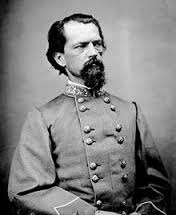
The instrument of Barlow’s division’s destruction was Brigadier General John Gordon’s brigade of Early’s division. Gordon was a self-taught soldier whose army service began when he was “elected Captain of a mountaineer company” [38] called “the Raccoon Roughs” in the opening weeks of the war.” [39] As Georgia had no room in its new military for the company Gordon offered it to Alabama where is was mustered into the 6th Alabama regiment. Even though Gordon had no prior military experience, he learned his trade well and possessed “an oratorical skill which inspires his troops to undertake anything. His men adore him….he makes them feel as if they can charge hell itself.” [40] After Manassas, Gordon was elected colonel of the 6th Alabama. He commanded the regiment until he was wounded five times in the defense of the Bloody Lane at Antietam. His final wound that day was to the face, which rendered him unconscious. He fell “with his face in his cap, and only the fact that another Yankee bullet had ripped through the cap saved him from smothering in his own blood.” [41] Before Chancellorsville the gallant colonel was promoted to brigadier general and given command of Lawton’s brigade.

Gordon’s troops hit the exposed right flank of Colonel Ludwig Von Gilsa’s tiny brigade and that force was overwhelmed by the fierceness of the Confederate assault. Von Gilsa was a professional soldier by trade who had served as a “major in the Prussian army during the Schleswig-Holstein War before immigrating to the United States” [42] from 1848 through 1850. After coming to the United States Von Gilsa supported as a singer, piano player and lecturer in New York, and on the outbreak of the war he raised and was commissioned as the Colonel of the 41st New York Infantry. He was badly wounded at the Battle of Cross Keys in the spring of 1862 and was made a brigade commander when Julius Stahel was elevated to division command. His first battle as a brigade commander was Chancellorsville where on the extreme Union right he warned of Stonewall Jackson’s flanking move, but his reports were discounted. Von Gilsa was a colorful man who won the respect of his men and “was notorious for his genius for profanity in his native German.” During the difficult retreat from Chancellorsville, Oliver Howard reminded the German Colonel “to depend upon God, and von Gilsa poured out a stream of oaths in German with such vehemence and profusion that Howard thought he had gone insane.” [43] Admired by his troops, one officer noted that von Gilsa was “one of the bravest of me4n and an uncommonly good soldier.” [44] This did not keep his new division commander Barlow from taking a dislike to him and arresting the German on the march to Gettysburg for allowing more than one soldier at a time to break ranks to refill canteens. Barlow reinstated Von Gilsa to his command at 1 p.m. just as his brigade was entering Gettysburg and beginning its march to engage the Confederates north of the town.

The position occupied by von Gilsa’s brigade “was at once a strong and dangerous position, powerful in front…but exposed on both flanks.” [45] Thus the exposed position of Barlow’s troops on Blocher’s Knoll provided the advancing Confederates the opportunity to roll up his division and defeat it in detail before moving down the Federal line to deal with Schimmelpfennig’s division. The Confederate attack engineered by Jubal Early was a masterpiece of shock tactics combining a fearsome artillery barrage with a well-coordinated infantry assault.

Colonel H.P Jones who commanded Jubal Early’s artillery battalion opened up a crossfire on von Gilsa’s brigade from its positions east of the Heidlersburg Road as Gordon’s brigade struck assisted by pressure being put forth by Junius Daniel’s brigade of Rodes division which was attacking Ames’s brigade from the northwest. The concentrated fire of the artillery added to the din and furthered the destruction among the Union men as Jones’s battalion’s fire “enfiladed its whole line and took it in reverse.” [46] The artillery fire from Jones’s battalion supported Gordon’s brigade as well as Early’s other two brigades, those of Hays and Avery as they advanced. “A prominent member of Ewell’s staff later said he had never seen guns “better served than Jones’ were on this occasion.” [47]

Von Gilsa’s outnumbered and badly exposed Union troops attempted to make a stand but were slaughtered by the Confederates; soon the brigade began to unravel, and then disintegrated. But it was not the complete rout posited by the brigade’s critics. It took “fifteen to twenty minutes of hard fighting for John Gordon’s men, assisted by some of George Doles regiments, to overrun Blocher’s Knoll” [48]One Confederate soldier later recalled, “it was a fearful slaughter, the golden wheat fields, a few minutes before in beauty, now gone, and the ground covered with the dead and wounded in blue.” [49] Another of Gordon’s soldiers noted “The Yankees…fought more stubborn than I ever saw them or ever want to see them again.” [50] Von Gilsa himself displayed tremendous courage in trying to stem the tide of the Confederate advance. He had “one horse shot from under him, but jumped onto another and desperately tried to stem the retreat. On soldier saw him ride “up and down that line through a regular storm of lead, meantime using German epithets so common to him.” [51] Despite his best efforts, just as a Chancellorsville von Gilsa was unable to hold his position and his troops fled through crowded and chaotic streets of Gettysburg to Cemetery Hill where their retreat was halted and they joined the troops of Steinwehr’s division and the other survivors of the First and Eleventh Corps troops who managed to escape the Confederate onslaught.
gordon

Brigadier General John Gordon

As Von Gilsa’s brigade collapsed Gordon “focused on the exposed right flank of Ames’s brigade” and Doles’s troops, now supported by Ramseur fell upon its left and “Ames’s outnumbered troops also collapsed” [52] even as that young and gallant commander attempted to advance his brigade to support Von Gilsa’s now fleeing troops. Barlow was in the thick of the fighting attempting to rally von Gilsa’s troops when he was wounded. Ames, the senior brigade commander took command of the shattered remnants of the two brigades when Barlow, went down. The wounded Barlow would be assisted by Gordon and “carried to the shade” of a nearby farmhouse by a member of Early’s staff. [53] Barlow recovered and after the war “he and Gordon established a friendship that lasted for the remainder of their lives.” [54]

Adelbert Ames was a native of Maine and had a stellar reputation when he entered Gettysburg. The young officer “graduated 5th out of 45 students in the Class of 1861, which completed its studies just after the fall of Fort Sumter.” [55] He was commissioned into the artillery and was wounded at First Bull Run where he was awarded the Medal of Honor. After he recovered he was commended for his service during the Peninsular Campaign. Ames then returned to Maine where he organized and commanded the illustrious 20th Maine Volunteer Infantry, and after Fredericksburg was promoted to brigadier general. “Like von Gilsa’s brigade, Ames’s came under fire from both infantry and artillery.” [56] After Chancellorsville he was promoted to brigadier general and took command of his brigade in Barlow’s division. Ames was a brave and capable leader who would continue to serve with distinction throughout the war ending up as a Major General of Volunteers and serving as one of Mississippi’s Reconstruction governors after the war. He lived a long and eventful life and was the last Civil War general to die in 1933.

Amidst the chaos of the retreat Ames worked with von Gilsa to “try to gather enough men together around a cluster of buildings along the Heidlersburg Road which served as the Adams County almshouse,” [57] and upon assuming command he succeeded in “slowing the retreat and establishing a second line when Avery’s and Hays’s brigades came crashing in on the right.” [58] However, this line too was driven back in great confusion as the brigades of Gordon and Hays, supported by Jones’s artillery hammered the thin blue line.

Schurz attempted to recover the situation by extending Schimmelpfennig’s division to the right, and advanced his reserve brigade under Polish born Colonel Wladimir Krzyzanowski to support Barlow counterattacking against Doles’s brigade. Krzyzanowski too was a refugee from Europe, coming from a region of Poland occupied by Prussia. “Kriz” as he was known to many Americans had fled to New York following the failed revolution of 1848 and made his living as a civil engineer. When war came Krzyzanowski volunteered for service, and was allowed to recruit “a multinational regiment that became known as the 58th New York Infantry, the “Polish Legion.” [59] Following service in a number of campaigns he was given command of a brigade in June of 1862.

Krzyzanowski’s brigade achieved some initial success against one of Doles’s regiments and for a time engaged in a furious short range shoot out with two more of Doles’s regiments. The opponents stood scarcely seventy-five yards apart aiming deadly volleys at one another without regard for themselves, an Ohio solider recalled “Bullets hummed about our ears like infuriated bees, and in a few minutes the meadow was strewn with…the wounded and the dead.” [60] Despite their gallantry Krzyzanowski’s troops were also rolled up in the Confederate assault when Doles and Gordon turned his flanks. Both of “Krzyzanowski’s flanks received enfilading fire and the brigade fell back across the Carlisle Road toward an orchard on the north side of Gettysburg.” [61]

As the situation deteriorated Schimmelpfennig ordered the 157th New York Infantry to support Krzyzanowski. The regiment advanced and engaged in a furious twenty minute fight, continuing the battle “in Indian fashion” until Schurz ordered them to retreat. The gallant 157th sacrificed itself buying time for others to withdraw and left over 75 percent of its men on the battlefield, when the order came, “less than fifty of the 157th were able to rise out of the wheat and follow.” [62] “So the horrible screaming, hurtling messengers of death flew over us from both sides,” recollected a New York soldier. “In such a storm it seemed a miracle that any were left alive.” [63] Krzyzanowski described the scene as “a portrait of hell.” [64]

Harry Hays brigade of Louisianans joined the assault on the collapsing Federal right while on the left Schimmelpfennig’s line collapsed under the weight of Doles’s attack, which had now been joined by the brigade of Stephen Ramseur. The proud Schimmelpfennig joined his troops in retreat. Inside the town he was unhorsed by enemy fire. In the town Schimmelpfennig was knocked unconscious “with the butt of a musket – “by the blow of a gun” – as he tried to scale a fence.” [65] By the time he regained himself Confederate troops were swarming all around, and to avoid capture he prudently “took refuge in a woodshed, where he remained in hiding the next three days.” [66] The attack of Early’s division supported by Doles and Ramseur “completely unhinged the end of the long Union line and destroyed any opportunities for resistance on that part of the field.” [67]

Howard was still looking for relief from Major General Slocum’s Twelfth Corps and seeing the disaster unfolding north of the town sent the First Brigade of Brigadier General Adolph Steinwehr’s division from Cemetery Hill to support the fleeing men of Barlow and Schimmelpfennig’s divisions. The small brigade of about 800 soldiers under the command of Colonel Charles Coster advanced through the town to a brickyard on the outskirts of the town. Before this small force could get into position they were hit hard by Hays and Avery’s brigades of Early’s division. The Confederates again had a massive numerical advantage at the point of attack with “eight big regiments to face Coster’s three small ones” [68] and they too were able to find an open flank and envelop both flanks of the tiny Union brigade. Avery’s brigade took them in the right flank and with both flanks turned by the advancing Confederates [69] Coster’s little brigade broke under the pressure and began to retreat leaving many prisoners to be collected by the Confederates. The commander of the 134th New York exclaimed “I never imagined such a rain of bullets.” [70] In its fight with Avery’s brigade which had the New Yorkers in a crossfire, the 134th lost some forty men killed and 150 wounded. Coster had entered the fight with about 800 soldiers but by the end of the afternoon over 550 were casualties, with “313 of them left it as prisoners.” [71] Coster survived the assault but resigned from the army a few months later never having filed and official report. [72] As the Union right collapsed and the Confederate pressure on Robinson’s division on Oak Ridge mounted, von Amsberg’s brigade, without the 157th New York found itself without support and was forced to withdraw. However, the sacrifice of Coster’s brigade “succeeded in checking the enemy long enough to permit Barlow’s division to “enter the town without being seriously molested on its retreat.” [73]

In his after action report as well as in other correspondence Barlow was acrimonious toward the German troops who he had so carelessly exposed to the Confederate onslaught on Blocher’s Knoll. He wrote “We ought to have held the place easily, for I had my entire force at the very point where the attack was made….But the enemies [sic] skirmishers had hardly attacked us before my men began to run. No fight at all was made.” [74] However, more circumspect Union officers do not back the gallant, but arrogant Boston Brahmin’s statement nor do his Confederate opponents. The Union artillery commander Henry Hunt wrote that it was “an obstinate and bloody contest” [75] while Gordon, whose brigade had inflicted so much of the damage on Barlow’s divisions wrote:

“The enemy made a most obstinate resistance until the colors of the two lines were separated by a space of less than 50 paces, when his line was broken and driven back, leaving the flank which this line had protected exposed to the fire from my brigade. An effort was made by the enemy to change his front and check our advance, but the effort failed and this line too, was driven back in the greatest confusion with immense loss in killed, wounded and prisoners.” [76]

A private of the 61st Georgia Infantry of Gordon’s brigade wrote that the Eleventh Corps troops “stood firm until we got near them. Then they began to retreat in good order. They were harder to drive than we had known them before….Their officers were cheering their men and behaving like heroes and commanders of ‘the first water’” [77]

During the retreat the redoubtable Hubert Dilger whose battery had wrought such death and destruction on O’Neal and Iverson’s brigades and Carter’s artillery while supporting Robinson’s division on Oak Ridge continued its stellar contribution to the battle. Instead of withdrawing his battery completely he halted four guns north of the town to support the infantry. “The four cannon immediately banged away at the approaching Confederate infantry and helped hundreds of Federal troops successfully escape the clutches of the enemy.” [78] When he could do no more Dilger withdrew to Cemetery Hill where his guns joined the mass of Union artillery gathering on that edifice.

Collapse and the Retreat of First & Eleventh Corps

The retreat of Eleventh Corps “southward through the streets of Gettysburg exposed the rear of the First Corps at a time when Doubleday’s troops were already having to give ground before the superior numbers represented by” [79] the divisions of Harry Heth and Dorsey Pender of A.P. Hill’s Third Corps. The First Corps had been battling Hill’s troops for the better part of the morning and for the most part had gotten the better of their Confederate opponents, inflicting very heavy casualties on the divisions of Heth, Pender and Robert Rodes. The fierceness of the Union defense of the ridges west of the town wreaked havoc on the Confederate attackers. The remnants of the Iron Brigade supported by the brigades of Biddle and Stone, Gamble’s dismounted cavalry, and Wainwright’s expertly directed artillery inflicted massive casualties on their Confederate opponents.

Notes

[1] Ibid. Pfanz The First Day at Gettysburg p.218

[2] Ibid. Greene From Chancellorsville to Gettysburg: O. O. Howard and Eleventh Corps Leadership p.63

[3] Ibid. Guelzo Gettysburg: The Last Invasion p.166

[4] Ibid. Guelzo Gettysburg: The Last Invasion p.166

[5] Ibid. Tagg The Generals of Gettysburg p.139

[6] Ibid. Sears Gettysburg p.38

[7] Ibid. Guelzo Gettysburg: The Last Invasion p.181

[8] Ibid. Guelzo Gettysburg: The Last Invasion p.181

[9] Ibid. Tagg The Generals of Gettysburg p.126

[10] Ibid. Guelzo Gettysburg: The Last Invasion p.162

[11] Ibid. Greene From Chancellorsville to Gettysburg: O. O. Howard and Eleventh Corps Leadership p.63

[12] Ibid. Tagg The Generals of Gettysburg p.132

[13] Trudeau, Noah Andre. Gettysburg: A Testing of Courage, Harper Collins Publishers, New York 2002 p.198

[14] Ibid. Greene From Chancellorsville to Gettysburg: O. O. Howard and Eleventh Corps Leadership p.74

[15] Ibid. Guelzo . Gettysburg: The Last Invasion p.181

[16] Ibid. Coddington The Gettysburg Campaign: A Study in Command, p.288

[17] Ibid. Greene From Chancellorsville to Gettysburg: O. O. Howard and Eleventh Corps Leadership p.74

[18] Ibid. Sears, Gettysburg pp.193-194 and Coddington p.303

[19] Ibid. Trudeau Gettysburg: A Testing of Courage p.142

[20] Ibid. Pfanz The First Day at Gettysburg p.140

[21] Ibid. Guelzo Gettysburg: The Last Invasion p.166

[22] Ibid. Coddington The Gettysburg Campaign p.303

[23] Melton, Brian C. Sherman’s Forgotten General: Henry W. Slocum University of Missouri Press, Columbia and London 2007 p.125

[24] Ibid. Pfanz The First Day at Gettysburg p.143

[25] Ibid. Melton Sherman’s Forgotten General p.124

[26] Ibid. Melton Sherman’s Forgotten General p.128

[27] Ibid. Greene From Chancellorsville to Gettysburg: O. O. Howard and Eleventh Corps Leadership p.74

[28] Ibid. Greene From Chancellorsville to Gettysburg: O. O. Howard and Eleventh Corps Leadership p.76

[29] Ibid. Sears, Gettysburg pp.193-194 and Coddington p.212

[30] Ibid. Greene From Chancellorsville to Gettysburg: O. O. Howard and Eleventh Corps Leadership p.77

[31] Ibid. Sears, Gettysburg pp.193-194 and Coddington p.212

[32] Ibid. Trudeau Gettysburg: A Testing of Courage p.217

[33] Ibid. Trudeau Gettysburg: A Testing of Courage p.216

[34] Ibid. Greene From Chancellorsville to Gettysburg: O. O. Howard and Eleventh Corps Leadership p.77

[35] Ibid. From Chancellorsville to Gettysburg: O. O. Howard and Eleventh Corps Leadership Greene p.78

[36] Ibid. Trudeau Gettysburg: A Testing of Courage p.216

[37] Ibid. Greene From Chancellorsville to Gettysburg: O. O. Howard and Eleventh Corps Leadership p.78

[38] Warner, Ezra J. Generals in Gray: Lives of Confederate Commanders Louisiana State University Press, Baton Rouge 1959, 1987 p.111

[39] Ibid. Tagg The Generals of Gettysburg p.262

[40] Freeman, Douglas Southall, Lee’s Lieutenant’s a Study in Command, One volume abridgement by Stephen W Sears, Scribner, New York 1998 p.41

[41] Sears, Stephen W. Landscape Turned Red: The Battle of Antietam Houghton-Mifflin Company, Boston and New York 1983 p.242

[42] Ibid. Pfanz The First Day at Gettysburg p.224

[43] Ibid. Tagg The Generals of Gettysburg p.127

[44] Ibid. Greene From Chancellorsville to Gettysburg: O. O. Howard and Eleventh Corps Leadership p.61

[45] Ibid. Tagg The Generals of Gettysburg p.128

[46] Hunt, Henry The First Day at Gettysburg in Battles and Leaders of the Civil War edited by Bradford, Neil Meridian Press, New York 1989 p.363

[47] Ibid. Coddington The Gettysburg Campaign: A Study in Command, p.291

[48] Ibid. Trudeau Gettysburg: A Testing of Courage p.225

[49] Ibid. Greene From Chancellorsville to Gettysburg: O. O. Howard and Eleventh Corps Leadership p.79

[50] Ibid. Trudeau Gettysburg: A Testing of Courage p.225

[51] Ibid. Tagg The Generals of Gettysburg p.128

[52] Ibid. Greene From Chancellorsville to Gettysburg: O. O. Howard and Eleventh Corps Leadership p.79

[53] Ibid. Guelzo Gettysburg: The Last Invasion p.188

[54] Dowdy, Clifford. Lee and His Men at Gettysburg: The Death of a Nation Skyhorse Publishing, New York 1986, originally published as Death of a Nation Knopf, New York 1958 p.141

[55] Ibid. Tagg The Generals of Gettysburg p.129

[56] Ibid. Pfanz The First Day at Gettysburg p.234

[57] Ibid. Guelzo Gettysburg: The Last Invasion p.187

[58] Ibid. Coddington The Gettysburg Campaign: A Study in Command, p.292

[59] Ibid. Pfanz The First Day at Gettysburg p.236

[60] Ibid. Greene From Chancellorsville to Gettysburg: O. O. Howard and Eleventh Corps Leadership p.80

[61] Ibid. Greene From Chancellorsville to Gettysburg: O. O. Howard and Eleventh Corps Leadership p.80

[62] Ibid. Guelzo Gettysburg: The Last Invasion p.186

[63] Ibid. Trudeau Gettysburg: A Testing of Courage p.225

[64] Ibid. Guelzo Gettysburg: The Last Invasion p.186

[65] Ibid. Tagg The Generals of Gettysburg p.139

[66] Foote, Shelby, The Civil War, A Narrative. Volume Two Fredericksburg to Meridian Random House, New York 1963 p.477

[67] Ibid. Coddington The Gettysburg Campaign: A Study in Command, p.292

[68] Ibid. Guelzo Gettysburg: The Last Invasion p.190

[69] Ibid. Trudeau Gettysburg: A Testing of Courage, p.241

[70] Ibid. Trudeau Gettysburg: A Testing of Courage p.241

[71] Ibid. Sears, Gettysburg pp.193-194 and Coddington p.217

[72] Ibid. Guelzo Gettysburg: The Last Invasion p.190

[73] Ibid. Pfanz The First Day at Gettysburg pp. 267-268

[74] Ibid Greene From Chancellorsville to Gettysburg: O. O. Howard and Eleventh Corps Leadership p.79

[75] Ibid. Hunt The First Day at Gettysburg p.365

[76] Report of Brigadier General J. B. Gordon, CSA, commanding brigade, Early’s Division, in Luvaas, Jay and Nelson Harold W editors. The U.S. Army War College Guide to the Battle of Gettysburg South Mountain Press, Carlisle PA 1986 p.45

[77] Ibid. Greene From Chancellorsville to Gettysburg: O. O. Howard and Eleventh Corps Leadership p.79

[78] Gottfried, Bradley The Artillery of Gettysburg Cumberland House Publishing, Nashville TN 2008 p.71

[79] Weigley, Russell F. A Great Civil War: A Military and Political History 1861-1865 Indiana University Press, Bloomington and Indianapolis 2000 p.244

Leave a comment

Filed under Loose thoughts and musings

The Last Stand of the Iron Brigade

Friends of Padre Steve’s World

Tonight a section from one of my Gettysburg text chapters. This one is about the stand of the Iron Brigade on the ridges west of Gettysburg on the afternoon of July 1st 1863.

Have a great night,

Peace

Padre Steve+

IronBrigade12021001

Harry Heth launched his two uncommitted brigades, those of Pettigrew and Brockenbrough to wrest control of the Herbst Woods from the Iron Brigade. The battle around the seminary and in Herbst wood ahead of it was fierce and the casualties enormous. The Iron Brigade still held on to Herbst Woods and was attacked by Pettigrew’s brigade of Heth’s division and it’s commander Solomon Meredith ensured that his veterans would hold the woods as Doubleday had instructed, “at all costs.” “At the apex of the curved line of the Iron Brigade in the woods stood the 24th Michigan. Straight ahead, ascending the slope was the 26th North Carolina, a huge regiment of 850 officers and men. For the next twenty minutes, hell enveloped both regiments.” [1] In the maelstrom of musketry the Confederates suffered heavily, a North Carolina sergeant recalled “could not even begin to estimate the number of “deadly missiles [that] were sent into our ranks, which mowed us down like wheat before the sickle.” [2]

Despite their immense losses the Confederates finally drove the Iron Brigade back to the seminary but it was at great cost to both sides. The battle for the woods was a wholesale slaughter, the 26th North Carolina lost “549 out of the 843 men it had lined up that afternoon; its regimental flag went through thirteen sets of hands” [3] in a fight where “seven out of every ten men on both sides fell killed or wounded.” [4] The 26th North Carolina lost its commanding officer, the young Colonel Henry Burgwyn Jr., who had picked up the regimental colors when the color guard was shot down. “He called out to the regiment to “dress on the colors.” He turned to hand the colors to a private, only to be hit in the left side, puncturing both lungs; the impact twisted him around and entangled Burgwyn in the flag.” [5]

But by now the outnumbered soldiers of the Iron Brigade were being flanked by part of the 11th North Carolina, which had worked its way around the left. These North Carolina troops began raking the Union line with their musket fire, and a soldier of the 19th Indiana noted, “The slaughter in our flanks became frightful beyond description,” [6] Even so the 11th North Carolina lost heavily in the attack, its losses included its colonel and senior major, the Iron Brigade “inflicted such heavy losses on the Confederates that there were not enough men left even for a successful bayonet charge.” [7]

Harry Heth’s division had finally wrested the McPherson’s Ridge from the determined Yankees but it was now a spent force. Archer and Davis’s brigades had been shattered in the morning fighting and now Pettigrew and Brockenbrough’s were shattered and his men were out of ammunition. Heth claimed “his division had lost 2,300 men in thirty minutes. Pettigrew’s brigade, which had borne the brunt of the afternoon’s fight had lost over 1,000 men killed and wounded.” [8]

Solomon Meredith was among the wounded and the Iron Brigade, now under the command of Colonel Henry Morrow of the 24th Michigan were forced to withdraw back to the seminary. The westerners fought stubbornly and withdrew “step by step, contesting every foot of ground.” [9] They withdrew “by echelon of alternate battalions, turning and stopping six times to beat back the Confederate pressure.” [10] On Seminary Ridge the survivors joined with the remnants of Biddle’s and Stone’s brigades and Wainwright’s artillery. The gallant First Corps was now but a shadow of its former self formed near the seminary for a last stand against the advancing Confederates. “Ordered to hold onto the ridge as long as possible, “the shattered remnants of the Iron Brigade” – Doubleday’s description – moved in behind the barricade to face the onslaught to come.” [11]

Abner Doubleday had ordered his troops to hold their positions “at all hazards” and when the assaulting waves of the Confederates “neared Willoughby Run, the Union ranks exploded in a gale of musketry.” [12] These Confederates from Dorsey Pender’s division were fresh and ready to fight, having taken the lead as Heth’s battered formations were given time to reform. Pender chose the North Carolina brigade of Alfred Scales and the South Carolina brigade of Abner Perrin for the assault, but the Carolinians encountered the same stubborn resistance from the depleted Federals as Heth’s men had earlier in the day. Doubleday remained at the Seminary directing the action and contributed his own headquarters guard company to the defense and “lent a hand sighting the artillery.” [13]

The Iron Brigade and Stone’s brigade were in a good position and covered by a “stone wall and some rough fence-rail breastworks and opened a blistering fire on the advancing Carolinians.” [14] Wainwright had eighteen guns concentrated in this sector on a front of less than 200 yards, and they added to the carnage in the Confederate ranks, one battery was enfilading the Confederate left and Wainwright wrote, “round shot, together with the canister poured in from all the other guns, was cutting great gaps in the front line of the enemy. But still they came on, the gaps being closed by regiments from the second line, and this again filled up by a third column which was coming over the hill. Never have I seen such a charge. Not a man seemed to falter….” [15]

The recipients of this blast were the men of Scales brigade and to one of the Confederates the Federal redoubt seemed “a sheet of fire and smoke, sending its leaden missiles…in the faces of men who had often, but never so terribly, met it before.” [16] Colonel William Robinson of the 7th Wisconsin wrote that “the Confederate ranks went down like grass before the scythe” [17] The casualties suffered by Scales’ brigade in their assault on Seminary Ridge were devastating, “Scales was wounded by a shell fragment, and in his five regiments every field officer but one was killed or wounded. Scales had launched his attack that afternoon with 1,350 men. That evening barely 500 answered roll call.” [18]

With Scales and his brigade out of action it was left to Perrin and his South Carolinians to press the fight. These troops were also met with a terrible reception, but Perrin detected a slight gap between Biddle’s brigade and Gamble’s cavalrymen “and drove straight for it. Perrin himself led the charge. Filled with admiration for such courage as defied the whole fire of the enemy,” wrote J.F.J. Caldwell of the 1st South Carolina “…the brigade followed, with a shout that itself half a victory.” [19] Perrin’s troops broke through the Union line just south of the seminary, and once he penetrated the Union line Perrin exploited his advantage and “neatly fanned out his regiments to the left and to the right so as to attack his opponent on the flanks.” [20] By now the 1st and 14th South Carolina had pushed around the flank of the Seminary redoubt, “while the 12th and 13th South Carolina struck Biddle’s brigade through “a furious storm of musketry and shells,” forcing Biddle’s thinned-out regiments to fall back behind the seminary.” [21]

Retreat to Cemetery Hill

By now there was little that could be done by the battered remnants of First Corps to hold on to Seminary Ridge or Oak Ridge. Doubleday and Wadsworth gave the order to withdraw to Cemetery Hill, Wadsworth noted “Outflanked on both right and left, heavily pressed in front, and my ammunition nearly exhausted,… I ordered the command to retire.” [22] The survivors of the corps withdrew under heavy Confederate pressure as the 6th Wisconsin and Battery “B” 4th U.S. Artillery covered the retreat. Doubleday noted “from behind the feeble barricade of rails these brave men stemmed the fierce tide which pressed upon them incessantly, and held the rebel lines…at bay until the greater portion of the corps had retired.” [23] Gamble’s cavalrymen also contributed by so effectively resisted Lane’s brigade that it could not support Perrin in the assault, causing Perrin to complain that it “never came up until the Yankees were clear out of reach.” [24]

“The Iron Brigade and Stone’s Bucktails generally fell back toward Gettysburg under some semblance of control, but this was not as easily done in units with the enemy closing in right at their heels.” [25] These units took more causalities during and lost some men as prisoners while withdrawing, but they were able to work their way through the chaotic streets of Gettysburg, to Cemetery Hill where “the men were re-formed and were ready for service.” [26] The remnants of the Iron Brigade were then directed by Abner Doubleday to Culp’s Hill to support an artillery battery on that vital ground.

Some units did not get the word directly and only found out when supporting units withdrew, such was the case with Wainwright’s artillery. Wainwright was still under the impression that the ridge was to be held at all costs and only withdrew when he found that his infantry supports and already withdrawn, leaving his gunners alone against the advancing Confederates. However, they had already done such damage to the Confederates that the Southerners to their front advanced with caution. One federal artilleryman noted “I was astonished at the caution of the enemy at this time. He seemed utterly paralyzed at the punishment he had received from First Corps, and was literally ‘feeling every inch of the way’ in his advance on our front.” [27]

Wainwright and his gunners executed their guns withdraw from Seminary Ridge under heavy Confederate fire, though the Confederate infantry failed to follow up its success by rushing his guns. He directed his batteries to “move at a walk towards town” [28] as he believed that sending them through at a trot or gallop could panic the infantry. He lost one gun in the retreat, something that as an artilleryman he found upsetting, but he realized that “our getting out of that place as quite a feat, and I wish it could have been without the loss of a gun. The more I think of it, the more I wonder how we got off at all. Our front fire must have shaken the rebel lines badly or they would have been upon us.” [29]

To the north on Oak Ridge the survivors of John Robinson’s division were threatened with complete disaster. Hard pressed on three sides by Rodes’s division and threatened from the east by the collapse of Eleventh Corps and by of the rest of First Corps withdraw from Seminary Ridge. These troops had successfully repelled every Confederate attack and had suffered terribly as they did so. Brigadier General Gabriel Paul’s First Brigade had relieved Baxter’s brigade, which had been withdrawn to replenish ammunition after mauling Iverson and O’Neal’s brigades at the northern apex of Oak Ridge. After its arrival Paul’s excellent brigade beat back an attack by Ramseur’s brigade but in the process lost their commander. General Paul was “shot in the head and blinded” and his place was taken by Colonel Adrian R. Root. [30]

However now, under pressure from the brigades of Daniel, Ramseur and Doles Robinson had to act to save First Brigade. He ordered Colonel Charles Tilden and the 16th Maine to act as a rearguard. Forced to withdraw by overwhelming Confederate numbers “an effort was made to retire in good order, but the pressure was too great.” [31] Tilden’s Maine men were cornered in the Railroad cut they were caught in the crossfire of several Confederate regiments, and for most the only option was surrender or death. Of “the 275 men who entered the battle with the 16th Maine, only 39 reached the hill.” [32] The regiment’s adjutant recalled “They swarmed down upon us….they engulfed us, and swept away the last semblance of organization that marked us a separate command.” [33] To ensure that the regiment’s colors did not become a trophy for the Confederates Tilden ordered his color bears to tear the flags from their staffs and rip them into pieces too small to become souvenirs. Many of the Maine men kept these shreds of their precious colors for the rest of their lives. The gallant 6th Wisconsin which had been at the Railroad cut to turn back the initial assault of Davis’s brigade in the morning which covered the retreat fought its way through town and finally “its men saw “the colors of the Union, floating over well ordered line of men in blue, who were arrayed along the slope of Cemetery Hill.” [34]

Notes

[1] Ibid. Wert The Sword of Lincoln p.278

[2] Ibid. Trudeau Gettysburg: A Testing of Courage p.225

[3] Ibid. Guelzo Gettysburg: The Last Invasion p.196

[4] Ibid. Wert The Sword of Lincoln p.278

[5] Ibid. Guelzo Gettysburg: The Last Invasion p.196

[6] Ibid. Trudeau Gettysburg: A Testing of Courage p.228

[7] Ibid. Coddington The Gettysburg Campaign: A Study in Command, p.293

[8] Ibid. Pfanz The First Day at Gettysburg p.292

[9] Nolan, Alan T. The Iron Brigade: A Military History Indiana University Press, Bloomington IN, 1961 and 1994 p.245

[10] Ibid. Guelzo Gettysburg: The Last Invasion p.196

[11] Ibid. Nolan, The Iron Brigade p.247

[12] Ibid. Wert The Sword of Lincoln p.278

[13] Ibid. Guelzo Gettysburg: The Last Invasion p.200

[14] Ibid. Sears, Gettysburg pp.193-194 and Coddington p.218

[15] Ibid. Wainwright A Diary of Battle p.236

[16] Ibid. Nolan, The Iron Brigade p.247

[17] Ibid. Nolan, The Iron Brigade p.247 and Sears p.218

[18] Ibid. Sears, Gettysburg p.218

[19] Ibid. Sears, Gettysburg p.218

[20] Ibid. Coddington The Gettysburg Campaign: A Study in Command, p.294

[21] Ibid. Guelzo Gettysburg: The Last Invasion p.201

[22] Ibid. Nolan, The Iron Brigade p.248

[23] Ibid. Nolan, The Iron Brigade p.248

[24] Ibid. Pfanz The First Day at Gettysburg p.318

[25] Ibid. Sears, Gettysburg p.220

[26] Ibid. Nolan, The Iron Brigade p.252

[27] Ibid. Gottfried, The Artillery of Gettysburg p.53

[28] Ibid. Sears, Gettysburg p.220

[29] Ibid. Wainwright A Diary of Battle p.237

[30] Ibid. Trudeau Gettysburg: A Testing of Courage p.233

[31] Ibid. Trudeau Gettysburg: A Testing of Courage p.235

[32] Ibid. Pfanz The First Day at Gettysburg p.193

[33] Ibid. Trudeau Gettysburg: A Testing of Courage p.235

[34] Ibid. Pfanz The First Day at Gettysburg p.330

Leave a comment

Filed under Loose thoughts and musings

When Political Parties Implode: The Battle over the Lecompton Constitution and its Relevance Today

Friends of Padre Steve’s World

I have been watching the implosion of the Republican Party with some concern, not because I am a Republican or support that party, but because I am a historian and understand that the effects of these kinds of crack ups are not just bad for the party concerned, but often for the country, because they reveal deeper social and political issues. As I watch this I am reminded of the crisis and battle regarding the Lecompton Constitution in 1858. Since the article deals with this in some detail I will cut to the bottom line. In 1858 the Democratic Party held majorities in both houses of Congress and the Presidency. It had been aided by the collapse of the Whig Party and the new republican Party was still in its infancy. But extremists Democrats sought to push through a measure to bring Kansas into the Union as a Slave State, though the measure was rife with fraud. It split the Democratic Party and for a time destroyed it as a national party and helped bring about the Civil War. The battle over the Lecompton constitution is an epic event in our history. 

The issues today are not the same by any means, but the rhetoric and the intransigence of the most zealous ideologues is destroying the Republican Party in much the same way other ideologues destroyed the Democratic Party in 1858.  I admit that I could be wrong, but everything that I see happening is pointing to the implosion and possible breakup of the Republican Party. This may be good for Democrats in the short term, but seldom is it good for the country. But whatever your political views are, I do hope that you read this article and think about the implications of it, and of what is happening in our country today.

Peace

Padre Steve+

Stephen-Douglas-in-1858

Senator Stephen Douglas in 1858

Kansas was politically divided between two competing legislatures, each which claimed to be the voice of the people. The population of Kansas was heavily anti-slavery and many citizens felt disenfranchised by the official legislature, which was “a pro-slavery body elected by fraud in 1855.” [1] This body met in the city of Lecompton. In 1857 the Lecompton legislature sensed the opportunity to have Kansas admitted to the Union as a Slave State. It elected slavery supporters as members of a constitutional convention to draft a constitution which would be submitted to Congress for admission to the Union as a Slave State.

Free State partisans feared that that if they participated in the election that they would be “gerrymandered, and simply counted out by stuffed ballots,” and sat out the election. As a result it was “a quiet election, with many proslavery candidates unopposed and only 2,200 out of 9,000 registered voters going to the polls, a large majority of extreme proslavery men won election as delegates to the constitutional convention in September.” [2] But the result of the election was untenable, for “Two thousand voters in a territory with 24,000 eligible for the franchise had elected a body of delegates whom no one seriously regarded as representative of the majority opinion in Kansas.” [3]

The Lecompton legislature passed the proslavery constitution, but it was vetoed by the outgoing governor, John W. Geary. Geary accused “the pro-slavery legislature of attempting to stampede a rush to statehood on pro-slavery terms,” but his veto was overridden. The constitution had several provisions that most of the population found unacceptable. It protected owners of “the 200 slaves in Kansas, banned free blacks from the state, and prohibited any amendments to the constitution for seven years.” [4] The newly appointed governor of the territory, Robert J. Walker opposed the measure and denounced it “as a vile fraud, a bare counterfeit.” [5] Walker demanded a new, fair, referendum, which the newly elected president James Buchanan, also backed. In response many Southerners in Congress “threatened to secede unless the administration fired Walker and backed down on the referendum issue.” [6] The threat of secession by Southerners in support of the radical minority in Lecompton led to chaos in the Democratic Party which controlled the House, the Senate and held the Presidency.

james-buchanan

President James Buchanan

James Buchanan, who had rode into office on the votes of the South was now pressured by Southern legislators to change his position on the Lecompton Constitution. Buchannan’s cabinet, which was heavily Southern, and pro-slavery expansion also used its influence to pressure the president. In response to the pressure, Buchanan reversed his previous stance in regard to Kansas and endorsed the bill. This provoked a new outcry, this time from members of the Democratic Party. Many Northern Democrats were outraged by the reversal and the threats of secession. Most of the Northern Democrats were willing to accept and even defend slavery where it existed, but they were opposed to the expansion of slavery. They felt betrayed by their president’s actions and rose in opposition to the bill that would admit Kansas as a Slave State.

The formidable Stephen A. Douglas, the Little Giant who had so skillfully crafted the Compromise of 1850 using the principle of popular sovereignty, led these Democrats in their fight against Buchanan’s acceptance and endorsement of Lecompton. Douglas’s previous actions to support the rights of Slave States had made him a hero in much of the South and his stature in both the North and the South made him the front runner to win the Democratic nomination for the presidency in 1860.

But Douglas, who had worked so hard to build compromises that would hold the Union together could not countenance the actions and tactics of the Southern members of his party. Douglas was a political realist and not an ideologue. He was very sympathetic to slave holders and no supporter of emancipation, in fact Douglas was a racist, and was convinced “of the inferiority of the Negro, and he had a habit of stating it with brutal bluntness, “I do not believe that the Negro is any kin of mine at all…. I believe that this government of ours was founded, and wisely founded upon white basis. It was made by white men, for the benefit of white men and their posterity, to be executed and managed by white men.” [7] But despite his own beliefs Douglas understood the danger that the pro-slavery extremists supporting Lecompton were to the party, and he knew that if the bill was passed that it would destroy the unity of the Democratic Party and possibly the Union itself.

Douglas was outraged and when he saw the news that in the Washington Union that Buchanan had decided to support Lecompton he wrote:

“This left no doubt were the old bastard stood. “Can you believe his Goddamned arrogance?” I told a friend. “I run the Committee on Territories. He should have consulted me before approving the Lecompton fraud. He’ll pay for that. By God, sir, I made Mr. James Buchanan, and by God, sir, I’ll unmake him.” [8]

As such, the Little Giant threw caution to the wind and stormed to the White House “to confront Buchanan on the “trickery and juggling of the Lecompton constitution.” He warned the president of that his actions in support of the Lecompton party would “destroy the Democratic party in the North,” and we warned that “if Buchanan insisted on going through with it, Douglas swore to oppose him in Congress.” [9]

It was an epic confrontation. Douglas recalled, “The Lecompton constitution, I told Buchanan bluntly, was a blatant fraud on the people of Kansas and the process of democracy, I warned him not to recommend acceptance of it. With his head titled forward in that bizarre habit of his, he said that he intended to endorse the constitution and send it to Congress. “If you do,” I thundered, “I’ll denounce it the moment that it is read.” His face turned red with anger. “I’ll make Lecompton a party test,” he said. “I expect every democratic Senator to support it.” I will not, sir![10] Buchanan then cut Douglas off.

Angry and offended by Douglas Buchanan issued his own threat to Douglas saying, “I desire you to remember that no Democrat ever yet differed from an administration of his own choice without being crushed….Beware of the fate of Tallmadge and Rives,” two senators who had gone into political oblivion after crossing Andrew Jackson.” Douglas was undeterred and fought back, Douglas riposted: “Mr. President, I wish to remind you that General Jackson is dead, sir.” [11] It was an unprecedented action by a sitting Senator, to confront a President of one’s own party and threaten to oppose him in Congress was not done.

Following the confrontation with Buchanan Douglas was even more determined to defeat the Lecompton party. In righteous anger Douglas “took his political life into his own hands and assailed the Lecompton Constitution on the floor of the Senate as a mockery of the popular sovereignty principle.” [12] Buchanan’s allies in Congress fought back, and the two sides sometimes came into physical confrontation with each other in the chambers of Congress. When Buchanan’s supporters pushed for Lecompton’s approval and the admission of Kansas as a Slave State, Douglas fired back, warning “You do,” I said, “and it will lead directly to civil war!” I warned the anti-Lecompton Democrats of the North that the President intended to put the knife to the throat of every man who dared to think for himself on this question and carry out principles in good faith. “God forbid,” I said “that I ever surrender my right to differ from a President of the United States for my own choice. I am not a tool of any President!” [13]

Under Douglas the Northern Democrats joined with Republicans for the first time to defeat the admission of Kansas as a Slave State. Douglas recalled the battle:

“After the Christmas recess, the Administration unleashed its heavy horsemen: Davis, Slidell, Hunter, Toombs, and Hammond, all southerners. They damned me as a traitor and demanded that I be stripped of my chairmanship of the Committee on Territories and read out of the Democratic party. Let the fucking bastards threaten, proscribe, and do their worst, I told my followers; it would not cause any honest man to falter. If my course divided the Democratic party, it would not be my fault. We were engaged in a great struggle for principle, I said, and we would defy the Administration to the bitter end.” [14]

Southern members of Congress fought back and as the battle continued their acrimony towards Douglas grew and their rhetoric against the Little Giant became more heated. He was “at the head of the Black column…stained with the dishonor of treachery without parallel…patent double dealing…detestable heresies…filth of his defiant recreancy…a Dead Cock in the Pit…away with him to the tomb which he is digging for his political corpse.” [15]

But Douglas was undeterred by the threats to his career, he saw that he was in the right, and though he was in agreement with the philosophy of his opponents regarding slavery as an institution he realized that appeasing the South was not an option in regard to Lecompton. He wrote:

“My forces in the House fought a brilliant delaying action while I worked to win over wavering Democrats. When we introduced a substitute bill, Buchanan called a dozen congressmen to the White House and exhorted them not to forsake the administration. He was cursing and in tears. He had reason to be: on April first, a coalition of ninety-two Republicans, twenty-two anti-Lecompton Democrats, and six Know-Nothings sent Lecompton down to defeat by passing the substitute bill. This bill provided for a popular vote on the Lecompton constitution and for a new convention if the people rejected that document, as they surely would.” [16]

The substitute bill was passed by the Senate as well and sent back to Kansas for a popular vote. When the Lecompton Constitution was resubmitted to the people of Kansas, “to the hideous embarrassment of Buchanan, the voters of Kansas turned on August 30th and rejected Lecompton by a vote of 11,812 to 1,926.” [17] Douglas wroteThe agony is over,” cried one of my aides, “and thank God that the right has triumphed. Poor old Buck! Poor old Buck had just had his face rubbed in shit. By our “indomitable courage, “ as another aide put it, we’d whipped this “powerful and proscriptive” Administration and forced the Black Republicans to support a substitute measure which fully embodied the great principles of the Kansas-Nebraska Act.” [18]

Pro-slavery Southerners were outraged and Buchanan used every measure that he could to crush the anti-Lecompton Democrats, but he had lost “one of the most vicious struggles in the history of Congress, Southern Democrats had seriously damaged the patience of their Northern counterparts, and Buchannan loyalists in the North were unseated wholesale by upstart Republicans in the 1858 congressional elections.” [19] Buchanan’s Presidency was discredited, his party divided, its majority in congress lost, and the South moving closer to secession. Southerners considered Douglas a traitor and accused him of betraying them. “A South Carolinian lamented that “this defection of Douglas has done more than all else to shake my confidence in Northern men on the slavery issue, for I have long regarded him as one of our safest and most reliable friends.” [20]

The fight over Lecompton was a watershed. It served to illuminate how “minuscule minorities’ initial concerns ballooned into unmanageable majoritarian crises. The tiny fraction of Missouri slaveholders who lived near the Kansas border, comprising a tinier fraction of the South and a still tinier fraction of the Union, had demanded their chance to protect the southern hinterlands.” [21] The crisis that they provoked drew in the majority of Southern Democrats who came to their aid in Congress and provoked Northerners to condemn the Southern minority, which they believed was disenfranchising the majority in order to expand slavery to new territories.

The issue of Lecompton galvanized the political parties of the North and split the Democratic Party into Northern and Southern factions, dooming it as a national party for the foreseeable future. It was also the first time that a coalition Northern Democrats sided with anti-slavery forces. Through the efforts of “Republicans and anti-Lecompton Douglas Democrats, Congress had barely turned back a gigantic Slave Power Conspiracy to bend white men’s majoritarianism to slavemaster’s dictatorial needs, first in Kansas, then in Congress.” [22]

The political impact of the Lecompton crisis on the Democratic Party was an unmitigated disaster. The party suffered a major election defeat in the 1858 mid-term elections and lost its majorities, and in a sense fulfilling Lincoln’s words “became increasingly a house divided against itself.” [23] Douglas’s courageous opposition to Lecompton would be chief among the 1860 split in the Democratic Party, Southern Democrats turned with a vengeance on the man who had been their favorite in the 1856 democratic primary. This doomed his candidacy for President and ensured the election of Abraham Lincoln and the Republicans, a man that he had defeated for Senate in that critical summer of 1858.

Notes

[1] Ibid. Guelzo Fateful Lightening p.81

[2] Ibid. Potter The Impending Crisis p.300

[3] Ibid. Potter The Impending Crisis p.314

[4] Ibid. Guelzo Fateful Lightening p.115

[5] Ibid. McPherson The Battle Cry of Freedom p.165

[6] Ibid. McPherson The Battle Cry of Freedom p.164

[7] Ibid. Potter The Impending Crisis p.340

[8] Ibid, Oates The Approaching Fury p.208

[9] Ibid. McPherson The Battle Cry of Freedom p.166

[10] Ibid, Oates The Approaching Fury p.208

[11] Ibid. McPherson The Battle Cry of Freedom p.166

[12] Ibid. Guelzo Fateful Lightening p.115

[13] Ibid, Oates The Approaching Fury p.210

[14] Ibid, Oates The Approaching Fury pp.212-213

[15] Ibid. McPherson The Battle Cry of Freedom p.168

[16] Ibid, Oates The Approaching Fury pp.215-216

[17] Ibid. Guelzo Fateful Lightening p.116

[18] Ibid, Oates The Approaching Fury p.216

[19] Ibid. Guelzo Fateful Lightening p.116

[20] Ibid. McPherson The Battle Cry of Freedom p.167

[21] Ibid. Freehling, The Road to Disunion Volume II: Secessionists Triumphant 1854-1861 p.140

[22] Ibid. Freehling, The Road to Disunion Volume II: Secessionists Triumphant 1854-1861 p.142

[23] Fehrenbacher, Don E. Kansas, Republicanism, and the Crisis of the Union in The Civil War and Reconstruction Documents and Essays Third Edition edited by Michael Perman and Amy Murrell Taylor Wadsworth Cengage Learning Boston MA 2011 p.94

7 Comments

Filed under civil rights, civil war, History, laws and legislation, leadership, Political Commentary

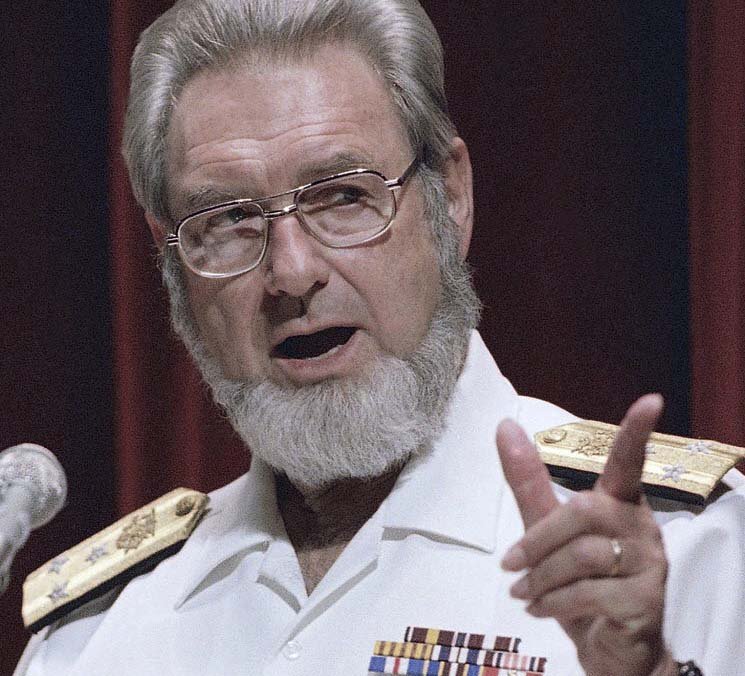
Separate Ideology & Religion from Sworn Duty: The Legacy of Dr. C. Everett Koop

c-everett-koop-1db591308d7eb474

“At the beginning of the AIDS epidemic many Americans had little sympathy for people with AIDS…. The feeling was that somehow people from certain groups ‘deserved’ their illness. Let us put those feelings behind us. We are fighting a disease, not a people.” C. Everett Koop, Surgeon General 1986

Friends of Padre Steve’s World,

I have mentioned that I have been reflecting on many things over the past few weeks and months. Of course if you follow my writings you know what I think about public officials who refuse to do their duty to follow the law and protect the rights of other citizens, even of those that they happen to disapprove. This came to a head recently with the case of the anti-marriage equity county clerk, Kim Davis. I am not going to revisit her case as I have been worn out by it and have no need to waste any more time on her.

That being said I can point out the case of a public official, a conservative, pro-life, Evangelical Christian who served as Surgeon General under President Reagan, Dr. C. Everett Koop. In an era of extreme intolerance and hatred for those infected with HIV, Dr. Koop became one of the leading proponents of compassionate and responsible care for victims of HIV/AIDS, most of whom were homosexual men. He met opposition within the administration, where despite his impressive credentials he was marginalized and was vilified by conservative Christians.

Dr. James Dobson and Dr. D. James Kennedy, early leaders of the political religious right were particularly vindictive. These unscrupulous leaders helped spread much disinformation about HIV from the a book published by a charlatan named Gene Antonio who wrote what was then a popular book called “The AIDS Cover Up,” They claimed that AIDS could be spread by kissing, mosquito bites or even by touching surfaces that had been touched by those infected. These men were bolstered by their allies in the Reagan White House, Secretary of education Bill Bennett and his assistant Gary Bauer who were the official administration spokesmen regarding AIDS.

They marginalized the Surgeon General; Dr. C. Everett Koop who noted in the early days of the epidemic was “completely cut off from AIDS” by Bennett and others in the Reagan Administration. They were so wrong that Koop, who was by no means a liberal took them to task on their hateful, dishonest and un-Christian proclamations. Koop told a journalist:

“the Christian activity in reference to AIDS of both D. James Kennedy and Jim Dobson is reprehensible. The first time that Kennedy ever made a statement about AIDS, I saw it on television. It was so terrible, so homophobic, so pure Antonio that I wrote him a letter.”

Koop said of Dobson, who he had worked with earlier on HIV/AIDS: “I don’t know what happened to him. He changed his mind, and last August in his paper he attacked me for two pages as leading people down the garden path. But again his arguments were full of holes. I just cannot believe the poor scholarship of so many Christians.”

Despite the opposition and attacks on his character by leaders of the Christian Right, Dr. Koop was undeterred and had no problem taking on these men and women. Some of these supposedly Christian leaders still are with us and spout the same hatred for homosexuals that they did in the 1980s. Dr. Koop realized that many of his fellow Christians really didn’t care about people, and believed that HIV was God’s judgment against people that they already despised and had in their theology condemned to Hell. He also realized that many of these leaders would resort to poor scholarship and even inflammatory statements to influence public opinion.

For doing so Dr. Koop was condemned by fanatical extremists like Phyllis Schlafly who said that Koop’s recommendations in his report about preventing AIDS looked “like it was edited by the Gay Task Force” and Schlafly, ever the loving, honest and ethical Christian that she is accused Koop of advocating that third-graders learn the rules of “safe sodomy.”

Koop replied in a very courageous manner to Schlafly, who in my view is one of the most loathsome people to ever unite religion and politics: “I’m not surgeon general to make Phyllis Schlafly happy. I’m surgeon general to save lives.”

Dr. Koop understood the oath that he took as a physician and the oath that he took when he became Surgeon General; sadly Mrs. Davis and many in the Christian Right will never understand that. In 1988 Dr. Koop said something that most people in positions of any public responsibility, be they public health officials, medical professionals, politicians or even the most partisan political preachers should abide: “I separate ideology, religion and other things from my sworn duty as a health officer in this country.”

Dr. Koop’s words should be heeded by any Christian in public office, but sadly, those who do will be treated with the same scorn and hatred as Dobson, Kennedy, Bauer, and Schlafly heaped on him.

I can understand Dr. Koop’s plight. I have been set upon by some of the disciples of Bauer, Dobson, Schlafly, Kennedy and others for simply defending people’s rights under the Constitution and obeying the oath of office that I took in 1981 and have continued to affirm since. Sadly, the truth is that many so-called Christians will attempt to destroy the lives, reputation and careers of other Christians who do not tow their ideological line, and sadly this has become much worse than it was in the 1980s.

I will write more about this but for now I will wish you a good day.

Peace

Padre Steve+

1 Comment

Filed under christian life, civil rights, ethics, faith, healthcare, History, laws and legislation, leadership, LGBT issues, News and current events, Political Commentary

Born that Way: A Star Trek Episode for Today

STTNG517TheOutcast18_zps9b0f7431

Friends of Padre Steve’s World

Judy and I were watching a Star Trek the next Generation video the other night and both of us were moved by it. The episode called The Outcast from season five, involved an encounter where the crew of the Enterprise assisted people of an androgynous race to find a missing shuttlecraft.

The androgynous race had believed that they had evolved beyond gender, and members who felt that they were either male or female were outcasts, and subjected to what we might call reprogramming, something quite like what some Christian conservatives call “reparative therapy” or “conversion therapy” in which homosexuals are forced to renounce and deny who and what they are. 

In the Star Trek episode a scientist, of that race named Soren meets the crew of the Enterprise and finds that she is attracted to Commander Riker. It is a highly emotional episode, and when her leaders find that she is attracted to Riker they put her on trial. During that interrogation she is given the chance by Riker to deny who she is and blame the situation on him, but she cannot. Instead she declares the truth about who she is, a truth that is shared by so many of the homosexuals and lesbians that I have come to know over the years. Her argument is so compelling, and has been stated in similar ways by so many of the people that I have known.

“I am female. I was born that way. I have had those feelings, those longings, all of my life. It is not unnatural. I am not sick because I feel this way. I do not need to be helped. I do not need to be cured. What I need, and what all of those who are like me need, is your understanding. And your compassion. We have not injured you in any way. And yet we are scorned and attacked. And all because we are different. What we do is no different from what you do. We talk, and laugh. We complain about work. And we wonder about growing old. We talk about our families, and we worry about the future. And we cry with each other when things seem hopeless. All of the loving things that you do with each other, that is what we do. And for that, we are called misfits, and deviants, and criminals. What right do you have to punish us? What right do you have to change us? What makes you think you can dictate how people love each other?”

The leaders of the planet reject her argument and she is subjected to the reparative therapy against her wishes. When Riker attempts to rescue her she rejects the attempt. When I first saw the episode when I was in seminary I was conflicted because I understood that the heart of the matter did not deal with someone being a heterosexual, but toward how we as a society and as members of the Christian faith community have treated homosexuals and lesbians for millennia.

I know and have known many homosexuals and lesbians, many of them Christians, many much more conservative in their faith than me. Sadly, their families, their faith communities, have rejected most of them and until the past few years denied the rights enjoyed by heterosexuals, inside or outside of marriage, including the right to have their partner with them when they die.

Who is to dictate whom people love and the manner in which they love each other? What would I, or you do if someone in a church, or the government, or even our families told us that we could not be who we were born to be? And honestly, what would we think if people tried to change us against our will and against every fiber of our being? Would that not be a crime against our humanity?

That is the question that all of us have to ask, even when we claim that God only blesses certain relationships while ignoring the other clear commands of scripture? When I see people who have multiple divorces, and adulterous relationships condemn homosexual couples who only desire to legally marry and remain with the love of their life, I am appalled, for I know many same sex couples who have been faithful to each other and lived together for decades before their relationships were recognized as legal and proper, even if some religious people disagree.

My commitment is to care for and accept people no matter what their sexual orientation is. As a priest and pastor I can do nothing else. Of course some will disagree with me and that is their right and I will not take freedom away from them, but I do ask that they not impose their beliefs on same sex couples and thus deprive them of the same freedoms the rest of us enjoy.

While the Supreme Court has recognized that gays and lesbians have the Constitutional right to marriage based upon the 14th Amendment and the Civil Rights Act of 1965, that right is still being assailed by its opponents; most of who are conservative Christians.

This is about civil rights and human rights, and at the same time the religious freedom of gay and lesbian Christians who have been denied the right other heterosexual Christians have always had; the right to have the marriage they entered into and blessed by their ministers as legal. For too many centuries those defending the faith, including Popes, bishops and kings engaged in the same relationships that they persecuted others for doing. The list of these defenders of the faith is long, and the people often illustrious and sometimes infamous.

I think that it is time that we learn to accept people for who they are, and not who we think that they should be.

Have a great day,

Peace

Padre Steve+

Leave a comment

Filed under christian life, ethics, faith, LGBT issues, marriage and relationships, star trek

Tragedy in Kunduz: Mistake, Accident or War Crime?

kunduz-hospital-bombing

Friends of Padre Steve’s World

I have been troubled by the disaster at the Doctor’s Without Borders in Kunduz Afghanistan, a disaster that appears to be linked to the actions of U.S. and or NATO, Coalition, and Afghan forces as well as the Taliban who had taken control of that city a few days before the attack.

There are so many things about this incident that trouble me, but truthfully I, like almost everyone, know very little about it, other than the fact that too many innocent people died as a result of what appears to be a prolonged air strike against what should have been a known hospital. Now, truthfully, none of us knows enough about the incident to declare it a justified act, a tragic mistake, or a war crime, and there are people who without full knowledge of the facts are arguing for each of these positions. However, that has not stopped the speculation about the circumstances concerning the incident. Today the American command released a statement saying that Afghan forces requested the air strikes.

The fact is that the circumstances are unclear, and in the fog of war we may never know the truth about what happened. I do not pretend to think that the Taliban are entirely without blame, nor is the incredibly corrupt Afghan government and military; and most importantly are American, NATO and other non-Afghan coalition forces.

I do caution anyone who attempts to place the blame for what happened on any one group in this conflict, and I think that it was irresponsible for people in the United Nations to declare that this could be a war crime without knowing all the facts.

That being said I believe, as a career military officer, that we as Americans need to hold ourselves, and our military to a higher standard than our enemies and even our coalition partners. Sadly, we have not always done this and sometimes we have not only committed war crimes, but also we often hold ourselves above international sanction and law when our forces are suspected of committing war crimes. Even more importantly we ignore the words of a man who acting as an agent of the United States, and the United Nations set the standard for prosecuting war criminals. I am talking about Supreme Court Associate Justice Robert Jackson, who organized the trials of the major Nazi War Criminals at Nuremburg.

When the trials were being organized Justice Jackson set down a rule of conduct for his American, and allied colleagues from Britain, the Soviet Union and France. Sadly, we Americans have failed to heed his words on many occasions. Jackson noted:

“If certain acts of violation of treaties are crimes, they are crimes whether the United States does them or whether Germany does them, and we are not prepared to lay down a rule of criminal conduct against others which we would not be willing to have invoked against us.” Justice Robert Jackson International Conference on Military Trials, London, 1945, Dept. of State Pub.No. 3080 (1949), p.330.

Now personally I hope that this is a tragic accident brought about by a confused tactical situation that was worsened by the fog of war. Truthful that does not lessen the pain and tragedy of what happened in Kunduz, but it is far better than the alternative; that American forces ignored warnings and intelligence that this was a hospital and kept attacking even after being told that it was a hospital. If the latter is the case the charge that this could be a war crime cannot be ignored.

As a veteran of Iraq and a career officer who knows the terrible horrors of war first hand, as well as being a historian and theologian I am especially sensitive to the nuances of such events and know that many times that what happens is difficult to fully understand or comprehend. I can only hope that Secretary of Defense Carter and President Obama will ensure that an investigation, coordinated with the U.N. and our coalition partners fully explores what happened, and if American forces acted improperly, or even in a criminal manner take the moral high ground and assume responsibility.

We cannot ignore the precedent that we ourselves set when we tried the surviving leaders of the Nazi regime at Nuremburg. War crimes are war crimes no matter what people commit them, and we must hold ourselves to this higher standard. But then we must also realize as Hannah Arendt noted “The sad truth is that most evil is done by people who never make up their minds to be good or evil.”

Likewise there are people, like a younger me, who agree with Commodore Stephen Decatur who declare “my country right or wrong” and then ignore any possible evils committed by the United States. I love and serve my country, but if we are complicit in war crimes then what have we become? Are we willing to throw away our ideals, our ethics, our humanity to ensure our survival?

Personally, even if the worst outcome is true, I cannot imagine that those involved meant to commit a war crime, but that being said there is a rationalization that even good people make during war, that their actions, or the actions of their nation are excused by necessity. I am reminded of the words of Spencer Tracy in the movie Judgment at Nuremburg when he said:

There are those in our own country too who today speak of the “protection of country” – of ‘survival’. A decision must be made in the life of every nation at the very moment when the grasp of the enemy is at its throat. Then, it seems that the only way to survive is to use the means of the enemy, to rest survival upon what is expedient – to look the other way. Well, the answer to that is ‘survival as what’? A country isn’t a rock. It’s not an extension of one’s self. It’s what it stands for. It’s what it stands for when standing for something is the most difficult! Before the people of the world, let it now be noted that here, in our decision, this is what we stand for: justice, truth, and the value of a single human being.”

At Kunduz over twenty medical personnel at the Doctors Without Borders died, another three dozen were wounded when American, or other coalition aircraft responded to the call of Afghan ground forces for air support against the Taliban. Regardless of if the Taliban were taking advantage of the hospital to engage the Afghan troops, the location of the hospital was known to coalition forces, it had been there and in operation for four years.

Please do not get me wrong, I want my country to always be in the right. For over 30 years I have sworn an oath to defend the Constitution of the United States and followed what I believe is a call to uphold the best that our country has to offer. I do not support the Taliban or any other group that would seek to impose a theocracy on their people, but at the same time how can I countenance the support of a discredited, unethical and corrupt regime that has squandered the lives and trust of its own people while at the same time taking advantage of American and NATO forces, our military and intelligence support as well our massive economic support without which they could not remain in power?

When I see what the U.S. backed governments in Afghanistan, not to mention Iraq have done to their people with our support I feel much like T.E. Lawrence who wrote of the British administration in 1920 Iraq:

“The people of England have been led in Mesopotamia into a trap from which it will be hard to escape with dignity and honour. They have been tricked into it by a steady withholding of information. The Bagdad communiqués are belated, insincere, incomplete. Things have been far worse than we have been told, our administration more bloody and inefficient than the public knows. It is a disgrace to our imperial record, and may soon be too inflamed for any ordinary cure. We are to-day not far from a disaster.”

Like about everyone I do not pretend to know everything that happened in this incident. But that being said; of we as Americans cannot uphold and subject ourselves to the same standards that we have imposed on others, then what does that say about us? I wonder what our response will be and I am troubled, because I think that we will not hold ourselves to the standards that we ourselves claim to uphold. I say this because we have not done so since Nuremberg.

If we fail in this task, the task to embody the truth of what is in our Declaration of Independence and Constitution, to embody the spirit of the city set upon a hill that inspired so many before we were ever a military power to come here, to believe that the principles that we stood for were better than their own countries;  it will not matter how many Taliban we kill for we will have lost thawed and in the process our collective soul. As Lawrence wrote in 1920 “We are to-day not far from a disaster.”

Praying for Peace and Justice,

Padre Steve+

Leave a comment

Filed under ethics, History, leadership, Military

Wisdom & Empathy: Undoing the Cycle of Folly

n671902058_1153829_4642

The Author on the Iraq-Syrian Border, December 2007

Friends of Padre Steve’s World,

I have been continuing to be a bit reflective and it seems with each day there is something to cause me to reflect on different aspects of life and the human experience. When I am in these reflective times I tend to look back at flawed, yet brilliant men who had unique insights into their times and even the future, but who were often ignored by those who supposedly knew better.

British military historian and theorist B.H. Liddell-Hart wrote:

“A study of history, past and in the making, seems to suggest that most of mankind’s troubles are man-made, and arise from the compound effect of decisions taken without knowledge, ambitions uncontrolled by wisdom and judgments that lack understanding.  Their ceaseless repetition is the grimmest jest that destiny plays on the human race. Men are helped to authority by their knowledge continually make decisions on questions beyond their knowledge. Ambition to maintain their authority forbids them from admitting the limits of their knowledge and calling upon the knowledge that is available in other men. Ambition to extend the bounds of their authority leads them to a frustration of others opportunity and interference with others’ liberty that, with monotonous persistency, injures themselves or their successors on the rebound.  

The fate of mankind in all ages has been the plaything of petty personal ambitions. The blend of wisdom with knowledge would restrain men from contributing to this endless cycle of folly, but understanding can guide them toward progress.” B.H. Liddell-Hart “Lawrence of Arabia” DeCapo Press, Reprint, originally published as “The Man Behind the Legend” Halcyon House 1937 

Over the past few days I have been thinking about the reaction to the near government shutdown, the latest mass murder in this country, and the latest events in Syria, Afghanistan and Iraq. I have found each of these events troubling in their own way, especially when I see the statements of powerful leaders, political, religious, military, and media about them. With the exception of the response of President Obama to the killings in Roseburg Oregon, I was troubled because it seemed like most commentators had no empathy about any of these events. Power, politics and ideology seem to obscure the pain and suffering of people.

Since I returned from Iraq I have become much more empathic regarding the suffering of others. In some ways this is good, but it also brings about a certain amount of pain as I feel that suffering. Some account that as wisdom and tell me so, though most of the time I feel painfully unwise. Even so I strive to seek wisdom even as I recognize my own limitations, and as such I look to history and the lives of others who seem to have struggled with some of the same issues that trouble me.

The ceaseless repetition of these tragedies and the lack of empathy of so many powerful political, media, and even religious leaders cause me a lot of pain, and sometimes I wish I did not feel so much. That is interesting because until I went to Iraq and came home I was very good at being able to compartmentalize my feelings. But that kind of compartmentalization is now very difficult for me, so I have to try to integrate them with reason and knowledge and act on them, and to do this I turn to books and history for lessons and examples.

The late James Baldwin, a noted African-American author and civil rights activist wrote, “You think your pain and your heartbreak are unprecedented in the history of the world, but then you read. It was books that taught me that the things that tormented me most were the very things that connected me with all the people who were alive, or who had ever been alive.” I can understands that, because when I find myself experiencing such feelings I turn to history, to books and the lives of people much like me.

One of my favorite flawed heroes is T.E. Lawrence, or as he is better known, Lawrence of Arabia. I think that Lawrence was gifted with profound insights and had a rare sensitivity to humanity, politics, conflict, and even peace than many people before or since. Lawrence wrote, “The rare man who attains wisdom is, by the very clearness of his sight, a better guide in solving practical problems than those, more commonly the leaders of men, whose eyes are misted and minds warped by ambition for success….”

Sadly, all too many of our leaders, and not just American leaders have eyes that are misted and minds warped by ambition for success. But as I mentioned yesterday, nothing that we despise in others is entirely absent from ourselves.

But that is a hallmark of our humanity.

Peace

Padre Steve+

4 Comments

Filed under ethics, History, iraq,afghanistan, philosophy

“Nothing that We Despise”

lawrence12

General Allenby: [leafing through Lawrence’s dossier] “Undisciplined… unpunctual… untidy. Knowledge of music… knowledge of literature… knowledge of… knowledge of… you’re an interesting man there’s no doubt about it.” 

Friends of Padre Steve’s World

As I noted yesterday I have been in a more reflective mood thinking about so many things, and some of my own inner conflicts and doubts. When I do that I tend to turn to history and muse about the lives of other people who seem to have shared to some degree my struggles.

Character is a terrible thing to judge. Mostly because those doing the judging also suffer from flaws in their own character and truthfully I don’t think that any of us are exempt from doing this at least sometimes. Dietrich Bonhoeffer noted: “Nothing that we despise in other men is inherently absent from ourselves.” I think is somewhat freeing to realize that.

Yet somehow the temptation is for us to stand as judge, jury and character executioner on those that we find wanting. As a culture we like tearing down those that we at one time built up, in fact we have industries that exist in order to build up and then destroy people.

It is a rather perverse proclivity that we have as human beings, especially if we can find some kind of religious justification for it.

I think that is part of the complexity of the human condition. As a historian I find that the most exalted heroes, men and women of often great courage both moral and physical, intellect, creativity, humanity and even compassion have feet of clay.

I find that I am attracted to those characters who find themselves off the beaten track. Visionaries often at odds with their superiors, institutions, and sometimes their faith and traditions. Men and women who discovered in themselves visions for what might be and pursued those visions, sometimes at the costs of their families, friends, and in quite a few cases their lives.

Throughout my studies I have been attracted to men as diverse as Peter the Apostle, Martin Luther, Thomas Aquinas, T.E. Lawrence, Dietrich Bonhoeffer, Erwin Rommel, Admiral Horatio Nelson, Abraham Lincoln, John F Kennedy, Dwight D Eisenhower, Franklin Roosevelt, Dr. Martin Luther King Jr, Jackie Robinson, Teresa of Avila, Nelson Mandela, Vaclav Havel and Emir Feisal Hussein of the Arab Revolt. All had flaws and the list could go on and on and on.

Some of these men and women, saints and sinners alike had fits of temper and violence, others sexual escapades, mistresses, affairs, greed, avarice, and a host of other unseemly characteristics.  Some of them stretched law and morality in their quest to achieve their goals. But all are considered great men and women.

Feet of clay. Who doesn’t have them? But then I think that I would rather have feet of clay than a heart of stone, unchallenged mind, or a lack of courage to do the right thing even when it does not directly benefit me.

I love the cinema classic Lawrence of Arabia. Peter O’Toole plays Lawrence in a most remarkable manner, showing his brilliance, courage, diplomatic ability and understanding of the Arabs with whom he served.

There are many people, leaders and others that we encounter in life or that we study. Even the best of the best are flawed and there is no such thing as a Saint who never sinned. But we love destroying them and their memory when to our “surprise” when we find that their hagiographers built them into an idol.

I am a great believer in redemption and the weight of the whole of a person’s life. Thus I try to put the flaws as they are called in perspective and their impact both positive and negative in history. Studying in this way gives me a greater perspective on what it is to be human and to place my own clay feet in appropriate perspective.

As Lawrence said: “Immorality, I know. Immortality, I cannot judge.”

Peace

Padre Steve+

Leave a comment

Filed under faith, film, History, philosophy

Ideas and Dreams

IMG_1249

“All men dream: but not equally. Those who dream by night in the dusty recesses of their minds wake up in the day to find it was vanity, but the dreamers of the day are dangerous men, for they may act their dreams with open eyes, to make it possible.” T E Lawrence

Friends of Padre Steve’s World,

I am in a reflective mood this weekend and just wanted to share a few thoughts for those who might be new followers of my blog; maybe just something for people to understand me a little bit and to understand some of my perspective on life.lao

I an out of the box thinker and when I am allowed to pursue my ideas I do my best. When I feel constrained or force myself to “stay between” the lines in order to fit in I get frustrated. When I was younger this lead to instances where I got in trouble for too aggressively pushing my ideas.

However as I have matured I have become more patient. When my ideas are shunned or pushed aside I will stay within the lines of the system but work through back channels, finding people who will listen and hope that they will take up the ideas, even if I do not get credit. This is often frustrating in its own right but it allows me to continue to develop the ideas and to propagate them among people who will listen and possibly will in their own way help see those dreams to fruition.

Many times I have been order to stand down and stay in my lane and been taken to task on more than one occasion for pushing too hard. This has actually happened a number of times in my military career dating back to my time as an Army Lieutenant serving in Germany, even to the point of having that noted as a point of criticism in an Officer Evaluation Report.

So over the years I have learned that the direct approach to trying to propagate ideas that are considered out of the mainstream, or even dare I say radical when compared with conventional doctrines is not always the best case. The truth is that many people consider dreamers and outside the box thinkers to be arrogant and dangerous. It took me many years to discover this fact.

Thus I have taken to being more patient and using indirect approaches to get ideas across. Part of this is in taking the time to get to know myself. Lao Tzu said “He who knows others is wise; he who knows himself is enlightened.” When I was younger I often acted on impulse thinking that my ideas needed to be implemented and fought for right then and there. Now I am willing to take more time, allow them to germinate and take form and if necessary allow other people to take credit as long as the ideas find a home.

I am a dreamer, one who dreams with my eyes open. Admiral James Stavridis said: “overall, I think that’s an obligation to share your ideas. It’s how we move forward with innovation.”

I think both Lawrence and Admiral Stavridis are right. Innovation and dreams are the key to the future. Those trapped in outdated orthodoxies be they military, scientific, philosophical or religious will find that they will be left behind in history. One once said that the seven last words of the church were “We’ve never done it that way before.” That being said, those words are the last words of any organization or culture that refuses to dream or think outside the box. Eric Hoffer wrote “In a time of drastic change it is the learners who inherit the future. The learned usually find themselves equipped to live in a world that no longer exists.”

In an age of decreasing resources, rapid social and technological change and ever increasing challenges we must heed the words of Admiral Stavridis who said: “Because we’re in an era of declining resources, and I think we need to be unafraid of and embrace change. That means listening to more junior people, who often have the best ideas, trying new things…”

It also means listening to people from different disciplines or even cultures than our own, military from civilian, civilian from military, science from religion, religion from science and so on. It may be necessary to look to times than our own, delving into history to find answers to current challenges. Likewise it may prove wise to look to the dreamers who write science fiction for answers. It is important for the dreamers as well allow themselves and ideas to be questioned or challenged and to keep an open mind. Ideas developed in the vacuum of self seldom hold up over the course of time and stubbornness and intolerance of contradiction of one’s ideas and dreams come from a type of ego that is often as destructive to the self as it is to others.

Military historian and theorist B. H. Liddell-Hart wrote about using the indirect approach in the realm of though and ideas and not just military strategy or tactics:

“Opposition to the truth is inevitable, especially if it takes the form of a new idea, but the degree of resistance can be diminished- by giving thought not only to the aim but to the method of approach. Avoid a frontal attack on a long established position; instead, seek to turn it by flank movement, so that a more penetrable side is exposed to the thrust of truth. But, in any such indirect approach, take care not to diverge from the truth- for nothing is more fatal to its real advancement than to lapse into untruth.”

But like Lawrence said, the dreamers must be the ones who dream with their eyes open in order to make those dreams possible. However, the dreamers need to know that their ideas may not be welcome and that patience the use of the indirect approach and willingness to let others receive credit in order to see those dreams fulfilled is essential. Truth matters over individual success or recognition and in a sense it alone is eternal while our lives on this earth are fleeting.

Peace

Padre Steve+

Leave a comment

Filed under History, Military, philosophy

England Expects: Nelson at Trafalgar

497px-HoratioNelson1

Admiral Horatio Nelson

“Duty is the great business of a sea officer; all private considerations must give way to it, however painful it may be.” Horatio Nelson

Friends of Padre Steve’s World,

I have always been fascinated by the life of Admiral Horatio Nelson and the Battle of Trafalgar. In fact I still have a biography of Nelson written for young people and published by American Heritage Publishers that I bought when I was in 5th Grade.

Those who follow my writings know that I am fascinated by people who are often courageous, brilliant, and masters of their field of expertise, yet flawed. I think that is one reason that I like history, because if we really study it, we find that even the greatest men and women who have ever lived and inhabited the pages of books, are often little different than us. Horatio Nelson is one of those individuals.

Since I read little biography of Nelson a lot of water has passed under my keel. But even today, about 45 years later I still am fascinated about the very heroic and flawed man who commanded the British Fleet at Trafalgar and was mortally wounded at the moment of his greatest victory.

Peace

Padre Steve+

HMS_Victory

HMS Victory

In 1805 Britain was facing the threat of invasion by Napoleon’s French Empire which was allied with Spain. All Napoleon had to do was have he combined French and Spanish naval might to defeat the Royal Navy and a least for a time control the English channel to allow the French invasion force to land.

It was a daunting challenge to the British but the force the Royal Navy send to hunt down the combined fleet of France and Spain was commanded by the diminutive one eyed, one armed victor of the Battle of the Nile and Battle of Copenhagen Admiral Horatio Nelson.

When the French Fleet under the command of Charles Villeneuve escaped into the Atlantic aided by storms which forced Nelson’s Fleet off station in early 1805. Nelson assumed it was heading to Egypt and sailed into the Mediterranean in pursuit. He found out that he was wrong and that Villeneuve had sailed to the Caribbean he went after him. Barely missing contact with the combined French and Spanish Fleet Nelson followed it to Cadiz where the Combined Fleet took refuge.

Villeneuve’s task was difficult. Though he outnumbered the British force his crews were inexperienced and  because the ships had been blockaded for many years not trained to the standard of French forces in earlier times. Likewise many French naval leaders had not survived the bloodletting of the Revolution or been killed in action at the Battle of the Nile. In order to execute Napoleon’s strategy he would have to take his Combined Fleet out of Cadiz, rendezvous with another French Squadron from Brest, defeat the Royal Navy and gain control over the channel.

800px-The_Battle_of_Trafalgar_by_William_Clarkson_Stanfield

However Napoleon changed the plan and on September 16th 1805 ordered the Fleet to break out of Cadiz and sail to Naples, however Villeneuve had misgivings and deliberating with his Captains and Spanish Allies remained in Cadiz. That changed on October 18th when Villeneuve gave the order to sail despite light winds. His decision was based less on strategy or tactics but the fact that he had discovered that he was to be relieved of command and that his relief was on the way to Cadiz.

Nelson was a controversial and often contradictory man. He was the son of an Anglican Priest, a man of faith who struggled in marriage and had an affair with Lady Emma Hamilton which bore him a daughter and eclipsed his marriage. He was a man of valor who lost an arm and eye in battle and led his sailors to victory time and time again. He was loved by the men who served under him but the target of the jealousy of officers who disapproved of him.

mp_full.3

When Villeneuve attempted to break out on October 18th Nelson was alerted by the screen of frigates conducting the close blockade of Cadiz. Nelson began to pursue and when Villeneuve discovered this he attempted to return to Cadiz. On the morning of the 21st the fleets drew closer, Nelson with 27 Ships of the line mounting 2148 guns against the Combined Fleet of 33 Ships of the Line mounting 2568 guns. It was a battle that many a British Tar believed held the fate of the nation.

Nelson was less than orthodox in is conduct of battle. Instead of laying alongside the French line he opted to split his force into two columns and break the French and Spanish line with the intent of the total destruction of the enemy force in close combat where the individual superiority of his ships and sailors . It was a risky strategy of the approach meant that the Combined Fleet would if properly handled could possibly use its superior firepower against a few British ships at a time.

As his Fleet approached the Combined Fleet Nelson penned a prayer:

“May the great God, whom I worship, grant to my country and for the benefit of Europe in general, a great and glorious victory: and may no misconduct, in any one, tarnish it: and may humanity after victory be the predominant feature in the British fleet.

For myself individually, I commit my life to Him who made me and may His blessing light upon my endeavours for serving my country faithfully.

To Him I resign myself and the just cause which is entrusted to me to defend.

Amen. Amen. Amen.” 

At 1145 Nelson had his signalmen hoist the signal that would go down in history. ENGLAND EXPECTS THAT EVERY MAN WILL DO HIS DUTY. The signal as composed by Nelson said that ENGLAND CONFIDES THAT EVERY MAN WILL DO HIS DUTY. However that signal was more complicated and the Signal’s Officer LT Pasco informed Nelson that “Expects” was in the signals vocabulary where “confides” would have to be spelt requiring extra lifts. Nelson concurred.

In the slow run up to the Combined Fleet the British took a beating, but when the British broke the French line and opened fire the battle took a different turn. Following Nelson’s orders his captains and his second in command Admiral Cuthbert Collingwood took the fight to the enemy.

Nelson’s flagship, the HMS Victory delivered he opening broadsides into the stern of Villeneuve’s flagship the Bucentaure with devastating results. After passing Bucentaure the Victory was engaged in close combat by the 74-gun Redoutable and the ships became locked together. Redoutable was commanded by one of the finest Captain’s in French Fleet, Captain Lucas who had trained his crew well including in close combat. His marksmen took a deadly toll of Victory’s crew exposed on the upper decks and one of his marksmen mortally wounded Nelson as the British Admiral walked his flagship’s quarterdeck.

800px-Fall_of_Nelson

Nelson is Mortally Wounded

Nelson was carried to the sick bay of Victory where as he lay dying he continued to receive updates on the battle. Knowing a storm was coming he gave orders for his ships to anchor. Upon being informed of the number of French and Spanish ships taken he whispered “Thank God I have done my duty” and Nelson’s Chaplain noted Nelson’s last words as “God and my country.

By the end of the battle the British had captured or sunk 22 of the 33 French and Spanish Ships of the Line including Villeneuve’s flagship Bucentaure and the largest warship of time the 130 gun Spanish behemoth Santisima Trinidad. On the night of the battle and the days following the British Fleet and the survivors of the Combined Fleet were battered by a massive storm causing much more suffering, misery and loss of life as badly damaged ships succumbed and sank or ran aground on the shores of Cape Trafalgar.

The battle broke the naval strength of the French and Spanish and removed the threat of invasion from Britain. Napoleon hid the defeat from his people and calling it a victory, but throughout England it was celebrated even as Nelson was mourned.

The Battle of Trafalgar epitomized the courage of Nelson and the Royal Navy. As an officer of the United States Navy I tip my hat and drink a toast to Admiral Nelson.

Peace

Padre Steve+

Leave a comment

Filed under History, leadership, Military, Navy Ships