Monthly Archives: May 2017

Following in the Steps of Nixon: Trump Fires FBI Director James Comey

Friends of Padre Steve’s World,

On Friday October 19th 1973 Special Prosecutor Archibald Cox who was investigating the Nixon Administration and its involvement in the Watergate break-in and cover-up said:

“Whether ours shall continue to be a government of laws and not of men is now for Congress and ultimately the American people.”

Cox was right about Nixon, and his words are equally true of our day. This is a troubling week. On Tuesday President Trump fired the FBI Director, James Comey, allegedly due to a loss of confidence in him by the Justice Department from his handling of the Hillary Clinton email scandal. Mind you at the time then candidate Trump praised Comey for his actions and continued to after his inauguration, making the action a rather ham-handed political lynching in which the FBI Director learned of his firing on CNN.

Now I am not shedding tears for Comey so much. I think that he deserved to be fired by President Obama, or even Trump, had Trump done so quickly on ascending to power back in January. It would have been more credible than to do so three days after Comey requested additional money for the FBI investigation of Trump’s Russian connections, and the connection of Trump’s aides and campaign to the Russian government and Russian oligarchs. According to pollster Nate Silver, Comey’s handing of this, especially re-opening the investigation two weeks before the election was a decisive factor in Trump’s win.

This is not old news as a Trump spokesperson claimed Tuesday, nor is it fake news. Despite their distaste for Comey and their anger at what he did to their candidate the Democrats rightfully protested this because Director Comey was the only person conducting a credible independent investigation of the Trump-Russia ties. This investigation was actually gaining steam, and Politico reported that for a week that the President has been raging about Comey and the investigation.

The fact it that it is now incumbent on Republicans in Congress to work with Democrats to secure the appointment of a Special Prosecutor with wide ranging authority to look into everything being alleged at the President, his aides and advisors, and his campaign. The scandal appears to possibly even be bigger than Watergate and despite Comey’s firing it is not going away unless Trump can create his own Reichstag Fire event to override our democratic system of law and government.

This should trouble anyone who cares about the Constitution and our system of government. Yes, the President has the authority to fire the FBI Director, and it has been done one other time, when William Sessions was fired by President Clinton on the recommendation of the outgoing Bush Administration Attorney general for unethical conduct, including the misuse of government aircraft for personal use. He was also under fire for the FBI’s conduct of the Ruby Ridge and Waco sieges. However, this is the President’s second senior law enforcement official that he has fired. He also fired Acting Attorney general Sally Yates for her opposition to his Muslim ban, and yes no matter what the administration said, that is exactly what it was.

On October 20th 1973 President Nixon fired Special Prosecutor Archibald Cox who backed by two court orders had asked for the taped copies of conversations in the Nixon White House. Nixon refused and ordered Attorney General Elliott Richardson to fire Cox, Richardson refused and resigned in protest. Nixon then demanded that Acting Attorney general William Ruckleshaus to do it. Ruckleshaus also refused and resigned. Finally Nixon brought in Robert Bork to do his bidding. He swore in Bork as acting Attorney General and Bork fired Cox. The action only brought about more scrutiny and more investigation, but then the Republican leader of the Senate, Howard Baker was willing to work with Democrats to protect the country from an out of control President and criminal administration. It is high time that Republicans in the Senate and the House stop excusing the inexcusable and to defend the Constitution that for years that they have claimed to love more than life.

This is how dictatorships are born. If the men and women who lead our democratic and constitutional government and this in the Justice Department and law enforcement fail to stand up that is what we will be left with. We will lose our democracy, our Republic and our Constitution. If that happens we will have nobody to blame but ourselves, and God damn us if we allow it to happen, for we will have surrendered the worlds best hope and the only nation ever founded upon a principle; that being “all men are created equal.”

Until tomorrow,

Peace

Padre Steve+

1 Comment

Filed under History, News and current events, Political Commentary

Troop Increases with No Plan: Afghanistan and Dien Bien Phu

Friends of Padre Steve’s World,

As always back from Gettysburg on Monday brought to my mind the terrible human cost of war and the consequences of poor choices in matters of strategic and operational military decision making.

Tuesday morning I left my house to read the headline of the Virginia Pilot which stated that a decision had been made to increase troop strength in Afghanistan yet again after over 15 years of war in which the United States and its allies have lost over 3500 troops killed in action and the United States alone over 17,000 wounded without destroying the ability of the Taliban to recover from military defeats, or to ensure that the government of Afghanistan and its military could survive without massive US and NATO support.

The numbers of this new “surge” are massively smaller than that of President Obama, 3000 as compared to 100,000, and even the number of troops committed to the Afghanistan surge of Obama were insufficient to force the Taliban to the negotiating table. Once the US and NATO troops were withdrawn the corrupt Afghan government and military forces were unable to keep the Taliban down even as elements of the Islamic State moved into Afghanistan.

The situation reminded me of what the French faced in Indochina in 1953, and the battle of Dien Bien Phu which sealed the doom of the French colonial efforts in Indochina, at a terrible human cost. I wonder if we will even learn anything from history, but at least the French had a plan, albeit a terribly flawed one in 1953 and early 1954 where since 2002 the United States has had no real plan in Afghanistan.

Dien Bien Phu was an epic battle in a tragic war and most people neither know or care what happened in the valley where a small border post named Dien Bien Phu became synonymous with forgotten sacrifice. This year fewer remembrances are taking place. Some are in Vietnam and others in France.
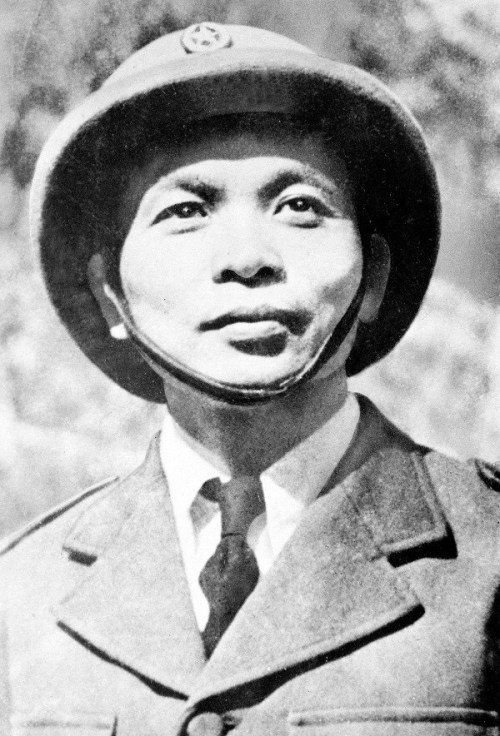

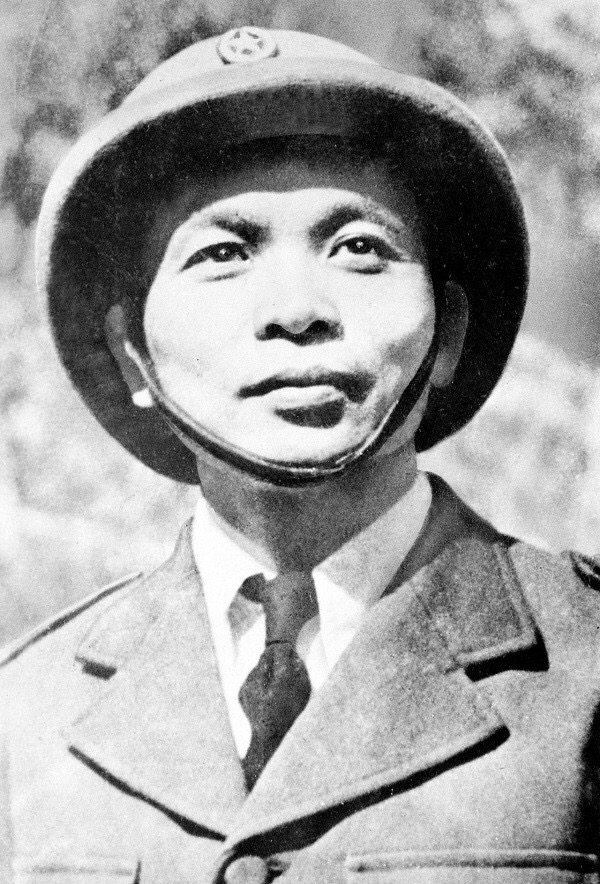
General Vo Nguyen Giap

On May 7th 2011 in Hanoi a small remembrance was held to mark the fall of Dien Bien Phu and honor the victor, 101 year old General Vo Nguyen Giap at his home. Until his death in 2013 at the age of 102. That 2011 ceremony was one of the few remembrances held anywhere marking that battle which was one of the watersheds of the 20th Century. A half a world away in Houston Texas a small group of French veterans, expatriates and historians laid a wreath at the Vietnam War Memorial.  In Paris an ever shrinking number of French survivors gather each year on May 7th at 1815 hours for a religious service at the Church of Saint Louis des Invalides to remember the dead and missing of the French Expeditionary Corps lost in Indochina. A small number of other small ceremonies have been in the following years.

This battle is nearly forgotten by time even though it and the war that it symbolized is probably the one that we need to learn from before Afghanistan becomes our Indochina.
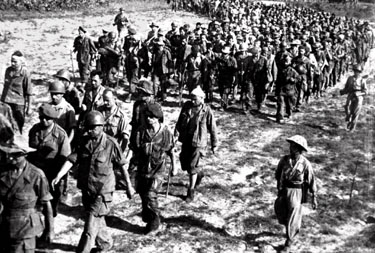
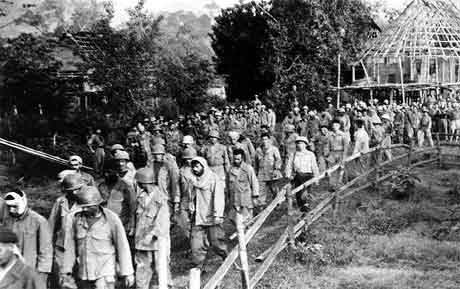
French Prisoners

On May 8th 1954 the French garrison of Dien Bien Phu surrendered to the Viet Minh.  It was the end of the ill-fated Operation Castor in which the French had planned to lure the Viet Minh Regulars into open battle and use superior firepower to decimate them.  The strategy which had been used on a smaller scale the previous year at Na Son.

The French had thought they had come up with a template for victory based on their battle at Na Son in how to engage and destroy the Viet Minh. The plan was called the “Air-land base.”  It involved having strong forces in a defensible position deep behind enemy lines supplied by air.  At Na Son the plan worked as the French were on high ground, had superior artillery and were blessed by General Giap using human wave assaults which made the Viet Minh troops fodder for the French defenders.  Even still Na Son was a near run thing for the French and had almost no effect on Viet Minh operations elsewhere while tying down a light division equivalent and a large portion of French air power.

Viet Minh Regulars

The French took away the wrong lesson from Na-Son and repeated it at Dien Bien Phu.  The French desired to use Dien Bien Phu as a base of operations against the Viet Minh.  Unfortunately the French chose badly. The elected to occupy a marshy valley surrounded by hills covered in dense jungle. They elected to go light on artillery and the air head was at the far end of the range of French aircraft, especially tactical air forces which were in short supply.  To make matters worse the General Navarre, commander of French forces in Indochina informed that the French government was going to begin peace talks and that he would receive no further reinforcements elected to continue the operation.

French Paras Drop into Dien Bien Phu

Likewise French logistics needs were greater than the French Air Force and American contractors could supply.  French positions at Dien Bien Phu were exposed to an an enemy who held the high ground and were not mutually supporting. The terrain was so poor that French units were incapable of any meaningful offensive operations against the Viet Minh. As such they could only dig in and wait for battle. Despite this many positions were not adequately fortified and the artillery was in exposed positions.
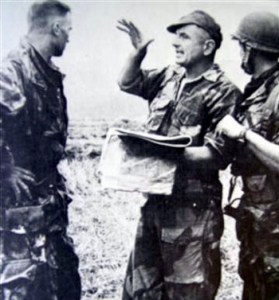
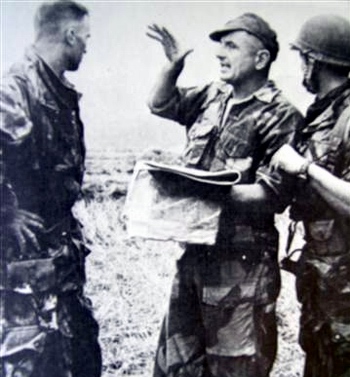
Major Marcel Bigeard 

The French garrison was a good quality military force composed of veteran units. It was comprised of Paras, Foreign Legion, Colonials (Marines), North Africans and Vietnamese troops. Ordinarily in a pitched battle it would have done well, but this was no ordinary battle and their Viet Minh opponents were equally combat hardened, well led and well supplied and fighting for their independence.

Many of the French officers including Lieutenant Colonel Langlais and Major Marcel Bigeard commander of the 6th Colonial Parachute Battalion were among the best leaders in the French Army. Others who served in Indochina including David Galula and Roger Trinquier would write books and develop counter-insurgency tactics which would help Americans in Iraq. Unfortunately the French High Command badly underestimated the capabilities and wherewithal of the Giap and his divisions.
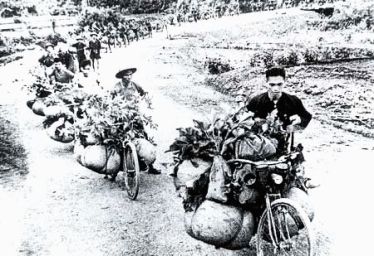
Viet Minh Supply Column

Giap rapidly concentrated his forces and built excellent logistics support.  He placed his artillery in well concealed and fortified positions which could use direct fire on French positions. Giap also had more and heavier artillery than the French believed him to have.  Additionally he brought in a large number of anti-aircraft batteries whose positions enabled the Viet Minh to take a heavy toll among French Aircraft.  Giap also did not throw his men away in human assaults.  Instead he used his Sappers (combat engineers) to build protective trenches leading up to the very wire of French defensive positions.  In time these trenches came to resemble a spider web.

Without belaboring this post the French fought hard as did the Viet Minh. One after one French positions were overwhelmed by accurate artillery and well planned attacks.  The French hoped for U.S. air intervention, even the possibility of using nuclear weapons against the Viet Minh. They were turned down by a US Government that had grown tired of a war in Korea.

French Wounded Awaiting Medivac from Dien Bien Phu 

Relief forces were unable to get through and the garrison died, despite the bravery of the Paratroops. Colonials and Legionaries. The French garrison was let down by their high command and their government and lost the battle due to inadequate logistics and air power. The survivors endured a brutal forced march of nearly 400 miles on foot to POW camps in which many died. Many soldiers who survived the hell of Dien Bien Phu were subjected to torture, including a practice that we call “water boarding.” General Georges Catroux who presided over the official inquiry into the debacle at Dien Bien Phu wrote in his memoirs: “It is obvious that there was, on the part of our commanding structure, an excess of confidence in the merit of our troops and in the superiority of our material means.”

Few French troops caved to the Viet Minh interrogations and torture but some would come away with the belief that one had to use such means to fight the revolutionaries.  Some French troops and their Algerian comrades would apply these lessons against each other within a year of their release. French soldiers and officers were shipped directly from Indochina to Algeria to wage another protracted counterinsurgency often against Algerians that they had served alongside in Indochina. The Algerian campaign proved to be even more brutal and it was lost politically before it even began.

The March to Captivity

The wars in Indochina and Algeria tore the heart out of the French Army. The defeats inflicted a terrible toll. In Indochina many French career soldiers felt that the government’s “lack of interest in the fate of both thousands of missing French prisoners and loyal North Vietnamese…as dishonorable.” Divisions arose between those who served and those who remained in France or Germany and created bitter enmity between soldiers. France would endure a military coup which involved many who had fought in Vietnam and Algeria. Having militarily won that war these men called The Centurions by Jean Lartenguy had been turned into liars by their government.  They were forced to abandon those who they had fought for and following the mutiny, tried, imprisoned, exiled or disgraced. Colonial troops who remained loyal to France were left without homes in their now “independent” nations. They saw Dien Bien Phu as the defining moment. “They responded with that terrible cry of pain which pretends to free a man from his sworn duty, and promises such chaos to come: ‘Nous sommes trahis!’-‘We are betrayed.’

The effects of the wars in French Indochina, Algeria and Vietnam on the French military establishment were long lasting and often tragic. The acceptance of torture as a means to an end sullied even the hardest French officers. Men like Galula and Marcel Bigeard refused to countenance it, while others like Paul Aussaresses never recanted.

One of the most heart rending parts of the Dien Bien Phu story for me is that of Easter 1954 which fell just prior to the end for the French:

“In all Christendom, in Hanoi Cathedral as in the churches of Europe the first hallelujahs were being sung. At Dienbeinphu, where the men went to confession and communion in little groups, Chaplain Trinquant, who was celebrating Mass in a shelter near the hospital, uttered that cry of liturgical joy with a heart steeped in sadness; it was not victory that was approaching but death.” A battalion commander went to another priest and told him “we are heading toward disaster.” (The Battle of Dienbeinphu, Jules Roy, Carroll and Graf Publishers, New York, 1984 p.239)

As a veteran of Iraq whose father served in Vietnam I feel an almost a spiritual link to our American and French brothers in arms who fought at Dien Bien Phu, the Street Without Joy, Algiers and places like Khe Sanh, Hue City, the Ia Drang and the Mekong. When it comes to this time of year I always have a sense of melancholy and dread as I think of the unlearned lessons and future sacrifices that we may be asked to make.

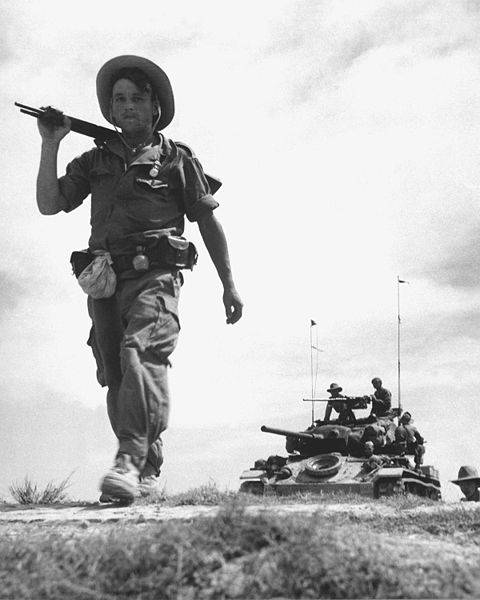
Legionaires on the Street Without Joy

The lessons of the French at Dien Bien Phu and in Indochina were not learned by the United States as it entered Vietnam, Iraq or Afghanistan. Nor were the lessons of Algeria. It was an arrogance for which we paid dearly and I do not think that many in our political, media and pundits or military have entirely learned or that we in the military have completely shaken ourselves. We lost 54,000 dead in Vietnam, nearly 4500 in Iraq and close to 3500 in Afghanistan, not counting vast numbers of wounded. There are those even as we have been at war for 15 years who advocate even more interventions in places that there is no good potential outcome, only variations on bad. How many more American Soldiers, Sailors, Marines and Airmen and our allies will need die without “victory” however badly we might try to define it?
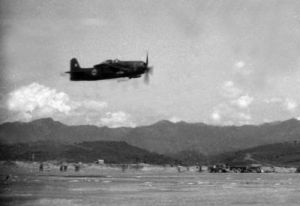
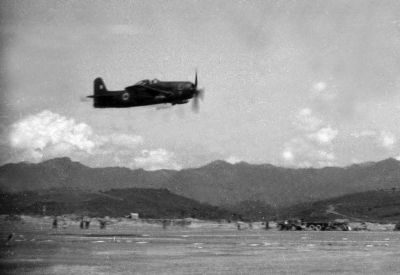
French Navy F-8 Bearcat at Dien Bien Phu

Like the French our troops who returned from Vietnam were forgotten.The U.S. Army left Vietnam and returned to a country deeply divided by the war. Vietnam veterans remained ostracized by the society until the 1980s. As Lieutenant General Harold Moore  who commanded the battalion at the Ia Drang immortalized in the film We Were Soldiers recounted “in our time battles were forgotten, our sacrifices were discounted, and both our sanity and suitability for life in polite American society were publicly questioned.”

For those interested in the French campaign in Indochina it has much to teach us. Good books on the subject include The Last Valley by Martin Windrow, Hell in a Very Small Place by Bernard Fall; The Battle of Dienbeinphu by Jules Roy; and The Battle of Dien Bien Phu- The Battle America Forgot by Howard Simpson. For a history of the whole campaign, read Street Without Joy by Bernard Fall. I always find Fall’s work poignant, he served as a member of the French Resistance in the Second World War and soldier later and then became a journalist covering the Nuremberg Trials and both the French and American wars in Vietnam and was killed by what was then known as a “booby-trap” while covering a platoon of U.S. Marines.

I do pray that we will learn the lessons before we enter yet another hell. But I don’t think it is possible for us to learn anymore, only send more young men and women to die in an already lost cause. As the late Edwin Starr sang in his song War, what is it good for? 

Peace, love and understanding. Tell me, is there no place for them today. They say we must fight to keep our freedom, But lord knows there’s got to be a better way. War, what is it good for? Absolutely nothing, say it again… 

Peace

Padre Steve+

3 Comments

Filed under afghanistan, Foreign Policy, History, Military, News and current events, War on Terrorism

Reflections on PTSD and Moral Injury after a Gettysburg Staff Ride


Friends of Padre Steve’s World,

The past few weeks have been a whirlwind of activity which has involved a transfer, travel, and teaching, coupled with finding that I was not selected for promotion. The failure to select for promotion was less of a disappointment with not being selected, or jealousy towards those that were, but rather the feelings of betrayal I feel towards the senior leaders of the Chaplain Corps that have been part of my life since I returned from Iraq back in 2008, and my ever present battle with the effects of PTSD. Since I have written about these things many times I shall not go into depth about them today.

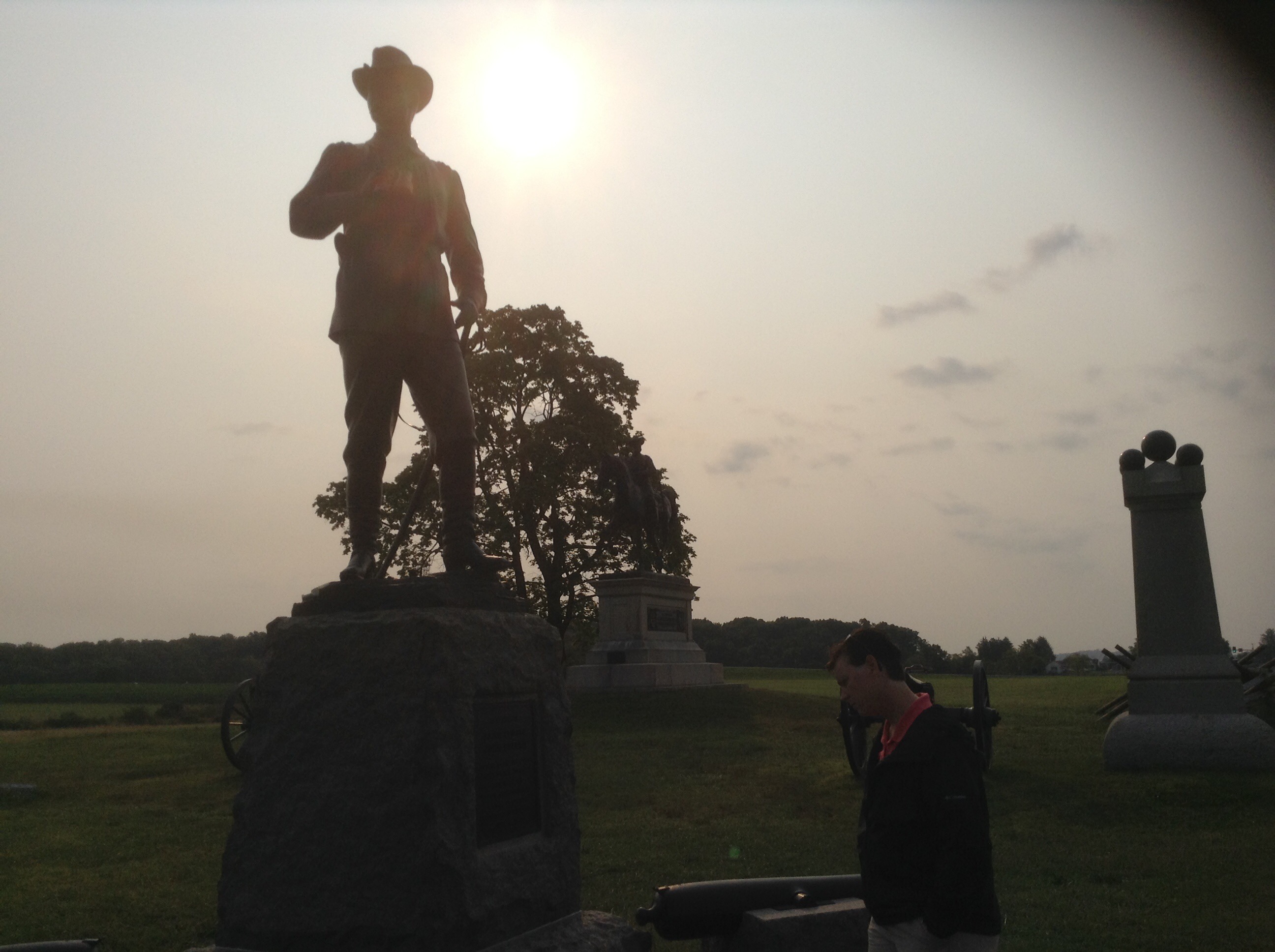
While I was at Gettysburg I stood beside the monument to General Gouverneur Warren on Little Round Top as I discussed Warren’s actions which were decisive in ensuring that Union forces held that edifice against the Confederate assault of July 2nd 1863. However, Warren would suffer unjustly at the hands of General Philip Sheridan at the Battle of Five Forks just days before the end of the war. The effects of combat trauma, what we would now diagnose as PTSD and moral injury at having been betrayed by the leaders of an institution that he had faithfully served in war and peace were devastating to him. After the war he wrote his wife:

“I wish I did not dream that much. They make me sometimes dread to go to sleep. Scenes from the war, are so constantly recalled, with bitter feelings I wish to never experience again. Lies, vanity, treachery, and carnage.” 

I fully understand what Warren felt in terms of dreams and what they call to mind time and time again nearly every night. Whenever I go to bed I pray that I will not again injure myself during a nighttime as I have numerous times, two of which sent me to the emergency room with head and facial injuries including a concussion and a broken nose. Yet even the dreams and nightmares that do not result in physical injury are often disturbing, and thankfully one of our Papillon dogs, Izzy, will do all that she can to comfort me and calm me down, and if I am awake and she senses that I am depressed or anxious she does what she can to be near me and to calm me. She is incredibly sensitive and does this with anyone not feeling well. I need to get her certified as a therapy dog as she is a special soul. 

Even so there are really very few people with whom I can talk about these things as they are foreign to the experience of most people. Guy Sager wrote in his classic book The Forgotten Soldier of his experience on returning home after the Second World War: “In the train, rolling through the sunny French countryside, my head knocked against the wooden back of the seat. Other people, who seemed to belong to a different world, were laughing. I couldn’t laugh and couldn’t forget.” 

But anyway, that is where I live. I am happy, relatively content, and look forward to life. I love to teach as I did at Gettysburg over the weekend and to write, at the same time I struggle every night with sleep, and with belonging in the institution that I have served for nearly thirty-six years. After I found out about the non-selection for promotion I became quite angry, as I said, not because I wasn’t selected, but because of the feelings of betrayal that go back now some nine years. It helped for me to walk in the woods along the Potomac River on Thursday night and to walk the lines that the Union Union First Corps occupied on the first day of the Battle of Gettysburg last Friday. For me there is something about walking hallowed ground which no matter what I am feeling helps to center me. It is as Joshua Lawrence Chamberlain wrote:

“In great deeds, something abides. On great fields, something stays. Forms change and pass; bodies disappear; but spirits linger, to consecrate ground for the vision-place of souls… generations that know us not and that we know not of, heart-drawn to see where and by whom great things were suffered and done for them, shall come to this deathless field, to ponder and dream; and lo! the shadow of a mighty presence shall wrap them in its bosom, and the power of the vision pass into their souls.”

Every time I walk that hallowed ground at Gettysburg I feel that presence and experience the power of that vision.

So I do wish you the best and appreciate the kind thoughts and words that many of you post on this page, in emails, and on my Facebook and Twitter accounts. Until tomorrow, have a great day. 

Peace

Padre Steve+

2 Comments

Filed under civil war, Gettysburg, History, Loose thoughts and musings, mental health, PTSD

Staff Rides, Table Talk, and Lost Phones


Friends of Padre Steve’s World,

Yesterday I completed my 16th Gettysburg Staff Ride with the Joint Forces Staff College. The students as always were great and a number of students and I had Some great discussions over food and beer on Friday and Saturday night. I really do enjoy those discussions, table talk is a great way of learning, even for me, because the questions and comments, as well as differing opinions make me think and also make me work harder on my research and preparation for the next trip. 

It was a very good trip but the foul weather took a lot out of me and somehow I lost my iPhone this morning and not even my my “find my iPhone” app helped me. That was frightening as I have never done more than misplaced my phone, and I realized how important it is for so much of my communication and how I schedule my life, including how I measure my exercise. 

Since I couldn’t find after retracing my steps from the time I left my hotel room to the point I noticed it missing at the Virginia Memorial before guiding my students through Pickett’s Charge and the Soldiers Cemetery I had to depart the pattern without going back to the Gettysburg Nation Military Park Visitor Center. Thankfully I had scored big on Saturday when I was able to get a limited edition signed artist proof of Dale Gallon’s painting of the 19th Massachusetts Infantry stopping the Confederate attack at the Copse of Trees during Pickett’s Charge entitled Clubs are Trumps. The title of the piece denotes the shamrock of the Union Second Corps which of course is a “club” in a card deck, in this case the trump card. I had been planning on getting the mini-print from Gallon on one of my next trips, but the price of this 1996 print was less than the small one. I couldn’t pass it up. Now to wait for a good deal on custom framing, but I digress. 


On the way back to pick up Judy and the Papillons I stopped at an Apple Store in the D.C. Area to replace it and to make sure that if someone had it that it was disabled and erased. The only issue was that I lost a lot of photos that I had taken Friday as I walked the Union First Corps lines as well as my exercise data from Thursday through Sunday morning, during those three days I had hiked about 20 miles.

I was able to get some rest as we visited our friends and the ten Papillons who own all of us played and played. So we are on our way back home today and will get ready for the rest of the work week. So until tomorrow.

Peace

Padre Steve+
Leave a comment

Filed under Gettysburg, History, Loose thoughts and musings

Foul Weather, and Learning about War

Willoughby Run at Herbst Woods at Gettysburg

Friends of Padre Steve’s World,

Yesterday I was with my students conducting the Staff Ride at Gettysburg. About a week ago the mid-Atlantic region was experiencing record high temperatures and abnormally warm weather. In fact has the temperatures just been normal for this time of year we would have counted ourselves lucky to have such good weather, however, the trended changed and instead of warm weather we had temperatures in the low fifties, wind and rain. The weather was raw, but that is part of life, and if you want to really learn and experience military history you need to do more than sit back in a recliner sipping a nice beverage, and reading a book in comfort.

Guy Sager, who wrote the classic soldier’s account of the Second World War on the Easter front wrote in his book, The Forgotten Soldier: 

“Too many people learn about war with no inconvenience to themselves. They read about Verdun or Stalingrad without comprehension, sitting in a comfortable armchair, with their feet beside the fire, preparing to go about their business the next day, as usual…One should read about war standing up, late at night, when one is tired, as I am writing about it now, at dawn, while my asthma attack wears off. And even now, in my sleepless exhaustion, how gentle and easy peace seems!”

Our weather was by my standards not bad, but for some of my students, including veterans of Iraq and Afghanistan it was miserable. For me, adverse conditions that we cannot change are one of the best ways to learn about war. The fact is that war is inconvenient, it is uncomfortable, and it is more often than not quite inhuman.  War is nothing to celebrate, battles, even victories are to be commemorated not celebrated, and not celebrated as our President said this week this week in reference to the Battle of the Coral Sea. Sadly, the current American President is neither a historian, nor a soldier; he is a draft dodger who loves the instruments of military power without appreciating the sacrifice of those who serve in combat.

Yesterday was a relatively miserable day as far as weather goes, but we had it easy. We can ride around the battlefield in vans and cars, we take a long lunch break, there are restrooms, and we don’t have to lay our bodies down in the dirt, grass, or mud to sleep.

For me that is one of the most important lessons of going on a Staff Ride or visiting a battlefield. Those are lessons that our civilian leadership and those who are cheerleaders of war need to learn. Sadly, very few Americans understand this. Too few of us have been to war to understand this, and many who have gone to war have stayed on well protected bases with air conditioning, heat, plentiful food, and even internet and television access. That wasn’t my war i n Iraq out with our advisors in  Al Anbar Province, but I digress…

Today we will do the third day of the Battle of Gettysburg. We will walk the path trod by Pickett’s Division during Pickett’s Charge, we will visit General Meade’s headquarters, and then go the the Soldier’s Cemetery where Abraham Lincoln delivered the Gettysburg Address. The weather will be cool, but clear with no rain, although there will be quite a few places that we will have to walk through muddy ad very wet ground, but c’est le guerre.

Until tomorrow,

Peace

Padre Steve+


1 Comment

Filed under civil war, Gettysburg, History, Military, weather

Walking the Lines: A Day on McPerson, Seminary, and Oak Ridge at Gettysburg


Friends of Padre Steve’s World,

Today’s post is a bit late but I had a great day yesterday with my students as we had dinner and I taught about the strategic and operational conundrums faced by the Union and the Confederacy in early 1863 and the operational and command aspects of the Gettysburg campaign. This first night helps my students to link the lessons faced by commanders in the Civil War with what they are learning at the Staff College.

I went up to the battlefield early yesterday as we had stayed with friends near Washington DC where Judy and the Papillon puppies are staying with friends who have four Papillons. I arrived on the  battlefield a little after 11AM and did some exploring of the grounds around the Seminary building before going in to the building to see the Seminary Ridge Museum which opened there in 2013. It is worth the visit. One floor deals with the first day of the battle; another, slavery and abolition; another, the wounded and dead including fascinating exhibits on medical care; and the last which dealt with religion in that era. I was able to go up to the famous cupola of the Seminary from which the Union Cavalry commander, John Buford directed the initial phase of the battle.


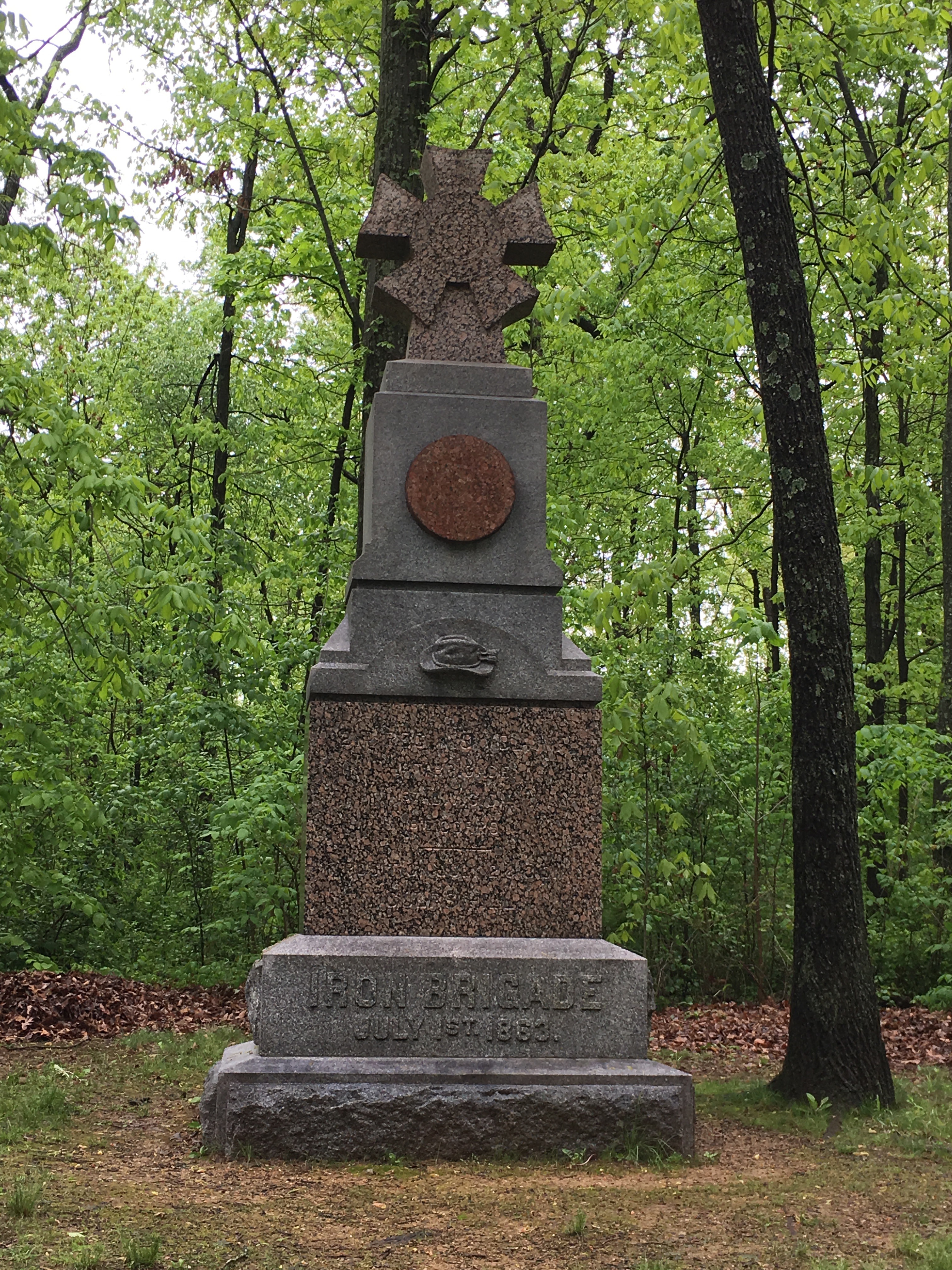
After that I drove over to McPherson’s Ridge, where I parked my car and  walked the lines of the Union First Corps along McPherson. Seminary, and Oak Ridge. Arriving early I as able to walk and see parts of that portion of the battlefield that I had only read about before, despite my many trips here. For those who have never walked the ground of such a battle it is a remarkable experience. As I walked the Union line I could almost see the massed ranks of Union infantry; walking through Herbst Woods I could imagine the chaos that enveloped Archer’s Confederate Brigade as it was hit by the Union Iron Brigade; descending into the railroad cut I could imagine the desperation of the Confederate soldiers whose commanders had led them into a trap from which few would emerge alive, unwounded, or uncaptured. When I got to Oak Ridge I was able to walk out to the spot the the 88th Pennsylvania had destroyed Iverson’s Confederate Brigade and captured its colors. As I walked through those places I could  sense the desperation and the need to win a victory by the men on both sides.

After a long time on the battlefield I checked into my hotel, and in the evening met my students for dinner, drinks and the introductory class on the campaign  of 1863 which helps to tie together the understanding of strategy and the operational art involved in the Gettysburg campaign and the broader aspects of what was happening in 1863 and what drove Robert E. Lee to insist on the invasion of the North instead of sending his troops west to relieve Vicksburg, or perhaps attempt to relieve Vicksburg by defeating Rosecran’s Union army in East Tennessee and then moving to Threaten Cincinnati and the Ohio River which potentially could have drawn Grant away from Vicksburg.

I spent today with my students on the battlefield and hopefully will post something about that tomorrow.

So have a great night,

Peace,

Padre Steve+


Leave a comment

Filed under civil war, Gettysburg, History

Thoughts on Being Passed Over for Promotion 


Friends of Padre Steve’s World,

Yesterday was a tough day. I failed to select for promotion to Captain for the second time. It wasn’t so much not being selected for promotion as I neither expected it or wanted it, but it was a reminder to me of the many painful experiences that I have had with senior leaders in both the Army and Navy Chaplain Corps in my 25 years of service as a chaplain. But that being said I was warned. When I was a young Medical Service Corps Captain in the Army I felt the call to go to seminary to become a chaplain. As I got close to leaving active duty, my brigade executive officer pulled me aside. He told me: “Steve, if you think that the Army Medical Department is political and cutthroat, we can’t hold a candle the the Chaplain Corps.” 

Sadly, Lieutenant Colonel Wigger was all too correct. Much of the senior leadership in all of the military chaplain corps, as well as Federal, State, and hospital chaplaincies are as toxic as Zyclon-B. Of course they are not alone, many leaders in church hierarchies are just as bad if not worse. Maybe there is something in humanity that makes some people when given authority in both the temporal as well as spiritual realms exhibit the worst aspects of human nature. 

I have always said that I would never be that way and I have always tried to best to value and care for the chaplains, as well as enlisted personnel who have worked for me. Honestly I think that I’ve done pretty good in that, and I hope that when they remember me that they don’t have the visceral reaction I have at the thought of some of the chaplains and other clergy who have used, abused, and then thrown me under the bus, especially in the depths of my post-Iraq experience with PTSD, mild TBI and moral injury. 

I am not bitter about not getting promoted, but I still bear much animus to those who have used, abused, and then did not care for my spiritual or emotional needs when I needed them. Betrayal is a big part of moral injury and I really do not think that we ever fully recover from that. People, especially Christians say that we should forgive those who have committed acts that have harmed us. I am a priest and I do understand that necessity to forgive, but when one has been harmed over the course of many years it is difficult to do. Actually, until today yesterday I thought that I was pretty much over those feelings and that the wounds had pretty much healed. I was wrong, I have a long way to go. 

After I found out that I hadn’t been selected I took a long walk. I was on my way to Gettysburg and I was dropping my wife and our dogs off with good friends before departing this morning. My walk took me through about five miles of woods along the banks of the Potomac River, including the place that JEB Stuart and his Confederate cavalry forded it during the Gettysburg campaign. That walk in the quiet as well as a conversation with a senior chaplain who has been there for me got me to a better place. When I got back both Minnie and Izzy did what they could to comfort me. Good dogs, they act like nurses. 

I am grateful for the career that I have had. I have been very lucky and very blessed. While there have been some that have gone out of their way to hurt me, or just didn’t give a damn about the way their words and actions impacted me or others, I have been lucky to have some who have done whatever they can to help me and in some cases protected me from myself. Their care, mentoring, and practical, observable love means more to me than anything. I was able to let a number of them know that last night. 

I also know a lot of other fine chaplains and ministers who have been screwed worse by varies chaplain systems or churches than I ever was. Good men and women who deserved far better. I will land on my feet. Some of them are dead, a couple by their own hand because of how they were treated and abandoned when they needed help. I have friends, a wife who loves me and three great Papillons. I am not alone. 

Likewise, had I gotten the operational assignments that I wanted when I was selected for Commander, I never would have gotten my orders to the Staff College. That assignment has opened doors for life after the Navy that I would never have had. I now get to be an academic and hopefully I’ll have my first Civil War era book published in a year or so, and that is when the fun will really begin, so I have nothing to bitch about, but I still hurt. Some say that God has a plan, but honestly I don’t know who true that is, but even so I’m hurting but okay and I’d rather have Judy, my dogs, and my friends than some pie in the sky theology. 

So today I will be going up to Gettysburg early. I’ll arrive well in advance of my students and today my plan is to walk the battlefield from McPherson’s Ridge, to Herbst Woods, and on to Seminary Ridge where I also hope to visit the museum now located in the old seminary building. This is important to do because one never fully appreciates what happened in a certain spot until they have walked the ground. Likewise, there are many markers at Gettysburg that have a lot of meaning that most people never see because they are too busy driving around to see the high points like Little Round Top, the Angle and High Water Mark, and the Virginia And Pennsylvania memorials. 

As I do so I will remember the heroes of the Union side who held their ground, and the men who were not recognized for their actions, and in some cases, like Abner Doubleday, after having done well and fighting heroically were relieved of duty simply because some above them didn’t like them, and acted on false reports. I think that will be a healthy experience for me. Later, I will meet my students for dinner and discuss the strategic and operational aspects of the campaign that connect with what they are learning in regard to planning at the Staff College. 

So anyway, I know that there is a lot of other stuff going on in the world. I’ve seen bit and pieces about the GOP Health Care repeal but have not had time to read anything. Maybe I’ll get to it later in the weekend or early next week as it’s not going to go away. 

I’ll post something small from Gettysburg the next two days. So until tomorrow,

Peace

Padre Steve+
8 Comments

Filed under christian life, faith, Gettysburg, Loose thoughts and musings, Military, PTSD

Gettysburg and the Era of Trump

Friends of Padre Steve’s World,

I’ll be traveling to Gettysburg this weekend to lead another Staff Ride and as I listened to President Trump’s remarks about the Civil War and on altering the American Constitution to fit his needs for his success this week that I was incredulous. I cannot believe that we have a President who is such an ignoramus about history and the Constitution.

I guess that is why that is even more important that I keep making these trips and conducting these Staff Rides. When I think of the deluge of the President’s executive orders, as well as various State and Federal legislative and executive actions which are for all intents making many Americans second class citizens or worse, I am reminded of Abraham Lincoln’s words well before the Civil War. Lincoln, speaking of the anti-Black, and anti-immigrant sentiment that was rife throughout the country said:

“As a nation, we began by declaring that ‘all men are created equal.’ We now practically read it ‘all men are created equal, except negroes.’ When the Know-Nothings get control, it will read ‘all men are created equal, except negroes, and foreigners, and Catholics.’ When it comes to this I should prefer emigrating to some country where they make no pretense of loving liberty – to Russia, for instance, where despotism can be taken pure, and without the base alloy of hypocrisy.”

damned before Sadly, despite all the blood shed and the sacrifices made by slaves, free Blacks, abolitionists, Union Soldiers, civil rights advocates and others it seems that the President and his supporters are fully intent on rolling back Constitutional protections for many people in this country. In fact the President this week declared that the Constitution and our system of government were “archaic,” and suggested that they needed to be changed. Many of his supporters who for decades have claimed to be defending the Constitution seem to have no problem with with what he says, showing that their words are mere hyperbole and cover to prevent others from enjoying the same liberties that they have; be they African Americans, Hispanics, LGBTQ, Women, Native Americans, Muslims, and immigrants deemed less than worthy.

As for me I will be damned before I stop speaking out against such measures. These are not the measures of preserving liberty, but are the kind of despotism that allowed Southern Slave owners to call slavery “freedom.”

So I will go to Gettysburg this weekend and as always I will take my students to the Soldier’s Cemetery where we will talk about the Gettysburg Address and the meaning of it and our Constitution, at a place where Lincoln said that we highly resolve that these dead shall not have died in vain — that this nation, under God, shall have a new birth of freedom — and that government of the people, by the people, for the people, shall not perish from the earth.

Until tomorrow,

Peace

Padre Steve+

1 Comment

Filed under civil rights, civil war, Gettysburg, History, Political Commentary

Dancing with Despots: The Moral and Political Dangers of Trump’s Love of Authoritarianism

Friends  of Padre Steve’s World,

First it was Vladimir Putin of Russia, then Recip Erdogan the soon to be dictator of Turkey, last week Rodrigo Duterte, the murderous President of the Philippines, and just yesterday praise for Kim Jong Un of North Korea. Let us not go into the list of draconian despots, dictators from history that the President has expressed his fondness. His favorite President is Andrew Jackson who defied a Supreme Court ruling and executed the Trail of Tears.

Honestly, if the President’s admiration, praise, and fondness for authoritarian and anti-democratic rulers remained just his opinion with no consequences it wouldn’t be such a big deal. However, it is much bigger than his personal opinions, but the nature his office of President, his words, his tweets, his opinions, become the policy of the United States, and end up staining the honor of the nation.

These actions have consequences. The first is the loss of moral authority of the nations who encourage and help dictators. Second, the loss of that moral authority makes it difficult when the chips are down to gain domestic or international support once a nation’s leaders determine that aggressive dictatorships must be stopped.

What the President and his administration are doing is amoral and it is dragging the reputation of the United States into the sewer and it will have real world consequences, as well as dangerous ramifications for our own system of Constitutional government and representative democracy.

This is not new, during the 1930s many leaders of struggling democracies caught up in the Great Depression, including the United States offered up praise for the accomplishments of Mussolini, Stalin, and Hitler. By their encouragement, accommodation, and appeasement these leaders were complicit in some of the greatest crimes against humanity ever seen in the world. Some of these leaders, especially in France actively worked against their own democratic form of government in the hopes of overthrowing it and setting up a Fascist state. Once France was defeated by Germany the anti-democratic leaders of that country voted out the Republic and established a dictatorship at Vichy headed by Marshal Petain, the hero of the First World War.

Petain with Hitler

The Premier of France under Vichy, Pierre Laval, led the successful move to abolish the constitution of the Third Republic. He said: “Parliament must be dissolved. The Constitution must be reformed. It must align itself with the totalitarian states…” He told the Assembly: “We are going to destroy the totality of what was. We’re going to create something entirely different…. Henceforth there will be only one party, that of all the French.” He concluded “We are paying today for the fetish which chained us to democracy and led us to the worst excesses of capitalism, which all around us Europe was forging, without us, a new world.”

Another, Charles Spinasse, a Socialist who had come to believe in Fascism told the Assembly: “We must break from the past. It was full of illusions…. We believed in individual freedom, in the independence of man. It was but anticipation of the future which was beyond our grasp. We must have a new faith based on new values…. France abandoned itself. It must begin anew.”

One opponent rushed to Vichy to oppose the measures, Pierre-Etienne Flandin, told his colleagues: “Change the Constitution? But why? What need is there to change our institutions? The reproach is that we did not respect them.” However, Flandin too had no problem with giving the reigns of power to an authoritarian, Fascist regime that would cooperate with the Nazis, turn on its allies, and murder its own citizens. His words were absolutely correct, but he betrayed himself at the end.

Pierre Laval

In the end Laval won the day. He told the assembly: “Parliamentary democracy lost the war. It must give way to a new regime: audacious, authoritarian, social, and national.” In the end the vast majority of the delegates from across the political spectrum voted to end the Republic. Opponents who wished to continue to fight against Germany were condemned, jailed, and even killed. Leon Blum, a former Socialist leader who Laval despised wrote of Laval’s manner as the Republic was dissolved: “An unbelievable arrogance puffed up his small person. In a dry voice and with an irritated glance he flung out verdicts and orders… “I do… I say… I refuse… that’s the way it is…” President Trump has much the same attitude as he issues executive orders with abandon, even as others are struck down by the Courts.

Likewise when questioned about allowing opposition newspapers to publish, Laval told Blum in words that one can almost hear President Trump say if he were granted the right to restrict the freedom of the press: 

“When I decide, no newspaper will appear if it shows the slightest reticence about my policies. The press must follow me absolutely, without reserve—and I will not let myself be duped.”

But just as troubling on the domestic front is the President’s stated desire to crush the parts of our Constitutional system that inconvenience him, and with his malleable GOP majorities in the House and Senate he may eventually succeed in doing if not opposed by courageous Senators and Representatives, and the Courts. He has on a number of occasions threatened the independence of the judiciary, he has expressed a desire to amend the Constitution to limit freedom of the press, freedom of association, and freedom of speech. He has also urged Congress to end the Filibuster which is the last resort by which a minority party can prevent bare majority of Senators or Representatives of one party to impose its will on the entire nation, even if the majority of people in the nation voted against their party. As of now GOP Senate leaders have announced their opposition to such legislation realizing that they could once again be in the minority. However, for Trump that does not matter as he has no loyalty to the Republican Party; sadly, most Republicans do not seem to understand that fact, and I wonder how firm they will stand when push comes to shove. History shows us that all too often, even the opponents of authoritarianism can easily turn from defending their Constitutional liberties to supporting nationalist, racist, and authoritarian leaders.

That my friends should frighten any American who has not lost their belief in our system of government which for all of its inefficiencies guarantees more liberty than any other system in the world.  History shows that once those liberties are gone you do not get them back without the despot who has taken them away being defeated, often by military conquest.

The fact is that as Timothy Snyder wrote: “The European history of the twentieth century shows us that societies can break, democracies can fall, ethics can collapse, and ordinary men can find themselves standing over death pits with guns in their hands. It would serve us well today to understand why.”

Will our epitaph be like the words of French Senator Bovin-Champeaux who said: “Is it not without sadness that we shall bid adieu to the Constitution of 1875. It made France a free country…. It died less from its imperfections than from the fault of men charged with guarding it and making it work.”

Until tomorrow,

Peace

Padre Steve+


1 Comment

Filed under civil rights, ethics, History, holocaust, laws and legislation, News and current events, Political Commentary

President Trump, I Wish to Remind You that General Jackson is Dead

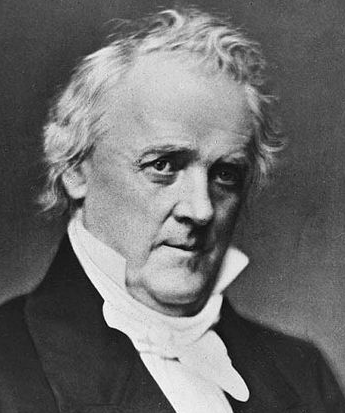
President Trump, President Andrew Jackson, and President James Buchanan 

Friends of Padre Steve’s World,

I am never surprised when President Trump demonstrates his ignorance of American History or our Constitution as he when he discussed how the Civil War could have been avoided in only a dealmaker like Andrew Jackson been around to stop it. During an interview with the Washington Examiner’s Selina Zito, the President explained:

“I mean had Andrew Jackson been a little later you wouldn’t have had the Civil War. He was a very tough person, but he had a big heart. He was really angry that he saw what was happening with regard to the Civil War, he said, “There’s no reason for this.” People don’t realize, you know, the Civil War, if you think about it, why? People don’t ask that question, but why was there a Civil War? Why could that one not have been worked out?”

The President’s remarks were so bumblingly inaccurate that it was painful to listen to. First in his comments about President Jackson, a man whose “big heart” caused him to defy the Supreme Court to order the mass resettlement of the Native American tribes of the Southeast in the midst of winter which led to thousands of deaths in the what is known now as the Trail of Tears. Likewise, the one time Jackson opposed the secession of a state, that of South Carolina during the Nullification Crisis of 1828-1832 it had to deal with tariffs and not slaves, which the President owned. Likewise Jackson never uttered “There’s no reason for this” because Jackson was dead and buried long before the Civil War, and even years before the threats of secession to preserve and expand slavery were proposed in the early 1850s.

Senator Stephen Douglas

There was no deal to be made. Slavery and its expansion were the issues at hand. In 1858 a minority of slave holders in Kansas attempted through election fraud to get a pro-slavery constitution passed in order for the state to be admitted to the Union as a Slave State, a move the President James Buchanan fully supported and fought an unsuccessful battle with Congress to pass. The measure would have set precedent to open every territory of the Union to slavery, but Democratic Senator Stephen A. Douglas of Illinois stood his ground and organized bi-partisan opposition to the measure which was supported by Southern Democrats.

When Buchanan threatened him Douglas stood his ground:

The Illinois Senator found out about the President Buchanan’s new support of the measure when he read the newspaper. He was outraged when he saw the news in the Washington Union that Buchanan had decided to support Lecompton. He was infuriated and the fury showed when he wrote with characteristic honesty:

“This left no doubt were the old bastard stood. “Can you believe his Goddamned arrogance?” I told a friend. “I run the Committee on Territories. He should have consulted me before approving the Lecompton fraud. He’ll pay for that. By God, sir, I made Mr. James Buchanan, and by God, sir, I’ll unmake him.” 

As such, the Little Giant threw caution to the wind and stormed to the White House “to confront Buchanan on the “trickery and juggling of the Lecompton constitution.” He warned the president of that his actions in support of the Lecompton party would “destroy the Democratic party in the North,” and we warned that “if Buchanan insisted on going through with it, Douglas swore to oppose him in Congress.” 

It was an epic confrontation. Douglas recalled, “The Lecompton constitution, I told Buchannan bluntly, was a blatant fraud on the people of Kansas and the process of democracy, I warned him not to recommend acceptance of it. With his head titled forward in that bizarre habit of his, he said that he intended to endorse the constitution and send it to Congress. “If you do,” I thundered, “I’ll denounce it the moment that it is read.” His face turned red with anger. “I’ll make Lecompton a party test,” he said. “I expect every democratic Senator to support it.” I will not, sir!” 

Angry and offended by the confrontation of Douglas, Buchanan cut the senator off and issued his own threat to Douglas and his political career saying, “I desire you to remember that no Democrat ever yet differed from an administration of his own choice without being crushed….Beware of the fate of Tallmadge and Rives,” two senators who had gone into political oblivion after crossing Andrew Jackson.” The redoubtable Senator from Illinois was undeterred by the President’s threat and fought back,“Douglas riposted: “Mr. President, I wish to remind you that General Jackson is dead, sir.” It was an unprecedented action by a sitting Senator, to confront a President of one’s own party and threaten to oppose him in Congress was simply not done, but now Douglas was doing it, but doing so to his President’s face, and the consequences for him, his party, and the country would be immense. (You can find my full article about the Lecompton Constitution at https://padresteve.com/2016/10/16/when-political-parties-implode-mr-president-i-wish-to-remind-you-that-general-jackson-is-dead/)

Every State that seceded from the Union included the preservation and expansion of slavery as the primary reason of secession. There were no deals to be made to avoid the Civil War except for the Northern Free states to submit to becoming Slave states again and African Americans to be forever subordinated to the less than human state of being mere property.

President Trump may actually believe what he said, in fact I think that he does, which is why I think is why that he habitually demonstrates such supreme ignorance of American History and the Constitution.

Until tomorrow,

Peace

Padre Steve+


1 Comment

Filed under civil war, History, News and current events, Political Commentary