Yearly Archives: 2018

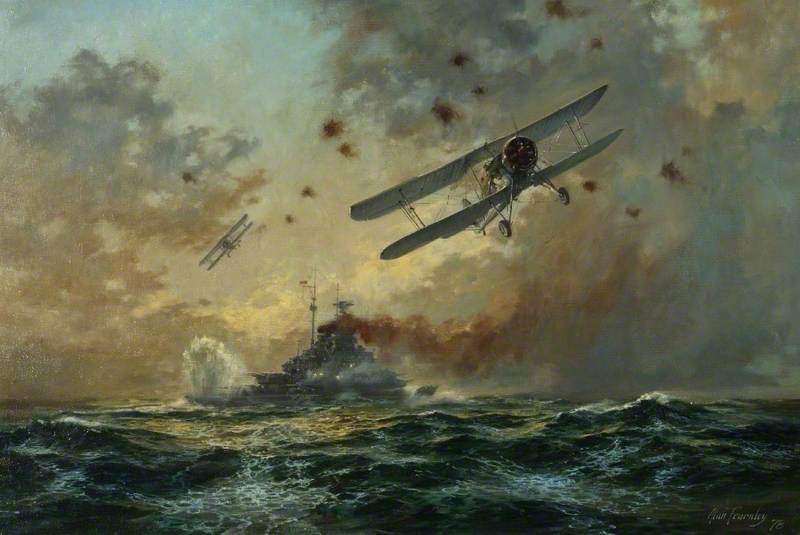
Swordfish Versus Bismarck

Alan Fearnley; (c) Alan Fearnley; Supplied by The Public Catalogue Foundation

Friends of Padre Steve’s World

A couple of days ago I reposted an article about the sinking of the HMS Hood by the German Battleship Bismarck. The story of the Bismarck is an epic saga of naval warfare and history. It is tragedy played out as if scripted by a playwright in three parts. The first was the sinking of the illustrious “Mighty” Hood by the Bismarck on May 24th 1941. 

The second, which I deal with today, was the pursuit and search for Bismarck by the British Home Fleet and the desperate attempt of the British to find a way, any way, to slow Bismarck down and bring her to battle, before she could return to the safety of Nazi occupied France.  The final chance to stop the mighty German Leviathan came as night fell on May 26th. 

I hope you appreciate the heroism of the men who flew the hopelessly obsolete aircraft who dealt the blow which crippled Bismarck. This is a re-write of past articles and I will post the final article about the sinking of the Bismarck tomorrow. 

Peace

Padre Steve
h69721

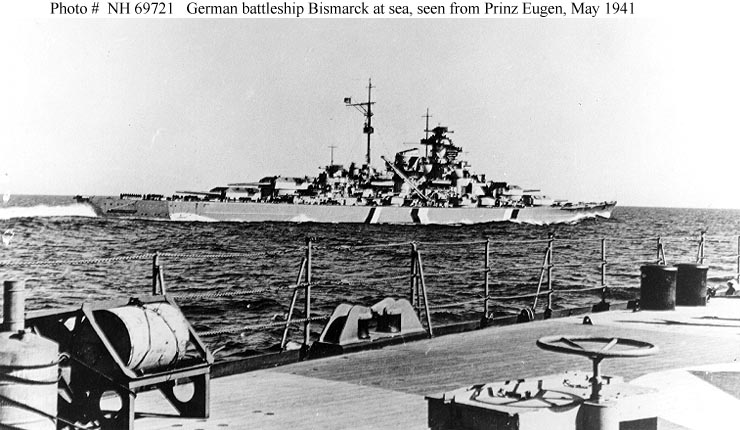
On May 24th 1941 the German Battleship Bismarck had sunk the celebrated Battlecruiser HMS Hood in the Denmark Strait and had seriously damaged the new Battleship HMS Prince of Wales. The news of the disaster stunned the Royal Navy. Fighting a war on multiple fronts and now standing alone against Hitler’s Germany the British deployed every warship available to find and sink Bismarck.

On the evening of the 24th of May Bismarck was being shadowed by the heavy cruisers HMS Norfolk and HMS Suffolk. To the east the ships of the Home Fleet, Britain’s last line of defense under the command Admiral John Tovey was making the fastest speed to intercept the Bismarck.  Far to the southeast, Vice Admiral James Sommerville’s  “Force H” comprised of the carrier HMS Ark Royal, the fast but elderly battlecruiser HMS Renown, and the light cruiser HMS Sheffield were ordered to leave the vital convoy which there were escorting and proceed to the northwest to join the hunt for the German battleship.
HMS_Ark_Royal_h85716

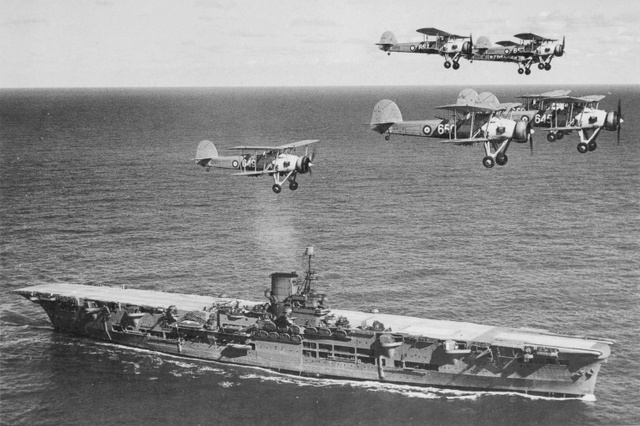
HMS Ark Royal with Swordfish in 1939

With Bismarck loose the North Atlantic Convoys on which Britain depended for her survival were vulnerable. The previous year the commander of the Bismarck task force Admiral Günther Lütjens with the Battlecruisers Scharnhorst and Gneisenau had wreaked havoc on the convoys. Now of Britain was on edge with the news of Bismarck’s break out into the Atlantic. Churchill was furious with the Navy when the Mighty Hood, the largest and most powerful ship in the Royal Navy destroyed with the loss of all but three crew members. Now every effort was directed to find and sink the Bismarck.
gallbismlastdays01

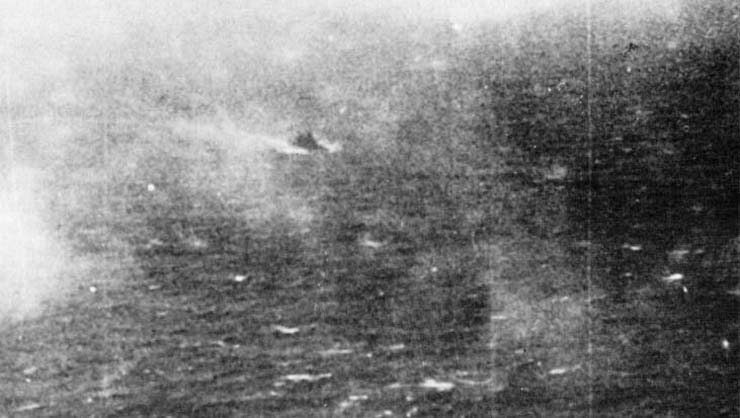
Bismarck photographed from a Swordfish from 825 Squadron

Accompanying the Home Fleet was the brand new Aircraft Carrier HMS Victorious with 825 Naval Air Squadron embarked under the command of LCDR Eugene Esmond. The squadron, like many in the Fleet Air Arm was equipped with Fairy Swordfish Torpedo Bombers. The squadron had seen action aboard other carriers in the North Atlantic, the Norway Campaign and in the Mediterranean before being assigned to the Victorious. On the night of 24 May 1941, in foul North Atlantic weather the Victorious launched nine Swordfish from a range of 120 miles in a desperate attempt to slow the Bismarck down. Esmond’s squadron scored one hit amidships on the Bismarck which did no serious damage.
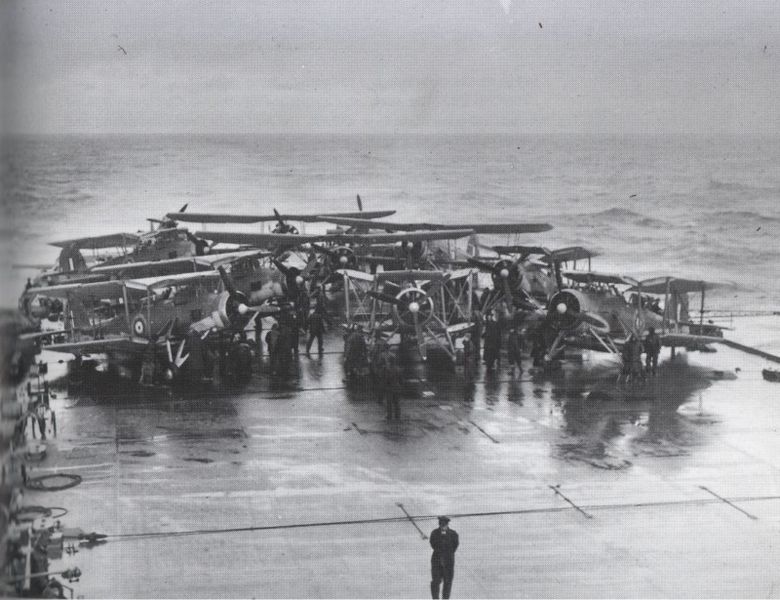
780px-Swordfish_on_HMS_Victorious_before_strike_on_Bismarck

825 Squadron Swordfish on HMS Victorious

About 6 hours after the attack by Victorious’s Swordfish, Bismarck shook her pursuers and disappeared into the mists of the North Atlantic, while her consort, the Heavy Cruiser Prinz Eugen escaped to the northwest in order to conduct independent raiding operations. Not knowing the location or course of the Bismarck the Royal Navy frantically searched for the German Leviathan. Most of the ships nearest to Bismarck’s last reported position were low on fuel and others seemed too far away to be of any importance in the search.

However the British were able to intercept and decode some German communications which indicated that Lütjens had orders to steam to Brest, in German occupied France for repairs.

Though the British believed that the Bismarck could be headed toward Brest they could not be sure, as each hour passed the chances of finding and bringing Bismarck to battle diminished. For nearly 36 hours the British searched in vain for the Bismarck, and for much of the 25th Tovey’s squadron was searching in the wrong direction. Then at 1030 on the 26th of May their luck changed.

Likewise the crew of the Bismarck believed with every hour that they would soon be under the protection of Herman Goering’s Luftwaffe and safely in France, but the good fortune of the British was the worst thing that could happen to the 2200 men aboard Bismarck.

On that morning a Royal Air Force Coastal Command PBY Catalina co-piloted by US Navy Ensign Leonard Smith found the Bismarck. Once Smith transmitted Bismarck’s location every available ship converged on her location but unless something could be done to slow the German down the chances bringing her to battle diminished by the hour.

The only heavy forces close enough to successfully engage Bismarck, Tovey’s battleships HMS King George V and HMS Rodney were over 100 miles behind Bismarck, too far away unless Bismarck changed course or could be slowed down. Somerville’s Force H to the south did not have the combat power to survive a surface engagement with the Bismarck should they encounter the Bismarck without the support of other heavy fleet units. Even so Sommerville was willing to risk the Renown in a suicidal action to bring Bismarck to battle if it would allow Tovey to catch her before she could escape. Desperation was the order of the day for both sides.
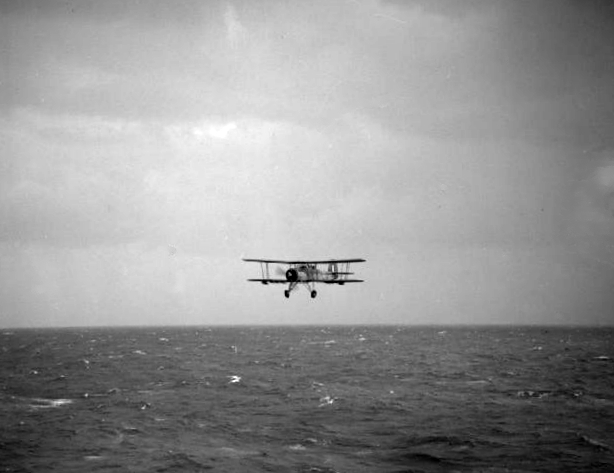
HMS_Ark_Royal_swordfish

820 Squadron Swordfish returning to Ark Royal after the attack on Bismarck

The situation was desperate, if Bismarck could not be slowed down she would be in range of heavy Luftwaffe Air support as well as support from U-Boats and destroyers based in France. Unless something akin to a miracle occurred Bismarck would join the Scharnhorst and Gneisenau in Brest and with the addition of Bismarck’s sister-ship Tirpitz form a surface squadron strong enough to devastate British shipping in the Atlantic.

Ark Royal’s aircraft were the last hope of slowing down Bismarck before she could effect her escape and emerge from the Atlantic after having dealt the Royal Navy a devastating blow.

The strike aircraft available on Ark Royal were the most unlikely aircraft imaginable to successfully carry out such a mission. Ark Royal’s 820 Squadron, like Victorious’ 824 Squadron was equipped with Fairy Swordfish Mk 1 Torpedo Bombers. These were biplanes with their crew compartment exposed to the weather.

Introduced to the Navy in 1936 the aircraft was an antique compared with most aircraft of its day. Likewise the Mark XII 18” torpedo carried by the aircraft was smaller or slower and equipped with a less powerful warhead than comparable torpedoes used by other navies. Despite their limitations the venerable Swordfish had performed admirably during the early part of the war sinking or damaging three Italian battleships at Taranto in November 1940. Their success against the Italians at Taranto gave inspiration to the Japanese for their attack against the U.S. Pacific Fleet at Pearl Harbor the following year. But now, in the face of foul weather and a powerful opponent the Swordfish were all the Royal Navy had left to stop Bismarck before she could make her escape.
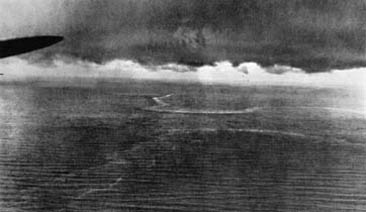
gallbismlastdays03

Bismarck steering erratically after the torpedo hit to her stern

With that in mind  Sommerville in sent his light cruiser, the  HMS Sheffield ahead to shadow Bismarck while Ark Royal closed in to launch her Swordfish against Bismarck. The first wave of aircraft strike, unaware Sheffield was near Bismarck mistakenly attacked the British cruiser. Thankfully, the new design magnetic detonators failed to detonate the torpedoes saving Sheffield from destruction. With little daylight left the aircraft returned to Ark Royal where they rearmed with torpedoes equipped with contact fuzes and refueled by flight deck crew laboring in rain and 50 knot winds blowing across the carrier’s flight deck. Just before 8 p.m. 15 Swordfish of 820 Squadron took off for what they knew was the very last chance to attack Bismarck before night fell. If they failed Bismarck would most certainly escape.

As darkness began to fall the 15 Swordfish from 820 Squadron descended through the clouds to attack the German ship. Just fifteen obsolete aircraft and thirty men attacking the most powerful warship afloat. They dispersed and attacked from all points of the compass. Bismarck twisted and turned and fired all of her guns at the attacking aircraft. The Germans fired with every weapon available, even the 15″ guns of her main battery, which she fired her into the ocean ahead of the Swordfish. It appeared for a moment that the Bismarck had successfully avoided serious damage. All but two torpedoes missed.  One torpedo struck the German midships and barely dented her massive armor. However a second torpedo, launched by a Swordfish piloted by Lieutenant John Moffat hit Bismarck in her weakly armored stern. The target angle from the aircraft to Bismarck was poor and those aboard the battleship who saw the torpedo approach believed that it was certain to miss, but it hit.

The hit jammed Bismarck’s port rudder at a 12 degree angle, and destroyed her steering gear. Repair crews and divers were dispatched but the weather was such that German damage control teams could not repair her steering gear. Bismarck now steamed in circles, unable to maneuver. This enabled Tovey with King George VRodney, the heavy cruisers Norfolk and Dorchester, as well as a number of destroyers to catch up with the elusive German battleship.

The attacks of the antiquated Swordfish on the Bismarck achieved results that no one in the Royal Navy expected. When reports indicated that Bismarck had reversed course following the torpedo attack Tovey could not believe them. It was only when lookouts aboard Sheffield confirmed the reports from the Swordfish that Tovey realized that Bismarck must have been damaged and was unable to maneuver.

It was a dramatic and unexpected turn of events. The German crew sank into gloom as the night went on and they dealt with torpedo attacks from the British Destroyers as Tovey’s battleships moved in for the kill.
Leave a comment

Filed under History, Military, Navy Ships, World War II at Sea

The Offering We Bring: the Observance of Memorial Day


decoration-day1

Friends of Padre Steve’s World,

This is Memorial Day weekend and for the vast majority of Americans, even those who loudly claim to “support the troops” the weekend is little more than an opportunity to start the summer. There will be ball games and picnics, parties and concerts, as well as road trips, and some will even honor the military personnel that are currently serving; however, that is not why we observe Memorial Day.

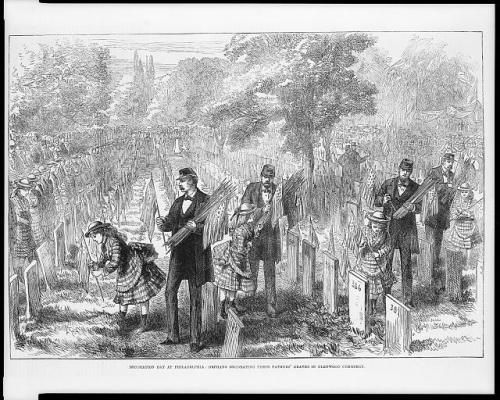
Memorial Day is observed to honor the lives and sacrifice of those men and women who died in the service of the country. Its roots go back to May 1865 when newly freed Blacks in Charleston South Carolina took the time to honor the fallen Union soldiers by dedicating a cemetery to them. I’ll go back to that in a bit.

Frederick Douglass discussed the meaning of Memorial Day in 1884:

“Dark and sad will be the hour to this nation when it forgets to pay grateful homage to its greatest benefactors. The offering we bring to-day is due alike to the patriot soldiers dead and their noble comrades who still live; for, whether living or dead, whether in time or eternity, the loyal soldiers who imperiled all for country and freedom are one and inseparable.”

Memorial Day, at one time known as Decoration Day is one of our most sacred civil holidays that we observe in the United States, or at least it should be. It was a holiday born out of the shedding of the blood of about 750,000 American soldiers, from the North and the South in the Civil War, a singular event that still echoes in our history and in some sense defines who we are and it is important that we come to understand its meaning and history.

racecourse_t600

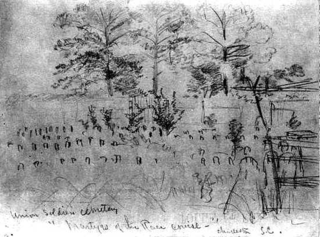
The Racecourse Cemetery

The first observance of what we now know as Memorial Day is fascinating and it needs to be remembered. Frederick Douglass was absolutely right when he spoke the words that I began this article, and we need to remember the humble beginnings of this day which was first marked by recently freed slaves in Charleston South Carolina on May 1st 1865. They did so barely two weeks after Abraham Lincoln was assassinated and three weeks after Robert E. Lee surrendered the Army of Northern Virginia at Appomattox Court House.

The acrid smell of smoke of the last battles of the American Civil War was still lingering over many towns and cities in the South on May 1st 1865. Charleston, the hotbed of secession was particularly hard hit during the war. In 1861 Cadets of the Citadel and South Carolina militia forces began the war with the bombardment of Fort Sumter. Union Forces laid siege to the city in late 1863, a siege which ended with the city’s surrender to Union forces under the command of William Tecumseh Sherman on 18 February 1865. The day of the surrender was somewhat ironic. Charleston, the city most associated with the opening of the conflict surrendered to Union forces on the fourth anniversary of the inauguration of Jefferson Davis as President of the Confederacy. By the time of its surrender much of the city had been destroyed by Union siege artillery and naval forces.

As a Confederate stronghold Charleston had also been the home of three of the Prisoner of War Camps. One was located in the Charleston City Jail and the other at Castle Pinckney which had been one of the ante-bellum U.S. Army installations in the city. A third camp was erected on the site of the Washington Race Course and Jockey Club in 1864. This was an open air camp and Yale Historian David Blight wrote that “Union soldiers were kept in horrible conditions in the interior of the track; at least 257 died of exposure and disease and were hastily buried in a mass grave behind the grandstand.”

By the end of the war most of the white population of the city had left and most of those remaining were recently freed slaves. After their liberation and the city’s occupation by Federal forces, which included the famous 54th Massachusetts as well as the 20th, 35th and 104th US Colored Troops Regiments; about 28 recently liberated Black men went to work and properly reinterred the 257 Union dead on the raceway and built a high fence around it. They inscribed “Martyrs of the Race Course” on an arch above the cemetery entrance.

6a01b8d0781960970c01b7c7901048970b-320wi

On May 1st over 10,000 Black Charlestonians gathered at the site to honor the fallen. Psalms, Scriptures and prayers were said, hymns were sung and many brought flowers. A parade of 2800 children covered the burial ground with flowers. They were followed by members of the Patriotic Association of Colored Men and the Mutual Aid Society. This society’s members provided relief supplies to Freedmen and provided aid to bury those Blacks who were too poor to afford burial. More citizens followed many laying flower bouquets on the graves. Children then led the singing of The Star Spangled Banner, America and Rally around the Flag. The Brigade composed of the 54th Massachusetts and the 35th and 104th Colored Regiments marched in honor of their fallen comrades. Following the formalities many remained behind for a picnic.

Other communities established their own Memorial Day observances in the years following the war, but the event in Charleston was the first. The first “Official” commemoration was on 30 May 1868 when Union General John Logan who headed the veteran’s organization called The Grand Army of the Republic appealed to communities to honor the dead by holding ceremonies and decorating the graves of the fallen.

In the South three different days served a similar purpose. In Virginia people commemorated the day on June 3rd, the birthday of Confederate President Jefferson Davis, the Carolinas marked the day on 10 May, the birthday of General Thomas “Stonewall” Jackson. In much of the Deep South the event was conducted April 26th, the anniversary of the surrender of General Joseph Johnson’s Army to General William Tecumseh Sherman. For many in the South, still attempting to come to grips with their defeat the day would become about “The Lost Cause” or “the defense of Liberty” or “States Rights” and the war was often referred to as the “War of Northern Aggression.”

The “Martyrs of the Racecourse” cemetery is no longer there. The site is now a park honoring the fascinatingly complex Confederate General and post-Reconstruction Governor of South Carolina Wade Hampton. An oval track remains in the park and is used to run or walk by the local population and cadets from the Citadel. Thankfully, at long last in 2010, one hundred and forty-five years after the dedication of that cemetery a marker was placed in that park commemorating the cemetery and the event that we now recognize as the first Memorial Day.

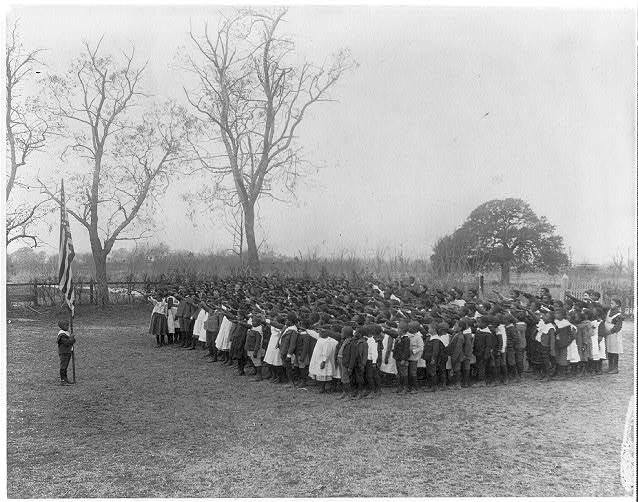
First-Memorial-Day-honoring-257-Union-soldier-martyrs-10000-freedmen-march-led-by-3000-children-05011865

African American Children saluting the Union Dead years later

The Union dead who had been so beautifully honored by the Black population were moved to the National Cemetery at Beaufort South Carolina by the 1880s. Some state that the reason for this was that the cemetery had fallen into neglect, and this may be the case, but the event and their memory conveniently erased from memory of Charlestonians.

I do not think that this would have happened had the people who had the bodies moved simply restored and maintained the cemetery. Had not historian David Blight found the documentation we probably still would not know of this touching act by former slaves who honored those that fought the battles, and gave their lives to win their freedom. Blight wrote in 2011 in the 1870s Charleston “had no place for the former slaves’ march on their masters’ racecourse.”

The African American population of Charleston understood the bonds of slavery and oppression. They understood the tyranny of prejudice in which they only counted as 3/5ths of a person. They understood and saw the suffering of those that were taken prisoner while attempting to liberate them from the tyranny of slavery. They stand as an example for us today.

But their suffering was not over. Within little more than a decade Blacks in the South would be subject to Jim Crow and again treated by many whites as something less than human. The struggle of they and their descendants against the tyranny of racial prejudice, discrimination and violence over the next 100 years would finally bear fruit in the Civil Rights movement, some of whose leaders, like the Reverend Doctor Martin Luther King Jr. would also become martyrs. Unfortunately that struggle is not over.

Frederick Douglass spoke to Union Veterans on Memorial Day 1878. His words, particularly in light of the war and the struggles of African Americans since and the understanding of what those who were enslaved understood liberation to be are most significant to our time. It was not merely a war based on sectionalism or even “States rights,” it was a war of ideas, a war of diametrically opposed ideologies. He said:

“But the sectional character of this war was merely accidental and its least significant feature. It was a war of ideas, a battle of principles and ideas which united one section and divided the other; a war between the old and new, slavery and freedom, barbarism and civilization; between a government based upon the broadest and grandest declaration of human rights the world ever heard or read, and another pretended government, based upon an open, bold and shocking denial of all rights, except the right of the strongest.”

Douglass’s words were powerful then and they resonate today as many of the same ideas that were the cause of the Civil War and were continued during Jim Crow are still alive. Unfortunately there are those in our society who labor daily to establish the “rights” of the strongest over the weak, the poor, the powerless and minorities of all kinds. Of course such actions, often wrapped in the flag, patriotism and buttressed with cherry picked quotes (many of which are fake, changed or taken out of context) from some of our founders are designed to re-establish the oligarchy of the power of the few, much like the men who owned the lives of the slaves and poor whites in the ante-bellum American South. Such actions do nothing but demean and trample the sacrifice of those who fought for freedom and the only remedy is to fight them with the full knowledge of truth.

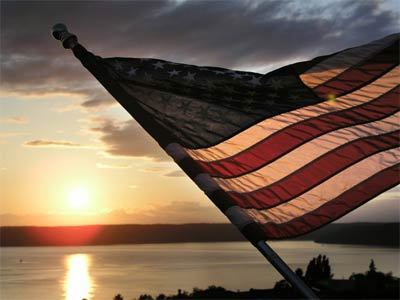
american-flag

I do hope that today we will observe Memorial Day in a fitting manner. Let us honor those Americans who died that others might be free. Let us look back at what freedom actually means and not forget the sacrifices of those that gave, and still give their lives in the “last full measure of devotion to duty” that others might live. This is especially true in an era where the racial and religious hatred and prejudice of Southern Slave Power, and Northern Know Nothings, that enslaved African Americans, exterminated Native American, invaded and Mexico, and treated Irish, German, Asian, and other immigrants, Roman Catholics, and Jews as enemies is raising its head as White Supremacists take their cue from the President that such behavior is acceptable.

Take a moment on Monday at noon to pause what you are doing and go silent for at least one minute, and remember.

Peace

Padre Steve+

Leave a comment

Filed under civil rights, civil war, History, Military, News and current events, Political Commentary

Though Poppies Grow: Buddy Poppies & Memorial Day 2018

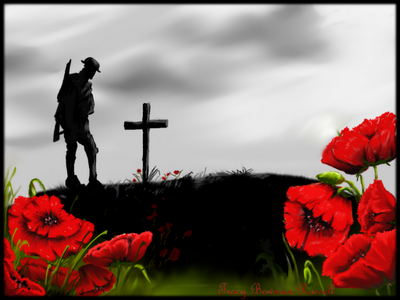
flanders_field

Friends of Padre Steve’s World

This is Memorial Day Weekend, a weekend where we remember those who died in the service of our country. It is not a day to thank the living veterans, that day is Veteran’s Day. Nor is it the day to thank those men and women who currently wear the uniform and fight the wars of our country. This weekend I am reposting a number of articles from past years to remind my regular readers and those new to my writings about how important this remembrance is, not just to me, but to all of us. I do not say that lightly. Memorial Day is the offspring of the families of the American Civil War dead, when people who lost loved ones in the cause of liberty and the defense of the Union honored their loved ones.

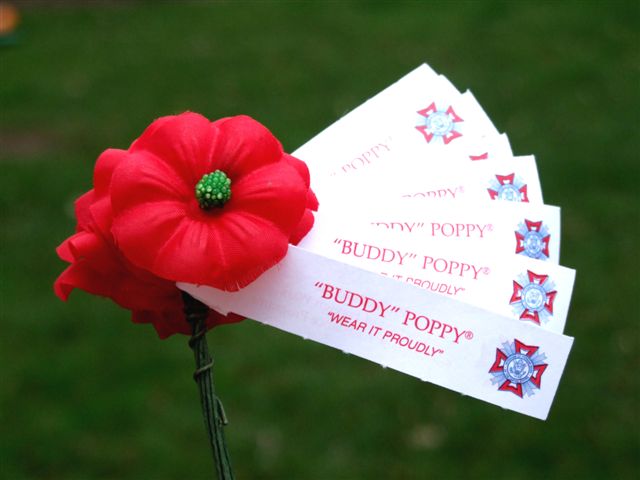
While the Buddy Poppy was something that came out of the First World War, and Armistice Day, which after the Second World War became Veteran’s Day. In time it has also become connected with the original Memorial Day. So today’s post is my first reflection of this weekend on the Buddy Poppy and Memorial Day.

I write this in the disastrous aftermath of President Trump’s high stakes game of chicken with North Korean Leader Kim Jung Un in which he bailed after aggressively praising Kim and pushing for direct talks. When I read the President’s letter to the North Korean I realized that the chances of a catastrophic war have gone up.

I also have been watching Ken Burns’ series The Vietnam War while reading Robert K. Massie’s Castles of Steel: Britain, Germany, and the Winning of the Great War at Sea. Both are filled with stories of hubris and tragedy.

No matter what your political views, ideology, or religious beliefs, please take time to remember the high human cost of war this weekend, especially on Monday when we observe Memorial Day.

Until tomorrow,

Peace,

Padre Steve+

1144221_orig

In Flanders Fields

John McCrae, 1915.

In Flanders fields the poppies blow

Between the crosses, row on row

That mark our place; and in the sky

The larks, still bravely singing, fly

Scarce heard amid the guns below.

We are the Dead. Short days ago

We lived, felt dawn, saw sunset glow,

Loved and were loved, and now we lie

In Flanders fields.

Take up our quarrel with the foe:

To you from failing hands we throw

The torch; be yours to hold it high.

If ye break faith with us who die

We shall not sleep, though poppies grow

In Flanders fields.

Besides the American Flag the Buddy Poppy is perhaps the most ubiquitous symbol of Memorial Day. This poppy as we know it came about when Mrs. Moina Michael read McRea’s poem and inspired wrote this verse:

We cherish too, the Poppy red

That grows on fields where valor led,

It seems to signal to the skies

That blood of heroes never dies.

She then had the inspiration to begin wearing Red Poppies on Memorial Day and sold the poppies to friends and others with the money going to those in need. A French woman visiting the United States, a Madame Guerin discovered the new custom and took it back to France where she began to make artificial red poppies to sell with the proceeds going to the widows and orphans of the First World War. The custom spread to other countries and in 1921 the Franco-American Children’s League sold the poppies but disbanded in 1921. Madame Guerin approached the newly formed Veteran’s of Foreign Wars, the VFW in 1922 for assistance and in 1922 the VFW became the first American organization to sell poppies. Two years later the Buddy Poppy program began. The artificial poppies were made by disabled veterans who were paid for their work in order to provide them some form of income and distributed by other veterans across the country. Today the VFW continues to distribute the Buddy Poppies which are still produced by disabled Veterans at the nation’s Veteran’s Administration Hospitals.

I remember the first Buddy Poppy that I every received. It was just before Memorial Day 1970, before it became a 3 day weekend falling on the last Monday of May. We were living with my Grandparents in Huntington West Virginia as my dad sought suitable housing for us in Long Beach California while he was in the Navy.

Our initial move from the small town of Oak Harbor Washington, where my dad had been stationed at Naval Air Station Whidbey Island to Long Beach had not gone well. The first place we lived was in a dangerous neighborhood and with my dad traveling frequently to Naval Shipyards around the country to help commission new ships the stress on the family, especially my mother in dealing with that and two young boys was too much. Dad sent us back to Huntington where my Grandparents and numerous other relatives still lived for the duration of the school year as he sought better housing.

veterans-day-05-26-10-1

Memorial Day then was filled with visits to cemeteries to place flowers on the graves of departed relatives as well as flags on the graves of relatives who had served in the military. We made a number of stops that day at the Bowen and Dundas cemeteries as well as others where relatives were interred. Afterward we had a home cooked meal prepared by my maternal grandmother Christine and then made a trip on a city bus to to the other side of town to see my paternal grandmother Verdie.

Holidays, were much like that for us during that time that we lived in Huntington, until my dad came back and brought us back to Long Beach in June. Just before my dad arrived to take us back to Long Beach my mom, her cousin Valerie and I were shopping downtown, which at the time before I-64 took traffic around the town and led to a new mall and shopping complex being built just out of town, was a bustling place of commerce and activity. Major retailers all had their stores downtown, while the best movie theaters and restaurants were there as well.

We were coming out of the old SS Kresge store on Fourth Avenue and an elderly man wearing a VFW cap approached us and handed me a poppy. He had to be in his 70s so I presume that he was a Veteran of the First World War. He chatted briefly with my mom and Valerie and I am sure my mom gave him a bit of money for the poppy. I kept it for many years and it was eventually lost in one of our moves. But I will not forget it and any time I see a Veteran distributing them I make sure that I get one.

But I haven’t seen anyone passing them out for years, maybe I will need to start getting them and giving them out myself. Maybe I’ll start that as Veteran’s Day approaches.

Babe-Ruth_MAIN

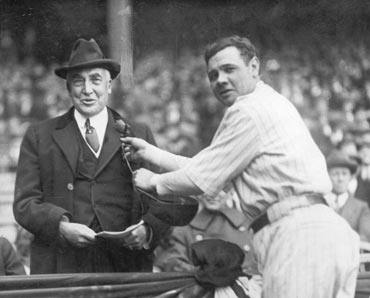
Babe Ruth and President Warren G Harding with the first official Buddy Poppy of 1923

For me the Buddy Poppy is a symbol of thanks for the sacrifices made by so many, those who did not come home from wars being killed or missing in action, as well as the wounded and the families of the dead and those that came home forever changed by their time in war. This year marks the 90th anniversary of it being the official flower of remembrance for those who died in our nation’s wars.

The poppy has even more significance for me now having served in Iraq. Seeing war’s devastation and knowing so many who have either been killed or wounded in the wars that we have engaged since September 11th 2001 has impacted me in ways that I could not have imagined before the war. Likewise having come back changed by my experience and having to deal with the affliction of severe PTSD I sense a camaraderie with those men who came home changed from war and in many cases returned to a country that did not understand them.

I will be observing the “Go Silent” moment at 12:01 Monday with the Iraq Afghanistan Veterans Association to honor those who have given the last full measure.

Peace

Padre Steve+

1 Comment

Filed under books, film, iraq, News and current events, PTSD, vietnam, world war one

The Death of the Pride of the Royal Navy: The Sinking of HMS Hood

hms-hood-sinking11Artist rendition of the Loss of the HMS Hood

Friends of Padre Steve’s World,

Seventy-seven years ago today the “Mighty Hood” was sunk by the German Battleship Bismarck. The news was broken to most of the world by American journalist Edward R. Murrow who in his radio broadcast reported:

“This is London, Ed Murrow reporting. This island, which is no stranger to bad tiding, received news today that HMS Hood largest warship in the British fleet and pride of the British navy, has been sunk by the German battleship Bismarck. From the Hood’s compliment of 1500 men, there were three survivors.”

The news of the sinking of the great ship stunned the world, and it is a tragic anniversary that I always mark. I first read about this battle in C.S Forrester’s little book Hunting the Bismarck when I was in 4th grade. That book was used as the screenplay for the 1960 film Sink the Bismarck.

This essay is in honor of the gallant HMS Hood and her crew.  It is fitting although the HMS Hood and her killer, the German battleship Bismarck were not American. Both were great ships manned by gallant crews and the loss of both ships was tragic, especially from the aspect of the great loss of human life. I do hope and pray that we never forget the sacrifice of these men and all others who have gone down to the sea in great ships.

hood-malta1HMS Hood at Malta

There are some warships and naval engagements which assume legendary proportions.  The Battle of the Denmark Strait on 24 May 1941 between the two largest battleships in commission at the time, the pride of the British Royal Navy the HMS Hood and the German behemoth Bismarck is legendary as are those two mighty ships.  The battle came at a critical time as the Britain stood alone against the seemingly invincible German Blitzkrieg.

hood-at-san-francisco1Hood in San Francisco on 1920s goodwill tour

Britain had been driven from Western Europe and was being bombed regularly by Herman Goering’s Luftwaffe while a British expeditionary force that had been sent to Greece had been defeated and the Germans were assaulting Crete with airborne forces.  In the Western Desert the Afrika Korps under Field Marshall Erwin Rommel had driven off a British counter-offensive on the Libyan-Egyptian frontier and were laying siege to Tobruk and in the Atlantic German U-Boats sank 66 Allied Merchant Ships of over 375,000 tons and the Royal Navy would lose 25 warships not including the Hood.

hms_hood_march_17_19241

The Hood was the pride of the Royal Navy and was world famous due to her inter-war international presence and goodwill visits.  Displacing 47,430 tons full load she was armed with eight 15” guns in four twin turrets.  Designed as a battle cruiser she was less heavily armored than contemporary battleships and had very weak vertical protection from plunging shellfire.  This was a fault which was known but never rectified between the wars and when the war came the Royal Navy could ill-afford to take her out of service for the necessary improvements to her protection system.  She was fast with a designed speed of 31 knots which been reduced to 28 knots by 1939 as a result of modifications which increased her displacement.   This was further reduced by the wear and tear on her propulsion plant to 26.5 knots by 1940.

Hood was designed before the battle of Jutland (May 1916) where the weaknesses in the armor protection of British Battlecruisers was exposed as three, the HMS Invincible, HMS Queen Mary and HMS Indefatigable were destroyed by plunging fire which exploded their magazines.  Though her design was modified during construction she still was vulnerable to plunging fire. She was scheduled for a major refit which would have included significant improvement in armor protection in 1941, but the war prevented Hood from receiving anything more than improvements to her anti-aircraft batteries.

Combat1lgHood (nearly hidden by falling shells) in action at Mers-El-Kebir

During the war Hood was engaged in patrol and search operations against German raiders in the North Atlantic and in June 1940 joined Force “H” in the Mediterranean.  As Flagship of Force “H” she took part in the sinking of French Fleet Units including the Battleship Bretagne at Mers-El-Kebir on 3 July 1940 following the French surrender to the Germans and remained in operation searching for the German Pocket Battleship Admiral Scheer and the Heavy Cruiser Admiral Hipper until she was withdrawn for a brief refit in January 1941.

Following another brief refit in mid-March, Hood was underway from mid-March searching for the German raiders Scharnhorst and Gneisenau and also false report of Bismarck breaking out into the Atlantic in April 1941. She returned to Scapa Flow on 6 May 1941.

bismarck1Bismarck

When the British discovered that Bismarck had entered the Atlantic, Hood the flagship of Vice Admiral Lancelot Holland, was dispatched to find and sink her with the newly commissioned battleship HMS Prince of Wales.  The battleships were to join the Heavy Cruisers HMS Suffolk and HMS Norfolk at the entrance to the Denmark Strait.  When the cruisers discovered Bismarck along with her consort the Heavy Cruiser Prinz Eugen the two British battleships steamed into naval history.

flagshippg213

Bismarck was slightly larger than Hood and mounted the same main armament but that was about all the two ships had in common. If the battle was a battle between heavyweight prize fighters Hood was the valiant but crippled champion and Bismarck the young and overpowering challenger.  Bismarck was slightly faster than the limping Hood and was one of the most well protected ships ever built.  Her gunnery officers and the men that manned her deadly 15” guns were like previous generations of German sailors, gunnery experts, working with some of the finest naval guns ever made.

Schlachtschiff Bismarck, Seegefecht

Bismarck firing on Hood

gallbismdenmarkstrait11

The German ships were shadowed at a distance by the Norfolk and Suffolk. The German task force under the command of Admiral Gunther Lütjens emerged from the strait and were sighted by the British at 0537.  Knowing his ships weakness in regard to plunging fire Admiral Holland desired to steer a direct course at the German ships in order to close the range quickly in order to narrow the range and prevent being hit by the same kind of plunging fire that doomed the British battle cruisers at Jutland.

However, events dictated otherwise and the British were forced to close the range much more slowly than Admiral Holland desired, and exposed both Hood and Prince of Wales to German plunging fire for a longer period of time.  As such Holland then turned and tried to close the German ships faster. The result was that his gunnery was degraded by wind and spray coming over the bows of his ships compounded by his inability to bring his after turrets to bear on the German ships.

hood0231Hood, photographed from Prince of Wales moments before being hit and sunk by Bismarck

At 0553 Holland ordered his ships to open fire. Unfortunately, he dis so without the benefit of Suffolk and Norfolk being in position to engage the Prinz Eugen.  Due to the similar appearance of the German ships Hood initially concentrated her fire on Prinz Eugen assuming her to be the Bismarck while Prince of Wales engaged Bismarck.

During the initial exchange of fire Prince of Wales drew first blood by hitting Bismarck three times with her 14″ guns. One hit damaged Bismarck’s seaplane catapult. A second did minor damage to machinery spaces, and a third which passed throughBismarck’s bow near the waterline and severed the fuel lines from her forward fuel tanks to her engines. The third hit would prove the might German Leviathan’s undoing.

prinzeugen-21Prinz Eugen

Both German ships opened fire at 0555 and concentred their fires on the Hood.  Prinz Eugen immediately hit Hood with at least one 8” shell which set a large fire among the ready to use 4”ammunition stored in lockers near the mainmast. The hit started a large fire which Hood’s damage control teams raced to contain.  At 0600, Admiral Holland ordered his ships to turn to port in order to bring the rear turrets of his battleships into the fight.

As the squadron executed the turn Hood was straddled by a salvo from Bismarck and observers on Prince of Wales observed an explosion between “X” turret and the mainmast of Hood. The hit set off the 4″ magazine and the resultant explosion consumed the Hood causing her bow to jut sharply out of the water before sinking beneath the waves in under 3 minutes time. Witnesses on both sides of the engagement were stunned by the sudden and violent end of the Hood.

With Hood now destroyed the Germans rapidly shifted their fire to the Prince of Wales, crippling the battleship and knocking her out of the action.  Bismarck was now in a perfect position to finish off Prince of Wales but she did not do so. Against the advice of Bismarck’s Captain Ernst Lindemann, Admiral Lütjens refused to follow up his advantage to sink the crippled British battleship and instead broke off the action.

hood_explosion_sketch1Hood blows up. Drawing by the Captain of HMS Prince of Wales J.C. Leach

Only three crewmen for Hood, Petty Officer Ted Briggs, Seaman Bob Tilburn and Midshipman Bill Dundas survived the cataclysm out of a total of 1415 souls embarked. They were rescued 4 hours later nearly dead of hypothermia. They stayed awake by singing  “Roll out the Barrel” until they were rescued by the destroyer HMS Electra.

hood_blowup1

Briggs who died in 2008 recounted the sinking:

“Then she started listing to starboard. She righted herself, and started going over to port. When she had gone over by about 40 degrees we realised she was not coming back…” Briggs was sucked under the water “I had heard it was nice to drown. I stopped trying to swim upwards. The water was a peaceful cradle – I was ready to meet my God. My blissful acceptance of death ended in a sudden surge beneath me, which shot me to the surface like a decanted cork in a champagne bottle. I turned, and 50 yards away I could see the bows of the Hood vertical in the sea. It was the most frightening aspect of my ordeal, and a vision which was to recur terrifyingly in nightmares for the next 40 years.” (The Daily Telegraph 5 October 2008)

briggs1Ted Briggs

tilburn4111Bob Tilburn

The Admiralty reported the loss of the Hood later in the day saying Hood received an unlucky hit in a magazine and blew up.”  The official report of the sinking released later in the year said:

That the sinking of Hood was due to a hit from Bismarck’s 15-inch shell in or adjacent to Hood’s 4-inch or 15-inch magazines, causing them all to explode and wreck the after part of the ship. The probability is that the 4-inch magazines exploded first.”

The commission’s findings have been challenged by a number of naval historians and there are several theories of how the magazines might have exploded. However, all theories point to a massive magazine explosion which may not have be caused by a plunging round but from a hit which detonated the unprotected 4” magazines or a hit from Bismarck that struck below Hood’s waterline and exploded in a magazine.

For forty years the Hood’s wreckage lay undiscovered. Her wreck was located in 2001 lying across two debris fields. The post mortem examination revealed that Hood’s after magazines had exploded.  Hood’s resting place is designated as a War Grave by Britain and protected site under the Protection of Military Remains Act of 1986.

bismarck-sinking1Bismarck sinking

Bismarck and her crew did not long survive her victory.  When close to refuge in the French port of Brest on May 26th the great ship was crippled by a lucky aerial torpedo hit from a Fairley Swordfish bomber flying from the HMS Ark Royal. 

The hit damaged Bismarck’s rudders and forced her to steer a course towards the approaching British fleet. Throughout the night Bismarck fought off attacks by British and Polish destroyers on the morning of May 27th 1941, after absorbing massive damage from the HMS King George V, HMS Rodney and several cruisers including HMS Dorsetshire, he plucky and persistent Norfolk and several destroyers, Bismarck was scuttled by her crew. When she went down she took with her all but 115 souls of her crew of over 2200 which included the Fleet Staff of Admiral Lütjens.

hms-prince-of-wales1HMS Prince of Wales

A few months later, Prince of Wales would take Winston Churchill to Argentia Bay Newfoundland to meet with Franklin Roosevelt. At the conference that took place in August 1941, the Atlantic Charter was drafted. With the increased threat of Japanese expansion Prince of Wales reported to the Far East where she was sunk along with the Battlecruiser HMS Repulse on 9 December 1941 by a force of land based Japanese aircraft.  The Prinz Eugen was the only heavy ship of the German Navy to survive the war and was taken as a prize by the US Navy when the war ended. She was used as a target during the Able and Baker nuclear tests at Bikini Atoll, but did not sink. She was too radioactive to be repaired and her hulk was towed to Kwajalein Atoll where she capsized and sank on 22 December 1946. Her wreck is still visible.

The loss of the Hood traumatized the people of Britain and the Royal Navy; she had been the symbol of British Naval power for over 20 years and people around the world were likewise stunned at her demise. The sinking of the Hood and the loss of her crew was a tragedy which all sailors assigned to large and prestigious ships and the nations that they sail for need to keep in mind.

No matter how mighty any ship may be, every ship has an Achilles heel and no ship is unsinkable, and human beings bear the brunt of such tragedies.  Of the over 3600 officers and crew of the Hood and the Bismarck only 118 survived.

dundasw1

I will continue to remember the gallant Hood, her brave crew, especially my very distant relative Midshipman Bill Dundas who I never met.  He left the Royal Navy with the rank of Lieutenant Commander in about 1960, and was killed in a car wreck in 1965. According to the Hood Association website he was troubled by the sinking for the rest of his life.  I think that I could understand as I am still troubled by my far less traumatic experience of war in Iraq.

Until tomorrow,

Peace

Padre Steve+

2 Comments

Filed under History, Military, Navy Ships, nazi germany, World War II at Sea

Leak: Why Mark Felt Became Deep Throat

Friends of Padre Steve’s World,

Back in 2012 I was asked to do a review of Max Holland’s book about Watergate Leak: Why Mark Felt Became Deep Throat. It think that the book is very pertinent today and well worth the read for anyone immersed in the daily revelations of numerous members of the Trump campaign and administration. The sheer number of these allegations, not to mention the number of convictions and plea deals already racked up by the Muller investigation demonstrates the seriousness of the allegations while the web of connections to the fact of Russian meddling in the 2016 demands answers. That being said we need to look back at the history of the Nixon administration to help us understand what is going on today.

So I am posting my review that I published for TLC Book Reviews on June 12th 2012. The review is exactly how I wrote it with no editing for today. I recommend the book to my readers. 

Until tomorrow,

Peace

Padre Steve+

Motives do matter and actions often have unintended consequences. That is the lesson of Max Holland’s book about Mark Felt. Felt was the man whose leaks helped end the Presidency of Richard Nixon and skyrocket the young and obscure Bob Woodward and Carl Bernstein to fame. For more than three decades Mark Felt’s identity remained hidden a mystery man to the public, a man popularized by the dark moniker “Deep Throat.” His role as the leaker was suspected by some, including President Nixon and some of his staff but known only for sure by Woodward, Bernstein and Washington Post Editor Ben Bradlee.

In this truly scholarly book Max Holland pieces together the dark underside of the Watergate tapestry that Woodward and Bernstein helped to break in 1972 and would go on to write about in All the President’s Men and The Final Days. It is a book that is important because it is the first account to seriously explore the motivation of Mark Felt when he began to leak and the background story of the monumental post J. Edgar Hoover FBI power struggle.  That story which in normal times would have been a major story was missed in an era where the country was in turmoil and there were so many other “big” stories to cover.

Taking advantage of more recent revelations, disclosures and evidence Holland paints a picture that not only broadens one’s understanding of Watergate but helps the reader understand how important it is to understand the motivations of those that were involved, Nixon and his staff, Felt and other FBI officials and the media.

The picture painted by Holland of Felt makes his role in the story more understandable. Felt was not the altruistic leaker of myth who sought to destroy the Nixon Presidency, something that was the picture painted by Woodward and Bernstein. His motivations were much more down to earth. He wanted to use his knowledge to ensure that he became Hoover’s successor as the Director of the FBI. He used it to destroy L. Patrick Gray who served as the interim Director and his chief rival in the Bureau William C. “Bill” Sullivan in the eyes of the White House, Congress, the Bureau and the media. Felt’s leaks helped blow the lid off of the White House cover up of the Watergate break-in and which led to the resignation of President Nixon and the conviction of a number of his closest advisors. Felt’s duplicity which included deceiving the Administration, Congress, his superiors and the media with falsehoods even as he revealed key truths is amazing to behold.

The picture that Holland paints of the White House is not pretty. The moral depravity and ruthlessness of Nixon and his advisors is shown without dehumanizing them.  In fact they become more human in Holland’s account.  Likewise Holland’s portrayal of other key figures in Felt’s story at the FBI, L. Patrick Gray, William Ruckelshaus and William Sullivan is compelling. The naive and compliant Gray, Felt’s bitter rival Sullivan and the “sweeper” (to use the term given to Harvey Keitel’s character Winston “the Wolf” Wolfe in Pulp Fiction) Ruckelshaus who helps to “sweep” Felt out of the FBI.

But the most interesting part of the book for me is Holland’s portrayal of Woodward and Bernstein. They are young and idealistic and Woodward believes whatever Felt tells him, including deliberate misinformation. What jumped out at me was their willingness to take at face value what Felt told them and not to explore his motivations which could have led to even more revelations that could have shaken the FBI to its core.  Likewise was Woodward’s willingness to press the limits with information provided by Felt going beyond what Felt demanded for secrecy but which Felt, even though upset by the reporter continued to provide information cumulating in his long and rambling confession to Woodward following his retirement under pressure on May 16th 1973.

They, particularly Woodward did not ask themselves the three key questions that anyone should ask when someone comes to them with this kind of information: Why this? Why this information. Why Me?  Why am I being chosen to receive the information. Why Now? Why is the source telling me this information now. Those three questions could have blown the case open even more had they explored them. Of course they were caught up in the chase for “scoops” with rivals at the New York Times, The Washington Sun and Time Magazine and chose to believe what Felt told them, something that occasionally left them hanging when the information was wrong.

Conversely Felt’s distain and lack of respect for the media and the belief that he could use Woodward, Bernstein and others in the media to further his goals with impunity proved false. He became careless and caused the Nixon Administration to suspect him and work to force him out of the FBI without drawing more attention to themselves.

Holland also covers the “cover-up” of “Deep Throat’s identity which was maintained by Felt, Woodward and Bernstein until Felt was in the beginning stages of dementia and his family was ready to reveal his role.  The dual myths of Deep Throat’s motives and the role of the press as the “men in the  white hats” against the evil bad guys in the White House are exposed by Holland who points out how much of the investigation broken by Woodward and Bernstein was being accomplished by FBI agents and appointed to investigate the break-in and staff members at the Committee to Re-Elect the President who were appalled by the illegality of what they saw being done by their superiors.

The book is excellently sourced and researched. It is a compelling narrative that sheds light on a dark period of our nation’s history which also serves as a reminder to those who investigate “leaks” from well placed sources that there is always another layer of motivation and intent that cannot be discounted and must be factored into the investigation.

This is relevant today as the media, Congress and the the Justice Department investigate leaks from inside the Obama White House regarding national security information. Why This? Why Me? Why Now? Those are the questions. Thanks to Max Holland we now know much of what transpired behind the scenes as Woodward and Bernstein investigated and published their accounts of the Watergate break-in and cover up with the information provided by Mark Felt.

The book Leak: How Mark Felt Became Deep Throat is published by the University of Kansas Press and is available at http://www.amazon.com/Leak-Mark-Felt-Became-Throat/dp/0700618295/ref=sr_1_1?ie=UTF8&qid=1339544616&sr=8-1&keywords=leak

Leave a comment

Filed under books, crime, ethics, History, News and current events, Political Commentary

How Republics Die: Vichy and Trump

img_0327

Friends  of Padre Steve’s World,

President Trump has long established his love and admiration for despots. First it was Vladimir Putin of Russia, then Recip Erdogan the soon to be dictator of Turkey, then Rodrigo Duterte, the murderous President of the Philippines, and even praise for Kim Jong Un of North Korea. Let us not go into the list of draconian despots, dictators from history that the President has expressed his fondness. His favorite President is Andrew Jackson who defied a Supreme Court ruling and executed the Trail of Tears.

Honestly, if the President’s admiration, praise, and fondness for authoritarian and anti-democratic rulers remained just his opinion with no consequences it wouldn’t be such a big deal. However, it is much bigger than his personal opinions, but the nature his office of President, his words, his tweets, his opinions, become the policy of the United States, and end up staining the honor of the nation.

These actions have consequences. The first is the loss of moral authority of the nations who encourage and help dictators. Second, the loss of that moral authority makes it difficult when the chips are down to gain domestic or international support once a nation’s leaders determine that aggressive dictatorships must be stopped, finally it is the death of the Republic, its Constitution, and its founding principles. Just in the past few days the President has bowed to the wishes of the Chinese Communists on trade and the North Koreans on our alliance with South Korea. As he did these things he made more and ever more threatening attacks on the Department of Justice and the FBI in order to discredit them and end the investigation of his family and presidential campaign ties to Russia and other foreign enemies.

What the President and his administration since they took power is amoral and it is dragging the reputation of the United States into the sewer. Sadly, it will have real world consequences, as well as dangerous ramifications for our own system of Constitutional government and representative democracy.

This is not new, during the 1930s many leaders of struggling democracies caught up in the Great Depression, including the United States offered up praise for the accomplishments of Mussolini, Stalin, and Hitler. By their encouragement, accommodation, and appeasement these leaders were complicit in some of the greatest crimes against humanity ever seen in the world. Some of these leaders, especially in France actively worked against their own democratic form of government in the hopes of overthrowing it and setting up a Fascist state. Once France was defeated by Germany the anti-democratic leaders of that country voted out the Republic and established a dictatorship at Vichy headed by Marshal Petain, the hero of the First World War.

Petain with Hitler

The Premier of France under Vichy, Pierre Laval, led the successful move to abolish the constitution of the Third Republic. He said: “Parliament must be dissolved. The Constitution must be reformed. It must align itself with the totalitarian states…” He told the Assembly: “We are going to destroy the totality of what was. We’re going to create something entirely different…. Henceforth there will be only one party, that of all the French.” He concluded “We are paying today for the fetish which chained us to democracy and led us to the worst excesses of capitalism, which all around us Europe was forging, without us, a new world.”

Another, Charles Spinasse, a Socialist who had come to believe in Fascism told the Assembly: “We must break from the past. It was full of illusions…. We believed in individual freedom, in the independence of man. It was but anticipation of the future which was beyond our grasp. We must have a new faith based on new values…. France abandoned itself. It must begin anew.”

One opponent rushed to Vichy to oppose the measures, Pierre-Etienne Flandin, told his colleagues: “Change the Constitution? But why? What need is there to change our institutions? The reproach is that we did not respect them.” However, Flandin too had no problem with giving the reigns of power to an authoritarian, Fascist regime that would cooperate with the Nazis, turn on its allies, and murder its own citizens. His words were absolutely correct, but he betrayed himself at the end.

Pierre Laval

In the end Laval won the day. He told the assembly: “Parliamentary democracy lost the war. It must give way to a new regime: audacious, authoritarian, social, and national.” In the end the vast majority of the delegates from across the political spectrum voted to end the Republic. Opponents who wished to continue to fight against Germany were condemned, jailed, and even killed. Leon Blum, a former Socialist leader who Laval despised wrote of Laval’s manner as the Republic was dissolved: “An unbelievable arrogance puffed up his small person. In a dry voice and with an irritated glance he flung out verdicts and orders… “I do… I say… I refuse… that’s the way it is…” President Trump has much the same attitude as he issues executive orders with abandon, even as others are struck down by the Courts.

Likewise when questioned about allowing opposition newspapers to publish, Laval told Blum in words that one can almost hear President Trump say if he were granted the right to restrict the freedom of the press:

“When I decide, no newspaper will appear if it shows the slightest reticence about my policies. The press must follow me absolutely, without reserve—and I will not let myself be duped.”

But just as troubling on the domestic front is the President’s stated desire to crush the parts of our Constitutional system that inconvenience him, and with his malleable GOP majorities in the House and Senate he may eventually succeed in doing if not opposed by courageous Senators and Representatives, and the Courts. He has on a number of occasions threatened the independence of the judiciary, he has expressed a desire to amend the Constitution to limit freedom of the press, freedom of association, and freedom of speech. He has also urged Congress to end the Filibuster which is the last resort by which a minority party can prevent bare majority of Senators or Representatives of one party to impose its will on the entire nation, even if the majority of people in the nation voted against their party. As of now GOP Senate leaders have announced their opposition to such legislation realizing that they could once again be in the minority. However, for Trump that does not matter as he has no loyalty to the Republican Party; sadly, most Republicans do not seem to understand that fact, and I wonder how firm they will stand when push comes to shove. History shows us that all too often, even the opponents of authoritarianism can easily turn from defending their Constitutional liberties to supporting nationalist, racist, and authoritarian leaders.

That my friends should frighten any American who has not lost their belief in our system of government which for all of its inefficiencies guarantees more liberty than any other system in the world.  History shows that once those liberties are gone you do not get them back without the despot who has taken them away being defeated, often by military conquest.

The fact is that as Timothy Snyder wrote: “The European history of the twentieth century shows us that societies can break, democracies can fall, ethics can collapse, and ordinary men can find themselves standing over death pits with guns in their hands. It would serve us well today to understand why.”

Will our epitaph be like the words of French Senator Bovin-Champeaux who said: “Is it not without sadness that we shall bid adieu to the Constitution of 1875. It made France a free country…. It died less from its imperfections than from the fault of men charged with guarding it and making it work.”

Unlike Laval’s Vichy Government the United States has not been overrun and invaded by an enemy Army. We don’t have Russian Tanks rolling down Pennsylvania Avenue, or Vladimir Putin doing a jig at the Washington Monument, but the President’s surrender to Putin, and other despots and his attacks on our Constitution and legal systems will destroy us and all of our rights; and that means even the rights of those people who for whatever reason support him. If this continues, they too will become victims of an American version of the Night of the Long Knives. 

Take my warning for what it is. Trump’s opponents are already damned and doomed if he succeeds, but his supporters will have signed their own death sentences and they are too stupid to know it. But then, such is bliss of ignorance.

Until tomorrow,

Peace

Padre Steve+

1 Comment

Filed under ethics, History, News and current events, Political Commentary, world war two in europe

To Say that there is to be No Criticism of the President is Unpatriotic and Treasonable

Friends of Padre Steve’s World,

I find it both interesting and troubling to listen to many supporters of President Trump castigate anyone for any criticism offered about the President, sometimes going as far to say that critics are being “unfair,” “disrespectful,”or most disturbing, “disloyal” or “treasonous.” Even the President tweets out those kind of accusations on a whim.

Admittedly some forms of criticism cross boundaries and are personally insulting and disrespectful of the President. In my writings I try, even when being very critical of his policies, words, or actions, to refrain from personal insults that could be considered disrespectful to the President because I am still on active duty.  As my readers know I am a historian as well as an theologian/ethicist and when I do write about the actions of the President and his administration I do so based on careful study and comparison with historical, ethical, or legal precedents. My views are likewise informed by my education and and belief in the principles of the Enlightenment, my belief in human rights as set out in the Preamble of the Declaration of Independence, the U.S. Constitution, and the French Rights of Man and the Citizen, as well as my understanding of the Anglican Christian tradition of “Scripture, Tradition, and Reason” being the foundations of faith.

But it is not disloyal or treasonous to offer criticism of policies, legislative proposals, executive orders, or actions and words of the President or his advisers that could endanger the security of the United States, its citizens, and its alliances, or potentially be unlawful.

Even so I am occasionally criticized for offering historical examples that compare the President and his most ardent supporters in an unfair way, some even calling those disrespectful. I find their double standards and lack of appreciation of irony quite fascinating as most of these people have spent the last eight years or more disparaging and disrespecting President Obama with some of the most racist, vile, contemptible, and false accusations ever made against a sitting President, while at the same time condemning others for simply repeating what the President himself has said.

I found out last year when I had a couple of students criticize some of my teaching at Gettysburg when comparing the anti-immigrant Know Nothings of the 1830s-1850s to current anti-immigrant Trump supporters, and stated that some Trump Administration Civil Rights proposals to be a throwback to Jim Crow. My words then were not insulting nor disrespectful, but simply valid historical criticism; but some Trump supporters are so thin-skinned that they cannot abide any criticism of the President, despite dishing out incredibly racist and disgusting personal comments about President Obama, which were mostly devoid of any non-racially based political or ideological principles.

Unlike President Obama the current President is ensnared in numerous legal, criminal, and Constitutionally backed investigations which range from simply enriching himself as a public official (the emoluments clause) and his family, or more seriously collusion with not only Russian, but Saudi, and other nations to influence his election. The Senate committee investigating the Russian connection said that this actually happened and backed up the evidence submitted by U.S. law enforcement, military, and intelligence agencies concerning this. The Saudi and other Sunni Arab connections were just brought to public light last week. Lord knows how many other governments were involved with Donald Trump Jr., and others to seek to influence the 2016 elections and U.S. foreign policy since then.

Theodore Roosevelt had to defend himself in 1918 from such criticism from the supporters of President Woodrow Wilson. Roosevelt was criticizing the Wilson administration because of how badly he thought they were pursuing the war effort against Germany. For this people were castigating him. People said that newspapers should not print what Roosevelt had to say as well as “He should stand by the President” and “He should be stood before a stone wall and shot.” Roosevelt ended up writing an op-ed in the Kansas City Star in which he noted:

“The President is merely the most important among a large number of public servants. He should be supported or opposed exactly to the degree which is warranted by his good conduct or bad conduct, his efficiency or inefficiency in rendering loyal, able, and disinterested service to the Nation as a whole. Therefore it is absolutely necessary that there should be full liberty to tell the truth about his acts, and this means that it is exactly necessary to blame him when he does wrong as to praise him when he does right. Any other attitude in an American citizen is both base and servile. To announce that there must be no criticism of the President, or that we are to stand by the President, right or wrong, is not only unpatriotic and servile, but is morally treasonable to the American public. Nothing but the truth should be spoken about him or any one else. But it is even more important to tell the truth, pleasant or unpleasant, about him than about any one else.”

This is exactly how I base any criticism I offer of the President, his policies, words, and actions. I heartily agree with the words of Senator Stephen A. Douglas when he battled President James Buchanan over the pro-slavery attempt to have Kansas admitted to the Union as a Slave State in 1858. Douglas said of his encounter with Buchanan:

“God forbid,” I said “that I ever surrender my right to differ from a President of the United States for my own choice. I am not a tool of any President!”

Sadly, there are very few GOP Senators who would have the moral courage to do what Stephen Douglas did in 1858. He did so even though it doomed his chances to be President.

I admire Stephan Douglas but there is a difference. Now there is a difference, I am not a Senator or elected Representative, I am an officer and must carry out the orders of the President. However, if I ever come to believe that I cannot in good conscience carry them out, or if I believe that they are un-Constitutional I will retire from the military in order to allow myself the freedom to speak out more openly. To ‘this point in time I have not to have been forced to Carr out any illegal or unconstitutional orders, and as a Chaplain I have been able to speak my thoughts openly, though I am careful in how I say them at least in order to maintain my respect for the office of the President.

One of my examples is the German General Ludwig Beck, who resigned as head of the German Army in 1938 over Hitler’s aggression and his plan to attack Czechoslovakia. He wrote something that I hold particularly important in my service at this point in history:

“It is a lack of character and insight, when a soldier in high command sees his duty and mission only in the context of his military orders without realizing that the highest responsibility is to the people of his country.” 

Unlike the current President who sought numerous deferments from entering the military in a time of war: Stephen Douglas put his political career on the line to follow the Constitution, Theodore Roosevelt resigned from his office as Assistant Secretary of the Navy Since to go to war and place himself in harms way, Ludwig Beck would die in the failed attempt to kill Hitler in July 1944. All three men were far more honorable than President Trump, and their words should be heeded by Americans regardless of their political affiliation.

I am still dealing with the effects of the water damage in our house I will wish you a good night.

Until tomorrow,

Peace,

Padre Steve+

1 Comment

Filed under ethics, History, leadership, Military, national security, News and current events, Political Commentary

A First Communion Mass, Two Parties, a Royal Wedding, and a Death amid the Noise of Fans and Dehumidifiers

Friends of Padre Steve’s World,

The late Father Andrew Greeley wrote these words in his mystery novel The Archbishop Goes to Andalusia:

“Every sacramental encounter is an evangelical occasion. A smile warm and happy is sufficient. If people return to the pews with a smile, it’s been a good day for them. If the priest smiles after the exchanges of grace, it may be the only good experience of the week.”

Those are words that I hope that I reflect in my life and yesterday was one that I thought of those words a lot.

Saturday was one of the busiest Saturdays that I have ever experienced. It was a good day but after the week that I have had dealing with the damage inside our hows and the noise of fans and dehumidifiers, it was almost too much for me. Yesterday morning I celebrated Mass for the first communion of two of the children of our German NATO contingent with a German priest at one of my chapels at Fort Story.

The service was in German and while the German priest preached I was the celebrant for the Mass. It was the first Mass that I have done in German in over a decade but it was like riding a bicycle, I was able to go right back into it, so much is committed to memory that with a couple moments when I experienced some angst it went very well. It was very special for me because I was asked to do the preparation for the boys by the parents over the past two months. During that time I have really come to love and appreciate them. It was a very special time and a blessing with over a hundred people, Germans and Americans in attendance.

When I was done with that Judy and I had to run home to change and prepare for the afternoon, two parties for good friends that conflicted. I took Judy to one while I went to the other. The party Judy attended was for a close friend of her who is retiring from the Department of Veterans Affairs in Virginia Beach, while I went to the college graduation party for a friend and Navy Veteran in Portsmouth.

Eventually I went back to pick up Judy and spend a bit of time at that party, after which we went home and pretty much collapsed. That being said while there I found out that my cousin Jeanette’s husband Ron had died. She lives in the Pacific Northwest so I called and left a message on her voice mail. She called me back and we had a good talk but still it was a sad time as she tries to sort through her memories.

After that I went through various emails and messages and the took the time to watch Bishop Michael Curry’s sermon at the Royal Wedding of Prince Harry and Meghan Markel. It was an amazing sermon and very inspirational. I recommend it.

Anyway. It was a long but good day. Being an introvert I was on people overload but that does not detract from all the blessings of the day. The fact is that ministry and life take many forms and I would be amiss not to recognize the grace and love of God in all the people I was with today, but also the joy in being called to love.

Those who have followed this blog as well as my close friends know the struggle I have had with faith over the past decade, including the years I spent as a practical agnostic who hope almost beyond hope that God was still around. His words of the real meaning of the Gospel, that of God’s love were remarkable when compared to the words of men like Franklin Graham and Robert Jeffress. As I thought about today and watched Bishop Curry’s sermon I was filled with hope and I thought of Greeley’s words of a fictional candidate for the papacy in his novel White Smoke

“So many of our lay people believe that ours is a Church of rules, that being Catholic consists of keeping rules. They do not find an institution which is like that very appealing. Nor should they.

In fact, we are a Church of love. Our message from the Lord himself even today is the message that God is Love and that we are those who are trying, however badly, to reflect that love in the world. I find that in my own city that notion astonishes many people. How we came to misrepresent that which we should be preaching above all else is perhaps the subject for many doctoral dissertations.

More important for us today, however, is the reaffirmation that we exist to preach a God of love, we try to be people of love, and we want our church to be, insofar as we poor humans can make it, a Church of radiant love.”

In a way that sums up my Saturday. I may struggle, I may doubt, but I am learning to once again live by faith and love, girded by hope. I believe, help me in my unbelief.

I wish you all a good night or day and hope and pray that the Fire of love for others and God may ignite our hearts and minds to become more like Jesus, especially in the way we treat others. As Saint Francis of Assisi once noted: “Preach the Gospel at all times, use words if necessary.

This morning both Judy and I are exhausted. Servpro came out and took readings and it appears that by tomorrow the fans and dehumidifiers will be removed which will allow the next steps In restoring the house to begin.

So until the next time,

Peace

Padre Steve+

Leave a comment

Filed under christian life, faith, life, Political Commentary

Minor Disasters and Moderate Headaches

Friends of Padre Steve’s World,

It has been an exhausting week. Last week my air conditioning system’s condensation pan overflowed due to insulation that clogged the drain pipes. Water poured through my ceiling saturated a good part of my library and my wife’s art supply storage room, and our upstairs hallway and landing. Water soaked the carpet and laminated floors, walls and a door frame. It also soaked the subfloor and my living room ceiling. We now have carpeting and flooring that has been ripped out as well as dry way that has been torn out to help dry things out.

Since then we have been trying to dig out with the assistance of our USAA and Servpro which they contracted to do the drying out process. The company which put in the insulation sent out a manager to assist and see if they could cover my deductible and some extra for the massive inconvenience of it all. Hopefully their national office will be as good as the local and regional managers. I am grateful for their help, but the amount of work that we have sorting through all we had in that room is exhausting.

That being said since Tuesday my house sounds like we live in the engine room of a warship, very loud, but thankfully without the heat. We have dehumidifiers and fans upstairs and downstairs and while the noise doesn’t bother our unflappable Papillon dogs, it is exhausting. But on the plus side when I am near the fans I don’t notice the chronic tinnitus that I have endured since my tour in Iraq.

Saturday will be busy, I will be participating in a Mass for the first communion of some children of our German NATO contingent at one of my chapels and of course the Mass will be in German. That is not hard because I have celebrated Mass in German before, but it has been a while, even so it will be fun and my German is good enough to get by pretty well. In the afternoon Judy and I have separate parties to attend because both need to be attended and so she will do one while I do the other. It is nice to be wanted.

Next week will busy as we continue to deal with drying the house out, sorting through stuff, and then with the contractor who will be putting things back together, as well as balancing out stuff at work that cannot be ignored. I figure we have at least three weeks of pain ahead, but again I won’t complain because stuff will get fixed, it will be better than when it started, and I have a supportive command and great staff.

That being said this is exhausting and there is so much going on in the world. Of course when I get a chance I will try to get some time to write. So until tomorrow or whenever, pray for me a sinner…

Peace

Padre Steve+

6 Comments

Filed under faith, life

Not People but Animals…

Friends of Padre Steve’s World

Yesterday President Trump revealed something about himself that I have long suspected, the President believes that some human beings are not that, but in his words, “not people, but animals”. His first wife, Ivana said what back in 1990 that her husband kept a book of Adolf Hitler’s speeches at his bedside, and if you careful read his tweets, comments to the press, interviews, and immigration policies you can see a certain amount of genuine contempt for humanity in them, especially for those who are of a darker pigmentation.

Yesterday, in his remarks at an immigration roundtable the President said these words after an exchange with the Sheriff of Fresno County California in which she touched upon a number of subjects including members of the MS-13 criminal gang.

“We have people coming into the country, or trying to come in — and we’re stopping a lot of them — but we’re taking people out of the country. You wouldn’t believe how bad these people are. These aren’t people. These are animals. And we’re taking them out of the country at a level and at a rate that’s never happened before. And because of the weak laws, they come in fast, we get them, we release them, we get them again, we bring them out. It’s crazy.

The dumbest laws, as I said before, the dumbest laws on immigration in the world. So we’re going to take care of it, Margaret. We’ll get it done.”

Today the President tried to clarify his statement that he was talking about MS-13. However, in the broader context of the President’s years long history of broad brushing Mexicans and other immigrants as criminals. In announcing his candidacy in 2015 the President said:

“When Mexico sends its people, they’re not sending their best. They’re not sending you. They’re not sending you. They’re sending people that have lots of problems, and they’re bringing those problems with us. They’re bringing drugs. They’re bringing crime. They’re rapists. And some, I assume, are good people.”

Sadly this is par for the course at Trump National. One cannot forget his “shithole country” comments, or his description of the White Supremacist violence in Charlottesville, and too many other examples to list here.

Please don’t get me wrong but members of MS-13 tend to be violent criminals, but they are still human beings, just as are criminals and murderers of other gangs and home grown White American groups. But if we want to go into other brutal and deadly crime syndicates we cannot leave out Russian and Eastern European syndicates. The Russians for God’s sakes are little different from MS-13 and often have ties to the Russian government and corporations.

But there is a big difference. The Russians are White, and the President has many Russian ties. Yet many of these Russian and Eastern European gangsters many are just as illegal in their immigration status as those of darker complexion who the President calls “animals.”

Back during the 2016 elections I lost quite a few friends because I openly called candidate Trump a “racist.” That is not because I disliked the man, but it was based on his words and policy proposals about ethnic minorities and immigrants, legal or not. He has now been in office for almost a year and a half and his race and religiously based policies of deporting or keeping from American soil have been out there for all to see. Yesterday was little different, except that the President himself, and not one of his appointees or media sycophants said the words.

His words were little different from Hitler and the Nazis who called the Jews, Slavs, and many other non-Nordic ethnic groups “Untermenschen” or sub-human. The Jews in particular were referred to as rats, vermin, and parasites. As such after years of propaganda many Germans became willing participants in the genocide of the Jews and mass extermination of what they called subhuman races.

The President has given his tacit approval to the basest and most vile aspects of American racial and religious prejudice by his constant dehumanization of Mexicans, other Latin Americans, Blacks, Arabs, Muslims, as well as members of the LGBTQ community, and his political opponents that it is having its intended effects. Incidents of race hatred, religious discrimination, and even politically motivated violence are on the rise.

I’m sorry but this is not making America great again, it is dragging the United States into the company the worst examples of humanity. As a Christian as well as a humanist I think back to the words of Dietrich Bonhoeffer concerning the direction of our country:

“We have been silent witnesses of evil deeds; we have been drenched by many storms; we have learnt the arts of equivocation and pretence; experience has made us suspicious of others and kept us from being truthful and open; intolerable conflicts have worn us down and even made us cynical. Are we still of any use? What we shall need is not geniuses, or cynics, or misanthropes, or clever tacticians, but plain, honest, and straightforward men. Will our inward power of resistance be strong enough, and our honesty with ourselves remorseless enough, for us to find our way back to simplicity and straightforwardness?”

I’m tired of those who try to excuse the President’s behavior, especially Christians and based on history I can only imagine where this ends if he remains in power.

Until tomorrow,

Peace,

Padre Steve+

1 Comment

Filed under ethics, History, News and current events, Political Commentary