Author Archives: padresteve

padresteve's avatar

About padresteve

I'm a Navy Chaplain and Old Catholic Priest

They Too Needed Emancipation: Remembering the Common Confederate Soldiers


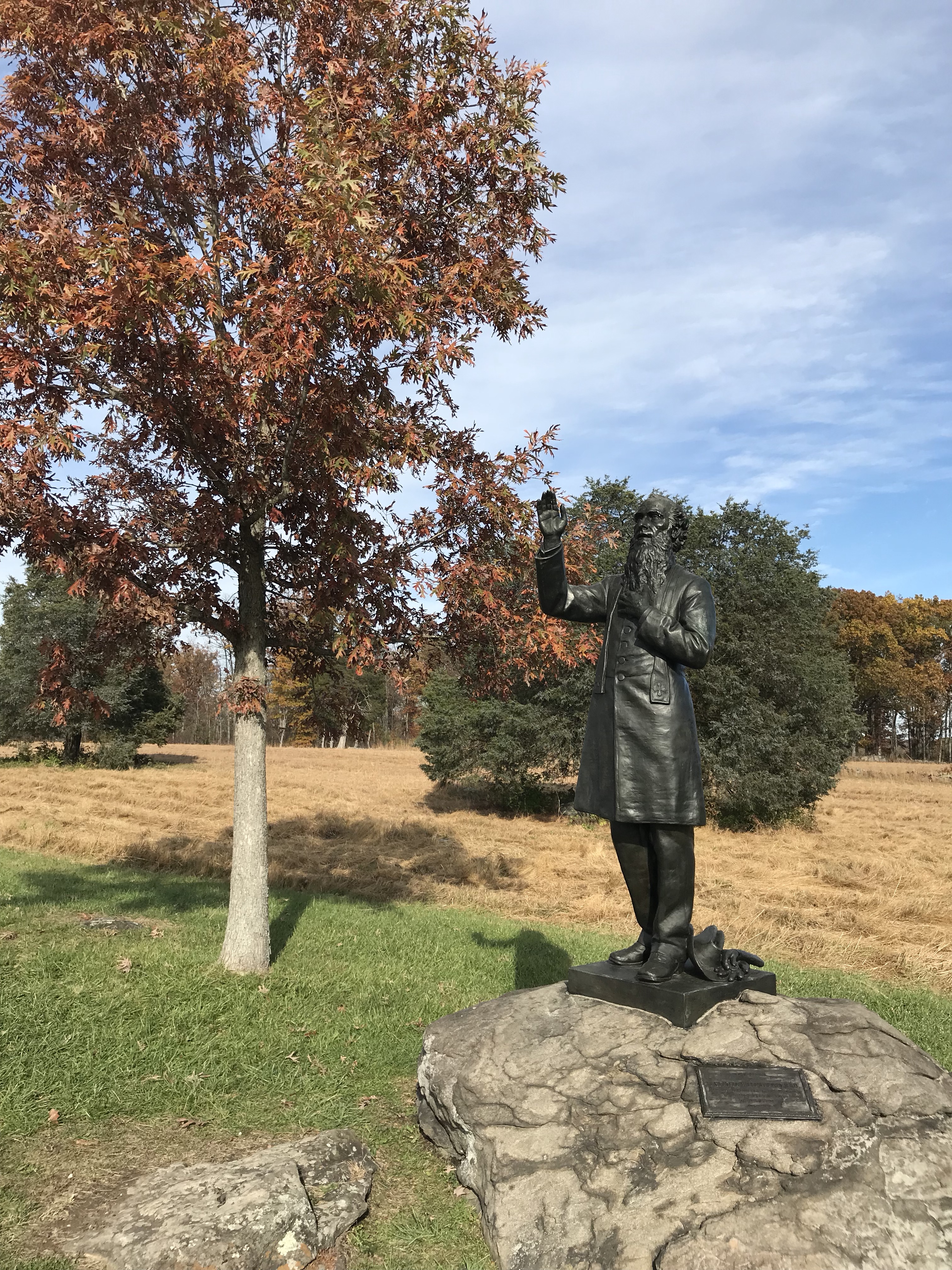
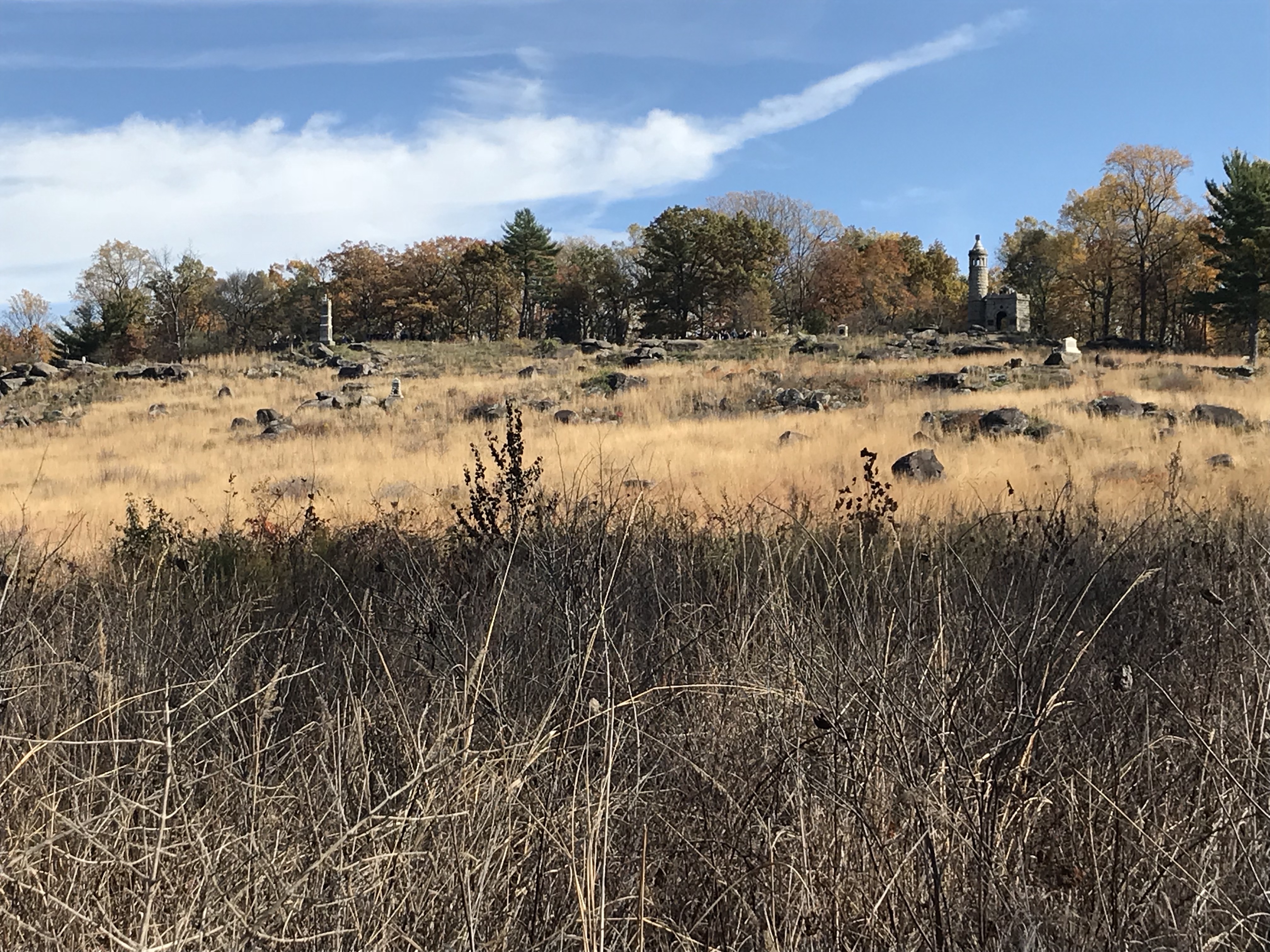
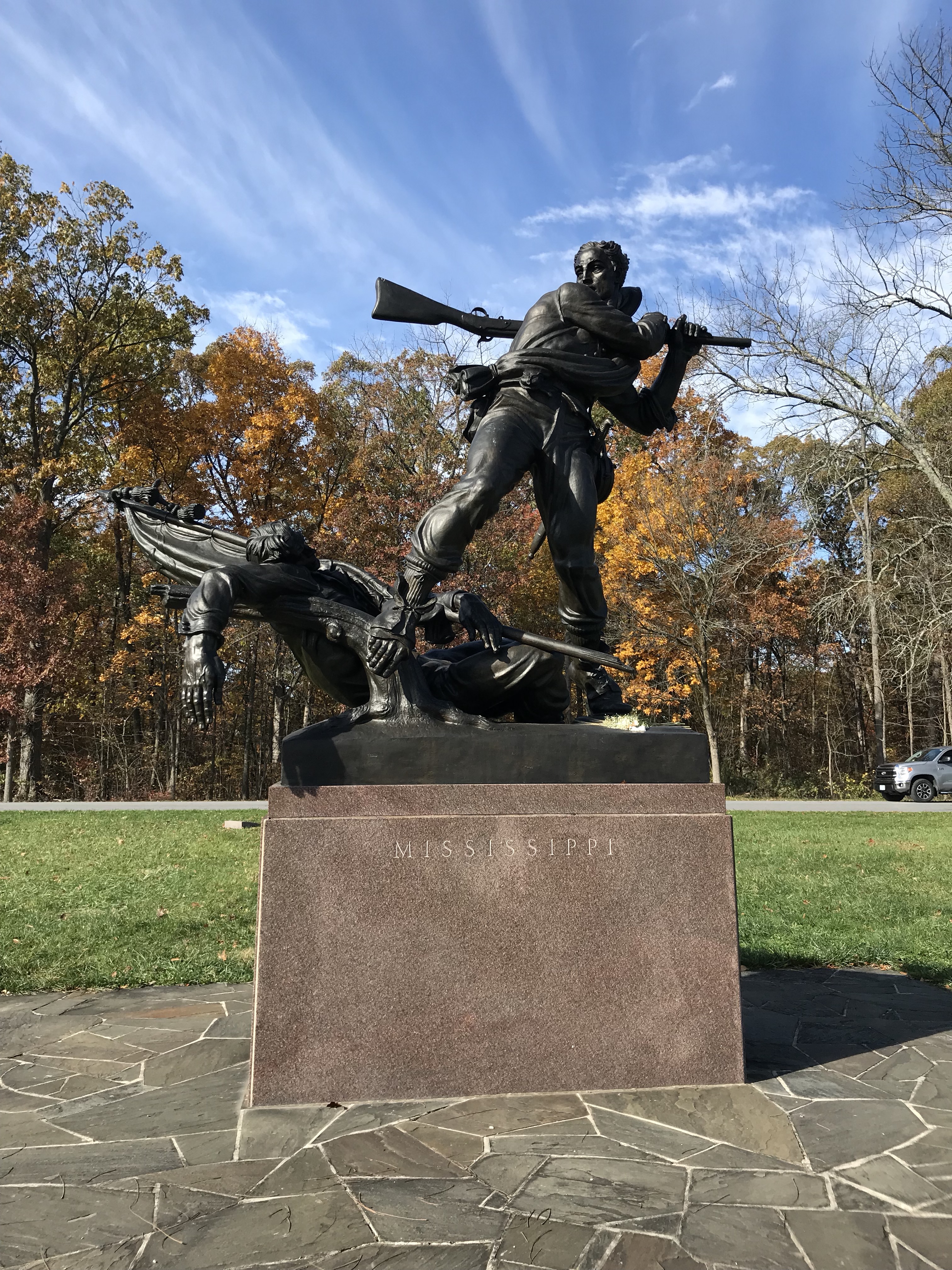
Monument to the 11th Mississippi on Seminary Ridge, Gettysburg 

Friends of Padre Steve’s World,

Today I drove home from Gettysburg after walking as an infantryman would have the battlefield in order to better get a feel for what the soldiers of both sides experienced. Over the two days I was there I walked almost 32 miles including walking across some of the most rugged terrain of the battle which gave me a far greater appreciation for the toughness, valor, and courage shown by the men of John Bell Hood and Lafayette McLaws’s divisions of the Confederate First Corps. Most of those men had marched between seven and twenty miles to get to their attack positions in the hot and humid weather of July 2nd 1863. If they even had them their shoes and boots were of relatively poor quality. As I walked seven miles with my hiking books and carrying a modern three day pack with about a 15 pound load I could only imagine the physical duress of those soldiers. To be sure I am 30 to 40 years older than most of those infantrymen, but still they had all marched between 200 to 300 miles before they even arrived at Gettysburg.

The physical stamina required of soldiers at war is something that most people today cannot imagine. Not only have most never served in the military but far fewer have served in combat. I have, but I didn’t have to walk everywhere like these soldiers did, and while I came under enemy fire I never had to charge up a rugged hill under rifle and artillery fire as did the men of Robertson, Benning, and Laws brigades did at Little Round Top on July 2nd 1863, nor did I have to fight outnumbered in an exposed position as did the men of the Union Eleventh Corps north of town on July First 1863.

I have always been able to admire the courage of any soldiers who fight in desperate battles, even those who fight for unjust causes. While I consider my service in Iraq to been the high point of my military career, I have come to see it as an unjust, and illegal war of aggression that under the Nuremberg codes could easily been declared an unjust war of aggression in which our political and military leaders could have been tried and found guilty as were men like Herman Goering, Alfred Jodl, Wilhelm Keitel, and Albert Speer.

Thus while I absolutely condemn the cause that the Confederate soldiers fought for I still admire their battlefield courage and toughness. Likewise I do not glorify their senior leaders including men like Robert E. Lee. I will write about him in a future article, maybe as soon as this week. Since I have the beginning of a draft article I should go back and finish it, but tonight I will only say that Lee was not that great of Commander and his battlefield decisions cost the lives of far too many Southern men, including those he had summarily shot for desertion after the war was irrevocably lost in the Fall and Winter of 1864 and 1865 many of who, having served two to three years in continuous combats were only trying to go home to their families who had lost all when William Tecumseh Sherman’s army cut its way through the heartland of Georgia and the Carolinas. I think that is one of the reasons that I find the monuments to Confederate leaders so despicable, these men cared nothing for the soldiers who sacrificed all in a morally wrong cause. I completely agree with Ulysses S. Grant who wrote of the vast majority of Confederate soldiers:

“The great bulk of the legal voters of the South were men who owned no slaves; their homes were generally in the hills and poor country; their facilities for educating their children, even up to the point of reading and writing, were very limited; their interest in the contest was very meagre–what there was, if they had been capable of seeing it, was with the North; they too needed emancipation.”

Speaking of monuments I write about the Confederate monuments at Gettysburg another time. Compared to the Union monuments they are few, and only two,that of the 11th Mississippi, and the 3rd Arkansas on Seminary Ridge are actually dedicated to specific units, the others are quite generic and convey mixed political and ideological messages which often demean the sacrifice of their soldiers who died on that battlefield. Once again I will defer writing about those messages until later, but as I walked Seminary Ridge and read each one I was stuck with the stories that each monument told.

So anyway, tomorrow begins a short work week for the Veteran’s Day holiday, a day where we honor all who served our country in peace and war. I usually get a bit melancholy over this weekend as I think about my friends and comrades that I served with over the course of my thirty-six year career in the Army and Navy.

So until tomorrow,

Peace,

Padre Steve+

1 Comment

Filed under civil war, History, Military, Political Commentary

Talking About Bad Ground: Walking the Gettysburg Battlefield, Devil’s Den, Little Round Top, the Wheat Field and more…


Friends of Padre Steve’s World,

Yesterday I wrote about my walk around the areas of the Battle of Gettysburg which transpired on the afternoon of July 1st 1863. Today was my crack at doing my best to experience walking the areas of the battlefield that were contested on July 2nd 1863 when Robert E. Lee ordered James Longstreet to assault the Federal left on the basis of Dick Ewell and Jubal Early’s intransigence in ordering a follow up assault on the Federal right, coupled with inaccurate information Lee had about where the end of the Federal line was. The result was the attacks by Longstreet’s divisions which came perilously close to succeeding but which after some of the bloodiest fighting during any three and a half hour period of the war were repulsed by Union troops the Third, Second, and Fifth Corps.
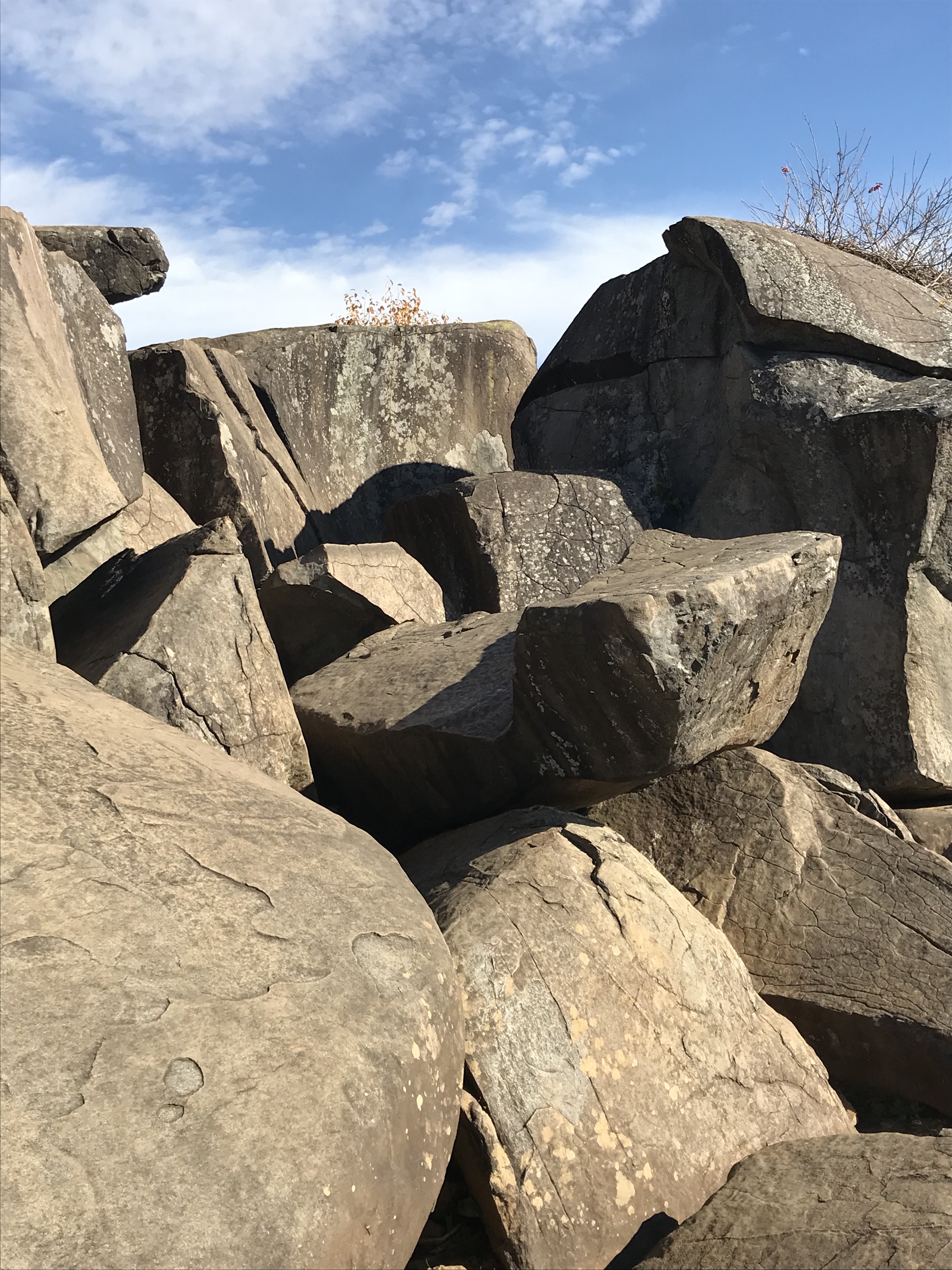

The engagements of that afternoon and evening are etched in our national conscience. Devil’s Den, Little around Top, the Bloody Wheat Field, and the Peach Orchard, not to mention the fights along Rose’s Woods, the Stoney Ridge, Trostle Farm, and Plum Run are each microcosms of the battle, each with heroes, villains, and tactical geniuses and idiots. But my purpose tonight is not to dissect those battles, I am doing that in a text about the Battle of Gettysburg. Instead it is to reflect upon military history and what the men who fought the battle endured.
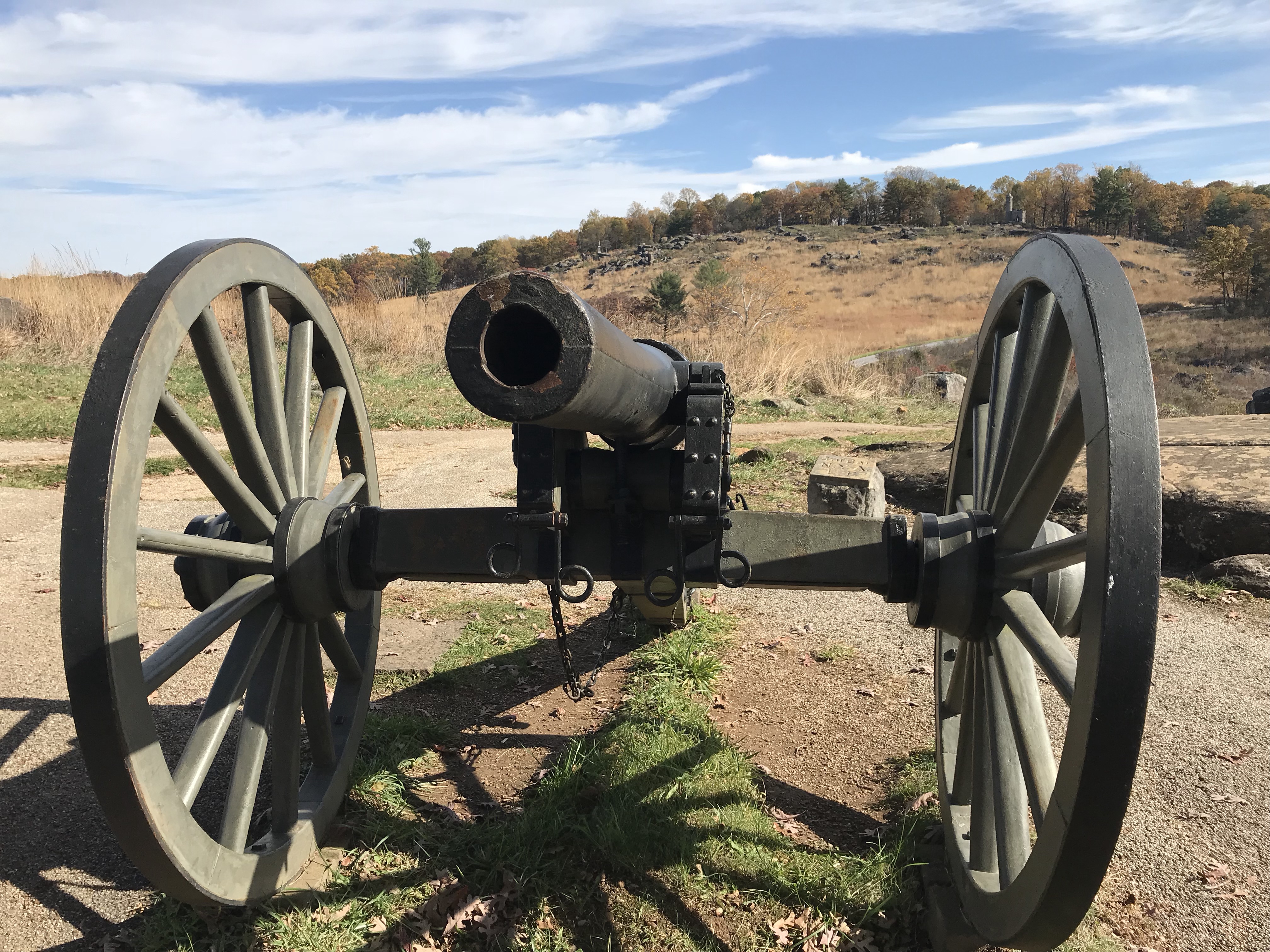
If you want to understand military history and want to do so without having actually been to war or having taken the time to try to see and walk the ground the soldiers trod firsthand make a critical mistake, especially in campaigns where the soldiers had to walk into combat. As Guy Sager, who endured the Russian Front as an infantryman in the Second World War wrote in his book The Forgotten Soldier:

“Too many people learn about war with no inconvenience to themselves. They read about Verdun or Stalingrad without comprehension, sitting in a comfortable armchair, with their feet beside the fire, preparing to go about their business the next day, as usual…One should read about war standing up, late at night, when one is tired, as I am writing about it now, at dawn, while my asthma attack wears off. And even now, in my sleepless exhaustion, how gentle and easy peace seems!”


Like yesterday I walked. I left my car at my hotel and put on my boots and my three-day pack from Iraq. I ate a biscuit with a little bit of gravy, and had a small cup of coffee at the hotel before I set off. Since the hotel didn’t serve hardtack it was the closest I could get to a Civil War breakfast. From the hotel it is about a two mile walk to get to General Lee’s HQ on Seminary Ridge. Since Longstreet’s advanced elements were about that far back from Lee’s HQ on that morning I thought that it would approximate the march of some of his troops while understanding that some of his Corps had to march far more just to get there before beginning their movement to the south part of the battlefield.
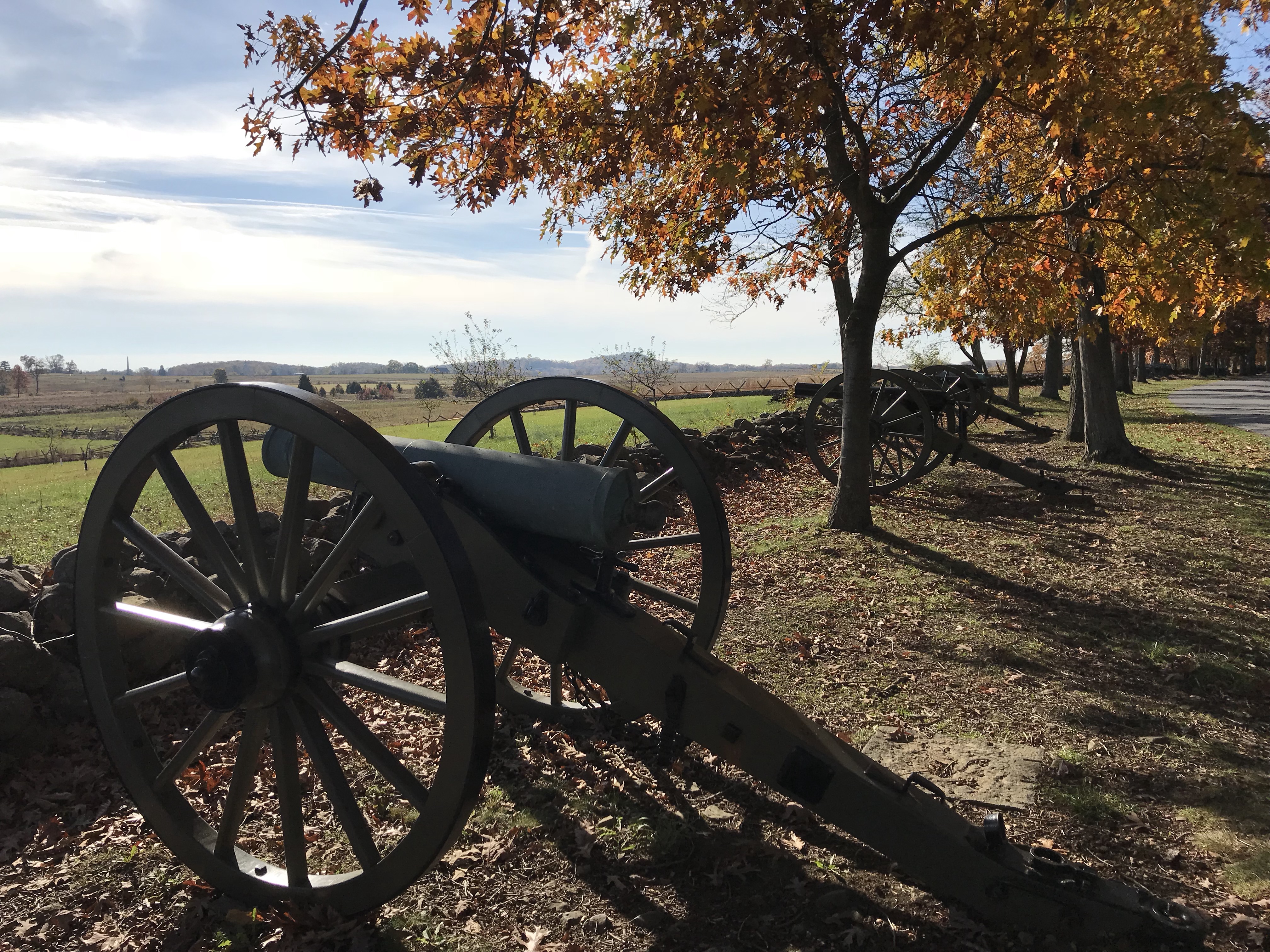
Upon reaching Seminary Ridge I began walking down what would have been the areas occupied by A.P. Hill’s Third Corps that Longstreet’s troops would have passed as they moved south. The distance that they covered was about five miles as the crow flies, but due to bad staff work and coordination most of the men of John Bell Hood and Lafayette McLaws divisions had to go further just to get to their start point for the attack. In the case of Evander Law’s brigade of Hood’s division which had the mission of being the furthest south of the attacking Confederates, they had marched over twenty miles before beginning their attack on Little Round Top. When I reached the area that they did I had only walked about seven and a half miles as opposed to the men of Evander Law’s brigade who had marched over twenty miles to get into their attack positions, but as a mater of fact they were almost all a couple of decades or more younger than me.
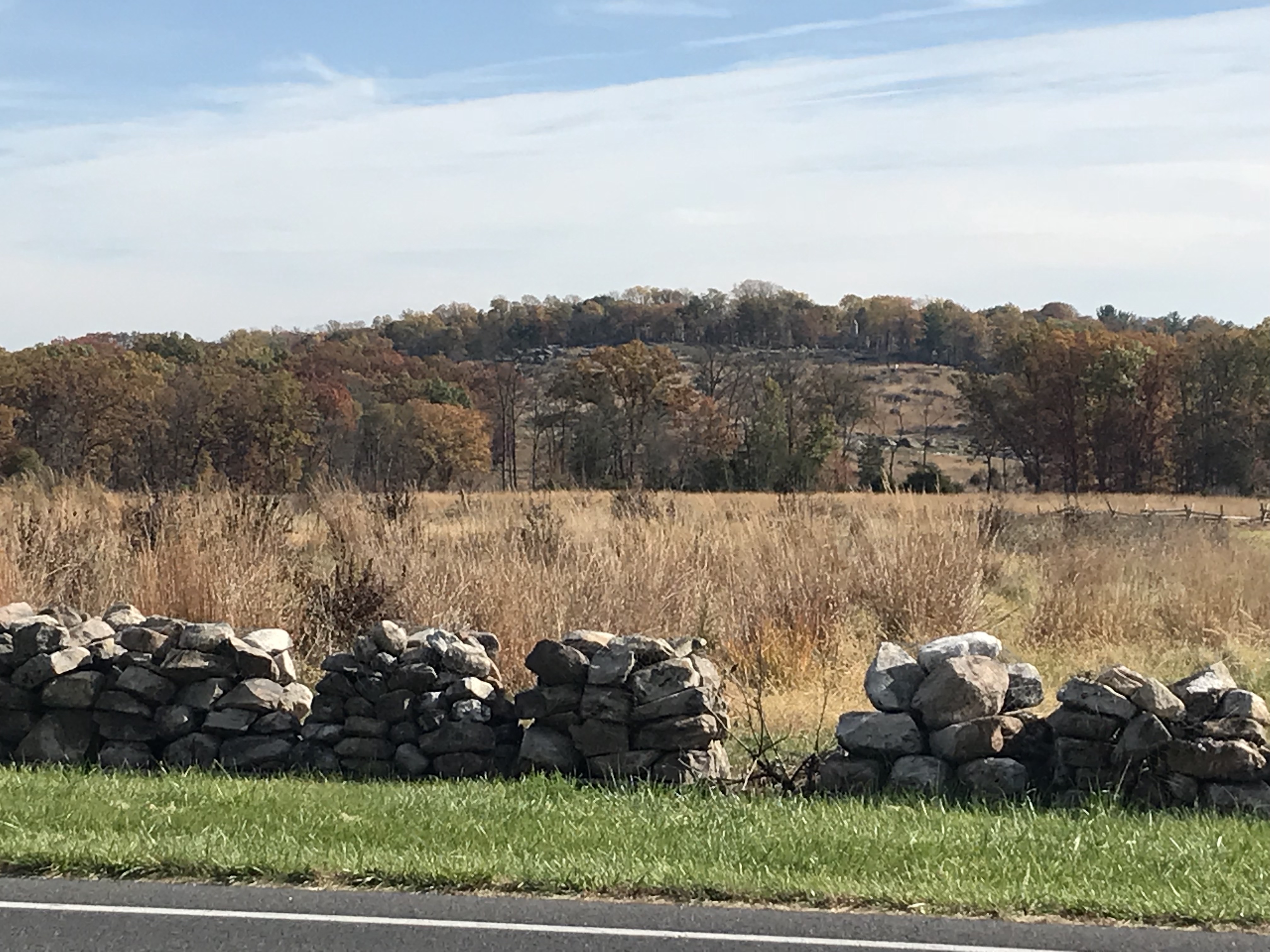

When I got to the point of the Confederate attack I walked a path that intersected with the soldiers of Law’s brigade and Robertson’s Texas brigade, both of Hood’s division. Hood had vigorously protested the attack to Longstreet due to the bad ground that his troops would have to traverse to reach their objectives. As I wrote in my draft book on the battle:

Hood was never one to hesitate to attack, but when he saw the situation that faced First Corps, he objected to the attack. “For the first time in his army career Hood suggested a change of orders to his commanding general,” and pleaded with Longstreet to change it. “From his own observations and those of his scouts he concluded that the attack would be futile and result in wanton wage of life.” The fierce Texan “recognized that the battle order, written more than two miles away on mistaken information…did not fit existing conditions.” His objections included the rocky terrain which he believed would break up his battle formations, as well as “the concave character of the enemy’s line from the north end of Cemetery Ridge to Big Round Top would expose his division to a “destructive fire in flank and rear, as well as in front” if his men attacked it obliquely.” He told Longstreet that it was “unwise to attack up the Emmitsburg Road, as ordered” and requested that he be allowed to “turn Round Top and attack the enemy flank and rear.

Meanwhile, the debate between Longstreet and Hood continued as Hood objected and Longstreet reiterated Lee’s insistence on the planned attack. McLaws noted that Hood “found that the enemy were strongly posted on two rocky hills, with artillery and infantry…” and he pleaded for freedom of maneuver. He believed that an attack up the rocky hills was doomed and later noted “it seemed to me that the enemy occupied a position so strong- I may say impregnable – that independently of their flank fire, they could easily repulse our attack by merely throwing or rolling stones down the mountainside as we approached.”

One can look at the ground and one can study it on maps, but until you walk that bad ground, even without doing it while subjected to enemy fire you won’t understand how bad it is. I made my way down a walking path and then tried to move off of it in order to get to Devil’s Den. It was awful, reeds, thrushes, a stream, boulders, and heavy brush prevented me from moving forward. So I went back, followed a trail to Big Round Top and then headed over to Devil’s Den. General Hood was right, the ground to use the words that he spoke to Longstreet after he was wounded “it was the worst ground I ever saw” is not an exaggeration. But the diversion allowed me to find the part of the battle where Brigadier General Elon Farnsworth, after having unsuccessfully resisted orders from Brigadier General Judson Kilpatrick was forced to attack the well dug in Confederate infantry of Lafayette McLaw’s division on July 3rd.
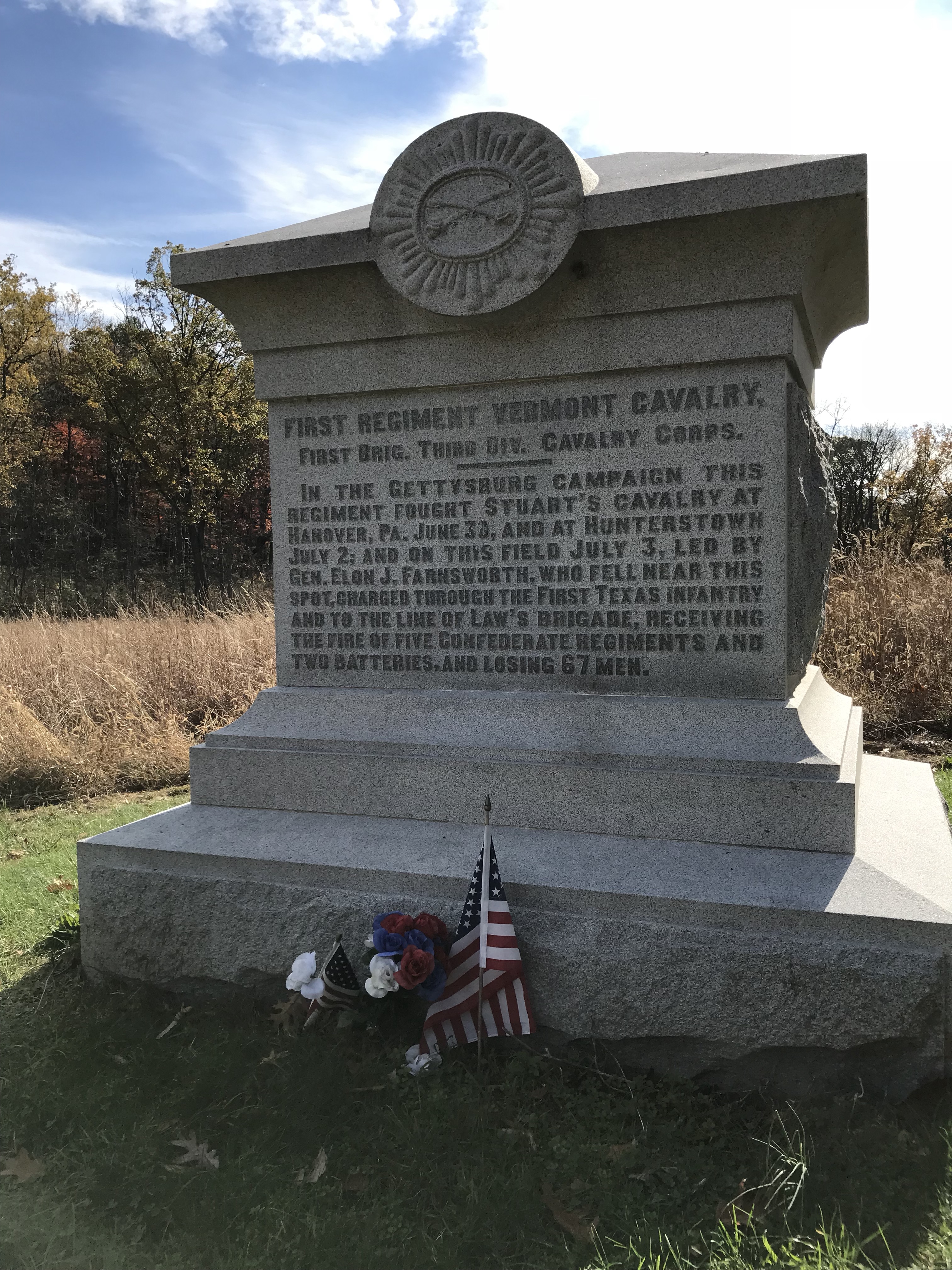

From Devil’s Den I worked my way to Little Round Top. Most of the front slope is inaccessible due to the National Park Service doing a reclamation project, but there is a trail that leads up to it that many of the Confederates would have used. It was steep, and the ground was rugged. By the time I reached the top near the New York Monument I was exhausted. Despite having been in combat and being shot at I cannot imagine how the Confederate soldiers threw themselves up that hill facing small arms and artillery fire at point blank range. Their cause may have been wrong but they were valiant and tough soldiers. The fact that I am 30 to 40 years older than most of them is irrelevant, that ground was a bitch.
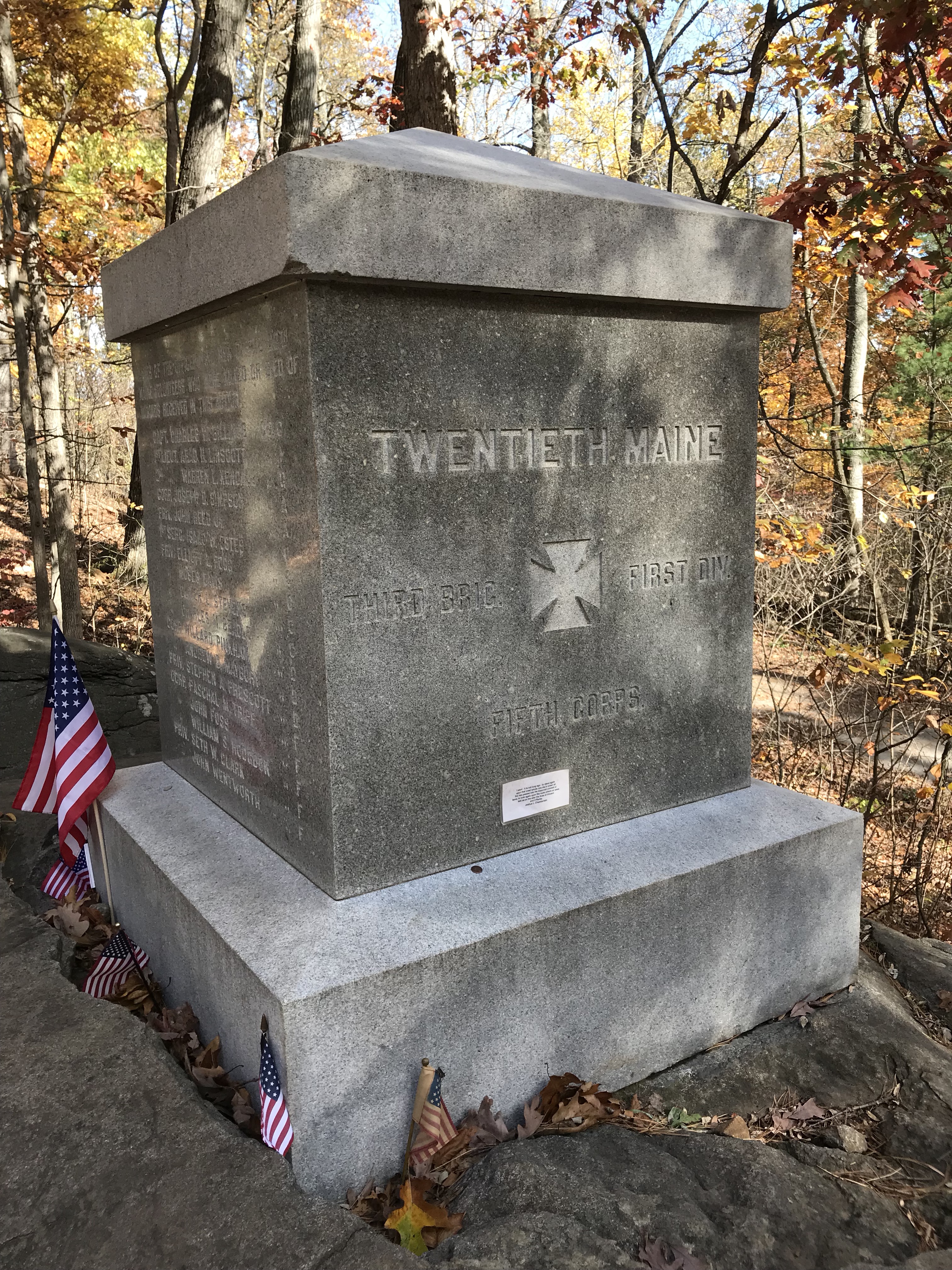

After that I went back over to the part of the battlefield occupied by the famous 20th Maine Infantry under the command of Colonel Joshua Chamberlain, and then followed their counter-attack down the hill. From there I went back across the rear slope of Devil’s Den to Houck’s Ridge where heavily outnumbered Union Regulars held their own against Hood and McLaw’s soldiers. From there I went over to the Bloody Wheat Field. Like the Bloody Corn Field at Antietam this was a killing ground which exchanged hands several times during the battle, about 30% of the 20,000 or so soldiers engaged there became casualties. When on looks it the field it is hard to imagine that so many men were killed and wounded in such a short amount of time. Walking across the ground I could not help thinking about the thousands of souls who suffered and died there.
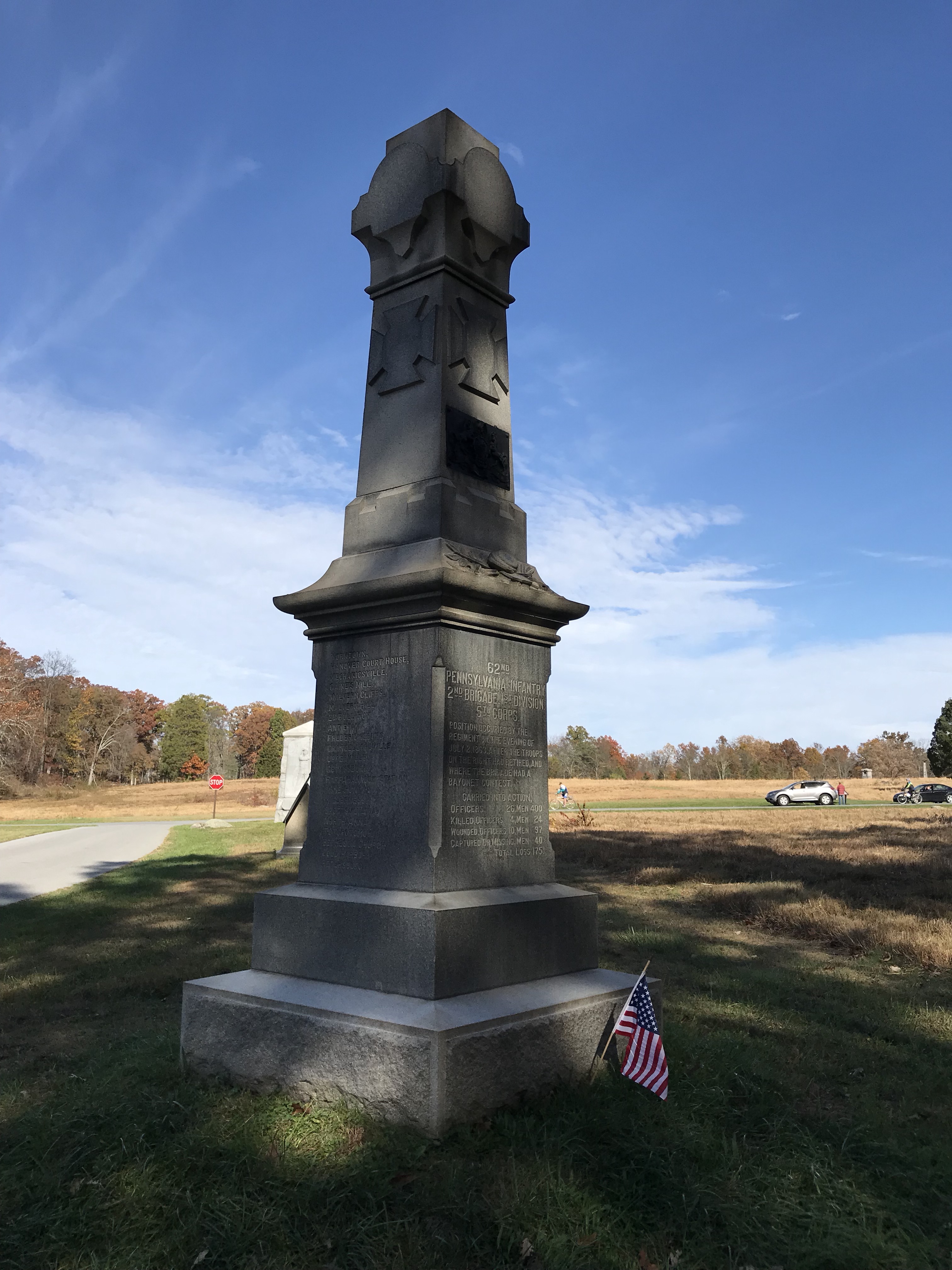

From there I continued through Rose’s Woods and the Stoney Ridge where still more Union and Confederate soldiers fell in desperate fights before walking back west to the Peach Orchard. This was another bloody contest in which General Dan Sickles of the Union Third Corps surprised both the Confederates and his own Commander, General George Meade by moving his corps into an exposed position. The battle there cost many lives and apologists for Sickles, Meade, and the Confederates have used for their own benefit. Sickles is claimed to have nearly lost the battle for the Union, but Longstreet said that his movement and defense of the Peach Orchard was key to the Union victory. Again my purpose in this article is not to take a side in that controversy but to imagine the carnage of the battlefield as well as the bravery of the soldiers on it. It is hard to imagine being a Third Corps Soldier at the Peach Orchard as Confederate artilleryman Porter Alexander’s guns swept their positions, nor being one of McLaw’s infantrymen who were being slaughtered by the experienced Union artillerymen of Third Corps and the Artillery Reserve.


By the time I got to the Peach Orchard I was hungry, thirsty, exhausted, and my feet were hurting. I had a choice. I could simply walk up the Emmitsburg Road and head back to the hotel or I could continue to follow the route of the Confederate advance spearheaded by General Barksdale’s brigade. I went back across Excelsior Field and to the Trostle Farm where Sickles fell wounded, before crossing Plum Run and heading up Cemetery Ridge where the Confederate advance was halted. I then walked back to the hotel via Cemetery Ridge, the Taneytown Road and the Soldiers Cemetery, before making a brief stop on East Cemetery Hill.

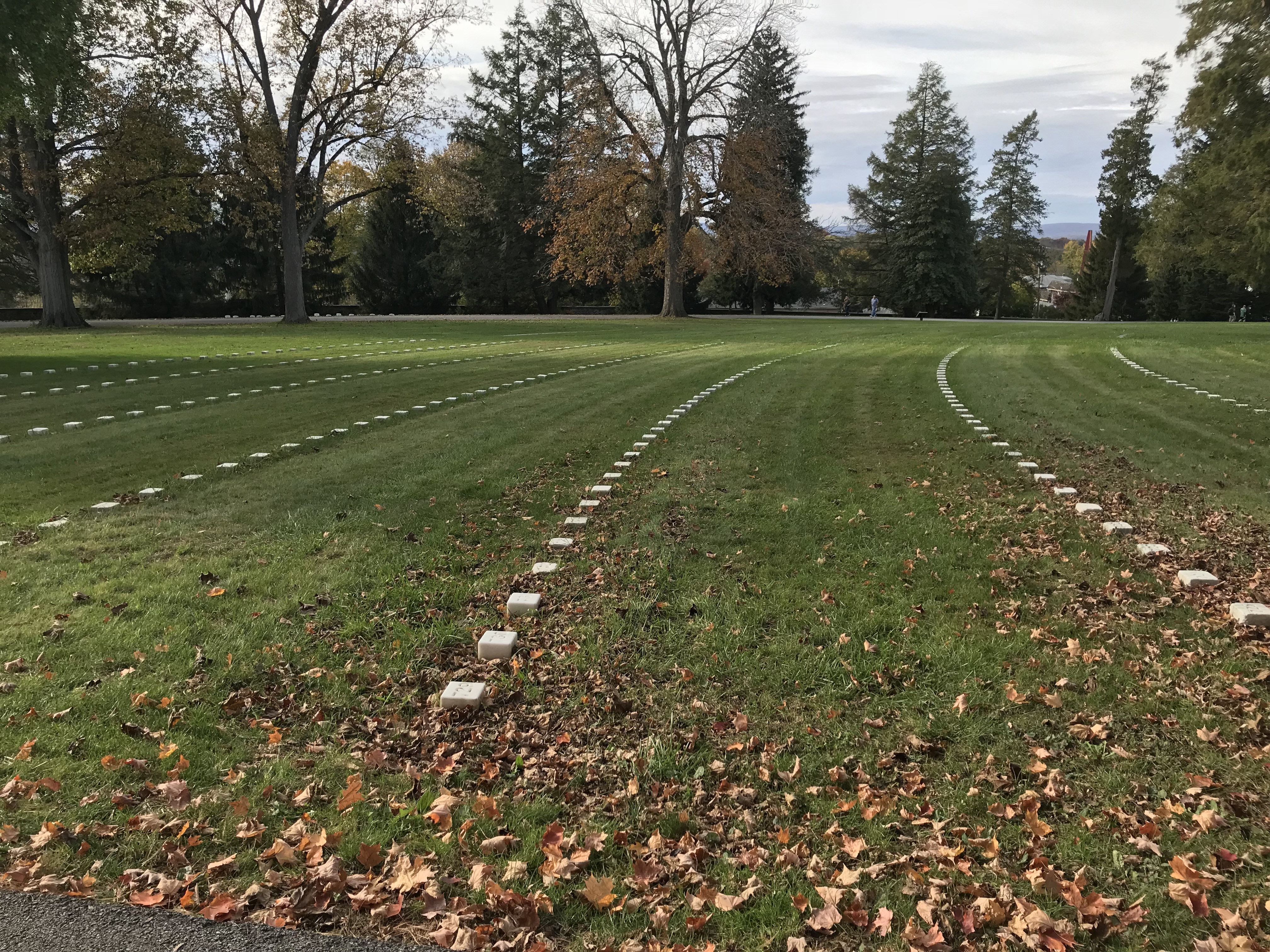
Since I was exhausted and darkness and rain were beginning to close in I decided not to do my walk around the Culp’s Hill battlefield. That will have to wait for another time. Since the rain is expected to continue into the morning and I hate getting wet I’ll put off my walk around Culp’s Hill until another time.

Tomorrow I will head home early to help Judy do some work around our house. My friend Bill who met me last night had take care of a business emergency call from one of his customers in the Shenandoah Valley this morning and since it’s just me I figure I can head back home. Lord willing there is always tomorrow right?


But as a closing commentary:

In the past couple of months I have walked nearly 50 miles across two of the nation’s bloodiest battlefields, Antietam and Gettysburg. Honestly I don’t know a lot of people in policy making positions who do things like that. The tragedy of the American Civil War and the nearly three quarters of a million soldiers of both sides who died during it seems to me to have been forgotten or relegated to the realm of myth by too many Americans, including the President and many of his advisers and supporters. If we forget the cost and meaning of the Civil War, the validation of the proposition of the Declaration of Independence that all men are created equal then we do a grave injustice to those who fell in that war, unless we want to support Confederate Vice President Alexander Stephens who said that slavery was the Cornerstone of the Confederate nation. The costs to our nation are too great to let the the lessons of our Civil War be relegated to myth or exploited to reimagine a recreated Confederacy dominating the rest of the country are too great to allow the President, who has called violent neo-Confederates and White Supremacists “very fine people” or to fail to resist theocratic people from imposing their religious beliefs on others as did the Southern clergy who helped break the bonds of the Union beginning in their own denominations in the 1840s.

Since I have now eaten and had a few beers  I will take my 57 year old body to bed and get ready to head home in the morning.

So until tomorrow,

Peace

Padre Steve+

2 Comments

Filed under civil war, Gettysburg, History, Military, Political Commentary

Walking the Good and Bad Ground at Gettysburg


Friends of Padre Steve’s World,

I’m in Gettysburg this weekend getting a chance to do some research and walking areas of the battlefield that I have stopped at but never fully explored on foot. Trust me, there is a difference when you actually walk the ground versus making stops and looking around.


I drove up this morning and thankfully traffic was light and there were no traffic jams at any point along the way which meant I made the trip in just a bit over four hours. When I got here I checked into my hotel, unloaded my stuff and set to work walking the route I had planned out. My hotel is right at the base of East Cemetery Hill where the Union troops rallied on the night of July 1st 1863. I decided that I would walk through the town and up to McPherson’s Ridge where John Buford’s cavalry and John Reynolds’s First Corps fought A.P. Hill’s Third Confederate Corps, before turning north past the unfinished Railroad Cut and Oak Ridge on my way to Oak Hill where Confederate General Robert Rhodes’ division of Dick Ewell’s Second Confederate Corps went into action.


Oak Hill is the site of the Eternal Peace Monument which was dedicated by President Franklin Delano Roosevelt in 1938 as a symbol of reconciliation between the North and South. It bears the words “Peace Eternal in a Nation United”. That was a mere seventy-nine years ago and my heart breaks when I see the same forces at work which tore apart the nation in the years before the Civil War, and sadly they are being stirred up by President Trump who more resembles the incompetence of James Buchanan coupled with the malevolence of Jefferson Davis than Abraham Lincoln, or the loyal opposition of Stephen Douglas.


As I looked out from that high ground I saw the beautiful Pennsylvania countryside still covered in Fall foliage with fields of Sorghum ready for harvest, and cornfields waiting to be plowed over for the next season. Directly in front of me was the ground that two of Rodes’s brigades, those of Alfred Iverson and Edward O’Neal, both incompetent pro-secession political generals sent their units into the attack leading to their slaughter. As I walked into the field where those soldiers fell I felt a certain amount of sadness for them. Yes, most of them made the choice to enlist in the Confederate cause, while others joined out of peer pressure, or others because they were drafted: but none signed up to be slaughtered at the hands of their incompetent commanders. One regiment, the 23rd North Carolina lost 89% of the men it took into battle in barely half an hour of combat. As I walked across that swale in front of Oak Ridge where the men of John Robinson’s division awaited them I was struck by the tragedy of men who went into battle for an unjust and unrighteous cause who fell in such large numbers on July 1st 1863. I wrote in the draft of my yet unpublished Gettysburg book:

When the Confederates got to about fifty yards of Baxter’s troops the commander of the 83rd New York, the Swiss born lieutenant Colonel Joseph A. Moesch shouted: “Up men, and fire.” Moesch rode behind his line cheering his men on, but they needed no urging. In the words of one of one, “The men are no longer human, they are demons; a curse from the living here, a moan from the dying there. ‘Give them — shouts one.’ See them run’ roars another.” The well concealed veterans of Baxter regiments slaughtered them as they had O’Neal’s men just minutes before. “One regiment went down in such a neat row that when its survivors waves shirt tails, or any piece of cloth remotely white, Iverson thought that the whole regiment of live men were surrendering.” As the Confederate attack collapsed some “of the regiments in Robinson’s division changed front again, charged, and captured nearly all the men who were left unhurt in three of Iverson’s regiments.” Official Confederate reports list only 308 missing but that number differs from the Union reports, Robinson reporting 1000 prisoners and three flags and Baxter’s brigade nearly 400. As Robinson’s troops smashed the brigades of O’Neal and Iverson, they were joined by the remnants of Cutler’s brigade which changed its face from west to north to deliver more devastating fire into the Confederates.


From there I went over to Oak Ridge and then made my way to Blocher’s Knoll, now know as Barlow’s Knoll. Once you leave Oak Ridge the ground to the east is flat and relatively devoid of any good defensive positions. The Union Eleventh Corps Commander, Major General Oliver O. Howard sent two of his understrength divisions under the command of Carl Schulz to link up with the right flank of Robinson’s division and extend the Federal line to prevent it from being flanked. Unfortunately, one of the division commanders, Francis Barlow decided to advance his division to Blocher’s Knoll which was a mile in front of where Schurz and Howard intended. Noticing what was going on Schurz ordered the other division under the command of Schimmelpfenning to extend its line to maintain contact with Barlow’s division. But there were not enough troops to fill the gap. The line was barely a skirmish line and with no good defensive ground it could do little to stop a determined Confederate attack. Which was exactly what occurred.


George Doles’s brigade of Rodes division, strongly supported by artillery attacked the thin blue line of Schimmelpfenning’s division just as Gordon and Hays Brigades of Jubal Early’s division enveloped Barlow’s terribly exposed division. The men of Barlow and Schimmelpfennig’s divisions made a spirited and fierce defense before they were overwhelmed and retreated to Gettysburg, some making a fighting retreat, others fleeing the Confederate advance, many were killed, wounded or captured. Barlow lay wounded and was given aid by John Gordon who later became a lifelong friend. Schimmelpfennig was rescued from certain capture by a woman in the town who allowed him to hide in a shed behind her home as the Confederates moved into the town.


The memorials to these forgotten and often slandered soldiers line the road from the Mummasburg Road to Barlow’s Knoll. They did fight hard as A private of the 61st Georgia Infantry of Gordon’s brigade noted that the XI Corps troops “stood firm until we got near them. Then they began to retreat in good order. They were harder to drive than we had known them before….Their officers were cheering their men and behaving like heroes and commanders of ‘the first water’”

The 157th New York, was order to help shore up the line. The regiment advanced and engaged in a furious twenty minute fight, continuing the battle “in Indian fashion” until Schurz ordered them to retreat. The gallant 157th sacrificed itself buying time for others to withdraw and left over 75 percent of its men on the battlefield, when the order came, “less than fifty of the 157th were able to rise out of the wheat and follow.” “So the horrible screaming, hurtling messengers of death flew over us from both sides,” recollected a New York soldier. “In such a storm it seemed a miracle that any were left alive.” Krzyzanowski described the scene as “a portrait of hell.”

When one walks that ground it is impossible how that any unit of similar size or composition could have held against the massive pincer attack of Doles’s brigade and Early’s division on Barlow’s exposed position.


As I walked back into town I could imagine the chaos of the retreating Union troops as well as the victorious Confederates as day turned into evening. The Union troops who escaped made their way to link up with Steinwehr’s division and the Eleventh Corps artillery which had been positioned on Cemetery Hill as well as the survivors of the Union First Corps which had fought the Confederate Third Corps to a standstill before being forced back due to weight of numbers. I finished my walk by going up to Cemetery Hill where with the sun beginning to go down I walked among the graves of the fallen Union soldiers and a monument to John Reynolds who fell on McPherson’s Ridge.

As I noted a couple of months ago when I described my walk at Antietam, there is something immensely valuable about walking these battlefields. First, one gets to experience the elements of weather, distance, and terrain which are helpful in understanding what it was like for the soldiers involved. Second, one can see the battle from the perspective of those soldiers, imagining what it would be like to be deal with being under fire on that ground. One understands what men like John Buford and John Reynolds meant when they said that certain terrain was “good ground.” You don’t understand that until you walk it.


I finished tonight with a friend who met me here going to a number of pubs and walking through the town. While walking I saw a number of the churches that served as field hospitals, including Christ Lutheran. The horror of those hospitals is unimaginable to most of us. I have worked in inner city trauma centers and been in field hospitals in Iraq with our wounded and nothing can really prepare you for the horror of blown up, destroyed, and burned bodies of still living men on a such a massive scale.

But what I have experienced pales in comparison to what occurred at Gettysburg and Antietam, and what will certainly happen if war breaks out on the Korean Peninsula. I have been in the military all my adult life and I dread what I see coming, but since I know that chances are that it will happen I prepare myself and the men and women who serve under me for it. Sadly, most people, even those who have experienced combat in our recent wars are capable of imagining the carnage and horror of the next war. As a historian and a chaplain who has seen combat and a lot of other violent death I can well imagine it and no I don’t sleep well with that knowledge, especially when I see our President rattling sabers so often with seemingly little concern for the men and women that he will be committing to combat. In light of how he has dealt with the deaths of U.S. military personnel since he has been in office, taking no responsibility for any of them, passing the responsibility to military leaders, I tremble at the thought of what his next tweet might bring, but I digress.

Anyway, tomorrow begins another day of exploring parts of the battlefield on foot. Today I walked just over thirteen miles. I think that tomorrow I may well exceed that. I will tell you about that walk tomorrow night.

Peace,

Padre Steve+

1 Comment

Filed under civil war, Gettysburg, History, leadership, Military

Some Civil War Reading for those Who Dare Question Trump, Kelly, and Sanders

Friends of Padre Steve’s World,

I am still appalled at the remarks made by President Trump’s Chief of Staff on Laura Ingraham’s Fox News propaganda broadcast the other night. In my view a man whose military career was marked by honorable service has destroyed his reputation over the past month in defending the indefensible words and actions of President Trump. In doing that he also went to where no knowledgeable person should go in his remarks about the Civil War and the traitorous Confederate General Robert E. Lee. According to Kelly the war was simply due to an inability to compromise, disregarding decades of compromise by slavery opponents beginning with the 3/5ths rule which allowed Slave States which had far fewer white citizens than Free States to count their slaves as 3/5ths of a person to increase their representation in the House of Representatives and many other compromises, all of which benefited slave owners, Slave States, and businesses in the South and North who all profited from slavery.

The fact that Kelly also defended Confederate General Robert E. Lee, a man whose life has been baptized in myth for a century and a half, and was backed up by Press Secretary Sarah Huckabee Sanders, and the previous words of the President who called the White Supremacists and Neo-Nazis whose march in Charlottesville resulted in the deaths of one counter-protester and two Virginia State Troopers “good people.”

Like General Kelly I am a military and combat veteran of over 30 years of service, and though I didn’t know him at the time our careers crossed paths in 2000-2001 in the Second Marine Division at Camp LeJeune North Carolina. That being said I have more post-graduate education than the retired General, I am a historian, and I also have completed the same level of Joint Professional Military Education as Kelly. In addition my first book, Mine Eyes Have Seen the Glory: Race, Religion, Ideology, and Politics in the Civil War Era, which hopefully will be published in the next year deals extensively with the subject of slavery and Southerner’s inability to compromise as the chief cause of the Civil War will show that I actually have the gravitas to tell the retired General, the Press Secretary, or the President, that on this subject they should not make idiots of themselves by spouting such moronic and historically unsupportable comments.

But I don’t want my readers to just take my word for it. Here is a reading list of reputable and non-politically ideological historians and their works which demonstrate my points. So here they are in no particular order:

Battlecry of Freedom by James McPherson which is the definite one volume treatment of the era. It is followed by Allen Guelzo’s Fateful Lightning: A New History of the Civil War, and David Goldfield’s America Aflame: How the Civil War Created a Nation. But there are more…

Eric Foner’s “Forever Free: The Story of Emancipation and Reconstruction”, David Blight’s Beyond the Battlefield: Race Memory, and the American Civil War, and Charles Lane’s The Day Freedom Died: The Colfax Massacre, the Supreme Court, and the Betrayal of Reconstruction are equally important in understanding how slavery and racism were paramount issues in what caused the conflict and the events following it. Of course one cannot forget the Autobiography of Frederick Douglass when contemplating the causes of the war in regards to race and slavery. Meanwhile Stephanie McCurry’s Confederate Reckoning: Power and Politics in the Civil War South helps readers to understand the domestic politics of the Confederacy. Likewise, Elizabeth Pryor’s Reading the Man: A Portrait of Robert E. Lee helps bust the myth of Lee using his own words.

But religion in the South had a profound impact on the war, principally because Southern religious leaders were in the forefront of the support of slavery and the push for secession, and Michael Snay’s Gospel of Disunion: Religion and Separatism in the Antebellum South is one of a number of books that demonstrate the importance that pro-slavery and pro-secession leaders ascribed to Religion and their view that God had ordained slavery and created blacks as less than human.

Less known stories are told by Brian Jordan in his book Marching Home: Union Veterans and their Unending Civil War, and Noah Andre Trudeau’s Like Men of War: Black Troops in the Civil War are especially important in light of the vast numbers of books that extol the Confederate Army and its soldiers.

If one wants to read collections of essays from individuals, politicians, and the press regarding the causes of the war and what happened afterward the must read collections include James Lowen’s The Confederate and Neo-Confederate Reader: The “Great Truth” about the “Lost Cause”, William Gienapp’s The Civil War and Reconstruction: A Documentary Collection and the New York Times collection Disunion: Modern Historians Revisit and Reconsider the Civil War From Lincoln’s Election to the Emancipation Proclamation.

I could recommend quite a few more books and collections but I think this is enough for now. Reading books like these helps to discourage ignorance and makes one accountable for what they say about history, especially when people like Kelly, Sanders, and Trump, try to misuse it as a weapon to advance falsehoods and buttress unconscionable and unconstitutional ideas. I do have a draft of an article about Robert E. Lee that I will do some more work with before I publish it here, but honestly, the man is not one that any officer should aspire to be like, despite the myth that surrounds him.

Until tomorrow when I hope to be writing about what has been a great World Series I wish you a great night and day.

Peace,

Padre Steve+

12 Comments

Filed under civil war, History, News and current events, Political Commentary

Tarnished Stars

Friends of Padre Steve’s World,

I was disappointed but not surprised when I read President Trump’s Chief of Staff, retired Marine Corps General John Kelly turn to false narratives of the American Civil War in an interview Fox New’s Femme Ideologue Laura Ingraham. Kelly described Robert E. Lee as an honorable man and said that the war was caused by a lack of compromise. Kelly’s description of both is mind boggling to me as a historian in 2017 because the narrative that he evoked was that of Jim Crow, the noble south, and Confederate revisionist history that began in the years after the war and became for many people the truth about the the war, its causes, and the men who led the Confederate armies in a war that was based on the expansion of slavery and the rejection of decades of compromise in which the Free States continuously surrendered their rights and freedoms to Slave Power.

Kelly’s comments surprised many military men, especially those who have some actual advanced education in history, as well as respected historians of the period who are not political ideologues. I fit in both categories. I am a career military officer and I am a historian. My first book, which hopefully will be published sometime next year, Mine Eyes Have Seen the Glory: Race, Religion, Ideology, and Politics in the Civil War Era, deals extensively with the subject. I found Kelly’s comments coupled with his continued refusal to apologize to a Gold Star Mother, and a Congresswoman who he lied about completely dishonorable and actions which stained his honor as a Marine. I can only imagine what Smedley Butler would say to Kelly, and based on what Butler said in his book War is a Racket I cannot imagine them being sympathetic to Kelly. Butler wrote:

“I spent thirty-three years and four months in active military service as a member of this country’s most agile military force, the Marine Corps. I served in all commissioned ranks from Second Lieutenant to Major-General. And during that period, I spent most of my time being a high class muscle-man for Big Business, for Wall Street and for the Bankers. In short, I was a racketeer, a gangster for capitalism.”

In his defense of President Trump as well as his apology for the traitorous General Lee and the Southern Confederacy which valued slavery and race supremacy over the Union Kelly lost every bit of respect that I had given him. He has surrendered his honor to be a partisan hack for a politician who has shown no respect to the Constitution, the rule of law, or our form of government. Kelly may end up becoming, to paraphrase the words of Butler, a gangster for Trump. When I think of that my heart sinks, and I wonder why more officers cannot heed the words of Butler, or German General Ludwig Beck who said in opposing Hitler:

“It is a lack of character and insight, when a soldier in high command sees his duty and mission only in the context of his military orders without realizing that the highest responsibility is to the people of his country.”

I sign off tonight shaking my head sadly thinking about how John Kelly has forever tarnished his reputation, and if he continues down this path may help destroy the Constitution that with every promotion he has sworn to support and defend.

Peace

Padre Steve+

4 Comments

Filed under civil war, History, Military, News and current events, Political Commentary

Character and Leadership: Kaiser Wilhelm II and President Trump

Friends of Padre Steve’s World,

Theodore Roosevelt noted: “Character, in the long run, is the decisive factor in the life of an individual and of nations alike.”

As the dual crises of indictments and potential nuclear war swirl around the White House I think that it is important to see the President’s words and actions in light of a number of factors. One of those, as Theodore Roosevelt noted is character. Thus it is important to know how the character other leaders at other times influenced how they treated people, reacted to criticism, and led their nations.

In the American experience one is hard pressed to find a President with a similar temperament and character that corresponds to Donald Trump. Yes, Nixon had some similarities, Jackson as well, but both men even at their worst did, at least in public restrain themselves and Nixon, when confronted with the reality of certain impeachment did the country a favor by resigning.

But that was a different time. There were leaders in the Republican Party who chose to honor the Constitution and their oaths over blind party loyalty or their determination to pass a certain legislative act. Their resistance to President Nixon was instrumental in his resignation in 1974. But there seem to be few current members of the GOP congressional delegations willing to stand either for fear of the Trump base, or blind determination to press on with tax cuts even if it means the sacrifice of the Constitution, nuclear war, or their own integrity.

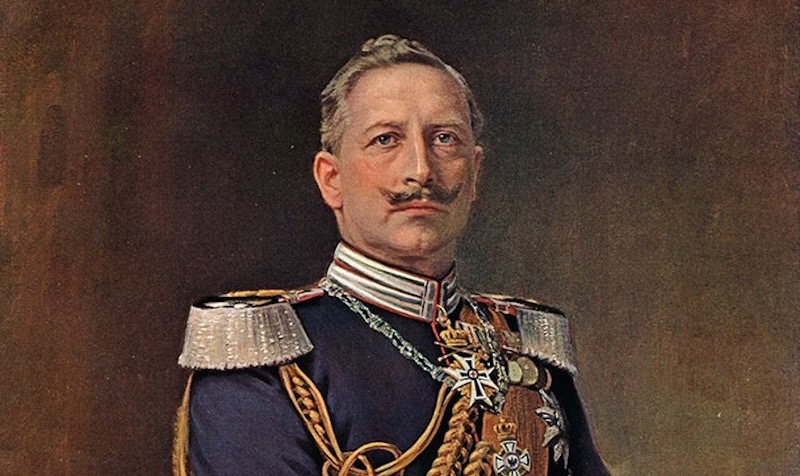
But I do think that there is a leader who in temperament was much like President Trump, who ended up helping to lead his nation and the world to the abyss of World War. That is not Adolf Hitler who many people often compare the President. I think that Trump’s authoritarian tendencies and his reliance on his radicalized base, including armed mobs in the street, and hyper-partisan allies in the right wing media, especially Fox News and Rupert Murdoch’s NewsCorp which serves as his de-facto state media are similar, but they do not speak to the President’s unstable, narcissistic, and paranoid behaviors. I think that the better comparison is to Kaiser Wilhelm II of Germany with whom the President seems to share many similarities.

In his book The Sleepwalkers: How Europe Went to War in 1914, Christopher Clark wrote of Wilhelm in words that are strikingly reminiscent of the President.

“It was one of this Kaiser’s many peculiarities that he was completely unable to calibrate his behaviour to the contexts in which his high office obliged him to operate. Too often he spoke not like a monarch, but like an over-excited teenager giving free rein to his current preoccupations.

‘I am the sole master of German policy,’ he remarked in a letter to the Prince of Wales (the future Edward VII), ‘and my country must follow me wherever I go”

“Wilhelm frequently –especially in the early years of his reign –bypassed his responsible ministers by consulting with ‘favourites’, encouraged factional strife in order to undermine the unity of government, and expounded views that had not been cleared with the relevant ministers or were at odds with the prevailing policy.

“It was in this last area –the unauthorized exposition of unsanctioned political views –that the Kaiser achieved the most hostile notice, both from contemporaries and from historians. There can be no doubt about the bizarre tone and content of many of the Kaiser’s personal communications in telegrams, letters, marginal comments, conversations, interviews and speeches on foreign and domestic political themes. Their exceptional volume alone is remarkable: the Kaiser spoke, wrote, telegraphed, scribbled and ranted more or less continuously during the thirty years of his reign, and a huge portion of these articulations was recorded and preserved for posterity…”

Max Hastings wrote that Wilhelm “was a brittle personality whose yearning for respect caused him to intersperse blandishments and threats in ill-judged succession.” Sean McMeekin in his book July 1914 wrote that Wilhelm had an “insecurity complex, a need for constant attention and acclaim. As one of his many critics put it, the kaiser needed to be “the stag at every hunt, the bride at every wedding, and the corpse at every funeral.” He also noted “Eager for praise, taking offense at the merest slight, the kaiser was a difficult man to work for. Bismarck had disdained to gratify Wilhelm II’s fragile ego after he became emperor in 1888, which led to his sacking two years later.”

Like President Trump the Kaiser did experience some push back from different governmental ministers, and was somewhat restrained during the month leading up to the war, but his constant belligerence, instability, and unscripted remarks helped set the diplomatic and governmental crisis that led to the war. Of course this was not his fault alone, the Austrian-Hungarians, Serbians, Russians, French, and British all had a hand, but the Kaiser, through his words and actions during the three decades preceding the war bears much responsibility for what happened in 1914. If the Kaiser had had a Twitter account he would have certainly used it in a similar manner to President Trump.

But Germany had no checks and balances to restrain Wilhelm. He was an absolute monarch. Americans do still have institutional checks and balances to Presidential overreach or abuses should we choose to follow the Constitution, but for that to happen the leadership of the Republican Party must also act, as did their predecessors during the Nixon administration to put principle or party, and rule of law over blind obedience. This is not about partisanship; it is about the Constitution, our form of government, and yes, even the prevention of nuclear war.

Character and temperament are very important in times of crisis and elevated tensions. Character is also fate. We should all tremble when we think of the lack of character and maturity shown by our President.

Until tomorrow,

Peace

Padre Steve+

5 Comments

Filed under History, national security, News and current events, Political Commentary

Here I Stand: The Reformation at 500 Years

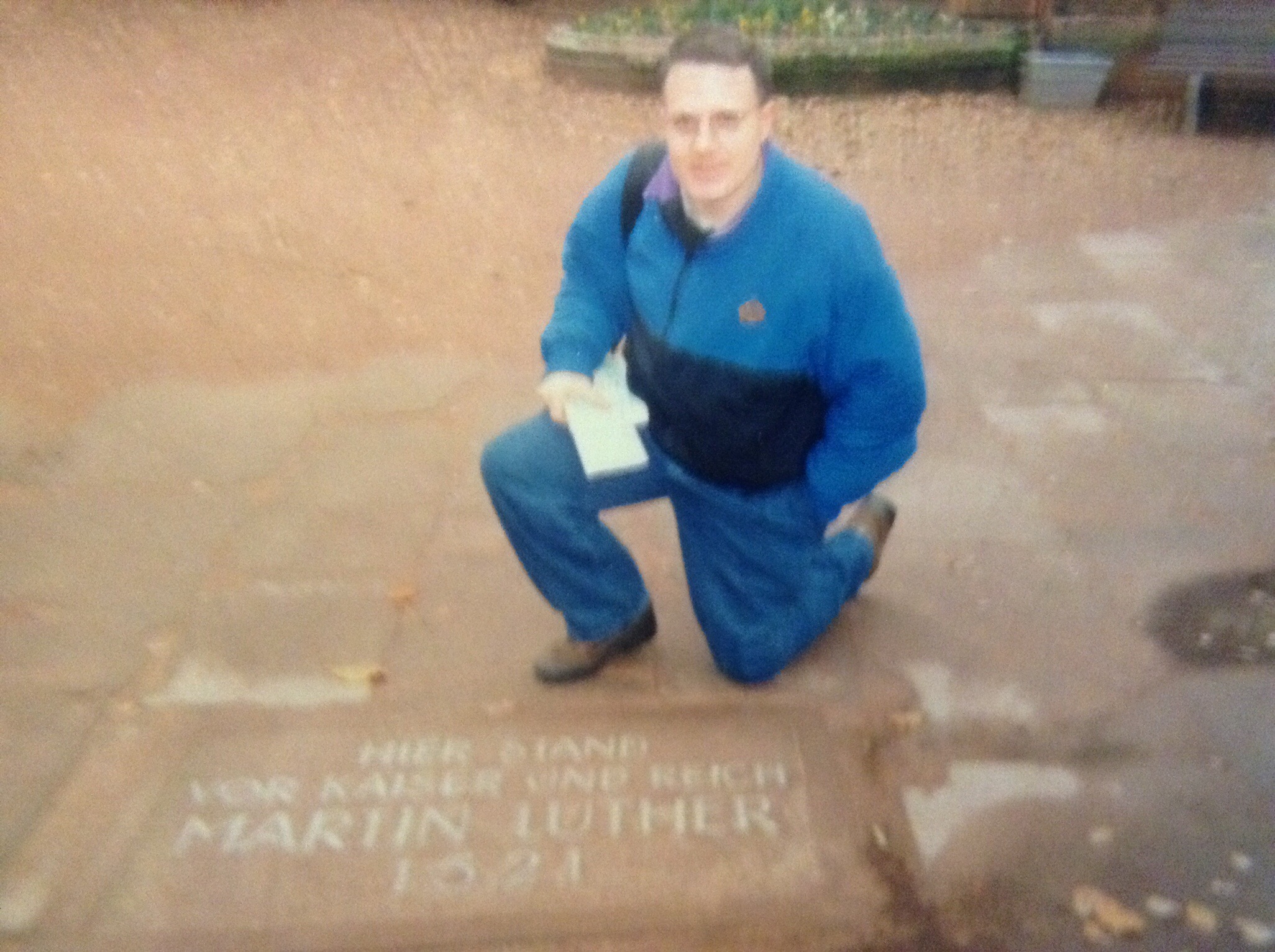
Me at the site where Martin Luther made his stand in 1996

Friends of Padre Steve’s World,

Today was Reformation Sunday, the Sunday where many Protestants celebrate Martin Luther’s posting of his 95 Theses on the door of the Wittenberg Schlosskirche on October 31st 1517.

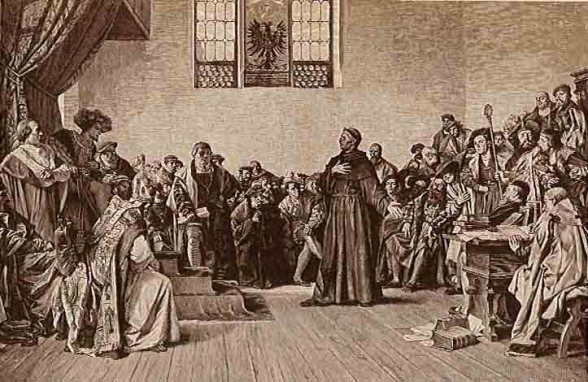
For me it is one of those weird times. I am not Protestant, though Martin Luther is one of my heroes, nor am I Roman Catholic. I am a priest in a small communion that is most like the Dutch Old Catholics and the Utrecht Union. I live in the uncomfortable middle between Roman Catholicism and Protestantism. Thus I have to make my way between a variety of types of Protestants and Roman Catholics in order to survive have a good deal of appreciation for the historic faith of the undivided Catholic Church before the Great Schism of 1054, and Martin Luther’s expression of Protestantism which culminated in his break with Rome and excommunication when he defended himself before the Holy Roman Emperor and the Papal legates at the Diet of Worms where when demanded to recant his views he said:

“Since your most serene majesty and your high mightinesses require of me a simple, clear and direct answer, I will give one, and it is this: I cannot submit my faith either to the pope or to the council, because it is as clear as noonday that they have fallen into error and even into glaring inconsistency with themselves. If, then, I am not convinced by proof from Holy Scripture, or by cogent reasons, if I am not satisfied by the very text I have cited, and if my judgment is not in this way brought into subjection to God’s word, I neither can nor will retract anything; for it cannot be either safe or honest for a Christian to speak against his conscience. Here I stand; I cannot do otherwise; God help me! Amen.

When I read Luther’s defense of his views before the princes and prelates at Worms in 1521 I still get a chill up my spine. It is hard to imagine anyone today daring to stand up to ruling powers unless they have the support of worldly powers greater than oppose.

What Luther did when he nailed his theses to the door of the Schlosskirche was to set into motion events that he could not dare to imagine. By kicking in the doors of the church to real dissent he opened the way to the secular and progressive views of the Enlightenment, without which there would have been no philosophical or political underpinning for the United States of America and the hallmark of our national ideal found in our Declaration of Independence which says “we hold these truth s to be self evident, that all men are created equal…”

Luther recovered the key to the Christian faith, that is faith in the Crucified God. As Lutheran theologian Juergen Moltmann wrote:

“When God becomes man in Jesus of Nazareth, he not only enters into the finitude of man, but in his death on the cross also enters into the situation of man’s godforsakenness. In Jesus he does not die the natural death of a finite being, but the violent death of the criminal on the cross, the death of complete abandonment by God. The suffering in the passion of Jesus is abandonment, rejection by God, his Father. God does not become a religion, so that man participates in him by corresponding religious thoughts and feelings. God does not become a law, so that man participates in him through obedience to a law. God does not become an ideal, so that man achieves community with him through constant striving. He humbles himself and takes upon himself the eternal death of the godless and the godforsaken, so that all the godless and the godforsaken can experience communion with him.”

Because of that we owe the flawed and often troubled monk and theologian from Wittenberg a debt of gratitude. As for me, I know that I do. I may not always be right, nor to I claim to be, but as a matter of faith and politics I have to say “here I stand.”

So until tomorrow,

Peace,

Padre Steve+

1 Comment

Filed under christian life, faith, Religion

Physical and Emotional Readiness

Friends of Padre Steve’s World,

This week I passed my Navy Physical Fitness Assessment, or PFA. I did my weigh in and met my Body Composition Assessment or BCA, having lost eleven pounds since my last weigh-in on April 18th (and 17 since Memorial Day). I also did a lot better on the Physical Readiness Test completing 73 sit-ups and 51-push-ups while doing well enough on the stationary bike to get an overall score of excellent. Since I am 57 and a half years old that made my week. A lot of my success has been a combination of doing a much better job of my diet as well as disciplining myself to walk or run as much as I can nearly every day. On a bad day I typically walk at least six miles and most days I shoot for nine to ten miles or more, sometimes in combat boots.

Since Memorial Day I now keep track of my steps, distance, time, calories burned, and sleep on a Garmin Vivofit 3 device. That device and the Garmin app for my iPhone allow me to track my fitness better than I have in years. I highly recommend to any of my readers who struggle with keeping track of their weight and physical fitness to get a similar device from either Garmin or Fitbit. They do not cost that much and at least for me they challenge me to achieve my daily and weekly goals far more than anything else I have used in my life.

Anyway. I have been extremely busy at work, and since I struggle with sleep due to a combination of PTSD night terrors and recently diagnosed sleep apnea for which I will be fitted with a CPAP machine next week I am very pleased with my weight loss and overall physical fitness.

In normal times simply doing this for health would be a good enough reason to try to stay in shape, but as a military man I know that it has to be about more than that.

The fact that I am 57 years old and am getting raw scores better than people younger than me on the Physical Readiness Test makes me quite happy. I try my best to neither look or act my age, and most of my sailors, as well as many other officers and chaplains are surprised to find out just how old I am. In fact I am the oldest active duty Navy member on my base.

There are a couple of reasons I work so hard at this: first, I need to for the sake of my health, and second, because I believe that the President is going to lead us into a terrible war and that I could well end up back in harms way. If I am correct and that happens I need to ensure that I am in the best physical shape possible and make sure that I have more physical endurance than I had during my last combat tour in Iraq in 2007-2008. I have served and trained on the Korean DMZ and I know that if war breaks out there it will be more terrible than anything seen since before I was born. Compared to it our wars in Vietnam and the Middle East will be child’s play and the cost in lives, and treasure will be appalling.

I have been to war and I hate war. I am scared to death of how cavalier President Trump seems about war when he engages in rhetorical games with the North Korean dictator Kim Jong Un. Likewise I am appalled to see how how unserious the majority of Americans are, including many in the military, about being prepared for the worst. I am and will always remain a critic of President Trump. I do not feel he has the moral character or emotion maturity to lead this country, but he is the President whether I like it or not. I could have retired from the military years ago, but I have felt that it was my place to continue to serve. I never anticipated a man like Donald Trump being President, but now I feel that I have to remain in order to care for my sailors, marines, soldiers, and airmen when the war breaks out. I see it coming and I hate it. There are times that I want to retire, sell everything and move to Germany to get out of Trump’s America and to the disaster that he is leading us, but When I think of those young men and women who will be going into harms way I know that I have to remain. If I remain I have to be both physically and emotionally ready for the coming war.

Lieutenant General Hal Moore who fought in the Second World War, Korea, and Vietnam wrote:

“There’s never been a noble war except in the history books and propaganda movies. It’s a bloody, dirty, cruel, costly mistake in almost every case, as it was in this war that would end so badly. But the young soldiers can be and often are noble, selfless, and honorable. They don’t fight for a flag or a president or mom and apple pie. When it comes down to it they fight and die for each other, and that is reason enough for them, and for me.”

I would like to be wrong about it, but as a historian I see war coming, probably sooner rather than later, and because of that I am doing all that I can to ensure that I can be there for those young men and women who will be on the front lines. If war does not come I lose nothing. I will be in great physical shape and that will help me emotionally as well. That being said I cannot shake the feeling that President Trump is leading us to a military disaster and that many Americans, military and civilians, not to mention Koreans, Japanese, Chines, and others will die in the war that he and Kim Jong Un will bring upon the world. Judy and I talk about this reality. Recently she asked me if I would resign my commission or retire if war came. I told her that I couldn’t because I care too much about those young men and women who don’t need cheerleading chaplains, but chaplains who will be there for them when all else fails. Of course she knew that.

Frankly, I really do want to be wrong about this, but I can see it coming as plainly as I can see anything.

So until tomorrow.

Peace,

Padre Steve+

1 Comment

Filed under History, Military

Corker, McCain, Flake, and Von Papen: A Reflection on Words Without Actions

Friends of Padre Steve’s World,

I have been listening to the words and watching the actions of Republicans who at one time or another have criticized or stood against the words and actions of President Trump. Likewise I have watched and listened for any pushback from military leaders at the actions of retired Marine Corps General John Kelly when like any hired partisan political hack he went to the defense of the President, and made false statements regarding a Democratic Congresswoman while pouring more gasoline on a fire that never should have been lit in the first place. As I have watched that spectacle I have been reminded of the words of one of my football coaches in high school who told me when I protested not getting playing time “your actions speak so loud I can hear a word you are saying.” He was talking about my performance in practice and his words helped me to set a new course for my life. I only wish that President Trump’s Republican critics would have gotten that message.

A number of Senators, Jeff Flake, Bob Corker, and John McCain, as well,as former President George Bush made sharp comments about the President’s actions, words, and his character, but were careful to avoid mentioning him by name. Corker was one of Trump’s earliest supporters but now has become one of the Presidents’s most stalwart critics. Senator Lindsey Graham, who has occasionally spoken out against certain policies of the President gave voice as to the real reason that congressional Republicans say little and do less to oppose the chaos of the administration, or President’s attacks on the Constitution, when he said that he wasn’t criticizing Trump because he was “working for tax cuts.”

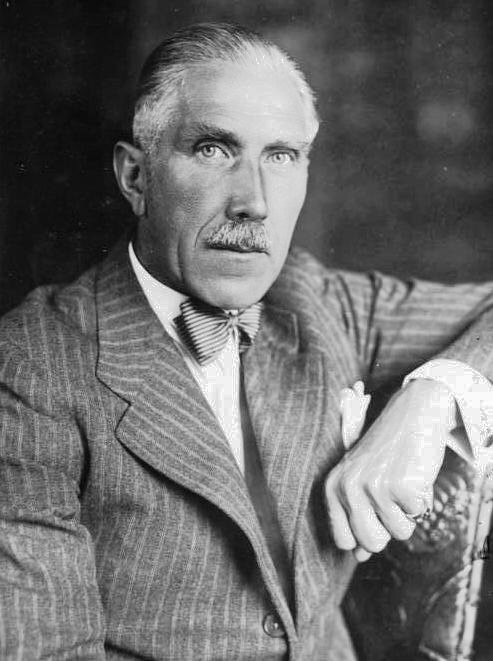
Working for tax cuts while the President and his supporters like Steve Bannon threaten the very heart of the American system of government and the Constitutional rights of all Americans is a sad excuse for doing nothing. When I read the the comments of the erstwhile GOP opponents of Trump I am reminded of Franz von Papen and other German conservatives who in 1933 looked the other way when Hitler began his campaign to eliminate political opposition, including that of their own parties. Too late, Papen, who had helped convince President Paul von Hindenburg to make Hitler Chancellor. In a speech at Marburg University on June 17th 1934 Papen, then serving as Vice Chancellor spoke against some aspects of the National Socialist state without actually naming Hitler or the Nazi Party. Even so, the speech infuriated Hitler, and two weeks later Papen narrowly escaped death during the Night of the Long Knives when Hitler eliminated much potential opposition from inside and outside of the Nazi Party in a two day bloodbath in which three of his closest aides were murdered by the SS and Gestapo. Afterward Papen resigned his post and was appointed as Ambassador to Austria where he served during the Nazi takeover of that county, and later in Turkey.

Other German conservatives, especially in the Army lent a hand to Hitler by both tacit agreement and silent acquiescence in those early years when it was still possible under the Weimar Constitution to remove Hitler, but their hatred of democracy and Hitler’s opponents on the political left prevented them from taking the courageous steps necessary.

Papen bore heavy responsibility for helping Hitler gain power and to carry out his initial work to eliminate organized political opposition, and to eliminate his opponents in the Nazi Party. Without the cooperation of Papen and other non-Nazis as well as their later silence, Hitler would not have been able to gain full power over the German state.

I wonder how many American conservatives, including GOP leaders, Christian ministers, and military men will end up regretting their acquiescence to President Trump. When I do that I am reminded of the words of Martin Niemoller, a German war hero from the First World War who became an influential pastor. He wrote:

“I hated the growing atheistic movement, which was fostered and promoted by the Social Democrats and the Communists. Their hostility toward the Church made me pin my hopes on Hitler for a while. I am paying for that mistake now; and not me alone, but thousands of other persons like me.”

Niemoller later wrote the immortal poem First They Came. I wonder how many of the people who either cheer on the President today, or knuckle under to his threats will find Niemoller’s words apropos when they find themselves under the gun. Niemoller wrote:

First they came for the Socialists, and I did not speak out because I was not a Socialist. 

Then they came for the Trade Unionists, and I did not speak out because I was not a Trade Unionist.

Then they came for the Jews, and I did not speak out because I was not a Jew. 

Then they came for me, and there was no one left to speak for me. 

Words matter, but actions matter more. This is a warning from history.

Until tomorrow,

Peace,

Padre Steve+

Leave a comment

Filed under History, Loose thoughts and musings, nazi germany, Political Commentary

The Kelly Kerfuffle

Friends of Padre Steve’s World,

I was sad when I saw retired Marine General John Kelly and current Chief of Staff to President Donald Trump debase himself in order to defend the President’s remarkers to a pregnant and now widowed wife of a fallen Green Beret. But let me explain, because context is everything when dealing with a situation like this.

But please let me preface my comments by explaining a bit of my background. I have spent most of my life in military society and have been formed by my experiences as a Navy Brat, seventeen and a half years in the Army, Army National Guard and Reserve, and another almost nineteen years in the Navy in which I have served over six years with the Marines and another four years in Joint assignments. I was born in a Navy hospital in 1960 and the military has been my life. From the time I was a young child it was my desire to serve in the military. When I got old enough to join my parents talked me out of enlisting immediately after high school to check out college. I did that, met the girl that became my wife, and realized that I still desired to serve in the military. Thirty-six years after first swearing into the Army in August 1981 I still serve. I have made multiple deployments, suffer from severe PTSD and other afflictions but I neither regret any part of my service nor think that somehow my service makes me any more of a patriot than people who love this country and serve in other ways. My brother has never served in the military but he is a stellar school administrator in a very challenging school district and his wife is a teacher. Neither of them has served in the military but there is no doubt that they love the country and have made sacrifices to serve the people of my hometown when they could have done other things.

First let me say that while he was on active duty I both respected and admired General Kelly, especially after his son, a Marine Corps Lieutenant was killed in action while serving in Afghanistan in 2010. His loss is some ways, from a personal point of view unimaginable to me because I have never fathered any children and thus never experienced the loss of a son. I have sat with hundreds of fathers and mothers who have lost their children from all kinds of reasons including war to understand their loss from a clinical and pastoral standpoint but I cannot completely empathize because I never had a child or lost one.

Unfortunately, at least from my point of view General Kelly jumped the shark in attempting to defend the words of an unapologetic, and at least from all I have read, uncaring, President Trump. Honestly there is nothing that General Kelly could have done to salvage our the situation for the President unless the President himself had done something to apologize or to defuse the situation before it blew up. All the President had to do, even if he was sincere about it, was to say, “I didn’t mean to come across the way that I and do care for you. Please if I can do anything to help during these terrible times let me know, I will,stand by you as long as you need and will make sure that you are not forgotten.” But the President can admit no fault and blames everyone else for his mistakes, missteps, and outright fuck-ups. Because of that General Kelly should have said nothing and simply worked to contain the damage of the President, but he and the White House Press Secretary poured gasoline on the fire.

Despite being a Gold Star father he showed no empathy to the wife of the Green Beret, Mrs. Johnson. Instead he launched into a speech about the decline in traditional values, including respect for women (which the three times married, lecherous, and misogynistic President has never himself imbibed in). General Kelly then made his statement an ad hominem political attack on Congresswoman Frederica Wilson of Florida who listen to the call which riding with Sergeant Johnson’s widow. General Kelly, who had not been a target of any criticism then went to the defense of the President, insulted her, deprecated her, and was hugely and factually wrong in criticizing her remarks at an FBI building dedication in 2015, which was proven by video recordings of her comments in 2015. He also made a qualitative judgment about the value of those who have served in the military and those who haven’t. It was as he said, if you haven’t served I neither respect you or value your opinion. His comments sounded much like Colonel Jessup (Jack Nicholson) in A Few Good Men.

In answering questions about General Kelly’s comments White House Press Secretary Sarah Huckabee Sanders basically told critics of Kelly:”If you want to get into a debate with a four-star Marine general, I think that that’s something highly inappropriate.” But General Kelly is now retired. He serves in a civilian capacity and by the way no General or Admiral, active, Reserve, or retired is above criticism in our form of government and it is why that the founders had a deep distrust of military establishments and the machinations of Generals in politics. But Mr. Kelly does not seem to appreciate that distinction.

Conservative Republican columnist Jennifer Rubin wrote:

“Recognition is now sinking in that Kelly is not so different than all the other politicians and officials who come in contact with Trump. To serve him requires suspension of integrity, and therefore those who serve become morally corrupted.”

That is not good. Elliot Cohen who served in the Bush White House said that Sanders’s comments were “a statement worthy of Wilhelmine Germany at its worst.”

What Mr. Kelly did was to throw gasoline on an already raging fire, and to act more as a politician by launching attacks on a congresswoman who heard the conversation that as someone trying to be the adult in the room. I can imagine that he has not really gotten over the loss of his son and that he is still hurting, and like many of us who served, often blames civilians who have never served in the military, especially at war, as part of the problem. However, it was the military after the Vietnam War who in conjunction with legislators from both parties that helped design this all-volunteer military in the mid-1970s.

Please do not get me wrong, but Mr. Kelly hurt his reputation and moral standing by wading into the fray.

So anyway, I could write more from other perspectives but I will wait.

Until tomorrow,

Peace,

Padre Steve+

1 Comment

Filed under Loose thoughts and musings, Military, Political Commentary