Author Archives: padresteve

padresteve's avatar

About padresteve

I'm a Navy Chaplain and Old Catholic Priest

The Realm of Hatred

atlanta destruction

Friends of Padre Steve’s World

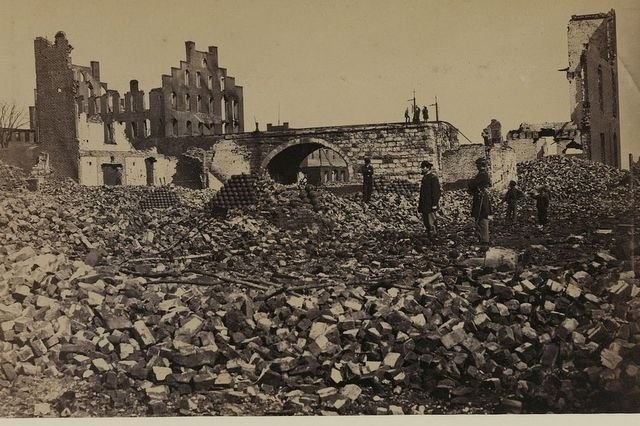
This is an uncomfortable article because it deals with an aspect of life that most of us do not want to deal with, that is the fact that no matter how hard that we try that human beings are capable of some of the most heinous crimes imaginable. That being said, war, no matter how undesirable is not an autonomous military action that can be separated from passions of the people involved. Clausewitz wrote about the connection between the people, the army, and the government. This article is a portion of a further researched and re-written article that I posted here a few months back. However, that being said, it is based on the simple reality that war and conflict is based in the realm of hatred. We may find reasons to try to justify this, but the fact is that war and conflict falls in the realm of hatred. I guess that Clausewitz really never goes out of style. On Monday I will post another article from this text on a similar topic from my text. 

Have a great day,

Peace,

Padre Steve+

Likewise, the enmity of the two sides for one another had been fostered by a half century of relentless and violent propaganda that ushered from the mouths of politicians, the press, and even from the pulpit brought the element of hatred to the fore of the conflict; as Clausewitz correctly observed, “Even the most civilized of peoples, in short, can be filled with passionate hatred for each other.” [1]

As the war went on the feelings of animosity and hatred often boiled over and were reflected in the words and sometimes the actions of the soldiers. A Confederate Captain wrote his wife to teach his children “a bitter and unrelenting hatred of the Yankee race” that had “invaded our country and devastated it… [and] murdered our best citizens…. If any luckless Yank should unfortunately come my way he need not petition for mercy. If he does I will give him lead.” A well off wife of a plantation owner in Georgia reflected, “I wonder if the Northern people still cling to the delusion that such a thing as our being united with them is possible. So far from it I am inclined to believe that each passing day widens the gulf between [us]. Each man we lose but serves to render more intense our hatred of the Yankee…” [2]

During Lee’s invasion of Pennsylvania in 1863, ordinary Southerners, encouraged by the victories at Fredericksburg and Chancellorsville allowed confidence, to mix with arrogance and hatred, even among the deeply religious. “Because extermination is the watchword of our enemies,” one Georgia Baptist editor rationalized, “Mercy ceases to be a virtue in a contest with devils.” Instead, the government should adopt “those extreme measures of retaliation which shall put fear into the hearts of the Yankee soldiery and demoralize the invading armies.” [3]

A soldier from a Wisconsin regiment wrote to his fiancée after the assault on Resaca, Georgia that his unit had captured twenty-three Confederates and “or boys asked if they remembered Fort Pillow and killed them all. Where there is no officer with us, we take no prisoners…. We want revenge for our brother soldiers and will have it…. Some of the [rebels] say they will fight as long as there is one of them left. We tell them that is what we want. We want to kill them all off and cleanse the country.” [4]

While this was hatred was not universal and many times the combatants behaved with great chivalry on the battlefield, and Northern and Southern veterans led efforts at reconciliation after the war; such hatred was something that had not been a part of the American military experience.  The deep rooted enmity, especially in the South, would remain a constant over the next one hundred years. “White southerners who retained Confederate loyalties against Federal soldiers and northerners in general…. Confederates defiantly refused to forgive enemies who had inflicted such pain on their society.” [5] Likewise, many Union veterans felt that in their sacrifices to defeat the Confederacy and end slavery would be forgotten as time slipped by and the memory of the war subsided.

This very real hatred meant that there were many times when the American Civil War came close to Clausewitz’s understanding of absolute war in its in character, and it prefigured the great ideological wars of the twentieth century. J.F.C. Fuller noted “for the first time in modern history the aim of war became not only the destruction of the enemy’s armed forces, but also of their foundations- his entire political, social and economic order.” [6] It was the first war where at least some of the commanders, especially Ulysses S. Grant and William Tecumseh Sherman were men of the Industrial Age, in their thought and in the way that they waged war, in strategy, tactics even more importantly, psychologically. Fuller wrote:

“Spiritually and morally they belonged to the age of the Industrial Revolution. Their guiding principle was that of the machine which was fashioning them, namely, efficiency. And as efficiency is governed by a single end- that every means is justified- no moral or spiritual conceptions of traditional behavior must stand in its way.” [7] After he left Atlanta, many towns were treated leniently, even Savannah where a significant number of influential people desired peace, and Sherman, in a politically astute move attempted to nurture division in the population of the Confederacy.

President Lincoln, as well as Grant and Sherman realized in early 1864 that “the South was indeed a nation in arms and that the common European practice of having standing armies engaged each other in set-piece battles to determine the outcome of a war was not enough to win this struggle.” [8] Though neither man was a student of Clausewitz, their method of waging war was in agreement with the Prussian who wrote that “the fighting forces must be destroyed; that is, they must be put in such a position that they can no longer carry on the fight” but also that “the animosity and the reciprocal effects of hostile elements, cannot be considered to have ended so long as the enemy’s will has not been broken.”  [9]

Sherman told the mayor of Atlanta after ordering the civilian population expelled that “we are not only fighting hostile armies, but a hostile people, and must make the old and young, the rich and poor, feel the hard hand of war.” [10] Sherman was one of the first American military leaders to understand that a civil war could not be waged according to the limited war doctrines most American officers had been taught. He not only “carried on war against the enemy’s resources more extensively and systematically than anyone else had done, but he developed also a deliberate strategy of terror directed against the enemy’s minds.” [11] While some might find this troubling, especially those who attempt to rationalize “war because they find difficulty accepting the elemental forces at its centre.” [12] But the fact remains that it was Sherman’s Southern sweep of all that lay before him that broke the back of the Confederacy.

In August 1864 Ulysses Grant, tired of the Confederates using the Shenandoah Valley as a route to launch attacks into the North, and understanding it to be the breadbasket of Virginia dispatched Major General Philip Sheridan to defeat the Confederate forces there, and to render it incapable of further supplying the Confederate war effort. He instructed Sheridan,

“In pushing up the Shenandoah Valley… it is desirable that nothing should be left to invite the enemy to return. Take all provisions, forage, and stock wanted for the use of your command; as such as cannot be consumed, destroy. It is not desirable that the buildings should be destroyed; they should rather be protected; but the people should be informed that so long as an army can subsist among them recurrences of these raids must be expected, and we are determined to stop them at all hazards.” [13]
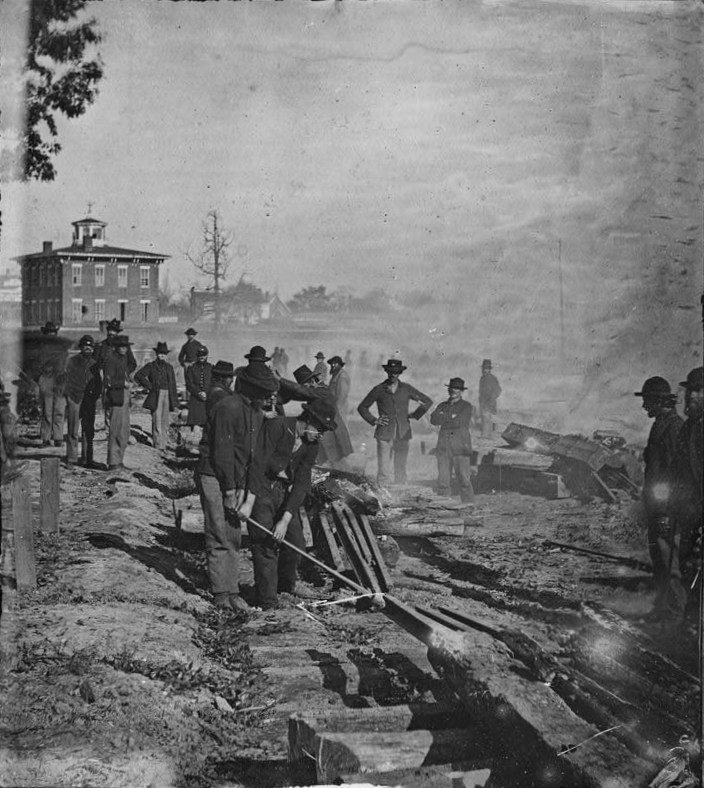
Sherman_railroad_destroy_noborder

Grant ordered Sheridan “to give the enemy no rest…. Do all the damage to railroads and crops you can. Carry off stock of all descriptions, and negroes, so as to prevent further planting. If the war is to last another year, we want the Shenandoah Valley to remain a barren waste.” [14] Sheridan complied, and on October 2nd reported that “he had destroyed over 2000 barns filled with wheat , hay, and farming implements; over 70 mills filled with flour and wheat; have driven in front of the army over 4000 head of stock, and have killed or issued to the troops not less than 3000 sheep…. Tomorrow I will continue the destruction…” [15] Sheridan himself was unapologetic and noted something that has been true in almost every modern war. He wrote, “Death is popularly considered the maximum punishment in war, but it is not; reduction to poverty brings prayers for peace more surely and more quickly than does destruction in human life.” [16] A Union reporter wrote, “The completeness of the devastation is awful. Hundreds of nearly starving people are going north. Our trains are crowed with them. They line the wayside. Hundreds more are coming.” [17]

The effect of Sheridan’s rampage was soon felt across Virginia and the Carolinas, shortages of all kinds arose on the Confederate home front and soldiers began to question where the war could be won, and for the first time desertion became a major problem for Lee’s army as soldiers elected to go home to do what they could to help their families.

But Sherman and Grant were not alone in understanding the problem of fighting a limited war against the Confederacy. In the fall of 1862 a twenty-five year volunteer officer, Colonel Strong Vincent serving with McClellan’s army in Virginia understood what had to happen if the Union were to overcome the rebellion of the Confederacy. Vincent who would be instrumental in throwing back Hood’s assault on Little Round Top, and die leading the defense of that edifice, wrote to his wife about the need for harder measures.

“We must fight them more vindictively, or we shall be foiled at every step.  We must desolate the country as we pass through it, and not leave a trace of a doubtful friend or foe behind us; make them believe that we are in earnest, terribly in earnest; that to break this band in twain is monstrous and impossible; that the life of every man, yea, of every weak woman or child in the entire South, is of no value whatever compared with the integrity of the Union.” [18]

Abraham Lincoln came to embrace the eternal nature of war as well as the change in the character of the war over time. Lincoln had gone to war for the preservation of the Union, something that for him was almost spiritual in nature, as is evidenced by the language he used in both of his inaugural addresses and the Gettysburg Address. Instead of a war to re-unite the Union with the Emancipation Proclamation the war became a war for the liberation of enslaved African Americans, After January 1st 1863 when the Emancipation Proclamation went into effect, Lincoln “told an official of the Interior Department, “the character of the war will be changed. It will be one of subjugation…The [old] South is to be destroyed and replaced by new propositions and ideas.” [19] That too was a modern understanding of war.

Of course, the revolution in military affairs that characterized the Civil War took time, but it was the political and military leaders of the North who better adapted themselves and their nation to the kind of war that was being fought. “Lincoln’s remarkable abilities gave him a wide edge over Davis as a war leader, while in Grant and Sherman the North acquired commanders with a concept of total war and the determination to make it succeed.” [20]

At the beginning of the war the leaders and populace of both sides still held a romantic idea of war. The belief that the war would be over in a few months and that would be settled by a few decisive battles was held by most, including many military officers on both sides. There were some naysayers like the venerable and rather corpulent General Winfield Scott, but politicians and the press mocked Scott and those who even suggested that the war would be long, hard, and bloody. Of course those who predicted a short, easy, and relatively bloodless war who were proven wrong, and the war became the bloodiest war ever waged by Americans, and it was against other Americans.

Notes

[1] Ibid. Clausewitz On War p.76

[2] Thomas, Ella Gertrude. The Journal of Ella Gertrude Thomas in The Civil War and Reconstruction: A Documentary Collection edited by William E. Gienapp, W.W. Norton and Company, New York and London, 2001 p.211

[3] Rable, George C. God’s Almost Chosen Peoples: A Religious History of the American Civil War University of North Carolina Press, Chapel Hill 2010 p.264

[4] Ibid. McPherson The War that Forged a Nation pp.49-50

[5] Gallagher, Gary W. The Confederate War: How Popular Will, Nationalism and Military Strategy Could not Stave Off Defeat Harvard University Press, Cambridge MA and London 1999 p.34

[6] Ibid. Fuller A Military History of the Modern World, Volume Three: p.88

[7] Ibid. Fuller  A Military History of the Modern World, Volume Three p.88

[8] Flood, Charles Bracelen, Grant and Sherman: The Friendship that Won the War, Harper Perennial, New York 2005 p.238

[9] Ibid. Clausewitz On War  p.90

[10] Ibid. McPherson The Battle Cry of Freedom: The Civil War Era  p.809

[11] Ibid. Weigley  The American Way of War: A History of United States Military History and Policy  p.149

[12] Ibid. Strachan European Armies and the Conduct of War p.3

[13] A Great Civil War: A Military and Political History 1861-1865 p.371

[14] Ibid. Stoker The Grand Design: Strategy and the U.S. Civil War p.385

[15] Foote, Shelby, The Civil War, A Narrative. Volume Three Red River to Appomattox Random House, New York 1974 p.563

[16] Ibid. Goldfield America Aflame: How the Civil War Created a Nation pp.340-341

[17] Ibid. Foote The Civil War, A Narrative. Volume Three Red River to Appomattox p.564

[18]Nevins, James H. and Styple, William B. What death More Glorious: A Biography of General Strong Vincent Belle Grove Publishing Company, Kearney NJ 1997 p.57

[19] Ibid. McPherson The Battle Cry of Freedom p.558

[20] Ibid. McPherson The Battle Cry of Freedom p.857

5 Comments

Filed under civil war, History, Military

Brexit Stage Right: Unintended Consequences Matter


Friends of Padre Steve’s World,

Today we woke up to a different world, a world that will not resemble what we have grown up with, and that may usher in more inequity and violence than we could ever imagine. Yesterday, the people of Great Britian voted to leave the European Union. Now to many Americans that may not seem like a big deal, but it is, the unintended consequences of a vote based on very real grievances will most likely beget unimaginable conflicts and turmoil that will effect the entire world. I do not say that lightly. 

Total major economic markets crashed on the news of Brexit, the British Pound Sterling collapsed, and if it were not for the intervention of major banking and currency houses, the collapse may have been worse. Billions of worth of Dollars, Pounds, Euros, and other currency’s values were erased within hours. These losses are not just paper, they are the investments of many people, including men and women who have invested their savings in various retirement programs tied to the stock markets and financial markets, and sadly those initial losses may be the least incurred by people, especially by the mostly English (as opposed to Scottish and Northern Irish) citizens of the United Kingdom who voted to leave the European Union intended. 

As I mentioned last night, I can understand why so many working class Englishmen voted to leave the E.U. In fact, I have never been a big fan of the E.U., but that being said, despite its flaws which I think are legion, I believe that Europe and the world, including the United States are now better with it than without it. We so often forget that the international alliances of the Eurpoean Union, and the North Atlantic Treaty Organizations have done for stability and peace in Europe. People too often forget the disastrous great World Wars of the Twentieth Century, the genociadal regime of Hitler, and the Soviet Communists which led to its creation in the early 1950s. The European Union may need substantive reform, and even to restrict some of its bereaucratic initiatives, but on the whole it has been a force for good. With the exception of the breakup of the former Yugoslavia and the subsequent wars in the Balkans, the European continent has been free of war since 1945. In light of that I would have counseled the people who voted to leave to instead have worked inside the system to reform it, but just as in the United States, people tend to be more motivated by fear than by reason when it comes to government. 

Sadly, there will be unintended consequence, the first of which on the economic front are already being felt, the U.S. Dow Jones lost over 600 points today, the largest loss in over four years. Other stock markets and financials are continuing to fall in value. In the hours following the vote to “leave” the E.U., there is the very real threat that the United Kingdom may collapse as the people of Scotland as well as possibly Northern Ireland, and Gibraltar begin preparations to leave the U.K. If that happens it will have major economic and security effects in the U.K. Much of British industry, including shipbuilding, petroleum and other  energy are concentrated in those parts of the U.K., as is the major British Trident submarine base and nuclear weapons facility at Faslane Scotland. The United Kingdom is not just England. If Scotland leaves the U.K., and if Northern Ireland follows suit it will be disastrous to the very working people in England who voted to leave the E.U., both in terms of economics and national security. The truth is that the world’s economic and security interests are much more interconnected and dependent than most people who follow the dictates of “my country first,” or “my interests first” fail to understand. 

Believe me, I get the anger, I get the frustration that is found in the United States among the supporters or Donald Trump and Bernie Sanders, and the British citizens who voted to leave the E.U. I do not condemn them, at the same time I would politely disagree with the way to solve the problem. In the aftermath of Brexit, anti-European Union parties in France, and the Netherlands are threatening to do what they can to break up the E.U. Likewise, there are other movements in Europe which after having taken the financial resources of the E.U., are willing to quit it regardless of the economic and security consequences. Unfortunately, to paraphrase the words of one of my readers for the U.K., that they may have opened Pandora’s Box in voting for this.

But another consequence will be felt by the ethnic and religious minorities whose ancestors fought for these nations when they were colonial empires; Indians, Asians, Arabs, North Africans, and sub-Saharan Africans who fought and often died for the British, Dutch, French, and Belgian colonial empires in wars that did little to benefit them. The abject racism that has been displayed by some people of the Brexit movement, as well as the right wing movements in the Netherlands, France, Belgium, Germany, Poland, Hungary, and other nations is frightening to comprehend. The fact that race and religious hatred can emerge from the ashes of the Holocaust is hard to imagine, and the sad thing is that those who propagate race and religious hatred against Muslims, Hindus, and others would do the same to the Jews, if there were enough left in Europe to make it worthwhile. 

Unfortunently, the real terrorists that those in the Brexit movement and other right-wing European movements fear are those whose world view is their mirror image, radical ideologues that are unwilling to compromise with or accept those  who are different from them; not those who have tried to adapt and assimilate in a world where they are still, after generations of work and sacrifice for their former colonial masters are still not welcome. Sadly, that has resulted in some of these people embracing the cause of groups like the Islamic State and Al Qaida. 

Since I am neither the Prophet, nor the Son of the Prophet, I cannot say what will finally happen in the near future, but I know that last night was a watershed and that the world that we have known for decades, and that the people of the United Kingdom have known for over two centuries will never be the same again. In light of history, that is not a good thing. 

I know that most of the people who votes to leave the European Union meant well, but sometimes the best of intentions lead to consequences which are more terrible than what the people thought they were intending. That is another fact that history demonstrates. 

Have a good night. 

Peace

Padre Steve+

Leave a comment

Filed under Foreign Policy, History, News and current events

Reading, Writing, and Brexit 


Friends of Padre Steve’s World,

Today I am posting a short thought since I have been very busy at work this week with a new class on deck at the Staff College, and continuing to do more research and writing on my Civil War and Gettysburg text. Within the context of my research and writing I am going to be posting some new material this weekend, but I have not decided if it will be in portions of the updated text or in short articles dealing with selected ideas and topics. 

Before those are posted I probably will be posting something on the results of the British referendum to remain in or leave the European Union. Since what happens in the United Kingdom and Europe matters a great deal to the United States and the world, in both economic and security matters it is important. Likewise, since I have a good number of friends in the U.K., as well as the fact that my ancestry is predominantly Irish, Scottish, and English I have a personal interest. 

While I can understand the reasons that many people, especially in England as opposed to Scotland and Northern Ireland are voting to leave the E.U., I do fear that a vote to leave the European Union could lead to the breakup of the United Kingdom, something that I think would be bad for all concerned, for as history shows, the breakup of nations, states, and political unions seldom brings about more liberty or stability. There are a few exceptions to this, but again, they are exceptions. But whatever the result of the referendum, it will be historic and it will not end the debate. 

So, I will finish my beer and get ready to go to bed. Until tomorrow, have a good night and a better day. 

Peace,

Padre Steve+

1 Comment

Filed under Foreign Policy, Gettysburg, Loose thoughts and musings, News and current events, Political Commentary

Nothing Serious Tonight


Friends of Padre Steve’s World,

For once nothing serious, not that I have not been doing some very serious writing and research on my Civil War and Gettysburg texts. But tonight we had a tapping party at the place that is my version of the Cheers  bar. Our great brewer, Adam Gurtshaw put a Session IPA and a really nice Belgian Wit on tap. It was a nice eating, drinking, and music experience.

The theme of the tapping party was super heroes, so I wore my Madison Bumgarner 2012 World Series jersey. That man is more of a super-hero than anyone wearing tights, three World Seria titles, a WS MVP, and a no-hitter, and in addition to pitching he can hit with power. Top that Clayton Kershaw. 

But then as Benjamin Franklin allegedly said, “Beer is proof that God loves us and wants us to be happy.”

Have a great night,

Peace

Padre Steve+

Leave a comment

Filed under beer, Just for fun, Loose thoughts and musings

More Musings of a Realist in Wonderland


Friends of Padre Steve’s World,

I have just a short thought for the day and plan on writing more again tomorrow and in the coming days. In the days before I travelled to Gettysburg and today I have continued to immerse myself in reading, study, reflection, and writing. Of course this is in addition to normal life and work, so it is a premeditated pursuit of knowledge, as well as truth, which never leaves me disappointed. 

I have been continuing to work on the first couple of chapters of my Gettysburg and Civil War text and I am now convinced that these two chapters, comprising close to 350 pages of text will have to become one or two books as I begin to edited them, and find a publisher. That will leave over 700 pages dealing with the Gettysburg campaign and the battle itself, and that section will also continue to grow. 

But as I do this I am reminded that indeed I am a “Realist in Wonderland.”  I am reminded how, despite how successful the campaigns of the American military have when fighting opponents that behave the way we expect them to at the operational level; my study and observations are like so many others that since the Second World War show me that we win battles but don’t win many wars. 

Actually there is no mystery to this. The simple fact is that the United States does not have a coherent national strategy, what Clausewitz called policy, and as such, our military force used almost exclusively used as a hammer to fulfill policy objectives when when we have so many other non-military tools in our strategic arsenal. 

I was reminded of this as I was revising the first chapter my Gettysburg text which is nearly 200 pages be a book in its own right. As I continue to research the connection between strategy in the American Civil War I read the works of other military historians and theorists I see just how much that disconnected from any rational political policy that war cannot be justified. This is what Clausewitz said nearly 200 years ago, and which, Abraham Lincoln, William Tecumseh Sherman, and Ulyesses S. Grant demonstrated in the Civil War. 

Those men connected national strategy to military strategy and the operational art, while the Confederates never were able to develop a national strategy that matched their military, economic, and diplomatic capabilities. As such, even the Confederacy’s  best general, Robert E. Lee, who was one of the most prolific commanders at the operational level of war, who like so many other great military leaders, and our own military leaders of the past 30 years, 70 if you go back to Korea, never was able to translate operational success to actually winning a war.

 Clausewitz understood this all too well, the act of war is not an autonomous event, and unless it is connected to rational policy it is madness. 

Pretty soon I will post something from that text revision, but I am not ready to just yet, what I am working on is difficult, because my first instinct is always to pursue conciliation with are enemies and try to limit the destructiveness of war.  But the fact is that the more that I study history, the more I am convinced, as repulsive as it may sound, that the nature of war never changes and that if we continue to attempt to abide by rules of behavior that our enemies do not follow, all of the death, carnage, and devastation of the wars that we have been fighting for over a decade and a half will have been for nothing. To paraphrase British historian Hew Strachan, if the facts to not support theory, you do not suppress facts, but change the theory in light of the facts. Sadly, every American political administration, Republican and Democrat, since the end of the Cold War, as well as the Congress has ignored this basic truth when committing this nation to war. In light of history, that is inexcusable. The fact is that we need leaders like Lincoln, Grant, and Sherman and not like Jeffeeson Davis and Robert E. Lee if we are to ever emerge from this war without end without destroying our nation in the process, and handing its destiny over to the likes of Donald Trump or supposedly Christian religious zealots. 

As unpolitcally correct as this may sound, especially coming from a man who is a liberal and progressive, I have to admit that as Sherman said, “War is cruelty. There is no use trying to reform it. The crueler it is, the sooner it will be over.”  If there was a way way to undo this timeline and go back before 9-11 which brought a measure of fear and vulnerability to the people of the United States as we have ever experienced, and the misbegotten Bush Adminstration invasion of Iraq, the terrible effects of which are still with us and not going away, I would do so. But real life is not science fiction, and we cannot alter the timeline. We can only deal with it the best that we can. 

At this point I do not know how I will post these things. I might post sections of the text or I might write something that flows out of them. Whatever I do, you will see it here first. 

We have to do better. 

Until tomorrow,

Peace,

Padre Steve+ 

1 Comment

Filed under civil war, History, Military, News and current events, Political Commentary

To be Dedicated to the Task Remaining: Gettysburg and the 33rd Anniversary of My Commissioned Service

staffride

Friends of Padre Steve’s World,

I spent the 33rd anniversary of being a commissioned officer in the United States Military leading the last portion of a Staff Ride at Gettysburg with the officers, Command Sergeant Major and First Sergeants of the Army Recruiting Battalion based in Cleveland Ohio. In fact today was the portion dealing with Pickett’s Charge and Lincoln’s Gettysburg Address. It was a fitting thing to be doing today.

Thirty-three years ago I was commissioned as a Second Lieutenant in the United States Army at UCLA. I spent 17 1/2 years in the service, including some National Guard enlisted service before I was released by the Army Reserve to enter the active duty Navy.

commissioning

Commissioning Ceremony at UCLA

I am not going to talk about the long strange trip that my life has been since I was commissioned as I have done that before a number of times. Today I think was fitting because I talked about the defeat of the Confederate invasion that was meant to permanently rip the country that I serve now apart. And frankly, as a commissioned officer I have no doubt that the defeat of the Confederacy and all that it stood for was absolutely necessary for the proposition in the Declaration of Independence that “we hold these truths to be self evident, that all men are created equal….” 

These were words which Abraham Lincoln began to universalize beginning with the Emancipation Proclamation which were echoed in his Gettysburg Address. I always finish the Staff Ride at the Soldier’s Cemetery and conclude by reading Lincoln’s “brief remarks.” For me they are the proposition, the spirit that guides the United States, and Lincoln’s words at Gettysburg, that It is for us the living rather to be dedicated here to the unfinished work which they who fought here have thus far so nobly advanced. “It is rather for us to be here dedicated to the great task remaining before us–that from these honored dead we take increased devotion to that cause for which they gave the last full measure of devotion–that we here highly resolve that these dead shall not have died in vain, that this nation under God shall have a new birth of freedom, and that government of the people, by the people, for the people shall not perish from the earth.”

Those words for the basis of so much that has happened since Gettysburg; the 13th Amendment which abolished slavery, the 14th Amendment which overturned the travesty of the Dred Scott Decision and and the Fugitive Slave Act by ensuring that anyone born in this county is a citizen with full citizenship rights, and the 15th Amendment which gave Blacks the Right to vote. Those were the beginning, and the 14th Amendment was the most important, for it was the first Constitutional Amendment which extended rights to peoples formerly enslaved, and formed the basis for, and legal precedent for further extensions of civil rights. They were followed by the 19th Amendment which gave women the right to vote, the American Indian Citizenship Act of 1924, and the repeal of the Chinese Exclusion Act of 1943, continued them. Laws meant purely to discriminate against the rights of African Americans and other minorities were overthrown by Supreme Court decisions such and Brown v. Board of Education in 1954, which overturned the “separate but equal” Jim Crow laws which had been upheld by the Plessy v. Ferguson decision of 1894. These were joined by the Voting Rights Act of 1964, and the Civil Rights Act of 1965, the revocation of laws which banned homosexuals from serving in the military, and most recently the Obergfell v. Hodges decision that allowed LGBTQ people to marry and receive the same rights as heterosexual couples anywhere in the country.

Of course there is still so much to be done. People whose political ideology is rooted in the same limits on freedom as were the foundation of the Confederacy still fight basic civil rights for people that they despise at every opportunity.

The oath that I swore when I was commissioned thirty-three years ago, and which I have repeated with every promotion, and when I transferred to the Navy in 1999 states that “I will support and defend the Constitution of the United States against all enemies, foreign and domestic; that I will bear true faith and allegiance to the same; that I take this obligation freely, without any mental reservation or purpose of evasion; and that I will well and faithfully discharge the duties of the office on which I am about to enter.”

img_0471

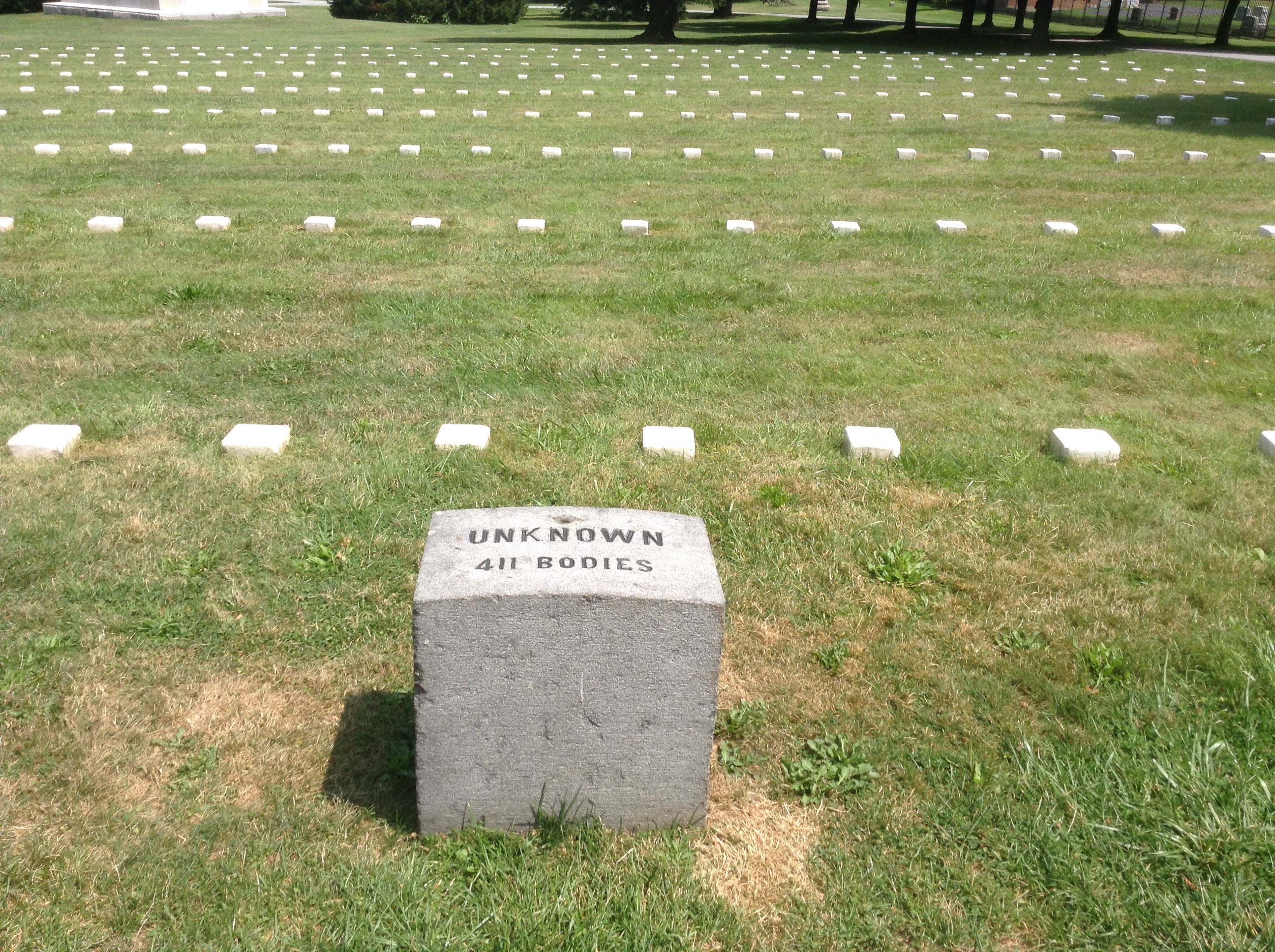
I take that seriously, and every time I go to Gettysburg I have the importance of that reaffirmed as I walk the battlefield and stand in the Soldier’s Cemetery, and ponder what those men who stood in the path of Robert E. Lee’s Army of Northern Virginia fought for, and which I have both fought for and swear to maintain, against all enemies, foreign and domestic. My task is also to continue to labor for and be dedicated to the task remaining; that from the honored dead who lay at Gettysburg and so many other places, that I take increased devotion to that cause for which they gave the last full measure of devotion–that I here highly resolve that these dead shall not have died in vain, that this nation under God shall have a new birth of freedom, and that government of the people, by the people, for the people shall not perish from the earth.”

For me those words are personal, and that my friends is why I continue to serve, and why what was done and said at Gettysburg means so much to me.

Until tomorrow,

Peace

Padre Steve+

Leave a comment

Filed under civil rights, civil war, Gettysburg, History, Military, Political Commentary

Teaching at Gettysburg 


Friends of Padre Steve’s World

I spent last night eating, drinking, and teaching at Gettysburg in preparation for he Staff Ride which begins this morning. My audience is the senior staff of an U.S. Army recruiting battalion based out of Ohio. 

It was an interesting setting to teach, sitting on the patio with absolutely beautiful weather, enjoying good food and beer and then getting to teach. They are a different type of audience than the men and women that I teach at the Staff College, and with the exception of the battalion commander who is a graduate of our program, the officers are younger and junior to my students and we also have senior non-commissioned officers, the Command Sergeant Major and the First Sergeants. they are whoever, all very smart, articulate and represent the best of America. All have served in combat or in combat theaters, and all have met with the frustration of not achieving anything like victory. 

I find this very important, because the vast majority of military personnel, including officers attend the level of education that I get to teach at the staff college, and for me to be able to do this with such a group helps create an interest, not just in a particular battle, but the important link between national strategy, military strategy, and the operational art. One thing that I spent a good amount of time on last night in the prepetory lecture was just that. The biggest reason the the North won the Civil War and that the South lost was that in the North under Lincoln, that military operations were linked with the policy of the government after the Emancipation Proclamation; whereas in the South there never was a coherent national strategy, and even great operational level commanders like Robert E. Lee were unable to translate battlefield success into victory. 

As Clausewitz emphasized, war is an instrument of policy, and if it does not serve policy, or if policy makers fail to develop and enunciate a true national strategy, military efforts will ultimately fail. This has been a hallmark of post Col War American thinking. Ideology and buzzwords are not policy, nor are they strategy, and the military is only one component of national power, and unlike diplomacy, economic power, and information, it is a blunt instrument, and if military efforts cannot be translated into the political object and bring about a positive political effect, no amount of battlefield brilliance will bring about success. Policy makers and soldiers must remain in constant dialogue in order to ensure that the link between strategy and policy is strong. This was something that Lincoln, as well as his military subordinates Ulysses Grant and William Tecumseh Sherman learned, and practiced during the war, and it was something that Lincoln’s successor, Andrew Johnson failed to understand after the war, thus forieting all that had been won on the battlefields. Thus as English historian and military theorist Colon Gray notes that “war is about peace” and “more pointedly, that the making of peace is likely to be more difficult than the waging of war. It is a common, and somewhat understandable, error to assume that if one takes care of the fighting in an efficient manner, and the enemy is duly humbled, somehow that the subsequent peace will all but take care of itself.”  I guess that is one reason that I find the American Civil War and the subsequent Reconstruction period to be so pertinent today for but policy makers and military leaders. But I digress…

Even so this promises to be a great weekend, and even more interesting, I will be conducting the final part of which includes walking the ground of Pickett’s Charge, and spending time at the Soldier’s Cemetery where Abraham Lincoln delivered the Gettysburg Addess on Sunday, the 33rd anniversary of my being commissioned as an Army officer in 1983. Since then I have served in peace and war in both the Army and the Navy. In fact I have been in the Navy now almost as long as I served in the Army, almost 17 1/2 years. 

Anyway, I hope to post anther reflection tomorrow, though it may be later in the evening when I actually get it done. 

Until then, have a great day.

Peace,

Padre Steve+

Leave a comment

Filed under civil war, Gettysburg, leadership, Military

We Cannot Understand Our Time Without Understanding the Civil War Era

IronBrigade12021001

Friends of Padre Steve’s World,

I am traveling up to Gettysburg to lead a group of Army officers on a Staff Ride. It will be good. I will be doing my initially classes tonight at O’Rourke’s Irish Tavern in Gettysburg with these officers and then conducting the actual staff ride As such I am reposting a further edited section of my Gettysburg and Civil War text. This is the introduction section to what was my first chapter, which has grown so much that it will be its own book soon. I think that these words of introduction are important. I do hope that you enjoy.

Peace

Padre Steve+

Finite human beings find themselves bound by time and space, we live in the present, but not the present alone, but rather three worlds: one that is, one that was, and one that will be. Ernst Breisach wrote, “In theory we know these three worlds as separate concepts but we experience as inextricably linked and influencing each other in many ways. Every new and important discovery about the past changes how we think about the present and what we expect of the future; on the other hand every change in the conditions of the present and in the expectations of the future revises our perception of the past. In this complex context history is born ostensibly as reflection of the past; a reflection which is never isolated from the present and the future. History deals with human life as it “flows” through time.” [1]

Richard Evans wrote something in the preface to his book The Third Reich in History and Memory that those who study military history often forget. He noted: “Military history, as this volume shows, can be illuminating in itself, but also needs to be situated in a larger economic and cultural context. Wherever we look, at decision making at the top, or at the inventiveness and enterprise of second rank figures, wider contextual factors remained vital.” [2] Thus while this work is an examination of the Gettysburg campaign it is important to understand the various issues that were formative for the men who directed and fought the battle, as well as the vast continuum of often distant and seemingly events that come together at one time in the lives of the participants in any historic event.

One cannot understand the determination the determination of Robert E. Lee to maintain the offensive, the dogged persistence of Joshua Chamberlain or Strong Vincent to hold Little Round Top, what brought John Buford to McPherson’s Ridge, what motivated Daniel Sickles to move Third Corps to the Peach Orchard, and what motivated the men of Pickett’s division to advance to their death on Cemetery Ridge, without understanding the broader perspective of history, and how factors outside their direct military training and experience, such as culture, politics, economics, religion, sociology, ideology, life experience, and all of those factors shaped these men and their actions.

Likewise in order to understand the context of this battle, or for that matter any battle in any war, one has to understand the events, ever distant events which play a role in the battle. All too often those that delve into military history, or a particular battle see that as separate event, often disconnected from other historical events. But as historian Edward Steers Jr. correctly notes, history “does not exist in a series of isolated events like so many sound bites in a newscast. It is a continuum of seemingly unrelated and distant events that so often come together in one momentous collision of time.” [3] In the case of Gettysburg events like Lincoln’s publication of the Emancipation Proclamation, the failure of Confederate diplomacy to bring France or Great Britain into the war or at least to recognize the Confederacy, the failures of the Confederate armies in the West to maintain their hold on the Mississippi River, all play a crucial role in Robert E. Lee’s ill-advised decision to launch an invasion of Pennsylvania. Additionally, the loss of so many key leaders in the Army of Northern Virginia, especially that of Stonewall Jackson impacts how Lee manages the campaign, and shows up at numerous crucial points in the battle.

Another element that must be connected in order to understand the Battle of Gettysburg is the part that policy, strategy, war aims and operational doctrine played in the campaign of 1863 and how those influenced the decisions of participants before, during and after the campaign.

Finally, the Battle of Gettysburg cannot be looked at as a stand-alone event. What happens there as the Confederacy surges to and ebbs back from its “high water mark” influences the rest of the While the war would go on for nearly two more years, the Union victory at Gettysburg coupled with the victory of Grant at Vicksburg ensured that the Confederacy, no matter how hard it tried would not be able to gain its independence through military means.

Maybe even more importantly the story of Gettysburg is its influence today. The American Civil War was America’s greatest crisis. It was a crisis that that “has cast such a shadow over the relations between the North and the South that the nation’s identity and its subsequent history have been considerably influenced by it.” [4]

The Battle of Gettysburg itself is enshrined in American history and myth and is woven deeply into the story of the nation. In this narrative the Battle of Gettysburg is often different ways; in the North viewed as a victory that brings an end to the institution of slavery, and freedom for enslaved African Americans, and preserves the Union. In the South it is often part of the myth of the Noble Confederacy and the Lost Cause where the South was defeated by the Northern superiority in men and warmaking ability.

Yet in both cases, the truth is not so simple; in fact it is much more complex, and the truth is we are still in the process of learning from and interpreting the historical records of the events that led to the American Civil War, the war itself, and the aftermath. They are all connected and for that matter still influence Americans today more than any other era of our history. In fact James McPherson who is one of the nation’s preeminent scholars on the Civil War and Reconstruction wrote,

“I became convinced that I could not fully understand the issues of my own time unless I learned about their roots in the era of the Civil War: slavery and its abolition; the conflict between North and South; the struggle between state sovereignty and the federal government; the role of the government in social change and resistance to both government and social change. These issues are as salient and controversial today as they were in the 1960s, not to mention the 1860s.” [5]

The prolific American military historian Russel Weigley wrote of how the war, and in particular how the Battle of Gettysburg changed the American Republic.

“The Great Civil War gave birth to a new and different American Republic, whose nature is to be discovered less in the Declaration of Independence than in the Address Delivered at the Dedication of the National Cemetery at Gettysburg. The powerful new Republic shaped by the bayonets of the Union Army of the Civil War wears a badge less benign aspect than the older, original American Republic. But it also carries a larger potential to do good for “the proposition that all men are created equal” both at home and around the world.” [6]

Thus it is important for Americans to learn about the Battle of Gettysburg and the American Civil War, but not solely for its military significance, nor for clear cut answers or solutions. The fact is that “situations in history may resemble contemporary ones, but they are never exactly alike, and it is a foolish person who tries blindly to approach a purely historical solution to a contemporary problem. Wars resemble each other more than they resemble other human activities, but similarities can be exaggerated.” [7] As Michael Howard warned, “the differences brought about between one war and another by social or technological changes are immense, and an unintelligent study of military history which does not take into account these changes may quite easily be more dangerous than no study at all. Like the statesman, the soldier has to steer between the dangers of repeating the errors of the past because his is ignorant that they have been made, and of remaining bound by theories deduced from past history although changes in conditions have rendered these theories obsolete.” [8] The ideal that we reach for is to understand the Battle of Gettysburg and the American Civil War in context, which includes understanding what led to the war as well as the period of Reconstruction, and the post-Reconstruction era. In doing so we attempt to draw lessons from it without making the mistake of assuming that what we learn and know about them is immutable and thus not subject to change, for the past influences the present, even as the present and future will influence how we view and interpret the past.

Notes

[1] Breisach, Ernst, Historiography: Ancient, Mediaeval & Modern University of Chicago Press, Chicago and London 1983 and 1994 p.2

[2] Evans, Richard J. The Third Reich in History and Memory Oxford University Press, Oxford and New York 2015 p.ix

[3] Steers, Edward Jr. Blood on the Moon: The Assassination of Abraham Lincoln The University of Kentucky Press, Lexington 2001 p.5

[4] Perman, Michael and Murrell Taylor, Amy editors The Civil War and Reconstruction Documents and Essays Third Edition Wadsworth Cengage Learning Boston MA 2011 p.3

[5] McPherson, James The War that Forged a Nation: Why the Civil War Still Matters Oxford University Press, Oxford and New York 2015 p.4

[6] Weigley, Russell F. A Great Civil War: A Military and Political History 1861-1865 Indiana University Press, Bloomington and Indianapolis 2000 p.xviii

[7] Griess, Thomas E. A Perspective on Military History in A Guide to the Study and Use of Military History edited by John E. Jessup Jr. and Robert Coakley, Center for Military History, United States Army, 1982 p.33

[8] Howard, Michael. The Use and Abuse of Military History in Journal of the Royal United Service Institution 107 (1962):7

Leave a comment

Filed under civil war, Gettysburg, History, Military

Who Will Speak? The Aftermath of Orlando


Friends of Padre Steve’s World,

Over the past few days I have written about the massacre at the Pulse nightclub in Orlando which killed 49 people and wounded more than 50 more, mostly male homosexuals. The massacre was committed by an American born man whose father came to the United States from Afghanistan in the 1980s. While the killer swore his allegiance to the leader of the Islamic State in a call to 911 during the attack, it also appears that he was also Gay and a patron  night club. He grew up in a family where his father believed and still believes that God will judge homosexuals, and his father talked of the extreme anger that the killer supposedly exhibited a few weeks before the massacre when he saw men kissing in public. The psychological dynamics, the probability that the killing was as much motivated by self-hatred directed at the people most like him, as it was by religious ideology is rich. 

If this is the case it is an instance where a man killed because his religion condemned him. That is not surprising, it happens all the time, not necessarily the killing, but the outward manifestations of physical and verbal hatred toward homosexuals by people who cannot accept that they too are homosexual. We see it in examples some of the most vehement anti-gay preachers and politicians whose secret lives are revealed.

If this case was not so tragic in scale it would have been easy to ignore, but it cannot be ignored. It cries out to be heard, and the hatred that caused it, motivated by religious self-hate, terrorist ideology, and a culture in which Christian and some Muslim and Jewish preachers routinely call for the persecution, death, and eternal damnation of Gays, while politicians at the local, state and Federal level promote thousands of laws specifically designed to persecute and limit the civil, legal, economic, and social rights of LGBTQ people promotes a perfect climate for such crimes to be committed. One cannot promote discrimination, persecution, and demonize a group of people without expecting violence to result. 

The question is when do good people finally speak up against this toxic climate of hate which produces such avoidable tragedies? Thankfully, some are now doing so, including Lieutenant Governor Spencer Cox of Utah, a conservative Reupblican who delivered some of the most poingent remarks that I have heard in the wake of the massacre. His remarks can be found here:  Cox Speech I found them to be incredibly heartfelt and moving. I do hope that others will make the same kind of stand, not just in word, but in deed. 

We all have to make a stand as Americans to honor, respect, and care for each other; to defend the weak against the hated of those who will stop at nothing to harm them in any way possible, legal and illegal alike. If we do not we too may one day be faced with the words of the German pastor, Martin Niemoller, a war hero and conservative who initially supported Hitler because Hitler promised to “protect Christian values.” However, Niemoller, a man who despised Socialists, atheists, and had little love for the Jews, discovered that Hitler’s rule was tyranny. Niemoller ended up being sent to the concentration camps and imprisoned. After the war Niemoller wrote this penetrating verse:

First they came for the Socialists, and I did not speak out because I was not a Socialist. 

Then they came for the Trade Unionists, and I did not speak out because I was not a Trade Unionist.

Then they came for the Jews, and I did not speak out because I was not a Jew. 

Then they came for me, and there was no one left to speak for me. 

When we hate people for their lifestyle, sexual orientation, gender, religion, race, ethnicity, or political beliefs. When we allow demagogues to preach those hatreds and and even give them our vote and political power, we cannot expect that one day, once they are done with their first enemies that they will not someday come after us. Thus it is imperative that we stand against hate in all its forms. 

Over the next few days I will be meeting a group of Army officers at Gettysburg, so I do not know how much I will post the rest of the week. I do plan on doing another follow up article on my post A Pause to Think  dealing with the hard choices of the war that we will have to fight against the Islamic State and other terrorist groups who revel in the terror and carnage that occurred in Orlando, it is not a fight that we can spurn because there are more Orlandos waiting to happen. 

Have a great day, and I do wish you all the best.

Peace

Padre Steve+ 

Leave a comment

Filed under crime, faith, History, laws and legislation, LGBT issues, News and current events, Political Commentary

A Pause to Think


Friends of Padre Steve’s World,

Just a few words this morning. The past day or two have been emotionally draining, mostly due to the negativity and attacks of some friends on social media due to my strong condemnation of the massacre in Orlando and the silence of so many Christians and conservatives about it. The lack of empathy for the victims was astounding as a number of people jumped the shark so to speak and went all out not just to disagree with me, but to condemn me. 

I handled them all well. I refused to degrade myself by sinking to their level and refused to let their venom ruin my day. It was just sad to see otherwise good people be so deluded by their hatred of Gays, Liberals, and Muslims that they couldn’t understand what I was saying. This included conservatives and liberals alike. I am just amazed at the lack of empathy or critical thinking that is the norm in the United States, and while I would like to say that it is just on one side, it spans the spectrum. 

I am a very pragmatic and realistic Liberal. As I said last week there are times that I feel like B.H. Liddell-Hart’s description of Willam Tecumseh Sherman in 1861, “a realist in wonderland.”  

Tomorrow I will be posting what some of my liberal and progressive friends will consider to be a very politically incorrect article about how to fight the Islamic State. In fact it will be similar to what I have written about that subject over the past few years. That being said it will certainly piss off some allegedly conservative people who think that a bomb a day keeps the terrorist away. 

I have grown a rather thick skin over the past few years. I can nuance this, and I can let the personal attacks runoff my back, but I will not stop speaking up for realism, nor will I condemn whole races and religions for the acts of a few. In fact I am so tired of the idiocy of those that condemn all Muslims for the actions of some that I want to throw up. The same is true for those that simply say to “bomb them into the stone ages” or “carpet bomb” them; such people know nothing of war, nor the mindset of those that we fight. 

Likewise, I am equally disgusted by supposed Liberals and progressives who make excuses for cold blooded terrorists and instead blame the United States and Western Europe for things that are often the making and toxic concoctions of well off fundamentalist Muslims who control incredibly oil rich nations, or nations which have nuclear weapons. 

That being said, I will not let those few, or those that support or condone their actions off the hook. The current wars, which came about after the terrorist attacks of September 11th 2001 have been going on for almost 15 years. Since I anticipate that they will still be going on when I retire from the military in 2020 that means that many of the young men and women entering the military when I retire would not have been born when those attacks happened. For me that is unacceptable. Maybe I have become more like William Tecumseh Sherman than I thought that I ever would. He wisely said, that “War is cruelty. There is no use trying to reform it. The crueler it is, the sooner it will be over.”  And then this, “War is the remedy that our enemies have chosen. I say let us given them all they want.” My God, how many more young people will have to continue a war that began before they were born if we do not commit ourselves to winning it now? 

This war has to be fought and those committed to terrorism destroyed root and branch. Their families and supporters will have to feel the terror that their terrorist husbands, fathers, and sons have brought upon this world.  Yes, as Sherman said, war is cruelty, but the time for half measures is at an end, otherwise it will be war without end and I can imagine nothing worse for the world than that;  especially for the people, (mostly Muslims) that are already suffering under the yoke of the Islamic State or other Muslim radical and terrorist groups or nations. 

Call me what you want. I can handle it. I am not a warmonger as anyone who knows me or who has read my writings knows. I hate it as only one who has seen it first hand as well as who has studied it can. As Colonel Strong Vincent, who died leading his brigade at the age of 26 on the slopes of Little Round Top during the Battle of Gettysburg said, “We must fight them more vindictively, or we shall be foiled at every step. We must desolate the country as we pass through it, and not leave a trace of doubtful friend or foe behind us; make them believe that we are in earnest, terribly in earnest…” 

Simply bombing people or calling in drones, and relying on less than one percent of the population to fight our wars for us will never convince those who celebrate the killing of innocents like what happened in Orlando last week that we are in earnest. This has to be a fight that every American that no matter what his or her race, religion, political association or ideology may be needs to have a hand in the fight. We all need to have skin in the game. Those who have killed so many innocents in Orlando, San Bernardino, New York and Washington, Paris and Brussels, London and Madrid, and so many other places need to feel the hard and cruel hand of war, or well will never see the end of it. 

That may not sound pleasant, but it is reality, and I dare ask anyone that disagrees with me to show me from history that I am not correct in saying this. 

Like I said, I will write more about these things tomorrow, and maybe Thursday as well. But until then, have a great day. 

Peace

Padre Steve+

8 Comments

Filed under History, middle east, Military, News and current events, terrorism