Author Archives: padresteve

padresteve's avatar

About padresteve

I'm a Navy Chaplain and Old Catholic Priest

A Mystery, a Medal & a Ring: Lost Love & War

katehewitt

Kate Hewitt: The Girl John Reynolds Left behind

Friends of Padre Steve’s World

In doing my research on the life of Major General John Fulton Reynolds for my Gettysburg text I began to read about his relationship with Kate Hewitt. It adds a dimension to this man’s life that we miss if we only look at his actions on the battlefield or his military career. I added this to the end of the chapter on Reynolds and I hope that you are touched by it. As I read the story of this couple I found myself in tears on a number of occasions, and as I wrote this part of the chapter I kept crying.

Tragedy is implicit in war, and the tragedy of people who lose those that they love cannot be casually tossed aside in our quest to examine yet another battle.

Peace

Padre Steve+

220px-GenJFRenyolds

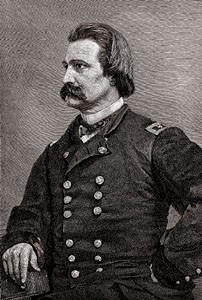
Major General John Fulton Reynolds

Those who die in war often leave behind those that they love, and sometimes those stories are shrouded in mystery themselves. When Reynolds’s body was removed from the battlefield he was found to be wearing a Catholic religious medal around his neck on a chain on which also hung a “gold ring joined in the shape of clasped hands. On the inner band were inscribed the words “Dear Kate.” [1] Additionally his West Point ring was missing. His family was stunned as Reynolds’s had never breathed a word to them about any woman in his life.

It turned out that Kate, was a young woman named Katherine Mary Hewitt who Reynolds had met when travelling by steamship from San Francisco to Philadelphia on his way to West Point in 1860. The couple kept the relationship secret, possibly because Reynolds and his family were Protestant and she was a recent convert to the Catholic faith and at the time there was still a tremendous prejudice against Catholics in the country. Despite the fact that the anti-immigrant and virulently anti-Catholic Know Nothing Party had disappeared many of their anti-immigrant and anti-Catholic prejudices remained strong.

On September 15th 1861 Reynolds visited his family in Philadelphia at which time he visited Kate and proposed. They exchanged rings, she getting his West Point Ring, which she used to imprint the wax seals on the letters she would send to him. In the winter of 1863 he again visited his family in Philadelphia and made a clandestine visit to Kate. At that time “they set July 8th as the date to announce the engagement to his family.” [2]

Reynolds’s family wondered who this mystery woman was and his sister Jennie wrote a letter to his brother Will “we all thought a lady was the donor and must be prized and wished we could only know who and where she was.” [3] With Reynolds’s body lying in repose at his sister Catherine Landis’s home on July 3rd prior to it being taken by train to his home town of Lancaster the family discovered the identity of the mystery woman. On that morning there was a knock at the door and a young woman presented herself, asking if she could view Reynolds’s body. Reynold’s sisters and brother in law immediately fell in love with her. Their only regret was not having known her prior to Reynolds’s death. She announced that “in the event of his death, she would enter a Catholic convent.” [4] As Kate viewed the body she wept, sometimes uncontrollably. Eventually she placed his West Point Ring in his coffin and took back her religious medal. She left that day and on July 12th entered the convent of the Sisters of Charity at Emmitsburg where she took the name Sister Hildegarde. His sister Ellie wrote:

“Poor girl she has been a heroic mourner and most worthy of our dear one. I cannot tell you all she said of him but she was in his heart and from her I learned much of him, of his feelings and inner life that I never knew before….She made no parade of her religion, nor in any way that was the least disagreeable….” [5]

The Reynolds’s family treated Kate as family and they remained in touch with her as they did his faithful orderly Sergeant Veil who had been with him when he fell at Gettysburg. However, in 1868 in poor health Kate left the Sisters of Charity while serving as a teacher in Albany New York without having taken her final vows. Evidently the “sisters at Emmitsburg, according to Kate’s biographer and author of “Is She Kate?” Marian Latimer, found Kate “unsuitable for community life.” [6] After leaving the order she “remained in Albany working as a teacher for several years and in fact, living for some time with another sister who left the order.” [7]

About that time the correspondence between her and Reynolds’s family stopped. All subsequent attempts of the Reynolds family to regain contact with their brother’s true love failed. Still mourning her one true love, a man who was neither her husband nor a blood relative, Kate gave up her Catholic faith and alone in the world returned to her hometown of Stillwater New York where she continued to teach. She never remarried and died in Stillwater of pneumonia there in 1895. She was buried there and her stone is an octagon and symbolic of rebirth and resurrection. The word Mizpah is carved on the stone and is a Hebrew benediction meaning, ‘May God watch over you until we are together again.’ [8]

[1] Ibid. Nichols Toward Gettysburg p.212

[2] Wilson Robert and Clair, Carl They Also Served: Wives of Civil War Generals Xlibris Corporation 2006 p.79

[3] Ibid. Nichols Toward Gettysburg p.212

[4] Ibid. Wilson and Clair They Also Served p.79

[5] Ibid. Nichols Toward Gettysburg p.212

[6] Carey, John E. On War and Love: From the 1860s — General John Reynolds and “Kate” 10/25/2006 retrieved from https://johnib.wordpress.com/category/kate-hewitt/ 29 May 2015

[7] Loeffel, Bernadette Catharine (Kate) Mary Hewitt 9/20/2005 retrieved from http://www.findagrave.com/cgi-bin/fg.cgi?page=gr&GRid=11784763 29 May 2015

[8] McLean, Maggie Kate Hewitt: Fiancée of General John Reynolds 12/20/2008 retrieved from http://civilwarwomenblog.com/kate-hewitt/ 29 May 2015

3 Comments

Filed under civil war, Gettysburg, History, marriage and relationships, Military

Writing About War

IMG_0535

“What a cruel thing is war: to separate and destroy families and friends, and mar the purest joys and happiness God has granted us in this world; to fill our hearts with hatred instead of love for our neighbors, and to devastate the fair face of this beautiful world.” Robert E. Lee in a letter to his wife 1864

Memorial Day weekend is over but I have not stopped reflecting on war and its cost. Having served in combat myself, and having stood over the wounded in field hospitals in Iraq and having seen the devastation of war up close and personal I have a hard time reducing war to the technology, the tactics and trivia that seem to satisfy the consumers of war porn. Call me whatever you want but I cannot get around the human cost of war. William Tecumseh Sherman reflected that “It is only those who have neither fired a shot nor heard the shrieks and groans of the wounded who cry aloud for blood, more vengeance, more desolation. War is hell.” 

One of my favorite historians of the Second World War, Cornelius Ryan who wrote the magnificent accounts of D-Day, The Longest Day, Operation Market Garden, A Bridge Too Far, and the Battle of Berlin, The Last Battle said about his accounts: “What I write about is not war but the courage of man.” I think that writing about courage is appropriate and I do a lot of that. But I think in addition to courage that we also must write about the frailty and fallibility of human beings, especially the leaders who plan and conduct war.

When I teach or write about military history I find it important to make sure that the people who made that history are not forgotten.  After all, as the British military theorist Colin Gray says “people matter most” when we deal with history, policy, or politics, especially in the matter of war. He is right of course, people are the one constant in war. Weapons and tactics may change, but people do not. 

Likewise we cannot forget that war, even wars for the most excruciatingly correct and even righteous reasons are always tragic. The cost of war, even so called “good wars” is devastating. Ernest Hemingway wrote “Never think that war, no matter how necessary, nor how justified, is not a crime.” To the war porn addicts the words of Sherman or Hemingway surely are offensive, but they provide a necessary warning to the politicians, pundits and preachers who cannot get enough war to satiate their bloodlust and need for power. Sadly, most of the men and women who revel in war without end have neither served in combat or have any skin in the game regarding the wars that they support and those which they work so hard to bring about. Maybe if they did then they would not be so quick to send young men and women to war.

Those who follow me on this site know that I write about war a lot, some might say too much, but I cannot help that. My life has been forever changed by war.  If you look back through my archives you can see how my writing has evolved when it comes to dealing with war and part of that is because I do not want the sacrifices of the men and women who fought those wars to be forgotten or cheapened by a society which from the very beginning of our history has done so. Lieutenant General Hal Moore who co-authored the book We Were Soldiers Once, and Young wrote: “in our time battles were forgotten, our sacrifices were discounted, and both our sanity and suitability for life in polite American society were publicly questioned.” By continuing to write and teach I hope to ensure that this does not happen. Maybe I am pissing into the wind so to speak, but I cannot stand by silently.

I am a combat veteran, I have seen the devastation of war, I have lost friends in war, men and women who did not come home. I have seen other friends struggle in the aftermath of war, and I have seen some lose that struggle. Because I am a military historian as well as a priest and I have a sacred duty to ensure that people know the real cost of war.

I do this in my official capacity teaching ethics and leading the Gettysburg Staff Ride for the Staff College where I have the honor to serve as faculty.This itself is interesting as I am spending the final few years of a three and a half decade military career teaching the men and women who in not too long of time will be our nation’s senior military leaders. That is a responsibility that I take most seriously. Thus I always, whether it is in teaching the ethics of war, or about the Battle of Gettysburg I attempt to impress this on my students. I preach from day one to every class that their decisions in the planning process, their recommendations to senior political and military leaders, and their decisions on the battlefield impact real people, their soldiers, the people in the lands that they fight and on the home front. 

I have been writing a text for the Gettysburg Staff Ride which I believe will eventually become at least two and maybe more books. I tie a lot of biographic material in with the text, again in order to make what could be a dry and mechanical affair more real to my students and readers. That is one of the reasons that I find going to Gettysburg and walking that hallowed ground so important.

I find that the lives, beliefs, motivations, relationships, and experiences of people to be paramount to understanding events. People are complex, multi-layered and often contradictory. All of my heroes all have feet of clay, which in a sense makes their stories even richer, and the events that they helped bring about far more more fascinating. By not denying their humanity, by understanding and appreciating their flaws, even the flaws in their character, I gain a more holistic perspective and develop a greater appreciation and empathy for them and a deeper understanding of my own flaws. As T.E. Lawrence wrote “Immorality, I know. Immortality, I cannot judge.” 

The complex and contradictory nature of humanity leads to a lot of confusion for people who see the world through the black and white lens of cosmic dualism where there is only good and evil and “if you’re not for us, you’re against us.”  Human nature shows us that things are much more complex, nuanced and blurry, there are far more than fifty shades of gray when it comes to humanity and the participation of men and women in war.

Because of this otherwise good and honorable people can find themselves for any number of reasons, fighting for an evil cause, while people who are more evil than good can end up fighting for a good cause. Now if you are one of those people who are trapped by an absolute ideological or religious certitude which cannot allow for such contradictions, that statement may confuse or even offend you. For that I do not apologize and I hope that you are offended enough to face the truth, for that is the human condition, and that my friends is what history, and especially that dealing with the most destructive and consequential issues involving humanity must deal with.

Over the weekend I did a series on this site about the tragedy of the British Battlecruiser HMS Hood and the German Battleship Bismarck which transpired over the course of a week in May 1941. In that week the two largest and most powerful warships of their day were sunk taking over 3600 of the roughly 3750 sailors aboard to a watery grave in the North Atlantic. While doing this I had the opportunity to go aboard the USS Wisconsin here in Norfolk, a ship that is roughly the same size of those two doomed warships. As I walked the passageways surrounded by massive armor plating It helped me, a sailor who has served aboard a modern Guided Missile Cruiser and other warships to appreciate the life and death of the sailors on those ships. I thought of the Hood’s who with the exception of three sailors being annihilated as the massive ship exploded, and then I thought about the crew of the Bismarck who had nearly half a day to contemplate their end before the British shells turned their ship into a funeral pyre.

So I will continue to write about war and try in the process to humanize it for my readers and to tell the stories of the tragedy that is war in such a way that even those who have not been to war, can imagine it and in doing so make wise decisions if they are to send other people’s children to fight their wars. The subject is far too important to be left to the purveyors of war porn who seek to satiate the bloodlust of others.

As for the form of my writing, I am becoming much more deliberate in trying to craft the story. Barbara Tuchman wrote something that I am now beginning to appreciate as I write my own book on Gettysburg and the Civil War: “I have always felt like an artist when I work on a book. I see no reason why the word should always be confined to writers of fiction and poetry.”

Anyway, that is all for tonight. Over the coming week I should be putting out my next chapter revision to my Gettysburg text and some other articles.

I wish you all the best.

Peace

Padre Steve+

2 Comments

Filed under History, Military, philosophy

The Death of Leviathan: Sinking the Bismarck

FinalBattle

Friends of Padre Steve’s World

This is the final part of my rendition of the great naval tragedy in three acts involving the German Battleship Bismarck. The first part was the sinking of the legendary and graceful pride of the Royal Navy, the Battle Cruiser Hood. The second part was the seemingly futile hunt and chase of the Bismarck by units of the British Home Fleet. What seemed hopeless changed when hours from the protection of night Bismarck was discovered and then torpedoed in a last ditch effort by Swordfish torpedo planes from the HMS Ark Royal. Today, the final act, the sinking of the Bismarck. 

I have written about this before and this is an edited version of that article. As I have mentioned before I have long been fascinated with this naval tragedy. I call it that because I have served at sea and in combat ashore; and because I understand that amid all the technology and weaponry that ultimately it is the men who suffer the terrors of war, and who suffer and die who matter. Soldiers, Sailors, Marines and Airmen seldom get a choice in the wars that the leaders of their nations send them to fight. Thus for me, even the Sailors of the Bismarck, the pride of Adolf Hitler’s Kriegsmarine are as much victims of war as the British Sailors aboard the HMS Hood. 

Peace

Padre Steve+

King_George_V-px800

Rodney

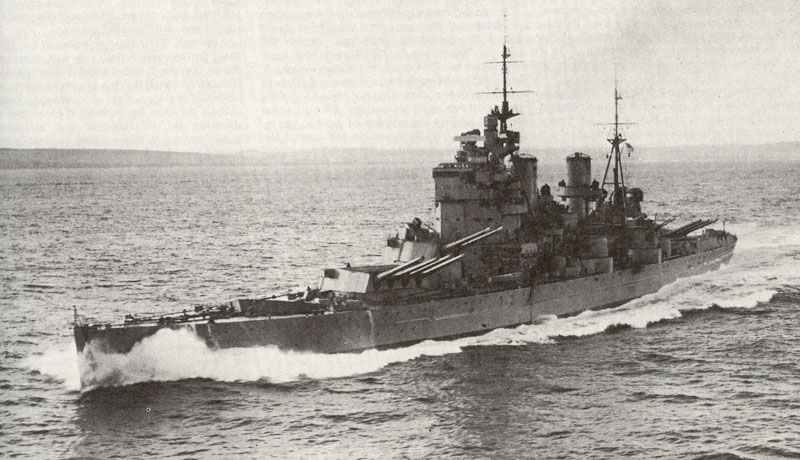
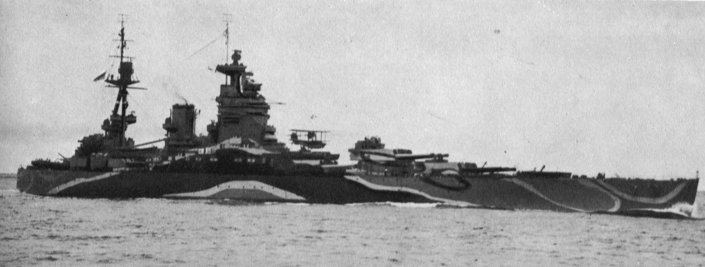
HMS King George V (above) and HMS Rodney (below)

The torpedo from the Swordfish from the HMS Ark Royal that struck the Bismarck in her stern, jammed her rudders and wrecked her steering gear at last light on May 26th 1941, doomed that remarkable ship and her crew. It was an astounding turn of events, as just minutes before both the Germans and the British were expecting Bismarck to reach safety to fight again.

Just days before Bismarck had sunk the legendary British Battle Cruiser HMS Hood in minutes and had she persisted in her attack could have sunk the new Battleship HMS Prince of Wales. Instead, Vice Admiral Gunther Lutjens in command of the Bismarck and her consort the Heavy Cruiser Prinz Eugen decided to break off contact and make for safety in the French port of Brest.

Bismarck slipped her pursuers and allowed Prinz Eugen to escape. It seemed that nothing that the British could do would stop her from gaining the safety of the French port and with it the knowledge that she had sunk the most powerful ship in the Royal Navy and gotten away. Then out of nowhere Bismarck was spotted by a Royal Air Force Coastal Command PBY Catalina seaplane piloted by an American Naval Officer. Hours later a relatively small and slow torpedo dropped from an obsolescent Swordfish torpedo bomber, a stringbag hit the Bismarck in in her stern, wrecking her rudders and steering gear. Remarkably it was perhaps the only place that such a torpedo could have changed the developing narrative of a great German naval victory into defeat.

As darkness fell on May 26th, Bismarck, unable to steer towards Brest due to her damage and the following seas steered toward the oncoming British armada at a reduced speed. Her crew, now exhausted from countless hours on watch and at their battle stations knew that they were doomed.

Despite this the officers and sailors aboard Bismarck still labored trying in vain for a way to repair and save their their ship. As Bismarck’s engineers and damage control personnel sought at way to repair the damage on that dark night Royal Navy destroyers under the command of Captain Phillip Vian harassed her, closing to fire torpedoes and keep the exhausted crew of the mighty German ship engaged at their battle stations throughout the long night. Knowing that the end was near the Captain of the Bismarck ordered the contents of the ship’s store to be given to crew members.

photo045

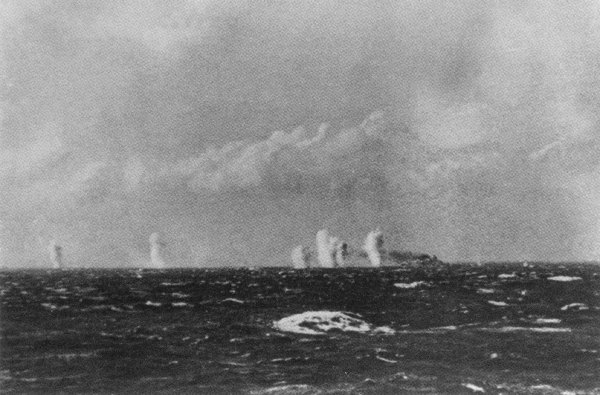
Bismarck under Fire from King George V and Rodney

As light broke on the morning of May 27th the remaining heavy units from the Home Fleet which still had enough fuel in their tanks to continue the action, the Battleships HMS King George V and HMS Rodney along with the Heavy Cruisers HMS Norfolk and HMS Dorsetshire which had broke from its convoy escort duties on the 26th closed in for the kill. Norfolk had been in on the hunt since the beginning when she and her sister ship the HMS Suffolk had discovered Bismarck and Prinz Eugen as the transited the Denmark Strait on the night of May 23rd and 24th.

WTBR_Bismarck_Sinking_pic

Bismarck from Dorsetshire

Warily the British ships closed the crippled but still powerful German battleship. At 0847 Admiral Tovey ordered British Battleships to open fire on Bismarck. The crippled German ship replied with accurate salvos and straddled Rodney. However, the British shells hammered the Bismarck. 16” shells from Rodney destroyed the command center of Bismarck and her main fire control stations. Within 30 minutes the mighty guns of the Bismarck which had sunk the Hood days before were silenced.  With no opposition from the stricken German ship the British battleships and cruisers pounded Bismarck from point blank range with 16”, 14”, 8” and 6” shells as well as torpedoes.

painting28

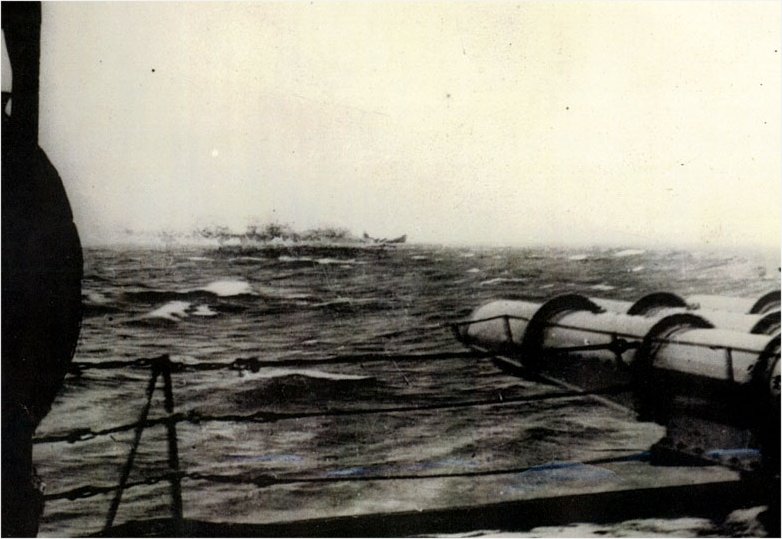
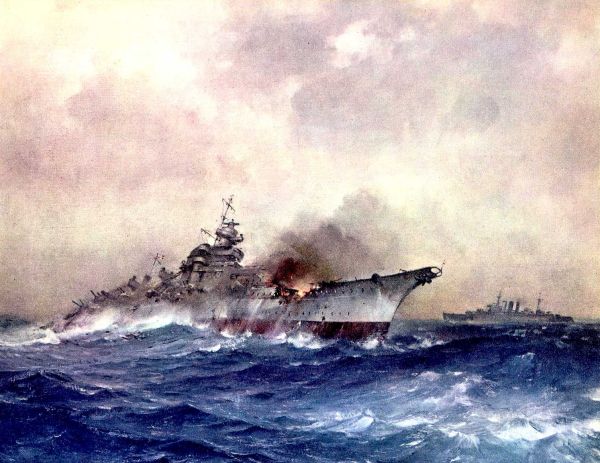
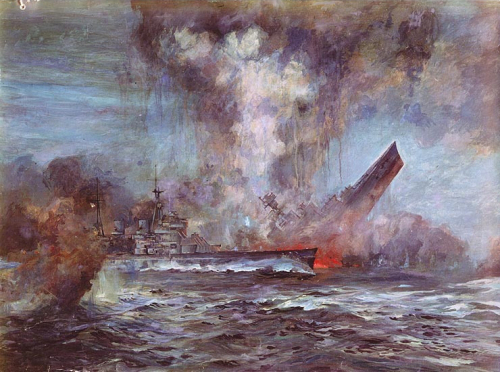
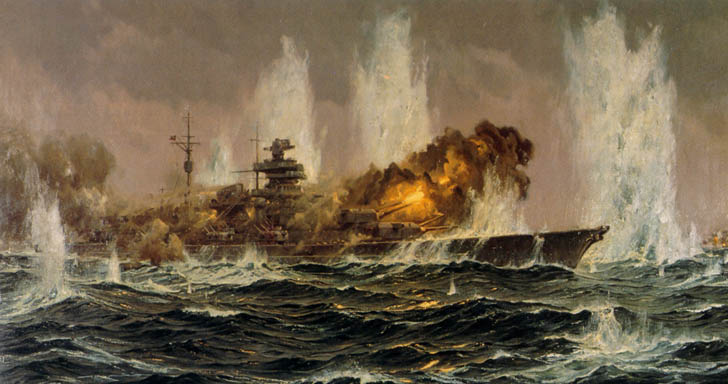
The end of the Bismarck

The British ships scored at least 400 hits on Bismarck and though they had silenced her and reduced the German ship to smoking ruins, the Bismarck remained afloat, defying her attackers. She was burning and certainly doomed but undaunted. The British battlewagons pounded Bismarck, until finally, with their adversary obviously doomed and their own fuel supplies dangerously low, Admiral Tovey ordered the battleships to break off the action. As he did this the British cruisers continued to fire their guns and torpedoes at the blazing helpless ship.

bismar1

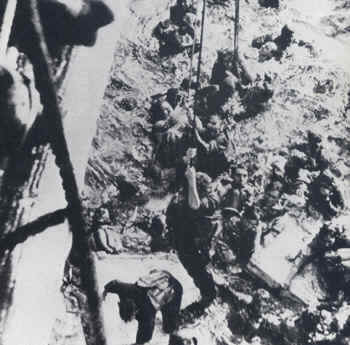
Bismarck Survivors being hauled aboard Dorsetshire

The Bismarck’s First Officer, Fregattenkapitan (Commander) Hans Oels ordered her Chief Engineer Korvettenkapitan (Lieutenant Commander) Gerhard Junack to prepare the ship for scuttling and ordered the crew to abandon ship. The watertight doors were opened by Bismarck’s damage control teams and engineers as the scuttling charges fired at about the same time as HMS Dorsetshire launched her torpedoes at Bismarck. 1039 the Bismarck slipped beneath the waves. To this day those who claim the Bismarck sank because her crew scuttled her, and those who believe the the fish fired by Dorsetshire decided the fate of the ship, but truthfully it doesn’t matter. No matter what happened Bismarck was going to sink and no German forces could save her, or her crew.

hmsdorsetshirempl1284

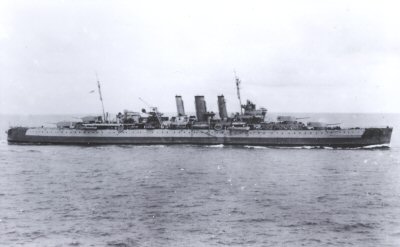
HMS Dorsetshire 1941

With the great ship headed to the depths of the North Atlantic, hundreds of survivors bobbed about in the cold Atlantic waters. Of these men, 110 were rescued by British ships, mostly by Dorchester. Then lookouts aboard the cruiser spotted the periscope of a U-Boat, and the British ships broke off their rescue operations leaving hundreds more survivors to die of exposure or their wounds in the Atlantic. In a cruel twist of fate, the U-Boat they believed they spotted had expended all of its torpedoes and was not a threat to them. A few more of the Bismarck’s survivors were rescued later by German ships or U-boats, but about 2200 German sailors went down with their ship or died awaiting rescue that never came. When it was all over just 2 officers and 113 men survived the sinking of the Bismarck, combined with the three men who survived the sinking of the Hood nearly 3700 British and German Sailors perished.

images-40

Artist’s image of the Wreck of the Bismarck

Subsequent investigations of the wreck of the Bismarck would show that all the British shells and torpedoes did not sink the Bismarck, and that it was indeed the scuttling charges that sent the mighty ship to the bottom of the Atlantic. But even had she not been scuttled, she was doomed, and the damage that she had sustained would have sent her to the bottom within 12 to 24 hours had Commander Oels not ordered Lieutenant Commander Junack to scuttle the ship.

Within a year the Ark Royal, Prince of Wales, and Dorsetshire would also lie at the bottom of the seas. Prince of Wales along the HMS Repulse was sunk by Japanese land based bombers off Malaya in 1941, Dorsetshire was sunk near Ceylon by Japanese Carrier aircraft in April 1942, and Ark Royal was torpedoed by the U-Boat U-81 in November 1941 not far from Gibraltar. Of the destroyers that harassed Bismarck the night before her sinking only one, the Polish Destroyer ORP Piorun would survive the war.

The tragedy of mission of the Bismarck is that nearly 3700 sailors died aboard the two mightiest ships in the world, and while legendary the losses of the two ships did not materially alter the course of the war. Hood’s loss though tragic did not alter the strategic equation as more new battleships of the King George V class entered service. Likewise the surfing German capital ships were harassed by RAF bomber sorties and attacks by the Royal Navy’s Fleet Air Arm. With few exceptions these ships remained confined to ports in France, Germany or Norway and slipped into irrelevance as the war progressed as the German U-Boat force took the lead in the Battle of the Atlantic. 

As an officer who has served at sea on a cruiser at war which came within minutes of a surface engagement with Iranian Revolutionary Guard patrol boats in the Northern Arabian Gulf in 2002 I have often wondered what would happened in the event of an engagement that seriously damaged or sank our ship. Thus I have a profound sense of empathy for the sailors of both sides who perished aboard the Hood and the Bismarck in the fateful days of May 1941.

I hope that no more brave sailors will have to die this way, but I know from what history teaches that tragedies like this will happen again. 

Peace

Padre Steve+

4 Comments

Filed under History, Military, Navy Ships, World War II at Sea

Stringbags vs. the Bismarck

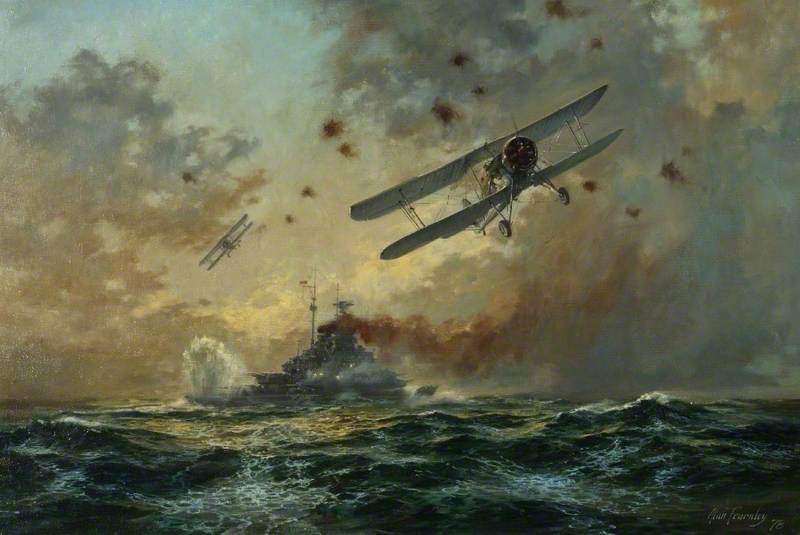
Alan Fearnley; (c) Alan Fearnley; Supplied by The Public Catalogue Foundation

Friends of Padre Steve’s World

A couple of days ago I reposted an article about the sinking of the HMS Hood by the German Battleship Bismarck. The story of the Bismarck is an epic saga of naval warfare and history. It is tragedy played out as if scripted by a playwright in three parts. The first was the sinking of the illustrious “Mighty” Hood by the Bismarck on May 24th 1941. 

The second, which I deal with today, was the pursuit and search for Bismarck by the British Home Fleet and the desperate attempt of the British to find a way, any way, to slow Bismarck down and bring her to battle, before she could return to the safety of Nazi occupied France.  The final chance to stop the mighty German Leviathan came as night fell on May 26th. 

I hope you appreciate the heroism of the men who flew the hopelessly obsolete aircraft who dealt the blow which crippled Bismarck. This is a re-wright of past articles and I will post the final article about the sinking of the Bismarck tomorrow. 

Peace

Padre Steve

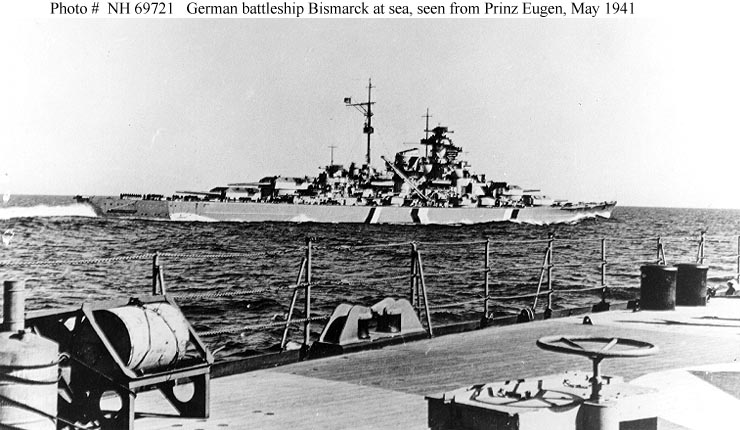
h69721

On May 24th 1941 the German Battleship Bismarck had sunk the celebrated Battlecruiser HMS Hood in the Denmark Strait and had seriously damaged the new Battleship HMS Prince of Wales. The news of the disaster stunned the Royal Navy. Fighting a war on multiple fronts and now standing alone against Hitler’s Germany the British deployed every warship available to find and sink Bismarck.

On the evening of the 24th of May Bismarck was being shadowed by the heavy cruisers HMS Norfolk and HMS Suffolk. To the east the ships of the Home Fleet, Britain’s last line of defense under the command Admiral John Tovey was making the fastest speed to intercept the Bismarck.  Far to the southeast, Vice Admiral James Sommerville’s  “Force H” comprised of the carrier HMS Ark Royal, the fast but elderly battlecruiser HMS Renown, and the light cruiser HMS Sheffield were ordered to leave the vital convoy which there were escorting and proceed to the northwest to join the hunt for the German battleship.

HMS_Ark_Royal_h85716

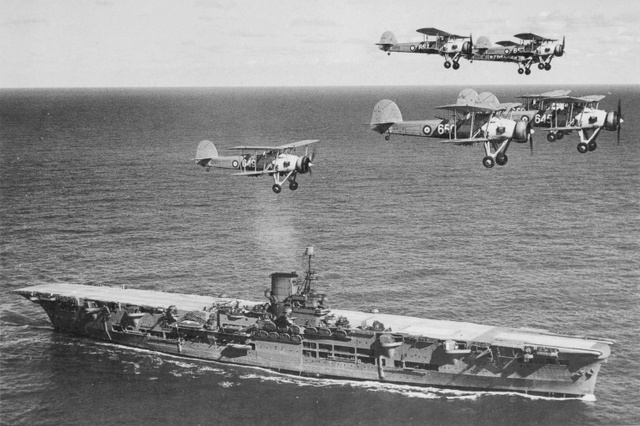
HMS Ark Royal with Swordfish in 1939

With Bismarck loose the North Atlantic Convoys on which Britain depended for her survival were vulnerable. The previous year the commander of the Bismarck task force Admiral Günther Lütjens with the Battlecruisers Scharnhorst and Gneisenau had wreaked havoc on the convoys. Now of Britain was on edge with the news of Bismarck’s break out into the Atlantic. Churchill was furious with the Navy when the Mighty Hood, the largest and most powerful ship in the Royal Navy destroyed with the loss of all but three crew members. Now every effort was directed to find and sink the Bismarck.

gallbismlastdays01

Bismarck photographed from a Swordfish from 825 Squadron

Accompanying the Home Fleet was the brand new Aircraft Carrier HMS Victorious with 825 Naval Air Squadron embarked under the command of LCDR Eugene Esmond. The squadron, like many in the Fleet Air Arm was equipped with Fairy Swordfish Torpedo Bombers. The squadron had seen action aboard other carriers in the North Atlantic, the Norway Campaign and in the Mediterranean before being assigned to the Victorious. On the night of 24 May 1941, in foul North Atlantic weather the Victorious launched nine Swordfish from a range of 120 miles in a desperate attempt to slow the Bismarck down. Esmond’s squadron scored one hit amidships on the Bismarck which did no serious damage.

780px-Swordfish_on_HMS_Victorious_before_strike_on_Bismarck

825 Squadron Swordfish on HMS Victorious

About 6 hours after the attack by Victorious’s Swordfish, Bismarck shook her pursuers and disappeared into the mists of the North Atlantic, while her consort, the Heavy Cruiser Prinz Eugen escaped to the northwest in order to conduct independent raiding operations. Not knowing the location or course of the Bismarck the Royal Navy frantically searched for the German Leviathan. Most of the ships nearest to Bismarck’s last reported position were low on fuel and others seemed too far away to be of any importance in the search.

However the British were able to intercept and decode some German communications which indicated that Lütjens had orders to steam to Brest, in German occupied France for repairs.

Though the British believed that the Bismarck could be headed toward Brest they could not be sure, as each hour passed the chances of finding and bringing Bismarck to battle diminished. For nearly 36 hours the British searched in vain for the Bismarck, and for much of the 25th Tovey’s squadron was searching in the wrong direction. Then at 1030 on the 26th of May their luck changed.

Likewise the crew of the Bismarck believed with every hour that they would soon be under the protection of Herman Goering’s Luftwaffe and safely in France, but the good fortune of the British was the worst thing that could happen to the 2200 men aboard Bismarck.

On that morning a Royal Air Force Coastal Command PBY Catalina co-piloted by US Navy Ensign Leonard Smith found the Bismarck. Once Smith transmitted Bismarck’s location every available ship converged on her location but unless something could be done to slow the German down the chances bringing her to battle diminished by the hour.

The only heavy forces close enough to successfully engage Bismarck, Tovey’s battleships HMS King George V and HMS Rodney were over 100 miles behind Bismarck, too far away unless Bismarck changed course or could be slowed down. Somerville’s Force H to the south did not have the combat power to survive a surface engagement with the Bismarck should they encounter the Bismarck without the support of other heavy fleet units. Even so Sommerville was willing to risk the Renown in a suicidal action to bring Bismarck to battle if it would allow Tovey to catch her before she could escape. Desperation was the order of the day for both sides.

HMS_Ark_Royal_swordfish

820 Squadron Swordfish returning to Ark Royal after the attack on Bismarck

The situation was desperate, if Bismarck could not be slowed down she would be in range of heavy Luftwaffe Air support as well as support from U-Boats and destroyers based in France. Unless something akin to a miracle occurred Bismarck would join the Scharnhorst and Gneisenau in Brest and with the addition of Bismarck’s sister-ship Tirpitz form a surface squadron strong enough to devastate British shipping in the Atlantic.

Ark Royal’s aircraft were the last hope of slowing down Bismarck before she could effect her escape and emerge from the Atlantic after having dealt the Royal Navy a devastating blow.

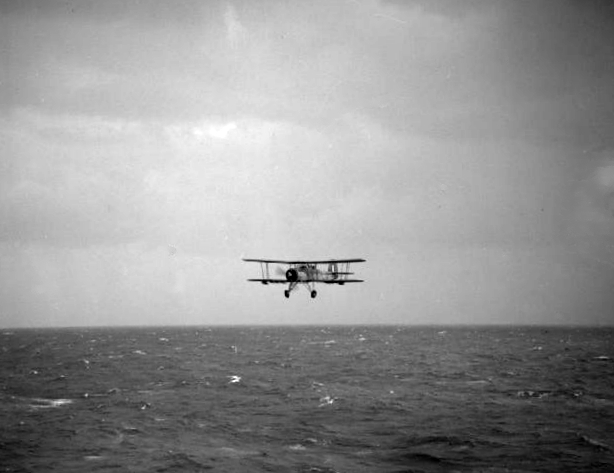
The strike aircraft available on Ark Royal were the most unlikely aircraft imaginable to successfully carry out such a mission. Ark Royal’s 820 Squadron, like Victorious’ 824 Squadron was equipped with Fairy Swordfish Mk 1 Torpedo Bombers. These were biplanes with their crew compartment exposed to the weather.

Introduced to the Navy in 1936 the aircraft was an antique compared with most aircraft of its day. Likewise the Mark XII 18” torpedo carried by the aircraft was smaller or slower and equipped with a less powerful warhead than comparable torpedoes used by other navies. Despite their limitations the venerable Swordfish had performed admirably during the early part of the war sinking or damaging three Italian battleships at Taranto in November 1940. Their success against the Italians at Taranto gave inspiration to the Japanese for their attack against the U.S. Pacific Fleet at Pearl Harbor the following year. But now, in the face of foul weather and a powerful opponent the Swordfish were all the Royal Navy had left to stop Bismarck before she could make her escape.

gallbismlastdays03

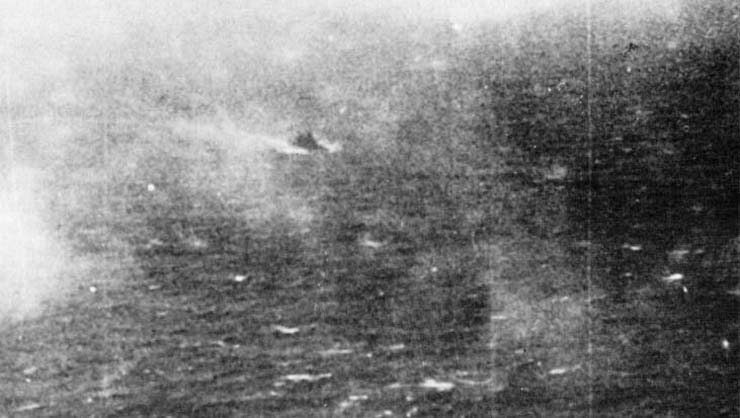
Bismarck steering erratically after the torpedo hit to her stern

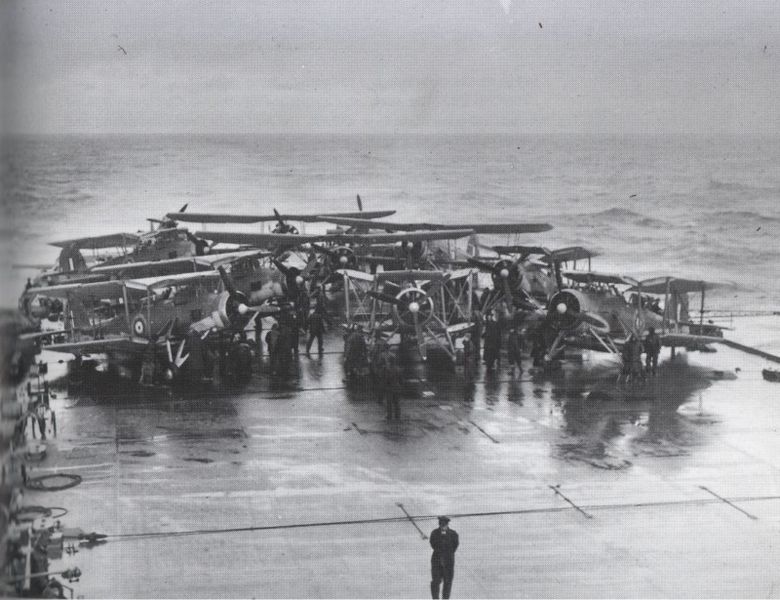
With that in mind  Sommerville in sent his light cruiser, the  HMS Sheffield ahead to shadow Bismarck while Ark Royal closed in to launch her Swordfish against Bismarck. The first wave of aircraft strike, unaware Sheffield was near Bismarck mistakenly attacked the British cruiser. Thankfully, the new design magnetic detonators failed to detonate the torpedoes saving Sheffield from destruction. With little daylight left the aircraft returned to Ark Royal where they rearmed with torpedoes equipped with contact fuzes and refueled by flight deck crew laboring in rain and 50 knot winds blowing across the carrier’s flight deck. Just before 8 p.m. 15 Swordfish of 820 Squadron took off for what they knew was the very last chance to attack Bismarck before night fell. If they failed Bismarck would most certainly escape.

As darkness began to fall the 15 Swordfish from 820 Squadron descended through the clouds to attack the German ship. Just fifteen obsolete aircraft and thirty men attacking the most powerful warship afloat. They dispersed and attacked from all points of the compass. Bismarck twisted and turned and fired all of her guns at the attacking aircraft. The Germans fired with every weapon available, even the 15″ guns of her main battery, which she fired her into the ocean ahead of the Swordfish. It appeared for a moment that the Bismarck had successfully avoided serious damage. All but two torpedoes missed.  One torpedo struck the German midships and barely dented her massive armor. However a second torpedo, launched by a Swordfish piloted by Lieutenant John Moffat hit Bismarck in her weakly armored stern. The hit jammed Bismarck’s port rudder at a 12 degree angle, and destroyed her steering gear. The weather was such that German damage control teams could not repair the damage. Bismarck now steamed in circles, unable to maneuver. This enabling Tovey with King George V, Rodney, the heavy cruisers Norfolk and Dorchester, as well as a number of destroyers to catch up with the elusive German.

The attacks of the antiquated Swordfish on the Bismarck achieved results that no one in the Royal Navy expected. When reports indicated that Bismarck had reversed course following the torpedo attack Tovey could not believe them. It was only when lookouts aboard Sheffield confirmed the reports from the Swordfish that Tovey realized that Bismarck must have been damaged and was unable to maneuver.

It was a dramatic and unexpected turn of events. The German crew sank into gloom as the night went on and they dealt with torpedo attacks from the British Destroyers as Tovey’s battleships moved in for the kill.

To be continued…

Leave a comment

Filed under aircraft, History, Military, Navy Ships, World War II at Sea, world war two in europe

The Memorial Day Order

memorial-day-traditions_1399868491

“It is rather for us to be here dedicated to the great task remaining before us — that from these honored dead we take increased devotion to that cause for which they gave the last full measure of devotion — that we here highly resolve that these dead shall not have died in vain — that this nation, under God, shall have a new birth of freedom — and that government of the people, by the people, for the people, shall not perish from the earth.” Abraham Lincoln the Gettysburg Address 

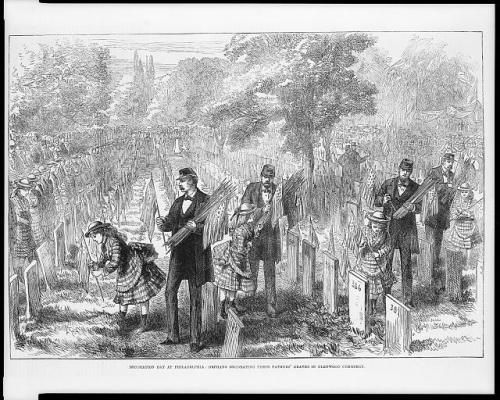
As we contemplate the importance of Memorial Day and remember the men and women who gave their lives for this country it is important to remember why we do this. Memorial Day grew out of local observances following the Civil War, a war that claimed the lives of over 620,000 American Soldiers from the Union and the Confederacy. New demographic studies by historians estimate the losses at closer to 750,000. Hundreds of thousands of other people had they lives shattered by the war, killed, wounded, maimed, crippled, shattered in mind and spirit, the country in many places devastated by war’s destruction. Using the 620,000 number that would have meant that 2.5% of the population of the country died in the war. People needed to make sense of the losses.

To put this in perspective, if the same number of Americans were to die today in a way the total would be over seven million people. Seven million my friends. War reached into every home in some way, and sadly or perhaps thankfully we have no concept of such losses today.

logan_engraving

In 1868, Major General John Logan who had been an excellent corps commander during the war was serving as the Commander of the nation’s first true Veterans organization, the Grand Army of the Republic which gave those veterans a place of refuge in a country that was leaving them behind and forgetting their sacrifice in the name of westward expansion and a growing economy. Let’s face it, money has almost always been more important to Americans than the troops who sacrificed their lives for the nation, but I digress…

Anyway General Logan issued this order on May 5th 1868:

HEADQUARTERS GRAND ARMY OF THE REPUBLIC, General Orders No.11, WASHINGTON, D.C., May 5, 1868

I. The 30th day of May, 1868, is designated for the purpose of strewing with flowers or otherwise decorating the graves of comrades who died in defense of their country during the late rebellion, and whose bodies now lie in almost every city, village, and hamlet church-yard in the land. In this observance no form of ceremony is prescribed, but posts and comrades will in their own way arrange such fitting services and testimonials of respect as circumstances may permit.

We are organized, comrades, as our regulations tell us, for the purpose among other things, “of preserving and strengthening those kind and fraternal feelings which have bound together the soldiers, sailors, and marines who united to suppress the late rebellion.” What can aid more to assure this result than cherishing tenderly the memory of our heroic dead, who made their breasts a barricade between our country and its foes? Their soldier lives were the reveille of freedom to a race in chains, and their deaths the tattoo of rebellious tyranny in arms. We should guard their graves with sacred vigilance. All that the consecrated wealth and taste of the nation can add to their adornment and security is but a fitting tribute to the memory of her slain defenders. Let no wanton foot tread rudely on such hallowed grounds. Let pleasant paths invite the coming and going of reverent visitors and fond mourners. Let no vandalism of avarice or neglect, no ravages of time testify to the present or to the coming generations that we have forgotten as a people the cost of a free and undivided republic.

If our eyes grow dull, other hands slack, and other hearts cold in the solemn trust, ours shall keep it well as long as the light and warmth of life remain to us.

Let us, then, at the time appointed gather around their sacred remains and garland the passionless mounds above them with the choicest flowers of spring-time; let us raise above them the dear old flag they saved from dishonor; let us in this solemn presence renew our pledges to aid and assist those whom they have left among us a sacred charge upon a nation’s gratitude, the soldier’s and sailor’s widow and orphan.

II. It is the purpose of the Commander-in-Chief to inaugurate this observance with the hope that it will be kept up from year to year, while a survivor of the war remains to honor the memory of his departed comrades. He earnestly desires the public press to lend its friendly aid in bringing to the notice of comrades in all parts of the country in time for simultaneous compliance therewith.

III. Department commanders will use efforts to make this order effective.

By order of

JOHN A. LOGAN,
Commander-in-Chief

N.P. CHIPMAN,
Adjutant General

Official:
WM. T. COLLINS, A.A.G.

decoration-day1

General Logan’s order is remarkable in its frankness and the understanding of the war in the immediate context of its conclusion. In 1868 the day would be observed at 183 cemeteries in 27 States and the following year over 300 cemeteries. Michigan was the first state to make the day a holiday and by 1890 all states in the North had made it so. In the South there were similar observances but the meaning attributed to the events and the sacrifices of the Soldiers of both sides was interpreted quite differently. In the North the Veterans overwhelmingly saw themselves as the saviors of the Union and the liberators of the Slaves. In South it was about the sacrifices of Confederate soldiers in what became known as the “Lost Cause.” But in both regions and all states, the surviving Soldiers, family members and communities honored their dead.

1-oliver-wendell-holmes-jr-1841-1935-everett

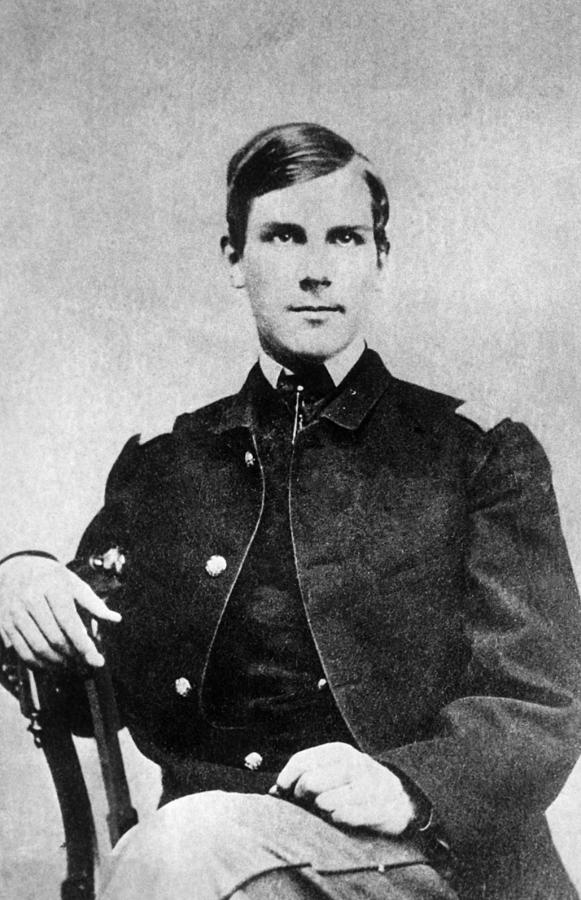
In 1884 Oliver Wendell Holmes Jr. and Frederick Douglass both spoke about the meaning of the sacrifice made by so many.

Holmes, a veteran of the war who had been wounded at Antietam ended his Decoration Day 1884 speech:

“But grief is not the end of all…Our dead brothers still live for us, and bid us think of life, not death, — of life to which in their youth they lent the passion and glory of the spring. As I listen, the great chorus of life and joy begins again, and amid the awful orchestra of seen and unseen powers and destinies of good and evil our trumpets sound once more a note of daring, hope, and will.”

Douglass.JPG

Douglass, the former slave and abolitionist who lobbied Lincoln for emancipation and to give Blacks the chance to serve their country had two of his sons serve in the war spoke these wars:

“Dark and sad will be the hour to this nation when it forgets to pay grateful homage to its greatest benefactors. The offering we bring to-day is due alike to the patriot soldiers dead and their noble comrades who still live; for, whether living or dead, whether in time or eternity, the loyal soldiers who imperiled all for country and freedom are one and inseparable.”

It is important for the country not to forget those who served and the cost of those who have given the last full measure of devotion to duty and those who still carry the scars of war on their bodies and in their minds and spirits. I am one of the latter and I have known too many of the former.  Maybe that is why am so distrustful of those who advocate for war but have no skin in the game.

An Alsatian-German Soldier named Guy Sager wrote in his book The Forgotten Soldier: 

“Too many people learn about war with no inconvenience to themselves. They read about Verdun or Stalingrad without comprehension, sitting in a comfortable armchair, with their feet beside the fire, preparing to go about their business the next day, as usual…One should read about war standing up, late at night, when one is tired, as I am writing about it now, at dawn, while my asthma attack wears off. And even now, in my sleepless exhaustion, how gentle and easy peace seems!”

I agree with him and pray that those who direct the course of this nation will take the words of General Logan, Oliver Wendell Holmes Jr., Frederick Douglass and Guy Sager to heart before they embark on war, and when they remember those that have served.

May we never forget.

Peace

Padre Steve+


6 Comments

Filed under civil war, Gettysburg, History, iraq,afghanistan, Military, Political Commentary

They Shall Not Have Died in Vain: Memorial Day 2015

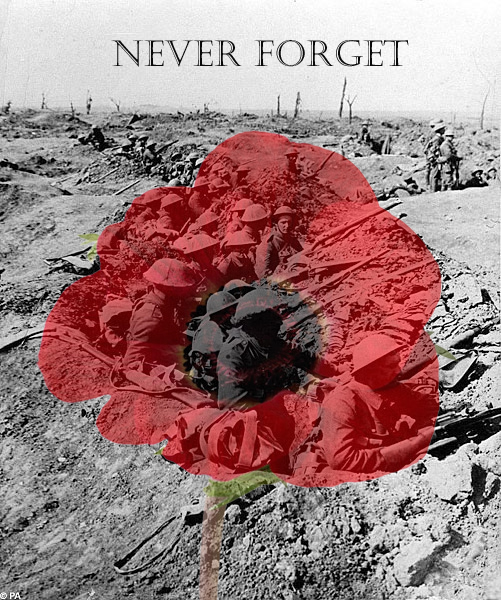
Remembrance_Day___Poppy_Day_by_daliscar

In Flanders Fields

John McCrae, 1915.

In Flanders fields the poppies blow

Between the crosses, row on row

That mark our place; and in the sky

The larks, still bravely singing, fly

Scarce heard amid the guns below.

We are the Dead. Short days ago

We lived, felt dawn, saw sunset glow,

Loved and were loved, and now we lie

In Flanders fields.

Take up our quarrel with the foe:

To you from failing hands we throw

The torch; be yours to hold it high.

If ye break faith with us who die

We shall not sleep, though poppies grow

In Flanders fields.

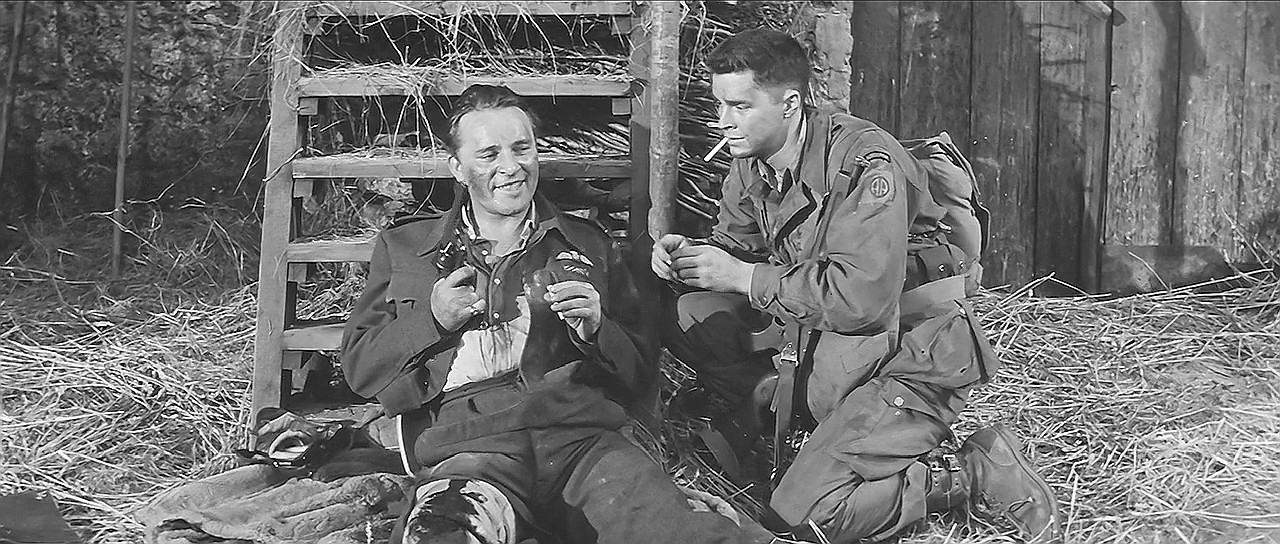
There is a poignant scene in the film The Longest Day in which Richard Burton, playing the wounded British Royal Air Force Flying Officer David Campbell looks at the body of a dead German soldier and says to an American paratrooper who is lost from his unit: 

“It’s funny isn’t it. He’s dead, I’m crippled, you’re lost. Suppose it’s always like that. I mean war.” 

LD20

Back when the movie was filmed in the early 1960s there were still many World War II veterans around and the United States and most Western European nations still had some form of draft or conscription which ensured that most people still had some connection with the military. It’s not like that now. In the United States far these than 1% of the population is serving in the military, and this includes the National Guard and reserves. The numbers are similar throughout Western Europe. Those who have served in combat or even deployed to combat theaters are far fewer. As a result the people of the United States and Western Europe as a whole are so disconnected from military service, not to mention the terrible human cost that is war. As William Tecumseh Sherman said: War is Hell. 

I came back a different man from Iraq. It seems that for me with every passing year Memorial Day becomes more of a melancholy observance. It is a weekend and observance that I feel deeply having lost friends in war and served in Iraq as well as Operation Enduring Freedom. It is also a day in which I feel more and more disconnected from the vast majority of my fellow Americans. I don’t know, but just from my observation it seems that for most Americans the weekend serves as not much more than the end of the school year and the beginning of the summer holiday and vacation season.

Now I could be wrong, but it seems to me that for most Americans, the vast majority who have themselves never served a day in uniform and who have no more than a passing relationship with anyone who is either serving in our current wars or has served in any war, that war is at best a spectator sport.

This is an attitude that has been nurtured by our politicians of all parties, political pundits and preachers for decades. As a result there is a grave disconnect between the society at large and the men and women who serve in the military and in our wars.

To be fair I don’t think it is a matter of ordinary people not caring, not that at all. Many do and I am thankful to them. That being said there are many who though they say they support the troops find war to be some sort of sporting event where we send our heroes out to do battle against the enemies of freedom, while making no sacrifices themselves and even call military health care, retirement benefits and disability pensions “entitlement programs” which need to be reigned in. Yes, that is right. Send the volunteers to war and then abandon them. Sadly, with the exception of the end of World War Two, this is always how this nation has treated its veterans and their families.

The real fact of the matter is that the wars that we have fought since World War II have not been national affairs. If they were we would not be continually fighting wars that most people neither understand and which in many if not most cases we would be better off staying out of completely. That being said I am appreciative of those who do things to care for and honor our veterans, honor our fallen and do practical things for the survivors. There are some really wonderful people, many who have never served who do what they can for those who fight and die in or come back forever changed from these misbegotten and unpopular wars.

At the same time there are a lot of what I call War Porn addicts, especially the pundits, politicians and preachers who cannot get enough of war. As a Christian I hate to say that many of the worst of the war porn addicts are the supposedly Christian pundits, politicians and preachers who cannot seem to find enough new wars to get us involved in even as we struggle to deal with what is on our plate already. If you ask me these sons-of-bitches are traitors who do not love the troops, do not love this country and should be forced into the front line so they can see, smell and taste death.

What I find the most offensive are the war mongers and profiteers who have never served. I feel this way about those who did all that they could to avoid serving in the military and those who did the very minimum to satisfy outward appearances of service while avoiding anything difficult, especially deployment to combat zones. Of the latter I can think of five to six currently serving and very outspoken conservative members of the House of Representatives and the Senate that fit the description. I shan’t mention the members of the previous Presidential administration who through their outright lies caused the deaths of nearly 4500 American military personnel in Iraq. I speak about men who in their writings, their appearances on news networks and their think tanks and corporations that do nothing but profit off of war. Some are current or former politicians, others supposedly “academics” and others men who smell a profit in war. 

memorial-day1-300x225

I find such people to be loathsome and wonder how on Memorial Day weekend they can show their faces. But then they are rather shameless. Sometimes their actions make me wonder if the sacrifices made by those who serve are in vain. However, I strive to resist that and pray that our sacrifices will not be in vain. While they profit from war others pay the bill and it has always been this way. Marine Corps Major General Smedley Butler, a two time winner of the Congressional Medal of Honor wrote after World War One in his book War is a Racket:

“This bill renders a horrible accounting. Newly placed gravestones. Mangled bodies. Shattered minds. Broken hearts and homes. Economic instability. Depression and all of its attendant miseries. Back -breaking taxation for generations and generations. For a great many years as a soldier I had a suspicion that war was a racket; not only until I retired to civilian life did I fully realize it….”

481801_10151367001287059_1003164983_n-1.jpg

Maybe I feel this way because I grew up in a military family where my dad was frequently deployed and served in Vietnam, a place where some of my friends fathers died, and because I have been in the military 32 years between the Army and the Navy. Maybe it is partly because I am a military historian, theologian, priest and chaplain who has seen the horrors of war and the wounds that remain for life in the bodies, minds and spirits of those that fight in them. I cannot speak of how my heart feels when I see young men and women, wounded in war, their lives forever changed bravely struggling to go on even as the war mongers, war profiteers and chicken-hawks profit off of their suffering. As I said before, these people are traitors and if I had my way we would drive them at bayonet point into the arms of the Islamic State so they can taste what war is all about. Maybe then these sons-of-bitches would think twice before sending another young American to die so they might make a profit.

So for me this is a rather melancholy time. A time where I struggle a time when I get so angry. That being said I also echo the words of Civil War Veteran and Supreme Court Justice Oliver Wendell Holmes who spoke these words in 1895:

“even if those who come after us are to forget all that we hold dear, and the future is to teach and kindle its children in ways as yet unrevealed, it is enough for us that this day is dear and sacred…. nevertheless, the generation that carried on the war has been set apart by its experience. Through our great good fortune, in our youth our hearts were touched with fire. It was given to us to learn at the outset that life is a profound and passionate thing. While we are permitted to scorn nothing but indifference, and do not pretend to undervalue the worldly rewards of ambition, we have seen with our own eyes, beyond and above the gold fields, the snowy heights of honor, and it is for us to bear the report to those who come after us.”

175

I honor the fallen, my brothers and sisters who have given the last full measure of devotion in serving this country, those that I know personally or have served with and those who did so before I was every born. Why you might ask? 

The reason is simple and I think that Abraham Lincoln said it best as he closed his Gettysburg Address:

“It is for us the living, rather, to be dedicated here to the unfinished work which they who fought here have thus far so nobly advanced. It is rather for us to be here dedicated to the great task remaining before us — that from these honored dead we take increased devotion to that cause for which they gave the last full measure of devotion — that we here highly resolve that these dead shall not have died in vain — that this nation, under God, shall have a new birth of freedom — and that government of the people, by the people, for the people, shall not perish from the earth.”

Peace

Padre Steve+

3 Comments

Filed under History, iraq, iraq,afghanistan, Military, News and current events, Political Commentary, PTSD, Tour in Iraq, vietnam, War on Terrorism, world war one, world war two in europe

Remembering the “Mighty Hood” and the Battle of the Denmark Strait

Friends of Padre Steve’s World
It has been another busy day in a busy Memorial Day Weekend as we have family from California visiting beginning tomorrow. Those of you who follow this site know that I serve as a Navy Chaplain and grew up in a Navy family. As such from an early age I became enamored with all things navy, especially the great warships and naval battles dating to antiquity.
I first became familiar with the story of the HMS Hood and the German Battleship Bismarck in 4th grade when I read C.S. Forester’s Classic “Sink the Bismarck” Not long after I saw the film by the same name.
The story is tragic. Hood and Bismarck were the greatest and most powerful battleships in the world in May 1941. Hood was the pride of the Royal Navy, and had been the symbol of that navy’s dominance on the high seas for over two decades. Bismarck was the great Leviathan of the German Kriegsmarine. Both were legendary in life and death.
Within a span of three days both of these great ships were at the bottom of the North Atlantic taking about 3500 of the approximately 3650 sailors serving aboard them to a watery grave.
The story has been told and retold but to me, this man who has gone down to the sea in ships, it never gets old.
Peace
Padre Steve+

padresteve's avatarThe Inglorius Padre Steve's World

hms-hood-sinking11Artist rendition of the Loss of the HMS Hood

Seventy-three years ago today the “Mighty Hood” was sunk by the German Battleship Bismarck. It is an anniversary that I always mark. I first read about this battle in C.S Forrester’s little book Hunting the Bismarck which was used as the screenplay for the 1960 film Sink the Bismarck. This essay is in honor of the gallant HMS Hood and her crew.  It is fitting although the HMS Hood and her killer, the German battleship Bismarck were American. Both were great ships manned by gallant crews and the loss of both ships was tragic, especially from the aspect of the great loss of human life. May we never forget the sacrifice of these men and all others who have gone down to the sea in great ships.

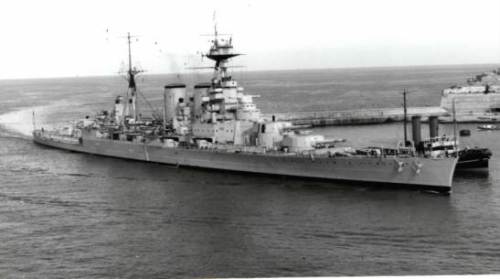
hood-malta1HMS Hood at Malta

There are some warships and naval engagements which assume…

View original post 1,910 more words

Leave a comment

Filed under Loose thoughts and musings

“The Offering We Bring…” Remembering the First Memorial Day

Friends of Padre Steve’s World

This weekend is Memorial Day Weekend and I will be publishing a number of old and possibly new articles reflecting on it.
To me it is a very important holiday as it calls us to reflect on those who have given the last full measure of devotion for this country. It is not about guys like me who are currently serving or even about veternas who are still alive. It is about those who died, either in war or from the wounds of war.
It is a day that we should reflect on in a serious and sober manner for so few serve even now. Memorial Day is usually somewhat melancholy for me because it have known, served with or been friends with too many who never made it home or who died later, sometimes at their own hand, from the physical, psychological and spiritual wounds of war. I think of them often.
The men and women that we hay homage to this weekend still matter, and what they did and suffered needs to be remembered. Today’s article is about the first Memorial Day, a when the recently freed formers slaves of Charleston, South Carolina honored the Union soldiers who had died of abuse, malnutrition, neglect and disease at the hands of their Confederate captors.
I do hope that you will enjoy it and that the story will inspire you, if nothing else, to take a moment to reflect.
Peace
Padre Steve+

padresteve's avatarThe Inglorius Padre Steve's World

racecourse_t600

“Dark and sad will be the hour to this nation when it forgets to pay grateful homage to its greatest benefactors. The offering we bring to-day is due alike to the patriot soldiers dead and their noble comrades who still live; for, whether living or dead, whether in time or eternity, the loyal soldiers who imperiled all for country and freedom are one and inseparable.” From Frederick Douglass’ Memorial Day Speech 1884

Memorial Day, at one time known as Decoration Day is one of our most sacred civil holidays that we celebrate in the United States, or at least it should be. It was a holiday born out of the shedding of the blood of about 600,000 American soldiers, from the North and the South in the Civil War, a singular event that still echoes in our history and in some sense defines who we are. The sad thing is…

View original post 1,609 more words

Leave a comment

Filed under Loose thoughts and musings

Mr. Jefferson BUILD UP THAT WALL! 

  
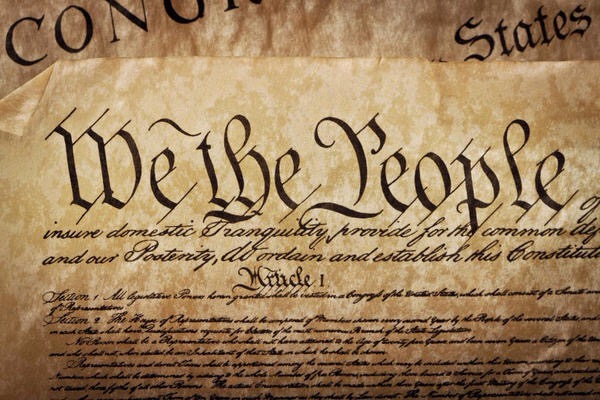
I don’t know about you but I am sick and tired of people, no matter what their religious belief in this country who use the Constitutionally protections extended to religious freedom in manners that the founders of our country never would have imagined. The fact that those basic religious freedoms are not in danger in any way is irrelevant to true believers  who in their insecurity need to create new laws specifically crafted to allow them to discriminate against others based on their supposedly sincere religious beliefs. Sadly, and I say this as a Christian, the vast majority of people doing this are people that claim to be Christians. 

Thomas Jefferson in his wonderful letter to the Virginia Baptist Association in 1808, in a letter the echoed his letter to the Danbury Baptist Association of of 1802 in which he referred that the legislature in enacting the dual provisions of religious liberty in the Constitution had built up “a wall of separation between Church and State” noted: 

“Because religious belief, or non belief, is such an important part of every person’s life, freedom of religion affects every individual. Religious institutions that use government power to support themselves and force their views of other faiths, or no faith, undermine all our civil rights. Morever, state support of an established religion tends to make the clergy unresponsive to their own people, and leads to corruption in religion itself. Erecting the “wall of separation between church and state,” therefore, is absolutely essential in a free society.” 

You see my friends, Jeferson and the other courageous men who so carefully crafted this wall of separation had real experience with the abuses by church-state and the incestuous clergy who used state power to prop up themselves and their churches and to persecution those that refused to submit to their control. Likewise there were religious groups in the recently independent former colonies like the Baptists who in Virginia and other states, as well as the Quakers in Massachusetts who were victims of such persecution, and they were determined not to let it happen here through the marriage of church and state. 

In fact Jefferson was was convinced that no specific God or religion be established, and not only in the Constitution of the United States, but in his own home state, the Commonwealth of Virginia. There Jefferson authored the Virginia a religious liberty bill which was passed, but which met with considerable opposition from faithful Christians. Reflecting on that legislation Jefferson wrote this in 1821:

“[When] the [Virginia] bill for the establishment of religious freedom…was finally passed,…a singular proposition proved that it’s protection of opinion was meant to be universal. Where the preamble declares that coercion is a departure from the holy author of our religion, an ammendment was proposed, by inserting “Jesus Christ,” so that it should read “a departure from the plan of Jesus Christ, the holy author of our religion.” The insertion was rejected by a great majority, in proof tha they meant to comprehend within the mantle of its protection the Jew and the Gentile, the Christian and the Mahamoten, the Hindoo and the infidel of every denomination.”

Sadly, jefferson’s words are twisted, rejected and even despised by the authors of the Religious Liberty Resoration Acts being enacted in state houses around the country. Not only are the state legislatures enacting laws meant only to provide Christians the  protection and the police power of the state to discriminate against any person, or group based on religious belief. Our founders, especially Jefferson and Madison who have found that incomprehensible, but then they would certainly not be surprised because they had seen it and lived under it during the English Adminstration of the colonies. They also understood human nature very well. 

Thus I think that we should applaud Thomas Jefferson and like Christopher Hitchens exclaim “Mr. Jefferson. BUILD UP THAT WALL!” 

However that wall is being torn down by the descendants of Christians who longed to be free from the coercion and evil wrought by the marriage of church and state, a marriage which Jefferson so wisely noted harmed the church as much as the state. 

I have spent the better part of my adult life as a military chaplain defending and protecting the rights of others to their free exercise of reglion whether or not I agreed with them. I held and still hold that to be a sacred duty of my commission and office. I can also state that even most people who did not agree with regarding my beliefs respected me and still consult me because first they knew that I cared about them and secondly that they knew that I would do all within my power to protect their freedom the excercise their religion, or to have no religion and not to be penalized for it. 

But that being said I have found that I am increasingly isolated by the fervent relionists who have highjacked the understanding of religious freedom to mean theirs and only theirs and who use the battering ram of the legislature to destroy Mr. Jefferson’s “Wall.” Sadly they are to blind to see that their actions are a two-edged sword which once precedence has been established can be turned on them with a vengeance. 

Last night I was watching one of my favorite television series, Boston Legal. My favorite character in the show is the lawyer played by James Spader, one Alan Shore. In the episode Whose God is it Anyway  Spader’s character is defending a friend form charges or religious discrimination in the workplace, and his character, Alan Shore delivers this remarkable closing, which because of the unrelenting actions of many of my Christian Brothers and Sisters in putting their rights and privileges as Christians over those of other citizens. That my friends is profoundly dangerous. 

By doing so they through their intense hubris not only harm others as they attempt to control them by the police power of the state but damage their own credibility and the religious liberty of Americans yet to be born. It is no wonder that this generation of American Christianity is shedding members at a rate never seen in this country before, and driving those who they might want to bring to faith away. But I digress…

In that episode of Boston Legal something that I wish I had thought of and said years ago and which I am certain that if  Jefferson, Madison and so many of our founders would agree with if they had lived to see the depths of dishonesty of Christian individuals, businesses and legislatures have sunk in their abuse of others through their unremitting pursuit of their religious freedom. That is not just at home where they enact laws allowing them to discriminate, but through their apocalyptic machinations to bring the world to war killing billions of people just so Jesus will come back. Though they would deny it, their ultimate goals, albeit in the name of a different  God, are little different than that the Islamic State, Al Qaida, the Iranian Mullahs or Hezbollah. That my friends should scare the living shit out of any rational person. 

So here is that closing:

“I don’t know about you but I’m getting a little tired of the religious freedom thing. When did religion get such a good name anyway. Be it the Crusades, the reformation genocides, the troubles in Northern Ireland, the Middle East, mass slaughters in the name of Allah, the obligatory reciprocal retributions. Hundreds of millions have died in religious conflicts. Hitler did his business in the name of his creator. Religious extremism, it’s our greatest threat today, a holy jihad. If we’re not ready to strip religion of its sacred cow status, how about we at least scale back on the Constitutoional dogma exalting it as all get out….

Everyone should get to believe in his God, pray to his God, worship his God of course. But to impose him on others, to victimize others in his name?  The founding fathers set out to prevent persecution, not license it…

At a certain point we have to say “enough with this freedom of religion crap. Yuck, yuck, yuck. I know, I’ll get letters….” 

To that I can only say “Amen!” 

So with that I bid you a good day.

Peace

Padre Steve+ 

Leave a comment

Filed under civil rights, laws and legislation, LGBT issues, News and current events, Religion

Barry Goldwater was Right: Religious Leaders Endanger American Democracy

Friends of Padre Steve’s World

Another somewhat stressful day as we wait to see if Judy is going to have surgery this morning. Since I have no idea if I will have the opportunity to write or post anything else today I am re-posting this article. The article is even more pertinent than when I first wrote it as the highly political and influencial leaders of the Christian Right grow more militant politically and use their clout at every level of government to crush the rights of others using the force of law and the legislative process, all the while claiming to be “victims” of religious discrimination.

It is something that I as a Christian in an incredibly small and unifluential church as well as a Navy Chaplain sworn to uphold the free-exercise rights of all those in the military find frightening, because I know that these people would have no problem crushing me and those like me underfoot as they do all they can to establish a theocracy in all but name. It is both fascinating and frightening to me as a historian to see these supposed Christians espousing the political views of early Mormon leaders Joseph Smith and Brigham Young, which are known as Theodemocracy. Of course maybe that is why so many of them end up on the Glenn Beck show.

So, until whenever,

Peace

Padre Steve+

padresteve's avatarThe Inglorius Padre Steve's World

“[I]n our country are evangelists and zealots of many different political, economic and religious persuasions whose fanatical conviction is that all thought is divinely classified into two kinds — that which is their own and that which is false and dangerous.” — Justice Robert H Jackson, American Communications Assn. v. Douds, 339 US 382, 438; 70 SCt. 674, 704 (1950)

There is just over a month remaining before the 2012 Presidential Election. The campaign on both sides has been marked by distortions and lies as are most campaigns, but the most troubling aspect to me is the behavior of many professed Christians that are leaders of the religious right who seem to be more interested in their own interests than the interests of other Americans. All pretense has been thrown away this is not about Jesus, nor is it about the American principle of religious freedom, it is about conservative…

View original post 1,273 more words

Leave a comment

Filed under Loose thoughts and musings