Category Archives: christian life

A Centurion in Jerusalem

centurions

This article is the first story in a prequel trilogy to a trilogy that I wrote about Longinus the Centurion who according to tradition commanded the detail in charge of the crucifixion of Jesus. I plan on re-publishing each segment this week as part of Holy Week and I hope that you find them interesting. Story is basically historical fiction and my imagination about what it must have been like to be a Roman officer witnessing the drama of the Passion during what we now call Holy Week.

Longinus and his men were tired. Pilate, the Governor had decided that he would travel from his Provincial capital of Caesarea in order to maintain a close watch on the Jews of Jerusalem during the annual celebration of Passover. During such times that city, the largest in the province would see its population expand exponentially as Jews from the diaspora, that is those living around the known world would make pilgrimage to the holy city.

Longinus’s men had helped provide the escort as Pilate travelled the nearly 80 miles moving up from the coastal plain where Caesarea was up to the hill country of Judea. The trip took three days as Pilate wanted to be in the city in plenty of time. The weather was conducive to the march, but though well trained Longinus’ men were not Romans but primarily recruited locally from drafts of Syrian’s and Samaritans.

Longinus never really enjoyed this assignment. He had served in other areas as a young officer and much preferred serving with and commanding Italians, Greeks, Macedonians and others to the men that he now commanded, but his duty was to serve wherever he was sent. He thought at times of his family in Italy near his home in Lanciano in the Abruzzo region near the Adriatic, missing his wife and children.

The duty of Longinus and other Romans in the region chiefly consisted of helping police the region and protecting the much despised tax collectors. One of those tax collectors, a Jewish man named Matthew had left the employ of Caesar a few years back and was now a “disciple” of some itinerant Jewish preacher named Jesus. He had heard a story from another Centurion about this preacher that made him chuckle. Evidently some Jews of the sect know as the Pharisees, a particularly strict group tried to trap the Jesus with the question of whether it was lawful to pay taxes to the Romans. They thought that they had trapped him because if he answered in the affirmative he would be rejected by them and discredited among the people, while if he answered that it was not they would have him on record as urging the people to disobey Caesar.

The Centurion who told the story said how with him standing in the background watching and listening that Jesus asked one of the Pharisees to bring him a coin. Looking at the coin he asked the man whose image was on it. The Pharisee, a bit hesitantly replied that it was “Caesar” to which Jesus, who supposedly was an unlearned but charismatic bumpkin from Galilee replied “give to Caesar what is Caesar and to God that which was God’s.” Longinus’ colleague, an outsider looking in at this curious religious dispute was amazed with the acumen of Jesus in dealing with a question that someone less intuitive could have botched with potentially fatal consequences.

The march through Samaria was particularly uneventful but as the Legionaries entered Judea, a region seething with hostility toward the Romans he and his men became more guarded, very aware of the hostility that sometimes invited violence.

They arrived about noon on Friday in order not to stir up the Jewish faithful on their sabbath and took up residence in the Fortress Antonia, the symbol of Roman might in this always rebellious city. That evening and the next day were uneventful, but on Sunday, Longinus was told to have his troops stand by in case of violence. The man named Jesus was entering the city and pandemonium was expected. According to rumor this Jesus had raised a many from the dead in Bethany the day before and was being greeted as a potential King and liberator.

The Roman presence was muted, Pilate and senior commanders not wanting to do anything that might provoke an insurrection. The troops remained on alert at the fortress while Longinus and a number of other officers went to observe events at a distance.

Longinus was amazed at what he saw. Thousands of people singing and throwing cloaks and palms along the street as Jesus, mounted on a white donkey accompanied by his disciples as well as numerous people from Bethany where he had been staying paraded down the street.

The procession moved toward the Temple where an understandably nervous delegation of Pharisees and the Priests of the Temple wondered what Jesus might do. If he was the “Messiah” that they preached about it could be a direct threat to their positions of power and provoke a Roman crackdown against them.

Jesus dismounted from the donkey and entered the Temple area, now crowed with thousands of pilgrims coming to offer sacrifice where he began to condemn the moneychangers. The moneychangers were in charge of selling animals for sacrifice to pilgrims, many of whom who could not bring their own animals for sacrifice. They were not according to what Longinus knew from his previous visits to the city at Passover and other Holy days men of good repute. They were believed to make their profit off the poor and widows and even the Romans that knew of the practice considered it less than honorable, and certainly the religious authorities were making money from their efforts.

As Jesus went into the Temple, Longinus and his fellow officers stayed back. As Gentiles their presence would create a crisis so they remained outside entrusting a Jew who worked with them to make the observation. They could hear commotion in the Temple and as they watched money changers and others came spilling out of the Temple grounds, many surrounded by their animals, lambs, doves and oxen. Longinus wondered what in the name of Jupiter was going on and soon his spy came running out of the Temple to make his report.

Slowing down as he approached Longinus he breathlessly gave his report. Jesus had taken a whip and driven out the moneychangers, condemning their activities and those of the religious leaders. Longinus had never heard of Jesus ever doing anything remotely violent before and this shocked him. He asked what else had happened and the spy reported that the Temple police and authorities did nothing and that Jesus left without further incident.

Longinus knew that the coming days could prove interesting. Going to Pilate that evening he gave his report. Pilate was quite concerned about the situation and considered it volatile. He ordered Longinus and the other officers to maintain an elevated state of readiness in case there was some sort of protest or even civil strife between the followers of Jesus and the Jewish authorities.

Longinus left Pilate and he and his fellow officers discussed the situation, briefed their subordinates and as night fell met in the tavern in the fortress where they quietly drank and wondered what the coming days might bring.

Peace

Padre Steve+

Leave a comment

Filed under christian life, faith, History, Religion

Deny the Liberty of the Enemies of God: Christian Politics

valuesvoterssummit

“We think we’ve come so far. Torture of heretics, burning of witches it’s all ancient history. Then – before you can blink an eye – suddenly it threatens to start all over again.” Captain Jean Luc Picard, Star Trek the Next Generation “The Drumhead”

I expect that this article and subject might make some people uncomfortable but it is something that I need to return to yet again.  I fear what is happening to our country, and the agenda of the politically motivated Christian Right and its leaders, especially those who are using what is known as Seven Mountains or Dominionist theology to implement laws at local and state level. These laws damage the fabric of society and encourage discrimination in order to solidify the political power of a minority of conservative Christians.

I get very frustrated and tired of the way many leaders of the American Religious Right, that political animal that only thinks of itself have worked so fervently to poison any sense of unity and community that we might have as Americans regardless of our religious faith, or lack of faith. Back in the 1940’s through the 1970’s that was unity was referred to as “American Civil Religion.” Robert Bellah defined it “at best” as a “genuine apprehension on universal and religious reality as seen in, or as one could almost say, as revealed through the experience of the American people.” (Huntington, Samuel P. Who are We? America’s Great Debate p.103) While I do have a lot of issues with the concept of American Civil Religion, and h0w it has been used to justify some pretty horrible actions undertaken by leaders of this country, as well as some harmful myths as to our system of government and God’s blessing of our actions, even the immoral ones, it did provide some positives in regard to how Americans of different faiths treated each other with respect in the public square. As Huntington noted: “America’s civil religion provides a religious blessing to what Americans feel they have in common.” (Huntington p.104)

In the decades since the United States has undergone a seismic transformation in terms of religious makeup, and while those faith traditions who dominated the religious history of our first two hundred years are still dominant in many ways, they are in decline, especially in terms of the fastest growing segment of the population, those who identify themselves as The Nones those with no religious preference. In response the more conservative and politically minded Christians of the Christian Right have launched a culture war to ensure their dominance in all areas of society. Known as Christian Dominionism, Reconstructionism, or the Seven Mountains theology it is a blatant attempt to legislate a particular type of Christianity as the law of the land. As Gary North, an adviser to Ron and Rand Paul as well as other conservative Christian political leaders wrote:

“We must use the doctrine of religious liberty to gain independence for Christian schools until we train up a generation of people who know that there is no religious neutrality, no neutral law, no neutral education, and no neutral civil government. Then they will get busy in constructing a Bible-based social, political and religious order which finally denies the religious liberty of the enemies of God.”

You can see the influence of this theology in many of the state legislatures of what are called Red States where laws specifically intended to solidify conservative Christian dominance of government which allow for legal discrimination against others, by public officials and private businesses are becoming law. Likewise, such legislatures pass laws which crush the ability of local communities to pass non-discrimination ordinances against gays. This has happened in both Arkansas and West Virginia and similar proposals are being put forth in other states.

One of the leading proponents of this theology is Dr. C. Peter Wagner who wrote a number of influential books on evangelism used in many conservative evangelical seminaries and churches. Wagner is credited with beginning what is called the New Apostolic Reformation and taught at Fuller Seminary until his retirement from teaching in 2001. Wagner has written:

“Our theological bedrock is what has been known as Dominion Theology. This means that our divine mandate is to do whatever is necessary, by the power of the Holy Spirit, to retake the dominion of God’s creation which Adam forfeited to Satan in the Garden of Eden. It is nothing less than seeing God’s kingdom coming and His will being done here on earth as it is in heaven.” Letter dated 31 May 2007

I am a Christian, albeit one with many doubts and concerns. I am a Priest and I am a Navy Chaplain, I have grown up and seen this transformation of our society, especially over the last twenty years as a chaplain in both the Army and the Navy, I have concerns in the trends I see but mostly I am concerned about this radical theology that has helped turn faith into a war zone and is destroying the fabric of American life.  In fact if you wonder why so  many of these “Christians” are doing their best to disenfranchise voters and supporting policies that have turned this country from a republic that functioned on the basis of democracy, to an oligarchy controlled by a few one only has to look to the words of the original Dominionist, the father in law of Gary North, R.J. Rushdooney:

“One faith, one law and one standard of justice did not mean democracy. The heresy of democracy has since then worked havoc in church and state . . . Christianity and democracy are inevitably enemies.” (R.J. Rushdoony, The Institutes of Biblical Law p.100)

That being said, with all the change in the composition of the population of this country I really don’t fear that change. But for the most part I fear these politically minded Christians who are bent on imposing their form of Christianity on the people of this country. There are many reasons for this. Some are more general in the way I see Christians treat others; their own wounded as well as non-believers, the political machinations of pastors and “Christian” special interest groups masquerading as ministries. Wagner once said:

“See, the problem is, is that Satan has had too much of his way in our society because he has a government! And the only way to overthrow a government is with a government. It won’t happen otherwise.”

This is radical, for it is the basis of theocracy. Franklin Graham, son of Billy used words of fear to motivate his base saying at the Liberty Counsel Awakening Conference  “But we’re going to lose everything if we don’t win in this next election – and we only have this next election, I think for our voice to be heard.”  I think that it is pathetic that Graham has to resort to such fear and loathing in order to galvanize people to fight against the rights of others not to be discriminated against.

These groups have turned the Chaplain Corps into a political football. I once found the chaplain ministry to be the epitome of how ministers of various denominations or religions should be able to work together for the benefit of others. Some of the Chaplains that I served with from across the denominational and religious spectrum helped ingrain a respect and care for others that I would never had received working in a civilian parish. While I can do this with some chaplains even today they are few and far between.  The highly politicized environment is destroying the effectiveness and community of the Chaplain Corps. As a result I plan on retiring without seeking a promotion to Captain, which I would be eligible for the promotion boards in 2016. While I may help other priests and ministers in their parishes I have no desire to work in any other form of chaplaincy when I retire.

I have been worn down by all of this and sadly the controversies are now unavoidable. As a result I have experienced a lot of pain, heartache and rejection at the hand of many Christians, some of whom I had counted as close friends, and  many of whom are pastors, priests or chaplains. To experience rejection or being shamed by people that you thought were friends is very hard, especially when that at one time you trusted them implicitly to care for you. However to be rejected by those that you trusted “in the name of God, ” or rather because you violated supposedly “correct” doctrinal beliefs about God is frightening.

It seems to me that with many Christians and churches that the “unconditional” love of God that they proclaim not really unconditional. It is totally conditional on believing what they believe or behaving in the way they think that you should.

For those that do not know me or my story I am a career military officer with over 30 years of service between the Army and Navy. I have been a chaplain since 1992 and served in the National Guard, Army Reserve, Active Duty Army and the Navy. I am a trained hospital chaplain; I have a great academic background. I went to Iraq in 2007 and came home with a terrible case of severe chronic PTSD. I still suffer from some anxiety, depression and plenty of insomnia. I find mental health care hard to get in my new assignment and I realize how woefully unprepared that our medical system, military, VA and civilian is to care for that vast numbers of veterans like me.

After Iraq I suffered a collapse of my faith and for close to two years was a practical agnostic. Only my deep sense of call and vocation kept me going and there were times that I wondered if I would be better off dead.

When faith returned through what I call my Christmas miracle it was different. I totally relate to author Anne Rice who said:

“My faith in Christ is central to my life. My conversion from a pessimistic atheist lost in a world I didn’t understand, to an optimistic believer in a universe created and sustained by a loving God is crucial to me. But following Christ does not mean following His followers. Christ is infinitely more important than Christianity and always will be, no matter what Christianity is, has been, or might become.”

I have always questioned a lot that is taught by the church, but after my crisis of faith I really began to see through the bullshit. I began to not only question things my former church taught, but openly stated my convictions about how we treat others as Christians, the equality of people in general and tolerance for those different than us including gays and Moslems who for some Christians are rather low on the scale of those that God might love. As such I openly support the LGBT community, American Moslems and Arabs in general, as well as those who adhere to other non-Christian religions, are agnostic, or even atheist when they are attacked in the media, or by supposedly Christian politicians, preachers and pundits.

After Iraq I was sickened by the crass politicization of conservative American Christianity and many of its leaders. Men and women who advocate war without end, be it real wars against “enemies” of American, or promote a culture war even against other Christians that they do not like or agree with. Of course this is all done in “Jesus name.”

Likewise I question the opulence and materialism of the church. I question the nearly cult like focus and near worship accorded to the Pastor-CEOs of the mega-churches and the television preachers and teachers. I wonder in amazement about how many of these leaders live like royalty and have devoted followers who despite repeated scandals treat them as the voice of God.

Along with the that I question the preference of many American Christian leaders for the rich and their disdain for the poor, the alien and the outcasts among us. This actually comes from baptizing capitalism and objectivist philosophy as Christian and leaving the Gospel behind.

All of that got me thrown out of a church that I had served 14 years a priest and chaplain back in 2010. I thought I had a lot of friends in that church. I still have some that keep in contact with me but after my dismissal most abandoned me. That hurts worse than anything.

In fact when I came home from Iraq in crisis and falling apart the first person who asked about how I was doing with God was not clergy. It was my first shrink. I was asked by a commanding officer after Iraq “where does a chaplain go for help?” I told him “not to other chaplains.”  The sad thing is that man who did care about me suffered untreated terrible PTSD and Traumatic Brain Injury and committed suicide in January 2014.

I have had a few experiences the past few weeks that have opened that wound again and reminded me of why I am afraid of many that call themselves Christians. I have shared some of those so I will not belabor them here.

Dietrich Bonhoeffer said:

“Many people are looking for an ear that will listen. They do not find it among Christians, because these Christians are talking where they should be listening.”

That being said I am thankful that I have a number of friends, including a good number of Christians from various backgrounds and some chaplains who have stood by me even if they disagree with my theology, politics or favorite baseball team.

That being said with the exception of such people who have been with me through thick and thin I am mostly terrified of being around conservative Christians.

Church in most cases is a frightening place for me, and the sad fact is that if I were not already a Christian there is little in American Christianity that would ever cause me to be interested in Jesus.  I can totally understand why churches are hemorrhaging members, especially young people whose religious preference is “none,” for I too am in some sense an outcast.

I would like to think that we have come so far in our understanding of people, and of civil rights. But as Jean Luc Picard said, it is threatening to happen again.

Pray for me a sinner,

Peace

Padre Steve+

8 Comments

Filed under christian life, civil rights, ethics, faith, laws and legislation, LGBT issues, philosophy, Religion

No Losers Allowed: The Hallmark of the American Church

Now, clubs and cliques, they choose and pick
And they make their interviews
Screen the undesirables
And turn down clowns and fools
But Jesus died for sinners
Losers and winners
Yes, it’s proven by His love for me and you

I have been writing a lot this week about the greed, self-centeredness and dehumanizing aspects of much of the American church. I seems that with each article that I wrote that another thought would flow and another article would be born. Now  I promise that this will be the last of these for a while, unless something else triggers me.

I know to some people that these articles are very uncomfortable because they challenge something that many hold dear. Certainly that is not the Gospel.  But, rather it is the very comfortable and insulated lives that we lead in churches which have entirely bought the crass materialism of our culture, and which seek brazen political power rather than caring for the least, the lost and the lonely.

This has been epidemic since the 1980s and has infected churches and denominations across the theological, social and political spectrum of our country. However, my real Christian formation comes from the 1960s and 1970s. I am a relic by today’s standards and I don’t mind it. There is s scene in the movie Field of Dreams where Kevin Costner’s character tracks down a writer played by James Earl Jones. I kind of reminds me of some of the looks I get when I spout ideas that are to say the least counter-cultural, but more often are an attack on the current system.

Terence Mann: Oh, my God.

Ray Kinsella: What?

Terence Mann: You’re from the sixties.

Ray Kinsella: [bashfully] Well, yeah, actually…

Terence Mann: [spraying at Ray with a insecticide sprayer] Out! Back to the sixties! Back! There’s no place for you here in the future! Get back while you still can!

But I digress…

Back in 1976 a Christian rock group called Daniel Amos from Calvary Chapel released a little song called Losers and Winners http://www.youtube.com/watch?v=J520qyIUHME which when you come to think of it is one of the most amazingly theologically correct songs ever written. Back then I had the album that it came on both on LP and 8 Track. Thankfully I was able to get a CD of it a few years ago.

The song has come back to me in a big way during the past week as I have watched watched Christian leaders and their followers delve ever deeper into the pit of Hell known as the Prosperity Gospel. Yesterday I wrote about churches and pastors that ignore, but this is only the tip of the iceberg. The fact is that many, maybe even most churches are more social clubs with a religious veneer than they are places for those beaten down by the world to come for solace, help, or even salvation.

That has been in stark contrast to the men who have been regulars at my little chapel service at the staff college. I have had the blessing of having three Lebanese Christian officers attend over the past two months. They return to Lebanon at the end of the week, but all of them have stated their disappointment with the American church, a church that they do not believe cares about Arab Christians and is more concerned with money and politics than the Gospel. I all miss them because they have helped bring a joy back to celebrating the Eucharist that I have not felt since my time in Iraq. They will go home to a country oppressed on all sides where they are the targets of not just the various types of Islamic extremists, but the American supported Israeli military. A military which many American Christians believe can do no wrong.

When it was released the song went pretty much unnoticed outside of the few that really liked the less than conventional message of Daniel Amos.

The song really is amazing because the song is more true to the Gospel so much of what is called “Christian” now, especially some of the “praise” songs that preach the militant and often hateful theology of Dominionism.

I spent many years in churches and unfortunately, or maybe fortunately for me, I have never really been in the “in crowd.” Now that I am older I really don’t want to be in the “in crowd” if it means being less than Christian in the way that I get there.

For me church is not a place to enhance my social status, nor is it a place simply to network or a place that I can use to enhance my political or social agendas. It is simple a place where believers gather to worship as well as share the Body and Blood of Christ. It is a place of refuge for all people, but especially for the wounded, the outcast and the broken.  Likewise it is a place that even unbelievers can come and be welcomed without prejudice. Didn’t Jesus say “come to me you who are weary and bear heavy burdens and I will give you rest?”

To me the church is not about being the political platform of any party or political leader, but being the redemptive voice of Jesus the Christ to a broken world.

Unfortunately now the church is viewed more for what it is against and who it rejects rather than the one who calls the broken, who will not break a bruised reed or extinguish a flickering flame.

Do you give the highest place
To someone ’cause you like his face
And turn aside those you deem less than yourself?
Well, love that is natural
Can be less than satisfactual
For we all are one, no less than anyone else

As a result people are fleeing the church or if they were not a part of the church simply turning their back on it. The “Nones” or those with no religious preference are the fastest growing segment of American faith and religion.

The message that the church is actually teaching today is a diametric opposite of the early church and it would be unrecognizable to Christians of many eras. The church is obsessed with its own power, privileges and pre-eminence and this is particularly true of its most influential preachers. Today I read about televangelist Crefo Dollar begging his congregation and television viewers for over 60 million dollars buy a state of the art Gulfstream G650 private jet so he can “spread God’s grace around the world.” But he is not alone in such behavior.

If the church today has an unspoken message it goes something like this:

We welcome you to church…If you look like us, if you hold similar political views, if you have money, if you are attractive, if your presence will benefit us… Our doors are open to you if you fit the criteria that we decide and unless you are like us, agree with us or are not of a group of people that we have determined cannot enter heaven you are welcome.

Another verse of Losers and Winners says:

Do you hail the gifted ones
And the others do you shun?
Do you speak to only those you chose?
Well, God’s love, it has no bounds
Has no ups, and it has no downs
Goes out to those who win and to those who lose

That is not just me talking but it is what polls published by the Evangelical Christian Barna Group attest. The terms used to describe Christianity are: Hypocritical, anti-homosexual, insincere, sheltered and too political. Another Barna study dealing with why young people are leaving the church included that nearly 25% of young people said “Christians demonize everything outside of the church” while 20% said that “God seems missing from my experience of church” while 22% said that “church is like a country club, only for insiders” and 36% said that they were unable “to ask my most pressing life questions in church.”  That survey was of young people of Christian backgrounds, not the unchurched.

The fact is that our obnoxious, arrogant, materialistic political and theologically insipid version of Christianity is causing great harm both inside and outside the church. It is not redemptive it is selfish and power hungry. It is not open, it is closed. We are losing our young people and those outside the church don’t want any part of us. Can you blame them? I don’t.

The funny thing is the long haired, Jesus people musicians of Daniel Amos figured this out close to 40 years ago. But then maybe they read and took seriously the message of Jesus. Maybe we should as well.

Peace

Padre Steve+

P.S. Expect some more Gettysburg and Civil War articles soon, some about baseball and some other interesting and hopefully less controversial subjects.

3 Comments

Filed under christian life, faith, history, middle east, Religion

“You Don’t Want to Be That Sick” Pastors Who Ignore

themiddle

Back when I was doing my Clinical Pastoral Education Residency at Parkland Memorial Hospital I was astounded to hear my pastor make a comment which I think was one of the most heartless that I have ever heard said from a pulpit.  The church was a large and trendy Evangelical-Charismatic Church which I had attended throughout seminary and had ordained my in October 1991.  The Pastor was recounting an incident where one of our members had been critically ill in hospital and had not been visited by him.  After the parishioner was released from hospital he asked the pastor: “How sick do I have to be for you to visit me in the hospital?”  The pastor told us his response: “Sir, you don’t want to be that sick.”

The congregation laughed at the pastor’s story and he went on to talk about how he and other senior pastors should not be doing that kind of work because it “distracted them from bigger Kingdom tasks.”  You see according to the pastor the care of sick parishioners did not contribute to the “growth” of the church and thus was a “distraction and better left to others.”

The comment struck a raw nerve now that I was dealing with the suffering and death every day of people who had been abandoned by the churches and pastors.  I lost all respect for him as a man and pastor during that sermon.  My philosophy of religion professor at Southwestern Baptist Seminary, Dr. Yandall Woodfin said: “You have not done Christian theology until you have dealt with suffering and death.”

Unfortunately my old pastor, and many more like had stopped doing Christian theology in order to be an “Apostle” and CEO.  He was “growing” the church and managing programs, but had for the most part stopped caring as in being a pastoral care giver.

Now this pastor is not alone and nor is the issue of the lack of care confined to Evangelical or Charismatic churches. The trend has has found its way across the denominational spectrum.  Sometimes this is by design as is the case of the Mega-churches.

Pastors of mega-churches are for all practical purposes CEOs of large organizations and have a multiplicity of specialized staff, but often which do little for pastoral care. Having attended a number of these churches, and worked for a prominent television evangelist I can sadly report seeing this first hand many times.

Sometimes this problem it is by default in cases such as the Roman Catholic Church.  In that church the ever worsening shortage of Priests is forcing the closure of smaller parishes and the increase of large parishes with a corresponding decrease in what Priests can do for their people.   Even very good Priests cannot keep pace with the demand of both Sacramental needs as well as pastoral care.

No matter if it is by design or default the result is similar.  The least, the lost and the lonely those “lambs” that Jesus talks about who need care and feeding are shunted aside.  In one case, that of the Catholic Church it is primarily a lack of Priests, Deacons and Sisters to provide this care, although sadly there are Catholic priests who do not see themselves as care givers.

The “by design” issue is more far more troubling as the focus of the church is growth, sustaining numbers, programs and buildings.  This requires that pastors spend their time with members who can supply the vast financial need that those plans require.  I have seen this in numerous congregations across the spectrum, which sometimes as was the case at a church that I attended in Florida results in a financial meltdown and collapse of the congregation, many of whom gave up and went elsewhere when the extent of the scandal became known.  Likewise the ripple effects that this caused in the denomination were like a Tsunami, it was disastrous and the church is still in recovery mode.  Going back to my pastor back when I was in residency I got the feeling that had he been the shepherd in the Parable of the lost sheep (Luke 15) that he would have let it go as hunting for it might have distracted him from the others.

When I was in seminary there were quite a number of my fellow students who chafed about having to take courses on pastoral care.  I remember friends and fellow students complaining that what they needed were more “practical courses” such as “church growth, evangelism and Sunday School program management.”  Courses dealing with Pastoral Care were seen as a bother and distraction.  Not to mention academic courses such as Systematic Theology, Philosophy of Religion and Church History which offer timeless lessons for pastors.  One friend talked about his Master of Divinity only having a “shelf-life of 5 years” because what he learned would be outdated.

Well in a way he was right.  His focus was on classes that dealt with programs and methods of church growth, programs and management.   From that perspective his degree would rapidly be obsolescent as soon as the next trend in church growth came along and everyone jettisoned the last method in favor of the new.

With the ubiquity of the Mega-church which unlike the Leisure Suit is not going away anytime soon.  The rise of the “Superstar” Pastors such as Bill Hybels, Joel Osteen and Rick Warren and the proliferation of massive “Ministry Media” conglomerates and stand-alone television ministries are actually dangerous to the vitality and health of the Christian Church in the United States.  They propagate methods which have the sole intent of getting people into church or giving to a ministry and keeping them there, doctrine, worship, sacraments or ordinances, and pastoral care of the least, lost and lonely be damned.  The methods are pragmatic and impersonal.   Numbers and crowds define expertise, credibility and worth. The bigger the church the better the church, it’s that simple.

Unlike others who pick these ministers apart for their theology or business practices my problem with what is happening is what happens to regular people in these large and often very impersonal churches.  It is easy for people to get lost, forgotten and when they are going through difficulty abandoned when the church stops making a conscious effort to do real pastoral care and focus purely on the programs which lend to growth.  Often the substitute for pastoral care is found in the home cell group, or care group or whatever cute name a church can pin on a meeting at a member’s house.

The home groups or cell groups have a noble intention.  They attempt to build community in an otherwise very impersonal organization.  There are some really good things that can come out of healthy home groups as well as long lasting friendships.  We have a couple from our time in San Antonio that is still a very real part of our lives, they showed us genuine love and care and we remain friends.  Of course this couple had an advantage over most home group leaders; he was a clinical social worker by trade who was heading off to seminary.

Most home groups are not that fortunate.  There are unhealthy groups which are led by people who are poorly trained and equipped to deal with broken people.  The good group leaders recognize their limitations and try to get help for those who are really hurting.  Others who do not know their limitations end up abusing these dear lambs of God. Often this is because sick, depressed or lonely people take too much time, are too needy, or that their problems don’t match up with their church theology.

My wife and I know this from personal experience as my wife suffered from a number of ailments throughout seminary and we were going through tremendous health and financial difficulties and in some places we felt cast aside and like we did not matter.  We were fortunate that some people did care and we did make it through, however it was not something that I would ever want to repeat.  I have heard similar stories from hundreds of people that I have come across in my life and work over the years.

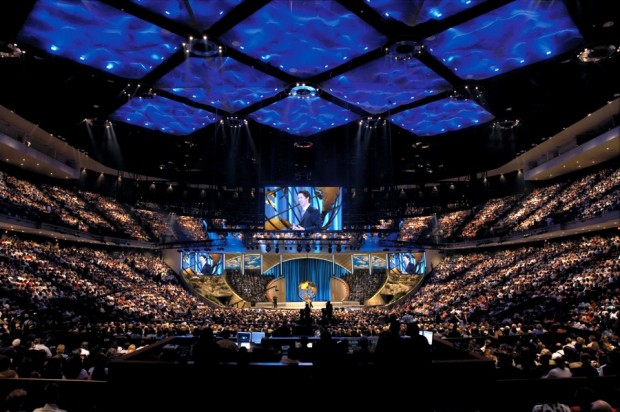
I don’t care what you call it, but any church which has multiple services of several thousand or a major service of close to 20,000 as occurs at Osteen’s Lakewood Church is no longer focused on caring for people but sustaining their growth and market share.

I remember reading Charisma Magazine back in the mid-1990s when I still read it regularly about a church in North Dallas that has a period of incredible church growth in which it grew from 1,200 members to well over 7,000.  In the article the pastor touted the church programs which drew people to the church.  What the dirty little secret which was not mentioned was that two exits south of this church a Mega-church of some 10,000 members imploded when the Pastor, one Bob Tilton got caught doing some pretty bad stuff.  This church despite its claims of great programs simple picked up about 6,000 of these people because they were close by and a similar type of church.

All of this is dangerous as to its impact on people.  One only has to look at the latest Barna Polls about what is going on in churches to see that these large churches are alienating people even as they grow.  People come, but others either burn out trying to keep pace with the manic pace of programs proliferated by these churches or they get lost in the crowd and forgotten.  I meet a least a person every day who is a displaced Christian, often hurt, lonely and broken, not only by what they have experienced in life, but by the cold emptiness that they feel when a church surrounded by thousands of people who don’t even know their name.

Some churches do recognize that people have issues that need to be addressed and have in-house Christian counseling programs or refer members to Christian counseling services.   I think that there certainly is a place for clinically trained therapists in the life of a church; however this is not really pastoral care, even when they use “Biblical” methods.   In a sense it is the outsourcing by pastors of one of the most vital missions entrusted to a church, the pastoral care of the flock of God to others, in a sense, “hirelings.”  Again my issue is not with the therapists or Christian counselors, but rather pastors who refuse to do pastoral care as part of their ministry.

Ultimately it is people that are important, even those who are not rich, powerful and who have problems that don’t fit nicely into theological boxes or paradigms promoted by church growth experts. It is high time that churches start reclaiming one of the most vital missions given by Jesus to his Disciples, to care for the least, the lost and the lonely.
The onus for this falls on pastors who cannot simply outsource one of their primary missions as given by Jesus himself to others.  If pastors do not set the example of being caring pastoral care givers, it will not matter that they are supposedly “empowering” laypeople to do ministry.  Instead it sends another more ominous message, that if it is not important for the pastor, why should it be important to me?

Every member of the church at some time goes through a crisis when their faith, family, health or vocation.  Sometimes these are not isolated events but rather prolonged periods of anguish, as what Saint John of the Cross described as “the Dark Night of the Soul” where it seems that God has even abandoned the person.  Unfortunately people in this situation are often abandoned by their church as things fail to improve.  Despairing they become the lost sheep whose shepherd has abandoned.  This is the hardest time for pastoral care, the times where we as pastors are called to stand with someone as Mary the Mother of Jesus did at the Cross, just simply being there though nothing else can be done.

Now do I understand that the demands of running a large church can be sometimes become such that pastors have difficulty making time for pastoral care?

Of course I understand this, at the same time pastors, even those who function primarily as pastor-teacher/CEOs still have the responsibility of caring for people, not simply administering programs and preaching.  Pastors need to set the example of care for people, real people, the regular people who populate their pews, by their books and give to their ministry, even if it is only in small ways, not just the super-givers or the wealthy and powerful.

James’s “right strawy epistle” (Martin Luther’s words) has much to say about favoring the rich and powerful and neglecting the poor and seemingly insignificant people hanging about the peanut galleries of their large “Worship Centers.”  Even if the pastor has limited time he or she must be about the flock, or they will forget what the needs of the flock really are and instead of the People of God, the lambs who Jesus says to care for they will simply be the consumers of a religious message who we have to keep coming back to keep the operation going.

Peace,

Padre Steve+

2 Comments

Filed under christian life, faith, ministry, Pastoral Care, Religion

American Church Greed: By Their Budgets Ye Shall Know Them


mega-business-share

Back on October 31st 1517 a little known Monk and Professor of Theology and Bible at the University of Wittenberg proposed a theological debate regarding a practice called “Indulgences” where preachers from Rome came up to Germany and basically shook down the population for donations to help built the now majestic Saint Peters Basilica in Rome. Promises of spiritual blessings, to include time out of Purgatory for those that donated had an affect on German churches and the local political leaders.

What happened that day in Wittenberg was one of the most monumental events in Christian and Western History. Luther charged church leaders in his 95 Theses:

“Lastly, works of piety and charity are infinitely better than indulgences, and yet they do not preach these with such display or so much zeal; nay, they keep silence about them for the sake of preaching pardons. And yet it is the first and sole duty of all bishops, that the people should learn the Gospel and Christian charity: for Christ nowhere commands that indulgences should be preached. What a dreadful thing it is then, what peril to a bishop, if, while the Gospel is passed over in silence, he permits nothing but the noisy outcry of indulgences to be spread among his people, and bestows more care on these than on the Gospel!”

However, it seems that Christians and especially ministers of all times and traditions often forget the lessons of history.

The church in the United States is at a critical point in history, but for the most part its leaders don’t understand this. The American church is fast losing its credibility due to the arrogance and excess of many church leaders in matters related to personal behavior, financial accountability, and accountability before the law concerning clergy sexual abuse cases. The common view of many inside and outside the church is that American ministers practice a “do as I say, not as I do” lifestyle holding others, especially non-Christians to a higher standard than they practice themselves.

Likewise there is the nearly incestuous relationship between many ministers and those holding political and or economic power in which quite often one cannot tell where the “gospel” ends and the politics begin.  This spans the denominational spectrum.

The practical fallout is stunning: The Barna Group, a highly respected polling organization surveyed people 18-29 years old asked what phrases best described Christians: The top five answers “Anti-homosexual, judgmental, hypocritical and too involved in politics.” This view was held by 91% of non-Christians and a staggering 80% of young churchgoers. But the vast bulk of conservative American clergy and their devoted followers don’t seem to care, probably because the facts do not fit their narrative.

The point I am making is that many clergy in the United States, especially those in influential pulpits and ministries have forgotten the dangers of “clericalism” and the abuses of clerics who use their office as clergy to gain political, financial and personal power.  Jesus told his disciples that they wanted  to be great in God’s kingdom they had to be servants of all.  Jesus, as well as the apostles, other new Testament writers and the Ante-Nicene Fathers warned about the dangers of seeking wealth, status or position. Of course that changed after Constantine when the church became the Imperial Church, something that despite the attempts of some that it has found a way to do throughout history, our American experience included.

Money is a big part of this, and one way to tell what a church, a denomination or a ministry values is to look at their budgets. As my Church History Professor at Southwestern Baptist Seminary said “By their budgets ye shall know them.

By their budgets ye shall know them….Reverend Robert Schuler’s “Crystal Cathedral” megachurch declared bankruptcy in 2012. It was $43 Million dollars in debt and embroiled in an internal power struggle and losing money.  Schuler asked “tithers to double tithe” and those that do not tithe to “start tithing.” He talked about what the church has given to them and why it earned their support.

It was a rather pompous plea from a man who had the ear of Presidents and other political and business leaders. Southern California had been terribly hard hit by the economic downturn and recession of 2007-2011. This affected many parishioners that worshipped at the Cathedral as well as those who watched Schuler’s “Hour of Power” show.

The Chrystal Cathedral tried to live “month to month on $2 Million dollars a month.” It cut back staff, curtailed programs and sold property to try to make ends meet. The efforts failed. The church collapsed and the Church Campus was sold to the local Roman Catholic Diocese. I wonder how many more megachurches built on piles of debt are facing what happened at the Chrystal Cathedral. Of course since their books are well guarded we won’t know until they collapse.

I’m sorry but those that live off of other people’s money should never be presumptuous and assume that  faithful givers should have to bail them out.

By their budgets ye shall know them….Other churches at denominational and local levels have often become embroiled in financial scandals that tarnished the reputation of those churches, their leaders and disillusioned their membership.  The Roman Catholic Church had to deal with a major scandal involving the Vatican Bank in the 1970s and 1980s and Pope Francis has been having to unscrew the latest mess that occurred during Pope Benedict’s watch.

hagee cornerstone

By their budgets ye shall know them: If a ministry spends the bulk of its time and money working as surrogates for a political candidate or party it is highly likely that it has forgotten the basic mission of the Church. I cannot remember anything in the New Testament even remotely suggests we do this nor can a single time in Church history that it turned out well for the church, or for regular people in general.

By their budgets ye shall know them….I worked for a fairly reputable Television ministry while I was a seminary student. The common plea of these types of ministries is that they “are on a mission from God” and need the money.

Most of these ministries not part of any denominational structure and have little oversight.  Most are presumptuous and assume that they entitled to the financial support provided by the often poor people who give them their last dime.

These ministries  do not ask their audience for actual input into their “mission” strategy.  Their leaders make the call, say that is “God’s will” and use shame and guilt to squeeze the money out of their viewers. This happens in churches as well and if someone questions the church or its financial accountability they are accused of “being unfaithful,” “not hearing God,” or being “disobedient to God’s will or to the church.”

Many churches and ministries suffer a terrible lack of accountability and oversight, so be assured these abuses are more widespread than we would want to believe.  In regard to television ministries in particular the amount of money required to keep their programs on the air is beyond exorbitant.

The bulk of the money used by such ministries comes often from those that are barely surviving financially even in “good times.” Often it comes most vulnerable and desperate people. The elderly, the sick, the poor, and the lonely.  Such people are “believing in God for a miracle” and trust that the smiling preacher will help get them their miracle. Such vulnerable people respond to these ministries by obediently shelling out of their meager incomes to ministries in response to persuasive pleas by ministers that should know better.

The motivation, love and obedience of these often wonderful people is exploited by unscrupulous ministers in order to support air programs that have little impact on the world.  However, those funds have a great deal of influence in the political aspirations of these preachers. Money equals influence and influence equals power.

By their budgets ye shall know them….If money was the only thing it would be a manageable problem. But money and power is the root of the problem and problem extends to lifestyles of ministers and other church leaders which are hardly supported by the demands of the Gospel. The shear opulence of the lifestyle of many clergy is not just off-putting but obscene. When times get tough for their churches or ministries these charlatans demand more money from their flocks rather than amending their lives and budgets. If members of flock object they are the ones that are vilified.

In my old church those clergy who could not meet their tithe for whatever reason were told that they were being “disobedient to their vows.” For some of our bishops and clergy vows to the Church were less concerned with doctrinal orthodoxy, or even being good Christians, but were narrowed down to if you paid your tithe on time.

I remember one Bishop who left the church to go elsewhere who told the assembled priests in his diocese that the tithe was the “essential test of obedience, and what bound us together.” Families and parishioners were described by another Bishop as “tithing units” and not people. When I was in the Army Reserve and contemplating a mission parish start up I was told by the bishop that in order to be “successful” the church needed at least “x-number of tithing units.” I was offended and decided not to do a  mission as I was recalled to active duty soon after.

In such churches people and families are reduced to an economic resource to keep the ministry afloat and support the lifestyle of the minister. Doctrine or even other forms of public witness are secondary to paying the tithe.

By their budgets ye shall know them…. If churches spend more money on the salaries of their pastors than they do on outreach to the poor or missions something is severely out of order. I am a historian and I know that the Apostles of those Ante-Nicene Fathers who suffered poverty and persecution never advanced such ideas. Even those that advocated a firm hierarchy in regard to matters of faith and doctrine never advocated for policies that benefited them financially. When leaders of a church, get together and dine in luxury on the monies donated by their often impoverished flocks it is denial of the Gospel and lack of respect and care for the people of God.

By their budgets ye shall know them….When church building programs and plant maintenance are extravagant and require massive amounts of money to sustain without demanding more from their parishioners than something is out of kilter.  When chandeliers, or massive high definition video monitors cost more than the mission budget, or benevolence ministry something is wrong.

My Church History professor, Dr. Doyle Young from who I appropriated the “by their budgets ye shall know them” line used to say that “God is going to get us for our stained glass windows when we neglect the poor.”  Now I appreciate good church architecture including stained glass windows. However it is  highly presumptive and arrogant for churches, ministries and ministers to demand monies when they have failed to be good stewards of what they have been entrusted. When ministries unwisely spend the money given them like drunken sailors and then expect others to pick up the tab while they cry crocodile tears about how “God’s plans will be thwarted” if their ministry fails, it is plain and simple fraud.

By their budgets ye shall know them….Back prior to the Protestant Reformation in Europe there was a large amount of discontent which focused on the arrogance, opulence and financial demands of the Catholic Church.  In fact much of Dr. Martin Luther’s protest in the 95 Thesis dealt with the manner in which Church finances.

Back then the Roman Church used a practice called indulgences and the selling of “relics” to fund the construction of St Peters Basilica in Rome.  People gave because they believed men like John Tetzel who preached in regard to indulgences “a penny into the coffer rings a soul from purgatory springs.”  That is incredibly similar to the collection methods of the big evangelists who prey upon the most vulnerable to fund their ministries. Likewise the Church attempted to use its power to reward or punish rulers of these regions, much as political preachers today attempt to use their influence to push candidates to support their agenda.

However, the chief complaint of many reformers was related to the Churche financial as well as political abuses of its members and nations to buttress its position in Europe.  Unfortunately we have not learned this lesson, American churches are so consumed with power and money that people are fleeing them, much as happened to the Roman church during the Reformation.

By their budgets ye shall know them….Finally there are honest and hard working ministers and churches that emphasize ministry and care for people as part of the Gospel message.  Many eke out support while working full time in “tentmaker” professions in order to fund their missions without unduly burdening those that support them. In my denomination, all of our clergy are “worker priests” including our bishop, who does not take a salary from the church. Likewise, I know many good ministers who give not only their lives but their livelihoods to care for those in their charge. They seek not fame, wealth or power. Some are conservative, others progressive, but they have caring and compassionate hearts and their budgets reflect their priorities.

Until tomorrow.

Peace

Padre Steve+

7 Comments

Filed under christian life, ethics, faith, History, ministry, Religion

The Winner Takes it All: American Christian Greed

Do you remember that there was a time when Conservative Christian Politicians and preachers actually supported working people and the poor? There was a period where this was true, but with the economic affluence and the political influence that we have enjoyed since the end of the Second World War we have left those days far behind.

I mean really, there was a time when preachers were not just lobbying for tax cuts for the rich in the name of the “Prosperity Gospel” or and extolling the wealthy “job creators” over the people who actually produce or serve products. Late last night I had an interaction on Facebook that was discouraging, wealthy preachers defended the most opulent and extravagant excesses of mega-church pastors. It was disheartening, especially one attacked a man who I went to war with, and who since has endured more trying medical issues than most of us will experience in our lives when he challenged the Episcopal Priest. What I read broke my heart.

Big-church-620x412

My Church History professor at Southwestern Baptist seminary back in 1988 and 1989 Christian attitudes then that is even more appropriate today. He noted that a:

“reason that many Christians are not servants is more honest: it is that we just don’t want to be servants. We live today in a “winner” society. We value the winners, whether it be in sports, business, or wars….The American Dream is success, climbing to the top of the ladder, making it, winning…. In most metro areas, on most weekends, you can go to a conference in some church where a person (for a fee) will tell you how God wants you rich….This obsession with success, money, and power is the American dream carried to its logical conclusion. It is middle-class Americanism, pure and simple. It is more motivated by greed, selfishness, and pride than by Christ. And in the churches, we have bought it. We want to be “at the top”,” not “at the bottom.”…..We coat our Americanism with a thin veneer of Christianity in an attempt to make it more palatable, but God will not have it. Let’s call this version of the American Dream what it is: selfishness, self-righteousness, and sin.” (Young, Doyle L New Life for Your Church Baker Book House, Grand Rapids Michigan 1989 pp.55-56)

I heard Dr. Young speak about this in class. I was a young Army officer, who had just left active duty to go to seminary. We were in the process of a financial meltdown brought about by the Texas oil bust of the late 1980s and my wife’s illness. We were learning what it was like to be poor. We lost almost everything but ourselves and our dogs during that time. We went to churches where the opulence was over the top, where the pastor drove a Porsche, and not a bottom end or used one. We struggled through seminary and made it, with me working two jobs and being in the National Guard. Most of the time we wondered where the money to get the next meal, tank of gas, prescription medicine, tuition payment or books. When I called the TBN prayer line just for prayer during the darkest days I was told be a “prayer warrior” that “it was obvious that I was not in God’s will because otherwise God would be blessing me.” That angered me and hardened my resolve to get through seminary. There were a good number of people who helped us, some because they felt that god wanted them to help us, others just because they  were compassionate souls. This made me very sensitive to social justice and wary of those who get rich off of God’s people.

It wasn’t always this way.

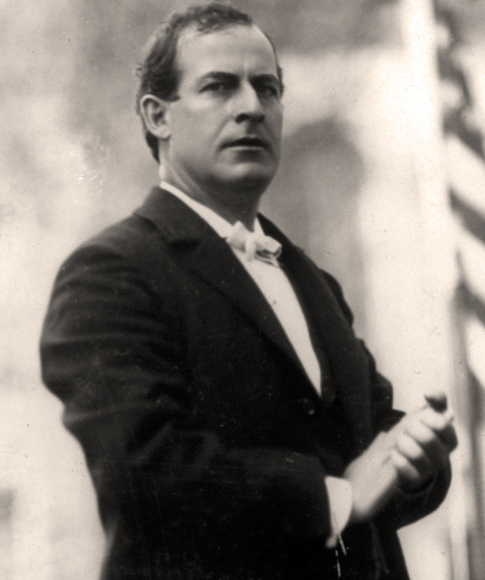
William Jennings Bryan was one of the most influential politicians of his era. He served as Secretary of State under Woodrow Wilson, he was a Senator and three time Presidential Candidate. He was also a very conservative Fundamentalist Christian perhaps most famous, or perhaps infamous now as one of the prosecuting attorneys at the Scopes “Monkey” Trial of 1925. In fact I can find that Bryan’s handling of that case played to the basest religious and social hatred of his day and though “defending” “Biblical” ideas ended up making Christians look but small minded, intolerant and hateful. The movie Inherit the Wind, though a fictional account of that trial show how decent Christians can become consumed with hatred in the name of righteousness, little different than other “sincere believers” that are willing to kill in the name of God.

Whether one agrees on certain points of religious doctrine regarding the creation of the earth or the manner of how God created the earth that he espoused one has to admit that of pre-Great Depression politicians he was quite amazing. This was especially true in how he saw through the Godlessness of unbridled Capitalism.  He saw how workers by were devalued by those who saw them as nothing more than a way to increase their wealth. As an American and a Christian look at the body of work and life of a man. Though I find much fault in Bryan and his supporters in the Scopes Trial, I do not throw out the good things that he did and got right.

I think the apex of Bryan’s political thought is encapsulated in his speech at the Democratic National Convention of 1896, what is now called the Cross of Gold Speech.

When one looks at it now it really is timeless. Bryan saw through the charade that was being played out by politicians and the big money Wall Street types that they represented with great verve. It was a speech that one might have heard come from a prophet in the Old Testament.

I am just going to quote a couple of pertinent sections from the speech to trigger your thoughts, for you will not hear this in the vast majority of conservative Christian churches of all denominations which have been infected with the so called “Prosperity Gospel.”  These churches have thrown their support behind ideas that are nothing more than unvarnished, crude materialism of the worst kind. In fact I believe that it is nothing more than the “baptism” of such thought by Christians are among the biggest reasons for the exodus of people from the churches and the rise of the “Nones,” or those with no religious preference.

Bryan said:

“We say to you that you have made the definition of a business man too limited in its application. The man who is employed for wages is as much a business man as his employer; the attorney in a country town is as much a business man as the corporation counsel in a great metropolis; the merchant at the cross-roads store is as much a business man as the merchant of New York; the farmer who goes forth in the morning and toils all day, who begins in spring and toils all summer, and who by the application of brain and muscle to the natural resources of the country creates wealth, is as much a business man as the man who goes upon the Board of Trade and bets upon the price of grain; the miners who go down a thousand feet into the earth, or climb two thousand feet upon the cliffs, and bring forth from their hiding places the precious metals to be poured into the channels of trade are as much business men as the few financial magnates who, in a back room, corner the money of the world. We come to speak of this broader class of business men.” 

His words are striking in their directness and honesty. They are not only Christian but they are deeply American. He called his Party, which had been as bad as the Republicans during the age of the unregulated Robber Barons who used the Gold Standard to manipulate the markets and eliminate silver as currency to their benefit to be different:

“Upon which side will the Democratic Party fight; upon the side of “the idle holders of idle capital” or upon the side of “the struggling masses”? That is the question which the party must answer first, and then it must be answered by each individual hereafter. The sympathies of the Democratic Party, as shown by the platform, are on the side of the struggling masses, who have ever been the foundation of the Democratic Party.”

He talked about two ideas of government and economics:

“There are two ideas of government. There are those who believe that, if you will only legislate to make the well-to-do prosperous, their prosperity will leak through on those below. The Democratic idea, however, has been that if you legislate to make the masses prosperous, their prosperity will find its way up through every class which rests upon them.”

He concluded his speech with this statement.

“Having behind us the producing masses of this nation and the world, supported by the commercial interests, the laboring interests, and the toilers everywhere, we will answer their demand for a gold standard by saying to them: “You shall not press down upon the brow of labor this crown of thorns; you shall not crucify mankind upon a cross of gold.”

When I hear the Unholy Trinity of Politicians, Pundits and Preachers who extol the virtue of Capital over labor and the worship of wealth as the highest good I wish that there would be some that would remember that the people who actually make things, grow things, fix things and maintain things are not just human capital, but people.

That’s enough for today. Expect some more on this and similar topics soon.

Peace

Padre Steve+

4 Comments

Filed under christian life, economics and financial policy, faith, History, Political Commentary, Religion

God’s Going to Get the Church for Its Greed

JoelOsteen_FOR_PROSPERITY

Back when I was in seminary at Southwestern Baptist, before the Fundamentalist takeover of that once proud school, my Church History professor, Dr. Doyle Young made the comment “God’s going to get us for our stained glass windows.” It was in the context of the rich and indolent nature of the American church. This was back in 1988 and 1989, sadly, things have only gotten worse.

In his various lectures Dr. Young was always able to weave church history into contemporary issues. He was really an amazing professor and he understood human nature more than most theologians. As such his lectures always had a profound amount of biography of the men and women who influenced church history. In fact, that biographical narrative is something that I have adopted in my own teaching and writing about history. That biographical emphasis helps keep me grounded and allows me to see that some things never change.


I noticed this again tonight when I posted a meme on Facebook about the televangelist and mega-church “pastor” Joel Osteen purchasing a 10.4 million dollar home. All of a sudden I had two men, one the son of a prominent televangelist that I worked for in the early 1990s, and the other a man who served with me as a Priest in my former denomination and now is a fairly high ranking priest in a diocese of the Episcopal Church open fire on me and defending the opulence of Osteen. When I asked what Jesus would do the televangelist’s son made comments made comments which were almost mocking of Jesus and his death for us. The Episcopal priest continued his defense and finished his post with the comment “cheers!” Frankly I found nothing to cheer about in their comments. When one of the men who served with me at war commented on the post, the Episcopal priest attacked him.

Do I really care what these men think of me? The hell no, not anymore. I invited both of them to drop me as “friends” because frankly I don’t want to be associated with people who make their living off the backs and hard earned money of the tithes and offerings of people who often cannot afford it and then defend the greed and opulence of wealthy minsters. I cannot do that. In fact when I retire from the Navy I will help other ministers and churches but I will not take any salary. I cannot do that, it seems to me that the Gospel which is supposedly freely given to us, should in turn be given.

Does that mean that I think that ministers should not be paid? Not at all. But there is a point, which is different in every church where what a minister makes is too much, and when the money that is sucked into a church or ministry only serves to prop that church or ministry up without helping any of God’s people but the livelihood of the minister.

I have heard so many rationalizations for this by ministers and Christians that it makes my head swim. I just remember reading the notes, letters and phone calls from poor people giving what they could not afford to the televangelist that I worked for in the early 1990s. Thinking about what those people gave and wrote breaks my heart to this day, especially when I see that man on television and radio talking about and actively backing the politicians who do the most to further impoverish the poor and support war without end.

Barry McGuire, the rock and roller who wrote and performed the song Eve of Destruction wrote another song after he became a Christian in the late 1960s called Don’t Blame God (for the Sins of America). Some of words in that song, a song of protest by a new Christian at the American church are even more accurate today.

On every worthless coin
and every dollar bill
you see the words in god we trust
but outta fear we kill

we got million dollar churches
but nobody’s on their knees
we got too many selfish people
just doin what they please

Sadly, because of the lives and actions of such people, many are fleeing the church, even those who grew up in it, the baptized. The fastest growing religious demographic in the country is the Nones those who ascribe to no religion. Many people blame God for the action of such people, but if I understand the message of justice of Jesus, John the Baptist and the prophets I know that it’s not God to blame. Instead it is us, those who claim to represent God while making our living off the backs of the weak and supporting the powerful. The Price Bishops of the Middle Ages would be jealous at how well we American Christians do this.

The song’s chorus would be banned in most churches especially those who have sold their souls for political power and economic wealth:

so don’t blame God for the
sins of america
america is fallen from the ways of the Lord
Don’t blame God for the
sins of america
livin for the dollar, she’ll be dyin’ by the sword


Anyway, this was one of those articles that I had thought about writing for a while and just needed a trigger. I guess I got it.

Peace

Padre Steve+


3 Comments

Filed under christian life, faith, Pastoral Care, political commentary, Religion

Another Year on the Margins of the Church

1622612_10152232336042059_727365308_nMe and my Little Buddy, Minnie Scule

I have been living on the margins of American Christianity for a bit over seven years now. The watershed moment was when I returned from Iraq in February 2008 my faith shattered and my soul wounded suffering from severe PTSD. I was not in good shape then and two years later after faith returned, albeit in a different form I realized that I no longer fit in the mainstream of conservative American Christianity.

The process of return took me to the margins of the faith that I knew and grew up in. For a while I felt like a victim, but over the course of the years I have discovered a tremendous freedom in living on the margins of the church. Jamake Highwater wrote something that really struck me as true:

“What outsiders discover in their adventures on the other side of the looking glass is the courage to repudiate self-contempt and recognise their “alienation” as a precious gift of freedom from arbitrary norms that they did not make and did not sanction. At the moment a person questions the validity of the rules, the victim is no longer a victim.”

When I began to express some of those changes, which mainly had to do in the manner of how I viewed others I got in trouble. At the time I was part of a pretty conservative Episcopal-Catholic denomination with very strong Evangelical and Charismatic leanings. I wrote that I thought that homosexuals could be Christians and not automatically damned to hell. I wrote that not all Moslems were bad. I expressed a great deal of empathy for non-believers, particularly Atheists and Agnostics having recently come out of a period where for all intents I was an Agnostic praying that God really did exist and care. I also asserted that I saw no reason why women could not or should not be ordained to the Priesthood and the Episcopacy and I expressed other views that while not connected with anything to do in the Christian faith was not politically correct in conservative circles.

During that time period I found that I was getting slammed and “unfriended” on Facebook by people I had previously considered friends whenever I had the nerve to disagree with them, or innocently post something that they disagreed with on my Facebook page. I think that was the hardest part for me, I was shocked that people who I had thought were friends, who knew what I was going through were so devoted to their ideology that they condemned me and threw me away. I found that I agreed with Mahatma Gandhi who observed: “I like your Christ; I do not like your Christians. Your Christians are so unlike your Christ.” Of course I say that with a fair amount of humility because most of the time I am not a very good Christian, if that means actually trying to emulate Jesus.

Of course that is not uncommon in the annals of Christianity. Ulrich Zwingli, the Reformer of Zurich was so upset when his students and closest associates became Anabaptist that he had them drowned in the Rhine River. In fact any time Church leaders have had significant powers over people through the levers of the State they have quite often used that power to crush anyone that did not believe like them or questioned their authority.

In a sense for two millennia various groups of Christians have been creating God in their own image and inflicting their beliefs on others. Christians punishing other Christians for having views that they do not agree is so common. Last week a Chaplain of a Nazarene college was fired for questioning Christian support for war in the wake of the movie American Sniper. Sadly most of the time that Christians are condemned by other Christians it is not even for any of major doctrinal beliefs found in the Creeds, the great Ecumenical Councils of the Church, or even of the various Confessions or Statements of Faith of any denomination. Instead they usually have to with unpopular stands on political or social issues. Anne Lamott has a pithy little thought that I love which I think describes this type of Christian persecution: “You can safely assume you’ve created God in your own image when it turns out that God hates all the same people you do.”

In September of 2010 I was asked to leave that church, even though my actual theological orthodoxy, as to what I believed about God and Christ was unchanged. Thankfully another church, the Apostolic Catholic Orthodox Church, a denomination of the Old Catholic tradition took me in. It is a tiny denomination, much like the Old Catholic Church of the Netherlands, but very affirming and I fit well in it.

As far as my old church, it was going through a difficult time and the Bishop who threw me out was a big part of the problem. He was removed a few months later when it was revealed that he was plotting to take all of the military chaplains out of the denomination to another without consulting the other bishops. One friend who is still in that church speculated that I was asked to leave by the bishop because he thought I might reveal his plans, even though he had not told me directly about them.

What was odd about that church was that in 2004 I was censured by the then second ranking archbishop in that church, forbidden from publishing and even having or having any personal contact with his clergy where I was living because I was “too Catholic.” The irony was that this bishop was a big cause of the trouble that the church went through including the massive splits that occurred in 2005-2010. He left that church, became the editor of a conservative Catholic website and now is a Priest in the Anglican Ordinate and effectively a Roman Catholic Priest.  I love irony.

Thankfully I still have a number friends in my old church, and thankfully there are good people there doing their best to live the Gospel. I can’t say that I would fit in there anymore, but I have no residual animosity to the current leadership of that denomination and pray that they continue to recover from the tumult and division that marked their struggle from 2005-2011. I admit that it was a painful time and for a while I was quite bitter about how I had been treated, but it has been easier to live by forgiving. C. S. Lewis noted: “To be a Christian means to forgive the inexcusable because God has forgiven the inexcusable in you.” Since I have been forgiven for so much how can I not at least try to live in a forgiving manner?

I have written a lot about my frustrations with American Christianity in particular the conservative Christian subculture. Looking at what I wrote I can see that I definitely exist on the margins of that world. But that is not a bad thing, there is a certain amount of freedom as well as intellectual honesty and integrity that I have now that I could not have being for all intents closeted in my former denomination.

Living on the margins allows me to echo Galileo who wrote: “I do not feel obliged to believe that the same God who has endowed us with sense, reason, and intellect has intended us to forgo their use.” It allows me to be at the intersection of faith and unbelief and allows me entry into both worlds, both of which I believe to be sacred and both need to be heard, as well as protected.

Thus when I champion religious liberty, it is not the liberty to use religion to bludgeon others or to use the police power of the State to enforce their religious views on others. Unfortunately that is what I see going on in this country as conservative American Christians especially Evangelicals, Charismatics and conservative Roman Catholics wage a Kulturkampf against modernism and secularism. It as if many of the leaders of that movement desire to set up a Christian theocracy. Gary North, a longtime adviser to Ron Paul and many in the Tea Party movement wrote:

“We must use the doctrine of religious liberty to gain independence for Christian schools until we train up a generation of people who know that there is no religious neutrality, no neutral law, no neutral education, and no neutral civil government. Then they will get busy in constructing a Bible-based social, political and religious order which finally denies the religious liberty of the enemies of God.”

Personally, and with no invective intended I have to imagine that if a Moslem leader in this country said something similar that the Religious Right would be screaming bloody murder and that Bill O’Reilly and Fox News would be leading the charge.


Thus we see a reprise of the Scopes Monkey Trial in efforts to diminish the teaching of real science in schools and replace it with various religious theories of origins such as Young Earth Creationism. It doesn’t seem to matter what the issue is: equality for women, minorities, gays, teaching science, caring for the poor, the sick and the weak, acknowledging the value of other cultural traditions and religions it seems that many politically charged conservative Christians have no tolerance for anyone outside their often quite narrow belief system. North wrote:

“The long-term goal of Christians in politics should be to gain exclusive control over the franchise. Those who refuse to submit publicly to the eternal sanctions of God by submitting to His Church’s public marks of the covenant–baptism and holy communion–must be denied citizenship, just as they were in ancient Israel.”

I’m sorry but again this sounds not too dissimilar to the Taliban in Afghanistan and Pakistan, without the sheep and the comfortable clothes, or the Moslem Brotherhood types, Hezbollah or the Iranian Imams. The religion of North might be different from the Taliban but the goals are eerily similar, and only a fool would not see that. But then we Christians are quite good at ignoring the hate being preached by those that claim to be defending us from those “evil” Moslems.

This is no empty threat, throughout the country Christian Conservatives and their political front men are ramming through laws that have but one intent, the establishment of a Christian theocracy and the persecution of those who do not agree. Allegedly all of these laws are designed to “protect religious liberty” but in fact are nothing more than a legislative attempt to disenfranchise non-believers or others that the majority does not approve. Unfortunately the people pushing these laws do not understand that once the become law they can be used against them if another group comes into power. They set precedent and under such precedent even Sharia Law could be enacted in Moslem dominated areas of the country, such as Dearborn Michigan, or polygamy in separatist Mormon communities in Utah and Idaho.

I am sorry but that is antithetical to the thoughts of our founders and the real defenders of religious liberty in the early days of our republic. John Leland, head of the Virginia Baptists and a key player in the drafting of the First Amendment and religious liberty protections in Virginia wrote:

“The notion of a Christian commonwealth should be exploded forever…Government should protect every man in thinking and speaking freely, and see that one does not abuse another. The liberty I contend for is more than toleration. The very idea of toleration is despicable; it supposes that some have a pre-eminence above the rest to grant indulgence, whereas all should be equally free, Jews, Turks, Pagans and Christians.”

Leland understood what he was talking about, because in Virginia Baptists and others were being persecuted by Anglicans who before the Revolution had been the State Church of Virginia and wanted to be again in the new republic. James Madison wrote of the danger:  “Who does not see that the same authority which can establish Christianity, in exclusion of all other religions, may establish with the same ease any particular sect of Christians, in exclusion of all other sects?”

I will defend the right of religious conservative to believe what they want, including the right to teach it in their churches, church schools and homes and to express those views in the public square as part of real dialogue. I may not agree with them, but if I want my views to be protected I should grant others what I would want. What I cannot support is the attempt of some politically active Christian conservatives to force those views on others through the power of the State, the public schools or any other place where the citizens of our very diverse and pluralistic society have to co-exist.

Likewise, I have become much more outspoken in defending those who are the targets of real Christian hate, in particular the LGBT community, unbelievers, especially atheists and agnostics and Moslems. That may seem odd, but really, if we as Christians do not show God’s love to them, just how do we expect that they will embrace what we believe?

I love the movie Inherit the Wind. I especially love the scene where Spencer Tracy playing the fictionalized version of Clarence Darrow gives a logical yet passionate defense of religious, civil and intellectual liberty.

“Can’t you understand? That if you take a law like evolution and you make it a crime to teach it in the public schools, tomorrow you can make it a crime to teach it in the private schools? And tomorrow you may make it a crime to read about it. And soon you may ban books and newspapers. And then you may turn Catholic against Protestant, and Protestant against Protestant, and try to foist your own religion upon the mind of man. If you can do one, you can do the other. Because fanaticism and ignorance is forever busy, and needs feeding. And soon, your Honor, with banners flying and with drums beating we’ll be marching backward, BACKWARD, through the glorious ages of that Sixteenth Century when bigots burned the man who dared bring enlightenment and intelligence to the human mind!”

Since I don’t want to go back to the 16th Century I will be content to live in the freedom that I have on the margins of contemporary American Christianity. Personally I would rather be there than in the 16th century.

bloom-county-liberal-label-1

Back in 2010 when I was getting kicked out of my old church and suffering the rejection of friends it wasn’t something that I enjoyed. However, I am grateful to be where I am now and to have the freedom that I enjoy. I certainly didn’t plan it this way, but I am definitely okay with the way things have turned out. Living on the margins of American Christianity beats the hell out of living within the hateful, greedy and oppressive structures that permeate our American Christian landscape.

Peace

Padre Steve+

1 Comment

Filed under christian life, civil rights, ethics, faith, LGBT issues, ministry, philosophy, political commentary, Religion

A Time to Stand Against Hate

12CAROLINA2jp-master315

First they came for the communists, and I did not speak out—because I was not a communist;
Then they came for the socialists, and I did not speak out—because I was not a socialist;
Then they came for the trade unionists, and I did not speak out—because I was not a trade unionist;
Then they came for the Jews, and I did not speak out—because I was not a Jew;
Then they came for me—and there was no one left to speak out for me.

 Martin Niemöller

There comes a time in every nation where people of faith need to stand up for the rights of others who do not share their faith. There are times at all decent citizens no matter what their religion, or lack of religion need to stand up for those deemed less than full citizens, less than loyal, and in some cases less than human. This is one of those times.

On Wednesday three young America students at the University of North Carolina; Deah Barakat, his wife Yusor Mohammad Abu-Salha and her sister Razan Mohammad Abu-Salha, were gunned down, execution style, in their home.  They were each shot multiple times in  the head. They were Moslems, and from all account not only good law abiding people who hated intolerance of any kind, even to Jews and Israelis, who were active in helping the poor and homeless in their local community, and just basically good, idealistic, humanitarians.

Their assailant Craig Stephen Hicks, was a man who doesn’t fit a typical right wing, at least from the terms of the Religious Right, or Left Wing stereotype.

All that we really know about him was that neighbors described him as angry and confrontational, that some feared him, that he was anti-government, unemployed, and hated the major religions; especially Christianity, Islam, and Judaism. He was also evidently a pretty big fan of expanded gun rights, which for a man in his state of mind isn’t unusual. His current wife, who is in the process of divorcing him described him as supporting marriage equity, abortion rights and other socially progressive causes.

12CAROLINAweb2-master315

It is quite fascinating to me that Craig Stephen Hicks, was a follower of Richard Dawkins and what is called “the New Atheism” which more appropriately should be called anti-theism. This makes his case somewhat unusual, because he would be one of first of this breed in the United States to kill others in such a manner. Of course this is not to say that such people haven’t committed such acts on a mind-numbingly large scale in the former Soviet Union, Red China and other repressive atheist regimes. Likewise there are nations where state religions working hand in hand with the state do that as well.

But most of the time, recently in this country and Western Europe, those who kill others because of those  peoples religious beliefs, are religious themselves and defending their idea of God and righteousness. That my friends is what makes the act of barbarous hatred committed by Hicks so interesting from a sociological and historical point of view.

It is also why I don’t believe the claims by the soon to be ex-wife of Hicks, the police or the prosecutor that this was an isolated incident dealing with a dispute of guest parking in the condominium complex where the victims and the killer lived. That’ why the story just doesn’t wash, and the fact that it doesn’t wash causes it to stink.

Really, let’s face it, if Hicks was a Moslem and the victims were atheists would anyone believe that story? The hell no. But there are people who will not only believe it but as usual say this is a “isolated incident” because after all, white people in America don’t kill others for their religion, but that Moslems do and so a Moslem is automatically guilty of crimes simply by being a Moslem.

Evidently the killer’s ex-wife described him Hicks as a man without empathy, who incessantly watched the movie Falling Down while laughing his way through it. If you don’t know the movie it is about an unemployed engineer, angry for many reason, who goes mad and ends up in a killing spree. It is a tragic film, and I wonder if Hicks if Hicks saw himself as similar to the lead character played by Michael Douglas.

I don’t know what the final tipping point was for Hicks. From what I read he seemed like a mountain of hatred and anger just waiting to erupt.

While I don’t know his entire motivations, I do know that somewhere in his perverted psyche, he was motivated by hate, and that is all too common. Eric Hoffer said: “Passionate hatreds can give meaning and purpose to an empty life. These people haunted by the purposelessness of their lives try to find a new content not only by dedicating themselves to a holy cause but also by nursing a fanatical grievance.”   

Hicks found some measure of purpose in his hatred of religion. It is said that he was quite angry at the Christians and Jews who  participated together with Moslems and others in the ecumenical memorial services after the attacks of September 11th 2001. Evidently, that anger toward religions and religious people grew until it reached the point of murder.

Sadly, there are many people like this man who are consumed by some kind of hatred. In this case it appears to me, and I could be wrong, that it was Hicks’s hatred of Moslems and other religious people. I cannot think of any other reason why the man would execute unarmed people for a parking space, unless they represented something more to him.

The hatred something that the actions of the Islamic State, Al Qaeda, the Taliban, Boko Haram and other terrorist groups that claim the mantle of Islam  have helped to inspire. That hatred is also fed by much of the media, as well as supposedly Christian political pundits and preachers who lump all Moslems into the same camp as the terrorists and ignores the Moslems who condemn such actions and who put their lives on the line to fight those groups. This “reporting” feeds the fear, it feeds the anger of some, and it leads to people, especially people who are already angry, disturbed and possibly even mentally ill, to commit crimes in name of their religion or their ideology. In Hicks case it appears to be his militant atheism.

But let’s step back from that right now, and sometimes it is good to look at things in with a broader lens.

It seems to me that among the worst of the types of people promoting such hatred of Moslems are supposedly conservative “Christian” preachers. So I feel that I need to speak up. I say this because such hatred against a religion, any religion is not new. Militant Hindus in India kill Moslems and Christians, of course we know of the crimes of the terrorists who kill in the name of Islam, but there are places in Africa where Christians do the killing, and sometimes not even for religious reasons. Does anyone remember the Rwanda Genocide? But that is not an isolated instance, in Central and South America there were the American funded dictators and terrorist groups who had death squads all over the place, many killing to defend their “conservative Christian regimes.”

This kind of thing happens all the time and sometimes it takes place under godless regimes who co-opt religious people to bolster their evil. Chief among the times this happened was in Nazi Germany. My examples from that era include Protestant pastors Martin Niemöller, Dietrich Bonhoeffer, and Herman Maas, and Catholic Biship Galen and Jesuit Priest Father Rupert Meyer of Munich. All were imprisoned or placed in Concentration Camps by the Nazis, and Bonhoeffer was be killed. Maas was the first non-Jewish German to be officially invited to the newly formed state of Israel in 1950. In July 1964 Yad Vashem recognized the Maas as one of the Righteous Among the Nations. Of course there were others who died for attempting to help the Jews, including some European Moslems.

When Hitler took power the Jews, along with Communists, Trade Unions, Socialists were enemies of the state.  They were banned from the military, civil service and other government employment, professional associations and forced to wear a gold Star of David on their clothing.  Their property was seized, they were abused by SA men acting as deputized auxiliary police, times their businesses, Synagogues and homes vandalized, burned or seized by the state. Eventually those who remained were condemned  and sent to concentration camps, where most with nearly 6 million other Jews they would be exterminated.

Today we face a similar situation in United States and Western Europe.  This time it is not the Jews, but Moslems who are the targets of xenophobic rage by many influential members of the “conservative” media.

The ideological inspiration for the killings at Chapel Hill seems to be from English Atheist Richard Dawkins. Dawkins wrote something that the killer repeated almost verbatim in his social media posts: “All three of the Abrahamic religions are deeply evil if they take their teachings seriously. Islam is the only one that does.” Of course Dawkins statement is overblown because there are some Christians and Jews who kill in the name of religion. In fact as far as Christianity goes we have a host of them who litter our history justifying killing in the name of the Lord. To his credit Dawkins condemned the killings soon after they happened, however, his hyperbole and lumping together all religion as evil has the same effect on some people as the teachings of the radical religious preachers of hate whose ranks seem to grow daily.

Others, especially in parts of the Christian Right who have great sway in conservative politics and the Republican party advocate policies similar to the Nazi Nurnberg Laws and the Aryan Paragraph.  Threats to deny loyal American Moslems the right to serve in the military, security organizations, government positions and academia are common today. More extreme are threats to put all-Moslems “behind razor wire” as we did to American Japanese citizens in World War II, or to deport them as the Nazis did to the Jews before the “Final Solution”  are even more chilling.

wade-michael-page-nazi-flag

Wade Page

Of course there was the mass killing by neo-Nazi Wade Page in Oak Park Illinois in October 2012, like Hicks he was filled with hate toward religion, and took his out on the members of the Sikh Temple.

roeder190

Scott Roeder

I wonder how Christians would react if an atheist or someone on the political left suggested that all conservative Christians or members of pro-Life groups be imprisoned for the actions of Christians or pro-Life movement members like Scott Roeder or Eric Rudolph who killed to stop abortion or the late Fred Phelps and his Westboro Baptist Church? Likewise I wonder what atheists would do if someone suggested putting everyone who followed Richard Dawkins, Bill Maher, or Sam Harris in camps or depriving them of citizenship for the actions of someone like Hicks?

Thankfully, there are a few on the  Religious Right who have taken a stand. Reverend Rob Schenck, President of the National Clergy Council, commented in regard to the Moslem prayer vigil in Washington D.C. in 2009:  “With over 1.5 billion Muslims in the world, it is important that Christians have an open dialogue with the Islamic community. The church must never be timid in reaching out to peoples and groups with differing beliefs and traditions. Too much is at stake for future generations not to begin this historic conversation. This is an opportunity that we cannot afford to miss.”

What the people who advocate punitive actions against American Moslems do is dangerous, not just for Moslems and other minorities but for them.  American and English law is based on legal precedence.  Once something has been determined to be legal, or constitutional it is considered by the law to be settled law.  The law is a two edged sword and those who want to use it to have the state enforce their religious, social, ideological or political beliefs on others need to remember what comes around goes around.

Niemöller would discover this the hard way prison telling one interviewer after the war:

“I find myself wondering about that too. I wonder about it as much as I regret it. Still, it is true that Hitler betrayed me. I had an audience with him, as a representative of the Protestant Church, shortly before he became Chancellor, in 1932. Hitler promised me on his word of honor, to protect the Church, and not to issue any anti-Church laws. He also agreed not to allow pogroms against the Jews, assuring me as follows: ‘There will be restrictions against the Jews, but there will be no ghettos, no pogroms, in Germany. I really believed given the widespread anti-Semitism in Germany, at that time—that Jews should avoid aspiring to Government positions or seats in the Reichstag. There were many Jews, especially among the Zionists, who took a similar stand. Hitler’s assurance satisfied me at the time. On the other hand, I hated the growing atheistic movement, which was fostered and promoted by the Social Democrats and the Communists. Their hostility toward the Church made me pin my hopes on Hitler for a while. I am paying for that mistake now; and not me alone, but thousands of other persons like me.”

It is easy for well meaning  to be bought with promises of support by politicians and media types who speak the words they want to hear in difficult times. We have entered a dangerous phase of American, and for that matter world history.

The killing of these three young American by this hate filled man should be a wake up call to all of us. It is time to start giving a damn and standing up to those who inspire and promote such hatred, no matter what their race, creed, or ideology. We have to stand up against hate. If we do not we are no better than all of those who throughout history turned their backs as others committed the most horrible crimes against humanity.

Peace,

Padres Steve+

7 Comments

Filed under christian life, civil rights, ethics, faith, History, Political Commentary, Religion

Religion, Identity and Hate

10570298_10152872503382059_5058681841617456899_n

Friends of Padre Steve’s World

A second short article for the day. I actually have been working on it a few days and finally decided to post it even thug already posted an article earlier today.

Peace

Padre Steve+

Atticus Finch, the hero of  the book and film To Kill a Mockingbird said: 

“Sometimes the Bible in the hand of one man is worse than a whisky bottle in the hand of (another)… There are just some kind of men who – who’re so busy worrying about the next world they’ve never learned to live in this one, and you can look down the street and see the results.”

We like to believe that religion is a benign or positive influence in the world. As much as I want to believe the positive aspects I have to admit based on the historical and sociological evidence that this is not so, especially during unsettled times of great change. We live in such an era and when it comes to identity, God is the ultimate trump card.

If one wonders why the most fanatical individuals and groups on earth are tied to religions, whether it is the Islamic State and Al Qaeda, Boko Haram, Hezbollah, Orthodox Jews, radical Hindus and Buddhists as well as militant Christians. Of course all of these groups have different goals, but their thought and philosophy are quite similar.

Robert Heinlein wrote:

“Almost any sect, cult, or religion will legislate its creed into law if it acquires the political power to do so.”

Heinlein, author of the classic Starship Troopers was absolutely correct. Just look at any place in any time where any religion, sect or cult has gained control of a government. They are not loving, they are not forgiving and they use the police power of the state to persecute any individual or group that is judged to be in error, or even worse has the gall to question their authority.

Since the Christian groups tend to thrive in the West, they only speak in terms of violence, most, with the exception of Russian Orthodox Christians, do not have a government to translation of those words into action. Many, especially conservative Catholics and some Evangelical and Charismatic Protestants seem for a long for the day when they can assume control of a theocratic government.

Samuel Huntington wrote in his book The Clash of Civilizations:

“People do not live by reason alone. They cannot calculate and act rationally in pursuit of their self-interest until they define their self. Interest politics presupposes identity. In times of rapid social change established identities dissolve, the self must be redefined, and new identities created. For people facing the need to determine Who am I? Where do I belong? Religion provides compelling answers….In this process people rediscover or create new historical identities. Whatever universalist goals they may have, religions give people identity by positing a basic distinction between believers and non-believers, between a superior in-group and a different and inferior out-group.”

Huntington was right, you see the true believers, those who follow their religion without question and believe that it is superior to all others also believe that their religion entitles them to be atop the food chain, others who don’t believe like them be damned, if not in this life, the next. That is the certitude of the true believer, especially the religious one. Secular or atheistic fanatics could care less about the next life, for this life is all that they have. But the religious “true believers” are not only interested in destroying someone in this life, but ensuring that in the next that they suffer for eternity, unless they believe in the annihilation of the soul after death, which really spoils the whole Dante’s Inferno perspective of the damned in the afterlife.

Eric Hoffer wrote:

“The impression somehow prevails that the true believer, particularly the religious individual, is a humble person. The truth is the surrendering and humbling of the self breed pride and arrogance. The true believer is apt to see himself as one of the chosen, the salt of the earth, the light of the world, a prince disguised in meekness, who is destined to inherit the earth and the kingdom of heaven too. He who is not of his faith is evil; he who will not listen will perish.”

That is why they, the religious true believers of any faith are capable of such great evil, and why such people can murder innocents in the most brutal manner simply because they do not believe correctly.

Please do not get me wrong. I am a Christian, a priest, a historian and a theologian, but I also know just how insidious those who hold their religion over those of others can be. While I hold faith dear, I know that it can be abused for the claim of some to have God as their final authority is a sort of trump card with which they are able to justify the most obscene and evil acts against others.

One of my heroes of religious liberty is John Leland, a Baptist whose passionate defense of religious freedom prevented Virginia from re-establishing a state church after the American Revolution and whose influence was key in the decision of Madison and Jefferson to amend the Constitution with the Bill of Rights, particularly the First Amendment. In fact, late in life, well after his success in working with Madison and Jefferson Leland wrote:

“The liberty I contend for is more than toleration. The very idea of toleration is despicable; it supposes that some have a pre-eminence above the rest to grant indulgence; whereas all should be equally free, Jews, Turks [Muslims], Pagans and Christians. Test oaths and established creeds should be avoided as the worst of evils.”

Like Leland, I contend for more than tolerance and I contend for acceptance. But that acceptance ends when any person or group is willing to use their religion to enslave, murder, or otherwise dominate other people in the name of their God, not just in this life, but in the next. This is especially true of those who use the police power of the state to enforce their beliefs and hatred on others.  I will do whatever I can to expose them for what they are, irregardless of the “faith” they supposedly represent.

I guess that is why I am even more frightened of religious true believers than non-religious true believers. While the non-religious true believer may sacrifice everything for the sake of power and control in this life, and may in fact commit the most heinous crimes against humanity, their hatred is bounded in space and time to this earth. The religious true believer is not content with that, their enemies must be damned and punished in this life, but for eternity, without hope of salvation.

That is why they are so dangerous for their hatred is unbounded by time, or space, it lasts for eternity.

With that I wish you a good day.

Peace

Padre Steve+


Leave a comment

Filed under christian life, faith, News and current events, philosophy, Religion