Category Archives: civil war

Neo-Confederate Christians and the Continued Curse of the Lost Cause

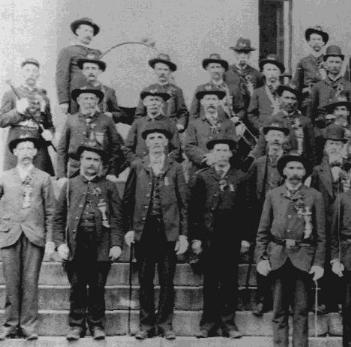
Lost-Cause

“By the time of the [Civil] War, the leadership of the South was conservative, orthodox, and Christian,” and that the leadership of the North had become “radical and Unitarian.” While the Confederates were righteous, “the abolitionists in the North were ‘wicked’ and ‘driven by a zealous hatred for the Word of God.’” Steven Wilkins and Douglas Wilson

A couple of years ago washed up rocker, draft dodger and professional muckraker Ted Nugent made the comment that he wondered if it would have been better that the South had won the Civil War. The statement was met with outrage by many, but it reflected still small, yet growing and troubling trend in some parts of the American Christian Church. The statement above is an example of that thought and shows the revisionism and dishonest “scholarship” of the Christian Neo-Confederates. The dishonesty and lack of truth in this quote, which is typical of the movement finds its genus in the discredited myth of the Lost Cause.

I have written about the Christian Dominionist or Reconstructionist movement and its leaders a number of times. This is a radical and theocratic movement which believes that it is the duty of Christians to claim all of culture, politics and economics for God, and to disenfranchise or even kill those who do not agree. Many times their rhetoric is tinged with violence, racism, xenophobia and frankly paranoid and conspiratorial views of anyone that does not agree with them. Leaders of this movement are closely connected to, and often are advisers to prominent Republican elected officials including Rand and Ron Paul, Ted Cruz, Sarah Palin, Michelle Bachmann, Rick Perry, Bobby Jindal and Sam Brownback.

One of the most troubling things about this movement is its growing ties to and sympathy for neo-Confederate movements and the myth of the Lost Cause which I wrote about in an article on the ideological and religious roots of the American Civil War. While I was researching that article I began to see just who closely the language of this allegedly Christian movement parallels that of those who led the South to disaster in the Civil War and then to cover their crimes and to justify their actions.

These people, those somewhat of a fringe movement often advocate secession, nullification and other ideas espoused by Confederate leaders, including violence and insurrection both before and after the Civil War. They despise Abraham Lincoln; they use state legislatures to pass Jim Crow like voting restrictions that particularly impact the poor, the elderly and minorities. The favor an oligarchy of corporations that hold much in common with the Southern elites and the plantation owners who not only enslaved blacks, but used their economic power to keep poor whites in their place.

They even echo the words of the defenders of slavery, as Douglas Wilson, a pastor in the Presbyterian Church of America in Idaho and apologist for Confederate views wrote: “slavery produced in the South a genuine affection between the races that we believe we can say has never existed in any nation before the War or since.” Wilson also wrote that “There has never been,a multi-racial society that has existed with such mutual intimacy and harmony in the history of the world.” Of course there is no truth in that statement whatsoever as any actual student of the ante-bellum South would know. It is fiction and lies being propertied as truth by a Christian pastor in an established denomination.

The cause of the Civil War to the Christian neo-Confederates was not slavery, not economics or even Constitutional issues or anything else that real historians debate but rather a theological myth, as Steven Wilkins explained: “the cause of the Civil War was theological incompatibility between North and South, the former having ‘rejected Biblical Calvinism…“there was radical hatred of Scripture and the old theology [and] Northern radicals were trying to throw off this Biblical culture and turn the country in a different direction….” 

These thoughts are reiterated in many parts of the Dominionist movement in the writings of its godfather R. J. Rushdoony who through his own writings and the continued work of his son-in-law Gary North influence both Ron and Rand Paul as well as many others in the so called “Christian Right.” I have decided to post just a bit of my research on the Lost Cause here, just to show some of the similarities of thought.

But before that an excerpt from a sermon preached by the Reverend William Leacock of Christ Church, New Orleans declared in his Thanksgiving sermon in December of 1860: “Our enemies…have “defamed” our characters, “lacerated” our feelings, “invaded “our rights, “stolen” our property, and let “murderers…loose upon us, stimulated by weak or designing or infidel preachers. With “the deepest and blackest malice,” they have “proscribed” us “as unworthy members… of the society of men and accursed before God.” Unless we sink to “craven” beginning that they “not disturb us,…nothing is now left us but secession.” [1]

When you read the words of many of the Dominionist and the Christian neo-Confederate leaders you see a similar cry of victimhood. This is only a sample, my research on the Lost Cause, the ante-Bellum South and the contemporary Neo-Confederate Christians connection with the Dominionists continues…

When Edmund Ruffin pulled the lanyard of the cannon that fired the first shot at Fort Sumter it marked the end of an era and despite Ruffin, Stephens and Davis’ plans gave birth to what Lincoln would describe as “a new birth of freedom.”

When the war ended with the Confederacy defeated and the south in ruins, Ruffin still could not abide the result. In a carefully crafted suicide note he sent to his son the bitter and hate filled old man wrote on June 14th 1865:

“I here declare my unmitigated hatred to Yankee rule- to all political, social and business connections with the Yankees and to the Yankee race. Would that I could impress these sentiments, in their full force, on every living Southerner and bequeath them to every one yet to be born! May such sentiments be held universally in the outraged and down trodden South, though in silence and stillness, until the now far-distant day shall arrive for just retribution for Yankee usurpation, oppression and outrages, and for deliverance and vengeance for the now ruined, subjugated and enslaved Southern States! … And now with my latest writing and utterance, and with what will be near my last breath, I here repeat and would willingly proclaim my unmitigated hatred to Yankee rule — to all political, social and business connections with Yankees, and the perfidious, malignant and vile Yankee race.” [2]

Though Ruffin was dead in the coming years the southern states would again find themselves under the governance of former secessionists who were unabashed white supremacists. Former secessionist firebrands who had boldly proclaimed slavery to be the deciding issue when the war changed their story. Instead of slavery being the primary cause of Southern secession and the war, it was “trivialized as the cause of the war in favor of such things as tariff disputes, control of investment banking and the means of wealth, cultural differences, and the conflict between industrial and agricultural societies.” [3]

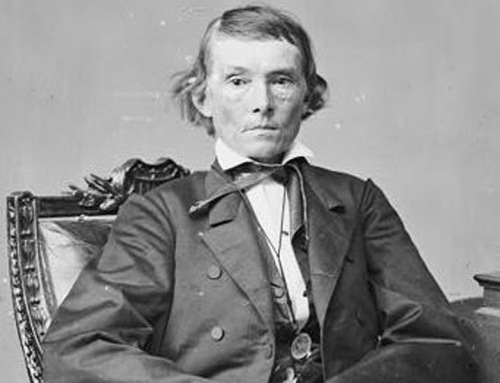
Alexander Stephens who had authored the infamous1861 Cornerstone Speech that “that the negro is not equal to the white man; that slavery — subordination to the superior race — is his natural and normal condition” argued after the war that the war was not about slavery at all, that it:

“had its origins in opposing principles….It was a strife between the principles of Federation, on the one side, and Centralism, or Consolidation on the other.” He concluded “that the American Civil War “represented a struggle between “the friends of Constitutional liberty” and “the Demon of Centralism, Absolutism, [and] Despotism!” [4]

Jefferson Davis, who had masterfully crafted “moderate” language which radicals in the South used to their advantage regarding the expansion and protection of the rights of slave owners in the late 1850s to mollify Northern Democrats, and who wrote in October 1860 that: “The recent declarations of the Black Republican party…must suffice to convince many who have formerly doubted the purpose to attack the institution of slavery in the states. The undying opposition to slavery in the United States means war upon it where it is, not where it is not.” [5]

After the war a revisionist Davis wrote:

“The Southern States and Southern people have been sedulously represented as “propagandists” of slavery, and the Northern as the champions of universal freedom…” and “the attentive reader…will already found enough evidence to discern the falsehood of these representations, and to perceive that, to whatever extent the question of slavery may have served as an occasion, it was far from being the cause for the conflict.” [6]

Instead of being about slavery the Confederate cause was mythologized by those promoting the false history of the “Lost Cause” a term coined by William Pollard in 1866, which “touching almost every aspect of the struggle, originated in Southern rationalizations of the war.” [7] By 1877 many southerners were taking as much pride in the “Lost Cause” as Northerners took in Appomattox.[8] Alan Nolen notes: “Leaders of such a catastrophe must account for themselves. Justification is necessary. Those who followed their leaders into the catastrophe required similar rationalization.” [9]

The Lost Cause was elevated by some to the level of a religion. In September 1906, Lawrence Griffith speaking to a meeting of the United Confederate Veterans stated that when the Confederates returned home to their devastated lands, “there was born in the South a new religion.” [10] The mentality of the Lost Cause took on “the proportions of a heroic legend, a Southern Götterdämmerung with Robert E. Lee as a latter day Siegfried.” [11]

This new religion that Griffith referenced was replete with signs, symbols and ritual:

“this worship of the Immortal Confederacy, had its foundation in myth of the Lost Cause. Conceived in the ashes of a defeated and broken Dixie, this powerful, pervasive idea claimed the devotion of countless Confederates and their counterparts. When it reached fruition in the 1880s its votaries not only pledged their allegiance to the Lost Cause, but they also elevated it above the realm of common patriotic impulse, making it perform a clearly religious function….The Stars and Bars, “Dixie,” and the army’s gray jacket became religious emblems, symbolic of a holy cause and of the sacrifices made on its behalf. Confederate heroes also functioned as sacred symbols: Lee and Davis emerged as Christ figures, the common soldier attained sainthood, and Southern women became Marys who guarded the tomb of the Confederacy and heralded its resurrection.” [12]

Jefferson Davis became an incarnational figure for the adherents of this new religion. A Christ figure who Confederates believed “was the sacrifice selected-by the North or by Providence- as the price for Southern atonement. Pastors theologized about his “passion” and described Davis as a “vicarious victim”…who stood mute as Northerners “laid on him the falsely alleged iniquities of us all.” [13]

In 1923 a song about Davis repeated this theme:

Jefferson Davis! Still we honor thee! Our Lamb victorious, who for us endur’d A cross of martyrdom, a crown of thorns, soul’s Gethsemane, a nation’s hate, A dungeon’s gloom! Another God in chains.” [14]

The myth also painted another picture, that of slavery being a benevolent institution which has carried forth into our own time. The contention of Southern politicians, teachers, preachers and journalists was that slaves liked their status; they echoed the words of slave owner Hiram Tibbetts to his brother in 1842 “If only the abolitionists could see how happy our people are…..The idea of unhappiness would never enter the mind of any one witnessing their enjoyments” [15] as well as Jefferson Davis who in response to the Emancipation Proclamation called the slaves “peaceful and contented laborers.” [16]

The images of the Lost Cause, was conveyed by numerous writers and Hollywood producers including Thomas Dixon Jr. whose play and novel The Clansman became D.W. Griffith’s The Birth of a Nation, a groundbreaking part of American cinematography which was released in 1915; Margaret Mitchell who penned the epic Pulitzer Prize winning novel Gone With the Wind which in its 1939 film form won ten academy awards immortalized the good old days of the old South with images of faithful slaves, a theme which found its way into Walt Disney’s famed 1946 animated Song of the South.

The Lost Cause helped buttress the myths that both comforted and inspired many Southerners following the war. “It defended the old order, including slavery (on the grounds of white supremacy), and in Pollard’s case even predicted that the superior virtues of cause it to rise ineluctably from the ashes of its unworthy defeat.” [17] The myth helped pave the way to nearly a hundred more years of effective second class citizenship for now free blacks who were often deprived of the vote and forced into “separate but equal” public and private facilities, schools and recreational activities. The Ku Klux Klan and other violent organizations harassed, intimidated, persecuted and used violence against blacks.

“From the 1880s onward, the post-Reconstruction white governments grew unwilling to rely just on intimidation at the ballot box and themselves in power, and turned instead to systematic legal disenfranchisement.” [18] Lynching was common and even churches were not safe. It would not be until the Civil Rights movement of the 1950s and 1960s that blacks would finally begin to gain the same rights enjoyed by whites in most of the South.

Ruffin outlived Lincoln who was killed by the assassin John Wilkes Booth on April 14th 1864. However the difference between the two men was marked. In his Second Inaugural Address Lincoln spoke in a different manner than Ruffin. He concluded that address with these thoughts:

“With malice toward none, with charity for all, with firmness in the right as God gives us to see the right, let us strive on to finish the work we are in, to bind up the nation’s wounds, to care for him who shall have borne the battle and for his widow and his orphan, to do all which may achieve and cherish a just and lasting peace among ourselves and with all nations.” [19]

The fact is this movement is not only disturbing but it contrary to what its leaders say places an abhorrent, racist and truly vile ideology above God or the Christian faith that they supposedly represent.

Peace

Padre Steve+

Notes

[1] Freehling, William The Road to Disunion Volume II p.462

[2] Edmund Ruffin (1794-1865). Diary entry, June 18, 1865. Manuscript Division, Library of Congress Retrieved from http://blogs.loc.gov/civil-war-voices/about/edmund-ruffin/ 24 March 2014

[3] Gallagher, Gary W. and Nolan Alan T. editors The Myth of the Lost Cause and Civil War History Indiana University Press, Bloomington and Indianapolis 2000 p.15

[4] Dew, Charles Apostles of Disunion p.16

[5] Catton, Bruce The Coming Fury p.104

[6] Davis, Jefferson The Rise and Fall of the Confederate Government Volume One of Two, A public Domain Book, Amazon Kindle edition pp.76-77

[7] Gallagher, Gary and Nolan, Alan The Myth of the Lost Cause and Civil War History p.12

[8] Millet Allen R and Maslowski, Peter. For the Common Defense: A Military History of the United States of America The Free Press, a division of McMillan Publishers, New York 1984 p.230

[9] Ibid. Gallagher and Nolan The Myth of the Lost Cause and Civil War History p.12

[10] Hunter, Lloyd The Immortal Confederacy: Another Look at the Lost Cause Religion in Gallagher and Nolan The Myth of the Lost Cause and Civil War p.185

[11] McPherson, James The Battle Cry of Freedom p.854

[12] Ibid. Hunter The Immortal Confederacy Religion in Gallagher and Nolan The Myth of the Lost Cause and Civil War p.186

[13] Ibid. Hunter The Immortal Confederacy Religion in Gallagher and Nolan The Myth of the Lost Cause and Civil War p.198

[14] Ibid. Hunter The Immortal Confederacy Religion in Gallagher and Nolan The Myth of the Lost Cause and Civil War p.198

[15] Levine, Bruce Half Slave and Half Free p.106

[16] Ibid. Gallagher and Nolan The Myth of the Lost Cause and Civil War History p.16

[17] Guelzo, Allen Fateful Lightening p.525

[18] Ibid. Guelzo Fateful Lightening p.526

[19] Ibid. Lincoln Second Inaugural Address

4 Comments

Filed under christian life, civil rights, civil war, Political Commentary

The Ideological & Religious Foundations of the American Civil War

Friends of Padre Steve’s World

This is another chapter of my Gettysburg text in which I lay out the ideological foundations of the Civil War. These are important not only to understand that war, but also to shed light on ongoing controversies in our own time in the United States, as well as understanding civil wars and conflicts in other nations.

Peace

Padre Steve+
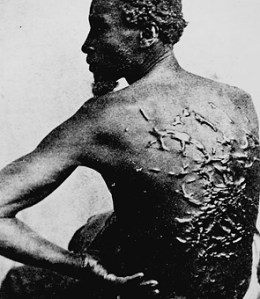
slave-back

“At length on 12th April, the tension could no longer bear the strain. Contrary to instructions, in the morning twilight, and when none could see clearly what the historic day portended, the Confederates in Charleston bombarded Fort Sumter, and the thunder of their guns announced that the argument of a generation should be decided by the ordeal of war. A war, not between two antagonistic political parties, but a struggle to the death between two societies, each championing a different civilization…” [1]

One can never separate war and the means by which it is fought from its political ends. War according to Clausewitz is an extension or continuation of politics. When the motivation behind those politics becomes more extreme and powerful, when the politics becomes more than disagreement, but where the ideologies behind the politics evokes hatred between peoples, war can come close to reaching the abstract concept of absolute or total war . Clausewitz wrote:

“The more powerful and inspiring the motives for war, the more they affect the belligerent nations and the fiercer the tensions that precede the outbreak, the closer will war approach its abstract concept, the more important will be the destruction of the enemy, the more closely will the military and the political objects of war coincide, and the more military and less political will war appear to be….” [2]

The American Civil War was the first modern war based on the advancement of technology and the changing character of war. But it was also a modern war which reached back to the most primal urges of the people involved. It was caused by the clash of radically different ideologies, ideologies which championed two very different views of civilization, government, economics and the rights of people. “Like the total wars of the twentieth century, it was preceded by years of violent propaganda, which long before the war had obliterated all sense of moderation, and had awakened in the contending parties the primitive spirit of tribal fanaticism.” [3] It was preceded by the fracturing of political parties and alliances which had worked for compromise in the previous decades to preserve the Union even at the cost of maintaining slavery. Far from being irrational as some have posited, the actions and behavior of politicians in both the North and the South was completely rational based on their conflicting ideologies and views of their opponents. The “South’s fears of territorial and economic strangulation and the North’s fears of a “slave power” conspiracy are anything but irrational, and only someone who refuses to think through the evidence available to Americans in the 1850s would find either of them at all illogical.” [4]

The very realistic fears of both sides brought about clash of extremes in politics which defied efforts at compromise and was already resulting in violent and bloody conflicts between ideologues in Kansas, Missouri and Kentucky years before the firing on Fort Sumter. For both sides their views became a moral cause that bordered on religious faith. British theorist and military historian J.F.C. Fuller wrote of it:

“As a moral issue, the dispute acquired a religious significance, state rights becoming wrapped up in a politico-mysticism, which defying definition, could be argued for ever without any hope of a final conclusion being reached.” [5]

That is why it impossible to simply examine the military campaigns and battles of the Civil War in isolation from the politics, polices, and the competing philosophy and theology which undergirded the arguments of both sides that brought on the war.

Some might wonder where this fits in a text that is about a specific campaign and battle in a war, but for those entrusted with planning national defense and conducting military campaign the understanding of why wars are fought, in particular the ideological causes of war matter in ways that military planners, commanders and even elected political leadership often overlook. Colin Gray notes: “Wars are not free floating events, sufficient unto themselves as objects for study and understanding. Instead, they are entirely the product of their contexts they are entirely the product of their contexts.” [6]

Studying the context of the American Civil War is very important in understanding not just it, but also civil wars in other nations which are currently raging. The study of these contexts brings an American or Western historical perspective to those wars, not so much in trying to place a western template over non-western conflicts; but a human perspective from our own past from which we can gain insight into how the people, even people who share a common language, religion and history, can war against each other in the most brutal of fashions.

For American and western political and military policy makers this is particularly important in Iraq where many Americans have fought, and the related civil war in Syria which has brought about the emergence of the Islamic State of Iraq and the Levant. Thus the study of the American Civil War, from the cultural, economic, social and religious aspects which divided the nation, helps us to understand how those factors influence politics, policy and the primal passions of the people which drive them to war.

The political ends of the Civil War came out of the growing cultural, economic, ideological and religious differences between the North and South that had been widening since the 1830s. The growing economic disparity between the Slave and Free states became more about the expansion of slavery in federal territories as disunion and war approached; for a number of often competing reasons. These differences were amplified by the issue of slavery led to the substitution of stereotypes of each other and had the “effect of changing men’s attitudes toward the disagreements which are always certain to arise in politics: ordinary, resolvable disputes were converted into questions of principle, involving rigid, unnegotiable dogma.” [7]

This was driven both by the South’s insistence on both maintaining slavery where it was already legal and expanding it into new territories which was set against the vocal abolitionist movement and the even more powerful economic concerns of many Northern industrialists who were not so idealistic, and much more concerned with “economic policy designed to secure Northern domination of Western lands than the initial step in a broad plan to end slavery.” [8]

This completion between the regions not only affected politics, it affected religion and culture In the South it produced a growing culture of victimhood which is manifest in the words of Robert Toombs who authored Georgia’s declaration of causes for secession:

“For twenty years past, the Abolitionists and their allies in the Northern states, have been engaged in constant efforts to subvert our institutions, and to excite insurrection and servile war among us…” whose “avowed purpose is to subject our society, subject us, not only to the loss of our property but the destruction of ourselves, our wives and our children, and the dissolution of our homes, our altars, and our firesides.” [9]

276a656033

As the differences grew and tensions rose the South became ever more closed off from the North. “More than other Americans, Southerners developed a sectional identity outside the national mainstream. The Southern life style tended to contradict the national norm in ways that life styles of other sections did not.” [10] The complex relationship of Southern society where the “Southern bodies social, economic, intellectual, and political were decidedly comingled” [11] and politics of the South came more to embrace the need for slavery and its importance, even to poor whites in the South who it did not benefit and actually harmed economically: “the system of subordination reached out still further to require a certain kind of society, one in which certain questions were not publically discussed. It must give blacks no hope of cultivating dissention among the whites. It must commit nonslaveholders to the unquestioning support of racial subordination….In short, the South became increasingly a closed society, distrustful of isms from outside and unsympathetic to dissenters. Such were the pervasive consequences of giving top priority to the maintenance of a system of racial subordination.” [12]

Liberator.JPG

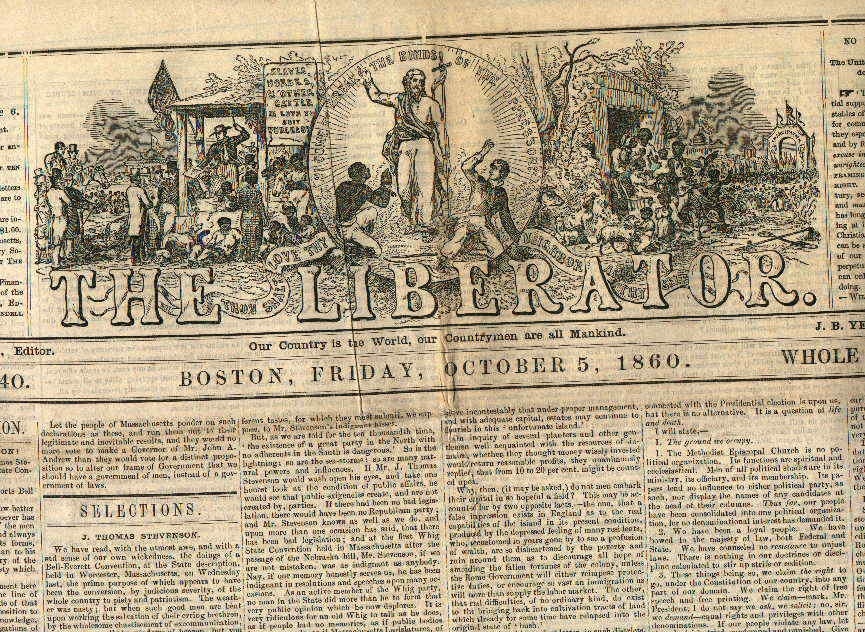
Southern planters declared war on all critics of their “particular institution” beginning in the 1820s. As Northern abolitionists like William Lloyd Garrison and his newspaper The Liberator grew in its distribution and began to appear in the South various elected officials throughout the South “suppressed antislavery books, newspapers, lectures, and sermons and strove generally to deny critics of bondage access to any public forum.[13] In response to the proliferation of abolitionist literature in the South, John C. Calhoun proposed that Congress pass a law to prosecute “any postmaster who would “knowingly receive or put into the mail any pamphlet, newspaper, handbill, or any printed, written, or pictorial representation touching the subject of slavery.” [14] Beginning in 1836 the House of Representatives passed a “gag rule” which “banned all petitions, memorials, resolutions, propositions, or papers related in any way or to any extent whatever to the subject of slavery.” [15] This was challenged by former President John Quincy Adams in 1842 as well as by others so that in 1844 the House voted to rescind it. However Southern politicians “began to spout demands that the federal government and the Northern states issue assurances that the abolitionists would never be allowed to tamper with what John Calhoun had described as the South’s “peculiar domestic institution.” [16] The issue of slavery more than any other “transformed political action from a process of accommodation to a mode of combat.” [17]

Around the same time as the gag rule was played out in Congress the Supreme Court had ruled that the Federal government alone “had jurisdiction where escaped slaves were concerned” which resulted in several states enacting “personal liberty laws” to “forbid their own elected officials from those pursuing fugitives.” Southern politicians at the federal and state levels reacted strongly to these moves which they believed to be an assault on their institutions and their rights to their human property. Virginia legislators said these laws were a “disgusting and revolting exhibition of faithless and unconstitutional legislation.” [18]

The issue of slavery shaped political debate and “structured and polarized many random, unoriented points of conflict on which sectional interest diverged.” [19] As the divide grew leaders and people in both the North and the South began to react to the most distorted images of each other imaginable- “the North to an image of a southern world of lascivious and sadistic slave drivers; the South to the image of a northern world of cunning Yankee traders and radical abolitionists plotting slave insurrections.” [20]
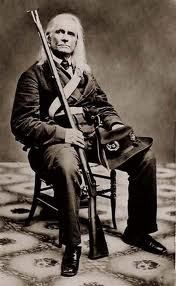
ruffin

Edmund Ruffin

Among the people most enraged by Northern opposition to slavery was Edmund Ruffin. Ruffin was a very successful farm paper editor, plantation owner and ardent old line secessionist from Virginia. In 1860 the then 67 year old Ruffin helped change the world forever when, according to popular legend he pulled the lanyard which fired the first shot at Fort Sumter. While he was there and probably was given the honor of firing the first shot from his battery; other guns from other emplacements may have fired first. [21]

Ruffin was a radical ideologue, he had been passionately arguing for secession and Southern independence for fifteen years. Ruffin “perceived the planter civilization of the South in peril; the source of the peril was “Yankee” and union with “Yankees.” Thus he preached revolution, Ruffin was a rebel with a cause, a secular prophet…” [22] He was a type of man who understood reality far better than some of the more moderate oligarchs that populated the Southern political and social elite. While in the years leading up to the war these men, including John Calhoun attempted to secure the continued existence and spread of slavery within the Union through the Congress and the courts, as early as 1850, Ruffin recognized that in order for slavery to survive the slaveholding South would have to secede from the Union. Ruffin and other radical secessionists believed that there could be no compromise with the north. In 1850 he and James Hammond attempted to use a meeting in Nashville to “secure Cooperative State Secession and wrote to Hammond, against those who sought to use the meeting to preserve the Union, “If the Convention does not open the way to dissolution…I hope it shall never meet.” [23] He believed that in order to maintain the institution of slavery the slave holding states that those states had to be independent from the North.

Ruffin’s views were not unique to him, the formed the basis of how most slave owners and supporters felt about slavery’s economic benefits, Ruffin wrote:

“Still, even this worst and least profitable kind of slavery (the subjection of equals and men of the same race with their masters) served as the foundation and the essential first cause of all the civilization and refinement, and improvement of arts and learning, that distinguished the oldest nations. Except where the special Providence and care of God may have interposed to guard a particular family and its descendants, there was nothing but the existence of slavery to prevent any race or society in a state of nature from sinking into the rudest barbarism. And no people could ever have been raised from that low condition without the aid and operation of slavery, either by some individuals of the community being enslaved, by conquest and subjugation, in some form, to a foreign and more enlightened people.”[24]

The Ante-Bellum South was an agrarian society which depended on the free labor provided by slaves and in a socio-political sense it was an oligarchy that offered no freedom to slaves, openly discriminated against free blacks and provided little hope of social or economic advancement for poor and middle class whites.

Over a period of a few decades, Northern states abolished slavery in the years after the United States had gained independence.

The South tied its economy and society to the institution of slavery, and was not content to see it remain just in the original states of the Old South.

The expansion of slavery was essential to its continued maintenance in the states where it was already legal. “Because of the need to maintain a balance in the Senate, check unruly slaves, and cultivate fertile soils, many planters and small plantation owners- particularly those living in the southern districts of the cotton states- asserted that their survival depended on new territory.” [25] In those decades “a huge involuntary migration took place. Between 800,000 and 1 million slaves were moved westward….” [26]

The need for slaves caused prices to soar. In some older states like Virginia where fewer slaves were required the exportation of slaves became a major industry:

“male slaves were marched in coffles of forty or fifty, handcuffed to each other in pairs, with a long chain through the handcuffs passing down the column to keep it together, closely guarded by mounted slave traders followed by an equal number of female slaves and their children. Most of them were taken to Wheeling, Virginia, the “busiest slave port” in the United States, and from there they were transported by steamboat to New Orleans, Natchez, and Memphis.” [27]

In the years the before the war, the North embraced the Industrial Revolution leading to advances which gave it a marked economic advantage over the South. The population of the North also expanded at a clip that far outpaced the South as European immigrants swelled the population.

The divide was not helped by the various compromises worked out between northern and southern legislators. After the Missouri Compromise Thomas Jefferson wrote:

“but this momentous question, like a fire bell in the night, awakened and filled me with terror. I considered it at once as the knell of the Union. It is hushed indeed for the moment, but this is a reprieve only, not a final sentence. A geographical line, coinciding with a marked principle, moral and political, once conceived and held up to the angry passions of men, will never be obliterated; and every new irritation will mark it deeper and deeper.”[28]

The trigger for the increase in tensions was the war with Mexico in which the United States annexed nearly half of Mexico. The new territories were viewed by those who advocated the expansion of slavery as fresh and fertile ground for its spread. Ulysses S Grant noted the effects of the war with Mexico in his memoirs:

“In taking military possession of Texas after annexation, the army of occupation, under General [Zachary] Taylor, was directed to occupy the disputed territory.  The army did not stop at the Nueces and offer to negotiate for a settlement of the boundary question, but went beyond, apparently in order to force Mexico to initiate war….To us it was an empire and of incalculable value; but it might have been obtained by other means.  The Southern rebellion was largely the outgrowth of the Mexican war.”[29]

In the North a strident abolitionist movement took root. It developed during the 1830s in New England as a fringe movement among the more liberal elites, inspired by the preaching of revivalist preacher Charles Finney who “demanded a religious conversion with a political potential more radical than the preacher first intended.” [30] Finney’s preaching was emboldened and expanded by the American Anti-Slavery Society founded by William Lloyd Garrison “which launched a campaign to change minds, North and South, with three initiatives, public speeches, mass mailings and petitions.” [31] Many of the speakers were seminary students and graduates of Lane Seminary in Cincinnati, who became known as “the Seventy” who received training and then “fanned out across the North campaigning in New England, Pennsylvania, New York, Ohio, Indiana and Michigan[32] where many received hostile receptions, and encountered violence. Garrison used his newspaper, The Liberator to “pledge an all-out attack on U.S. slavery.” [33]

The abolition movement aimed to not only stop the spread of slavery but to abolish it. The latter was something that many in the North who opposed slavery’s expansion were often either not in favor of, or indifferent to. The movement was a boost by the huge popularity of Harriett Beecher Stowe’s 1852 novel Uncle Tom’s Cabin “a vivid, highly imaginative, best-selling, and altogether damning indictment of slavery” [34] the abolitionist movement gained steam and power and “raised a counterindignation among Southerners because they thought Mrs. Stowe’s portrait untrue…” [35] The images in Stowe’s book “were irredeemably hostile: from now on the Southern stereotype was something akin to Simon Legree.” [36]

The leaders of the Abolitionist movement who had fought hard against acts the Fugitive Slave Act and the Dred Scott decision were now beginning to be joined by a Northern population that was becoming less tolerant of slavery and the status quo. With the formation of the Republican Party in 1854, a party founded on opposition to the expansion of slavery in the territories found a formidable political voice and became part of a broad coalition of varied interests groups whose aspirations had been blocked by pro-slavery Democrats. These included “agrarians demanding free-homestead legislation, Western merchants desiring river and harbor improvements at federal expense, Pennsylvania ironmasters and New England textile merchants in quest of higher tariffs.” They also made headway in gaining the support of immigrants, “especially among the liberal, vocal, fiercely anti-slavery Germans who had recently fled the Revolution of 1848.” [37] One of those German immigrants, Carl Schurz observed that “the slavery question” was “not a mere occasional quarrel between two sections of the country, divided by a geographic line” but “a great struggle between two antagonistic systems of social organization.” [38]

In light of the threat posed to slavery by the emerging abolitionist movement forced slaveholders to shift their defense of slavery from it being simply a necessary evil. Like in the North where theology was at the heart of many abolitionist arguments, in the South theology was used to enshrine and defend the institution of slavery. The religiously based counter argument was led by the former Governor of South Carolina, John Henry Hammond. Hammond’s arguments included biblical justification of blacks being biologically inferior to whites and slavery being supported in the Old Testament where the “Hebrews often practiced slavery” and in the New testament where “Christ never denounced servitude.” [39] Hammond warned:

“Without white masters’ paternalistic protection, biologically inferior blacks, loving sleep above all and “sensual excitements of all kinds when awake” would first snooze, then wander, then plunder, then murder, then be exterminated and reenslaved.” [40]

Others in the South, including politicians, pundits and preachers “were preaching “that slavery was an institution sanction by God, and that even blacks profited from it, for they had been snatched out of pagan and uncivilized Africa and been given the advantages of the gospel.” [41]

Slave owners frequently expressed hostility to independent black churches and conducted violence against them, and “attacks on clandestine prayer meetings were not arbitrary. They reflected the assumption (as one Mississippi slave put it) “that when colored people were praying [by themselves] it was against them.” [42] But some Southern blacks accepted the basic tenets do slave owner-planter sponsored Christianity. Douglass wrote “many good, religious colored people who were under the delusion that God required them to submit to slavery and wear their chains with weakness and humility.” [43]

furman

The political and cultural rift began to affect entire church denominations, beginning with the Methodists who in “1844 the Methodist General Conference condemned the bishop of Georgia for holding slaves, the church split and the following year saw the birth of the Methodist Episcopal Church.” The Baptists were next, when the Foreign Mission Board “refused to commission a candidate who had been recommended by the Georgia Baptist Convention, on the ground that he owned slaves” [44] resulting in the formation of the Southern Baptist Convention. The Baptist split is interesting because until the early 1800s there existed a fairly strong anti-slavery movement in states such as Kentucky, while in 1790 the General Committee of Virginia “adopted a statement calling slavery “a violent deprivation of the rights of nature, and inconsistent with a republican government; and therefore [we] recommend it to our brethren to make use of every legal measure, to extirpate the horrid evil from the land.” [45] However, in many parts of the Deep South there existed no such sentiment and in South Carolina noted Baptist preachers including “Richard Furman, Peter Bainbridge, and Edmund Botsford were among the larger slaveholders.” [46] Furman wrote a defense of slavery in 1822 where he made the argument that “the right of holding slaves is clearly established in the Holy Scriptures by precept and example.” [47] After a number of slave uprisings, including the Nat Turner Revolt in Virginia, pro-slavery voices “tended to silence any remaining antislavery voices in the South.” [48] These voices grew more ever more strident and in 1835 the Charleston Association “adopted a militant defense of slavery, sternly chastising abolitionists as “mistaken philanthropists, and denuded and mischievous fanatics.” [49] Those who met in Augusta Georgia to found the new Southern Baptist Convention indicated that “the division was “painful” but necessary because” our brethren have pressed upon every inch of our privileges and our sacred rights.” [50] Since the Baptist split was brought about by the refusal of the Triennial Convention to appoint slaveholders as foreign missionaries the new convention emphasized the theological nature of their decision:

“Our objects, then, are the extension of the Messiah’s kingdom, and the glory of God. Not disunion with any of his people; not the upholding of any form of civil rights; but God’s glory, and Messiah’s increasing reign; in the promotion of which, we find no necessity for relinquishing any of our civil rights. We will never interfere with what is Caesar’s. We will not compromit what is God’s.” [51]

Of course what was Caesar’s was obviously the institution of slavery.

The last denomination to split was the Presbyterians in 1861 who, “reflecting the division of the nation, the Southern presbyteries withdrew from the Presbyterian Church and founded their own denomination.” [52] Southern churches and church leaders were among the most enthusiastic voices for disunion and secession. The preachers who had called for separation from their own national denominations years before the war now “summoned their congregations to leave the foul Union and then to cleanse their world.” [53] The Reverend William Leacock of Christ Church, New Orleans declared in his Thanksgiving sermon “Our enemies…have “defamed” our characters, “lacerated” our feelings, “invaded “our rights, “stolen” our property, and let “murderers…loose upon us, stimulated by weak or designing or infidel preachers. With “the deepest and blackest malice,” they have “proscribed” us “as unworthy members… of the society of men and accursed before God.” Unless we sink to “craven” beginning that they “not disturb us,…nothing is now left us but secession.” [54]
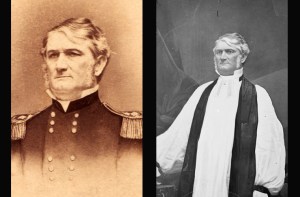
leonidas-polk

Bishop and General Leonidas Polk

From “the beginning of the war southern churches of all sorts with few exceptions promoted the cause militant” [55] and supported war efforts. Bishop Leonidas Polk, the Episcopal Bishop of Louisiana, who had been a classmate of Jefferson Davis at West Point was commissioned as a Major General and appointed to command the troops in the Mississippi Valley. Polk did not resign his ecclesiastical office, and “Northerners expressed horror at such sacrilege, but Southerners were delighted with this transfer from the Army of the Lord.” [56] Lee’s chief of Artillery Brigadier General William Pendleton was also an academy graduate and an Episcopal Priest. By its donations of “everything from pew cushions to brass bells, Southern churches gave direct material aid to the cause. Among all the institutions in Southern life, perhaps the church most faithfully served the Confederate Army and nation.” [57]

Sadly, the denominational rifts persisted until well into the twentieth century. The Presbyterians and Methodists both eventually reunited but the Baptists did not, and eventually “regional isolation, war bitterness, and differing emphasis in theology created chasms by the end of the century which leaders of an earlier generation could not have contemplated.” [58] The Southern Baptist Convention is now the largest Protestant denomination in the United States and many of its preachers are active in often divisive conservative social and political causes. The denomination that it split from, the American Baptist Convention, though much smaller remains a diverse collection of conservative and progressive local churches. Some of these are still in the forefront of the modern civil rights movement, including voting rights, women’s rights and LGBT issues, all of which find some degree of opposition in the Southern Baptist Convention.
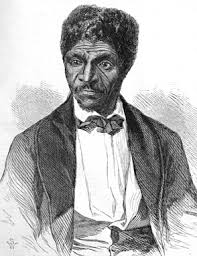
dred scott

Dred Scott

As the 1850s wore on the divisions over slavery became deeper and voices of moderation retreated. The trigger for the for the worsening of the division was the political battle regarding the expansion of slavery, even the status of free blacks in the north who were previously slaves, over whom their owners asserted their ownership. Southerners considered the network to help fugitive slaves escape to non-slave states, called the Underground Railroad “an affront to the slaveholders pride” and “anyone who helped a man or woman escape bondage was simply a thief” who had robbed them of their property and livelihood, as an “adult field hand could cost as much as $2000, the equivalent of a substantial house.” [59]

In 1856 the Supreme Court, dominated by southern Democrats ruled in favor of southern views in the Dred Scott decision one pillar of which gave slavery the right to expand by denying to Congress the power to prohibit slavery in Federal territories. The decision was momentous but it was a failure, but it was a disaster for the American people. It solved nothing and further divided the nation:

“In the South, for instance, it encouraged southern rights advocates to believe that their utmost demands were legitimatized by constitutional sanction and, therefore, to stiffen their insistence upon their “rights.” In the North, on the other hand, it strengthened a conviction that an aggressive slavocracy was conspiring to impose slavery upon the nation, and that any effort to reach an accommodation with such aggressors was futile. While strengthening the extremists, it cut the ground from under the moderates.” [60]

The decision in the case is frightening when one looks upon its tenor and implications. The majority opinion which was written by Chief Justice Roger Taney was chilling, not only in its views of race, but the fact that blacks were perpetually property without the rights of citizens. Taney wrote:

“Can a negro, whose ancestors were imported into this country, sold as slaves, become a member of the political community formed and brought into existence by the Constitution of the United States, and as such become entitled to all the rights, and privileges, and immunities, guaranteed by that instrument to the citizen?…It is absolutely certain that the African race were not included under the name of citizens of a state…and that they were not included, and were not intended to be included, under the word “citizens” in the Constitution, and therefore claim none of the rights and privileges which that instrument provides for and secures to citizens of the United States. On the contrary, they were at that time considered as a subordinate and inferior class of beings, who had been subjugated by the dominant race, and, whether emancipated or not, yet remain subject to their authority, and had no rights or privileges but those who held the power and the Government might choose to grant them” [61]

The effect of the ruling on individuals and the states was far reaching. “No territorial government in any federally administered territory had the authority to alter the status of a white citizen’s property, much less to take that property out of a citizen’s hands, without due process of law or as punishment for some crime.” [62] Free slaves were no longer safe, even in Free States from the possibility of being returned to slavery, because they were property.

But the decision had been influenced by President-Elect James Buchanan’s secret intervention in the Supreme Court deliberations two weeks before his inauguration. Buchanan hoped by working with the Justices that he save the Union from breaking apart by appeasing slave owners and catering to their agenda. “The president-elect wanted to know not only when, but if the Court would save the new administration and the Union from the issue of slavery in the territories. Would the judges thankfully declare the explosive subject out of bounds, for everyone who exerted federal power? The shattering question need never bother President Buchanan.” [63] In his inaugural address he attempted to camouflage his intervention and “declared that the Court’s decision, whatever it turned out to be, would settle the slavery issue forever.” [64]

But Buchanan was mistaken, the case made the situation even more volatile as it impaired “the power of Congress- a power which had remained intact to this time- to occupy the middle ground.” [65] Taney’s decision held that Congress “never had the right to limit slavery’s expansion, and that the Missouri Compromise had been null and void on the day of its formulation.” [66]

The decision ignited a firestorm in the north where Republicans now led by Abraham Lincoln decried the decision and southerners basked in their judicial victory. Northerners quite rightly feared that an activist court would rule to deny their states the right to forbid slavery. As early as 1854 Lincoln posed the idea that the Declaration of Independence was “the standard maxim of free society …constantly spreading and deepening its influence,” ultimately applicable “to peoples of all colors everywhere.” [67]

But after the Dred Scott decision Lincoln warned that the Declaration was being cheapened and diluted. Not only that, Lincoln asked the logical question regarding Taney’s judicial activism. How long would it be, asked Abraham Lincoln, before the Court took the next logical step and ruled explicitly that:

“the Constitution of the United States does not permit a state to exclude slavery from its limits?” How far off was the day when “we shall lie down pleasantly thinking that the people of Missouri are on the verge of making their State free; and shall awake to the reality, instead, that the Supreme Court has made Illinois a slave State?” [68]

Lincoln discussed the ramification of the ruling for blacks, both slave and free:

“to aid in making the bondage of the Negro universal and eternal….All the powers of the earth seem rapidly combining against him. Mammon is after him; ambition follows, and philosophy follows, and the theology of the day is fast joining the cry. They have him in his prison house;…One after another they have closed the heavy doors upon him…and they stand musing as to what invention, in all the dominions of mind and matter, can be produced the impossibility of his escape more complete than it is.” [69]
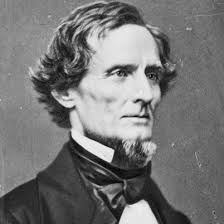
jeffdavis

Jefferson Davis

In response to the decision the advocates of the expansion of slavery not only insisted on its westward expansion in Federal territories but to Panama, Nicaragua and Cuba as well. In 1857 Jefferson Davis further provoked northern ire when he insisted that “African Slavery as it exists in the United States is a moral, a social, and a political blessing.” [70]

Southern leaders poured political, human and economic capital into the struggle for the imposition of slavery on the Kansas Territory. Victory in Kansas meant “two new U.S. Senators for the South. If a free labor Kansas triumphed, however, the North would gain four senators: Kansas’s immediately and Missouri’s soon.” [71]

Rich Southerners recruited poor whites to fight their battles to promote the institution of slavery. Jefferson Buford of Alabama recruited hundreds of non-slaveholding whites to move to Kansas. Buford claimed to defend “the supremacy of the white race” he called Kansas “our great outpost” and warned that “a people who would not defend their outposts had already succumbed to the invader.” [72] To this end he and 415 volunteers went to Kansas, where they gained renown and infamy as members of “Buford’s Cavalry.” The day they left Montgomery they were given a sendoff. Each received a Bible, and the “holy soldiers elected Buford as their general. Then they paraded onto the steamship Messenger, waving banners conveying Buford’s twin messages: “The Supremacy of the White Race” and “Kansas the Outpost.” [73] His effort ultimately failed but he had proved that “Southern poor men would kill Yankees to keep blacks ground under.” [74]

The issue in Kansas was bloody and full of political intrigue over the Lecompton Constitution which allowed slavery, but which had been rejected by a sizable majority of Kansas residents, so much so that Kansas would not be admitted to the Union until after the secession of the Deep South. But the issue so galvanized the North that for the first time a coalition of “Republicans and anti-Lecompton Douglas Democrats, Congress had barely turned back a gigantic Slave Power Conspiracy to bend white men’s majoritarianism to slavemaster’s dictatorial needs, first in Kansas, then in Congress.” [75]

Taking advantage of the judicial ruling Davis and his supporters in Congress began to bring about legislation not just to ensure that Congress could not “exclude slavery” but to protect it in all places and all times. They sought a statute that would explicitly guarantee “that slave owners and their property would be unmolested in all Federal territories.” This was commonly known in the south as the doctrine of positive protection, designed to “prevent a free-soil majority in a territory from taking hostile action against a slave holding minority in their midst.” [76]
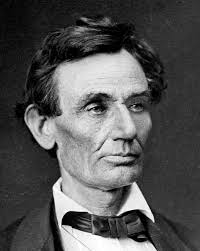
lincolnearly

Abraham Lincoln

Other extremists in the Deep South had been long clamoring for the reopening of the African slave trade. In 1856 a delegate at the 1856 commercial convention insisted that “we are entitled to demand the opening of this trade from an industrial, political, and constitutional consideration….With cheap negroes we could set hostile legislation at defiance. The slave population after supplying the states would overflow to the territories, and nothing could control its natural expansion.” [77] and in 1858 the “Southern Commercial Convention…” declared that “all laws, State and Federal, prohibiting the African slave trade, out to be repealed.” [78] The extremists knowing that such legislation would not pass in Congress then pushed harder; instead of words they took action.

In 1858 there took place two incidents that brought this to the fore of political debate. The schooner Wanderer owned by Charles Lamar successfully delivered a cargo of four hundred slaves to Jekyll Island, earning him “a large profit.” [79] Then the USS Dolphin captured “the slaver Echo off Cuba and brought 314 Africans to the Charleston federal jail.” [80] The case was brought to a grand jury who had first indicted Lamar were so vilified that “they published a bizarre recantation of their action and advocated the repeal of the 1807 law prohibiting the slave trade. “Longer to yield to a sickly sentiment of pretended philanthropy and diseased mental aberration of “higher law” fanatics…” [81] Thus in both cases juries and judges refused to indict or convict those responsible.

There arose in the 1850s a second extremist movement in the Deep South, this one which had at its heart the mission to re-enslave free blacks. This effort was not limited to fanatics, but entered the Southern political mainstream, to the point that numerous state legislatures were nearly captured by majorities favoring such action. [82] That movement which had appeared out of nowhere soon fizzled, as did the bid to reopen the slave trade, but these “frustrations left extremists the more on the hunt for a final solution” [83] which would ultimately be found in secession.

Previously a man of moderation Lincoln laid out his views in the starkest terms in his House Divided speech given on June 16th 1858. Lincoln understood, possibly with more clarity than others of his time that the divide over slavery was deep and that the country could not continue to exist while two separate systems contended with one another. The Union Lincoln “would fight to preserve was not a bundle of compromises that secured the vital interests of both slave states and free, …but rather, the nation- the single, united, free people- Jefferson and his fellow Revolutionaries supposedly had conceived and whose fundamental principles were now being compromised.” [84] He was to the point and said in clear terms what few had ever said before, in language which even some in his own Republican Party did not want to use because they felt it was too divisive:

“If we could first know where we are and whither we are tending, we could better judge what to do and how to do it. We are now far into the fifth year since a policy was initiated with the avowed object and confident promise of putting an end to slavery agitation. Under the operation of that policy, that agitation has not only not ceased but has constantly augmented. In my opinion, it will not cease until a crisis shall have been reached and passed. “A house divided against itself cannot stand.” I believe this government cannot endure, permanently, half slave and half free. I do not expect the Union to be dissolved; I do not expect the house to fall; but I do expect it will cease to be divided. It will become all one thing, or all the other. Either the opponents of slavery will arrest the further spread of it and place it where the public mind shall rest in the belief that it is in the course of ultimate extinction, or its advocates will push it forward till it shall become alike lawful in all the states, old as well as new, North as well as South.” [85]

Part of the divide was rooted in how each side understood the Constitution. For the South it was a compact among the various states, or rather “only a league of quasi independent states that could be terminated at will” [86] and in their interpretation States Rights was central. In fact “so long as Southerners continued to believe that northern anti-slavery attacks constituted a real and present danger to Southern life and property, then disunion could not be ruled out as an ugly last resort.” [87]

But such was not the view in the North, “for devout Unionists, the Constitution had been framed by the people rather than created as a compact among the states. It formed a government, as President Andrew Jackson insisted of the early 1830s, “in which all the people are represented, which operates directly on the people individually, not upon the States.” [88] Lincoln like many in the North understood the Union that “had a transcendent, mystical quality as the object of their patriotic devotion and civil religion.” [89]

Lincoln’s beliefs can be seen in the Gettysburg Address where he began his speech with the words “Four score and seven years ago our fathers brought forth on this continent, a new nation, conceived in Liberty, and dedicated to the proposition that all men are created equal…” To Lincoln and others the word disunion “evoked a chilling scenario within which the Founders’ carefully constructed representative government failed, triggering “a nightmare, a tragic cataclysm” that would subject Americans to the kind of fear and misery that seemed to pervade the rest of the world.” [90]

Those same beliefs were found throughout the leaders of the Abolition movement, including Theodore Parker who said “The first [step] is to establish Slavery in all of the Northern States- the Dred Scott decision has already put it in all the territories….I have no doubt The Supreme Court will make the [subsequent] decisions.[91]

Even in the South there was a desire for the Union and a fear over its dissolution, even among those officers like Robert E. Lee who would resign his commission and take up arms against the Union in defense of his native state. Lee wrote to his son Custis in January 1861, “I can anticipate no greater calamity for the country than the dissolution of the Union…I am willing to sacrifice everything but honor for its preservation…Secession is nothing but revolution.” But he added “A Union that can only be maintained by swords and bayonets has no charms for me….” [92] The difference between Lee and others like him and Abraham Lincoln was how they viewed the Union, views which were fundamentally opposed.

In the North there too existed an element of fanaticism. While “the restraining hand of churches, political parties and familial concerns bounded other antislavery warriors,” [93] and while most abolitionists tried to remain in the mainstream and work through legislation and moral persuasion to halt the expansion of slavery with the ultimate goal of emancipation, there were fanatical abolitionists that were willing to attempt to ignite the spark which would cause the powder keg of raw hatred and emotion to explode.

Most prominent among these men was John Brown. Brown was a “Connecticut-born abolitionist…a man with the selfless benevolence of the evangelicals wrought into a fiery determination to crush slavery” [94] who as early as 1834 was “an ardent sympathizer the Negroes” desiring to raise a black child in his own home and to “offering guidance to a colony of Negroes on the farm of the wealthy abolitionist Gerrit Smith at North Elba New York.” [95] Brown regarded moderate free-staters with distain and in Kansas set about to change the equation when he and a company of his marauders set upon and slaughtered the family of a pro-slavery settler at Pottawatomie Creek. [96]
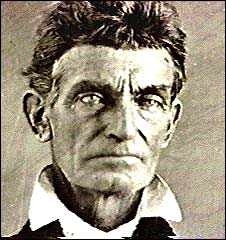
John_brown.JPG

John Brown

Brown was certainly “a religious zealot…but was nevertheless every much the product of his time and place….” [97] Brown was a veteran of the violent battles in Kansas where he had earned the reputation as “the apostle of the sword of Gideon” as he and his men battled pro-slavery settlers. Brown was possessed by the belief that God had appointed him as “God’s warrior against slaveholders.” [98] He despised the peaceful abolitionists and demanded action. “Brave, unshaken by doubt, willing to shed blood unflinchingly and to die for his cause if necessary, Brown was the perfect man to light the tinder of civil war in America, which was what he intended to do.” [99]

Brown’s attempt to seize 10,000 muskets at the Federal armory in Harper’s Ferry Virginia in order to ignite a slave revolt was frustrated and Brown captured, by a force of U.S. Marines led by Colonel Robert E. Lee and Lieutenant J.E.B. Stuart. Brown was tried and hung, but his raid “effectively severed the country into two opposing parts, making it clear to moderates there who were searching for compromise, that northerner’s tolerance for slavery was wearing thin.” [100]

It now did not matter that Brown was captured, tried, convicted and executed for his raid on Harper’s Ferry. He was to be sure was “a half-pathetic, half-mad failure, his raid a crazy, senseless exploit to which only his quiet eloquence during trial and execution lent dignity” [101] but his act was the watershed from which the two sides would not be able to recover, the population on both sides having gone too far down the road to disunion to turn back.

Brown had tremendous support among the New England elites, the “names of Howe, Parker, Emerson and Thoreau among his supporters.” [102] To abolitionists he had become a martyr “but to Frederick Douglass and the negroes of Chatham, Ontario, nearly every one of whom had learned something from personal experience on how to gain freedom, Brown was a man of words trying to be a man of deeds, and they would not follow him. They understood him, as Thoreau and Emerson and Parker never did.” [103]

But to Southerners Brown was the symbol of an existential threat to their way of life. In the North there was a nearly religious wave of sympathy for Brown, and the “spectacle of devout Yankee women actually praying for John Brown, not as a sinner but as saint, of respectable thinkers like Thoreau and Emerson and Longfellow glorifying his martyrdom in Biblical language” [104] horrified Southerners, and drove pro-Union Southern moderates into the secession camp.

The crisis continued to fester and when Lincoln was elected to the Presidency in November 1860 with no southern states voting Republican the long festering volcano erupted. It did not take long before southern states began to secede from the Union. South Carolina was first, followed by Mississippi, Florida, Alabama, Georgia, Louisiana and Texas. Many of the declarations of causes for secession made it clear that slavery was the root cause. The declaration of South Carolina is typical of these and is instructive of the basic root cause of the war:

“all the States north of that line have united in the election of a man to the high office of President of the United States, whose opinions and purposes are hostile to slavery. He is to be entrusted with the administration of the common Government, because he has declared that that “Government cannot endure permanently half slave, half free,” and that the public mind must rest in the belief that slavery is in the course of ultimate extinction.”[105]

Throughout the war slavery loomed large. In his First Inaugural Address Lincoln noted: “One section of our country believes slavery is right and ought to be extended, while the other believes it is wrong and ought not to be extended. This is the only substantial dispute.”[106] Of course he was right, and his southern opponents agreed.
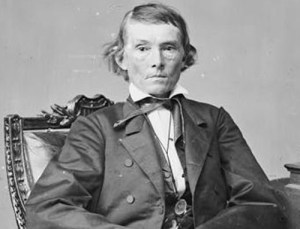
alexander-stephens

Alexander Stephens

Alexander Stephens the Vice President of the Confederacy noted in his Cornerstone Speech of March 21st 1861 that: “Our new government is founded upon exactly the opposite idea; its foundations are laid, its corner- stone rests upon the great truth, that the negro is not equal to the white man; that slavery — subordination to the superior race — is his natural and normal condition. [Applause.] This, our new government, is the first, in the history of the world, based upon this great physical, philosophical, and moral truth.”[107]

Thus the American ideological war was born, as J.F.C. Fuller wrote:

After the bloody battle of Antietam, Lincoln published the emancipation proclamation in which he proclaimed the emancipation of slaves located in the Rebel states, and that proclamation had more than a social and domestic political effect, it ensured that Britain would not intervene.

In his Second Inaugural Address Lincoln discussed the issue of slavery as being the cause of the war:

“One-eighth of the whole population were colored slaves, not distributed generally over the Union, but localized in the southern part of it. These slaves constituted a peculiar and powerful interest. All knew that this interest was somehow the cause of the war. To strengthen, perpetuate, and extend this interest was the object for which the insurgents would rend the Union even by war, while the Government claimed no right to do more than to restrict the territorial enlargement of it. Neither party expected for the war the magnitude or the duration which it has already attained. Neither anticipated that the cause of the conflict might cease with or even before the conflict itself should cease. Each looked for an easier triumph, and a result less fundamental and astounding. Both read the same Bible and pray to the same God, and each invokes His aid against the other. It may seem strange that any men should dare to ask a just God’s assistance in wringing their bread from the sweat of other men’s faces, but let us judge not, that we be not judged. The prayers of both could not be answered. That of neither has been answered fully. The Almighty has His own purposes. “Woe unto the world because of offenses; for it must needs be that offenses come, but woe to that man by whom the offense cometh.” If we shall suppose that American slavery is one of those offenses which, in the providence of God, must needs come, but which, having continued through His appointed time, He now wills to remove, and that He gives to both North and South this terrible war as the woe due to those by whom the offense came, shall we discern therein any departure from those divine attributes which the believers in a living God always ascribe to Him? Fondly do we hope, fervently do we pray, that this mighty scourge of war may speedily pass away. Yet, if God wills that it continue until all the wealth piled by the bondsman’s two hundred and fifty years of unrequited toil shall be sunk, and until every drop of blood drawn with the lash shall be paid by another drawn with the sword, as was said three thousand years ago, so still it must be said “the judgments of the Lord are true and righteous altogether.”[108]

When Edmund Ruffin pulled the lanyard of the cannon that fired the first shot at Fort Sumter it marked the end of an era and despite Ruffin, Stephens and Davis’ plans gave birth to what Lincoln would describe as “a new birth of freedom.”

When the war ended with the Confederacy defeated and the south in ruins, Ruffin still could not abide the result. In a carefully crafted suicide note he sent to his son the bitter and hate filled old man wrote on June 14th 1865:

“… And now with my latest writing and utterance, and with what will be near my last breath, I here repeat and would willingly proclaim my unmitigated hatred to Yankee rule — to all political, social and business connections with Yankees, and the perfidious, malignant and vile Yankee race.” [109]

Though Ruffin was dead in the coming years the southern states would again find themselves under the governance of former secessionists who were unabashed white supremacists. By 1877 many southerners we taking as much pride in the “Lost Cause” as Northerners took in Appomattox.[110] This led to nearly a hundred more years of effective second class citizenship for now free blacks who were often deprived of the vote and forced into “separate but equal” public and private facilities, schools and recreational activities. The Ku Klux Klan and other violent organizations harassed, intimidated, persecuted and used violence against blacks. Lynching was common and even churches were not safe. It would not be until the Civil Rights movement of the 1950s and 1960s that blacks would finally begin to gain the same rights enjoyed by whites in most of the south.

Ruffin outlived Lincoln who was killed by the assassin John Wilkes Booth on April 14th 1864. However the difference between the two men was marked. In his Second Inaugural Address Lincoln spoke in a different manner than Ruffin. He concluded that address with these thoughts:

“With malice toward none, with charity for all, with firmness in the right as God gives us to see the right, let us strive on to finish the work we are in, to bind up the nation’s wounds, to care for him who shall have borne the battle and for his widow and his orphan, to do all which may achieve and cherish a just and lasting peace among ourselves and with all nations.” [111]

Though the issues may be different in nations where the United States decides to intervene to prevent humanitarian disasters, prevent local civil wars from becoming regional conflagrations, or to provide stability after a civil war, the controversies and conflicts brought on by the ideological, social and religious divides in the Ante-Bellum United States provide planners and commanders a historical example, drawn from our own American history of the necessity of understanding the political, ideological, economic, social and religious seeds of conflict. By taking the time to look at our own history, planners, commanders and policy makers can learn lessons that if they take the time to do so will help them understand such factors in places American troops and their allies might be called to serve. It also shows, through the wisdom of Britain’s non-intervention the importance of staying out of some conflicts.


Notes

[1] Fuller, J.F.C.. The Conduct of War 1789-1961 Da Capo Press, New York 1992. Originally published by Rutgers University Press, New Brunswick N.J p.98

[2] Clausewitz, Carl von. On War Indexed edition, edited and translated by Michael Howard and Peter Paret, Princeton University Press, Princeton NJ 1976 pp.87-88

[3] Ibid. Fuller The Conduct of War 1789-1961 p.99

[4] Guelzo Allen C. Fateful Lightening: A New History of the Civil War Era and Reconstruction Oxford University Press, Oxford and New York 2012 p.95

[5] Fuller, J.F.C. Decisive Battles of the U.S.A. 1776-1918 University of Nebraska Press, Lincoln 2007 copyright 1942 The Royal Society for the Prevention of Cruelty to Animals p.174

[6] Gray, Colin S. Fighting Talk: Forty Maxims on War, Peace, and Strategy Potomac Book, Dulles VA 2009 p.3


[7] Potter, David M. The Impending Crisis: America before the Civil War 1848-1861 completed and edited by Don E. Fehrenbacher Harper Collins Publishers, New York 1976 p.43

[8] Egnal, Marc Clash of Extremes: The Economic Origins of the Civil War Hill and Wang a division of Farrar, Straus and Giroux New York 2009 p.6

[9] Dew, Charles B. Apostles of Disunion: Southern Secession Commissioners and the Causes of the Civil War University Press of Virginia, Charlottesville and London 2001 p.12

[10] Thomas, Emory The Confederate Nation 1861-1865 Harper Perennial, New York and London 1979 p.5

[11] Ibid. Thomas The Confederate Nation p.5

[12] Ibid. Potter The Impending Crisis pp.457-458

[13] Levine, Bruce Half Slave and Half Free: The Roots of the Civil War Revised Edition, Hill and Wang, a division of Farrar, Strauss and Giroux, New York 1992 and 1995 p.166

[14] Ibid. Guelzo Fateful Lightening pp.50-51

[15] Ibid. Levine Half Slave and Half Free pp.169-170

[16] Ibid. Guelzo Fateful Lightening pp.51-52

[17] Ibid. Potter The Impending Crisis p.43

[18] Ibid. Levine Half Slave and Half Free pp.169-170

[19] Ibid. Potter The Impending Crisis p.43

[20] Ibid. Potter The Impending Crisis p.43

[21] Catton, Bruce The Coming Fury Phoenix Press, London 1961 pp.314-315

[22] Ibid. Thomas The Confederate Nation p.1

[23] Freehling, William W. The Road to Disunion Volume One: Secessionists at Bay Oxford University Press, Oxford and New York 1990 p.481

[24] Ruffin, Edmund The Political Economy of Slavery in McKitrick, Eric L. ed. Slavery Defended: The Views of the Old South. Englewood Cliffs, NJ: Prentice Hall/Spectrum Books, 1963.Retrieved from http://www.pbs.org/wgbh/americanexperience/features/primary-resources/lincolns-political-economy/ 24 March 2014

[25] Ibid. Egnal Clash of Extremes pp.125-126

[26] Korda, Michael. Clouds of Glory: The Life and Legend of Robert E. Lee Harper Collins Publishers, New York 2014 p.203

[27] Ibid. Korda Clouds of Glory: The Life and Legend of Robert E. Lee p.203

[28] Jefferson, Thomas Letter to John Holmes dated April 22nd 1824 retrieved from www.loc.gov/exhibits/jefferson/159.html 24 March 2014

[29] U.S. Grant, Personal Memoirs of U.S. Grant New York 1885 pp.243-245

[30] Ibid. Freehling The Road to Disunion Volume One p.289

[31] Ibid. Egnal Clash of Extremes:pp.125-126

[32] Ibid. Egnal Clash of Extremes p.125

[33] Ibid. Freehling The Road to Disunion Volume One p.12

[34] Ibid. Catton Two Roads to Sumter p.94

[35] Ibid. Catton Two Roads to Sumter p.94

[36] Ibid. Catton Two Roads to Sumter p.94

[37] Catton, William and Bruce, Two Roads to Sumter: Abraham Lincoln, Jefferson Davis and the March to Civil War McGraw Hill Book Company New York 1963, Phoenix Press edition London p.123

[38] Ibid. Levine Half Slave and Half Free p.15

[39] Ibid. Freehling The Road to Disunion Volume One p.29

[40] Ibid. Freehling The Road to Disunion Volume One p.29

[41] Gonzalez, Justo L. The History of Christianity Volume 2: The Reformation to the Present Day Harper and Row Publishers San Francisco 1985 p.251

[42] Ibid. Levine Half Slave and Half Free p.116

[43] Ibid. Levine Half Slave and Half Free p.116

[44] Ibid. Gonzalez The History of Christianity Volume 2 p.251

[45] McBeth, H. Leon The Baptist Heritage Broadman Press, Nashville TN 1987 p.383

[46] Ibid. McBeth The Baptist Heritage p.384

[47] Ibid. McBeth The Baptist Heritage p.384

[48] Ibid. McBeth The Baptist Heritage p.384

[49] Ibid. McBeth The Baptist Heritage p.384

[50] Shurden, Walter B Not a Silent People: The Controversies that Have Shaped Southern Baptists Broadman Press, Nashville TN 1972 p.58

[51] Ibid. Shurden Not a Silent People p.58

[52] Ibid. Gonzalez The History of Christianity Volume 2 p.251

[53] Freehling, William. The Road to Disunion Volume II: Secessionists Triumphant 1854-1861 Oxford University Press, Oxford and New York 2007 p.460

[54] Ibid. Freehling The Road to Disunion Volume II p.462

[55] Thomas, Emory The Confederate Nation 1861-1865 Harper Perennial, New York and London 1979 pp.245-246

[56] Foote, Shelby, The Civil War, A Narrative. Volume One: Fort Sumter to Perryville Random House, New York 1963 1958 p.87


[57] Ibid. Thomas The Confederate Nation p.246

[58] Ibid. McBeth The Baptist Heritage pp.392-393

[59] Goodheart, Adam. Moses’ Last Exodus in The New York Times: Disunion, 106 Articles from the New York Times Opinionator: Modern Historians Revist and Reconsider the Civil War from Lincoln’s Election to the Emancipation Proclamation Edited by Ted Widmer, Black Dog and Leventhal Publishers, New York 2013 p.15

[60] Ibid. Potter The Impending Crisis p.291

[61] Guelzo Allen C. Fateful Lightening: A New History of the Civil War Era and Reconstruction Oxford University Press, Oxford and New York 2012 p.91

[62] Ibid. Guelzo Fateful Lightening pp.91-92

[63] Freeling, William. The Road to Disunion Volume II: Secessionists Triumphant 1854-1861 Oxford University Press, Oxford and New York 2007 p.115

[64] Ibid. Freeling, The Road to Disunion Volume II: Secessionists Triumphant 1854-1861 p.109

[65] Ibid. Potter The Impending Crisis p.291

[66] Ibid. Levine Half Slave and Half Free p.210

[67] Ibid. Catton Two Roads to Sumter p.139

[68] Ibid. Levine Half Slave and Half Free p.211

[69] Ibid. Catton Two Roads to Sumter p.139

[70] Ibid. Catton Two Roads to Sumter p.142

[71] Ibid. Freeling, The Road to Disunion Volume II: Secessionists Triumphant 1854-1861 p.124

[72] Ibid. Freeling, The Road to Disunion Volume II: Secessionists Triumphant 1854-1861 p.125

[73] Ibid. Freeling, The Road to Disunion Volume II: Secessionists Triumphant 1854-1861 p.126

[74] Ibid. Freeling, The Road to Disunion Volume II: Secessionists Triumphant 1854-1861 p.126

[75] Ibid. Freeling, The Road to Disunion Volume II: Secessionists Triumphant 1854-1861 p.142

[76] Ibid. Catton Two Roads to Sumter p.142

[77] McPherson, James. The Battle Cry of Freedom: The Civil War Era Oxford University Press, Oxford and New York 1988 p.102

[78] Ibid Freeling, The Road to Disunion Volume II: Secessionists Triumphant 1854-1861 p.183

[79] Ibid. McPherson The Battle Cry of Freedom p.103

[80] Ibid. Freeling The Road to Disunion Volume II p.183

[81] Ibid. McPherson The Battle Cry of Freedom p.103

[82] Ibid. Freeling The Road to Disunion Volume II p.185

[83] Ibid. Freeling The Road to Disunion Volume II p.185

[84] Gallagher, Gary The Union War Harvard University Press, Cambridge MA and London, 2011 p.47

[85] Lincoln, Abraham A House Divided given at the Illinois Republican Convention, June 16th 1858, retrieved from www.pbs.org/wgbh/ala/part4/4h2934.html 24 March 2014

[86] Ibid. Guelzo Fateful Lightening p.55

[87] Ibid. Guelzo Fateful Lightening p.55

[88] Ibid. Gallagher The Union War p.46

[89] Ibid Gallagher The Union War p.47

[90] Ibid Gallagher The Union War p.47

[91] Wills, Garry. Lincoln at Gettysburg: The Words that Remade America Simon and Schuster Paperbacks, New York 1992 p.114

[92] Korda, Michael. Clouds of Glory: The Life and Legend of Robert E. Lee Harper Collins Publishers, New York 2014 p.221

[93] Ibid. Freeling The Road to Disunion Volume II p.207

[94] Ibid. Guelzo Fateful Lightening p.81

[95] Ibid. Potter The Impending Crisis p.211

[96] Ibid. Potter The Impending Crisis pp.211-212

[97] Ibid. Levine Half Slave and Half Free p.197

[98] Ibid. Freeling The Road to Disunion Volume II p.207

[99] Ibid. Korda, Clouds of Glory p.xviii

[100] Ibid. Korda Clouds of Glory p.xxxix

[101] Ibid. Catton Two Roads to Sumter p.187

[102] Ibid. Potter The Impending Crisis p.381

[103] Ibid. Potter The Impending Crisis p.375

[104] Ibid. Catton Two Roads to Sumter p.187

[105] __________ Declaration of the Immediate Causes Which Induce and Justify the Secession of South Carolina from the Federal Union. Retrieved from The Avalon Project, Yale School of Law http://avalon.law.yale.edu/19th_century/csa_scarsec.asp 24 March 2014

[106] Lincoln, Abraham First Inaugural Address March 4th 1861 retrieved from www.bartleby.com/124/pres31.html 24 March 2014

[107] Cleveland, Henry Alexander H. Stevens, in Public and Private: With Letters and Speeches, before, during and since the War, Philadelphia 1886 pp.717-729 retrieved from http://civilwarcauses.org/corner.htm 24 March 2014

[108] Lincoln, Abraham Second Inaugural Address March 4th 1865 retrieved from www.bartleby.com/124/pres32.html 24 March 2014

[109] Edmund Ruffin (1794-1865). Diary entry, June 18, 1865. Manuscript Division, Library of Congress Retrieved from http://blogs.loc.gov/civil-war-voices/about/edmund-ruffin/ 24 March 2014

[110] Millet Allen R and Maslowski, Peter. For the Common Defense: A Military History of the United States of America The Free Press, a division of McMillan Publishers, New York 1984 p.230

[111] Ibid. Lincoln Second Inaugural Address

Leave a comment

Filed under civil rights, civil war, History, Political Commentary, Religion

The Character, Nature and Context of The Civil War and Why it Still Matters Part 2

Gettysburg-Casualties1

Friends of Padre Steve’s World,

Here is part two to yesterday’s post.

Since I am now working my way back to Gettysburg his is a significant revision of an article that I published here earlier in the year and that is a part of my Gettysburg Staff Ride text. The actual full title of the chapter is The Foundations of the First Modern War: The Character, Nature and Context of the Civil War and its Importance to Us Today but that is rather long to put as the title here. This is pretty detailed and specialized so many may not want to read it, however, for those with in interest in how United States policy in regard to how we use our military today and the myriad of tensions that we wrestle with that have been with us for about 150 years it should prove enlightening. Todays article is more concerned with how the war was waged and developments which began in the Civil War which changed the ways that later wars were conducted.

Have a great night! 

Peace

Padre Steve+

Part Two…

21st-michiganjpg-ee6580567686f3ae

Weaponry, Tactics, Technical Advancements and Mobilization

All of these factors influenced and affected the Union and Confederate armies as they campaigned. Likewise, advances weaponry particularly the rifled musket, posed a conundrum for officers educated in the Napoleonic tactics that both armies began the war. The tactics the officers were educated in were developed at a time when the maximum effective range of muskets was barely 100 meters. Yet by 1860 the rifled muskets had an effective range of about 400 meters, and the advent of the repeating rifle increased the firepower available to individual soldiers. This made it especially difficult for the armies that fought the Civil War to “rise up and deliver a frontal attack became almost always futile against any reasonably steady defenders. Even well executed flank attacks tended to suffer such heavy casualties as experienced riflemen maneuvered to form new fronts against them that they lost the decisiveness they had enjoyed in the Napoleonic Wars.” [1] Despite the increased range and accuracy that came with the rifled musket tactics in all arms were slow to change and even at Gettysburg Lee would demonstrate that he had not fully appreciated the effects of the change of warfare learned during the battles of 1862.

Though there were a number of mounted combats between Union and Confederate cavalry, “they were incidental both to the cavalry’s primary role and to the course of tactical development” [2]which generally fought dismounted. The way in which both sides used their cavalry showed that by the end of 1863 each had “arrived at a war of tactical entrenchment dominated by infantry armed with the rifled musket, and supported by the defensive deployment of smoothbore artillery.” [3]

Another issue faced by all of the officers now commanding large formations in the Civil War was their inexperience in dealing with such large numbers of troops. When the war began, the officers educated at West Point, as well as others who had been directly appointed had previously only commanded small units. Even those who commanded regiments such as Lee seldom had more than a few companies with them at any given time. Those who had campaigned and fought in Mexico, and had some experience in handling larger formations were handicapped because that war was still very much a Napoleonic War fought with Napoleonic era weapons against a more numerous but poorly equipped enemy.

These men were now faced with the task of organizing, training and employing large armies made up primarily of militia units and volunteers. Most had little experience commanding such units and their experience with militia and volunteer formations during the Mexican War did not increase the appreciation of Regulars for them or for their leaders. J.F.C Fuller noted that at the beginning of the war “the Federal soldier was semiregular and the Confederate semiguerilla. The one strove after discipline, the other unleashed initiative. In battle the Confederate fought like a berserker, but out of battle he ceased to be a soldier.” [4] Both required certain kinds of leadership and Regular officers serving in both the Union and Confederate armies “embedded with the volunteers to give them some professional stiffening privately regarded them as uncontrollable adolescents who kicked off every back-home restraint the moment they were on campaign.” [5] Over the course of time this did change as the units of both armies learned to be professional soldiers.

The Regular Army numbered but 16,000 men at the beginning of the war most scattered in isolated posts and coastal defense fortifications around the country. Most of the Army remained loyal to the Union, “except for 313 officers who resigned their commissions, but this force was swamped by a Union war army that reached about 500,000 within four months of the firing on Fort Sumter.” [6] These officers however were among the Army’s best and brightest who rose to prominence and fame in their service to the Confederacy.

At the beginning of the war General George McClellan successful fought the break-up of the Regular Army. He helped keep it separate from the militia units organized by the States. This preserved a professional core in a time where the new volunteer units were learning their craft. In the North a parallel system “composed of three kinds of military organizations” developed as calls went out for “militia, volunteers and an expanded regular army” went out. [7]

Regular Army units were formed for the duration and were exclusively under the control of the Federal government. While comparatively few in number they often held the line and kept the Army of the Potomac intact during the early battles where volunteer units collapsed. Volunteer regiments, often officered by regulars or former regulars “remained state-based, and they signed up for two- or three- year periods, after which they returned to civilian life and their evaporated without any further fiscal obligations.” [8] Some of the volunteer regiments were formed from various state militia units, but since few states had effective militia systems, militia units “were usually employed only on emergency rear-echelon duties, to free up the volunteers and regulars.” [9]

The Confederacy faced a similar situation to the Union, but it did not have a Regular Army and all of its units were raised by the various states. “In early 1861 the Confederate Congress authorized the creation of a provisional army of 100,000 men. To get these troops [the first Confederate Secretary of War Leroy Pope] Walker asked state governors to raise regiments and transfer them to the national army. The War Office provided generals and staff officers and, in theory at least, could employ the troops and their officers in any way it pleased once they mustered the provisional army.” [10] Some states were quite cooperative but others were not and the tension between the central government in Richmond in regard to military policy and some states would continue throughout the war. The quality of these units varied widely, mostly based on the leadership provide by their officers. That being said many of the regiments mustered into service early in the war proved tough, resilient and served with distinction throughout the war.

Southern units were officered by a collection of professionals from the Ante-bellum Army, militia officers, political appointees or anyone with enough money to raise a unit. However command of divisional sized units and above was nearly always reserved to former professional soldiers from the old Army, most being graduates of West Point. At Gettysburg only one officer commanding a division or above was a non-academy graduate, Robert Rodes, who was a graduate of VMI. The quality of these officers varied greatly, as some of the old regulars failed miserably in combat and some of the volunteers such as John Gordon were remarkably successful as leaders of troops in combat. .

As in the North militia and home guard units remained to free up these units. However, the South was always wrestling with the intense independence of every state government, each of which often held back units from service with the field armies in order to ensure their own states’ defense. The withholding of troops and manpower by the states hindered Confederate war efforts, even though “the draft had been “eminently successful” in Virginia, North Carolina and South Carolina, but less so in Georgia, Mississippi, Alabama and Florida.[11]

draft riots

New York Draft Riots

The Changing Character of the Armies and Society

Gettysburg was the last battle where the original volunteer armies predominated as nature of both armies was changed by the war. Initially both sides sought to fight the war with volunteers but the increasingly costly battles which consumed vast numbers of men necessitated conscription and the creation of draft laws and bureaus.

The in April 1862 Confederate Congress passed the Conscription Act of 1862 which stated that “all persons residing in the Confederate States, between the ages of 18 and 35 years, and rightfully subject to military duty, shall be held to be in the military service of the Confederate States, and that a plain and simple method be adopted for their prompt enrollment and organization.” [12] The act was highly controversial and often resisted and the Congress issued a large number of class exemptions. Despite the exemptions “many Southerners resisted the draft or assisted evasion by others” [13] The main purpose of the conscription act was “to stimulate volunteering rather than by its actual use” [14] and while it did help increase the number of soldiers in Confederate service by the end of 1862 it was decidedly unpopular among soldiers, chafing at an exemption for “owners or overseers of twenty or more slaves” [15] who referred to the war as a “rich man’s war but a poor man’s fight.” [16]

CW-BreadRiots-Front

Richmond Bread Riot

Some governors who espoused state’s rights viewpoints “utilized their state forces to challenge Richmond’s centralized authority, hindering efficient manpower mobilization.” [17] Some, most notably Georgia’s governor Joseph Brown “denounced the draft as “a most dangerous usurpation by Congress of the rights of the States…at war with all principles for which Georgia entered the revolution.” [18] Brown and a number of other governors, including Zebulun Vance of North Carolina fought the law in the courts but when overruled resisted it through the many exemption loopholes, especially that of civil servants. Governor Brown “insisted that militia officers were included in this category, and proceeded to appoint hundreds of new officers.” [19] Due to the problems with the act and the abuses by the governors, Jefferson Davis lobbied Congress to pass the Conscription Act of 1864 which “severely limited the number of draft exemption categories and expanded military age limits from eighteen to forty-five and seventeen to fifty. The most significant feature of the new act, however, was the vast prerogatives it gave to the President and War Department to control the South’s labor pool.” [20] Despite the problems eventually “mobilized 75 to 80 percent of its available draft age military population.” [21]

The Congress of the United States authorized conscription in 1863 as the Union Army had reached an impasse as in terms of the vast number of men motivated to serve “for patriotic reasons or peer group pressure were already in the army” while “War weariness and the grim realities of army life discouraged further volunteering” and “the booming war economy had shrunk the number of unemployed men to the vanishing point.” [22] Like the Confederate legislation it was also tremendously unpopular and ridden with exemptions and abuses. The Federal draft was conducted by lottery in each congressional district with each district being assigned a quota to meet by the War Department. Under one third of the men drafted actually were inducted into the army, “more than one-fifth (161,000 of 776,000) “failed to report” and about 300,000 “were exempted for physical or mental disability or because they convinced the inducting officer that they were the sole means of support for a widow, an orphan sibling, a motherless child, or an indigent parent.” [23]

The Union draft law provoked great resentment, more from the way that it was administered than its purpose as “which brought the naked power of military government into play on the home front and went much against the national grain.[24] Open clashes and violence erupted in several cities and President Lincoln was forced to use Union Soldiers, recently victorious at Gettysburg to end the rioting and violence taking place in New York where protestors involved in a three day riot, many of whom were Irish immigrants urged on by Democratic Tammany Hall politicians, “soon degenerated into violence for its own sake” [25] wrecking the draft office, seizing the Second Avenue armory, attacking police, soldiers and blacks on the streets and soon “the mob had undisputed control of the city.” [26] The veteran troops quickly and violently put down the insurrection and “poured volleys into the ranks of protestors with the same deadly effect they had produced against the rebels at Gettysburg two weeks earlier.” [27]

civil-war-earthworks-petersburg

The Rise of Positional Warfare

As the opposing sides prepared, organized and adapted for war, the Union and Confederate armies in the field evolved in terms of their tactical, organizational and operational methods during the war. The realities of the deadliness of the rifled muskets and other advances in firepower which “made the defensive the stronger form of war” [28] brought about a renewal of interest and use of field fortifications, which had been taught to so many at West Point and the state military schools through the work of Mahan, Halleck and their students.

McClellan made extensive use of them on the Peninsula in 1861 and 1862 as did Lee outside of Richmond in 1862 where his troops derisively nicknamed him “the King of Spades.” However after the Seven Days Lee only made sporadic use of them instead following a strategy of the offense which culminated in the defeat at Gettysburg. [29] After Gettysburg, Lee made much more use of field fortifications, especially during the Wilderness campaign and the battles around Richmond culminating in the defense of Petersburg “where both sides became so extensively entrenched that siege warfare set in and lasted for nearly ten months.” [30]

The developments in field works and firepower gave the advantage to the defense, an advantage that made the massed frontal attack by infantry or massed cavalry charge obsolete as a tactic and disastrous to those commanders that attempted it. “On every occasion, a frontal assault delivered against an unshaken enemy led to costly failure. Nevertheless, neither side learnt this lesson.” [31] The examples of Burnside at Fredericksburg, Lee at Malvern Hill and Pickett’s Charge or Grant at Vicksburg and Cold Harbor demonstrated the futility of such tactics.

This was especially the case when opposing armies made the frontal attacks which were at the heart of Jominian offensive tactics.  Early in the war commanders including Grant at Shiloh and Lee at Antietam failed to dig in, but over time both the Union and Confederate armies learned to dig hasty field works as a matter of course.[32] At Gettysburg the well placed and constructed field fortifications and abattis constructed by XII Corps on Culp’s Hill would prove impregnable to the assaults of Ewell’s Second Corps on the night of July 2nd and morning of July 3rd.

Both sides also learned to use maneuver in combination with positional warfare to force the enemy to battle. In the West, Grant, Sherman and Rosecrans all did this successfully, particularly Stone’s River, during the Vicksburg Campaign, and the campaigns in middle Tennessee.[33] During the 1864-65 campaign around Richmond and Sherman’s campaigns in Georgia and the Carolinas the use of field fortifications and entrenchments became common. Of particular note is how Sherman’s forces routinely entrenched while on the offensive [34] where “the mobility of his campaign was due, not only to his skill in maneuvering his men, but also in his ability to manouvere their entrenchments with them.” [35]

Sherman’s opponent Confederate General Joseph Johnston made skillful use of entrenchments on the defensive and his attention to detail and training his men to fight well defensively was a hallmark of his campaign against Sherman, as had Lee against Grant. They were not without their critics. General John Bell Hood who was “the most uncompromising advocate of the orthodox view that weakened moral and made troops cautious” [36] was a stern critic of Johnston, who had relieved him following the fall of Atlanta. Hood’s tactics were costly and produced ghastly numbers of casualties.

The changing nature of how the war was being fought was demonstrated by General Joe Wheeler who commanded Johnston’s cavalry in Georgia and the Carolinas toward the end of the war. Wheel and his troopers made significant use of entrenchments, something not seen before by an arm traditionally known for its dependency on maneuver. He habitually fought his troops dismounted and at Atlanta fought from behind successive lines of barricades. Wheeler successfully integrated his cavalry with the infantry at the Battle of Bentonville North Carolina, constructing a line of breastworks 1200 yards long. Hagerman notes that “it is fitting to the changing nature of warfare that some of the most vivid description of trench warfare is found in Wheeler’s report of cavalry action as fighting came to an end at Bentonville.” [37]

The Corps of Engineers in both armies were changed by the war. Prior to the war the Corps of Engineers was primarily responsible for building coastal fortifications, civil projects and outposts in the west. Both remained small by 1864 the Federal Corps of Engineers numbered only eighty-six officers, split between civil and topographical engineers. The Confederates grew their Corps of Engineers more than the Union during the war and by 1865 the Confederates had “13 regular officers, 115 provisional officers, and 188 officers assigned to engineer troops.” [38] It should be noted the paucity West Point trained engineers of all types in the Confederate Army. Though many senior officers including Lee were trained as engineers they were not serving as such, and Lee’s Engineering Staff Officer at Gettysburg was but a Captain.

During the war both sides created Engineer or Pioneer units from scratch. The Union efforts to form permanent units began under McClellan beginning in 1861 as such units specialized units had not existed in the old army. The Union Army Corps of Engineers initially had a difficult time adapting to war. The dispersion of the Corps among the line and its civil duties were impediments to responding to the needs of war.  There was a hesitancy and resistance to creating engineering units by Congress, despite the pleas of McClellan and Lincoln for specialized engineering units.[39]

By the middle of the war organized units of Pioneers and Engineers were enhancing both offensive and defensive operations. Meade had three battalions of Engineers available to him at Gettysburg, the 15th New York, the 50th New York and the United States Engineer Battalion, but these were not on the battlefield being at Beaver Creek Dam on July 1st before being ordered to the defenses of Washington. [40]

The Confederate army began the war with only thirteen Corps of Engineers officers and Congress never acceded to Secretary of War James Seddon’s pleas “failed to provide the Confederate army with the pioneer troops that Seddon had requested” [41] and it was not until March 1863 that the Confederate Congress authorized the formation of “one company of engineer troops, to consist of one hundred men” [42] from in each division.

When they were established most of the newly organized engineer units had few very few West Point trained Corps of Engineers officers. Most Union Engineer Units were primarily staffed and commanded by officers detailed from the line or who had come from civilian life. The effect was a “decline in the antebellum definition of professionalism embodied in the Corps of Engineers” [43] which prior to the war were considered the elite branch of the Army. While this opened up new ideas, the Corps of Engineers remained resistant to change. In the years following the war as the Corps of Engineers retained its privileged status and the West Point curriculum remained mostly the same as it had during the ante-bellum period.

Strategy and operational level adapted to the new reality of war. Attrition and exhaustion became as important in relation to both positional and maneuver warfare. In 1864 in the East the “ascendancy of positional warfare” allowed Lee to hold out as Grant attempted to fight and maneuver him out of Richmond.[44] Lee was fighting on interior lines at this point and the campaign demonstrated that “an army fighting on interior lines, even under nearly overwhelming conditions of deprivation and against vastly superior numbers, could sustain a prolonged existence by use of field fortification and defensive maneuver.” [45]

Despite the increasing power of positional warfare in relation to fortifications in the East and around Atlanta, maneuver was not ignored. Sherman’s campaign in Georgia and the Carolinas demonstrated how an army could exploit “diversion, dispersion, and surprise to successfully pursue a modern total-war strategy of exhaustion against the enemy’s resources, communications and will.[46] Sherman used maneuver to force his opponents out of their prepared positions and did not hesitate to target the key infrastructure and infrastructure needed by the Confederate armies. The same was true in Virginia where in 1864 General Phillip Sheridan laid waste to the Shenandoah Valley, the breadbasket of the Army of Northern Virginia.

civil-war-city-point-dock

Logistics, Transportation and Signals

While the advances in weaponry, technology turned the adoption of field fortifications and the tactical defense even during offensive operations changed the way that the armies conducted the war; other advances were occurring. These took place in logistics, transportation, signals and communications.

In a country as vast as the United States logistics was a major concern of both armies. The ante-bellum Army developed its logistic doctrine from Napoleonic examples. That doctrine had to be modified in light of the American reality of a less developed continent with far greater distances involved in the movement of troops. “While the North’s logistical mobilization expanded, the South’s peaked in early 1863 and then declined. Fundamental interlocking problems beset logistics. The Confederacy had few preexisting industries to expand and lacked sufficient raw materials upon which to build an industrial base.” [47]

The Confederacy “did not have the material resources to fight a mass industrial war” [48] and the actions of its leaders from Jefferson Davis down did not help their cause. “The South needed a careful weighing of assets and liabilities, the setting of strict priorities, and centralized direction in order to use its resources efficiently. But Confederate leaders allowed events to control planning, resulting in uncoordinated, tardy, and incompetent centralization of the logistical effort.” [49]

The issue was not limited to industry but also agriculture, which in a region as rich as the Confederacy should not have been a problem. However, it was a major issue that became ever more serious throughout the war, not only for the Confederate armies in the field but for the population as a whole. While the South managed to maintain effective armies until the end of 1864, it “failed to preserve the population’s well-being.” [50] By the spring of 1863 five major cities experienced bread riots, the most serious being in Richmond; where Jefferson Davis had to personally give an ultimatum to rioters ordering them to disperse or have the militia open fire. [51] Many blamed merchants in general and the press labeled most businesses as speculators and extortionists. However as a result of the great privations at home and the need for a scapegoat, the specter of anti-Semitism rose in the Confederacy. Many, including some influential newspapers and government officials “focused on the Jews as the worst “extortioners” [52] blaming them for many if not most of the Confederacy’s economic woes.

During the war, both armies learned to adapt their logistical support services to the reality of war, however, the South for a number of reasons especially poor infrastructure and the lack of standardized rail systems, and the inability of the government in Richmond, the various states and the private sector to work together helped doom the Confederacy. The South did not lack food supplies, it was a rich agricultural region, but however its ability to provide sustenance for its people and its armies was hindered due to woeful infrastructure and various self-inflicted political and economic reasons. Several major issues affected the South’s ability to feed its people and its armies.

Among these were “the deficiencies of the Confederate rail system” which deteriorated throughout the war and was made worse by the lack of cooperation of Confederate railroad owners. The South “did not have a railroad network that tied its scant industrial base together or readily permitted long distance movements.” [53] This would hamper Confederate attempts to move and supply its armies as well as sustain its economy throughout the war. The Confederacy never nationalized its railroads, and “no centralized planning or organization developed, and field commanders, supply agencies, and civilian shippers competed for use of Southern rolling stock.” [54] Southern policy towards the use of its railroads was muddled at best and the demands of the war and by 1863, “the excessive wear of wartime rail movement was chewing up southern rail lines[55] which resulted in the “South barely keeping a few lines operating by cannibalizing less important lines and could not replace its rolling stock.” [56] The combination of the lack of a strong industrial base to produce the iron to make replacement rails and the similar lack of producing facilities to manufacture locomotives and rolling stock, combined with the “unsure policies of the Confederate government and military” [57] ran the already feeble Southern railway system into the ground.

The Confederacy also faced a basic unwillingness of many producers of food, textiles and other necessities to cooperate with the Confederate government which often could not even find ways for its own agencies to cooperate with each other. “The government gave no overall direction to the supply bureaus, which often bid against each other for materials and labor.” [58] This was a pervasive problem, and not helped by the efforts of some parts of the Confederate government to nationalize various parts of their economy in direct competition with the private sector. This contrasted starkly with the Union whose “quartermaster and commissary heads contracted out their needs for weapons, horses and clothes by bid on the open market, rather than by appropriating existing industries for government use.” [59]

The confederate policies meant that many citizens and businesses found ways to not submit to government edicts. There was a basic “unwillingness of farmers to sell goods and produce at government rates” [60] and the greed of hoarders and war profiteers who through “hoarding, black marketing and simple withdraw from the market[61] crippled Southern war efforts and by “1862 much of the Confederate economy had become unmanageable.” [62] When Davis attempted to use the religious faith of the people to bolster more and “called for a day of fasting and prayer in March 1863, one man wrote that the president asked for “fasting in the midst of famine.” [63]

Where possible each side used railroads and maritime forces to move troops and supplies. The Confederacy, as has been noted was lacking in both, and was at a severe disadvantage. The Union however enjoyed a great advantage in modern rail networks, as well as ocean and river based maritime power. By late 1863 the Army of the Potomac, as well as forces in the West demonstrated “the close integration of operational planning and that of the general in chief and supply bureaus. In this one area, the development of a mature and modern staff was evident.” [64]

Once the armies were away from railheads or the ports from where they drew supplies both armies, like their Napoleonic cousins relied on wagons to transport essential food, supplies and ammunition when on campaign. In both armies commanders and their logisticians experimented with the number of wagons per regiment and how army commanders, modified that number at various points during the war based on their situation. At the beginning of the war the Napoleonic standards by which both armies based the number of wagons, 12 wagons per 1000 men to support the troops on campaign were found to be insufficient as it “placed too much emphasis on foraging for American conditions” [65] and throughout the war standards for what the armies needed would be debated and commanders in different theaters of the war often set their own standards based on their needs and the availability of wagons and livestock to draw them.

army-potomac-1500

As the war went on the Federal army experimented with the use of the “flying column” as a response to the dependency on wagons in order to increase their mobility. The flying column was an idea drawn from the French by Major General Montgomery Meigs, the Union Quartermaster General. The idea was simple; in order to reduce dependency on wagons the army itself would be reorganized at the lowest level, the infantry squad.

“The soldier in a flying column carried eight days’ compressed rations, including desiccated vegetables on his back. He carried a blanket but no overcoat. The men were divided into squads of eight, one of whom was to carry a covered cooking kettle, another a large mess tin, another an axe, another a pick, and one a shovel. One man in each company carried the hospital knapsack. Each man carried his share of a shelter tent. The cavalry were pickets and grain for their horses.” [66]

After Gettysburg and the unsuccessful pursuit of Lee’s army, Halleck and Rufus Ingalls the Army of the Potomac’s chief quartermaster made provision and set standards “to convert the army into a flying column that would be self-sufficient for eight- and twelve- day periods away from the base of supply.” [67] In contrast the Confederacy lacked in wagons and livestock to support the field operations of the army on campaign. Wagons, especially those suited for military operations were in short supply and any time the opportunity presented Confederate commanders ensured the capture of Union wagons. This turned out to be a major problem during the Gettysburg campaign, when Stuart during his ride around the Army of the Potomac “succumbed to temptation of capturing a beautifully equipped and heavily laden Union supply train near Rockville, Maryland, at the cost of exhausting his cavalry and wasting precious time.” [68] In most cases Stuart’s action would have been commendable, and he certainly felt that such should have been the case here as well, but the cost to his operations and Lee’s need for his cavalry were such that it was a mistake of disastrous consequences.

The basic load of food and ammunition carried by each soldier in order to increase strategic maneuverability was adjusted to meet the operational need. Both armies, but more often the Confederate army frequently had to live off the land. The success and failure of forage operations and the requirements for people and animals in each theater of operations had a large impact on each army. By early 1863 the Army of Northern Virginia was “greatly deficient in all areas of supply….there were extreme shortages of footwear, clothing, draft animals, and wagons.” [69] When the Army of Northern Virginia advanced into Pennsylvania they found it to be “a land of plenty” while “quartermaster and commissary details, acting under official instructions, filled wagons and supplies with foodstuffs.” [70]

While the Federal army never lacked in provisions or supplies the Confederate armies were almost always in short supply, even in regard to adequate food supplies needed to maintain an adequate caloric intake on the march were almost impossible to achieve, but were so critical that they were barely adequate when the army was encamped. In fact one of the reasons which Lee based his invasion of Pennsylvania was to alleviate his desperate supply situation. One regimental commander in Pickett’s division recalled that Lee told him that “the movement was a necessity; that our provisions and supplies of every kind were nearly exhausted in Virginia, and we had to go into Pennsylvania for supplies.” [71]

The size of the armies and the distances involved on the battlefield made command and control difficult.  As such communications became more important and each army experimented with new signals organizations that used both old and new communication technologies. At the beginning of the war both sides made extensive use of visual signals and couriers, but rapidly began to rely on the telegraph for rapid communications.

The organizational tension was particularly evident in the rivalry between the U.S. Army Signal Corps and the Military Telegraph Service.  The Signal Corps focused on wireless communications. It preferred the Beardslee wireless telegraphs which had the limitations of such early wireless technology. The Union Army command favored the traditional wire bound networks operated by the Military Telegraph due to better reliability and security and eventually the Military Telegraph Service and its Morse trained operators were given “jurisdiction for all field telegraph” services at the urging of President Lincoln in November 1863. [72]Though the Army rejected the Beardslee equipment some commanders requested it for their operations.[73] As each Army became more dependent on the telegraph, each feared that their signals could be compromised through wiretapping and made efforts to encode their transmissions.

While the various forms of telegraphic communication were important in keeping higher headquarters in contact with armies in the field, battlefield communication could be difficult. Commanders on both sides relied on messengers to relay orders to subordinate commanders as well as pass information to senior commanders. On the battlefield this took time, and since the messengers were subject to the same dangers as ordinary soldiers messages might not reach the intended commanders. It took approximately an hour for a message to travel from an army commander to a corps commander, 30 minutes from a corps commander to a division commander, 20 from division to brigade, 15 from brigade to regiment and 5 minutes from regiment to company. [74]

Written orders generally provided better clarity if detailed enough but if they were passed orally, as was Lee’s preferred method they could easily be miscommunicated by messengers, or misunderstood or even ignored by commanders. This was a major source of Lee’s consternation during the Gettysburg campaign. A major problem for Lee during the campaign was that his orders, be they written or oral were frequently vague and discretionary, something that we will discuss in detail later, but Lieutenant General Richard Ewell spoke for many Confederate subordinate commanders on the evening of June 30th when he asked his division commanders in frustration “Why can’t a commanding General have someone on his staff who can write an intelligent order?” [75]

The Union Signal Corps also pioneered the use and development with a “modern system of semaphores with a telegraphic alphabet…” as well as “a cipher disk…that allowed the Union Signal Corps to change the code hourly if need be.” [76] The one disadvantage to this form of visual communication was that it could be limited due to weather conditions or the smoke of battle. While semaphore was used with a good deal of success by the Union, and Meade would make good use of it at Gettysburg, it was not used by the Confederate army.

Likewise Meade “set a precedent in command procedures” during the Gettysburg campaign, where “for perhaps the first time in military history the commanding general of a large army was kept in communication during active operations with his corps and division commanders.” Likewise Meade “set a precedent in command procedures when he brought signal officers to the conference table for consultation on the plan of battle” [77] and for the first time Signal Corps officers were assigned directly to each corps, when Meade ordered that two Signal Corps officers be “detached for service with each corps.” [78]

The troops of the Union Signal Corps were also a vital link in the transmission of military intelligence gathered by Colonel George Sharpe’s Bureau of Military Information, whose network of scouts during the Gettysburg campaign were “supported by Signal Corps detachments which could establish chains of flag stations from Harpers Ferry to “South Mountain, Monterey, Greencastle…up to Parnell’s Knob, in the Cumberland Valley.” [79] This link helped provide Meade with much better intelligence regarding the movement of Lee’s army throughout the campaign.

Regardless of the means of transmitting orders the fact was that at Gettysburg the element of friction entered the communication process. Wireless could suffer from encryption problems, semaphore from visibility issues on a smoke covered battlefield, written orders could be delayed, lost or misunderstood and verbal orders were frequently misunderstood or understood in the manner that best fit the situation of the recipient.

The developments in tactics, maneuver, defense and logistics and how those were developed over the course of the war brought about a form of warfare that remained dominant of decades. In studying the campaigns, developments and tensions between the competing theories of Jomini and Mahan in the Civil War a student can begin to recognize them in future wars fought by the US Army including World War Two.

Russell Weigley picks up this theme in his books The American Way of War and Eisenhower’s Lieutenants. Weigley discusses Lee’s use of Napoleonic strategy and Grant’s corresponding strategy of annihilation as well as Sherman’s campaign against Johnston, Sheridan’s devastation of the Shenandoah Valley to impose its aims on the Confederacy, [80] lessons which influenced American strategic doctrine over the next century. “Because it worked so well, achieving total submission, American soldiers thereafter tended to generalize the United States strategy of the Civil War into the appropriate strategy for all major, full scale wars.” [81]

The Timeless Art of Strategy and Statecraft

It is important for planners and commanders at the operational level to see the importance the developments of the Civil War on how we campaign today. While the technology and tactics of the war are now antiquated, the ideas are not and still pervade much of American military thought. Joint Publication 1: Doctrine for the Armed Forces notes that: “The two fundamental strategies in the use of military force are strategy of annihilation and strategy of erosion” both of which were at the heart of Union strategy after 1863.

One example of how the Civil War provides examples of and prefigures how the United States conducts joint operations is the example is that of how Grant and Sherman working together with Flag Officer Samuel Foote and Admiral David Dixon Porter on the Mississippi and Tennessee Rivers. The joint operations of the Army and Navy at Island Number Ten, Fort Donaldson and Fort Henry and in particular during the Vicksburg campaign, still influence modern American thinking in terms of Joint Operations and are mentioned in a number of Joint Publications.

The understanding of war that came out of the Civil War, where for the first time the United States waged a modern war where what we now refer to as the DIME was practiced. The precedents in the use of the diplomatic, informational, military and economic elements of national power are reflected various Joint and Service doctrinal publications including Joint Publication 1 which notes that: “As a nation, the US wages war employing all instruments of national power—diplomatic, informational, military, and economic.” [82]

MCDP 1 Warfighting which discusses the maneuver and attrition warfare continuum.[83] It is important for students of operational art to be able recognize the these developments and principles in what we do today, to see the logical development of each of these elements in modern war and to find new ways to apply them within the scope of the technologies we now use that those that will be available in the coming years.

The important things that we learn from studying the various campaigns of the Civil War and the Gettysburg campaign are timeless. If we only focus on the military aspects of the great battles we can miss the really important lessons. The battles and leadership lessons that we learn from them are important, especially in how we understand and practice the concept of Mission Command. However it is the often arcane but important subjects such as transportation, logistics, communications and signals, fortifications, as well as the diplomatic, economic and informational aspects of the war that are often more important.

At the end of his discussion of the Corps of Engineers and the Army following the war, he notes “that change in war requires time for digestion before lessons are converted-if they are converted-into theory and doctrine.” [84] Such is true in every war and we too will need to reflect on the lessons of the wars that we have been engaged in Iraq, Afghanistan and other lesser known theaters of the War on Terror.

We typically do not do this well. After the Civil War American military theory stagnated, very few took of the mantle of Mahan and Halleck. One who did was John Bigelow, who commanded a battery at the Plum Run during the climactic hour of the second day at Gettysburg. Bigelow attempted to interpret the American experience of the Civil War in light of Jominian maneuver, but no matter how he tried he tried the “American experience on which Bigelow relied for examples tended to undercut confidence that such maneuver could suffice to achieve the object of war….” [85] This sent many American soldiers back to the tradition of Grant as the United States became a world power in the early twentieth century who believed “that the superior weight of military force that America could bring to bear against almost any rival would be their only sure military reliance.” [86]

When the United States entered ground combat operations in the First World War, General John Pershing’s strategy revisited some of the worst mistakes of the Civil War, as well as the bloody lessons learned by the Europeans during the first three years of that war.

Such an observation can be made about the wars that the United States has waged in the Middle East over the past decade as well as our experience in Vietnam where Irregular Warfare has predominated. We need to ask if the lessons of previous insurgencies have been digested, even going back to the lessons of the Union Army operating in the hostile lands of the conquered Confederacy.[87] Likewise it is fair game for us to examine how our military adjusts to developments in weaponry, technology and tactics today in relation to past examples. Such studies must include regular and irregular warfare. Thus when we look at the Civil War, it is important to use those lessons to better understand the timeless aspects of military history, theory, doctrinal development, logistics, communications and experiential learning in war.

History is our guide to war, warfare, diplomacy and statecraft. The American Civil War and the Gettysburg Campaign are part of a historical continuum that we are a part. As Colin Gray noted; “the most important features of statecraft and strategy do not change.” [88]

History serves as our guide in such an understanding, but we must also be aware of the human context of war and how individual and group psychology, sociology as well as political, philosophic and religious ideology cannot be ignored when we examine military history in context. The human actors are still the most important part of the war, because while the characteristics of war may change, and as Gray notes; the challenges that modern leaders face are “identical in nature” to what leaders in previous eras have faced. [89]


Notes

[1] Ibid. Weigley, American Strategy from Its Beginnings through the First World War. In Makers of Modern Strategy, from Machiavelli to the Nuclear Age p.419

[2] Ibid. Hagerman The American Civil War and the Origins of Modern Warfare p.146

[3] Ibid. Hagerman The American Civil War and the Origins of Modern Warfare p.146

[4] Fuller, J.F.C. Decisive Battles of the U.S.A. 1776-1918 University of Nebraska Press, Lincoln 2007 copyright 1942 The Royal Society for the Prevention of Cruelty to Animals p.182

[5] Guelzo, Allen C. Gettysburg: The Last Invasion Vintage Books a Division of Random House, New York 2013 p.12

[6] Ibid. Weigley, American Strategy from Its Beginnings through the First World War. In Makers of Modern Strategy, from Machiavelli to the Nuclear Age p.419

[7] Ibid. Guelzo Fateful Lighteningp.143

[8] Ibid. Guelzo Fateful Lighteningp.143

[9] Ibid. Guelzo Fateful Lighteningp.143

[10] Thomas, Emory The Confederate Nation 1861-1865 Harper Perennial, New York and London 1979 p.74

[11] Gallagher, Gary W. The Confederate War: How Popular Will, Nationalism and Military Strategy Could not Stave Off Defeat Harvard University Press, Cambridge MA and London 1999 p.34

[12] Ibid. Thomas, The Confederate Nation p.152

[13] Ibid. Thomas, The Confederate Nation p.152

[14] Ibid. McPherson. The Battle Cry of Freedom p. 432

[15] Ibid. Thomas, The Confederate Nation p.154

[16] Ibid. McPherson. The Battle Cry of Freedom p.431

[17] Millet, Allan R. and Maslowski, Peter, For the Common Defense: A Military History of the United States The Free Press a Division of Macmillan Inc. New York, 1984 p.166

[18] Ibid. McPherson. The Battle Cry of Freedom p.433

[19] Ibid. McPherson. The Battle Cry of Freedom p.431

[20] Ibid. Thomas, The Confederate Nation p.261

[21] Ibid. Gallagher The Confederate War p.28

[22] Ibid. McPherson. The Battle Cry of Freedom p.600

[23] Ibid. McPherson. The Battle Cry of Freedom p.601

[24] Ibid. Foote , The Civil War, A Narrative. Volume Two p.635

[25] Ibid. Foote , The Civil War, A Narrative. Volume Two p.636

[26] Ibid. Foote , The Civil War, A Narrative. Volume Two p.637

[27] Ibid. McPherson. The Battle Cry of Freedom p.610

[28] Ibid. Fuller The Conduct of War p.105

[29] The most notable use of them between the Peninsula campaign and the Wilderness was at Fredericksburg by Longstreet’s Corps. Many wonder why Lee failed to entrench at Antietam.

[30] Ibid. Fuller The Conduct of War p.104

[31] Ibid. Fuller The Conduct of War p.104

[32] Fuller, J.F.C. Grant and Lee: A Study in Personality and Generalship, Indiana University Press, Bloomington IN 1957.  Fuller comments “Thus over a year of bitter fighting was necessary to open the eyes of both sides to the fact that the trench was a byproduct of the rifle bullet, and like so many by-products, as valuable as the product itself.” (p.269) He calls it “astonishing that Lee, an engineering officer, made no use of entrenchments at the battle of Antietam.” (pp.269-270)

[33] Ibid. Hagerman The American Civil War and the Origins of Modern Warfare pp. 198-21

[34] Ibid. p.295 Hagerman The American Civil War and the Origins of Modern Warfare Hagerman comments on how Sherman’s troops outside Atlanta began to entrench both the front and rear of their positions.

[35] Ibid. Fuller The Conduct of War p.105

[36] Ibid. Hagerman The American Civil War and the Origins of Modern Warfare p.297

[37] Ibid. Hagerman The American Civil War and the Origins of Modern Warfare pp.297-298

[38] Ibid. Hagerman The American Civil War and the Origins of Modern Warfare p.238

[39] Ibid. Hagerman The American Civil War and the Origins of Modern Warfare p.238

[40] Petruzzi, J. David and Stanley, Steven The Gettysburg Campaign in Numbers and Losses: Synopses, Orders of Battle, Strengths, Casualties and Maps, June 9 – July 1, 1863 Savas Beatie LLC, El Dorado Hills CA 2012 p.100

[41] Ibid. Hagerman The American Civil War and the Origins of Modern Warfare p. 238

[42] Ibid. Hagerman The American Civil War and the Origins of Modern Warfare p. 238

[43] Ibid. Hagerman The American Civil War and the Origins of Modern Warfare 238

[44] Ibid. Hagerman The American Civil War and the Origins of Modern Warfare p.272

[45] Ibid. Hagerman The American Civil War and the Origins of Modern Warfare p.274

[46] Ibid. Hagerman The American Civil War and the Origins of Modern Warfare p.293.  Additionally B.H. Liddell-Hart in comparing the campaigns of Grant and Sherman makes an important note that Sherman’s strategy is more “suited to the psychology of a democracy…” and “ he who pays the piper calls the tune, and that strategists might be better paid in kind if they attuned their strategy, so far as rightly possible, to the popular ear.” Liddell-Hart, B.H. Strategy Faber and Faber Ltd, London 1954 and 1967, Signet Edition, The New American Library, New York 1974 p.132

[47] Ibid. Millet and Maslowski For the Common Defense p.216

[48] Ibid. Thomas, The Confederate Nation p.135

[49] Ibid. Millet and Maslowski For the Common Defense pp.216-217

[50] Ibid. Millet and Maslowski For the Common Defense p.218

[51] Ibid. McPherson. The Battle Cry of Freedom p.617-618

[52] Ibid. McPherson. The Battle Cry of Freedom p.441

[53] Ibid. Millet and Maslowski For the Common Defense p.156

[54] Ibid. Thomas, The Confederate Nation p.211

[55] Ibid. Guelzo Fateful Lightening p.319

[56] Ibid. Millet and Maslowski For the Common Defense p.216

[57] Ibid. Guelzo Fateful Lightening p.323

[58] Ibid. Millet and Maslowski For the Common Defense p.217

[59] Ibid. Guelzo Fateful Lightening p.322

[60] Ibid. Guelzo Fateful Lightening p.320

[61] Ibid. Guelzo Fateful Lightening p.322

[62] Ibid. McPherson. The Battle Cry of Freedom p.442

[63] Ibid. Millet and Maslowski For the Common Defense p.219

[64] Ibid. Hagerman The American Civil War and the Origins of Modern Warfare p.79

[65] Ibid. Hagerman The American Civil War and the Origins of Modern Warfare p.44

[66] Ibid. Hagerman The American Civil War and the Origins of Modern Warfare p.71

[67] Ibid. Hagerman The American Civil War and the Origins of Modern Warfare p.76

[68] Coddington, Edwin B. The Gettysburg Campaign: A Study in Command, A Touchstone Book, Simon and Schuster New York, 1968 p.198

[69] Ibid. Hagerman The American Civil War and the Origins of Modern Warfare p.126

[70] Wert, Jeffry D. A Glorious Army: Robert E. Lee’s Triumph 1862-1863 Simon and Schuster, New York and London 2011 p.229

[71] Ibid. West A Glorious Army p.230

[72] Ibid. Hagerman The American Civil War and the Origins of Modern Warfare p.87

[73] Ibid. Hagerman The American Civil War and the Origins of Modern Warfare p.87

[74] Cole, Phillip M. Command and Communication Friction in the Gettysburg Campaign Colecraft Industries, Ortanna PA 2006 p.80

[75] Trudeau, Noah Andre. Gettysburg: A Testing of Courage, Harper Collins Publishers, New York 2002 p.140

[76] Ibid. Hagerman The American Civil War and the Origins of Modern Warfare pp.43-44

[77] Ibid. Hagerman The American Civil War and the Origins of Modern Warfare p.87

[78] Ibid. Guelzo Gettysburg: The Last Invasion p.123

[79] Ibid. Guelzo Gettysburg: The Last Invasion p.42

[80] Ibid. Weigley The American Way of War pp.145-146.

[81] Weigley, Russell  F. Eisenhower’s Lieutenants: The Campaign in France and Germany 1944-1945. Indiana University Press, Bloomington IN 1981 p.3

[82] ___________. JP1 Doctrine for the Armed Forces of the United States, Chairman of the Joint Chiefs of Staff, Washington DC 2013 p.I-1

[83] ___________. MCDP-1 Warfighting. United States Marine Corps, Washington D.C. 1997. pp. 36-39

[84] Ibid. Hagerman The American Civil War and the Origins of Modern Warfare p.239

[85] Ibid. Weigley, American Strategy from Its Beginnings through the First World War. In Makers of Modern Strategy, from Machiavelli to the Nuclear Age p.440

[86] Ibid. Weigley, American Strategy from Its Beginnings through the First World War. In Makers of Modern Strategy, from Machiavelli to the Nuclear Age p.440

[87] Ibid. Fuller. Fuller’s comments on the situation of the Northern Soldier are eerily similar to the wars that the United States has fought in Afghanistan and Iraq over the past decade: “Consequently, minor tactics were definitely against the Northern soldier, because his major tactics demanded the offensive; for without the offensive the South could not be brought to heel.  It was the problem which had faced the French in LaVendee and in the Peninsula of Spain, which faced Napoleon in Russia, and the British in South Africa during the Boer War of 1899-1902. Not only was the Northern soldier, through force of circumstances, compelled to fight in the enemy’s country, but he was compelled to devastate it as well as conquer it, in order to protect himself against the bands of irregular troops which were here, there and everywhere.” pp.247-248

[88] Ibid. Gray Fighting Talk p.149

[89] Ibid. Gray Fighting Talk p.149


Leave a comment

Filed under civil war, History, Military

The Character, Nature and Context of The Civil War and Why it Still Matters Part. 1

IMG_0426

Friends of Padre Steve’s World,

Since I am now working my way back to Gettysburg his is a significant revision of an article that I published here earlier in the year and that is a part of my Gettysburg Staff Ride text. The actual full title of the chapter is The Foundations of the First Modern War: The Character, Nature and Context of the Civil War and its Importance to Us Today but that is rather long to put as the title here. This is pretty detailed and specialized so many may not want to read it, however, for those with in interest in how United States policy in regard to how we use our military today and the myriad of tensions that we wrestle with that have been with us for about 150 years it should prove enlightening.

Since it is pretty long I am dividing it up between two posts. Have a great day!

Peace

Padre Steve+

20140308-231743.jpg

The First Modern War

The American Civil War was the first modern war. It was a watershed time which introduced changes in tactics, logistics, and communications, while showed the world exactly what the concept of total war entailed. Though it did not change the essential nature of war, which Clausewitz says is “is an act of violence to compel our opponent to fulfil our will” [1] it expanded the parameters of it and re-introduced the concept of “total war” to the world and “because its aim was all embracing, the war was to be absolute in character.”[2] In a sense it was a true revolution in military affairs.

Thus it is important to study the Gettysburg campaign in the context of the Civil War, as well as in relationship to the broader understanding of the nature and character of war. To do this one must examine the connection between them and policies made by political leaders; to include the relationship of political to military leaders, diplomats, the leaders of business and industry and not to be forgotten the press and the people. Likewise we must understand the various contexts of war, how they impacted Civil War leaders and why they must be understood by civilian policy makers and military leaders today.

While the essential nature of war remains constant, wars and the manner in which they are fought have changed in their character throughout history, and this distinction matters not only for military professionals, but also policy makers. The changing character of war was something that military leaders as well as policy makers struggled with during the American Civil War much as today’s military leaders and policy makers seek to understand the character of warfare today. British military theorist Colin Gray writes “Since the character of every war is unique in the details of its contexts (political, social-cultural, economic, technological, military strategic, geographical, and historical), the policymaker most probably will struggle of the warfare that is unleashed.” [3] That was not just an issue for Abraham Lincoln and Jefferson Davis, both of whom struggled with the nature of the war which had been unleashed, but it is one for our present political leaders, who as civilian politicians are “likely to be challenged by a deficient grasp of both the nature of war as well as its contemporary context-specific character.” [4]

In addition to being the first modern war, or maybe I should say, the first war of the Industrial Age, the Civil War became a “total war.” It was the product of both the massive number of technological advances which both preceded and occurred during it, in which the philosophical nature of the Industrial Revolution came to the fore. Likewise, the enmity of the two sides for one another which had been fostered by a half century of relentless and violent propaganda which ushered from the mouths of politicians, the press and even from the pulpit, even to the point of outright armed conflict and murder in “Bleeding Kansas” during the 1850s.

As a total war it became a war that was as close to Clausewitz’s understanding of absolute war in its in character waged on the American continent, and it prefigured the great ideological wars of the twentieth century, as J.F.C. Fuller noted “for the first time in modern history the aim of war became not only the destruction of the enemy’s armed forces, but also of their foundations- his entire political, social and economic order.” [5] It was the first war where at least some of the commanders, especially Ulysses S. Grant and William Tecumseh Sherman were men of the Industrial Age, in their thought and in the way that they waged war, in strategy, tactics even more importantly, psychologically. Fuller wrote:

“Spiritually and morally they belonged to the age of the Industrial Revolution. Their guiding principle was that of the machine which was fashioning them, namely, efficiency. And as efficiency is governed by a single end- that every means is justified- no moral or spiritual conceptions of traditional behavior must stand in its way.” [6]

Both men realized in early 1864 that “the South was indeed a nation in arms and that the common European practice of having standing armies engaged each other in set-piece battles to determine the outcome of a war was not enough to win this struggle.” [7] Though neither man was a student of Clausewitz, their method of waging war was in agreement with the Prussian who wrote that “the fighting forces must be destroyed; that is, they must be put in such a position that they can no longer carry on the fight” but also that “the animosity and the reciprocal effects of hostile elements, cannot be considered to have ended so long as the enemy’s will has not been broken.” [8] Sherman told the mayor of Atlanta after ordering the civilian population expelled that “we are not only fighting hostile armies, but a hostile people, and must make the old and young, the rich and poor, feel the hard hand of war.” [9] Sherman not only “carried on war against the enemy’s resources more extensively and systematically than anyone else had done, but he developed also a deliberate strategy of terror directed against the enemy’s minds.” [10]

Abraham Lincoln came to embrace eternal nature of war as well as the change in the character of the war over time. Lincoln had gone to war for the preservation of the Union, something that for him was almost spiritual in nature, as is evidenced by the language he used in both of his inaugural addresses and the Gettysburg Address. Instead of a war to re-unite the Union with the Emancipation Proclamation the war became a war for the liberation of enslaved African Americans, After January 1st 1863 when the Emancipation Proclamation went into effect, Lincoln “told an official of the Interior Department, “the character of the war will be changed. It will be one of subjugation…The [old] South is to be destroyed and replaced by new propositions and ideas.” [11]

Of course, the revolution in military affairs took time and it was the political and military leaders of the North who better adapted themselves and their nation to the kind of war that was being fought. “Lincoln’s remarkable abilities gave him a wide edge over Davis as a war leader, while in Grant and Sherman the North acquired commanders with a concept of total war and the determination to make it succeed.” [12]

At the beginning of the war the leaders and populace of both sides still held a romantic idea of war. The belief that the war would be over in a few months and that would be settled by a few decisive battles was held by most, including many military officers on both sides, there were some naysayers like the venerable General Winfield Scott, but they were mocked by both politicians and the press.

The Civil War became an archetype of the wars of the twentieth century, and the twenty-first century. It became a war where a clash between peoples and ideologies which extended beyond the province of purely military action as “it was preceded by years of violent propaganda, which long before the war had obliterated all sense of moderation, and awakened in the contending parties the primitive spirit of tribal fanaticism.” [13]

The conduct of the American Civil War added new dimensions to war, increased its lethality and for the first time since the 30 Years’ War saw opponents intentionally target the property, homes and businesses of civilian populations as part of their military campaign. The Civil War was a precursor to the wars that followed, especially the First World War which it prefigured in so many ways. [14]

However, like all wars many of its lessons were forgotten by military professionals in the United States as well as in Europe. Thus 50 years later during World War One, British, French, German, Austrian and Russian wasted vast amounts of manpower and destroyed the flower of a generation because they did not heed the lessons of the Civil War. Fuller noted:

“Had the nations of Europe studied the lessons of the Civil War and taken them to heart they could not in 1914-1918 have perpetuated the enormous tactical blunders of which that war bears record.” [15]

The lessons of the war are still relevant today. Despite vast advances in weaponry, technology and the distances with which force can be applied by opponents, war remains an act of violence to compel an enemy to fulfill our will. War according to Clausewitz is “more than a chameleon that slightly adapts its characteristics to the given case.” [16] but it is always characterized by the violence of its elements, the province of chance and its subordination to the political objective and as such forces political and military leaders as well as policy makers to wrestle with “the practical challenge of somehow mastering the challenge of strategy in an actual historical context.” [17]

Colin Gray makes a case for seven essential contexts that must be understood by policy makers and military leaders regarding war, which if ignored or misunderstood “can have strong negative consequences.” [18] The contexts which Gray enunciates: a political context, a social-cultural context, an economic context; a military-strategic context, a geographic context and a historical context and as Gray notes they “define all the essential characteristics of a particular armed conflict.” [19]

The study of the Civil War can be helpful to the joint planner and commander because it so wonderfully shows the interplay of Clausewitz’s “paradoxical trinity- composed of primordial violence, hatred, and enmity, which are to be regarded as a blind natural force; of the play of chance and the element of subordination, as an instrument of policy, which makes it subject to reason alone.” [20] during an era of great technological and philosophical change. The importance of this cannot be underestimated, for in this era of change, like in every era, some leaders and commanders were either resistant to, or failed to understand the changes being forced upon them in their conduct of war by the industrialization of war and its attendant technology; while others, like Sherman, Grant and Sheridan not only understood them, but embraced them and applied them with skill and vigor in ways that stunned the people of the South.

15lincoln_cabinet

The Whole of Government and National Power

Over time the Union developed what we would now refer to as a “whole of government approach” to the war. This included not only the military instrument but the use of every imaginable means of national power, from the diplomatic, the economic and the informational aspects of the Union in the effort to subdue the Confederacy. The understanding and use of the “whole of government approach” to war and conflict is still a cornerstone of United States military policy in “unified action, to achieve leverage across different domains that will ensure conditions favorable to the U.S. and its allies will endure.” [21] The working staff of the War Department headed by Edwin Stanton and Major General Montgomery Meigs developed rapidly. It effectively coordinated with railroads, weapons manufactures and suppliers of clothing, food and other necessities to supply the army and navy so well that “Union forces never seriously lacked the materials necessary to win the war.” [22] Stanton and Meigs were “aided by the entrepreneurial talent of northern businessmen” which allowed “the Union developed a superior managerial talent to mobilize and organize the North’s greater resources for victory in the modern industrialized conflict that the Civil War became.” [23]

The understanding of this eternal nature and ever changing character of war to leaders of nations as well as military commanders and planners has been very important throughout history. It can be seen in the ways that Jefferson Davis and Abraham Lincoln conducted their relationships with their military commanders, including during the Gettysburg campaign and we are reminded by Colin Gray notes that political leaders and policy makers who are in charge of policy often ignorant of the nature and character of war, and this fact “directs attention to the difficulties of translating political judgment into effective warmaking.” [24] Military leaders should be the people to advise and instruct policy makers in aligning their policy to what is actually feasible based on the ends ways and means, as well as the strengths and limitations of the military to carry out policy decisions and history reminds us “that policymakers committed strongly to their political desires are not easily deflected by military advice of a kind that they do not want to hear.” [25]

While there was much support for the Confederacy in the aristocracies of Europe, the effectiveness of the Union military in winning the key battles that allowed Lincoln to make his Emancipation Proclamation ensured that Europe would not recognize the Confederacy, . Charles F. Adams, the United States minister to Britain successfully defused the crisis of the Trent affair, which could have led to British recognition of the Confederacy and intervention in the war. Adams’ efforts were so successful that they “left Anglo-American relations in better shape than before the crisis.” [26]

(c) Southampton City Art Gallery; Supplied by The Public Catalogue Foundation

The Trent Affair

The Importance of Diplomacy

Related to this understanding of warfare one has to also look at the importance of diplomacy, especially in picking the right diplomat for a critical post is a part of a whole of government approach to war and warfare. This was very important in the early stages of the Civil War as there was much support for the Confederacy in the aristocracies of Europe. The effectiveness of the diplomacy was increased by the Union military efforts. The Union suffered many failures at the outset of the war by the time of the Gettysburg campaign they did enough to prevent English or French intervention on the side of the Confederacy, which was also aided by tensions in Europe regarding the Schleswig-Holstein problem between Prussia and Austria as well as unrest in Poland, and the British in particular were loath to risk intervening in a conflict that might be “a disturbance in the precarious balance of power which might be the signal for a general conflagration, they recalled Voltaire’s comment that a torch lighted in 1756 in the forests of the new world had promptly wrapped the old world in flames.” [27] Thus, European leaders and diplomats were very hesitant to allow Southern legations to convince them to intervene.

Though the Confederates won many early battles in 1861 and 1862 it was the success of the Union military that altered the diplomatic landscape and helped doom the Confederacy. The joint operations conducted by Ulysses Grant and Flag Officer Foote at Island Number Ten, Fort Henry, Fort Donaldson and Shiloh opened the door to the western Confederacy making it vulnerable to Union invasion. Likewise, the joint operations conducted by the Union Navy and Army against the Confederacy through the blockade and capture of key ports such as New Orleans by 1862; combined with the bloody repulses of Confederate armies at Perryville and Antietam allowed Lincoln to make his Emancipation Proclamation, an act which reverberated across the Atlantic.

These military successes enabled Lord Palmerston to reject a French proposal for France, England and Russia to propose to the warring parties, a “North-South armistice, accompanied by a six month lifting of the blockade. The result, if they had agreed- as they had been in no uncertain terms warned by Seward in private conversations with British representatives overseas- would have been a complete diplomatic rupture, if not an outright declaration of war.” [28]

The issuance of that proclamation ensured that Europe would not recognize the Confederacy because even pro-Southern English political leaders could not appear to even give the appearance of supporting slavery, especially as both England and France had abolished slavery decades before, while Russia had only recently emancipated its serfs and “was pro-Union from the start….” [29] Popular sentiment in those countries, outside of the ruling class and business elites, was heavily in favor of emancipation, especially among the working classes. The leaders of the workingmen of Manchester England, a major textile producer, who which had been among the “hardest hit by the cotton famine, sent him [Lincoln] an address approved at a meeting on New Year’s Eve, announcing their support of the North in its efforts to “strike off the fetters of the slave.” [30]

There were issues related to the blockade but Charles F. Adams, the United States minister to Britain successfully defused the crisis of the Trent affair, which could have led to British recognition of the Confederacy and intervention in the war in a manner that “left Anglo-American relations in better shape than before the crisis.” [31]

The Union blockade was a key factor in the diplomatic efforts. As I have noted there were many in both Britain and France who sympathized with the South and hoped for Southern victory that were not impressed by Southern moves to subject them to an embargo of Southern cotton until they received recognition. While many Englishmen were offended by Seward’s bluster, many “resented even more the Confederacy’s attempt at economic blackmail.” [32]

The British especially were keen on not going to war for the sake of the South, there was far too much at stake for them. This was something that the Southern leaders and representatives did not fully comprehend. Prime Minister Viscount Palmerston and Foreign Minister Lord Russell were concerned about the economic impact of the loss of Southern cotton but also “recognized that any action against the blockade could lead to a conflict with the United States more harmful to England’s interests than the temporary loss of Southern cotton.” [33] Palmerston well remembered the war of 1812 when he served as Minister of War, and the disastrous results for the British Merchant Marine, and he realized that “England could not only afford the risk of a loss in a sideline war; she could not even afford to win one.” [34]

Mahan_teaser

Dennis Hart Mahan the First American Military Theorist

The Development of American Military Culture and Theory

As we examine the Civil War as the first modern war we have to see it as a time of great transition and change for military and political leaders. As such we have to look at the education, culture and experience of the men who fought the war, as well as the various advances in technology and how that technology changed tactics which in turn influenced the operational and strategic choices that defined the characteristics of the Civil War and wars to come.

The leaders who organized the vast armies that fought during the war were influenced more than military factors. Social, political, economic, scientific and even religious factors influenced their conduct of the war. The officers that commanded the armies on both sides grew up during the Jacksonian opposition to professional militaries, and for that matter even somewhat trained militias. The Jacksonian period impacted how officers were appointed and advanced. Samuel Huntington wrote:

“West Point was the principle target of Jacksonian hostility, the criticism centering not on the curriculum and methods of the Academy but rather upon the manner of how cadets were appointed and the extent to which Academy graduates preempted junior officer positions in the Army. In Jacksonian eyes, not only was specialized skill unnecessary for a military officer, but every man had the right to pursue the vocation of his choice….Jackson himself had an undisguised antipathy for the Academy which symbolized such a different conception of officership from that which he himself embodied. During his administration disciple faltered at West Point, and eventually Sylvanus Thayer, the superintendent and molder of the West Point educational methods, resigned in disgust at the intrusion of the spoils system.” [35]

This is particularly important because of how many officers who served in the Civil War were products of the Jacksonian system and what followed over the next two decades. Under the Jackson administration many more officers were appointed directly from civilian sources than from West Point, often based on political connections. “In 1836 when four additional regiments of dragoons were formed, thirty officers were appointed from civilian life and four from West Point graduates.” [36]

While this in itself was a problem it was made worse by a promotion system based on seniority, not merit. There was no retirement system so officers who did not return to the civilian world hung on to their careers until they quite literally died with their boots on. This held up the advancement outstanding junior officers who merited promotion and created a system where “able officers spent decades in the lower ranks, and all officers who had normal or supernormal longevity were assured of reaching higher the higher ranks.” [37]

Robert E. Lee was typical of many officers who stayed in the Army. Despite his success he was haunted by his lack of advancement. While still serving in Mexico having gained great laurels including a brevet promotion to Lieutenant Colonel, but “the “intrigues, pettiness and politics…provoked Lee to question his career.” He wrote “I wish I was out of the Army myself.” [38] In 1860 on the brink of the war Lee was “a fifty-three year-old man and felt he had little to show for it, and small hope for promotion.” [39] Lee’s discouragement was not unwarranted, despite his exemplary service there was little hope for promotion and to add to it Lee knew that “of the Army’s thirty-seven generals from 1802 to 1861, not one was a West Pointer.” [40] Other exemplary officers including Winfield Scott Hancock languished with long waits for promotion between the Mexican War and the Civil War. The long waits for promotion and duty in often desolate duty stations separated from family caused many officers to leave the Army; a good number of whom in 1861 became prominent in both the Union and Confederate armies. Among these officers were such notables as Thomas “Stonewall” Jackson, Ulysses S. Grant, William Tecumseh Sherman, Henry Halleck, George McClellan and Jubal Early.

The military education of these officers at West Point was based on the Napoleonic tactics and methods espoused by Henri Jomini as Clausewitz’s works had yet to make their way to America. Most were taught by Dennis Hart Mahan. Mahan, who graduated at the top of the West Point class of 1824 and spent four years in France as a student and observer at the “School of Engineering and Artillery at Metz” [41] before returning to the academy where “he was appointed professor of military and civil engineering and of the science of war.” [42]

In France Mahan studied the prevailing orthodoxy of Henri Jomini who along with Clausewitz was the foremost interpreter of Napoleon and the former Chief of Staff of Marshal Ney. Jomini’s influence cannot be underestimated, some have noted, a correctly so that “Napoleon was the god of war and Jomini was his prophet.” [43]

The basic elements of Jominian orthodoxy were that: “Strategy is the key to warfare; That all strategy is controlled by invariable scientific principles; and That these principles prescribe offensive action to mass forces against weaker enemy forces at some defensive point if strategy is to lead to victory.” [44] Jomini interpreted “the Napoleonic era as the beginning of a new method of all out wars between nations, he recognized that future wars would be total wars in every sense of the word.” [45] Jomini laid out a number of principles of war including elements that we know well today, operations on interior and exterior lines, bases of operations, and lines of operation. He understood the importance of logistics in war, envisioned the future of amphibious operations and his thought would be taken to a new level by Alfred Thayer Mahan, the son of Dennis Hart Mahan in his book The Influence of Sea Power on History.

Jomini also foresaw the horrific nature of the coming wars and expressed his revulsion for them and desire to return to the limited wars of the eighteenth century:

“I acknowledge that my prejudices are in favor of the good old times when the French and English guards courteously invited each other to fire first as at Fontenoy, preferring them to the frightful epoch when priests, women. And children throughout Spain plotted the murder of individual soldiers.” [46]

Jomini’s influence was great throughout Europe and was brought back to the United States by Mahan who principally “transmitted French interpretations of Napoleonic war” [47]including that of Jomini. However, Mahan returned from France somewhat dissatisfied knowing that much of what he learned was impractical in the United States where a tiny professional army and the vast expenses of territory were nothing like European conditions. Mahan thought prevailing doctrine “was acceptable for a professional army on the European model, organized and fighting under European conditions. But for the United States, which in case of war would have to depend upon a civilian army held together by a small professional nucleus, the French tactical system was unrealistic.” [48]

Mahan set about rectifying this immediately upon his return and though “steeped in French thought, but acutely sensitive to American conditions that in his lectures and later writings he modified the current orthodoxy by rejecting one of its central tenants-primary reliance on offensive assault tactics.” [49] Mahan believed that “ If the offensive is attempted against a strongly positioned enemy, Mahan cautioned, it should be an offensive not of direct assault but of the indirect approach, of maneuver and deception. Victories should not be purchased by the sacrifice of one’s own army….To do the greatest damage to our enemy with the least exposure of ourselves,” said Mahan, “is a military axiom lost sight of only by ignorance to the true ends of victory.” [50] However, “so strong was the attraction of Napoleon to nineteenth-century soldiers that American military experience, including the generalship of Washington, was almost ignored in military studies here.” [51]

Thus there was a tension in American military thought between the followers of Jomini and Mahan. Conservative Jominian thinking predominated much of the Army, and within the army “Mahan’s decrees failed to win universal applause.” [52] This may have been due in part to the large number of officers accessed directly from civilian life during the Jacksonian period. Despite this it was Mahan who more than any other “taught the professional soldiers who became the generals of the Civil War most of what they knew through the systematic study of war.” [53]

Mahan’s influence on the future leaders of the Union and Confederate armies went beyond the formal classroom setting. Mahan established the “Napoleon Club,” a military round table at West Point.[54] Mahan dominated the academy in many ways, and for the most part he ran the academic board, which ran the academy, and “no one was more influential than Mahan in the transition of officership from a craft into a profession.” [55] Mahan was a unique presence at West Point who all students had to face in their final year. Mahan was:

“aloof and relentlessly demanding, he detested sloppy thinking, sloppy posture, and a sloppy attitude toward duty…Mahan would demand that they not only learn engineering and tactics, but that every manner and habit that characterizes an officer- gentlemanly deportment, strict integrity, devotion to duty, chivalric honor, and genuine loyalty- be pounded into them. His aim was to “rear soldiers worthy of the Republic.” [56]

Mahan’s greatest contributions in for American military doctrine were his development of the active defense and emphasis on victory through maneuver. Mahan stressed “swiftness of movement, maneuver, and use of interior lines of operation. He emphasized the capture of strategic points instead of the destruction of enemy armies,” [57] while he emphasized the use of “maneuver to occupy the enemy’s territory or strategic points.” [58]

That being said Mahan’s “greatest contribution to American military professionalism was, in all probability, his stress upon the lessons to be learned from history. Without “historical knowledge of the rise and progress” of the military art, he argued, it is impossible to get “even tolerably clear elementary notions” beyond “the furnished by mere technical language…It is in military history that we are able to look for the source of all military science.” [59] Mahan emphasized that “study and experience alone produce the successful general” noting “Let no man be so rash as to suppose that, in donning a general’s uniform, he is forthwith competent to perform a general’s function; as reasonably he might assume that in putting on robes of a judge he was ready to decide any point of the law.” [60] Such advice is timeless.

Mahan certainly admired Napoleon and was schooled in Jomini, but he believed that officers needed to think for themselves on the battlefield. And “no two things in his military credo were more important than the speed of movement- celerity, that secret of success- or the use of reason. Mahan preached these twin virtues so vehemently and so often through his chronic nasal infection that the cadets called him “Old Cobbon Sense.” [61] Like Jomini, Mahan was among the first to differentiate between strategy, which involved “fundamental, invariable principles, embodied what was permanent in military science, while tactics concerned what was temporary….and “the line which distinguishes one from another is “that which separates the science from the art.” [62]

Henry_Halleck_by_Scholten,_c1865

Henry Wager Halleck

Mahan’s teaching was both amplified and modified by the work of his star pupil Henry Wager Halleck wrote the first American textbook on military theory Elements of Military Art and Science which was published in 1846 and though it was not a standard text at West Point “it was probably the most read book among contemporary officers.” [63] The text was based on a series of twelve lectures Halleck had given the Lowell Institute in 1845, as Halleck was considered one of America’s premier scholars.

Like Mahan, Halleck was heavily influenced by the writings of Jomini, and the Halleck admitted that his book “was essentially a compilation of other author’s writings,” [64] including those of Jomini and Mahan; and he “changed none of Mahan’s and Jomini’s dogmas.” [65] In addition to his own book, Halleck also “translated Jomini’s Life of Napoleon” from the French. [66] Halleck, like his mentor Mahan “recognized that the defense was outpacing the attack” [67] in regard to how technology was beginning to change war and “five of the fifteen chapters in Halleck’s Elements are devoted to fortification; a sixth chapter is given over to the history and importance of military engineers.” [68] Halleck’s Elements became one of the most influential texts on American military thought during the nineteenth century, and “had a major influence on American military thought” [69] being read by many before, during and after the war, including Abraham Lincoln.

Halleck, as a part of Mahan’s enlightenment too fought against the Jacksonian wave, eloquently speaking out for a more professional military against the Jacksonian critics. Halleck plead “for a body of men who shall devote themselves to the cultivation of military science” and the substitution of Prussian methods of education and advancement for the twin evils of politics and seniority.” [70]

As we look the Gettysburg campaign it is important to note how much of Mahan’s teaching either shows up in the actions of various commanders, such as Meade’s outstanding use of interior lines on the defense; or how in some cases his advice, particularly on attacking strongly held positions was ignored by Lee. In fairness to Lee he “was the only principle general of the war who had attended West Point too early to study the military art under Dennis Mahan.” [71] Likewise, during his tenure as the Superintendent of West Point Lee had little time to immerse himself in new studies due to the changes being wrought at the Academy in terms of discipline and curriculum. If anything can be said about Lee was that he was much more affected by what he read about Napoleon’s battles and campaigns; in which he took a lifelong interest in while a cadet, reading the French editions of the “three volumes of General Montholon’s memoirs of Napoleon dealing with the early campaigns, and the first volume of General Segur’s Expedition de Russie dealing with Napoleon’s advance to Moscow in 1812” [72] than he was with Jomini’s theories, though he certainly would have had some familiarity with them. Lee continued his study of Napoleon’s campaigns during his time as superintendent of West Point, in which “of fifteen books on military subjects that he borrowed from the academy library during his superintendency, no more than seven concerned Napoleon.” [73] Lee’s studies of the emperor’s campaigns allowed him to draw “more aggressive strategic concepts that previous American generals” [74] concepts that he would execute with alacrity during his campaigns of 1862 and 1863.

While West Point was the locus of American military thought and professionalism there was in the South a particular interest in military thought and this “was manifest in the creation of local military schools. Virginia Military Institute was established in 1839, the Citadel and the Arsenal set up in South Carolina in 1842, Kentucky Military Institute in 1845. By 1860 every Southern state, except Texas and Florida, had its own state supported military academy patterned on the models of West Point and VMI.” [75] There was no such development in the North, making these schools a unique part of the American military heritage, only some of which remain.

As the American theorists began their period of enlightenment, there was no real corresponding development in tactical doctrine, in part because “in Europe almost all the tactical experience of the major armies seemed to bear Jomini out.” [76] The American Army lacked “an integrated tactical system for infantry, artillery and cavalry doctrine” [77] which showed up frequently during the Civil War as commanders struggled to adapt tactics to advances in weaponry. The events in Europe, “all seemed to testify that it was the army on offense that won European battles, and at lightning speed.” [78] As such there existed an “ambivalence of thinking on the merits of the offense versus the defense in infantry tactics….while American artillery doctrine firmly subordinated the artillery to the infantry” [79] as many American officers were convinced that this was the face of war and all the major infantry tactics handbooks “borrowed heavily from Napoleonic sources and stressed the virtue of quick, aggressive movements on the battlefield.” [80] The often disjointed developments in infantry, artillery and cavalry tactics of the ante-bellum Army demonstrated that “Military thinking, and even more strategic organization, remained essentially within the Napoleonic tradition filtered through an eighteenth-century world view….” [81] It would take the bloody experience of war to change them. As Fuller noted that “the tactics of this war were not discovered through reflection, but through trial and error.” [82]

To be continued….

Notes

[1] Clausewitz, Carl von. On War Indexed edition, edited and translated by Michael Howard and Peter Paret, Princeton University Press, Princeton NJ 1976 p.75

[2] Fuller, J.F.C. The Conduct of War 1789-1961 Da Capo Press, New York 1992. Originally published by Rutgers University Press, New Brunswick N.J p.99

[3] Gray, Colin S. Fighting Talk: Forty Maxims on War, Peace, and Strategy Potomac Book, Dulles VA 2009 p.36

[4] Ibid. Gray Fighting Talk p.36

[5] Fuller, J.F.C. A Military History of the Modern World, Volume Three: From the Seven Days Battle, 1862, to the Battle of Leyte Gulf, 1944 Minerva Press 1956 p.88

[6] Ibid. Fuller A Military History of the Modern World, Volume Three p.88

[7] Flood, Charles Bracelen, Grant and Sherman: The Friendship that Won the War, Harper Perennial, New York 2005 p.238

[8] Ibid. Clausewitz p.90

[9] McPherson, James. The Battle Cry of Freedom: The Civil War Era Oxford University Press, Oxford and New York 1988 p.809

[10] Weigley, Russell F. The American Way of War: A History of United States Military History and Policy University of Indiana Press, Bloomington IN, 1973 p.149

[11] Ibid. McPherson The Battle Cry of Freedom p.558

[12] Ibid. McPherson The Battle Cry of Freedom p.857

[13] Ibid. Fuller The Conduct of War 1789-1961 p.99

[14] Fuller has an excellent synopsis of this in his book A Military History of the Modern World, Volume Three (p.89). He wrote: The war fought by Grant and Lee, Sherman and Johnston, and others closely resembled the First of the World Wars. No other war, not even the Russo-Japanese War of 1904-1905, offers so exact a parallel. It was a war of rifle bullets and trenches, of slashings, abattis, and even of wire entanglements- an obstacle the Confederates called “a devilish contrivance which none but a Yankee could devise” because at Drewry’s Bluff they had been trapped in them and slaughtered like partridges.” It was a war of astonishing in its modernity, with wooden wire-bound mortars hand and winged grenades, rockets, and many forms of booby traps. Magazine rifles and Requa’s machine guns were introduced and balloons were used by both sides although the confederates did not think much of them. Explosive bullets are mentioned and also a flame projector, and in June, 1864, General Pendleton asked the chief ordnance officer at Richmond whether he could supply him with “stink-shells” which would give off “offensive gases” and cause “suffocating effect.” The answer he got was “stink-shells, none on hand; don’t keep them; will make them if ordered.” Nor did modernity end there; armoured ships, armoured trains, land mines and torpedoes were used. A submarine was built by Horace H. Hundley at Mobile….”

[15] Ibid. Fuller A Military History of the Modern World, Volume Three p.89

[16] Ibid. Clausewitz On War p.89

[17] Ibid. Gray Fighting Talk p.38

[18] Ibid. Gray Fighting Talk p.5

[19] Ibid. Gray Fighting Talk p.3

[20] Ibid. Clausewitz On War p.89

[21] ________ JCWS Student Text 1 3rd Edition, 14 June 2013 p.2-4

[22] Guelzo Allen C. Fateful Lightening: A New History of the Civil War Era and Reconstruction Oxford University Press, Oxford and New York 2012

[23] Ibid. McPherson. The Battle Cry of Freedom p.857

[24] Ibid. Gray Fighting Talk p.38

[25] Ibid. Gray Fighting Talk p.38

[26] Ibid. McPherson. The Battle Cry of Freedom p.391

[27] Foote, Shelby, The Civil War, A Narrative. Volume Two Fredericksburg to Meridian Random House, New York 1963 p.154

[28] Ibid. Foote , The Civil War, A Narrative. Volume Two p.153

[29] Ibid. Foote , The Civil War, A Narrative. Volume Two p.153

[30] Ibid. Foote , The Civil War, A Narrative. Volume Two p.155

[31] Ibid. McPherson. The Battle Cry of Freedom p.391

[32] Ibid. McPherson. The Battle Cry of Freedom p.384

[33] Ibid. McPherson. The Battle Cry of Freedom p.384

[34] Ibid. Foote , The Civil War, A Narrative. Volume Two p.154

[35] Huntington, Samuel P. The Soldier and the State: The Theory and Politics of Civil-Military Relations, The Belknap Press of Harvard University Press, Cambridge MA and London 1957 pp.204-205

[36] Ibid. Huntington The Soldier and the State p.206

[37] Ibid. Huntington The Soldier and the State p.207

[38] Thomas, Emory Robert E. Lee W.W. Norton and Company, New York and London 1995 p.139

[39] Korda, Michael. Clouds of Glory: The Life and Legend of Robert E. Lee Harper Collins Publishers, New York 2014 p.213

[40] Ibid. Huntington The Soldier and the State p.207

[41] Hagerman, Edward. The American Civil War and the Origins of Modern Warfare Midland Book Editions, Indiana University Press. Bloomington IN. 1992. p.7

[42] Ibid. Hagerman The American Civil War and the Origins of Modern Warfare p.7

[43] Hittle, J.D. editor Jomini and His Summary of the Art of War a condensed version in Roots of Strategy, Book 2 Stackpole Books, Harrisburg PA 1987 p. 429

[44] Shy, John Jomini in Makers of Modern Strategy, from Machiavelli to the Nuclear Age edited by Paret, Peter, Princeton University Press, Princeton New Jersey 1986 p.146

[45] Ibid. Hittle, Jomini and His Summary of the Art of War p. 428

[46] Ibid. Hittle Jomini p.429

[47] Ibid. Shy Jomini p.414

[48] bid. Hagerman The American Civil War and the Origins of Modern Warfare p.7

[49] Ibid. Hagerman The American Civil War and the Origins of Modern Warfare p.9

[50] Ibid. Weigley The American Way of War p.88

[51] Ibid. Shy Jomini p.414

[52] Ibid. Hagerman The American Civil War and the Origins of Modern Warfare p.13

[53] Ibid. Shy Jomini p.414

[54] Hagerman also notes the contributions of Henry Halleck and his Elements of Military Art and Science published in 1846 (p.14) and his influence on many American Officers.  Weigley in his essay in Peter Paret’s Makers of Modern Strategy would disagree with Hagerman who notes that in Halleck’s own words that his work was a “compendium of contemporary ideas, with no attempt at originality.” (p.14) Weigley taking exception gives credit to Halleck for “his efforts to deal in his own book with particularly American military issues.” Paret, Peter editor. Makers of Modern Strategy: For Machiavelli to the Nuclear Age Princeton University Press, Princeton NJ 1986 p.416.

[55] Millet, Allan R. and Maslowski, Peter, For the Common Defense: A Military History of the United States The Free Press a Division of Macmillan Inc. New York, 1984 p.126

[56] Waugh, John C. The Class of 1846: From West Point to Appomattox, Stonewall Jackson, George McClellan and their Brothers Ballantine Books, New York 1994 pp.63-64

[57] Wert, Jeffry D. General James Longstreet The Confederacy’s Most Controversial Soldier, A Touchstone Book, Simon and Schuster, New York and London 1993 p.30

[58] Ibid. Hagerman The American Civil War and the Origins of Modern Warfare p.14

[59] Ibid. Huntington The Soldier and the State p.220

[60] Ibid. Huntington The Soldier and the State pp.221

[61] Ibid. Waugh The Class of 1846 p.64

[62] Ibid. Huntington The Soldier and the State pp.220-221

[63] Ibid. Hagerman The American Civil War and the Origins of Modern Warfare p.14

[64] Marszalek, John F. Commander of All of Lincoln’s Armies: A Life of General Henry W. Halleck The Belknap Press of Harvard University Press, Cambridge MA and London 2004 p.42

[65] Ambrose, Stephen E. Halleck: Lincoln’s Chief of Staff Louisiana State University Press, Baton Rouge and London 1962 p.6

[66] Weigley, Russell F. American Strategy from Its Beginnings through the First World War. In Makers of Modern Strategy, from Machiavelli to the Nuclear Age edited by Paret, Peter, Princeton University Press, Princeton New Jersey 1986 p.416

[67] Ibid. Hagerman The American Civil War and the Origins of Modern Warfare p.14

[68] Ibid. Weigley, American Strategy from Its Beginnings through the First World War. In Makers of Modern Strategy, from Machiavelli to the Nuclear Age p.417

[69] Ibid. Ambrose Halleck p.7

[70] Ibid. Huntington The Soldier and the State p.221

[71] Ibid. Weigley, American Strategy from Its Beginnings through the First World War. In Makers of Modern Strategy, from Machiavelli to the Nuclear Age p.415

[72] Ibid. Korda, Clouds of Glory p.35

[73] Ibid. Weigley, American Strategy from Its Beginnings through the First World War. In Makers of Modern Strategy, from Machiavelli to the Nuclear Age p.424

[74] Ibid. Weigley, American Strategy from Its Beginnings through the First World War. In Makers of Modern Strategy, from Machiavelli to the Nuclear Age p.424

[75] Ibid. Huntington The Soldier and the State p.219

[76] Ibid. Guelzo Fateful Lighteningp.147

[77] Ibid. Hagerman The American Civil War and the Origins of Modern Warfare p.20

[78] Ibid. Guelzo Fateful Lighteningp.147

[79] Ibid. Hagerman The American Civil War and the Origins of Modern Warfare pp.20-21

[80] Ibid. Guelzo Fateful Lighteningp.147

[81] Ibid. Hagerman The American Civil War and the Origins of Modern Warfare p.27

[82] Ibid. Fuller. Grant and Lee p.269  A similar comment might be made of most wars including the war in Iraq current Afghanistan war.


Leave a comment

Filed under civil war, Foreign Policy, History, Military, national security

I Wish I Did Not Dream That Much…

n671902058_1153829_4642-2

“I wish I did not dream that much. They make me sometimes dread to go to sleep. Scenes from the war, are so constantly recalled, with bitter feelings I wish to never experience again. Lies, vanity, treachery, and carnage.” Major General Gouverneur Warren, hero of Gettysburg in 1867 in a letter to his wife

I have had a pretty good couple of weeks with my trip to the Oktoberfest and this past week. Apart from being tired from the travel and trying to catch up and reset myself my sleep has been good, well until last night. It was surprising because I have been happy, good things are happening in my life and I found out that I am being inducted into my high school’s Hall of Fame laster in the month. I have been catching up at work and preparing for the next iteration of the Gettysburg Staff Ride which I lead and I am working with a number of others on a new ethics class for our students. Likewise the baseball teams I want to win in the playoffs are winning, what could be wrong? 

That being said since coming home I have been following the events in Iraq and Syria. Of course I have been horrified, but not surprised in the least at the latest public execution of an innocent hostage by the Islamic State. However, I have been watching the continued Islamic State advance in Al Anbar province where I served with out advisors and the Iraqi Army, Border and other security forces. Islamic State appears to be on the verge of capturing a number of important bases including Al Asad, and are advancing on Baghdad and may be in control of Abu Ghraib, nearly in artillery range of Baghdad International Airport. The fact that this is where I left so much of my heart and soul is particularly upsetting.

As the situation grows more serious and U.S. and allied involvement grows deeper I have no doubt that eventually ground troops will be fighting the Islamic State, which is perhaps exactly what they want. Last night I was surprised as I had a nightmare which went on and on. My wife Judy woke me up at one point, I was awoken again when I kicked the bookcase that serves as my nightstand. The nightmare did involve Iraq, but this time it was not set in the past, but in the future and it was frightening in its vividness and reality involving me as well as a number of people that I know from the military and other agencies including the State Department involved in a humanitarian mission.

As the politicians, pundits and preachers who lust after war and are seemingly eager to commit the sons and daughters of other people to a new ground war, without of course providing them the funding and equipment that will be needed because they would rather have tax cuts for the rich and corporations chum the waters; I am concerned. Sadly, we may have to commit ground forces, perhaps a sizable number to halt the advance of the Islamic State, and possibly even defeat them in Iraq. However, the Islamic State will not be stopped with military victories; they will regroup and morph into something else. I don’t think that the war we are in won’t end, at least in my lifetime. It will be like the Thirty Years War, but maybe longer. I would like to be wrong and I pray that I am, but the war keeps growing and nightmares keep coming.

On Thursday I was sitting in the waiting room of the doctor who prescribes my psych meds I caught the first part of an interview by Fox News with former President Bush. When I heard the questions and his answers I was livid, because it was Bush and his chicken-hawk advisers who in their ill-conceived and criminal invasion of Iraq helped birth the Islamic State, and now they were claiming that they predicted this. If these people were held to the same standard that we held the major war criminals of the Nazi regime at Nuremberg, they would all gone to the gallows. These people and their propaganda machine at Fox News keep trying to blame everyone, especially President Obama for their criminal negligence.

To me that it is infuriating. I know too many people whose lives have been devastated by their policies and decisions. I was so angry when I heard Bush say that “he understood the enemy” that had to tell the receptionist that I would be outside. The man has no clue about the enemy, he helped create them and will not take any responsibility for his decisions and the actions of his administration. Those decisions and actions were the seeds of a strategic defeat in terms of geo-politics and economics for us in the Middle East, a defeat from which we may never fully recover. As the former President spoke I wanted to rise up like the First Officer of Soviet Alpha Submarine Konovalov in The Hunt For Red October and say “You arrogant ass. You’ve killed us!”

Jesus says we are not to hate others, however I wrestle with this. When I experience the dreams and feelings that I have over the past couple of days I think I have to admit that I hate George W. Bush almost as much as I hate war and the Islamic State. Frankly

Maybe that is why I cannot sleep and why that nightmare was so terrifying and would not end. I can fully understand what Gouverneur Warren felt after the Civil War, because I feel the same way. “bitter feelings I wish to never experience again. Lies, vanity, treachery, and carnage.” 

I pray for sleep tonight and I pray that I am wrong about this war, but I know that I am right. 

Peace

Padre Steve+


Leave a comment

Filed under civil war, Foreign Policy, History, iraq,afghanistan, Military, Political Commentary, PTSD, Tour in Iraq

The U.S. Civil War: Beginning of Modern Warfare Part One

culp's hill

Note: This is the first part of a major revision to my article on the American Civil War being the first modern war. Part two will follow tomorrow. This is actually the beginning of the first chapter of my Gettysburg text, much of which has been appearing in various forms on this site for the past year, much of this deals with the connection between policy and strategy and the relationship of political leaders to the military.

The American Civil War was the first modern war. It was a watershed time which introduced changes in tactics, logistics, communications and the concept of total war to the world. Though it did not change the essential nature of war, which Clausewitz says is “is an act of violence to compel our opponent to fulfil our will” [1] it expanded the parameters of it and re-introduced the concept of “total war” to the world and “because its aim was all embracing, the war was to be absolute in character.”[2] In a sense it was a true revolution in military affairs.

While the essential nature of war remains constant, wars and the manner in which they are fought have changed in their character throughout history, and this distinction matters not only for military professionals, but also policy makers. The changing character of war was something that military leaders as well as policy makers struggled with during the American Civil War much as today’s military leaders and policy makers seek to understand the character of warfare today. British military theorist Colin Gray writes “Since the character of every war is unique in the details of its contexts (political, social-cultural, economic, technological, military strategic, geographical, and historical), the policymaker most probably will struggle of the warfare that is unleashed.” [3] That was not just an issue for Abraham Lincoln and Jefferson Davis, both of whom struggled with the nature of the war which had been unleashed, but it is one for our present political leaders, who as civilian politicians are “likely to be challenged by a deficient grasp of both the nature of war as well as its contemporary context-specific character.” [4]

In addition to being the first modern war, or maybe I should say, the first war of the Industrial Age, the Civil War became a “total war.” It was the product of both the massive number of technological advances which both preceded and occurred during it, in which the philosophical nature of the Industrial Revolution came to the fore. Likewise, the enmity of the two sides for one another which had been fostered by a half century of relentless and violent propaganda which ushered from the mouths of politicians, the press and even from the pulpit, even to the point of outright armed conflict and murder in “Bleeding Kansas” during the 1850s.

As a total war it became a war that was as close to Clausewitz’s understanding of absolute war in its in character waged on the American continent, and it prefigured the great ideological wars of the twentieth century, as J.F.C. Fuller noted “for the first time in modern history the aim of war became not only the destruction of the enemy’s armed forces, but also of their foundations- his entire political, social and economic order.” [5] It was the first war where at least some of the commanders, especially Ulysses S. Grant and William Tecumseh Sherman were men of the Industrial Age, in their thought and in the way that they waged war, in strategy, tactics even more importantly, psychologically. Fuller wrote:

“Spiritually and morally they belonged to the age of the Industrial Revolution. Their guiding principle was that of the machine which was fashioning them, namely, efficiency. And as efficiency is governed by a single end- that every means is justified- no moral or spiritual conceptions of traditional behavior must stand in its way.” [6]

Both men realized in early 1864 that “the South was indeed a nation in arms and that the common European practice of having standing armies engaged each other in set-piece battles to determine the outcome of a war was not enough to win this struggle.” [7] Though neither man was a student of Clausewitz, their method of waging war was in agreement with the Prussian who wrote that “the fighting forces must be destroyed; that is, they must be put in such a position that they can no longer carry on the fight” but also that “the animosity and the reciprocal effects of hostile elements, cannot be considered to have ended so long as the enemy’s will has not been broken.” [8] Sherman told the mayor of Atlanta after ordering the civilian population expelled that “we are not only fighting hostile armies, but a hostile people, and must make the old and young, the rich and poor, feel the hard hand of war.” [9] Sherman not only “carried on war against the enemy’s resources more extensively and systematically than anyone else had done, but he developed also a deliberate strategy of terror directed against the enemy’s minds.” [10]

Abraham Lincoln came to embrace eternal nature of war as well as the change in the character of the war over time. Lincoln had gone to war for the preservation of the Union, something that for him was almost spiritual in nature, as is evidenced by the language he used in both of his inaugural addresses and the Gettysburg Address. Instead of a war to re-unite the Union with the Emancipation Proclamation the war became a war for the liberation of enslaved African Americans, After January 1st 1863 when the Emancipation Proclamation went into effect, Lincoln “told an official of the Interior Department, “the character of the war will be changed. It will be one of subjugation…The [old] South is to be destroyed and replaced by new propositions and ideas.” [11]

Of course, the revolution in military affairs took time and it was the political and military leaders of the North who better adapted themselves and their nation to the kind of war that was being fought. “Lincoln’s remarkable abilities gave him a wide edge over Davis as a war leader, while in Grant and Sherman the North acquired commanders with a concept of total war and the determination to make it succeed.” [12]

At the beginning of the war the leaders and populace of both sides still held a romantic idea of war. The belief that the war would be over in a few months and that would be settled by a few decisive battles was held by most, including many military officers on both sides, there were some naysayers like the venerable General Winfield Scott, but they were mocked by both politicians and the press.

The Civil War became an archetype of the wars of the twentieth century, and the twenty-first century. It became a war where a clash between peoples and ideologies which extended beyond the province of purely military action as “it was preceded by years of violent propaganda, which long before the war had obliterated all sense of moderation, and awakened in the contending parties the primitive spirit of tribal fanaticism.” [13]

The conduct of the American Civil War added new dimensions to war, increased its lethality and for the first time since the 30 Years’ War saw opponents intentionally target the property, homes and businesses of civilian populations as part of their military campaign. The Civil War was a precursor to the wars that followed, especially the First World War which it prefigured in so many ways. [14]

However, like all wars many of its lessons were forgotten by military professionals in the United States as well as in Europe. Thus 50 years later during World War One, British, French, German, Austrian and Russian wasted vast amounts of manpower and destroyed the flower of a generation because they did not heed the lessons of the Civil War. Fuller noted:

“Had the nations of Europe studied the lessons of the Civil War and taken them to heart they could not in 1914-1918 have perpetuated the enormous tactical blunders of which that war bears record.” [15]

The lessons of the war are still relevant today. Despite vast advances in weaponry, technology and the distances with which force can be applied by opponents, war remains an act of violence to compel an enemy to fulfill our will. War according to Clausewitz is “more than a chameleon that slightly adapts its characteristics to the given case.” [16] but it is always characterized by the violence of its elements, the province of chance and its subordination to the political objective and as such forces political and military leaders as well as policy makers to wrestle with “the practical challenge of somehow mastering the challenge of strategy in an actual historical context.” [17]

The study of the Civil War can be helpful to the joint planner and commander because it so wonderfully shows the interplay of Clausewitz’s “paradoxical trinity- composed of primordial violence, hatred, and enmity, which are to be regarded as a blind natural force; of the play of chance and the element of subordination, as an instrument of policy, which makes it subject to reason alone.” [18] during an era of great technological and philosophical change. The importance of this cannot be underestimated, for in this era of change, like in every era, some leaders and commanders were either resistant to, or failed to understand the changes being forced upon them in their conduct of war by the industrialization of war and its attendant technology; while others, like Sherman, Grant and Sheridan not only understood them, but embraced them and applied them with skill and vigor in ways that stunned the people of the South.

Over time the Union developed what we would now refer to as a “whole of government approach” to the war. This included not only the military instrument but the use of every imaginable means of national power, from the diplomatic, the economic and the informational aspects of the Union in the effort to subdue the Confederacy. The understanding and use of the “whole of government approach” to war and conflict is still a cornerstone of United States military policy in “unified action, to achieve leverage across different domains that will ensure conditions favorable to the U.S. and its allies will endure.” [19] The working staff of the War Department headed by Edwin Stanton and Major General Montgomery Meigs developed rapidly. It effectively coordinated with railroads, weapons manufactures and suppliers of clothing, food and other necessities to supply the army and navy so well that “Union forces never seriously lacked the materials necessary to win the war.” [20] Stanton and Meigs were “aided by the entrepreneurial talent of northern businessmen” which allowed “the Union developed a superior managerial talent to mobilize and organize the North’s greater resources for victory in the modern industrialized conflict that the Civil War became.” [21]

The understanding of this eternal nature and ever changing character of war to leaders of nations as well as military commanders and planners has been very important throughout history. It can be seen in the ways that Jefferson Davis and Abraham Lincoln conducted their relationships with their military commanders, including during the Gettysburg campaign and we are reminded by Colin Gray notes that political leaders and policy makers who are in charge of policy often ignorant of the nature and character of war, and this fact “directs attention to the difficulties of translating political judgment into effective warmaking.” [22] Military leaders should be the people to advise and instruct policy makers in aligning their policy to what is actually feasible based on the ends ways and means, as well as the strengths and limitations of the military to carry out policy decisions and history reminds us “that policymakers committed strongly to their political desires are not easily deflected by military advice of a kind that they do not want to hear.” [23]

While there was much support for the Confederacy in the aristocracies of Europe, the effectiveness of the Union military in winning the key battles that allowed Lincoln to make his Emancipation Proclamation ensured that Europe would not recognize the Confederacy, . Charles F. Adams, the United States minister to Britain successfully defused the crisis of the Trent affair, which could have led to British recognition of the Confederacy and intervention in the war. Adams’ efforts were so successful that they “left Anglo-American relations in better shape than before the crisis.” [24]

Related to this understanding of warfare one has to also look at the importance of diplomacy, especially in picking the right diplomat for a critical post is a part of a whole of government approach to war and warfare. This was very important in the early stages of the Civil War as there was much support for the Confederacy in the aristocracies of Europe. The effectiveness of the diplomacy was increased by the Union military efforts. The Union suffered many failures at the outset of the war by the time of the Gettysburg campaign they did enough to prevent English or French intervention on the side of the Confederacy, which was also aided by tensions in Europe regarding the Schleswig-Holstein problem between Prussia and Austria as well as unrest in Poland, and the British in particular were loath to risk intervening in a conflict that might be “a disturbance in the precarious balance of power which might be the signal for a general conflagration, they recalled Voltaire’s comment that a torch lighted in 1756 in the forests of the new world had promptly wrapped the old world in flames.” [25] Thus, European leaders and diplomats were very hesitant to allow Southern legations to convince them to intervene.

Though the Confederates won many battles it was the Union military whose success Island Number Ten, Fort Donaldson and Shiloh in the West, and the bloody repulses of Confederate armies at Perryville and Antietam; as well as the joint operations conducted by the Union Navy and Army confederacy through the blockade and capture of key ports such as New Orleans early in the war that allowed Lincoln to make his Emancipation Proclamation. These military successes enabled Lord Palmerston to reject a French proposal for France, England and Russia to propose to the warring parties, a “North-South armistice, accompanied by a six month lifting of the blockade. The result, if they had agreed- as they had been in no uncertain terms warned by Seward in private conversations with British representatives overseas- would have been a complete diplomatic rupture, if not an outright declaration of war.” [26]

The issuance of that proclamation ensured that Europe would not recognize the Confederacy because even pro-Southern English political leaders could not appear to even give the appearance of supporting slavery, especially as both England and France had abolished slavery decades before, while Russia had only recently emancipated its serfs and “was pro-Union from the start….” [27] Popular sentiment in those countries, outside of the ruling class and business elites, was heavily in favor of emancipation, especially among the working classes. The leaders of the workingmen of Manchester England, a major textile producer, who which had been among the “hardest hit by the cotton famine, sent him [Lincoln] an address approved at a meeting on New Year’s Eve, announcing their support of the North in its efforts to “strike off the fetters of the slave.” [28]

There were issues related to the blockade but Charles F. Adams, the United States minister to Britain successfully defused the crisis of the Trent affair, which could have led to British recognition of the Confederacy and intervention in the war in a manner that “left Anglo-American relations in better shape than before the crisis.” [29]

The Union blockade was a key factor in the diplomatic efforts. As I have noted there were many in both Britain and France who sympathized with the South and hoped for Southern victory that were not impressed by Southern moves to subject them to an embargo of Southern cotton until they received recognition. While many Englishmen were offended by Seward’s bluster, many “resented even more the Confederacy’s attempt at economic blackmail.” [30]

The British especially were keen on not going to war for the sake of the South, there was far too much at stake for them, something that the Southern leaders and representatives did not fully comprehend. Prime Minister Viscount Palmerston and Foreign Minister Lord Russell were concerned about the economic impact of the loss of Southern cotton but also “recognized that any action against the blockade could lead to a conflict with the United States more harmful to England’s interests than the temporary loss of Southern cotton.” [31] Palmerston well remembered the war of 1812 when he served as Minister of War, and the disastrous results for the British Merchant Marine, and he realized that “England could not only afford the risk of a loss in a sideline war; she could not even afford to win one.” [32]

[1] Clausewitz, Carl von. On War Indexed edition, edited and translated by Michael Howard and Peter Paret, Princeton University Press, Princeton NJ 1976 p.75

[2] Fuller, J.F.C. The Conduct of War 1789-1961 Da Capo Press, New York 1992. Originally published by Rutgers University Press, New Brunswick N.J p.99

[3] Gray, Colin S. Fighting Talk: Forty Maxims on War, Peace, and Strategy Potomac Book, Dulles VA 2009 p.36

[4] Ibid. Gray Fighting Talk p.36

[5] Fuller, J.F.C. A Military History of the Modern World, Volume Three: From the Seven Days Battle, 1862, to the Battle of Leyte Gulf, 1944 Minerva Press 1956 p.88

[6] Ibid. Fuller A Military History of the Modern World, Volume Three p.88

[7] Flood, Charles Bracelen, Grant and Sherman: The Friendship that Won the War, Harper Perennial, New York 2005 p.238

[8] Ibid. Clausewitz p.90

[9] McPherson, James. The Battle Cry of Freedom: The Civil War Era Oxford University Press, Oxford and New York 1988 p.809

[10] Weigley, Russell F. The American Way of War: A History of United States Military History and Policy University of Indiana Press, Bloomington IN, 1973 p.149

[11] Ibid. McPherson The Battle Cry of Freedom p.558

[12] Ibid. McPherson The Battle Cry of Freedom p.857

[13] Ibid. Fuller The Conduct of War 1789-1961 p.99

[14] Fuller has an excellent synopsis of this in his book A Military History of the Modern World, Volume Three (p.89). He wrote: The war fought by Grant and Lee, Sherman and Johnston, and others closely resembled the First of the World Wars. No other war, not even the Russo-Japanese War of 1904-1905, offers so exact a parallel. It was a war of rifle bullets and trenches, of slashings, abattis, and even of wire entanglements- an obstacle the Confederates called “a devilish contrivance which none but a Yankee could devise” because at Drewry’s Bluff they had been trapped in them and slaughtered like partridges.” It was a war of astonishing in its modernity, with wooden wire-bound mortars hand and winged grenades, rockets, and many forms of booby traps. Magazine rifles and Requa’s machine gune were introduced and balloons were used by both sides although the confederates did not think much of them. Explosive bullets are mentioned and also a flame projector, and in June, 1864, General Pendleton asked the chief ordnance officer at Richmond whether he could supply him with “stink-shells” which would give off “offensive gases” and cause “suffocating effect.” The answer he got was “stink-shells, none on hand; don’t keep them; will make them if ordered.” Nor did modernity end there; armoured ships, armoured trains, land mines and torpedoes were used. A submarine was built by Horace H. Hundley at Mobile….”

[15] Ibid. Fuller A Military History of the Modern World, Volume Three p.89

[16] Ibid. Clausewitz p.89

[17] Ibid. Gray Fighting Talk p.38

[18] Ibid. Clausewitz p.89

[19] ________ JCWS Student Text 1 3rd Edition, 14 June 2013 p.2-4

[20] Guelzo Allen C. Fateful Lightening: A New History of the Civil War Era and Reconstruction Oxford University Press, Oxford and New York 2012

[21] Ibid. McPherson. The Battle Cry of Freedom p.857

[22] Ibid. Gray Fighting Talk p.38

[23] Ibid. Gray Fighting Talk p.38

[24] Ibid. McPherson. The Battle Cry of Freedom p.391

[25] Foote, Shelby, The Civil War, A Narrative. Volume Two Fredericksburg to Meridian Random House, New York 1963 p.154

[26] Ibid. Foote , The Civil War, A Narrative. Volume Two p.153

[27] Ibid. Foote , The Civil War, A Narrative. Volume Two p.153

[28] Ibid. Foote , The Civil War, A Narrative. Volume Two p.155

[29] Ibid. McPherson. The Battle Cry of Freedom p.391

[30] Ibid. McPherson. The Battle Cry of Freedom p.384

[31] Ibid. McPherson. The Battle Cry of Freedom p.384

[32] Ibid. Foote , The Civil War, A Narrative. Volume Two p.154

Leave a comment

Filed under civil war, Foreign Policy, History, Military, national security

The Glory of Fighting The Anticlimactic Cavalry Clashes at Gettysburg

4 R

Custer leads his Michigan Cavalry Brigade on July 3rd

On the evening of July 2nd 1863 with the attacks of Longstreet now finished and Ewell’s abortive battle for Culp’s Hill reaching its bloody climax, Major General J.E.B. Stuart finally arrived at Robert E Lee’s headquarters on Seminary Ridge. Stuart and his troopers had been missing from Lee’s army since the evening of June 23rd, causing Lee no end of anxiety as well as depriving Lee of his most trusted source of information regarding enemy movements and intentions.

Stuart’s tired and hungry brigades were at Carlisle where he was endeavoring to take that town from local militia when Stuart leaned the location of Lee’s army. He was directed to “move to Gettysburg. Jeb did not delay compliance. Exhausted troopers mounted their staggering horses,” [1] and began the ride to Gettysburg where much of the army greeted with “joyful shouts” [2] which was a relief to his exhausted troopers. Stuart’s chief of staff Major Henry McClellan wrote: “For eight days and nights the troops had been marching incessantly. On the ninth night they rested within the shelter of the army, and with a grateful sense of relief which words cannot express.” [3]

Stuart rode ahead to Lee’s headquarters where unlike the “joyful” greeting his troops were accorded, he was met with a frosty reception by his beloved commander. Over the eight days of his absence Lee Apparently the meeting between Lee and his Cavalry division commander was short “abrupt and frosty. As soldier-historian Porter Alexander put it, “although Lee said only, ‘Well, General, you are here at last,’ his manner implied rebuke, and it was understood by Stuart.” [4] One account noted that “Lee reddened at the sight of Stuart and raised his arm as if he would strike him.” [5] Lee’s cold greeting stunned Stuart, who “may have been disappointed that no applause greeted his return from his longest raid, which he was to persuade himself was his greatest.” [6] Henry McClellan reported that Stuart “regarded the incident as painful beyond description.” [7]

In his official report of the battle “Lee would allude to Stuart with but a single pejorative sentence: “The movements of the Army preceding the Battle of Gettysburg had been much embarrassed by the absence of the cavalry.” [8]

Stuart left as quickly as he arrived and in his official report he noted that his new orders were to take up a position “on the left wing of the Army of Northern Virginia.” [9] For a man like Stuart whose soldierly skills as a cavalry commander and leader were only matched by his vanity the incident was humiliating, he had failed Robert E Lee.

Stuart devised a plan to put his strong>“entire cavalry force in a position from which he could separate the Union cavalry from the main body of the army and at proper moment swoop down on its rear.” [10] However, there is no supporting evidence to indicate that Lee ever ordered Stuart to conduct an attack, and the suggestion runs counter to how Lee employed his cavalry throughout the war. The idea that Lee intended Stuart “to commit his small cavalry force to an attack on infantry belies every tactical lesson the Civil War afforded.” [11] It was a bad plan and it was now beyond the capabilities of Stuart’s troopers exhausted troopers and their broken mounts, who would face similar numbers of relatively fresh Federal cavalry; which as noted before was now their equal in leadership, training, organization and equipment.

Stuart moved four of his brigades the following morning to the north and east. He hoped to cover his movement from Federal observation but he was discovered by “watchful Union signal officers” who reported “large columns of cavalry moving toward the right of the Union line” [12] The message was relayed by Howard to Brigadier General David Gregg of the Second Cavalry Division who quickly deployed his troopers to meet the emerging threat. Stuart unjustly blamed the discovery of his force on brigades of Hampton and Fitzhugh Lee who he said had “debouched onto open ground and disclosed his presence.” But Stuart himself was also to blame for the discovery as he announced his force’s presence by bringing one cannon from Griffin’s battery of his artillery “to the edge of the woods and fired a number of random shots in different directions, himself giving orders to the gun.” [13] For a veteran officer such as Stuart that decision is inexplicable.

david-gregg

Brigadier General David Gregg

When Gregg received word of Stuart’s approach from Alfred Pleasanton, he was ordered to intercept him and in the process relieve the Michigan Brigade of the newly minted Brigadier General George Custer, which was deployed there so it could rejoin Judson Kilpatrick’s Third Cavalry Division on the extreme Federal left.

However, upon his arrival Gregg realized that he would be outnumbered and that Stuart posed “a serious threat to the Union rear.” [14] Custer indicated that he thought Gregg would soon have a battle and Gregg replied “in that case he would like to have the assistance of his Michigan brigade.” Custer agreed with Gregg and said that he would be “only too happy” to stay.” [15] Without bothering to consult his Cavalry Corps Commander, Major General Pleasanton, Gregg ordered Custer to remain with him and “willingly risked his military career and reputation in his anxiety to protect the Federal rear.” [16]

 custer

Brigadier General George Armstrong Custer

Gregg’s action was yet another of the superior judgments executed by a Federal commander during the battle. It was an outstanding example of how Federal commanders on the whole recognized the overall tactical situation and used their judgment to take action when waiting for a superior could prove fatal to the army. In our modern understanding it would be an example of how Mission Command is to work.

The main battle took place after Three P.M. when Pickett and Pettigrew’s divisions were battling for their lives in their ill-fated assault on Cemetery Hill. “For almost an hour, from 12:300 to 1:30, both sides jockeyed for advantage in a long range duel of cavalry, fighting with carbines and artillery.” [17] were a number of charges and counter charges, culminating in a “furious saber-swinging mounted counterattack by Custer and his Michigan cavalry, Custer at their head crying, “Come on, you Wolverines!” [18] As the clash continued “Stuart saw that General Gregg did not intend to allow an assault on Meade’s rear. The enemy was as stoutly determined as they had been at Brandy Station or in the passes in Northern Virginia.” [19] The battle evolved into a “smaller-scale version of the cavalry scrum at Brandy Station a month before.[20]

Though the battle was tactically a draw, Gregg and Custer’s troopers had prevailed, casualties on both sides were well under ten percent, 254 Union and 181 Confederate. But it was a victory for Gregg who had forced Stuart to enter a battle “in which the Confederates gained nothing except the “glory of fighting” [21] and had stopped Stuart from his objective of disrupting the Federal rear and aiding Pickett’s assault. Stuart wrote: “Had the enemy’s main body been dislodged, as was confidently hoped and expected, I was in precisely the right position….” [22]

As the battle to the east of town wound down Brigadier General Judson Kilpatrick ordered a “poorly calculated mounted attack on some of John Bell Hood’s men down by Big Round Top.” [23] Kilpatrick ordered Brigadier General Elon Farnsworth to attack the dug in Confederates. Farnsworth was incredulous and objected saying “No successful charge can be made against the enemy in my front.” [24] When Kilpatrick questioned his courage Farnsworth said “if you order the charge I will lead it, but you must take the responsibility.” [25] Farnsworth told one of his officers “My God Hammond, Kil is going to have a cavalry charge. It is too awful to think of….” [26] Farnsworth’s troopers struck Law’s brigade and the Alabama troops of Colonel William Oates who had been repulsed the day before at Little Round Top. Defending rugged ground and backed by artillery it was Oates’ soldiers turn to enact slaughter on the charging Federals.

farnsworth

Elon Farnsworth

It was a hopeless charge. Farnsworth’s units were surrounded and while many men were able to ride to safety Farnsworth and ten or so of his men were cut off,
and he was wounded at least three times and knocked from his horse. Offered the opportunity to surrender by a Confederate officer he refused and “with an oath he swore he would not do it, and placing his pistol to his own body shot himself through the heart.” [27] Though the assault was going nowhere the now frantic Kilpatrick hurled the last regiment available into the fight screaming at its commander “Why in hell and damnation don’t you move those troops out,” The troopers of the 18th Pennsylvania “went forward and were stopped in their tracks.” [28]

During the battle with Gregg and Custer’s troopers, Stuart displayed little of his normally sharp tactical leadership and took little part in the battle leaving the conduct of it to his subordinates. Though the Federal Horse Artillery was outnumbered Gregg used the two batteries he had far more effectively than Stuart used his. Additionally Gregg had two brigade commanders willing to take the fight to the Confederates, something that had not been common before the Gettysburg campaign. Stuart again claimed victory as he had at Brandy Station, but once more his words were deceptively inaccurate, he had been bested by the Federals once again.

Stuart’s aid Major Henry McClellan wrote of the battle on the Cavalry Field:

“The result of this battle shows that there is no possibility that Stuart could successfully have carried out his intention of attacking the rear of the Federal right flank, for it was sufficiently protected by Gregg’s command. As soon as General Gregg was aware of Stuart’s presence he wisely assumed the aggressive and forced upon Stuart a battle…while Gregg himself performed the paramount flank of protecting the right flank of the Federal Army.” [29]

McClellan’s analysis is both succinct and accurate. As Stuart’s forces retired and Pickett’s shattered command withdrew the Battle of Gettysburg was effectively over.

Peace

Padre Steve+

Notes

[1] Freeman, Douglas Southall, Lee’s Lieutenant’s a Study in Command, One volume abridgement by Stephen W Sears, Scribner, New York 1998 p.586

[2] Guelzo, Allen C. Gettysburg: The Last Invasion Vintage Books a Division of Random House, New York 2013 p.362

[3] McClellan, Henry Brainerd The Life and Campaigns of Major General J.E.B. Stuart Commander of the Cavalry of the Army of Northern Virginia 1885. Digital edition copyright 2011 Strait Gate Publications, Charlotte NC location 6373 of 12283

[4] Sears, Stephen W. Gettysburg A Mariner Book, Houghton Mifflin Company, Boston and New York 2003. pp.257-258

[5] Davis, Burke J.E.B. Stuart: The Last Cavalier Random House, New York 1957 p.334

[6] Ibid. Freeman Lee’s Lieutenants p.586

[7] Ibid. Sears Gettysburg p.258

[8] Taylor, John M. Duty Faithfully Performed: Robert E Lee and his Critics Brassey’s Dulles VA 1999 p.150

[9] Trudeau, Noah Andre. Gettysburg: A Testing of Courage, Harper Collins Books New York 2001 p.316

[10] Coddington, Edwin B. Gettysburg: A Study in Command. A Touchstone Book, Simon and Schuster, New York 1968 p.520

[11] Ibid. Guelzo Gettysburg the Last Invasion p.429

[12] Ibid. Coddington pp.520-521

[13] Ibid. McClellan The Life and Campaigns of Major General J.E.B. Stuart location 6486 of 12283

[14] Ibid. Coddington p. 521

[15] Ibid. Coddington p. 521

[16] Ibid. Coddington p. 521

[17] Ibid. Guelzo Gettysburg the Last Invasion p.430

[18] Ibid. Guelzo Gettysburg the Last Invasion p.430

[19] Ibid. Davis. J.E.B. Stuart p.338

[20] Ibid. Guelzo Gettysburg the Last Invasion p.430

[21] Ibid. Coddington p. 523

[22] Wert, Jeffry D. A Glorious Army: Robert E. Lee’s Triumph 1862-1863 Simon and Schuster, New York and London 2011 p.271

[23] Ibid. Guelzo Gettysburg the Last Invasion p.430

[24] Wert, Jeffery D. Gettysburg Day Three A Touchstone Book, New York 2001 p.277

[25] Ibid. Wert Gettysburg Day Three p.277

[26] Ibid. Sears Gettysburg p.463

[27] Oates, Willam C. and Haskell, Frank A. Gettysburg: The Confederate and Union Views of the Most Decisive Battle of the War in One Volume Bantam Books edition, New York 1992, originally published in 1905 p.122

[28] Ibid. Sears Gettysburg p.463

[29] Ibid. McClellan The Life and Campaigns of Major General J.E.B. Stuart location 6516 of 12283

Leave a comment

Filed under civil war, History, leadership, Military

The Dead and Those Forever Changed: Gettysburg and the Human Cost of War

gburg dead2

“Ashes of soldiers South or North, As I muse retrospective murmuring a chant in thought, The war resumes, again to my sense your shapes, And again the advance of the armies. Noiseless as mists and vapors, From their graves in the trenches ascending, From cemeteries all through Virginia and Tennessee, From every point of the compass out of the countless graves, In wafted clouds, in myriads large, or squads of twos or threes or single ones they come, And silently gather round me…”

From Walt Whitman- Ashes of Dead Soldiers

Too often we look at distant battles and campaigns in terms of strategy, operations, tactics, leadership and the weaponry employed. Likewise we might become more analytical and look at the impact of the battle or campaign in the context of the war it was fought, or in the manner in which the tactics or weapons used revolutionized warfare. Sometimes in our more reflective moments we might look at individual bravery or sacrifice, often missing in our analysis is the cost in flesh and blood.

Admittedly the subject is somewhat macabre. But with the reality being that very few people in the United States, Canada or Western Europe have experienced the terrible brutality of war it is something that we should carefully consider any time the nation commits itself to war. By we, I mean all citizens, including the many soldiers, sailors and airmen who never see people they kill, at least in person, or walk among the devastation caused by the highly advanced, precision weapons that they employ from a great distance, sometimes thousands of miles. In some parts of our military we have men and women who have the mission of targeting and killing enemies and then walking home to their families, to have a nice dinner and read their children a bedtime story. But in the Civil War the acts of killing and being killed in combat  “remained essentially intimate; soldiers were able to see each other’s faces and to know whom they had killed.” [1]

While the words of William Tecumseh Sherman that “War is Hell” are as true as when he spoke them. The tragic fact is that for most people war is an abstract concept, antiseptic and unreal; except for the occasional beheading of a hostage by Islamic militants or the videos shot by the perpetrators of crimes against humanity on the internet. Thus the real, brutal and devastating cost of war and its attendant cost in lives, treasure and to the environment are not real to most people in the West.

We use words to describe the business of war which dehumanize the enemy, and we describe their deaths in words more palatable to us, to shield our souls from the evil in which we partake. Military ethicists and philosophers from time immemorial describe even the most just wars as having some sense of evil to them.  Dave Grossman, the army infantry officer who has spent his post military life writing about the psychology of war and killing wrote:

“Even the language of men at war is the full denial of the enormity of what they have done. Most solders do not “kill,” instead the enemy was knocked over, wasted, greased, taken out, and mopped up. The enemy is hosed, zapped, probed, and fired on. The enemy’s humanity is denied, and he becomes a strange beast called a Jap, Reb, Yank, dink, slant, or slope. Even the weapons of war receive benign names- Puff the Magic Dragon, Walleye, TOW, Fat Boy, Thin Man- and the killing weapon of the individual soldier becomes a piece or a hog, and a bullet becomes a round.” [2]

We can now add the terms “Haji” and “Raghead” and “Camel Driver” to Grossman’s list of dehumanizing terms that we label our opponents from our most recent wars in Iraq and Afghanistan.

The very insightful words of Guy Sager in his classic work The Forgotten Soldier about World War Two on the Eastern front are lost on many that study war:

“Too many people learn about war with no inconvenience to themselves. They read about Verdun or Stalingrad without comprehension, sitting in a comfortable armchair, with their feet beside the fire, preparing to go about their business the next day, as usual…One should read about war standing up, late at night, when one is tired, as I am writing about it now, at dawn, while my asthma attack wears off. And even now, in my sleepless exhaustion, how gentle and easy peace seems!” [3]

In an age where so few have served in the military and even few have seen combat in some way shape or form many who study war are comfortable experts who learn about war with no inconvenience to themselves. When I hear men and women, the pundits, politicians and preachers; that Trinity of Evil who constantly exhort governments and peoples to go to war for causes, places or conflicts that they have little understanding of from the comfort of their living rooms or television studios I grow weary. I fully comprehend the words of Otto Von Bismarck who said: “Anyone who has ever looked into the glazed eyes of a soldier dying on the battlefield will think hard before starting a war.” [4]

As a historian who also is a military chaplain who has seen war I struggle with what Sager said. Thus when I read military history, study and write about particular battles or engagements, or conduct staff rides as like the Gettysburg trip that we are embarking on, the human cost is always present in my mind. The fact that I still suffer the effects of PTSD including night terrors and chronic insomnia keeps what I do in good focus, and prevents me from being a comfortable expert.

Thus, it is my view, to conduct a staff ride, to walk the battlefield; especially in somewhat uncomfortable weather is a good thing. It connects us more in at least a small way to the men that fought there, died there, or brought home wounds that changed them forever.

To walk a battlefield where tens of thousands of men were killed and wounded is for me a visit to hallowed ground. I have felt that at Waterloo, Verdun, Arnhem, Normandy, the Bulge, the West Wall, the Shuri Line on Okinawa, Antietam, Chancellorsville, Stone’s River, and of course the battlefield which I have visited more than any in my life, Gettysburg. There are times when I walk these fields that I am overcome with emotion. This I think is a good thing, for as an American who has family ties to the Civil War, Gettysburg in particular is hallowed ground.

 sisters of charity

Sisters of Charity on the Battlefield

In doing this I try to be dispassionate in how I teach and while dealing with big issues that my students will face as Joint Staff Officers. Some of them will become Flag or General Officers, with the responsibility of advising our nation’s leaders as well planning and conducting the military operations on which the lives of thousands or maybe hundreds of thousands of people depend. Thus I do feel a certain responsibility to teach not only the strategy and other important military aspects of this campaign, but also the cost in human lives and ethical considerations. I take this work seriously because it forces us to remember what war is about and its nature, which Clausewitz wrote is “a paradoxical trinity-composed of primordial violence, hatred and enmity…” [5] which William Tecumseh Sherman so rightly understood without the euphemisms that we so frequently use to describe it: “War is cruelty, and you cannot refine it….”

As the sun set on the evening of July 3rd 1863 the battered Army of Northern Virginia and the battered but victorious Army of the Potomac tended their wounds, buried their dead and prepared for what might happen next. On that afternoon it was as if “the doors of Hell had shut” and the next day, the Glorious 4th of July “The heavens opened, and a thunderstorm of biblical proportions drenched the battlefield, soaking dead, wounded and able-bodied men equally.” [6]

Following the disastrous attack aimed at the Union center, Lee and his surviving commanders prepared for an expected Union counter attack. However, George Meade, the commander of the Army of the Potomac who had correctly anticipated Lee’s assault decided not to gamble on a counter attack, though it was tempting. He knew too well the tenacity and skill of the Confederate commanders and soldiers on the defense and did not want to risk a setback that might give Lee another chance, thus “the two sides stared at each other, each waiting for the other to resume the fighting, neither did.” [7]

 nurses

Federal Field Hospital

As the Confederate army retreated and Meade’s army pursued another army remained at Gettysburg, “an army of the wounded, some 20,350 in number, a third of them Confederate….” Just 106 surgeons were spared from the Army of the Potomac and “the comparatively few overburdened surgeons and attendants now on duty still labored every day to the point of exhaustion.” [8] These overworked men were aided by local volunteers as well as members of the U.S. Sanitary Commission, the Christian Commission and the Sisters of Charity. These men and women “brought organization to the hospitals, relief to the medical staffs and the local volunteers, and immense comfort to the wounded, whether blue or butternut.” [9]

The dead and wounded littered the battlefield and the sights and smells were ghastly:

“Wherever men gazed, they saw dead bodies. A New Yorker thought they “lay as thick as the stones that is on father’s farm.” A stench smothered the field, moving John Geary to tell his wife, “My very clothes smell of death.” A Regular Army veteran exclaimed, “I have seen many a big battle, most of the big ones of the war, and I never saw the like.” [10] A resident of Gettysburg walked up to Little Round top and wrote of what she observed from the peak of that rocky hill:

“surrounded by the wrecks of battle, we gazed upon the valley of death beneath. The view there spread out before us was terrible to contemplate! It was an awful spectacle! Dead soldiers, bloated horses, shattered cannon and caissons, thousands of small arms. In fact everything belonging to army equipments was there in one confused and indescribable mass.” [11]

At Joseph Sherfy’s farm, scene of some of the heaviest fighting on the second day, his barn “which had been used as a field hospital, was left a burnt ruin, with “crisped and blackened limbs, heads and other portions of bodies” clearly visible.” [12] When the rains came, the wounded suffered terribly. Many of the field aid stations were set up next to the creeks that crisscrossed the battlefield, and those streams quickly flooded as torrents of rain water caused them to overflow their banks. “A New Jersey soldier watched in horror as the flood waters washed over and carried away badly wounded men unable to move to safety….” [13]

Major General Oliver Howard of the Union XI Corps took his escort to do a reconnaissance of the town on July 4th, and one of the cavalry troopers of his escort described the scene:

“The battle field was the Awfulest sight I ever saw…The woods in front of our men the trees were riddled with Cannon ball and bullets evry limb shot off 20 feet high. Some say the Rebel dead lay six deep in the grave yard where we lay. Nearly evry grave stone was shattered by shots and everything was torn to pieces. I went through the town on the 4th of July with the General. The streets were covered with dead. Evry frame house were riddled with balls the brick ones dented thick where shot had hit.” [14]

Field hospitals were often little more than butcher shops where arms and legs were amputated by overworked surgeons and attendants while those with abdominal wounds that could not be easily repaired were made as comfortable as possible. Triage was simple. If a casualty was thought to have a reasonable chance at survival he was treated, if not they were set aside in little groups and allowed to die as peacefully as possible. Churches were requisition for use of the surgeons. A volunteer nurse noted: “Every pew was full; some sitting, some lying, some leaning on others. They cut off the legs and arms and threw them out the windows. Every morning the dead were laid on the platform in a sheet or blanket and carried away.” [15]

Chaplains were usually found with the doctors, caring for the physical as well as the spiritual needs of the wounded. Protestant chaplains might ensure that their soldiers “knew Jesus,” while Catholics administered the Last Rites, often working together across denominational lines to care for their soldiers.

A Union chaplain described the ministry in the field hospitals and aid stations:

“Some of the surgeons were posted well up toward the front to give first aid. More of them were in the large field hospitals of division in more secure places at the rear. The chaplain might be at either place or at both by turns. Some made a point of watching for any wounded man who might be straggling back, who perhaps could be helped up into the saddle and ride back to the hospital. When the demand for help became urgent the chaplains were nurses. As the rows of wounded men grew longer, chaplains went from man to man to see what could be done to relieve their pain, perhaps to take a message or letter. All day into the night this work would continue. A drink of water, a loosened bandage on a swollen limb, a question answered, a surgeon summoned, a whispered word of comfort marked their course. Each night at sundown the men who died during the day were buried, with a short prayer, side by side in a common grave, each in his uniform with canvas wrapped around his face and a strip of paper giving his name and regiment in a bottle buttoned under his blouse.” [16]

The war would challenge the theology of the clergy who served as chaplains on both sides, as “individuals found themselves in a new and different moral universe, one in which unimaginable destruction had become a daily experience. Where could God belong in such a world? How could a benevolent deity countenance such cruelty and suffering? Doubt threatened to overpower faith….” [17] That sense of bewilderment is not lacking today among those of faith who return from war.

Some men, clergy and laity alike would attempt to find a theological meaning to the suffering. Many would do so in the theology of John Calvin which emphasized the Providence and foreknowledge of God. That theological frame of reference, of the results of battles and the death or wounding of men in war and the attendant suffering was found in the will, or providence of God was quite common among men of both sides who grew up during the Second Great Awakening, and it can still be found today; and for some, like Stonewall Jackson, it was carried to fatalistic extremes. However, others like Colonel William Oates of the 15th Alabama, who considered himself a believing Christian, saw things differently, he wrote that he believed God:

“endowed men with the power of acting for themselves and with responsibility for their acts. When we went to war it was a matter of business, of difference of opinion among men about their temporal affairs. God had nothing to do with it. He never diverted a bullet from one man, or caused it to hit another, nor directed who should fall or who should escape, nor how the battle should terminate. If I believed in such intervention of Providence I would be a fatalist….” [18]

The carnage around the battlefield was horrifying to most observers. Corporal Horatio Chapman of the 20th Connecticut Volunteers wrote about the sight on Cemetery Ridge on the night of July 3rd following the repulse of Pickett’s Charge:

But in front of our breastworks, where the confederates were massed in large numbers, the sight was truly awful and appalling. The shells from our batteries had told with fearful and terrible effect upon them and the dead in some places were piled upon each other, and the groans and moans of the wounded were truly saddening to hear. Some were just alive and gasping, but unconscious. Others were mortally wounded and were conscious of the fact that they could not live long; and there were others wounded, how bad they could not tell, whether mortal or otherwise, and so it was they would linger on some longer and some for a shorter time-without the sight or consolation of wife, mother, sister or friend. I saw a letter sticking out of the breast pocket of one of the confederate dead, a young man apparently about twenty-four. Curiosity prompted me to read it. It was from his young wife away down in the state of Louisiana. She was hoping and longing that this cruel war would end and he could come home, and she says, “Our little boy gets into my lap and says, `Now, Mama, I will give you a kiss for Papa.’ But oh how I wish you could come home and kiss me for yourself.” But this is only one in a thousand. But such is war and we are getting used to it and can look on scenes of war, carnage and suffering with but very little feeling and without a shudder.” [19]

Colonel William Oates of the 15th Alabama whose brave troopers assaulted Little Round Top on July 2nd wrote:

“My dead and wounded were nearly as great in number as those still on duty. They literally covered the ground. The blood stood in puddles in some places on the rocks; the ground was soaked with the blood of as brave men as ever fell on the red field of battle.” [20]

Another Confederate soldier described the scene west of the town on July 4th:

“The sights and smells that assailed us were simply indescribable-corpses swollen to twice their size, asunder with the pressure of gases and vapors…The odors were nauseating, and so deadly that in a short time we all sickened and were lying with our mouths close to the ground, most of us vomiting profusely.” [21]

The burial of the dead was too much for the soldier’s alone to accomplish. “Civilians joined the burial of the dead out of both sympathy and necessity. Fifty Confederates lay on George Rose’s fields; seventy-nine North Carolinians had fallen on a perfect line on John Forney’s farm.” [22]

Those tending the wounded recalled how many of the wounded soldeirs selflessly asked medical personnel to tend others more badly wounded than themselves; a volunteer nurse wrote her sister: “More Christian fortitude was never witnessed than they exhibit, always say-‘Help my neighbor first, he is worse.’” [23] The Confederate wounded were the lowest priority for the badly overwhelmed Union surgeons and Lee had not done much to help, leaving just a few surgeons and attendants to care for the Confederates left on the battlefield. The Confederate wounded housed in the classrooms of Pennsylvania College were left in dire straits:

“All the rooms, halls and hallways were occupied with the poor deluded sons of the South,” and “the moans prayers, and shrieks of the wounded and dying were everywhere.” Between 500 and 700 wounded Confederates were jammed in with “five of our surgeons” and “no nurses, no medicines no kinds of food proper for men in our condition….” [24]

Across the battlefield the wounded were being treated in a variety of makeshift aid stations and field hospitals:

“Sergeant Major David E. Johnson of the Seventh Virginia was taken to the Myers house after the bombardment, suffering from a shrapnel wound to his left side and arm. “The shed in which I was placed,” he recalled, “was filled with the wounded and dying….I spoke to no one, and no one to me, never closed my eyes to sleep; the surgeons close by being engaged in removing the limbs of those nearby to be amputated….I heard nothing but the cries of the wounded and the groans of the dying, the agonies of General Kemper, who lay nearby, frequently being heard.” [25]

The suffering was not confined to the hospitals; John Imboden commanding the cavalry brigade protecting the Confederate wounded being transported home and supply trains described the horror of that movement:

“Scarcely one in a hundred had received adequate surgical aid, owning to the demands on the hard working surgeons from still far worse cases tat had to be left behind. Many of the wounded in the wagons had been without food for thirty-six hours. Their torn and bloody clothing, matted and hardened, was rasping the tender, inflamed, and still oozing wounds….From nearly every wagon as the teams trotted on, urged by whip and shout came such cries and shrieks as these:

“My God! Why can’t I die?” “My God! Will no one have mercy and kill me?” “Stop! Oh! For God’s sake stop for just one minute; take me out and leave me to die on the roadside.” “I am dying! I am dying! My poor wife, my dear children, what will become of you?” [26]

Eventually, by July 22nd with most of the wounded evacuated a proper general hospital was set up east of the town and the remaining wounded taken there. That hospital, named Camp Letterman grew into “a hundred –acre village of cots and tents, with its own morgue and cemetery, and served more than 3,000 wounded before it was finally closed in November.” [27]

As for the families of the dead, many never found out the details of their loved one’s deaths, which caused their losses to be “in some sense unreal and thus “unrealized,” as the bereaved described them, recognizing the inhibition of mourning that such uncertainty imposed.” [28] Much was because of how overwhelmed the field hospital staffs were, and how inadequate their records of treatment and the dispositions of bodies were sketchy at best. “Reports from field hospitals were riddled with errors and omissions, often lacked dates, and were frequently illegible, “written with the faintest lead pencil.” [29]

Among the killed and wounded were the great and the small. John Reynolds who died on day one, Winfield Scott Hancock, the valiant commander of the Union II Corps was severely wounded during Pickett’s Charge. Dan Sickles, the commander of Third Corps who had nearly brought disaster on the Federal lines by advancing to the Peach Orchard on July 2nd had his leg amputated after being grazed by a cannon ball at the Trostle Farm. Sickles, who survived the wound and the war, would visit the leg, which had carefully ordered his surgeons to preserve. The leg is now displayed at the National Museum of Health and Medicine in Washington D.C.

The Army of the Potomac lost a large number of brigade and regimental commanders including Strong Vincent, the young and gallant brigade commander who helped save Little Round Top; George Willard who brought redemption to his Harper’s Ferry brigade on Cemetery Ridge stopping Barksdale’s charge on July 2nd; Colonel Augustus Van Horne Ellis who before being killed at Devil’s Den told his staff “the men must see us today;” and the young Elon Farnsworth, who had been promoted from Captain to Brigadier General just days before his death in a senseless ordered by his division commander Judson “Kill Cavalry” Kilpatrick, against Hood and McLaw’s dug in divisions as the battle ended.

The Confederates suffered grievous losses. Divisional commanders like Dorsey Pender and Johnston Pettigrew were mortally wounded, John Bell Hood was severely wounded, Isaac Trimble, wounded and captured while Harry Heth was wounded. Casualties were even higher for commanders and the brigade and regiment level, the list included excellent commanders such as Paul Semmes and William Barksdale, while Wade Hampton, Stuart’s best brigade commander was seriously wounded and would be out of action for months. The toll of brigade and regimental commanders who were killed or wounded was fearful. “At the regimental level approximately 150 colonels, lieutenant colonels and majors had been killed, wounded or captured. Of that number nineteen colonels had been slain, the most in any single battle in which the army had been engaged. Captains now led regiments.” [30]

In Picket’s division alone all three brigade commanders, Kemper, Armistead and Garnett were killed or wounded while twenty-six of forty Field Grade officers were casualties. Forty-six percent (78 of 171) of the regiments of the Army of Northern Virginia suffered casualties at the command level. The Confederate casualties, especially among the best leaders were irreplaceable and Lee’s Army never recovered from the loss of seasoned leaders who were already in short supply.

 culp

Private Wesley Culp CSA

For some like Private Wesley Culp of the 2nd Virginia it was a final trip home. Culp had grown up in Gettysburg and had taken a job in Virginia prior to the war. In 1861 he enlisted to serve among his friends and neighbors. He was killed on the morning of July 3rd on Culp’s Hill on the very property owned by his uncle where he grew up and had learned to hunt.

One witness, Frank Haskell looked in at a field hospital in the Union II Corps area and wrote:

“The Surgeons with coats off and sleeves rolled up…are about their work,… “and their faces and clothes are spattered with blood; and though they look weary and tired, their work goes systematically and steadily on- how much and how long they have worked, the piles of legs, arms, feet, hands, fingers…partially tell.” [31]

All told between 46,000 and 51,000 Americans were killed or wounded during the three days of Gettysburg. Busey and Martin’s Regimental Strengths and Losses at Gettysburg list the following casualty figures, other accounts list higher numbers, some as many as 53,000. One also has to remember that many of the missing soldiers were killed in action, but their bodies were simply never found.

                          Killed               wounded         missing         total

Union                    3,155                14,531             5,369           23,055

Confederate         4,708                12,693             5,830            23,231

Total                     7,863               27,224            11,199          46,286

To provide a reference point we need to remember that in 8 years of war in Iraq the United States suffered fewer casualties than during the three days of Gettysburg. It was the bloodiest single battle in American history, and it was a battle between brothers not against foreign enemies. Robert E Lee testified to Congress following the war “the war… was an unnecessary condition of affairs, and might have been avoided if forbearance and wisdom had been practiced on both sides.” [32]  Lee’s “Old Warhorse” James Longstreet asked “Why do men fight who were born to be brothers?” [33]

The carnage and death witnessed by survivors of Gettysburg and the other battles of the war changed Civil War soldiers as much as war has before or after. James Garfield, who served as a general in the Union army and went on to become President of the United States noted: “at the sight of these dead men whom other men killed, something went out of him, the habit of a lifetime, that never came back again: the sense of the sacredness of life and the impossibility of destroying it.” [34]

GARpost

Grand Army of the Republic Veterans

Others, like veterans of today had trouble adjusting to life after the war. “Civil War veterans had trouble finding employment and were accused of being drug addicts. Our word “hobo” supposedly comes from homeless Civil War veterans- called “hoe boys” – who roamed the lanes of rural America with hoes on their shoulders, looking for work.” [35] Following the war, during the turmoil of Reconstruction and the massive social change brought about by the industrialization of society and rise of “industrial feudalism” numerous veterans organizations were founded, for those that belonged to them they were “one of the principle refuges for old soldiers who had fought for a very different world than the one they found around them.” The Grand Army of the Republic was the most prominent of these organizations. “In more than 7,000 GAR posts across the United States, former soldiers could immerse themselves in a bath of sentimental memory; there, they established a ritualized camp geography, rekindled devotion to emancipation and preached the glories of manly independence.” [36]

At the end of the war, Joshua Chamberlain, the hero of Little Round Top who was well acquainted with the carnage of war suffered immensely. His wounds never healed fully, and he struggled to climb out of “an emotional abyss” in the years after the war. Part was caused by his wounds which included wounds to his sexual organs, shattering his sexuality and caused his marriage to deteriorate. He wrote his wife about the “widening gulf between them, one created at least in part by his physical limitations: “There is not much left in me to love. I feel that all too well.” [37]

Gouverneur Warren, who had helped save the Union at Little Round Top wrote to his wife while on Engineering duty after the war: He wrote in 1866 “Indeed the past year…was one of great despondency for me…I somehow don’t wonder that persons often remark how seldom I laugh, but it is really seldom that I do.” He wrote again in 1867 “I wish I did not dream that much. They make me sometimes dread to go to sleep. Scenes from the war, are so constantly recalled, with bitter feelings I wish to never experience again. Lies, vanity, treachery, and carnage.” [38]

The killing at Gettysburg and so many other battles “produced transformations that were not readily reversible; the living into the dead, most obviously, but the survivors into different men as well, men required to deny, to numb basic human feelings at costs they may have paid for decades after the war ended, as we know twentieth and twenty-first-century soldiers from Vietnam to Iraq continue to do; men who like James Garfield, were never quite the same again after seeing fields of slaughtered bodies destroyed by me just like themselves.” [39]

Joshua Chamberlain asked the most difficult questions when viewing the devastation around Petersburg in the final days of the war:

“…men made in the image of God, marred by the hand of man, and must we say in the name of God? And where is the reckoning for such things? And who is answerable? One might almost shrink from the sound of his own voice, which had launched into the palpitating air words of order–do we call it?–fraught with such ruin. Was it God’s command that we heard, or His forgiveness that we must forever implore?” [40]

Chamberlain’s questions should always be in our minds as we send young men and women to war.

Peace

Padre Steve+

Notes

[1] Faust, Drew Gilpin, This Republic of Suffering: Death and the American Civil War Vintage Books, a division of Random House, New York 2008 p.41

[2] Grossman, Dave On Killing: The Psychological Costs of Learning to Kill in War and Society. Back Bay Books, Little, Brown and Company New York 1995, 1996 p.92

[3] Sager, Guy The Forgotten Soldier originally published as Le Soldat Oublie Editions Robert Laffont 1967, Translation Harper and Row Inc 1971, Brasey’s Washington D.C 2000 p.223

[4] Bismarck, Otto von Speech, August 1867

[5] Clausewitz, Carl von. On War Indexed edition, edited and translated by Michael Howard and Peter Paret, Princeton University Press, Princeton NJ 1976 p.89

[6] Wittenberg, Eric J, Petruzzi, David and Nugent, Michael F. One Continuous Fight: The Retreat from Gettysburg and the Pursuit of Lee’s Army of Northern Virginia July 4-14 1863 Savas Beatie LLC New York NY and El Dorado Hills CA 2008,2001 p.27

[7] Ibid. Wittenberg One Continuous Fight p.28

[8] Sears, Stephen W Gettysburg Houghton Mifflin Co. Boston and New York 2003 p.508

[9] Ibid. Sears Gettysburg p.510

[10] Wert, Jeffry D. The Sword of Lincoln: The Army of the Potomac Simon and Schuster, New York and London 2005 p.303

[11] Schultz, Duane The Most Glorious Fourth: Vicksburg and Gettysburg July 4th 1863. W.W. Norton and Company New York and London, 2002 p.357

[12] Faust This Republic of Suffering p.81

[13] Ibid. Wittenberg One Continuous Fight p.30

[14] Ibid. Wittenberg One Continuous Fight pp.32-33

[15] Ibid. Sears Gettysburg. p.508

[16] Brinsfield, John W. et. al. Editor, Faith in the Fight: Civil War Chaplains Stackpole Books, Mechanicsburg PA 2003 pp.121-122

[17] Ibid. Faust. This Republic of Suffering p.267

[18] Oates, Willam C. and Haskell, Frank A. Gettysburg: The Confederate and Union Views of the Most Decisive Battle of the War in One Volume Bantam Books edition, New York 1992, originally published in 1905 p.138

[19] Chapman, Horatio Civil War Diary of a Forty-niner pp.22-24 Retrieved from http://www.dbappdev.com/vpp/ct20/hdc/HDC630703.htm 8 April 2014

[20] Oates, William C. Southern Historical Papers, April 6th, 1878 retrieved from http://www.brotherswar.com/Civil_War_Quotes_4h.htm 18 July 2014

[21] _________ What Happened to Gettysburg’s Confederate Dead? The Blog of Gettysburg National Military Park, retrieved from http://npsgnmp.wordpress.com/2012/07/26/what-happened-to-gettysburgs-confederate-dead/ 18 July 2014

[22] Ibid. Faust. This Republic of Suffering p.81

[23] Catton, Bruce The Army of the Potomac: Glory Road Doubleday and Company, Garden City New York, 1952 p.333

[24] Guelzo, Allen C. Gettysburg: The Last Invasion Vintage Books a Division of Random House, New York 2013 p.469

[25] Brown, Kent Masterson Retreat from Gettysburg: Lee, Logistics and the Gettysburg Campaign University of North Carolina Press, Chapel Hill and London, 2005 p.56

[26] Imboden, John D. The Confederate Retreat from Gettysburg in Battles and Leaders of the Civil War Volume III, The Tide Shifts. Edited by Robert Underwood Johnson and Clarence Clough Buel Castle, Secaucus NJ p.424

[27] Ibid. Guelzo Gettysburg: The Last Invasion pp.469-470

[28] Ibid. Faust. This Republic of Suffering p.267

[29] Ibid. Faust. This Republic of Suffering p.113

[30] Wert, Jeffry D. A Glorious Army: Robert E. Lee’s Triumph 1862-1863 Simon and Schuster, New York and London 2011

[31] Sears, Stephen W. Gettysburg Mariner Books, Houghton Mifflin Company Boston, New York 2004 p.466

[32] Flood, Charles Bracelen, Lee: The Last Years Houghton Books, New York 1981 p.124

[33] Longstreet, James in New York Times, July 24, 1885, retrieved from the Longstreet Society http://www.longstreetsociety.org/Longstreet_Quotes.html 18 July 2014

[34] Ibid. Faust. This Republic of Suffering p.55

[35] Shay, Jonathan Odysseus in America: Combat Trauma and the Trials of Homecoming Scribner, New York and London 2002 p.155

[36] Guelzo Allen C. Fateful Lightening: A New History of the Civil War Era and Reconstruction Oxford University Press, Oxford and New York 2012 p.523

[37] Longacre, Edward Joshua Chamberlain: The Soldier and the Man Combined Publishing Conshohocken PA 1999 p.259

[38] Jordan, David M. Happiness is Not My Companion: The Life of G.K. Warren Indiana University Press, Bloomington Indiana 2001 pp.248-249

[39] Ibid. Faust. This Republic of Suffering p.60

[40] Chamberlain, Joshua Lawrence, The Passing of the Armies: An Account of the Final Campaign of the Army of the Potomac, Based on the Personal Reminisces of the Fifth Corps G.P Putnam’s Son’s 1915, Bantam Books, New York 1993 Amazon Kindle Edition p.41

1 Comment

Filed under civil war, faith, History, mental health, Military, philosophy

We Have Done Well Enough: July 4th at Gettysburg

gburg retreat

“Dead men and plenty here – and I saw plenty of them in all shapes on the field – Help to wound & Kill men then Patch them up I could show more suffering here in one second than you will see in a Life…” Elbert Corbin, Union Soldier at Gettysburg 1st Regiment, Light Artillery, N. Y. S. Volunteers (Pettit’s Battery) [1]

“In great deeds something abides. On great fields something stays. Forms change and pass; bodies disappear, but spirits linger, to consecrate ground for the vision-place of souls.” [2]

“The day after the battle began muggy and cloudy, and there was a tremendous rainstorm” [3] as the Army of Northern Virginia and Army of the Potomac licked their wounds on the bloodstained Gettysburg battlefield on July 4th 1863. Both armies had suffered severely in the fighting and around 50,000 soldiers from both sides lay dead, dying or wounded on the battlefield. It was a somber day, the sweltering heat sunshine which had bathed the battlefield as Longstreet’s’ Corps attacked Cemetery Ridge was now broken by heavy rain and wind. The commanders of both armies, General Robert E Lee and Major General George Mead attempted to discern the others intent while making their own plans.

Early in the morning, or rather very late the night of July 3rd, General Robert E. Lee called Brigadier General John Imboden, to his headquarters to discuss the withdraw of the Army of Northern Virginia from the place of its defeat. Lee had spent the evening of July 3rd with Longstreet they “rode together along the lines on Seminary Ridge and conferred with other generals.” [4]

When Lee arrived to meet Imboden the brigadier felt the need to say something and said to Lee: “General, this has been a hard day on you.” [5] Lee waited some time before replying mournfully, “Yes, it has been a sad, sad day for us” [6]and then praised the conduct of Pickett’s men saying “I never saw troops behave more magnificently than Pickett’s division of Virginians did today in that grand charge upon the enemy.” He continued and lamented what he believed to be the lack of support from the rest of the army, then paused and “exclaimed in a voice that echoed loudly and grimly through the night, “Too bad! Too bad! Oh, too bad!” [7] It was a strange thing to say, and showed his inability to comprehend the strength and tenacity of his opponent on that final day of battle, and just how his own decisions, including the fact that “he had denied Hill’s permission to throw his whole corps into the assault,” [8] contributed to his defeat.

Lee realized, that unless “he could somehow entice Meade into counterattacking along his Seminary Ridge line, he must get the army back to Virginia with all speed. There was only enough ammunition for one battle, if that…and lee had to consider that Meade might aggressively seek to cut the routes south to the Potomac.” [9] Thus he wasted little time in preparing the army for its return. Lee “chose his routes, decided on the order of march, and then, despite the lateness of the hour and his bone-deep weariness after three days of failure and frustration, went in person to make certain that his plans were understood by the responsible commanders.” [10] He felt, if not in his words, but in his actions, that he had been failed by his subordinates. He was now aware that the method of command he had employed so successfully with Stonewall Jackson had failed, and in “the task of saving his army, he trusted no one with any discretion at all.” [11] Unlike “the vague and discretionary orders he had issued throughout the week leading up to battle and even during the past three days of fighting…his instructions were now written and precise….” [12] Meade explained “that he had not wanted to follow “the bad example [Lee] had set me, in ruining himself attacking a strong position.” [13] In not attacking Meade was probably correct, despite the criticism he received from contemporaries and later commentators. Lee’s army, though defeated was not broken and held good ground on July 4th, likewise the lack of supplies, exhaustion of his troops and foul weather would likely have doomed any attack. Instead he told a cavalry officer “We have done well enough…” [14]

About 1:00 P.M. on the 4th Imboden’s troopers escorting the ambulance trains carrying the wounded began to withdraw. As they did “a steady, pounding rain increased Imboden’s problems manifold, yet by 4 o’clock that afternoon he had the journey under way. He estimated this “vast procession of misery” stretched for seventeen miles. It bore between 8,000 and 8,500 wounded men, many in constant, almost unendurable agony as they jolted over the rough and rutted roads.” [15] Although beaten, the Lee’s army “retained confidence in itself and its commander” [16] and they retreated in good order.

Across the carnage strewn battlefield on Cemetery Ridge George Meade took inventory and “unsure about the nature and extent of Lee’s movements from information he had already received, he realized he had a busy day ahead.” [17] The army, tired from three weeks of hard marching and three days of brutal combat was exhausted; Meade’s was down to about “51,000 men armed and equipped for duty.” About 15,000 were loose from the ranks, and though they would return “for the moment they were lost.” [18] The at times torrential rain “was a damper on enthusiasms,” and the Federal burial parties, exhausted from the battle and engaged in somber work, “dug long trenches and, after separating Rebel from Yankee, without ceremony piled the bodies several layers deep and threw dirt over them.” [19]

Meade ordered his trains to bring the supplies from Westminster Maryland on the morning of the 4th as Federal patrols pushed into the town to see what Lee’s army was doing, but apart from isolated skirmishing and sniper actions the day was quite. During the afternoon, “David Birney summoned the band of the 114th Pennsylvania “to play in honor of the National Anniversary” and up on the “line of battle.” They played the usual “national airs, finishing with the Star Spangled Banner.” [20] As they did a Confederate artillery shell passed over them, and with that last shot the battle of Gettysburg was over. Meade, signaling the beginning of an overly cautious pursuit, wired Halleck: “I shall require some time to get up supplies, ammunition, etc. [and to] rest the army, worn out by hard marches and three days hard fighting.” [21]

Surgeons and their assistants manned open air hospitals while parties of stretcher bearers evacuated wounded men for treatment and other soldiers began to identify and bury the dead.  A Confederate soldier described the scene west of the town on July 4th:

“The sights and smells that assailed us were simply indescribable-corpses swollen to twice their size, asunder with the pressure of gases and vapors…The odors were nauseating, and so deadly that in a short time we all sickened and were lying with our mouths close to the ground, most of us vomiting profusely.” [22]

Halfway across the continent Confederate Lieutenant General John C. Pemberton surrendered his emaciated forces at Vicksburg to Major General Ulysses S Grant which cut the Confederacy in half. It was a fitting day of remembrance as it was the 87th anniversary of the signing of the Declaration of Independence, and the significance was not lost on any of the commanders. Grant, the victor of Vicksburg had eliminated a Confederate army of over 43,000 troops, and William Tecumseh Sherman wired his friend a most appropriate message: “This is a day of jubilee, a day of rejoicing for the faithful.” [23]

Lieutenant Elisha Hunt Rhodes of the 2nd Rhode Island wrote:

“Was ever the Nation’s Birthday celebrated in such a way before. This morning the 2nd R.I. was sent out to the front and found that during the night General Lee and his Rebel Army had fallen back. It was impossible to march across the field without stepping upon dead or wounded men, while horses and broken artillery lay on every side.” [24]

As Lee withdrew Meade slowly pursued and lost his chance of trapping the Confederate Army before it could escape across the rain swollen Potomac River.  Lee completed his withdraw under pressure on the 14th and his rear-guard under the command of Major General Harry Heth fought an action against Union forces at the in which the accomplished academic and author Brigadier General James Pettigrew was mortally wounded.

Meade’s lackluster pursuit was criticized by many including President Lincoln who believed that had Meade been more aggressive that the war could have ended there. Had Lee’s army been destroyed in little over a week after the surrender of Vicksburg it could have well brought about the downfall of the Confederacy in the summer of 1863.  Even so the skill of Meade in defeating Lee at Gettysburg was one of the greatest achievements by a Union commander during the war in the East.  In earlier times Lee had held sway over his Federal opponents. McClellan, Porter, Pope, Burnside and Hooker had all failed against Lee and his army.

Many of the dead at Gettysburg were the flower of the nation. Intelligent, thoughtful and passionate they were cut down in their prime. The human cost some of over 50,000 men killed or wounded is astonishing. In those three days more Americans were killed or wounded than in the entire Iraq campaign.

The war would go on for almost two more years adding many thousands more dead and wounded. However the Union victory at Gettysburg was decisive. Never again did Lee go on the offensive and when Grant came east at the end of 1863 to command Union armies in the East against Lee the Federal armies fought with renewed ferocity and once engaged Grant never let Lee’s forces out of their grip.

[1] Corbin, Elbert. Union soldier in Pettit’s Battery account of caring for wounded at the Battle of Gettysburg retrieved from https://www.gilderlehrman.org/sites/default/files/inline-pdfs/t-03685.pdf 18 July 2014

[2] Primono, John W. The Appomattox Generals: The Parallel Lives of Joshua L Chamberlain, USA, and John B. Gordon, CSA, Commanders at the Surrender Ceremony of April 12th 1865 McFarland and Company Publishers, Jefferson NC 2013 p.187

[3] Catton, Bruce The Army of the Potomac: Glory Road Doubleday and Company, Garden City New York, 1952 p.322


[4] Wert, Jeffry D. General James Longstreet The Confederacy’s Most Controversial Soldier, A Touchstone Book, Simon and Schuster, New York and London 1993 p.293

[5] Trudeau, Noah Andre. Gettysburg: A Testing of Courage, Harper Collins Publishers, New York 2002 p.530

[6] Freeman, Douglas Southall, Lee an abridgment by Richard Harwell, Touchstone Books, New York 1997 p.341

[7] Ibid. Freeman Lee p.341

[8] Foote, Shelby, The Civil War, A Narrative. Volume Two Fredericksburg to Meridian Random House, New York 1963 p. 581

[9] Sears, Stephen W. Gettysburg. Houghton Mifflin Co. Boston and New York 2003 p.470

[10] Ibid. Foote, The Civil War, A Narrative. Volume Two pp.579-580

[11] Dowdy, Clifford. Lee and His Men at Gettysburg: The Death of a Nation Skyhorse Publishing, New York 1986, originally published as Death of a Nation Knopf, New York 1958

[12] Ibid. Foote, The Civil War, A Narrative. Volume Two p.580

[13] McPherson, James. The Battle Cry of Freedom: The Civil War Era Oxford University Press, Oxford and New York 1988 p.663

[14] Ibid. McPherson The Battle Cry of Freedom p.663

[15] Ibid, Sears Gettysburg pp.471-472

[16] Coddington, Edwin B. The Gettysburg Campaign: A Study in Command, A Touchstone Book, Simon and Schuster New York, 1968 p.536

[17] Ibid. Coddington, The Gettysburg Campaign p.535

[18] Ibid. Catton The Army of the Potomac: Glory Road p.323

[19] Ibid, Sears Gettysburg p.474

[20] Guelzo, Allen C. Gettysburg: The Last Invasion Vintage Books a Division of Random House, New York 2013 pp.433-434

[21] Schultz, Duane The Most Glorious Fourth: Vicksburg and Gettysburg July 4th 1863. W.W. Norton and Company New York and London, 2002 pp.355-356

[22] _________ What Happened to Gettysburg’s Confederate Dead? The Blog of Gettysburg National Military Park, retrieved from http://npsgnmp.wordpress.com/2012/07/26/what-happened-to-gettysburgs-confederate-dead/ 18 July 2014

[23] Ibid. Schultz, Duane The Most Glorious Fourth p.364

[24] Rhodes, Robert Hunt ed. All for the Union: The Civil War Diaries and Letters of Elisha Hunt Rhodes, Vintage Civil War Library, Vintage Books a Division of Random House, New York 1985 p.109

3 Comments

Filed under civil war, History, leadership, Military

Reembracing the New Birth of Freedom

gburg address

I am always humbled when I travel to Gettysburg as I did a week and a half ago. It is hard to believe in that now peaceful pastoral setting that over 157,000 Americans, almost 82,000 Union and 75,000 Confederate met in a three day battle. In those three days over 28,000 Confederates and 23,000 Union soldiers were killed, wounded, missing or captured. It was the greatest number of casualties inflicted in one battle on American soil in history.

The places that the battle was fought have become legendary, for they are “hallowed ground” as President Abraham Lincoln so eloquently put it. The places, McPherson’s and Herr’s Ridge, Seminary Ridge, the Railroad Cut, Barlow’s Knoll, Cemetery Hill, Culp’s Hill, The Wheat Field, Devil’s Den, the Peach Orchard, Little Round Top, Cemetery Ridge, the Apse of Trees, the Angle and the High Water Mark are in a sense holy, or hallowed, consecrated by those who struggled there, those who lived and those who gave the last full measure of devotion to their country. When I take my students there I always finish at the Soldier’s Cemetery where Abraham Lincoln delivered the Gettysburg Address.

I think about those men of both sides, fully convinced of the rightness of their cause who fought valiantly in the struggle. That being said when I go there though my family predominantly fought for the Confederacy my heart is drawn to those men who remained loyal to the Union and those who answered the call of Abraham Lincoln to serve in a cause greater than their own interests, the great and the small alike.

Lincoln was a masterful orator who managed to rally the Union and bring hundreds of thousands of men volunteer before Gettysburg. They came for an ideal an ideal which Lincoln’s oratory was probably the most effective at articulating in a way that men would volunteer to suffer hardship, fight and die to bring about. It was well put in the movie Gettysburg where Colonel Joshua Chamberlain, played by Jeff Daniels said:

“This is a different kind of army. If you look at history you’ll see men fight for pay, or women, or some other kind of loot. They fight for land, or because a king makes them, or just because they like killing. But we’re here for something new. This has not happened much, in the history of the world: We are an army out to set other men free. America should be free ground, all of it, from here to the Pacific Ocean. No man has to bow, no man born to royalty. Here we judge you by what you do, not by who your father was. Here you can be something. Here is the place to build a home. But it’s not the land. There’s always more land. It’s the idea that we all have value, you and me. What we’re fighting for, in the end… we’re fighting for each other…” [1]

On November 19th 1863 Lincoln delivered a “few words” at Gettysburg which were in all practical aspects a benediction at the dedication of the battlefield cemetery. Lincoln was the second speaker at the ceremony following former Pennsylvania Congressman Edward Everett who spoke for more than two hours, a typical speech from the period.

Everett was one of the leading orators of his day. Everett was “a scholar and Ivy-League diplomat who could hold mass audiences in thrall. His voice, diction, and gestures were successfully dramatic, and he always performed his carefully written text, no matter how long, from memory.” [2]

The 270 words of Lincoln’s address are perhaps the most important of any speech or document in American history save the Declaration of Independence and the Constitution of the United States, in those words “Lincoln, nevertheless managed to justify the ways of democracy more than anyone, then or now.” [3]

The speech was so powerful that Everett wrote Lincoln the next day:

“Permit me also to express my great admiration of the thoughts expressed by you, with such eloquent simplicity & appropriateness, at the consecration of the Cemetery. I should be glad, if I could flatter myself that I came as near to the central idea of the occasion, in two hours, as you did in two minutes.” [4]

The speech is short, but its eloquence is unmatched. Lincoln wrapped ideas, concepts and ideals that men have written volumes about into a speech so powerful that many have memorized it.

But few realize the context that it must be placed. Though the Union had defeated Lee’s Army at Gettysburg and Grant had taken Vicksburg to cut the Confederacy in half the North was growing war weary. During the fall of 1863 after a series of inconclusive battles in northern Virginia both Lee and Meade’s armies had sent significant numbers of troops to the west, to support operations in eastern Tennessee.

Lee sent Longstreet’s First Corps, which took part in the bloody battle of Chickamauga, which “is a Cherokee word meaning “river of death.” [5] where on September 19th and 20th the Federal Army of the Cumberland under General Rosecrans “were soundly whipped at …and driven back into the strategic point of Chattanooga.” [6] The number of casualties on both sides, over 16,000 Federal and 18,000 Confederate, a “combined total of 34,634 was exceeded only the three day slaughter at Gettysburg and by the week-long series of five battles known collectively as the Seven Days.” [7] Despite the number of casualties it was one of the biggest Confederate victories of the war. A clerk in Richmond wrote “The whole South will be filled again with patriotic fervor, and in the North there will be a corresponding depression.” [8] That changed rapidly when the Union reacted quickly and reversed the strategic situation. One action taken was to deploy Oliver Howard’s XI Corps and Henry Slocum’s XII Corps west, where “they would be commanded by Joe hooker, who was conveniently at hand and unemployed.” [9]

In the east during the following weeks “Lee and Meade, like two wounded, spent gladiators, sparred listlessly along the Rapidan. It seemed to Northerners that the fruits of Gettysburg had been thrown away.” [10] Lee sensed an opportunity to go back on the offensive against Meade’s weakened army, but his offensive was stopped on October 14th when “the Union Second Corps shattered a reckless attack by A.P. Hill’s corps at Bristoe Station, five miles south of Manassas.[11]

There was a faction in the North, the Copperheads, who were willing even after Gettysburg and Vicksburg to end the war on terms favorable to the Confederacy, even allowing for Confederate independence and the continuation of slavery. The efforts of the Copperheads to gain governorships in Ohio and Pennsylvania met defeat in November 1863, although their efforts would persist through the 1864 Presidential election.

However, the anti-abolitionist and racist views espoused by the northern Democrat Copperheads had begun to lose their potency in the North after July of 1863 with the onset of “the New York draft riot, which shocked many northerners into a backlash against the consequences of virulent racism” [12] and the sacrifice of the African American 54th Massachusetts Infantry when it assaulted Fort Wagoner outside of Charleston South Carolina, which occurred “just after the Democratic rioters in New York had lynched black people and burned the Colored Orphan Asylum. Few Republican newspapers failed to point the moral: black men who fought for the Union deserved more respect than white men who fought against it.” [13]

The speeches of Everett and Lincoln are deeply connected with Romanticism, the Greek revival and the Transcendentalist movement in the United States. Both were children of the enlightenment, and Everett, a former President of Harvard was well versed in these subjects and Lincoln, though a politician who appealed to the tenets of the Enlightenment, the Declaration of Independence and the Constitution. Lincoln appealed to the “sacred principles of the laws of nature,” and hailed “the constitution and laws” as “hewn from the solid quarry of sober reason.” For Lincoln, the war was a test of the practical worth of liberalism.” [14]

Everett had been a mentor to some of the leading Transcendentalist thinkers of his era including Ralph Waldo Emmerson who found that the experience of “Everett’s classroom gave him an entirely new direction in life. He wrote:

“Germany had created [literary] criticism in vain for us until 1820, when Edward Everett returned from his five years in Europe, and brought to Cambridge his rich results, which no one was so fitted by natural grace and splendor of his rhetoric to introduce and recommend….The novelty of the learning lost northing in the skill and genius of its interpreter, and the rudest undergraduate found a new morning opening to him in the lecture room at Harvard.” [15]

Everett, who had previously dedicated battlefields at Bunker Hill, as well as Lexington and Concord, was at his best when dedicating battlefields and cemeteries. He spent weeks preparing his speech. Everett had studied the battle and knew it well from official reports and talks with those who fought it. Everett painted a vivid picture of the battle for his audience and connected the sacrifice of those who fought and died to preserve the Union form antiquity and from those who founded the nation. In his narrative Everett aspired to more than mere accuracy. Along “with Bancroft and other romantic historians of his time, he meant to create a tradition that would inspire as well as inform. Like the Attic orators- and dramatists- he knew the power of symbols to create a people’s political identity.” [16]

Lincoln was sick when he delivered the address having what was mostly likely a mild form of Smallpox when he gave the address. Thus the tenor, simplicity and philosophical depth of the address are even more remarkable. It is a speech given in the manner of Winston Churchill’s “Blood sweat toil and tears” address to Parliament upon being appoint Prime Minister in 1940. Likewise it echoes the Transcendentalist understanding of the Declaration of Independence as a “test for all other things.” Many in the United States and Europe did not agree and argued that no nation found on such principles could long survive. But Lincoln disagreed. He believed that the “sacrifices of Gettysburg, Shiloh, Murfreesboro, Chancellorsville, and a hundred other places demonstrated otherwise, that men would die rather than to lose hold of that proposition. Reflecting on that dedication, the living should themselves experience a new birth of freedom, a determination….”that government of the people, by the people, for the people, shall not perish from the earth.[17]

The Unitarian pastor and leading Transcendentalist Theodore Parker wrote:

“Our national ideal out-travels our experience, and all experience. We began our national career by setting all history at defiance- for that said, “A republic on a large scale cannot exist.” Our progress since that has shown that we were right in refusing to be limited by the past. The practical ideas of the nation are transcendent, not empirical. Human history could not justify the Declaration of Independence and its large statements of the new idea: the nation went beyond human history and appealed to human nature.” [18]

Likewise Lincoln’s address echoes the thought of George Bancroft who wrote of the Declaration:

“The bill of rights which it promulgates is of rights that are older than human institutions, and spring from the eternal justice…. The heart of Jefferson in writing the Declaration, and of Congress in adopting it, beat for all humanity; the assertion of right was made for the entire world of mankind and all coming generations, without any exceptions whatsoever.” [19]

Parker’s words also prefigured an idea that Lincoln used in his address, that being: The American Revolution, with American history since, is an attempt to prove by experience this transcendental proposition, to organize the transcendental idea of politics. The ideal demands for its organization a democracy- a government of all, for all, and by all…” [20]

Lincoln delivered these words on that November afternoon:

Four score and seven years ago our fathers brought forth on this continent, a new nation, conceived in Liberty, and dedicated to the proposition that all men are created equal.

Now we are engaged in a great civil war, testing whether that nation, or any nation so conceived and so dedicated, can long endure. We are met on a great battle-field of that war. We have come to dedicate a portion of that field, as a final resting place for those who here gave their lives that that nation might live. It is altogether fitting and proper that we should do this.

But, in a larger sense, we cannot dedicate — we can not consecrate — we can not hallow — this ground. The brave men, living and dead, who struggled here, have consecrated it, far above our poor power to add or detract. The world will little note, nor long remember what we say here, but it can never forget what they did here. It is for us the living, rather, to be dedicated here to the unfinished work which they who fought here have thus far so nobly advanced. It is rather for us to be here dedicated to the great task remaining before us — that from these honored dead we take increased devotion to that cause for which they gave the last full measure of devotion — that we here highly resolve that these dead shall not have died in vain — that this nation, under God, shall have a new birth of freedom — and that government of the people, by the people, for the people, shall not perish from the earth.[21]

In a time where many are wearied by the foibles and follies of our politicians, even wondering about our form of government can survive Lincoln’s words matter. Dr. Allen Guelzo, Professor of Civil War Studies at Gettysburg College wrote in the New York Times:

“The genius of the address thus lay not in its language or in its brevity (virtues though these were), but in the new birth it gave to those who had become discouraged and wearied by democracy’s follies, and in the reminder that democracy’s survival rested ultimately in the hands of citizens who saw something in democracy worth dying for. We could use that reminder again today.” [22]

Dr. Guelzo is quite correct. Many people in this country and around the world are having grave doubts about our democracy. I wonder myself, but I am an optimist. I do believe that we will recover because for the life of me I see no nation anywhere else with our resiliency and ability to overcome the stupidity of politicians, pundits and preachers.

The amazing thing was that in spite of everything the Union survived. Lincoln was a big part of that but it was the men who left lives of comfort and security like Joshua Chamberlain and so many others who brought about that victory. Throughout the war, even to the end Southern political leaders failed to understand that Union men would fight and die for an ideal, something greater than themselves, the preservation of the Union and the freedom of an enslaved race. For those men that volunteered to serve, the war was not about personal gain, loot or land, it was about something greater. It was about freedom.

Now I for one do not think that we are currently living up to the ideals enunciated by Lincoln that day at Gettysburg. I can understand the cynicism disillusionment of Americans as well as those around the world who have for over 200 years looked to us and our system as a “city set on a hill.” That being said, when I read these words and walk that hallowed ground I am again a believer. I believe that we can realize the ideal, even in our lifetime should we desire.

[1] Shaara, Michael. The Killer Angels, Ballantine Books, New York. 1974 p.28

[2] Wills, Garry. Lincoln at Gettysburg: The Words that Remade America Simon and Schuster Paperbacks, New York 1992 p.25

[3] Guelzo Allen C. Fateful Lightening: A New History of the Civil War Era and Reconstruction Oxford University Press, Oxford and New York 2012 p.407

[4] Everett, Edward Letter from Edward Everett to Abraham Lincoln, (Transcription) 20 November 1863 retrieved from http://www.in.gov/judiciary/citc/files/everett-to-lincoln.pdf July 18th 2014

[5] Ibid. Guelzo Fateful Lighteningp.352

[6] Hebert, Walter H. Fighting Joe Hooker University of Nebraska Press, Lincoln and London 1999. Originally published by Bobbs-Merrill, New York 1944

[7] Foote, Shelby, The Civil War, A Narrative. Volume Two Fredericksburg to Meridian Random House, New York 1963 p.758

[8] Ibid. Foote The Civil War, A Narrative. Volume Two p.757

[9] Ibid. Foote The Civil War, A Narrative. Volume Two p.764

[10] Sears, Stephen W. Gettysburg Mariner Books, Houghton Mifflin Company Boston, New York 2004 p.513

[11] McPherson, James M. Tried by War: Abraham Lincoln as Commander in Chief Penguin Books, New York and London 2008 p.200

[12] McPherson, James. The Battle Cry of Freedom: The Civil War Era Oxford University Press, Oxford and New York 1988 p.686

[13] Ibid. McPherson The Battle Cry of Freedom p.687

[14] Ibid. Guelzo. Fateful Lightening pp.406-407

[15] Ibid. Wills. Lincoln at Gettysburg p.45

[16] Ibid. Wills. Lincoln at Gettysburg p.51

[17] Ibid. Guelzo. Fateful Lightening p.408

[18] Ibid. Wills. Lincoln at Gettysburg p.110

[19] Ibid. Wills. Lincoln at Gettysburg p.105

[20] Ibid. Wills. Lincoln at Gettysburg p.105

[21] Lincoln, Abraham The Gettysburg Address the Bliss Copy retrieved from http://www.abrahamlincolnonline.org/lincoln/speeches/gettysburg.htm
[22] Guelzo, Allen C. Lincoln’s Sound Bite: Have Faith in Democracy New York Time Opinionator, November 17th 2013 retrieved from http://opinionator.blogs.nytimes.com/2013/11/17/lincolns-sound-bite-have-faith-in-democracy/?_php=true&_type=blogs&_r=0 July 18th 2014


4 Comments

Filed under civil war, History, philosophy, Political Commentary