Category Archives: civil war

The Gettysburg Campaign: Lee Decides to Go on the Offensive

993scr_3a12918e0189d2e

I am preparing to lead a Staff Ride of our students to Gettysburg in early March. As part of my preparation I am doing a lot of study to refresh myself on both the campaign and the battle, not only as an operational study, but at the strategic level. This short essay deals with Lee’s decision to invade the North following his victory at Chancellorsville. I will follow it up with other articles the next talking about the Northern strategy at both the strategic and operational levels.

In early May 1863 General Robert E. Lee, commanding the Army of Northern Virginia realized that the Confederacy was in desperate straits. Despite numerous victories against heavy odds, Lee knew that time was running out. Though he had beaten the Army of the Potomac under General Joseph Hooker at Chancellorsville, he had not destroyed it and that Army, along with a smaller force commanded by General Dix in Hampton Roads still threatened Richmond.

The strategic situation was bad, even if many Confederate politicians realized it or cared in the post Chancellorsville euphoria. In the west the strategic river city of Vicksburg Mississippi was threatened by the Army of Union General Ulysses S Grant, and Naval forces under the command of Admiral David Farragut. If Vicksburg fell the Union would control the entire Mississippi and cut the Confederacy in two. Union forces also maintained a strong presence in the areas of the Virginia Tidewater and the coastal areas of the Carolinas, while in Tennessee a Union Army was stalemated, but still threatening Chattanooga, the gateway to the Deep South. The blockade of the United States Navy had crippled the already tenuous economy of the Confederacy.

Some Confederate leaders realized the danger presented by Grant in the West. Secretary of War James Seddon recognized the danger in the Winter of 1862-1863 both suggested to Lee that he detach significant units to relieve the pressure in the west and blunt Grant’s advance. Lee would have nothing of it, he argued that the war would be won in the East. It was his view that if Virginia was lost, so was the Confederacy, and was concerned that whatever units left behind should he dispatch troops from his Army west, would be unable to defend Richmond.

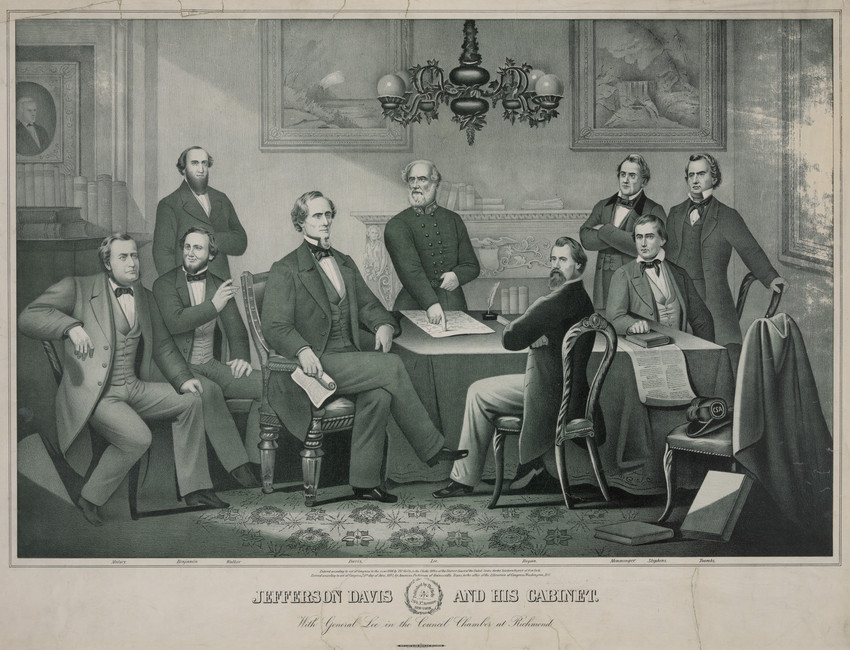
On May 14th Lee travelled by train to Richmond to meet with President Jefferson Davis and War Secretary James Seddon. At the meeting Lee argued for an offensive campaign in the east, to take the war to Pennsylvania. Lee had two goals three major goals, two which were directly related to the immediate military situation and one which went to the broader strategic situation. Unfortunately no notes from that conference are known to survive.

Lee had long believed that an offensive into the North was necessary, even before Chancellorsville. Lee did not believe that reinforcing the Confederate Armies in the West would provide any real relief, instead he believed that his Army, flush with victory needed to be reinforced and allowed to advance into Pennsylvania. Lee’s Chief of Staff Colonel Charles Marshall crafted a series of courses of action designed to present the invasion option as the only feasible alternative. Although both Seddon and Davis had reservations about the plan they agreed to it, unfortunately for all of them they never really settled the important goals of the campaign.

Lee believed that his offensive would relieve Grant’s pressure on Pemberton’s Army at Vicksburg. Likewise Lee believed that if he was successful in battle and defeated the Army of the Potomac in Pennsylvania that it could give the peace party in the North to bring pressure on the Lincoln Administration to end the war.  He also believed that if he could spend a summer campaign season in the North, living off of Union foodstuffs and shipping booty back to the Confederacy that it would give farmers in Northern Virginia a season to harvest crops unimpeded by major military operations.

However, the meeting evidently did not have all the results that Lee desired. Davis refused Lee reinforcements from the coastal Carolinas, and insisted on units being left to cover Richmond in case General Dix advanced on Richmond from Hampton Roads. Much of this was due to political pressure as well as the personal animus that existed between General D. H. Hill in the Carolinas towards Lee.

Likewise Lee’s decision revealed an unresolved issue in Confederate Grand Strategy. Many in the Confederacy realized that the only hope for success was to fight a defensive campaign that made Union victory so expensive that eventually Lincoln’s government would fall or be forced to negotiate.

However, Lee was convinced that ultimate victory could only be achieved by decisively defeating and destroying Federal military might. His letters are full of references to crush, defeat or destroy Union forces opposing him. His strategy of the offensive was demonstrated on numerous occasions in 1862 and early 1863, however it was unfeasible and counterproductive to Southern strategy. His offensive operations cost his Army dearly in the one commodity that the South could not replace, nor keep pace with its Northern adversary, his men.

When Lee fought defensive actions on ground of his choosing, like a Fredericksburg he was not only successful but husbanded his strength. However, when he went on the offensive in almost every case he lost between 15 and 22 percent of his strength, and the percentage of soldiers that he lost was always more than his Federal counterparts, even when his army inflicted greater aggregate casualties on his opponents. Lee recognized this as was evident in his correspondence but it did not deter his strategy of the offensive until after his defeat at Gettysburg.

The course of action was decided upon, but one has to ask if Lee’s decision was wise decision at a strategic point level, not simply the operational or tactical level where many Civil War students are comfortable. General Longstreet’s artillery commander, Colonel Porter Alexander described the appropriate strategy of the South well, he wrote:

“When the South entered upon war with a power so immensely her superior in men & money, & all the wealth of modern resources in machinery and the transportation appliances by land & sea, she could entertain but one single hope of final success. That was, that the desperation of her resistance would finally exact from her adversary such a price in blood & treasure as to exhaust the enthusiasm of its population for the objects of the war. We could not hope to conquer her. Our one chance was to wear her out.”  (Edward Porter Alexander, Fighting for the Confederacy: The Personal Recollections of General Edward Porter Alexander, ed. Gary W. Gallagher, University of North Carolina Press, Chapel Hill NC, 1989 p.415 

What Alexander describes is the same type of strategy successfully employed by Washington and his more able officers during the American Revolution, Wellington’s campaign on the Iberian Peninsula against Napoleon’s armies, and that of General Giap against the French and Americans in Vietnam. It was not a strategy that completely avoided offensive actions, but saved them for the right moment when victory could be obtained.

It is my belief that Lee erred in invading the North for the simple fact that the risks far outweighed the possible benefits. It was a long shot and Lee was a gambler, audacious possibly to a fault. His decision to go North also exhibited a certain amount of hubris as he did not believe that his army could be beaten, even when it was outnumbered.  Likewise he took the offensive in spite of the fact that many of his commanders were untested at the levels of command that they exercised. He had lost his right arm, General Stonewall Jackson, who died following being wounded at Gettysburg.

He knew from his previous battles the heavy casualties that even a victory over the Army of the Potomac would entail deep in Northern territory and the effect that a costly victory would have on his operations, but he still took the risk. That was short sighted and diametrically opposed to the strategy that the South needed to pursue in order to gain its independence. Of course some will disagree, but I am comfortable in my assertion that it was a mistake that greatly affected the Confederacy’s only real means of securing its independence, the breaking of the will of the Union by making victory so costly that it would not be worth the cost.

Peace

Padre Steve+
Leave a comment

Filed under civil war, History, leadership, Military

Preparing for Gettysburg after the Snow and Amid the Flood

DSCN8783

Well, today has been spent catching up at work after several days off due to the snowstorm which paralyzed the Hampton Roads area last week. Unfortunately for us the storm was the least of the issues as our hot water heater blew out Friday night while we were asleep, leaving our downstairs area flooded. Thankfully tomorrow the people from SERVEPRO will begin to dewater the house and clean up the ungodly mess and stench. The construction company will come in tomorrow too to assess the damage and plan for what will have to be repaired or rebuilt, but I think that I’ve already told you this.

So back to what is going on. Today was a busy day catching up, getting ready for the Staff Ride to Gettysburg that I will be leading in early March, coordinating the assistance of our students and staff who will be volunteering to help at the Norfolk Emergency Shelter on Friday Night and Saturday morning. I have also been talking with my teaching team for our Ethics course.

So today has been busy and tomorrow will be all about trying to begin our damage recovery at our house.

In the mean time I will still be getting ready for the Gettysburg trip. It is an honer to be taking this duty from a man who has been doing it for 20 years, Dr Vardell Nesmith. Thankfully he will still be in the area and come the Spring or Summer may be able to lend his most considerable expertise to the trip as a Professor Emeritus.

Today was our first meeting for the trip which was more administrative in nature. We will have two more meetings before the actual trip, those will be to introduce the participating students to the Gettysburg Campaign and the opening events which began the campaign.

I am going to be spending a lot of time preparing for this and it is quite likely that some of my work will show up here. The obvious intent is to tie in lessons from this campaign to our curriculum of Joint Planning and Campaigning for our students who either serve in or are going to serve in Joint Staff or Command positions.  So my intent will to be to tie the lessons of the Gettysburg campaign to national military strategy, operational level planning and leadership at the operational level.

Of course that will entail things that I like and understand well. The issue in planning this event are more to the emphasis of what I will teach, what I will emphasize and the detail in which I will go in each class, and for the actual Staff Ride at Gettysburg. I will need to talk about weapons and tactics, that is for sure and actually the easiest part.

Of course I need to explain well how each side understood this campaign in relation to its own war aims, and how their respective planning and preparation, as well as the politics, the economic, diplomatic and informational factors that influenced the decisions of the leaders of both the Union and Confederacy during the summer campaign of 1863. The real focus I think needs to be on leadership, relationships and the decision making process, because I believe in all my heart that those are the things that win battles and wars.

Tonight I am musing of what emphasis to give each subject and in the background I have the movie Gods and Generals on.

Well I shall sign off for now. I do have a number of articles bouncing around my head and I must continue to muse… I must, I must.

Peace

Padre Steve+

Leave a comment

Filed under civil war, Loose thoughts and musings

Separate and Unequal: Jim Crow Still Lives at a Florida Civil War Battlefield

n046635

The Battle of Olustee

Something is going on in Florida that shows that Jim Crow is still very much alive in the hearts and motivations of some elected officials and their supporters.

This is going on in regard to the Battle of Olustee, and the Battle of Olustee Battlefield State Park. Last year the Sons of Union Veterans of the Civil War requested permission from the State Parks Department to place a monument at the site. The Parks Department responded favorably to the request and began to determine where on the battlefield to place the memorial to the Union dead. It would stand on ground where three monuments to Confederate units and casualties already stand.

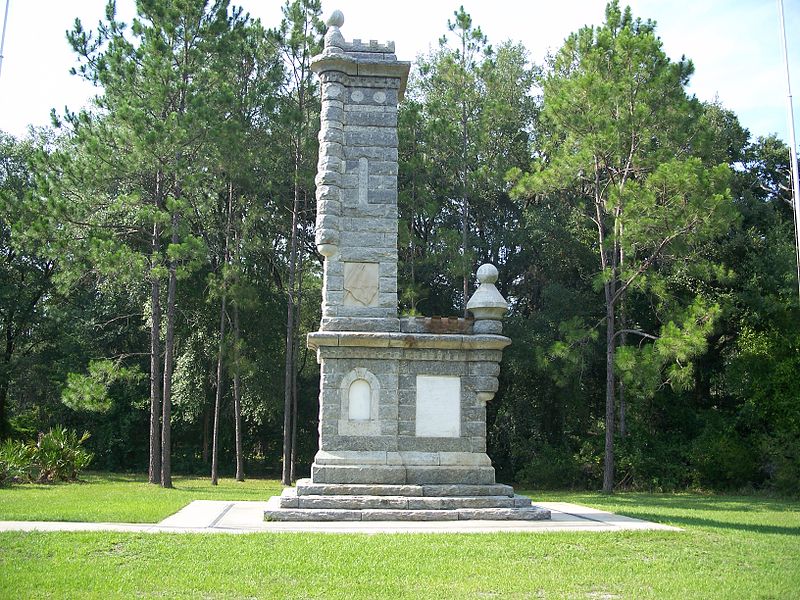
800px-Olustee_Battlefield_Historic_State_Park10

The Main Monument at Olustee

That was when Republican State Representative Dennis Baxley, the House Judiciary Chairman got involved. Baxley is a member of the Sons of Confederate Veterans. He stated that he believed that a Union monument would “redefine” the park. He called it “revisionist history” and objected to a non-elected body making these kinds of decisions.

Baxley was joined by James Davis, the Florida Division Commander of the Sons of Confederate Veterans in opposition to a Union memorial at the site. Davis did not object to a Union memorial per say, but he objected locating one in the park. Davis said: “We are not opposed to the monument at all; we are opposed to the location, and here is why — it’s like any other historical building, you put something brand new in there and it destroys the significance of it.” Davis suggested that the memorial be built across the road from the park, near the museum located on Federal property instead.

The National Commander of the Son’s of Confederate Veterans began an internet campaign against the monument stating  his opposition to the “Darth Vader-esque obscene obsidian obelisk.” Another leader of the group, Jim Shillinglaw noted: “If you have an Iraq war monument, you don’t want to put a Muslim/jihadist monument right in front of it.

There are numerous Confederate monuments on Union soil, including a number of major monuments at Gettysburg. Across the country it is standard practice to include monuments for both Union and Confederate forces that fought at these battles. In fact I know of no battlefields where what is going on at Olustee has ever been an issue.

DSCN8843

The Virginia Monument at Gettysburg 

In fact the Florida State Parks Department is going ahead with plans to have a Union Monument. The chief officer for park planning, Lew Scruggs said: “The mission in the state park system is to commemorate the battle between the two opposing forces; it’s not restricted to one.” The park itself has also been recognized for its past work in remembering the African Americans who fought at the battle.

So why the fuss?

As a historian I wondered why this might be an issue to Baxley and Davis. But then I did some reading on the battle. It was fought in February 1864 and was a significant Confederate tactical victory. The Confederate troops, highly experienced combat veterans, including Colquitt’s Georgia brigade which had been detached to help hold back the Union in Florida inflicted heavy casualties on a badly handled Union force. Both sides had about the same number of troops involved and the Confederate victory kept the Union from setting up a Union government in the state prior to the end of the war. For a relatively small battle it was fierce and bloody, casualties on both sides were considerable. The Union suffered about 2000 casualties to just under 1000 suffered by the Confederates.

However, there is an issue that has not been brought up in most media accounts of this new “Battle of Olustee.” The fact is that nearly half of the Union troops engaged were “Colored Troops,” the 8th and 35th Regiments of U.S. Colored Troops and the illustrious 54th Massachusetts. The 8th and 35th USCT regiments were both new to combat. At the end of the battle the 54th helped cover the Union retreat back to Jacksonville.

After the battle the wounded Union Colored troops left on the battlefield were slaughtered by some units of Confederates. The testimony of Confederate troops in letters and memoirs attests to the slaughter of the wounded and other prisoners. William Frederick Penniman of the 4th Florida Cavalry wrote:

“A young officer was standing in the road in front of me and I asked him, “What is the meaning of all this firing I hear going on”. His reply to me was, “Shooting niggers Sir. “I have tried to make the boys desist but I can’t control them”. I made some answer in effect that it seemed horrible to kill the wounded devils, and he again answered, “That’s so Sir, but one young fellow over yonder told me the niggers killed his brother after being wounded, at Fort Pillow, and he was twenty three years old, that he had already killed nineteen and needed only four more to make the matter even, so I told him to go ahead and finis the job”. I rode on but the firing continued.

The next morning I had occasion to go over the battle field again quite early, before the burial squads began their work, when the results of the shooting of the previous night became quite apparent. Negroes, and plenty of them, whom I had seen lying all over the field wounded, and as far as I could see, many of them moving around from palace to place, now without a motion, all were dead. If a negro had a shot in the shin another was sure to be in the head.” 

Likewise Corporal Henry Shackelford of the 19th Georgia Infantry wrote in a letter home: “We got all their artillery, 8 pieces, took about 400 prisoners and killed about the same number. How our boys did walk into the niggers, they would beg and pray but it did no good.” (Excerpt from letter written by Corporal Henry Shackelford, 19th Georgia Infantry 20 February 1864)

The Commander of the 2nd Florida Cavalry urged his men into battle that day with a clear message:

“Comrades and soldiers of the 2nd Florida Cavalry, we are going into this fight to win. Although we are fighting five or six to one, we will die, but never surrender. General Seamore’s Army is made up largely of negroes from Georgia and South Carolina, who have come to steal, pillage, run over the state and murder, Kill and rape our wives, daughters and sweethearts. Let’s teach them a lesson. I shall not take any negro prisoners in this fight.” (Lawrence Jackson, Company C, 2nd Florida Cavalry, written in 1929 when he was 65 years old.)

The unspoken issue is not that the fact that the troops being honored are simply white Union boys, but rather that so many were African Americans. Baxley’s and Davis’s words speak volumes. This is a racial issue. Davis is not opposed to a monument, he just doesn’t want it to be where the Confederate monuments are. Baxley says that having a monument to the Union troops who fought there is “revisionist history.” Give me a break. It is history. Union troops fought there too and they are entitled to a monument, last this become a shrine to those who murdered the wounded and prisoners after the battle. I wonder how these men would feel if a request by the Confederate Veterans for a monument to Confederate troops at a park in a state that fought for the Union was opposed in such a manner. I’m sure that they would make the same cry of revisionist history, but this time be correct.

450px-Olustee_Battlefield_Historic_State_Park14

Detail of the Main Monument at the Olustee Battlefield State Park

But then maybe that is what Davis and Baxley want. Maybe that is the history that they want to preserve. I would hope not, but their language makes it hard to believe that that is not exactly what they desire. I can only believe that both men still hold to the message “segregation forever” and are still committed to fulfilling the dream of the Lost Cause that died on the battlefields of the Civil War. They may not say so openly but the message is clear, keep the memory of the blacks out, even if they are dead.

Sorry, all the men who fought at Olustee deserve a memorial.  Even the African American Union troops. That is history, that is recognizing all who fought there.

Peace

Padre Steve+

Note: All quotes from soldiers and information about the battle come from The Battle of Olustee and the Battle of Olustee Site Reenactment website, http://www.battleofolustee.org . The quotes from Davis and Baxley are found at the Tampa Bay Times article at http://www.tampabay.com/news/politics/stateroundup/fight-flares-over-sons-of-union-veterans-request-for-monument-in-north/2161556

As a side note I am also eligible to join the Sons of Confederate Veterans, but because the organization frequently acts in this manner I refuse to join.

Leave a comment

Filed under civil war, History, News and current events

Christmas at the Front 2013: A Look at Christmas Now and in Military History

German Bundeswehr army soldiers decorate a fir tree imported from Germany for Christmas eve in the army camp in Kunduz

German Bundeswehr Soldiers decorating for Christmas in Afghanistan 

Today as on so many Christmas Days in days gone by military personnel serve on the front lines in wars far away from home. Today American and NATO troops engage a resourceful and determined enemy in Afghanistan. American Marines are working to safeguard the lives of Americans in South Sudan while French troops are intervening in Mali and the Central African Republic to attempt to prevent genocide. In many corners of the globe others stand watch on land, at sea and in the air. Unfortunately on this Christmas wars continue and most likely will until the end of time as we know it.

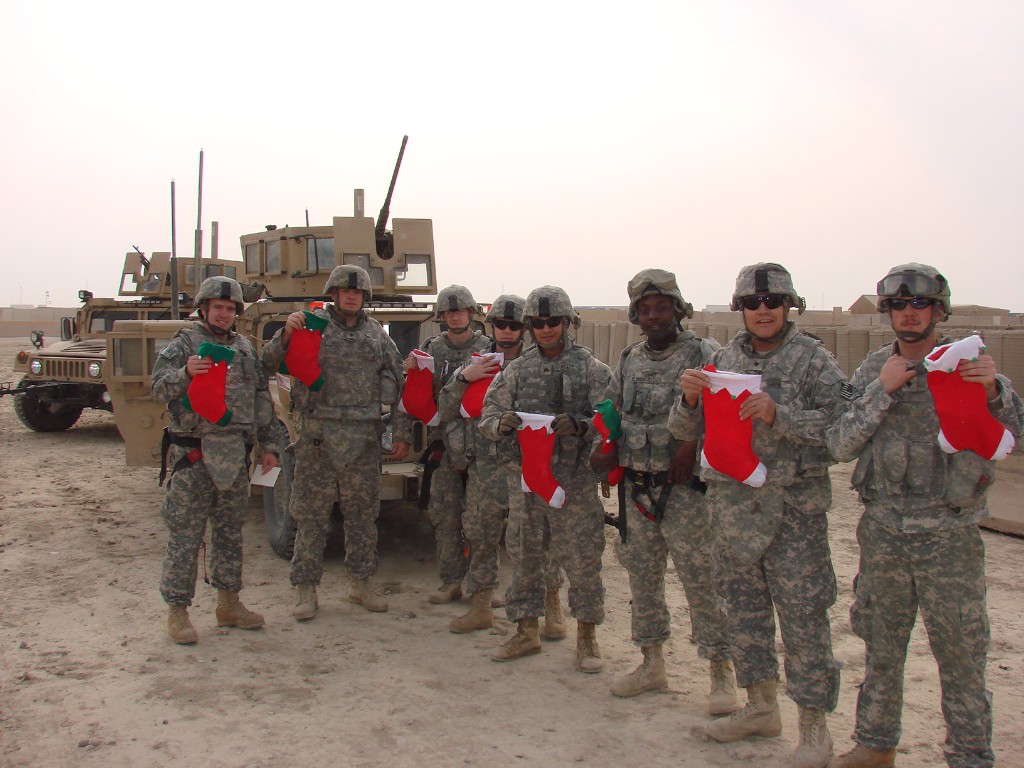
adopt_a_platoon

It is easy to understand the verse penned by Henry Wadsworth Longfellow in his song I Heard the Bells on Christmas Day after the death of his wife and wounding of his son in the US Civil War:

And in despair I bowed my head

“There is no peace on earth,” I said,

“For hate is strong and mocks the song

Of peace on earth, good will to men.

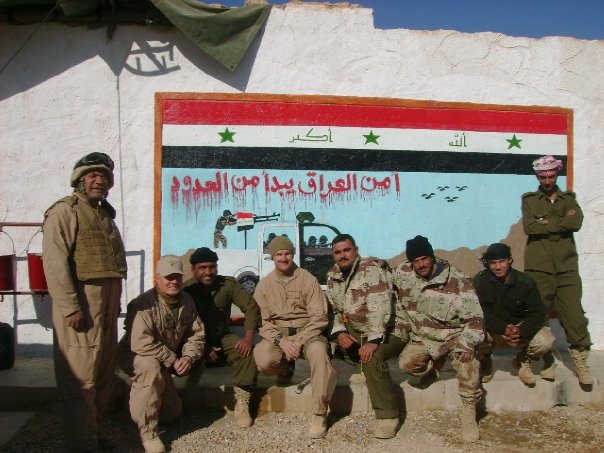
I have done my time in Iraq at Christmas on the Syrian-Iraqi Border in 2007 with our Marine advisors and their Iraqis.  That was the most memorable Christmas and the most important Christmas Masses that I ever celebrated. Since returning home have thought often of those that remain in harm’s way as well as those soldiers, sailors, Marines and airmen, American and from other nations that have spent Christmas on the front lines. Some of these events are absolutely serious while others display some of the “light” moments that occur even in the most terrible of manmade tragedies.

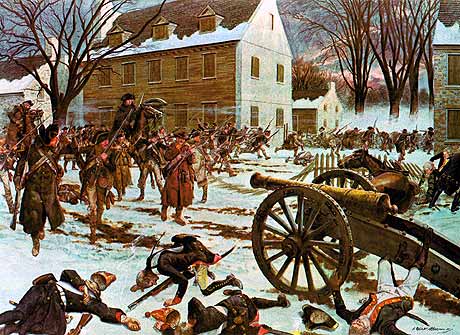
streets-trenton

Christmas 1776 at Trenton

In American history we can look back to 1776, of course we could go back further but 1776 just sounds better. On Christmas of 1776 George Washington took his Continental Army across the Delaware to attack the British garrison at Trenton. Actually it was a bunch of hung over Hessians who after Christmas dinner on the 24th failed to post a guard which enabled them to be surprised,  but it was an American victory.

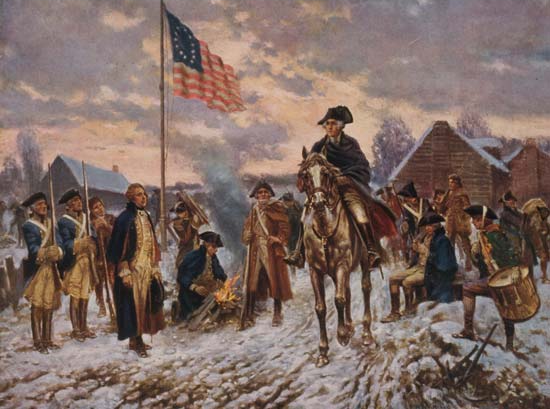
washington2

In 1777 Washington and his Army had a rather miserable Christmas at Valley Forge where they spent the winter freezing their asses off and getting drilled into a proper military force by Baron Von Steuben.

The-Eggnog-Riot

The Eggnog Riot

While not a battle in the true sense of the word the Cadets at West Point wrote their own Christmas legend in the Eggnog Riot of 1826 when the Cadets in a bit of holiday revelry had a bit too much Eggnog and a fair amount of Whiskey and behaved in a manner frowned upon by the Academy administration. Needless to say that many of the Cadets spent the Christmas chapel services in a hung over state with a fair number eventually being tossed from the Academy for their trouble.

battlezz

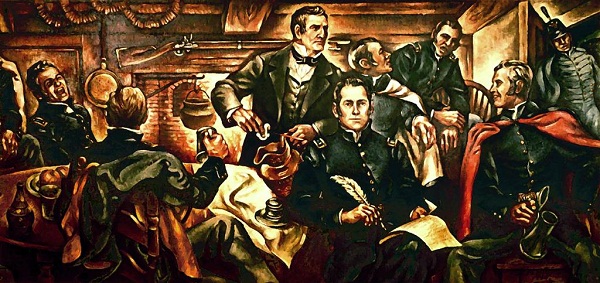
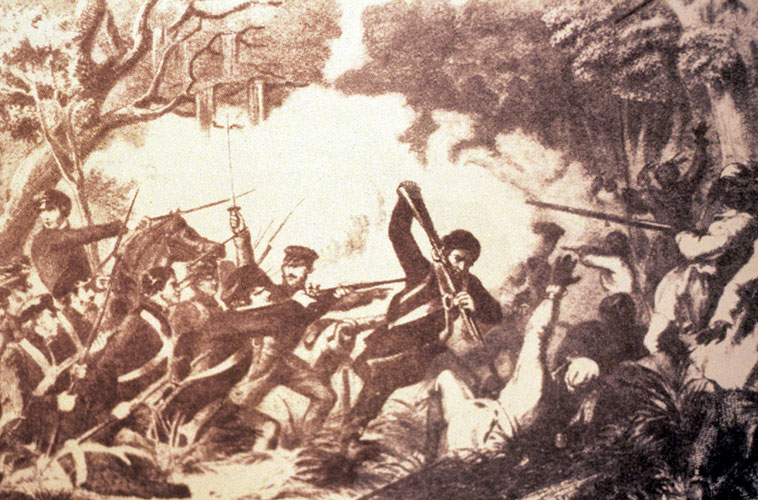
The Battle of Lake Okeechobee

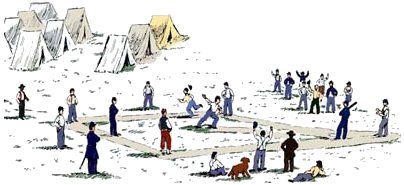
In 1837 the U.S. Army was defeated at the Battle of Lake Okeechobee by the Seminole Nation, not a Merry Christmas at all.  In 1862 the Army of the Potomac and Army of Northern Virginia faced each other across the Rappahannock River after the Battle of Fredericksburg while to the south in Hilton Head South Carolina 40,000 people watched Union troops play baseball some uttering the cry of many later baseball fans “Damn Yankees.”

civil_war_baseball

Blue and Grey Christmas Baseball

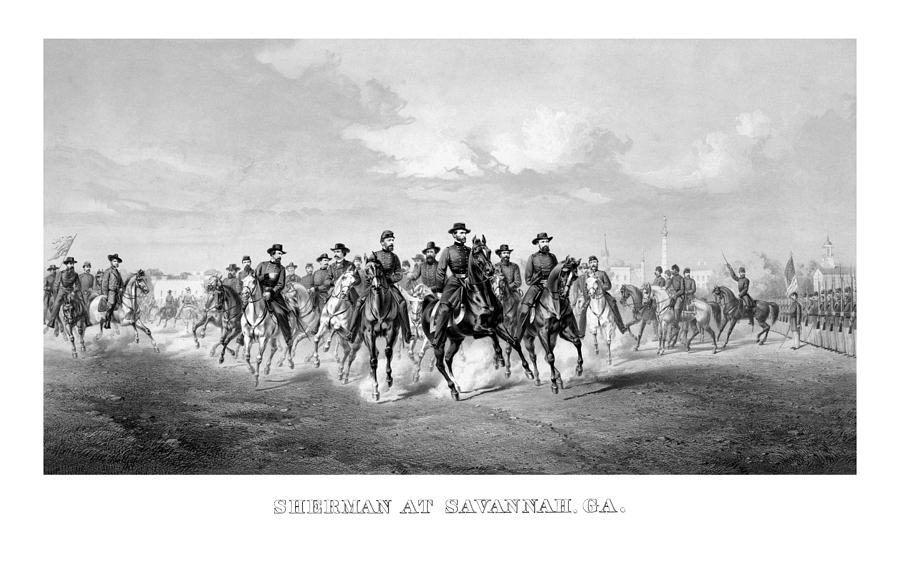
In 1864 the Army of the Potomac and Army of Northern Virginia faced each other again in the miserable trenches of Petersburg while General William Tecumseh Sherman enjoyed Christmas in Savannah Georgia after cutting a swath of destruction from Atlanta to the sea. He presented the city to Lincoln who simply said “nice, but I really wanted Richmond.”

general-sherman-at-savannah-war-is-hell-store

Napoleon had something to celebrate on December 25th 1801 after surviving an assassination attempt on Christmas Eve and 1809 he was celebrating his divorce from Empress Josephine which had occurred on the 21st of December.

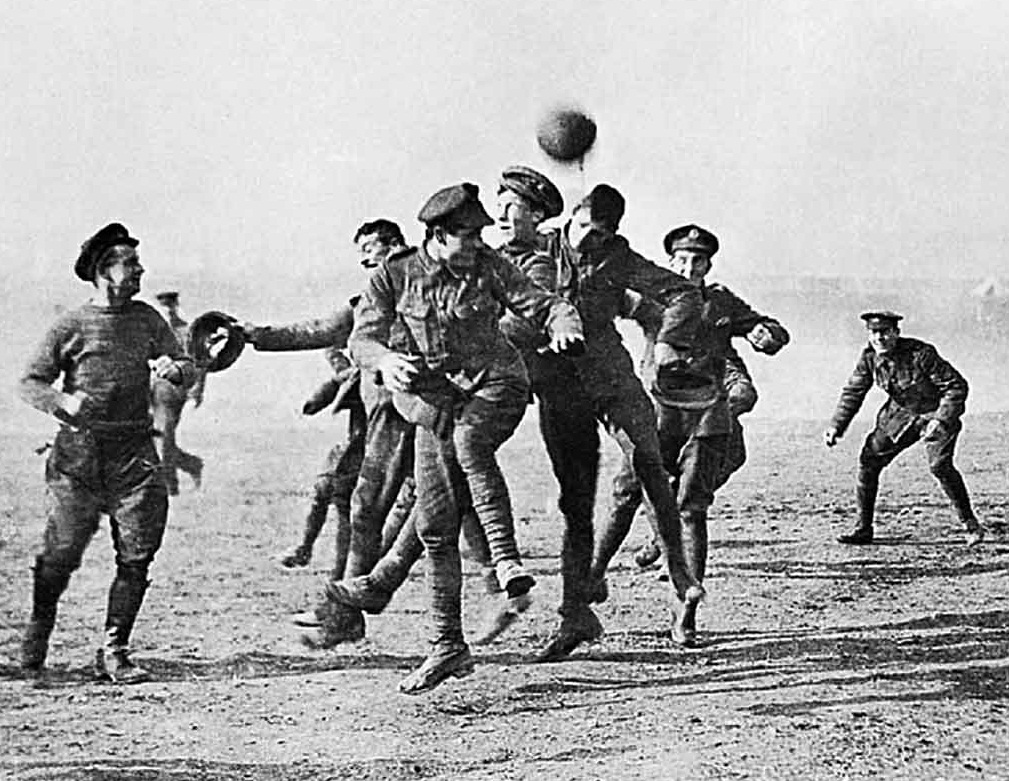
football-truce

The Christmas Truce 

In 1914 “Christmas Truce” began between British and German troops and threatened to undo all the hard work of those that made the First World War possible.  Thereafter the High Commands of both sides ensured that such frivolity never happened again. The movie Joyeux Noel (Merry Christmas) does a wonderful job in bringing home the miraculous truce.

article-2106230-0003FB2000000258-130_634x578

General and Montgomery and his Staff, winter 1942

World War II brought much suffering. In 1941 after Pearl Harbor the Japanese forced the surrender of Hong Kong and its British garrison while two days later the Soviets launched their counterattack at Moscow against Hitler’s Wehrmacht. In Libya the British were retaking Benghazi from the Afrika Corps after a brutal series of tank battles in Operation Crusader.  A year later the Americans were clearing Guadalcanal of the Japanese. General Montgomery’s 8th Army was pursuing Rommel’s Afrika Korps into Tunisia as American and British forces under General Dwight D. Eisenhower were slogging their way into Tunisia against tough German resistant.  In Russia the Red Army was engaged in a climactic battle against the encircled German 6th Army at Stalingrad. At Stalingrad a German Physician named Kurt Reuber painted the famed Madonna of Stalingrad.

Bundeswehr zeigt "Stalingrad"-Ausstellung

Kurt Reuber’s Madona of Stalingrad

The drawing which was taken out of Stalingrad by one of the last German officers to be evacuated now hangs in the Kaiser Wilhelm Memorial Church in Berlin. Reuber drew another in 1943 while in a Soviet POW campbefore his death from Typhus in early 1944. Reuber wrote to his wife of painting in Stalingrad:

“I wondered for a long while what I should paint, and in the end I decided on a Madonna, or mother and child. I have turned my hole in the frozen mud into a studio. The space is too small for me to be able to see the picture properly, so I climb on to a stool and look down at it from above, to get the perspective right. Everything is repeatedly knocked over, and my pencils vanish into the mud. There is nothing to lean my big picture of the Madonna against, except a sloping, home-made table past which I can just manage to squeeze. There are no proper materials and I have used a Russian map for paper. But I wish I could tell you how absorbed I have been painting my Madonna, and how much it means to me.”

“The picture looks like this: the mother’s head and the child’s lean toward each other, and a large cloak enfolds them both. It is intended to symbolize ‘security’ and ‘mother love.’ I remembered the words of St.John: light, life, and love. What more can I add? I wanted to suggest these three things in the homely and common vision of a mother with her child and the security that they represent.”

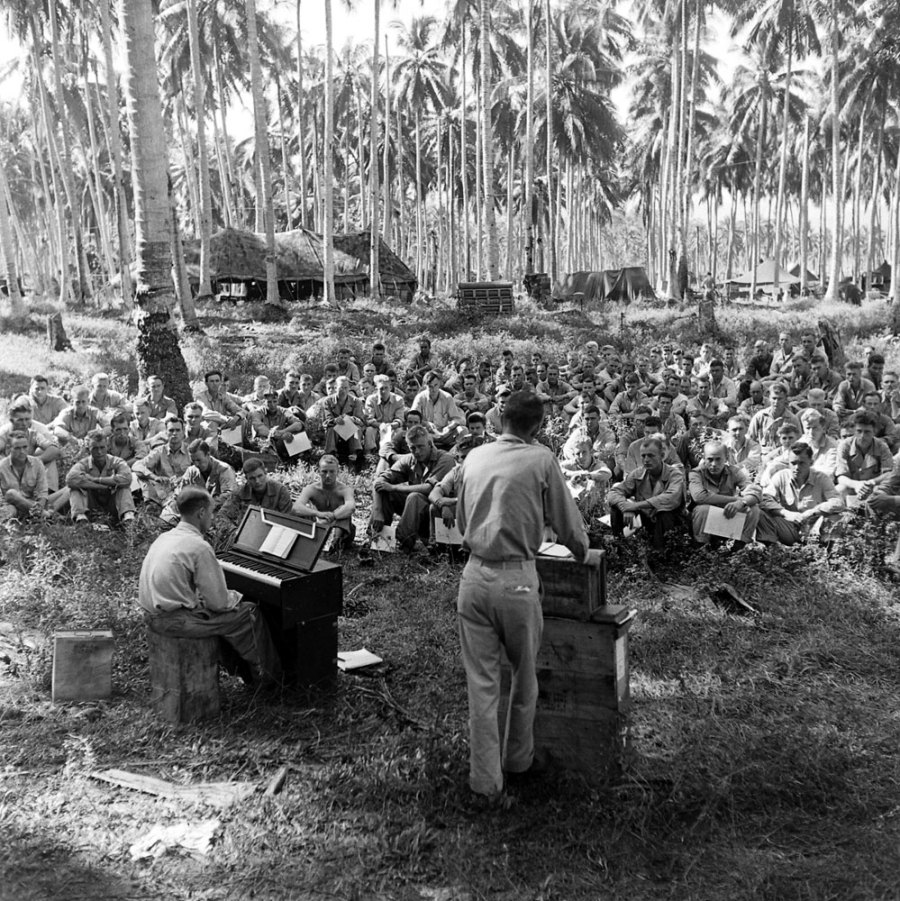
34_116111820

Christmas Concert at Guadalcanal 

In 1943 the Marines were battling the Japanese at New Britain while the Red Army was involved in another major winter offensive against the Wehrmacht. In 1944 Christmas found the Russians advancing in Hungary.

christmas-celebration-before-battle-of-the-bulge


Bastogne Christmas 

In December 1944 the Americans were engaged in a desperate battle with the Germans in the Ardennes now known as The Battle of the Bulge. On Christmas day the leading German unit, the 2nd Panzer Division ran out of gas 4 miles from the Meuse River and was destroyed by the American 2nd Armored Division.

0001photo

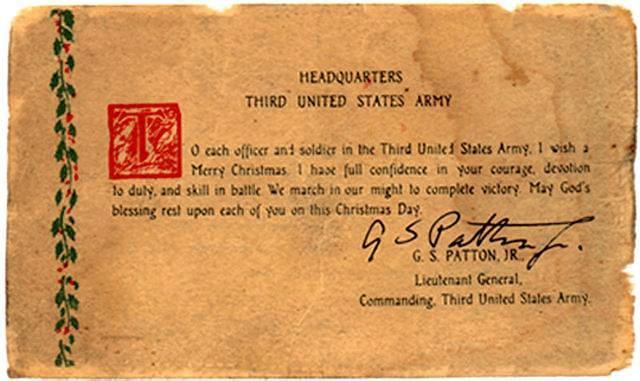
As that was occurring the embattled 101st Airborne Division at Bastogne was relieved by General George Patton’s 3rd Army. Patton had his Chaplain pen this Christmas prayer:

“Almighty and most merciful Father, we humbly beseech Thee, of Thy great goodness, to restrain these immoderate rains with which we have had to contend. Grant us fair weather for Battle. Graciously hearken to us as soldiers who call upon Thee that, armed with Thy power, we may advance from victory to victory, and crush the oppression and wickedness of our enemies and establish Thy justice among men and nations.”

In the Philippines Douglas MacArthur’s forces were fighting hard to liberate Leyte, Samar and Luzon from the Japanese. At sea US and Allied naval forces fought off determined attacks by Kamikazes.

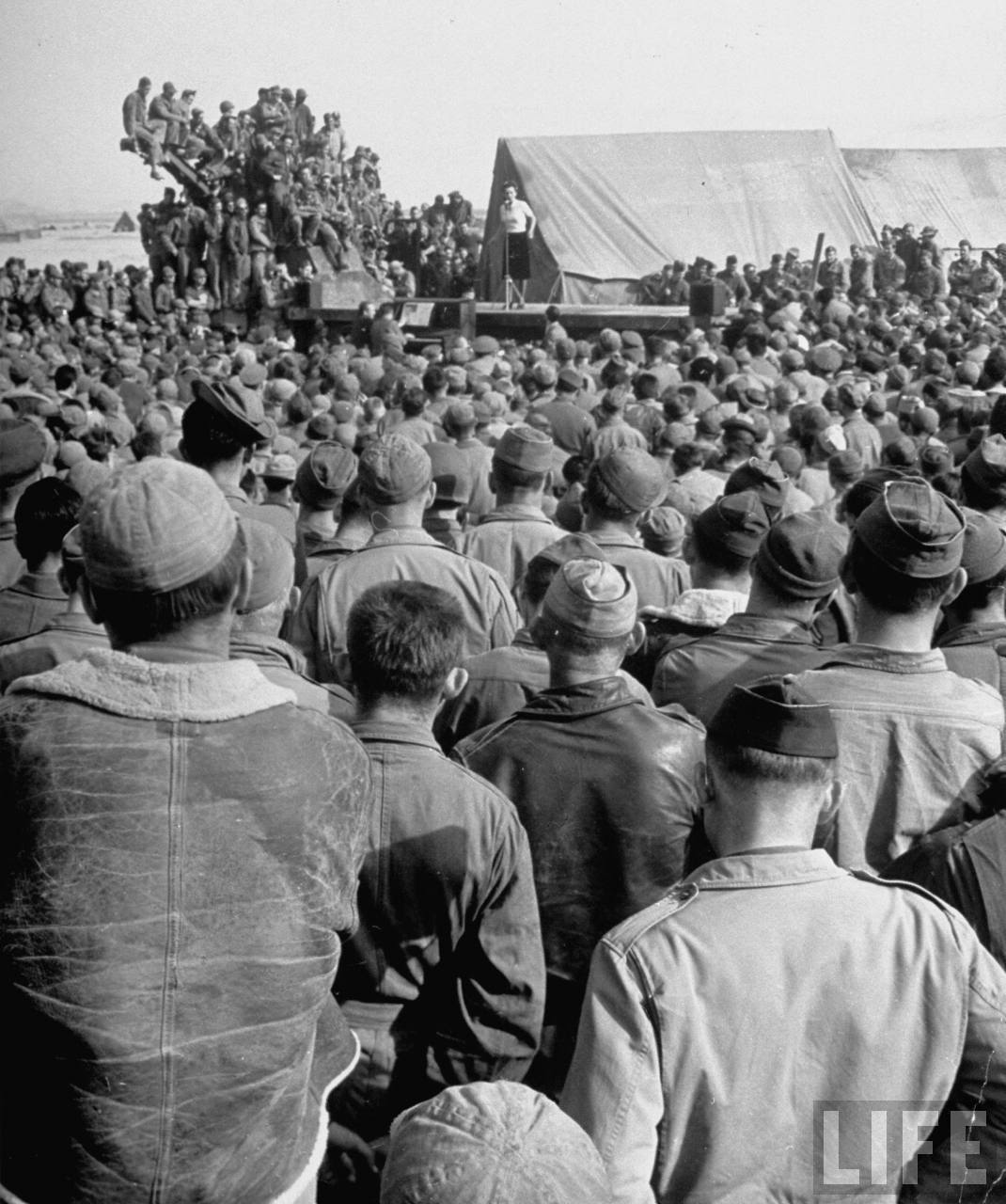
USO2

USO Christmas Show in WWII

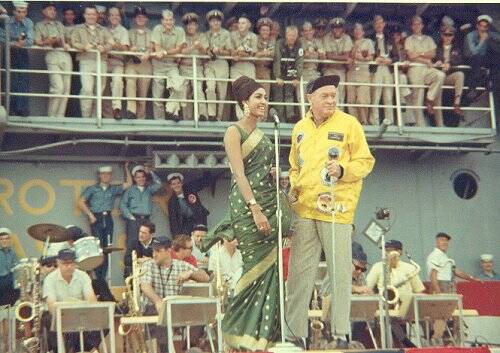
During the war the USO sponsored many entertainers who went to combat zones to perform Christmas shows, among them was Bob Hope.

onship

Bob Hope Christmas Show on USS Ticonderoga CVA-14 off Vietnam 

In the years following the Second World War Christmas was celebrated while armies continued to engage in combat to the death. Christmas of 1950 was celebrated in Korea as the last American forces were withdrawn from the North following the Chinese intervention which the 1st Marine Division chewed up numerous Red Chinese divisions while fighting its way out of the Chosin Reservoir.

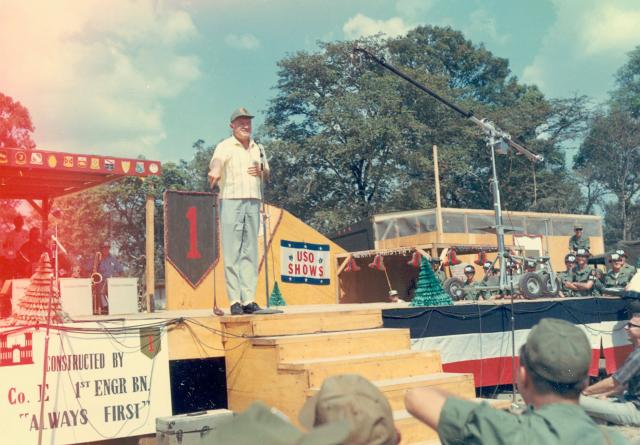
size0-army.mil-28691-2009-02-09-110252

Bob Hope with 1st Infantry Division in Vietnam

In 1953 the French garrison of Dien Bien Phu celebrated Christmas in primitive fashion unaware that Vietnamese General Giap was already marshaling his forces to cut them off and then destroy them shortly after Easter of 1954.   In 1964 the U.S. committed itself to the war in Vietnam and for the next 9 years American Soldiers, Marines, Sailors and Airmen battled the North Vietnamese and Viet Cong with Marines fighting the North at Khe Sanh during Christmas of 1967. A hallmark of that war would be Bob Hope whose televised Christmas specials from that country helped bring the emotion of Christmas at the front back to those at home.

DSChristmasmenu

In the years after Vietnam American troops would spend Christmas in the Desert of Saudi Arabia preparing for Operation Desert Storm in 1990, in Somalia the following year and in the Balkans. After September 11th 2001 U.S. Forces spent their first of at least 12 Christmas’s in Afghanistan. From 2003 thru 2011 US and coalition partner troops spent 8 years in Iraq, that was my war.

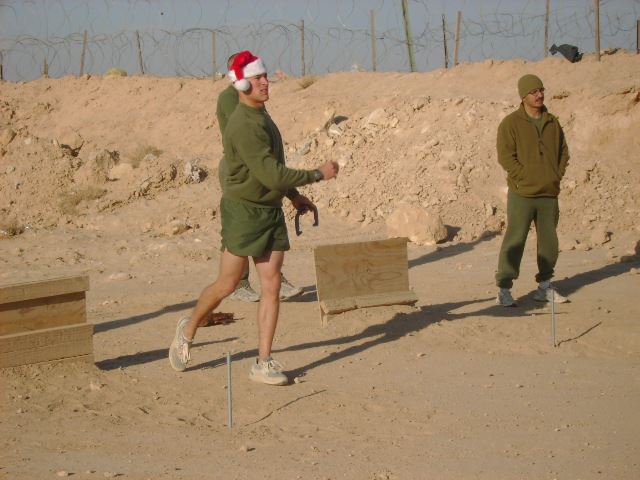
295_26912097058_4309_n-2

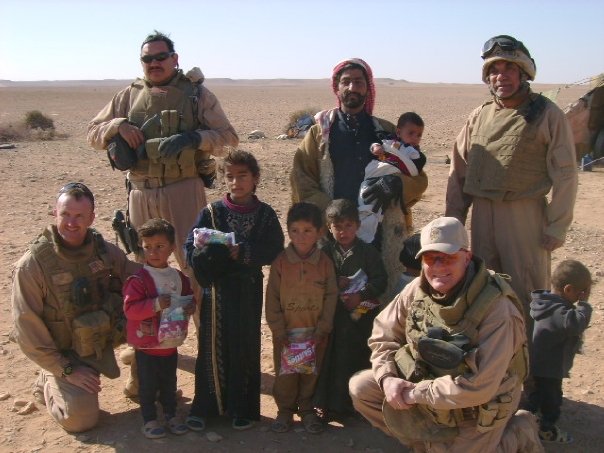
Christmas with Bedouin on Christmas Eve (above) and Christmas games at COP North Al Anbar Province Iraq 2007 (Below)

483430_10151366974467059_2085986953_n

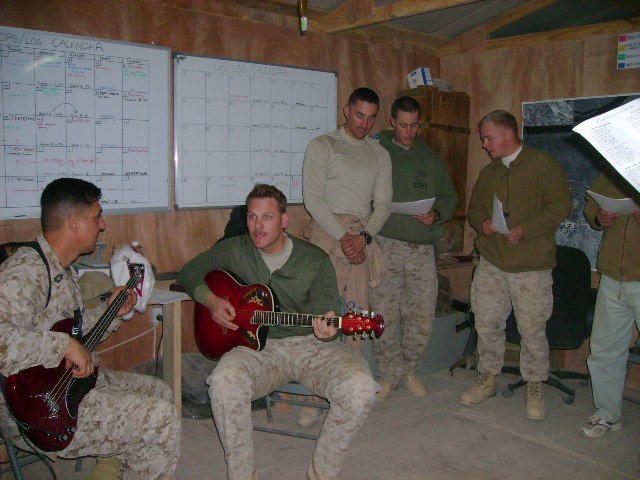
533506_10151366982452059_1397805608_n

Christmas Services at COP South Al Anbar Province, Iraq 2007

Today Americans and our Allies serve around the world far away from home fighting the war against Al Qaeda and its confederates and some may die on this most Holy of Days while for others it will be their last Christmas.

Please keep them and all who serve now as well as those that served in the past, those that remain and those that have died in your prayers.

Peace

Padre Steve+

3 Comments

Filed under civil war, faith, History, iraq,afghanistan, Loose thoughts and musings, Military, Religion, world war two in europe, world war two in the pacific

A New Birth of Freedom: The Gettysburg Address at 150

mkholrt

I am always humbled when I travel to Gettysburg as I did just two weeks ago. It is hard to believe in that now peaceful pastoral setting that over 157,000 Americans, almost 82,000 Union and 75,000 Confederate met in a three day battle. In those three days over 28,000 Confederates and 23,000 Union soldiers were killed, wounded, missing or captured. It was the greatest number of casualties inflicted in one battle on American soil in history.

The places that the battle was fought have become legendary, for they are “hallowed ground” as President Abraham Lincoln so eloquently put it. The places, McPherson’s and Herr’s Ridge, Seminary Ridge, the Railroad Cut, Barlow’s Knoll, Cemetery Hill, Culp’s Hill, The Wheat Field, Devil’s Den, the Peach Orchard, Little Round Top, Cemetery Ridge, the Apse of Trees, the Angle and the High Water Mark are in a sense holy, or hallowed, consecrated by those who struggled there, those who lived and those who gave the last full measure of devotion to their country.

gal9vfvf1

I think about those men of both sides, fully convinced of the rightness of their cause who fought valiantly in the struggle. That being said when I go there though my family predominantly fought for the Confederacy my heart is drawn to those men who remained loyal to the Union and those who answered the call of Abraham Lincoln to serve in a cause greater than their own interests, the great and the small alike.

DSCN8774

Lincoln was a masterful orator who managed to rally the Union and bring hundreds of thousands of men volunteer before Gettysburg. They came for an ideal an ideal which Lincoln’s oratory was probably the most effective at articulating in a way that men would volunteer to suffer hardship, fight and die to bring about. It was well put in the movie Gettysburg where Colonel Joshua Chamberlain said:

“This is a different kind of army. If you look at history you’ll see men fight for pay, or women, or some other kind of loot. They fight for land, or because a king makes them, or just because they like killing. But we’re here for something new. This has not happened much, in the history of the world: We are an army out to set other men free. America should be free ground, all of it, from here to the Pacific Ocean. No man has to bow, no man born to royalty. Here we judge you by what you do, not by who your father was. Here you can be something. Here is the place to build a home. But it’s not the land. There’s always more land. It’s the idea that we all have value, you and me. What we’re fighting for, in the end… we’re fighting for each other…”

images-61

On November 19th 1863 Lincoln delivered a “few words” at Gettysburg which were in all practical aspects a benediction at the dedication of the battlefield cemetery. Lincoln was the second speaker at the ceremony following former Pennsylvania Congressman Edward Everett who spoke for more than two hours, a typical speech from the period. The 270 words of Lincoln’s address are perhaps the most important of any speech or document in American history save the Declaration of Independence and the Constitution of the United States.

The speech was so powerful that Everett wrote Lincoln the next day:

“Permit me also to express my great admiration of the thoughts expressed by you, with such eloquent simplicity & appropriateness, at the consecration of the Cemetery. I should be glad, if I could flatter myself that I came as near to the central idea of the occasion, in two hours, as you did in two minutes.”

The speech is short, but it’s eloquence is unmatched. Lincoln wrapped ideas, concepts and ideals that men have written volumes about into a speech so powerful that many have memorized it.

18640903.nashcartoon

But few realize the context that it must be placed. Though the Union had defeated Lee’s Army at Gettysburg and Grant had taken Vicksburg to cut the Confederacy in half the North was groining war weary. There were those in the North, the Copperheads who were willing even after Gettysburg and Vicksburg to end the war on terms favorable to the Confederacy, even granting Confederate independence and the continuation of slavery. Likewise Lincoln was sick when he delivered the address having what was mostly likely a mild form of Smallpox when he gave the address. Thus the tenor, simplicity and depth are even more remarkable. It is a speech given in the manner of Winston Churchill’s “Blood sweat toil and tears” address to Parliament upon being appoint Prime Minister in 1940.

cropped-dscn88191.jpg

In a time where many are wearied by the foibles and follies of our politicians, even wondering about our form of government can survive Lincoln’s words matter. Dr Allen Guelzo, Professor of Civil War Studies at Gettysburg College wrote in the New York Times today:

“The genius of the address thus lay not in its language or in its brevity (virtues though these were), but in the new birth it gave to those who had become discouraged and wearied by democracy’s follies, and in the reminder that democracy’s survival rested ultimately in the hands of citizens who saw something in democracy worth dying for. We could use that reminder again today.”

Dr Guelzo is quite correct. Many people in this country and around the world are having grave doubts about our democracy. I wonder myself, but I am an optimist. I do believe that we will recover because for the life of me I see no nation anywhere else with our resiliency and ability to overcome the stupidity of politicians, pundits and preachers.

The amazing thing was that in spite of everything the Union survived. Lincoln was a big part of that but it was the men who left lives of comfort and security like Joshua Chamberlain and so many others who brought about that victory. Throughout the war, even to the end Southern political leaders failed to understand that Union men would fight and die for an ideal, something greater than themselves, the preservation of the Union and the freedom of an enslaved race. For those that volunteered it was not about personal gain, loot or land,it was about something greater. It was about freedom.

GAFac1

Now I for one do not think that we are currently living up to the ideals enunciated by Lincoln that day at Gettysburg. I can understand the cynicism disillusionment of Americans as well as those who have for over 200 years looked to us and our system as a “city set on a hill.” That being said, when I read these words and walk that hallowed  ground I am again a believer that we can realize the ideal.

Four score and seven years ago our fathers brought forth on this continent, a new nation, conceived in Liberty, and dedicated to the proposition that all men are created equal.

Now we are engaged in a great civil war, testing whether that nation, or any nation so conceived and so dedicated, can long endure. We are met on a great battle-field of that war. We have come to dedicate a portion of that field, as a final resting place for those who here gave their lives that that nation might live. It is altogether fitting and proper that we should do this.

But, in a larger sense, we can not dedicate — we can not consecrate — we can not hallow — this ground. The brave men, living and dead, who struggled here, have consecrated it, far above our poor power to add or detract. The world will little note, nor long remember what we say here, but it can never forget what they did here. It is for us the living, rather, to be dedicated here to the unfinished work which they who fought here have thus far so nobly advanced. It is rather for us to be here dedicated to the great task remaining before us — that from these honored dead we take increased devotion to that cause for which they gave the last full measure of devotion — that we here highly resolve that these dead shall not have died in vain — that this nation, under God, shall have a new birth of freedom — and that government of the people, by the people, for the people, shall not perish from the earth.

dscn0061

In the hope that we again realize those ideals and help bring about “a new birth of freedom,” I wish you a good night.

Peace

Padre Steve+
Leave a comment

Filed under civil war, History, leadership, Political Commentary

Images of Gettysburg

DSCN8811

“In great deeds something abides. On great fields something stays. Forms change and pass; bodies disappear, but spirits linger, to consecrate ground for the vision-place of souls. And reverent men and women from afar, and generations that know us not and that we know not of, heart-drawn to see where and by whom great things were suffered and done for them, shall come to this deathless field to ponder and dream; And lo! the shadow of a mighty presence shall wrap them in its bosom, and the power of the vision pass into their souls.” Joshua Chamberlain speaking at the dedication of the Monument to the 20th Maine October 3, 1889, Gettysburg, PA


I took a class trip this weekend to Gettysburg. The trip was what we in the military term as a Staff Ride which is an event that takes the participants to a battle site to see first hand, discuss and analyze the battle. The value of such events is that it takes them from simple book learning to getting a chance to walk the same ground, put “eyes on target” and actually get a feel for what it was like for those that fought the battle. 

Gettysburg is one of the more remarkable battles in American history if for nothing else its size and what was at stake. In June of 1863 the Army of Northern Virginia commanded by General Robert E. Lee invaded the North.  Lee’s Army crossed the Potomac River into Maryland and then deep into Pennsylvania pursued by the Federal Army of the Potomac initially commanded by Major General Joe Hooker and then by Major General George Meade.

The armies met in what can be best described in a meeting engagement at the town of Gettysburg. Neither army had planned to fight there but through a series of events both armies entered into a fight that in combination with the defeat of the Confederate Army at Vicksburg Mississippi doomed the Confederacy and ensured that the Union would survive.

Gettysburg is marked by many monuments to units that fought at the battle as well as individuals. The National Park Service does a wonderful job there and is constantly working within the constraints of space, time and the encroachment of more people in the area to restore the battlefield to conditions of the time.

As for the monuments themselves most were placed by States, towns and Veteran’s groups over the last 150 years. Placed with love and admiration by the soldiers of both sides and those who knew them.

Here are some photos that I took of the battlefield this weekend.

DSCN8774

Monuments to General’s Burford and Reynolds on McPherson’s Ridge

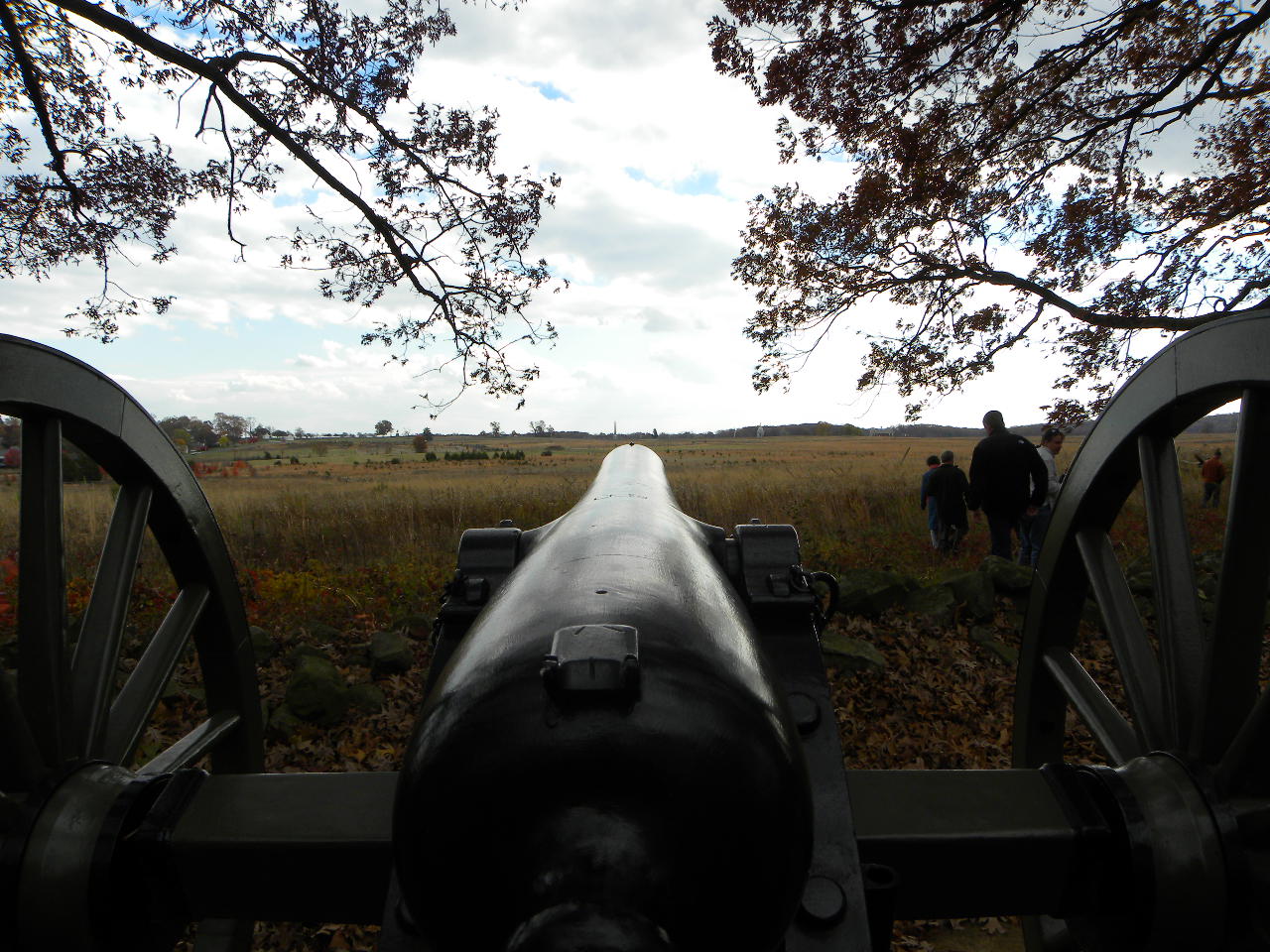
DSCN8783Confederate canon on Seminary Ridge racing Federal lines

DSCN8792Monument to Colonel Ellis and 124th New York at Devil’s Den

DSCN8799Monument to 148th Pennsylvania at the Wheat Field

DSCN8806

Gouverneur Warren Monument Little Round Top

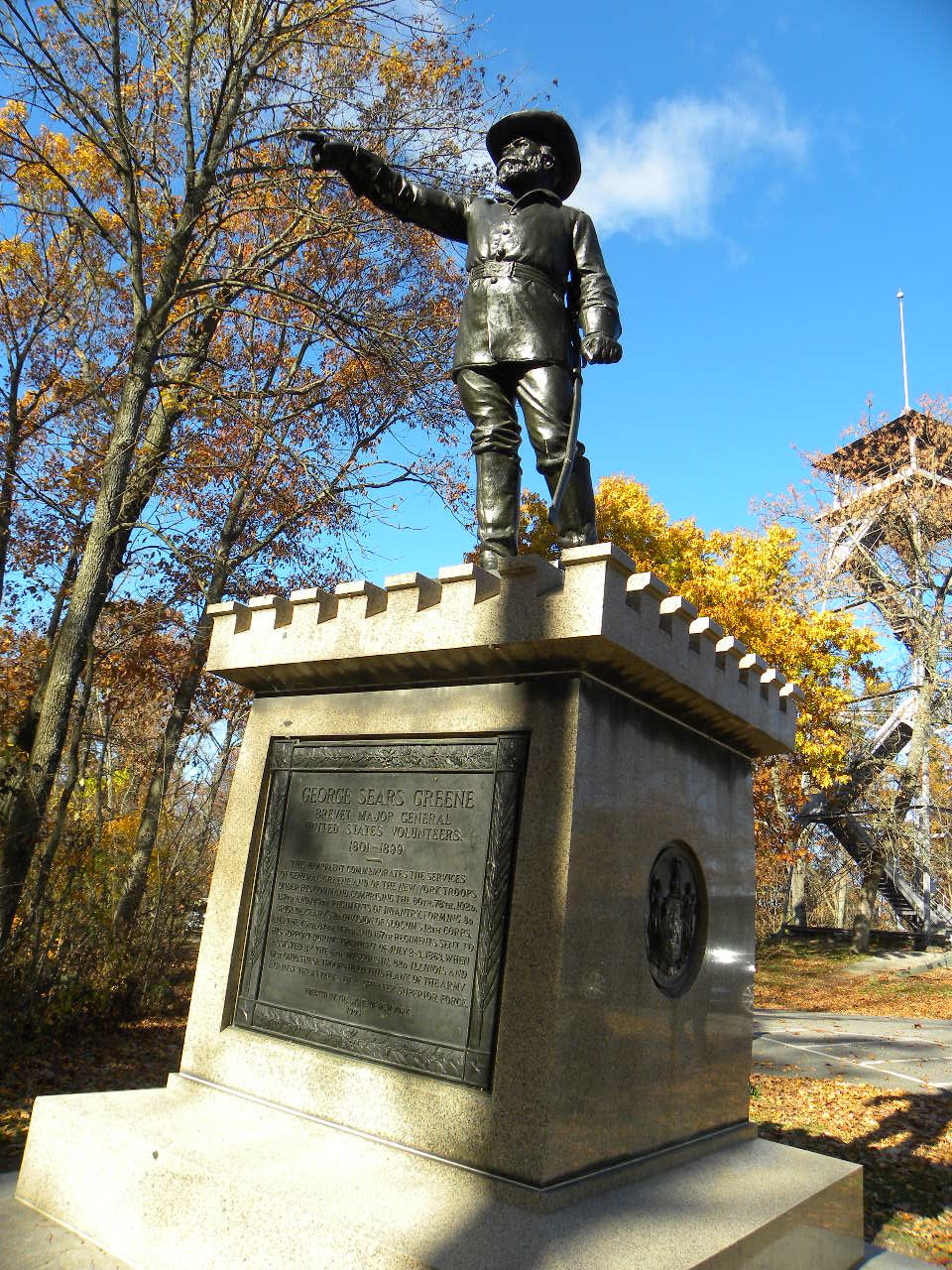
DSCN8818Brigadier General George Greene Monument Culp’s Hill

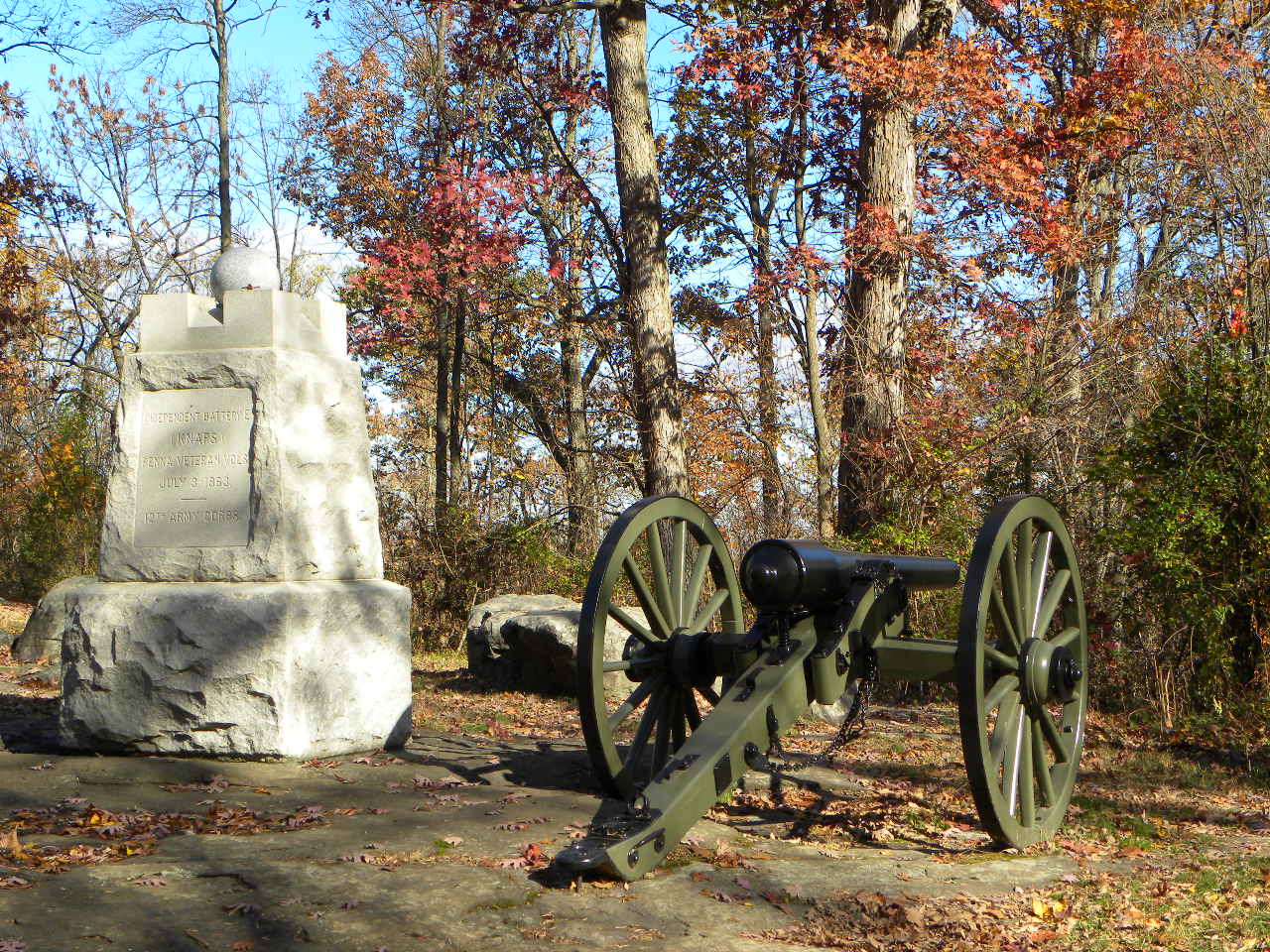
DSCN8819Pennsylvania Independent Artillery Battery E Monument at Culp’s Hill

DSCN8826Monument to 1st Minnesota at Cemetery Ridge

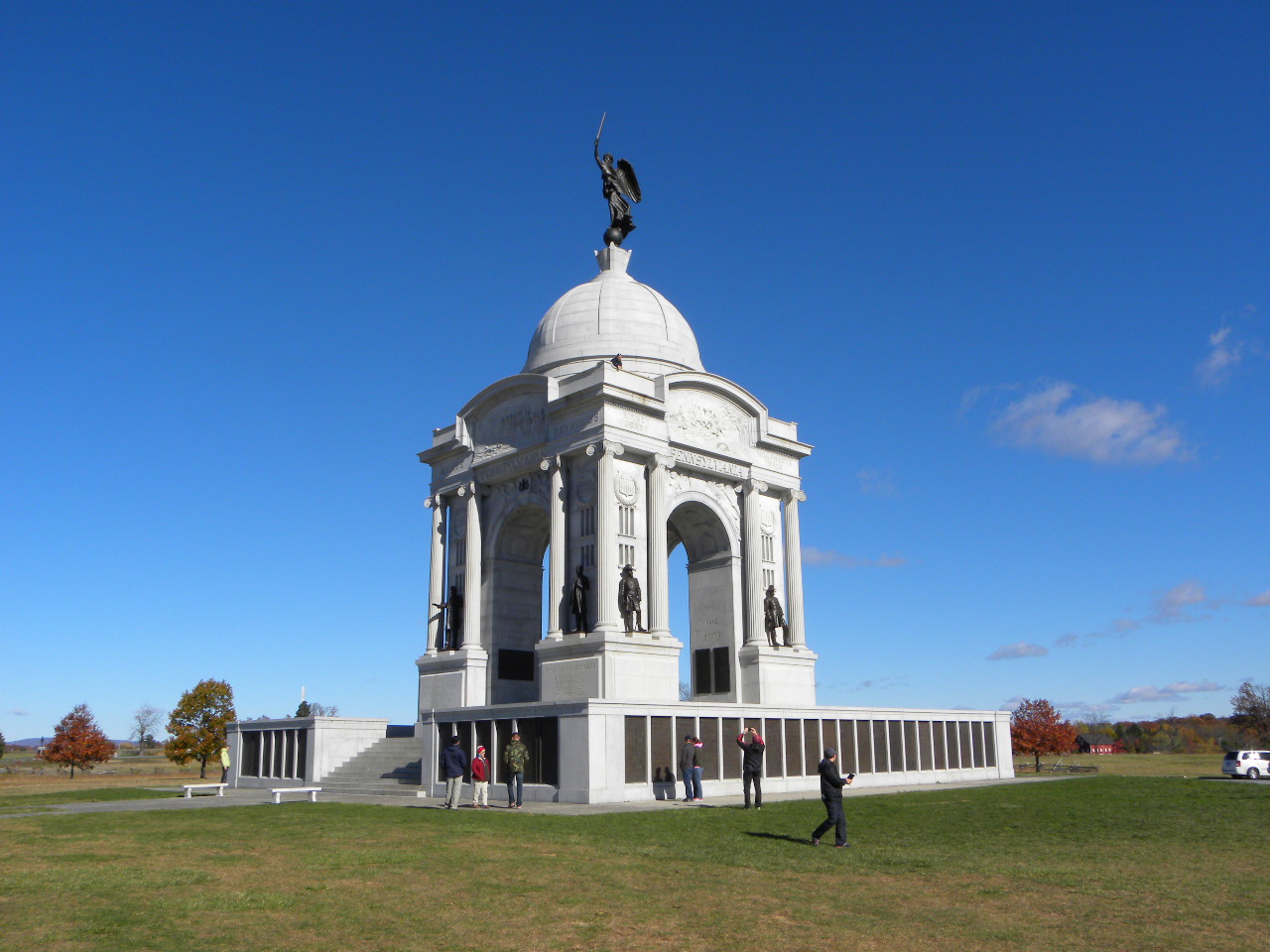
DSCN8828Pennsylvania Monument Cemetery Ridge

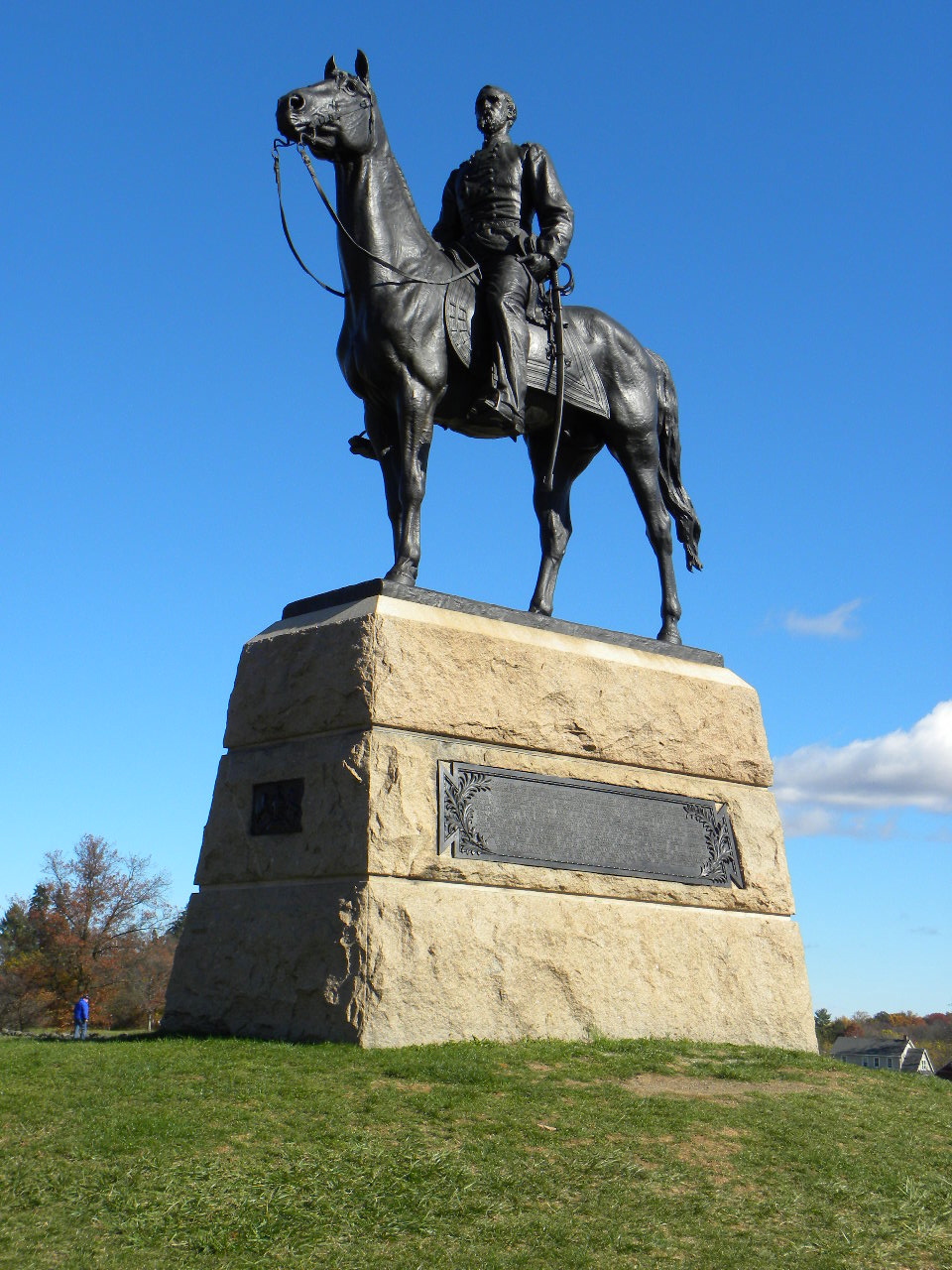
DSCN8831DSCN8832Two views of Monument to General George Meade

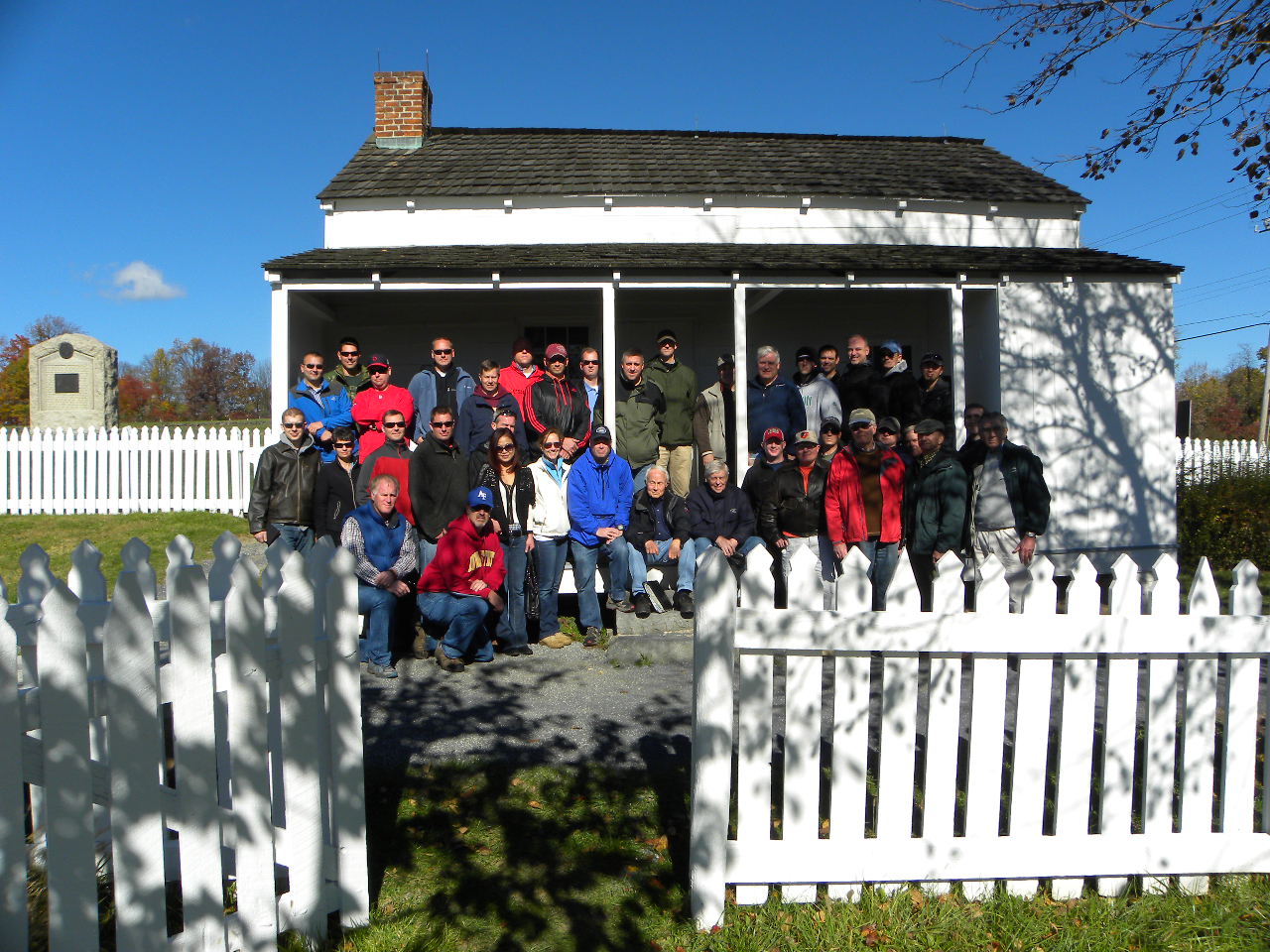
DSCN8834My Class and group at General Meade’s Headquarters east of Cemetery Ridge

DSCN8842Monument to Pennsylvania Cavalry Cemetery Ridge

DSCN8843Virginia Monument on Seminary Ridge near start point for Pickett’s Charge

DSCN8830The Copse of Trees, target of Pickett’s Charge

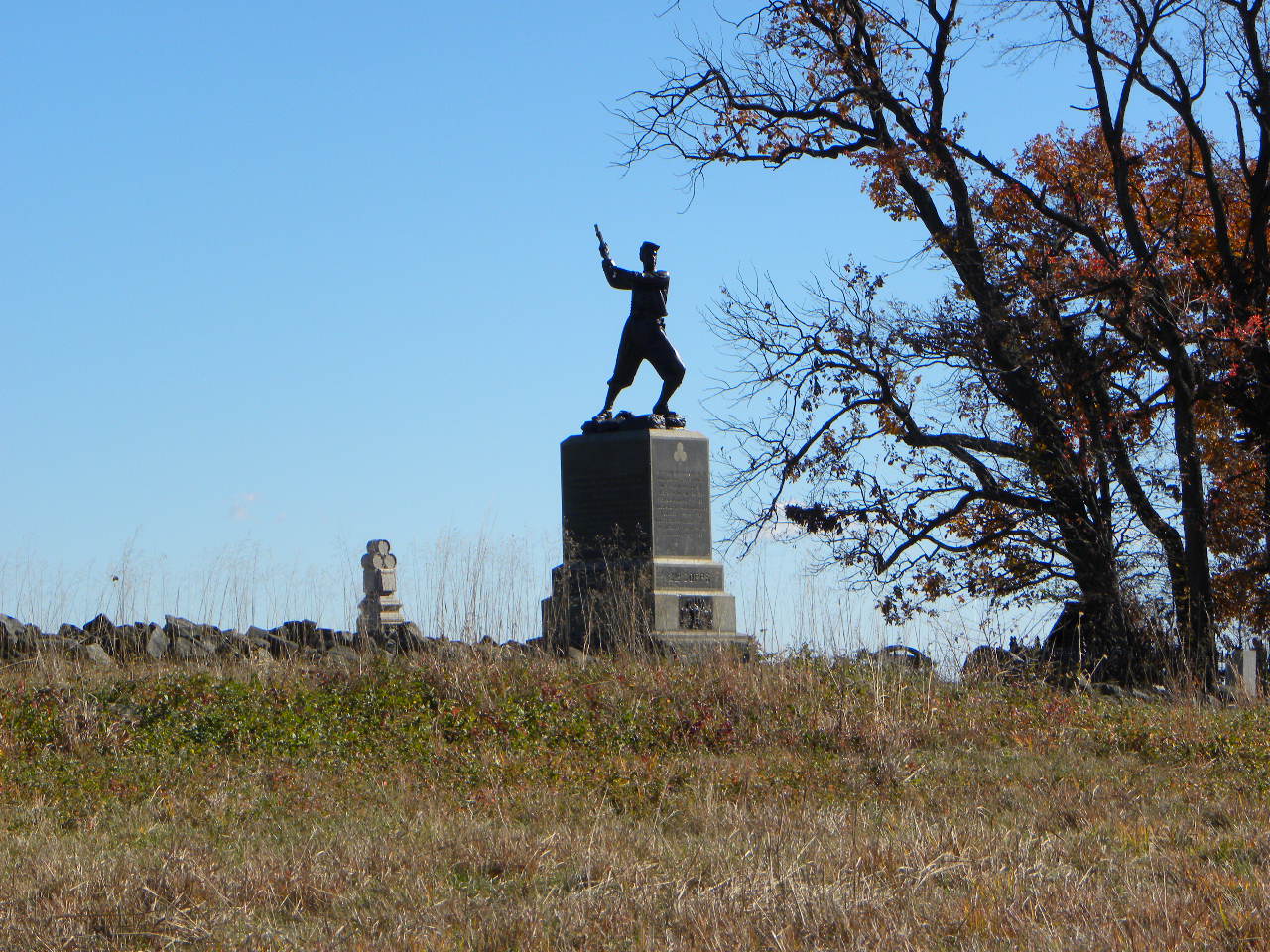
DSCN8854Monument to a Federal Infantry Regiment near the Copse of Trees on Cemetery Ridge

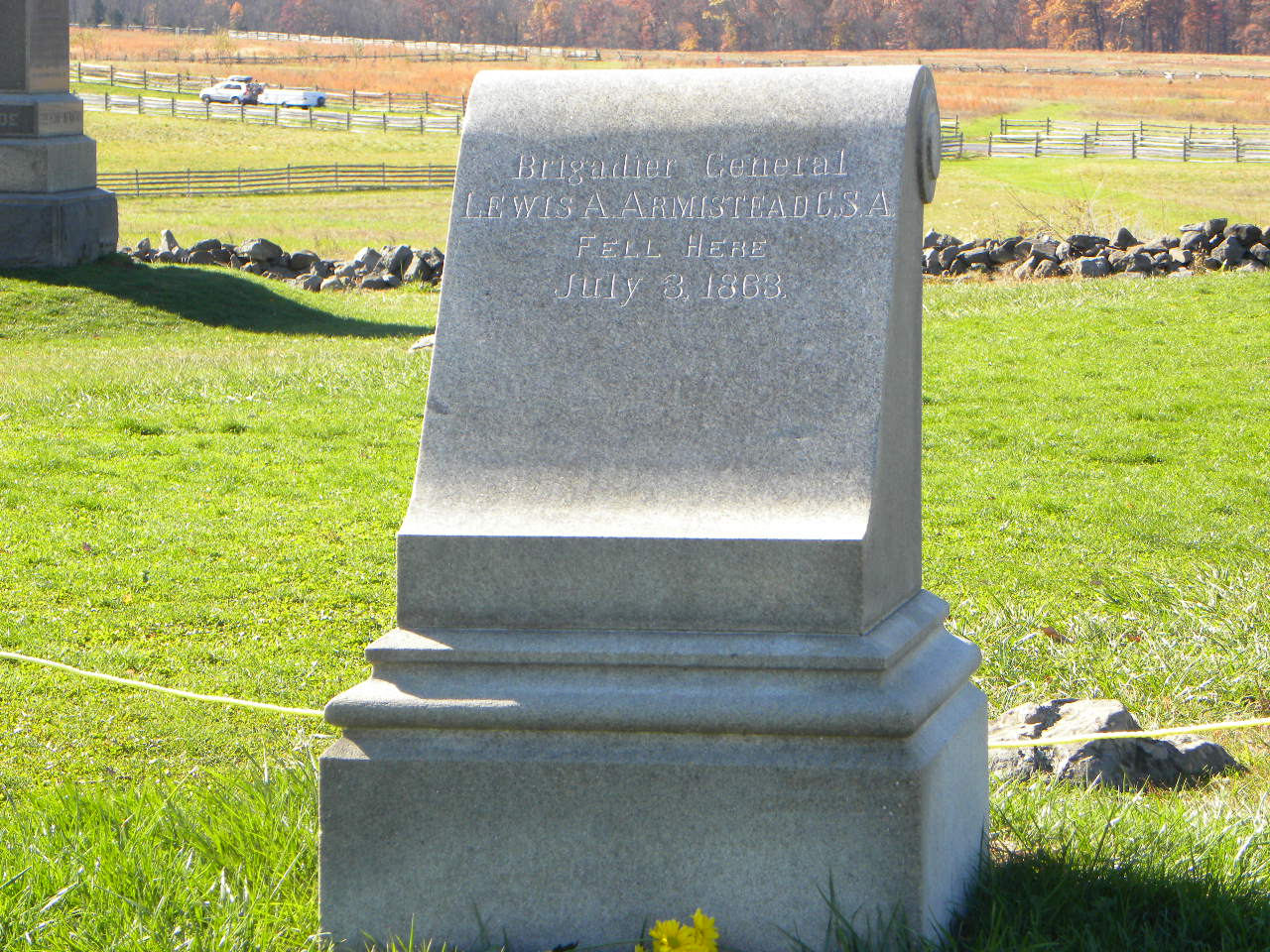
DSCN8856Monument to General Lewis Armistead CSA at the High Water Mark of the Confederacy

DSCN8851DSCN8855Monuments at the Angle on Cemetery Ridge

In a few short weeks our nation will commemorate the 150th anniversary of President Lincoln’s Gettysburg Address. His words, brief yet eloquent sum up the meaning and symbolism in the monuments that mark this hallowed ground.

Four score and seven years ago our fathers brought forth on this continent, a new nation, conceived in Liberty, and dedicated to the proposition that all men are created equal.

Now we are engaged in a great civil war, testing whether that nation, or any nation so conceived and so dedicated, can long endure. We are met on a great battle-field of that war. We have come to dedicate a portion of that field, as a final resting place for those who here gave their lives that that nation might live. It is altogether fitting and proper that we should do this.

But, in a larger sense, we can not dedicate — we can not consecrate — we can not hallow — this ground. The brave men, living and dead, who struggled here, have consecrated it, far above our poor power to add or detract. The world will little note, nor long remember what we say here, but it can never forget what they did here. It is for us the living, rather, to be dedicated here to the unfinished work which they who fought here have thus far so nobly advanced. It is rather for us to be here dedicated to the great task remaining before us — that from these honored dead we take increased devotion to that cause for which they gave the last full measure of devotion — that we here highly resolve that these dead shall not have died in vain — that this nation, under God, shall have a new birth of freedom — and that government of the people, by the people, for the people, shall not perish from the earth.

That is why these reminders of the past matter so much today.

Peace

Padre Steve+
 

Leave a comment

Filed under civil war, History

A Trip to Gettysburg

mkholrt

“In great deeds, something abides. On great fields something stays. Forms change and pass; bodies disappear, but spirits linger, to consecrate the ground for the vision-place of souls. And reverent men and women from afar, and generations that know us not and that we know not of, heart-drawn to see where and by whom great things were suffered and done for them….” Joshua Lawrence Chamberlain 

I am in Gettysburg this weekend as part of a Staff Ride with members of my Joint Forces Staff College course. I have been to Gettysburg many times but each time I go my appreciation for what occurred there 150 years ago grows. As I muse about the battle, as well as the entire war my thoughts are often drawn to the words of Joshua Lawrence Chamberlain, Colonel of the 20th Maine at Little Round Top.

In a few weeks the nation will mark the 150th anniversary of President Abraham Lincoln’s Gettysburg Address and I am staying not far from where Lincoln delivered the speech.

On Saturday and Sunday we will tour the battlefield and discuss the battle. I will be taking a good number of photos and probably do some writing about what I see and my thoughts on the events of the battle over the next few days.

However even though I will be thinking about the battle, I will also be thinking of the sacrifice made there to preserve the Union and defeat a rebellion that at its heart was based on maintaining a social and economic system that enslaved a race of people and treated them as less than human. If course the defenders of that revolt point to it being about “states rights” but those rights were fundamentally about preserving and expanding the practice of slavery and subjugating the black race in order to maintain the economic and political power of slave owners and traders.

images-61

Until then I will leave you with the immortal words of President Lincoln.

Four score and seven years ago our fathers brought forth on this continent, a new nation, conceived in Liberty, and dedicated to the proposition that all men are created equal.

Now we are engaged in a great civil war, testing whether that nation, or any nation so conceived and so dedicated, can long endure. We are met on a great battle-field of that war. We have come to dedicate a portion of that field, as a final resting place for those who here gave their lives that that nation might live. It is altogether fitting and proper that we should do this.

But, in a larger sense, we can not dedicate — we can not consecrate — we can not hallow — this ground. The brave men, living and dead, who struggled here, have consecrated it, far above our poor power to add or detract. The world will little note, nor long remember what we say here, but it can never forget what they did here. It is for us the living, rather, to be dedicated here to the unfinished work which they who fought here have thus far so nobly advanced. It is rather for us to be here dedicated to the great task remaining before us — that from these honored dead we take increased devotion to that cause for which they gave the last full measure of devotion — that we here highly resolve that these dead shall not have died in vain — that this nation, under God, shall have a new birth of freedom — and that government of the people, by the people, for the people, shall not perish from the earth.

Peace

Padre Steve+
Leave a comment

Filed under civil war, History

Living the Nightmares: PTSD and Iraq Six Years Later

481801_10151367001287059_1003164983_n-1.jpg

“Only happy people have nightmares, from overeating. For those who live a nightmare reality, sleep is a black hole, lost in time, like death.”  Guy Sajer, The Forgotten Soldier

Last week I woke up screaming thanks to some nightmare brought to me in high definition by PTSD. It woke Judy and both of the dogs up and well, it wasn’t exactly pleasant. Unfortunately this happens more often than I would like it to. When I was stationed away from home in North Carolina it was only Molly my faithfully dog who was disturbed by this, now I wake up Judy and our younger Papillon Minnie, or Minnie Scule as is her full name.

This afternoon I read a story of a Marine veteran who lost his battle with PTSD, taking his own life. I see a lot of these stories and each one makes me wonder what s going on and gives me pause when I think just how bad I was doing not too long ago.

It is hard for me to believe that nearly six years after I returned from Iraq that I still have a lot of trouble sleeping, though less trouble than a couple of years ago and that my nightmares associated with war still return with more regularity than I would like. Likewise it is hard for me to believe how much my life is impacted by this. I still experience a fair amount of hyper-vigilance, crowds of people are difficult and the craziness of traffic on the local freeways causes me a fair amount of distress.

n671902058_1153829_4642

Despite that I am doing a lot better than I was even a year or so ago when I was still struggling a lot more than I am now and let’s say 4 years ago when there were times I wondered why I was still alive. Of course the time from 2008-2010 was probably the worst time of my life when it seemed that everything that I had believed in had melted away. I didn’t know if God existed, I felt abandoned by my former Church and even by many peers. The only thing that kept me going was a deep sense of call and vocation as a Priest and Chaplain, even though I was for all practical purposes an agnostic who was praying that maybe God still might exist.

Those who have been with me on this blog over the years know how central that struggle has been. I have written about it many times.

Though I am doing much better than I was I still have my times of doubt, times of fear and times of absolute panic. I do what I can to manage but once in a while something will trigger a response. The biggest problem still is sleep and vivid dreams and nightmares. Once I finish the course I am in I am going to get back into therapy a couple of times a month. Thankfully my new job after I complete the school will be more academic with a small chapel where I serve the Students of the Joint Forces Staff College.

Physically I am doing much better, in terms of overall health and physical fitness. I am playing softball again and my PT regimen is much better. Spiritually I can say that being active in having a Chapel where I celebrate Eucharist in a small setting has been good for me. Having to preach again from the lectionary readings is a good thing. Likewise getting a break from five years of hospital ministry, dealing with death, suffering and psychological issues is good. After Iraq I threw myself into the most difficult areas of hospital ministry, the critical care Intensive Care Units hoping that such work would help bring me out of my own issues. Unfortunately, it made it more difficult.

Being at home again is good. I just wish that my nightmares would not cause distress to the rest of my little family. However, it is nice when after they look at me like I am nuts one or both dogs come to me and help calm me down.

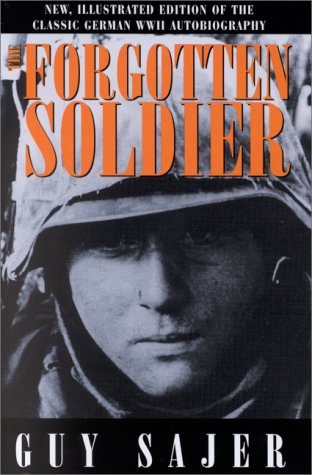
I quoted Guy Sajer, the author of the classic book The Forgotten Soldier. If anyone wants to understand something about what war does to a person and see PTSD in non-clinical terms I think it is possibly the best book to read.

Forgotten_Soldier

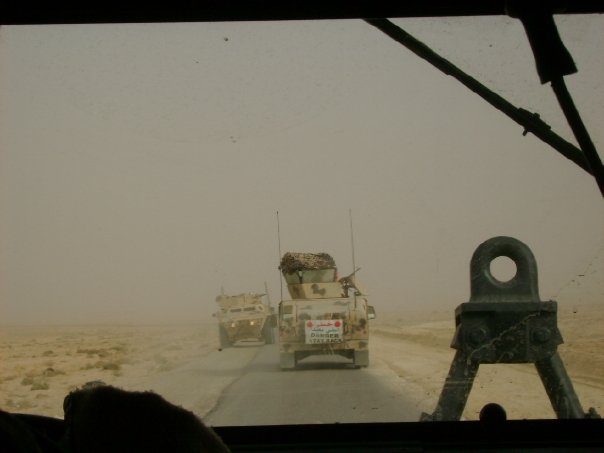
Since I have gone to war and experienced fear on a daily basis out in the hinterlands of Al Anbar Province with small groups of American Marines and Soldiers and Iraqi troops I understand a bit of what Sajer writes. My war was different, out with advisors on small Iraqi basis, traveling in dangerous areas far from any big American units, occasionally being shot at and seeing the devastation of war in that unfortunate country,  though my experience of war pales in comparison with what Sager describes.

That being said I do understand in ways that I never did before. Sajer makes a comment which I think is incredibly appropriate for those that read of war without having ever experienced it. too often is the case in the United States and Western Europe where very few ever put on a uniform and even fewer experience war. Sager wrote:

“Too many people learn about war with no inconvenience to themselves. They read about Verdun or Stalingrad without comprehension, sitting in a comfortable armchair, with their feet beside the fire, preparing to go about their business the next day, as usual.

One should really read such accounts under compulsion, in discomfort, considering oneself fortunate not to be describing the events in a letter home, writing from a hole in the mud. One should read about war in the worst circumstances, when everything is going badly, remembering that the torments of peace are trivial, and not worth any white hairs. Nothing is really serious in the tranquility of peace; only an idiot could be really disturbed by a question of salary. 

One should read about war standing up, late at night, when one is tired, as I am writing about it now, at dawn, while my asthma attack wears off. And even now, in my sleepless exhaustion, how gentle and easy peace seems!”

This weekend I will visit the Gettysburg Battlefield as part of a staff ride. I have been there a good number of times but not since I returned from Iraq. Thus in a sense it will take on new meaning, especially when I walk those hallowed fields of battle where so many died and so many more were maimed in our own terrible Civil War.

295_26911892058_4301_n

That being said I wonder if the solution to my nightmares is to go back to Iraq someday like so many WWII, Korea and Vietnam veterans have done to the places that they served. That has to remain in the future, but hopefully I will get the chance and maybe by then Iraq will at last be at peace.

Tonight I will attempt to sleep and hopefully what dreams I have, though they be high definition will at least not be nightmares that disturb Judy or the dogs.

Peace

Padre Steve+
2 Comments

Filed under civil war, faith, Military, ministry, Pastoral Care, PTSD

Antietam and Syria…Beginning to Understand How Societies Slip Into Carnage

24-2

On September 17th 1862 the there was a battle in the War Against the Slaveholder’s Rebellion, sometimes called the American Civil War. It occurred when the Rebel Army under the command of Robert E Lee invaded the North, moving into Maryland. After a series of smaller engagements the Army of the Potomac under Major General McClellan engaged the Rebel forces at the town of Sharpsburg on the banks of the Antietam Creek.

The ensuing battle was the bloodiest single day engagement fought on the North American Continent. Almost 23,000 Union and Confederate soldiers were killed or wounded that day. Historian Stephen Sears titled his book about the battle Landscape Turned Red: The Battle of Antietam. 

I have been to that battlefield a number of times, both on my own and as part of a formal “Staff Ride.” My own military career touches the battle because when I served in the Texas and Virginia National Guard units that I was a part of traced their lineage to units that fought on that blood drenched parcel of land. In Texas units I served with were part of the 1st and 5th Texas Regiments which served in John Bell Hood’s Texas Brigade and in Virginia the 2nd and 17th Virginia Infantry Regiments.

Each time that I have been there I have never failed to be overwhelmed by the carnage inflicted on Americans by other Americans in the space of under 12 hours.

Then I think about other current civil wars and I begin to understand how places like Syria or Iraq can degenerate into sectarian bloodbaths. Both of those countries have only existed in their present form about 80 years and even then they were under the rule of military leaders for decades.

Actually it is not that hard for this to happen. We in the United States like to hold ourselves up as a model of how to do things right. But our own “Civil War” or the Slaveholder’s Revolt shows just how easily the populace a supposedly Christian and religious society can turn against each other and in the course of a day slaughter thousands and in the space of a few short years kill nearly 600,000 of their own countrymen.

Thus when I look at what is happening in other nations I am less likely to judge them so harshly. I wonder how bad the carnage of our civil war would have been had we had modern weapons including chemical weapons. Somehow I think that we would have used them quite effectively against each other and that the casualties of the war would have been at least twice as great as the Civil War.

What would the rest of the world think if it was happening here today? But more importantly what would we do?

Peace

Padre Steve+

Leave a comment

Filed under civil war, History

Confederate Army Strong? I Think Not

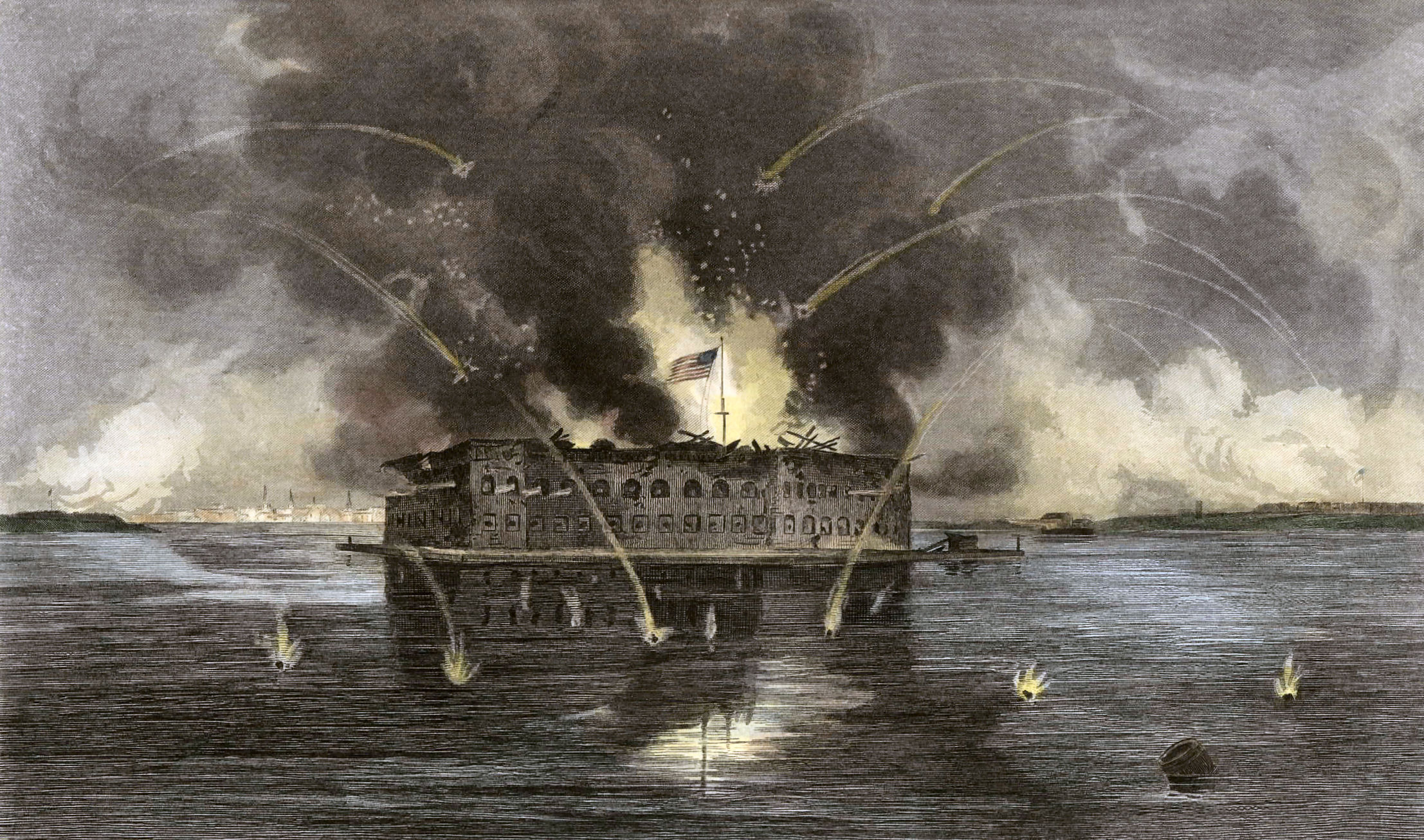
fort-sumter-bombardmentAttack on Ft Sumpter 

“THE CAUSE of the great War of the Rebellion against the United Status will have to be attributed to slavery. For some years before the war began it was a trite saying among some politicians that “A state half slave and half free cannot exist.” All must become slave or all free, or the state will go down. I took no part myself in any such view of the case at the time, but since the war is over, reviewing the whole question, I have come to the conclusion that the saying is quite true.” ― Ulysses S. Grant, Personal Memoirs, Vol. 2

I have served my country, not just Red or Blue States or members of either major political party, or minor political party for 32 years. I have served and as a Chaplain have guarded the religious and free speech rights of Christians, Jews, Moslems, Buddhists, Hindus, Wiccans, Atheists and Agnostics as a Chaplain for 21 of those years.

My family on my mother’s side came to the British Colonies in North America in  the 1680s or 1690s from England and France. My father’s family came in the 1740s from Scotland. During the War for Independence much of my family fought for the colonies or was neutral and some were Tories. One of my direct relatives lived in Philadelphia and worked as a supply officer for the Colonial Army throughout the war. He is buried not far from Benjamin Franklin and other heroes of the Revolution in the Christ Church Cemetery in Philadelphia, something that get’s me free admittance to the historic site anytime that I am in the city.

Those that were Tories ended up in  what is not Canada after the war. I even had distant relatives who were British Redcoats, one a Lieutenant Colonel Thomas Dundas, later Major General Sir Thomas Dundas commanded one of Lord Cornwallis’ brigades at Yorktown and was one of two British Officers who arranged the surrender at Yorktown.

Thus said my family has a long pedigree in this country and when the war of the Souther Slaveholder Rebellion broke out in 1861 I had family on both sides of the conflict. Most served in the Confederacy, though the part of Virginia they lived in seceded from the Commonwealth because Virginia seceded from the Union.

All this being said I can claim my heritage as a Son of the American Revolution or a Son of the Confederacy.

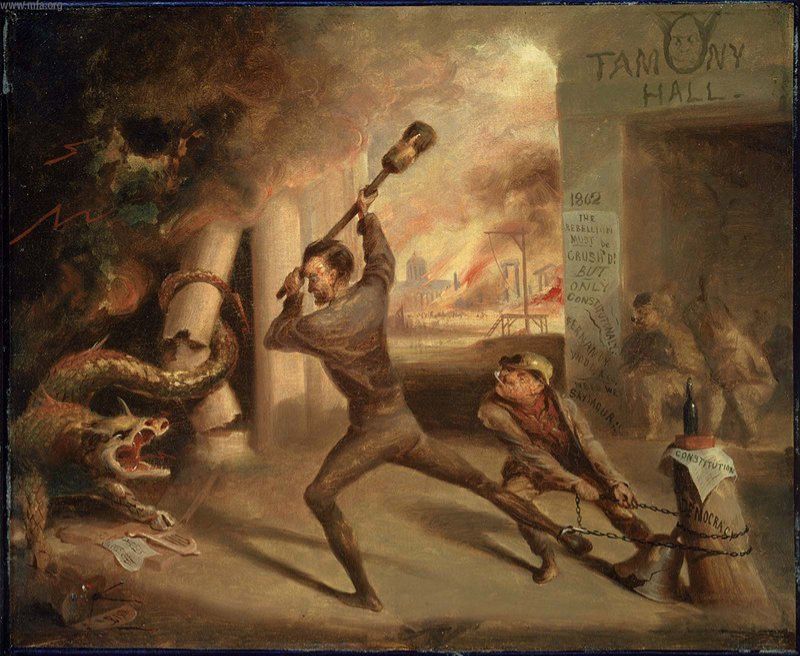
lincoln_rebellion_dragon

Today I saw something that made my blood boil. As I said I have served this country for 32 years in both the Army and the Navy. Part of my service has included time in both the Virginia and Texas Army National Guard. In my time in Virginia or Texas the units that I served traced their linage to either the 1st or 5 Texas Regiments of Hood’s Brigade or the 2nd or 17th Virginia Regiments which fought under Jackson or Pickett during that war.

fort-pillow

As I was saying I saw something today that made my blood boil. I saw a bumper sticker on a pickup truck at the local Home Depot that looked a bit like the US Army “Army Strong” complete with the star featured on the Army bumper sticker. However this one was different. It said “Confederate Army Strong.” To be fair I have seen this sticker on a number of vehicles in Virginia over the past few years but this one got me. The man also has numerous other Confederate or neo-Confederate stickers as well as partisan political comments and conspiracy theory comments about 9-11 being an “inside job” as well as a sticker for the conspiracy theory nutcase Alex Jones’ “Info Wars” website.

IJ2ZD00Z

What I find offensive about the “Confederate Army Strong” sticker is that it is a slap in the face to all who died to preserve the Union. Likewise it is the symbol of a political movement designed to promote, defend and expand an economic system built on slavery using the language of “States Rights.” That being said those states and their political leaders who claimed “States Rights” only cared about their own rights and in the decade leading up to the War of the Slaveholders Rebellion, now known as the Civil War used Federal statutes against non-slave States whenever they needed to and fought for tougher Federal laws to keep their “freedom” to maintain slavery.

351px-Andersonvillesurvivor

Freed Union Prisoner at Andersonville

The fact is that the Confederate Army was responsible for the more deaths and other casualties than all other enemies of the United States before or after the War of the Slaveholders Rebellion. The real fact is that those “noble Confederates” like Robert E. Lee and Stonewall Jackson and others that by the way included men from my family who owned slaves were rebels who when they did not like the result of an elected seceded from the Union and declared war on their fellow citizens in order to maintain their racist economic and political power. They were not about due process or the will of the people, but their will.

These were the same men who condoned the atrocities committed at places like Andersonville and Belle Isle and when they invaded non-slave states had no qualms about taking any black men, women and children from their homes and sending them to the South, even if the were Free Men and not escaped slaves.

However it is now impolitic to say this. But that is the case and whenever I see such displays of hatred against the country, constitution and citizens who I have sworn an oath to support and defend “against all enemies foreign and domestic” for 32 years I get angry.

I saw the man get into his vehicle and almost confronted him, but in the current climate had I done so I would have been the person condemned in the hate filled right wing media and blogosphere which wants nothing more than to have anyone connected to the Federal Government look like they are being intolerant. Such is the victim culture of many on the political right.

So I held back, took a picture of his stickers and went on my way. I have been far too busy trying to catch up on things left unattended by the past 7 years of service to this nation which has cost me much of my mind, my health and finances being away from home, deployed to Iraq or serving as a geographic bachelor, the latter alone which has cost me over $50,000 that I will never get back. Likewise I figured out that the last 17 years of my military career I have been away from home for 10 years. Since I returned from Iraq I have had to deal with the “Mad Cow” of PTSD.

Thus when I see some old fat codger running around spouting hate who probably has not served a day in uniform, or if he did served an enlistment and then got out I get pissed off. To tell the truth I think that I have good reason. There are times that I think that maybe William Tecumseh Sherman was too gentle on the South and that maybe the Radical Reconstructionists like Thaddeus Stevens were right about the South and what needed to be done to eradicate slavery and restore the Union.

Now that is not me, I am more of a Lincoln “with malice toward none and with charity toward all” kind of person. As a soldier I can be gracious toward a defeated enemy.  But when I see that thrown back in my face by the neo-Confederates of my day I wonder if maybe I and men like Sherman, Grant, Hancock and Chamberlain were wrong. Maybe the rebels should have been tried, executed, exiled or imprisoned for their crimes against the Constitution and their fellow citizens.

That being said Grant noticed how the landed elites of the South not only enslaved the blacks but used poor whites who had nothing to gain from their economics or slavery. The sad thing is the descendants of those who enslaved blacks and used poor whites as their political and later military fodder are at it again. Grant noted:

“The great bulk of the legal voters of the South were men who owned no slaves; their homes were generally in the hills and poor country; their facilities for educating their children, even up to the point of reading and writing, were very limited; their interest in the contest was very meagre–what there was, if they had been capable of seeing it, was with the North; they too needed emancipation. Under the old regime they were looked down upon by those who controlled all the affairs in the interest of slave-owners, as poor white trash who were allowed the ballot so long as they cast it according to direction.”

It really is a sad state of affairs and I grieve for the United States. To think I swear on my life an honor to ensure that all citizens have their right to freedom of speech including the man with his message of hate. However I don’t think that he or others like him would  do the same for me.

Peace

Padre Steve+
 

4 Comments

Filed under civil war, History, national security, Political Commentary