Category Archives: faith

The Continuing Journey: Reflections of 6 Years Dealing with PTSD Faith and Life

tom-clancy-look-2

“You wonder what I am doing? Well, so do I, in truth. Days seem to dawn, suns to shine, evenings to follow, and then I sleep. What I have done, what I am doing, what I am going to do, puzzle and bewilder me. Have you ever been a leaf and fallen from your tree in autumn and been really puzzled about it? That’s the feeling.” T. E. Lawrence, Letter 1935

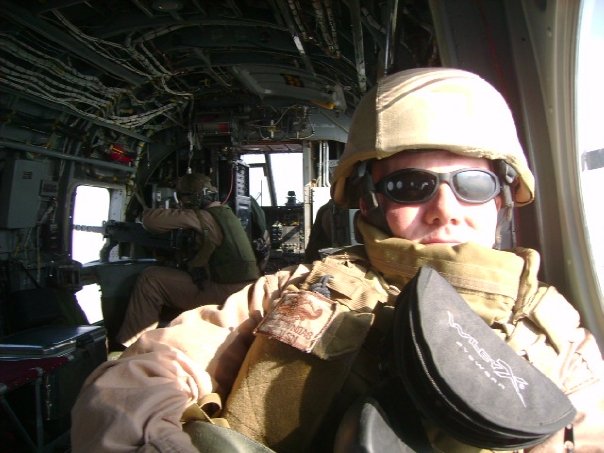
It has been six full years since I descended into the hell of the abyss that is PTSD. Back in the late spring and early summer of 2008 just a few months after my return from what I still consider my best tour of duty in over 30 years of military service with US advisors and Iraq Army and Security forces in Al Anbar Province in 2007-2008 I was in a state of emotional and spiritual collapse.

I really couldn’t believe then what was happening to me or they way that it would end up shaping my life to the present day. In retrospect my return from Iraq marked a beginning of a personal hell that for a number of years seemed like that it would never end. It was painful, it was isolating and it marked a profound change in the way that I saw God, faith, politics and social justice. It changed me in ways that I never could have imagined when I got on a bus heading for Fort Jackson South Carolina following the July 4th holiday of 2007.

Those brave souls that have followed me on this website as well as those that are still my friends despite occasional disagreements and misunderstandings, those that may not understand me but still are my friends have seen this.

So six years later what is it like?

I still have trouble sleeping, not as much as I used to but enough to impact my life. I don’t take heavy doses of sleep meds anymore, just some Melatonin as well as a mild dosage of an anti-anxiety medication and anti-depressant. A far better combination than medications that made me feel like I was hung over without that benefit of sharing too many drinks with friends at the local watering hole.

As opposed to the years immediately following my time in Iraq I have to say that I am no longer self medicating with alcohol. I remember in 2009 going out for dinner, having a few beers, then going to a ball game and drinking a few more and coming home with Krispy Kreme donuts and drinking more beer on a regular basis and usually taking a couple of shots or Jaegermeister or glasses of Spanish Brandy just to get to sleep so I could go back to facing life and death situations the next day in our ICUs. I don’t need that anymore, even though sleep can be problematic and dreams and nightmares rivaling anything I can watch on my HD TV…

I still love to pony up to the bar and share a couple of pints with friends but I don’t need it to numb myself into feeling no pain. Talking with many other vets who have served in Iraq, Afghanistan or even Vietnam I know that I wasn’t alone in those dark days.

I have become a bit less hyper-vigilant though when I come home to Virginia Beach than I was just three years ago and most certainly five years ago in May of 2008. However, that being said I do notice that I am more on guard on the roads and that little things, sirens, emergency vehicles, loud noises and traffic still set me off more than when I lived in rural North Carolina while stationed at Camp LeJeune from 2010 until August of 2013.

I absolutely hate air travel. I don’t like the crowds, the stress of security or the constant delays, changes and overcrowding. Truthfully I felt more comfortable flying the skies of Iraq on Marine, Army and Air Force fixed and rotor wing aircraft and on occasion being shot at in Iraq’s Al Anbar Province than I do on any airline today in this country.

I have become exceptionally sensitive to tragedy, death and suffering. The loss of friends or major incidents where military personnel are killed in combat, training missions or just doing their job hits me hard. The worst times are when friends, or others that I know die by their own hand. When they are veterans who suffer from PTSD, TBI or Moral Injury it is like a dagger plunging into me.

Physical fitness matters more than it did before, even though I was in very good shape before and during my time in Iraq. But when I came home from that I was not only wounded in mind and spirit, but my body was beaten up. Chronic nagging injuries and chronic pain kept me from doing what I liked doing and what helped me keep my physical-spiritual and emotional balance. Those nagging injuries took a long time to heal, and they took some adjustments on my part which took me several years to adapt to and compensate in my physical regimen.  I can say now that I am in as good or better shape than I was before I left for Iraq in 2007. Maybe I’ll write a best selling book and do an exercise video like Jane Fonda…

Whereas in 2008 through 2010 and even until 2011 I was exceptionally sensitive to criticism to the changes that were occurring in my life including my move to the “left” both theologically and politically I have gotten to the point that I realize that it is more important to be honest and authentic as to who I am and what I believe. I have found that those that really matter to me don’t care so much about those things and that relationships maintained with people who don’t always agree with each other where all remain their personal integrity are far more rewarding than relationships that are first and foremost decided by allegiance to political or religious orthodoxy no matter what side of the spectrum it is from. I hate group think. Thus though I have to now consider me to be on the “liberal” side of the political and theological divide I still have to be considered a moderate simply because I refuse to make people my enemy simply because I disagree with them or they with me.

When I began this site in the spring of 2009 I named it Padre Steve’s World…Musings of a Passionate Moderate. I think I did that because it actually described me then, and now, even though I am pretty passionately liberal about some things and that doesn’t bother me in any way because it comes from my wrestling with God and faith and realizing that integrity matters more than about anything else. I have toyed with changing the title of the site but have decided against that because I am a moderate liberal committed to a Christian faith that speaks for the oppressed and is willing to confront those that would use faith, political or economic power to oppress the weak or those different from us.

Since I returned from Iraq in 2008 I discovered what it was to really question faith and God. To become for a couple of years a man who was for all practical purposes an agnostic praying that God still existed and cared. I discovered that in doing so that faith returned, different but more real than I had ever experienced in a life spent in the Christian faith and ministry.

My agnostic period gave me an immense empathy and appreciation for those who have lost faith, struggle with faith or reject any concept of God. I value reason as much, maybe if not more than faith now, not that reason is infallible or perfect, but it does allow me to evaluate my faith, and appreciate the amazing mysteries of the universe that our science and technology continue to reveal in ever more complex detail.

That brought change because my rediscovered faith brought me into conflict with people in the church denomination and faith community where I had been ordained as a priest. I was asked to leave and found a new home church and denomination that fit my life, faith experience and where I could live and minister in complete integrity. In the church that took me in during the fall of 2010 I can be faithful to the Gospel and care for the lost, the least and the lonely, especially those who have been abused by churches and ministries that have sold their soul to right wing political ideologues whose only concern is their political power and influence and would use churches and Christians to do their evil bidding. I guess that I learned that just because someone wraps the Bible in an American Flag, believes that Jesus brought us the Constitution and says that they “support the troops” it doesn’t necessarily mean that they care a whit about the Bible, the Flag, the Constitution or the Troops. I hope that isn’t too harsh….

Oh well, I feel that I am beginning to ramble so I will say good night and “God Bless,” no matter what God that you profess or for that matter don’t profess.

Peace

Padre Steve+

Leave a comment

Filed under faith, iraq,afghanistan, Military, PTSD

The Long Strange Trip: Six Years After Returning from Iraq

295_26912117058_5652_n

It is hard to believe because it seems like it was yesterday, but six Years ago tonight I got off a plane, home from Iraq. The final flight on a commercial aircraft going from Philadelphia to Norfolk was crowded, but the people on board were polite to us, both the flight crew and the passengers, but it was like I had returned to a different world. What I entered was the same as it always had been, but I was different.

Guy Sager, an Alsatian who served in the German Army in World War Two wrote at the end of his book The Forgotten Soldier:  

“In the train, rolling through the sunny French countryside, my head knocked against the wooden back of the seat. Other people, who seemed to belong to a different world, were laughing. I couldn’t laugh and couldn’t forget.” 

About a year after my return, actually on February 16th 2009 I began writing on this site. I began it in large part to express my inner angst and as a means to my own healing as well as to help others. The beginnings came out of my initial therapy with Dr Elmer Maggard, who I sometimes refer as “Elmer the Shrink.” Elmer asked me if I was willing to open up and share my story even though I was still very broken and vulnerable, feeling abandoned by God, the church and most clergy.

At the time I was a practical agnostic. My collapse from PTSD and the moral injuries that I had sustained in Iraq were severe, it was if God had abandoned me, and try as I might nothing worked. In the months before I began writing I had hit bottom. That was then.

The last five years of writing my journey home has been illuminating. As I look back at things that I wrote, surveyed my moods, emotions, intellectual and spiritual development since the beginning of Padre Steve’s World I am reminded of the words to the Grateful Dead song Truckin’ because my life, especially since Iraq has been “a long strange trip.” 

That may seem kind of flippant, but it is true. My journey has been strange and I could not have predicted it back when I got my orders to go to Iraq in May of 2007. I was a volunteer for the mission and what I experienced changed me forever.

I don’t know what the future holds. I was shaken when my Captain Tom Sitsch, my former Commodore at EOD Group Two committed suicide a month ago. I know far too many men and women who have died by their own hand due to the after effects of the trauma they sustained in Iraq Afghanistan, or even Vietnam. What I experience is not unique to me, and that comforts me.

I have been busy this week, between storm recovery, home restoration and catch up at work I have had little time to muse about what the years have been like. I still feel a sense of melancholy as I do every time this year. My difficulty sleeping, nightmares and night terrors still plague me, some nights are better than others but the insomnia that has plagued me since my time in country is still all too real. My anxiety and panic attacks, though diminished still remain.

Faith, which had disappeared has returned, but even that has changed. What I knew to be sure in 2007 is often at best doubt plagued in 2014. For me faith is still often a struggle. Thus I have great empathy for those who do not believe, those who have lost their faith or struggle with doubt, and I cannot condemn them. Sometimes this puts me at odds with other Christians who strongly believe, but who have no tolerance for differences of opinion regarding things which cannot be proven without reference to faith in things that we cannot see. I am okay with that. What I believe about God is more open and less doctrinaire than it was before I left for Iraq. I agree with the late Father Andrew Greeley who wrote:

“I don’t think Jesus was an exclusivist. He said, and we believe, that He is the unique representation of God in the world. But that doesn’t mean this is the only way God can work.”

I am thankful that I have had the chance in a number of venues to share my story. That is a gift that has been given to me and I am thankful for those who at various times have reached out to me, encouraged me and shared their stories of service, faith, struggle, doubt and loss.

In the past five years I walked with and have heard the stories of many people, veterans and their families, both in person and comments made on this site who like me still struggle, with PTSD and moral injury, as well as others who suffer from TBI and other physical injuries. They are comrades. Erich Maria Remarque wrote in his book  All Quiet on the Western Front:

“I am no longer a shuddering speck of existence, alone in the darkness;–I belong to them and they to me; we all share the same fear and the same life…I could bury my face in them, in these voices, these words that have saved me and will stand by me.”

In the next week or so I will share some more including my first article, written for my former church while I was still in Iraq around Christmas of 2007.

295_26912012058_78_n

Faith, doubt. War, peace. Madness, sanity. Isolation, community, loss and gain. So much still to learn, explore and experience despite everything that has happened. It has been a long strange trip and I expect that the long strange trip will continue. T. E. Lawrence wrote to a friend years after his war in the desert:

“You wonder what I am doing? Well, so do I, in truth. Days seem to dawn, suns to shine, evenings to follow, and then I sleep. What I have done, what I am doing, what I am going to do, puzzle and bewilder me. Have you ever been a leaf and fallen from your tree in autumn and been really puzzled about it? That’s the feeling.”

That is all for tonight as I have much to ponder as I sit with Judy. Our dogs Molly and Minnie passed out beside us, and I hope that tonight I will sleep.

Peace

Padre Steve+

6 Comments

Filed under christian life, faith, iraq,afghanistan, Military, PTSD

The Dream: Keeping Dr. Martin Luther King Jr.’s Dream Alive in 2014

martinlutherking

“Let us rise up tonight with a greater readiness. Let us stand with a greater determination. And let us move on in these powerful days, these days of challenge to make America what it ought to be. We have an opportunity to make America a better nation.”

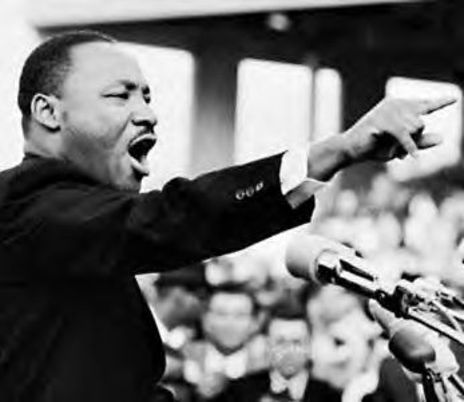
Over the past week I have been pondering the importance of the life and work of Dr. Martin Luther King Jr. It is important to not forget this man and what he stood for, his life and sacrifice.

You see King, like many Black clergy of his day could have played it safe. Many pastors, for good reason remained quiet about the conditions of segregation and the racism of the day. Many just hoped to see things slowly improve without rocking the boat and without endangering themselves or their families. They had seen what happened to blacks who spoke up or confronted the evil, lynchings, cross burnings, threats and murder. They had contented themselves with just trying to get along. Many pastors did not support or gave only lukewarm support to King, Andrew Young, Fred Shuttlesworth and Ralph Abernathy. going into 1963.

lossless-page1-560px-Rosa_Parks_(detail).tiff

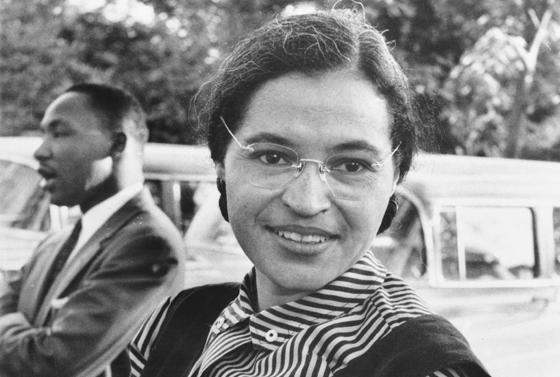
King did not start out to become a Civil Rights leader. However, he was inspired to actively join the movement through the example of Rosa Parks, who defiance of the law for blacks to sit “in the back of the bus” in 1955. He led the Montgomery Bus Boycott which last 385 days. Reaction among segregationists against King was violent, his house was bombed and his life threatened.

The leadership of the boycott brought the young pastor to national prominence. However, by 1963 much of the Civil Rights movement and the African American community was despairing of the lack of progress. Many had become disenchanted with King, not considering him bold enough despite his rhetorical abilities.

Birmingham_campaign_dogs

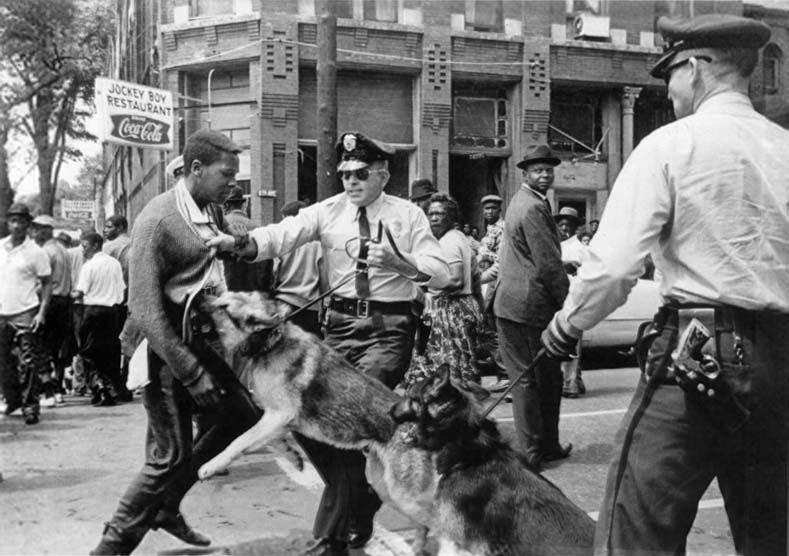
But in April 1963, working with other Civil Rights leaders in Birmingham Alabama King relit the fires of the movement. Montgomery Police Chief “Bull” Conner used his force to violently attack the demonstrators, unleashing dogs and using high pressure water cannon on them, including women, children and the elderly. The violent reaction to the protests shocked much of America and the world.

Martin Luther King being arrested in Montgomery, Alabama 1963_jpg

King was arrested and in the Birmingham jail composed one of his most famous works, the Letter from the Birmingham Jail.  The letter was a social, political and theological masterpiece. It it some of his harshest criticism was of white, as well as black moderates:

“I have almost reached the regrettable conclusion that the Negro’s great stumbling block in his stride toward freedom is not the White Citizen’s Councilor or the Ku Klux Klanner, but the white moderate, who is more devoted to “order” than to justice; who prefers a negative peace which is the absence of tension to a positive peace which is the presence of justice; who constantly says: “I agree with you in the goal you seek, but I cannot agree with your methods of direct action”; who paternalistically believes he can set the timetable for another man’s freedom; who lives by a mythical concept of time and who constantly advises the Negro to wait for a “more convenient season”

gty_march_on_washington_martin_luther_king_ll_130819_16x9_992

King continued his activism until his assassination. In August 1963 he led the March on Washington for Jobs and Freedom, where before a crowd of an estimated 200,000-300,000 he gave his I Have a Dream Speech.

http://www.americanrhetoric.com/speeches/mlkihaveadream.htm

The crescendo of the speech was remarkable and is perhaps one of the most remembered speeches in American history.

Let us not wallow in the valley of despair, I say to you today, my friends.

And so even though we face the difficulties of today and tomorrow, I still have a dream. It is a dream deeply rooted in the American dream.

I have a dream that one day this nation will rise up and live out the true meaning of its creed: “We hold these truths to be self-evident, that all men are created equal.”

I have a dream that one day on the red hills of Georgia, the sons of former slaves and the sons of former slave owners will be able to sit down together at the table of brotherhood.

I have a dream that one day even the state of Mississippi, a state sweltering with the heat of injustice, sweltering with the heat of oppression, will be transformed into an oasis of freedom and justice.

I have a dream that my four little children will one day live in a nation where they will not be judged by the color of their skin but by the content of their character.

I have a dream today!

I have a dream that one day, down in Alabama, with its vicious racists, with its governor having his lips dripping with the words of “interposition” and “nullification” — one day right there in Alabama little black boys and black girls will be able to join hands with little white boys and white girls as sisters and brothers.

I have a dream today!

I have a dream that one day every valley shall be exalted, and every hill and mountain shall be made low, the rough places will be made plain, and the crooked places will be made straight; “and the glory of the Lord shall be revealed and all flesh shall see it together.”2

This is our hope, and this is the faith that I go back to the South with.

With this faith, we will be able to hew out of the mountain of despair a stone of hope. With this faith, we will be able to transform the jangling discords of our nation into a beautiful symphony of brotherhood. With this faith, we will be able to work together, to pray together, to struggle together, to go to jail together, to stand up for freedom together, knowing that we will be free one day.

And this will be the day — this will be the day when all of God’s children will be able to sing with new meaning:

My country ’tis of thee, sweet land of liberty, of thee I sing.

Land where my fathers died, land of the Pilgrim’s pride,

From every mountainside, let freedom ring!

And if America is to be a great nation, this must become true.

And so let freedom ring from the prodigious hilltops of New Hampshire.

Let freedom ring from the mighty mountains of New York.

Let freedom ring from the heightening Alleghenies of Pennsylvania.

Let freedom ring from the snow-capped Rockies of Colorado.

Let freedom ring from the curvaceous slopes of California.

But not only that:

Let freedom ring from Stone Mountain of Georgia.

Let freedom ring from Lookout Mountain of Tennessee.

Let freedom ring from every hill and molehill of Mississippi.

From every mountainside, let freedom ring.

And when this happens, and when we allow freedom ring, when we let it ring from every village and every hamlet, from every state and every city, we will be able to speed up that day when all of God’s children, black men and white men, Jews and Gentiles, Protestants and Catholics, will be able to join hands and sing in the words of the old Negro spiritual:

                Free at last! Free at last!

                Thank God Almighty, we are free at last!

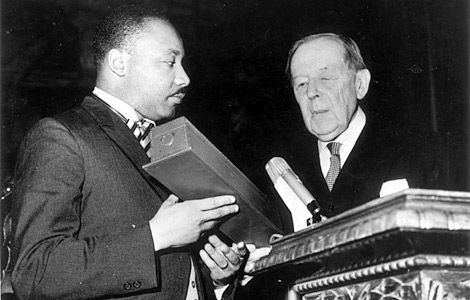
09-martin-king-010909_14102_600x450

King knew the dangers and the risks of appealing to a strategy of non-violence based on love of his enemies. King spoke to the world when he accepted the Nobel Peace Prize in 1964:

“Here and there an individual or group dares to love, and rises to the majestic heights of moral maturity. So in a real sense this is a great time to be alive. Therefore, I am not yet discouraged about the future. Granted that the easygoing optimism of yesterday is impossible. Granted that those who pioneer in the struggle for peace and freedom will still face uncomfortable jail terms, painful threats of death; they will still be battered by the storms of persecution, leading them to the nagging feeling that they can no longer bear such a heavy burden, and the temptation of wanting to retreat to a more quiet and serene life. Granted that we face a world crisis which leaves us standing so often amid the surging murmur of life’s restless sea. But every crisis has both its dangers and its opportunities. It can spell either salvation or doom. In a dark confused world the kingdom of God may yet reign in the hearts of men.”  http://www.nobelprize.org/nobel_prizes/peace/laureates/1964/king-lecture.html 

Dr. King understood how easy hatred could consume people and movements and urged  people not to follow the course of hate, he wrote:

“Returning hate for hate multiplies hate, adding deeper darkness to a night already devoid of stars. Darkness cannot drive out darkness; only light can do that. Hate cannot drive out hate; only love can do that. Hate multiplies hate, violence multiplies violence, and toughness multiplies toughness in a descending spiral of destruction.”

The day before his assassination in Memphis, Dr. King still recognized what he might face. His “I have been to the Mountaintop” speech http://www.americanrhetoric.com/speeches/mlkivebeentothemountaintop.htm recounted many of the things that he had encountered, including an assassination attempt in 1958 which had come close to killing him. It was an amazing speech and one wonders if having lived under threat so long that he almost had a premonition of his death the next day.

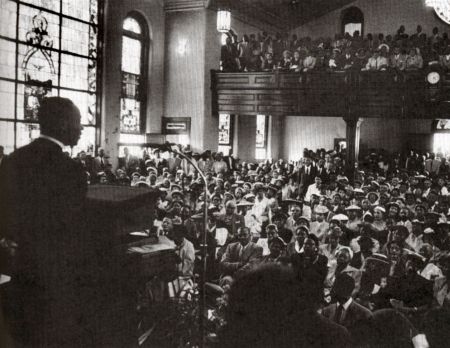
King_Last_Sermon

And then I got into Memphis. And some began to say the threats, or talk about the threats that were out. What would happen to me from some of our sick white brothers?

Well, I don’t know what will happen now. We’ve got some difficult days ahead. But it really doesn’t matter with me now, because I’ve been to the mountaintop.

And I don’t mind.

Like anybody, I would like to live a long life. Longevity has its place. But I’m not concerned about that now. I just want to do God’s will. And He’s allowed me to go up to the mountain. And I’ve looked over. And I’ve seen the Promised Land. I may not get there with you. But I want you to know tonight, that we, as a people, will get to the promised land!

Dr. King’s dream is not dead. There is still much work to see justice done for all Americans as well as those suffering from violence, persecution, discrimination and poverty around the world.

It is 2014. It has been 51 years since Dr. King sat in the Birmingham jail and some still long for a return to the day of Jim Crow, and some who through legislation in some states are attempting to return it by stealth. Racism is not dead, nor are so many other “isms.”

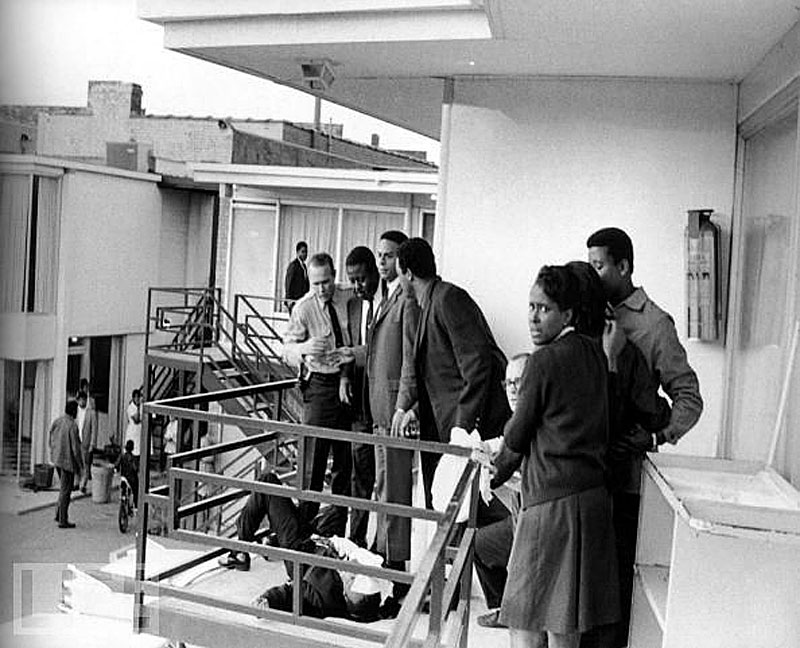
Martin-Luther-King-Killed

Dr. King and many of the leaders of the Civil Rights Movement have passed on, and many people today are complacent about the injustices present in our society, injustices experienced by many people. We need a generation of new men and women with hearts like Dr. King’s, who will be the conscience of the nation and confront these injustices.

Peace

Padre Steve+

Leave a comment

Filed under civil rights, faith, History, News and current events

The Excommunication of Martin Luther and the Journey of Padre Steve

BullExurgeDomine

Leo X’s Papal Bull Exsurge Domine

“We are not yet what we shall be, but we are growing toward it, the process is not yet finished, but it is going on…” Martin Luther

On the 3rd of January 1521 Pope Leo X issued his Papal Bull of Excommunication Decet Romanum Pontificem against Martin Luther. The excommunication followed Luther’s publication of his three masterful works published in 1520 To the Christian Nobility of the German Nation, On the Babylonian Captivity of the Church and On the Freedom of a Christian.

The excommunication was the second act of a three part drama. The first part began with Luther’s publication of the 95 Theses on October 31st 1517. That launched a series of actions by the Papacy in which various representatives were sent to bring Luther back into line. Failing this the last of the inquisitors, Johann Eck became Luther’s and other Reformer’s constant nemesis for the next 25 years.

In the summer of 1520 Eck brought back to Germany Leo X’s Papal Bull Exsurge Domine which attacked and condemned Luther’s writings, a prequel to the formal excommunication. Eck was not well received and Luther’s movement began to gain more traction especially among much of the nobility and among other theologians.

The message of the Bull was clear, Luther, his works and those who supported him or published his works were condemned. In part it read:

“…we likewise condemn, reprobate, and reject completely the books and all the writings and sermons of the said Martin, whether in Latin or any other language, containing the said errors or any one of them; and we wish them to be regarded as utterly condemned, reprobated, and rejected. We forbid each and every one of the faithful of either sex, in virtue of holy obedience and under the above penalties to be incurred automatically, to read, assert, preach, praise, print, publish, or defend them. … Indeed immediately after the publication of this letter these works, wherever they may be, shall be sought out carefully by the ordinaries and others [ecclesiastics and regulars], and under each and every one of the above penalties shall be burned publicly and solemnly in the presence of the clerics and people.” 

???????????????????????????????

Luther burning the Bull

Luther who received a copy in October of 1520 reacted in kind noting: “Since they have burned my books, I burn theirs. The canon law was included because it makes the pope a god on earth. So far I have merely fooled with this business of the pope.”

Neither the Bull dealt with the substance of Luther’s teachings, instead they were both heavy handed missives of Papal primacy and punishment on those that disobeyed. The Bull of excommunication read in part:

Nevertheless Martin himself—and it gives us grievous sorrow and perplexity to say this—the slave of a depraved mind, has scorned to revoke his errors within the prescribed interval and to send us word of such revocation, or to come to us himself; nay, like a stone of stumbling, he has feared not to write and preach worse things than before against us and this Holy See and the Catholic faith, and to lead others on to do the same.

He has now been declared a heretic; and so also others, whatever their authority and rank, who have cared nought of their own salvation but publicly and in all men’s eyes become followers of Martin’s pernicious and heretical sect, and given him openly and publicly their help, counsel and favour, encouraging him in their midst in his disobedience and obstinacy, or hindering the publication of our said missive: such men have incurred the punishments set out in that missive, and are to be treated rightfully as heretics and avoided by all faithful Christians, as the Apostle says (Titus iii. 10-11).

III. Our purpose is that such men should rightfully be ranked with Martin and other accursed heretics and excommunicates, and that even as they have ranged themselves with the obstinacy in sinning of the said Martin, they shall likewise share his punishments and his name, by bearing with them everywhere the title “Lutheran” and the punishments it incurs.

Our previous instructions were so clear and so effectively publicised and we shall adhere so strictly to our present decrees and declarations, that they will lack no proof, warning or citation.

Our decrees which follow are passed against Martin and others who follow him in the obstinacy of his depraved and damnable purpose, as also against those who defend and protect him with a military bodyguard, and do not fear to support him with their own resources or in any other way, and have and do presume to offer and afford help, counsel and favour toward him. All their names, surnames and rank—however lofty and dazzling their dignity may be—we wish to be taken as included in these decrees with the same effect as if they were individually listed and could be so listed in their publication, which must be furthered with an energy to match their contents.

On all these we decree the sentences of excommunication, of anathema, of our perpetual condemnation and interdict; of privation of dignities, honours and property on them and their descendants, and of declared unfitness for such possessions; of the confiscation of their goods and of the crime of treason; and these and the other sentences, censures and punishments which are inflicted by canon law on heretics and are set out in our aforesaid missive, we decree to have fallen on all these men to their damnation.”

It was an extraordinary and misguided document which failed to understand the significance of what was happening in the Church and in Europe. It was a document that echoes what every authoritarian structure does when challenged, it ignored the causes, it ignored the issues and simply condemned those involved. Instead of dialogue it chose retribution and destroyed the unity of the Western Church. Phillip Schaff, one of the great Church historians wrote about the Bull: “The bull of excommunication is the papal counter-manifesto to Luther’s Theses, and condemns in him the whole cause of the Protestant Reformation. Therein lies its historical significance. It was the last bull addressed to Latin Christendom as an undivided whole, and the first which was disobeyed by a large part of it.”

After his excommunication Luther appealed to Emperor Charles V who initially rejected it outright but reconsidered in light of the danger that the Empire faced if German states revolted. Charles invited Luther to the Diet promising him safe passage. The fact that Luther was able to appear at the council safely was in large part because of Elector Friedrich the Wise, his protector insisting that Luther not be imprisoned or outlawed without a hearing. Along the way Luther was greeted as a hero by townspeople, it was something like a victory parade.

20080102-luther

When the hearings began the Archbishop of Trier asked Luther if he would recant his writings. Luther asked for time to consider and at 4 PM the following day was called back to the Diet, where before the Emperor and the Princes of Germany he stood alone.

The Archbishop demanded: “Explain yourself now. Will you defend all your writings, or disavow some of them?” 

Luther provided a rather long answer regarding his writings, categorizing them and explaining them. Eventually the exasperated Archbishop asked: “Martin–answer candidly and without horns–do you or do you not repudiate your books and the errors which they contain?”

Luther then gave the answer in German rather than Latin, which has reverberated nearly half a millennium:

“Since then your sere Majesty and your Lordships seek a simple answer, I will give it in this manner, neither horned nor toothed. Unless I am convinced by the testimony of the Scriptures or by clear reason (for I do not trust either in the pope or in councils alone, since it is well known that they have often erred and contradicted themselves), I am bound by the Scriptures I have quoted and my conscience is captive to the Word of God. I cannot and I will not recant anything, since it is neither safe nor right to go against conscience. May God help me. Amen.”

Friedrich the Wise spirited Luther away in a staged “kidnapping” to the Wartburg Castle, allowing him to evade those that sought his life and to stabilize the Reformation in Germany.

I have always felt a closeness to Luther. He is one of my heroes. I recognize that he was neither perfect, nor do I agree with everything that he wrote or some of the things that he did. That being said, this very imperfect and often impetuous Monk, Priest and Professor is close to me. His “Theology of the Cross” makes more sense than others I have read, and his defense of the Eucharist was instrumental in my faith journey.

Luther, despite many in the Catholic Church who fight for him has not been “rehabilitated” nor the bans of excommunication removed. He has been called by some a “reluctant revolutionary.” I hope that Pope Francis will lift the excommunication despite the Roman tradition of not lifting such bans on those who have passed away.

Luther, like me was somewhat blunt, earthy and liked beer. In fact after Worms he wrote:

“I simply taught, preached, and wrote God’s Word; otherwise I did nothing.  And then, while I slept, or drank Wittenberg beer with my Philip [Melanchthon] and my Amsdorf [Nicholaus von], the Word so greatly weakened the papacy that never a prince or emperor did such damage to it.  I did nothing.  The Word did it all.” 

In seminary Luther, his writings and theology were instrumental in coming to a catholic understanding of the the Christian faith. Now that understanding was much more interpreted in light of the Second Vatican Council and more progressive theologians such as Hans Kung, Bernard Haring and Yves Congar, but it was still catholic and a clean break from my Evangelical Protestant background and education.

Likewise, when I was ordained as a Priest in a more conservative Anglo-Catholic denomination in the mid 1990s I never dreamed that I would face a time where my writings would mark me as a “heretic” in the eyes of some in that church. Nor did I think that I would be told that I was “too liberal” and needed to leave that church. Before that I had been censured and forbidden from writing because I was “too Catholic” by another bishop. Like Luther I assumed that what I wrote and said were readily apparent. Since I have written extensively about that situation and don’t feel the need to go into detail here.

1470237_10152110186432059_1784204366_n

In 1996 I led a series of tours of Luther’s reformation sites in Germany, including Wittenberg, Heidelberg and Worms. I posed for pictures outside the door of the Castle Church as well as at the site where Luther gave his “Here I stand” speech. I was so familiar with the locations in Wittenberg that I was asked if I had ever been to them before. I could only say that I had never been there in person, but had been there many times in my mind. When at each location I felt a tremendous closeness to a man who had influenced so much of my spiritual journey.

As Luther wrote:

“This life therefore is not righteousness, but growth in righteousness, not health, but healing, not being but becoming, not rest but exercise. We are not yet what we shall be, but we are growing toward it, the process is not yet finished, but it is going on, this is not the end, but it is the road. All does not yet gleam in glory, but all is being purified.” 

Peace

Padre Steve+

1 Comment

Filed under christian life, faith, History, Religion

Conservative Heresy 101: The Conservative Bible Project

alg-andy-schlafly-jpg

Andy Schlafly 

Well it is the New Year and there is no way better to celebrate it than by excoriating the methods of a group of Conservatives who are busily re-writing the Bible according to “Conservative principles.”

These people are the very same people who call Pope Francis a Marxist and condemn anyone who sees the strong message of social justice that is found throughout the Bible, particularly in the Old Testament prophets and the words of Jesus in the Gospels. For these people the issue is not what the Bible says, but how they can get it to line up with their political and economic ideological goals. The Conservative Bible Project  is so bad that even wing nuts like World Net Daily’s editor in chief Joseph Farah said: “I’ve seen some incredibly stupid and misguided initiatives by ‘conservatives’ in my day, but this one takes the cake…there is nothing conservative about re-writing the Bible.”

I may be considered by some to be a Liberal but I do hold Scripture in high regard. Thus although I am very open to good research, linguistics, archeology and other methods to re-examine the texts since time nor discovery knows no limits, I do object to those that re-write Scripture to fit their theological and even more evil their political bias. How someone interprets Scripture in light of their theology, something called Hermeneutics, is within the bounds be it conservative or liberal of whatever theological school. However, re-writing the text to make it say things it does not say is neither scholarly nor is it honest. Unfortunately it is happening and the group doing the greatest to destroy the legitimacy of Scripture is a conservative Christian group with ties to the most extreme elements of the political right in the United States.

I ran across this initially on my friend Joel Watts’ website back in 2009. Joel is a real Bible scholar and his website Unsettled Christianity.com is really good and the site of some very good scholarly debate. (The link to Joel’s article is here: http://unsettledchristianity.com/2009/10/get-the-liberal-stuff-out-of-our-bible/ ) I wrote about it back in 2009 because initially I thought that it had to be some kind of joke. Today I am simply cleaning up that article and making sure that it is still accurate. Sadly it is.

The Conservative Bible Project sounds like something that one might read in “The Onion.”  Unfortunately it is part of the conservapedia.com movement which was founded by Andrew Schlafly. Andrew is the son of Phyllis “I won’t censure my associates who suggest a violent revolution” Schlafly the ancient embittered head of the Eagle Forum.

When I first came across the project I found the whole thing amazing.  I guess that is because I never thought that any Christian who holds to any kind of orthodoxy would “translate” the Bible through a political and economic hermeneutic rather than a theological one.

But this is exactly what the folks at the Conservative Bible Project have done and continue to do.  What they have written is simply so rich in contradiction, irony and mixed with enough hubris and heresy to make it almost as fun to critique as the Jehovah’s Witness New World Translation, if they weren’t serious.

Admittedly the bias of any team of translators shows in any Bible translation, it cannot be helped.  Translators are human and their theological and preferences can be seen in the translation of passages in which they may differ with other camps.  This does not mean at all that any of these folks are being dishonest but rather they are seeking to best interpret the words of Scripture but are guided influenced by their theology and underlying hermeneutic.  Likewise there can be differences due to the translators attempting to communicate the idea and meaning versus trying to make a close word for word translation.  However these translations, excepting the Jehovah’s Witless New World Translation, actually can claim that their translators are attempting to be as forthright as possible in their translation attempt within the limits of their theology and interpretive hermeneutic.

But now we come to the Conservative Bible Project.  This is a brazen attempt to re-write the Bible based on a conservative-libertarian political and economic basis rather than on any kind of theological principle.  The project is shameless as it seeks to re-interpret or exclude passages of Scripture that have been believed as Canonical by the Church since the Canon of Scripture was finalized.  If it is bad for “liberals” to take liberties with the Biblical text it is equally wrong for so called “conservatives” to do so.  So before I keep ranting, which I would like to I will let the creators of this alleged “translation” speak for themselves.  If you don’t believe me the link is here:

http://conservapedia.com/Conservative_Bible_Project

Before you read any of the rest of this you need to read the prologue to the Conservapedia site and if you need to check the link is here:  http://en.wikipedia.org/wiki/Conservapedia 

conservative-conservapedia-4970314

The Introduction to Conservapedia

Schlafly’s Conservapedia is an English-language wiki-based Web encyclopedia.  Schlafly’s project is written from an Americentric and Conservative Christian perspective. It is anti-science and holds to a Young Earth Creation view.  Schlafly, a lawyer and social studies teacher started it in 2006. Schlafly started the project because he felt that Wikipedia “had a liberal, anti-Christian, and anti-American bias.”

The “translators” of the Conservative Bible display an acute sense of distrust and paranoia in the preface to their “Bible.”

“The untaught and the unstable twist [Paul’s letters] to their own destruction, as they also do with the rest of the Scriptures.” 2 Peter 3:16

By this verse, we should not put absolute authority in “official” Bible translators – such as those of “The Message” or “The Green Bible”. Instead, we should translate for ourselves, or in a collaborative effort with others we personally trust.

That is where they begin, with their own translation of scripture, a smearing of other translators and the hubris that only they can be trusted.

The following is the article about the Conservative Bible Project taken from Conservepedia verbatim. I have made no edits and even included their hyperlinks.  I begin with their underlying presupposition which comes from their “notes” section. I had to highlight the last part because it shows the depravity of the thinking of these people. It all come their website. I didn’t make it up.

Why They Are Doing this

  1. The committee in charge of updating the bestselling version, the NIV, is dominated by professors and higher-educated participants who can be expected to be liberal and feminist in outlook. As a result, the revision and replacement of the NIV will be influenced more by political correctness and other liberal distortions than by genuine examination of the oldest manuscripts. As a result of these political influences, it becomes desirable to develop a conservative translation that can serve, at a minimum, as a bulwark against the liberal manipulation of meaning in future versions.
  1. Additional less important guidelines include (1) adherence to a concise and dignifying style, such as use of “who” rather than “that” when referring to people and also use glorifying language for the remarkable achievements and (2) recognizing that Christianity introduced powerful new concepts that even the Greek and Hebrew were inadequate to express, but modern conservative language can express well.

The rest of the article follows:

Liberal bias has become the single biggest distortion in modern Bible translations. There are three sources of errors in conveying biblical meaning:

  • lack of precision in the original language, such as terms underdeveloped to convey new concepts of Christianity
  • lack of precision in modern language
  • translation bias in converting the original language to the modern one.

Of these three sources of errors, the last introduces the largest error, and the biggest component of that error is liberal bias. Large reductions in this error can be attained simply by retranslating the KJV into modern English.[1]

As of 2009, there is no fully conservative translation of the Bible which satisfies the following ten guidelines:[2]

  1. 1. Framework against Liberal Bias: providing a strong framework that enables a thought-for-thought translation without corruption by liberal bias
  2. 2. Not Emasculated: avoiding unisex, “gender inclusive” language, and other modern emasculation of Christianity
  3. 3. Not Dumbed Down: not dumbing down the reading level, or diluting the intellectual force and logic of Christianity; the NIV is written at only the 7th grade level[3]
  4. 4. Utilize Powerful Conservative Terms: using powerful new conservative terms as they develop;[4] defective translations use the word “comrade” three times as often as “volunteer”; similarly, updating words which have a change in meaning, such as “word”, “peace”, and “miracle”.
  5. 5. Combat Harmful Addiction: combating addiction by using modern terms for it, such as “gamble” rather than “cast lots”;[5] using modern political terms, such as “register” rather than “enroll” for the census
  6. 6. Accept the Logic of Hell: applying logic with its full force and effect, as in not denying or downplaying the very real existence of Hell or the Devil.
  7. 7. Express Free Market Parables; explaining the numerous economic parables with their full free-market meaning
  8. 8. Exclude Later-Inserted Liberal Passages: excluding the later-inserted liberal passages that are not authentic, such as the adulteress story
  9. 9. Credit Open-Mindedness of Disciples: crediting open-mindedness, often found in youngsters like the eyewitnesses Mark and John, the authors of two of the Gospels
  10. 10. Prefer Conciseness over Liberal Wordiness: preferring conciseness to the liberal style of high word-to-substance ratio; avoid compound negatives and unnecessary ambiguities; prefer concise, consistent use of the word “Lord” rather than “Jehovah” or “Yahweh” or “Lord God.”

Thus, a project has begun among members of Conservapedia to translate the Bible in accordance with these principles. The translated Bible can be found here.

Benefits to participants include:

  • mastery of the Bible, which is priceless
  • mastery of the English language, which is valuable
  • thorough understanding of the differences in Bible translations, particularly the historically important King James Version
  • benefiting from activity that no public school would ever allow

How long would this project take? There are about 8000 verses in the New Testament. At a careful rate of translating about four verses an hour, it would take one person 2000 hours, or about one year working full time on the project.

Possible Approaches

Here are possible approaches to creating a conservative Bible translation:

  • identify pro-liberal terms used in existing Bible translations, such as “government”, and suggest more accurate substitutes
  • identify the omission of liberal terms for vices, such as “gambling”, and identify where they should be used
  • identify conservative terms that are omitted from existing translations, and propose where they could improve the translation
  • identify terms that have lost their original meaning, such as “word” in the beginning of the Gospel of John, and suggest replacements, such as “truth”

An existing translation might license its version for improvement by the above approaches, much as several modern translations today are built on prior translations. Alternatively, a more ambitious approach would be to start anew from the best available ancient transcripts.

In stage one, the translation could focus on word improvement and thereby be described as a “conservative word-for-word” translation. If greater freedom in interpretation is then desired, then a “conservative thought-for-thought” version could be generated as a second stage.

Building on the King James Version

In the United States and much of the world, the immensely popular and respected King James Version (KJV) is freely available and in the public domain. It could be used as the baseline for developing a conservative translation without requiring a license or any fees. Where the KJV is known to be deficient due to discovery of more authentic sources, exceptions can be made that use either more modern public domain translations as a baseline, or by using the original Greek or Hebrew.

There are 66 books in the KJV, comprised of 1,189 chapters, 31,102 verses, and 788,280 words.[6] The project could begin with translation of the New Testament, which is only 27 books, 260 chapters, 7,957 verses, and less than 200,000 words.

Retranslation at rate of 20 verses a day would complete the entire New Testament in about a year. With 5 good retranslators, that would be an average of only 4 verses a day per translator. At a faster rate of 20 verses per day by 5 good translators, the entire New Testament could be retranslated in less than 3 months.

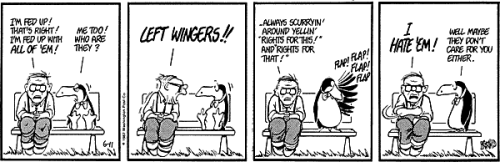
left-wingers-2

First Example – Liberal Falsehood

The earliest, most authentic manuscripts lack this verse set forth at Luke 23:34:[7]

Jesus said, “Father, forgive them, for they do not know what they are doing.”

Is this a liberal corruption of the original? This does not appear in any other Gospel, and the simple fact is that some of the persecutors of Jesus did know what they were doing. This quotation is a favorite of liberals but should not appear in a conservative Bible.

Second Example – Dishonestly Shrewd

At Luke 16:8, the NIV describes an enigmatic parable in which the “master commended the dishonest manager because he had acted shrewdly.” But is “shrewdly”, which has connotations of dishonesty, the best term here? Being dishonestly shrewd is not an admirable trait.

The better conservative term, which became available only in 1851, is “resourceful”. The manager was praised for being “resourceful”, which is very different from dishonesty. Yet not even the ESV, which was published in 2001, contains a single use of the term “resourceful” in its entire translation of the Bible.

Third Example – Socialism

Socialistic terminology permeates English translations of the Bible, without justification. This improperly encourages the “social justice” movement among Christians.

For example, the conservative word “volunteer” is mentioned only once in the ESV, yet the socialistic word “comrade” is used three times, “laborer(s)” is used 13 times, “labored” 15 times, and “fellow” (as in “fellow worker”) is used 55 times.

Advantages to a Conservative Bible Online

There are several striking advantages to a conservative approach to translating the Bible online:

  • participants learn enormously from the process
  • liberal bias – and lack of authenticity – become easier to recognize and address
  • by translating online, this utilizes the growing online resources that improve accuracy
  • supported by conservative principles, the project can be bolder in uprooting and excluding liberal distortions
  • the project can adapt quickly to future threats from liberals to biblical integrity
  • access is free and immediate to the growing internet audience, for their benefit
  • the ensuing debate would flesh out — and stop — the infiltration of churches by liberals pretending to be Christian, much as a vote by legislators exposes the liberals
  • this would bring the Bible to a new audience of political types, for their benefit; Bible courses in college Politics Departments would be welcome
  • this would debunk the pervasive and hurtful myth that Jesus would be a political liberal today

References

  1. The committee in charge of updating the bestselling version, the NIV, is dominated by professors and higher-educated participants who can be expected to be liberal and feminist in outlook. As a result, the revision and replacement of the NIV will be influenced more by political correctness and other liberal distortions than by genuine examination of the oldest manuscripts. As a result of these political influences, it becomes desirable to develop a conservative translation that can serve, at a minimum, as a bulwark against the liberal manipulation of meaning in future versions.
  2. Additional less important guidelines include (1) adherence to a concise and dignifying style, such as use of “who” rather than “that” when referring to people and also use glorifying language for the remarkable achievements and (2) recognizing that Christianity introduced powerful new concepts that even the Greek and Hebrew were inadequate to express, but modern conservative language can express well.
  3. The NIV has supplanted the KJV in popularity.
  4. For example, in 1611 the conservative concept of “accountability” had not yet developed, and the King James Version does not use “accountable to God” in translating Romans 3:19; good modern translations do.
  5. For example, the English Standard Version (2001) does not use the word “gamble” anywhere in translating numerous references to the concept in the Bible.
  1. http://www.biblebelievers.com/believers-org/kjv-stats.html
  1. Quoted here from the NIV.

Wow! That was a lot of fun huh?  The fun continues sports fans, here are the guidelines that they list for their project are below and the link is here, again I make no edits: http://conservapedia.com/Conservative_Bible

The Conservative Bible is the product of the Conservative Bible Project. This is uniquely built on two bedrock principles:

  • online translating using the collaborative wiki software improves the final result if guided by good rules
  • the rules guiding this translation are to use and be informed by conservative insights and terminology

To the best of our knowledge, this project is the first to utilize either of the above principles in translating the Bible.

Here lists the 66 books of the Holy Bible to be translated in this project, with the ones having links already being works-in-progress:[1]

A Warning from the Conservative Bible Project Editiors: 

It is very important to translate the Bible correctly. As it is written, “I warn everyone who hears the prophetic words in this book: if anyone adds to them, God will add to him the plagues described in this book, and if anyone takes away from the words in this prophetic book, God will take away his share in the tree of life and in the holy city described in this book” (Revelation 22, 18-19). See also Deuteronomy 4:2 (Conservative Bible): “Do not add to the word that I command you, and do not subtract from it, so that you may keep the commandments of the Lord your God that I command you.”

And yet there’s more…

Sorry that part was so good I had to highlight it.  In light of what you see next you have to love the quotation out of Revelation that they use in the passage above.

I love irony, that’s why some of my clothes go to the cleaners and the rest are permanent press.   I think they’ll need to get some plague insurance and maybe even get their tickets ready for their all expense paid trip the Lake of Fire Resort and Eternal Time Share.  Just so you can read a few of their “translations” in John’s Gospel I have pasted them here.  If you need to see them the link is here:  http://conservapedia.com/John_1-7_%28Translated%29

In the beginning was Truth, and the Truth was with God, and the Truth was God. (John 1:1)

And the spirit was made flesh, and dwelt among us, and we beheld his glory, the glory as the only child of the Father, full of grace and truth. (John 1:14)

And from Mark: http://conservapedia.com/Gospel_of_Mark_%28Translated%29

“I have baptized you with water, but He shall baptize you with the Divine Guide.” (Mark 1:8)

The intellectuals watched Jesus to see if he might catch and accuse him of healing on the Sabbath. (Mark 3:2)

The intellectuals then fled from the scene to plot with Herod’s people against Jesus, and plan how they might destroy him. (Mark 3:6)

Furious, the intellectual classes wanted to seize him, but feared the public; they knew this parable was directed at them. They gave up for now and walked out. (Mark 12:12)

Final thoughts

So just a cursory examination shows that though they are serious that this cannot be taken seriously as a real translation, but it should if it ever comes to fruition be condemned.  Liberal or Conservative this kind of behavior is repugnant. I wonder what Pugs have to do with it anyway, but this is dangerous stuff.  It represents a paradigm shift in how some Conservatives who at one time could be counted on to have a high view of Scripture now do great violence to the text.

Their motivation could not be any more crass, to buttress an American centric ultra conservative political and economic ideology by re-writing the Bible.  This shows incredible hubris on the part of these guys first to make these assumptions and then to recommend removal of parts of the Bible that they deem objectionable because the verse is only in one Gospel.  Likewise the use of “powerful conservative words” is only understood by their definition of such terms found here: http://conservapedia.com/Essay:Best_New_Conservative_Terms

Putting it kindly these guys are hacks.  They are so fearful of anything that they don’t agree with that they have to re-write the Bible to make it fit their ideological beliefs. They are fundamentally dishonest in their approach.

I do think it is funny that they rename the Pharisees as “the Intellectuals.” That is rich.  Likewise referring to the Logos as “the Truth” is really taking liberties with the text to say the “Spirit being made flesh” does violence to the orthodox understanding of the Trinity, as does calling the Holy Spirit the “Divine Guide.” That last part actually sounds a little “new age” to me.

At the same time if these guys were not deadly serious it would be funny as hell.  As I initially noted when I first read about it I thought it had to be some sick joke put out by a satire publication like the Onion.  I had some conversations with Joel and some of the other guys commenting on his site and find this simply amazing.  The link to his article and the comments is here:  http://thechurchofjesuschrist.us/2009/10/get-the-liberal-stuff-out-of-our-bible/

Anyway, the topic did energize me just because of its malignancy as well as the fun I had with it.  As you guys know I’m pretty much a want everyone to get along. I am an Old Catholic with strong middle of the road Anglican Ethos valuing Scripture, Reason and Tradition. I happened to graduate from a pretty solid Southern Baptist Seminary.  That means that for Andy Schlafly and his bunch I’m definitely on the Highway to Hell so I’d better change my default ring-tone on my cell phone to it just to remind me of where they have me going every time someone calls me.

Peace Baby and Rock on,

Padre Steve+

4 Comments

Filed under christian life, faith, Political Commentary, Religion

Inherit the Wind: A Film for Today

inherit-the-wind

“As long as the prerequisite for that shining paradise is ignorance, bigotry and hate, I say the hell with it.” Henry Drummond (Spencer Tracy) Inherit the Wind

It is fascinating that a play and film set about an incident that actually occurred in the 1920s remains so timeless. It is hard to believe that 90 years after the trial and over 50 years after the movie that our society would still be debating the issue in the movie and that legislatures and school boards are still attempting to pass religious doctrine off as science.

itw2

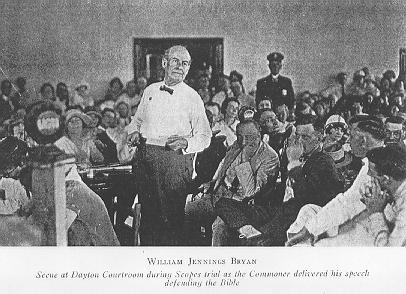
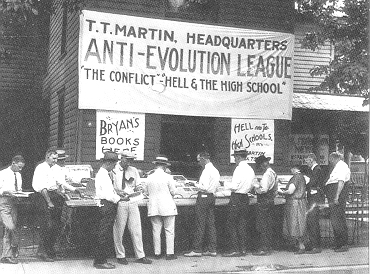
It is a film about what is commonly called the “Scopes Monkey Trial” which was litigated in July of 1925 and featured an epic battle between populist three time Presidential Candidate and former Secretary of State William Jennings Bryan and famed defense attorney Clarence Darrow.

The trial was brought about after the passage of the Butler Act in Tennessee. It was an act that made it a criminal offense to teach evolution in any publicly funded school. The act stipulated:

“That it shall be unlawful for any teacher in any of the Universities, Normals and all other public schools of the State which are supported in whole or in part by the public school funds of the State, to teach any theory that denies the story of the Divine Creation of man as taught in the Bible, and to teach instead that man has descended from a lower order of animals.”

The author of the act was Tennessee State Representative John W. Butler, a farmer and   the head of the World Christian Fundamentals Association an interdenominational organization dedicated to a “New Protestantism” based on the Pre-Millennial interpretation of Bible prophecy.

SCOPE23

Butler was heavily influenced by William Jennings Bryant who with his followers had gotten legislation banning evolution in 15 states. H.L. Mencken commented that over the years of his public life that Bryan had “transformed himself” into some “sort of Fundamentalist Pope.”

Butler was opposed to the teaching of evolution and the  act passed the house by a vote of 75-1. No public hearings had been held on it and no debate proffered.

Butler’s legislation did face some opposition in the State Senate. However it passed there on a vote of 24-6 after the famous Fundamentalist evangelist Billy Sunday preached as series of revival meetings to incite public opinion in favor of the bill. Sunday’s message was clear, he preached that “Education today is chained to the Devil’s throne” and praised Butler and the House for their “action against that God forsaken gang of evolutionary cutthroats.” The bill was signed into law by Governor Austin Peay, but Peay expected little to come of it.

The American Civil Liberties Union put the law to the test using high school biology teacher John Scopes who was charged with breaking the law. The trial ended up becoming less about the guilt or innocence of Scopes or even the constitutionality of the law, but rather as the field where the conflict between religious and social issues and faith versus intellectualism was fought. Butler, the man who legislated the law on religious grounds covered it as a correspondent.

daytonscene

Mencken wrote of the trial:

“The Scopes trial, from the start, has been carried on in a manner exactly fitted to the anti- evolution law and the simian imbecility under it. There hasn’t been the slightest pretense to decorum. The rustic judge, a candidate for re-election, has postured the yokels like a clown in a ten-cent side show, and almost every word he has uttered has been an undisguised appeal to their prejudices and superstitions. The chief prosecuting attorney, beginning like a competent lawyer and a man of self-respect, ended like a convert at a Billy Sunday revival. It fell to him, finally, to make a clear and astounding statement of theory of justice prevailing under fundamentalism. What he said, in brief, was that a man accused of infidelity had no rights whatever under Tennessee law…”

http://www.tcm.com/mediaroom/video/580245/Inherit-The-Wind-Movie-Clip-We-Are-Simple-Folk.html 

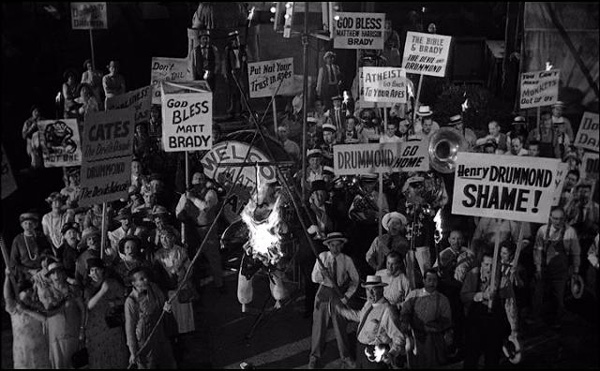
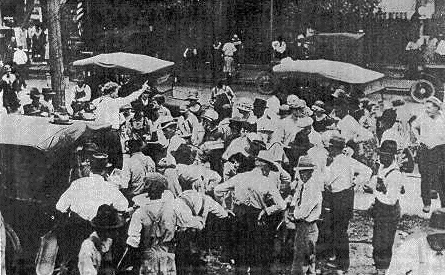
It was an epic event covered by news outlets across the nation and the atmosphere in the town outside the courthouse was circus like, something that the movie depicts very well. The defense was not allowed to produce Scientists as witnesses, even to the chagrin of Butler who despite his opposition to evolutionary theory felt that it was not fair. When all was said and done Scopes had been convicted and a fine of $100 assessed, which was overturned on appeal. Bryan died a week after the trial and of the 15 states with similar legislation to Butler passed them into law.

SCO_EVOL

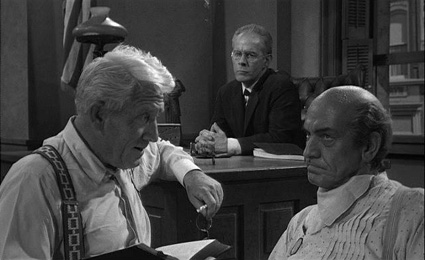
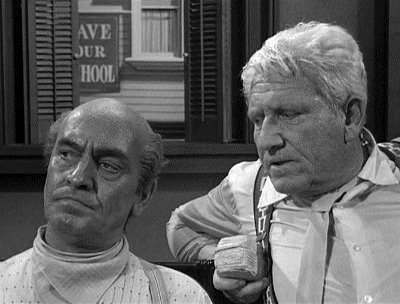
The film is based on the play of the same name written in 1950 by Jerome Lawrence and Robert E. Lee. It was written during the height of the McCarthy Era and opened in 1955. The first film version starring Spencer Tracy as Henry Drummond (Clarence Darrow), Frederic March as Matthew Harrison Brady (William Jennings Bryan), Gene Kelly as E.K. Hornbeck (H.L. Mencken) while Dick York played Bertram Cates (John Scopes). Lawrence and Lee invented some fictional characters including Reverend Brown played by Claude Akins.

The film directed by Stanley Kramer captures the raw emotions of the trial, the participants and the spectators who came from near and far. The depiction of the angry mob of Christians is terrifying to watch. In the film they sing:

“We’ll hang Bertram Cates to a sour apple tree, we’ll hang Bertram Cates to a sour apple tree, we’ll hang Bertram Cates to a sour apple tree. Our God is marching on! Glory Glory Hallelujah! Glory Glory Hallelujah! Glory Gory Hallelujah! His truth is marching on. We’ll hang Henry Drummond to a sour apple tree, we’ll hang Henry Drummond to a sour apple tree, we’ll hang Henry Drummond to a sour apple tree, our God is marching on.”

inheritwind

March’s depiction of Matthew Harrison Brady is riveting. The Brady of the film does not do justice to other parts of Bryan’s life. Bryan, outside his fight against evolution was ahead of his time in many ways. Earlier in his career he had pressed for Universal Suffrage, fought against war and labored against the social Darwinism of the banks, business and the Robber Barons. However the loss of three Presidential elections left him bitter and it is believed that he saw the trial as an opportunity to regain the limelight and perhaps build a base to again run for President. This speech by Brady is a fair characterization of Bryan’s beliefs:

“I have been to their cities and I have seen the altars upon which they sacrifice the futures of their children to the gods of science. And what are their rewards? Confusion and self-destruction. New ways to kill each other in wars. I tell you gentlemen the way of science is the way of darkness.”

The problem with the Bryan of the Scopes Trial was that he was a caricature of his former self, he played to the crowds. The trial played to the worst parts of his character and that shows in the movie depiction. Some Christians find this an unfair portrayal and even call it a lie, however even though March’s portrayal is fictional it does fit the spirit of the trial which is captured in the writings of many of the contemporary commentators of the trial. Mencken wrote of the real Bryan: It is a tragedy, indeed, to begin life as a hero and to end it as a buffoon.

http://www.tcm.com/mediaroom/video/179726/Inherit-the-Wind-Movie-Clip-Time.html 

wjb_pulpit

Another of those commentators, Marcet Haldeman-Julius wrote of the real Bryan:

“As he sat there in the court room, day after day, silent, fanning, fanning, his face set I was appalled by the hardness, the malice in it.  No one who has watched the fanatical light in those hard, glittering black eyes of Bryan’s can doubt but that he believes both in a heaven and in a hell.  At the same time the cruel lines of his thin, tight-pressed mouth proclaim, it seems to me, that he would stop at nothing to attain his own ends.  It is anything but a weak face–Bryan’s.  But it is a face from which one could expect neither understanding nor pity.  My own opinion is that he is sincere enough in his religion.  Also that in it is included the doctrine Paul so frankly taught–that a lie told for the glory of God is justified…”

scope2

But I think that the real drama and tension in the film comes from Spencer Tracy in his portrayal of Drummond. This speech is taken almost verbatim from the trial:

http://www.youtube.com/watch?v=S_DQUAuNUvw 

“Can’t you understand? That if you take a law like evolution and you make it a crime to teach it in the public schools, tomorrow you can make it a crime to teach it in the private schools? And tomorrow you may make it a crime to read about it. And soon you may ban books and newspapers. And then you may turn Catholic against Protestant, and Protestant against Protestant, and try to foist your own religion upon the mind of man. If you can do one, you can do the other. Because fanaticism and ignorance is forever busy, and needs feeding. And soon, your Honor, with banners flying and with drums beating we’ll be marching backward, BACKWARD, through the glorious ages of that Sixteenth Century when bigots burned the man who dared bring enlightenment and intelligence to the human mind!”

0237318_11378_MC_Tx360

I think that this speech is the real crux of the tension that we face even now. Legislators in a number of States have enacted laws of much the same kind of spirit as Butler and defended them with the same kind of fire as Bryan. Civil libertarians, especially secular ones bring up the same issues as Darrow did. I am a Christian and a Priest and my thinking about this is much like that espoused by Drummond in the movie.

So the film may be a fictional depiction of the Scopes Trial, but it is a film that I think that people would do well to watch. I don’t expect everyone to agree with me or the issues that I agree with brought up by the character of Henry Drummond. However, I think that everyone should watch the film and come to their own conclusions as well as to ask themselves how their particular ethic, whether secular or religious informs them in how they deal with this issue and so many others that divide us today.

http://www.youtube.com/watch?v=ECITwTYSIs 

I just know when I watched it again this week that it could have been in the news this week, only with a different cast of characters. My concern is that there is a very loud minority that wants to inflict its particular religious view on everyone and use the public treasure to do it. The attitude of many of these people is much like the characters from the actual Scopes Trial including their view that pushes both demonizes those they oppose and their desire to regulate the secular opposition to the sidelines.

SCOPES1

I know that the same accusation is made by religious people of secularists, however I have seen the results of religious wars in Iraq and the Balkans, and from history. Those conflicts and the brutality of religious people in them give me great pause when I see religious and political leaders here suggest curtailing the civil liberties and even using the law against those that they oppose. As Drummond asked in the movie: “Must men go to jail because they find themselves at odds with a self-appointed prophet?”

That is why this film is so important.

Peace

Padre Steve+

4 Comments

Filed under faith, film, History, laws and legislation, movies, Religion

Padre Steve’s Christmas Journey of Healing

996759_10152169414832059_1833080489_n

“God weeps with us so that we may one day laugh with him.” Jürgen Moltmann

Christmas is a special time for me, it always has been but in spite of that there were times that I took the faith element for granted. I believed and my faith in God, for me the Christian God, Father, Son and Holy Spirit was unquestioned. I knew the Scriptures, the Creeds and the Councils and I felt that my faith in a sense was untouchable. I was sure of it, in fact almost cocksure or arrogant about it. That came out in published writings in a very conservative Catholic monthly, the New Oxford Review back in 2000-2001.

For me the elements of my faith were very much intellectual. I could see other points of view but if I disagreed with them enough I would engage them with the purpose of defeating them. Of course this usually went to theological methods, history and hermeneutics. As far as those that lost their faith it was something that I had difficulty comprehending. Not that I was unsympathetic or uncaring of them or their plight, but I didn’t see how it could happen to me.

But that was before Iraq. That was before PTSD, moral injury and my own crisis of faith when I returned from the Iraq War in 2008.  That changed me as war has changed so many others before. Guy Sager wrote of his return from war in his classic The Forgotten Soldier:

“In the train, rolling through the sunny French countryside, my head knocked against the wooden back of the seat. Other people, who seemed to belong to a different world, were laughing. I couldn’t laugh and couldn’t forget.” 

iraq christmas

My return instigated a crisis of faith, I felt like I still belonged in Iraq and home seemed like a foreign land.  In the crisis I was for all practical purposes I was an agnostic trying to believe and feeling abandoned by God and many of his people, especially clergy.  Commodore Tom Sitsch at EOD Group Two, a veteran of much combat asked me “where does a Chaplain go for help?” I told him “not to other Chaplains or clergy.”

That crisis etched a permanent scar in my soul which led to some fairly major changes in my life.  It forced me to enter what Saint John of the Cross called the “Dark Night of the Soul.”

I will not tell of how my great spiritual disciplines and intellect helped me get through the crisis, as they did not. I found it hard to pray or believe in anything for nearly two years as I struggled with abandonment. I felt that God, the Church and the Navy had abandoned me.  The only thing that kept me going was my profound sense of vocation as a Priest and Chaplain and commitment to others who were suffering.

I was losing my battle with PTSD during that time, depressed, anxious and despairing I threw myself into my work among the critically ill ICU patients and those that cared for them.  Christmas Eve of 2008 was spent in despair as I wandered through the darkness on a cold night after leaving Mass because I could not get through it.

Though I found a community and camaraderie among those that I worked with and tried to provide spiritual care,  my own condition grew worse.  I was so bad enough that my clinical duties had to be curtailed over my objections in September of 2009.

I still stood the overnight duty and filled in for others as needed, but for a number of months I had no clinical assignments.  That meant that others in our minimally staffed department had to fill in for me. I am sure that they resented that, especially because before this I often worked 80-90 hours a week mostly in our ICUs and the staff of the ICUs now expected that kind of intensive ministry and support.

But in my desperation I was greeted with a surprise. On one of the on call nights not long before Christmas I received a call to the ER to provide the last rites to an elderly retired Navy Medical Doctor.  The man was a saint, faithful to God, his Church and the community. For years he dedicated much of his practice to the poorest members of the community, delivering babies for women with no insurance and caring for prisoners in the Portsmouth City Jail.  He breathed his last as I prayed this prayed the prayer of commendation following the anointing and something strange happened. I felt the presence of God for the first time since Christmas of 2007 in Iraq. It is too this day hard to explain.

Something miraculous happened that night and by Christmas Eve I realized that something was happening to me. As I wrote in Padre Steve’s Christmas Miracle on Christmas Eve of 2009:

“Mid afternoon I was walking down the hall and I experienced a wave of emotion flood over me, and unlike the majority of emotions that I have felt in the past couple of years this was different.  It was a feeling of grace and I guess the presence of God.  I went up and talked with Elmer the shrink about what I was feeling and the experience was awesome, I was in tears as I shared, not the tears of sadness, but of grace.  I am beginning to re-experience the grace of God, something that has been so long absent that I did not expect it, at least right now.  I didn’t do anything differently; I certainly was not working extra hard to pray more, get more spiritual or pack my brain full of Bible verses.  I was too far gone to do those things.  It was all I could do many mornings just to get out of bed and come to work.”

Since that time I have continued to recover faith and belief. I cannot say that it is the same kind of faith that I had before Iraq. This was a different kind of faith.  It was faith born of the terrible emptiness and pain of abandonment and despair, a faith that is not content with easy answers and not afraid to ask questions.  It is a faith in Jesus Christ, the crucified one who’s image we see hanging from the crucifix and adorning icons of the Crucifixion. It is as Jürgen Moltmann wrote in The Crucified God:

“The Symbol of the Crucifix in church points to the God who was crucified not between two candles on an altar, but between two thieves in the place of the skull, where the outcasts belong, outside the gates of the city. It is a symbol which therefore leads out of the church and out of religious longing in to the fellowship of the oppressed and abandoned. On the other hand, it is a symbol which calls the oppressed and godless into the church and through the church into the fellowship of the crucified God”

My Philosophy of Religion Professor, Dr. Yandall Woodfin at Southwestern Baptist Theological Seminary told us in class that until we had “dealt with the reality of suffering and death we were not doing Christian theology.” At the time the words were offensive to me, but by the time I had graduated and also done a year of Clinical Pastoral Education they became a part of my experience. However that did not prepare me for the darkness that I lived in from February of 2008 until that Christmas Eve of 2009.  I would say that in addition to Dr Woodfin’s understanding of grappling with suffering and death that one has to add the abandonment of the outcast to the equation.

The “I Believe in God” of the Creed is no longer for me simply a theological proposition to defend, but rather an experience of God born out of pain, despair, anxiety, doubt, unbelief and abandonment. During my crisis I found almost no Christians willing to walk through the darkness with me, including clergy. The only clergy willing to were those who were walking the same path of the outcast with me, suffering from PTSD, TBI and other unseen wounds of war. It was if I was radioactive. Many people had “answers” for me, but none sought to understood my questions until my first  therapist Dr. Elmer Maggard asked me “how I was with the big guy?”

When I finally collapsed in the summer of 2008 and met with Dr. Maggard I made a conscious decision that I would not hide what I was going through.  I felt that if someone didn’t speak out that others like me wouldn’t seek help. In the nearly six years since I returned from Iraq I have encountered many people, men and women, current and former military personnel and families of veterans who came to me either in person or through this website. It led to me being interviewed in a newspaper and being featured on the Real Warriors website http://www.realwarriors.net , a program run by the Department of Defense to help reduce the stigma of getting help for PTSD which features the stories of military personnel suffering from it. My story can be found here: http://www.realwarriors.net/multimedia/profiles.php

I have had a number of military chaplains come to me also experiencing a  faith crisis. Most said that I was the first Chaplain or minister that they had met or who admitted that he struggled with faith and the existence of God.  For a minister to be open about such struggles is dangerous. When my faith returned and was different I was asked to leave my former denomination because I was now “too liberal.”

295_26912092058_3949_n

In each of those encounters with those suffering there was a glimmer of hope for me and I think for them.  It was as if for the first time we had people that we could be open with.  Co-workers and others said that I was “real.” I certainly do not boast of that because it was painful to be transparent with people while in the depths of doubt and despair while hoping that somehow God would touch them with some measure of grace when I found it hard to believe.  I guess it was the fact that I was willing to walk with them in their crisis and let them be honest even if it meant facing my own pain and doubt. I learned something about being what Henri Nouwen called a wounded healer.  Nouwen wrote:

“Nobody escapes being wounded. We all are wounded people, whether physically, emotionally, mentally, or spiritually. The main question is not “How can we hide our wounds?” so we don’t have to be embarrassed, but “How can we put our woundedness in the service of others?” When our wounds cease to be a source of shame, and become a source of healing, we have become wounded healers.”

I do still struggle with the continued effects of War and PTSD, but I am in a much better place. I also struggle with faith at times when I look at the actions of those who profess to believe but treat others with contempt. I can understand the quote from the Gospel “I believe, help my unbelief.”

379132_10150515338077059_671902058_10701625_1511457102_n

So today this wounded healer will celebrate a special Christmas at home. My wife and I will celebrate a Mass, enjoy a Christmas dinner with our dogs, Molly and Minnie. Depending on how she feels we will either go out to a movie or watch one at home.

I want to thank all of my readers, especially those who like or comment on these posts. You are appreciated, some are lengthly and you choose to take your time to read them and often share them. If you are walking the path of the outcast feel free to drop me a line here or on my Facebook page. My wish for you and for all is a Christmas of peace, reconciliation and love.

Peace and blessings,

Padre Steve+
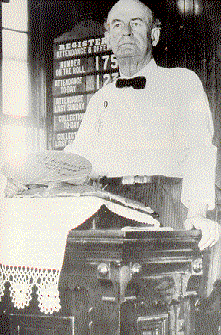
16 Comments

Filed under faith, Military, ministry, Pastoral Care, PTSD, Religion, Tour in Iraq

Christmas at the Front 2013: A Look at Christmas Now and in Military History

German Bundeswehr army soldiers decorate a fir tree imported from Germany for Christmas eve in the army camp in Kunduz

German Bundeswehr Soldiers decorating for Christmas in Afghanistan 

Today as on so many Christmas Days in days gone by military personnel serve on the front lines in wars far away from home. Today American and NATO troops engage a resourceful and determined enemy in Afghanistan. American Marines are working to safeguard the lives of Americans in South Sudan while French troops are intervening in Mali and the Central African Republic to attempt to prevent genocide. In many corners of the globe others stand watch on land, at sea and in the air. Unfortunately on this Christmas wars continue and most likely will until the end of time as we know it.

adopt_a_platoon

It is easy to understand the verse penned by Henry Wadsworth Longfellow in his song I Heard the Bells on Christmas Day after the death of his wife and wounding of his son in the US Civil War:

And in despair I bowed my head

“There is no peace on earth,” I said,

“For hate is strong and mocks the song

Of peace on earth, good will to men.

I have done my time in Iraq at Christmas on the Syrian-Iraqi Border in 2007 with our Marine advisors and their Iraqis.  That was the most memorable Christmas and the most important Christmas Masses that I ever celebrated. Since returning home have thought often of those that remain in harm’s way as well as those soldiers, sailors, Marines and airmen, American and from other nations that have spent Christmas on the front lines. Some of these events are absolutely serious while others display some of the “light” moments that occur even in the most terrible of manmade tragedies.

streets-trenton

Christmas 1776 at Trenton

In American history we can look back to 1776, of course we could go back further but 1776 just sounds better. On Christmas of 1776 George Washington took his Continental Army across the Delaware to attack the British garrison at Trenton. Actually it was a bunch of hung over Hessians who after Christmas dinner on the 24th failed to post a guard which enabled them to be surprised,  but it was an American victory.

washington2

In 1777 Washington and his Army had a rather miserable Christmas at Valley Forge where they spent the winter freezing their asses off and getting drilled into a proper military force by Baron Von Steuben.

The-Eggnog-Riot

The Eggnog Riot

While not a battle in the true sense of the word the Cadets at West Point wrote their own Christmas legend in the Eggnog Riot of 1826 when the Cadets in a bit of holiday revelry had a bit too much Eggnog and a fair amount of Whiskey and behaved in a manner frowned upon by the Academy administration. Needless to say that many of the Cadets spent the Christmas chapel services in a hung over state with a fair number eventually being tossed from the Academy for their trouble.

battlezz

The Battle of Lake Okeechobee

In 1837 the U.S. Army was defeated at the Battle of Lake Okeechobee by the Seminole Nation, not a Merry Christmas at all.  In 1862 the Army of the Potomac and Army of Northern Virginia faced each other across the Rappahannock River after the Battle of Fredericksburg while to the south in Hilton Head South Carolina 40,000 people watched Union troops play baseball some uttering the cry of many later baseball fans “Damn Yankees.”

civil_war_baseball

Blue and Grey Christmas Baseball

In 1864 the Army of the Potomac and Army of Northern Virginia faced each other again in the miserable trenches of Petersburg while General William Tecumseh Sherman enjoyed Christmas in Savannah Georgia after cutting a swath of destruction from Atlanta to the sea. He presented the city to Lincoln who simply said “nice, but I really wanted Richmond.”

general-sherman-at-savannah-war-is-hell-store

Napoleon had something to celebrate on December 25th 1801 after surviving an assassination attempt on Christmas Eve and 1809 he was celebrating his divorce from Empress Josephine which had occurred on the 21st of December.

football-truce

The Christmas Truce 

In 1914 “Christmas Truce” began between British and German troops and threatened to undo all the hard work of those that made the First World War possible.  Thereafter the High Commands of both sides ensured that such frivolity never happened again. The movie Joyeux Noel (Merry Christmas) does a wonderful job in bringing home the miraculous truce.

article-2106230-0003FB2000000258-130_634x578

General and Montgomery and his Staff, winter 1942

World War II brought much suffering. In 1941 after Pearl Harbor the Japanese forced the surrender of Hong Kong and its British garrison while two days later the Soviets launched their counterattack at Moscow against Hitler’s Wehrmacht. In Libya the British were retaking Benghazi from the Afrika Corps after a brutal series of tank battles in Operation Crusader.  A year later the Americans were clearing Guadalcanal of the Japanese. General Montgomery’s 8th Army was pursuing Rommel’s Afrika Korps into Tunisia as American and British forces under General Dwight D. Eisenhower were slogging their way into Tunisia against tough German resistant.  In Russia the Red Army was engaged in a climactic battle against the encircled German 6th Army at Stalingrad. At Stalingrad a German Physician named Kurt Reuber painted the famed Madonna of Stalingrad.

Bundeswehr zeigt "Stalingrad"-Ausstellung

Kurt Reuber’s Madona of Stalingrad

The drawing which was taken out of Stalingrad by one of the last German officers to be evacuated now hangs in the Kaiser Wilhelm Memorial Church in Berlin. Reuber drew another in 1943 while in a Soviet POW campbefore his death from Typhus in early 1944. Reuber wrote to his wife of painting in Stalingrad:

“I wondered for a long while what I should paint, and in the end I decided on a Madonna, or mother and child. I have turned my hole in the frozen mud into a studio. The space is too small for me to be able to see the picture properly, so I climb on to a stool and look down at it from above, to get the perspective right. Everything is repeatedly knocked over, and my pencils vanish into the mud. There is nothing to lean my big picture of the Madonna against, except a sloping, home-made table past which I can just manage to squeeze. There are no proper materials and I have used a Russian map for paper. But I wish I could tell you how absorbed I have been painting my Madonna, and how much it means to me.”

“The picture looks like this: the mother’s head and the child’s lean toward each other, and a large cloak enfolds them both. It is intended to symbolize ‘security’ and ‘mother love.’ I remembered the words of St.John: light, life, and love. What more can I add? I wanted to suggest these three things in the homely and common vision of a mother with her child and the security that they represent.”

34_116111820

Christmas Concert at Guadalcanal 

In 1943 the Marines were battling the Japanese at New Britain while the Red Army was involved in another major winter offensive against the Wehrmacht. In 1944 Christmas found the Russians advancing in Hungary.

christmas-celebration-before-battle-of-the-bulge


Bastogne Christmas 

In December 1944 the Americans were engaged in a desperate battle with the Germans in the Ardennes now known as The Battle of the Bulge. On Christmas day the leading German unit, the 2nd Panzer Division ran out of gas 4 miles from the Meuse River and was destroyed by the American 2nd Armored Division.

0001photo

As that was occurring the embattled 101st Airborne Division at Bastogne was relieved by General George Patton’s 3rd Army. Patton had his Chaplain pen this Christmas prayer:

“Almighty and most merciful Father, we humbly beseech Thee, of Thy great goodness, to restrain these immoderate rains with which we have had to contend. Grant us fair weather for Battle. Graciously hearken to us as soldiers who call upon Thee that, armed with Thy power, we may advance from victory to victory, and crush the oppression and wickedness of our enemies and establish Thy justice among men and nations.”

In the Philippines Douglas MacArthur’s forces were fighting hard to liberate Leyte, Samar and Luzon from the Japanese. At sea US and Allied naval forces fought off determined attacks by Kamikazes.

USO2

USO Christmas Show in WWII

During the war the USO sponsored many entertainers who went to combat zones to perform Christmas shows, among them was Bob Hope.

onship

Bob Hope Christmas Show on USS Ticonderoga CVA-14 off Vietnam 

In the years following the Second World War Christmas was celebrated while armies continued to engage in combat to the death. Christmas of 1950 was celebrated in Korea as the last American forces were withdrawn from the North following the Chinese intervention which the 1st Marine Division chewed up numerous Red Chinese divisions while fighting its way out of the Chosin Reservoir.

size0-army.mil-28691-2009-02-09-110252

Bob Hope with 1st Infantry Division in Vietnam

In 1953 the French garrison of Dien Bien Phu celebrated Christmas in primitive fashion unaware that Vietnamese General Giap was already marshaling his forces to cut them off and then destroy them shortly after Easter of 1954.   In 1964 the U.S. committed itself to the war in Vietnam and for the next 9 years American Soldiers, Marines, Sailors and Airmen battled the North Vietnamese and Viet Cong with Marines fighting the North at Khe Sanh during Christmas of 1967. A hallmark of that war would be Bob Hope whose televised Christmas specials from that country helped bring the emotion of Christmas at the front back to those at home.

DSChristmasmenu

In the years after Vietnam American troops would spend Christmas in the Desert of Saudi Arabia preparing for Operation Desert Storm in 1990, in Somalia the following year and in the Balkans. After September 11th 2001 U.S. Forces spent their first of at least 12 Christmas’s in Afghanistan. From 2003 thru 2011 US and coalition partner troops spent 8 years in Iraq, that was my war.

295_26912097058_4309_n-2

Christmas with Bedouin on Christmas Eve (above) and Christmas games at COP North Al Anbar Province Iraq 2007 (Below)

483430_10151366974467059_2085986953_n

533506_10151366982452059_1397805608_n

Christmas Services at COP South Al Anbar Province, Iraq 2007

Today Americans and our Allies serve around the world far away from home fighting the war against Al Qaeda and its confederates and some may die on this most Holy of Days while for others it will be their last Christmas.

Please keep them and all who serve now as well as those that served in the past, those that remain and those that have died in your prayers.

Peace

Padre Steve+
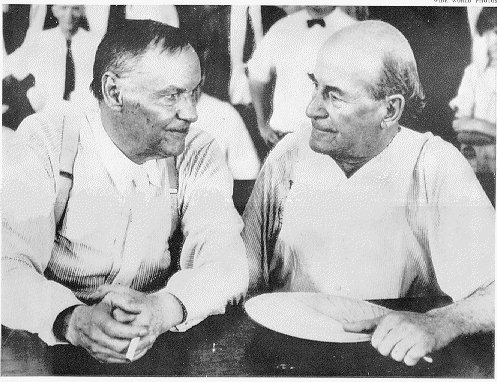
3 Comments

Filed under civil war, faith, History, iraq,afghanistan, Loose thoughts and musings, Military, Religion, world war two in europe, world war two in the pacific

Where I Belong: Padre Steve and the Christmas Truce

889

Christmas 2007 COP South, Al Anbar Province Iraq

“I belong with those who are in pain, and who have lost their faith, I belong here.” Father Palmer, the Chaplain in Joyeux Noel (Merry Christmas)

Last night I again watched the film classic Joyeux Noel (Merry Christmas) which is the story of the amazing and exceptional Christmas Truce of 1914. It is a film that each time I see it that I discover something new, more powerful than the last time I viewed it.

As a Chaplain I am drawn to the actions of the British Padre who during the truce conducts a Mass for all the soldiers, British, French and German in no-man’s land, who goes about caring for the soldiers both the living and the dead.  His actions are contrasted with his Bishop who comes to relieve him of his duties and to urge on the replacement soldiers to better kill the Germans.

palmer

Father Palmer Tending the Wounded

As the Chaplain begins to provide the last Rites to a dying soldier the Bishop walks in, in full purple cassock frock coat and hat and the chaplain looks up and kisses his ring.

As the chaplain looks at his clerical superior there is a silence and the Bishop looks sternly at the priest and addresses him:

“You’re being sent back to your parish in Scotland. I’ve brought you your marching orders.”

Stunned the Priest replies: “I belong with those who are in pain, and who have lost their faith, I belong here.”

The Bishop then sternly lectures the Priest: “I am very disappointed you know. When you requested permission to accompany the recruits from your parish I personally vouched for you. But then when I heard what happened I prayed for you.”

The Priest humbly and respectfully yet with conviction responds to his superior: “I sincerely believe that our Lord Jesus Christ guided me in what was the most important Mass of my life. I tried to be true to his trust and carry his message to all, whoever they may be.”

The Bishop seems a bit taken aback but then blames the Chaplain for what will next happen to the Soldiers that he has served with in the trenches: “Those men who listened to you on Christmas Eve will very soon bitterly regret it; because in a few days time their regiment is to be disbanded by the order of His Majesty the King. Where will those poor boys end up on the front line now? And what will their families think?”

They are interrupted when a soldier walks in to let the Bishop know that the new soldiers are ready for his sermon. After acknowledging the messenger the Bishop continues: “They’re waiting for me to preach a sermon to those who are replacing those who went astray with you.” He gets ready to depart and continues: “May our Lord Jesus Christ guide your steps back to the straight and narrow path.”

The Priest looks at him and asks: “Is that truly the path of our Lord?”

The Bishop looks at the Priest and asks what I think is the most troubling question: “You’re not asking the right question. Think on this: are you really suitable to remain with us in the house of Our Lord?”

With that the Bishop leaves and goes on to preach. The words of the sermon are from a 1915 sermon preached by an Anglican Bishop in Westminster Abbey. They reflect the poisonous aspects of many religious leaders on all sides of the Great War, but also many religious leaders of various faiths even today, sadly I have to say Christian leaders are among the worst when it comes to inciting violence against those that they perceive as enemies of the Church, their nation or in some cases their political faction within a country.

bishop

The Bishop Leads His “Service” 

http://www.youtube.com/watch?v=fMPxjUE40iw

“Christ our Lord said, “Think not that I come to bring peace on earth. I come not to bring peace, but a sword.” The Gospel according to St. Matthew. Well, my brethren, the sword of the Lord is in your hands. You are the very defenders of civilization itself. The forces of good against the forces of evil. For this war is indeed a crusade! A holy war to save the freedom of the world. In truth I tell you: the Germans do not act like us, neither do they think like us, for they are not, like us, children of God. Are those who shell cities populated only by civilians the children of God? Are those who advanced armed hiding behind women and children the children of God? With God’s help, you must kill the Germans, good or bad, young or old. Kill every one of them so that it won’t have to be done again.”

The sermon is chilling and had it not been edited by the director would have contained the remark actually said by the real Bishop that the Germans “crucified babies on Christmas.”  Of course that was typical of the propaganda of the time and similar to things that religious leaders of all faiths use to demonize their opponents and stir up violence in the name of their God.

When the Bishop leaves the Priest finishes his ministration to the wounded while listening to the words of the Bishop who is preaching not far away in the trenches. He meditates upon his simple cross, takes it off, kisses it hand hangs it upon a tripod where a container of water hangs.

The scene is chilling for a number of reasons. First is the obvious, the actions of a religious leader to denigrate the efforts of some to bring the Gospel of Peace into the abyss of Hell of earth and then to incite others to violence dehumanizing the enemy forces. The second and possibly even more troubling is to suggest that those who do not support dehumanizing and exterminating the enemy are not suitable to remain in the house of the Lord. Since I have had people, some in person and others on social media say similar things to what the Bishop asks Palmer the scene hits close to home.

iraq bedouin

Christmas Eve 2007 with the Bedouin 

When I left Iraq in February 2008 I felt that I was abandoning those committed to my spiritual care, but my time was up. Because of it I missed going with some of my advisors to Basra with the 1st Iraqi Division to retake that city from insurgents. It was only a bit over a month after I had celebrated what I consider to be my most important Masses of my life at COP South and COP North on December 23rd as well as Christmas Eve and Christmas Day. When I left the new incoming senior Chaplain refused to take my replacement leaving our advisors without dedicated support. He then slandered me behind my back because what I was doing was not how he would do things and because I and my relief were under someone else’s operational control. It is funny how word gets back to you when people talk behind your back. Thankfully he is now retired from the Navy and I feel for any ministers of his denomination under his “spiritual” care.  So I cannot forget those days and every time I think about them, especially around Christmas I am somewhat melancholy and why I can relate so much to Father Palmer in the movie.

It has been six years since those Christmas Masses and they still feel like yesterday. In the intervening years my life has been different. Severe and Chronic PTSD, depression, anxiety and insomnia were coupled with a two year period where due to my struggles I lost faith, was for all practical purposes an agnostic. I felt abandoned by God, my former church and most other Chaplains. It was like being radioactive, there was and is a stigma for Chaplains that admits to PTSD and go through a faith crisis, especially from other Chaplains and Clergy.  It was just before Christmas in late 2009 that faith began to return in what I call my Christmas Miracle. But be sure, let no one tell you differently, no Soldier, Sailor, Marine or Airman who has suffered the trauma of war and admitted to PTSD does not feel the stigma that goes with it, and sadly, despite the best efforts of many there is a stigma.

Now that faith is different and I have become much more skeptical of the motivations of religious leaders, especially those that demonize and dehumanize those that do not believe like them or fully support their cause or agenda. Unfortunately there are far too many men and women who will use religion to do that, far too many.  

As for me I am in a better place now. I still suffer some of the effects of the PTSD, especially the insomnia, nightmares and anxiety in crowded places and bad traffic, but I do believe again. Like the Priest in the movie I know that my place is with those who are “in pain, and who have lost their faith.” Like Paul Tillich I have come to believe that “Sometimes I think it is my mission to bring faith to the faithless, and doubt to the faithful.” 

Praying for Peace this Christmas,

Padre Steve+
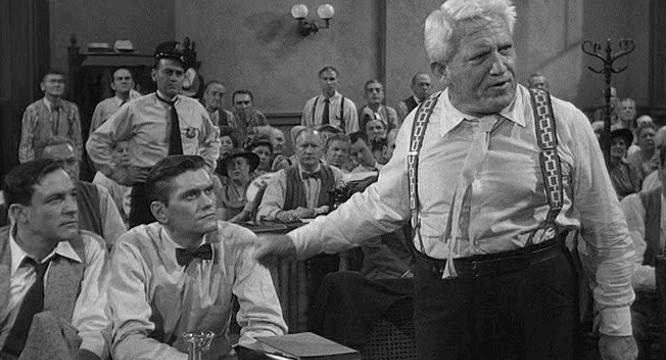
6 Comments

Filed under faith, film, History, Military, ministry, Pastoral Care, PTSD, Religion, Tour in Iraq

Silent Night: The Hymn that Transcends Language Culture and Ideology

800px-Stille_nacht

Stille Nacht Autograph in the Hand of Joseph Mohr

In 1816 a young Austrian Catholic Priest in a small parish near Salzburg penned the lyrics to a hymn that even in the midst of war can bind people together. Father Joseph Mohr after moving to another parish in Oberndorf took those lyrics to Franz Gruber a nearby schoolmaster and organist. Mohr asked Gruber to put the words to music, specifically with a guitar accompaniment. Together the performed the song at Oberndorf’s parish church’s Vigil Mass on December 24th 1818.

malamkudus_11

There are a number of fanciful apocryphal stories about why the song was written and performed on the guitar, including one about the bellows of the church organ having been eaten by mice, but these are akin to sensationalist tabloid journalism. The simple truth is that Mohr sought out Gruber to arrange the song for guitar to be sung by two people accompanied by a choir for that Christmas Vigil Mass.

Stille Nacht, Heilige Nacht 

Stille Nacht, heilige Nacht,
Alles schläft; einsam wacht
Nur das traute hochheilige Paar.
Holder Knabe im lockigen Haar,
Schlaf in himmlischer Ruh!

Stille Nacht, heilige Nacht,
Hirten erst kundgemacht
Durch der Engel Halleluja,
Tönt es laut von fern und nah:
Christ, der Retter ist da!

Stille Nacht, heilige Nacht,
Gottes Sohn, o wie lacht
Lieb’ aus deinem göttlichen Mund
, Da uns schlägt die rettende Stund’.
Christ, in deiner Geburt!

 The song rapidly grew in popularity and spread quickly in Europe. A traveling Austrian singing group, the Rainer family performed it in front of Austrian Emperor Franz I and Tsar Alexander I.

7998

They also gave its first American performance in New York outside the famed Trinity Church in 1839. I continued to grow in popularity and was translated into many languages, now numbering about 140.

21760570

The American Episcopalian Bishop John Freeman Young translated it into English in 1863. It is his version that is most used today in English speaking lands today. A website called the Silent Night Web http://silentnight.web.za has 227 versions of the song in 142 languages on its site.

50-Silent_Night

Silent Night 

Silent night, Holy night

 All is calm, all is bright

‘Round yon virgin , mother and child

Holy infant so, tender and mild
Sleep in heavenly peace,
Sleep in heavenly peace.

Silent night, Holy night
Shepherds quake, at the sight
Glories stream from heaven afar
Heavenly, hosts sing Hallelujah.
Christ the Savior is born,
Christ the Savior is born.

Silent night, Holy night
Son of God, love’s pure light
Radiant beams from thy holy face
With the dawn of redeeming grace,
Jesus, Lord at thy birth,
Jesus, Lord at thy birth.

Father Mohr refused to profit from his song and donated his proceeds to care for the elderly and educate children in the parishes and towns he served. He died in 1848.

889

I find that the song will bring me to tears fast than almost any song. It is one that I have sung in English, German and French. In my travels as a military Chaplain have used on every Christmas Eucharist celebration that I have done, including at two lonely COPS in Iraq, COP South and COP North on the Syrian Border in Al Anbar Province. Likewise I have celebrated joint ecumenical Christmas services with German military chaplains and civilian clergy.

It is a simple and humble song. It is performed the world over by the great and small, the famous and the unknown. It is a song that in two world wars has stopped the violence as opposing soldiers paused to sing it together each in their own language. This happened during the Christmas Truce truce of 1914 as well as in 1944 along the Western Front during the Battle of the Bulge.

13-1

http://www.youtube.com/watch?v=EbGZ7T5EHpQ

 joyeux-noel-4

On Tuesday as people gather for Christmas Eve and Wednesday when they gather for Christmas Day services the song will be sung around the world. In lands where war rages the song will be sung. It is my hope that someday that war will be no more and the tiny child spoken of in this humble hymn will understand the incredible grace of the message spoken by the Angels as recorded in Luke’s Gospel:  “Glory to God in the highest, And on earth peace among men in whom he is well pleased.” (American Standard Version)

Peace

Padre Steve+
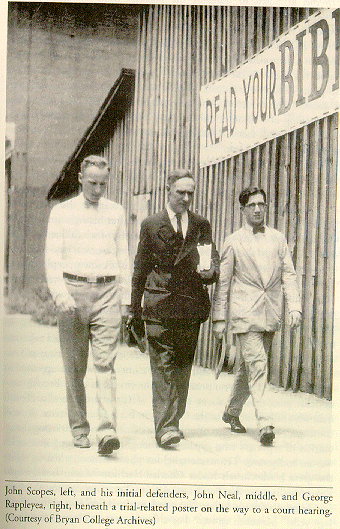
1 Comment

Filed under faith, film, History, music