Category Archives: film

Strike Down the Sinners: The Politics of the Christian Right

4476555

Friends of Padre Steve’s World

This is a topic that sadly I am again forced to return to in light of the incredibly vocal and strident calls of leaders of the Christian Right in response to the Supreme Court ruling on Marriage Equality. The tragic thing is that these men and women seem not to care about the long term damage they are doing not only to the political system, but the witness of Christians and the continued viability of the Christian church in the United States.

Nineteen years ago today, when I was ordained as a priest I was a part of a church that was heavily invested in the political machinations of the Christian Right so I do understand from experience the mindset of some of these leaders. This is not to say that everyone in leadership of that church were like this, but some were, and they held important positions.

I write this on the anniversary of my ordination because I do care about the witness of Christians and the long term viability of the church. Since I am a historian I do understand what happens when church leaders allow their insistence on maintaining or gaining political power and influence to override the words of Jesus and the mission of the church. I want to point out, that while I certainly fall on the progressive to liberal side of the Christian faith that I know many wonderful conservative Evangelicals who while maintaining the their beliefs, still do all they can to be gracious and loving to all, and in their actions show that love and respect to people that they disagree with on doctrinal, social and political issues. Sadly, the actions of the leaders of the Christian Right are obliterating the efforts of these really good and caring Christians to maintain a witness of love, and that offends me. I was talking to one of these pastors today, an old friend from the Navy Chaplain Corps who is now retired and serving as pastor of a Baptist church here in Virginia, and we commiserated about what the actions of these leaders are doing.

Barry Goldwater, the man who was one of the most responsible for the resurgence of American Conservatism, had a keen sense of the danger faced by the conservative movement if the Christian Right ever took control of the Republican Party. Goldwater whether you liked him or not or disagreed with his political thought was no fool. In 1981 after the Christian Right had risen to power and helped Ronald Reagan win the presidency, Goldwater realized that the Christian Right was not content with being part of a conservative coalition but wanted control of the Republican Party. On the floor of the Senate Goldwater spoke these words:

“Mark my word, if and when these preachers get control of the [Republican] party, and they’re sure trying to do so, it’s going to be a terrible damn problem. Frankly, these people frighten me. Politics and governing demand compromise. But these Christians believe they are acting in the name of God, so they can’t and won’t compromise. I know, I’ve tried to deal with them.”

Goldwater was right and the takeover of the Republican Party by the Christian Right is an accomplished fact. The Republican Party is now the party of the Christian Right and the party of religious conservative culture warriors. It is unbending, uncompromising and many of its leaders, including most of the announced presidential candidates believe that they are acting in the name of God.

It is an incredibly dangerous situation, not just for the nation and our political system, but for the Church itself.

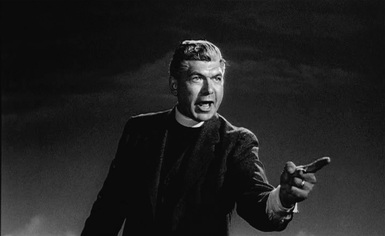
Our current political climate reminds me of the movie Inherit the Wind, the fictional portrayal of the Scopes Monkey Trial. In the movie one of the most stalwart critics of evolution, the former presidential candidate and preacher Matthew Brady played by Frederic March, led the city where the trial is being held into an anti-secular fervor.  At the beginning of the trial he encourages the townspeople to attend a “prayer meeting.” The meeting becomes quite heated as the town’s preacher, Reverend Brown, played by Claude Akins launches into a full assault on all that oppose Brady, and therefore God.

The preacher works himself into a frenzy, condemning the accused and all that would defend him, including his very own daughter:

“Oh, Lord of the tempest and the thunder, strike down this sinner, as thou did thine enemies of old in the days of the Pharaohs! Let him know the terror of thy sword! Let his soul, for all eternity, writhe in anguish and damnation!”

His daughter, who is engaged to the accused cries out: “No! No, Pa! Don’t pray to destroy Bert!”

Then the reverend utters words which remind me so much of what I heard in Iowa this weekend:

“Lord, we call down the same curse on those who ask grace for this sinner—though they be blood of my blood, and flesh of my flesh!”

At this point, Brady, realizing that the situation is getting out of control stops the preacher and says:

“it is possible to be overzealous, to destroy that which you hope to save — so that nothing is left but emptiness.” He then quotes from the book of Proverbs: “Remember the wisdom of Solomon in the book of Proverbs. “He that troubleth his own house shall inherit the wind.”

To me this seems to be analogous to the current dilemma faced by the Republican Party. For decades has helped to create, sustain and institutionalize monster of the Christian Right. Old leaders see the danger but cannot admit their culpability in its rise and takeover of that party. As such they continue to enable it. Goldwater was one of the very few Republicans to see this coming and now, as he feared, the preachers have taken control of the party. Like Reverend Brown they will damn all who do not agree with them, even those of their own party.

The leaders of this political-religious movement have been overzealous, and will continue to be so because like Matthew Brady and Reverend Brown and their supporters, they cannot acknowledge that their zeal may be misdirected and malevolent.

Like Reverend Brown, they are consumed by their hatred for non-believers, that they are even willing to destroy the people closest to them to do so. I know this is true, because when I expressed doubt and did not tow the party line of my former church I was thrown out. Sadly, most of the men that I had previously counted as my closest friends abandoned or even condemned me.

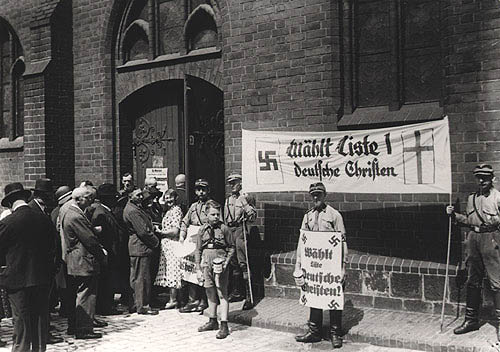
I find the similarities amazing. But even more troubling I find the fear, hatred and paranoia the leaders of the Christian Right display all too reminiscent of church leaders in Germany during the 1920s and early 1930s.  Those leaders, Protestants and Catholics alike supported Hitler, because Hitler promised to fight against the things that they hated; Jews, Socialists, Communists, homosexuals, immigrants, and of course atheists, agnostics and other non-believers.

Martin Niemöller, a man who now is nearly universally lauded for opposition to Hitler initially supported him. Niemöller, later regretted that support and wrote:

“I hated the growing atheistic movement, which was fostered and promoted by the Social Democrats and the Communists. Their hostility toward the Church made me pin my hopes on Hitler for a while. I am paying for that mistake now; and not me alone, but thousands of other persons like me.” 

German Christians, like Niemöller, felt that their values were under attack by Communists, Socialists, and Jews and yes, even homosexuals. In order to maintain their influence and power they willingly allied themselves with the Nazis. After the Nazis took power, the only spoke up against the Nazi abuses it to defend their own ecclesiastical power and place in society, and seldom to speak up for the victims of the Nazis. When the war was over and young people began to question the actions of those that led the Church in Germany it began a process that has led to the de-Christianization of that country.

The current leadership of the Christian Right, especially those with yearnings to be the next President, are doing the same thing as their German brothers did in the 1920s and 1930s. The constant hate filled attacks of Christian leaders on those that are not Christians will come back to bite them. This is not fantasy, it is reality. One only has to look at the history of the Church to see it played out time after time. But then, unless we decide to re-write history like the fraudulent pseudo-historian David Barton does so well, why bother reading it?

The actions of many Christian leaders are dangerous to the faith as a whole, but it seems that they are willing to throw that away in order to gain political power, and as Ron and Rand Paul’s adviser Gary North wrote:

“The long-term goal of Christians in politics should be to gain exclusive control over the franchise. Those who refuse to submit publicly to the eternal sanctions of God by submitting to His Church’s public marks of the covenant–baptism and holy communion–must be denied citizenship, just as they were in ancient Israel.”

The actions of the leaders of the Christian Right are blatantly short sighted and ultimately will hasten the decline and fall of what we know as Christianity in America, but they don’t seem to care. These leaders have subscribed to an Imperial Church model that must take and hold political power in order to maintain their own political, economic and social dominance, even at the expense of the Gospel. Instead of the message of reconciliation they preach pre-packaged, focus group tested selections of “Biblical Values” which they and their political allies know are useful as wedge issues to win political power.

The leaders of the Christian Right rail against things they consider “sinful” such as homosexuality, abortion and birth control. At the same time they willingly turn a blind eye to the treatment of the poor, support efforts to disenfranchise poor and minority voters, even Christians that tend to vote for Democrats. They advocate wars of aggression and bless cultural and economic norms that go entirely against the Christian tradition as they go about with a Bible in one hand and Ayn Rand’s Atlas Shrugged in the other.

The effects of this politicization are more and more apparent and the statistics don’t lie. The United States is not Christian nation and any sense of the definition, and this is not the fault of secularists. It is the fault of Christians especially those political partisan pastors and pundits of the Christian Right that for the past 40 years have sold their souls for political power at the expense of the Gospel.

A recent Barna survey noted that less than one half of one percent of people aged 18-23 hold what would be considered a “Biblical world view.” This is compared to about one of every nine other adults.  Other surveys bear this out.

Think about it: The Barna Group in another survey of people 18-29 years old asked what phrases best described Christians: The top five answers “Anti-homosexual, judgmental, hypocritical and too involved in politics.” This view was held by 91% of non-Christians and a staggering 80% of young churchgoers.

This hypocrisy is demonstrated time and time again. In 2013 these politically corrupted religious leaders turned a blind eye to and even cheered the gutting of the Voting Rights Act of 1964 by the Supreme Court, or cheered that decision despite the fact that many of not most of those adversely affected by that decision are African American Christians. The next day they lambasted the same justices for overturning the Defense of Marriage Act and refusing to hear a challenge to California’s Proposition 8, dealing with the Federal recognition of Gay marriage. Just over a week ago the same leaders were apoplectic when the Supreme Court ruled in favor of Marriage Equality and Gay Marriage, and upheld the Affordable Health Care Law.

The histrionics exhibited by them would be comical if the men and women ranting away were not so vehemently hateful towards their opponents, and some have suggested killing gays and their Christian supporters to root out evil. This isn’t just political theater for them, they really mean it. The real tragedy of their behavior is that even more people will turn away from Jesus. Mahatma Gandhi said it so well “I like your Christ, I do not like your Christians. Your Christians are so unlike your Christ.”

The leaders of the Christian Right continue to wage the culture war, but what cost? Here I am not even dealing with the politics, as one can debate the merits of the Obama administration as well as its decisions and policies, and even Supreme Court decisions. Even many progressives criticize the President and the Supreme Court on a wide number of issues, so that is not the point.

The fact is that young people are leaving the church in unheard of numbers and it is very evident to me why they are doing so. The Church has embraced the culture wars over preaching the Gospel, which if I recall correctly is based on loving people, even ones enemies.  Jesus said it so well: “By this everyone will know that you are my disciples, if you have love for one another.” John 13:35 NRSV.

In 2014 leaders of the Christian Right were able to bring enough culture warriors to the polls hold their majority in the House of Representatives and gain the majority in the Senate. But it was an election where less than 40% of eligible voters voted and most of the contested seats were in areas where they dominate, which magnified their strength. But in the coming 2016 Presidential election the demographics do not favor them and get worse in every year. The leaders of the Christian Right know this and still continue on and wage their culture war with greater zeal further alienating millions of people not just from their political position, but the message of Jesus himself.

Perhaps Christian leaders who have sold their souls for such paltry political gains should be asking these questions: What does it profit a man to gain the whole world but lose his soul and what does it profit the Church to wield political power but lose its soul?

It is a question that Christians need to ask. Dietrich Bonhoeffer once wryly noted “If you board the wrong train, it is no use running along the corridor in the other direction.” Sadly, that train has left the station and the leaders of the Christian Right are not only on it, but they are driving it into oblivion.

Peace

Padre Steve+

2 Comments

Filed under christian life, ethics, faith, film, History, laws and legislation, LGBT issues, News and current events, Political Commentary

Racism and the Lost Cause

Friends of Padre Steve’s World

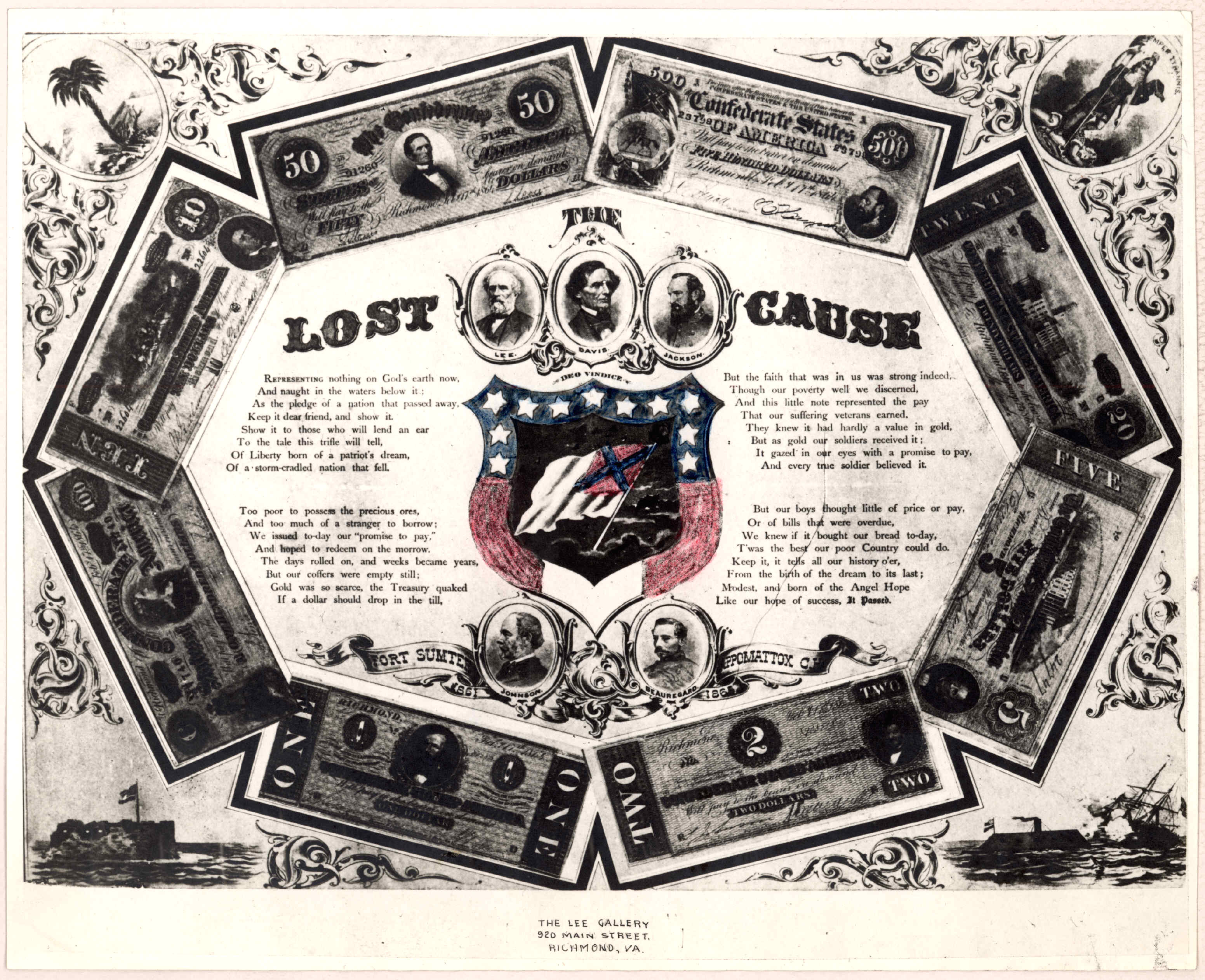
During the anniversary of the Battle of Gettysburg I tend to focus on that battle, and the actions of the men who fought it. I anticipate that I will add another article tomorrow from my Civil War and Gettysburg text dealing with a part of that battle, but today because it is so pertinent even 150 years after the war, I will revisit the myth of the Lost Cause and its influence on American history and race relations after the war was over. 

Sadly, the desire of Northern corporations, Southern landowners and those who sought reunion over justice, the rights of African Americans were not only subjugated to those interests but blacks were again degraded and their efforts to achieve their own freedom cast aside as politicians, landowners, academics, businessmen, preachers and even veterans organizations raced to forget what the war was about. 

This post is also part of my Gettysburg text and I do hope that it will cause us all to think about how history and justice can be obscured in the interest of covering over crimes for political, economic and social goals. 

Peace

Padre Steve+

Lost-Cause

Though Edmund Ruffin and his dreams of an independent republic built on slavery and white supremacy was dead, in the coming years, the Southern states would again find themselves under the governance of former secessionists who were unabashed white supremacists. The institution of slavery did not endure “but southerners’ racial beliefs and habits did…. The white ex-Confederate South proved much more successful in guarding this sacred realm” [1] during Reconstruction and after than they did during the war. Former secessionist firebrands who had boldly proclaimed slavery to be the deciding issue during the war changed their story. Instead of slavery being the primary cause of Southern secession and the war, it was “trivialized as the cause of the war in favor of such things as tariff disputes, control of investment banking and the means of wealth, cultural differences, and the conflict between industrial and agricultural societies.” [2]

Alexander Stephens who had authored the infamous Cornerstone Speech in 1861 that “that the negro is not equal to the white man; that slavery — subordination to the superior race — is his natural and normal condition” argued after the war that the war was not about slavery at all. Instead, the former Senator and Confederate Vice President changed his tune and argued that the war:

“had its origins in opposing principles….It was a strife between the principles of Federation, on the one side, and Centralism, or Consolidation on the other.” He concluded “that the American Civil War “represented a struggle between “the friends of Constitutional liberty” and “the Demon of Centralism, Absolutism, [and] Despotism!” [3]

Jefferson Davis, who had masterfully crafted “moderate” language, which radicals in the South used to their advantage regarding the expansion and protection of the rights of slave owners in the late 1850s to mollify Northern Democrats, and who wrote in October 1860 that: “The recent declarations of the Black Republican part…must suffice to convince many who have formerly doubted the purpose to attack the institution of slavery in the states. The undying opposition to slavery in the United States means war upon it where it is, not where it is not” [4] was not above changing his longstanding insistence that the slavery was the heart of the Confederacy’s claim to existence and the reason for secession.

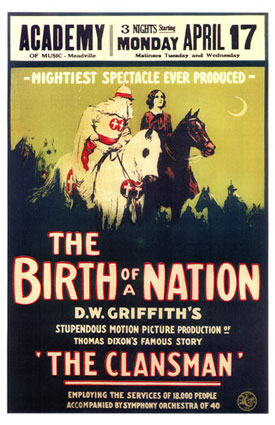
birth_of_a_nation-3

After the war a revisionist Davis wrote:

“The Southern States and Southern people have been sedulously represented as “propagandists” of slavery, and the Northern as the champions of universal freedom…” and “the attentive reader…will already found enough evidence to discern the falsehood of these representations, and to perceive that, to whatever extent the question of slavery may have served as an occasion, it was far from being the cause for the conflict.” [5]

Instead of being about slavery the Confederate cause was mythologized by those promoting the false history of the “Lost Cause” a term coined by William Pollard in 1866, which “touching almost every aspect of the struggle, originated in Southern rationalizations of the war.” [6] By 1877 many southerners were taking as much pride in the “Lost Cause” as Northerners took in Appomattox.[7] Alan Nolen notes: “Leaders of such a catastrophe must account for themselves. Justification is necessary. Those who followed their leaders into the catastrophe required similar rationalization.” [8]

The Lost Cause was elevated by some to the level of a religion. In September 1906, Lawrence Griffith, speaking to a meeting of the United Confederate Veterans, stated that when the Confederates returned home to their devastated lands, “there was born in the South a new religion.” [9] The mentality of the Lost Cause took on “the proportions of a heroic legend, a Southern Götterdämmerung with Robert E. Lee as a latter day Siegfried.” [10]

This new religion that Griffith referenced in his speech was replete with the signs, symbols and ritual of religion:

“this worship of the Immortal Confederacy, had its foundation in myth of the Lost Cause. Conceived in the ashes of a defeated and broken Dixie, this powerful, pervasive idea claimed the devotion of countless Confederates and their counterparts. When it reached fruition in the 1880s its votaries not only pledged their allegiance to the Lost Cause, but they also elevated it above the realm of common patriotic impulse, making it perform a clearly religious function….The Stars and Bars, “Dixie,” and the army’s gray jacket became religious emblems, symbolic of a holy cause and of the sacrifices made on its behalf. Confederate heroes also functioned as sacred symbols: Lee and Davis emerged as Christ figures, the common soldier attained sainthood, and Southern women became Marys who guarded the tomb of the Confederacy and heralded its resurrection.” [11]

Jefferson Davis became an incarnational figure for the adherents of this new religion. A Christ figure who Confederates believed “was the sacrifice selected-by the North or by Providence- as the price for Southern atonement. Pastors theologized about his “passion” and described Davis as a “vicarious victim”…who stood mute as Northerners “laid on him the falsely alleged iniquities of us all.” [12] It was a theme that would be repeated by others in the coming decades, instead of a traitor to his nation; Davis became a figure like Jesus Christ, condemned though innocent.

In 1923 a song about Jefferson Davis repeated this theme:

Jefferson Davis! Still we honor thee! Our Lamb victorious, who for us endur’d a cross of martyrdom, a crown of thorns, soul’s Gethsemane, a nation’s hate, A dungeon’s gloom! Another God in chains.” [13]

The myth also painted another picture, that of slavery being a benevolent institution which has carried forth into our own time. The contention of Southern politicians, teachers, preachers and journalists, before, during and after the war was that slaves liked their status; they echoed the words of slave owner Hiram Tibbetts to his brother in 1842 “If only the abolitionists could see how happy our people are…..The idea of unhappiness would never enter the mind of any one witnessing their enjoyments” [14] as well as the words of Jefferson Davis who in response to the Lincoln’s Emancipation Proclamation called the slaves “peaceful and contented laborers.” [15]

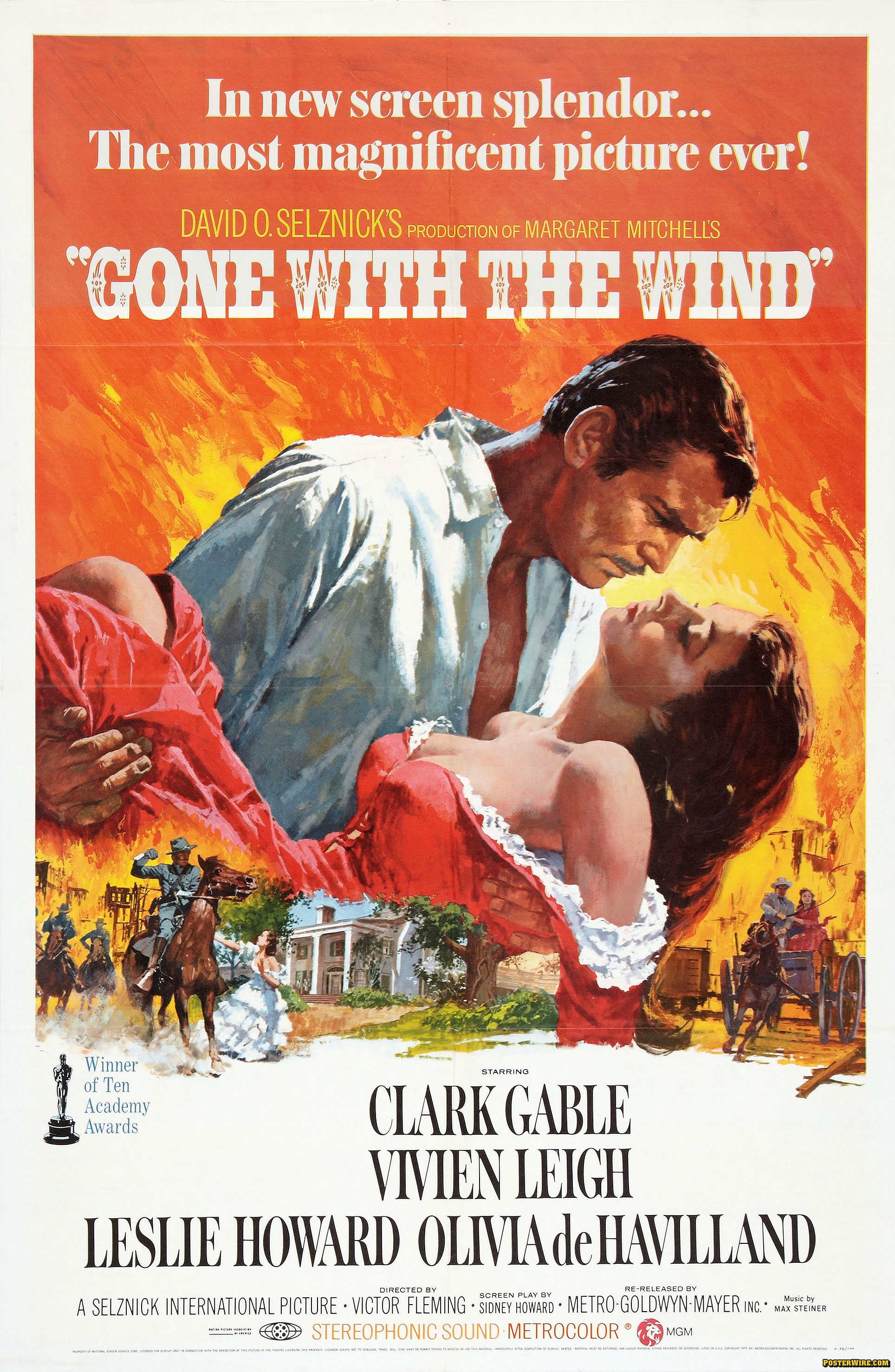
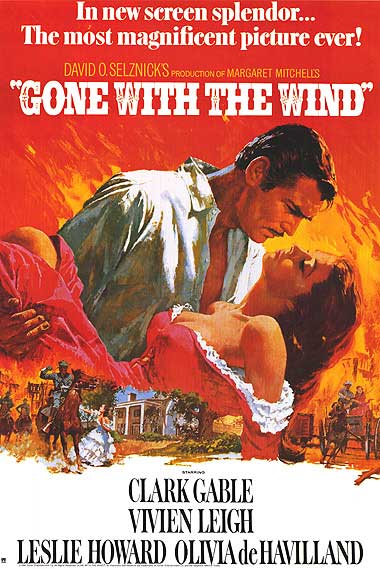
gone_with_the_wind_b

The romantic images of the Lost Cause were conveyed to the American public by numerous writers and Hollywood producers including Thomas Dixon Jr. whose play and novel The Clansman became D.W. Griffith’s The Birth of a Nation; a groundbreaking part of American cinematography which was released in 1915. Margaret Mitchell, who penned the epic Pulitzer Prize winning novel Gone With the Wind, which in its 1939 film form won ten academy awards immortalized the good old days of the old South with images of faithful slaves, a theme which found its way into Walt Disney’s famed 1946 animated Song of the South. Through such films and books the myth of the Lost Cause became part of the national heritage with many people in states outside of the South and even some foreigners coming to believe the myth.

The Lost Cause helped buttress the myths that both comforted and inspired many Southerners following the war. “It defended the old order, including slavery (on the grounds of white supremacy), and in Pollard’s case even predicted that the superior virtues of cause it to rise ineluctably from the ashes of its unworthy defeat.” [16] The myth effectively helped pave the way to nearly a hundred more years of second class citizenship for now free blacks who were often deprived of the vote and forced into “separate but equal” public and private facilities, schools and recreational activities. The Ku Klux Klan and other violent organizations harassed, intimidated, persecuted and used violence against blacks.

When Reconstruction ended Southerners elected officials who turned a blind eye to the activities of the Klan and instituted state laws which denied most civil rights to African Americans, “From the 1880s onward, the post-Reconstruction white governments grew unwilling to rely just on intimidation at the ballot box and themselves in power, and turned instead to systematic legal disenfranchisement.” [17] Lynching was common and even churches were not safe. It would not be until the Civil Rights movement of the 1950s and 1960s that blacks would finally begin to gain the same rights enjoyed by whites in most of the South.

Despite this, many Union veterans to their dying day fought the Lost Causers. Members of the Grand Army of the Republic, the first truly national veteran’s organization, and the first to admit African American soldiers as equals, the predecessor of modern veteran’s groups, continued their fight to keep the public fixed on the reason for war, as well as point out the profound difference between what they believed that they fought for, and what their Confederate opponents fought for during the war.

“The Society of the Army of the Tennessee described the war as a struggle “that involved the life of the Nation, the preservation of the Union, the triumph of liberty and the death of slavery.” They had fought every battle…from the firing on the Union flag Fort Sumter to the surrender of Lee at Appomattox…in the cause of human liberty,” burying “treason and slavery in the Potter’s Field of nations” and “making all our citizens equal before the law, from the gulf to the lakes, and from ocean to ocean.” [18]

At what amounted to the last great Blue and Gray reunion at Gettysburg was held in 1937. The surviving members of the United Confederate Veterans extended an invitation to the GAR to join them there. The members of the GAR’s 71st Encampment from Madison Wisconsin, which included survivors of the immortal Iron Brigade who sacrificed so much of themselves at McPherson’s Ridge on July 1st 1863 adamantly, opposed a display of the Confederate Battle flag. “No Rebel colors,” they shouted. “What sort of compromise is that for Union soldiers but hell and damnation.” [19]

Ruffin outlived Lincoln who was killed by the assassin John Wilkes Booth on April 14th, 1864. However the difference between the two men was marked. In his Second Inaugural Address Lincoln spoke in a complete different manner than did Ruffin. He concluded that address with these thoughts:

“With malice toward none, with charity for all, with firmness in the right as God gives us to see the right, let us strive on to finish the work we are in, to bind up the nation’s wounds, to care for him who shall have borne the battle and for his widow and his orphan, to do all which may achieve and cherish a just and lasting peace among ourselves and with all nations.” [20]

Why this Matters Today

The_Storming_of_Ft_Wagner-lithograph_by_Kurz_and_Allison_1890a

The American Civil War provides a complex drama that political leaders, diplomats and military leaders would be wise to study, and not simply the military aspects and battles. Though the issues may be different in nations where the United States decides to intervene to prevent humanitarian disasters, to prevent local civil wars from becoming regional conflagrations, or to provide stability after a civil war, the conflict provides poignant example after poignant example. If we fail to remember them we will lose who we are as a nation. Sadly, all too often that is what we do.

Ken Burns wrote:

“after the South’s surrender at Appomattox we conspired to cloak the Civil War in bloodless, gallant myth, obscuring its causes and its great ennobling outcome – the survival of the Union and the freeing of four million Americans and their descendants from bondage. We struggled to rewrite our history to emphasize the gallantry of the wars’ top-down heroes, while ignoring the equally important bottom-up stories of privates and slaves. We changed the irredeemable, as the historian Davis Blight argues, into positive, inspiring stories.” [21]

The Union was preserved. Reconciliation was achieved to some degree, albeit in an imperfect manner. The continuance of legal racism and discrimination through the imposition of Jim Crow laws which discriminated against blacks and promoted segregation, poll-taxes and rigged tests to keep blacks from voting stained honor of the nation. The lack of repentance on the part of many of those who shamelessly promoted the Lost Cause and their current defenders continues to this day. Allen Guelzo wrote in the American Interest about the importance of both reconciliation and repentance to Frederick Douglass after the war:

“Douglass wanted the South not only to admit that it had lost, but also that it had deserved to lose. “The South has a past not to be contemplated with pleasure, but with a shudder”, he wrote in 1870. More than a decade later, Douglass was still not satisfied: “Whatever else I may forget, I shall never forget the difference between those who fought to save the Republic and those who fought to destroy it.” [22]

Likewise, that imperfect but reunited Union was all that stood in the way of Nazi Germany in the dark days of early 1942. Had the American republic fragmented during the war, had the South won, as so many kings and dictators of the day either openly or secretly desired, there would have been nothing to stand in the way of Hitler and his legions. Neither there would there be anyone to stand in the way of the modern despots, terrorists and dictatorships such as the Islamic State today.

Religion does matter to peoples, tribes and nations. It is still an important part of both foreign and domestic policy, even if a civilian policy maker or military strategist or operational planner does not believe in God and the effect of it cannot be minimized. Michael Oren notes “the impact of religion in shaping American attitudes and policies toward the Middle East” [23]in his book Power, Faith and Fantasy: America and the Middle East 1776 to the Present. The conflict between largely secular Roman Catholics, Orthodox Christians and Moslems in the Balkans is a glaring example of how people who are basically non-religious will rally around faith as a means of unity against rivals of a different faith, even those who are their long time neighbors.

Likewise, the attempt of former President Bush as well as President Obama to portray the response against Al Qaida and later the invasion of Iraq as “a war against terrorism – not as a war against Arabs, nor, more generally, against Muslims…” [24] has fallen on deaf ears in much of the Moslem world. Many Moslems, see the war as being waged against them and their religion. Many, even moderates have deeply ingrained beliefs similar to the late Osama Bin Laden, or the current leaders of the Al Qaida or the Islamic State for whom “this is a religious war, a war for Islam against infidels, and therefore, inevitably; against the United States, the greatest power of the world of the infidels.” [25]

In our culture of secularization we forget the primal importance of religion to others. Part of what we do not realize is that for people with Fundamentalist religious beliefs, no-matter what religion they belong to that religion is bedrock in times of tumult. When times are tough it is far easier for people to fall back on the more simple and fundamental aspects of their religious beliefs. For Americans this usually plays out in the individual drama of struggle, faith, sin and redemption and salvation. However, even in the United States religion can be, as we have seen from this brief look at the importance of religious faith and ideology in the ante-bellum United States, the Civil War and the aftermath of the war and Reconstruction, be translated into a catalyst and buttress for mass movements and holy war.

confederate-flag-picture

The controversies and conflicts brought on by the ideological, social and religious divides in the Ante-Bellum United States provide current leaders with historical examples. Our Civil War was heavily influenced by religion and the ideologies of the partisans in the North and in the South who were driven by religious motives, be those of the evangelical abolitionists or the proslavery evangelicals. If one is honest, one can see much of the same language, ideology and religious motivation at play in our twenty-first century United States. The issue for the vast majority of Americans, excluding certain neo-Confederate and White Supremacist groups, is no longer slavery; however the religious arguments on both sides of the slavery debate find resonance in our current political debates.

Likewise, for military, foreign policy officials and policy makers the subject of the role of religion can be quite informative. Similar issues are just as present in many the current conflicts in the Middle East, Africa and Eastern Europe which are driven by the religious motives of various sects. The biggest of these conflicts, the divide between Sunni and Shia Moslems, is a conflict that threatens to engulf the region and spread further. In it religion is coupled with the quest for geopolitical and economic power. This conflict in all of its complexity and brutality is a reminder that religion is quite often the ideological foundation of conflict.

These examples, drawn from our own American experience can be instructive to all involved in policy making. These examples show the necessity for policy makers to understand just how intertwined the political, ideological, economic, social and religious seeds of conflict are, and how they cannot be disconnected from each other without severe repercussions.

Samuel Huntington wrote:

“People do not live by reason alone. They cannot calculate and act rationally in pursuit of their self-interest until they define their self. Interest politics presupposes identity. In times of rapid social change established identities dissolve, the self must be redefined, and new identities created. For people facing the need to determine Who am I? Where do I belong? Religion provides compelling answers….In this process people rediscover or create new historical identities. Whatever universalist goals they may have, religions give people identity by positing a basic distinction between believers and non-believers, between a superior in-group and a different and inferior out-group.” [26]

By taking the time to look at our own history as well as our popular mythology; planners, commanders and policy makers can learn lessons if they take the time to learn, will help them understand similar factors in places American troops and their allies might be called to serve, or that we might rather avoid.

Notes 

[1] Ibid. Daly When Slavery Was Called Freedom pp.148-149

[2] Gallagher, Gary W. and Nolan Alan T. editors The Myth of the Lost Cause and Civil War History Indiana University Press, Bloomington and Indianapolis 2000 p.15

[3] Ibid. Dew Apostles of Disunion p.16

[4] Ibid. Catton The Coming Fury p.104

[5] Davis, Jefferson The Rise and Fall of the Confederate Government Volume One of Two, A public Domain Book, Amazon Kindle edition pp.76-77

[6] Ibid. Gallagher and Nolan The Myth of the Lost Cause and Civil War History p.12

[7] Millet Allen R and Maslowski, Peter. For the Common Defense: A Military History of the United States of America The Free Press, a division of McMillan Publishers, New York 1984 p.230

[8] Ibid. Gallagher and Nolan The Myth of the Lost Cause and Civil War History p.12

[9] Hunter, Lloyd The Immortal Confederacy: Another Look at the Lost Cause Religion in Gallagher and Nolan The Myth of the Lost Cause and Civil War p.185

[10] Ibid. McPherson The Battle Cry of Freedom p.854

[11] Ibid. Hunter The Immortal Confederacy Religion in Gallagher and Nolan The Myth of the Lost Cause and Civil War p.186

[12] Ibid. Hunter The Immortal Confederacy Religion in Gallagher and Nolan The Myth of the Lost Cause and Civil War p.198

[13] Ibid. Hunter The Immortal Confederacy Religion in Gallagher and Nolan The Myth of the Lost Cause and Civil War p.198

[14] Ibid. Levine Half Slave and Half Free p.106

[15] Ibid. Gallagher and Nolan The Myth of the Lost Cause and Civil War History p.16

[16] Ibid. Guelzo Fateful Lightening p.525

[17] Ibid. Guelzo Fateful Lightening p.526

[18] Ibid. Guelzo Fateful Lightening p.532

[19] Ibid. Guelzo Fateful Lightening p.532

[20] Ibid. Lincoln Second Inaugural Address

[21] Ibid. Burns A Conflict’s Acoustic Shadows p.102

[22] Guelzo, Allen C. A War Lost and Found in The American Interest September 1st 2011 retrieved 30 October 2014 from http://www.the-american-interest.com/articles/2011/09/01/a-war-lost-and-found/

[23] Oren, Michael Power, Faith and Fantasy: America and the Middle East 1776 to the Present W.W. Norton and Company, New York and London 2007 p.13

[24] Lewis, Bernard The Crisis of Islam: Holy War and Unholy Terror Random House, New York 2003 p.xv

[25] Ibid. Lewis The Crisis of Islam p.xv

[26] Ibid. Huntington The Clash of Civilizations p.97

3 Comments

Filed under civil war, film, Gettysburg, History, Political Commentary

My Favorite Baseball Films


his cheery holiness

I love all things baseball as my regular readers can tell you. In fact God speaks to me through baseball, even baseball movies when I cannot get to a ball park.  Of course as most readers know I am also a big fan of comedy and when baseball and comedy get together it is like beer and pizza, two great tastes that go great together.  Yeah, you were thinking I would say peanut butter cups, what a waste of calories, but I digress.

I love baseball movies, comedies for sure but also serious films.  Here are my favorite baseball movies in no particular order, although I’m sure that the order I place them has some subconscious meaning or maybe it doesn’t.  But whatever, these are some of my favorite baseball movies with a few reasons why I like them.

Bull-Durham-mv04

Bull Durham

Ebby Calvin LaLoosh: How come you don’t like me?

Crash Davis: Because you don’t respect yourself, which is your problem. But you don’t respect the game, and that’s my problem. You got a gift.

I guess my favorite baseball movie of all time has to be Bull Durham starring Kevin Costner, Susan Sarandon and Tim Robbins. Set in the Single-A Carolina League the film is about a journeyman minor league Catcher named Crash Davis played by Kevin Costner. Davis is a journeyman but was playing in Triple A at the beginning of the season and is sent down to Durham to help a top prospect pitcher named Ebby Calvin LaLoosh get ready for the major leagues.

In the process Davis meets Annie Savoy (Susan Sarandon) a part time junior college English instructor and baseball guru that hooks up with a player on the team for 142 games.  The movie is a great sports and life movie as it deals with transitions. For Davis it is the transition from active ball player to life and love after baseball, for LaLoosh who goes from minor league prospect to the majors and Annie Savoy who falls for a man for more than a season.  For the past ten years or so I have identified with Crash Davis, the journeyman who ends up mentoring young players.  In fact I recommend this movie to young chaplains that seek out my counsel simply because many are wild like “Nuke” LaLoosh and simply need a blunt and honest veteran at the end of his career to bring them along.

One of my favorite scenes in this movie is when Crash gets throw out of a game. It reminds me of when I got thrown out of the Army Chaplain Officer Advanced Course in October 1992.

But also I have spent a lot of evenings watching games in the quaint ballparks of the Carolina League. The movie shows the closeness of these teams, players, fans and communities that is had to match elsewhere. So when I watch this movie it takes me back to good times that I had in places like Kinston, North Carolina with friends and people I will never forget.

major_league1

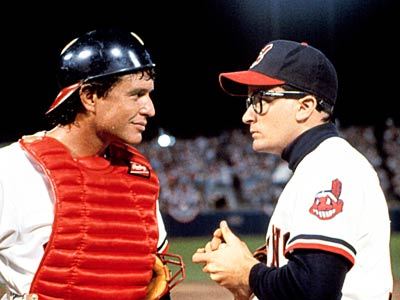
Major League

“Jesus, I like him very much, but he no help with curveball.” Pedro Cerrano

The film Major League is another of my favorites. Set in Cleveland in the late 1980s the film as about a perpetually losing team with a new owner who wants to move the historic franchise from Cleveland to Miami.  Her instruction to the team’s General Manager is to lose enough games to ensure that so few fans will come that she can legally move the team.

This is a team of misfits is put together from veterans who have seen their best times, overpaid free agents that don’t perform and unknown rookies.  Like Bull Durham there is the veteran but somewhat washed up catcher, this time Jake Taylor played by Tom Berenger who is the glue that holds the team together. The team includes a Cuban defector who can’t hit a curve ball named Pedro Cerrano played by Dennis Haysbert, an underperforming veteran Third Baseman named Roger Dorn, played by Corbin Bernsen and two rookies; outfielder Willie Mays Hays played by Wesley Snipes and pitcher Ricky Vaughn played by Charlie Sheen.

During the season the team has everything taken from them by owner Rachel Phelps played by Margaret Whitton as they embark on a journey from cellar dwellers to American League East Champions.  Once again I relate to the veteran catcher but I also have an affinity for the rebellious rookie Ricky “Wild Thing” Vaughn.

for-love-of-the-game-costne

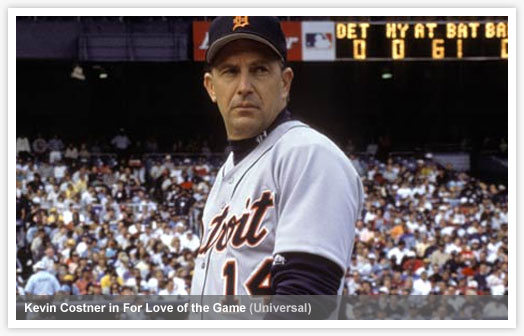
For Love of the Game

“And you know Steve you get the feeling that Billy Chapel isn’t pitching against left handers, he isn’t pitching against pinch hitters, he isn’t pitching against the Yankees. He’s pitching against time. He’s pitching against the future, against age, and even when you think about his career, against ending. And tonight I think he might be able to use that aching old arm one more time to push the sun back up in the sky and give us one more day of summer.” Vin Scully playing himself in For the Love of the Game

For Love of the Game is a movie about life.  The film is based on the Michael Shaara novel The Perfect Game. This is a film about a pitcher  named Billy Chapel played by Kevin Costner who is facing the end of his career.

Chapel has been with the team 19 years and has seen good times and bad, pitched in the World Series and suffered a grievous injury to his pitching hand in the off season. He is a man who has struggled with love yet forged lasting friendships with teammates, even those now on other teams.  The movie is set at Yankee Stadium with Chapel pitching in a meaningless game for the cellar dweller Tigers against the playoff bound New York Yankees.

The game revolves around Chapel and his relationships with his catcher, Gus Sinski (John C. Reilly), his lover Jane Aubrey (Kelly Preston), her daughter Heather (Gina Malone), former teammate and current Yankee Davis Birch and the team owner Gary Wheeler (Brian Cox) who is in the process of selling the team. The new owners are looking to deal Chapel to another team, likely the San Francisco Giants when the season is over and Chapel has to decide if he is going to be traded or retire.

With all of this swirling in his mind Billy Chapel pitches a perfect game and with every pitch the audience is introduced to the people and events that shaped his life.  One of the most poignant moments is toward the end of the game when the pain of his injured hand is killing him and his is tired that his catcher Gus pays a visit to the mount and says:

the boys are all here for ya, we’ll back you up, we’ll be there, cause, Billy, we don’t stink right now. We’re the best team in baseball, right now, right this minute, because of you. You’re the reason. We’re not gonna screw that up, we’re gonna be awesome for you right now. Just throw.” http://www.youtube.com/watch?v=WLrqdqBfqcw&feature=related

The team which had nothing to play for finds its heart and soul backing up their pitcher making great plays and getting the all critical hits.  I relate to Billy Chapel a lot because of my long career with all of its ups and downs.  The game is a microcosm of life and tells a story through baseball that runs deeper than the game itself. It is about life, family, friendship, love, commitment, good times and bad.  I cannot watch this movie without being moved to tears. Of course having Vin Scully call the game as if it were a real game makes it all the better.

natural-by-robertedwardauctionsdotcom

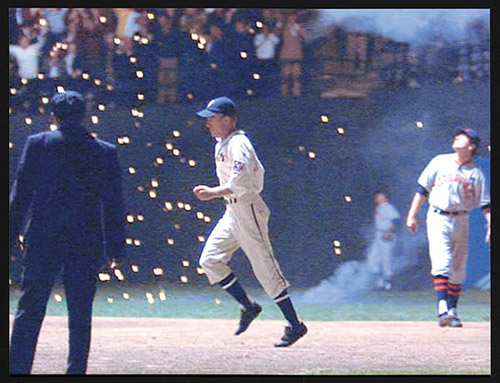
The Natural

Iris Gaines: You know, I believe we have two lives.

Roy Hobbs: How… what do you mean?

Iris Gaines: The life we learn with and the life we live with after that.

The Natural was adapted from the 1952 novel by the same name by Bernard Malamud.  In the film Robert Redford plays Roy Hobbs a hot prospect that is badly wounded by a female admirer who shoots him.  After years away from the game he returns to the game as an old rookie.

The novel is a tragedy while the movie was changed to make Hobbs triumph over adversity.  Hobbs has to battle his past, the press and his age and the ever present affects of his injury as he plays a game that he loves all the while kindling a relationship with Iris Gaines played by Glenn Close.  After a remarkable season Hobbs is sidelined by after effects of the shooting and the press publicizing his chequered past.

Hobbs leaves his sick-bed to play in the game that will decide the pennant. He comes to bat with 2 on and 2 out in the bottom of the 9th inning bleeding from his side due to the injury. Hobbs crushes a pitch that goes just foul and breaks his bat which had been carved from the wood of a tree struck by lightning. He asks his batboy for a bat saying “Pick me out a winner Bobby” and goes back to the batter’s box.  As the catcher attempts to exploit Hobbs injury call for an inside fastball which Hobbs takes yard into the lights causing them to explode as he rounds the bases as the Knights win the pennant.

The book ends differently and is kind of depressing. I like the film better.

James-Earl-Jones-Field-of-Dreams

Field of Dreams

“The one constant through all the years, Ray, has been baseball. America has rolled by like an army of steamrollers. It has been erased like a blackboard, rebuilt and erased again. But baseball has marked the time. This field, this game: it’s a part of our past, Ray. It reminds of us of all that once was good and it could be again. Oh… people will come Ray. People will most definitely come.” Terrance Mann (James Earl Jones)

“You know we just don’t recognize the most significant moments of our lives while they’re happening. Back then I thought, well, there’ll be other days. I didn’t realize that that was the only day.” Dr. Archibald “Moonlight” Graham (Burt Lancaster)

The last film that I will discuss in this post is Field of Dreams. This is one of the three films that I call the Kevin Costner Baseball trilogy and like For the Love of the Game was adapted from a novel, in this case Shoeless Joe by W. P. Kinsella.

The film is a baseball fantasy about a novice farmer named Ray Kinsella (Costner) the son of a baseball player who during the 1960s walks away from his father and baseball. While in his fields he hears a voice saying “If you build it, he will come.” He has a vision of a baseball field and plows under some of his crops to construct a field.

Nothing happens at first but the next summer “Shoeless Joe Jackson” (Ray Liotta) shows up and after meeting Ray brings with him the seven other players from the 1919 Chicago White Sox implicated in the “Black Sox” scandal and banned from baseball.

The film is shows a search for redemption as Kinsella who tries to make sense of the voice and the ball players.  Eventually goes to Boston to find 1960s author and activist Terrance Mann (based on J. D. Salinger) played by James Earl Jones after he hears the voice say “ease his pain.” He meets with the reclusive and somewhat unfriendly Mann and it does not go well.

Ray Kinsella: [being rushed out of Mann’s loft] You’ve changed – you know that?

Terence Mann: Yes – I suppose I have! How about this: “Peace, love, dope”? Now get the hell out of here!

He finally gets Mann to go with him to a Red Sox game but even that does not go well. Ray thinks that he has wasted his time when Mann stops him and the pair drives to Chisholm Minnesota to find a former ballplayer named Archibald “Moonlight Graham.” They discover Graham, the beloved town doctor died 16 years before.  As Kinsella walks the street he finds himself transported back in time and meets the old Doctor Graham.  He cannot get Graham to come with them but on the road back home he and Mann pick up a young hitch hiker looking to play baseball, named Archie Graham. They arrive back home and while the players who have grown in number they find that his farm is being foreclosed on be foreclosed on by a group of businessmen and bankers headed up by his brother in law.

FOD ray and john

During the argument between Ray and his brother in law the daughter fall off the small set of bleachers and appears to be severely injured.  Young Archie Graham walks off the field, becomes old doctor Graham and saves the girl’s life. The brother in law is transformed by what happened and sees the ballplayers for the first time.

He stops the action against his Ray who after thinking Ray was crazy finally sees the magic of this diamond as Archie Graham becomes the elderly Doctor Moonlight Graham and saves the Kinsella’s daughter’s life after she fell from the bleachers.   Mann gets to go with Shoeless Joe and the others into the mystical cornfield and a young ballplayer, Ray’s father John Kinsella is introduced. Ray recognizes him introduces him to his family without identifying him as his father or admitting that he is his son. The classic exchange between the two explains the essence of the film.

John Kinsella: Is this heaven?

Ray Kinsella: It’s Iowa.

John Kinsella: Iowa? I could have sworn this was heaven. [John starts to walk away]

Ray Kinsella: Is there a heaven?

John Kinsella: Oh yeah. It’s the place where dreams come true. [Ray looks around, seeing his wife playing with their daughter on the porch]

Ray Kinsella: Maybe this is heaven

The two end up “having a catch” as the lights of cars wind across the Iowa farmlands heading to this little ball field.  The movie has a special place in my heart because of the father-son relationship. When my dad returned from Vietnam I had emotionally moved away from him and baseball. I kept an interest in the game but for a number of years it was not a passion.  The exchange between Ray Kinsella and Terrance Mann still gets me, now later in life my dad and I reconnected as father and son and I came back to baseball.

Ray Kinsella: By the time I was ten, playing baseball got to be like eating vegetables or taking out the garbage. So when I was 14, I started to refuse. Could you believe that? An American boy refusing to play catch with his father.

Terence Mann: Why 14?

Ray Kinsella: That’s when I read “The Boat Rocker” by Terence Mann.

Terence Mann: [rolling his eyes] Oh, God.

Ray Kinsella: Never played catch with him again.

Terence Mann: You see? That’s the sort of crap people are always trying to lay on me. It’s not my fault you wouldn’t play catch with your father.

In 2004 while going to a reunion of my Continental Singers tour in Kansas City Judy and I made a few stops watching minor league games in Louisville and Cedar Rapids before making a trip  to Dyersville Iowa. Dyersville is the place where the Field of Dreams was filmed and where the you can still play ball on that magical diamond. Judy indulged me by playing catch with me on that diamond. It is true that if you build it he will come…I did.

I could go on about other baseball movies as there are many more but these above the others are the ones that I find a special connection with. I think I may write about some of the philosophy and faith that I draw from these films over the coming season.

Peace

Padre Steve+

4 Comments

Filed under Baseball, film, movies

“They” The Enemy of “Us”

einsatzgruppen executions

“Hatred is the most accessible and comprehensive of all the unifying agents. Mass movements can rise and spread without belief in a god, but never without a belief in a devil.” Eric Hoffer 

Hatred is an amazing emotion. I was noticing this week in the comments of a number of people on my Facebook page a tremendous amount of hatred against other people. Most of these were directed against Blacks, immigrants, Gays, women and Moslems.

Sadly, as one of those people messaged me it was about “they.” They being the blacks, immigrants, gays, and Moslems. You see “they” is a wonderful term to use to blame a group of people for the ills of society, and I might add for personal failure and petty jealously. You see it is far easier to blame “them” for problems than to take responsibility for treating others decently and maintaining our own humanity.

You see the terms “they” and “them” are terms used not just to divide, but to demonize. Mass movements love them, especially when using them against those of other races or religions. It does not matter if it is an unrequited White American Southern Christian who still to this day regrets losing the Civil War and that that allowed blacks to be granted equity under the law and finding redemption in the myth of the Lost Cause. It does not matter if it is the disappointed and disillusioned German Monarchist seeking to find answers for the loss of the First World War and finding them in the myth of the “Stab in the Back” which ensured that Jews, Socialists and others were blamed for the loss of that war, and finds his answers in the lies of Adolf Hitler. It does not matter if it is the pundits, politicians and preachers of the American political right who constantly blame blacks, gays, women, Moslems and immigrants for problems that they and their policies brought about.

None of this matters, but then it does. It does’t matter to the people who need scapegoats, or who need a “devil” in order to have meaning for themselves and the movements that they find their salvation in. No, not at all. Hoffer was quite correct that “Mass movements can rise and spread without belief in a god, but never without a belief in a devil.” The really successful leaders of such movements understand this. For Hitler it was the Jews and other untermenschen. For American Southerners of the Lost Cause it was the Blacks and their white supporters. For the “Know Nothings” of the 1840s and 1850s it was immigrants, especially Irish and Germans who were Catholic. For the leaders of the Islamic State, it is Jews, Shi’ite Moslems, less than “faithful” Sunnis, Christians and well for that matter anyone who does not line up one hundred percent with them on every issue. The examples are so plentiful to support this fact that it is almost overwhelming.

The problem is that when any of us lump others into the categories of They and Them, and in the process then demonize those people to the point that they become less than human we have reached a tipping point. We reach the point where we are just one crisis away from Jim Crow,  pogroms, ethnic or religious cleansing, and even genocide.

Sadly, we human beings are not nearly as evolved as we think. In the movie Gettysburg Jeff Daniels playing the role of the amazing Colonel Joshua Chamberlain quotes Shakespeare’s Hamlet to an Irishman of the Twentieth Maine:

“What a piece of work is man, in form and movement how express and admirable. In action how like an angel.”

The Irishman, Sergeant Buster Kilrain replied:  “Well, if he’s an angel, all right then. But he damn well must be a killer angel.” 

Sadly that is the case all to often. Those that follow my writings on this site know how much I love the various Star Trek television series and movies. There is an episode (The Siege of AR-558) of Star Trek Deep Space Nine where the Ferengi bartender Quark, makes a truly astute observation during a battle for survival at an isolated outpost :

“Let me tell you something about Hew-mons, Nephew. They’re a wonderful, friendly people, as long as their bellies are full and their holosuites are working. But take away their creature comforts, deprive them of food, sleep, sonic showers, put their lives in jeopardy over an extended period of time and those same friendly, intelligent, wonderful people… will become as nasty and as violent as the most bloodthirsty Klingon. You don’t believe me? Look at those faces. Look in their eyes.”

I don’t think that we are too far from some tipping point where the Trinity of Evil, the politicians, pundits and preachers, especially of the political right and the media whores who are more concerned about market share than truth, decide that their “devils” must be exterminated. Of course when they will do they will claim a higher moral, religious, or racial, purpose; or perhaps use the language of Manifest Destiny, the Lost Cause, or the Stab in the Back or some other historical myth that suffices to justify their actions.

In a Star Trek the Next Generation episode, one called The Drumhead Captain Picard has to warn his security officer, Lt Worf about the dangers of rampant paranoia. Worf starts: “Sir, the Federation does have enemies. We must seek them out.”
 

Picard pauses and then notes:

“Oh, yes. That’s how it starts. But the road from legitimate suspicion to rampant paranoia is very much shorter than we think. Something is wrong here, Mister Worf. I don’t like what we have become.”

To claim Picard’s words for myself I have to admit that I don’t like what we have become either.

Peace

Padre Steve+


7 Comments

Filed under civil rights, civil war, ethics, faith, film, History, News and current events, philosophy, Religion

Mine Eyes Have Seen The Glory: The Undying Racism of the Lost Cause

001dr

My friends this is the final section of my Gettysburg text chapter dealing with the religious, ideological and racial component of the American Civil War. My hope is that as you read it you will see that those parts of history which make us uncomfortable, and that some politicians, preachers and pundits say no longer exist, are still pervasive in our society.

I hate to admit this but it is far too true.

What many don’t realize is just how pervasive and insidious the myth of the Lost Cause was in the decades after the Civil War and its effect on the new medium of film as D.W. Griffith romanticized it in Birth of a Nation, Margaret Mitchell’s best selling novel which became the movie Gone with the Wind and even Walt Disney’s animated classic Song of the South. That was just in the popular media, a host of “histories” advanced the Lost Cause in academia. Many Civil War buffs get a lot of their history from the same sources, sources which “whitewash” the evils of Confederate Nationalism, Racism and the centrality of slavery to Southern culture, economic life and even religion.

Birth-of-a-Nation-poster

MPW-15446

Thus the Orwellian culture of denial continues to this day where, Senators, Congressmen, Governors, and state legislators claim that racism no longer exists and that those who say that it does are “racist.”

Trust me, if you read this and you have grown up sucking at the tit of the Lost Cause without even realizing it, these articles might stir up all sorts of uncomfortable feelings, and I hope that they do. Soul searching is a good thing, and the truth, however uncomfortable as it is will help set us all free.

As I mentioned in the first segment of this post, for me that journey has been at times uncomfortable. As I said, my family owned slaves and parts fought for the Confederacy, even as their neighbors in Cable County West Virginia fought for the Union. After the war the family patriarch, who had served as a junior officer in the Confederate Army, refused to sign the loyalty oath to the Union, and lost all of his family’s lands. If you ask me the truth, I think that history should make us uncomfortable. If it doesn’t I doubt that it is history.

The link to the article is here.

Mine Eyes Have Seen the Glory: Religion, Ideology and the Civil War Part 3

Have a great Weekend,

Peace

Padre Steve+

Leave a comment

Filed under civil rights, civil war, faith, film, History, Political Commentary, Religion

Heroes or Villains? Snipers and Moral Ambiguity

734631_053

I saw the movie American Sniper when it came out two weeks ago, I have not read the book, though I have read excerpts of it, and both seen and read many of Chris Kyle’s responses to questions in various interviews after he retired from the Navy.  I have seen the shit storm that has developed in response to the movie as well as supporters lift Kyle up to near sainthood, a true hero; while detractors present him as a war criminal, a sociopath and something as close to demonic as a human being can be.

I think that both are right and both are wrong, and that the uncomfortable truth about Kyle lies somewhere in between those extremes.

I find that curious because I do not remember any visceral reaction to the actions of the scripture quoting American sniper, Private Jackson in Saving Private Ryan or the Soviet or German snipers in Enemy at the Gates.

Because of that I think in large part this visceral reaction to either lift Kyle up or tear him down comes from the context of the Iraq War itself. It was horribly divisive, in large part because the invasion of Iraq launched by the Bush Administration was no doubt a major war crime by any standard of international law.

I have written about this before. If the leaders of the Bush Administration had been put on trial for their actions at Nuremberg as were the Nazis, Justice Robert Jackson would have had them all on the gallows. Jackson said during the trial:

“If certain acts of violation of treaties are crimes, they are crimes whether the United States does them or whether Germany does them, and we are not prepared to lay down a rule of criminal conduct against others which we would not be willing to have invoked against us.”

Most, including the former President, Vice President, and Secretary of Defense, not to mention other key players and decision makers would have easily been convicted of all except the charge of genocide. The three major counts that they would have hanged for were:

Count One: Conspiracy to Wage Aggressive War: This count addressed crimes committed before the war began, showing a plan by leaders to commit crimes during the war.

Count Two: Waging Aggressive War, or “Crimes Against Peace” which included “the planning, preparation, initiation, and waging of wars of aggression, which were also wars in violation of international treaties, agreements, and assurances.”

Count Three: War Crimes. This count encompassed the more traditional violations of the law of war already codified in the Geneva and Hague Conventions including treatment of prisoners of war, slave labor, and use of outlawed weapons.

The decision of the Bush Administration to invade Iraq was not only criminal, but the consequences of that decision and the later disastrous post-invasion policies of the administration ensured that the suffering of the Iraqis and the suffering of the American military personnel and their families who shouldered the burden on that war, while 99.3% of the nation sat it out, would continue, even today.

I served in Iraq, supporting small teams of advisors working with the Iraqi military and security services in Al Anbar Province. I know that I hoped, as did the Marines, Soldiers and our Iraqi friends wanted to see peace come to Iraq and see that country rise from the ashes. Instead we have seen our efforts blow away like the sands of the desert. T.E. Lawrence I think wrote words that are all to symbolic of what we tried to do:

“We had been hopelessly labouring to plough waste lands; to make nationality grow in a place full of the certainty of God… Among the tribes our creed could be only like the desert grass – a beautiful swift seeming of spring; which, after a day’s heat, fell dusty.”

So my Iraq war was different. I saw things in a different light from many because I worked with the Iraqis and got to know them, their hopes and their dreams. I also saw it differently because I could place it in a larger historical context. The Iraqis I knew, were not savages, they were human beings with the same kind of hopes and dreams for their families and country at any one of as has as Americans. That being said, none of us, American or Iraqi, felt any sympathy for the terrorists, foreign fighters, and Al Qaeda Iraq operatives who made a habit of killing and brutalizing Iraqi citizens, or those outside the country, who supported the terrorist efforts.

The part where ambiguity comes in is when we look at the men and women who serve in such wars, what they go through and the moral ambiguity that often comes with such service. It is an ambiguity which some need to justify by convincing themselves the all that they did was done in the name of a greater good, and against people who were less than human. That is something that those who serve as snipers in any army must convince themselves.

If you have ever read anything about snipers and how soldiers felt about them in various wars, I would encourage you to do so.

When I read that Michael Moore called Kyle, and all snipers cowards, I cringed. Not to say that Moore’s comments, which he attributed to how he lost a relative to a German sniper in the Second World War were completely unfair, they are actually similar to the views held by many against snipers. British historian and writer Max Hastings sums that up in his book Armageddon which is about the final months of World War Two in Europe:

“Almost every soldier on both sides shared a hatred of snipers, which frequently caused them to be shot out of hand if captured. There was no logic or provision of the Geneva Convention to justify such action. Sniping merely represented the highest refinement of the infantry soldier’s art. Its exercise required courage and skill. Yet, sniping made the random business of killing, in which they were all engaged. become somehow personal and thus unacceptable to ordinary footsoldiers.”

Snipers have a unique place in war and especially in the types of infantry intensive urban operations which Kyle was involved. Their trade is not in contravention of the Geneva Convention or any international military criminal code. So long as they are engaged in combat and are in the uniform of their country, and not engaging in acts that are forbidden by those codes their actions are legal. So to call Kyle a “war criminal” as some have is to misunderstand the law.

To call Kyle and other snipers “cowards” is also to misunderstand the nature of war, especially as it applies to snipers. Snipers have a lonely existence, they can be celebrated but some, but the nature of their war is different. The character Private Jackson in Saving Private Ryan perhaps summed it up what it takes to be a sniper, when he said: “Well, it seems to me, sir, that God gave me a special gift, made me a fine instrument of warfare.” The nature of the sniper’s war dictates that they believe something like this that enables them to survive.

Unlike those who can drop bombs, pilot drones, shoot artillery from afar or even engage in infantry combat with large numbers of others, the sniper has a lonely, yet intimate war.

Snipers usually serve alone, they set up, they wait, they seldom have back up. They are as much the hunted as they are the hunter. They know if captured that their enemy will have no mercy upon them. Unlike others, they have an intimacy with those that they kill, they see them, and in the kinds of wars where the “enemy” is not a uniformed soldier, but an insurgent blending in among civilians, they task of the sniper is incomprehensible. To do that job, combat tour after combat tour, has to do something to the human soul. Those that survive and come home have to try to justify their actions, as Kyle did, asserting that he knew that all of the people he killed were “bad guys.” It is probably the only way that one can keep his sanity when he returns to a world that doesn’t understand what he did.

But the justifications are as corrosive to the soul as anything else. They force people like Kyle, to push under the things that they saw or did which were wrong with a certitude that causes them to make assertions and claims that are either patently false, exaggerated, or which paint them in an even worse light than the truth would. Such would be the case in Kyle’s book where he claims killing thirty Americans in post Hurricane Katrina New Orleans. If he did that he was a criminal, but he is dead, and we will probably never know the truth.

A veteran of the U.S. Marine campaigns against the Japanese in the Pacific, Eugene Sledge wrote in his book With the Old Breed: At Peleliu and Okinawa: 

“To the non-combatants and those on the periphery of action, the war meant only boredom or occasional excitement, but to those who entered the meat grinder itself the war was a netherworld of horror from which escape seemed less and less likely as casualties mounted and the fighting dragged on and on. Time had no meaning, life had no meaning. The fierce struggle for survival in the abyss of Peleliu had eroded the veneer of civilization and made savages of us all.”

That kind of war my friends has a corrosive and toxic effect on the human soul. Sledge noted: “I am the harvest of man’s stupidity. I am the fruit of the holocaust. I prayed like you to survive, but look at me now. It is over for us who are dead, but you must struggle, and will carry the memories all your life. People back home will wonder why you can’t forget.”

War changes those who serve in it, the kind of change is in large part due to the kind of wars that we serve in and what we do in it. When I watched the movie with my former assistant and body guard during our tour in Iraq, Nelson Lebron I was bombarded with memories, of both my time there and my return home, and the hell I have put my wife Judy through at times as I have struggled with PTSD, what I saw in Iraq and my reaction to coming home to a country that knew not war. I didn’t sleep for several days afterward and the shit storm surrounding the movie has brought a lot of anxiety to me, I guess because it seems that few people really understand what war does to people.

I think for me, the part of the movie that had the most effect was the homecoming, and it reminded me of a movie that came out in 1978 about the home front in the Vietnam War, Coming Home staring Jon Voigt, Jane Fonda and Bruce Dern. Both movies dealt with the pain of families affected by war.

I’m certainly not going to sit in judgment of Chris Kyle or his critics, he is dead and unable to defend or even take bak anything that he might have written or said, likewise his critics, in many cases do not know what war can do to a person. I don’t know how much of Chris Kyle’s story is true, or how much is some sort of fiction, or even if what he wrote was filtered through what he saw and did in Iraq. Killing that many people, seeing their faces and to watch the life flowing out of them has to mess up a mind. Though I have been to combat, I have not walked in the shoes of Chris Kyle or any sniper. I have never had to kill anyone, even in self defense.

I would hope that people see the movie. Not so much because I believe in its historical truth, it seems to me to be a composite representation of Kyle, Navy SEALs, Marines and Iraqis that has as much Hollywood myth as it does truth.

But rather I believe people should see it to see how war tears the souls out of people. I would rather have my fellow citizens look at the ugliness of war, and to hold politicians accountable for any decision to go to war. I would rather see my countrymen look upon the pain that war causes, even long after those who fought come home.

Two time Medal of Honor winner Smedley Butler wrote:

What is the cost of war? what is the bill? Major General Smedley Butler wrote: “This bill renders a horrible accounting. Newly placed gravestones. Mangled bodies. Shattered minds. Broken hearts and homes. Economic instability. Depression and all of its attendant miseries. Back -breaking taxation for generations and generations. For a great many years as a soldier I had a suspicion that war was a racket; not only until I retired to civilian life did I fully realize it….”

The effects of war are terrible and had George Bush not made the decision to go to Iraq, Chris Kyle might still be alive, like so many others.

I don’t know if this makes any sense to you but I had to try to put some words and thoughts around what I have been feeling for the past couple of weeks.

Have a great evening,

Peace

Padre Steve+


2 Comments

Filed under film, History, Military, movies, News and current events, PTSD

The Feet of Clay of the Best and Brightest

lawrence-3

General Allenby: [leafing through Lawrence’s dossier] “Undisciplined… unpunctual… untidy. Knowledge of music… knowledge of literature… knowledge of… knowledge of… you’re an interesting man there’s no doubt about it.” 

Character is a terrible thing to judge. Mostly because those doing the judging also suffer from flaws in their own character and truthfully I don’t think that any of us are exempt from doing this at least sometimes. Dietrich Bonhoeffer noted: “Nothing that we despise in other men is inherently absent from ourselves.” I think is is somewhat freeing to realize that.

Yet somehow the temptation is for us to stand as judge, jury and character executioner on those that we find wanting. As a culture we like tearing down those that we at one time built up, in fact we have industries that exist in order to build up and then destroy people.

It is a rather perverse proclivity that we have as human beings, especially if we can find some kind of religious justification for it.

I think that is part of the complexity of the human condition. As a historian I find that the most exalted heroes, men and women of often great courage both moral and physical, intellect, creativity, humanity and even compassion have feet of clay.

I find that I am attracted to those characters who find themselves off the beaten track. Visionaries often at odds with their superiors, institutions, and sometimes their faith and traditions. Men and women who discovered in themselves visions for what might be and pursued those visions, sometimes at the costs of their families, friends, and in quite a few cases their lives.

Throughout my studies I have been attracted to men as diverse as Peter the Apostle, Martin Luther, Thomas Aquinas, T.E. Lawrence, Dietrich Bonhoeffer, Erwin Rommel, Admiral Horatio Nelson, Abraham Lincoln, John F Kennedy, Dwight D Eisenhower, Franklin Roosevelt, Dr Martin Luther King Jr, Jackie Robinson, Teresa of Avila, Nelson Mandela, Vaclav Havel and Emir Feisal Hussein of the Arab Revolt. All had flaws and the list could go on and on and on.

Some of these men and women, saints and sinners alike had fits of temper and violence, others sexual escapades, mistresses, affairs, greed, avarice, and a host of other unseemly characteristics.  Some of them stretched law and morality in their quest to achieve their goals. But all are considered great men and women.

Feet of clay. Who doesn’t have them? But them I think that I would rather have feet of clay than a heart of stone, an an unchallenged mind, or a lack of courage to do the right thing even when it does not directly benefit me.

I love the cinema classic Lawrence of Arabia. Peter O’Toole plays Lawrence in a most remarkable manner, showing his brilliance, courage, diplomatic ability and understanding of the Arabs with whom he served.

There are many people, leaders and others that we encounter in life or that we study. Even the best of the best are flawed and there is no such thing as a Saint who never sinned. But we love destroying them and their memory when to our “surprise” when we find that their hagiographers built them into an idol.

I am a great believer in redemption and the weight of the whole of a person’s life. Thus I try to put the flaws as they are called in perspective and their impact both positive and negative in history. Studying in this way gives me a greater perspective on what it is to be human and to place my own clay feet in appropriate perspective.

As Lawrence said: “Immorality, I know. Immortality, I cannot judge.”

Peace

Padre Steve+

Leave a comment

Filed under film, History, philosophy

The Wrong Train: The Christian Culture War

itw2

Yesterday, I wrote about the scary similarities that I saw in the weekend gathering of Christian Right leaders at the Iowa Freedom Summit, to the prayer meeting in the classic film Inherit the Wind. I find those similarities amazing.  But even more troubling I find the fear, hatred and paranoia they display to all opponents to be reminiscent of church leaders in Germany during the 1920s and early 1930s.  These men, including Protestants and Catholics supported Hitler, because Hitler promised to fight against the things that they hated. Martin Niemöller, a man who now is nearly universally lauded for opposition to Hitler initially supported him. Later Niemöller, regretted that support and wrote:

“I hated the growing atheistic movement, which was fostered and promoted by the Social Democrats and the Communists. Their hostility toward the Church made me pin my hopes on Hitler for a while. I am paying for that mistake now; and not me alone, but thousands of other persons like me.” 

The statistics don’t lie. The United States cannot and should not be considered a Christian nation and any sense of the definition. To be blunt that is not the fault of secularists. It is the fault of Christians especially those political partisan pastors and pundits of the Christian Right that for the past 40 years have sold their souls for political power at the expense of the Gospel.

ap_iowa_freedom_150124_16x9_992

Freedom Summit 2015

While many people, even a majority describe themselves as Christians the fact is that what is now believed is not a Christianity that is in any sense Biblical, Catholic or Orthodox but rather a packaging of certain “Biblical values” that happen to be great political wedge issues for Christian leaders seeking political and economic power.

313-1qRzQm.AuSt.55

Mike Huckabee: Preacher, Pundit and Politician

Nowhere was this shown more than the brazen flip-flopping of Christian leaders during the last Presidential election who first adamantly opposed the nomination of Mitt Romney. Not on political but on religious grounds,  so long as there was a chance that a non-Mormon had a chance at the Republican nomination. Of course those leaders, even those that opposed Romney on theological grounds rapidly gave him their blessing once he won the nomination. The theological gyrations made by those leaders of the Religious Right in that process were fascinating to watch, much like a train wreck, but fascinating nonetheless.

A recent Barna survey noted that less than one half of one percent of people aged 18-23 hold what would be considered a “Biblical world view.” This is compared to about one of every nine other adults.  Other surveys bear this out.

This should not be surprising to anyone that has watched the growth of what passes as Evangelical Christianity in the Mega-Church age and the retreat of conservative Catholics into the Church culture and theology of the 1400s. It is the same ideology that brought about the Reformation. But then maybe that is not a bad thing.

What has to be said is that the American Church cannot really be considered Evangelical or Catholic. Rather American Christians have subscribed to an Imperial Church model that must throw itself at those that hold power in order to maintain their own political, economic and social power.

While these leaders talk about and rail against things that they believe to be “sinful” such as homosexuality, abortion and birth control they willingly turn a blind eye to the treatment of the poor, advocate wars of aggression and bless cultural and economic norms that go entirely against the Christian tradition as they go about with a Bible in one hand and Ayn Rand’s Atlas Shrugged in the other.

One can have legitimate debates in the Church about what the Bible and Christian tradition define as sin and we should have those debates taking into consideration Scripture, Tradition as well as what we have learned from the Sciences and the Social Sciences. But the fact is that those in the Religious Right are terribly inconsistent in this, much like the religious leaders of Jesus’ day who he condemned for the same type of hypocrisy.

Think about it: The Barna Group in another survey of people 18-29 years old asked what phrases best described Christians: The top five answers “Anti-homosexual, judgmental, hypocritical and too involved in politics.” This view was held by 91% of non-Christians and a staggering 80% of young churchgoers.

This hypocrisy was again demonstrated this week. Many of these politically corrupted religious leaders turned a blind eye to the gutting of the Voting Rights Act of 1964 by the Supreme Court, or cheered that decision despite the fact that many of not most of those adversely affected by that decision are African American Christians. The next day after cheering this result they lambasted the same justices for overturning the Defense of Marriage Act and refusing to hear a challenge to California’s Proposition 8, dealing with the Federal recognition of Gay marriage. The histrionics exhibited would be comical if the men and women ranting away were not so vehemently hateful towards their opponents. The tragedy of their behavior is that even more people will turn away from even reasonable Christians.

The fact is that young people are leaving the church in unheard of numbers and it is very evident to me why they are doing so. The Church has embraced the culture wars over preaching the Gospel, which if I recall correctly is based on loving people, even ones enemies.  Jesus said it so well: “By this everyone will know that you are my disciples, if you have love for one another.” John 13:35 NRSV.

The leaders of the Christian Right were able to bring enough culture warriors to hold their majority in the House of Representatives and gain the majority in the Senate. Admittedly it was an election where less than 40% of eligible voters voted and most of the contested seats were in areas where they dominate, which magnified their strength. However, in the coming 2016 Presidential election the demographics among voters will go against them, and even though these leaders know this, most continue on and with greater zeal wage the culture war.

But at what cost? Here I am not even dealing with the politics, as one can debate the merits of the Obama administration as well as its decisions and policies, even many progressives criticize the President on a wide number 0f issues, so that is not the point.

But the question is can Christians be an authentic witness in the political arena by simply being the religious appendage of a political movement whose leaders hold the Church and religious people in general in distain? It is amazing to watch as people mobilize Christians to support policies that are in the long term detrimental to those who claim the name of Jesus, and which are against many supposedly Christian or Biblical values. It is likewise astounding to see conservatives, including conservative Roman Catholics condemn Pope Francis  for having the gall to take issue with them.

vatican46_35

In the 1920s and 1930s the Churches of Germany and many parts of Europe did the same thing. They felt that their values were under attack by Communists, Socialists, Jews and yes, even Homosexuals. In order to maintain their influence and power they willingly allied themselves with the Nazis. When they spoke up against the Nazis it was seldom because they were defending anyone but their own ecclesiastical power and place in society.  When the war was over and young people began to question the actions of those that led the Church in Germany it began a process that has led to the de-Christianization of that country.

The current leadership of the Christian Right, especially those with yearnings to be the next President, are doing the same thing as their German brothers did in the 1920s and 1930s. The constant hate filled attacks of Christian leaders on those that are not Christians will come back to bite them. This is not fantasy, it is reality. One only has to look at the history of the Church to see it played out time after time. But then, unless we decide to re-write history like the fraudulent pseudo-historian David Barton does so well, why bother reading it?

The actions of many Christian leaders are dangerous to the faith as a whole, but it seems that they are willing to throw that away in order to gain political power, and as Gary North said “. The political opportunism is short sighted and ultimately will hasten the decline and fall of what we know as Christianity in America.

Perhaps Christian leaders who have sold their souls for such paltry political gains should be asking these questions: What does it profit a man to gain the whole world but lose his soul and what does it profit the Church to wield political power but lose its soul?

Dietrich Bonhoeffer once noted “If you board the wrong train, it is no use running along the corridor in the other direction.” 

It is something to consider and they are questions that have to be asked.

Peace

Padre Steve+

Leave a comment

Filed under christian life, faith, film, History, leadership, nazi germany, News and current events, Political Commentary

Power Hungry Religionists Will Inherit the Wind

sdfp-inherit-the-wind

“An idea is a greater monument than a cathedral. And the advance of man’s knowledge is a greater miracle than all the sticks turned to snakes or the parting of the waters.” Henry Drummond (Spencer Tracy) in Inherit the Wind

Evil is evil is evil, especially when it is done in the name of God, no-matter what one’s name is for God is. Since the attacks of 9-11-2001 most of the attention for terrorist attacks and murder in the name of God have been focused on radical militant Moslems, a I dare say with good reason. Whether it was the 9-11 attack, the 3-11-2004 attacks in Madrid which killed 191 people and wounded another 1800, 7-7-2005  attacks on in London which killed 52 people and wounded over 700 more, the 26-11-2008 attacks in Mumbai, India which killed 164 people and wounded another 308, and the most recent attacks in Paris are the wave tips of radical Islamic terror. 

Done in the name of Allah and his Prophet, allegedly for the misdeeds and foreign policy of the West and Israel, the attacks are meant as revenge and retaliation for the deaths of Moslems in various places, or in the case of the Paris massacre of the Charlie Hebdo staff, blasphemy.

david-pope

These attacks are rightful condemned, as are thousands of others committed by Islamic extremists, most of which are directed at other Moslems. While those against the West and Israel get the most attention, the vast majority of these ruthless killers victims are other Moslems. I think just last year alone over 15,000 Iraqis, the vast majority of whom were Moslems were killed by other Moslems, especially those of the Islamic State and Al Qaeda. Also victimized were Arab Christians and others. Their crime, not being the right sect of Moslem, or some other similar reason.

reporter_caherineherridge_010915

Said Kouachi

However, though a sizable number of Moslems agree with, condone and support such actions, in a religion that numbers close to 1.6 billion adherents, they are a minority and the vast majority of Moslems condemn their radical beliefs.

hebdo-shooters

Said Kouachi and Cherif Kouachi after killing Paris Policeman Ahmed Marabet

While Moslem extremists account for most of these crimes committed in the name of God, they are not alone. In India there are fundamentalist indus who routinely kill Moslems and Christians, burn their villages and commit other atrocities. There are some Orthodox Jews who routinely take out their violence on Israeli Arabs, many of whom are Christians as well as Jews who are, well to put in in the words of the Orthodox, heretics, no better and maybe even worse than non-believers.

But sadly there are Christians who committed similar murderous acts through terrorist activity.

Anders-Behring-Breivik

Anders Behring Breivik

Anders Behring Breivik, a Norwegian went into action to kill the enemies of Western Civilization and Christian culture on July 22nd 2008.  In an assault that included a car bomb which killed 8 people and wounded 209 and an attack on a youth camp which killed 69 and wounded another 110, almost all of them children.

Eric Rudolph justified his 1996 bombings of an Atlanta abortion clinic and the Olympic village on his “Christian” faith. Likewise, Scott Roeder a professed “pro-life” Christian murdered Dr. George Tiller in Wichita Kansas, in Tiller’s church, because the latter was an abortionist. Both Rudolph and Roeder claimed their authority as Jesus and the Bible.

Timothy McVeigh who killed 168 people and wounded over 400 more was to a Moslem, but a lapsed Catholic who had what best can be said a confused religious identity alternating between Catholicism, whose last rights he received before his execute, the Nazi concept of a Believer in God, and that of an agnostic. His motivations were not religious but political.

And sadly, those again are just the wave tops of terrorism, and that does not count the supposedly Christian members of the Irish Republican Army and Protestant paramilitaries in Northern Ireland, the murder of liberal Catholics and those accused of being Marxists in Brazil, Argentina, El Salvador and other South and Central American countries by “conservative Catholics” or “Evangelical Christians,” or the Rwanda genocide when Christian Hutus and Tutsis slaughtered each other with abandon killing about a million people.

Back in the days of state churches British Anglicans persecuted Roman Catholics as well as Separatists and Baptists, Catholics in France, Austria, Spain and Italy used the power of state religion to persecute dissenters of any kind, and in the American Colonies Puritans conducted witch trials, persecuted and executed Baptists and Quakers, and practiced genocide against native Americans, including those who had converted to the Christian faith. Need I even go into the extermination of the Native American tribes by English and Spanish colonists and those who followed them in the name of Manifest Destiny; or those who enslaved African Americans in this country, claiming the backing of God and the Bible?

Almost all of these acts were done in the name of God, as are hundreds, if not thousands of acts done every year. I shan’t go into the crimes committed by the Nazis, which though done in the name of the Nazi ideology included the justification that the Jews were the “Christ killers,” nor shall I go into depth about the various pogroms in Russia, be they Czarist, Communist or by the new Russia state, or the crimes committed by the Chinese Communists or Imperial Japan.

I could go on and on and on, but that would just be beating a dead horse and I am against abusing animals, even after they are dead; but the list can go on, and on, and on, ad infinitum, ad nauseam.

The fact is that no-matter what group kills in the name of their God, or if no God, their ideology, race hatred, or tribal rivalry, it should be condemned by all.

What happened this week in Paris was just another chapter in the inhumanity of people motivated by their interpretation of God, and their attempt to punish non-believers. Some might attempt to accuse me of using false equivalents, or attempting to deflect legitimate blame for these horrible murders in Paris, but that is not so. I condemn them, those who conducted and supported them and those who plan the next round: which sadly will happen again, and again and again; because the bloodlust of the true believer cannot be satiated.

The Al Qaeda Arabian Peninsula (AQAP) claimed credit for the attack and one of its leaders, Sheikh Usama (RA) said in his message to the West: “If there is no check on the freedom of your words, then let your hearts be open to the freedom of our actions.” 

In our time it appears that the Islamic extremists have ensured that a generational war between radical Islamists and the West occurs. That war will likely claim the lives of millions of people before it is done. I would hope that saner heads would prevail, but religion and ideology are powerful motivators. If we still value the rights of freedom, freedom of speech, dissent and thought we have to defeat them, sadly with the these extremists that will mean taking them on in a war, since others of the Al Qaeda and Islamic State have promised to continue such attacks. We would be fools to bury our heads in the sand. 

What happened in Paris was an attack against the values of freedom of speech and expression which lie at the heart of modern Western and American political belief. Sadly, though, even in the West there are men like Catholic professor and philosopher Peter Kreeft who call for an “Ecumenical Jihad” of Catholics, Evangelical Christians, Orthodox Christians, Jews and Moslems against secularism, which he has identified as the common enemy of all. To such people ideas and thought contrary to their doctrine, and the people that support them are the enemy.

You see the attack on Charlie Hebdo was a blow against secularism and the freedom of speech and expression. It was a crime not only against humanity, but ideas. Just because radicalized Moslems did it doesn’t mean that others, like Breivik, Rudolph, Roeder and their fellow travelers would not do the same in the name of their God given the opportunity. 

But then in our own country there are those who want to want to establish Biblical Law as the law of the land in this country. These Christian religionists and extremists have claimed a powerful place in American politics and daily advocate silencing and persecuting all who disagree with them. Against science, against tolerance, against pluralism, against the rights of all who disagree with their theological construct they believe it is God’s will that they rule the earth. Supreme Court Justice Robert Jackson wrote:

“[I]n our country are evangelists and zealots of many different political, economic and religious persuasions whose fanatical conviction is that all thought is divinely classified into two kinds — that which is their own and that which is false and dangerous.”

Gary North, a leader in the Christian Reconstructionist movement and advisor to both Ron and Rand Paul and leader of Evangelicals in the Tea Party movement wrote:

“The long-term goal of Christians in politics should be to gain exclusive control over the franchise. Those who refuse to submit publicly to the eternal sanctions of God by submitting to His Church’s public marks of the covenant–baptism and holy communion–must be denied citizenship, just as they were in ancient Israel.”

Such words cause me to tremble for they strike at the heart of the American republic. Madison, Jefferson and other founders warned against such religious-political ideology. In Inherit the Wind Henry Drummond, a fictionalized version of Clarence Darrow protested to the judge and jury:

“Can’t you understand? That if you take a law like evolution and you make it a crime to teach it in the public schools, tomorrow you can make it a crime to teach it in the private schools? And tomorrow you may make it a crime to read about it. And soon you may ban books and newspapers. And then you may turn Catholic against Protestant, and Protestant against Protestant, and try to foist your own religion upon the mind of man. If you can do one, you can do the other. Because fanaticism and ignorance is forever busy, and needs feeding. And soon, your Honor, with banners flying and with drums beating we’ll be marching backward, BACKWARD, through the glorious ages of that Sixteenth Century when bigots burned the man who dared bring enlightenment and intelligence to the human mind!”

As a Christian, or rather what I would rather say now as a follower of Jesus, I agree with Henry Drummond played by Spencer Tracy when it comes to religious extremists and other no-compromise ideologues:

“As long as the prerequisite for that shining paradise is ignorance, bigotry and hate, I say the hell with it.”

Peace

Padre Steve+



2 Comments

Filed under civil rights, faith, film, History, News and current events, Political Commentary

I Belong Here With Those in Pain and Who Have Lost Their Faith

iraqchristmas

Christmas Eve at COP South 2007, the Most Important Mass of My Life

“I belong with those who are in pain, and who have lost their faith, I belong here.” Father Palmer, the Chaplain in Joyeux Noel (Merry Christmas)

In the next day or two, certainly by Christmas I will again watch the film classic Joyeux Noel (Merry Christmas) which is the story of the amazing and exceptional Christmas Truce of 1914. It is a film that each time I see it that I discover something new, more powerful than the last time I viewed it. I will also be writing about Christmas from my perspective as a combat veteran and giving voice to those who serve now, as well as those who served God’s people in hellish places before me.

As a Chaplain I am drawn to the actions of the British Padre in the film, who during the truce conducts a Mass for all the soldiers, British, French and German in no-man’s land, who goes about caring for the soldiers both the living and the dead.  His actions are contrasted with his Bishop who comes to relieve him of his duties and to urge on the replacement soldiers to better kill the Germans.

palmer

Father Palmer Tending the Wounded

As the Chaplain begins to provide the last Rites to a dying soldier the Bishop walks in, in full purple cassock frock coat and hat and the chaplain looks up and kisses his ring.

As the chaplain looks at his clerical superior there is a silence and the Bishop looks sternly at the priest and addresses him:

“You’re being sent back to your parish in Scotland. I’ve brought you your marching orders.”

Stunned the Priest replies: “I belong with those who are in pain, and who have lost their faith, I belong here.”

The Bishop then sternly lectures the Priest: “I am very disappointed you know. When you requested permission to accompany the recruits from your parish I personally vouched for you. But then when I heard what happened I prayed for you.”

The Priest humbly and respectfully yet with conviction responds to his superior: “I sincerely believe that our Lord Jesus Christ guided me in what was the most important Mass of my life. I tried to be true to his trust and carry his message to all, whoever they may be.”

The Bishop seems a bit taken aback but then blames the Chaplain for what will next happen to the Soldiers that he has served with in the trenches: “Those men who listened to you on Christmas Eve will very soon bitterly regret it; because in a few days time their regiment is to be disbanded by the order of His Majesty the King. Where will those poor boys end up on the front line now? And what will their families think?”

They are interrupted when a soldier walks in to let the Bishop know that the new soldiers are ready for his sermon. After acknowledging the messenger the Bishop continues: “They’re waiting for me to preach a sermon to those who are replacing those who went astray with you.” He gets ready to depart and continues: “May our Lord Jesus Christ guide your steps back to the straight and narrow path.”

The Priest looks at him and asks: “Is that truly the path of our Lord?”

The Bishop looks at the Priest and asks what I think is the most troubling question: “You’re not asking the right question. Think on this: are you really suitable to remain with us in the house of Our Lord?”

With that the Bishop leaves and goes on to preach. The words of the sermon are from a 1915 sermon preached by an Anglican Bishop in Westminster Abbey. They reflect the poisonous aspects of many religious leaders on all sides of the Great War, but also many religious leaders of various faiths even today, sadly I have to say Christian leaders are among the worst when it comes to inciting violence against those that they perceive as enemies of the Church, their nation or in some cases their political faction within a country.

bishop

The Bishop Leads His “Service” 

http://www.youtube.com/watch?v=fMPxjUE40iw

“Christ our Lord said, “Think not that I come to bring peace on earth. I come not to bring peace, but a sword.” The Gospel according to St. Matthew. Well, my brethren, the sword of the Lord is in your hands. You are the very defenders of civilization itself. The forces of good against the forces of evil. For this war is indeed a crusade! A holy war to save the freedom of the world. In truth I tell you: the Germans do not act like us, neither do they think like us, for they are not, like us, children of God. Are those who shell cities populated only by civilians the children of God? Are those who advanced armed hiding behind women and children the children of God? With God’s help, you must kill the Germans, good or bad, young or old. Kill every one of them so that it won’t have to be done again.”

The sermon is chilling and had it not been edited by the director would have contained the remark actually said by the real Bishop that the Germans “crucified babies on Christmas.”  Of course that was typical of the propaganda of the time and similar to things that religious leaders of all faiths use to demonize their opponents and stir up violence in the name of their God.

When the Bishop leaves the Priest finishes his ministration to the wounded while listening to the words of the Bishop who is preaching not far away in the trenches. He meditates upon his simple cross, takes it off, kisses it hand hangs it upon a tripod where a container of water hangs.

The scene is chilling for a number of reasons. First is the obvious, the actions of a religious leader to denigrate the efforts of some to bring the Gospel of Peace into the abyss of Hell of earth and then to incite others to violence dehumanizing the enemy forces. The second and possibly even more troubling is to suggest that those who do not support dehumanizing and exterminating the enemy are not suitable to remain in the house of the Lord. Since I have had people, some in person and others on social media say similar things to what the Bishop asks Palmer the scene hits close to home.

iraq-bedouin1

Christmas Eve 2007 with the Bedouin 

When I left Iraq in February 2008 I felt that I was abandoning those committed to my spiritual care, but my time was up. Because of it I missed going with some of my advisors to Basra with the 1st Iraqi Division to retake that city from insurgents. It was only a bit over a month after I had celebrated what I consider to be my most important Masses of my life at COP South and COP North on December 23rd as well as Christmas Eve and Christmas Day. In fact they were really the last masses that I felt the mystery and awe of the love of God that I used to so much feel.

When I left the new incoming senior Chaplain refused to take my replacement leaving our advisors without dedicated support. He then slandered me behind my back because what I was doing was not how he would do things and because I and my relief were under someone else’s operational control. It is funny how word gets back to you when people talk behind your back. Thankfully he is now retired from the Navy and I feel for any ministers of his denomination under his “spiritual” care.  So I cannot forget those days and every time I think about them, especially around Christmas I am somewhat melancholy and why I can relate so much to Father Palmer in the movie.

It has been seven years since those Christmas Masses and they still feel like yesterday. In the intervening years my life has been different. Just a year later I was walking home from church where my wife was to sing in the choir during the Christmas vigil mass. I couldn’t handle the crowds, the noise, and I felt so far away from God. That night I walked home in the dark looking up into the sky asking God if he still was there. If there had been a bar on the way home I would have stopped by and poured myself in.

Since Iraq I have dealt with Severe and Chronic PTSD, depression, anxiety and insomnia were coupled with a two year period where due to my struggles I lost faith, was for all practical purposes an agnostic. I felt abandoned by God, but even more so and maybe more importantly by my former church and most other Chaplains. It was like being radioactive, there was and is a stigma for Chaplains that admits to PTSD and go through a faith crisis, especially from other Chaplains and Clergy.  It was just before Christmas in late 2009 that faith began to return in what I call my Christmas Miracle. But be sure, let no one tell you differently, no Soldier, Sailor, Marine or Airman who has suffered the trauma of war and admitted to PTSD does not feel the stigma that goes with it, and sadly, despite the best efforts of many there is a stigma.

Now that faith is different and I have become much more skeptical of the motivations of religious leaders, especially those that demonize and dehumanize those that do not believe like them or fully support their cause or agenda. Unfortunately there are far too many men and women who will use religion to do that, far too many.

As for me, I thought that I was in a better place a year ago. I had the floor kicked from out from under me this summer and it has been a hard fight and while I am beginning to get back to some sense of normal it is a day to day thing. I still suffer the effects of the PTSD, especially the insomnia, nightmares and the nightmares which came back with a vengeance this summer. I also still have the anxiety in crowded places and bad traffic, but working with my new therapist I am coming up with some effective coping mechanisms. As for faith, I do believe again, though at the same time I doubt. I would have to consider myself a Christian Agnostic who echoes the cry of the man who cried out to Jesus, “Lord I believe, help my unbelief!” 

Like the Priest in Joyeux Noel I know that my place is with those who are “in pain, and who have lost their faith.” For me this may no longer be on the battlefield as I will retire from the Navy out of my current billet teaching at the Joint Forces Staff College in a couple of years. However, that being said I will strive to be there for those that struggle with faith and believe, especially those who struggle because of what they saw and experienced during war and when they returned home.

3670064wxkyb

Joyeux Noel Christmas Eve

Likewise I expect that I will do my best to speak truth to those in power and those whose faithfulness is more a product of their comfort with the God that they create in their own mind rather than the Crucified God wise death on the Cross s a scandal. For many Christians the scandal of the cross is too easy to avoid by surrounding ourselves with pet theologies that appeal to our pride, prejudice and power. The kind of malevolent power represented by the bishop in Joyeux Noel. Thus I take a measure of comfort in the words of Simone Weil who said “He who has not God in himself cannot feel His absence.” 

Thus, like Paul Tillich I have come to believe that “Sometimes I think it is my mission to bring faith to the faithless, and doubt to the faithful.”  In other words to become a complete pain in the ass until the day that I die.

Praying for Peace this Christmas,

Padre Steve+

1 Comment

Filed under christian life, faith, film, History, Military, PTSD, Tour in Iraq, world war one