Category Archives: germany

“You Can Take Our Lives and Freedom, but You Cannot Take Our Honor” Life is Not a Cabaret

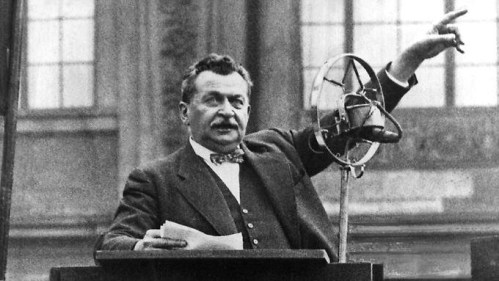
Otto Wels

Friends of Padre Steve’s World,

Today I am going to address something of critical importance today, even though it occurred over 87 years ago, which in the scope of history is not that long, despite the fact that the average American, regardless of their political beliefs and ideology are ignorant of past events, even those of just a few years ago. Thus, when one discusses events of 20, 40, 60, 80, or 100 years ago, one typically receives blank stares, or appeals to historical myths and fabrications that they learned in school, church, or from the media, both news and entertainment. As a historian it drives me crazy, our society, including our political, business, and media elites, has become a new generation of Know Nothings, of whom none other than the President and cult like followers supply some of the worst, but certainly not the only examples.

in 1932 the Communist Party of Germany KPD, refused to ally itself with the Social Democratic Party, SDP because they viewed the Socialists as sell-outs who refused to embrace a Soviet State in 1918 and 1919. At that time they called themselves Independent Socialists, but though a minority unleashed a left wing reign of terror that pushed German Conservatives further to the extreme right, and left the Social Democrats working with the German Army to try to hold the center. In the end, it was the extreme right that finally won a thirteen year struggle to overthrow the Weimar Republic, and after abortive coup attempts, including the Kapp Putsch in Berlin, which was crushed by a nationwide strike of labor groups, and the Nazi led Bier Hall Putsch, which was crushed due to the duplicity of Hitler’s coerced allies, and the refusal of Munich’s police to withdraw in the face of the Nazi advance at Odeonsplatz.

However, the Nazis learned from their failures at violent revolution, and instead, despite being outlawed for a number of years, worked within the democratic model to slowly gain regional, and eventually a national following. By 1932 the Nazi Party, as well as the KPD were at the height of their support. The traditional conservative German right was divided and its leaders thought they could control the Nazi movement. The left was divided between the moderate SPD and the militant KPD. An alliance of the two left parties in 1932 and 1933 would have created a parliamentary majority and stopped the Nazi movement in its tracks, but the KPD, which had split from the SPD in 1919 hated the SPD more than they did the Nazis, even though the Nazis were an existential threat to the German left. 

As a historian I think that this is one of the of the most relevant examples as the United States and other democratic nations lurch toward legally elected right wing authoritarian governments.

A few months after he gained power, Hitler’s Nazi majority Reichstag passed the Enabling Act, or by its full title Gesetz zur Behebung der Not von Volk und Reich (“Law to Remedy the Distress of People and Reich”). The came on the heels of the Reichstag Fire Decree and had tremendous repercussions for the German Republic and in effect made Hitler and his administration a dictatorship. The legislative branch, the Reichstag was limited to nothing more than a rubber stamp for the executive, as was the judicial branch, the Reichsrat. It supposedly protected the rights of the President, the Reichstag, and judiciary, but it made Hitler the the sole decider of domestic and social laws, as well as all foreign policy decisions.

The law stated:

The Reichstag has enacted the following law, which is hereby proclaimed with the assent of the Reichsrat, it having been established that the requirements for a constitutional amendment have been fulfilled:

Article One

In addition to the procedure prescribed by the constitution, laws of the Reich may also be enacted by the government of the Reich. This includes the laws referred to by Articles 85 Paragraph 2 and Article 87 of the constitution. (Article 85 and 87 dealt with the budgetary process and allocation of funds for advertisement.)

Article Two

Laws enacted by the government of the Reich may deviate from the constitution as long as they do not affect the institutions of the Reichstag and the Reichsrat. The rights of the President remain unaffected.

Article Three:

Laws enacted by the Reich government shall be issued by the Chancellor and announced in the Reich Gazette. They shall take effect on the day following the announcement, unless they prescribe a different date. Articles 68 to 77 of the Constitution do not apply to laws enacted by the Reich government. (These Articles dealt with the legislative process in which the Reichstag, Government, Reichsrat, and President all had specific responsibilities which limited the power of the government to rush laws into force without due process and deliberation, and if needed the approval of the electorate)

Article Four

Treaties of the Reich with foreign states, which relate to matters of Reich legislation, shall for the duration of the validity of these laws not require the consent of the legislative authorities. The Reich government shall enact the legislation necessary to implement these agreements. (This removed the requirement of the Reichstag to approve treaties)

Article Five

This law enters into force on the day of its proclamation. It expires on April 1, 1937; it expires furthermore if the present Reich government is replaced by another.

When the legislation was introduced the debate was muted. While the Communist Party was yet to be banned, deputies of the Communist Party could not attend the session, many had already been arrested and many more were in hiding or had fled the country. Hermann Goering adjusted the rules for a quorum in order to compensate for the lack of members in attendance. Deputies of the Social Democratic Party were also terrorized, hounded, and some arrested, but 94 attended, outnumbered they did not buckle under the Nazi threats, which included the chamber being ringed by armed members of the SA and SS.

The non-Nazi Protestant based conservative parties provided no resistance, but the Catholic Center Party was torn by concerns that the legislation could limit the rights of the Catholic Church. However, they had been outmaneuvered by Hitler who had already negotiated a Concordant with the Vatican. The result was to ensure that the Catholic Center Party would vote for the measure, which passed with a mere 94 deputies opposing it, all members of the Social Democratic Party.

The only member of the Reichstag to speak against the measure was the head of the Social Democrats, Otto Wels. In defiance of Hitler, Goering, the Nazi Deputies, and the threatening SA and SS men uttered words that every resistor in every country threatened by authoritarian leaders who despise the rule of law and the Constitutions that they used to gain power need to hear and proclaim, because the truth can never be silenced:

“You can take our lives and our freedom, but you cannot take our honour. We are defenseless but not honourless.”

Shortly after the Enabling Act, every non-Nazi Conservative party voluntarily dissolved, their organizations, youth, and veterans organizations being absorbed into the SA or Hitlerjugend. Many rank and file KPD members readily embraced the Nazis, even if their leaders were killed, jailed, or exiled. That was not the case with the SPD. Because of their stance and the courage of Otto Wels, they became the most hated and persecuted German political parties.

Otto Wels died as an exile in France. Many Social Democrats were placed in Concentration Camps and died, likewise some Communists. The Catholic Center Party would find itself betrayed, and many of its leaders would be killed, jailed, or placed in Concentration Camps, and Hitler would persecute opposition members of the Catholic Church as if no Concordat had ever been negotiated. A few members of the Protestant conservative parties, would join the German resistance, and some would be jailed, placed in Concentration Camps, or after the failed Military Coup of July 20th 1944, would be executed for their resistance, but they were a distinct minority, and few had any misgivings as long as it looked like Germany would win the war.

But eventually the Nazis would be driven from power. Their descendants today, whether in Germany, the United States, or other countries must be confronted at all costs. Democracy, and the American Constitutional Democracy, based on the principles of the Declaration of Independence, which recognizes that all men are created equal, and the Constitution of the United States which was the first to checks and balances between the Executive, Legislative, and Judicial branches of government, must be upheld. The Executive Branch, cannot, regardless of which party is in power be allowed to overthrow that democracy.

We have reached a point in the history of the United States where the Executive Branch, over a period of decades has assumed the powers of dictatorship as the Legislative branch over the corresponding time has surrendered its prerogatives and powers, while the judicial branch had become the domain of politically appointed judges and justices. Donald Trump and the GOP Senate Majority Leader, Mitch McConnell, have been the leaders of that, but should by some chance Bernie win, I have no doubt that some of his supporters secure his power by similar means. Yesterday, the President declared himself to be the Chief Law Enforcement Official in the country, in effect above all law. The Founders attempted to ensure that would not happen by placing Congress above the Executive Branch in the Constitution, but they assumed that no Chief Executive would do such a thing.

One does not know what will happen next, especially after the Senate acquitted the President in his impeachment trial, and the President’s subsequent retribution on those whose did not support him completely, or obeyed their oaths of office.

However, it is my opinion, that anyone who truly values the primary principles of the Declaration and the Constitution, and not just be a compliant tool of any political leader, must ne willing to take a stand; like the one Otto Wels made when confronted with a dictatorship in the making. Even if the President unleashes the power of the police and his own heavily armed supporters against opponents, we must remember like Otto Wels, they can “take our lives and freedom, but they cannot take our honor…”

This is something that anyone committed to the principles of the Declaration and Constitution must take seriously over the next eight and a half months leading to the next Presidential election. If we fail, the effects will be felt for at least a generation, and the institutions of our government will be transformed in ways that the founders could only imagine in their worst dreams.

Democrats and Never Trump conservatives must keep this in mind. Nothing is guaranteed right now, it is quite possible that Trump and his cult like supporters in Congress, before the election, or if he is re-elected, with their now majority in the courts could enact something like the Enabling Act if we are not careful. We must be careful to watch for the major terrorist attack, or war that could lead to the implementation of already legislated laws, such as the Patriot Act, or executive orders that give near dictatorial powers to the executive, and which would, if they occurred, be supported by a majority of Americans.

Historian Timothy Snyder wrote:

”The mistake is to assume that rulers who came to power through institutions cannot change or destroy those very institutions—even when that is exactly what they have announced that they will do.”

Trump has said he would do that and his supporters are committed to what he says, but until now most Americans have refused to believe him, and them. Sadly, most still don’t. After all, once one ceases to resist what more is there to do, just go to the Cabaret.

As Joel Gray, the Master of Ceremonies in the musical and film Cabartet sang:

Where are your troubles now?
Forgotten? I told you so!
We have no troubles here
Here, life is beautiful.
The girls are beautiful.
Even the orchestra is beautiful.

Yes, ignore everything and immerse yourself in our entertainment and sports culture, as if nothing else matters. What does freedom matter if you have no troubles?

So until tomorrow.

Peace,

Padre Steve+

2 Comments

Filed under ethics, film, germany, History, labor, laws and legislation, leadership, movies, nazi germany, News and current events, Political Commentary, racism, terrorism, US Presidents

Cabaret: the Perfect Film for Trump’s Changing America


Friends of Padre Steve’s World,

Last night I watched the 1972 musical film Cabaret. The film, based on the 1966 broadway musical could be a metaphor for the transformation of the United States under Trump.

The film and musical are set in 1931-32 Germany, the end of the Weimar Republic, the end of democracy, and the coming of the race based dictatorship of Adolf Hitler. Joel Gray, plays the very dark character of the Master of Ceremonies at the Kit Kat Club Cabaret, reprising the role he played in the original stage musical. Liza Minnelli plays the role of Sally Bowles, an American expat selling her soul as a cabaret singer in order to become a famous actress. She becomes a lover of Michael York who plays Brian Roberts, a PhD candidate from Cambridge working in Germany as part of his degree studies, as well as Helmut Griem who plays the wealthy conservative baron Maximilian von Heune. Eventually the relationship of the three dissolves under the clouds of homosexuality, bisexuality, dishonesty, lies, abortion, and Sally’s hedonistic lifestyle in which she sacrifices everything about herself to become a movie star.

Finally, Sally drives Brian away, and he returns to England, while she ends up alone chasing her dreams at the Kit Kat Club, even as the Weimar Republic dies and the Nazis come to power.

I guess the most frightening part of the movie as how the film shows how ordinary people went from opposing the Nazis to supporting them. The opening of the film shows a Nazi being thrown out of the club by a bouncer, who is then set upon and beaten to death by other Nazi SA thugs.

Gray, who plays the Master of Ceremonies, is a very dark character who bends with the political winds goes from mocking the Nazis to a willing stooge, Griem, who plays the conservative Baron, hopes that the Nazis and Communists will fight it out, and that the conservatives can then control the Nazis. In a subplot, Fritz Wepper, who plays Fritz Wendel, a Jew who has moved to Berlin and been passing himself off as a Protestant, falls in love with Natalia Landauer, played by Marisa Berensen, a wealthy  Jewish heiress, who does not know that he is a Jew. It is only when she tells him that their love cannot survive because she is Jewish and he isn’t, that he realizes the extent of the lie he has been living. He ends up admitting that he is Jewish and they get married just before the Nazis seize power. Since this is a fictional work, we can only presume that the Landauer money, extorted from them by the Nazis helped get them out of Germany, but with the specter of the Holocaust looming one cannot say for sure.

In one part of the film, Max takes Sally and Brian on a road trip. They end up stopping in a rural Biergarten where a young man begins what initial seems like a very innocent song, called Tomorrow Belongs to Me” which is taken up by almost everyone in the audience. While it was a song written by the Jewish writers of the play and film, John Kanzler and Fred Erb, and was never an actual Nazi song it has become a Neo-Nazi anthem.


The sun on the meadow is summery warm.
The stag in the forest runs free.
But gather together to greet the storm.
Tomorrow belongs to me.
The branch of the linden is leafy and
Green,
The Rhine gives its gold to the sea.
But somewhere a glory awaits unseen.
Tomorrow belongs to me.
Now Fatherland, Fatherland, show us the sign
Your children have waited to see
The morning will come
When the world is mine
Tomorrow belongs to me
Tomorrow belongs  to me
Tomorrow belongs to me

Meanwhile in Berlin the Kit Cat Club is adjusting to the rise of the Nazis. The Master of Ceremonies sings a song entitled If You Could See Her Through My Eyes in which he dances a waltz with what turns out to be a gorilla. The words and the song are haunting, as the audience, now more accepting of Nazi anti-Semitism laughs and cheers.

After returning to Berlin Sally and Brian are exposed to the pro-Nazi words and beliefs of their fellow boarding house residents. Brian argues against them but they have fully bought in to the propaganda put out by the Nazis.

I know what you’re thinking
You wonder why I chose her
Out of all the ladies in the world
That’s just a first impression
What good’s a first impression
If you knew her like I do,
It would change your point of view-
If you could see her
If you could see her thru my eyes,
Maybe they’d all understand…
Why don’t they leave us alone?
Ladies and Gentlemen, I ask you,
Is there a crime to fall in love?
Can one ever choose where our heats lead us?
All we as is ‘Ein bißchen Verständnis’, a little understanding!
Oh, I understand your objection,
I grant my problem’s not small;
But if you could see her thru my eyes,
She wouldn’t look Jewish at all!

After the break up with Brian, Sally return to the club and performs the song Cabaret. She has abandoned everything for the sake of her career. The song is a complete abandonment to the moment, and encourages the audience to ignore the reality of what is going on.

What good is sitting, alone in your room?
come hear the music play!
Life is a cabaret, old chum!
Come to the cabaret!
Put down the knitting, the book and the broom
It’s time for a holiday
Life is a cabaret, old chum!
Come to the cabaret!
Come taste the wine
Come hear the band
Come blow your horn
Start celebrating
Right this way your table´s waiting.
What good´s permitting some prophet of doom?
To wipe every smile away
Life is a cabaret , old chum!
So come to the cabaret!
I used to have this girlfriend known as Elsie
With whom I shared for sordid rooms in Chelsea
She wasn’t what you call a blushing flower
As a matter of fact she rented by the hour.
The day she died the neighbors
came to snick her
Well, that is what comes from
Too much pills and liquor.
But when I saw her laid out like a queen
She was the happiest corpse I´d ever seen
I think of Elsie till this very day
I remember how she´d turned to me and say,
What good is sitting all alone in your room?
Come hear the music play
Life is a cabaret, old chum!
Come to the cabaret!
And as for me
HA
And as for me
I made my mind up back in Chelsea
When I go………
I’m going like Elsie. 
Start by admitting
From cradle to tomb
It isn’t that long a stay
Life is a cabaret, old chum!
It´s only a cabaret, old chum!
And I love a cabaret!

But the words and visuals of then ending of the film are the most chilling. The Master of Ceremonies sings a song where the video shows the transformation of the audience. First the imagery shows no Nazis, then one, the a room full of Brownshirts as the MC signs:

Where are your troubles now?
Forgotten? I told you so!
We have no troubles here
Here, life is beautiful.
The girls are beautiful.
Even the orchestra is beautiful.

It reminds me of today, where in our entertainment culture we are encourage to ignore the reality that surrounds us. We are descending from a Republican form of representative democracy to an authoritarian dictatorship, and sadly most people would rather be bystanders waiting to see which way the wind will blow. Our media, entertainment, and yes even our insatiable need to fill our lives with the material wealth of the world, even if it means surrendering freedom.

Sophie Scholl, a young student at the University of Munich, and member of the White Rose resistance movement wrote:

“The real damage is done by those millions who want to ‘survive.’ The honest men who just want to be left in peace. Those who don’t want their little lives disturbed by anything bigger than themselves. Those with no sides and no causes. Those who won’t take measure of their own strength, for fear of antagonizing their own weakness. Those who don’t like to make waves—or enemies. Those for whom freedom, honour, truth, and principles are only literature. Those who live small, mate small, die small. It’s the reductionist approach to life: if you keep it small, you’ll keep it under control. If you don’t make any noise, the bogeyman won’t find you. But it’s all an illusion, because they die too, those people who roll up their spirits into tiny little balls so as to be safe. Safe?! From what? Life is always on the edge of death; narrow streets lead to the same place as wide avenues, and a little candle burns itself out just like a flaming torch does. I choose my own way to burn.”

I would rather be like Sophie than Sally, the Master of Ceremonies, or Max.

If you have never seen the film I encourage you to watch it, as we are in the midst of such a situation in our own country. History May not repeat itself, but it often rhymes.

So until tomorrow.

Peace,

Padre Steve+

1 Comment

Filed under civil rights, enteratinment, film, germany, History, movies, music, nazi germany, News and current events, Political Commentary, racism

Look Who’s Back: A Film Far too Pertinent in Europe and the USA “At Their Core they are Just Like Me” The Trump and Hitler Cults

Friends of Padre Steve’s World,

A bit earlier we watched, and I re-watched the German film Look Who’s Back (Er ist Wieder Da) which is about Hitler rising from his bunker in 2014. It is a very dark comedy where the actors mingle with regular people, and the actor playing Hitler mingles with them, but no-one really believes that he is really Hitler, but many are willing to make public support of Hitler’s policies. Finally, the amateur filmmaker who discovered Hitler realizes that the man he thought was an actor is really Hitler, and the following conversation ensues:

Hitler: I was wondering when you would show up.

Sawatski: It’s you. You’re him.

Hitler: I never claimed to be anything else. History repeats itself. I guess it’s my fate to have to part with my dearest companions.

Sawatski: That way. Yes, history repeats itself. You’re fooling people with your propaganda.

Hitler: Oh, Sawatski. You don’t understand. In 1933, people were not fooled by propaganda. They elected a leader, one who openly disclosed his plans with great clarity. The Germans elected me.[At gunpoint, Hitler takes the elevator to the top of the building and walks out on the rooftop, standing close to the edge.]

Sawatski: You’re a monster.

Hitler: Am I? Then you have to condemn those who elected this monster. Were they all monsters? No. They were ordinary people, who chose to elect an extraordinary man, and entrust the fate of the country to him. What do you want to do, Sawatski? Ban elections?

Sawatski: No. But I’m going to stop you.

Hitler: Have you never asked yourself… why people follow me? Because at their core, they are just like me. They have the same values. And that’s why you won’t shoot.

[Sawatski shoots, and Hitler falls backward off the rooftop. Sawatski looks over the edge and sees no body.]

Hitler: You can’t get rid of me. I’m a part of you. A part of all of you. And look; it wasn’t all bad.

The film should be required viewing, not just in Germany but in Trump’s America.

Being an ideologue of any kind is easy, you adopt an ideology and then use it to interpret the world. That is why there are so many of them of so many different varieties: right wing, left wing, religious and so many more. In fact if you take a look at the most strident supporters of any ideology, politician, or religious leader you can see that they are little different from one another. But in terms of the ideologies they espouse the most enduring of them, and the only to have ever been the foundation of state power or those dealing with economics such as the Soviet Union; or race such as Nazi Germany or the American Southern Confederacy. Hannah Arendt wrote:

“For an ideology differs from a simple opinion in that it claims to possess either the key to history, or the solution for all the “riddles of the universe,” or the intimate knowledge of the hidden universal laws which are supposed to rule nature and man. Few ideologies have won enough prominence to survive the hard competitive struggle of persuasion, and only two have come out on top and essentially defeated all others: the ideology which interprets history as an economic struggle of classes, and the other that interprets history as a natural fight of races. The appeal of both to large masses was so strong that they were able to enlist state support and establish themselves as official national doctrines. But far beyond the boundaries within which race-thinking and class-thinking have developed into obligatory patterns of thought, free public opinion has adopted them to such an extent that not only intellectuals but great masses of people will no longer accept a presentation of past or present facts that is not in agreement with either of these views.” 

The fact is that there is a difference between people who lean a certain way politically or religiously, and the people Eric Hoffer called, the “true believers,” the people who chose a side and never wrestle with the hard choices of life. They simply declare all who oppose their ideology or theology to be unworthy of life. If one is honest one has to admit that all kinds of ideologues of various persuasions, right wing, left wing, religious, atheistic, or racist have committed crimes which are incomprehensible and abhorrent. History shows that this is truth, but then when a regime decides to censor the past, as the Trump Administration is currently doing, and many other regimes have done, all bets are off. Likewise, when a government decides to admit to what its predecessors have done, as has Germany has done with World War II and the Holocaust, there will always be people who wish for a fictional better time, and either deny the truth, or seek to bring back the horrors of the past.

I am a liberal and a progressive, but I often find left-wing ideologues to be as off putting as militant right wingers. I guess that is because despite everything I am a realist. I wake up every day to try to do the hard thing of deciding what is right and what to believe.

My favorite television character, Raymond Reddington, played by James Spader in The Blacklist once said “I know so many zealots, men and women, who chose a side, an ideology by which to interpret the world. But, to get up every single day and to do the hard work of deciding what to believe. What’s right, today? When to stand up or stand down. That’s courage.” The fact is, no matter how stridently they espouse their beliefs, ideologues are by definition not courageous, because courage takes critical thinking, something that ideologues of any persuasion are incapable of doing. I see examples of this every day, especially in my Twitter feed and on Facebook.

While I’m sure that many, if not most of these people are good and well meaning people, they seldom display any originality of thought or true character. A while back I had one left wing Twitter follower attack repeatedly me because to her I was supposedly a sellout. I have had right wing religious friends and followers on social media do the same, as well as making actual death threats.

While they attack me and each other from different ends of the political spectrum, the intellectual commonality they share is the fact that they are ideologues and zealots; and while they espouse different beliefs they are almost indistinguishable from each other in their inability to think critically and that wears me out, but I refuse to stand down.

I guess that is one of the things that bothers me the most about so much of what I see going on in the United States today. Too many ideologues, not enough critical thinkers. Too many people who value absolute consistently of thought without asking if what they preach is still true today, or if it might be tomorrow, and far too many more who are unwilling to by more than apathetic bystanders waiting to see which way the wind blows before deciding on a position.

Of course there are also the people who would be the victims of ideologues of any type, and the ideologues will be the perpetrators. At this time, after the Senate voted to acquit Trump, the President has mounted a campaign of revenge against his opponents. My money is on the Trump ideologues to take the first shot.

From the beginning of his campaign he never hid what he believed or who or what he is. In the process he has built a cult following around himself, taken over the Republican Party, used all media, but especially that of the Right Wing media to propagate his hateful ideology. He has bulldozed the Constitution, the law, and the institutional guardrails that protected our Republic for over two centuries; and must of his cult like supporters, just like Hitler’s won’t abandon him, but will become more violent in their actions toward his opponents. Likewise, he will use the organs of the State to implement his policies, as he is doing with the Border Patrol, INS, and every other part of the executive branch that his Cult controls. Against this I don’t think that left wing ideologues, who often are a mirror image of their right wing cousins have a chance; but men and women of conscience must make a stand.

One thing that I have learned over the past decade or so is that I have to ask what is right today, and make a choice of when to stand up, or to stand down. Sometimes, I don’t like those choices, but I make them. As Sophie Scholl said:

“The real damage is done by those millions who want to ‘survive.’ The honest men who just want to be left in peace. Those who don’t want their little lives disturbed by anything bigger than themselves. Those with no sides and no causes. Those who won’t take measure of their own strength, for fear of antagonizing their own weakness. Those who don’t like to make waves—or enemies. Those for whom freedom, honour, truth, and principles are only literature. Those who live small, mate small, die small. It’s the reductionist approach to life: if you keep it small, you’ll keep it under control. If you don’t make any noise, the bogeyman won’t find you. But it’s all an illusion, because they die too, those people who roll up their spirits into tiny little balls so as to be safe. Safe?! From what? Life is always on the edge of death; narrow streets lead to the same place as wide avenues, and a little candle burns itself out just like a flaming torch does. I choose my own way to burn.”

I guess that is why I like reading about the lives of complicated and often conflicted people; men like T.E. Lawrence, William Tecumseh Sherman, Henning Von Tresckow, Ludwig Beck, and the fictional Raymond Reddington so fascinating. I find much to admire and to criticize in all of them even as I empathize and understand each one of them. Interestingly, each of my heroes all have feet of clay. As Reddington said, “We become who we are. We can’t judge a book by its cover… But you can by its first few chapters, and most certainly by its last.” 

But in such a perilous time, how can we not see what Trump has openly proclaimed he would do when he became a presidential candidate, and since his election. However, we cannot blame it all on Trump. He was clear in what he would do as President, and as the fictional Hitler asked “Have you never asked yourself… why people follow me? Because at their core, they are just like me. They have the same values.” 

Have a great day, until tomorrow.

Peace,

Padre Steve+

4 Comments

Filed under ethics, film, germany, History, leadership, movies, nazi germany, News and current events, Political Commentary

“The Day of Reckoning Has Come” Stalingrad and the White Rose: The Sixth Pamphlet

Friends of Padre Steve’s World,

Shortly after the disaster at Stalingrad, the White Rose Resistance issued what would be their last pamphlet. In disturbing it, Sophie Scholl and her brother Hans would be arrested after being spotted by by a Gestapo informer af the University of Munich. They and their co-conspirators would be tried by the extra judicial Volksgericht headed by the notorious Nazi Judge Roland Freisler.

The pamphlet read:

Fellow Fighters in the Resistance!
*
Shaken and broken, our people behold the loss of the men of Stalingrad. Three hundred and thirty thousand German men have been senselessly and irresponsibly driven to death and destruction by the inspired strategy of our World War I Private First Class. Fuhrer, we thank you!
*
The German people are in ferment. Will we continue to entrust the fate of our armies to a dilettante? Do we want to sacrifice the rest of German youth to the base ambitions of a Party clique? No, never! The day of reckoning has come – the reckoning of German youth with the most abominable tyrant our people have ever been forced to endure. In the name of German youth we demand restitution by Adolf Hitler’s state of our personal freedom, the most precious treasure we have, out of which he has swindled us in the most miserable way.
*
We grew up in a state in which all free expression of opinion is unscrupulously suppressed. The Hitler Youth, the SA, the SS have tried to drug us, to revolutionize us, to regiment us in the most promising young years of our lives. “Philosophical training” is the name given to the despicable method by which our budding intellectual development is muffled in a fog of empty phrases. A system of selection of leaders at once unimaginably devilish and narrow-minded trains up its future party bigwigs in the “Castles of the Knightly Order” to become Godless, impudent, and conscienceless exploiters and executioners – blind, stupid hangers-on of the Fuhrer. We “Intellectual Workers” are the ones who should put obstacles in the path of this caste of overlords.

Soldiers at the front are regimented like schoolboys by student leaders and trainees for the post of Gauleiter, and the lewd jokes of the Gauleiters insult the honor of the women students. German women students at the university in Munich have given a dignified reply to the besmirching of their honor, and German students have defended the women in the universities and have stood firm….  That is a beginning of the struggle for our free self-determination – without which intellectual and spiritual values cannot be created. We thank the brave comrades, both men and women, who have set us brilliant examples. 
*
For us there is but one slogan: fight against the party! Get out of the party organization, which are used to keep our mouths sealed and hold us in political bondage! Get out of the lecture rooms of the SS corporals and sergeants and the party bootlickers! We want genuine learning and real freedom of opinion. No threat can terrorize us, not even the shutting down of the institutions of higher learning. This is the struggle of each and every one of us for our future, our freedom, and our honor under a regime conscious of its moral responsibility. 
*
Freedom and honor! For ten long years Hitler and his coadjutor have manhandled, squeezed, twisted, and debased these two splendid German words to the point of nausea, as only dilettantes can, casting the highest values of a nation before swine. They have sufficiently demonstrated in the ten years of destruction of all material and intellectual freedom, of all moral substance among the German people, what they understand by freedom and honor. The frightful bloodbath has opened the eyes of even the stupidest German – it is a slaughter which they arranged in the name of “freedom and honor of the German nation” throughout Europe, and which they daily start anew.

The name of Germany is dishonored for all time if German youth does not finally rise, take revenge, and atone, smash its tormentors, and set up a new Europe of the spirit. Students! The German people look to us. As in 1813 the people expected us to shake off the Napoleonic yoke, so in 1943 they look to us to break the National Socialist terror through the power of the spirit. Beresina and Stalingrad are burning in the East. The dead of Stalingrad implore us to take action.  “Up, up, my people, let smoke and flame be our sign!”
*
Our people stand ready to rebel against the Nationals Socialist enslavement of Europe in a fervent new breakthrough of freedom and honor.”

The necessity for the citizens of evil regimes not to turn a blind eye to their acts matters. Sometimes “My Country, Right or Wrong” is not an appropriate response to the actions of the government. However, I am not sure if anyone ever learns from history, especially when their country is the guilty party. The great British Military Historian and Theorist B. H. Liddell-Hart wrote:

“What is of value in “England” and “America” and worth defending is its tradition of freedom, the guarantee of its vitality. Our civilization, like the Greek, has, for all its blundering way, taught the value of freedom, of criticism of authority, and of harmonising this with order. Anyone who urges a different system, for efficiency’s sake, is betraying the vital tradition.”

Sophie Scholl and the White Rose were exceptions to the general attitude that a government cannot be criticized in times of crisis, national emergency, or war. They had been resisting long before Stalingrad, and this pamphlet coming on the heels of the calls of Nazi leaders to redouble war efforts is remarkable. They had no power but the pen, and though they were caught and many executed, their message was heard.

Until tomorrow,

Peace,

Padre Steve+

Leave a comment

Filed under civil rights, ethics, faith, germany, History, leadership, nazi germany, Political Commentary, world war two in europe

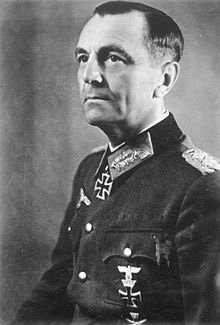
The Legacy and Warning of Field Marschal Von Paulus at Stalingrad: Even Honorable People Can Believe a Lie and Lead Men to Death

Friends of Padre Steve’s World,

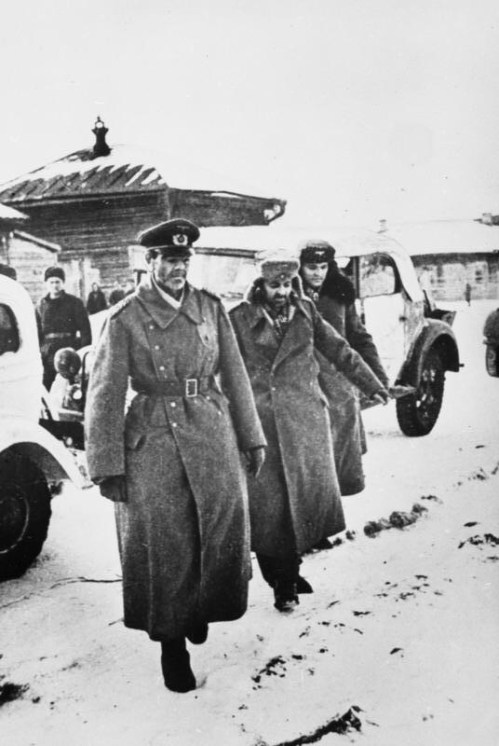
Seventy-seven years ago today the commander of the encircled German Sixth Army at Stalingrad, Field Marshal Friedrich Paulus left his command bunker and surrendered the the Red Army. In the ruins of Stalingrad lay most of the freezing, malnourished, soldiers of his once elite Army. Around 90,000 survivors of his army surrendered in the coming days to the Red Army. Of the Germans taken prisoners, only about 5,000 returned home. The Most were to die of their wounds, or of diseases, maltreatment, and starvation in Soviet Camps between 1943 and 1955 when the bulk of the survivors were released.

Friedrich Paulus was one of them, and his story is interesting, not simply because he was the Commander of the Sixth Army, but because he wasn’t the kind of man one would have expected to command an army of 13 divisions with a strength of nearly 285,000 men spearheading the great German Offensive of 1942.

Paulus was born in 1890, and joined the Imperial Army in 1910. During the First World War he served on the Western Front, finishing the war as a Captain. After the was the collapse of the Army and order during the German civil war he served as Adjutant of a government sponsored Freikorps Brigade. Following the Treaty of Versailles, Paulus was retained as one of the 4,000 officers in the new Reichsheer. He served as a staff officer and company commander, and briefly commanded a battalion. He would also serve on the staff which developed the new Panzer Forces for the Wehrmacht. Paulus was an apolitical professional soldier, he was not a Nazi but he, like many other military men considered Hitler:

“an excellent leader for the German people, a man who had contributed greatly to the development of the state. After watching him evolve the strategies that conquered Poland, France, and most of Europe, Paulus was awed by Hitler’s grasp of the technical aspects of warfare. He considered him a genius.”

Paulus was promoted to Colonel in 1938 and served as Chief of Staff to Heinz Guderian’s XVI Motorized Corps. But Guderian had reservations about Paulus’s lack of command experience, decisiveness, and toughness. Following his assignment with the motorized Corps, Paulus was promoted to the rank of Generalmajor (the equivalent of a U.S. Brigadier General) to serve as Chief of Staff to the 10th Army under the command of General Walter Reichenau during the invasion of Poland. He continued in that position when 10th Army was redesigned 6th Army for the Invasion Of France and the Low Countries.

After the Battle of France he was promoted to Generalleutnant and assigned as deputy Chief Staff, Operations, of the Oberkommando Des Heeres, the German General Staff. In this capacity he served as one of the principle planners of Operation Barbarossa.

His wife, Elena, a descendant of one of Romania’s Royal Houses was opposed to Hitler and the war. She told her husband that “he was far too good for the likes of men such as Keitel and the other “lackeys” who surrounded Hitler.” She protested the injustice of the war against Poland, but he, in the thrall of Hitler’s genius and simply followed orders. When he brought home maps and documents related to Barbarossa she again protested to him. When he ignored her she said:

“What will become of us all? Who will survive to the end?”

Since he believed in Hitler’s invincibility, Paulus ignored her concerns, and told her that the war would be over in six weeks. Elena’s words would prove prophetic.

But Elena’s concerns were well justified. In December 1941 the German Offensive ground to a halt at the gates of Moscow and a devastating Red Army counterattack created a crisis in the Wehrmacht which was completely unprepared for the Russian Winter. Only heroic resistance and improvisation by German units, and the still imperfect application of operational warfare by the Red Army, saved the German front. While battles from Leningrad to Crimea continued throughout the winter, the lines stabilized, and both sides began their plans for the coming year.

During the winter debacle Hitler sacked many commanders, which left many command vacancies. Reichenau, a committed National Socialist and fanatical fighter took over command of Army Group South from Field Marshal Gerd Von Rundstedt, who had been fired by Hitler. Reichenau, who had been Paulus’s patron had Paulus promoted to General der Panzertruppen and named as commander of 6th Army.

The two men were nothing alike and Paulus had never commanded more than a battalion, and that not in peacetime. However, six days later the athletic Reichenau suffered a heart attack, which was was followed by a head injury during a medical evacuation flight back to Germany. Reichenau, the fanatical Nazi died, and Paulus, revoked the infamous Commissar Order, as well as Reichenau’s most notorious orders, the Severity Order in the Sixth Army area of operations. That order stated:

“The most important objective of this campaign against the Jewish-Bolshevik system is the complete destruction of its sources of power and the extermination of the Asiatic influence in European civilization.… In this eastern theatre, the soldier is not only a man fighting in accordance with the rules of the art of war, but also the ruthless standard bearer of a national conception.… For this reason the soldier must learn fully to appreciate the necessity for the severe but just retribution that must be meted out to the subhuman species of Jewry.…”

Paulus demonstrated moral courage unusual for senior German officers, but he also forbade cooperation with the Einsatzgruppen death squads, which Reichenau had gone out of his way to support. This was unusual for any commander on the Eastern Front, especially a man like Paulus who believed in Hitler’s invincibility. Paulus did well in his first combat with the Red Army, when it attempted to disrupt the coming German offensive at Kharkov as Sixth Army encircled and captured over 200,000 Soviet troops.

The Sixth Army had a key role in the German summer offensive, Operation Blau. Paulus commanded it well but became involved in the battle for Stalingrad. The battle dragged on in the face of fanatical and skilled Soviet resistance. However, Hitler would not let Paulus break off the Battle, and promoted him to Colonel Genera in order to bolster his confidence. Likewise, in an interesting, but vital footnote to the campaign, which was unknown to Hitler and his commanders, Stalin knew of Operation Blau.

Stalin had learned to preserve his forces after the catastrophes of 1941 withdrew his forces and observing the German movements decided to turn Stalingrad into a fortress. He conducted a strategic withdraw to preserve his forces, allowing the majority of the German Army Group South to advance deep into the Caucasus in order to capture the oilfields of the region.

However, this movement divided the German armies, leaving the flanks of the Sixth Army protected by pathetically equipped Italian, Romanian, and Hungarian armies. None of these units could not match the manpower, mobility, or firepower of the Red Army, and none were prepared for the onslaught that was to be directed against them.

Stalin allowed the German Army Group South to continue to advance, and forced the Sixth Army to battle street by street, building by building, factory by factory to capture Stalingrad. Had the Germans followed their operational doctrine Stalingrad would have been bypassed and surrounded, but they didn’t, Hitler would not allow it. Because of this, Paulus allowed the Soviets to maintain their defense by not cutting the Red Army defenders in the city off from the Volga, even by not taking action to link up with the Fourth Panzer Army which under its commander Hermann Hoth had broken through the Soviet front south of the Stalingrad when the opportunity presented itself.

Even so, the Sixth Army had conquered most of the city when in lateNovember the Red Army launched Operation Uranus, which was designed to destroy the weakly held flanks and surround the Sixth Army by a deep envelopment operation, which had previously been the forte of the German Blitzkrieg. The operation totally surprised the Germans and in four days time the Sixth Army went from the spearhead of the German assault to an army cut off and surrounded by a Soviet Army Group. The Italian, Hungarian, and Romanian armies on its flanks were shattered.

Plans were made to relieve the Sixth Army but they depended on the Sixth Army attacking out to meet the relief forces of the Fourth Panzer Army. Hitler refused permission and Paulus obeyed, believing Hitler’s promise that Goering’s Luftwaffe would be able to keep his troops supplied. On New Year’s Day Hitler promoted Paulus to Colonel General. Paulus was now convinced that his Army was doomed but he grasped the broader strategic situation; as long as he could keep the Red Army invested in Stalingrad, it would keep them from encircling the much bigger portion of Army Group South, now under direction of Erich von Manstein from being cut off. According to one officer Paulus remarked:

“What would become of the war if our army in the Caucasus were also surrounded? That danger is real. But as long as we keep on fighting, the Red Army has to remain here. They need these forces for a big offensive against Army Group ‘A’ in the Caucasus and along the still-unstable front from Voronesh to the Black Sea. We must hold them here to the last so that the eastern front can be stabilized. Only if that happens is there a chance of the war going well for Germany.”

But the handwriting was on the wall. German Forces to the south were having to extricate themselves from an even bigger encirclement. The superb generalship of Field Marshal Erich Von Manstein prevented a complete disaster and inflicted a compelling defeat on the Red Army, but the Sixth Army was doomed. On January January 7th Paulus was offered generous surrender terms by General Konstantin Rokossovsky. Paulus asked permission to surrender which was denied by Hitler.

Again on January 22nd Paulus requested his Fuhrer:

… For submittal to the Führer and to commander in chief, Army Group Don.… The Russians are advancing on a six-kilometer frontage both sides of Voporonovo toward the east, [toward Stalingrad] in part with flying colors. There is no possibility to close the gap … All provisions are used up. Over twelve thousand unattended [wounded] men in the pocket. What orders am I to issue to the troops, who have no ammunition left? … Immediate decision is required, since symptoms of disintegration are noted in some places. However, the troops still have faith in their commanders.” Paulus

On January 25th the Red Army overran the last airfield in the Stalingrad pocket, now there was no escape.

To a Luftwaffe Officer who was sent by Berlin to encourage Paulus about new airlifts, Paulus said:

“Why on earth did the Luftwaffe ever promise to keep us supplied? Who is the man responsible for declaring that it was possible? Had someone told me it was not possible, I should not have held it against the Luftwaffe. I could have broken out. When I was strong enough to do so. Now it is too late.…”

Paulus radioed Hitler for permission to surrender, empathetically stating the conditions in the pocket. No food, no medicine, no ammunition, no fuel; only to be denied again.

On January 30th, the 10th anniversary of Hitler’s seizure of power the Troops in Stalingrad were treated to a radio broadcast from Berlin, not Hitler, but Goering. The words of the Reichsmarschal fell hollow on the ears of the doomed men:

“… What herculean labors our Führer has performed … out of this pulp, this human pulp … to forge a nation as hard as steel. The enemy is tough, but the German soldier has grown tougher.… We have taken away the Russians’ coal and iron, and without that they can no longer make armaments on a large scale.… Rising above all these gigantic battles like a mighty monument is Stalingrad.… One day this will be recognized as the greatest battle in our history, a battle of heroes.… We have a mighty epic of an incomparable struggle, the struggle of the Nibelungs. They, too, stood to the last.… My soldiers, thousands of years have passed, and thousands of years ago in a tiny pass in Greece stood a tremendously brave and bold man with three hundred soldiers, Leonidas with his three hundred Spartans.… Then the last man fell … and now only the inscription stands: ‘Wanderer, if you should come to Sparta, go tell the Spartans you found us lying here as the law bade us.’… Someday men will read: ‘If you come to Germany, go tell the Germans you saw us lying in Stalingrad, as the law bade us.…’”

The soldiers knew that they had been abandoned by Berlin. Yet, Paulus, ever loyal radioed:

January 30th:

On the tenth anniversary of your assumption of power, the Sixth Army hails its “Führer.” The swastika flag is still flying above Stalingrad. May our battle be an example to the present and coming generations, that they must never capitulate even in a hopeless situation, for then Germany will come out victorious.

Hail my Führer Paulus, Generaloberst

But it was a lie. Less than 24 hours later on January 31st with Red Army tanks and troops outside his command bunker, Paulus surrendered, just hours after Hitler promoted him to Field Marshal. The promotion was supposed to encourage Paulus to commit suicide as no German Field Marshal had ever surrendered his army.

Colonel Adam, an aide to Paulus recorded how Paulus received his promotion:

January 31, 1943 – 7.00 a.m. It was still dark but day was dawning almost imperceptibly. Paulus was asleep. It was some time before I could break out of the maze of thoughts and strange dreams that depressed me so greatly. But I don’t think I remained in this state for very long. I was going to get up quietly when someone knocked at the door. Paulus awoke and sat up. It was the HQ commander. He handed the colonel general a piece of paper and said: ‘Congratulations. The rank of field marshal has been conferred upon you. The dispatch came early this morning – it was the last one.’

‘One can’t help feeling it’s an invitation to suicide. However I’m not going to do them such a favour.’ said Paulus after reading the dispatch. Schmidt continued: ‘At the same time I have to inform you that the Russians are at the door.’ with these words he opened the door and a Soviet general and his interpreter entered the room. The general announced that we were his prisoners. I placed my revolver on the table.”

Paulus surrendered, and contrary to Hitler’s wishes did not commit suicide. In the next few days the other isolated pockets of German resistance surrendered as well. Roughly 95,000 Germans, Italians, and Romanians surrendered at Stalingrad. Fewer than 6,000 would return home after nearly a decade of imprisonment and forced labor.

In Hitler’s headquarters the scene was terrifying. Hitler ranted about the treason and cowardice of Paulus, and his lackeys in the military agreed. Paulus should have shot himself and the garrison formed a hedgehog and resisted to the last bullet.

Though he surrendered Paulus did not give support to the Soviets or the German resistance until he learned of the execution of his Friend Field Marshal Erich von Witzleben and others for their participation in the attempt to kill Hitler. When he learned of their deaths he joined the he joined the Communist-inspired Bund Deutsche Offiziere, an “anti-Fascist” group that broadcast appeals to the citizens of the Third Reich against the Hitler regime.

After the war he testified at the Nuremberg Trials admitting German conduct of the war in the east was criminal but refusing to label men like Wilhelm Keitel, and Afred Jodl as war criminals. He took up a position as the civilian chief for military history for the new East German Government. He died on February 1st 1957, of ALS, having never seen his wife since he left to take command of Sixth Army in January 1942, she died in 1949. His son Alexander was killed at Anzio in 1944. His other son, Ernst, survived the war and committed suicide in 1970.

Paulus’s fate is an object lesson for military personnel, civil servants, or police officials who themselves are apolitical, and that honorable can people become seduced and believe in cults of personality. In the end, many sacrifice their lives, reputations, and even their families.

Without mentioning any names, the Americans who worship at the cult of Trump should pay heed. like Paulus, their loyalty will be betrayed, and even as their leader abandons them.

Until tomorrow,

Peace,

Padre Steve+

10 Comments

Filed under ethics, faith, germany, History, holocaust, Military, nazi germany, News and current events, Political Commentary, world war two in europe

Wannsee: The Men, Their Mission, and the Implications Today

1200x-1

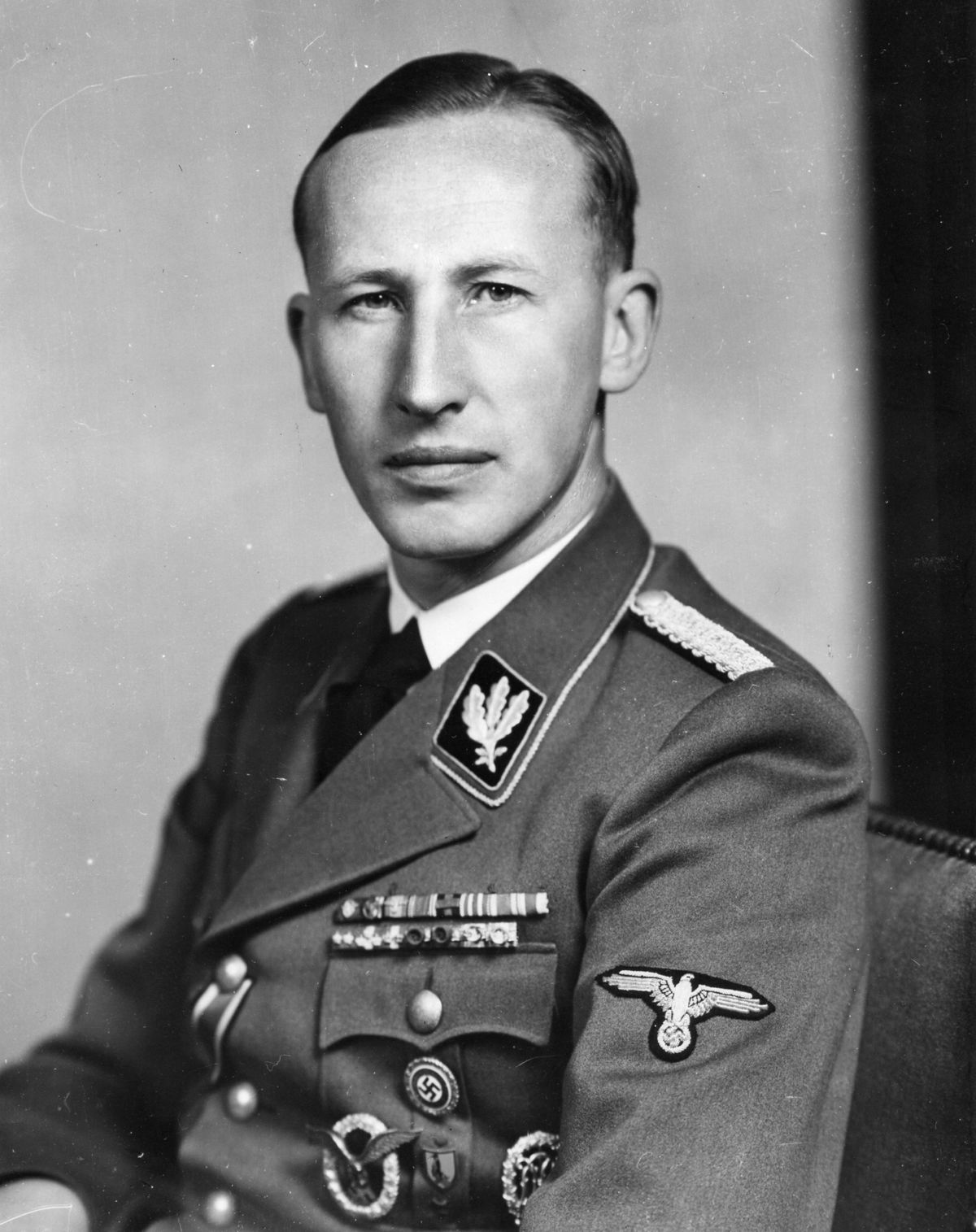
Reinhard Heydrich

Friends of Padre Steve’s World,

The great American philosopher, Eric Hoffer once wrote, “Hatred is the most accessible and comprehensive of all the unifying agents. Mass movements can rise and spread without belief in a god, but never without a belief in a devil.”

Hatred is an amazing emotion. In the final scene of the movie Conspiracy which is about the Wansee Conference, at which fifteen officials of the Nazi government met to coordinate what became the Holocaust, the “Final Solution” of what the Nazis called, “the Jewish problem.” The movie is troubling because the men in the room were well-educated, high to mid-level officials from a variety of agencies who were called together to ensure that their respective agencies worked together.

At beginning of the movie, Kenneth Branagh who plays SS Lieutenant General Reinhard Heydrich describes the “problem to be solved”

“To begin, we have a storage problem in Germany with these Jews…. The laws enacted at Nuremberg, and we should drink a toast to Dr. Stuckart for devising them….They established the fundamental legality for the creation of a Jew-free society, a Jew-free economy for the world to see. And we, indeed, have eliminated the Jew from our national life. Now, more than that, the Jew himself must be physically eradicated from our living space…

Then, in acquiring Poland, we acquired two and a half million more. By last July, we were met with a new situation, we would, in very short order, be acquiring some five million Jews as we conquered Russia. The dimensions of this problem have magnified astoundingly. Five million…

At that time, last July, confronting this new situation, Reichsmarshal Goering prepared a directive, you have a copy. The operative words, if you’ll permit me to read:

“I hereby charge you with making all preparations.in regard to organizational and financial matters for bringing about a complete solution of the Jewish question in the German sphere of influence in Europe.”

Now, for that, I read the cleansing of the entire continent of Europe.…in the second paragraph: “Wherever other governmental agencies

are involved these are to cooperate with you.” I hope. So on, so on… “as necessary for the accomplishment of the desired solution of the Jewish question.” This is our mandate, all of us.

Donald Trump has talked about expelling and deporting over 11 million Mexicans and other South or Central Americans from this country. True, many are here illegally, but at the same time most are working and paying taxes, doing the things that many Americans consider themselves too good to do. He has mentioned similar things in regard to Muslims, as well as banning any Muslim from coming to the country. He has talked about going along with the desire of the Christian Right to roll back the hard earned rights of Homosexuals, and he has no regard for African Americans and their rights, with the possible exception of Ben Carson, but I digress…

At the close of the meeting the decision to exterminate the Jews was agreed to by the assembled officials who pledged to work with each other, once they had been told of how the logistics of the operation would take place. Not all were happy, some were shocked, but all rolled over and agreed to cooperate with Heydrich.

At the end of the movie Heydrich is asked to share an allegorical story that one of the less enthusiastic conference participants, Reich Chancellery State Secretary, Dr. Wilhelm Kritzinger, told him about hatred of the Jews. Heydrich recalled the story to SS Major General Heinrich Müller and SS Lieutenant Colonel Adolf Eichmann.ueller and SS Lieutenant Colonel Adolf Eichmann:

“Yes, he told me a story about a man he’d known all his life, a boyhood friend. This man hated his father. Loved his mother fiercely. The mother was devoted to him……but the father beat him, demeaned him, disinherited him. Anyway, this boy grew to manhood and was still in his 30s when the mother died…this mother who had nurtured and protected him.She died. The man stood as they lowered her casket and tried to cry…but no tears came. The man’s father lived to old age, died when the son was in his 50s. At the father’s funeral, much to his son’s surprise…he could not control his tears. He was wailing, sobbing. He was apparently inconsolable. Lost, even. That was the story Kritzinger told me.

Eichmann said, “I don’t understand.”

Heydrich answered: “No? The man had been driven his whole life by hatred of his father. When the mother died, that was a loss. When the father died…when the hate had lost its object…then the man’s life was empty. Over.

Eichmann replied: “Interesting. That was Kritzinger’s warning. What? That we should not hate the Israelites?”

To which Heydrich said, “No, that it should not so fill our lives…that when they are gone, we have nothing left to live for. So says the story. I will not miss them”

I used to show the film as the final class in the ethics elective that I taught at the Joint Forces Staff College. After the film was over it never failed that at least one of the students would bring up pertinent comments about hate in our current political climate. Again I cannot go into details, but I can assure you that the conversation was always subdued and sobering. I think that all of us left better for it, for such men and women know that there is a Rubicon that cannot be crossed. In the troubling times that we live, that gives me some comfort.

The story is pertinent when one looks at what Donald Trump is doing right now. I really have to wonder how deep hatred such as his runs in this country, because unlike love, hatred is easy to conjure up. It is kind of like what you need to build a fire; fuel, oxygen and heat. To generate hatred on a massive scale all you need is a disaffected populace, a convenient target, and an agent to ignite the mixture.

Shrewd politicians, preachers, and pundits do this well. Donald Trump is showing himself to be a master of this. He, and others like him, and not just American politicians, pundits or preachers, mind you, demonize the target group or population and then let the hatred of their disaffected followers flow.

Leaders who are consumed with hate need a disaffected and angry base in order to rise to power; such was how Hitler, Stalin, and so many other despots gained power. They took advantage of a climate of fear, and found others to blame. For Hitler it was the Jews; while for Stalin it was various groups like the Ukrainians, or the Poles who were the devil to be feared and destroyed. For Trump it is Muslims, Mexicans, immigrants, liberals, and sometimes, even Jews.

Timothy Snyder in his book Bloodlands: Europe Between Hitler and Stalin wrote:

“Dead human beings provided retrospective arguments for the rectitude of policy. Hitler and Stalin thus shared a certain politics of tyranny: they brought about catastrophes, blamed the enemy of their choice, and then used the death of millions to make the case that their policies were necessary or desirable. Each of them had a transformative utopia, a group to be blamed when its realization proved impossible, and then a policy of mass murder that could be proclaimed as a kind of ersatz victory.”

Snyder is quite correct, demonizing a people and making them some kind of “other”, “they”, or “them”, is a wonderful way to blame a group of people for the ills of society. It is also a good way to deflect the blame for the corporate failures of societies and governments onto a convenient scapegoat; and to blame others for the personal failures and petty jealousies of the people doing the demonizing. It also allows people to abandon ethics and the simple notion of the Golden Rule an engage in genocide.

Mass movements and their leaders; of which Trump is such a leader, are masters of hatred and demonizing any opponents. The technique Trump is using is not at all new, it has been used from antiquity but has become much more dangerous in the modern era with the spread of instant communications technology. History shows us all too clearly how it has happened and how easily it can happen again. Witch hunts, slavery and Jim Crow, the extermination of the Native Americans which inspired Hitler in his campaign of genocide and the Holocaust; the Soviet gulags and ethnic cleansings, the Rape of Nanking, the Chinese Communist “Cultural Revolution” the Rwandan genocide, Srebrenica, the Turkish genocide of the Armenians, and the current crimes against humanity of the so called Islamic State. Sadly, the list can go on and on.

All of these events simply required the elements of a disaffected population, a devil or scapegoat to blame, and a leader or leaders to ignite the volatile mixture; fuel, oxygen and heat. Hoffer was quite correct that “Mass movements can rise and spread without belief in a god, but never without a belief in a devil.” The really successful leaders of such movements understand this. For Hitler it was the Jews and other untermenschen; for American Southerners after the Civil it was the Blacks and their white supporters. For the American “Know Nothings” of the 1840s and 1850s it was immigrants, especially Irish and Germans who were Catholic; for Stalin it was non-Russian ethnic minorities. For the leaders of the Islamic State, it is Jews, Shi’ite Moslems, less than “faithful” Sunnis, Christians and well for that matter anyone who does not line up one hundred percent with them on every issue. The examples are so plentiful to support this fact that it is almost overwhelming.

The problem is that when any society, or government begins to label or stigmatize a race, religion, ethnicity, sexual preference, or political ideology, and then in the process demonize those people to the point that they become less than human we have reached a tipping point. We reach the point where we are just one crisis away from all of those crimes against humanity that we believe that we are no longer capable of doing. But sadly, we human beings are not nearly as evolved as we think and I think that the tipping point in the United States may be far closer than we could ever imagine.

I really do not think that we are too far from some tipping point where the politicians, pundits and preachers; especially those of the political right and the media whores who are more concerned about market share than truth, decide that their “devils” must be exterminated. Of course when they will do they will claim a higher moral, religious, or racial, purpose; or perhaps use the language of Manifest Destiny, the Lost Cause, or the Stab in the Back or some other historical myth that suffices to justify their actions.

In response to Trump and those who stoke the same kind of fear and hatred, I wonder just how many men that there are like Heydrich, who would execute the orders of someone like Trump that there are in our country this very minute. I shudder to think of it, and when I do, I am reminded of the closing words of Spencer Tracy when he pronounces judgement on the Nazi judges in the film Judgment at Nuremberg:

But this trial has shown that under a national crisis, ordinary – even able and extraordinary – men can delude themselves into the commission of crimes so vast and heinous that they beggar the imagination. No one who has sat through the trial can ever forget them: men sterilized because of political belief; a mockery made of friendship and faith; the murder of children. How easily it can happen. There are those in our own country too who today speak of the “protection of country” – of ‘survival’. A decision must be made in the life of every nation at the very moment when the grasp of the enemy is at its throat. Then, it seems that the only way to survive is to use the means of the enemy, to rest survival upon what is expedient – to look the other way. Well, the answer to that is ‘survival as what’? A country isn’t a rock. It’s not an extension of one’s self. It’s what it stands for. It’s what it stands for when standing for something is the most difficult! Before the people of the world, let it now be noted that here, in our decision, this is what we stand for: justice, truth, and the value of a single human being.”

I do hope that we follow a saner and less horrifying path, despite the election and past three years of the Trump Administration. I cannot abandon hope, nor can I be one that turns his eyes away from actions that range from separating immigrant and refugee families and placing children in cages on our southern border; assassinating members of nations that we are not at war with, regardless of how bad they are, while pardoning members of our military who were judged to be war criminals under the Uniform Code of Military Justice. Of course that does not even mention how the President has undermined the institutions and laws of our country.

But I cannot lose hope or give up. In the words of Major General Henning von Tresckow, who died following multiple attempts to rid Germany of Hitler:

“We have to show the world that not all of us are like him. Otherwise, this will always be Hitler’s Germany.”

For me I am not comparing Trump to Hitler, but I believe he will be just as deadly to the United States as Hitler was to Germany. It all comes down to character, and as different as our President or the former Nazi Fuhrer are, neither had, or in the case of President Trump, have any character, nor did or do their enablers, and supporters; they are the perpetrators. Of course we know the victims, but then there are those  who decide to look the other way, the bystanders who prefer survival to freedom. As Yehuda Bauer wrote:

“Thou shalt not be a victim, thou shalt not be a perpetrator, but, above all, thou shalt not be a bystander.”

Until tomorrow,

Peace

Padre Steve+

5 Comments

Filed under germany, History, holocaust, nazi germany

Silent Witnesses of Evil Deeds… Are We Still of Any Use? Trump’s Christian Advocates


Friends of Padre Steve’s World,

Over his three years in office President Trump has managed to tell over 15,000 lies or distortions of the truth as of December 16th 2019 according to the Washington Post. That being said we all expect politicians to lie, it’s part of American life and political discourse. Will Rogers once said “If you ever injected truth into politics you have no politics.” I think that the expectation that elected officials will lie is one reason that Mark Twain quipped: “An honest man in politics shines more there than he would elsewhere.”

However the shear numbers of lies and falsehood proclaimed by the President is having a toxic effect on our society, in particular on those in the church, men and women who call themselves by the name of Christ who not only believe them, but repeat them, and defend them.  The fact is that for decades these same Christian leaders and people have proclaimed their allegiance to what they call “moral absolutes”and  “Biblical values”while excoriating Democrats, particularly Bill and Hillary Clinton for their lies. The fact is that by doing this Christians simply become another political interest group hustling politicians for favors that benefit them, even at the expense of the credibility of their witness to Christ.

The constant repetition of the President’s well documented lies, and their defense by administration flacks, Congressional supporters, the Fox News media empire, and the big name Evangelical Preachers who have sold their souls in his defense have damaged the soul of the country and yes the Church.

Of course one would expect the President’s opponents to point out his lies but in normal times you wouldn’t expect his conservative religious supporters to go to the mat defending him and his lies, and even calling him a “role model” for young people.  In a recent survey some 70% of his predominantly Christian, Republican supporters say that he is and that my friends is, if you value the long term witness of the Christian Church absolutely devastating, especially since for over a decade young people have been fleeing the church in never before seen numbers while unbelievers, even those that admire Christ and what some would call Christian values want nothing to do with the Church.

The fact is that the repetition of lies and falsehoods, whether you are a Trump supporter or opponent there is a not a good thing either for the Church or for the country. It has a terrible effect, and one only has to look to the countries of Europe to see how Christian support for malevolent leaders has reduced it to irrelevance. Whether it be the support of ethnic and religious persecution, or the participation in and protection of sexual predators masquerading and Bishops, Priests, and Nuns has eviscerated the witness of the Church.

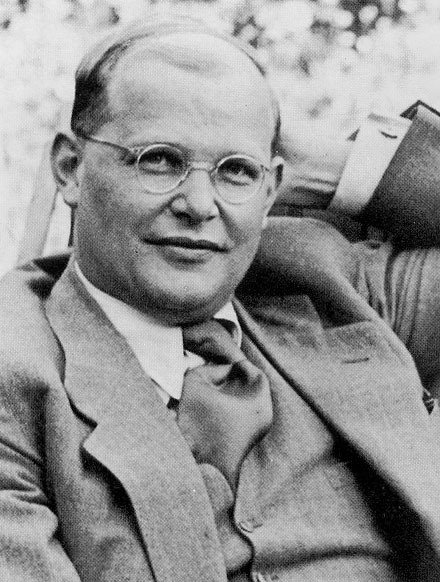
Dietrich Bonhoeffer understood this and asked a question that should be asked by people that call themselves by the name of Christ who at the same time defend the indefensible and not only defend, but take great pleasure in defending the lies of the President. Bonhoeffer observed the same dynamic in his day. He wrote:

“We have been silent witnesses of evil deeds; we have been drenched by many storms; we have learnt the arts of equivocation and pretense; experience has made us suspicious of others and kept us from being truthful and open; intolerable conflicts have worn us down and even made us cynical. Are we still of any use? What we shall need is not geniuses, or cynics, or misanthropes, or clever tacticians, but plain, honest, and straightforward men. Will our inward power of resistance be strong enough, and our honesty with ourselves remorseless enough, for us to find our way back to simplicity and straightforwardness?”

Please believe me when I say that I am not being an alarmist about this situation. I know too much about history, human nature, and yes the Church not to see the danger. Sophie Scholl, a leader of the Anti-Nazi White Rose Resistance who was martyred two years before Bonhoeffer wrote:

But that’s part of the problem. The lies and actions of the President and his administration have been cumulative; and toxic to our political, social, and even religious institutions. What was shocking to most on day one became normalized over the course of the past three years, four and a half if you go back to the time Candidate Trump came down the escalator at Trump Tower to announce his Presidential candidacy.

The effect is both numbing and corrosive: first on the President’s defenders who surrender all pretext of moral or religious authority, and on his opponents who gradually are worn down by the barrage of lies and the fact that they are also the minority party, or if the are Republicans, the minority in the President’s party. In addition to his lies and obfuscations the President appears to have directly collided with the Russians to influence the 2016 election, use his office for personal gain, pardoning war criminals, breaking treaties, and offering support for nations who kill American based reporters, and even assassinating a military leader of a nation we are not at war with on the soil of a badly needed, but fragile ally; and finally today made comments that he would commit US troops to nations who paid the most for them. In essence, he has agreed to turn the U.S. Military from a force dedicated to supporting and defending the Constitution, to a force for hire, mercenaries if you will.

Sophie Scholl, a leader of the Anti-Nazi White Rose Resistance who was martyred two years before Bonhoeffer wrote:

“The real damage is done by those millions who want to ‘survive.’ The honest men who just want to be left in peace. Those who don’t want their little lives disturbed by anything bigger than themselves. Those with no sides and no causes. Those who won’t take measure of their own strength, for fear of antagonizing their own weakness. Those who don’t like to make waves—or enemies. Those for whom freedom, honour, truth, and principles are only literature. Those who live small, mate small, die small. It’s the reductionist approach to life: if you keep it small, you’ll keep it under control. If you don’t make any noise, the bogeyman won’t find you. But it’s all an illusion, because they die too, those people who roll up their spirits into tiny little balls so as to be safe. Safe?! From what? Life is always on the edge of death; narrow streets lead to the same place as wide avenues, and a little candle burns itself out just like a flaming torch does. I choose my own way to burn.”

Since President Trump first announced his candidacy for President in 2015, I have been sounding out a warning about the President, mostly for my Christian friends. By doing so I have lost friends and been ostracized or attacked by others for doing so, despite the fact that until my return from Iraq in 2008, I had been both a politically active Conservative Christian and Republican for over thirty-two years. That being said regardless of the cost I would rather follow my conscience than surrender it to the cacophony of lies and acceptance of evil by people who were once friends.

I do not consider myself to be a victim of my former friends. In fact I understand how they got to this point. In fact what has happened with them did not begin with the lies of President Trump. For decades, they, like I did until 2008, bought the repeated lies of the politicians, pundits, and preachers of the American conservative movement. The leaders of this movement coopted them by constantly repeating that they were under attack and needed to take control of the government in order to both defend the faith and implement a Christian government.  Whole theologies were built around this and gradually many, if not most conservative and Evangelical Christians accepted the idea that Christians had to “take dominion”over the country regardless of the cost. The leaders of the so-called “Christian Right” including Franklin Graham, Tony Perkins, James Dobson, Pat Robertson, Albert Mohler, Robert Jeffress, Paula White, and far too many others have sacrificed every bit of their integrity in defending the President and excusing his lies to further their own power. His Secretary of State, Secretary of Health and Human Services, and others in his administration hold the same views as the Trump Court clergy.

Truthfully, I understand how they got there. If I hadn’t gone to Iraq, seen what I saw there, realized the lies that went into the propagation of the war and the lies of Christians who demonized all Muslims because of some after the attacks of September 11th 2001, I would probably still be one of them. For me it took war to understand the moral and theological bankruptcy the politics and theology of the Christian Right, of which over 80% voted for the President and over 75% still support him.

But there is a critical difference for those in the military versus religious sycophants. Above everything our oaths demand obedience to the Constitution above personal loyalty to any President, any Political Party, or any personal religious preference. Members of the military must remember the words of men who served under men with similar personality traits as our President. General Ludwig Beck, Chief of Staff of the German Army, resigned his post in 1938 over Hitler’s threatened invasion of Czechoslovakia. He wrote:

“It is a lack of character and insight, when a soldier in high command sees his duty and mission only in the context of his military orders without realizing that the highest responsibility is to the people of his country.”

Beck also wrote something that is all to important to any military officer, intelligence and law enforcement officials, as well as diplomats in such times as we live today:

“Final decisions about the nation’s existence are at stake here; history will incriminate these leaders with bloodguilt if they do not act in accordance with their specialist political knowledge and conscience. Their soldierly obedience reaches its limit when their knowledge, their conscience, and their responsibility forbid carrying out an order.”


Likewise, another German officer, Major General Henning Von Tresckow, who Like Beck lost his life in the attempt to kill Hitler on July 20th 1944, noted:

“I cannot understand how people can still call themselves Christians and not be furious adversaries of Hitler’s regime.”

Finally, the German pastor Martin Niemoller, himself a Conservative Christian, nati-Communist, and early supporter of Hitler wrote:

First they came for the Socialists, and I did not speak out—
Because I was not a Socialist.

Then they came for the Trade Unionists, and I did not speak out—
Because I was not a Trade Unionist.

Then they came for the Jews, and I did not speak out—
Because I was not a Jew.

Then they came for me—and there was no one left to speak for me.

As I said, Niemöller was an early supporter of Hitler, until he saw the truth about him. I think the same of Christians who support the basest and most immoral, unconstitutional, and deranged aspects of Trump’s policies. But I think that it was Bonhoeffer who asked the right question in terms of Christians and their support of morally bankrupt regimes, not just Trump’s, but those in many nations where Christians back such regimes. “Are we still of any use?”

It’s a pretty good question, I would ask anyone who calls themself a Christian to meditate upon it.

Until tomorrow,

Peace,

Padre Steve+

3 Comments

Filed under ethics, faith, germany, History, leadership, Military, ministry, nazi germany, News and current events, Political Commentary, Religion

Light, Life, and Love: Christmas in the Hell of Stalingrad, Kurt Reuber and the Madonna of Stalingrad

Bundeswehr zeigt "Stalingrad"-Ausstellung

Friends of Padre Steve’s World,

Tomorrow is Christmas Eve and I am reflecting about the true meaning of Christmas in a world where hope seems to be dying before our eyes. In such an environment I reflect on men who lived in a human made hell, a hell made by hate filled ideologues who launched the world into its bloodiest war, and I wonder, could it happen again? A decade ago I would have said it never could again happen, but now I am not so sure. So, in the age of Donald Trump, I must try to find hope wherever I can find it.

I think most of my readers know that I am a career military officer and have served in peace and war as a chaplain. That service includes a tour in Iraq, a war, which by almost any standard would have been considered unjust and illegal, yet I served there, and came back a changed man. As such the stories of those who served in war, especially those who serve in hopeless battles, and even in evil causes during Christmas have a special place in my heart. One of those men was a German pastor and medical doctor named Kurt Reuber.

k_reuberl

As I said, Reuber was a theologian, pastor and medical doctor, likewise he was an accomplished artist and used that medium to convey his own faith, and doubts. He was a friend of Albert Schweitzer and in 1939 he was conscripted to serve as a physician in the Germany Army. By November 1942 he was a seasoned military physician serving with the 16th Panzer Division, part of the German 6th Army, which had been fighting in the hell of Stalingrad. When his division along with most of 6th Army was surrounded by the Soviets, cut off from most supply and without real hope of relief, he like other physicians continued to serve the soldiers committed to his care.

pg-34-stalingrad-2-getty

However, unlike most physicians, the care Reuber offered care included spiritual matters, as he sought to help his soldiers deal with the hopelessness of their situation. As Reuber reflected on the desperation of the German soldiers in the Stalingrad pocket. He wrote to his family.

“I wondered for a long while what I should paint, and in the end I decided on a Madonna, or mother and child. I have turned my hole in the frozen mud into a studio. The space is too small for me to be able to see the picture properly, so I climb on to a stool and look down at it from above, to get the perspective right. Everything is repeatedly knocked over, and my pencils vanish into the mud. There is nothing to lean my big picture of the Madonna against, except a sloping, home-made table past which I can just manage to squeeze. There are no proper materials and I have used a Russian map for paper. But I wish I could tell you how absorbed I have been painting my Madonna, and how much it means to me.”

“The picture looks like this: the mother’s head and the child’s lean toward each other, and a large cloak enfolds them both. It is intended to symbolize ‘security’ and ‘mother love.’ I remembered the words of St. John: light, life, and love. What more can I add? I wanted to suggest these three things in the homely and common vision of a mother with her child and the security that they represent.”

The picture was drawn on the back of a captured Soviet map and when he finished it he displayed it in his bunker, which became something of a shrine. Reuber wrote:

“When according to ancient custom I opened the Christmas door, the slatted door of our bunker, and the comrades went in, they stood as if entranced, devout and too moved to speak in front of the picture on the clay wall…The entire celebration took place under the influence of the picture, and they thoughtfully read the words: light, life, love…Whether commander or simple soldier, the Madonna was always an object of outward and inward contemplation.”

drkrop

As the siege continued men came to the bunker for both medical care and spiritual solace.  On Christmas Eve Reuber found himself treating a number of men wounded by bombs outside the bunker. Another soldier lay dying, just minutes before the soldier had been in the bunker singing the Christmas hymn O Du Froehliche.  Reuber wrote:

“I spent Christmas evening with the other doctors and the sick. The Commanding Officer had presented the letter with his last bottle of Champagne. We raised our mugs and drank to those we love, but before we had had a chance to taste the wine we had to throw ourselves flat on the ground as a stick of bombs fell outside. I seized my doctor’s bag and ran to the scene of the explosions, where there were dead and wounded. My shelter with its lovely Christmas decorations became a dressing station. One of the dying men had been hit in the head and there was nothing more I could do for him. He had been with us at our celebration, and had only that moment left to go on duty, but before he went he had said: ‘I’ll finish the carol with first. O du Frohliche!” A few moments later he was dead. There was plenty of hard and sad work to do in our Christmas shelter. It is late now, but it is Christmas night still. And so much sadness everywhere.”

On January 9th 1943 with all hope of escape or reinforcement gone Reuber gave the picture to the battalion commander as the officer was too ill to carry on and that man was one of the last soldiers to be evacuated from the pocket. Reuber’s commander carried the Madonna out of the pocket and returned it delivered it to Reuber’s family, preserving it for all.

Reuber was taken prisoner and survived the harrowing winter march to the Yelabuga prison camp. In late 1943 Reuber wrote his Christmas Letter to a German Wife and Mother – Advent 1943. It was a spiritual reflection but also a reflection on the hope for life after the war, when the Nazi regime would be defeated, and Germany given a new birth. I wonder if the Christians currently swearing their fealty to President Trump will be capable of such reflection when his regime finally collapses, regardless of how and when it does. Twenty or so years ago I would have likely been part of Trump’s cult of “Christian” followers.

Reuber wrote:

“The concatenation of guilt and fate has opened our eyes wide to the guilt. You know, perhaps we will be grateful at the end of our present difficult path yet once again that we will be granted true salvation and liberation of the individual and the nation by apparent disappointment of our “anticipation of Advent”, by all of the suffering of last year’s as well as this year’s Christmas. According to ancient tradition, the Advent season is simultaneously the season of self-reflection. So at the very end, facing ruin, in death’s grip – what a revaluation of values has taken place in us! We thus want to use this period of waiting as inner preparation for a meaningful new existence and enterprise in our family, in our vocation, in the nation. The Christmas light of joy is already shining in the midst of our Advent path of death as a celebration of the birth of a new age in which – as hard as it may also be – we want to prove ourselves worthy of the newly given life.”  (Erich Wiegand in Kurt Reuber, Pastor, Physician, Painter, Evangelischer Medienverb. Kassel 2004. )

prisoner's madonna

Reuber did not live to see that day. He died of Typhus on January 20th 1944, not long after writing this and just a few weeks after painting another portrait of the Madonna, this one entitled The Prisoner’s Madonna. He was not alone, of the approximately 95,000 German POWs taken at Stalingrad only about 6,000 returned home.

His paintings survived the war and his family gave The Madonna of Stalingrad to the Kaiser Wilhelm Memorial Church in Berlin after it was restored as a symbol of hope and reconciliation. Copies are also displayed in Coventry Cathedral and the Russian Orthodox Cathedral in Volgograd, the former Stalingrad. A copy of The Prisoner’s Madonna is now displayed at the Church of the Resurrection in Kassel.

I have a print of the Madonna of Stalingrad in my office since then, until I moved to my new assignment. It is now in my storage space. I will have to bring it and a few other items to my new office at the shipyard. It has become one of the most meaningful pictures I have since I returned from Iraq in 2008. I miss looking on it every day. To me the print is a symbol of God’s presence when God seems entirely absent.

Praying for an end to war.

Peace

Padre Steve+

Leave a comment

December 23, 2019 · 23:45

Wacht am Rhein: The Battle of the Bulge at 75, Still So Much to be Learned

battle-bulge

Friend’s of Padre Steve’s World,

Today marks the 75th anniversary of the beginning of the German offensive known as Wacht am Rhein, but better known as the Ardennes Offensive or it’s popular name The Battle of the Bulge. The battle was for all intents and purposes a suicide mission for the remnants of the German Wehrmacht, Waffen SS, and Luftwaffe Paratroop divisions.

The offensive was the brainchild of Adolf Hitler, who over the objections of many military leaders, who wanted to conserve their last remaining Panzer and infantry reserves for holding back the final Soviet attack in the East, while preserving just enough strength to hold the West Wall defenses, while preserving fuel reserves to counter Allied incursions into the heart of the Reich. It was an all or nothing gamble by the German dictator, who had succeeded in many of his military gambles earlier in the war. However, now desperately trying to change the course of the war, he threw his best forces into a battle with almost no chance of success; but such is how despots in dire situations react. They become even more desperate to win.

Such could happen today with the United States. After 18 years of war our forces, though considered the strongest in the world are functionally broken. The numbers of Army combat brigades, Air Force and Navy Air Wings, and Navy ships and battle groups unable to deploy remains staggering, and forces remain stretched to meet peacetime missions and deployments, even while still engaged in parts to the Middle East and Central Asia. There is also the real possibility of war on the Korean Peninsula, the South China Sea, the Middle East, the Persian Gulf with Iran, or on the Eastern areas of NATO. None of these need necessarily happen, but could through mistakes caused by wrong intelligence, misguided policy, or unstable authoritarian leaders looking to shore up support at home by engaging in war. Any such war will not necessarily lead to the end of the United States, as Hitler’s did the Third Reich’s, but any would make the wars of the past 18 years look like child’s play. The human and material casualties will dwarf those wars and the very real threat of physical and cyber terrorism could destroy the economy and give whoever remains in charge the opportunity to create a police state and dictatorship.

Since President Trump has for the most part torn down the Constitutional and institutional guardrails against such an action, whether by him or any subsequent President, nothing can be regarded as impossible. As Trump feels the pressure of impeachment or the possible loss of office in the 2020 elections, his behavior may become more erratic, and either intentionally or unintentionally bring about an American Götterdämmerung.

So until tomorrow, and maybe some more from Sophie Scholl and the White Rose, I wish you a good night.

Peace,

Padre Steve+

Hitler’s Decision 


Adolf Hitler gathered with the Chiefs of Oberkommando des Wehrmachton September 16th 1944 at his “Wolf’s Lair” headquarters in East Prussia.  The situation was critical; he had recently survived an assassination attempt by Army officers led by Colonel Klaus Von Staufenberg at his Wolf’s Lair headquarters in East Prussia.  When the assassination attempt took place the German situation in Normandy was critical.

The Americans broke out of the Normandy Bocage at St. Lo and spread out across Brittany and the interior of France with Patton’s 3rd Army leading the way.  Even as his commanders in the West pleaded for permission to withdraw to the Seine Hitler forbade withdraw and ordered a counter attack at Mortain to try to close the gap in the German line and isolate American forces. When the German offensive failed the German front collapsed. 40,000 troops, hundreds of tanks and thousands of vehicles were eliminated when the Americans and Canadians closed the Falaise pocket.

Despite this cadres of decimated divisions including SS Panzer, Army Panzer and elite Paratroops made their way out of Normandy.  With the Germans in full retreat the Allies advanced to the border of the Reich itself. On the Eastern Front as well disaster threatened when the Red Army launched an Operation Bagration which annihilated the German Army Group Center, wiping out over 300,000 German troops. The Red Army advanced to the border of Poland before outrunning supply lines and stalling on the Vistula River just shy of Warsaw.

Tiger II Advancing in the Ardennes

Since Normandy Hitler had wanted to counter attack but had neither the forces nor the opportunity to strike the Allied armies. As the Allied offensive ground to a halt due to combat losses, lack of supplies and stiffening German resistance Hitler maintained a close eye on the situation in the West.  He believed that despite their success that the Americans and British alliance was weak and that a decisive blow could cause one or both to drop out of the war. During a briefing an officer noted the events of the day on the Western Front including a minor counterattack by kampfgrüppen of the 2nd SS Panzer and the 2nd Panzer Divisions which had made minor gains in the Ardennes, Hitler rose from his seat ““Stop!” He exclaimed. “I have come to a momentous decision. I shall go over to the counterattack….Out of the Ardennes, with the objective Antwerp.””[i]

 Thus began the planning for the last great German offensive of WWII.  Hitler “believed that sufficient damage could be inflicted to fracture the Anglo-American alliance, buy time to strike anew against the Soviets, and allow his swelling arsenal of V-weapons to change the course of the war.”[ii]  It was a course of born of desperation, even admitted by Hitler in his briefings to assembled commanders in the week prior to the offensive, one officer noted his remarks: “Gentlemen, if our breakthrough via Liege to Antwerp is not successful, we will be approaching an end to the war which will be extremely bloody. Time is not working for us, but against us. This is really the last opportunity to turn the war in our favor.”[iii]

US Soldiers manhandling a 57mm Anti-Tank Gun into Position

Despite shortages of men and equipment, continuous Allied assaults and over the objections of General Guderian who argued to reinforce the Eastern Front[iv], the OKW staff secretly developed detailed plans. The planning was so secretive that the “Commander in Chief West and the other senior commanders destined to carry out the attack were not informed.”[v] The plans were submitted to Hitler on October 9th [vi] and presented to Field Marshalls Von Rundstedt and Model at the End of October. General Hasso Von Manteuffel, commander of 5th Panzer Army commented that: “The plan for the Ardennes offensive…drawn up completely by O.K.W. and sent to us as a cut and dried “Führer order.”[vii]  Likewise Model and Von Rundstedt objected to the scope of the attack. Von Rundstedt stated: “I was staggered…It was obvious to me that the available forces were way too small for such an extremely ambitious plan. Model took the same view of it as I did….”[viii]  Model, who is sometime referred to as “Hitler’s Field Marshall”, reportedly said to General Hans Krebs: “This plan hasn’t got a damned leg to stand on.”[ix] And “you can tell your Führer from me, that Model won’t have any part of it.”[x] Sepp Dietrich, the old SS fighter and commander of 6th Panzer Army expressed similar sentiments.[xi]  Despite the objections by so many senior commanders Hitler scorned Model’s attempt to float a less ambitious plan to reduce the Allied salient at Aachen. Likewise Von Rundstedt’s desire to remain of the defense and wait for the Allies to attack using the armored forces to launch against any breakthrough was rejected.[xii] Hitler’s mind was set and the preparations moved forward.  The plan was complete down to the timing of the artillery bombardment and axes of advance, and “endorsed in the Führer’s own handwriting “not to be altered.””[xiii] Such a plan flew in the face of the well established doctrine of the Auftragstaktik which gave commanders at all levels the freedom of action to develop the battle as the situation allowed and opportunities arose.
SS General Sepp Dietrich Commander of the 6th SS Panzer Army

The Allies also made mistakes in calculating German capabilities because of their success after Normandy. The Germans who the Allies presumed to be at the brink of collapse made a miraculous  recovery following their ghastly losses in Normandy. Kampfgrüppen and remnants of divisions bled the Americans at the Huertgen Forrest and blunted the British attempt to leapfrog the Northern Rhine at Arnhem decimated the British First Airborne division and causing heavy casualties among other British and American units during Operation Market Garden.

The German 15th Army avoided disaster when the British failed to close their escape route from Walchern island allowing 60,000 troops and much equipment to escape.  The Germans we’re able reform, reorganize, and stabilize the front by October. They pulled back many units of the 5th and 6th Panzer Armies for re-fitting and diverted nearly all tank, armored fighting vehicle and artillery production to the West at the expense of the Eastern Front.

The Germans called up 17 year olds and transferred young fit personnel from the Navy and Luftwaffe to the Army and Waffen SS.  Here they were trained by experienced NCOs and officers and brought into veteran units alongside hardened veterans who showed taught them the lessons of 5 years of war.[xiv]  However the rapid influx of new personnel meant that they could not be assimilated as quickly as needed and thus many were not as well trained as they might have been with more time.[xv] Many infantry and Parachute units had received inexperienced officers, taken from garrison duty, simply because so many experienced officers were dead, to fill key positions a problem that would show up frequently during the offensive.[xvi]

Panzer IV Ausf H of an SS Panzer Divsion in the Bulge

 The Germans were aided by the caution displayed by the Allies throughout the campaign in France which allowed the Germans to reconstitute formations around veteran headquarters staffs.[xvii]  The Germans built up the 5th and 6thPanzer Armies as the Schwerpunkt of the offensive giving them the lion’s share of reinforcements and pulling them out of the line during the fall battles along the Seigfried line and in the Alsace and Lorraine.  The plan was for the two Panzer armies and 7th Army to punch through the Ardennes, cross the Meuse, drive across Belgium, capture Antwerp and severe the link between the British and the Americans.

The spearhead of the assault was 6th Panzer Army Commanded by SS General Sepp Dietrich. It was composed of 1st and 2nd SS Panzer Corps and Army’s LXVII Corps.  The 6th SS Panzer Army included some of the best formations available to the German Army at this late stage of the war including the 1st  SS Panzer Division, the Leibstandarte Adolf Hitler, the 2nd  SS Panzer Division Das Reich, the 9th SS Panzer Division Hohenstaufen and the12th  SS Panzer Division Hitler Jügend. It’s ranks were filled out by the 3rd Parachute Division, the 501st SS Heavy Tank Battalion (attached to 1st SS), the 3rd Panzer Grenadier Division and the 12th, 246th, 272nd, 277th and 326th Volksgrenadier or Infantry divisions. The 6th Panzer Army would be the northern thrust of the offensive and its ultimate objective was Antwerp.  The 6th Panzer Army would be aided by a hastily organized parachute battalion under Colonel Von Der Heydte[xviii] and the 150th Panzer Brigade under SS Colonel Otto Skorzeny which included teams of American dialect speaking soldiers in American uniforms and equipment that were to spread confusion and panic in American rear areas.[xix]

Bradley, Eisenhower and Patton at Bastogne

 To the south was the 5th Panzer Army commanded by General Hasso Von Manteuffel.  The 5th Panzer Army was to advance alongside of the 6th Panzer Army with Brussels as its objective.  Composed of the XLVII and LVIII Panzer Corps and LXVI Corps the major subordinate commands included the best of the Army Panzer divisions including the 2nd Panzer, Panzer Lehr, 9th and the16thPanzer division. It also had the elite Führer Begleit Brigade composed of troops from Panzer Corps Grossdeutschland and commanded by Otto Remer who had help crush the coup against Hitler in July.  The 5th Panzer Army also included the 18th, 26th, 62nd, 560th and later the 167th Volksgrenadier divisions.

The south flank was guarded by 7th Army commanded by General Erich Brandenburger composed of LIII, LXXX and LXXXV Corps.  It included the Führer Grenadier Brigade and later the 15th Panzergrenadier division.  It was the weakest of the three armies but eventually included 6Volksgrenadierdivisions of varying quality and strength[xx] and the veteran 5th Parachute division.[xxi]  However with only 4 divisions at the start of the offensive the 7th Army was the equivalent of a reinforced corps.

While this force seemed formidable it had a number of weaknesses beginning with tank strength.  The 1st and 12th SS Panzer divisions were only at approximately half their established tank strengths and faced severe shortages in other vehicles.[xxii]  2nd SS and 9th SS of II SS Panzer Corps reported similar shortages.[xxiii]The shortage of other motorized vehicles, even in Panzer divisions was acute.  “Even the best equipped divisions had no more than 80 percent of the vehicles called for under their tables of equipment, and one Panzergrenadier division had sixty different types of motor vehicles, a logistician’s nightmare”.[xxiv] Panzer Lehr was so short in armored half tracks that only one battalion of its Panzer Grenadiers could be transported in them while others had to use “trucks or bicycles.”[xxv]

Limitations on equipment as well as fuel were not the only challenges that the Germans faced. The US V Corps launched an attack on the Roer River Dams just before the offensive making it necessary for the Germans to divert some of the  6th SS Panzer Army’s infantry divisions and Jagdpanzer units to be used by 6th SS Panzer Army away from the offensive.  One regiment of 3rd Parachute Division and over half of a second division could not take part in the initial 6th Panzer Army attack. Likewise some Jagdpanzer and Sturmgeschutzen units did not arrive until three days after the offensive began.[xxvi]

Allied Response: Before the Battle

While the German commanders sought to implement Hitler’s plan Allied commanders looked only to completing the destruction of Germany not believing the Germans capable of any major operation.  The Allied commanders with the exception of Patton did not believe the Germans capable of any more than local counter attacks.  Patton’s 3rd Army G-2 Colonel Koch was the only intelligence officer to credit the Germans with the ability to attack.[xxvii]  Most allied commanders and intelligence officers discounted the German ability to recover from disastrous losses, something that they should have learned in Holland or learned from the Soviet experiences on the Eastern front.  Bradley noted in his memoirs “I had greatly underestimated the enemy’s offensive capabilities.”[xxviii]  Carlo D’Este noted that “there was another basic reason why the Allies were about to be caught with their pants down: “Everyone at SHAEF was thinking offensively, about what they could do to the enemy, and never about what the enemy might do to them.””[xxix]   This mindset was amazing due to the amount of intelligence from Ultra and reports from frontline units that major German forces were no longer in the line.[xxx] Additionally nearly all commentators note that American units in the Ardennes did not conduct aggressive patrols to keep the enemy off balance and obtain intelligence.[xxxi]  One describes the efforts of 106th Division as “lackadaisical” and notes that enemy before the offensive was not the Germans but the cold.[xxxii] Max Hastings noted that: “the Allies’ failure to anticipate Hitler’s assault was the most notorious intelligence disaster of the war.”[xxxiii]

The Allies also were in the midst of a manpower crisis. Eisenhower did not have enough divisions to establish a clear manpower advantage as “there were not enough Anglo-American divisions, or enough replacements for casualties in the existing divisions.”[xxxiv]  No more American Infantry divisions were available as the Army had been capped at 90 divisions and infantry replacements were in short supply.  This shortage meant that Eisenhower could not pull divisions out of line to rest and refit. He could only transfer divisions such as the 4th and 28thInfantry divisions to the relative quiet of the Ardennes. He had no ability to “create a strategic reserve unless he abandoned the broad front strategy.”[xxxv]The Germans knew of the allied weakness and believed that they could achieve local superiority even if they did not believe they could reach Antwerp. Model believed that “he was sure that he would reach the Meuse in strength before the Americans could move sufficient reserves to halt his armies or even head them off.”[xxxvi]

The German Breakthrough and American Response
German-Troops-at-the-Battle-of-the-Bulge

The German assault began on December 16th. Some breakthroughs were made especially in the vicinity of the Losheim Gap and the Schnee Eifel by the southern elements of 6th Panzer Army and Manteuffel’s 5th Panzer Army. However the Germans could not break through around Monschau and Elsenborn Ridge held by the inexperienced but well trained 99th Infantry division and elements of the veteran 2nd “Indianhead” Division.  In the far south near Diekirch the 4th Infantry Division held stubbornly against the attacks of 7thArmy’s Volksgrenadiers. The Germans achieved their greatest success at Losheim where SS Colonel Josef Peiper and his 1st SS Panzer Regiment had driven off the US 14th Cavalry Group and penetrated 6 miles into the American front.  5th Panzer Army made several breakthroughs and isolated two regiments of newly arrived 106th Infantry Division in the Schnee Eifel. Manteufel also pressed the 28th Division hard along the Clerf River, Skyline Ridge and Clairvaux.

Yet at ‘no point on that first day did the Germans gain all of their objectives.”[xxxvii]  The credit goes to US units that stubbornly held on, but also to the poor performance of many German infantry units.  German commanders were frustrated by their infantry’s failure even as the panzers broke through the American lines.  Manteuffel noted his infantry was “incapable of carrying out the attack with the necessary violence.”[xxxviii]
US Airborne Commanders James Gavin (R) and Matthew Ridgeway (L)

 The initial Allied command response to the attack by senior commanders varied.  Bradley believed it was a spoiling attack “to try and force a shift of Patton’s troops from the Saar offensive back to the Ardennes.”[xxxix] Courtney Hodges of 1st Army agreed with Bradley and refused to allow General Gerow, commander of V Corps to call off 2nd Infantry Division’s attack against the Roer dams on the 16th in order to face the German offensive.[xl]  Gerow was one of the first American commanders to recognize the scope of the German attack but Hodges, perhaps the least competent senior American commander in Europe failed to heed Gerow’s advice. Soon after making this decision Hodges “panicked” and evacuated his headquarters at Spa fearing that it would be overrun by the advancing Germans.[xli] Eisenhower when informed of the news realized that something major was occurring and ordered the 7th Armored Division from the 9th Army and 10th Armored Division from 3rd Army into the Ardennes. On the 17th he made other dispositions and released the 82nd and 101stAirborne Divisions from SHAEF reserve at Rheims to the Ardennes under the command of XVIII Airborne Corps.[xlii]  However during this short amount of time Mantueffel’s panzers had advanced 20 miles.

SS Panzer Troops of Kampfgruppe Knittel on the advance.  Photo has often been identified for decades in books and other publications as Waffen-SS Colonel Joachim Peiper the commanding officer of the 1st SS Panzer Regiment and Kampfgruppe Peiper. This has been refuted by recent study.  Peiper is pictured below.
At the command level Eisenhower made a controversial, but correct decsion to divide the command of the Bulge placing on a temporary basis all forces in the northern sector under Montgomery and leaving those to the south under Bradley.  Montgomery according to one commentary initially “had been astonishingly tactful in handing his American subordinates.”[xliii] However he quickly made himself obnoxious to many American commanders.[xliv]Following the battle Montgomery made the situation worse by claiming to have saved the Americans and giving credit to British units which scarcely engaged during the battle.[xlv]  Eisenhower also ordered Patton to launch a counter-attack along the southern flank of the German advance.  However Patton was already working on such an eventuality and promised to be able to launch a counterattack with three divisions by the 22nd.[xlvi]  Bradley praised Patton highly in his memoirs noting: “Patton’s brilliant shift of 3rd Army from its bridgehead in the Saar to the snow-covered Ardennes front became one of the most astonishing feats of generalship of our campaign in the West.”[xlvii]

The Americans Hold the Shoulders 

  688px-Bulge_stvithroad_1945jan24_375

The 99th Division’s position was precarious, its right flank was subject to being turned and it was suffering severely at the hands of 12 SS Panzer and several Volksgrenadier divisions.  Gerow reinforced the 99th with elements of the 2nd Infantry division even before he had the final authorization to end its attack.  The two divisions stubbornly held Elsenborn Ridge and the villages of Rockerath, Krinkelt and Büllingen. By the 20th the 9th and 1st Infantry divisions arrived to strengthen the defense and lengthen the line to prevent it from being rolled up by the Germans.  The stubborn resistance of the Americans and arrival of reinforcements meant line was proof “against anything Sepp Dietrich might hurl against it”[xlviii]  By the 23rd Dietrich and 6th SS Panzer Army conceded defeat at Elsenborn and “turned its offensive attentions to other sectors.”[xlix]  German commanders like General Priess the commander of 1st SS Panzer Corps believed that terrain and road network in this sector was unfavorable to the German offensive and had proposed moving the attack further south.[l]  The Panzers could not deploy properly and the German infantry was not up to the task of driving the Americans out of their positions before the reinforcements arrived.

In the south the 4th Infantry Division held the line though heavily pressed by Brandenburger’s 7th Army.  The division was reinforced by elements of both 9thand 10th Armored divisions on the 17th and generally held its line along the Sauer River around Echternach “largely because the left flank of the enemy assault lacked the power-and particularly the armor-of the thrust farther north.”[li]

Turning Point: The Destruction of Kampfgruppe Peiper

While V Corps fought the 6th Panzer Army to a standstill, to the south 1stSS Panzer Division led by Kampfgrüppe Peiper split the seam between V Corps and VIII Corps. The Kampfgrüppe moved west leaving a brutal path of destruction in its wake, including massacres of American POWs and Belgian civilians.[lii]  However its advance was marked with difficulty. On the night of the 17th it failed to take Stavelot. After clearing the American defenders from the town after a hard fight on the 19th it failed to capture a major American fuel dump a few miles beyond the town.  When the Germans approached the American commander ordered his troops to pour 124,000 gallons down the road leading to the dump and set it on fire, depriving the Germans of badly needed fuel.[liii]  Combat Engineers from the 291st Engineer Battalion blew a key bridge across the Ambleve at Trois Ponts and another bridge across the Lienne Creek which left the Germans bottled up in the Ambleve River valley.  This bought time for the 30th Infantry Division to set up positions barring Peiper from the Meuse.  The 30th would be joined by Combat Command B of 3rd Armored Division and elements of 82nd Airborne. These units eventually forced Peiper to abandon his equipment and extricate some 800 troops by foot by the 23rd after a hard fight with the Americans who had barred his every effort to break through to the Meuse.

Turning Point: The Crossroads: St Vith & Bastogne
American_7th_Armored_Division_Shermans_taking_up_positions_outside_St._Vith,_1944

The battle rapidly became focused on key roads and junctions, in particular St. Vith in the north and Bastogne in the south.  At St. Vith the 7thArmored Division under General Hasbrouck, who Chester Wilmont calls one of the “great men of the Ardennes”[liv] completed a fifty mile road march from Aachen to St. Vith.  On his arrival he deployed his combat commands around the town which was the key to the road network in the north and also to the only rail line running west through the Ardennes.[lv]  Hasbrouck gathered in Colonel Hoge’s Combat Command B of 9th Armored Division and the 424th Infantry Regiment of the 106th Division into his defensive scheme as well as the survivors of the 112th Infantry Regiment of the 28th Infantry Division which had escaped the German onslaught after holding as long as possible along the Clerf River and Skyline Drive.[lvi]  With these units Hasbrouck conducted “an eight-day stand that was as critical and courageous, as the defense of Bastogne.”[lvii]  After holding the Germans at St. Vith the units were withdrawn to another defensive position along the Salm and Ourthe Rivers and the village of Viesalm.  This was done at the behest of Montgomery and General Ridgeway of XVII Airborne Corps whose 82nd Airborne had moved into that area on the 19th.  The arrival of the 82nd greatly assisted Hasbrouck’s force holding St. Vith whose defenders had lost an estimated 5000 casualties.[lviii]

The stand at St. Vith confined the “confined the Sixth Panzer Army’s penetration to a chokingly narrow corridor.”[lix]  It also posed a problem for German command and control which because it was out of the 6th Panzer Army’s area of operations Dietrich was unable to lend his weight into the fight.  “Hitler himself had strictly prohibited deviations from the zonal boundaries”[lx] which left the fight for St. Vith in the hands of 5th Panzer Army who felt the impact of the stand as the Americans “also choked off one of the Fifth Panzer Army’s best routes to Bastogne, almost nullifying the significance of the captured road junction at Houffalize.”[lxi] 
EA-48892

To the south of St. Vith lay Bastogne, another key road junction needed by 5thPanzer Army for its advance.  On the night of the18th Panzer Lehr division came within two miles of the town before being checked by resistance by units of the 10th Armored division, remnants of 28th Division and misdirection by “friendly” Belgian guides onto a muddy path that helped halt their advance.[lxii]  This gave the 101st Airborne just enough time to get to the town and prevent its capture. The siege of Bastogne and its defense by the 101st elements of 9th and 10thArmored Divisions and 28th Division became an epic stand against Manteuffel’s Panzers which had surged around the town.  Wilmont comments that “had the Germans won the race for Bastogne, Manteuffel’s armor would have had a clear run to Dinant and Namur on December 19th and 20th” [lxiii] when there were only scattered American units between them and the Meuse. Manteuffel b bypassed Bastonge after the failure to capture it and masked it with 26thVolksgrenadier Division and a regiment of Panzer Lehr.  The remainder of Panzer Lehr and the 2nd Panzer Division moved to the west. [lxiv]  The garrison endured numerous attacks and on the 22nd one of the most celebrated incidents of the war took place when Brigadier General Anthony McAuliffe responded to a demand for the surrender of the town with the reply; “Nuts.”  The town would continue to hold until relieved by 3rd Army on the afternoon of December 26th.[lxv]

The American Counterattack


The Allied counterattack began with 3rd Army in the south on 21 December.  Patton’s initially proposed to attack toward the base of the Bulge in order to cut off the largest number of Germans possible.  Eisenhower dictated an attack further west with the goal of relieving Bastogne.  Eisenhower wanted to delay the attack to concentrate combat power while Patton wanted to attack sooner in order to ensure surprise. Patton got his way but attacked on a wide front.  The attack lost its impetus and bogged down into a slugging match with 7th Army’s infantry and paratroops along the southern flank. [lxvi]  Patton’s failure to concentrate his forc forces for the advance to the north diminished his combat power.[lxvii] While Patton attacked from the south the 1st Army dealt with the advanced spearhead of 2nd Panzer Division which had reached the town of Celles and ran out of gas just four miles from Dinant and the Meuse. The 84thInfantry Division stopped the 116th Panzer division from being able to effect a relief of the 2nd Panzer the US 2nd Armored Division and allied fighter bombers chopped up the virtually immobile 2nd Panzer division completing that task by the 26th.[lxviii]  

41d233ae6d2744c2cbab2d76cf798341

To the north Montgomery launched a cautious counterattack which slowly and methodically took back lost ground but allowed many Germans to escape. While Montgomery moved south Patton faced heavy German resistance from elements of 5th Panzer Army, reinforced by 1st SS Panzer Corps and 7th Army.  The rupture in the American front was not repaired until 17 January when the American forces met at Houffalize.[lxix] Bradley took over for Montgomery and the Americans pushed the Germans slowly back across the Clerf River by the 23rd.  The advance was hampered by tough German resistance and terrible weather which forced much of the attack to be made by dismounted troops as the roads had completely frozen over.[lxx]

The Allied counter attack has been criticized for allowing too many Germans to escape what could have been a major encirclement.  Patton recognized the incompleteness of the victory in the Ardennes stating: ““We want to catch as many Germans as possible, but he is pulling out.” The “but” clause, the note of regret, the awareness of the imperfection of his victories typified Patton.””[lxxi]  Patton in his memoirs noted: “In making the attack we were wholly ignorant of what was ahead of us, but we were determined to strike through to Bastogne.”[lxxii] Max Hastings simply said: “the Allies were content with success.”[lxxiii]  Murray and Millett place blame on Bradley and Hodges for choosing “merely to drive the enemy out of the Ardennes rather than destroy him.”[lxxiv]

Analysis: Could Wacht Am Rhein Have Worked?

Could Wacht am Rhein worked?  If much was different, yes. Success of the operation depended more on ifs that the Germans could not control, than events they had the power to influence. If the German had been stronger in tanks and vehicles and had adequate stocks of fuel; if their infantry was better trained, and had the Americans not resisted so stubbornly it might have at least got to the Meuse.  Perhaps if the the bad weather held keeping Allied air forces away from the Germans, or had St. Vith and Bastogne been taken by the 18th or 19th, they might have reached the Meuse. Likewise, had the Germans executed their plan and coordinated their assault better[lxxv] in the 6thPanzer Army sector, and had the 7th Army enough strength to conduct offensive operations in depth and secure the left flank the attack might have succeeded. But only revisionists and fiction writers could construct such success.

Because the Americans held the shoulders and road junctions, Manteuffel’s 5thPanzer Army, the only force besides the regimental sized Kampfgrüppe Peiper to actually threaten the Meuse was forced to advance while attempting to take Bastogne and defeat 3rd Army’s counterattack. Whether they could have made Antwerp is another matter.  Nearly all German commanders felt the offensive could not take Antwerp but did believe that they could inflict a defeat on the Allies and destroy a significant amount of allied combat power.

The German offense was a desperate gamble.  Too few divisions, scant supplies of petrol and ammunition, formations that had recently been rebuilt and not given enough time to train to the standard needed for offensive operations coupled with Hitler’s insistence on an unalterable plan kept them from success. It was a part of Hitler’s Cloud Cukoo Land.

At the same time the Allies were so weak in troops and overstretched because of their losses during the Normandy Campaign, Market Garden, and the Huertgen Forrest, Eisenhower had no strategic reserve save the two American Airborne Divisions.  All reinforcements to the threatened sector had to come from the flanks and by the middle of the battle the 9th Army was drawn down to two divisions.

Russell Weigley noted how the constraints imposed by the 90 division Army, and of the limited stocks of artillery ammunition hurt the allies.[lxxvi] If the Germans had more forces they might have inflicted a significant defeat on the Allies had they been able to reinforce their success in depth. Despite this they still inflicted punishing losses on the Americans though suffering greatly themselves.  Hastings noted that the real beneficiaries of the Ardennes offensive were the Russians.[lxxvii]  In the end the conclusion had to be that German success was unlikely and that the offensive could have never achieved Hitler’s goals of taking Antwerp and fracturing the British-American alliance.

A Postscript About other Parts of the Campaign in France

The Riviera and Rhone

The campaign in south France was strategically wise although opposed by the British to the last minute because they felt it would take away from Overlord.[lxxviii] Though delayed the campaign was well executed by 7th Army, particularly Lt. General Lucian Truscott’s VI Corps of 3 American divisions. Truscott believed “destroying the enemy army was the goal”[lxxix] managed the battle well and skillfully maneuvered his small forces against Blaskowitz’s 19thArmy inflicting heavy losses, though some German commanders noted the caution of American infantry in the attack.[lxxx]  Only Blaskowitz’s tactical skills and the weakness of the American force prevented the Germans from disaster. The seizure of Marseilles and Toulon provided the allies with sorely needed ports that were invaluable to sustain the campaign.[lxxxi]

The Lorraine Campaign

Patton attacked in the Lorraine with the goal of crossing the Moselle river and attempting to break into Germany. He doing so he ran into some of the strongest German forces on the front and his troops became bogged down in the poor terrain and mud of the region.[lxxxii]  Patton was convinced that he was delayed in making his assault due to his place “at the far end of the logistics queue.” during Market Garden. [lxxxiii] Despite Patton’s efforts, German forces skillfully defended the ancient fortress of city Metz forcing the Americans into a protracted campaign to clear the area with the last strongpoint surrendering on 13 December.  Patton is criticized for his failure to concentrate his forces[lxxxiv] but American tactics were less to blame than the weather, German resistance and shortages of infantry.[lxxxv] In some cases American infantry units performed admirably, particularly 80th Division’s assault on the Falkenburg Stellung.[lxxxvi]Liddell Hart criticized the Allies for failing to attack through the then weakly defended Ardennes, commenting: “By taking what appeared to be the easier paths into Germany the Allies met greater difficulties.”[lxxxvii]

The Huertgen Forrest

The Huertgen Forrest was the worst managed American fight Western European campaign. [lxxxviii] General Courtney Hodges leadership was poor.[lxxxix] In the Huertgen he fed division after division into a battle that made no strategic sense.  American infantry performed poorly and took extremely heavy casualties leaving four divisions shattered.[xc]  Poor American tactics demonstrated by attacking into a forest in poor weather without concentration negated all of Hodges’ advantages in tanks, artillery and airpower. The forest contained no significant German forces capable of threatening any American advance[xci] and its gain offered little advantage.[xcii] Hastings noted that the gains the only saving grace was that it made it easier for the northern shoulder of the Bulge to hold[xciii]  General Model and his subordinates expertly handled their handful of excellent but weary divisions in this battle using terrain, weather and prepared defensive positions to contest nearly every yard of the Forrest.[xciv]

Conclusions

The lessons of the Bulge and the other campaigns on the German-French border are many and can be gleaned from Allied and German mistakes. On the Allied side the most glaring mistakes were assumptions prior to the German attack that the Germans were incapable of any serious offensive and ignoring the fact that the Germans had attacked through the Ardennes in 1940.  Likewise the self limitation of the American Army to 90 divisions for world-wide service meant that there were no more divisions in the pipeline and that worn out divisions would have to be reinforced with inexperienced troops while in the front line which ensured a lack of cohesiveness in many divisions, especially the infantry.  Allied intelligence failures as well as their reliance of forces much smaller than they should have had for such a campaign ensured that they would suffer heavy losses in the Bulge while poor planning and execution by Hodges wasted many good troops in a senseless battle.  The Germans were hamstrung by Hitler’s fantasy that the Western Allies could be forced out of the war or the Alliance split by a defeat in the Ardennes.  Likewise German forces, even those so quickly reconstituted were often short troops, tanks and vehicles.  German commanders were forced by Hitler’s rigid insistence on not altering the plan to not be as flexible as they might have been in earlier offensives to adjust according to the situation on the ground.

None of these attitudes is exclusive to the Allied and German commanders during the campaign in France and the Battle of the Bulge. They are common throughout history and have been repeated in Vietnam, Iraq, and Afghanistan by the United States military. It would be easy for Americans to believe that in future conflicts we will be victorious when despite our massive military budgets many if not most of our combat forces could not be deployed to a conflict at short notice and those in theater could be overwhelmed by enemies who exploit our weaknesses rather than directly engage our strengths.

Notes


[i] Dupay, Trevor N.  Hitler’s Last Gamble: The Battle of the Bulge December 1944-January 1945Harper Collins Publishers, New York NY 1994 p.2.

[ii] Hastings, Max. Armageddon:  The Battle for Germany 1944-1945 Alfred A Knopf, New York NY 2004 p.197.

[iii] Reynolds, Michael. Sons of the Reich: II SS Panzer Corps; Normandy, Arnhem, Ardennes, and on the Eastern Front.  Casemate Publishing, Havertown PA 2002 p.186

[iv] Ibid. p.198

[v] Warlimont, Walter. Inside Hitler’s Headquarters 1939-1945 translated by R.H. Barry. Presidio Press, San Francisco, CA 1964. p. 480

[vi] Ibid.

[vii] Liddell Hart, B.H. The German Generals Talk. Originally published 1948, Quill Publishers Edition, New York 1979 p.274.

[viii] Liddell Hart, B.H. The History of the Second World War G.P. Putnam’s Sons, New York NY 1970. p.646.

[ix] MacDonald, Charles B. A Time for Trumpets: The Untold Story of the Battle of the Bulge William Morrow and Company, New York, NY 1985 p.35.

[x] [x] Newton, Steven H. Hitler’s Commander: Field Marshal Walter Model, Hitler’s Favorite General.DeCapo Press, Cambridge MA 2005. p.329

[xi] Ibid. Hastings p.198.  Hastings quotes Dietrich: “All Hitler wants me to do is cross a river, capture Brussels, then go on and take Antwerp. And all this at the worst time of year through the Ardennes when the snow is waist-deep and there isn’t enough room to deploy four tanks abreast let alone armored divisions. When it doesn’t get light until eight and it’s dark again by four and with re-formed divisions made up chiefly of kids and sick old men-and at Christmas.”

[xii] Ibid. Liddell-Hart The German Generals Talk p.276

[xiii] Wilmont, Chester. The Struggle for Europe Harper and Brothers Publishers, New York, NY 1952 p.576

[xiv] Ibid. p.557.

[xv] Ibid. Hastings. p.199. Hastings notes that Manteuffel said: “It was not that his soldiers now lacked determination of drive; what they lacked were weapons and equipment of every sort. Von Manteuffel also considered the German infantry ill trained.”

[xvi] Ibid. Dupay.p.47  Dupay notes that in 3rd Parachute Division that most of the regimental commanders had no combat experience.

[xvii] Weigley, Russell  F. Eisenhower’s Lieutenants: The Campaign in France and Germany 1944-1945. Indiana University Press, Bloomington IN 1981 p.432.  Weigley speaks of Allied caution and predictable strategy, caution in logistical planning which did not allow the Allies to provide the fuel needs for a rapid drive into Germany and caution of operational commanders.

[xviii] Liddell Hart discusses the issue of paratroops at length in discussions with Manteuffel and General Kurt Student. At the time of the operation there were very few jump trained paratroops available for the operation as most of the 6 organized Parachute Divisions were committed to battle as infantry during the 1944 battles in the East, Italy and in the West. German Generals Talk pp.282-285.  Although Liddell Hart makes note of the employment of these troops and talked with Model and student about why they were not used to seize bridges and other critical terrain featured ahead of the Panzers instead of the use as a blocking force, I have found no one who questioned why the Germans did not use small glider detachments for the same purpose.  The Germans had demonstrated with Skorzeny when they rescued Mussolini from his mountain prison that they still retained this capability.  The use of the SS Paratroop battalion which could have been assigned to Skorzeny as a glider borne force could have been decisive in capturing the key bridges and terrain ahead of 6thPanzer Army.

[xix] Skorzeny’s operation was Operation Greif designed to sow confusion in the Allied Ranks.  His brigade numbered about 3500 men and had a good number of captured US vehicles including some tanks and tank-destroyers on hand to confuse American units that they came in contact with.

[xx] Ibid. Hastings.  p. 199.  Hastings quotes the Adjutant of 18th Volksgrenadier Division who “felt confident of his unit’s officers, but not of the men “some were very inexperienced and paid the price.”  MacDonald notes that the division had many Navy and Air Force replacements but was at full strength. p.646.

[xxi] See MacDonland pp. 644-655 for a detailed commentary on the German Order of Battle.

[xxii] Reynolds, Michael. Men of Steel: 1st SS Panzer Corps;  The Ardennes and Eastern Front 1944-1945 Sarpendon Publishers, Rockville Center NY, 1999. pp.36-37.  Reynolds notes that the 1st SS Panzer Regiment only had 36 Panthers and 34 Mark IV Panzers to begin the operation (excluding the attached 501st SS Heavy Tank Battalion).  He also notes that many of the tank crew replacements had no more than 6 weeks of military training and some of the tank crews had never been in a tank.  Similar problems were found in all the Panzer Divisions.  Severe shortages of armored half tracks, reconnaissance vehicles and other vehicles meant that Panzer Grenadier and Motorized battalions lacked the lift needed and some went on foot or on bicycles.

[xxiii] Ibid. Reynolds. Sons of the Reich. P.183

[xxiv] Ibid. MacDonald. p.44.

[xxv] Ibid.

[xxvi] Ibid. Dupay pp. 27-28.

[xxvii] Ibid. MacDonald. p.52.  MacDonald notes that Koch warned that the Germans were not finished, that “his withdraw, though continuing has not been a rout or mass collapse.” He calls Koch a “lone voice” in the Allied intelligence world.

[xxviii] Bradley, Omar  N. A Soldier’s Story Henry Holt and Company, New York NY 1951. p.459.  Weigley makes some poignant calling Bradley’s comments  “contradictory” and states that: “his apologia is hardly a model of coherence. (p.461)

[xxix]  D’Este, Carlo. Eisenhower: A Soldier’s Life Owl Books, Henry Holt and Company, New York NY 2002. p.638

[xxx] Dupay and others talk about this in detail. See Dupay pp. 35-44.

[xxxi] Ibid. p.38.

[xxxii] Ibid. Hastings. p.201

[xxxiii] Ibid. Hastings. p.199

[xxxiv] Ibid. Weigley. p.464

[xxxv] Ibid.

[xxxvi] Ibid. Wilmont. P.581.

[xxxvii] Ibid. p.583

[xxxviii] Ibid. Hastings. p.223

[xxxix] Ibid. Weigley. P.457

[xl] Ibid. p.471

[xli] Ibid. Hastings. pp.205-206

[xlii] Ibid. Wilmont. pp.583-584

[xliii] Murray, Williamson and Millett, Allan R. A War to Be Won: Fighting the Second World War The Belknap Press of Harvard University Press, Cambridge Massachusetts and London England, 2000 p.470 The authors must base their conclusion on the fact that Montgomery who mentioned to Eisenhower that Hodges might have to be relieved, did not do so and by the next day told Eisenhower that the action was not needed.  A  few other American commanders in the north were favorable to Montgomery but this appears to be a minority view.

[xliv] Ibid. Weigley. pp.504-506.  Weigley and Wilmont both note the comment of a British Staff Officer the Montgomery “strode into Hodges HQ like Christ come to cleanse the temple.” (Wilmont p.592)

[xlv] Ibid. Hastings. pp.230-232.  Hastings is especially critical of Montgomery.  Weigley, equally critical notes regarding  the January 7th press conference, Montgomery’s “inability to be self critical at any point.” p.566.

[xlvi] Ibid. Weigley. p.500.

[xlvii] Ibid. Bradley. p.472  Other commentators differ in their view of Patton’s movement.  Wilmont notes that Patton had no “equal in the on the Allied side in the rapid deployment of troops. (p.589) Weigley urges readers that “it should be kept in appropriate perspective; it was not a unique stroke of genius.” And he compares it to Guderians disengagement with Panzer Group 4 and 90 degree change of direction and assault against the Kiev pocket in the 1941 Russian campaign (p.500)  Hastings notes that “Patton had shown himself skilled in driving his forces into action and gaining credit for their successes. But he proved less effective in managing a tough, tight battle on the southern flank.” (p.230)  Regardless of the perspective and criticism Patton’s movement was unequaled by any Allied commander in the war and had he not moved so quickly the 101st Airborne might not have held Bastogne. Admittedly his attack north was dispersed along a wide front but part of the blame for this must be assigned to Eisenhower who dictated the attack toward the west vice the base of the Bulge where Patton desired to make it.  A note I would make is that being a cavalryman Patton thought like one and when faced with the tight battles in close quarters was not at his best.  Similar comparisons could be made to J.E.B. Stuart at Chancellorsville when he had to take command of Jackson’s Corps.

[xlviii] Ibid. Weigley. p.475

[xlix] Ibid. p.474

[l] Ibid. Reynolds Men of Steel pp.51-52.

[li] Ibid. Weigley. p.470

[lii] The worst of these took place at the village of Malmedy where Battery B 285th Field Artillery Observation Battalion of 7th Armored Division was captured and about 150 soldiers were rounded up and machined gunned in a field with survivors killed with pistol shots in the head.

[liii] Ibid. Weigley. pp.478-479.

[liv] Ibid. Wilmont. p.584

[lv] Ibid. Weigley. p.487

[lvi] Ibid. Weigley. pp.486-487

[lvii] Ibid. Hastings. p.215. Hastings gives most of the credit to Brigadier General Bruce Clarke of CCB 7th Armored Division for the stand.

[lviii] Ibid. MacDonald. 481-487.  MacDonald notes that following the war that the commanders of the units involved “would be grateful to Field Marshal Montgomery for getting them out of what they saw as a deathtrap for their commands. (p.487)

[lix] Ibid. Weigley. p.487

[lx] Ibid.

[lxi] Ibid.

[lxii] Ibid. Hastings. p.217 Also  MacDonald. p.289 who talks of the confused situation east of Bastogne both for the Americans and Germans.

[lxiii] Ibid. Wilmont. p.598

[lxiv] Ibid. Liddel Hart. The German Generals Talk. p.288

[lxv] The defense of Bastogne would continue until after the 1st of January as Hitler renewed the attempts to secure the town in order to push on to the Meuse. Other German formations including units of 1st SS Panzer Corps shifted south from their original attack would make determined efforts to dislodge the stubborn American defenders.

[lxvi] Ibid. Weigley. pp.500-501.  Bradley gives Patton more credit than later commentators. Wilmont notes that the Germans though “amazed at the speed with which Patton had disengaged from the Saar and wheeled them northward…they received due warning of his movement by monitoring the radio net which controlled American traffic, and they were braced to meet his assault. (p.599).

[lxvii] Ibid. Weigely. Pp.520-521

[lxviii] Ibid.  pp.535-537

[lxix] Ibid. pp. 558-561

[lxx] Ibid. pp.563-564

[lxxi] Ibid. p.566.

[lxxii] Patton, George S. War as I Knew It  Originally published by Houghton Mifflin Company NY 1947, Bantam Paperback Edition,  Bantam Books, New York, NY 1980 p.364

[lxxiii] Ibid. Hastings. p.230

[lxxiv] Ibid. Murray and Millett p.471.

[lxxv] Hastings notes that “Tactically, the Ardennes was one of the worst-conducted German battles of the war, perhaps reflecting that none of the generals giving the orders saw any prospect of success. (p.236)

[lxxvi] Ibid. Weigley. pp.567-572

[lxxvii] Ibid. Hastings. p.236-237.  Hastings believes that the employment of the 5th and 6th Panzer Armies in the East “made the task of Zhukov and his colleagues much harder.”

[lxxviii] Ibid. Weigley. p.236. I find it interesting that neither Hastings nor Liddell Hart mention the Riviera and Rhone campaign.

[lxxix] Ibid. Weigley. p.236

[lxxx] Giziowski, Richard. The Enigma of General Blaskowitz  Hippocrene Books Inc. New York NY, 1997. p.328

[lxxxi] Ibid.  Weigley comments on how much the overall supply situation was aided by the operation and capture of the ports and notes that the pace of the Cobra breakout had created a crisis in supply and “without the southern French ports the crisis would have been insurmountable.” (p.237)

[lxxxii] Ibid. p.397.  Weigley notes: “The immobilizing mud and the enemy’s recalcitrant resistance had fragmented the battle into affairs of squads, platoons, companies and battalions….and Patton’s juniors more than he controlled the course of action, to the extent that control was possible.”

[lxxxiii] Ibid. p.384

[lxxxiv] Ibid. p.390 Weigley states: “The American disinclination to concentrate power was rarely more apparent.” comparing the frontages of 1st, 9th and 3rdArmies and notes that Patton attacked along his entire front.”

[lxxxv] Ibid. Weigley. pp.400-401.  Weigley spends a fair amount of time on American infantry shortages in 3rd Army.

[lxxxvi] Ibid. Weigly. P.400.  Weigley notes a German General Wellm attributed part of that victory to the “prowess of the American infantry.”

[lxxxvii] Ibid. Liddell Hart. The History of the Second World War p.560

[lxxxviii] Hastings and Weigley both note how many American division and regimental commanders were relieved of command for their failures in the Huertgen.

[lxxxix] Ibid. Hastings. p.179.  Hastings notes that “instead of recognizing the folly of attacking on terrain that suited the Germans so well, Courtney Hodges reinforced failure.”

[xc] Ibid. Weigley. p.420.  Weigley notes the high numbers of ballet and non battle casualties in the 4th, 8th, 9th and 28th Divisions as well as CCR of 5thArmored and 2nd Ranger Battalion.

[xci] Ibid. Hastings. p.275.  Hastings notes that defending 275th Division “were poor grade troops who-like the garrison of Aachen posed no plausible threat to the flanks of an American advance to the Roer.”

[xcii] Weigley compares the battle in its effect on the American army to Grants “destruction of the Confederate army in the Wilderness-Spotsylvania-Cold Harbor campaign expended many proud old Union army formations…” (p.438)

[xciii] Ibid. Hastings. p.215

[xciv] Ibid. Newton. p.324

2 Comments

Filed under afghanistan, Foreign Policy, germany, History, iraq, iraq,afghanistan, leadership, Military, national security, nazi germany, News and current events, us army, world war two in europe

“It is unbelievable, to what extent one must betray a people in order to rule it.” The Second Letter of the White Rose Resistance

Friends of Padre Steve’s World,

Last night I posted about the first letter of Sophie Scholl and the White Rose Resistance movement. Tonight the second. It is also from the Holocaust Education Archives Research Team.  Their website is  http://www.holocaustresearchproject.org/toc.html 

I highly recommend it.

Let me make one thing clear, we in the United States have not reached the point that the Third Reich that Sophie Scholl and the White Rose wrote about. It is my belief that it would not take much to get us to that point, the fact that the President, his administration, and the GOP Senate are allowing the separation of children from their families, incarcerating refugees and separating them from their families, deporting them to authoritarian regimes; pardoning war criminals, aiding enemies while damning allies; attacking political opponents and the press, and calling the enemies of the state; rolling back civil rights of American citizens, while in supposedly in protecting Jews, he opens the door to them being considered something different than American citizens and opens the Pandora’s Box of who is, and who is not a Jew. The list could go on. Like Hitler and other authoritarian leaders, he has built a cult of personality around himself. There is no logical debate with his cult like followers.

I have found that true with people I know in real life as well as on social media and from some comments on this website. Well before Trump came about I had been threatened so specifically by a White Supremacist that I had to report it to the FBI, after which his threats, and his social media entries disappears. That was almost a decade ago.

The Trump cult was already waiting for him then, though they had no ide then that they would swear their lives to him, only someone like him. Trump just happened to fit the bill, and even his 2016 primary opponents have surrendered to him, lock, stock and barrel; even the ones who said he was not qualified and would be a threat to the United States, like Senators Lindsey Graham and Ted Cruz.

Considering the letter itself, it revealed the ghastliness of the Nazi War Crimes against the Jews, and the Poles, though the numbers of those exterminated by the Nazis were far less than we know now. But such is the case when the media is state controlled and one’s only real information is provided by personal friends and witnesses to the crimes.

So my comments end here for now, and now I ask you to read, consider, and share the letter or people far more acquainted to living in a tyrannical and authoritarian state than me, Sophie Scholl and the White Rose movement.

Peace,

Padre Steve+

The Second Leaflet

It is impossible to engage in intellectual discourse with National Socialist Philosophy, for if there were such an entity, one would have to try by means of analysis and discussion either to prove its validity or to combat it. In actuality, however, we face a totally different situation. At it’s very inception this movement depended on the deception and betrayal of one’s fellow man; even at that time it was inwardly corrupt and could support itself only by constant lies.

After all, Hitler states in an early edition of “his” book (a book written in the worst German I have ever read, in spite of the fact that it has been elevated to the position of the Bible in this nation of poets and thinkers): “It is unbelievable, to what extent one must betray a people in order to rule it.” If at the start this cancerous growth in the nation was not particularly noticeable, it was only because there were still enough forces at work that operated for the good, so that it was kept under control.

As it grew larger, however, and finally in an ultimate spurt of growth attained ruling power, the tumor broke open, as it were, and infected the whole body. The greater part of its former opponents went into hiding. The German intellectuals fled to their cellars, there, like plants struggling in the dark, away from light and sun, gradually to choke to death. Now the end is at hand. Now it is our task to find one another again, to spread information from person to person, to keep a steady purpose, and to allow ourselves no rest until the last man is persuaded of the urgent need of his struggle against this system. When thus a wave of unrest goes through the land, when “it is in the air,” when many join the cause, then in a great final effort this system can be shaken off. After all, an end in terror is preferable to terror without end.

We are not in a position to draw up a final judgment about the meaning of our history. But if this catastrophe can be used to further the public welfare, it will be only by virtue of the fact that we are cleansed by suffering; that we yearn for the light in the midst of deepest night, summon our strength, and finally help in shaking off the yoke which weighs on our world.

We do not want to discuss here the question of the Jews, nor do we want in this leaflet to compose a defense or apology. No, only by way of example do we want to site the fact that since the conquest of Poland three hundred thousand Jews have been murdered in this country in the most bestial way. Here we see the most frightful crime against human dignity, a crime that is unparalleled in the whole of history. For Jews, too, are human beings – no matter what position we take with respect to the Jewish question – and a crime of this dimension has been perpetrated against human beings. Someone may say that the Jews deserve their fate. This assertion would be a monstrous impertinence; but let us assume that someone said this – what position has he then taken toward the fact that the entire Polish aristocratic youth is being annihilated? (May God grant that this program has not yet fully achieved its aim as yet!) All male offspring of the houses of the nobility between the ages of fifteen and twenty were transported to concentration camps in Germany and sentenced to forced labor, and all the girls of this age group were sent to Norway, into the bordellos of the SS!
Why tell you these things, since you are fully aware of them – or if not of these, then of other equally grave crimes committed by this frightful sub-humanity? Because here we touch on a problem which involves us deeply and forces us all to take thought. Why do German people behave so apathetically in the face of all these abominable crimes, crimes so unworthy of the human race? Hardly anyone thinks about that. It is accepted as fact and put out of mind. The German people slumber on in their dull, stupid sleep and encourage these fascist criminals; they give them the opportunity to carry on their depredations; and of course they do so. Is this a sign that the Germans are brutalized in their simplest human feelings, that no chord within them cries out at the sight of such deeds, that they have sunk into a fatal consciencelessness from which they will never, never awake? It seems to be so, and will certainly be so, if the German does not at last start up out of his stupor, if he does not protest wherever and whenever he can against this clique of criminal, if he shows no sympathy for these hundreds of thousands of victims. He must evidence not only sympathy; no, much more: a sense of complicity in guilt.

For through his apathetic behavior he gives these evil men the opportunity to act as they do; he tolerates this “government” which has taken upon itself such an infinitely great burden of guilt; indeed, he himself is to blame for the fact that it came about at all! Each man wants to be exonerated of a guilt of this kind, each one continues on his way with the most placid, the calmest conscience. But he cannot be exonerated; he is guilty, guilty, guilty! It is not too late, however, to do away with this most reprehensible of all miscarriages of government, so as to avoid being burdened with even greater guilt. Now, when in recent years our eyes have been opened, when we know exactly who our adversary is, it is high time to root out this brown horde. Up until the outbreak of the war the larger part of the German people was blinded; the Nazis did not show themselves in their true aspect.

But now, now that we have recognized them for what they are, it must be the sole and first duty, the holiest duty of every German to destroy these beasts. If the people are barely aware that the government exists, they are happy. When the government is felt to be oppressive they are broken. Good fortune, alas! builds itself upon misery. Good fortune, alas! is the mask of misery. What will come of this? We cannot foresee the end. Order is upset and turns to disorder, good becomes evil. The people are confused. Is it not so, day in, day out, from the beginning.

The wise man is therefore angular, though he does not injure others; he has sharp corners, though he does not harm; he is upright but not gruff. He is clearminded, but he does not try to be brilliant.
Lao-Tzu.

Whoever undertakes to rule the kingdom and to shape it according to his whim – I foresee that he will fail to reach his goal. That is all. The kingdom is a living being. It cannot be constructed, in truth! He who tries to manipulate it will spoil it, he who tries to put it under his power will lose it.

Therefore: Some creatures go out in front, others follow, some have warm breath, others cold, some are strong, some weak, some attain abundance, others succumb.

The wise man will accordingly forswear excess, he will avoid arrogance and not overreach. Lao-Tzu.

Please make as many copies as possible of this leaflet and distribute them.


1 Comment

Filed under ethics, faith, germany, History, holocaust, leadership, nazi germany, News and current events, Political Commentary, racism, Religion, war crimes, world war two in europe