Category Archives: holocaust

A Criminal Campaign and Compliant Generals: Barbarossa 1941

Hv1MLdJ

Friends of Padre Steve’s World,

The 78th anniversary of the German invasion of the Soviet Union in 1941 is approaching. The German war against the Soviet Union was unlike any in modern military history. It was not just a war to defeat the Soviets militarily or to overthrow Stalin’s regime of terror. It was a war conceived to conquer as well as to exterminate and enslave.

The Nazis believed the Slavic peoples of the Soviet Union to what the referred to as untermenschen or sub-human and the plan was designed to provide the German master race with the necessary Lebensraum, or living space. The plan called for ethnic cleansing, the extermination of the Jews and the deliberate starvation of 30 million other people in the Soviet Union. The destruction of the Jews of the Soviet Union, which the Nazis linked with Bolshevism, and the elimination of anyone associated with the Soviet government or Communist Party was paramount. It was an ideological war without mercy in which civilized norms that governed the conduct of war were defied and trampled.

The German war in the east would differ from any previous war.  Its underlying basis was ideological. Economic and geopolitical considerations were given importance in relationship to the understanding of the German “Master Race.”  Race and Lebensraum was the goal of the State that “concentrates all of its strength on marking out a way of life for our people through the allocation of Lebensraum for the next one hundred years…the goal corresponds equally to the highest national and ethnic requirements.” 

Hitler set the stage on March 3rd 1941 when he told confidants: “the forthcoming campaign is more than a mere armed conflict; it is a collision between two different ideologies…this war will not be ended merely by the defeat of the enemy armed forces” and that “the Jewish-Bolshevist intelligentsia must be eliminated….”

On March 30th 1941 Hitler addressed 250 Generals about the nature of the war to come:

Shortly before the order was issued, Hitler previewed it to the generals saying that the war in Russia “cannot be conducted in a knightly fashion” and that it would have to be waged with “unprecedented, unmerciful and unrelenting harshness. Hitler told the Generals that they would have to “dispense with all of their outdated and traditional ideas about chivalry and the generally accepted rules of warfare: the Bolsheviks had long since dispensed with them.” He explained that his orders were beyond their comprehension, he told them “I cannot and will not change my orders and I insist that that they be carried out with unquestioning and unconditional obedience.” Few questioned the order and few protested, those that did were told by the Army Commander, Field Marshal Von Brauchtisch “the he would express their opinion to OKW and Hitler respectively.” 

But Von Brauchitsch refused to protest to Hitler and instead issued an order on his own authority “threatening dire penalties for excesses against civilians and prisoners of war” which he maintained at Nurmeberg “was sufficient to nullify the Commissar Order.” Yet Von Brauchitsch’s hands were not unsoiled and he later told his commanders to “proceed with the necessary hardness.” He knew what that meant as he was present.

General Franz Halder, Chief of the OKH, or the Army High Command took notes on Hitler’s speech. They are chilling to read as none present could have understood them in any other way than Hitler meant:

“Clash of two ideologies. Crushing denunciation of Bolshevism, identified with asocial criminality….We must forget the comradeship between soldiers. A Communist is no comrade before nor after the battle. This is a war of extermination….We do not wage war to preserve the enemy….War against Russia: Extermination of the Bolshevist Commissars and of the Communist intelligentsia….this is no job for military courts. The individual troop commanders must know the issues at stake. They must be leaders in the fight….This war will be very different from war in the West. In the East harshness today means leniency in the future. Commanders must make the sacrifice of overcoming their personal scruples.” 

General Erich Hoepner, commander of Panzer Group Four who would be executed following the attempt to assassinate Hitler in 1944, told his commanders that the invasion was “an essential part of the German people’s struggle for existence” and stated, “the struggle must aim at the annihilation of today’s Russia and must therefore be waged with unparalleled harshness”. Hoepner told his officers that they were fighting for “the defense of European culture against Moscovite–Asiatic inundation, and the repulse of Jewish Bolshevism … No adherents of the present Russian-Bolshevik system are to be spared.”

The German Army as well as the SS Einsatzgruppen and the German Order Police launched their attack in the early hours of June 22nd  and did not lack the hardness required to commit war crimes and atrocities that are unimaginable, and which can never be allowed to happen again.

I could go on but I will end for now.

Peace

Padre Steve+

Leave a comment

Filed under ethics, History, holocaust, leadership, Military, nazi germany, Political Commentary, world war two in europe

War Crimes and War Criminals: Criminal Orders and Cooperation Equals Genocide


Friends of Padre Steve’s World,

Over the past few days I have been writing about War crimes, war criminals, and bringing them to justice while pointing out that some commanders, even in criminal nations have opposed and disobeyed such orders.

What caused me to revisit the subject was watching the biographical documentary of Benjamin Ferencz, the last remaining prosecutor from the Nuremberg Trials. Ferencz prosecuted the Einsatzgruppen Trial. The Einsatzgruppen were four units composed of SS, SD, Waffen SS, and Order Police personnel, with a combined strength of about 3,000 personnel, commanded by SS, or SD Colonels or Generals. They had the mission of exterminating Jews, Gypsies, and Soviet Communist Party officials, or Red Army Commissars. They received additional support from Order Police Battalions, Wehrmacht Security Divisions, government and party officials in charge of the occupied territories, and from the Wehrmacht Army Group, Army, Army Corps, and Division Commanders in their areas of operations. The Einsatzgruppen murdered nearly a million and a half people up close and personal with pistols, rifles, and machine guns at close range over mass graves. They also pioneered the use of gas vans. Many of their actions took place before the decision to implement the Final Solution. Without the cooperation of of the Wehrmacht, Government occupation authorities, and the Order Police they could not have murdered so many people.

Contrary to the myth of a clean Wehrmacht, during the German invasion of the Soviet Union senior leaders of the Wehrmacht actively cooperated with the crimes of the Nazi regime against the Jews, Soviet prisoners of war, and Soviet citizens. I have pointed out that Hitler’s ideology of the racial superiority of his Aryan Master Race and the corresponding view that the Jews and Slavs were untermenschen or subhuman justified the most extreme measures that the Nazis used to kill millions of innocent people through extermination, ethnic cleansing, and extermination. 

There was a common myth after the Second World War that the regular German Army, the Wehrmacht, fought an honorable and clean war while the criminal actions of war crimes and genocide were the fault of Hitler, the Nazi Party, and the SS. It was a comforting myth because it allowed a great number of men who agreed with Hitler’s policies, and often assisted in them to maintain a fiction of honor and respectability. While for the most part the German Army in the West fought according to international norms of conduct, it was a different matter on the Easter Front, where following Hitler’s lead the Wehrmacht from its senior officers in down was often at the tip of the spear in enforcing Hitler’s racial and ideological war. 


                                            Field Marshal Wilhelm Keitel 

This came form the top. In addition to the Commissar order, also known as the Criminal Order, Field Marshal Keitel offered this directive to units fighting on the Easter Front:

“In view of the vast size of the conquered territories in the East, the forces available for establishing security in these areas will be sufficient only if instead of punishing resistance by sentencing the guilty in a court of law, the occupying forces spread such terror as is likely, by its mere existence, to crush every will to resist amongst the population.

The commanders concerned, together with all available troops, should be made responsible for maintaining peace within their areas. The commanders must find the means of keeping order within their areas, not by demanding more security forces, but by applying suitable drastic measures.”

                                           Field Marshal Walter Von Reichenau 

Commanders in the East used Keitel’s order as carte blanche authority to be even more severe than Keitel’s order specified. Field Marshal Walter Reichenau issued what is something’s known as the Severity Order to his 6th Army which was part of Field Marshal Gerd Von Rundstedt’s Army Group South. Von Rundstedt, who was not a Nazi and who maintained his reputation after the war expressed his “complete agreement” with it and urged other subordinates to issue similar orders. 

“The most important objective of this campaign against the Jewish-Bolshevik system is the complete destruction of its sources of power and the extermination of the Asiatic influence in European civilization. … In this eastern theatre, the soldier is not only a man fighting in accordance with the rules of the art of war, but also the ruthless standard bearer of a national conception. … For this reason the soldier must learn fully to appreciate the necessity for the severe but just retribution that must be meted out to the subhuman species of Jewry…” 

Field Marshal Erich Von Manstein

An order was issued by General Erich Von Manstein to his Eleventh Army in November 1941 which stated in part:

“Jewry constitutes the middleman between the enemy in the rear and the remainder of the Red Armed Forces which is still fighting, and the Red leadership. More strongly than in Europe it holds all the key positions in the political leadership and administration, controls commerce and trades, and further forms the nucleus for all unrest and possible uprisings.

The Jewish-Bolshevist system must be exterminated once and for all. Never again must it encroach upon our European living space.

The German soldier has therefore not only the task of crushing the military potential of this system. He comes also as the bearer of a racial concept and as the avenger of all the cruelties’ which have been perpetrated on him and on the German people…

The food situation at home makes it essential that the troops should as far as possible be fed off the land and that furthermore the largest possible stocks should be placed at the disposal of the homeland. Particularly in enemy cities a large part of the population will have to go hungry. Nevertheless nothing which the homeland has sacrificed itself to contribute may, out of a misguided sense of humanity, be given to prisoners or to the population unless they are in the service of the German Wehrmacht.

The soldier must appreciate the necessity for the harsh punishment of Jewry, the spiritual bearer of the Bolshevist terror. This is also necessary in order to nip in the bud all uprisings which are mostly plotted by Jews…

Manstein claimed that he did not remember the order at his trial and that he sought to ensure that his troops did not engage in conduct not fitting of the honor of soldiers. He included the following in the order: “Severest action to be taken: against despotism and self-seeking; against lawlessness and lack of discipline; against every transgression of the honor of a soldier.”

In his defense at Nuremberg Manstien attempted to mitigate the damning words of the order. He explained that “I do want to point out to you that if it says here that the system must be exterminated, then that is extermination of the Bolshevik system, but not the extermination of human beings.” Despite Manstein’s clarification of what he meant in the order it would be hard for soldiers and commanders receiving the order as written could hardly have been expect not to interpret it literally. Likewise his order mentions the intentional starvation of Soviet citizens and harsh invectives against the Jews. 

Like Von Rundstedt, Manstein too would be rehabilitated and for the most part his complicity in Hitler’s racial and ideological war forgotten by historians and military men who admired his strategic, operational, and tactical acumen.


There are many other examples of German Army commanders at various levels issuing orders similar to Von Reichenau and Von Manstein as well as accounts of Wehrmacht units cooperating with the Einsatzgruppen in various mass extermination actions against the Jews, including the action at Babi Yar. In many cases the cooperation was quite close as evidenced by the report of the commander of Einsatzgruppe C to Berlin on November 3rd 1941:

In a great number of cases, it happened that the support of the Einsatzkommandos was requested by the fighting troops. Advance detachments of the Einsatzgruppe also participated in every large military action. They entered newly captured localities side by side with the fighting troops. Thus, in all cases, the utmost support was given. For example, in this connection, it is worth mentioning the participation in the capture of Zhitomir, where the first tanks entering the city were immediately followed by three cars of Einsatzkommando 4a.

As a result of the successful work of the Einsatzgruppe, the Security Police is also held in high regard, in particular by the HQ of the German Army. The liaison officers stationed in Army HQ are loyally briefed of all military operations, and, besides, they receive the utmost cooperation. The Commander of the 6th Army, Generalfeldmarschall von Richenau, has repeatedly praised the work of the Einsatzkommandos and, accordingly, supported the interests of the SD with his staff.

It is true that in some cases individual Wehrmacht officers refused to cooperate with the Einsatzgruppen in their operational areas, but without the cooperation of the Wehrmacht the extermination campaigns against the Jews and other Soviet citizens could not have been successful. 

                                                          The Rape of Nanking 

One has to ask what it takes for otherwise ordinary and law abiding people to carry out crimes of such magnitude. I do believe that the answer is found in the racial ideology that posits certain races as being less than human. The examples of such belief in action litter human history and are not limited to the Germans of the Nazi era. The disturbing thing as that the men who perpetrated the Nazi crimes against humanity and genocide were not unique. The actions of the Japanese army in China, Korea, and Southeast Asia to include the Rape of Nanking and their Unit 731; the American genocide committed against the Native American tribes and the enslavement of Blacks; the extermination of the Herero in German Southwest Africa, the Rwandan genocide, the mass killings of Bosnians by Bosnian Serbs,  the Armenian genocide committed by the Turks, and far too many more examples show this to be the case. 

I think one of our problems is that we want to believe that evil is simply done be evil people. That is why when we see a Hitler, Stalin, Pol Pot, or the monsters of the so-called Islamic State, we are often strangely comforted. This is often because we can point to a single person with a wicked ideology and say “they are evil,” all the while forgetting that they are, or were, like us, also human.Once human beings decide that other human beings are less than human, then all bets are off, and that includes Americans. Over our history we have shown a taste for barbarity when we believe our opponents are less than human.

There is a scene in the movie Nuremberg in which an American psychologist named Gustave Gilbert questions the commandant of Auschwitz. When he asks the commandant if he felt guilty for the extermination of the Jews in his camp the commandant said “does a rat catcher feel guilty for killing rats.” Thereafter Gilbert confronts Herman Goering pointedly asking the number two Nazi “A rat catcher catching rats”. Is that the kind of thinking it takes to carry out state sanctioned mass murder? Not just blind obedience but also a belief that your victims are not human?” 

Goering replies: Let me ask you this. What was Hiroshima? Was it not your medical experiment? Would Americans have dropped bombs as easily on Germany as it did upon Japan killing as many civilians as possible? I think not. To an American sensibility, a Caucasian child is considerably more human than a Japanese child…

What about the negro officers in your own army? Are they not allowed to command troops in combat? Can they sit on the same buses as the whites? The segregation laws in your country and the anti Semitic laws in mine, are they not a difference of degree? 

The tragic thing is that while Gilbert was certainly correct in his question to Goering, Goering was also right. For all that is good about America there is a persistent strain of this kind of thinking which deems other people, especially non-white people as inferior racially, culturally, and intellectually. Over the decades we like to think that we have become better but the underlying attitudes are still present today, sometimes in plain view, but often just under our veneer of civility and good manners, but what maintains that civility is quite fragile. In his history of Auschwitz British historian Laurence Rees wrote:

“human behavior is fragile and unpredictable and often at the mercy of the situation. Every individual still, of course, has a choice as to how to behave, it’s just that for many people the situation is the key determinate in that choice.” 

The German military officers who took part in the campaign in the East were terrifyingly normal. They were raised in an advanced society, highly cultured, well educated, and raised in the cradle of Protestantism, as well as Catholic Germany. Yet many of them became willing participants in crimes of their nation that are unimaginable. But the fact is that the character of nations can be as fragile as that if individuals. As Americans we like to think that we are different but our history often belies this, even our military history and this is part of our conundrum. 

Aleksandr Solzhenitsyn wrote of the struggle:

 “If only it were all so simple! If only there were evil people somewhere insidiously committing evil deeds, and it were necessary only to separate them from the rest of us and destroy them. But the line dividing good and evil cuts through the heart of every human being. And who is willing to destroy a piece of his own heart?”

When I taught ethics at the Joint Forces Staff College I challenged my students to deal with these kinds of questions. They are not easy and they require that we look into the darkest reaches of our hearts to see what we will do when we are confronted with choices to obey orders that go against the values of the institution but may reflect the more troubling aspects of our culture. Some of these men and women I am sure understood and will not break under pressure, but I am not so sure about others, and I worry about them in the crisis. The fact is we are only as good as we are in the crisis. Historian Timothy Snyder wrote something that we should not discount when asking the question about how ordinary men become war criminals:

“The European history of the twentieth century shows us that societies can break, democracies can fall, ethics can collapse, and ordinary men can find themselves standing over death pits with guns in their hands. It would serve us well today to understand why.”

This is something that we most ponder because it would not take much in our present day where the old ethnic race hatreds, religious hatreds, and resurgent nationalism are again raising their head not only in our own country, but around the world. So until tomorrow,

Peace

Padre Steve+

3 Comments

Filed under History, holocaust, laws and legislation, Military, nazi germany, Political Commentary, war crimes, world war two in europe

“He Deserves Our Respect…” Remembering the Resistance, Honor, Integrity, and Murder Of Erwin Rommel

rommel

Friends of Padre Steve’s World,

Some seventy-five years ago in Ulm Germany that a car pulled up to the residence of Field Marshal Erwin Rommel. In the car was the driver and two Generals dispatched by Hitler who had orders to give the hero of Germany a choice, death by suicide or a trial before the kangaroo “People’s Court” of judge Roland Freisler.  Rommel was recuperating following being severely wounded in an air attack in Normandy on July 17th 1944.

Rommel had been awarded the Pour le Merite, Imperial Germany’s highest award for valor in the First World War. He was never an official member of the Nazi Party, but like many Germans he believed Hitler’s promises and propaganda. As Hitler rose to power he like many others was carried away by early Nazi successes, the bloodless conquests of the Rhineland, Austria, Czechoslovakia, and the spectacle of the Olympics.

Like most other officers he would serve the regime as it spread its dark pall over Europe, and unlike so many others when he suffered a crisis in conscience about the Nazi leadership and their policies he refused to obey orders that he knew were illegal and immoral and then risked his life by joining the conspiracy to kill Hitler.

After years of stalled promotion, Hitler’s expansion of the military allowed Rommel to be promoted, and when Germany went to war he was commander of the unit which guarded Hitler’s headquarters train when he went into Poland. Rommel received command of the 7th  Panzer Division after Poland and as a division commander in France he led his troops on some of the most epic advances of the French campaign.

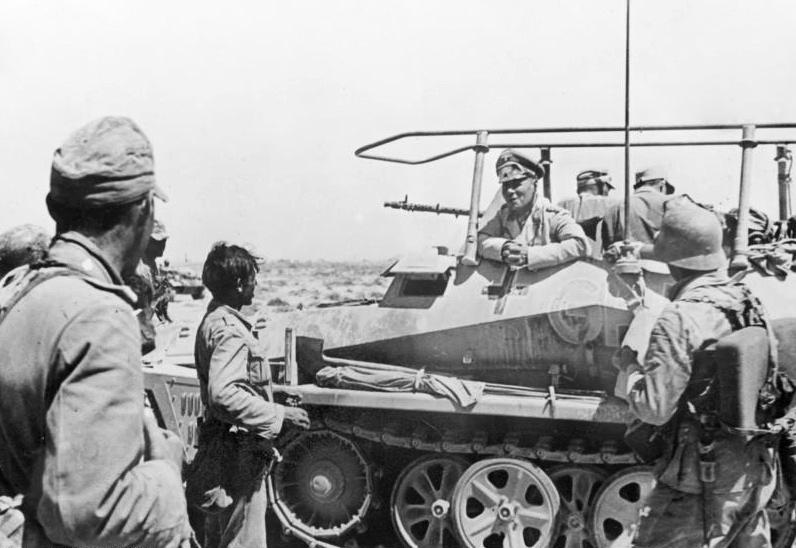
He was then given command of the troops sent to bail out Mussolini’s failed African adventure. His small force and always ill-supplied force, which became known as the Afrika Korps scored impressive victories against British forces. In Africa, Rommel gained fame and earned rapid promotion. Though Africa was a sideshow in the Nazi war effort, Rommel became a poster-child for Joseph Goebbels’ propaganda machine. His fame also earned the resentment of many fellow officers who because he was not an officer of the General Staff regarded him with jealous envy and distain. Even so, Rommel was a soldier’s soldier. He believed in sharing in the suffering of his troops. He once said:

“Be an example to your men in your duty and in private life. Never spare yourself, and let the troops see that you don’t in your endurance of fatigue and privation. Always be tactful and well-mannered, and teach your subordinates to be the same. Avoid excessive sharpness or harshness of voice, which usually indicates the man who has shortcomings of his own to hide.”

bundesarchiv_bild_146-1991-031-25a_nordafrika_vor_tobruk_rommel

In Arica Rommel showed himself to be a remarkable tactician and field commander. Likewise, unlike many other German (and sadly Allied) commanders had the ability to recognize the valor and soldierly virtues of his opponents, even those who were not white. A captured South African officer pleaded with Rommel to spare him being imprisoned with Black troops under his command. Rommel told him:

“For me, soldiers are all equal. Those black people wore your same uniform, fought on your side, and so you will be in the same jail.”

That was not until Rommel discovered the reality of Hitler’s promises as the troops of the Afrika Corps were hollow that he began to understand the man he had sworn his allegiance. He and his gallant German and Italian soldiers found themselves subjected to constant privation from lack of supply, air support and reinforcements. As commander of the Afrika Corps and later the Panzer Armee Arfika he and his troops achieved amazing success against an enemy that was always better supplied and equipped and which had air and sea superiority. Battling the British as well as the political machinations of Mussolini and Germany’s Italian Allies as well as opponents in the German government such as Hermann Goering, Rommel saw his troops crushed under the press of the British as well as the Americans who landed in French North Africa. Eventually, sick and worn out, Rommel was sent back to Germany to recuperate.

While visiting Hitler’s headquarters during that leave Rommel was struck by the atmosphere and made this observation:

“During the conference I realised that the atmosphere in the Fuehrer’s H.Q,. was extremely optimistic. Goering in particular was inclined to minimise our difficulties. When I said that British fighter-bombers had shot up my tanks with 4O-mm. shells, the Reichsmarschall, who felt himself touched by this, said: ” That’s completely impossible. The Americans only know how to make razor blades.” I replied: “We could do with some of those razor blades, Herr Reichsmarschall.”

rommel-with-soldier

Rommel had a sense of honor and humanity that many other German generals lacked. He refused to allow anti-Jewish measures in areas occupied by German troops in North Africa, ensuring that the approximately 425,000 Jews living in Libya, Tunisia, Algeria, and Morocco were spared the fate of the Holocaust. He refused to execute Jewish POWs, and refused to follow the notorious “commando order.” In June of 1994 he protested the massacre of the people of the village of Oradour-sur-Glane by units of the 2nd SS Panzer Division directly to Hitler and asked for the authority to punish those responsible, but was his protest was refused.

In late 1943 and early 1944 Rommel began to learn of the mass killings being orchestrated by Himmler’s SS. His son Manfred asked his father’s permission to join the Waffen SS, which Rommel insisted that he not do, the younger Rommel recounted:

“While, he said, he perfectly well recognised the quality of the S.S. troops, under no circumstances did he want me to be under the command of a man who, according to his information, was carrying out mass killings. ” Do you mean Himmler? ” I asked. ” Yes,” he answered, and instructed me to maintain absolute silence about the whole affair. The war was not going at all well and he had heard that people like Himmler were trying, by actions of this kind, to burn the bridges of the German people behind them. I think he was not at all certain at that time whether Hitler knew anything about what was going on, for no mention of the mass executions had ever been made at the Fuehrer’s H.Q. And perhaps he would never have brought himself to the decision to end the war -by a revolt if necessary -if he had not received further information in the early months of 1944 which confirmed these crimes and gave some idea of their extent. From that moment on, all my father’s inner allegiance to Adolf Hitler, whom he had once admired, was destroyed, and he brought himself, from his knowledge of the Fuehrer’s crimes, to act against him.” 

Rommel’s honest assessments of the chances of the Germans winning the war which he spoke candidly to Hitler and the High Command made him persona non grata in Berlin and Berchtesgaden. In the time before he was posted to France in late 1943 he became a part of the plot to end the war and overthrow Hitler. Rommel’s Chief of Staff at OB West, General Hans Speidel, was a key man in the conspiracy and Rommel had contacts with a number of key conspirators. He believed that the war was lost unless his forces could repel the coming Allied invasion on the beaches and worked feverishly to bolster the beach fortifications. He recommended that the Panzer Divisions be deployed near the coast where they could immediately counterattack Allied invasion forces while they were still vulnerable. But his advice was not taken. He was given command of the Army Group but was not given control of most of the Panzer Divisions, which Hitler kept under his direct control.

When the invasion came Rommel was away from Normandy visiting his wife. On learning of the invasion he sped back to Normandy. When he arrived he fought a desperate battle against the Allied forces. His outnumbered forces were under constant assault from the land, sea and air received paltry reinforcements compared to the Allies. Even so, German troops inflicted many local defeats and exacted a heavy price in allied blood in Normandy but were ground to dust. Even so, many American and British infantry regiments suffered 100% casualties but remained in action because of a continuous stream of replacements. Rommel urged Hitler and the High Command to withdraw German forces from Normandy before the allies broke through his front. By doing so he found that he was now considered a defeatist.

Rommel was severely wounded in an air attack on his vehicle by a just days before the attempt on Hitler’s life. Hitler survived the attempted assassination and exacted a terrible revenge on anyone connected with the plot. Show trials and public hangings of officers who had served valiantly at the front were common. Thousands were killed and thousands more imprisoned.

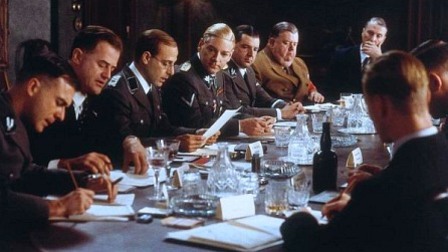
Eventually, other conspirator’s testimony exposed that Rommel was part of the plot. He was recommended by the “Court of Military Honor” to be expelled from the military and tried by the “People’s Court” of Judge Roland Freisler. During the purge that followed the attempt on Hitler’s life, many noted German military commanders were hauled before this court and humiliated by Freisler before they were sent to their deaths. Freisler, a fanatic Nazi judge has been part of the infamous Wansee Conference which planned the details of the Final Solution was killed when his courtroom was bombed in February 1945.

Because of his fame and popularity in Germany Hitler was decided to offer Rommel a choice of being tried by the People’s Court or committing suicide and ensuring his family’s safety. Hitler dispatched two generals from Berlin to personally deliver the message.

492px-Erwin_rommel_death

Rommel suspected that he would be identified and killed and told that to his friends and family in the days leading up to the arrival of Generals Wilhelm Burgorf and Ernst Maisel from OKW with the ultimatum. They met with Rommel for a short time before giving him the opportunity to say goodbye to his family. Rommel told them of his choice and left his home for the last time. 15 minutes later the Generals called his wife to say that he had died of a heart attack. Rommel was given a state funeral and the German people were lied to about his cause of his death.

Winston Churchill wrote of Rommel:

“He also deserves our respect because, although a loyal German soldier, he came to hate Hitler and all his works, and took part in the conspiracy to rescue Germany by displacing the maniac and tyrant. For this, he paid the forfeit of his life. In the sombre wars of modern democracy, chivalry finds no place … Still, I do not regret or retract the tribute I paid to Rommel, unfashionable though it was judged.”

Rommel was just 52 years old when he died. I find in the story of Rommel some commonality in my own life. Before Rommel went to Africa he believed that Germany would win the war, during his command there he discovered that what he believed was lies and that Hitler had little regard for him or his troops. Before I went to Iraq in 2007 I believed much of the political propaganda promoted by the Bush administration and right wing news media and pundits about that war.

The example of Erwin Rommel is a cautionary tale of what can happen when a brilliant and honorable man comes under the spell of a demagogue. Rommel believed Hitler and blindly followed him until he ran into the hard face of reality in Africa at which point he had the moral courage to do the right thing, but many didn’t.

The fact is that it is hard for most Americans to imagine what it would be to,serve in the military, law enforcement, intelligence, or justice departments of a totalitarian regime, but we are fast approaching that point.

Sadly there are otherwise honorable men and women in the current United States military who are blindly supporting a delusional and quite probably criminal President;  a man who promises to order soldiers to commit war crimes, who threatens to jail political opponents, who condemns whole races of people and religions, a man who has no respect for the courts, the law, or the Constitution.  Personally as a historian I cannot understand that kind of blind loyalty especially when the the leader in question has no loyalty to anyone other than himself. Not long before he was killed Rommel told his son:

“one thing is quite clear, it’s intolerable that the fate and welfare of a whole nation should depend on the whim of a small group. There must be some limit, otherwise, the most fantastic things can happen without anyone noticing.”

Rommel refused to obey the criminal orders that so many other German Generals and Officers obeyed. He lost his life because of his honor and personal integrity, and willingness to oppose a criminal regime. The question is, if President Trump and his administration cross that line, will American military leaders emulate Rommel or the officers who obeyed their orders, aided and abetted War Crimes and Crimes Against Humanity, and in many cases lied about the activities after the war in order to secure lucrative employment advising the Western Allies on the tactics and operational methods of the Soviets while writing their memoirs, which coincidentally omitted or denied their cooperation with Hitler’s most criminal orders.

Others, who were captured by the Soviets and worked for the Army or Security and Intelligence Services Of East Germany never admitted their roles in Hitler’s crimes. It was like they all sought to erase history, but the archives don’t lie, whether they worked for NATO or the Soviets.

The frightening thing is that almost all had served many of their formative years in the service of the Kaiser, or the Weimar Republic. They were not products of the Hitler Youth or Nazi education. They knew better. We should too, but that is no guarantee that we will not devolve as they did.

I hope that own better angels prevail.

Peace,

Padre Steve+

6 Comments

Filed under ethics, History, holocaust, Loose thoughts and musings, Military, nazi germany, Political Commentary, world war two in europe

The Unending Reality Of Endlösung: The Legacy of Adolf Eichmann and those Who Embrace Race Hatred

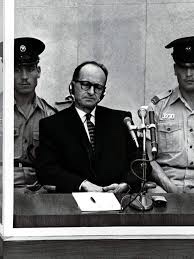
Eichmann1

Friends of Padre Steve’s World,

On June 1st 1962 Adolf Eichmann was hanged in Israel for his crimes of mass murder and genocide. His appearance in the court where he portrayed himself as a functionary and bureaucrat who was repulsed by bloodshed and only following orders. So convincing was his act that Hannah Arendt wrote of him:

“The trouble with Eichmann was precisely that so many were like him, and that the many were neither perverted nor sadistic, that they were, and still are, terribly and terrifyingly normal. From the viewpoint of our legal institutions and of our moral standards of judgment, this normality was much more terrifying than all the atrocities put together, for it implied — as had been said at Nuremberg over and over again by the defendants and their counsels — that this new type of criminal, who is in actual fact hostis generis humani, commits his crimes under circumstances that make it well-nigh impossible for him to know or to feel that he is doing wrong.”

Unfortunately there are people such as Arendt described, but Eichmann was not one of them. She wrote her commentary having only attended parts of the trial, but what she saw convinced her that Eichmann was ordinary and normal. She was convinced by his appearance and presentation at the trial that he was not the man who ran roughshod over Jews as well as German officials in order to execute the Final Solution. That phrase, “the banality of evil” has often been used to provide an alibi for men and women who wholeheartedly participated in the extermination of the Jews and others deemed to be less than human regardless of whether they were desk bound bureaucrats in Berlin, managers of the extermination camps, or the members of the Einsatzgruppen, the Ordungspolizei, or the Wehrmacht who systematically exterminated millions of people up close and personal.

Eichamnn was a true believer in the Nazi system and its desire to exterminate the Jews from the earth and he enjoyed what he did. He not only acted on orders but he anticipated them, as he told William Sassen in an interview while living undercover in Argentina in the 1950s:

“If we would have killed 10.3 million Jews, then I would be satisfied and would say, good, we annihilated an enemy. … I wasn’t only issued orders, in this case I’d have been a moron, but I rather anticipated, I was an idealist.”

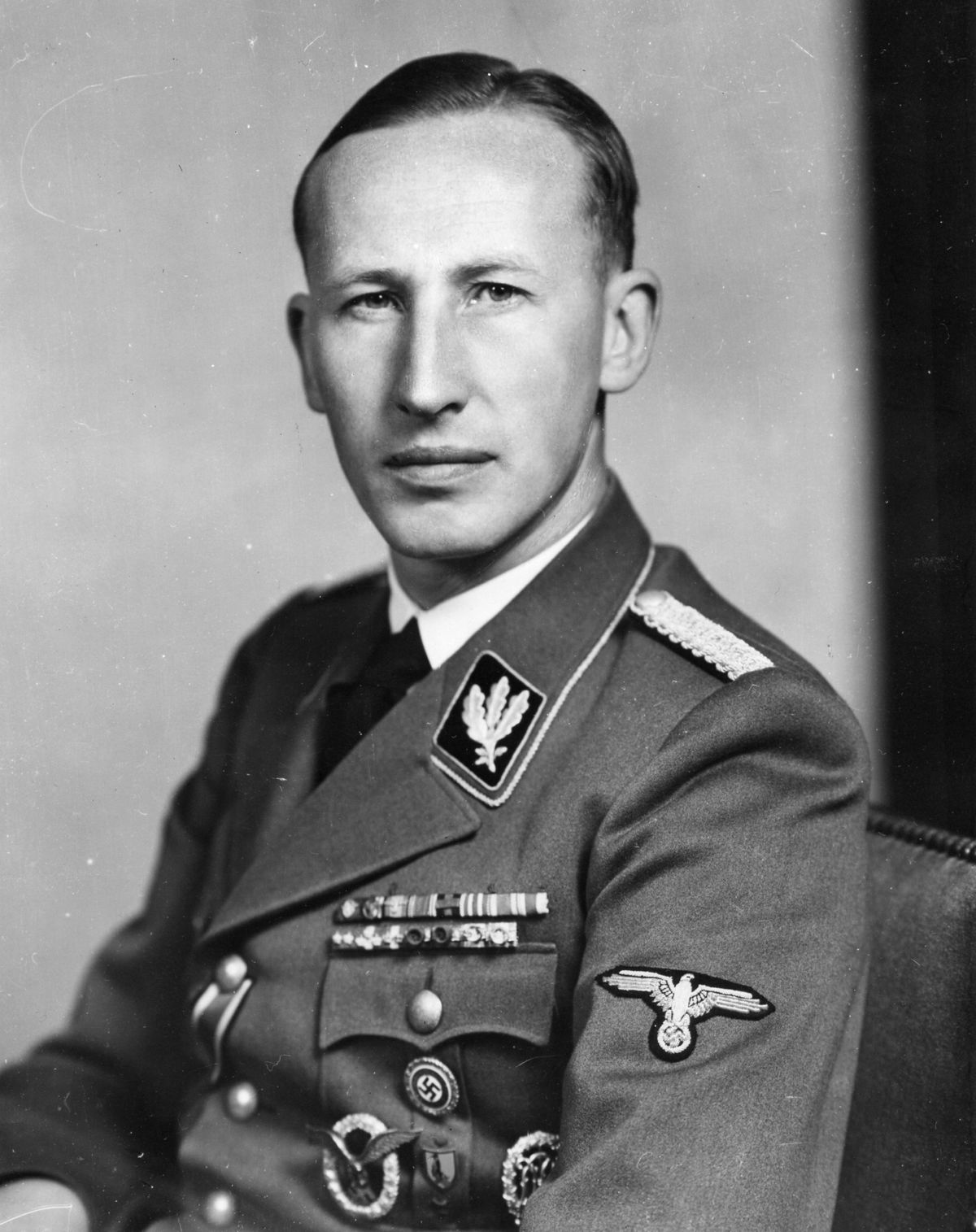
Eichmann began his career by persecuting the Jews of Vienna but following the Wansee Conference he was entrusted by Reinhard Heydrich with overseeing the mechanics of implementing the Final Solution. He was only an SS Lieutenant Colonel but he wielded his power with such effect that he could ensure that Nazi functionaries senior to him did his bidding in regard to the Jews, He told Sassen:

“They knew me wherever I went. Through the press, the name Eichmann had emerged as a symbol…. In any case, the word Jew … was irreversibly linked with the word Eichmann. Much more power … was attributed to me than I actually had.”

Eichmann summed up the attitude of many when he said regarding his work to deport hundreds of thousands of Hungarian Jews to Auschwitz in in just a few weeks during the fall of 1944, “Whether they were bank directors or mental cases, the people who were loaded on those trains meant nothing to me.” Speaking to Willem Sassen in 1957 Eichmann reveled in that accomplishment, “It was an achievement that was never matched before or since.” Eichmann also enjoyed leading his victims on, pretending that he might listen, and they might change his mind. Eichmann was proud of what he did. He told his staff, “I will leap into my grave laughing because the feeling that I have five million human beings on my conscience is for me a source of extraordinary satisfaction.”

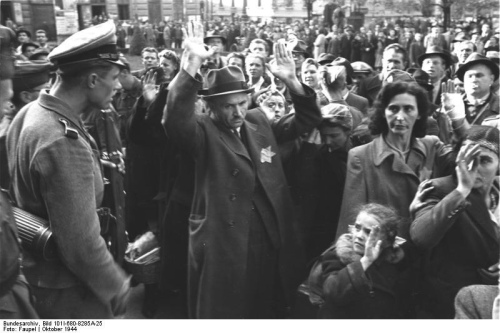
Some of the 437,000 Hungarian Jews Being Sent to Auschwitz

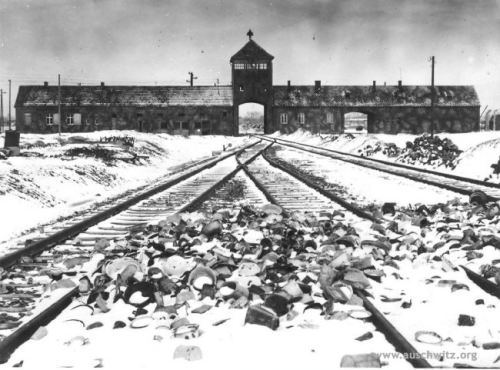
His greatest accomplishment of genocide was in Hungary between March and May of 1944 when he orchestrated the “evacuation” of 437,000 Jews to Auschwitz, of which nearly 400,000 were exterminated in that camps massive gas chambers. His greatest regret was that Himmler and others, realizing that the war was lost were now trying to find ways to deal with the Allies using the Jews as bargaining chips. They put an end to his campaign leaving half of Hungary’s Jews alive, something that he detested to the end of his life for his superiors had taken away his reason for being.

Eichmann twisted language in a perverse manner to both glorify and justify his inhumanity. Bettina Stangneth, wrote in her book Eichmann Before Jerusalem:

“The language becomes entirely perverted where Eichmann turns metaphors on their heads, talking about expulsion and murder using gentle images of life. An institution for forced emigration was his “first child,” where he was able to “be creative in my work.” All the individual acts of robbery and expulsion that took place in Austria were committed to “provide [the country] with injections of Jewish solutions.” Even exterminations and deportations were “born”. This was why he felt so superfluous in Budapest, when he was forced to stop deporting people to Auschwitz: “As far as I know, I couldn’t have done anything fruitful anymore” … In Eichmann’s language, he didn’t send people to the death camps; the camps were “fed with material”.

Adolf Eichmann went to his death unrepentant and there is nothing to be mourned on this anniversary of his death, other than the fact that there are people who are much like him today. That is the terrifying reality. Some may be those faceless bureaucrats, but too many others would easily become killers. As Timothy Snyder noted:

“The European history of the twentieth century shows us that societies can break, democracies can fall, ethics can collapse, and ordinary men can find themselves standing over death pits with guns in their hands. It would serve us well today to understand why.”

Christopher Browning wrote in his book Ordinary Men: Reserve Police Battalion 101 and the Holocaust in Poland:

“I fear that we live in a world in which war and racism are ubiquitous, in which the powers of government mobilization and legitimization are powerful and increasing, in which a sense of personal responsibility is increasingly attenuated by specialization and bureaucratization, and in which the peer group exerts tremendous pressures on behavior and sets moral norms. In such a world, I fear, modern governments that wish to commit mass murder will seldom fail in their efforts for being unable to induce “ordinary men” to become their “willing executioners.”

In such a world it is all too important that we never forget, especially now when we could be watching it begin all over again. Eichmann may be dead but he lives on and we must always remain vigilant, or the specter of the Holocaust will rise again, quite possibly in countries that are considered civilized and freedom loving, like the United States.

Never forget,

Peace

Padre Steve+

3 Comments

Filed under History, holocaust, nazi germany, Political Commentary, war crimes, world war two in europe

Benjamin Ferencz and the Pursuit Of International Justice: “A true patriot will support his country when it is right but will have the courage to speak out when it’s wrong and try to set it right.”

Friends of Padre Steve’s World,

Last night I watched the biographical documentary of Benjamin Ferencz, who at the age of 27 served as the chief prosecutor at the Nuremberg Einsatzgruppen Trials In 1947, on Netflix. The title is Prosecuting Evil: the Extraordinary World Of Ben Ferencz. It is well worth the time to watch. Ferencz is now 98 years old and has been a driving force in the prosecution of war crimes. Probably more than any other American took to heart the message of Justice Robert Jackson:

If certain acts of violation of treaties are crimes, they are crimes whether the United States does them or whether Germany does them, and we are not prepared to lay down a rule of criminal conduct against others which we would not be willing to have invoked against us.”

Ferencz, took, and still takes that seriously. He fought long and hard for the establishment of the International Criminal Court and delivered the closing argument in its first prosecution of a war criminal, Thomas Lubanga Dyilo, for his use of child soldiers in the Democratic Republic Of the Congo, the Trial ended in 2006, with Dyilo’s conviction.

Ferencz was brought into the Nuremberg process because of his experience investigating Concentration Camps during and shortly after the war while still in the Army, by Colonel, Later General Telford Taylor, who was appointed to direct the 12 trials that followed the trial of the Major War Criminals. Ferencz discovered the evidence of the crimes of the Einsatzgruppen while doing investigations for Taylor, and he volunteered to take the lead in prosecuting the highest ranking of those killers. Taylor said:

“The laws of war do not apply only to the suspected criminals of vanquished nations. There is no moral or legal basis for immunizing victorious nations from scrutiny. The laws of war are not a one-way street.

Ferencz understood that, and ever since Nuremberg has been a consistent force in the conscience of the nation and international law. I had read about him many times, as well as the Einsatzgruppen Trials. As I watched the documentary about him, which included many interviews with him, I was amazed by how much he was like my history professor at California State University, Northridge, Dr. Helmut Haeussler in the pursuit of truth and justice, who served as an interpreter at Nuremberg and introduced me to victims of the Holocaust, people who survived Auschwitz.

Since that time, as a historian I have been devoted to telling the truth about the Holocaust and bearing witness, even as I confront Holocaust deniers, anti-semites, and Neo-Nazis.

Ferencz made history, and by his continued witness, and at the age of 98 still makes history and inspires men like me to want to make a difference after I retire from the Navy by bearing witness when all of the survivors are gone. Benjamin Ferencz never retired in his quest for justice. He noted:

“Nuremberg taught me that creating a world of tolerance and compassion would be a long and arduous task. And I also learned that if we did not devote ourselves to developing effective world law, the same cruel mentality that made the Holocaust possible might one day destroy the entire human race.”

I agree with him and no matter how long I live I will travel, research, write, and testify on behalf of the victims of the Holocaust and other genocides so that they won’t happen again.

Ferencz spoke out against the Invasion of Iraq in 2003, about American War Crimes in Vietnam, and in what we call The War on Terror. To be sure he labels those who attacked us in 2001 as War Criminals based on the Nuremberg statutes, but he has also been critical of the United States.

Ferencz said: “A true patriot will support his country when it is right but will have the courage to speak out when it’s wrong and try to set it right.”

I want to devote the remaining part of my life to making sure that the truth is told and such events of mass murder never happen again. I will do my best to live according to his ethos, as well as that of Robert Jackson,

Until tomorrow,

Peace,

Padre Steve+

3 Comments

Filed under ethics, History, holocaust, laws and legislation, Military, national security, nazi germany, war crimes, War on Terrorism

Despite the Foreboding Feelings I Have, I Will Fight “We have to show the world that not all of us are like him. Otherwise, this will always be Hitler’s Germany.”

img_3414

Friends of Padre Steve’s World,

Hannah Arendt wrote: “When evil is allowed to compete with good, evil has an emotional populist appeal that wins out unless good men and women stand as a vanguard against abuse.”

She was right. We are seeing a populist appeal that is embracing evil and it is happening before our very eyes.

I cannot shake the deep sense of foreboding I have regarding the country and the world after President Trump’s repeated attacks on NATO, his shredding of the Paris Climate accord, and the threat of war on the Korean Peninsula are enough to concern any right thinking person. Likewise, the swirl of allegations concerning what appears to be treasonous activities by his closest advisers and his apparent attempts to have them covered up by the FBI and various intelligence agencies. There is something very wrong going on and it almost feels that I can see the disaster unfolding before it happens.

If it was Trump alone it would be an anomaly, but most of the Republican Party has decided to support his unconstitutional abuses of power and his base, which is made up mainly of Evangelical or other Conservative Christians have anointed Trump’s Presidency as ordained by God, and opponents as not only opponents of Trump, but also of God. That my friends is as toxic of political combination as is humanly possible.

I am not the only one to notice, leading conservative writers, foreign policy experts, and constitutional scholars have pointed out the same things that I have been saying for over a year. I do try to be positive and to believe that things will work out for the best, but the more I observe the more my confidence in our leaders and for that purpose many of our people to do the right thing is diminished.

That being said I do not give in to the feelings of foreboding or intend give up without a fight. I want my country to live up to its ideals, I am concerned about the real world, our alliances, our environment, and the real threat to freedom.  I believe in a particular universal ideal enunciated in the Preamble of the Declaration of Independence that All men are created equal, and as such that I must continually stand for what is right, what is true, and what is enduring.

I am worried about our democracy and I agree with Timothy Snyder who wrote:

“Democracy failed in Europe in the 1920s, ’30s, and ’40s, and it is failing not only in much of Europe but in many parts of the world today. It is that history and experience that reveals to us the dark range of our possible futures. A nationalist will say that “it can’t happen here,” which is the first step toward disaster. A patriot says that it could happen here, but that we will stop it.”  

It can happen here, and if we are patriots and not simply nationalists we must stand for principle and work for a new birth of freedom even as it seems that freedom itself is in danger. So as I write about some of the notable events of our history that we commemorate over the coming days please know that I take inspiration from them as I hope you will.  I am a patriot, and in my heart I believe we must stop it. As the German General and resistance leader against Hitler said:

“We have to show the world that not all of us are like him. Otherwise, this will always be Hitler’s Germany.”

We must stand together, or this will always be Trump’s America, and we will hang separately. A word of warning to dissident Republicans, and Democrats or Progressives who if their candidate is not the Democratic Nominee threaten to sit out the election or vote third party. Such a choice is suicidal, it only helps Trump. If he is re-elected Civil rights and free speech will be rolled back, the Constitution itself be trampled, and the United States, however imperfectly imagined by our founders will pass into the dustbin of history, to be replaced with a racist and authoritarian theocracy, which will last than the 12 years of Hitler’s 1000 year Reich.

That my friends is the hard Cold truth, from a historian, military combat veteran, and a man who spent 32 years supporting the Republican Party and its candidates.

Peace

Padre Steve+

3 Comments

Filed under civil war, History, holocaust, national security, News and current events, Political Commentary

Of Pardoning War Criminals: Trump and the Consequences Of Ignoring Justice

Friends of Padre Steve’s World,

There are reports that this Memorial Day weekend that President Trump will Pardon convicted or accused War Criminals, men whose conduct dishonored the military and the country, men whose fellow soldiers, Marines, or Sailors have voluntarily testified against. These men murdered prisoners and committed other crimes forbidden by the law of war. If he does so this weekend it will be the ultimate betrayal of the military by the Commander in Chief.

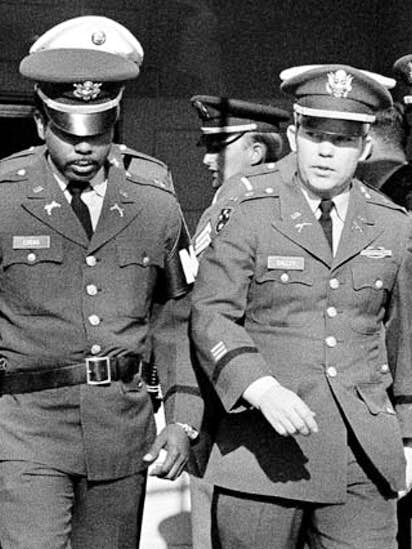
When Richard Nixon Pardoned Lieutenant William Calley, convicted of leading his platoon in the deadliest atrocity committed by American Troops in the Vietnam War at a village called My Lai. His men’s butchery had to be stopped by an American helicopter and its crew who interposed their bird between Carley’s men and other potential victims, and threatened to shoot at Calley’s men. The crime was initially covered up by Calley’s chain-of-command. Eventually it became public and the Army was forced to deal with it. Of all the officers charged and soldiers charged, only Calley was convicted. It took thirty years for the military to award the heroes who stopped the massacre.

In the six degrees of separation I am just twice removed from My Lai, two times. In my MSIII, junior year of Army ROTC in the Fall of 1981. My instructor was Major Barry Towne, during the investigation he was Commanding part of the security force. He told us what kind of criminal element that Calley and his platoon was. Calley’s defense at Court Martial was that “he was just following orders.”

Major Towne told us of its effect on the troops, the public, and the war. He told us that we would be war criminals if we ever allowed that to happen under my command. So I knew one of the Officers with first hand knowledge of the crime and the crime scene. Then, in June of 1998 while serving as the Garrison Chaplain at Fort Indiantown Gap, Pennsylvania I did the funeral of Calley’s Brigade Commander, Colonel Oran Henderson. He was acquitted of all charges including the cover-up which he began the day of the massacre. At the time I didn’t know his fully complicity in the massacre. Telford Taylor, one of the Senior American prosecutors at Nuremberg “wrote that legal principles established at the war crimes trials could have been used to prosecute senior American military commanders for failing to prevent atrocities such as the one at My Lai.” Those included Generals, and many other senior officers.

President Nixon commuted Calley’s prison time to House Arrest, and in September 1974 Calley was pardoned by the Secretary of the Army. That man said he did it because Calley really did believe that he was following orders.

So if the President begins pardoning War criminals it will be a watershed from which there will be no going back, unless the Generals and Admirals protest. If course if they do, Trump will replace them with men who will go all the way, and his base, especially his allegedly pro-life Christians, who believe that he has been ordained by God to Make America Great Again.

Just before the invasion of Poland Hitler told his military commanders:

“I shall give a propagandist cause for starting war -never mind whether it be plausible or not. The victor shall not be asked later on whether we told the truth or not. In starting and making a war, it is not the right that matters, but victory.”

In May 1941, Field Marshal Wilhelm Keitel disseminated the Barbarossa Decree in the name of Adolf Hitler which absolved German Soldiers from war crimes, even those against German law. Army Group and Army Commanders had the authority to be more severe than Keitel’s order. The Severity Order issued by Field Marshal Walter Reichenau of Army Group, Commander of 6th Army. That order stated:

The most important objective of this campaign against the Jewish-Bolshevik system is the complete destruction of its sources of power and the extermination of the Asiatic influence in European civilization.

In this eastern theatre, the soldier is not only a man fighting in accordance with the rules of the art of war, but also the ruthless standard bearer of a national conception and the avenger of bestialities which have been inflicted upon German and racially related nations. For this reason the soldier must learn fully to appreciate the necessity for the severe but just retribution that must be meted out to the subhuman species of Jewry. The Army has to aim at another purpose, i. e., the annihilation of revolts in hinterland which, as experience proves, have always been caused by Jews.

Other Wehrmacht Commanders wrote similar orders, unleashing the beast in their soldiers and classifying their enemies as less than human, a typical charge leveled at racial and religious minorities, as well as immigrants, and potential enemies by the President.

General Erich Hoepner issued this order to his soldiers of Panzer Group Four, Later known as the 4th Panzer Army:

The war against Russia is an important chapter in the German nation’s struggle for existence. It is the old battle of the Germanic against the Slavic people, of the defence of European culture against Muscovite-Asiatic inundation and of the repulse of Jewish Bolshevism. The objective of this battle must be the demolition of present-day Russia and must therefore be conducted with unprecedented severity. Every military action must be guided in planning and execution by an iron resolution to exterminate the enemy remorselessly and totally. In particular, no adherents of the contemporary Russian Bolshevik system are to be spared.

Unopposed Pardons will release unprecedented evil by otherwise honorable men who either believer that they are just following orders or approved by God through the words of their leader.

I take this very seriously. War Crimes are war crime whether committed by Nazis, Communists, the Iranian Revolutionary Guard, or American soldiers. Supreme Court Justice Robert Jackson who organized the Nuremberg Trials and prosecuted the leading Nazis noted before the trials began:

“If certain acts of violation of treaties are crimes, they are crimes whether the United States does them or whether Germany does them, and we are not prepared to lay down a rule of criminal conduct against others which we would not be willing to have invoked against us.” Justice Robert Jackson International Conference on Military Trials, London, 1945, Dept. of State Pub.No. 3080 (1949), p.330.

If Trump Pardons these men he will be spitting in the face of American and International Justice. He will be blessing war crimes and if there is no push back from the Joint Chiefs of Staff or the Regional Combatant Command Commanders we are doomed to repeat what criminal regimes have done. We will be a rogue and outcast nation whose word will not be believed, and whose military members will be considered criminals, even if they serve honorably and have never committed any crimes. Ask any Vietnam Veteran if you don’t believe me. I wasn’t a Vietnam veteran, but my dad was. When I enlisted and joined the ROTC program at UCLA I had a man come out from nowhere and start screaming at me “off campus ROTC Nazi!”

I haven’t forgotten that. I was a kid when Calley committed his crimes. I had never fired a shot in anger, and my primary focus of study over the previous year had been the guilt of the Nazis and their genocidal policies. What leaders do matters, and there is no escaping that, especially if you volunteer to serve in the military.

These are big issues and cannot be allowed to go unnoticed. The rot begins in the head of the fish. We are well on our way to to becoming a criminal and outlaw nation, something our Founders thought they had prevented by devising our system of government, a system intentionally designed to limit the powers of the Executive.

This does matter. If Trump Pardons these men and there is no push back from the Senior Commanders I would advise no one to enlist or take a commission in the United States military, and I have almost 38 years of service in the Army and Navy to prove my devotion to the Constitution and Country, including combat tours in which I was shot at and was in danger on a daily basis. As a historian, priest, and officer I cannot be silent if the President Pardons War criminals. The very thought is abhorrent to my nature.

Until tomorrow,

Peace

Padre Steve+

6 Comments

Filed under ethics, History, holocaust, iraq,afghanistan, laws and legislation, leadership, Military, national security, nazi germany, News and current events, Political Commentary

What Do We Stand For? Hard Questions in the Trump Era from Judgement at Nuremberg

img_0333-1

Friends of Padre Steve’s World,

I have written about the classic film Judgment at Nuremberg many times. I am doing it again because I have been doing a lot of reading about some of the other war crimes trials conducted in post-World War II Germany, today I began reading Hitler’s American Friends: The Third Reich’s Supporters in the United States by Bradley Hart.

Today I am following those earlier writings up with another, albeit, short post regarding one of the most riveting monologues in film history, from Judgement at Nuremberg. Since Holocaust Remembrance Day was just a couple of weeks back it is appropriate to take the time, and never forget, for while we may not want to admit it, as human beings we are capable of the same inhumanity.

In this segment of the film, which is a fictionalized version of the Judges Trial, Spencer Tracy plays the role of Chief Judge Dan Heywood who gives his verdict is one of the most telling sequences in cinema regarding what it means to be an American. I used to show it in the first session of my military ethics class at the Staff College and since the majority of my students had never seen the film, it usually left them in silence. So tonight I am just going to leave it with you to watch, read, and contemplate. Ask yourself, who are we, and what do we stand for?

This is especially true when the President, politicians of the majority party in the legislature, pundits, and politically minded preachers make no bones that they have every intent of persecuting those who are of certain races, religions, or political beliefs that they abhor, often using the most scurrilous charges, and outright lies in order to demonize them, dehumanize them, and  open the door for normal, decent, and even brilliant people to justify government sponsored cruelty and injustice that defies the ideals of the Declaration of Independence, the Gettysburg Address, and the Constitution itself.

Please, watch the video and read the text. Ponder it in your heart, because it speaks to something that is not a historical aberration, not just a dramatic film, but something that affects the human condition and is present right here and right now in our own country.

“The trial conducted before this Tribunal began over eight months ago. The record of evidence is more than ten thousand pages long, and final arguments of counsel have been concluded.

Simple murders and atrocities do not constitute the gravamen of the charges in this indictment. Rather, the charge is that of conscious participation in a nationwide, government organized system of cruelty and injustice in violation of every moral and legal principle known to all civilized nations. The Tribunal has carefully studied the record and found therein abundant evidence to support beyond a reasonable doubt the charges against these defendants.

Herr Rolfe, in his very skillful defense, has asserted that there are others who must share the ultimate responsibility for what happened here in Germany. There is truth in this. The real complaining party at the bar in this courtroom is civilization. But the Tribunal does say that the men in the dock are responsible for their actions, men who sat in black robes in judgment on other men, men who took part in the enactment of laws and decrees, the purpose of which was the extermination of humans beings, men who in executive positions actively participated in the enforcement of these laws — illegal even under German law. The principle of criminal law in every civilized society has this in common: Any person who sways another to commit murder, any person who furnishes the lethal weapon for the purpose of the crime, any person who is an accessory to the crime — is guilty.

Herr Rolfe further asserts that the defendant, Janning, was an extraordinary jurist and acted in what he thought was the best interest of this country. There is truth in this also. Janning, to be sure, is a tragic figure. We believe he loathed the evil he did. But compassion for the present torture of his soul must not beget forgetfulness of the torture and the death of millions by the Government of which he was a part. Janning’s record and his fate illuminate the most shattering truth that has emerged from this trial: If he and all of the other defendants had been degraded perverts, if all of the leaders of the Third Reich had been sadistic monsters and maniacs, then these events would have no more moral significance than an earthquake, or any other natural catastrophe. But this trial has shown that under a national crisis, ordinary — even able and extraordinary — men can delude themselves into the commission of crimes so vast and heinous that they beggar the imagination. No one who has sat at through trial can ever forget them: men sterilized because of political belief; a mockery made of friendship and faith; the murder of children. How easily it can happen.

There are those in our own country too who today speak of the “protection of country” — of “survival.” A decision must be made in the life of every nation at the very moment when the grasp of the enemy is at its throat. Then, it seems that the only way to survive is to use the means of the enemy, to rest survival upon what is expedient — to look the other way.

Well, the answer to that is “survival as what?” A country isn’t a rock. It’s not an extension of one’s self. It’s what it stands for. It’s what it stands for when standing for something is the most difficult!

Before the people of the world, let it now be noted that here, in our decision, this is what we stand for: justice, truth, and the value of a single human being.”

Think about it…

Have a nice night.

Peace

Padre Steve+

2 Comments

Filed under History, holocaust, movies, nazi germany, News and current events

They Thought They Were Free: Some Things Never Change, Totalitarianism and Support for Evil

they thought they were free

Friends of Padre Steve’s World,

One of the most powerful books I have ever read was Milton Mayer’s “They Thought They Were Free: The Germans 1933-1945.” Mayer was a visiting professor at the University of Frankfurt in the 1950s and lived in a small Hessian town near the city. The book is about the relationships that he built with ten ordinary citizens in the town and how they lived under Nazism and how most saw little wrong with it in the end.

The book is well worth the read and very timely when one compares the attitudes of the men who became Mayer’s friends and many people in the United States today. The last few chapters of the book are a reflection of the author’s opinions of the future of Germany at the time of his writing and he was mistaken on how the Germans would eventually become a society that embraced democracy and rejected authoritarianism (at the time he felt that it was very possible that democracy would fail in Germany,) they do not take away anything from the heart of the book and its message about how people adjust to authoritarian rule.

One chapter in particular struck me, it was a conversion that Mayer had with a colleague at the University who also reflected what it was like to live in the Third Reich and how in doing so he compromised himself and lost the opportunity to resist when resistance might have changed the course of events as Germany proceeded down the road to dictatorship and destruction. The chapter is particularly painful to read as the man understood that he should have known better but didn’t recognize the warning signs of the gradual nature of how life was changing with each new law or dictate from the Fuhrer.

In reading the chapter I see parallels in American society today. There are the Trump loyalists, many of who openly call for restrictions of liberty and crushing opposition to the President’s policies using extra-constitutional means including violence. Many are quite extreme while others, persuaded by years of right-wing talk radio, politically charged sermons by their pastors, and the daily dose of Fox News believe everything said by the President even when confronted by facts. Then there are Trump’s opponents, but many of the opponents are divided and cannot get along with each other. Some of these opponents actually helped Trump into office by circulating the Russian anti-Clinton conspiracy theories and falsehoods throughout the campaign. Each of these groups probably composes about 25-30% of the electorate each. The remaining segment are the people who simply go with the flow because life is too busy and crisis laden to get too deeply enmeshed in the political debate, and many have become so cynical that they see no difference in either side and are much more concerned about making it in a still uncertain economy.

So I invite you to read this and draw your own conclusions. Have a great day.

Peace

Padre Steve+

Chapter 13: But Then It Was Too Late

“What no one seemed to notice,” said a colleague of mine, a philologist, “was the ever widening gap, after 1933, between the government and the people. Just think how very wide this gap was to begin with, here in Germany. And it became always wider. You know, it doesn’t make people close to their government to be told that this is a people’s government, a true democracy, or to be enrolled in civilian defense, or even to vote. All this has little, really nothing, to do with knowing one is governing.

“What happened here was the gradual habituation of the people, little by little, to being governed by surprise; to receiving decisions deliberated in secret; to believing that the situation was so complicated that the government had to act on information which the people could not understand, or so dangerous that, even if the people could not understand it, it could not be released because of national security. And their sense of identification with Hitler, their trust in him, made it easier to widen this gap and reassured those who would otherwise have worried about it.

“This separation of government from people, this widening of the gap, took place so gradually and so insensibly, each step disguised (perhaps not even intentionally) as a temporary emergency measure or associated with true patriotic allegiance or with real social purposes. And all the crises and reforms (real reforms, too) so occupied the people that they did not see the slow motion underneath, of the whole process of government growing remoter and remoter.

“You will understand me when I say that my Middle High German was my life. It was all I cared about. I was a scholar, a specialist. Then, suddenly, I was plunged into all the new activity, as the university was drawn into the new situation; meetings, conferences, interviews, ceremonies, and, above all, papers to be filled out, reports, bibliographies, lists, questionnaires. And on top of that were the demands in the community, the things in which one had to, was ‘expected to’ participate that had not been there or had not been important before. It was all rigmarole, of course, but it consumed all one’s energies, coming on top of the work one really wanted to do. You can see how easy it was, then, not to think about fundamental things. One had no time.”

“Those,” I said, “are the words of my friend the baker. ‘One had no time to think. There was so much going on.’”

“Your friend the baker was right,” said my colleague. “The dictatorship, and the whole process of its coming into being, was above all diverting. It provided an excuse not to think for people who did not want to think anyway. I do not speak of your ‘little men,’ your baker and so on; I speak of my colleagues and myself, learned men, mind you. Most of us did not want to think about fundamental things and never had. There was no need to. Nazism gave us some dreadful, fundamental things to think about—we were decent people—and kept us so busy with continuous changes and ‘crises’ and so fascinated, yes, fascinated, by the machinations of the ‘national enemies,’ without and within, that we had no time to think about these dreadful things that were growing, little by little, all around us. Unconsciously, I suppose, we were grateful. Who wants to think?

“To live in this process is absolutely not to be able to notice it—please try to believe me—unless one has a much greater degree of political awareness, acuity, than most of us had ever had occasion to develop. Each step was so small, so inconsequential, so well explained or, on occasion, ‘regretted,’ that, unless one were detached from the whole process from the beginning, unless one understood what the whole thing was in principle, what all these ‘little measures’ that no ‘patriotic German’ could resent must some day lead to, one no more saw it developing from day to day than a farmer in his field sees the corn growing. One day it is over his head.

“How is this to be avoided, among ordinary men, even highly educated ordinary men? Frankly, I do not know. I do not see, even now. Many, many times since it all happened I have pondered that pair of great maxims, Principiis obsta and Finem respice—‘Resist the beginnings’ and ‘Consider the end.’ But one must foresee the end in order to resist, or even see, the beginnings. One must foresee the end clearly and certainly and how is this to be done, by ordinary men or even by extraordinary men? Things might have. And everyone counts on that might.

“Your ‘little men,’ your Nazi friends, were not against National Socialism in principle. Men like me, who were, are the greater offenders, not because we knew better (that would be too much to say) but because we sensed better. Pastor Niemöller spoke for the thousands and thousands of men like me when he spoke (too modestly of himself) and said that, when the Nazis attacked the Communists, he was a little uneasy, but, after all, he was not a Communist, and so he did nothing; and then they attacked the Socialists, and he was a little uneasier, but, still, he was not a Socialist, and he did nothing; and then the schools, the press, the Jews, and so on, and he was always uneasier, but still he did nothing. And then they attacked the Church, and he was a Churchman, and he did something—but then it was too late.”

“Yes,” I said.

“You see,” my colleague went on, “one doesn’t see exactly where or how to move. Believe me, this is true. Each act, each occasion, is worse than the last, but only a little worse. You wait for the next and the next. You wait for one great shocking occasion, thinking that others, when such a shock comes, will join with you in resisting somehow. You don’t want to act, or even talk, alone; you don’t want to ‘go out of your way to make trouble.’ Why not?—Well, you are not in the habit of doing it. And it is not just fear, fear of standing alone, that restrains you; it is also genuine uncertainty.

“Uncertainty is a very important factor, and, instead of decreasing as time goes on, it grows. Outside, in the streets, in the general community, ‘everyone’ is happy. One hears no protest, and certainly sees none. You know, in France or Italy there would be slogans against the government painted on walls and fences; in Germany, outside the great cities, perhaps, there is not even this. In the university community, in your own community, you speak privately to your colleagues, some of whom certainly feel as you do; but what do they say? They say, ‘It’s not so bad’ or ‘You’re seeing things’ or ‘You’re an alarmist.’

“And you are an alarmist. You are saying that this must lead to this, and you can’t prove it. These are the beginnings, yes; but how do you know for sure when you don’t know the end, and how do you know, or even surmise, the end? On the one hand, your enemies, the law, the regime, the Party, intimidate you. On the other, your colleagues pooh-pooh you as pessimistic or even neurotic. You are left with your close friends, who are, naturally, people who have always thought as you have.

“But your friends are fewer now. Some have drifted off somewhere or submerged themselves in their work. You no longer see as many as you did at meetings or gatherings. Informal groups become smaller; attendance drops off in little organizations, and the organizations themselves wither. Now, in small gatherings of your oldest friends, you feel that you are talking to yourselves, that you are isolated from the reality of things. This weakens your confidence still further and serves as a further deterrent to—to what? It is clearer all the time that, if you are going to do anything, you must make an occasion to do it, and then you are obviously a troublemaker. So you wait, and you wait.

“But the one great shocking occasion, when tens or hundreds or thousands will join with you, never comes. That’s the difficulty. If the last and worst act of the whole regime had come immediately after the first and smallest, thousands, yes, millions would have been sufficiently shocked—if, let us say, the gassing of the Jews in ’43 had come immediately after the ‘German Firm’ stickers on the windows of non-Jewish shops in ’33. But of course this isn’t the way it happens. In between come all the hundreds of little steps, some of them imperceptible, each of them preparing you not to be shocked by the next. Step C is not so much worse than Step B, and, if you did not make a stand at Step B, why should you at Step C? And so on to Step D.

“And one day, too late, your principles, if you were ever sensible of them, all rush in upon you. The burden of self-deception has grown too heavy, and some minor incident, in my case my little boy, hardly more than a baby, saying ‘Jewish swine,’ collapses it all at once, and you see that everything, everything, has changed and changed completely under your nose. The world you live in—your nation, your people—is not the world you were born in at all. The forms are all there, all untouched, all reassuring, the houses, the shops, the jobs, the mealtimes, the visits, the concerts, the cinema, the holidays. But the spirit, which you never noticed because you made the lifelong mistake of identifying it with the forms, is changed. Now you live in a world of hate and fear, and the people who hate and fear do not even know it themselves; when everyone is transformed, no one is transformed. Now you live in a system which rules without responsibility even to God. The system itself could not have intended this in the beginning, but in order to sustain itself it was compelled to go all the way.

“You have gone almost all the way yourself. Life is a continuing process, a flow, not a succession of acts and events at all. It has flowed to a new level, carrying you with it, without any effort on your part. On this new level you live, you have been living more comfortably every day, with new morals, new principles. You have accepted things you would not have accepted five years ago, a year ago, things that your father, even in Germany, could not have imagined.

“Suddenly it all comes down, all at once. You see what you are, what you have done, or, more accurately, what you haven’t done (for that was all that was required of most of us: that we do nothing). You remember those early meetings of your department in the university when, if one had stood, others would have stood, perhaps, but no one stood. A small matter, a matter of hiring this man or that, and you hired this one rather than that. You remember everything now, and your heart breaks. Too late. You are compromised beyond repair.

“What then? You must then shoot yourself. A few did. Or ‘adjust’ your principles. Many tried, and some, I suppose, succeeded; not I, however. Or learn to live the rest of your life with your shame. This last is the nearest there is, under the circumstances, to heroism: shame. Many Germans became this poor kind of hero, many more, I think, than the world knows or cares to know.”

I said nothing. I thought of nothing to say.

“I can tell you,” my colleague went on, “of a man in Leipzig, a judge. He was not a Nazi, except nominally, but he certainly wasn’t an anti-Nazi. He was just—a judge. In ’42 or ’43, early ’43, I think it was, a Jew was tried before him in a case involving, but only incidentally, relations with an ‘Aryan’ woman. This was ‘race injury,’ something the Party was especially anxious to punish. In the case at bar, however, the judge had the power to convict the man of a ‘nonracial’ offense and send him to an ordinary prison for a very long term, thus saving him from Party ‘processing’ which would have meant concentration camp or, more probably, deportation and death. But the man was innocent of the ‘nonracial’ charge, in the judge’s opinion, and so, as an honorable judge, he acquitted him. Of course, the Party seized the Jew as soon as he left the courtroom.”

“And the judge?”

“Yes, the judge. He could not get the case off his conscience—a case, mind you, in which he had acquitted an innocent man. He thought that he should have convicted him and saved him from the Party, but how could he have convicted an innocent man? The thing preyed on him more and more, and he had to talk about it, first to his family, then to his friends, and then to acquaintances. (That’s how I heard about it.) After the ’44 Putsch they arrested him. After that, I don’t know.”

I said nothing.

“Once the war began,” my colleague continued, “resistance, protest, criticism, complaint, all carried with them a multiplied likelihood of the greatest punishment. Mere lack of enthusiasm, or failure to show it in public, was ‘defeatism.’ You assumed that there were lists of those who would be ‘dealt with’ later, after the victory. Goebbels was very clever here, too. He continually promised a ‘victory orgy’ to ‘take care of’ those who thought that their ‘treasonable attitude’ had escaped notice. And he meant it; that was not just propaganda. And that was enough to put an end to all uncertainty.

“Once the war began, the government could do anything ‘necessary’ to win it; so it was with the ‘final solution of the Jewish problem,’ which the Nazis always talked about but never dared undertake, not even the Nazis, until war and its ‘necessities’ gave them the knowledge that they could get away with it. The people abroad who thought that war against Hitler would help the Jews were wrong. And the people in Germany who, once the war had begun, still thought of complaining, protesting, resisting, were betting on Germany’s losing the war. It was a long bet. Not many made it.”

Copyright notice: Excerpt from pages 166-73 of They Thought They Were Free: The Germans, 1933-45 by Milton Mayer, published by the University of Chicago Press. ©1955, 1966 by the University of Chicago. All rights reserved. This text may be used and shared in accordance with the fair-use provisions of U.S. copyright law, and it may be archived and redistributed in electronic form, provided that this entire notice, including copyright information, is carried and provided that the University of Chicago Press is notified and no fee is charged for access. Archiving, redistribution, or republication of this text on other terms, in any medium, requires the consent of the University of Chicago Press. (Footnotes and other references included in the book may have been removed from this online version of the text.)

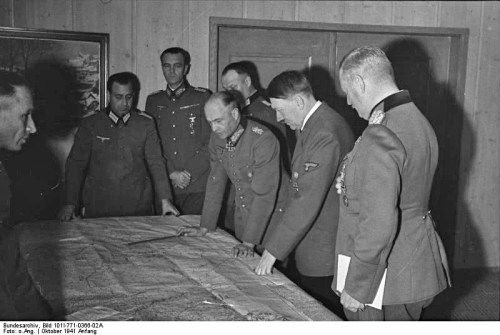
13 Comments

Filed under ethics, History, holocaust, nazi germany, News and current events, Political Commentary

“Men Alone are Capable of Every Wickedness” the Reality Of Human Nature and the Holocaust

conspiracy

Friends of Padre Steve’s World,

Two weeks ago Saturday was Holocaust Remembrance Day in the United States. I had the honor of speaking about not forgetting the Holocaust at Norfolk’s Temple Israel. When I look at the Holocaust and the men who managed and executed the plan to exterminate the Jews of Europe, I realize the wisdom of the words of Joseph Conrad, who wrote:

“The belief in a supernatural source of evil is not necessary; men alone are quite capable of every wickedness.”

Holocaust survivor and philosopher Primo Levi wrote, “Monsters exist, but they are too few in number to be truly dangerous. More dangerous are the common men, the functionaries ready to believe and to act without asking questions.” 

The truth is that human beings are incredibly capable of committing great evil and wickedness. The Holocaust stands alone, above every other genocide committed in history. Laurence Rees in his book Auschwitz, a New History, ended that book with these words:

We must judge behavior by the context of the times, and judged by the context of mid-twentieth century, sophisticated European culture, Auschwitz and the Nazis’ “Final Solution” represent the lowest act in all history. Through their crime, the Nazis brought into the world an awareness of what educated, technologically advanced human beings can do – as long as they possess a cold heart. Once allowed into the world, knowledge of what they did must not be unlearned. It lies there – ugly, inert, waiting to be discovered by each new generation. A warning for us, and for those who will come after.

That bring me to tonight’s subject. Seventy-seven years ago a group of 15 relatively common bureaucrats of various German government, police, and party agencies sat around a table and discussed the implementation of what is called the Final Solution, or in German Endlösung. The meeting was chaired by SS Lieutenant General Reinhard Heydrich, who had been charged with the task of solving Germany’s “Jewish Problem” shortly after the German invasion of the Soviet Union. Hermann Goering, the number two man in the Nazi Reich sent Heydrich the following message:

Berlin, July 31st 1941

To: Gruppenfuhrer Heydrich

Supplementing the task assigned to you by the decree of January 24th 1939, to solve the Jewish problem by means of evacuation and emigration in the best possible way by according to present conditions, I hereby charge you to carry out preparations as regards organizational, financial, and material matters for a total solution (Gesamtlosung) of the Jewish question in all the territories of Europe under German occupation.

Where the competency of other organizations touches on this matter, the organizations are to collaborate. 

I charge you further to submit to me as soon as possible a general plan of the administrative material and financial measures necessary for the carrying out the desired final solution (Endlosung) of the Jewish question.”

Goering

1200x-1

Reinhard Heydrich

When Goering wrote Heydrich, who headed the Reichssiecherhiethauptampt (RSHA) or Reich Security Main Office, in July 1941 it seemed that Nazi victory in Europe was all but assured. Goering’s words were businesslike, and his words describing the Jews in terms of a question were euphemism of dehumanization. The late Christopher Hitchens understood how labeling ethnic or religious groups as in terms of questions or problems allowed people to escape the human realities of their solutions.

“Die Judenfrage,’ it used to be called, even by Jews. ‘The Jewish Question.’ I find I quite like this interrogative formulation, since the question—as Gertrude Stein once famously if terminally put it—may be more absorbing than the answer. Of course one is flirting with calamity in phrasing things this way, as I learned in school when the Irish question was discussed by some masters as the Irish ‘problem.’ Again, the word ‘solution’ can be as neutral as the words ‘question’ or ‘problem,’ but once one has defined a people or a nation as such, the search for a resolution can become a yearning for the conclusive. Endlösung: the final solution.”

The early measures taken by Heydrich to rid Germany and annexed Austria had been reasonably successful to rid those areas of their Jews through emigration and evacuation. These were not benign measures, people were forced to leave their homes, businesses, communities, and had most of their belongings taken from them in order to leave the Reich. However with the occupation of most of Europe following the Nazi military success and the looming occupation and subjugation of the Soviet Union the process of giving the Jews a chance to emigrate to lands outside Nazi control had come to an end. In fact the Nazis occupied the countries that may Jews had found refuge. In Heydrich, Goering, most likely acting on the verbal orders of Hitler, had found the man to execute the final solution of the Jewish Problem. Heydrich was the one man who could break through resistance of competing government and party offices and bring them into line.

Less than six months after he received the directive from Goering, on January 20th 1942 Heydrich summoned representatives from various Reich agencies were called for what turned out to be a brief, two hour meeting which decided the fate of the Jews. The meeting was held at an estate located in the suburbs of Berlin, called Wansee. Organized by Heydrich’s deputy Adolph Eichmann, involved Heydrich, Eichmann and 13 mid level representatives from various economic, governmental, justice and police entities.

Order of Heydrich to Martin Luther, Under Secretary of the Foreign Ministry

At the conference Heydrich established his authority through Goering’s directive to overcome the bureaucratic and personal attempts of various attendees to take control of the Final Solution process. Despite objections from some attendees who favored sterilization and the use of Jews in the war armaments industries, Heydrich made it clear that the Final Solution would be a campaign of extermination. He was quite clear:

Estimates of Jews to be Exterminated from Wannsee Documents

“Approximately 11 million Jews will be involved…in large single sex labor columns, Jews fit to work will work their way eastward constructing roads. Doubtless the large majority will be eliminated through natural causes. Any final remnant that survives will doubtlessly consist of the most resistant elements. They will have to be dealt with appropriately, because otherwise by natural selection, they would form the germ cell of a new Jewish revival.”

brama_birkenau-2

Auschwitz

The Nazi leadership decided that its race war against the Jews needed to forge ahead. Within days of Wansee the orders went out and SS commanders at various concentration camps began devising more efficient means to exterminate Jews and other “sub-humans.” It was a matter of pride and efficiency for them. As Rudolf Hoess the Commandant of Auschwitz said at Nuremberg “the camp commandant at Treblinka told me that he had liquidated 80,000 in the course of one half year. He was principally concerned with liquidating all the Jews from the Warsaw Ghetto. He used monoxide gas, and I did not think that his methods were very efficient. So when I set up the extermination building at Auschwitz, I used Zyclon B….” Hoess estimated that some 2.5 million people were exterminated at Auschwitz at rates as high as 10,000 a day.

einsatzgruppen-nazi-death-squads-ww2-german-brutal-002_thumb

Einsatzgruppen in Action

Of course before the Endlösung was decided on in Berlin and and the pieces were put into place at Wannsee, the Einsatzgruppen had been at work for over six months in the Soviet Union. Four Einsatzgruppen followed each of the German Army Groups and systematically began to massacre the Jews of every city and village which German soldiers captured. The EinsatzgruppenOrdungspolizei Battalions, Army Security Divisions and locally recruited units in fewer than six months, killed over a million and a half Soviet Jews, and the slaughter would continue unabated until the dying days of the Reich.

Heinrich Himmler, Heydrich’s friend and superior told a gathering of senior SS leaders:

“I also want to mention a very difficult subject before you here, completely openly. It should be discussed among us, and yet, nevertheless, we will never speak about it in public…I am talking about the “Jewish evacuation” the extermination of the Jewish people.” 

It is One of the things that is easily said. “The Jewish people is being exterminated,” every Party member will tell you, “perfectly clear, it’s part of our plans, we’re eliminating the Jews, exterminating them, ha!, a small matter.” 

But then along they all come, all the decent upright Germans and each has his decent Jew. They all say: the others are all swine, but here is a first class Jew. And none of them has seen it, has endured it. Most of you will know what it means when 100 bodies lie together, or when there are 500 or 1000. And to have seen this through, and –with the exception of human weaknesses– to have remained decent, has made us hard and is a page of glory never mentioned and never to be mentioned….”

himmlervisit

Himmler and his entourage 

Whether the words are those of Goering, Heydrich, Hoess or Himmler, there is a certain businesslike banality to them. But these men, and many others like them orchestrated a campaign of genocide and race hatred unmatched in history. Yes, there have been other genocides, the Turks killing the Armenians during the First World War and the Hutu and Tutsi slaughter in Rwanda but neither they or the politically motivated campaigns of mass slaughter conducted by the Soviets, the Chinese Communists and the Khamer Rouge killing fields can match the systematized extermination campaign waged by the Nazis against the Jews. Today we cannot allow the Holocaust to become just another terrible event in the history of humanity.

The truly terrifying thing about the Nazi perpetrators of the Holocaust to me is that most of the men at Wansee, men that commanded the Concentration camps and the Einsatzgruppen were very ordinary men who simply believed that they were doing their jobs. Very few could be described as psychopathic killers by nature. They were lawyers, doctors, career police officials, businessmen, and bureaucrats who carried out an extermination campaign that killed by their own numbers between 5.5 and 6 million Jews, not to mention others deemed to be subhuman including the handicapped, the mentally ill, homosexuals, and other non-Jewish minorities like the Gypsies not to mention the wide variety of those considered political enemies. But it was the Jews that bore the most tragic fate and it was the Jews who were the object of Hitler’s most bloodthirsty actions.

But without the bureaucrats, the mayors, district leaders, party functionaries, police officers, soldiers, railroad officials, businessmen, and others who helped there could have been no Holocaust. As Laurence Rees wrote:

“human behavior is fragile and unpredictable and often at the mercy of the situation. Every individual still, of course, has a choice as to how to behave, it’s just that for many people the situation is the key determinate in that choice.” 

arbeitmachtfrei

Timothy Snyder correctly observed that “The world is now changing, reviving fears that were familiar in Hitler’s time, and to which Hitler responded. The history of the Holocaust is not over. Its precedent is eternal, and its lessons have not yet been learned.”

That is something that we must never forget lest the would be architects of annihilation of our day; the American President, other politicians, preachers, propagandists, and profiteers, who demonize the Jews, Muslims, dark skinned immigrants, LTBTQ people and other inconvenient elements and prepare people to do evil or ignore it: the ordinary men who just obey orders. Primo Levi who I quoted at the beginning was right, the common me, those that don’t think but simply follow orders or turn their heads and ignore the evil who are the most dangerous.

Milton Mayer wrote in his book They Thought They Were Free about a German colleague during the 1950s that had lived through the Hitler years as an academic. The man tried to explain how changes were so gradual that people like him who should have known better did not take action, if they did at all until it was too late. The man asked Mayer:

“How is this to be avoided, among ordinary men, even highly educated ordinary men? Frankly, I do not know. I do not see, even now. Many, many times since it all happened I have pondered that pair of great maxims, Principiis obsta and Finem respice—‘Resist the beginnings’ and ‘Consider the end.’ But one must foresee the end in order to resist, or even see, the beginnings. One must foresee the end clearly and certainly and how is this to be done, by ordinary men or even by extraordinary men? Things might have. And everyone counts on that might.”

We cannot forget and we must always be vigilant or we too could easily succumb, it’s not that hard. Any of us can be a perpetrator, victim or bystander. Yehuda Bauer wrote these words of warning:

“The horror of the Holocaust is not that it deviated from human norms; the horror is that it didn’t. What happened may happen again, to others not necessarily Jews, perpetrated by others, not necessarily Germans. We are all possible victims, possible perpetrators, possible bystanders.“

Peace

Padre Steve+

3 Comments

Filed under ethics, History, holocaust, nazi germany, News and current events, Political Commentary