Category Archives: leadership

Once an Eagle: A Classic Novel of Military Life

“This classic novel of soldiers and soldiering ranks with Red Badge of Courage and All Quite on the Western Front as time-tested epics of war and warriors.”— John W. Vessey, Jr., Gen., US Army (Ret.)

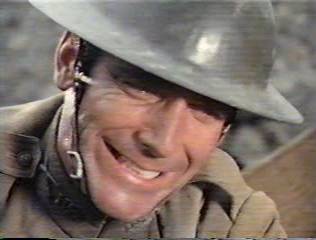
Sam Damon (Sam Elliot) cries over a fallen friend

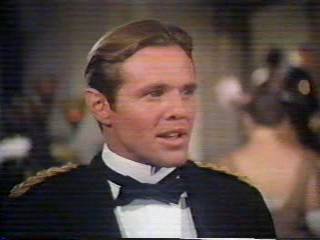
Tonight I started watching the NBC television mini-series adaptation of Anton Myrer’s classic novel of war military life and love Once an Eagle on DVD. I had been hoping to find the series on video or DVD for years and it was released again last year. I was introduced to the book through the series which I saw in High School when it came out in 1976. Back then I never missed an episode. I found the story which weaves the life of a soldier who rises from the ranks named Sam Damon who is played by Sam Elliott and a self-serving careerist named Courtney Massengale to be compelling then and caused me to get the book and read it back in High School and I found it even more compelling than the series.

Coutney Massengale (Cliff Potts)

Years later while deployed to Okinawa I saw a few episodes on AFN and purchased another copy which I took to Iraq with me in 2007. Reading the book there made even more of an impact on me.  I guess it was something about getting shot at and being out in locations with small groups of Americans and our Iraqis with the big battalions far away that made it more poignant. I was pleased to find it this week on DVD at the Camp LeJeune Marine Corps Exchange.

I guess for me the hook is that ever since I was a small child I dreamed of all things military and knew that I would probably spend a major part of my life in the military I was attracted to the story. Since I grew up in a Navy family and lived up and down the West Coast and the Philippines it was in my blood. Part of this was being surrounded by the Navy as well as the Marines. I remember seeing the movie The Green Berets when I was in second grade and listening to the Ballad of the Green Berets on the radio. A couple of my friends and I got sent to the principal’s office because we decided to play war a bit long at recess and didn’t go back to class. If there was something military on television I was going to watch it and I remember films like Patton, The Battle of the Bulge, Kelly’s Heroes, The Dirty Dozen, The Desert Fox, M*A*S*H, The Sands of Iwo Jima and tons of others. I built hundreds of model tanks and armored vehicles, ships and aircraft and lived for the day that I could join.

The idealistic and altruistic character of Sam Damon struck a chord in me. The Character of Sam Damon is man who worked his way up from the ranks and not afraid to speak his mind who is able to lead men in the worst situations and accomplish the mission. He cares for his troops but knows his job and knows that men, even friends die in war. At the same time he does not recklessly throw his men’s lives away and they believe that he will get them through. The book takes Damon along with his wife “Tommy” who is not a big fan of the Army despite being an Army Brat and the daughter of a General through their sometimes tumultuous marriage as they are stationed in many places both the glamorous and the not so glamorous in the United States and overseas. It follows Damon’s career from the days before World War One thorough the Great War, the doldrums of the 1920s and 1930s, World War Two, Korea and as a special envoy retired from the Army in a fictionalized Vietnam.  It also traces his relationship with the ambition driven Courtney Massengale.  To avoid spoilers I won’t go into detail but the two characters are in a sense stereotypical of the best and the worst types of men that populate the Officer Corps of the Army, but in a broader sense any military institution.

Tommy Damon (Darlene Carr)

The book is very real in its descriptions of combat as Myrer was an enlisted Marine who was wounded during the invasion of Guam and his descriptions of military life including the hardships endured by military families and while the novel is set in an earlier time where military personnel and their families did not have the communication abilities as we do now, but even with such niceties deployments and family separations, especially those where the military member deploys to a combat zone take a terrible toll on military families.

The novel is very pertinent for those of us in the military because it makes us ask the hard questions of what we will do to further our career and the cost of such a life on our families. I am coming up on 30 years service including about 10 years in the reserves and have made many deployments and my wife has had to endure many separations including my current geographic bachelor tour. Thankfully I am close enough to see her most weekends but we are apart more than we are together.  It is funny that knowing what I knew from my life as a Navy Brat and from books like Once an Eagle that I chose such a life. It is in a sense a calling for me. I know that I’ll never be an Admiral nor do I want to be it is enough to have the privilege to continue to serve when most or all of my contemporaries from my early days in the military have long since left the service or retired. I thank God for that privilege as well as a wife who when she was looking forward to me retiring from the Army Reserve saw me decide to join the Navy to go back on active duty following a mobilization tour where I lost my civilian job, without asking her first. She has endured years of me being gone.  Someday I’ll lay it down but not yet as I still feel that sacred call and thankfully despite the hardship she still loves me but is not unaware of my shortcomings.

In spite of this I am a realist when it comes to the institution of the military. It is not perfect. We have our Sam Damon’s and Courtney Massengale’s but most including me fall somewhere in between these polar opposites to one degree or another. I think that is why men or women who are too idealistic sometimes struggle when their leaders don’t measure up to those ideals.  I remember who my idealism was shattered.  After that I have endeavored to do the best as a Line Officer, Priest and Chaplain knowing that that I won’t always get it right but also knowing that I will try to always uphold the best ideals of the Navy and the military.

The book is required reading in many advanced military schools and is on the Army and the Marine Corps required reading lists.  There is much to learn from it and a lot of wisdom on its pages.  When I finish the mini-series I will read the book again. I recommend it highly.

Peace

Padre Steve+

4 Comments

Filed under books and literature, leadership, marriage and relationships, Military, movies

The Content of their Character: Brigadier General Benjamin O. Davis Sr. US Army and General Benjamin O. Davis Jr. US Air Force

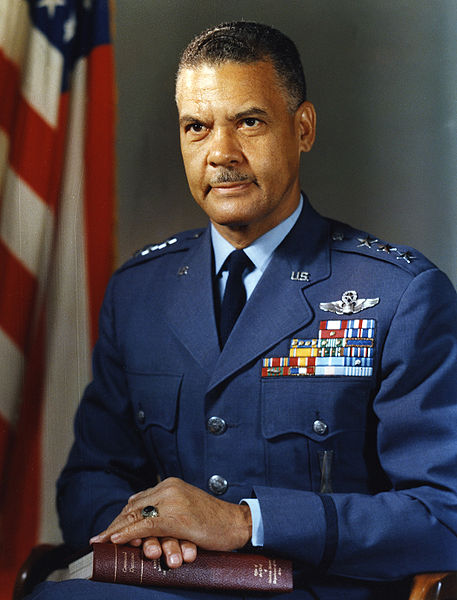
Brigadier General Benjamin O Davis in France 1944

“I have a dream that my four little children will one day live in a nation where they will not be judged by the color of their skin, but by the content of their character.” Dr. Martin Luther King, Jr.

American History would not be the same without the life, work and prophetic ministry of Dr. Martin Luther King Jr. Dr. King was born in a time when most of the country was segregated when “separate by equal” was simply façade to cover the lie that in no way did African Americans have equal rights or privileges in the United States. Dr King was born less than 60 years after the secession of the Southern states from the Union and the beginning of the American Civil War. Though that blood conflict had freed the slaves it had not freed African Americans from prejudice, violence and discrimination.  When Dr. King began his ministry and was thrust upon the national stage as the strongest voice for equal rights and protections for blacks the discrimination and violence directed towards blacks was a very real and present reality in much of the United States.

However there were cracks beginning to appear in the great wall of segregation in the years preceding Dr. King’s ascent to leadership as the moral voice of the country in the matter of racial equality. In baseball Jackie Robinson became the first African American player in Major League Baseball opening a door for others who would become legends of the game as well as help white America begin its slow acceptance of blacks in sports and the workplace.

Likewise the contributions of a father and son Brigadier General Benjamin O. Davis Sr. and General Benjamin O. Davis Jr. were advancing the cause of blacks in the military which eventually led to the desegregation of the military in 1948.  The impact of these two men cannot be underestimated for they were trailblazers who by their lives, professionalism and character blazed a trail for African Americans in the military as well as society.

Benjamin O. Davis Sr. was a student at Howard University when the USS Maine exploded and sank in Havana Harbor.  He volunteered for service and was commissioned as a temporary 1st Lieutenant in the 8th United States Volunteer Infantry. He was mustered out of service in 1899 but enlisted as a private in the 9th United States Cavalry one of the original Buffalo Soldiers regiments.  He enlisted as the unit clerk of I troop of 3rd Squadron and was promoted to be the squadron Sergeant Major. He was commissioned while the unit was deployed to the Philippines and assigned to the 10th Cavalry.  He was assigned in various positions throughout his career including command, staff and instruction duties including as Professor of Military Science and Tactics in various ROTC programs.  He reached the rank of rank of temporary Lieutenant Colonel and Squadron Commander of 3rd and later 1st Squadron 9th Cavalry from 1917-1920 in the Philippines before reverting to the rank of Captain on his return as part of the post World War I reduction in force.  He continued to serve during the inter-war years and assumed command of the 369th Infantry Regiment New York National Guard in 1938. He was promoted to Brigadier General on 25 October 1940 becoming the first African American elevated to that rank in the United States Army and was assigned as Commander 4th Brigade 2nd Cavalry Division. He later served in various staff positions at the War Department and in France and was instrumental in the integration of the U.S. Military. He retired after 50 years service in 1948 in a public ceremony with President Harry S. Truman presiding. He was a member of the American Battle Monuments Commission from 1953-1961 and died in 1970.

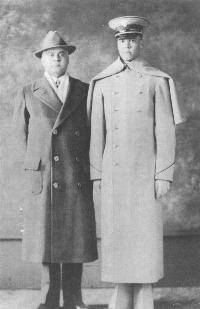
Colonel Davis with his son Cadet Benjamin O Davis Jr.

His son Benjamin O. Davis Jr. was appointed to West Point in 1932.  He graduated and was commissioned in 1936 graduating 35 out of 278, the fourth African American graduate of West Point. During his time at the Academy most of his classmates shunned him and he never had a roommate.  Despite this he maintained a dogged determination to succeed.  The Academy yearbook made this comment about him:

“The courage, tenacity, and intelligence with which he conquered a problem incomparably more difficult than plebe year won for him the sincere admiration of his classmates, and his single-minded determination to continue in his chosen career cannot fail to inspire respect wherever fortune may lead him.”

He was denied entrance to the Army Air Corps because of his race and assigned to the Infantry first to the all lack 24th Infantry Regiment at Ft Benning where he was not allowed in the Officers Club due to his race. Upon his commissioning the Regular Army had just 2 African American Line Officers, 2nd Lieutenant Davis and his father Colonel Davis. After completion of Infantry School he was assigned as an instructor of Military Science and Tactics and the Tuskegee Institute.  In 1941 the Roosevelt Administration moved to create a black flying unit and Captain Davis was assigned to the first black class at the Tuskegee Army Air Field and in March 1942 one his wings as one of the first 5 African Americans to complete flight training.  In July 1942 he was assigned as Commanding Officer of the 99th Pursuit Squadron which served in North Africa and Sicily flying Curtiss P-40 Warhawks. He was recalled to the United States in September 1943 to command the 332nd Fighter Group. However some senior officers attempted to prevent other black squadrons from serving in combat alleging that the 99th had performed poorly in combat. Davis defended his squadron and General George Marshall ordered an inquiry which showed that the 99th was comparable to white squadrons in combat and during a 2 day period over the Anzio beachhead the pilots of the 99th shot down 12 German aircraft.

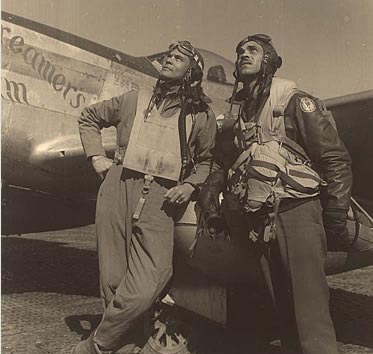
Colonel Benjamin O Davis Jr (left) with one of his Tuskegee Airmen

Davis took the 332nd to Italy where they transitioned to P-47 Thunderbolts and in July 1944 to the P-51 Mustang which were marked with a signature red tail. During the war, the units commanded by Davis flew more than 15,000 sorties, shot down 111 enemy planes, and destroyed or damaged 273 on the ground at a cost of 66 of their own planes. Their record against the Luftwaffe was outstanding and their protection of the bombers that they escorted was superb with very few bombers lost while escorted by them men that the Luftwaffe nicknamed the Schwarze Vogelmenschen and the Allies the Red-Tailed Angels or simply the Redtails. Davis led his Tuskegee Airmen to glory in the war and their performance in combat helped break the color barrier in the U.S. Military which was ended in 1948 when President Truman signed an executive order to end the segregation of the military. Colonel Davis helped draft the Air Force plan and the Air Force was the first of the services to fully desegregate.

Lieutenant General Benjamin O Davis Jr

Colonel Davis transitioned to jets and let the 51st Fighter Interceptor Wing against Chinese Communist MIGs in the Korean War.  He was promoted to Brigadier General in 1954 and served in numerous command and staff positions. He retired in 1970 with the rank of Lieutenant General and was advanced to General while retired by President Clinton in 1998.  He died in 2002 at the age of 89.

The legacy of Benjamin O. Davis Senior and Benjamin O. Davis Junior is a testament to their character, courage and devotion to the United States of America. They helped pioneer the way for officers such as General Colin Powell and helped change this country for the better.  During times when discrimination was legal they overcame obstacles that would have challenged lesser men.  Benjamin O. Davis Junior remarked “My own opinion was that blacks could best overcome racist attitudes through achievements, even though those achievements had to take place within the hateful environment of segregation.”

Such men epitomize the selfless service of so many other African Americans who served the country faithfully and “by the content of their character” triumphed over the evil of racism and helped make the United States a more perfect union.

Peace

Padre Steve+


4 Comments

Filed under History, leadership, Political Commentary, world war two in europe

I Hate Appalachian Nazis: A Response to “Briar Cavendish”

Elwood Blues: “Illinois Nazis?”

Jake Blues: “I hate Illinois Nazis”

http://www.youtube.com/watch?v=2EoOZKjAjlk

I think I can safely echo the thoughts of Jake and Elwood Blues about Illinois or any other type of Nazis that skulk about the dark recesses of the American heartland attempting to blend in with decent Americans while peddling their hate on the internet.

If you read my post from last night and early this morning about what can only be described as an online assault on me by someone that calls himself “Briar Cavendish” you know that it shook me pretty bad. But I also said that I would not back down.  The words and thoughts of this Cavendish fellow who is too cowardly to use his real name but a rather a nom d’guerre is obviously pretty disturbed. So will endeavor to disturb him more to hopefully cause him to slip up and identify himself.

You see last night I went to bed very upset and didn’t sleep well.  The only thing that got me through the early part of the day at work was one hellacious workout for morning PT but apart from that I was pretty wiped out and in a funk through most of the day. It was only tonight that I decided to fight back.  I researched all that I could about him and it seems that he is most likely according to his IP address from somewhere between Johnson City Tennessee and Abingdon Virginia as both cities came up as the location. I’m presuming that he is in a rural area and that his internet service provider alternates him between cities or hat he lives in one and works in the other.  I had thought that he might be in Knoxville Tennessee but think that my initial hypothesis was wrong as the owner of the business using the name “Briar Cavendish” appears to be legit and pretty busy with real life to go around doing such things. The fact also that the ISP address is not in Knoxville kind of confirmed that.

But tonight as I researched him I found a plethora of pathetic posts on numerous sites. Evidently my admirer “Briar” is rabid Appalachian Nazi; he posts this stuff all over the place and seems to be sought out by like-mindless people on some of these sites. What amazed me was not that he was posting but just how many people like him spew this hate on these sites. Some call themselves White Supremacists, others American Nazis and a host of other titles. But the common thread is a hatred of African Americans, other non-white people, Jews, Muslims, established political parties, Christians that disagree with them and by the way need I say President Barak Obama and the belief that they represent the true spirit of America.  The have affiliated sites that cater to veterans, stay at home moms and pseudo-intellectuals.  They often stand should to shoulder with alleged “patriot” groups who while not in total agreement with the Nazis echo many similar themes.  The thing that freaked me out about my admirer “Briar’s” comments were how close some of them regarding minorities, immigrants, political parties especially the Democrats and Barak Obama are to e-mail that I receive from older friends and relatives who spam out e-mails that are full of lies, distortions, wives tales and are easily identified as such by going to Snopes.com.

I guess what bothers me is that many of the themes of the Neo-Nazis are echoed by well meaning people who are simply upset about the direction of the country and have been whipped into frenzy by the 24 hour news cycle and nonstop talk radio.  I think from my study of history, especially the Weimar and Nazi era, which was a specialization in my Masters Degree that I know a few things about what happens when passions become this inflamed in a polarized body-politic that the result is seldom good. It simply takes a crisis be it political, economic or military to push well meaning people who have been pushed to the edge over the cliff into the abyss of civil war and chaos. I can still see the bullet holes in a school that I helped to paint in Rijeka Croatia and the devastation wrought by the Iraq insurgency the mass graves of Bergen-Belsen and Barracks and Gas Chambers of Dachau to see what can happen when this happens.  In fact I think that is what frightened me most about the attack on me last night is that we appear to be sitting on a tinderbox in a sea of gasoline with idiots all about playing with fire.

So anyway, Briar so go ahead. Take your best shot and if you are a man identify yourself and enter into dialogue. If you don’t I have to assume that you are you simply a Hillbilly Hitler with bad teeth, no real reasoning skills and no writing ability.  You make me long for Joey Goebbels, despite being a Nazi thug at least could write, speak and wasn’t afraid to identify himself.  From now on if you post on Padre Steve’s World it will be on my terms and I will shut you down you racist, homophobic Hillbilly Hitler with delusions of dictatorship.  You see Briar you and cowards like yourself skulk about in darkness using pseudonyms to post your pathetic hate filled drivel using the freedoms that I and millions like me have secured for you since our nation came into being.  You’re a pathetic excuse for an American.

Go ahead, make my day,

Padre Steve+

PS. I know that this was not a very “grace filled” post but people like this need to be called out or they will doom themselves and the rest of us to a fratricidal conflict that will make our Civil War look like child’s play.

8 Comments

Filed under History, leadership, philosophy, Political Commentary

Necessity and Reality…Lessons on Life

“One’s task is not to turn the world upside down, but to do what is necessary at the given place and with a due consideration of reality.” Dietrich Bonhoeffer

“A mans got to know his limitations” Harry Callahan

Tonight will be busy and fun for me as I get to go to our Medical Center Intern Class Dining Out.  The Dining out is a traditional Military occasion where the Officers of the Mess and their guests are together for a time of ceremony, camaraderie and good times.  Last year I attended this and if you want to know more you can go to the following article: The Dining Out

In light of that my post will be short. Coming back from surgery and being out of action for nearly a month I want to jump into everything.  However jumping into everything simply because I feel better and fitter than I have in probably two years does not mean that everything that I think that I can do be it vocational, spiritual or physical. Instead I am learning to work within my own limitations to be the best at what I do without over committing and end up having some kind of crash be it related to PTSD or physical issues.  It is something that I am learning to do and it is not always easy because I want to make a big impact.

However as both Bonhoeffer and Callahan (Clint Eastwood-Dirty Harry) remind us not everything is my job and that in order to be effective I and probably most of us need “to do what is necessary at the given place and with a due consideration of reality.” In other words be at the right place at the right time doing the mission that we are called to do with a sense of the reality of the situation, both our own as well as the situation in life that we find ourselves.

A lot of people now want to gain instant fame without the hard work that traditionally is required. Thus the massive number of “reality” shows where the only requirement is to act like an idiot and do things that you should be ashamed of doing, that profit nothing and while they give a person a brief amount of “fame” or notoriety which is seldom remembered by anyone unless it was incredibly stupid.

Workaholics like me want to do everything and fall into the temptation and trap of committing ourselves and sometimes our organizations to things that ultimately even if we can do them well are bad in the long term.  Such things can divert us from what we really need to be doing into ventures which may be exciting but divert us from what is truly necessary and possible.

This is frequently seen in the ranks of the over-achievers who want to “change the world.” This can take on all sorts of faces, political, educational, religious or scientific but the effect is often the same.  “World changers” sometimes become unrestrained zealots. In the quest to fulfill the agenda push so hard that they lose sight of the world around them and sometimes become willing like Chuck Colson when he worked for President Nixon “run over their own grandmother” to see the agenda fulfilled. This happens in business, politics, foreign affairs, science and even religion.  The desire to “change the world” often becomes a trap ready to ensnare even the most sincere person.  Trapped in the emotion of the “vision” those who lose sight of what is necessary and what is reality sometimes stop at nothing to see it fulfilled even if others are hurt in the process.

This is also seen in military history where the commander of an army or fleet makes a decision, usually rash and made in the passion of the moment to commit to something that while it looks to be beneficial leads to their defeat.  Military history is replete with examples.  Somehow the leader overestimates his own capabilities or underestimates those of his opponent with the end result of disaster.

Organizations including businesses and churches are frequently their own worst enemy when it comes to things like this.  Individuals who become obsessed can become like Don Quixote and run off  attacking windmills.  Christians often fall for this thinking that only they can win the salvation of the world or have a “new” message, teaching or “word” for the Church and world and end up broken, disillusioned and wondering if God let them down when they simply followed their own devices thinking that it was God.   Organizations can cause their own downfall as was seen in the banking crisis where business whose names were associated with thrift, trust and honesty destroyed themselves, injured their employees, stockholders and customers and cost the nation hundreds of billions of dollars. Custer charged into the Little Big Horn and Hitler attacked the Soviet Union.  Great success stories huh? Anyway, that being said I must close for the night.

Peace,

Padre Steve+

Leave a comment

Filed under leadership, philosophy

The Caine Mutiny: A Lesson in Leadership

“Now you’re learning, Willie. You don’t support your captain because you like him; you support because he’s got the job or you’re no good!” Jose Ferrer as Lieutenant Barney Greenwald

I write this after seeing a number of officers do some really dumb things in my 28 year career in the manner in which they supported their commanders or chain of command in trying times.  While none of these incidents could be described as mutiny they were certainly acts which undermined the chain of command, endangered the mission and had they occurred in a combat zone or in emergent conditions could have gotten soldiers or sailors killed.  The Caine Mutiny is a classic on leadership either in book or movie form.  I prefer the book but I am captivated by the performances of Humphrey Bogart and Jose Ferrer. In this essay I go through the movie and book and illustrate my point with quotations from it.

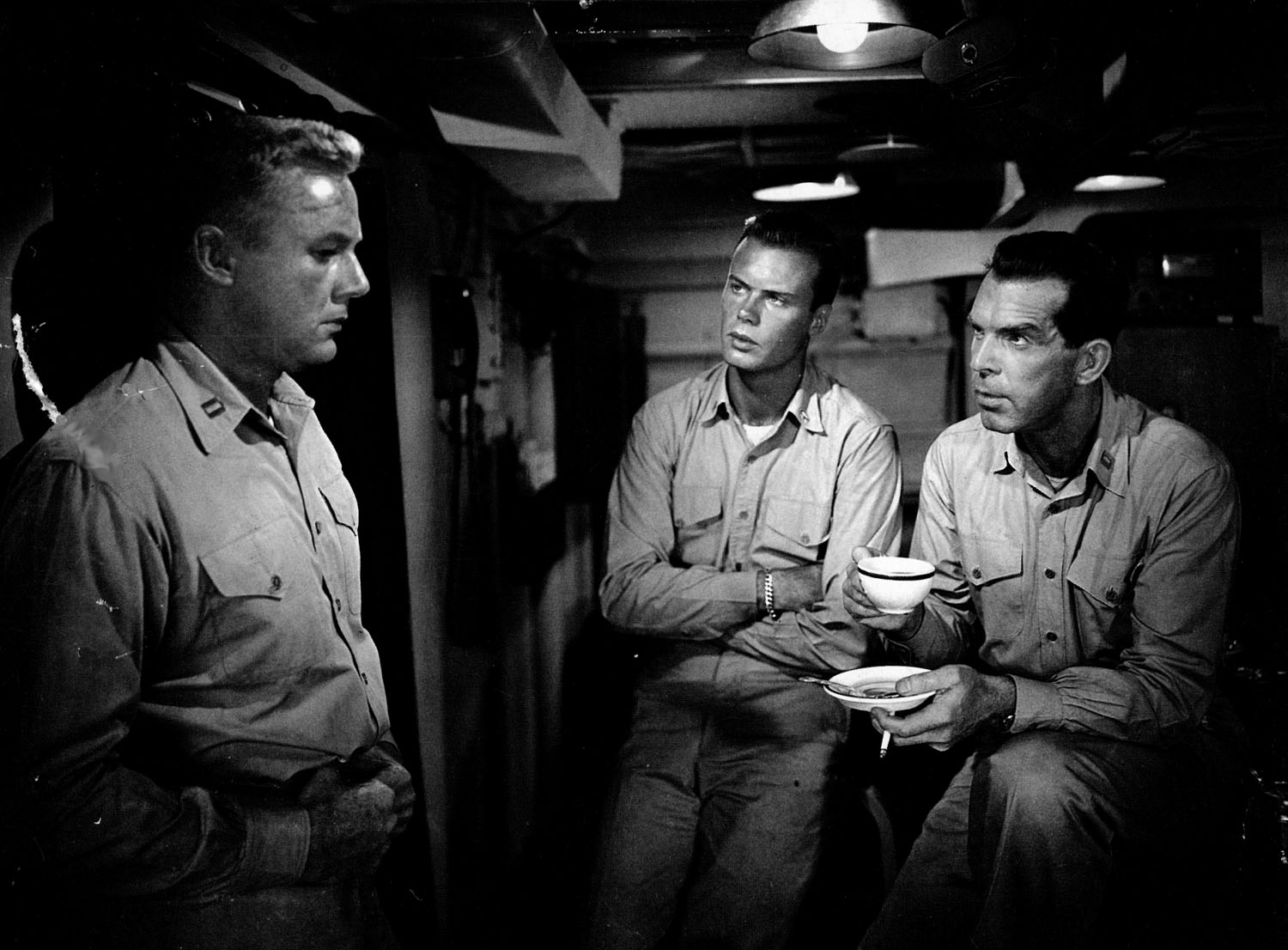
There has never been a mutiny on a United States Navy ship yet the book and later the movie The Caine Mutiny by Herman Wouk is one of the most poignant books on leadership in existence. The book gained popular success and was made into a movie in 1954 starring Humphrey Bogart, Van Johnson and Fred MacMurray, Jose Ferrer and Robert Francis.

The story centers around the officers or the wardroom of the USS Caine, an elderly Destroyer Minesweeper which had been in continuous combat in the South Pacific.  In the book she is a First World War One 1250 ton Wickes or Clemson class four piper.  In the movie she is played by the USS Thompson DD-627/DMS-38 a 2500 ton Gleaves class destroyer converted into a Destroyer Minesweeper since by the time the movie was made no “four pipers” were left in existence.  It took the film’s producers many months to convince the Navy to endorse the film because of the subject matter with the Navy only relenting when the producers agreed to place a disclaimer at the beginning of the film that there has never been a mutiny aboard a US Navy ship.

In the book and film the ship has returned to Pearl Harbor and in the process picked up a couple of newly assigned Ensigns fresh out of Officer Candidate School, what back in World War II were known as “90 Day Wonders.”  The young and impressionable Ensign Willis Seward Keith a Princeton grad and scion of old money and political contacts is one of those officers and while the story focuses on “Willie” Keith the true drama comes with the assignment of a new Commanding Officer, Lieutenant Commander Phillip Francis Queeg, a career officer and Naval Academy graduate.  The Executive officer, Lieutenant Steve Maryk, another OCS officer from humble means is played by Van Johnson while Fred MacMurray plays the ship’s communications officer, Lieutenant Tom Keefer another reservist and a writer by trade who remarks early in the story: “There is no escape from the Caine, save death. We’re all doing penance, sentenced to an outcast ship, manned by outcasts, and named after the greatest outcast of them all.”


Keith is disappointed in his new assignment and his mother and uncle try to pull strings to have him assigned to an Admiral’s staff.  The initial commanding officer, Lieutenant Commander DeVriess questions the new officer on his feelings about being assigned to the Caine:

http://www.youtube.com/watch?v=WTt5iVP8-GM

DeVriess: Disappointed they assigned you to a minesweeper, Keith?
Keith: Well, sir, to be honest, yes, sir.
DeVriess: You saw yourself on a carrier, or a battleship, no doubt.
Keith: Yes, sir, I had hoped…
DeVriess: Well, I only “hope” that you’re good enough for the Caine.
Keith: I shall try to be worthy of this assignment, sir.
DeVriess: She’s not a battleship or a carrier; the Caine is a beaten-up tub. After 18 months of combat it takes 24 hours a day just to keep her in one piece.

Queeg on his arrival insists on strict military discipline on a ship that has little outward appearance of such qualities. He remarks to his officers: “Aboard my ship, excellent performance is standard, standard performance is sub-standard, and sub-standard performance is not permitted to exist – that, I warn you.” Keefer a malcontent with a cynical attitude about the Navy takes an immediate dislike of Queeg and goes out of his way to poison the wardroom against the new Captain and is aided by various quirky and even neurotic actions of the new commander.  In the next few months he creates an air of disrespect, distrust toward Queeg even to plant questions about Queeg’s sanity and emotional stability among his fellow officers, including the Executive Officer who begins a “medical log” on the Captain.  One remark when pushing the Executive Officer demonstrates how far he was willing to go in trying to plant the idea that the Captain is mentally ill: “Will you look at the man? He’s a Freudian delight; he crawls with clues!”


http://www.youtube.com/watch?v=TiGVMshkwrY&feature=PlayList&p=6E5FDB52D2DC4238&index=6

After a number of incidents Queeg attempts to reconcile with his officers who reject him but his words are true: “As I always say, a command is a lonely job. It isn’t easy to make decisions. Sometimes the captain of a ship needs help. And by help, I mean constructive loyalty. What I’m trying to say is, uh, a ship is like a family. We all have our ideas of right and wrong but we have to pitch in for the good of the family. If there was only some way we could help each other.”

http://www.youtube.com/watch?v=vtqf0CCVUek

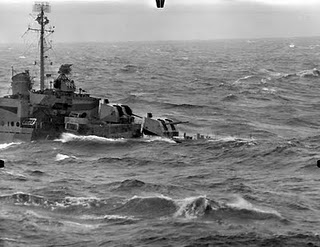
When the ship is caught in the great typhoon, sometimes known as “Halsey’s typhoon” which in actuality caused the loss of three destroyers and heavy damage to numerous ships, Queeg freezes on the bridge in a dispute with his officers over the action that needs to be taken.  Queeg wants to maintain the fleet course and speed while the bridge watch including the Executive Officer and Ensign Keith want him to steer an opposite course.  In the exchange Queeg apparently frozen by fear insists on following fleet course and when Queeg freezes relieve him under Article 184 of Naval Regulations.  The ship survives the storm and upon the ship’s return to San Francisco a Court Martial is convened charging Maryk and Keith with mutiny.

In the trial they are defended by Lieutenant Barney Greenwald, a lawyer in civilian life and Naval Aviator on convalescent leave. While the prosecution breaks Maryk and makes Keith look foolish Keefer aids the prosecution’s case to keep his reputation untarnished and after pushing his shipmates into mutiny leaves them to hang.  Greenwald then gets to work.  He pushes the psychiatrist who certified Queeg as sane and fit for duty hard planting doubts about the diagnosis:

“Doctor. You have testified that the following symptoms exist in Lieutenant-Commander Queeg’s behavior. Rigidity of personality, feelings of persecution, unreasonable suspicion, a mania for perfection, and a neurotic certainty that he is always in the right. Doctor isn’t there one psychiatric term for this illness?”

He then causes Queeg to have a breakdown on the witness stand.  The scene is dramatic as Queeg begins to fall apart:

http://www.youtube.com/watch?v=9esAr7gLapE&feature=PlayList&p=6E5FDB52D2DC4238&index=12

“They were all disloyal. I tried to run the ship properly by the book, but they fought me at every turn. If the crew wanted to walk around with their shirttails hanging out, that’s all right, let them! Take the towline – defective equipment, no more, no less. But they encouraged the crew to go around, scoffing at me and spreading wild rumors about steaming in circles and then ‘Old Yellowstain.’ I was to blame for Lieutenant Maryk’s incompetence and poor seamanship. Lieutenant Maryk was the perfect officer, but not Captain Queeg. Ah, but the strawberries! That’s, that’s where I had them. They laughed at me and made jokes, but I proved beyond the shadow of a doubt, and with, with geometric logic, that, that a duplicate key to the wardroom icebox did exist. And I would have produced that key if they hadn’t pulled the Caine out of action. I, I know now they were only trying to protect some fellow officer. (He pauses – looks at all the questioning faces that stare back at him, and realizes that he has been ranting and raving.) Naturally, I can only cover these things from memory…”

The scene ends with everyone knowing that Maryk and Keith will be acquitted. Greenwald’s clients are exonerated but the story does not end there.  While the officers celebrate the acquittal a drunken Greenwald arrives announces that he feels guilty for “torpedoing Queeg” and excoriates the wardroom and brutally identifies Kiefer as the “author of the Caine mutiny” and makes very pointed comments that any officer would be wise to heed.

http://www.youtube.com/watch?v=EKeISsYKROI

Greenwald: When I was studying law, and Mr. Keefer here was writing his stories, and you, Willie, were tearing up the playing fields of dear old Princeton, who was standing guard over this fat, dumb, happy country of ours, eh? Not us. Oh, no! We knew you couldn’t make any money in the service. So who did the dirty work for us? Queeg did! And a lot of other guys, tough, sharp guys who didn’t crack up like Queeg.
Keith: But no matter what, Captain Queeg endangered the ship and the lives of the men.
Greenwald: He didn’t endanger anybody’s life! You did! All of you! You’re a fine bunch of officers.

Greenwald: Tell me, Steve, after the Yellowstain business, Queeg came to you guys for help and you turned him down, didn’t you?
Maryk: Yes, we did.
Greenwald: You didn’t approve of his conduct as an officer. He wasn’t worthy of your loyalty. So you turned on him. You ragged him. You made up songs about him. If you’d given Queeg the loyalty he needed, do you suppose the whole issue would have come up in the typhoon?

Greenwald: And now we come to the man who should have stood trial. The Caine’s favorite author. The Shakespeare whose testimony nearly sunk us all. Tell ’em, Keefer.
Keefer: No, you go ahead. You’re telling it better.
Greenwald: You ought to read his testimony. He never even HEARD of Captain Queeg!
Maryk: Let’s forget it, Barney.
Greenwald: Queeg was sick, he couldn’t help himself. But you, you’re real healthy. Only you didn’t have one-tenth the guts that he had.
Keefer: Except I never fooled myself, Mr. Greenwald.
Greenwald: I wanna drink a toast to you, Mr. Keefer. From the beginning you hated the Navy. And then you thought up this whole idea and you managed to keep your skirts nice and starched and clean, even in the court martial. Steve Maryk will always be remembered as a mutineer. But you, you’ll publish your novel, you’ll make a million bucks, you’ll marry a big movie star, and for the rest of your life you’ll live with your conscience, if you have any. Here’s to the real author of the Caine mutiny. Here’s to you, Mr. Keefer.
[Splashes wine in Keefer’s face]
Greenwald: If you wanna do anything about it, I’ll be outside. I’m a lot drunker than you are – so it’ll be a fair fight.

The movie ends with Keefer alone as his fellow officer leave the party and Keith receiving orders to a new destroyer commanded by Captain DeVriess.  However the book has another ending.  In it Keefer becomes the commanding officer of the Caine and Keith the XO. The ship is hit by a Kamikaze and Keefer loses his nerve and in a truly cowardly fashion abandons the ship and his crew leaving Keith to save the Caine which he does.

As a leader it is important to support the commanding officer, especially if he or she is going through a difficult time.  While this does not mean that subordinates should ignore illegal actions of a commander as the XO of a ship did recently resulting in his and the CO’s relief for cause, but officers from any service do not have the luxury of subverting their commander or chain of command based on any personal like, dislike or any ideological, political or religious agenda.  A prime example of the latter was former Chaplain Gordon Klingenschmitt who waged a vicious campaign against every Commanding Officer that he worked for and the Navy in order to push his own political-religious views on his sailors and in the media.  There are certainly other examples but no to belabor the point I will end here.

Peace,

Padre Steve+

6 Comments

Filed under History, leadership, world war two in the pacific

Marshall, Eisenhower and Senior Military Leadership

Great military leaders are the products of the militaries in which they serve.  This begins in their early career and includes their education, training, assignments as well as the men that they serve under in their formative years.  They are shaped by the character, doctrine and organization of the military that they serve and are products of the times that they live and serve. Even the difference of a few years can make a major difference in the career path and development of a leader.  Such was the case with two of the great figures of the US Army in World War Two Generals of the Army George Marshall and Dwight David Eisenhower.

George Marshall

The careers of Marshall and Eisenhower prior to the Second World War were somewhat similar but also included major differences that would shape them for their roles in the war.  Marshall was commissioned 13 years prior to Eisenhower in 1902.  As a result he served his early years in a peacetime army marked by slow promotion.  Marshall was promoted to Captain in 1916 after serving 14 years as a Lieutenant despite attendance at the Army Staff College then called the Infantry and Cavalry School.  As an infantry officer he served in the Philippines for 2 years and served in various battalion and regimental level staff positions. Marshall’s career also included as assignments working with the National Guard and State militias.   His skills as a planner brought him to France as Assistant Chief of Staff for the 1st Infantry Division and later the American Expeditionary Force (AEF) under General Pershing.

While serving in these positions he was promoted rapidly to Major, Lieutenant Colonel and Colonel. In France he worked with the training, supply and operations of the American Forces as well as coordination with the French and British. His skills were invaluable and he played a major role in the rapid transition of the AEF from the St Michel salient to the Meuse-Argonne and though he reduced in rank when the war ended he was appointed aide-de-camp to Pershing in 1919.

During the 1920 Marshall served as Executive officer of the 15th Infantry Regiment in China and on his return to the United States he was assigned to the Army War College during which time his first wife died.  Following her death he would become Director of the Academic Department of the Infantry School.  His tenure at the War College was marked by his training numerous officers who would later become generals, including Eisenhower. He played a key role in the Preparation of the book “Infantry in Battle” which became a standard textbook for Army infantry officers.  He then served as senior instructor for the Illinois National Guard from 1933-1936 and was promoted to Brigadier General in 1936. After his promotion he worked to improve the Civilian Conservation Corps.  His organizational talents were recognized by President Franklin D Roosevelt and he was appointed Chief of Staff of the Army in 1939.  Marshall’s career is unique; he never served in command of anything more than a company. His positions above the company level were all in staff or instructor duty. In our current military an infantry officer or other combat arms officer who never commanded a maneuver unit at battalion, regiment or division level would never become a General and certainly never become Chief of Staff of the Army or Commandant of the Marine Corps.  Marshall was a brilliant organizer, leader, judge of men and visionary in understanding the necessity of coalitions and inter-dependence of nations in the modern world.  His organizational leadership skills, ability to pick the right officers for key positions and his political and diplomatic acumen made him one of the foremost military leaders in US Military history.

Dwight D Eisenhower

Eisenhower was commissioned in 1915 less than two years prior to the entry of the US into the First World War. Like Marshall was commissioned as an Infantry officer and his career progressed in normal fashion until the entry of the United States into the war.  Though Eisenhower never served in France, he was assigned to training troops and became one of the early leaders of the Armored Forces until they were disbanded after the war.  In the rapidly expanded wartime army Eisenhower was promoted from 2nd Lieutenant to Lieutenant Colonel in less time than Marshall spent as a 2nd Lieutenant.

During his tenure in the Tank Corps he served with George Patton, commanded a tank battalion and was executive officer of an armored brigade.  Following the disestablishment of the Tank Corps Eisenhower served as an infantry regiment executive officer in Panama.  In this position he was schooled by General Fox Conner in classic military theory.   It was fortunate for Eisenhower in that he was able to serve with and was able to gain seasoning and education under an excellent officer. Eisenhower returned to the United States and commanded an infantry battalion at Fort Benning and following this served on the faculty of the Infantry School under Marshall who would remember him at the beginning of World SWar Two.

His subsequent career was somewhat mundane. He served on the Battle Monument’s Commission under Pershing and then on the staff of the Assistant Secretary of War.  However both of these assignments put him in the eye of other important officers and officials.  Eisenhower was then transferred to the Philippines where he served as Chief of Staff to Douglas MacArthur from 1935-39. He returned to the US to serve concurrently as the regimental Executive Officer and a battalion commander in the 15th Infantry regiment and later Chief of Staff to the Commander of 3rd Army.  Through his excellent work in every assignment he gained the attention of Conner, Pershing and eventually Marshall. While at the Infantry school he helped prepare Pershing’s memoirs.  His experience with MacArthur in Washington and the Philippines helped prepare him for the myriad of difficult personalities with which he would deal with as Supreme Commander of Allied Forces in Europe. In 1941 he came to Washington to serve under Marshall at the WPA.

As far as who was the better officer, opinions vary; there are arguments to be made for both yet Eisenhower himself seemed to subordinate himself to Marshall.  Omar Bradley says of Marshall “if there ever was an indispensable man in time of national crisis, he was that man.” (A Soldier’s Story p.205) However both Marshall and Eisenhower were excellent officers and each played a vital role in the Allied victory.   However their careers were markedly different. In fact one could say that they were “apples and oranges.” Marshall served entirely as a staff officer and instructor after his service as a company officer.  Eisenhower served in numerous command positions as well as staff jobs. Their careers would intersect and had commonalities but each was shaped by their different experiences in the Army.

In World War Two Marshall seems to have fewer critics.  However this seems to more a result of Eisenhower’s exposed position in Europe where he was comparatively junior to many of the officers that that he would command.  He also had to deal with the competing interests of such strong personalities as Marshall, Patton, Roosevelt, Churchill, DeGaulle and Montgomery while fighting the Germans. This has lent him to criticism from both British and American officers as well as various historians.  But these observations are based on wartime experience and not their early careers.   Field Marshall Alan Brooke seems to have had more respect for Marshall and many in the British high command showed little respect toward Eisenhower.

“Better” in the military is in the eye of the beholder and often dependant on assignments as well as the superiors that one works for.  From a traditional point of view Eisenhower had the better career path with command at battalion and executive officer at regiment levels. However Marshall’s career provided him with a wider spectrum in dealing with senior staff, school, reserve component, government civilian agencies and Washington bureaucracy and politics that Eisenhower did not experience until Marshall tapped him in 1941 to work with the WPA. Their personalities were different and they dealt with subordinates in different manners, but both successfully managed their subordinates. Eisenhower was able to manage Patton and Montgomery while working in Churchill’s back yard, while others such as DeGaulle walking through his door.  Both men were uniquely suited to work with each other and in the positions that they found themselves during the war and one has a hard time imagining a better partnership in command.

The interesting thing to me is Marshall’s career.  In the current era he would never rise to the heights that he served.  Since the Second World War no officer who has not served command in major combat arms units at all levels has risen to be Chief of Staff of the Army, Air Force, Commandant of the Marine Corps or Chief of Naval Operations.  Nor has any risen to the Chairmanship of the Joint Chiefs of Staff or major Combatant Command such as EUCOM, CENTCOM or PACOM.  Of we look at Marshall and his impact one has to ask if “punching tickets”in the combat arms  is necessarily optimal  when it comes to managing the organization at the service level.  While it is proven that command is a great asset to senior command in combatant commands it may not be as necessary for the chief of a service.  One can ask if an officer who has served in staff and instructor positions, especially those where they have to deal with politicians, civilian agencies, as well as active and reserve component forces as well as an instructor and writer of doctrine could not serve as successfully in a position such as the Army Chief of Staff or the Commandant of the Marine Corps as an officer who has had the “well rounded career.”

In the light of George Marshall these are valid questions to ask. Might someone who has had the ability to step back and examine the personnel, logistics and training of a force as well as having experience with reserve component and civilian agencies could conceivably serve as effectively as an officer who has served rotating between command and staff positions.  In today’s world the staff oriented officer would also have experience dealing with industry and intelligence.  While I do not advocate such a change I think it would be wise to consider officers such as Marshall for these service level positions.

Following the war Marshall would become Secretary of State and help rebuild Europe while serving under Eisenhower how had become President of the United States.

Peace,

Padre Steve{

3 Comments

Filed under History, leadership, Military, national security, world war two in europe

Manstein’s Counter-Stroke: Pulling Victory from Certain Defeat

Introduction

After Stalingrad the Soviets followed up on their success and attempted to entrap the rest of Army Group South. Field Marshall von Manstein attempted to save the Army Group and perhaps prevent the Soviets from collapsing the entire German front.

Bild 101I-209-0086-12Manstein planning at the front

Chaos and Peril in the South

As 6th Army died at Stalingrad field Marshall von Manstein was faced with one of the most challenging situations faced by any commander in modern times.  He faced strategic and operational “problems of a magnitude and complexity seldom paralleled in history.”[i] Manstein had to deal with a complex military situation where he had minimal forces to counter the moves of a superior enemy force that was threatening to entrap all German forces in southern Russia. Additionally Manstein had to deal with the “Hitler’s obstinate opposition to a maneuver defense and a Red Army flushed with the victory of Stalingrad.”[ii] Facing him were the six Russian armies of the Voronezh and Southwestern Front’s led by Mobile Group Popov[iii]. These Armies had broken through the Hungarian and Italian armies “making a breach 200 miles wide between the Donetz and Voronezh, and were sweeping westward past Manstein’s flank.”[iv]
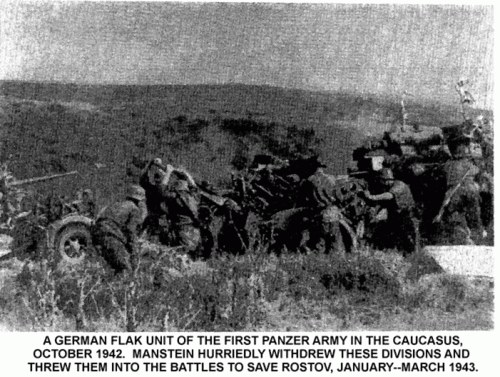
flak in caucasus

The most dangerous threat that Manstein faced was to Army Group A in the Caucasus. This Army Group “found itself in danger of being cut off, forcing an immediate withdraw.”[v] Disaster was averted by the desperate holding actions of Manstein’s meager forces, Army detachment’s Fretter-Pico and Hollidt, and winter conditions that made “offensive operations extraordinarily difficult, even for the hardiest Soviet troops.”[vi] A smart withdraw executed by General von Kleist managed to extricate the Army group “just as the Stalingrad forces collapsed.”[vii] To parry the Soviet thrusts the Germans lacked forces to “establish a deeply echeloned defense” and “instead combined maneuver… with stubborn positional defense to give artificial depth to the battlefield.  In this way the Germans were able to break major Soviet attacks, preventing catastrophic breakthroughs….”[viii] The timely introduction of a battalion of Tiger tanks prevented the Russians from breaking through to Rostov and “cutting the rail and road lines on which First Panzer Army’s retreat depended.”[ix] Even so the escape of the Army Group was narrow. “In terms of time, space, force, and weather conditions it was an astonishing performance-for which Kleist was made a field-marshal.”[x] With the Russians only 70 kilometers from Rostov and his own forces 650 kilometers from that city Kleist executed a withdraw “which had appeared hardly possible to achieve.”[xi] The divisions extricated by Kleist would be instrumental in the coming weeks as Manstein moved to counter the Soviet offensive.

Hitler and Manstein

Despite the successful withdraw the situation was still precarious in early February, Manstein had no effective contact with his left wing, the bulk of which was tied to Kharkov, The Russians had “virtually complete freedom of action across a fifty-mile stretch of the Donetz on either side of Izyum.”[xii] Manstein was hard pressed to “halt the raids of Mobile Group Popov and other exploiting Soviet tank corps in Operation Gallop.”[xiii] Manstein’s forces in the eastern sector had been divided by Russian penetrations, which threatened 1st Panzer Army’s western flank and blocked the Army Group’s main railway line.[xiv] On 15 February “the SS Panzer Corps withdrew from Kharkov-in spite of orders from Hitler…that the city was to be held to the last.”[xv] SS General Paul Hausser, the corps commander realized that the order to hold Kharkov was impossible and requested permission to withdraw. This was was refused by General Lanz. Under pressure from encircling Russian forces outside and from partisans inside the city, Hausser disobeyed the order and extricated his troops,[xvi] thereby saving thousands of German soldiers and preserved the SS Panzer Corps as a fighting unit.[xvii] Lanz was relieved by Hitler for the loss of Kharkov and although Hausser would escape immediate censure, “Hitler did see it as a black mark against his name.”[xviii] With Kharkov in Soviet hands the gap between Manstein’s army group and Field Marshal von Kluge’s Army Group Center increased to over 100 miles.[xix] It appeared that the entire German southern flank was disintegrating.  Manstein estimated the ratio of German to Soviet forces in his area at 1:8.[xx] He believed that the Soviets could advance and subsequently “block the approaches to the Crimea and the Dnieper crossing at Kherson” which would “result in the encirclement of the entire German southern wing.”[xxi] Popov’s Mobile Group crossed the Donets and reached Krasnoarmeiskaia by 12 February. Vatutin committed two additional fresh tank corps toward Zaporozhe, a critical transport node which was also the location of Manstein’s headquarters.[xxii]
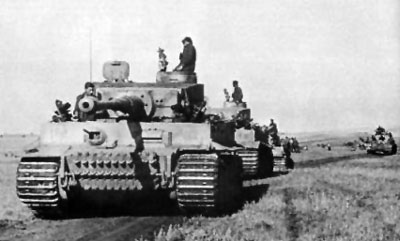
SS-Tiger-LSAH-01Tiger Tanks assigned to 1st SS Panzer Division

Hitler arrived to consult with Manstein on 17 February and remained for three days with Soviet forces perilously close.  Manstein only had some flak units and the Army Group Headquarters Company between him and Popov’s advanced elements. On Hitler’s last day “some T-34’s approached to within gun range of the airfield.”[xxiii]

The conference of Hitler with Manstein at Zaporozhe as well as a previous conference at the Wolfsschanze on 6 February was critical to the development of Manstein’s plan to restore the front. Manstein had now gotten both the 1st and 4th Panzer Armies across the Don, and “with this striking force, he felt confident of smashing the Russian offensive if he was given a free hand to withdraw from the line of the Donetz, evacuate Rostov and take up a much shorter front along the Mius river.”[xxiv] The conference on the 6th was one of the “rare moments in the war where Hitler authorized a strategic withdraw on a major scale.”[xxv] Yet as the Russians continued to advance Hitler became concerned and came to Zaporozhe.  At first Hitler would not concede to Manstein, as he wanted to assemble the SS Panzer Corps for an attack to recapture Kharkov.[xxvi] Manstein explained the need for a counter stroke and through much explanation was able to convince Hitler that the capture of Kharkov was not possible unless “we first removed the danger of the Army Group being cut off from its rear communications.”[xxvii]
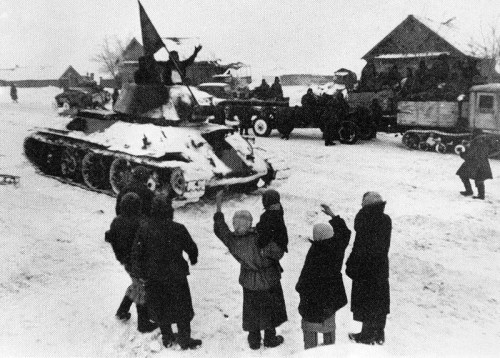
T34_Stalingrad-Offensive-px800Soviet formations advance

The Russian aim was now obvious[xxviii] and Manstein had correctly discerned their strategy.  Manstein knew that his Army Group had to hold the line on the Mius and then quickly defeat the enemy between 1st Panzer Army and Army Detachment Kempf[xxix] in “order to prevent its own isolation from the Dnieper crossings.”[xxx] The Soviets had outrun their logistics support and had suffered heavy losses of their own and had serious equipment shortages.[xxxi] Manstein explained to Hitler the opportunity offered as it was now the Russians who “were worn out” and far from their supply dumps as the Germans had been in November 1942.  Manstein “foresaw an opportunity to seize the operational initiative with a counter offensive of his own.  Manstein’s target was the Soviet armored spearheads, still careening southwestward between Kharkov and Stalino.”[xxxii] Manstein believed that when the Russian “spearhead lunged, as it must toward the crossings on the upper Dnieper,” then Hoth’s Army would be let loose again.  The three SS Panzer divisions could then “play their rightful role as avengers, and strike southeast to meet 4th Panzer Army, catching the Russian armour in a noose.”[xxxiii] Hitler agreed to Manstein’s plan and Manstein shifted 4th Panzer Army to assume control of the SS Panzer Corps, now reinforced by 3rd SS Panzergrenadier Division “Totenkopf.” Hitler reinforced Manstein and released 7 battle worn Panzer and motorized divisions for his attack.[xxxiv]

Soviet Miscalculation

It was now Stalin’s time to miscalculate. He and his subordinates “continued to believe that they were on the verge of a great victory. German defenses in southern Russia appeared to be crumbling and the Stavka sought to expand that victory to include Army Group Center.”[xxxv] To this end they diverted armies to the north and launched attacks in that direction.  However German defenses were stiff and the plan was “predicated on the assumption of continued offensive success further south.”[xxxvi] Reinforcements from Stalingrad failed to deploy and “Army Group Center’s defenses, prepared for the past year and a half proved formidable.”[xxxvii]

In the south Stalin saw the Dnieper and almost “heedlessly drove his armies towards what he thought would be the decisive victory on the banks of this huge Russian river,”[xxxviii] but, Soviet “ambitions exceeded their available resources and the skill of their commanders.”[xxxix] The SS Panzer Corps withdraw from Kharkov “further heightened the Soviet’s intoxication with victory”[xl] and confirmed their beliefs that the Germans were withdrawing.  Stalin believed that “it was inconceivable that Hitler’s Praetorian Guard would abandon Kharkov except as part of a general order to retreat.”[xli] He believed that the encirclement of Army Group South would lead to a chain reaction and quick way to victory over German forces in the east.  Believing that there was no way for the Germans to recover and establish a solid front on the Mius,[xlii] Stalin continued to drive his forces to attack, yet the Russian offensive in the south had reached what Clausewitz had called the “culminating point” and Stalin’s armies were now extremely vulnerable. “The weather, the devastated communications, and their own inexperience in maintaining the traffic density required to support a deep penetration on a narrow front had combined to force a dangerous dispersal of effort on the Russian advance which had broken down into four separate groups.”[xliii]
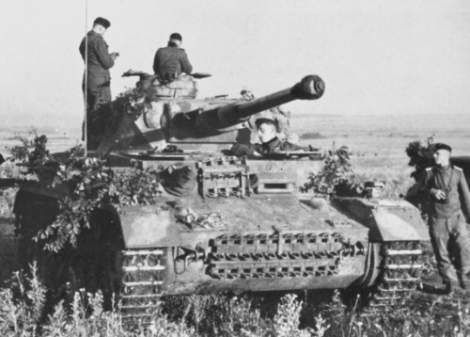
panzer ivfPanzers assembling to attack

The Soviet forces were now in a dangerous predicament being spread out across the entire south of Russia.  One group, composed of the 69th Army and 3rd Tank Army pushed against Army detachment Kempf west of Kharkov.  To the south the badly depleted 6th Army and 1st Guards Army were now “strung out down a long corridor they had opened between Izyum and Pavlograd,”[xliv] Mobile Group Popov was lagging further east near Krasnoarmeiskaia.   Additional units were isolated behind the front of Army Detachment Fretter-Pico and near Matveyev.  Soviet commanders believed that the Germans were in worse shape and that “the risks of dispersal were justified.”[xlv] They had not anticipated or made allowance for Manstein’s coolness under pressure and actions to preserve his armor while thinning his front “well past the accepted danger limit.”[xlvi] Likewise the Soviets did not know that the Germans had cracked the code used by the Southwest front and from 12 February on “were now privy to Popov’s and Vatutin’s thoughts,” now knowing precisely where the Russians would attack.[xlvii] Manstein had withstood temptation and Hitler’s pressure to use his reserves “for a direct defense of the Dnieper line.”[xlviii] As such he was prepared to launch a devastating counter-stroke against the dispersed and weakened Russian armies which were still advancing into the trap he planned for them. He had managed to “save his counteroffensive plan from Hitler’s shrill demands that the new reserves be thrown into battle piecemeal to prevent further territorial losses.”[xlix] The stage was now set for a two classic mobile operations.[l]

The Destruction of Mobile Group Popov, 6th Army and 1st Guards Army

Manstein launched his counter-stroke on 21 February against Popov’s Mobile Group using XL Panzer Corps under the command of General Henrici composed of the 7th and 11th Panzer Divisions and SS Motorized Division Viking. Popov’s Group was exposed. Popov had “succeed in cutting the railway from Dnepropetrovsk to Stalino and was itching to push further south to Mariupol on the Sea of Azov.”[li] The Soviets once again had failed to discern German intentions, believing that the Germans were retreating.[lii] Likewise the Soviet high command did not fully understand Popov’s situation. His force was weak in tanks and low on fuel and his Mobile Group was defeated in detail by the German Corps.  Popov’s immobilized tank and motorized rifle formations resisted desperately but were bypassed by the panzers.  The 330th Infantry Division mopped up the remnants of these formations.[liii] The key battles took place around the town of Krasnoarmeiskaia and the battle became a running battle between that town and the Donets River.[liv] Popov requested permission to retreat, but still believing the Germans to be retreating Vatutin gave a categorical “no.” The terrain in the area was “almost completely open”[lv] and “Popov’s proud Armoured Group was cut up like a cake.”[lvi] Popov extricated some of his units but “only after serious losses in manpower and equipment.”[lvii] Despite this it would not be until the 24th that Vatutin would order a halt to offensive operations.[lviii]

kharkovSS Panzers in Kharkov

As Popov sought to get his units out of the German scythe Manstein set his sights on 6th Army, 1st Guards Army and 25th Tank Corps which was approaching Zaporozhe.[lix] He assigned the task to Hoth’s 4th Panzer Army and its XLVIII Panzer Corps under General Knobelsdorf composed of the 6th and 17th Panzer Divisions and the SS Panzer Corps comprising SS Divisions Liebstandarte, Das Reich and Totenkopf.[lx] Manstein gave Hoth a brief but explicit order: “The Soviet Sixth Army, now racing towards Dnepropetrovsk through the gap between First Panzer Army and Army Detachment Kempf, is to be eliminated.”[lxi] The XLVIII Panzer Corps and SS Panzer Corps were unleashed against the exposed flank of the 6th Army and 1st Guards Army.   XLVIII Panzer Corps quickly “seized bridgeheads over the Samara River, and prepared to move north into the rear of the exhausted Soviet Sixth Army.”[lxii] The two Panzer Corps then made a coordinated concentric attack northwest which “came as a complete surprise to the Russians.”[lxiii] Das Reich thrust deep into the flank of 6th Army supported by Stukas from Richthofen’s 4th Air Fleet.  This attack dislodged one Soviet Rifle Corps and destroyed another allowing the division to capture Pavlograd while XLVIII Panzer Corps led by 17th Panzer Division pushed from the south linking up with the SS Corps. This cut off the Soviet 25th Tank Corps and threatened 6th Army.[lxiv] What followed was a disaster for the Russians.        Despite overwhelming evidence to the contrary the Stavka and Front commanders still believed that the Germans were retreating.  6th Army was ordered to continue its advance by the front commander who believed that the two German Panzer Corps were withdrawing.[lxv] In a few days the 17th Panzer Division “gained the Izyum-Protoponovka sector on the Donetz River, while the SS Panzer Corps took Losovaya and established contact with Army Detachment Kempf, which had joined the attack from the west.”[lxvi] XL Panzer Corps with the 3rd and 7th Panzer Divisions and 333rd Infantry Division joined in the attack on Popov’s remaining forces completing their destruction.[lxvii] As Hoth and Hausser converged on Pavlograd, Das Reich and Totenkopf “swung left to the east and then wheeled back north again running parallel to the Russian divisions fleeing from Forty-eighth Panzer Corps. What ensured was a turkey shoot.”[lxviii] Fleeing Russian forces on the open steppe were visible and engaged at long range.[lxix] Leibstandarte helped by holding the left flank against Russian counter attacks from the units now isolated in the west,[lxx] and Totenkopf’s grenadiers fanned out supported by Stukas to “kill or capture as many Russians as possible.”[lxxi] By 1 March the Russian penetrations had been eliminated. Popov’s Mobile Group was smashed, 6th Army and 1st Guards Army badly mauled. 25th Tank Corps and three Rifle divisions had to be completely written off and numerous other corps and divisions took heavy casualties.  Two additional corps, encircled before the offensive began were eliminated by German forces.[lxxii] The Germans counted 23,000 Russian dead on the battlefield, and Manstein noted that “the booty included 615 tanks, 354 field pieces, 69 anti-aircraft guns and large numbers of machine guns and mortars.”[lxxiii] The Germans only took 9,000 prisoners as they were too weak, especially in infantry to seal off the encircled Soviet forces.[lxxiv] Yet the forces that escaped they were in no condition to “block the continued progress of the Panzers and SS.”[lxxv] Now there was a 100 mile gap in the Russian lines with nothing no troops to fill it and only “General Mud” could stop the Germans.[lxxvi] Manstein was not yet finished and the next phase of his operation against the Soviet formations west of Kharkov and that city were about to commence.

The Destruction of 3rd Tank Army

With the immediate threat to his Army Group eliminated and having regained the initiative, Manstein and Army Group South now “proceeded to deliver the stroke against the ‘Voronezh Front’– i.e. the forces located in the Kharkov area.”[lxxvii] But the Russians had not been idle. In order to attempt to assist 6th Army 3rd Tank Army moved two tank corps and three Rifle divisions south and these ran into Manstein’s advancing panzers.[lxxviii] Manstein’ noted his objective now was “not the possession of Kharkov but the defeat-and if possible the destruction of the enemy units located there.”[lxxix] Between March 1st and 5th his forces advanced on Kharkov. Not knowing the Germans dispositions[lxxx] 3rd Tank Army made the mistake of moving between the Leibstandarte’s defensive positions and the attacking divisions of the SS Panzer Corps. Hausser wheeled Totenkopf around and completed an encirclement of these units near Bereka on 3 March.[lxxxi] The Russians made futile attempts to break out but the SS Divisions tightened the noose around them and they were eliminated by the SS Panzer Corps which “engaged in concentric attacks during the three days of hard fighting.”[lxxxii] Even Regimental commanders like Heinz Harmel of Das Reich’s Der Fuhrer regiment became engaged in close combat with the Russians.[lxxxiii] The battle was fought in “snowstorms whose intensity caused the SS severe privations.”[lxxxiv] Totenkopf and Das Reich slammed the Russians “back against the Tiger tanks and assault guns of the Leibstandarte.”[lxxxv] The elimination of these units netted another 12,000 Russians killed,[lxxxvi] knocking “out the last remaining obstacle between the Germans and Kharkov.”[lxxxvii]

Return to Kharkov and Controversy

Manstein turned his attention to Kharkov, supported by Richthofen’s 4th Air Fleet which for the last time in Russia “provided undisputed air superiority for a major German mechanized operation.”[lxxxviii] He decided to “roll up the enemy from the flank and force him away from Kharkov in the process.”[lxxxix] He ordered a “pincer on the town, sending Grossdeutschland around to the north with a reinforced Kempf detachment and the combined force of Hoth and the SS to attack the town from the south and rear.”[xc] Manstein planned to make a wide envelopment to avoid embroiling his panzers in costly urban combat stating “that at all costs the Army Group wished to avoid Kharkov’s becoming a second Stalingrad in which our assault forces might become irretrievably committed.”[xci] To this end he sent Das Reich and Totenkopf approaching from the south to west of the city[xcii] while XLVIII Panzer Corps swung east toward the Donetz.[xciii] As Hoth’s forces came up from the south to envelope the city, Grossdeutschland and the XI and LI Corps fought the Russians to the north and west,[xciv] eventually moving up to Belgorod.  By 8 March lead elements of the SS Panzer Corps were on the outskirts of the city.

At this point there is some controversy as to German actions. As noted Manstein wished to avoid urban combat and desired to surround the city and force its surrender.  According to one writer Hoth ordered Hausser “to seal off the city from the west and north and to take any opportunity to seize it.”[xcv] Others including Glantz and House and Murray and Millett state that Hausser “ignored a direct order” and attacked into the city.[xcvi] Manstein does not explicitly say that there was a direct order but notes that the Army Group “had to intervene vigorously on more than one occasion to ensure that the corps did not launch a frontal attack on Kharkov.”[xcvii] Sydnor states that Hausser ignored a direct order by Hoth on the 11th by detailing a battalion of Totenkopf to assist Das Reich and Leibstandarte in retaking Kharkov by direct assault. The order entailed pulling Das Reich out of the city and taking it to the east.[xcviii] Lucas adds that this order came in the midst of hard fighting in the city and could not be carried out by the division.[xcix]Carell notes that on 9 March Hoth instructed Hausser that “opportunities to seize the city by a coup are to be utilized,”[c] and goes into detail regarding how Hoth’s 11 March order applied to Das Reich. It was to be pulled out of action and brought east, but division was heavily engaged and in the process of breaking through Soviet defenses “quicker in fact than if he had pulled “Das Reich” out of the operation and led it all the way round the city along those terrible muddy and time wasting roads.”[ci] In the end the SS took Kharkov, Manstein said that the city “fell without difficulty”[cii] while others note the difficulty of the action and the casualties suffered by the SS.  Kharkov’s capture; the defeat of Rokossovsky’s campaign against Orel and the beginning of the spring Rasutitsa ended the winter campaign and stabilized the front.

Analysis

The Russian winter offensive following Stalingrad had great potential.  Manstein said: “the successes attained on the Soviet side, the magnitude of which is incontestable.”[ciii] The greatest Soviet shortcomings were inexperience in conducting deep mobile operations and the inability of their logistics system to keep up with their advance.  Clark notes that this was their “first experience of an offensive war of movement on a large scale.[civ] Glantz and House are not alone in noting that the “Stavka continued to undertake operations that were beyond its resources.”[cv] Murray and Millett state that they “lacked the operational focus that had marked the Stalingrad offensive.”[cvi] Had they had the resources and ability to execute their plans they might have destroyed all German forces in the south.  They misread German intentions based on their own over-optimistic expectations opened their forces to Manstein’s devastating counter stroke.  Von Mellenthin, possibly showing some prejudice commented that the Russian soldier “when confronted by surprise and unforeseen situations he is an easy prey to panic.”[cvii]

The Germans snatched victory out of what appeared to be certain defeat aided by Russian mistakes and operational shortcomings.  Manstein refused to panic and conserved his forces for his counterattack.[cviii] Kleist brought his Army Group out of what might have been encirclement worse than Stalingrad.  Hitler for the most part gave Manstein operational freedom which he had not provided other commanders.  German Panzer forces conducted mobile operations against superior enemy armored forces and bested them.  Landsers held their own in at critical junctures, especially on the Mius and gave Manstein the opportunity to employ the panzers in the mobile defense.[cix] The Luftwaffe recovered its balance and the coordinated operations between it and German ground forces gave them an edge at a point where the Red Air Force was unable to support the Red Army.[cx] Above all the Germans still maintained the edge in both overall quality of generalship, especially that of Manstein and Kleist, but not to exclude Hoth, Hausser and lower level commanders.  Additionally the average German soldier still maintained an edge over his Soviet adversary in the confusion of mobile operations in open terrain.   Manstein and his forces gave Hitler breathing room on the eastern front.[cxi] As Clark notes: “few periods in World War II show a more complete and dramatic reversal of fortune than the fortnight in February and the first in March 1943…it repaired its front, shattered the hopes of the Allies, nipped the Russian spearhead. Above all it recovered its moral ascendancy.”[cxii]


[i] Von Mellenthin, F.W. Panzer Battles: A Study of the Employment of Armor in the Second World War. Translated by H. Betzler, Ballantine Books, New York, NY, 1971. Originally Published University of Oklahoma Press, 1956. p245

[ii] Glantz, David M. and House, Jonathan. When Titans Clashed: How the Red Army Stopped Hitler. University Press of Kansas, Lawrence, KS. 1995. p.143

[iii] Ibid. Glantz. P.143. These units include 3rd Tank Army, 1st and 3rd Guards Armies and the 6th, 40th and 69th Armies.

[iv] Liddell-Hart. B.H. Strategy.  A Signet Book, the New American Library, New York, NY 1974, first published by Faber and Faber Ltd. London, 1954 and 1967. p.253

[v] Raus, Erhard. Panzer Operation: The Eastern Front Memoir of General Raus, 1941-1945. Compiled and Translated by Steven H Newton. Da Capo Press a member of the Perseus Book Group, Cambridge, MA 2003. p.185

[vi] Murray, Williamson and Millett, Allan R. A War to Be Won: Fighting the Second World War, The Belknap Press of Harvard University Press, Cambridge MA. 2000. pp.291-292

[vii] Liddell-Hart, B.H. History of the Second World War. G.P. Putnam’s Son’s, New York, NY. 1970  p.478

[viii] Wray, Timothy A. Standing Fast: German Defensive Doctrine on the Russian Front in World War II, Prewar to March 1943. U.S. Army Command and General Staff College, Fort Leavenworth, KS. 1986. p.161

[ix] Ibid. Murray and Millett. p.292

[x] Ibid. Liddell-Hart, Second World War. p.479

[xi] Liddell-Hart, B.H. The German Generals Talk. Quill Publishing, New York, NY. 1979. Copyright 1948 by B.H. Liddell-Hart. pp.211-212.

[xii] Clark, Alan. Barbarossa: The Russian-German Conflict, 1941-45. Perennial, an Imprint of Harper Collins Books, New York, NY 2002. Originally published by William Morrow, New York, NY 1965. pp.299-300

[xiii] Glantz, David M and House, Jonathan. The Battle of Kursk.  University Press of Kansas, Lawrence, KS. 1999. p.11

[xiv] Manstein, Erich von. Lost Victories. Translated by Anthony G. Powell, Zenith Press, an imprint of MBI Publishing Company, St Paul, MN. 2004. First Published as Verlorene Siege Athenaum-Verlag, Bonn, GE 1955, English edition Methuen & Company Ltd. 1958  p.417

[xv] Ibid. Clark. p.300

[xvi] Carell, Paul. Scorched Earth: The Russian German War 1943-1944. Translated by Ewald Osers, Ballantine Books, New York, NY 1971, published in arrangement with Little-Brown and Company. pp.196-199

[xvii] Lucas, James. Das Reich: The Military History of the 2nd SS Division. Cassell Military Paperbacks, London, UK, 1999. First published by Arms and Armour, 1991. p.91  Glantz and House criticize Hausser saying that the SS Panzer Corps Staff lacked the experience to perform its mission.  (Titans Clashed p.144) Most other commentators agree with the necessity of his withdraw.

[xviii] Messenger, Charles. Sepp Dietrich: Hitler’s Gladiator. Brassey’s Defence Publishers, London, 1988. p.113

[xix] Ibid. Clark. p.300

[xx] Ibid. Manstein. p.419

[xxi] Ibid. Manstein. pp.418-419

[xxii] Ibid. Glantz and House. When Titans Clashed. p.144

[xxiii] Ibid. Clark. p.300

[xxiv] Ibid. Von Mellenthin. p.251

[xxv] Ibid. Carell. p.191

[xxvi] Ibid. Manstein. p.424.

[xxvii] Ibid. Manstein. p.428

[xxviii] Ibid. Liddell-Hart. Second World War. p.481

[xxix] This had previously been Army Detachment Lanz, but Lanz had bee relieved over the loss of Kharkov.

[xxx] Ibid. Manstein. p.429

[xxxi] Ibid. Murray and Millet. p.292

[xxxii] Ibid. Wray. p.162

[xxxiii] Ibid. Clark. p.302.

[xxxiv] Ibid. Glantz and House. When Titans Clashed. p.145

[xxxv] Ibid. Glantz and House. When Titans Clashed . pp.144-145

[xxxvi] Ibid. Glantz and House. When Titans Clashed. p.146

[xxxvii] Ibid. Murray and Millett. p.293

[xxxviii] Ibid. Carell. p.191

[xxxix] Ibid. Murray and Millett. p.292

[xl] Ibid. Carell. p.199

[xli] Ibid. Carell. p.199

[xlii] Ibid. Carell. p.193

[xliii] Ibid. Clark. p.303

[xliv] Ibid. Clark. p.304

[xlv] Ibid. Clark. p.304

[xlvi] Ibid. Clark. p.304

[xlvii] Ibid. Carell. p.210

[xlviii] Ibid. Liddell-Hart. Strategy p.253

[xlix] Ibid. Wray. p.163

[l] Ibid. Glantz and House. When Titans Clashed. p.147. Note comments by Glantz and House in footnote 31 on relative strengths of forces involved, especially the weakness of German forces.

[li] Butler, Rupert. SS Wiking: The History of the Fifth SS Division 1941-45. Casemate, Havertown, PA. 2002. p.93

[lii] Ibid. Carell. p.211

[liii] Ibid. Carell. p.210

[liv] Ibid. Glantz and House. When Titans Clashed. p.147

[lv] Ibid. von Mellenthin. p.253

[lvi] Ibid. Carell. p.210

[lvii] Ibid. Murray and Millett. p.293

[lviii] Ibid. Carell. p.213

[lix] Ibid. Glantz and House. When Titans Clashed. p.147

[lx] There is difference in various accounts as to which units composed these Panzer Corps. Von Mellenthin adds 11th Panzer to the XLVIII Panzer Corps and some accounts do not list the Liebstandarte as part of the SS Panzer Corps.

[lxi] Ibid. Carell. p.211

[lxii] Sydnor, Charles W. Soldiers of Destruction: The SS Death’s Head Division 1933-1945. Princeton University Press, Princeton NJ. 1977. p.268

[lxiii] Ibid. Von Mellenthin. p.252

[lxiv] Ibid. Carell. p.212

[lxv] Ibid. Carell. p.212

[lxvi] Ibid. Von Mellenthin. p.252

[lxvii] Ibid. Carell. p.213

[lxviii] Ibid. Sydnor. pp.268-269

[lxix] Ibid. Von Mellenthin. p.253

[lxx] Meyer, Kurt. Grenadiers. Translated by Michael Mende and Robert J. Edwards. J.J. Fedorowicz Publishing Inc. Winnipeg, Manitoba. Canada. 2001. pp.180-181

[lxxi] Ibid. Sydnor. p.269

[lxxii] Ibid. Manstein. p.433

[lxxiii] Ibid. Manstein. p.433. Sydnor lists an addition 600 anti-tank guns and notes that the tanks were almost all T-34s. (Sydnor. p.269)

[lxxiv] Ibid. Glantz and House. When Titans Clashed. p.147

[lxxv] Ibid. Clark. p.306

[lxxvi] Ibid. Carell. p.216

[lxxvii] Ibid. Manstein. p.433

[lxxviii] Ibid. Glantz and House. When Titans Clashed. p.187

[lxxix] Ibid. Manstein. p.433

[lxxx] Ibid. Meyer. p.181

[lxxxi] Ibid. Carell. p.216

[lxxxii] Ibid. Meyer. pp.181-182

[lxxxiii] Ibid. Lucas. p.95

[lxxxiv] Ibid. Lucas. p.95

[lxxxv] Ibid. Sydnor. p.277

[lxxxvi] Ibid. Manstein. p.434

[lxxxvii] Ibid. Sydnor. p.277

[lxxxviii] Ibid. Glantz and House. Kursk. p.13

[lxxxix] Ibid. Manstein. p.435

[xc] Ibid. Clark. p.306

[xci] Ibid. Manstein. p.435

[xcii] Ibid. Sydnor. p.278

[xciii] Weingartner, James. J. Leibstandarte SS Adolf Hitler: A Military History, 1933-45. Battery Press, Nashville, TN.(no publication date listed)  p.75

[xciv] Ibid. Raus. pp.189-192

[xcv] Ibid. Messenger. p.114

[xcvi] See Glantz and House p.187 and Murray and Millett p.293

[xcvii] Ibid. Manstein. p.436

[xcviii] Ibid. Sydnor. p.278

[xcix] Ibid. Lucas. p.96

[c] Ibid. Carell. p.216

[ci] Ibid. Carell. p.219

[cii] Ibid. Manstein. p.436

[ciii] Ibid. Manstein. p.437

[civ] Ibid. Clark. p.303

[cv] Ibid. Glantz and House. p.143

[cvi] Ibid. Murray and Millett. p.292

[cvii] Ibid. Von Mellenthin. p.254

[cviii] A comment by Von Mellenthin commenting on Manstein’s coolness in the conduct of his operations compares him to Robert E. Lee. “To find another example of defensive strategy of this caliber we must go back to Lee’s campaign in Virginia in the summer of 1864. (Von Mellenthin. p.245)

[cix] For some additional comments along these lines see vn Mellenthin who notes four points in regard to the counter stroke: 1. High level commanders did not restrict the moves of armored formations, but gave them long range tasks. 2. Armored formations had no worries about their flanks because the High Command had a moderate infantry force available for counterattacks. 3. All commanders of armored formations, including corps, conducted operations not from the rear, but from the front. 4. The attack came as a surprise regarding the time and place. (Von Mellenthin p.254)

[cx] Ibid. Murray and Millett. p.293

[cxi] Despite his success Hitler was not happy with Manstein in regard to giving up ground for operational purposes and Manstein would lose much of the freedom that he enjoyed by March. Wray has a discussion of this.  See Wray. pp.162-163.  The Nazi hierarchy actively promoted the exploits of the SS Panzer Corps and its leaders, especially the commander of the Leibstandarte Sepp Dietrich. (see Weingartner pp. 76-77) The recognition of Hausser would be delayed, some speculate as a result of his disobedience in giving up Kharkov in February.

[cxii] Ibid. Clark. p.306

Bibliography

Butler, Rupert. SS Wiking: The History of the Fifth SS Division 1941-45. Casemate, Havertown, PA. 2002

Carell, Paul. Scorched Earth: The Russian German War 1943-1944. Translated by Ewald Osers, Ballantine Books, New York, NY 1971, published in arrangement with Little-Brown and Company

Clark, Alan. Barbarossa: The Russian-German Conflict, 1941-45. Perennial, an Imprint of Harper Collins Books, New York, NY 2002. Originally published by William Morrow, New York, NY 1965

Glantz, David M and House, Jonathan. The Battle of Kursk.  University Press of Kansas, Lawrence, KS. 1999

Glantz, David M. and House, Jonathan. When Titans Clashed: How the Red Army Stopped Hitler. University Press of Kansas, Lawrence, KS. 1995

Liddell-Hart, B.H. The German Generals Talk. Quill Publishing, New York, NY. 1979. Copyright 1948 by B.H. Liddell-Hart.

Liddell-Hart, B.H. History of the Second World War. G.P. Putnam’s Son’s, New York, NY.

Liddell-Hart. B.H. Strategy.  A Signet Book, the New American Library, New York, NY 1974, first published by Faber and Faber Ltd. London, 1954 and 1967

Lucas, James. Das Reich: The Military History of the 2nd SS Division. Cassell Military Paperbacks, London, UK, 1999. First published by Arms and Armour, 1991

Manstein, Erich von. Lost Victories. Translated by Anthony G. Powell, Zenith Press, an imprint of MBI Publishing Company, St Paul, MN. 2004. First Published as Verlorene Siege Athenaum-Verlag, Bonn, GE 1955, English edition Methuen & Company Ltd. 1958

Messenger, Charles. Sepp Dietrich: Hitler’s Gladiator. Brassey’s Defence Publishers, London, 1988

Meyer, Kurt. Grenadiers. Translated by Michael Mende and Robert J. Edwards. J.J. Fedorowicz Publishing Inc. Winnipeg, Manitoba. Canada. 2001

Raus, Erhard. Panzer Operation: The Eastern Front Memoir of General Raus, 1941-1945. Compiled and Translated by Steven H Newton. Da Capo Press a member of the Perseus Book Group, Cambridge, MA 2003

Sydnor, Charles W. Soldiers of Destruction: The SS Death’s Head Division 1933-1945. Princeton University Press, Princeton NJ. 1977

Von Mellenthin, F.W. Panzer Battles: A Study of the Employment of Armor in the Second World War. Translated by H. Betzler, Ballantine Books, New York, NY, 1971. Originally Published University of Oklahoma Press, 1956

Weingartner, James. J. Leibstandarte SS Adolf Hitler: A Military History, 1933-45. Battery Press, Nashville, TN.(no publication date listed)

Wray, Timothy A. Standing Fast: German Defensive Doctrine on the Russian Front in World War II, Prewar to March 1943. U.S. Army Command and General Staff College, Fort Leavenworth, KS. 1986

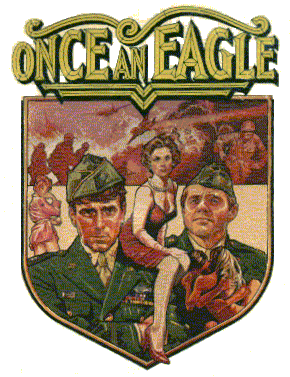
6 Comments

Filed under History, leadership, Military, world war two in europe

Crash Davis, Billy Chapel and Padre Steve: Being old but still part of the Game

tim_robbins_kevin_costner_bull_durham_001Nuke and Crash

I’ve always related to the characters in Kevin Costner’s baseball films, Bull Durham, Field of Dreams and For the Love of the Game. The main characters in each of the films touch me each in different way although both are players at the end of their careers on is a career journeyman in the minor leagues who “played 21 days in the show” and the other a future Hall of Famer at the close of a final season filled with disappointment.

The character of Crash Davis strikes a particular chord in me.  Crash is a journeyman minor league catcher with the dubious distinction of having the most minor league home runs, 227 to be exact. He also played by the way “21 days in the show. “   He is a consummate professional, loves the game and actually cares about the development of the young guys, even if they try his patience.  His dealings with Ebby Calvin “Nuke” LaLooche played by Tim Robbins are case in point.  Crash is demoted by the big team from his AAA contract to a single “A” team in order to help the team develop the young bonus baby.  He’s not happy with the job, he’s proud, and threatens to leave the team, only to ask the manage what time batting practice is. He takes the new assignment on with a mixture of skill and humor in a manner that benefits not only the young pitcher but motivates the rest of the team.  It does not matter that he is in the minor leagues as he still plays his heart out and spends his time teaching the next generation.  He even gets thrown out of a games if it helps motivate his team and let’s his young charge learn the hard way when young “Nuke” decides to ignore his advice.  The thing that Crash has the hardest time in dealing with his young charge is that he feels that “Nuke” doesn’t respect the game.

The comparison fits for me in more than one way. In a sense my life has been like a journeyman ball player.  I started my military career in the Army just over 28 years ago.  I come from a different generation of military than many people that I currently serve among.  I am “old school” just as the guys who were the old soldiers were when I was a young enlisted man and Second Lieutenant. My career has been quite diverse and I have not always done the same job on the same team or at the same level.  I think this is the mark of a true journeyman.  To beat the nearly dead horse of the baseball journeyman analogy I played one position for a number of years and then so to speak left the big team to train for a new position while playing in the minors.  When I graduated from seminary I became a National Guard and Reserve Chaplain.  I did not go on active duty. Back then the reserves were kind of like the minor leagues. Being a Reserve component Chaplain while doing my hospital residency and first hospital chaplain jobs it was like working my way up through the minors.  When I was promoted to the rank of Major in the Army Reserve it was like moving up to AAA ball.  When I got mobilized it was like getting called up during the regular season by the Major League team.  When that time ended and I returned to the reserves it was like being sent back to the minors.  I honestly thought that I would spend the rest of my career there, maybe getting called up for brief periods of time but knowing that my career was destined to end in the minor leagues.  That all changed when I was given a chance to go into the Navy.  I reduced in rank and came in with no time in grade meaning that I was starting from scratch with a new slate.  Now all of my experience was still there, but I was starting over.  It was like when a player gets traded between from the a team in one league to another in mid season, or while playing in the minors gets scouted by a different major league team than the one that is affiliated with his minor league club.  His slate is clear, it is a new start.

It also fits because of the internal part of me that desires excellence of me and those that I work with.  I do not like it when I feel that people do not respect “the game.”  By game of course I mean their vocation and calling as well as their attitude toward the organization in which they serve. Despite being a Priest and Chaplain I have little tolerance for such attitudes especially if the offender is a clergyman or women of some sort or another who often have better education, preparation and natural ability than me, people who have vast potential but don’t respect the gifts that they have been given especially if they had someone else pay for it….bonus babies like “Nuke” LaLoosh.  I was not a bonus baby, to use another baseball term when I joined the Army and went into ROTC as a non-scholarship student I was like a undrafted free agent signed for the league minimum.  This is how Crash feels about “Nuke.”  I love this exchange between Crash and Nuke:

Ebby Calvin LaLoosh: How come you don’t like me?
Crash Davis: Because you don’t respect yourself, which is your problem. But you don’t respect the game, and that’s my problem. You got a gift.
Ebby Calvin LaLoosh: I got a what?
Crash Davis: You got a gift. When you were a baby, the Gods reached down and turned your right arm into a thunderbolt. You got a Hall-of-Fame arm, but you’re pissing it away.
Ebby Calvin LaLoosh: I ain’t pissing nothing away. I got a Porsche already; a 911 with a quadraphonic Blaupunkt.
Crash Davis: Christ, you don’t need a quadraphonic Blaupunkt! What you need is a curveball! In the show, everyone can hit heat.
Ebby Calvin LaLoosh: Well, how would you know? YOU been in the majors?
Crash Davis: Yeah, I’ve been in the majors.

I’ve been blessed, I got a chance to go back and live my dream serving as an active duty Navy Chaplain.  I’ve gotten to serve on ship and with the Marines and EOD.  I’ve traveled the world and I’ve gone to war.  I’m not the same as I was as when I started.  I have issues, possibly more than The National Geographic. I have streaks where I am hot and when I am not, I have my slumps and I am dinged up physically and wish someone would make it legal for me to take HGH or some other thing to help my body over these minor yet nagging injuries.

Looking at Billy Chapel, the central character in For the Love of the Game I also find some connection, not quite the same as Crash Davis, but definitely a connection.  Billy has played the game a long time for the same team, 19 years. He came back from what should have been a career ending injury.  He is starting in what for his team is a meaningless last game of the season against the playoff bound Yankees in New York.  The story focuses on this last game, Billy’s relationships with current and former teammates as well as his long term relationship with the team’s owner who is selling the team.  The new management wants to deal Billy to another team in the off season and is asking him if he wants to continue in baseball.  While the game is going on, Chapel knowing this is the end spends a lot of time reflecting on his life, things that have gone well and things that he regrets, especially in his relationship with a woman he loves but has messed it up.  As he does this he tries to maintain his focus on the game.

The first thing that hits me is the relationship.  I have done a lot but at the same time have missed a lot of time with with Judy.  from 1996-2001 we spent most of 40 of 60 months apart. We have only spent about 11 of our wedding anniversaries together.  So many times she has missed high points of my career.  Chapel’s words to Jane Aubrey played by Kelly Preston after his perfect game strike a chord with me, I don’t ever think that I have said that I didn’t need Judy, but I spent a lot of my life not needing anybody, so she probably thought at times that I didn’t need her. Thus Chapel’s words to Jane do get me and when I first saw the movie put tears in my eyes:

“I used to believe, I still do, that if you give something your all it doesn’t matter if you win or lose, as long as you’ve risked everything put everything out there. And I’ve done that. I did it my entire life. I did it with the game. But I never did it with you, I never gave you that. And I’m sorry. I know I’m on really thin ice but, when you said I didn’t need you… well last night should’ve been the biggest night of my life, and it wasn’t. It wasn’t because you weren’t there. So I just wanted to tell you, not to change your mind or keep you from going, but just so you know, that I know, that I do need you. “

The second thing that really gets me is where the owner tells him that he is selling the team and tells Chapel that “the game stinks.”  I’ve seen a lot of people throughout my career with that kind of attitude about the Church, the military, their vocation and life in general that I want to scream.  Chapel’s words back to him echo how I feel about so much of life.

“The game doesn’t stink, Mr. Wheeler. It’s a great game.” After all these years I still love the game, my vocation, my service as a chaplain in the military and the young people that I get to work with.

for the love of the gameFor the Love of the Game

Since coming back from Iraq there have been plenty of times that I have felt like I had nothing left to give but when I was really struggling I made my transfer to Portsmouth where I ran into a number of guys who were like Chapel’s catcher Gus and let me know that they were not only with me but were going to take care of me:

Billy Chapel: I don’t know if I have anything left.
Gus Sinski: You just throw whatever you got, whatever’s left. The boys are all here for you. We’re gonna be awesome for you right now!

Finally there is the announcer, the legendary Vin Scully calling the game and realizing something special is going on:

“And you know Steve you get the feeling that Billy Chapel isn’t pitching against left handers, he isn’t pitching against pinch hitters, he isn’t pitching against the Yankees. He’s pitching against time. He’s pitching against the future, against age, and even when you think about his career, against ending. And tonight I think he might be able to use that aching old arm one more time to push the sun back up in the sky and give us one more day of summer.”

Now I don’t think that I am quite as far down the road career wise as Billy Chapel in the movie, but I do know that I am closer to the end of my military career than I was even a couple of years ago, but the thought that I could be on the last few years does cross my mind a lot.

I guess that there are three major things that I want to accomplish before the end of my military career, the first is to take care of all of the people that God gives me and puts in my life.  Second is to help coach the young men and women that I meet along the way, especially clergy and chaplains by any of my ICU colleagues and friends, especially when they hit difficult patches.  In one scene Chapel talks to a young player who made a boneheaded play against the “Green Monster” in Boston.  “There’s a bunch of cameras out there right now waiting to make a joke of this, Mick. So you can either stop, give them the sound bite, do the dance. Or you can hold your head up and walk by, and the next time we’re in Boston, we’ll go out there and work the wall together. Don’t help them make a joke out of you.” When I see young guys get in trouble or make mistakes I want to help them get back on theirThat is how I feel about the young chaplains and medical professionals that come into my life.

What is funny is that I am probably older than most if not many of our young guys parents.   I’ve been in the military since before many of younger guys were born, as well as their parents.  In a sense I’m a Crash Davis kind of guy as well as a Billy Chapel kind of guy.   I want to finish well and have my last season be my best.

I love both films and characters and find a new connection every time I watch them. I hope we can all find something or someone to help connect us to the people taht are closest to us and to what we do in life.  Somehow in Her grace the Deity Herself allows me to find this in baseball and somehow relate it to the rest of my life.  After all, it is for the Love of the Game.

Peace, Steve+

2 Comments

Filed under Baseball, leadership, philosophy

The Uncomfortable Legacy of Colonel General Ludwig Beck

“It is a lack of character and insight, when a soldier in high command sees his duty and mission only in the context of his military orders without realizing that the highest responsibility is to the people of his country.” Ludwig Beck

Bundesarchiv_Bild_183-C13564,_Ludwig_BeckLudwig Beck  Bundesarchiv Foto

This is one of those uncomfortable posts to write partially because I know that some people will take it completely wrong or ascribe meaning to it that I do not intend. I by training am a military historian, probably better at that than I am theology.  One thing that fascinates me in the study of military history is the actions of men in the face of evil and the meetings of such people at the intersections of where military and government policy intersect.  It is a timeless theme. The bulk of my study until the past few years was the German Army, particularly that of the Weimar Republic and the Wehrmacht to include policies, leaders, political attitudes and behavior in war and peace. Thus it makes sense for me to look at Colonel General Ludwig Beck who held the post of Chief of the German General Staff during the early part of the Nazi era.

Ludwig Beck is one of those characters in military history that makes professional military officers uncomfortable.  Beck is not the perfect example of righteousness nor was he always correct in things that he supported.  As an artillery regiment commander he defended the rights of soldiers and officers to be Nazi Party members though he himself was not one.  He, like many military officers was a conservative military officer by nature and became Chief of Staff of the Wehrmacht in 1935 two years after Hitler’s ascension to power.  Taking office Beck was troubled by some Nazi policies but not by the need for Germany to expand to areas that it had once controlled, he opposed the plan to attack Czechoslovakia not because of any love for the Czech state which he desired to be eliminated, but rather it being a war that Germany could not win. He resigned from his position a Chief of Staff in 1938 when he could not persuade the rest of the General Staff to resign in protest over Hitler’s plan which he felt would be disastrous for Germany.  Had the western powers led by Neville Chamberlain not caved at Munich it is likely that the Germans would have suffered badly against the Czech army and fortifications and with the entry of France into the war would have suffered a defeat that would have ended the Hitler regime.  In fact German officers who saw the extent of Czech preparations on the frontier following the Munich deal were greatly relieved that they did not have to fight their way into the Czech state.

After his resignation Beck played a key role in the resistance movement. He was involved in the planning for a number of attempts on Hitler’s life. Yet it was his leadership in the July 20th 1944 attempt on the life of Hitler that ensured his place in history.  With Colonel Klaus Von Stauffenberg and others in the General Staff at the Front and in Germany he acted to avert further destruction in Europe and the certain destruction of Germany.  The plot, Operation Valkyrie was marred by poor execution and failed to kill Hitler of seize power but for a few hours. The planners had left too much to chance and once Hitler had restored communications the coup attempted ended swiftly.  Had the attempt succeeded Beck was in line to become either the leader of Germany or the Head of the Army.  Instead while being interrogated after his capture he took his own life depriving Nazi leaders of the ability to put him up for a public trial at which he would have been humiliated and then executed.  The Kasserne in Sonthofen where the Bundeswehr MP School and Staff School as well as NATO and EU military schools are located is named for him.  It is there, ironically a former Adolf Hitler School that his memory and sacrifice is honored by the nation which emerged from the rubble of World War Two.  He is honored in a small museum and with a plaque recognizing his sacrifice.

492Ludwig Beck Kasserne Sonthofen

The reason that General Beck makes many of us in uniform uncomfortable (and I do include myself) is that he recognized that senior officers, especially those in high command who help set and execute policy cannot isolate themselves in the purely military aspects of the operations.  Instead he believed that officers have a higher duty to the constitution and people and not just the military mission that they have been assigned.  When he realized that he could not stop Hitler’s invasion of Czechoslovakia he resigned and worked in the obscurity of a small and often divided resistance movement against Hitler.  The bulk of the German high command, including many officers idolized in the United States did not recognize the higher duty. Many of these men were consummate professionals who did not support the evil of the Nazi regime and who conducted themselves honorably. Yet they effectively abetted its crimes by not opposing actions of their government that were against international law and morality as well as dangerous from purely a pragmatic military standpoint.

The problem is that military officers in any nation, including ours can face situations such as Beck faced.  A military’s character is demonstrated in how leaders deal with such situations.  Beck recognized the situation early, the bulk of his fellow officers did not recognize a problem until Germany was embroiled in a war that it could no longer win.  Even then most could not mount an opposition to Hitler because they did not want to be considered to be mutineers and violate their oath.  The potential to abet evil when military professionals bury their heads by planning and executing purely military aspects of a campaign is great.  If they ignore questionable policy or even policies that they know that have been judged by the international community to be illegal or immoral, such as torture of prisoners or waging wars of aggression against countries that have not attacked their nation they become complicit in their nations crimes.  This was the case with German Officers who may not have committed any personal crime and even tried to mitigate the evils of the Nazi regime were morally complicit in that evil.

In the United States the military shows its fidelity by remembering our oath to the Constitution and being faithful to it and the people that we serve.  As officers we represent all Americans and not just those of our political party, religious faith or social or economic interests, nor any political leader, faction or interest group within the nation. The Constitution, our military regulations, traditions and the Uniform Code of Military Justice are the standard by which we operate and by which we conduct ourselves and tools that protect us when policies or actions taken by the government or people within it violate those codes or international law.  The UCMJ makes it clear those officers who take part in, plan or a complicit in illegal actions in war are committing crimes.

When a nation become involved in wars which are non-traditional, revolutionary wars or insurgencies that barriers to professional conduct can be broken down. The Mai Lai massacre committed by 2LT William Calley’s platoon with the certain knowledge and maybe even approval of individuals in the chain of command is one example as were the uncontrolled chaos of prisoner abuse and torture at Abu Ghraib.

Times are difficult and we do not know what the future brings.  Stress in societies caused by economic conditions, natural disasters, lawlessness on the streets and divided and ineffective governments sometimes remove the moral restraints of the society and even affect the military.  One sees this in Weimar Germany as well as the 4th Republic in France which had to deal with post World War II economic difficulties, exacerbated by recriminations of political opponents for actions the others did during the war while France was occupied by Germany as well as the wars in Indo-China and Algeria which further divided the nation and the military.

It is in stressful and uncertain times that officers have to be men and women of principle who always uphold the highest traditions of their military as well as be the voice of conscience when governments, political parties, special interests or leaders begin to violate international norms in the conduct of war. Beck was not a perfect officer. He supported some of Hitler’s policies until after his resignation but like much of the resistance believed that the Nazi regime could only end up destroying Germany.  It is important to remember that like Ludwig Beck that officers do not need to sacrifice their honor to be faithful to their oath.

Peace, Steve+

16 Comments

Filed under History, leadership, Military, national security, world war two in europe

What Happened? An analysis of the Norfolk Tides in 2009

Pirates Orioles BaseballOscar Salazar

I have posted a couple of other articles analyzing the performance of the Norfolk Tides in 2009.  Now that the season is over with the Tides winning their final game by a score of 4-3 at Durham in 10 innings to finish at .500 for the season I am really going to get into the weeds.  First I am going to look at the team’s record each month of the season and note losses of key players during those months.

The Tides began well in April they were 11 and 8 with a  .578  winning percentage.  On April 21st Pitcher Brad Bergeson (1-1 2.45 ERA) was promoted to the Orioles.

In May the Tides were almost untouchable winning 23 and losing only 7 driving their record to 34-15 with a .693 winning percentage.  On May 13th Nolan Reimold (.394  9 HRs 27 RBI) was recalled to the Orioles.  May 14th Scott Moore (.252, 7 HRs, 21 RBIs) was injured, on May 29th Catcher Matt Wieters (.305 5 HRs 30 RBI’s) was called to the Orioles.  Pitcher Lance Berken (2-0  1.05 ERA) was promoted on May 26th.

three run homer by fiorentinoJeff Fiorentino 3 Run Home Run

The Tides crashed back to earth in June winning just 9 while losing 19.  They still were in first place and had a overall record of  43 wins and 34 losses with a .558 winning percentage.   Oscar Salazar (.372, 10 HRs and 43 RBIs) was called up by the Orioles on June 7th.  On June 28th pitcher David Hernandez (3-2 3.30 ERA) was promoted to Baltimore.  It is important to note that after June 7th the Tides were 8 and 15 with a .347 winning percentage. This is the date that Oscar Salazar was called up and it marks a watershed.

085Gary Allenson

July started off better than August but between 14th and 31st they went 5 and 13 with a .384 winning percentage.  For the month they were 14 and 15 with an overall record of 57-49 and a .537 winning percentage and had fallen into 2nd place.  On July 17th Justin Christian (.270 3 HRs and 25 RBIs) was injured followed by Jolbert Cabrera on July 17th (.298, 7 HRs, 50 RBIs) was injured breaking his foot going into home when sent by Gary Allenson on a play that he had little chance of scoring on. On the 29th Chris Tillman (8-6  2.70 ERA)  and reliever Kam Mickolio (3-3 3.50 ERA) were called up by the Orioles.

In August the woes continued as the Tides won 10 and lost 18 giving them a 67-67 and .500 on the year.  Once again the Tides had a meltdown, between the 20th and the 31st they only won 2 and lost 9 a pathetic .181 winning percentage during that stretch.  Even more disheartening three of these games were blown with the Tides leading in the 9th inning. On August 29th Joey Gathright (.329 24 Stolen bases) was traded while Michael Aubrey who had come to the Tides from the Cleveland system was promoted to the Orioles on the 18th.

130Injuries: Jolbert Cabrera

The Tides finished the year going 2 and 2 in September and maintain their .500 record to finish the year at 71 and 71.  September call ups included Jeff Fiorentino who hit .312 with 12 HRs and  67 RBIs.

The Tides finished 2009 with the 7th best record in the International League.  They had the 2nd highest team batting average of .272 behind Columbus.  Yet they were last in home runs with 79.  If one remember that 31 of these were produced by Salazar, Reimold,  Moore and Wieters before June 7thth in runs scored with 603 of which 239 (39.6%) were produced by the sextet of Salazar, Reimold, Wieters, Moore, Cabrera and Fiorentino.  The Tides were 5th in total hits with 1283,  6th in On Base Percentage at.330 and 10th in Slugging percentage at .389.

007Jeff George was a late season addition to the pitching staff
The Tides had the 7th best team pitching in the league with a team  3.87 ERA.  The ranked  7th in runs surrendered to opponents with 607 of which  527 were earned runs (80 unearned runs. Tides pitchers  gave up the 2nd most home runs (113) led the league in hit batsmen (77). They were  9th in walks with 409, 4th in strikeouts with 998.  Only one complete game was recorded by a Tides pitcher that by David Pauley in a game that he lost as the hitting never came through.  They had 9 shutouts on the year.

gathriright buntingJoey Gathright bunting for a hit

Hitting seems to be the key, after the Tides lost Reimold, Wieters, Salazar and Moore they were 36-56 for a .391 winning percentage.  Between those 4 players they hit 31 home runs before they left the team.  Salazar 10 in 50 games with 43 RBIs.  Reimold with 9 in 31 games with 27 RBIs, Moore, 7 in 32 games with 21 RBIs and Wieters with 5 in 39 games with 30 RBIs.  Prior to this they were 35-19 with a .648 winning percentage.  However the big drop occurred after Salazar was called up.  After Salazar left on June 7th the Tides had a   36 and 56 record for a .391 winning percentage during that time.

088Brandon Snyder Goes Down Swinging

In the field the Tides had 130 errors.  If one looks at fielding percentage by position played one can see my instincts about various players were correct.  Justin Turner had a .963 fielding percentage at 2nd base in 80 games committing 13 errors.  In only 14 games at short he had 4 errors and a .930 fielding percentage, while at 3rd he had 4 errors in 15 games and a .893 fielding percentage.  The farther Turner got from 2nd the less effective he was.  Other fielders had similar dynamics causing me to wonder about constantly moving infielders around in order to produce utility players when in fact it may be better to focus players on the positions that they play the best and only occasionally move them to other positions for additional experience.  I do understand the need for utility players, however you do not produce utility players at AAA.  If the player and the team has not yet figured out where the player plays the best and fits the best in the organization then it has probably missed the boat.  At AAA it is my opinion that unless a player has been recently converted to a new position, that strengths should be built upon with the goal of having potential starters, All-Stars and Golden Glove players at as many positions as possible.  This goes against the utility player mindset that the Tides-Orioles seem to have adopted where the only logical thing they appear to be doing is producing a glut of utility infielders most of who will have little chance of making the majors and little utility outside the minor league system.  Winning teams are built on excellence and not utility.  Utility players are important to plug holes and give starters a break.  You do not win pennants with teams loaded with utility players.  The Orioles know what they need at various positions.  Melvin Mora is getting old and Brian Roberts has been repeatedly mentioned in trade possibilities.  Ty Wigginton is not the best Third Baseman and there is the potential that Luke Scott may not return at first base.  Potentially they will have to replace one or more players in their infield next year.  Justin Christian could go to second and Brandon Snyder to 1st.  Brandon Pinckney is the only infielder who could be considered a true and reliable utility infielder being pretty solid in every position that he has played including a one inning relief pitcher outing and being a dependable hitter with a .291 batting average.

045July 3rd a Win Before the Bottom dropped out
Looking at trends for the Tides:

2009: 71-71  .500  3rd place

2008: 64-78  .451 2nd place

2007: 69-74 .483 3rd place

Last 3 Year  204-223    .478

The Tides last winning season with the O’s is 2005 when they were the Ottawa Lynx skippered by Dave Trembley.   Allenson managed the Ottawa in 2003 to a 79-65 record and .549 winning percentage.

Looking at the numbers the Tides early success was based on the incredible hitting and run production on about 6 players, only one that played most of the season with the team, Jeff Fiorentino.  The key date to mark is June 7th when Oscar Salazar was called up by the Orioles.  This was not simply do to the numbers, but to “X” factor that he was on the team.  Observing the team close up from section 102, row B, seat 2 I saw the impact that he had on the bench and on deck.  He provided a a sense of relaxed determination and confidence that had an impact on the players around him.  He Salazar not been called up, which I am glad that he was because he deserved to be, I doubt the Tides would have suffered the meltdown that they experienced.  When adversity struck it seemed that Gary Allenson checked out emotionally, he exuded little energy and that obviously carried over to the team.  Watching the Tides through most of August was painful as the team seemed lifeless as if they had already given up.  Scuttlebutt heard around the park indicated that quite a few players were unhappy with the organization.  A hint of this was provided by Jim Miller who when finally brought back as a closer indicated how being moved around hurt his game.

090Last Home Win Against Gwinnett September 3rd

With Allenson seemingly ineffective during this second half meltdown the organization needs to look at the previous years as well.  They need to look at who manages the Tides in relationship to the Orioles and in relation to whoever is manages at Baltimore as there is widespread speculation that Dave Trembley will not be back.  The Baltimore organization has no lack of talent at all levels as far as players are concerned, the key now is the field management team at Baltimore and Norfolk.  I would think that Baltimore would be wise to get in the hunt for Bobby Valentine who has proven that he can work with and motivate young players and who has signaled that he is ready to return from the land of the Rising Sun.  Since the Mets have elected to continue down the path of self-immolation by keeping their losing management team of Minaya and Manuel.  The Mets would have been the natural place for Valentine to go so with them out of the picture it would be wise for the Orioles to try to get him.

That is all for tonight.

Peace, Steve+

Leave a comment

Filed under Baseball, leadership, philosophy