Category Archives: Loose thoughts and musings

Recovery Night

Judy Waiting For Her Trip to the Operating Room

Friends of Padre Steve’s World,

It has been a hellaciously long and tiring day, following a long day of preparation.

On the positive side Judy’s knee replacement surgery was very successful and recovery wise she is well ahead of where she was weeks after the first surgery. The hospital physical therapist was really impressed.

This is mostly a testimony of how hard she worked in physical therapy after the home healthcare physical therapist pushed her so hard that she tore one of her quadriceps, setting back her recovery by over a month. Of course back then she walked into the hospital on crutches, she couldn’t walk without them. It has been months since she used them last and now is using the stair rider only when she has to carry heavy loads upstairs.

My Regal Pierre Puppy

Now I am home sipping a glass of wine and hanging out with our puppies. In the morning I’ll go back over the floors and master bath so that when she comes home it is to as sterile environment as I can make it. The puppies won’t be happy because for the next week or so I will be living with them downstairs at night to make sure she doesn’t get any infections. Since the puppies love to cuddle us at night they will not be happy that they only get daddy, especially Minnie, who is Judy’s shadow. Pierre and Izzy would just as soon hang with me but when we go to bed Izzy likes to sleep on the pillow behind Judy’s head. Pierre, the cool puppy just likes his space on the cedar chest at the foot of our bed. Even so, I’ll be on the couch and they will be positioned around me like last night. During the day we’ll put a flat sheet on top of our duvets so they can hang out with us under close supervision.

Minnie making a Bed on a Quilt Judy had folded and put on Our Linen Shelves

As for the rest of the day I was tired. After Judy left the preparation stage and went to the OR I went and got breakfast with lots and lots of coffee prior to going to the memorial service for our friend Mitch Vickers, before dashing back to the hospital to wait for her to go to her room. In that time I did a bit more work on the pamphlet that I am preparing to go along with my sermon at Norfolk’s Temple Israel on the last Sabbath of Passover and the beginning of Holocaust memorial week.

One of Izzy’s nicknames is Miss Kiss

So anyway, I am pooped. I’ll probably watch a movie and some episodes of The West Wing of Cheers before I let the pups out one more time and lay my head down on the couch. If you wonder why I do this, it is because Minnie will keep me awake barking all night if she is cut off from us. To help her, at the suggestion of Judy I have put one of Judy’s nightgowns for Minnie to snuggle on.

Thank you for your kind words, thoughts and prayers. We really do appreciate them.

So until tomorrow,

Peace,

Padre Steve+

2 Comments

Filed under healthcare, Loose thoughts and musings, papillons

A Day of Preparation

Friends of Padre Steve’s World,

Today has been as busy and tiring day as I have tried to get ready for Judy’s Second knee replacement surgery early. The effort was hindered and pushed back when my right knee gave out I fell down my porch last Thursday. It led to Judy doing a lot more of the work than she was expecting. Today I came home after work and did all I could before I pooped out to continue to get the house ready for when Judy returns from the hospital, most likely Sunday.

We have to be at the hospital at 6:30 AM and while she is probably either finishing surgery or in recovery I will be attending the funeral of our friend Mitch Vickers who died in his sleep last week. Then it will be back to the hospital for much of the rest of the day before I head home, let to puppies out and get back to work. I anticipate that I will complete what I can on Saturday with the expectation that she will be home Sunday. My knees hurt, my hip hurts, and my ankles hurt, but I got some work done. Eventually, I did some work on some materials I am writing for a sermon I will be delivering on the last day of Passover at a local synagogue where a friend is the Rabbi. The title is Lest We Forget: Walk, Remember and Bear Witness: Bearing Witness to the Holocaust when All who lived it Have Passed Away.

It will become my next book draft and deal with how history, memory, and walking those sacred places where the heinous crimes of the Nazis which beggar the imagination, the Holocaust was executed by Hitler’s SS, the army, the police, civilian Party and government offices, aided by the corporations that profited from the war and use of slave labor.

Eventually you will see portions of it here, although much has already been written due to my visits to those hallowed sites, and illustrated with my own photos and pictures from the era.

Pray for Judy, Mitch’s wife Barbara, and wish me well. By the way the puppies won’t be happy, because for a while they will be banned from sleeping with us. But such is life. By the way, Pierre says hello.

Until tomorrow,

Peace,

Padre Steve+

10 Comments

Filed under healthcare, holocaust, life, Loose thoughts and musings

A Titanic Departure to Disaster and Human Presumption: a Prelude to the Great Trumpian Disaster yet to Come…

Friends of Padre Steve’s World,

In 1912 the Bishop of Winchester said these words in a sermon marking the end of the R.M.S. Titanic: “Titanic, name and thing, will stand as a monument and warning to human presumption,” as well it should. Sadly, it seems that that Trump administration is doing its best to strip away vital safety, health, and environmental regulations that protect people from even worse disasters than that which befell the great ship 109 years ago, making it a a very contemporary story. But only a historian would understand that. I happen to be a historian.

The story of the Titanic has been told many times, and it should be a cautionary tale for those who in the name of profit and glory seek to dismantle safety and environmental standards. I remember reading Walter Lord’s classic treatment of the story, A Night to Remember back in 7th Grade. It made a tremendous impact on me, and every so often I will go back and read it again.

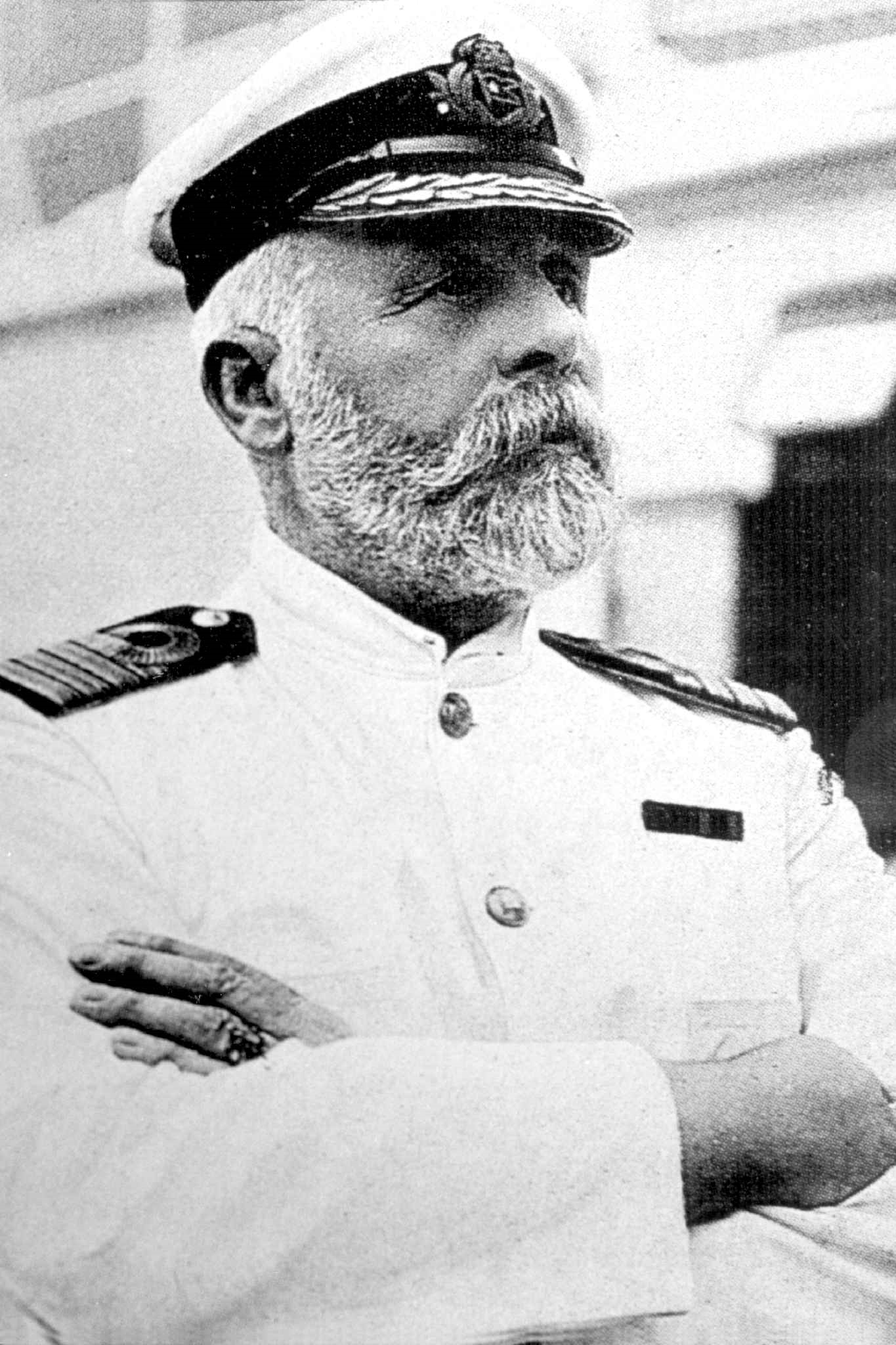
Captain Edward Smith

The Titanic’s Captain, Edward Smith, her was blinded by his faith in shipbuilding technology and had said about the Adriatic which he commanded previously, “I cannot imagine any condition which would cause a ship to founder. I cannot conceive of any vital disaster happening to this vessel. Modern ship building has gone beyond that.” A Senator Said during the hearings about the sinking of her captain, “Overconfidence seems to have dulled the faculties usually so alert.” 

The story of what happened to the great ship is as hard to believe now as it was then, but then incredible tragedies be they the loss of ships, aircraft, buildings or bridges, and even spacecraft always invoke such feelings. When I was told about the Space Shuttle Challenger blowing up in 1986 I remarked to the young soldier who brought me the news “don’t be silly Space Shuttles don’t blow up.”  Walter Lord, who was probably the most prolific historian and author of the Titanic disaster used to talk of the “if onlys” that haunted him about the sinking of Titanic: If only, so many if onlys. If only she had enough lifeboats. If only the watertight compartments had been higher. If only she had paid attention to the ice that night. If only the Californian did come…” 

Bruce Ismay

The word “if” probably the biggest two letter word that plagues human history, looms large in the tragedy of Titanic. The great ship, which was the largest ship and one of the fastest ocean liners of her time was the victim of her owner and operators hubris as much as she was that of the iceberg which sank her. The ship was heralded by Bruce Ismay, the Chairman and Managing Director of the White Star Line as unsinkable, a claim that was echoed in the press.

Her builders had no such illusions and protested the claims. Thomas Andrews the Managing Director of Harland and Wolff Shipyards where she was built commented “The press is calling these ships unsinkable and Ismay’s leadin’ the chorus. It’s just not true.” 

Titanic was designed with the latest shipbuilding innovations, watertight compartments, a double bottom and equipped with wireless. She was billed as “unsinkable” by her owners but those innovations as advanced as they were for her day were insufficient to save her when her Captain and owners chose to charge through a known ice field at full speed.  Her watertight compartments did not extent far enough up the hull to prevent water from going over them.  Likewise it was never imagined that so many watertight compartments could be compromised.

Thomas Andrews

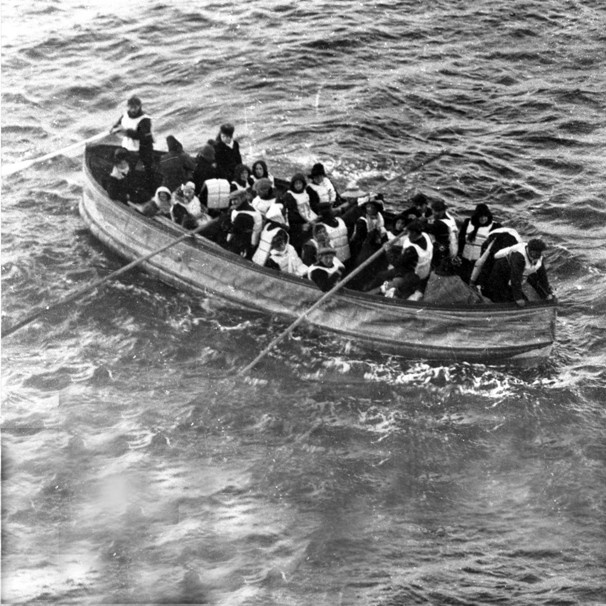
As far as lifeboats, the great ship carried far too few. Thomas Andrews, her builder wanted 64 had his arm twisted to bring the number to 32 and Titanic sailed with only 20 of which 4 were collapsible boats smaller than smaller lifeboats. Justifying himself under antiquated regulations (which were written for ships of 10,000 tons) which allowed just 16 boats J. Bruce Ismay the Director of White Star Line told Andrews:

“Control your Irish passions, Thomas. Your uncle here tells me you proposed 64 lifeboats and he had to pull your arm to get you down to 32. Now, I will remind you just as I reminded him these are my ships. And, according to our contract, I have final say on the design. I’ll not have so many little boats, as you call them, cluttering up my decks and putting fear into my passengers.” 

If only the Californian had come. Californian was the nearest vessel to Titanic and in easy wireless range. However her wireless was unmanned, she did not have enough operators to man it 24 hours a day.  Her lookouts saw Titanic but despite flares being fired from Titanic she never assumed Titanic to be in extremis. The next nearest ship, Carpathia heard the call and made a valiant attempt to reach Titanic but was too late.

If only…so many “if onlys” and so many traceable to one man, the Director of White Star Line J. Bruce Ismay.  Thomas Andrews would go down with the ship but Ismay ensured his own survival. Ismay is symbolic of men who allow their own hubris, vanity and power to destroy the lives of many.  He is so much like those that helped bring about the various economic crises that have wracked the United States and Western Europe and so many other tragedies.

After the disaster the tragedy was investigated by the United States Senate, as well as the British Board of Trade. However, the inquiry of the latter was condemned by the White Star Line’s Archivist, Paul Louden-Brown. He noted: “I think the enquiry is a complete whitewash. You have the [British] Board of Trade in effect enquiring into a disaster that’s largely of its own making.”

Ismay and Titanic are symbols of men guided only by their quest for riches and glory who revel in their power and scorn wise counsel or regulation, government or otherwise. They often believe that rules don’t apply to them. It is a cautionary tale for us today as corporations, lobbyists, and politicians seek to dismantle sensible and reasonable safety and environmental regulations for the sake of their unmitigated profit. Today we are seeing the Trump administration doing all that it can to strip away important safety, workplace, and environmental regulations in order to maximize profits.

But the warning goes far beyond that, it applies to any of us who adopt the mindset, “this cannot happen to us.” After all, there are times when we all end up as victims of our own hubris, such is the human condition. That is especially the case now where an American President defies all precedent, ignores laws, demeans the Constitution, stands against the very proposition of the Declaration, “that all men are created equal…” and who represents the unregulated hubris of men like Bruce Ismay. Had he been a passenger on board the ill-fated ship the President would have likely saved himself like Ismay, absconding into a boat while being the President of the Line to which Titanic belonged. Walter Lord wrote about Ismay:

“This Sunday he was enough a member of the crew to see the ice message that arrived from another ship. In the bright, sunny Palm Court—just as the bugler sounded lunch—Captain Smith gave him a warning from the Baltic. During the afternoon Ismay (who liked to remind people who he was) fished it out of his pocket and waved it at Mrs. Ryerson and Mrs. Thayer. In the smoking room before dinner, while the twilight still glowed through the amber-stained windows, Captain Smith sought and got the message back. Then Ismay walked down to the restaurant, immaculate in his dinner jacket, very much a First Class passenger. After the crash he went back to being in the crew—up with the Captain on the bridge … consulting with Chief Engineer Bell … and now, despite the tongue-lashing from Fifth Officer Lowe, shouting orders about the boats. Then came another switch. At the very last moment, he suddenly climbed into Boat C. Down it dropped, with 42 people including Bruce Ismay—just another passenger.”

That would be President Trump. He loves playing President, and playing the role of the Commander in Chief but he would abandon the ship of state, the citizens of the United States, and even the cult of people who believed every word he said. He does that every day, so it is not unlikely that when the ultimate disaster occurs that he will abandon the country and even his Cult members who he called “the most loyal people” who he will sell out on. Sinking ship to preserve himself.

This is a hard lesson to learn, but believe me when I say it. It is the history of Donald J. Trump, and all he has done as a businessman and as President. Ask all of the loyal men and women who volunteered to serve in his administration whose lives and reputations are in tatters.

Until tomorrow,

Peace

Padre Steve+

Leave a comment

Filed under History, leadership, Loose thoughts and musings, News and current events, Political Commentary

Surrender at Appomattox, the Birth and Death Of a Better America, Remembering the Words Of Ely Parker

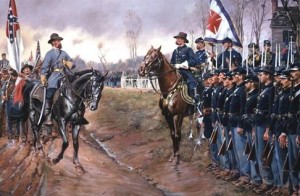
chamberlian gordon appomattox

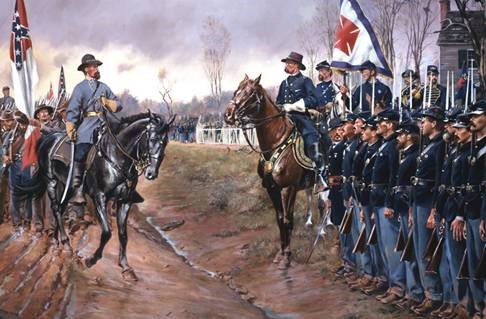
Joshua Chamberlain Receives the Surrender of John Gordon at Appomattox

Friends of Padre Steve’s World,

 One hundred and fifty four years ago on the 9th and 10th of April 1865, four men, Ulysses S Grant, Robert E. Lee, Joshua Lawrence Chamberlain and Ely Parker, taught succeeding generations of Americans the value of mutual respect and reconciliation. The four men, each very different, would do so after a bitter and bloody war that had cost the lives of over 600,000 Americans which had left hundreds of thousands others maimed, shattered or without a place to live, and seen vast swaths of the country ravaged by war and its attendant plagues.

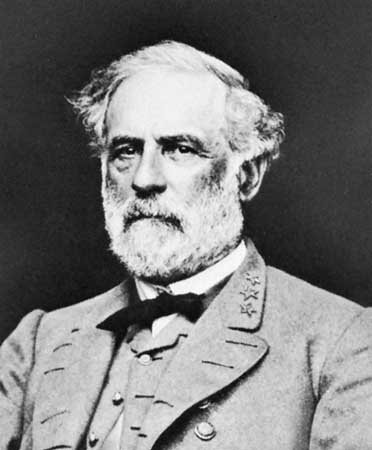
The differences in the men, their upbringing, and their views about life seemed to be insurmountable. The Confederate commander, General Robert E. Lee was the epitome of a Southern aristocrat and career army officer. Lieutenant General Ulysses S. Grant, like Lee was a West Point graduate and veteran of the War with Mexico, but there the similarities ended. Grant was an officer of humble means who had struggled with alcoholism and failed in his civilian life after he left the army, before returning to it as a volunteer when war began. Major General Joshua Lawrence Chamberlain had been a professor of rhetoric and natural and revealed religion from Bowdoin College until 1862 when he volunteered to serve. He was a hero of Little Round Top at the Battle of Gettysburg, who helped exemplify the importance of citizen soldiers in peace and war. Finally there was Colonel Ely Parker, a full-blooded Seneca Indian; a professional engineer by trade, a man who was barred from being an attorney because as a Native American he was never considered a citizen. Although he had been rejected from serving in the army for the same reason, his friend Grant had obtained him a commission and kept him on his staff.
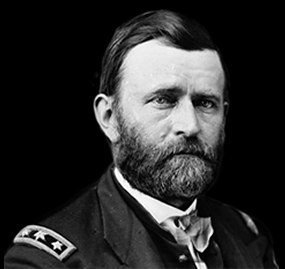
grant 1

General Ulysses S. Grant

A few days bef0ore the Confederate line around the fortress of Petersburg was shattered at the battle of Five Forks, and to save the last vestiges of his army Lee attempted to withdraw to the west. Within a few days the once magnificent Army of Northern Virginia was trapped near the town of Appomattox. On the morning of April 9th 1865 Lee replied to an entreaty of Lieutenant General Ulysses S. Grant requesting that he and his Army of Northern Virginia be allowed to surrender. Lee wrote to Grant:

HEADQUARTERS ARMY OF NORTHERN VIRGINIA, APRIL 9, 1865

Lieut. Gen. U.S. GRANT:

I received your note of this morning on the picket-line, whither I had come to meet you and ascertain definitely what terms were embraced in your proposal of yesterday with reference to the surrender of this army. I now ask an interview in accordance with the offer contained in your letter of yesterday for that purpose.

R.E. LEE, General.

The once mighty Army of Northern Virginia, which had won so many victories, and which at its peak numbered nearly 80,000 men, was now a haggard and emaciated, but still proud force of about 15,000 soldiers. For Lee to continue the war now would mean that they would have to face hopeless odds against a vastly superior enemy. Grant recognized this and wrote Lee:

I am equally anxious for peace with yourself, and the whole North entertains the same feeling. The terms upon which peace can be had are well understood. By the South laying down their arms they will hasten that most desirable event, save thousands of human lives, and hundreds of millions of property not yet destroyed. Seriously hoping that all our difficulties may be set-tied without the loss of another life, I subscribe myself, &c.,

Since the high water mark at Gettysburg, Lee’s army had been on the defensive. Lee’s ill-fated offensive into Pennsylvania was one of the two climactic events that sealed the doom of the Confederacy. The other was Grant’s victory at Vicksburg which fell to him a day after Pickett’s Charge, and which cut the Confederacy in half.
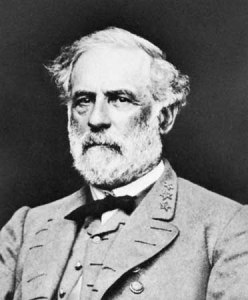
ileerob001p1

General Robert E. Lee

The bloody defensive struggle lasted through 1864 as Grant bled the Confederates dry during the Overland Campaign, leading to the long siege of Petersburg. Likewise the armies of William Tecumseh Sherman had cut a swath through the Deep South and were moving toward Virginia from the Carolinas.

With each battle following Gettysburg the Army of Northern Virginia became weaker and finally after the nine month long siege of Petersburg ended with a Union victory there was little else to do. On the morning of April 9th a final attempt to break through the Union lines by John Gordon’s division was turned back by vastly superior Union forces.

On April 7th Grant wrote a letter to Lee, which began the process of ending the war in Virginia. He wrote:

General R. E. LEE:

The result of the last week must convince you of the hopelessness of further resistance on the part of the Army of Northern Virginia in this struggle. I feel that it is so, and regard it as my duty to shift from myself the responsibility of any further effusion of blood, by asking of you the surrender of that portion of the C. S. Army known as the Army of Northern Virginia.

U.S. GRANT, Lieutenant-General

Lee was hesitant to surrender knowing Grant’s reputation for insisting on unconditional surrender, terms that Lee could not accept. He replied to Grant:

HEADQUARTERS ARMY OF NORTHERN VIRGINIA, APRIL 7, 1865 Lieut. Gen. U.S. GRANT:

I have received your note of this date. Though not entertaining the opinion you express on the hopelessness of further resistance on the part of the Army of Northern Virginia, I reciprocate your desire to avoid useless effusion of blood, and therefore, before considering your proposition, ask the terms you will offer on condition of its surrender.

R.E. LEE, General.

The correspondence continued over the next day even as the Confederates hoped to fight their way out of the trap that they were in. But now Robert E. Lee, who had through his efforts extended the war for at least six months, knew that he could no longer continue. Even so some of his younger subordinates wanted to continue the fight. When his artillery chief Porter Alexander recommended that the Army be released, “take to the woods and report to their state governors” Lee replied:

“We have simply now to face the fact that the Confederacy has failed. And as Christian men, Gen. Alexander, you & I have no right to think for one moment of our personal feelings or affairs. We must consider only the effect which our action will have upon the country at large.”

Lee continued:

“Already [the country] is demoralized by the four years of war. If I took your advice, the men would be without rations and under no control of their officers. They would be compelled to rob and steal in order to live…. We would bring on a state of affairs it would take the country years to recover from… You young fellows might go bushwhacking, but the only dignified course for me would be to go to General Grant and surrender myself and take the consequences of my acts.”

Alexander was so humbled at Lee’s reply he later wrote “I was so ashamed of having proposed such a foolish and wild cat scheme that I felt like begging him to forget he had ever heard it.” When Alexander saw the gracious terms of the surrender he was particularly impressed with how non-vindictive the terms were, especially in terms of parole and amnesty for the surrendered soldiers.

Abraham Lincoln had already set the tone for the surrender in his Second Inaugural Address given just over a month before the surrender of Lee’s army. Lincoln closed that speech with these words of reconciliation.

“With malice toward none, with charity for all, with firmness in the right as God gives us to see the right, let us strive on to finish the work we are in, to bind up the nation’s wounds, to care for him who shall have borne the battle and for his widow and his orphan, to do all which may achieve and cherish a just and lasting peace among ourselves and with all nations.”
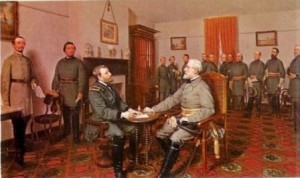
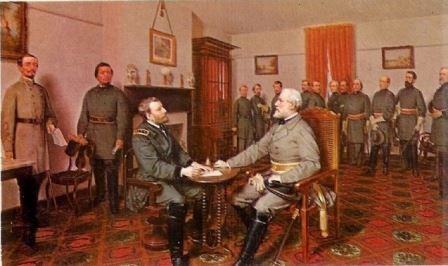
appomattox surrender

Lee met Grant at the house of Wilmer McLean, who had moved to Appomattox in 1861 after his home near Manassas had been used as a Confederate headquarters and was damaged by artillery fire. Lee was dressed in his finest uniform complete with sash, while Grant was dressed in a mud splattered uniform and overcoat only distinguished from his soldiers by the three stars on his should boards. Grant’s dress uniforms were far to the rear in the baggage trains and Grant was afraid that his slovenly appearance would insult Lee, but it did not. It was a friendly meeting, before getting down to business the two reminisced about the Mexican War.

Grant provided his vanquished foe very generous surrender terms:

“In accordance with the substance of my letter to you of the 8th inst., I propose to receive the surrender of the Army of N. Va. on the following terms, to wit: Rolls of all the officers and men to be made in duplicate. One copy to be given to an officer designated by me, the other to be retained by such officer or officers as you may designate. The officers to give their individual paroles not to take up arms against the Government of the United States until properly exchanged, and each company or regimental commander sign a like parole for the men of their commands. The arms, artillery and public property to be parked and stacked, and turned over to the officer appointed by me to receive them. This will not embrace the side-arms of the officers, nor their private horses or baggage. This done, each officer and man will be allowed to return to their homes, not to be disturbed by United States authority so long as they observe their paroles and the laws in force where they may reside.”

When Lee left the building Federal troops began cheering but Grant ordered them to stop. Grant felt a sense of melancholy and wrote “I felt…sad and depressed, at the downfall of a foe who had fought so long and valiantly, and had suffered so much for a cause, though that cause was, I believe, one of the worst for which a people has fought.” He later noted: “The Confederates were now our countrymen, and we did not want to exult over their downfall.”

In the hours before and after the signing of the surrender documents old friends and classmates, separated by four long years of war gathered on the porch or around the house. Grant and others were gracious to their now defeated friends and the bitterness of war began to melt away. Some Union officers offered money to help their Confederate friends get through the coming months. It was an emotional reunion, especially for the former West Point classmates gathered there.

“It had never been in their hearts to hate the classmates they were fighting. Their lives and affections for one another had been indelibly framed and inextricably intertwined in their academy days. No adversity, war, killing, or political estrangement could undo that. Now, meeting together when the guns were quiet, they yearned to know that they would never hear their thunder or be ordered to take up arms against one another again.”

Grant also sent 25,000 rations to the starving Confederate army waiting to surrender. The gesture meant much to the defeated Confederate soldiers who had had little to eat ever since the retreat began.

The surrender itself was accomplished with a recognition that soldiers who have given the full measure of devotion can know when confronting a defeated enemy. Major General Joshua Lawrence Chamberlain, the heroic victor of Little Round Top was directed by Grant to receive the final surrender of the defeated Confederate infantry on the morning of April 12th.

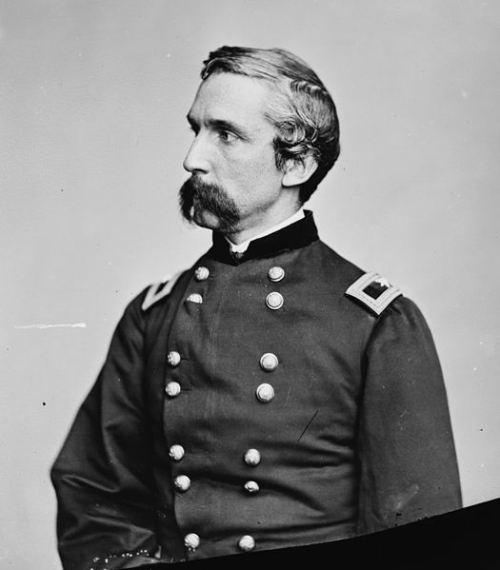
It was a rainy and gloomy morning as the beaten Confederates marched to the surrender grounds. As the initial units under the command of John Gordon passed him, Chamberlain was moved with emotion he ordered his soldiers to salute the defeated enemy for whose cause he had no sympathy, Chamberlain honored the defeated Rebel army by bringing his division to present arms.

John Gordon, who was “riding with heavy spirit and downcast face,” looked up, surveyed the scene, wheeled about on his horse, and “with profound salutation returned the gesture by lowering his saber to the toe of his boot. The Georgian then ordered each following brigade to carry arms as they passed third brigade, “honor answering honor.”
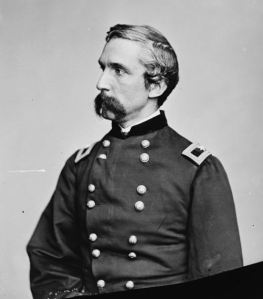
joshua_chamberlain_-_brady-handy

Joshua Lawrence Chamberlain

Chamberlain was not just a soldier, but before the war had been Professor of Natural and Revealed Religions at Bowdoin College, and a student of theology before the war. He could not help to see the significance of the occasion. He understood that some people would criticize him for saluting the surrendered enemy. However, Chamberlain, unlike others, understood the value of reconciliation. Chamberlain was a staunch abolitionist and Unionist who had nearly died on more than one occasion fighting the defeated Confederate Army, and he understood that no true peace could transpire unless the enemies became reconciled to one another.

He noted that his chief reason for doing so:

“The momentous meaning of this occasion impressed me deeply. I resolved to mark it by some token of recognition, which could be no other than a salute of arms. Well aware of the responsibility assumed, and of the criticisms that would follow, as the sequel proved, nothing of that kind could move me in the least. The act could be defended, if needful, by the suggestion that such a salute was not to the cause for which the flag of the Confederacy stood, but to its going down before the flag of the Union. My main reason, however, was one for which I sought no authority nor asked forgiveness. Before us in proud humiliation stood the embodiment of manhood: men whom neither toils and sufferings, nor the fact of death, nor disaster, nor hopelessness could bend from their resolve; standing before us now, thin, worn, and famished, but erect, and with eyes looking level into ours, waking memories that bound us together as no other bond;—was not such manhood to be welcomed back into a Union so tested and assured? Instructions had been given; and when the head of each division column comes opposite our group, our bugle sounds the signal and instantly our whole line from right to left, regiment by regiment in succession, gives the soldier’s salutation, from the “order arms” to the old “carry”—the marching salute. Gordon at the head of the column, riding with heavy spirit and downcast face, catches the sound of shifting arms, looks up, and, taking the meaning, wheels superbly, making with himself and his horse one uplifted figure, with profound salutation as he drops the point of his sword to the boot toe; then facing to his own command, gives word for his successive brigades to pass us with the same position of the manual,—honor answering honor. On our part not a sound of trumpet more, nor roll of drum; not a cheer, nor word nor whisper of vain-glorying, nor motion of man standing again at the order, but an awed stillness rather, and breath-holding, as if it were the passing of the dead!”

The next day Robert E Lee addressed his soldiers for the last time. Lee’s final order to his loyal troops was published the day after the surrender. It was a gracious letter of thanks to men that had served their beloved commander well in the course of the three years since he assumed command of them outside Richmond in 1862.

General Order
No. 9

After four years of arduous service marked by unsurpassed courage and fortitude, the Army of Northern Virginia has been compelled to yield to overwhelming numbers and resources.

I need not tell the survivors of so many hard fought battles, who have remained steadfast to the last, that I have consented to the result from no distrust of them.

But feeling that valour and devotion could accomplish nothing that could compensate for the loss that must have attended the continuance of the contest, I have determined to avoid the useless sacrifice of those whose past services have endeared them to their countrymen.

By the terms of the agreement, officers and men can return to their homes and remain until exchanged. You will take with you the satisfaction that proceeds from the consciousness of duty faithfully performed, and I earnestly pray that a merciful God will extend to you his blessing and protection.

With an unceasing admiration of your constancy and devotion to your Country, and a grateful remembrance of your kind and generous consideration for myself, I bid you an affectionate farewell. — R. E. Lee, General

The surrender was the beginning of the end. Other Confederate forces continued to resist for several weeks, but with the surrender of the Army of Northern Virginia led by the man that nearly all Southerners saw as the embodiment of their nation the war was effectively over.

Lee had fought hard and after the war was still under the charge of treason, but he understood the significance of defeat and the necessity of moving forward as one nation. In August 1865 Lee wrote to the trustees of Washington College of which he was now President:

“I think it is the duty of every citizen, in the present condition of the Country, to do all in his power to aid the restoration of peace and harmony… It is particularly incumbent upon those charged with the instruction of the young to set them an example of submission to authority.

eparker05-966-g

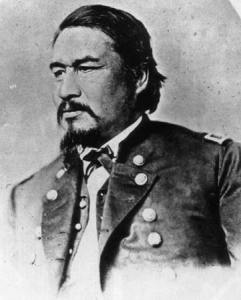
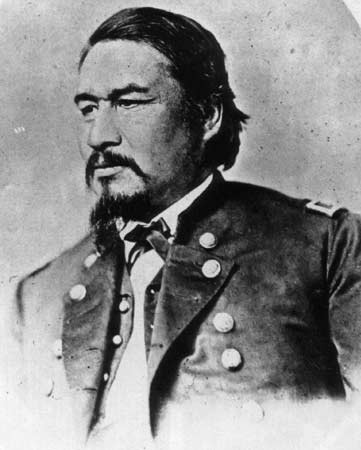
Brigadier General Ely Parker

It is a lesson that all of us in our terribly divided land need to learn regardless of or political affiliation or ideology. After he had signed the surrender document, Lee learned that Grant’s Aide-de-Camp Colonel Ely Parker, was a full-blooded Seneca Indian. He stared at Parker’s dark features and said: “It is good to have one real American here.”

Parker, a man whose people had known the brutality of the white man, a man who was not considered a citizen and would never gain the right to vote, replied, “Sir, we are all Americans.” That afternoon Parker would receive a commission as a Brevet Brigadier General of Volunteers, making him the first Native American to hold that rank in the United States Army. He would later be made a Brigadier General in the Regular Army.

I don’t know what Lee thought of that. His reaction is not recorded and he never wrote about it after the war, but it might have been in some way led to Lee’s letter to the trustees of Washington College. I think with our land so divided, ands that is time again that we learn the lessons so evidenced in the actions and words of Ely Parker, Ulysses Grant, Robert E. Lee and Joshua Chamberlain, for we are all Americans.

Sadly, I think that there is a portion of the American population who will not heed these words and will continue to agitate for policies and laws similar to those that led to the Civil War, and which those the could not reconcile defeat instituted again during the Post-Reconstruction and Jim Crow eras. For me such behavior and attitudes are incompressible, but they are all too real, and all too present in our divided nation.

But I still maintain hope that in spite of everything that divides us, in spite of the intolerance and hatred of some, that we can overcome. I think that the magnanimity of Grant in victory, the humility of Lee in defeat, the graciousness of Chamberlain in honoring the defeated foe, and the stark bluntness of Parker, the Native American, in reminding Lee, that “we are all Americans,” is something that is worth remembering, and yes, even emulating.

That is where we need to be in the age of President Trump. Robert E. Lee, could admit defeat, and though still at heart a racist, could still advocate for the end of a rebellion that he supported and reconciliation with a government which he had committed high treason against. Ulysses S. Grant and Joshua Chamberlain embodied the men of the Union who had fought for the Union, Emancipation, and against the Rebellion hat Lee supported to the end.

But even more so we need to remember the words of the only man whose DNA and genealogy did not make him a European transplant, the man who Lee refereed to as the only true American at Appomattox, General Ely Parker, the Native American who fought for a nation that not acknowledge him as a citizen until long after he was dead.

In the perverted, unrequited racist age of President Donald Trump we have to stop the bullshit, and take to heart the words of Ely Parker. “We are all Americans.” If we don’t get that there is no hope for our country. No amount of military or economic might can save us if we cannot understand Parker’s words, or the words of the Declaration: “We hold these truths to be self evident, that all men are created equal…” Really, it does not matter if our relatives were second sons of European Gentry, religious dissidents, refugees of repressive regimes, African Slaves, Asians seeking a new life in a new country, or Mexican citizens who turned on their own country to become citizens of a new Republic, men like Mariano Vallejo, the Mexican governor of El Norte and one of the First U.S. Senators from California.

Let us never forget Ely Parker’ words at Appomattox, “We are all Americans.”

Sadly, there are not just more than a few Americans, and many with no familial or other connection to the Confederacy and the South than deeply held racism who would rather see another bloody civil war because they hate the equality of Blacks, Women, immigrants, and LGBTQ Americans more than they love the Declaration of Independence and the Constitution of the United States.

That is why Parker’s words to Lee still matter so much and why we must never give up the fight for equality for all Americans. Likewise, whether one likes it or not, Robert E. Lee broke his sacred oath to the Constitution as a commissioned officer refused to free the slaves entrusted to his care by his Father in Law in 1859, who refused to support his Confederate President’s plan to emancipate and free African American slaves who were willing to fight for the Confederacy until February 1865.

Lee the Myth is still greater than Lee the man in much of this country. Lee the man is responsible for the deaths for more Americans than the leaders of Imperial Germany, Imperial Japan, Nazi Germany, or any other foreign power. He even cast aside such loyalists as George Pickett, whose division he destroyed in a suicidal attack at Gettysburg on July 3rd 1863, and then continued to damn Pickett for mistakes which were his own until the end of the war.

Both sides of my family fought for the Confederacy as officers and members of the 8th Virginia Cavalry. Most reconciled, but others didn’t, including the patriarch of my paternal side of the family. His decision ended up costing the family millions of dollars in the following years. The maternal side was smart enough to reconcile after the war and to later engage in the profoundly libertarian practice of bootlegging until the end of prohibition. I don’t know if any members of either side of my family were Kan supporters, but if they were I wouldn’t doubt it. They lost what they had during the war by fighting on the wrong sided and refusing to reconcile with the United States, and they deserved it. Even Robert E. Lee refused to completely admit his crime of treason. He used the language of reconciliation without fully embracing it.

That my friends is the crime of those who today speak of freedom and reconciliation, but refused to apply it to themselves or their families. I guess that makes me different, and I’m okay I’m okay with that. I have to admit, that the person that I was in my early 20s, or the person that I am now could not have embraced secession or slavery. There is no moral reason that any Christian person could have fully embraced secession and civilly war to defend slavery, but people on both sides of my family did even as their neighbors embraced the Union.

So for me April 9th is very personal. I have served my country for nearly 38 years. I cannot abide men and women who treat the men and women that I have served with in the defense of this county as less than human or fully entitled to the rights that are mine, more to my birth and race than today than any of my inherent talents or abilities. That includes my ancestors who fought for the Confederacy on both sides of my family. Ancestors or not, they were traitors to everything that I believe in and hold dear.

As for me, principles and equality trump all forms of racism, racist ideology, and injustice, even when the President himself advocates for them. I am a Union man, despite my Southern ancestry, and I will support the rights of people my ancestors would never support, Blacks, Hispanics, Women, LTBTQ, and other racial, religious, or gender minorities. But then, I am a Unionist. I am a supporter of Equal rights for African Americans, I am a women’s rights advocate, including their reproductive rights, and I am a supporter of LGBTQ people and their rights, most of which are opposed by the Evangelical Christians who I grew up with. I also will not hesitate to criticize the elected President of the United States when he pisses on the preface of the Declaration of Independence, the United States Constitution, attacks the bedrock principles of the Bill of Rights

How can I be silent?

Dietrich Bonhoeffer notes:

“The messengers of Jesus will be hated to the end of time. They will be blamed for all the division which rend cities and homes. Jesus and his disciples will be condemned on all sides for undermining family life, and for leading the nation astray; they will be called crazy fanatics and disturbers of the peace. The disciples will be sorely tempted to desert their Lord. But the end is also near, and they must hold on and persevere until it comes. Only he will be blessed who remains loyal to Jesus and his word until the end.”

Trump certainly hates those who hold fast to the worlds of Jesus. So I will stand fast on this anniversary of Appomattox and echoes the words of Eli Parker to President Trump himself: “Sir, we are all Americans.” He may not understand it, but I certainly do.

Until tomorrow,

Peace

Padre Steve+

6 Comments

Filed under civil rights, civil war, History, leadership, LGBT issues, Loose thoughts and musings, Military, Political Commentary

A Klassiker Drubbing, A Wedding, and a Reunion

Friends of Padre Steve’s World,

Today was a good day. I was able to do a limited amount of work to help Judy around the house last night and today as we get ready for her second knee replacement surgery Friday, and I will continue with that tomorrow. It hurts and I have to use a cane to get around, but we are making progress. I have my own appointments for my knees on Monday and Tuesday and submitted my cancellation request for my voluntary retirement on Friday so I can get my knees, hips, and other medical needs fixed before I leave active duty.

I helped Judy to the extent I could today and she allowed me to watch on the ESPN app the progress of the Bayern Munich vs. Borussia Dortmund “Klassiker” match since Fox Sports dropped it to their Spanish channel which needs a subscription to view. That pissed me off because Bayern blew out Dortmund in every sense of the meaning of blowout by a score of 5-0. Bayern Striker Robert Lewendowski scored his 200th and 201st Bundesliga goals in the beat down. In which Bayern controlled the ball 59% of the game, had 22 shots, 10 of which were on goal while limiting Dortmund to 4 shots, just one of which was on goal, taking command of the race for the Bundesliga title, leading by a point with a 15 goal differential. The difference between today and the winter break for the Bundesliga when Dortmund had a 9 point lead on the table and had beaten Bayern 3-2 in a thrilling game made Dortmund the team to beat. But since then it has been all Bayern, as die Röten chipped away at Dortmund’s lead battling injuries and questions about their first year coach Niko Kovac and finally took the lead on Dortmund with 6 matches left in the season. If Bayern can finish strong it will be their 7th straight Bundesliga championship, but the first one in years that has had been such a thrilling title chase. It’s not over yet but I think, as I told my NATO German friends back in January, when it is done Bayern will be on top. Of course to understand this you have to be a fan of a team which has big rivals and a tradition of winning. For the record, Bayern has won a total of 70 league, National, European, and international championships or cups. There are not that many other professional sports teams that have such a record of championships. I expect they will add to that this year with another Bundesliga title and probably another German Cup, but I digress…

In other news I had the honor of officiating the marriage of a dear friend and colleague from the Joint Forces Staff College. She is a wonderful woman, brilliant intellect, retired Navy Commander, with a great personality and sense of humor. Over the years she has gone through a lot of hard times, but with grace and dignity. When she asked me to conduct her wedding and to meet her fiancé I was overjoyed. I had never seen her look so happy and to at the same time discover that her fiancé was a gem. It was an honor and joy to marry them this evening.

Likewise, the event was a reunion with a lot of my friends from the Staff College. That was a remarkable time. I have missed them since transferring to Little Creek in April 2017. Today I got around with the help of a cane. Last year I was walking and running 5-15 miles a day 5 days a week and would go to Gettysburg and Antietam and walk up to 20 miles a day with a pack on my back across those hallowed battlefields. My friends there want me to come back when my voluntary retirement is canceled, which it should be.

So anyway, until tomorrow,

Peace

Padre Steve+

Leave a comment

Filed under faith, life, Loose thoughts and musings, ministry, Pastoral Care

“In This Difficult Time for the United States, it’s Perhaps Well to Ask What kind of a Nation We Are…” Bobby Kennedy’s Words on the Assassination Of Dr. Martin Luther King Jr.

20130404-203529.jpg

Friends of Padre Steve’s World,

Fifty-one years ago yesterday a bullet killed Dr. Martin Luther King Jr. while he was in Memphis supporting Sanitation Workers who were being subjected to unsafe working conditions without the same rights, protections, pay, or benefits of white Sanitation workers. As always there were threats on King’s life and he knew that he was a target. The night before his assassination Dr. King spoke at Mason Temple the international headquarters of the Church of God in Christ, the largest historically Black denomination in the United States.

That speech is now known as the “I have been to the mountaintop” speech. Dr. King had flown into Memphis earlier in the day, on a flight delayed by a bomb threat. King like many Civil Rights leaders of his day lived under the constant threat of physical violence, intimidation and assassination. After the heady days of the great march in Washington and the I Have a Dream speech and the award of the Nobel Prize his positions on social and economic justice and his opposition to the Vietnam War had made him a pariah of sorts, even in the Black community. He had place himself in the gunsights of his opponents as he pressed on in spite of the opposition.

Life was precious to him, but he like many others understood that it could be cut short at any moment for simply speaking the truth about racial discrimination, prejudice and violence. King himself had been accosted at different times and spent time in jail for “breaking” laws that enforced and enabled institutions and individuals to discriminate against Blacks with no consequences whatsoever. He was called a radical, a Communist and anti-American by those that opposed any changes to the status quo. He knew that his life was always in danger.

In that speech Dr. King seemed to understand the threat but he was determined to go on and to do God’s will. Dr. King understood that the Christian faith required more than intellectual assent to a doctrine. He understood the words of the German martyr Dietrich Bonhoeffer: We are not to simply bandage the wounds of victims beneath the wheels of injustice, we are to drive a spoke into the wheel itself.”

At Mason Temple Dr King proclaimed:

“And then I got to Memphis. And some began to say the threats…or talk about the threats that were out… What would happen to me from some of our sick white brothers? Well I don’t know what will happen now. We’ve got some difficult days ahead. but it doesn’t matter with me now. Because I been to the mountaintop. And I don’t mind. Like anybody, I would like to live a long life. Longevity has its place. But I’m not concerned about that now. I just want to do God’s will. And He’s allowed me to go up to the mountain. And I’ve looked over.and I have seen the promised land. I may not get there with you. But I want you to know tonight, that we, as a people, will get to the promised land! And so I am happy, tonight. I’m not worried about anything. I am not fearing any man. Mine eyes have seen the glory of the coming of The Lord.”

It was April 4th 1968. The United States was divided by the Vietnam War and numerous social crises. President Lyndon Johnson had just done the unthinkable, he had announced that he was withdrawing from his reelection bid. In many places despite the integration of the Armed Forces, Baseball, the repeal of many Jim Crow laws and the passage of the 1964 Voter’s Rights Act African Americans still felt the sting of individual and institutional racial prejudice. In Vietnam the effects of the Tet Offensive still lingered even as American cities burned.

His speech at Mason Temple was almost prophetic in its message. The words of the thirty-nine year old Baptist Preacher from Atlanta echoed through the sanctuary of the church to the applause of those present even as a heavy spring thunderstorm rocked the city.

The following evening, King with a number of other Civil Rights leaders including Ralph Abernathy, Andrew Young, and Jessie Jackson were at the Lorraine Motel, where King often stayed. King was standing on the balcony outside of his room, Room 306 when at 6:01 PM he was cut down and mortally wounded by a single shot fired from a Remington 760 rifle. The bullet struck him in the right cheek, traveled down his spine and severed his jugular vein and several major arteries before it came to rest in his shoulder. He still had a heartbeat when the ambulance arrived and on his arrival at St Joseph’s Hospital. Efforts to revive him by opening his chest and attempting cardiac massage were unsuccessful and at 7:05 PM Dr King was pronounced dead.

20130404-221100.jpg

20130404-221225.jpg

Witnesses reported a man named James Earl Ray fleeing the area after the shooting. The Remington rifle and a pair of binoculars with Ray’s fingerprints were found at the scene. Ray was apprehended at London’s Heathrow Airport two months later. Ray was tried and convicted of Dr King’s murder. He was sentenced to 99 years in prison and died in 1998. During the trial Ray recanted his confession, implicated an unknown man named “Raul” who he had supposedly met in Montreal as being involved and said that “he personally did not kill” Dr King hinting at a conspiracy. Ray plead guilty to avoid the death penalty.

Other theories were postulated about the murder and Lloyd Jowers who owned a restaurant across from the Lorraine Motel claimed in a 1993 interview that the US Government and the Mafia were complicit in the killing, that Ray was a scapegoat and that Memphis Police Lieutenant Earl Clark was the shooter.

Jowers’ story is disputed but it was believed by King’s widow Coretta Scott King.  She filed a wrongful death lawsuit in which a jury found that Jowers and others including government agencies were guilty of the plot to kill Dr King on December 8th 1998. Though Jowers’ story was contradicted by much of his own testimony during the trial the results have caused a divide in who experts believe killed Dr King. As for the King family they reconciled with Ray before his death.

20130404-221809.jpg

Regardless of who killed Dr King the result was a shock to much of the nation and in many places riots broke out despite the pleadings of most Civil Rights leaders to continue in Dr King’s path of non-violence.

20130404-230118.jpg

Senator Robert F Kennedy, then running for the Democratic Party nomination for President learned of Dr King’s shooting just before flying to Indianapolis for a campaign rally. On his arrival he learned of Dr King’s death. Warned by police that he could be in danger he made an impromptu speech from the back of a flat bed truck. The speech was short, under 5 minutes but its message is applicable even today.

“Ladies and Gentlemen,

I’m only going to talk to you just for a minute or so this evening, because I have some — some very sad news for all of you — Could you lower those signs, please? — I have some very sad news for all of you, and, I think, sad news for all of our fellow citizens, and people who love peace all over the world; and that is that Martin Luther King was shot and was killed tonight in Memphis, Tennessee.

Martin Luther King dedicated his life to love and to justice between fellow human beings. He died in the cause of that effort. In this difficult day, in this difficult time for the United States, it’s perhaps well to ask what kind of a nation we are and what direction we want to move in. For those of you who are black — considering the evidence evidently is that there were white people who were responsible — you can be filled with bitterness, and with hatred, and a desire for revenge.

We can move in that direction as a country, in greater polarization — black people amongst blacks, and white amongst whites, filled with hatred toward one another. Or we can make an effort, as Martin Luther King did, to understand, and to comprehend, and replace that violence, that stain of bloodshed that has spread across our land, with an effort to understand, compassion, and love.

For those of you who are black and are tempted to fill with — be filled with hatred and mistrust of the injustice of such an act, against all white people, I would only say that I can also feel in my own heart the same kind of feeling. I had a member of my family killed, but he was killed by a white man.

But we have to make an effort in the United States. We have to make an effort to understand, to get beyond, or go beyond these rather difficult times.

My favorite poem, my — my favorite poet was Aeschylus. And he once wrote:

Even in our sleep, pain which cannot forget falls drop by drop upon the heart, until, in our own despair, against our will, comes wisdom through the awful grace of God.

What we need in the United States is not division; what we need in the United States is not hatred; what we need in the United States is not violence and lawlessness, but is love, and wisdom, and compassion toward one another, and a feeling of justice toward those who still suffer within our country, whether they be white or whether they be black.

So I ask you tonight to return home, to say a prayer for the family of Martin Luther King — yeah, it’s true — but more importantly to say a prayer for our own country, which all of us love — a prayer for understanding and that compassion of which I spoke.

We can do well in this country. We will have difficult times. We’ve had difficult times in the past, but we — and we will have difficult times in the future. It is not the end of violence; it is not the end of lawlessness; and it’s not the end of disorder.

But the vast majority of white people and the vast majority of black people in this country want to live together, want to improve the quality of our life, and want justice for all human beings that abide in our land.

And let’s dedicate ourselves to what the Greeks wrote so many years ago: to tame the savageness of man and make gentle the life of this world. Let us dedicate ourselves to that, and say a prayer for our country and for our people.

Thank you very much.”

Two months later Kennedy was shot and mortally wounded by Sirhan Sirhan after winning the California Primary.

The loss of Dr King and later Senator Kennedy was profound. So tonight take the time to remember and pray that we all will be able to go to the mountain and see the promised land where in a more perfect Union we will heal the wounds that so divide our country.

20130405-004046.jpg

Today the rights that Dr. King and so many others fought for dating back to the days of Frederick Douglass are being rolled back at the local, state and Federal level. The administration of President Trump and Republican led statehouses have been working overtime to silence dissent, discredit opposition, and through unjust laws and policies upend the civil rights not only of Blacks, but other people of color, immigrants, women, LGBTQ people, and Muslims. These are dark days when it comes to civil rights and freedom.

Dr. King noted the night before he was slain that “we’ve got some difficult days ahead” but as he told his staff in January 1968 “Hope is the final refusal to give up.” But we also must take seriously the words of Bobby Kennedy, it’s perhaps well to ask what kind of a nation we are and what direction we want to move in.

I think that we really need to ask and answer that question before all those things that Dr. King and Senator Kennedy fought for are taken away by leaders who do not respect the principles of the Declaration, the Constitution, or the institutions and laws they were elected or appointed to uphold.

Peace

Padre Stave+

3 Comments

Filed under civil rights, crime, faith, History, leadership, Loose thoughts and musings, News and current events, Political Commentary

“After You Hurt the Knee it isn’t as Fun…” Padre Steve Deals With More Knee Injuries

I Don’t Know if I will be Able to Climb Little Round Top Again

Friends of Padre Steve’s World,

Last night I went to bed a bit down because of the unexpected death of my friend Mitch. But, I was also thinking about ways I could try to get back into shape as I awaited a consult from the Sports Medicine Doctor to the orthopedic surgeon who did the arthroscopic surgery on my left knee. Physical therapy on Tuesday had gone well and because I have been doing so well I stopped using a cane or crutch to stabilize me as I walked. I thought I was making progress.

To a certain extent I was, my left knee and leg were getting stronger, despite the fact that my right knee has not responded to the non-surgical Platelet Rich Plasma and Gel injection treatments given over the past two and a half months. But I had also not taken as seriously as I should the continued pain and weakness in the right knee, and the fact that it has been buckling on me of late. My sports medicine doctor told me that it looked like something other than osteoarthritis was the cause of my right knee problems, my kneecap feels loose and the doctor thinks something may be going on underneath the patella.

I knew I had physical therapy today and was looking forward to more improvements. Then the unexpected happened. My right knee buckled and gave out as I was walking down the steps from my front porch to the car. I fell in a heap at the bottom of the steps, my left knee landed hardest on the concrete walkway while my right knee hit the bricks in our planter, but that was a glancing blow. My left ankle feels like it has a mild sprain, the right foot has a lot of pain on the top of the foot below the ankle. I have no idea what is going on with it. My left knee hurts worse than before or after my surgery.

I wondered if I should wake up Judy and have her take me to the ER or maybe try to get an appointment with my PCM, or just contact the surgeon, and go to physical therapy. I sent an email to the surgeon, contacted the head of the officer retirement section at the Naval Personnel Center, and then went to physical therapy. My physical therapist put me through the paces and it was agonizing. She, a civilian, also warned me in a stern voice: “Sir, if I ever hear of you walking around without using a cane or crutch, I will kick your ass…” I believe her.

By the time I got back to the office from physical therapy I had heard back from the man at NPC who recommended that I modify or cancel my current voluntary retirement orders. I also heard back from my surgeon’s nurse. All agreed that I should request that the retirement orders be cancelled and a new request submitted for my mandatory date of my 60th birthday in late March.

That was something I had began to expect when I got word from the Sports Medicine doctor that there was something else wrong with my right knee other than osteoarthritis, which I suspected back last August when I fell down my stairs. I always knew I had arthritis in my knees but it was mild and never interfered with any of my physical activities. The only times the knees hurt before that fall was in cold damp weather. After that it has been difficult. Despite the fact that I didn’t have a torn meniscus in my right knee it constantly hurt worse than the left knee, I held out hope that the non-surgical procedures would make the difference.

So I emailed my Commanding Officer, Executive Officer, and Regional Chaplain to explain what I am going to have to do. All were sympathetic and tomorrow I will submit my request through my Commanding Officer, and on to NPC where it will need to be approved. The head of the officer retirement branch doesn’t think it will be a problem. If It gets approved I can probably get the treatments/ surgeries that help me recover.

This is a disappointment. I really was looking toward to going on terminal leave, having my retirement ceremony and re-entering the civilian world in September. I don’t like being as crippled as I am. Last year at this time I was walking, power-walking, or running 5 to 15 miles a day, five days a week. I am so discouraged by this, I cannot do anything like that now. Likewise, for me it embarrassing to have to admit that I am physically broken.

I agree with the great New York Jets Quarterback, Joe Namath said:

“After I hurt the knee, football wasn’t nearly as much fun. I was limited. But you make do with what you have. I adjusted some. I was lucky to play as long as I did, with the different kinds of injuries I got. I played with two severed hamstring muscles in my leg late in my career. I could barely run, other than to drop back to pass.”

I fully agree with him. Until last year I have had very few physical injuries that I couldn’t overcome. Perhaps they will be able to fix me before I retire, and I am not one to give up hope or belief that I can get better. I won’t stop trying, because I want to be able to hike 15 to 20 miles in a day, up and down broken terrain and climb Little Round Top at Gettysburg without using the roads.

I’ll keep you informed, so pray for me a sinner,

Peace,

Padre Steve+
3 Comments

Filed under healthcare, life, Loose thoughts and musings, Military, PTSD

Unexpected Death, Friends, and Conditions Requiring me to Probably Postpone Retirement

Friends of Padre Steve’s World,

There are so many things I could Write about today, but late this afternoon I found that one of our friends from Gordon Biersch passed away yesterday. The cause is still undetermined bit we were with him here Monday. Mitch and his wife Barb have been friends for years.

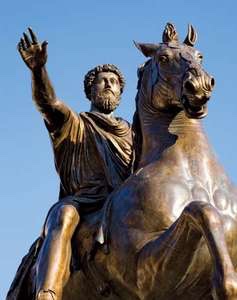
I am reminded of the words of Marcus Aurelius: “Do not act as if you had ten thousand years to throw away. Death stands at your elbow. Be good for something while you live and it is in your power.”

I am shocked. Just a couple of weeks ago I lost another friend, younger than me. Confronting mortality is difficult. From the first time I had a gun held to my head during a robbery to the last time I was under fire in combat I have imagined what it would be like to die. I’m not obsessive about it, but when a friend suddenly passes away, it makes me think. T.E. Lawrence wrote words with which I can heartily agree:

“Immorality, I know. Immortality, I cannot judge.”

Most of the times Mitch came here he came here to read and socialize. You couldn’t say anything negative against him. He was quiet, polite, friendly, and interested in other people. He was also intelligent, and while he primarily read fiction, was quite well versed in other subjects. I really feel bad for Barb, she lost a great husband. Word of his passing reverberated throughout the bar and restaurant. One of our bartenders was on the verge of tears when he found out. Most of us were just in shock.

As for me, he was about my age, which is another reminder of my mortality, and another reason to be thankful about my life and the blessings I have.

I also found out today that if I need surgery on my right knee that since I am within six months of my approved voluntary retirement date that I may have to cancel my planned retirement and go with a retirement date based on my statuary retirement when I am 60. That would mean a retirement date of April 1st of 2020. It won’t make people happy but according to the head of the retirement branch since I was approved for voluntary retirement I could cancel that request in order to serve out the rest of my statuary retirement time. Since I have a chaplain coming in to replace me in October it shouldn’t even a problem. The details will probably be a pain in the ass, but if I can get my knee fixed while still on active duty it will be worth it. I don’t want to be pushed into the VA system when my injury might preclude employment. I don’t mind the VA system if I am able to work, but I don’t want to be unemployable immediately after I retire because I need surgery and a recovery period, so maybe I need to cancel my current retirement plans and settle for April 1st, 2020. Not that I wasn’t looking forward to getting the heck out of Dodge when I could. There are a lot of things I see coming in the Military, the Navy, and the Chaplain Corps that I have great concerns about, and if I had the choice I would retire tomorrow. However, when I submitted my retirement papers last July I never expected the injuries I incurred the following month, the delays in treatment, and the non-response of my right knee to all treatments so far.

Honestly, by now I expected to be able to walk and jog again with a minimum of discomfort. Instead, both knees try to go out on me and hurt like the devil. My surgeon tells me that my left knee is as good as it will get and will likely require a replacement in a few years. I am okay with that, so long as my right knee gets fixed or replaced before I retire. It hurts a lot worse than the left knee, which was the case before I got hurt. This requires actions that I would not have considered until now.

So anyway, until tomorrow,

Peace,

Padre Steve+
1 Comment

Filed under faith, life, Loose thoughts and musings, philosophy

Just Gods and a Good Life: Marcus Aurelius and St. Paul for today

Friends of Padre Steve’s World,

Tonight, just a short thought from the great Roman Statesman, Emperor, and Philosopher, Marcus Aurelius:

“Live a good life. If there are gods and they are just, then they will not care how devout you have been, but will welcome you based on the virtues you have lived by. If there are gods, but unjust, then you should not want to worship them. If there are no gods, then you will be gone, but will have lived a noble life that will live on in the memories of your loved ones.”

I try to live my life in that manner as. Christian. St. Paul himself said “And if Christ has not been raised, our preaching is useless and so is your faith.” So by some chance if we as Christians are wrong, we should always look back to the words of Marcus Aurelius.

I’m not going anywhere else with this tonight,

So Peace,

Padre Steve+

Leave a comment

Filed under ethics, faith, History, Loose thoughts and musings, philosophy, Political Commentary, Religion

A Meditation On Resistance For Today From General Henning Von Tresckow

Friends of Padre Steve’s World,

There are times that resistance seems almost hopeless. I was talking with one of my friends who is very discouraged about the situation. He is an idealist. I spent much of the evening trying to buck him up.

British Historian Laurence Rees wrote:

“human behavior is fragile and unpredictable and often at the mercy of the situation. Every individual still, of course, has a choice as to how to behave, it’s just that for many people the situation is the key determinate in that choice.” 

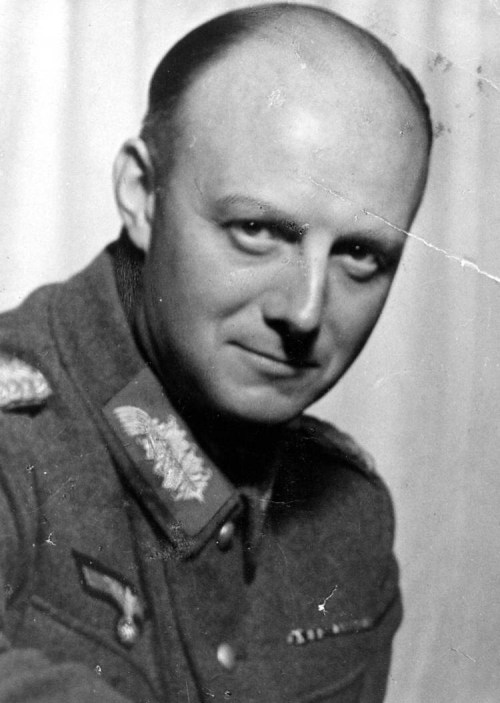
One of the problems is that throughout history, resisters frequently fail to unify in the face of their primary adversary and instead look for the faults among their own potential leaders. That my friends is the way to failure. So tonight, or as it is early this morning I will leave you with a few thoughts of one of the key German resistance leaders against Hitler during the Second World War. That man was Major General Henning Von Tresckow, a key member of the plot to assassinate Adolf Hitler.

Tresckow said a number of things that I will quote in the way he said or wrote them. But for every time Tresckow writes or says Hitler, substitute Trump, and when he says Germany, substitute the United States.

In reality that is now where we find ourselves. We are on the verge of a dictatorship of a man who can barely be called sane. Yet, he has a core Cult, of committed followers who will through their own willful avoidance of the truth would support him even if he overthrew the Constitution, and proclaimed dictatorial powers, and unleashed violence against every domestic opponent. He routinely makes those kinds of threats, to the cheers of his Cult. In one of his speeches from March 14th of this year Trump declared:

“I can tell you I have the support of the police, the support of the military, the support of the Bikers for Trump – I have the tough people, but they don’t play it tough — until they go to a certain point, and then it would be very bad, very bad,”

That is not a comfortable thought, but it is the new normal, especially among his supposedly Christian supporters, who include some of the most powerful religious leaders in the country.

Tresckow noted:

“I cannot understand how people can still call themselves Christians and not be furious adversaries of Hitler’s regime.”

I feel the same way about Trump, whose most fervent and loyal supporters are conservative or Evangelical Christians. Honestly, when I read their writing, hear the speeches, and listen to their defense of Trump I see little difference in them and the German Christian movement that turned the Churches into a key part Hitler’s political base. Honestly, I cannot understand how any Christian cannot be a furious adversary of the Trump regime. This is not based on politics at all, but the demands of the Gospel itself. As Jesus taught in Matthew 24:24:

“For false messiahs and false prophets will appear and produce great signs and omens, to lead astray, if possible, even the elect.”

Trump is an unbeliever in the greatest sense of the word. Though he presents himself as a defender of Christianity; in thought, word, and deed has made himself a cult-like messiah figure to conservative and Evangelical Christians. He has played on their fears, their racism, their misogyny, their homophobia, and their fear of something that they call socialism. Of course the early church was much more or a practitioner ethics that bordered on socialism, though the term was not yet in use, than the post-Nicea imperial church that has been the face of Christianity in most “Christian” countries since Constantine. This Trump Cult is not Christian: it is an anti-Christian, and anti-humanity personality cult.

Unlike the Third Reich, the situation has not reached the point for any resistier to resort to political violence in response to Trump or his Cult. Instead we must speak the truth and seek to win elections, and not build cult like followings of any of our candidates, and destroy any sense of unity. We have to win with ideas and truth. Even so there is a possibility that we could fail, that is a possibility, and that failure would be the certain end of our Republic, its institutions, and its Constitution as we know it.

Tresckow also said:

“It is almost certain that we will fail. But how will future history judge the German people, if not even a handful of men had the courage to put an end to that criminal?”

We have to put an end to the Trump regime at the ballot box, and even that may not cause him give up without a physical fight. His former attorney, Michael Cohen has said exactly that. Trump is destroying the hard work of Americans and our allies to build a better would, and in almost every country, Trump is destroying the image of the United States, like Tresckow said in his time:

“We have to show the world that not all of us are like him. Otherwise, this will always be Hitler’s Germany.”

Those are import words, but just substitute the name Trump for Hitler. Tresckow was no socialist or liberal, but he believed in freedom. In fact he wrote regarding the Prussian political tradition and how it could be subverted to support evil:

“The idea of freedom can never be disassociated from real Prussia. The real Prussian spirit means a synthesis between restraint and freedom, between voluntary subordination and conscientious leadership, between pride in oneself and consideration for others, between rigor and compassion. Unless a balance is kept between these qualities, the Prussian spirit is in danger of degenerating into soulless routine and narrow-minded dogmatism.”

Truthfully that is a spirit much like the United States that which is engulfing the United States today, soulless routine and narrow minded dogmatism. The tension that exists in the key ideal of the Declaration of Independence and the United States Constitution, and the words of Trump and his supporters men who desire to rule by fiat and by extra-Constitutional means, cannot be more marked than it is today.

In the movie adaptation of the plot to kill Hitler Valkyrie: Tresckow is quoted:

“God promised Abraham that he would not destroy Sodom if he could find ten righteous men… I have a feeling that for Germany it may come down to one.”

To be sure, Trump is no Hitler, though his words sound more and more Hitlerian every day. I will not call the President a Nazi, though he has give tacit support to Neo-Nazi and White Supremacist groups and frequently engages in racist diatribes. He is certainly acting as any authoritarian leader would, and we have to heed the warning of Russian dissident Gary Kasparov:

“dictators & would be autocrats do not ask “Why?” when it comes to using power for their advantage. They ask “why not?”

To go back to the words of Tresckow in Valkyrie, in noting it may come down to the actions of one man or woman, my friends, that “one” may come down to you or me. We cannot sit silently by as more and more actions that would have been considered as criminal are perpetrated by the President and his followers.

So until tomorrow,

Peace,

Padre Steve+

8 Comments

Filed under civil rights, ethics, faith, History, holocaust, Loose thoughts and musings, nazi germany, News and current events, Political Commentary, White nationalism