Category Archives: Military

The First Modern War – Introduction

Friends of Padre Steve’s World

Those who are habitual readers here know that I teach military history and ethics. One of the things that I lead is a Staff Ride at Gettysburg for which I am in the process of writing a text which will probably when I am done will be two, maybe even three books. The text is massive and I have been done a lot of editing, revising and even expanding it as I come to realize just how limited my previous vision was for producing it.

I have been writing about the pursuit of truth for several months, and one of those truths is that war cannot be separated from its contexts and that military power alone does not win wars or establish a just and equitable peace. That is one of the problems with many who write popular military history, they are so focused on the battles, campaigns, tactics and technology that they focus so much on the military aspects, that the miss the other contexts that are so important.

A few days ago I released a section of this same chapter dealing with women in the Civil War. Today is the introduction to that chapter, appropriately titled “The First Modern War.” It deals with the political, social-cultural, economic, technological, military strategic, geographical, and historical contexts of the war and introduces us to the importance of capable and competent civilian leadership as was exhibited by Lincoln and his advisers; and that how that knowing understanding the contexts keeps leaders from seeking short-cuts from the snake oil salesmen who promise a “silver bullet” with which all war can be won.

I’ll be releasing the second section of this chapter dealing with the importance of civilian leadership either tomorrow or Wednesday because I need to get my opinion piece that deals with the Duggaring of the Religious Right.

So, have a wonderful evening.

Peace

Padre Steve+

Hancock doncemeteryhilljuly1_zps512a40fa

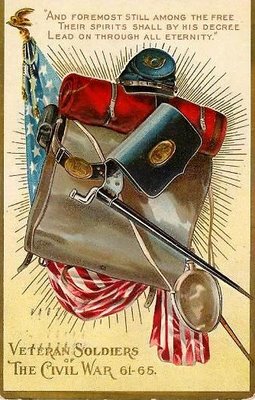
The American Civil War was the first modern war. It was a watershed event in an era, which introduced changes in new types of weapons, more lethal versions of older weapons, tactics, army organization, logistics, intelligence and communications. Though the war did not change the essential nature of war, which Clausewitz says is “is an act of violence to compel our opponent to fulfill our will” [1] it expanded the parameters of war and re-introduced the concept of “total war” to the world and “because its aim was all embracing, the war was to be absolute in character.” [2] In a sense it was a true revolution in military affairs.

The Civil War was truly a revolution in military affairs. The war changed the character of war, as it had been known for centuries, since the Peace of Westphalia and the end of the Thirty Years War. In the American Civil War, the character of war changed from a limited war waged between opposing armies to a total war, waged between two people who shared much in common but were divided by an ideology which encompassed politics, economics, society, law, and even religion.

The war was revolutionary in other ways, and brought about a host of social, philosophical, economic, and political changes which continue to impact the lives of people in the United States and around the world even today. Some of these, especially those regarding the abolition of slavery and emancipation, as well as the beginnings of the Women’s Rights movement have had a ripple effect in matters of political and social equality for other previously disenfranchised groups of citizens. As one author noted “The Civil War uprooted institutions, transformed our politics, influenced social relationships of half a continent, and wrought changes that echo down the generations.” [3]

In a sense, when Abraham Lincoln proclaimed “a new birth of freedom” in his Gettysburg address it served as a watershed moment in American history because it brought to the forefront the understanding of Jefferson and the other signers of the Declaration of Independence that all men are created equal.

Thus it is important to study the Gettysburg campaign in the context of the Civil War because the campaign of 1863 in the east cannot be divorced from what was happening in the west at Vicksburg, nor the Union blockade, nor the diplomatic, economic and informational aspects of the war. Likewise the Gettysburg campaign cannot be separated from its relationship to the broader understanding of the nature and character of war. To do this one must examine the connection between them and policies made by political leaders; to include the relationship of political to military leaders, diplomats, the leaders of business and industry and not to be forgotten, the press and the people. Likewise we must understand the various contexts of war, to include the social, political, ideological and even the religious components of war, how they impacted Civil War leaders and why civilian policy makers and military leaders must understand them today.

While the essential nature of war remains constant, wars and the manner in which they are fought have changed in their character throughout history, and this distinction matters not only for military professionals, but also policy makers. The changing character of war was something that military leaders as well as policy makers struggled with during the American Civil War much as today’s military leaders and policy makers seek to understand the character of warfare today. British military theorist Colin Gray writes “Since the character of every war is unique in the details of its contexts (political, social-cultural, economic, technological, military strategic, geographical, and historical), the policymaker most probably will struggle of the warfare that is unleashed.” [4] That was not just an issue for Abraham Lincoln and Jefferson Davis, both of whom struggled with the nature of the war which had been unleashed, but it is one for our present political leaders, who as civilian politicians are “likely to be challenged by a deficient grasp of both the nature of war as well as its contemporary context-specific character.” [5]

In addition to being the first modern war, or maybe I should say, the first war of the Industrial Age, the Civil War became a “total war.” It was the product of both the massive number of technological advances which both preceded and occurred during it, in which the philosophical nature of the Industrial Revolution came to the fore. Likewise, the enmity of the two sides for one another which had been fostered by a half century of relentless and violent propaganda which ushered from the mouths of politicians, the press and even from the pulpit, even to the point of outright armed conflict and murder in “Bleeding Kansas” during the 1850s.

As a total war it became a war that was as close to Clausewitz’s understanding of absolute war in its in character waged on the American continent, and it prefigured the great ideological wars of the twentieth century, as J.F.C. Fuller noted “for the first time in modern history the aim of war became not only the destruction of the enemy’s armed forces, but also of their foundations- his entire political, social and economic order.” [6] It was the first war where at least some of the commanders, especially Ulysses S. Grant and William Tecumseh Sherman were men of the Industrial Age, in their thought and in the way that they waged war, in strategy, tactics even more importantly, psychologically. Fuller wrote:

“Spiritually and morally they belonged to the age of the Industrial Revolution. Their guiding principle was that of the machine which was fashioning them, namely, efficiency. And as efficiency is governed by a single end- that every means is justified- no moral or spiritual conceptions of traditional behavior must stand in its way.” [7]

Both men realized in early 1864 that “the South was indeed a nation in arms and that the common European practice of having standing armies engaged each other in set-piece battles to determine the outcome of a war was not enough to win this struggle.” [8] Though neither man was a student of Clausewitz, their method of waging war was in agreement with the Prussian who wrote that “the fighting forces must be destroyed; that is, they must be put in such a position that they can no longer carry on the fight” but also that “the animosity and the reciprocal effects of hostile elements, cannot be considered to have ended so long as the enemy’s will has not been broken.” [9]

William Tecumseh Sherman told the mayor of Atlanta after ordering the civilian population expelled that “we are not only fighting hostile armies, but a hostile people, and must make the old and young, the rich and poor, feel the hard hand of war.” [10] Sherman was one of the first American military leaders to understand that a civil war could not be waged according to the limited war doctrines most American officers had been taught. He not only “carried on war against the enemy’s resources more extensively and systematically than anyone else had done, but he developed also a deliberate strategy of terror directed against the enemy’s minds.” [11] While some might find this troubling, the fact remains that it was Sherman’s Southern sweep of all that lay before him that broke the back of the Confederacy.

Abraham Lincoln came to embrace the eternal nature of war as well as the change in the character of the war over time. Lincoln had gone to war for the preservation of the Union, something that for him was almost spiritual in nature, as is evidenced by the language he used in both of his inaugural addresses and the Gettysburg Address. Instead of a war to re-unite the Union with the Emancipation Proclamation the war became a war for the liberation of enslaved African Americans, After January 1st 1863 when the Emancipation Proclamation went into effect, Lincoln “told an official of the Interior Department, “the character of the war will be changed. It will be one of subjugation…The [old] South is to be destroyed and replaced by new propositions and ideas.” [12] That too was a modern understanding of war.

Of course, the revolution in military affairs that characterized the Civil War took time, but it was the political and military leaders of the North who better adapted themselves and their nation to the kind of war that was being fought. “Lincoln’s remarkable abilities gave him a wide edge over Davis as a war leader, while in Grant and Sherman the North acquired commanders with a concept of total war and the determination to make it succeed.” [13]

At the beginning of the war the leaders and populace of both sides still held a romantic idea of war. The belief that the war would be over in a few months and that would be settled by a few decisive battles was held by most, including many military officers on both sides. There were some naysayers like the venerable and rather corpulent General Winfield Scott, but politicians and the press mocked Scott and those who even suggested that the war would be long, hard, and bloody. Of course those who predicted a short, easy, and relatively bloodless war who were proven wrong, and the war became the bloodiest war ever waged by Americans, and it was against other Americans.

The Civil War became an archetype of the wars of the twentieth century, and I believe will be so for the twenty-first century as well because of the emphasis on competing ideologies often buttressed with near fanatical religious extremism. The American Civil War evolved into a clash between peoples with radically different ideologies, which extended beyond the province of purely military action. The war “was preceded by years of violent propaganda, which long before the war had obliterated all sense of moderation, and awakened in the contending parties the primitive spirit of tribal fanaticism.” [14]

Those who conducted the American Civil War added new dimensions to war, and the technology they embraced increased war’s lethality in ways that they did not anticipate. For the first time since the 30 Years’ War, this war on the American continent saw opponents intentionally target the property, homes and businesses of the opposing civilian populations as part of their military campaign. The Civil War was a precursor to the wars that followed, especially the First World War that it prefigured in so many ways.

British general and military theorist J.F.C. Fuller encapsulated the massive amount of change brought about by the Civil War quite well in his book A Military History of the Modern World:

The war fought by Grant and Lee, Sherman and Johnston, and others closely resembled the First of the World Wars. No other war, not even the Russo-Japanese War of 1904-1905, offers so exact a parallel. It was a war of rifle bullets and trenches, of slashings, abattis, and even of wire entanglements- an obstacle the Confederates called “a devilish contrivance which none but a Yankee could devise” because at Drewry’s Bluff they had been trapped in them and slaughtered like partridges.” It was a war of astonishing in its modernity, with wooden wire-bound mortars hand and winged grenades, rockets, and many forms of booby traps. Magazine rifles and Requa’s machine guns were introduced and balloons were used by both sides although the confederates did not think much of them. Explosive bullets are mentioned and also a flame projector, and in June, 1864, General Pendleton asked the chief ordnance officer at Richmond whether he could supply him with “stink-shells” which would give off “offensive gases” and cause “suffocating effect.” The answer he got was “stink-shells, none on hand; don’t keep them; will make them if ordered.” Nor did modernity end there; armoured ships, armoured trains, land mines and torpedoes were used. A submarine was built by Horace H. Hundley at Mobile….” [15]

However, like all in nearly all wars, the many lessons of the American Civil War were forgotten, or even worse, completely dismissed by military professionals in the United States as well as in Europe. Thus 50 years later during First World War, the governments Britain, France, Imperial Germany, Austria-Hungary and Imperial Russia wasted vast amounts of manpower and destroyed the flower of a generation because they did not heed the lessons of the Civil War. For that matter neither did General John Pershing, commander of the American Expeditionary Force who three and a half years after those countries destroyed the flower of their nation’s manhood and repeated all of their mistakes with the lives of American soldiers. Fuller noted:

“Had the nations of Europe studied the lessons of the Civil War and taken them to heart they could not in 1914-1918 have perpetuated the enormous tactical blunders of which that war bears record.” [16]

The lessons of the war are still relevant today. Despite vast advances in weaponry, technology and the distances with which force can be applied by opponents, war remains an act of violence to compel an enemy to fulfill our will. War according to Clausewitz is “more than a chameleon that slightly adapts its characteristics to the given case.” [17] but it is always characterized by the violence of its elements, the province of chance and its subordination to the political objective and as such forces political and military leaders as well as policy makers to wrestle with “the practical challenge of somehow mastering the challenge of strategy in an actual historical context.” [18]

Colin Gray in his book Fighting Talk emphasizes that the “contexts of war are all important.” Gray makes a case for seven essential contexts that must be understood by policy makers and military leaders regarding war, which if ignored or misunderstood “can have strong negative consequences.” [19] Gray enunciates seven contexts of war that policy makers as well as military professionals ignore at the own peril: There is the political context, the social context, the cultural context, the economic context; the military-strategic context, the geographic context and the historical context. Gray notes these seven contexts “define all the essential characteristics of a particular armed conflict.” [20]

Gray discusses the importance of this. Noting that strategists are “ever on the look out for shortcuts” [21] and because they are pragmatic, wanting simple and well defined solutions they tend not to want to deal with complexities that muddy the water, that those who decide on strategy are “eternally at hazard to the siren call of the technological solution, the cultural fix, the promise of historical understanding and so forth.” [22] He notes that there are always those trying to sell strategists catalogs, which promise “products that answer the strategist’s questions” turning “the base metal of confusion of information into the pure gold of comprehension.” [23] But such easy answers are often little more than snake oil. The virtue of seeing war through all of these contexts “obliges strategists to examine holistically, in the round,” [24] that the “recognition of war’s multiple contexts helps immunize the strategist against getting captured by such fantasies.” [25]

The study of the Civil War can be helpful to political leaders, military strategists, joint planners and commanders because it so wonderfully shows just how important understanding the context of wars is. Likewise it gives us an American context where we can see the interplay of how Clausewitz’s “paradoxical trinity- composed of primordial violence, hatred, and enmity, which are to be regarded as a blind natural force; of the play of chance and the element of subordination, as an instrument of policy, which makes it subject to reason alone.” [26]

This is especially important, because we live during an era of great technological, social, geopolitical and philosophical change, just as did the leaders of the United States and the Rebel Confederates States did in the ante-bellum and the war years. The importance of this cannot be underestimated, for in this era of change, like in every era, some leaders and commanders were either resistant to, or failed to understand the changes being forced upon them in their conduct of war by the industrialization of war and its attendant technology.

Examples of this are found in the actions of so many leaders and commanders in the Civil War. Like the American political and military leaders who in Iraq “were ignorant of how to conduct themselves in a military and social-cultural context of irregular warfare” [27] many of the officers who fought the Civil War completely ignorant of what they were facing. Educated in Napoleonic the principles of Henri Jomini, officers who only knew limited war in Mexico and irregular warfare against Indians were faced with fighting a total war on a continental scale. The war witnessed a host of new technologies and “many officers found themselves wholly unprepared for what they faced, in effect, compelled to purchase learning with lives.” [28]

However, unlike many political leaders, Abraham Lincoln came to understand the radical and revolutionary nature of the war and had to find military leaders who understood the same. In frustration Lincoln rebuked those who urged limited war saying “The government cannot much longer play a game in which it stakes all, and its enemies stake nothing. Those enemies must understand that they cannot experiment for ten years trying to destroy the government, then if the fail still come back into the Union unhurt.” [29]

Eventually Lincoln found Ulysses Grant and his lieutenants William Tecumseh Sherman and Philip Sheridan. These me not only understood the military aspects of the contexts of the war, but embraced them and applied them with ruthless skill and vigor that stunned the leaders and the people of the South. When John Bell Hood wrote Sherman a letter in which he condemned the Union commander for the destruction of Atlanta, and the forced evacuation of its inhabitants, even invoking God’s judgment Sherman would have nothing of it. Sherman wrote back that “Hood’s appeal to a “just God” was “sacrilegious,” Sherman insisted, for it was the South which had “plunged a nation into war, dark and cruel war, who dared and badgered us to battle.” Having created the war, the South would now experience it.” [30]

Strategists and planners must develop a philosophical foundation that they must seek to understand the contexts of war matters now more than ever. By looking at the Gettysburg campaign in context we can begin to draw lessons that we can apply today. Not that our situation is the same as the leaders who led the Union and Confederacy in the Civil War, but exploring these issues is vital to us understanding the contexts of the wars that we fight today and the world in which we live.

Notes

[1] Clausewitz, Carl von. On War Indexed edition, edited and translated by Michael Howard and Peter Paret, Princeton University Press, Princeton NJ 1976 p.75

[2] Fuller, J.F.C. The Conduct of War 1789-1961 Da Capo Press, New York 1992. Originally published by Rutgers University Press, New Brunswick N.J p.99

[3] Lowry, Thomas P. The Stories the Soldiers Wouldn’t Tell: Sex in the Civil War Stackpole Books, Mechanicsburg PA 1994 p.176

[4] Gray, Colin S. Fighting Talk: Forty Maxims on War, Peace, and Strategy Potomac Book, Dulles VA 2009 p.36

[5] Ibid. Gray Fighting Talk p.36

[6] Fuller, J.F.C. A Military History of the Modern World, Volume Three: From the Seven Days Battle, 1862, to the Battle of Leyte Gulf, 1944 Minerva Press 1956 p.88

[7] Ibid. Fuller A Military History of the Modern World, Volume Three p.88

[8] Flood, Charles Bracelen, Grant and Sherman: The Friendship that Won the War, Harper Perennial, New York 2005 p.238

[9] Ibid. Clausewitz p.90

[10] McPherson, James. The Battle Cry of Freedom: The Civil War Era Oxford University Press, Oxford and New York 1988 p.809

[11] Weigley, Russell F. The American Way of War: A History of United States Military History and Policy University of Indiana Press, Bloomington IN, 1973 p.149

[12] Ibid. McPherson The Battle Cry of Freedom p.558

[13] Ibid. McPherson The Battle Cry of Freedom p.857

[14] Ibid. Fuller The Conduct of War 1789-1961 p.99

[15] Ibid. Fuller A Military History of the Modern World, Volume Three p.89

[16] Ibid. Fuller A Military History of the Modern World, Volume Three p.89

[17] Ibid. Clausewitz On War p.89

[18] Ibid. Gray Fighting Talk p.38

[19] Ibid. Gray Fighting Talk p.5

[20] Ibid. Gray Fighting Talk p.3

[21] Ibid. Gray Fighting Talk p.5

[22] Ibid. Gray Fighting Talk pp. 5-6

[23] Ibid. Gray Fighting Talk p.5

[24] Ibid. Gray Fighting Talk p.5

[25] Ibid. Gray Fighting Talk p.5

[26] Ibid. Clausewitz On War p.89

[27] Ibid. Gray Fighting Talk pp.38-39

[28] Sinnreich, Richard Hart Awkward Partners: military history and American military education in The Past as Prologue: The Importance of History to the Military Profession edited by Williamson Murray and Richard Hart Sinnreich Cambridge University Press, Cambridge and New York 2006 p.56

[29] McPherson, James M. Drawn With the Sword: Reflections on the American Civil War Oxford University Press, Oxford and New York 1996 p.80

[30] Fellman, Michael. Lincoln and Sherman in Lincoln’s Generals edited by Gabor S. Boritt University of Nebraska Press, Lincoln NE 1994 p.153
4 Comments

Filed under civil war, History, Military

Improbable and Unlikely: Victory at Midway

800px-tbd_attacking_at_midway_painting-1

Friends of Padre Steve’s World

As I mentioned earlier in the week I am publishing a number of articles on Greatest Generation as we remember the anniversaries of the Battle of Midway in 1942 and the D-Day landings in 1944.

This article is a compilation of a number of articles that I have done in the past with a bit of edition. It deals with the battle of Midway. I hope to do some really serious writing on the topic someday, but most of my writing and research time has been devoted to the Battle of Gettysburg and the American Civil War. Too bad I am not like LCDR Data in Star Trek the Next Generation. Image the productivity, but I digress…

I grew up in a Navy family when it was not popular for people to “support the troops” back during the Vietnam War and in the post-Vietnam era. That being said I developed a love for all things Navy and buried myself in the library, reading and checking out books. My friends probably remember he hauling armloads of books too and from class and too and from school  on the buses that we rode. One of those books was Walter Lord’s classic Incredible Victory about the Battle of Midway. Through it and other books I felt as if I had come to know the men who fought that battle, the men of both sides, gaining an appreciation for their bravery and humanity. As I have mentioned time and time again on this site, people matter the most in history, especially in war. In the intervening years I have spent over 34 years in the U.S. Army and U.S. Navy serving at sea and ashore in combat operations. As such I have a connection to these men, I can imagine what they were going through.

As we get further away from these events we have fewer people who even know about them, and that is really sad because they are so important, and the sacrifices of the men who fought those battles helped secure an opportunity freedom for so many. I know that after the war that the United States has not always lived up to the ideals set forth in the Declaration of Independence, nor how our founders believed that we should pursue relations with other countries. In fact, they would not recognize what we have become. Even so, it is important for us to reexamine these events, to remember the men and women who served, and to remember their sacrifice, even as we acknowledge the tragedy of war and all that it brings.

I hope that you enjoy this and trust that you will have a good day.

Peace

Padre Steve+

 538x362xNorth-American-Aviation-B-25B-Mitchell-launches-from-USS-Hornet-CV-8-18-April-1942-21.jpg.pagespeed.ic.fjuaPl49hb

The Doolittle Raid

Prelude to Battle

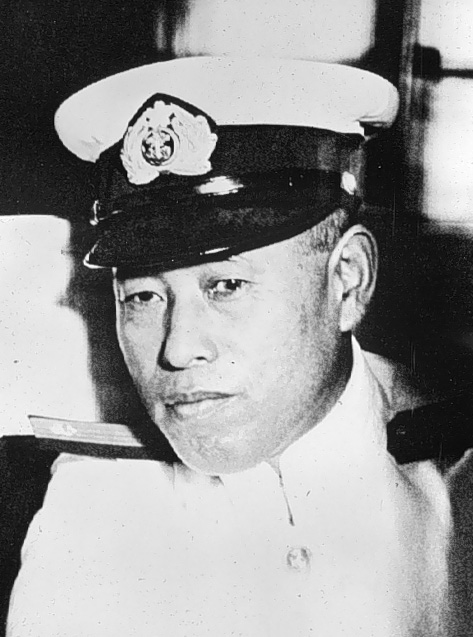
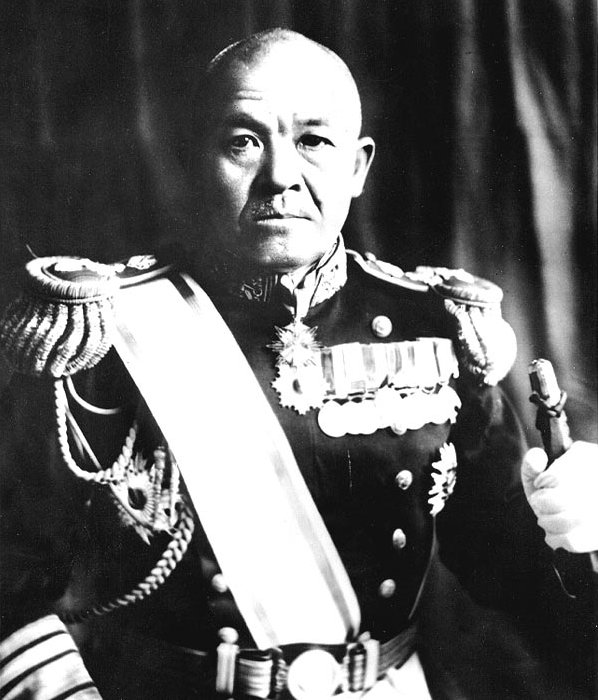
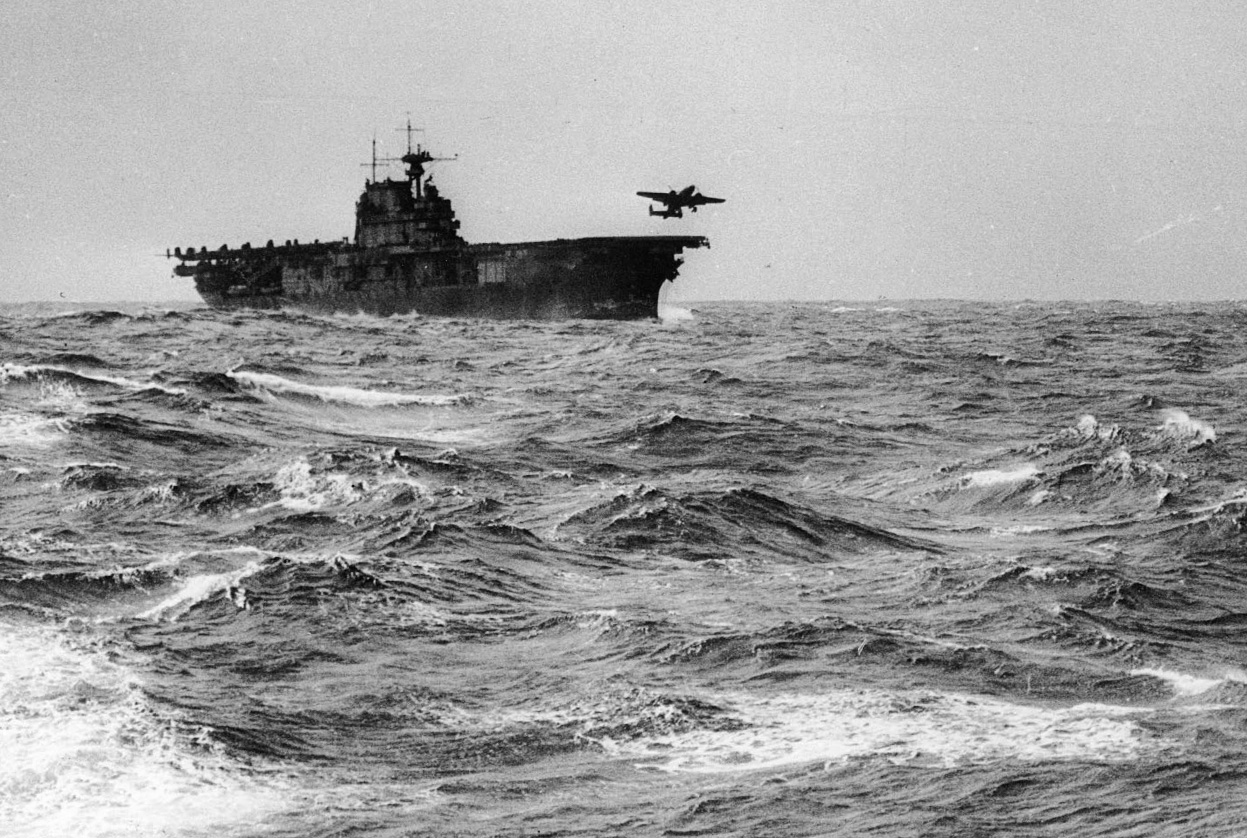
The Imperial Japanese Navy under the command of Admiral Isoruku Yamamoto had been humiliated. On April 18th 1942 16 B-25 bombers under the command of Colonel Jimmy Doolittle were launched from the deck of the USS Hornet and bombed Tokyo.  Though the physical damage was insignificant the psychological impact was massive on the Japanese military establishment. In response to the threat, Yamamoto was directed to bring the aircraft carriers of the U.S. Navy to battle and to destroy them.

Prior to the Doolittle Raid, Yamamoto and his deputy Rear Admiral Matome Ugaki had explored the possibility of attacking Midway. However, the Japanese armed forces were competing with each other to determine an overall strategy for the war effort. The Army was insistent on a China strategy while the Navy preferred expansion in the Western, South and Central Pacific.  Yamamoto’s idea envisioned seizing Midway and using it as a forward base from which an invasion of Hawaii could be mounted as well as the bait to draw the carrier task forces of the U.S. Navy into battle and destroy them. Until the Doolittle Raid shocked the Japanese leadership he was unable to do this.

“I Shall Run Wild for the First Six Months”

 893594c746

Admiral Isoruku Yamamoto

Yamamoto was one of the few Japanese military or political leaders who opposed war with the United States. He had lived in the United States, gotten to know Americans and recognized the how the massive economic and industrial power of the United States would lead to the defeat of Japan. He told Premier Konoye in 1941 “I shall run wild for the first six months or a year, but I have utterly no confidence for the second or third years of the fighting.”

It is hard to imagine now, but in June of 1942 it seemed a good possibility that the Americans and British could be on the losing side of the Second World War.

True to Yamamoto’s words in 1942 the Japanese onslaught in the Pacific appeared nearly unstoppable. The Imperial Navy stormed across the Pacific and Indian Oceans in the months after Pearl Harbor decimating Allied Naval forces that stood in their way.  The British Battleships HMS Prince of Wales and HMS Repulse were sunk by land based aircraft off of Singapore. A force of Royal Navy cruisers and the Aircraft Carrier HMS Hermes were sunk by the same carriers that struck Pearl Harbor in the Indian Ocean.  Darwin Australia was struck with a devastating blow on February 19th and on February 27th the Japanese annihilated the bulk of the American, British, Dutch and Australian naval forces opposing them at the Battle of the Java Sea. American forces in the Philippines surrendered on May 8th 1942 while the British in Singapore surrendered on February 15th.

In only one place had a Japanese Naval task force been prevented from its goal and that was at the Battle of the Coral Sea.  Between 4-8 May the US Navy’s Task Force 11 and Task Force 17 centered on the Carriers USS Lexington and USS Yorktown prevented a Japanese invasion force from taking Port Moresby. Their aircraft sank the light carrier Shoho, damaged the modern carrier Shokaku and decimated the air groups of the Japanese task force. But it was the unexpected raid by US Army Air Corps B-25 Bombers launched from the USS Hornet under command of Colonel Jimmy Doolittle on April 18th 1942 which embarrassed Yamamoto so badly that he ordered the attack to take Midway and destroy the remaining US Naval power in the Pacific.

Cracking the Code

 images-2

Admiral Chester Nimitz

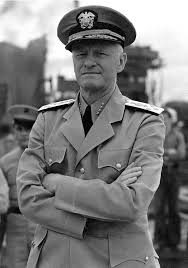
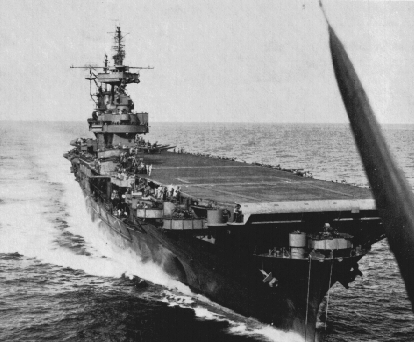
United States Navy codebreakers had broken the Japanese diplomatic and naval codes in 1941, and in May the Navy code breakers at Pearl Harbor discovered Yamamoto’s plan to have the Imperial Navy attack Midway Island and the Aleutian Islands.  Knowing the Japanese were coming, and that the occupation of Midway by Japanese forces would give them an operational base less than 1000 miles from Pearl Harbor, Admiral Chester Nimitz, commander of the U.S. Pacific Fleet committed the bulk of his naval power, the carriers USS Enterprise CV-6, USS Yorktown CV-5 and USS Hornet CV-8 and their 8 escorting cruisers and 15 destroyers to defend Midway.  This force of 26 ships with 233 aircraft embarked to defend Midway while a force of smaller force 5 cruisers and 4 destroyers was dispatched to cover the Aleutians.  The forces on the ground at Midway had a mixed Marine, Navy and Army air group of 115 aircraft which included many obsolete aircraft, 32 PBY Catalina Flying Boats and 83 fighters, dive bombers, torpedo planes and Army Air Force bombers piloted by a host of inexperienced but resolute airmen with which to defend itself. It also had a ground force of U.S. Marines, should the Japanese actually land on the island.

20150122152242

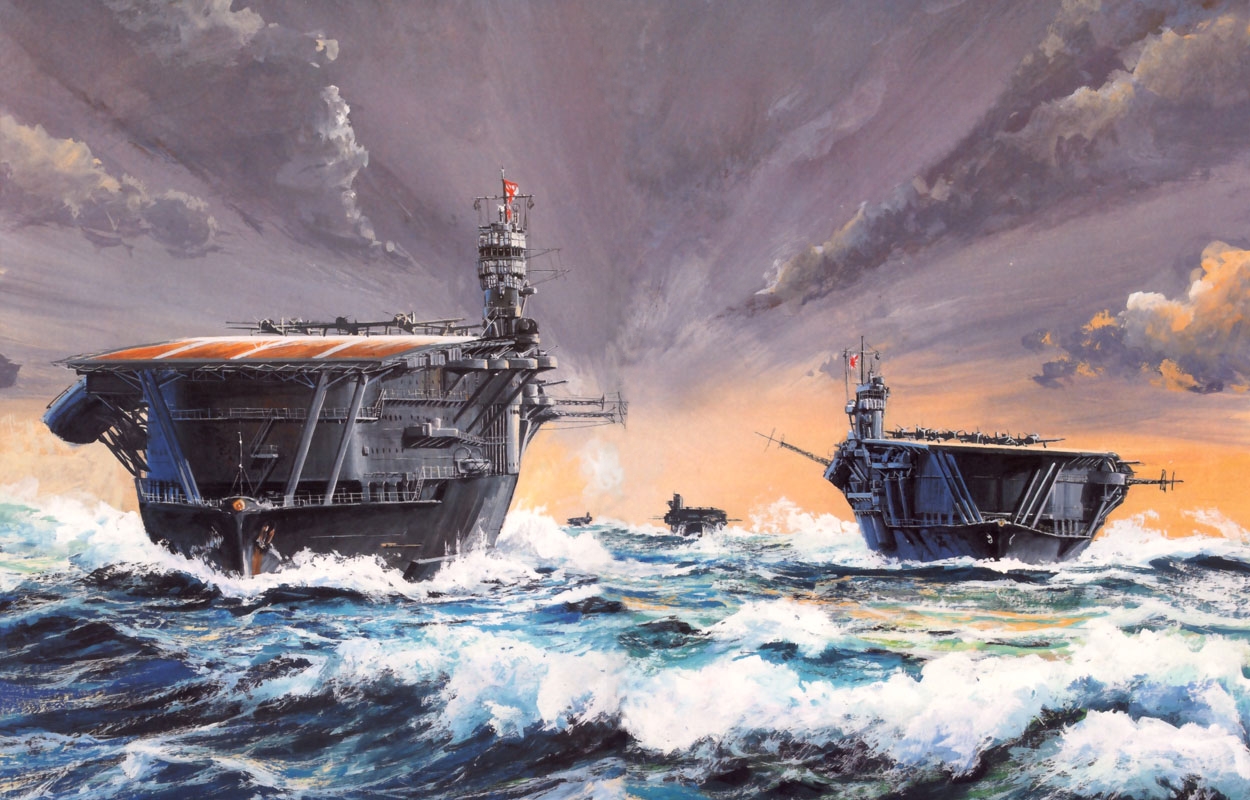
The Japanese Fleet and was built around the elite First Carrier Striking Group, the Kido Butai composed of the Pearl Harbor attackers Akagi, Kaga, Soryu and Hiryu. Led by Vice Admiral Chuichi Nagumo its highly trained and combat experienced air groups composed of 273 aircraft. This force was escorted by 2 Battleships, 3 Cruisers 12 Destroyers. Yamamoto commanded a force of 2 light carriers, 5 Battleships, 11 cruisers and 27 destroyers.  Meanwhile a force of 4 battleships, 12 destroyers assigned screen to the Aleutian invasion force which was accompanied by 2 carriers 6 cruisers and 10 destroyers. The other carriers embarked a further 114 aircraft.  The Japanese plan was ambitious but it was so ambitious that the Japanese Task forces were scattered over thousands of square miles of the Northern Pacific Ocean from which they could not rapidly come to the support of each other.

uss-enterprise-cv-6-1

With the foreknowledge provided by the code breakers the US forces hurried to an intercept position northeast of Midway. They eluded the Japanese submarine scout line which the Japanese Commander Admiral Yamamoto presumed would find them when they sailed to respond to the Japanese attack on Midway.  Task Force 16 with the Enterprise and Hornet sailed first under the command of Rear Admiral Raymond A Spruance in place of the ailing William “Bull” Halsey. Task Force 17 under Rear Admiral Frank “Jack” Fletcher was built around the Yorktown which had been miraculously brought into fighting condition after suffering heavy damage at Coral Sea. Fletcher assumed overall command by virtue of seniority and Admiral Nimitz instructed his commanders to apply the principle of “calculated risk” when engaging the Japanese as the loss of the US carriers would place the entire Pacific at the mercy of the Japanese Navy.

images-43

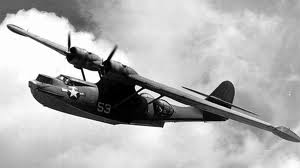
On June 3rd a PBY Catalina from Midway discovered the Japanese invasion force transport group.  US long-range B-17 bombers launched attacks against these ships but inflicted no damage.

“Our hearts burn with the conviction of sure victory.”

 10-japanese-carriers-coral-sea-midway

On the night of June 3rd 1942 Nagumo’s First Carrier Strike Force sailed east toward the tiny Midway Atoll. Nagumo had seen many of the risks involved in the plan and considered it an “impossible and pointless operation” before the Doolittle Raid on Tokyo, but even the reluctant Nagumo fell in line as Yamamoto relentlessly lobbied for the operation.

As the First Carrier strike force closed within 300 miles of Midway on the night of June 3rd 1942 Nagumo and his staff prepared for the battle that they and many others believed would be the decisive battle. Aircraft received their final preparations, bombs were loaded and as night faded into early morning air crew arose, ate their breakfast and went to their aircraft. The ships had been observing radio silence since they departed their bases and anchorages in Japan the previous week. Honed to a fine edge the crews of the ships and the veteran aircrews anticipated victory.

The crews of the ships of the task force and the air groups embarked on the great aircraft carriers Akagi, Kaga, Soryu and Hiryu as well as their escorts were confident. They had since the war began known nothing but victory. They had devastated the Pacific Fleet at Pearl Harbor and roamed far and wide raiding allied targets and sinking allied shipping across the Pacific and deep into the Indian Ocean. Commander Magotaro Koga of the destroyer Nowaki wrote in his diary “Our hearts burn with the conviction of sure victory.

Chuichi_Nagumo

Vice Admiral Chuichi Nagumo

However, Nagumo and his sailors had no idea that most of what they knew about their American opponents was wrong. Nagumo and Yamamoto were confident that the Americans could field no more than two operational carriers to defend Midway. They had no idea that the Yorktown, which they believed had been sunk at Coral Sea was operational and her air group reinforced by the aircraft of the damaged Saratoga which was being repaired on the West Coast. Unknown to the Japanese the Yorktown and her escorts had joined Enterprise and Hornet northeast of Midway.

The Japanese were going into battle blind. They had planned to get aerial surveillance of US Fleet dispositions at Pearl Harbor, but that had been cancelled because the atoll at French Frigate Shoals that the Japanese flying boats would operate from had been occupied by a small US force. Likewise a line of Japanese submarines arrived on station a day too late, after the US carrier task forces had passed by them. Those aboard the First Carrier Strike Force, including Nagumo or his senior commanders and staff had no idea that the Americans not only knew of their approach but were already deployed in anticipation of their strike.

Within a day all of the Japanese carriers would be sunk or sinking. Thousands of Japanese sailors would be dead and the vaunted air groups which had wreaked havoc on the Allies would be decimated, every aircraft lost and the majority of pilots and aircrew dead. It would be a most unexpected and devastating defeat stolen out of the hands of what appeared to be certain victory.

There is a lesson to be learned from the Japanese who sailed into the night on June 3rd 1942 and saw the sunrise of June 4th. There is no battle, campaign or war that goes according to plan. Thousands of Japanese sailors and airmen went to bed on the night of the 3rd expecting that the following night, or within the next few days they would be celebrating a decisive victory. Thousands of those sailors would be dead by the night of the 4th of June 1942, and as their ships slid beneath the waves, the ambitions of Imperial of Japan to defeat the United States Navy and end the war were dealt a decisive defeat from which they never recovered.

Hawks at Angles Twelve

 f2 number mf 21

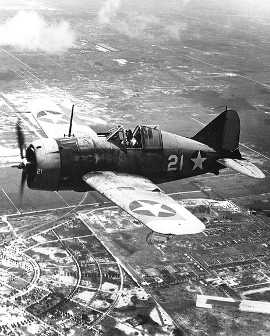
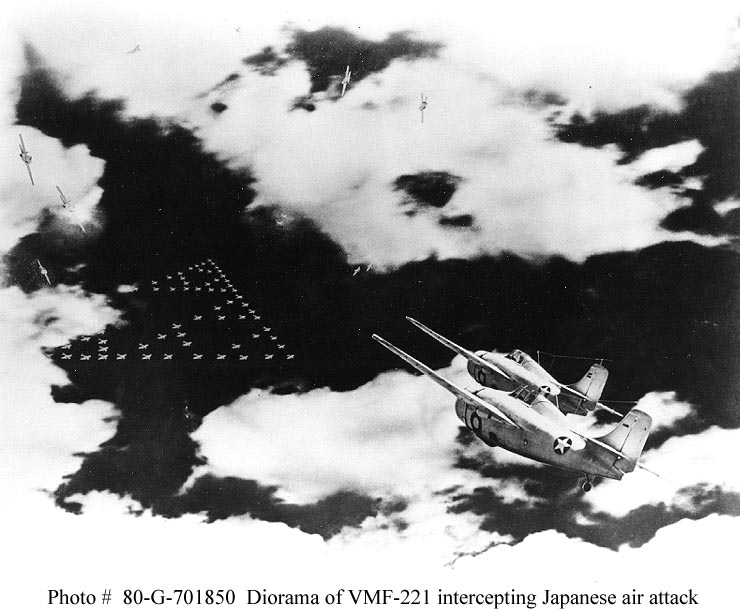
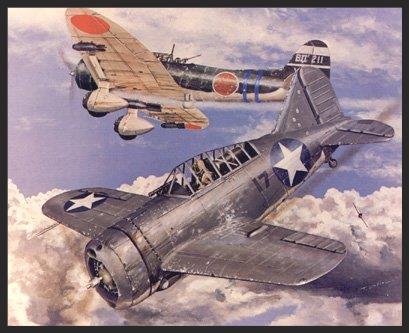
One of the more overlooked aspects of the Battle of Midway is the sacrifice of Marine Fighter Squadron 221 on the morning of June 4th 1942.   The Marine aviators flying a mix of 21 obsolescent Brewster F2A-3 Buffalos and 7 Grumman F4F-3 Wildcats engaged a vastly superior force of Japanese Navy aircraft as they vectored toward the atoll to begin softening it up for the planned invasion.

g701850

Led by Major Floyd Parks the squadron had arrived at Midway on Christmas day 1941 being delivered by the USS Saratoga after the aborted attempt to relieve Wake Island.  The squadron along with Marine Scout Bombing Squadron 241 (VMSB 241) formed Marine Air Group 22.  They fighter pilots of VMF-221 scored their first victory shooting down a Japanese Kawanishi H8K2 “Emily” flying boat. The squadron which initially was composed of just 14 aircraft, all F2A-3’s was augmented by 7 more F2A-3s and 7 of the more advanced F4F-3s before the battle.

douglas-sbd5-dauntless-dive-bomber-battle-of-midway-01

USMC Vought SB2-U3 Vindicators

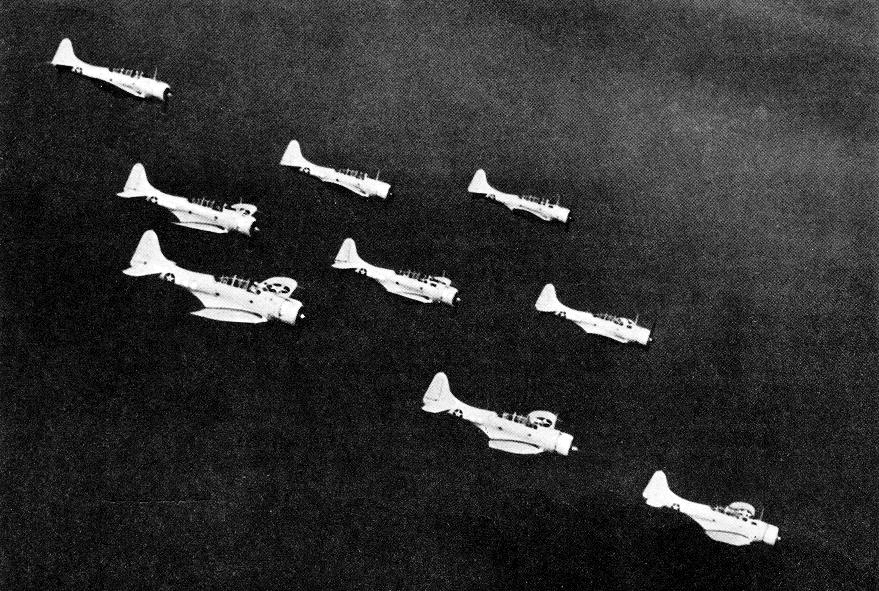
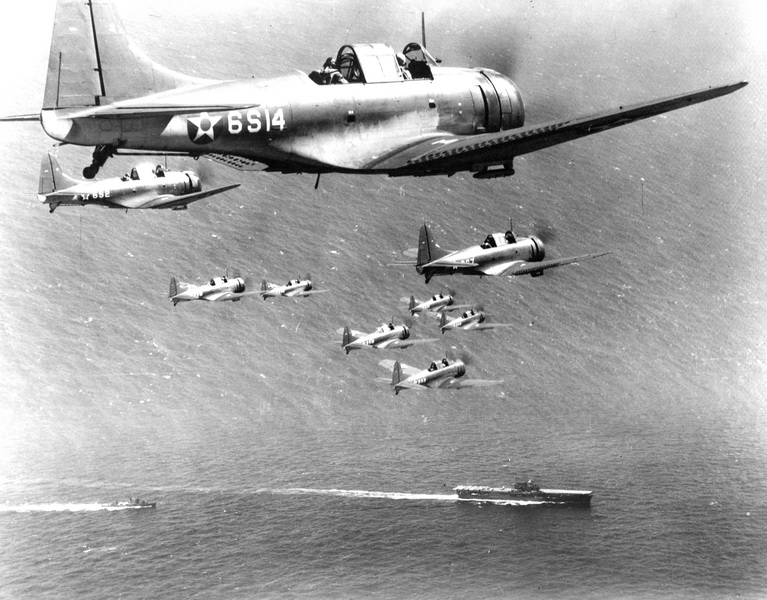
When the Japanese First Carrier Striking Group was spotted in the wee hours of June 4th the Marines and other aircrew aboard Midway scrambled to meet them.  The 18 SBD-2 Dauntless’ and 12 Vought SB2-U3 Vindicator dive bombers of VMSB-241, the 6 TBF Avengers of the Navy Torpedo Eight detachment, 4 Army Air Corps B-26 Marauders and 15 B-17 Flying Fortresses flew out to attack the Japanese carriers while the fighters rose to intercept the 108 aircraft heading toward Midway. The 72 strike aircraft, 36 Aichi 99 Val Dive Bombers and 36 Nakajima B5N Torpedo/ High Level Bombers were protected by 36 AM6-2 Zeros which thoroughly outclassed the Marine opponents in speed, maneuverability and in the combat experience of their pilots.

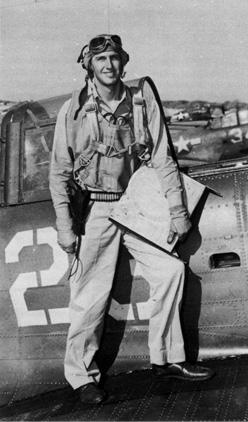
The Marine fighters audaciously attacked the far superior Japanese force, throwing themselves against the Japanese phalanx with unmatched courage.  Despite their courage the Marine fighters were decimated by the Japanese Zeros.  The Marines shot down 4 Val dive bombers and at least three Zeros but lost 13 Buffalos and 3 Wildcats during the battle.  Of the surviving aircraft only three Buffalos and three Wildcats were in commission at the end of the day. Among the casualties killed was Major Parks.  Of the surviving pilots of VMF-221, two became “Aces” during the war. Lieutenant Charles M. Kunz would later fly in VMF-224, adding six victories to end the war with 8 victories. Capt. Marion E. Carl would later fly in VMF-223 raising his score to 18.5 Japanese aircraft shot down.  Other pilots like 2nd Lieutenant Clayton M. Canfield shot down two additional aircraft while flying with VMF-223. 2nd Lieutenant Walter W. Swansberger won the Medal of Honor at Guadalcanal.

F2A-3+Buffalo

VMF-221 Attacks

The last remaining Marine fighter pilot of VMF-221 from the battle of Midway, Williams Brooks died in January 2010 and was buried with full military honors, in Bellview, Nebraska. Brooks in his after action report described his part in the battle:

I was pilot of F2A-3, Bureau number 01523, Our division under Capt. Armistead was on standby duty at he end of the runway on the morning of June 4, 1942, from 0415 until 0615. At about 0600, the alarm sounded and we took off. My division climbed rapidly, and I was having a hard time keeping up. I discovered afterwards that although my wheels indicator and hydraulic pressure indicator both registered “wheels up”, they were in reality about 1/3 of the way down. We sighted the enemy at about 14,000 feet, I would say that there were 40 to 50 planes. At this time Lt. Sandoval was also dropping back. My radio was at this time putting out no volume, so I could not get the message from Zed. At 17,000 feet, Capt. Armistead led the attack followed closely by Capt. Humberd. They went down the left of the Vee , leaving two planes burning. Lt. Sandoval went down the right side of the formation and I followed. One of us got a plane from the right side of the Vee. At this time, I had completely lost sight of my division. As I started to pull up for another run on the bombers, I was attacked by two fighters. Because my wheels being jammed 1/3 way down, I could not out dive these planes, but managed to dodge them and fire a burst or so into them as they went past me and as I headed for the water. As I circled the island, the anti-aircraft fire drove them away. My tabs, instruments and cockpit were shot up to quite an extent at this time and I was intending to come in for a landing. 

It was at this time that I noticed that a important feature in their fighting. I saw two planes dog-fighting over in the east, and decided to go help my friend if at all possible. My plane was working very poorly, and my climb was slow. As I neared the fight both planes turned on me. It was then that I realized I had been tricked in a sham battle put on by two Japs and I failed to recognize this because of the sun in my eyes. Then I say I was out-numbered, I turned and made a fast retreat for the island, collecting a goodly number of bullets on the way. After one of these planes had been shaken, I managed to get a good burst into another as we passed head-on when I turned into him. I don’t believe this ship could have gotten back to his carrier, because he immediately turned away and started north and down. I again decided to land, but as I circled the island I saw two Japs on a Brewster. Three of my guns were jammed, but I cut across the island, firing as I went with one gun. But I could not get there in time to help the American flier and as soon as the Brewster had gone into the water I came in for a landing at approximately 0715 (estimated). 

As for VMF-221 it was re-equipped with the F4F-4 and later with the F4U Corsair during the course of two more deployments overseas.  VMF-221 finished the war with a score of 155 victories, 21 damaged and 16 probable kills, the second highest total of any Marine Corps Squadron during the war.

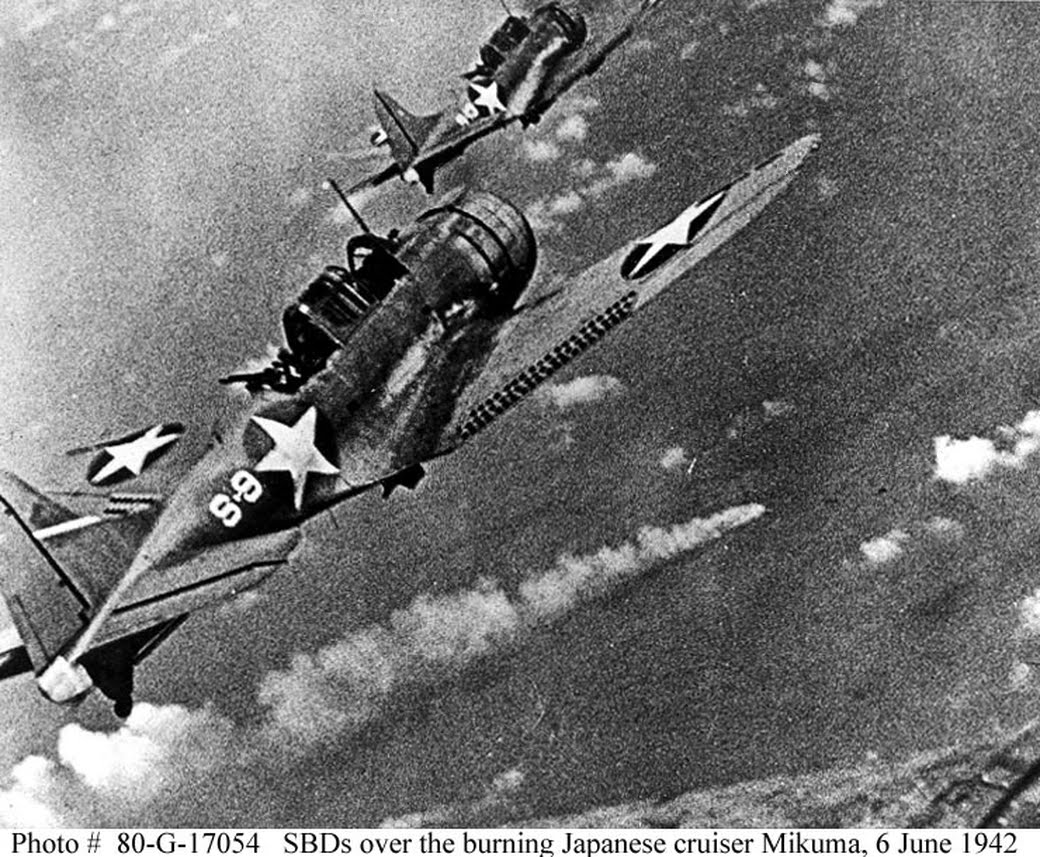
Their bomber counterparts of VMSB 241 attacked the Japanese task force on the morning of June 4th and scored no hits while losing 8 aircraft. The survivors were again in action later in the day as well as the following day where they helped sink the Japanese Heavy Cruiser Mikuma with their squadron leader Major Henderson diving his mortally wounded aircraft into the cruiser’s number 4 8” gun turret. While the Marines’ actions are not as well known or as successful as those of their Navy counterparts they were brave.  Fighter pilots had to engage some of the most experienced pilots flying superior machines while the bomber crews had little to no experience before being thrown into combat.

Into the Valley of Death: The Last Ride of the Torpedo Bombers

 eneterprise-vt-6-midway1

Alfred, Lord Tennyson wrote in the Charge of the Light Brigade something that echoes to this day when we talk or write about men who charge the gates of death against superior enemies.

Half a league half a league,

Half a league onward,

All in the valley of Death

Rode the six hundred:

‘Forward, the Light Brigade!

Charge for the guns’ he said:

Into the valley of Death

Rode the six hundred.

 VT-6

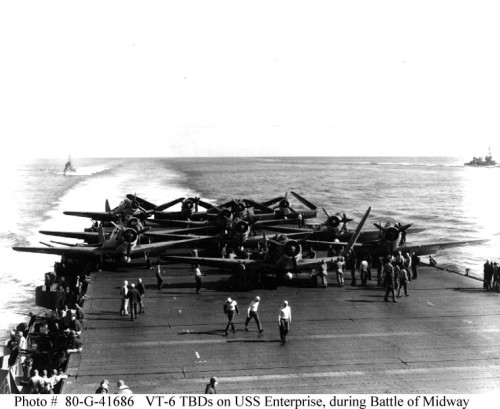
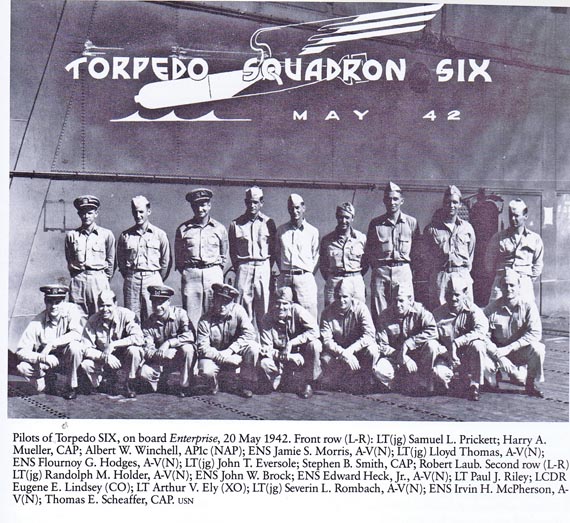
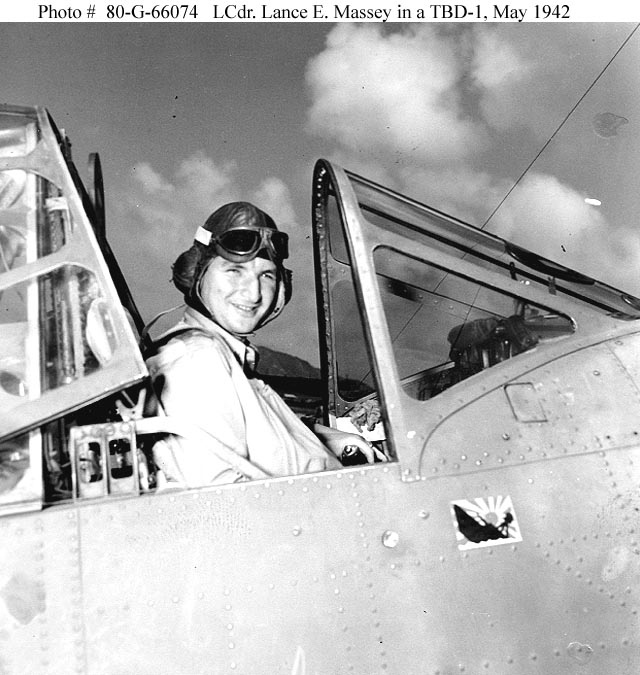
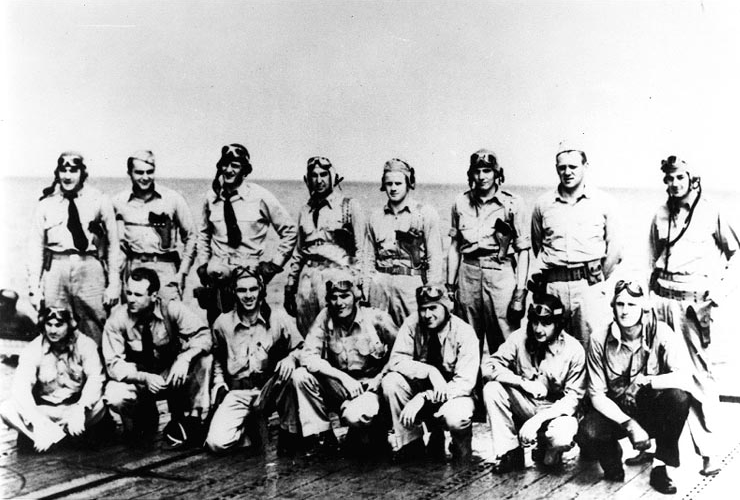
They were not six hundred and they were not mounted on horses, but the Naval Aviators of Torpedo Squadrons 3, 6 and 8 and their aerial steeds 42 Douglas TBD Devastators and 6 TBF Avengers wrote a chapter of courage and sacrifice seldom equaled in the history of Naval Aviation. Commanded by veteran Naval Aviators, LCDR Lance “Lem” Massey, LCDR Eugene Lindsey and LCDR John Waldron the squadrons embarked aboard the carriers flew the obsolete TBD Devastators. The young pilots of the Midway based Torpedo 8 detachment under the command of LT Langdon Fieberling flew in the new TBF Avengers.

tbd-devastator1

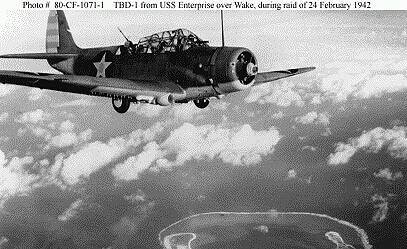
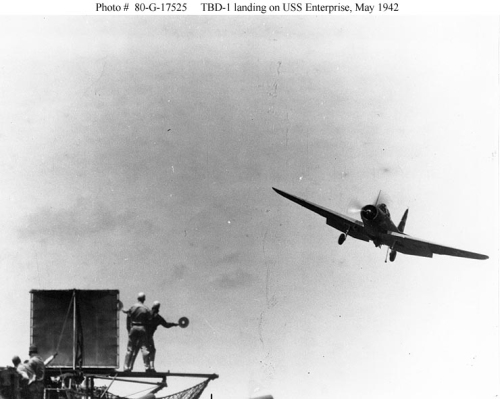
The TBD which first flew in 1935 entered service in 1937 and was possibly the most modern naval aircraft in the world when it entered service.  It was a revolutionary aircraft. It was the first monoplane widely used on carriers and was first all-metal naval aircraft.  It was the first naval aircraft with a totally enclosed cockpit, the first with hydraulic powered folding wings.  The TBD had crew of three and had a maximum speed of 206 miles an hour and carried a torpedo or up to 1500 pounds of bombs (3 x 500) or a 1000 pound bomb.  129 were built and served in all pre-war torpedo bombing squadrons based aboard the Lexington, Saratoga, Ranger, Yorktown, Enterprise and Hornet with a limited number embarked aboard Wasp. 

Go-in-and-get-a-hit


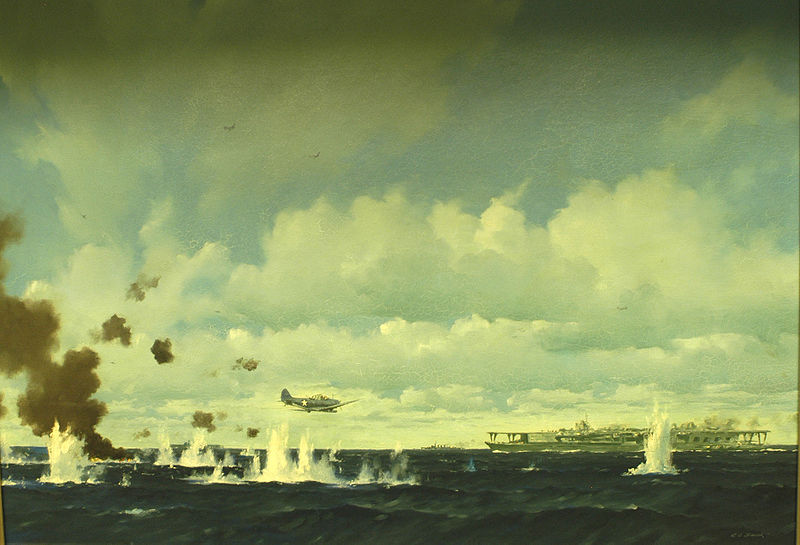
The Devastator saw extensive service prior to the war which pushed many airframes to the end of their useful service life and by 1940 only about 100 were operational by the beginning of the war.  They were still in service in 1942 as their replacement the TBF Avenger was not available for service in large enough numbers to replace them before Midway.  The TBDs performed adequately against minor opposition at Coral Sea and in strikes against the Marshalls but the squadrons embarked on Yorktown (VT3), Enterprise (VT-6) and Hornet (VT-8) were annihilated at Midway with only 6 of 41 aircraft surviving their uncoordinated attacks against the Japanese Carrier Strike Force.  They were too slow, had poor maneuverability, insufficient armor and defensive armament.

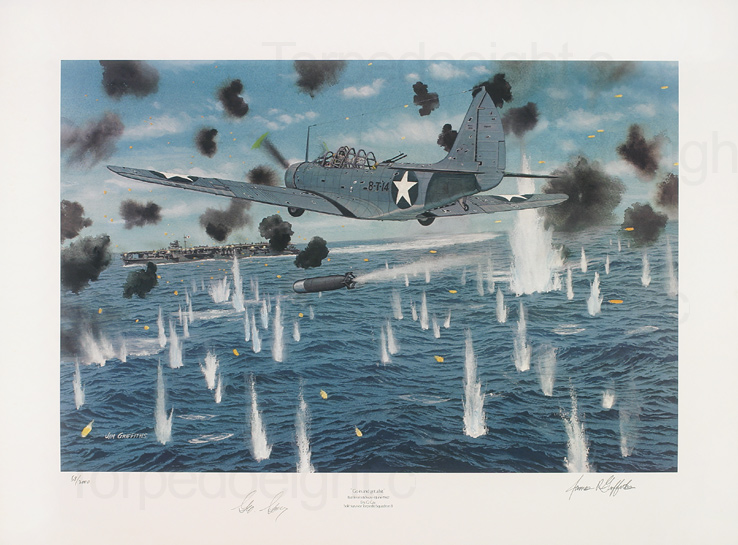
The Torpedo squadrons attacked independently of each other between 0920 and 1030 on June 4th 1942. The Japanese Combat Air Patrol ripped into the slow, cumbersome and under armed TBD Devastators as they came in low to launch their torpedoes.  Torpedo Eight from Hornet under the command of LCDR John C Waldron pressed the attack hard but all 15 of the Devastators were shot down.  Only Ensign George Gay’s aircraft was able to launch its torpedo before being shot down and Gay would be the sole survivor of the squadron to be picked up later by a PBY Catalina patrol plane.

Page500_163_6

g66074

LCDR John Waldron (above) LCDR Lem Massey (below)

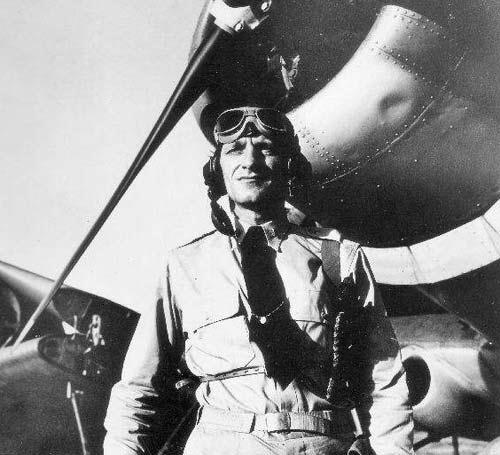
Torpedo Six from the Enterprise under the command of LCDR Eugene Lindsey suffered heavy casualties losing 10 of 14 aircraft with Lindsey being one of the casualties.  The last group of Devastators to attack was Torpedo Three from the Yorktown under the command of LCDR Lem Massey losing 11 of 13 aircraft with Massey a casualty last being seen standing on the wing of his burning aircraft as it went down.  These aircraft were also decimated and Massey killed but they had drawn the Japanese Combat Air Patrol down to the deck leaving the task force exposed to the Dive Bombers of the Enterprise and Yorktown.  The six aircraft of the Torpedo Eight detachment from Midway under the command of LT Fieberling lost 5 of their 6 aircraft while pressing their attacks.  Only Ensign Bert Earnest and his aircraft survived the battle landing in a badly damaged state on Midway.  Four U.S. Army B-26 Marauder Medium Bombers were pressed into service as torpedo bombers of which 2 were lost.  No torpedo bomber scored a hit on the Japanese Task force even those torpedoes launched at close range failed to score and it is believe that this was in large part due to the poor performance of the Mark 13 aircraft torpedoes.

enterprise-tbd-landing1

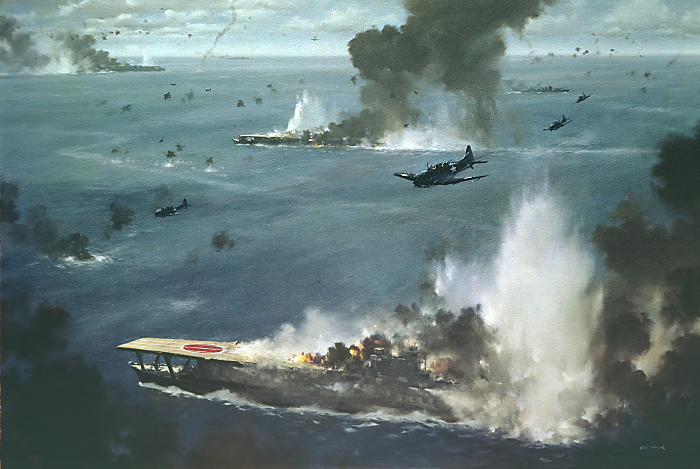
Despite the enormous losses of the torpedo squadrons their sacrifice was not in vain. Their attacks served to confuse the Japanese command and delay the rearmament of aircraft following the Japanese strikes on Midway. They also took the Japanese Combat Air Patrol down to sea level and opened the way for American Dive Bombers to strike the Japanese with impunity fatally damaging the Akagi, Kaga and Soryu in the space of 5 minutes.

ts8

The men of Torpedo 8 only one survived 

After Midway the remaining TBDs were withdrawn from active service and no example survives today. The TBF became the most effective torpedo bomber of the war and some remained in service in a civilian capacity to fight forest fires until 2012.


The Provence of Chance: Five Minutes that Changed the War

 Battle%20of%20Midway%20flat_080817160843

The land based aircraft from Midway attacked the Japanese carrier force taking heavy casualties and failed to damage the Japanese task force. When the results of the first strike of the Japanese bombers that hit Midway was analyzed Nagumo readied his second wave.

As this was happening the American carriers launched their strike groups at the Japanese fleet leaving enough aircraft behind as for Combat Air Patrol and Anti-submarine patrol missions.  As the Americans winged toward the Japanese fleet the Japanese were in a state of confusion. The confusion was caused when a scout plane from the Heavy Cruiser Tone that had been delayed at launch discovered US ships but did not identify a carrier among them until later into the patrol. The carrier was the Yorktown and TF 17, but for Nagumo who first expected no American naval forces, then received a report of surface ships without a carrier followed by the report of a carrier the reports were unsettling.

Dauntless_dive_bombers

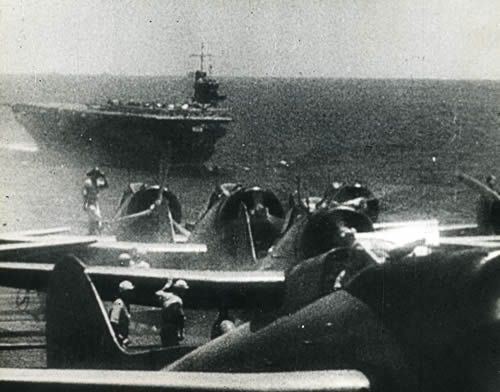
Aboard the Japanese ships, orders and counter-orders were issued as the Japanese attempted to recover their strike aircraft and prepare for a second strike on the island, but when the Yorktown task force was discovered, orders were changed and air crews unloaded ground attack ordnance in favor of aerial torpedoes and armor piercing bombs. In their haste to get their aircraft ready to strike the Americans, the hard working Japanese aircrews did not have time to stow the ordnance removed from the aircraft. But due to their hard work at 1020 they had the Japanese strike group ready to launch against the US carriers. Aircraft and their crews awaited the order to launch, their aircraft fully armed and fully fueled.

sbdpilot

CDR Wade McClusky 

There had been confusion among the Americans as to the exact location of the Japanese Carriers. Bombing 8 and Scouting 8 from Hornet made a wrong turn and not find the Japanese carriers. The squadrons had to return due to a lack of fuel and a number of bombers and their fighter escort had to ditch in the ocean and wait for rescue. The Enterprise group composed of Bombing-6 and Scouting 6 under CDR Wade McClusky was perilously low on fuel when they spotted the wake of a Japanese destroyer steaming at high speed to catch up with the Japanese carriers.  Taking a chance, McClusky followed it straight to the Japanese Task Force arriving about 1020. The Yorktown’s group under LCDR Max Leslie arrived about the same time.

4-17-106

When the American dive bombers arrived over the Japanese Carrier Strike Force they found the skies empty of Japanese aircraft. Below, aboard the Japanese ships there was a sense of exhilaration as each succeeding group of attackers was brought down and with their own aircraft ready to launch and deal a fatal blow to the American carrier wondered how big their victory would be. The war would soon be decided.

g701870

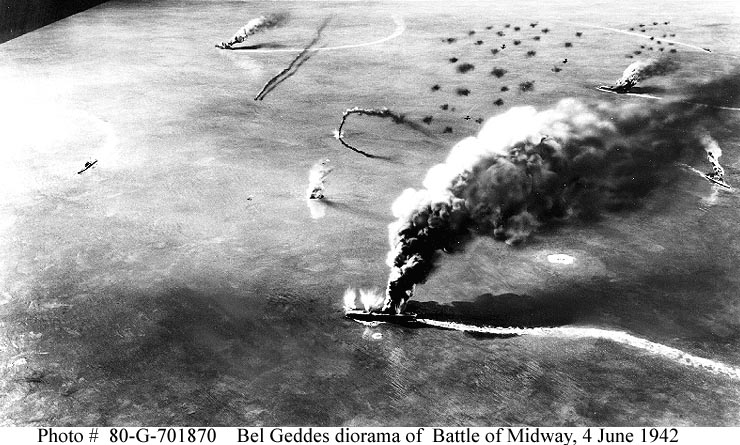
At 1020 the first Zero of the Japanese attack group began rolling down the flight deck of the flagship Akagi, aboard Kaga aircraft were warming up as they were on the Soryu.  The unsuspecting Japanese were finally alerted to the threat of the American dive bombers when lookouts screamed “helldivers.” The Japanese fighters assigned to the combat air patrol were flying too low as the mopped up the last of the doomed torpedo bombers and were not in a position to intercept the Americans.

2edd2yr

Wade McClusky’s aircraft lined up over the Akagi and Kaga pushing into their dives at 1022. There was a bit of confusion when the bulk of Scouting 6 joined the attack of Bombing 6 on the Kaga. That unprepared ship was struck by four 1000 pound bombs which exploded on her flight deck and hangar deck igniting the fully fueled and armed aircraft of her strike group and the ordnance littered about the hangar deck.  Massive fires and explosions wracked the ship and in minutes the proud ship was reduced to an infernal hell with fires burning uncontrollably. She was abandoned and would sink at 1925 taking 800 of her crew with her.

sbddauntless

LT Dick Best of Scouting 6 peeled off from the attack on Kaga and shifted to the Japanese flagship Akagi. On board Akagi were two of Japan’s legendary pilots CDR Mitsuo Fuchida leader of and CDR Minoru Genda the architect of the Pearl Harbor attack and subsequent string of Japanese victories. Both officers were on the sick list and had come up from sick bay to watch as the fleet was attacked. Seeing Kaga burst into flames they stood mesmerized until Akagi’s lookouts screamed out the warning “helldivers” at 1026.

SBDstoastjapcarrier

Best’s few aircraft hit with deadly precision landing two of their bombs on Akagi’s flight deck creating havoc among the loaded aircraft and starting fires and igniting secondary explosions which turned the ship into a witch’s cauldron.  By 1046 Admiral Nagumo and his staff were forced to transfer the flag to the cruiser Nagara as Akagi’s crew tried to bring the flames under control. They would do so into the night until nothing more could be done and abandoned ship at 2000.  Admiral Yamamoto ordered her scuttled and at 0500 on June 5th the pride of the Japanese carrier force was scuttled.

SBD_ditching_near_USS_Astoria_1942

LCDR Max Leslie ditches his aircraft near a cruiser 

VB-3 under LCDR Max Leslie from the Yorktown stuck the Soryu with 17 aircraft, however only 13 of the aircraft had bombs due to an electronic arming device malfunction on 4 of the aircraft, including that of Commander Leslie.  Despite this Leslie led the squadron as it dove on the Soryu at 1025 hitting that ship with 3 and maybe as many as 5 bombs. Soryu like her companions burst into flames as the ready aircraft and ordnance exploded about her deck. She was ordered abandoned at 1055 and would sink at 1915 taking 718 of her crew with her. A few hours later Hiryu, which had succeeded in launching strikes that seriously damaged Yorktown met the fate of her sisters. Yorktown would be sunk by a Japanese submarine, along with the destroyer Hamman a few days later as her crew attempted to get her to Pearl Harbor. In five pivotal minutes the course of the war in the Pacific was changed.

A Final Ignominy

mikuma_135889

IJN Mikuma 

Admiral Yamamoto was still attempting to digest the calamity that had befallen Admiral Nagumo’s carrier task force. In the shocked atmosphere of the mighty Super Battleship Yamato’s command center the Staff of the Combined Fleet was hastily attempting to arrive at a solution which might reverse the disaster and bring victory.  Admiral Ugaki, Yamamoto’s Chief of Staff, despite strong personal doubts, ordered Vice Admiral Nobutake Kondo to prepare for a night surface engagement with the US Fleet and dispatched a strong surface force to bombard Midway in order to prevent the Americans from reinforcing it and to prevent its further use against his forces should the invasion move forward.  Kondo then organized his fleet to attempt to find the American carriers and bring them to battle before dawn.

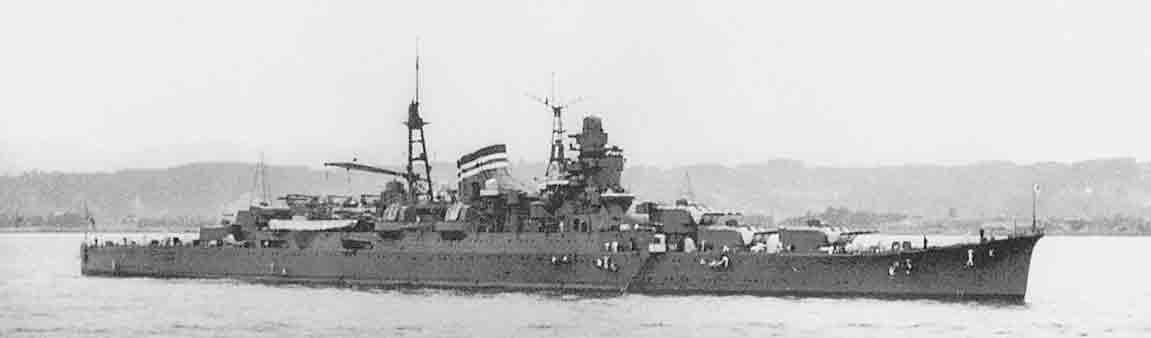
Kondo detached Vice Admiral Takeo Kurita’s Close Support Group composed of Cruiser Seven, the fastest and most modern cruisers in the Imperial Navy proceed at full speed to attack Midway.  Kurita’s cruisers, the Kumano, Suzuya, Mikuma and Mogami were each armed with 10 8” guns and were escorted by the two destroyers.

Kurita’s force was 80 miles from Midway when Yamamoto realizing that his plan was unrealistic ordered Kondo’s forces to retreat and rendezvous with his main force shortly after midnight. The order was met with a measure of relief by most officers in the force and the force turned northwest and steamed at 28 knots to meet the Main Body.  At 0215 lookouts on Kumano sighted a submarine on the surface which turned out to be the USS Tambor which had been shadowing the group, and made a signal for the force to make a emergency 45 degree turn to port.

During the process Mogami’s Navigator took over from the watch to oversee the tricky maneuver. In doing so he thought that there was too much distance between him and the ship ahead, the Mikuma. So he adjusted his course to starboard and then realized his mistake. The ship he thought was Mikuma was actually Suzuya and Mikuma was directly ahead. As soon as he recognized his mistake Mogami’s Navigator ordered a hard turn to port and reversed the engines but it was too late. Mogami’s bow crashed into Mikuma’s port quarter. The impact caused minimal damage to Mikuma but Mogami was heavily damaged. She lost 40 feet of her bow and everything else was bent back to port at right angles to her number one turret.

Mogami’s damage control teams isolated the damage and worked the ship up to 12 knots. This was not fast enough for Kurita to make his rendezvous so he left Mikuma and the destroyers to escort Mogami while he steamed ahead with Kumano and Suzuya.

72149d1361e15e9f1540c2b425c023c7

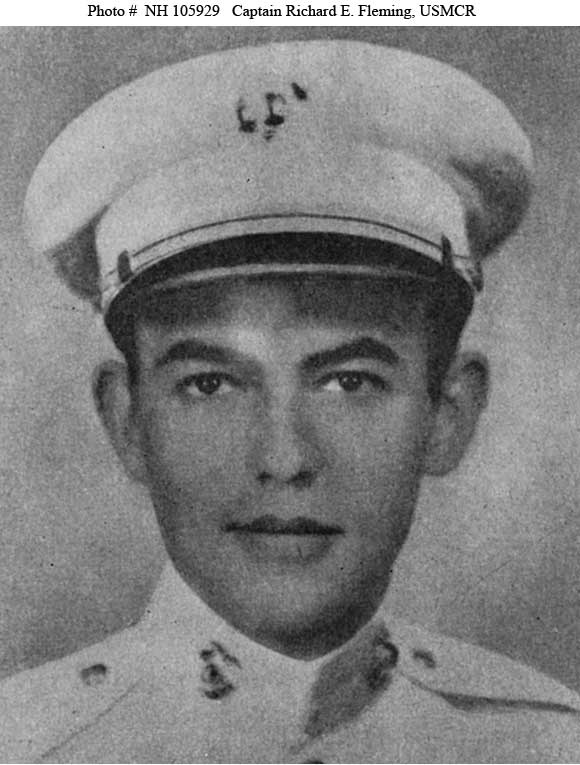
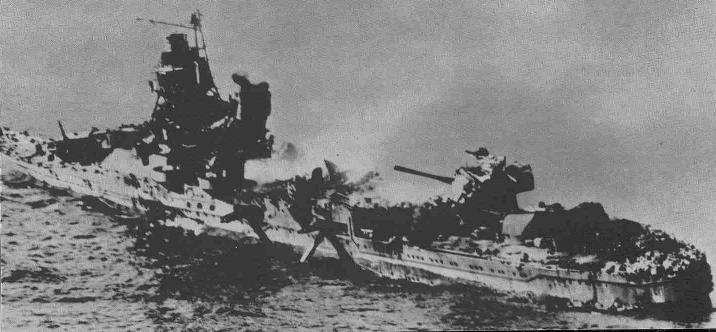
Tambor’s skipper LCDR John W Murphy sent a contact report at 0300 reporting “many unidentified ships.” He followed this with more detailed information and the Americans on Midway began to launch its remaining serviceable aircraft to attack the threat. A flight of B-17 Bombers launched at 0430 could not find the Japanese ships but at 0630 a PBY Catalina found the Japanese and radioed Midway “two Japanese battleships streaming oil.”  The remaining 12 aircraft of VSMB-241 under command of Captain Marshall Tyler a mix of SBD Dauntless and SB2U Vindicators took off at 0700. His force attacked at 0808 scoring no hits. However, Marine Captain Richard Fleming, his Vindicator on fire dropped his bomb and then crashed his aircraft into Mikuma’s after turret. Sailors aboard Mogami were impressed, the American had sacrificed himself in a suicide attack worthy of the Samurai. The fire was sucked down air intakes into the starboard engine room with disastrous results. The Mikuma’s engineers were suffocated by the smoke and fumes and Mikuma was greatly reduced in speed.

mogami

Mikuma shattered, note wreckage of Captain Fleming’s Vindicator on turret 

The two ships limped northwest at 12 knots escorted by the destroyers and were unmolested through much of the day with the exception of an ineffective attack by the B-17s at 0830. The following morning the Dive Bombers of Enterprise and Hornet were at work and found the crippled Japanese ships. Waves over US Dive Bombers attacked the cruisers throughout the morning and into the afternoon. Mikuma was hit at least 5 times and secondary explosions of ammunition and torpedoes doomed the ship. Mogami was also heavily damaged but remained afloat while both destroyers received bomb damage.  At sunset the tough cruiser rolled over to port and sank into the Pacific. Mogami whose damage control teams had performed miracles to keep their ship afloat helped the destroyers rescue survivors from Mikuma.  Only 240 were rescued with 650 officers and sailors going down with the ship.

Link15-Mikuma-damage

Survivors abandoning Mikuma

The action against the cruisers ended the combat operations at Midway. The Japanese ships were doomed by Yamamoto’s decision to try to salvage victory from defeat and the error of Mogami’s Navigator during the emergency turn when Kumano sighted Tambor. The only thing that kept the result from being total was the efficacy of Mogami’s damage control teams.  Mogami was out of the war for 10 months following repairs and conversion to an Aircraft Cruiser in which her aft turrets were removed to increase the number of float plane scouts that the ship could carry. She rejoined the fleet in April 1943 and was sunk following the Battle of the Surigao Strait on 25 October 1944.

The Mogami and Mikuma proved to be tough ships to sink. Unprotected by friendly aircraft they fought hard against the unopposed American Dive Bombers. They suffered massive damage from 500 and 1000 pound bombs, both direct hits and near misses. Mogami was saved by the skill of her damage control teams and the foresight of her Damage Control Officer to jettison her torpedoes so that they did not explode and compound the damage wrought by the American bombs.


Epilogue

At Midway a distinctly smaller force defeated a vastly superior fleet in terms of experience, training and equipment. At the very moment that it appeared to the Japanese that they would advance to victory their vision disappeared. In a span of less than 5 minutes what looked like the certain defeat of the US Navy became one of the most incredible and even miraculous victories in the history of Naval warfare. In those 5 minutes history was changed in a breathtaking way. While the war would drag on and the Japanese still inflict painful losses and defeats on the US Navy in the waters around Guadalcanal the tide had turned and the Japanese lost the initiative in the Pacific never to regain it.

h73065

The Japanese government hid the defeat from the Japanese people instead proclaiming a great victory. The American government could not fully publicize the victory for fear of revealing the intelligence that led to the ability of the US Navy to be at the right place at the right time and defeat the Imperial Navy.

The American victory at Midway changed the course of the war in the Pacific. The Battle of Midway established the aircraft carrier and the fast carrier task force as the dominant force in naval warfare which some would argue it still remains. Finally those five minutes ushered in an era of US Navy dominance of the high seas which at least as of yet has not ended as the successors to the Enterprise, Hornet and Yorktown ply the oceans of the world and the descendants of those valiant carrier air groups ensure air superiority over battlefields around the world today.

Leave a comment

Filed under aircraft, History, Military, Navy Ships, US Navy, World War II at Sea, world war two in the pacific

Coming this Week: Midway, D-Day and the Greatest Generation

Friends of Padre Steve’s World

I hope that your week is starting out well. This week promises to be interesting on Padre Steve’s World as I will be doing some writing about  the Battle of Midway and the Normandy landings. I have done a lot on both subjects before but will try to be doing something different with them. The reason why I do this is because both battles are important. Each in their own way was a watershed that helped to change the course of the war.

Now those who know me and probably many who regularly follow my writings know that I don’t readily fit into anyone’s mold. I am a career military officer, chaplain and military historian and I am certainly a liberal-progressive  in most of my politics, at least as defined in the current American political-ideological climate. I am a curious blend of idealist and realist, I like to think the best about my country, but know that we don’t always live up to the ideals enunciated in the Declaration of Independence. This makes me true minority group. But I digress…

Battle%20of%20Midway%20flat_080817160843

The Battle of Midway, which was fought on June 4-6 1942 turned back the previously undefeated Japanese Imperial Navy by all that the U.S. Navy had left, three aircraft carriers and a handful of surface ships in a classic David versus Goliath encounter. The battle is referred sometimes referred to, with good reason, as the Miracle at Midway or the Incredible Victory. Had the U.S. Navy lost at Midway, the Japanese would have held a dominant position in the Pacific, and though the United States would probably still won the war, it may have taken at least an extra  year, maybe more for that to happen.

british commandos d-day

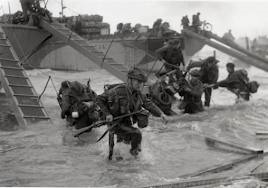
The Allied invasion of France on in Normandy was another watershed moment. In June 1944 Nazi Germany still had a stranglehold on much of Europe. Finally, the Allied Expeditionary Force under Dwight D. Eisenhower was ready to attack. It was the greatest amphibious operation ever conducted. Six Allied Infantry divisions and three Airborne Divisions supported by an invasion fleet of 5,000 ships and landing craft and thousands of warplanes were sent against the Germans. Had the invasion failed, the result would have been disastrous. The Germans would have been able to shift troops to the Eastern Front where Josef Stalin’s Soviet Red Army was about to launch its offensive on the German Army Group Center, an event that might have led to stalemate in the East.

Political pressure was already going against Winston Churchill and Franklin Roosevelt as the war continued and a defeat could have brought to power politicians in Britain and the United States willing to make a deal for peace with the Nazis. Such an occurrence would have led to even more genocide in Nazi occupied territories and the possibility of a Nazi atomic bomb, and please remember the Germans were far beyond the United States in building delivery systems, including ballistic missiles for such weapons. The thought of either instance is too horrifying to imagine. Likewise the thought of Imperial Japan continuing to rape China and Indochina, the East Indies and to possibly even to threaten Australia and India is equally horrifying.

These are things that more than seventy years later that we forget, to our detriment,  but they were the reality that our grandparents and great-grandparents who were part of that Greatest Generation faced.

Now, these seventy years later most of the men and women of that generation who defeated the mortal enemies of freedom, and I do not use that term flippantly are passing away. The young ones are in their late eighties, soon most will be gone, and the question has to be asked: Would we find the wherewithal to stand against mortal enemies of freedom, and then when the war was over, help them rebuild their shattered nations and turn former enemies into friends, even while ensuring that war criminals were brought to justice?

I would hope so, but I don’t know. I guess that is why I am a realist.

So until tomorrow I wish you a good night.

Peace

Padre Steve+

Leave a comment

Filed under History, leadership, Military, World War II at Sea, world war two in europe, world war two in the pacific

I Will Fight Them: John Reynolds at Gettysburg

IronBrigade10161001

Friends of Padre Steve’s World

This is another part of my Gettysburg text Chapter on John Reynolds. I have divided it up into three sections. The first was the biographic section, the second, published yesterday was about Kate Hewitt, the girl he left behind.  Today is an expanded version of what was the original chapter which focused almost exclusively on Reynolds’s and his actions at Gettysburg on the morning of July 1st 1863.

I hope that you enjoy.

Peace

Padre Steve+

On the night of June 30th Reynolds was awash in reports, some of them conflicting and even though he was without Meade’s course of action for the next day “concluded that Lee’s army was close by and in force.” [1] He spent the night at his headquarters “studying the military situation with Howard and keeping in touch with army headquarters.” [2] Howard noted Reynolds anxiety and “received the impression that Reynolds was depressed.” [3] After Howard’s departure Reynolds took the opportunity to get a few hours of fitful sleep before arising again at 4 a.m. on July 1st.

When morning came, Reynolds was awakened by his aide Major William Riddle with Meade’s order to “advance the First and Eleventh Corps to Gettysburg.” [4] Reynolds studied the order and though he expected no battle that morning, expecting “only moving up to be in supporting distance to Buford” [5] took the prudent and reasonable precautions that his Confederate opponents A.P. Hill and Harry Heth refused to take as they prepared to move on Gettysburg.

His troops were in fine spirits that morning even though it had been busy. After a breakfast of hardtack, pork and coffee the troops moved out. An officer of the Iron Brigade noted that the soldiers of that brigade were “all in the highest spirits” while Lieutenant Colonel Rufus Dawes of the “placed the fifes and drums at the head of the Sixth Wisconsin and ordered the colors unfurled” as the proud veterans marched forward into the sound of the raging battle to the tune of “The Campbell’s are Coming.” [6]

Though Reynolds was not expecting a fight he organized his march in a manner that ensured if one did happen that he was fully prepared. The precautionary measures that he took were those that any prudent commander having knowledge that strong enemy forces were nearby would take. Reynolds certainly took to heart the words of Napoleon who said “A General should say to himself many times a day: If the hostile army were to make its appearance in front, on my right, or on my left, what should I do?” [7]

This was a question that A.P. Hill and Harry Heth seemed not to consider on that warm and muggy July morning when Heth was committing Lee’s army to battle on his own authority. Reynolds was also about to commit the Army of the Potomac to battle, but unlike Heth who had no authority to do so, Reynolds “had at least been delegated the authority for making such a decision” [8] by his army commander George Meade. Though Meade was unaware of what was transpiring in the hills beyond Gettysburg he implicitly trusted the judgement of Reynolds, and Meade been with the advanced elements of Reynold’s wing he too “probably would have endorsed any decision he made.” [9]

Reynolds placed himself with the lead division, that of Wadsworth, and “directed Doubleday to bring up the other divisions and guns of the First Corps and had ordered Howard’s Eleventh Corps up from Emmitsburg.” [10] Reynold’s also understood the urgency of the situation and “wanted all the fighting troops to be up front, so he instructed Howard not to intermingle his supply wagons with his infantry. Similar instructions had been given to Abner Doubleday; to ensure that the First Corps wagons would wait until the Eleventh Corps foot soldiers had passed.” [11]

Instead operating in the normal fashion of rotating units on the march, Reynolds opted to save time. Since Wadsworth’s First Division was further advanced than his other First Corps divisions, Reynolds instructed it to move out first with Cutler’s brigade in the lead followed by the Iron Brigade under Brigadier General Solomon Meredith. In doing so Reynolds countermanded the order of the acting corps commander Doubleday who had ordered Wadsworth’s division to allow the other divisions of First Corps to pass his before advancing. Reynolds told Wadsworth that Doubleday’s order “was a mistake and that I should move on directly.” [12]

He went forward with Wadsworth’s division and gave Doubleday his orders for the coming engagement. Doubleday later recalled that when Reynolds arrived to discuss the situation that Reynolds:

“read to me the various dispatches he had received from Meade and Buford, and told me that he should go at once forward with the leading division – that of Wadsworth – to aid the cavalry. He then instructed me to draw in my pickets, assemble the artillery and the remainder of the corps and join him as soon as possible. Having given me these orders, he rode off at the head of the column, and I never saw him again.” [13]

Reynolds ordered Howard’s Eleventh Corps to follow First Corps and according to Doubleday directed an aid of Howard to have Howard “bring his corps forward at once and form them on Cemetery Hill as a reserve.” [14] Howard received the order and since his troops were ready to move out “no time was lost in setting them in motion.” [15] While some writers believe that Reynolds directed Oliver Howard to prepare Cemetery Hill as a fallback position [16] there is more evidence that points to Howard selecting the that commanding hill himself. [17] Regardless of which is correct the result was that both Reynolds and Howard recognized the importance of the position and took action to secure it.

Likewise Reynolds ordered Sickles’ III Corps to come up from Emmitsburg where that corps had bivouacked the previous night. [18] Sickles had heard the guns in the distance that morning and sent his senior aide, Major Henry Tremain to find Reynolds. Reynolds told Tremain “Tell General Sickles I think he had better come up” but the order left Sickles in a quandary. He recalled “he spend an anxious hour deciding what to do” [19] for he had “been ordered by Meade to hold his position at Emmitsburg” [20] and Sickles sent another rider to Reynolds and awaited the response of his wing commander instead of immediately advancing to battle on 1 July and it would not be until after 3 P.M. that he would send his lead division to Gettysburg.

According to Doubleday Reynolds’s intention was “to fight the enemy as soon as I could meet him.” [21] Reynolds rode forward with some of his staff into the town as the infantry of the First Corps and the Eleventh Corps moved advanced. As they rode through the town Reynolds and his party were met by “a fleeing, badly frightened civilian, who gasped out the news that the cavalry was in a fight.” [22] When he came to the Lutheran Seminary he came across Buford. It was a defining moment of the Civil War, a moment that shaped the battle to come. It has been recounted many times and immortalized on screen in the movie Gettysburg, a time “when the entire battle would come down to a matter of minutes getting one place to another.” [23]

As the rough and tumble Kentuckian, Buford, and Reynolds, the dashing Pennsylvanian, discussed the situation they had to know that odd that they were facing. With close to 32,000 rebels from the four divisions of Hill’s and Ewell’s corps closing in from the west and the north and with only about 18,000 men of First Corps, Eleventh Corps and Buford’s cavalry division to meet them, the odds were not in his favor, but unlike other battles that the army of the Potomac faced, this time the army and its commanders were determined not to lose the battle and not to retreat and for the first time John Reynolds “led the advance” and for the first time in the war “might have some say about fighting.” [24]

Reynolds and Buford committed their eighteen thousand men against Lee’s thirty-two thousand in a meeting engagement that develop into a battle that would decide the outcome of Lee’s invasion. Likewise it was a battle for the very existence of the Union. Abner Doubleday noted the incontestable and eternal significance of the encounter to which Buford and Reynolds were committing the Army of the Potomac on July 1st 1863:

“The two armies about to contest on the perilous ridges of Gettysburg the possession of the Northern States, and the ultimate triumph of freedom or slavery….” [25]

Even though they understood that they were outmanned and outgunned by the advancing Confederates, both Buford and Reynolds knew that this was where the battle must be waged. It was here on this spot, for the ground gave them an advantage that they would not have elsewhere; but only if they could hold on long enough for the rest of the army to arrive. As Alan Nolan wrote: “this Pennsylvania ground – was defensible, and behind it, through the town, loomed Cemetery Hill, another natural point of defense if the battle at Seminary Ridge went against the Federals.” [26]

200px-Gettysburg_Day1_1045

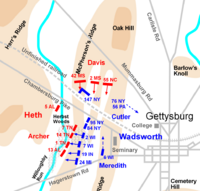
Reynolds vs. Heth July 1st

When John Buford saw Reynolds infantry advancing as the Confederates increased the pressure on his outnumbered cavalry, he remarked to a staff member “now we can hold this place.” [27] Buford was not mistaken, when Reynolds rode up to the scene of the battle on Seminary Ridge he greeted Buford, who was in the cupola of the seminary. He called out “What’s the matter John?” to which Buford replied “The devil’s to pay” before he came down to discuss the tactical situation with Reynolds. [28] Buford explained the situation noting that “I have come upon some regiments of infantry…they are in the woods…and I am unable to dislodge them.” [29]

Reynolds needed no other convincing. He asked Buford if he could hold and quickly sent off a number of messages. One officer wrote: “The Genl ordered Genl Buford to hold the enemy in check as long as possible, to keep them from getting into town and at the same time sent orders to Genl Sickles…& Genl Howard to come as fast as possible.” [30] Additionally, Reynolds sent a message to Meade stating: “The enemy are advancing in strong force. I fear they will get to the heights beyond the own before I can. I will fight them inch by inch, and if driven into the town, I will barricade the streets and hold them back as long as possible.” [31] He directed Major Weld of his staff to take it to Meade with all haste as Weld recalled: “with the greatest speed I could, no matter if I killed my horse.” [32] When Meade received the report he was concerned, but with great confidence in Reynolds’s ability he remarked “Good!…That is just like Reynolds; he will hold on to the bitter end.[33]

After dictating his instructions and sending off his messengers, Reynolds then did what no senior Confederate commander did during the entirety of the battle, he rode back and took personal charge of the movements of his troops to hurry them forward. Unlike Heth who so badly misjudged the tactical situation, he had taken note of the ground and recognized from Buford’s reports that “the Confederates were marching only on that single road and thus would not be able to push their forces to the front any faster than Reynolds could reach the battlefield with his First Corps divisions.” [34] It was a key observation on his part which again allowed him to make appropriate decisions as to how he shaped the battle.

explorepahistory-a0h4p1-a_349

Reynolds leadership at this point might be considered reckless by the standards of our day when senior commanders control battles from miles away with the help of real time intelligence and reporting, including live video feeds, or even the standards of the Second World War. But then in the Civil War a commander in combat could only really control the actions of troops that he could see and because of the time that it took to get messages to subordinate commanders, and the real possibility that verbal orders could be badly misinterpreted in the heat of battle.

Reynolds exercised command directing infantry formations into battle and assisting his artillery battery commanders in the placement of their guns. This was far different than the way that most senior Confederate leaders, including Lee, Longstreet, Hill and Ewell directed their units during the battle of Gettysburg. But such action such action was in keeping with Reynolds’s character, especially in the defense of his home state. Reynolds’ philosophy of command regarding volunteer troops was that they “were better led than driven” [35] and as such he led from the front and Abner Doubleday noted that Reynolds was “inflamed by at seeing the devastation of his native state, was most desirous of getting at the enemy as soon as possible.” [36]

iron brigade forward

“For God’s Sake Forward!” McPherson’s Ridge

John Reynolds recognized that time was of the essence if his forces were to hold the ground west of the town selected a shortcut around the town for First Corps. Those forces were directed across the fields near the Condori farm toward the back side of Seminary Ridge, with Reynolds’ staff helping to remove fences to speed the advance. [37] It was not an easy advance as the troops had to move across the farm fields at an oblique and have to “double-quick for a mile and a quarter in the thick humidity just to reach the seminary.” [38] One member of the corps recalled “I never saw men more willing to fight than they were at Gettysburg.” [39]

Recognizing that “after two full hours of fighting, Buford’s troopers” fighting on McPherson’s Ridge, were “at the limits of their endurance,” Reynolds ordered Wadsworth’s brigades “to bolster the cavalry and oppose the rebel infantry coming at them.” [40]

As troops arrived Reynolds directed them into position. He directed the artillery of Captain James Hall’s 2nd Maine Battery to McPherson’s Ridge instructing Hall “I desire you to damage their artillery to the greatest possible extent, and to keep their fire from our infantry until they are deployed….” [41]

The leading infantry of First Corps was Major General James Wadsworth’s understrength division containing just two brigades, just over 3000 soldiers, its losses from Chancellorsville not being made good and as the result of the loss of regiments discharged because their enlistments had expired. [42] Wadsworth was not a professional soldier, but like many generals on both sides was a political general who despite his lack of military experience was a natural leader of men. Wadsworth was “a vigorous white-haired old man who had been a well-to-do gentleman farmer in New York State before the war” [43] and he “had interrupted his service in the war to run for and lose his state’s governorship the preceding fall.” [44] He ran against the anti-war, anti-administration and frequently pro-Southern Copperhead Horatio Seymour, but he did not leave the army in order return to the state to mount a personal campaign “on the ground that it did not befit a soldier.” [45]

“What the gray haired general lacked in experience and skill, he compensated with a fighting spirit.” [46] Oliver Howard of Eleventh Corps said that Wadsworth was “always generous and a natural soldier” [47] and while Wadsworth was no professional but he performed admirably on July 1st 1863. Wadsworth was beloved by his men because he demonstrated true concern and care for their living conditions and training and on that morning Wadsworth was commanding his division leading it into action with “an old Revolutionary War saber in his hand.” [48] The gallant Wadsworth would be mortally wounded ten months later leading a division of Gouverneur Warren’s Fifth Corps in the opening engagements of the Wilderness. Secretary of the Navy Gideon Welles noted in his diary when Wadsworth died that Wadsworth “should, by right and fair-dealing, have been at this moment Governor of New York…No purer or single-minded patriot than Wadsworth has shown himself in this war. He left home and comforts and wealth to fight the battles of the Union.” [49]

With their gallant commander at their head the division may not have had much in force in the way of numbers, but the units of the division were “good ones,” composed of hardened combat veterans that went into battle with an eye to victory. In the van was Brigadier General Zylander Cutler’s brigade of New Yorkers and Pennsylvanians, the “celebrated Bucktails.” [50] When they were mustered into service the soldiers of the 13th Pennsylvania had adopted a “bucktail” attached to their service caps as a distinctive insignia, a practice that spread to other regiments of the brigade and for which the brigade became known throughout the army.

Cutler had spent much of his early life in Maine working in a number of fields and businesses. He made a fortune several times and lost it, first when his mill burned down, but he rebuilt his businesses and diversified and “as a leading businessman, Cutler was elected to the Maine senate, college trusteeships and a railroad directorship, but he was financially ruined by the panic of 1866 and moved to Milwaukee to start his career over again.” [51] The tough-minded Cutler had some previous military experience fighting Indians as a member of the Maine militia and was made Colonel of the 6th Wisconsin. Cutler was described by one of his soldiers as “being as “rugged as a wolf” and was “a tenacious fighter, a trait that endeared him to the tough-minded Gibbon.” [52] After Antietam Gibbon recommended Cutler for promotion to Brigadier General and command of the Iron Brigade, but Cutler had been wounded at the bloody Battle of Brawner’s Farm and Solomon Meredith gained a promotion and command of that celebrated brigade. However, in on November 29th 1862 having recuperated from his wounds Cutler was promoted to brigadier general and received command of his Bucktails in March of 1863. The brigade saw only minor action at Chancellorsville and Gettysburg would be the fierce brigadier’s first chance since being wounded to command in combat.

This fine brigade was followed by Brigadier General Solomon Meredith’s “Iron Brigade” composed of westerners in their distinctive black “Jefferson Davis” or “Hardie” hats. The brigade had been initially commanded by Major General John Gibbon, now commanding a division in Winfield Scott Hancock’s Second Corps. Gibbon turned the brigade into one of the finest in the army. At the Battle of Turner’s Gap on South Mountain during the Antietam campaign, the brigade earned its name.

After that bloody battle George McClellan exclaimed “They must be made of Iron!” and Hooker replied, “By the Eternal, they are iron! If you had seen them at Bull Run as I did, you would know them to be iron.” [53] In the fierce battle at South Mountain the brigade had lost over a quarter of its strength, but had gained a share of immortality among the ranks of the United States Army. “The Western soldiers immediately seized on this as their title, and the reputation of the brigade and its new name were soon broadcast around Federal campfires.” [54] The regiments of the brigade rivalled many Regular Army units in effectiveness and discipline and “the black hats became their trademark.” [55] Often committed to the fiercest battles the brigade had been decimated, but now along with the Bucktails it advanced up down Seminary Ridge and up the back side of McPherson’s Ridge. A member of an artillery battery who saw the Bucktails and the Iron Brigade advance recalled:

“No one…will ever again see those two brigades of Wadsworth’s Division – Cutler’s and the Iron Brigade – file by as they did that morning. The little creek made a depression in the road, with a gentle ascent on either side, so that from our point of view the column, as it came down the slope and up the other, had the effect of huge blue billows of men topped with a spray of shining steel, and the whole spectacle was calculated to give nerve to a man who never had one before.[56]

Reynolds directed Cutler’s Bucktails to proceed north of the Cashtown Pike and then “called the Iron Brigade into action on the south side” [57] leading the hearty Westerners himself. Reynolds directed then Wadsworth to take change of the action on the north side of the road while he looked after the left. [58] When Reynolds made that decision he made another. He ordered the 6th Wisconsin of the Iron Brigade into reserve, leaving the Iron Brigade a regiment short but giving him the advantage of having a ready reserve which “permitted them to take full advantage of their interior lines, shift their strength about, and apply it where most needed.” [59]

At about 10:30 the 2nd Wisconsin advanced into the woods Reynolds urged them forward: “Forward men, for God’s sake and drive those fellows out of those woods….” [60] As he looked around toward the seminary to see the progress of reinforcements, Reynolds was struck in the back of the neck by a bullet and fell dead. “Had it come a short time earlier, Reynolds’s death might have thrown the I Corps into fatal confusion.” [61] But Doubleday, who command now fell was up to the task on that sultry July morning.

MenBrooklyn

Cutler’s brigade moved north and engaged Davis’ men near the railroad cut. Here the Cutler’s line was “hardly formed when it was struck by Davis’s Confederate brigade on its front and right flank.” [62] His troops were heavily outnumbered by the advancing Confederates and Davis’ troops initially had the upper hand. In a savage fight they inflicted massive casualties on Cutler’s regiments which outnumbered and being flanked were ordered to withdraw by Wadsworth in order to save them, with the exception of one regiment, the 147th New York nicknamed the Ploughboys which “did not get the order” [63] and though isolated held its ground, “with the support of a fresh six-gun battery whose gunners simply refused to quit.” [64] This was the 2nd Maine Battery under the command of Captain James Hall. Though caught in a cross fire of Rebel artillery and assailed by skirmishers Hall’s artillerymen gamely continued the fight withdrawing by sections, “fighting a close canister range and suffering severely.” [65] The New Yorkers and Hall’s battery battled the Mississippians and the “Ploughboys fell “like autumn leaves; the air was full of lead.” [66]

railroad_cut

The inexperienced Davis and his green troops were buoyed by this “gratifying local success” [67] and attempted to exploit it. At this point the Confederates were fatigued by the long march and the fighting and the troops of the 2nd Mississippi and 55th North Carolina “were all jumbled together without regiment or company.” [68] Davis attempted to use the unfinished railroad cut “as cover for getting on the enemy’s flank without exposure.[69] It was a decision that Davis lived to regret. As his troops his units crowed into it, the two regiments of Cutler’s brigade south of the turnpike, the 14th Brooklyn and the 95th New York turned to meet them and were joined by the reserve regiment of the Iron Brigade, the 6nd Wisconsin under Lieutenant Colonel Rufus Dawes. Dawes ordered an immediate advance and called out to Major Edward Pye of the 95th “Let’s go for them Major.” The 6th Wisconsin and the New Yorkers took the Confederates in the flank with enfilade fire, “it was like shooting fish in a barrel.” [70] Dawes’ men slaughtered many of those unfortunate soldiers, and the battle soon became a hand to hand struggle as North Carolinians and Mississippians struggled with the Wisconsin men and New Yorkers.

fightforthecolors2la

The melee in and around the cut did not last long:

“for the Confederates were unable to resist their attackers….From the brow of the cut Dawes shouted down to the Confederates below him: “Where is the colonel of this regiment?” A Confederate field officer heard him and replied, “Who are you?” Dawes answered, “I command this regiment. Surrender or I will fire.” [71] Dawes’s men took over 200 prisoners, [72] and the battle flag of the 2nd Mississippi. [73]

The charge had last but minutes yet had shattered Joe Davis’s brigade. Davis was wholly unprepared for this reverse and signaled his forces to pull back convinced that “a heavy force was…moving rapidly to our right.” [74] However, the cost to the 6th Wisconsin was great, “Dawes estimated that 160 men of the 6th fell, not including the brigade guard, whose casualties he did not know.” [75]

Brigadier General Solomon Meredith’s Iron Brigade, which had been brought forward by Doubleday hit Archer’s brigade in the front in the woods on McPherson’s Ridge. Meredith was an unmarried North Carolina Quaker who had moved to Indiana in 1840 owning little more than the clothes that he was wearing. He became a farmer but found politics more to his liking and was elected as a county sheriff and to the state legislature. When the war came he was serving as the Clerk of Wayne County. Meredith, like so many volunteer officers on both sides owed much of his advancement in the army to his political connections. In Meredith’s case this was to Meredith’s friend Governor Oliver Morton. Critics of Meredith decried his appointment as Colonel of the 19th Indiana as “a damnable swindle.” [76] Yet Meredith commanded the regiment effectively and received command of the brigade in November 1862. John Gibbon, the regular officer who initially commanded the brigade was critical of Meredith’s appointment but the soldiers appreciated their kind, six-foot seven-inch tall commander who they affectionately knew as “Long Sol.” But despite the carping of his political enemies and the opposition of Gibbon, Meredith like so many others like him who, “extroverted and ambitious by nature, accustomed to asserting themselves, these men did the best that they could, for themselves and their responsibilities, and they somehow sufficed” [77] though they had no formal military training or experience.

As the Iron Brigade advanced toward McPherson’s Ridge and engaged the enemy, Doubleday “urged the men…to hold it all hazards.” Doubleday later wrote that the troops of the brigade, “full of enthusiasm and the memory of their past achievements they said to me proudly, “If we can’t hold it, where will you find men who can?” [78]

Animated by the leadership of Reynolds and now Doubleday they “rushed to the charge, struck successive heavy blows, outflanked and turned the enemy’s right, captured General Archer and a large portion of his brigade, and pursued the remainder across Willoughby Run.” [79] The effect was dramatic as the Iron Brigade overwhelmed Archer’s brigade, whose soldiers now realized they were facing “the first team.” Members of the Iron Brigade recalling the voices of Confederate soldiers exclaiming “Here are those damned black-hat fellers again…’Taint no militia-that’s the Army of the Potomac.” [80] As they attempted to withdraw they piled up at a fence near Willoughby Run and were hit in the flank by “a Michigan regiment that had worked its way around through the woods to the south.” [81] Archer’s Confederates were unable to resist the assault of the Iron Brigade, “Some fled; others threw down their arms and trembling asked where they should go, while others simply dropped their rifles and ducked through the Union formations to the Union rear.” [82]

As for their commander, Archer the ignominy only got worse. “A muscular Irish private in the 2nd Wisconsin ran forward and seized General Archer bodily and made a prisoner of him.” [83] Coddington wrote: “It was a bad moment for the Army of Northern Virginia, and Archer gained the unenviable distinction of being the first of its general officers to be captured after Lee took command.” [84] Doubleday, who knew Archer from the old army, wrote of meeting Archer after that very angry general after had been taken prisoner and roughed up by the aforementioned Private Maloney. Doubleday greeted his old comrade saying: “Archer! I’m glad to see you,” and reached out his hand to greet his friend, to which Archer replied “Well, I’m not glad to see you by a damn sight” and refused to shake Doubleday’s hand. [85]

With the Archer’s brigade whipped and Davis’s in flight Solomon Meredith pulled back the brigade and “was reforming his lines when a shell exploded near him.” [86] Meredith’s horse was killed and fell on him and the tall general was struck in the head by a shell fragment which fractured his skull and rendered him hors d ’combat for the rest of the battle.

Contrary to the reports of many of the Confederates involved, stating that they were outnumbered, some of which have achieved nearly mythic status in some accounts of the battle, the forces engaged were relatively evenly matched. [87] Clifford Dowdey says that the Iron Brigade “heavily outnumbered the one brigade they met. Archer’s….” [88] Such accounts are usually based on the reports of Heth and other confederate commanders. Heth in his after action report wrote that “Archer, encountered heavy masses in his front, and his gallant little brigade, after being almost surrounded by overwhelming forces in front and on both flanks, was forced back….” [89]

However, such was not the case. The reason for this repulse was not that the Union forces had “overwhelming forces” or “greatly superior numbers.” Instead the Archer’s brigade and the Iron Brigade were fairly evenly matched with Archer having about 1,130 men and the Iron Brigade 1,400 while Davis outnumbered Cutler nearly two to one having between 2,400 and 2,600 men in the battle to Cutler’s 1,300. [90]

Following the repulse of Archer and Davis’s brigades by Reynolds’s First Corps, Heth withdrew his badly mauled brigades back to Herr’s Ridge in order to reform them and bring up the brigades of Brockenbrough and Pettigrew before he could resume his attack. In his next assault he would also be supported by Pender’s fresh division which was now coming up.

Coddington notes that the outcome of the opening engagement came down to leadership and “the superior tactical skills of the Northern generals,” who “created a reserve force” with one regiment of the Iron Brigade which “permitted them to take full advantage of their interior lines, shift their strength about, and apply it where most needed.” [91] It was a “calculated risk,” for it assumed that the depleted Iron Brigade could handle Archer’s brigade effectively with only four of their five assigned regiments. [92] Again, even with the loss of Reynolds it was a case of Harry Heth being out-generaled, this time by Abner Doubleday. Heth “had not exercised the close field command by means of which Doubleday had won the brief, furious action.” [93]

death of reynolds

The Death of Reynolds

Reynolds was dead, but the series of command decisions reached by Reynolds under the pressure of a meeting engagement “where neither side held an immediate advantage” [94] were critical to the army. Likewise, because he had effectively communicated his intent to his subordinate commanders they were able to continue the fight despite his death, and his superiors and successors were able to effectively continue the battle that he had initiated. When he went into action he had “barely a third of his corps available, and confronting a force of unknown size, he had put himself at the head of his troops to lead them in a vigorous attack.” [95]

Though shaken by Reynolds’ loss, the Union troops fought on at McPherson and Seminary Ridge under the command of Doubleday until the assault of Ewell on their left and the arrival of Pender’s fresh division forced them from their positions. However Reynolds’s death was a major blow for the Federal forces for it “removed from the equation the one person with enough vision and sense of purpose to manage this battle.” [96] Despite this Reynolds, by pushing forward with his troops on McPherson’s Ridge ensured that Howard was able to secure Cemetery Hill and Cemetery Ridge, without which Gettysburg would have been lost.

The contrast between Reynolds and his opponents was marked. Hill was ten miles away from the action. Heth was too far to the rear of his troops to direct their advance when they ran into trouble and did not begin to take control until after the brigades of Davis and Archer had staggered “back up the ravine, with Davis’s temporarily wrecked.” [97] In contrast to Heth, Reynolds “hurried to the front, where he was able to inspirit the defense and throw troops into the decisive zone.” [98] At every point in the brief encounter John Reynolds showed himself superior to his opponents as he directed the battle. “Dedicated to an aggressive forward defense in the vanguard of the entire Army of the Potomac, Reynolds, at the cost of his own life had blunted the Rebel thrust and bought valuable time that permitted the balance of Meade’s army to take possession of the coveted high ground….” [99]

Though he paid for his efforts with his life but his sacrifice was not in vain. Reynolds’s tactics “gave the First Corps room for maneuver in front of Gettysburg and upset General Hill’s timetable.” [100] Harry Hunt noted: “…by his promptitude and gallantry he had determined the decisive field of the war, and he opened brilliantly a battle which required three days of hard fighting to close with a victory.” [101]

Notes

[1] Ibid. Pfanz Gettysburg: The First Day p.48

[2] Ibid. Coddington The Gettysburg Campaign: A Study in Command p.261

[3] Ibid. Pfanz Gettysburg: The First Day p.48

[4] Ibid. Coddington The Gettysburg Campaign: A Study in Command, p.261

[5] Ibid. Sears, Gettysburg. p. 158

[6] Nolan, Alan T. The Iron Brigade: A Military History Indiana University Press, Bloomington IN, 1961 and 1994 pp.233-234

[7] Napoleon Bonaparte, Military Maxims of Napoleon in Roots of Strategy: The Five Greatest Military Classics of All Time edited by Phillips, Thomas R Stackpole Books Mechanicsburg PA 1985 p.410

[8] Ibid. Sears, Gettysburg. p. 165

[9] Ibid. Pfanz Gettysburg: The First Day p.49

[10] Ibid. Nolan The Iron Brigade p.233

[11] Trudeau, Noah Andre. Gettysburg: A Testing of Courage, Harper Collins Publishers, New York 2002 p.159

[12] Ibid. Trudeau, Gettysburg: A Testing of Courage p.156

[13] Doubleday, Abner Chancellorsville and Gettysburg: Campaigns of the Civil War VI Charles Scribner’s Sons, Bew York 1882 pp.70-71

[14] Ibid. Doubleday Chancellorsville and Gettysburg p.71

[15] Carpenter, John A. Sword and Olive Branch: Oliver Otis Howard Fordham University Press, New York 1999 p.51

[16] Ibid. Pfanz Gettysburg: The First Day p.76

[17] Green, A. Wilson. From Chancellorsville to Gettysburg: O. O. Howard and Eleventh Corps Leadership in The First Day at Gettysburg edited by Gallagher, Gary W. Kent State University Press, Kent Ohio 1992 p. 70

[18] Ibid. Sears, Gettysburg. p. 158

[19] Keneally, Thomas American Scoundrel: The Life of the Notorious Civil war General Dan Sickles Anchor Books, a Division of Random House, New York 2003 p.275

[20] Swanberg, W.A. Sickles the Incredible Copyright by the author 1958 and 1984 Stan Clark Military Books, Gettysburg PA 1991 p.202

[21] Ibid. Trudeau, Gettysburg: A Testing of Courage p.156

[22] Ibid. Sears, Gettysburg. p. 165

[23] Ibid. Guelzo, Gettysburg: The Last Invasion p.142

[24] Ibid. Nichols Toward Gettysburg p.200

[25] Ibid. Doubleday Chancellorsville and Gettysburg p.68

[26] Ibid. Nolan The Iron Brigade p.235

[27] Ibid. Guelzo, Gettysburg: The Last Invasion p.142

[28] Ibid. Sears, Gettysburg. p. 172

[29] Ibid. Guelzo, Gettysburg: The Last Invasion p.143

[30] Ibid. Trudeau, Gettysburg: A Testing of Courage p.172-173

[31] Schultz, Duane The Most Glorious Fourth: Vicksburg and Gettysburg July 4th 1863. W.W. Norton and Company New York and London, 2002 p.202

[32] Ibid. Trudeau, Gettysburg: A Testing of Courage p.173

[33] Huntington, Tom Searching for George Gordon Meade: The Forgotten Victor of Gettysburg Stackpole Books, Mechanicsburg PA 2013 p.154

[34] Ibid. Sears, Gettysburg. p. 166

[35] Ibid. Coddington The Gettysburg Campaign: A Study in Command, p.277

[36] Doubleday, Abner. Chancellorsville and Gettysburg: Campaigns of the Civil War – VI Charles Scribner’s Sons, New York 1882 p.68

[37] Ibid. Pfanz Gettysburg: The First Day p.75

[38] Ibid. Guelzo, Gettysburg: The Last Invasion p.145

[39] Ibid. Wert The Sword of Lincoln p.275

[40] Foote, Shelby, The Civil War, A Narrative. Volume Two Fredericksburg to Meridian Random House, New York 1963 p.469

[41] Gottfried, Bradley The Artillery of Gettysburg Cumberland House Publishing, Nashville TN 2008 pp.28-29

[42] Ibid. Sears, Gettysburg. p. 34 Sears notes that in between Chancellorsville and Gettysburg, First Division of I Corps had lost a full brigade due to the expiration of enlistments.

[43] Catton, Bruce The Army of the Potomac: Glory Road Doubleday and Company, Garden City New York, 1952 p.270

[44] Ibid. Sears, Gettysburg. p. 34

[45] Ibid. Catton The Army of the Potomac: Glory Road p.271

[46] Ibid. Wert The Sword of Lincoln p.275

[47] Ibid. Howard Autobiography of Oliver Otis Howard 5995 of 9221

[48] Ibid. Catton The Army of the Potomac: Glory Road p.271

[49] Girardi, Robert I. The Civil War Generals: Comrades, Peers, Rivals in Their Own Words Zenith Press, MBI Publishing, Minneapolis MN 2013 p.184

[50] Ibid. Sears, Gettysburg. p. 34

[51] Ibid. Nolan The Iron Brigade p.16

[52] Tagg, Larry The Generals of Gettysburg: The Leaders of America’s Greatest Battle Da Capo Press Cambridge MA 1998 Amazon Kindle Edition p.19

[53] Hebert, Walter H. Fighting Joe Hooker University of Nebraska Press, Lincoln and London 1999. Originally published by Bobbs-Merrill, New York 1944 p.137

[54] Ibid. Nolan The Iron Brigade p.130

[55] Ibid. Nolan The Iron Brigade p. 54

[56] Ibid. Nolan The Iron Brigade p. 234

[57] Ibid. Catton The Army of the Potomac: Glory Road p.271

[58] Ibid. Pfanz Gettysburg: The First Day pp.75-76

[59] Ibid. Coddington The Gettysburg Campaign: A Study in Command, p.275

[60] Ibid. Coddington The Gettysburg Campaign: A Study in Command, p.271

[61] Longacre, Edward G. John Buford: A Military Biography Da Capo Press, Perseus Book Group, Cambridge MA p.194

[62] Ibid. Hunt, The First Day at Gettysburg in Battles and Leaders of the Civil War Volume III, The Tide Shifts p.277

[63] Ibid. Catton The Army of the Potomac: Glory Road p.272

[64] Dowdy, Clifford. Lee and His Men at Gettysburg: The Death of a Nation Skyhorse Publishing, New York 1986, originally published as Death of a Nation Knopf, New York 1958 p.96

[65] Ibid. Hunt, The First Day at Gettysburg in Battles and Leaders of the Civil War Volume III, The Tide Shifts p.277

[66] Ibid. Pfanz Gettysburg: The First Day p.86

[67] Ibid. Dowdy Lee and His Men at Gettysburg p.96

[68] Ibid. Pfanz Gettysburg: The First Day p.104

[69] Ibid. Dowdy Lee and His Men at Gettysburg p.96

[70] Ibid. Dowdy Lee and His Men at Gettysburg p.97

[71] Ibid. Pfanz Gettysburg: The First Day p.112

[72] Ibid. Guelzo, Gettysburg: The Last Invasion p.153
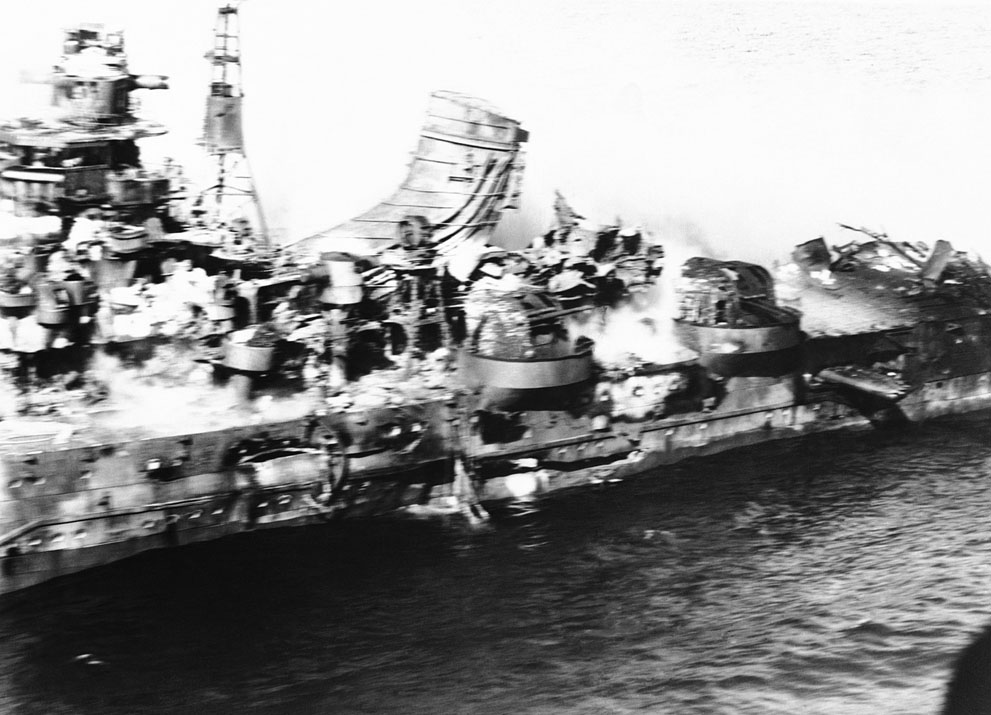
[73] Ibid. Sears, Gettysburg. p. 178

[74] Ibid. Guelzo, Gettysburg: The Last Invasion p.153
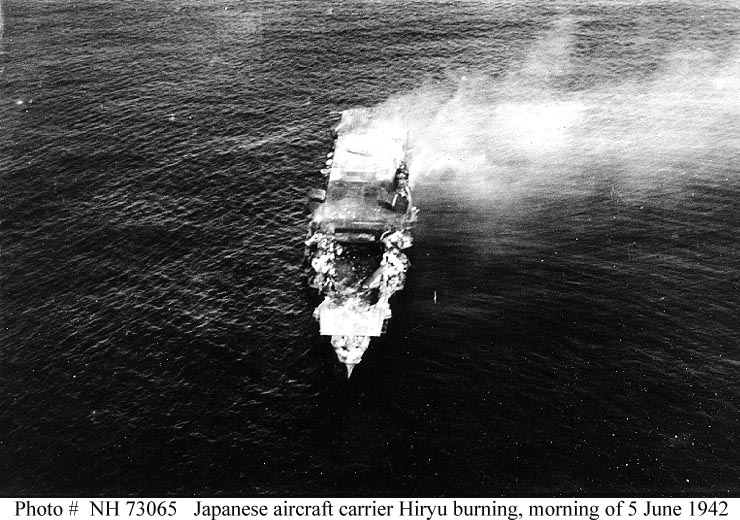
[75] Ibid. Pfanz Gettysburg: The First Day p.109

[76] Ibid. Nolan The Iron Brigade p.20

[77] Ibid. Nolan The Iron Brigade p.173

[78] Ibid. Doubleday Chancellorsville and Gettysburg p.73

[79] Hunt, Henry. The First Day at Gettysburg in Battles and Leaders of the Civil War Volume III, The Tide Shifts. Edited by Robert Underwood Johnson and Clarence Clough Buel Castle, Secaucus NJ p.277

[80] Ibid. Catton The Army of the Potomac: Glory Road p.273

[81] Foote, Shelby, The Civil War, A Narrative. Volume Two Fredericksburg to Meridian Random House, New York 1963 pp.470-471

[82] Ibid. Pfanz Gettysburg: The First Day p.99

[83] Ibid. Catton The Army of the Potomac: Glory Road p.274

[84] Ibid. Coddington The Gettysburg Campaign: A Study in Command, p.271

[85] Ibid. Foote The Civil War, A Narrative. Volume Two Fredericksburg to Meridian p.470

[86] Ibid. Tagg The Generals of Gettysburg p.17

[87] Ibid. Foote The Civil War, A Narrative. Volume Two Fredericksburg to Meridian p.469 Even Foote in his account of Archer’s brigade makes the comment “Staggered by the ambush and outnumbered as they were….”

[88] Dowdy. Lee and His Men at Gettysburg: The Death of a Nation p.95

[89] Luvaas, Jay and Nelson Harold W editors. The U.S. Army War College Guide to the Battle of Gettysburg South Mountain Press, Carlisle PA 1986 p.9

[90] Ibid. Coddington The Gettysburg Campaign: A Study in Command, p.274

[91] Ibid. Coddington The Gettysburg Campaign: A Study in Command, p.274

[92] Ibid. Coddington The Gettysburg Campaign: A Study in Command, p.274

[93] Ibid. Dowdy Lee and His Men at Gettysburg: The Death of a Nation p.97

[94] Ibid. Sears, Gettysburg. p. 168

[95] Ibid. Coddington The Gettysburg Campaign: A Study in Command, p.277

[96] Ibid. Trudeau, Gettysburg: A Testing of Courage p.171

[97] Ibid. Dowdy. Lee and His Men at Gettysburg: The Death of a Nation p.97

[98] Krick, Robert K. Three Confederate Disasters on Oak Ridge: Failures of Brigade Leadership on the First Day of Gettysburg in The First Day at Gettysburg edited by Gallagher, Gary W. Kent State University Press, Kent Ohio 1992 p.113

[99] Ibid. Tagg The Generals of Gettysburg p.12

[100] Ibid. Coddington The Gettysburg Campaign: A Study in Command, p.277

[101] Ibid. Hunt, The First Day at Gettysburg in Battles and Leaders of the Civil War Volume III, The Tide Shifts p.277

4 Comments

Filed under civil war, Gettysburg, History, leadership, Military

A Mystery, a Medal & a Ring: Lost Love & War

katehewitt

Kate Hewitt: The Girl John Reynolds Left behind

Friends of Padre Steve’s World

In doing my research on the life of Major General John Fulton Reynolds for my Gettysburg text I began to read about his relationship with Kate Hewitt. It adds a dimension to this man’s life that we miss if we only look at his actions on the battlefield or his military career. I added this to the end of the chapter on Reynolds and I hope that you are touched by it. As I read the story of this couple I found myself in tears on a number of occasions, and as I wrote this part of the chapter I kept crying.

Tragedy is implicit in war, and the tragedy of people who lose those that they love cannot be casually tossed aside in our quest to examine yet another battle.

Peace

Padre Steve+

220px-GenJFRenyolds

Major General John Fulton Reynolds

Those who die in war often leave behind those that they love, and sometimes those stories are shrouded in mystery themselves. When Reynolds’s body was removed from the battlefield he was found to be wearing a Catholic religious medal around his neck on a chain on which also hung a “gold ring joined in the shape of clasped hands. On the inner band were inscribed the words “Dear Kate.” [1] Additionally his West Point ring was missing. His family was stunned as Reynolds’s had never breathed a word to them about any woman in his life.

It turned out that Kate, was a young woman named Katherine Mary Hewitt who Reynolds had met when travelling by steamship from San Francisco to Philadelphia on his way to West Point in 1860. The couple kept the relationship secret, possibly because Reynolds and his family were Protestant and she was a recent convert to the Catholic faith and at the time there was still a tremendous prejudice against Catholics in the country. Despite the fact that the anti-immigrant and virulently anti-Catholic Know Nothing Party had disappeared many of their anti-immigrant and anti-Catholic prejudices remained strong.

On September 15th 1861 Reynolds visited his family in Philadelphia at which time he visited Kate and proposed. They exchanged rings, she getting his West Point Ring, which she used to imprint the wax seals on the letters she would send to him. In the winter of 1863 he again visited his family in Philadelphia and made a clandestine visit to Kate. At that time “they set July 8th as the date to announce the engagement to his family.” [2]

Reynolds’s family wondered who this mystery woman was and his sister Jennie wrote a letter to his brother Will “we all thought a lady was the donor and must be prized and wished we could only know who and where she was.” [3] With Reynolds’s body lying in repose at his sister Catherine Landis’s home on July 3rd prior to it being taken by train to his home town of Lancaster the family discovered the identity of the mystery woman. On that morning there was a knock at the door and a young woman presented herself, asking if she could view Reynolds’s body. Reynold’s sisters and brother in law immediately fell in love with her. Their only regret was not having known her prior to Reynolds’s death. She announced that “in the event of his death, she would enter a Catholic convent.” [4] As Kate viewed the body she wept, sometimes uncontrollably. Eventually she placed his West Point Ring in his coffin and took back her religious medal. She left that day and on July 12th entered the convent of the Sisters of Charity at Emmitsburg where she took the name Sister Hildegarde. His sister Ellie wrote:

“Poor girl she has been a heroic mourner and most worthy of our dear one. I cannot tell you all she said of him but she was in his heart and from her I learned much of him, of his feelings and inner life that I never knew before….She made no parade of her religion, nor in any way that was the least disagreeable….” [5]

The Reynolds’s family treated Kate as family and they remained in touch with her as they did his faithful orderly Sergeant Veil who had been with him when he fell at Gettysburg. However, in 1868 in poor health Kate left the Sisters of Charity while serving as a teacher in Albany New York without having taken her final vows. Evidently the “sisters at Emmitsburg, according to Kate’s biographer and author of “Is She Kate?” Marian Latimer, found Kate “unsuitable for community life.” [6] After leaving the order she “remained in Albany working as a teacher for several years and in fact, living for some time with another sister who left the order.” [7]

About that time the correspondence between her and Reynolds’s family stopped. All subsequent attempts of the Reynolds family to regain contact with their brother’s true love failed. Still mourning her one true love, a man who was neither her husband nor a blood relative, Kate gave up her Catholic faith and alone in the world returned to her hometown of Stillwater New York where she continued to teach. She never remarried and died in Stillwater of pneumonia there in 1895. She was buried there and her stone is an octagon and symbolic of rebirth and resurrection. The word Mizpah is carved on the stone and is a Hebrew benediction meaning, ‘May God watch over you until we are together again.’ [8]

[1] Ibid. Nichols Toward Gettysburg p.212

[2] Wilson Robert and Clair, Carl They Also Served: Wives of Civil War Generals Xlibris Corporation 2006 p.79

[3] Ibid. Nichols Toward Gettysburg p.212

[4] Ibid. Wilson and Clair They Also Served p.79

[5] Ibid. Nichols Toward Gettysburg p.212

[6] Carey, John E. On War and Love: From the 1860s — General John Reynolds and “Kate” 10/25/2006 retrieved from https://johnib.wordpress.com/category/kate-hewitt/ 29 May 2015

[7] Loeffel, Bernadette Catharine (Kate) Mary Hewitt 9/20/2005 retrieved from http://www.findagrave.com/cgi-bin/fg.cgi?page=gr&GRid=11784763 29 May 2015

[8] McLean, Maggie Kate Hewitt: Fiancée of General John Reynolds 12/20/2008 retrieved from http://civilwarwomenblog.com/kate-hewitt/ 29 May 2015

3 Comments

Filed under civil war, Gettysburg, History, marriage and relationships, Military

Writing About War

IMG_0535

“What a cruel thing is war: to separate and destroy families and friends, and mar the purest joys and happiness God has granted us in this world; to fill our hearts with hatred instead of love for our neighbors, and to devastate the fair face of this beautiful world.” Robert E. Lee in a letter to his wife 1864

Memorial Day weekend is over but I have not stopped reflecting on war and its cost. Having served in combat myself, and having stood over the wounded in field hospitals in Iraq and having seen the devastation of war up close and personal I have a hard time reducing war to the technology, the tactics and trivia that seem to satisfy the consumers of war porn. Call me whatever you want but I cannot get around the human cost of war. William Tecumseh Sherman reflected that “It is only those who have neither fired a shot nor heard the shrieks and groans of the wounded who cry aloud for blood, more vengeance, more desolation. War is hell.” 

One of my favorite historians of the Second World War, Cornelius Ryan who wrote the magnificent accounts of D-Day, The Longest Day, Operation Market Garden, A Bridge Too Far, and the Battle of Berlin, The Last Battle said about his accounts: “What I write about is not war but the courage of man.” I think that writing about courage is appropriate and I do a lot of that. But I think in addition to courage that we also must write about the frailty and fallibility of human beings, especially the leaders who plan and conduct war.

When I teach or write about military history I find it important to make sure that the people who made that history are not forgotten.  After all, as the British military theorist Colin Gray says “people matter most” when we deal with history, policy, or politics, especially in the matter of war. He is right of course, people are the one constant in war. Weapons and tactics may change, but people do not. 

Likewise we cannot forget that war, even wars for the most excruciatingly correct and even righteous reasons are always tragic. The cost of war, even so called “good wars” is devastating. Ernest Hemingway wrote “Never think that war, no matter how necessary, nor how justified, is not a crime.” To the war porn addicts the words of Sherman or Hemingway surely are offensive, but they provide a necessary warning to the politicians, pundits and preachers who cannot get enough war to satiate their bloodlust and need for power. Sadly, most of the men and women who revel in war without end have neither served in combat or have any skin in the game regarding the wars that they support and those which they work so hard to bring about. Maybe if they did then they would not be so quick to send young men and women to war.

Those who follow me on this site know that I write about war a lot, some might say too much, but I cannot help that. My life has been forever changed by war.  If you look back through my archives you can see how my writing has evolved when it comes to dealing with war and part of that is because I do not want the sacrifices of the men and women who fought those wars to be forgotten or cheapened by a society which from the very beginning of our history has done so. Lieutenant General Hal Moore who co-authored the book We Were Soldiers Once, and Young wrote: “in our time battles were forgotten, our sacrifices were discounted, and both our sanity and suitability for life in polite American society were publicly questioned.” By continuing to write and teach I hope to ensure that this does not happen. Maybe I am pissing into the wind so to speak, but I cannot stand by silently.

I am a combat veteran, I have seen the devastation of war, I have lost friends in war, men and women who did not come home. I have seen other friends struggle in the aftermath of war, and I have seen some lose that struggle. Because I am a military historian as well as a priest and I have a sacred duty to ensure that people know the real cost of war.

I do this in my official capacity teaching ethics and leading the Gettysburg Staff Ride for the Staff College where I have the honor to serve as faculty.This itself is interesting as I am spending the final few years of a three and a half decade military career teaching the men and women who in not too long of time will be our nation’s senior military leaders. That is a responsibility that I take most seriously. Thus I always, whether it is in teaching the ethics of war, or about the Battle of Gettysburg I attempt to impress this on my students. I preach from day one to every class that their decisions in the planning process, their recommendations to senior political and military leaders, and their decisions on the battlefield impact real people, their soldiers, the people in the lands that they fight and on the home front. 

I have been writing a text for the Gettysburg Staff Ride which I believe will eventually become at least two and maybe more books. I tie a lot of biographic material in with the text, again in order to make what could be a dry and mechanical affair more real to my students and readers. That is one of the reasons that I find going to Gettysburg and walking that hallowed ground so important.

I find that the lives, beliefs, motivations, relationships, and experiences of people to be paramount to understanding events. People are complex, multi-layered and often contradictory. All of my heroes all have feet of clay, which in a sense makes their stories even richer, and the events that they helped bring about far more more fascinating. By not denying their humanity, by understanding and appreciating their flaws, even the flaws in their character, I gain a more holistic perspective and develop a greater appreciation and empathy for them and a deeper understanding of my own flaws. As T.E. Lawrence wrote “Immorality, I know. Immortality, I cannot judge.” 

The complex and contradictory nature of humanity leads to a lot of confusion for people who see the world through the black and white lens of cosmic dualism where there is only good and evil and “if you’re not for us, you’re against us.”  Human nature shows us that things are much more complex, nuanced and blurry, there are far more than fifty shades of gray when it comes to humanity and the participation of men and women in war.

Because of this otherwise good and honorable people can find themselves for any number of reasons, fighting for an evil cause, while people who are more evil than good can end up fighting for a good cause. Now if you are one of those people who are trapped by an absolute ideological or religious certitude which cannot allow for such contradictions, that statement may confuse or even offend you. For that I do not apologize and I hope that you are offended enough to face the truth, for that is the human condition, and that my friends is what history, and especially that dealing with the most destructive and consequential issues involving humanity must deal with.

Over the weekend I did a series on this site about the tragedy of the British Battlecruiser HMS Hood and the German Battleship Bismarck which transpired over the course of a week in May 1941. In that week the two largest and most powerful warships of their day were sunk taking over 3600 of the roughly 3750 sailors aboard to a watery grave in the North Atlantic. While doing this I had the opportunity to go aboard the USS Wisconsin here in Norfolk, a ship that is roughly the same size of those two doomed warships. As I walked the passageways surrounded by massive armor plating It helped me, a sailor who has served aboard a modern Guided Missile Cruiser and other warships to appreciate the life and death of the sailors on those ships. I thought of the Hood’s who with the exception of three sailors being annihilated as the massive ship exploded, and then I thought about the crew of the Bismarck who had nearly half a day to contemplate their end before the British shells turned their ship into a funeral pyre.

So I will continue to write about war and try in the process to humanize it for my readers and to tell the stories of the tragedy that is war in such a way that even those who have not been to war, can imagine it and in doing so make wise decisions if they are to send other people’s children to fight their wars. The subject is far too important to be left to the purveyors of war porn who seek to satiate the bloodlust of others.

As for the form of my writing, I am becoming much more deliberate in trying to craft the story. Barbara Tuchman wrote something that I am now beginning to appreciate as I write my own book on Gettysburg and the Civil War: “I have always felt like an artist when I work on a book. I see no reason why the word should always be confined to writers of fiction and poetry.”

Anyway, that is all for tonight. Over the coming week I should be putting out my next chapter revision to my Gettysburg text and some other articles.

I wish you all the best.

Peace

Padre Steve+

2 Comments

Filed under History, Military, philosophy

The Death of Leviathan: Sinking the Bismarck

FinalBattle

Friends of Padre Steve’s World

This is the final part of my rendition of the great naval tragedy in three acts involving the German Battleship Bismarck. The first part was the sinking of the legendary and graceful pride of the Royal Navy, the Battle Cruiser Hood. The second part was the seemingly futile hunt and chase of the Bismarck by units of the British Home Fleet. What seemed hopeless changed when hours from the protection of night Bismarck was discovered and then torpedoed in a last ditch effort by Swordfish torpedo planes from the HMS Ark Royal. Today, the final act, the sinking of the Bismarck. 

I have written about this before and this is an edited version of that article. As I have mentioned before I have long been fascinated with this naval tragedy. I call it that because I have served at sea and in combat ashore; and because I understand that amid all the technology and weaponry that ultimately it is the men who suffer the terrors of war, and who suffer and die who matter. Soldiers, Sailors, Marines and Airmen seldom get a choice in the wars that the leaders of their nations send them to fight. Thus for me, even the Sailors of the Bismarck, the pride of Adolf Hitler’s Kriegsmarine are as much victims of war as the British Sailors aboard the HMS Hood. 

Peace

Padre Steve+

King_George_V-px800

Rodney

HMS King George V (above) and HMS Rodney (below)

The torpedo from the Swordfish from the HMS Ark Royal that struck the Bismarck in her stern, jammed her rudders and wrecked her steering gear at last light on May 26th 1941, doomed that remarkable ship and her crew. It was an astounding turn of events, as just minutes before both the Germans and the British were expecting Bismarck to reach safety to fight again.

Just days before Bismarck had sunk the legendary British Battle Cruiser HMS Hood in minutes and had she persisted in her attack could have sunk the new Battleship HMS Prince of Wales. Instead, Vice Admiral Gunther Lutjens in command of the Bismarck and her consort the Heavy Cruiser Prinz Eugen decided to break off contact and make for safety in the French port of Brest.

Bismarck slipped her pursuers and allowed Prinz Eugen to escape. It seemed that nothing that the British could do would stop her from gaining the safety of the French port and with it the knowledge that she had sunk the most powerful ship in the Royal Navy and gotten away. Then out of nowhere Bismarck was spotted by a Royal Air Force Coastal Command PBY Catalina seaplane piloted by an American Naval Officer. Hours later a relatively small and slow torpedo dropped from an obsolescent Swordfish torpedo bomber, a stringbag hit the Bismarck in in her stern, wrecking her rudders and steering gear. Remarkably it was perhaps the only place that such a torpedo could have changed the developing narrative of a great German naval victory into defeat.

As darkness fell on May 26th, Bismarck, unable to steer towards Brest due to her damage and the following seas steered toward the oncoming British armada at a reduced speed. Her crew, now exhausted from countless hours on watch and at their battle stations knew that they were doomed.

Despite this the officers and sailors aboard Bismarck still labored trying in vain for a way to repair and save their their ship. As Bismarck’s engineers and damage control personnel sought at way to repair the damage on that dark night Royal Navy destroyers under the command of Captain Phillip Vian harassed her, closing to fire torpedoes and keep the exhausted crew of the mighty German ship engaged at their battle stations throughout the long night. Knowing that the end was near the Captain of the Bismarck ordered the contents of the ship’s store to be given to crew members.

photo045

Bismarck under Fire from King George V and Rodney

As light broke on the morning of May 27th the remaining heavy units from the Home Fleet which still had enough fuel in their tanks to continue the action, the Battleships HMS King George V and HMS Rodney along with the Heavy Cruisers HMS Norfolk and HMS Dorsetshire which had broke from its convoy escort duties on the 26th closed in for the kill. Norfolk had been in on the hunt since the beginning when she and her sister ship the HMS Suffolk had discovered Bismarck and Prinz Eugen as the transited the Denmark Strait on the night of May 23rd and 24th.

WTBR_Bismarck_Sinking_pic

Bismarck from Dorsetshire

Warily the British ships closed the crippled but still powerful German battleship. At 0847 Admiral Tovey ordered British Battleships to open fire on Bismarck. The crippled German ship replied with accurate salvos and straddled Rodney. However, the British shells hammered the Bismarck. 16” shells from Rodney destroyed the command center of Bismarck and her main fire control stations. Within 30 minutes the mighty guns of the Bismarck which had sunk the Hood days before were silenced.  With no opposition from the stricken German ship the British battleships and cruisers pounded Bismarck from point blank range with 16”, 14”, 8” and 6” shells as well as torpedoes.

painting28

The end of the Bismarck

The British ships scored at least 400 hits on Bismarck and though they had silenced her and reduced the German ship to smoking ruins, the Bismarck remained afloat, defying her attackers. She was burning and certainly doomed but undaunted. The British battlewagons pounded Bismarck, until finally, with their adversary obviously doomed and their own fuel supplies dangerously low, Admiral Tovey ordered the battleships to break off the action. As he did this the British cruisers continued to fire their guns and torpedoes at the blazing helpless ship.

bismar1

Bismarck Survivors being hauled aboard Dorsetshire

The Bismarck’s First Officer, Fregattenkapitan (Commander) Hans Oels ordered her Chief Engineer Korvettenkapitan (Lieutenant Commander) Gerhard Junack to prepare the ship for scuttling and ordered the crew to abandon ship. The watertight doors were opened by Bismarck’s damage control teams and engineers as the scuttling charges fired at about the same time as HMS Dorsetshire launched her torpedoes at Bismarck. 1039 the Bismarck slipped beneath the waves. To this day those who claim the Bismarck sank because her crew scuttled her, and those who believe the the fish fired by Dorsetshire decided the fate of the ship, but truthfully it doesn’t matter. No matter what happened Bismarck was going to sink and no German forces could save her, or her crew.

hmsdorsetshirempl1284

HMS Dorsetshire 1941

With the great ship headed to the depths of the North Atlantic, hundreds of survivors bobbed about in the cold Atlantic waters. Of these men, 110 were rescued by British ships, mostly by Dorchester. Then lookouts aboard the cruiser spotted the periscope of a U-Boat, and the British ships broke off their rescue operations leaving hundreds more survivors to die of exposure or their wounds in the Atlantic. In a cruel twist of fate, the U-Boat they believed they spotted had expended all of its torpedoes and was not a threat to them. A few more of the Bismarck’s survivors were rescued later by German ships or U-boats, but about 2200 German sailors went down with their ship or died awaiting rescue that never came. When it was all over just 2 officers and 113 men survived the sinking of the Bismarck, combined with the three men who survived the sinking of the Hood nearly 3700 British and German Sailors perished.

images-40

Artist’s image of the Wreck of the Bismarck

Subsequent investigations of the wreck of the Bismarck would show that all the British shells and torpedoes did not sink the Bismarck, and that it was indeed the scuttling charges that sent the mighty ship to the bottom of the Atlantic. But even had she not been scuttled, she was doomed, and the damage that she had sustained would have sent her to the bottom within 12 to 24 hours had Commander Oels not ordered Lieutenant Commander Junack to scuttle the ship.

Within a year the Ark Royal, Prince of Wales, and Dorsetshire would also lie at the bottom of the seas. Prince of Wales along the HMS Repulse was sunk by Japanese land based bombers off Malaya in 1941, Dorsetshire was sunk near Ceylon by Japanese Carrier aircraft in April 1942, and Ark Royal was torpedoed by the U-Boat U-81 in November 1941 not far from Gibraltar. Of the destroyers that harassed Bismarck the night before her sinking only one, the Polish Destroyer ORP Piorun would survive the war.

The tragedy of mission of the Bismarck is that nearly 3700 sailors died aboard the two mightiest ships in the world, and while legendary the losses of the two ships did not materially alter the course of the war. Hood’s loss though tragic did not alter the strategic equation as more new battleships of the King George V class entered service. Likewise the surfing German capital ships were harassed by RAF bomber sorties and attacks by the Royal Navy’s Fleet Air Arm. With few exceptions these ships remained confined to ports in France, Germany or Norway and slipped into irrelevance as the war progressed as the German U-Boat force took the lead in the Battle of the Atlantic. 

As an officer who has served at sea on a cruiser at war which came within minutes of a surface engagement with Iranian Revolutionary Guard patrol boats in the Northern Arabian Gulf in 2002 I have often wondered what would happened in the event of an engagement that seriously damaged or sank our ship. Thus I have a profound sense of empathy for the sailors of both sides who perished aboard the Hood and the Bismarck in the fateful days of May 1941.

I hope that no more brave sailors will have to die this way, but I know from what history teaches that tragedies like this will happen again. 

Peace

Padre Steve+

4 Comments

Filed under History, Military, Navy Ships, World War II at Sea

Stringbags vs. the Bismarck

Alan Fearnley; (c) Alan Fearnley; Supplied by The Public Catalogue Foundation

Friends of Padre Steve’s World

A couple of days ago I reposted an article about the sinking of the HMS Hood by the German Battleship Bismarck. The story of the Bismarck is an epic saga of naval warfare and history. It is tragedy played out as if scripted by a playwright in three parts. The first was the sinking of the illustrious “Mighty” Hood by the Bismarck on May 24th 1941. 

The second, which I deal with today, was the pursuit and search for Bismarck by the British Home Fleet and the desperate attempt of the British to find a way, any way, to slow Bismarck down and bring her to battle, before she could return to the safety of Nazi occupied France.  The final chance to stop the mighty German Leviathan came as night fell on May 26th. 

I hope you appreciate the heroism of the men who flew the hopelessly obsolete aircraft who dealt the blow which crippled Bismarck. This is a re-wright of past articles and I will post the final article about the sinking of the Bismarck tomorrow. 

Peace

Padre Steve

h69721

On May 24th 1941 the German Battleship Bismarck had sunk the celebrated Battlecruiser HMS Hood in the Denmark Strait and had seriously damaged the new Battleship HMS Prince of Wales. The news of the disaster stunned the Royal Navy. Fighting a war on multiple fronts and now standing alone against Hitler’s Germany the British deployed every warship available to find and sink Bismarck.

On the evening of the 24th of May Bismarck was being shadowed by the heavy cruisers HMS Norfolk and HMS Suffolk. To the east the ships of the Home Fleet, Britain’s last line of defense under the command Admiral John Tovey was making the fastest speed to intercept the Bismarck.  Far to the southeast, Vice Admiral James Sommerville’s  “Force H” comprised of the carrier HMS Ark Royal, the fast but elderly battlecruiser HMS Renown, and the light cruiser HMS Sheffield were ordered to leave the vital convoy which there were escorting and proceed to the northwest to join the hunt for the German battleship.

HMS_Ark_Royal_h85716

HMS Ark Royal with Swordfish in 1939

With Bismarck loose the North Atlantic Convoys on which Britain depended for her survival were vulnerable. The previous year the commander of the Bismarck task force Admiral Günther Lütjens with the Battlecruisers Scharnhorst and Gneisenau had wreaked havoc on the convoys. Now of Britain was on edge with the news of Bismarck’s break out into the Atlantic. Churchill was furious with the Navy when the Mighty Hood, the largest and most powerful ship in the Royal Navy destroyed with the loss of all but three crew members. Now every effort was directed to find and sink the Bismarck.

gallbismlastdays01

Bismarck photographed from a Swordfish from 825 Squadron

Accompanying the Home Fleet was the brand new Aircraft Carrier HMS Victorious with 825 Naval Air Squadron embarked under the command of LCDR Eugene Esmond. The squadron, like many in the Fleet Air Arm was equipped with Fairy Swordfish Torpedo Bombers. The squadron had seen action aboard other carriers in the North Atlantic, the Norway Campaign and in the Mediterranean before being assigned to the Victorious. On the night of 24 May 1941, in foul North Atlantic weather the Victorious launched nine Swordfish from a range of 120 miles in a desperate attempt to slow the Bismarck down. Esmond’s squadron scored one hit amidships on the Bismarck which did no serious damage.

780px-Swordfish_on_HMS_Victorious_before_strike_on_Bismarck

825 Squadron Swordfish on HMS Victorious

About 6 hours after the attack by Victorious’s Swordfish, Bismarck shook her pursuers and disappeared into the mists of the North Atlantic, while her consort, the Heavy Cruiser Prinz Eugen escaped to the northwest in order to conduct independent raiding operations. Not knowing the location or course of the Bismarck the Royal Navy frantically searched for the German Leviathan. Most of the ships nearest to Bismarck’s last reported position were low on fuel and others seemed too far away to be of any importance in the search.

However the British were able to intercept and decode some German communications which indicated that Lütjens had orders to steam to Brest, in German occupied France for repairs.

Though the British believed that the Bismarck could be headed toward Brest they could not be sure, as each hour passed the chances of finding and bringing Bismarck to battle diminished. For nearly 36 hours the British searched in vain for the Bismarck, and for much of the 25th Tovey’s squadron was searching in the wrong direction. Then at 1030 on the 26th of May their luck changed.

Likewise the crew of the Bismarck believed with every hour that they would soon be under the protection of Herman Goering’s Luftwaffe and safely in France, but the good fortune of the British was the worst thing that could happen to the 2200 men aboard Bismarck.

On that morning a Royal Air Force Coastal Command PBY Catalina co-piloted by US Navy Ensign Leonard Smith found the Bismarck. Once Smith transmitted Bismarck’s location every available ship converged on her location but unless something could be done to slow the German down the chances bringing her to battle diminished by the hour.

The only heavy forces close enough to successfully engage Bismarck, Tovey’s battleships HMS King George V and HMS Rodney were over 100 miles behind Bismarck, too far away unless Bismarck changed course or could be slowed down. Somerville’s Force H to the south did not have the combat power to survive a surface engagement with the Bismarck should they encounter the Bismarck without the support of other heavy fleet units. Even so Sommerville was willing to risk the Renown in a suicidal action to bring Bismarck to battle if it would allow Tovey to catch her before she could escape. Desperation was the order of the day for both sides.

HMS_Ark_Royal_swordfish

820 Squadron Swordfish returning to Ark Royal after the attack on Bismarck

The situation was desperate, if Bismarck could not be slowed down she would be in range of heavy Luftwaffe Air support as well as support from U-Boats and destroyers based in France. Unless something akin to a miracle occurred Bismarck would join the Scharnhorst and Gneisenau in Brest and with the addition of Bismarck’s sister-ship Tirpitz form a surface squadron strong enough to devastate British shipping in the Atlantic.

Ark Royal’s aircraft were the last hope of slowing down Bismarck before she could effect her escape and emerge from the Atlantic after having dealt the Royal Navy a devastating blow.

The strike aircraft available on Ark Royal were the most unlikely aircraft imaginable to successfully carry out such a mission. Ark Royal’s 820 Squadron, like Victorious’ 824 Squadron was equipped with Fairy Swordfish Mk 1 Torpedo Bombers. These were biplanes with their crew compartment exposed to the weather.

Introduced to the Navy in 1936 the aircraft was an antique compared with most aircraft of its day. Likewise the Mark XII 18” torpedo carried by the aircraft was smaller or slower and equipped with a less powerful warhead than comparable torpedoes used by other navies. Despite their limitations the venerable Swordfish had performed admirably during the early part of the war sinking or damaging three Italian battleships at Taranto in November 1940. Their success against the Italians at Taranto gave inspiration to the Japanese for their attack against the U.S. Pacific Fleet at Pearl Harbor the following year. But now, in the face of foul weather and a powerful opponent the Swordfish were all the Royal Navy had left to stop Bismarck before she could make her escape.

gallbismlastdays03

Bismarck steering erratically after the torpedo hit to her stern

With that in mind  Sommerville in sent his light cruiser, the  HMS Sheffield ahead to shadow Bismarck while Ark Royal closed in to launch her Swordfish against Bismarck. The first wave of aircraft strike, unaware Sheffield was near Bismarck mistakenly attacked the British cruiser. Thankfully, the new design magnetic detonators failed to detonate the torpedoes saving Sheffield from destruction. With little daylight left the aircraft returned to Ark Royal where they rearmed with torpedoes equipped with contact fuzes and refueled by flight deck crew laboring in rain and 50 knot winds blowing across the carrier’s flight deck. Just before 8 p.m. 15 Swordfish of 820 Squadron took off for what they knew was the very last chance to attack Bismarck before night fell. If they failed Bismarck would most certainly escape.

As darkness began to fall the 15 Swordfish from 820 Squadron descended through the clouds to attack the German ship. Just fifteen obsolete aircraft and thirty men attacking the most powerful warship afloat. They dispersed and attacked from all points of the compass. Bismarck twisted and turned and fired all of her guns at the attacking aircraft. The Germans fired with every weapon available, even the 15″ guns of her main battery, which she fired her into the ocean ahead of the Swordfish. It appeared for a moment that the Bismarck had successfully avoided serious damage. All but two torpedoes missed.  One torpedo struck the German midships and barely dented her massive armor. However a second torpedo, launched by a Swordfish piloted by Lieutenant John Moffat hit Bismarck in her weakly armored stern. The hit jammed Bismarck’s port rudder at a 12 degree angle, and destroyed her steering gear. The weather was such that German damage control teams could not repair the damage. Bismarck now steamed in circles, unable to maneuver. This enabling Tovey with King George V, Rodney, the heavy cruisers Norfolk and Dorchester, as well as a number of destroyers to catch up with the elusive German.

The attacks of the antiquated Swordfish on the Bismarck achieved results that no one in the Royal Navy expected. When reports indicated that Bismarck had reversed course following the torpedo attack Tovey could not believe them. It was only when lookouts aboard Sheffield confirmed the reports from the Swordfish that Tovey realized that Bismarck must have been damaged and was unable to maneuver.

It was a dramatic and unexpected turn of events. The German crew sank into gloom as the night went on and they dealt with torpedo attacks from the British Destroyers as Tovey’s battleships moved in for the kill.

To be continued…

Leave a comment

Filed under aircraft, History, Military, Navy Ships, World War II at Sea, world war two in europe

The Memorial Day Order

memorial-day-traditions_1399868491

“It is rather for us to be here dedicated to the great task remaining before us — that from these honored dead we take increased devotion to that cause for which they gave the last full measure of devotion — that we here highly resolve that these dead shall not have died in vain — that this nation, under God, shall have a new birth of freedom — and that government of the people, by the people, for the people, shall not perish from the earth.” Abraham Lincoln the Gettysburg Address 

As we contemplate the importance of Memorial Day and remember the men and women who gave their lives for this country it is important to remember why we do this. Memorial Day grew out of local observances following the Civil War, a war that claimed the lives of over 620,000 American Soldiers from the Union and the Confederacy. New demographic studies by historians estimate the losses at closer to 750,000. Hundreds of thousands of other people had they lives shattered by the war, killed, wounded, maimed, crippled, shattered in mind and spirit, the country in many places devastated by war’s destruction. Using the 620,000 number that would have meant that 2.5% of the population of the country died in the war. People needed to make sense of the losses.

To put this in perspective, if the same number of Americans were to die today in a way the total would be over seven million people. Seven million my friends. War reached into every home in some way, and sadly or perhaps thankfully we have no concept of such losses today.

logan_engraving

In 1868, Major General John Logan who had been an excellent corps commander during the war was serving as the Commander of the nation’s first true Veterans organization, the Grand Army of the Republic which gave those veterans a place of refuge in a country that was leaving them behind and forgetting their sacrifice in the name of westward expansion and a growing economy. Let’s face it, money has almost always been more important to Americans than the troops who sacrificed their lives for the nation, but I digress…

Anyway General Logan issued this order on May 5th 1868:

HEADQUARTERS GRAND ARMY OF THE REPUBLIC, General Orders No.11, WASHINGTON, D.C., May 5, 1868

I. The 30th day of May, 1868, is designated for the purpose of strewing with flowers or otherwise decorating the graves of comrades who died in defense of their country during the late rebellion, and whose bodies now lie in almost every city, village, and hamlet church-yard in the land. In this observance no form of ceremony is prescribed, but posts and comrades will in their own way arrange such fitting services and testimonials of respect as circumstances may permit.

We are organized, comrades, as our regulations tell us, for the purpose among other things, “of preserving and strengthening those kind and fraternal feelings which have bound together the soldiers, sailors, and marines who united to suppress the late rebellion.” What can aid more to assure this result than cherishing tenderly the memory of our heroic dead, who made their breasts a barricade between our country and its foes? Their soldier lives were the reveille of freedom to a race in chains, and their deaths the tattoo of rebellious tyranny in arms. We should guard their graves with sacred vigilance. All that the consecrated wealth and taste of the nation can add to their adornment and security is but a fitting tribute to the memory of her slain defenders. Let no wanton foot tread rudely on such hallowed grounds. Let pleasant paths invite the coming and going of reverent visitors and fond mourners. Let no vandalism of avarice or neglect, no ravages of time testify to the present or to the coming generations that we have forgotten as a people the cost of a free and undivided republic.

If our eyes grow dull, other hands slack, and other hearts cold in the solemn trust, ours shall keep it well as long as the light and warmth of life remain to us.

Let us, then, at the time appointed gather around their sacred remains and garland the passionless mounds above them with the choicest flowers of spring-time; let us raise above them the dear old flag they saved from dishonor; let us in this solemn presence renew our pledges to aid and assist those whom they have left among us a sacred charge upon a nation’s gratitude, the soldier’s and sailor’s widow and orphan.

II. It is the purpose of the Commander-in-Chief to inaugurate this observance with the hope that it will be kept up from year to year, while a survivor of the war remains to honor the memory of his departed comrades. He earnestly desires the public press to lend its friendly aid in bringing to the notice of comrades in all parts of the country in time for simultaneous compliance therewith.

III. Department commanders will use efforts to make this order effective.

By order of

JOHN A. LOGAN,
Commander-in-Chief

N.P. CHIPMAN,
Adjutant General

Official:
WM. T. COLLINS, A.A.G.

decoration-day1

General Logan’s order is remarkable in its frankness and the understanding of the war in the immediate context of its conclusion. In 1868 the day would be observed at 183 cemeteries in 27 States and the following year over 300 cemeteries. Michigan was the first state to make the day a holiday and by 1890 all states in the North had made it so. In the South there were similar observances but the meaning attributed to the events and the sacrifices of the Soldiers of both sides was interpreted quite differently. In the North the Veterans overwhelmingly saw themselves as the saviors of the Union and the liberators of the Slaves. In South it was about the sacrifices of Confederate soldiers in what became known as the “Lost Cause.” But in both regions and all states, the surviving Soldiers, family members and communities honored their dead.

1-oliver-wendell-holmes-jr-1841-1935-everett

In 1884 Oliver Wendell Holmes Jr. and Frederick Douglass both spoke about the meaning of the sacrifice made by so many.

Holmes, a veteran of the war who had been wounded at Antietam ended his Decoration Day 1884 speech:

“But grief is not the end of all…Our dead brothers still live for us, and bid us think of life, not death, — of life to which in their youth they lent the passion and glory of the spring. As I listen, the great chorus of life and joy begins again, and amid the awful orchestra of seen and unseen powers and destinies of good and evil our trumpets sound once more a note of daring, hope, and will.”

Douglass.JPG

Douglass, the former slave and abolitionist who lobbied Lincoln for emancipation and to give Blacks the chance to serve their country had two of his sons serve in the war spoke these wars:

“Dark and sad will be the hour to this nation when it forgets to pay grateful homage to its greatest benefactors. The offering we bring to-day is due alike to the patriot soldiers dead and their noble comrades who still live; for, whether living or dead, whether in time or eternity, the loyal soldiers who imperiled all for country and freedom are one and inseparable.”

It is important for the country not to forget those who served and the cost of those who have given the last full measure of devotion to duty and those who still carry the scars of war on their bodies and in their minds and spirits. I am one of the latter and I have known too many of the former.  Maybe that is why am so distrustful of those who advocate for war but have no skin in the game.

An Alsatian-German Soldier named Guy Sager wrote in his book The Forgotten Soldier: 

“Too many people learn about war with no inconvenience to themselves. They read about Verdun or Stalingrad without comprehension, sitting in a comfortable armchair, with their feet beside the fire, preparing to go about their business the next day, as usual…One should read about war standing up, late at night, when one is tired, as I am writing about it now, at dawn, while my asthma attack wears off. And even now, in my sleepless exhaustion, how gentle and easy peace seems!”

I agree with him and pray that those who direct the course of this nation will take the words of General Logan, Oliver Wendell Holmes Jr., Frederick Douglass and Guy Sager to heart before they embark on war, and when they remember those that have served.

May we never forget.

Peace

Padre Steve+


6 Comments

Filed under civil war, Gettysburg, History, iraq,afghanistan, Military, Political Commentary

They Shall Not Have Died in Vain: Memorial Day 2015

Remembrance_Day___Poppy_Day_by_daliscar

In Flanders Fields

John McCrae, 1915.

In Flanders fields the poppies blow

Between the crosses, row on row

That mark our place; and in the sky

The larks, still bravely singing, fly

Scarce heard amid the guns below.

We are the Dead. Short days ago

We lived, felt dawn, saw sunset glow,

Loved and were loved, and now we lie

In Flanders fields.

Take up our quarrel with the foe:

To you from failing hands we throw

The torch; be yours to hold it high.

If ye break faith with us who die

We shall not sleep, though poppies grow

In Flanders fields.

There is a poignant scene in the film The Longest Day in which Richard Burton, playing the wounded British Royal Air Force Flying Officer David Campbell looks at the body of a dead German soldier and says to an American paratrooper who is lost from his unit: 

“It’s funny isn’t it. He’s dead, I’m crippled, you’re lost. Suppose it’s always like that. I mean war.” 

LD20

Back when the movie was filmed in the early 1960s there were still many World War II veterans around and the United States and most Western European nations still had some form of draft or conscription which ensured that most people still had some connection with the military. It’s not like that now. In the United States far these than 1% of the population is serving in the military, and this includes the National Guard and reserves. The numbers are similar throughout Western Europe. Those who have served in combat or even deployed to combat theaters are far fewer. As a result the people of the United States and Western Europe as a whole are so disconnected from military service, not to mention the terrible human cost that is war. As William Tecumseh Sherman said: War is Hell. 

I came back a different man from Iraq. It seems that for me with every passing year Memorial Day becomes more of a melancholy observance. It is a weekend and observance that I feel deeply having lost friends in war and served in Iraq as well as Operation Enduring Freedom. It is also a day in which I feel more and more disconnected from the vast majority of my fellow Americans. I don’t know, but just from my observation it seems that for most Americans the weekend serves as not much more than the end of the school year and the beginning of the summer holiday and vacation season.

Now I could be wrong, but it seems to me that for most Americans, the vast majority who have themselves never served a day in uniform and who have no more than a passing relationship with anyone who is either serving in our current wars or has served in any war, that war is at best a spectator sport.

This is an attitude that has been nurtured by our politicians of all parties, political pundits and preachers for decades. As a result there is a grave disconnect between the society at large and the men and women who serve in the military and in our wars.

To be fair I don’t think it is a matter of ordinary people not caring, not that at all. Many do and I am thankful to them. That being said there are many who though they say they support the troops find war to be some sort of sporting event where we send our heroes out to do battle against the enemies of freedom, while making no sacrifices themselves and even call military health care, retirement benefits and disability pensions “entitlement programs” which need to be reigned in. Yes, that is right. Send the volunteers to war and then abandon them. Sadly, with the exception of the end of World War Two, this is always how this nation has treated its veterans and their families.

The real fact of the matter is that the wars that we have fought since World War II have not been national affairs. If they were we would not be continually fighting wars that most people neither understand and which in many if not most cases we would be better off staying out of completely. That being said I am appreciative of those who do things to care for and honor our veterans, honor our fallen and do practical things for the survivors. There are some really wonderful people, many who have never served who do what they can for those who fight and die in or come back forever changed from these misbegotten and unpopular wars.

At the same time there are a lot of what I call War Porn addicts, especially the pundits, politicians and preachers who cannot get enough of war. As a Christian I hate to say that many of the worst of the war porn addicts are the supposedly Christian pundits, politicians and preachers who cannot seem to find enough new wars to get us involved in even as we struggle to deal with what is on our plate already. If you ask me these sons-of-bitches are traitors who do not love the troops, do not love this country and should be forced into the front line so they can see, smell and taste death.

What I find the most offensive are the war mongers and profiteers who have never served. I feel this way about those who did all that they could to avoid serving in the military and those who did the very minimum to satisfy outward appearances of service while avoiding anything difficult, especially deployment to combat zones. Of the latter I can think of five to six currently serving and very outspoken conservative members of the House of Representatives and the Senate that fit the description. I shan’t mention the members of the previous Presidential administration who through their outright lies caused the deaths of nearly 4500 American military personnel in Iraq. I speak about men who in their writings, their appearances on news networks and their think tanks and corporations that do nothing but profit off of war. Some are current or former politicians, others supposedly “academics” and others men who smell a profit in war. 

memorial-day1-300x225

I find such people to be loathsome and wonder how on Memorial Day weekend they can show their faces. But then they are rather shameless. Sometimes their actions make me wonder if the sacrifices made by those who serve are in vain. However, I strive to resist that and pray that our sacrifices will not be in vain. While they profit from war others pay the bill and it has always been this way. Marine Corps Major General Smedley Butler, a two time winner of the Congressional Medal of Honor wrote after World War One in his book War is a Racket:

“This bill renders a horrible accounting. Newly placed gravestones. Mangled bodies. Shattered minds. Broken hearts and homes. Economic instability. Depression and all of its attendant miseries. Back -breaking taxation for generations and generations. For a great many years as a soldier I had a suspicion that war was a racket; not only until I retired to civilian life did I fully realize it….”

481801_10151367001287059_1003164983_n-1.jpg

Maybe I feel this way because I grew up in a military family where my dad was frequently deployed and served in Vietnam, a place where some of my friends fathers died, and because I have been in the military 32 years between the Army and the Navy. Maybe it is partly because I am a military historian, theologian, priest and chaplain who has seen the horrors of war and the wounds that remain for life in the bodies, minds and spirits of those that fight in them. I cannot speak of how my heart feels when I see young men and women, wounded in war, their lives forever changed bravely struggling to go on even as the war mongers, war profiteers and chicken-hawks profit off of their suffering. As I said before, these people are traitors and if I had my way we would drive them at bayonet point into the arms of the Islamic State so they can taste what war is all about. Maybe then these sons-of-bitches would think twice before sending another young American to die so they might make a profit.

So for me this is a rather melancholy time. A time where I struggle a time when I get so angry. That being said I also echo the words of Civil War Veteran and Supreme Court Justice Oliver Wendell Holmes who spoke these words in 1895:

“even if those who come after us are to forget all that we hold dear, and the future is to teach and kindle its children in ways as yet unrevealed, it is enough for us that this day is dear and sacred…. nevertheless, the generation that carried on the war has been set apart by its experience. Through our great good fortune, in our youth our hearts were touched with fire. It was given to us to learn at the outset that life is a profound and passionate thing. While we are permitted to scorn nothing but indifference, and do not pretend to undervalue the worldly rewards of ambition, we have seen with our own eyes, beyond and above the gold fields, the snowy heights of honor, and it is for us to bear the report to those who come after us.”

175

I honor the fallen, my brothers and sisters who have given the last full measure of devotion in serving this country, those that I know personally or have served with and those who did so before I was every born. Why you might ask? 

The reason is simple and I think that Abraham Lincoln said it best as he closed his Gettysburg Address:

“It is for us the living, rather, to be dedicated here to the unfinished work which they who fought here have thus far so nobly advanced. It is rather for us to be here dedicated to the great task remaining before us — that from these honored dead we take increased devotion to that cause for which they gave the last full measure of devotion — that we here highly resolve that these dead shall not have died in vain — that this nation, under God, shall have a new birth of freedom — and that government of the people, by the people, for the people, shall not perish from the earth.”

Peace

Padre Steve+

3 Comments

Filed under History, iraq, iraq,afghanistan, Military, News and current events, Political Commentary, PTSD, Tour in Iraq, vietnam, War on Terrorism, world war one, world war two in europe