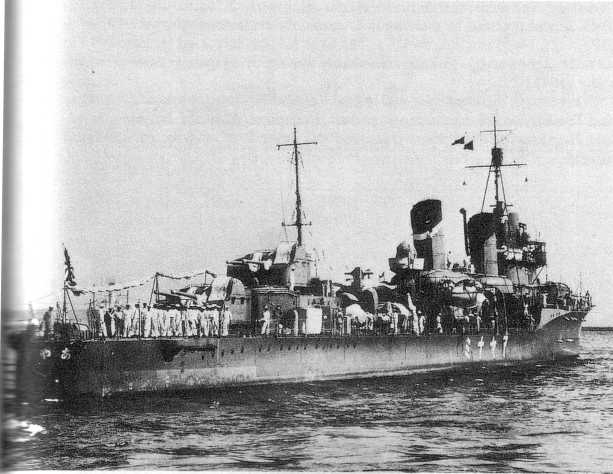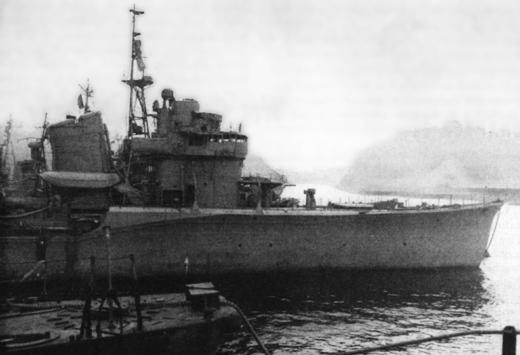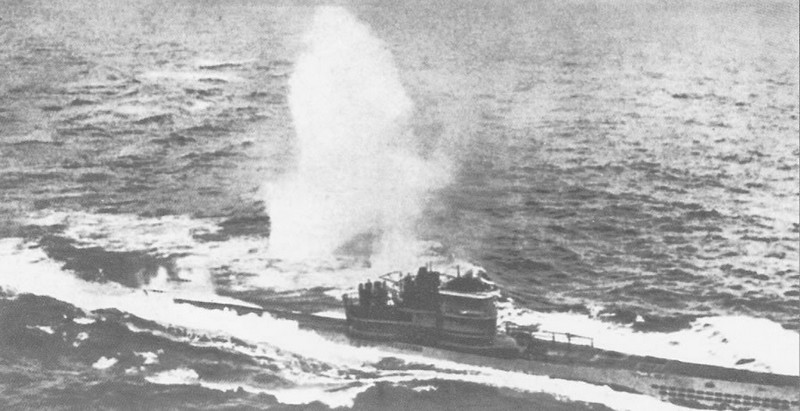
Category Archives: Navy Ships

Hawks at Angels 12: The Sacrifice of VMF 221 and VSMB 241 at Midway

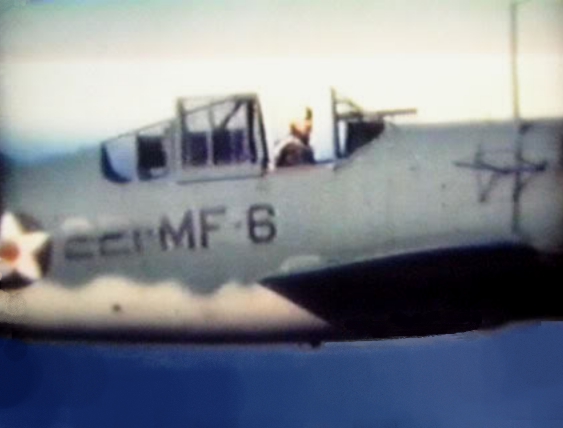
One of the more overlooked aspects of the Battle of Midway is the sacrifice of Marine Fighter Squadron 221 on the morning of June 4th 1942.   The Marine aviators flying a mix of 21 obsolescent Brewster F2A-3 Buffalos and 7 Grumman F4F-3 Wildcats engaged a vastly superior force of Japanese Navy aircraft as they vectored toward the atoll to begin softening it up for the planned invasion.

Led by Major Floyd Parks the squadron had arrived at Midway on Christmas day 1941 being delivered by the USS Saratoga after the aborted attempt to relieve Wake Island.  The squadron along with Marine Scout Bombing Squadron 241 (VMSB 241) formed Marine Air Group 22.  They fighter pilots of VMF-221 scored their first victory shooting down a Japanese Kawanishi H8K2 “Emily” flying boat. The squadron which initially was composed of just 14 aircraft, all F2A-3’s was augmented by 7 more F2A-3s and 7 of the more advanced F4F-3s before the battle.
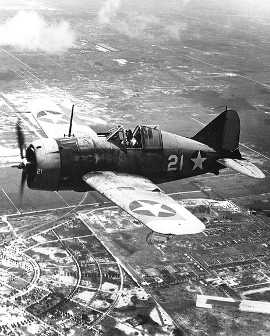
When the Japanese First Carrier Striking Group was spotted in the wee hours of June 4th the Marines and other aircrew aboard Midway scrambled to meet them.  The 18 SBD-2 Dauntless’ and 12 Vought SB2-U3 Vindicator dive bombers of VMSB-241, the 6 TBF Avengers of the Navy Torpedo Eight detachment, 4 Army Air Corps B-26 Marauders and 15 B-17 Flying Fortresses flew out to attack the Japanese carriers while the fighters rose to intercept the 108 aircraft heading toward Midway. The 72 strike aircraft, 36 Aichi 99 Val Dive Bombers and 36 Nakajima B5N Torpedo/ High Level Bombers were protected by 36 AM6-2 Zeros which thoroughly outclassed the Marine opponents in speed, maneuverability and in the combat experience of their pilots.

The Marines audaciously attacked the far superior Japanese force, throwing themselves against the Japanese phalanx with unmatched courage.  Despite their courage the Marine fighters were decimated by the Japanese Zeros.  The Marines shot down 4 Val dive bombers and at least three Zeros but lost 13 Buffalos and 3 Wildcats during the battle.  Of the surviving aircraft only three Buffalos and three Wildcats were in commission at the end of the day. Among the casualties killed was Major Parks.  Of the surviving pilots of VMF-221, two became “Aces” during the war. Lieutenant Charles M. Kunz would later fly in VMF-224, adding six victories to end the war with 8 victories. Capt. Marion E. Carl would later fly in VMF-223 raising his score to 18.5 Japanese aircraft shot down.  Other pilots like 2nd Lieutenant Clayton M. Canfield shot down two additional aircraft while flying with VMF-223. 2nd Lieutenant Walter W. Swansberger won the Medal of Honor at Guadalcanal.
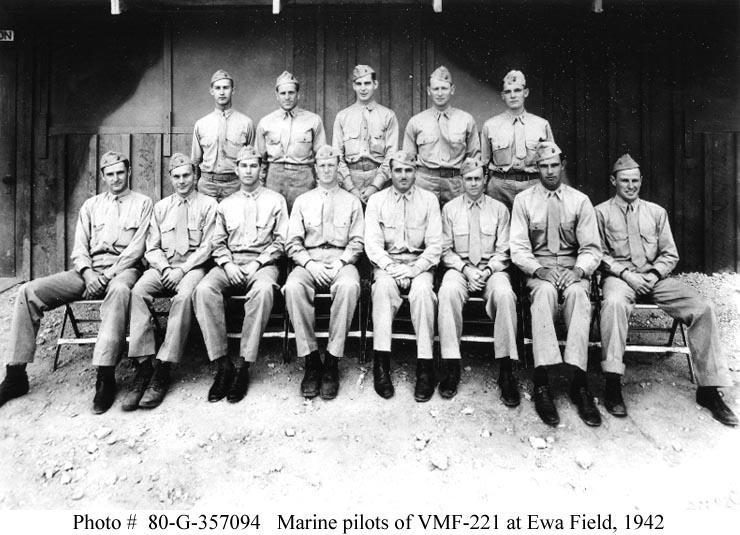
The last remaining Marine fighter pilot of VMF-221 from the battle of Midway, Williams Brooks died in January 2010 and was buried with full military honors, in Bellview , Nebraska.  Brooks in his after action report described his part in the battle:

I was pilot of F2A-3, Bureau number 01523, Our division under Capt. Armistead was on standby duty at he end of the runway on the morning of June 4, 1942, from 0415 until 0615. At about 0600, the alarm sounded and we took off. My division climbed rapidly, and I was having a hard time keeping up. I discovered afterwards that although my wheels indicator and hydraulic pressure indicator both registered “wheels up”, they were in reality about 1/3 of the way down. We sighted the enemy at about 14,000 feet, I would say that there were 40 to 50 planes. At this time Lt. Sandoval was also dropping back. My radio was at this time putting out no volume, so I could not get the message from Zed. At 17,000 feet, Capt. Armistead led the attack followed closely by Capt. Humberd. They went down the left of the Vee , leaving two planes burning. Lt. Sandoval went down the right side of the formation and I followed. One of us got a plane from the right side of the Vee. At this time, I had completely lost sight of my division. As I started to pull up for another run on the bombers, I was attacked by two fighters. Because my wheels being jammed 1/3 way down, I could not out dive these planes, but managed to dodge them and fire a burst or so into them as they went past me and as I headed for the water. As I circled the island, the anti-aircraft fire drove them away. My tabs, instruments and cockpit were shot up to quite an extent at this time and I was intending to come in for a landing. 

It was at this time that I noticed that a important feature in their fighting. I saw two planes dog-fighting over in the east, and decided to go help my friend if at all possible. My plane was working very poorly, and my climb was slow. As I neared the fight both planes turned on me. It was then that I realized I had been tricked in a sham battle put on by two Japs and I failed to recognize this because of the sun in my eyes. Then I say I was out-numbered, I turned and made a fast retreat for the island, collecting a goodly number of bullets on the way. After one of these planes had been shaken, I managed to get a good burst into another as we passed head-on when I turned into him. I don’t believe this ship could have gotten back to his carrier, because he immediately turned away and started north and down. I again decided to land, but as I circled the island I saw two Japs on a Brewster. Three of my guns were jammed, but I cut across the island, firing as I went with one gun. But I could not get there in time to help the American flier and as soon as the Brewster had gone into the water I came in for a landing at approximately 0715 (estimated). 

VMF-221 was composed of the following aircraft and pilots.

FIRST DIVISION (F2A-3)

Plane # Bu.No.  Pilot                                                               Status

MF-1     01518    Maj. Floyd B. Parks USMC                          MIA

MF-2     01548    2nd Lt. Eugene P. Madole USMCR            MIA

MF-3     01525    Capt. John R. Alvord USMC                        MIA

MF-4     01537    2nd Lt. John M. Butler USMCR                   MIA

MF-5     01569    2nd Lt. David W. Pinkerton Jr. USMCR      MIA

MF-6     01552    2nd Lt. Charles S. Hughes USMCR, Did not engage, turned back due to Engine problems


SECOND DIVISION (F2A-3)

Plane # Bu.No.  Pilot                                                                 Status

MF-7     01552    Capt. Daniel J. Hennessey USMC              MIA

MF-8     01541    2nd Lt. Ellwood Q. Lindsay USMCR                 MIA

MF-9     01524    Capt. Herbert T. Merrill USMC                   Bailed out WIA

MF-10   01528    Capt. Herbert T. Merrill USMC            MIA

MF-11   01568    Capt. Phillip R. White USMC                       Survived

MF-12   01542    2nd Lt. John D. Lucas USMCR                      MIA


THIRD DIVISION (F2A-3)

Plane#  Bu.No.  Pilot                                                               Status

MF-13   01562    Capt. Kirk Armistead USMC                      Survived

MF-14   01563    2nd Lt. William B. Sandoval USMCR         MIA

MF-15   01553    Capt. William C. Humberd USMC            Survived

MF-16   01523    2nd Lt. Williams V. Brooks USMCR           WIA

MF-17   01521    2nd Lt. Charles M .Kunz USMCR               WIA

MF-18   01559    2nd Lt. Martin E. Mahannah USMC           KIA (his body washed up later)

23 (F4F-3) 3989  2nd Lt. Walter W. Swansberger USMCR   Survived


FOURTH DIVISION (F2A-3)

Plane # Bu.No.  Pilot                                                                Status

MF-19   01520    Capt. Robert E. Curtin USMC                     MIA

MF-20   01550    2nd Lt. Darrell D. Irwin USMCR                       Survived


FIFTH DIVISION (F4F-3)


Plane # Bu.No.  Pilot                                                                Status

22           4008       Capt. John F. Carey USMC                          WIA

24           4000       Capt. Marion E. Carl USMC                         Survived

25           3997       2Lt. Clayton M. Canfield USMCR                Survived

26           4006       Capt. Francis P. McCarthy USMC               MIA

27           2532       2nd Lt. Roy A. Corry USMC                              Survived

28           1864       2nd Lt.Hyde Phillips USMCR                            Did not engage, mechanical problems

As for VMF-221 it was re-equipped with the F4F-4 and later with the F4U Corsair during the course of two more deployments overseas.  VMF-221 finished the war with a score of 155 victories, 21 damaged and 16 probable kills, the second highest total of any Marine Corps Squadron during the war.

SB2-U2 Vindicator of VMSB 241 at Midway

Their bomber counterparts of VMSB 241 attacked the Japanese task force on the morning of June 4th and scored no hits while losing 8 aircraft. The survivors were again in action later in the day as well as the following day where they helped sink the Japanese Heavy Cruiser Mikuma with their squadron leader Major Henderson diving his mortally wounded aircraft into the cruiser’s number 4 8” gun turret.While the Marines’ actions are not as well known or as successful as those of their Navy counterparts they were brave.  Fighter pilots had to engage some of the most experienced pilots flying superior machines while the bomber crews had little to no experience before being thrown into combat. As we remember the sacrifices made by the men of Midway let us not forget the gallant men of VMF-221 and VSMB-241.

Peace

Padre Steve+
27 Comments

Filed under History, Military, Navy Ships, world war two in the pacific

An Invincible Fleet and a Flawed Plan: The Japanese at Midway

Note: This is the first of a series of articles coming over the next few days about the Battle of Midway, a major turning point of the Second World War.

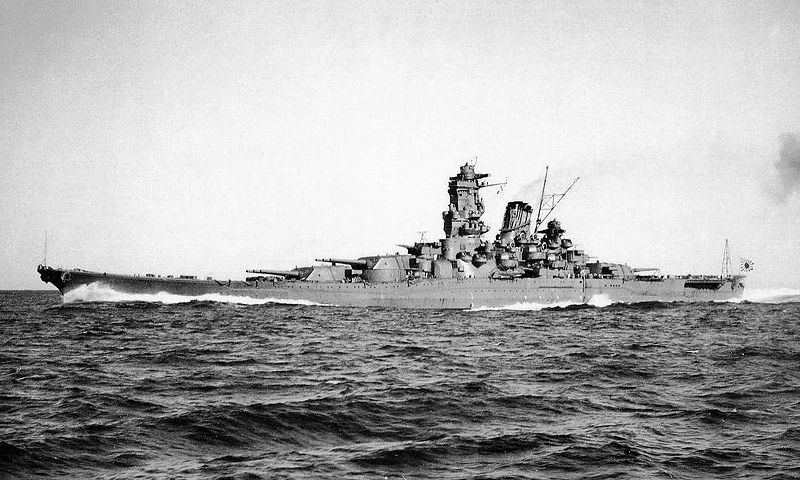
The Battleship Yamato, Flagship of the Combined Fleet and symbol of Japanese Naval Power

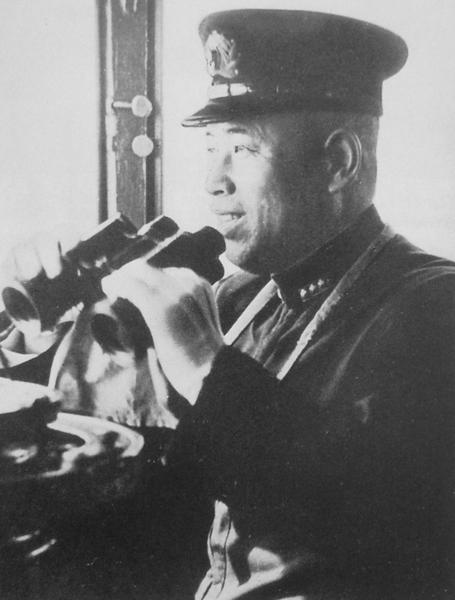
The Imperial Japanese Navy under the command of Admiral Isoruku Yamamoto had been humiliated. On April 18th 1942 16 B-25 bombers under the command of Colonel Jimmy Doolittle were launched from the deck of the USS Hornet and bombed Tokyo.  Though the physical damage was insignificant the psychological impact was massive on the Japanese military establishment. Yamamoto and his deputy Rear Admiral Matome Ugaki had explored the possibility of attacking Midway in the early months of 1942 as the Japanese armed forces competed with each other to determine an overall strategy for the war effort. The Army was insistent on a China strategy while the Navy preferred expansion in the Western, South and Central Pacific.  Yamamoto’s idea envisioned seizing Midway and using it as a forward base from which an invasion of Hawaii could be mounted as well as the bait to draw the carrier task forces of the U.S. Navy into battle and destroy them.

Admiral Isoruku Yamamoto, CinC Combined Fleet

The Japanese certainly had the forces to accomplish the mission outnumbering the U.S. Navy which had taken heavy losses at Pearl Harbor and in the Far East.  Following the Doolittle raid Yamamoto went ahead with the plan to invade Midway. The operation, named MI was coupled with an invasion of the islands of Attu and Kiska in the Aleutians which would form a picket line to prevent future attacks on the Japanese mainland. Fuchida

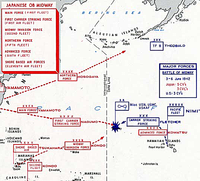
Yamamoto’s plan was not without its critics, the majority of the Staf of the First Air Fleet embarked on the First Carrier Striking Force was not in favor including the leader of the Pearl Harbor attack Commander Mitsuo Fuchida who considered it “grammar school strategy.”   Despite objections from them as well as his Fleet Operations Officer Yamamoto directed that the plan be implemented.  The plan was to have the First Carrier Striking Force attack Midway and reduce its defenses so that the Invasion Force could undertake the task of invading and occupying Midway.  Supporting these forces was the Main Body built around Battleship Division One included Yamamoto’s flagship the 72,000 ton behemoth Yamato.  Another strong force was assigned to the Aleutian operation. The task forces were spread out across the North Pacific and would not able to provide mutual support to each other in a timely manner.

Japanese Forces were organized in the following manner.

Main Body, Admiral Yamamoto

BatDiv 1, Admiral Yamamoto

BB Yamato (flagship, Yamato), Captain

BB Nagato (Nagato), Captain Hideo Yano

BB Mutsu (Nagato), Captain Teijiro Yamazumi

Carrier Group, Captain Kaoru Umetani

CVL Hosho (Hosho), Captain Umetani

Air Unit (8 bombers), Lieutenant Yoshiaki Irikiin

DD Yukaze (Minekaze), Lieutenant Commander Shizuka Kajimoto

Special Force, Captain Kaku Harada

Chiyoda (seaplane carrier, Chitose), Captain Harada

Nisshin (seaplane carrier, Nisshin), Captain Katsumi Komazawa

Screen (DesRon 3), RADM Shintaro Hashimoto

CL Sendai (flagship, Jintsu), Captain Nobue Morishita

DesDiv 11, Captain Kiichiro Shoji

DD Fubuki (Fubuki), Captain Shizuo Yamashita

DD Shirayuki (Fubuki), Captain Taro Sugahara

DD Hatsuyuki (Fubuki), Captain Lieutenant Commander Junnari Kamiura

DD Murakumo (Fubuki), Captain Commander Hideo Higashi

DesDiv 19, Captain Ranji Oe

DD Isonami (Fubuki), Commander Ryokichi Sugama

DD Uranami (Fubuki), Commander Tsutomu Hagio

DD Shikinami (Fubuki), Commander Akifumi Kawahashi

DD Ayanami (Fubuki), Commander Eiji Sakuma

1st Supply Unit, Captain Shigeyasu Nishioka

Naruto (Oiler), Captain Nishioka

Toei Maru (Oiler)

It was Yamamoto’s plan to use this force to polish off U.S. Forces that would only enter the fight after he had taken Midway. Despite the success of his carrier task forces at his heart Yamamoto was still a Battleship Sailor and believed that his battleships would be the deciding factor in the final destruction of the U.S. Navy forces in the Pacific.  This force could be augmented by the Aleutian Guard Force, detached from the Main Body under the command of Vice Admiral Shiru Takasu and was composed of the following fleet units:

GUARD (Aleutians Screening) FORCE, VADM Shiro Takasu in Hyuga

Chief of Staff, Rear Admiral Kengo Kobayashi

BatDiv 2

BB Hyuga (flagship, Hyuga), Captain Chiaki Matsuda

BB Ise (Hyuga), Captain Isamu Takeda

BB Fuso (Fuso), Captain Mitsuo Kinoshita

BB Yamashiro (Fuso), Captain Gunji Kogure

Screen, RADM Fukuji Kishi

CruDiv 9, Rear Admiral Kishi

CL Kitakami ( flagship, Kuma), Captain Saiji Norimitsu

CL Oi (Kuma), Captain Shigeru Narita

DesDiv 20, Captain Yuji Yamada

DD Asagiri (Fubuki), Commander Nisaburo Maekawa

DD Yugiri (Fubuki), Captain Masayoshi Motokura

DD Shirakumo (Fubuki), Commander Toyoji Hitomi

DD Amagiri (Fubuki), Captain Buichi Ashida

DesDiv 24, Captain Yasuji Hirai

DD Umikaze (Shiratsuyu), Commander Nagahide Sugitani

DD Yamakaze (Shiratsuyu), Commander Shuichi Hamanaka

DD Kawakaze (Shiratsuyu), Commander Kazuo Wakabayashi

DD Suzukaze (Shiratsuyu), Commander Kazuo Shibayama

DesDiv 27, Captain Matake Yoshimura

DD Ariake (Hatsuharu), Commander Shoichi Yoshida

DD Yugure (Hatsuharu), Commander Kiyoshi Kamo

DD Shigure (Shiratsuyu), Commander Noboru Seo

DD Shiratsuyu (Shiratsuyu), Lieutenant Commander Kimmatsu Hashimoto

2nd Supply Unit, Captain Matsuo Eguchi

San Clemente Maru (oiler), Captain Eguchi

Toa Maru (oiler)

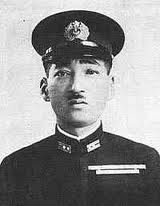
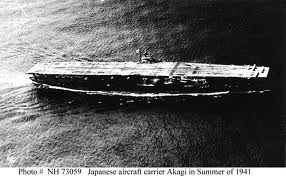
The force that was the true heart of the Japanese Navy in early 1942 was the First Carrier Striking Force which at Pearl Harbor and in the months following had run roughshod over all Allied opposition.  Initially composed of 6 flattops the force was reduced to four when the Shokaku was heavily damaged and Zuikaku’s air group decimated at the Battle of the Coral Sea on 8 May 1942.  Nevertheless it was still a formidable and experienced force in its own right.  Commanded by Vice Admiral Chuichi Nagumo it was composed of the following units:

FIRST CARRIER STRIKING FORCE (1st Air Fleet), VADM Chuichi Nagumo

Carrier Group, VADM Nagumo

CarDiv 1

CV Akagi  (flagship, Akagi) 21 Zero fighters, 21 dive bombers, 21 torpedo bombers

CV Kaga (Kaga) 21 Zero fighters, 21 dive bombers, 30 torpedo bombers

CarDiv 2 — RADM Tamon Yamaguchi

CV Hiryu (flagship, Hiryu) 21 Zero fighters, 21 dive bombers, 21 torpedo bombers

CV Soryu (Hiryu) 21 Zero fighters, 21 dive bombers, 21 torpedo bombers

Support Group — RADM Hiroaki Abe CruDiv 8

CA Tone (flagship, Tone)

CA Chikuma (Tone)

2nd Section, BatDiv 3 —

BB Haruna (Kongo)

BB Kirishima (Kongo)

Screen (DesRon 10) — RADM Susumu Kimura

CL Nagara (flagship, Nagara)

DesDiv 4 — 4 DDs

DesDiv 10 — 3 DDs

DesDiv 17 — 4 DDs

Supply Group — 5 oilers, 1 DD

The Invasion Force under the command of Vice Admiral Nobutake Kondo was a formidable surface strike group in its own right and was built around 2 Fast Battleships, 9 Heavy Cruisers and a light carrier.

MIDWAY INVASION FORCE, (2nd Fleet), VADM Nobutake Kondo

Invasion Force Main Body

CruDiv 4 (less 2nd section)

CA Atago (flagship, Takao),

CA Chokai (Takao)

CruDiv 5 (less 2nd section)

CA Myoko (Myoko)

CA Haguro (Myoko)

BatDiv 3 (less 2nd section) —

BB Kongo (Kongo)

BB Hiei (Kongo)

Screen (DesRon 4) — RADM Shoji Nishimura

CL Yura (flagship, Nagara)

DesDiv 2 — 4 DDs

DesDiv 9 — 3 DDs

Carrier Group Zuiho (CVL) — 12 Zero fighters, 12 torpedo bombers; 1 DD

Supply Group — 4 oilers, 1 repair ship

Close Support Group — VADM Takeo Kurita

CruDiv 7

CA Kumano (flagship, Mogami)

CA Suzuya (Mogami)

CA Mikuma (Mogami)

CA Mogami (Mogami)

DesDiv 8 — 2 DDs 1 oiler

Transport Group — RADM Raizo Tanaka

12 transports carrying troops

3 patrol boats carrying troops

1 oiler

Escort (DesRon 2) — RADM Tanaka

CL Jintsu (flagship, Jintsu)

DesDiv 15 — 2 DDs

DesDiv 16 — 4 DDs

DesDiv 18 — 4 DDs

Seaplane Tender Group — RADM Riutaro Fujita

Seaplane Tender Div 11

Chitose (CVS) — 16 fighter seaplanes, 4 scout planes

Kamikawa Maru (AV) — 8 fighter seaplanes, 4 scout planes

1 DD;

1 patrol boat carrying troops

Minesweeper Group

4 minesweepers

3 submarine chasers

1 supply ship

2 cargo ships

The Northern Force which was assigned to the invasion and occupation of Attu and Kiska was commanded by Vice Admiral Moshiru Hosogaya included the carriers Ryujo and Junyo which had they accompanied the First Carrier Striking Force might have given the Japanese the edge that they would have needed to recover when that force was destroyed on June 4th.  This force was composed of the following units:

NORTHERN (Aleutians) FORCE (5th Fleet) — VADM Moshiro Hosogaya

Northern Force Main Body

CA Nachi (flagship, Myoko)

Screen —

2 DDs

Supply Group —

2 oilers, 3 cargo ships

Second Carrier Striking Force — RADM Kakuji Kakuta

Carrier Group (CarDiv 4)

CVL Ryujo (flagship, Ryujo) — 16 Zero fighters, 21 torpedo bombers

CV Junyo (Junyo) — 24 Zero fighters, 21 torpedo bombers

Support Group (2nd section, CruDiv 4) —

CA Maya (Takao)

CA Takao (Takao)

Screen (DesDiv 7) —

3 DDs

1 oiler

Attu Invasion Force — RADM Sentaro Omori

CL Abukuma (flagship, Nagara)

DesDiv 21 —

4 DDs

1 minelayer

1 transport carrying troops

Kiska Invasion Force — Capt. Takeji Ono

CruDiv 21 —

CL Kiso

CL Tama 

AMC Asaka Maru (auxiliary cruiser)

Screen (DesDiv 6) —

3 DDs

2 transports carrying troops

Minesweeper Div. 13 —

3 minesweepers

Submarine Detachment — RADM Shigeaki Yamazaki

SubRon 1 — I-9 (flagship)

SubDiv 2 — 3 submarines

SubDiv 4 — 2 submarines

Note all Japanese Fleet information obtained online at http://www.microworks.net/pacific/orders_of_battle/midway_japan.htm

These forces were augmented by a submarine screening force and land based naval air forces stationed at Wake and Kwajalein.

The plan was complicated and depended on the Americans reacting exactly as the plan anticipated them doing.  Yamamoto never expected that the Americans would be waiting for his forces and had knowledge of his plans due to the efforts of U.S. Navy code breakers under the direction of Commander Joseph Rochefort and the Fleet Intelligence Officer Captain Edwin Layton had broken the top secret Japanese Navy JN-25 Code.  Thus despite the massive amount of forces involved the plan was seriously flawed and left the advanced forces vulnerable to unexpected American moves.

Next: Calculated Risk: The American Forces and Strategy at Midway

6 Comments

Filed under History, Navy Ships, US Navy, world war two in the pacific

The Naming of a New Aircraft Carrier and the Centrality of the Navy in Future National Security Strategy

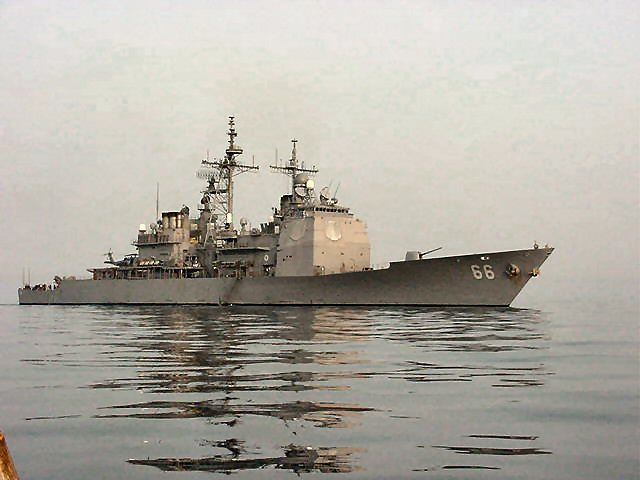
USS HUE CITY CG-66 Enforcing the UN Oil Embargo against Iraq in April 2002

“Control of the seas means security. Control of the seas means peace. Control of the seas can mean victory. The United States must control the sea if it is to protect our security.” —John F. Kennedy

“For in this modern world, the instruments of warfare are not solely for waging war. Far more importantly, they are the means for controlling peace. Naval officers must therefore understand not only how to fight a war, but how to use the tremendous power which they operate to sustain a world of liberty and justice, without unleashing the powerful instruments of destruction and chaos that they have at their command.” Admiral Arleigh Burke

Over the Memorial Day weekend Secretary of the Navy Ray Mabus announced the naming of the second ship in the Gerald R. Ford class aircraft carrier.  The name selected was significant as the ship will be named the USS John F. Kennedy CVN-79, her namesake being President John F. Kennedy who served as a junior officer in the Second World War commanding a Patrol Torpedo Boat, PT-109 in the Solomon Islands. Kennedy’s boat was rammed and split in two by the Japanese Fubuki class destroyer Amagiri in the early hours of August 2nd 1943.  Over a period of six days he made herculean efforts to save his crew and was awarded the Navy Marine Corps Medal and the Purple Heart.

The United States has always been a seafaring nation and today the vast majority of our commerce is borne by ships from the world over. The United States learned during the Revolution and the War of 1812 the importance of sea power when the Royal Navy for all intents and purposes rules the waves. Even the land victory of Washington at Yorktown was sealed by the intervention of the French Fleet which prevented the British from evacuating the garrison.  During the Civil War the Union Navy was the deciding factor as it blockaded Southern ports and forced the Mississippi River cutting the Confederacy in two and sealing its fate even as Confederate armies battled Union forces in the bloodiest battles ever seen on this continent. The Navy was the deciding factor in the Spanish American War sweeping the Spanish Navy from the seas and dooming its garrisons around the world.  The U.S. Navy began the First World War late but by the end was the ascendant naval power in the world and was one of the major reasons that the British in spite of the superiority that they had at the time agreed to the Washington and later London Naval accords.  When the Second World War erupted the United States was in the beginning stages of a Naval build up to reinforce and replace the fleet that was still dominated by the ships built prior to the Naval treaties.   In the Pacific the Japanese Navy steamrolled its scattered and ill equipped opposition while in the Atlantic German U-Boats decimated convoys very nearly breaking the back of Great Britain and the Soviet Union. However it was the Navy initially stretched to its limits by the Two Ocean War which regained the initiative which in an unprecedented build up of Naval Power defeated its adversaries and safeguarded the vast convoys of merchant ships carrying American troops and equipment into battle and bringing American Lend Lease aid to reach Britain and the Soviet Union. During the Cold War, Korea and Vietnam the Navy was a flexible and mobile response force to crises around the globe military, diplomatic and humanitarian, often diffusing situations without a shot having to be fired in anger and eliminating the need for large numbers of ground forces. In the 1980s the Navy secured the Gulf of Sirte against the threats of Libya’s Colonel Gaddafi and kept the Persian Gulf open during the Tanker Wars initiated by Iran on merchant ships transiting the Gulf. American naval power was again on display during the Gulf War and subsequent United Nations sanctions on Iraq.  After 9-11 the Navy has been a response force around the globe in the War on Terrorism as well as numerous natural disasters and humanitarian crises. When a crisis develops which might require a military response the first questions on the mind of every Presidential administration has been where is the nearest Carrier Strike Group and Marine Expeditionary unit.  Today the Navy supports military operations in Afghanistan, Iraq, and the Horn of Africa and against piracy.

The vast majority of the world’s populations now live on the littorals, or the land areas adjacent to the ocean.  The bulk of world commerce is maritime commerce; the United States depends on secure sea lanes to support our economy.

While sea power is essential to American national power, diplomatic, economic and military large standing armies are not. Yes our land forces must be strong and in quality the best in the world. At the same time whenever we have committed large numbers of land forces to ill defined campaigns we have squandered national power and prestige in wars that have been at best stalemates and at worst strategic defeats. This of course excemts the two World Wars where those large land forces were engaged they had a specific mission that was directly tied to national strategy.

We have come to a place in our national life where our strategic thinking still largely influenced by the World Wars and the Cold War has to be modified.  The major land wars launched by the Bush administration in Iraq and Afghanistan have proven incredibly costly in terms of manpower and economics and it is clear that the Obama administration and bipartisan Congress will seek to disengage sooner rather than later from those wars.  One knows that once those wars are over that land forces will shrink as plans are already on the table with cuts already beginning in some services.

Of course one has to ask what the military should be composed of in light of a coherent national security strategy that takes into account the full spectrum of threats to our nation many of which are not military in a traditional sense. To sustain large numbers of land forces on foreign territory is expensive and often fraught with peril when there are changes in the leadership of allied nations on which we depend for the basing of such forces. Even forward deployed Air Force assets are subject to these constraints.  Such basing was necessitated by the Soviet threat during the Cold War.  All previous overseas conflicts were viewed by American leaders as expeditionary in nature, land forces would go in with a specific goal for a limited time. If forces were left in place they were generally small and of a constabulary nature.

Only the Navy-Marine Corps team provides the flexibility to provide a rapid military or humanitarian response to overseas contingencies.  Critics call it “gunboat diplomacy” but then we have found what we are doing is not sustainable and we need an alternative.  That alternative is the Sea Services, which also include the Coast Guard and Merchant Marine.  The Bush administration reduced the Navy in terms of ships and personnel in order to support land wars of questionable strategic value, even turning thousands of Sailors into soldiers to support Army missions in Iraq and Afghanistan without reducing and even expanding the requirements of Naval forces.  This was a mistake of unmitigated proportions, no strategic goal that we have accomplished in either Iraq or Afghanistan could not have been accomplished by the Navy and Marine Corps and contingents of Special Forces, military and civilian advisors and the CIA.

Theodore Roosevelt had a saying, “speak softly and carry a big stick.” He was not an isolationist by any means; he advocated engagement with the world but also protections, military, economic and ecological for Americans.   A strong Navy was central to his thinking as were good relations with other nations.  He understood the importance of the Navy in supporting American interests. In his annual address to Congress on December 6th 1904 he stated:

“In treating of our foreign policy and of the attitude that this great Nation should assume in the world at large, it is absolutely necessary to consider the Army and the Navy, and the Congress, through which the thought of the Nation finds its expression, should keep ever vividly in mind the fundamental fact that it is impossible to treat our foreign policy, whether this policy takes shape in the effort to secure justice for others or justice for ourselves, save as conditioned upon the attitude we are willing to take toward our Army, and especially toward our Navy. It is not merely unwise, it is contemptible, for a nation, as for an individual, to use high-sounding language to proclaim its purposes, or to take positions which are ridiculous if unsupported by potential force, and then to refuse to provide this force. If there is no intention of providing and keeping the force necessary to back up a strong attitude, then it is far better not to assume such an attitude.”

Roosevelt understood better than most of his peers around the world of the necessity of worldwide engagement and the protection of American interests.  As interdependent as the United States and our allies are on international cooperation in anti-terrorism, humanitarian response and the free flow of commerce the Sea Services have to be the primary means of response.  Land forces are important but it is clear that they will need to be reorganized and rebuilt after the long and arduous conflicts that they have shouldered and ultimately they are dependent on the Navy for the bulk of their support when deployed overseas.

Any new national security strategy must prioritize our nation’s goals with diplomatic, intelligence, military and economic assets. We must leverage power and not squander it.  Naval forces are among the most flexible and economic means of exercising the military aspects of such strategy and are not hostage to unstable governments as are forward deployed land forces.   Naval power leverages national power in ways that forward deployed land forces cannot and are far more connected to goodwill than are ground forces which are seen by many around the world as occupying forces.

British Maritime strategist Julian Corbett in his book Some Principles of Maritime Strategyprovides a clear understanding of how sea power is best suited to the principle of a true national strategy for a maritime nation which emphasized limited and asymmetrical warfare.  Such strategy sustained the British Empire until it allowed itself to become mired in the trenches of Flanders and the shores of Gallipoli during the First World War killing off the flower of the nation’s youth and nearly bankrupting the nation and alienating much of the empire.

Corbett maintained that naval forces were best suited to controlling lines of communications, focus on the enemy, and maneuver for tactical advantage.  He also believed that naval forces best suited the political, economic and financial dimensions of waging war as well as war’s technological and material aspects.  One key aspect of this was the Corbett believed that continental war where large land armies are deployed inherently act against opponents limiting their political aims and increase the chance of total war with all of its destructive effects.  Corbett understood, as Clausewitz did before him the primacy of politics in war and necessity to devise appropriate strategies to protect the national interests while emphasizing efficiency in battle while preserving costly assets.

Ultimately the United States is a maritime power. When we try to become a continental power by engaging in protected land wars overseas we lose our strategic and economic advantage.  One can argue that we would not be in Iraq or Afghanistan today had it not been for the deployment of land and air forces on the Arabian Peninsula following the Gulf War.

The new USS John F. Kennedy when completed will be one of the key platforms of American power projection in the middle part of this century and it is important that we strengthen and modernize the Navy so that it might meet the tasks required of it by our nation and our friends around the world.  It is imperative that we as a nation remember our heritage and return to it as we develop a strategy that is at last freed from the World War and Cold War model.  The time for that is now.

Peace

Padre Steve+

2 Comments

Filed under History, Military, national security, Navy Ships, US Navy

The Death of the Mighty Hood: The Battle of the Denmark Strait 24 May 1941

HMS Hood arrives in Malta

Seventy years ago today the “Mighty Hood” was sunk by the German Battleship Bismarck. This essay is in honor of that gallant ship and crew.  May we never forget the sacrifice of these men and all others who have gone down to the sea in ships.

There are some warships and naval engagements which assume legendary proportions.  The Battle of the Denmark Strait on 24 May 1941 between the two largest battleships in commission at the time, the pride of the British Royal Navy the HMS Hood and the German behemoth Bismarck is legendary as are those two mighty ships.  The battle came at a critical time as the Britain stood alone against the seemingly invincible German Blitzkrieg.  Britain had been driven from Western Europe and was being bombed regularly by Herman Goering’s Luftwaffe while a British expeditionary force that had been sent to Greece had been defeated and the Germans were assaulting Crete with airborne forces.  In the Western Desert the Afrika Korps under Field Marshall Erwin Rommel had driven off a British counter-offensive on the Libyan-Egyptian frontier and were laying siege to Tobruk and in the Atlantic German U-Boats sank 66 Allied Merchant Ships of over 375,000 tons and the Royal Navy would lose 25 warships not including the Hood.

The “Mighty Hood” at San Francisco in the 1920s

The Hood was the pride of the Royal Navy and was world famous due to her inter-war international presence and goodwill visits.  Displacing 47,430 tons full load she was armed with eight 15” guns in four twin turrets.  Designed as a battle cruiser she was less heavily armored than contemporary battleships and had very weak vertical protection from plunging shellfire.  This was a fault which was known but never rectified between the wars and when the war came the Royal Navy could ill-afford to take her out of service for the necessary improvements to her protection system.  She was fast with a designed speed of 31 knots which been reduced to 28 knots by 1939 as a result of modifications which increased her displacement.   This was further reduced by the wear and tear on her propulsion plant to 26.5 knots by 1940.

Hood in September 1924

Hood was designed before the battle of Jutland (May 1916) where the weaknesses in the armor protection of British Battlecruisers was exposed as three, the HMS Invincible, HMS Queen Mary and HMS Indefatigable were destroyed by plunging fire which exploded their magazines.  Though her design was modified during construction she still was vulnerable to plunging fire. She was scheduled for a major refit which would have included significant improvement in armor protection in 1941 but the war prevented the Hood from receiving anything more than improvements to her anti-aircraft batteries.

The Killer the German Battleship Bismarck

During the war Hood was engaged in patrol and search operations against German raiders in the North Atlantic and in June 1940 joined Force “H” in the Mediterranean.  As Flagship of Force “H” she took part in the sinking of French Fleet Units including the Battleship Bretagne at Mers-El-Kebir on 3 July 1940 following the French surrender to the Germans and remained in operation searching for the German Pocket Battleship Admiral Scheer and Heavy Cruiser Admiral Hipper until she withdrawn for a brief refit in January 1941. Following a brief refit in mid-March Hood was underway from mid-March searching for the German raiders Scharnhorst and Gneisenau and a false report of Bismarck breaking out into the Atlantic in April 1941. She returned to Scapa Flow on 6 May 1941.

Bismarck Firing at Hood

When the British discovered that Bismarck had entered the Atlantic Hood as the flagship of Vice Admiral Lancelot Holland was dispatched with the newly commissioned battleship HMS Prince of Wales to join the Heavy Cruisers HMS Suffolk and HMS Norfolk at the entrance to the Denmark Strait.  When the cruisers discovered Bismarck along with her consort the Heavy Cruiser Prinz Eugen the two British Battleships steamed into naval history.

The last photo of Hood taken from HMS Prince of Wales

Bismarck was slightly larger than Hood and mounted the same main armament but that was about all the two ships had in common. If the battle was a battle between heavyweight prize fighters Hood was the valiant but crippled champion and Bismarck the young and overpowering challenger.  Bismarck was slightly faster than the limping Hood and was one of the most well protected ships ever built.  Her gunnery officers and the men that manned those deadly 15” guns were like previous generations of German sailors’ gunnery experts working some of the finest naval guns ever made.

Hood Blows up, picture taken from Prinz Eugen

The German ships shadowed at a distance by the Norfolk and Suffolk German task force under the command of Admiral Gunther Lütjens emerged from the strait and was sighted by the British at 0537.  Knowing his ship’s weakness in regard to plunging fire Admiral Holland desired to steer a direct course at the German ships in order to close the range quickly. Events dictated otherwise and the British were forced to close the range much more slowly and exposing Hood and Prince of Wales to German plunging fire for a longer period of time.  Holland turned to close faster with the result that his gunnery was degraded by wind and spray coming over the bows of his ships and the inability to fire his after turrets.

At 0553 Holland ordered his ships to open fire without the benefit of Suffolk and Norfolk being in position to engage the Prinz EugenHood initially concentrated her fire on Prinz Eugen assuming her to be the Bismarck while Prince of Wales engaged Bismarck.  Prince of Wales drew first blood striking Bismarck three times. One which damaged her seaplane catapult, a second which did minor damage to machinery spaces and a third which passed through the bow near the waterline which severed fuel lines from her forward fuel tanks.

The Heavy Cruiser Prinz Eugen. Mistaken for Bismarck bu Hood she scored the first hits on Hood

Both German ships opened fire at 0555 concentrating on Hood.  Prinz Eugen immediately hit Hood with at least one 8” shell which set a large fire among the ready to use 4”ammunition stored in lockers near the mainmast. The hit started a large fire which Hood’s damage control teams raced to contain.  At 0600 Holland ordered his ships to turn to port in order to bring his rear turrets into the fight. As the squadron executed the turn Hood was straddled by a salvo from Bismarck and observers on Prince of Wales observed an explosion between “X” turret and the mainmast which consumed the Hood causing her bow to jut sharply out of the water before sinking beneath the waves in under 3 minutes time. Witnesses on both sides of the engagement were stunned by the sudden and violent end of the Hood and the Germans rapidly shifted fire to the Prince of Wales knocking her out of the action.  Against the advice of Bismarck’s Captain Ernst Lindemann, Lütjens did not follow up his advantage to sink the crippled British ship.

Petty Officer Ted Briggs

Only three crewmen Petty Officer Ted Briggs, Seaman Bob Tilburn and Midshipman Bill Dundas survived the sinking of Hood out of a total of 1415 souls embarked. They were rescued 4 hours later nearly dead of hypothermia staying awake by sinking “Roll out the Barrel” by the destroyer HMS Electra.  Briggs who died in 2008 recounted the sinking:

“Then she started listing to starboard. She righted herself, and started going over to port. When she had gone over by about 40 degrees we realised she was not coming back…” Briggs was sucked under the water “I had heard it was nice to drown. I stopped trying to swim upwards. The water was a peaceful cradle – I was ready to meet my God. My blissful acceptance of death ended in a sudden surge beneath me, which shot me to the surface like a decanted cork in a champagne bottle. I turned, and 50 yards away I could see the bows of the Hood vertical in the sea. It was the most frightening aspect of my ordeal, and a vision which was to recur terrifyingly in nightmares for the next 40 years.” (The Daily Telegraph 5 October 2008)

Seaman Tilburn


Artist rendition of Hood’s destruction

The Admiralty reported her loss later in the day saying Hood “received an unlucky hit in a magazine and blew up.  The official report of the sinking released later in the year said:

“That the sinking of Hood was due to a hit from Bismarck’s 15-inch shell in or adjacent to Hood’s 4-inch or 15-inch magazines, causing them all to explode and wreck the after part of the ship. The probability is that the 4-inch magazines exploded first.”

The commission’s findings have been challenged by a number of naval historians and there are several theories of how the magazines might have exploded but all point to a massive magazine explosion but probably not due to a plunging round but from another hit which detonated the unprotected 4” magazines or a hit from Bismarck below Hood’s waterline which stuck a magazine.  Hood’s wreckage was located in 2001 lying across two debris fields and the examination revealed that the after magazines had exploded.  The site is designated as a War Grave by Britain and protected site under the Protection of Military Remains Act of 1986.

Revenge: Bismarck being pounded into a wreck by British Battleships

Bismarck did not long survive her victory being crippled by a lucky aerial torpedo hit from a Fairley Swordfish bomber flying from the HMS Ark Royal on 26 May and being scuttled by her crew after absorbing massive damage from the HMS King George V, HMS Rodney and several cruisers including HMS Dorsetshire the plucky HMS Norfolk and several destroyers. When she went down she took with her all but 115 souls of her crew of over 2200 which included the Fleet Staff of Admiral Lütjens.

HMS Prince of Wales

Prince of Wales would take Winston Churchill to Argentia Bay Newfoundland to meet with Franklin Roosevelt from 9-12 August 1941 where the Atlantic Charter was drafted. She reported to the Far East where she was sunk along with the Battlecruiser HMS Repulse on 9 December 1941 by a force of land based Japanese aircraft.  The Prinz Eugen was the only heavy ship of the German Navy to survive the war and was taken by the US Navy at the end of the war. She was expended as a target during the Able and Baker nuclear tests at Bikini Atoll.  Too radioactive to be repaired she was towed to Kwajalein Atoll where she capsized and sank on 22 December 1946. Her wreck is still visible.

Midshipman William Dundas, one of three surivors

The loss of the Hood traumatized the people of Britain and the Royal Navy; she had been the symbol of British Naval power for over 20 years and people around the world were likewise stunned at her demise. The sinking of the Hood and her crew was a tragedy which all sailors assigned to large and prestigious ships and the nations that they sail for need to keep in mind. No matter how mighty the ships all have an Achilles heel and none are unsinkable.  Of the over 3600 officers and crew of the Hood and the Bismarck only 118 survived.  I will remember the Hood, her gallant crew especially my very distant relative Midshipman Bill Dundas who I never met.  He left the Royal Navy about 1960 and was killed in a car wreck in 1965.  According to the Hood Association website he was troubled by the sinking for the rest of his life.  One can understand.

Peace

Padre Steve+

10 Comments

Filed under History, Military, Navy Ships, world war two in europe

Harbingers of the Future: The German Type XXI Electroboote U-Boats

Throughout history there have been ships that have changed the course of Naval strategy and made previous types of ships obsolete overnight, the USS Monitor, the HMS Dreadnought and USS Nautilus are three, but add to the list the German Type XXI U-Boats which forever changed the way that submarines were built around the world.

The Type XXI was designed in 1943 in order to regain the initiative and thereby reassert German naval power in the Atlantic in order to turn the tide against the Allies.  By 1943 the Allies had turned the tide against the Germans as the Type VII and Type IX U-Boats took heavy losses against naval units and convoys which now had air support at every stage of their trek across the North Atlantic. These boats had to surface for prolonged periods in order to recharge their batteries and had limited range, speed and endurance when submerged. The advent of the Escort Carrier, long range patrol bombers and hunter killer groups of Destroyers and the new Destroyer Escorts took a great toll on the U-Boat Force.

U-3008 in U.S. Navy Service

In order to meet the challenge the Germans opted for new technology based on the high speed hydrogen powered Walter turbines for underwater operations.  Since these turbines which could produce a high underwater speed had a short endurance the designers modified the design to use conventional diesels but equip the boats with batteries that had three times the capacity of previous boats. The boats were a radical change from all previous submarine designs which were basically surface ships with the ability to operate underwater for limited periods of time. The Type XXIs were really the first true submarines. They could operate at underwater speeds that were faster than many of their opponents, had a streamlined design which facilitated higher submerged speed of 18 knots and silent running making them very difficult to track.  They could remain underwater for 11 days while only needing 5 hours to recharge their batteries when using the schnorkel device.

The Wilhelm Bauer the former U-2540 in 1960

The Type XXI had a full streamlined hull and conning tower and even equipment which were externally mounted such as the radio antennae, hydrophones, DF Ring and forward planes were fully retractable. They had no deck guns and their twin 20mm flak guns mounted in a streamlined housing on the conning tower. The German designers eliminated the traditional open bridge in favor of three small openings for the watch officer and 2 lookouts. They had a superior silent running ability and at 15 knots were quieter than the US Navy Balao Class doing 8 knots.  They had a 1 inch thick steel aluminum alloy pressure hull with a designed crush depth of 280 meters (919 feet), a greater designed crush depth than any previous submarine.

They incorporated other innovations which would be incorporated into the post-war submarines of the victorious Allied powers. Among these innovations were semi-automatic hydraulic torpedo reload system which allowed three 6 torpedo salvos to be fired in less than 20 minutes where prior U-Boats had manual reloads and took over 10 minutes to reload a single torpedo. To make the fullest use of this capability the German equipped the boats with an advanced passive and active sonar system called the called Gruppenhorchgerät and Unterwasser-Ortungsgerät NIBELUNG mounted in the bow. The improved passive system enabled the boats to close to where they could emit short active sonar bursts to fix the target location. They could fire from a depth of 160 feet. The torpedoes themselves were an advanced design called the LUT or Lageunabhängiger Torpedo. The LUT was a guided torpedo that could be fired from the U-Boat regardless of the target’s bearing as it was programmed to steer an interception course programmed by the torpedo computer.

Submarines influenced by the Type XXI

USS Gudgeon a Tang Class submarine

Polish Submarine ORP Orzel a WHISKEY Type Submarine

USS Nautilus on trials

The Type XXI boats were unique in production as they had no prototype and went directly in production. They were assembled from prefabricated sections built from factories around Germany and transported to the major shipbuilding yards. This was efficient but caused problems that slowed final assembly as many of the factories had no experience building U-Boats and quality suffered because the exacting specifications required by the Kriegsmarine.  Likewise Allied air strikes on German factories and rail networks hampered production. Yet even in spite of these difficulties 119 Boats were completed although only four were rated as combat ready and only two were fully operational at war’s end. Of these only one embarked on a war patrol.  Most were destroyed in air attacks while in port or scuttled by the Germans to prevent their capture.  Eight Type XXIs were taken over by Allied navies at the end of the war where they were used to evaluate technology for use in future submarines. The U.S. Navy Tang Class boats were heavily influenced by the Type XXI as were the GUPPY upgrades to Balao and Tench class boats.  The first nuclear submarines of the U.S. Navy, the Nautilus, Seawolf and the Skate Classes all incorporated design features of the Type XXIs. The Soviet Union developed its 613 and 614 project submarines which became the type known by NATO as the WHISKEY class from the Type XXIs that they received following Germany’s surrender. In 1957 the Federal Republic of Germany raised the scuttled U-2540 and commissioned her as the research submarine Wilhelm Bauer. That boat was operated by both the Bundesmarine and civilian crews until her decommissioning in 1982. She is now a museum ship open to the public in Bremerhaven.

The Type XXIs were the first true submarines and influenced every submarine constructed since. Though introduced too late in the war to make a difference they were truly a wonder-weapon.

Peace

Padre Steve+


1 Comment

Filed under History, Military, Navy Ships, world war two in europe

The Iranian Navy in the Mediterranean: Looking for War in all the Right Places

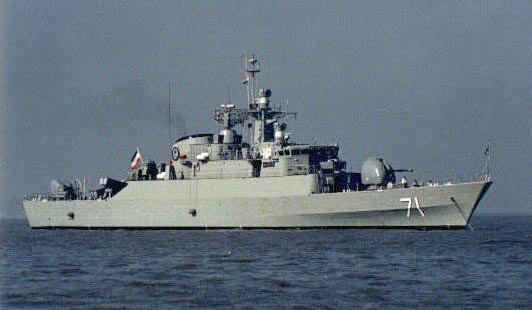
Iranian Frigate Alvand

For the first time since the Iranian Revolution Iranian warships have permission to transit the Suez Canal, an international waterway.  The Frigate Alvand and the supply ship Kharq passed inspection to ensure that no contraband or illegal weapons were aboard and should pass through the canal in the coming days. The Iranians clam that the ships will sail to Syria where they will operate from in the coming months.

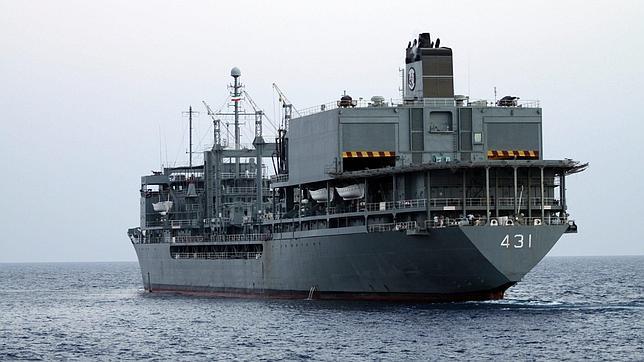
Iranian Supply Ship Kharq

To me the move by Iran appears to be an attempt to provoke Israel into a war. Israel views the move with suspicion and calls it provocative. In that they are right. It is suspicious that the Iranians would send ships to the Mediterranean and one wonders what they are up to. Based in Syria the ships can support pro-Iranian Hezbollah forces in Lebanon and show the Iranian flag in countries that are slipping into the throws of revolution.  As such the two ships are a provocative presence that Israel has a right to be concerned about. At the same time the ships themselves pose no threat to Israel in any way shape or form.

The Frigate Alvand is a Vosper Mark V Frigate commissioned in 1971. It is small (1,540 tons full load) and fast but old and not heavily armed. Alvand and its two sister ships are armed with 4 C-802 Anti-Ship cruise missiles and a 4.5” gun was well as various light anti-aircraft weapons and anti-submarine torpedoes. The electronics suite on Alvand class is not state of the art by any sense and they are of limited combat value despite Iranian claims otherwise.

The 40 year old  Alvand is accompanied by the Supply Ship Kharq which is a 1960s British design which the Iranians commissioned in 1980. It has a light armament and is of negligible combat value. The two ships paid a recent port call at Jeddah Saudi Arabia while conducting operations in the Red Sea.

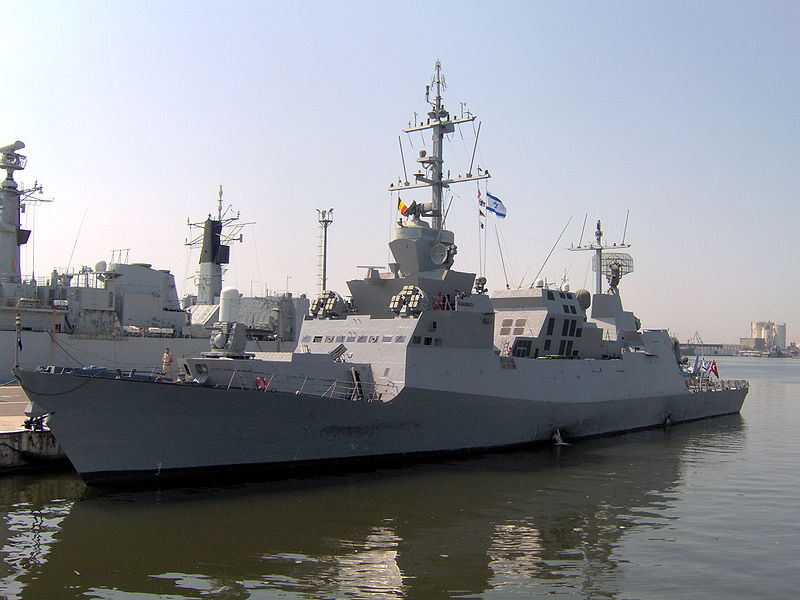
Israeli Navy Corvette Eilat a very modern and deadly SAAR V Class ship

Both the Alvand and the Kharq are totally outclassed by the Israeli Eilat Class (Saar V) Corvettes and have no defense to speak of against Israeli surface units, submarines or air forces.  They are of propaganda value only and if as some suggest they would attempt to escort convoys into Gaza they would probably be sunk by the Israelis before they could get off a shot. The danger of course is that the Iranians are purposely sending the ships to the Mediterranean to provoke an Israeli response and ignite a conflict between the two nations to further destabilize the region.

The Israeli Navy has a first strike capability against Iran itself in its three modern German built Dolphin Class submarines which are believed to be capable of launching nuclear capable cruise missiles and which have been deployed in waters near Iran.

Israel’s Defense Minister Ehud Barak said in an e-mail statement: “Israel is closely following the movements of the Iranian ships and has updated friendly states on the issue. Israel will continue to follow the ships movements.”

While the movement of the two ships through the Suez which is an international waterway is provocative and comes at a time of increasing tensions they pose little threat to Israel. However as part of a broader view taking into account the activities of Hezbollah in Lebanon, instability in Israel’s Arab allies Egypt and Jordan and Iran’s military buildup and nuclear program it is obvious that Iran has a purpose in deploying the two ships to the Mediterranean and that the purpose includes upping the pressure on Israel and perhaps provoking a military response. Whatever the actual purpose we can be sure that Iran’s intentions are not peaceful and the only purpose for the ships to be in the Mediterranean is to provoke a clash with the Israelis or to offer direct support to the actions of Hezbollah and Hamas against the Israelis or in the case of Hezbollah to ensure the complete hegemony of Iran, Syria and Hezbollah in Lebanon.

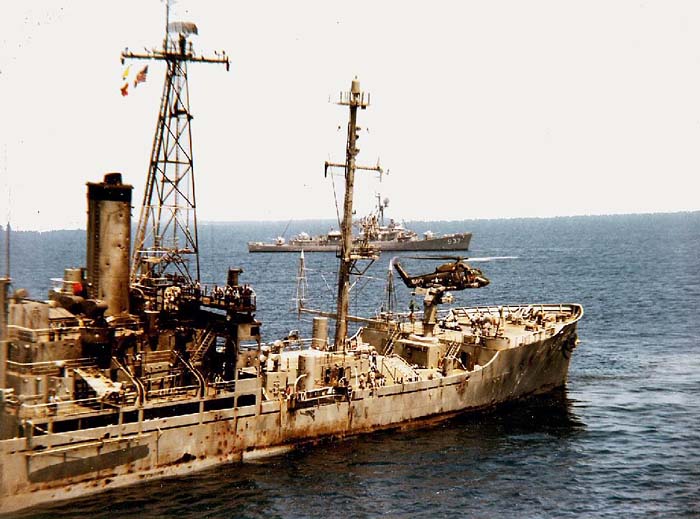
The USS Liberty AGTR-5 after being attacked by Israeli Air and Naval Units on 8 June 1967

Israel’s Navy while the smallest of the Israeli armed forces is quite capable and combat proven over the years. It has shown that it is not afraid to engage in combat with what Israel perceives to be threats, even the United States Navy as it did in the 1967 Six Day War where it launched a devastating prolonged attack on the USS Liberty AGTR-5 killing 34 and wounding 171 of its crew. The Israelis have long contended that the attack was a case of mistaken identity but the preponderance of evidence makes it look like the attack was deliberate.

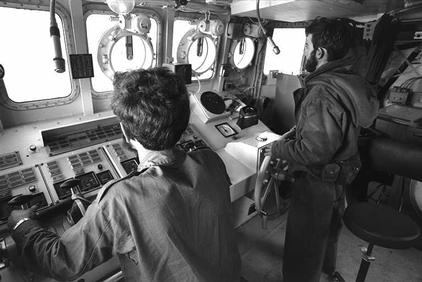
Israeli Sailors during the Battle of Latakia

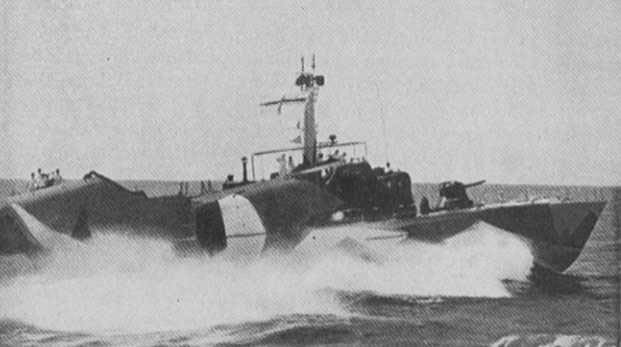
Egyptian Osa Class Missile Boat during 1973 War. The Israeli Navy sank 8 Egyptian and Syrian ships at the Battle of Latakia and Battle of Baltim with no losses to themselves in the first battles between guided missile ships

During the Yom Kippur War of 1973 the Israeli Navy destroyed 5 out of 5 Syrian Komar and Osa Class Missile Boats at the Battle of Latakia and 3 of 4 Egyptian Osa Class Missile Boats at the Battle of Baltim. Should the Iranian ships even look like they are threatening Israel the Israelis will have little patience and the ships will have an incredibly short combat life.  If that happens then expect a regional war to follow as Hezbollah, Iran and possibly Syria respond.

The clip below is from Iran’s English Language Press TV and is an Iranian assessment of their naval capabilities.

http://www.youtube.com/user/PressTVGlobalNews#p/u/13/doiWKWz4ZN8

Peace

Padre Steve+

10 Comments

Filed under Foreign Policy, History, middle east, Military, national security, Navy Ships

Predators of the High Seas: The Type IX U-Boats

U-123 returning from patrol

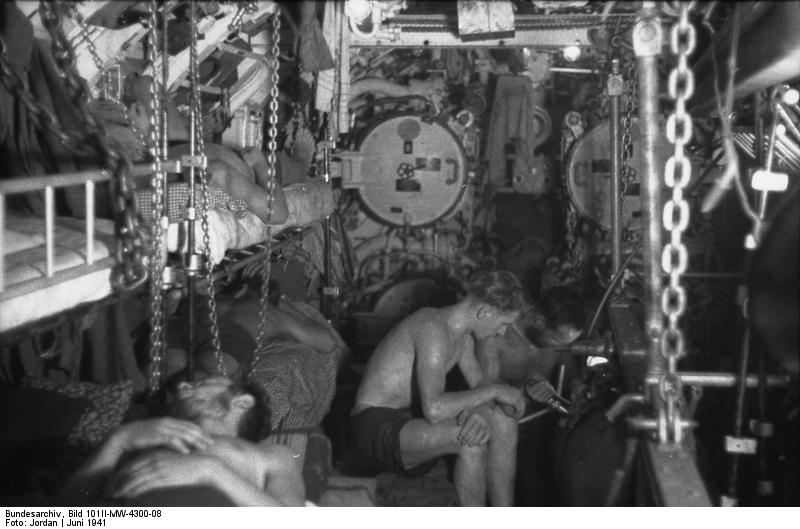
As the Kriegsmarine began its expansion in the mid-1930s the new U-Boat arm developed several types of submarines. The Type IX class was designed in 1935-36 as a long range attack boat and was larger had a greater range and were more heavily armed than the more numerous Type VII boats.  The Kreigsmarine designers envisioned a submarine capable of operating far from German bases for extended periods of time.  The design of these boats was derived from the two boat Type 1 class and incorporated lessons learned from that class.  283 boats of the type were constructed between 1937 and 1944 and the Kriegsmarine continuously sought to improve the type which resulted in five distinct models within the class.

Type IXA The first group referred to as the Type IXA or simply the Type IX was comprised of 8 boats built by AG Weser of Bremen.  Ordered in 1936 the group was part of the Kriegsmarine’s Plan Z rearmament plan which began when the Nazi Government announced that it would no longer abide by the Treaty of Versailles.  The initial 8 boats had a 1032 ton standard displacement were 251 feet long and were armed with six 21” torpedo tubes with 22 torpedoes.  They had a 105mm deck gun with 110 rounds as well as a 37mm and 20mm anti-aircraft gun.  They were the first German submarines equipped with a double hull which increased survivability and seaworthiness.  They were powered on the surface by two MAN M9V40/46 supercharged 9-cylinder diesel engines that produced 4,400 shp as well as two SSW GU345/34 double-acting electric motors for underwater operations. As in all diesel-electric boats the diesels were used to recharge the batteries for the electric motors while the boat was operating on the surface. They had a maximum speed of 18.2 knots on the surface and a range of 22,354 miles at 10 knots. Underwater they had a maximum speed of 7.7 knots and range of 166 miles at 4 knots.  The official maximum diving depth was 230 meters or 750 feet.  Of the 8 boats of this type 6 were sunk during combat operations and two scuttled at the end of the war by their crews to prevent their capture by the Allies. The most successful of the Type IXA boats was the U-37 was the most successful boat of the type sinking 53 merchant ships for a total of 200,124 tons as well as two warships, the Sloop HMS Penzance and French Submarine Q-182.

Crew members  of U-107 in Torpedo Room

Type IXB The next group was the IXB of which 14 boats were built by AG Weser Bremen. This was the most successful class of U-boats, or for that matter any class of submarines based on tonnage sunk per boat during the Second World War. Each of these ships sank over 100,000 tons of Allied shipping.  They were slightly larger than the IXA boats and had a significantly longer operational range of 24,600 miles on the surface at 10 knots. The U-107 of this class had the most successful war patrol of any U-Boat in the war sinking nearly 100,000 tons of Allied shipping off Freetown Sierra Leone while U-103 sank over 237,000 tons of Allied shipping during 11 war patrols over the course of 4 years. These boats were involved in Operation Drumbeat off the coast of the United States in early 1942.

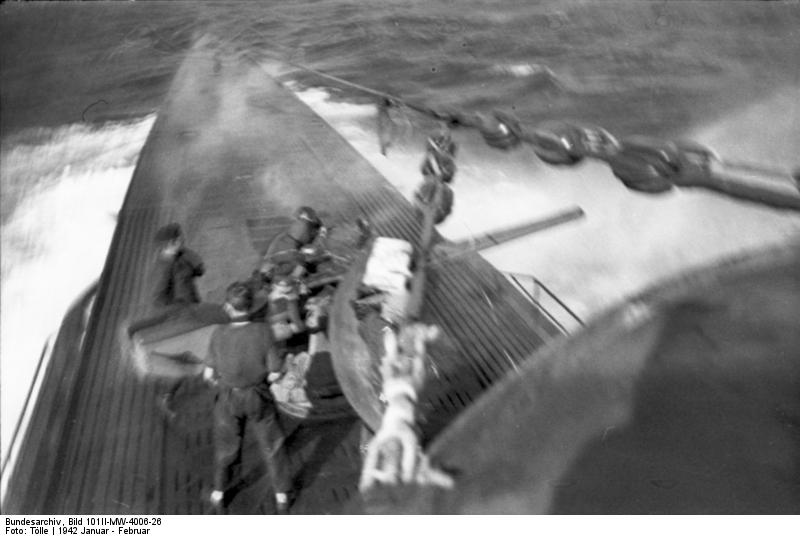
U-123 Gun Crew

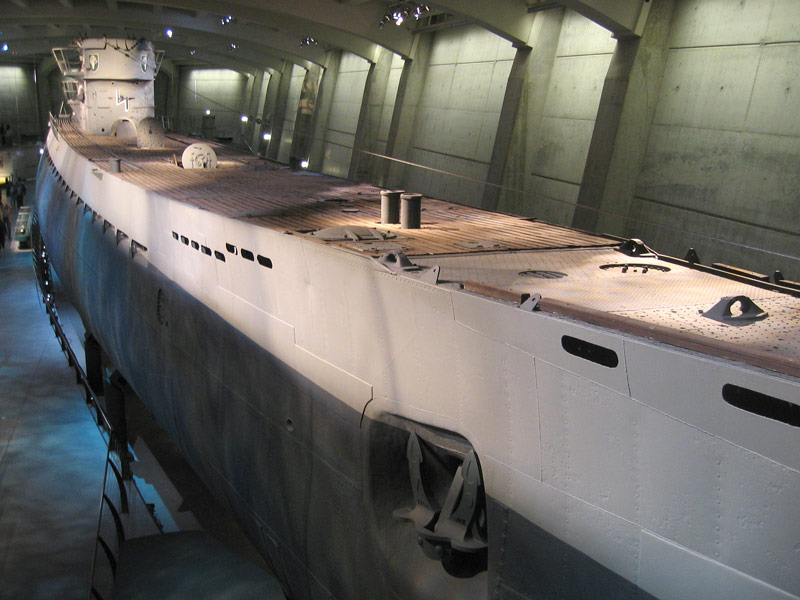
Type IXC The Type IXC was a further improvement of the type with additional fuel capacity and longer range. They displaced 1120 tons and 54 of the boats were commissioned of which 19 were equipped as minelayers with a capacity of 44 TMA or 66 TMB mines. The boats were built by AG Weser Bremen, Seebeckwerft Bremen and Deutsche Werft Hamburg.  The U-505 of this type is the only surviving Type IX and was captured by a boarding team from the Escort Carrier USS Guadalcanal on June 4th 1944. Her capture was kept secret from the Germans and her crew kept as POWs in a separate POW Camp. The story of the crew and their encounter with the game of baseball is recorded in Gary Moore’s book, Playing with the Enemy: A Baseball Prodigy, a World at War, and a Field of Broken Dreams. The book is being turned into a movie entitled Playing with the Enemy which is scheduled to be released in 2011. She is preserved at the Museum of Science and Industry in Chicago.

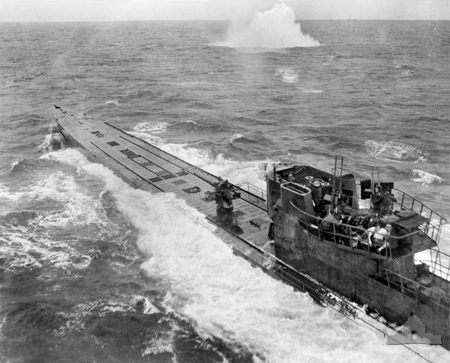
U-848 under attack by USN Aircraft

Type IXC/40 This was a further refinement of the IXC with slightly greater range and surface speed. It was the most numerous type of the class built with 87 being built by AG Weser Bremen, Seebeckwerft Bremen and Deutsche Werft Hamburg.  The remains of the U-534 of the class are displayed at Woodside Ferry Terminal in Birkenhead England after being raised from the North Sea in 1986.

Type IXD The final type in the Type IX Series was the Type IXD.  This was a significantly larger boat than the others in the class 287 feet long with a standard displacement of 1610 tons. They were unique in that they had two sets of diesel engines, one for cruising and the other for high speed runs and battery recharge. There were three variants within the type, the IXD1 which were all converted to transport use due to problems with their engines, the most numerous variant the IXD2 and the IXD42 which had greater horsepower.  Thirty Type IXs were commissioned with a further six Type IXD42s which were ordered with only one commissioned by the end of the war.

U-505 at the Museum of Science and Industry in 2005 (Jerry Atherton)

During the war surviving boats would receive increased anti-aircraft armament, the Schnorkel device which allowed them to operate on diesel power while submerged as well as better electronics and detection devices. Most of the boats which survived the war were scuttled by the Allies in Operation Deadlight.  The U-511 was sold to Japan in 1943 and U-862 taken over by the Japanese after the German Surrender in May 1945. Both survived the war and were scuttled by the Allies. U-1231 was taken over by the Soviet Navy and served as the B-26 after the war.

The sailors of these U-Boats like all submarine sailors endured many hardships and during the war approximately 75% of the 40,000 U-Boat sailors never returned from patrol, forever interred in the deep with their proud boats.

1 Comment

Filed under History, Military, Navy Ships, world war two in europe

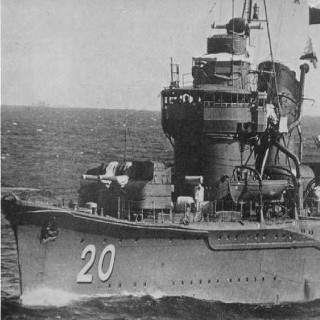
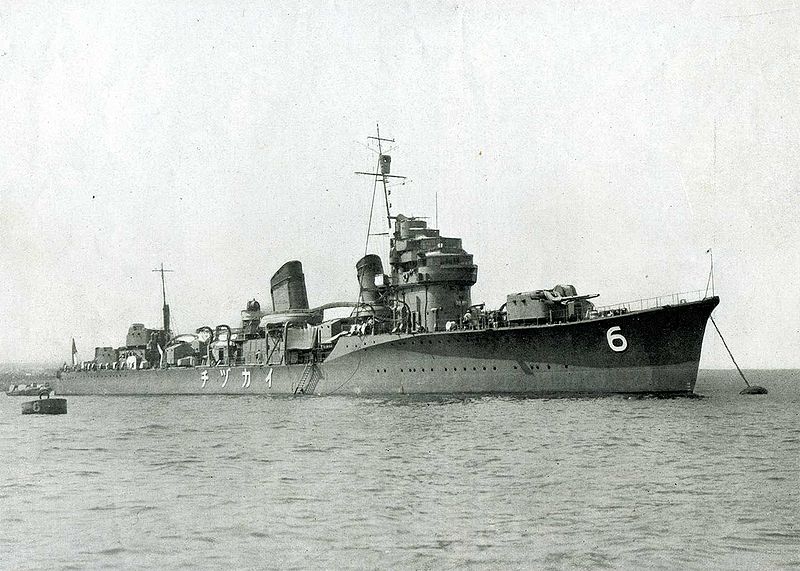
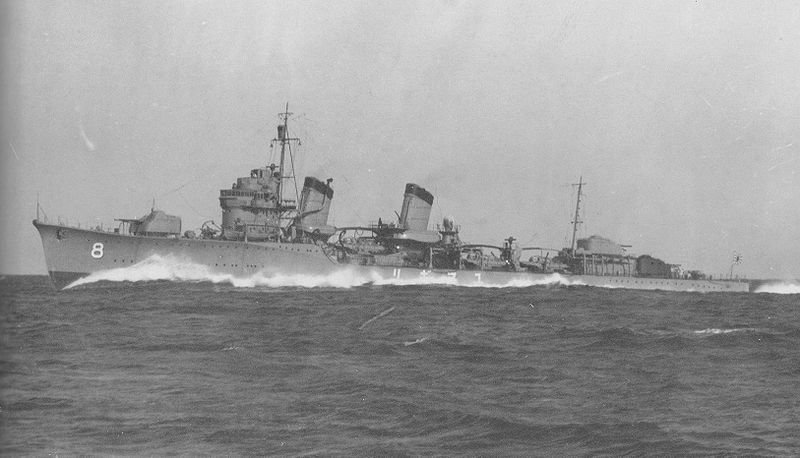
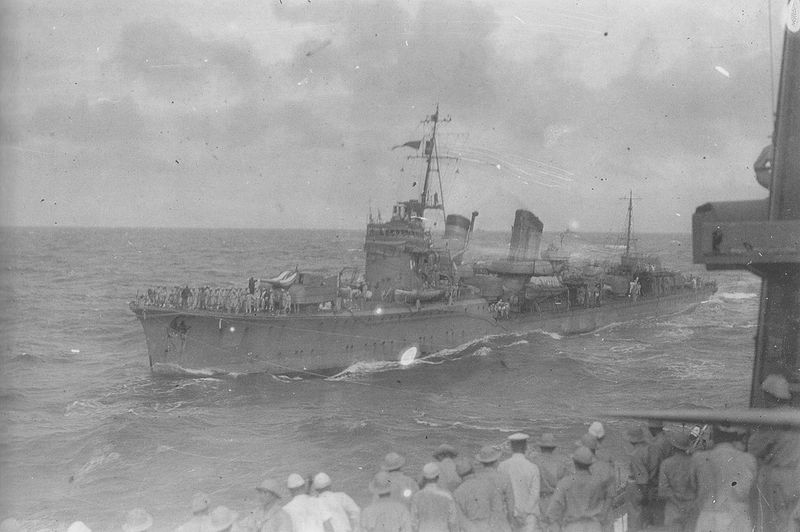
The First Modern Destroyers: The Imperial Japanese Navy Fubuki Class

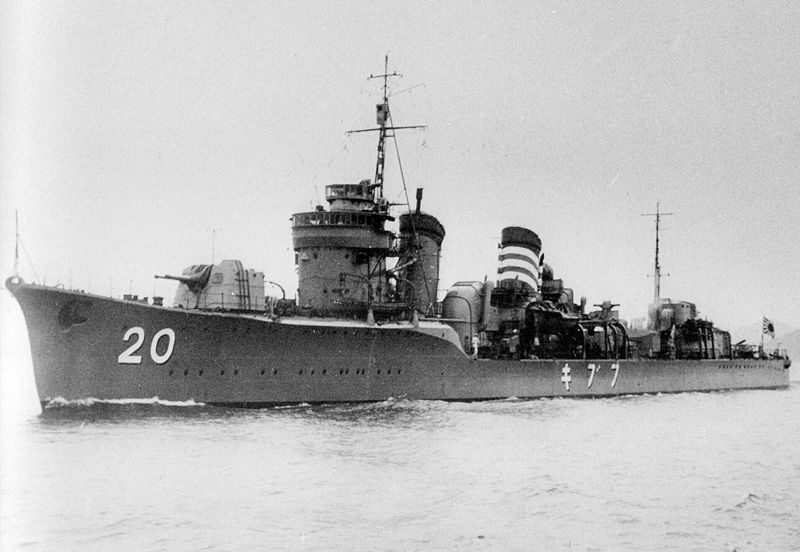
IJNS Fubuki

The Imperial Japanese Navy set the standard for destroyer construction in the 1920. While the United States Navy and British Royal Navy were fully stocked with their First World War design destroyers the Imperial Navy’s General Staff issued a requirement for a class of large destroyers which would complement the new classes of modern cruisers being built for the navy. The requirement called for a 2000 ton ship capable of 39 knots with a 4000 mile range at 14 knots that could carry a large number of torpedoes and a heavy gun armament. The program was designed to give the numerically inferior Imperial Navy a qualitative superiority against any opponent.

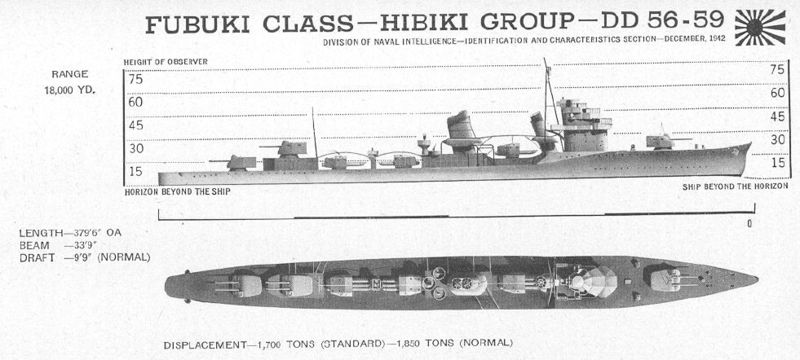
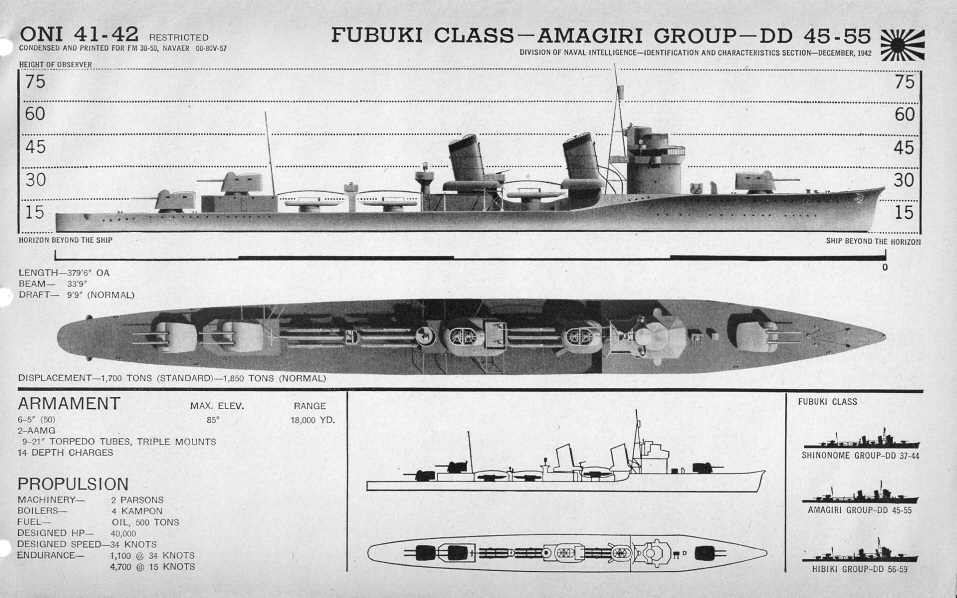
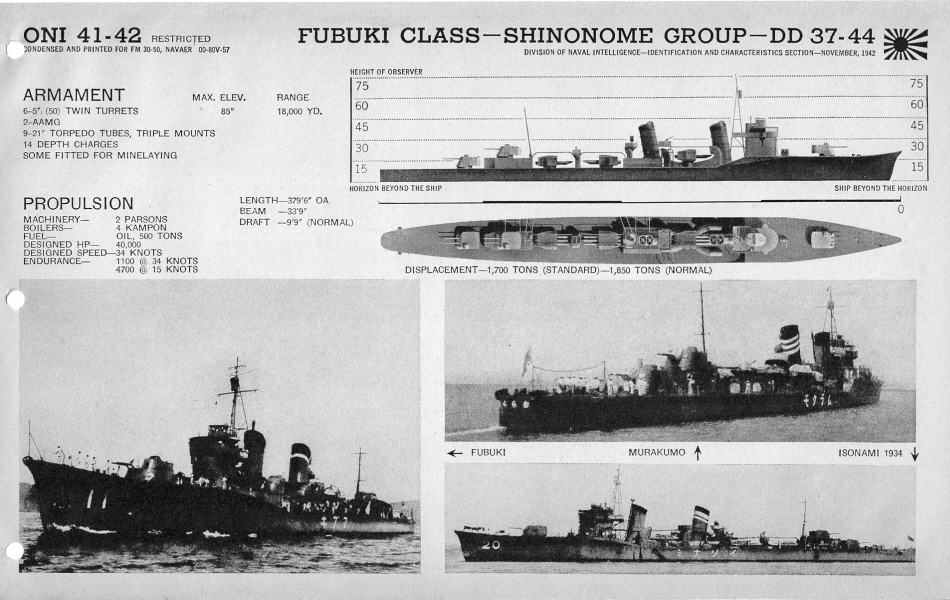
WWII Office of Naval Intelligence images for Fubuki Class variants

The 24 ship Fubuki Class was such a quantum leap over other contemporary destroyers that the Imperial Navy referred to them as the Special Type. Their large size, heavy armament and high speed made them equal to many of the light cruisers of the time. The design was modified to carry more guns and torpedoes on an increased displacement and the result was a 388 foot long 1750 ton ship armed with six 5” 50 caliber guns in weather proof and splinter proof mounts.  On the initial 10 ships of the class the guns could only be elevated 40 degrees which made them less than effective as anti-aircraft guns but in the succeeding two groups of ships the mounts were an improved type which allowed them to elevate each gun separately to 75 degrees.  The ammunition magazines were below the gun mounts and ammunition was passed to the guns by hoists.  This gave them a decided edge in rate of fire over other destroyers which had open or partially shield mounts dependant on ammunition passers carrying ammunition to them.

Close up of IJNS Sagiri

The light anti-aircraft armament when built was two Type 93 13mm machine guns.  In the years before the war and during the war this was increased in some cases up to twenty-two 25mm anti-aircraft guns and 10 of the Type 93 machine guns. In 1944 surviving ships of the class had their X- 5” gun mount removed to facilitate more of the 25mm guns, radar and additional depth charge capacity.

IJNS Ikazuchi

The nine 24” torpedo tubes in triple mounts were able to be reloaded while in battle a capability not shared by other destroyers.  They carried a total of 18 torpedoes which initially were the Type 8 but these were replaced by the oxygen powered Type 93 “Long Lance” torpedoes before the war. These torpedoes had a higher speed, longer range and heavier warhead than torpedoes produced by other navies.  These torpedoes would become the scourge of Allied navies during the war in the brutal surface engagements of 1942.

IJNS Yugiri

Due to the modifications made to the design which put more armament on a smaller displacement than the original design made them unstable in heavy seas and resulted in longitudinal hull weakness that resulted in the class being rebuilt between 1935 and 1937. The rebuild increased their displacement to 2050 tons standard and over 2400 tons full load and resulted in a slight reduction of their speed.

IJNS Hibiki

The class was built in three groups and each is sometimes referred to as a separate class as each incorporated improvements over the preceding group. The first 10 ships of the class which are sometimes referred to as the Fubuki Class were of less complex design than subsequent ships. They were feet long had a smaller bridge and exposed gunfire control room.  The second group of 10 ships commonly referred to as the Ayanami Class had an enlarged bridge structure which enclosed previous exposed positions to include the gunfire control room, range finders and included a range finder tower.  They also were the first ships to receive the improved Type B gun mounts.  The final subtype of the class, the Akatsuki Class comprised just 4 ships and was distinguished by a smaller forward funnel, larger boilers and unique splinter proof torpedo tube mount housing.

IJNS Ayanami

The ships of the class participated in every major campaign of Japan’s war in the Pacific as well as operations against China in the 1930s. One ship the Miyuki was lost in a collision with another destroyer in August 1934. All remaining ships of the class except the Hibiki and Ushio were lost in action during the war. Four the Fubuki, Ayanami, Yuguri and Ataksuki were sunk in surface actions. Eight ships the Usogumo, Shirakumo, Isonami, Shikinami, Sagiri, Sazanami, Inazuma, and Ikazuchi were lost to Allied submarines.  Seven ships the Shirayuki, Hatsuyuki, Murakumo, Uranami, Asagiri, Oboro and Akebono were sunk by aircraft and two the Shinonome and Amagiri fell victim to mines.

The demilitarized IJNS Ushio after the war

Hibiki was given to the Soviet Union following the war and served in that Navy until either 1953 or 1963 depending on the source. She was scrapped. Ushio surrendered to the Allies was demilitarized and scrapped in 1948.

The Amagiri played a role in the life of future President John F Kennedy when she rammed and sank his PT-109 in the Blackett Strait on August 2nd 1943. Her commanding officer at the time Lieutenant Commander Kohei Hanami attended Kennedy’s inauguration in 1961.

The Fubuki Class destroyers set a standard in destroyer construction that other navies around the world sought to emulate. Fast and powerful they and their crews fought gallantly in the Second World War and though in a losing cause deserve to be remembered.


5 Comments

Filed under History, Military, Navy Ships

Flush Decks and Four Pipes: The Wickes and Clemson Class Destroyers

USS Pope DD-225

The destroyers of the Wickes and Clemson classes defined the destroyer force of the U.S. Navy. In 1916 with the advent of the submarine as an effective weapon of war the Navy realized that its pervious classes of destroyers were insufficient to meet the new threat. Likewise the lack of endurance of earlier destroyers kept them from vital scouting missions since the U.S. Navy unlike the Royal Navy or Imperial German Navy maintained few cruisers for such missions.

USS Paul Jones DD-230 late war note 3 stacks and radar

The Naval Appropriation Act of 1916 included the authorization of 50 Wickes Class destroyers to compliment 10 new battleships, 6 battlecruisers and 10 light cruisers with the goal of building a Navy second to none.  The new destroyers were designed for high speed operations and intentionally designed for mass production setting a precedent for the following Clemson class as well as the destroyer classes built during the Second World War.

USS Boggs DMS-3

The Wickes Class had a designed speed of 35 knots in order to be able to operate with the new Omaha Class light cruisers and Lexington Class Battlecruisers in the role of scouting for the fleet. They were flush-decked which provided additional hull strength and their speed was due to the additional horsepower provided by their Parsons turbines which produced 24,610 hp.  They were 314’ long and had a 30 foot beam. Displacing 1247 tons full load they were 100 tons larger than the previous Caldwell class ships.  They were armed with four 4 inch 50 caliber guns, one 3” 23 caliber gun and twelve 21” torpedo tubes.

USS Crosby APD 17

Although they were very fast they proved to be very “wet” ships forward and despite carrying an additional 100 tons of fuel they still lacked range.  Due to the realization the U-Boat war required more escorts the order for Wickes Class ships was increased and 111 wear completed by 1919.

The Wickes Class was followed by the Clemson Class which was an expansion of the Wickes class being more tailored to anti-submarine warfare.  They had a greater displacement due to additional fuel tanks and mounted the same armament had identical dimensions and were capable of 35 knots but had a larger rudder to give them a tighter turning radius. 156 ships of the class were completed.

In the inter-war years a number of each class were scrapped and 7 of the Clemson Class from DESRON 11 were lost in the Honda Point Disaster of September 8th 1943.

Many of the ships never saw combat in either war as numerous ships were scrapped due to the limitations of the London Naval Treaty. Of the 267 ships of the two classes only 165 were still in service in 1936. As new destroyers were added to the navy in the 1930s a number of ships from each class were converted to other uses. Some became High Speed Transports (APD) and carried 4 LCVP landing craft and a small number of troops, usually about a company sized element. Others were converted to High Speed Minelayers (DM) or High Speed Minesweepers (DMS). A few were converted to Light Seaplane Tenders (AVD).  Those converted to other uses had their armament reduced with dual purpose 3” 50 caliber guns replacing the 4” guns and the removal of their torpedoes. Those which remained received 6 of the 3” guns to replace their original gun armament and lost half of their torpedo tubes.  During the war all would have light additional anti-aircraft armament and radar installed.

USS Stewart DD-22after return from Japanese service

In 1940 19 of the Clemson Class and 27 of the Wickes Class were transferred to the British Royal Navy under the Lend Lease program.  Some of these would see later service in the Soviet Navy being transferred by the Royal Navy serving after the war with those ships being scrapped between 1950 and 1952.

The ships of these classes performed admirably during the Second World War despite their age.  The USS Ward DD-139 fired the first shots of the war when it engaged and sank a Japanese midget sub outside of Pearl Harbor.  The 13 ships of the Asiatic Fleet’s DESRON 29 took part in six engagements against far superior Japanese Navy units while operating in the Philippines and then in the Dutch East Indies as part of the ABDA Command including the Battle of Balikpapan where the John D Ford DD-228, Pope DD-225, Paul Jones DD-230 and Parrot DD-218 sank 4 Japanese transports.   During that campaign 4 of these gallant ships were sunk in battle and a 5th the USS Stewart DD-224 was salvaged by the Japanese after being damaged and placed in a floating drydock at Surabaya following the Battle of Badung Strait. She was placed in service as a patrol ship by the Imperial Navy. She was discovered by U.S. Forces after the surrender and returned to the U.S. Navy.

HMS Cambeltown (ex USS Buchanan DD-131) at St Nazaire

Whether in the Atlantic or the Pacific the ships contributed to the Allied victory. The former USS Buchanan DD-131 which had been transferred to the Royal Navy where she was re-named the HMS Campbeltown and used in the Saint-Nazaire Raid. For the raid she was altered in appearance to look like a German Möwe class destroyer was rammed into the only drydock on the Atlantic capable of holding the Battleship Tirpitz. The mission was successful and the drydock was unusable by the Germans for the rest of the war.

During the war they served in every major campaign and when no longer fit for front line service were used in escort roles in rear areas as well as in a variety of training and support roles.  By the end of the war the surviving ships of both classes were worn out and a number were decommissioned and some scrapped even before the end of hostilities. Those that survived the war were all decommissioned by 1946 and most scrapped between 1945 and 1948.

During Second World War 9 of the Wickes Class were sunk in battle, and 7 were sunk or destroyed in other ways. 5 were later sunk as targets and the remaining ships were all scrapped. A total of 20 of the Clemson Class were lost either in battle or to other causes including those lost and Honda Point.

USS Peary Memorial

The brave Sailors that manned these ships in peace and war become fewer in number every day as the Greatest Generation passes. It is a sad testimony that none of these ships were preserved as a memorial; however the Australians have a memorial at Darwin dedicated to the USS Peary DD-226 which was sunk with 80 of her crew during the Japanese raid on that city’s port on 19 February 1942. The memorial has one of her 4” guns pointed in the direction of the wreck of the Peary. A memorial to the USS Ward, her #3 4” gun which sank the Japanese midget sub is located on the Capitol Grounds in St. Paul Minnesota.

10 Comments

Filed under History, Military, Navy Ships, US Navy, world war two in europe, world war two in the pacific

The U-Boat Type VIIC: Workhorse of the Kriegsmarine

U-96

The signature warship of the German Kreigsmarine of the Second World War has to be the U-Boat Type VIIC, the most numerous type of submarine ever produced by any Navy.  568 of these U-Boats would be commissioned between 1940 and 1945 as well as 91 of the Type VIIC/41.  The Type VIIC was developed from the prewar Type I and Type VIIA and VIIB classes.

Compared to contemporary American submarines of the Gato class they were smaller, mounted fewer torpedo tubes and had a shorter range. However the American boats were designed for the vast expanse of the Pacific while the German boats for the most part were operated in the smaller confines of the Atlantic and Mediterranean.

U-1023

They displaced a mere 769 tons on the surface and 871 tons submerged and were 67.1 meters (220.14 feet) long. The boats had a single pressure hull and the VIIC could dive to a maximum depth of 230 meters (754 feet) and had a crush depth of 250-295 meters (820-967 feet).  The VIIC/41 could dive to 250 meters or 820 feet and a crush depth of 275-325 meters (902-1066 feet).  This was deeper than any allied submarines of the period and a testament to their sound construction.

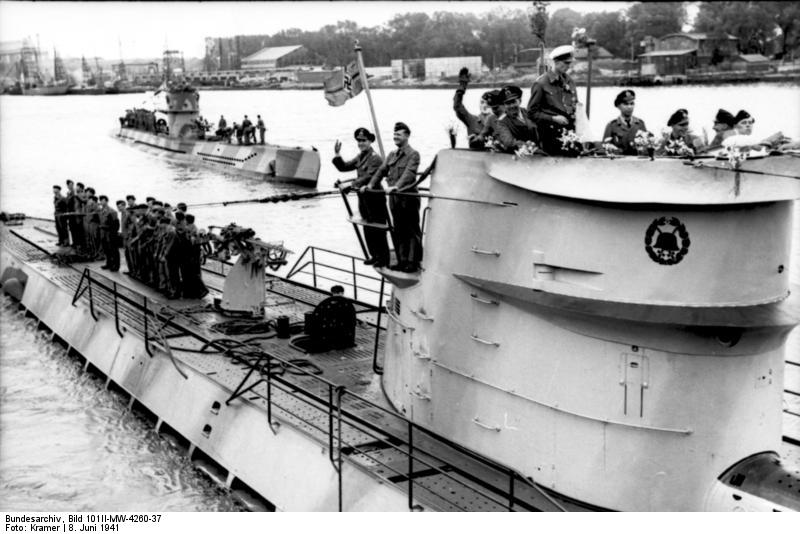
Admiral Dönitz greeting U-94 in 1941

The Type VIICs were armed with a C35 88 mm/L45 gun with 220 rounds for surface actions and various types and numbers of anti-aircraft guns. The standard configuration for torpedo tubes was 4 bow mounted tubes and 1 stern mounted tube although a small number only carried 2 forward and none aft. They carried a maximum of 14 torpedoes and could carry 26 TMA Mines which would be laid at approaches to various ports.

U-966 under air attack

The Type VIIC was powered by two supercharged Germaniawerft, 6 cylinder, 4-stroke M6V 40/46 diesel engines on the surface producing between 2,800 to 3,200 horsepower which gave the boats a 17.7 knot maximum speed on surface. For submerged operations the boats were powered by one of a number of different electric motors whose batteries were charged by the diesels. The electric motors produced 750 horsepower (560 kW) and could drive the boats a maximum of 7.6 knots. In 1944 many of the surviving boats were equipped with the schnorkel apparatus which allowed them to use their diesel engines underwater at shallow depths.  The had a range of 8190 miles at 10 knots surfaced which gave them a decent amount of operational flexibility for their Atlantic operations.

The last Type VII- U-995 (Type VIIC/41) German U-Boat Memorial Laboe Germany

During the war the German U-Boat force suffered grievous losses many of which were Type VIICs. The VIICs performed excellently in combat and many survived engagements that would have sunk less tough boats. The most famous of the Type VIICs of all variants is probably the U-96 which was featured in the epic submarine film Das Boot. A number had post war careers in several navies and the last active VIIC the U-573 which served in the Spanish Navy as the G-7 was decommissioned in 1970 and sold for scrap over the objections of those that wanted to purchase her as a memorial.  The only surviving Type VIIC is the U-995 at Laboe Germany where she is a memorial to all the U-Boat Sailors of the Second World War.  Two full sized mock ups one for exterior scenes and one for interior scenes were constructed for Das Boot and the exterior mock up was also used in Raiders of the Lost Ark.

During the war U-Boats of all types sank nearly 3000 Allied ships including 175 warships among which were the carriers HMS Glorious, HMS Ark Royal and HMS Eagle and the Battleships HMS Barham and HMS Royal Oak. The Germans lost nearly 800 U-Boats of all types and over 28,000 U-Boat Sailors, about 75% of the force.

The films Das Boot and The Enemy Below are excellent reminders of the courage of the men that operated these submarines during the war. Though the Nazi Regime was evil the men of the U-Boat Service often displayed courage and ingenuity in the face of overwhelming odds and they nearly won the war for the Germans.

9 Comments

Filed under History, Military, Navy Ships, world war two in europe