Category Archives: Navy Ships

Will We Remember the Day of Infamy? Remembering the Ships Present at Pearl Harbor, a Brief History of Each Ship

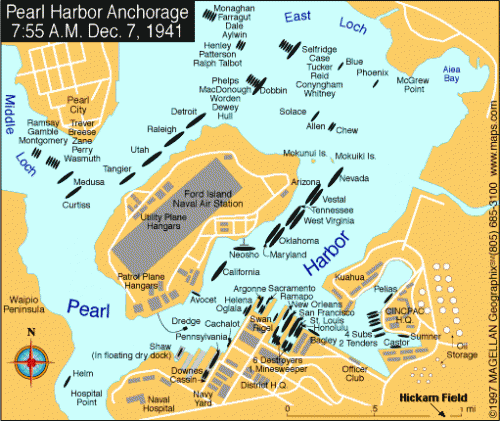
harbrmap1

Friends of Padre Steve’s World,

The attack on Pearl Harbor is one of the seminal moments in the history of the United States where at one time the nation rose up as one to the challenge of an attack against it and against its armed forces. Sadly, for most Americans today no matter what their political ideology the concept of coming together in a crisis is a foreign and possibly even a hateful idea. Likewise, I would dare say that most Americans today find the attack on Pearl Harbor of little importance today, nor think that there is nothing to learn from it.

However, in December 1941 the Pacific Fleet of the United States Navy was attacked at Pearl Harbor of the nation came together as it never had before. On the morning of December 7th 1941 there were over ninety ships of the Pacific Fleet at Pearl Harbor. While over twenty percent of these ships were sunk or damaged in the attack, almost all returned to service in the war. Likewise, many of the surviving shipswere lost in action during the war. Only two ships or craft remain of the ships present on December 7th 1941, the tug USS Hoga and the Coast Guard Cutter USCG Taney which is now a museum ship in Baltimore Maryland. The rest, lost in action, sunk as targets or scrapped. Of the gallant men who served as their crews during the war and at Pearl Harbor very few remain. They are part of what we now refer as the “Greatest Generation.” 

In 1978 I had the opportunity to visit Pearl Harbor and visit the USS Arizona and USS Utah Memorials during what was a nearly three week long cruise and visit to Pearl Harbor while a Navy Junior ROTC Cadet.  I cannot forget forget that experience, as the visits to both memorials, sited above the wrecks of the two sunken ships in which more than 1000 Americans remain entombed to this day left a mark on me.

Today I remember all of the ships present, from the greatest to the most humble, as well as their gallant crews, many of whom were volunteers who had gone into service not long before the attack, because they believed that the nation was in danger who were present at Pearl Harbor on December 7th 1941. I also remember a government which though torn by by ideological differences decided to unite to meet the threat of advancing enemies even before they targeted the United States.

The fact is that only two of the ships present at the Pearl Harbor attack are still afloat, and the vast majority of their crews have passed away. Very few survivors of that day of infamy remain and it is our sad task to keep reminding the nation and the world of the price of arrogant toxic nationalism, and historic ignorance.

This is the story of the ships that were at Pearl Harbor that fateful morning of December 7th 1941. Please read it and share it, because the youngest survivors are in their nineties, and few will be alive to bear witness in the next few years, and then there will be none left. These the task of remembering is left to us, like it or not.

Peace

Padre Steve+

A few years ago I wrote a piece called The Battleships of Pearl Harbor. I have added to it, and recently republished it. I followed that with an article entitled “Forgotten on the Far Side of Ford Island: The USS Utah, USS Raleigh, USS Detroit and USS Tangier.

Of course most anyone that has see either Tora! Tora! Tora! or Pearl Harbor is acquainted with the attack on “Battleship Row” and the airfields on Oahu.  What are often overlooked in many accounts are the stories of some of the lesser known ships that played key roles or were damaged in the attack.  Since none of the articles that I have seen have discussed all of the U.S. Navy ships at Pearl Harbor on that fateful morning I have taken the time to list all the ships with the exception of yard and patrol craft present at Pearl Harbor on December 7th, 1941.I have also excluded Coast Guard cutters in Honolulu. A brief account of each ship’s war service and final disposition is included.  I believe that this is the only site that has this information in a single article.

During the attack 18 ships were sunk or damaged but only three, Arizona, Oklahoma and Utah never returned to service.  During the war a further 18 ships were sunk or written off as losses during the war. All ships lost in the war are marked with an asterisk. One ship, the USS Castor remained in active service until 1968 serving in the Korean and Vietnam Wars. One ship, the Light Cruiser Phoenix was sunk in the Falklands War while serving as the Argentine ship General Belgrano. No U.S. Navy ships apart from the Yard Tug Hoga (not included in this article) remain today.  It is unfortunate that the Navy or any organization had the foresight to save one of these ships. It would have been fitting for one of the battleships that survived the war to be preserved as a memorial ship near the Arizona Memorial. While the USS Missouri serves this purpose symbolic of the end of the war it is a pity that no ship at Pearl Harbor was preserved so that people could see for themselves what these gallant ships was like.

Battleships
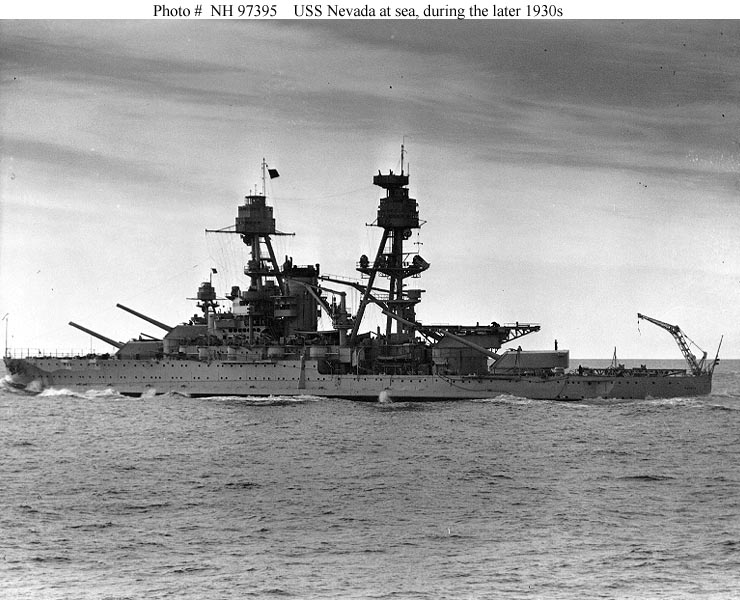
uss Nevadab36

Nevada (BB-36) Nevada was the only Battleship to get underway during the attack.  As she attempted to escape the harbor she was heavily damaged and to prevent her sinking in the main channel she was beached off Hospital Point.  She would be raised and returned to service by the May 1943 assault on Attu.  She would then return to the Atlantic where she would take part in the Normandy landings off Utah Beach and the invasion of southern France in July 1944.  She then returned to the Pacific and took part in the operations against Iwo Jima and Okinawa where she again provided naval gunfire support.  Following the war she would be assigned as a target at the Bikini atoll atomic bomb tests, surviving these she would be sunk as a target on 31 July 1948. She received 7 battle stars for her WWII service.
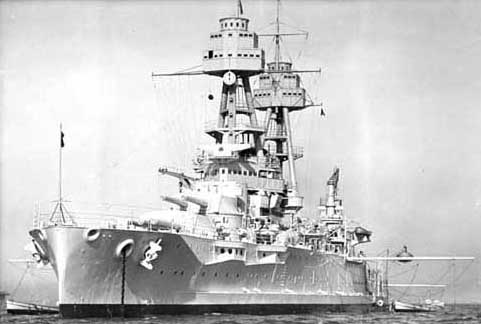
uss_oklahoma1

USS Oklahoma

*Oklahoma (BB-37) During the Pearl Harbor attack Oklahomawas struck by 5 aerial torpedoes capsized and sank at her mooring with the loss of 415 officers and crew. Her hulk would be raised but she would never again see service and sank on the way to the breakers in 1946.  She was awarded one battle star for her service during the attack.
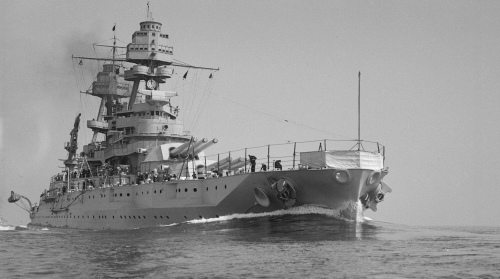
USS Pennsylvania

Pennsylvania (BB-38) Pennsylvania was the Pacific Fleet Flagship on December 7th 1941 and was in dry dock undergoing maintenance at the time of the attack. Struck by two bombs she received minor damage and would be in action in early 1942. She underwent minor refits and took part in many amphibious landings in the Pacific and was present at the Battle of Surigo Strait.  Heavily damaged by an aerial torpedo at Okinawa Pennsylvania would be repaired and following the war used as a target for the atomic bomb tests. She was sunk as a gunnery target in 1948.  She received 8 battle stars for her WWII service.
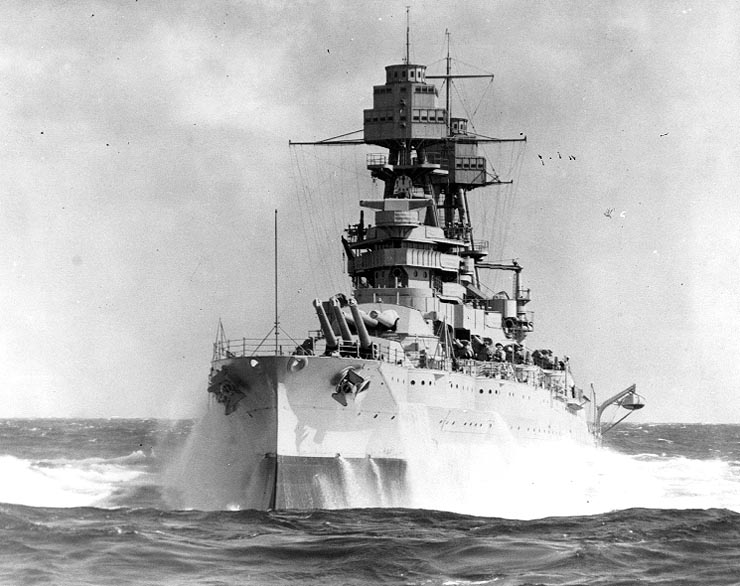
USS_Arizona_(BB-39)_-_1930s

The USS Arizona before the attack

*Arizona (BB-39) Arizona was destroyed during the attack.  Hit by 8 armor piercing bombs one of which penetrated her forward black powder magazine she was consumed in a cataclysmic explosion which killed 1103 of her 1400 member crew.  She was decommissioned as a war loss but her colors are raised and lowered every day over the Memorial which sits astride her broken hull.  She received one battle star for her service at Pearl Harbor.
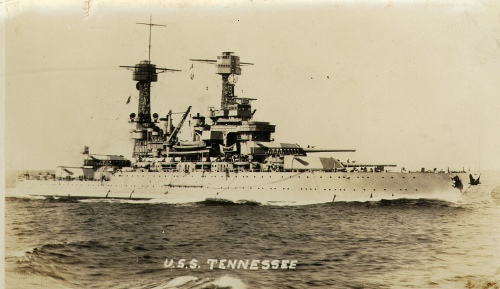
Tennessee (BB-43) Tennessee was damaged by two bombs and was shield from torpedo hits by West Virginia. After repairs she conducted operations in the Pacific until she reported to Puget Sound Naval Shipyard in August 1942 for a complete rebuild and modernized with the latest in radar, fire control equipment and anti-aircraft armaments. She returned to active service in May 1943. She provided Naval Gunfire support in numerous amphibious operations and was a key ship during the Battle of Surigo Strait firing in six-gun salvos to make careful use of her limited supply of armor-piercing projectiles, Tennessee got off 69 of her big 14-inch bullets before checking fire.  Her gunfire helped sink the Japanese Battleships Fuso and Yamishiro and other ships of Admiral Nishimura’s Southern Force.  She was damaged by a Kamikaze off Okinawa on 18 April 1945 which killed 22 and wounded 107 of her crew but did not put her out of action.  Her final assignment of the war was to cover the landing of occupation troops at Wakayama, Japan.  She was decommissioned in 1947 and remained in reserve until 1959 when she was sold for scrap. Tennessee earned a Navy Unit Commendation and 10 battles stars for World War II service.
USSCalifornia

USS California transiting the Panama Canal

California (BB-44) California was hit by two torpedoes but had the bad luck to have all of her major watertight hatches unhinged in preparation for an inspection. Hit by two torpedoes and two bombs she sank at her moorings suffering the loss of 98 killed and 61 wounded. She was refloated and received temporary repairs at Pearl Harbor before sailing to Puget Sound Naval Shipyard to be completely rebuilt and modernized with the latest in radar, fire control equipment and anti-aircraft armaments. She returned to service in January 1944. She saw her first action in the Marianas and was in continuous action to the end of the war. She played an important part in the Battle of Surigo Strait and in the amphibious landings at Guam and Tinian, Leyte, Iwo Jima and Okinawa.  She was decommissioned in 1947 and placed in reserve finally being sold for scrap in 1959. She received 7 battle stars for her WWII service.
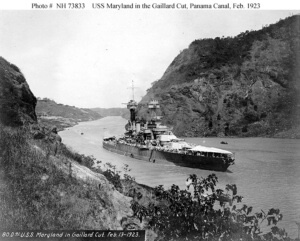
Maryland (BB-45) At Pearl Harbor Maryland was moored inboard of Oklahoma and was hit by 2 bombs.  She would be quickly repaired and returned to action and receive minimal modernization during the war. She would participate in operations throughout the entirety of the Pacific Campaign providing naval gunfire support to the landings at Tarawa, Kwajalein, Saipan, where she was damaged by an aerial torpedo, Palau, Leyte where she was damaged by a Kamikaze, Okinawa and the battleship action at Surigo Strait.  Decommissioned in 1947 she was placed in reserve and sold for scrap in 1959. On 2 June 1961 the Honorable J. Millard Tawes, Governor of Maryland, dedicated a lasting monument to the memory of the venerable battleship and her fighting men. Built of granite and bronze and incorporating the bell of “Fighting Mary,” this monument honors a ship and her 258 men who gave their lives while serving aboard her in WWII.  This monument is located on the grounds of the State House, Annapolis, Md. Maryland received seven battle stars for World War II service.
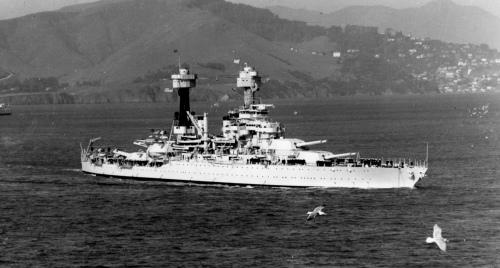
The USS West Virginia before the war and after her salvage and reconstruction
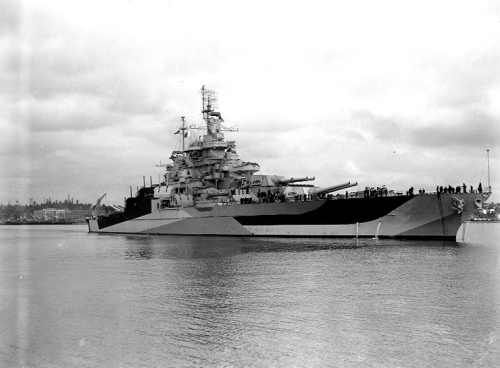
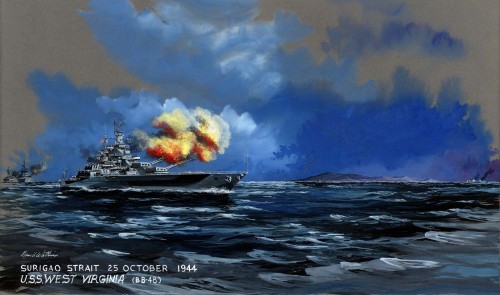
West Virginia (BB-48) West Virginia suffered some of the worst damage in the attack. Hit by at least 5 torpedoes and two bombs she was saved from Oklahoma’s fate by the quick action of her damage control officer to counter flood so she would sink on an even keel.  She would be raised, refloated and taken back to the West Coast for an extensive modernization on the order of the Tennessee and California. The last Pearl Harbor battleship to re-enter service she made up for lost time as she lead the battle line at Surigo Strait firing 16 full salvos at the Japanese squadron helping sink the Japanese Battleship Yamashiro in the last battleship versus battleship action in history West Virginia was decommissioned in 1947, placed in reserve and sold for scrap in 1959.

Heavy Cruisers

New Orleans (CA-32) Minor shrapnel damage from near miss. Fought throughout the war in the Pacific; bow blown off by Japanese torpedo at Battle of Trassafaronga in November 1942, repaired. 17 battle stars for WWII service, decommissioned 1947 and sold for scrap in 1957.
san fran

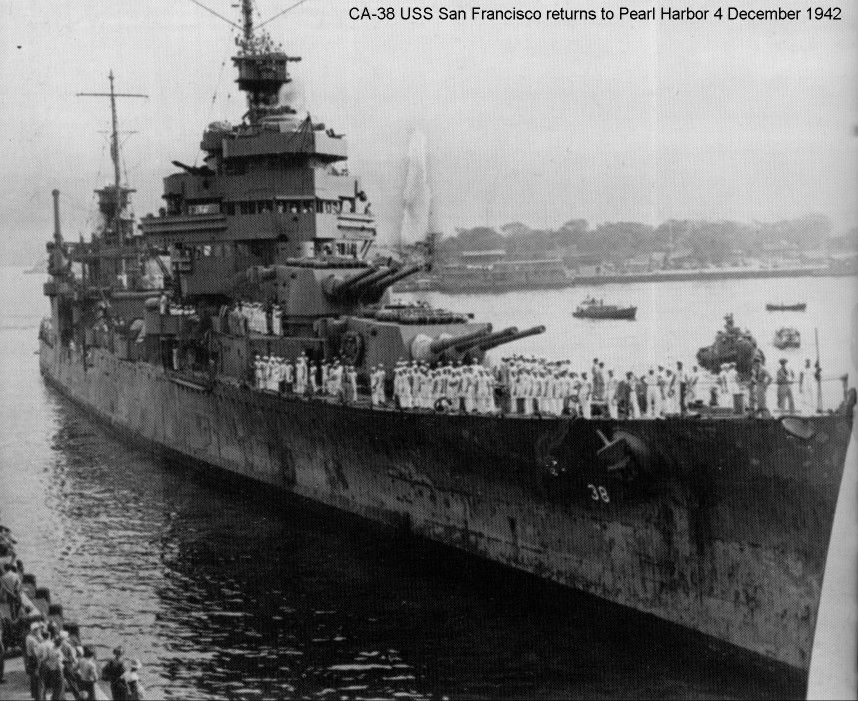
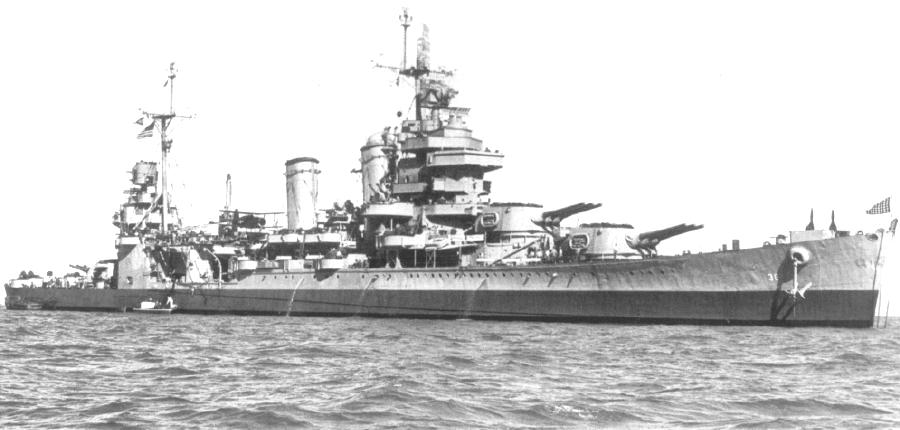
USS San Francisco CA-38

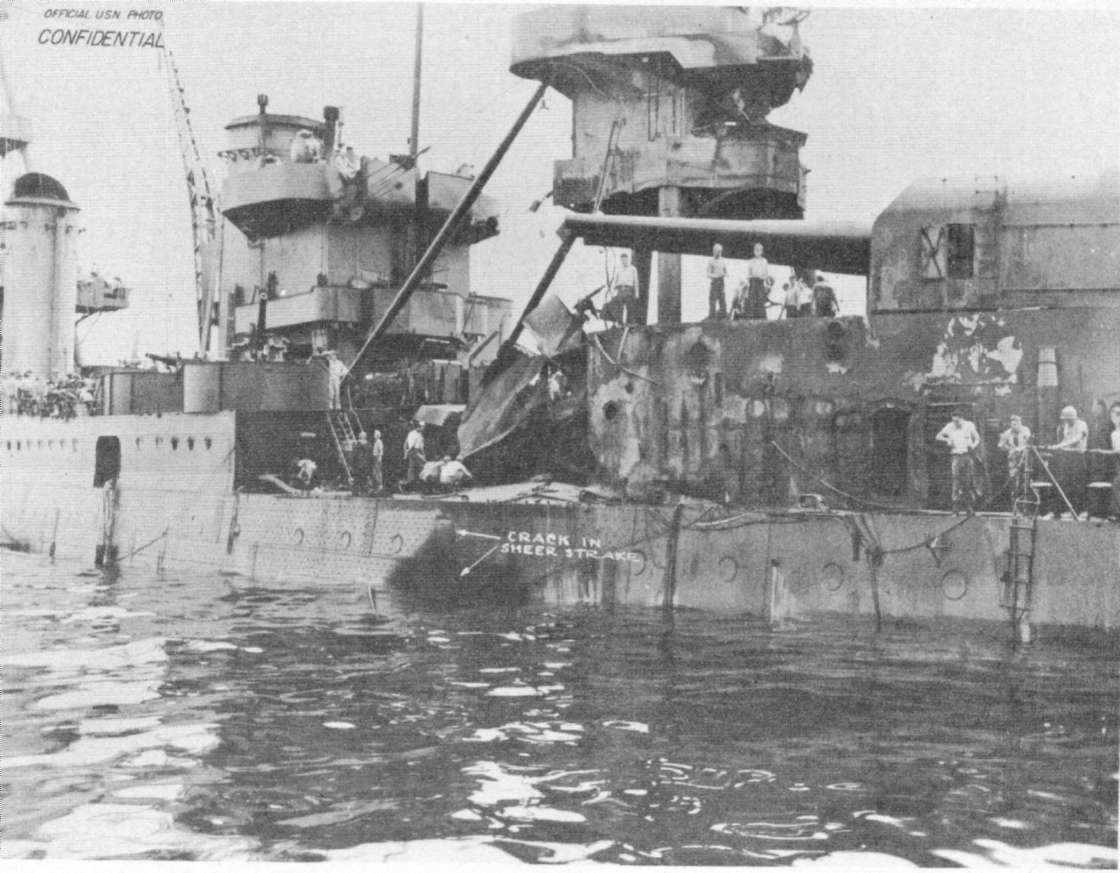
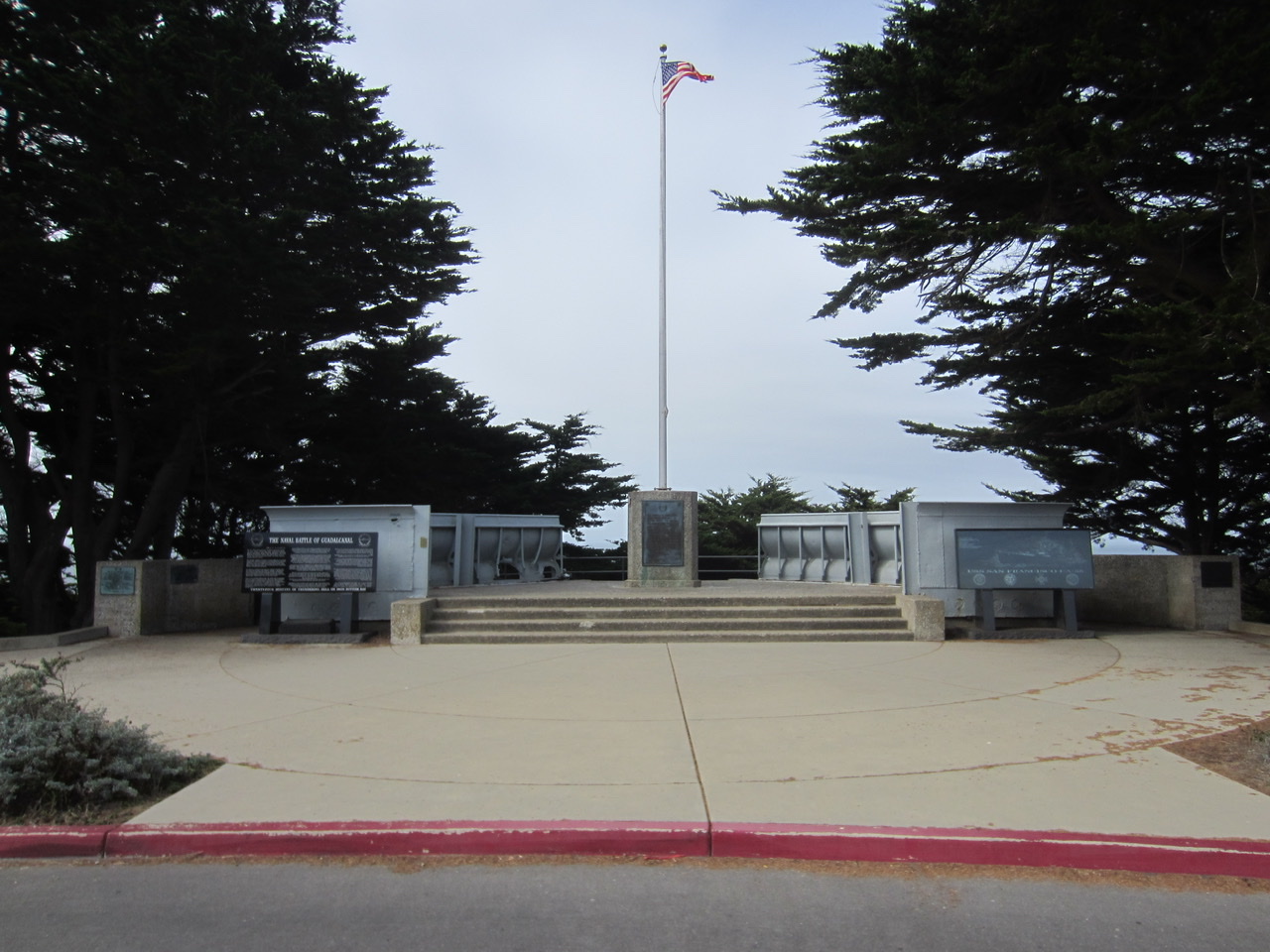
San Francisco (CA-38 Undamaged at Pearl Harbor, fought through Pacific war, most noted for actions at the Naval Battle of Guadalcanal fighting Japanese Battleship Hiei. Decommissioned 1946 and sold for scrap in 1959. San Francisco earned 17 battle stars during World War II. For her participation in the Naval Battle of Guadalcanal, she was awarded the Presidential Unit Citation. For the same action, three members of her crew were awarded the Medal of Honor: Lieutenant Commander Herbert E. Schonland, Lieutenant Commander Bruce McCandless , and Boatswain’s Mate 1st Class Reinhardt J. Keppler (posthumous). Admiral Daniel Callaghan was also awarded the Medal of Honor (posthumous).  During the November 1942 repair at Mare Island, it was necessary to extensively rebuild the bridge. The bridge wings were removed as part of that repair, and are now mounted on a promontory in Lands End, San Francisco at Golden Gate National Recreation Area overlooking the Pacific Ocean. They are set on the great circle course from San Francisco  to Guadalcanal.  The old ship’s bell is housed at the Marines Memorial Club in San Francisco.

Light Cruisers
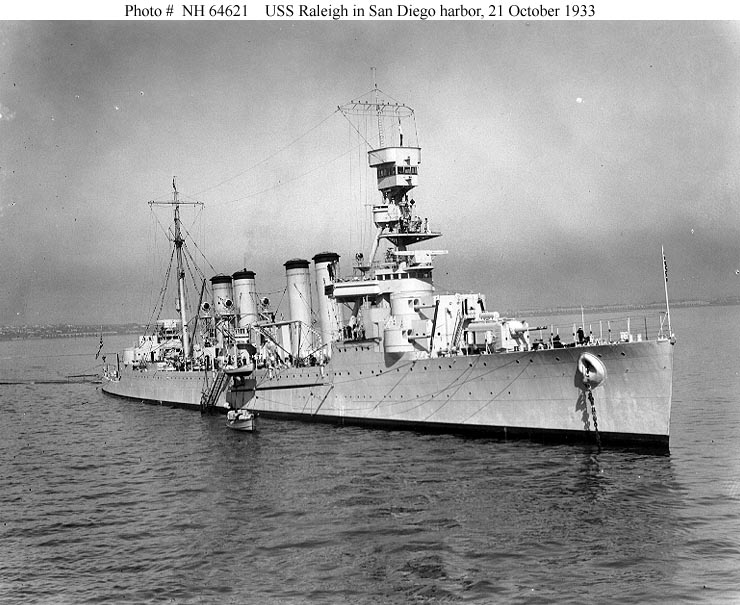
uss Raliegh

Raleigh (CL-7) Heavily damaged by torpedo, repaired served throughout war mainly in North Pacific . Decommissioned 1945 and scrapped 1946

Detroit (CL-8) Undamaged and got underway during attack. Mainly served in North Pacific and on convoy duty earning 6 battle stars for WWII service, decommissioned and sold for scrap 1946
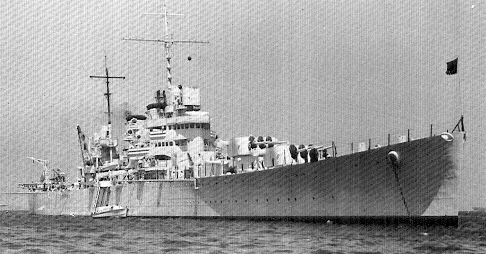
USS Phoenix
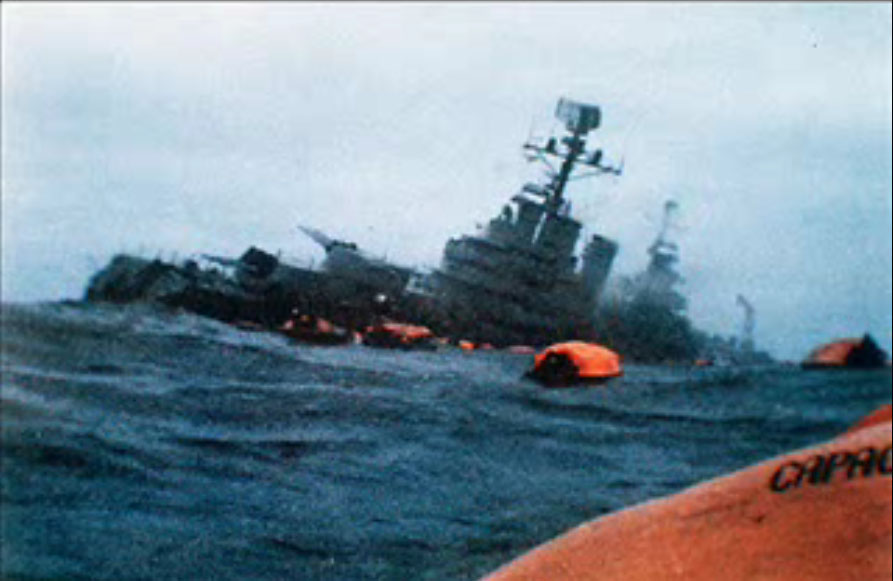
Belgrano-Sunk-copy2

The Argentine Navy Cruiser General Belgrano, the former USS Phoenix sinking during the Battle of the Falklands 1982

Phoenix (CL-46) Undamaged at Pearl Harbor and served throughout war and at the Battle of Surigo Strait she helped sink the Japanese Battleship Fuso.  She earned 9 battle stars for WWII service. Decommissioned 1946 and transferred to Argentina 1951. Served as General Belgrano and sunk by submarine HMS Conqueror on 2 May 1982 during the Falklands War.

Honolulu (CL-48) Suffered minor hull damage from near miss. Served in Pacific and fought several engagements against Japanese surface forces in the Solomons. At the Battle of Kolombangara on the night of 12-13 July 1943 she was damaged by a torpedo but sank the Japanese Light Cruiser Jintsu. Earned 9 battle stars for WWII service, decommissioned 1947 and sold for scrap 1949
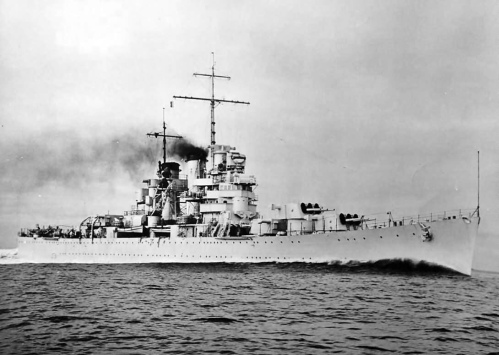
USS St. Louis

St. Louis (CL-49) St. Louis got underway at 0930 nearly torpedoed by Japanese midget sub. She served throughout war in numerous operations and was damaged at the Battle of Kolombangara. She earned 11 battle stars for WWII service. She decommissioned 1946 and transferred to Brazil where she was renamed Tamandare stricken in 1976 sold for scrap in 1980 but sank while under tow to Taiwan.

*Helena (CL-50) Damaged and repaired. Engaged in many battles around Solomon Islands where at the Battle of Cape Esperance at Guadalcanal she sank the Japanese Heavy Cruiser Furutaka and destroyer Fubiki. She was engaged during the Naval Battle of Guadalcanal and was sunk at Battle of Kula Gulf 6 July 1943.  She was the first ship to be awarded the Naval Unit Commendation and was awarded 7 battle stars for her WWII service.

Destroyers
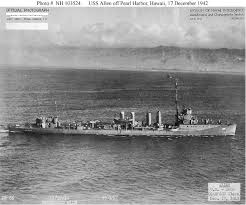
Allen (DD-66) Undamaged during attack spent war in local operations in Oahu area. Decommissioned 1945 and scrapped 1946

Schley (DD-103) Being overhauled on December 7th was undamaged in attack. Converted into High Speed Transport (APD) in 1942, earned 11 battle stars for WWII service and decommissioned in 1945 and scrapped in 1946

Chew (DD-106) Undamaged during attack and conducted local operations in Oahu operations for remainder or war, decommissioned 1945 and scrapped 1946.
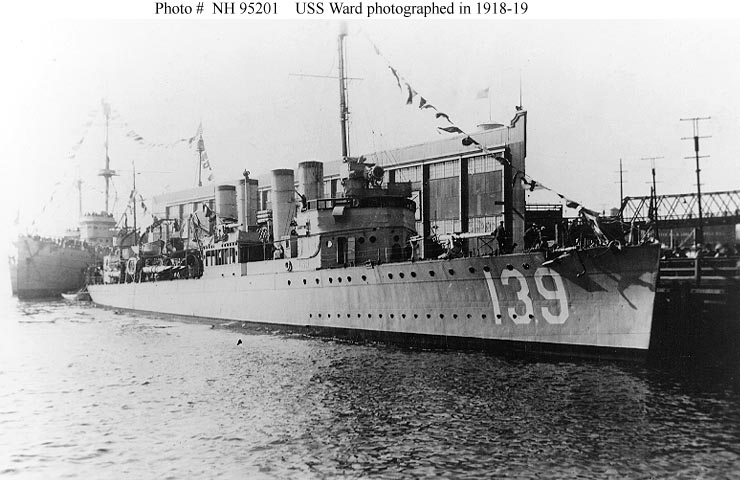
h95201

USS Ward

*Ward (DD-139) Ward was underway patrolling Channel entrance to Pearl Harbor on December 7th, sank Japanese midget submarine. Converted to APD in 1943 and served in numerous operations prior to being heavily damaged by Japanese bombers at Ormoc Bay off Leyte in December 1944 starting fires that could not be controlled. She was sunk by USS O’Brien (DD-725) after survivors were rescued. By a strange twist of fate the C.O. of O’Brien LCDR Outerbridge who had commanded Ward when she sank the Japanese submarine at Pearl Harbor. Ward earned 10 battle stars for WWII service.
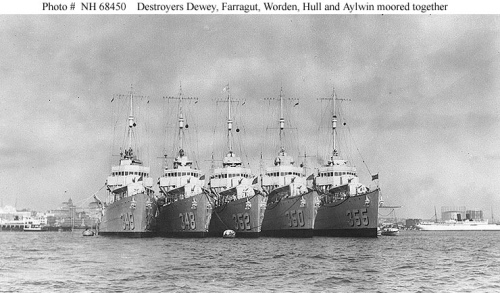
Dewey (DD-349) Being overhauled on December 7th Dewey served throughout the war earning 13 battle stars escorting carriers, convoys and supporting amphibious operations. Decommissioned October 1945 and sold for scrap 1946

Farragut (DD-348) Got underway during attack suffered minor damage from strafing. During the war she operated from the Aleutians to the South Pacific and Central Pacific escorting carriers and supporting amphibious operations. She earned 14 battle stars for WWII service. Decommissioned 1945 and sold for scrap 1947

*Hull (DD-350) Undamaged at Pearl Harbor she operated from the Aleutians to the South Pacific and Central Pacific escorting carriers and supporting amphibious operations. She earned 10 battle stars before sinking in “Halsey’s Typhoon” on 18 December 1944.

MacDonough (DD-351) MacDonough got underway during attack and was undamaged, during war served in North and Central Pacific escorting carriers and supporting amphibious operations. She earned 13 battle stars for her WWII service. Decommissioned October 1945 and sold for scrap 1946

*Worden (DD-352) Worden got underway during attack and went to sea with ships searching for Japanese strike force. Served at Midway and the South Pacific before being transferred to the Aleutians where she grounded on a pinnacle due to winds and currents at Constantine Harbor Amchitka Island on 12 January 193, she broke up in the surf and was written off as a total loss. Wordenwas awarded 4 battle stars for her WWII service.

Dale (DD-353) Dale got underway immediately under the command of her Command Duty Officer, an Ensign and joined ships searching for Japanese strike force. During war served in North and Central Pacific and took part in the Battle of the Komandorski Islands on 26 March 1943.  Earned 12 battle stars for WWII service, decommissioned October 1945 sold for scrap December 1946.

*Monaghan (DD-354)  Monaghan was the Ready destroyer on December 7th and ordered underway when Ward sank the midget submarine. On way out of harbor rammed, depth charged and sank a Japanese midget submarine that had gotten into Pearl Harbor. She participated in Coral Sea, Midway, Aleutians, the Battle of the Komandorski Islands and Central Pacific operations before sinking with the loss of all but 6 crewmen during the great Typhoon of November 1944 sinking on 17 November. She received 12 battle stars for her WWII service.
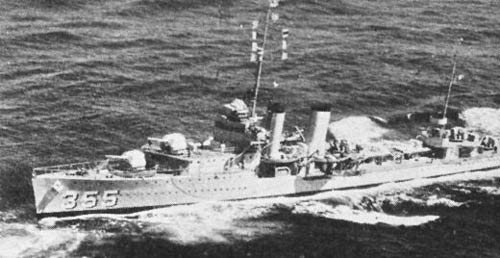
dd_uss_aylwin_dd355

USS Aylwin

Aylwin (DD-355) Got underway within an hour of the beginning of the attack with 50% of her crew and four officers, all Ensigns manning her leaving her Commanding Officer and others behind in a launch as she was under direction not to stop for anything. This incident was captured in the movie In Harm’s Way. During the war Aylwin saw action at Coral Sea, Midway, Guadalcanal, the Aleutians, and the Central Pacific up to the Okinawa and due to the action of her crew survived the great typhoon of November 1944. She earned 13 battle stars for her WWII service and was decommissioned in October 1945. She was sold for scrap in December 1946.
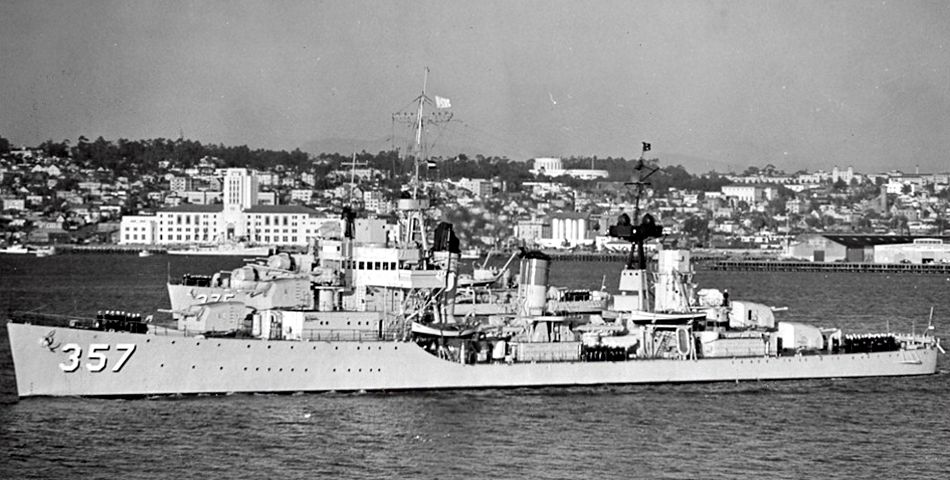
357selfridge_01

USS Selfridge

Selfridge (DD-357) Manned by a crew from 7 different ships Selfridge got underway at 1300 and was undamaged in the attack. Throughout war she served primarily as an escort to carriers and transports. Torpedoed by Japanese destroyer and lost her bow at Battle of Vella Lavella on 6 October 1942. Repaired and finished war. Earned 4 battle stars for WWII service and was decommissioned in October 1945 and sold for scrap in December 1946.

Phelps (DD-360) Undamaged at Pearl Harbor Phelps was credited with shooting down one enemy aircraft. She was in action at Coral Sea, Midway, Guadalcanal, the Aleutians and the Central Pacific picking up 12 battle stars for her WWII service. Decommissioned in October 1945 and scrapped 1947.

Cummings (DD-365) Sustained minor damage from bomb fragments but got underway quickly. During war served on convoy escort, with fast carrier task forces and provided Naval Gunfire Support from the Aleutians to the Indian Ocean where she operated with the Royal Navy. On 12 August 1944, President Roosevelt broadcast a nationwide address from the forecastle of Cummings after a trip the Alaska. Cummings was decommissioned in December 1945 and sold for scrap in 1947.

*Reid (DD-369) Undamaged at Pearl Harbor Reid escorted convoys and amphibious operations throughout the Pacific until she was sunk by Kamikazes at Ormoc Bay in the Philippines on 11 December 1944. On 31 August 1942 she sank by gunfire the Japanese submarine RO-1 off Adak Alaska. She received 7 battle stars for her WWII service.

Case (DD-370) Undamaged at Pearl Harbor Case escorted the fast carrier task forces throughout much of the war as well as conducted Anti-Submarine Warfare operations and Naval Gunfire Support. She sank a Midget submarine outside the fleet anchorage at Ulithi on 20 November 1944 and a Japanese transport off of Iwo Jima on 24 December 1944. She earned 7 battle stars for her WWII service and was decommissioned in December 1945 and sold for scrap in December 1947.

Conyngham (DD-371) Undamaged during attack she was underway that afternoon. Spent most of war on convoy escort, escorting carrier task forces and conducting Naval Gunfire Support missions she was damaged twice by strafing Japanese aircraft she earned 14 battle stars for her WWII service. Used in 1946 Atomic Bomb tests and destroyed by sinking in 1948.

Cassin (DD-372) Destroyed in drydock but salvaged returned to service 1944 escorting convoys and TG 38.1 the Battle Force of the fleet at Leyte Gulf as well as supporting amphibious operations. She earned 6 battle stars for her WWII service.  Decommissioned December 1945 and sold for scrap 1947
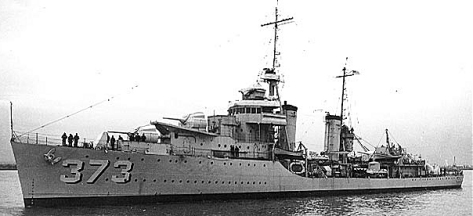
shaw09h3

USS Shaw

Shaw (DD-373) Sustained massive damage due to magazine explosion, salvaged and repaired served throughout war and awarded 11 battle stars. Damaged by Japanese dive bombers off Cape Gloucester on 25 December 1943 with loss of 3 killed and 33 wounded. Decommissioned October 1945 and scrapped 1947

*Tucker (DD-374) Undamaged at Pearl Harbor Tucker conducted convoy escort operations and was sunk when she struck a mine escorting a transport to Espiritu Santo on 1 August 1942 sinking on 4 August. She received one battle star for her WWII service.

Downes (DD-375) Destroyed in drydock and salvaged. Decommissioned June 1942, rebuilt and recommissioned 1943. After she was recommissioned and used to escort convoys and conduct Naval Gunfire Support to amphibious operations. She earned 4 battle stars for her WWII service. Decommissioned 1947 and sold for scrap.
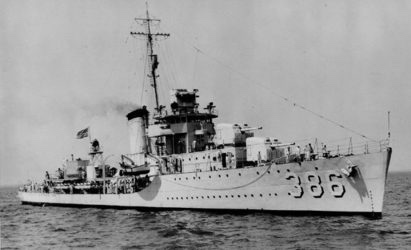
USS Bagley

Bagley (DD-386) Undamaged at Pearl Harbor Bagley conducted convoy escort operations and supported amphibious landings throughout the Pacific earning 1 battle stars ended the war on occupation duty at the Sasebo-Nagasaki area until returning to the United States. She earned 12 battle stars for her WWII service and was decommissioned in June 1946 and sold for scrap in October 1947.

*Blue (DD-387) Blue was undamaged and got underway during the attack under the direction of 4 Ensigns.  Served on convoy escort duties, present at Battle of Savo Island on 9 August 192 and was torpedoed off Guadalcanal by Japanese destroyer Kawakaze on 21 August and was scuttled 22 August. She earned five battle stars for her WWII service.

Helm (DD-388) Helm was underway, nearing West Loch at the time of the attack. Helm served in the Solomons and the South Pacific until February 19. She joined the fast carrier task forces of 5thFleet in May 1944. On 28 October at Leyte Gulf 28 October 1944 Helm and companion destroyer Gridley made sank the Japanese submarine I-46. She was used for a target during Operation Crossroads and scrapped in 1946. She received 11 battle stars for her WWII service.

Mugford (DD-389) Mugford was on standby status and had steam up which allowed her to get to sea during the attack in which she shot down Japanese aircraft. She spent much of 1942 on convoy duty between the U.S. and Australia. She took part in the Guadalcanal invasion and was struck by a bomb which killed 8 men, wounded 17 and left 10 missing in action. She would go on to serve in the Central and South Pacific being damaged by a near miss from a bomb on 25 December off Cape Gloucester and was stuck by a Kamikaze on 5 December 1944 in Surigo Strait. She escorted the fast carriers of TF 8 and 58 and later served on anti-submarine and radar picket duty. She decommissioned 1946 and was used in the Atomic Bomb tests and after use as a test ship for radioactive decontamination was sunk on 22 March 1948 at Kwajalein. She received 7 battle stars for her WWII service.

Ralph Talbot (DD-390) Ralph Talbot got underway by 0900 on the morning of the attack and joined other ships at sea attempting to find the Japanese strike force. She spent much of 1942 engaged in escort duties and took part in the Battle of Savo Island where she engaged the Japanese as part of the Northern Group and was damaged by Japanese shellfire. She spent the war in the South and Central Pacific escorting convoys and supporting amphibious operations and was damaged by a Kamikaze off Okinawa. She remained in service until 1946 when she was assigned to JTF-1 and the Operations Crossroads Atomic Bomb test. She survived the blast and was sunk in 198. She earned 12 battle stars for her WWII service.

*Henley (DD-391) Undamaged at Pearl Harbor Henley was already at General Quarters when the attack began because a new sailor sounded the General Quarters alarm instead of Quarters for Muster. As a result her weapons were manned. She got underway during the attack under the command of a junior Lieutenant and joined other ships patrolling outside of Pearl Harbor. Henley carried out convoy and anti-submarine patrols mainly around Australian continuing those duties through the Guadalcanal campaign. She was torpedoed and sunk by Japanese bombers on 3 October 1943 while conducting a sweep in support of troops ashore near Finshafen New Guinea. Henley earned 4 battle stars for her WWII service.

Patterson (DD-392) Patterson was undamaged during the attack and proceeded to sea conducting anti-submarine warfare patrols. She would spend the bulk of the war as an escort for fast carrier task forces. She was with the Southern Group during the Battle of Savo Island and suffered a hit on her #4 gun mount that killed 10 sailors.  She was awarded 13 battle stars for her WWII service. Decommissioned in November 1945 she was stricken from the Naval Vessel Register in 1947 and sold for scrap.

*Jarvis (DD-393) Jarvis survived Pearl Harbor undamaged and got underway to join other ships in patrols around Oahu.  She served as an escort for carriers and convoys and the invasion of Guadalcanal. She was heavily damaged by an aircraft launched torpedo during the landings but her crew made temporary repairs and restored power. She was ordered to Efate New Hebrides but evidently unaware of the order her Commanding Officer set sail for Sidney Australian and repairs from the Destroyer Tender USS Dobbin. She passed south of Savo Island as the Japanese cruiser force approached and refused assistance for the USS Blue.  She was last seen on the morning of 9 August 1942 by a scout plane from Saratoga. Already heavily damaged and having little speed, no radio communications and few operable guns was attacked by a force of 31 Japanese bombers sinking with all hands at 1300 on 9 August. Jarvis was awarded 3 battle stars for her WWII service.
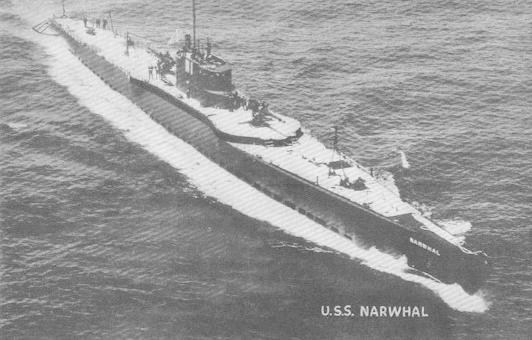
v-5a

USS Narwhal

Narwhal (SS-167) Narwhal was one of a class of three large cruiser submarines that was built in the mid 1920s. Narwhal was 14 years old at the time of the attack. She was undamaged at Pearl Harbor and was used primarily to support special missions and special operations forces in raids against Japanese shore installations. Narwhal earned 15 battle stars for her service in the Pacific and was decommissioned in February 1945 and sold for scrap in May. Her 6” guns are enshrined at the Naval Submarine Base Groton.

Dolphin (SS-169) Undamaged in the Pearl Harbor attack Dolphin made 3 war patrols in late 1941 and early 1942 before being withdrawn from combat service and used for training due to her age. She was decommissioned in October 1945 and sold for scrap in 1946. She received 2 battle stars for her service in WWII.

Cachalot (SS-170) Undamaged at Pearl Harbor Cachalot conducted three war patrols damaging an enemy tanker before being withdrawn from combat service in the fall of 1942 being judged too old for arduous combat service. She served as a training ship until June 1945 and was decommissioned in October 1945 and sold for scrap in January 1947. She was awarded 3 battle stars for her WWII service.
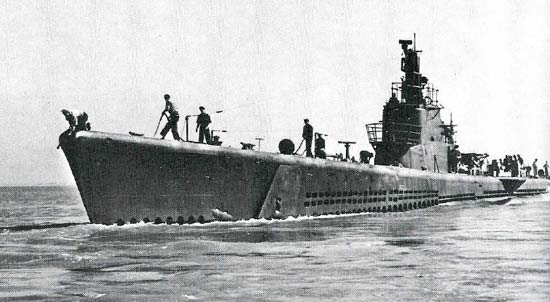
ss_uss_tautog_ss199

USS Tautog

Tautog (SS-199) Tautog was undamaged at Pearl Harbor and made the Japanese pay for not sinking her. She helped avenge the Pearl Harbor attack sinking 26 enemy ships of 71,900 tons including the submarines RO-30 and I-28 and destroyers Isoname and Shirakumo in 13 war patrols. She was withdrawn from combat service in April 1945 and served and operated in conjunction with the University of California’s Department of War Research in experimenting with new equipment which it had developed to improve submarine safety. She was decommissioned in December 1945. Spared from the Atomic Bomb tests she served as an immobile reserve training ship in the Great Lakes until 1957 and was scrapped in 1960.  Tautog was awarded 14 battle stars and a Naval Unit Commendation for her service in WWII.

Minelayer
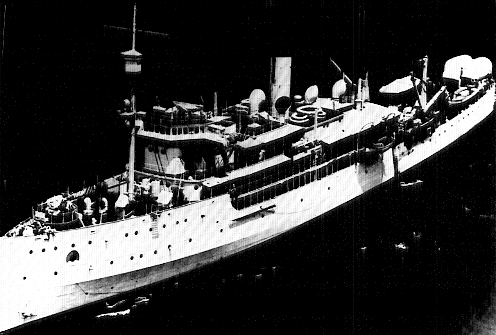
OGLALA

USS Oglala

Oglala (CM-4) Sank due to concussion from torpedo hit on Helena. Raised and repaired, converted to internal combustion repair ship. Decommissioned 1946 transferred to Maritime Commission custody and scrapped 1965

Minesweepers

Turkey (AM-13) Undamaged at Pearl Harbor she was redesignated as a Fleet Tug in 1942. She was decommissioned in November 1945 and sold for scrap in 1946. She received one battle star for her service at Pearl Harbor.

Bobolink (AM-20) Undamaged at Pearl Harbor and redesignated as an Ocean Going Tug in 1942. She decommissioned in 1946 and sold through the Maritime Administration. She received one battle star for her service at Pearl Harbor.

Rail (AM-26) Undamaged at Pearl Harbor Rail was redesignated as a Ocean Going Tug in June 1942. She supported operations throughout the Pacific earning 6 battle stars for her WWII service. She was decommissioned in 1946 and transferred to the Maritime Administration for disposal in 1947.

Tern (AM-31) Undamaged in the attack Tern was redesignated as an Ocean Going Tug in June 1942 and supported the fleet for the remainder of the war. She was decommissioned and struck from the Navy List in December 1945. She earned one battle star for her service at Pearl Harbor.

*Grebe (AM-43) Undamaged at Pearl Harbor Grebe was redesignated as an Ocean Going Tug in June 1942.  On 6 December 1942 Grebe grounded while attempting to float SS Thomas A. Edison at Vuanta Vatoa, Fiji Islands. Salvage operations were broken up by a hurricane that destroyed both ships 1-2 January 1943.
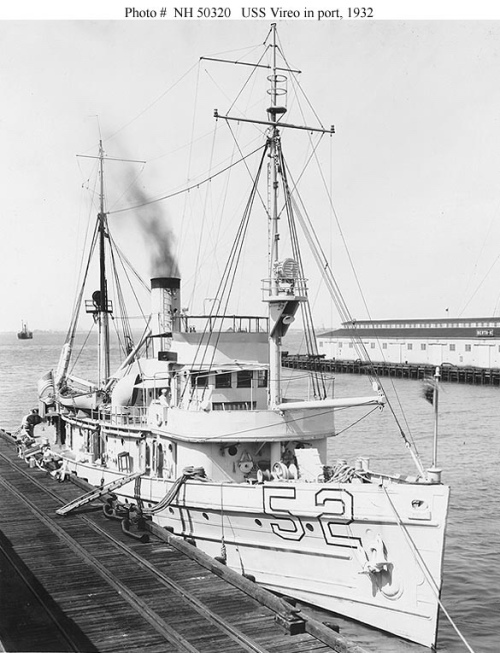
Vireo (AM-52) Undamaged at Pearl Harbor Vireo was designated an Ocean Going Tug in May 1942. At the Battle of Midway she was assisting USS Yorktown CV-5 when that ship was torpedoed by a Japanese submarine and sunk.  She was damaged in a Japanese air strike off Guadalcanal on October 15th 1942 abandoned but recovered by U.S. Forces and repaired supporting damaged fleet units. She was decommissioned in 1946 and disposed of by the Maritime Administration in 1947. Her final disposition is unknown. She was awarded 7 battle stars for her WWII service.

Coastal Minesweepers

Cockatoo (AMC-8) Undamaged at Pearl Harbor Cockatoooperated in the 14th Naval District from Pearl Harbor throughout the war. She was transferred to the Maritime Commission 23 September 1946.

Crossbill (AMC-9) Undamaged in the attack she operated in an in-service status attached to the 14th Naval District from 1941 to 1947.
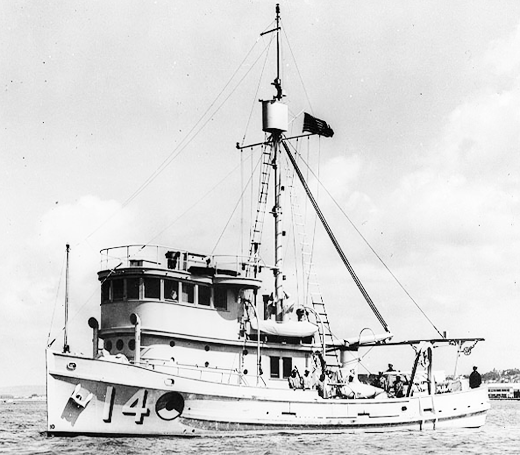
AMc-14_Condor

USS Condor

Condor (AMC-14) Undamaged in the attack she operated in the Hawaiian Islands throughout World War II. Placed out of service 17 January 1946, she was transferred to the Maritime Commission for disposal 24 July 1946.

Reedbird (AMC-30) Undamaged during the attack she operated in Hawaiian waters throughout World War II. Then ordered inactivated, Reedbird returned to San Diego where she was stripped and placed out of service 14 January 1946. Her name was struck from the Navy list 7 February 1946 and on 8 November 1946 she was delivered to the Maritime Commission for disposal.

Light Minelayers (Note: All of these ships were WWI era “four piper” destroyers converted to Mine Warfare ships in the 1920s and 1930s)
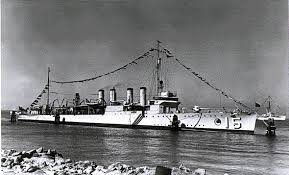
gable

USS Gamble

*Gamble (DM-15) Gamble was undamaged at Pearl Harbor and served throughout the Pacific. On 29 August 1942 she sank Japanese submarine I-123 near Guadalcanal. On 6 May 1943 she mined the Blackett Strait with her sisters USS Preble and USS Breese. On the night of 7-8 May a Japanese destroyer force entered the minefield one of which Kurashio, went down and two others Oyashio and Kagero were sunk by Allied aircraft the next day. The sinking of Kagero provided a measure of revenge as that ship was part of the Japanese Carrier Strike Group that attacked Pearl Harbor. On 18 February 1945 Gamble was damaged by two bombs while operating off of Iwo Jima. Badly damaged she was towed to Saipan but salvage was impossible and she was decommissioned sunk off of Apra Harbor Guam on 16 July 1945. She was awarded 7 battle stars for her WWII service.

Ramsay (DM-16) Ramsey got underway during the attack and dropped depth charges in the vicinity of what was believed to be a midget submarine. She served in the Solomons and Aleutians and was redesignated as a Miscellaneous Auxiliary (AG-98) in 1944 operating around Pearl Harbor. She was decommissioned in October 1945 and scrapped in 1946. She received 3 battle stars for her WWII service.

*Montgomery (DM-17) Undamaged in the attack Montgomeryconducted ASW operations in the wake of the attack. She operated throughout the Pacific until she was damaged by a mine while anchored off Ngulu on 17 October 1944. She was decommissioned on 23 April 1945 and sold for scrap in 1946. She was awarded 4 battle stars for her WWII service.

Breese (DM-18) Breese got underway during the attack and assisted in sinking a midget submarine. She was engaged throughout the war in the Pacific and operated with Gamble and Preble to mine the Blackett Strait in May 1943, an operation that resulted in the sinking of 3 Japanese destroyers. She was decommissioned and sold for scrap in 1946. She was awarded 10 battle stars for her WWII service

Tracy (DM-19) Tracy was being overhauled during the attack and all machinery and armament was dismounted.  After the overhaul she operated around the Pacific and in February 1943 she Tracy, as task group leader, led Montgomery (DM-17) and Preble (DM-20) in laying a field of 300 mines between Doma Reef and Cape Esperance. That night, Japanese destroyer Makigumo struck one of these mines and was damaged so badly that she was scuttled. Tracy was decommissioned and scrapped in 1946. She received 7 battle stars for her WWII service

Preble (DM-20) Preble was being overhauled on December 7thand took no part in the action. During the war she operated throughout the Pacific and in company with Gamble and Breeselaid a minefield on 6 May 1943 which resulted in sinking 3 Japanese destroyers. She was redesignated as a Miscellaneous Auxiliary (AG-99) and she was regulated to convoy escort duties until the end of the war. She was decommissioned in December 1945 and sold for scrap in 1946. She was awarded 8 battle stars for WWII service.

Sicard (DM-21) Sicard was under overhaul at the Naval Shipyard during the attack. During the war she primarily served on convoy escort duty with and in some mine laying operations. She was reclassified a miscellaneous auxiliary, AG-100, effective 5 June 1945, decommissioned in December 1945 and sold for scrap in 1946. She was awarded 2 battle stars for her WWII service.

Pruitt (DM-22) Pruitt was being overhauled during the attack and served throughout the Pacific during the war. She was reclassified a miscellaneous auxiliary, AG-101, effective 5 June 1945, decommissioned November and stricken from the Navy List in December 1945 being scrapped at Philadelphia Naval Shipyard. She was awarded 3 battle stars for her WWII service.

High Speed Minesweepers (Note: All of these ships were WWI era “four piper” destroyers converted to Mine Warfare ships in the 1920s and 1930s)
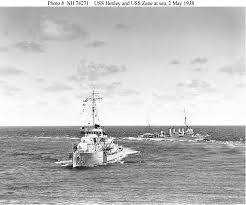
Zane (DMS-14) Undamaged at Pearl Harbor Zane saw much service in the South and Central Pacific in WWII. She conducted minesweeping, convoy escort and ASW operations from Pearl Harbor to the Marianas campaign. She was damaged in a firefight with Japanese destroyers at Guadalcanal in 1942.  After the invasion of Guam she was reassigned to target towing duties. Reclassified from high-speed minesweeper to a miscellaneous auxiliary, AG-109, on 5 June 1945 she decommissioned in December 1945 and sold for scrap in 1946. She was awarded 6 battle stars and a Naval Unit Commendation for her service in WWII.

*Wasmuth  (DMS-15) Wasmuth was undamaged during the attack and spent 1942  conducting patrol and convoy escort duties in the Aleutians and the West Coast. On 27 December 1942 while escorting a convoy in heavy seas two of her depth charges were ripped off their racks and exploded under her fantail blowing off her stern.  Despite repair attempts her crew was evacuated and she sank on 29 December 1942. She was awarded one battle star for her service at Pearl Harbor.
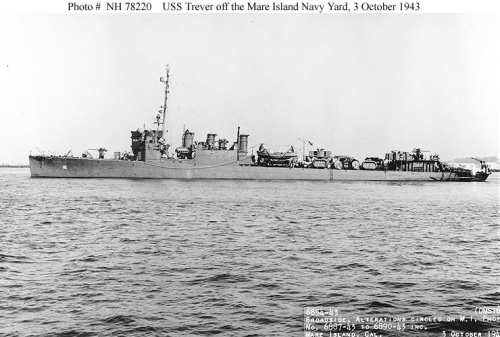
Trever (DMS-16) Trever got underway during the attack without her Commanding Officer. During the war she saw extensive service. In 1945 she was regulated to training and local operations around Pearl Harbor. On 4 June 1945, she was reclassified as a miscellaneous auxiliary and designated as AG-110 and decommissioned in December 1945 and sold for scrapping in 1946. She received 5 battle stars for her WWII service.

*Perry (DMS-17) Perry got underway during the attack and was undamaged. During the war she engaged in numerous minesweeping and escort duties. She struck a mine during the Peleliu invasion off Florida Island and sank on 6 September 1944. She was awarded 6 battle stars for her WWII service.

Gunboat
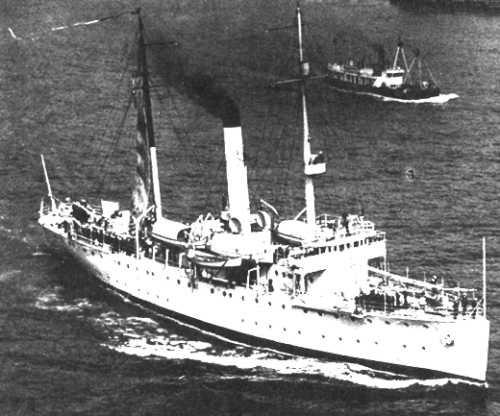
pg_uss_sacramento

USS Sacramento

Sacramento (PG-19) The elderly Sacramento was undamaged during the attack and participated in rescue and salvage operations after the attack. During the war she served as a tender for PT Boats and an air sea rescue vessel.  Sacramento was decommissioned on 6 February 1946 at Suisun Bay, Calif., and simultaneously transferred to the War Shipping Administration for disposal. She was sold on 23 August 1947 for mercantile service, initially operating under Italian registry as Fermina. She received one battle star for her service at Pearl Harbor.

Destroyer Tenders
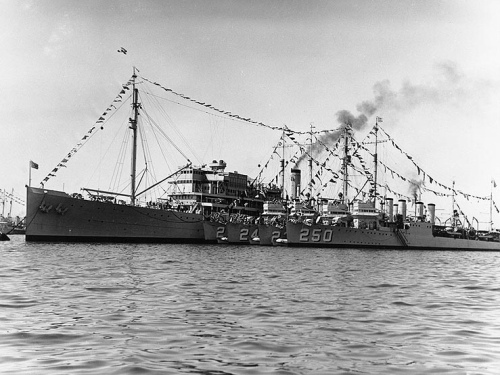
USS Dobbin with USS Lawrence and three other destroyers

Dobbin (AD-3) Dobbin received minor damage from a bomb burst alongside which killed 2 crewmembers.  During the war she would serve in the South Pacific supporting Pacific Fleet Destroyer Squadrons. She was decommissioned and transferred to the Maritime Administration in 1946. She was awarded one battle star for her service at Pearl Harbor.

Whitney (AD-4) Whitney was moored with a nest of destroyers during the attack and helped them prepare for sea during the attack issuing supplies and ammunition to help them get underway. Her sailors helped in repair and salvage operations on several ships during and after the attack.  She would provide vital support to destroyer squadrons during the war and serve until 1946 when she was decommissioned and transferred to the Maritime Administration and scrapped in 1948. She received one battle star for her service at Pearl Harbor.

Seaplane Tenders
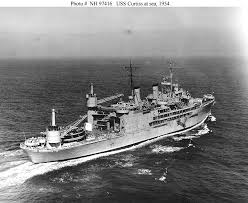
Curtiss (AV-4) Damaged by bomb and repaired. She served throughout the war and was damaged by a  Kamikaze in 1945 while operating off Okinawa. Repaired she finished the war and served on active duty until 1956 when she was decommissioned and placed in reserve. She was scrapped 1972. Curtiss received 7 battle stars for her WWII service.

Tangier (AV-8) Moored just past the USS Utah Tangier was undamaged in the attack and contributed her guns to the air defense as well as shooting at a Japanese midget submarine that had penetrated the harbor. She maintained a very active operational carrier in the Pacific. Decommissioned in 1946 Tangier was sold for scrap in 1961. She earned 3 battle stars for her WWII service.

Seaplane Tenders (Small)
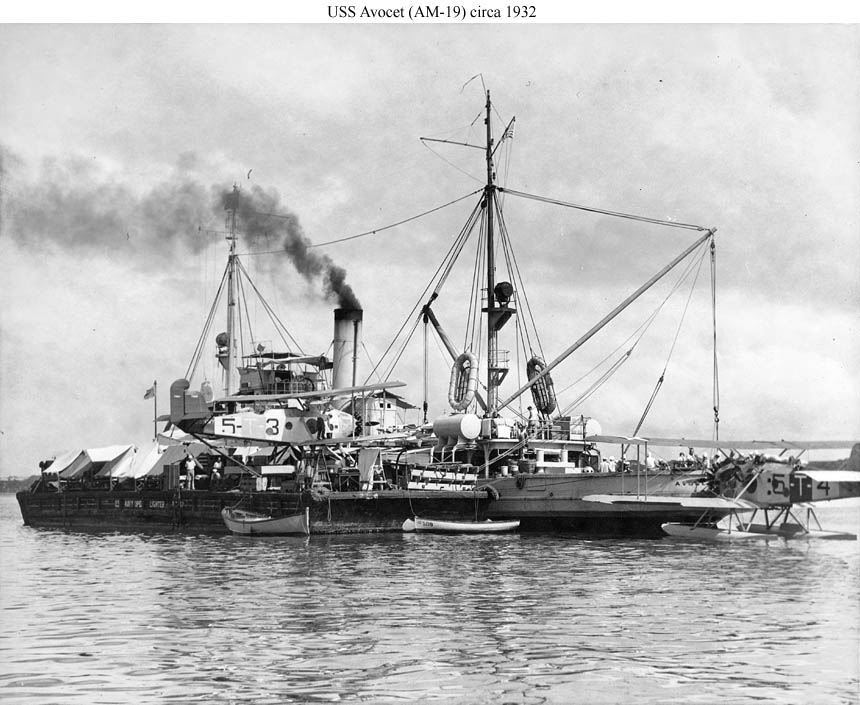
avocet3-08

Avocet (AVP-4) Undamaged at Pearl Harbor Avocet Avocetserved in the Alaskan and Aleutian theatres of operations as a unit of Patrol Wing 4. During the years, she tended patrol squadrons, transported personnel and cargo, and participated in patrol, survey, and salvage duties. She was decommissioned in December 1945 and sold in 1946. She received one battle star for her service at Pearl Harbor.

Swan (AVP-7) Swan was on the Marine Railway drydock during the attack and was undamaged. During the war she was primarily used on target towing duties. She was decommissioned in December 1945 and disposed of by the Maritime Commission in 1946. She received one battle star for her service at Pearl Harbor.

Seaplane Tenders (Destroyer) (Note: All of these ships were WWI era “four piper” destroyers converted to Seaplane Tenders in the 1920s and 1930s)

Hulbert (AVD-6) Hulbert was undamaged during the attack and spent 1942-1943 conducting support missions for flying boats. Reclassified DD-342 she was used as an escort and plane guard for new Escort Carriers at San Diego until the end of the war. She was decommissioned in November 1945 and sold for scrap in 1946. She received 2 battle stars for her WWII service.
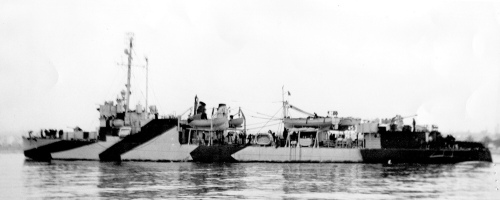
USS Thornton

*Thornton (AVD-11) Thornton contributed her guns to the defense of Pearl Harbor and served in varying locales in the Pacific supporting the operations of flying boats. She was lost during the Okinawa invasion when collided with Ashtabula (AO-51) and Escalante (AO-70). Her starboard side was severely damaged. She was towed to Kerama Retto. On 29 May 1945 a board of inspection and survey recommended that Thornton be decommissioned, beached stripped of all useful materiel as needed, and then abandoned. She was beached and decommissioned on 2 May 1945. Her name was struck from the Navy list on 13 August 1945. In July 1957, Thornton’s abandoned hulk was donated to the government of the Ryukyu Islands. She received 3 battle stars for her WWII service.

Ammunition Ship
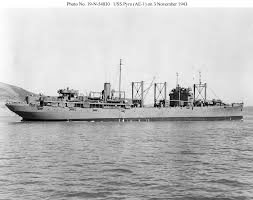
Pyro (AE-1) Pyro was undamaged in the attack and served the war transporting ammunition to naval bases around the Pacific. She was decommissioned in 1946 and scrapped in 1950. She was awarded one battle star for her service at Pearl Harbor.

Oilers

Ramapo (AO-12) Ramapo was not damaged at Pearl Harbor and due to her slow speed was regulated to fuel transport operations between the Aleutians and the Puget Sound. She was decommissioned in 1946 and transferred to the Maritime Administration.
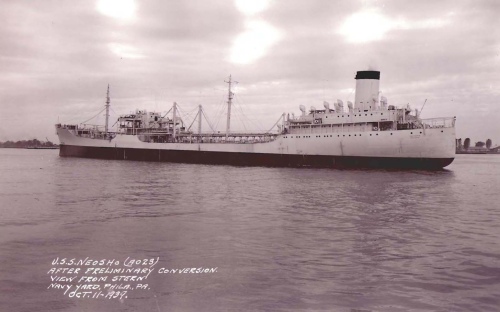
*Neosho (AO-23) Undamaged during the attack her Captain alertly moved her from her berth near Battleship Row to a less exposed part of the harbor.  She operated with the carrier task forces and was heavily damaged at the Battle of Coral Sea by Japanese aircraft. Her crew kept her afloat for 4 days until she was discovered and her crew rescued before she was sunk by gunfire from USS Henley on 11 May 1942. Neosho was awarded 2 battle stars for her WWII service.

Repair Ships

Medusa (AR-1) Medusa was undamaged at Pearl Harbor and spent the war throughout the South Pacific repairing numerous vessels damaged in combat. After the war she served to prepare ships for inactivation before being decommissioned in 1947 and turned over to the Maritime Administration. She was scrapped in 1950. She received one battle star for her service at Pearl Harbor.
g19933

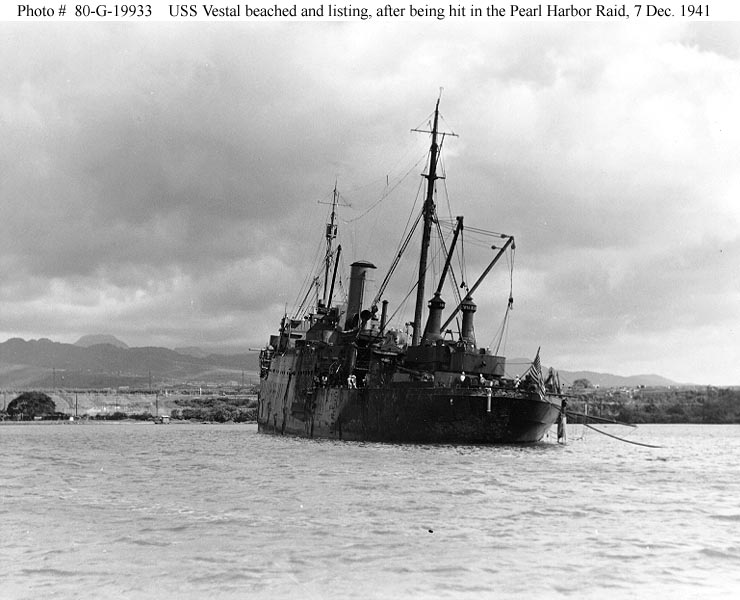
USS Vestal after the attack

Vestal (AR-4) Vestal was damaged while moored adjacent to USS Arizona. Repaired following the attack Vestal served throughout war in the Pacific and was vital during the critical days of 1942 when she and her crew performed valiant service on major fleet units damaged during the Guadalcanal campaign and actions around the Solomon Islands. Carriers Enterprise and Saratoga, battleships South Dakota and North Carolina, cruisers San Francisco, New Orleans, Pensacola and St. Louis were among the 5,603 jobs on 279 ships and 24 shore activities that she completed in a 12 month tour at Espiratu Santo. She would continue to perform this level of service the remainder of the war. During a stint at Ulithi she completed 2,195 jobs for 149 ships including 14 battleships, 9 carriers, 5 cruisers and 5 destroyers.  She continued her vital work even after the war into 1946 when she was finally decommissioned.  She was sold for scrap in 1950. She received 1 battle star for her service at Pearl Harbor.

Rigel (AR-11) Rigel was at Pearl Harbor completing her transformation from Destroyer Tender to Repari Ship. She incurred minor damage and she served throughout the war conducting vital repairs to numerous ships. She was decommissioned and transferred to the Maritime Administration in 1946.  Her ultimate fate is unknown. She was awarded 4 battle stars for her WWII service.

Submarine Tender
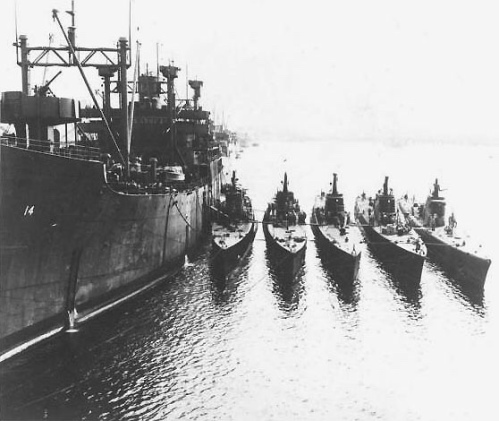
USS Pelias with 5 Submarines

Pelias (AS-14) Undamaged during the attack Pelias supported submarine squadrons based in the Pacific throughout the war. She was placed in commission in reserve 6 September 1946, and in service in reserve 1 February 1947. On 21 March 1950 she was placed out of service in reserve but later performed berthing ship duty at Mare Island until she decommissioned 14 June 1970. She was scrapped in 1973.

Submarine Rescue Ships
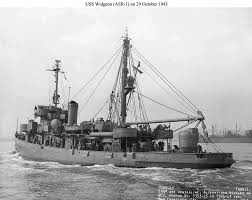
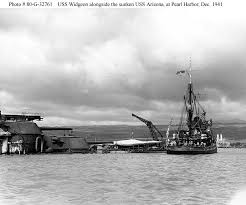
Widgeon (ASR-1) Widgeon conducted salvage, rescue and fire fighting operations on the sunk and damaged battleships on battleship row. During the war she served as the duty submarine rescue ship at Pearl Harbor and San Diego.  After the war she supported the Operation Crossroads. She was decommissioned and sold for scrap in 1947. She received on battle star for her service at Pearl Harbor.

Hospital Ship
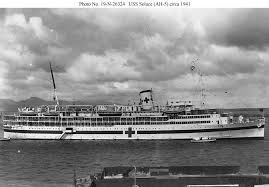
Solace (AH-5) Solace was undamaged in the attack and provided medical care to many of the wounded after the attack. She served throughout the war caring for the wounded and dying in the Gilberts, the Marshalls, Guam, Saipan, Palau, Peleliu, Iwo Jima and Okinawa.  Solace was decommissioned at Norfolk on 27 March, struck from the Navy list on 21 May, and returned to the War Shipping Administration on 18 July 1946. She was sold to the Turkish Maritime Lines on 16 April 1948 and renamed SS Ankara, rebuilt as a passenger liner. SS Ankara was laid up in 1977 and scrapped at Aliaga, Turkey, in 1981. Solace received seven battle stars for World War II service.

Cargo Ship
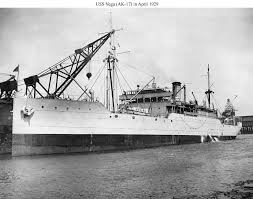
Vega (AK-17) Vega was at Honolulu offloading ammunition when the attack occurred. She served in the Aleutians and in the Central Pacific during the war. Decommissioned and scrapped in 1946. She received 4 battle stars for her WWII service.

General-Stores-Issue Ships

Castor (AKS-1) Castor was strafed by Japanese aircraft during the attack but suffered little damage. She would go on to an illustrious career in WWII, Korea and Vietnam before being decommissioned 1968 and scrapped in Japan in 1969. She was awarded three battle stars for World War II service, two for Korean War service and six campaign stars for Vietnam War service.
antares_aks2b-08

USS Antares 

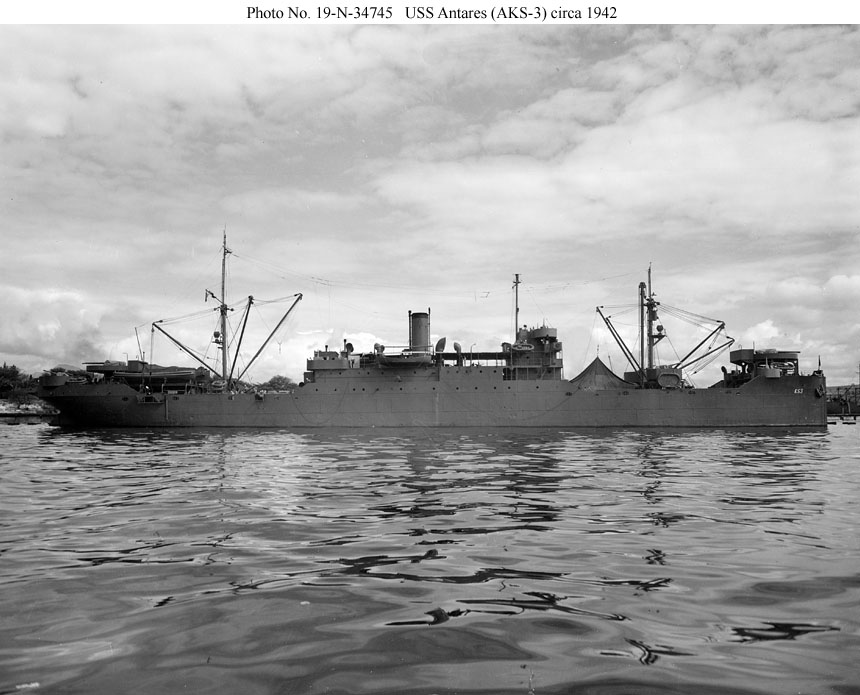
Antares (AKS-3) Antares was at the Pearl Harbor entrance and spotted a midget submarine. She reported the contact to the USS Ward which sank the sub.  During the war Antares made many supply runs in the Pacific and was at Okinawa. Sailing from Saipan to Pearl Harbor she was attacked by the Japanese submarines I-36, whose torpedoes missed their target and the kaiten-carrying I-165. She opened fire on one of the subs forcing it to dive. She was decommissioned in 1946 and sold for scrap in 1947. She was awarded 2 battle stars for her WWII service.

Ocean-going Tugs
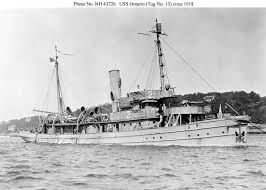
Ontario (AT-13) Undamaged at Pearl Harbor Ontario would support operations in the Pacific throughout the war. She was decommissioned in 1946 and sold in 1947. She received one battle star for her service at Pearl Harbor.

Sunnadin (AT-28) Undamaged in the attack she operated at Pearl Harbor for the duration of the war. She was decommissioned in 1946 and transferred to the Maritime Administration. Her final disposition is unknown. She was awarded one battle star for her service during the Pearl Harbor attack.

Keosanqua (AT-38) Keosanqua was at the Pearl Harbor entrance preparing to transfer a tow from the USS Antares. She took the tow to Honolulu during the attack. She operated at Pearl Harbor and in the Central Pacific conducting towing operations. She was decommissioned in 1946   ransferred to the Maritime Commission 11 July for disposal, she was sold the same day to Puget Sound Tug & Barge Co., Seattle, Wash. Resold to a Canadian shipping firm in 1948, she was renamed Edward J. Coyle. In 1960 she was renamed Commodore Straits.
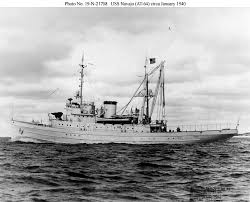
*Navajo (AT-64) Navaho was 12 miles outside Pearl Harbor entrance when the attack occurred. She operated in the South Pacific until 12 December 1942 when she was torpedoed and sunk by the Japanese submarine I-39 while towing gasoline barge YOG-42 150 miles east of Espiritu Santo, 12 December 1943 with the loss of all but 17 of her crew of 80.  She earned 2 battle stars for her WWII service.

Miscellaneous Auxiliaries
ussUtah

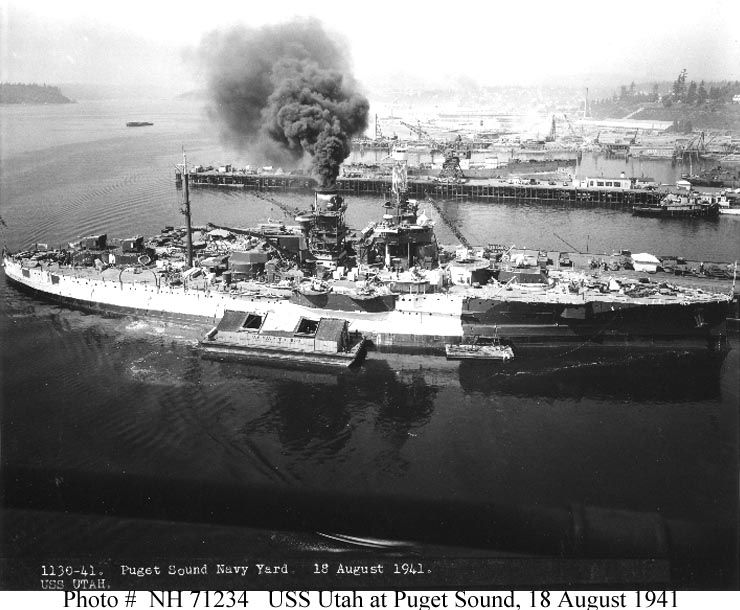
USS Utah AG-16

*Utah (AG-16 ex-BB-31) Sunk at her moorings and righted 1944 but not raised, wreck is now a memorial at Ford Island.
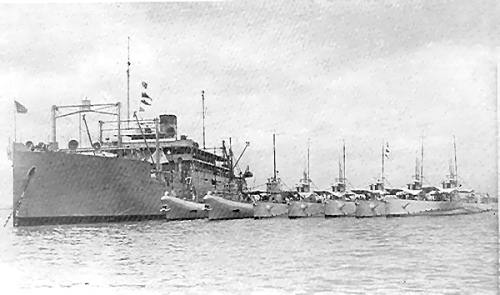
USS Argonne as a Submarine Tender

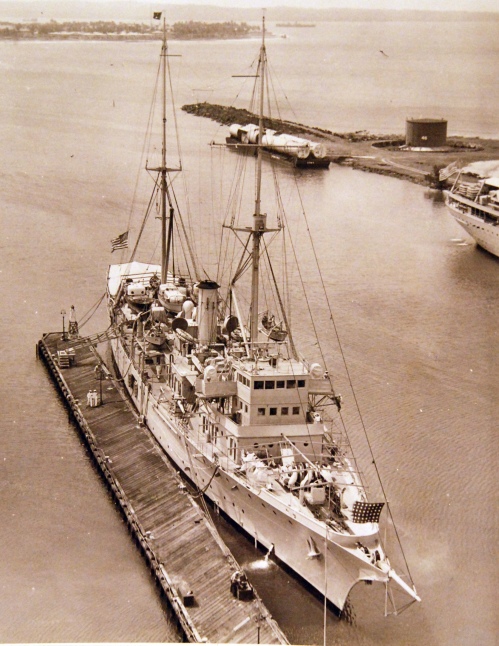
Argonne (AG-31) A former Submarine Tender, Argonne was undamaged during the attack and served in a variety of capacities during the war supporting operations in the Pacific. For a time she was Admiral Halsey’s flagship as Commander Southwest Pacific in 1942 during the Guadalcanal Campaign.  On 10 November 1944, Argonne lay moored to a buoy in berth 14, Seeadler Harbor, when the ammunition ship Mount Hood (AE-11) blew up, 1,100 yards away causing damage to her and other ships which she assisted after the explosion. She was decommissioned in 1946 and transferred to the Maritime Administration. She was scrapped in 1950. Argonne was awarded one battle star for her service at Pearl Harbor.
.

USS Sumner (ex-Bushnell)

Sumner (AG-32) Sumner was undamaged during the attack and was redesignated as a Survey Ship AGS-5. She was damaged by a Japanese shell off Iwo Jima on 8 March 1945. She was decommissioned in 1946 and transferred to the Maritime Administration. She was awarded 3 battle stars for her WWII servicE.
Leave a comment

Filed under Foreign Policy, History, Military, national security, Navy Ships, Political Commentary, US Navy, World War II at Sea, world war two in the pacific

Against Insurmountable Odds: The Naval Battle of Guadalcanal, part Two


Friends of Padre Steve’s World,

Last night I wrote about the opening engagement of the Naval Battle of Guadalcanal. Despite the heroic battle to protect the Marines on Guadalcanal I the early morning hours of November 13th, the situation in the White House was akin to the setbacks at Omaha Beach a year and a half later. The temptation to withdraw the Marines who had already won a foothold on the island and who had withstood several major Japanese assaults was strong, but time played a role that superseded American political realities.

                                                        IJN Kinugusa 
On the morning of the 13th, following the defeat of Rear Admiral Hiraoki Abe’s Force, Vice Admiral Nobutake Kondo pressed home the attack. On the 13th, his transport force, carrying the Imperial Army 38th Division, protected by the destroyers of Rear Admiral Gunichi Mikawa ran the gauntlet of  Marine Corps, Navy, and Army Air Force aircraft stationed at Henderson Field which according to the Japanese plan should have been rendered inoperative on the night of the 12th and 13th. Mikawa pressed ahead despite heavy losses and though losing seven of the eleven transports landed a sizable number of troops on Guadalcanal despite losing most of their supplies and equipment.

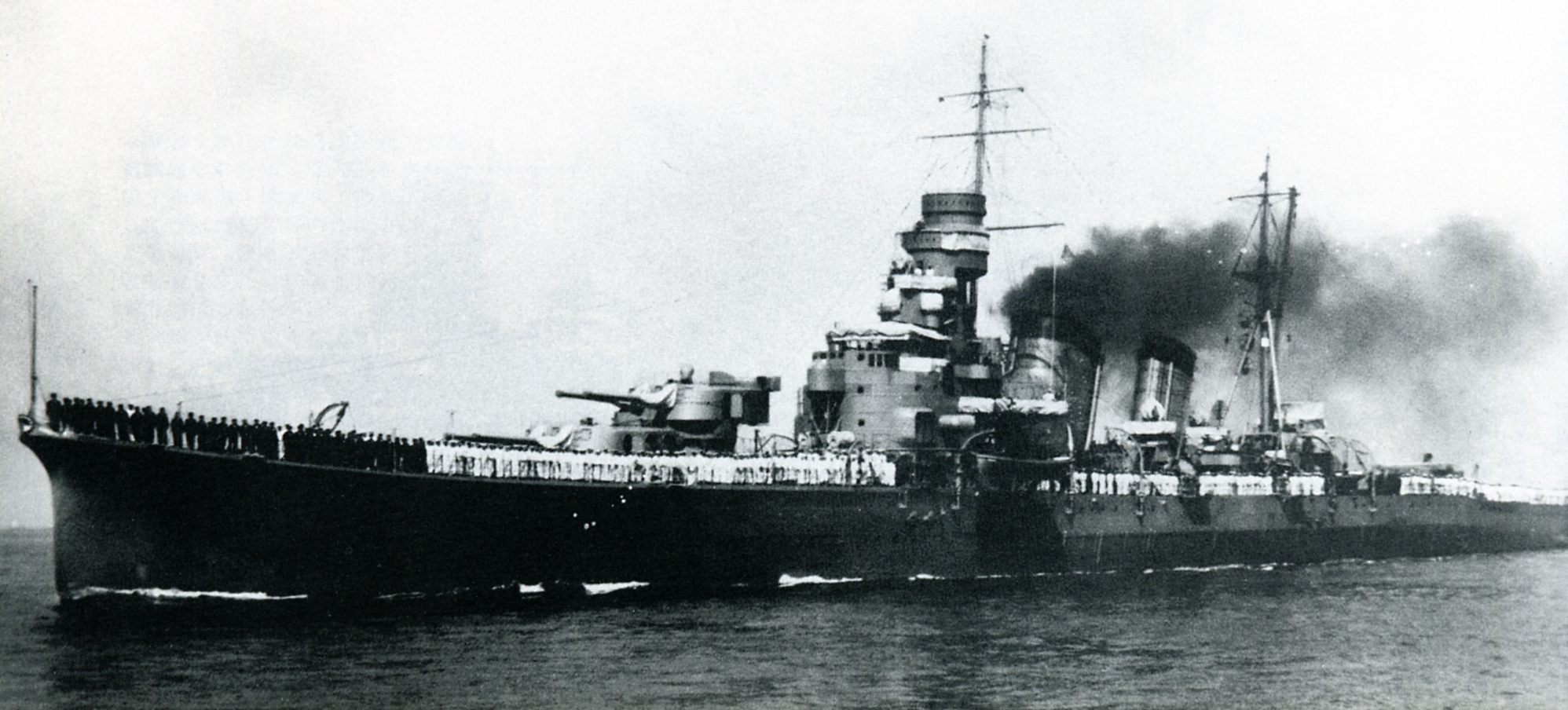
As the sun set on the night of the 13th another bombardment Force under Rear Admiral Shoji Nishimura came in under the cover of darkness to fire 500 eight inch shells at the airfield. Damage was moderate, some aircraft were destroyed, but Henderson Field Remained in action, its aircraft continuing to inflict heavy casualties of the Japanese landing forces, and their escorts, including the heavy cruisers Kinugusa, Maya, Chokai, and Suzuya, light cruisers Isuzu and Tenryu, and six destroyers. Mikawa sent Maya and Suzuya to shell Henderson Field while his other ships attempted to screen the transports. In the following action seven of the eleven transports were sunk, with many of their troops transferred to destroyers which delivered them to Guadalcanal without most of their supplies and equipment. During his withdraw, most of Mikawa’s ships were damaged by aircraft from Henderson Field, including Kinugusa which was mortally wounded by Marine and Navy aircraft from Henderson Field and USS Enterprise. 

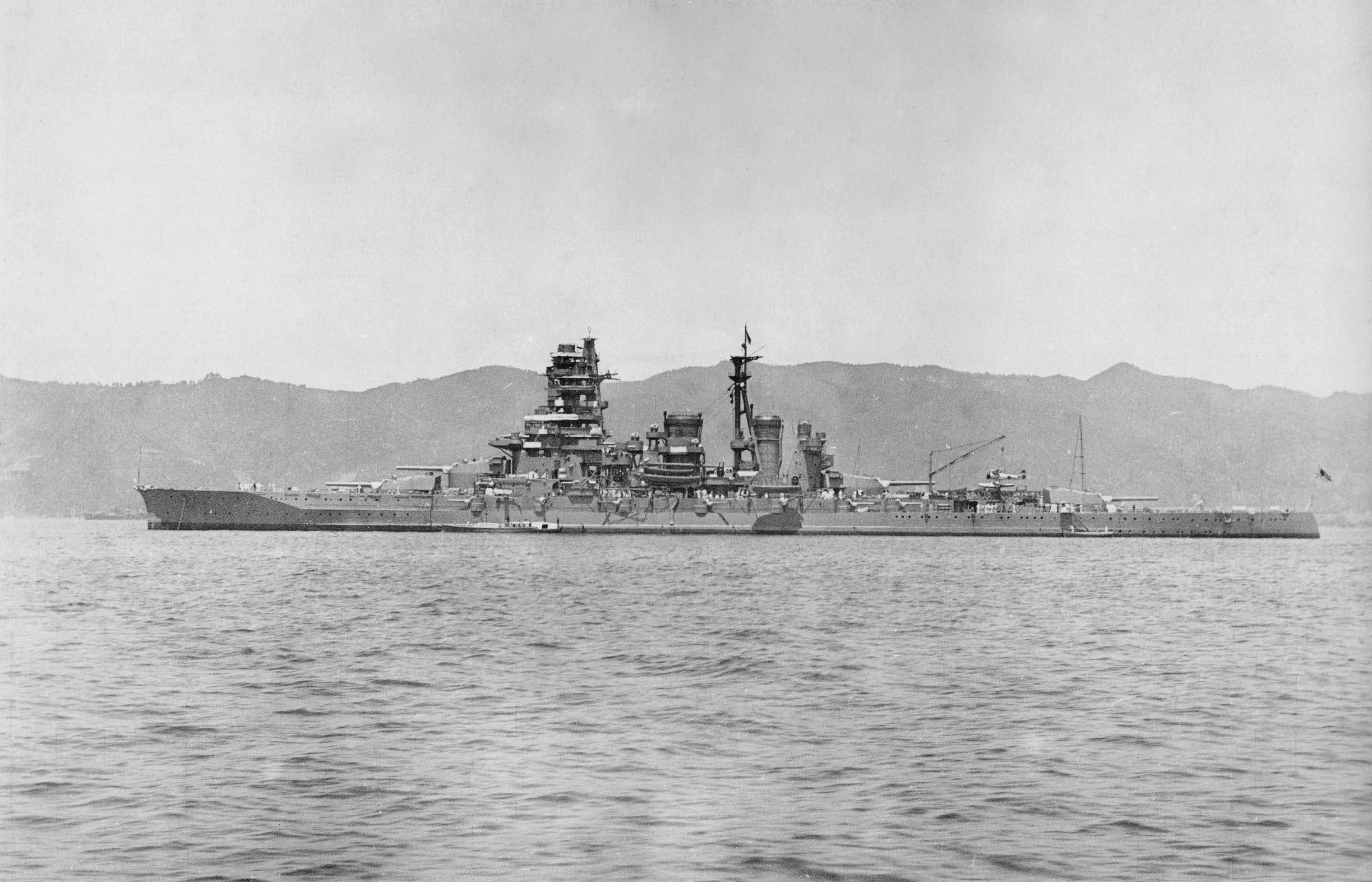
                                             IJN Battleship Kirishima 

Despite the losses and under pressure from Tokyo to retake the Guadalcanal, Admiral Yamamoto ordered Admiral Kondo, with a reconstructed bombardment Force to attack Henderson Field. That task force was centered on the battleship Kirishima, though Kondo’s flagship was the heavy cruiser Atago. This force was more powerful than Abe’s, with one battleship, 2 heavy and 2 light cruisers as well as nine destroyers.


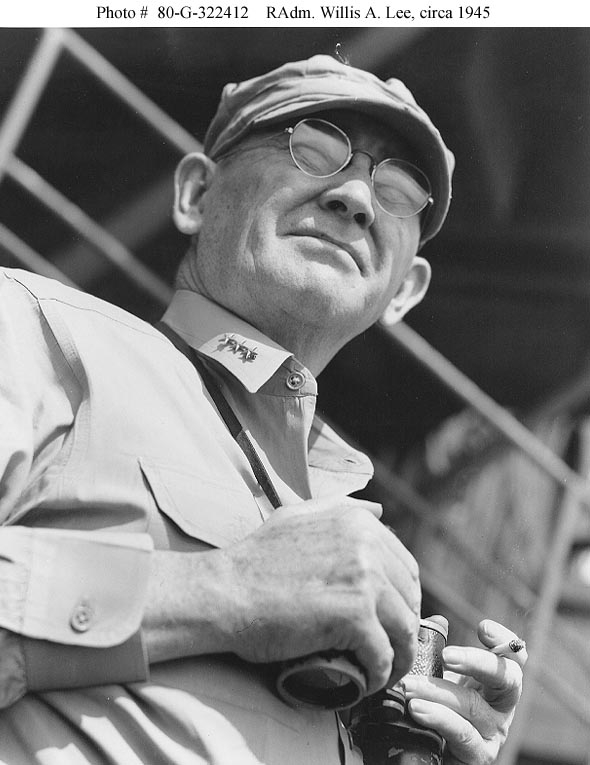
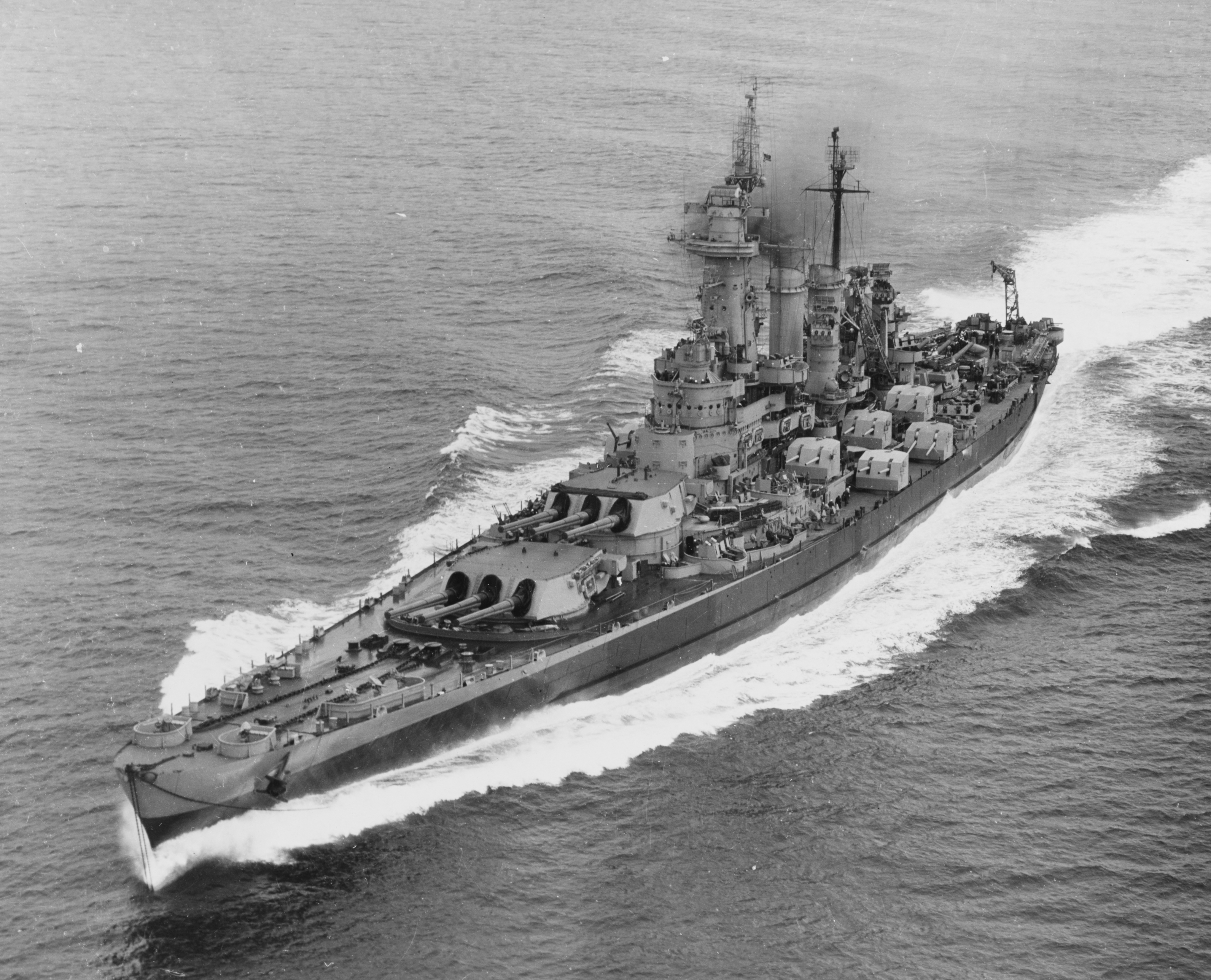
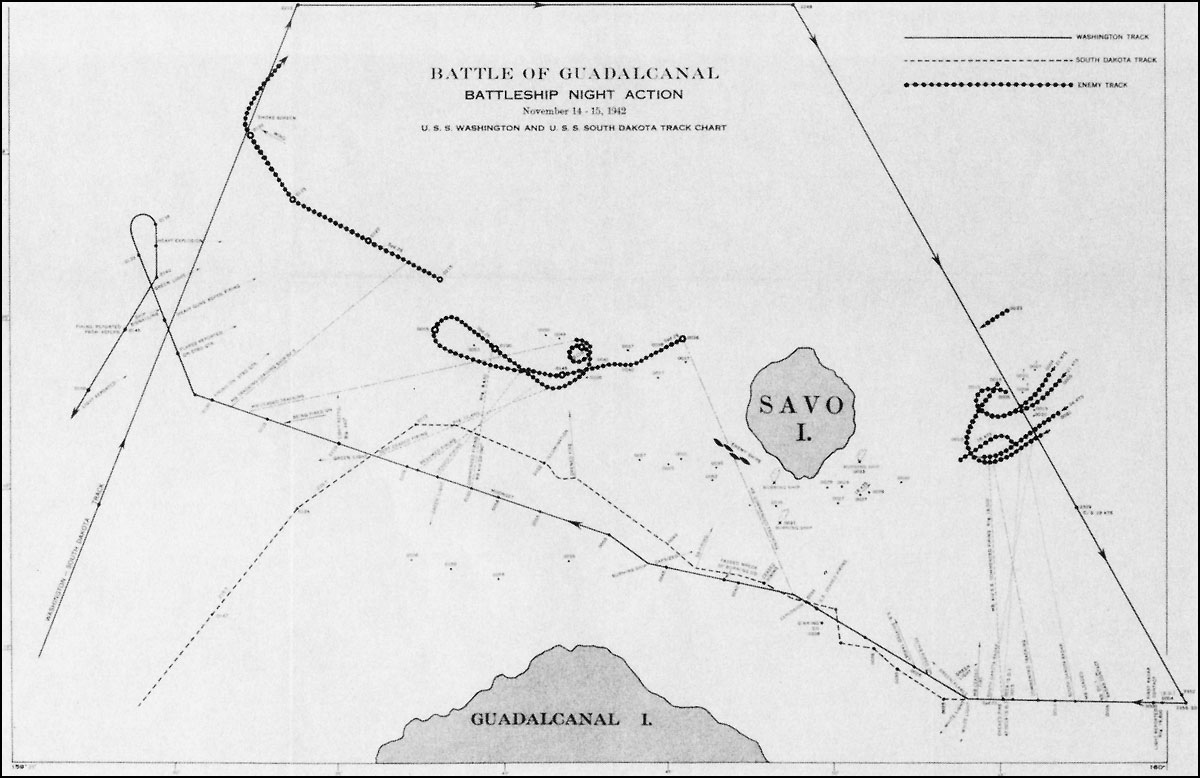
By now the Americans were rushing to get every available ship to Guadalcanal, despite the doubts that it could hold. Against the advice of many officers, Vice Admiral William “Bull” Halsey directed the battleships USS Washington and South Dakota, along with the destroyers USS Preston, Walke, Benham, and Gwin none of which had operated together before until that night. The battleships were selected because nothing else was available, the spdestroyers, each because they had more fuel. They were under the command of Rear Admiral Willis Lee aboard Washington.


Early in the morning of the 15th the task forces of Kondo and Lee joined battle. The US destroyers, operating in the van succeeded in their task of screening the battleships at heavy loss to themselves. Preston, Walke, and Benham were sunk or mortally wounded. The South Dakota was put out of the action by a mistake by her Chief Engineer coupled with accurate Japanese gunfire. Now operating alone and undetected, Washington opened fire on Kirishima hitting her with between 9 and 20 16” shells. Mortally wounded Kirishima became the second battleship lost by the Imperial Navy in the war. Kondo retreated, and the following morning the four surviving transports beaches themselves under air attack from Henderson Field.

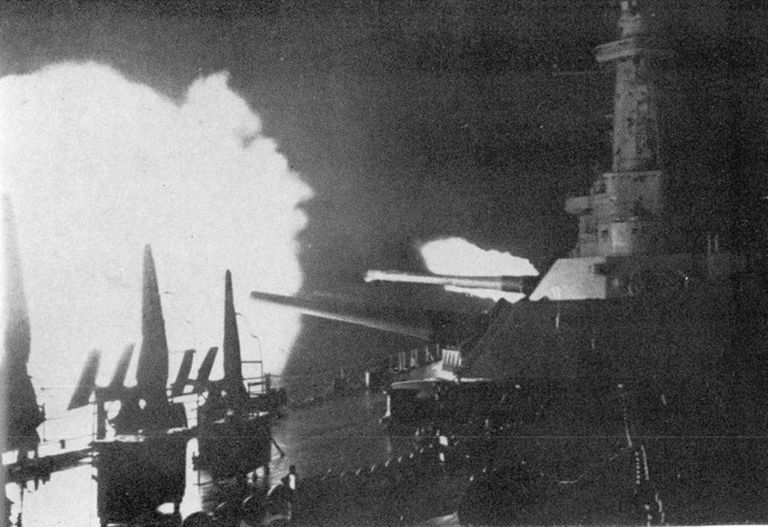
  •                       Washington Firing and Broadside at Kirishima 

    From that point on Japanese missions were limited to resupply of forced on Guadalcanal or their evacuation. Many other bloody battles remained to be fought, it after November 15th 1942, the issue of who should control Guadalcanal was not no longer in doubt.

Peace,

Padre Steve+


Leave a comment

Filed under History, imperial japan, leadership, Navy Ships, US Army Air Corps, US Marine Corps, US Navy, World War II at Sea, world war two in the pacific

40 Minutes of Hell: The Naval Battle of Guadalcanal, Part One


Friends of Padre Steve’s World,

In the very early morning hours of November 13th 1942, one of the most intense short range battles in modern naval history was fought in the waters between Guadalcanal and Savo Island. Fourteen ships of the Imperial Japanese Navy, including the battleships Hiei and Kirishima supported by the light cruiser Nagara and eleven destroyers under the command of Rear Admiral Hiraoki Abe were sent on a mission to destroy the Marine air base, Henderson Field on Guadalcanal in order to ensure the safety of a convoy carrying the soldiers of the 38th division of the Imperial Japanese Army, whose mission was to land than recover the island for the Japanese.

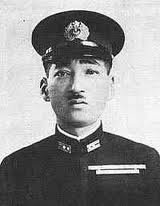
Rear  Hiraoki  Abe  (above)  and  Daniel  Callaghan  (below)

The Americans, whose intelligence code-breakers had surmised Japanese intentions and in response Admiral Richmond Turner gathered a force of two heavy and five light cruisers, the USS San Francisco, USS Portland, USS Helena, USS Atlanta, and the USS Juneau and eight destroyers. He placed Rear Admiral Daniel Callaghan in command, although Rear Admiral Norman Scott aboard Atlanta was slightly junior but more experienced in fighting the Japanese at Guadalcanal, having led a US task force to victory at the Battle of Cape Esperance just a month earlier.

                                            Rear Admiral Norman Scott

Adding to the US difficulties was that the force, hastily cobbled together had never operated before as a unit, and Callaghan choose San Francisco, which had previously commanded as his flagship, despite her lack of the latest surface search radar. Likewise, he placed the five ships with it at the rear of his formation, and did not issue a battle plan for his task force. In doing so he lost the element of surprise as Abe had no knowledge of a US task force off Guadalcanal.

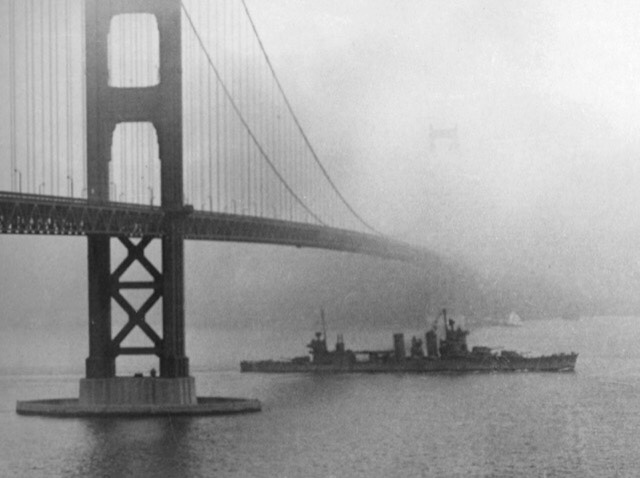
               San Francisco returns to Pearl Harbor, December 1942 under Golden Gate Bridge

As night gathered on the 12th of November, Abe steamed southeast down the slot and south of Savo Island, in an unwieldy formation, and his battleships piled high with special fragmentation shells designed to maximize destruction of shore targets and airfields but which were of little use against surface ships. Callaghan steamed northeast through Ironbottom Sound to intercept in a column formation with four destroyers in the van, followed by his five cruisers, and then his other four destroyers. According to Naval historian Samuel Elliott Morrison, the formation was chosen because it had worked for Scott at Cape Esperance, but he failed to take advantage of his advantage in radar and left the cruiser Helena, and the four destroyers with the latest radar in the rear of his formation.

Battleship IJN Hiei (above) USS Helena (below)


At 0124 hours radarmen aboard Helena picked up the Japanese Force at 27,000 and 32,000 yards and notified Callaghan. Instead of moving into a position to take the Japanese by a surprise gunfire and torpedo attack Callaghan decided to go directly at the Japanese, sacrificing his advantage in surprise and radar in favor of a short range melee.


USS Laffey

Approaching each other at a combined forty knots the range closed rapidly until at 0141 the destroyer USS Cushing had to make a sharp turn to starboard to avoid a collision with the leading Japanese destroyers, the result was a near pile up for which which Callaghan demanded answers. The Captain of Atlanta explained his maneuvers by radioing Callaghan, “avoiding our destroyers.” 
Within seconds the battle began. The lead US destroyers, Cushing, Laffey, Sterrett, and O’Bannon along with Atlanta engaging the lead Japanese destroyers, Nagara and Hiei.


The result was chaos. Laffey engaged Hiei at a range of 20 feet, inflicting damage and killing key members of Abe’s staff and Hiei’s senior officers. Yet it was another four minutes before Callaghan gave the order to open fire. In the mean time Atlanta was illuminated by Japanese searchlights and opened a murderous fire on the Japanese destroyer Akatzuki. However, the Japanese destroyer’s sacrifice was not in vain as other Japanese ships blasted Atlanta with gunfire and torpedoes, and putting her out of action. Cushing and Laffey were mortally wounded during the initial minutes of the action and both forces continued to close one another, the battle developing into a series of individual fights with each ship searching for targets as well as being targeted by the enemy.
San Francisco was smashed by Japanese shells, including those from the battleships.

Illustration of the Battle by Life Magazine

The barrage killed Admiral Callaghan, his staff, as well as the Commanding Officer and Executive officer of the ship. But for the actions of her crew led by her Chief Engineer  LCDR Bruce McCandless, and Gunnery officer LCDR Wilborne the ship might have been lost. Instead she continued in action adding her 8” guns to the maelstrom. Portland delivered devastating fire from her 8” guns into several targets but was hit in the stern by a Japanese torpedo which limited her to steaming in circles, yet still engaging any target she could.
Helena, Juneau and the rear destroyers now entered the fray. Helena, a veteran of Cape Esperance used her superior radar and experience to help deliver San Francisco from other Japanese attacks from Japanese destroyers and Nagara. Juneau was hit by a Japanese torpedo which broke her keel and left her dead in the water. Destroyers Barton and Monssen were devastier by Japanese fire, Barton sinking seven minutes into her combat career. Monssen was mortally wounded.
                                               Damage to USS Portland

At 0200 Admiral Abe broke off the action. Individual fights still continued, Sterrett crippled the Japanese destroyer Yudachi which was finished off of Portland shortly after sunrise. Hiei was crippled and was further damaged by Marine aircraft from Henderson Field before her crew scuttled her, she was the first Japanese battleship to be sunk in combat during the war. Cushing, Monssen, and Atlanta each lost their fight to stay afloat and Portland, assisted by the tug USS Bobolink reached the safety of Tulagi the next day. After temporary repairs she sailed for Australia and then the United States for full repair and modernization.

The Sullivan Brothers
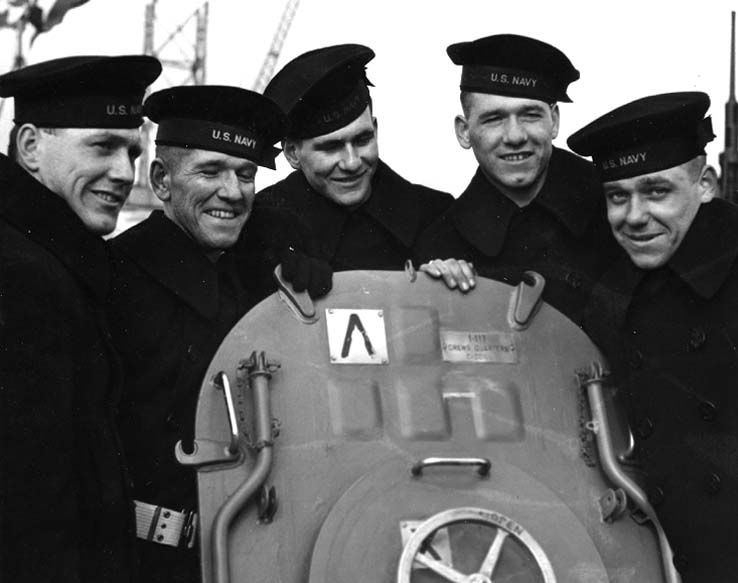
As Captain Hoover, the senior surviving officer of the US task force took his surviving, and still navigable ships out of harm’s way. It was a harrowing task. Only Helena of his cruisers was fully operational, and  of his three destroyers, only Sterrett and Fletcher had operational sonar, but they were not enough to protect the crippled cruisers. At 1101 a torpedo hit Juneau, blasting her to pieces and leaving about one hundred survivors to fend for themselves as Hoover sought to avoid further attacks. For ten days the surviors suffered until an Army Air Force B-17 spotted them. By then only ten sailors remained alive from the crew of the Juneau, over seven hundred others, including the five Sullivan Brothers either went down with the ship or died awaiting rescue.

USS San Francisco Memorial, the outer wall is from the bridge of the ship still pierced by Japanese shell fire

Of the Commanders, Admiral Abe was forced into retirement at the age of 53, Admirals Callaghan and Scott died in the battle, and Captain Hoover was tried, but not convicted at Court Martial for the loss of Juneau and her crew.
But, the Naval Battle of Guadalcanal was not yet over…

To be continued,

Peace

Padre Steve+

Leave a comment

Filed under History, Military, Navy Ships, US Army Air Corps, US Marine Corps, US Navy, World War II at Sea, world war two in the pacific

An End and A Beginning at the Twilight of a Career

Friends of Padre Steve’s World,

Toady was the turning of another page in my military career, probably the last one before I retire. I left my old command, reported in to my new command and will begin checking in to the Naval Region before reporting to Norfolk Naval Shipyard, in Portsmouth where Lord willing and the creek don’t rise next summer. The shipyard hasn’t had it’s own chaplain in years and my mission, with no resources other than me is to try to help justify the re-establishment of a chaplain billet there. I will give it my best, but with the continuing cuts to religious ministries in Naval Installations Command I think the best I can do is to care for the sailors and civilian employees to the best of my ability and let the chips fall where they may.

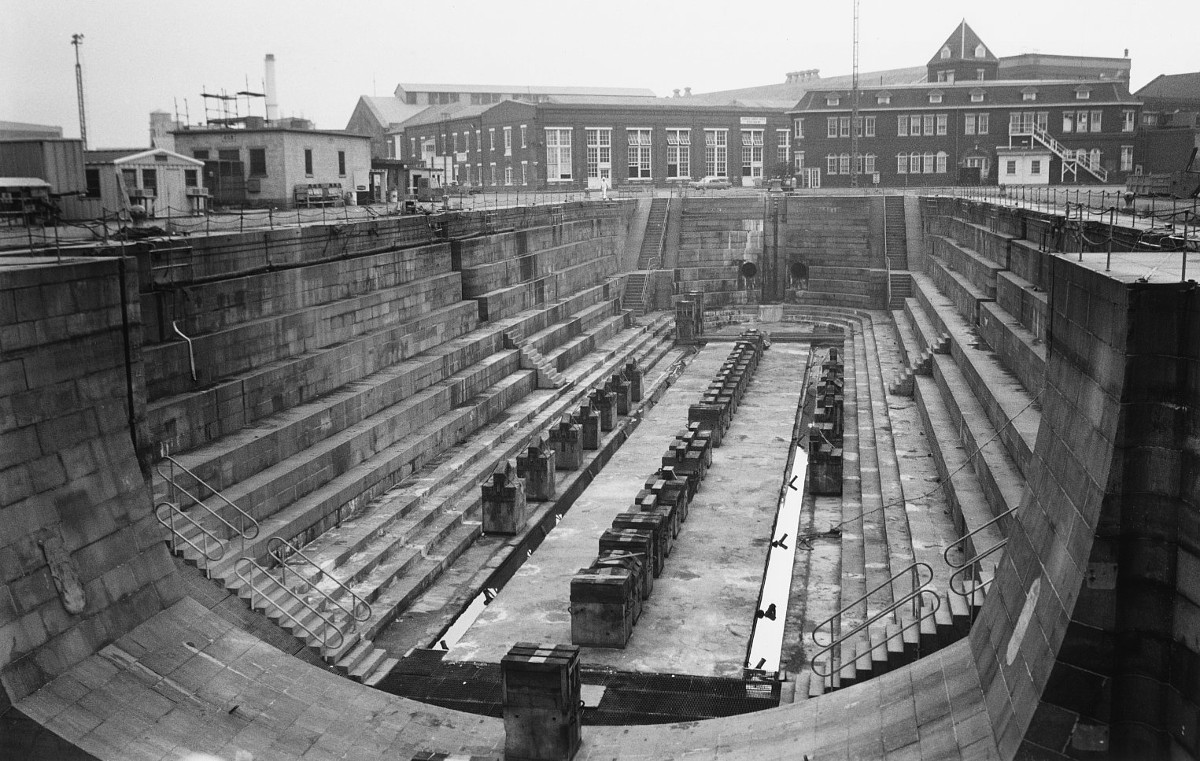
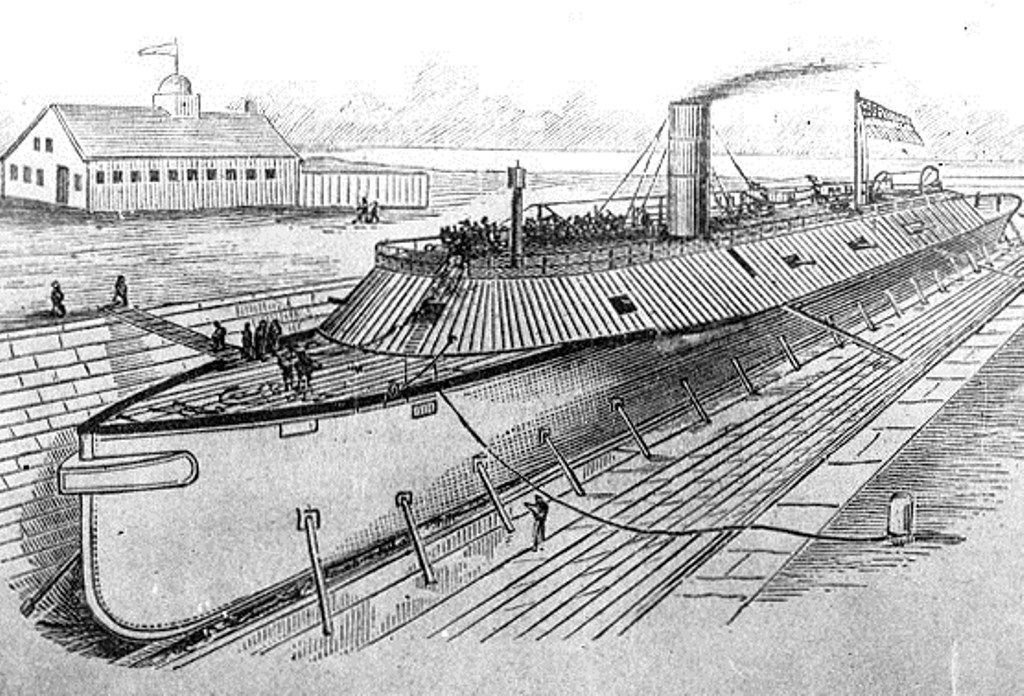
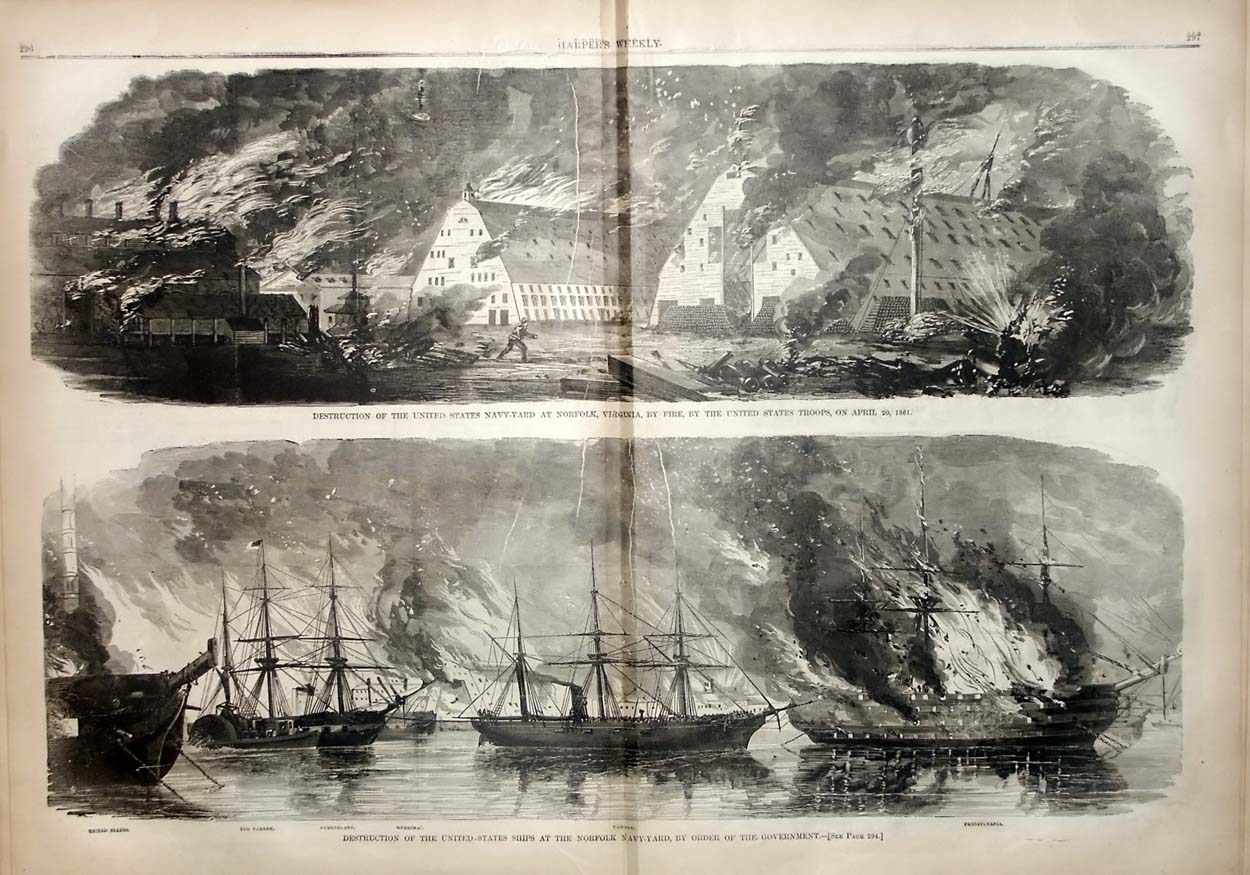
I suppose that it is fitting that someone like me, a Priest who is a historian at heart finish his career trying to make a go of it. The shipyard is the oldest in the Navy, Drydock Number One is the oldest in the Western Hemisphere. The Frigate USS Chesapeake, one of the first six frigates built for the re-established U.S. Navy was the first major warship constructed at it. The USS Merrimac was raised and rebuilt in the Drydock One by the Confederate States Navy as the Ironclad CSS Virginia.

The Naval Yard was recaptured by the Union later in 1862 and following reconstruction it became one of the major construction and repair yards for the Navy, and our allies in the Second World War.

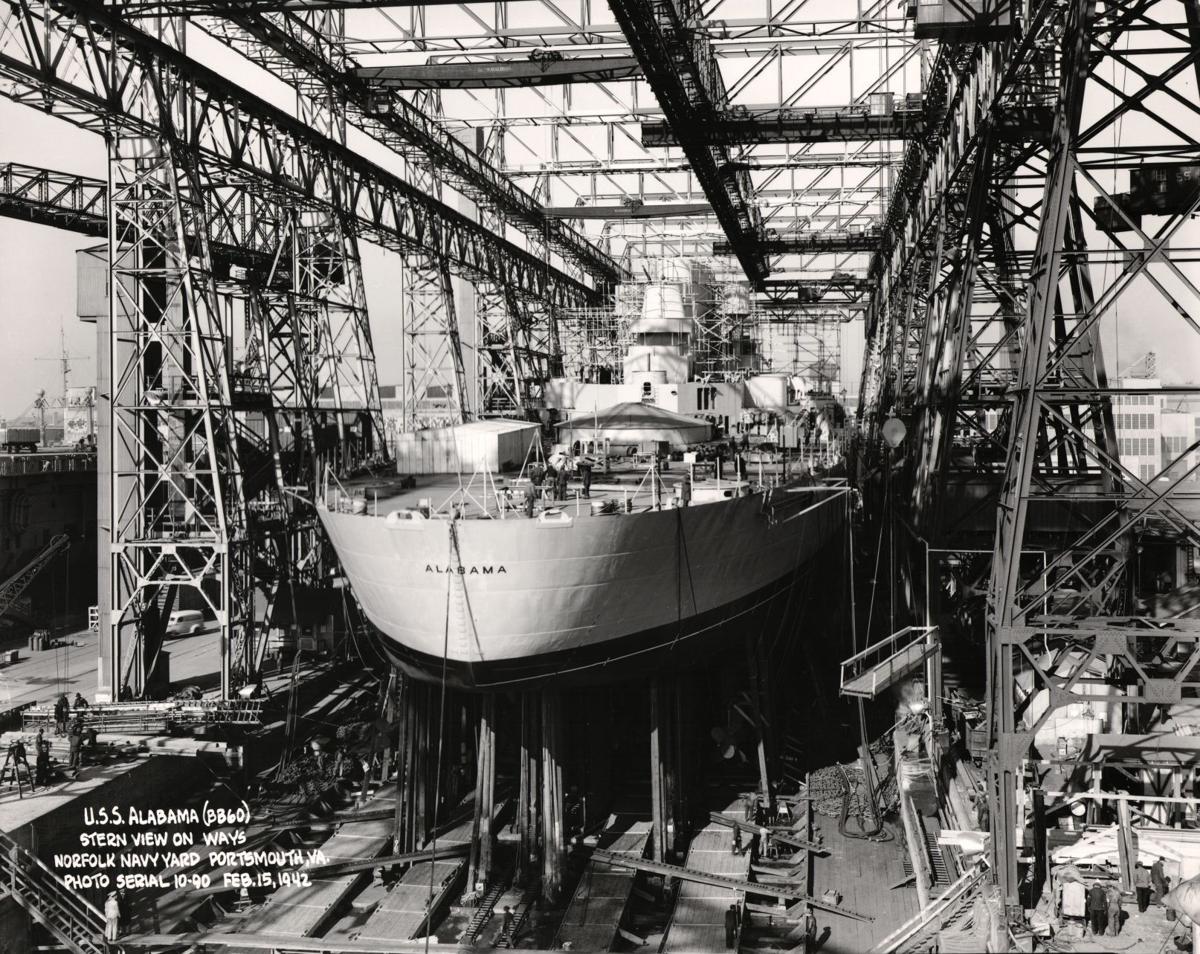
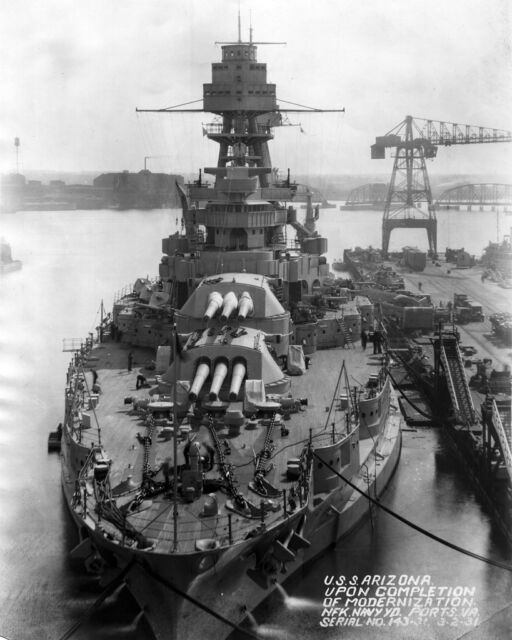
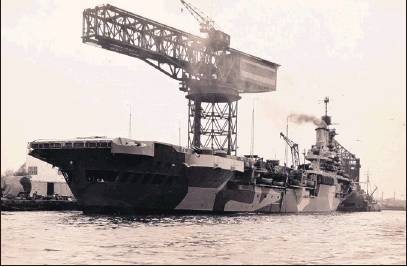
The battleship USS Alabama was constructed there and thousands of ships were repaired or overhauled at it, including Famous ships like the USS Arizona and HMS Illustrious, as well the largest modern Super carriers of the U.S. Navy.

I look forward to learning more of the history as I work there.

So until tomorrow, all the best.

Peace,

Padre Steve+


3 Comments

Filed under civil war, History, Military, national security, Navy Ships, US Navy

The Battle of Cape Engano: Victory in Spite of Miscommunications and the Lack of Unity of Command


RptsI-P60

Friends of Padre Steve’s World,

I am finishing up a series of posts about the Battle of Leyte Gulf. This one is about the Battle of Cape Engano in which a force of Japanese carriers with very few aircraft were used to lure the main part of the American Third Fleet under Admiral William “Bull” Halsey away from the vulnerable troop transports and supply ships supporting the invasion. It was a momentous battle and study in the principle of unity of command, which the Americans violated with nearly catastrophic results.

Eventually I will write something about the epic Battle off Samar to conclude the series properly but that will have to wait. Today has been a busy day working around the house and taking care of things long needed. Maybe I will do some work on my lack of

Peace

Padre Steve+

Unclear command structures, confusing, and mistaken communications, acts of valor from outnumbered forces who survived, and the intentional sacrifice of a carrier task force as a decoy, so that battleships might provide a victory. Despite the unclear communications and unclear command structures, the United States  Navy was victorious.  But still, this message remains one of the most confusing and infuriating ever sent to the commander of a fleet in action with the enemy fleet nearly in sight: 

“TURKEY TROTS TO WATER GG FROM CINCPAC ACTION COM THIRD FLEET INFO COMINCH CTF SEVENTY-SEVEN X WHERE IS RPT WHERE IS TASK FORCE THIRTY FOUR RR THE WORLD WONDERS.” Admiral Nimitz to Admiral Halsey

After Admiral William “Bull” Halsey felt that he had heavily damaged the Japanese Center Force during the Battle of the Sibuyan Sea he withdrew the Fast Battleships of Task Force 34 from the San Bernardino Strait in order to use them in a surface engagement against Admiral Jisaburo Ozawa’s Northern Force. Halsey assumed that Ozawa’s carriers were the main threat to the American invasion forces. However he did not know that Ozawa’s carriers had very few aircraft embarked and that the Northern force was in fact a decoy, designed to draw him away from Vice Admiral Takeo Kurita’s Center and the two task forces of the Southern force.

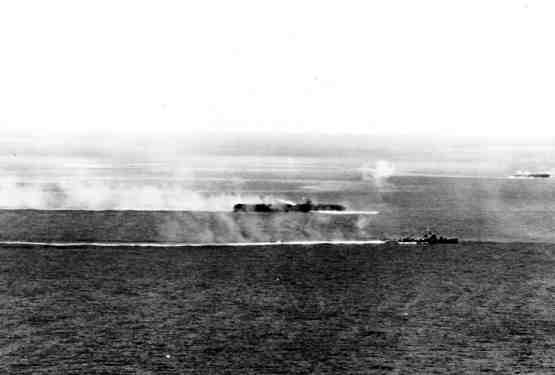
                         The Zuikaku under attack at Cape Engano

When Halsey’s aircraft reported the Center force withdrawing he believed that the threat had been removed. He wrote in his memoirs “I believed that the Center Force had been so heavily damaged in the Sibuyan Sea that it could no longer be considered a serious menace to Seventh Fleet.”Thus he moved with haste to intercept, engage and destroy the Northern force and its carriers and battleships.  Halsey believed that his engagement against the Northern force would culminate when his fast battleships destroyed whatever Japanese surface forces remained.

It was not a bad assumption. Ever since the early days of the Pacific war the truly decisive engagements had been decided by carriers. Unfortunately for the American sailors of Taffy-3, the group of Escort Carriers, destroyers and destroyer escorts which encountered Kurita’s Center force which had doubled back overnight and passed through the San Bernardino Strait surprising Rear Admiral Thomas Kinkaid’s task group of “Jeep” Carriers.

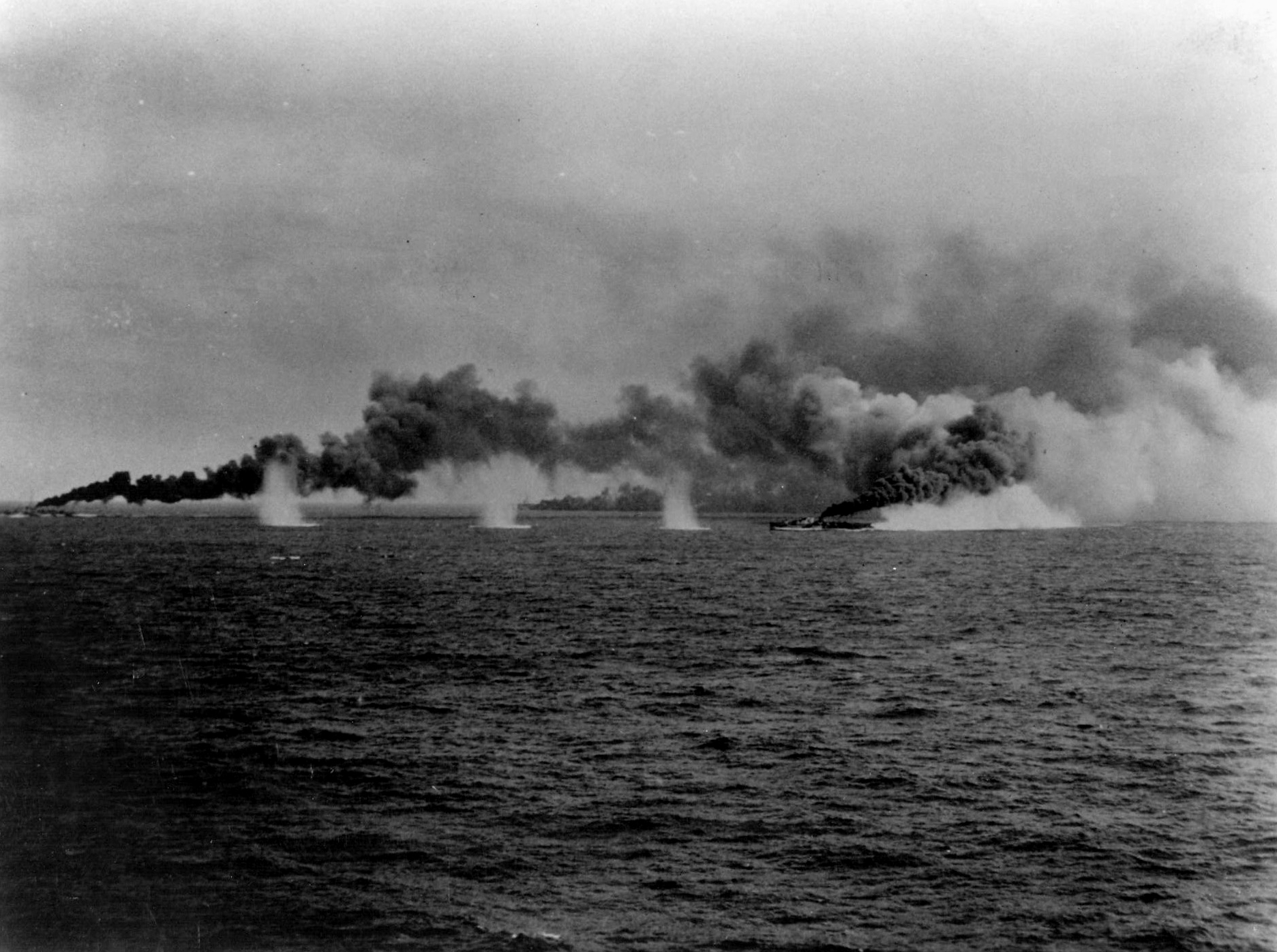
Destroyers_laying_smoke_screen_during_Battle_of_Samar_1944

                                             The Battle off Samar

The unequal battle that ensued off Samar was a near run thing for the Americans. Had Kurita not been confused about what forces he was facing and pressed his attacks he may have inflicted painful damage on the actual invasion forces. However after a morning of battle, in which Taffy-3’s destroyers, destroyer escorts, aircraft and even the Jeep carriers themselves inflicted heavy damage on the Japanese force Kurita withdrew.

Halsey

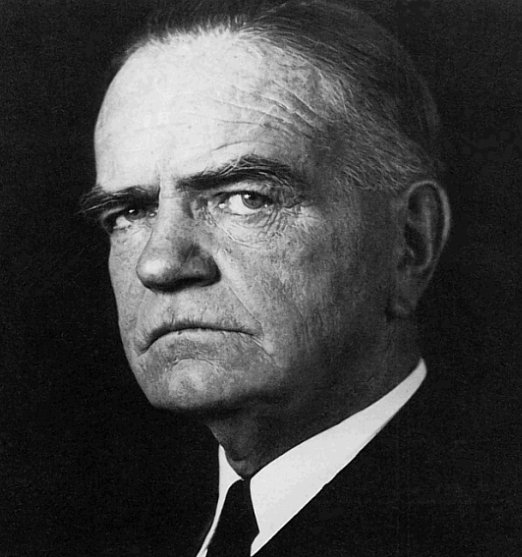
                                       Admiral William “Bull” Halsey

However as Taffy-3 battled for its life against Kurita’s battleships, cruisers and destroyers Halsey’s carrier air groups were pounding Ozawa’s hapless carriers and their escorts. About 0800 on the 25th Kinkaid’s desperate messages began to reach Nimitz and Halsey. However since Halsey did not believe just how serious the situation was he continued to pursue Ozawa’s force. When he received Nimitz’s message he was incensed. The message “TURKEY TROTS TO WATER GG FROM CINCPAC ACTION COM THIRD FLEET INFO COMINCH CTF SEVENTY-SEVEN X WHERE IS RPT WHERE IS TASK FORCE THIRTY FOUR RR THE WORLD WONDERS was composed of three parts. The preface “Turkey trots to water” was padding, as was the last part “the world wonders.”

ship_zuiho2

                                     Light Carrier Zuiho under attack

However the communications officer on Halsey’s flagship only removed the first section leaving “Where is Third Fleet, the world wonders.” Halsey was flabbergasted and though the battleships of Task Force 34 were almost in range of the Japanese force he sent them south to relieve Kinkaid’s beleaguered force. However by the time Vice Admiral Willis Lee’s battle line arrived Kurita had withdrawn, losing 3 heavy cruisers sunk, three heavy cruisers and one destroyer heavily damaged.

gsxN4rT

                                           Zuikaku being abandoned

All the Japanese carriers were sunk along with a light cruiser and a number of destroyers, but Kurita’s heavy forces escaped. Among the Japanese losses was the carrier Zuikaku the last surviving carrier of the Pearl Harbor attack. Naval historian Samuel Elliott Morrison wrote:

“If TF 34 had been detached a few hours earlier, after Kinkaid’s first urgent request for help, and had left the destroyers behind, since their fueling caused a delay of over two and a half hours, a powerful battle line of six modern battleships under the command of Admiral Lee, the most experienced battle squadron commander in the Navy, would have arrived off the San Bernardino Strait in time to have clashed with Kurita’s Center Force… Apart from the accidents common in naval warfare, there is every reason to suppose that Lee would have “crossed the T” and completed the destruction of Center Force.” 

USS Mobile 10

The Battle of Cape Engano closed the epic extended battle of Leyte Gulf. The victory of the US Navy was decisive even without the final destruction of Kurita’s forces. The remnants of the Japanese forces would never mount a serious offensive threat again. The survivors would be hunted down over the next 9 months, some sunk by submarines, other in surface engagements, still more to air attacks at Okinawa and in Japanese ports.

Halsey received much criticism for his decision to withdraw TF 34 from San Bernardino Strait. However in his defense the action exposed one of the key problems in any kind of warfare, the problem of seams. Kinkaid’s escort carriers belonged to 7th Fleet which came under the operational control of Douglas MacArthur’s Southwest Pacific Region while Halsey commanded 3rd Fleet under Admiral Nimitz’s Central Pacific region. This created a situation where two fleets belonging to two regions under two separate commanders were attempting to fight a single battle. The principle of unity of command and unity of effort was violated with nearly disastrous results.

Leave a comment

Filed under History, Military, Navy Ships, US Navy, World War II at Sea, world war two in the pacific

The Revenge of the Pearl Harbor Battleships: The Battle of Surigao Strait


wvsurigaopaint-500x295

Friends of Padre Steve’s World,

Today was another busy but weird day as I am in the middle of trying to do my checkout from my current base even as I await the official short fused orders that are moving me to Norfolk Naval Shipyard in Portsmouth sometime next week. So today, after successfully completing my Physical Readiness Test, I did some of my checkout that I could complete without my orders; I am posting the third article of a series on the Battle of Leyte Gulf. This article discusses the Battle of Surigao Strait which ended in the near annihilation of most of the of the Japanese Southern Force. The battle was the last ever where battleships engaged each other in a surface action.

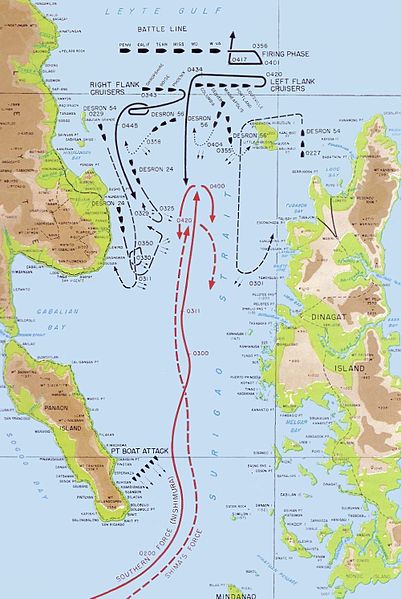
Surigao_straight

The two task groups of the Japanese Southern Force passed the daylight hours of 24 October relatively unscathed despite an air attack that caused minor damage. The group commanded by Vice Admiral Shoji Nishimura comprised of the elderly Battleships Yamashiro and Fuso the Heavy Cruiser Mogami and four destroyers was leading the charge and was followed by that commanded by Vice Admiral Kiyohide Shima with the Heavy Cruisers Nachi and Ashigara, Light Cruiser Abukuma and four destroyers.

The mission of these two groups which were unable to coordinate their actions due to orders to maintain strict radio silence was to fight their way through the Surigao Strait to assist the Central Force in destroying the US invasion force in Leyte Gulf.  The mission was for all practical purposes a suicide mission, a naval “Charge of the Light Brigade” as they sailed into the Valley of Death against the Battle Line of the US 7th Fleet.

USS West Virginia Surigao strait

                      USS West Virginia firing a Broadside at Surigao

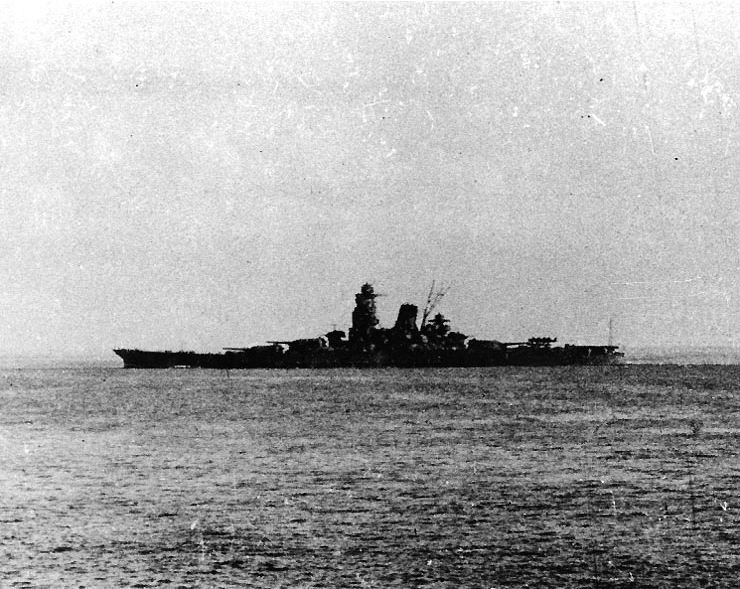
The Japanese Battleships had spent the majority of the war in home waters and had seen little action.  They had not been part of any of the great Japanese victories in 1941 and 1942 and they had not been blooded in the Solomons.  Instead the two elderly battlewagons passed the war conducting training in the inland sea.  They were no longer first line ships but the Japanese were desperate.  During the afternoon Admiral Nishimura received an accurate report from one of Mogami’s scout planes telling him exactly what he was up against yet he pushed on in the manner of a Samurai.

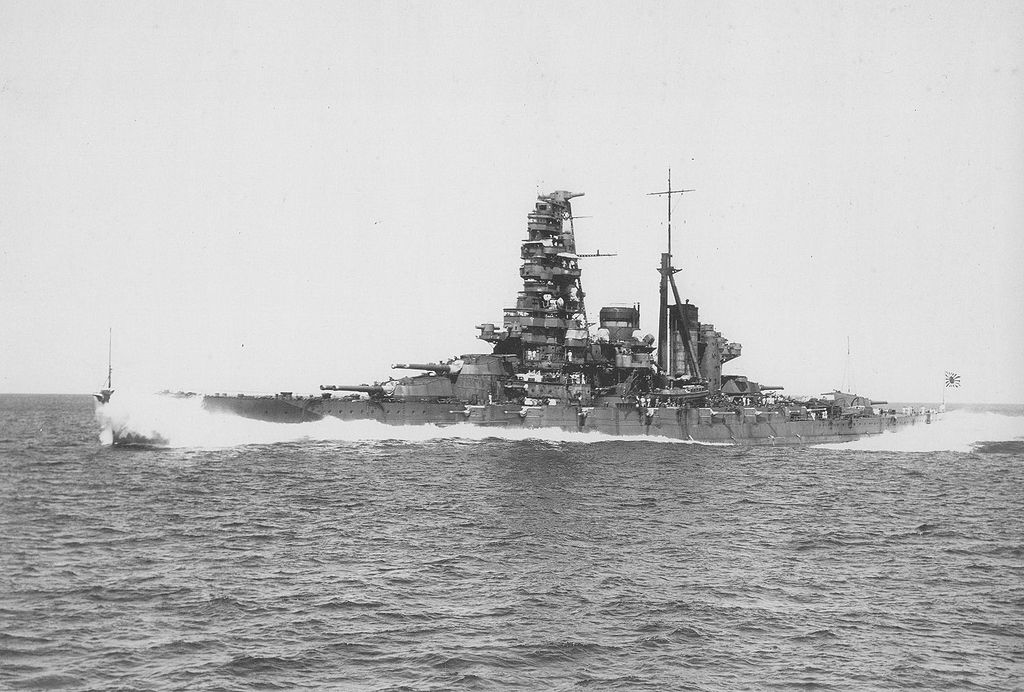
Japanese_battleships_Yamashiro,_Fuso_and_Haruna

                                                Yamashiro and Fuso

Facing him was a force built around the 6 old Battleships of Vice Admiral Jesse Oldendorf’s 7th Fleet Battle Line.  The Americans heavily outnumbered the Japanese, the Battleships West VirginiaCalifornia and Tennessee were the heart of the force. Fully modernized after Pearl Harbor they no longer resembled the ships that they were before the war. Equipped with the latest Mark 8 Fire Control radar they had the ability to put their 16” and 14” shells on target at ranges farther than anything that the Japanese could counter.  Joined by the less fully modernized Maryland, Mississippi and Pennsylvania, 4 Heavy Cruisers, 4 Light Cruisers, 28 Destroyers and 39 PT Boats they outnumbered the combined Japanese forces with sixteen 16” and forty eight 14” guns to twenty 14” guns on the antiquated Yamashiro and Fuso.  The disparity in lesser guns was just as stark, thirty five against twenty six 8” guns, and fifty one 6” guns against six 5.5 inch guns.  This massive imbalance didn’t count the nearly one hundred fifty 5” guns on the US destroyers and as well as nearly 200 torpedo tubes.

yamashiro surigao strait

                 Yamashiro and Shigure ride into the Valley of death

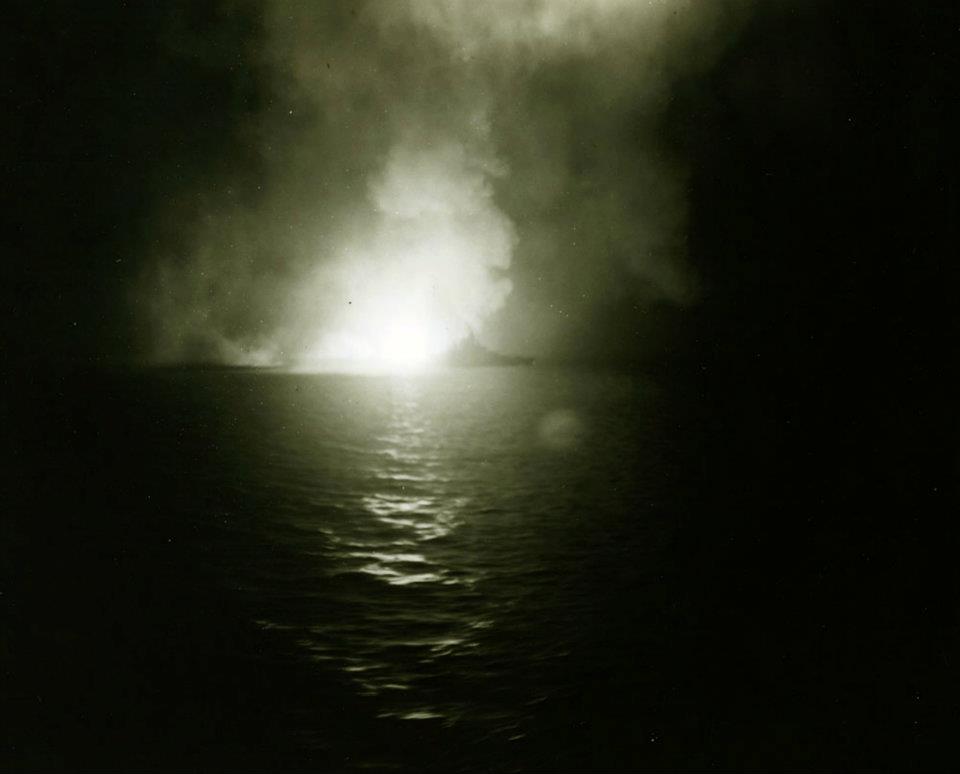
No one can ever criticize the Japanese Navy for its courage in battle, even in hopeless ones. Nishimura’s force entered the southern entrance to Surigao Strait and was discovered by the American PT Boats at about 2230.  Though the PTs scored no hits they provided critical updates on the Japanese to Oldendorff.  At 0300 the American destroyers began a devastating series of attacks on the Japanese flanks.  They sank two destroyers and damaged another which had to turn back, but the real damage occurred when both Fuso and Yamashiro were hit. Fuso took two torpedoes fired by the destroyer USS Melvin.  She slowed and then blew up and broke in two sinking with all hands.  This account has been contested in recent years but many find the new version less believable than the first. Key in the evidence was the rescue and capture of Yamashiro’s Executive Officer in the north end of the strait and the surviving logs of the other Japanese ships which reported the sinking. Yamashiro though hit continued north with Mogami and the last destroyer Shigure.  At 0353 West Virginia opened fire and score hits on her first salvo. She was joined by California and Tennesseeat 0355, the other battleships with their Mark 3 fire direction radars were slow to open up. Maryland got off six full salvos by ranging in on the splashes of West VirginiaCalifornia and Tennessee.  Mississippi logged the final salvo of the battle and Pennsylvania got no shots off.  West Virginia fired 16 salvos, 96 rounds of 16”armor piercing shells, Tennessee got off 69 rounds and California 63 each of 14” armor piercing shells, while  Maryland added another forty eight 16” rounds.

The Yamashiro and Mogami sailed into the maelstrom absorbing hit after hit and gamely fought back. Yamashiro hit the destroyer Albert W Grant which was also hit by friendly fire badly damaging her. Finally both ships ablaze they turned back down the strait with Yamashiro sinking with few survivors at 0420.  Shima’s force then entered the fray and the Light Cruiser Abukuma was damaged by a torpedo fired by PT-137 and fell out of the formation. She was sunk on 26 October by Army Air Force B-24s. As Shima came up the strait his force entered the battered remnants of Nishimura’s force, the burning halves of Fuso and the retreating Mogami and Shigure. Assuming the halves of Fuso to be the wreckage of both battleships Shima beat a hasty retreat but in the process his flagship Nachi collided with Mogami flooding Mogami’s steering engine room and leaving her crippled.  She was attacked again by American cruisers and aircraft and as abandoned at 1047 and scuttled a torpedo from the destroyer Akebono sinking at 1307 on 25 October.

nachi

                                              Nachi Under Air Attack

The battle was one of the most lopsided surface engagements of the war.  When it was over only one of Nishimura’s ships had survived the “lucky” Shigure.  Shima’s force survived the night but most of his ships were sunk in the following by war’s end. Nachi was sunk in Manila Bay on 5 November by aircraft from the USS Lexington with a loss of over 800 sailors while Shima was in a conference ashore.

With the exception of Albert W Grant and a PT Boat the American force was unscathed the old Battlewagons dredged from the mud of Peal Harbor had led the fleet to a decisive victory in the last duel between Dreadnaughts ever fought. The Japanese died as Samurai trying to complete a hopeless mission against a far superior force.

9 Comments

Filed under History, leadership, Military, Navy Ships, US Navy, World War II at Sea, world war two in the pacific

Leyte Gulf: The Battle of Sibuyan Sea and the Sinking of the Musashi


Japanese_battleship_Musashi

                                                Battleship Musashi

Friends of Padre Steve’s World,

I’m in the midst of posting a five or six part posting about the Battle of Leyte Gulf, the biggest naval battle in history. Despite the fact that it happened 75 years ago there are lessons to be learned from it, especially if you are a President desperate to actually win something and place all your faith in the military, even when you ask it to do something that it cannot due.  This is the second in that series. I hope you enjoy.

Peace

Padre Steve+

Following the loss of Atago, Maya and Takao Vice Admiral Takeo Kurita’s Center Force had an uneventful rest of the day on the 23rd as his ships kept a watchful eye and ear for more US Navy submarines. At about 0800 on 24 October the Center Force was spotted by 3 U.S. Army Air Force B-24 Liberator bombers which promptly reported them.

TBF_dropping_torpedo_NAN2-2-44

       TBF Avenger dropping its “fish” 19 of these would hit Musashi

One of the ships in the Center Force was the battleship Musashi, sister ship of the mighty Yamato which was also in the force. The two battlewagons were the largest battleships ever built. With a full load displacement of 72,800 tons and an armament of nine 18.1 inch guns, the largest battery ever mounted on a warship the two behemoths also had massive anti-aircraft batteries and the Japanese were counting on them leading the Center Force to a miraculous victory during the battle. Admiral Kurita addressed his commanders prior to the battle:

“I know that many of you are strongly opposed to this assignment. But the war situation is far more critical than any of you can possibly know. Would it not be shameful to have the fleet remain intact while our nation perishes? I believe that the Imperial General Headquarters is giving us a glorious opportunity. Because I realize how very serious the war situation actually is, I am willing to accept even this ultimate assignment to storm into Leyte Gulf. You must all remember that there are such things as miracles.”

musashi

                Musashi or Yamato under attack October 24th 1944

At 1000 the Musashi’s radar picked up approaching aircraft. These were from the USS Intrepid and the USS Cabot which were assigned to Rear Admiral Gerard Bogan’s Task Group 38.4. The anti-aircraft crews and damage control teams prepared as the ship’s bugle sounded the alarm. As the aircraft came closer the main guns of the Musashi fired but ceased fire as the aircraft drew closer. Helldiver dive bombers plunged downward at the ships of the Center Force and F6F Hellcat fighters unopposed by enemy fighters conducted strafing runs as TBF Avenger torpedo bombers dropped their deadly loads at the Musashi. The big ship avoided two of the “fish” but a third struck causing little damage and the first wave few away. Musashi reported that she had sustained a hit and continued on. The Japanese sailors knew that this would not be the last attack. Though Musashi had weathered the first strike the American fliers hit the battleships Nagato, Yamato and severely damaged the heavy cruiser Myōkō.

Musashi_under_attack

                                                       Musashi hit

At 1140 the Musashi’s radar picked up the next wave of attackers and at 1203. These were from the Intrepid, Essex and Lexington. Hitting the Center Force in two waves a half hour apart these aircraft delivered punishing blows on Musashi. She was hit by 3 torpedoes and 2 bombs. The torpedoes caused damage that caused a 5 degree list and was down six feet by the bow. The torpedo damage was concentrated midships and one torpedo flooded her number 4 engine room. One of the bombs hit an engine room and disabled her port inline propeller shaft. With her speed reduced she proceeded on.

Musashi_under_fire

                                             Musashi under Attack

Thirty minutes following this attack at about 1330 Musashi was attacked again by Helldivers and Avengers. She was hit by four 1000 pound bombs and 4 torpedoes. She was now so badly damage that she could no longer keep up with the fleet and dropped behind to fend for herself. At 1350 this attack ended and her speed was reduced to 20 knots while she was now down 13 feet by the bow, with nearly all of her trim and void tanks full. With such damage the was now little room for any more damage in her forward compartments, but the hits would keep coming even as she dropped behind the rest of the fleet.

Separated from the fleet, the wounded giant was now attacked by aircraft from the Enterprise, Cabot, Franklin and Intrepid that score hits with 11 bombs including the deadly 1000 pounders and 8 torpedoes. During the course of these attacks which ended shortly after 1530, the Musashi sustained 19 torpedo and 17 bomb hits and taken 18 near hits close aboard. The damage was fatal.

At 1620 her skipper Rear Admiral Toshihira Inoguchi began desperate damage control measures to control the increasing list which had reached 10 degrees to port. Now dead in the water Musashi continued to list further and when the list reached 12 degrees at 1915 Inoguchi ordered preparations to abandon ship. The surviving crew assembled on the deck, the battle flag and the Emperor’s portrait were removed. Admiral Inoguchi gave his personal notebook to his Executive officer Captain Kenkichi Kato and directed then him to abandon ship. Admiral Inoguchi retired to his cabin and was not seen again. At 1930 with the list now 30 degrees Captain Kato gave the order to abandon ship. Soon with the list increasing further men began to slide across the decks being crushed in the process. Panic broke out among the crew which had been assembled by divisions and Captain Kato ordered “every man for himself.” At 1936 the ship capsized and port and went down by the bow sinking in 4,430 feet of water in the Visayan Sea at 13-07N, 122-32E.
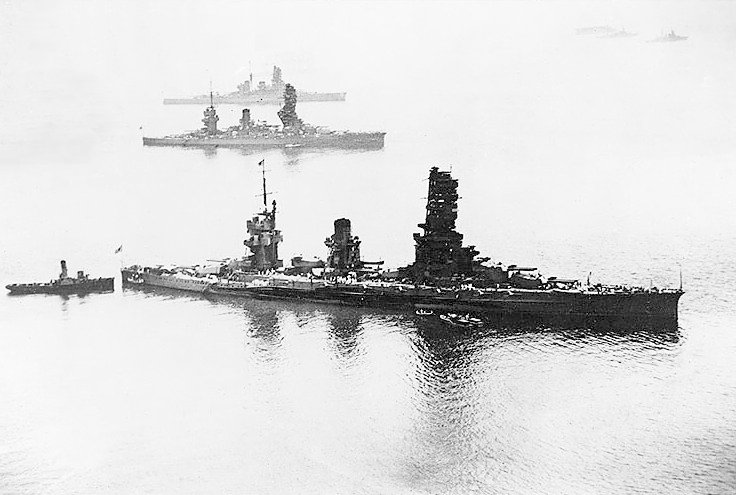
The destroyers Kiyoshimo, Isokaze and Hamakaze rescued 1,376 survivors including Captain Kato, but 1,023 of Musashi’s 2,399 man crew were lost including her skipper, Rear Admiral Inoguchi who was promoted Vice Admiral, posthumously.
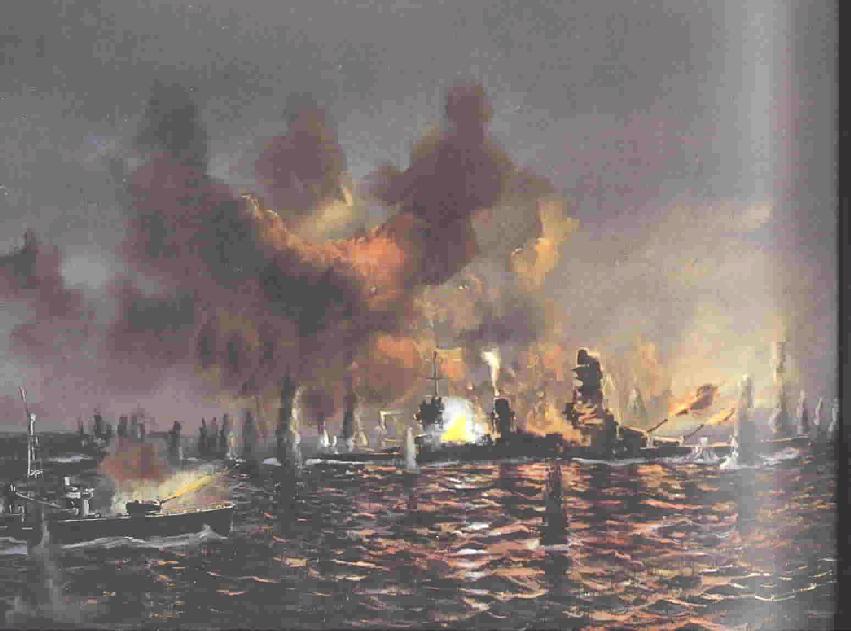
                                                 The Wreck of Musashi 

The rest of the Center Force under Kurita turned around to get out of range of the aircraft, passing the crippled Musashi as his force retreated. Kurita’s retreat was temporary and Kurita waited until 17:15 before turning around again to head for the San Bernardino Strait hoping to find it empty of American ships. His force was still battle worthy because the majority of the 259 sorties were directed on Musashi and the Heavy Cruiser Myōkō which retired heavily damaged. The Southern Force which had also been hit by American carrier air strikes also continued its push toward Surigao Strait. the wreck of Musashi was discovered by a team led by Microsoft co-founder Paul Allen.

The Battle of Surigao Strait, the revenge of the Pearl Harbor Battleships will be the next article in this series.

Leave a comment

Filed under History, Military, Navy Ships, US Navy, World War II at Sea, world war two in the pacific

Shō-Gō 1: Introduction to and the Beginning of the Battle of Leyte Gulf; the Greatest Naval Battle of All Time

leaving brunei

Friends of Padre Steve’s World,

Every year it seems that I return to the Battle of Leyte Gulf. This was the largest and most expansive naval battle in history. Thousands and ships and aircraft, including the largest battleships ever constructed. Tens of thousands of sailors and Marines on both sides died in the battle. The Japanese first employed the Kamikazes aviators determined to sacrifice their lives in suicide attacks to save their country, as great storms, typhoons did against the Mongols in 1274 and 1281. It is a battle that should not be forgotten, and one which the lessons of should be remembered, even 75 years later.

This is the first of a five article series on the Battle of Letye Gulf. I may add a sixth this year. The battle was the largest in history both in terms of the number of ships involved and the amount of area covered. The action was triggered by the American invasion of the Philippines causing the Japanese to initiate their Shō-Gō 1 (Victory Plan 1) to attempt to defeat the Americans. The plan relied heavily on land based air power which most of unfortunately for the Japanese was destroyed during the American carrier air strikes on Formosa earlier in the month.

Leyte_map_annotated

The battle was necessitated by the absolute need for the Japanese to hold the Philippines in order to maintain their supply lines with the oil resources in Southeast Asia, and in the process defeat the Americans at all costs. As Admiral Soemu Toyoda the Chief of the Combined Fleet explained under interrogation after the war

Should we lose in the Philippines operations, even though the fleet should be left, the shipping lane to the south would be completely cut off so that the fleet, if it should come back to Japanese waters, could not obtain its fuel supply. If it should remain in southern waters, it could not receive supplies of ammunition and arms. There would be no sense in saving the fleet at the expense of the loss of the Philippines.

ijn_takao_heavy_cruiser_1943-07287

                                              Atago Class Cruiser 

The battle was comprised of 5 battles, the Battle of Palawan Passage, the Battle of the Sibuyan Sea, the Battle of Surigao Strait, the Battle of Cape Engaño and the Battle off Samar. All told about 70 Japanese warships and 210 American and Australian ships were engaged. A further 300 Japanese aircraft, mostly land based and 1500 American carrier aircraft took part in the battle.

The Japanese order of battle included 1 Fleet and 3 Light Fleet Carriers with a minimal air group, 9 Battleships including the two largest ever built the Yamato and Musashi, 14 Heavy and 6 Light Cruisers and about 3 destroyers. They were divided into four task forces, the Northern Force under the command of Vice-Admiral Jisaburō Ozawa which had all of the Carriers including the last surviving carrier of the Pearl Harbor attack the Fleet Carrier Zuikaku plus the converted hybrid Battleships Ise and Hyuga; the Southern Force which was two distinct and independent task forces. One was under the command of Vice Admirals Shoji Nishimura and Vice Admiral Kiyohide Shima and was built around the ancient battleships Fuso and Yamashiro and 3 Heavy Cruisers; and the Center Force under the command of Vice Admiral Takeo Kuritawhich had the Battleships Yamato, Musashi, Nagato, Kongo and Haruna, 10 Heavy and 2 Light Cruisers and 1 destroyers. The Center force was to pass through the San Bernardino Strait and converge on the American landing forces off Samar with the Southern Force which as to come through the Surigo Strait. The Japanese also planned for the first use of Kamikazes as part of the action.

atago color

                                            Heavy Cruiser Atago

The American fleet was comprised of the 3rd Fleet under Admiral William Halsey which was built around the Fast Carrier Task Forces and Fast Battleships of Task Force 38 under the Command of Vice Admiral Marc Mitscher and the Battle Line Task Force 34 under the Command of Vice Admiral Willis Lee; and the 7th Fleet under Vice Admiral William Kinkaid which was the naval support for the landings.

The 7th Fleet had under its control the old Battleships West Virginia, California, Tennessee, Maryland, Colorado and Pennsylvania and 18 Escort Carriers which provided the close air support for the Invasion. All told the Americans had 8 Fleet and 8 Light Fleet Carriers, 18 Escort Carriers, 12 Battleships, 24 Cruisers and 141 Destroyers as well as submarines, PT Boats, Transports, Landing Ships and Auxiliaries. 7th Fleet was not the glamour Navy, its task was the protection and support of the amphibious landings by Douglas McArthur’s Army units.


                                                            Maya

This series will focus on a number of individual battles and decisions in the battle.

This section will focus on the action of the Submarines Darter and Dace against the Center force in the Palawan Passage. The next will be the sinking of the Musashi during the Battle of the Sibuyan Sea, it will be followed by the revenge of the Old Battleships at Surigo Strait. The next will be the great decision of Admiral Halsey to pursue the Northern Force and leave the San Bernardino Strait unguarded, followed by the Battle off Samar and last the death of the Japanese Naval Aviation at Cape Engaño.

takao

                                                         Takao

                                  The Battle of Palawan Passage

Admiral Takeo Kurita and the powerful Center Force departed their anchorage at Brunei on 20 October 1944. The task force entered the Palawan Passage on the night of 22-23 October where they were sighted by the American Submarines Darter and Dace which had been posted at the strait for such a possibility. Darter made radar contact at 30,000 yards at 0018 hours on the 23rd and sent out contact reports. The two submarines shadowed the Center Force on the surface to gain an intercept position and submerged just before dawn.

Darter struck first at 0524 firing a spread of 6 torpedoes scoring 4 hits on Admiral Kurita’s flagship the Heavy Cruiser Atago. She reloaded and stuck the Heavy Cruiser Takao with 2 torpedoes at 0634. At 0554 Dace hit the Heavy Cruiser Maya with 4 torpedoes.

uss-darter

                                                    USS Darter

The blow was severe. Atago was mortally wounded she capsized and sank at 0553 with the loss of 360 crew members. She sank so rapidly that Kurita had to swim and was rescued with his Chief of Staff by a destroyer, but many of his staff members were lost with the ship. Though Kurita transferred his flag to Yamato, he was now without the advice and counsel of experienced and trusted staff officers that might have prevented his later mistakes during the Battle off Samar.

 Takao suffered heavy damage and though she did not sink she had to proceed crippled to Singapore under the guard of two destroyers. Though she survived the war she never saw action again. Maya, struck at 0554 by 4 torpedoes suffered much damage and was wracked by powerful secondary explosions. By 0600 she was dead in the water and sank five minutes later with the loss of 337 crew members.

The attack of the two submarines was significant; the Japanese lost 3 powerful Heavy Cruisers and had to send two of their destroyers away to guard Takao as she limped away from the action. Likewise the loss of Kurita’s experienced staff hindered his conduct of the battle on the 24th. The cruisers were a big loss, at 13,000 tons and armed with ten 8”guns they could steam at 35 knots and would have been a significant help during the action off Samar.

                                            The Wreck of USS Darter
Darter
 and Dace conducted a pursuit of the crippled Takao which had to be broken off when Darter ran aground on Bombay Shoal. Despite the best efforts of her crew and that of the Dace to free her she was hopelessly stuck. Her crew was unable to scuttle her and the Japanese were able to board her after she was abandoned and for the first time get a look at the details of a Gato class submarine.

Kurita’s force would continue on into the Sibuyan Sea where they would be attacked again, this time by the aircraft of Admiral Bull Halsey’s carriers. But that is the subject of the next article.

To be continued…

Leave a comment

Filed under History, leadership, Military, Navy Ships, us army, US Navy, World War II at Sea, world war two in the pacific

England Expects Every Man To Do His Duty: Horatio Nelson at Trafalgar

497px-HoratioNelson1

                                            Admiral Horatio Nelson

“Duty is the great business of a sea officer; all private considerations must give way to it, however painful it may be.” Horatio Nelson

Friends of Padre Steve’s World,

I have always been fascinated by the life of Admiral Horatio Nelson and the Battle of Trafalgar. In fact I still have a biography of Nelson written for young people and published by American Heritage Publishers that I bought when I was in 5th Grade. Since then I have purchased and read numerous other biographies of England’s greatest Admiral.

Those who follow my writings know that I am fascinated by people who are often courageous, brilliant, and masters of their field of expertise, yet flawed. I think that is one reason that I like history, because if we really study it, we find that even the greatest men and women who have ever lived and inhabited the pages of books, are often little different than us. Horatio Nelson is one of those individuals.

Since I read little biography of Nelson a lot of water has passed under my keel. But even today, nearly 50 years later I still am fascinated about the very heroic and flawed man who commanded the British Fleet at Trafalgar and was mortally wounded at the moment of his greatest victory.

By the way, just because one is flawed, does not mean that they cannot be a hero and set a positive example for all leaders.

Peace

Padre Steve+

HMS_Victory

                                                          HMS Victory

In 1805 Britain was facing the threat of invasion by Napoleon’s French Empire which was allied with Spain. All Napoleon had to do was have he combined French and Spanish naval might to defeat the Royal Navy and a least for a time control the English channel to allow the French invasion force to land.

It was a daunting challenge to the British but the force the Royal Navy send to hunt down the combined fleet of France and Spain was commanded by the diminutive one eyed, one armed victor of the Battle of the Nile and Battle of Copenhagen Admiral Horatio Nelson.

When the French Fleet under the command of Charles Villeneuve escaped into the Atlantic aided by storms which forced Nelson’s Fleet off station in early 1805. Nelson assumed it was heading to Egypt and sailed into the Mediterranean in pursuit. He found out that he was wrong and that Villeneuve had sailed to the Caribbean he went after him. Barely missing contact with the combined French and Spanish Fleet Nelson followed it to Cadiz where the Combined Fleet took refuge.

Villeneuve’s task was difficult. Though he outnumbered the British force his crews were inexperienced and  because the ships had been blockaded for many years not trained to the standard of French forces in earlier times. Likewise many French naval leaders had not survived the bloodletting of the Revolution or been killed in action at the Battle of the Nile. In order to execute Napoleon’s strategy he would have to take his Combined Fleet out of Cadiz, rendezvous with another French Squadron from Brest, defeat the Royal Navy and gain control over the channel.

800px-The_Battle_of_Trafalgar_by_William_Clarkson_Stanfield

However Napoleon changed the plan and on September 16th 1805 ordered the Fleet to break out of Cadiz and sail to Naples, however Villeneuve had misgivings and deliberating with his Captains and Spanish Allies remained in Cadiz. That changed on October 18th when Villeneuve gave the order to sail despite light winds. His decision was based less on strategy or tactics but the fact that he had discovered that he was to be relieved of command and that his relief was on the way to Cadiz.

Nelson was a controversial and often contradictory man. He was the son of an Anglican Priest, a man of faith who struggled in marriage and had an affair with Lady Emma Hamilton which bore him a daughter and eclipsed his marriage. He was a man of valor who lost an arm and eye in battle and led his sailors to victory time and time again. He was loved by the men who served under him but the target of the jealousy of officers who disapproved of him.

mp_full.3

When Villeneuve attempted to break out on October 18th Nelson was alerted by the screen of frigates conducting the close blockade of Cadiz. Nelson began to pursue and when Villeneuve discovered this he attempted to return to Cadiz. On the morning of the 21st the fleets drew closer, Nelson with 27 Ships of the line mounting 2148 guns against the Combined Fleet of 33 Ships of the Line mounting 2568 guns. It was a battle that many a British Tar believed held the fate of the nation.

Nelson was less than orthodox in is conduct of battle. Instead of laying alongside the French line he opted to split his force into two columns and break the French and Spanish line with the intent of the total destruction of the enemy force in close combat where the individual superiority of his ships and sailors . It was a risky strategy of the approach meant that the Combined Fleet would if properly handled could possibly use its superior firepower against a few British ships at a time.

As his Fleet approached the Combined Fleet Nelson penned a prayer:

“May the great God, whom I worship, grant to my country and for the benefit of Europe in general, a great and glorious victory: and may no misconduct, in any one, tarnish it: and may humanity after victory be the predominant feature in the British fleet.

For myself individually, I commit my life to Him who made me and may His blessing light upon my endeavours for serving my country faithfully.

To Him I resign myself and the just cause which is entrusted to me to defend.

Amen. Amen. Amen.” 

At 1145 Nelson had his signalmen hoist the signal that would go down in history. ENGLAND EXPECTS THAT EVERY MAN WILL DO HIS DUTY. The signal as composed by Nelson said that ENGLAND CONFIDES THAT EVERY MAN WILL DO HIS DUTY. However that signal was more complicated and the Signal’s Officer LT Pasco informed Nelson that “Expects” was in the signals vocabulary where “confides” would have to be spelt requiring extra lifts. Nelson concurred.

In the slow run up to the Combined Fleet the British took a beating, but when the British broke the French line and opened fire the battle took a different turn. Following Nelson’s orders his captains and his second in command Admiral Cuthbert Collingwood took the fight to the enemy.

Nelson’s flagship, the HMS Victory delivered he opening broadsides into the stern of Villeneuve’s flagship the Bucentaure with devastating results. After passing Bucentaure the Victory was engaged in close combat by the 74-gun Redoutable and the ships became locked together. Redoutable was commanded by one of the finest Captain’s in French Fleet, Captain Lucas who had trained his crew well including in close combat. His marksmen took a deadly toll of Victory’s crew exposed on the upper decks and one of his marksmen mortally wounded Nelson as the British Admiral walked his flagship’s quarterdeck.

800px-Fall_of_Nelson

                                         Nelson is Mortally Wounded

Nelson was carried to the sick bay of Victory where as he lay dying he continued to receive updates on the battle. Knowing a storm was coming he gave orders for his ships to anchor. Upon being informed of the number of French and Spanish ships taken he whispered “Thank God I have done my duty” and Nelson’s Chaplain noted Nelson’s last words as “God and my country.

By the end of the battle the British had captured or sunk 22 of the 33 French and Spanish Ships of the Line including Villeneuve’s flagship Bucentaure and the largest warship of time the 130 gun Spanish behemoth Santisima Trinidad. On the night of the battle and the days following the British Fleet and the survivors of the Combined Fleet were battered by a massive storm causing much more suffering, misery and loss of life as badly damaged ships succumbed and sank or ran aground on the shores of Cape Trafalgar.

The battle broke the naval strength of the French and Spanish and removed the threat of invasion from Britain. Napoleon hid the defeat from his people and calling it a victory, but throughout England it was celebrated even as Nelson was mourned.

The Battle of Trafalgar epitomized the courage of Nelson and the Royal Navy. As an officer of the United States Navy I tip my hat and drink a toast to Admiral Nelson.

Cheers!

Padre Steve+

1 Comment

Filed under History, leadership, Military, Navy Ships

“I Have Not Yet Begun to Fight” John Paul Jones and the American Naval Tradition


                 Battle off Flamborough Head September 23rd 1779

Friends of Padre Steve’s World,

On October 13th the United States Navy celebrated its 244th Birthday. At Naval commands, stations, and aboard ships the Navy Birthday is marked by the cutting of a cake. Traditionally, the oldest and youngest sailors present make the first two cuts to the cake. This year, at the age of 59 I was the once again oldest, the youngest was a lad who just turned 19. I thought I would be retired by now but knee injuries and failed treatments I am still around. I thought that I would be retired on September 1st, but because of the knees that was extended to what the Navy calculated was my mandatory retirement date, to 1 April of 2020. I called Tuesday to find out when I would get my orders so I can start my medical process with the VA, and found out that they miscalculated, my new date is 1 August 2020. Unless we get in a major war and a “stop loss” is declared I should be retired by this time next year, but I don’t discount anything anymore about my career.

That being said, I have spent the better amount of this week moving out of my work office to home while waiting to see where I will be going. It looks like I will get orders over to the historic Norfolk Naval Shipyard within the next few days. The Chaplain billet there has been gapped for well over a decade. I will not have a Religious Program Specialist, but I will be doing ministry where it is needed and where I am wanted, in a very historic place. It is the oldest active Naval Shipyard in the country and since I am both a historian and a dinosaur in terms of my age and years of service it seems to fit. But, until I get orders God only knows, but I digress…

The Navy Birthday is a time for Sailors to reflect on their heritage by remembering the lives and actions of those who came before them. One of those men, in fact the man who represents the heart and soul of that tradition was Captain John Paul Jones. As the commanding officer of the Sloop of War USS Ranger he received the first salute of the American flag by a foreign power, in this case our first ally, France. There had been an earlier salute to the USS Andrea Doria, a converted merchantman which was one of the first four ships of the new Navy by the Dutch governor of St. Eustasius in the West Indies. That occurred on November 16th, 1776. But the flag she flew was the red and white striped banner of the Continental Congress, not the Stars and Stripes.

That is a story told well by Barbara Tuchman in her book The First Salute: a View of the American Revolution. Tonight’s essay is about John Paul Jones.

Two hundred thirty nine years ago a small naval battle occurred off the coast of Yorkshire England. From a purely military perspective the battle was rather insignificant. A squadron of five American and French ships intercepted a convoy guarded by two British ships. However, the battle was one that had immense psychological significance for the Americans as a ramshackle converted French East India ship with an inferior main battery forced a materially superior British warship to strike her colors.

In fact the battle is so significant to the United States Navy that the body of the victor, Captain John Paul Jones was returned to the United States in 1905 from an abandoned site in northeastern Paris known as the former St. Louis Cemetery for Alien Protestants to be interred in Bancroft Hall at the United States Naval Academy.

Jones had an unusual career as a British merchant skipper accused of murdering a mutinous crewman at Tobago and escaped to Fredericksburg Virginia out of fear that he would be tried in a local versus and Admiralty Court.

Jones went to the United States and due to his friendship with Henry “Lighthorse” Lee and other friends in the Continental Congress including a man who became a lifelong friend, Benjamin Franklin obtained a commission in the Continental Navy as a First Lieutenant.  At that time the “First Lieutenant” was the senior officer among the Lieutenants on a ship and often served as the First Officer or Executive Officer.

His first assignment was on the fleet flagship Alfred where he hoisted the first US Ensign aboard an American Naval vessel.  He took part in the raid on Nassau and upon his return assumed command of the Sloop of War Providence where he captured 16 prizes of war and escaped capture by the a British Frigate. He then assumed command of Alfred for a brief time capturing a key supply vessel that had winter clothing for British troops commanded by General Burgoyne in New York.  Following this he took command of the 18 gun Sloop of War Ranger in France received the first ever salute to an American man-of-war by a foreign power 8 days after the French had recognized the American Colonies as an independent nation.

Ranger receives the first salute rendered to an American warship by a foreign power

The nine-gun salute fired from Admiral Piquet’s flagship recognized this and the new Franco-American alliance. Jones wrote of the event: “I accepted his offer all the more for after all it was a recognition of our independence and in the nation.” After this sailed directly in harm’s way making an epic raid on the port of Whithaven, and then defeating and capturing and the British 20 gun Brig HMS Drake in an hour long fight.

Jones’ raid on Whithaven struck fear into the British populace and forced the British to allocate more resources to the defense of British seaports than had previously been the case.  The capture of the Drake was of immense psychological importance and along with Jones’ other victories would ultimately lead to the formation of the United States Navy.

Bonhomme Richard

Jones’ exploits made him a celebrated figure. He gave up command of Ranger to take command of a powerful frigate under construction in Amsterdam, but the British pressured the Dutch into preventing the transfer of the ship. Instead, Jones took command of the Bonhomme Richard a converted 42 gun former French East India ship. He named her after Benjamin Franklin’s book “Poor Richard’s Almanac” and he became commodore of a mixed squadron of American and French ships including the 36 gun American Frigate Alliance, the 32 gun French Frigate Pallas and two 12 gun warships the Vengeance and Le Cerf. 

His orders were to provide a diversion for a combined French and Spanish fleet the squadron menaced Ireland and Scotland before moving into the North Sea. As they came into English waters the Americans intercepted a 50 ship convoy on September 22nd. The convoy was enroute to the Baltic was escorted by the 44 gun two-decker HMS Serapis. Serapis was brand new and more powerful than Bonhomme Richard. A second ship, the 20 gun privateer Countess of Scarborough accompanied Serapis.

Jones directing the battle from the Bonhomme Richard

The battle was joined about 1800 on the 23rd of September. Serapis which was more maneuverable than Jones’ flagship, pounded the Bonhomme Richard holing her below the waterline and seriously damaging her, suffering little damage to herself. Jones’ s problems were compounded when with the first broadside two of Bonhomme Richard’s elderly 18 pounders burst damaging the ship and killing most of the gun crews on the lower deck.

Jones attempted to close the range in order to grapple Serapis and make the battle a close aboard action. Eventually the bow of Bonhomme Richard ran into the stern of Serapis and Jones’s crew succeeded in grappling the British ship. With cannons blazing the two ships were locked in a struggle to the death. Firing at point blank range the ships tore great holes in one another, though the Serapis, built as a warship suffered less than Richard.

As the cannonade raged, the Marines of Bonhomme Richard swept the decks of Serapis killing and wounding many of her crew. A grenade thrown by one of her Marines sailed down an open hatch on the British ship and landed on a pile of powder charges. The explosion set off a chain reaction which disabled many of Serapis’s guns, killing and wounding many of the gunners.

In the confusion and carnage, thinking that Jones was dead, the Chief Gunner of the of Bonhomme Richard cried out for “quarter,” meaning surrender. Hearing this, Jones threw a pistol felling the man. Likewise, Richard’s colors were shot away giving the impression that she make have struck her colors.

The Captain of Serapis Captain Richard Pearson hailed Jones to ask if he had struck his colors (surrendered.) The First Lieutenant of Bonhomme Richard Richard Dale recorded Jones’ response for posterity “I have not yet begun to fight!” Another account recorded Jones as replying  “I have not yet thought of it, but I am determined to make you strike.” 

The battle continued and the Alliance under the command of a Frenchman with an American commission, Pierre Landais, having been absent for most of the action came up and delivered a devastating broadside much of which hit Bonhomme Richard, holing her again below the waterline and causing her to settle rapidly. At the same time she caused additional damage to Serapis. Jones loaded and fired one of the 9 pounders whose crew was killed or wounded, striking the mainmast of Serapis twice and causing it to fall over the side.

Alliance pens fire on Serapis and Bonhomme Richard

Bonhomme Richard had taken a severe beating with most of her guns knocked out, taking water and burning from fires ignited by the British onslaught and Alliance’s devastating broadside. With his ship badly damaged and Alliance threatening Pearson stuck his colors in person at 2230 hours.  Pallas forced the surrender of the Countess of Scarborough, but the convoy escaped.

Jones took possession of Serapis, but the badly damaged Bonhomme Richard sank the on September 25th despiteher crew’s best efforts to save her.  Jones made temporary repairs to Serapis and sought refuge in the Netherlands.

The battle was militarily insignificant but again a major psychological victory as Jones had for the second time defeated a British warship in British waters within sight of the local population.  Even though Jones had taken Serapis the British warships completed their mission of protecting the convoy.

Jones’s post war career left him embittered. His opportunity to command the first US Navy Ship of the Line, the 74 gun America disappeared when that ship was given to France after the war. He was made a Chevalier of France by Louis the XVI and awarded a gold medal by Congress, but the U.S. Navy was disbanded. Unable to serve his adopted country, Jones found employment in the Imperial Russian Navy of Catherine the Great. Though he was successful against the Turks, jealous Russian commanders conspired against him and had him removed from command of the Black Sea Fleet.  He retired to France where he lived on his Russian pension. He was appointed to serve as Counsel to the Dey of Algiers to negotiate the freedom of captive American merchant mariners in June 1792. Before he could take up that position he died in his Paris apartment of interstitial nephritis of on July 18th 1792.

Frenchman Pierrot Francois Simmoneau donated over 460 francs to mummify the body. It was preserved in alcohol and interred in a lead coffin “in the event that should the United States decide to claim his remains, they might more easily be identified.” He was buried in the St. Louis Cemetery for Alien Protestants which was owned by the French King. After the French Revolution the cemetery was abandoned and forgotten.

General Horace Porter, the United States Counsel to France spent six years and his own money to locate and identify Jones’s body in 1905. His coffin was transported aboard the USS Brooklyn in 1906 and his body was interred at the United States Naval Academy. President Theodore Roosevelt spoke at the internment. He noted something of profound importance for anyone sworn to defend this nation and its Constitution:

We have met to-day to do honor to the mighty dead. Remember that our words of admiration are but as sounding brass and tinkling cymbals if we do not by steady preparation and by the cultivation of soul and mind and body fit ourselves so that in time of need we shall be prepared to emulate their deeds. Let every midshipman who passes through this institution remember, as he looks upon the tomb of John Paul Jones, that while no courage can atone for the lack of that efficiency which comes only through careful preparation in advance, through careful training of the men, and careful fitting out of the engines of war, yet that none of these things can avail unless in the moment of crisis the heart rises level with the crisis. The navy whose captains will not surrender is sure in the long run to whip the navy whose captains will surrender, unless the inequality of skill or force is prodigious. The courage which never yields can not take the place of the possession of good ships and good weapons and the ability skillfully to use these ships and these weapons.

In the years since that victory the United States Navy went from a militarily insignificant force to the most powerful Navy in the world. Jones and the ships that he captained would not be forgotten. Two Aircraft Carriers were named after Jones’ Sloop of war Ranger, while several destroyers have born his name.

The odds against Jones in his battle with Serapis were heavily weighted against him. Jones’s victory over Serapis was another demonstration that the Americans should not be taken lightly by the great powers of Europe. It helped begin a tradition of valiant service for the Navy that has endured throughout the centuries.  The victory off Flamborough Head reaches into the present as American sailors and their ships ply the world’s oceans keeping the sea lanes open and protecting American interests abroad.

Peace

Padre Steve+

1 Comment

Filed under History, leadership, Military, Navy Ships, US Navy