Category Archives: News and current events

The Yuck Factor of American Religion – Getting Worse all the Time

dyer-hanging1

Friends of Padre Steve’s World,

This has been a hard week for us as we lost our oldest (just 8 1/2 year old) Papillon Minnie on Monday. I wrote a couple of articles about our loss. Thursday was our 37th anniversary and while we went out, it was rather subdued. I haven’t posted anything of my own since Tuesday because of this, and because I have been working overtime to finish the revisions to my book “Mine Eyes Have Seen the Glory: Race, Religion, Ideology and Politics in the Civil War and Afterwards, and Why they Matter Today”  so My Agent can market it here, and a German friend can begin publishing parts of it in the large German newspaper Die Zeit with the intention of getting a German publisher to publish it as well. I think that by the end of the week it will be done.

Likewise, we have been doing a lot of work getting the house ready for a new puppy that a good friend bought us when she found our Minnie had died, and doing some belated spring cleaning and downsizing. We are making arrangements to pick the puppy up from the breeder this week.

So today is a rerun that seems timeless because the toxicity of much of  what passes for religion, especially conservative Christianity has only continued to get shockingly worse than when I first published this article years ago. So on to the article.

The distinguished British Mathematician and Philosopher Alfred North Whitehead wrote:

“Religion carries two sorts of people in two entirely opposite directions: the mild and gentle people it carries towards mercy and justice; the persecuting people it carries into fiendish sadistic cruelty…” 

I fully agree with him based on my knowledge of human history and behavior. I strongly support religious freedom, so long as it is not abused by people to harm others. I get sick of religious liberty hyperbole when it is used by theocrats of all religious stripes. I am kind of like James Spader’s character, Alan Shore in Boston Legal; but then, maybe there is a valid reason that my seminary classmates at Southwestern Baptist Theological Seminary asked me why I wasn’t in law school. They did not mean it as a compliment.

During one episode dealing with a case regarding religious liberties Spader’s character (Whose God is it Anyway, Season Three Episode 5) said:

“I don’t know about you but I’m getting a little tired of the religious freedom thing. When did religion get such a good name anyway. Be it the Crusades, the reformation genocides, the troubles in Northern Ireland, the Middle East, mass slaughters in the name of Allah, the obligatory reciprocal retributions. Hundreds of millions have died in religious conflicts. Hitler did his business in the name of his creator. Religious extremism, it’s our greatest threat today, a holy jihad. If we’re not ready to strip religion of its sacred cow status, how about we at least scale back on the Constitutional dogma exalting it as all get out….

Everyone should get to believe in his God, pray to his God, worship his God of course. But to impose him on others, to victimize others in his name?  The founding fathers set out to prevent persecution, not license it…

At a certain point we have to say “enough with this freedom of religion crap. Yuck, yuck, yuck. I know, I’ll get letters….” 

At this time though I am doing my best to fight budget cuts that could harm the rights of Navy and Marine Corps personnel of their rights to practice their religion in base chapels, cuts that will harm the religious rights of the most vulnerable service members and their families. I don’t have to agree with their religion, politics or theology, but I follow the Constitution, and legal precedent, not my own opinions on faith.

Let me explain.

Those who follow my writings know how much I struggle with faith and doubt on a daily basis. I believe, but as the man told Jesus when he asked Jesus to heal his child “I believe, help my unbelief.” I no longer believe in the “absolute truths” that I once believed. Of course to some this makes me a heretic or worse. That being said, I have faith in a God I cannot see. I have faith in a God who clothes himself in human weakness and allows himself to be killed as a state criminal.

That being said I see many of my fellow Christians, not to mention those of other faiths who attempt to use their interpretation of what they believe are absolute truths and attempt to impose them on others. Using their houses of worship they indoctrinate believers into believing the “truth” including the judgment on non-believers.

I remember going through classes in my previous denomination which were entitled “The Government of God” and utilized Robert Bork’s book Slouching Towards Gomorrah: Modern Liberalism and American Decline as its primary text. Obviously the class had little to do with faith, but was a tool by which we were indoctrinated to believe the political-religious ideology of our church leaders. There were several more texts, which basically echoed Bork’s thought, but they were taught in a manner is if they were as important as the often contradictory Biblical tests or the writings of the church Fathers, the great saints, scholastics or Protestant Reformers. It was an exercise in political indoctrination based on religious ideology. At the time I had no idea that what the church leaders were appealing to was nothing more than a variation on Christian Dominionism. I will not mention it’s name because most of those who taught this are not alive to defend themselves, and one, though I disagreed with his theology, I knew that he really did love people.

However, such ideology is incredibly dangerous, even when it is taught by well meaning people, because when people in power take it to heart and act upon it, all pretense of fairness, justice and integrity is lost. Those who are simply different are persecuted, those who do not tow a particular party or religious line are suspect, and the innocent are presumed guilty. It has happened throughout human history in every corner of the world, and it still goes on today.

I ended up rejecting that view of faith and life after coming home from Iraq, and for voicing my disagreement on a number of issues was asked to leave that denomination in 2010.

I believe again, but my doubts are real. But even more I have a belief in justice, and I believe that that justice itself cannot be built on absolutes. As Captain Jean Luc Picard (Patrick Stewart) noted in the Star Trek the Next Generation episode Justice: 

“I don’t know how to communicate this, or even if it is possible. But the question of justice has concerned me greatly of late. And I say to any creature who may be listening, there can be no justice so long as laws are absolute. Even life itself is an exercise in exceptions.”

I have found that as Picard said, “that life itself is an exercise in exceptions.”  We all make them, and the Bible and the history of the church is full of them. So I have a hard time with those who claim an absolute certitude in beliefs that are built on faith and treat them as fact, despite the fact that they are not provable. Dietrich Bonhoeffer noted the problem well when he talked of this problem and described the dilemma of so many believers:

“Man no longer lives in the beginning–he has lost the beginning. Now he finds he is in the middle, knowing neither the end nor the beginning, and yet knowing that he is in the middle, coming from the beginning and going towards the end. He sees that his life is determined by these two facets, of which he knows only that he does not know them”

Even so believers of all faiths wrap themselves in the certitude of their faith. They espouse doctrines that at best are humanity’s best attempts to describe a God that is infinitely bigger and more complex than they believe. The contest then becomes not about God himself, but the manner that the human being who interprets God espouses as incontrovertible doctrine. Eric Hoffer wrote:

“A doctrine insulates the devout not only against the realities around them but also against their own selves. The fanatical believer is not conscious of his envy, malice, pettiness and dishonesty. There is a wall of words between his consciousness and his real self.”

That certitude and the belief that we absolutely know the mind of a God who claims that we cannot know is the height of arrogance and it ensures that when we speak in terms of absolutes that we do not understand God, nor do we believe in justice, because as Captain Picard so wisely noted “life itself is an exercise in exceptions.” Even the most devout of believers make exceptions, simply because they are human and can’t avoid it, unless they are sociopaths.

Henri Nouwen wrote something very profound that all who claim to know God’s absolute will or truth need to consider. Nouwen wrote: “Theological formation is the gradual and often painful discovery of God’s incomprehensibility. You can be competent in many things, but you cannot be competent in God.”

The fact is that no one can be competent in God, and that those who claim to are either hopelessly deluded b their ignorance, or worse, are evil men masquerading as good. Those who pro port to know absolutes and want to use the Bible or any other religious text as some sort of rule book that they alone can interpret need to ask themselves this question, posed by Commander Riker to Captain Picard when he talked about absolutes and life: “When has justice ever been as simple as a rulebook?” 

Sadly too many people, Christians, Moslems, Jews, Hindus, and others apply their own misconceptions and prejudices to their scriptures and use them as a weapon of temporal and divine judgement on all who they oppose. However, as history, life and even our scriptures testify, that none of us can absolutely claim to know the absolutes of God. As Captain Picard noted “life itself is an exercise in exceptions.” 

Thus our human justice, as feeble as it often is must take this into account: It takes true wisdom to know when and how to make these exceptions, wisdom based on reason, grace and mercy. Justice, is to apply the law in fairness and equity, knowing that even our best attempts can be misguided and if based on emotion, hatred, racism or vengeance all clothed in the language of righteousness can be more evil than any evil it is supposed to correct.

Does it matter if we are doing it the sake of law and order, or for love of country, or to defend the faith; if at the heart of it what we call justice, or moral absolutes is nothing more than the implementation of an agenda to crush the powerless under our heel and promote even more injustice? If we lean toward the view that we are implementing the absolute law and will of God then we had better be sure, as Nouwen so well noted we can be competent in many things, but we cannot, as much as we deceive ourselves, be competent in God.

But we see it all too often, religious people and others misusing faith to condemn those they do not understand or with whom they disagree. As Patrick Stewart playing Captain Jean Luc Picard noted in the Start Trek Next Generation episode The Drumhead:

“We think we’ve come so far. Torture of heretics, burning of witches it’s all ancient history. Then – before you can blink an eye – suddenly it threatens to start all over again.”

JACKSONVILLE BEACH, FL – APRIL 17: People crowded the beaches in its first open hour on April 17, 2020 in Jacksonville Beach, Fl. Jacksonville Mayor Lenny Curry opened the beaches to residents for limited activities for the first time in weeks since closing them to the public due to the Coronavirus (COVID-19) outbreak. Jacksonville Beach became the first beach in the country to reopen. (Photo by David Rosenblum/Icon Sportswire via Getty Images)

MOBILE, AL- AUGUST 21: Republican presidential candidate Donald Trump greets supporters after his rally at Ladd-Peebles Stadium on August 21, 2015 in Mobile, Alabama. The Trump campaign moved tonight’s rally to a larger stadium to accommodate demand. (Photo by Mark Wallheiser/Getty Images)

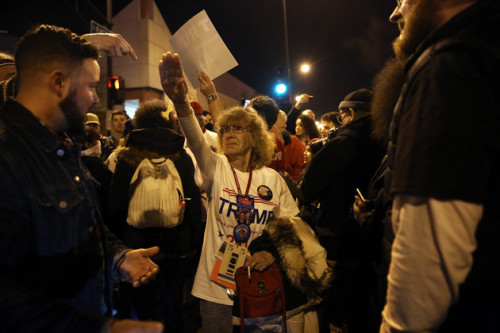
Donald Trump supporter Birgitt Peterson of Yorkville, Ill., argues with protesters outside the UIC Pavilion after the cancelled rally for the Republican presidential candidate in Chicago on Friday, March 11, 2016. (E. Jason Wambsgans/Chicago Tribune/TNS via Getty Images)

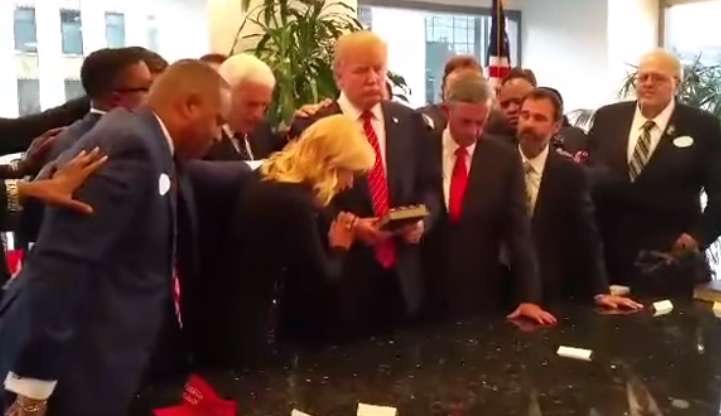
Believe me, American religious theocrats, who have the ear of President Trump are using those rights to persecute and restrict the liberties of fellow citizens. That I cannot abide, because last year I was on the receiving end of it. I try not to go there because it brings up so many unpleasant memories, but I was reminded of them as I wrote this post. I will not revisit them as I wrote about them last July after I had been exonerated of the false charges.

But I will not stop fighting for the religious liberties of all, including the rights of non-believers. I admire the work of Mikey Weinstein and the Military Religious Freedom Foundation. Despite how they are characterized by many Christian theocrats, they supported me when I was under attack and well over 90% of their clients are Christians.

Until tomorrow,

Peace

Padre Steve+

2 Comments

Filed under christian life, civil rights, faith, History, laws and legislation, News and current events, Political Commentary, racism, Religion, White nationalism

Juneteenth and the Anniversary of my 37th Year of Commissioned Service

Friends of Padre Steve’s World,

Just a brief note tonight. I have been preoccupied with our oldest Papillon, Minnie, who has been quite sick this week, we thought her Kidney disease had gotten worse, but after three days the vet looked at the newest blood test results suggested a toxin. We wracked our brain and figured it out. She looks like she may be turning the corner to getting better. She has some a bunch of medicine, we got some food down her, she drinks a lot of water and seems to have gotten some of her old spunk back. Two visits to an emergency vet for subcutaneous fluid injections this weekend and another with the primary vet Monday. Hopefully, she continues to recover and starts eating more.

Today was Juneteenth, which I hope becomes or next National Holiday. On June 19th 1865, over three months after Lee’s surrender to Grant at Appomattox and the subsequent surrender of Joe Johnston’s Army in North Carolina, and other longer resisting Confederate units took longer to give up. This included the  Army of the Trans-Mississippi, which commanded troops in Texas, under the command of Major General Kirby Smith surrendered on May 26th 1865.

There are still questions of why it took so long to  Union troops to Texas, but I am too tired to deal with that now.

To cut to the chase On June 19th 1865, Major General Gordon Granger, who had distinguished himself in combat during the war and who had been named as Military Commander of the District of Texas arrived in Galveston at the head of  2,000 Union troops. Upon arrival he issued General Order Number 3, which stated in part:

“The people of Texas are informed that, in accordance with a proclamation from the Executive of the United States, all slaves are free. This involves an absolute equality of personal rights and rights of property between former masters and slaves, and the connection heretofore existing between them becomes that between employer and hired labor. The freedmen are advised to remain quietly at their present homes and work for wages. They are informed that they will not be allowed to collect at military posts and that they will not be supported in idleness either there or elsewhere.”

What Granger announced was the implementation of Abraham Lincoln’s Emancipation Proclamation of January 1st 1863. It was a military order that only applied in non-Union held areas of the eleven Confederate states then in a state of rebellion against the United States. The Confederates mocked it, and many in the Union wondered about it, but when it was issued, a new phase of the war began.

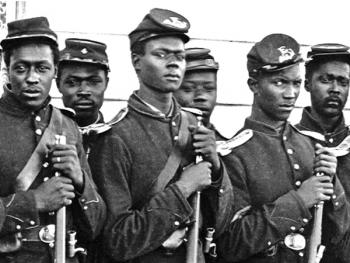
Northern Blacks, as well as liberated slaves in the South were able to become members of State or Federal Regiments of what were then called Colored Troops. Some like the legendary 54th Massachusetts Volunteer Infantry were State Regiments mobilized into Federal Service, and the many Regiments of infantry, cavalry, and artillery that were raised as U.S. Colored Troops or USCT. Then units were composed of Black enlisted troops officered by Whites. The White officers who elected to serve with them were frequently derided by other Union officers for messing up their careers by serving with Blacks. But during the war over 180,000 Blacks joined either State or USCT units. Their service was of great help with the eventual Union victory by helping ensure a huge manpower advantage, and quite a few units and individual soldiers distinguished themselves in combat against Confederate units. They were not accorded the same rights are White Union soldiers by the Confederacy. Robert E. Lee suspended long-standing prisoner exchanges with the Army of the Potomac after Ulysses Grant insisted that Black soldiers be treated the same as Whites and be exchanged. General Nathan Bedford Forrest’s troops massacred hundreds of Black troops when he overran the Union garrison at Fort Pillow.

The Emancipation Proclamation only became law when the Thirteenth Amendment was ratified on December 6th 1865. In the following years June 19th became known in Black communities as Juneteenth, a time of celebration, even in spite of the backlash of the KKK and other violent paramilitaries in the South, the decline of support in the North for Reconstruction and ensuring the rights of Blacks. But that didn’t stop the celebration. In 1938, Texas became the first state to officially recognize Juneteenth as the Texas State Fair had become a major gathering site for Blacks celebrating it. The Governor of Texas, J.V. Allred issued the following proclamation:

Whereas, the Negroes in the State of Texas observe June 19 as the official day for the celebration of Emancipation from slavery; and

Whereas, June 19, 1865, was the date when General Robert [sic] S. Granger, who had command of the Military District of Texas, issued a proclamation notifying the Negroes of Texas that they were free; and

Whereas, since that time, Texas Negroes have observed this day with suitable holiday ceremony, except during such years when the day comes on a Sunday; when the Governor of the State is asked to proclaim the following day as the holiday for State observance by Negroes; and

Whereas, June 19, 1938, this year falls on Sunday; NOW, THEREFORE, I, JAMES V. ALLRED, Governor of the State of Texas, do set aside and proclaim the day of June 20, 1938, as the date for observance of EMANCIPATION DAY

in Texas, and do urge all members of the Negro race in Texas to observe the day in a manner appropriate to its importance to them.

Since then 47 other states with the exceptions of North and South Dakota, and Hawaii, have either recognized it as a holiday or special day of remembrance. It is time for Juneteenth to take its place among Federal Holidays, and for my two cents, it is a holiday worth remembering, complete with celebrations, as well as memorial ceremonies and military parades with the last active units that began as Buffalo Soldier units, 4th Squadron 10th Cavalry, the First Battalion 24th Infantry, the 1st and 4th Squadrons 9th Cavalry, which are now desegregated, should be included. Unfortunately, no battalions of the 25th Infantry Regiment remain on active duty.

Juneteenth needs to become a Federal Holiday, to be observed on June 19th and not to observed on the date closest to a weekend, which only makes it another holiday in which most Americans take off to party without thinking of the sacrifices that were made by others to secure the freedom of fellow Americans.

                             Receiving my Commission 19 June 1983 at UCLA 

I think that there is something in my life that makes June 19th something to celebrate in conjunction with Juneteenth, not because it matters for most people, but that it provides my service as an Army Officer and later Navy Officer some additional meaning and context. I was commissioned as a Second Lieutenant in the Army on June 19th 1983. Since then I have remained in service on active duty in the Army, in the National Guard, Army Reserve, and finally as an active Duty Navy officer and Chaplain since 1999. For me, that makes Juneteenth that much more meaningful. If ever there was an occasion to celebrate Juneteenth it should begin with remembering that day that I swore  the solemn oath to support and defend the Constitution of the United States against all enemies, foreign and domestic.

I take that oath seriously, thirty seven years after the day that I rose my right hand and made it the first time.

I never thought that muppets allegiance to that oath would make some Americans to consider me to be Un-American, or even a traitor, simply because I remain true to it, and will not obey illegal orders, or sell my soul to any President or political party. I continue to serve and will remain on active duty after my retirement date of 1 August until at least 31 December because of CIVID19.

As  I head into the certain twilight and end of my active service I cannot forget the words of General Ludwig Beck who resigned his position over Hitler’s planned invasion of Czechoslovakia in 1938 and lost it in the attempt to kill Hitler on July 20th 1944.

“Final decisions about the nation’s existence are at stake here; history will incriminate these leaders with bloodguilt if they do not act in accordance with their specialist political knowledge and conscience. Their soldierly obedience reaches its limit when their knowledge, their conscience, and their responsibility forbid carrying out an order.” 

If I cannot stand in solidarity with Black Americans when an out of control, blatantly racist, and immoral leader encourages violence against his opponents, and especially with minorities, then I make a mockery of than oath. I cannot do that.

So until tomorrow,

Peace,

Padre Steve+

7 Comments

Filed under civil rights, civil war, History, Military, national security, News and current events, Political Commentary, racism, us army

Nazi Doctors and Charité at War: Some Things Never Really find their Way into the Ash Heap of History

Friends of Padre Steve’s World,

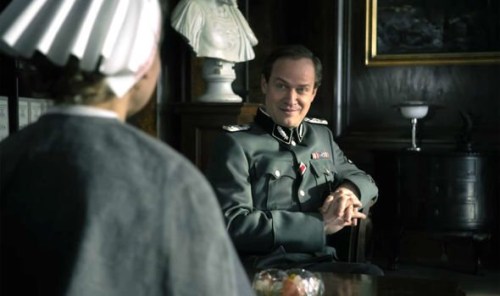
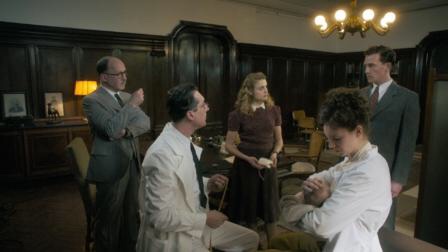
Last night I decided rewatch the German medical mini-series Charité at War. It is about the famous Charité hospital in Berlin, which along with the Robert Koch Institute is one of the most important hospitals and medical research centers in the world. It had begun as a hospital for patients infected with the plague in 1710. When the plague bypassed Berlin, it became a charity hospital for the poor and destitute and named by the order of Friedrich of Prussia.  In 1727 King Frederick Wilhelm I when he named it Charité and its mission became threefold, to care for the poor and indigent, a state hospital, and as a training center for military physicians. It would also become a teaching hospital associated with Humboldt University and the University of Berlin and it became a hub where some of the premier physicians, researchers, and clinicians in the world practiced. These included Dr. Rudolf Virchow, the founder of modern pathology, Dr. Robert Koch one of the founders of modern Bacteriology whose discoveries included the causative agents of anthrax, cholera, and tuberculosis and experimental support for the study of infectious disease. He was awarded the Nobel Prize for his research on tuberculosis. It also hosted Dr. Otto Binswanger who decried a condition defined as subcortical dementia characterized by loss of memory and intellectual faculties, which is now known as Binswanger’s Disease. He also authored numerous works on Epilepsy, Dr. Emil von Behring who developed a vaccine for Diphtheria antitoxin for which he won a Nobel Prize, and Dr. Paul Erlich who who worked in the fields of hematology, immunology, and antimicrobial chemotherapy. He is credited with finding a cure for syphilis in 1909. He invented the precursor technique to Gram staining bacteria. The methods he developed for staining tissue made it possible to distinguish between different types of blood cells, which led to the capability to diagnose numerous blood diseases. Over half of German Nobel Prize winners have worked at or with Charité.

Now Charité is one of the world’s finest medical centers, schools, and research centers in the world, but things were different in the 1930s and 1940s during the reign of Hitler and the Nazis. while much of its good work would continue, members of its staff would participate in the T-4 Euthanasia program and others that would follow.

In my studies of the Third Reich and the Holocaust I have read a number of volumes dealing with Nazi medicine, eugenics, human experimentation, and the murder of those deemed “life unworthy of life.” I have read The Nazi Doctors and the Nuremberg Code: Human Rights in Human Experimentation, edited by George Annas and Michael Gordon, and previously read The Nazi Doctors by Robert J. Lifton, The Nazi War on Cancer, by Robert Proctor, the Nuremberg transcripts of the Doctors Trial, Hitler’s American Model: the United States and the Making Of Nazi Race Law, by James Whitman, The Nazi Connection: Eugenics, American Racism, and German National Socialism by Stefan Kühl and made  visits to Dachau, Buchenwald, and the Hadamar T-4 Euthanasia Center.

In my career I have served as a member, or the head of ethics committees at major civilian and military medical centers. As such I have also had to read and study much about medicine, disease, and medical ethics. Much of my hospital time was done in ICUs and dealing with end of life matters, consulting with physicians and nursing staff. So I don’t take the subjects involved lightly, and I found the German television series Charité at War, which is available on Netflix to be fascinating.

My life has been deeply involved with history, Ministry, Medicine, and Ethics for decades. The series which is set in Berlin’s Charité hospital, a leading research center and major medical center is so interesting. It shows how even the most decent and idealistic people can be compromised in a medical system of an authoritarian and racist state.

The characters in the series are all based on real people. They are not composites, or factionalized versions. They include the true believers like SS Colonel and Psychiatrist Max de Crinis, who helped write the euthanasia laws of the Reich and used his position as Professor Of Psychiatry at Charité to turn wounded soldiers over to Court Martial as deserters, and to persecute homosexuals. He took cyanide to escape capture by the Soviets. Then there was Doctor and Professor Ferdinand von Sauerbruch, Professor Of Surgery at Charité who walked a thin line but publicly opposed the T-4 Euthanasia program and attempted to protect members of the German resistance. Sauerbach remained at the hospital treating patients until the Red Army captured it. He was known for his work with, tuberculosis, prosthetics, and the diagnosis of Graves Disease. He died in 1951. Then there was Professor Artur Waldhäusen, a pediatrician who became head of pediatrics at Charité who attempted to have his own daughter sent to a Euthanasia center, only to be found out by his wife who saved her daughter with the help of her brother. But of all the characters was the nurse Christel, who was so devoted to the Nazi message that she turned over nurses, physicians, and patients who she deemed traitorous to Professor de Crinis and the Gestapo, including Hans Dohnanyi, Brother in law of Dietrich Bonhoeffer.

The series is interesting because it shows ordinary people, even brilliant people can compromise their ethics and reputations serving an unjust regime. Some of these medical professionals were completely utilitarian in their ethics and had no empathy for those that they treated or sent to their deaths. Sadly, they are no different from people today. Bureaucrats, Physicians, Nurses, and yes even ministers can surrender their ethics, faith, and simple human decency, even those who claim to be Pro-life to serve regimes which are bent on the extermination of life unworthy of life and those that they consider to be subhuman.

Dr. Robert J. Lifton, the author of The Nazi Doctors wrote:

“In all fundamentalisms, and they are usually religious or political, there is the sense of profound threat to what are considered fundamental beliefs and symbols, and a compensatory invocation of a sacred text (the Bible, the Koran, Mein Kampf) as a literal guide to every form of action. History stops so that murderous therapy can be applied. While medicine does not provide the sacred text, one can revert to ancient practices of shamans, witch doctors, and tricksters who could be expected to kill in order to heal. For physicians as well as charismatic spiritual physicians, there is a release from Hippocratic restraint.”

That happened in Nazi Germany and other authoritarian states, as well as in our country around the same time of the Nazis. In our case the effort was led by Eugenicists whose ideas the German Eugenicists of Weimar promoted and which some of them and their students during the Nazi period would take to their logical extreme.  In the Nazi era German physicians engaged in some of the most criminal and unethical experiments and behaviors in history. Their examples were the American Eugenicists, and physicians who their experiments on living human beings at the Tuskegee Institute and other facilities. Since human nature is the one constant in history, do not be surprised if ideologically motivated physicians and scientists do the same thing the Nazi Doctors and the American Eugenicists did a century ago. Syphilis

The series Charité at War is as brilliant as it is disturbing. I recommend it highly, and if you watch it before going to bed I suggest that you start drinking heavily.

So until tomorrow,

Peace,

Padre Steve+

2 Comments

Filed under authoritarian government, civil rights, Diseases Epidemics and Pandemics, ethics, euthanasia, faith, healthcare, History, holocaust, laws and legislation, nazi germany, News and current events, philosophy, Political Commentary, White nationalism

The Racial Terror Mass Murder at Emmanuel AME Church at Five Years

Dylann-Storm-Roof

“You rape our women and you’re taking over our country. And you have to go.” Dylann Storm Roof

Friends of Padre Steve’s World,

As I continue to work on the revisions to my book I am reposting an unedited article from exactly five years ago. As the title says, this is about the race based terror attack on Emmanuel African Methodist Episcopal Church in Charleston, South Carolina. Since there are all to many killings of individual Blacks going on today, by private citizens and police alike, I thought I should post it before some other White Nationalist terrorist attacks yet another Black Church, as a man who owned a UPS store a half mile from my house threatened to do to a Black Baptist Church in my town. I had actually used that store on occasion for shipping large articles across country, and recall meeting the man. He seemed ordinary. He was businesslike but not much personality showed through. Hannah Arendt wrote about the banality of evil in reference to Adolf Eichmann, the one man among many who was truly the driving engine in carrying out Hitler’s order implementing the Final Solution to the Jewish Problem, which just a few years before had been called the Jewish Question. 

The late Christopher Hitchens wrote:

“Die Judenfrage,’ it used to be called, even by Jews. ‘The Jewish Question.’ I find I quite like this interrogative formulation, since the question—as Gertrude Stein once famously if terminally put it—may be more absorbing than the answer. Of course one is flirting with calamity in phrasing things this way, as I learned in school when the Irish question was discussed by some masters as the Irish ‘problem.’ Again, the word ‘solution’ can be as neutral as the words ‘question’ or ‘problem,’ but once one has defined a people or a nation as such, the search for a resolution can become a yearning for the conclusive. Endlösung: the final solution.”

That is precisely the issue. Words like “question”, “problem”, and “solution” seem so neutral and innocuous, that is why they are so effective in turning human beings into killers, and allows others to stand aside and do nothing. There are men like Eichmann today who decide that people of another race, color and sometimes religion are less than human. Instead what to do with them is phased as a question, and as we all know questions demand answers. For the Nazis, the Jews became a problem, and to add emphasis to the less than humanness of the Jews the Nazis often referred to them as vermin or a pestilence. Therefore to such people, the Jews, and likewise for the British at numerous points in their history, the Irish were also a problem. Problems always call out for a solution. It is surprising easy how otherwise ordinary people who go home to their families, go to work, and sometimes church seem to enjoy finding solutions.

Today, to White Supremacists, White Nationalists, and Neo-Nazis in American, the less than human include those who include Blacks, Mexicans, Arabs, Asians, other non-White immigrants, LGBTQ people, and others, including the age old target, the Jews as “problems” that demand solutions.
All too often the solutions that they advocate are not that different than the Nazis. Strip them of their constitutional rights, then their citizenship, if possible deport them, and if all else fails, kill them, and don’t feel bad about it.

But for the lone wolves, they often skip the first steps a government might take, and go straight for the kill.  When I read the description of Dylann Roof by one of his high school friends that I included in the original article. What astounded me on reading it again was that his friend didn’t notice anything wrong with his words, until Roof had committed mass murder. How many times do we let such words pass. Who can forget the words of the great Chinese philosopher Lao Tzu:

“Watch your thoughts, they become your words; watch your words, they become your actions; watch your actions, they become your habits; watch your habits, they become your character; watch your character, it becomes your destiny.”

That happened five years ago this very evening. So to the article.

Peace,

Padre Steve+

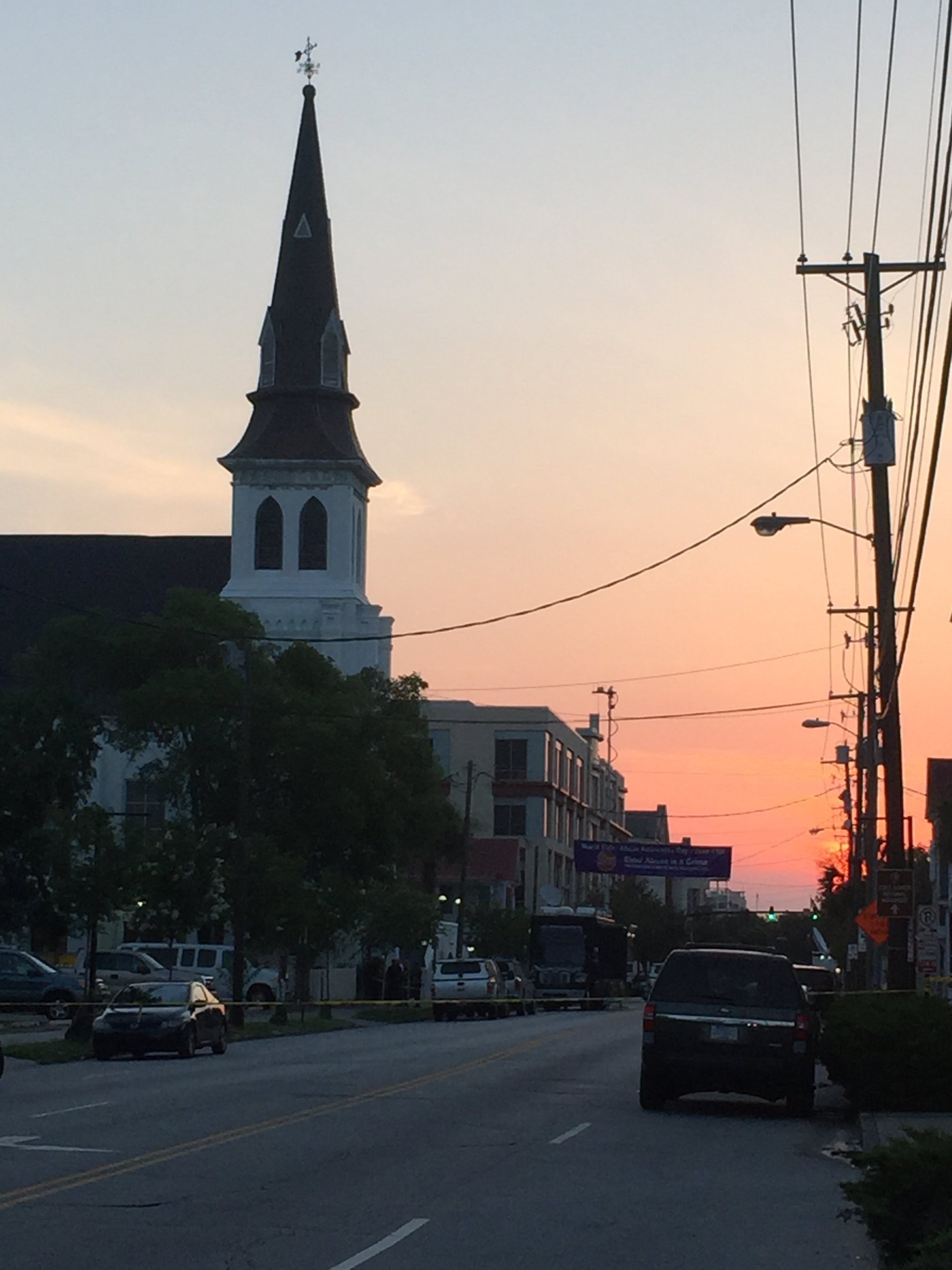
Last night a young man who the Charleston Police have identified as Dylann Storm Roof, walked into the historic Emanuel Africa Methodist Episcopal Church in Charleston South Carolina. He sat next to the pastor, Reverend Clementa Pinckney, who also served as a State Senator for an hour before taking out a gun and opening fire as the meeting broke up. According to survivors he stated that he was at the church to kill black people and he did so, killing nine of the 13 people present including Reverend Pinckney. During the attack a survivor noted that he reloaded his gun five times.

usa-charleston-shooting

Reverend Clementa Pinckney

Like many people I am shocked by this but I am not surprised. For decades the mainstream Right Wing media have been chumming the water with enough hatred directed against African Americans, other racial minorities, Moslems and Gays. Such people have been blamed by the Right, and not just the nutty fringe for every evil in our society for so long that it was only a matter of time before an act of terror like the one in this church was committed. Some of those people are already on the air today explaining this away not as an act of racially motivate terrorism, but as another attack on Christians.

However, that was not the case. Yes, these men and women killed by Dylann Roof were Christians, but he killed them because they were black. That is the cold hard fact that no one can get around in this case. He murdered these men and women simply because they were black and they represented a threat to the “White America” that he and other White Supremacists and defend.

The Emanuel African Methodist Episcopal Church is the oldest AME church in the South. Nine people died in a hate crime shooting on June 17, 2015.

Had Roof simply wanted to kill Christians to really make a point he could have gone to any church. There are plenty of the in Charleston, my God it is known as The Holy City because of the vast number of churches. But instead he went to a church which has a long history of standing up for the civil, social and political rights of blacks dating back to 1816. It was the hub of anti-slavery activism and where Denmark Vesey and others plotted a slave revolt which was ruthlessly crushed by South Carolina’s militia. South Carolina’s government burned the church, scattered the congregation and banned blacks from meeting in organized congregations until after South Carolina was liberated by General William Tecumseh Sherman’s Union Army.

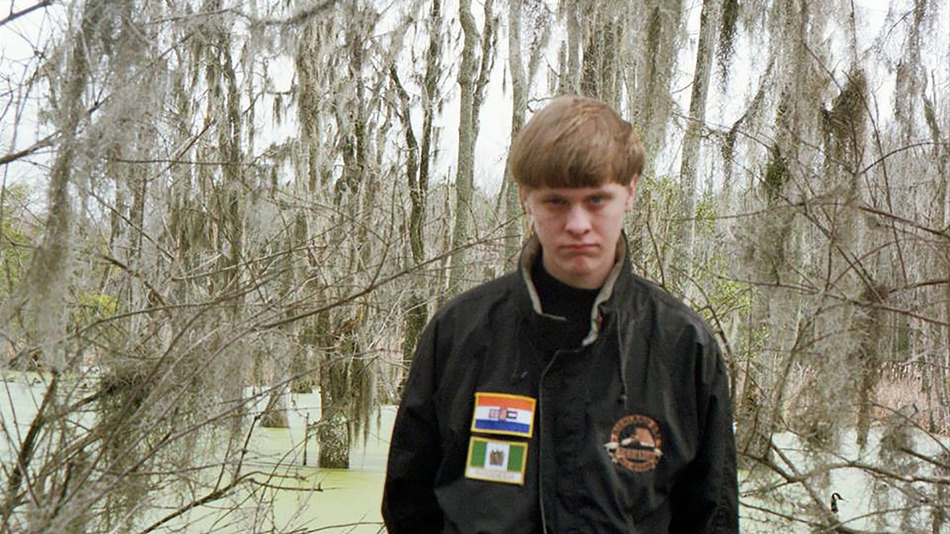
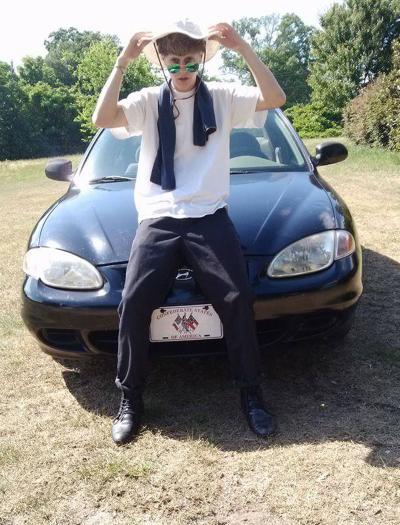
We don’t know much about Roof, and I’m sure that we will. However, one thing that I noted was that in one picture Roof was wearing a jacket which had the flag of the old Apartheid South African State and the flag of the also the flag apartheid Rhodesia sewn over the right breast pocket. His car had a decorative Confederate States of America license plate in front. A friend from high school said of Roof:

“I never heard him say anything, but just he had that kind of Southern pride, I guess some would say. Strong conservative beliefs,” he said. “He made a lot of racist jokes, but you don’t really take them seriously like that. You don’t really think of it like that.” But now, “the things he said were kind of not joking,”

When Roof was captured he appeared to be headed for the Blue Ridge Mountains in Western North Carolina of Eastern Tennessee. Eastern Tennessee, Western North Carolina and Southwestern Virginia are the home of numerous KKK, Neo Nazi and other White Supremacist groups.

article-suspect-0618

So today even on Fox news, that bastion of balance hosts are scrambling to call this anything but racially motivated terrorism called it a crime against Christians which fits into their ideological content more than the truth that this was racially motivate terrorism. However this was the same kind of terrorism as the notorious KKK sponsored Birmingham Church bombing of September 1963, or the burnings and bombings of black churches in the South before and after that.

Mark my word by this evening some of the more prominent Right Wing radio and internet pundits are going to be blaming this on everything but racism and terrorism. Imagine though if the shooter was a Moslem what they would say. They would have been all over the air labeling all Moslems as jihadist’s intent on killing Christians and demanding action against all Moslems based through guilt by association. That my friends is a fact and it is not in dispute.

In the coming days we are going to find out more about this and it will not be pleasant reading. We are going to find a young man whose heart has been poisoned by hate propagated by both mainstream Right Wing media as well as extremist White Supremacist and Neo-Nazi groups.

SixteenthStBaptistBomb05

We want to think that we have progressed, but sadly despite a veneer of progress, there still remains a lot of racism and other hatred that lurk beneath the veneer of the post-racial society. Michael Savage who has one of the most popular right wing radio programs in the country described inner-city children as “ghetto slime,” Ann Coulter said in 2013 “Perhaps, someday, blacks will win the right to be treated like volitional human beings. But not yet.” Rush Limbaugh, well his racist trolling and insults are too many too mention, and sadly there are some who call themselves Christian commentators who say even worse than these people, and not just about blacks.

Let us call this crime what it is. Racially motivated terrorism.

Peace,

Padre Steve+

Leave a comment

Filed under anti-semitism, civil rights, crime, culture, History, holocaust, LGBT issues, mental health, nazi germany, News and current events, racism

“Who is Responsible?” The Bombing of 16th Street Baptist Church and Racist Violence Today

SixteenthStBaptistBomb05

Friends of Padre Steve’s World

Tonight, something else from the archives as I do some work on my book. Even so it is very pertinent as we see White Supremacists rove in heavily armed groups, threatening and even attacking and killing Blacks and other minorities, disrupting civil rights marches, threatening Public Health officials, elected leaders, and even police who stand in their way.  In 2014 Emmanuel AME Church in Charleston was the target of a young White Supremacist who committed a mass murder there after sitting with members in a prayer meeting. A primarily Black Baptist Church where I live was threatened  with being bombed last week,  This time by by a White man from North Carolina who used racial slurs and threats on the message he left on their answering machine. Then there is the police violence directed at individual Blacks, as well as militarized police attacks people of all races protesting those murders, in one instance at the wish of the President.

So I am returning to a different time, over a half century ago that bears too much resemblance to today not to revisit. This is about the KKK bombing of the Sixteenth Avenue Baptist Church in Birmingham, Alabama on September 15th 1964. However, unlike today the event triggered no outraged, and the FBI under J. Edgar Hoover, refused to help prosecutors with evidence that they had against the defendants.

So, until tomorrow,

Peace,

Padre Steve+

On September 16th 1963 a young Southern White lawyer in Birmingham Alabama spoke these words after a black church was bombed and the police attacked peaceful protesters:

“from anger and despair, from frustration and empathy. And from years of hopes, hopes that were shattered and crumbled with the steps of that Negro Baptist Church.”

Most Americans will not recognize the names and I would dare say that many do not even know about what happened in Birmingham Alabama 57 years ago today. At 10:22 in the morning on September 15th 1963 a bomb exploded during the worship service at the 16th Street Baptist Church. It was one of the most brazen attacks against a church in the modern era, and men who claimed to be “Christians” committed it.

MCNAIR ROBERTSON COLLINS WESLEY

Four young girls, three 14 year olds and one 13 year old were killed. Addie Mae Collins, Denise McNair, Carole Robertson and Cynthia Wesley lost their lives that day. Twenty-two other church members were wounded in an attack, which was carried out by members of the KKK and tacitly approved of by many political leaders including Alabama Governor George Wallace. Why were they killed and why were the others wounded?

The answer to that question is easy. They were murdered for the crime of being black, and the crime of their church serving as a focal point of the Civil Rights movement. Just five months before Dr. Martin Luther King Jr. had been arrested while leading a campaign of protest and civil disobedience in the city and in its jail where he secretly penned his famous Letter from a Birmingham after he saw a joint article published by eight prominent White clergymen, who issued what they referred to as a Call to Unity. In it they denounced the peaceful demonstrations, led by “outsiders” a swipe at King and called for Birmingham’s Blacks to withdraw their support from King and wait for legislators and the courts rather than demonstrate. They also praised Bull Connor’s violent attack with police dogs on the protestors as “calm restraint.”  In January 1963 the same clergymen published “An Appeal for Law and Order and Common Sense.”  In that letter, published shortly after George Wallace’s “Segregation today, segregation tomorrow, segregation forever” speech, these men and others tried to stake out a middle ground. They were uncomfortable with protest, peaceful or not but had done nothing to stop the violence other than ask their White congregations not to resist any court rulings granting it.

King could not let that go. In one section of the letter, a true classic of American patriotic dissent King wrote:

“I must make two honest confessions to you, my Christian and Jewish brothers. First, I must confess that over the past few years I have been gravely disappointed with the white moderate. I have almost reached the regrettable conclusion that the Negro’s great stumbling block in his stride toward freedom is not the White Citizen’s Counciler or the Ku Klux Klanner, but the white moderate, who is more devoted to “order” than to justice; who prefers a negative peace which is the absence of tension to a positive peace which is the presence of justice; who constantly says: “I agree with you in the goal you seek, but I cannot agree with your methods of direct action”; who paternalistically believes he can set the timetable for another man’s freedom; who lives by a mythical concept of time and who constantly advises the Negro to wait for a “more convenient season.” Shallow understanding from people of good will is more frustrating than absolute misunderstanding from people of ill will. Lukewarm acceptance is much more bewildering than outright rejection.”

Likewise, most people today, including many blacks do not know that before the bombing of this church, that since 1955 there had been 19 other bombings of black churches as well as the homes of Black leaders in Birmingham that preceded it. But even before that outbreak of violence, Birmingham had become known as “Bombingham” because over 50 bombing attacks against blacks, black churches and black institutions in the years after the First World War.

The church had served as a focal point of the Freedom Summer where Civil Rights activists and students from around the country had met, trained and organized to register blacks to vote. This made it a prominent target for violence at the hands of the KKK and its political and police allies.

1179981

Early in the morning of September 15th four members of the United Klans of America went to the church as it was still dark. Frank Bobby Cherry, Thomas Blanton, Herman Cash and Robert Chambliss placed a box of 10 sticks of dynamite under the church steps near the basement. A time delay detonator was set to ensure that the church was filled when the bomb went off. The blast occurred as children were leaving Sunday School and going up the stairs to the sanctuary to listen to a sermon, ironically entitled “The Love that Forgives.”

The attack was a heinous crime and an act of cold-blooded premeditated murder that maybe a number of years before might not have made the news in much of the country. But this was 1963 and over the preceding months of the Freedom Summer opened the eyes of people across the nation to what was happening in the South. The brutal attacks on many blacks, civil rights workers and student volunteers during that time raised the profile of the Civil Rights Movement and shown the ugly hatred towards blacks held by many Southerners hidden underneath the veneer of polite Southern hospitality.

315

Blacks protested and were met with a massive police response coordinated by Governor George Wallace that brought about more violence, and more dead blacks. The violence perpetrated by the police was similar to police responses to peaceful protestors so many times over the past few years following the deaths of Black men, women, and children.

The next day, a young white lawyer, Charles Morgan Jr.; a true Southerner by right and heritage spoke to the White Businessman’s Club of Birmingham. He was thirty-three years old and had an up and coming law practice.  His words were forceful and to the point and he did not mince words. Instead of simply asking why as so many in Birmingham were doing, the young attorney  began his speech with this poignant remark and kept on going.

Four little girls were killed in Birmingham yesterday.

A mad, remorseful worried community asks, “Who did it? Who threw that bomb? Was it a Negro or a white?” The answer should be, “We all did it.” Every last one of us is condemned for that crime and the bombing before it and a decade ago. We all did it.

A short time later, white policemen kill a Negro and wound another. A few hours later, two young men on a motorbike shoot and kill a Negro child. Fires break out, and, in Montgomery, white youths assault Negroes.

And all across Alabama, an angry, guilty people cry out their mocking shouts of indignity and say they wonder “Why?” “Who?” Everyone then “deplores” the “dastardly” act.

But you know the “who” of “Who did it” is really rather simple. The “who” is every little individual who talks about the “niggers” and spreads the seeds of his hate to his neighbor and his son. The jokester, the crude oaf whose racial jokes rock the party with laughter.

The “who” is every governor who ever shouted for lawlessness and became a law violator.

It is every senator and every representative who in the halls of Congress stands and with mock humility tells the world that things back home aren’t really like they are.

It is courts that move ever so slowly, and newspapers that timorously defend the law.

It is all the Christians and all their ministers who spoke too late in anguished cries against violence. It is the coward in each of us who clucks admonitions.

We have 10 years of lawless preachments, 10 years of criticism of law, of courts, of our fellow man, a decade of telling school children the opposite of what the civics books say.

We are a mass of intolerance and bigotry and stand indicted before our young. We are cursed by the failure of each of us to accept responsibility, by our defense of an already dead institution.

Yesterday while Birmingham, which prides itself on the number of its churches, was attending worship services, a bomb went off and an all-white police force moved into action, a police force which has been praised by city officials and others at least once a day for a month or so. A police force which has solved no bombings. A police force which many Negroes feel is perpetrating the very evils we decry. . . .

Birmingham is the only city in America where the police chief and the sheriff in the school crisis had to call our local ministers together to tell them to do their duty. The ministers of Birmingham who have done so little for Christianity call for prayer at high noon in a city of lawlessness, and in the same breath, speak of our city’s “image.” . . .

Those four little Negro girls were human beings. They have their 14 years in a leaderless city; a city where no one accepts responsibility; where everybody wants to blame somebody else. A city with a reward fund which grew like Topsy as a sort of sacrificial offering, a balm for the conscience of the “good people”. . . .

Birmingham is a city … where four little Negro girls can be born into a second-class school system, live a segregated life, ghettoed into their own little neighborhoods, restricted to Negro churches, destined to ride in Negro ambulances, to Negro wards of hospitals or to a Negro cemetery. Local papers, on their front and editorial pages, call for order and then exclude their names from obituary columns.

And, who is really guilty? Each of us. Each citizen who has not consciously attempted to bring about peaceful compliance with the decisions of the Supreme Court of the United States, every citizen and every school board member and schoolteacher and principal and businessman and judge and lawyer who has corrupted the minds of our youth; every person in this community who has in any way contributed during the past several years to the popularity of hatred, is at least as guilty, or more so, than the demented fool who threw that bomb.

What’s it like living in Birmingham? No one ever really has known and no one will until this city becomes part of the United States.

Birmingham is not a dying city; it is dead.

After the speech he knew that he had little support, he began receiving death threats directed at him and his family. His law practice collapsed, and rather than remain as a target, he and his family left Birmingham.

Not only was the attack on Sixteenth Street Baptist Church heinous, but, the response of many in law enforcement at the local level and even at the office of FBI Director J. Edgar Hoover was criminal. Hoover refused to investigate, and although a witness identified Chambliss, he was not charged with the bombing; instead he was charged for having a case of dynamite without a permit. He was fined $100 and given a six-month jail sentence.

765026275

Thought FBI agents had investigated the crime and discovered evidence against all four men, Hoover ordered the evidence not be provided to local or Federal prosecutors. So for eight years the crime was covered up.

However in 1971 Bill Baxley was elected Attorney General of Alabama. Baxley re-opened the case and requested the FBI files, which had been suppressed by Hoover, who had died in 1972. In 1977 Chambliss was indicted and convicted of first degree murder, he died in prison. Blanton was tried in 2001, convicted of four counts of murder and sentenced to life in prison. Cash died in 1994 without ever having been charged with a crime and Cherry was convicted in 2002, sentenced to life in prison and died in 2004.

The attack and the deaths of the four girls served as a catalyst in the Civil Rights Movement. In 1964 President Lyndon Johnson signed the Voting Rights Act, the following year the Civil Rights Act.  However, those did not end the fight for equality, and others would die in its aftermath, including Dr. Martin Luther King Jr. who died at the hands an assassin named James Earl Ray, less than 4 years later.

Since the passage of the Voting Rights Act of 1964 and the Civil Rights Act of 1965 many blacks have been elected to local, state and federal offices or served in some of the highest ranks of the military, judiciary, and at the Cabinet level. Two, Colin Powell and Condoleezza Rice have served as Secretary of State, two, Eric Holder and Loretta Lynch, as Attorney General of the United States; one, Clarence Thomas, as an Associate Justice of the Supreme Court; one, Susan Rice, as National Security Advisor, as well as the current Secretary of Housing and Urban Development, Dr. Ben Carson. Finally one, Barak Obama was elected as President of the United States. There is a high probability the the presumptive Democratic Party nominee to oppose President Trump in November, former  Vice President Joe Biden will chose a Black woman as his Vice President running mate. Since it is widely believed that Biden sees himself a transitional President, that if he is elected that one of the women will at some point either inherit his duties should he become incapacitated or die in office, or that in 2024 he will pass the baton of leadership to his Vice President.

But despite these advances, racism is still quite prevalent in this country, not just the systemic racism, and pretend that it doesn’t exist racism, but the open and unabashed race hatred, that during the term of President Donald Trump seems to be getting both more open and violent as its proponents, unleashed and unhindered who, with good reason believe that have a supportive President in the White House go about terrorizing wherever they go.

One of my former co-workers from Georgia, a White, yet progressive  Southern Baptist minister and retired military chaplain noted that many whites may not be explicitly racists in their interpersonal relationships with blacks, but have an attitude that when it comes to places of power, that blacks still need “to stay in their place.” He noted that he thinks that for many whites who think this way,  that this is a large part of the reason that President Obama was opposed and even hated by so many Whites. It was not just politics, policy or ideology, it was blatant in your face racism. Obama was a Black man in the White House, he had overstepped his social standing.  While politics may play a role the root of the hatred of him, it is racism, admitted or not, that drove it. Honestly, I cannot for the life of me any White man occupying the office of the President receiving similar treatment.

But the sad truth is there still is an undercurrent of unrepentant and deeply embedded racism in the country, and not just in the South. In fact many there places in the South have seen greater advances in racial relations than other parts of the country, despite the actions of White Republicans in the region to gerrymander elections and to disenfranchise Black voters since the Roberts Court gutted key provisions of the Voting Rights Act of 1964. That is not to say that there are those who would attempt to disenfranchise blacks, some of the voting laws recently passed are designed to ensure that significant parts of the black population, specifically the elderly and students living away from home have greater difficulty voting. It is actually a more insidious method than the past Jim Crow laws because the drafters of these laws hope to keep just enough black and other poor or minority voters from voting to ensure that they maintain power. Some of the men that drafted or supported these state laws designed to disenfranchise voters have openly admitted that fact.

Not only is racial prejudice experienced by Blacks, it is experienced by many Americans of Hispanic origins, some of Asian descent but also by those of Middle Eastern, Iranian, Pakistani or Indian descent. And yes, people of all races, including racial, ethnic and religious minorities can be as racist and violent as the men who bombed the 16th Street Baptist Church 57 years ago. Racism is an ugly part of our human condition and no matter whom it is targeted against, and who does the targeting, it is wrong and needs to be fought.

In its 2019 report the Southern Poverty Law Center http://www.splcenter.org listed 940 active hate groups of all types operating across the country, including neo-Nazis, Klansmen, white nationalists, neo-Confederates, racist skinheads, black separatists, border vigilantes and others. (See the Hate Map herehttps://www.splcenter.org/hate-map) The number is down from recent because a number of more the virulent White Supremacist and militia groups have gone underground, shut down websites and social media pages.

Too many people have died in this struggle to stop now, even as their deaths continue to mount. If you read this before or after going to church, remember those four little girls who died at the hands of four murdering, racist Klansmen. Likewise remember that there are others out there full of hate who would not hesitate to do the same again and others who would actively support those efforts. Sometimes in the name of “Law and Order” and  sometimes even in the name of God.

As for me I will fight it racism and violence of all types, especially against those who have been the victims of racism and violence for over 400 years. There are times that I wish I had gone to law school rather than seminary. Maybe after I retire I will do that or take up an advanced degree in Criminal Justice.

10morgan01-190

                                                                  Charles Morgan Jr.

Charles Morgan died in 2009, but after he left Birmingham he went on to lead a remarkable life, especially in his commitment to Civil Rights and Justice. The New York Times obituary noted:

“Among his many cases as a civil rights lawyer, Mr. Morgan sued to desegregate his alma mater, the University of Alabama; forced a new election in Greene County, Ala., that led to the election of six black candidates for local offices in 1969; and successfully challenged racially segregated juries and prisons. After the civil rights movement began to subside, Mr. Morgan, as a leader of the American Civil Liberties Union, fought three celebrated court cases involving protests against the Vietnam War.

He represented Muhammad Ali in his successful court fight to avoid being drafted. He represented the civil rights activist Julian Bond in the early stages of an ultimately successful lawsuit after Mr. Bond had been denied a seat in the Georgia legislature because of his antiwar views. And he defended an officer when he was court-martialed for refusing to help instruct Green Berets headed for Vietnam.”

We cannot ever let ourselves forget that it was supposedly Christian men who bombed a church and killed those four little girls, and that as long as all of us fail to live up to our responsibilities such things will happen again. If we do not, we are as guilty as those who throw the bombs, shoot the bullets, and those preachers, pundits and politicians who deny the fact that these things are still commonplace. This is especially true in the Trump era.

Yes, my friends, we too will be at least as guilty as the brazen killers who continue to try to kill the dreams of those who are not like them. I will fight for the oppressed and always seek to tell the truth and present facts as facts, and I hope that I will be as committed to stand for the rights of the oppressed and for justice as did Charles Morgan.

Peace,

Padre Steve+

Leave a comment

Filed under civil rights, crime, faith, History, laws and legislation, leadership, ministry, News and current events, Political Commentary, racism, Religion, US Presidents

Silence In the Face of Evil Itself: A Dark Meditation of Resistance in Trump’s America

Friends of Padre Steve’s World,

Dietrich Bonhoeffer wrote the words “silence in the face of evil is evil itself.”

This is a very difficult article to write because truthfully I believe that civility and mutual respect should be an ideal that we as Americans should not retreat from, as John F. Kennedy noted:

“So let us begin a new remembering on both sides that civility is not a sign of weakness, and sincerity is always subject to proof. Let us never negotiate out of fear. But let us never fear to negotiate.”

I have written about that a number of times, the last being on November 22nd 2016 shortly after President Trump’s election and on the anniversary of Kennedy’s assassination. However, since that time I have seen the President lead a descent into depravity that I fully comprehended then, though I hoped for a different outcome. In the past three and a half years the President has gone from bad to worse.

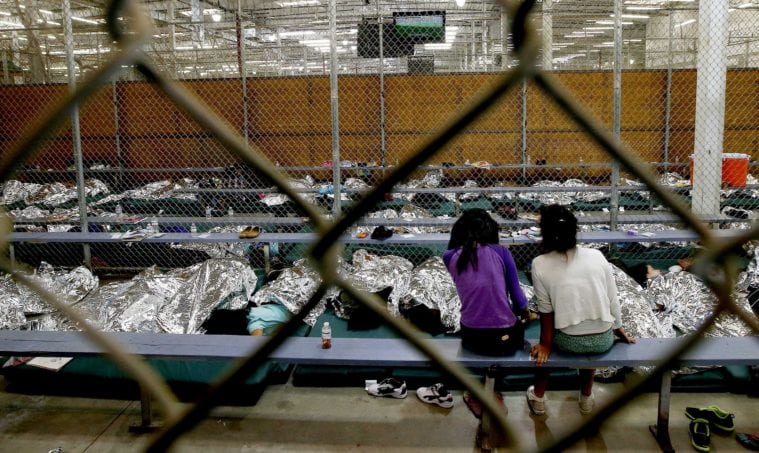
He cannot tell the truth about anything, so his staff and supporters invented something they called alternative truth, or alternative facts. Within months of his inauguration he was overturning civil rights protections for many Americans, those who had little power to resist. He went after the voting rights of Black Americans, the elderly, and the poor. He went after LGBTQ people’s basic civil rights, many of which were only recently won. He went after the human rights of immigrants, and refugees, even the children of people who came here decades ago, the Dreamers who were raised as Americans, who served in the military, and how had become contributors to the American way of life, though they were deprived of citizenship. He promised to build a wall to keep out Latin American refugees, though not completed he took actions that separated families and locked children in cages on concrete floors as he enriched the most wealthy with tax cuts, but in the process blew the budget deficit into realms never dreamed about before. He attacked patriotic Americans, including members of the military calling them traitors because they respected the Constitution more than worshipping him. He went after long time American allies and made himself a de facto ally of Russia’s Vladimir Putin. He made his presidency one of White Supremacy and the economy, but his Presidency was built upon smoke mirrors and lies. When the novel Coronavirus 19 was identified as an epidemic in China and then as a pandemic he ignored it and then minimized it time after time again. Then everything came apart on him with dire results for the country at large.

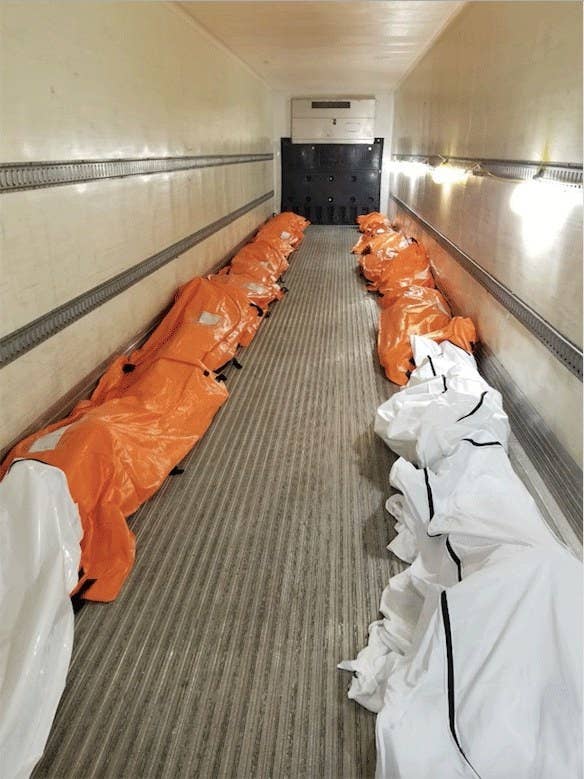
When COVID 19 finally began to hit the United States and kill people he finally acted, but far too late. Now over 118,000 Americans are dead, and that is the official count, which is certainly a large undercount, with two million more being infected and half of those still at risk of death. But it wasn’t until the economy began to tank and Wall Street crashed that he did anything. The virus is still here, with tens of thousands a day being infected, as he continues to push to reopen the economy to go back to a normal that cannot be restored, regardless of the number of lives lost.

Then there were a spate of targeted killings of Black men by Whites acting as vigilantes, and police brutality and excessive force. The men, and a woman who happened to be an EMT for the City of Louisville, can only be classed as murder. The straw that finally broke the proverbial camel’s back when George Floyd was murdered by a Minneapolis police officer who knelt on his his neck for eight minutes and forty-six seconds until he was dead. When massive protests broke out all over the nation he ordered maximum force to be used and tried to co-opt the military into becoming involved into his political fight for survival. In doing that he attacked peaceful protestors in Lafayette Park and at St John’s Episcopal Church. The assault, launched as he was speaking from the Rose Garden was brutal. Tear gas, pepper spray grenades, rubber bullets were followed rolled by an all out assault by Federal Police and National Guardsmen, including mounted units. When the square was cleared the President marched out for a photo-op displaying the Bible as a weapon. Military leaders reacted in horror and refused to support any more such actions.

Sadly, I could keep listing abuse after abuse of the law and Constitution by President Trump, but don’t think that I need to continue.

The fact is that the President has in his words, deeds, and tweets destroyed any hope of our political divide being healed, or of Americans of different viewpoints being able to reconcile their differences anytime in the foreseeable future. He stokes the hatred and division almost on an hourly basis, and of course his opponents having become wise to him are rolling up their sleeves and fighting back.

Too me that is an unfortunate situation that might become a tragedy for the United States and the world, as Abraham Lincoln noted “a house divided against itself cannot stand.” To the soon to be former GOP Congressman, Steve King of Iowa the sight and sound of Trump’s opponents is like “Harpers Ferry” and what comes next will be “Fort Sumter.” Since King proudly displays the Confederate Battle Flag in his office I know exactly what side of this fight that he is on.

The fact is that he and many like him seem to want blood flowing in the streets, they want a new Civil War, they want to remake the Union in a way that Jefferson Davis and his band of traitors failed to do. As a historian of the period with a book awaiting publication the fact is that in the end it comes down to the fact that Congressman King, many of the President’s supporters and quite probably the President himself are all White Supremacists. They want a full and complete return to White Man’s Rule and the subservience of all non-white races and non-Christian religions to it. They are the Know Nothings of the North and Slave Power Secessionists of the South rolled into one package of ignorance, incivility, and hatred.

I write often about comparisons of the attitudes and actions administration and its supporters to Nazi Germany, but truth be told there is a lot of dirty laundry in our own history that sheds light on Trump and his supporters.

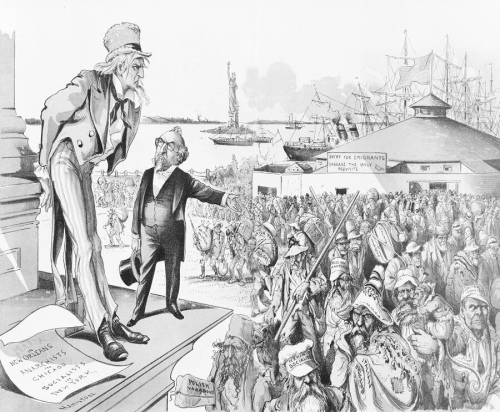
The fact is that for nearly three decades the vast majority of Northerners were too polite to criticize the egregious actions of the Know Nothings in their midst or the Southern Slave Power Block that dominated the presidency, Congress, and the Supreme Court for the three decades prior to the War of the Rebellion, also known as the American Civil War, or the War Between the States. Honestly, I think that the term ascribed to it by many Union Veterans in the Grand Army of the Republic after the war, the “War of the Rebellion” is the best.

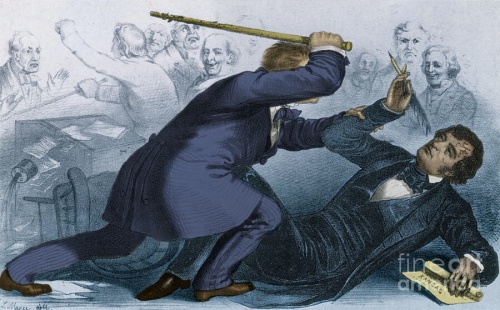
Those opposed to the Know Nothings and Slave Power Block were condemned as being rude, impolite, and worse. Some were physical assaulted. In 1856 Senator Charles Sumner was attacked by Representative Preston Brooks of South Carolina on the floor of the Senate for his speech against the Kansas Nebraska Act. Sumner was beaten until he was unconscious and Brooks’ heavy cane which he used to conduct the attack broke. Brooks continued to beat Sumner aided by Representative Lawrence Keitt also of South Carolina who brandishing a pistol threatened Senators coming to his aid. Sumner has proclaimed no threats of violence but only spoken the truth about the Act and those that supported it. So much for civility and now.

The scurrilous and overtly violent threats against minorities and civil rights advocates by conservatives, especially White Christian conservatives have continued unabated since from the ante-Bellum South and the Know Nothing North, through the War of the Rebellion, Reconstruction, Jim Crow, to the modern day. Whole political campaigns, including that of George H.W. Bush run by Lee Atwater turned on the demonization of African Americans. The same is true regarding the Republican revolution led by Newt Gingrich in the 1990s, and again even more so from the time that Candidate Donald Trump descended to the lobby of Trump Tower in 2015 until now. The President proclaims that White Supremacists and Neo-Nazis are “very fine people.”


The President and many of his followers including administration officials like Stephen Miller set the tone while former Presidential spokesperson Sarah Huckabee Sanders and her successors deny that the President’s words and actions, and vilify anyone that bothers to disagree with the President or their blatant lies. So when Huckabee Sander is asked to leave a restaurant, or when Miller or former DHS Secretary Nielsen are shamed when trying to enter Mexican restaurants it makes makes my heart bleed. People who have no compassion, no sense of empathy and behave as sociopaths and then act the victim when the tables are turned only deserve scorn.


Their anti-immigrant and often blatantly racist tropes of the President, his administration, and his supporters on the Fox Propaganda Network, the Right Wing media, the Putrid Princes of the Captive Conservative Church, and his assorted sordid supporters should be condemned and opposed around the clock. If they are not then any of us who remain silent knowing the evil of these policies is as guilty as anyone that turned their backs on the Jews in Nazi Germany. The higher the office the greater the guilt and culpability.

That being said if had the chance to see any one of them in a public setting I would not resort to public shaming. I do not own a restaurant or business so I could not ask them to leave. However, that being said if any of them the President himself presented themselves to me at my old chapel or any civilian church that I might be celebrating the Eucharist I would deny them communion which from a Christian point of view is “a fate worse than a fate worse than death.”

In fact two years ago Wednesday, in my former Chapel, a parishioner, a retired Navy Officer attempted to have me tried by Court Martial for preaching basic Catholic and Christian social justice teaching that goes back to the Old Testament where the Psalmists cry out for justice against oppressors and the Kings, Priests, and rich who the Prophets condemned, and which at least in the Catholic tradition still remains. The man blatantly lied about what I said. He said that in the sermon I called the President Hitler, and the Border Patrol the Gestapo.

It was all a lie, but an investigation was launched. Instead of trusting my life and career to a brand new Navy lawyer, I reached out to Mikey Weinstein of the Military Religious Freedom Foundation, who found me an experienced former military lawyer who had taken on high profile cases before. The investigating officer wanted to interview me, but I refused without legal counsel. So he interviewed half of the congregation that was present that day. None would corroborate the accusations but some said that they disagreed with my sermon because of their political views. I was exonerated and the investigation stopped there, but if I had retired out of that assignment, I would have probably never darkened the door of a church again. That experience confirmed the worst thoughts that I had about the Conservative Christians who make up the majority of President Trump’s Cult. They no longer care about Christ, the teachings of the Christian faith, but only care about establishing a Christian theocracy on the order of the modern Taliban, Calvin’s Geneva, or Torquemada’s Spanish Inquisition.

Bonhoeffer wrote:

“Christianity stands or falls with its revolutionary protest against violence, arbitrariness and pride of power and with its plea for the weak. Christians are doing too little to make these points clear rather than too much. Christendom adjusts itself far too easily to the worship of power. Christians should give more offense, shock the world far more, than they are doing now. Christian should take a stronger stand in favor of the weak rather than considering first the possible right of the strong.”

As for me I must tell the truth and protest against the violence and the arbitrary pride of power exhibited by the Trump administration and its supporters. I could not live with myself if I didn’t do so. Some might think this political and in some sense it is, but it is entirely based on my understanding of the Christian faith and the very premise of the founders of this country, that phrase in the Declaration of Independence that “all men are created equal and endowed by their creator with certain unalienable rights, among them being life, liberty, and the pursuit of happiness.”

If need be I would die for that faith and that proposition and I will not be silent in the face of evil. In 1945 Captain Gustave Gilbert, a US Army Psychologist assigned room the major Nazi War Criminals noted that one thing tied all of them together, the absence of empathy. He would remark, that he had come to the conclusion that “evil is the absence of empathy.”

As I conclude this article I am reminded of the words of the German General Henning Von Tresckow, who died in the attempt to kill Hitler and destroy the Nazi State:

“The idea of freedom can never be disassociated from real Prussia. The real Prussian spirit means a synthesis between restraint and freedom, between voluntary subordination and conscientious leadership, between pride in oneself and consideration for others, between rigor and compassion. Unless a balance is kept between these qualities, the Prussian spirit is in danger of degenerating into soulless routine and narrow-minded dogmatism.”

I think we could easily substitute the United States for Prussia in his words. We have lost that balance that Tresckow described, and it will destroy us if we are not careful.

Sadly, the absence of empathy all too well describes the malignant narcissistic sociopath that is President Trump, his family, his inner circle, and his most faithful supporters appear to be. I could be wrong, but I know that I am not. I expect that things will get worse much worse before they get better. I say this because I truly believe that since they don’t believe in the promise of the Declaration that “all men are created equal and endowed with certain unalienable rights, among which are life, liberty, and the pursuit of happiness,” or the rights laid out in the Constitution including its amendments.

So until tomorrow,

Peace,

Padre Steve+

8 Comments

Filed under authoritarian government, christian life, civil war, Coronavirus, economics and financial policy, ethics, healthcare, History, holocaust, Immigration and immigrants, laws and legislation, leadership, LGBT issues, Military, national security, nazi germany, News and current events, Political Commentary, racism, Religion, White nationalism

Southern Justice at 56 Years: It Continues All Over the U.S. Today

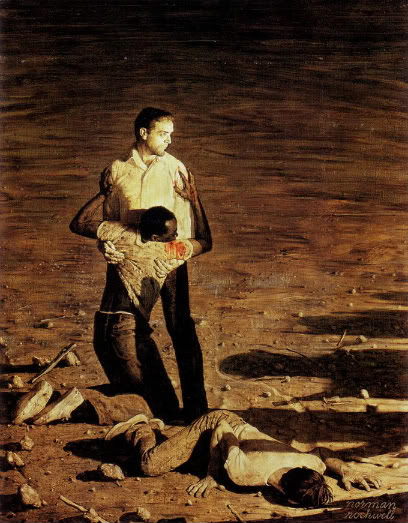
normanrockwellsouthernjustice-2

Friends of Padre Steve’s World,

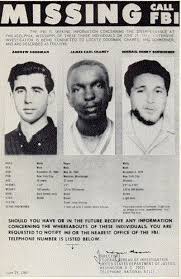
Fifty-Six years ago, on June 21st, three young men working to register blacks to vote as part of the Freedom Summer in Mississippi were brutally murdered by members of the Ku Klux Klan. Among the Klansmen were Sheriff Cecil Price and deputies of the Neshoba County Sheriff’s Department. As  a historian I am troubled as I see an increase in racially motivated hate crimes and displays of nooses left as threats at historically black institutions or places dedicated to remembering the Civil Rights movement. I am even more troubled by the numbers of Black men being murdered, shot or otherwise assaulted by police across the nation on a regular basis.

But even now I see a lack of empathy, coming from White people in authority, including the President, police officers and officials, and even Evangelical Christians,  I wonder if we are sinking back into the abyss of Jim Crow. I am glad that the massive protests in the wake of the brutal murder of George Floyd are continuing and include a significant number of Whites, Latinos, and others. I hope that this continues and that the violence committed by Whites against blacks, and that change begins because we as a nation cannot allow it to continue.

I have dealt with Holocaust deniers many times and also plenty of people who find nothing wrong with American slavery, Jim Crow, and racism. I find it troubling that despite the forensic, and historical evidence that people can either deny, minimize, or rationalize such behavior.

The fact that the Southern Baptist Convention, the nation’s largest Protestant denomination had to struggle with the issue of civil rights and the race hatred of the Alt-Right over recent years, that me that the toxin of racism has not yet been purged from the Convention, many other White churches, or for that matter in of America at large.

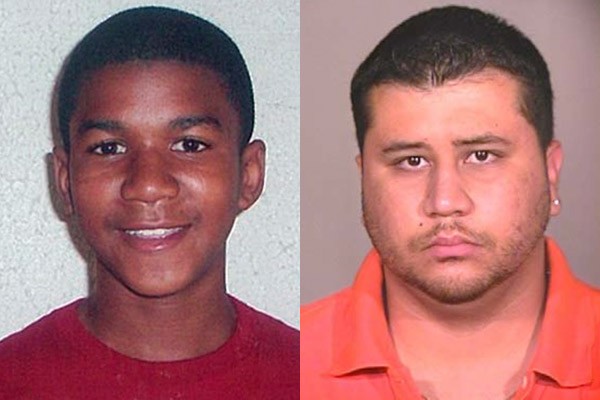
Trayvon Martin and his Killer, George Zimmerman, Zimmerman went Free

The fact that not that long a man who was active in White Supremacist movements murdered two men and wounded a third as they defended Muslim women on a Portland Oregon commuter train was disturbing. Likewise, the murder of a newly commissioned African American Army Lieutenant by a White Supremacist on the campus of the University of Maryland, last month the death of Ahmaud Arbery in Georgia. Sadly we can go back to the killing of Trayvon Martin by George Zimmerman in 2012, and the mass murder of parishioners at the Mt. Zion AME Church, in Charleston, SC in 2014. Those were all attributed to White Supremacists or Whites acting as vigilantes. Then there there are the deaths of George Floyd, Dreasjon Reed, Brianna Taylor, Manuel Ellis, Derek Scott, Eric Garner, and most recently Rayshard Brooks in Atlanta, all at the hands of police. We haven’t really grasped the depth of the problem yet. It is systematic and it will not be solved until every American is willing to confront it.

But, then there are the overt threats that harken back to our history of lynchings. Over the past several years there have been a spate of nooses being placed on college campuses, historically Black institutions, Civil Rights sites, and at the offices or residences of people who support civil rights, including professors. Those continue, and not just threats by killings. Last week two men were found hanging from trees in Victorville and Palmdale, California. I found this odd. Local officials were quicke to call them suicides, but two Black men hanging themselves from trees in heavily White cities in California’s High Desert within days of each other doesn’t seem like a coincidence. One was found not far from the Victorville Public Library, and the other near Palmdale City Hall. Since the area has its share of White Supremacist groups, I hope that police, prosecutors, and coroners check their conclusions and maybe even call for assistance from the State Attorneys General Office, and possibly the FBI.

southern justice 4

These troubling incidents have again reminded me of the events of June 21st 1964 when three men, Andrew Goodman, Mickey Scherner, and James Chaney were murdered by Ku Klux Klansmen. Twenty year old Andrew Goodman was from New York City. He was a progressive activist and Anthropology student at Queens College. Twenty-four year old Mickey Schwerner was a graduate student at Columbia University’s School of Social Work. Both Goodman and Schwerner were Jewish and had come South to work with others for Civil Rights in Mississippi. The third man, James Cheney, was a twenty-one year old Black Mississippian. Chaney was from Meridian Mississippi and was a volunteer with CORE, the Congress of Racial Equity. All three men were there to assist community leaders with voter registration and education in conjunction with local churches.

On June 21st 1964 the three men were in Philadelphia, Mississippi where they were investigating the burning of  Mount Zion Methodist Church. The church had been working with CORE’s voter registration and education programs. In the wake of the church being burned, many black citizens and church members were beaten by whites, rumored to be aided by members of the local Sheriff’s office. They specifically accused Sheriff’s Deputy Cecil Price of abuse.

Goodman, Schwerner, and Chaney were marked men from the moment they arrived in Philadelphia. As they left the town the three were arrested for an alleged traffic violation. They were briefly jailed and released that evening, but were not allowed to make any phone calls. On the way back to Meridian, two carloads of Klan members forced their car off the road and then abducted them and murdered them. The bodies were not discovered for 44 days. Their disappearance brought national attention and a major investigation to the town. Eventually seven men, including Deputy Price were convicted of the murders. The murders and the investigation became the subject of the movie Mississippi Burning.

MississippiBurningPressRelease

Iconic American artist Norman Rockwell who was well known for his portraits of American life as well as his support for the Civil Rights movement, painted “Southern Justice” which is sometimes known as “Murder in Mississippi” in 1965. This was not long after passage of the Voting Rights Act of 1964, which over the past two decades has been under attack in many southern states, and key provisions were gutted by the Supreme Court in 2012.

Fifty-six years ago the murders of these three young men brought national attention to the pervasive racism and discrimination in the country. Before this event most murders, lynchings, as well as the burnings of homes businesses were left uncovered by the media, their victims forgotten and the perpetrators unpunished.

I do hope and pray that we never go back to those days, but there are a number of troubling issues for us in the United States today. The first is that there have been quite a few laws passed to limit voting rights in various states. Some of these were successfully challenged in the courts the until the Supreme Court gutted the Voters Rights Act, the consequences of which are acutely felt now.

Then there are the rapidly growing number of racially motivated hate crimes against Blacks and other minorities as well as the threat of nooses being placed in trees around historic sites and museums dedicated to minorities or civil rights. I discussed these earlier. The Southern Poverty Law Center monitors the activities of hate groups across the political, religious, and racial spectrum and has noted a sharp increase in attacks over since the election of Donald Trump. Heavily armed and militant racist and anti-Semitic groups proudly march hand in hand with Trump supporters, allegedly to protect them from “leftists.”

I wonder if we will see a return to the commonplace violence and silence that characterized the nation’s treatment of minorities before the Civil Rights Movement. You think that we have moved the chains so far and that it cannot happen again when before our very eyes it rises like an undead specter to claim new victims. Eternal vigilance is the guardian of freedom; we cannot allow the thousands who died before, and those who have died since these three young men to be forgotten. Too much is at stake, and their blood cries out for justice.

In memory of Andrew Goodman, James Chaney and Mickey Schwerner, the others of the Freedom Summer, the Civil Rights movement, and today who died or suffered and died to peacefully bring about change to our society, I leave you until tomorrow. Sadly, I believe that these kinds of killings will not only continue, but increase in the days to come as the racism of some Whites and which is pervasive in many institutions, especially Law Enforcement remains.

Peace,

Padre Steve+

Leave a comment

Filed under civil rights, History, laws and legislation, News and current events, Political Commentary

Statues With Limitations: Time to Take Them Down

The Confederate Monument in Portsmouth, Virginia in 2017 and on June 11th 2020

Friends of Padre Steve’s World,

I have to apologize for the delay in getting this out. I have been working on most of the week. In fact, I thought I would have it ready on Wednesday night, but I was not happy with my revisions and the situation kept changing. So I kept editing, redoing, adding and deleting. That consumed Thursday night and Friday night as well as I tried to include the bases named for former Confederates is well. I quit last night and decided enough, that I would use what I had written about them in a separate article.  

This is a heavily edited and revised consolidation three articles that I wrote in 2017 following the White Nationalist rallies in Charlottesville, that the violence inflicted on the counter-protestors by the White Nationalists.  Of course that was when President said that “there were very good people on both sides.” I shuddered when I heard his words. Since then the President doesn’t even try to hide his massive amount of racism and admiration for the republic built on the foundation of slavery, whose descendants and supporters through the south and even in the north, erected monuments which were for the most part to perpetuate the memories of traitors, and to remind Blacks that they were not equal.

Over the past two weeks this topic, which was shut down pretty quickly after Charlottesville, has risen again with good reason. The brutal murder of George Floyd in Minneapolis by a White police officer, which was followed by protests with a militarized police response, causing additional violence against unarmed and mostly peaceful protestors. The President Trump ordered an attack on peaceful protestors by heavily armed federal police and National Guardsmen, firing tear gas, firing rubber bullets, and brutalizing people indiscriminately following a speech from the Rose Garden to the Nation. He did it for a photo op outside St. John’s Church where he held up a Bible like a weapon. I never felt more afraid of an American President than I did at that moment. Overwhelming numbers of people agreed, and some of the finest, most honorable, and distinguished military leaders this nation has produced since Vietnam began to speak out, former Secretary of Defense and Marine Corps General James Mattis compared Trump’s actions to those of Hitler and the Nazis. And still Trump tweeted, but military commanders and governors took action.

Admiral Gilday, the Chief of Naval Operations set about the process of banning the official or unofficial display of the Confederate flag on Naval Bases. The Commandant of the Marine Corps extended his ban on it to bumper stickers, and flags on cars, clothing, or displayed in barracks rooms. Governors, Mayors, and City Councils began to order or debate the removal of statues on public grounds. The Army announced that it would consider renaming bases named in honor of former Confederate Generals, only to have Trump defend names of the bases and state that they would not be renamed. The Senate Armed Services Committee voted that the bases should be renamed and included that in the National Defense Authorization Act, which the President has promised to veto if the amendment was included.
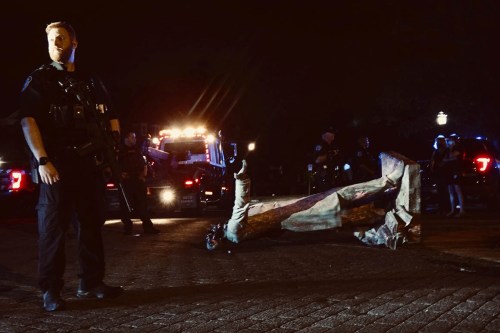
But last night at least two important Confederate Monuments were toppled or so heavily damaged before authorities could have them removed. The first was the statue of Confederate President Jefferson Davis on Richmond’s Monuments Boulevard, which was toppled from its base. The other was Portsmouth, Virginia’s monument to “Our Confederate Dead.” The city council had taken up a discussion about removing the monument, but demonstrators accompanied by a brass band with no police intervention, heavily damaged it amid a party like atmosphere.
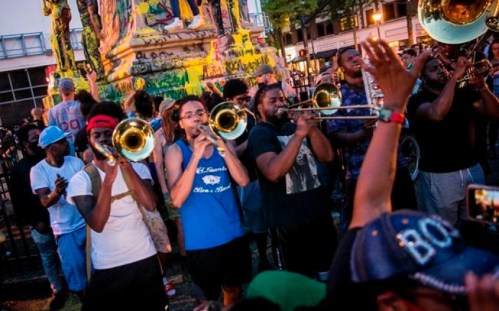
Truthfully, it reminded me of when East Germans tore down the wall, and other Easter European nations topped statues of Stalin and other Communist leaders in 1989 as they overthrew their Communist governments. Sadly, it was marred when one man trying to clear people out of the way of a statue that was being pulled down was pinned under it and seriously injured.

Context is Everything

Why they Fought: Willing Volunteers or Draftees

The context of the placement of the Confederate Monuments is paramount as I will explain, and my comments are not meant to impugn the lives of people’s ancestors. However, what motivated these men to fight is part of the context. Many, who were not professional soldiers, especially early in the war were eager and willing volunteers with dreams of glory, speedy victory, and return to normal life after the Confederacy achieved independence. While many did not own slaves, and were poor, the fact that they were White, meant that they were at least not at the bottom of the social ladder. Likewise, some slave owners, some who held many and others just a few felt strong enough to join up.

My family on both my paternal and maternal sides fought as members of the 8th Virginia Cavalry on the side of the Confederacy, despite their part of Virginia officially siding with the Union and becoming the state of West Virginia. One of them, the family patriarch on my paternal side was a slave holder who after the war refused to swear his allegiance to the United States and quite possibly was a member of White Supremacist groups after the war. There is no doubt of what he fought for, and the fact that he was a traitor and remained a traitor to our country.

I don’t know as many details about the maternal side except they were part of the same regiment, none were subject to conscription and as such all volunteered willingly to fight against the United States. For me that is a problem, I find it hard to honor their military service because it was against the United States. There are no records that I know of, no letters that they wrote which say what they thought, and they are not “mentioned in dispatches” (the manner in which the Confederate Army honored soldiers) for any particular gallantry, in fact the history of the regiment mentions that my paternal family patriarch, an officer, deserted in February of 1865.

I also have draw a distinction between the kinds of men that served in the Confederate Army. In particular I make a distinction between those that were eager volunteers for the Confederacy, like my ancestors, and those who were unwilling conscripted in the Confederate Draft beginning in early 1862. Interestingly enough the Confederates resorted to a draft before the Union because the Confederate Army could not get enough willing volunteers. These men were drafted, often against their will, and the Confederate draft had exemptions for the rich, and slave owners, who could pay for substitutes, and go on with their life running plantations. However, a few notable slave owners, like Wade Hampton of South Carolina not only did  not take advantage of that privilege, to volunteer, but Hampton went beyond volunteering, but actually armed and equipped what was in effect a combined arms regiment of infantry, cavalry, and artillery. He was a volunteer, who had never served in the U.S. Army and he served throughout the war, serving with distinction, and went home to nothing.

Most of the soldiers drafted had no means to pay for a substitute or did not have the political connections to escape it. Interestingly one of the notable exemptions to the Confederate Draft were the men who were exempted because they owned more than ten slaves or worked for someone that owned more than 20 slaves. This was known as the Twenty Slave Rule, which was modified in Draft Law of 1864 to 15 slaves. As you can imagine many poor Whites who owned no slaves found the rule to be quite unjust, but this kind of privilege is just that, quite unjust.

As a result the conscripts were frequently abused by the willing volunteers and their commanders, and frequently deserted. When found, most were summarily executed following a Drumhead Trial. As the war became more desperate, deserters were summarily executed without any trial. Hundreds of deserters from the Army of Northern Virginia were executed in the last months of the war by the direct order of Robert E. Lee simply because they were trying to go home to their families who had been displaced by the advance of Sherman’s army in Georgia and the Carolinas. These men were victims of the war and secessionist leaders as much as anyone. If you read some of their letters they are heartbreaking.

All of those who volunteered to serve the Confederate cause were traitors. But the men who had previously been officers in the United States Army or Navy, or in high Federal office, were far worse, because they broke their oath of office. No-matter their reason for serving the Confederacy, none of their their gallantry as soldiers, battlefield heroics, leadership skills, or tactical brilliance matters because they were traitors to the United States. Yes they were Americans, and many had served honorably before the Civil War, but that makes them no less traitors.

After the war a some of the survivors reconciled with the Union, and openly opposed the growing myth of the Lost Cause, and took no part in subsequent violence or in implementing discriminatory measures against the now free Blacks. Among the most prominent of these men were Lee’s lieutenants James Longstreet, Richard Ewell, John Mosby, and Billy Mahone. I have little doubt that A.P. Hill would have joined them had he not been killed in action at the end of the war. Following the war Hill’s widow opposed Jubal Early and other proponents of the Lost Cause.

Longstreet, received a pardon and his citizenship with the help of the Radical Republicans who were most vocal in terms of Reconstruction, and he announced his support for the election of Ulysses S. Grant in the 1868 election. For this he was condemned by many former Confederates. He received an appointment as Surveyor of Customs New Orleans. In 1872 he was appointed as head of the Louisiana Militia, by the Republican Governor. In 1873 he sent troops to stop the threat of an attack on the majority Black town of Colfax, but they arrived a day after several hundred members of the White League committed what is now known as the Colfax Massacre. In 1874 he led the New Orleans Police, and local militia, including Blacks to defend the temporary capital against a force of more than 8,400 members of the White League, which outnumbered his force by more than two to one. The action became known as the Battle of Liberty Place by opponents of Reconstruction and White Supremacists. During the action he was wounded, his men defeated and Grant sent in Federal troops to restore order. The supporters of the Lost Cause despised him because he told the truth when they claimed that States Rights, not Slavery. Longstreet on hearing this, said “I never heard of any other cause of the quarrel than slavery.” Longstreet in word and deed proved his loyalty. Despite the fact he was one of the corps commanders in American history, and stood for what was right after the war he did not get a Fort named after him.

Robert E. Lee himself did reconcile and opposed the use of the Confederate flags, uniforms, and monuments, after the war, but still held very racist views and never apologized for his actions. I will explore Lee’s actions during the secession crisis, during, and after the war the at a later time because for the most part they are neither honorable or noble.

Interestingly, very few monuments, except those on battlefields are dedicated to these men in the South, except for Robert E. Lee who ironically wanted no part of them. Nor are there monuments in the South to Southern officers who remained loyal to the Union during the war including Generals Winfield Scott, George Thomas, John Buford, John Gibbon, Montgomery Miegs, and Admiral David Farragut.

Likewise there is another class of men who have to be considered when dealing with the Monument Controversy. These were the political leaders whose actions led directly to the deaths of three quarters of a million men, including hundreds of thousands of Southern men, and the destruction of much of the South. How even the most devoted Southerner who wants to honor their soldiers can tolerate monuments to these political leaders who got so many of them killed  in their back yards is beyond me. These were also the men who ensured that primary reason for secession given in their various articles of secession for each state was preserving and expanding slavery, while maintaining white superiority. As Confederate Vice President Alexander Stephens noted in his Cornerstone Speech:

“Our new Government is founded upon exactly the opposite idea; its foundations are laid, its cornerstone rests, upon the great truth that the negro is not equal to the white man; that slavery, subordination to the superior race, is his natural and normal condition.”

There is a final group that needs to be considered. These were Confederate veterans, including notables like General Nathan Bedford Forrest, as well as men who did not serve in the war who joined paramilitaries such as the Ku Klux Klan, the Red Shirts, and the White Leagues, that terrorized and killed newly free blacks, sometimes destroying whole towns or neighborhoods in the process.  There were others politicians, turned soldiers, and went into politics again who established the Black Codes. These were pre-Jim Crow laws that placed many former slaves into a form of slavery by other means, imprisoning them and making them forced laborers on plantations, and businesses, many owned by Northerners.

Racism and slavery was at the heart of the war, and it proved to be not just a Southern problem. Many Northern businesses and banks had a strong financial interest in slavery, and there was a strong anti-war, pro-Confederate movement, known as the Copperheads in the North that fully approved of slavery, the post-war Black Codes, and Jim Crow. Likewise there were many Northerners who were just as racist as any Southerner, before, during and after the war. There were and are still are some  Sundown Towns, though they don’t openly say so, in the North and states that were never a part of the Confederacy. In no way can all Northerners be fully excused from the crime of slavery, nor can many be absolved of being as racist any pro-slavery Confederate or Jim Crow proponent. Some of these men have monuments built in their honor which likewise should be examined if we are going to talk about the Confederate monuments.

As to the monuments themselves, the vast majority were erected after the Plessy v. Ferguson case that legalized the Jim Crow Laws and empowered the movement to disenfranchise blacks, to fire them from positions in Federal and State governments, and to use violence against Blacks to keep them in line. Almost all of the monuments which were erected between 1895 and 1930 were put up not to honor the men who served but to remind Blacks of their status. The same is true of the next major surge of monument building which occurred during the Civil Rights movement, again to demonstrate to Blacks that they were subordinate to Whites, and many of these monuments were erected in places where no Confederate soldiers came from, and others which commemorate men who committed terrorist acts and murder against Blacks in the years after the war. In many case these monuments are located in cities and towns that are heavily African American. Two of these are no far from where I live in Norfolk and Portsmouth Virginia. They have different histories which I think leads to a discussion about their context.

Context and Placement Matter

Alexander Pope wrote “Monuments, like men, submit to fate.” 

Instead of going directly into what I think should be done with these monuments but think that a little bit more background and context is necessary. That context is best put in the difference between history and memory. History, is made by people because it has real world effects cannot be erased because for good or bad its effects always are with us. Memory on the other hand is often selective and tends toward sentimentally, or our sense of anger, or grief  over over past losses or the loss of a mythological past.  Because of that, memory often leads to the preservation of things that provide us with a certain sense of comfort, or things that buttress our innate sense of superiority and desire for revenge.

Statues and monuments themselves have to be taken in their historical context: especially what they meant to the people that erected them and the era in which they were constructed. From time immemorial people and nations have erected statues and monuments to dieties, empowers, kings, generals, and yes, even philosophers and historians. They have also sought to commemorate the lives of soldiers who died in various wars, in part to honor their dead, as did the ancient Athenians at Kerameikos, but more often to build upon a sense of national myth and purpose, to link the sacrifices of yesterday’s leaders, or soldiers to their current generation’s political, social, and even spiritual urges.

Some religions like Judaism and Islam have traditionally frowned upon the erection of statues and images that represented their dieties, their saints, or their leaders, fearing that such images could lead to idolatry. There was even a constroversy in the Christian Church, the Iconoclast Controversywhich dealt with the issues of statues of Christ, the Virgin Mary, or Saints which took more than a hundred years to resolve.

In Western society, especially since the Romans there has been a conscious attempt by nations to built statues and monuments to their leaders and other men, as women seldom rated such honor, whether the men actually deserved honor or not. As such there are monuments across Europe in prominent places to honor men with political, social, hereditary, or economic connections. Often when compared to their contemporaries, or others, before or after them, did little to be heirs to such honor. This does not mean that they were necessarily bad people, or even unworthy of the honor of their time, but rather that they are undeserving of perpetual honor in the most public of locations, or in places unconnected with where they made their name.

Cemeteries and museums are the best places for statues which have past their effective life in the public square. Removing them from places of honor does nothing to harm history, nor does it write them out of history. I like how the Old Testament writers of the books of the Kings and Chronicles end their discussions of the kings of Israel and Judah. They note that these men’s lives and deeds, good and evil, are written about and where they were buried to be with their ancestors. An example of the is Jehu, one of the kings of Israel in the book of Second Kings: “Now the rest of the acts of Jehu, all that he did, and all his power, are they not written in the Book of the Annals of the Kings of Israel?”

Since the Jews of the Old Testament did not build statues to their leaders for fear of idolatry, they ensured through the oral, and later the written tradition that these leaders, the good and the bad, were remembered for their work and contributions, as well as their failures. The Islamic tradition is quite similar.

The ancient Greeks, particularly those of Athens chose to use the cemetery as a place to remember their dead. In dedicating the Mount Auburn Cemetery during the Greek revival, U.S. Supreme Court Justice Joseph Story noted:

“The Greeks exhausted the resources of their exquisite art in adorning the habitations of the dead. They discouraged internments within the limits of their cities; and consigned their relics to shady groves, in the neighborhood of murmuring streams and merry fountains, close by the favorite resorts of those who were engaged in the study of philosophy and nature, and called them, with the elegant expressiveness of their own beautiful language, cemeteries or “places of repose.”

Cemeteries are always places where the dead can be honored or remembered, and where their descendants can find comfort and even sense the presence of their departed ancestors.

But the public square is another matter. Times change, societies change, governments and systems of governmental change. The statues that the early colonists of the British American colonies erected to King George III after the French and Indian War, had no place in the new republic and were removed. Monuments to Josef Stalin and Vladimir Lenin where removed from their places of prominence in Hungary, Czechoslovakia, Poland, and Romania once those countries escaped Soviet domination. After the Second World War, the new Federal Republic of Germany banned any monuments to Nazi Leaders as well as the use or display of Nazi paraphernalia. Instead, resisters to the Nazis, as well as the victims of the Nazis have been honored and remembered, especially those killed in the Holocaust. Since reunification Germany has continued to honor the victims and resistors much to the new generation of Germans born in the former East who know little about the evil of the Nazis and seek to follow their example.

However, when a monument is located in prominent place it makes a statement about the values and character of the people who put it there and the times in which they lived. But as I said, times changes, as do societal values, and in the case of the cause of the Civil War, so do views on race and the value of other human beings.

Statues in public places dedicated to specific individuals or events tend to have a shelf life, which means that they regardless of who they are dedicated, to need to be periodically re-examined in the light of history to see if they should remain in their current place of honor or be moved to a different location.

But, the United States is a comparatively young country, our oldest monuments are likewise comparatively new, and many pale in comparison to those of Europe, the Middle East, and Asia. In those areas multiple civilizations and empire have risen and fallen, massive monuments have been erected, toppled, or faded away. Many surviving monuments now are in museums, in collections of antiquity representing fallen civilizations, or have been moved from places of honor and replaced by ones that more appropriately represent the current national culture and experience.

As we approach the first quarter millenium of our experiment as a republic it is a good time to look at what we have commemorated with monuments and make considered decisions about each of them, and not just Confederate monuments.

Obviously many, especially those that deal with our founding as a nation and our founders need to stay, but others should be replaced, or removed to more appropriate venues. In cases of monuments that memorialize the most shameful parts of our history, and men whose actions subjected others to inhuman treatment, and caused the deaths of hundreds of thousands we do have options of what to do with them which now have to be exercised.

One option could be to leave them where they are and place other monuments and markers to explain the historical context and promote truthful history versus myth, as we have with men like George Washington and Thomas Jefferson.  In both cases we honor the good but we own up to other things about them.

Another option is to remove them, but what replaces them should be well thought out. This actually goes beyond the monuments themselves. Our actions have to do with history, historical preservation, and the narrative that a community wants to communicate about its history, its values, and yes, even its future. Whatever replaces the monuments we replaced, for good or bad in the long run, are part of what bind generations together, or drives them apart.

A third option is destroying them,  especially those dedicated to men who were evil, or represented evil causes. In the case of many of the relatively generic mass produced monuments to Confederates during the Plessy v. Ferguson and Civil Rights Era, the monuments were not placed to honor long dead soldiers but to stick a finger in the eyes of Blacks, and defy those who called for more than emancipation, but true equality.

It think in the case of truly evil men that their statues and monuments should be placed in poorly kept parks, at eye level with other statues like them. This allows people to view them not as exalted figures, but as for their littleness and evil.  A number of Eastern European countries have done this with statues of Stalin, Lenin, and others from the Soviet era.

But the generic mass produced ones are another matter. They are of no particular quality, their value only in reminding Blacks that they are despised.They should be removed, and if someone wants them as a backyard ornament, or if someone wants them to stand guard over the graves of Confederate dead as they lay in repose. That may be the best option, but there are so many of them.

The placement or monuments is of more importance than their existence, and their contexts matter. Honore De Balzac noted: “With monuments as with men, position means everything.
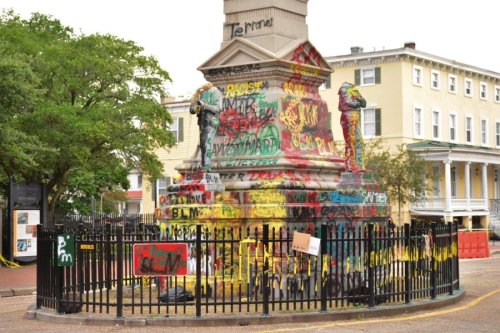
Removal, Relocation, Preservation, or Destruction: What Now?

It is interesting to see how memory and myth cloud history when it comes to monuments, especially those to the Southern Confederacy. This confederacy that was described by its Vice President, former US Senator Alexander Stephens in these words:

“Our new government is founded upon exactly the opposite idea; its foundations are laid, its corner- stone rests upon the great truth, that the negro is not equal to the white man; that slavery — subordination to the superior race — is his natural and normal condition. [Applause.] This, our new government, is the first, in the history of the world, based upon this great physical, philosophical, and moral truth.” 

Confederate President Jefferson Davis, who so many monuments are dedicated was not happy with his Vice President’s remarks. This was not because he didn’t believe them himself,  but because Stephens honesty could hurt the cause of the Confederacy abroad. Davis knew that France and Britain had to recognize and support the Confederacy was to survive.  He noted:

“That speech infuriated me, Oh, what Stephens had said was true, perfectly true, but could anything hurt us more abroad than such impolitic remarks? It was the beginning of a fatal falling out between me and that rebellious and vindictive dwarf, who was hell-bent on forming his own policies and disputing mine with niggardly deviousness.” 

How President Trump’s closest advisors, who tend to be better read than him, cannot understand the purely Machiavellian words of Jefferson Davis is beyond me. How they think that openly proclaiming racism is harmful to their policies and political goals is beyond me. Likewise how the President can tweet it or repeat them can only be described in three ways: he is no political genius, he is completely ignorant of history, or that he really is the embodiment of evil. I don’t see any other choices.

The sad fact is that the vast majority of the Confederate monuments, wherever located, were not built to honor the several hundred thousand Confederate dead; but rather to remind Blacks that they were subordinate to Whites, wherever the were erected. They are monuments to White Supremacy, racism, and to intimidate Blacks in the public square.

This is most evident by looking the periods during which they were constructed, eras in which discrimination, intimidation, and violence against Blacks was predominant. Very few were built in the first two decades following the war, but the first big surge in construction came in the aftermath of Plessy v. Ferguson in the 1890s the although some of those, including the monument which was for the most part destroyed in Portsmouth, Virginia last night were funded  by the wives, mothers, and children of the fallen; were not erected until the 1890s as every right of Blacks was stripped away, not just in the South, but in the entire United States.

Honestly I cannot understand why any of these monuments remain where they are some 155  years later, unless the context of their construction and monuments or historical narratives to the victims of the Confederacy and the institution of Souther Slavery are placed alongside. I am hard pressed to explain why they remain in places of honor. Instead if displayed they should be displayed as symbols of shame next to monuments dedicated to the victims of slavery, and those who fought to destroy it, along with historical exhibits that show the depth of the evil of the era and the suffering or the victims, as otherwise good people watched everything and did nothing.

But most memorials to the Confederate dead memorials, the very few that were built other than expressions of White Supremacy are a tiny minority. Most of the Confederate monuments that spark such freak show of White grievance today were erected anywhere from 30 to 150 years after the war.

The periods that they were built are interesting of themselves. The biggest spike in construction began in the immediate aftermath of the Plessy v. Ferguson ruling that legalized Jim Crow and the second during the backlash against the Civil Rights Movement beginning around 1948. The chart below provides a good representation of when the Confederate monuments were built.
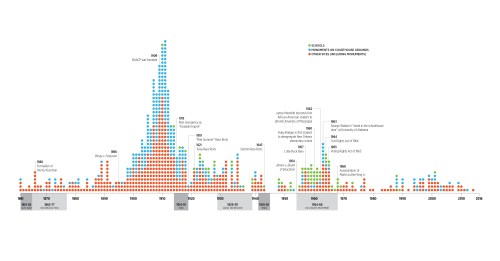
As I mentioned I think that each monument should be examined based on its historical merit. Since the vast majority of these monuments happen to be from the days of the Confederate resurgence after Plessy and at the height of the Dixiecrat response to the Civil Rights movement beginning after Brown v. Board of Education which overturned Plessy in 1954, there is nothing redeeming in the vast majority of them.

So I am going to use the example of the monuments in Hampton Roads area as a teaching point.

In the Commonwealth Virginia where I live, there were 223 Confederate monuments standing at the time of Charlottesville, the most of any state. That is in a sense understandable due to it being the largest state in the Confederacy as well as the site of its capital. There are three major public monuments located in South Hampton Roads as well as a number of monuments in local cemeteries throughout the area.

The one located in Portsmouth is the oldest and the most interesting from a historical point of view. Planning and fund raising for it began in the late 1860s shortly after the war and it was dedicated on the site where slaves were whipped and punished in the town square. It was dedicated in 1893. The head of the local Sons of Confederate Veterans chapter say that it was placed there when a church where it was planned to be located backed out. I do not know the veracity of that claim. That being said the location is still problematic, especially since Portsmouth has been a large Black population,  and many of the Black families in Portsmouth trace their roots to the slaves of the city’s ante-bellum times.

The monument itself was, before its destruction last night most interesting monuments that I have seen. It is an imposing sight in the old court square. At its center is an obelisk on which is inscribed To Our Confederate Dead. The obelisk is surrounded by four statues representing an infantryman, a cavalryman, an artillleryman, and a sailor. It was one of the most impressive Confederate monuments I have seen, but despite the fact that it was funded by war widows and their families, it could not remain in place. It stood in the place where slaves were auctioned and a block from where they were held in deplorable conditions until they were auctioned off like cattle.

Three years ago I thought it be would fitting if the monument was moved in its entirety to a cemetery in the city where Confederate war dead are buried. It could be replaced by any number of monuments, perhaps one to the Portsmouth’s war dead from the World Wars, Korea, Vietnam, the First Gulf War, and the current wars which have been going on since 2001, or maybe even better a monument to the victims of slavery, the Black Codes, and Jim Crow with an adjoining historical and research center. The Germans do this with concentration camps. However after it was shattered on June 10th, I think that it it is time for it to be removed. I think that if its supporters want they can pay for it to have dismantled, removed,  and restored so it can be displayed in a private location out of public view, they can. However, I think that maybe the city to move it to a less prominent position and leave it the way it is as a reminder to future generations, with an explanation of where it stood and why it stood there. It would kind of be like the preserved remnants of the Berlin Wall.

Norfolk’s monument is another case in point. After Portsmouth’s monument was destroyed, Norfolk’s Mayor announced that the statue crowning it would be removed in 24 hours weather permitting, and that the monument it stood on would be removed within two weeks. I wish that Portsmouth had the sense to do that in 2017, or even two weeks ago. The statue was removed today and the rest of the monument will follow.

Norfolk’s monument, where is, or is soon to be was, located within a block of where Norfolk’s slave auctions took place, the slave jail, and  slave infirmary  were located, and but a few blocks from the docks where slaves were shipped to other destinations in the South. This is important because Norfolk was the leading port in the slave trade from about the 1830s until the outbreak of the Civil War, and that was not because of the trans-Atlantic slave trade, but to the trafficking of slaves already born in the United States.

The monument was over 80 feet tall. When it was built it towered over the city. In the years since it still occupied a prominent position in the center of the city, but now has been dwarfed by massive towers representing banks, businesses, and hotels. It was capped by the figure of a defiant Confederate soldier holding a sword and the Confederate flag, nicknamed Johnny Reb. At its base are engravings of the Confederate Battle Flag and a dedication to Our Confederate Dead. It was lake the others aWhite Supremacy. The city should make a prudent and well informed decision of what to do with it.

In Virginia Beach the Confederate Monument is outside the old Princess Anne County Courthouse where slave auctions were held, and which is on the grounds of the current Virginia Beach Municipal complex. In older times it would have been seen by all entering the city hall or courts for any reason. It is over 20 feet tall and topped by the statue of a Confederate infantryman. Unlike the other monuments simply dedicated to the dead. Instead this one is dedicated to Our Confederate Heroes.

Now compared to the Norfolk or Portsmouth memorials it is in a distinctly less visible location and one has to go out of their way to find it. I think it could remain where it is but only if there was monument to the victims of slavery who were bought and sold there. That would provide appropriate context for it. However, there is something about being dedicated to Confederate Heroes which has no appropriate place in the public square. Its design is unremarkable. It was dedicated not long after Plessy v. Ferguson. Likewise, it was located where slave auctions were held in a county that provided very few soldiers to the Confederate cause. This it can only be interpreted one way, to remind people that Blacks are inferior. I think that it should be removed and destroyed as there is nothing that it commemorates, that is worth preserving, even in a museum or cemetery.

There is one other located in our area. It is in the Denbeigh section of Newport News, at site of the old Warwick County Courthouse. Denbeigh was named after the Denbeigh Plantation. When the county seat was moved to Newport News when Denbeigh and Warwick county were consolidated as the independent city of Newport News in 1958.

The courthouse is now a museum. The monument, which was dedicated in 1909 to the men of Company H, 32nd Virginia Infantry Regiment, stands outside the museum. The regiment, recruited from the Peninsula in early 1861 had a number of companies farmed out to the artillery was reconstituted as a small, 7 company regiment in 1862. It was decimated at Antietam and served to the end of the war with the Army of Northern Virginia where just five officers and forty-two enlisted men surrendered with Robert E. Lee at Appomattox on April 9th 1865. Since this monument is dedicated to a specific unit which distinguished itself in numerous engagements, including Antietam, and Petersburg I think that relocating it to one of those battlefields where it fought would be completely appropriate. Leaving it in place is more problematic. The Newport News City Council decided to cover it until they could decide what to do and requests have been made for its removal.

All of these monuments served a twofold purpose. In the case of Portsmouth, it began with monetary donations from war widows and for a monument was to honor the fallen. By the time it was built that purpose was also mixed with the political desire of many whites to re-establish White Supremacy. As to monuments located in cemeteries where Confederate soldiers are interred it is only fitting that they remain where they are, those are the places of their repose. My only objection would be to displays of the Confederate Battle Flag in those cemeteries.

As to what should be done with each monument there are options, but what can actually be done with them are dictated by State Laws which stipulates that localities can erect monuments like the former law of Virginia which stipulated that the state cannot “disturb or interfere with any monuments or memorials so erected.” That was problem for the Virginia legislature finally changed the law. Last week Virginia’s Governor, Ralph Northam ordered the monument to Robert E. Lee on Richmond’s Monument Boulevard be removed. His order was temporarily stayed by a Federal District Judge after objections by a avowed Confederate sympathizer currently running for office in Northern Virginia.

As a historian I think that all of these monuments can serve as teaching points. Likewise,  whatever is done with them has to be the to context of the context of when and why they were erected in relation to slavery, and White Supremacy. Additionally, the Civil War, Reconstruction and Jim Crow needs to be clarified as part of teaching history and in the process of expunging the myths of the Lost Cause and the Noble South from the historical narrative.

I want to make a couple of points. First I do not think it is wrong for the relatives and descendants of those who fell in any war to want to remember them, but that should not be these memorials. I have traveled throughout Europe and I have seen the monuments in city squares Britain, France, Belgium, and Germany. These monuments list the names of the war dead of those towns in wars dating back to the Napoleonic era and before and many are in churchyard cemeteries.  Even if I disagree wth the cause that they fought for I will not forbid their descendants to honor their memory, even if I for reasons of conscience refuse to honor the military service of my ancestors who rebelled against the United States in 1861. I may carry their blood and DNA, and they will remain part of my heritage, but I cannot honor or memorialize the cause for which they fought.

I think that the remaining Confederate monuments serve no purpose where they are. I have described what I think would be best done with the ones in our local era. But they have to be replaced. I would suggest that they be replaced by monuments to victims of slavery, the unwilling conscripts pressed into service of an immoral and inhuman cause, and those who opposed that cause, before, during, and after the war, and learning centers staffed by trained historians and archivists who are not out to promote the Noble South and Lost Cause myths.

Norfolk’s monument is in the process of being removed, Portsmouth’s, now mostly destroyed, should be removed. I have already discussed the Virginia Beach and Newport News monuments, the fates of which are yet to be decided. The same is true for many other of the Confederate monuments throughout the South. In the last two weeks But, at the same time we have to address the monuments to Confederate leaders which built during the same time period as these generic representations of Confederate soldiers. The fact is that the leaders of the Confederate rebellion against the United States are much more responsible for the deaths of three quarters of a million soldiers and the devastation of the South than any ordinary soldier. These leaders include the Confederate President, Jefferson Davis, secessionist politicians like Henry Benning and military leaders like Robert E. Lee, Stonewall Jackson, and Braxton Bragg. I see little reason for monuments to men who were responsible for such great suffering to remain in places of honor.

But honestly even this is not enough. We have to remove the the monuments or do something to explain their presence. Likewise, in order to do justice, we have to fully tell the story of the victims of slavery, the Black Codes, and “Southern Justice.” Likewise, we have to also honor the Southern Unionists like George Thomas, Montgomery Meigs and Winfield Scott who did not forsake their oaths the the country, and remember men like Robert E. Lee’s lieutenants James Longstreet, Richard Ewell, Billy Mahone, and John Mosby who fully reconciled to the Union, supported the rights of Blacks, and who were deomonized and then written out of Southern history by the proponents of the Lost Cause.

So anyway, monuments to the Confederacy, its leaders, and those in other parts of the country dedicated to others of questionable merit, must be held to the bar of history, otherwise we mock all of their victims by keeping them in the public square long after their time is up. We will also really look hard at schools, highways, streets, named after the leaders of the Confederacy.

I will deal with the Forts tomorrow.

Peace,

Padre Steve+

5 Comments

Filed under civil rights, civil war, historic preservation, History, News and current events, Political Commentary, racism, war crimes

“But Your Friends are Fewer Now” Milton Meyer’s “They Thought They Were Free” and 2020 America

Friends of Padre Steve’s World,

This article is basically a rerun because I thought it was pertinent and instead of doing much online I was catching up on correspondence with a number of people including friends in Germany and and trying my best to write in the best German that I could. Today was a remarkable day at our shipyard as our commander dealt directly with the dual disasters, COVID19 and the murder of George Floyd. It was inspiring. I had a part to play, but it was behind the scenes, and that is totally okay with me.

The article tonight is a chapter from Milton Mayer’s “They Thought They Were Free: The Germans 1933-1945.” Mayer was a visiting professor at the University of Frankfurt in the 1950s and lived in a small Hessian town near the city. The book is about the relationships that he built with ten ordinary citizens in the town and how they lived under Nazism and how most saw little wrong with it in the end.

The book is well worth the read, and is very timely when one compares the attitudes of the men who became Mayer’s friends and many people, especially followers of President Trump in the United States today. The last few chapters of the book are a reflection of the author’s opinions of the future of Germany at the time of his writing. That being said he was was mistaken on how the Germans would eventually become a society that embraced democracy and rejected authoritarianism (at the time he felt that it was very possible that democracy would fail in Germany) they do not take away anything from the heart of the book and its message about how people adjust to authoritarian rule. I was talking to a German friend over the weekend who wondered when Germany was going to have to save the United States as the United States helped save Germany after the Second World War.

One chapter in particular struck me, it was a conversion that Mayer had with a colleague at the University. The man reflected what it was like to live in the Third Reich, and how in doing so he compromised himself and thereby lost the opportunity to resist when resistance might have changed the course of events in Germany as it proceeded down the road to dictatorship and destruction. The chapter is particularly painful to read as the man that Meyer was talking to understood that he should have known better. However, he didn’t recognize the warning signs of how gradually the nature of life in Germany was changing with each new law or dictate from the Fuhrer.

In reading the chapter I see parallels in American society today. There are the Trump loyalists, many of who openly call for restrictions of liberty and crushing opposition to the President’s policies using extra-constitutional means including violence. This was seen over the past two weeks, although the impenetrable wall presented by the 35-40% of his supporters appears to be showing cracks.

Many are quite extreme and willing to march or even do violence to his opponents, but they are a minority. But others, persuaded by years of right-wing talk radio, politically charged sermons by their pastors, and the daily dose of Fox News or One America News believe everything said by the President even when confronted by facts, and remain fairly passive yet committed. Then there are Trump’s opponents, but many of his opponents, like Hitler’s opponents were divided in 2016, and have had a hard time gaining unity. However, that appears to be changing as a wave of opposition to Trump and his policies in regard to the Coronavirus 19 Pandemic, the murder of George Floyd, and his reaction to peaceful protests. I just wonder what will Trump’s supporters be saying about themselves and their decisions a decade from now?

So I invite you to read this and draw your own conclusions, as this gives me no joy to share. Have a great day.

Peace

Padre Steve+

Chapter 13: But Then It Was Too Late

“What no one seemed to notice,” said a colleague of mine, a philologist, “was the ever widening gap, after 1933, between the government and the people. Just think how very wide this gap was to begin with, here in Germany. And it became always wider. You know, it doesn’t make people close to their government to be told that this is a people’s government, a true democracy, or to be enrolled in civilian defense, or even to vote. All this has little, really nothing, to do with knowing one is governing.

“What happened here was the gradual habituation of the people, little by little, to being governed by surprise; to receiving decisions deliberated in secret; to believing that the situation was so complicated that the government had to act on information which the people could not understand, or so dangerous that, even if the people could not understand it, it could not be released because of national security. And their sense of identification with Hitler, their trust in him, made it easier to widen this gap and reassured those who would otherwise have worried about it.

“This separation of government from people, this widening of the gap, took place so gradually and so insensibly, each step disguised (perhaps not even intentionally) as a temporary emergency measure or associated with true patriotic allegiance or with real social purposes. And all the crises and reforms (real reforms, too) so occupied the people that they did not see the slow motion underneath, of the whole process of government growing remoter and remoter.

“You will understand me when I say that my Middle High German was my life. It was all I cared about. I was a scholar, a specialist. Then, suddenly, I was plunged into all the new activity, as the university was drawn into the new situation; meetings, conferences, interviews, ceremonies, and, above all, papers to be filled out, reports, bibliographies, lists, questionnaires. And on top of that were the demands in the community, the things in which one had to, was ‘expected to’ participate that had not been there or had not been important before. It was all rigmarole, of course, but it consumed all one’s energies, coming on top of the work one really wanted to do. You can see how easy it was, then, not to think about fundamental things. One had no time.”

“Those,” I said, “are the words of my friend the baker. ‘One had no time to think. There was so much going on.’”

“Your friend the baker was right,” said my colleague. “The dictatorship, and the whole process of its coming into being, was above all diverting. It provided an excuse not to think for people who did not want to think anyway. I do not speak of your ‘little men,’ your baker and so on; I speak of my colleagues and myself, learned men, mind you. Most of us did not want to think about fundamental things and never had. There was no need to. Nazism gave us some dreadful, fundamental things to think about—we were decent people—and kept us so busy with continuous changes and ‘crises’ and so fascinated, yes, fascinated, by the machinations of the ‘national enemies,’ without and within, that we had no time to think about these dreadful things that were growing, little by little, all around us. Unconsciously, I suppose, we were grateful. Who wants to think?

“To live in this process is absolutely not to be able to notice it—please try to believe me—unless one has a much greater degree of political awareness, acuity, than most of us had ever had occasion to develop. Each step was so small, so inconsequential, so well explained or, on occasion, ‘regretted,’ that, unless one were detached from the whole process from the beginning, unless one understood what the whole thing was in principle, what all these ‘little measures’ that no ‘patriotic German’ could resent must some day lead to, one no more saw it developing from day to day than a farmer in his field sees the corn growing. One day it is over his head.

“How is this to be avoided, among ordinary men, even highly educated ordinary men? Frankly, I do not know. I do not see, even now. Many, many times since it all happened I have pondered that pair of great maxims, Principiis obsta and Finem respice—‘Resist the beginnings’ and ‘Consider the end.’ But one must foresee the end in order to resist, or even see, the beginnings. One must foresee the end clearly and certainly and how is this to be done, by ordinary men or even by extraordinary men? Things might have. And everyone counts on that might.

“Your ‘little men,’ your Nazi friends, were not against National Socialism in principle. Men like me, who were, are the greater offenders, not because we knew better (that would be too much to say) but because we sensed better. Pastor Niemöller spoke for the thousands and thousands of men like me when he spoke (too modestly of himself) and said that, when the Nazis attacked the Communists, he was a little uneasy, but, after all, he was not a Communist, and so he did nothing; and then they attacked the Socialists, and he was a little uneasier, but, still, he was not a Socialist, and he did nothing; and then the schools, the press, the Jews, and so on, and he was always uneasier, but still he did nothing. And then they attacked the Church, and he was a Churchman, and he did something—but then it was too late.”

“Yes,” I said.

“You see,” my colleague went on, “one doesn’t see exactly where or how to move. Believe me, this is true. Each act, each occasion, is worse than the last, but only a little worse. You wait for the next and the next. You wait for one great shocking occasion, thinking that others, when such a shock comes, will join with you in resisting somehow. You don’t want to act, or even talk, alone; you don’t want to ‘go out of your way to make trouble.’ Why not?—Well, you are not in the habit of doing it. And it is not just fear, fear of standing alone, that restrains you; it is also genuine uncertainty.

“Uncertainty is a very important factor, and, instead of decreasing as time goes on, it grows. Outside, in the streets, in the general community, ‘everyone’ is happy. One hears no protest, and certainly sees none. You know, in France or Italy there would be slogans against the government painted on walls and fences; in Germany, outside the great cities, perhaps, there is not even this. In the university community, in your own community, you speak privately to your colleagues, some of whom certainly feel as you do; but what do they say? They say, ‘It’s not so bad’ or ‘You’re seeing things’ or ‘You’re an alarmist.’

“And you are an alarmist. You are saying that this must lead to this, and you can’t prove it. These are the beginnings, yes; but how do you know for sure when you don’t know the end, and how do you know, or even surmise, the end? On the one hand, your enemies, the law, the regime, the Party, intimidate you. On the other, your colleagues pooh-pooh you as pessimistic or even neurotic. You are left with your close friends, who are, naturally, people who have always thought as you have.

“But your friends are fewer now. Some have drifted off somewhere or submerged themselves in their work. You no longer see as many as you did at meetings or gatherings. Informal groups become smaller; attendance drops off in little organizations, and the organizations themselves wither. Now, in small gatherings of your oldest friends, you feel that you are talking to yourselves, that you are isolated from the reality of things. This weakens your confidence still further and serves as a further deterrent to—to what? It is clearer all the time that, if you are going to do anything, you must make an occasion to do it, and then you are obviously a troublemaker. So you wait, and you wait.

“But the one great shocking occasion, when tens or hundreds or thousands will join with you, never comes. That’s the difficulty. If the last and worst act of the whole regime had come immediately after the first and smallest, thousands, yes, millions would have been sufficiently shocked—if, let us say, the gassing of the Jews in ’43 had come immediately after the ‘German Firm’ stickers on the windows of non-Jewish shops in ’33. But of course this isn’t the way it happens. In between come all the hundreds of little steps, some of them imperceptible, each of them preparing you not to be shocked by the next. Step C is not so much worse than Step B, and, if you did not make a stand at Step B, why should you at Step C? And so on to Step D.

“And one day, too late, your principles, if you were ever sensible of them, all rush in upon you. The burden of self-deception has grown too heavy, and some minor incident, in my case my little boy, hardly more than a baby, saying ‘Jewish swine,’ collapses it all at once, and you see that everything, everything, has changed and changed completely under your nose. The world you live in—your nation, your people—is not the world you were born in at all. The forms are all there, all untouched, all reassuring, the houses, the shops, the jobs, the mealtimes, the visits, the concerts, the cinema, the holidays. But the spirit, which you never noticed because you made the lifelong mistake of identifying it with the forms, is changed. Now you live in a world of hate and fear, and the people who hate and fear do not even know it themselves; when everyone is transformed, no one is transformed. Now you live in a system which rules without responsibility even to God. The system itself could not have intended this in the beginning, but in order to sustain itself it was compelled to go all the way.

“You have gone almost all the way yourself. Life is a continuing process, a flow, not a succession of acts and events at all. It has flowed to a new level, carrying you with it, without any effort on your part. On this new level you live, you have been living more comfortably every day, with new morals, new principles. You have accepted things you would not have accepted five years ago, a year ago, things that your father, even in Germany, could not have imagined.

“Suddenly it all comes down, all at once. You see what you are, what you have done, or, more accurately, what you haven’t done (for that was all that was required of most of us: that we do nothing). You remember those early meetings of your department in the university when, if one had stood, others would have stood, perhaps, but no one stood. A small matter, a matter of hiring this man or that, and you hired this one rather than that. You remember everything now, and your heart breaks. Too late. You are compromised beyond repair.

“What then? You must then shoot yourself. A few did. Or ‘adjust’ your principles. Many tried, and some, I suppose, succeeded; not I, however. Or learn to live the rest of your life with your shame. This last is the nearest there is, under the circumstances, to heroism: shame. Many Germans became this poor kind of hero, many more, I think, than the world knows or cares to know.”

I said nothing. I thought of nothing to say.

“I can tell you,” my colleague went on, “of a man in Leipzig, a judge. He was not a Nazi, except nominally, but he certainly wasn’t an anti-Nazi. He was just—a judge. In ’42 or ’43, early ’43, I think it was, a Jew was tried before him in a case involving, but only incidentally, relations with an ‘Aryan’ woman. This was ‘race injury,’ something the Party was especially anxious to punish. In the case at bar, however, the judge had the power to convict the man of a ‘nonracial’ offense and send him to an ordinary prison for a very long term, thus saving him from Party ‘processing’ which would have meant concentration camp or, more probably, deportation and death. But the man was innocent of the ‘nonracial’ charge, in the judge’s opinion, and so, as an honorable judge, he acquitted him. Of course, the Party seized the Jew as soon as he left the courtroom.”

“And the judge?”

“Yes, the judge. He could not get the case off his conscience—a case, mind you, in which he had acquitted an innocent man. He thought that he should have convicted him and saved him from the Party, but how could he have convicted an innocent man? The thing preyed on him more and more, and he had to talk about it, first to his family, then to his friends, and then to acquaintances. (That’s how I heard about it.) After the ’44 Putsch they arrested him. After that, I don’t know.”

I said nothing.

“Once the war began,” my colleague continued, “resistance, protest, criticism, complaint, all carried with them a multiplied likelihood of the greatest punishment. Mere lack of enthusiasm, or failure to show it in public, was ‘defeatism.’ You assumed that there were lists of those who would be ‘dealt with’ later, after the victory. Goebbels was very clever here, too. He continually promised a ‘victory orgy’ to ‘take care of’ those who thought that their ‘treasonable attitude’ had escaped notice. And he meant it; that was not just propaganda. And that was enough to put an end to all uncertainty.

“Once the war began, the government could do anything ‘necessary’ to win it; so it was with the ‘final solution of the Jewish problem,’ which the Nazis always talked about but never dared undertake, not even the Nazis, until war and its ‘necessities’ gave them the knowledge that they could get away with it. The people abroad who thought that war against Hitler would help the Jews were wrong. And the people in Germany who, once the war had begun, still thought of complaining, protesting, resisting, were betting on Germany’s losing the war. It was a long bet. Not many made it.”

Copyright notice: Excerpt from pages 166-73 of They Thought They Were Free: The Germans, 1933-45 by Milton Mayer, published by the University of Chicago Press. ©1955, 1966 by the University of Chicago. All rights reserved. This text may be used and shared in accordance with the fair-use provisions of U.S. copyright law, and it may be archived and redistributed in electronic form, provided that this entire notice, including copyright information, is carried and provided that the University of Chicago Press is notified and no fee is charged for access. Archiving, redistribution, or republication of this text on other terms, in any medium, requires the consent of the University of Chicago Press. (Footnotes and other references included in the book may have been removed from this online version of the text.)

10 Comments

Filed under authoritarian government, civil rights, Coronavirus, germany, History, laws and legislation, nazi germany, News and current events, Political Commentary, racism

True Leadership and Responsibly: Eisenhower’s Letter in Case D-Day Failed

Friends of Padre Steve’s World,

The great Prussian military theorist Carl Von Clausewitz noted: “It is now quite clear how greatly the objective of war makes it a matter of assessing probabilities. Only one more element is needed to make war a gamble – chance: the very last thing that war lacks. No other human activity is so continuously or universally bound up with chance. And through through the element of guesswork and luck come to play a great part in war…. If we now consider briefly the subjective nature of war – the means by which war has to be fought – it will look more like a gamble. The highest of all moral qualities in time of danger is certainly courage.”

For a year General Dwight D. Eisenhower had worked to marshal the largest force possible to launch the long awaited invasion of Nazi Occupied France. Eisenhower surrounded himself with an exceptional staff, but had to fight for what he would need for the coming invasion. He had to struggle with Admiral Ernest King for the landing ships and crafts he needed, against the competing needs of Admiral Nimitz, and General MacArthur’s Forces in the Pacific Theatre of operations. He had to battle the Allied bomber commands, Air Marshal Arthur “Bomber” Harris’s British Bomber Command, and 8th Air Force and Lieutenant General Carl Spaatz, Commander of Strategic Air Forces for bombers to support the invasion. This meant taking them away from the strategic bombing command against the heart of German industry; and finally he had to battle Winston Churchill to be in overall command of the multi-national force being assembled to attack.

The invasion was his baby. He had the ultimate responsibility for its success or failure. He knew the dangers. In 1942 the British launched a raid using Canadian troops on the English Channel port of Dieppe. It was a disaster. With all the work he had done to get his forces ready for the invasion, Eisenhower knew that he owned the result regardless of the outcome.

Eisenhower understood that everything in war is a gamble and that success is not guaranteed. The weather conditions of the English Channel are unpredictable. They only  offer a few month window of opportunity to successfully mount a cross channel invasion. The Germans found that out in 1940 when after their failure to clear the skies of the Royal Air Force during the Battle of Britain by early September, that the a favorable opportunity for Operation Sea Lion had passed and would never come again.

The Allied invasion required a full moon for a massive three division nighttime paratroop drop, and favorable weather for the landing craft to get ashore. Unfortunately, the weather was not cooperating. High winds, seas, and rain forced a cancellation of the planned June 5th invasion, the open question was whether conditions would be on the 6th would be favorable. If not the next opportunity would not be for at least two more weeks, in which the Germans would continue to strengthen their defensive positions along the Atlantic Wall. 

The German weather forecasters, had lost lost the ability to observe weather in the western and mid-Atlantic due to the allies sweeping the ships that relayed weather information from the Atlantic. Blind to oncoming weather systems, the Wehrmacht and Luftwaffe meteorologists anticipated that the bad weather would continue to be unfavorable for an invasion. With this in mind, Field Marshal Erwin Rommel, Commander of Army Group B which had operational control over the potential landing beaches, decided to make a visit to his wife for her birthday and a trip to Berlin to plead for more resources. Other Senior German Commanders departed to inland areas to conduct war games and were not with their units on the night of June 5th.

Meanwhile, the forecasters at Eisenhower’s headquarters had access to weather data from the mid-Atlantic unavailable to the Germans, predicted a brief lull in the storm, not perfect weather, but acceptable. Eisenhower met with his staff and made the decision to go ahead with the invasion in the night of June 5th and June 6th with the American 82nd and 101st Airborne Divisions, and the British 6th Airborne Division landing behind the German coastal fortifications.

But the weather was just one factor, the Allies did not know the latest German deployments, including the movement of the crack 352nd Infantry Division to Omaha Beach. Likewise, a prompt German response with heavy Panzer units could throw the invaders back into the sea if they moved fast enough. One threat was already deployed, but the other was a real probability knowing German doctrine.

However, neither Eisenhower or his staff knew of the conflict in the German High Command and Hitler regarding the deployment of the Panzer Divisions in France. Rommel argued that the Panzer Divisions should be deployed near the potential invasion beaches. However, traditionalists in the German command and Hitler decided that most of the Panzer Divisions should be held back awaiting a point that they could make a massive and decisive counterattack that would drive the Allies out of Europe. However, most of these men had commanded Panzers in Poland in 1939, France and the Low Countries in 1940, and the Soviet Union. In all of those campaigns the Germans always enjoyed air superiority or parity. But Rommel, a veteran of Africa and the West knew the power of allied tactical air assets, and the havoc they could inflict on the Panzers. Rommel believed that the invasion had to be defeated on the beachheads and the allies not given the chance to advance inland, in which case he knew that there would be no chance of defeating the invasion.

Eisenhower also knew that the success of the invasion depended on the success of the landings. A disaster at any of the landing beaches could doom the it. In light of this and so many other ways that could cause the invasion to fail, Eisenhower, wrote a letter to his troops and the world when the invasion commenced. It read:

“Soldiers, Sailors, and Airmen of the Allied Expeditionary Force:

You are about to embark upon the Great Crusade, toward which we have striven these many months.

The eyes of the world are upon you. The hopes and prayers of liberty-loving people everywhere march with you.

In company with our brave Allies and brothers-in-arms on other Fronts you will bring about the destruction of the German war machine, the elimination of Nazi tyranny over oppressed peoples of Europe, and security for ourselves in a free world.

Your task will not be an easy one. Your enemy is well trained, well equipped, and battle-hardened. He will fight savagely.

But this is the year 1944. Much has happened since the Nazi triumphs of 1940-41. The United Nations1 have inflicted upon the Germans great defeats, in open battle, man-to-man. Our air offensive has seriously reduced their strength in the air and their capacity to wage war on the ground. Our Home Fronts have given us an overwhelming superiority in weapons and munitions of war, and placed at our disposal great reserves of trained fighting men. The tide has turned. The free men of the world are marching together to victory.

I have full confidence in your courage, devotion to duty, and skill in battle. We will accept nothing less than full victory.

Good Luck! And let us all beseech the blessing of Almighty God upon this great and noble undertaking.

However, prepared for any eventuality he also also wrote a letter in case the invasion failed, as it nearly did on Omaha Beach. That letter noted:

“Our landings in the Cherbourg-Havre area have failed to gain a satisfactory foothold and I have withdrawn the troops. My decision to attack at this time and place was based upon the best information available. The troops, the air and the Navy did all that Bravery and devotion to duty could do. If any blame or fault attaches the attempt it is mine alone.”

It was dated July 5th, not June 5th, the mistake obviously due to the pressure of what he was feeling for his soldiers, and the mission. Likewise, there was very real threat to his own career if the mission failed. He knew that his adversaries in the United States military and in Britain would have seen that would see that he was relieved and sent back to the United States in disgrace. As Eisenhower’s successor as President, John F. Kennedy said: “Victory has a hundred fathers, defeat is an orphan.”

Likewise, defeat could embolden those in the United States and Britain willing to make peace with Germany at any price. Such an outcome could have destroyed the allied alliance that ended up defeating Germany, rebuilding a democratic Western Europe, establishing NATO, the United Nations, and many other international organizations that have done much good for America and the world.

In a sense Eisenhower was in a similar situation to Grant and Sherman in the Summer of 1864, if they failed, Abraham Lincoln could have been defeated by the anti-war pro-Confederacy Copperheads, who would have settled leaving the South independent, the country divided, and slavery in place. Defeat would have ended the American experiment. Defeat in Normandy could easily have destroyed the Allied alliance, and given the Germans  the time they needed to turn defeat into victory. The whole course of the war and history could have changed, for the worse, with Hitler’s Nazi Regime controlling most of Europe, continuing its genocidal policies, and developing weapons far in advance of the Allies.

Eisenhower would not make excuses if the invasion failed. He was ready to take full responsibility if Overlord failed, regardless of how it happened. The buck stopped with him.

Likewise, he knew that the failure of the invasion would have made it possible for the Nazis to divert needed forces to the Eastern Front, where they might have been able to turn back the Soviet Operation Bagration which destroyed the German Army Group Center. Likewise, the success of the invasion opened the way for the Soviets to drive the Nazis from Soviet territory, advance to Warsaw, and knock key German allies out of the war. Before long, Hungary, Romania, and Finland had abandoned the Germans.

The fact that the invasion succeeded was as much as luck as it was the careful planning, and the exceptional courage, and dogged determination of the Allied troops. The American 4th Infantry Division landed on the wrong beach. Had they landed on the correct beach they could have faced slaughter. The Allied Airborne Divisions were scattered over much of Normandy and had to improvise to capture the targets needed to assist the invasion forces. Had Hitler’s lackeys the courage to wake him when the invasion was in its early stages , he might have released Panzer Divisions sooner than he did. Had Rommel not gone back to Germany for his wife’s birthday and to plead with Hitler for more troops, and been on the ground to coordinate the German response; or the number of realistic “might have beens” that could of defeated the the invasion, and Eisenhower was well aware of them.

Eisenhower’s willingness to take responsibility for defeat as well as give his troops credit for the eventual victory over the Nazis sets him apart from so many others then, and now who would deflect blame for a failed operation to their subordinates and lie about the results achieved.

In the age where the American President blatantly refuses to take responsibility for his actions, blames subordinates and allies for his failures, and who abdicates the duties of his office on an hourly basis, the ability for Eisenhower to be ready to acceptance of failure is an example that we must emulate. Donald Trump would have surrendered to Germany, given Hitler a platform to proclaim his defiance of human rights and international law, and the rights of American citizens at home. Interestingly enough over the past week many highly respected Generals and Admirals, active and retired, have warned against the dangers posed by President Trump.

History and humanity are always the product of character, integrity, and responsibility, or their opposites. All qualities Eisenhower had, and Trump does not, and as many well respected American military commanders are now speaking out about. But I was doing this as early as 2015 and 2016.

Peace,

Padre Steve+

5 Comments

Filed under civil war, ethics, History, holocaust, leadership, Military, national security, nazi germany, News and current events, Political Commentary, us army, US Navy, US Presidents, world war two in europe