Category Archives: philosophy

Ideologues and Ideologically Empty Pragmatists: The Key to an Authoritarian State

werner-best

Dr. Werner Best

Friends of Padre Steve’s World,

I have been looking at some of the nominees to various cabinet posts in the incoming Trump administration. Trump is a known quality, since his lack of character, integrity, narcissism, and thin skin are well known I was thinking about his picks. Trump has no ideology other than his own power and ego which makes him both dangerous and unpredictable, and this is not just to those who are his current lot of “enemies,” but even people who campaigned at his side like obedient lap dogs, New Jersey Governor Chris Christie comes to mind, but I digress because believe me there will be a lot more of his supposed friends and allies who make that list.

Some of them are hopeless right wing ideologues. They too are known qualities and actually fairly easy to predict and to defend against and many so so incompetent, divisive, and intolerable, that even people who agree with them will throw them under the bus.

But there are others, like Trump himself devoid of ideology, but even more dangerous because they are much more careful. In fact they can move from administration to administration, campaign to campaign. One can see a number of them in Trump’s entourage, including people who advised his GOP primary opponents and then abandoned them when they saw a winner. They are in it for their own personal achievement and whatever power they can gain.

Such people can be found in any government, any business, any military, and any church. One of the interesting things about history is that you can see them weave their way in and out of the picture, outmaneuvering and undercutting rivals, even selling out their bosses.

My regular readers know that I have spent a large amount of my life and academic study dealing wth the transition from Imperial Germany, to the Weimar Republic, and to the National Socialist or Nazi state of Adolf Hitler. The interesting thing is to see how many professional men, business leaders, bureaucrats, police officials, and military officers, many men; a good number of whom had opposed Hitler and never were Nazis until it became convenient served the Nazi State, especially in the ranks of Heinrich Himmler’s SS. One of the books that has been part of my study since college is Heinz Hohne’s The Order of the Death’s Head: The Story of Hitler’s SS. The book which came out in 1966 was one of the first to confront the myths about the SS which allowed many Germans after the war to use the SS as their alibi, all that was wrong with Germany could be blamed on the SS. While the SS was certainly culpable of many crimes it was just one part of the Nazi state, a state as contradictory as it was totalitarian.

In his book Hohne discusses the types of men who found their way into the SS, which included the true believers as well as the pragmatists who had no ideology. One of these men was Dr. Werner Best who had been an official in the Gestapo. A gifted intriguer he maneuvered himself between various party factions and leaders and was promoted to SS Obergruppenfuhrer. Then, later as the head of the Nazi government in Denmark went against the final solution in that county by helping the Jews of that country escape to Sweden.

Best adapted the philosophy of Ernst Junger, the writer of the classic novel of the First World War Storm of Steel who wrote: “The important part is not what we fight for but how we fight.” Best transformed Junger’s philosophy into one of the pillars of the SS leadership, the ideal of “heroic realism.” Best wrote: “The fight itself is essential and permanent; the aims of the fight are temporary and interchangeable. There can therefore be no question of success in our fight… the yardstick of the new code of morality, therefore, is not its content – not ‘what’ but ‘how’.” 

Hohne noted that the ethic “with no specific aim, opened the door door to concentration on achievement for achievement’s sake.” Himmler put it succinctly, “The word ‘impossible’ must never be heard in the SS.”  The result was that even non-Nazis were attracted to the SS and because of their abilities or connections were brought in to the organization.

This is where it really gets interesting when one thinks of today’s opportunistic yet ethically deprived pragmatists of so many professions who have jumped aboard the Trump train.

Hohne wrote: “The call to energy and efficiency, the ceaseless challenge to action and trial, launched SS men into a primitive competitive struggle in which all normally accepted rules of conduct were forgotten.” Some believed that they were still were still only responsible to themselves but because they were subject to orders became prisoners “of an ethic linked to no purpose, an ethic which, ostensibly for purposes of political necessity, could suddenly order the commission of crimes and present them as goals of human technological efficiency.”  

Hohne quoted historian Hans Buchheim who wrote in his book The Anatomy of the SS State:

“If a man is concerned not with what he is fighting for but only with how he fights, he is conditioned to heroic action in a criminal cause. Although such a heroic fighter imagines that he must rely on himself alone… he can be swept into the service of an organization claiming complete totalitarian authority – and he will perceive that this has happened not at all or too late.”

Werner Best learned late and he tried to make up for his early activities in the Nazi State, even so he was convicted as a war criminal though he escaped the death sentence. Sadly there were a lot more men like him, non-Nazis who became part of the SS and conducted some of the worst crimes in human history.

So when you hear the man who will be President in just over a week’s time threaten reporters, denigrate intelligence officials, and conduct Twitter tirades against anyone who criticizes him, and then shamelessly lies about all of it you need to be concerned regardless of your political affiliation. Many of the men and women who are selling their souls to serve in the incoming administration are completely without any moral center, ethic, or guiding ideology; and it is them that all of us should be really concerned about. This is because they are the ones who will get things done, morality or convention be damned. Authoritarians or totalitarians cannot succeed without them.

Have a good day.

Peace

Padre Steve+

Note: I do recommend Hohne’s book from which I drew much of this article. Sadly, it is still in print but not available in a digital format. You have to purchase and read it the old fashioned way. It’s actually kind of cool to read a book that smells like a book.



Leave a comment

Filed under ethics, History, nazi germany, News and current events, philosophy, Political Commentary

2017: A Future Not Yet Written that Hinges on Each of a Thousand Choices

new-year

Friends at Padre Steve’s World

I tend to become somewhat reflective at the New Year, maybe more this year than in past years. I am reminded of Peter Benchley, who wrote, “The past always seems better when you look back on it than it did at the time. And the present never looks as good as it will in the future.” Likewise, St Augustine of Hippo once asked “How can the past and future be, when the past no longer is, and the future is not yet?”

Augustine’s question is interesting, but I think that his question is flawed. I think that the past lives in the present much more than we would like to think and that our future, though unwritten can unfold in a multitude of ways and possibilities.

Many of us live in the past as if it were today. We, individually and collectively, as individuals and nations live in the past and look to it much more fondly than when it was our present. I think that historian Will Durant possibly said it the best: “The past is not dead. Indeed, it is often not even past.”

As a historian myself I value the past and seek answers and wisdom from it to use in the present because what we do in the present does, for better or worse defines our future. Confucius said “study the past if you would define the future.” He was quite wise, he said to study the past did not say to live in it.

That is something that I have been learning for over twenty years since my Clinical Pastoral Education Residency Supervisor, using a Star Trek Next Generation metaphor from the episode A Matter of Time to confront me about living in the past. In the episode a shadowy visitor claiming to be from the future refuses to help the Captain Picard and crew of the Enterprise claiming that if he were to help that his “history – would unfold in a way other than it already has.”

Finally Picard is forced to make a decision and confronts the visitor, who turns out to be a thief from the past using time travel to collect technology to enrich himself. Picard responds:

“A person’s life, their future, hinges on each of a thousand choices. Living is making choices! Now, you ask me to believe that if I make a choice other than the one that appears in your history books, then your past will be irrevocably altered. Well… you know, Professor, perhaps I don’t give a damn about your past, because your past is my future, and as far as I’m concerned, it hasn’t been written yet!”

He was in telling me that my future did not have to be my past, and that opened a door of life and faith that I had never experienced before and which showed me that life was to be boldly lived in the present. While it meant a lot then, it means more now for the past according to William Shakespeare “is prologue.”

We cannot help being influenced by the past. We should indeed learn from it, but we cannot remain in it or try to return to it. Kierkegaard said that “Life can only be understood backwards; but it must be lived forwards.”

Since I am a Christian, at least by profession, my faith in that future is in the God who is eternal, the God of love. Victor Hugo in Les Miserables said “Love is the only future God offers.” That is the future that I want to envision despite the hatred that I see and hear from those who devalue and dehumanize people in the name of their religious beliefs or political ideology, which too often are indistinguishable.

Living is making choices and the future hinges on thousands of them. Many of these choices we make automatically without thought simply because we have always done them that way, or because that is how it was done in the past. However, if we want to break the cycle, if we want to live in and envision that future of the God of love then we have to live in the present though the past lives in us.

T.S. Elliot penned this verse:

“For last year’s words belong to last year’s language
And next year’s words await another voice.
And to make an end is to make a beginning.”

This is truth. We must all find our voice in 2017. My future, and for that matter your future my friends is not yet written, and those who claim otherwise are full of shit. So Happy New Year, find your voice and make a difference.

Peace

Padre Steve+

Leave a comment

Filed under christian life, faith, Pastoral Care, philosophy

Life Gives Meaning to Death: Remembering Lives Lost in 2016

481801_10151367001287059_1003164983_n1

Friends of Padre Steve’s World,

As 2016 comes to an end I am remembering so many people who passed away this year. Death does seem to touch all of us, and I am pretty sure that most of us have probably had a relative, friend, coworker, or classmate pass away this year. Some might have been expected, others unexpected. Likewise some may have lived long and full lives and others lives seemingly cut too short. Henry David Thoreau wrote: “On the death of a friend, we should consider that the fates through confidence have devolved on us the task of a double living, that we have henceforth to fulfill the promise of our friend’s life also, in our own, to the world.”

Of course we read abut or see stories of people dying all the time. The media and especially social media assures us that we know about the deaths of famous people, or the deaths of large numbers of people in natural disasters, accidents, murders, wars, and terrorism. The former we tend to magnify because of our celebrity and media culture. Actors, musicians,. sports figures, and famous people become part of our lives, and when they die it seems that some part of us dies as well, even if we never met them. The one celebrity that actually I met and with who I chatted occasionally with on Facebook and Twitter was Patty Duke. Her death came as an absolute shock. But, even so among those I had never met there were so many who through their lives touched me. I was looking through the New York Times which has a gallery of notable deaths and was reminded of the stories, events, songs, sporting events, plays, films, inventions, and decisions that impacted my life. I was really amazed with who we lost and what so many had contributed to my life as I know it. The link is here: http://www.nytimes.com/interactive/projects/notable-deaths/2016

But the latter, people whose lives end in large groups tend to just become numbers to us, and that is something we cannot allow. We must try the best we can to remember them as individual lives. That struck me last week when I read about the Russian aircraft that crashed with the Red Army Chorale aboard. I remember going the victims through name by name, as I did with the victims of the various terror attacks, and mass killings this year.

Then there were the stories of military personnel, or first-responders, killed in the line of duty. Those were important for me to read, and sense the common humanity.

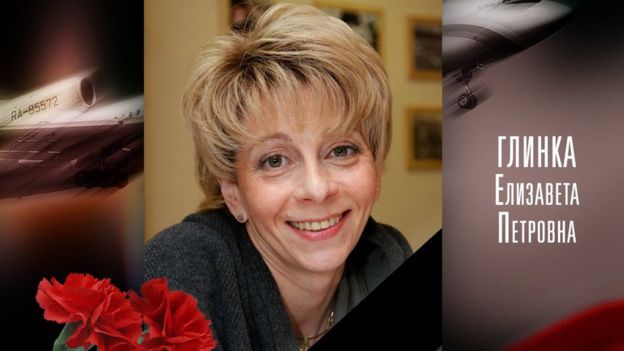
But it gets harder when we see the mass killings and disasters around the world and the numbers become overwhelming. The temptation is to allow the dead to become mere statistics rather than people who had lives. Instead of thinking about a mass number of people which generally ends in a round number, let us remember individuals, like Army reserve Captain Antonio Davon Brown whose was killed at thee Pulse Nightclub, or Justin and Stephanie Shults who were killed in the Brussels terror attack, Sean and Brodie Copeland, killed in the Nice terror attack. Dr. Liza Glinka, the Russian humanitarian who died along with the Red Army Chorale.

sean-and-brodie-copeland

Sean and Brodie Copeland 

os-mass-shooting-victim-antonio-brown-20160614

Antonio Brown

dr-liza-glinka

Dr. Liza Glinka

Of course there are so many more many whose names will never be known in the west, and because of the ravages of war and ethnic cleansing in the Middle East will have their lives erased from memory. So it is important to us to ensure that those lives, those individual lives multiplied a million times are not forgotten.

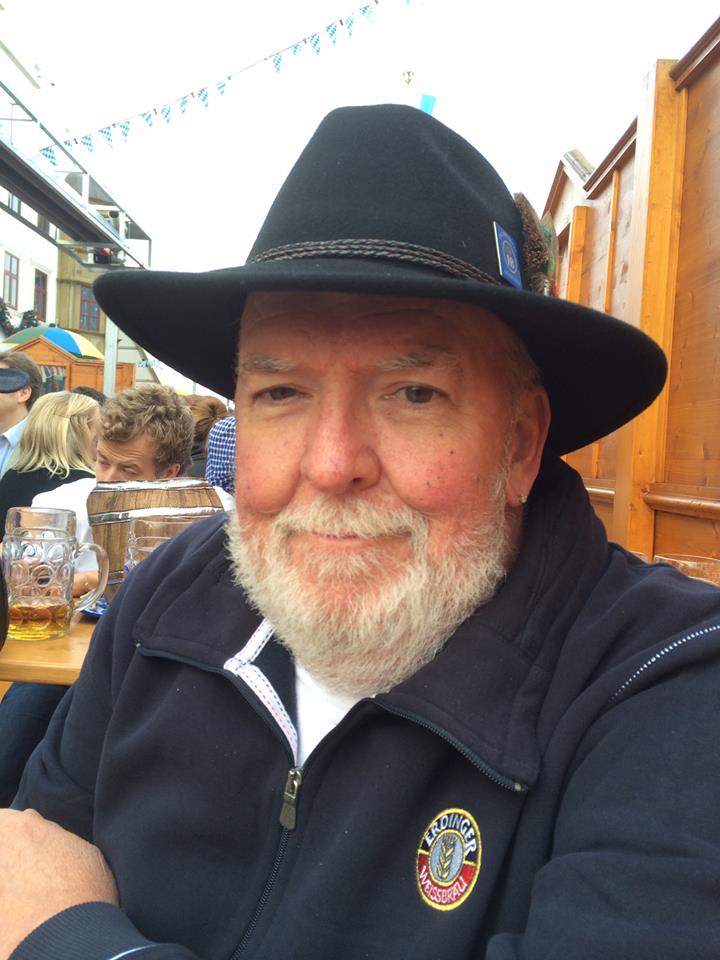
dave-shaw

Dave

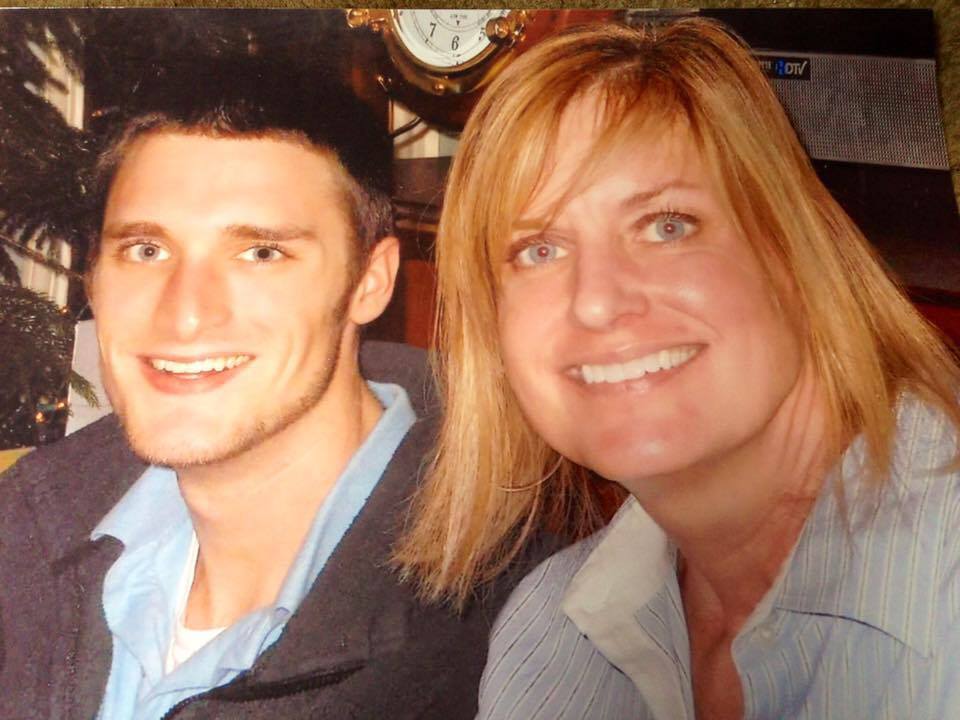
cara

Cara

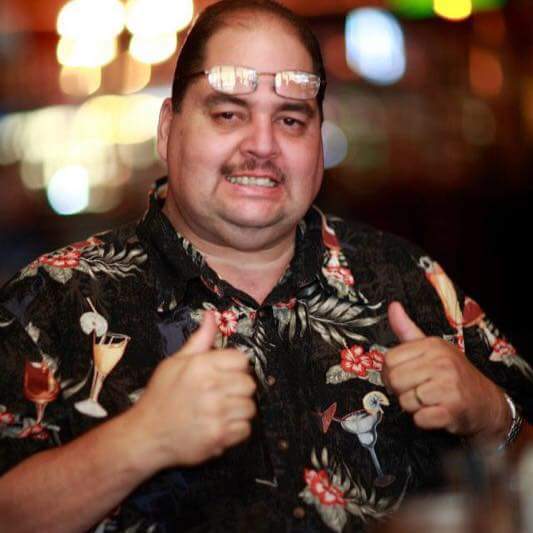
tony-martin

Tony

This year lost a number of friends and relatives. “New York” Mike Ferry and Cara Beruk Hartwell were people who helped hold me together when I was stationed at Camp LeJuene and struggling just to survive as I went through very dark times struggling with PTSD, TBI, terrible anxiety, depression, and times when I was considering suicide. My friend from Gordon Biersch Dave Shaw, a retired Navy Chief Hospital Corpsman planning to retire from his civilian career and travel around the country; my co-worker Bert Trembley whose sudden death coupled with a few other events kicked me into a tailspin at the end of March. My great-aunt Betty Dundas who loved to sing in the church choir; my former neighbor Tim Nestor who suffered for years with heart problems finally received a transplant but had complications which killed him; Bishop Randy Adler of my former church who was always so kind to me, and finally my high school friends, Stephanie Leon and Tony Martin. Tony took the time in his last month to spend time with me chatting via Facebook messenger as he was in the final stages of his battle with cancer.

In a world where death is always present it is important to remember the lives of people, not just their deaths. To quote Timothy Snyder death “must not, above all, supply the rounding rhetorical flourish that brings a story to a defined end.” Life gives meaning to death, rather than the other way around, so it is important that we remember the lives, not just the deaths if we are to retain any sense of humanity.

Until tomorrow,

Peace

Padre Steve+


Leave a comment

Filed under Loose thoughts and musings, philosophy

Freedom is Never more than a Generation from Extinction: The Fragility of Democracy in Authoritarian Times

antimedia-trump-supporters

Friends of Padre Steve’s World,

I have had a wonderful Christmas holiday with my wife Judy, our dogs, and friends. I have spent little time on social media and I am being very judicious in what I post, share, or tweet. Social media is a good thing, but over the past year I have found that it can also be a very dangerous and hateful place, full of the fallacies of ignorant ideologues. I have gotten to the point where I do not even look at any news sites after nine or ten at night. Instead I have been doing a lot of reading because I believe that true knowledge has nothing to do with dealing with an informational overload of hundreds of stories of often dubious veracity every day, as well as the propaganda that is knowingly published as if it were either real news or truth.

Sadly the purveyors of such material, including confidants of the President-Elect, and the hacks of the Right Wing like Rush Limbaugh, and rabid conspiracy theorists like Alex Jones are now ceaselessly working to destroy any confidence in reputable and conscientious journalists. They are using a tactic that was at the forefront of Nazi propaganda efforts: destroying the confidence of people in their nation’s institutions, which they wish to either destroy or use for their own purposes, and demonize the free press, which the Nazis called the Lugenpresse or the Lying Press, a term which has been frequently invoked by Trump supporters at his rallies before and after the election. During the campaign the President-Elect himself has all too often invoked the same specter to demonize the press as a whole or individual journalists without using the actual term.

Over the past month and a half I have read Timothy Snyder’s book Bloodlands: Europe Between Hitler and Stalin, Richard Evans’ Third Reich at War, William Shirer’s The Rise and Fall of the Third Reich, and I am currently reading Shirer’s Berlin Diary, and George Orwell’s 1984. Shirer’s Rise and Fall is a book that I read decades ago. All are helpful in understanding how despots and authoritarians come to power and how they destroy the institutions of democracy, including the press and free speech.

As such I am limiting my media intake to media that I trust, and that excludes every American cable news network. Before I post, tweet, or share any article I read it and check it out, and even then I don’t share everything. I am using what I am going to term media triage and just because I happen to agree with something doesn’t mean that I have to share it.

Today I read an interview with Gary Kasparov, the Russian Chess champion and champion of liberal democracy who now lives in the United States, in exile after having fled Vladimir Putin’s Russia where he was jailed for his beliefs several times.  http://www.slate.com/articles/news_and_politics/politics/2016/12/garry_kasparov_on_why_vladimir_putin_hates_chess.html

Kasparov was asked by the interviewer:

As a Russian pro-democracy leader: You live in exile now in the United States, you were thrown in jail more than once. What’s your advice to us, as pro-democracy Americans faced with real threats to civil liberties and democratic rights in this country?

The great chess master replied:

“First of all, people here should understand that nothing is for granted. There were many warnings in the past, you know, but every time, Americans and Europeans—they believe that it’s like bad weather. It comes and goes. But the danger is real. I always want to quote Ronald Reagan, who said, “Freedom is never more than one generation away from extinction.” Now, probably, it’s not even one generation. Things can happen very quickly, because there’s so much power that comes in the hands of people who have very little affection for the values that make up the core of liberal democracy and the free world.” 

We live in a day where the virtues of the Enlightenment are not only taken for granted but despised by authoritarians and ordinary people alike. There are many reasons for this, some quite valid and others spurious, but they have taken their toll around the world, and we fail to understand just how fragile democracy, classic liberal values, and freedom itself for granted. British historian Niall Ferguson wrote:“So much of liberalism in its classical sense is taken for granted in the west today and even disrespected. We take freedom for granted, and because of this we don’t understand how incredibly vulnerable it is.”  

I am still hoping, maybe in vain, that our democratic institutions will survive. Kasparov remains hopeful and noted in the interview: “But I still think that America has a huge potential to recover from this crisis, and let’s not forget that a majority of Americans did not vote for Donald Trump.” I think we do as well, but do fear that events may prove Kasparov and my hope wrong. Majorities often don’t matter to authoritarians, a trait which the President-Elect has reveled in throughout his campaign and in his post-campaign events, but I take what he says and does seriously, as we all should.

That’s all for tonight, as I have plenty more to write on this and related topics, so have a great day.

Peace

Padre Steve+

1 Comment

Filed under History, News and current events, philosophy, Political Commentary

The First Duty: Speaking Truth in “Post-Truth” Trump Era

IMG_0535

Friends of Padre Steve’s World,

For me the past month has been one of constant amazement. I am not speeaking about politics, but what matters more than any political ideology, the very idea of truth. Because of this I write using history and as best as I can objective and indisputable fact as my guide.

Most of my readers know that in addition to being a Priest and Navy Chaplain that I am a historian and teach both ethics and about Gettysburg as a faculty member at a Staff College. Many of the men and women that I teach will lead our military as commanders, planners and staff officers. I will transfer in the spring but even so, as a chaplain, officer, and educator I cannot be silent.

Thus it is my first duty, whether it is in teaching, writing or in ministry is to the truth, politicans and pundits be damned to hell. I believe the words spoken by Captain Jean Luc Picard, played by Sir Patrick Stewart in Star Trek the Next Generation: “the first duty of every Starfleet officer is to the truth, whether it’s scientific truth, historical truth or personnel truth…”

I am not a Starfleet Officer, but a Navy officer and I have always believed that the truth matters, but sadly, I, like so many of us have turned the other way and not spoken out too many times in my life. That changed during my combat tor in Iraq, and now the older I get the more I realize that I cannot be silent about subjects that at one time I turned a blind eye to because they were uncomfortable, unpopular or might hurt my career either in the church or in the military, so when I see people in power and who are close to power saying that truth and objective fact no longer matters I become fearful, because I know that the path that denying facts and truth leads.

Throughout the campaign Trump and his campaign surrogates not only twisted truth, but lied so many times that fact checkers could hardly keep up with their untruths. After the election, Trump surroget Scottie Nell Hughes told Diane Rehm of NRP: “There’s no such thing, unfortunately, anymore, of facts,” she continued,“Mr. Trump’s tweet, amongst a certain crowd, a large — a large part of the population, are truth. When he says that millions of people illegally voted, he has some — in his — amongst him and his supporters, and people believe they have facts to back that up. Those that do not like Mr. Trump, they say that those are lies, and there’s no facts to back it up.”

Her words, as well as those of former Trump campaign director and CNN talking head, Corey Lewindowski, and Newt Gingrinch have maintained that truth does not matter, only what people believe does. The fact that so many of Trump’s supporters don’t seem to care about facts, bodes ill for our country.

As such I have continued to write about subjects that many people are controversial and as such many people are uncomfortable with those topics. Whether the issue is civil rights, racism, Gay rights and marriage equality, voting rights, religious freedom and religious intolerance, and even xenophobia, or the connection of symbols such as the Confederate Battle Flag to a heritage that goes to a hatred that extends far beyond the battlefields of the Civil War; I am speaking out.

I am fully aware of that many of these subjects are controversial and are now targeted by Trump’s supporters, Congressional Repiublicans, and GOP legislators in every state. I have been asked in comments on this site and on my various social media accounts, particularly Facebook, why I keep bringing up the uncomfortable past. But I have to, I have a duty to the truth, and as Oscar Wilde noted “The truth is rarely pure and never simple.”

The late Howard Zinn, a brilliant historian whose work at one time I discounted, said: “But I suppose the most revolutionary act one can engage in is… to tell the truth.” Who would think that telling the truth could or would be a revolutionary act? However, when one lives in a society where the truth is bent, run over and shredded by politicians, preachers and pundits, what I call the Trinity of Evil; when state school boards whitewash history and force their religious views on children in public schools; where corporations and advertisers use the most crass means to deceive customers; and where established science is not met with denial under the guise of “skepticism;” telling the truth is a revolutionary affair.

In 1943, George Orwell, wrote about the Spanish Civil War how the German and Italian propaganda about it had been accepted without question by most people in westren democracies. His words echo my feelings about the incoming administration:

“This kind of thing is frightening to me, because it often gives me the feeling that the very concept of objective truth is fading out of the world. After all, the chances are that those lies, or at any rate similar lies, will pass into history. How will the history of the Spanish war be written? If Franco remains in power his nominees will write the history books, and (to stick to my chosen point) that Russian army which never existed will become historical fact, and schoolchildren will learn about it generations hence. But suppose Fascism is finally defeated and some kind of democratic government restored in Spain in the fairly near future; even then, how is the history of the war to be written? What kind of records will Franco have left behind him? Suppose even that the records kept on the Government side are recoverable — even so, how is a true history of the war to be written? For, as I have pointed out already, the Government, also dealt extensively in lies. From the anti-Fascist angle one could write a broadly truthful history of the war, but it would be a partisan history, unreliable on every minor point. Yet, after all, some kind of history will be written, and after those who actually remember the war are dead, it will be universally accepted. So for all practical purposes the lie will have become truth. 

In spite of everything going on I will continue to speak the truth, which will likely will be called radical, revolutionary, and unpatriotic. That has happened over the past few years and I expect that it will happen on a more frequent basis, but I do not want the lie to become truth.

The honest truth is that I never expected to be a revolutionary in terms of defending civil rights. Truthfully, believing what authority figures, be they political, or religious say is much easier than asking the hard questions. Barbara Tuchman once wrote: “The reality of a question is inevitably more complicated than we would like to suppose.” I guess that is why so many people would rather be content with obvious lies than to ask the really hard questions; be they about history, religion, and science or for that matter anything. One of the must uncomfortable things to admit is that truth is always evolving as we learn more, it is dynamic, not static and to attempt to force people to live by the “truth” of our ancestors is disingenuous, dishonest and denies the reality of the universe that we live. Thomas Jefferson recognized this and wrote:

“I know also, that laws and institutions must go hand in hand with the progress of the human mind. As that becomes more developed, more enlightened, as new discoveries are made, new truths disclosed, and manners and opinions change with the change of circumstances, institutions must advance also, and keep pace with the times. We might as well require a man to wear still the coat which fitted him when a boy, as civilized society to remain ever under the regimen of their barbarous ancestors.” 

So why I continue to write? I will write so that we never forget or push aside the great evils that human beings are capable of committing: The Holocaust, slavery and Jim Crow, the extermination of Native Americans by the millions in the name of God and Manifest Destiny, the enslavement, exploitation, and sometimes the extermination of whole peoples by colonialism; the witch trials, the religious wars of the Reformation, the Inquisition, the Chinese Cultural Revolution, Stalin’s purges, the Tuskegee experiments, the Japanese barbarity in the Rape of Nanking and other places in Asia, the Srebrenica genocide and the Rwandan genocide, the inhumanity of the so-called Islamic State, just to name a few; and add to that whatever happens in the next few years that will be aided and abbetted by men and women who overthrow democracy by the democratic process, using people’s fear to establish authoritatian or totalitarian states.

All too often the perpetrators of those events and their descendants as all too willing to last the past lie dormant and allow present wrongs to persist and look the other way.

But at what cost do we do so? Do we sacrifice justice on the altar of prosperity and peace; do we sacrifice uncomfortable truth in order to remain undisturbed and comforted by myth? Do we condemn our descendants to live under the myths of our ancestors? Would we sacrifice the truth and justice in order to ensure obedience? Howard Zinn correctly observed, “Historically, the most terrible things – war, genocide, and slavery – have resulted not from disobedience, but from obedience.”

President John F. Kennedy spoke these words at Yale in 1962: “The great enemy of truth is very often not the lie–deliberate, contrived and dishonest–but the myth–persistent, persuasive and unrealistic. Too often we hold fast to the cliches of our forebears. We subject all facts to a prefabricated set of interpretations. We enjoy the comfort of opinion without the discomfort of thought.”

Personally I would rather ask the questions and confront the past so we might have a better future, because though I am a realist, I also believe in my heart that humanity is capable of overcoming hatred, prejudice and ignorance. The problem is that times get difficult those attitudes can overcome our better nature. As Spencer Tracy’s character in the movie Judgment at Nuremberg said:

“But this trial has shown that under a national crisis, ordinary – even able and extraordinary – men can delude themselves into the commission of crimes so vast and heinous that they beggar the imagination. No one who has sat through the trial can ever forget them: men sterilized because of political belief; a mockery made of friendship and faith; the murder of children. How easily it can happen. There are those in our own country too who today speak of the “protection of country” – of ‘survival’. A decision must be made in the life of every nation at the very moment when the grasp of the enemy is at its throat. Then, it seems that the only way to survive is to use the means of the enemy, to rest survival upon what is expedient – to look the other way. Well, the answer to that is ‘survival as what’? A country isn’t a rock. It’s not an extension of one’s self. It’s what it stands for. It’s what it stands for when standing for something is the most difficult! Before the people of the world, let it now be noted that here, in our decision, this is what we stand for: justice, truth, and the value of a single human being.”

That my friends, is why I write: for justice, truth, and the value of a single human life, even if that means being considered unpatriotic.

Peace

1 Comment

Filed under ethics, History, News and current events, philosophy, Political Commentary

Two Types of Faith: Fiendish Sadistic Cruelty or Mercy and Justice

Witch-scene4

Friends of Padre Steve’s World,

The great Philosopher Alfred North Whitehead once wrote, “Religion carries two sorts of people in two entirely opposite directions: the mild and gentle people it carries towards mercy and justice; the persecuting people it carries into fiendish sadistic cruelty…” 

As I watch the reaction of many people who call themselves Christians in the wake of Donald Trump’s election I find much truth in Whitehead’s words. I feel that what has posed as Christianity in the United States has been revealed as a sham; a way for religious leaders to enrich themselves and gain power even if it means forsaking the Gospel to do so.

Those who follow my writings know how much I struggle with faith and doubt on a daily basis. I believe, but as the man told Jesus when he asked Jesus to heal his child “I believe, help my unbelief.” I no longer believe in the “absolute truths” that I once believed. Of course to some this makes me a heretic or worse. That being said, I have faith in a God I cannot see. I have faith in a God who clothes himself in human weakness and allows himself to be killed based on the trumped up charges of corrupt and fearful religious leaders. Thus I have a problem with Christians or members of other religions try to use the police power of state to enforce their beliefs on others, something that is about to become reality in our country.

I believe, but my doubts are all too real. Frankly I cringe when I hear religious people speaking with absolute certitude about things that they ultimately cannot prove, and that includes the concept of justice, which cannot always be measured in absolutes. Captain Jean Luc Picard (Patrick Stewart) noted in the Star Trek the Next Generation episode Justice: 

“I don’t know how to communicate this, or even if it is possible. But the question of justice has concerned me greatly of late. And I say to any creature who may be listening, there can be no justice so long as laws are absolute. Even life itself is an exercise in exceptions.”

I have found and learned to accept that life as we know it “is an exercise in exceptions.”  We all make them, and the Bible and the history of the church is full of them. So I have a hard time with people who claim an absolute certitude in beliefs that wish to impose on others. Whitehead wrote: “There are no whole truths; all truths are half-truths. It is trying to treat them as whole truths that plays the devil.” Unfortunately many true believers fail to understand that fact and whenever they gain political power use it to enforce their half-truths as if they were absolute truth. This behavior is demonstrated throughout history by people who profess every religious creed in the world.

Proving Whitehead’s words, many true believers frequently wrap themselves in the certitude of their faith assuming that they are the custodians of all truth, not recognizing that they are ignorant of their very ignorance.  The true believers espouse doctrines that are unprovable and then build complex doctrinal systems to prove them, systems that then which must be defended, sometimes to the death; and may whatever God you believe in protect you should you cross them.

Eric Hoffer wrote: “A doctrine insulates the devout not only against the realities around them but also against their own selves. The fanatical believer is not conscious of his envy, malice, pettiness and dishonesty. There is a wall of words between his consciousness and his real self.”

Henri Nouwen wrote, “Theological formation is the gradual and often painful discovery of God’s incomprehensibility. You can be competent in many things, but you cannot be competent in God.”

No one can be competent in God, and that those who claim to be are either hopelessly deluded, or worse, are evil men masquerading as good. Those that speak of absolutes and want to use the Bible or any other religious text as some sort of rule book that they alone can interpret need to ask themselves this question, “When has justice ever been as simple as a rulebook?” 

Sadly too many people, Christians, Moslems, Jews, Hindus, and others apply their own misconceptions and prejudices to their scriptures and use them as a weapon of temporal and divine judgement on all who they oppose. However, as history, life and even our scriptures testify, that none of us can absolutely claim to know the absolutes of God. As Captain Picard noted “life itself is an exercise in exceptions.” 

It takes true wisdom to know when and how to make these exceptions, wisdom based on reason, grace and mercy. Justice, is to apply the law in fairness and equity, knowing that even our best attempts can be misguided. If instead of reason we appeal to emotion, hatred, prejudice or vengeance and clothe them in the language of righteousness, what we call justice can be more evil than any evil it is supposed to correct, no matter what our motivation. Whitehead noted something that people of faith should remember and practice: “Religion will not regain its old power until it can face change in the same spirit as does science. Its principles may be eternal, but the expression of those principles requires continual development.”

The temporal power of the Christians who have thrown away the Gospel to use the election of Donald Trump to to further their temporal agenda of gaining earthly power completely miss the essence of faith, and the concept of justice. They have shown themselves to be little different from the theocrats that they condemn in the Islamic world, but then the mirror can be a difficult thing to look at.

But we see it all too often, religious people and others misusing faith or ideology to condemn those they do not understand or with whom they disagree. When such people gain power they tend to expand that power into the realm of theocratic absolutism and despotism. As Captain Jean Luc Picard noted in the Start Trek Next Generation episode The Drumhead:

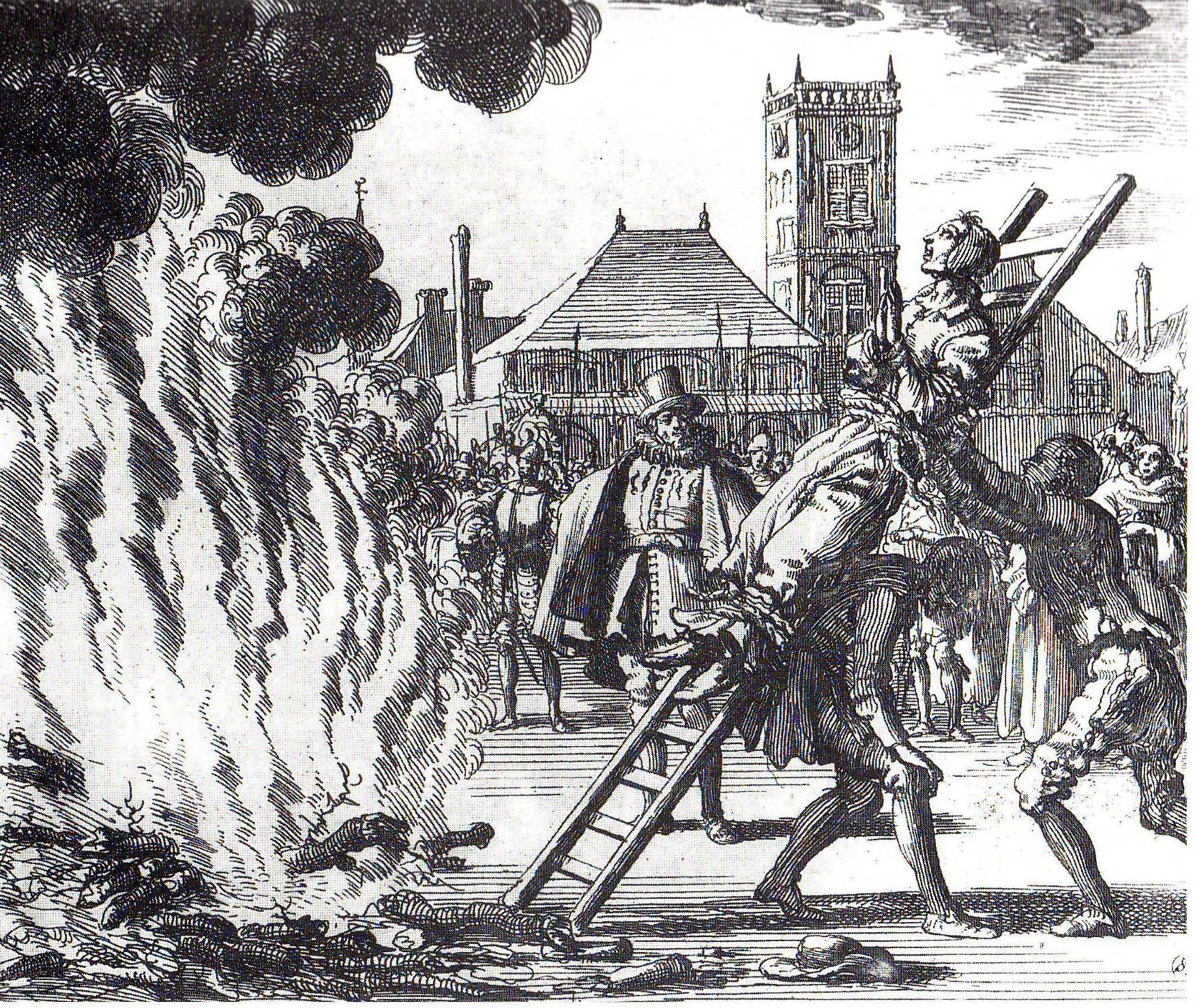
“We think we’ve come so far. Torture of heretics, burning of witches it’s all ancient history. Then – before you can blink an eye – suddenly it threatens to start all over again.”

That day is already here and it will become much worse before it gets better, especially since there will be little to restrain them unless the man that they sold their souls to support in order to increase their power turns on them; and that is always a possibility with Donald Trump.

Peace

Padre Steve+

3 Comments

Filed under faith, History, philosophy, Political Commentary, Religion

The Power of Folly

lemmi_cliff

Friends of Padre Steve’s World,

We are entering a dangerous time and while we hold out hope that our new President will be a wise and judicious executive, his words and actions after his election give us little hope of that.

Barbara Tuchman wrote in her book The March of Folly: From Troy to Vietnam, “Strong prejudices in an ill-formed mind are hazardous to government.” We are about to see just how those strong prejudices in the ill-formed mind of our President-Elect will do to our Republic, and the actions of his already powerful friends and lackeys jockeying for position in the incoming Trump administration. Tuchman wrote, “Chief among the forces affecting political folly is lust for power, named by Tacitus as “the most flagrant of all passions.” One can already see how this is likely to play out over the coming months and years.

Dietrich Bonhoeffer was a German pastor and theologian who openly opposed Hitler and his policies in an age when the bulk of German Christians either threw their wholehearted allegiance behind Hitler, or simply did nothing. Bonhoeffer wrote about the violence of Nazi power, and how it, like other brazen displays of power produces outbursts of folly. He noted:

“If we look more closely, we see that any violent display of power, whether political or religious, produces an outburst of folly in a large part of mankind; indeed, this seems actually to be a psychological and sociological law: the power of some needs the folly of others. It is not that certain human capacities, intellectual capacities for instance, become stunted of destroyed, but rather that the upsurge of power makes such an overwhelming impression that men are deprived of their independent judgment, and…give up trying to assess the new state of affairs for themselves.”

Our Republic and democracy is a brilliantly engineered system of government. It has a certain resiliency, but ultimately it is a fragile thing, one can look at our own history and the history of other republics with democratic institutions to see just how fragile it is.  To survive it depends on educated citizens to recognize the dangers of demagogues who rely on the folly others to gain power, but in this case we have failed to do that. If we are not careful we very well may see the institutions of our country used to destroy the foundations of our form of government.

We stand at a precipice and in the coming months and years it will be incumbent on people who value the proposition that of our Declaration of Independence and Lincoln’s Gettysburg Address that “all men are created equal” to do all that we can to hinder the march of folly that our newly elected President and Congress are about to embark upon. W.H. Auden penned the verse in his poem September 1, 1939:

Exiled Thucydides knew
All that a speech can say
About Democracy,
And what dictators do,
The elderly rubbish they talk
To an apathetic grave;
Analysed all in his book,
The enlightenment driven away,
The habit-forming pain,
Mismanagement and grief:
We must suffer them all again.


We are going to be pummeled by an Orwellian disinformation campaign and it is terribly important that we continually speak the truth, for the truth may well be the only weapon that will remain at our side. As Winston Churchill wrote:

“You see these dictators on their pedestals, surrounded by the bayonets of their soldiers and the truncheons of their police … yet in their hearts there is unspoken fear. They are afraid of words and thoughts: words spoken abroad, thoughts stirring at home — all the more powerful because forbidden — terrify them. A little mouse of thought appears in the room, and even the mightiest potentates are thrown into panic.” 

Peace

Padre Steve+

Leave a comment

Filed under History, News and current events, philosophy, Political Commentary

The Importance of Joy and Laughter in a Terrifying World


Friends of Padre Steve’s World,

I often write about very serious subjects. Yesterday was no exception. I wrote about the importance of become tough and staying strong in a very unsafe world which promises to get more dangerous in the coming months, and I used the example of the young German student who led the non-violent opposition group to Hitler and the Nazis known as The White Rose.

The student was Sophie Scholl. She was an activist and a Christian and she refused to bury her head in the sand about Nazi atrocities inside and outside of Germany. She struggled with her faith, much as I do. In her diary she recorded these words, words which echo many things that I have written here on this site in regard to my struggle with faith after returning home from war:

“I’m still so remote from God that I don’t even sense his presence when I pray. Sometimes when I utter God’s name, in fact, I feel like sinking into a void. It isn’t a frightening or dizzying sensation, it’s nothing at all — and that’s far more terrible. But prayer is the only remedy for it, and however many devils scurry around inside me, I shall cling to the rope God has thrown me in Jesus Christ, even if my numb hands can no longer feel it.”

She was deadly serious and realized that what she was doing could get her killed, and it did. But even in the midst of the darkness that was the Third Reich, and despite her struggles she understood the importance of being able to find something to laugh at, something to bring joy to life, and she did not understand those who could not find joy, even in dark times. She noted:

“I pity people who can’t find laughter or at least some bit of amusement in the little doings of the day. I believe I could find something ridiculous even in the saddest moment, if necessary. It has nothing to do with being superficial. It’s a matter of joy in life.”

I agree with her words, and despite my continued struggles with faith, my continued struggle with PTSD, and my very real concern for what is going on in the country and what we will likely face over the next four years; I do find things that bring me joy. I find things to laugh at and laugh with, and friends who I can share that laughter. Sometimes I find the most ridiculous and funny things even when things are at their worst. I find that my little Papillon dogs keep me entertained, amused, and really make me laugh even when I am having a terrible day.

I think my friends that we must not allow circumstances to dictate whether or not that we can find joy in life. Yes there is a lot of tragedy and pain, not to mention things that we should be very concerned about, but even so we must never allow ourselves to become so beaten down that we become joyless souls who cannot laugh. The late Erma Bombeck noted “There is a thin line that separates laughter and pain, comedy and tragedy, humor and hurt.” It is up to us to find the humor as Mark Twain noted “The human race has only one really effective weapon and that is laughter.”

Have a great day and don’t forget to laugh.

Peace

Padre Steve+

3 Comments

Filed under History, News and current events, philosophy, Political Commentary

“Though it Hurts Us…” Olive Branches and Forgiveness after a Toxic Election

olive-branch

Friend’s of Padre Steve’s World,

This is kind of an awkward post for me to write. Those who know me well know that I don’t back down from fights, I don’t suffer insults well, and have a vast capacity to harbor a grudge. So this is my attempt to scribble down my reflections on forgiveness which is something that I don’t do well.

In Homer’s Iliad Achilleus lamented the conflict with the Achaians, especially the hatred that it had spawned, he addressed those who had been his enemies and said: “Still, we will let all this be a thing of the past, though it hurts us, and beat down by constraint the anger that rises inside us. Now I am making an end of my anger. It does not become me, unrelentingly to rage on…”

I think that the ancient lament is particularly appropriate to our time. For decades the acrimony between Americans has been getting worse and worse and and most of us probably have some measure of personal guilt in what the last several election cycles have done to us. They have been corrosive to our society and to us as individuals, me included. I have been able to do some reflecting today because I was having work done to repair some to the flood damage from Hurricane Matthew and had some time alone as well as some quality time walking my Papillon dogs around the lake in our neighborhood.

I have lost too many friends during this election cycle, and seen some distance in other relationships with people who I love and respect. Some of this is my own fault, I became too consumed with the news cycle and too emotionally invested in what was going on. Most of the time I think I behaved well, but other times I did not. My temper grew short and my ability to brush off minor personal affronts, not to mention real attacks on my person, honor, and character grew shorter.

I have had to pull back some. I am spending less time on social media, less time looking at more partisan news sites, checking the veracity of anything I read and before forwarding it out to others, and being more circumspect in posting links to articles with which I might agree, but the tenor of which could drive further wedges between me and friends. To paraphrase Achilleus’s words about his anger, “It does not become me, unrelentingly to rage on…” 

There are a number of people that I will have to ask forgiveness of, and that will be hard because I am so bad at it. But harder will be forgiving others who have wounded me badly. I will work on that, initially it may be silently, until I reach the point that I can actually address them in person. Mark Twain wrote,“There isn’t time, so brief is life, for bickerings, apologies, heartburnings, callings to account. There is only time for loving, and but an instant, so to speak, for that.” 

That being said I have a difficult time forgiving those who have hurt me, but conversely I can admit when I have been a complete ass and pray that those I have offended are better at forgiveness than me.

In ancient Greece and Rome the olive branch was a symbol of peace, and the term to offer an olive branch now is to offer peace, and I will be doing that over the coming weeks and months. I see it as my personal attempt to help bind up the wounds of the nation. As the American Civil War was drawing to a close, Abraham Lincoln uttered these words in his Second Inaugural Address: “With malice toward none, with charity for all, with firmness in the right as God gives us to see the right, let us strive on to finish the work we are in, to bind up the nation’s wounds…”

That being said even in forgiveness there will still be pain, on occasion anger will still rise. Likewise I am sure that even in restored relationships some scars will remain, as will some of our more deep disagreements. But in spite of that it is better for to at least try forgive and love than remain in the acidic stew of hatred generated by this election. The olive branch is symbolic of peace and forgiveness as the olive tree takes years to mature and bear fruit, while war, societal conflict takes so little effort and leaves scars that last for generations.

So until tomorrow,

Peace

Padre Steve+


6 Comments

Filed under faith, philosophy

Cubs Win Epic World Series and Remind us of All that Can Be

cubs-world-series

Friends of Padre Steve’s World,

The late W.P. Kinsella wrote: “Baseball is the most perfect of games, solid, true, pure and precious as diamonds. If only life were so simple. Within the baselines anything can happen. Tides can reverse; oceans can open. That’s why they say, “the game is never over until the last man is out.” Colors can change, lives can alter, anything is possible in this gentle, flawless, loving game.”

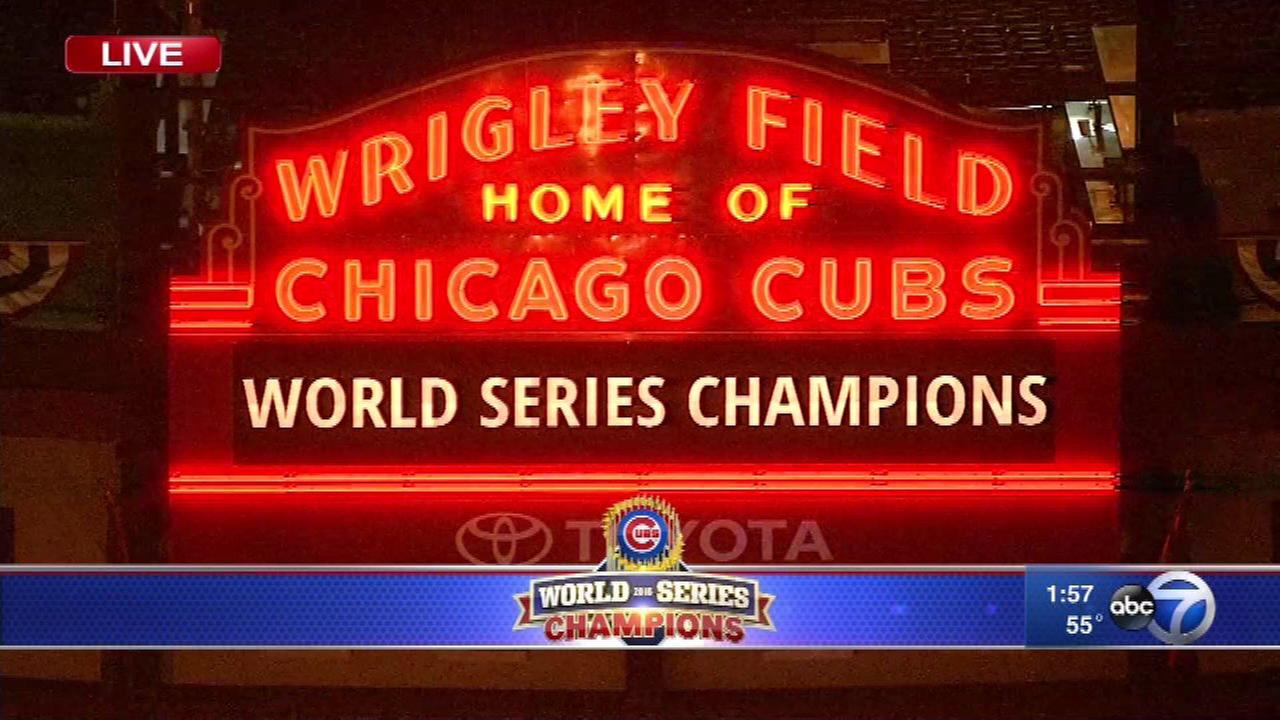
For five hours last night all the cares of the world didn’t matter. Not the raging anger of Donald Trump, not the election, not the wars and bloodshed in the Middle East, not terrorism, not the economy, not anything…  except what transpired on the baseball field in Cleveland. In Game Seven of an epic World Series two teams with a combined 174 years of not winning a World Series battled into the 10th inning as the weather got worse and the rain began to fall. The tension throughout the game was electric, the mood swings as the Cubs took a 5-1 lead and then the Indians scored three runs with two outs in the bottom of the 8th inning to tie the game took one’s breath away.  Watching these two teams battle it was if time itself no longer existed, just the game, a game which transfixed the nation as no sporting event has in recent memory.

Kinsella wrote something profound  in his classic baseball fantasy The Iowa Baseball Confederacy: 

“Name me a more perfect game!” Matthew Clarke had been fond of saying to his son. “Name me a game with more possibilities for magic, wizardry, voodoo, hoodoo, enchantment, obsession, possession.” 

I have to agree, this World Series showed all of us something that no other sport can match in terms of tension, magic, and enchantment. People like to say that NFL football is exciting, but compared to this wonderful game, but the NFL has has degenerated into brutal test of strength, of declining talent, terrible injuries that the owners don’t seem to mind, with the joy taken out of it.

Instead last night we saw talented players play their hearts out, pitchers exhausted from overuse, hitters coming up big, and fielders making spectacular plays. The drama was played out as if it were a story out of ancient Greek mythology as immortals battled in front of watching mortals. I  wished that it could have gone on forever and that both teams could have won, but that is not baseball. A game may go into extra innings, but when it is over, it is over. Unlike politics when the game is over there is no recount: when the final strike is called, there is no court of appeals. As Bill Veeck said:  “Baseball is almost the only orderly thing in a very unorderly world. If you get three strikes, even the best lawyer in the world can’t get you off.”  But that being said there is always next year; which brings with it a hope that springs as eternal as the luxuriant green grass on the enchanted diamonds in every corner of the nation; diamonds whose foul lines theoretically extend to infinity, and whose perfection calls us to something better.  Those fields await us all if we believe.

This World Series, in particular this Game Seven also called us back for just a few hours to a better time, a time of hopes and dreams that have always captivated American, a goodness that dwells within us just waiting to be released again. And it can be again, if we decide to release the cynicism and hatred that has built up over the decades which has been on such display during this election.

What happened last night reminded us of Kinsella’s classic line in his book Shoeless Joe which became the film Field of Dreams: 

“The one constant through all the years has been baseball. America has rolled by like an army of steamrollers. It’s been erased like a blackboard, rebuilt, and erased again. But baseball has marked the time. This field, this game, is a part of our past. It reminds us of all that once was good, and what could be again.”

Congratulations to the Cubs and to their faithful fans. 108 years is an eternity to wait for this, and thank you to the Indians, and there fans as well, and maybe for you it will be next year. But whatever, this wonderful game reminded us of the fact that American is great, because America is good, and baseball reminds us of that good, and what could be again.  As Walt Whitman wrote: “I see great things in baseball. It’s our game — the American game. It will take our people out-of-doors, fill them with oxygen, give them a larger physical stoicism. Tend to relieve us from being a nervous, dyspeptic set. Repair these losses, and be a blessing to us.”

Until tomorrow,

Peace

Padre Steve+

Leave a comment

Filed under Baseball, News and current events, philosophy, sports and life