Category Archives: Religion

Rafael Cruz and the Dangerous Heresy of the Self-Annointed

pic_giant_082813_A

Rafael Cruz with his son Senator Ted Cruz

“When the pretended friends of religion lead infidel lives; when they carry religion to market and offer it in exchange for luxuries and honors; when they place it familiarly and constantly in the columns of newspapers, manifestly connected with electioneering purposes, and when they are offering it up as a morning and evening sacrifice of the altar of political party- these men are placing a firebrand to every meeting house and applying a torch to every Bible” Abraham Bishop in an oration at Wallingford CT on 11 March 1801

As a historian as well as a theologian I find the modern self-anointed “prophets and apostles” of the Dominionist, Christian Reconstruction or Seven Mountains movement to be quite troubling. I have written about them before, but since they continue to rise to prominence in both conservative Christian churches and the Tea Party movement it is time that I do so again. In reading the words of Abraham Bishop I cannot help but to notice how closely they mirror the self-anointed leaders such as Rafael Cruz, the father of the junior Senator from Texas, Ted Cruz, a likely Presidential candidate in 2016.

The movement itself is profoundly dualistic in nature and prominent leaders include Dr C. Peter Wagner,  Gary North, Rick Joyner, and a host of other leading Evangelicals including notables like Rick Scarborough, Pat Robertson and James Robison, political leaders Rick Perry, Michelle Bachmann, Sarah Palin and Ted Cruz and finally Mike Huckabee who like a rancid peanut butter cup manages to combine his ministry with his perpetual quest for political power.

Larry Huch, a mega-church pastor and evangelist in the Dallas area hosted Rafael Cruz at his church in 2012 and made these comments about the election of Ted Cruz as a U.S. Senator:

“I know that’s why God got Rafael’s son elected – Ted Cruz, the next Senator. But here’s the exciting thing – and that’s why I know it’s timely for him to teach this, and bring this anointing. This will begin what we call the “End Time Transfer of Wealth.”

“And that when these gentiles begin to receive this blessing, they will never go back financially through the valley again. God is looking at the church, and everyone in it, and deciding, in the next 3 and 1/2 years, who will be his bankers. And the ones that say, ‘Here am I, Lord, you can trust me’, we will become so blessed that we will usher in the coming of the Messiah.”

The elder Cruz, a leader in the Dominionist movement in his own right said at that meeting:

“The pastor [Huch] referred to Proverbs 13:22, a little while ago, which says that the wealth of the wicked is stored for the righteous. And it is through the kings, anointed to take dominion, that that transfer of wealth is going to occur. God, even though he’s sovereign, even though he’s omnipotent, he doesn’t let it rain out of the sky – he’s going to use people to do it.” 
How these men get this from scripture is beyond me but the late John Wimber who founded the Vineyard churches after leaving the very conservative Calvary Chapel which is basically fundamentalist in its understanding of scripture, but which under the direction of the late Chuck Smith was relatively politically innocuous, focusing more on evangelism and bringing people to Christ. Wimber said of the folks at Calvary Chapel:“Calvaryites are sometimes a little too heavily oriented to the written Word.” This should say something to any conservative Bible Christian about the people leading the Dominionist movement, they don’t care about scripture and will pervert it into whatever they want it to say. That is why Latty Huch can blather on about God looking for his “bankers” who will “usher in the Messiah.” 
C. Peter Wagner is an exponent of this end time transfer of wealth, he wrote to his supporters in 2007:
“nine of the components of GAN {Global Apostolic Network} are on my heart, but especially those related to wealth and wealth transfer. I am in touch with 17 potential wealth transfer brokers, some of them expecting release momentarily. It is hard to comprehend, but some of them go to multiple millions, billions, and more. My task is to prepare a high integrity infrastructure for distributing these funds when they begin to flow. Zion Apostolic Network and The Hamilton Group are in place as agencies to carry this out. Our motto is “Sophisticated Philanthropy for Apostolic Distribution.” Letter from Global Harvest Ministries dated August 20, 2007
If the issue was just about Elmer Gantry type money-grubbing these people might be written off, but it is not. They are also about violent social and political revolution if they cannot get their way at the ballot box. Cindy Jacobs another one of these politically connected self-anointed prophets, who is still around pushing even more radical comments made this claim on the internet back in 2000:“For there is a radical sound that I have issued – there is a sound that has come from heaven, and it even now has come to earth. And the Lord says, these are going to be days where I am going to trouble the enemy through you. These are going to be different days than you have ever known, and I am going to require sacrifice of you that you cannot imagine. I am going to require a sacrifice of your children, says the Lord. And the Lord says, I’m going to shake everything that can be shaken…” and that “There are churches that will be command posts for revolution, and to these command posts I would say, I am going to bring a revolution. Look and see; I am calling radical revolutionaries to the church.”

Rick Joyner, who has continued to gain influence among these people and was one of the early exponents of this type of thought in his Morning Star Prophetic Bulletin wrote about what was going to happen to Christians that didn’t agree with his understanding of his prophecy threatening to change “the very definition of Christianity….for the better….”

“On February 23rd of this year I was shown for the third time that the church was headed for a spiritual civil war … the definition of a complete victory in this war would be the complete overthrow of the accuser of the brethens’ strongholds in the church … this will in fact be one of the most cruel battles the church has ever faced. Like every civil war brother will turn against brother like we have never witnessed in the church before … this battle must be fought. It is an opportunity to drive the accuser out of the church and for the church then to come into unity that would otherwise be impossible … what is coming will be dark. At times Christians almost universally will be loath to even call themselves Christians.Believers and unbelievers alike will think it is the end of Christianity as we know it and it will be through this the very definition of Christianity will be changed for the better.”  Morning Star Prophetic Bulletin May 1996

Joyner is a close associate of former Senator and head of the Heritage Foundation, Jim DeMint so he should not be taken lightly, and last year he advocated for a military coup to remove President Obama, a military coup to “protect the Constitution.”

These are very dangerous and scary people whose goal is the establishment of their brand of theocracy. Thus they must be exposed for what they are, because the closer they move to political power the closer we come to real tyranny. This is not a benign movement led by peaceful people who want to mind their faith and get along with others, they are extremists and Christians who actually care about the faith and care about the Bible should flee from them.

As Thomas Jefferson so wisely noted:

History I believe furnishes no example of a priest-ridden people maintaining a free civil government. This marks the lowest grade of ignorance, of which their political as well as religious leaders will always avail themselves for their own purpose.” (letter to Baron von Humboldt, 1813)

Peace

Padre Steve+

3 Comments

Filed under christian life, History, News and current events, Political Commentary, Religion

The Absence of Empathy Among Conservative Christians

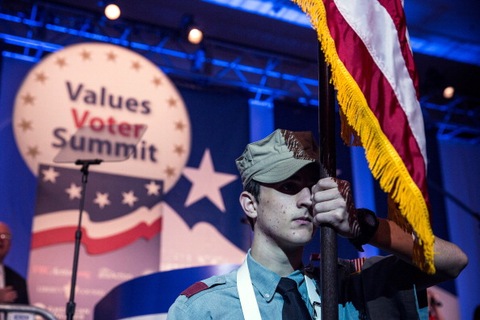
valuesvoterssummit

“Evil, I think, is the absence of empathy.” Captain Gustave Gilbert at Nuremberg

Since coming back from Munich on Friday night I have been catching up on the news and I was nearly overwhelmed with the amount of vitriol, hatred and intolerance coming out of the Values Voters Summit. The summit is an annual gathering of right wing political hacks who specialize promoting fear in the hearts of conservative Christians by fostering a nearly pathological culture of victimhood and persecution, in which they are the victims because others are being granted the same rights and privileges that they have enjoyed since this country was founded. Prominent among all of the speakers was a lack of empathy for anyone who did not hold their views, and those views are reflected in the latest Pew Survey on Religion in America where only 55% of consistent conservatives believe empathy is a value to be taught to their children.


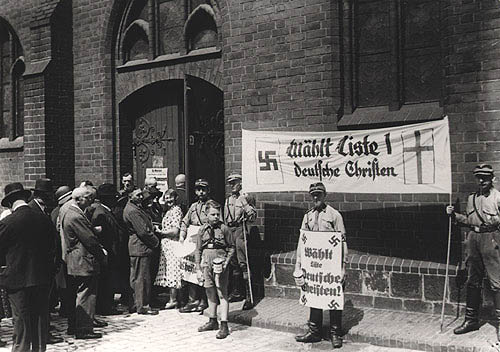
Being that I am a historian as well as a theologian know all too well. The consequences for the church when such leaders promote such intolerance under the veil of being the victims reminds me of what occurred in Weimar Germany less than a century ago. At that time, conservative German Christians, feeling their privileged status that they had enjoyed under the reign of the Kaiser and other local monarchs being threatened took refuge in various right-wing political parties and organizations, many of which entered alliances with Hitler’s National Socialist German Workers Party.

vatican46_35


The leaders of those groups preached how they were being persecuted by the now secular government which had many Socialists in it. Feeling threatened by the rights now afforded to others, including socialists and communists, but in particular those provided to Jews they used a similar strategy to smear anyone that did not hold their perverted views of church and state. They felt that they were the victims; the victims of a “stab in the back,” which caused Germany’s defeat and the collapse of the Empire.


War hero and pastor Martin Niemöller was representative of those that took the bait. After the war Niemöller who after Hitler came to power and he realized what was happening spoke out and was sent to the concentration camp noted:


War hero and pastor Martin Niemöller was representative of those that took the bait. After the war Niemöller who after Hitler came to power and he realized what was happening spoke out and was sent to the concentration camp noted:

“I find myself wondering about that too. I wonder about it as much as I regret it. Still, it is true that Hitler betrayed me. I had an audience with him, as a representative of the Protestant Church, shortly before he became Chancellor, in 1932. Hitler promised me on his word of honor, to protect the Church, and not to issue any anti-Church laws. He also agreed not to allow pogroms against the Jews, assuring me as follows: ‘There will be restrictions against the Jews, but there will be no ghettos, no pogroms, in Germany. I really believed given the widespread anti-Semitism in Germany, at that time—that Jews should avoid aspiring to Government positions or seats in the Reichstag. There were many Jews, especially among the Zionists, who took a similar stand. Hitler’s assurance satisfied me at the time. On the other hand, I hated the growing atheistic movement, which was fostered and promoted by the Social Democrats and the Communists. Their hostility toward the Church made me pin my hopes on Hitler for a while. I am paying for that mistake now; and not me alone, but thousands of other persons like me.”

Realizing the danger of how Christians were giving their support to such parties and the implicit demands of some for a theocracy Bonhoeffer in the Bethel Confession wrote:

“every attempt to establish a visible theocracy on earth by the church as a infraction in the order of secular authority. This makes the gospel into a law. The church cannot protect or sustain life on earth. This remains the office of secular authority.”

But this is the same nonsense being promoted by Mike Huckabee, Sarah Palin, Matt Staver, Tony Perkins, Laura Ingraham, Bryan Fischer, Ted Cruz and a host of others. Sadly, this vision of theocracy is very much in vogue in many churches and among conservative Christians in general no-matter what their denomination. Thomas Jefferson would be appalled by this. He wrote of the effects of clergy in political power:

“The clergy, by getting themselves established by law and ingrafted into the machine of government, have been a very formidable engine against the civil and religious rights of man.”

dyer-hanging1

Much of the thought behind the movement is from Gary North who posits a version of Christianity much like that of Calvin’s Geneva, and the Massachusetts Bay Colony know as Christian Dominionism or Reconstructionism. All of these leaders proclaim their desire to protect religious liberty, but for them religious liberty is a one way street, it only applies to them and the state should ensure that it does not apply to others. North wrote:

“We must use the doctrine of religious liberty to gain independence for Christian schools until we train up a generation of people who know that there is no religious neutrality, no neutral law, no neutral education, and no neutral civil government. Then they will get busy in constructing a Bible-based social, political and religious order which finally denies the religious liberty of the enemies of God.”

North also wrote:

“The long-term goal of Christians in politics should be to gain exclusive control over the franchise. Those who refuse to submit publicly to the eternal sanctions of God by submitting to His Church’s public marks of the covenant–baptism and holy communion–must be denied citizenship, just as they were in ancient Israel.”

The scary thing for me is just how similar North’s words as well as those of others to the Nazi Aryan Laws against the Jews. Please know that I am not claiming these people are Nazis by any means. That being said, I think that their ignorance of history, the Constitution, American jurisprudence which is charged by fear-mongering and vitriolic hatred of those not like them opens the door to much evil. Note how similar North’s comments parallel the Aryan Paragraph:

“A citizen of the Reich is that subject only who is of German or kindred blood and who, through his conduct, shows that he is both desirous and fit to serve the German people and Reich faithfully.” and that “A Jew cannot be a citizen of the Reich. He has no right to vote in political affairs and he cannot occupy public office.”

While much of their vitriol is directed against Moslems, who because of acts committed by Islamic terrorist extremists are all targets of allegedly “Christian rage” like that of Timothy Rollins of The American Partisan who wrote:

“this can best be done by enacting the Great Muslim Purge from our military and other national security apparatuses. These people need to be removed from every security post, even to be completely removed from all levels of government employment, be it federal, state, county, city or other municipality. This applies especially to universities….” 

Westminster Seminary graduate Doug Giles who writes for the Townhall.com website who wrote on one of his commentaries:

“Please note: If Christ wasn’t cool with irrigating irate Islamicists for facts, I must admit, I would still have to green light our boys getting data from enemy combatants 007 style. Stick a fire hose up their tailpipe and turn it on full blast. I don’t care. I’m not as holy as most of you super saints or as evolved as some of you progressive atheists purport to be. Security beats spirituality in this scenario, as far as I’m concerned.”

Or who can forget that lovable darling of the Christian Right Sarah Palin who told the NRA convention that “waterboarding is how we baptize terrorists.”

For me to read and listen to people who claim to be Christians show such little regard for other human beings is frightening. Personally, I am frightened because I know the history of Christians when they not only hold control of their churches but the government. The persecution, torture and murder of heretics and unbelievers, the place of privilege given to the elect and the second rate status of non-Christians in their countries; not to mention the wars of extermination blessed as “holy” by the Church, such as the 30 Years War, the Crusades not to mention the numerous other wars blessed by the church. St Bernard of Clairvaux who told those going off to fight the First Crusade:

“The knight of Christ, I say, may strike with confidence and succumb more confidently. When he strikes, he does service to Christ, and to himself when he succumbs. Nor does he bear the sword in vain. He is God’s minister in the punishment of evil doers and the praise of well doers. Surely, if he kills an evil doer, he is not a man-killer, but, if I may put it, an evil-killer. Clearly he is reckoned the avenger of Christ against evildoers, and the defender of Christians.”

But it is not just Moslems that feel the wrath of the Christian Holy Warriors, but Atheists, agnostics, the LGBT community, other non-Christian religions including the Jews, though most deny the latter due to their beliefs about the role of Israel in the end times. Christians can behave as badly as the those committed to the Islamic State or ISIL. Our history has nothing to commend us, for when we as Christians “hold the franchise” to quote Gary North, we are more than capable of committing some of the most heinous acts imaginable.

thomasjefferson


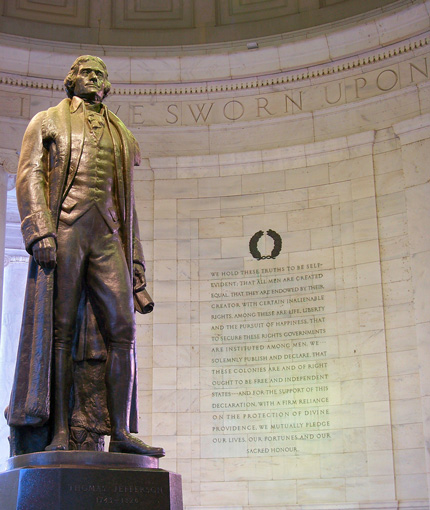
Thomas Jefferson wrote:

“Millions of innocent men, women, and children, since the introduction of Christianity, have been burnt, tortured, fined, and imprisoned; yet we have not advanced one inch toward uniformity. What has been the effect of coercion? To make one-half the world fools and the other half hypocrites. To support roguery and error all over the earth.”

Philosopher Eric Hoffer wrote something that we should very much keep in mid when we read or hear about the antics of those speaking at the Values Voters Summit and others like them:

“The impression somehow prevails that the true believer, particularly the religious individual, is a humble person. The truth is the surrendering and humbling of the self breed pride and arrogance. The true believer is apt to see himself as one of the chosen, the salt of the earth, the light of the world, a prince disguised in meekness, who is destined to inherit the earth and the kingdom of heaven too. He who is not of his faith is evil; he who will not listen will perish.”

Sadly, most if not all of the leaders of this movement of theocratic, liberty denying Christians are so immersed in themselves and narcissistic that they cannot comprehend this. Perpetually the victim they misapply scripture to justify their perceived victimhood. Such should not be the case, and Bonhoeffer reminds us of the mark of true Christian faith in a sermon where he said:

“Christianity stands or falls with its revolutionary protest against violence, arbitrariness and pride of power and with its plea for the weak. Christians are doing too little to make these points clear rather than too much. Christendom adjusts itself far too easily to the worship of power. Christians should give more offense, shock the world far more, than they are doing now. Christian should take a stronger stand in favor of the weak rather than considering first the possible right of the strong.”

Captain Gustave Gilbert who served as the Army Psychologist for the defendants ant the Nuremberg major War Crimes trials wrote of his experience with them in words that at least to me could apply to these supposedly Christian leaders:

“In my work with the defendants (at the Nuremberg Trails 1945-1949) I was searching for the nature of evil and I now think I have come close to defining it. A lack of empathy. It’s the one characteristic that connects all the defendants, a genuine incapacity to feel with their fellow men. Evil, I think, is the absence of empathy.”

Sadly we have come to the point where many people who profess to be Christians have no empathy, or for that matter any real love for those different than them. History shows this time and time again. Christians who have political power and the “right to the franchise” have behaved little differently than the terrorist thugs of ISIL and I can say with certitude based on the words and legislative efforts of the people who dominated the Values Voters Summit, that they too would behave no differently. As I walked on the Odeonsplatz and went to the Feldherrnhalle in Munich where Hitler’s Beer Hall Putsch came to an end I could not help but think of what might have happened had Christians during the Weimar Republic not gravitated and become politically captive to the right wing of German politics and for many the Nazi Party.

The right of religious liberty for all is far to important to be left to those that would claim it for themselves and deny it to others. As Jefferson wrote the Virginia Baptists in 1808:

“Because religious belief, or non-belief, is such an important part of every person’s life, freedom of religion affects every individual. Religious institutions that use government power in support of themselves and force their views on persons of other faiths, or of no faith, undermine all our civil rights. Moreover, state support of an established religion tends to make the clergy unresponsive to their own people, and leads to corruption within religion itself. Erecting the “wall of separation between church and state,” therefore, is absolutely essential in a free society.”

With that I wish you a good night,

Peace

Padre Steve+

1 Comment

Filed under civil rights, faith, History, laws and legislation, Political Commentary, Religion

Oktoberfest Pilgrimage Live Blog: A Visit to Beer Land

IMG_0488.JPG

“Beer is proof that God loves us and wants us to be happy.” Benjamin Franklin

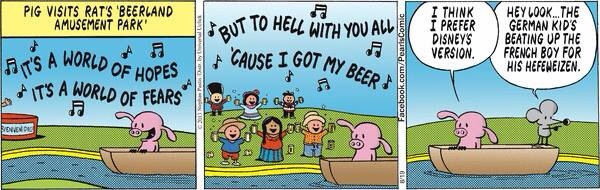
One of my favorite comic strips is Stephan Pastis’ Pearls Before Swine. A few months ago one of the main characters appropriately named Rat, since he is a rat, decides to open his own amusement park called Beer Land. The series of strips is amazingly brilliant, especially to true beer drinkers. I think the strip from that series that I most enjoyed was this one, because of the way Pastis linked a ride at the strip to the syrupy Disney ride It’s a Small World.

Today we did a bit of a road trip and took the U-Bahn from Munich to a small town on the outskirts of the city called Erding, for a visit and tour of the Erdinger Weisbier brewery, the largest brewer of wheat beers in the world. Before heading to Erding we had taken a short visit to the historic Marianplatz where we were able to see the famous Glockenspiel at the old city hall, or Rathaus.

IMG_0489-0.JPG

Now Judy has incurred a couple of injuries to her knee, ankle, and a couple of years ago had to her Achilles’ tendon repaired. As such sometimes a lot of walking causes her a lot, I mean a lot of pain. We tried to go out some yesterday but after a few minutes at Marianplatz but she was in such pain so we went back to our hotel until later in the evening when we went to dinner with our friends.

This morning she was in less pain but she knew if she didn’t get some European style crutches that she would not do well and possible be confined to the hotel for must of our remaining time here. For those that don’t know, European or as they are referred to in the United States Canadian crutches are far superior to the type most of us know and loath so much. They provide the user much more mobility and less pain to the armpits and shoulders because you do not swing from them.

So while she hung out with our friends I googled where to find the crutches in Munich. The word for crutches is krucken and they are sold at stores that specialize in equipment for those recovering from injuries as well as those with various physical disabilities called a Saniatshaus. The closest of these was about two miles away, so with google maps to guide me I set off. I walk pretty fast so it didn’t take that long to get there and when I did after the normal greetings with the lady at the counter I asked for a pair of crutches, which she showed me and allowed me to even pick the color. They cost about 34 Euros, which isn’t too bad, and for that quality I would have payed more in the U.S, had I gotten them at home. I made my way back by hailing a taxi to save time. Had a nice conversation about Munich, beer and the Oktoberfest with the driver and he delivered me back just city meters from where Judy and some of our friends had gathered. Since we were waiting on some of the rest of our group we had a beer at an outdoor cafe across from the Rathause where we saw the Glockenspiel do its thing when the clock stuck eleven.

Once all of us were gathered we boarded the U-Bahn to Erding a trip of about 45 minutes. Once in Erding we caught a city bus to the Erdinger brewery. We got our tickets for the tours and bought a couple of items in the gift shop and then went on the tour. The tour took about an hour and a half and was amazing.

I was impressed with how well a large brewery can make great beer using only the natural ingredients of hops, barley or wheat malt and water. There are no added sugars, food colorings known to be carcinogenic, Bisphenal A (BPA); cheap filler grains such as rice and corn as well as high fructose corn syrup, dextrose, and mono sodium glutamate, and even propylene glycol (a component of anti-freeze) are found in many mass produced American beers. This is because of the observance of the strict Bavarian or German beer purity law the Reinheitsgebot which stipulates what are acceptable ingredients in beer. Frankly the difference in taste is amazing as well as the effects, especially the morning after. But I digress….

As I mentioned the tour was informative and enjoyable. At the end of the tour, which cost 12 Euros per person we were provided freshly baked Bavarian pretzels, two large Bavarian Weiswurst, which are a mildly spiced and finely textured pork sausage and three half liter glasses of whichever of the eight styles of Weisbier that Erdinger brews.

10670000_10152772414817059_3414239591729879256_n

It truly was a visit to Beer Land and I am sorry to say that at each stage of the tour I kept thinking about that comic, but no, I didn’t see the German kid beat up the French kid for his Hefeweizen.

So Since this a religious pilgrimage, I will close with a quote from one of my favorite rebellious theologians, the eminent Doctor Martin Luther:

“Whoever drinks beer, he is quick to sleep; whoever sleeps long does not sin; whoever does not sin enters heaven! Thus let us drink beer!”

Have a great day.

Peace

Padre Steve+

Leave a comment

Filed under beer, civil rights, faith, History, nazi germany, Religion, travel

Oktoberfest Pilgrimage: Live Blog

IMG_0953.JPG

IMG_0962.JPG

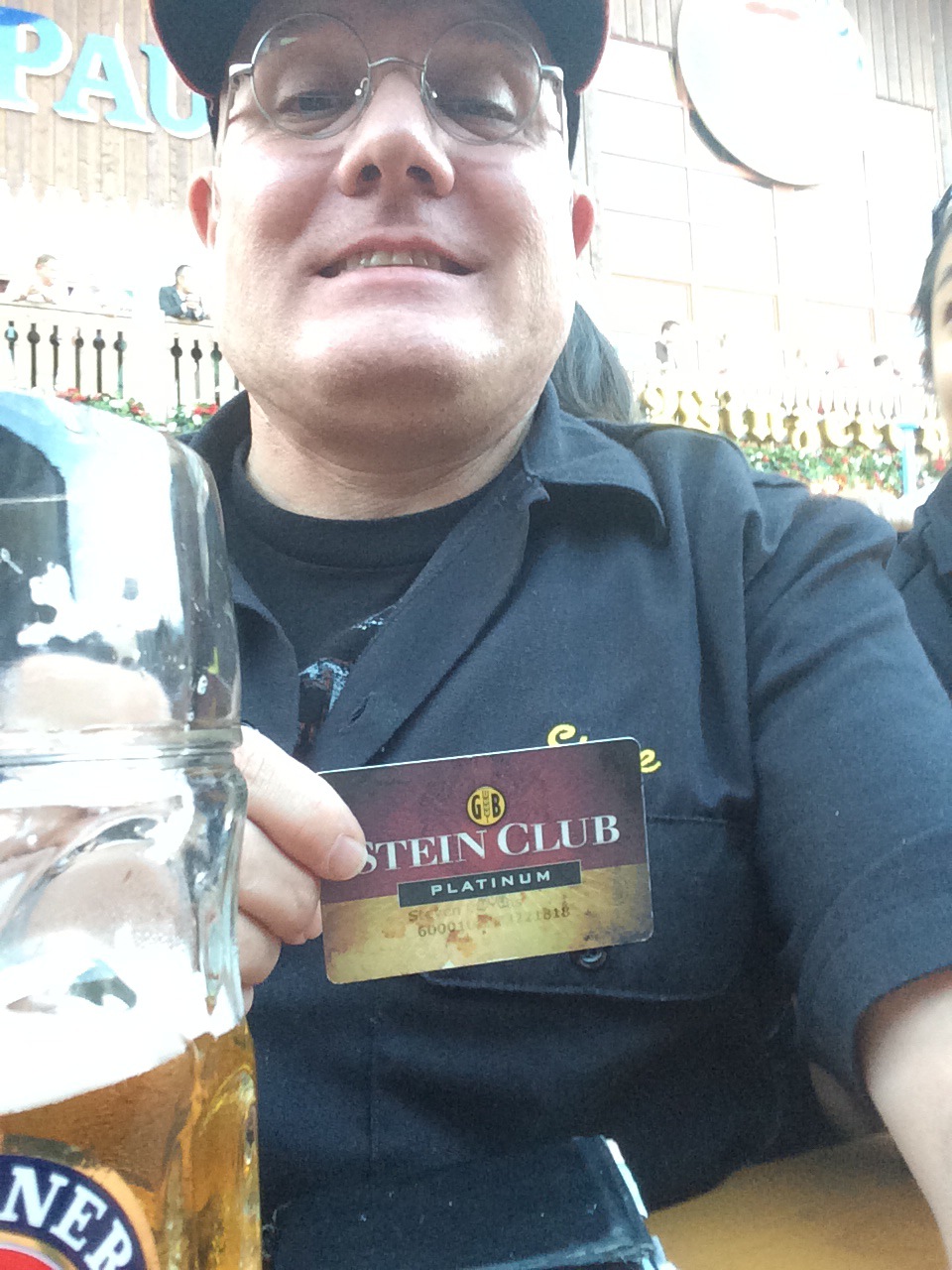
Day two of my Religious Pilgrimage to the Oktoberfest in Munich. Fun using my German again on a daily basis, my German friends tell me I’m fluent in it but I know better. I do very well and speak with a mixed Hessian and Bavarian dialect without an American accent. I can carry on normal conversation as long as it doesn’t get too technical.

We arrived in Munich about 1230 on Saturday and our group left our hotel about 1630 to go to the Fest. It was a lot of fun being with friends. We tried to find a table at the Lowenbrau tent but ended up in the Biergarten at the Paulaner tent across the way. We had a blast, got back to the hotel about 2230, Judy crashed and I went down with some of our friends to the hotel bar for more beer. After a total consumption of somewhere between five and six liters of beer I went up and crashed for the night.

IMG_0954.JPG

IMG_0971.JPG

IMG_0974.JPG

Today after an amazing breakfast at the hotel we are out again this time at the Lowenbrau tent. Again a lot of fun. The music, the party atmosphere and the fun talking with people from Germany and other countries.

I think tonight we will go to the Hofbrauhaus for more bier and dinner. Judy made the comment this morning that it will be hard not seeing our friends everyday, kind of like leaving church camp. But then this is a religious pilgrimage.

IMG_0978.JPG

So anyway, until tomorrow…

Peace

Peace

Padre Steve+

IMG_0979.JPG

Leave a comment

Filed under faith, Religion

Prepare for a Long and Brutal Ideological War Against the Islamic State

“This war differs from other wars, in this particular: We are not fighting armies but a hostile people, and must make old and young, rich and poor, feel the hard hand of war.” William Tecumseh Sherman

Note: Please know, I have been to war, I have seen its devastation and heartache and I came back changed from the experience. I hate it. That being said, despite being a progressive who hates war, I am also a realist. I am not one that finds any romance or glory in war, but I know that sometimes it becomes unavoidable. In the past few articles I have written about the nature of war, the kind of war we are now engaged in with ISIL and some of the ethical and moral compromises that could easily be made in such a war. Thus what I write here is a continuation of those thoughts and I encourage you to look at those articles. 

President Obama came into office as a President determined to end the wars that the United States was engaged in and usher in an era of peace. That did not happen. The genie of war and chaos that was unleashed when President Bush stopped pursuing Al Qaeda and attacked Saddam Hussein’s Iraq refused to go back into its bottle. The new and more violent terrorist groups spawned from the loins of Al Qaeda in Iraq are now the dogs of war that have been unleashed on the region, threatening all of the peoples there.

This menace to the people of the region as well as to the West, known as the Islamic State of Iraq and the Levant is different than Al Qaeda.  It is a terrorist group to be sure, but it is also an embryonic state which is conquering territory, subduing people, butchering its enemies and murdering innocents in cold blood. They boast in their atrocities and believe what they are doing is blessed by their God. They have grown up and been nurtured by a culture of victimhood which they believe that past or present oppression justifies their actions. Eric Hoffer wrote something that is quite poignant if we are to understand the mindset of ISIL:

“It is doubtful if the oppressed ever fight for freedom. They fight for pride and power — power to oppress others. The oppressed want above all to imitate their oppressors; they want to retaliate.”

The leaders and fighters of ISIL are people of the 12th Century living in the 21st Century. Prisoners of their doctrine they are incapable of negotiation, seeing it as only weakness and a way to impose their will on those unable to, or unwilling to resist them. Hoffer described their mindset well in his book  The True Believer:

“A doctrine insulates the devout not only against the realities around them but also against their own selves. The fanatical believer is not conscious of his envy, malice, pettiness and dishonesty. There is a wall of words between his consciousness and his real self.”

Thus this war will be something different, something that we in the West do not want to comprehend. We want any war to be neat, fast and comparatively bloodless, but this will not be the case in the war against ISIL. Such wars may be possible against traditional nation states with weak militaries. But to believe that it can be with ISIL is wrong headed and dangerous because it ignores the nature of that group. Carl Von Clausewitz noted that:

“Kind-hearted people might of course think there was some ingenious way to disarm or defeat the enemy without too much bloodshed, and might imagine this is the true goal of the art of war. Pleasant as it sounds, it is a fallacy that must be exposed: war is such a dangerous business that the mistakes which come from kindness are the very worst.”

Ultimately, despite the fact that I almost always counsel that war should be avoided and peaceful solutions found to resolve conflict, there are times that wars must be fought. If ISIL was a true nation-state with a conventional understanding of diplomacy and the relationship between nations it would be conceivable that the United Nations or perhaps the Arab League could help broker a deal. But ISIL is neither your father’s terrorist organization, nor a real nation-state. It is a hybrid which is not driven by realpolitik but rather a fanatical religious belief in their cause.  This allows them to dispense with diplomatic niceties and allows them no compromise with those they believe are the enemies of their God; including other Moslems.

Their war has been raging for some time in both Syria and Iraq. What they are doing is further destroying the mosaic of peoples who are part of the Arab heritage in both countries. The atrocities committed by ISIL against Shi’ite Moslems, secular Sunnis, Yidazi and Christians have been displayed around the world. Mass executions, beheadings and the destruction of historic sites which are important parts of the Christian, Moslem and Jewish heritage are only part of their crimes.

Some of those images inflamed people in the West, but it was the images of American and British hostages being beheaded amid dire threats to kill others and bring vengeance on the Western Infidels that finally got our attention.  The only condition for peace given by ISIL to those it considers the enemy is “convert or die.”  Whether we like it or not, war is now unavoidable. President Obama, the “peace President,” and some of his peers in Western Europe have reluctantly decided to fight ISIL and are now gaining international support for their efforts, even in the Arab world.

Some politicians and pundits seem to think that this will be easy, simply destroy ISIL where they stand. But that belief is illusory. ISIL and its sympathizers may seem to be concentrated in Iraq and Syria, which is enough of a problem for us, but their supporters, financial supporters and sympathizers are world wide. Interestingly Pope Francis noted that:“Even today, after the second failure of another world war, perhaps one can speak of a third war, one fought piecemeal, with crimes, massacres, destruction….”

That being said there is a warning that all must remember about this war. It is at its heart ideological, and it will be long and brutal and very importantly, the Islamic State believes that it can and will win it.

Winston Churchill said:

“Never, never, never believe any war will be smooth and easy, or that anyone who embarks on the strange voyage can measure the tides and hurricanes he will encounter. The statesman who yields to war fever must realize that once the signal is given, he is no longer the master of policy but the slave of unforeseeable and uncontrollable events…. Always remember, however sure you are that you could easily win, that there would not be a war if the other man did not think he also had a chance.”

Thus in this war we cannot waver, and we must believe in our ideals of freedom, justice, equality and the value of a single human life. We must do this even though our practice of them often makes a mockery of them. But they are still ideals that are worth fighting for, because without them we lose something of our already flawed humanity. Carl Clausewitz recognized this and wrote:

“If the mind is to emerge unscathed from this relentless struggle with the unforeseen, two qualities are indispensable: first, an intellect that, even in the darkest hour, retains some glimmerings of the inner light which leads to truth; and second, the courage to follow this faint light wherever it may lead.”

It was said by Barbara Tuchman that “War is the unfolding of miscalculations.” For over a century the leaders of the West as well as Arab leaders throughout the region have miscalculated far too many times, and what is going on now is the tragic and bloody result of all of those miscalculations. The suffering and the human cost will be great.

Pray my friends for peace, but remember reality, peace is not possible when the kind of religious extremism that motivates ISIL is the driving force. That kind of ideology cannot be negotiated with, it has to be defeated.

It has been a long time since we in the West have had to wage that kind of war and it will come at some cost to our psyche and it will take some getting used to, if you can ever get used to the evil, the carnage, the suffering and the devastation that is the essence of war. As William Tecumseh Sherman said “War is Hell.”

Peace

Padre Steve+

5 Comments

Filed under ethics, Foreign Policy, History, history, middle east, Military, Religion, War on Terrorism

The Fallacy of Reductionist Fundamentalism: You Cannot be Competent in God

galaxy_universe-normal1

Today is a day for something a bit more theological in nature. A couple of days ago I wrote about the dangers of reductionist fundamentalism. One of the issues that fundamentalists of all stripes wrestle with is the issue of certitude. For them life has to be bounded by certainty. For them, whether in the matter of origins, or how life came about, in the matter of faith and morals, how life is lived in the present; or how the world ends, life must be certain. In fact, fundamentalism in all its forms inculcates believers that there is only one way of thinking, one way of knowing, one way of understanding things that are unknowable. 

Because of this need for certitude, Christians, Moslems, Jews and others of various persuasions have attempted to define the beginning and the end, as well as to dictate what is acceptable to believe, or acceptable behavior. However, this actually says more about their insecurity than reflects the strength of their beliefs. I can speak to this need for certitude from a Christian point of view, and from my study of other faiths make what I think is informed commentary.

But for people who supposedly believe in God, the reality is that in presuming certitude in what we think that we know  is actually a denial of faith. Dietrich Bonhoeffer wrote that “a God who would let us prove his existence is an idol.” Bonhoeffer was right, not only do those that presume to know exactly how creation came about, how the universe will end or say with unrequited certitude what constitutes proper belief or behavior in the eyes of God make an idol of their God, they also, whether they intend to or not, put themselves in the place of God.

According to the writer of the Book of Hebrews, “faith is the essence of things hoped for, the evidence of things unseen.” That writer, who I think is Priscilla (see Acts Priscilla and Aquila) understood that faith was not the same as empirical knowledge, otherwise it would not be faith. To understand faith in a modern sense it means that faith is something that we admittedly cannot prove. That is why it is faith.

I am admittedly a skeptic. I am. Christian, I do believe, but I doubt as much as I believe. In fact for nearly two years I lived as an agnostic, a priest praying that God still existed, thus is believe but even now doubt. That being said I have seen things that cannot be explained by science or anything rational, and there are physicians that I have worked with that can attest to those things. That being said I think there are a lot of events claimed by some as “miraculous” that are explainable and are not miraculous at all.

The fact is, whether it it about creation and the questions of origins, an exact definition by which to judge absolute truth for living or belief, or the manner of how creation will end; every single statement of such absolutes is contradicted by the fact that we live as Bonhoeffer wrote, and I like to call “the uncomfortable middle. Bonhoeffer wrote in his book Creation, Fall and Temptation that:

“Man no longer lives in the beginning–he has lost the beginning. Now he finds he is in the middle, knowing neither the end nor the beginning, and yet knowing that he is in the middle, coming from the beginning and going towards the end. He sees that his life is determined by these two facets, of which he knows only that he does not know them.”  

The reality for Christians is that we have to admit is that our belief is rooted in our faith, faith which is given to us through the witness of very imperfect people influenced by their own culture, history, traditions as well as limitations in terms of scientific knowledge. Even scripture does not make the claim to be inerrant, though some Christian Fundamentalist make that claim. Because of that, the Bible cannot be understood like the Koran or other texts which make the claim to be the infallible compendium of faith delivered by an angel or dictated by God himself. The Bible, of we actually believe it, is a Divine-human collaboration so symbolic of the relationship that God has with his people, often confusing and contradictory yet inspiring. As Hans Kung so rightly wrote:

“Christians are confident that there is a living God and that in the future of this God will also maintain their believing community in life and in truth. Their confidence is based on the promise given with Jesus of Nazareth: he himself is the promise in which God’s fidelity to his people can be read.” 

Does that mean that we fully comprehend the nature of Christ, or the doctrinal formulation of the Hypostatic Union which defines Christ as being fully human and fully God? Or does it mean that we fully comprehend or understand the doctrine of the Trinity encapsulated in either the Nicene or Athanasian Creed? Certainly not, none of those doctrines are provable by science, or for that manner even history, for there were and are people who consider themselves Christians who do not believe and who reject those doctrinal formulations. Thus for Christians to attempt to argue such matters as fact to those who do not believe is not productive at all. We must understand that faith in the living Christ is not in a doctrine but  a promise that we believe, by faith, is given given by God through Jesus of Nazareth.

The real fact of the matter is that fixed doctrines are much more comfortable than living with difficult questions or honestly examining the contradictions that exist within Scripture, history and tradition. The fact is this makes many people uncomfortable and thus the retreat into the fortress of fixed and immutable doctrine found in the various incarnations of Fundamentalism.

The fact is the world is not a safe place, and our best knowledge is always being challenged by new discoveries many of which make people nervous and uncomfortable, especially people who need the safety of certitude. So in reaction “true believers” become even more strident and sometimes even violent when confronted with issues that question immutable doctrine.

I wish it were otherwise but Christianity cannot get away unscathed by such criticism. At various points in our history we have had individuals, churches and Church controlled governments persecute and kill those that have challenged their particular orthodoxy. Since Christian fundamentalists are human they like others have the capacity for violence if they feel threatened, or the cause is “holy” enough. Our history is full of sordid tales of the ignorance of some Christians masquerading as absolute truth and crushing any opposition. Doctrinal certitude is comforting. It is as Eric Hoffer wrote:

“A doctrine insulates the devout not only against the realities around them but also against their own selves. The fanatical believer is not conscious of his envy, malice, pettiness and dishonesty. There is a wall of words between his consciousness and his real self.”

This is the magnetic attraction of fundamentalism in all of its forms, not just Christian fundamentalism.  Yet for me there is a comfort in knowing that no matter how hard and fast we want to be certain of our doctrines, that God has the last say in the matter in the beginning and the end.

But there some Christians who now faced with the eloquence of men like Neil DeGrasse Tyson and Bill Nye who make legitimate challenges respond in the most uncouth and ignorant manners. The sad thing is that their response reveals more about them and their uncertainty and insecurity than it does the faith that they boldly proclaim.

themiddle1

Our doctrines, the way we interpret Scripture and the way we understand God are limited by our humanity and the fact that no matter how clever we think we are that our doctrines are at best expressions of faith. We were not there in the beginning  and we will not be present at the end, at least in this mortal state. We do live in the uncomfortable middle. Our faith is not science, nor is it proof. That is why it is called faith, even in our scriptures where as Paul the Apostle says “If Christ is not raised your faith is worthless”  and we “are to be pitied among men.” (1 Cor. 15:17-18)

We are to always seek clarity and understanding. However it is possible that such understanding and the seeking of truth, be it spiritual, historical, scientific or ethical could well upset our doctrines about God and that is not heresy, it is an admission that God will not allow us to put hi m in our theological box. As Henri Nouwen wrote: “Theological formation is the gradual and often painful discovery of God’s incomprehensibility. You can be competent in many things, but you cannot be competent in God.”

With that I will close for tonight.

Peace

Padre Steve+

Leave a comment

Filed under christian life, faith, philosophy, Religion

The Dangers of the Reductionist Religion of Fundamentalism

IMG_1915.JPG

My friends, today will be a busy day so I wanted to share a few thoughts about religious fundamentalism in it’s various forms. Now I want to say up front this is not an attack on God or people that believe it God, or in what God they choose to believe in for either their eternal salvation or just getting through life. Instead it is some observations about fundamentalist, or absolutist belief systems that allow no room for doubt or that any other view of God might have some measure of truth and how some groups use political, police and military power, even terror to impose those views on others.

It occurred to me a few years back that many Christians, among them Evangelicals, certain Reformed types, Fundamentalists, and even some conservative Roman Catholics practice a reductionist form of the Christian faith. It is a form that woefully short changes those that embrace it. Now I am speaking very general terms right now and the subject probably needs to be fleshed out some for each particular form. I probably will do that sometime soon, but let me continue.

What I have observed is that the richness, the history, the intellectual achievements, and the diverseness of the Christian experience, whether it that of the mystics like Hildegarde of Bingen, the patristic theologians such as Basil, Origen or Gregory of Nyssia, the scholastics such as Anselm of Canterbury who penned a philosophy that I much admire, “faith seeking understanding” the reformers such as Martin Luther, those of the awakenings such as John and Charles Wesley, the humanists such as Erasmus of Rotterdam, those of the enlightenment such as Schleiermacher, and Kierkegaard, the Neo-Orthodox of the early part of the Twentieth Century like Karl Barth, Dietrich Bonhoeffer, Emil Brunner and Paul Tillich, or the Catholic reformers leading up to and following Vatican II like Pierre Teilhard de Chardin, Hans Kung, Yves Congar, Bernhard Haring, and Andrew Greeley, and the Theologians of Hope led by Jurgen Moltmann.

This list is certainly not exclusive by any means. However, the one common thing about these men was that they understood their faith in the context of the society, history, culture and learning of their day. They used reason informed by faith and wrestled with subjects that are for the most part denied to the reductionists of Christian Fundamentalism. The fact is that most fundamentalists of any stripe tend to disregard history, science, philosophy and other disciplines that seek to interpret the world and instead place their own understanding of God, their scriptures or creeds above all others. Various groups of Christians, Jews, Moslems, Buddhists, Hindus and other religions all do this, even some Atheists and other Secularists are not immune. It is a reality of many people’s need for certitude in a world that is full of too many troubles and contradictions.

Christian fundamentalism in its various forms reduces the faith to a small set of absolute principles from which no deviation is allowed. As I mentioned there are different forms of this, but in a sense adherents to any version of Christian Fundamentalism treat the Bible, their Statement of Faith, catechism or Creed as a sort of “tech manual” that provides quick solutions to those that “know the truth.”

By this I mean is that when there is a really difficult question that requires critical thinking, reasoning and nuance, instead of wrestling with it they throw out a Bible verse or a credal type statement to shut down the person asking the question. I think I remember the classic line that I heard when I was in high school: “Jesus is the answer, what was the question?” The sad thing was this was not a joke, the person who said it meant it.

Now I admit for some people a simple faith works well, that is human nature, but when religious leaders present the faith in such reductionist and absolute terms they impoverish their followers and end up driving off those who ask the hard questions. These are questions which cannot be answered by the shibboleths thrown out by these leaders because they are not easy, and defy attempts to simplify them. This is because they often deal with existential matters and the mysteries of human life and nature.

The fundamentalism in all it’s forms reduces life to a dualism in which one is either on God’s side (that is whoever’s God) or not in which all life’s questions are resolved by faith or religion. I would dare say that most of people’s most difficult questions, issues and needs are not religious at all and that is why so many people reject fundamentalism, either because they see the fallacies inherent in such inflexible systems of belief, or because they experience disappointment in those groups when the ideal of God presented, either as individuals or the community does not match reality.

As for as what people believe as individuals or within their religious communities that does not bother me one bit, even if I disagree with them. I fact I think the discussion of religion should be allowed in the public square. However, I believe that to discussion should include everyone, not just which religious group has the most power in government or influence in society.

The problem that I see is when such groups, regardless of what God they believe in decide to impose their beliefs on others through the power of the government, and for that matter even use their beliefs to silence others in the public square. The danger is when any such group decides it is superior, that it’s leaders have a lock on the truth, are “anointed” or whatever term they call it, hear directly from God, authoritatively speak for God and then use that to suppress dissenters or control unbelievers through the power of the state, of in the case of the new Islamic State, the power of military conquest and terror.

In fact the leaders and followers of such groups almost practice a form of Gnosticism, where if you have the right understanding of “the truth” you are superior to those that do not. Since God is the ultimate trump card in any argument those who believe they have the direct line are the most dangerous.

In spirit, this reductionist understanding of faith is ultimately destructive and when people take it to its logical end use it to justify the most heinous crimes against their fellow human beings. What we see with the Islamic State is really no different than other fundamentalist religions with absolute control of their society do to unbelievers. The ultimate choice for those under their rule, is to “convert or die.”

Christians have done this numerous times since Christianity became the state religion of the Empire under Constantine, and Catholics, Orthodox and Protestants have all exercised that option. One only has to look at the persecution of various Protestants by Roman Catholics, the persecution of the Anabaptists by Catholic and Protestant State Churches, the burning of heretics and witches, even in Colonial America, and the persecution of Catholic immigrants from Europe by American Protestants in the 1800s, not to mention the pogroms conducted against the Jews in Europe, the Holocaust, or the extermination of Native Americans in the name of the Christian God.

Moslems have done this too throughout history and in the present,where the Islamic State and other groups like it, Boko Haram, Al Shabab, and Hezbollah among them practice it in its worst form.

It is also part of the earliest forms of Judaism in the conquest of Canaan where God’s command, to put it in the modern vernacular was “kill them all and let God sort them out later.” In fact I remember scandalizing my Old Testament class in seminary by blurting that out. But when I read supposedly Christian apologists defending the legitimacy of what even they refer to as genocide it sickens me.

Likewise it was fascinating thing for me this week was to hear the star of the Duck Dynasty Phil Robertson, a Christian fundamentalist explain that “convert or die” was the choice that the people in the Islamic State should be offered. Others have said similar things and not just in regard to Islamic radicals.

Again, I have no problem who need to believe in a God of absolutes, some people need that and it is a free country. But I think that such beliefs shortchange and deprive them of the richness of faith, life and the mystery of God and faith, even the great mystery of the Christian faith that we proclaim in the celebration of the Eucharist “Christ has died, Christ is risen, Christ will come again.” The mystery of God who became man, or as Anselm of Canterbury wrote “cur Deus homo” “Why God Man?” or what Christians call the Incarnation, is central to the the Christian faith.  Like creation and the eschaton is a mystery, as Bonhoeffer wrote and we would be so wise to remember:

“Man no longer lives in the beginning–he has lost the beginning. Now he finds he is in the middle, knowing neither the end nor the beginning, and yet knowing that he is in the middle, coming from the beginning and going towards the end. He sees that his life is determined by these two facets, of which he knows only that he does not know them.”

The fact is that no matter what we say, we do not know and when we make absolutist claims based on our scriptures we have to remember that they as well are shrouded in mystery, but then Eric Hoffer noted “We can be absolutely certain only about things we do not understand.”

The mystery associated with the Canon of Scripture, includes the authorship as well as the contents of scripture. Since we don’t have the original autographs of any book of the Bible, or for that matter any major religions scriptures there is a certain mystery associated with the scriptures. We believe them by faith, just as we do in the existence of God. The reality is that in many cases we don’t know who the actual authors were and even as to when some of them were written.

This might make the Christian Canon of scriptures as well as those of other major religions sources of inspiration, spirituality, sources of good advice, lessons and ethics; but not absolute truth and fact in matters of history, science or anything else we might want them to be. The fact is we believe in God by faith, and we trust scriptural accounts by faith.

However, for those who must claim the Bible as absolute there is a need to prove it, and that need brings about the controversies of “inerrancy” that are part and parcel of Protestant fundamentalism as well as the absolutist claims of others in regards to their scriptures. Sadly, for many, their absolutist understandings of scripture or creedal claims are dogma to be defended to the death and to force upon others, rather than mysteries by which we experience the love and grace of God.

The problem is that such beliefs, even if they are from antagonistic or competing groups are all variations on a theme. They are all variations of the same species of religion, religion that must control or suppress dissenters at all costs, and if given the chance to use the police and military power of the state to succeed when dialogue fails. The only differences these religions have, besides the God that they believe is right, is the matter of degree with which they apply those beliefs. For some they are quite happy with keeping such matters in house and leave outsiders alone. But there are others in every major religion who have a need to impose their beliefs on others using any means necessary, including special privileges for themselves that no other groups get as well as to use the state to persecute, terrorize against or conquer by brute military force those who do not believe.

That is why the Islamic State must be defeated and why we must be ever vigilant at home to such beliefs, no matter what religious group utters them. Sadly the reality is that there are Americans as well as those in Western Europe and other countries

Now I am sure that I have offended some today, but that was not the intention. I believe in a person’s right to believe in anything they chose to believe or not to believe and to defend those rights, while at the same time defending others from anyone that wants to use the state to impose those beliefs on others.

Have a great night,

Peace.

Padre Steve+

1 Comment

Filed under faith, History, Loose thoughts and musings, philosophy, Political Commentary, Religion

Wars Without Mercy: The New Old Way of War

MacArthur Shigemitsu

Today is significant for it marks the end of the World War Two in the Pacific. Sixty-nine years ago a delegation from the Imperial Japanese government signed surrender documents with the Americans and their Allies aboard the Battleship Missouri in Tokyo Bay. The surrender marked the end of one of the most brutal wars ever fought, a war between two sides where in many cases no quarter was given. Violations of the Geneva and Hague conventions ran rampant on both sides as the respective governments and the media of each nation dehumanized and demonized their opponents, making it that much easier to excuse wanton barbarism and cruelty. 

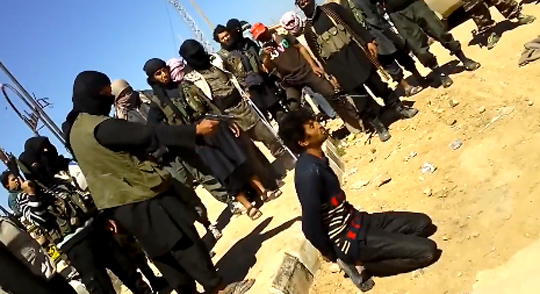
Today another American reporter, Steven Sotloff, was beheaded by the ISIS/ISIL Islamic Caliphate, and as it does so often it released the video of the execution. The Caliphate, which developed out of Al Qaeda fighting the United States in Iraq has become a formidable fighting organization, with deep financial resource is gaining radicalized adherents around the world, and its brutality toward all enemies, even other Moslems is unmatched. The propaganda of the Caliphate against its enemies is similar to what was used by both sides in the Second World War and with each massacre of civilians, each execution of innocent reporters, humanitarian workers and others they ensure that they will reap the whirlwind.

What ISIS forgets is that beneath the civilized veneer of the West, that part of us that likes to abide by treaties and focus on human rights, is that when enraged Americans, Britons, Australians, Germans, Russians and even the French can be just as brutal and also fight wars without mercy. Our histories are full of such examples. The problem is that since we haven’t had to fight such a total war since the Second World War, the leaders of groups such as ISIS assume we are weak and decadent, easy targets. They forget the manner in which all sides, even the Allies waged the Second World War, especially in the Pacific, where the war was fought without mercy. 

isis-terrorists

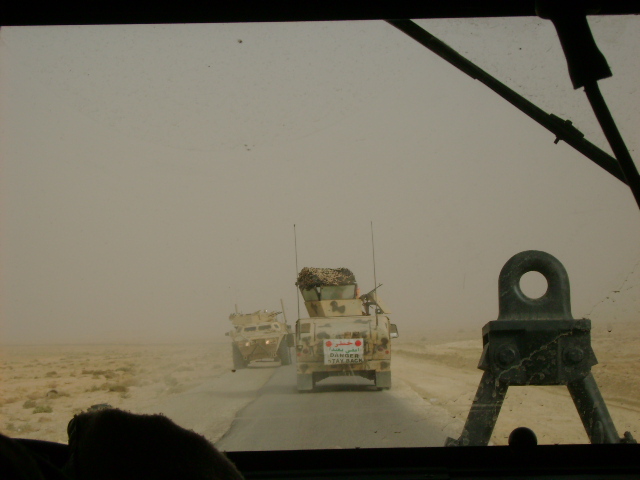
By waging war in the manner it is doing, ISIS will ensure that its leaders and members will receive no mercy. The post 9-11 response of the United States to Al Qaeda will look like a game compared to what is coming. And unfortunately, we will all lose a bit of our humanity, maybe even a lot of it the longer this war goes on. As far as propaganda, many U.S. politicians , corporate interests and our corporate media are great at promoting war and demonizing opponents. This will be brutal my friends and I for one wish it had never come about. I want peace, I went to Iraq believing that the Iraqis I served alongside and those who had me in their homes would eventually know peace. I grieve for them, as I grieve for all that will suffer in this new war without mercy. 

61VVOf2iniL

I have reposted a book review of John Dower’s book “War without Mercy: Race and Power in the Pacific War.” Pantheon Books, a Division of Random House, New York, NY 1986. I highly recommend the book to anyone who thinks that the conflict with ISIS will be anything but uncivilized and barbarous. It has all the elements to make it so: race, religion, ideology and power, it will mark a return to barbarism that many of us thought would never happen again. 

Here is that review.

The study of war cannot simply be confined to the study of battles, weapons and leaders. While all of these are important one must as Clausewitz understood examine the human element of policy, ideology and the motivations of nations as they wage war. Clausewitz understood that war could not be reduced to formulas and templates but involved what he called the “remarkable trinity” which he described in on war as (1) primordial violence, hatred, and enmity; (2) the play of chance and probability; and (3) war’s element of subordination to rational policy. Clausewitz connects this with the people being connected to the primordial forces of war, the military with the non-rational elements of friction, chance and probability and the government.

The Clausewitzian understanding of war is rooted in the Enlightenment and classic German Liberalism, born out of his experience in the Napoleonic Wars, which forever changed the face of warfare. From the defeat of Prussia and its liberation from Napoleonic rule under Scharnhorst and Gneisenau Clausewitz developed the understanding that war was more than simply tactics and weapons. Thus when we examine war today we deprive ourselves of properly understanding the dynamic of war if we fail to appreciate the human factor which is frequently not rational. Such is especially the case when one fights an enemy who wages war on religious, racial or ideological grounds as is the case in the current war against Al Qaida and other extremist Moslem groups. Such groups would like to turn this war into such a conflict as do certain figures in the American political milieu who repeatedly label all of Islam as the enemy. In such a climate it is imperative to look at history to show us the results of such primal passions.

It is in such conflict as we are engaged in today it is good to look at previous wars from the human experiential component and not simply military operations. If one wants to look at how inflamed passion driven by racial prejudice and hatred took war to a level of barbarity and totality that defy our comprehension we only need to look back to the Pacific war between Japan and the United States. In another post I dealt with the how racial ideology influenced Nazi Germany’s conduct of the war against Poland and the Soviet Union. https://padresteve.wordpress.com/2009/09/14/the-ideological-war-how-hitlers-racial-theories-influenced-german-operations-in-poland-and-russia/

To do this I will look at John Dower’s “War Without Mercy.” In this book Dower examines World War Two in the Pacific from the cultural and ideological viewpoints of the opposing sides. He looks at the war as a race war, which he says “remains one of the great neglected subjects of World War Two.”[i] Dower examines race hated and its influence on both the Japanese and the Allies, particularly in the way that each side viewed one another and conducted the war. He examines the nature of racial prejudice and hate in each society, including its religious, psychological, ideological, scientific and mythological components. He also examines the use of media and propaganda, and how racial attitudes not only influenced national and individual attitudes, but also the military and intelligence operations of both sides. This book is not about military campaigns, thus it is much more like “In the Name of War” by Jill Lepore[ii] than any history of the Pacific war.

Dower uses sources such as songs, movies, cartoons and various writings of the times to demonstrate the totality of the war. Dower admits many of these are difficult to handle and “not respectable sources in some academic sources.”[iii] Despite this he puts together a work that is sometimes chilling, especially when one looks at the current war that our country is engaged in. He also endeavors to explain how after a war where “extraordinarily fierce and Manichean”[iv] race hate predominated, it could “have dissipated so easily”[v] after the war was over.

Dower divides his work into three major sections. The first which examines how the aspect of race effected the fighting of the war, the second, the war through Western eyes and the third the war through Japanese eyes. The first section begins with how racial attitudes in Western and Japanese societies helped fuel the war and compares similar attitudes and concepts in Western and Japanese thought, including how “prejudice and racial stereotypes frequently distorted both Japanese and Allied evaluations of the enemy’s intentions and capabilities.”[vi] He looks at the language of the conflict; at how war words and race words came together “in a manner which did not reflect the savagery of the war, but truly contributed to it….”[vii] the result being “an obsession with extermination on both sides.”[viii] He comes back to this theme throughout the book comparing the two sides and occasionally contrasting these attitudes with corresponding attitudes of the Allies to their German and Italian foes in Europe.[ix]

In the first chapter Dower examines the role played by the propaganda used by both sides. In particular he expalins how the “Know Your Enemy: Japan” movies commissioned by the War Department and directed by Frank Capra, and the Japanese works “Read this and the War is Won” and “The Way of the Subject” helped shape the view of each side. Propaganda developed the idea of the war in terms of good versus evil and the mortal threat posed to their respective cultures by the enemy.

From this he looks at the visceral emotions that the war engendered and how those emotions spilled over into the conduct of the war especially in regard to its ferocity and the war crimes that were spawned by the unbridled hatred of both sides. He notes the targeted terror bombings of civilians by both sides and how those actions were portrayed as “barbaric” by the other side when they were the victim.[x] He notes the viciousness of the war and how for the Americans the war brought forth “emotions forgotten since our most savage Indian wars.”[xi] He contrasts this with European war in particular how the Japanese and their actions were portrayed in Western media, and how similar actions by the Germans, such as the Holocaust, were ignored by Western media until the war was over.[xii] He traces some of this to the understanding of the psychological effects of the defeats and humiliations of the Allies at the hands of the Japanese, and the corresponding brutality toward Allied prisoners by the Japanese as compared to that of the Germans.[xiii] He uses this section to also examine the prevailing attitudes of the Japanese toward the Allies as being weak and “psychologically incapable of recovery” from blows such as the Pearl Harbor attack, and the Allied view of the Japanese as “treacherous.”[xiv]

Dower’s second major section describes the attitudes and actions of the Americans and British toward their Japanese enemy. He looks at the view that the Japanese were less than human and often portrayed as apes or other primates such as monkeys. To do this he examines cartoons and illustrations in popular magazines and military publications, and includes those cartoons in the book. The sheer vulgarity of these cartoons is easily contrasted with those promoted and published by Nazis such as Julius Streicher in Der Stürmer, something often overlooked or ignored in other histories.[xv] The early Western views of Japan as sub-human continued throughout the war, while at the same time, especially after the rapid series of Allied defeats and Japanese victories they were viewed as almost “super-human.” Paradoxically some allied leaders turned the Japanese from “the one time “little man” into a Goliath.”[xvi] They were now “tough, disciplined and well equipped.”[xvii] Ambassador Joseph Grew, reported on his return from Japan, that the Japanese were; “”sturdy,” “Spartan,” “clever and dangerous,” and that “his will to conquer was “utterly ruthless, utterly cruel and utterly blind to the values that make up our civilization….””[xviii] The juxtaposition of such conflicting attitudes is curious, although understandable, especially in light of other Western wars against Asians or Arabs.[xix]

Dower then examines how some Americans and British explained the Japanese “National Character,” their approach to war, and actions during the war from Freudian psychiatry as well as Anthropology and other social and behavioral sciences. Beginning with the widespread Allied understanding that the Japanese were “dressed-up primitives-or “savages” in modern garb…”[xx] he notes that these interpretations of the Japanese national character stemmed from “child-rearing practices and early childhood experiences,”[xxi] including toilet training and Freudian interpretations that saw an arrested psychic development at the “infantile (anal or genital) stage of development.”[xxii] Dower deduces that it was not hard to see how “Japanese overseas aggression became explicable in terms of penis envy or a castration complex….”[xxiii] The views were widespread and emphasized that the “Japanese were collectively unstable.”[xxiv] Dower notes that the “very notion of “national character”-was the application to whole nations and cultures of an analytical language that had been developed through personal case studies…”[xxv] which he is rightly critical in suggesting that this premise “was itself questionable.”[xxvi] In addition to this was the understanding of Margaret Mead and others of the Japanese as “adolescents” and “bullies,”[xxvii] and notes that from “the diagnosis of the Japanese as problem children and juvenile delinquents, it was but a small step to see them as emotionally maladjusted adolescents and, finally as a deranged race in general.”[xxviii] Dower cites numerous other “experts” of the time and their interpretations of the Japanese national character, but the overwhelming message is that the application of these theories, regardless of their validity had a major impact on the Allied war against Japan.

He follows this chapter with one with much importance in explaining the similarities in how Americans and Westerners in general viewed the Japanese in relationship to other races that they had dealt with including Blacks, Chinese, Filipinos, and American Indians. Common themes include the views of each as primitives, children and madmen and the view of the Japanese as part of the “Yellow Peril.” Of particular note is his analysis of the work of Homer Lea’s 1909 book The Valor of Ignorance and the vision of Japanese supermen which enjoyed a revival after Pearl Harbor.[xxix] Dower examines depictions of Asians in general in the Fu Manchu and Charlie Chan series of films and other racial aspects hearkening back to the “specter of Genghis Khan and the prospect that the white races “may be liquidated.”[xxx] He notes how Japanese propagandists attempted to use Allied prejudice to influence the Chinese and other Asians against the Allies[xxxi] and American blacks against whites,[xxxii] while attempting to maintain their own racial superiority which is the subject of the next section.

The chapters dealing with the Japanese view of themselves and their opponents tie together neatly. These deal with the Japanese view of themselves as the leading race in Asia and the world. Dower talks about symbols and the understanding of racial purity that motivated the Japanese from the 1800s to the rejection of Japan’s request for a declaration of “racial equity” at the League of Nations.[xxxiii] He notes the “propagation of an elaborate mythohistory in Japan and the time spent “wrestling with the question of what it really meant to be “Japanese” and how the “Yamato race” was unique among races….”[xxxiv] He notes the relationship of Shinto with whiteness and purity and connotations of how the Japanese indulged in “Caucasianization” of themselves vis-à-vis other Asians during World War Two,”[xxxv] and their emphasis on a Japanese racial worldview.[xxxvi] He also tackles the way in which the Japanese wrestled with evolution and its relationship to other racial theories contrasting books such as A History of Changing Theories about the Japanese Race and Evolution of Life with Cardinal Principles of the National Polity published by the Thought Bureau of the Ministry of Education in1937. These declared that the Japanese were “intrinsically different from the so-called citizens of Occidental countries.”[xxxvii] He also deals with the Kyoto school and the Taiwa concept.[xxxviii] In Chapter Nine Dower looks at how the Japanese viewed themselves and outsiders, in particular the characterization of Westerners as nanbanjin or barbarians and how this eventually train of thought carried through the war led to the “Anglo-American foe emerged full blown as the demonic other.”[xxxix] Dowers final chapter deals with how quickly the race hatred dissipated and genuine goodwill that developed between the Japanese and Americans after the war.[xl]

This book holds a unique place in the literature of the Pacific war. It is not a comfortable book, it is challenging. No other deals with these matters in any systemic way. If there is a weakness in Dower is that he does not, like Lepore in “In the Name of War” deal with the attitudes of soldiers and those who actually fought the war. His examples are good and go a long way in explaining the savagery with which the war was conducted, but could have been enhanced with reflections and accounts of those who fought the war and survived as well as the writings of those who did not, and the way those attitudes were reflected in different services, times and theaters during the war, including adjustments that commanders made during the war.[xli] His description of how Japanese “reluctance to surrender had meshed horrifically with Allied disinterest …in contemplating anything short of Japan’s “thoroughgoing defeat.”[xlii]

The lessons of the book are also contemporary in light of the cultural and religious differences between the West and its Moslem opponents in the current war. Possibly even more so than the war between the United States and Japan which was fought by nation states that still were signatories to international conventions, not nation states against terrorists unbound by any Western code or law or indigenous forces engaged in revolutionary war against the west such as the Taliban.[xliii] The temptation is for both sides to demonize one’s opponent while exalting one’s own way of life through official propaganda and popular media, with a result of increased viciousness and inhumanity in pursuit of ultimate victory. In today’s world with the exponential rise in the radicalization of whole people groups and the availability of weapons of mass destruction, it is possibility that the war could develop into one that is a racial as well as religious and ideological war that would make the War in the Pacific look like a schoolyard brawl.

As William Tecumseh Sherman said: “You cannot qualify war in harsher terms than I will. War is cruelty, and you cannot refine it…”

Bibliography

Alexander, Joseph H. Utmost Savagery: The Three Days of Tarawa. Ivy Books, Published by Ballantine Books, New York, NY 1995

Dower, John W. War without Mercy: Race and Power in the Pacific War.” Pantheon Books, A Division of Random House, New York, NY 1986.

Leckie, Robert. Okinawa. Penguin Books USA, New York NY, 1996

Lepore, Jill The Name of War Vintage Books a Division of Random House, New York, NY 1998

Tregaskis, Richard Guadalcanal Diary Random House, New York NY 1943, Modern Library Edition, 2000.

[i] Dower, John W. War without Mercy: Race and Power in the Pacific War.” Pantheon Books, A Division of Random House, New York, NY 1986. p.4
[ii] Lepore, Jill The Name of War Vintage Books a Division of Random House, New York, NY 1998. Lepore’s book deals with King Phillip’s War and how that war shaped the future of American war and how it shaped the views of Indians and the English Colonists and their later American descendants both in the language used to describe it, the histories written of it and the viciousness of the war.

[iii] Ibid. p.x

[iv] Ibid. p.ix

[v] Ibid. p.x

[vi] Ibid. p.11

[vii] Ibid.

[viii] Ibid. Also see Alexander, Joseph H. Utmost Savagery: The Three Days of Tarawa. Ivy Books, Published by Ballantine Books, New York, NY 1995 Alexander notes an incident that shows a practical application of the Japanese views and the ruthlessness inflicted on their enemies, in this case prisoners in response to an American bombing raid. In 1942 the commander of the Japanese Garrison of Makin Island ordered 22 prisoners beheaded after one cheered following a bombing raid. (p.32)

[ix] An interesting point which Dower does not mention but is interesting for this study is how the Germans referred to the British and Americans as “Die gegener” (opponents) and the Soviets as “Die Feinde” (the enemy), the implication being that one die gegener was a common foe, much like an opposing team in a sport, and the other a mortal enemy, the implication of Feinde being evil, or demonic.

[x] In particular he makes note of the Japanese actions during the “Rape of Nanking,” and the 1945 sack of Manila, as well as the fire bombing of Japanese cities by the US Army Air Corps in 1945.

[xi] Ibid. Dower. p.33

[xii] Ibid. p.35

[xiii] Ibid. This is important in the fact that the Allies tended not to make much of German brutality to the Jews, Russians and other Eastern Europeans.

[xiv] Ibid. p.36.

[xv] Dower does not make this implicit comparison, but having seen both and studied the Nazi propaganda directed toward the Jews, Russians and other Slavic peoples considered to be Untermenschen (sub-humans) by the Nazis the similarities are striking.

[xvi] Ibid. pp.112-113.

[xvii] Ibid. p.113

[xviii] Ibid.

[xix] In the 2006 Israeli invasion of Lebanon, Israeli soldiers who previously showed no respect to any Arab fighter described their Hezbollah opponents as “soldiers and warriors.” Similar attitudes were voiced by American soldiers in Vietnam when they fought NVA regulars.

[xx] Ibid. p.123

[xxi] Ibid.

[xxii] Ibid.

[xxiii] Ibid.

[xxiv] Ibid. p.124

[xxv] Ibid.

[xxvi] Ibid.

[xxvii] Ibid. p.129

[xxviii] Ibid. p.143

[xxix] Ibid. P.157. Lea is interesting because he predicts a decline in the stature of the British Empire and softness of both the Americans and British as peoples. Also see John Costello in The Pacific War 1941-1945 Quill Books, New York, NY 1982 pp.31-32 notes Lea’s concerns and how they drove the American Pacific strategy until the outbreak of World War Two.

[xxx] Ibid. p.161

[xxxi] Ibid. p.169

[xxxii] Ibid. pp.174-180. This is an interesting section. One of the most interesting topics being the reaction of the NAACP’s Walter White’s book A Rising Wind published which “suggested a sense of kinship with other colored-and also oppressed-peoples of the world….he senses that the struggle of the Negro in the United States is part and parcel of the struggle against imperialism and exploitation in India, China, Burma….” (p.177-178)

[xxxiii] Ibid. p.204

[xxxiv] Ibid. p.205

[xxxv] Ibid. p.209 This is interesting when one compares the Japanese emphasis on “Pan-Asianism” and the inherent contradiction between the two.

[xxxvi] Ibid. p.211 Dower notes that the article Establishing a Japanese Racial Worldview in the monthly Bungei Shunju “clarified the Japanese character, whose basic traits were brightness, strength and uprightness. These qualities made the Japanese “the most superior race in the world.”

[xxxvii] Ibid. p.221

[xxxviii] Ibid. p.227 This was the theory of Zen Buddhism’s Suzuki Daisetsu (D.T. Suzuki) in his teaching of the struggle for the Great Harmony “Taiwa” which attempted to identify “an intuitive sense of harmony and oneness that he declared to be characteristic of Oriental thought.”

[xxxix] Ibid. p.247. Descriptions of the Allies as Barbarians, Gangsters and Demons permeated Japanese propaganda.

[xl] Ibid. Dower makes a number of observations relating to how the Japanese were able to use their own self concept to adapt to their defeat. He also notes that the Japanese were able to transfer their self concept to a peaceful orientation.

[xli] See Leckie, Robert. Okinawa. Penguin Books USA, New York NY, 1996 p.35. Leckie quotes General Ushijima “You cannot regard the enemy as on par with you,” he told his men. “You must realize that material power usually overcomes spiritual power in the present war. The enemy is clearly our superior in machines. Do not depend on your spirits overcoming this enemy. Devise combat method [sic] based on mathematical precision-then think about displaying your spiritual power.” Leckie comments: “Ushijima’s order was perhaps the most honest issued by a Japanese commander during the war. It was Bushido revised, turned upside down and inside out-but the revision had been made too late.”

[xlii] Ibid. Dower. p.37

[xliii] See Tregaskis, Richard Guadalcanal Diary Random House, New York NY 1943, Modern Library Edition, 2000. p.95. Tregaskis notes when commenting on Japanese POWs on Guadalcanal “We stared at them and they stared back at us. There was no doubt what we or they would have liked to do at that moment-if we had not remembered our code of civilization or if they had not been unarmed.”


1 Comment

Filed under Foreign Policy, History, history, iraq,afghanistan, middle east, Military, Religion, world war two in the pacific

The Only Church that Truly Feeds the Soul

163017_10150113444907059_3944470_n

“The Only church that truly feeds the soul, day-in day-out, is the Church of Baseball” Annie Savoy (Susan Sarandon) in Bull Durham (MGM 1989)

Tonight I am going to the last home game of the Norfolk Tides. The Tides are our local Triple-A Minor League farm team of the Baltimore Orioles who are now 7 games up on the Yankees in the American League East. I love baseball. For me it is a source of peace, comfort and meaning in the sea of so much hatred, violence, inequity and injustice, angst and despair that fills our world.

Now honestly, while things seem are not good we tend to see life at any given time through they could be worse and certainly could be better they are not nearly as apocalyptic as the bearers of bad news make them out to be. Barbara Tuchman wrote “Disaster is rarely as pervasive as it seems from recorded accounts….The fact of being reported multiplies the apparent extent of any deplorable development by five-to tenfold.”

This is especially true for those who follow that loathsome Trinity of Evil, the Politicians, Pundits and Preachers who make their living causing people to be angry, covetous, anxious and on edge.

When I read or hear some of the vile things being said by allegedly conservative Bible believing Christian leaders be they politicians, pundits or preachers, or in the case of Mike Huckabee a despicable combination of all three, I become more convinced that Annie Savoy was right… the only church that truly feeds the soul is baseball.

In fact when I hear the likes of the Partisan Political Parsons, any of the big Mega-Church Pastors or television ministry hosts, or even some Catholic bishops start spouting off I feel like I have left this country and ended up in Medieval Europe or maybe Saudi Arabia. I wonder where the love has gone. When I read the words of men like Pat Robertson, James Robison, James Dobson, Bryan Fischer, Scott Lively, Franklin Graham, Tony Perkins, Gary Bauer and so many others I understand why people are fleeing the church in droves and so many hold the Christian faith, as well as other religions in such disdain.

Jonathan Swift once mused about the religion of his time, “We have just enough religion to make us hate, but not enough for us to love one another.”   Swift’s words are a perfect description of the American Religious Right as much as they are of non-Christian groups who hate, the Moslem extremists of ISIS, Al Qaeda, Hamas, Boko Haram and the Taliban; the Ultra-Orthodox Jews who think that they are the only acceptable form of Judaism and physically attack other Jews for not being Jewish enough even while persecuting Israeli citizens who are Christian or Moslem; and the Hindu fundamentalists that burn down Christian and Moslem villages in India.

Thankfully, though I am still a Christian and at that a rather miscreant Priest and Chaplain that struggles with faith and belief, I also belong to the Church of Baseball. I am so because I agree with the late Commissioner of Baseball A. Bartlett Giamatti, who said, “there is nothing bad that accrues from baseball.” 

While I am very frustrated at what I see going on in the Christian church as well as in other religions that dominate other countries or cultures, when I think about baseball I know that God still cares. Every time that I look at that beautiful green diamond that sits in the middle of the great cathedrals and parish churches of the Church of Baseball, my sense of hope and faith is renewed.

To true believers, that may seem like heresy. But God even loves heretics and unbelievers. For me baseball speaks to the soul, maybe it is because baseball is more than a game.  Conservative political commentator and long suffering Chicago Cubs fan George Will said “Baseball is only a game. True. And the Grand Canyon is only a hole in Arizona. Not all holes or games are created equal.” 

If that is heresy I don’t care. But then what is heresy? I don’t actually think that Jesus would recognize a lot of what we Christians do today as even being Christian.  I could be wrong but I recall Jesus was really big into the whole “two commandment” “love God with your whole heart and love your neighbor as yourself” way of life; and he wasn’t really cool with pompous religious leaders that give preference to the rich and powerful, and seek their own political power so they can use the state to enforce their religious views on non-believers like we do.

That is why I find something so right about baseball. Unlike the message of the political preachers that specialize in making themselves rich by keeping their followers anxious and angry while preaching the message that “God loved the world so much that he can’t wait to come back, judge and destroy it because of fouled up humanity” especially women and homosexuals; baseball caters to our hopes and dreams while recognizing that none of us, even those who play at the Hall of Fame level are perfect.

Unlike the false religious message preached by so many members of the Trinity of Evil, baseball deals with reality and life so well because of its ebb and flow. It deals with the grind of the long season, the constant demand for excellence and quest for perfection; but there is a realization that most of the time you won’t get there, and if you do, tomorrow you won’t and that is part of life.

Personally I don’t understand why if the Gospel of Jesus and God’s grace and love is actually true that we can’t apply this to our faith. Jesus, at least in the Gospel accounts seemed to accept the imperfections and foul ups of his followers, and not only that seemed to accept the people who the really righteous, religious leaders rejected and treated as less than human.

In fact, my paradigm of understanding the Christian faith comes from baseball. In baseball perfection is illusory and that life is full of times when things don’t go our way. It is much like real life and what is presented in Scripture. Ted Williams, the last player to hit for .400 said “Baseball is the only field of endeavor where a man can succeed three times out of ten and be considered a good performer.”

For some of us it seems like reaching the Mendoza Line* is the best we will ever do, and if we believe in God’s grace, that is probably okay.

Tommy Lasorda the Hall of Fame Los Angeles Dodgers’ manager put things in excellent perspective “No matter how good you are, you’re going to lose one-third of your games.  No matter how bad you are you’re going to win one-third of your games.  It’s the other third that makes the difference.”  That is true in life and faith.

While I am definitely a Christian I struggle and I admit it. I have enough of my own problems to empathize with others that struggle, but who in embracing the wacky formulas offered by greedy self-serving preachers treat Jesus and his message like some sort of magical talisman or good luck charm. But sorry, I agree with what Pedro Cerrano (Dennis Haysbert) said in the movie Major League: “Jesus, I like him very much, but he no help with curveball.”

Thus I have many problems with the perfidious political and prosperity preachers that seem to have forgotten the Gospel, who are basically Elmer Gantry like snake-oil salesmen more attuned to keeping their market share than tending their flock. In fact, I think are actually driving people away from Jesus, and the polls of Barna, the Pew Religious survey, Gallup and others as well as the statistics kept by various denominations say that I am right.

When I watch baseball I feel renewed. As Sharon Olds wrote back in the early 1970s “Baseball is reassuring.  It makes me feel as if the world is not going to blow up.” That my friends is why I agree with Annie Savoy that the only church that truly feeds the soul day in and day out is baseball.

Churchofbaseball


The late great and legendary Detroit Tigers announcer Ernie Harwell said: “Baseball?  It’s just a game – as simple as a ball and a bat.  Yet, as complex as the American spirit it symbolizes.  It’s a sport, business – and sometimes even religion.”   Yes, for me, the heretic that I am it is the latter, and tonight I am happy to be going to the Church of Baseball, Harbor Park Parish.

Peace,

Padre Steve+

*Mario Mendoza was a Major League Shortstop who played for the Pittsburgh Pirates and other organizations. He was an outstanding defensive player but was not much of a hitter. His career batting average was only .215 but a batting average of .200 is considered the minimum that a player can have to remain at the level that he plays.  I think that my career batting average in both baseball and softball barely clears the Mendoza Line. 

Leave a comment

Filed under Baseball, Batlimore Orioles, faith, movies, Political Commentary, Religion

Church, Faith, Tolerance and Reconcilliation

1622612_10152232336042059_727365308_n

“Sometimes I think it is my mission to bring faith to the faithless, and doubt to the faithful.” Paul Tillich

My friends, I write this because of something that happened to me a couple of days ago. It was an incident that upset me greatly because it ended up in the fracturing of a relationship by a friend who evidently could not tolerate where I was in my life as a priest and Christian. I discovered again the reality of what Dietrich Bonhoeffer wrote:

“Many people are looking for an ear that will listen. They do not find it among Christians, because these Christians are talking where they should be listening. But he who can no longer listen to his brother will soon be no longer listening to God, either; he will be doing nothing but prattle in the presence of God, too. This is the beginning of the death of the spiritual life, and in the end there will be nothing left but spiritual chatter and clerical condescension arrayed in pious words… never really speaking to others.”

My experience of the Church is profoundly influenced by my life in the nether world of the military culture. My world view is shaped by a blending of various Christian traditions, mutual support and collaboration among believers of often radically different points of view. Because of the love, care and mentoring of people from a blend of different traditions I came to know God and survived a tumultuous childhood with many moves.

As a historian I have been blessed to study church history from the early Church Fathers to the present. As I look to church history I find inspiration in many parts of the Christian tradition. In fact rather being threatened by them I have become appreciative of their distinctiveness. I think that there is a beauty in liturgy and stability in the councils and creeds of the Church. At the same time the prophetic voice of evangelical preaching shapes me, especially the message of freedom and tolerance embodied in the lives and sacrifice of men like John Leland, the American Baptist who helped pioneer the concept of Freedom of Religion established in the Constitution of the United States, of William Wilberforce who labored to end slavery in England and, Martin Luther King Jr. who led the Civil Rights movement.

Likewise that prophetic message of the faith is demonstrated in the ministry, writing and martyrdom of Dietrich Bonhoeffer and his contemporaries Martin Niemoller and Jesuit priest Father Rupert Meyer. All three resisted and preached against the evils of Nazism. In a more contemporary setting I am inspired by Bishop Desmond Tutu who helped topple apartheid in South Africa.

Women like Teresa of Avila and St Catherine show me that women have a legitimate place of ministry and leadership in the Church. I am convinced through my study of Church history, theology and a deep belief in the power of the Holy Spirit that women can and should serve as Priests and Bishops in the church.

My theology has shaped by the writings of Hans Kung, Yves Congar, Jurgen Moltmann, Andrew Greeley, and Henry Nouwen. I’ve been challenged by St Francis of Assissi, John Wesley and Martin Luther. I am especially inspired by Pope John XXIII whose vision brought about the Second Vatican Council and I am inspired by Pope Francis.

I pray that Christians can live in peace with one another and those who do not share our faith. I pray that we can find ways to overcome the often very legitimate hurts, grievances and divisions of our 2000 year history. At the same time I pray that we can repent from our own wrongs and work to heal the many wounds created by Christians who abused power, privilege and even those who oppressed others, waged war and killed in the name of Jesus.

I do not believe that neither triumphalism nor authoritarianism has a place in in a healthy understanding of the church and how we live. I am suspicious of any clergy who seek power in a church or political setting. I profoundly reject any argument that requires the subjection of one Church with its tradition to any other Church. In fact I think that the arrogance and intolerance of Christians to others is a large part of why people are leaving the church in droves and that the fastest growing “religious group” is the “nones” or those with no religious preference. Andrew Greeley said something that we should take to heart:

“People came into the Church in the Roman Empire because the Church was so good — Catholics were so good to one another, and they were so good to pagans, too. High-pressure evangelization strikes me as an attempt to deprive people of their freedom of choice.”

I grew up in and have lived my life in a very open and ecumenical environment. I have lost any trace denominational parochialism and competition that I might have had if I had become a pastor of a civilian parish instead of a chaplain. It is interesting that the pastor that first ordained me in the evangelical tradition and the bishop that ordained me as a priest both did so with the intent that I serve as a chaplain. Whether it was the recognition of a gifting for the work or the fact that they didn’t want me messing up their civilian operations by asking hard questions I will never know.

I believe that my environment and the men and women who have helped shape my life have been a stronger influence in the way I think about ecumenical relations and ministry than my actual theology or ecclesiology. Whether they were Catholics, Anglicans, Lutherans, Methodists, Presbyterians, Evangelicals or even those considered by many to be outside the faith including Jews, Moslems, Buddhists, Mormons and even complete non-believers all have contributed to my life and faith.

I have grown weary of refighting theological debates that have divided the church for a thousand years. Since what we know of theology including our Scriptures and Creeds are based on faith and not science I see no reason to continue to battle.

That doesn’t mean that I think we should put our brains in neutral but rather we must wrestle with how to integrate our faith with science, philosophy and reason, otherwise we will become irrelevant. In that sense I identify with Saint Anslem of Canterbury who wrote about a faith seeking understanding and Erasmus of Rotterdam who very well understood the importance of both faith and reason. In that sense I am very much at home with the Anglian triad of Scripture, Reason and Tradition when it comes to approaching faith.

I struggle with faith and belief. After Iraq I spent two years as a practical agnostic. As Andrew Greeley wrote: “Most priests, if they have any sense or any imagination, wonder if they truly believe all the things they preach. Like Jean-Claude they both believe and not believe at the same time.” Andrew Greeley “The Bishop and the Beggar Girl of St Germain”

I am an Old Catholic and believe that inter-communion does not require from either communion the acceptance of all doctrinal opinion, sacramental devotion, or liturgical practice characteristic of the other, but implies that each believes the other to hold all the essentials of the Christian faith. I like to think that I embody what the early Anglicans referred to as the via media and that somehow my life and ministry has been about building bridges at the intersections of faith with a wide diversity of people.

When I have tried to embrace traditionalism or choose to fight theological battles I have ended up tired, bitter and at enmity with other Christians. In a sense when I tried those paths I found that they didn’t work for me. I discovered that I was not being true to who God had created and guided my life, education and experience. I feel like T. E. Lawrence who wrote:

“The rare man who attains wisdom is, by the very clearness of his sight, a better guide in solving practical problems than those, more commonly the leaders of men, whose eyes are misted and minds warped by ambition for success….”

My favorite theological debates have been with other chaplains over pints of good beer in German Gasthausen or Irish pubs. Those were good times, we argued but we also laughed and always left as friends and brothers. I believe since we are human that none of us will ever fully comprehend all of God or his or her truth. I believe that the Holy Spirit, God’s gracious gift to her people will guide us into all Truth. For me my faith has become more about relationships and reconciliation than in being right.

As far as those who disagree with me that is their right, or your right if you disagree. I don’t expect agreement and I am okay with differences and even if I disagree with an individual or how another religious denominations polity, theology, beliefs or practices those are their rights. In fact I am sure that those that believe things that I don’t are at least as sincere as me and that those beliefs are important to them. I just ask that people don’t try to use them to force their faith or belief on others, be it in churches or by attempting to use the power of government to coerce others into their belief systems.

To my friend who broke contact with me when I refused to debate his argument that I should submit myself to his Church and tradition, the door is open for reconciliation.

Peace

Padre Steve+

2 Comments

Filed under christian life, faith, Religion