Category Archives: Religion

Letter to a New Military Chaplain Part Three: The Minefields of the Soul: Power and Arrogance

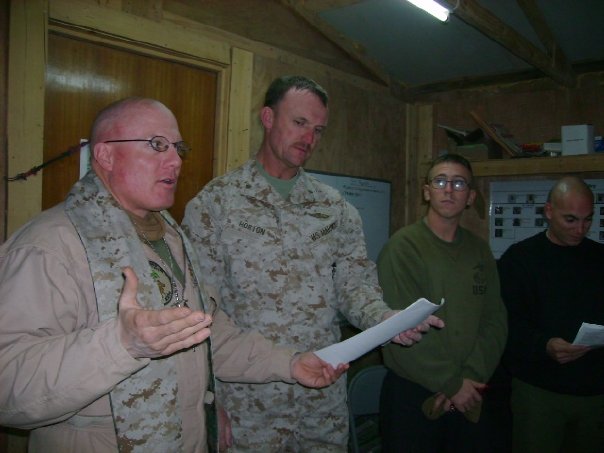
295_27076762058_7573_n-1

This is third part of a response to a question I had from a new Navy Chaplain. I have decided to post it here without any identification of the chaplain because I know that many men and women who are new to the military chaplaincy or who are exploring the possibilities of becoming a chaplain have the same questions. I was fortunate to have had a number of chaplains who at various points in my decision process and formation as a minister, Priest and Chaplain in both the Army and the Navy help me with many of these questions. Likewise I learned far too much the hard way and blew myself up on some of the “land mines” that almost all who serve as chaplains experience in their careers. This is the third of several parts to the letter and is my attempt to systematically explain my understanding of what it is to be a Chaplain serving in the military and in particularly the Navy. The first two parts are linked here:

Letter to a New Military Chaplain: Part One

Letter to a New Military Chaplain: Part Two The Minefields of the Heart 

Dear Chaplain

The late great Hall of Fame Manager of the Baltimore Orioles Earl Weaver said “It’s what you learn after you know it all that counts.”

The first two parts of this letter dealt with aspects of the chaplain ministry that were very much philosophical and theological in their emphasis. This part is more direct and will deal with things that are more associated with behaviors, mostly bad behaviors. I call them minefields of the soul because they are common to all human beings. They are dark parts of the soul that lurk within us that none of us like to admit exist.
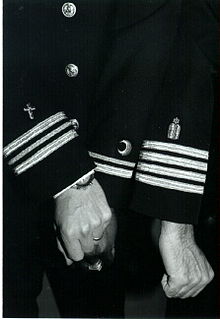
220px-3ChaplainSymbols

Sometimes they are merely weaknesses, but sometimes they are pathological or in some cases sociopathic. There is no restriction on such maladies of the soul, ministers are just as prone, if not more prone to them than others. It goes with the territory. One only has to look at the Christian and Jewish scriptures as well as the history of religious leaders of all religions throughout history to see this fact. Religious leaders, especially ones whose ministry involves some form of temporal power, be it in the religious structures of their religion, behinds the scenes in secular government and the political process or those whose ministries are in the secular arena of the chaplaincy often find themselves compromised by behaviors that others might not even consider that loathsome.

As I talked about in the first two parts of this letter, all of these behaviors are linked to who we are as human beings, as ministers and have a lot to do with our theological, ministerial and pastoral formation. They also have a lot to do with our upbringing, our cultures, family backgrounds and the family systems that were formative in our upbringing as well as the prejudices that we hold deep in our hearts.
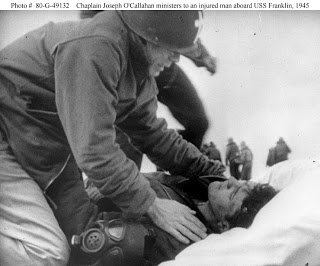
CMH Chaplain O'Callahan

This part of the letter focuses on things that are more observable to most people, especially those who see us in action. When I was leaving active duty as an Army Captain back in 1988 to attend seminary, an Army Chaplain Major Wayne Lura took the time to pull me aside and preach to me a warning sermon about the minefields that existed in the chaplain ministry. It was a warning that I took to heart.

Likewise my Executive Officer at the Academy Brigade of the Academy of Health Sciences Colonel James Wigger gave me this warning: “Steve, you think that the Army Medical Department is political and backstabbing. Let me tell you, we can’t hold a candle to the brutality of Chaplain Corps.” Unfortunately he was right. In my 21 years as an Army and Navy Chaplain I have seen this often up close and personal. I have had senior Line Officers and officers from other Staff Corps of the Navy talk about how bad of reputation many senior Chaplains have, especially in promotion boards.

The warnings of Chaplain Lura and Colonel Wigger hit me hard as a young officer, especially in the ideals that I held out about the Chaplain Corps. I took their warnings to heart but did not want to believe that they could be true. The sad fact was that they were all too true, Chaplains like all ministers and people often have feet of clay and at times hearts of stone.

Even so I had to find out the hard way about how destructive the “minefields of the soul” were in the lives of my fellow chaplains and and the Chaplain Corps of the Army and Navy.

I will first address the issues of power and arrogance. These issues plague institutional ministry and those minister within institutions. I think a part of this is that many who wind up in Chaplain ministry because of their lack of pastoral formation readily grasp at the apple of power, like the fruit of the tree of the knowledge of good and evil, that fruit is a powerful elixir. Yet even those that have a more thorough formal pastoral formation can fall prey to the lust of power.

Power is a great temptation and a minefield. The military chaplaincy is unique in ministry in that chaplains also hold commissions as officers in whatever military branch we serve. As I mentioned in my first article we have to be fully clergy of our own faith tradition and at the same time fully a commissioned officer if we are to succeed in the military chaplain ministry.

gettysburg-blog-photo-1

Unfortunately there are some that embrace the fullness of the commission and leave behind their ministerial identity, and even more unfortunately when they do they do this they are neither aware of it, nor very good at it. They forget with the exception of a couple of billets or positions, one being the Commanding Officer of the Navy Chaplain School that all the rest of us are staff officers. We are officers but we have no command authority. That does not mean that we cannot supervise chaplains, chaplain assistants or religious program specialists and civilian or contract staff. But when we do so we function under the authority of our commanding officer. I have seen some in both the Army and Navy who have forgotten this and have become tyrants and used the power that they have to destroy the lives and careers of those that they do not like, or have somehow offended them. They are toxic and if they were serving in a denominational structure they would be the ones abusing that power as well.

The temptation of power is great, but just is dangerous is the temptation of arrogance. A Kenyan prayer says: From the cowardice that dare not face new truth, From the laziness that is contented with half truth, From the arrogance that thinks it knows all truth, Good Lord, deliver us.

Arrogance usually shows up in the Chaplain ministry in the way we advertise our selves and our beliefs. Arrogance comes in the form of deciding that whatever truth we proclaim trumps the rights of others to their beliefs. One of the chief complaints of people about chaplains is that some of us, perhaps even many of us are more intent on promoting our agendas, religious, social and even political than we are actually listening to and caring for the people whose religious rights that we are constitutionally mandated to protect. Yes, even those people that we do not agree with on doctrine or anything else. Our mission is to provide or perform ministry and care for the people we have been given to serve. That is a sacred trust. If there is something that we cannot do for someone by virtue of what our church or personal beliefs mandate we don’t have to do it, but we do have the legal and moral obligation to help them find someone who can.

schluter

Our Navy Chaplain Corps motto of “Cooperation without Compromise” should be the bedrock of how we minister and how we respect the rights of others, both other chaplains and those that we serve. Sadly, there are horror stories about how some chaplains of various traditions, liberal and conservative, Christian, Jewish and Moslem have run roughshod over the rights of others. I have seen it first hand and there is no excuse for it. But that being said none of us can allow our own arrogance to dictate how we treat others nor can we allow the mistreatment we may have experienced from other Chaplains to justify doing the same to others.

The Navy policy is quite clear and when we apply for a commission we agree to do this, and in fact all of our religious bodies have agreed that their chaplains will do the same. SECNAV INSTRUCTION 1730.7D is quite clear on this. Like the Prime Directive in Star Trek it is non-negotiable.

(1) Chaplains are qualified Religious Ministry Professionals’ (RMPs) endorsed by a DoD-listed RO and commissioned as Naval officers in the CHC.

(2) Per reference (d), as a condition of appointment, every RMP must be willing to function in the diverse and pluralistic environment of the military, with tolerance for diverse religious traditions and respect for the rights of individuals to determine their own religious convictions. Chaplains must be willing to support the free exercise of religion by all Service members, their families, and other authorized persons. Chaplains are trained and expected to cooperate with other chaplains and RMPs and work within the specialized environment of the military while not compromising the tenets of their own religious traditions. 

(3) To meet the requirements of religious accommodation, morale and welfare, and to facilitate the understanding of the complexities of religion with regard to its personnel and mission, the DON has designated four core CHC capabilities: care, facilitate, provide, and advise. Chaplains care for all Service members, including those who claim no religious faith, facilitate the religious requirements of personnel of all faiths, provide faith-specific ministries, and advise the command. 

In my next installment I will discuss what I call “The Minefields of the Flesh” also known as Sex Alcohol and Money.

Until the next time,

Peace

Padre Steve+
2 Comments

Filed under faith, Military, ministry, Religion

The Uncomfortable Middle: The Challenge to the Certitude of Unprovable Doctrine

holy-saturday

“Man no longer lives in the beginning–he has lost the beginning. Now he finds he is in the middle, knowing neither the end nor the beginning, and yet knowing that he is in the middle, coming from the beginning and going towards the end. He sees that his life is determined by these two facets, of which he knows only that he does not know them”  Dietrich Bonhoeffer

I was watching an episode of Star Trek Voyager tonight, one called Distant Origin where a scientist of a race in the Delta Quadrant believes that genetic evidence indicated that their race originated on Earth. His thesis is challenged the doctrine of his species and he was accused of “heresy against Doctrine” for positing something different than his people believed. He ends up being persecuted and punished for his beliefs.

Now I want to be diplomatic about this. I am not someone who simply is a contrarian to established doctrines, be they theological, scientific or even military theories. That being said I think it is only right to question our presuppositions, as Anselm of Canterbury did through faith seeking understanding.

That understanding as a Christian is based on the totality of the message of the Christian faith. Hans Kung said it well:

“Christians are confident that there is a living God and that in the future of this God will also maintain their believing community in life and in truth. Their confidence is based on the promise given with Jesus of Nazareth: he himself is the promise in which God’s fidelity to his people can be read.” 

What we have to admit is that our belief is rooted in our faith, faith which is given to us through the witness of very imperfect people influenced by their own culture, history and traditions. Even scripture does not make the claim to be inerrant, and the Bible cannot be understood like the Koran or other texts which make the claim to be the infallible compendium of faith delivered by an angel or dictated by God himself. It is a Divine-human collaberation so symbolic of the relationship that God has with his people.

There is a certain sense of relationship between God and humanity within scripture and that relationship creates certain tensions between God and those people. The interesting thing is that Scripture is a collection of texts which record often in terrible honesty the lack of perfection of both the writers and their subjects. They likewise record the sometimes unpredictable and seemingly contradictory behavior of God toward humanity in the Old Testament. They bear witness to the weaknesses, limitations and lack of understanding of the people of God of the message of God but even in that those limitations and weaknesses that God is still faithful to humanity in the life death and resurrection of Jesus of Nazareth.

The real fact of the matter is that fixed doctrines are much more comfortable than difficult questions than honestly examining the contradictions that exist within Scripture, history and tradition. The fact is this makes many people uncomfortable and thus the retreat into the fortress of fixed and immutable doctrine. This is the magnetic attraction of funamentalism in all of its forms, not just Christian fundamentalism.  Yet for me there is a comfort in knowing that no matter how hard and fast we want to be certain of our doctrines, that God has the last say in the matter in the beginning and the end. We live in the uncomfortable middle but I have hope in the faith that God was in the beginning. Besides as Bonhoeffer well noted “A God who let us prove his existence would be an idol” 

Our doctrines, the way we interpret Scripture and the way we understand God are limited by our humanity and the fact that no matter how clever we think we are that our doctrines are expressions of faith. This is because we were not in the beginning as was God and we will not be at the end, at least in this state. We live in the uncomfortable middle.

We are to always seek clarity and understanding but know that it is possible that such understanding and the seeking of truth, be it spiritual, historical, scientific or ethical could well upset our doctrines, but not God himself. As Henri Nouwen wrote: “Theological formation is the gradual and often painful discovery of God’s incomprehensibility. You can be competent in many things, but you cannot be competent in God.”

Peace

Padre Steve+

1 Comment

Filed under christian life, faith, philosophy, Religion

Relearning Ministry Again For the First Time

198177_10151361204842059_1890411795_n

“Ministry means the ongoing attempt to put one’s own search for God, with all the moments of pain and joy, despair and hope, at the disposal of those who want to join this search but do not know how.” Henri Nouwen 

It was over 20 years ago that I graduated from seminary. I was a very good student and took every opportunity to learn, even when what I learned challenged my assumptions. Thus in a Southern Baptist seminary I basically came out as an Anglo-Catholic or progressive Vatican II type Catholic. But even so I was was still quite limited in my understanding of ministry.

My time in a Clinical Pastoral Education Residency a year after I graduated from seminary was filled with more discovery, much of it very painful as I confronted many of my own demons, But even what I learned there was just a chip off the top of the iceberg. While it was valuable it was something that took many more years to begin to fully grasp.

In each of these places and times of learning I discovered much, but like any novice my actual understanding of what I learned with limited by my own strengths as an analytical thinker and intuitive personality type. I was quite convinced of my competencies, skills and abilities, particularly in history and theology. I could wear people out picking apart arguments that I thought were flawed. Likewise on the occasions people came to me for advice I often would fall back on my strengths in analyzing their situation and giving them an answer. I was so obnoxious about it Judy would sometimes call me “the Great White One Who Knows it All.”

At various points in my life, seminary, preparation for the ordination to the Priesthood, during Clinical Pastoral Education and in the various military Chaplain school course that I have attended had to write and sometimes present a philosophy or theology of ministry. As I think about them most did talk about being present, but much more focus was on  programs and methods of teaching or even counseling from a cognitive behavioral theory method, but little to do with just being present and listening, presence was more about showing my face and being known that it was actually being with people. The changes in my “philosophy or theology of ministry” were honed in the crucibles of critical care ministry in hospital Trauma Departments and ICUs, and at war, deployed on ship or in Iraq. In those places I learned that between life and death that sometimes what matters most is just being there and not avoiding the pain by giving advice, offering a prayer, no matter how sincere and getting out of Dodge before the hard questions got asked.

I have found that young ministers or those new to ministry regardless of their age are often quite zealous and even when quite sincere often run roughshod over others. I think that is not so much a human failing but rather a result of our theological and ministerial training process. We focus on everything but being with real people, and among the professions we often are those among the least likely to truly listen to people before we diagnose a situation and give an answer. If we come from or are influenced by a tradition where what we believe that we are accurately discerning what the Holy Spirit is saying, or that we have the authoritative interpretation of Holy Scripture or that our theological premise is more correct than the others out there.

Please know this is not an attack on any particular denomination or theological school of thought. It just happens to be very common across the board in the way we do ministry as American Christians regardless of our denominational affiliation or whether we are liberal or conservative. It was bad enough when we all pretty much attended seminary in residence with other people and had to physically interact with other students or professors, some of whom challenged our views.

I believe that in the present reality of theological education in America, where online seminary programs are flourishing that an overall lack of contact and isolation is making the overall quality of ministry worse.  Simply put this is because we spend our time in a theological cocoon of our own making, deviod of relationships with people who really know us.  The result is that we become less attentive to others and more convinced of our own correctness and often suffer from a dangerous amount of narciscistic behaviors which are quite often displayed for the world to see.

 I wonder at times if the Jesuit formation process than anything that we do here.  While the 12 years long process done by the Jesuits is difficult and maybe even unworkable for some, I wonder if it is actually a better model for ministry.  I also wonder wonder if possibly we can learn from Buddhism. From what I see there appear many practices in it that are not antithetical to the Christian faith and may actually help us to be better spiritual directors, guides and care givers. I read a book by Wolfhart Pannenberg years ago about commonalities and where Christians and Buddhists could learn from each other. I still have it and when I return home I will have to take the time to re-read it. Part of my curiousity lies in the fact that I am also a military historian and theoritician and much as I see much complementary thought in the military theories of Sun Tzu and Carl Von Clausewitz, one who was Eastern in thought and the other a product of Classic Western Liberal thought and philosphy. Both understood the human dimension of life, war and statesmanship and as such their military theories are timeless. Could it be that Christians could learn from Buddhists. I know that some do and I wonder if because our God is bigger than our conception that his grace allows people outside the Christian tradition to understand his will better than us sometimes. I think of the encounters of Jesus with Roman officials who he complimented saying “I have not seen such faith in all of Israel.”

I know this because I lived my ministerial life in this manner for many years. In a sense I remained a novice so long as I thought that I knew everything. The late and great Hall of Fame Manager of the Baltimore Orioles, Earl Weaver said “It’s what you learn after you know it all that counts.” 

For me it took falling apart and feeling abandoned by peers, colleagues, the church institution and even God that took me to a new place ministry. Of course that came through the pain of loss, madness and abandonment that basically left me questioning everything, even the existence of God, I was for all practical purposes an agnostic. Coming back from war changed and suffering from PTSD and its effects makes more of an impact on faith than you can imagine. Since I have written about this part of my experience many times before so I won’t go into detail here.

295_27076762058_7573_n

Needless to say five years ago I began a journey that challenged my beliefs and changed me quite a bit as a Priest and Navy Chaplain. I won’t bore you with those changes either because I have written about them at length.

What I have learned and over the past five years is that Henri Nouwen who I quoted at the beginning of this article was correct. We as ministers frequently fail in this, instead we feel the need to say something, when often saying little or nothing but simply being with people and fully engaged in hearing them and whether through their words, expressions, tears or silence stay with them. Our words, suggestions and advice, even when theologically correct and in accordance with good counseling theory often are not heard by the suffering person because we are not listening and instead offering a diagnosis. Dietrich Bonhoeffer stated this Christian conundrum well:

“Christians, especially ministers, so often think they must always contribute something when they are in the company of others, that this is the one service they have to render. They forget that listening can be a greater service than speaking.”

I cannot tell you how many times that I have met people who have been hurt by well meaning ministers who simply cannot shut up and need to give advice. Let’s face it, the temptation is by virtue of our calling, our ordination or commissioning that we believe that words are essential. St. Francis of Assisi said “preach the Gospel at all times, use words when necessary.” Actions do speak louder than words and one of those actions is listening and maintaining a holy silence as we allow the Spirit of God to work in a life even as we remain present. Henri Nouwen wrote:

“Somewhere we know that without silence words lose their meaning, that without listening speaking no longer heals, that without distance closeness cannot cure.” 

n671902058_1153804_6925

For me though I have continued to evolve in ministry I do often feel like a novice. I have to fight the temptation to simply diagnose and give advice every day. That being said I am much more comfortable with listening and being present even more than I was a year ago. A lot of this credit goes to my Command Master Chief Ed Moreno, who I spend many hours a week with. He is a very spiritual person, a good listener and patient man who in a sense is a companion and fellow traveller on this spiritual journey.

For me it is almost as if I am relearning everything about ministry for the first time.

Well, that is enough for tonight. It is time that I shut up.

Blessings and Peace,

Padre Steve+

Leave a comment

Filed under christian life, faith, Pastoral Care, philosophy, PTSD, Religion

The Price to Be Paid: Politically Motivated Christian Leaders Destroy the Faith

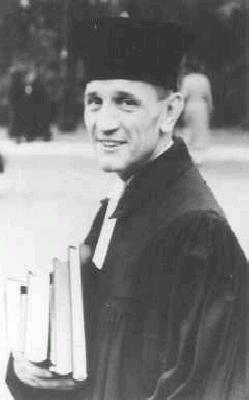
martin_niemoller_magazine_article

“I hated the growing atheistic movement, which was fostered and promoted by the Social Democrats and the Communists. Their hostility toward the Church made me pin my hopes on Hitler for a while. I am paying for that mistake now; and not me alone, but thousands of other persons like me.” Martin Niemöller

The statistics don’t lie. The United States cannot and should not be considered a Christian nation and any sense of the definition. To be blunt that is not the fault of secularists. It is the fault of Christians especially those political partisan pastors and pundits of the christian Right that for the past 40 years have sold their souls for political power at the expense of the Gospel.

While many people, even a majority describe themselves as Christians the fact is that what is now believed is not a Christianity that is in any sense Biblical, Catholic or Orthodox but rather a packaging of certain “Biblical values” that happen to be great political wedge issues for Christian leaders seeking political and economic power.

Nowhere was this shown more than the brazen flip-flopping of Christian leaders during the last election who adamantly opposed the nomination of Mitt Romney on the basis of their understanding of Christianity and Mormonism so long as there was a chance that a non-Mormon had a chance at the Republican nomination. Of course those leaders, even those that opposed Romney on theological grounds rapidly gave him their blessing once he won the nomination. The theological gyrations made by those leaders of the Religious Right in that process were fascinating to watch, much like a train wreck, but fascinating nonetheless.

A recent Barna survey noted that less than one half of one percent of people aged 18-23 hold what would be considered a “Biblical world view.” This is compared to about one of every nine other adults.  Other surveys bear this out.

This should not be surprising to anyone that has watched the growth of what passes as Evangelical Christianity in the Mega-Church age and the retreat of conservative Catholics into the Church culture and theology of the 1400s. It is the same ideology that brought about the Reformation. But then maybe that is not a bad thing.

What has to be said is that the American Church cannot really be considered Evangelical or Catholic. Rather American Christians have subscribed to an Imperial Church model that must throw itself at those that hold power in order to maintain their own political, economic and social power.

While these leaders talk about and rail against things that they believe to be “sinful” such as homosexuality, abortion and birth control they willingly turn a blind eye to the treatment of the poor, advocate wars of aggression and bless cultural and economic norms that go entirely against the Christian tradition as they go about with a Bible in one hand and Ayn Rand’s Atlas Shrugged in the other.

One can have legitimate debates in the Church about what the Bible and Christian tradition define as sin and we should have those debates taking into consideration Scripture, Tradition as well as what we have learned from the Sciences and the Social Sciences. But the fact is that those in the Religious Right are terribly inconsistent in this, much like the religious leaders of Jesus’ day who he condemned for the same type of hypocrisy.

Think about it: The Barna Group in another survey of people 18-29 years old asked what phrases best described Christians: The top five answers “Anti-homosexual, judgmental, hypocritical and too involved in politics.” This view was held by 91% of non-Christians and a staggering 80% of young churchgoers.

This hypocrisy was again demonstrated this week. Many of these politically corrupted religious leaders turned a blind eye to the gutting of the Voting Rights Act of 1964 by the Supreme Court, or cheered that decision despite the fact that many of not most of those adversely affected by that decision are African American Christians. The next day after cheering this result they lambasted the same justices for overturning the Defense of Marriage Act and refusing to hear a challenge to California’s Proposition 8, dealing with the Federal recognition of Gay marriage. The histrionics exhibited would be comical if the men and women ranting away were not so vehemently hateful towards their opponents. The tragedy of their behavior is that even more people will turn away from even reasonable Christians.

The fact is that young people are leaving the church in unheard of numbers and it is very evident to me why they are doing so. The Church has embraced the culture wars over preaching the Gospel, which if I recall correctly is based on loving people, even ones enemies.  Jesus said it so well: “By this everyone will know that you are my disciples, if you have love for one another.” John 13:35 NRSV.

The leaders of the Christian Right may hope able to bring out enough culture warriors to win or at least hold their majority in the House of Representatives in the next mid-term election for the Republican Party, but at what cost? One can debate the merits of the Obama administration and its decisions and policies. But to be authentic Christian witnesses we cannot simply become the religious appendage of a political movement whose leaders hold the Church and religious people in general in distain even as they mobilize them to support policies that are in the long term detrimental to those who claim the name of Jesus.

In the 1920s and 1930s the Churches of Germany and many parts of Europe did the same thing. They felt that their values were under attack by Communists, Socialists, Jews and yes, even Homosexuals. In order to maintain their influence and power they willingly allied themselves with the Nazis. When they spoke up against the Nazis it was seldom because they were defending anyone but their own ecclesiastical power and place in society.  When the war was over and young people began to question the actions of those that led the Church in Germany it began a process that has led to the de-Christianization of that country.

The constant hate filled attacks of Christian leaders on those that are not Christians will come back to bite them. This is not fantasy, it is reality. One only has to look at the history of the Church to see it played out time after time. But then, unless we decide to re-write history like David Barton does so well why bother reading it?

I will be writing more about this in the coming months in what will be a number of very well researched and documented articles.  But figured that I would kick open the door today. The actions of many Christian leaders are dangerous to the faith as a whole. The political opportunism is short sighted and ultimately will hasten the decline and fall of what we know as Christianity in America.

Perhaps Christian leaders who have sold their souls for such paltry political gains should be asking these questions: What does it profit a man to gain the whole world but lose his soul and what does it profit the Church to wield political power but lose its soul?

Bonhoeffer-194x300

Dietrich Bonhoeffer once noted “If you board the wrong train, it is no use running along the corridor in the other direction.” 

It is something to consider.

Peace

Padre Steve+

2 Comments

Filed under christian life, civil rights, News and current events, Political Commentary, Religion

Faith’s Journey: A Progressive Christian Navy Chaplain Looks at the Journey to Wholeness

400236_10151328400862059_541742014_n

June 27th 2013: After the events of this week including the Supreme Court decision declaring the Defense of Marriage Act unconstitutional I decided to re-publish an article that was one of the most important that I ever published. Not so much because of the what I think was so earth shattering regarding the content but because of what happened after its publication. At the point in time that I wrote it I was pushing the envelope with my former denomination, but figured that in light of all the controversies and schisms in that church at the time that whatever I wrote would not result in any problems. But I was wrong. I received a call the next day from my bishop telling me that I needed to find a new home because I was “too liberal.”

It was actually quite fascinating, I was able to gain a new church home which was much more progressive, welcoming and catholic, being of the Old Catholic tradition. For me that phone call was just a few months later deposed for attempting to create yet another schism in the church. I think it is even more interesting because some of my friends still in that church think that he used this article as a reason to get rid of me in order to keep me from exposing his scheme. I don’t know if that it the case or not, but my friends believe it to be a distinct possibility. That being said one of my long time priest friends revealed his plot to the other bishops and the bishop who forced me  was deposed. Irony is fascinating. Since that time my former church is regaining its footing and doing better and for my friends in it I am glad for even if I have differences in theology, faith or beliefs with people who I consider to be friends, they are still friends and I wish them well.  

So anyway, for those that are fairly new followers on this site here is the article that in a sense served as a declaration of independence and station on the road to wholeness and integrity. 

Peace, Padre Steve+

Faith Journeys: Why I am Still a Christian (Originally published 22 September 2010)

There are many times that I totally empathize with author Anne Rice in saying that she has left Christianity yet still has faith in Christ.  For Rice it was the lack of love shown by the institutional church for people that are marginalized and treated as if they were unredeemable by often well meaning Christians.

I know what it feels like to be marginalized after I came back from Iraq because many of my Christian friends seemed, at least in my view to be tied to the absolute hogwash that spews from talk radio hosts and allegedly “Christian” politicians.  I remember having some Christians question my patriotism and even my faith because I disagreed with them regarding certain aspects of the war, despite the fact that I had been on the ground in harm’s way serving with our advisors and Iraqis in Al Anbar province.  The fact that not a clergyman, civilian or military, took time to care for me when I was in a major PTSD meltdown and crisis of faith before I went to Naval Medical Center Portsmouth didn’t seem to matter because a political agenda was given primacy over the simple truths and hard demands of the Gospel.

Yesterday I wrote about Chaplains that experience a crisis of faith after coming home from a combat deployment.  For me there is nothing more symbolic of the lack of soul left in many Christians and Christian Churches in how they treat those that have served faithfully. Those Chaplains that have served  God, Church and Country and come back spiritually wondering what happened, not knowing what to believe and feeling abandoned by God and cast off by the Church and the military simply because we have a hard time with the so called “orthodoxy” of some Christians.

I went through a period after Iraq where feeling abandoned and isolated from those of a like faith that I was for all practical purposes an agnostic.  That was a really difficult time in my life and if you think that anything sucks try to be a Chaplain when you no longer know if God exists and the only person asking how you are doing with “the Big Guy” is your therapist. I can say without a doubt that it sucks like a Hoover and I know that I am not alone in my feelings.  I have met others whose experience is similar to mine but those that are struggling right now, caught between our faith and the feeling of being abandoned by God and his people because our experience of seeing the human suffering caused by war has shaken us.

Let’s talk about spiritual despair. Did you know that in the past couple of years that two Army Chaplains and one Navy Chaplain have committed suicide? These were men of faith who had served in peace and war at least one that had served at the Battle of Hue City as a Marine before becoming a Priest and Chaplain.  Another Army Chaplain that had served in Iraq as a minister of a conservative Charismatic and Evangelical Christian denomination became a Wiccan and was excoriated by Christians.  I don’t know his faith journey but I have to believe that part was his experience in Iraq and experience on his return. I don’t know about you but those are all signs of spiritual despair and feeling cut off from their faith community and even God, his or her self.

I am still a Christian. I believe in the God of Scripture, the Creeds and the Councils. At the same time that belief is not as rigid as it once was. I used to consider those that didn’t believe like I did in relation to Scripture, the Creeds and Councils not to be Christians.  I cannot say that now. I am much more to have the Grace and Mercy of God be my default position and let other things fall out where they may.  My practice of my faith has changed. When I came back from Iraq I attempted, as it were without success to keep my faith structure and practice the same as it was before I deployed to Iraq.  Within six months of Iraq I could no longer pray the Daily Office with any kind of faithfulness and by Lent 2009 give up the practice for Lent hoping to recover some authenticity to my faith. The authenticity has returned and after about a hear and a half I am seeking a way to reincorporate what had been a very important part of my daily practice of faith into my life without feeling like I am a phony in doing so.

I went through a period of absolute spiritual despair even leaving a Christmas Eve Mass in 2008 to walk home in the dark, alone, looking at the sky and asking God if he even existed.  A year later after my life had completely fallen apart I experienced what I call my “Christmas miracle” where I was called to our Emergency Room to provide the “last rites” to a retired Navy doctor and active Episcopalian when I was the duty Chaplain.  As I prayed the last prayer of commendation and removed my oil covered fingers from the man’s forehead he breathed his last. His wife told me that he was waiting to be anointed before he died.  The young doctor, a Psychology Resident doing his ER rotation who called me to the ER would die a couple of months later of natural causes in his living room not long after we had taken the “fat boy” program PT test together.

From that moment the paradigm shifted.  Faith began to return and I began to experience the presence of God again, not is the same was as before Iraq but one that was more relational, grace filled and informal.  I will likely begin praying the Daily Office again in the near future but I will approach it from a different point of view.  I will no longer use it simply to fulfill my priestly vows and obligations but rather as a way to re-experience and if need be re-imagine God.  Now before the heresy hunters think that I am re-imagining God is some unbiblical manner they are wrong. I want to re-imagine God as he has been revealed to his people both in Scripture, Tradition and in the life of his, or her people today.

moralssquad

How have I changed? I believe again. I am no longer an agnostic hoping and praying that God just might be there. My faith has become much more deeply rooted and grounded in the “Crucified God” and my faith in the “theology of the Cross.”  It is no longer connected to my politics and I refute any political ideology that attempts to use the Christian faith and the faith of well meaning Christians for purposes that Jesus himself would have condemned.  I don’t think Jesus was a big fan of his followers attempting to be the favorites of any political party or ideological system. In fact if I recall he really had pretty harsh words for his fellow Jews who were all wrapped around the axels with that kind of stuff. Jesus seems to befriend and hang around with those that are not connected to the religious, political or economic elites. In fact he seemed to reserve his harshest words for such people.  Jesus seemed to have a pretty good relationship with those marginalized and rejected by the religious folks of his day. He welcome sinners and tax collectors to his table and praised the faith of gentile Roman officers and stopped the super-religious folks from stoning an adulterous woman.

This is the Jesus that I follow and the Jesus that I believe is present in body, soul and spirit in the Eucharist.  I believe like Hans Kung and others that this table belongs to the baptized community of faith and not to an exclusive Priestly class who dictate who can come to the table.  It is not the exclusive property of any denomination or Church organization especially those that most loudly state this to be the case.

Now if saying this makes me a heretic then a heretic I will be. It is better to be a heretic in the eyes of Pharisees than to be one that denies justice to the persecuted people of God.  I guess that makes this moderate a liberal and to some an unbeliever.  Yet I believe in the God of Abraham, Isaac and Jacob. I believe in the Jesus that defied religious systems to offer the grace of God to the people that those systems rejected and the Jesus that was far more critical of “believers’ than those rejected as unbelievers.  I guess that is why I can accept women as ministers or even Priests, accept homosexuals as Christian brothers and sisters, and see Christ and the grace and love of God in people that are not “Christians” even the Muslims in Iraq that treated me with respect and even if they had an “Aryan” view of Jesus still showed a greater reverence for Jesus and the Blessed Virgin Mary than many that claim Jesus for themselves.

Why? You ask. Very simply I once was lost but now am found.  I thought that I knew it all before, now I know that I don’t know it all and that God is the God of surprises, just look in Scripture.  I doubt at times. I know that there are many answers that elude me and I cannot answer just by citing or using Scripture out of its historic, cultural and linguistic context.  I believe in the God that did not reject me when I didn’t know if he even existed.

Why am I still a Christian when I have so many problems with how many Christians practice the faith? Because I believe and not because will not I tow anyone’s party line be they liberals or conservatives. I believe in spite of my unbelief in a fellowship of those who as a result of war and trauma have trouble believing those that won’t race the cold realities of this life. I believe because many times it was those marginalized by others, especially those marginalized by the “faithful” showed me the love of God when the “faithful” for pure or impure motives, or even because they didn’t know what to do allowed me to sink into despair and isolation. So in the words of my favorite heretic Martin Luther I say “Here I stand, I can do no other. So help me God. Amen.”

Peace,

Padre Steve+

1 Comment

Filed under christian life, faith, Pastoral Care, philosophy, Religion

DOMA Struck Down: The Day After our 30th Wedding Anniversary

1013538_671668626182004_634812401_n

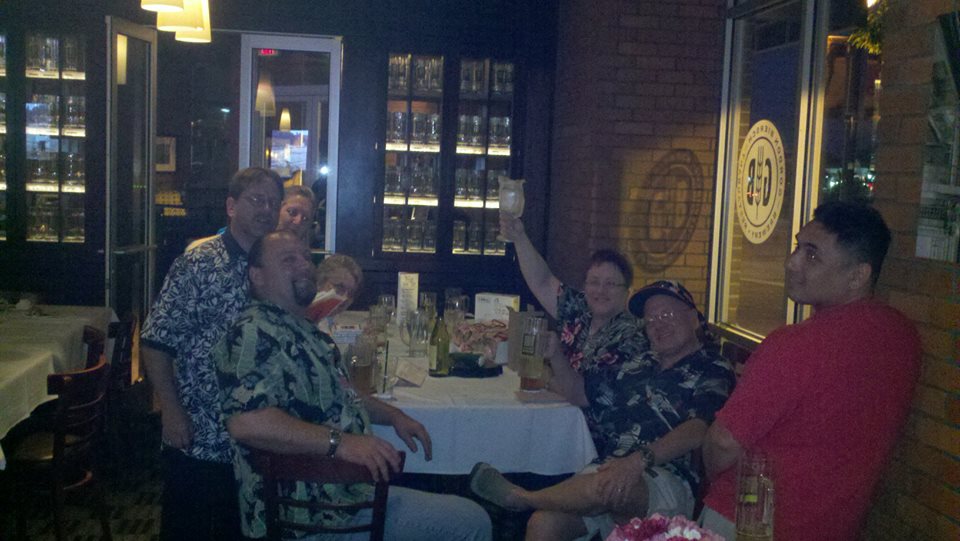
Our 30th Wedding Anniversary Celebration 

Last night Judy and I celebrated our 30th wedding anniversary with close to 40 friends at Gordon Biersch. What we love about our friends is that they span the spectrum of what is the United States. They include people from all races, religions and political views and even sexual preference, and when together they get along. It really is a wonderful thing to see. And we enjoyed our time with them last night and thank the management of of Virginia Beach Gordon Biersch Brewery Restaurant for helping make it such a wonderful time.

24419_10151620210532059_1908706513_n

Our First Wedding Anniversary Neubrucke Germany 1984

This brings me to today’s Supreme Court decision overturning the Defense of Marriage Act. It was a historic day, celebrated by many and vilified by some conservative Christians who have opposed equal rights for gays for as long as as possible. I am happy for my Gay and Lesbian friends and cheer this decision.

Of course most of the opponents reasons for opposing this are religious and the way that they interpret both scripture and history. I have no argument with them believing that. I am a Christian as well but do not hold the beliefs of the more conservative part of Christianity regarding gays, especially in regard to their rights under the civil laws of the country. I figure that the members of any religion have the right to define what they believe and even the behaviors of people who are willing members of their faith and that the government has no right to judge or legislate what they believe in regard to how they run their churches or places of worship. Thus if the Roman Catholics refuse to ordain women or with few exception married men, or if Evangelical pastors refuse to marry gays or a certain denomination refuses to acknowledge the validity of another religious group within the confines of their faith they have every right to do so. Such is the protection built into the Constitution. I may not agree with those views but I will oppose any government efforts to silence them.

Barry Goldwater said: “Mark my word, if and when these preachers get control of the [Republican] party, and they’re sure trying to do so, it’s going to be a terrible damn problem. Frankly, these people frighten me. Politics and governing demand compromise. But these Christians believe they are acting in the name of God, so they can’t and won’t compromise. I know, I’ve tried to deal with them.” November, 1994, in John Dean, Conservatives Without Conscience.

That being said in our country they do not have the right to impose their beliefs on others that do not share them. That is the side of the constitutional coin. The United States is not the Holy Roman Empire or the nations that descended from it, nor is it Calvin’s Geneva or Elizabethan England where the religion of the sovereign, or in the case of Geneva the council members who shared the faith of John Calvin. In those cases the religion of the sovereign was used to legislate against and punish dissenters, often using prison or the death penalty. Thus I will resist all attempts by religious groups to impose their beliefs through civil law on the society as a whole.

Chris Kluwe, the outspoken and very thoughtful punter of the Oakland Raiders put it well yesterday: “We preach tolerance and legislate hate. We love our neighbor, unless our neighbor happens to be “different.” We elect politicians, year in and year out, on a platform of oppression and prejudice that merely changes its name to fit in with the times.” 

That was a big consideration to the men that drafted our Constitution but one that the descendants of the religions denominations most likely to be discriminated against by State Churches and punished for their beliefs seem to have forgotten. I have written about this a number of times and who can read them at the links below:

The Toxic Faith of “Americananity” and its Antidote  

Bishop Jenky’s Obama and Hitler, Stalin, Bismarck and Clemenceau Comparison: Bad History, Bad Theology and Bad Politics  

The Double Edged Sword of Denying Religious Rights  

Religious Freedom and Religious Hypocrisy the New Improved 2012 Model  

The Gift of Religious Liberty and the Real Dangers to It  

Surrendering Religious Liberty to the State for Money: The Example of Florida I n 2011  

Religious Freedom…Do We Really Want or Believe in It?  

Glenn Beck Attacks the Churches and Threatens Religious Liberty  

A Christian Defense of the Rights of Moslems and Others in a Democracy (or Constitutional Republic)  

Star Trek God and Me: Ecclesiastical Tyranny Today, the Drumhead Revisited  

Gordon Klingenschmitt and his Followers- The Klingenfraud and the Klingenban  

Bringing Faith to the Faithless and Doubt to the Faithful  

Things Haven’t Changed That Much: Jackie Robinson Goes to the 1964 GOP Convention and the Freedom Summer  

The Great Evangelical Disaster: Selling the Birthright….and not Even a Bowl of Soup to Show for It  

Start by Prosecuting Me: A Challenge to the Drumhead Justice of World Net Daily’s Erik Rush and Joseph Farrah  

Be Careful of What you Vote Against: A Warning from History  

The Pejorative use of the term Cult by people that should know Better: Reverend Robert Jeffress and Mitt Romney  

Will we Stand? The Moral Responsibility of Christians in our Time

The Radical Influence of the Christian Dominionism on American Politics: It’s All Jimmy carter’s Fault….Not Really but it is a Catchy Headline  

The Clear and Present Danger of Unrepentant Ideologues  

Taking the Wrong Train  

Darkness into Light: Turning Systematized Hatred in the Name of God into Reconciliation  

The Unchristian Christianity of Modern America  

The Road to Totalitarianism is paved with Good Intentions  

How to Make an Incredibly Difficult War Unwinnable: The Crass Hatred of “Pastor” Terry Jones for Moslems Endangers Americans  

The Fruit of Glenn Beck’s Spirit   

Revisiting the Political Captivity of the Church 

Since I have written about the subject of religious rights and civil rights so many times I will not go into details here, if you want you can peruse any or all of the above articles to get where I am coming from. But I do want to quote two famous Baptists from our history. George Truett who was a professor at Southwestern Baptist Seminary long before I attended there wrote about the danger of the Church alliance with the sate advocated by so many leaders of the religious right, who even now are threatening to urge their people to disobey any Supreme Court ruling regarding marriage equity that they do not approve:

“Constantine, the Emperor, saw something in the religion of Christ’s people which awakened his interest, and now we see him uniting religion to the state and marching up the marble steps of the Emperor’s palace, with the church robed in purple. Thus and there was begun the most baneful misalliance that ever fettered and cursed a suffering world…. When … Constantine crowned the union of church and state, the church was stamped with the spirit of the Caesars…. The long blighting record of the medieval ages is simply the working out of that idea.” 

The second is John Leland, leader of the Virginia Baptists in the fight for the separation of church and state. Persecuted by Anglicans the Baptists persuaded James Madison and Thomas Jefferson to ensure that the guarantee of religious liberty was enshrined in the Bill of Rights wrote:

“The notion of a Christian commonwealth should be exploded forever…Government should protect every man in thinking and speaking freely, and see that one does not abuse another.  The liberty I contend for is more than toleration.  The very idea of toleration is despicable; it supposes that some have a pre-eminence above the rest to grant indulgence, whereas all should be equally free, Jews, Turks, Pagans and Christians.”

Marriage-Equality-104371316011_xlarge

As far as today’s ruling I am very glad for my friends in the Gay community to have their marriages recognized by the Federal government. It is a long time coming. I think the watershed moment for me in this debate came in late 1993 when I was in my Clinical Pastoral Education residency program and I had to deal with those dying from complications from AIDS.

I remember two incidents. One was a young successful architect who was in our ICU having taken a dramatic turn for the worse. His partner and friends were barred from the room by his family who prior to this had condemned him and ostracized him. They had their pastor with them who though the man was unconscious, heavily sedated and dying was preaching to him to repent. The man’s own pastor from another denomination was excluded by the family and eventually left. This left me with the man’s partner and close friends in a waiting area away from the man that they loved. It was heartbreaking and I wondered what it would be like if Judy was forbidden from being at my side as I died because someone disapproved of her or our marriage. But what happened to the young man and his friends was legal because the family had the final say and the partner had no rights.

The second was a young man from West Texas who was dying on our general medical ward. His partner and parents were both there. The parents, dad in a plaid shirt and cowboy hat and boots, a rancher and his wife stood with the partner. All were crying, the family shared their faith with me, Southern Baptists who believed in the grace and love of God. As their son passed away and the partner asked, “what will I do now?” they embraced him and said “you are part of our family now and you can live with us.” It was a moment of grace and God’s love that was so absent in the other situation.

Over the years I have know, been friends with and worked with many gays and lesbians. I have felt terrible that for the most part they had to hide their love for one another either in the military or in their churches. I have had friends ostracized by their faith community or turned out of the military for admitting their sexual orientation.

Today is a good day for them and our country. Yes I know that some will not agree with me for mainly religious reasons and that is okay because they have that right. That being said I rejoice for all the men and women that I know who are gay or lesbian who will finally have the chance to openly enjoy what Judy and I have known and celebrated the past 30 years of marriage.

Peace

Padre Steve+

Leave a comment

Filed under christian life, civil rights, faith, History, laws and legislation, marriage and relationships, Religion

Andrew Greeley: The Paradox of Faith and Unbelief in the Lives of God’s People

Old-Celtic-Church-1

“Most priests, if they have any sense or any imagination, wonder if they truly believe all the things they preach. Like Jean-Claude they both believe and not believe at the same time.” Andrew Greeley “The Bishop and the Beggar Girl of St Germain”

When I returned from Iraq in 2008 I was a mess. I had gone to Iraq thinking that I had the answers to about anything and that I was invincible. I felt that with years of experience in the military and in trauma departments of major trauma centers that I was immune to the effects of war and trauma. Likewise I had spent years studying theology, pastoral care and ethics as well as military history, theory and practice. I had studied PTSD and Combat Stress and had worked with Marines that were dealing with it. If there was anyone who could go to Iraq and come back “normal” it had to be me.

Of course as anyone who knows me or reads this website regularly knows I came back from Iraq different. I collapsed in the midst of PTSD induced depression, anxiety and a loss of faith. For nearly two years I was a practical agnostic.

During those dark days, particularly the times where I was working in the ICU and Pediatric ICU at Naval Medical Center Portsmouth attempting to have enough faith to help others in crisis, be they patients at the brink of death or families walking through that dark valley even though I did not have any faith to even believe that God existed.

It was during those dark days that the writings of Father Andrew Greeley, mainly his Bishop Blackie Ryan mysteries that provided me with one of the few places of spiritual solace and hope that I found. Baseball happened to be the other.

During those dark times when prayer seemed futile and the scriptures seemed dry and dead I found some measure of life and hope in the remarkable lives of the people that inhabited the pages of the Bishop Blackie Ryan novels. Through them I learned that doubt and faith could co-exist and that there was a mystery to faith in Jesus that defied doctrinal suppositions as well as cultural, political and sociological prejudices.

I did learn something else, something that makes many people uncomfortable and that took me a long time to accept. That was that doubt and faith could co-exist and as I read Greeley’s stories I began to see scripture in a new light, especially the stories of men and women that we venerate for their faith who doubted and even when they believed often disputed God. The Old Testament is full of their stories and there are even some in the New Testament. Greeley wrote that is was possible for a priest to lose their faith “no more often than a couple of times a day.”

I rediscovered faith and life as I anointed that man in our emergency room in December 2009. Faith returned to my surprise. I believe again but I also doubt, at least a couple of times a day. And for that I’m grateful. It keeps me humble and I am alive again.

Thank you Father Andy, rest in peace.

Peace

Padre Steve+

1 Comment

Filed under christian life, faith, PTSD, Religion

In Memory of Father Andrew Greeley: A Man Who Helped Me Believe Again

Andrew Greeley

“I wouldn’t say the world is my parish, but my readers are my parish. And especially the readers that write to me. They’re my parish. And it’s a responsibility that I enjoy.”Andrew Greeley 

By the halfway point in my tour in Iraq I was in the midst of a spiritual crisis that I could not comprehend. Nor would I understand the depths that the crisis would reach. However by November 2007 prayer was difficult if not impossible.  As I tried to comprehend the distress that I was in I continued in a downward cycle, only being out with my advisors and our Iraqis helped, but when I returned to base between missions and eventually when I returned home in 2008 I felt alone and began to wonder about the existence of God.

Since I have always been a voracious reader, primarily of history, theology, military history and theory and more difficult subjects subjects such as ethics and philosophy I tried to use that to get through my crisis. My favorite authors included such men as Carl Von Clausewitz and Von Molkte the Elder, Sun Tzu, T.E. Lawrence, Dietrich Bonhoeffer, Hans Kung, Jurgen Moltmann, David Galula, Roger Trinquier, Bernard Fall, Alistair Horne and a host of other authors that most normal Americans would never consider reading or do not know even exist. Fiction of any type was low on my list. About the only works of fiction that I had read were those of Tom Clancy and his Jack Ryan novels, W.E.B. Griffin and his Brotherhood of War series and the baseball fiction of W. P. Kinsella such as Shoeless Joe and The Iowa Baseball Confederacy.

I had a good number of books with me on the deployment. Some which I had packed for the trip and others which I had sent to me. However by November 2007 it was hard to read anything, much less pray. In between missions to Ramadi and the Syrian border I walked in the paperback lending library. I really didn’t know what I was looking for but I looked through every shelf in the small building. The non-fiction and biography sections were not worth the trouble, anything in them that I was interested in I had already read. So I began to look at fiction. I decided to look for authors that I knew, Jack Higgins and Frederick Forsyth who had written a lot of World War II mystery and spy novels including Higgins’ The Eagle Has Landed, Forsyth’s The Odessa File as well as Anton Myrer’s classic Once and Eagle.

The books were arranged alphabetically by author. Between Forsyth and Higgins there was the letter “G” and a number of books by one Andrew Greeley. I knew Greeley, at least I thought that I did. He was to be distrusted because he was a rather “liberal” Catholic Priest, sociologist and columnist for the Chicago Times. So I had been taught. However, I picked up a couple of the books, Bishop Blackie Ryan mysteries, The Bishop Goes to the University and The Beggar Girl of St Germain. 

9780812575972

In spite of my inherent prejudice from so many years in conservative churches I decided to take both of them. That night as I prepared for my next mission I started reading The Bishop and the Beggar Girl of St Germain. There was a section where Bishop Blackie was talking about a French Priest, very similar to many American televangelists. Quoting the priest, the charismatic Father Jean Claude, Blackie noted:

“Do you exist? I think not. I have never seen you or touched you or felt you. Well, sometimes I think you’re present but that may be wish fulfillment. Intellectually, I have no reason to believe. Yet much of the time I act like I do believe …. Only when I have time to reflect do I feel doubts, and then after the doubts certainty that the universe is cold and lonely. I know that I am a hypocrite and a fool. Then I preside over the Eucharist in my unsteady bumbling way and I know that you are. I don’t believe but I know.”

The words reflected what I was going through. I believed, but I didn’t. Of course that would not only continue as my tour in Iraq progressed but got worse after I returned from Iraq. However, I discovered, much to my surprise that I was not alone. That there were a number of other very good, caring Chaplains, Priests and ministers going through similar doubts, fears and pain.

The irrepressible Bishop Blackie continued:

“Most priests, if they have any sense or any imagination, wonder if they truly believe all the things they preach. Like Jean-Claude they both believe and not believe at the same time.”

The words were an epiphany to me. Belief and unbelief co-existing and strangely congruent with the testimony of scripture, the anguished words of a man whose son was possessed by an evil spirit confessing to Jesus: “I believe, help my unbelief.”

I was hooked. I began to read every book by Father Greeley that I could find. Any of the lending libraries that I visited I scoured to shelves to find Bishop Blackie Ryan mysteries. When I returned to the Unite States I continued to read them. They were the only spiritual reading that I could manage. My Bible. Prayer Book, and other theological books were too difficult. In Andrew Greeley’s Bishop Blackie I found a kindred spirit and in his books, full of flawed characters, an often corrupt ecclesiastical structure I began to re-discover God. Now I admit that the books were an interim step. It did take an encounter in our Emergency Room at Naval Medical Center Portsmouth Virginia when I was the duty Chaplain in December 2009 administering the “last rites” to a dying man that faith much to my surprise returned.

It wasn’t the same faith, or shall I say the same form of faith that returned. It wasn’t a faith of absolute orthodoxy, but rather a faith that still questioned, God and the Church, especially the very culturally American Church that I could find little solace in or honesty, a church consumed with the need to be in political power which derided those not like it. Eventually as I continued to write on this site I began to voice how faith had returned but how it was different. One of those posts in September 2010 got me asked to leave my old denomination. It seemed that I had become in the words of my former Bishop for the Armed Forces “too liberal.”

At first that hurt. It was traumatic, not only was I dealing with PTSD, a crisis in faith and the loss of my father just a couple of months before, but then being cast aside. I knew that it would eventually happen but it was a shock. Thankfully tow things happened. First I was helped to find a denomination in the Old Catholic tradition that was really where I needed to be. Second, those people that were friends in my old denomination remained my friends, including many current leaders in that denomination as well as chaplains. The funny thing was that the man who threw me out was himself removed from his episcopal office for an act of duplicity against his church and his brother bishops that involved every member of the military diocese. That happened barely three months after I was asked to leave. Some friends have speculated that the real reason for my dismissal was that he did not trust me to keep his secret. That I do not know, just that it was speculated by others that knew him and me for many years.

As it was it was a good thing in the long run and through all of it the writings of Father Andrew Greeley, fiction and non-fiction, theological and sociological helped me through the crisis.

Father Greeley died today at the age of 85. For the past five and a half years he had been struggling to recover from a traumatic brain injury incurred when entering a taxi-cab in Chicago in November 2008. The injury curtailed his writing and speaking but he lives on through those writings and in spirit through the many people that he inspired. However, before that happened he was a spokesman for the truth who did not hesitate to critique the church and care for God’s people.

Image.ashx

I am one of those people, like Blackie Ryan a “miscreant Priest” who has learned to believe yet question but most of all realize that the people that I meet in person or those that meet me on this forum are God’s people. That being said I realize that as imperfect and flawed as I am that I might be the only Priest, minister or Chaplain that they ever meet. A quote from Greeley’s last novel, The Archbishop in Andalusia sums up my understanding of ministry, both in the sacraments of the church and the sacrament that we call life.

“Every sacramental encounter is an evangelical occasion. A smile warm and happy is sufficient. If people return to the pews with a smile, it’s been a good day for them. If the priest smiles after the exchanges of grace, it may be the only good experience of the week.”  (The Archbishop in Andalusia p.77)

I have had ministers like the fictional Bishop Blackie in my life as well as those that did not embody that ethic that he represented. I had someone tell me recently that I was able to relate to anyone of any rank or position. In the military that is a big thing. Too often the higher we go in rank the more detached from lower ranking people we become. Thankfully, I think in large part to my dad, who was a Navy Chief Petty Officer, and my wife Judy, whose dad was a truck driver and who never lets me get too big for my britches have a lot to do with that. I think another part is how we have gone through many difficult times in our life and know what it is like to be on the bottom rung or society and the at times quite unfortunately, the church.

Father Greeley inspired me in many ways since I returned from Iraq and I am forever grateful. In another book “White Smoke” Greeley has a fictional papal contender named Luis Emilio Cardinal Menendez y Garcia make a speech which I find particularly inspiring. While it speaks of the Roman Catholic Church I think that it speaks to most churches and reflects how people see us, the Christian Church, no matter what denominational tradition we claim. Likewise it speaks of what we can become:

“So many of our lay people believe that ours is a Church of rules, that being Catholic consists of keeping rules. They do not find an institution which is like that very appealing. Nor should they.

In fact, we are a Church of love. Our message from the Lord himself even today is the message that God is Love and that we are those who are trying, however badly, to reflect that love in the world. I find that in my own city that notion astonishes many people. How we came to misrepresent that which we should be preaching above all else is perhaps the subject for many doctoral dissertations.

More important for us today, however, is the reaffirmation that we exist to preach a God of love, we try to be people of love, and we want our church to be, insofar as we poor humans can make it, a Church of radiant love.

Does such a Church have a future? How could it not?”

I have missed Andrew Greeley’s new writings ever since he was injured. However, when I read how many lives that he touched, especially those who struggle with faith or have been hurt by the church I know that the Spirit of God will still use him and that as of today that freed from the bonds of his earthly infirmities that he will keep us in his prayers. That being said, I will always be grateful to Andrew Greeley. When I was despairing of life itself, his writings, particularly the fictional ministry and work of Bishop Blackie Ryan helped me rediscover an authentic faith.

Old-Celtic-Church-1

Greeley and the wonderful characters that he created will continue to help me and I’m sure from the comments I have seen many others. I also know that through them that he and his witness of Jesus will live on.

Peace

Padre Steve+

2 Comments

Filed under books and literature, faith, News and current events, Religion

Bringing Faith to the Faithless and Doubt to the Faithful

400236_10151328400862059_541742014_n

I like hard questions and hard cases. My life has been quite interesting and that includes my faith journey as a Christian and human being. It is funny that in my life I have as I have grown older begun to appreciate those that do not believe and to rather distrust those who proclaim their religious faith with absolute certitude, especially when hard questions are asked.  Paul Tillich once said “Sometimes I think it is my mission to bring faith to the faithless, and doubt to the faithful.” 

I think that the quote by the late theologian is quite appropriate to me and the ministry that I find myself. I think it is a ministry pattern quite similar to Jesus in his dealings with the people during his earthly incarnate ministry. He was always hanging out with the outcasts, whether they be Jewish tax collectors collaborating with the Romans, lepers and other “unclean” types, Gentiles including the hated Roman occupiers, Samaritans and most dangerously and scandalously women. He seemed to reach out to these outcasts while often going out of his way to upset the religious establishment and the “true believers” of his day. He was actually quite successful at this, so successful that his enemies made sure that they had him killed.

I think that what has brought me to this point is a combination of things but most importantly what happened to me in and after my tour in Iraq. Before I went to Iraq I was certain of about everything that I believed and was quite good at what we theologians and pastors call “apologetics.” My old Chaplain Assistant in the Army, who now recently serves as a Chaplain and was recently selected for promotion to Lieutenant Colonel called me a “Catholic Rush Limbaugh” back in 1997 and he meant it quite affectionately.  I was so good at it that I was silenced by a former Archbishop in my former church and banned from publishing for about 7 years. The funny thing is that he, and a number of my closest friends from that denomination are either Roman Catholic priests or priests in the Anglican Ordinariate which came into communion with Rome a couple of years back. Ironically while being “too Catholic” was the reason I was forbidden to write it was because I questioned certain traditions and beliefs of the Church including that I believed that there was a role for women in the ordained ministry, that gays and lesbians could be “saved” and that not all Moslems were bad that got me thrown out in 2010.

However when I returned from Iraq in the midst of a full blown emotional, spiritual and physical collapse from PTSD that certitude disappeared. It took a while before I was able to rediscover faith and life and when I did it wasn’t the same. There was much more mystery to faith as well as reason. I came out of that period with much more empathy for those that either struggle with or reject faith. Thus I tend to hang out at bars and ball games more than church activities or socials, which I find absolutely tedious. I also have little use for clergy than in dysfunctional and broken systems that are rapidly being left behind. I am not speaking about belief here, but rather structure and methodology.

I think that if there is anything that God will judge the American versions of the Christian church is our absolute need for temporal power in the political, economic and social realms and the propagation of religious empires that only enrich the clergy which doing nothing for the least, the lost and the lonely. The fact that the fastest growing religious identification in the United States is is “none” or “no preference” is proof of that and that the vast amounts of money needed to sustain these narcissistic religious empires, the mega-churches and “Christian” television industry will be their undoing.  That along with their lack of care for anyone but themselves. Jesus said that his disciples would be known by their love for one another, not the size of their religious empire or temporal power.

The interesting thing is that today I have friends and colleagues that span the theological spectrum. Many of these men even if they do not agree with what I believe trust me to love and care for them, even when those most like them in terms of belief or doctrine, both religious and political treat them like crap. Likewise I attract a lot of people who at one time were either in ministry or preparing for it who were wounded in the process and gave up, even to the point of doubting God’s love and even existence. It is kind of a nice feeling to be there for people because they do not have to agree with me for me to be there for them.

In my darkest times my only spiritual readings were Father Andrew Greeley’s Bishop Blackie Ryan mysteries which I began reading in Iraq to help me get through the nights in between missions in Iraq and through the nights when I returned from them.  In one of those books, the last of the series entitled “The Archbishop goes to Andalusia” the miscreant Auxiliary Bishop to the Cardinal Archbishop of Chicago goes to Seville Spain.  In the novel Bishop Blackie makes a comment after celebrating Mass in the cathedral at Seville. He said “Every sacramental encounter is an evangelical occasion. A smile warm and happy is sufficient. If people return to the pews with a smile, it’s been a good day for them. If the priest smiles after the exchanges of grace, it may be the only good experience of the week.”  (The Archbishop in Andalusia p.77)

That is something that I try to do now on a regular basis. Sure most of my sacramental encounters as a hospital chaplain do not occur during the liturgy, but often in the life and death moments and times of deep discouragement felt by the wounded, ill and injured. In that ministry I have found that there are many hurting people, people who like me question their faith and even long held beliefs.

On my way home from taking my little dog Molly home from a visit to the vet this afternoon I heard the old song by Nazareth called Love Hurts. The song always gets me. It is one of those “real” songs from the 1960s and 1970s that nails how life can be sometimes.

Love hurts, love scars
Love wounds and mars
In any heart not tough
Nor strong enough
To take a lot of pain
And love is like a cloud
Holds a lot of rain
Love hurts

I’m young and I know
But even so, I know a thing or two
I have learned from you
I’ve really learned a lot
And love is like a stove
Burns you when it’s hot
Love hurts

Some fools rave of happiness
Of blissfulness, togetherness
Some fools fool themselves, I guess
But they’re not fooling me
I know it isn’t true
Love is just a lie
Made to make you blue
Love hurts

In 1977 a Christian singer, Erick Nelson included that song on an album called The Misfit and used it to lead into another song of his called He Gave Me Love. The album which he did as a duet with a lady named Michelle Pillar was always and still is one of my favorite albums. It was and still is one of the few works of “contemporary Christian music” to really deal with the hard questions of faith, including hurt, doubt and betrayal and the cost of following Jesus with any measure of authenticity. The song, the lyrics of which I include here are quite remarkable, because they talk about those themes.

When I was down, they wouldn’t stay
When I was hurt, they turned away
But Jesus called me and I must obey
He gave me love

You see, His friends all let Him down
And when He healed everyone around
All He got was a thorny crown
Because of love

Because of love for you
Because of life and truth
Because of love for you
Come take his love

Sometimes they laugh and are unkind
And others smile and say I’ve lost my mind
But all I know is what I find
And I find, He gave me love…

Love does hurt, and well deciding to love can bring a lot of pain, but I do think that it is worth it. Well, that is all for tonight. Until tomorrow.

Blessings and Peace

Padre Steve+

Love Hurts lyrics © Kobalt Music Publishing Ltd., Warner/Chappell Music, Inc., EMI Music Publishing, Sony/ATV Music Publishing LLC, HOUSE OF BRYANT PUBLICATIONS

HE GAVE ME LOVE Words and Music by Erick Nelson 1977 Maranatha! Music All rights reserved.

3 Comments

Filed under christian life, faith, Pastoral Care, philosophy, PTSD, Religion