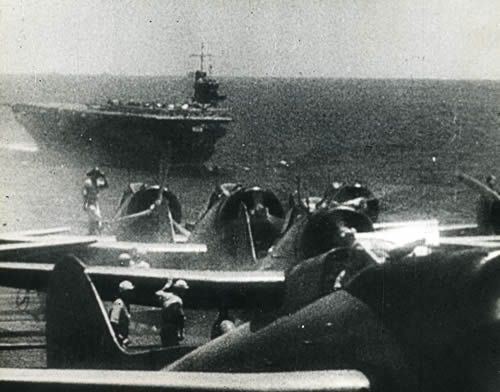
Category Archives: US Navy

Give Every Human Being the Right You Claim For Yourself


Friends of Padre Steve’s World,

Another day goes by and I finally hit a wall yesterday. It was physically, spiritually, emotionally, and intellectually draining. This morning my left leg was  completely locked up, though later in the day it loosened up.

By the end of Wednesday I had dealt with legal, constitutional, and ministerial issues in the Chaplain Corps, cared for the emotional and physical needs of several sailors, and helped a friend going through I difficult time. I was out from 5:30 AM until 8:30 PM. Likewise between walking and swimming I had done 9.6 miles., the most I have done since the fall that injured both of my knees last August.

I was so tired that I couldn’t out of bed. But, tomorrow is another day. I will be getting up early, doing a lot of walking, going to the Physical Therapy Doctor and then swimming before going back to work to see what has shat in my email inbox and taking care of administrative duties.

Theodore Roosevelt, the Republican that modern Republicans love to hate said: “I am an American; free born and free bred, where I acknowledge no man as my superior, except for his own worth, or as my inferior, except for his own demerit.” 

After Trump’s announcement in which he said that he was going to bar transgender men and women from military service, including combat vets, I am fighting back in every legal way that I can as an active duty officer. Thankfully I am senior enough that I don’t have to deal with the threats that a number of junior Army chaplain friends are dealing with from their fundamentalist Christian supervisory chaplains.

I cannot believe who quickly these people will throw fellow servicemen and women under the bus for a President who despises them and what they believe all because he hates LGBTQ people more than them.

Likewise, I have been fighting against potential budget cuts that could affect the religious liberties of thousands of Navy personnel and their families.

I am getting ready to retire next spring. It is a mandatory retired based on my age and rank. I will have served 38 years and seven months of service in peace and war so I don’t have to serve under what if left unchecked will become a fascist dictatorship, in large part due to fundamentalist Christians, so I guess that it the right time, even though I will always protect the religious liberties of people that I might have significant disagreement.  That being said, I will never surrender my honor to willingly prostitute myself to a regime that rejects the rule of law, the Constitution, and the principles of the Declaration of Independence that so many people have fought to preserve. Nor will I stop fighting for the religious rights of others which are threatened by budget cuts in the age of a exponentially growing defense budget, even the rights of people who I profoundly oppose.

This is about the Constitution, and a Supreme Court Decision (Katkoff v. Marsh 1985) that matter far more than me or my religious opinion, which happen to mirror those of the great Virginia Baptist, John Leland who wrote:

“Is conformity of sentiments in matters of religion essential to the happiness of civil government? Not at all. Government has no more to do with the religious opinions of men than it has with the principles of mathematics. Let every man speak freely without fear–maintain the principles that he believes–worship according to his own faith, either one God, three Gods, no God, or twenty Gods; and let government protect him in so doing, i.e., see that he meets with no personal abuse or loss of property for his religious opinions. Instead of discouraging him with proscriptions, fines, confiscation or death, let him be encouraged, as a free man, to bring forth his arguments and maintain his points with all boldness; then if his doctrine is false it will be confuted, and if it is true (though ever so novel) let others credit it. When every man has this liberty what can he wish for more? A liberal man asks for nothing more of government.”

This will have to suffice for now. But for me the issue is liberty for all. As Robert Ingersoll, a Civil War hero and prominent atheist said: “This is my doctrine: Give every other human being every right you claim for yourself.”  If you can’t do then don’t claim to support the Constitution or revere the Declaration of Independence, because you are simply a liar. Enough said.

Until tomorrow,

Peace,

Padre Steve+

Leave a comment

Filed under civil rights, ethics, faith, laws and legislation, leadership, Military, Religion, US Navy

Götterdämmerung in the Pacific: The Okinawa Campaign

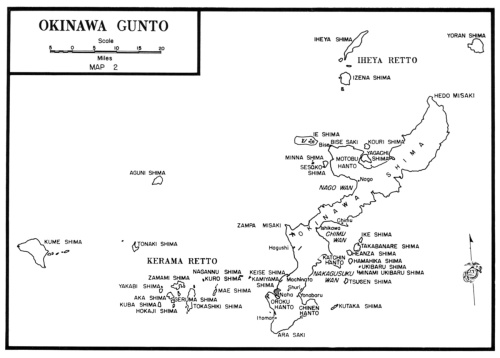
USMC-M-Okinawa-2

Friends of Padre Steve’s World,

Saturday, June 22nd is 74th anniversary  of the end of the Okinawa Campaign, one of the longest and bloodiest campaigns waged by United States Forces in the Pacific during the Second World War. I have resurrected this article from the archives because even today Okinawa is a key strategic location, and the base of thousands of U.S. military personnel, mostly Marines and Air Force personnel, along with Navy and Army personnel. In the event of a military conflict with with North Korea or China, Okinawa would be at the center of the conflagration.

Today, many Okinawans do not consider themselves Japanese, though the United States returned control of Okinawa to Japan in 1972. They are culturally more Chinese than Japanese and during the battle over a third of the civilian population died. Many are opposed to the continued presence of over 26,000 American troops, and also desire independence from Japan. So as you can see the conflict over Okinawa is not yet finished.

The Okinawa Campaign 

The United States decided to invade Okinawa in the fall of 1944 following the seizure of Peleliu and the Philippine landings.  The planned invasion of Formosa was cancelled after General Simon Bolivar Buckner objected.[i] Buckner argued that the Japanese army on it was “much too strong to be attacked by the forces by American Forces then available in the Pacific.”[ii] The strategic rationale behind the decision to invade Okinawa included Okinawa’s proximity to Japan as a staging base for a future invasion of the Japanese mainland.  Likewise taking the island would severe Japan’s lines of communication and commerce with Southeast Asia and to serve as base for strategic bombers.[iii] Planning began in October 1944 and the detailed plan for OPERATION ICEBERG was issued 9 February 1945.[iv] The campaign was not planned in isolation but “was bound up strategically with the operations against Luzon and Iwo Jima; they were all calculated to maintain unremitting pressure against Japan and to effect the attrition of its military forces.”[v]
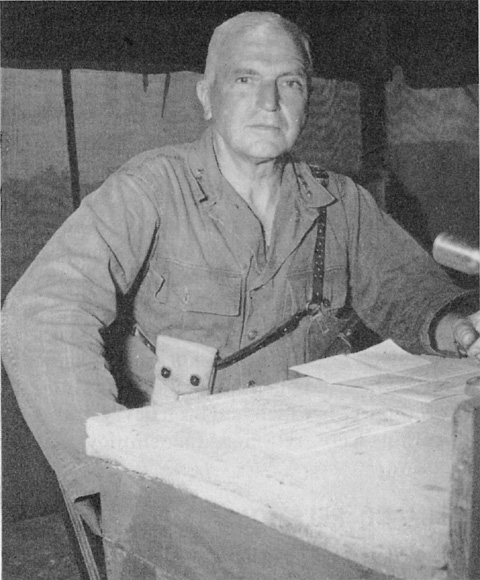
LIEUTENANT_GENERAL_SIMON_B._BUCKNER_in_Okinawa     Lt General Simon Bolivar Buckner Commander of US 10th Army

The War Department insisted that Lieutenant General Simon Bolivar Buckner command the newly formed 10th US Army.[vi] .  Buckner was chosen to command based on his taking of the Aleutians, displacing the veteran Marine Holland M. Smith. One critical history noted that “compared to his subordinates, Buckner was hardly fit to command a corps, let alone a field army.”[vii]

The 10th Army consisted of the 3rd Amphibious Corps (1st, 2nd and 6th Marine Divisions) under Major General Roy Geiger and the XXIV Army Corps (7th, 27th, 77th and 96th Divisions) under Major General John Hodge.[viii] 2nd Marine Division was designated as a diversionary force, and the 77th Division was assigned to take the nearby island of Kerama Retto prior to the landings to provide the Navy a safe anchorage and as an artillery platform to shell Okinawa. The 27th Division was in corps reserve.  All were veteran units and had it was believed they would be “more than enough to overwhelm the estimated 70,000 Japanese on Okinawa.”[ix] However, much of XXIV Corps had only been engaged in hard combat on Leyte and was not relieved of their duties on Leyte on 1 March 1945.  This provided these units with no time to rest and refit.[x] More importantly badly needed troop replacements had been diverted to Europe due to the crisis in infantry strength there during the battle of the Bulge.[xi] The operation was very large and “mounted on a scale that matched the previous year’s Allied landing in Normandy.”[xii]

                                      The Japanese Preparations
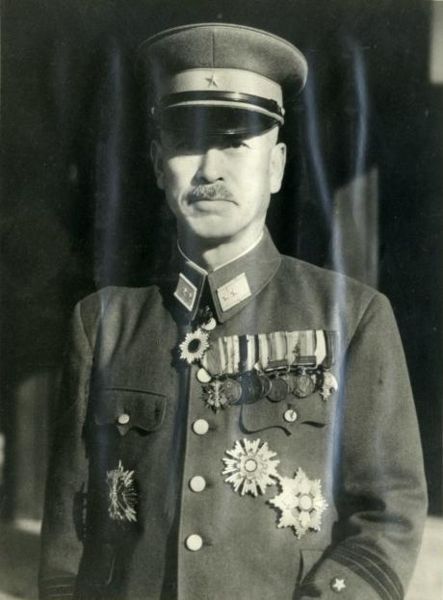
Mitsuru_UshijimaJapanese Commander Lt General Ushijima

American intelligence underestimated the number of Japanese on the island, with an estimate of 55,000 with the expectation of 66,000 by 1 April.[xiii] However by the time of the invasion the Japanese defenders numbered over 100,000.[xiv] The defense of Okinawa was entrusted to the 32nd Army was activated in 1 April 1944 commanded by Lieutenant General Ushijima.  In addition to Okinawa the 32nd Army was responsible for the entire Ryukyu chain.[xv] General Ushijima had commanded an infantry group in Burma and was commander of the military academy when appointed to command 32nd Army and ordered to Okinawa.  His Chief of Staff, General Cho was a firebrand.  Cho had served in China and had participated in a number of attempted military coups in the 1930s as a member of the “Cherry Group.”[xvi] Another key officer though relatively junior was Colonel Yahara the Operations Officer. He had served as an exchange officer in the United States and was intellectual and a modern soldier. He viewed war as a science, won by “superior tactics adjusted to terrain, weapons and troops…not Banzai charges.”[xvii] He was “widely recognized as an expert in his field,”[xviii] and devised the Japanese defensive plan for Okinawa.
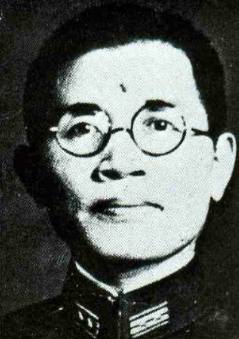
Yahara_Hiromichi          Colonel Yahara Architect of the Japanese Defensive Plan

Until 32nd Army was activated Okinawa was garrisoned by a mere 600 troops,[xix] and until major units arrived these soldiers concentrated on airfield construction.[xx] Eventually the 9th, 24thand 62nd Infantry Divisions, the 44th Mixed Brigade along with a light tank regiment and significant artillery came to Okinawa. Additional forces were alloted to outlying islands.  The 24th Division was a triangular division of 3 infantry regiments of 3 battalions each and supporting arms. The 62nd Division was a “brigaded” division activated in 1943 was formed from the veteran 63rd and 64thbrigades each with 4 infantry battalions and supporting arms. It had no organic artillery.  Both of the brigades of this division received an additional infantry battalion in January 1945 giving the division ten maneuver battalions.[xxi] Okinawa’s defenses were significantly weakened when 9th Division was transferred to Formosa by the 10thArea Army in late 1944. To compensate General Ushijima converted Naval and service troops on the island into front line troops. Additionally he called the Okinawan Boeitai volunteers and conscripts into service.[xxii] The Boeitai numbered 20,000 and burned “with ardor to serve their emperor.”[xxiii] Seven sea raiding units were converted into infantry battalions.[xxiv] The major units, with the exception of 24th Division which had been transferred from Manchuria had combat experience.[xxv]
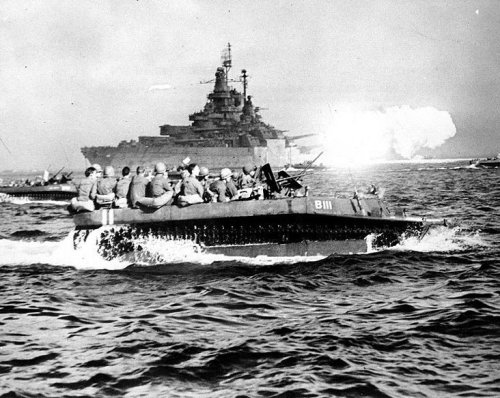
BB-43-LVT-okinawaUSS Tennessee Provides Naval Gunfire Support while LVTs Advance toward the Beaches

Ushijima’s plans to concentrate his forces in the south were delayed by Tokyo.[xxvi] Likewise the number and disposition of troops in the Ryukyu’s were decided by Imperial Headquarters.[xxvii] Colonel Yahara wrote that had Imperial Headquarters “been able to give us an overall plan with specific unit names and arrival dates, we would have been able to follow a consistent policy, disposing units in an efficient manner rather than moving them left and right.”[xxviii] He noted how the 44th Mixed Brigade had to change location and thus its defensive preparations “seven times during the ten months before the actual battle….”[xxix]
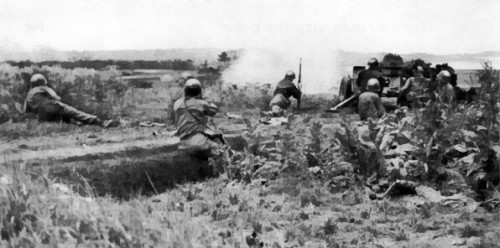
XXIV_Corps_turns_south                                     XXIV Corps Advancing South

The loss of the 9th Division and its 25,000 soldiers forced Ushijima to change his initial plan to defend the beaches and then launch a major counterattack to drive the Americans into the sea.[xxx]Ushijima decided to defend the south end of the island. This was the most defensible area, with a network of fortifications and underground caves centered on the ancient citadel of Shuri Castle. “Troop disposition would conform to local terrain; troop strength would be concentrated; and an extensive system of subterranean fortifications constructed.”[xxxi] The defenses were “anchored in natural and artificial caves which dotted the mountainous regions around Shuri.”[xxxii] “Terrain features were incorporated into the defense and weapons were well sited with excellent fields of fire.”[xxxiii] General Ushijima left Colonel Udo’s 2nd Infantry Unit to fight a delaying action in the north,[xxxiv] having decided that the area was of “little military value.”[xxxv] Likewise Ushijima decided not to contest the landings or to defend the airfields at Kadena and Yontan.[xxxvi] He planned to use Boeitai units to demolish the airfields when the Americans approached.[xxxvii]
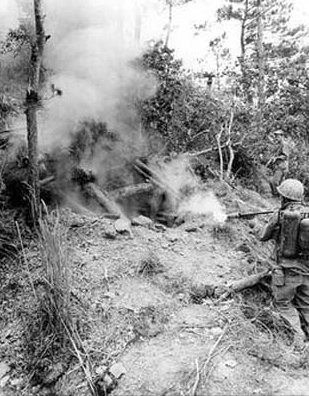
Okinawa_flamethrowerFlamethrowers were Widely Employed their Operators were Targeted by the Japanese

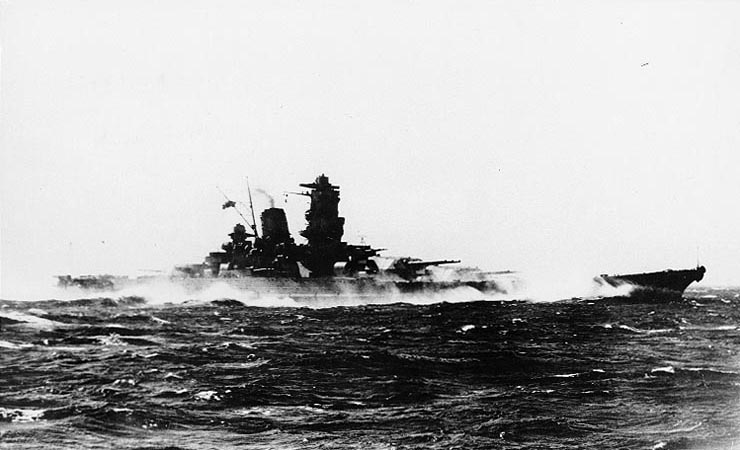
Ushijima’s defensive scheme laid out by Yahara involved concentric defensive lines, tunnels and bunker systems and even the Chinese tombs which dotted the island were converted to pillboxes over the objections of Okinawan elders.[xxxviii] Yahara and Ushijima planned a battle of attrition with all artillery in the army concentrated on the southern end of Okinawa.  Yahara believed the battle would be a “bitter yard-by-yard” defense of the island,[xxxix]with a focus on defense in depth with preparations for anti-tank warfare. There were to be no Banzai charges.[xl] Ushijima turned Bushido “inside out” and urged his soldiers to “Devise combat method [sic] based on mathematical precision, then think about displaying your spiritual power.”[xli] The defenders would be assisted by suicide boat squadrons based on Okinawa and Kerama Retto and over 4000 aircraft, conventional and Kamikaze and a naval force built around the super battleship Yamato.[xlii]

                                                      The Landings
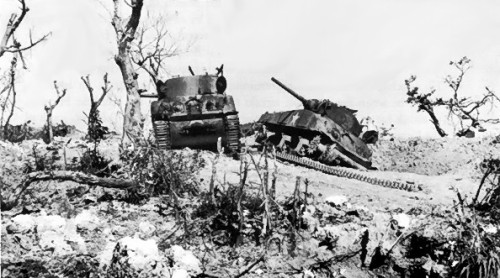
Attack_on_bloody_ridgeWrecked Tanks on Skyline Ridge

The assault on Okinawa began with landings by 77th Division on Kerama Retto on 26 March.   The landings were met with little opposition as most of the combat troops on the islands had been moved to Okinawa leaving only base and service troops and members of a Sea Raiding Unit and Korean laborers to defend the small island.[xliii] By the 29th of March the islands were taken, along with numerous prisoners.  Over 350 of the fast “Suicide Boats” that were to attack US transports and landing craft were destroyed at Kerama Retto and long range artillery was emplaced were it could support the Okinawa landings.[xliv] More importantly Kerama Retto provided the Navy a safe anchorage, and Service Squadron 10 arrived on 27 March to support naval forces around the island.[xlv]The naval bombardment was led by Admiral Deyo’s battleships and Admiral Blandy’s escort carriers[xlvi] and culminated on 1 April when 10th Army went ashore. By the time of the landing 10 battleships and 11 cruisers would join the attack.[xlvii] Over 13,000 large caliber shells were fired and a total of 5,162 tons of ammunition were expended on ground targets and 3,095 air sorties were flown by L Day.[xlviii] Fortunately for the Japanese Ushijima had listened to Colonel Yahara and elected not to defend the beach, and thus most of the shells fell on empty positions and terrain.[xlix]

The Americans landed on the Hagushi beaches adjacent to Kadena and Yontan air bases.  No organized resistance was encountered and in the first hour 16,000 troops landed.[l] There was little disorganization and all units landed on time on the planned beaches.[li] The beaches were bisected by the Bishi River which served as the Corps boundary.  The 1st and 6th Marine Divisions landed north of it and the 7th and 96th to the south.  The Marines chopped up the “Bimbo Butai” in their area many of whom melted back into the civilian population.[lii] The Americans moved rapidly inland and by nightfall over 60,000 Marines and Soldiers were ashore.[liii] As the landings were made the 2nd Marine Division conducted a demonstration off Minatoga on the east side of the Okinawa actually launching several waves of landing craft.[liv] On 2 April the operation was repeated which helped divert some Japanese attention off of the actual landings. Ushijima reported that the attempt “was complete foiled, with heavy losses to the enemy.”[lv] Some Marine veterans of Peleliu were jubilant at not having to land and some wondered what the Japanese were up to.[lvi]
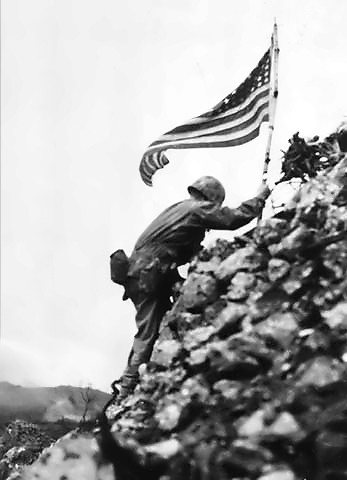
US_Flag_raised_over_Shuri_castle_on_Okinawa     Marine Battalion Commander Raising Flag over Shuri Castle

In the following days the two Marine divisions would race north and east while Army troops advanced cautiously to the south first encountering light opposition.[lvii] The 1st Marine Division cut the island in two on April 3rd and was allowed to clear the Katchin Peninsula which it took without opposition.[lviii] The 6th Marine Division moved north and by the 7th it had had taken Nago.  Colonel Udo’s troops of the 2nd infantry Unit defended the Motubu with great skill[lix] but the Marines took the center of resistance on April 18th.[lx] They then cleared the remainder of the peninsula and the rest of the northern end of the island by the 20th.[lxi] The Marines had advanced 84 miles and killed 2,500 Japanese at the cost of 261 killed and 1,061 wounded. The Japanese survivors according to the plan of Colonel Udo afterward retreated into the hills and engaged in guerilla warfare.[lxii]

                                                  The Ordeal Begins
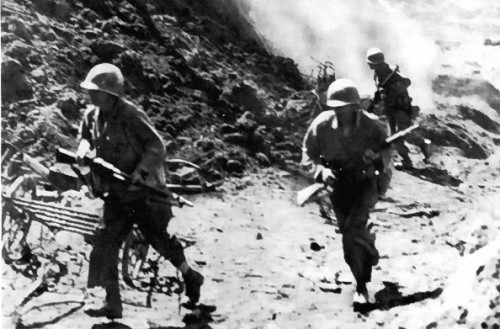
Corkscrew-demolition_team                                      Demolition Team Advancing

As the Soldiers of the 7th and 96th Infantry Divisions felt their way south, they began to encounter resistance from Japanese outposts.  On 4 April 96th Division’s advanced elements including the 96thRecon Troop and 763rd Tank Battalion encountered the first Japanese anti-tank defenses, losing 3 tanks to well concealed 47mm anti-tank guns.[lxiii] The following day both the 7th and 96thdivisions encountered more resistance and were held to minimal gains as they drove the Japanese out of their outpost positions. On the 6th and 7th they captured “the Pinnacle” and “Cactus ridge” from elements of 3 independent infantry battalions which put up stiff resistance.[lxiv] By the end of 8 April against strong opposition XXIV Corps had suffered 1,510 battle casualties and was virtually halted.[lxv] Savage hand to hand fighting took place as the defenders worked to separate the American tanks from their infantry. They held the Americans outside the Shuri zone for 8 days.[lxvi]
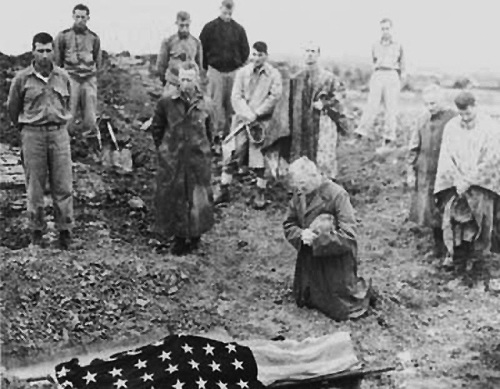
USMC-C-Okinawa burialThe Human Cost of War: Marine Colonel Fenton prays for his Fallen Son

The 96th Division attacked the heavily defended Kakazu Ridge and Tombstone Ridge and was repulsed.  The 7th Division was halted at Hill 178.  The Japanese fought at close quarters and desperate hand to hand fighting “would characterize the Okinawa land battle.” While the Japanese infantry contested every yard “carefully concealed anti-tank guns seemed anchored into the terrain.”[lxvii]The deployment and concealment of the anti-tank guns helped nullify the American advantages in armor. The Japanese also employed 320mm spigot mortars[lxviii] and well sited machine guns and artillery sited on reverse slopes took a heavy toll of the attacking Americans. Of one company of 89 men which attacked Kakazu on 9 April “only three returned unwounded.”[lxix] Assisted by monsoon rains, “the Japanese turned every hill, every ridge into a bloody deathtrap.[lxx] On the 10th two regiments of 96th Division attempted a power drive with battalions advancing on line and were thrown back.[lxxi] The two divisions suffered 2.890 casualties in their abortive attacks while the Japanese lost close to 4,000, mainly to artillery fire.[lxxii] Ushijima’s defense planned by Yahara was “chillingly professional and efficient. Within a week the Japanese had stopped two very good Army divisions in their tracks.”[lxxiii]General Buckner paused sent for the 1st and 6th Marine Divisions and brought the 27th and 77th Divisions ashore to strengthen XXIV Corps.[lxxiv]

                                                  Counterattack
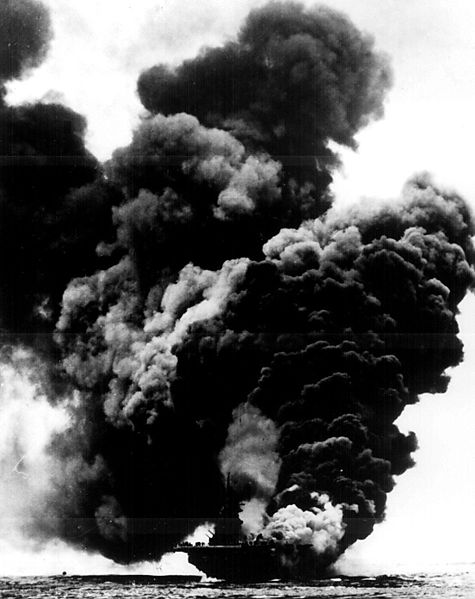
475px-USS_Bunker_Hill_burningThe War at Sea: Kamikaze Attack on USS Bunker Hill

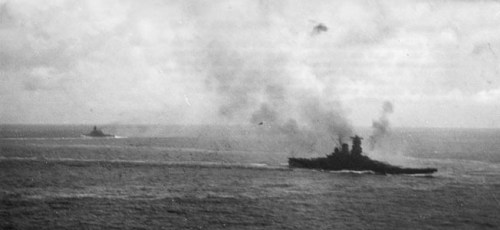
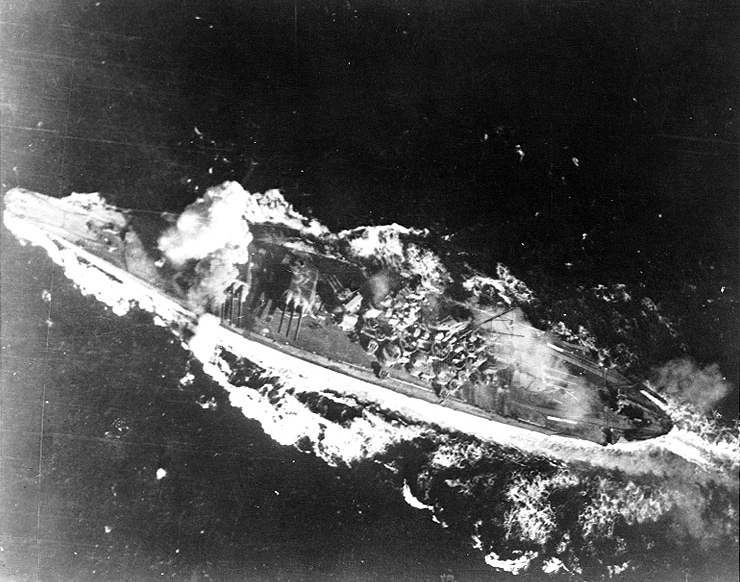
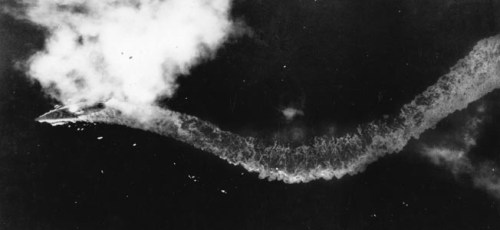
It was at this point when “Yahara’s war of attrition was working well” that a division arose in the 32nd Army Staff, when General Cho; Ushijima’s Chief of Staff had “his first outburst of samurai offensive fever.”[lxxv] Cho noted the failure of the American attacks and believed reports that the American Navy had been heavily damaged by Japanese air power and by the reported success of Operation Ten-Go, the sortie of the Yamato and her escorts on their suicide mission.  He based his optimism on a telegraph from Imperial Navy headquarters “claiming that Ten-go had been “very successful”[lxxvi] when in fact the Yamato and her escorts had been dispatched in hours by carrier aircraft with few American losses.  Cho also assumed a reduction in the number of ships in the Hagushi anchorage and in the number of air sorties as signs of American weakness.[lxxvii] Cho persuaded Ushijima to launch a counterattack over the protestations of Yahara who argued that “it would waste men.”[lxxviii] The attack by four battalions of the 62nd and 24thDivisions began the night of 12-13 April. Based on infiltration tactics and supported by artillery the attack was badly planned and coordinated. One attack almost overran American positions on the draw on Kakazu Ridge, but the Japanese return to “bamboo spear tactics” exposing them to the “overwhelmingly superior America artillery fire….”[lxxix] The attack was a “total failure.”[lxxx]The Japanese lost nearly 1,600 men, half their force in an “operation ill conceived, understrength, misdirected, haphazard and uncoordinated.”[lxxxi]

                                     Cracking the Outer Line

Reinforced by the 27th Division XXIV Corps prepared for another attack against the outlying Shuri defenses. In the interval between the Japanese attack and the new offensive the 77th Division landed on Ie Shima on 16 April and secured it on the 24th amid very heavy fighting killing over 4,700 Japanese, many armed civilians against the loss of 172 killed and 902 wounded Americans.[lxxxii] Among the American dead was legendary reporter Ernie Pyle.

The Americans aimed to penetrate the defenses and “seize the low valley linking Yonabaru on the east coast with the capital of Naha on the west.”[lxxxiii] The attack was supported by 27 battalions of artillery[lxxxiv] including 9 Marine artillery battalions.[lxxxv]Additional Naval gunfire support in the form of 6 battleships, 6 cruisers and 9 destroyers added to the rain of steel unleashed on the Japanese.[lxxxvi] Morison notes that Army historians stated that “Naval gunfire…was employed in greater quantities in the battle for Okinawa than in any other in history.”[lxxxvii] The 7th Division was to take Hill 178 and drive south to the Naha Yonabaru road. 96thDivision minus the 383rd Infantry was to “drive straight through the heart of the Shuri defenses seizing the town of Shuri and the highway beyond.”  27th Division attacking 50 minutes later to take advantage of artillery was to take Kakazu ridge and the coast plain north of Naha.[lxxxviii]

The attack began on April 19th and was preceded by a 19,000 shell bombardment.[lxxxix] Ushijima wisely ordered his men to remain in their caves.  The Corps Artillery commander “doubted as many as 190 Japanese…had been killed in the bombardment.”[xc] The attack was immediately halted all along the line, gains, where there were any were measured in yards. Over 750 casualties were inflicted by the Japanese on the corps and 27th Division’s tank battalion lost 22 of 30 tanks to well positioned 47mm anti-tank guns.[xci] Buckner rejected the requests of the Corps commander Hodge and the Marine divisional commanders,[xcii] to launch a flanking amphibious operation at Minatoga with the 2nd Marine Division, and continued the frontal attacks.  John Toland writing of the rejection of the amphibious operation noted that Ushijima “feared such a maneuver (“It would bring a prompt end to the fighting”) and had already been forced to move his “rear guard division north to beef up the Shuri line.”[xciii] Thus the three divisions continued to press their attacks, suffering heavy casualties.  Eventually the Americans forced the Japanese off Skyline ridge[xciv] though the Japanese still held Kakazu.[xcv] When the 27th Division attacked again it found Kakazu abandoned by the Japanese.[xcvi] By the 24th Ushijima’s line was “pierced in so many places that it was in danger of collapsing….So General Ushijima withdrew to his next chain of defenses.”[xcvii] On April 30th the 1st Marine Division relieved the battered 27th Division which had suffered 2,661 casualties in less than two weeks.”[xcviii] The 1st Marine Regiment launched an attack on 1 May and was driven back with heavy causalities.[xcix]

                                    General Cho’s Final Offensive

General Cho supported by 62nd Division’s commander, General Fujioka persuaded Ushijima over the strenuous objections of Yahara to launch a counter-offensive with the intention of isolating and annihilating the 1st Marine Division and “rolling up” XXIV Corps.[c]The attack was to occur along the entire line and include an amphibious landing behind American lines.[ci] The 62nd Division would take the lead as it had been less heavily engaged than 24thDivision.[cii] Yahara argued his case strongly and warned the Ushijima that to attack “is reckless and will lead to an early defeat.”[ciii] The attack began on the night of 3 May and the forces making the amphibious landing were annihilated by the Marines.[civ] The Japanese made little headway during the main attack; one battalion achieved a small penetration of American lines at Tanabaru but was eliminated the next day.[cv] The Japanese 27thTank Regiment lost most of its tanks and those remaining were used as “stationary artillery and pillboxes.”[cvi] The Japanese lost about 5,000 troops in the offensive.[cvii] Ushijima halted it and told Yahara “as you predicted this offensive has been a total failure.  Your judgment was correct….”  He ordered Yahara “to do whatever you feel is necessary.”[cviii] Cho saw “no hope at all”[cix] and asked Yahara jokingly “when will it be okay for me to commit hari-kari?” [cx]

                                               Göttdammerung

The American offensive resumed on 11 May and amid stubborn Japanese defense and heavy rains which hindered movement. The 1st and 6th Marine Divisions[cxi] and the 77th and the 96th infantry divisions attacked along the line but the primary objective was Shuri.[cxii] The Americans continued to apply pressure and make small gains against strong Japanese resistance put up by the 44thMixed Brigade.  The defense was particularly strong on Sugar Loaf Hill[cxiii] which cost 6th Marine Division nearly 4,000 total casualties before it was cleared out on 21 May.[cxiv] The 96thDivision turned the Japanese east flank at Conical Hill on the 13th  [cxv] while the First Marine Division cracked through the Japanese lines at Dakeshi Ridge.  It fought through Wana Ridge[cxvi] and engaged the Japanese in a costly battle in the Wana Draw. The 2ndBattalion 5th Marines supported by 30 tanks blasted their way through the draw, again against brutal Japanese resistance.[cxvii]On the 22nd Yahara persuaded Ushijima to withdraw from Shuri to the Kiyan Peninsula.[cxviii] The 1st Battalion 5th Marines crossed the divisional boundary of 77th Division to capture Shuri Castle on 24May.[cxix] The Company commander, from South Carolina who took it did not have an American flag so he “substituted the flag of the Confederacy, a banner that he…carried in his helmet.” [cxx] Two days later the American flag was raised along with the standard of the 1st Marine Division in full view of the Japanese.[cxxi]

Following the Japanese withdraw from Shuri the battle continued with heavy rains hampering both sides, especially the more vehicle dependant Americans.[cxxii] The 6th Marine Division cleared the Oruku Peninsula south of Naha the first two weeks of June[cxxiii]killing 5,000 of the Japanese Navy defenders at a cost of 1,608 Marines. The Japanese resistance crumbled when Admiral Ota committed suicide and many defenders fled while others surrendered.[cxxiv] 7th Division pushed onto the Chinen Peninsula and 1st Marine and both 77th and 96th Infantry Divisions pushed steadily south against Japanese rear-guards.[cxxv] The 8th Marines from 2nd Marine Division were brought to the island to reinforce the depleted 3rd Amphibious Corps[cxxvi] A hard fight was fought along the Kunishi-Yuza-Yaeju escarpment where the Japanese conducted their last organized defense.[cxxvii] By the 17th the “32nd Army was dazed and shattered. Discipline had evaporated.”[cxxviii] The 32ndArmy’s discipline and morale collapsed, and it “degenerated into a mob.”[cxxix] Yahara noted that “naturally, morale is low at the end of a battle, but we had never experienced anything like this.”[cxxx]
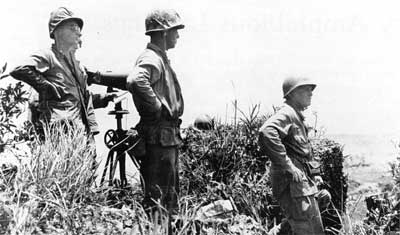
Last_picture_of_LtGen._Buckner_at_OkinawaLt General Buckner (Right) Observing 8th Marines Assault minutes before Being Killed

General Buckner was killed while observing 8th Marines attack Kunishi on the 18th and was succeeded by General Geiger of the Marine amphibious corps.[cxxxi] A final message from Tokyo congratulated 32nd Army on its achievements on the 20th.[cxxxii]General Ushijima and General Cho committed Hari-Kari early on the 23rd after ordering Yahara not to do so. Cho told Yahara “to bear witness as to how I died.”[cxxxiii]

American battle casualties totaled 49,151 including 12,520 dead.[cxxxiv] The Japanese lost over 110,000 killed and 7,400 taken prisoner by the Americans.[cxxxv] About 75,000 Okinawan civilians were killed.[cxxxvi] Small numbers of Japanese renegades and Okinawan rebels conducted low-level guerilla operations until 1947.[cxxxvii]

                                                         Analysis

The key Japanese mistake occurred at the strategic level when 9thDivision was transferred off the island[cxxxviii] and no further reinforcements were sent.  With these forces Ushijima might have been able to hold out until the end of hostilities. Yahara criticized Imperial Headquarters which panicked when the landings occurred and ordered a counterattack which “left our army in utter confusion.”[cxxxix] General Ushijima’s major mistakes during the battle were the two costly offensives urged by General Cho against the protest of Colonel Yahara. These attacks sacrificed of some of his best troops for no effect and significantly weakened the 32nd Army’s defensive posture.  Yahara objected to both of these offensives. According to the American intelligence debriefing Yahara considered the May 4th offensive “as the decisive action of the campaign.”[cxl] Gordon Rottman simply called that attack a “blunder.”[cxli]

On the American side Buckner fought an unimaginative and uninspired battle, much like Mark Clark’s Italian campaign or Courtney Hodges at the Huertgen Forrest.  Murray and Millett, note that Buckner’s “flawed generalship contributed to the slaughter.”[cxlii] Buckner’s decision not to land the 2nd Marine Division or the 77th Division at Minatoga surrendered his one opportunity to maneuver against the Japanese to force them out of their prepared positions.[cxliii] Ronald Spector notes that “in retrospect Buckner ought to have given more consideration to an amphibious attack[cxliv] while Murray and Millett state that Buckner “did not have the experience to make such a critical decision.”[cxlv] Nimitz wondered if “the Army was using slow, methodical tactics to save the lives of soldiers at the expense of the Navy”[cxlvi] which was exposed to Kamikaze attacks as they had to continue to provide the close in support to 10th Army. Buckner’s rejection of this opportunity left him with the straight ahead attack.   Another option which was available to Buckner was to seal off the Japanese and let them wither on the vine. Such an action in effect would have bypasses the Japanese defenders and force them to make Banzai attacks against dug in Americans.[cxlvii] The Americans had the airfields on day one and most of the key facilities needed for future operations and there was little to gain by continuing offensive operations in the south.  Sealing off the Japanese would have certainly caused the Americans fewer casualties than the strategy which Buckner employed.[cxlviii]

Buckner’s leadership was poor his strategy and tactics both unimaginative and foolish bordering on incompetent.  In a time when American infantry replacements were tapped out and no new Infantry divisions were available for action he decimated good formations by throwing them into frontal attacks against well prepared fortified positions manned by experienced troops.  Had Ushijima not followed General Cho’s advice squandering is own troops the battle would have cost even more American lives with the invasion of Japan looming.  The War Department in its attempt to wrest control of an operation that should have remained under the control of the Navy and Marine Corps put the wrong man in the job when other more competent corps commanders such as General “Lighting Joe” Collins who had finished off the Japanese at Guadalcanal were available with European hostilities winding down.  Why Buckner was chosen despite his incredibly limited command experience serving in the relatively inactive Aleutians and not even commanding a company in World War One had to be due to Army politics and in the end it cost nearly 50,000 American casualties on the land alone, not counting Navy casualties which totaled almost 10,000 including over 4,900 dead. The capture of Okinawa provided the Americans with valuable anchorages and airfields close to Japan had there been an invasion of the home islands, but they were obtained at great cost.

Notes


[i] Appleman, Roy, E., Burns, James M., Gugeler, Russell A., and Stevens, John. The United States Army in World War II, The War In the Pacific. Okinawa: The Last Battle, Center of Military History, United States Army. Washington DC. 1948.  p.4

[ii] Leckie, Robert. Okinawa: the Last Battle in the Pacific Penguin Books, New York NY 1996. p.2.  Although not mentioned by Leckie this shortage of forces was due to the American decision to limit the Army to 90 Divisions with dire consequences in Europe and Asia especially in the number of infantry available.  For a good account of the impact of this see Russell Weigley’s Eisenhower’s Lieutenants.

[iii] Willmont, H.P. The Second World War in the Far East. John Keegan General Editor. Cassell Books, London, 1999. p.186.

[iv] Morison, Samuel Eliot. The Two Ocean War: A Short History of the United States Navy in the Second World War. An Atlantic Monthly Press Book, Boston MA 1963. p.525

[v] Ibid. Appleman. p.4

[vi] Costello, John. The Pacific War: 1941-1945 Quill Publishers, New York, NY 1981. p.554.

[vii] Murray, Williamson and Millett, Allan R. A War to Be Won: Fighting the Second World War.  The Belknap Press of Harvard University, Cambridge, MA. 2000. p.515

[viii] Ibid. Leckie. pp. 53-54.  Note Costello misidentifies both of these corps calling them 3rd Marine Corps and XIV Army Corps.   He also does not count the 77th Division in his figures.

[ix] Ibid. Costello. pp. 554-555.  Costello’s figures are slightly above the official estimates listed below.

[x] Ibid. Leckie. p.56

[xi] Ibid. Leckie. p.57 An important point to note is that the Army had reached a critical point in its ability to conduct the war.  The steady drain on infantry strength that began in Normandy was heightened in the Huertgen Forrest and the Bulge.

[xii] Ibid. Costello. p.556

[xiii] Ibid. Appleman. p.15

[xiv] Ibid. Costello. p.555

[xv] Yahara, Hiromichi. The Battle for Okinawa. Introduction and Forward by Frank Gibney. Translated by Frank Pineau and Masatoshi Uehara. John Wiley and Sons, New York, NY. 1995. p.3

[xvi] Rottman, Gordon R. Okinawa 1945: The Last Battle. Osprey Publishing, Oxford, United Kingdom, 2002. p.35

[xvii] Ibid. Leckie. pp.31-32

[xviii] Ibid. Rottman. p.37

[xix] Toland, John. The Rising Sun: The Decline and Fall of the Japanese Empire 1936-1945. Random House, New York, NY 1970. p.683.

[xx] Ibid. Yahara. p.7

[xxi] Ibid. Rottman. Pp.47-48

[xxii] Ibid. Toland. pp.683-684.  Yahara also notes the arrival of the 15th Mixed Brigade and the fact that the Japanese considered the 44th Mixed Brigade “one of our Army’s prized units.” (p.12)

[xxiii] Ibid. Toland. p.683.  Leckie comments on the low opinion of many Japanese soldiers about the Boeitai calling them Bimbo Butai(Poor Detachment), as the most of the Japanese had come to loathe Okinawa and all things Okinawan. A comment from my own service in Okinawa in 2000-2001 is that this loathing of Okinawa by Japanese is still common, Japanese tend to look down on Okinawans and the Okinawans now tend to resent the Japanese.

[xxiv] Ibid. Appleman. p.87

[xxv] Ibid. Yahara. p.31 All sources note that the 24th was a “well trained” division.

[xxvi] Ibid. Costello. p.555

[xxvii] Ibid. Yahara. p.15

[xxviii] Ibid. Yahara. pp. 14-15

[xxix] Ibid. Yahara. p.15

[xxx] Ibid. Yahara. pp. 20-22 and 32.  Yahara details the initial plan and the changes necessitated by the departure of 9th Division.  Rottman gives 9th Division a strength of 17,000. (Rottman p.46)

[xxxi] Ibid. Yahara. p.20

[xxxii] Spector, Ronald H. Eagle Against the Sun: The American War With Japan. The Free Press and Division of MacMillan, Inc. New York, NY 1985. p.533

[xxxiii] Ibid. Rottman. p.25

[xxxiv] Ibid. Leckie p.32 and Costello. p.555. The unit was between 3000 and 3500 strong. Leckie simply identifies the force as the 2ndInfantry Unit while Costello identifies them as a Special Naval Landing Force. Appleman identifies Colonel Udo and the approximate number of troops but does not identify the unit. There appears to be confusion about the Japanese units, Appleman says that the 2nd Infantry Unit was constituted from survivors of 44thMixed Brigade (which had lost most of its troops when their ship was sunk by an American submarine) and 15th Independent Mixed Regiment which was brought in to bolster it, but Yahara consistently places the reconstituted 44th in the south as part of the main defense. (see Appleman p.87) I will relay on Yahara as he was the 32nd Army Operations Officer and in a position to have first hand knowledge.

[xxxv] Ibid. Yahara. pp.22-23

[xxxvi] Ibid. Leckie. p.32

[xxxvii] Ibid. Leckie. pp.32-33

[xxxviii] Ibid. Toland. p.684

[xxxix] Ibid. Yahara. p.32

[xl] Ibid. Yahara. p.25

[xli] Ibid. Leckie. p.35

[xlii] Ibid. Leckie. p.19

[xliii] Ibid. Appleman. pp.52-58

[xliv] Ibid. Appleman. p.60

[xlv] Potter, E.B. Nimitz. Naval Institute Press. Annapolis, MD. 1976. p.369

[xlvi] Ibid. Costello. p. 556 and Morison p.530.

[xlvii] Ibid. Appleman. p.64. Leckie (pp. 67-68) names only 9 battleships: Arkansas, New York, Texas, Nevada, Idaho, New Mexico, Colorado, Tennessee and West Virginia. Of these ships all were built before the war and four were in commission before the US entered the First World War.  Three had been at Pearl Harbor and with the exception of their engines the Tennessee and West Virginia had been completely rebuilt and modernized to the standards of the fast new battleships of the South Dakota class.

[xlviii] Ibid. Appleman. p.64

[xlix] Ibid. Leckie. p.69.

[l] Ibid. Leckie. p.72

[li] Ibid. Appleman. p.74

[lii] Ibid. Leckie. p.73

[liii] Ibid. Appleman. p.75

[liv] Ibid. Appleman. p.74

[lv] Ibid. Leckie. p.72  A point to note is that the “Demonstration” is still one of the Amphibious Operations in the USMC Amphibious doctrine.

[lvi] Sledge, E.B. With the Old Breed at Peleliu and Okinawa. Presidio Press. Novato, CA. 1981. Oxford University Press Paperback, New York, NY 1990. pp. 187-188  William Manchester in Goodbye Darkness talks about the first few days as his 6th Marine Division moved up North.  He talks of the minimal resistance and the beauty of the island. Manchester, William, Goodbye Darkness: A Memoir of the Pacific War Little Brown and Company, New York NY, 1979.pp.356-357

[lvii] Ibid. Potter. pp.370-371

[lviii] Ibid. Leckie. p.78

[lix] Ibid. Manchester. p.357.  Manchester notes that the fight in the north was like “French and Indian Warfare.”

[lx] Ibid. Appleman. p.148

[lxi] Ibid. Leckie. p.83

[lxii] Ibid. Appleman. p.148

[lxiii] Ibid. Appleman. p.104

[lxiv] Ibid. Appleman. pp.107-110

[lxv] Ibid. Appleman. pp.112-113.

[lxvi] Ibid. Appleman. p.112.

[lxvii] Ibid Yahara. p.35

[lxviii] Ibid. Leckie. p.104

[lxix] Ibid. Spector. p.534

[lxx] Ibid. Murray and Millet. p.514

[lxxi] Ibid. Appleman. pp. 126-127

[lxxii] Ibid. Leckie. pp.104-105

[lxxiii] Ibid. Murray and Millett. p.514

[lxxiv] Ibid. Murray and Millett. p.514

[lxxv] Ibid. Yahara. p.36

[lxxvi] Ibid. Leckie. p.108

[lxxvii] Ibid. Leckie. p.108

[lxxviii] Ibid. Yahara. p.36  The battle for a counter-offensive began on 6 April but was rejected. (Appleman. p.130)  Yahara actually went to the commanders of the 24th and 62nd divisions and persuaded them not to use 3 battalions each but only two. (Leckie. pp.107-108)

[lxxix] Ibid. Leckie. p.113

[lxxx] Ibid. Appleman. p.137

[lxxxi] Ibid. Leckie. p.113.

[lxxxii] Ibid. Appleman. p.182. Leckie gives the total of 258 killed and 879 wounded. (Leckie. p.125) and estimates that most might have been uniformed civilians.  Appleman citing Army figures estimates about 1,500 civilians.  Even adding the American MIA totals the differences between Appleman and Leckie’s count of US casualties is puzzling.

[lxxxiii] Ibid. Leckie. p.126

[lxxxiv] Ibid. Leckie. p.127

[lxxxv] Ibid. Appleman. p.185

[lxxxvi] Ibid. Leckie. p.127

[lxxxvii] Ibid. Morison. p.553

[lxxxviii] Ibid. Appleman. pp.184-185

[lxxxix] Ibid. Leckie. p.128

[xc] Ibid. Leckie. p.128

[xci] Ibid. Leckie. p.131 It is interesting to note the vulnerability of the Sherman tanks to the obsolescent 47mm anti-tank guns used by the Japanese.  By this stage of the war comparable German and Russian tanks would not be stopped by such weapons, baring a luck shot.

[xcii] Ibid. Murray and Millett. p.515

[xciii] Ibid. Toland. p.706

[xciv] Ibid. Toland. pp.708-709

[xcv] Ibid. Leckie. p.138

[xcvi] Ibid. Appleman. pp. 243 and 247

[xcvii] Ibid. Leckie. p.139

[xcviii] Ibid. Toland. p.709

[xcix] McMillan, George. The Old Breed: A History of the First Marine Division in World War Two. The Infantry Journal Inc., Washington DC. 1949. p.375

[c] Ibid. Leckie. pp.148-149

[ci] Ibid. McMillan. p.377

[cii] Ibid. Yahara. p.37

[ciii] Ibid. Toland. p.710

[civ] Ibid. Toland. p.710

[cv] Ibid. Appleman. p.299

[cvi] Ibid. Appleman. p.302

[cvii] Ibid. Appleman. p.302.  Rottman states 7,000 and Leckie 6,000.

[cviii] Ibid. Yahara. p.41

[cix] Ibid. Toland. p.712

[cx] Ibid. Yahara. p.42

[cxi] Ibid. Manchester. pp. 358-359. Manchester notes the distain that the Marines felt toward 27th Division which both they and 1stMarine Division had relieved in the south.  Manchester comments that they felt that “the dogfaces lacked our spirit.”

[cxii] Ibid. Rottman. p.80

[cxiii] See Manchester pp.363-378 for a chilling description of the battle for Sugar Loaf.

[cxiv] Ibid. Leckie. pp.172-173

[cxv] Ibid. Appleman. pp.355-356

[cxvi] Ibid. McMillan. pp.385-395. 7th Marine Regiment suffered 1,249 casualties in this fight.

[cxvii] Ibid. Sledge. p.243

[cxviii] Ibid. Yahara. pp.67-73.  Yahara has an interesting account both listing the military options available and the interaction between him and the other officers leading tom the withdraw.  Among those he had to persuade were the divisional commanders of 24th and 62nd Divisions.

[cxix] Ibid. McMillan. p.401

[cxx] Ibid. McMillan. p.401

[cxxi] Ibid. Leckie. p.186

[cxxii] Ibid. Rottman. p.81

[cxxiii] Ibid. Rottman. p. 82  This included an amphibious landing by two regiments to flank the position which was the last opposed amphibious landing in the war.

[cxxiv] Ibid. Leckie. pp.199-200

[cxxv] Ibid. Rottman. p.83

[cxxvi] Ibid. Leckie. p.197  Leckie notes that the 2nd Marine Division had been transported back to Saipan rather than remain at sea as a target for Kamikazes.  As a result the Marines had no reserve on the island.

[cxxvii] Ibid. Sledge. p.301

[cxxviii] Ibid. Toland p.721

[cxxix] Ibid. Appleman. p.456

[cxxx] Ibid. Yahara. p.133

[cxxxi] Ibid. Rottman. p.83

[cxxxii] Ibid. Yahara. p.144

[cxxxiii] Ibid. Yahara. pp.154-156.  Yahara would hide among refugees hoping that he might escape to Japan but was discovered by an interrogation panel and identified on 26 July. (Yahara pp.189-191)

[cxxxiv] Ibid. Appleman. p. 473 This includes Navy losses of 4,907 killed and 4,824 wounded, mostly to Kamikaze strikes on ships supporting the operation. 10th Army lost 7,613 killed and 31,800 wounded. (Morison. p.556)

[cxxxv] Ibid. Appleman. pp473-474.  Other sources report Japanese losses at 65,000 to 70,000.  This may be from listing military civilians like those in the Naval Force and Okinawan militia as civilian casualties and only counting actually Japanese Army and Navy troops in this tally.  Costello gives a count of 10,755 prisoners; this could again be a tally including these civilians and auxiliaries. (Costello. p.578)  Rottman spends some time analyzing the discrepancies in the Japanese casualty numbers and comes to the same conclusion. (Rottman pp.84-85)

[cxxxvi] Ibid. Toland. p.726

[cxxxvii] Ibid. Rottman. p.85

[cxxxviii] Ibid. Yahara. p.31

[cxxxix] Ibid. Yahara. p.196.

[cxl] Ibid. Yahara. p.214

[cxli] Ibid. Rottman. p.73

[cxlii] Ibid. Murray and Millett. p.514

[cxliii] Ibid. Leckie. p.162

[cxliv] Ibid. Spector. p.535

[cxlv] Ibid. Murray and Millett. p.515

[cxlvi] Ibid. Potter. p.373

[cxlvii] Ibid. Leckie. p.162  Leckie does not know if this was considered by Buckner though the tactic was used throughout the “island hopping” campaign where Japanese strong points were bypassed and isolated to whither on the vine.

[cxlviii] Ibid. Leckie. p.162


                                                Bibliography


Appleman, Roy, E., Burns, James M., Gugeler, Russell A., and Stevens, John. The United States Army in World War II, The War In the Pacific. Okinawa: The Last Battle, Center of Military History, United States Army. Washington DC. 1948

Costello, John. The Pacific War: 1941-1945 Quill Publishers, New York, NY 1981

Leckie, Robert. Okinawa: the Last Battle in the Pacific Penguin Books, New York NY 1996.

McMillan, George. The Old Breed: A History of the First Marine Division in World War Two. The Infantry Journal Inc., Washington DC. 1949.

Manchester, William, Goodbye Darkness: A Memoir of the Pacific War Little Brown and Company, New York NY, 1979

Morison, Samuel Eliot. The Two Ocean War: A Short History of the United States Navy in the Second World War. An Atlantic Monthly Press Book, Boston MA 1963

Murray, Williamson and Millett, Allan R. A War to Be Won: Fighting the Second World War.  The Belknap Press of Harvard University, Cambridge, MA. 2000.

Potter, E.B. Nimitz. Naval Institute Press. Annapolis, MD. 1976.

Rottman, Gordon R. Okinawa 1945: The Last Battle. Osprey Publishing, Oxford, United Kingdom, 2002.

Sledge, E.B. With the Old Breed at Peleliu and Okinawa. Presidio Press. Novato, CA. 1981. Oxford University Press Paperback, New York, NY 1990.

Spector, Ronald H. Eagle Against the Sun: The American War With Japan. The Free Press and Division of MacMillan, Inc. New York, NY 1985.

Toland, John. The Rising Sun: The Decline and Fall of the Japanese Empire 1936-1945. Random House, New York, NY 1970.

Willmont, H.P. The Second World War in the Far East. John Keegan General Editor. Cassell Books, London, 1999.

Yahara, Hiromichi. The Battle for Okinawa. Introduction and Forward by Frank Gibney. Translated by Frank Pineau and Masatoshi Uehara. John Wiley and Sons, New York, NY. 1995

1 Comment

Filed under History, Military, News and current events, us army, US Marine Corps, US Navy, World War II at Sea, world war two in the pacific

The Battle Of the Philippine Sea, the Great Marianas Turkey Shoot at 75 Years

Friends of Padre Steve’s World,

I was out late tonight at a fundraiser for #VBStrong at Gordon Biersch where the proceeds went to the major organization helping the victims and the families impacted by the mass murder that took place here in Virginia Beach on May 31st. It was also a night that I got to meet and have dinner with one of my blog followers, and his wife who are in town for their church denominational conference. It was a wonderful evening. Judy and I really enjoyed meeting Brian and his wife Ruth, and thoroughly enjoyed our time with them. It is really a wonderful experience to meet and have a wonderful time with people that enjoy what you write. Hopefully, when any of my books get published I will get the chance to meet others like them. Since I don’t do my blog for money, it is the people who are kind enough to comment, and even those who disagree with me at times that make it worthwhile. Trolls are another matter, but people interested in intelligent discussion without personal invective even when we disagree are a joy to behold.

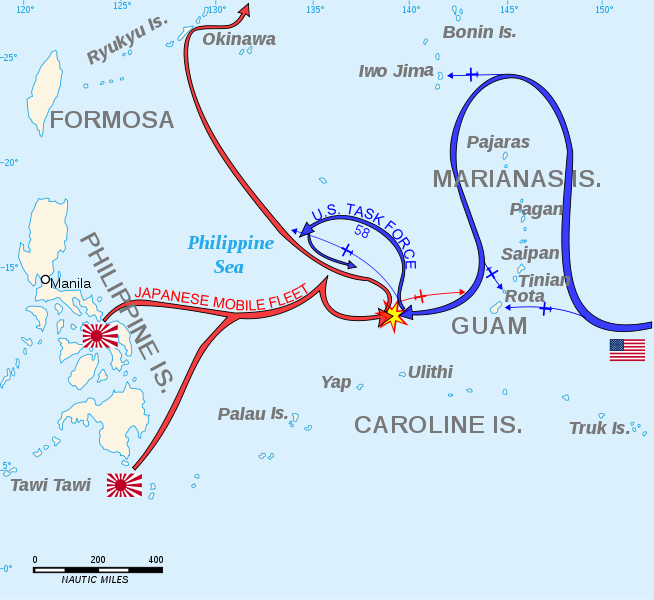
Because of that I am reposting an older article on the Battle of the Philippine Sea, also known as the Great Marianas Turkey Shoot which was fought on the 19th and 20th of June 1944. That was 75 years ago, and unlike D-Day I have not seen a single news article or mention of it, even on Navy and DOD websites. But is was the battle that broke the back of Japanese Naval Aviation in the Pacific and helped speed the defeat of Japan.

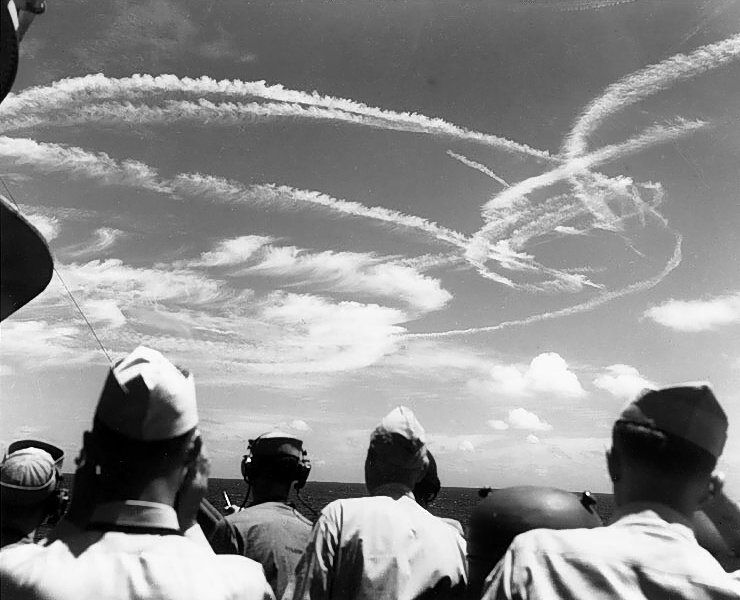
U.S. Navy personnel observe the Air Battle from a Carrier

This battle was the largest battle between aircraft carrier fleets in history.  Twenty four aircraft carriers, 15 American and 9 Japanese embarking over 1400 aircraft dueled in the Central Pacific in a battle that so decimated Japanese Naval Aviation that it never recovered. The battle and the subsequent fall of Saipan brought down the government of General Tojo and was the beginning of the collapse of the Japanese Empire and the “Greater Asia Co-Prosperity Sphere.”

http://dsc.discovery.com/videos/destroyed-in-seconds-marianas-turkey-shoot.html

In late 1943 the Japanese realized that they needed to recover the initiative in the Pacific.  Between the Battle of the Coral Sea and the Battle of Santa Cruz Japanese Naval aviation suffered crippling losses especially among the elite pilots and aircrews with who they had begun the war.  These losses were compounded when the Navy attempted to support the operations of the Army to defend the Solomons and New Guinea.  Squadrons sent to battle the United States Navy, Marine Corps and Army Air Corps suffered at the hands of the every more skilled and well equipped American fighter squadrons the victims of which included Admiral Isoruku Yamamoto the Commander of the Combined Fleet when the Betty bomber that he was traveling on was ambushed by U.S. Army Air Corps P-38 Lightening fighters.

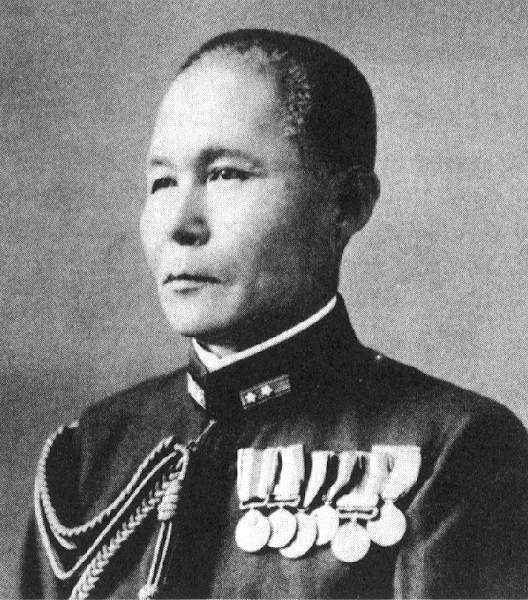
Vice Admiral Jisaburō Ozawa

By late 1943 the Japanese were attempting to train new pilots and aircrews to man the carriers of the Combined Fleet’s Carrier Striking Forces.  Admiral Soemu Toyoda, the new commander of the Combined Fleet and its third commander in less than a year developed “Plan A-Go” as a means to mass carrier and land based aviation assets to defeat the Fast Carrier Task Forces of the United States Navy.  The rebuilt Carrier Striking Groups built around 9 carriers embarking 473 aircraft was commanded by Vice Admiral Jisaburō Ozawa who had taken over from Vice Admiral Chuichi Nagumo.

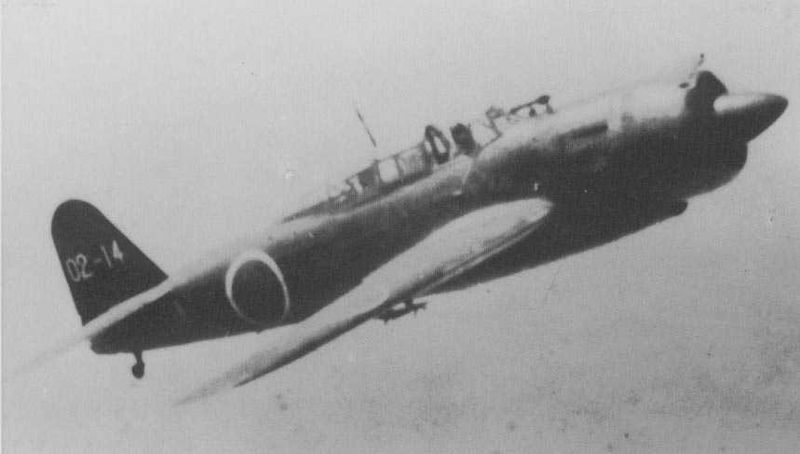
D4Y3 “Judy” Dive Bomber

The Japanese discerned the intentions of the Americans when American Carrier aircraft struck Saipan and Guam. The Japanese had expected the Americans to strike further south and the Marianas had few land-based aircraft in the area. Toyoda made the decision to engage the Americans and ordered the fleet to attack. American submarines discovered the gathering Japanese forces. The Japanese forces were assembled by the 17th and by the 18th the 5th Fleet under the command of Admiral Raymond Spruance spearheaded by Task Force 58 Commanded by Vice Admiral Marc Mitscher had assembled west of Saipan to meet the Japanese.  The Americans fielded 15 carriers including 9 Fleet Carriers of which 6 were the new Essex Class Fleet Carriers which embarked 956 aircraft.

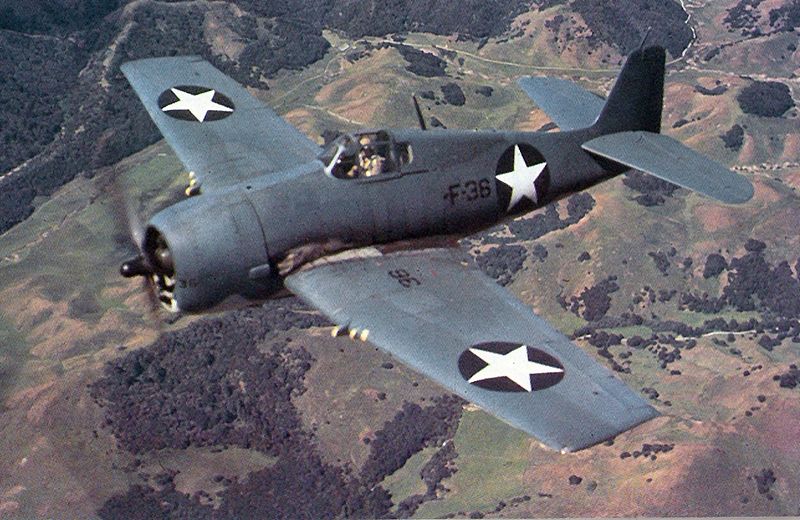
The F6F Hellcat cemented its place as the premier fighter plane of the Pacific war during the “Turkey Shoot”

The Americans held both a quantitative and qualitative advantage against the Japanese. The American fighter squadrons were equipped with the F6F Hellcat which was far superior to the now obsolescent Japanese Zero fighters and their pilots and aircrews were now more experienced and proficient than the newly minted Japanese aviators who by and large had little combat experience and were flying inferior aircraft.  The Japanese had not planned for a long war and had done little to systemically address the heavy losses that their force experienced during 1942 and 1943 at Coral Sea, Midway, Eastern Solomons, Santa Cruz and in the Solomons campaign.

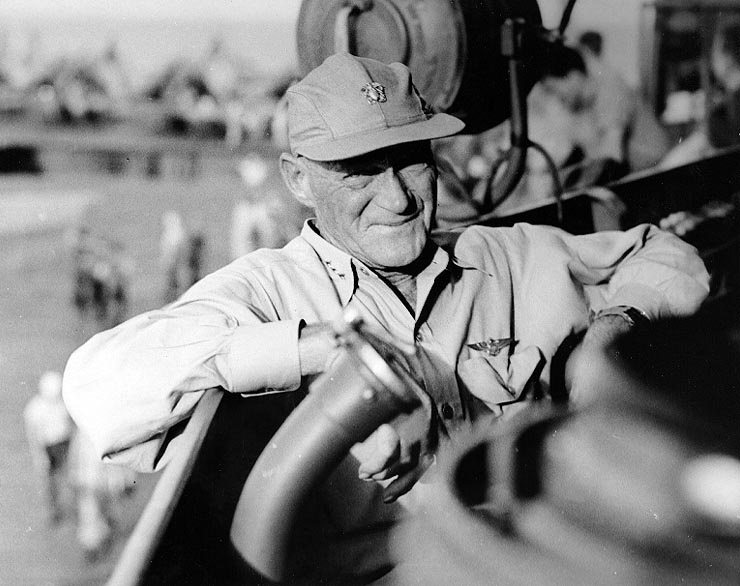
Vice Admiral Marc Mitscher aboard the USS Lexington

Mitscher desired to move aggressively against the Japanese. However he was overruled by Spruance who acting on the advice of his Battle Line Commander Vice Admiral Willis Lee decided that a possible night surface action with the Japanese was not desirable. Spruance instead directed Mitscher to be ready to defend against Japanese air strikes knowing that his carriers and carrier based air groups was more than a match for the Japanese air groups.   Spruance has been criticized for his decision but the words of Willis Lee, a veteran of the Naval Battle of Guadalcanal where he defeated a Japanese force sinking the Battleship Kirishima.  He prevailed in his flagship the USS Washington but losing three of four escorting destroyers and seeing his second battle wagon the USS South Dakota heavily damaged. A night surface engagement was not worth the risk as in Lee’s eyes it evened the playing field for the Japanese and took away the American air power advantages.

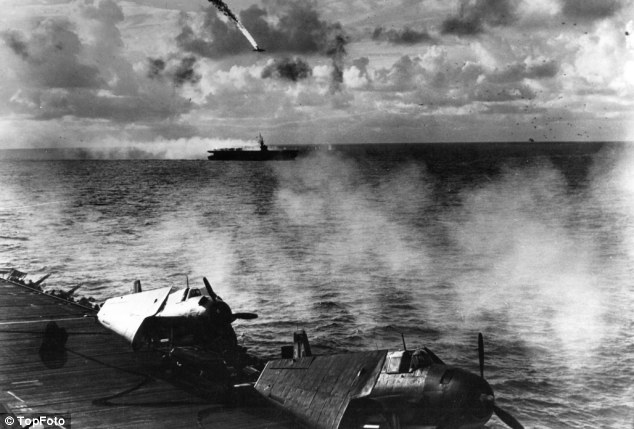
A Japanese aircraft goes down in flames

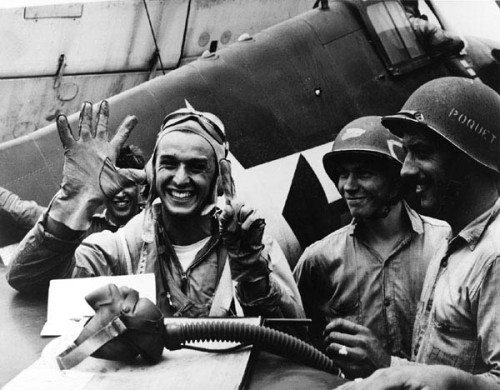
The Japanese began the action on the 19th sending successive attack waves against Task Force 58. They were met by massed formations of Hellcats vectored in by air controllers in the Combat Information Centers of the American carriers using their superior air search radar systems.  In less than two hours well over 200 Japanese aircraft were downed by the Hellcats.  Lieutenant Alexander Vraicu shot down 6 “Judy” dive bombers in minutes before low on fuel he returned to the USS Lexington.

Lieutenant Alexander Vraicru holds up six fingers for six kills

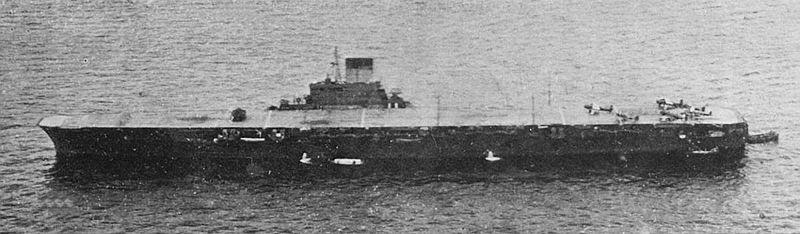
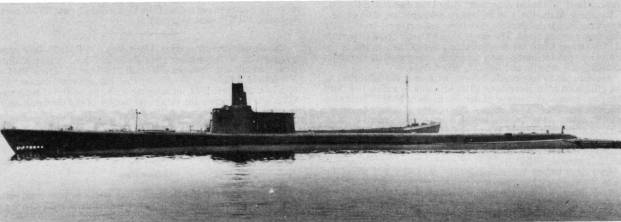
While the Hellcats were chewing up the Japanese squadrons the American submarines USS Albacore and USS Cavalla each sank a Japanese Fleet Aircraft Carrier.  The Albacore hit the Ozawa’s flagship, the new Tiaho with a torpedo which caused minimal damage, but ruptured fuel lines. The Japanese damage control officer opened vents in the ship which allowed the fumes to spread throughout the carrier. They were ignited by a generator causing massive explosions and forcing Ozawa to abandon his flagship. Tiaho would sink by late afternoon after being ripped apart by a series of massive explosions taking with her 1650 of 1750 officers and crew. Cavalla hit the Pearl Harbor veteran Shokaku with a spread of three torpedoes causing that ship to burst into flames with aircraft and ordnance adding to the conflagration. A massive explosion ripped through the ship causing her to sink with a loss of over 1200 officers and crew.

The Japanese flagship Tiaho (above) and her killer the USS Albacore

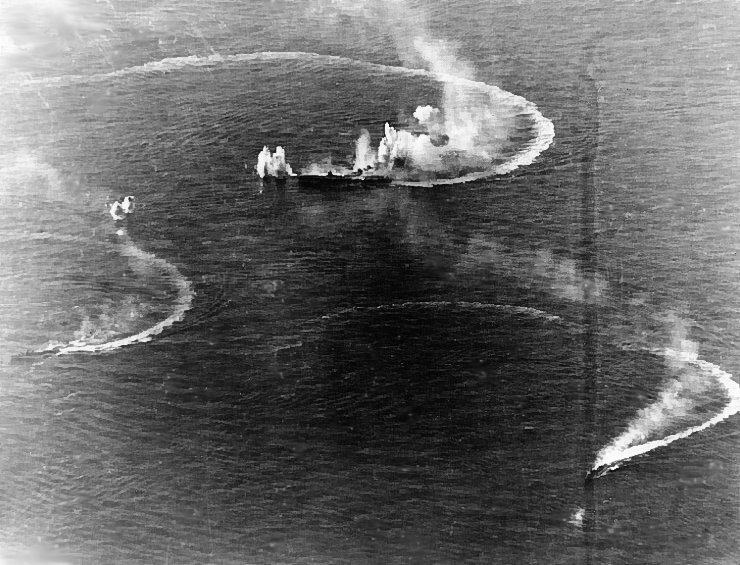
Toyoda desired that Ozawa retire from the battle before he suffered more losses but Ozawa wanted to stay around and hit the Americans with everything that he had left. The Americans sailed west during the night to seek out the Japanese Fleet. It took the majority of the day to find the Japanese. With only 75 minutes of daylight remaining Mitscher launched a strike despite the risk to his aircrew the majority whom were not trained in night landings.  The American strike sank the carrier Hiyo and two tankers and damaged the carriers Zuikaku, Chitoyda and Junyo as well as the battleship Haruna.  By the end of the day Ozawa had 35 aircraft in flyable condition. About 435 of the aircraft operated from the Japanese carriers were lost with the vast majority of their pilots and aircrew.

The Japanese Fleet under attack, carrier Zuikaku and two destroyers on June 20th

The final part of the drama was the return of the American strike group to the carriers. Knowing that if he maintained darken ship he would lose many aircraft and the men that flew them Mitscher ordered that the fleet turn on its lights. This act was incredibly risky but helped bring the majority of the returning aircraft to land or ditch near the task force.  The Americans lost less than 100 aircraft during the battle, most due to the night landings and unlike the Japanese who lost the majority of their aircrews, most of the American pilots and aircrew were rescued. In addition to their carrier based losses the Japanese lost nearly 200 land based aircraft.

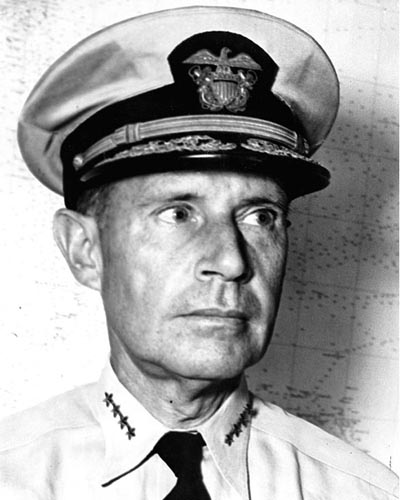
Admiral Raymond Spruance

The battle was the death-kneel of Japanese Naval Aviation. Later in the year the carriers again under Ozawa sailed against the Americans only this time they were a decoy force at the Battle of Leyte Gulf, a role that they succeeded in admirably. The American carriers now had free run of the Pacific only opposed by land based aircraft many used in a Kamikaze role until the end of the war. These would cause fearful losses among the American ships heavily damaging a number of carriers.

The battle is often forgotten by due to its proximity to the Normandy landings but was a significant step in the fight against Japan. The islands captured by the Americans, Saipan, Tinian and Guam would provide major sea and air staging areas for the final assault against Japan. Tinian would become the base of many Army Air Corps B-29 “Superfortress” bombers including those that dropped the Atomic bombs less than 14 months later. It was a turning point both militarily and politically. With the fall of the Tojo government the Japanese leaders began to slowly tell the truth about wartime setbacks and losses to a people that it had lied to since their invasion of China and occupation of Mongolia.  It was a setback that even Tojo and the highest leadership of Japan knew that they could not recover.

Until tomorrow,

Peace,

Padre Steve+

Leave a comment

Filed under aircraft, History, Military, Navy Ships, US Navy, World War II at Sea, world war two in the pacific

The Battle Of Midway at 77 Years: “A Magic Blend of Skill, Faith, and Valor”

Battle%20of%20Midway%20flat_080817160843

Friends of Padre Steve’s World,

Today we remember the Battle of Midway, the turning point of World War Two in the Pacific. By all empirical means the vastly superior Japanese fleet should have defeated the Americans, but success in war is not based on material alone. There are things unaccounted for, things that happen in the confusion of battle that The Prussian military theorist Carl von Clausewitz wrote.

“War is the province of chance. In no other sphere of human activity must such a margin be left for this intruder. It increases the uncertainty of every circumstance and deranges the course of events.” 

Six months after Pearl Harbor the United States Navy met the Imperial Japanese Navy in battle on the seas and in the airspace around Midway Island. It was a battle between a fleet that had known nothing but victory in the months after Pearl Harbor and one with the exception of a few minor tactical successes was reeling.

AkagiDeckApril42

Akagi April 1942

The Japanese had swept across the Pacific and the Indian Oceans and decimated every Allied Naval forces that stood in their way. After Pearl Harbor they had sunk the HMS Prince of Wales and HMS Repulse off of Singapore.  Next in a series of engagements destroyed the bulk of the US Asiatic Fleet in the waters around the Philippines and the Dutch East Indies culminating in the Battle of the Java Sea where the bulk of the American, British, Dutch and Australian (ABDA) naval forces engaged were annihilated attempting to fight superior Japanese forces.

Hermes_sinking

HMS Hermes sinking after Japanese Carrier air attack in the Indian Ocean

In the Indian Ocean Admiral Nagumo’s carriers dispatched a force of Royal Navy cruisers and the Aircraft Carrier HMS Hermes. In only one place had a Japanese Naval task force been prevented from achieving its goal. At the Battle of the Coral Sea where Task Force 11 and Task Force 17 centered on the Carriers USS Lexington and USS Yorktown prevented a Japanese invasion force from taking Port Moresby sinking the light carrier Shoho, damaging the modern carrier Shokaku and decimating the air groups of the Japanese task force.

Hornet_launches

USS Hornet launching B-25 Bombers during the Doolittle Raid

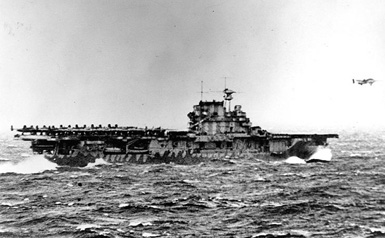
In May US Navy code breakers under the direction of Commander Joe Rochefort at Pearl Harbor discovered the next move of the Imperial Navy an attack on Midway Island and the Aleutian islands. Since the occupation of Midway by Japanese forces would give them an operational base less than 1000 miles from Pearl Harbor Admiral Chester Nimitz committed the bulk of his naval power, the carriers USS Enterprise CV-6USS Yorktown CV-5 and USS Hornet CV-8 and their 8 escorting cruisers and 15 destroyers, a total of 26 ships with 233 aircraft embarked to defend Midway. Nimitz also sent a force of 5 cruisers and 4 destroyers to cover the Aleutians.

images-42

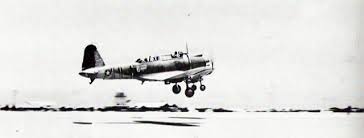
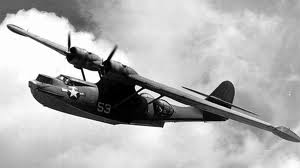
SBU-2 Vindicator Dive Bomber landing on Midway (above) PBY Catalina (below)images-43

Land based air assets on Midway were composed of a mixed Marine, Navy and Army air group of 115 aircraft, many of which were obsolete. Aboard Midway there were 32 US Navy PBY Catalina Flying Boats, 83 fighters, dive bombers, torpedo planes and Army Air Force bombers piloted by a host of inexperienced pilots.

Nimitz’s instructions to his Task Force Commanders was simple “You will be governed by the principle of calculated risk, which you shall interpret to mean the avoidance of exposure of your force to attack by superior enemy forces without good prospect of inflicting … greater damage on the enemy.”

893594c746

                            Isoroku Yamamoto

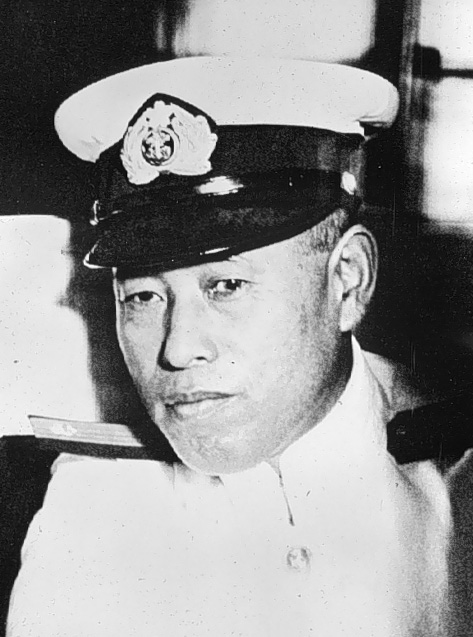
Admiral Isoroku Yamamoto commanded the Combined Fleet. The victor of Pearl Harbor and the triumph’s in the first six months of the Pacific War was determined to end the war with a decisive battle at Midway. His plans were opposed by many in the Imperial General Staff, especially those in the Army but when the US raid on Tokyo, the Doolittle Raid, all opposition to the attack was dropped.

10-japanese-carriers-coral-sea-midway

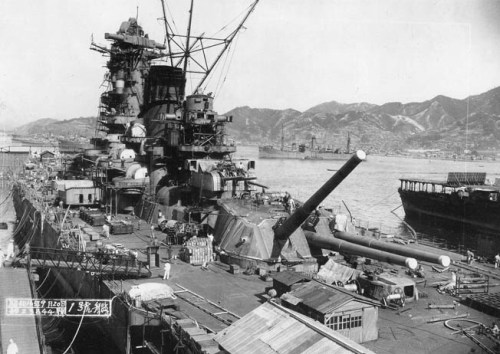
The Japanese sent a force of 7 battleships and 7 carriers against Midway. These included the elite First Carrier Striking Group composed of the Pearl Harbor attackers Akagi, Kaga, Soryu and Hiryu and their highly trained and combat experienced air groups. Among the surface ships was Yamamoto’s flagship, the mighty Battleship Yamato, at 72,000 tons and armed with 9 18” guns, the most powerful and largest battleship ever to see combat.

The strike force included 273 aircraft and was escorted by 14 cruisers and 39 destroyers. They were to take Midway and then destroy the US Navy when it came out to fight. Yamamoto sent a force force of 4 battleships, 12 destroyers assigned screen to the Aleutian invasion force which was accompanied by 2 carriers 6 cruisers and 10 destroyers. The other carriers embarked a further 114 aircraft.

Despite this great preponderance in numbers Yamamoto’s plan was complex and his forces too far apart from each other to offer support should and get into trouble. The powerful Japanese Task forces were scattered over thousands of square miles of the Northern Pacific Ocean where they could not rapidly come to the assistance of any other group.

images-44

With the foreknowledge provided by the code breakers the US forces hurried to an intercept position northeast of Midway eluding the Japanese submarine scout line which the Japanese Commander Admiral Yamamoto presumed would find them when they sailed to respond to the Japanese attack on Midway.  Task Force 16 with the Enterprise and Hornet sailed first under the command of Rear Admiral Raymond A Spruance and Task Force 17 under Rear Admiral Frank “Jack” Fletcher with the Yorktown which had been miraculously brought into fighting condition after suffering heavy damage at Coral Sea. Fletcher assumed overall command by virtue of seniority and Admiral Nimitz instructed his commanders to apply the principle of calculated risk when engaging the Japanese as the loss of the US carriers would place the entire Pacific at the mercy of the Japanese Navy.

On June 3rd a PBY Catalina discovered the Japanese invasion force and US long range bombers launched attacks against it causing no damage. The morning of the 4th the Americans adjusted their search patterns in and the Japanese came into range of Midway and commenced their first strike against the island.

g17056

In response land based aircraft from Midway attacked the Japanese carrier force taking heavy casualties and failing to damage the Japanese task force. The American Carrier task forces launched their strike groups at the Japanese fleet leaving enough aircraft behind of the Combat Air Patrol and Anti-submarine patrol.  As the Americans winged toward the Japanese fleet the Japanese were in a state of confusion. The confusion was caused when a scout plane from the Heavy Cruiser Tone that had been delayed at launch discovered US ships but did not identify a carrier among them until later into the patrol. The carrier  was the Yorktown and TF 17, but for Nagumo who first expected no American naval forces, then received a report of surface ships without a carrier followed by the report of a carrier the reports were unsettling.

Orders and counter-orders were issued as the Japanese attempted to recover their strike aircraft and prepare for a second strike on the island and then on discovery of the Yorktown task force, orders changed and air crews unloaded ground attack ordnance in favor of aerial torpedoes and armor piercing bombs. The hard working Japanese aircrew did not have time to stow the ordnance removed from the aircraft but by 1020 they had the Japanese strike group ready to launch against the US carriers.

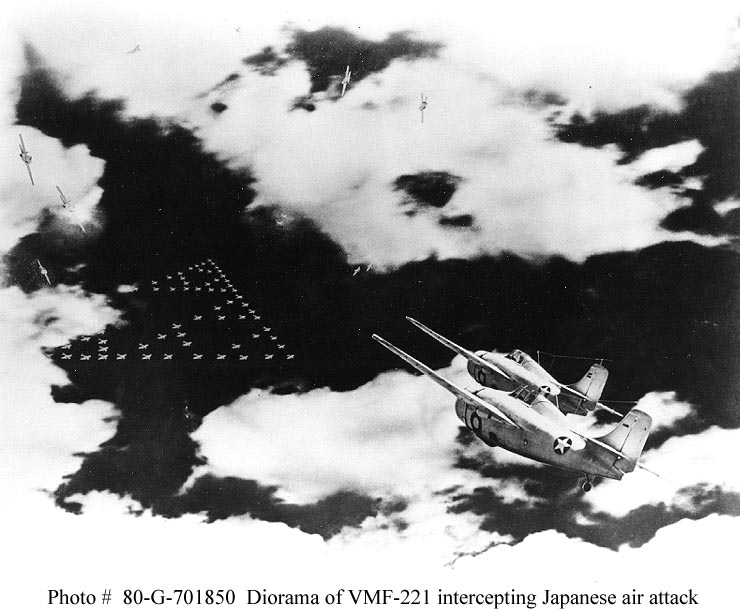
g701850

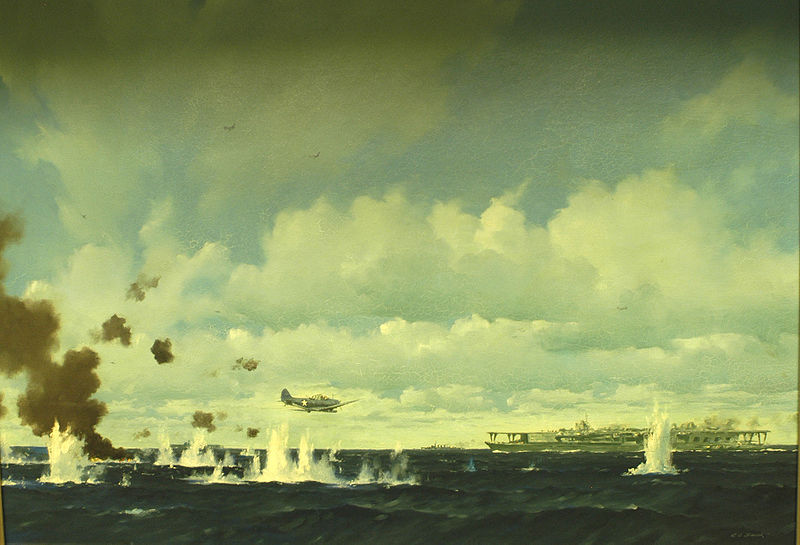
As the Japanese crews worked the Japanese carriers were engaged in fending off attacks by the US torpedo bomber squadrons, VT-6 from Enterprise, VT-8 from Hornet and VT-3 from Yorktown. The Japanese Combat Air Patrol ripped into the slow, cumbersome and under armed TBD Devastators as they came in low to launch their torpedoes.  Torpedo Eight from Hornet under the command of LCDR John C Waldron pressed the attack hard but all 15 of the Devastators were shot down. Only Ensign George Gay’s aircraft was able to launch its torpedo before being shot down and Gay would be the sole survivor of the squadron.

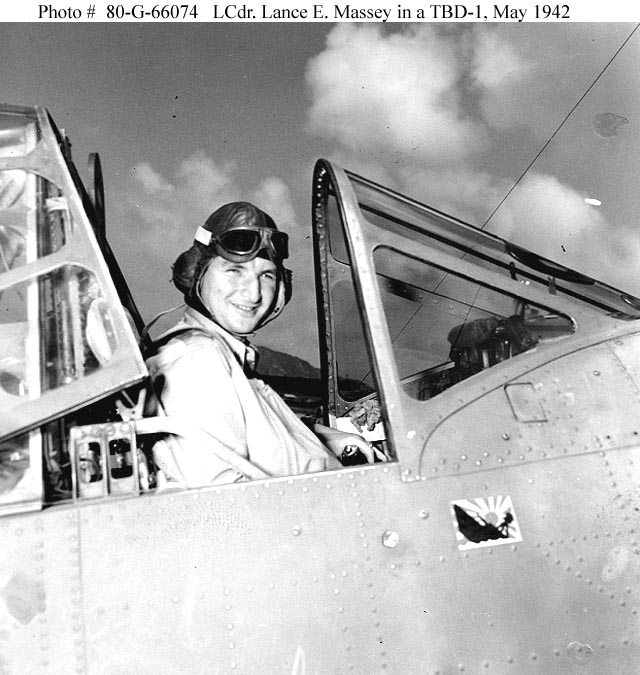
g66074

LCDR Lance Massey CO of VT-3

Page500_163_6

LCDR John Waldron CO of VT-8

LCDR Eugene Lindsey CO of VT-6

Torpedo 6 from Enterprise under the command of LCDR Eugene Lindsey suffered heavy casualties losing 10 of 14 aircraft with Lindsey being one of the casualties.  The last group of Devastators to attack was Torpedo 3 from Yorktown under the command of LCDR Lem Massey from the Yorktown. These aircraft were also decimated and Massey killed but they had drawn the Japanese Combat Air Patrol down to the deck leaving the task force exposed to the Dive Bombers of the Enterprise and Yorktown.

800px-tbd_attacking_at_midway_painting-1

There had been confusion among the Americans as to the exact location of the Japanese Carriers. Bombing 8 and Scouting 8 from Hornet did not find the carriers and had to return for lack of fuel while losing a number of bombers and their fighter escort having to ditch inn the ocean and wait for rescue. The Enterprise group composed of Bombing-6 and Scouting 6 under CDR Wade McClusky was perilously low on fuel when the wake of a Japanese destroyer was spotted.  McClusky followed it to the Japanese Task Force. The Yorktown’sgroup under LCDR Max Leslie arrived about the same time.

Dauntless_dive_bombers

When the American dive bombers arrived over the Japanese Carrier Strike Force they found the skies empty of Japanese aircraft. Below, aboard the Japanese ships there was a sense of exhilaration as each succeeding group of attackers was brought down and with their own aircraft ready to launch and deal a fatal blow to the American carrier wondered how big their victory would be. The war would soon be decided.

midway4

Akagi dodging bombs at Midway

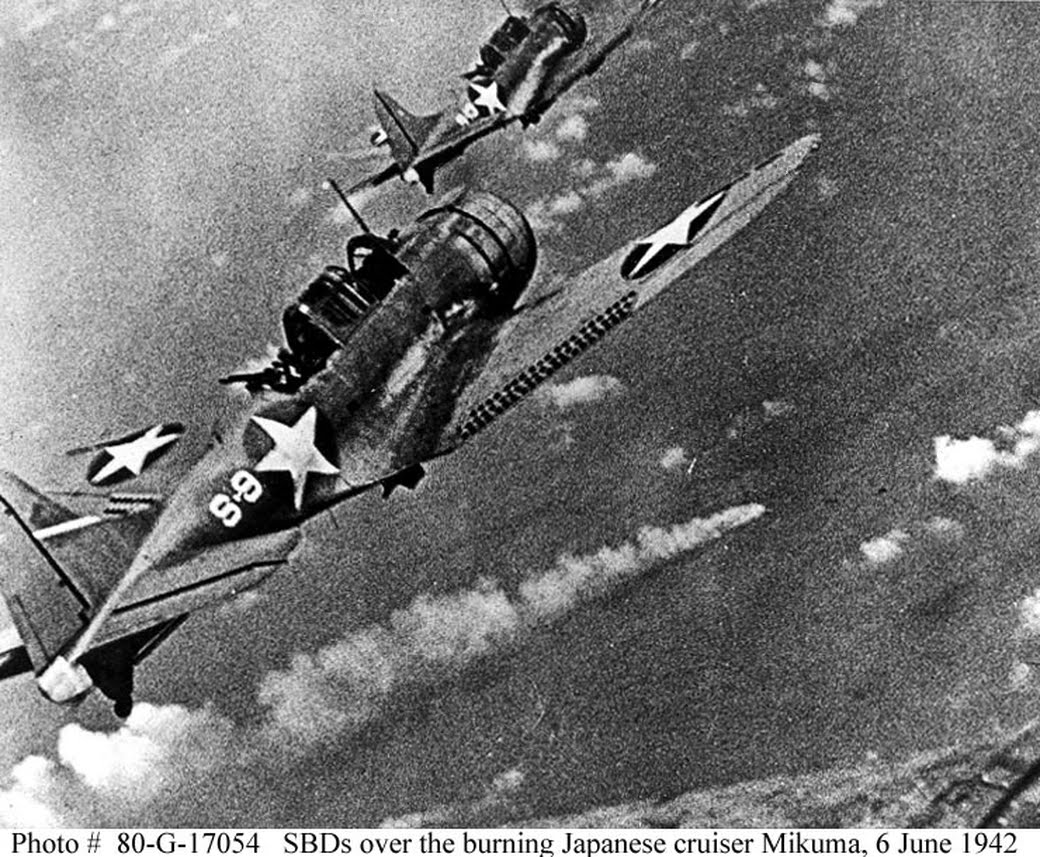
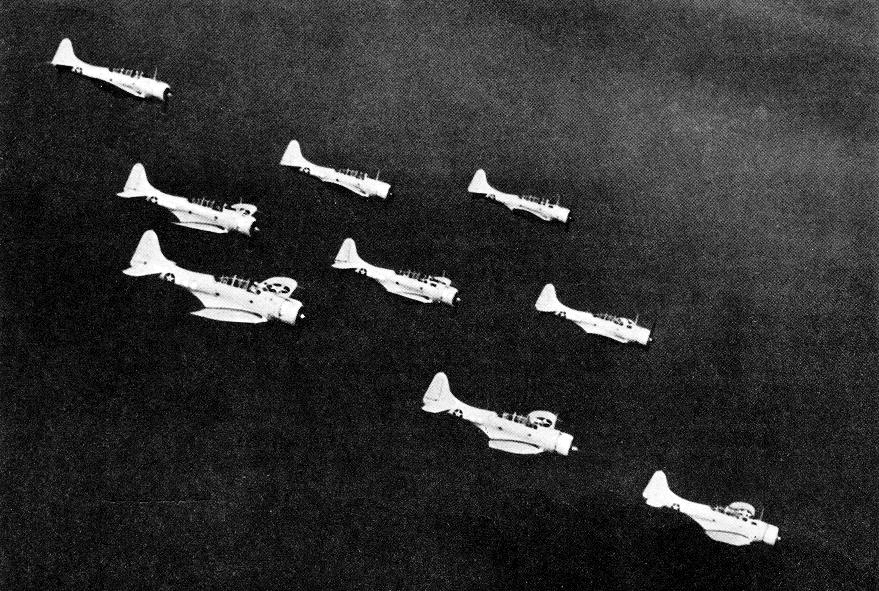
At 1020 the first Zero of the Japanese attack group began rolling down the flight deck of the flagship Akagi, aboard Kaga aircraft were warming up as they were on the Soryu.  The unsuspecting Japanese were finally alerted when lookouts screamed “helldivers.” Wade McClusky’s aircraft lined up over the Akagi and Kaga pushing into their dives at 1022. There was a bit of confusion when the bulk of Scouting 6 joined the attack of Bombing 6 on the Kaga. That unprepared ship was struck by four 1000 pound bombs which exploded on her flight deck and hangar deck igniting the fully fueled and armed aircraft of her strike group and the ordnance littered about the hangar deck.  Massive fires and explosions wracked the ship and in minutes the proud ship was reduced to an infernal hell with fires burning uncontrollably. She was abandoned and would sink at 1925 taking 800 of her crew with her.

douglas-sbd5-dauntless-dive-bomber-battle-of-midway-01

LT Dick Best of Scouting 6 peeled off from the attack on Kaga and shifted to the Japanese flagship Akagi. On board Akagi were two of Japan’s legendary pilots CDR Mitsuo Fuchida leader of and CDR Minoru Genda the architect of the Pearl Harbor attack and subsequent string of Japanese victories. Both officers were on the sick list and had come up from sick bay to watch as the fleet was attacked. Seeing Kaga burst into flames they stood mesmerized until Akagi’slookouts screamed out the warning “helldivers” at 1026.  Best’s few aircraft hit with deadly precision landing two of their bombs on Akagi’s flight deck creating havoc among the loaded aircraft and starting fires and igniting secondary explosions which turned the ship into a witch’s cauldron.  By 1046 Admiral Nagumo and his staff were forced to transfer the flag to the cruiser Nagara as Akagi’s crew tried to bring the flames under control. They would do so into the night until nothing more could be done and abandoned ship at 2000.  Admiral Yamamoto ordered her scuttled and at 0500 on June 5th the pride of the Japanese carrier force was scuttled.

g701870

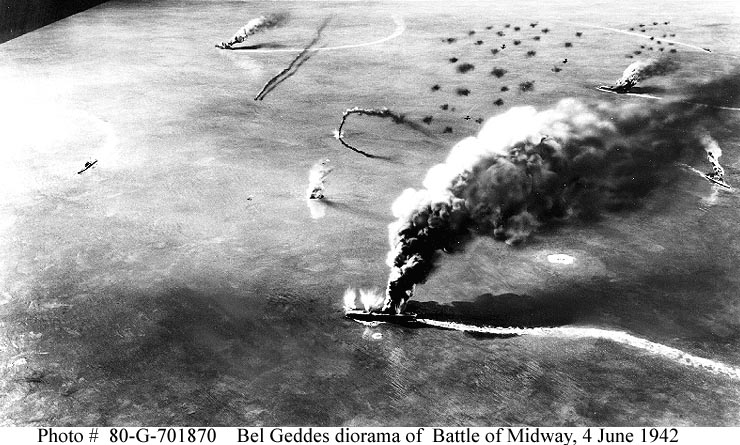
VB-3 under LCDR Max Leslie from the Yorktown stuck the Soryu with 17 aircraft, however only 13 of the aircraft had bombs due to an electronic arming device malfunction on 4 of the aircraft, including that of Commander Leslie.  Despite this Leslie led the squadron as it dove on the Soryu at 1025 hitting that ship with 3 and maybe as many as 5 bombs. Soryu like her companions burst into flames as the ready aircraft and ordnance exploded about her deck. She was ordered abandoned at 1055 and would sink at 1915 taking 718 of her crew with her.

h73065

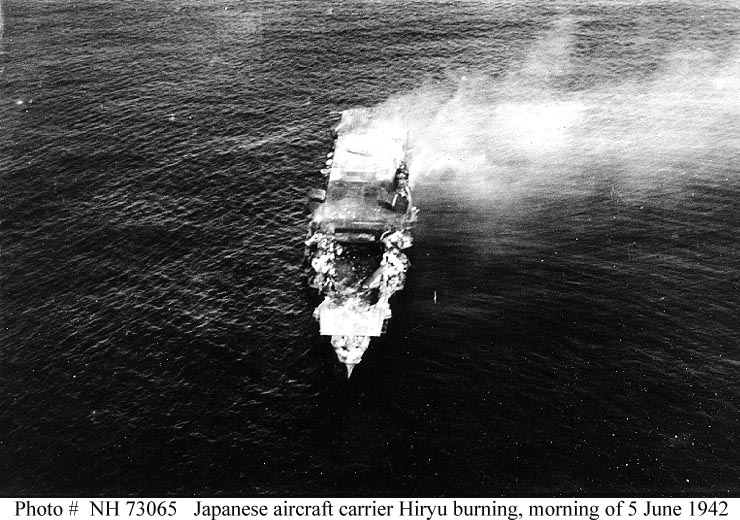
The remaining Japanese flattop the Hiryu attained the same fate later in the day after engaging in an epic duel with the Yorktown which her aircraft heavily damaged. Yorktown would be sunk by the Japanese submarine I-168 while being towed to safety.

71380-004-B4724C34

USS Yorktown under attack from Kate Torpedo Bombers from Hiryu on June 4th 1942

In five pivotal minutes the course of the war in the Pacific was changed. Authors have entitled books about Midway Incredible Victory by Walter Lord and Miracle at Midway by Gordon Prange and those titles reflect the essence of the battle.

At Midway a distinctly smaller force defeated a vastly superior fleet in terms of experience, training and equipment. At the very moment that it appeared to the Japanese that they would advance to victory their vision disappeared. In a span of less than 5 minutes what looked like the certain defeat of the US Navy became one of the most incredible and even miraculous victories in the history of Naval warfare. In those 5 minutes history was changed in a breathtaking way. While the war would drag on and the Japanese still inflict painful losses and defeats on the US Navy in the waters around Guadalcanal the tide had turned and the Japanese lost the initiative in the Pacific never to regain it.

The Japanese government hid the defeat from the Japanese people instead proclaiming a great victory. The American government could not fully publicize the victory for fear of revealing the intelligence that led to the ability of the US Navy to be at the right place at the right time and defeat the Imperial Navy.

uss-enterprise-cv-6-1

USS Enterprise

The American victory at Midway changed the course of the war in the Pacific. The Battle of Midway established the aircraft carrier and the fast carrier task force as the dominant force in naval warfare which some would argue it still remains. Finally those five minutes ushered in an era of US Navy dominance of the high seas which at least as of yet has not ended as the successors to the EnterpriseHornet and Yorktown ply the oceans of the world and the descendants of those valiant carrier air groups ensure air superiority over battlefields around the world.

Walter Lord, whose history of the battle is still the classic presentation of it wrote:

“Even against the greatest of odds, there is something in the human spirit – a magic blend of skill, faith, and valor – that can lift men from certain defeat to incredible victory.” 

Peace

Padre Steve+

1 Comment

Filed under History, Military, Navy Ships, US Army Air Corps, US Marine Corps, US Navy, World War II at Sea, world war two in the pacific

For Whom the Bell Tolls: It Tolls for the Dead we Honor this Weekend

Friends of Padre Steve’s World,

The Poet John Donne wrote:

No man is an island,

Entire of itself.

Each is a piece of the continent,

A part of the main.

If a clod be washed away by the sea,

Europe is the less.

As well as if a promontory were.

As well as if a manor of thine own

Or of thine friend’s were.

Each man’s death diminishes me,

For I am involved in mankind.

Therefore, send not to know

For whom the bell tolls,

It tolls for thee.

Today my base remembered the 94 men and women who deployed from here after September 11th 2001 who did not return. My role was purely advisory this year, unlike past years where I have been deeply involved in the service. The chaplain I assigned to coordinate this ceremony in conjunction with our base command triad, our Public Affairs Officer, and the tenant units did a remarkable job. Chaplain Charlie Mallie did a hell of a job herding cats and pulling off a flawless ceremony. I know, because nearly every day for the last two weeks I went to his office and let him vent. Honestly, I think he did better than I did the last two years.

Our ceremony involved tolling the bell for each of the 94 men and women as their names were read and their pictures shown. I knew, served, or trained with a decent number of these men and women. As I remembered them, I remembered other comrades who have sacrificed their lives in this forever war, and those who died of wounds or ended their lives after returning from war. Those names and faces are forever with me. They are my brothers and sisters.

It is hard to believe that I had been in the military 20 years when it began. I have a nephew who is within a few weeks of graduating from Marine Corps boot camp who was less than a year old when it began. He’s a hard charger, I got a letter from him today, he is so motivated to excel, he wants to be the best. He’ll be a great Marine and I am proud of him. I can see the growth in him since he first reported. I only pray that any future Commander in Chief will be worthy of him, obviously the current one won’t, and I pray that Trump will not send us into even worse wars, wars that my nephew might might have to fight, and could conceivably be kept on active duty to support. I don’t have to walk well to make notifications to families.

As for Trump and his acolytes I only can echo the words of Ernest Hemingway wrote in his novel For Whom the Bell Tolls:

There are many who do not know they are fascists but will find it out when the time comes.

As for me, I found out officially that I won’t retire until next year in order to get my medical issues resolved. I am glad for that. I do want to finish up strong, but I digress…

Memorial Day is not about those who currently serve, or those who have left the service and still live. It is about those who for whom today the bell tolled, 94 from our base and about 7,000 others, not counting those who died after they left the service, of which there are far too many.

It is also for all of those who died in all the wars since the American Revolution. This is about them. Thank them, not me, and certain do not thank President Trump if he chooses to pardon convicted and accused war criminals this weekend, something that will forever stain the reputation of the American military, and will lead to worse, but again I digress, I cannot imagine a U.S. President pardoning convicted war criminals, but President Trump is special.

When I went do do my aquatic physical therapy this week, I parked in the hospital’s main parking garage and walked through the old cemetery on the hospital grounds. It is the resting place of American Sailors, Marines, Coast Guardsmen, some Confederates, Russians, Germans, British, and sailors from other countries, quite a few unknown. It is humbling to walk through such a place. It is hollowed ground, and it is a place to remember and put things in perspective.

For most people this Memorial Day will be a weekend of ball games and barbecues, parties and platitudes, but honestly, it is for them for whom the bell tolls and Taps blows. But remember for whom the bell tolls this weekend, I know that it tolls for all those who died, it tolls for the known and the unknown.

Until tomorrow,

Peace,

Padre Steve+

2 Comments

Filed under History, life, Military, Political Commentary, remembering friends, us army, US Marine Corps, US Navy, war crimes, War on Terrorism

Musing on Potential War With Iran

Friends of Padre Steve’s World,

I am a veteran of Iraq, and have participated in maritime operations in the Arabian/Persian Gulf.

I am not comfortable with the steps the administration is taking with Iran, not that I am any fan of the Ayatollahs and their aggressive theocratic-religious-military-dictatorship. While I had always dreamed of a military career it was the failure of the attempt to rescue the hostages taken by the Iranians in April 1980, Operation Eagle Claw that was the tipping point for me to explore my options about joining the military. 1980 was the year I transferred to California State University, albeit to study history, but mostly because Judy, my girlfriend was going there. Once I got there I started checking out the various ROTC programs and enlisted as a simultaneous membership program between Army ROTC and the California Army National Guard in 1981.

I thought back then at sometime we would go to war with Iran but as years passed I thought that maybe both sides would find a way to peacefully co-exist, at least within limits, especially after my experiences in the Gulf where the regular Iranian Navy chased Iraqi Oil Smugglers into our hands. Of course there was the time some Revolutionary Guard patrol boats harassed our squadron Flagship, an Australian Special Forces Support ship and we sped to her assistance at full speed with guns and missiles armed and ready to go to war. They withdrew and nothing came out of it, but for about an hour it appeared that we would be the first U.S. Navy ship to engage the Iranians since the Tanker Wars Of the late 1980s. The fact is that the Revolutionary Guard Naval Corps operates in a different world from the regular Iranian Navy.

If we go to war, now I know two things about the Arabian/Persian Gulf and the Iranians have built up a formidable asymmetric naval and capability. A large number small submarines, not high tech, but in large numbers hard to kill. Likewise, would deploy large numbers of fast attack boats and craft armed with a variety of missiles and guns for swarm attacks on otherwise better armed and more capable warships. We prepared for those back in 2002, but the lethality of the Iranians has increased, as has their number of anti-ship missile batteries his increased exponentially, as has their number of short and medium range ballistic missiles. While their AirPower is antiquated by American standards they have better and more advanced air defense systems, supplied by Russia. They are also supported by Shia Muslim militants in Iraq, Syria, Yemen, and even in Bahrain, headquarters of the U.S. 5th Fleet.

The Iranians have the capability of shutting down the Straits of Hormuz, and their allies in Yemen have showed the capability to attack shipping in the Bab El Mendeb, the Southern entrance to the Red Sea and a vital shipping lane in its own right.

Unfortunately, the Trump administration has severely weakened our ties with key allies that routinely contribute Naval and air forces to the security of the Gulf.

Over the past few weeks an otherwise routine deployment to the region by the Abraham Lincoln Carrier Strike Group, was sped up, B-52 bombers were deployed, and a proposal to send 120,000 troops to the Gulf was revealed. Four merchant ships were allegedly damaged by saboteurs, but no hard evidence points to Iran, and the damage to all the ships was minimal. The embassy staff in Baghdad was reduced over alleged threat increases that the American Commander in Iraq denies. The threats were reported by Israeli sources, much like the evidence that led us into war with Iraq in 2003.

I cannot put my finger finger on it, but something is not right about this situation. We are in no way ready for a major war with Iran, not with the possibility a potential war with North Korea, a trade war with China, and Russian threats to NATO allies or friendly nations in Eastern Europe.

This does not feel right to me. I’ve been around and seen and know too much. Maybe it’s my education military history, and high level Joint Operations education. Maybe it is my nearly 38 years serving in both the Army and Navy, including about 7 years with the Marines. Maybe it’s my long experience working with allies. I don’t know. All I know is that when domestic troubles embroil a national leader, the solution is often found in war. War allows leaders to do things impossible under peacetime constraints.

I can only speculate what is going on, but my hermeneutic os suspicion says to ask “why this administration, why Iran, why now?”

I wish I had the answer, but something doesn’t seem right, and I am worried for the many friends I have serving in the Gulf.

Until tomorrow,

Peace

Padre Steve+

6 Comments

Filed under Foreign Policy, History, iraq, middle east, Military, national security, US Navy, War on Terrorism

And Then there Were None: The Doolittle Raid 77 Years Later

Lieutenant Colonel Dick Cole

Today marks the 77th anniversary of the Doolittle Raid on Tokyo. 80 US Army Air Corps flyers manning 16 B-25 Mitchell bombers conducted a mission from the deck of the USS Hornet CV-8 which though it caused little damage changed the course of World War Two in the Pacific.

<img src=”https://padresteve.com/wp-content/uploads/2015/04/marc_a-_mitscher_and_james_doolittle.jpg?w=300&h=217″ class=”aligncenter size-medium wp-image-16779″ width=”300″ height=”217″ data-attachment-id=”16779″ data-permalink=”https://padresteve.com/2015/04/21/greetings-from-shangri-la-the-doolittle-raid/marc_a-_mitscher_and_james_doolittle/” data-orig-file=”https://padresteve.com/wp-content/uploads/2015/04/marc_a-_mitscher_and_james_doolittle.jpg” data-orig-size=”2785,2018″ data-comments-opened=”1″ data-image-meta=”{” data-image-title=”Marc_A._Mitscher_and_James_Doolittle” data-image-description=”

Orders in hand, Capt. Marc A. Mitscher, U.S.N., skipper of the U.S.S. Hornet (CU-8) chats with Maj. Gen. James Doolittle, U.S. Army. Some of the 80 Army fliers who took part in the historic Japanese raid are pictured with the two fliers.

” data-medium-file=”https://padresteve.com/wp-content/uploads/2015/04/marc_a-_mitscher_and_james_doolittle.jpg?w=300&h=217&#8243; data-large-file=”https://padresteve.com/wp-content/uploads/2015/04/marc_a-_mitscher_and_james_doolittle.jpg?w=500&#8243; srcset=”https://padresteve.com/wp-content/uploads/2015/04/marc_a-_mitscher_and_james_doolittle.jpg?w=300&h=217 300w, https://padresteve.com/wp-content/uploads/2015/04/marc_a-_mitscher_and_james_doolittle.jpg?w=600&h=434 600w, https://padresteve.com/wp-content/uploads/2015/04/marc_a-_mitscher_and_james_doolittle.jpg?w=150&h=109 150w” sizes=”(max-width: 300px) 100vw, 300px” style=”height: auto; max-width: 100%; border: 0px; margin-bottom: 2px”>

Doolittle and his Airmen with Hornet’s C.O. Captain Marc Mitscher 

The genus of the strike came from the desire of President Franklin Roosevelt to bomb Japan as soon as possible during a meeting just prior to Christmas 1941. Various aircraft types were considered and in the end the military chose the B-25 because it had the requisite range and had the best characteristics. Aircraft and their crews from the 17th Bomb Group which had the most experience with the aircraft were modified to meet the mission requirements. Lieutenant Colonel Jimmy Doolittle was selected to lead the mission.

Once the aircraft were ready they and their crews reported to Eglin Field for an intensive three week period of training. Supervised by a Navy pilot the crews practiced simulated carrier take offs, low level flying and bombing, night flying and over water navigation. When the training was complete the aircraft and crews and support personnel flew to McClellan Field for final modifications and then to NAS Alameda California where they were embarked on the Hornet Hornet’s air group had to be stowed on the ships hanger deck since the 16 B-25s had to remain of the flight deck. Each bomber was loaded with 4 specially modified 500 lb. bombs, three high explosive and one incendiary.

Departing Alameda on April 2nd the Hornet and her escorts, Hornet’s Task Force 18 rendezvoused with the Admiral William “Bull” Halsey’s Task Force 16 built around the USS Enterprise CV-6. task Force 16 provided escort and air cover during the mission. The carriers, escorted by 4 cruisers, 8 destroyers and accompanied by two oilers hoped to get close enough to the Japanese home islands so that the raiders could reach bases in allied China.

Hornet in Heavy Seas while launching the Raiders

The destroyers and slow oilers broke off on the evening of the 17th after refueling the carriers and cruisers. The two carriers and the cruisers then commenced a high speed run to get into range. However early in the morning of April 18th the ships were sighted by a Japanese patrol boat, the #23 Nitto Maru which was quickly sunk by the USS Nashville but not before it got off a radio message alerting the Japanese command. However the Japanese knowing that carrier aircraft had a relatively short range did not expect an attack. However, realizing the danger that the sighting brought, Mitscher elected to launch immediately, even though it meant that bombers would have to ditch their aircraft or attempt to land well short of the friendly Chinese airfields. The launch was 10 hours earlier and about 170 miles farther out from the Chinese bases than planned.

B-25 Launching from Hornet

Flying in groups of two to four aircraft the raiders struck the Japanese cities of Tokyo, Yokohama, Yokosuka, Nagoya, Kobe and Osaka. Minimal damage was done and only one aircraft was damaged. However they needed to fly nearly 1500 more miles to get to areas of China unoccupied by Japanese forces. Miraculously most of the aircraft and crews managed to find refuge in China. 69 of the 80 pilots and crew members avoided death or capture. Two flyers drowned, one died when parachuting from his aircraft. Eight men were captured. Of those captured by the Japanese three, Lieutenants William Farrow, Dean Hallmark and Corporal Harold Spatz were tried and executed for “war crimes” on October 15th 1942.

Many of the surviving flyers continued to serve in China while others continued to serve in North Africa and Europe, another 11 died in action following the raid. Doolittle felt that with the loss of all aircraft and no appreciable damage that he would be tried by courts-martial. Instead since the raid had so bolstered American morale he was awarded the Medal of Honor, promoted to Brigadier General and would go on to command the 12th Air Force, the 15th Air Force and finally the 8th Air Force.

The raid shook the Japanese, especially the leadership of the Imperial Navy who had allowed American aircraft to strike the Japanese homeland. The attack helped convince Admiral Isoroku Yamamoto that an attack on Midway was needed in order to destroy the American Carriers and the threat to the home islands.

When asked by a reporter about where the attack was launched from, President Roosevelt quipped “Shangri-La” the fictional location of perpetual youth in the Himalayas’ made famous in the popular book and movie Lost Horizon.

The raid in terms of actual damage and losses to the attacking forces was a failure, but in terms of its impact a major victory of the United States. The attack was psychologically devastating to Japanese leaders, including Prime Minister Hideki Tojo, whose personal aircraft was nearly hit by one of the raiders and Admiral Isoroku Yamamoto, who felt personally humiliated and dishonored by the fact that bombers launched from American carriers.

Likewise the raid gave the people of the United States a huge morale boost at a time when very little was going right. It forced the Japanese Navy to launch the attack on Midway that turned out to be a disaster, decimating the best of the Japanese Naval Air Forces and the loss of four aircraft carriers and enabled the US Navy to take the offensive two months later at Guadalcanal.

Franklin Roosevelt Awards Medal of Honor to Jimmy Doolittle 

In the years after the war the survivors would meet to toast each other and to reminisce about their experiences. Those meetings stopped several years ago and in 2017 LTC Dick Cole was the last of Doolittle’s raiders still alive. He passed away just over a week ago on April 9th in San Antonio. A memorial service will be held for him there on Thursday the 18th Of April. He will be buried in Arlington National Cemetery.

Now that he and the rest of the Doolittle Raiders have passed away it is up to us to never forget the heroism, sacrifice and service in a mission the likes of which had never before been attempted, and which would in its own way help change the course of the Second World War.

Since most of us have never had to make that choice, and our President dodged the draft under the unusual circumstances often given to the children of the wealthy, we should ask what we would do if we were in Dick Cole’s shoes, or for that matter any of the men involved in the Doolittle Raid.

Since I have been serving as a volunteer since 1981 with multiple combat deployments to my name, and I. All of which I put my life on the line unarmed, and I still serve, so I know what I would do. However, that being said I really do have to wonder about most Americans, including those of my own generation who claim to support the troops without ever serving a day in uniform or even volunteering in the Peace Corps, Americorps, or even with the Red Cross.

The devotion of these men is seldom seen today. Our President routinely mocks those killed, wounded, or taken prisoner in war as “losers” and on the Howard Stern Radio program described avoiding sexually transmitted diseases in the 1980s as his “personal Vietnam.”

But I digress… the Greatest Generation is passing away. They fought fascism, the Nazis, and the Japanese Empire, and then many continued to serve during the Cold War, and in Korea, and some up to Vietnam. It is up to us the living to not disgrace their memory by forgetting them, or even worse, pretending that avoiding STDs is the equivalent of serving in harms way.

I think of the words of the character played by Jose Ferrer in the novel and movie written by Herman Wouk, The Caine Mutiny:

So until tomorrow, either put up, or shut up, especially if you wear the Red MAGA hat. Being a true American Patriot is not based on political ideology, Party, race, or religion. It is all about upholding the foundational principle of the Declaration: “We believe that all men are created equal, and are endowed by their creator with certain unalienable rights, among them being life, liberty, and the pursuit of happiness.”

After all, that is the foundational principal of the United States. It is true for all of us, or none of us, for once those rights are denied to anyone, the precedent can be used against any of us. To fall back on a quote from Captain Jean Luc Picard in the Star Trek the Next Generation episode The Drumhead:

“You know, there are some words I’ve known since I was a schoolboy: “With the first link, the chain is forged. The first speech censured, the first thought forbidden, the first freedom denied, chains us all irrevocably.” Those words were uttered by Judge Aaron Satie, as wisdom and warning. The first time any man’s freedom is trodden on, we’re all damaged. I fear that today…”

Until tomorrow,

Peace

Padre Steve+

2 Comments

Filed under aircraft, History, Military, national security, News and current events, Political Commentary, US Army Air Corps, US Navy, World War II at Sea

All the Drowned Sailors: The Sacrifice Of the Yamato, at Okinawa and the Myth Of Trump’s #MAGA

Friends of Padre Steve’s World,

Those who have read my site since the beginning know that I have written much in terms of Naval History. One of the things that I am drawn to are the great ships that were sacrificed with the crews in futile attempts of salvage victory from defeat, or which were sacrificed in order to save others. Regardless of the circumstance I have a soft spot in my heart for sailors of any nation who pay with their lives when their ships are sunk. This is the story of the IJN Yamato who along with her sister ship, the Musashi were the largest battleships ever constructed.

As dawn broke on April 7th 1945 the great Super-Battleship Yamato, the pride of the Japanese Imperial Navy and nine escorts steamed toward Okinawa on a suicide mission. It was literally the end of empire and the end of a navy. What had begun on December 7th 1941 was now winding down as the Imperial Navy launched its last offensive operation against the United States Navy.

The Imperial Navy was already at the end of its tether. Following the disasters at the Battle of the Philippine Sea which decimated the carrier air arm of the Imperial Navy; the subsequent losses in the defense of Formosa which used up the majority of any remaining carrier aircraft and crews; and the Battle of Leyte Gulf which decimated the surface forces of the navy what remained was a pitiful remnant of a once dominant fleet.

The great battleship Yamato and her sister ship Musashi were the largest warships ever built until the advent of the USS Enterprise CVN-65. Displacing over 72,000 tons 863 feet long and 127 feet in beam these ships mounted the heaviest artillery battery ever placed on a warship. Their nine 18.1” guns mounted in three triple turrets each weighing over 2500 tons weighed as much or more than the largest destroyers of the time. They could fire their massive shells 26 miles and even had the capability of firing a special anti-aircraft shell known as the Sanshiki or beehive round.the largest anti-aircraft shell ever developed.

Musashi was sunk during the Battle of the Sibuyan Sea at Leyte Gulf on October 24th 1944 after being hit by 19 aerial torpedoes and 17 bombs. Yamato engaged the American Escort Carriers and destroyers of Taffy-3 at the Battle off Samar the following day but was prevented by the audacity of the inferior American destroyers and timidity of the Japanese commander Vice Admiral Takeo Kurita from achieving any notable success.

The remains of the Imperial Navy were hampered by a lack of fuel, air power and training time. When the United States attacked Iwo Jima in February 1945, barely 700 miles from the home islands of Japan not a single Japanese surface ship sortied to challenge the American Navy.

However when the American attacked Okinawa on April 1st 1945 the Imperial Navy launched Operation Ten-Go. In spite of overwhelming American superiority in both naval air and surface forces the tiny task force was to fight its way to Okinawa, beach their ships and once the ships were destroyed the crews were to join Japanese Army forces on the island.

The doomed sortie was in part due to the insistence of the Imperial Army which derided the Imperial Navy for its failures at Philippine Sea and Leyte Gulf and pressure from Emperor Hirohito who asked “But what about the Navy? What are they doing to assist in defending Okinawa? Have we no more ships?” In response the Naval High command devised what amounted to a suicide mission for Yamato and her escorts. The plan was opposed by many in the Navy and leaders of the task force who saw it as a futile mission. Only the insistence of Admiral Kusaka who told the reticent commanders that the Emperor expected the Navy to make its best effort to defend Okinawa persuaded the Captains of the doomed force to accept the mission. Honor now matter more than lives.

At about 1600 on April 6th the ships of the task force weighed anchor and departed their anchorage at Tokuyama hoping to take advantage of approaching darkness to mask their departure. They were detected and shadowed by American submarines which provided real time information on the course and speed of the Japanese ships to the American leadership.

The next morning the task force was spotted by patrol planes and its position relayed to the American fleet commander, Admiral Raymond Spruance, the victor of Midway. Spruance ordered the six fast battleships, accompanied by two battlecruisers, seven cruisers and 21 destroyers engaged in shore bombardment to intercept the Japanese force. However, Admiral Marc Mitscher of Task Force 58, the fast carriers launched a massive air strike of over 400 aircraft against the Japanese.

At 1232 the first wave of American aircraft began their attacks on the doomed Japanese force. As the succeeding waves of American aircraft attacked Yamato was hit by 15 bombs and at least 8 torpedoes, almost all of which struck her port side created an imminent risk of capsizing. The damage control teams’ counter flooded the starboard engine and boiler rooms which kept the ship from turning turtle, but which also further reduced her speed.

By 1405 the great ship was dead in the water with a heavy list, just minutes before her commander had ordered the crew to abandon ship. At 1420 Yamato capsized and began to sink and at 1423 she blew apart in a massive explosion that was reportedly heard and seen 120 miles away and created a mushroom cloud that reached 20,000 feet.

Captain Tameichi Hara of the light cruiser Yahagi which had already sank described the demise of the great ship in his book Japanese Destroyer Captain:

“We looked and saw Yamato, still moving. What a beautiful sight. Suddenly smoke belched from her waterline. We both groaned as white smoke billowed out until it covered the great battleship, giving her the appearance of a snow-capped Mount Fuji. Next came black smoke mingled with the white, forming to a huge cloud which climbed to 2000 meters. As it drifted away we looked to the surface of the sea again and there was nothing. Yamato had vanished. Tremendous detonations at 1423 of that seventh day of April signaled the end of this “unsinkable” symbol of the Imperial Navy.”

Only 280 men of the estimated 3000 crew members aboard Yamato were rescued by the surviving escorts. Of her escorts, the Yahagi and four destroyers were also sunk. The Americans lost a total of ten aircraft and 12 men. Never again would the surface forces of the Imperial Navy threaten U.S. forces or take any meaningful part in the war.

https://youtu.be/4ZcfU0cGAP0

The sacrifice of Yamato and her escorts was a futile was of lives and though many in Japan revere their sacrifice as noble it served no purpose. The loss of Yamato, named after the ancient Yamato province in a sense was symbolic of the demise of the Japanese Empire.

I cannot help but think of gallantry of the doomed crews of these ships, sacrificed for the “honor” of leaders that did not really value their sacrifice. Likewise, I regret the fact that Naval engineers, and maritime archeologists never got to examine this great ship while still afloat, or even to see how she would have faired as a target ship in the Bikini Atoll Nuclear tests.

I regret that so many sailors died in what was a senseless, and useless from an operation operation of any tactical, operational, or strategic point of view. Likewise I regret that a relatively intact Yamato was never fully examined by non-Japanese maritime engineers and ship designers to examine and learn lessons from. If Yamato had survived the war, been thoroughly examined and the. Been expended as a target ship at Bikini, which in light of the examples of the USS Nevada, USS New York, the DKM Prinz Eugen, and other ships might have assisted Naval engineers even today.

I am a career military man, and sailor. I am a humanist who abhors the indiscriminate and nonsensical sacrifice of lives for so called National Honor or pride. I am also a military and naval historical historian who believes that the preservation and study of such instruments of war save lives.

It is a commentary that is timeless. The useless sacrifice of over 2,800 human beings and the ultimate battleship ever built into, to do nothing more than commiserate over the lives that had not been so sacrificed, and the lessons that might prevent the loss of life in future conflicts.

I wonder if another Naval power, perhaps not the Japanese, but maybe the Americans, Russians, English, Indian, or Chinese aircraft carrier will be the latest to succumb to the myth of the great and allegedly indestructible capital ship.

It is a question worth asking as the United States Navy struggles to regain pure-eminence in the Pacific against the Chinese, in the Arctic against Chinese and the Russians, and against less than peer competitors in the Persian Gulf and the Mediterranean. When Yamato was sunk the Japanese were no longer under the illusion that they were the greatest sea power ever; if a United States Navy Aircraft were to be sunk in the North Atlantic, the Northeast Pacific, the Persian Gulf, or the Mediterranean it would be more than a military defeat, it would be a national catastrophe. Trust me, I have played the war games at the Joint Forces Staff College. I cannot go into detail about the war game scenarios, but the were favorable to the United States and its allies.

If any of our Nimitz class carriers were sunk along with the majority of their escorts it would be a crisis like we have not experienced since Pearl Harbor. Thus, Yamato, and her escorts serve as a lesson for all who believe in the myth of American Naval and Military superiority. In January of 1019, this year the Chinese boasted that they could not just sink one, but two Nimitz Class carriers in the South China Sea https://www.thesun.co.uk/news/8098177/chinese-admiral-south-china-sea-sink-us-aircraft-carriers/

That possibility has to be acknowledged, and even if one were sunk or seriously damaged it would be a disaster for United States Strategic interests; not Just in the South China Sea, but also Northeast Asia, the Persian Gulf, the Mediterranean, or the North Atlantic. The United States has not experienced such Naval disasters since 1941 and 1942 at the hands of the Japanese Imperial Navy, trust me; I have serve for almost 38 years in the Army and the Navy and I am a historian. If we to experience such losses it would be a strategic disaster that would collapse the confidence of an American public in the myth of American military superiority. There is no amount of #MAGA that can change that. The economy would collapse and the dream world that Americans have lived I would be destroyed. We would have to start again from scratch, like the Japanese in 1945 or the Chinese in 1274 and 1281, or more recently the defeat of the Russian Fleet, operation far from home at Tsushima in 1905 by Admiral Togo and his Japanese Fleet.

This my friends is history, and this is reality when a nation is led by a man with the stupidity of Czar Nicholas, the hubris of Kaiser Wilhelm II, and the racist, non-historical, and not strategically grounded ideology of Adolf Hitler, and their present day manifestations in President Donald Trump.

Until tomorrow

Peace

Padre Steve+

2 Comments

Filed under History, leadership, Military, nazi germany, News and current events, US Navy, White nationalism, World War II at Sea, world war two in the pacific

“We do not Foolishly Suppose that Victory on the Battlefield will Gaurentee Democracy at Home: Rabbi Roland Gittlesohn’s Sermon at the Dedication of the Cemetery on Iwo Jima

39GittelsonIwoJima2

Rabbi Roland Gittelson, Chaplain Corps U.S. Navy

Friends of Padre Steve’s World,

I have been serving in the military for almost 38 years between the Army and the Navy, and I have been a chaplain for almost 27 of those years. Over six of those years as a Navy Chaplain were spent serving with the Marine Corps. During that time I have gotten to know, respect, and become with Jewish Rabbis serving in the Chaplan Corps. There are not many of them currently serving, and like so much of American religion, they are divided into different denominations, Orthodox, Conservative, and Reformed. Like all current military personnel they are volunteers. The Rabbis I have served with are primarily Reformed or Conservative, and all have done what they could to care for the spiritual needs of all who come to them. They serve in the highest tradition of the Chaplain Corps, and fight for and preserve the religious freedoms of  all personnel.

Like them, Rabbi Roland Gittelson volunteered to serve as a Navy Chaplain in the Second World War and like many Navy Chaplains he was assigned to serve with the Marines. He was the first Rabbi to serve with the Marines.

He went ashore with the 5th Marine Division at Iwo Jima. The battle was one of the most brutal ever fought by the Marines. In the month long battle for the 8.1 square mile island the Marines and Navy suffered nearly 7,000 men killed and 19,000 wounded. Over 18,000 of the island’s Japanese defenders died. On March 21st 1945 the Rabbi was one of the Chaplains to dedicate the cemetery for the fallen. The prejudice was such that many of his Christian colleagues wanted nothing to do with him and nothing to do with any service that he conducted. Though the division Chaplain had wanted him to conduct the main service to commemorate all of the fallen: Protestant, Catholic, Jewish, White, Black, and Mexican because no one else would conduct an ecumenical service, but both realized that the push back would be too much, so Gittelsohn conducted the Jewish service, expecting little to come of it except for the spiritual impact that it might have on his Jewish Marines, but unbeknownst to him a few Protestant Chaplains watched the service and then distributed it throughout the division and back to home.

Rabbi Gittelsohn’s message is one of the most remarkable that I have heard or read by any Chaplain and is very similar to the message of Abraham Lincoln’s Gettysburg Address. It is a message that needs to be heard today. That is why I am posting it here.

Have a great weekend,

Peace

Padre Steve+

This is perhaps the grimmest and surely the holiest task we have faced since D-day. Here before us lie the bodies of comrades and friends. Men who until yesterday or last week laughed with us, joked with us, trained with us. Men who were on the same ships with us and went over the sides with us, as we prepared to hit the beaches of this island. Men who fought with us and feared with us. Somewhere in this plot of ground there may lie the man who could have discovered the cure for cancer. Under one of these Christian crosses, or beneath a Jewish Star of David, there may rest now a man who was destined to be a great prophet—to find the way, perhaps, for all to live in plenty, with poverty and hardship for none. Now they lie here silently in this sacred soil, and we gather to consecrate this earth in their memory.

It is not easy to do so. Some of us have buried our closest friends here. We saw these men killed before our very eyes. Any one of us might have died in their places. Indeed, some of us are alive and breathing at this very moment only because men who lie here beneath us had the courage and strength to give their lives for ours. To speak in memory of such men as these is not easy. Of them, too, can it be said with utter truth: “The world will little note nor long remember what we say here. It can never forget what they did here.”

No, our poor power of speech can add nothing to what these men and the other dead of our division who are not here have already done. All that we can even hope to do is follow their example. To show the same selfless courage in peace that they did in war. To swear that, by the grace of God and the stubborn strength and power of human will, their sons and ours shall never suffer these pains again. These men have done their job well. They have paid the ghastly price of freedom. If that freedom be once again lost, as it was after the last war, the unforgivable blame will be ours, not theirs. So it is the living who are here to be dedicated and consecrated.

We dedicate ourselves, first, to live together in peace the way they fought and are buried in war. Here lie men who loved America because their ancestors, generations ago, helped in her founding, and other men who loved her with equal passion because they themselves or their own fathers escaped from oppression to her blessed shores. Here lie officers and men, Negroes and whites, rich men and poor—together. Here are Protestants, Catholics, and Jews—together. Here no man prefers another because of his faith or despises him because of his color. Here there are no quotas of how many from each group are admitted or allowed. Among these men there is no discrimination. No prejudice. No hatred. Theirs is the highest and purest democracy.

Any man among us the living who fails to understand that will thereby betray those who lie here dead. Whoever of us lifts his hand in hate against a brother, or thinks himself superior to those who happen to be in the minority, makes of this ceremony and of the bloody sacrifice it commemorates, an empty, hollow mockery. To this, them, as our solemn, sacred duty, do we the living now dedicate ourselves: to the right of Protestants, Catholics and Jews, of white men and Negroes alike, to enjoy the democracy for which all of them have here paid the price.

To one thing more do we consecrate ourselves in memory of those who sleep beneath these crosses and stars. We shall not foolishly suppose, as did the last generation of America’s fighting men, that victory on the battlefield will automatically guarantee the triumph of democracy at home. This war, with all its frightful heartache and suffering, is but the beginning of our generation’s struggle for democracy. When the last battle has been won, there will be those at home, as there were last time, who will want us to turn our backs in selfish isolation on the rest of organized humanity, and thus to sabotage the very peace for which we fight. We promise you who lie here; we will not do that! We will join hands with Britain, China, Russia—in peace, even as we have in war, to build the kind of world for which you died.

When the last shot has been fired, there will still be those whose eyes are turned backward not forward, who will be satisfied with those wide extremes of poverty and wealth in which the seeds of another war can breed. We promise you, our departed comrades: this, too, we will not permit. This war has been fought by the common man; its fruits of peace must be enjoyed by the common man! We promise, by all that is sacred and holy, that your sons, the sons of miners and millers, the sons of farmers and workers, will inherit from your death the right to a living that is decent and secure.

When the final cross has been placed in the last cemetery, once again there will be those to whom profit is more important than peace, who will insist with the voice of sweet reasonableness and appeasement that it is better to trade with the enemies of mankind than, by crushing them, to lose their profit. To you who sleep here silently, we give our promise: we will not listen! We will not forget that some of you were burnt with oil that came from American wells, that many of you were killed by shells fashioned from American steel. We promise that when once again men seek profit at your expense, we shall remember how you looked when we placed you reverently, lovingly, in the ground.

This do we memorialize those who, having ceased living with us, now live within us. Thus do we consecrate ourselves, the living, to carry on the struggle they began. Too much blood has gone into this soil for us to let it lie barren. Too much pain and heartache have fertilized the earth on which we stand. We here solemnly swear: this shall not be in vain! Out of this, and from the suffering and sorrow of those who mourn this, will come—we promise—the birth of a new freedom for the sons of men everywhere.

Amen.

1 Comment

Filed under faith, History, Military, Religion, US Marine Corps, US Navy, world war two in the pacific

The Monitor and the Virginia at 157 Years: The Clash of Ironclads at Hampton Roads

800px-the_monitor_and_merrimac1

Friends of Padre Steve’s World

Today marks the 157th  anniversary of an event which changed naval warfare forever. It was a watershed event which ended the reign of the great wooden ships which plied the oceans of the world under massive fields of canvas sails. 

It took place just a few miles from my office, if it happened today I would certainly be able to watch it from beach any of the beaches were I work at Joint Base Little Creek – Fort Story.  

On that day, two very strange looking ships joined in battle. This is the story of the Battle of Hanpton Roads and the USS Monitor and CSS Virginia. 

Peace

Padre Steve+ 

On the morning of March 8th 1862 the CSS Virginia steamed slowly from her base at Portsmouth Virginia into Hampton Roads at the mouth of the Chesapeake Bay. Awaiting her was a US Navy squadron of wooden warships including the steam Frigate USS Minnesota, the Sloop of War USS Cumberland and Frigate USS Congress and a number of smaller vessels. The Virginia was an armored ram built from the salvaged remains of the large steam frigate USS Merrimack which had been burned at Gosport (Now Norfolk) Naval Shipyard. Her plans had been leaked to the US Navy which was also in the process of constructing a number of ironclad ships of different types. The first of these ships to be ready was the USS Monitor, a small ship mounting a single heavily armored turret mounting two powerful 11” Dalghren smoothbore guns was still steaming to Hampton Roads when Virginia came out for battle.

CSSVirginia1862.2.ws

During the ensuing fight of March 8th Virginia rammed and sank Cumberland which though fatally wounded disabled two of Virginia’s 9” in guns. She destroyed Congress by gunfire which burned and blew up and appeared to be in position to destroy Minnesota the following day as that ship had run hard aground. The losses aboard Cumberland and Congress were severe and included the Captain of the Congress and Chaplain John L. Lenhart of Cumberland, the first US Navy Chaplain to die in battle. During the battle Virginia had several men wounded including her Captain Franklin Buchanan.

Cumberland_rammed_by_Merrimac

Due to the coming of darkness and a falling tide the acting commander of Virginia, Lieutenant Catsby Ap Roger Jones her executive officer took her in for the night. During the night Monitor, under the command of Lieutenant John Worden arrived and took up station to defend Minnesota.

603px-Battle_of_Hampton_Roads_Map

The next morning Virginia again ventured out and was intercepted by the Monitor. The ships fought for over three hours, with Monitor using her superior speed and maneuverability to great effect. During the battle Monitor suffered a hit on her small pilothouse near her bow blinding her Captain. Monitor’s executive officer, Lieutenant Dana Greene, the son of Union Brigadier General George Sears Greene, the hero of Culp’s Hill at Gettysburg took command. Neither side suffered much damage but the smokestack of Virginia was pierced in several places affecting her already poor engine performance.  Jones broke off the action and returned to Gosport for repairs and Monitor remained on station.

Secretary of the Navy Gideon Welles wrote after the battle:

“the performance, power, and capabilities of the Monitor, must effect a radical change in naval warfare.”

USSMonitor1862.3.ws

It did. The battle showed the world the vulnerability of wooden warships against the new ironclads. Monitor in particular revolutionized naval warfare and warship construction. Her defining mark was the use of the armored gun turret which over the succeeding decades became the standard manner for large ships guns to be mounted. Turrets like the warships they were mounted upon grew in size and power reaching their apex during the Second World War.

arizon-main-battery2

Both Virginia and Monitor reached less than glorious ends. Virginia had to be destroyed by her crew to prevent her capture just over two months after the battle on May 11th 1862. Monitor survived until January 31st 1862 when she sank during a heavy storm off Cape Hatteras North Carolina with the loss of 16 of her 62 man crew. The remains of two of those men, recovered during the salvage of Monitor’s engines, turret, guns and anchor were interred at Arlington National Cemetery on March 8th 2012. The relics from Monitor and some from Virginia are displayed at the Mariners Museum in Newport News (http://www.marinersmuseum.org )while one of Virginia’s anchors resides on the lawn of the Museum of the Confederacy in Richmond.

Those early ironclads and the brave men who served aboard them revolutionized naval warfare and their work should never be forgotten.

Peace

Padre Steve+

Leave a comment

Filed under civil war, History, Military, Navy Ships, US Navy