Category Archives: world war two in europe

Christmas in the Cauldron: Kurt Reuber and the The Madonna of Stalingrad

Bundeswehr zeigt "Stalingrad"-Ausstellung

Kurt Rueber was a theologian, pastor and medical doctor. A friend of Albert Schweitzer he was conscripted to serve as a physician in the Germany Army at the beginning of the war. By November 1942 he was a seasoned military physician serving with the 16th Panzer Division, part of the German 6th Army, which had been fighting in the hell of Stlaingrad. When that division along with most of 6th Army was surrounded by the Soviets, cut of from most supply and without real hope of relief he continued to serve the soldiers committed to his care.

k_reuberl

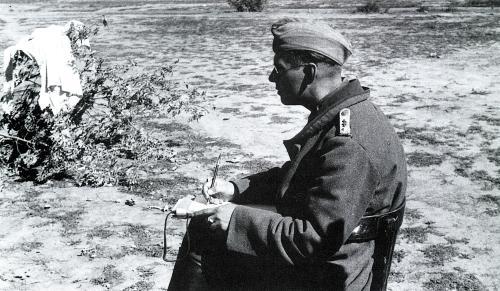
A Self Portrait 

However that care also included spiritual matters. Rueber was also an artist and pastor and as such he reflected on the desparation of the German soldiers in the Stalingrad pocket. He wrote to his family.

“I wondered for a long while what I should paint, and in the end I decided on a Madonna, or mother and child. I have turned my hole in the frozen mud into a studio. The space is too small for me to be able to see the picture properly, so I climb on to a stool and look down at it from above, to get the perspective right. Everything is repeatedly knocked over, and my pencils vanish into the mud. There is nothing to lean my big picture of the Madonna against, except a sloping, home-made table past which I can just manage to squeeze. There are no proper materials and I have used a Russian map for paper. But I wish I could tell you how absorbed I have been painting my Madonna, and how much it means to me.”

“The picture looks like this: the mother’s head and the child’s lean toward each other, and a large cloak enfolds them both. It is intended to symbolize ‘security’ and ‘mother love.’ I remembered the words of St. John: light, life, and love. What more can I add? I wanted to suggest these three things in the homely and common vision of a mother with her child and the security that they represent.”

The picture was drawn on the back of a captured Soviet map and when he finished it he displayed it in his bunker, which became something of a shrine. Reuber wrote:

“When according to ancient custom I opened the Christmas door, the slatted door of our bunker, and the comrades went in, they stood as if entranced, devout and too moved to speak in front of the picture on the clay wall…The entire celebration took place under the influence of the picture, and they thoughtfully read the words: light, life, love…Whether commander or simple soldier, the Madonna was always an object of outward and inward contemplation.”

As the seige continued men came to the bunker for both medical care and spiritual solace.  On Christmas Eve Reuber found himself treating a number of men wounded by bombs outside the bunker. Another soldier lay dying, just minutes before the soldier had been in the bunker singing the Christmas hymn O Du Froeliche.  Reuber wrote:

“I spent Christmas evening with the other doctors and the sick. The Commanding Officer had presented the letter with his last bottle of Champagne. We raised our mugs and drank to those we love, but before we had had a chance to taste the wine we had to throw ourselves flat on the ground as a stick of bombs fell outside. I seized my doctor’s bag and ran to the scene of the explosions, where there were dead and wounded. My shelter with its lovely Christmas decorations became a dressing station. One of the dying men had been hit in the head and there was nothing more I could do for him. He had been with us at our celebration, and had only that moment left to go on duty, but before he went he had said: ‘I’ll finish the carol with first. O du Frohliche!” A few moments later he was dead. There was plenty of hard and sad work to do in our Christmas shelter. It is late now, but it is Christmas night still. And so much sadness everywhere.”

On January 9th 1943 with all hope of escape or reinforcement gone Reuber gave the picture to the battlaion commander.  The officer was too ill to carry on and was one of the last soldiers to be evacuated from the pocket.

stalingrad-german-pow-595x351stalingrad-dogs-do-you-want-to-live-forever

German POWs walking out of Stalingrad

Reuber was taken prisoner and survived the harrowing winter march to the Yelabuga prison camp. In late 1943 Reuber wrote his  Christmas Letter to a German Wife and Mother – Advent 1943. It was a spiritual reflection but also a reflection on the hope for life after the war, when the Nazi regime would be defeated, and Germany given a new birth.

drkrop

drkrdr

Reuber operating on a wounded soldier above and drawing below

Reuber wrote:

“The concatenation of guilt and fate has opened our eyes wide to the guilt. You know, perhaps we will be grateful at the end of our present difficult path yet once again that we will be granted true salvation and liberation of the individual and the nation by apparent disappointment of our “anticipation of Advent”, by all of the suffering of last year’s as well as this year’s Christmas. According to ancient tradition, the Advent season is simultaneously the season of self-reflection. So at the very end, facing ruin, in death’s grip – what a revaluation of values has taken place in us! We thus want to use this period of waiting as inner preparation for a meaningful new existence and enterprise in our family, in our vocation, in the nation. The Christmas light of joy is already shining in the midst of our Advent path of death as a celebration of the birth of a new age in which – as hard as it may also be – we want to prove ourselves worthy of the newly given life.”  (Erich Wiegand in Kurt Reuber, Pastor, Physician, Painter, Evangelischer Medienverb. Kassel 2004. )

Reuber did not live to see that day. He died of Typhus on January 20th 1944, not long after writing this and just a few weeks after painting another portrait of the Madonna, this one entitled The Prisoner’s Madonna. He was not alone, of the approximately 95,000 German POWs taken at Stalingrad only about 6,000 returned home. 

prisoner's madonna

His paintings survived the war and his family gave The Madonna of Stalingrad  to the Kaiser Wilhelm Memorial Church in Berlin when its ruins were restored as a symbol of hope and reconcilliation. Copies are also displayed in Coventry Cathedral and the Russian Orthodox Cathedral in Volgagrad, the former Stalingrad. A copy of The Prisoner’s Madonna is now displayed at the Church of the Resurrection in Kassel. 

pg-34-stalingrad-2-getty

I have a print of the Madonna of Stalingrad in my office. It has become one of the most meaningful pictures I have since I returned from Iraq in 2008. To me they are symbols of God’s presence when God seems entirely absent.

Praying for an end to war.

Peace

Padre Steve+

13 Comments

Filed under faith, History, Loose thoughts and musings, Military, Religion, world war two in europe

Character Sacrifice, Service in the Face of Blatant Racism and the Dream that Cannot be Stopped: Brigadier General Benjamin O Davis Sr and Lieutenant General Benjamin O Davis Jr.

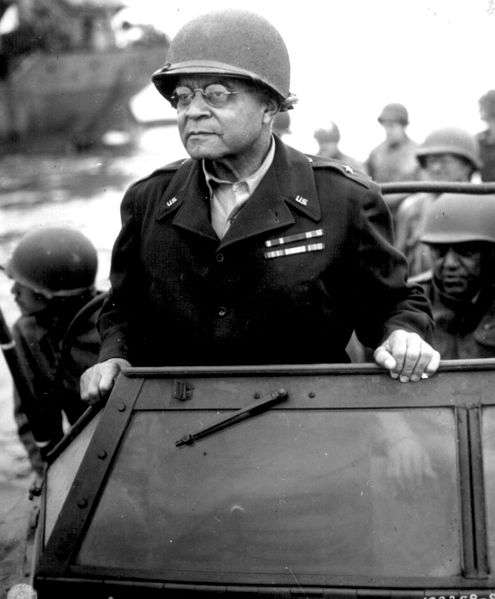
495px-Benjamin_o_davis

“I have a dream that my four little children will one day live in a nation where they will not be judged by the color of their skin, but by the content of their character.” Dr. Martin Luther King, Jr.

Last Friday, October 25th was the 73rd anniversary of the promotion of Colonel Benjamin O. Davis to the Rank of Brigadier General in the United States Army. In 1940 as the nation prepared for war many experienced officers were being promoted, some to Flag or General Officer rank. However, Colonel Davis was different, he was black.

Seldom do we take the time to remember that it really wasn’t that long ago that African Americans were for all practical purposes less than full citizens. Jim Crow laws, discrimination, segregation and impediments to voting were the norm in much of the country. Separate but equal was that mantra of racists in power. Blacks no matter how educated, how patriotic or how successful were discriminated against, held back and in far to many cases the target of hatred, violence and even murder. It was in such a climate that Benjamin O Davis served as an officer in the US Army.

While American History would not be the same without the life, work and prophetic ministry of Dr. Martin Luther King Jr. much of his hard fought success was brought about by men and women who served in the military, or for that matter played the game of baseball in an exemplary manner in an otherwise whiter than white bread world.

Dr. King was born in a time when most of the country was segregated when “separate by equal” was simply façade to cover the lie that in no way did African Americans have equal rights or privileges in the United States. Something some leaders attempt today through the use of voter purges that target Blacks, hispanics and other minorities. Sad to day that some things don’t change. Racists are still racists.

In 1922 Carrie Williams Clifford published the poem The Black Draftee from Georgia which alluded to to the lynching of Wilbur Little, a soldier and veteran of the First World War  who was lynched by a mob for wearing his uniform after being warned not to:

What though the hero-warrior was black?
His heart was white and loyal to the core;
And when to his loved Dixie he came back,
Maimed, in the duty done on foreign shore,
Where from the hell of war he never flinched,
Because he cried, “Democracy,” was lynched.

 Dr King was born less than 60 years after the secession of the Southern states from the Union and the beginning of the American Civil War. Though that blood conflict had freed the slaves it had not freed African Americans from prejudice, violence and discrimination.  When Dr. King began his ministry and was thrust upon the national stage as the strongest voice for equal rights and protections for blacks the discrimination and violence directed towards blacks was a very real and present reality in much of the United States.

Events_Buffalo_Soldier

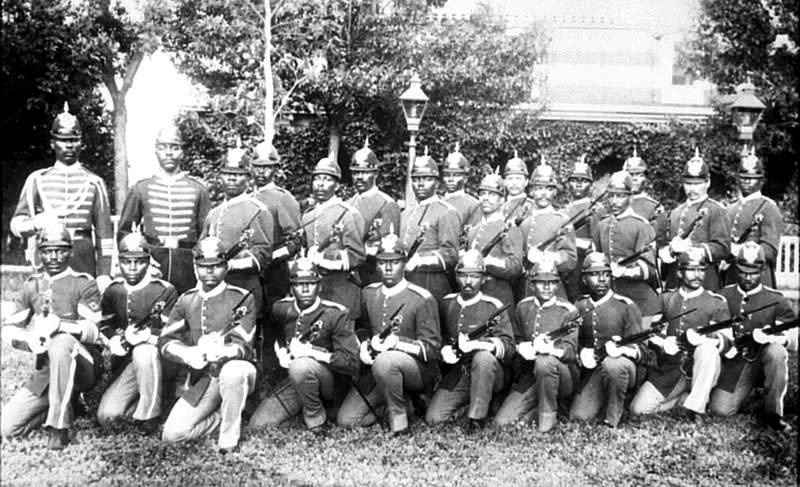
 Buffalo Soldiers in the 1880s 

However there were cracks beginning to appear in the great wall of segregation in the years preceding Dr. King’s ascent to leadership as the moral voice of the country in the matter of racial equality. In baseball Jackie Robinson became the first African American player in Major League Baseball opening a door for others who would become legends of the game as well as help white America begin its slow acceptance of blacks in sports and the workplace.

Likewise the contributions of a father and son Brigadier General Benjamin O. Davis Sr. and General Benjamin O. Davis Jr. were advancing the cause of blacks in the military which eventually led to the desegregation of the military in 1948.  The impact of these two men cannot be underestimated for they were trailblazers who by their lives, professionalism and character blazed a trail for African Americans in the military as well as society.

Benjamin O. Davis Sr. was a student at Howard University when the USS Maine exploded and sank in Havana Harbor.  He volunteered for service and was commissioned as a temporary 1st Lieutenant in the 8th United States Volunteer Infantry. He was mustered out of service in 1899 but enlisted as a private in the 9th United States Cavalry one of the original Buffalo Soldiers regiments.

9th_cavalry_camp_lawton_1

 Buffalo Soldiers in the Philippines 

He was initially the unit clerk of I troop of 3rd Squadron and was promoted to be the squadron Sergeant Major. He was commissioned while the unit was deployed to the Philippines counterinsurgency campaign and assigned to the 10th Cavalry.

Early in his career Davis was assigned in various positions including command, staff and instruction duties including as Professor of Military Science and Tactics in various ROTC programs.  He reached the rank of rank of temporary Lieutenant Colonel and Squadron Commander of 3rd and later 1st Squadron 9th Cavalry from 1917-1920 in the Philippines before reverting to the rank of Captain on his return as part of the post World War I reduction in force.

He continued to serve during the inter-war years and assumed command of the 369th Infantry Regiment New York National Guard in 1938. He was promoted to Brigadier General on 25 October 1940 becoming the first African American elevated to that rank in the United States Army and was assigned as Commander 4th Brigade 2nd Cavalry Division. He later served in various staff positions at the War Department and in France and was instrumental in the integration of the U.S. Military. He retired after 50 years service in 1948 in a public ceremony with President Harry S. Truman presiding. He was a member of the American Battle Monuments Commission from 1953-1961 and died in 1970.

davis-3

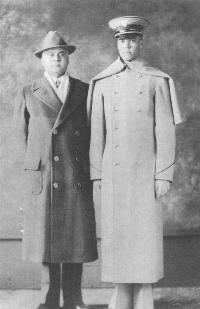
Colonel Davis with his son Cadet Benjamin O Davis Jr.

His son Benjamin O. Davis Jr. was appointed to West Point in 1932.  He graduated and was commissioned in 1936 graduating 35 out of 278, the fourth African American graduate of West Point. During his time at the Academy most of his classmates shunned him and he never had a roommate.  Despite this he maintained a dogged determination to succeed.  The Academy yearbook made this comment about him:

“The courage, tenacity, and intelligence with which he conquered a problem incomparably more difficult than plebe year won for him the sincere admiration of his classmates, and his single-minded determination to continue in his chosen career cannot fail to inspire respect wherever fortune may lead him.”

He was denied entrance to the Army Air Corps because of his race and assigned to the Infantry first to the all lack 24th Infantry Regiment at Ft Benning where he was not allowed in the Officers Club due to his race. Upon his commissioning the Regular Army had just 2 African American Line Officers, 2nd Lieutenant Davis and his father Colonel Davis. After completion of Infantry School he was assigned as an instructor of Military Science and Tactics and the Tuskegee Institute.

benjaminodavisjr02

Benjamin O Davis Jr in WWII

In 1941 the Roosevelt Administration moved to create a black flying unit and Captain Davis was assigned to the first black class at the Tuskegee Army Air Field and in March 1942 one his wings as one of the first 5 African Americans to complete flight training.  In July 1942 the younger Davis was assigned as Commanding Officer of the 99th Pursuit Squadron which served in North Africa and Sicily flying Curtiss P-40 Warhawks.

He was recalled to the United States in September 1943 to command the 332nd Fighter Group. However some senior officers attempted to prevent other black squadrons from serving in combat alleging that the 99th had performed poorly in combat. Davis defended his squadron and General George Marshall ordered an inquiry which showed that the 99th was comparable to white squadrons in combat and during a 2 day period over the Anzio beachhead the pilots of the 99th shot down 12 German aircraft.

images-58

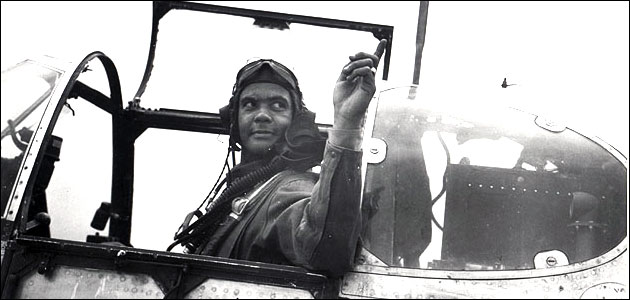
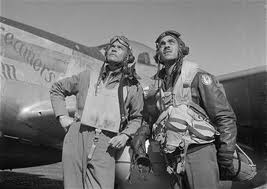
Colonel Benjamin O Davis Jr (left) with one of his Tuskegee Airmen

Davis took the 332nd to Italy where they transitioned to P-47 Thunderbolts and in July 1944 to the P-51 Mustang which were marked with a signature red tail. During the war, the units commanded by Davis flew more than 15,000 sorties, shot down 111 enemy planes, and destroyed or damaged 273 on the ground at a cost of 66 of their own planes. Their record against the Luftwaffe was outstanding and their protection of the bombers that they escorted was superb with very few bombers lost while escorted by them men that the Luftwaffe nicknamed the Schwarze Vogelmenschen and the Allies the Red-Tailed Angels or simply the Redtails. Davis led his Tuskegee Airmen to glory in the war and their performance in combat helped break the color barrier in the U.S. Military which was ended in 1948 when President Truman signed an executive order to end the segregation of the military. Colonel Davis helped draft the Air Force plan and the Air Force was the first of the services to fully desegregate.

250px-Benjamindavis-228x300

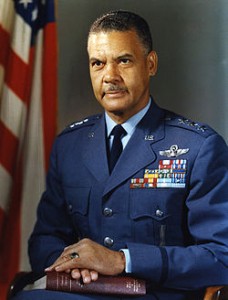
Lieutenant General Benjamin O Davis Jr

 Colonel Davis transitioned to jets and let the 51st Fighter Interceptor Wing against Chinese Communist MIGs in the Korean War.  He was promoted to Brigadier General in 1954 and served in numerous command and staff positions. He retired in 1970 with the rank of Lieutenant General and was advanced to General while retired by President Clinton in 1998.  He died in 2002 at the age of 89.

The legacy of Benjamin O. Davis Senior and Benjamin O. Davis Junior is a testament to their character, courage and devotion to the United States of America. They helped pioneer the way for officers such as General Colin Powell and helped change this country for the better.  During times when discrimination was legal they overcame obstacles that would have challenged lesser men.

Benjamin O. Davis Junior remarked “My own opinion was that blacks could best overcome racist attitudes through achievements, even though those achievements had to take place within the hateful environment of segregation.”

Such men epitomize the selfless service of so many other African Americans who served the country faithfully and “by the content of their character” triumphed over the evil of racism and helped make the United States a more perfect union. Today many African Americans as well as members of other minorities including racial minorities, women and gays serve with distinction in the military. What they do today is in many part a direct result of the courage, character and convictions of men like Benjamin O Davis Sr and Benjamin O Davis Jr.

Unfortunately the struggle for equality is never over and current generation will have to work just as hard to ensure that the freedoms won at so great a cost are not lost. General Colin Powell, the first Black man to serve as Chairman of the Joint Chiefs of Staff and Secretary of State commented in 1994:

“I stand here today as a direct descendant of those Buffalo Soldiers and of the Tuskegee Airmen and all the black men and women who have served the nation in uniform, I will never forget my debt to them. I didn’t just show up. I climbed on the backs of those who never had the kind of opportunity that I had.”

Peace

Padre Steve+

4 Comments

Filed under civil rights, History, Military, Political Commentary, world war two in europe

D-Day: Brigadier General Theodore “Ted” Roosevelt III Lands at Utah Beach

Theodore Roosevelt Jr4

“Courage, above all things, is the first quality of a warrior.” Carl Von Clausewitz

By the standards of military service on the front line the man was ancient. He was 56 years old, had arthritis and a history of heart problems, but he was his father’s son.

The oldest man to land on the beaches of Normandy was the son of a President, Theodore “Teddy” Roosevelt who had taken leave of his office as Assistant Secretary of the Navy at the outset of the Spanish-American War. With the help of his friend Colonel Leonard Wood, Roosevelt formed the legendary First U.S. Volunteer Cavalry Regiment, the “Rough Riders” and led them in the fight at the Battle of San Juan Hill.

The son of the President entered the business world and then served as a Reserve officer and since he had received prior military training was commissioned as a Major when the United States entered World War One. He volunteered for overseas service and served as a battalion commander and later as commander of the 26th Infantry Regiment of the 1st Infantry Division. Leading from the front he was wounded and gassed at Soissons in 1918. For his service he was awarded the Distinguished Service Cross and the French Chevalier Légion d’honneur.

After the war he helped found the American Legion and entered politics and was elected to the New York State Assembly. However while serving as Assistant Secretary of the Navy in the Harding Administration he was linked to the Teapot Dome Scandal and though cleared of any wrongdoing his name was tarnished. Opposed by his cousin Franklin Delano Roosevelt his political fortunes in elected offices floundered. However he was appointed as Governor of Puerto Rico and later Governor-General of the Philippines a post that he served until 1935 when he returned to the United States and the business world serving as an executive with American Express.

Between the wars “Ted” continued his Army Reserve service attending his annual training periods as well as attending the Infantry Officer Basic and Officer Advanced Courses as well as the Command and General Staff College. When war came to Europe he again volunteered for active service, attended a refresher course and was promoted to Colonel in the Army Reserve. Mobilized in April 1940 he was given command of his old 26th Infantry Regiment assigned to the First Infantry Division and was promoted to Brigadier General in late 1941 becoming the Assistant Division Commander.

Ted_Cane_France

He served well in that role in North Africa and Sicily and earned citations for bravery being constantly on the front lines with his soldiers. However his association with the Division Commander, the unorthodox Terry Allen earned the enmity of George Patton and Omar Bradley. Patton disliked Allen and hated the way both Allen and Roosevelt eschewed “spit and polish” and “dressed down,” often wearing unauthorized uniform items. After Bradley assumed command of 7th Army he relieved both officers, believing that they were guilty of “loving their division too much” something that he admitted was one of the hardest decisions that he made in the war. Roosevelt served as a liaison officer with the Free French Forces in Italy before returning to England to assume duties as Assistant Division Commander of the 4th Infantry Division. Allen would go on to command the 104th Infantry Division in an exemplary manner during the command’s in France and Germany in 1944-45 with even Bradley praising him and his new division as one of the best in Europe.

TeddyJr5-530x414

Roosevelt constantly trained with the troops and asked his commander, Major General Raymond “Tubby” Barton for permission to land with the first wave in the invasion. After being denied twice Roosevelt put his request to Barton in writing:

“The force and skill with which the first elements hit the beach and proceed may determine the ultimate success of the operation…. With troops engaged for the first time, the behavior pattern of all is apt to be set by those first engagements. [It is] considered that accurate information of the existing situation should be available for each succeeding element as it lands. You should have when you get to shore an overall picture in which you can place confidence. I believe I can contribute materially on all of the above by going in with the assault companies. Furthermore I personally know both officers and men of these advance units and believe that it will steady them to know that I am with them.”

Barton reluctantly approved the request not expecting Roosevelt to survive the landings. Roosevelt was in the first wave of assault troops at Utah Beach. On landing he discovered that the first wave was about a mile off course. Armed with a pistol and supported by a cane Roosevelt led a reconnaissance to find the causeways off the beach. He briefed the battalion commanders and then ordered an attack from where the troops had landed telling his officers “We’ll start the war from right here!” a moment immortalized in the film The Longest Day in which Henry Fonda played Roosevelt.

fon2

Henry Fonda Portrays Brigadier General Theodore “Ted” Roosevelt III in “The Longest Day”

His actions were key in the success of the Utah Beach landings and he was recommended for the Distinguished Service Cross by General Barton. Just over a month after the invasion after continuously leading his troops in Normandy Roosevelt died of a heart attack on July 12th 1944, the very day he had been selected for his second star and promotion to Major General and had orders to take command of the 90th Infantry Division. His award was upgraded to the Congressional Medal of Honor which was posthumously awarded on September 28th 1944. He was buried in the American Cemetery in Normandy, the remains of his younger brother Quentin who had been killed in the First World War were exhumed and interred next to his in 1955.

The Medal of Honor citation reads:

For gallantry and intrepidity at the risk of his life above and beyond the call of duty on 6 June 1944, in France. After 2 verbal requests to accompany the leading assault elements in the Normandy invasion had been denied, Brig. Gen. Roosevelt’s written request for this mission was approved and he landed with the first wave of the forces assaulting the enemy-held beaches. He repeatedly led groups from the beach, over the seawall and established them inland. His valor, courage, and presence in the very front of the attack and his complete unconcern at being under heavy fire inspired the troops to heights of enthusiasm and self-sacrifice. Although the enemy had the beach under constant direct fire, Brig. Gen. Roosevelt moved from one locality to another, rallying men around him, directed and personally led them against the enemy. Under his seasoned, precise, calm, and unfaltering leadership, assault troops reduced beach strong points and rapidly moved inland with minimum casualties. He thus contributed substantially to the successful establishment of the beachhead in France.

Roosevelt’s story is quite amazing. In the modern wars of the late 20th and early 21st Centuries few commanders as senior as Roosevelt would ever be in the first wave of an invasion or offensive operation. The personal courage and example set by Roosevelt in both World Wars, leading from the front and maintaining relationships with the troops that he commanded in combat is something that we talk about a lot in various military leadership classes but often seems to be smothered by business models promoted by think tanks and others with money to be made.

Likewise, a commander suffering from Roosevelt’s infirmities would not be allowed to command troops in combat today. But in the Second World War when many other American Generals failed miserably and often could not be found near the front and were relieved of command for incompetence and cowardice the old, crippled and infirm Roosevelt led from the front. He made decisions on Utah Beach on D-Day that helped ensure that the landings were a success. Bradley, who had fired Roosevelt after the Sicilian Campaign with Allen said that the most heroic act that he had seen in combat was “Ted Roosevelt on Utah Beach.”

Roosevelt was an exception to Clausewitz’s axiom that “boldness becomes rarer, the higher the rank.” I think that even if a General wanted to lead in the manner of Roosevelt today that he would be punished by the institution for risking himself.

Peace

Padre Steve+

Leave a comment

Filed under History, Military, movies, world war two in europe

June 5th 1944 the Eve of D-Day: Rommel Goes Home for a Birthday Party

2

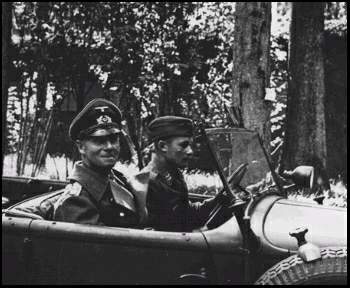
Rommel Inspecting German Positions in Normandy

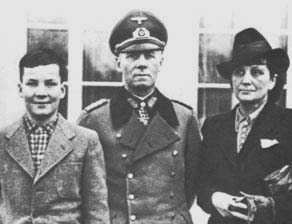
At Chateau La Roche Guyon on the River Seine Field Marshal Erwin Rommel bid farewell to his staff. The weather was miserable and it looked as if the Allies under General Eisenhower would be forced to postpone any invasion of France for several weeks. Rommel, who had been constantly at war away from his wife Lu and son Manfred for most of the preceding five years decided to take a few days of leave, after all June 6th was Lu’s birthday and he decided that he would spend it with her. He had even purchased a pair of shoes in Paris to give as a gift.

Hans-Speidel

General Hans Speidel

His Chief of Staff, General Hans Speidel bid Rommel, his aide de camp and driver farewell as they drove off in his Horch staff car. Of course it was the correct decision. The weather appeared completely unfavorable to an invasion, however the Germans, deprived on long range weather forecasts for the loss of ships and weather stations in the Atlantic and Greenland did not know that the Allies had discovered that the weather would moderate for about 24 hours beginning the night of the 5th and morning of the 6th. Eisenhower made the decision to invade on the 6th of June. The Germans, continued normal planning and training in anticipation that the long awaited invasion would not occur for two to three weeks. Many other German commanders were either on leave or involved in war games and exercises away from their headquarters.

omaha_3_lg

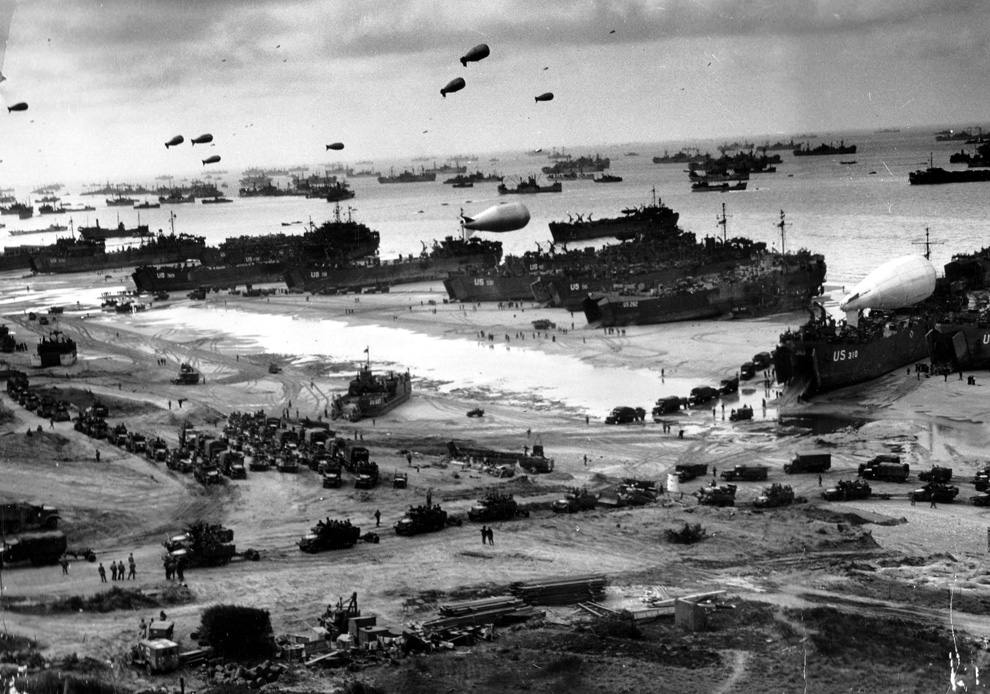
In the early morning hours of June 6th Allied paratroops from three Airborne Divisions, the 1st British and American 82nd and 101st began landing in Normandy. At dawn on June 6th troops from 6 Allied Divisions began amphibious landings at five invasion beaches, Gold, Juno and Sword in the British sector and Omaha and Utah beach in the American sector.

Speidel called Rommel at his home early on the 6th of June to inform him of the landings. Hitler had limited Rommel and other German commander’s ability to respond to an invasion by keeping the authority to commit the German armored reserve to himself. By the time Rommel arrived back at La Roche Guyon on the night of June 6th tens of thousands of Allied troops from six Infantry and three Airborne Divisions were reinforcing their beach heads and supported by overwhelming naval and air forces were driving inland. The forces that Rommel immediately commanded were sufficient to slow the Allied advance but not to throw the invaders back into the English Channel.

r1

The campaign for Normandy would devolve into a war of attrition that would end with the Allied breakout at St Lo in July. That event coincided with Rommel being severely wounded in an Allied air attack on July 17th and the attempt on Hitler’s life July 20th. In the succeeding days with their command structure paralyzed by Hitler’s retribution against those or implicated in the attempt on his life, who included many commanders and staff officers in France fighting the Allies.

images-45

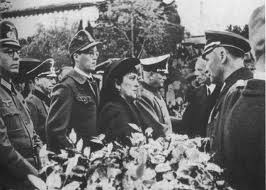
Rommel’s Wife Lucy and Son Manfred at his Funeral

Rommel would also be implicated in the attempt on Hitler’s life and would die at his own hand on October 17th 1944 after being offered the choice between suicide or a trial in which he would be found guilty and his family endangered.

One wonders what might have happened had Rommel been present in Normandy when the Allies landed. Perhaps history would have unfolded in a number of different ways. The results might have been the same, perhaps the Germans under Rommel would have succeeded in throwing the Allied forces back into the sea, and perhaps the victor of Normandy might have been able to help overthrow Hitler and end the war. Of course we will never know.

d23_0p012623

What we do know are the facts. Rommel spent a few hours with his wife on her birthday before having to travel back to Normandy without getting the chance to try to persuade Hitler to change the command arrangements that might have changed the outcome of the invasion. We know that deprived of the ability to control all of the key forces in his operational area, especially the Panzer Divisions and without the Luftwaffe being able even to contest Allied air superiority that Rommel, the legendary Desert Fox was condemned to fight a desperate defensive struggle against an enemy who control the seas, the skies and seemingly had unlimited resources. We also know that he was involved in the plot to kill Hitler and paid with his life for his involvement.

441014 Rommel Family

Rommel with his Wife and Son

Rommel is one of those tragic figures in history. A man caught up in the excesses of his era who discovered how the leader that he had sworn a loyalty oath to had betrayed his country and millions of his fellow soldiers. Rommel discovered the lies of his leaders too late. He like many soldiers in so many wars assumed that they could be trusted. When he discovered that they could not he took the chance to oppose them and was murdered by them.

Of course Rommel had flaws. He was an opportunist at times and did not oppose Hitler in the early years. In fact much of his fame was due to the propaganda of Josef Goebbels who exploited Rommel’s military success in Africa. However it was in Africa that Rommel began to see the truth about Hitler, the seeds of which led to his involvement with those who plotted Hitler’s death and lead him to his own death. Rommel, like so many military leaders before and after him had feet of clay.

Disillusionment with the lies of my leaders that took my country to war is something that I experienced between the attacks on September 11th 2001 and my return from Iraq in February 2008. As such, as a man who has spent the bulk of the last 11 1/2 years of war away from his wife who discovered that his leaders lied about wars and their cost, moral, physical and economic I feel a certain kinship with Field Marshal Rommel. I can understand why he took the chance to take a few days of leave to spend it with his wife.

War is a terrible thing.

Peace

Padre Steve+

5 Comments

Filed under History, leadership, Military, world war two in europe

The Last Battle of the Bismarck

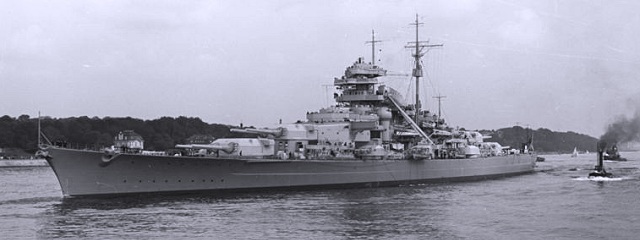
battleship-bismarck

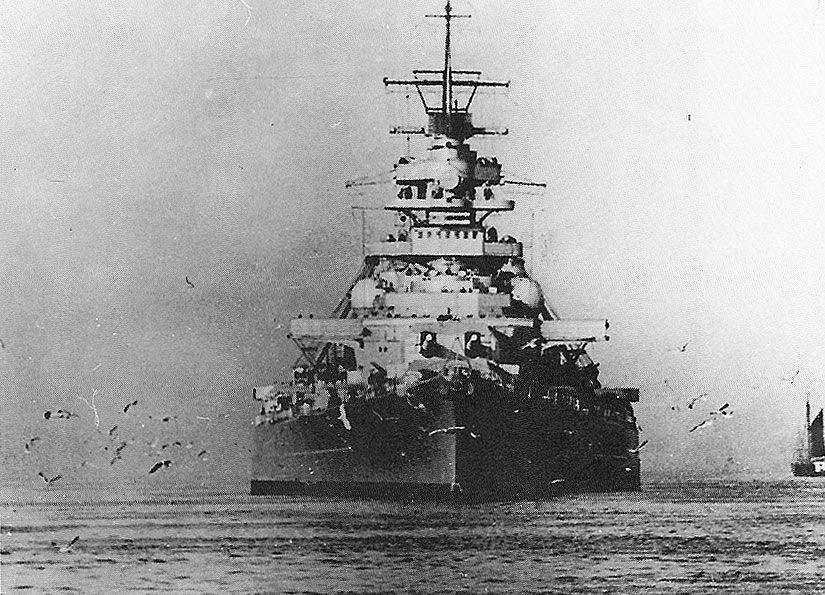
Battleship Bismarck

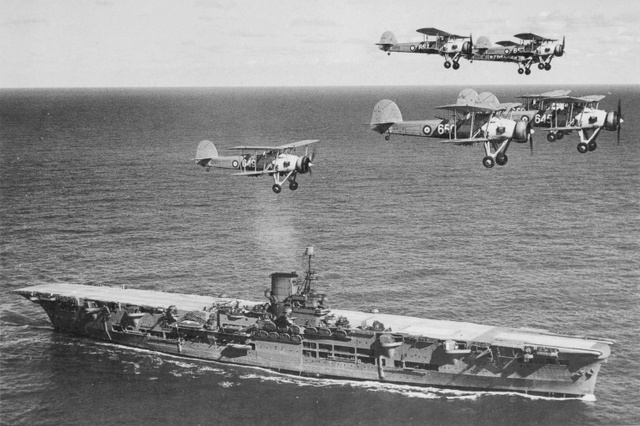
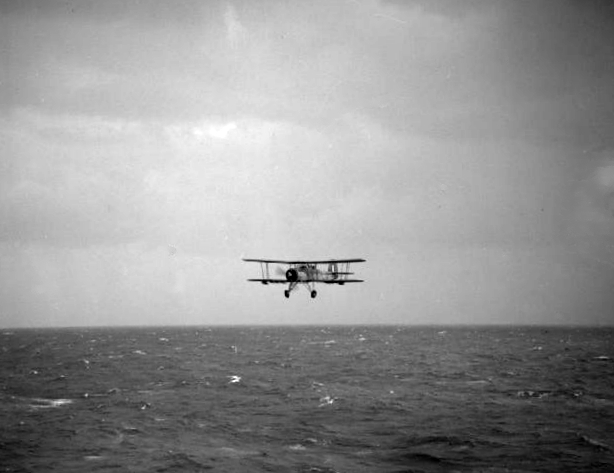
The torpedo from the Swordfish from the HMS Ark Royal that struck the mighty Bismarck in her stern and jammed her rudders doomed that ship and her crew. It was an astounding turn of events. The Bismarck had sunk the legendary British Battle Cruiser HMS Hood in minutes and had she persisted could have sunk the new Battleship HMS Prince of Wales. Instead, Vice Admiral Gunther Lutjens in command of the Bismarck and her consort the Heavy Cruiser Prinz Eugen decided to break off contact and make for safety in the French port of Brest.

images-39 Sinking of the Hood

Bismarck slipped her pursuers and allowed Prinz Eugen to escape. It seemed that nothing that the British could do would stop her from gaining the safety of the French port and with it the knowledge that she had sunk the most powerful ship in the Royal Navy and gotten away. Then out of nowhere Bismarck was spotted by a Royal Air Force Coastal Command PBY Catalina seaplane piloted by an American Naval Officer. Then a relatively small and slow torpedo dropped from an obsolescent Swordfish torpedo bomber, a “stringbag” hit the Bismarck in perhaps the only place that could have changed the developing narrative of a great German naval victory.

As darkness fell on May 26th, Bismarck, unable to steer towards Brest due to her damage and the following seas steered toward the oncoming British armada at a reduced speed. Her crew, now exhausted from countless hours on watch and at their battle stations knew that they were doomed.

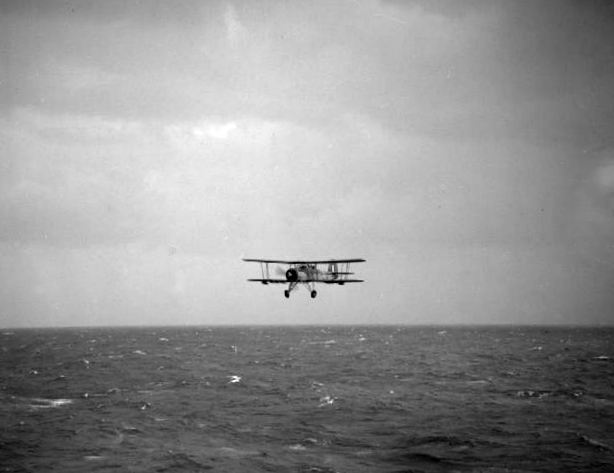
HMS_Ark_Royal_swordfish

Swordfish returning from attacking Bismarck

Despite this they still labored trying in vain for a way to repair their ship. As Bismarck’s engineers and damage control personnel sought at way to repair the damage on that dark night Royal Navy destroyers under the command of Captain Phillip Vian harassed her, closing to fire torpedoes and keep the exhausted crew of the mighty German ship engaged at their battle stations throughout the long night.

photo045

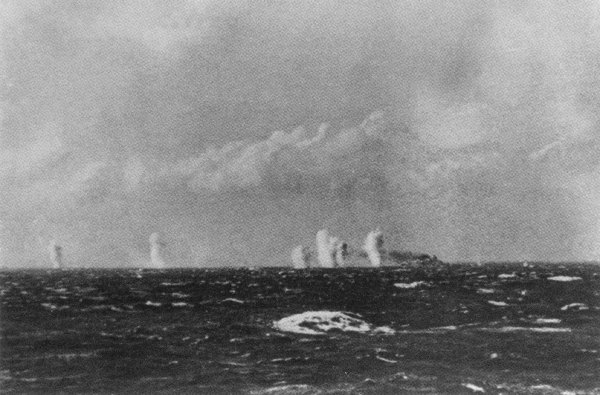
Bismarck under Fire from King George V and Rodney

As light broke on the morning of the 27th the remaining heavy units from the Home Fleet, the Battleships HMS King George V and HMS Rodney along with the Heavy Cruisers HMS  Norfolk which had been part of the pursuit since the first day and HMS Dorsetshire which had broke from its convoy escort duties on the 26th closed in for the kill.

WTBR_Bismarck_Sinking_pic

Bismarck from Dorsetshire

At 0847 the British Battleships opened fire on Bismarck, which replied with accurate salvos straddled Rodney. However British shells hammered the Bismarck, 16” shells from Rodney destroying the command center of Bismarck and her main fire control stations. Within 30 minutes the mighty guns which had sunk the Hood were silent and the British ships pounded Bismarck from point blank range with 16”, 14”, 8” and 6” shells as well as torpedoes.

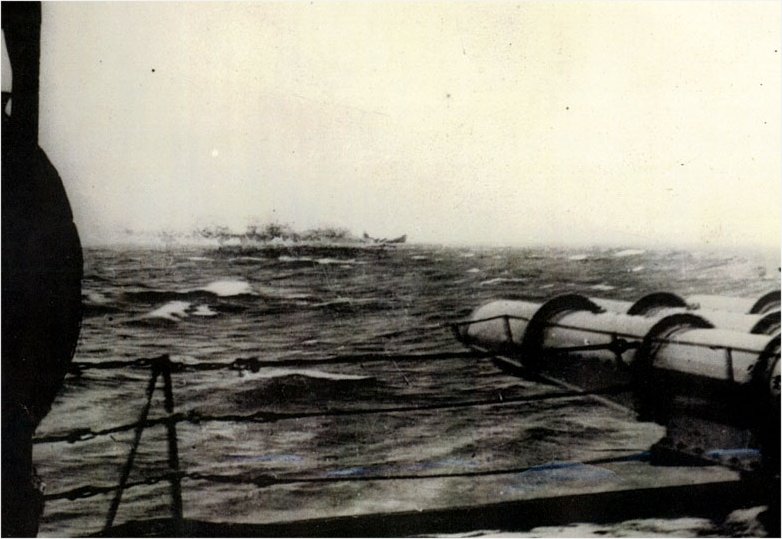
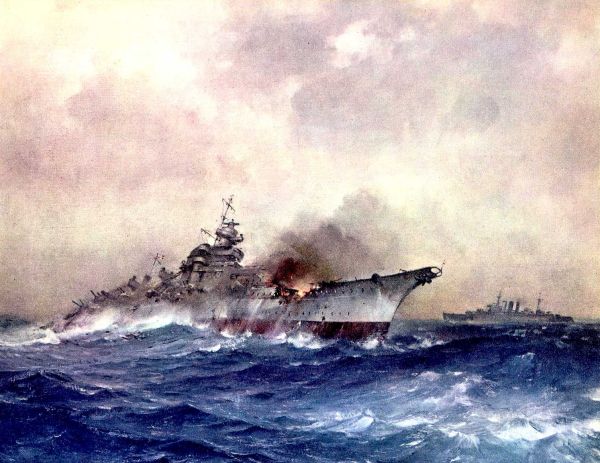
painting28 The end of the Bismarck

The British ships scored at least 400 hits but though they had silenced Bismarck the ship was still afloat, burning and certainly doomed but undaunted. Finally, with their adversary obviously doomed and their own fuel supplies dangerously low Admiral Tovey ordered the battleships to break off the action even as the cruisers continued to fire their guns and torpedoes.

bismar1

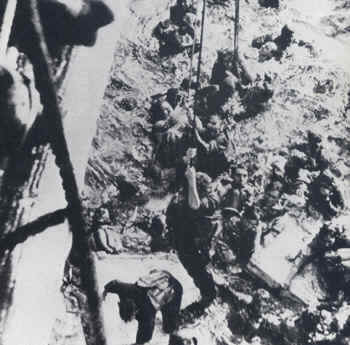
Bismarck Survivors being hauled aboard Dorsetshire

Even so the Bismarck’s senior surviving officer, her First Officer Fregattenkapitan (Commander) Hans Oels ordered her Chief Engineer Korvettenkapitan (Lieutenant Commander) Gerhard Junack to prepare the ship for scuttling and ordered the crew to abandon ship. The watertight doors were opened and scuttling charges fired. At 1039 the Bismarck slipped beneath the waves.

hmsdorsetshirempl1284

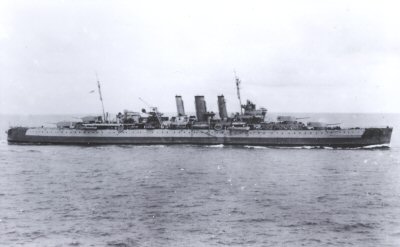
HMS Dorsetshire 1941

Hundreds of survivors bobbed about in the cold waters of the North Atlantic. 110 were rescued by British ships, mostly by Dorchester. Then lookouts spotted the periscope of a U-Boat and the British ships broke off their rescue operations leaving hundreds more survivors to die of exposure or their wounds in the Atlantic. A few more were rescued later by German ships or U-boats but about 2200 German sailors went down with their ship or died awaiting rescue that never came. 2 officers and 113 men survived the sinking of the Bismarck.

images-40

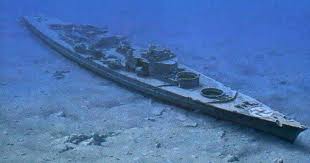
Artist’s image of the Wreck of the Bismarck

Subsequent investigations would show that all the British shells and torpedoes could not have sunk the Bismarck and that it was indeed the scuttling charges that sent her to the bottom of the Atlantic. Even so, she was doomed and the damage would have sent her to the bottom within 12 to 24 hours had Oels not order Junack to scuttle the ship. Within a year the Ark Royal, Prince of Wales, and Dorsetshire would also lie at the bottom of the seas. Prince of Wales sunk by Japanese land based bombers off Malaya in 1941, Dorsetshire by Japanese Carrier aircraft in April 1942 and Ark Royal by the U-Boat U-81 in November 1941. Of the destroyers that harassed Bismarck the night before her sinking only one, the Polish Destroyer ORP Piorun would survive the war.

The tragedy of mission of the Bismarck is that nearly 3700 sailors died aboard the two mightiest ships in the world, the Hood and the Bismarck died in battles that though now legendary did not alter the course of the war. Hood’s loss though tragic did not alter the strategic equation as more new battleships of the King George V class entered service and German capital ships, harassed and damaged by RAF bomber sorties and attacks by the Royal Navy’s Fleet Air Arm confined to ports in France, Germany or Norway slipped into irrelevance as the war progressed and the German U-Boat force took the lead in the Battle of the Atlantic.

HMS_Hood

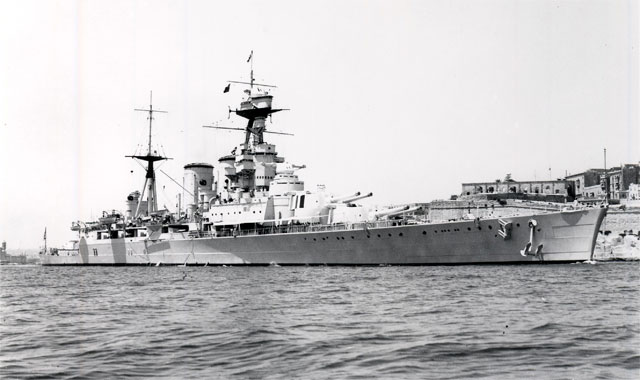
The Mighty Hood

As one who has served at sea on a cruiser at war which came within minutes of a surface engagement with Iranian Revolutionary Guard patrol boats in the Northern Arabian Gulf in 2002 I have wondered what would happen in the event of an engagement that seriously damaged or sank our ship. Thus I have a profound sense of empathy for the sailors that perished aboard both the Hood and the Bismarck in the fateful days of May 22-27 1941.

In hopes that no more brave sailors will have to die this way.

Peace

Padre Steve+

1 Comment

Filed under History, Military, Navy Ships, nazi germany, world war two in europe

Stringbags Versus Leviathan: Royal Navy Fairy Swordfish Attack the Mighty Bismarck

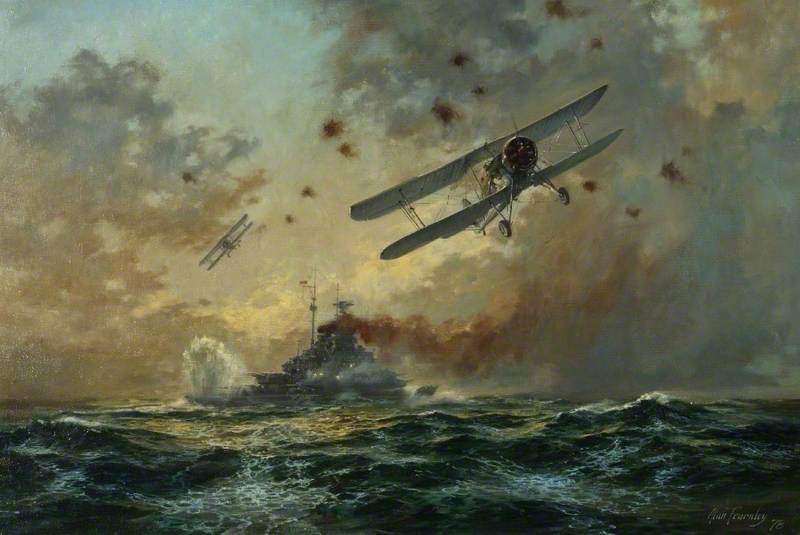
Alan Fearnley; (c) Alan Fearnley; Supplied by The Public Catalogue Foundation

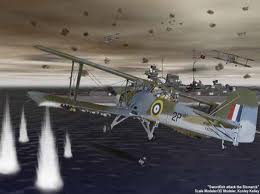
This is the second article in a series that I am writing on Operation Rheinubung and the sinking of the German Battleship Bismarck. The first article in the series was written about two years ago and focused on the Bismarck sinking the HMS Hood. This article looks at the attempts by the Fleet Air Arm Squadrons of Fairy Swordfish Torpedo Bombers flying from the HMS Victorious and HMS Ark Royal to slow down the Bismarck and allow heavy fleet units to catch the the mighty German battleship. 

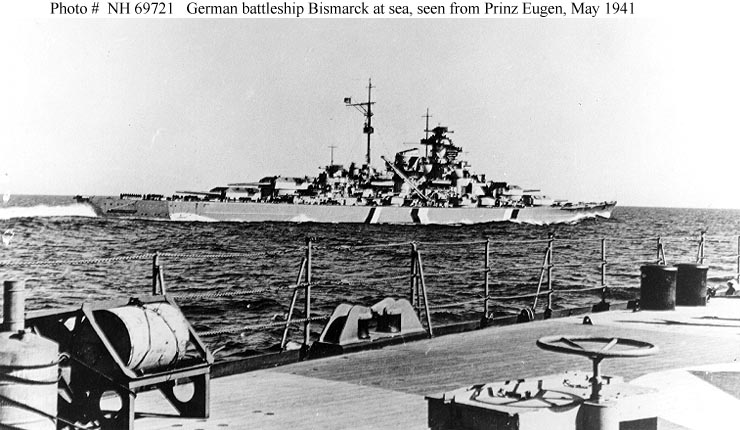
h69721Bismarck photographed from Prinz Eugen at the beginning of Rheinubung

On May 24th 1941 the German Battleship Bismarck had sunk the celebrated Battlecruiser HMS Hood in the Denmark Strait and had seriously damaged the new Battleship HMS Prince of Wales. The news of the disaster stunned the Royal Navy and every warship available began to concentrate on the Bismarck which was being shadowed by the heavy cruisers HMS Norfolk and HMS Suffolk. To the east the ships from the Home Fleet under Admiral John Tovey was moving at the fastest possible speed to intercept the Bismarck while to the far southeast “Force H” comprised of the carrier HMS Ark Royal, Battle Cruiser HMS Renown and light cruiser HMS Sheffield were ordered to leave their convoy escort duties and proceed to the Northwest to join the hunt.

HMS_Ark_Royal_h85716

HMS Ark Royal with Swordfish in 1939

With the Bismarck loose the North Atlantic Convoys on which Britain depended for her survival were vulnerable. The previous year the commander of the Bismarck task force Admiral Günther Lütjens with the Battlecruisers Scharnhorst and Gneisenau had wreaked havoc on the convoys. All of Britain was on edge and when the Mighty Hood, the largest and most powerful ship in the Royal Navy destroyed with the loss of all but three crew members every effort was directed to find and sink the Bismarck.

gallbismlastdays01 Bismarck photographed from a Swordfish from 825 Squadron

Accompanying the Home Fleet was the brand new Aircraft Carrier HMS Victorious with 825 Naval Air Squadron embarked under the command of LCDR Eugene Esmond. The squadron, like many in the Fleet Air Arm was equipped with Fairy Swordfish Torpedo Bombers. The squadron had seen action aboard other carriers in the North Atlantic, the Norway Campaign and in the Mediterranean before being assigned to the Victorious. On the night of 24 May 1941, in foul North Atlantic weather the Victorious launched nine Swordfish from a range of 120 miles in a desperate attempt to slow the Bismarck down. Esmond’s squadron scored one hit amidships on the Bismarck which did no serious damage.

780px-Swordfish_on_HMS_Victorious_before_strike_on_Bismarck

825 Squadron Swordfish on HMS Victorious

About 6 hours after the attack Bismarck shook her pursuers and disappeared into the mists of the North Atlantic as her consort, the Heavy Cruiser Prinz Eugen escaped to the northwest. Not knowing the location or course of the Bismarck the Royal Navy frantically searched for the German Leviathan. Most of the ships nearest to Bismarck’s last reported position were low on fuel and others seemed too far away to be of any importance in the search.

zz_bismarck_escorted

Bismarck, bow on view

However the British were able to intercept and decode some German communications indicating that Lütjens had orders to steam to Brest, in German occupied France for repairs. Although the British had an understanding that the Bismarck could be headed toward Brest it could not be sure and as each hour passed the chances of finding and bringing the might German ship to battle diminished. For nearly 36 hours the British searched in vain for the Bismarck, then at 1030 on the 26th of May a Royal Air Force Coastal Command PBY Catalina piloted by US Navy Ensign Leonard Smith found the Bismarck. Once Smith transmitted Bismarck’s location every available ship converged on her location even though chances bringing her to battle diminished by the hour. The only heavy forces close enough to successfully engage Bismarck, the battleships HMS King George V and HMS Rodney were too far away unless Bismarck changed course or could be slowed down. Force H to the south did not have the combat power to survive a surface engagement with the Bismarck should they encounter the Bismarck without other heavy fleet units.

HMS_Ark_Royal_swordfish

820 Squadron Swordfish returning to Ark Royal after the attack on Bismarck

The situation was desperate, if Bismarck could not be slowed down she would be in range of heavy Luftwaffe Air support as well as support from U-Boats and destroyers based in France. Unless something akin to a miracle occurred Bismarck would join the Scharnhorst and Gneisenau in Brest and form a surface squadron strong enough to devastate British shipping in the Atlantic.

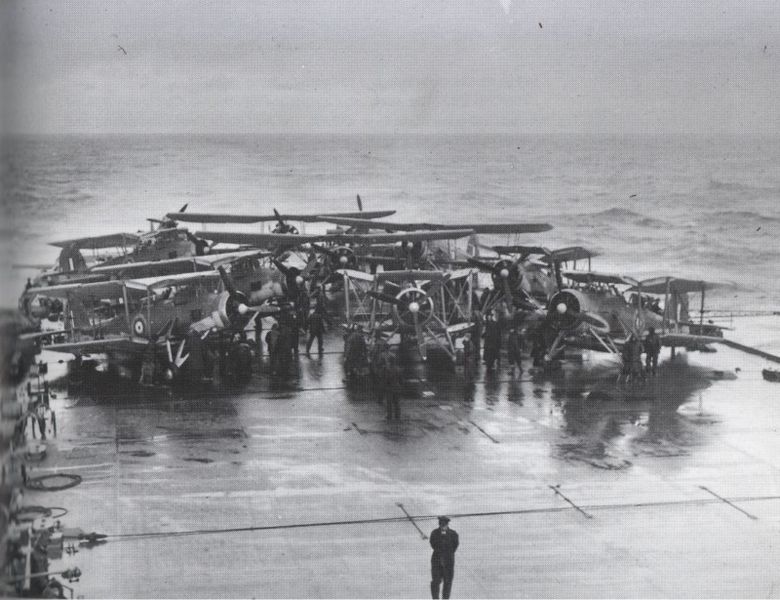
The aircraft from Ark Royal were the last hope of slowing down Bismarck before she could effect her escape and emerge from the Atlantic after having dealt the Royal Navy a devastating blow. The strike aircraft available on Ark Royal were not what many people would consider capable of completing such a mission. Ark Royal’s 820 Squadron, like Victorious’ 824 Squadron was equipped with Fairy Swordfish Mk 1 Torpedo Bombers. These were biplanes with a crew compartment open to the weather. Introduced to the Navy in 1936 the aircraft was an antique compared with most other aircraft of its day. The Mark XII 18” torpedo carried by the aircraft was smaller or slower and equipped with a less powerful warhead than comparable torpedoes used by other navies. Despite their limitations the venerable Swordfish had performed admirably during the early part of the war sinking or damaging three Italian battleships at Taranto in November 1941 and providing inspiration to the Japanese for their attack on Pearl Harbor.

gallbismlastdays03

Bismarck steering erratically after the torpedo hit to her stern

With that in mind Vice Admiral James Sommerville in command of Force H sent HMS Sheffield ahead to shadow Bismarck as his carrier, HMS Ark Royal closed to launch her Swordfish against Bismarck. A first strike, unaware Sheffield had advanced to a location near Bismarck mistakenly attacked the British Cruiser. Thankfully, the new design magnetic detonators failed to detonate causing the torpedoes to miss Sheffield. The aircraft returned to Ark Royal where rearmed with torpedoes equipped with contact fuzes and refueled 15 Swordfish took off for a final attack on Bismarck before night fell and Bismarck would steam into the protection of German air and naval units.

As darkness began to fall 15 Swordfish from 820 Squadron descended through the clouds attacking from all points of the compass. Bismarck twisted and turned and fired at the attacking aircraft with every weapon available, even firing her main battery into the ocean ahead of the Swordfish. Bismarck successfully avoided all but two torpedoes, one which struck her amidships causing minimal damage. However a second torpedo, launched by a Swordfish piloted by Lieutenant John Moffat hit Bismarck in her stern jamming her port rudder enabling Tovey with King George V, Rodney, the Heavy Cruiser Norfolk and Dorchester as well as a number of destroyers to catch up with and eventually sink the Bismarck.

images-38

The attacks of the antiquated Swordfish on the Bismarck achieved results that no one in  the Royal Navy expected. When reports indicated that Bismarck had reversed course following the torpedo attack Tovey could not believe them. It was only when Sheffield confirmed the reports from the Swordfish that Tovey realized that Bismarck must have been damaged and unable to maneuver. Now with the chance he would take the opportunity presented to sink the Bismarck and avenge the Hood.

Peace

Padre Steve+

4 Comments

Filed under History, Military, Navy Ships, world war two in europe

Remembering the Holocaust

20130408-231328.jpg

“For the dead and the living we must bear witness.” Ellie Wiesel

Berlin, July 31st 1941

To: Gruppenfuhrer Heydrich

Supplementing the task assigned to you by the decree of January 24th 1939, to solver the Jewish problem by means of evacuation and emigration in the best possible way by according to present conditions, I hereby charge you to carry out preparations as regards organizational, financial, and material matters for a total solution (Gesamtlosung) of the Jewish question in all the territories of Europe under German occupation.

Where the competency of other organizations touches on this matter, the organizations are to collaborate.

I charge you further to submit to me as soon as possible a general plan of the administrative material and financial measures necessary for the carrying out the desired final solution (Endlosung) of the Jewish question.”

Goering

20130408-232429.jpg

It is hard to believe that 70 years ago the gas chambers and crematoria of Auschwitz and many other extermination factories were in high gear. Specially formed units of the SS, Police and their Foreign auxiliaries, the Einsatzgruppen were exterminating Jews and others, people the Nazis termed Untermenchen (subhumans) across Europe.

When Herman Goering wrote Reinhard Heydrich, the head of the Reichssiecherhiethauptampt (RSHA) in July 1941 it seemed that Nazi victory in Europe was all but assured. Goering’s words were businesslike. Early measures to rid Germany and the annexed Austria ha been reasonably successful of their Jews through emigration and evacuation. However with the occupation of most of Europe following the Nazi military success and the looming occupation and subjugation of the Soviet Union the process of giving the Jews a chance to emigrate to lands outside Nazi control had come to an end. In fact the Nazis occupied the countries that may Jews had found refuge. The Nazi leadership decided that its race war against the Jews needed to forge ahead.

Within weeks SS commanders at various concentration camps were devising means to exterminate Jews more efficiently. It was a matter of pride and efficiency for them. As Rudolph Hoess the Commandant of Auschwitz said at Nuremberg “the camp commandant at Treblinka told me that he had liquidated 80,000 in the course of one half year. He was principally concerned with liquidating all the Jews from the Warsaw Ghetto. He used monoxide gas, and I did not think that his methods were very efficient. So when I set up the extermination building at Auschwitz, I used Zyclon B….” Hoess estimated that some 2.5 million people were exterminated at Auschwitz at rates as high as 10,000 a day.

In the Soviet Union four Einsatzgruppen followed each of the German Army Groups and systematically began to massacre the Jews of every city and village which German soldiers captured. Over a million and a half Soviet Jews were killed by the Einsatzgruppen, Ordungspolizei battalions, Army Security Divisions and locally recruited units.

20130408-232813.jpg

Less than six months after he received the directive from Goering, on January 20th 1942 Heydrich summoned representatives from various Reich agencies were called for what turned out to be a brief, two hour meeting which decided the fate of the Jews. The meeting was held at an estate located in the suburbs of Berlin, called Wansee. Organized by Heydrich’s deputy Adolph Eichmann, involved Heydrich, Eichmann and 13 mid level representatives from various economic, governmental, justice and police entities.

At the conference Heydrich established his authority through Goering’s directive to overcome the bureaucratic and personal attempts of various attendees to take control of the Final Solution process. Despite objections from some attendees who favored sterilization and the use of Jews in the war armaments industries, Heydrich made it clear that the Final Solution would be a campaign of extermination. He was quite clear:

“Approximately 11 million Jews will be involved…in large single sex labor columns, Jews fit to work will work their way eastward constructing roads. Doubtless the large majority will be eliminated through natural causes. Any final remnant that survives will doubtlessly consist of the most resistant elements. They will have to be dealt with appropriately, because otherwise by natural selection, they would form the germ cell of a new Jewish revival.”

20130408-233150.jpg

“I also want to mention a very difficult subject before you here, completely openly. It should be discussed among us, and yet, nevertheless, we will never speak about it in public…I am talking about the “Jewish evacuation” the extermination of the Jewish people.”

It is One of the things that is easily said. “The Jewish people is being exterminated,” every Party member will tell you, “perfectly clear, it’s part of our plans, we’re eliminating the Jews, exterminating them, ha!, a small matter.”

But then along they all come, all the decent upright Germans and each has his decent Jew. They all say: the others are all swine, but here is a first class Jew. And none of them has seen it, has endured it. Most of you will know what it means when 100 bodies lie together, or when there are 500 or 1000. And to have seen this through, and –with the exception of human weaknesses– to have remained decent, has made us hard and is a page of glory never mentioned and never to be mentioned….”

Whether the words are those of Goering, Heydrich, Hoess or Himmler, there is a certain businesslike banality to them. But these men, and many others like them orchestrated a campaign of genocide and race hatred unmatched in history. Yes, there have been other genocides, the Turks killing the Armenians during the First World War and the Hutu and Tutsi slaughter in Rwanda but neither they or the politically motivated campaigns of mass slaughter conducted by the Soviets, the Chinese Communists and the Khamer Rouge killing fields can match the systematized extermination campaign waged by the Nazis against the Jews.

The truly terrifying thing about the Nazi perpetrators of the Holocaust to me is that most of the men at Wansee, men that commanded the Concentration camps and the Einsatzgruppen were very ordinary men who simply believed that they were doing their jobs. Very few could be described as psychopathic killers by nature. They were lawyers, doctors, career police officials, businessmen, and bureaucrats who carried out an extermination campaign that killed by their own numbers between 5.5 and 6 million Jews, not to mention others deemed to be subhuman including the handicapped, the mentally ill, homosexuals, and other non-Jewish minorities like the Gypsies not to mention the wide variety of those considered political enemies. But it was the Jews that bore the most tragic fate.

20130408-233818.jpg

Primo Levi said it well:

“Monsters exist, but they are too few in numbers to be truly dangerous. More dangerous are…the functionaries ready to believe and act without asking questions.”

20130408-234402.jpg

Let us work to ensure that nothing like this happens again. We owe it to those who died in the Holocaust and to humanity now and in the future. Never forget.

Peace

Padre Steve+

Leave a comment

Filed under History, nazi germany, world war two in europe

Challenger: 27 Years Later

space-shuttle-challengerjpg-ff9375e2f0d3b75c

“We risk great peril if we kill off this spirit of adventure, for we cannot predict how and in what seemingly unrelated fields it will manifest itself. A nation that loses its forward thrust is in danger, and one of the most effective ways to retain that thrust is to keep exploring possibilities. The sense of exploration is intimately bound up with human resolve, and for a nation to believe that it is still committed to a forward motion is to ensure its continuance.” James A. Michener 1979

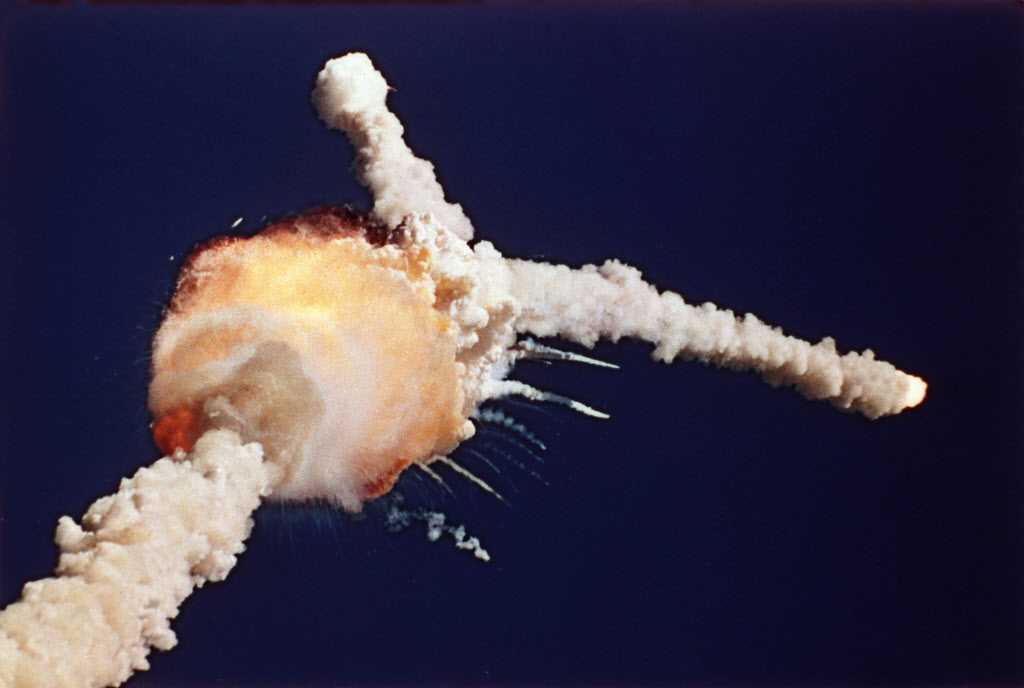
It is still hard to believe. But then Space Shuttles don’t blow up every day, but the Space Shuttle Challenger just beginning mission STS-51L on that cold and sunny Florida morning.

space-suit-challenger-crewa

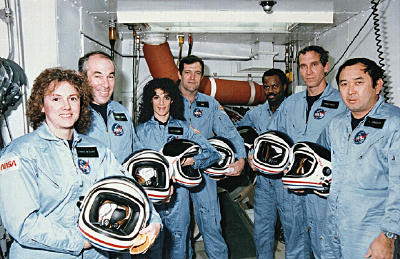
Challenger’s crew

I guess that events like the explosion of Challenger remain with those that viewed them because they were unusual, historic and most of all, tragic. Yes we remember events of triumph as well, and they too make an imprint on our memories, but tragedies that impact a nation and the world touch us in a different and often more powerful way. I think this is because they expose to us our own mortality and vulnerability to things that we cannot control.

I know that I, like many others of my generation had grown up with the triumphs of the NASA manned space program. We had seen the incredible success of the Mercury, Gemini and Apollo programs.  Success and triumph were associated with the program. Even the tragic fire which consumed the command module of the Apollo I mission on January 27th 1967 during a launch pad test killing Astronauts Gus Grissom, Edward White and Roger Chaffee did little to quench our belief in the program.

In 1972 as the Apollo program wound down a new program was developed to be a more affordable means to continue space travel and scientific study. The program became the Space Shuttle program built around reusable orbiters of which Challenger was the third built for the program.

By the time Challenger was being prepared for STS-51-L we had become to Shuttle missions being routine. NASA was launching a mission every two to three months.  Challenger was the second of two missions in January 1986, her sister Columbia having returned from a 6 day mission just 10 days before her launch.

This familiarity with the routine of the Shuttle program and expectation of success made many of us forget that space travel is inherently dangerous and that complex vehicles like the Shuttle were not indestructible.

The STS-51-L mission was to be the 10th for the Challenger in under three years of service. The mission had been delayed due to weather on the 22nd and rescheduled several times due to weather or in one case due to problems with an exterior access hatch.

ksc-86pc-0081

Challenger takes off on January 28th 1986

The morning of the launch the weather was predicted to be at or below the 31 degree minimum safe launch threshold. Engineers from the builder of the Challenger’s Solid Rocket Boosters (SRBs) Morton Thiokol contacted NASA with their concerns that the O-Rings which sealed the joints on the SRBs which they believed might not seal properly.  NASA engineers argued that even if the primary O-Ring failed that the secondary O-Ring would be sufficient even though this was an unproven theory. Eventually Thiokol management overruled their engineers influenced by NASA management which demanded that Thiokol prove that it was not safe to launch rather than prove that it was safe to launch. Considering it was a “Criticality 1” component meaning that there was no backup in case of a failure of both joints. It was a clear violation of protocol but the later Rogers Commission would show that NASA managers frequently ignored or evaded safety regulations to meet their very ambitious mission schedule. This decision doomed Challenger and her crew of seven.

On the 28th of January 1986 I was a young commander of the 557th Medical Company (Ambulance) in Wiesbaden Germany. I had heard about the scheduled launch of the Shuttle but paid it little regard, despite the presence if Christa McAuliffe, the first “teacher in space.” That evening was hoping to close out the day by 7PM which was early for me as well as most officers in the 68th Medical Group and 3rd Support Command of what we commonly called the Imperial Army on the Rhine, the US Army Europe.

I had a stack of work in my inbox, NCO evaluations, criminal investigations, maintenance reports and upcoming missions, not to mention trying to get a head start on my Unit Status Report. Most of my soldiers except those on duty had finished for the day.

060125_challenger_3shot_hmed.grid-6x2

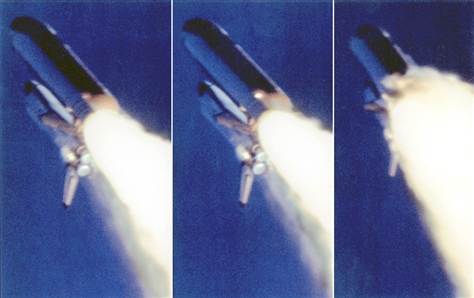
Challenger’s last moments

About 20 minutes to Six my senior duty person at the company, the Charge of Quarters or CQ in Army parlance came to my door which was at the far end of the hallway from where the CQ was stationed. Specialist Lisa Daley was a solid medic and outstanding soldier who had a great personality that caused her to be well liked in the company.  She came to my door and blurted out “Lieutenant Dundas! The Space Shuttle just blew up!”

I looked up from my desk and I remember my words to this day. “Specialist Daley, Space Shuttles don’t blow up.” She then said, “No sir they do, it’s on TV right now!”

I was stunned by her pronouncement. I got up and followed her as she told me what had happened. While I reached the CQ desk I saw the small television which she and her assistant CQ were watching. There was a live feed from CNN replaying the disaster, the twin plumes of smoke careening across the screen marking the spot where 73 seconds into the flight Challenger exploded. I stood there in shock, the images of the divergent plumes of smoke being etched into my mind.

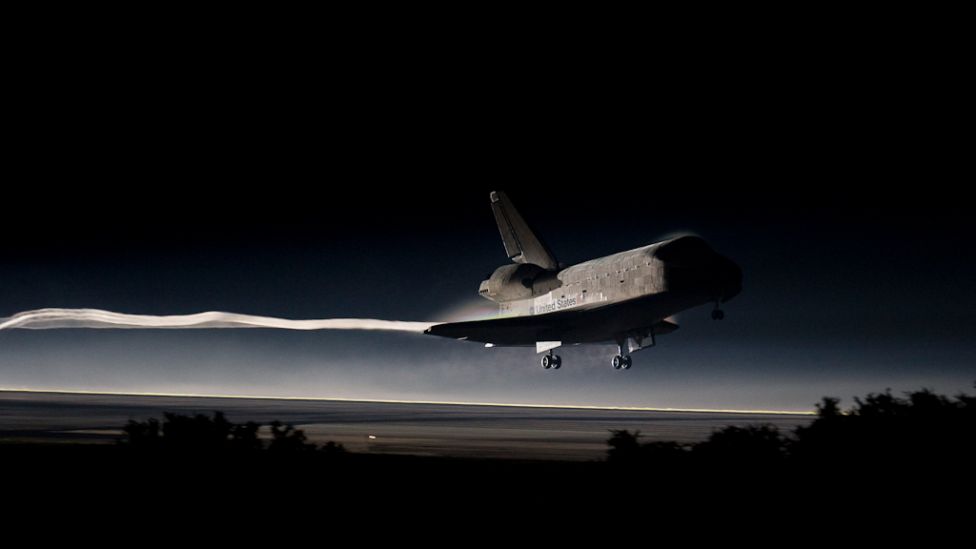
atlantis-final-flight-landing-shuttle-launch-17-20110721

Atlantis landing on her final mission

It is hard to forget. 17 years later I was waiting for the arrival of General Peter Pace, then the Vice Chairman of the Joint Chiefs of Staff to arrive at Naval Station Mayport Florida for the Battle of Hue City Memorial weekend hosted by the USS HUE CITY. I got to the ship early and while drinking coffee in the Wardroom saw the news of the breakup of the Space Shuttle Columbia. It brought back the images of the Challenger disaster. General Pace was delayed as the Joint Chiefs and National Security Council held an emergency meeting and arrived several hours late and when he arrived he spoke of the Challenger disaster along with the Columbia.

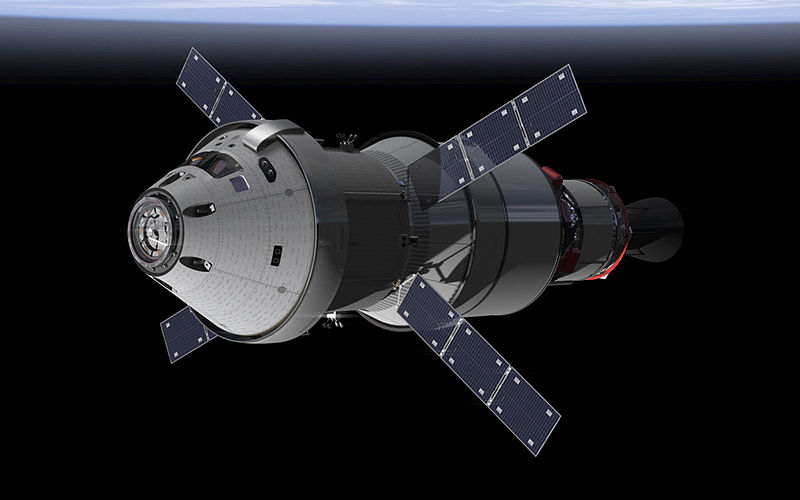
800px-Orion_Service_Module

The Shuttle program ended with the final mission of the Shuttle Atlantis in July 2011. As one that still dreams of the stars and manned space exploration I do hope that NASA is able to return to manned space missions and go beyond what we have done before. I hope that future programs including the Orion program and maybe manned missions to Mars and beyond can fulfill that ever hopeful opening dialogue of Star Trek: “to explore strange new worlds, to seek out new life and new civilizations, to boldly go where no man has gone before.” 

Peace

Padre Steve+


Leave a comment

Filed under History, News and current events, star trek, traumatic national events

Remembering the Holocaust: The Ordinary Men of Wansee and Two Hours that Doomed a Race

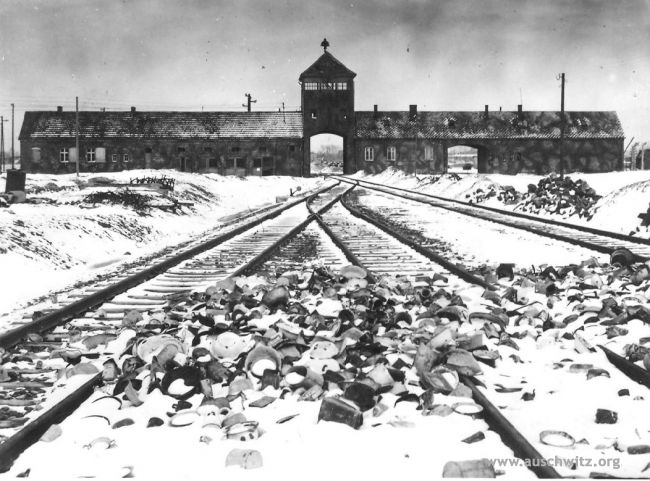
20080713_1383757010_brama_birkenau

“Monsters exist, but they are too few in number to be truly dangerous. More dangerous are the common men, the functionaries ready to believe and to act without asking questions.”  Primo Levi

Today was the International Holocaust Remembrance Day. It was on January 27th 1945 that the Nazi death camp called Auschwitz, in Poland was liberated by the Red Army.

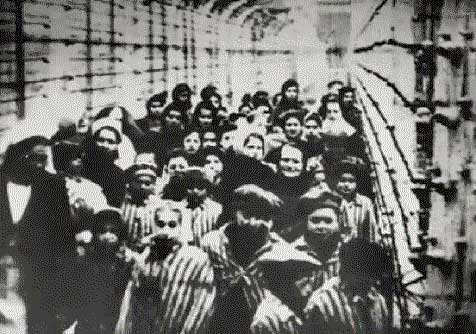
auschwitz

Auschwitz began as a work camp, notoriously harsh in its treatment of its prisoners but a work camp, picked because of its proximity to rail lines and isolation. By the summer of 1941 it was the largest camp in the Concentration Camp system. Within months the process of turning Auschwitz into a factory of mass murder began, quite accidentally when members of the camp staff discovered that a chemical used for the delousing of barracks known as Zyklon-B also worked on large animals, and therefore people.  It was tested on Russian and Polish POWs in September 1941.

As the Nazi desire for efficient extermination grew and early death factories showed their limitations and the “experiments” at Auschwitz resulted in it being selected as a death camp. The camp was expanded and its first gas chamber, the former camp morgue began its operations in February 1942. Other more massive chambers were built, chambers that could hold up to 2000 victims per cycle. By the time the operation was shut down in the weeks leading up to the camp’s liberation Rudolf Höss the Commandant of Auschwitz estimated that 2.5 million people, mostly Jews were exterminated in it. Höss boasted d that his camp could exterminate 10,000 people in a 24 hour period. Other estimates are lower, but still in the millions.

Höss, and other functionaries such Adolf Eichmann, who coordinated the massive effort to exterminate the Jews of Europe following the Wansee Conference of January 20th 1942 approached their jobs dispassionately. This was a common attitude among the civil service, military and police officials that oversaw the Holocaust. They simply did their jobs and followed the law.

Hannah Arendt wrote of Eichmann:

“The trouble with Eichmann was precisely that so many were like him, and that the many were neither perverted nor sadistic, that they were, and still are, terribly and terrifyingly normal. From the viewpoint of our legal institutions and of our moral standards of judgment, this normality was much more terrifying than all the atrocities put together.”

This was what made the Holocaust committed against the Jews of Europe by Nazi Germany a phenomenon different than other genocides. Many of the perpetrators were not driven by centuries old hate as in the Balkans, tribal blood lust as occurred in Rwanda, or the products of Soviet Communism or Communist Chines Maoist regimes.

It was the racial ideology of the Nazis which deemed the Jews and other non-Aryans to be sub-human. That ideology undergirded the German treatment of the Jews, and the conduct of the war, especially in the East. But the execution of the plan required the bureaucratic, administrative, technical and legal skills brought to the table by ordinary men. Men who sought promotion, advancement and economic security for their families. Individually many would have never killed, but in their positions they ran the rail network, the factories, the banking and finance industries and supported the war effort, most not thinking much about the evil that they abetted or if they did finding a way, be it social, scientific, religious, patriotic, legal or simply in the name of efficiency.

That is what makes the evil committed by them so terrifying. It is the product of “normal” people in an advanced Western nation. Make no bones about it, their actions were evil. They aided and abetted the genocide of the Jews, the disabled, other “sub-human” races, particularly Slavs, as well as those that they deemed less than suitable.

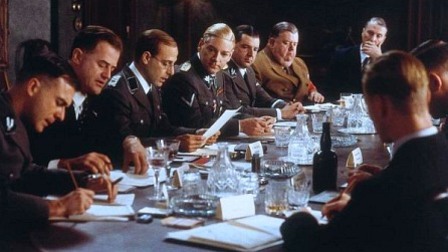
This evening I watched the movie Conspiracy which is about the two hour long Wansee Conference headed by Reinhard Heydrich and organized by Eichmann. That conference put the representatives of competing agencies, and in the case of the SS, agencies within agencies together and brought about their cooperation in the execution of the Final Solution.

conspiracy

The film is chilling in the ordinariness of the men involved. civil servants, party officials, they were the men that did the day to day administration of the necessary functions of the Reich. Some were horrified at the potentiality of the effects of what Heydrich referred as “evacuations” entailed. They understood that it meant the extermination of the Jews. Some were concerned about the military and logistical aspects, others in how such actions squared with the German law, especially the Nuremberg Laws, while still others were concerned with diplomatic relations with Germany’s allies or occupied countries and some unnerved by the fact that it would be murder. But when the conference was done, all agreed and worked together and it only took two hours.

It is important that we do not forget the Holocaust. It is also important to recognize that the instruments of that horror were on the whole “ordinary” men who as they saw it were simply doing their job. It is something that everyone needs to remember.

Peace

Padre Steve+

1 Comment

Filed under History, nazi germany, News and current events, world war two in europe

Remembering the Battle of the Bulge and the Campaign in France

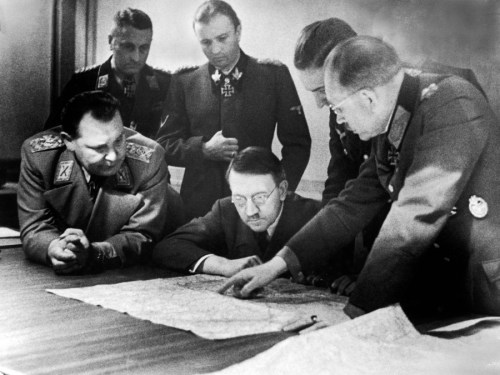
Hitler's General Staff Reviews Plans

Adolf Hitler gathered with the Chiefs of Oberkommando des Wehrmachton September 16th 1944 at his “Wolf’s Lair” headquarters in East Prussia.  The situation was critical; he had recently survived an assassination attempt by Army officers led by Colonel Klaus Von Staufenberg at his Wolf’s Lair headquarters in East Prussia.  When the assassination attempt took place the German situation in Normandy was critical. The Americans broke out of the Bocage at St. Lo and spread out across Brittany and the interior of France with Patton’s 3rd Army leading the way.  Even as his commanders in the West pleaded for permission to withdraw to the Seine Hitler forbade withdraw and ordered a counter attack at Mortain to try to close the gap in the German line and isolate American forces. When the German offensive failed the German front collapsed. 40,000 troops, hundreds of tanks and thousands of vehicles were eliminated when the Americans and Canadians closed the Falaise pocket. Despite this cadres of decimated divisions including SS Panzer, Army Panzer and elite Paratroops made their way out of Normandy.  With the Germans in full retreat the Allies advanced to the border of the Reich itself. On the Eastern Front as well disaster threatened when the Red Army launched an offensive which annihilated Army Group Center and advanced to the border of Poland before outrunning supply lines and stalling on the Vistula.

tiger2_in_action-bulge

Tiger II

  Since Normandy Hitler had wanted to counter attack but had neither the forces nor the opportunity to strike the Allied armies. As the Allied offensive ground to a halt due to combat losses, lack of supplies and stiffening German resistance Hitler maintained a close eye on the situation in the West.  He believed that despite their success that the Americans and British alliance was weak and that a decisive blow could cause one or both to drop out of the war. During a briefing an officer noted the events of the day on the Western Front including a minor counterattack by kampfgrüppen of the 2nd SS Panzer and the 2nd Panzer Divisions which had made minor gains in the Ardennes, Hitler rose from his seat ““Stop!” He exclaimed. “I have come to a momentous decision. I shall go over to the counterattack….Out of the Ardennes, with the objective Antwerp.””[i]
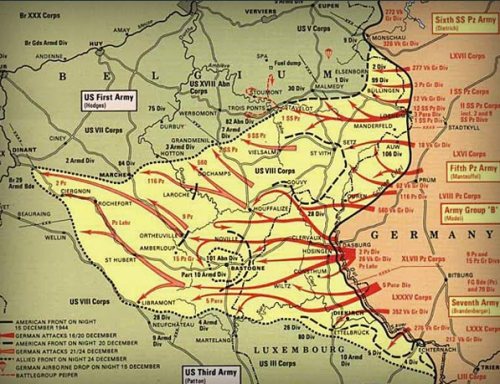
indexb_10a

            Thus began the planning for the last great German offensive of WWII.  Hitler “believed that sufficient damage could be inflicted to fracture the Anglo-American alliance, buy time to strike anew against the Soviets, and allow his swelling arsenal of V-weapons to change the course of the war.”[ii]  It was a course of born of desperation, even admitted by Hitler in his briefings to assembled commanders in the week prior to the offensive, one officer noted his remarks: “Gentlemen, if our breakthrough via Liege to Antwerp is not successful, we will be approaching an end to the war which will be extremely bloody. Time is not working for us, but against us. This is really the last opportunity to turn the war in our favor.”[iii]

us-at-gun-bulge

US 57mm Anti-Tank Gun and Crew

             Despite shortages of men and equipment, continuous Allied assaults and over the objections of General Guderian who argued to reinforce the Eastern Front[iv], the OKW staff secretly developed detailed plans. The planning was so secretive that the “Commander in Chief West and the other senior commanders destined to carry out the attack were not informed.”[v] The plans were submitted to Hitler on October 9th [vi] and presented to Field Marshalls Von Rundstedt and Model at the End of October. General Hasso Von Manteuffel, commander of 5th Panzer Army commented that: “The plan for the Ardennes offensive…drawn up completely by O.K.W. and sent to us as a cut and dried “Führer order.”[vii]
24-1

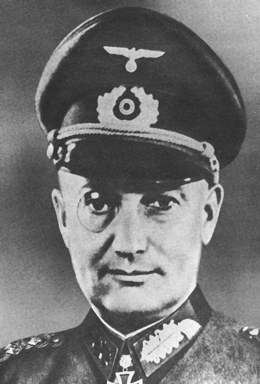
Field Marshal Walter Model Commander Army Group B

          Model and Von Rundstedt also objected to the scope of the attack. Von Rundstedt stated: “I was staggered…It was obvious to me that the available forces were way too small for such an extremely ambitious plan. Model took the same view of it as I did….”[viii]  Model reportedly said to General Hans Krebs: “This plan hasn’t got a damned leg to stand on.”[ix] And “you can tell your Führer from me, that Model won’t have any part of it.”[x] Sepp Dietrich, the old SS fighter and commander of 6th Panzer Army expressed similar sentiments.[xi]  Despite the objections by so many senior commanders Hitler scorned Model’s attempt to float a less ambitious plan to reduce the Allied salient at Aachen. Likewise Von Rundstedt’s desire to remain of the defense and wait for the Allies to attack using the armored forces to launch against any breakthrough was rejected.[xii] Hitler’s mind was set and the preparations moved forward.  The plan was complete down to the timing of the artillery bombardment and axes of advance, and “endorsed in the Führer’s own handwriting “not to be altered.””[xiii] Such a plan flew in the face of the well established doctrine of theAuftragstaktik which gave commanders at all levels the freedom of action to develop the battle as the situation allowed and opportunities arose.

sepp20dietrich

SS General Sepp Dietrich, Commander of 6th Panzer Army 

              The Germans who the Allies presumed to be at the brink of collapse made a miraculous  recovery following their ghastly losses in Normandy. Kampfgrüppenand remnants of divisions bled the Americans White at the Huertgen Forrest and blunted the British attempt to leapfrog the Northern Rhine at Arnhem decimating the British First Airborne division and causing heavy casualties among other British and American units. The German 15th Army avoided disaster when the British failed to close their escape route from Walchern island allowing 60,000 troops and much equipment to escape.   

ManteuffelGeneral Hasso von Manteuffel Commander 5th Panzer Army

         The Germans also re-formed and reorganized the front.  They pulled back many units of the 5th and 6th Panzer Armies for re-fitting and diverted nearly all tank, armored fighting vehicle and artillery production to the West at the expense of the Eastern Front.  The Germans called up 17 year olds and transferred young fit personnel from the Navy and Luftwaffe to the Army and Waffen SS.  Here they were trained by experienced NCOs and officers and brought into veteran units alongside hardened veterans who showed taught them the lessons of 5 years of war.[xiv]  However the rapid influx of new personnel meant that they could not be assimilated as quickly as needed and thus many were not as well trained as they might have been with more time.[xv] Many infantry and Parachute units had received inexperienced officers, taken from garrison duty to fill key positions a problem that would show up during the offensive.[xvi]

pzkw-iv-bulge

Panzer IV Ausf H of an SS Panzer Divsion in the Bulge

The Germans were aided by the caution displayed by the Allies throughout the campaign in France which allowed the Germans to reconstitute formations around veteran headquarters staffs.[xvii]  The Germans built up the 5th and 6thPanzer Armies as the Schwerpunkt of the offensive giving them the lion’s share of reinforcements and pulling them out of the line during the fall battles along the Seigfried line and in the Alsace and Lorraine.  The plan was for the two Panzer armies and 7th Army to punch through the Ardennes, cross the Meuse, drive across Belgium, capture Antwerp and severe the link between the British and the Americans.

The spearhead of the German assault was 6th Panzer Army Commanded by SS General Sepp Dietrich. It was composed of 1st and 2nd SS Panzer Corps and Army’s LXVII Corps.  The 6th SS Panzer Army included some of the best formations available to the German Army at this late stage of the war including the 1st  SS Panzer Division, the Leibstandarte Adolf Hitler, the 2nd  SS Panzer Division Das Reich, the 9th SS Panzer Division Hohenstaufen and the12th  SS Panzer Division Hitler Jügend. It’s ranks were filled out by the 3rd Parachute Division, the 501st SS Heavy Tank Battalion (attached to 1st SS), the 3rd Panzer Grenadier Division and the 12th, 246th, 272nd, 277th and 326th Volksgrenadier or Infantry divisions. The 6th Panzer Army would be the northern thrust of the offensive and its ultimate objective was Antwerp.  The 6th Panzer Army would be aided by a hastily organized parachute battalion under Colonel Von Der Heydte[xviii] and the 150thPanzer Brigade under SS Colonel Otto Skorzeny which included teams of American dialect speaking soldiers in American uniforms and equipment that were to spread confusion and panic in American rear areas.[xix]

bradleyeisenhowerpatton20a20bastogne

Bradley, Eisenhower and Patton at Bastogne

          To the south was the 5th Panzer Army commanded by General Hasso Von Manteuffel.  The 5th Panzer Army was to advance alongside of the 6th Panzer Army with Brussels as its objective.  Composed of the XLVII and LVIII Panzer Corps and LXVI Corps the major subordinate commands included the best of the Army Panzer divisions including the 2nd Panzer, Panzer Lehr, 9th and the16thPanzer division. It also had the elite Führer Begleit Brigade composed of troops from Panzer Corps Grossdeutschland and commanded by Otto Remer who had help crush the coup against Hitler in July.  The 5th Panzer Army also included the 18th, 26th, 62nd, 560th and later the 167th Volksgrenadier divisions.
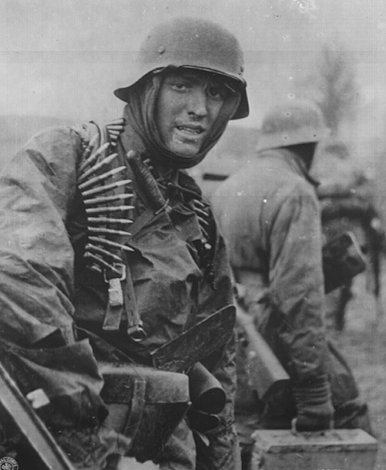
bulge1

German Panzer Grenadier 

The south flank was guarded by 7th Army commanded by General Erich Brandenburger composed of LIII, LXXX and LXXXV Corps.  It included theFührer Grenadier Brigade and later the 15th Panzergrenadier division.  It was the weakest of the three armies but eventually included 6Volksgrenadier divisions of varying quality and strength[xx] and the veteran 5th Parachute division.[xxi]  However with only 4 divisions at the start of the offensive the 7th Army was the equivalent of a reinforced corps.

bulge-jeep

While this force seemed formidable it had a number of weaknesses beginning with tank strength.  The 1st and 12th SS Panzer divisions were only at approximately half their established tank strengths and faced severe shortages in other vehicles.[xxii]  2nd SS and 9th SS of II SS Panzer Corps reported similar shortages.[xxiii]The shortage of other motorized vehicles, even in Panzer divisions was acute.  “Even the best equipped divisions had no more than 80 percent of the vehicles called for under their tables of equipment, and one Panzergrenadier division had sixty different types of motor vehicles, a logistician’s nightmare.[xxiv] Panzer Lehr was so short in armored half tracks that only one battalion of its Panzer Grenadiers could be transported in them while others had to use “trucks or bicycles.”[xxv]

Limitations on equipment as well as fuel were not the only challenges that the Germans faced. The US V Corps launched an attack on the Roer River Dams just before the offensive making it necessary for the Germans to divert 6th SS Panzer Army infantry divisions and Jagdpanzer units to be used by 6th SS Panzer Army.  One regiment of 3rd Parachute Division and over half of a second division could not take part in the initial 6th Panzer Army attack. Likewise some Jagdpanzer andSturmgeschutzen units did not arrive until three days after the offensive began.[xxvi]

The Allies Before the Battle

            While the German commanders sought to implement Hitler’s plan Allied commanders looked only to completing the destruction of Germany not believing the Germans capable of any major operation.  The Allied commanders with the exception of Patton did not believe the Germans capable of any more than local counter attacks.  Patton’s 3rd Army G-2 Colonel Koch was the only intelligence officer to credit the Germans with the ability to attack.[xxvii]  Most allied commanders and intelligence officers discounted the German ability to recover from disastrous losses, something that they should have learned in Holland or learned from the Soviet experiences on the Eastern front.  Bradley noted in his memoirs hat “I had greatly underestimated the enemy’s offensive capabilities.”[xxviii]  Carlo D’Este noted that “there was another basic reason why the Allies were about to be caught with their pants down: “Everyone at SHAEF was thinking offensively, about what they could do to the enemy, and never about what the enemy might do to them.””[xxix]   This mindset was amazing due to the amount of intelligence from Ultra and reports from frontline units that major German forces were no longer in the line.[xxx] Additionally nearly all commentators note that American units in the Ardennes did not conduct aggressive patrols to keep the enemy off balance and obtain intelligence.[xxxi]  One describes the efforts of 106th Division as “lackadaisical” and notes that enemy before the offensive was not the Germans but the cold.[xxxii] Max Hastings noted that: “the Allies’ failure to anticipate Hitler’s assault was the most notorious intelligence disaster of the war.”[xxxiii]

408

Tanks of US 7th Armored Division near St Vith

            The Allies also were in the midst of a manpower crisis. Eisenhower did not have enough divisions to establish a clear manpower advantage as “there were not enough Anglo-American divisions, or enough replacements for casualties in the existing divisions.”[xxxiv]  No more American Infantry divisions were available as the Army had been capped at 90 divisions and infantry replacements were in short supply.  This shortage meant that Eisenhower could not pull divisions out of line to rest and refit. He could only transfer divisions such as the 4th and 28thInfantry divisions to the relative quiet of the Ardennes. He had no ability to “create a strategic reserve unless he abandoned the broad front strategy.”[xxxv]The Germans knew of the allied weakness and believed that they could achieve local superiority even if they did not believe they could reach Antwerp. Model believed that “he was sure that he would reach the Meuse in strength before the Americans could move sufficient reserves to halt his armies or even head them off.”[xxxvi]

American Response: The Breakthrough

            The German assault began on December 16th. Some breakthroughs were made especially in the vicinity of the Losheim Gap and the Schnee Eifel by the southern elements of 6th Panzer Army and Manteuffel’s 5th Panzer Army. However the Germans could not break through around Monschau and Elsenborn Ridge held by the inexperienced but well trained 99th Infantry division and elements of the veteran 2nd “Indianhead” Division.  In the far south near Diekirch the 4th Infantry Division held stubbornly against the attacks of 7th Army’sVolksgrenadiers. The Germans achieved their greatest success at Losheim where SS Colonel Josef Peiper and his 1st SS Panzer Regiment had driven off the US 14thCavalry Group and penetrated 6 miles into the American front.  5th Panzer Army made several breakthroughs and isolated two regiments of newly arrived 106thInfantry Division in the Schnee Eifel. Manteufel also pressed the 28th Division hard along the Clerf River, Skyline Ridge and Clairvaux.  Yet at ‘no point on that first day did the Germans gain all of their objectives.”[xxxvii]  The credit goes to US units that stubbornly held on, but also to the poor performance of many German infantry units.  German commanders were frustrated by their infantry’s failure even as the panzers broke through the American lines.  Manteuffel noted his infantry was “incapable of carrying out the attack with the necessary violence.”[xxxviii]
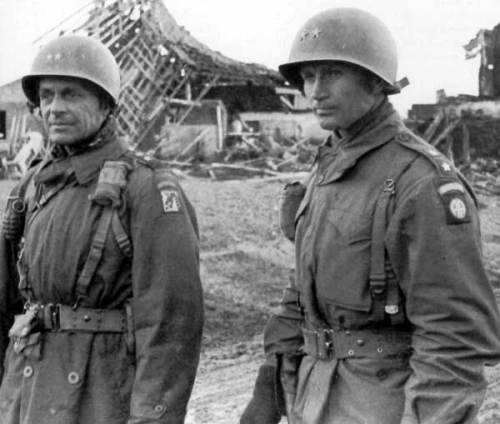
gavin-and-ridgeway

US Airborne Commanders James Gavin (R) and Matthew Ridgeway (L)

            The initial Allied command response to the attack by senior commanders varied.  Bradley believed it was a spoiling attack “to try and force a shift of Patton’s troops from the Saar offensive back to the Ardennes.”[xxxix] Courtney Hodges of 1st Army agreed with Bradley and refused to allow General Gerow, commander of V Corps to call off 2nd Infantry Division’s attack against the Roer dams on the 16th in order to face the German offensive.[xl]  Gerow was one of the first American commanders to recognize the scope of the German attack but Hodges, perhaps the least competent senior American commander in Europe failed to heed Gerow’s advice.

Battle of the Bulge - US prisoners on December 22nd 1944


        Soldiers of the 106th Infantry Division as POWs

         Soon after making this decision Hodges “panicked” and evacuated his headquarters at Spa fearing that it would be overrun by the advancing Germans.[xli] Eisenhower when informed of the news realized that something major was occurring and ordered the 7th Armored Division from the 9th Army and 10th Armored Division from 3rd Army into the Ardennes. On the 17thhe made other dispositions and released the 82nd and 101st Airborne Divisions from SHAEF reserve at Rheims to the Ardennes under the command of XVIII Airborne Corps.[xlii]  However during this short amount of time Mantueffel’s panzers had advanced 20 miles.

peiper-in-schwimwagen

SS Panzer Troops of Kampfgruppe Knittel on the advance.  Photo has often been identified for decades in books and other publications as Waffen-SS Colonel Joachim Peiper the commanding officer of the 1st SS Panzer Regiment and Kampfgruppe Peiper. This has been refuted by recent study.  Peiper is pictured below.

peiper

               At the command level Eisenhower made a controversial, but correct decsion to divide the command of the Bulge placing on a temporary basis all forces in the northern sector under Montgomery and leaving those to the south under Bradley.  Montgomery according to one commentary initially “had been astonishingly tactful in handing his American subordinates.”[xliii] However he quickly made himself obnoxious to many American commanders.[xliv] Following the battle Montgomery made the situation worse by claiming to have saved the Americans and giving credit to British units which scarcely engaged during the battle.[xlv]  Eisenhower also ordered Patton to launch a counter-attack along the southern flank of the German advance.  However Patton was already working on such an eventuality and promised to be able to launch a counterattack with three divisions by the 22nd.[xlvi]  Bradley praised Patton highly in his memoirs noting: “Patton’s brilliant shift of 3rd Army from its bridgehead in the Saar to the snow-covered Ardennes front became one of the most astonishing feats of generalship of our campaign in the West.”[xlvii]

American Response: the Shoulder’s Hold

bulge07             Malmedy Massacre 

          The 99th Division’s position was precarious, its right flank was subject to being turned and it was suffering severely at the hands of 12 SS Panzer and several Volksgrenadier divisions.  Gerow reinforced the 99th with elements of the 2nd Infantry division even before he had the final authorization to end its attack.  The two divisions stubbornly held Elsenborn Ridge and the villages of Rockerath, Krinkelt and Büllingen. By the 20th the 9th and 1st Infantry divisions arrived to strengthen the defense and lengthen the line to prevent it from being rolled up by the Germans.  The stubborn resistance of the Americans and arrival of reinforcements meant line was proof “against anything Sepp Dietrich might hurl against it”[xlviii]  By the 23rd Dietrich and 6th SS Panzer Army conceded defeat at Elsenborn and “turned its offensive attentions to other sectors.”[xlix]  German commanders like General Priess the commander of 1st SS Panzer Corps believed that terrain and road network in this sector was unfavorable to the German offensive and had proposed moving the attack further south.[l]  The Panzers could not deploy properly and the German infantry was not up to the task of driving the Americans out of their positions before the reinforcements arrived.
0-5

In the south the 4th Infantry Division held the line though heavily pressed by Brandenburger’s 7th Army.  The division was reinforced by elements of both 9thand 10th Armored divisions on the 17th and generally held its line along the Sauer River around Echternach “largely because the left flank of the enemy assault lacked the power-and particularly the armor-of the thrust farther north.”[li]

Turning Point: The Destruction of Kampfgruppe Peiper
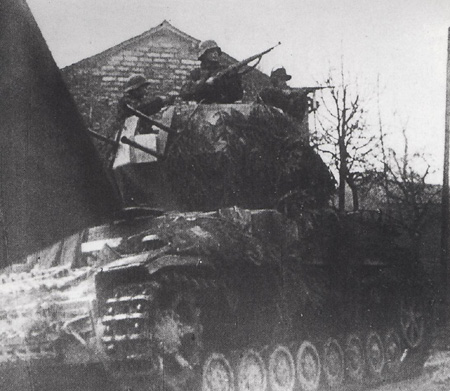
panzeri00265om

            While V Corps fought the 6th Panzer Army to a standstill, to the south 1st SS Panzer Division led by Kampfgrüppe Peiper split the seam between V Corps and VIII Corps. The Kampfgrüppe moved west leaving a brutal path of destruction in its wake, including massacres of American POWs and Belgian civilians.[lii]  However its advance was marked with difficulty. On the night of the 17th it failed to take Stavelot. After clearing the American defenders from the town after a hard fight on the 19th it failed to capture a major American fuel dump a few miles beyond the town.  When the Germans approached the American commander ordered his troops to pour 124,000 gallons down the road leading to the dump and set it on fire, depriving the Germans of badly needed fuel.[liii]  Combat Engineers from the 291st Engineer Battalion blew a key bridge across the Ambleve at Trois Ponts and another bridge across the Lienne Creek which left the Germans bottled up in the Ambleve River valley.  This bought time for the 30th Infantry Division to set up positions barring Peiper from the Meuse.  The 30th would be joined by Combat Command B of 3rd Armored Division and elements of 82nd Airborne. These units eventually forced Peiper to abandon his equipment and extricate some 800 troops by foot by the 23rd after a hard fight with the Americans who had barred his every effort to break through to the Meuse.

Turning Point: The Crossroads: St Vith & Bastogne

            The battle rapidly became focused on key roads and junctions, in particular St. Vith in the north and Bastogne in the south.  At St. Vith the 7th Armored Division under General Hasbrouck, who Chester Wilmont calls one of the “great men of the Ardennes”[liv] completed a fifty mile road march from Aachen to St. Vith.  On his arrival he deployed his combat commands around the town which was the key to the road network in the north and also to the only rail line running west through the Ardennes.[lv]  Hasbrouck gathered in Colonel Hoge’s Combat Command B of 9th Armored Division and the 424th Infantry Regiment of the 106th Division into his defensive scheme as well as the survivors of the 112thInfantry Regiment of the 28th Infantry Division which had escaped the German onslaught after holding as long as possible along the Clerf River and Skyline Drive.[lvi]  With these units Hasbrouck conducted “an eight-day stand that was as critical and courageous, as the defense of Bastogne.”[lvii]  After holding the Germans at St. Vith the units were withdrawn to another defensive position along the Salm and Ourthe Rivers and the village of Viesalm.  This was done at the behest of Montgomery and General Ridgeway of XVII Airborne Corps whose 82nd Airborne had moved into that area on the 19th.  The arrival of the 82ndgreatly assisted Hasbrouck’s force holding St. Vith whose defenders had lost an estimated 5000 casualties.[lviii]

The stand at St. Vith confined the “confined the Sixth Panzer Army’s penetration to a chokingly narrow corridor.”[lix]  It also posed a problem for German command and control which because it was out of the 6th Panzer Army’s area of operations Dietrich was unable to lend his weight into the fight.  “Hitler himself had strictly prohibited deviations from the zonal boundaries”[lx] which left the fight for St. Vith in the hands of 5th Panzer Army who felt the impact of the stand as the Americans “also choked off one of the Fifth Panzer Army’s best routes to Bastogne, almost nullifying the significance of the captured road junction at Houffalize.”[lxi]
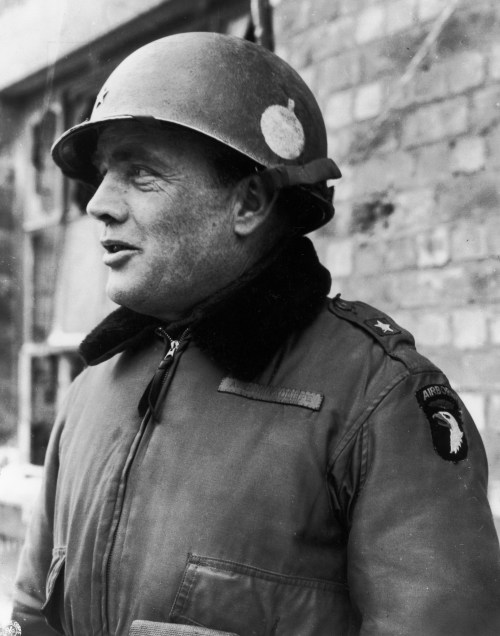
American General Anthony McAuliffe commander of the 101st

Brigadier General Anthony McAuliffe 

        To the south of St. Vith lay Bastogne, another key road junction needed by 5thPanzer Army for its advance.  On the night of the18th Panzer Lehr division came within two miles of the town before being checked by resistance by units of the 10th Armored division, remnants of 28th Division and misdirection by “friendly” Belgian guides onto a muddy path that helped halt their advance.[lxii]  This gave the 101st Airborne just enough time to get to the town and prevent its capture. The siege of Bastogne and its defense by the 101st elements of 9th and 10thArmored Divisions and 28th Division became an epic stand against Manteuffel’s Panzers which had surged around the town.  Wilmont comments that “had the Germans won the race for Bastogne, Manteuffel’s armor would have had a clear run to Dinant and Namur on December 19th and 20th” [lxiii] when there were only scattered American units between them and the Meuse. Manteuffel b bypassed Bastonge after the failure to capture it and masked it with 26th VolksgrenadierDivision and a regiment of Panzer Lehr.  The remainder of Panzer Lehr and the 2nd Panzer Division moved to the west. [lxiv]  The garrison endured numerous attacks and on the 22nd one of the most celebrated incidents of the war took place when Brigadier General Anthony McAuliffe responded to a demand for the surrender of the town with the reply; “Nuts.”  The town would continue to hold until relieved by 3rd Army on the afternoon of December 26th.[lxv]

Allied Response: The Counterattack

sherman-bastogne

            The Allied counterattack began with 3rd Army in the south on 21 December.  Patton’s initially proposed to attack toward the base of the Bulge in order to cut off the largest number of Germans possible.  Eisenhower dictated an attack further west with the goal of relieving Bastogne.  Eisenhower wanted to delay the attack to concentrate combat power while Patton wanted to attack sooner in order to ensure surprise. Patton got his way but attacked on a wide front.  The attack lost its impetus and bogged down into a slugging match with 7thArmy’s infantry and paratroops along the southern flank. [lxvi]  Patton’s failure to concentrate his forces for the advance to the north diminished his combat power.[lxvii] While Patton attacked from the south the 1st Army dealt with the advanced spearhead of 2nd Panzer Division which had reached the town of Celles and ran out of gas just four miles from Dinant and the Meuse. The 84th Infantry Division stopped the 116th Panzer division from being able to effect a relief of the 2nd Panzer the US 2nd Armored Division and allied fighter bombers chopped up the virtually immobile 2nd Panzer division completing that task by the 26th.[lxviii]

To the north Montgomery launched a cautious counterattack which slowly and methodically took back lost ground but allowed many Germans to escape. While Montgomery moved south Patton faced heavy German resistance from elements of 5th Panzer Army, reinforced by 1st SS Panzer Corps and 7th Army.  The rupture in the American front was not repaired until 17 January when the American forces met at Houffalize.[lxix] Bradley took over for Montgomery and the Americans pushed the Germans slowly back across the Clerf River by the 23rd.  The advance was hampered by tough German resistance and terrible weather which forced much of the attack to be made by dismounted troops as the roads had completely frozen over.[lxx]

The Allied counter attack has been criticized for allowing too many Germans to escape what could have been a major encirclement.  Patton recognized the incompleteness of the victory in the Ardennes stating: ““We want to catch as many Germans as possible, but he is pulling out.” The “but” clause, the note of regret, the awareness of the imperfection of his victories typified Patton.””[lxxi]  Patton in his memoirs notes: “In making the attack we were wholly ignorant of what was ahead of us, but we were determined to strike through to Bastogne.”[lxxii] Max Hastings simply said: “the Allies were content with success.”[lxxiii]  Murray and Millett place blame on Bradley and Hodges for choosing “merely to drive the enemy out of the Ardennes rather than destroy him.”[lxxiv]

Analysis: Could Wacht Am Rhein Have Worked?

          Could Wacht am Rhein worked?  If much was different, yes.  If the German had been stronger in tanks and vehicles and had adequate stocks of fuel; if their infantry was better trained, and had the Americans not resisted so stubbornly it might have at least got to the Meuse.  Perhaps if the the bad weather held keeping Allied air forces away from the Germans, or had St. Vith and Bastogne been taken by the 18th or 19th, they might have reached the Meuse.  Had the Germans executed their plan and coordinated their assault better[lxxv] in the 6thPanzer Army sector and had the 7th Army enough strength to conduct offensive operations in depth and secure the left flank the attack might have succeeded.  Because the Americans held the shoulders and road junctions, Manteuffel’s 5thPanzer Army, the only force besides the regimental sized Kampfgrüppe Peiper to actually threaten the Meuse was forced to advance while attempting to take Bastogne and defeat 3rd Army’s counterattack. Whether they could have made Antwerp is another matter.  Nearly all German commanders felt the offensive could not take Antwerp but did believe that they could inflict a defeat on the Allies and destroy a significant amount of allied combat power.

The German offense was a desperate gamble.  Too few divisions, scant supplies of petrol, formations that had recently been rebuilt and not given enough time to train to the standard needed for offensive operations coupled with Hitler’s insistence on an unalterable plan kept them from success.  At the same time the Allies were weak in troops as Eisenhower had no strategic reserve save the two American Airborne Divisions.  All reinforcements to the threatened sector had to come from the flanks and by the middle of the battle the 9th Army was drawn down to two divisions. Russell Weigley notes the constraints imposed by the 90 division Army, and of the limited stocks of artillery ammunition.[lxxvi] If the Germans had more forces they might have inflicted a significant defeat on the Allies had they been able to reinforce their success in depth.  Despite this they still inflicted punishing losses on the Americans though suffering greatly themselves.  Hastings notes that the real beneficiaries of the Ardennes offensive were the Russians.[lxxvii]  It is unlikely that the offensive could have ever achieved Hitler’s goals of taking Antwerp and fracturing the British-American alliance.

A Note About other Parts of the Campaign in France

The Riviera and Rhone

USA-E-Riviera-p193US Soldier Being Greeted as a Liberator 

          The campaign in south France was strategically wise although opposed by the British to the last minute because they felt it would take away from Overlord.[lxxviii] Though delayed the campaign was well executed by 7th Army, particularly Lt. General Lucian Truscott’s VI Corps of 3 American divisions. Truscott believed “destroying the enemy army was the goal”[lxxix] managed the battle well and skillfully maneuvered his small forces against Blaskowitz’s 19thArmy inflicting heavy losses, though some German commanders noted the caution of American infantry in the attack.[lxxx]  Only Blaskowitz’s tactical skills and the weakness of the American force prevented the Germans from disaster. The seizure of Marseilles and Toulon provided the allies with sorely needed ports that were invaluable to sustain the campaign.[lxxxi]

The Lorraine Campaign

            Patton attacked in the Lorraine with the goal of crossing the Moselle and attempting to break into Germany. He doing so he ran into some of the strongest German forces on the front and bogged down in the poor terrain and mud of the region.[lxxxii]  Patton was delayed in making his assault due to his place “at the far end of the logistics queue.”[lxxxiii] German forces skillfully defended the ancient fortress of city Metz forcing the Americans into a protracted campaign to clear the area with the last strongpoint surrendering on 13 December.  Patton is criticized for his failure to concentrate his forces[lxxxiv] but American tactics were less to blame than the weather, German resistance and shortages of infantry.[lxxxv] In some cases American infantry units performed admirably, particularly 80th Division’s assault on the Falkenburg Stellung.[lxxxvi]Liddell Hart criticized the Allies for failing to attack through the then weakly defended Ardennes, commenting: “By taking what appeared to be the easier paths into Germany the Allies met greater difficulties.”[lxxxvii]

The Huertgen Forrest
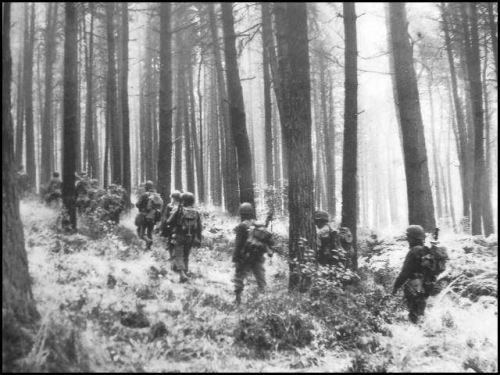
hurtgen-forest-soldiers

The Huertgen Forrest was the worst managed American fight Western European campaign. [lxxxviii] General Courtney Hodges leadership was poor.[lxxxix] In the Huertgen he fed division after division into a battle that made no strategic sense.  American infantry performed poorly and took extremely heavy casualties leaving four divisions shattered.[xc]  Poor American tactics demonstrated by attacking into a forest in poor weather without concentration negated all of Hodges’ advantages in tanks, artillery and airpower. The forest contained no significant German forces capable of threatening any American advance[xci] and its gain offered little advantage.[xcii] Hastings noted that the gains the only saving grace was that it made it easier for the northern shoulder of the Bulge to hold[xciii]   General Model and his subordinates expertly handled their handful of excellent but weary divisions in this battle using terrain, weather and prepared defensive positions to contest nearly every yard of the Forrest.[xciv]

Conclusions

            The lessons of the Bulge and the other campaigns on the German-French border are many and can be gleaned from Allied and German mistakes. On the Allied side the most glaring mistakes were assumptions prior to the German attack that the Germans were incapable of any serious offensive and ignoring the fact that the Germans had attacked through the Ardennes in 1940.  Likewise the self limitation of the American Army to 90 divisions for world-wide service meant that there were no more divisions in the pipeline and that worn out divisions would have to be reinforced with inexperienced troops while in the front line which ensured a lack of cohesiveness in many divisions, especially the infantry.  Allied intelligence failures as well as their reliance of forces much smaller than they should have had for such a campaign ensured that they would suffer heavy losses in the Bulge while poor planning and execution by Hodges wasted many good troops in a senseless battle.  The Germans were hamstrung by Hitler’s fantasy that the Western Allies could be forced out of the war or the Alliance split by a defeat in the Ardennes.  Likewise German forces, even those so quickly reconstituted were often short troops, tanks and vehicles.  German commanders were forced by Hitler’s rigid insistence on not altering the plan to not be as flexible as they might have been in earlier offensives to adjust according to the situation on the ground.


[i] Dupay, Trevor N.  Hitler’s Last Gamble: The Battle of the Bulge December 1944-January 1945Harper Collins Publishers, New York NY 1994 p.2.

[ii] Hastings, Max. Armageddon:  The Battle for Germany 1944-1945 Alfred A Knopf, New York NY 2004 p.197.

[iii] Reynolds, Michael. Sons of the Reich: II SS Panzer Corps; Normandy, Arnhem, Ardennes, and on the Eastern Front.  Casemate Publishing, Havertown PA 2002 p.186

[iv] Ibid. p.198

[v] Warlimont, Walter. Inside Hitler’s Headquarters 1939-1945 translated by R.H. Barry. Presidio Press, San Francisco, CA 1964. p. 480

[vi] Ibid.

[vii] Liddell Hart, B.H. The German Generals Talk. Originally published 1948, Quill Publishers Edition, New York 1979 p.274.

[viii] Liddell Hart, B.H. The History of the Second World War G.P. Putnam’s Sons, New York NY 1970. p.646.

[ix] MacDonald, Charles B. A Time for Trumpets: The Untold Story of the Battle of the Bulge William Morrow and Company, New York, NY 1985 p.35.

[x] [x] Newton, Steven H. Hitler’s Commander: Field Marshal Walter Model, Hitler’s Favorite General.DeCapo Press, Cambridge MA 2005. p.329

[xi] Ibid. Hastings p.198.  Hastings quotes Dietrich: “All Hitler wants me to do is cross a river, capture Brussels, then go on and take Antwerp. And all this at the worst time of year through the Ardennes when the snow is waist-deep and there isn’t enough room to deploy four tanks abreast let alone armored divisions. When it doesn’t get light until eight and it’s dark again by four and with re-formed divisions made up chiefly of kids and sick old men-and at Christmas.”

[xii] Ibid. Liddell-Hart The German Generals Talk p.276

[xiii] Wilmont, Chester. The Struggle for Europe Harper and Brothers Publishers, New York, NY 1952 p.576

[xiv] Ibid. p.557.

[xv] Ibid. Hastings. p.199. Hastings notes that Manteuffel said: “It was not that his soldiers now lacked determination of drive; what they lacked were weapons and equipment of every sort. Von Manteuffel also considered the German infantry ill trained.”

[xvi] Ibid. Dupay.p.47  Dupay notes that in 3rd Parachute Division that most of the regimental commanders had no combat experience.

[xvii] Weigley, Russell  F. Eisenhower’s Lieutenants: The Campaign in France and Germany 1944-1945. Indiana University Press, Bloomington IN 1981 p.432.  Weigley speaks of Allied caution and predictable strategy, caution in logistical planning which did not allow the Allies to provide the fuel needs for a rapid drive into Germany and caution of operational commanders.

[xviii] Liddell Hart discusses the issue of paratroops at length in discussions with Manteuffel and General Kurt Student. At the time of the operation there were very few jump trained paratroops available for the operation as most of the 6 organized Parachute Divisions were committed to battle as infantry during the 1944 battles in the East, Italy and in the West. German Generals Talk pp.282-285.  Although Liddell Hart makes note of the employment of these troops and talked with Model and student about why they were not used to seize bridges and other critical terrain featured ahead of the Panzers instead of the use as a blocking force, I have found no one who questioned why the Germans did not use small glider detachments for the same purpose.  The Germans had demonstrated with Skorzeny when they rescued Mussolini from his mountain prison that they still retained this capability.  The use of the SS Paratroop battalion which could have been assigned to Skorzeny as a glider borne force could have been decisive in capturing the key bridges and terrain ahead of 6th Panzer Army.

[xix] Skorzeny’s operation was Operation Greif designed to sow confusion in the Allied Ranks.  His brigade numbered about 3500 men and had a good number of captured US vehicles including some tanks and tank-destroyers on hand to confuse American units that they came in contact with.

[xx] Ibid. Hastings.  p. 199.  Hastings quotes the Adjutant of 18th Volksgrenadier Division who “felt confident of his unit’s officers, but not of the men “some were very inexperienced and paid the price.”  MacDonald notes that the division had many Navy and Air Force replacements but was at full strength. p.646.

[xxi] See MacDonland pp. 644-655 for a detailed commentary on the German Order of Battle.

[xxii] Reynolds, Michael. Men of Steel: 1st SS Panzer Corps;  The Ardennes and Eastern Front 1944-1945 Sarpendon Publishers, Rockville Center NY, 1999. pp.36-37.  Reynolds notes that the 1st SS Panzer Regiment only had 36 Panthers and 34 Mark IV Panzers to begin the operation (excluding the attached 501st SS Heavy Tank Battalion).  He also notes that many of the tank crew replacements had no more than 6 weeks of military training and some of the tank crews had never been in a tank.  Similar problems were found in all the Panzer Divisions.  Severe shortages of armored half tracks, reconnaissance vehicles and other vehicles meant that Panzer Grenadier and Motorized battalions lacked the lift needed and some went on foot or on bicycles.

[xxiii] Ibid. Reynolds. Sons of the Reich. P.183

[xxiv] Ibid. MacDonald. p.44.

[xxv] Ibid.

[xxvi] Ibid. Dupay pp. 27-28.

[xxvii] Ibid. MacDonald. p.52.  MacDonald notes that Koch warned that the Germans were not finished, that “his withdraw, though continuing has not been a rout or mass collapse.” He calls Koch a “lone voice” in the Allied intelligence world.

[xxviii] Bradley, Omar  N. A Soldier’s Story Henry Holt and Company, New York NY 1951. p.459.  Weigley makes some poignant calling Bradley’s comments  “contradictory” and states that: “his apologia is hardly a model of coherence. (p.461)

[xxix]  D’Este, Carlo. Eisenhower: A Soldier’s Life Owl Books, Henry Holt and Company, New York NY 2002. p.638

[xxx] Dupay and others talk about this in detail. See Dupay pp. 35-44.

[xxxi] Ibid. p.38.

[xxxii] Ibid. Hastings. p.201

[xxxiii] Ibid. Hastings. p.199

[xxxiv] Ibid. Weigley. p.464

[xxxv] Ibid.

[xxxvi] Ibid. Wilmont. P.581.

[xxxvii] Ibid. p.583

[xxxviii] Ibid. Hastings. p.223

[xxxix] Ibid. Weigley. P.457

[xl] Ibid. p.471

[xli] Ibid. Hastings. pp.205-206

[xlii] Ibid. Wilmont. pp.583-584

[xliii] Murray, Williamson and Millett, Allan R. A War to Be Won: Fighting the Second World War The Belknap Press of Harvard University Press, Cambridge Massachusetts and London England, 2000 p.470 The authors must base their conclusion on the fact that Montgomery who mentioned to Eisenhower that Hodges might have to be relieved, did not do so and by the next day told Eisenhower that the action was not needed.  A  few other American commanders in the north were favorable to Montgomery but this appears to be a minority view.

[xliv] Ibid. Weigley. pp.504-506.  Weigley and Wilmont both note the comment of a British Staff Officer the Montgomery “strode into Hodges HQ like Christ come to cleanse the temple.” (Wilmont p.592)

[xlv] Ibid. Hastings. pp.230-232.  Hastings is especially critical of Montgomery.  Weigley, equally critical notes regarding  the January 7th press conference, Montgomery’s “inability to be self critical at any point.” p.566.

[xlvi] Ibid. Weigley. p.500.

[xlvii] Ibid. Bradley. p.472  Other commentators differ in their view of Patton’s movement.  Wilmont notes that Patton had no “equal in the on the Allied side in the rapid deployment of troops. (p.589) Weigley urges readers that “it should be kept in appropriate perspective; it was not a unique stroke of genius.” And he compares it to Guderians disengagement with Panzer Group 4 and 90 degree change of direction and assault against the Kiev pocket in the 1941 Russian campaign (p.500)  Hastings notes that “Patton had shown himself skilled in driving his forces into action and gaining credit for their successes. But he proved less effective in managing a tough, tight battle on the southern flank.” (p.230)  Regardless of the perspective and criticism Patton’s movement was unequaled by any Allied commander in the war and had he not moved so quickly the 101stAirborne might not have held Bastogne. Admittedly his attack north was dispersed along a wide front but part of the blame for this must be assigned to Eisenhower who dictated the attack toward the west vice the base of the Bulge where Patton desired to make it.  A note I would make is that being a cavalryman Patton thought like one and when faced with the tight battles in close quarters was not at his best.  Similar comparisons could be made to J.E.B. Stuart at Chancellorsville when he had to take command of Jackson’s Corps.

[xlviii] Ibid. Weigley. p.475

[xlix] Ibid. p.474

[l] Ibid. Reynolds Men of Steel pp.51-52.

[li] Ibid. Weigley. p.470

[lii] The worst of these took place at the village of Malmedy where Battery B 285th Field Artillery Observation Battalion of 7th Armored Division was captured and about 150 soldiers were rounded up and machined gunned in a field with survivors killed with pistol shots in the head.

[liii] Ibid. Weigley. pp.478-479.

[liv] Ibid. Wilmont. p.584

[lv] Ibid. Weigley. p.487

[lvi] Ibid. Weigley. pp.486-487

[lvii] Ibid. Hastings. p.215. Hastings gives most of the credit to Brigadier General Bruce Clarke of CCB 7th Armored Division for the stand.

[lviii] Ibid. MacDonald. 481-487.  MacDonald notes that following the war that the commanders of the units involved “would be grateful to Field Marshal Montgomery for getting them out of what they saw as a deathtrap for their commands. (p.487)

[lix] Ibid. Weigley. p.487

[lx] Ibid.

[lxi] Ibid.

[lxii] Ibid. Hastings. p.217 Also  MacDonald. p.289 who talks of the confused situation east of Bastogne both for the Americans and Germans.

[lxiii] Ibid. Wilmont. p.598

[lxiv] Ibid. Liddel Hart. The German Generals Talk. p.288

[lxv] The defense of Bastogne would continue until after the 1st of January as Hitler renewed the attempts to secure the town in order to push on to the Meuse. Other German formations including units of 1st SS Panzer Corps shifted south from their original attack would make determined efforts to dislodge the stubborn American defenders.

[lxvi] Ibid. Weigley. pp.500-501.  Bradley gives Patton more credit than later commentators. Wilmont notes that the Germans though “amazed at the speed with which Patton had disengaged from the Saar and wheeled them northward…they received due warning of his movement by monitoring the radio net which controlled American traffic, and they were braced to meet his assault. (p.599).

[lxvii] Ibid. Weigely. Pp.520-521

[lxviii] Ibid.  pp.535-537

[lxix] Ibid. pp. 558-561

[lxx] Ibid. pp.563-564

[lxxi] Ibid. p.566.

[lxxii] Patton, George S. War as I Knew It  Originally published by Houghton Mifflin Company NY 1947, Bantam Paperback Edition,  Bantam Books, New York, NY 1980 p.364

[lxxiii] Ibid. Hastings. p.230

[lxxiv] Ibid. Murray and Millett p.471.

[lxxv] Hastings notes that “Tactically, the Ardennes was one of the worst-conducted German battles of the war, perhaps reflecting that none of the generals giving the orders saw any prospect of success. (p.236)

[lxxvi] Ibid. Weigley. pp.567-572

[lxxvii] Ibid. Hastings. p.236-237.  Hastings believes that the employment of the 5th and 6th Panzer Armies in the East “made the task of Zhukov and his colleagues much harder.”

[lxxviii] Ibid. Weigley. p.236. I find it interesting that neither Hastings nor Liddell Hart mention the Riviera and Rhone campaign.

[lxxix] Ibid. Weigley. p.236

[lxxx] Giziowski, Richard. The Enigma of General Blaskowitz  Hippocrene Books Inc. New York NY, 1997. p.328

[lxxxi] Ibid.  Weigley comments on how much the overall supply situation was aided by the operation and capture of the ports and notes that the pace of the Cobra breakout had created a crisis in supply and “without the southern French ports the crisis would have been insurmountable.” (p.237)

[lxxxii] Ibid. p.397.  Weigley notes: “The immobilizing mud and the enemy’s recalcitrant resistance had fragmented the battle into affairs of squads, platoons, companies and battalions….and Patton’s juniors more than he controlled the course of action, to the extent that control was possible.”

[lxxxiii] Ibid. p.384

[lxxxiv] Ibid. p.390 Weigley states: “The American disinclination to concentrate power was rarely more apparent.” comparing the frontages of 1st, 9th and 3rdArmies and notes that Patton attacked along his entire front.”

[lxxxv] Ibid. Weigley. pp.400-401.  Weigley spends a fair amount of time on American infantry shortages in 3rd Army.

[lxxxvi] Ibid. Weigly. P.400.  Weigley notes a German General Wellm attributed part of that victory to the “prowess of the American infantry.”

[lxxxvii] Ibid. Liddell Hart. The History of the Second World War p.560

[lxxxviii] Hastings and Weigley both note how many American division and regimental commanders were relieved of command for their failures in the Huertgen.

[lxxxix] Ibid. Hastings. p.179.  Hastings notes that “instead of recognizing the folly of attacking on terrain that suited the Germans so well, Courtney Hodges reinforced failure.”

[xc] Ibid. Weigley. p.420.  Weigley notes the high numbers of ballet and non battle casualties in the 4th, 8th, 9th and 28th Divisions as well as CCR of 5thArmored and 2nd Ranger Battalion.

[xci] Ibid. Hastings. p.275.  Hastings notes that defending 275th Division “were poor grade troops who-like the garrison of Aachen posed no plausible threat to the flanks of an American advance to the Roer.”

[xcii] Weigley compares the battle in its effect on the American army to Grants “destruction of the Confederate army in the Wilderness-Spotsylvania-Cold Harbor campaign expended many proud old Union army formations…” (p.438)

[xciii] Ibid. Hastings. p.215

[xciv] Ibid. Newton. p.324

3 Comments

Filed under History, Military, nazi germany, world war two in europe