Tag Archives: a.p. hill

From the Pages of Beowulf: Robert Rodes & His Division

Friends of Padre Steve’s World

Since I am taking at group of students from the Staff College to Gettysburg this weekend I am continuing to post excepts from a chapter of my Gettysburg text.  This section deals with the entrance of the leading division of the Confederate Second Corps onto the battlefield. The focus is primarily on the Division’s commander, Major General Robert Rodes and his subordinate commanders. It deals with the disparity of leadership that led to a Confederate disaster. I hope you enjoy.

Peace

Padre Steve+

On June 30th Rodes’ division marched about twenty miles and bivouacked at Heidlersburg where he met with his corps commander Ewell, fellow division commander Jubal Early and Isaac Trimble who was accompanying Second Corps where they puzzled over Lee’s orders as to the movement of Second Corps the following day, which indicated that Ewell should march to Gettysburg or Cashtown “as circumstances may dictate.” [1] Neither Rodes nor Early gave favorable opinions of the order and Ewell asked the rhetorical question “Why can’t a commanding General have someone on his staff who can write an intelligible order?” [2]

Ewell assumed that Cashtown was the desired junction of the army ordered his to march from on the morning of July 1st 1863 toward Cashtown to join with Hill’s corps. His choice of routes was good as it gave him the opportunity to turn south towards Gettysburg “as circumstances” dictated in compliance with Lee’s rather vague order of the day before.[3]

Rodes’s division was at Middletown (modern Biglerville) when Ewell received A.P. Hill’s message that he was moving on Gettysburg between eight and nine in the morning. Ewell immediately directed Rodes onto the “Middletown-Gettysburg road and instructed Early to march directly toward Gettysburg on the Heidlersburg road.” [4] As he did so he sent a note to Lee informing him of the situation and about noon he received Lee’s response that Lee “did not want a general engagement brought on till the rest of the army came up.” [5] But by the time Ewell received that instruction events were beginning to spiral out of control on his front just as they had on Harry Heth front just a few hours before.

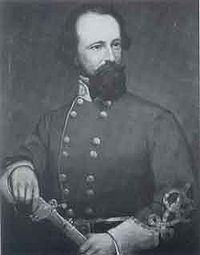
robert-rodes

Major General Robert Rodes, C.S.A.

Enter Second Corps

Although Ewell was closer to Rodes than Hill was to Heth at the beginning of the battle, Rodes like Heth was also operating somewhat independently as Ewell “preferred to ride near the tail of his column in his buggy.” [6] Like Heth when confronted with the opportunity for battle, he ignored the instruction “to avoid a general engagement, if practicable.” [7] The operation was Rodes’ first as a Major General and he like his fellow division commanders, Jubal Early and Allegheny Johnston, the young and aggressive Rodes was operating independently “as Ewell preferred” until the corps was reunited in the evening. [8] During the early part of the march to Gettysburg he had performed well but July 1st 1863 “would never be remembered as a great day for Robert Rodes.” [9] As he moved his division south he, like Ewell was unaware that a battle was developing to their front and both were surprised when they heard the sound of artillery about four miles north of the town. Rodes later wrote that “to my surprise, the presence of the enemy there in force was announced by the sound of a sharp cannonade, and instant preparations for battle were made.” [10]

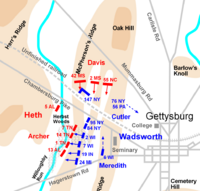
Rodes deployed his infantry brigades and “posted Lt.Col. Thomas H. Carter’s battalion of artillery along the nose of the ridge, where it opened with “fine effect” on the Union line stretched across McPherson’s Ridge.” [11] As Rodes set about deploying his troops for his assault on Oak Ridge, Ewell could see Robinson’s division moving up to Oak Ridge and the Mummasburg road facing his troops. He also observed the advance of the two divisions of Eleventh Corps which Carl Schurz was moving into position north of the town. Seeing the developments to his front and right Ewell considered Lee’s order obsolete and noted that “it was already too late to avoid an engagement without abandoning the position already taken up…and I determined to push the attack vigorously.” [12] Likewise he sent an aide to contact Jubal Early and enjoin that General to move to battle.

Rodes’s Division and His Commanders

Robert Rodes was new to commanding a division. The big, blond and charismatic Rodes was one of the most popular leaders in the Army of Northern Virginia. Rodes had a great ability to inspire his subordinates. This was in large part due to his handsome physical appearance which made him look “as if he had stepped from the pages of Beowulf” [13] but also due to his “bluff personality featuring “blunt speech” and a tincture of “blarney.” [14]

Rodes graduated at the age of 19 from the Virginia Military Institute and remained at the school as an assistant professor for three years. He left VMI when Thomas “Stonewall” Jackson received the full professorship he desired and became a successful civil engineer working with railroads in Alabama. He had just been appointed a full professor at VMI as the war was declared. [15]

His career had been remarkable. Rodes was “tough, disciplined and courageous; he was one of those unusual soldiers who quickly grew into each new assignment.” [16] In just two years he had “risen from captaining a company of “Warrior Guards” in Alabama in 1861 to earning the equivalent of a battlefield promotion to major general for the fight he made at Chancellorsville.” [17] As a brigadier he had shown remarkable leadership on the battlefield and off, taking care of the needs of his soldiers and worked to have “at least one company per regiment to drill on a field gun and to keep up that training from time to time, so that his men could service a cannon in a crisis.” [18]

With the coming of war Rodes abandoned his academic endeavors returned to his recent home of Alabama where he was appointed Colonel of the 5th Alabama regiment of infantry. Early in the war Rodes distinguished himself as the commander of that regiment and later as brigade commander of Ewell’s former brigade, a promotion that Ewell recommended. His brigade was one of the spearheads of Jackson’s attack on Eleventh Corps at Chancellorsville, where he “was a brilliant presence on the field, exhorting his men with mustache flying. Jackson personally congratulated him on his gallant performance.” [19] He took acting command of Major General D. H. Hill’s former division during that battle and handled that unit well. Following Chancellorsville, Rodes was recommended for promotion to Major General and permanent command the division by Stonewall Jackson. The act was one of Jackson’s last acts before his untimely death from pneumonia while recovering from his wounds sustained at Chancellorsville. With his appointment Rodes became the first non-West Point graduate to command a division in the Robert E. Lee’s Army of Northern Virginia.

Rodes’s division was the largest in the army with five brigades and approximately 8,000 soldiers present at Gettysburg, almost as many as the First Corps of the Army of the Potomac. His brigade commanders were a mixed bag, ranging from the excellent to the incompetent. Among the former he had George Doles, Stephen Ramseur and Junius Daniel. However, Rodes was saddled with two commanders of dubious quality, Brigadier General Alfred Iverson, who was hated by his men and Colonel Edward O’Neal, a leading secessionist politician “who had absolutely no military experience before the war” [20] and who had been ineffective as an acting brigade commander when he took over for Rodes at Chancellorsville. However, Lee was forced to leave O’Neal at the head of his brigade for lack of other senior leaders over Rodes’ objections. It would be a mistake that would come to haunt him.

However, Rodes was fortunate to have Brigadier Generals Stephen Ramseur and George Doles in command of two of his brigades. Both had led their units well at Chancellorsville under Rodes direction, and would fight well in Gettysburg and subsequent actions. [21] Brigadier General Junius Daniel, though an experienced West Point graduate with a solid record was new to the Army of Northern Virginia, unfamiliar with his commander, while and his brigade was untested in combat.

Brigadier General George Doles commanded a brigade. Doles was not a professional soldier but a former Georgia militia where he commanded a company, “the Baldwin Blues,” one of the oldest and best-trained military units in the state.” [22] As a Colonel he “had shown fiber and vigor” [23] as commander of the 4th Georgia regiment which he commanded at South Mountain and Antietam. Doles was promoted to Brigadier General after Antietam, and commanded the brigade at Chancellorsville. At Chancellorsville his brigade was part of Jackson’s attack against the Federal XI Corps and in the thick the action throughout the battle. Doles was noted for his leadership and valor. By Gettysburg he had a reputation for “being among the Southern army’s most daring, hard fighting brigadiers.” [24]

Stephen Ramseur was the youngest General in the Army of Northern Virginia, he had graduated from West Point in 1861, immediately resigned to join the Confederate cause and within seven months he would be a Brigadier General. He was elected captain of the Ellis Light Artillery of Raleigh North Carolina, and became colonel of the 49th Alabama in 1862. He led the regiment “with distinction during the Seven Days.” [25] While leading his troops at Malvern Hill he was severely wounded. Ramseur was noted for “being a fighter and for his skill in handling troops in battle.” [26]

The young Colonel was promoted to Brigadier General in November 1862 following the Battle of Antietam. He led a North Carolina brigade with great daring at Chancellorsville where he was wounded in the shin by a shell fragment. Along with his division commander Robert Rodes, the still injured Ramseur was “one of the brightest lights in Lee’s army as it approached the field at Gettysburg.” [27]

Junius Daniel was an 1851 graduate of West Point who served seven years before resigning to run his family plantation in 1858. When war came he Daniel volunteered for service and was appointed commander of the 14th North Carolina. He had much brigade command time but little combat experience, as his brigade had been posted in North Carolina and the Virginia Tidewater, thus, not sharing in the Army of Northern Virginia’s year of glory and slaughter. “Daniel’s brigade joined Rodes division in Virginia as a result of the army’s reorganization after Chancellorsville and in time for it to take part in the invasion of Pennsylvania.” [28] Despite his lack of combat experience Junius Daniel was well respected and “had the essential qualities of a true soldier and successful officer, brave, vigilant, honest…gifted as an organizer and disciplinarian, skilled in handling troops.” [29] At Gettysburg he “proved himself a valiant soldier and capable leader….” [30]

This left Rodes with two brigades under questionable leadership, and both would cause him immense grief on the morning of July 1st 1863.

One North Carolina brigade was commanded by Brigadier General Alfred Iverson. Iverson who was considered a “reliable secession enthusiast” was appointed to command the North Carolina troops whose political steadiness and loyalty was questioned by Richmond. [31] Because of this Iverson became “embroiled in bitter turmoil with his North Carolinians.” [32] Iverson had served in the Mexican War and in the army of the 1850s. However, he owed his appointments in both the U.S. Army and that of the Confederacy to political patronage, his father being a prominent U.S. Senator.

Though Iverson was from Georgia he helped raise the 20th North Carolina regiment of infantry and became its first Colonel. However he was constantly at war with his officers and his regiment never bonded with him. As a regimental commander he did see a fair amount of action but his leadership was always a question mark. After he took command of the brigade Iverson “sent an aide to the camp of his former regiment to arrest all twenty-six of its officers.” [33] Those officers responded in kind and “retained a powerful bevy of counsel including…Colonel William Bynum who would later become a member of the Supreme Court.” [34] Iverson then refused promotions to any officer who had opposed him. One of the aggrieved officers of the 20th North Carolina “wrote an outraged letter home insisting that resistance to Iverson was every reasonable man’s duty and asserting that he would oppose him again “with great pleasure” if the occasion offered.” [35] In his previous action at Chancellorsville Iverson “had not distinguished himself.” [36] After Chancellorsville he had “been stigmatized for his conspicuous absence at the height of the fighting.” [37]

Rodes’s old brigade was in the worst hands all. Due to the lack of qualified officers it was commanded at Gettysburg by its senior regimental commander Colonel Edward A. O’Neal. O’Neal was another political animal, who unlike Iverson had no prior military training and nothing he had done before the war “had prepared him for command at any level.” [38] As an Alabama lawyer O’Neal was however well connected politically which gained him rapid rank and seniority over other officers, this eventually led to his command of the 26th Alabama which was a part of Rodes brigade. Rodes had reservations about O’Neal’s ability to command the brigade and recommended two other officers, John Gordon and John T. Morgan who instead were assigned to command other brigades. [39] The Confederate War Department in Richmond forwarded a commission to Lee for O’Neal to be promoted to Brigadier General before Gettysburg, but Lee, who had serious reservations about O’Neal’s capabilities blocked the promotion. [40]

Notes

[1] Ibid Pfanz Gettysburg: The First Day p.148

[2] Ibid Pfanz Gettysburg: The First Day p.149

[3] Ibid. Sears Gettysburg p.160

[4] Ibid. Coddington The Gettysburg Campaign: A Study in Command p.281

[5] Gallagher, Gary. Confederate Corps Leadership on the First Day at Gettysburg: A.P. Hill and Richard S. Ewell in a Difficult Debut in The First Day at Gettysburg edited by Gallagher, Gary W. Kent State University Press, Kent Ohio 1992 p.49

[6] Foote, Shelby, The Civil War, A Narrative. Volume Two Fredericksburg to Meridian Random House, New York 1963 p.472

[7] Ibid Freeman, Lee’s Lieutenant’s a Study in Command p.564

[8] Ibid. Foote The Civil War, A Narrative. Volume Twop.472

[9] Ibid. Dowdy Lee and His Men at Gettysburg: The Death of a Nation p.138

[10] Luvaas, Jay and Nelson Harold W editors. The U.S. Army War College Guide to the Battle of Gettysburg South Mountain Press, Carlisle PA 1986 p.35

[11] Pfanz, Donald. Richard S. Ewell: A Soldier’s Life University of North Carolina Press, Chapel Hill and London 1998 p.305 Pfanz credits Ewell for this but nearly every other source lists Rodes as having placed Carter’s artillery battalion on Oak Hill.

[12] Ibid. Pfanz, Donald Richard S. Ewell p.305

[13] Freeman, Douglas Southall, Lee’s Lieutenant’s a Study in Command, One volume abridgement by Stephen W Sears, Scribner, New York 1998 p.39

[14] Krick, Robert K. Three Confederate Disasters on Oak Ridge: Failures of Brigade Leadership on the First Day of Gettysburg in The First Day at Gettysburg edited by Gallagher, Gary W. Kent State University Press, Kent Ohio 1992 p.115

[15] Dowdy, Clifford. Lee and His Men at Gettysburg: The Death of a Nation Skyhorse Publishing, New York 1986, originally published as Death of a Nation Knopf, New York 1958 p.123

[16] Glatthaar, Joseph T. General Lee’s Army from Victory to Collapse The Free Press, Simon and Schuster, New York and London 2008 p.243

[17] Ibid. Sears, Gettysburg p.53

[18] Ibid. Glatthaar General Lee’s Army from Victory to Collapse p.244

[19] Gwynne, Samuel C. Rebel Yell: The Violence, Passion, and Redemption of Stonewall Jackson Scribner, a Division of Simon and Schuster New York 2014 p.537

[20] Ibid. Tagg The Generals of Gettysburg p.299

[21] Ibid. Krick Three Confederate Disasters on Oak Ridge p.117

[22] Ibid. Tagg The Generals of Gettysburg p.287

[23] Ibid. Freeman Lee’s Lieutenants p.386

[24] Ibid. Tagg The Generals of Gettysburg p.288

[25] Ibid. Warner Generals in Gray p.251

[26] Pfanz Harry W. Gettysburg: The First Day University of North Carolina Press, Chapel Hill and London 2001

[27] Ibid. Tagg The Generals of Gettysburg p.290

[28] Ibid. Pfanz Gettysburg: The First Day p.179

[29] Ibid. Tagg The Generals of Gettysburg p.292

[30] Ibid. Coddington The Gettysburg Campaign p.21

[31] Ibid. Guelzo Gettysburg: The Last Invasion p.25

[32] Ibid. Sears Gettysburg p.53

[33] Ibid. Krick Three Confederate Disasters on Oak Ridge p.129

[34] Ibid. Krick Three Confederate Disasters on Oak Ridge p.131

[35] Ibid. Krick Three Confederate Disasters on Oak Ridge p.130-131

[36] Ibid Freeman, Lee’s Lieutenant’s a Study in Command p.564

[37] Ibid. Trudeau, Gettysburg: A Testing of Courage p.145

[38] Ibid. Krick Three Confederate Disasters on Oak Ridge p.120

[39] Ibid. Krick Three Confederate Disasters on Oak Ridge p.123

[40] Ibid. Pfanz Harry Gettysburg: The First Day p.162 Also see Krick pp.123-124 Following Gettysburg Lee continued to block O’Neal’s promotion and that officer went to extraordinary lengths to obtain a General’s commission using every political ally he had in Alabama and in Richmond. Finally Lee settled the matter before the Wilderness campaign writing that he made “more particular inquiries into his capacity to command the brigade and I cannot recommend him to the command.” Krick pp.123-124

Leave a comment

Filed under civil war, Gettysburg, History, leadership, Military

Almost Unbearable: Waiting for Pickett’s Charge

gettysburgpickettscharge

Friends of Padre Steve’s World,

A couple of weeks ago I led a group of my students from the Staff College to Gettysburg. One thing that an observant person will do when they go to such a location is to imagine what was going through the minds of the people who were there. At Gettysburg this is very possible because the battlefield is in such good shape, thus when you stand in the wood line on Seminary Ridge looking out at the federal positions as did the Confederates on July 3rd 1863, or on Cemetery Ridge looking to the west as the Union troops did you can get a sense of what these men were face. The Confederates were to advance across an open field in the face of concentrated artillery, much of which they could not even see before they came into range. I think that when we look at events like this that there is always a current application simply because people are people and no-matter how much technology changes, it is the actions of people that are important, be it in a military setting or not. To go to a place such as Gettysburg and to take in the sites while reading and imagining what those men were thinking, both those in command as well as those being ordered to their deaths.

Anyway, this a a part of my Gettysburg text and I do hope that it helps you understand the plight of those invested with command as well as those whose only real option based on their society and culture is to obey their orders.

Peace

Padre Steve+

Pickett

Major General George Pickett C.S.A.

While James Longstreet was depressed and doubted whether any assault could break the Federal line, as were many other Confederate commanders who had seen the great cost in lives of attacking the entrenched Federal army on July 2nd, Robert E. Lee held on to the hope that one more assault would carry the day. It had to Lee had staked everything on a decisive battle, “the importance with which his whole strategy had invested in this battle and the stubbornness which had driven him on at Gainess Mill, Malvern Hill, and Antietam, impelled Lee to still try another major attack on July 3.” [1]

However, Robert E. Lee was encouraged by the partial success of his forces on July 2nd and he was now confident “that with the proper coordination and support of artillery, it was still possible to assault and break through Meades front.” [2] Convinced that his men could conquer the Federal position, and encouraged by the small successes of the second day, “the general plan of attack was unchanged.” [3]

Lee’s tactical problem remained the same as it had on July 2nd, when the power of the rifled musket and massed artillery of the Federal defenders had cut his assaulting troops to ribbons. True his troops inflicted heavy casualties on the Federal army, especially on Sickles’ badly exposed III Corps in the Wheat Field and the Peach Orchard, but the Federal position was unbroken. His problem was how to break the enemy’s line and then exploit the breakthrough in order to gain not only a victory, but destroy the Army of the Potomac as a fighting force in the process. Some of his troops had pierced the Federal line on July 2nd but unsupported with Federal reinforcements flowing in were forced to withdraw. Thus Lee’s real problem was not breaking through the Federal line, but “how to stay there and exploit the advantage once the enemys line was pierced.” [4] Lee’s solution was a grand frontal attack on the center of the Federal position, something that he had absolute faith that his troops could accomplish.

As we have already discussed, the new battlefield of the Civil War was one where the killing power of entrenched troops on the defense had grown exponentially as compared to the Napoleonic era or even the Mexican War, of which Lee and so many commanders were veterans. Troops on the offense assaulting an entrenched enemy had few advantages. As Russell Weigley noted that by the time an attacking force was able to breach a prepared defensive position, “almost invariably, by that time the attacker had lost so heavily, and his reserves were so distant, that he could not hold on against a counterattack by the defending armys nearby reserves.” [5] Like Lee’s costly assaults at Gaines’s Mill, Malvern Hill and those at Gettysburg on July 2nd, the assault of July 3rd by the divisions of Pickett, Pettigrew and Trimble were facing a similar bloody repulse; only Lee refused to accept it.

Colonel Porter Alexander, commanding Longstreet’s corps artillery noted that “even if the attack was “entirely successful, it can be only be at a very bloody cost” [6] while Brigadier General A.R. Wright, whose brigade had actually reached Cemetery Ridge on the afternoon of July 2nd told Alexander “The trouble is not going in there…the problem is to stay there after you get there.” [7]

With a fresh army, or perhaps a number of fresh divisions, Lee’s plan might have had a chance to success. But Lee had already lost heavily on July 1st and July 2nd and in the process shattered the divisions of Heth, Pender, Rodes, Johnson, Hood and McLaws and suffered serious casualties to the divisions of Early and Anderson. As far as infantry he had very little left, only Pickett’s shorthanded division which was missing two of its five brigades, with which to mount a frontal assault. An assault, that even if it was successful in driving Meade from his position on Cemetery Ridge would further decimate his army, deplete its ammunition, encumber it with wounded and render it incapable of further offensive operations.

DSCN8783

But Robert E. Lee was not deterred, as over the past year of action, involving many large battles “Lee had developed extremely high expectations of his enlisted men.” [8] He had seen them overcome adversity as well as defeat far larger forces. Unlike his doubting Lieutenant Longstreet, Lee was never in awe “of the formidable character of the Union position…and he felt sure his incomparable infantry if properly handled could take any height.” [9]But this time the terrain with all of its advantages to the defense, the superiority of the Federal artillery, the excellent position that Meade’s army occupied and his own lack of fresh troops and scarcity of artillery ammunition, combined with poor staff work and bad organization ensured that this assault would be more than his superb troops could handle.

Porter Alexander, like most in the Army, held Lee in such esteem that regardless of the situation that he implicitly trusted Lee’s judgment. As the preparations were made in the morning initially “believed that it would come out right, because General Lee had planned it.” [10] But as he weighed the matter more fully Alexander began to have his doubts and told Longstreet “if there is any alternative to this attack, it should be carefully considered before opening our fire, for it will take all the artillery ammunition we have left to test this one thoroughly, and if the result is unfavorable, we will have none left for another effort.” [11]

While Lee was certainly determined to reengage the Federals and defeat them, his lack of clarity and vagueness in his orders combined with the reluctance of a subordinate to carry them out hindered his plan. Lee again had not published a written plan of attack and relied on verbal instructions, which were vague, and more importantly he and Longstreet “had not reached a clear understanding on the nature, extent, and direction of his offensive operations.” [12] The misunderstandings and disagreement between the two men had not gotten better over the course of the battle, and somehow, in “the strange, undeclared conflict of wills that had begun thirty-six hours before, neither general was thinking clearly. As Longstreet would now do anything to avoid assuming responsibility for a full-scale attack, Lee would do anything to get him to move out.” [13]

Pickett’s division had arrived at Marsh Creek was of Gettysburg after a long and tiring forced march from Chambersburg on July 2nd at about 4 p.m.. Lee informed Pickett that his division would not be needed that day and ordered him to rest his troops. Thereafter, for whatever reason, they remained in that position until about 4 in the morning on July 3rd. Neither Lee nor Longstreet ordered them up earlier, which would have allowed them to be in position for an earlier assault on the Federal center, an attack that might have been coordinated with Ewell’s attack on Culp’s Hill which went off about 4 a.m.

Some of the blame for this can be laid at the feet of Longstreet, who still determined to find a way to turn the Federal left flank had his staff planning throughout the night for a way to execute that attack, but Lee was remiss in not clearly communicating his intent to his subordinate, to include what he expected him to do as well as when and where he expected him to do it. These questions were not cleared up until after sunrise on July 3rd, when Lee reiterated his plans to Longstreet and A.P. Hill.

Lee decided to attack the Federal center, where Cemetery Ridge was less commanding than Cemetery Hill, or the Round Tops which had been so costly to attack on the first two days of battle. All of Pickett’s division arrived behind Seminary Ridge between 7 a.m. and 9 a.m. on the morning of July 3rd. There it joined the other units assigned to the attack by Lee. Those units, apart from Pickett all came from A.P. Hill’s Third Corps, Longstreet having convinced Lee that the badly cut up divisions of Hood and McLaws should remain in place on the south end of the battlefield to protect the flank. Longstreet was of the opinion, and gained Lee’s concurrence that if those units joined the assault that the flank would be exposed to the well dug in and reinforced Federal units on and around the Round Tops, as Longstreet explained, “To have rushed forward with my two divisions, then carrying bloody noses from their terrible conflict the day before, would have been madness.” [14]

The decision to leave these two divisions in place resulted in a change of plan as to where the Confederate assault would be directed. Lee initially planned for Longstreet’s corps to continue its push in the south, from the positions they had taken near Little Round Top, Devil’s Den, the Peach Orchard and the Wheat Field. In that attack Hood’s division now lead by Evander Law, would be on the extreme right, McLaws division in the center attacking from the Wheat Field and Peach Orchard and Pickett on the left, supported by some of A.P. Hill’s Third Corps. Their target would be the south center of Cemetery Ridge, where Wright’s brigade had made it the day before.

However, with the change of plan Pickett’s division was now on the left of the attack, while Heth’s division, now commanded by Johnston Pettigrew would be in the center supported by Lane’s and Scales’ brigades of Dorsey Pender’s division, now commanded by Isaac Trimble, who had taken command only that morning. The selection of Heth’s division to join the attack now “provided a focal point for the attack, since it was roughly opposite the Federal center; then, too, there was a concealed position to the right of Heths line that offered room enough for Picketts men.” [15] This necessitated a change to the intended target of the attack, which Lee now identified as the “small clump of trees” visible in the center of the Federal position.

Lee discounted the terrain as a factor, thinking that the fences that crisscrossed the open field between the two opponents were of little concern. The open ground lent itself to the “massive attack on the scale that Lee visualized” but would “expose his men to a raking fire from enemy muskets and artillery.” [16] Lee hoped to reduce this danger with an overwhelming artillery barrage as we have already discussed.

DSCN8855

While Longstreet had opposed the attack opposed the attack and finally consented to Lee’s wishes, and other Confederate commanders such as Armistead and Garnett realized the near hopelessness of the attack but maintained their silence, William Mahone, whose brigade was part of Anderson’s division and not assigned to the attack was mortified. Mahone begged Anderson to observe the battlefield and told him his honest opinion of the coming attack: “That no troops ever formed a line of battle that could cross the plain of fire to which the attacking force would be subjected, and…that I could not believe that General Lee would insist on such an assault after he had seen the ground.” [17] But Lee was determined and Anderson refused to confront Lee, saying “in substance, that we had nothing to do but to obey the orders.” [18]

Mahone was right both about the ground and the fires from the Federal army that the attacking Confederates would encounter. While the fences along the Emmitsburg road in Pickett’s area were not much of a factor, they were on Pettigrew’s front. The Plum Run Valley which cut across the battlefield was a wide swale which “was truly a valley of death; Union artillery placed on Little Round Top could easily fire up its shallow groove as if it were a bowling alley, and Federal infantry could easily counterattack into it.” [19] In front of Pettigrew the ground formed “a natural glacis. In short, it naturally sloped at a steeper angle, forcing the attacker to literally walk up directly into the muzzles of the defending infantrymen.” [20] Whether Lee recognized it or not the ground itself offered major obstacles that the attacking Confederates would have to negotiate under heavy artillery and musket fire.

DSCN8851

From a command, control and coordination aspect there was little to be commended in Lee’s plan. The artillery support, nominally to be conducted by all the Confederate artillery from all three corps was not well coordinated and lacked an overall commander, this ensured that the “corps artillery commanders acted independently, without a firm understanding of the crucial importance of their roles.” [21] Porter Alexander, who had the heaviest responsibility during the attack, and on whose recommendation the attack would proceed, only had operational control of the batteries of First Corps and a few from Third Corps, the rest of the artillery battalions remained under their respective corps artillery commanders.

Additionally, to further complicate the artillery plan, the senior artilleryman present, Brigadier General William Pendleton, despite his lack of command authority muddled the artillery preparations by batteries committed to Alexander and the infantry assault without telling him. He also moved the artillery trains from their location near the batteries, far to the rear where the ammunition needed to sustain an attack was out of reach when needed. Lacking central control the batteries of Third Corps did not conserve their limited ammunition and became involved in a long battle over the Bliss farmhouse between the lines which limited their ability to take part in the attack. Likewise the guns of Second Corps, some of which could have had good enfilade fire on Cemetery Hill took little part in the action.

Of the three infantry divisions allotted to the attack, only one, Pickett’s actually belonged to Longstreet, the corps commander leading the attack, while the two divisions from Third Corps were badly cut up from the battle on July 1st and commanded by new commanders, neither who had commanded a division, and one of who, Trimble had never worked with or even met his subordinate commanders until that morning. The two brigades assigned to Trimble from Pender’s division were units that had been heavily engaged on July 1st, while two other brigades, those of Mahone and Posey from Anderson’s division, had “yet to see serious action” and were “just as fresh as Picketts division, yet they were overlooked and not even assigned a supporting role.” [22]

Despite his objections to it and the challenges posed by the attack, James Longstreet earnestly worked to make it succeed. Longstreet, Pickett and Pettigrew attempted to smooth out communications to “avoid mistakes and secure proper coordination between various units.” [23] However, despite his good intentions, Longstreet made a number of mistakes which could be best described as “lapses of thought.” He failed to “explain the details of the attack to all levels of command in all units…he failed to communicate effectively with anyone outside of First Corps, even though Third Corps troops would make up more than half of the attackers.” He left the artillery plan to Alexander and failed to develop a detailed plan that would determine if the artillery bombardment had weakened the Federals enough “to justify sending in the infantry.” He also did not appreciate the weakened condition of the attached Third Corps units and more importantly seemed to give little thought to the placement of Pickett’s troops in relationship to Pettigrew. This left a 400 yard gap between the Pickett and Pettigrew’s divisions, a gap that would cause problems during the attack, as it necessitated “a significant and difficult left oblique movement by the Virginians across the valley, under artillery fire.” [24]

Despite Longstreet’s lapses he was not solely responsible for the outcome of the attack. The fact was that Lee reviewed the plans, and troop dispositions late in the morning. Lee had ridden up and down the line inspecting it and receiving the accolades of his devoted soldiers, but somehow despite his keen eye and battlefield prowess, he too “did not detect the hidden flaws in the deployment of his troops and the layout of its batteries.” [25] Likewise Lee seemed to continue the passive role that he had maintained throughout the battle. Alexander spelled this out in a private letter noting that “The arrangement of all the troops… must have been apparent to Gen Lee when he was going about the lines between 11 & 12, & his not interfering with it stamps of his approval.” [26]

About noon the approximately 13,000 troops in the three attacking divisions continued to make their individual preparations for the attack. As they did this “a great stillness came down over the field and over the two armies on their ridges…the Confederates maintaining their mile wide formation along the wooded slope and in the swale, the heat was oppressive.” [27] Pickett wrote his young fiancée “the suffering and waiting are almost unbearable.” [28]

Notes

[1] Weigley, Russell F. The American Way of War: A History of United States Military Strategy and Policy Indiana University Press, Bloomington and Indianapolis 1973 p.117

[2] Fuller, J.F.C. Grant and Lee: A Study in Command Indiana University Press, Bloomington and Indianapolis 1957 pp. 198-199

[3] Guelzo, Allen C. Gettysburg: The Last Invasion Vintage Books, a Division of Random House, New York 2013 p.375

[4] Ibid. Weigley The American Way of War p.117

[5] Ibid. Weigley The American Way of War p.117

[6] Korda, Michael. Clouds of Glory: The Life and Legend of Robert E Lee Harper Collins Books, New York 2014 p.591

[7] Coddington, Edwin B. The Gettysburg Campaign: A Study in Command A Touchstone Book, New York, 1968 p.459

[8] Hess, Earl J. Picketts Charge: The Last Attack at Gettysburg University of North Carolina Press, Chapel Hill and London 2001 p.13

[9] Coddington The Gettysburg Campaign: A Study in Command p.457

[10] Golay, Michael To Gettysburg and Beyond: The Parallel Lives of Joshua Lawrence Chamberlain and Edward Porter Alexander Crown Publishers, New York 1994 p.167

[11] Freeman, Douglas Southall. Lees Lieutenants: A Study in Command One Volume Abridgment by Stephen Sears, Scribner New York 1998 p.592

[12] Ibid. Coddington Gettysburg: A Study in Command p.454

[13] Dowdy, Clifford Lee and His Men at Gettysburg: The Death of a Nation originally published as Death of a Nation Skyhorse Publishing New York 1958 p.258

[14] Trudeau, Noah Andre Gettysburg a Testing of Courage Harper Collins Publishers, New York 2002 p.441

[15] Ibid. Trudeau Gettysburg: A Testing of Courage p.441

[16] Ibid. Coddington The Gettysburg Campaign p.459

[17] Ibid. Trudeau Gettysburg: A Testing of Courage p.458

[18] Ibid. Trudeau Gettysburg: A Testing of Courage p.458

[19] Ibid. Hess Picketts Charge p.79

[20] Ibid. Hess Picketts Charge p.81

[21] Wert, Jeffery D. Gettysburg Day Three A Touchstone Book, New York 2001 p.126

[22] Ibid. Coddington The Gettysburg Campaign p.462

[23] Ibid. Coddington The Gettysburg Campaign p.491

[24] Ibid. Hess Picketts Charge p.32

[25] Ibid. Coddington The Gettysburg Campaign p.492

[26] Ibid. Wert. Gettysburg Day Three p.128

[27] Foote, Shelby The Civil War a Narrative: Fredericksburg to Meridian Vintage Books a Division of Random House, New York 1963 p.539

[28] Ibid. Dowdy Lee and His Men at Gettysburg p.281

Leave a comment

Filed under civil war, Gettysburg, History, Military

Shades of Confederate Gray

fig25

Major General Patrick Cleburne C.S.A. 

“When the prophet, a complacent fat man,
Arrived at the mountain-top
He cried: “Woe to my knowledge!
I intended to see good white lands
And bad black lands—
But the scene is gray.”

Stephen Crane

Friends of Padre Steve’s World,

If you read my work you know how much I condemn the cause of the Confederacy and the institution of slavery. I also make no bones about the continued use of the symbols of the Confederacy by some who do not use them simply to honor the memory of dead soldiers but rather to further inflame political and racial divides. As a descendant of slave owners and Confederate officers I do understand the tension. THe family patriarch on my paternal side was an unreconstructed Rebel. He was a slave owner who served as a Lieutenant in the Confederate cavalry during the war and refused to sign the loyalty oath to the United States. For this he lost his lands and plantation. There are some who sincerely desire to honor their ancestors, and I think that is honorable, but to stand by an indefensible cause as my ancestors did is another matter to me.

I agree with historian George Santayana who wrote “Loyalty to our ancestors does not include loyalty to their mistakes.” I think we have to be able to deal with that, and I do not only mean for the descendants of slave owners and Confederates. Certainly the descendants of those in the North who cooperated with, enabled and profited from slavery, and then the entire movement to reenslaved freed blacks by other means after the war have nothing to be proud of in this regard. I readily admit that many political, industrial and religious leaders in the North were little better than many Southern leaders (see my articles Accomplices to Tyranny: The North & Reconstruction and Corporate Slavery & the Black Codes ). Both of these articles highlight how Northerners, especially politicians from both political parties and industrialists who took in those injustices committed against blacks. The same people on both sides of the Mason-Dixon Line dis similar things to poor whites who they referred to as “White Trash” as well as Native Americans, women later other immigrants like the Chinese. As we get closer to Labor Day I am going to spend some time on how American workers of all races were treated during that time, but not today.

IMG_1879

Instead I want to talk about shades of gray. As my regular readers know I believe that people are the most important part of history, and that people are seldom fully good or fully evil. In fact most people, saints and sinners alike live lives of some shade of gray. Thus I believe that good people can sometimes support evil causes and otherwise evil people can end up on the right side of history by supporting a good cause. We have other people that we treat as icons who had dark places in their lives, and did things that were not honorable; history is full of them. The problem is that we like to look at people as totally good or totally evil, it’s easier that way.

That is the case when we look at men who fought for the Confederacy and the Union during the Civil War, and since I have spent a lot of time hammering the cause that Confederate soldiers fought to defend, even those who opposed secession and slavery; it is only right that I spend some time talking about the shades of Confederate Gray. To do this we have to be able to put aside the notion that every Confederate was a racist or White Supremacist.

Hill.28135413_std

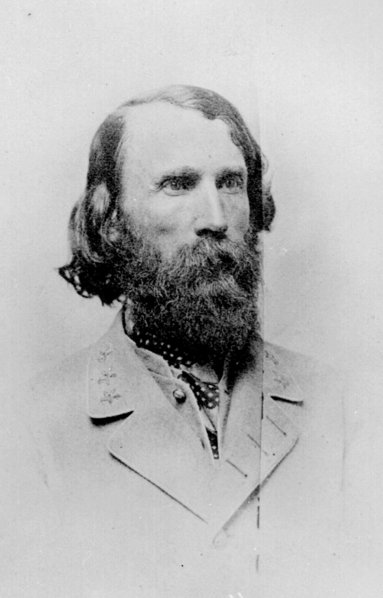
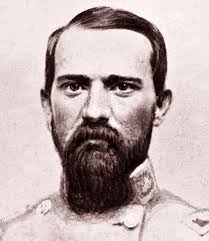
Lieutenant General A.P. Hill

Those who fought for the Confederacy spanned the spectrum of belief and often fought for reasons other than slavery and some of their stories are tragic. Lieutenant General A.P. Hill opposed slavery before the war and opposed secession but because his state and his family seceded he went south. In 1850 he was on leave from the army and learned of a lynching in his home town of Lynchburg, he wrote “Shame, shame upon you all, good citizens…Virginia must crawl unless you vindicate good order or discipline and hang every son of a bitch connected with this outrage.” Hill was incredibly brave and led his troops honorably throughout the war. Sadly he died in action just days before the end of the war at Petersburg and his widow took no part in any commemorations of the Lost Cause after the war.

Brigadier General Lewis Armistead who led Pickett’s troops to the High Water mark at the Battle of Gettysburg is another tragic figure. He was a widower who lived a life of much sorrow and loneliness and the army was his life; his best friends were in the army. His very best friend, Winfield Scott Hancock and his wife Almira remained with the Union, their parting in California at the beginning of the war is heartrending, and it was Hancock’s troops who inflicted the mortal wound on him.

Major General Patrick Cleburne, called the “Stonewall Jackson of the West” is another. He was an Irish immigrant to Arkansas. He had no slaves, opposed the institution and fought because the people he lived among were his friends. He was the first Confederate to broach the subject of emancipating the slaves, and for this he was ostracized, and not promoted to Lieutenant General and command of a Corps. He died in action at the Battle of Franklin in 1864.

There are others, Lieutenant General James Longstreet who was probably the best corps commander on either side during the war, quickly reconciled, became a Republican and served in various capacities in government after the war. For this, as well as needing a scapegoat for the loss at Gettysburg Longstreet was treated as a modern Judas Iscariot by many in the South, especially among the proponents of the Lost Cause. Major General William “Little Billy” Mahone was another like Longstreet who joined the Republican Party and suffered a fair amount of criticism for his stance.

Another more interesting personality was Colonel John S. Mosby, the legendary “Gray Ghost” of Virginia whose “Raiders” caused Union forces much difficulty throughout the war. Mosby is interesting, he did not support slavery, was not a proponent of secession but felt that it was his duty to fight for his state. This was not unusual because in that era most people in all parts of the country, felt much more loyalty to their own state, or even city or county than they did to the national government. He and his troops served honorably and after the war too he supported reconciliation, he became a Republican and a friend and supporter of Ulysses Grant. He was not ashamed of his service and stated after the war, “I am not ashamed of having fought on the side of slavery—a soldier fights for his country—right or wrong—he is not responsible for the political merits of the course he fights in” and that “The South was my country. But he also condemned those in the South who denied that slavery was the cause of the war. All this made him anathema and he had to live the rest of his life outside the south or serving in various overseas diplomatic postings.

There were other shades of gray among Confederates, some like Lieutenant General Jubal Early who was not a slave owner and vehemently opposed secession in the Virginia legislature until the state seceded. When it did he joined the Confederate forces and became one of the fiercest supporters of Confederate independence who ever lived. In fact Early, though pardoned by President Andrew Johnson, never reconciled with the United States and became the leading proponent of the history of the Lost Cause. Early’s Corps Commander Lieutenant General Richard Ewell was more circumspect, he owned and admitted the mistakes he made during the war as a commander, and he fully reconciled to the United States. Before he died Ewell “insisted that nothing disrespectful to the United States Government be inscribed upon his tomb.”

Hampton_inline

Lieutenant General Wade Hampton

Lieutenant General Wade Hampton of South Carolina was one of the richest men in the South if not the country when war came. He supported secession, owned hundreds of slaves, but for a slave owner he was relatively decent in the way he treated his slaves. He fought through the war and returned home to nothing. He became involved in politics, remained very much a White Supremacist, but that being said built bridges to African American political and religious leaders when he ran for governor, even as the terrorist bands of the Red Shirts did all they could to ensure that blacks were harassed, disenfranchised and even killed to keep them from voting. To the surprise of the militants Hampton adopted a moderate course, kept blacks in his cabinet and in state offices, kept a regiment of African American militia in Charleston and opposed the black codes and Jim Crow. For this he was run out office. When he died his last words were “God bless my people, black and white.”

One the other hand there were men like Lieutenant General Nathan Bedford Forrest who helped found the Ku Klux Klan, and even led some of the early violence against blacks, and purchased black prisoners for use on his plantation after the war. However, he evolved on the issue, and left the Klan in 1869 and in 1875 two years before his death began to promote racial harmony. He spoke about that to a group of African Americans, where he received a bouquet of flowers from a black women he was condemned throughout the South. An article in the Charlotte Observer noted “We have infinitely more respect for Longstreet, who fraternizes with negro men on public occasions, with the pay for the treason to his race in his pocket, than with Forrest and Pillow, who equalize with the negro women, with only ‘futures’ in payment.”

There were many Confederate Soldiers who fought and died because they did believe in White Supremacy and hated the North, that too is a fact, and many of those who lived carried on that hate until they died.

birth_of_a_nation-3

There were others who never reconciled and who rewrote history to minimize the importance of slavery and White Supremacy to the Confederate cause, these included Jefferson Davis, his Vice President Alexander Stephens, and Brigadier General Henry Benning of Georgia. All had spearheaded the drive for secession, spoken and wrote forcefully for not only preserving but expanding slavery Stephens said quite clearly in 1861 what the Confederacy was founded upon in his Cornerstone Speech “Our new Government is founded upon exactly the opposite idea; its foundations are laid, its cornerstone rests, upon the great truth that the negro is not equal to the white man; that slavery, subordination to the superior race, is his natural and normal condition.” However, after the war all of them sought to distance themselves from this and change the narrative to Constitutional, economic and political reasons.

KKK-Nast

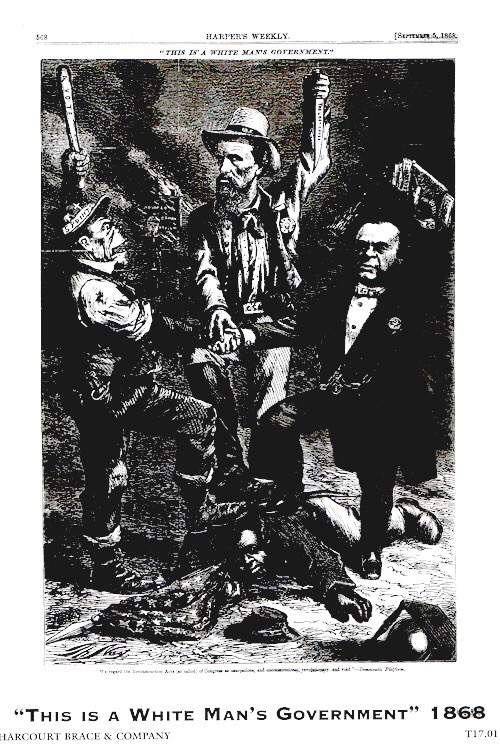
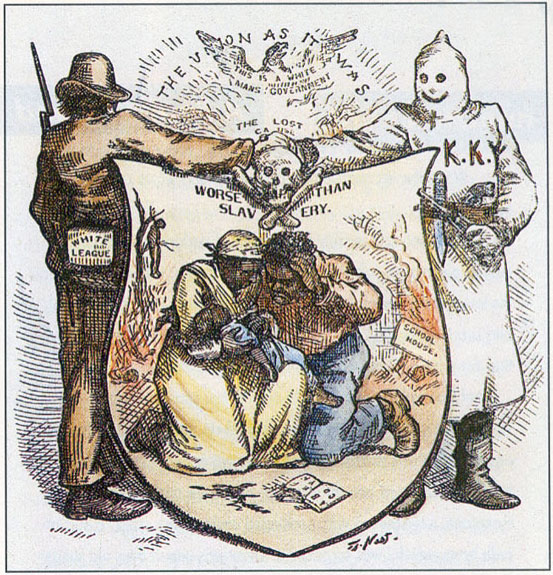
There were also many Confederate soldiers for whom the war never ended and they did continue it by other means, either as members of any of the various terrorist groups such as the Klan, the Red Shirts, the White League, the White Liners, or any of the related groups who terrorized and killed blacks and their white supporters, be they Northern “Carpetbaggers” or Southern “Scalawags.”

I could go on longer or in more detail on any of these men and probably could write a book about any of them, but I wanted to show that even when a cause is wrong, that we cannot condemn people as groups, and we also have to take into account people’s evolution on issues. The evolution of Wade Hampton and Nathan Bedford Forrest was far different than that of Jubal Early and others who supported the Lost Cause. I wish my family patriarch had been more like Mosby, Hampton, Hill, Ewell, Cleburne, or even Forrest rather than Jubal Early and others who never reconciled and in some cases continued to use violence to oppress others. 

Shades of gray. In history you can’t live with them and you can’t live without them.

Peace

Padre Steve+

3 Comments

Filed under civil rights, civil war, ethics, History, leadership, Political Commentary

Hell at the Peach Orchard

Friends of Padre Steve’s World

Today is another visitation of the Battle of Gettysburg. This too is part of my Gettysburg text, and in the next couple of months I plan on revising, editing and adding to this section. However, since I have recently posted the more recent revisions to parts of that text I have I have tried to avoid repeating those and instead posting this. The Battle of the Peach Orchard, Devil’s Den and the Wheat Field were some of the bloodiest and most confusing battles not only of July 2nd at Gettysburg, but of any during the Civil War. 

Though this is pretty much an unedited version of past work that I will be updating I do hope that you will find it interesting as well as informative.

Peace

Padre Steve+

12 pound napoleon

On July 2nd 1863 as on the first day of battle and throughout the Gettysburg campaign issues of command and control would be of paramount importance to both armies. On the second day the glaring deficiencies of Robert E Lee and his corps commanders command and control at Gettysburg would again be brought to the fore. Likewise the exemplary command of the Army of the Potomac by George Meade, Winfield Scott Hancock, staff artillery officer Henry Hunt and staff engineer Gouverneur Warren exemplified the best aspects of what we now define as Mission Command.

On the morning of July 2nd the Army of the Potomac was mostly assembled on the high ground from Culp’s Hill to Cemetery Hill and along Cemetery Ridge. In the north XII Corps under the command of Major General Henry Slocum held Culp’s Hill. The battered remnants of I and XI Corps under the command of Oliver Howard and Abner Doubleday held Cemetery Hill while Winfield Scott Hancock’s crack II Corps extended the line down Cemetery Ridge. To II Corps right was Dan Sickles’ III Corps with George Sykes V Corps in Reserve. John Sedgwick’s VI Corps was still enroute, marching up the Baltimore Pike.

corby

Father Corby gives General Absolution to the Irish Brigade on July 2nd 

It was a solid and well laid out position which commanded the battlefield. Major General Gouverneur Warren the Army’s Staff Engineer Officer who had been sent by Meade to assist Hancock the night of the first wrote his wife that morning: “we are now all in line of battle before the enemy in a position where we cannot be beaten but fear being turned.”[1]

There was one notable problem, Dan Sickles did not like the position assigned to his corps. His corps which joined the left flank of II Corps was to extend down Cemetery Ridge to Devil’s Den and Little Round Top. All morning he had been lobbying Meade, through Meade son and Aide-de-Camp Captain George Meade, the Artillery Reserve Commander Henry Hunt, Warren and even Meade himself to no avail. Sickles was disturbed because John Buford’s Cavalry division which has been deployed on the Federal left had been moved to the rear by Pleasanton the Cavalry Corps commander and not replaced.

GeneralBarksdale_zps3678f799

Hunt who had accompanied Sickles back to his corps pointed out that the position was too exposed and too expansive for the number of troops Sickles had in his corps. He advised Sickles not to advance and assured Sickles that he would discuss Sickles’ concerns with Meade. [2]

To remedy the situation he sent out four companies of Sharpshooters supported by the 3rd Maine Infantry to make a reconnaissance. Those troops ran into a large force of advancing Confederate Infantry near Seminary Ridge and withdrew, Colonel Brenden of the Sharpshooters informing Sickles of the Confederate advance.

sickles

Major General Dan Sickles 

Sickles now felt that the Union line was about to be turned as it had been at Chancellorsville and without consulting Meade or Hancock took it upon himself to save the situation. It was an act of brazen insubordination, but typical of the mercurial, vain and scandal plagued man who “wore notoriety like a cloak” and “whether he was drinking, fighting, wenching or plotting, he was always operating with the throttle wide open.”[3]

About mid-afternoon Sickles advanced III Corps forward in a “mile long line of battle with waving flags and rumbling batteries rolling west into the afternoon sunlight.” [4] The sight confused other commanders such as John Gibbon commanding a division in II Corps who watched in amazement from his vantage point on Cemetery Ridge. Sickles advanced nearly a mile in front of his previous position opening a gap between III Corps and II Corps. He attempted to hold a new line that was longer and more exposed than the number of troops that he had available. He placed Humphrey’s division along the Emmitsburg Road and extended Birney’s division through the Peach Orchard, a wheat field down to Devil’s Den where he ran out of troops.

Sickles had formed an exposed and vulnerable salient which was too thinly manned for its length. It was open to attack on three sides, had little depth, no reserves and no place to fall back to as an alternate position.[5] It was also about to be hit by the full fury and power of Hood’s and McLaws’ divisions of Longstreet’s First Corps supported by Alexander’s 46 well placed artillery pieces [6] all about to open fire on Sickles badly deployed corps.

About 3 PM Meade broke from a planned commander’s conference to investigate what had happened to Sickles and III Corps, accompanying Meade was Warren. Warren who was most familiar with that part of the battlefield noted that III Corps was “very badly disposed on that part of the field.” [7]

Confronting Sickles in the Peach Orchard Meade was visibly perturbed. Meade informed Sickles that “General I am afraid that you are too far out” [8] attempting to control his temper. Sickles disagreed and said with support he could hold the position because it was higher ground than what he had previously occupied. Meade then pointed out the obvious stating “General Sickles this is in some respects higher ground than that to the rear, but there is still higher in front of you…” [9] As the conversation progressed Meade told Sickles that “this is neutral ground, our guns command it as well as the enemy’s. The reason you cannot hold it applies to them.” [10]

Sickles offered to withdraw but as he did so the Confederate cannonade began signaling the beginning of Longstreet’s attack. Meade told Sickles “I wish to God you could [withdraw]…but those people will not permit it.”[11]Another account states that Meade told Sickles “You cannot hold this position but the enemy will not let you get away without a fight.” [12]

Since Sedgwick’s powerful VI Corps had just arrived Meade ordered it into reserve. He then ordered Sykes V Corps from its reserve position and one division of II Corps to support the dangerously exposed III Corps around the Peach Orchard and Wheat Field. He then told Sickles “if you need more artillery call on the reserve!” [13] It was an action that very likely saved the day, another example of Meade taking control of a bad situation preventing it from becoming even worse.

For Lee and Longstreet the morning had been spent disagreeing on a plan to crush Meade. Though his army was operating on exterior lines with his corps having no way to effectively coordinate their actions and still lacking Stuart’s Cavalry, Pickett’s Infantry division and Law’s brigade of Hood’s division Lee insisted that Longstreet and First Corps make a frontal attack on the Union left. Longstreet demurred and tried to convince Lee of turning the Union flank to the south of the Round Tops. Longstreet told Hood “The General is a little nervous this morning; he wishes me to attack; I do not wish to do so without Pickett. I never like to go into battle with one boot off.” [14]

Lee did not believe that such a move could succeed without the assistance of Stuart’s cavalry and Longstreet did not believe that with Pickett’s division that his corps had the combat power to successfully complete the mission. Hood objected to the attack pleading with Longstreet that it was “unwise to attack up the Emmitsburg Road, as ordered” and requested that he be allowed to “turn Round Top and attack the enemy flank and rear.” [15]

The debate between Longstreet and Hood continued as Hood objected and Longstreet reiterated Lee’s insistence on the planned attack. Hood pleaded for freedom of maneuver believing that an attack up the rocky hills was doomed and later noted “it seemed to me that the enemy occupied a position so strong- I may say impregnable – that independently of their flank fire, they could easily repulse our attack by merely throwing or rolling stones down the mountainside as we approached.” [16] Despite his objections to the plan Longstreet ordered Hood to attack as Lee planned and after a fourth attempt by Hood to persuade Longstreet to change the plan Longstreet told his subordinate “We must obey the orders of General Lee.” [17]

However in addition to his contention with Lee and Hood Longstreet had to deal with Lee jumping the chain of command. With Longstreet in earshot order McLaws to make an attack on the Peach Orchard and ignored McLaws repeated requests to make a further reconnaissance before launching the attack. By the time Hood and McLaws divisions were in place along with Anderson’s division from Hill’s Third Corps it was nearly four o’clock. The senior commanders of the Army of Northern Virginia had functioned poorly throughout the day but when the attack began it was like a violent storm as Confederate troops fell upon the exposed Federal III Corps.

When the attack was launched McLaws division and the left wing of Hood’s division struck the exposed positions of III Corps. Sickles was severely wounded by a bouncing cannon ball which shattered a leg and knocked him out of the fight. Hood too was badly wounded early in the action leaving command of his division to Brigadier General Evander Law. Law whose brigade had just arrived on the battlefield after a long march from New Guilford in the Cumberland Valley continued to command his own brigade in the assault leaving the rest of the division to fend for themselves and Robertson took the initiative to bring up the rest of the division. [18]

McLaws’ and Hood’s soldiers hit Sickles Corps hard shattering it. Despite fierce resistance from the Federal forces Sickles’ corps was forced to retreat. The reinforcements ordered to the sector from V Corps, II Corps and the artillery reserve arrived piecemeal and also sustained heavy casualties but eventually helped to stem the Confederate tide. III Corps was wrecked and effectively out of the battle but the actions of Meade, Hancock, Warren, Gibbon, Sykes and Hunt to respond to Sickles folly kept the Confederates from sweeping the field.

Law, Robertson’s and Benning’s brigades opened Hood’s attack toward Devil’s Den and Little Round Top. Fierce fighting ensued at Devil’s Den where the Federal line, occupied by Colonel A. Van Horn Ellis’ 124th New York and 4 guns of Smith’s artillery battery put up a stiff resistance. Ellis’s small regiment numbered but 18 officers and 220 men when it entered the fight but it held off several charges of the Texans and even conducted a counter-attack before being overwhelmed by fresh troops from Benning’s brigade.

During the fight Ellis mounted his horse noting that “The men must see us today.” [19] Ellis died in the action as did many of his brave soldiers. In the valley between Devil’s Den and the Round Tops the 4th Maine and Smith’s 2 remaining guns fought large numbers of Hood’s troops and as the outnumbered Federals fell back the Texan’s of Robertson’s brigade and Law’s Alabamians surged toward the rocky hill.

Brigadier General William Barksdale’s Mississippi brigade had distinguished itself at Fredericksburg now stormed the Federal positions. The Mississippians broke through the salient and drove forward driving broken Federal regiments and batteries before them. Barksdale continued to lead his brigade forward though it had suffered significant casualties and was losing cohesion. Barksdale insisted on continuing to advance and would not stop to take time to reform his lines shouting at one of his regimental commanders “No! Crowd them- we have them on the run. Move your regiments.” [20]

willard

George Willard 

As the brigade reached the lower portion of Cemetery Ridge a fresh Federal brigade commanded by Colonel George Willard struck the Mississippians. Willard’s brigade was seeking redemption having been one of the units forced to surrender at Harpers Ferry the previous September. His troops fresh and full of fight fell upon the Mississippians who were spent and disorganized having reached their culminating point. Barksdale continued to urge on his men but was mortally wounded and his troops driven back by the New Yorkers. Willard did not live long to savor the redemption as he was hit by a cannon ball and killed instantly.

To the north of the salient Anderson’s division of Hill’s corps attacked toward Cemetery Ridge meeting heavy resistance. Cadmus Wilcox’s brigade advanced unsupported up to Cemetery Ridge which due to the dispatch of troops to the Peach Orchard was only lightly defended. When Hancock saw the threat he ordered the 1st Minnesota commanded by Colonel William Covill, all of 262 men to charge the advancing Confederates telling Covill: “Colonel, do you see those colors?…Then take them.” [21] Between 170-178 of the Minnesotans fell in the counter-attack but they succeeded in blunting Wilcox’s attack and Wilcox seeing no help or support withdrew from Cemetery Ridge.

The First Minnesota

The Charge of Willard’s Brigade 

By the evening fresh Federal troops directed by Meade, Hancock and Hunt poured into the sector. By the end of the day despite sustaining massive casualties the Federal Army held its ground in large part thanks to the active role played by Meade, Hancock, Warren and Hunt in anticipating danger and bringing the appropriate forces to bear.

The fighting around the Peach Orchard, the Wheat field and Devil’s Den was confusing as units of both sides became mixed up and cohesion was lost. Both sides sustained heavy casualties but Lee’s Army could ill afford to sustain such heavy losses. By the end of the evening both McLaws and Hood’s divisions were spent having lost almost half of their troops as casualties. Hood was severely wounded early in the fight, and many other Confederate commanders were killed or mortally wounded including the irrepressible Barksdale. Combined with the repulse at Little Round Top the Confederate troops consolidated their positions.

In the end though McLaws’ and Hood’s divisions had succeeded in thrashing Sickles’ exposed salient they were unsuccessful at breaking the Federal line. Casualties were heavy on both sides but the attack had failed and it had failed because of senior leadership of Lee and his corps commanders. One of Lee’s biographer’s wrote “Longstreet was disgruntled, Ewell was inept and Hill was unwell.” [22] To make matters worse Lee did not assert himself and even his most devoted biographer Douglas Southall Freeman would write that on July 2d “the Army of Northern Virginia was without a commander.” [23]

mcgilvery

Freeman McGilvery

This Fiery Line” Lieutenant Colonel Freeman McGilvery and the Artillery at the Trostle Farm and Plum Run

The disaster that engulfed Sickles’ III Corps now threatened the Federal center. Meade and Hancock rushed reinforcements in the form of V Corps and much of II Corps. The tip of the Sickle’s salient at Sherfy’s Peach Orchard manned by Graham’s brigade of David Birney’s division was overwhelmed and retreated in disorder. Once “the angle had been breached, the lines connecting to it on the east and north were doomed.” [24] This exposed the left of Humphrey’s division and it too was forced to retreat under heavy pressure sustaining heavy casualties. The final collapse of Humphrey’s division a large gap opened in the Federal lines between the elements of V Corps fighting along Devil’s Den and Little Round Top and II Corps along the central portion of Cemetery Ridge.

When Meade realized the seriousness of the situation he gave Sickles’ free reign to call for reinforcements from Harry Hunt’s Artillery Reserve as III Corps had only batteries organic to it. Those five batteries were in the thick of the fighting providing invaluable support to Sickles’ hard pressed and outnumbered corps. Firing canister and grapeshot they cut swaths of death and destruction through the massed ranks of wildly cheering Confederates of Kershaw and Semmes and Barksdale’s brigades of McLaws’ division. Kershaw recalled:

“The Federals…opened on these doomed regiments a raking fire of grape and canister, at short distance, which proved most disastrous, and for a time destroyed their usefulness. Hundreds of the bravest and best men of Carolina fell….” [25]

The Confederates believed that they had cut the Union line in half and advanced through the Peach Orchard and across the Wheat Field toward Cemetery Ridge. But they were to befall another furiously conducted defense, this by artillery hastily collected along what is known as the Plum Run Line.

fig23

Among the artillery called into action was the First Volunteer Brigade under the command of Lieutenant Colonel Freeman McGilvery. McGilvery, a Maine native was a former sea captain who had organized and commanded the 6th Maine Battery at the beginning of the war. He commanded it with distinction in a number of engagements. Promoted to Major in early 1863 he assumed command of the Brigade and fought at Chancellorsville and was promoted to Lieutenant Colonel in June as the Army of the Potomac pursued Lee’s Army.

McGilvery rode into the maelstrom of the retreating III Corps soldiers and broken guns. His horse was hit four times but he remained unwounded despite “exposing himself to enemy missiles on all parts of the field from Cemetery Ridge to the Peach Orchard.” [26] He noted that there was no infantry anywhere that could plug the gap and acted instantly on his own authority to make a decision that likely saved the Union line.

fig20

Bigelow’s Artillery

In the confusion of III Corps disintegration three of his batteries had withdrawn leaving Captain John Bigelow’s 9th Massachusetts battery alone at the Trostle farm telling them they must “hold at all hazards.” [27] Bigelow later explained that McGilvery said that “for 4 or 500 yards in my rear there were no Union troops.” He was then instructed by McGilvery “For heavens [sic] sake hold that line…until he could get some other batteries in position…” [28] In another account Bigelow recorded “Captain Bigelow…there is not an infantryman back of you along the whole line which Sickles moved out; you must remain where you are and hold your position at all hazards, and sacrifice your battery if need be, until at least I can find some batteries to put in position and cover you.” [29]

The order could have been considered suicidal; the 21st Mississippi was nearly upon them and they were but one battery and barely one hundred troops. Bigelow did not hesitate to obey; he brought his guns into line at the Trostle house “facing one section slightly to the southwest and the other two sections directly into the path of the oncoming Confederates.” [30]

barksdales_charge_lg

Barksdale’s Charge

Bigelow’s artillerymen fought like demons he described the effect of his fire on Kershaw’s South Carolinians “the Battery immediately enfiladed them with a rapid fire of canister, which tore through their ranks and sprinkled the field with their dead and wound, until they disappeared in the woods on our left, apparently a mob.” [31] They poured a merciless stream of fire into the advancing Confederates until “they had exhausted their supply of canister and the enemy began to close in on his flanks.” [32] A German born gunner noted “we mowed them down like grass, but they were thick and rushed up.” [33] A hand to hand fight ensued among the guns but the Massachusetts men escaped losing 28 of its 104 men engaged,[34] the brave commander Bigelow was wounded and nearly captured but one of his men helped him to the rear.

Their sacrifice was not in vain. They bought McGilvery an additional 30 minutes to set up a line of guns along Plum Run. Hunt praised the battery “As the battery had sacrificed itself for the safety of the line, its work is specially noticed as typical of the service that artillery is not infrequently called to render, and did render in other instances at Gettysburg besides this one.”[35]

Barksdale’s brigade did not pause and continued in their relentless advance towards Cemetery Ridge, sweeping Union stragglers up as they moved forward led by their irrepressible Colonel. Before them was McGilvery’s new line, hastily cobbled together from any batteries and guns that he could find. Initially composed of 13-15 guns of four different batteries he was joined by two more batteries giving him about 25 guns in all. Subjected to intense Confederate artillery fire and infantry attacks his guns held on even as their numbers were reduced until only six guns remained operational. “Expertly directed by McGilvery a few stouthearted artillerymen continued to blaze away and keep the low bushes in front of them clear of lurking sharpshooters. Although they had no infantry supports, they somehow managed to create the illusion that the woods to their rear were filled with them, and they closed the breach until the Union high command could bring up reinforcements.” [36]

The reinforcements came in the form of Colonel George Willard’s “Harper’s Ferry” Brigade which was looking for revenge and redemption. This unit hit Barksdale’s now disorganized force which had reached its cumulating point hard. Willard was killed and Barksdale mortally wounded and captured in the violent clash which spelled the end of one of the greatest threats to the Union line of the entire battle. Philip Tucker in his book Barksdale’s Charge: The True High Tide of the Confederacy at Gettysburg, July 2, 1863 refers to Barksdale’s charge as the real “high water mark of the Confederacy.”

However it was McGilvery who recognized the emergency confronting the line and on his own took responsibility to rectify the situation. He courageously risked “his career in assuming authority beyond his rank” [37] and without his quick action, courage under fire and expert direction of his guns Barksdale’s men might have completed the breakthrough that could have won the battle for General Lee despite all of the mistakes committed by his senior leaders that day.

It was another example of an officer who had the trust of his superiors who did the right thing at the right time. It is an example of an officer used the principles of what we today call Mission Command to decisively impact a battle. McGilvery rose higher in the Federal service and was promoted to Colonel and command of the artillery of X Corps. He was slightly wounded in a finger at the battle of Deep Bottom in August 1864. The wound did not heal properly so surgeon’s decided to amputate the finger. However they administered a lethal dose of chloroform anesthesia and he died on September 9th, the Union losing one its finest artillerymen. He was buried in his native Maine and the State legislature designated the first Saturday in September as Colonel Freeman McGilvery Day in 2001.

Notes

[1] Jordan, David M. Happiness is Not My Companion: The Life of G.K. Warren Indiana University Press, Bloomington Indiana 2001 p.89

[2] Foote, Shelby The Civil War, A Narrative: Fredericksburg to Meridian. Vintage Books, a Division of Random House, New York 1963 p.495

[3] Catton, Bruce The Army of the Potomac: Glory Road Doubleday and Company, Garden City New York, 1952 pp.150-151

[4] Ibid p.288

[5] Ibid. Foote p.496

[6] Ibid. p.289

[7] Ibid. Jordan p.90

[8] Ibid. Foote p.496

[9] Schultz, Duane The Most Glorious Fourth: Vicksburg and Gettysburg July 4th 1863. W.W. Norton and Company New York and London, 2002 p.251

[10] Sears, Stephen Gettysburg Houghton Mifflin Company Boston and New York 2004 p.263

[11] Ibid.

[12] Ibid. Sears p.263

[13] Ibid. Foote p.497

[14] Pfanz, Harry W. Gettysburg the Second Day University of North Carolina Press, Charlotte and London, 1987 p.112

[15] Ibid. Foote p.499

[16] Ibid.

[17] Ibid.

[18] Coddington, Edwin B. The Gettysburg Campaign a Study in Command A Touchstone Book, Simon and Schuster, New York 1968 pp.402-403

[19] Ibid. Pfanz p.293

[20] Trudeau, Noah Andre Gettysburg a Testing of Courage Perennial Books, Harper Collins Publishers, New York 2002 p.368

[21] Ibid. p.393

[22] Taylor, John M. Duty Faithfully Performed: Robert E Lee and His Critics Brassey’s, Dulles VA 1999 p.149

[23] Freeman, Douglas S. R.E. Lee volume 3 Charles Scribner’s Sons, New York 1935 p.150

[24] Trudeau, Noah Andre Gettysburg: A Testing of Courage Harper Collins, New York 2002 p.368

[25] Kershaw, J.B. Kershaw’s Brigade at Gettysburg in Battles and Leaders of the Civil War Volume III, The Tide Shifts. Edited by Robert Underwood Johnson and Clarence Clough Buel Castle, Secaucus NJ p.335

[26] Coco, Gregory A A Concise Guide to the Artillery at Gettysburg Colecraft Industries, Orrtanna PA 1998 p.31

[27] Hunt, Harry I Proceeded to Cemetery Hill in Battles and Leaders of the Civil War Bradford, Ned editor, Meridian Books, New York 1956 p.378

[28] Guelzo, Allen C Gettysburg, The Last Invasion Vintage Books, a Division of Random House, New York 2013 p.314

[29] Ibid. Trudeau p.385

[30] Ibid.

[31] Bigelow, The Peach Orchard, 54; History of the Fifth, 638 retrieved from WE SAVED THE LINE FROM BEING BROKEN: Freeman McGilvery, John Bigelow, Charles Reed and the Battle of Gettysburg by Eric Campbell http://www.nps.gov/history/history/online_books/gett/gettysburg_seminars/5/essay4.htm#52

[32] Coddington, Edwin. The Gettysburg Campaign: A Study in Command Touchstone Books, New York 1960 p.416

[33] Ibid. Guelzo pp.314-315

[34] Ibid Hunt p.379

[35] Ibid. Hunt. P.379

[36] Ibid. Coddington p.417.

[37] Ibid. Coddington.

Leave a comment

Filed under civil war, Gettysburg, History, leadership, Military

I Will Fight Them: John Reynolds at Gettysburg

IronBrigade10161001

Friends of Padre Steve’s World

This is another part of my Gettysburg text Chapter on John Reynolds. I have divided it up into three sections. The first was the biographic section, the second, published yesterday was about Kate Hewitt, the girl he left behind.  Today is an expanded version of what was the original chapter which focused almost exclusively on Reynolds’s and his actions at Gettysburg on the morning of July 1st 1863.

I hope that you enjoy.

Peace

Padre Steve+

On the night of June 30th Reynolds was awash in reports, some of them conflicting and even though he was without Meade’s course of action for the next day “concluded that Lee’s army was close by and in force.” [1] He spent the night at his headquarters “studying the military situation with Howard and keeping in touch with army headquarters.” [2] Howard noted Reynolds anxiety and “received the impression that Reynolds was depressed.” [3] After Howard’s departure Reynolds took the opportunity to get a few hours of fitful sleep before arising again at 4 a.m. on July 1st.

When morning came, Reynolds was awakened by his aide Major William Riddle with Meade’s order to “advance the First and Eleventh Corps to Gettysburg.” [4] Reynolds studied the order and though he expected no battle that morning, expecting “only moving up to be in supporting distance to Buford” [5] took the prudent and reasonable precautions that his Confederate opponents A.P. Hill and Harry Heth refused to take as they prepared to move on Gettysburg.

His troops were in fine spirits that morning even though it had been busy. After a breakfast of hardtack, pork and coffee the troops moved out. An officer of the Iron Brigade noted that the soldiers of that brigade were “all in the highest spirits” while Lieutenant Colonel Rufus Dawes of the “placed the fifes and drums at the head of the Sixth Wisconsin and ordered the colors unfurled” as the proud veterans marched forward into the sound of the raging battle to the tune of “The Campbell’s are Coming.” [6]

Though Reynolds was not expecting a fight he organized his march in a manner that ensured if one did happen that he was fully prepared. The precautionary measures that he took were those that any prudent commander having knowledge that strong enemy forces were nearby would take. Reynolds certainly took to heart the words of Napoleon who said “A General should say to himself many times a day: If the hostile army were to make its appearance in front, on my right, or on my left, what should I do?” [7]

This was a question that A.P. Hill and Harry Heth seemed not to consider on that warm and muggy July morning when Heth was committing Lee’s army to battle on his own authority. Reynolds was also about to commit the Army of the Potomac to battle, but unlike Heth who had no authority to do so, Reynolds “had at least been delegated the authority for making such a decision” [8] by his army commander George Meade. Though Meade was unaware of what was transpiring in the hills beyond Gettysburg he implicitly trusted the judgement of Reynolds, and Meade been with the advanced elements of Reynold’s wing he too “probably would have endorsed any decision he made.” [9]

Reynolds placed himself with the lead division, that of Wadsworth, and “directed Doubleday to bring up the other divisions and guns of the First Corps and had ordered Howard’s Eleventh Corps up from Emmitsburg.” [10] Reynold’s also understood the urgency of the situation and “wanted all the fighting troops to be up front, so he instructed Howard not to intermingle his supply wagons with his infantry. Similar instructions had been given to Abner Doubleday; to ensure that the First Corps wagons would wait until the Eleventh Corps foot soldiers had passed.” [11]

Instead operating in the normal fashion of rotating units on the march, Reynolds opted to save time. Since Wadsworth’s First Division was further advanced than his other First Corps divisions, Reynolds instructed it to move out first with Cutler’s brigade in the lead followed by the Iron Brigade under Brigadier General Solomon Meredith. In doing so Reynolds countermanded the order of the acting corps commander Doubleday who had ordered Wadsworth’s division to allow the other divisions of First Corps to pass his before advancing. Reynolds told Wadsworth that Doubleday’s order “was a mistake and that I should move on directly.” [12]

He went forward with Wadsworth’s division and gave Doubleday his orders for the coming engagement. Doubleday later recalled that when Reynolds arrived to discuss the situation that Reynolds:

“read to me the various dispatches he had received from Meade and Buford, and told me that he should go at once forward with the leading division – that of Wadsworth – to aid the cavalry. He then instructed me to draw in my pickets, assemble the artillery and the remainder of the corps and join him as soon as possible. Having given me these orders, he rode off at the head of the column, and I never saw him again.” [13]

Reynolds ordered Howard’s Eleventh Corps to follow First Corps and according to Doubleday directed an aid of Howard to have Howard “bring his corps forward at once and form them on Cemetery Hill as a reserve.” [14] Howard received the order and since his troops were ready to move out “no time was lost in setting them in motion.” [15] While some writers believe that Reynolds directed Oliver Howard to prepare Cemetery Hill as a fallback position [16] there is more evidence that points to Howard selecting the that commanding hill himself. [17] Regardless of which is correct the result was that both Reynolds and Howard recognized the importance of the position and took action to secure it.

Likewise Reynolds ordered Sickles’ III Corps to come up from Emmitsburg where that corps had bivouacked the previous night. [18] Sickles had heard the guns in the distance that morning and sent his senior aide, Major Henry Tremain to find Reynolds. Reynolds told Tremain “Tell General Sickles I think he had better come up” but the order left Sickles in a quandary. He recalled “he spend an anxious hour deciding what to do” [19] for he had “been ordered by Meade to hold his position at Emmitsburg” [20] and Sickles sent another rider to Reynolds and awaited the response of his wing commander instead of immediately advancing to battle on 1 July and it would not be until after 3 P.M. that he would send his lead division to Gettysburg.

According to Doubleday Reynolds’s intention was “to fight the enemy as soon as I could meet him.” [21] Reynolds rode forward with some of his staff into the town as the infantry of the First Corps and the Eleventh Corps moved advanced. As they rode through the town Reynolds and his party were met by “a fleeing, badly frightened civilian, who gasped out the news that the cavalry was in a fight.” [22] When he came to the Lutheran Seminary he came across Buford. It was a defining moment of the Civil War, a moment that shaped the battle to come. It has been recounted many times and immortalized on screen in the movie Gettysburg, a time “when the entire battle would come down to a matter of minutes getting one place to another.” [23]

As the rough and tumble Kentuckian, Buford, and Reynolds, the dashing Pennsylvanian, discussed the situation they had to know that odd that they were facing. With close to 32,000 rebels from the four divisions of Hill’s and Ewell’s corps closing in from the west and the north and with only about 18,000 men of First Corps, Eleventh Corps and Buford’s cavalry division to meet them, the odds were not in his favor, but unlike other battles that the army of the Potomac faced, this time the army and its commanders were determined not to lose the battle and not to retreat and for the first time John Reynolds “led the advance” and for the first time in the war “might have some say about fighting.” [24]

Reynolds and Buford committed their eighteen thousand men against Lee’s thirty-two thousand in a meeting engagement that develop into a battle that would decide the outcome of Lee’s invasion. Likewise it was a battle for the very existence of the Union. Abner Doubleday noted the incontestable and eternal significance of the encounter to which Buford and Reynolds were committing the Army of the Potomac on July 1st 1863:

“The two armies about to contest on the perilous ridges of Gettysburg the possession of the Northern States, and the ultimate triumph of freedom or slavery….” [25]

Even though they understood that they were outmanned and outgunned by the advancing Confederates, both Buford and Reynolds knew that this was where the battle must be waged. It was here on this spot, for the ground gave them an advantage that they would not have elsewhere; but only if they could hold on long enough for the rest of the army to arrive. As Alan Nolan wrote: “this Pennsylvania ground – was defensible, and behind it, through the town, loomed Cemetery Hill, another natural point of defense if the battle at Seminary Ridge went against the Federals.” [26]

200px-Gettysburg_Day1_1045

Reynolds vs. Heth July 1st

When John Buford saw Reynolds infantry advancing as the Confederates increased the pressure on his outnumbered cavalry, he remarked to a staff member “now we can hold this place.” [27] Buford was not mistaken, when Reynolds rode up to the scene of the battle on Seminary Ridge he greeted Buford, who was in the cupola of the seminary. He called out “What’s the matter John?” to which Buford replied “The devil’s to pay” before he came down to discuss the tactical situation with Reynolds. [28] Buford explained the situation noting that “I have come upon some regiments of infantry…they are in the woods…and I am unable to dislodge them.” [29]

Reynolds needed no other convincing. He asked Buford if he could hold and quickly sent off a number of messages. One officer wrote: “The Genl ordered Genl Buford to hold the enemy in check as long as possible, to keep them from getting into town and at the same time sent orders to Genl Sickles…& Genl Howard to come as fast as possible.” [30] Additionally, Reynolds sent a message to Meade stating: “The enemy are advancing in strong force. I fear they will get to the heights beyond the own before I can. I will fight them inch by inch, and if driven into the town, I will barricade the streets and hold them back as long as possible.” [31] He directed Major Weld of his staff to take it to Meade with all haste as Weld recalled: “with the greatest speed I could, no matter if I killed my horse.” [32] When Meade received the report he was concerned, but with great confidence in Reynolds’s ability he remarked “Good!…That is just like Reynolds; he will hold on to the bitter end.[33]

After dictating his instructions and sending off his messengers, Reynolds then did what no senior Confederate commander did during the entirety of the battle, he rode back and took personal charge of the movements of his troops to hurry them forward. Unlike Heth who so badly misjudged the tactical situation, he had taken note of the ground and recognized from Buford’s reports that “the Confederates were marching only on that single road and thus would not be able to push their forces to the front any faster than Reynolds could reach the battlefield with his First Corps divisions.” [34] It was a key observation on his part which again allowed him to make appropriate decisions as to how he shaped the battle.

explorepahistory-a0h4p1-a_349

Reynolds leadership at this point might be considered reckless by the standards of our day when senior commanders control battles from miles away with the help of real time intelligence and reporting, including live video feeds, or even the standards of the Second World War. But then in the Civil War a commander in combat could only really control the actions of troops that he could see and because of the time that it took to get messages to subordinate commanders, and the real possibility that verbal orders could be badly misinterpreted in the heat of battle.

Reynolds exercised command directing infantry formations into battle and assisting his artillery battery commanders in the placement of their guns. This was far different than the way that most senior Confederate leaders, including Lee, Longstreet, Hill and Ewell directed their units during the battle of Gettysburg. But such action such action was in keeping with Reynolds’s character, especially in the defense of his home state. Reynolds’ philosophy of command regarding volunteer troops was that they “were better led than driven” [35] and as such he led from the front and Abner Doubleday noted that Reynolds was “inflamed by at seeing the devastation of his native state, was most desirous of getting at the enemy as soon as possible.” [36]

iron brigade forward

“For God’s Sake Forward!” McPherson’s Ridge

John Reynolds recognized that time was of the essence if his forces were to hold the ground west of the town selected a shortcut around the town for First Corps. Those forces were directed across the fields near the Condori farm toward the back side of Seminary Ridge, with Reynolds’ staff helping to remove fences to speed the advance. [37] It was not an easy advance as the troops had to move across the farm fields at an oblique and have to “double-quick for a mile and a quarter in the thick humidity just to reach the seminary.” [38] One member of the corps recalled “I never saw men more willing to fight than they were at Gettysburg.” [39]

Recognizing that “after two full hours of fighting, Buford’s troopers” fighting on McPherson’s Ridge, were “at the limits of their endurance,” Reynolds ordered Wadsworth’s brigades “to bolster the cavalry and oppose the rebel infantry coming at them.” [40]

As troops arrived Reynolds directed them into position. He directed the artillery of Captain James Hall’s 2nd Maine Battery to McPherson’s Ridge instructing Hall “I desire you to damage their artillery to the greatest possible extent, and to keep their fire from our infantry until they are deployed….” [41]

The leading infantry of First Corps was Major General James Wadsworth’s understrength division containing just two brigades, just over 3000 soldiers, its losses from Chancellorsville not being made good and as the result of the loss of regiments discharged because their enlistments had expired. [42] Wadsworth was not a professional soldier, but like many generals on both sides was a political general who despite his lack of military experience was a natural leader of men. Wadsworth was “a vigorous white-haired old man who had been a well-to-do gentleman farmer in New York State before the war” [43] and he “had interrupted his service in the war to run for and lose his state’s governorship the preceding fall.” [44] He ran against the anti-war, anti-administration and frequently pro-Southern Copperhead Horatio Seymour, but he did not leave the army in order return to the state to mount a personal campaign “on the ground that it did not befit a soldier.” [45]

“What the gray haired general lacked in experience and skill, he compensated with a fighting spirit.” [46] Oliver Howard of Eleventh Corps said that Wadsworth was “always generous and a natural soldier” [47] and while Wadsworth was no professional but he performed admirably on July 1st 1863. Wadsworth was beloved by his men because he demonstrated true concern and care for their living conditions and training and on that morning Wadsworth was commanding his division leading it into action with “an old Revolutionary War saber in his hand.” [48] The gallant Wadsworth would be mortally wounded ten months later leading a division of Gouverneur Warren’s Fifth Corps in the opening engagements of the Wilderness. Secretary of the Navy Gideon Welles noted in his diary when Wadsworth died that Wadsworth “should, by right and fair-dealing, have been at this moment Governor of New York…No purer or single-minded patriot than Wadsworth has shown himself in this war. He left home and comforts and wealth to fight the battles of the Union.” [49]

With their gallant commander at their head the division may not have had much in force in the way of numbers, but the units of the division were “good ones,” composed of hardened combat veterans that went into battle with an eye to victory. In the van was Brigadier General Zylander Cutler’s brigade of New Yorkers and Pennsylvanians, the “celebrated Bucktails.” [50] When they were mustered into service the soldiers of the 13th Pennsylvania had adopted a “bucktail” attached to their service caps as a distinctive insignia, a practice that spread to other regiments of the brigade and for which the brigade became known throughout the army.

Cutler had spent much of his early life in Maine working in a number of fields and businesses. He made a fortune several times and lost it, first when his mill burned down, but he rebuilt his businesses and diversified and “as a leading businessman, Cutler was elected to the Maine senate, college trusteeships and a railroad directorship, but he was financially ruined by the panic of 1866 and moved to Milwaukee to start his career over again.” [51] The tough-minded Cutler had some previous military experience fighting Indians as a member of the Maine militia and was made Colonel of the 6th Wisconsin. Cutler was described by one of his soldiers as “being as “rugged as a wolf” and was “a tenacious fighter, a trait that endeared him to the tough-minded Gibbon.” [52] After Antietam Gibbon recommended Cutler for promotion to Brigadier General and command of the Iron Brigade, but Cutler had been wounded at the bloody Battle of Brawner’s Farm and Solomon Meredith gained a promotion and command of that celebrated brigade. However, in on November 29th 1862 having recuperated from his wounds Cutler was promoted to brigadier general and received command of his Bucktails in March of 1863. The brigade saw only minor action at Chancellorsville and Gettysburg would be the fierce brigadier’s first chance since being wounded to command in combat.

This fine brigade was followed by Brigadier General Solomon Meredith’s “Iron Brigade” composed of westerners in their distinctive black “Jefferson Davis” or “Hardie” hats. The brigade had been initially commanded by Major General John Gibbon, now commanding a division in Winfield Scott Hancock’s Second Corps. Gibbon turned the brigade into one of the finest in the army. At the Battle of Turner’s Gap on South Mountain during the Antietam campaign, the brigade earned its name.

After that bloody battle George McClellan exclaimed “They must be made of Iron!” and Hooker replied, “By the Eternal, they are iron! If you had seen them at Bull Run as I did, you would know them to be iron.” [53] In the fierce battle at South Mountain the brigade had lost over a quarter of its strength, but had gained a share of immortality among the ranks of the United States Army. “The Western soldiers immediately seized on this as their title, and the reputation of the brigade and its new name were soon broadcast around Federal campfires.” [54] The regiments of the brigade rivalled many Regular Army units in effectiveness and discipline and “the black hats became their trademark.” [55] Often committed to the fiercest battles the brigade had been decimated, but now along with the Bucktails it advanced up down Seminary Ridge and up the back side of McPherson’s Ridge. A member of an artillery battery who saw the Bucktails and the Iron Brigade advance recalled:

“No one…will ever again see those two brigades of Wadsworth’s Division – Cutler’s and the Iron Brigade – file by as they did that morning. The little creek made a depression in the road, with a gentle ascent on either side, so that from our point of view the column, as it came down the slope and up the other, had the effect of huge blue billows of men topped with a spray of shining steel, and the whole spectacle was calculated to give nerve to a man who never had one before.[56]

Reynolds directed Cutler’s Bucktails to proceed north of the Cashtown Pike and then “called the Iron Brigade into action on the south side” [57] leading the hearty Westerners himself. Reynolds directed then Wadsworth to take change of the action on the north side of the road while he looked after the left. [58] When Reynolds made that decision he made another. He ordered the 6th Wisconsin of the Iron Brigade into reserve, leaving the Iron Brigade a regiment short but giving him the advantage of having a ready reserve which “permitted them to take full advantage of their interior lines, shift their strength about, and apply it where most needed.” [59]

At about 10:30 the 2nd Wisconsin advanced into the woods Reynolds urged them forward: “Forward men, for God’s sake and drive those fellows out of those woods….” [60] As he looked around toward the seminary to see the progress of reinforcements, Reynolds was struck in the back of the neck by a bullet and fell dead. “Had it come a short time earlier, Reynolds’s death might have thrown the I Corps into fatal confusion.” [61] But Doubleday, who command now fell was up to the task on that sultry July morning.

MenBrooklyn

Cutler’s brigade moved north and engaged Davis’ men near the railroad cut. Here the Cutler’s line was “hardly formed when it was struck by Davis’s Confederate brigade on its front and right flank.” [62] His troops were heavily outnumbered by the advancing Confederates and Davis’ troops initially had the upper hand. In a savage fight they inflicted massive casualties on Cutler’s regiments which outnumbered and being flanked were ordered to withdraw by Wadsworth in order to save them, with the exception of one regiment, the 147th New York nicknamed the Ploughboys which “did not get the order” [63] and though isolated held its ground, “with the support of a fresh six-gun battery whose gunners simply refused to quit.” [64] This was the 2nd Maine Battery under the command of Captain James Hall. Though caught in a cross fire of Rebel artillery and assailed by skirmishers Hall’s artillerymen gamely continued the fight withdrawing by sections, “fighting a close canister range and suffering severely.” [65] The New Yorkers and Hall’s battery battled the Mississippians and the “Ploughboys fell “like autumn leaves; the air was full of lead.” [66]

railroad_cut

The inexperienced Davis and his green troops were buoyed by this “gratifying local success” [67] and attempted to exploit it. At this point the Confederates were fatigued by the long march and the fighting and the troops of the 2nd Mississippi and 55th North Carolina “were all jumbled together without regiment or company.” [68] Davis attempted to use the unfinished railroad cut “as cover for getting on the enemy’s flank without exposure.[69] It was a decision that Davis lived to regret. As his troops his units crowed into it, the two regiments of Cutler’s brigade south of the turnpike, the 14th Brooklyn and the 95th New York turned to meet them and were joined by the reserve regiment of the Iron Brigade, the 6nd Wisconsin under Lieutenant Colonel Rufus Dawes. Dawes ordered an immediate advance and called out to Major Edward Pye of the 95th “Let’s go for them Major.” The 6th Wisconsin and the New Yorkers took the Confederates in the flank with enfilade fire, “it was like shooting fish in a barrel.” [70] Dawes’ men slaughtered many of those unfortunate soldiers, and the battle soon became a hand to hand struggle as North Carolinians and Mississippians struggled with the Wisconsin men and New Yorkers.

fightforthecolors2la

The melee in and around the cut did not last long:

“for the Confederates were unable to resist their attackers….From the brow of the cut Dawes shouted down to the Confederates below him: “Where is the colonel of this regiment?” A Confederate field officer heard him and replied, “Who are you?” Dawes answered, “I command this regiment. Surrender or I will fire.” [71] Dawes’s men took over 200 prisoners, [72] and the battle flag of the 2nd Mississippi. [73]

The charge had last but minutes yet had shattered Joe Davis’s brigade. Davis was wholly unprepared for this reverse and signaled his forces to pull back convinced that “a heavy force was…moving rapidly to our right.” [74] However, the cost to the 6th Wisconsin was great, “Dawes estimated that 160 men of the 6th fell, not including the brigade guard, whose casualties he did not know.” [75]

Brigadier General Solomon Meredith’s Iron Brigade, which had been brought forward by Doubleday hit Archer’s brigade in the front in the woods on McPherson’s Ridge. Meredith was an unmarried North Carolina Quaker who had moved to Indiana in 1840 owning little more than the clothes that he was wearing. He became a farmer but found politics more to his liking and was elected as a county sheriff and to the state legislature. When the war came he was serving as the Clerk of Wayne County. Meredith, like so many volunteer officers on both sides owed much of his advancement in the army to his political connections. In Meredith’s case this was to Meredith’s friend Governor Oliver Morton. Critics of Meredith decried his appointment as Colonel of the 19th Indiana as “a damnable swindle.” [76] Yet Meredith commanded the regiment effectively and received command of the brigade in November 1862. John Gibbon, the regular officer who initially commanded the brigade was critical of Meredith’s appointment but the soldiers appreciated their kind, six-foot seven-inch tall commander who they affectionately knew as “Long Sol.” But despite the carping of his political enemies and the opposition of Gibbon, Meredith like so many others like him who, “extroverted and ambitious by nature, accustomed to asserting themselves, these men did the best that they could, for themselves and their responsibilities, and they somehow sufficed” [77] though they had no formal military training or experience.

As the Iron Brigade advanced toward McPherson’s Ridge and engaged the enemy, Doubleday “urged the men…to hold it all hazards.” Doubleday later wrote that the troops of the brigade, “full of enthusiasm and the memory of their past achievements they said to me proudly, “If we can’t hold it, where will you find men who can?” [78]

Animated by the leadership of Reynolds and now Doubleday they “rushed to the charge, struck successive heavy blows, outflanked and turned the enemy’s right, captured General Archer and a large portion of his brigade, and pursued the remainder across Willoughby Run.” [79] The effect was dramatic as the Iron Brigade overwhelmed Archer’s brigade, whose soldiers now realized they were facing “the first team.” Members of the Iron Brigade recalling the voices of Confederate soldiers exclaiming “Here are those damned black-hat fellers again…’Taint no militia-that’s the Army of the Potomac.” [80] As they attempted to withdraw they piled up at a fence near Willoughby Run and were hit in the flank by “a Michigan regiment that had worked its way around through the woods to the south.” [81] Archer’s Confederates were unable to resist the assault of the Iron Brigade, “Some fled; others threw down their arms and trembling asked where they should go, while others simply dropped their rifles and ducked through the Union formations to the Union rear.” [82]

As for their commander, Archer the ignominy only got worse. “A muscular Irish private in the 2nd Wisconsin ran forward and seized General Archer bodily and made a prisoner of him.” [83] Coddington wrote: “It was a bad moment for the Army of Northern Virginia, and Archer gained the unenviable distinction of being the first of its general officers to be captured after Lee took command.” [84] Doubleday, who knew Archer from the old army, wrote of meeting Archer after that very angry general after had been taken prisoner and roughed up by the aforementioned Private Maloney. Doubleday greeted his old comrade saying: “Archer! I’m glad to see you,” and reached out his hand to greet his friend, to which Archer replied “Well, I’m not glad to see you by a damn sight” and refused to shake Doubleday’s hand. [85]

With the Archer’s brigade whipped and Davis’s in flight Solomon Meredith pulled back the brigade and “was reforming his lines when a shell exploded near him.” [86] Meredith’s horse was killed and fell on him and the tall general was struck in the head by a shell fragment which fractured his skull and rendered him hors d ’combat for the rest of the battle.

Contrary to the reports of many of the Confederates involved, stating that they were outnumbered, some of which have achieved nearly mythic status in some accounts of the battle, the forces engaged were relatively evenly matched. [87] Clifford Dowdey says that the Iron Brigade “heavily outnumbered the one brigade they met. Archer’s….” [88] Such accounts are usually based on the reports of Heth and other confederate commanders. Heth in his after action report wrote that “Archer, encountered heavy masses in his front, and his gallant little brigade, after being almost surrounded by overwhelming forces in front and on both flanks, was forced back….” [89]

However, such was not the case. The reason for this repulse was not that the Union forces had “overwhelming forces” or “greatly superior numbers.” Instead the Archer’s brigade and the Iron Brigade were fairly evenly matched with Archer having about 1,130 men and the Iron Brigade 1,400 while Davis outnumbered Cutler nearly two to one having between 2,400 and 2,600 men in the battle to Cutler’s 1,300. [90]

Following the repulse of Archer and Davis’s brigades by Reynolds’s First Corps, Heth withdrew his badly mauled brigades back to Herr’s Ridge in order to reform them and bring up the brigades of Brockenbrough and Pettigrew before he could resume his attack. In his next assault he would also be supported by Pender’s fresh division which was now coming up.

Coddington notes that the outcome of the opening engagement came down to leadership and “the superior tactical skills of the Northern generals,” who “created a reserve force” with one regiment of the Iron Brigade which “permitted them to take full advantage of their interior lines, shift their strength about, and apply it where most needed.” [91] It was a “calculated risk,” for it assumed that the depleted Iron Brigade could handle Archer’s brigade effectively with only four of their five assigned regiments. [92] Again, even with the loss of Reynolds it was a case of Harry Heth being out-generaled, this time by Abner Doubleday. Heth “had not exercised the close field command by means of which Doubleday had won the brief, furious action.” [93]

death of reynolds

The Death of Reynolds

Reynolds was dead, but the series of command decisions reached by Reynolds under the pressure of a meeting engagement “where neither side held an immediate advantage” [94] were critical to the army. Likewise, because he had effectively communicated his intent to his subordinate commanders they were able to continue the fight despite his death, and his superiors and successors were able to effectively continue the battle that he had initiated. When he went into action he had “barely a third of his corps available, and confronting a force of unknown size, he had put himself at the head of his troops to lead them in a vigorous attack.” [95]

Though shaken by Reynolds’ loss, the Union troops fought on at McPherson and Seminary Ridge under the command of Doubleday until the assault of Ewell on their left and the arrival of Pender’s fresh division forced them from their positions. However Reynolds’s death was a major blow for the Federal forces for it “removed from the equation the one person with enough vision and sense of purpose to manage this battle.” [96] Despite this Reynolds, by pushing forward with his troops on McPherson’s Ridge ensured that Howard was able to secure Cemetery Hill and Cemetery Ridge, without which Gettysburg would have been lost.

The contrast between Reynolds and his opponents was marked. Hill was ten miles away from the action. Heth was too far to the rear of his troops to direct their advance when they ran into trouble and did not begin to take control until after the brigades of Davis and Archer had staggered “back up the ravine, with Davis’s temporarily wrecked.” [97] In contrast to Heth, Reynolds “hurried to the front, where he was able to inspirit the defense and throw troops into the decisive zone.” [98] At every point in the brief encounter John Reynolds showed himself superior to his opponents as he directed the battle. “Dedicated to an aggressive forward defense in the vanguard of the entire Army of the Potomac, Reynolds, at the cost of his own life had blunted the Rebel thrust and bought valuable time that permitted the balance of Meade’s army to take possession of the coveted high ground….” [99]

Though he paid for his efforts with his life but his sacrifice was not in vain. Reynolds’s tactics “gave the First Corps room for maneuver in front of Gettysburg and upset General Hill’s timetable.” [100] Harry Hunt noted: “…by his promptitude and gallantry he had determined the decisive field of the war, and he opened brilliantly a battle which required three days of hard fighting to close with a victory.” [101]

Notes

[1] Ibid. Pfanz Gettysburg: The First Day p.48

[2] Ibid. Coddington The Gettysburg Campaign: A Study in Command p.261

[3] Ibid. Pfanz Gettysburg: The First Day p.48

[4] Ibid. Coddington The Gettysburg Campaign: A Study in Command, p.261

[5] Ibid. Sears, Gettysburg. p. 158

[6] Nolan, Alan T. The Iron Brigade: A Military History Indiana University Press, Bloomington IN, 1961 and 1994 pp.233-234

[7] Napoleon Bonaparte, Military Maxims of Napoleon in Roots of Strategy: The Five Greatest Military Classics of All Time edited by Phillips, Thomas R Stackpole Books Mechanicsburg PA 1985 p.410

[8] Ibid. Sears, Gettysburg. p. 165

[9] Ibid. Pfanz Gettysburg: The First Day p.49

[10] Ibid. Nolan The Iron Brigade p.233

[11] Trudeau, Noah Andre. Gettysburg: A Testing of Courage, Harper Collins Publishers, New York 2002 p.159

[12] Ibid. Trudeau, Gettysburg: A Testing of Courage p.156

[13] Doubleday, Abner Chancellorsville and Gettysburg: Campaigns of the Civil War VI Charles Scribner’s Sons, Bew York 1882 pp.70-71

[14] Ibid. Doubleday Chancellorsville and Gettysburg p.71

[15] Carpenter, John A. Sword and Olive Branch: Oliver Otis Howard Fordham University Press, New York 1999 p.51

[16] Ibid. Pfanz Gettysburg: The First Day p.76

[17] Green, A. Wilson. From Chancellorsville to Gettysburg: O. O. Howard and Eleventh Corps Leadership in The First Day at Gettysburg edited by Gallagher, Gary W. Kent State University Press, Kent Ohio 1992 p. 70

[18] Ibid. Sears, Gettysburg. p. 158

[19] Keneally, Thomas American Scoundrel: The Life of the Notorious Civil war General Dan Sickles Anchor Books, a Division of Random House, New York 2003 p.275

[20] Swanberg, W.A. Sickles the Incredible Copyright by the author 1958 and 1984 Stan Clark Military Books, Gettysburg PA 1991 p.202

[21] Ibid. Trudeau, Gettysburg: A Testing of Courage p.156

[22] Ibid. Sears, Gettysburg. p. 165

[23] Ibid. Guelzo, Gettysburg: The Last Invasion p.142

[24] Ibid. Nichols Toward Gettysburg p.200

[25] Ibid. Doubleday Chancellorsville and Gettysburg p.68

[26] Ibid. Nolan The Iron Brigade p.235

[27] Ibid. Guelzo, Gettysburg: The Last Invasion p.142

[28] Ibid. Sears, Gettysburg. p. 172

[29] Ibid. Guelzo, Gettysburg: The Last Invasion p.143

[30] Ibid. Trudeau, Gettysburg: A Testing of Courage p.172-173

[31] Schultz, Duane The Most Glorious Fourth: Vicksburg and Gettysburg July 4th 1863. W.W. Norton and Company New York and London, 2002 p.202

[32] Ibid. Trudeau, Gettysburg: A Testing of Courage p.173

[33] Huntington, Tom Searching for George Gordon Meade: The Forgotten Victor of Gettysburg Stackpole Books, Mechanicsburg PA 2013 p.154

[34] Ibid. Sears, Gettysburg. p. 166

[35] Ibid. Coddington The Gettysburg Campaign: A Study in Command, p.277

[36] Doubleday, Abner. Chancellorsville and Gettysburg: Campaigns of the Civil War – VI Charles Scribner’s Sons, New York 1882 p.68

[37] Ibid. Pfanz Gettysburg: The First Day p.75

[38] Ibid. Guelzo, Gettysburg: The Last Invasion p.145

[39] Ibid. Wert The Sword of Lincoln p.275

[40] Foote, Shelby, The Civil War, A Narrative. Volume Two Fredericksburg to Meridian Random House, New York 1963 p.469

[41] Gottfried, Bradley The Artillery of Gettysburg Cumberland House Publishing, Nashville TN 2008 pp.28-29

[42] Ibid. Sears, Gettysburg. p. 34 Sears notes that in between Chancellorsville and Gettysburg, First Division of I Corps had lost a full brigade due to the expiration of enlistments.

[43] Catton, Bruce The Army of the Potomac: Glory Road Doubleday and Company, Garden City New York, 1952 p.270

[44] Ibid. Sears, Gettysburg. p. 34

[45] Ibid. Catton The Army of the Potomac: Glory Road p.271

[46] Ibid. Wert The Sword of Lincoln p.275

[47] Ibid. Howard Autobiography of Oliver Otis Howard 5995 of 9221

[48] Ibid. Catton The Army of the Potomac: Glory Road p.271

[49] Girardi, Robert I. The Civil War Generals: Comrades, Peers, Rivals in Their Own Words Zenith Press, MBI Publishing, Minneapolis MN 2013 p.184

[50] Ibid. Sears, Gettysburg. p. 34

[51] Ibid. Nolan The Iron Brigade p.16

[52] Tagg, Larry The Generals of Gettysburg: The Leaders of America’s Greatest Battle Da Capo Press Cambridge MA 1998 Amazon Kindle Edition p.19

[53] Hebert, Walter H. Fighting Joe Hooker University of Nebraska Press, Lincoln and London 1999. Originally published by Bobbs-Merrill, New York 1944 p.137

[54] Ibid. Nolan The Iron Brigade p.130

[55] Ibid. Nolan The Iron Brigade p. 54

[56] Ibid. Nolan The Iron Brigade p. 234

[57] Ibid. Catton The Army of the Potomac: Glory Road p.271

[58] Ibid. Pfanz Gettysburg: The First Day pp.75-76

[59] Ibid. Coddington The Gettysburg Campaign: A Study in Command, p.275

[60] Ibid. Coddington The Gettysburg Campaign: A Study in Command, p.271

[61] Longacre, Edward G. John Buford: A Military Biography Da Capo Press, Perseus Book Group, Cambridge MA p.194

[62] Ibid. Hunt, The First Day at Gettysburg in Battles and Leaders of the Civil War Volume III, The Tide Shifts p.277

[63] Ibid. Catton The Army of the Potomac: Glory Road p.272

[64] Dowdy, Clifford. Lee and His Men at Gettysburg: The Death of a Nation Skyhorse Publishing, New York 1986, originally published as Death of a Nation Knopf, New York 1958 p.96

[65] Ibid. Hunt, The First Day at Gettysburg in Battles and Leaders of the Civil War Volume III, The Tide Shifts p.277

[66] Ibid. Pfanz Gettysburg: The First Day p.86

[67] Ibid. Dowdy Lee and His Men at Gettysburg p.96

[68] Ibid. Pfanz Gettysburg: The First Day p.104

[69] Ibid. Dowdy Lee and His Men at Gettysburg p.96

[70] Ibid. Dowdy Lee and His Men at Gettysburg p.97

[71] Ibid. Pfanz Gettysburg: The First Day p.112

[72] Ibid. Guelzo, Gettysburg: The Last Invasion p.153

[73] Ibid. Sears, Gettysburg. p. 178

[74] Ibid. Guelzo, Gettysburg: The Last Invasion p.153

[75] Ibid. Pfanz Gettysburg: The First Day p.109

[76] Ibid. Nolan The Iron Brigade p.20

[77] Ibid. Nolan The Iron Brigade p.173

[78] Ibid. Doubleday Chancellorsville and Gettysburg p.73

[79] Hunt, Henry. The First Day at Gettysburg in Battles and Leaders of the Civil War Volume III, The Tide Shifts. Edited by Robert Underwood Johnson and Clarence Clough Buel Castle, Secaucus NJ p.277

[80] Ibid. Catton The Army of the Potomac: Glory Road p.273

[81] Foote, Shelby, The Civil War, A Narrative. Volume Two Fredericksburg to Meridian Random House, New York 1963 pp.470-471

[82] Ibid. Pfanz Gettysburg: The First Day p.99

[83] Ibid. Catton The Army of the Potomac: Glory Road p.274

[84] Ibid. Coddington The Gettysburg Campaign: A Study in Command, p.271

[85] Ibid. Foote The Civil War, A Narrative. Volume Two Fredericksburg to Meridian p.470

[86] Ibid. Tagg The Generals of Gettysburg p.17

[87] Ibid. Foote The Civil War, A Narrative. Volume Two Fredericksburg to Meridian p.469 Even Foote in his account of Archer’s brigade makes the comment “Staggered by the ambush and outnumbered as they were….”

[88] Dowdy. Lee and His Men at Gettysburg: The Death of a Nation p.95

[89] Luvaas, Jay and Nelson Harold W editors. The U.S. Army War College Guide to the Battle of Gettysburg South Mountain Press, Carlisle PA 1986 p.9

[90] Ibid. Coddington The Gettysburg Campaign: A Study in Command, p.274

[91] Ibid. Coddington The Gettysburg Campaign: A Study in Command, p.274

[92] Ibid. Coddington The Gettysburg Campaign: A Study in Command, p.274

[93] Ibid. Dowdy Lee and His Men at Gettysburg: The Death of a Nation p.97

[94] Ibid. Sears, Gettysburg. p. 168

[95] Ibid. Coddington The Gettysburg Campaign: A Study in Command, p.277

[96] Ibid. Trudeau, Gettysburg: A Testing of Courage p.171

[97] Ibid. Dowdy. Lee and His Men at Gettysburg: The Death of a Nation p.97

[98] Krick, Robert K. Three Confederate Disasters on Oak Ridge: Failures of Brigade Leadership on the First Day of Gettysburg in The First Day at Gettysburg edited by Gallagher, Gary W. Kent State University Press, Kent Ohio 1992 p.113

[99] Ibid. Tagg The Generals of Gettysburg p.12

[100] Ibid. Coddington The Gettysburg Campaign: A Study in Command, p.277

[101] Ibid. Hunt, The First Day at Gettysburg in Battles and Leaders of the Civil War Volume III, The Tide Shifts p.277

4 Comments

Filed under civil war, Gettysburg, History, leadership, Military

Gettysburg: The Opening Engagement

Friends of Padre Steve’s World

The latest major chapter revision to my Gettysburg text, this one about the opening of the battle and two men, Confederate Major General Harry Heth and Union Major General John Buford whose actions that morning set in motion the greatest battle ever fought on the American Continent.

Peace

Padre Steve+
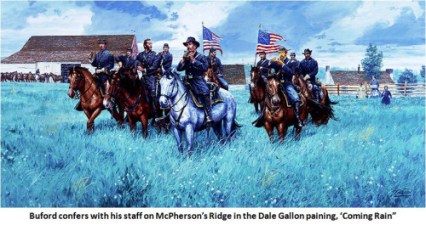
burford june 30th

The principles found in Chairman of the Joint Chief of Staff’s “Desired Leader Attributes” are something that we can learn about from both practical experience and history. The study of commanders and leaders throughout the Gettysburg campaign provide historical examples of commanders and other leaders that the best and the worst examples of some of those concepts. One of these is the ability to “anticipate and adapt to surprise and uncertainty.” The meeting engagement on the morning of July 1st 1863 between Harry Heth’s division of A.P. Hill’s corps and John Buford’s First Cavalry Division shows a very clear example of a commander, Heth, not anticipating or adapting to surprise and uncertainty. Heth was surprised by the presence of experienced Federal cavalry on his front and the uncertainty of not knowing what lay just beyond McPherson and Seminary Ridge.

Despite the warnings of Brigadier General Johnston Pettigrew, Major General Harry Heth and his corps commander Lieutenant General A.P. Hill decided that they would advance into Gettysburg. Hill and Heth dismissed Pettigrew’s warnings out of hand. Pettigrew should have been listened to, he was “was one of those natural leaders of a privileged background who, without military ambitions, had been advanced on the application of native intelligence and contagious courage.” [1] To help state his case Pettigrew brought Captain Louis G. Young of his staff, who had served under Hill and was a professional soldier “with the hope that his testimony as to Union numbers might be more convincing.” [2] Young “insisted that the troops he saw were veterans rather than Home Guards,” [3] but Hill refused to believe telling Young and Pettigrew “I still cannot believe that any portion of the Army of the Potomac is up,” he declared. Then he added: “I hope that it is, for this is the place I want it to be.” [4] Hill told Heth and Pettigrew that “I am just from General Lee, and the information he has from his scouts corroborates what I have received from mine – that is, the enemy is still at Middleburg and have not yet struck their tents.” [5]

How Hill could make such a statement neither knowing the ground nor the location and strength of the Federal troops to his front is stunning. How Hill’s “scouts” could miss the massive force heading their way is beyond belief and indicates that Hill wanted to believe what he wanted to believe and disregarded any evidence to the contrary, especially that which came from a subordinate that he did not know who was not a professional soldier. Hill’s attitude also demonstrates the profound lack of respect given to the Army of the Potomac by Hill and many other Confederate commanders.

Hill sent a message to Lee, as well as Ewell of Second Corps telling them that “I intended to advance the next morning and discover what was in my front.” [6] He also sent word of the discovery of cavalry to Lee’s headquarters, but his warning apparently gave Lee little cause for concern as Lee believed that “Meade’s army was still some distance to the south.” [7] Likewise, Hill sent a courier to Richard Anderson instructing him to bring up his division on July 1st and instructed Heth that “Pender’s division also would be ordered through Cashtown as a reserve to be available if Heth ran into serious trouble.” [8]

During the night the actions of A.P. Hill show a commander who confused and uncertain. The confidence that he and Heth showed in rejecting Pettigrew and Young’s reports of Federal troops in Gettysburg had left “most, if not all the commanding officers in Hill’s corps…unprepared for what happened.” [9] Lieutenant Lewis Young wrote “I doubt if any of the commanders of brigades, except General Pettigrew, believed that we were marching to battle, a weakness on their part which rendered them unprepared for what was about to happen.” [10]

A major part of Hill’s uncertainly can be laid on his and his subordinate commander’s lack of experience at their current level of command. “Pettigrew new to the army, Heth to division command, and Hill to corps command.” [11] One could not ask for such an untested chain-of-command as the army advanced blindly forward not knowing what lay before it. James Longstreet said “The army…moved forward, as a man might walk over strange ground with his eyes shut.” [12]

Lieutenant Colonel Porter Alexander noted that on the night of June 30th that he visited Lee’s headquarters and found conversation to be “unusually careless & jolly. Certainly there was no premonition that the next morning was to open a great battle of the campaign.” [13] The attitude that all exhibited according to Alexander was “when all our corps were together what could successfully attack us? So naturally we were all in good spirits.” [14] The Confederates believed that they were invincible. Walter Taylor of Lee’s staff admitted “An overweening confidence possessed us all.” [15] Clifford Dowdey wrote:

“Considering their unprecedented assignment to act, in the absence of cavalry, as reconnaissance troops in a country they had never seen, the men were unrealistically relaxed – from the privates of the 1st South Carolina, the oldest unit in point of organization, to the corps commander.” [16]

The British observer, Lieutenant Colonel Arthur Fremantle wrote in his diary: “The universal feeling in the army was one of profound contempt for an enemy whom they had beaten so consistently, and under so many disadvantages.” [17] That contempt would cost Lee’s army dearly in the coming battle.

Harry Heth arose on the morning of July 1st 1863 and formed his division for its march to Gettysburg. He had been ordered by Hill to “be ready to march at 5:00 A.M; and by an unusual directive from the corps commander, each man who wanted an issue of whisky at that early hour was to receive one.” [18] Heth should have spent the night making detailed plans for his advance but since neither he, nor any other senior officer in Hill’s corps “anticipated real action in the immediate area, Harry Heth kept uppermost in his mind the quartermaster aspects of the invasion,” [19] thus his overriding concern to get the shoes that supposedly were there in abundance, rather than “all the little details involved in an operation as tricky as a reconnaissance in force.” [20] The lack of attention to detail became evident the first thing that morning and that brought about an inauspicious start to a very bad day for Heth and his division. His troops were up early with the sunrise but somehow orders had not gotten to them to begin the advance at 5 a.m. and as a result “there was haste to the early morning’s preparations that caught some off guard” even regimental commanders. [21]

Several critics have made this point, among them Major John Mosby, the Confederate cavalry leader and guerrilla fighter who wrote: “Hill and Heth in their reports, to save themselves from censure, call the first day’s action a reconnaissance; this is all an afterthought….They wanted to conceal their responsibility for the defeat.” [22] A more contemporary writer, Jennings Wise, noted that Hill’s orders “were specific not to bring on an action, but his thirst for battle was unquenchable, and…he rushed on, and…took the control of the situation out of the hands of his commander-in-chief.” [23]

Years later Heth made an unsubstantiated claim that “A courier came from Gen. Lee, with a dispatch ordering me to get those shoes even if I encountered some resistance.” [24] That appears unlikely as Mosby noted that no one ordered Hill to advance and Lee “would never have sanctioned it.” [25] The ever judicious Porter Alexander who had been in Lee’s headquarters the night of June 30th wrote that: “Hill’s movement to Gettysburg was made on his own accord, and with knowledge that he would find the enemy’s cavalry in possession.” [26]

The advance to contact was marred by Heth’s inexperience compounded by the illness of A.P. Hill which caused Hill to be absent at the critical point where contact was made with the Federal forces. Hill “awakened feeling very ill, too sick to mount his horse…although no diagnosis was made, he was probably suffering from overstrained nerves.” [27] While it is possible that Hill’s “malady could have been upset stomach, diarrhea, simple exhaustion or a flair up of the old prostate problem” [28] his history of illness at critical times throughout the war lends credence to the possibility that whatever he was suffering could have been brought about by his emotional state. The result was that Hill’s “disability made it impossible for him to assume personal responsibility on July 1, 1863.” [29]

Hill gave Heth the responsibility to lead the advance, not based on experience or command ability, but because his division was closest to Gettysburg. However, during the night Hill decided to augment Heth’s division by ordering Dorsey Pender’s division to support Heth, and thus committed two thirds of his corps to what was supposedly a reconnaissance mission to find shoes. Since a reconnaissance is normally conducted by small elements of one’s force, the fact that Hill committed his two divisions present to such a mission demonstrated his “own confusion and uncertainty” [30] regarding the nature of what he might face and to his own understanding of the mission that he was assigning Heth. Whatever Hill’s intentions “he ordered Pender to support Heth while he awaited Anderson in Cashtown.” [31]

Disregarding the only solid intelligence he had, Hill put the majority of his corps into a “reconnaissance” which he would not be able to lead, instead turning over command to Heth. Hill gave Heth strict instructions not to bring on an engagement. The admonition was clear: “Do not bring on an engagement.” [32]

Likewise it is distinctly possible that Heth, despite orders to the contrary “may have had more on his mind than shoes and information when he made his advance towards Gettysburg.” [33] This is the allegation of Confederate cavalryman John Singleton Mosby who: “charged Hill with planning a “foray” and calling it a “reconnaissance.” Both Hill and Heth, Mosby asserted “evidently expected to bag a few thousand Yankees, return to Cashtown, and present them to General Lee that evening. But…”they bit off more than they could chew.” [34] Mosby’s claim does lend some explanation as to why Hill committed such a large force to his “reconnaissance” however, since Hill was killed in the closing days of the war and because Mosby was a partisan of J.E.B. Stuart. Mosby’s claim, even if true cannot be verified. But the fact remains that Hill’s force “was too large for a reconnaissance mission…and too large of force to back away from any Yankee challenge.” [35]The result was that Hill’s large force “if opposed, might well commit Lee’s army to battle on a field that Lee had not seen and before his army was assembled.” [36]

Hill’s absence left Heth, an inexperienced division commander “without any sage counsel” [37] and Heth began to commit a series of costly errors. Hill’s instructions to Heth to aggressively execute the mission but at the same time to avoid a major action put his subordinate in a hard place that even more experienced commanders might have struggled to find the appropriate balance. However, Heth was not at the level of experience or battlefield savvy.

Heth stated after the war that he understood from Hill that his mission was a job that normally would be assigned to cavalry and the restraints that he was employ: “to ascertain what force was at Gettysburg, and if he found infantry opposed to him, to report the fact immediately, without forcing an engagement.” [38] However, when the action began Heth did not heed those instructions.

Heth advanced without the caution of a commander who had been told that enemy forces were likely opposing him. Even though Heth disbelieved the reports made by Pettigrew the previous day, some amount of judicious caution on his part should have been indicated. Instead, for reasons unknown Heth had his men advance as if it was a routine movement. “Rather than placing his strongest brigades in the lead, Heth simply determined order of march based on where the troops had bivouacked along the road the previous night.” [39]

Heth “pushed out his four brigades in routine deployment for contact. In taking elementary precautions, Heth gave no indication of sensing an impending clash of any consequence.” [40] He placed Archer’s veteran but depleted brigade and Davis’s newly organized and inexperienced brigade in the lead of the advance. They were accompanied by the division’s artillery battalion commanded by Major William Pegram. Behind the lead units came the brigades of Pettigrew and Brockenbrough.

It was a curious order of march, for it left Johnston’s Pettigrew’s brigade behind both Archer and Davis’s brigades despite the fact that it was closer to Gettysburg than any other brigade. Likewise it was the only unit in the division that had recent eyes on contact with the enemy and knew the ground and what was ahead of them. It is hard to understand why Heth did this but one can speculate that it might have been because of Pettigrew’s insistence of the type of Federal forces in their front the previous day which caused Heth to do this.

The attitude of the soldiers was good, but most of the soldiers and their leaders “assumed that this morning’s movement was simply one more part in the army’s overall concentration of forces” [41] and the troops many expected to meet were those of Ewell or Stuart, Colonel John Brockenbrough told the commander of the 55th Virginia that “we might meet some of Ewell’s command or Stuart’s. [42] No one, with the possible exception of Johnston Pettigrew seemed to believe that experienced Federal troops lay before them, and Pettigrew had been ignored. This “spirit of unbelief” seemed to cloud the thinking of most, if not all of the commanding officers in Hill’s corps and left them unprepared for what happened.” [43]

Heth’s infantry brigades were deployed alongside the road and were led by several lines of skirmishers while the artillery battalion rumbled down the road between the infantry brigades, few expected any battle. Gunners from Pegram’s four-gun Fredericksburg battery leading his battalion’s advance recalled “We moved forward leisurely smoking and chatting as we rode along, not dreaming of the proximity of the enemy.” [44] Heth should have better anticipated the situation based on Pettigrew’s reports of the previous day and should have prepared his troops to expect combat. He demonstrated why one author called him “an intellectual lightweight.” [45] After the war when Heth told an officer from the Army of the Potomac “I did not know any of your people were north of the Potomac.” [46]

While Archer was highly experienced and had the advantage of commanding experienced veteran troops during this advance he was not well. Though he led his troops into combat “on that morning he was suffering from some debilitating ailment.” [47] The other commander leading the Confederate advance was the inexperienced Joseph Davis. Davis’s inexperience caused him to put the new and untested 42nd Mississippi and 55th North Carolina in the van of his advance and left his veteran regiments the 2nd and 11th Mississippi in the rear guarding army stores. [48] It was an unfortunate choice, the 11th Mississippi was seasoned and had “fought with distinction” [49] as part of the Army of Northern Virginia over the previous year.

The advance of the brigades of Archer and Davis was uneventful until they reached Marsh Creek they encountered the cavalry vedettes or pickets of the 8th Illinois Cavalry of John Buford’s First Cavalry Division posted on the high ground just east of the creek. [50] Despite the fact that Pettigrew had repeatedly warned Heth and Hill about the presence of Union cavalry, the discovery of these forces was unanticipated by the Confederates leading the column. Early in the morning Pettigrew attempted to warn Archer of the topography of the area and the presence of Union troops. Lieutenant Young recorded that Pettigrew “told General Archer of a ridge some distance west of Gettysburg on which he would probably find the enemy, as this position was favorable for defense.” [51] Pettigrew also warned Archer of “a certain road which the Yankees might use to hit his flank, and the dangers of McPherson’s Ridge. Archer listened, believed not, marched on unprepared…” [52]

Enter John Buford

If Heth was inexperienced and knew little of the Federal forces arrayed before him and what forces were moving towards Gettysburg, his opponent Brigadier General John Buford was his opposite in nearly every respect. Buford was born in Kentucky and like Heth, came from a family with a long military history of military service, including family members who had fought in the Revolutionary War and War of 1812. His family was well off with a spacious plantation near Versailles on which labored forty-five slaves, and his father also established a stage line which carried “passengers and freight between Frankfort and Lexington.” His father divested himself of his property, selling his home, business and presumably his slaves and moved to Stephenson Illinois in 1838. [53] The young Buford developed an interest in military life which was enlivened by his half-brother Napoleon Bonaparte Buford who graduated from West Point in 1827, and his brother would be influential in helping John into West Point, which he entered in 1844.

Buford graduated with the class of 1848 which included the distinguished Union artilleryman John Tidball, and the future Confederate brigadier generals William “Grumble” Jones, with whose troops he would do battle during the Gettysburg campaign and George “Maryland” Steuart. Among Buford’s best friends was Ambrose Burnside of the class of 1847. He did well academically but his conduct marks kept him from graduating in the top quarter of his class.

Upon graduation he was commissioned as a Brevet Second Lieutenant of Dragoons, however this came too late to serve in Mexico. Instead he was initially assigned to the First United States Dragoons but less than six months after joining was transferred to the Second Dragoons when he was promoted to full Second Lieutenant.

Instead of going to Mexico Buford “spent most of the 1850s tracking and fighting Indians on the Plains.” [54] During this period, the young dragoon served on the Great Plains against the Sioux, where he distinguished himself at the Battle of Ash Creek and on peacekeeping duty in the bitterly divided State of Kansas and in the Utah War of 1858.

His assignments alternated between field and staff assignments and he gained a great deal of tactical and administrative expertise that would serve him well. This was especially true in the realm of the tactics that he would employ so well at Gettysburg and on other battlefields against Confederate infantry and cavalry during the Civil War. Buford took note of the prevailing tactics of the day which still stressed a rigid adherence to outdated Napoleonic tactics which stressed mounted charges and “little cooperation with units of other arms or in the taking and holding of disputed ground.” [55] While he appreciated the shock value of mounted charges against disorganized troops he had no prejudice against “fighting dismounted when the circumstances of the case called for or seemed to justify it.” [56] Buford’s pre-war experience turned him into a modern soldier who appreciated and employed the rapid advances in weaponry, including the breech loading carbine and repeating rifle with tremendous effect.

Despite moving to Illinois Buford’s family still held Southern sympathies; his father was a Democrat who had opposed Abraham Lincoln. Buford himself was a political moderate and though he had some sympathy for slave owners:

“he despised lawlessness in any form – especially that directed against federal institutions, which he saw as the bulwark of democracy…..He especially abhorred the outspoken belief of some pro-slavery men that the federal government was their sworn enemy.” [57]

After the election of Abraham Lincoln, the officers of Buford’s regiment split on slavery. His regimental commander, Colonel Philip St. George Cooke, a Virginian and the father-in-law of J.E.B. Stuart announced that he would remain loyal to the Union, others like Beverly Robertson who would command a brigade of cavalry during the Gettysburg campaign resigned their commissions.

For many officers, both those who remained loyal to the Union and those who joined the Confederate cause the decision was often difficult, and many anguished over their decisions as they weighed their allegiance to the Union against their loyalty to home and family. Buford was not one of them.

Since Buford’s family had longstanding ties to Kentucky, the pro-secession governor of Kentucky, Beriah Magoffin offered Buford a commission in that states’ militia. At the time Kentucky was still an “undeclared border slave state” and Buford loyal to his oath refused the governor’s offer. He wrote a brief letter to Magoffin and told his comrades that “I sent him word that I was a Captain in the United States Army and I intend to remain one.” [58] Around the same time the new provisional government of the Confederacy “offered Buford a general officer’s commission, which reached him by mail at Fort Crittenden.” [59] According to Buford’s biographer Edward Longacre “a well-known anecdote has him wadding up the letter while angrily announcing that whatever future had in store he would “live and die under the flag of the Union.” [60]

However Buford’s family’s southern ties, and lack of political support from the few remaining loyal Kentucky legislators initially kept him from field command. Instead he received a promotion to Colonel and an assignment to the Inspector General’s Office, although it was not the field assignment that he desired it was of critical importance to the army in those early days of the war as the Union gathered its strength for the war. Buford was assigned to mustering in, and training the new regiments being organized for war. Traveling about the country he evaluated each unit in regard to “unit dress, deportment and discipline, the quality and quantity of weapons, ammunition, equipment, quarters, animals and transportation; the general health of the unit and medical facilities available to it; and the training progress of officers and men.” [61] Buford was a hard and devastatingly honest trainer and evaluator of the new regiments. He was especially so in dealing with commanding officers as well as field and company officers. Additionally he was a stickler regarding supply officers, those he found to be incompetent or less than honest were cashiered.

Buford performed these duties well but desired command. Eventually he got the chance when the politically well-connected but ill-fated Major General John Pope who “could unreservedly vouch for his loyalty wrangled for him command of a brigade of cavalry.” [62] After Pope’s disastrous defeat at Second Bull Run in August 1862 Buford was wounded in the desperate fighting at Second Manassas and returned to staff duties until January 1863 when he was again given a brigade. However, unlike many of the officers who served under Pope, Buford’s reputation as a leader of cavalry and field commander was increased during that campaign.

Buford was given the titular title of “Chief of Cavalry of the Army of the Potomac” by George McClellan, a title which sounded impressive but involved no command during the Antietam campaign. Following that frustrating task he continued in the same position under his old West Point friend Ambrose Burnside during the Fredericksburg campaign. Buford lost confidence in his old friend and was likely “shocked by his friend’s deadly ineptitude, his dogged insistence on turning defeat into nightmare.” [63]

When Burnside was relieved and Fighting Joe Hooker appointed to command the army, Buford’s star began to rise. While he was passed over by Hooker for command of the newly organized First Cavalry division in favor of Alfred Pleasanton who was eleven days his senior, he received command of the elite Reserve Brigade composed of mostly Regular Army cavalry regiments. When Major General George Stoneman was relieved of command following the Chancellorsville campaign, Pleasanton was again promoted over Buford.

In later years Hooker recognized that Buford “would have been a better man for the position of chief” [64] but in retrospect Buford’s pass over was good fortune for the Army of the Potomac on June 30th and July 1st 1863. Despite being passed over for the Cavalry Corps command, Buford, a consummate professional never faltered or became bitter. Despite the Pleasanton’s interference and “lax intelligence-gathering” [65]   During the Gettysburg campaign he led his brigade well at Brandy Station as it battled J.E.B. Stuart’s troopers, after which he was recommended for promotion and given command of the First Cavalry division of the Cavalry Corps. [66]

Following Brandy Station Buford led his troopers aggressively as they battled Stuart’s troopers along the Blue Ridge at the battles of Aldie, Philmont, Middleburg and Upperville. It was at Upperville while fighting a hard action Confederate Brigadier general “Grumble” Jones’s brigade that Buford’s troopers provided Hooker with the first visual evidence that Lee’s infantry was moving north into Maryland and Pennsylvania.

When Hooker was relieved on the night of June 27th and 28th George Meade gave Buford the chance at semi-independent command without Pleasanton looking over his shoulder. Meade appreciated Pleasanton’s administrative and organizational expertise and took him out of direct field command. Meade had his Cavalry Corps commander “pitch his tent next to his own on almost every leg of the trip to Pennsylvania and rarely let him out of sight or earshot.” [67]

The result was that when ordered to screen the army as it moved into Pennsylvania Buford was confident of his troopers and their ability and he and his men performed their duties admirably. On June 29th Buford’s men skirmished with two of Harry Heth’s regiments near the town of Fairfield, which Buford promptly reported to Meade and John Reynolds after ascertaining their size and composition. The following morning Buford and his troopers arrived in Gettysburg and were greeted by the townspeople who “thronged the streets, waving, shouting, and singing patriotic songs as Buford’s advance pushed through.” [68] Marching through the town they took up positions on the ridges west of the town. As they moved west the advance elements of Buford’s brigade discovered the presence of Johnston Pettigrew’s North Carolina brigade which promptly withdrew when it discovered that it was facing regular Federal cavalry.

Despite the welcome of the townsfolk, Buford’s troopers were tired from the weeks of incessant marching and combat. Their horses needed fodder, which was barely adequate, and most needed to be reshod, but because Early’s division had “seized nearly every shoe and nail”…”he had neither materials nor facilities for reshoeing them.” [69] Despite their fatigue Buford’s men had one distinctive advantage over the Confederates that they would face, this was in their weaponry. With few exceptions the Union cavalry at Gettysburg went into battle with “the finest equipment and arms obtainable. The troopers in almost every regiment carried breech-loading carbines (usually Sharp’s singe shot) hitched to their belts; they also carried revolvers (usually Colt army) and cavalry sabers.” [70] Though outnumbered their weapons gave them an edge in maintaining a heavy fire against the Confederate infantry which was armed with a variety of muzzle-loaded rifled muskets.

Based on all the intelligence available to him, that of George Sharpe’s Bureau of Military Information and that of his own scouts Buford “gathered that the whole of Hill’s Corps was “massed back of Cashtown” to the west, but there was also clear indication that Ewell’s Corps was “coming over the mountains from Carlisle,” to the north.” [71] Buford sent that news to Reynolds and to Meade by way of Pleasanton by mounted courier the evening of June 30th. The report caused Reynolds to realize the importance of Gettysburg and he immediately sent orders for Buford “to hold onto it to the last.” If Buford could buy enough time, he might get his infantry into line “before the enemy could seize the point.” [72]

Since Buford suspected that Ewell’s troops might also arrive he posted forces a few miles to the north of Gettysburg to provide warning and to delay them if needed, however since Buford determined that “Hill represented the more immediate threat, Buford resolved to concentrate most of his strength west of the town along MacPherson’s Ridge.” [73]
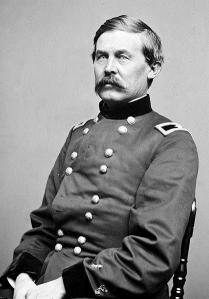
 buford

Brigadier General John Buford U.S.A.

On the night of June 30th Buford prepared for battle. Unlike Hill and Heth he understood exactly what he was facing. He met with “reliable men” most likely from the Bureau of Military Intelligence operated by David McConaughy as to the composition of Lee’s forces. [74] Buford knew his business; he took the time to reconnoiter the ridges west of Gettysburg and posted videttes as far was as Marsh Creek. He deployed one brigade under Colonel Thomas Devin to the north and west of the town, Colonel William Gamble’s brigade was deployed to the west, its main line being on McPherson’s Ridge.

As he deployed his forces Buford formulated his plan. Riding with his brigade commanders and staff “Buford, puffing away on his pipe, peering through field glass, studied the road network and lay of the land. He calculated distance to physical landmarks and tried to determine how long it would take those Confederates massing behind South Mountain to come within carbine range.” [75] Buford’s composure and confidence inspired his troopers as well as local civilians who observed him as he surveyed the ground on which the greatest battle ever waged on American soil would be fought.

Considering that he had fewer than three-thousand troopers available at Gettysburg because the Reserve Brigade was still further south guarding the army’s trains, and that he was facing a foe many times larger, it was a bold plan. Buford seems to have convinced himself that “he could pull off something never achieved in this war: a defense in depth by dismounted cavalry against a force of foot soldiers with full artillery support.” [76] As such the crafty Buford planned “a defense in depth, fighting his men dismounted, using the series of ridgelines west of Gettysburg to hamper and delay the Rebel infantry he was certain would come “booming along” the Chambersburg Pike in the morning.” [77]

Noting that the ground was favorable to defense and giving battle Buford sent messages to Reynolds as to the situation. He warned Reynolds that “A.P. Hill’s corps is massed just back of Cashtown, about 9 miles from this place.” He also noted the location of Confederate pickets “only four miles west of Gettysburg.” [78] Devin’s troops also identified elements of Ewell’s corps north of the town. Buford had accurately informed his superiors of what was before him, information that they needed for the day of battle.

Buford set up his headquarters at the Eagle Hotel in Gettysburg where he spent the night and according to his signals officer was “anxious, more so than I ever saw him” [79] Buford discussed the tactical situation with Colonel Devin, commanding the brigade on Herr’s and McPherson’s Ridge. Devin did not yet believe that the Confederates would move on Gettysburg in the morning. Devin thought if there were any threats that “he could handle anything that could come up in the next 24 hours.” [80] Buford rejected Devin’s argument and told him bluntly “No you won’t…. They will attack you in the morning and they will come booming – skirmishers three deep. You will have to fight like the devil to hold your own.” [81]

In preparation for the Confederate advance Buford deployed about seven hundred of his men in videttes, or pickets several miles in advance of the main force of his division. These videttes stretched from the Blackhorse Tavern south and west of Gettysburg, across the Mummasburg and Carlisle Roads, ending east of town on the York Pike. The center of this line was along the Chambersburg or Cashtown Pike along Marsh Creek about five miles west of Gettysburg. These videttes were critical in ascertaining the direction and composition of any advancing Confederate forces.

Reynolds immediately saw the importance of the position elected to fight. He “ordered Buford to hold onto it to the last” believing that if Buford could “buy enough time, he might get his infantry into line “before the enemy should seize the point.” [82] Buford knew that against the odds he would face that he would only be able to hold for a few hours at best and since by “refusing to flee from Lee’s path, by committing himself to fight in an advanced position however favorable, he risked not only his division’s annihilation but the disarranging of Meade’s plans” [83] to fight a defensive battle along the Pipe Creek line. Buford and Reynold’s bold decisions on that last night of June 1863 committed the Army of the Potomac to battle Lee’s hearty veterans at Gettysburg.
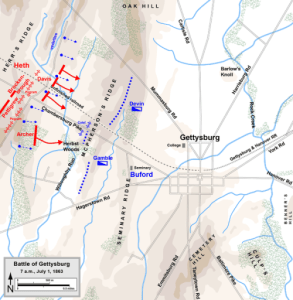
gburg delaying action

Buford’s Delaying Action July 1st

For Buford’s troopers the night and morning of June 30th and July 1st 1863 was spent in grim anticipation that they would meet a good portion of Lee’s army in battle. “It was a jumpy night, and the lowering clouds “poured down a drenching rain” [84] even as Buford’s advanced videttes observed the camp fires of the advanced Confederate outposts left by Pettigrew on the 30th   of June.

As the over-confident and lackadaisical Confederates advanced in the pre-dawn early morning mist they had a hard time determining what lay ahead of them and they “halted as they got to the swampy land fringing Marsh Creek, beyond which the ground angled up into a single swell to a ridge line.” [85] Pegram’s artillerists surveyed the ground to their front and noted mounted troops, but the limited visibility made it impossible to identify them, some even thought that they might belong to Longstreet’s corps, however Pegram knowing Longstreet’s corps was well the west, stopped his advance and unlimbered is guns. This caused the commander of Archer’s lead brigade, Colonel Birkett D. Fry of the 13th Alabama to ask Pegram what was going on and why he had stopped his advance. Upon seeing the artillery readying for action Fry “rode back to the color bearer and ordered him to uncase the colors.” [86] This was the first indication that the enemy was near and Fry quickly ordered his regiment to establish a skirmish line.

With the sun coming up the Union troops saw the now uncased colors of the Confederate battle flags to their front. Lieutenant Marcellus Jones of the 8th Illinois, commanding one of the detachments along Marsh Creek, expecting such rode to one of his advanced posts. He took a carbine from one of his sergeants and said “Hold on George, give me the honor of opening this ball” and at about 7:30 a.m. Jones fired the first shot of the battle of Gettysburg. [87]

Heth had wanted to advance in column as long as possible “but the Yankee cavalry’s stiff resistance had ended that hope.” [88] Heth rode forward and ordered Archer and Davis’s troops to advance skirmishers with the support of Pegram’s artillery. This slowed the Confederate advance considerable and Heth wrote in his after action report that “it became evident that there were infantry, cavalry and artillery in and around the town.” [89] At this point, Heth should have stopped and sought guidance on what to do next, however, instead of “feeling out the enemy” as directed by Hill, Heth “ordered Archer and Davis “to move forward and occupy the town.” [90] A chaplain in Brockenbrough’s brigade reported that one of Heth’s aide’s came up and reported “General Heth is ordered to move on Gettysburg, and fight or not as he wishes.” The chaplain heard one of the officers near him say “We must fight them; no division general will turn back with such orders.” [91]

Heth obviously expected small detachments of cavalry to give way at the sight of massed infantry, but Buford and his men had other plans. Instead of withdrawing the small cavalry detachments dismounted and used trees, bushes and fence lines for cover and poured forth a rapid fire with their Sharps carbines. This forced Heth’s skirmishers to advance slowly and deliberately, and forced the main body of his advanced brigades to deploy into battle formation supported by Pegram’s artillery.

About 8:00 A.M. Colonel Gamble who commanded the Buford’s First Brigade to which the videttes belonged “received a report that a strong enemy force was driving in his pickets.” [92] Gamble promptly reported this to Buford who in turn directed Gamble to deploy his “1,600 troopers to form a battle line on Herr’s Ridge a mile west of the seminary” [93] from which Buford was now directing his division. Likewise Buford ordered Devin’s Second Brigade to take up positions north of the Pike. He likewise order Lieutenant John Calef who commanded Battery “A” Second United States Horse Artillery to deploy his six three inch rifles along the ridge. However, instead of deploying them in an orthodox manner Buford ordered Calef to “spread his pieces wide apart to deceive the enemy into thinking his battery was actually two artillery units.” [94]

Everything that Buford did served to further confuse Heth, who now because of the heavy volume of fire his troops were receiving and his inability to see the horses of the dismounted cavalry believed that he was facing Federal infantry and artillery for Buford’s troopers “surely acted like infantry.” [95] Captain Amasa Dana of Company E. of the 8th Illinois “ordered his men to “throw up their carbine sights and [we] gave the enemy the benefit of long range practice [;] the firing was rapids from our carbines, and at the distance induced the enemy to the belief of four times our number actually present….” [96]

Instead of driving the cavalry out by force of numbers the Confederates had to advance deliberately to drive out the Union troopers, forcing Archer’s men to “undertake the time-consuming task of fixing the enemy in place, and then working parties around its flanks or any other chinks they could find.” [97] As they did this the veteran Union troopers withdrew and formed again, each time forcing the Confederates to slow their advance on Gettysburg.

Buford’s defense in depth was unlike anything that the Confederates had experienced at the hands of the Army of the Potomac. At each position Gable’s troopers continued to hold and his “carbineers continued to blast away as fast as they could reload, Calef’s shells thundering over their heads to burst in the fields beyond.” [98] That defense gave Buford an extra two hours and at 9:00 he directed his brigades to fall back to the next line of defense that of McPherson’s Ridge, where Buford’s troopers established another line.

Seeing the enemy before him Harry Heth committed yet another error. He was not going to let the Federal force stop him from reaching Gettysburg. On Herr’s Ridge he made a fateful decision. He spend over half an hour, from 9:00 until just past 9:30 deploying Archer’s Brigade in line of battle “and extending its left flank with the next brigade in line, that of Brigadier General Joseph R. Davis.” [99] Once that was accomplished Heth ordered Archer and Davis’s brigades forward toward Buford’s troops. It was a deadly mistake for Heth had no idea that the advance elements of John Reynold’s First Corps were rapidly moving to support Buford and that his troops were about to experience a fight like which they had never seen or expected. Despite this the Confederates pushed on and were threatening to force Buford’s troops from McPherson’s Ridge and “victory seemed to be at hand, but as the 13th Alabama climbed from the Willoughby Run ravine into a field south of McPherson Wood’s its men saw a Union line of battle a hundred yards to the front.” [100] John Reynold’s First Corps led by the famous Iron Brigade of Abner Doubleday’s First Division had arrived on the field.

The fight that Harry Heth and A.P. Hill had been directed not to precipitate was now on. Heth’s inexperience was more than matched by the cunning and brilliant Buford, whose troopers had fought a masterful delaying action, one which prefigured the later use of cavalry and eventually armored cavalry and motorized reconnaissance in later wars. Buford’s masterful defense along Marsh Creek, and Herr’s and McPherson’s Ridge enabled Reynolds’s infantry to come up before the Confederates could seize the key high ground to the west of Gettysburg.

Notes

[1] Dowdy, Clifford. Lee and His Men at Gettysburg: The Death of a Nation Skyhorse Publishing, New York 1986, originally published as Death of a Nation Knopf, New York 1958 p.78

[2] Robertson, James I. Jr. General A.P. Hill: The Story of a Confederate Warrior Random House, New York 1987 p.206

[3] Gallagher, Gary. Confederate Corps Leadership on the First Day at Gettysburg: A.P. Hill and Richard S. Ewell in a Difficult Debut in The First Day at Gettysburg edited by Gallagher, Gary W. Kent State University Press, Kent Ohio 1992 p.44

[4] Ibid Robertson General A.P. Hill p.206

[5] Sears, Stephen W. Gettysburg. Houghton Mifflin Co. Boston and New York 2003 p. 137

[6] Ibid. Gallagher Confederate Corps Leadership on the First Day at Gettysburg p.44

[7] Ibid Robertson General A.P. Hill p.206

[8] Ibid. Dowdy. Lee and His Men at Gettysburg p.92

[9] Coddington, Edwin B. The Gettysburg Campaign, A Study in Command A Touchstone Book, Simon and Shuster New York 1968 p.264

[10] Pfanz Harry W. Gettysburg: The First Day University of North Carolina Press, Chapel Hill and London 2001 p.51

[11] Ibid. Dowdy. Lee and His Men at Gettysburg p.79

[12] Pryor, Elizabeth Brown. Reading the Man: A Portrait of Robert E. Lee Through His Private Letters Penguin Books, New York and London 2007 p.352

[13] Ibid. Coddington The Gettysburg Campaign, A Study in Command p.264

[14] Alexander, Edward Porter. Fighting for the Confederacy: The Personal Recollections of General Edward Porter Alexander edited by Gary Gallagher University of North Carolina Press, Chapel Hill 1989 p.230

[15] Wert, Jeffry D. A Glorious Army: Robert E. Lee’s Triumph 1862-1863 Simon and Schuster, New York and London 2011 p.234

[16] Ibid. Dowdy. Lee and His Men at Gettysburg p.90

[17] Ibid. Wert A Glorious Army p.234

[18] Ibid Robertson General A.P. Hill pp.206-207

[19] Ibid. Dowdy. Lee and His Men at Gettysburg p.91

[20] Trudeau, Noah Andre. Gettysburg: A Testing of Courage, Harper Collins Publishers, New York 2002 p.147

[21] Ibid. Trudeau Gettysburg: A Testing of Courage p.153

[22] Ibid. Gallagher Confederate Corps Leadership on the First Day at Gettysburg p.32

[23] Ibid. Gallagher Confederate Corps Leadership on the First Day at Gettysburg p.32

[24] Ibid. Trudeau Gettysburg: A Testing of Courage, p.153

[25] Ibid. Gallagher Confederate Corps Leadership on the First Day at Gettysburg p.32

[26] Alexander, Edward Porter Military Memoirs of a Confederate: A Critical Narrative 1907 republished 2013 by Pickle Partners Publishing, Amazon Kindle Edition location 7342 of 12968

[27] Dowdy. Lee and His Men at Gettysburg: The Death of a Nation pp.91-92

[28] Ibid Robertson General A.P. Hill p.206

[29] Ibid. Dowdy. Lee and His Men at Gettysburg p.92

[30] Ibid. Trudeau Gettysburg: A Testing of Courage, p.153

[31] Ibid. Gallagher Confederate Corps Leadership on the First Day at Gettysburg p.44

[32] Ibid. Trudeau Gettysburg: A Testing of Courage, p.153

[33] Ibid. Coddington The Gettysburg Campaign, A Study in Command p.274

[34] Ibid. Coddington The Gettysburg Campaign, A Study in Command p.274

[35] Ibid. Sears Gettysburg p. 161

[36] Ibid. Pfanz Gettysburg: The First Day p.52

[37] Ibid. Trudeau Gettysburg: A Testing of Courage, p.153

[38] Guelzo, Allen C. Gettysburg: The Last Invasion Vintage Books a Division of Random House, New York 2013 p.131

[39] Ibid Robertson General A.P. Hill p.207

[40] Ibid. Dowdy. Lee and His Men at Gettysburg p.93

[41] Ibid. Guelzo. Gettysburg: The Last Invasion p.135

[42] Ibid. Guelzo. Gettysburg: The Last Invasion p.134

[43] Ibid. Coddington The Gettysburg Campaign, A Study in Command p.264

[44] Ibid. Sears Gettysburg p. 162

[45] Ibid. Guelzo. Gettysburg: The Last Invasion p.134

[46] Ibid. Sears Gettysburg p. 162

[47] Ibid. Dowdy. Lee and His Men at Gettysburg p.93

[48] Ibid. Trudeau Gettysburg: A Testing of Courage, p.156

[49] Ibid. Dowdy. Lee and His Men at Gettysburg p.93

[50] Pfanz. Gettysburg: The First Day p.53

[51] Ibid. Trudeau Gettysburg: A Testing of Courage, p.158

[52] Ibid. Coddington The Gettysburg Campaign, A Study in Command p.264

[53] Longacre, Edward G. John Buford: A Military Biography Da Capo Press, Perseus Book Group, Cambridge MA p.17

[54] Ibid. Guelzo. Gettysburg: The Last Invasion p.121

[55] Ibid. Longacre John Buford p.36

[56] Ibid. Longacre John Buford p.36

[57] Ibid. Longacre John Buford p.54

[58] Ibid. Guelzo. Gettysburg: The Last Invasion p.121

[59] Ibid. Longacre John Buford p.70

[60] Ibid. Longacre John Buford p.70

[61] Ibid. Longacre John Buford p.78

[62] Ibid. Guelzo. Gettysburg: The Last Invasion p.121

[63] Ibid. Longacre John Buford p.122

[64] Ibid. Coddington The Gettysburg Campaign, A Study in Command p.44

[65] Ibid. Longacre John Buford p.173

[66] Ibid. Coddington The Gettysburg Campaign, A Study in Command p.64

[67] Longacre, Edward G. The Cavalry at Gettysburg: A Tactical Study of Mounted Operations during the Civil War’s Pivotal Campaign, 9 June-14 July 1863 University of Nebraska Press, Lincoln and London 1986 p.168

[68] Ibid. Longacre John Buford p.181

[69] Ibid. Guelzo. Gettysburg: The Last Invasion p.133

[70] Ibid. Coddington The Gettysburg Campaign, A Study in Command p.258

[71] Ibid. Trudeau Gettysburg: A Testing of Courage, p.142

[72] Ibid. Guelzo. Gettysburg: The Last Invasion pp.122-123

[73] Ibid. Trudeau Gettysburg: A Testing of Courage, pp.142-143

[74] Ibid. Trudeau Gettysburg: A Testing of Courage, p.141

[75] Ibid. Longacre John Buford p.184

[76] Ibid. Longacre The Cavalry at Gettysburg p.185

[77] Ibid. Sears Gettysburg p. 157

[78] Ibid. Guelzo. Gettysburg: The Last Invasion p.122

[79] Ibid. Sears Gettysburg p. 157

[80] Catton, Bruce The Army of the Potomac: Glory Road Doubleday and Company, Garden City New York, 1952 p.266

[81] Ibid. Guelzo. Gettysburg: The Last Invasion p.123

[82] Ibid. Guelzo. Gettysburg: The Last Invasion pp.122-123

[83] Ibid. Longacre The Cavalry at Gettysburg p.185

[84] Ibid. Guelzo. Gettysburg: The Last Invasion p.132

[85] Ibid. Trudeau Gettysburg: A Testing of Courage, p.158

[86] Ibid. Trudeau Gettysburg: A Testing of Courage, pp.158-159

[87] Pfanz. Gettysburg: The First Day p.53

[88] Ibid. Sears Gettysburg p. 163

[89] Luvaas, Jay and Nelson Harold W editors. The U.S. Army War College Guide to the Battle of Gettysburg South Mountain Press, Carlisle PA 1986 p.7

[90] Ibid. Sears Gettysburg p. 165

[91] Ibid. Trudeau Gettysburg: A Testing of Courage, p.163

[92] Ibid. Coddington The Gettysburg Campaign, A Study in Command p.266

[93] Ibid. Coddington The Gettysburg Campaign, A Study in Command p.266

[94] Ibid. Longacre John Buford p.191

[95] Ibid. Sears Gettysburg p. 164

[96] Ibid. Trudeau Gettysburg: A Testing of Courage, p.162

[97] Ibid. Trudeau Gettysburg: A Testing of Courage, p.162

[98] Ibid. Longacre The Cavalry at Gettysburg p.187

[99] Ibid. Longacre John Buford p.191

[100] Ibid. Pfanz. Gettysburg: The First Day p.68

2 Comments

Filed under civil war, Gettysburg, History, leadership, Military

Prelude to Gettysburg: A Spirit of Unbelief

Hill.28135413_std

Lieutenant General A.P. Hill


Friends of Padre Steve’s World 

Here is a revised chapter from my Gettysburg text. I will be taking another group of my students up in two weeks.

Have a great weekend.

Peace

Padre Steve+

When Robert E. Lee learned of the Army of the Potomac’s presence north of the Potomac River he ordered his widely dispersed army concentrate near Cashtown and Gettysburg. It was a complicated movement that involved at least five major operations: the shift of the bulk of Ewell’s Second Corps from its planned attack on Harrisburg, the redirection of Early’s division east from its position on the Susquehanna to the west, the movement of Hill’s Third Corps from the area around Cashtown to a position east of Gettysburg, Longstreet’s First Corps north to Chambersburg and Cashtown and the cavalry brigades of Beverly Robertson, Grumble Jones and John Imboden which were to join the army in Pennsylvania. The movement “would take at least two days – the 29th and the 30th of June – and perhaps more…the complete its concentration, especially since the rains had “made the roads very muddy,” forcing “the infantry” to march off the roads….” [1]

Lieutenant General A.P. Hill’s Third Corps that was nearest of Lee’s major units to Cashtown and Gettysburg. Major General Harry Heth’s division led the corps and arrived at Cashtown on June 29th. His division was followed by that of Major General Dorsey Pender which arrived on the 30th. Hill ordered his last division under the command of Major General Richard Anderson to remain behind at “Fayetteville until July 1, when he would join the rest at Cashtown.” [2]

Cashtown was important as a road junction and because it “was situated at one of the few gaps in the Pennsylvania Mountains” and because one of the roads emanating from it “snaked eight miles to another community called Gettysburg.” [3] However the order to concentrate the army at Cashtown presented its own problems. First was the matter of forage. There was not enough room for all the units ordered to Cashtown to have adequate areas to forage, as:

“each division would (by the standard required of nineteenth-century armies) require a circle twelve and a half miles around its encampments to forage (for water, firewood, and feed for men and horses); one single regiment could denuded an acre of woodland just for firewood every three days.” [4]

Likewise, because of the limited road network, Cashtown was becoming a choke point which as his units closed in slowed their movement and created massive traffic problems and confusion. Hill ordered Heth’s division to take the lead and advance to Cashtown on the 29th. The units of Hill’s corps had to endure heavy rains on the 29th which slowed their march and Heth halted at Cashtown knowing that the army would concentrate there while Pender’s division moved into the area his division had vacated.

Early in the morning of June 30th Harry Heth decided to undertake a foraging expedition to Gettysburg.to “search the town for army supplies (shoes especially), and to return the same day.” [5] It was the first in a series of miscalculations that brought Lee’s army into a general engagement that Lee wished to avoid and it is hard to comprehend in light of Lee’s orders not to precipitate a fight.

However, the expedition had taken a toll on the soldiers, especially in terms of shoes, clothes and equipment. The “long march over the hard macadam roads of the North had played havoc with the scraggly foot coverings of Lee’s men.” [6] After muster on the morning of June 30th Heth ordered Johnston Pettigrew’s “brigade to Gettysburg in search of supplies, especially badly needed shoes, which were badly needed by his the men of his division.” Heth, for a reason he never elaborated on decided that there must be shoes in Gettysburg. Perhaps he did not know that the town had been picked clean by John Gordon’s brigade of Jubal Early’s division just a few days before, but for whatever reason he believed this to be the case.

Hill’s Third Corps had been formed as part of the reorganization of the army following Stonewall Jackson’s death after the Battle of Chancellorsville. Hill had a stellar reputation as a division commander; his “Light Division” had distinguished itself on numerous occasions, especially at Antietam where its timely arrival after a hard forced march from Harper’s Ferry helped save Lee’s army late in the battle. At Chancellorsville Hill briefly succeeded Jackson until he too was wounded.

Hill was recommended for promotion to Lieutenant General and command of the new Third Corps by Lee on May 24th 1863. He was promoted over the heads of both Harvey Hill and Lafayette McLaws. The move displeased Longstreet who considered Lafayette McLaws “better qualified for the job.” Likewise there were others who felt that the command should have gone to Harvey Hill, now commanding the Department of North Carolina who’s “record was as good as that of Stonewall Jackson…but, not being a Virginian, he was not so well advertised.” [7]

Ambrose Powell Hill was slightly built and high strung. “Intense about everything” Hill was “one of the army’s intense disbelievers in slavery.” [8] Hill was an 1847 graduate of West Point and briefly served in Mexico but saw no combat. He spent some time in the Seminole wars but due to frequent bouts of ill-health he spent much of his career in garrison duty along the East Coast. Since he was prone to sickness he was assigned to the office of Coastal Survey, a Navy command from 1855 through 1861. Despite pleas from his superiors and his own opposition to secession and slavery, Hill resigned his commission just before Virginia’s secession.

At the outbreak of the war he “received his commission as colonel, and soon trained one of Johnston’s best regiments in the Valley.” [9] He commanded a brigade under Longstreet on the Peninsula and was promoted to Major General and command of the Light Division in May 1862, leading it with distinction, especially at Antietam where his march from Harper’s Ferry and timely arrival on the afternoon of September 17th saved the army of Northern Virginia from utter and complete destruction. He was plagued by health problems which had even delayed his graduation from West Point, health issues that would arise on the first day at Gettysburg.

Hill’s Third Corps was emblematic of the “makeshift nature of the reorganization of the whole army.” [10] It was composed of three divisions. His best and most experienced division was that of the recently promoted and hard fighting Major General Dorsey Pender. Pender’s division was built around four excellent brigades from Hill’s old “Light Division” one of which Pender had commanded before his promotion. Hill had strongly recommended Pender’s promotion during the reorganization, a proposal which was accepted by Lee. Pender, though a fierce fighter and excellent leader, found command of a division to be a heavy burden. He was “an intelligent, reflective man, deeply religious and guided by a strong sense of duty….” [11]

Hill’s second experienced division was that of Major General Richard Anderson. This division had been transferred from Longstreet’s First Corps during the reorganization. Longstreet resented losing the division to Hill, with who he had previously run afoul and this was yet another issue which failed to endear Hill to Longstreet. [12]

The unassuming Anderson had distinguished himself as a brigade and division commander in Longstreet’s corps, but in “an army of prima donnas, he was a self-effacing man, neither seeking praise for himself nor winning support by bestowing it on others.” [13] At Chancellorsville Anderson fought admirably and Lee wrote that Anderson was “distinguished for the promptness, courage and skill with which he and his division executed every order.” [14] With four seasoned brigades under excellent commanders it was a good addition to the corps, although the transition from Longstreet’s stolid and cautious style of command to Hill’s impetuous style introduced “another incalculable of the reshuffled army.” [15]

Major General Harry Heth’s division was the final infantry division assigned to the corps. The division was new and had was cobbled together from two brigades of Hill’s old Light Division and “the two new brigades that Jefferson Davis had forced on an already disrupted army organization.” [16] The organization of this division as well as its leadership would be problematic in the days to come, especially on June 30th and July 1st 1863. The hasty and makeshift organization under leaders who had not served together, many of who were new to command, as well as units which had not fought together spelled trouble.

Harry Heth, like Dorsey Pender was also newly promoted to his grade and the action at Gettysburg would be his first test in division command. Heth was a native Virginian. He came from a family that well connected both socially and politically. He had a social charm had “many friends and bound new acquaintances to him” readily. [17] Heth was a cousin of George Pickett. He was a West Point graduate and classmate of Hill. At West Point Heth had an undistinguished academic career and graduated last in the class of 1847. His career in the ante-bellum army was typical of many officers, he served “credibly in an 1855 fight with Sioux Indians” but his real claim to fame was in authoring the army’s marksmanship manual which was published in 1858. [18]

heth

Major General Harry Heth

Heth’s career with the Confederate army serving in western Virginia was undistinguished but he was a protégé of Robert E. Lee who recommended him as a brigade commander to Jackson before Chancellorsville. Tradition states that of all his generals that Heth was the only one “whom Lee called by his first name.” [19] A.P. Hill when writing Lee about the choice of a successor for the Light Division noted that Heth was “a most excellent officer and gallant soldier” but in the coming campaign “my division under him, will not be half as effective as under Pender.” [20] Douglas Southall Freeman noted that Heth was “doomed to be one of those good soldiers…who consistently have bad luck.” [21]

Heth’s division was composed of two depleted brigades from the Light Division which had taken heavy casualties at Chancellorsville. One brigade, commanded by the hard fighting former regular army officer Brigadier General James Archer. Archer was from Maryland and a graduate of Princeton University who had given up a law practice to join the army. Described as a “little gamecock” who “had no sense of fear” [22] Archer had saved the Confederate line at Fredericksburg leading a desperate counterattack at Prospect Hill. The brigade was composed of four veteran regiments, but was now down to barely 1200 soldiers in the ranks by the time it arrived at Cashtown. However, the brigade which was recruited from Alabama and Tennessee was “well led and had a fine combat reputation.”

But the second brigade was more problematic. This was the Virginia brigade under the command of “the plodding, uninspiring Colonel John Brockenbrough.” [23] Brockenbrough was an “1850 of the Virginia Military Institute and a farmer,” who had “entered the Confederate service as Colonel of the 40th (Virginia) in May 1861.” [24] The brigade had once been considered one of the best in the army had deteriorated in quality following the wounding of its first commander Brigadier General Charles Field. Heth took command of it at Chancellorsville where both he and the brigade performed well. The brigade had taken very heavy casualties and now was reduced to under 1000 effectives. When Heth was promoted the lack of qualified officers left it under the command of its senior colonel, John Brockenbrough.[25] Lee did not consider Brockenbrough “suited for promotion” but “could be counted on to keep together a command sadly reduced in numbers.” [26]

His third brigade came from Mississippi and North Carolina and was commanded by the “stuffy and ambitious” [27] Brigadier General Joe Davis whose uncle was President Jefferson Davis. Davis had served on his uncle’s staff for months and had no combat experience. [28] One author noted that Davis’s promotion to Brigadier General “as unadulterated an instance of nepotism as the record of the Confederacy offers.” [29] His subordinate commanders were no better, one William Magruder was so bad that J.E.B. Stuart suggested that “he have his commission revoked” and only one of the nine field grade officers in his brigade had military training, and that from the Naval Academy. [30] The brigade was also a makeshift operation with two veteran regiments including the 11th Mississippi which had “gone through blood and fire together on the Peninsula through Antietam.” [31] After Antietam, these units were then paired with two new regiments and a new politically connected commander and sent to the backwater of North Carolina where they saw no action. The veteran regiments “mistrusted not only their commander, but the reliability of its yet untested units.” [32]

pettigrew

Brigadier General Johnston Pettigrew

Heth’s largest brigade was new to the army. Commanded by the North Carolina academic Brigadier General Johnston Pettigrew it had no combat experience. Pettigrew himself was considered a strong leader. He had been badly wounded at Seven Pines and thinking his wound mortal “he refused to permit his men to leave the ranks to carry him to the rear.” [33] He was captured but later paroled and returned to the army to command a brigade later in the year.

Hill was under the impression that Meade’s army was still miles away, having just come from meeting Lee who assured him that “the enemy are still at Middleburg,” (Maryland) “and have not yet struck their tents.” [34] With that assurance Heth decided to use June 30th to send Pettigrew’s brigade on the foraging expedition to Gettysburg. An officer present noted that Heth instructed Pettigrew “to go to Gettysburg with three of his regiments present…and a number of wagons for the purpose of collecting commissary and quartermaster stores for the use of the army.” [35]

However Heth did instruct Pettigrew in no uncertain terms not to “precipitate a fight” should he encounter “organized troops” of the Army of the Potomac. [36] Heth was specific in his report that “It was told to Pettigrew that he might find in the town in possession of a home guard,…but if, contrary to expectations, he should find any organized troops capable of making resistance., or any part of the Army of the Potomac, he should not attack it.” [37]

That in mind one has to ask the question as to why Heth would employ “so many men on a long, tiring march, especially as without a cavalry escort he took the risk of sending them into a trap” when his “objects hardly justified” using such a large force. [38] Edwin Coddington is particularly critical of Heth in this regard.

Likewise it has to be asked why the next day in light of Lee’s standing orders not to provoke an engagement that Hill would send two divisions, two thirds of his corps on what was supposedly reconnaissance mission. Some have said that Hill would have had to move to Gettysburg on July 1st anyway due to forage needs of the army, [39] but this is not indicated in any of Hill or Heth’s reports.

As his troops neared Gettysburg Pettigrew observed the Federal cavalry of Buford’s 1st Cavalry Division as they neared the town. He received another report “indicating that drumming could be heard in the distance – which might mean infantry nearby, since generally cavalry generally used only bugles.” [40] He then prudently and in accordance with his orders not to precipitate a fight “elected to withdraw rather than risk battle with a foe of unknown size and composition.” [41] His troops began their retrograde at 11 a.m. leaving Buford’s cavalry to occupy the town at ridges. On Confederate wrote “in coming in contact with the enemy, had quite a little brush, but being under orders not to bring a general engagement fell back, followed by the enemy.” [42]

Upon returning Pettigrew told Hill and Heth that “he was sure that the force occupying Gettysburg was a part of the Army of the Potomac” but Hill and Heth discounted Pettigrew’s report. [43] “Heth did not think highly of such wariness” and “Hill agreed with Heth” [44] Hill believed that nothing was in Gettysburg “except possibly a cavalry vedette.” [45] Hill was not persuaded by Pettigrew or Pettigrew’s aide Lieutenant Louis Young who had previously served under Hill and Pender who reported that the “troops that he saw were veterans rather than Home Guards.” [46] Hill reiterated that he did not believe “that any portion of the Army of the Potomac was up” but then according to Young Hill “expressed the hope that it was, as this was the place he wanted it to be.[47]

Part of the issue was related to the fact that Pettigrew, though highly intelligent, and who had been an observer of wars in Europe was not a professional soldier. Likewise, since had was new to the Army of the Northern Virginia he was an unknown to both Hill and Heth. As such they dismissed his report. In their casual dismissal of Pettigrew’s report, the West Point Graduates Hill and Heth may have manifested an often typical “distain for citizen soldiers…a professional questioning a talented amateur’s observations” [48]

Pettigrew was “aghast at Hill’s nonchalant attitude” [49] and Young was dismayed and later recalled that “a spirit of unbelief” seemed to cloud the thinking of Hill and Heth. [50] In later years Young wrote that the “blindness in part seems to have come over our commanders, who slow to believe in the presence of an organized army of the enemy, thought that there must be a mistake in the report taken back by General Pettigrew.” [51]

Since neither man believed Pettigrew’s report, Heth then asked Hill “whether Hill would have any objection to taking his division to Gettysburg again to get those shoes.” Hill replied “none in the world.” [52] It was to be a fateful decision, a decision that brought about a series of events which in turn led to the greatest battle even fought on the American continent.

Douglas Southall Freeman wrote “On those four words fate hung” [53] and in “that incautious spirit, Hill launched Harry Heth’s division down the Chambersburg Pike and into battle at Gettysburg.” [54]

 Notes

[1] Guelzo, Allen C. Gettysburg: The Last Invasion Vintage Books a Division of Random House, New York 2013 p.128

[2] Coddington, Edwin B. The Gettysburg Campaign, A Study in Command A Touchstone Book, Simon and Shuster New York 1968 p.194
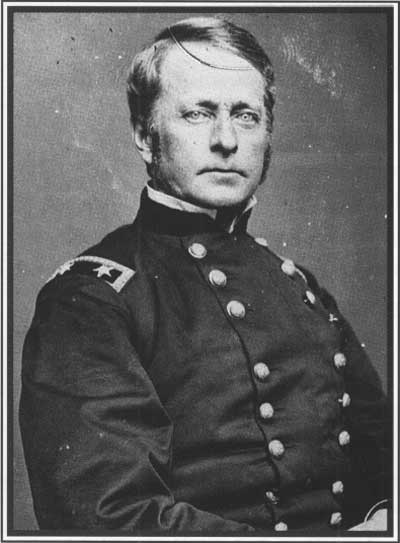
[3] Robertson, James I. Jr. General A.P. Hill: The Story of a Confederate Warrior Random House, New York 1987

[4] Ibid. Guelzo, Gettysburg: The Last Invasion p.128

[5] Ibid. Coddington, The Gettysburg Campaign, A Study in Command p. 263

[6] Ibid. Robertson A.P. Hill p.205

[7] Foote, Shelby, The Civil War, A Narrative. Volume Two Fredericksburg to Meridian Random House, New York 1963 p.453

[8] Ibid. Dowdy, Lee and His Men at Gettysburg: The Death of a Nation p.79

[9] Ibid. Freeman Lee’s Lieutenant’s a Study in Command p.109

[10] Ibid. Dowdy, Lee and His Men at Gettysburg: The Death of a Nation p.88

[11] Ibid. Dowdy, Lee and His Men at Gettysburg: The Death of a Nation p.85

[12] Ibid. Dowdy, Lee and His Men at Gettysburg: The Death of a Nation p.86

[13] Ibid. Dowdy, Lee and His Men at Gettysburg: The Death of a Nation p.86

[14] Ibid. Freeman Lee’s Lieutenant’s a Study in Command p.512

[15] Ibid. Dowdy, Lee and His Men at Gettysburg: The Death of a Nation p.86

[16] Ibid. Dowdy, Lee and His Men at Gettysburg: The Death of a Nation p.87

[17] Ibid. Freeman Lee’s Lieutenant’s a Study in Command p.527

[18] Krick, Robert K. Three Confederate Disasters on Oak Ridge: Failures of Brigade Leadership on the First Day of Gettysburg in The First Day at Gettysburg edited by Gallagher, Gary W. Kent State University Press, Kent Ohio 1992 p.96

[19] Ibid. Krick. Three Confederate Disasters on Oak Ridge p.96

[20] Ibid. Freeman Lee’s Lieutenant’s a Study in Command p.527

[21] Ibid. Freeman Lee’s Lieutenant’s a Study in Command p.46

[22] Ibid. Guelzo, Gettysburg: The Last Invasion p.134

[23] Sears, Stephen W. Gettysburg. Houghton Mifflin Co. Boston and New York 2003 p.55

[24] Pfanz Harry W. Gettysburg: The First Day University of North Carolina Press, Chapel Hill and London 2001 p.118

[25] Ibid. Dowdy, Lee and His Men at Gettysburg: The Death of a Nation p.87

[26] Ibid. Freeman Lee’s Lieutenant’s a Study in Command p.529

[27] Ibid. Guelzo, Gettysburg: The Last Invasion p.133

[28] Ibid. Freeman Lee’s Lieutenant’s a Study in Command p.533

[29] Ibid. Krick. Three Confederate Disasters on Oak Ridge p.99

[30] Ibid. Krick. Three Confederate Disasters on Oak Ridge p.101

[31] Ibid. Guelzo, Gettysburg: The Last Invasion p.134

[32] Ibid. Guelzo, Gettysburg: The Last Invasion p.134

[33] Ibid. Freeman Lee’s Lieutenant’s a Study in Command p.136

[34] Ibid. Guelzo, Gettysburg: The Last Invasion p.131

[35] Trudeau, Noah Andre. Gettysburg: A Testing of Courage, Harper Collins Publishers, New York 2002 p.128

[36] Ibid. Sears Gettysburg p.136

[37] Ibid. Trudeau Gettysburg: A Testing of Courage, p.129

[38] Ibid. Coddington, The Gettysburg Campaign, A Study in Command p. 263

[39] Ibid. Guelzo. Gettysburg: The Last Invasion p.131 This argument does have merit based on the considerations Guelzo lists but neither Hill, Heth or Lee make any mention of that need in their post battle reports.

[40] Ibid. Trudeau Gettysburg: A Testing of Courage, p.130

[41] Gallagher, Gary. Confederate Corps Leadership on the First Day at Gettysburg: A.P. Hill and Richard S. Ewell in a Difficult Debut in The First Day at Gettysburg edited by Gallagher, Gary W. Kent State University Press, Kent Ohio 1992 p.42

[42] Ibid. Trudeau Gettysburg: A Testing of Courage, p.135

[43] Ibid. Coddington, The Gettysburg Campaign, A Study in Command pp. 263-264

[44] Foote, Shelby, The Civil War, A Narrative. Volume Two Fredericksburg to Meridian Random House, New York 1963 p.465

[45] Ibid. Pfanz Gettysburg: The First Day p.27

[46] Ibid. Gallagher, Gary. Confederate Corps Leadership on the First Day at Gettysburg p.42

[47] Ibid. Pfanz. Gettysburg: The First Day p.27

[48] Ibid. Gallagher, Gary. Confederate Corps Leadership on the First Day at Gettysburg p.42

[49] Ibid. Guelzo. Gettysburg: The Last Invasion p.131

[50] Ibid. Coddington, The Gettysburg Campaign, A Study in Command p. 264

[51] Ibid Pfanz Gettysburg: The First Day p.27

[52] Ibid. Coddington, The Gettysburg Campaign, A Study in Command p. 264

[53] Ibid. Freeman Lee’s Lieutenant’s a Study in Command p. 563

[54] Ibid. Krick. Three Confederate Disasters on Oak Ridge p.94

Leave a comment

Filed under civil war, Gettysburg, History, leadership, Military

Pious and Conflicted: General Dorsey Pender

pender

Major General Dorsey Pender C.S.A.

Friends of Padre Steve’s World

I am continuing to periodically intersperse and publish short articles about various commanders at Gettysburg on the site. These all are drawn from my student text and may become a book in their own right.  The reason is I am going to do this is because I have found that readers are often more drawn to the lives of people than they are events. As I have noted before that people matter, even deeply flawed people, and we can learn from them.

Today’s article is about Major General Dorsey Pender who commanded A.P. Hill’s old “Light Division” in Hill’s Third Corps at Gettysburg. Pender is interesting, young an pious, but often conflicted in his faith. His questions are similar to those asked by those who want to believe but struggle with believing. His relationship with his wife, a very strong believer was often marred by differences in belief. I hope you enjoy.

Peace

Padre Steve+

Dorsey Pender was a “pious, serious North Carolinian” [1] born in Edgecomb County in 1834 who received “his early education in the common schools of the county” [2] before he was appointed to West Point. He graduated with the class of 1854, a class that included Custis Lee, Oliver O. Howard, J.E.B. Stewart, S.D. Lee, John Pegram, and Stephen Weed. He graduated nineteenth of the forty-six cadets in that class.

He married his wife Fanny in 1859. She was the sister of one of his academy classmates Samuel Shepperd who died a year after graduating from the academy. She accompanied Dorsey to the Pacific Northwest where he was serving at the outbreak of the war. They had been married two years when he volunteered to serve the Confederacy, he was just twenty-seven and she just nineteen and already a mother expecting a second child when he went to war. Like many young couples separated by war theirs was often plagued by misunderstandings and highly emotional, something that is evidenced in their correspondence.

Pender is often described as devout in terms of his religious beliefs but his devoutness was in large part due to the spiritual conflict that he was going through. Pender was a tremendously proud man but felt the need for some kind of salvation and while he “sincerely tried to be a good Christian” but could not understand why good works did not earn salvation.” [3] The young general sought the counsel of a chaplain, but this did not ease his mind. Eventually he was baptized and confirmed in the Episcopal Church, but even this brought conflict with his wife who was not able to be with him. Despite these attempts he still doubted and months later still “considered himself a “perjured” sinner, having made vows that he could not keep.” [4] This type of religious experience, that of men who question their faith was not unique to Pender and is not unusual today.

Prior to the war he served on the frontier and in California with the artillery and dragoons. During the secession crisis he “offered his services to the Confederacy even before most of the states, including his own, had seceded.” [5] He was appointed to command the 6th North Carolina where he “earned the everlasting respect and admiration” of his men. [6] After the Battle of Seven Pines he was made an acting Brigadier General and given command of Johnston Pettigrew’s brigade. [7]

As he gained more experience Pender became a favorite of Robert E. Lee who admired him for his competence as well as forthrightness. “At Harper’s Ferry and Shepherdstown Pender had shown himself qualified to handle more than one brigade.” [8] Pender was “only seven years out of West Point” [9] in May of 1863 when he was promoted to Major General and given command of his division. He was only twenty-nine years old, and the “youngest of that rank in the army.” [10] The young general was deeply loyal to Powell Hill and a partisan of the Light Division which he now commanded. Though he was young he had risen “on first rate ability, steadfast ambition and a headlong personal leadership in battle which gave a driving force to his brigade” [11] which he considered “the best brigade of the best division” [12] in the army.

Lee praised him as “a most gallant officer” and was deeply sensitive about keeping Pender with the troops that found him so inspiring, noting “I fear the effect upon men of passing him over in favour of another not so identified with them.” [13] Pender was an “intelligent, reflective man, deeply religious and guided by a strong sense of duty.” [14]

When the army marched north into Pennsylvania had to write to “relieve the concern of his young wife that the Lord will not bless the Southern cause if the Confederacy does more than defend its own territory.” [15] Fanny was not convinced by her husband’s attempts to justify as she believed that such an endeavor “was unjust and illegitimate, and tempted God.” [16]

Pender’s four veteran brigades were commanded by three experienced officers and one new to brigade command. However, the young general would not get to lead them into action for long as he was mortally wounded by a shell fragment before the division was to go into action on July 2nd at Gettysburg. Though surgeons believed he would recover he succumbed to his wound during the Confederate withdraw from Gettysburg. “In his dying moments, he asked that Fanny be told that he had no fear of dying.” [17] He continued and said “I can confidently resign my soul to God, trusting in the atonement of our Lord Jesus Christ. My only regret is to leave her and our children.” [18]Evidently, he finally found a measure of peace in the faith that had eluded him in life. Fanny never remarried and became an independent women serving as the head of a school and as Postmistress of Tarboro North Carolina where she died in 1922 at the age of eighty-eight.

Notes

[1] Ibid. Guelzo, Gettysburg: The Last Invasion p.23

[2] Ibid. Warner Generals in Gray p.233

[3] Rable, George C. God’s Almost Chosen People’s: A Religious History of the Civil War The University of North Carolina Press, Chapel Hill 2010 p.244

[4] Ibid. Rable God’s Almost Chosen Peoples p.244

[5] ibid. Tagg The Generals of Gettysburg p.325

[6] Ibid. Glatthaar General Lee’s Army from Victory to Collapse p.196

[7] Ibid. Freeman Lee’s Lieutenants p.146

[8] Ibid. Freeman Lee’s Lieutenants p.387

[9] Ibid. Dowdy. Lee and His Men at Gettysburg p.85

[10] Ibid. Sears Gettysburg p.47

[11] Ibid. Dowdy. Lee and His Men at Gettysburg p.85

[12] Ibid. Freeman Lee’s Lieutenants p.45

[13] Ibid. Sears Gettysburg p.47

[14] Ibid. Dowdy. Lee and His Men at Gettysburg p.85

[15] Ibid. Freeman Lee’s Lieutenants p.45

[16] Ibid. Guelzo. Gettysburg: The Last Invasion p.66

[17] Ibid. Wilson and Clair They Also Served p.113

[18] Ibid. Dowdy Lee and His Men at Gettysburg p.226

1 Comment

Filed under christian life, civil war, faith, Gettysburg, History, Military

The Most Lovable of All Lee’s Generals: A.P. Hill

Hill.28135413_std

Lieutenant General Ambrose Powell Hill

Friends of Padre Steve’s World

I am continuing to periodically intersperse and publish short articles about various commanders at Gettysburg on the site. These all are drawn from my student text and will likely become a book in their own right when I finish the chapter on the Union commanders.  The reason is I am going to do this is because I have found that readers are often more drawn to the lives of people than they are events. As I have noted before that people matter, even deeply flawed people, and we can learn from them. Sometimes good and even honorable people serve malignant causes, while bad or even wicked people support good causes, usually for selfish reasons, but that is the constant quandary that human beings find themselves.

Today’s article is about Confederate Lieutenant General A.P. Hill. Hill is an interesting character to me, a man of a lot of contradictions both on and off the battlefield. He was gallant and reckless at the same time plagued with ill-health, some of which was certainly real, but at some times may have been stress induced. He made lasting friendships with men who he would later oppose in battle. He fought for a cause that he found repugnant for he hated slavery and the maltreatment of blacks, even condemning the actions of the people of his home town before the war in that regard. In an army filled with highly religious officers, even some who might be termed fanatical in terms of their beliefs, Hill was a skeptic who had little appreciation for those like Stonewall Jackson who he believed were fanatics.

So anyway, tomorrow I will be writing about the assassination of Abraham Lincoln, one of the darkest days in our history.

Peace

Padre Steve+

Ambrose Powell Hill was born about ten miles from Culpepper Court House Virginia in 1825. He was the youngest son of a “a highly esteemed, merchant, farmer, and politician….noted for his courage, famed for his hospitality and beloved for his character.” [1] The young Powell Hill was a good student and gifted horseman who loved the outdoors. His mother was introverted and a hypochondriac who seldom left the house and through her he acquired a love of reading.

As a child Hill attended Black Hills Seminary, a private school for well to do families and though he was a good student was not fond of the significant religious overtones of the school. In addition his mother, who had been raised Episcopalian became caught up in a Baptist revival which swept Northern Virginia in 1840. His mother embraced the austere faith of her new church. Soon “dancing, boisterous conduct, card-playing, and all forms of theatrics were banned in the Main Street home.” [2] From that time on the young Hill “spurned religion” and “always looked with disapproval on anyone who – like Stonewall Jackson, for instance- practiced religion with excessive intensity.” [3]

With his father’s approval and his mother approbation Hill sought admission to West Point and was accepted in 1842. Hill had little problem with the academics of the academy, but conduct was another matter. Hill entered the West Point with a good number of men who would become famous over the next two decades including George McClellan, Thomas Jackson, Cadmus Wilcox, Darius Couch and George Pickett. Hill would have been part of the illustrious class of 1846, but the young cadet had a certain proclivity for women and a certain amount of debauchery, causing him to lose a year of study after contracting “a case of gonorrhea, followed by complications, which were followed by lingering prostatitis.” [4] These afflictions caused many other ailments that would plague him the rest of his life. At West Point, Hill roomed with George McClellan, a refined cadet from Philadelphia, and became a longtime friend. His delayed graduation put him in the class of 1847 where along with his new roommate Julian McAllister and friends Harry Heth and Ambrose Burnside were the social leaders of the class due to their later “practical jokes and boisterous conduct.” [5]

Hill graduated fifteenth in his class and was assigned to the artillery. The young Second Lieutenant accompanied Brigadier General Joseph Lane’s brigade to Mexico where he saw limited action at the end of the war and mainly served on occupation duty. In Mexico and in the following years he was stricken with various fevers including typhoid and yellow fever, as well as recurrences of his prostatitis which so limited his ability to serve in the field with the artillery that he requested a transfer to a desk job. This he was granted by Secretary of War Jefferson Davis who detailed him “for special duty in the United States Coast Survey offices in Washington D.C.” [6]

The assignment to the Coast Survey offices was unusual, especially for Hill’s era of service, for they were a part of the Department of the Navy. Despite much political support, Hill could not get promoted to captain, most likely due to the fact that he was working for the Navy. Hill was generally unlucky at love being twice engaged and twice rejected, the latter time when his fiancée’s parents learned that he had had gonorrhea.

But Hill eventually found a bride as war drew near, Kitty Morgan McClung. She was a young and well off widow who was the sister of Confederate Brigadier General John Hunt Morgan. The two had a happy marriage and were nearly insuperable, Hill affectionately called her Dolly. They had four daughters, only two of who reached adulthood the last born three months after Hill’s death at Petersburg. During the war Dolly had a hard time remaining away from her husband. “She appeared to be impervious to danger and repeatedly ignored Hill’s admonitions to stay away from the front.” [7] Legend has it that she was nearly captured when attempting to spy on Union General Philip Sheridan.

When war came Hill’s friends at the Coastal Survey attempted to convince him to remain with the Union, as serving in their office he would have little chance of taking up arms against Virginia. The now happily settled and married Virginian was torn. He hated slavery and the depreciations visited on blacks; having in 1850 responded to the lynching of a young black man in his home town of Lynchburg: “Shame, shame upon you all, good citizens…Virginia must crawl unless you vindicate good order or discipline and hang every son of a bitch connected with this outrage.” [8] Likewise he was not in favor of secession, but he, like so many other Southern officers felt a stronger connection to family and his Virginia heritage than to the Union, and resigned his commission on February 26th 1861.

Hill was appointed as a Colonel of infantry in May 1861 to organize and command the 13th Virginia Infantry regiment. He commanded the regiment in the Valley and western Virginia as well as at First Manassas. By February 1862 he was a Brigadier General commanding Longstreet’s old Virginia brigade on the Peninsula where he distinguished himself against McClellan at Williamsburg. On May 26th 1862 he was promoted to Major General and given command of the very large so called “Light Division.” He emerged from the fighting on the Peninsula, the battles around Richmond and the Seven Days “with the reputation of being one of the best combat officers that Lee had.” [9] However, his success on the battlefield, like so many commanders, came at great cost. In those battles his division suffered nearly 5,500 casualties. “Six colonels and three majors were killed; two brigadiers (Anderson and Pender), eleven colonels and six lieutenant colonels wounded.” [10]

Hill had an earned reputation as a brilliant division commander with the Light Division. Despite his clashes with Longstreet, and especially with Jackson, who had Hill arrested twice and attempted to have him court-martialed, Lee recommended him to take command of Third Corps. Lee sang his praise of Hill and his abilities to Jefferson Davis noting that Hill was “the best soldier of his grade with me.” [11] However, Hill had never commanded more than one division in action, except for the confused hour after Jackson had been struck down. Hill, however, was devoted, prompt, and energetic, and deserved promotion.” [12]

Hill’s reputation as a superb division commander was well earned. At Antietam when Lee’s army was in danger of destruction, he “drove his men at a killing pace toward the sound of distant gunfire….” [13] Hill’s “Light Division’s remarkable march from Harper’s Ferry- seventeen miles in less than eight hours- rivaled the best marks by Jackson’s famous foot cavalry.” [14] Upon his arrival “instantly recognized the military situation, Kyd Douglas wrote, “and without waiting for the rest of the division and without a breathing spell he threw his columns into line and moved against the enemy, taking no note of their numbers.” [15] Hill’s march saved the Army of Northern Virginia from destruction as he dealt reverses to his old friends McClellan and Burnside. “Lee’s reference to him in his official Sharpsburg report, “And then A.P. Hill came up,” had become a byword in the army.” [16] There were other times, notably at Second Manassas and Fredericksburg where “he was sometimes careless on the battlefield,” and in both instances “his defensive postings were poor and nearly proved very costly.” [17]

Hill was a “nervous wiry man with a persistent chip of underappreciation [sic] on his shoulders and a bevy of chronic illnesses when under stress.” [18] He had an “impetuous streak and fiery temperament that matched his red beard, traits that at times had brought him trouble on the battlefield and off…” [19] Despite this, Hill exhibited a fondness and care for the welfare of his men that earned their respect and admiration. One officer called him “the most lovable of all Lee’s generals,” while “his manner so courteous as almost to lack decision.” [20]

Hill detested Jackson, who he referred to as “that old Presbyterian fool.” [21] His poor relations with Jackson’s confidants at Second Corps ensured that Ewell took Second Corps when Lee reorganized the army after Chancellorsville.

Lee appointed Hill to command Third Corps of which “half of the troops had been with him all along” [22] in the Light Division. Lee liked Hill’s aggressiveness and command instincts, which mirrored his own. Lee hoped that Hill’s aggressive instincts as a division commander would translate into success at the corps level. Longstreet was not in favor of Powell Hill’s appointment, most likely due to his altercation with him the previous year and lobbied for the promotion of D.H. Hill.

In his letter recommending the promotion of A.P. Hill and Ewell to serve as corps commanders, Lee wrote to Davis:

“I wish to take advantage of every circumstance to inspire and encourage…the officers and men to believe that their labors are appreciated, and that when vacancies occur that they will receive the advantages of promotion….I do not know where to get better men than those I have named.” [23]

But the decision to promote Ewell and Hill, both Virginians, stirred some dissent among those that believed that Lee was “favoring Virginians over officers from other states. The promotion of A.P. Hill, as previous noted was “made over the head of two Major Generals more senior than Hill- North Carolinian D.H. Hill and Georgian Lafayette McLaws.” [24] There is some validity to this perception, as Longstreet’s biographer Jeffry Wert noted:

“While the bulk of the troops hailed from outside the Old Dominion, two of the three corps commanders, six of the ten division commanders – including Jeb Stuart with the cavalry – and sixteen of forty-seven brigade commanders were natives of Virginia, along with the army commander and the chief of artillery.” [25]

As a Corps commander Hill enjoyed the confidence of many of his commanders, “the affection of his staff and the admiration of his men.” [26] He ceases to engage in conflict with other officers but “after advancement to corps command, Hill – the victim of what now seems to be a psychosomatic ailment – performed somewhat unevenly and was often incapacitated.” [27] For whatever reason, ill-health or the added responsibility Hill “is not the same man who impetuously led the fighting Light division.” [28]

His sickness did not mean that he was either shirking duty or a coward. During the final agony of the Army of Northern Virginia Hill, who was very sick, left his sick bed against the advice of his doctor to resume command of his decimated Third Corps at Petersburg. On April 1st he was shot through the heart by a Union infantryman of the 138th Pennsylvania as he attempted to ascertain the situation his broken corps faced as the Confederate lines collapsed.

His pregnant wife was told of his death and in the chaos of the fall of Richmond and the Confederate retreat it took several days before Hill’s body was buried. Dolly remarried in 1870, one of her daughters noted that “she was very averse to talking of anything connected with the war…” and nothing, not even a pardon from the Federal government “softened Dolly’s bitterness over the struggle that had taken her husband’s life.” [29] That bitterness also made her refuse “to support any of the “Lost Cause” sentiments that sprouted up during this time.” [30] She died in Lexington Kentucky in 1920.

Notes

[1] Robertson, James I. Jr. General A.P. Hill: The Story of a Confederate Warrior Random House, New York 1987 p.5

[2] Ibid. Robertson General A.P. Hill p.6

[3] Ibid. Robertson General A.P. Hill pp.6-7

[4] Waugh, John C. The Class of 1846: From West Point to Appomattox, Stonewall Jackson, George McClellan and their Brothers Ballantine Books, New York 1994 p.166

[5] Ibid. Robertson General A.P. Hill p.13

[6] Ibid. Robertson General A.P. Hill p.26

[7] Ibid. Wilson and Clair They Also Served p.91

[8] Ibid. Robertson General A.P. Hill p.22

[9] Ibid. Robertson General A.P. Hill p.95

[10] Ibid. Robertson General A.P. Hill p.95

[11] Ibid. Freeman Lee’s Lieutenants p.526

[12] Ibid. Freeman Lee p.304

[13] Ibid. Robertson, General A.P. Hillp.143

[14] Sears, Stephen W. Landscape Turned Red: The Battle of Antietam Houghton-Mifflin Company, Boston and New York 1983 p.285

[15] Ibid. Robertson General A.P. Hill p.144

[16] Ibid. Tagg The Generals of Gettysburg p.301

[17] Ibid. Sears Gettysburg p.45

[18] Ibid. Guelzo, Gettysburg: The Last Invasion p.22

[19] Ibid. Sears Landscape Turned Red p.285

[20] Ibid. Tagg The Generals of Gettysburg p.301

[21] Ibid. Guelzo, Gettysburg: The Last Invasion p.22

[22] Foote, Shelby, The Civil War, A Narrative. Volume Two Fredericksburg to Meridian Random House, New York 1963 p.434

[23] Ibid. Freeman Lee’s Lieutenants p.526

[24] Ibid. Taylor, John Duty Faithfully Performed p.290

[25] Ibid. Wert General James Longstreet p.249

[26] Ibid. Freeman Lee’s Lieutenants p.35

[27] Ibid. Warner Generals in Gray p.135

[28] Ibid. Freeman Lee’s Lieutenants p.35

[29] Ibid. Robertson General A.P. Hill p.321

[30] Ibid. Wilson and Clair They Also Served p.91

Leave a comment

Filed under civil war, faith, Gettysburg, History, leadership, Military

Fighting Joe Hooker: Part One


Friends of Padre Steve’s World

Another biographic vignette from my Gettysburg text, the first part of a section dealing with Major General Joseph Hooker who almost commanded the Army of the Potomac at Gettysburg. This section of the text deals with Hooker and his command of the Army leading up to the Battle of Chancellorsville. I find him to be one of the most complex and intriguing commanders of the Civil War. He was vain, profane and ambitious, as well as a gifted administrator who actually cared about the welfare of his soldiers. At the same time as a division and corps commander he was outstanding. As the commander of the army he was singularly unsuccessful in battle, but what he had done in the months between his appointment and the disaster at Chancellorsville he turned the Army of the Potomac around. The improvements that he made to the army were very important when it won the Battle of Gettysburg under the command of George Gordon Meade. What Hooker’s legacy shows me is that some men have different talents. Had Hooker been successful at Chancellorsville he would be hailed and what he did before the battle to care for his troops and improve the army would be used as examples of how one should lead. Since he lost and eventually was relieved by Lincoln days before Gettysburg, what he did to make the Army of the Potomac a fighting machine is largely forgotten.

Peace

Padre Steve+

hooker

“Fighting Joe” Hooker had been in command of the Army of the Potomac about five months, assuming command from Burnside, who Lincoln had relieved following the crushing defeat at Fredericksburg, and after that general had demanded the wholesale firing of ten generals from the army of the Potomac, including Hooker. Hooker was a graduate of West Point, class of 1837 and veteran of the Mexican War. During that war he was brevetted three times for bravery acting as Chief of Staff to General Pillow and his division, and as well as the commander of a mixed infantry-cavalry regiment known as the Voltiguers. He received his third brevet of the war to Lieutenant Colonel at Chapultepec. General Winfield Scott “mentioned him prominently in his report on the capture of Mexico, and Pillow testified that he was distinguished by his extraordinary activity, energy and gallantry.” [1]

However, by 1863 he was not well regarded by some of his peers and one very important superior, Major General Halleck, who he had run afoul of in California. “While on Garrison duty in California in the 1850s, he cultivated “bad habits and excesses”- too much liquor, and too many women. He left the army, failed at business, and amassed gambling debts and legal problems.” [2] Hooker, like many contemporaries, finding advancement slow and pay bad resigned from the army in February 1853, and engaged in a series of less than successful business operations in Northern California, and also became active in California politics. However in 1858 Hooker was the recipient of a political plum, and “was appointed Superintendent of Military Roads in Oregon” and in 1859 was appointed a Colonel in the California State Militia. [3]

When war came Hooker managed to obtain an appointment as a Brigadier General of volunteers over the objections of General Winfield Scott from McClellan. Hooker was a “capable commander and brave soldier” [4] and became an excellent brigade commander. He combined strict training and discipline with care and concern for his troops. He “made himself accessible to officers and men who had complaints to air or favors to ask. He also took care that his brigade received its rightful share of rations, clothing and other supplies. He early struck upon the right balance of discipline and paternalism which marks those generals who gain the good will of their men.” [5]

But Hooker had a dark side, his unchecked ego and boundless ambition which were unconstrained by ethical considerations or loyalty to superiors and peers. He worked shamelessly against previous army commanders, including George McClellan, to whom he owed his appointment as a Brigadier General in the Regular Army.

In appearance, Hooker was “a strikingly handsome man” with “erect soldierly bearing…” but he was also “arrogant and stubborn, more than willing to work behind the scenes to advance himself, and reputed to have a headquarters that Charles Francis Adams Jr. described as “a combination barroom and brothel.” [6] The commander of XII Corps, Henry Slocum had “no faith whatever in Hooke’s ability as a military man, in his integrity or honor,” [7] a sentiment echoed by many other officers. However, George Meade was more circumspect, and wrote to his wife “He is a very good soldier, capital general for an army corps, but I am not prepared to say as to his abilities for carrying out a campaign and commanding a large army. I should fear his judgment and prudence…” [8]

Hooker genuinely believed in his abilities and much of the “criticism which he so freely bestowed on his superiors came simply because his professional competence was outraged by the blunders that he had to witness[9] on battlefields such as Second Manassas, Antietam and Fredericksburg. But his enemies, and “there would be a host of them- regarded him as “thoroughly unprincipled.” Hooker was driven by an “all consuming” ambition and undoubted self-confidence…. War intoxicated hi m and offered salvation for a troubled life. As a gambler he liked the odds.” [10]

During the war Hooker was what we would call now “media savvy.” He used the press of his day to shamelessly promote his image and “deliberately played up to the press to swell his image as a stern, remorseless campaigner, and he reveled in the nickname the newspapers happily bestowed on him, “Fighting Joe.” [11] However, he would later express his “deep regret that it was ever applied to him. “People will think that I am a highwayman or bandit,” he said; when in fact he was one of the most kindly and tender-hearted of men.” [12]

But Hooker was not just disrespectful of his military superiors, but also those in the Lincoln administration, including Abraham Lincoln himself. Hooker told reporters after Fredericksburg that Lincoln “was an imbecile for keeping Burnside on but also in his own right, and that the administration itself “was all played out.” What the country needed was a dictator….” [13] Hooker was an intriguer for sure but unlike many generals who did so anonymously. Hooker was quite open and public going before the “Joint Committee on the Conduct of the War investigating Fredericksburg” [14] where he not only provided damning testimony against Burnside, but against potential rivals, and after Fredericksburg the press clamored for Hooker to be named commander. One paper wrote:

We have in the Army of the Potomac, however, a General of the heroic stamp. A general who feels the enthusiasm of a soldier and who loves battle from an innate instinct for his business. The cry is universal, Hooker to the command.” [15]

After the failure at Fredericksburg Burnside had to contend with a “General’s Revolt” within the army. Numerous senior officers were involved, some speaking to the media, others to the high command in Washington and still others to influential congressmen, among these was Hooker.

After the infamous “mud march” Ambrose Burnside, now tired of Hooker and his other subordinates machinations drew up General Order Number 8 in which he planned to relieve seven generals, “two of his three Grand Division chiefs (along with the third Grand Division’s chief of staff), one corps commander, two division commanders, and one brigade commander.” [16] At the insistence of personal friends and staff who pointed out that only Lincoln had that authority, Burnside requested a meeting with the President during which he showed the order to Lincoln and also his letter of resignation if Lincoln refused to back him against his generals. The order stated in part:

“General Joseph Hooker…having been found guilty of unjust and unnecessary criticisms of the actions of his superior officers, and of the authorities, and having, by the general tone of his conversations, endeavored to create distrust in the minds of officers who have associated with him, by having, by omissions and otherwise, made reports and statements that were calculated to create incorrect impressions, and habitually speaking in disparaging terms of other officers, is hereby dismissed from the service of the United States as a man unfit to hold an important commission, during a crisis like the present…” [17]

Burnside was fed up with Hooker and since he did not have the authority to dismiss senior officers from the service he took the matter to Lincoln. Meeting the President at the White House Burnside “confronted Lincoln with this order and his own resignation, either the dissident generals had to go, he said, or he would. Lincoln agreed- and accepted Burnside’s resignation.” [18]

Much to Burnside’s dismay, Lincoln appointed Hooker, Burnside’s nemesis, to command the Army of the Potomac and sent Burnside west to command a corps. As far as the other conspirators of the Generals Revolt, none gained profit of honor from their machinations, and most, with the exception of Hooker ended the war in obscurity or out of the army.

Hooker Appointed to Command

Lincoln knew Hooker’s unsavory side, but the President “considered him an aggressive, hard fighting general…and hoped that Hooker could infuse that spirit into the army,” [19] which now was at its nadir. When Lincoln appointed Hooker to the command of the Army of the Potomac, he gave his new army commander a letter that is unique in American military history. In the letter, Lincoln lectured Hooker as to his conduct while under the command of Burnside, “and just how much he disapproved of the unbounded ambition Hooker had displayed in Undercutting Burnside.” [20] In the letter and during his meeting with Hooker Lincoln laid out his expectations, as well as concerns that he had for him in his new command:

“you may have taken counsel of your ambition, and thwarted him as much as you could, in which you did a great wrong to the country.” Continuing: “I have heard, in such a way as to believe it, of your recently saying that both the Army and the government needed a Dictator. Of course it was not for this, but in spite of it, that I have given you command. Only those generals who gain successes, can set up dictators. What I ask now is military success, and I will risk dictatorship.” [21] However, Lincoln pledged his support to Hooker saying “The government will support you to the utmost of its ability” but warned “I much fear the spirit which you have aided to infuse into the army, of criticizing their commander and withholding confidence in him, will now turn upon you. I shall assist you as far as I can to put it down. Neither you, nor Napoleon, if he were alive again, could get any good out of an army while such a spirit prevails in it.” [22]

Never before or since has an officer been given such responsibility by a President who recognized the man’s qualities, in this case a fighting spirit, as well as his personal vices and shortcomings in character. In fact, the letter can be viewed as “a model for a leader dealing with a flawed, willful, but energetic and useful subordinate.” [23] Lincoln finished the latter to Hooker with the admonition “And now, beware of rashness. Beware of rashness, but with energy and sleepless vigilance go forward and give us victories.” [24] Hooker believed the last comment was due to the way he was portrayed in the press, the “Fighting Joe Hooker” moniker had stuck.

The letter “engendered neither resentment nor misunderstanding” [25] and Hooker’s reaction to the letter was an interesting commentary to say the least. He recalled a few days later that, when he read it, he “informed him personally of the great value I placed on the letter notwithstanding his erroneous views of myself, and that sometime I intended to have it framed and posted in some conspicuous place for the benefit of those who might come after men.” [26] He read it to a number of others and told a journalist “It is a beautiful letter…and, although I think he was harder on me than I deserved, I will say that I love the man who wrote it.” [27] Hooker was certainly sincere in this as he not only preserved it but ensured that it was published after the war was over.

The Positive Contributions of Hooker to the Army of the Potomac

Despite the misgivings of the President and many of his peers, Hooker began a turnaround in the army that changed it for the better. At the beginning of his tenure he inspired confidence among his troops. He reorganized the Cavalry Corps and instituted many other reforms. Hooker discarded Burnside’s failed “Grand Division” organization and returned to the corps system. He was aided by experienced Corps commanders who had earned their promotions in combat and not due to political patronage, even the political animal Dan Sickles of III Corps had shown his abilities as a leader and commander, gone were the last remnants of McClellan’s regime.

Despite the many positives gained during the reorganization, Hooker made one significant mistake during the reorganization which hurt him at Chancellorsville, this was in regard to the artillery. Before that battle decided to “strip General Hunt of command of the artillery and restrict him to purely administrative duties…he had restored Hunt to command the night of May 3 after the Confederates had driven him out of Chancellorsville.” This act ensured that “The advantages traditionally possessed by the Union artillery in the quality of its material and cannon disappeared in this battle through Hooker’s inept handling of his forces.” [28]

When Hooker took command many of the men in the army were “disheartened, homesick, in poor health and without confidence in their officers. Thousands died in their quarters from lack of proper care or medicines for which there was no excuse.” [29] Hooker became immensely popular with the men as he conducted reforms which improved their lives. “He took immediate steps to cashier corrupt quartermasters, improve food, clean up the camps and hospitals, grant furloughs, and instill unit pride by creating insignia badges for each corps…Sickness declined, desertions dropped, and a grant of amnesty brought back many AWOLs back into the ranks.” [30] Additionally “paydays were reestablished and new clothing issued…. Boards of inspection searched out and dismissed incompetent officers.[31] Soldiers sang a ditty about him:

“Joe Hooker is our leader, he takes his whisky strong-” [32]

The most important thing that Hooker did was inspire his troops, both to them and for the cause of the nation was the way he saw that the troops were cared for, no previous Union commander had made troop welfare a priority. Hooker’s “sober, unimaginative, routine work of eternally checking up on rations, clothing, hospitals, living quarters, and other little details which in the long run make all the difference.” [33]

But nothing impacted morale more that his order that “soft bread would henceforth be issued to the troops four times a week. Fresh potatoes and onions were to be issued twice a week, and desiccated vegetables once a week.” [34] The most singularly important accomplishment of Joe Hooker as commander of the army was to demonstrate that he actually cared for his soldiers. It was radically different than Burnside, and even an improvement over the days of McClellan. Such actions made a huge difference in army morale. One officer wrote home “His ‘soft bread’ order reaches us in a tender spot….” [35] Regimental commanders were ordered to ensure that “regular company cooks went to work, and if there were no company cooks they were instructed to create some, so that the soldier could get some decent meals in place of the intestine-destroying stuff he cooked for himself.” [36] Hooker announced “My men shall eat before I am fed, and before my officers are fed” and he clearly meant it.” [37] Hooker’s actions to supply his troops with better food and living conditions as well as his attitude that the welfare of his troops came above his own and his officers was a remarkable example of leadership by example. These very concrete actions of Hooker “did more than anything else to enhance his popularity.” [38] One veteran recalled:

“From the commissary came less whisky for the officers and better rations, including vegetables for the men. Hospitals were renovated, new ones built, drunken surgeons discharged, sanitary supplies furnished, and the sick no longer had to suffer and die without proper care and attention. Officers and men who from incompetence or disability could be of no further use to the service were allowed to resign or were discharged, and those who were playing sick in the hospitals were sent to their regiments for duty.” [39]

Additionally Hooker reformed training in the army. He knew that bored soldiers were their own worst enemy, and instituted a stringent training regimen that paid dividends on the battlefield. “From morning to night the drill fields rumbled with the tramp of many feet. Officers went to school evenings and the next day went out to maneuver companies, regiments, brigades, and divisions in the tactics just studied.” [40] Fitzhugh Lee noted of Hooker that “it must be admitted his preliminary steps toward reorganization and the promotion of the battle power of his army were well taken.” [41] Not only did Hooker mandate such training he frequently showed up and observed the training as well as spent time visiting isolated pickets along the Rappahannock.

Hooker ridded himself of the last vestiges of McClellan’s reliance on the Pinkerton detective agency, and for his uncoordinated use of spies, cavalry and balloons while no “coordinated bureau compiled this information.” [42] Hooker consolidated intelligence operations and created a new staff office in the army, the “Bureau of Military Intelligence, led by Colonel George Sharpe” who “built a network of spies, who soon supplied Hooker with accurate information on Lee’s numerical strength and the unit composition of the Confederate army.” [43] Additionally Hooker helped quash key sources of information relied on by Lee, the local residents along the Rappahannock and Union newspapers. In regard to the former he restricted the movement of civilians along his lines, and cleared out Confederate partisans. As far as the newspapers he “found it expedient to ask Stanton to take action against certain Northern newspapers which were publishing revealing information about the army and offsetting his efforts to retain some secrecy.” [44]

Hooker also reorganized and systematized the Medical Department of the army, and “placed it under the supervision of the competent medical director Dr. Jonathan Letterman.” [45] Under Letterman’s direction and Hooker’s supervision “new hospitals were built and old ones renovated,” [46] this attention to the health of his soldiers paid dividends. Within weeks, “sick rolls had been reduced, and by April, scurvy had virtually disappeared. A veteran contended that Hooker “is a good man to feed an army for we have lived in the best since he took command that we ever did since we have been in the army.” [47]

Hooker worked to combat the vast number of desertions which were plaguing the Army of the Potomac which when he took command were averaging an estimated 200 per day. Tens of thousands of soldiers, some 85,000 according to Hooker’s estimate were absent from the army when he took command. In addition to his work to improve living conditions and the lives of his soldiers in camp Hooker revitalized the office of the Inspector General and used it aggressively to monitor conditions in the camps. One of Hooker’s first initiatives was to systematize “the granting if leaves of absences…..In those regiments lacking discipline, inspection reports were used as a basis for canceling leaves and furloughs, while leaves were increased for those units earning high commendations.” [48]

It was a remarkable turnaround which even impressed his soldiers, his critics, and enemies and his enemies alike. Darius Couch of Second Corps, who later resigned and became Hooker’s arch-enemy, wrote that Hooker had, “by adopting vigorous measures stopped the almost wholesale desertions, and infused new life and discipline into the army.” [49]

The actions of Hooker in the three months between his assumption of command and Chancellorsville were some of the most important of any Federal commander during the war. One senior officer who was not fond of Hooker noted “The Army of the Potomac never spent three months to better advantage.” [50]

The Crisis in Command: Hooker, Lincoln, and Halleck

Hooker had gone into the Battle of Chancellorsville with high hopes and great confidence, but the disaster at Chancellorsville Hooker was not the same. During that battle it was as if he was two persons, the first supremely confident and competent and the second lost and out of his league. During the campaign Hooker had: “planned his campaign like a master and carried out the first half with great skill, and then when the pinch came he simply folded up. There had been no courage in him, no life, no spark; during most of the battle the army had to all intents and purposes had no commander at all.” [51]

The defeat had a lasting effect on Hooker, the connection with his soldiers which he prized was broken. The general who had “once been so popular, was no longer well received in the camps – “there was something in the air of the men which said: ‘We have no further use for you.’” [52] In the immediate aftermath of the battle “Hooker had been deeply depressed… he told Meade that he “almost wished that he had never been born.” [53] However, it was a visit from Lincoln which helped revive him as “Lincoln let it be known that he blamed no one for the defeat.” [54] Henry Halleck who accompanied Lincoln told the President afterward that “Hooker was so dispirited that he offered to reign his command. Not surprisingly, Halleck thought Lincoln should accept the resignation, but the President disagreed. He wanted to give Hooker another chance to show his mettle.” [55]

After Lincoln’s visit he did begin to recover some his self-confidence. Hooker, a slave to his vanity who had little capacity for reflection and blamed various corps commanders including Oliver Howard, John Sedgwick and cavalry commander George Stoneman for the defeat. Unlike the unpopular Ambrose Burnside who after Fredericksburg, had “taken responsibility for the defeat on his shoulders,” [56] Hooker refused to take any responsibility for it. Years later, Hooker when asked about the defeat, “knew a rare moment of humility and remarked, “Well, to tell the truth, I just lost confidence in Joe Hooker.” [57]

Notes

[1] Hebert, Walter H. Fighting Joe Hooker University of Nebraska Press, Lincoln and London 1999. Originally published by Bobbs-Merrill, New York 1944 p.33

[2] Ibid. Wert The Sword of Lincoln p.74

[3] Ibid. Hebert Fighting Joe Hooker p.42

[4] Jordan, David M. Winfield Scott Hancock: A Soldier’s Life Indian University Press, Bloomington and Indianapolis 1988 p.67

[5] Ibid. Hebert Fighting Joe Hooker p.53

[6] Marszalek, John F. Commander of All of Lincoln’s Armies: A Life of General Henry W. Halleck The Belknap Press of Harvard University Press, Cambridge MA and London 2004 p.165

[7] Ibid. Guelzo Fateful Lightening p.331

[8] Huntington, Tom Searching for George Gordon Meade: The Forgotten Victor of Gettysburg Stackpole Books, Mechanicsburg PA 2013 p.127

[9] Catton, Bruce The Army of the Potomac: Glory Road Doubleday and Company, Garden City New York, 1952 p.7

[10] Ibid. Wert The Sword of Lincoln pp.74-75

[11] Ibid. Guelzo Fateful Lightening p.331

[12] Bates, Samuel P. Hooker’s Comments on Chancellorsville in Battles and Leaders of the Civil War Volume III, The Tide Shifts. Edited by Robert Underwood Johnson and Clarence Clough Buel Castle, Secaucus NJ p.217

[13] Ibid. Foote The Civil War, A Narrative. Volume Two p.136

[14] Sears, Stephen W. Controversies and Commanders Mariner Books, Houghton-Mifflin Company, Boston and New York 1999 p.150

[15] Ibid. Hebert Fighting Joe Hooker p.165

[16] Ibid. Sears Controversies and Commanders p.154

[17] Ibid. Hebert Fighting Joe Hooker p.165

[18] McPherson, James M. Tried by War: Abraham Lincoln as Commander in Chief Penguin Books, New York and London 2008 p.162

[19] Ibid. McPherson Tried by War p.162

[20] Ibid. Sears Controversies and Commanders p.157

[21] Ibid. Wert The Sword of Lincoln p.219

[22] Ibid. Foote The Civil War, A Narrative. Volume Two pp.132-133

[23] Cohen, Elliot A. Supreme Command: Soldiers, Statesman and Leadership in Wartime The Free Press, New York 2002 p.20

[24] Ibid. Foote The Civil War, A Narrative. Volume Two p.133

[25] Ibid. Cohen Supreme Command p.20

[26] Sears, Stephen W. Chancellorsville Houghton Mifflin Co. Boston and New York 1996 p.62

[27] Godwin, Doris Kearns Team of Rivals: The Political Genius of Abraham Lincoln Simon and Shuster, New York and London 2005 p.514

[28] Ibid. Coddington The Gettysburg Campaign p.31

[29] Ibid. Hebert Fighting Joe Hooker p.179

[30] McPherson, James. The Battle Cry of Freedom: The Civil War Era Oxford University Press, Oxford and New York 1988 p.133

[31] Ibid. Sears. Chancellorsville p.73

[32] Ibid. Catton Glory Road p.141

[33] Ibid. Catton Glory Road pp.141-142

[34] Ibid. Sears Chancellorsville p.73

[35] Ibid. Sears Chancellorsville p.73

[36] Ibid. Catton Glory Road p.143

[37] Ibid. Sears Chancellorsville p.73

[38] Ibid. Hebert Fighting Joe Hooker p.179

[39] Ibid. Catton Glory Road p.143

[40] Ibid. Catton Glory Road p.145

[41] Girardi, Robert I. The Civil War Generals: Comrades, Peers, Rivals in Their Own Words Zenith Press, MBI Publishing, Minneapolis MN 2013 p.89

[42] Ibid. Hebert Fighting Joe Hooker p.180

[43] Ibid. Wert The Sword of Lincoln p.229

[44] Ibid. Hebert Fighting Joe Hooker p.181

[45] Ibid. Wert The Sword of Lincoln p.225

[46] Ibid. Hebert Fighting Joe Hooker p.179

[47] Ibid. Wert The Sword of Lincoln pp.225-226

[48] Ibid. Hebert Fighting Joe Hooker p.179

[49] Ibid. Sears Controversies and Commanders p.157

[50] Ibid. Hebert Fighting Joe Hooker p.184

[51] Ibid. Catton Glory Road p.210

[52] Cleaves, Freeman Meade of Gettysburg University of Oklahoma Press, Norman and London 1960 p.114

[53] McPherson, James M. Tried by War: Abraham Lincoln as Commander in Chief Penguin Books, New York and London 2008 p.177

[54] Ibid. Marszalek, Commander of All of Lincoln’s Armies p.171

[55] Ibid. Marszalek, Commander of All of Lincoln’s Armies p.171

[56] Ibid. Sears Controversies and Commanders p.158

[57] Ibid. Catton Glory Road p.211

2 Comments

Filed under civil war, Gettysburg, History, leadership, Military