Tag Archives: abraham lincoln

The U.S. Civil War: Beginning of Modern Warfare Part One

culp's hill

Note: This is the first part of a major revision to my article on the American Civil War being the first modern war. Part two will follow tomorrow. This is actually the beginning of the first chapter of my Gettysburg text, much of which has been appearing in various forms on this site for the past year, much of this deals with the connection between policy and strategy and the relationship of political leaders to the military.

The American Civil War was the first modern war. It was a watershed time which introduced changes in tactics, logistics, communications and the concept of total war to the world. Though it did not change the essential nature of war, which Clausewitz says is “is an act of violence to compel our opponent to fulfil our will” [1] it expanded the parameters of it and re-introduced the concept of “total war” to the world and “because its aim was all embracing, the war was to be absolute in character.”[2] In a sense it was a true revolution in military affairs.

While the essential nature of war remains constant, wars and the manner in which they are fought have changed in their character throughout history, and this distinction matters not only for military professionals, but also policy makers. The changing character of war was something that military leaders as well as policy makers struggled with during the American Civil War much as today’s military leaders and policy makers seek to understand the character of warfare today. British military theorist Colin Gray writes “Since the character of every war is unique in the details of its contexts (political, social-cultural, economic, technological, military strategic, geographical, and historical), the policymaker most probably will struggle of the warfare that is unleashed.” [3] That was not just an issue for Abraham Lincoln and Jefferson Davis, both of whom struggled with the nature of the war which had been unleashed, but it is one for our present political leaders, who as civilian politicians are “likely to be challenged by a deficient grasp of both the nature of war as well as its contemporary context-specific character.” [4]

In addition to being the first modern war, or maybe I should say, the first war of the Industrial Age, the Civil War became a “total war.” It was the product of both the massive number of technological advances which both preceded and occurred during it, in which the philosophical nature of the Industrial Revolution came to the fore. Likewise, the enmity of the two sides for one another which had been fostered by a half century of relentless and violent propaganda which ushered from the mouths of politicians, the press and even from the pulpit, even to the point of outright armed conflict and murder in “Bleeding Kansas” during the 1850s.

As a total war it became a war that was as close to Clausewitz’s understanding of absolute war in its in character waged on the American continent, and it prefigured the great ideological wars of the twentieth century, as J.F.C. Fuller noted “for the first time in modern history the aim of war became not only the destruction of the enemy’s armed forces, but also of their foundations- his entire political, social and economic order.” [5] It was the first war where at least some of the commanders, especially Ulysses S. Grant and William Tecumseh Sherman were men of the Industrial Age, in their thought and in the way that they waged war, in strategy, tactics even more importantly, psychologically. Fuller wrote:

“Spiritually and morally they belonged to the age of the Industrial Revolution. Their guiding principle was that of the machine which was fashioning them, namely, efficiency. And as efficiency is governed by a single end- that every means is justified- no moral or spiritual conceptions of traditional behavior must stand in its way.” [6]

Both men realized in early 1864 that “the South was indeed a nation in arms and that the common European practice of having standing armies engaged each other in set-piece battles to determine the outcome of a war was not enough to win this struggle.” [7] Though neither man was a student of Clausewitz, their method of waging war was in agreement with the Prussian who wrote that “the fighting forces must be destroyed; that is, they must be put in such a position that they can no longer carry on the fight” but also that “the animosity and the reciprocal effects of hostile elements, cannot be considered to have ended so long as the enemy’s will has not been broken.” [8] Sherman told the mayor of Atlanta after ordering the civilian population expelled that “we are not only fighting hostile armies, but a hostile people, and must make the old and young, the rich and poor, feel the hard hand of war.” [9] Sherman not only “carried on war against the enemy’s resources more extensively and systematically than anyone else had done, but he developed also a deliberate strategy of terror directed against the enemy’s minds.” [10]

Abraham Lincoln came to embrace eternal nature of war as well as the change in the character of the war over time. Lincoln had gone to war for the preservation of the Union, something that for him was almost spiritual in nature, as is evidenced by the language he used in both of his inaugural addresses and the Gettysburg Address. Instead of a war to re-unite the Union with the Emancipation Proclamation the war became a war for the liberation of enslaved African Americans, After January 1st 1863 when the Emancipation Proclamation went into effect, Lincoln “told an official of the Interior Department, “the character of the war will be changed. It will be one of subjugation…The [old] South is to be destroyed and replaced by new propositions and ideas.” [11]

Of course, the revolution in military affairs took time and it was the political and military leaders of the North who better adapted themselves and their nation to the kind of war that was being fought. “Lincoln’s remarkable abilities gave him a wide edge over Davis as a war leader, while in Grant and Sherman the North acquired commanders with a concept of total war and the determination to make it succeed.” [12]

At the beginning of the war the leaders and populace of both sides still held a romantic idea of war. The belief that the war would be over in a few months and that would be settled by a few decisive battles was held by most, including many military officers on both sides, there were some naysayers like the venerable General Winfield Scott, but they were mocked by both politicians and the press.

The Civil War became an archetype of the wars of the twentieth century, and the twenty-first century. It became a war where a clash between peoples and ideologies which extended beyond the province of purely military action as “it was preceded by years of violent propaganda, which long before the war had obliterated all sense of moderation, and awakened in the contending parties the primitive spirit of tribal fanaticism.” [13]

The conduct of the American Civil War added new dimensions to war, increased its lethality and for the first time since the 30 Years’ War saw opponents intentionally target the property, homes and businesses of civilian populations as part of their military campaign. The Civil War was a precursor to the wars that followed, especially the First World War which it prefigured in so many ways. [14]

However, like all wars many of its lessons were forgotten by military professionals in the United States as well as in Europe. Thus 50 years later during World War One, British, French, German, Austrian and Russian wasted vast amounts of manpower and destroyed the flower of a generation because they did not heed the lessons of the Civil War. Fuller noted:

“Had the nations of Europe studied the lessons of the Civil War and taken them to heart they could not in 1914-1918 have perpetuated the enormous tactical blunders of which that war bears record.” [15]

The lessons of the war are still relevant today. Despite vast advances in weaponry, technology and the distances with which force can be applied by opponents, war remains an act of violence to compel an enemy to fulfill our will. War according to Clausewitz is “more than a chameleon that slightly adapts its characteristics to the given case.” [16] but it is always characterized by the violence of its elements, the province of chance and its subordination to the political objective and as such forces political and military leaders as well as policy makers to wrestle with “the practical challenge of somehow mastering the challenge of strategy in an actual historical context.” [17]

The study of the Civil War can be helpful to the joint planner and commander because it so wonderfully shows the interplay of Clausewitz’s “paradoxical trinity- composed of primordial violence, hatred, and enmity, which are to be regarded as a blind natural force; of the play of chance and the element of subordination, as an instrument of policy, which makes it subject to reason alone.” [18] during an era of great technological and philosophical change. The importance of this cannot be underestimated, for in this era of change, like in every era, some leaders and commanders were either resistant to, or failed to understand the changes being forced upon them in their conduct of war by the industrialization of war and its attendant technology; while others, like Sherman, Grant and Sheridan not only understood them, but embraced them and applied them with skill and vigor in ways that stunned the people of the South.

Over time the Union developed what we would now refer to as a “whole of government approach” to the war. This included not only the military instrument but the use of every imaginable means of national power, from the diplomatic, the economic and the informational aspects of the Union in the effort to subdue the Confederacy. The understanding and use of the “whole of government approach” to war and conflict is still a cornerstone of United States military policy in “unified action, to achieve leverage across different domains that will ensure conditions favorable to the U.S. and its allies will endure.” [19] The working staff of the War Department headed by Edwin Stanton and Major General Montgomery Meigs developed rapidly. It effectively coordinated with railroads, weapons manufactures and suppliers of clothing, food and other necessities to supply the army and navy so well that “Union forces never seriously lacked the materials necessary to win the war.” [20] Stanton and Meigs were “aided by the entrepreneurial talent of northern businessmen” which allowed “the Union developed a superior managerial talent to mobilize and organize the North’s greater resources for victory in the modern industrialized conflict that the Civil War became.” [21]

The understanding of this eternal nature and ever changing character of war to leaders of nations as well as military commanders and planners has been very important throughout history. It can be seen in the ways that Jefferson Davis and Abraham Lincoln conducted their relationships with their military commanders, including during the Gettysburg campaign and we are reminded by Colin Gray notes that political leaders and policy makers who are in charge of policy often ignorant of the nature and character of war, and this fact “directs attention to the difficulties of translating political judgment into effective warmaking.” [22] Military leaders should be the people to advise and instruct policy makers in aligning their policy to what is actually feasible based on the ends ways and means, as well as the strengths and limitations of the military to carry out policy decisions and history reminds us “that policymakers committed strongly to their political desires are not easily deflected by military advice of a kind that they do not want to hear.” [23]

While there was much support for the Confederacy in the aristocracies of Europe, the effectiveness of the Union military in winning the key battles that allowed Lincoln to make his Emancipation Proclamation ensured that Europe would not recognize the Confederacy, . Charles F. Adams, the United States minister to Britain successfully defused the crisis of the Trent affair, which could have led to British recognition of the Confederacy and intervention in the war. Adams’ efforts were so successful that they “left Anglo-American relations in better shape than before the crisis.” [24]

Related to this understanding of warfare one has to also look at the importance of diplomacy, especially in picking the right diplomat for a critical post is a part of a whole of government approach to war and warfare. This was very important in the early stages of the Civil War as there was much support for the Confederacy in the aristocracies of Europe. The effectiveness of the diplomacy was increased by the Union military efforts. The Union suffered many failures at the outset of the war by the time of the Gettysburg campaign they did enough to prevent English or French intervention on the side of the Confederacy, which was also aided by tensions in Europe regarding the Schleswig-Holstein problem between Prussia and Austria as well as unrest in Poland, and the British in particular were loath to risk intervening in a conflict that might be “a disturbance in the precarious balance of power which might be the signal for a general conflagration, they recalled Voltaire’s comment that a torch lighted in 1756 in the forests of the new world had promptly wrapped the old world in flames.” [25] Thus, European leaders and diplomats were very hesitant to allow Southern legations to convince them to intervene.

Though the Confederates won many battles it was the Union military whose success Island Number Ten, Fort Donaldson and Shiloh in the West, and the bloody repulses of Confederate armies at Perryville and Antietam; as well as the joint operations conducted by the Union Navy and Army confederacy through the blockade and capture of key ports such as New Orleans early in the war that allowed Lincoln to make his Emancipation Proclamation. These military successes enabled Lord Palmerston to reject a French proposal for France, England and Russia to propose to the warring parties, a “North-South armistice, accompanied by a six month lifting of the blockade. The result, if they had agreed- as they had been in no uncertain terms warned by Seward in private conversations with British representatives overseas- would have been a complete diplomatic rupture, if not an outright declaration of war.” [26]

The issuance of that proclamation ensured that Europe would not recognize the Confederacy because even pro-Southern English political leaders could not appear to even give the appearance of supporting slavery, especially as both England and France had abolished slavery decades before, while Russia had only recently emancipated its serfs and “was pro-Union from the start….” [27] Popular sentiment in those countries, outside of the ruling class and business elites, was heavily in favor of emancipation, especially among the working classes. The leaders of the workingmen of Manchester England, a major textile producer, who which had been among the “hardest hit by the cotton famine, sent him [Lincoln] an address approved at a meeting on New Year’s Eve, announcing their support of the North in its efforts to “strike off the fetters of the slave.” [28]

There were issues related to the blockade but Charles F. Adams, the United States minister to Britain successfully defused the crisis of the Trent affair, which could have led to British recognition of the Confederacy and intervention in the war in a manner that “left Anglo-American relations in better shape than before the crisis.” [29]

The Union blockade was a key factor in the diplomatic efforts. As I have noted there were many in both Britain and France who sympathized with the South and hoped for Southern victory that were not impressed by Southern moves to subject them to an embargo of Southern cotton until they received recognition. While many Englishmen were offended by Seward’s bluster, many “resented even more the Confederacy’s attempt at economic blackmail.” [30]

The British especially were keen on not going to war for the sake of the South, there was far too much at stake for them, something that the Southern leaders and representatives did not fully comprehend. Prime Minister Viscount Palmerston and Foreign Minister Lord Russell were concerned about the economic impact of the loss of Southern cotton but also “recognized that any action against the blockade could lead to a conflict with the United States more harmful to England’s interests than the temporary loss of Southern cotton.” [31] Palmerston well remembered the war of 1812 when he served as Minister of War, and the disastrous results for the British Merchant Marine, and he realized that “England could not only afford the risk of a loss in a sideline war; she could not even afford to win one.” [32]

[1] Clausewitz, Carl von. On War Indexed edition, edited and translated by Michael Howard and Peter Paret, Princeton University Press, Princeton NJ 1976 p.75

[2] Fuller, J.F.C. The Conduct of War 1789-1961 Da Capo Press, New York 1992. Originally published by Rutgers University Press, New Brunswick N.J p.99

[3] Gray, Colin S. Fighting Talk: Forty Maxims on War, Peace, and Strategy Potomac Book, Dulles VA 2009 p.36

[4] Ibid. Gray Fighting Talk p.36

[5] Fuller, J.F.C. A Military History of the Modern World, Volume Three: From the Seven Days Battle, 1862, to the Battle of Leyte Gulf, 1944 Minerva Press 1956 p.88

[6] Ibid. Fuller A Military History of the Modern World, Volume Three p.88

[7] Flood, Charles Bracelen, Grant and Sherman: The Friendship that Won the War, Harper Perennial, New York 2005 p.238

[8] Ibid. Clausewitz p.90

[9] McPherson, James. The Battle Cry of Freedom: The Civil War Era Oxford University Press, Oxford and New York 1988 p.809

[10] Weigley, Russell F. The American Way of War: A History of United States Military History and Policy University of Indiana Press, Bloomington IN, 1973 p.149

[11] Ibid. McPherson The Battle Cry of Freedom p.558

[12] Ibid. McPherson The Battle Cry of Freedom p.857

[13] Ibid. Fuller The Conduct of War 1789-1961 p.99

[14] Fuller has an excellent synopsis of this in his book A Military History of the Modern World, Volume Three (p.89). He wrote: The war fought by Grant and Lee, Sherman and Johnston, and others closely resembled the First of the World Wars. No other war, not even the Russo-Japanese War of 1904-1905, offers so exact a parallel. It was a war of rifle bullets and trenches, of slashings, abattis, and even of wire entanglements- an obstacle the Confederates called “a devilish contrivance which none but a Yankee could devise” because at Drewry’s Bluff they had been trapped in them and slaughtered like partridges.” It was a war of astonishing in its modernity, with wooden wire-bound mortars hand and winged grenades, rockets, and many forms of booby traps. Magazine rifles and Requa’s machine gune were introduced and balloons were used by both sides although the confederates did not think much of them. Explosive bullets are mentioned and also a flame projector, and in June, 1864, General Pendleton asked the chief ordnance officer at Richmond whether he could supply him with “stink-shells” which would give off “offensive gases” and cause “suffocating effect.” The answer he got was “stink-shells, none on hand; don’t keep them; will make them if ordered.” Nor did modernity end there; armoured ships, armoured trains, land mines and torpedoes were used. A submarine was built by Horace H. Hundley at Mobile….”

[15] Ibid. Fuller A Military History of the Modern World, Volume Three p.89

[16] Ibid. Clausewitz p.89

[17] Ibid. Gray Fighting Talk p.38

[18] Ibid. Clausewitz p.89

[19] ________ JCWS Student Text 1 3rd Edition, 14 June 2013 p.2-4

[20] Guelzo Allen C. Fateful Lightening: A New History of the Civil War Era and Reconstruction Oxford University Press, Oxford and New York 2012

[21] Ibid. McPherson. The Battle Cry of Freedom p.857

[22] Ibid. Gray Fighting Talk p.38

[23] Ibid. Gray Fighting Talk p.38

[24] Ibid. McPherson. The Battle Cry of Freedom p.391

[25] Foote, Shelby, The Civil War, A Narrative. Volume Two Fredericksburg to Meridian Random House, New York 1963 p.154

[26] Ibid. Foote , The Civil War, A Narrative. Volume Two p.153

[27] Ibid. Foote , The Civil War, A Narrative. Volume Two p.153

[28] Ibid. Foote , The Civil War, A Narrative. Volume Two p.155

[29] Ibid. McPherson. The Battle Cry of Freedom p.391

[30] Ibid. McPherson. The Battle Cry of Freedom p.384

[31] Ibid. McPherson. The Battle Cry of Freedom p.384

[32] Ibid. Foote , The Civil War, A Narrative. Volume Two p.154

Leave a comment

Filed under civil war, Foreign Policy, History, Military, national security

War is Cruelty, and You Cannot Refine it… The War Against ISIL

Iraq-unrest

The war that we are in, and please let’s call it that, which we have been in for over thirteen years now; and which has been extended indefinitely by the actions of the Islamic State and the announced intentions of President Obama to fight it will become much worse than people want to believe regardless of whether it is a long or a short war.

Americans have grown up for the past twenty years with hi-tech wars that with a few exceptions of terrorism inflicted on American civilians have been waged by a comparatively small professional military; a military that at any given time over the last 20 years has comprised less than one percent of the American population. As such war is a spectator sport for most Americans, we watch it on television, or on You Tube videos on the internet, but it is a distant thing, happening to others that doesn’t touch us too deeply because most of us think that we have no skin in the game. In fact people that bet on baseball have more skin in the game than most Americans do in the current war, but that will probably change.

Since I have written much about that military at its sacrifices in the war that began on September 11th 2001 I am not going to belabor that today. Instead I am going to go back to the nature of war, even wars that may be fought in self-defense and with just cause. It was General William Tecumseh Sherman who wrote:

“You cannot qualify war in harsher terms than I will. War is cruelty, and you cannot refine it; and those who brought war into our country deserve all the curses and maledictions a people can pour out…

Chris Hedges wrote: “Violence is a disease, a disease that corrupts all who use it regardless of the cause,” and as Clausewitz noted of war’s nature, that it is: “a paradoxical trinity-composed of primordial violence, hatred and enmity…”

We try to use language to soften war; to make it more palatable, but to do so is an Orwellian charade that is deceptive and destructive to the soul. Dave Grossman, the army infantry officer who has spent his post military life writing about the psychology of war and killing wrote:

“Even the language of men at war is the full denial of the enormity of what they have done. Most solders do not “kill,” instead the enemy was knocked over, wasted, greased, taken out, and mopped up. The enemy is hosed, zapped, probed, and fired on. The enemy’s humanity is denied, and he becomes a strange beast called a Jap, Reb, Yank, dink, slant, or slope. Even the weapons of war receive benign names- Puff the Magic Dragon, Walleye, TOW, Fat Boy, Thin Man- and the killing weapon of the individual soldier becomes a piece or a hog, and a bullet becomes a round.”

Likewise Thucydides wrote:

“Words had to change their ordinary meaning and to take that which was now given them. Reckless audacity came to be considered the courage of a loyal supporter; prudent hesitation, specious cowardice; moderation was held to be a cloak for unmanliness; ability to see all sides of a question incapacity to act on any….”

Such language gives those who have never been to war but cannot live without it to bring it on, but as Sherman noted: “It is only those who have neither fired a shot nor heard the shrieks and groans of the wounded who cry aloud for blood, more vengeance, more desolation. War is hell.”

President Obama in his address to the nation, and the world on the eve of September 11th talked of a war against the Islamic State, using far more diplomatic, restrained and less warlike language than did Vice President Biden who said:

“As a nation we are united and when people harm Americans we don’t retreat, we don’t forget. We take care of those who are grieving and when that’s finished, they should know we will follow them to the gates of hell until they are brought to justice because hell is where they will reside. Hell is where they will reside.”

I commend the President for his humanity and desire to fight the Islamic State with a matter of restraint. That restraint will last so long as the Islamic State is unable or unwilling to strike at American civilians in the American homeland, or in a country that is not in the war zone, or an American ship or military installation at home or abroad. But once that happens, and it will the pretense of restraint will drop and what the Vice President said will become our goal, even if we do not officially say it. But once those restraints are passed, the war will get really messy. Michael Walzer wrote in his book Just and Unjust Wars:

“We don’t call war hell because it is fought without restraint. It is more nearly right to say that, when certain restraints are passed, the hellishness of war drives us to break with every remaining restraint in order to win. Here is the ultimate tyranny: those who resist aggression are forced to imitate, and perhaps even to exceed, the brutality of the aggressor.”

The problem with this war is that it has lasted so long already, and such long wars are detrimental to the nations and peoples that fight them, as Sun Tzu wrote: “There is no instance of a nation benefitting from prolonged warfare,” as such the longer we drag this war against the Islamic State and other similar groups out, the longer the war continues, the crueler it will become and the more damage it will do to our civil liberties, our economy and even more importantly to the spirit of our nation. One can only look at the Patriot Act and related measures undertaken in the name of national security after 9-11-2001 and recall the words of President John F Kennedy who said in respect to the epidemic of loyalty oaths and restrictions on civil liberties enacted in the 1950s:

“We have also seen a sharpening and refinement of abusive power. The legislative investigation, designed and often exercised for the achievement of high ends, has too frequently been used by the Nation and the States as a means for effecting the disgrace and degradation of private persons. Unscrupulous demagogues have used the power to investigate as tyrants of an earlier day used the bill of attainder.

The architects of fear have converted a wholesome law against conspiracy into an instrument for making association a crime. Pretending to fear government they have asked government to outlaw private protest. They glorify “togetherness” when it is theirs, and call it conspiracy when it is that of others.”

Thus the place that we now find ourselves is not good. On one hand by using restraint the war goes on and on, war without end, and if we embrace Sherman’s realism and admit that “War is cruelty. There’s no use trying to reform it. The crueler it is, the sooner it will be over” is that we will imitate or exceed the brutality of the Islamic State. Either way, we lose something of ourselves. But as Abraham Lincoln said “There’s no honorable way to kill, no gentle way to destroy. There is nothing good in war. Except its ending.”

My hope is that somehow, when this is war is done, maybe in our time or in another generation or two, that we will be able to establish peace by making our enemies our friends.

Peace

Padre Steve+

3 Comments

Filed under History, iraq,afghanistan, middle east, Military, national security, News and current events, Political Commentary, War on Terrorism

We Have Done Well Enough: July 4th at Gettysburg

gburg retreat

“Dead men and plenty here – and I saw plenty of them in all shapes on the field – Help to wound & Kill men then Patch them up I could show more suffering here in one second than you will see in a Life…” Elbert Corbin, Union Soldier at Gettysburg 1st Regiment, Light Artillery, N. Y. S. Volunteers (Pettit’s Battery) [1]

“In great deeds something abides. On great fields something stays. Forms change and pass; bodies disappear, but spirits linger, to consecrate ground for the vision-place of souls.” [2]

“The day after the battle began muggy and cloudy, and there was a tremendous rainstorm” [3] as the Army of Northern Virginia and Army of the Potomac licked their wounds on the bloodstained Gettysburg battlefield on July 4th 1863. Both armies had suffered severely in the fighting and around 50,000 soldiers from both sides lay dead, dying or wounded on the battlefield. It was a somber day, the sweltering heat sunshine which had bathed the battlefield as Longstreet’s’ Corps attacked Cemetery Ridge was now broken by heavy rain and wind. The commanders of both armies, General Robert E Lee and Major General George Mead attempted to discern the others intent while making their own plans.

Early in the morning, or rather very late the night of July 3rd, General Robert E. Lee called Brigadier General John Imboden, to his headquarters to discuss the withdraw of the Army of Northern Virginia from the place of its defeat. Lee had spent the evening of July 3rd with Longstreet they “rode together along the lines on Seminary Ridge and conferred with other generals.” [4]

When Lee arrived to meet Imboden the brigadier felt the need to say something and said to Lee: “General, this has been a hard day on you.” [5] Lee waited some time before replying mournfully, “Yes, it has been a sad, sad day for us” [6]and then praised the conduct of Pickett’s men saying “I never saw troops behave more magnificently than Pickett’s division of Virginians did today in that grand charge upon the enemy.” He continued and lamented what he believed to be the lack of support from the rest of the army, then paused and “exclaimed in a voice that echoed loudly and grimly through the night, “Too bad! Too bad! Oh, too bad!” [7] It was a strange thing to say, and showed his inability to comprehend the strength and tenacity of his opponent on that final day of battle, and just how his own decisions, including the fact that “he had denied Hill’s permission to throw his whole corps into the assault,” [8] contributed to his defeat.

Lee realized, that unless “he could somehow entice Meade into counterattacking along his Seminary Ridge line, he must get the army back to Virginia with all speed. There was only enough ammunition for one battle, if that…and lee had to consider that Meade might aggressively seek to cut the routes south to the Potomac.” [9] Thus he wasted little time in preparing the army for its return. Lee “chose his routes, decided on the order of march, and then, despite the lateness of the hour and his bone-deep weariness after three days of failure and frustration, went in person to make certain that his plans were understood by the responsible commanders.” [10] He felt, if not in his words, but in his actions, that he had been failed by his subordinates. He was now aware that the method of command he had employed so successfully with Stonewall Jackson had failed, and in “the task of saving his army, he trusted no one with any discretion at all.” [11] Unlike “the vague and discretionary orders he had issued throughout the week leading up to battle and even during the past three days of fighting…his instructions were now written and precise….” [12] Meade explained “that he had not wanted to follow “the bad example [Lee] had set me, in ruining himself attacking a strong position.” [13] In not attacking Meade was probably correct, despite the criticism he received from contemporaries and later commentators. Lee’s army, though defeated was not broken and held good ground on July 4th, likewise the lack of supplies, exhaustion of his troops and foul weather would likely have doomed any attack. Instead he told a cavalry officer “We have done well enough…” [14]

About 1:00 P.M. on the 4th Imboden’s troopers escorting the ambulance trains carrying the wounded began to withdraw. As they did “a steady, pounding rain increased Imboden’s problems manifold, yet by 4 o’clock that afternoon he had the journey under way. He estimated this “vast procession of misery” stretched for seventeen miles. It bore between 8,000 and 8,500 wounded men, many in constant, almost unendurable agony as they jolted over the rough and rutted roads.” [15] Although beaten, the Lee’s army “retained confidence in itself and its commander” [16] and they retreated in good order.

Across the carnage strewn battlefield on Cemetery Ridge George Meade took inventory and “unsure about the nature and extent of Lee’s movements from information he had already received, he realized he had a busy day ahead.” [17] The army, tired from three weeks of hard marching and three days of brutal combat was exhausted; Meade’s was down to about “51,000 men armed and equipped for duty.” About 15,000 were loose from the ranks, and though they would return “for the moment they were lost.” [18] The at times torrential rain “was a damper on enthusiasms,” and the Federal burial parties, exhausted from the battle and engaged in somber work, “dug long trenches and, after separating Rebel from Yankee, without ceremony piled the bodies several layers deep and threw dirt over them.” [19]

Meade ordered his trains to bring the supplies from Westminster Maryland on the morning of the 4th as Federal patrols pushed into the town to see what Lee’s army was doing, but apart from isolated skirmishing and sniper actions the day was quite. During the afternoon, “David Birney summoned the band of the 114th Pennsylvania “to play in honor of the National Anniversary” and up on the “line of battle.” They played the usual “national airs, finishing with the Star Spangled Banner.” [20] As they did a Confederate artillery shell passed over them, and with that last shot the battle of Gettysburg was over. Meade, signaling the beginning of an overly cautious pursuit, wired Halleck: “I shall require some time to get up supplies, ammunition, etc. [and to] rest the army, worn out by hard marches and three days hard fighting.” [21]

Surgeons and their assistants manned open air hospitals while parties of stretcher bearers evacuated wounded men for treatment and other soldiers began to identify and bury the dead.  A Confederate soldier described the scene west of the town on July 4th:

“The sights and smells that assailed us were simply indescribable-corpses swollen to twice their size, asunder with the pressure of gases and vapors…The odors were nauseating, and so deadly that in a short time we all sickened and were lying with our mouths close to the ground, most of us vomiting profusely.” [22]

Halfway across the continent Confederate Lieutenant General John C. Pemberton surrendered his emaciated forces at Vicksburg to Major General Ulysses S Grant which cut the Confederacy in half. It was a fitting day of remembrance as it was the 87th anniversary of the signing of the Declaration of Independence, and the significance was not lost on any of the commanders. Grant, the victor of Vicksburg had eliminated a Confederate army of over 43,000 troops, and William Tecumseh Sherman wired his friend a most appropriate message: “This is a day of jubilee, a day of rejoicing for the faithful.” [23]

Lieutenant Elisha Hunt Rhodes of the 2nd Rhode Island wrote:

“Was ever the Nation’s Birthday celebrated in such a way before. This morning the 2nd R.I. was sent out to the front and found that during the night General Lee and his Rebel Army had fallen back. It was impossible to march across the field without stepping upon dead or wounded men, while horses and broken artillery lay on every side.” [24]

As Lee withdrew Meade slowly pursued and lost his chance of trapping the Confederate Army before it could escape across the rain swollen Potomac River.  Lee completed his withdraw under pressure on the 14th and his rear-guard under the command of Major General Harry Heth fought an action against Union forces at the in which the accomplished academic and author Brigadier General James Pettigrew was mortally wounded.

Meade’s lackluster pursuit was criticized by many including President Lincoln who believed that had Meade been more aggressive that the war could have ended there. Had Lee’s army been destroyed in little over a week after the surrender of Vicksburg it could have well brought about the downfall of the Confederacy in the summer of 1863.  Even so the skill of Meade in defeating Lee at Gettysburg was one of the greatest achievements by a Union commander during the war in the East.  In earlier times Lee had held sway over his Federal opponents. McClellan, Porter, Pope, Burnside and Hooker had all failed against Lee and his army.

Many of the dead at Gettysburg were the flower of the nation. Intelligent, thoughtful and passionate they were cut down in their prime. The human cost some of over 50,000 men killed or wounded is astonishing. In those three days more Americans were killed or wounded than in the entire Iraq campaign.

The war would go on for almost two more years adding many thousands more dead and wounded. However the Union victory at Gettysburg was decisive. Never again did Lee go on the offensive and when Grant came east at the end of 1863 to command Union armies in the East against Lee the Federal armies fought with renewed ferocity and once engaged Grant never let Lee’s forces out of their grip.

[1] Corbin, Elbert. Union soldier in Pettit’s Battery account of caring for wounded at the Battle of Gettysburg retrieved from https://www.gilderlehrman.org/sites/default/files/inline-pdfs/t-03685.pdf 18 July 2014

[2] Primono, John W. The Appomattox Generals: The Parallel Lives of Joshua L Chamberlain, USA, and John B. Gordon, CSA, Commanders at the Surrender Ceremony of April 12th 1865 McFarland and Company Publishers, Jefferson NC 2013 p.187

[3] Catton, Bruce The Army of the Potomac: Glory Road Doubleday and Company, Garden City New York, 1952 p.322


[4] Wert, Jeffry D. General James Longstreet The Confederacy’s Most Controversial Soldier, A Touchstone Book, Simon and Schuster, New York and London 1993 p.293

[5] Trudeau, Noah Andre. Gettysburg: A Testing of Courage, Harper Collins Publishers, New York 2002 p.530

[6] Freeman, Douglas Southall, Lee an abridgment by Richard Harwell, Touchstone Books, New York 1997 p.341

[7] Ibid. Freeman Lee p.341

[8] Foote, Shelby, The Civil War, A Narrative. Volume Two Fredericksburg to Meridian Random House, New York 1963 p. 581

[9] Sears, Stephen W. Gettysburg. Houghton Mifflin Co. Boston and New York 2003 p.470

[10] Ibid. Foote, The Civil War, A Narrative. Volume Two pp.579-580

[11] Dowdy, Clifford. Lee and His Men at Gettysburg: The Death of a Nation Skyhorse Publishing, New York 1986, originally published as Death of a Nation Knopf, New York 1958

[12] Ibid. Foote, The Civil War, A Narrative. Volume Two p.580

[13] McPherson, James. The Battle Cry of Freedom: The Civil War Era Oxford University Press, Oxford and New York 1988 p.663

[14] Ibid. McPherson The Battle Cry of Freedom p.663

[15] Ibid, Sears Gettysburg pp.471-472

[16] Coddington, Edwin B. The Gettysburg Campaign: A Study in Command, A Touchstone Book, Simon and Schuster New York, 1968 p.536

[17] Ibid. Coddington, The Gettysburg Campaign p.535

[18] Ibid. Catton The Army of the Potomac: Glory Road p.323

[19] Ibid, Sears Gettysburg p.474

[20] Guelzo, Allen C. Gettysburg: The Last Invasion Vintage Books a Division of Random House, New York 2013 pp.433-434

[21] Schultz, Duane The Most Glorious Fourth: Vicksburg and Gettysburg July 4th 1863. W.W. Norton and Company New York and London, 2002 pp.355-356

[22] _________ What Happened to Gettysburg’s Confederate Dead? The Blog of Gettysburg National Military Park, retrieved from http://npsgnmp.wordpress.com/2012/07/26/what-happened-to-gettysburgs-confederate-dead/ 18 July 2014

[23] Ibid. Schultz, Duane The Most Glorious Fourth p.364

[24] Rhodes, Robert Hunt ed. All for the Union: The Civil War Diaries and Letters of Elisha Hunt Rhodes, Vintage Civil War Library, Vintage Books a Division of Random House, New York 1985 p.109

3 Comments

Filed under civil war, History, leadership, Military

Reembracing the New Birth of Freedom

gburg address

I am always humbled when I travel to Gettysburg as I did a week and a half ago. It is hard to believe in that now peaceful pastoral setting that over 157,000 Americans, almost 82,000 Union and 75,000 Confederate met in a three day battle. In those three days over 28,000 Confederates and 23,000 Union soldiers were killed, wounded, missing or captured. It was the greatest number of casualties inflicted in one battle on American soil in history.

The places that the battle was fought have become legendary, for they are “hallowed ground” as President Abraham Lincoln so eloquently put it. The places, McPherson’s and Herr’s Ridge, Seminary Ridge, the Railroad Cut, Barlow’s Knoll, Cemetery Hill, Culp’s Hill, The Wheat Field, Devil’s Den, the Peach Orchard, Little Round Top, Cemetery Ridge, the Apse of Trees, the Angle and the High Water Mark are in a sense holy, or hallowed, consecrated by those who struggled there, those who lived and those who gave the last full measure of devotion to their country. When I take my students there I always finish at the Soldier’s Cemetery where Abraham Lincoln delivered the Gettysburg Address.

I think about those men of both sides, fully convinced of the rightness of their cause who fought valiantly in the struggle. That being said when I go there though my family predominantly fought for the Confederacy my heart is drawn to those men who remained loyal to the Union and those who answered the call of Abraham Lincoln to serve in a cause greater than their own interests, the great and the small alike.

Lincoln was a masterful orator who managed to rally the Union and bring hundreds of thousands of men volunteer before Gettysburg. They came for an ideal an ideal which Lincoln’s oratory was probably the most effective at articulating in a way that men would volunteer to suffer hardship, fight and die to bring about. It was well put in the movie Gettysburg where Colonel Joshua Chamberlain, played by Jeff Daniels said:

“This is a different kind of army. If you look at history you’ll see men fight for pay, or women, or some other kind of loot. They fight for land, or because a king makes them, or just because they like killing. But we’re here for something new. This has not happened much, in the history of the world: We are an army out to set other men free. America should be free ground, all of it, from here to the Pacific Ocean. No man has to bow, no man born to royalty. Here we judge you by what you do, not by who your father was. Here you can be something. Here is the place to build a home. But it’s not the land. There’s always more land. It’s the idea that we all have value, you and me. What we’re fighting for, in the end… we’re fighting for each other…” [1]

On November 19th 1863 Lincoln delivered a “few words” at Gettysburg which were in all practical aspects a benediction at the dedication of the battlefield cemetery. Lincoln was the second speaker at the ceremony following former Pennsylvania Congressman Edward Everett who spoke for more than two hours, a typical speech from the period.

Everett was one of the leading orators of his day. Everett was “a scholar and Ivy-League diplomat who could hold mass audiences in thrall. His voice, diction, and gestures were successfully dramatic, and he always performed his carefully written text, no matter how long, from memory.” [2]

The 270 words of Lincoln’s address are perhaps the most important of any speech or document in American history save the Declaration of Independence and the Constitution of the United States, in those words “Lincoln, nevertheless managed to justify the ways of democracy more than anyone, then or now.” [3]

The speech was so powerful that Everett wrote Lincoln the next day:

“Permit me also to express my great admiration of the thoughts expressed by you, with such eloquent simplicity & appropriateness, at the consecration of the Cemetery. I should be glad, if I could flatter myself that I came as near to the central idea of the occasion, in two hours, as you did in two minutes.” [4]

The speech is short, but its eloquence is unmatched. Lincoln wrapped ideas, concepts and ideals that men have written volumes about into a speech so powerful that many have memorized it.

But few realize the context that it must be placed. Though the Union had defeated Lee’s Army at Gettysburg and Grant had taken Vicksburg to cut the Confederacy in half the North was growing war weary. During the fall of 1863 after a series of inconclusive battles in northern Virginia both Lee and Meade’s armies had sent significant numbers of troops to the west, to support operations in eastern Tennessee.

Lee sent Longstreet’s First Corps, which took part in the bloody battle of Chickamauga, which “is a Cherokee word meaning “river of death.” [5] where on September 19th and 20th the Federal Army of the Cumberland under General Rosecrans “were soundly whipped at …and driven back into the strategic point of Chattanooga.” [6] The number of casualties on both sides, over 16,000 Federal and 18,000 Confederate, a “combined total of 34,634 was exceeded only the three day slaughter at Gettysburg and by the week-long series of five battles known collectively as the Seven Days.” [7] Despite the number of casualties it was one of the biggest Confederate victories of the war. A clerk in Richmond wrote “The whole South will be filled again with patriotic fervor, and in the North there will be a corresponding depression.” [8] That changed rapidly when the Union reacted quickly and reversed the strategic situation. One action taken was to deploy Oliver Howard’s XI Corps and Henry Slocum’s XII Corps west, where “they would be commanded by Joe hooker, who was conveniently at hand and unemployed.” [9]

In the east during the following weeks “Lee and Meade, like two wounded, spent gladiators, sparred listlessly along the Rapidan. It seemed to Northerners that the fruits of Gettysburg had been thrown away.” [10] Lee sensed an opportunity to go back on the offensive against Meade’s weakened army, but his offensive was stopped on October 14th when “the Union Second Corps shattered a reckless attack by A.P. Hill’s corps at Bristoe Station, five miles south of Manassas.[11]

There was a faction in the North, the Copperheads, who were willing even after Gettysburg and Vicksburg to end the war on terms favorable to the Confederacy, even allowing for Confederate independence and the continuation of slavery. The efforts of the Copperheads to gain governorships in Ohio and Pennsylvania met defeat in November 1863, although their efforts would persist through the 1864 Presidential election.

However, the anti-abolitionist and racist views espoused by the northern Democrat Copperheads had begun to lose their potency in the North after July of 1863 with the onset of “the New York draft riot, which shocked many northerners into a backlash against the consequences of virulent racism” [12] and the sacrifice of the African American 54th Massachusetts Infantry when it assaulted Fort Wagoner outside of Charleston South Carolina, which occurred “just after the Democratic rioters in New York had lynched black people and burned the Colored Orphan Asylum. Few Republican newspapers failed to point the moral: black men who fought for the Union deserved more respect than white men who fought against it.” [13]

The speeches of Everett and Lincoln are deeply connected with Romanticism, the Greek revival and the Transcendentalist movement in the United States. Both were children of the enlightenment, and Everett, a former President of Harvard was well versed in these subjects and Lincoln, though a politician who appealed to the tenets of the Enlightenment, the Declaration of Independence and the Constitution. Lincoln appealed to the “sacred principles of the laws of nature,” and hailed “the constitution and laws” as “hewn from the solid quarry of sober reason.” For Lincoln, the war was a test of the practical worth of liberalism.” [14]

Everett had been a mentor to some of the leading Transcendentalist thinkers of his era including Ralph Waldo Emmerson who found that the experience of “Everett’s classroom gave him an entirely new direction in life. He wrote:

“Germany had created [literary] criticism in vain for us until 1820, when Edward Everett returned from his five years in Europe, and brought to Cambridge his rich results, which no one was so fitted by natural grace and splendor of his rhetoric to introduce and recommend….The novelty of the learning lost northing in the skill and genius of its interpreter, and the rudest undergraduate found a new morning opening to him in the lecture room at Harvard.” [15]

Everett, who had previously dedicated battlefields at Bunker Hill, as well as Lexington and Concord, was at his best when dedicating battlefields and cemeteries. He spent weeks preparing his speech. Everett had studied the battle and knew it well from official reports and talks with those who fought it. Everett painted a vivid picture of the battle for his audience and connected the sacrifice of those who fought and died to preserve the Union form antiquity and from those who founded the nation. In his narrative Everett aspired to more than mere accuracy. Along “with Bancroft and other romantic historians of his time, he meant to create a tradition that would inspire as well as inform. Like the Attic orators- and dramatists- he knew the power of symbols to create a people’s political identity.” [16]

Lincoln was sick when he delivered the address having what was mostly likely a mild form of Smallpox when he gave the address. Thus the tenor, simplicity and philosophical depth of the address are even more remarkable. It is a speech given in the manner of Winston Churchill’s “Blood sweat toil and tears” address to Parliament upon being appoint Prime Minister in 1940. Likewise it echoes the Transcendentalist understanding of the Declaration of Independence as a “test for all other things.” Many in the United States and Europe did not agree and argued that no nation found on such principles could long survive. But Lincoln disagreed. He believed that the “sacrifices of Gettysburg, Shiloh, Murfreesboro, Chancellorsville, and a hundred other places demonstrated otherwise, that men would die rather than to lose hold of that proposition. Reflecting on that dedication, the living should themselves experience a new birth of freedom, a determination….”that government of the people, by the people, for the people, shall not perish from the earth.[17]

The Unitarian pastor and leading Transcendentalist Theodore Parker wrote:

“Our national ideal out-travels our experience, and all experience. We began our national career by setting all history at defiance- for that said, “A republic on a large scale cannot exist.” Our progress since that has shown that we were right in refusing to be limited by the past. The practical ideas of the nation are transcendent, not empirical. Human history could not justify the Declaration of Independence and its large statements of the new idea: the nation went beyond human history and appealed to human nature.” [18]

Likewise Lincoln’s address echoes the thought of George Bancroft who wrote of the Declaration:

“The bill of rights which it promulgates is of rights that are older than human institutions, and spring from the eternal justice…. The heart of Jefferson in writing the Declaration, and of Congress in adopting it, beat for all humanity; the assertion of right was made for the entire world of mankind and all coming generations, without any exceptions whatsoever.” [19]

Parker’s words also prefigured an idea that Lincoln used in his address, that being: The American Revolution, with American history since, is an attempt to prove by experience this transcendental proposition, to organize the transcendental idea of politics. The ideal demands for its organization a democracy- a government of all, for all, and by all…” [20]

Lincoln delivered these words on that November afternoon:

Four score and seven years ago our fathers brought forth on this continent, a new nation, conceived in Liberty, and dedicated to the proposition that all men are created equal.

Now we are engaged in a great civil war, testing whether that nation, or any nation so conceived and so dedicated, can long endure. We are met on a great battle-field of that war. We have come to dedicate a portion of that field, as a final resting place for those who here gave their lives that that nation might live. It is altogether fitting and proper that we should do this.

But, in a larger sense, we cannot dedicate — we can not consecrate — we can not hallow — this ground. The brave men, living and dead, who struggled here, have consecrated it, far above our poor power to add or detract. The world will little note, nor long remember what we say here, but it can never forget what they did here. It is for us the living, rather, to be dedicated here to the unfinished work which they who fought here have thus far so nobly advanced. It is rather for us to be here dedicated to the great task remaining before us — that from these honored dead we take increased devotion to that cause for which they gave the last full measure of devotion — that we here highly resolve that these dead shall not have died in vain — that this nation, under God, shall have a new birth of freedom — and that government of the people, by the people, for the people, shall not perish from the earth.[21]

In a time where many are wearied by the foibles and follies of our politicians, even wondering about our form of government can survive Lincoln’s words matter. Dr. Allen Guelzo, Professor of Civil War Studies at Gettysburg College wrote in the New York Times:

“The genius of the address thus lay not in its language or in its brevity (virtues though these were), but in the new birth it gave to those who had become discouraged and wearied by democracy’s follies, and in the reminder that democracy’s survival rested ultimately in the hands of citizens who saw something in democracy worth dying for. We could use that reminder again today.” [22]

Dr. Guelzo is quite correct. Many people in this country and around the world are having grave doubts about our democracy. I wonder myself, but I am an optimist. I do believe that we will recover because for the life of me I see no nation anywhere else with our resiliency and ability to overcome the stupidity of politicians, pundits and preachers.

The amazing thing was that in spite of everything the Union survived. Lincoln was a big part of that but it was the men who left lives of comfort and security like Joshua Chamberlain and so many others who brought about that victory. Throughout the war, even to the end Southern political leaders failed to understand that Union men would fight and die for an ideal, something greater than themselves, the preservation of the Union and the freedom of an enslaved race. For those men that volunteered to serve, the war was not about personal gain, loot or land, it was about something greater. It was about freedom.

Now I for one do not think that we are currently living up to the ideals enunciated by Lincoln that day at Gettysburg. I can understand the cynicism disillusionment of Americans as well as those around the world who have for over 200 years looked to us and our system as a “city set on a hill.” That being said, when I read these words and walk that hallowed ground I am again a believer. I believe that we can realize the ideal, even in our lifetime should we desire.

[1] Shaara, Michael. The Killer Angels, Ballantine Books, New York. 1974 p.28

[2] Wills, Garry. Lincoln at Gettysburg: The Words that Remade America Simon and Schuster Paperbacks, New York 1992 p.25

[3] Guelzo Allen C. Fateful Lightening: A New History of the Civil War Era and Reconstruction Oxford University Press, Oxford and New York 2012 p.407

[4] Everett, Edward Letter from Edward Everett to Abraham Lincoln, (Transcription) 20 November 1863 retrieved from http://www.in.gov/judiciary/citc/files/everett-to-lincoln.pdf July 18th 2014

[5] Ibid. Guelzo Fateful Lighteningp.352

[6] Hebert, Walter H. Fighting Joe Hooker University of Nebraska Press, Lincoln and London 1999. Originally published by Bobbs-Merrill, New York 1944

[7] Foote, Shelby, The Civil War, A Narrative. Volume Two Fredericksburg to Meridian Random House, New York 1963 p.758

[8] Ibid. Foote The Civil War, A Narrative. Volume Two p.757

[9] Ibid. Foote The Civil War, A Narrative. Volume Two p.764

[10] Sears, Stephen W. Gettysburg Mariner Books, Houghton Mifflin Company Boston, New York 2004 p.513

[11] McPherson, James M. Tried by War: Abraham Lincoln as Commander in Chief Penguin Books, New York and London 2008 p.200

[12] McPherson, James. The Battle Cry of Freedom: The Civil War Era Oxford University Press, Oxford and New York 1988 p.686

[13] Ibid. McPherson The Battle Cry of Freedom p.687

[14] Ibid. Guelzo. Fateful Lightening pp.406-407

[15] Ibid. Wills. Lincoln at Gettysburg p.45

[16] Ibid. Wills. Lincoln at Gettysburg p.51

[17] Ibid. Guelzo. Fateful Lightening p.408

[18] Ibid. Wills. Lincoln at Gettysburg p.110

[19] Ibid. Wills. Lincoln at Gettysburg p.105

[20] Ibid. Wills. Lincoln at Gettysburg p.105

[21] Lincoln, Abraham The Gettysburg Address the Bliss Copy retrieved from http://www.abrahamlincolnonline.org/lincoln/speeches/gettysburg.htm

[22] Guelzo, Allen C. Lincoln’s Sound Bite: Have Faith in Democracy New York Time Opinionator, November 17th 2013 retrieved from http://opinionator.blogs.nytimes.com/2013/11/17/lincolns-sound-bite-have-faith-in-democracy/?_php=true&_type=blogs&_r=0 July 18th 2014


4 Comments

Filed under civil war, History, philosophy, Political Commentary

Gettysburg: June 28th the Day of Surprises

army of the potomac

The Army of the Potomac on the Move

One of the Desired Leader Attributes of the CJCS Review of Joint Education is “The ability to anticipate and respond to surprise and uncertainty.” The Gettysburg Campaign provides many examples of leaders who anticipated or failed to anticipate surprise and uncertainty.

If you were an ordinary soldier in either the Army of the Potomac or Army of Northern Virginia June 28th 1863 would not have been much different than any of the previous days, in fact it was “uneventful for men in the ranks.” [1] Both armies had been on the march for over three weeks, and now both armies were across the Potomac, Lee’s was now mostly in Pennsylvania and Hooker’s following in Maryland. With the exception of the cavalry engagements at Brandy Station, Aldie, Middleburg and Upperville, and Ewell’s easy victory over Milroy at Winchester, the main body of either army had been engaged.

The morale of the soldiers of the Army of Northern Virginia was high, and reflected by Lee’s own attitude toward the campaign. Colonel Eppa Hunton of the 8th Virginia recalled that Lee told him that “the invasion of Pennsylvania would be a great success, and if so, it would end the war, or we would have rest for some time to come.” Hunton added, “General Lee was so enthusiastic about the movement that I threw away my doubts and became as enthusiastic as he was.” [2] Like its commander the army was superbly confident as it marched north. A Virginian observing the army as it marched through Maryland recalled: “The health of the troops was never better and above all the morale of the army was never more favorable for offensive or defensive operations….Victory will inevitably attend our arms in any collision with the enemy.” [3] Another soldier later recalled “no one ever admitted the possibility of defeat across the Potomac.” [4]

However, Lee was uneasy, but not overly concerned. Though he had not heard anything from J.E.B. Stuart since June 23rd, when Stuart had begun his ride, he was still confident. Not knowing the location of the Federal army he met with Major General Isaac Trimble on the evening of June 27th at his headquarters near Chambersburg. Though he had been slated to command to division now commanded by Allegheny Johnson, he had been slow to recover from a leg wound incurred in 1862 and could not take command. Though he did not have a command, Trimble had accompanied the army north, as Lee did not want to lose “the services of so hard a fighter as this veteran of all the Second Corps victories from First through Second Manassas.” [5] Trimble recalled the words of a very confident commander:

“Our army is in good spirits, not overly fatigued, and can be concentrated on any point in twenty-four hours or less. I have not yet heard that the enemy have crossed the Potomac, and I am waiting to hear from General Stuart….They will come up, probably through Frederick, broken down with hunger and hard marching….I shall throw up an overwhelming force on their advance, crush it, follow up the success, [and] drive one corps back on another…create a panic and virtually destroy the enemy.” [6]

Trimble was “stirred” by Lee’s words and told Lee that he did “not doubt of the outcome of such a confrontation, especially because the moral of the Army of Northern Virginia had never been higher than it was now.” [7] Lee agreed and “as Trimble rose to go, Lee laid his hand on the map and pointed to a little town east of the mountains, Gettysburg by name, from which roads radiated like so many spikes. “Hereabout,” he said, “we shall probably meet the army and fight a great battle, and if God gives us the victory, the war will be over and we shall achieve the recognition of our independence.” [8]

On the night of June 27th George Meade was simply one of seven Corps Commanders in the Army of the Potomac. As Trimble left and Lee settled in for the night, Meade, Commander of V Corps, was at his new headquarters located at Robert McGill’s farm outside of Frederick. Meade was asleep in his tent, was unaware that Colonel James A. Hardie, Halleck’s Assistant Adjutant General, was on a train from Washington with orders that would change the course of the war. Hardie arrived in Fredericksburg after midnight and instead of remaining for the night rented a carriage and made his way directly to Meade’s headquarters, bearing in his hand “General Orders 194…relieving General Hooker as commander of the Army of the Potomac and appointing General Meade in his place.” [9]

Meade, though he desired the appointment as commander of the Army did not expect it. Meade, a career soldier “possessed ambition but had never allowed it to consume him as Joseph Hooker had.” [10] Meade believed that if Hooker was relieved of command that John Reynolds of First Corps or another would receive it. Meade was outranked by his fellow Corps commanders Reynolds and John Sedgwick of VI Corps, and he felt that Reynolds was the ideal man to command the army.

Meade wrote to his wife the reasons he believed that he would not get command a few days before: “because I have no friends, political or others, who press or advance my claims or pretentions.” [11] The latter was not because Meade did not have friends, but because unlike Hooker, Sickles and so many others he stayed out of the various political cabals in the army and their constant intrigues. Meade, though on bad terms with Hooker was not one of the Generals who conspired against Hooker in the weeks following Chancellorsville. He told Governor Andrew Curtain of Pennsylvania that “I should be very sorry to see him removed, unless a decidedly better man is substituted.” [12]

On June 25th Meade had written his wife Margaret, who was uneasy with the rumors that her husband might be named head of the army. Reiterating his belief that he did not have the necessary political connections, and that there were others at least as competent or more to lead the army, he wrote:

“For these reasons I have never indulged in any dreams of ambition, contented to await events, and do my duty in the sphere it pleases God to place me in…and I really think that it would be well for you to take the same philosophical view; but do you know, I think your ambition is being roused and that you are beginning to be bitten with the dazzling prospect of having for a husband a commanding general of an army. How is this?” [13]

At 3:00 A.M. Hardie arrived. “Led to Meade’s tent, Hardie greeted the suddenly awakened general by saying he brought “trouble.” [14] Meade wrote his wife:

“At 3:00 A.M. I was roused from my sleep by an officer from Washington entering my tent…and after waking me up, saying he had come to give me trouble. At first I thought that it was to either relieve or arrest me, and promptly replied to him, that my conscience was clear, void of offense towards any man; I was prepared for his bad news. He then handed me a communication to read: which I found was an order relieving Hooker from the command and assigning me to it.” [15]

Meade stated his objections to Hardie, again reiterating his belief that Reynolds should command the army but Hardie explained that the decision had been made-Meade had no choice but to obey his orders or resign. Hardie provided Meade a letter from Halleck which said “Considering the circumstances…no one ever received a more important command; and I cannot doubt that you will firmly justify the confidence that the Government has reposed in you.” [16]

The order gave Meade command of the troops at Harper’s Ferry which had been denied to Hooker just days before. It also gave him freedom of command. It read: “You will not be hampered by any minute instructions from these headquarters” and “you are free to act as you deem proper under the circumstances as they arise.” [17] Likewise Meade was authorized to take command General Couch’s forces along the Susquehanna. A further power given to Meade which had not been given to previous commanders of the Army of the Potomac was the authority to relieve from command and dismiss officers from the army, or appoint to command officers regardless of seniority as he saw fit. It was a power that during the tumult of battle that he would use well in the coming days.

Meade went by horseback with Hardie and his son Captain George Meade to Hooker’s headquarters at Prospect Hall. The previous night Hooker who after hearing nothing after Halleck’s terse response to his request to be relieved “had convinced himself that the ensuing silence meant that he had beaten Halleck.” [18] But now, Hooker, aware that Hardie was in the camp, and obviously correctly assumed that he was through as the commander of the Army of the Potomac. Hooker greeted his visitors in his dress uniform and with “much effort he tried to hide his feelings and by extreme courtesy to relieve the situation of embarrassment.” [19]

Meade had not seen Hooker in two weeks and had no idea how scattered the army was. When Hooker and Dan Butterfield his Chief of Staff briefed Meade, and Meade learned of the army’s disposition he “unguardedly expressed himself.” Hooker “retorted with feeling.[20] Despite the uncomfortableness of the situation Hooker and Meade were able to successfully pass command of the army and Hooker issued General Order 66 in which “he praised his successor and asked the army to extend the hearty support it had given him. He added:

“Impressed with the ability that my usefulness as the commander of the Army of the Potomac is impaired I part from it; yet not without the deepest emotion.

The sorrow of parting with comrades of so many battles is relieved by the conviction that the courage and devotion of this army will never cease to fail.” [21]

Meade’s words in his General Order 67 are indicative of his feelings on assuming command of the army:

“By direction of the President of the United States, I hereby assume command of the Army of the Potomac…. As a soldier obeying this order- an order totally unexpected and unsolicited- I have no promises to make.”

‘The country looks to this army to relieve it from the devastation and disgrace of a foreign invasion. Whatever fatigues and sacrifices we may be called to undergo, let us have in view, constantly the magnitude of the interests involved, and let each man determine to do his duty, leaving to an all-controlling Providence the decision of the contest.

“It is with great diffidence that I relieve in the command of this army an eminent and accomplished soldier, whose name must appear conspicuous in the history of its achievements; but I rely on the hearty support of my companions in arms to assist me in the discharge of the duties of the important trust which has been confided to me.” [22]

That afternoon Meade sent a note to Halleck telling him he had received “the order placing me in command of this army” and that “as a soldier, I obey it.” [23] Reynolds was among the first corps commanders to pay his respects to Meade, and Meade “grabbed him by the arm and earnestly told him he wished Reynolds had received the assignment. Reynolds replied that Meade was the right choice and that he would do whatever was necessary to support him.” [24] John Gibbon greeted Meade’s appointment “with a sigh of relief” and Reynold’s artillery commander wrote “For my part, I think that we have got the best man of the two, much as I think of Reynolds….” [25]

Meade had good reason to wish that Reynolds or another had been appointed and certainly welcomed his friend Reynolds’ support. Meade knew that he was not Lincoln’s first choice for the job, partly because of being associated with George McClellan, as well as his own political ties as a Democrat, and the opposition of leading Republicans to his appointment to any command. He had run afoul of the Northern abolitionist “fire eaters” in Detroit when Fort Sumter was fired on, and “while he was a staunch Unionist he was dismayed by the arrogance of the fire-eaters, to whom Southern secession looked like a simple riot which would be suppressed by the mere appearance of Federal troops.” [26] William Lloyd Garrison’s abolitionist newspaper The Liberator had early on tired Meade and found him to be wanting in abolitionist sentiment: “There seems to be a marked deficiency of benevolence, and a dainty, aristocratic look, which…reveals a character that never efficiently and consistently served a liberal cause.” [27]

Aware of the fate of other officers who had a similar political bent, such as Fitz-John Porter who was “court-martialed, cashiered and disgraced” [28] after being falsely accused of “disobedience of orders during the Second Battle of Bull Run” [29] by John Pope who had brought about the disaster. Thus with that in mind Meade understood the political danger that his appointment entailed. “If he was successful in protecting Washington and Baltimore or if he somehow defeated Lee and drove the Confederates back across the Potomac, he would receive precious little credit from the Lincoln administration; if he failed, even for the most plainly military reasons, he expected to be pilloried without mercy as a halfheart and traitor.” [30]

The appointment of Meade was met with relief by most of his fellow Corps commanders. He was respected by them, despite having “a cold, even irascible, edge to him, particularly when occupied with army business. He was demanding of himself and of aids and subordinates,” [31] but what mattered to them was that Meade “was a thorough soldier, and a “mighty clear headed man”, with “extraordinary courage.” [32] A future staff officer noted that Meade “will pitch himself in a moment, if he thinks he has done wrong; and woe to those, no matter who they are, who do not do right.” [33]

He was viewed as a truthful, honest and caring commander who after a blow- up would do what he could to reconcile. He was passionate about the lives of his troops and whenever possible avoided battles that he believed their sacrifice would be in vain. He knew his trade, paid close attention to detail and knew and understood his troops and commanders. He had earned respect throughout his career and during the battles on the Peninsula, Antietam, Fredericksburg and Chancellorsville proved that he was an excellent leader and commander of troops.

All that being said Meade was virtually “an unknown quantity outside of his corps.” [34] Many in the rank and file wondered about the change of commanders in the middle of the campaign, “What’s Meade ever done?” was a common response among the men- those outside his corps at least- when they heard that he was their new commander. The general himself had few delusions on this score. “I know they call me a damned old snapping turtle….” [35] These soldiers had seen good and bad commanders and seen how Washington had dealt with each one, but by now “their training in the school of hard knocks under fumbling leaders had toughened the soldiers to a flinty self-reliance that left many indifferent to the identity of their commander. [36] On the eve of battle they had a new commanding general and “they were almost within rifleshot of a supremely aggressive enemy…whatever happened during the next week, the one certainty was now that the soldiers themselves would run this next battle. The most that could be expected of Meade was that he would make no ruinous mistakes.” [37] It not only was an army with a new leader, but in its soul, the Army of the Potomac was a different army than Lee had ever faced.

Meade had an immense task to accomplish. When he went to bed on the night of the 27th he was unaware of the locations of the bulk of the Federal Army and knew that Lee was already deep in Pennsylvania. Meade was determined to bring Lee to battle was cautious as he did not want to take a chance of his forces being split up and defeated in detail.

With his assumption of command Meade had to make some organizational changes. Against the advice of some Meade kept General Daniel Butterfield as his Chief of Staff despite Butterfield’s close association with Hooker and his political cabal.  He appointed Major General George Sykes to command his old V Corps and wired Halleck with an “unheard of request: to promote in one jump three brilliant young officers from the rank of captain to that of brigadier general. They were Elon J. Farnsworth of the 8th Illinois Cavalry, George A Custer of the 5th United States Cavalry and Wesley Merritt of the 2nd United States Cavalry.” [38] Each was appointed to command brigades in Pleasanton’s Cavalry Corps which was being reorganized that day.

Meade had a great advantage over Lee in that Colonel George Sharpe of the Bureau of Military Information had provided him with the information that “the enemy force does not exceed 80,000 men and 275 guns,” as well as “a remarkably accurate outline of Lee’s movements.” [39] The information allowed Meade to begin his pursuit of Lee in earnest the following morning.

Meade knew that if he was to defeat Lee he had to concentrate his combat power. He wired Halleck that he would “move toward the Susquehanna keeping Baltimore and Washington well covered, and if the enemy is checked in his attempt to cross the Susquehanna or if he turns toward Baltimore, to give him battle.” [40] He prepared a fallback position along Pipe Creek and gave his Corps commanders permission to withdraw back to the Pipe Creek line outside Taneytown Maryland if they felt threatened by a larger Confederate force, and on the morning of June 29th the Army of the Potomac began to march north where it was fated to do battle with its old nemesis.

Any commander that embarks on a high risk offensive operation in enemy territory must do so with great care, especially in regard to command and control of his forces. This is especially true regarding reconnaissance. Lee had been operating blind for well over a week and this was his fault. Because Lee had issued such vague orders Stuart was well to the east conducting his ride around the Federal army and completely useless to Lee and now Lee was reaping the results of such carelessness and overconfidence. 

Though Lee still had three brigades of Stuart’s Cavalry Division available, none were in a position to assist his reconnaissance needs. Again blame for this has to be laid at the feet of Lee. Robertson’s and Jones’ brigades were still deep in Virginia guarding Snicker’s and Ashby’s Gap. Iboden’s Brigade was to the west at Hancock Maryland. Jenkins’ brigade, which was not a part of Stuart’s division, was far to the front with Ewell’s Corps. Had Robertson followed Stuart’s orders “Lee would not have felt the want of adequate cavalry support” [41] but since Robertson had remained stationary Lee had nothing available when he needed it.

In the case of the selection of Jones’ and Robertson’s brigades for the mission of screening Lee, Stuart made a critical mistake. Jones and Robertson both had serious deficiencies as leaders and proved that neither had Lee’s “confidence or understood his expectations…and Stuart badly misread the amount of personal connection his superior required.” [42] While Lee’s orders to Stuart allowed him to go off on his mission, Lee had plenty of cavalry available. However, he employed it in a woeful manner and did not take the steps necessary to ensure that the commanders assigned understood his expectations. This was another critical mistake made by Lee and as Alan T. Nolan wrote: “There seems to be no excuse for Lee’s finding himself at Chambersburg on the 28th without a single regiment of cavalry” [43] The tragic thing for the Confederacy was that Lee would make this same mistake in failing to communicate his intent with other subordinates throughout the campaign.

Late on the night of June 28th Lieutenant General James Longstreet “was woken by someone banging on his tent pole.” [44] It was the assistant Inspector General, Major John W. Fairfax who had with him a man claiming to have information on the movement and location of the Army of the Potomac. The man’s name was Harrison and he was an actor, employed by Longstreet as a “scout.” Harrison was one of those mysterious figures that occasionally show up in the context of a historical event and make it even more interesting.

Harrison brought word to Longstreet the news Hooker’s relief and replacement by Meade as well as the location of Federal Cavalry as well as the location of five of the Army of the Potomac’s seven army corps, all too close for comfort. Questioned about the location and activities of Stuart, Harrison could give no information. The news was electrifying and Longstreet immediately sent Fairfax with Harrison to Lee’s headquarters. Lee distrusted spies and was “very reluctant to make a move without confirmation of his cavalry.” [45] Lee was skeptical of the news and told Fairfax “I do not know what to do….I cannot hear from General Stuart, the eye of the army. What do you think of Harrison? I have no confidence in any scout, but General Longstreet thinks a good deal of Harrison.” [46]

Lee’s puzzlement at finding the federal army across the Potomac is curious as he had known as early as June 23rd of the pontoon bridge being built over the Potomac, but he seemed paralyzed by the absence of Stuart. The surprise of the Union Army being concentrated so near him took away Lee’s ability to retain the initiative of a campaign of maneuver. Because his army was so scattered he was now in danger of being hit and defeated in detail by the Federal army, “Meade, in short, might be able to do what he had planned to do to Hooker- defeat him in detail.” [47] It was a dangerous position for him to be in and he knew it. In a sense he was fortunate that on June 28th the Army of the Potomac was changing command and unable to strike while he was so vulnerable.

With the knowledge that the Federal army was near Lee acted with alacrity to concentrate his army in the Cashtown and Gettysburg area. “Within eight hours of Harrison’s report to Lee” [48] Lee had set in motion orders to all commands of his scattered army.  Lee still had “no idea of the whereabouts of the enemy’s forces beyond what Longstreet’s spy had just told him- information that was already twenty-four hours old,” and did have “any idea of how to remedy this intelligence gathering void.” [49] He knew precious little other than the fact that “Hooker’s army, now under Meade, was across the mountain from him and that it was Stuart who was still in Virginia,” [50] a fact he had learned from Captain James Power Smith who informed Lee that he had met two troopers of Stuart’s division who “casually told him that on the preceding day (Saturday the 27th) that they had left the main body of cavalry under Stuart in Prince William County back in northern Virginia. When Smith passed on this information, General Lee, he said, “was evidently surprised and disturbed.” [51]

Another consequence of his lack of available cavalry was that he had to leave Pickett’s division to guard the rear until Imboden’s cavalry could arrive to take up the task. The detention of Pickett’s division would be another unfortunate consequence of Stuart’s absence that would plague Lee during the battle, especially on July 2nd, when Longstreet’s corps would be without Pickett’s troops as they assaulted the Federal left.

On the afternoon of June 29th Lee met with a number of officers and his outward calm was still present. He told them “Tomorrow, gentlemen, we will not move to Harrisburg, as we expected, but will go over to Gettysburg and see what General Meade is after.” [52] When questioned by his subordinates about the relief of Hooker, and by his replacement by Lee’s former subordinate, Meade, Lee noted “General Meade will commit no blunder in my front, and if I make one he will make haste to take advantage of it.” [53]

Meade too had recognized the importance of Gettysburg and began to move his forces toward the town even as Lee gathered his army. He sent the evening of the 30th the 1st Cavalry Division under the command of Brigadier General John Buford, a seasoned Indian fighter and brigade commander conducting his first battle commanding a division ahead to Gettysburg. Meade then  “redirected the 1st, 3rd and 11th Corps north toward Emmitsburg and the Pennsylvania state line, and the 2nd, 5th, 6th and 12th Corps to the northeast toward Pipe Creek and Taneytown.” [54]

On the morning of June 30th, Buford detected Confederate infantry to the west of the town. Buford had a keen eye for terrain and instantly recognized that the area around Gettysburg was favorable ground. He knew that the battle was to be there and sent word back to John Reynolds, commander of I Corps:

“Have Occupied Gettysburg. Contacted large force of Reb infantry. I think they are coming this way. Expect they will be here in force in the morning.”[55]

[1] Coddington, Edwin B. The Gettysburg Campaign, A Study in Command A Touchstone Book, Simon and Shuster New York 1968 p. 180

[2] Wert, Jeffry D. A Glorious Army: Robert E. Lee’s Triumph 1862-1863 Simon and Schuster, New York and London 2011 p.226

[3] Guelzo, Allen C. Gettysburg: The Last Invasion Vintage Books a Division of Random House, New York 2013 p.67

[4] Foote, Shelby, The Civil War, A Narrative. Volume Two Fredericksburg to Meridian Random House, New York 1963 p.455

[5] Ibid. Foote The Civil War, A Narrative. Volume Two p.445

[6] Taylor, John M. Duty Faithfully Performed: Robert E Lee and His Critics Brassey’s, Dulles VA 1999 p.140

[7] Ibid. Foote The Civil War, A Narrative. Volume Two p.446

[8] Freeman, Douglas Southall, Lee an abridgment by Richard Harwell, Touchstone Books, New York 1997 p.320

[9] Sears, Stephen W. Gettysburg. Houghton Mifflin Co. Boston and New York 2003 p.123

[10] Wert, Jeffry D. The Sword of Lincoln: The Army of the Potomac Simon and Schuster, New York and London 2005 p.267

[11] Ibid. Foote The Civil War, A Narrative. Volume Two p.446

[12] Huntington, Tom Searching for George Gordon Meade: The Forgotten Victor of Gettysburg Stackpole Books, Mechanicsburg PA 2013 p.145

[13] Ibid. Huntington Searching for George Gordon Meade p.147

[14] Ibid. Wert The Sword of Lincoln p.266

[15] Trudeau, Noah Andre. Gettysburg, A Testing of Courage Harper Collins, New York, 2003. p.102

[16] Ibid. Huntington Searching for George Gordon Meade p.148

[17] Ibid. Foote The Civil War, A Narrative. Volume Two p.451

[18] Ibid. Guelzo Gettysburg: The Last Invasion p.89

[19] Hebert, Walter H. Fighting Joe Hooker University of Nebraska Press, Lincoln and London 1999. Originally published by Bobbs-Merrill, New York 1944 p. 246

[20] Ibid. Huntington Searching for George Gordon Meade p.149

[21] Ibid. Hebert Fighting Joe Hooker p.246

[22] Ibid. Huntington Searching for George Gordon Meade p.150

[23] Ibid. Guelzo Gettysburg: The Last Invasion p.89

[24] Ibid. Huntington Searching for George Gordon Meade p.149

[25] Ibid. Huntington Searching for George Gordon Meade p.150

[26] Catton, Bruce The Army of the Potomac: Glory Road Doubleday and Company, Garden City New York, 1952 p.257

[27] Ibid. Guelzo Gettysburg: The Last Invasion p.88

[28] Ibid. Guelzo Gettysburg: The Last Invasion p.90

[29] Ibid. Wert The Sword of Lincoln p.185

[30] Ibid. Guelzo Gettysburg: The Last Invasion p.90

[31] Ibid. Wert The Sword of Lincoln p.267

[32] Ibid. Wert The Sword of Lincoln p.268

[33] Ibid. Wert The Sword of Lincoln p.267

[34] McPherson, James. The Battle Cry of Freedom: The Civil War Era Oxford University Press, Oxford and New York 1988 p.652

[35] Ibid. Foote The Civil War, A Narrative. Volume Two p.454

[36] Ibid. McPherson The Battle Cry of Freedom p.652

[37] Ibid. Catton The Army of the Potomac p.259

[38] Ibid. Coddington p.220

[39] Ibid. Trudeau Gettysburg, A Testing of Courage p.106

[40] Ibid. Coddington The Gettysburg Campaign, A Study in Command pp. 219-220

[41] Ibid. The Gettysburg Campaign, A Study in Command p.184

[42] Ibid. Trudeau Gettysburg, A Testing of Courage. p.69

[43] Nolan, Alan T. R.E. Lee and July 1 at Gettysburg in The First Day at Gettysburg, Gallagher, Gary W. Editor, Kent State University Press, Kent Ohio 1992 p. 20

[44] Korda, Michael. Clouds of Glory: The Life and Legend of Robert E. Lee Harper Collins Publishers, New York 2014 p.542

[45] Ibid. Wert A Glorious Army p.231

[46] Ibid. Freeman Lee p.320

[47] Ibid. Foote The Civil War, A Narrative. Volume Two pp.462-463

[48] Ibid. Foote The Civil War, A Narrative. Volume Two p. 463

[49] Ibid. Sears Gettysburg p.124

[50] Dowdy, Clifford. Lee and His Men at Gettysburg: The Death of a Nation Skyhorse Publishing, New York 1986, originally published as Death of a Nation Knopf, New York 1958 p.49

[51] Ibid. Dowdy Lee and His Men at Gettysburg p.48

[52] Ibid. Freeman Lee p.321

[53] Ibid. Freeman Lee p.321

[54] Ibid. Guelzo Gettysburg: The Last Invasion pp.115-116

[55] Shaara, Michael. The Killer Angels. Ballantine Books, New York. 1974 p.40

1 Comment

Filed under civil war, History, leadership, Military

Remembering the Sacrifice: A Weekend in Gettysburg

Gettysburg_Unknowns.JPG

I am on the way home from Gettysburg with my students after concluding the second day of our Staff Ride. As always it has been a really good experience. We concluded the event by going to the Soldier’s Cemetary, which is located on the western section of Cemetary Hill. It is the place that Abraham Lincoln delivered the Gettysburg address as well as the final resting place of many of the Union soldiers who died during the battle or shortly thereafter from their wounds. Many of these men are unknowns. They are buried in sections which simply note how many unknown soldiers are in that section, and each of these graves is marked by a small stone engraved with a number.

I strongly believe that all citizens should have to make a pilgrimage to Gettysburg. I do not limit this belief to the military professionals who have to prepare for war and fight it when it breaks out, like the men and women of my class. But I  especially believe others need to walk the battlefield and be taught by someone that can put the events of the battle into proper perspective. This includes the politicians and policy makers that get us into wars, the think tank wonks and business leaders who profit from war, and the pundits and preachers who stir up the passions of people to support war, need to walk the battlefield.

Guy Sager wrote in his book The Forgotton Soldier:

“Too many people learn about war with no inconvenience to themselves. They read about Verdun or Stalingrad without comprehension, sitting in a comfortable armchair, with their feet beside the fire, preparing to go about their business the next day, as usual…One should read about war standing up, late at night, when one is tired, as I am writing about it now, at dawn, while my asthma attack wears off. And even now, in my sleepless exhaustion, how gentle and easy peace seems!”

The same is true today. Too many people, especially those with “no skin in the game” eagerly urge the President to throw U.S. Military power into conflicts that have little chance of being solved by the application of that power. To me it seems like the lives of our military personnel are cheap for many people, especially the politicians, pundits and preachers; but also the war profiteers, while most citizens are apathetic at best, as bumper sticker patriotism is easy.

Basically this is because for most people war is remote from their lives. The military is a voluntary organization with comparatively stringent standards required for enlistees. Even at the peak of our Iraq-Afghanistan wartime strength under one percent of the population actually served in the military. So when I hear people yammering about committing troops to places that many citizens, including the politicians, pundits and preachers, cannot even find on a map, with no plan or purpose once we commit ourselves to war, I get spun up.

For me Gettysburg, and many other battlefields are powerful reminders of the cost of war. They are also reminders of the grave responsibility of those who take a nation into war or who counsel leaders to go to war, responsibilities that many people seem to take lightly. I think that those with that responsibility, which in a democracy is all of us, need that reminder and most of us don’t get it.

Since so few citizens actually serve in the military, I think that everyone should spend two or three days walking that battlefield and learn the lessons as they stand in the elements, exposed to whatever the weather gods can throw at them. People should learn the lessons when they are tired and uncomfortable. This weekend the weather was very similar to what the men than fought at Gettysburg experienced, it was warm and humid, and walking across the field that Pickett’s soldiers advanced, or over the craggy rocks of Little Round Top gave us an appreciation for what those soldiers experienced, without the shooting and death.

As I walked the cemetary with my students spent some time talking about the number of casulaties incurred at Gettysburg, because there is a real flesh and blood cost associated with war, it’s not like the movies or a video game.

Abraham Lincoln reminded the nation of that cost, and the responsibility of the nation, when he spoke “a few words” following the main speech dedicating the Soldier’s Cemetary. Those immortal words are known as the Gettysburg Address. I read them to my students as I dispatched them to walk around the cemetary, and I post them here as well:

 “Four score and seven years ago our fathers brought forth on this continent, a new nation, conceived in Liberty, and dedicated to the proposition that all men are created equal. 

Now we are engaged in a great civil war, testing whether that nation, or any nation so conceived and so dedicated, can long endure. We are met on a great battle-field of that war. We have come to dedicate a portion of that field, as a final resting place for those who here gave their lives that that nation might live. It is altogether fitting and proper that we should do this.

But, in a larger sense, we can not dedicate — we can not consecrate — we can not hallow — this ground. The brave men, living and dead, who struggled here, have consecrated it, far above our poor power to add or detract. The world will little note, nor long remember what we say here, but it can never forget what they did here. It is for us the living, rather, to be dedicated here to the unfinished work which they who fought here have thus far so nobly advanced. It is rather for us to be here dedicated to the great task remaining before us — that from these honored dead we take increased devotion to that cause for which they gave the last full measure of devotion — that we here highly resolve that these dead shall not have died in vain — that this nation, under God, shall have a new birth of freedom — and that government of the people, by the people, for the people, shall not perish from the earth.”

I don’t know about you, but I don’t like it when soldiers die in vain.

Peace

Padre Steve+

Leave a comment

Filed under civil war, History, philosophy, Political Commentary

Lee Moves North, Army Politics & the Relief of “Fighting Joe” Hooker

hooker

Major General Joseph “Fighting Joe” Hooker

Friends: This is a major revision of the two part “Lee Moves North” that I put out Monday and Tuesday. I depart tomorrow with my students for our Gettysburg Staff Ride and in this revision I concentrate a lot more on the impact of “Fighting Joe” Hooker on the Army of the Potomac, the “General’s Revolts” that afflicted it and the events leading to Hookers relief during the Gettysburg campaign.

All are very important parts of the story, for despite his personal failings as a commander Hooker set his successors up for success and renewed the spirit of the army through some great reforms which impacted the personal welfare, health, moral and training of his soldiers. His organizational and administrative reforms, which created the Cavalry Corps, the Bureau of Military Information (Intelligence) and more effective medical, sanitary and logistical organizations, set him apart in ways that we often fail to appreciate.

I have taken the time to go into those topics because they have a major effect on the Union victory at Gettysburg. Hooker is a far more complex figure than we often give him credit for; he was a man of brilliance and bravery who had many major character flaws. Likewise I discuss other key figures, men also with feet of clay; J.E.B Stuart, Richard Ewell, Henry Halleck figuring prominently among them.

I think that putting them in this chapter makes the examination of Lee’s movement and the Federal pursuit more pertinent to us as leaders, because the things that Hooker does, for good and bad are issues that military, political and even business or non-profit leaders face. The additions of these parts of the story are important because they show the complexity of flawed people having to make major decisions, in crisis that impact the lives of all of us.

Movement to attain operational reach and maneuver are two critical factors in joint operations. In the time since the American Civil War the distances that forces move to engage the enemy, or maneuver to employ fires to destroy his forces have greatly increased. Movement may be part of an existing Campaign Plan or Contingency Plan developed at Phase 0; it also may be part of a crisis action plan developed in the midst of a campaign. Lee’s movement to get to Gettysburg serves as an example of the former, however, since his forces were already in contact with the Army of the Potomac along the Rappahannock and he was reacting to what he felt was a strategic situation that could not be changed but by going on the offensive that it has the feel of a Crisis Action Plan. Within either context other factors come into play: clarity of communications and orders, security, intelligence, logistics and even more importantly the connection between operational movement and maneuver; the Center of Gravity of the enemy, and national strategy. Since we have already discussed how Lee and the national command authority of the Confederacy got to this point we will discuss the how that decision played in the operational and tactical decisions of Lee and his commanders as the Army of Northern Virginia began the summer campaign and the corresponding actions of Joseph Hooker and the his superiors in Washington.

In the case of Hooker, far more than issues of strategy or operations were involved. Politics, personal rivalries and the personal insecurity of an Army commander played a big role in the drama that engulfed the Army of the Potomac as it pursued Lee’s Army. Additionally the ethics of the leaders involved, especially that of the generals of the Army of the Potomac during their “General’s Revolts” against McClellan, Burnside and Hooker had a major impact on the campaign. These factors all impacted Joe Hooker’s ability to command his army. They affected his relationships with his superiors and subordinates alike, and demonstrate how interconnected all of these elements are in the context of leading, campaigning and conducting the business of war.

“One of the fine arts of the military craft is disengaging one’s army from a guarding army without striking sparks and igniting battle.” [1] On June 3rd 1863 Robert E Lee began to move his units west, away from Fredericksburg to begin his campaign to take the war to the North. He began his exfiltration moving Second Corps under Richard Ewell and First Corps under James Longstreet west “up the south bank of the Rappahannock to Culpepper, near which Hood and Pickett had been halted on their return from Suffolk.” [2] Rodes’ division of Second Corps followed on June 4th with Anderson and Early on June 5th. Lee left the three divisions of A.P. Hill’s Third Corps at Fredericksburg to guard against any sudden advance by Hooker’s Army of the Potomac toward Richmond. Lee instructed Hill to “do everything possible “to deceive the enemy, and keep him in ignorance of any change in the disposition of the army.” [3]

The army was tremendously confident as it marched away from the war ravaged, dreary and desolate battlefields along the Rappahannock “A Captain in the 1st Virginia averred, “Never before has the army been in such a fine condition, so well disciplined and under such complete control.” [4] Porter Alexander wrote that he felt “pride and confidence…in my splendid battalion, as it filed out of the field into the road, with every chest & and ammunition wagon filled, & and every horse in fair order, & every detail fit for a campaign.” [5] Another officer wrote to his father, “I believe there is a general feeling of gratification in the army at the prospect of active operations.” [6]

Lee’s plan was to “shift two-thirds of his army to the northwest and past Hooker’s flank, while A.P. Hill’s Third Corps remained entrenched at Fredericksburg to observe Hooker and perhaps fix him in place long enough for the army to gain several marches on the Federals.” [7] In an organizational and operational sense that Lee’s army after as major of battle as Chancellorsville “was able to embark on such an ambitious flanking march to the west and north around the right of the army of the Potomac….” [8]

However, Lee’s movement did not go unnoticed; Hooker’s aerial observers in their hot air balloons “were up and apparently spotted the movement.” [9] But Hooker was unsure what it meant. He initially suspected that “Lee intended to turn the right flank of the Union army as he had done in the Second Bull Run Campaign, either by interposing his army between Washington and the Federals or by crossing the Potomac River.” [10] Lee halted at Culpepper from which he “could either march westward over the Blue Ridge or, if Hooker moved, recontract at the Rappahannock River.” [11]

“Fighting Joe” Hooker had been in command of the Army of the Potomac about five months, assuming command from Burnside, who Lincoln had relieved after that general had demanded the wholesale firing of ten generals from the army of the Potomac, including Hooker. Hooker was a graduate of West Point, class of 1837 and veteran of the Mexican War. However, he was not well regarded by many of his peers. “While on Garrison duty in California in the 1850s, he cultivated “bad habits and excesses”- too much liquor, and too many women. He left the army, failed at business, and amassed gambling debts and legal problems.” [12]

When war came Hooker managed to obtain an appointment as a Brigadier General of volunteers over the objections of General Winfield Scott from McClellan. He was a “capable commander and brave soldier” [13] but Hooker worked shamelessly against previous army commanders, including George McClellan, who he owed his appointment as a Brigadier General in the Regular Army. Hooker was “a strikingly handsome man” with “erect soldierly bearing…” but he was also “arrogant and stubborn, more than willing to work behind the scenes to advance himself, and reputed to have a headquarters that Charles Francis Adams Jr. described as “a combination barroom and brothel.” [14] The commander of XII Corps, Henry Slocum had “no faith whatever in Hooke’s ability as a military man, in his integrity or honor.” [15] However, George Meade was more circumspect, and wrote to his wife “He is a very good soldier, capital general for an army corps, but I am not prepared to say as to his abilities for carrying out a campaign and commanding a large army. I should fear his judgment and prudence…” [16]

Hooker genuinely believed in his abilities and much of the “criticism which he so freely bestowed on his superiors came simply because his professional competence was outraged by the blunders that he had to witness.[17] But his enemies, “there would be a host of them- regarded him as “thoroughly unprincipled.” Hooker was driven by an “all consuming” ambition and undoubted self-confidence…. War intoxicated hi m and offered salvation for a troubled life. As a gambler he liked the odds.” [18]

During the war Hooker used the media to shamelessly promote his image and “deliberately played up to the press to swell his image as a stern, remorseless campaigner, and he reveled in the nickname the newspapers happily bestowed on him, “Fighting Joe.” [19] However, he would later express his “deep regret that it was ever applied to him. “People will think that I am a highwayman or bandit,” he said; when in fact he was one of the most kindly and tender-hearted of men.” [20]

But Hooker was not just disrespectful of his military superiors, but also of Abraham Lincoln who he told reporters after Fredericksburg “was an imbecile for keeping Burnside on but also in his own right, and that the administration itself “was all played out.” What the country needed was a dictator….” [21] Hooker was an intriguer for sure but unlike many generals who did so anonymously, he was open and public going before the “Joint Committee on the Conduct of the War investigating Fredericksburg” [22] where he not only provided damning testimony against Burnside, but against potential rivals.

When Lincoln appointed him, he gave Hooker a letter unique in American military history. In it Lincoln lectured Hooker as to his conduct while under the command of Burnside, “and just how much he disapproved of the unbounded ambition Hooker had displayed in Undercutting Burnside.” [23] In the letter and during his meeting with Hooker Lincoln laid out his expectations, as well as concerns that he had for him in his new command:

“you may have taken counsel of your ambition, and thwarted him as much as you could, in which you did a great wrong to the country.” Continuing: “I have heard, in such a way as to believe it, of your recently saying that both the Army and the government needed a Dictator. Of course it was not for this, but in spite of it, that I have given you command. Only those generals who gain successes, can set up dictators. What I ask now is military success, and I will risk dictatorship.” [24] However, Lincoln pledged his support to Hooker saying “The government will support you to the utmost of its ability” but warned “I much fear the spirit which you have aided to infuse into the army, of criticizing their commander and withholding confidence in him, will now turn upon you. I shall assist you as far as I can to put it down. Neither you, nor Napoleon, if he were alive again, could get any good out of an army while such a spirit prevails in it.” [25]

Never before or since has an officer been given such responsibility by a President who recognized the man’s qualities, in this case a fighting spirit, as well as his personal vices, and shortcomings in character. Lincoln finished the latter with the admonition “And now, beware of rashness. Beware of rashness, but with energy and sleepless vigilance go forward and give us victories.” [26]

Hooker’s reaction to the letter was an interesting commentary to say the least. He recalled a few days later that, when he read it he “informed him personally of the great value I placed on the letter notwithstanding his erroneous views of myself, and that sometime I intended to have it framed and posted in some conspicuous place for the benefit of those who might come after men.” [27] Hooker was certainly sincere in this as he not only preserved it but ensured that it was published.

Despite the misgivings of the President and many of his peers, Hooker began a turnaround in the army that changed it for the better. At the beginning of his tenure he inspired confidence among his troops. He reorganized the Cavalry Corps and instituted reforms. Hooker discarded Burnside’s failed “Grand Division” organization and returned to the corps system. He was aided by experienced Corps commanders who had earned their promotions in combat and not due to political patronage, even the political animal Dan Sickles of III Corps had shown his abilities as a leader and commander, gone were the last remnants of McClellan’s regime.

Despite the many positives gained during the reorganization, Hooker made one significant mistake during the reorganization which hurt him at Chancellorsville, he decided to “strip General Hunt of command of the artillery and restrict him to purely administrative duties…he had restored Hunt to command the night of May 3 after the Confederates had driven him out of Chancellorsville,” ensuring that “The advantages traditionally possessed by the Union artillery in the quality of its material and cannon disappeared in this battle through Hooker’s inept handling of his forces.” [28]

Hooker was popular with the men as he conducted reforms which improved their lives. “He took immediate steps to cashier corrupt quartermasters, improve food, clean up the camps and hospitals, grant furloughs, and instill unit pride by creating insignia badges for each corps…Sickness declined, desertions dropped, and a grant of amnesty brought back many AWOLs back into the ranks.” [29] Additionally “paydays were reestablished and new clothing issued…. Boards of inspection searched out and dismissed incompetent officers.[30]

But nothing impacted morale more that his order that “soft bread would henceforth be issued to the troops four times a week. Fresh potatoes and onions were to be issued twice a week, and desiccated vegetables once a week.” [31] The impact of the army commander actually caring for his troops was singularly important and far reaching. One officer wrote home “His ‘soft bead’ order reaches us in a tender spot….” [32] Regimental commanders were ordered to ensure that “regular company cooks went to work, and if there were no company cooks they were instructed to create some, so that the soldier could get some decent meals in place of the intestine-destroying stuff he cooked for himself.” [33] Hooker announced “My men shall eat before I am fed, and before my officers are fed” and he clearly meant it.” [34]

Additionally Hooker reformed training in the army. He knew that bored soldiers were their own worst enemy, and instituted a stringent training regimen that paid dividends on the battlefield. “From morning to night the drill fields rumbled with the tramp of many feet. Officers went to school evenings and the next day went out to maneuver companies, regiments, brigades, and divisions in the tactics just studied.” [35]

Hooker ridded himself of the last vestiges of McClellan’s reliance on the Pinkerton detective agency for his intelligence and created a “Bureau of Military Intelligence, led by Colonel George Sharpe” who “built a network of spies, who soon supplied Hooker with accurate information on Lee’s numerical strength and the unit composition of the Confederate army.” [36] He also reorganized and systematized the Medical department, and “placed it under the supervision of the competent medical director Dr. Jonathan Letterman.” [37]

It was a remarkable turnaround which even impressed his soldiers, his critics, and enemies and his enemies alike. Within weeks, “sick rolls had been reduced, and by April, scurvy had virtually disappeared. A veteran contended that Hooker “is a good man to feed an army for we have lived in the best since he took command that we ever did since we have been in the army.” [38] Darius Couch of Second Corps, who later resigned and became Hooker’s arch-enemy, wrote that Hooker had, “by adopting vigorous measures stopped the almost wholesale desertions, and infused new life and discipline into the army.” [39]

After the disaster at Chancellorsville Hooker was not the same. During that battle it was as if he was two persons. During the campaign Hooker had: “planned his campaign like a master and carried out the first half with great skill, and then when the pinch came he simply folded up. There had been no courage in him, no life, no spark; during most of the battle the army had to all intents and purposes had no commander at all.” [40] Hooker, a slave to his vanity had little capacity for reflection and blamed various corps commanders for the defeat, refusing to take any responsibility for it. Years later, Hooker when asked about the defeat, “knew a rare moment of humility and remarked, “Well, to tell the truth, I just lost confidence in Joe Hooker.” [41]

As such just as Lincoln had predicted there were many, both in the army and without who were clamoring for Hooker’s relief, especially after Hooker refused to take the blame for the defeat and instead blamed his subordinates. The blowback was fierce “the army high command took offense and closed ranks against the general commanding,” [42] and the “dissension between Hooker and his senior generals seethed for weeks.” [43]
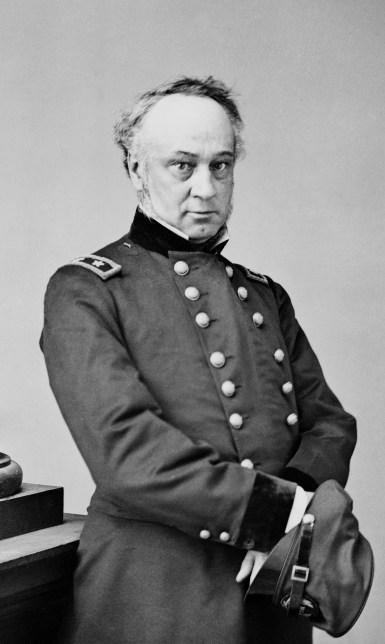
Henry_Halleck_by_Scholten,_c1865

Major General Henry Halleck

Halleck, who came to the army’s base at Falmouth to assess the army in wake of the defeat, “set the conspirators to work…called the corps commanders into counsel” and “learned of the great dissatisfaction among the higher officers….” [44] Hooker now found that the same knives which he had used on Burnside, “were now turned on him.” [45] Henry Slocum of XII Corps “went among his fellow corps commanders proposing a coup- a petition the president then and there to dismiss Hooker and put George Gordon Meade, commander of the Fifth Corps in his place” [46] but Meade balked at the idea. Lincoln had heard so much dissention that he wrote Hooker to warn him “that some of your Corps and Division Commanders are not giving you their entire confidence.” [47]

Such activities led to discussions at the White House to see if a new commander should lead the Army of the Potomac. Lincoln did interview John Reynolds of I Corps in early June to see if he wound take command, and Reynolds reportedly turned Lincoln down. Others were approached as well, and some officers even lobbied for the return of McClellan. Under this cloud Hooker went into the Gettysburg campaign.

Hooker telegraphed Lincoln and Halleck on June 5th and requested permission to advance cross the river and told Lincoln that “I am of opinion that it is my duty to pitch into his rear” [48] possibly to threaten Richmond. Lincoln ordered Hooker to put the matter to Halleck, with whom Hooker was on the worst possible terms. Hooker “pressed Halleck to allow him to cross the Rappahannock in force, overwhelming whatever rebel force had been left at Fredericksburg, and then lunging down the line of the Virginia Central toward an almost undefended Richmond.” [49] On the morning of June 6th 1863 Hooker ordered pontoon bridges thrown across the river and sent a division of Sedgwick’s VI Corps to conduct a reconnaissance in force against Hill.

Lincoln and Halleck immediately rejected Hooker’s request. Lincoln “saw the flaw in Hooker’s plan at once” [50] and replied in a very blunt manner: “In one word,” he wrote “I would not take any risk of being entangled upon the river, like an ox jumped half over a fence and liable to be torn by dogs front and rear, without a fair chance to gore one way or kick another.” [51] Halleck replied to Hooker shortly after Lincoln that it would “seem perilous to permit Lee’s main force to move upon the Potomac [River] while your army is attacking an intrenched position on the other side of the Rappahannock.” [52] Lincoln, demonstrating a keen regard for the actual center of gravity of the campaign, told Hooker plainly that “I think Lee’s army and not Richmond, is your objective point.” [53]

The fears of Lincoln and Halleck were well founded. In stopping at Culpepper Lee retained the option of continuing his march to the Shenandoah and the Potomac, or he could rapidly “recall his advanced columns, hammer at Hooker’s right flank, and very possibly administer another defeat even more demoralizing than the one he suffered at Chancellorsville.” [54] Hooker heeded the order and while Hooker maintained his bridgehead over the Rappahannock he made no further move against Hill’s well dug in divisions.
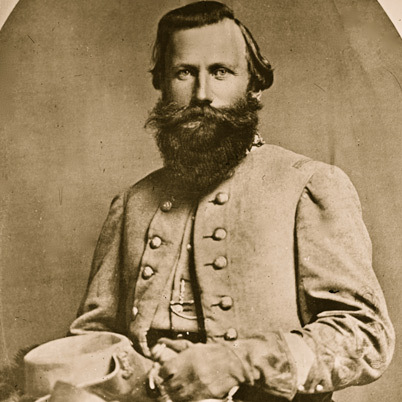
CWP015

Major General J.E.B. Stuart

Meanwhile, J.E.B. Stuart and his Cavalry Corps had been at Brandy Station near Culpepper for two weeks. Culpepper in June was a paradise for the cavalry, and with nearly 10,000 troopers gathered Stuart ordered a celebration, many dignitaries were invited and on June 4th Stuart hosted a grand ball in the county courthouse. On the 5th Stuart staged a grand review of five of his brigades. Bands played as each regiment passed in review and one soldier wrote that it was “One grand magnificent pageant, inspiring enough to make even an old woman feel fightish.” [55] The review ended with a mock charge by the cavalry against the guns of the horse artillery which were firing blank rounds. According to witnesses it was a spectacular event, so realistic and grand that during the final charge that “several ladies fainted, or pretended to faint, in the grandstand which Jeb Stuart had had set up for them along one side of the field.” [56] That was followed by an outdoor ball “lit by soft moonlight and bright bonfires.” [57] Stuart gave an encore performance when Lee arrived on June 8th, minus the grand finale and afterward Lee wrote to his wife that “Stuart was in all his glory.” [58]

Hooker received word from the always vigilant John Buford, of the First Cavalry Division on the night of June 6th that “Lee’s “movable column” was located near Culpepper Court House and that it consisted of Stuart’s three brigades heavily reinforced by Robertson’s, “Grumble” Jones’s, and Jenkins’ brigades.” [59] Hooker digested the information and believed that Stuart’s intent was to raid his own rear areas to disrupt the Army of the Potomac’s logistics and communications. The next day Hooker ordered his newly appointed Cavalry Corps Commander, Major General Alfred Pleasanton to attack Stuart.

After Chancellorsville, Hooker had reorganized the Union cavalry under Pleasanton into three divisions and under three aggressive division commanders, all West Pointers, Brigadier General John Buford, Brigadier General David Gregg and Brigadier General Judson Kilpatrick. While Stuart conducted his second grand review for Lee Pleasanton quietly massed his cavalry “opposite Beverly Ford and Kelly’s Ford so as to cross the river in the early morning hours of June 9th and carry out Hooker’s crisp orders “to disperse and destroy” the rebel cavalry reported to be “assembled in the vicinity of Culpepper….” [60] Pleasanton’s cavalry was joined by two mixed brigades of infantry “who had the reputation of being among the best marchers and fighters in the army.” [61] One brigade, commanded by Brigadier General Adelbert Ames consisted of five regiments drawn from XI Corps, XII Corps, and III Corps was attached to Buford’s division. The other brigade, under the command of Brigadier General David Russell was composed of seven regiments drawn from I Corps, II Corps and VI Corps. [62]

Stuart’s orders for June 9th were to “lead his cavalry division across the Rappahannock to screen the northward march of the infantry.” [63] The last thing that Stuart expected was to be surprised by the Federal cavalry which he had grown to treat with distain. Stuart who was at his headquarters “woke to the sound of fighting” [64] as Pleasanton’s divisions crossed the river and moved against the unsuspecting Confederate cavalry brigades.

The resultant action was the largest cavalry engagement of the war. Over 20,000 troopers engaged in an inconclusive see-saw battle that lasted most of the day. Though a draw “the rebels might have been swept from the field had Colonel Alfred N. Duffie, at the head of the Second Division acted aggressively and moved to the sounds of battle.” [65] The “Yankees came with a newfound grit and gave as good as they took.” [66] Porter Alexander wrote that Pleasanton’s troopers “but for bad luck in the killing of Col. Davis, leading the advance, would have probably surprised and captured most of Stuart’s artillery.” [67] Stuart had lost “over 500 men, including two colonels dead,” [68] and a brigade commander, Fitzhugh “Rooney” Lee, General Lee’s son, badly wounded. While recuperating at his wife’s home a few weeks later Lee “was captured by the enemy.” [69] Stuart claimed victory as he lost fewer troops and had taken close to 500 prisoners and maintained control of the battlefield.

But even Confederate officers were critical. Lafayette McLaws of First Corps wrote “our cavalry were surprised yesterday by the enemy and had to do some desperate fighting to retrieve the day… As you will perceive from General Lee’s dispatch that the enemy were driven across the river again. All this is not true because the enemy retired at their leisure, having accomplished what I suppose what they intended.” [70] Captain Charles Blackford of Longtreet’s staff wrote: “The fight at Brandy Station can hardly be called a victory. Stuart was certainly surprised, but for the supreme gallantry of his subordinate officers and men… it would have been a day of disaster and disgrace….” The Chief of the Bureau of War in Richmond, Robert H.G. Kean wrote “Stuart is so conceited that he got careless- his officers were having a frolic…” [71] Brigadier General Wade Hampton had the never to criticize his chief in his after action report and after the war recalled “Stuart managed badly that day, but I would not say so publicly.” [72]

The Confederate press was even more damning in its criticism of Stuart papers called it “a disastrous fight,” a “needless slaughter,” [73]and the Richmond Examiner scolded Stuart in words that cut deeply into Stuart’s pride and vanity:

The more the circumstances of the late affair at Brandy Station are considered, the less pleasant do they appear. If this was an isolated case, it might be excused under the convenient head of accident or chance. But the puffed up cavalry of the Army of Northern Virginia has twice, if not three times, surprised since the battles of December, and such repeated accidents can be regarded as nothing but the necessary consequences of negligence and bad management. If the war was a tournament, invented and supported for the pleasure of a few vain and weak-headed officers, these disasters might be dismissed with compassion, But the country pays dearly for the blunders which encourage the enemy to overrun and devastate the land, with a cavalry which is daily learning to despise the mounted troops of the Confederacy…” [74]

Major General Dorsey Pender waxed philosophically about the criticism of Stuart in a letter to his wife saying “I suppose it is all right that Stuart should get all the blame, for when anything handsome is done he gets all the credit.” [75] Stuart reacted angrily to the criticism; his vanity was such that it was impossible. Stuart denied being surprised and his Chief of Staff; Major Henry McClellan wrote “He could never see or acknowledge …that he was worsted in an engagement.” [76]

But the battle was more significant than the number of casualties inflicted or who controlled the battlefield at the end of the day. Stuart had been surprised by an aggressively led Union Cavalry force. The Union troopers fought a stubborn and fierce battle and retired in good order. Stuart did not appreciate it but the battle was a watershed, it signaled the beginning of the end of the previous dominance of the Confederate Cavalry arm over their Union opponents.

Henry McClellan wrote that Brandy Station “made the Federal cavalry. Up to that time confessedly inferior to the Southern horsemen, they gained on this day that confidence in themselves and in their commanders which enabled them to contest so fiercely   the subsequent battle-fields….” [77] The Richmond Examiner noted “The enemy is evidently determined to employ his cavalry extensively, and has spared no pains to perfect that arm.[78] That determination to perfect the Union cavalry was something that in less than a years’ time would cost Stuart his life when his outnumbered and ill troopers met Phil Sheridan’s well led, trained and equipped troops at Yellow Tavern outside of Richmond on May 11th 1864.

The action at Brandy Station delayed Lee’s movement by a day. However, Stuart’s repulse of Pleasanton’s force did enable Lee’s Army to make its northward movement undetected by Hooker who was still trying to divine what Lee was up to and was “slow, even reluctant, to react to Lee’s advance.” [79] Lee’s initial move to break contact with the Federal Army and keep his movements and intentions secret was an excellent example of deception.
ewell

Major General Richard Ewell

Ewell’s Corps led the march of the army north on the morning of June 10th and joined by Jenkins’ cavalry brigade entered the Shenandoah Valley by way of the Chester Gap on June 12th. In two days of marching his “columns covered over forty-five miles.” [80] On the 13th Ewell was near Winchester where 6,000 soldiers under the command of Major General Robert Milroy were garrisoned. Ewell’s advanced troops skirmished with them on June 13th, and on the 14th Ewell concentrated his corps to attack Milroy’s badly exposed division. As he did so Lincoln and Halleck attempted to get Milroy to withdraw to Harper’s Ferry and for Hooker to do something to attempt to relieve Milroy.

But Hooker was “troubled by indecision” [81] and did nothing. Ewell commenced his attack at about 5:00 PM, and deployed Johnson’s division in an ambush position north of the city to catch Milroy if he attempted to withdraw. The battle, now known as the Second Battle of Winchester the battle was a complete rout. Hit by Ewell’s forces “which swiftly and effectively broke through his outer lines,” [82] Milroy attempted to retreat “northwestward in the darkness, only to be intercepted at dawn by Johnson.” [83] The Second Corps captured “captured 23 cannon, 300 wagons loaded with supplies and ammunition, and nearly 4,000 prisoners.” [84] Milroy and his survivors retreated to Harper’s Ferry where he was “presently removed from command by Lincoln, but that was a superfluous gesture, since practically all of his command had been removed from him by Ewell.” [85] Ewell’s forces lost just 50 killed and 236 wounded.

Ewell’s decisive victory at Winchester “was one of the most swift, total, and bloodless Confederate victories of the war.” [86] The victory “cleared the lower Shenandoah Valley of most Federal forces and paved the way for Lee’s army to march north into Maryland and then into Pennsylvania.” [87] Ewell had been brilliant to this point, the victory at Second Winchester and the skill with which he had conducted his operations had “removed lingering doubts about his ability to carry on the tradition of “Stonewall” Jackson, as well as about his physical capacity, after the loss of a leg, to endure the rigors of campaigning.” [88] The Richmond Daily Dispatch that Ewell “has indeed caught the mantle of the ascended Jackson. Brilliantly has he re-enacted the scenes of the spring of ’62, on the same theatre.[89]

Ewell did not waste time lingering at Winchester. The next day he sent Jenkins with his brigade across the Potomac to Chambersburg Pennsylvania. Rodes division crossed the Potomac on the 16th “for a crossing at Williamsport where a halt was called to allow the other two divisions to catch up for a combined advance into Pennsylvania.” [90]

Longstreet’s First Corps moved next and advanced east of the Blue Ridge in conjunction with Stuart’s cavalry division screening the rest of the army from Hooker. Longstreet “set out for Ashby’s and Snicker’s Gaps with the bulk of Stuart’s cavalry covering his right flank.” [91] By the 17th of June Longstreet’s and Stuart’s troops had cleared the Blue Ridge, securing the vital gaps; however, Longstreet’s advance “was considerably slowed down by lack of supplies” [92] an issue that began to cause Lee, advancing behind Ewell, considerable concern. The once bountiful Shenandoah Valley had been devastated by two years of war. Lieutenant Colonel Arthur Fremantle, a British observed wrote “All fences have been destroyed, and numberless farms burned, their chimneys alone left standing….No animals are grazing and it is almost uncultivated.” [93]

But “Lee’s army was now stretched out from Hagerstown to Culpepper, a distance of seventy-five miles; yet Hooker did nothing.” [94] Lincoln realized that the dispersed Confederate army was vulnerable and telegraphed Hooker “if the head of Lee’s army is at Martinsburg and the tail of it on the Plank road between Fredericksburg and Chancellorsville, the animal must be very slim somewhere. Could you not break him?” [95]

Hooker was slow to appreciate what Lee was doing and the “concealing topography of the region greatly favored Lee’s offensive operations…and Lee was planning on using both the Shenandoah and Loudoun valleys to conceal his forces and confuse his enemies.”[96] In this Lee had succeeded admirably. Finally on June 13th Hooker prodded by Lincoln and Halleck finally moved the Army of the Potomac to a position “near the Orange and Alexandria Railroad near Washington” [97] where it could defend Washington in case Lee was to make a thrust at the Federal capitol. The march from Fredericksburg was ordeal for his soldiers. “It had not rained for more than a month, thick clouds of dust enveloped the columns as the sun burned the air. Men drained their canteens, and water was scarce. Hundreds collapsed from sunstroke.” [98]

Hooker now informed Lincoln and Halleck that from now on his operations “would be governed by the movements of the enemy.” In doing so he “admitted his loss of initiative to Lee and his reluctance or inability to suggest any effective countermoves to the enemy’s plan.” [99]

As the army gathered near Dumfries on June 17th, Hooker who was completely lost as to Lee’s intentions and clearly out of his league was also chose to renew his personal battle with Halleck and Lincoln. Hooker’s Chief of Staff General Dan Butterfield, and a staunch Hooker partisan remarked “We cannot go boggling around until we know what we are going after.” [100] The Provost Marshall of the Army of the Potomac Brigadier General Marsena Patrick was not so generous and critically noted that “Hancock is running the Marching and Hooker has the role of a subordinate- He acts like a man without a plan and is entirely at loss at what to do, or how to match the enemy, or counteract his movements.” [101]

During the march Hooker continued his feud with Halleck and Lincoln, oblivious to the fact that “his contretemps with Washington was costing him respect and credibility.” [102] Navy Secretary Gideon Welles after talking with Lincoln wrote in his diary, “I came away from the War Department painfully impressed. After recent events, Hooker cannot have the confidence which is essential to success, and which is all-important to the commander in the field.” [103]

Hooker however, continued to make matters worse for himself and wrote Lincoln on June 16th, a thinly veiled attempt to have Halleck relieved:

“You have been aware, Mr. President” he telegraphed, “that I have not enjoyed the confidence of the major-general commanding the army, and I can assure you so long as this continues we may look in vain for success, especially as future operations will require our relations to be more dependent on each other than heretofore.” [104]

Lincoln was not to be trifled with by his demanding yet befuddled subordinate. He sent a telegraph to Hooker at 10:00 PM on the 16th which rankled Hooker even the more:

“To remove all misunderstanding I now place you in the strict military relation to General Halleck of a commander of one of the armies to the general-in-chief of all of the armies. I have not intended differently, but as it seems to be differently understood I shall direct him to give you orders and for you to obey him.” [105]

While the drama between Hooker, Halleck and Lincoln played on there were a series of fierce cavalry clashes west of Washington between June 17th and June 21st as Pleasanton’s troops kept assailing the Confederate flank in order to ascertain what Lee’s army was doing. As the Federal cavalry probed the gaps in the Blue Ridge they were confronted by Stuart’s cavalry. At Aldie on June 17th, Middleburg on June 19th and at Upperville on June 21st Stuart’s and Pleasanton’s troopers engaged “in a series of mounted charges and dismounted fighting. The Yankees showed the same grit and valor as they had at Brandy Station, pressing their attacks against the Rebels.” [106]

At Upperville Pleasanton’s troopers “pressed Stuart’s cavalry so hard that Lee ordered McLaws’ division of Longstreet’s Corps to hold Ashby’s Gap, and he momentarily halted Major General Richard Anderson’s division of Hill’s corps on its way to Shepherdstown.” [107] Stuart’s men were successful in protecting the gaps and ensuring that the Federal troopers did not penetrate them, but “Pleasanton learned, however, from prisoners and local citizens, “The main body of the rebel infantry is in the Shenandoah Valley.” [108]

Pleasanton for some unexplained reason thought that this meant that the Confederates were heading toward Pittsburgh. Hooker “viewed it as a raid” and again proposed an overland advance against Richmond, which was again rejected by Lincoln. The President ordered Hooker: “If he comes toward the Upper Potomac, follow on his flank and on his inside track, shortening your line whilst he lengthens his. Fight him too when the opportunity offers. If he stays where he is, fret him, fret him and fret him.” [109]

As the series of clashes occurred on the Confederate flank Ewell’s Second Corps, followed by Hill’s Third Corps advanced into Pennsylvania. A general panic ensued in many places with cries going out for Lincoln to call up militia to defend the state. The panic had begun when Ewell crushed Milroy’s garrison and crossed the Potomac, and was fueled by the actions of Jenkins’ troops, in occupied Chambersburg, who rounded up any blacks that remained in the city. Most blacks, even freedmen fled before the advancing Confederates, and with good reason. “Some fifty blacks were formed into a coffle and marched south to be sold into bondage.” [110] Gideon Welles wrote in Washington D.C.: “Something of a panic pervades the city this evening. Singular rumors of Rebel advances into Maryland. It is said that they have reached Hagerstown, and some of them have penetrated as far as Chambersburg.” [111] Pennsylvania Governor Andrew Curtain, a former Whig now a Republican aligned with Lincoln’s policies “was in political trouble now,” [112] was pressing the Federal government for help and “Lincoln issued a proclamation calling for 100,000 militia volunteers form Pennsylvania, Maryland, Ohio and West Virginia, to serve for six months or until the emergency had passed.” [113]

By June 23rd the head of the Bureau of Military Information, Colonel George Sharpe had deduced that all of Ewell’s corps was in Pennsylvania marching north and that Hill’s corps was across the Potomac., and “in one of those sudden moments of brutal clarity, George Sharpe realized that everything pointed to the conclusion that Lee’s entire army, or most of it, was north of the Potomac.” [114] While Sharpe did not realize that he was incorrect in the location of Longstreet’s corps, which was still helping to hold and screen the gaps on the Blue Ridge, he had correctly deduced Lee’s intentions.

It took time but Hooker belatedly on June 24th began to move his army to Frederick. As the Army of the Potomac crossed its namesake river between June 25th and 27th over a vast pontoon bridge, Hooker made one last attempt to salvage his reputation, and did not believe that Lincoln was actually trying to help mediate his dispute with Halleck. Hooker made a quick trip into Washington on the 23rd of June. He met with Lincoln and was successful in getting Halleck to give him nearly 15,000 reinforcements drawn from the District of Washington, drawing the ire of its commander Major General Samuel Heintzelman, another of his political enemies. But the visit did not help his situation, and “word began to spread that Hooker was drinking a great deal.” [115]

But Hooker opened the door to more trouble by demanding that he be given command and control over the garrison at Harpers Ferry, allegedly to use in an operation to cut off Lee’s line of supply and communication in Western Maryland. Hooker attempted to bypass Halleck yet again and sent orders to affect his course of action to Slocum of XII Corps and William French at Harper’s Ferry, “yet Hooker told Washington nothing of his plan” and then asked Halleck why Harper’s Ferry could not be abandoned, and requested its troops without telling him how he would use the garrison. Hooker then informed Halleck that he “would go to Harper’s Ferry the next day and inspect the place.” [116] Hooker evidently believed that he could still force his will on Halleck with a coupe d ’main.

Halleck refused Hooker and shrewdly had seen the request coming. Halleck told Hooker “that the fortified heights at Harpers Ferry…”have always been regarded as an important point by to be held by us…I cannot approve their abandonment, except in the case of absolute necessity” [117] and directed the Major General William H. French, the commanding officer of the Harper’s Ferry garrison “Pay no attention to Hooker’s orders.” [118] When Hooker went to see French in Harper’s Ferry and saw the dispatch he was furious. In his anger Hooker “told Herman Haupt during the railroad coordinator’s visit that he would do nothing to oppose Lee’s invasion without specific orders. He also continued to tell Halleck, Stanton, and Lincoln that he wanted Lee to go north so he could go after Richmond.” [119]

The order to French was Halleck’s way of baiting Hooker to react badly. Halleck figured that Hooker would consider it the last straw, which was exactly what the impulsive Hooker did. Hooker then played his last card and wired Halleck an ultimatum, which in a sense he was using as a “club to bully Halleck into giving him a free hand in questions of strategy” and it is “questionable whether he expected Lincoln to accept his resignation.[120]

“My original instructions require me to cover Harper’s Ferry and Washington. I have now imposed on me, in addition to an enemy in my front more than my number. I beg to be understood, respectfully, but firmly that I am unable to comply with this condition with the means at my disposal, and earnestly request that I be relieved from the position I occupy.” [121]

Halleck sent Hooker a brief message; simply stating “Your dispatch has been duly referred to the executive for action.” [122] He then took the letter to Stanton and Lincoln and Lincoln wasted little time in relieving Hooker, though he was not happy about having to do so in the middle of a campaign. Lincoln had two choices, “he could send him into battle with his self-doubts and suspicions intact, or he could accept it and risk the political and military consequences that would accompany an abrupt change in leadership.” [123] In less than half an hour Lincoln told Halleck and Stanton to “Accept his resignation. Before midnight, War Secretary Edwin Stanton’s own chief of staff, James Hardie, was on his way by train from Washington with Lincoln’s order removing Hooker from command.”   [124]

In the end, late in the night of June 27th Lincoln chose the latter, relieved Hooker, and appointed Major General George Gordon Meade, commanding officer of V Corps as the new commander of the Army of the Potomac. He explained the decision to the cabinet the next morning; Gideon Welles wrote that Lincoln said “he had, for several days as the conflict became imminent, observed in Hooker the same failings that were witnessed in McClellan after the Battle of Antietam. – A want of alacrity to obey, and a greedy call for more troops which could not, and ought not be taken from other points….:” [125]

Hooker’s relief was a direct result of his “contretemps with General-in Chief Halleck, but it was the general’s revolt that set the stage for it. With virtually no support from his chief lieutenants…Hooker was pushed into a precarious position.” [126]

Despite Hooker’s lackluster performance during the campaign, his failings as a field commander, and his poor relationships with Lincoln, Halleck and many of his corps commanders, Hooker had made significant contributions to the Army of the Potomac and the nation:

“Whatever his mistakes, Hooker’s record as a military administrator ranks him near the top, for he refashioned the army into an effective fighting machine. He saved it from disintegration, gradually filled its ranks to peak strength, inflated its morale, and put it in a superb condition for the start of the spring campaign.” [127]

During his tenure of command, “the army had come of age. It was a professional army now in all but name.” [128] He had assumed command when the army was at its lowest fortune after Fredericksburg, “he instituted reform and restored their fighting spirit.” [129] His reorganization of the Cavalry Corps under solid officers was critical in the campaign and paid dividends for the rest of the war. His creation of the Bureau of Military Information was instrumental in providing George Meade at Gettysburg with accurate information about Lee’s army that he used to his advantage in conducting the battle. In spite of his flaws, Hooker had, even after the defeat at Chancellorsville kept the army together and in good fighting trim, even if his soldiers no longer believed in him, they believed in themselves.

During the opening weeks of the Gettysburg campaign, albeit through the prodding of Lincoln he had kept his army between Lee and Washington. But throughout the campaign Hooker seemed “plagued with uncertainty as to what he should do and what were his true military objectives. The tone of his correspondence with Washington authorities was continually querulous and angry.” [130] Hooker’s justified paranoia of Halleck and his and personal insecurity ensured that he made decisions that caused Lincoln to have even more reservations about his ability to command the army, and confront Robert E. Lee. Some have speculated that his recalcitrance in following Lincoln’s orders to confront Lee during the march was because he did not want to face Lee in battle once again. None of those factors can be ignored when assessing Hooker’s performance during his tenure of command of the Army of the Potomac. It was probably fortunate for the Union that Hooker asked to be relieved. His lack of confidence to face Lee in battle would have probably ensured defeat, but his reforms had set the army and its new commander up for success.

While the high drama in Washington and Pennsylvania unfolded Robert E. Lee, after an excellent beginning to his campaign was beginning to experience a drama of his own which would decisively impact his invasion of Pennsylvania.

Notes

[1] Sears, Stephen W. Gettysburg, Mariner Books, Houghton Mifflin Company, Boston and New York, 2003 p.59

[2] Foote, Shelby, The Civil War, A Narrative. Volume Two Fredericksburg to Meridian Random House, New York 1963 p.436

[3] Trudeau, Noah Andre. Gettysburg: A Testing of Courage, Harper Collins Publishers, New York 2002 p.25

[4] Wert, Jeffry D. A Glorious Army: Robert E. Lee’s Triumph 1862-1863 Simon and Schuster, New York and London 2011 p.218

[5] Alexander, Edward Porter. Fighting for the Confederacy: The Personal Recollections of General Edward Porter Alexander edited by Gary Gallagher University of North Carolina Press, Chapel Hill 1989 p.221

[6] Ibid. Wert A Glorious Army p.219

[7] Ibid. Sears Gettysburg p.60

[8] Korda, Michael. Clouds of Glory: The Life and Legend of Robert E. Lee Harper Collins Publishers, New York 2014 p.530

[9] Ibid. Foote The Civil War, A Narrative. Volume Two p.436

[10] Wert, Jeffry D. The Sword of Lincoln: The Army of the Potomac Simon and Schuster, New York and London 2005 p.260

[11] Dowdy, Clifford. Lee and His Men at Gettysburg: The Death of a Nation Skyhorse Publishing, New York 1986, originally published as Death of a Nation Knopf, New York 1958 p.37

[12] Ibid. Wert The Sword of Lincoln p.74

[13] Jordan, David M. Winfield Scott Hancock: A Soldier’s Life Indian University Press, Bloomington and Indianapolis 1988 p.67

[14] Marszalek, John F. Commander of All of Lincoln’s Armies: A Life of General Henry W. Halleck The Belknap Press of Harvard University Press, Cambridge MA and London 2004 p.165

[15] Guelzo Allen C. Fateful Lightening: A New History of the Civil War Era and Reconstruction Oxford University Press, Oxford and New York 2012 p.331

[16] Huntington, Tom Searching for George Gordon Meade: The Forgotten Victor of Gettysburg Stackpole Books, Mechanicsburg PA 2013 p.127

[17] Catton, Bruce The Army of the Potomac: Glory Road Doubleday and Company, Garden City New York, 1952 p.7

[18] Ibid. Wert The Sword of Lincoln pp.74-75

[19] Ibid. Guelzo Fateful Lightening p.331

[20] Bates, Samuel P. Hooker’s Comments on Chancellorsville in Battles and Leaders of the Civil War Volume III, The Tide Shifts. Edited by Robert Underwood Johnson and Clarence Clough Buel Castle, Secaucus NJ p.217

[21] Ibid. Foote The Civil War, A Narrative. Volume Two p.136

[22] Sears, Stephen W. Controversies and Commanders Mariner Books, Houghton-Mifflin Company, Boston and New York 1999 p.150

[23] Ibid. Sears Controversies and Commanders p.157

[24] Ibid. Wert The Sword of Lincoln p.219

[25] Ibid. Foote The Civil War, A Narrative. Volume Two pp.132-133

[26] Ibid. Foote The Civil War, A Narrative. Volume Two p.133

[27] Sears, Stephen W. Chancellorsville Houghton Mifflin Co. Boston and New York 1996 p.62

[28] Coddington, Edwin B. The Gettysburg Campaign: A Study in Command, A Touchstone Book, Simon and Schuster New York, 1968 p.31

[29] McPherson, James. The Battle Cry of Freedom: The Civil War Era Oxford University Press, Oxford and New York 1988 p.133

[30] Ibid. Sears. Chancellorsville p.73

[31] Ibid. Sears Chancellorsville p.73

[32] Ibid. Sears Chancellorsville p.73

[33] Ibid. Catton Glory Road p.143

[34] Ibid. Sears Chancellorsville p.73

[35] Ibid. Catton Glory Road p.145

[36] Ibid. Wert The Sword of Lincoln p.229

[37] Ibid. Wert The Sword of Lincoln p.225

[38] Ibid. Wert The Sword of Lincoln pp.225-226

[39] Ibid. Sears Controversies and Commanders p.157

[40] Ibid. Catton Glory Road p.210

[41] Ibid. Catton Glory Road p.211

[42] Ibid. Sears Controversies and Commanders p.158

[43] Ibid. Wert The Sword of Lincoln p.256

[44] Ibid. Sears Gettysburg p.19

[45] Guelzo, Allen C. Gettysburg: The Last Invasion Vintage Books a Division of Random House, New York 2013 p.28

[46] Ibid. Sears Gettysburg p.19

[47] Ibid. Guelzo. Gettysburg: The Last Invasion p.28

[48] Ibid. Sears Gettysburg p.61

[49] Ibid. Guelzo. Gettysburg: The Last Invasion p.50

[50] Ibid. Wert The Sword of Lincoln p.260

[51] Fuller, J.F.C. Decisive Battles of the U.S.A. 1776-1918 University of Nebraska Press, Lincoln 2007 copyright 1942 The Royal Society for the Prevention of Cruelty to Animals p.223

[52] Ibid Trudeau Gettysburg a Testing of Courage p.26

[53] Ibid. Guelzo Gettysburg: The Last Invasion p.50

[54] Ibid. Coddington The Gettysburg Campaign p.53

[55] Davis, Burke J.E.B. Stuart: The Last Cavalier Random House, New York 1957 p.304

[56] Ibid. Foote The Civil War, A Narrative. Volume Two p.437

[57] Ibid. Sears Gettysburg p.63

[58] Ibid. Wert A Glorious Army p.221

[59] Ibid. Coddington The Gettysburg Campaign p.54

[60] Ibid. Sears Gettysburg p.64

[61] Ibid. Coddington The Gettysburg Campaign p.54

[62] Petruzzi, J. David and Stanley, Steven The Gettysburg Campaign in Numbers and Losses: Synopses, Orders of Battle, Strengths, Casualties and Maps, June 9 – July 1, 1863 Savas Beatie LLC, El Dorado Hills CA 2012 p.7

[63] Ibid. Sears Gettysburg p.64

[64] Ibid. Davis JEB Stuart p.306

[65] Ibid. Wert The Sword of Lincoln p.261

[66] Wert, Jeffry D. General James Longstreet The Confederacy’s Most Controversial Soldier, A Touchstone Book, Simon and Schuster, New York and London 1993 p. 251

[67] Ibid. Alexander Fighting for the Confederacy p.223

[68] Ibid. Davis JEB Stuart p.310

[69] Ibid. Wert A Glorious Army p.221

[70] Ibid. Coddington The Gettysburg Campaign p.59

[71] Ibid. Davis JEB Stuart p.310

[72] Ibid. Coddington The Gettysburg Campaign p.60

[73] Ibid. Guelzo Gettysburg: The Last Invasion p.57

[74] Ibid. Davis JEB Stuart pp.311-312

[75] Ibid. Sears Gettysburg p.73

[76] Ibid. Wert A Glorious Army p.221

[77] Ibid. Sears Gettysburg p.74

[78] Ibid. Davis JEB Stuart p.312

[79] Ibid. Wert General James Longstreet p.251

[80] Ibid. Coddington The Gettysburg Campaign p.73

[81] Ibid. Coddington The Gettysburg Campaign p.81

[82] Ibid. Coddington The Gettysburg Campaign p.88

[83] Ibid. Foote The Civil War, A Narrative. Volume Two p.440

[84] Ibid. Wert A Glorious Army p.222

[85] Ibid. Foote The Civil War, A Narrative. Volume Two p.440

[86] Ibid. Guelzo Gettysburg: The Last Invasion p.62

[87] Ibid. Petruzzi and Stanley The Gettysburg Campaign in Numbers and Losses p.20

[88] Ibid. Coddington The Gettysburg Campaign p.89

[89] Ibid. Guelzo Gettysburg: The Last Invasion p.62

[90] Ibid. Foote The Civil War, A Narrative. Volume Two p.440

[91] Ibid. Fuller Decisive Battles of the U.S.A. 1776-1918 p.224

[92] Ibid. Fuller Decisive Battles of the U.S.A. 1776-1918 p.225

[93] Ibid. Korda Clouds of Glory p.537

[94] Ibid. Fuller Decisive Battles of the U.S.A. 1776-1918 p.224

[95] Ibid. Guelzo Gettysburg: The Last Invasion pp.64-65

[96] Ibid. Sears Gettysburg p.85

[97] Ibid. Coddington The Gettysburg Campaign p.71

[98] Ibid. Wert The Sword of Lincoln p.263

[99] Ibid. Coddington The Gettysburg Campaign p.71

[100] Ibid. Wert The Sword of Lincoln p.264

[101] Ibid. Trudeau Gettysburg a Testing of Courage pp. 53-54

[102] Ibid. Trudeau Gettysburg a Testing of Courage p.53

[103] Ibid. Sears Gettysburg p.88

[104] Ibid. Sears Gettysburg p.88

[105] Ibid. Trudeau Gettysburg a Testing of Courage p.54

[106] Ibid. Wert The Sword of Lincoln p.264

[107] Ibid. Coddington The Gettysburg Campaign p.79

[108] Ibid. Wert A Glorious Army p.224

[109] Ibid. Wert A Glorious Army p.224

[110] Ibid. Sears Gettysburg p.82

[111] Ibid. Sears Gettysburg p.82

[112] Ibid. Guelzo Gettysburg: The Last Invasion p.101

[113] Ibid. Wert The Sword of Lincoln pp.264-265

[114] Ibid. Trudeau Gettysburg a Testing of Courage p.66

[115] Ibid. Trudeau Gettysburg a Testing of Courage p.63

[116] Ibid. Sears Gettysburg p.120

[117] Ibid. Trudeau Gettysburg a Testing of Courage p.93

[118] Ibid. Guelzo Gettysburg: The Last Invasion p.84

[119] Ibid. Marszalek, Commander of All of Lincoln’s Armies p.175

[120] Ibid. Coddington The Gettysburg Campaign p.131

[121] Ibid. Marsalek Commander of All of Lincoln’s Armies p.175

[122] Ibid. Sears Gettysburg p.123

[123] Ibid. Trudeau Gettysburg a Testing of Courage p.98

[124] Ibid. Guelzo Gettysburg: The Last Invasion p.84

[125] Ibid. Wert The Sword of Lincoln p.266

[126] Ibid. Sears Controversies and Commanders p.162

[127] Ibid. Coddington The Gettysburg Campaign p.31

[128] Ibid. Catton Glory Road p.217

[129] Ibid. Wert The Sword of Lincoln p.266

[130] Ibid. Coddington The Gettysburg Campaign p.133

Leave a comment

Filed under civil war, ethics, History, leadership, Military

Lee Moves North Part Two: Winchester, into Pennsylvania and the Relief of Joe Hooker

rebel-potomacEwell’s Corps crossing the Potomac

This is a continuation of the article that I posted last night. It is a continuation of my Gettysburg series. Tomorrow I will finish the chapter on Lee’s movement north by talking about Stuart’s Ride and the Confederate operations in Pennsylvania and Union pursuit up to June 30th. On footnotes please refer to part one because I did not want to go back and re-type each note.

The action at Brandy Station delayed Lee’s movement by a day. However, Stuart’s repulse of Pleasanton’s force did enable Lee’s Army to make its northward movement undetected by Hooker who was still trying to divine what Lee was up to and was “slow, even reluctant, to react to Lee’s advance.” (1) Lee’s initial move to break contact with the Federal Army and keep his movements and intentions secret was an excellent example of deception.

ewellLieutenant General Richard Ewell

Ewell’s Corps led the march of the army north on the morning of June 10th and joined by Jenkins’ cavalry brigade entered the Shenandoah Valley by way of the Chester Gap on June 12th. In two days of marching his “columns covered over forty-five miles.” (2) On the 13th Ewell was near Winchester where 6,000 soldiers under the command of Major General Robert Milroy were garrisoned. Ewell’s advanced troops skirmished with them on the 13th and on the 14th Ewell concentrated his corps to attack. As he did so Lincoln and Halleck attempted to get Hooker to do something to relieve Milroy. Hooker was “troubled by indecision” (3) and did nothing. The attack commenced at about 5:00 PM. The battle, now known as the Second Battle of Winchester the battle was a complete rout. Hit by Ewell’s forces “which swiftly and effectively broke through his outer lines,” (4) That evening Milroy attempted to retreat “northwestward in the darkness, only to be intercepted at dawn by Johnson.” (5) The Second Corps captured “captured 23 cannon, 300 wagons loaded with supplies and ammunition, and nearly 4,000 prisoners.” (6) Milroy and his survivors retreated to Harper’s Ferry where he was “presently removed from command by Lincoln, but that was a superfluous gesture, since practically all of his command had been removed from him by Ewell.” (7) Ewell’s forces lost just 50 killed and 236 wounded.

Ewell’s decisive victory at Winchester “was one of the most swift, total, and bloodless Confederate victories of the war.” (8) The victory “cleared the lower Shenandoah Valley of most Federal forces and paved the way for Lee’s army to march north into Maryland and then into Pennsylvania.” (9) Ewell had been brilliant to this point, the victory at Second Winchester and the skill with which he had conducted his operations “removed lingering doubts about his ability to carry on the tradition of “Stonewall” Jackson, as well as about his physical capacity, after the loss of a leg, to endure the rigors of campaigning.” (10) The Richmond Daily Dispatch that Ewell “has indeed caught the mantle of the ascended Jackson. Brilliantly has he re-enacted the scenes of the spring of ’62, on the same theatre.” (11)

Ewell did not waste time lingering at Winchester. The next day he sent Jenkins across the Potomac to Chambersburg Pennsylvania. Rodes division crossed the Potomac on the 16th “for a crossing at Williamsport where a halt was called to allow the other two divisions to catch up for a combined advance into Pennsylvania.” (12)

Longstreet’s First Corps moved next and advanced east of the Blue Ridge in conjunction with Stuart’s cavalry division screening the rest of the army from Hooker. Longstreet “set out for Ashby’s and Snicker’s Gaps with the bulk of Stuart’s cavalry covering his right flank.” (13) By the 17th of June Longstreet’s and Stuart’s troops had cleared the Blue Ridge. “Lee’s army was now stretched out from Hagerstown to Culpepper, a distance of seventy-five miles; yet Hooker did nothing.” (14) Lincoln realized that the dispersed Confederate army was vulnerable and telegraphed Hooker “if the head of Lee’s army is at Martinsburg and the tail of it on the Plank road between Fredericksburg and Chancellorsville, the animal must be very slim somewhere. Could you not break him?” (15)

hookerMajor General Joseph “Fighting Joe” Hooker

Hooker was slow to appreciate what Lee was doing and the “concealing topography of the region greatly favored Lee’s offensive operations…and Lee was planning on using both the Shenandoah and Loudoun valleys to conceal his forces and confuse his enemies.” (16) In this Lee had succeeded admirably. Finally on June 13th Hooker prodded by Lincoln and Halleck finally moved the Army of the Potomac to a position “near the Orange and Alexandria Railroad near Washington” (17) where it could defend Washington in case Lee was to make a thrust at the Federal capitol. The march from Fredericksburg was ordeal for his soldiers. “It had not rained for more than a month, thick clouds of dust enveloped the columns as the sun burned the air. Men drained their canteens, and water was scarce. Hundreds collapsed from sunstroke.” (18)

Hooker now informed Lincoln and Halleck that from now on his operations “would be governed by the movements of the enemy.” In doing so he “admitted his loss of initiative to Lee and his reluctance or inability to suggest any effective countermoves to the enemy’s plan.” (19)

As the army gathered near Dumfries on June 17th, Hooker who was completely lost as to Lee’s intentions and completely clearly out of his league was also engaged in a personal battle with Halleck and Lincoln. His Chief of Staff, General Dan Butterfield, a staunch supporter, remarked “We cannot go boggling around until we know what we are going after.” (20) The Provost Marshall of the Army of the Potomac Brigadier General Marsena Patrick was quite critical of his chief, noting that “Hancock is running the Marching and Hooker has the role of a subordinate- He acts like a man without a plan and is entirely at loss at what to do, or how to match the enemy, or counteract his movements.” (21)

Henry_Halleck_by_Scholten,_c1865Major General Henry Halleck

During the march Hooker continued his feud with Halleck and Lincoln, oblivious to the fact that “his contretemps with Washington was costing him respect and credibility.” (22) Navy Secretary Gideon Welles after talking with Lincoln wrote in his diary, “I came away from the War Department painfully impressed. After recent events, Hooker cannot have the confidence which is essential to success, and which is all-important to the commander in the field.” (23) Hooker however, continued to make matters worse for himself and wrote to Lincoln, a thinly veiled attempt to have Halleck relieved, on June 16th :

“You have been aware, Mr. President” he telegraphed, “that I have not enjoyed the confidence of the major-general commanding the army, and I can assure you so long as this continues we may look in vain for success, especially as future operations will require our relations to be more dependent on each other than heretofore.” (24)

Lincoln was not to be trifled with by his demanding yet befuddled subordinate. He sent a telegraph to Hooker at 10:00 PM on the 16th which rankled Hooker even the more:

“To remove all misunderstanding I now place you in the strict military relation to General Halleck of a commander of one of the armies to the general-in-chief of all of the armies. I have not intended differently, but as it seems to be differently understood I shall direct him to give you orders and for you to obey him.” (25)

While the drama between Hooker, Halleck and Lincoln played on there were a series of fierce cavalry clashes west of Washington between June 17th and June 21st as Pleasanton’s troops kept assailing the Confederate flank in order to ascertain what Lee’s army was doing. As they probed the gaps in the Blue Ridge they confronted Stuart’s cavalry. At Aldie on June 17th, Middleburg on June 19th and Upperville on June 21st Stuart’s and Pleasanton’s troopers engaged “in a series of mounted charges and dismounted fighting. The Yankees showed the same grit and valor as they had at Brandy Station, pressing their attacks against the Rebels.” (26)

custer@aldieAt Upperville Pleasanton’s troopers “pressed Stuart’s cavalry so hard that Lee ordered McLaws’ division of Longstreet’s Corps to hold Ashby’s Gap, and he momentarily halted Major General Richard Anderson’s division of Hill’s corps on its way to Shepherdstown.” (27) Stuart’s men were successful in protecting the gaps and ensuring that the Federal troopers did not penetrate them, but “Pleasanton learned, however, from prisoners and local citizens, “The main body of the rebel infantry is in the Shenandoah Valley.” (28)

Pleasanton for some unexplained reason thought that this meant that the Confederates were heading toward Pittsburgh. Hooker “viewed it as a raid” and again proposed an overland advance against Richmond, which was once again rejected by Lincoln. The President ordered  Hooker: “If he comes toward the Upper Potomac, follow on his flank and on his inside track, shortening your line whilst he lengthens his. Fight him too when the opportunity offers. If he stays where he is, fret him, fret him and fret him.” (29)

As the series of clashes occurred on the Confederate flank Ewell’s Second Corps, followed by Hill’s Third Corps advanced into Pennsylvania. A general panic ensued in many places with cries going out for Lincoln to call up militia to defend the state. The panic was fueled by Confederate actions. Jenkins’ troops in occupied Chambersburg they rounded up any blacks that remained in the city, and “Some fifty blacks were formed into a coffle and marched south to be sold into bondage.” (30)

By June 23rd the head of the Bureau of Military Information Colonel George Sharpe had deduced that all of Ewell’s corps was in Pennsylvania marching north and that Hill’s corps was across the Potomac, and “in one of those sudden moments of brutal clarity, George Sharpe realized that everything pointed to the conclusion that Lee’s entire army, or most of it, was north of the Potomac.” (31) Now Sharpe did not realize that Longstreet’s corps was still helping to hold and scree the gaps, but he had correctly deduced Lee’s intentions.

It took time but Hooker belatedly on June 24th Hooker began to move his army to Frederick. As the Army of the Potomac crossed its namesake river between June 25th and 27th over a vast pontoon bridge, Hooker made one last attempt to salvage his reputation. He had already been successful in getting Halleck to give him nearly 15,000 troops as reinforcements drawn from the District of Washington, drawing the ire of its commander Major General Samuel Heintzelman, but that was not enough for Hooker.

Hooker also demanded that he be given command and control over the garrison at Harper’s Ferry, allegedly to use in an operation to cut off Lee’s line of supply and communication in Western Maryland. This was refused by Halleck who had seen the request coming. Halleck told Hooker “that the fortified heights at Harper’s Ferry…”have always been regarded as an important point by to be held by us…I cannot approve their abandonment, except in the case of absolute necessity” (32) and directed the Major General William H. French, the commanding officer of the Harper’s Ferry garrison “Pay no attention to Hooker’s orders.” (33)

The highly volatile Hooker was furious and in his anger Hooker “told Herman Haupt during the railroad coordinator’s visit that he would do nothing to oppose Lee’s invasion without specific orders. He also continued to tell Halleck, Stanton, and Lincoln that he wanted Lee to go north so he could go after Richmond.” 34

The order to French was Halleck’s way of bating Hooker figuring that Hooker would consider it the last straw, which the impulsive Hooker did. Hooker then played his last card and wired Halleck an ultimatum:

“My original instructions require me to cover Harper’s Ferry and Washington. I have now imposed on me, in addition to an enemy in my front more than my number. I beg to be understood, respectfully, but firmly that I am unable to comply with this condition with the means at my disposal, and earnestly request that I be relieved from the position I occupy.” (35)

Halleck replied to Hooker  with a brief message; simply stating “Your dispatch has been duly referred to the executive for action.” (36) Halleck then took the letter to Stanton and Lincoln and Lincoln wasted little time in relieving Hooker, though he was not happy about having to do so in the middle of a campaign. Lincoln had two choices, “he could send him into battle with his self-doubts and suspicions intact, or he could accept it and risk the political and military consequences that would accompany an abrupt change in leadership.” (37)

In the end, late in the night on June 27th 1863 Lincoln chose the latter, relieved Hooker and appointed Major General George Gordon Meade, commanding officer of V Corps as the new commander of the Army of the Potomac.

Notes

1 Ibid. Wert General James Longstreet p.251
2 Ibid. Coddington The Gettysburg Campaign p.73
3 Ibid. Coddington The Gettysburg Campaign p.81
4 Ibid. Coddington The Gettysburg Campaign p.88
5 Ibid. Foote The Civil War, A Narrative. Volume Two p.440
6 Ibid. Wert A Glorious Army p.222
7 Ibid. Foote The Civil War, A Narrative. Volume Two p.440
8 Ibid. Guelzo Gettysburg: The Last Invasion p.62
9 Ibid. Petruzzi and Stanley The Gettysburg Campaign in Numbers and Losses p.20
10 Ibid. Coddington The Gettysburg Campaign p.89
11 Ibid. Guelzo Gettysburg: The Last Invasion p.62
12 Ibid. Foote The Civil War, A Narrative. Volume Two p.440
13 Ibid. Fuller Decisive Battles of the U.S.A. 1776-1918 p.224
14 Ibid. Fuller Decisive Battles of the U.S.A. 1776-1918 p.224
15 Ibid. Guelzo Gettysburg: The Last Invasion pp.64-65
16 Ibid. Sears Gettysburg p.85
17 Ibid. Coddington The Gettysburg Campaign p.71
18 Ibid. Wert The Sword of Lincoln p.263
19 Ibid. Coddington The Gettysburg Campaign p.71
20 Ibid. Wert The Sword of Lincoln p.264
21 Ibid. Trudeau Gettysburg a Testing of Courage pp. 53-54
22 Ibid. Trudeau Gettysburg a Testing of Courage p.53
23 Ibid. Sears Gettysburg p.88
24 Ibid. Sears Gettysburg p.88
25 Ibid. Trudeau Gettysburg a Testing of Courage p.54
26 Ibid. Wert The Sword of Lincoln p.264
27 Ibid. Coddington The Gettysburg Campaign p.79
28 Ibid. Wert A Glorious Army p.224
29 Ibid. Wert A Glorious Army p.224
30 Ibid. Sears Gettysburg p.82
31 Ibid. Trudeau Gettysburg a Testing of Courage p.66
32 Ibid. Trudeau Gettysburg a Testing of Courage p.93
33 Ibid. Guelzo Gettysburg: The Last Invasion p.84
34 Marszalek, John F. Commander of All of Lincoln’s Armies: A Life of General Henry W. Halleck The Belknap Press of Harvard University Press, Cambridge MA and London 2004 p.175
35 Ibid. Marsalek Commander of All of Lincoln’s Armies p.175
36 Ibid. Sears Gettysburg p.1233
7 Ibid. Trudeau Gettysburg a Testing of Courage p.98

Leave a comment

Filed under civil war, civil war, History, history, leadership, Military

Lee Moves North and the Battle of Brandy Station

brandy station

Note: I will be heading back to Gettysburg for another Staff Ride this Friday and I am continuing to revise my course materials. This is another part of my Gettysburg series, and a revision to a hastily done section that I wrote when I first took over for conducting the classes and associate trip. 

Movement to attain operational reach and maneuver are two critical factors in joint operations. In the time since the American Civil War the distances that forces move to engage the enemy, or maneuver to employ fires to destroy his forces have greatly increased. Movement may be part of an existing Campaign Plan or Contingency Plan developed at Phase 0; it also may be part of a crisis action plan developed in the midst of a campaign. Lee’s movement to get to Gettysburg serves as an example of the former, however, since his forces were already in contact with the Army of the Potomac along the Rappahannock and he was reacting to what he felt was a strategic situation that could not be changed but by going on the offensive that it has the feel of a Crisis Action Plan. Within either context other factors come into play: clarity of communications and orders, security, intelligence, logistics and even more importantly the connection between operational movement and maneuver; the Center of Gravity of the enemy, and national strategy. Since we have already discussed how Lee and the national command authority of the Confederacy got to this point we will now discuss the how that decision played in the operational and tactical decisions of Lee and his commanders as the Army of Northern Virginia began the summer campaign and the corresponding actions of Joseph Hooker and the his superiors in Washington.

“One of the fine arts of the military craft is disengaging one’s army from a guarding army without striking sparks and igniting battle.” [1] On June 3rd 1863 Robert E. Lee began to move his units west, away from Fredericksburg to begin his campaign to take the war to the North. He began his exfiltration moving Second Corps under Richard Ewell and First Corps under James Longstreet west “up the south bank of the Rappahannock to Culpepper, near which Hood and Pickett had been halted on their return from Suffolk.” [2] Rodes’ division of Second Corps followed on June 4th with Anderson and Early on June 5th. Lee left the three divisions of A.P. Hill’s Third Corps at Fredericksburg to guard against any sudden advance by Hooker’s Army of the Potomac toward Richmond. Lee instructed Hill to “do everything possible “to deceive the enemy, and keep him in ignorance of any change in the disposition of the army.” [3]

The army was tremendously confident as it marched away from the war ravaged, dreary and desolate battlefields along the Rappahannock “A Captain in the 1st Virginia averred, “Never before has the army been in such a fine condition, so well disciplined and under such complete control.” [4] Porter Alexander wrote that he felt “pride and confidence…in my splendid battalion, as it filed out of the field into the road, with every chest & and ammunition wagon filled, & and every horse in fair order, & every detail fit for a campaign.” [5] Another officer wrote to his father, “I believe there is a general feeling of gratification in the army at the prospect of active operations.” [6]

Lee’s plan was to “shift two-thirds of his army to the northwest and past Hooker’s flank, while A.P. Hill’s Third Corps remained entrenched at Fredericksburg to observe Hooker and perhaps fix him in place long enough for the army to gain several marches on the Federals.” [7] In an organizational and operational sense that Lee’s army after as major of battle as Chancellorsville “was able to embark on such an ambitious flanking march to the west and north around the right of the army of the Potomac….” [8]

However, Lee’s movement did not go unnoticed; Hooker’s aerial observers in their hot air balloons “were up and apparently spotted the movement.” [9] But Hooker was unsure what it meant. He initially suspected that “Lee intended to turn the right flank of the Union army as he had done in the Second Bull Run Campaign, either by interposing his army between Washington and the Federals or by crossing the Potomac River.” [10] Lee halted at Culpepper from which he “could either march westward over the Blue Ridge or, if Hooker moved, recontract at the Rappahannock River.” [11]

Hooker telegraphed Lincoln and Halleck on June 5th and requested permission to advance cross the river and told Lincoln that “I am of opinion that it is my duty to pitch into his rear” [12] possibly threatening Richmond. Lincoln ordered Hooker to put the matter to Halleck, with whom Hooker was on the worst possible terms. Hooker “pressed Halleck to allow him to cross the Rappahannock in force, overwhelming whatever rebel force had been left at Fredericksburg, and then lunging down the line of the Virginia Central toward an almost undefended Richmond.” [13] On the morning of June 6th Hooker ordered pontoon bridges thrown across the river and sent a division of Sedgwick’s VI Corps to conduct a reconnaissance in force against Hill.

Lincoln and Halleck immediately rejected Hooker’s request. Lincoln “saw the flaw in Hooker’s plan at once” [14] and replied in a very blunt manner: “In one word,” he wrote “I would not take any risk of being entangled upon the river, like an ox jumped half over a fence and liable to be torn by dogs front and rear, without a fair chance to gore one way or kick another.” [15] Halleck replied to Hooker shortly after Lincoln that it would “seem perilous to permit Lee’s main force to move upon the Potomac [River] while your army is attacking an intrenched position on the other side of the Rappahannock.” [16] Lincoln, demonstrating a keen regard for the actual center of gravity of the campaign, told Hooker plainly that “I think Lee’s army and not Richmond, is your objective point.” [17]

The fears of Lincoln and Halleck were well founded. In stopping at Culpepper Lee retained the option of continuing his march to the Shenandoah and the Potomac, or he could rapidly “recall his advanced columns, hammer at Hooker’s right flank, and very possibly administer another defeat even more demoralizing than the one he suffered at Chancellorsville.” [18] Hooker heeded the order and while Hooker maintained his bridgehead over the Rappahannock he made no further move against Hill’s well dug in divisions.

Meanwhile, J.E.B. Stuart and his Cavalry Corps had been at Brandy Station near Culpepper for two weeks. Culpepper in June was a paradise for the cavalry, and with nearly 10,000 troopers gathered Stuart ordered a celebration, many dignitaries were invited and on June 4th Stuart hosted a grand ball in the county courthouse. On the 5th Stuart staged a grand review of five of his brigades. Bands played as each regiment passed in review and one soldier wrote that it was “One grand magnificent pageant, inspiring enough to make even an old woman feel fightish.” [19] The review ended with a mock charge by the cavalry against the guns of the horse artillery which were firing blank rounds. According to witnesses it was a spectacular event, so realistic and grand that during the final charge that “several ladies fainted, or pretended to faint, in the grandstand which Jeb Stuart had had set up for them along one side of the field.” [20] That was followed by an outdoor ball “lit by soft moonlight and bright bonfires.” [21] Stuart gave an encore performance when Lee arrived on June 8th, minus the grand finale and afterward Lee wrote to his wife that “Stuart was in all his glory.” [22]

Hooker received word from the always vigilant John Buford, of the First Cavalry Division on the night of June 6th that “Lee’s “movable column” was located near Culpepper Court House and that it consisted of Stuart’s three brigades heavily reinforced by Robertson’s, “Grumble” Jones’s, and Jenkins’ brigades.” [23] Hooker digested the information and believed that Stuart’s intent was to raid his own rear areas to disrupt the Army of the Potomac’s logistics and communications. The next day Hooker ordered his newly appointed Cavalry Corps Commander, Major General Alfred Pleasanton to attack Stuart.

After Chancellorsville, Hooker had reorganized the Union cavalry under Pleasanton into three divisions and under three aggressive division commanders, all West Pointers, Brigadier General John Buford, Brigadier General David Gregg and Brigadier General Judson Kilpatrick. While Stuart conducted his second grand review for Lee Pleasanton quietly massed his cavalry “opposite Beverly Ford and Kelly’s Ford so as to cross the river in the early morning hours of June 9th and carry out Hooker’s crisp orders “to disperse and destroy” the rebel cavalry reported to be “assembled in the vicinity of Culpepper….” [24] Pleasanton’s cavalry was joined by two mixed brigades of infantry “who had the reputation of being among the best marchers and fighters in the army.” [25] One brigade, commanded by Brigadier General Adelbert Ames consisted of five regiments drawn from XI Corps, XII Corps, and III Corps was attached to Buford’s division. The other brigade, under the command of Brigadier General David Russell was composed of seven regiments drawn from I Corps, II Corps and VI Corps. [26]

Stuart’s orders for June 9th were to “lead his cavalry division across the Rappahannock to screen the northward march of the infantry.” [27] The last thing that Stuart expected was to be surprised by the Federal cavalry which he had grown to treat with distain. Stuart who was at his headquarters “woke to the sound of fighting” [28] as Pleasanton’s divisions crossed the river and moved against the unsuspecting Confederate cavalry brigades.

The resultant action was the largest cavalry engagement of the war. Over 20,000 troopers engaged in an inconclusive see-saw battle that lasted most of the day. Though a draw “the rebels might have been swept from the field had Colonel Alfred N. Duffie, at the head of the Second Division acted aggressively and moved to the sounds of battle.” [29] The “Yankees came with a newfound grit and gave as good as they took.” [30] Porter Alexander wrote that Pleasanton’s troopers “but for bad luck in the killing of Col. Davis, leading the advance, would have probably surprised and captured most of Stuart’s artillery.” [31] Stuart had lost “over 500 men, including two colonels dead,” [32] and a brigade commander, Fitzhugh “Rooney” Lee, General Lee’s son, badly wounded. While recuperating at his wife’s home a few weeks later Lee “was captured by the enemy.” [33] Stuart claimed victory as he lost fewer troops and had taken close to 500 prisoners and maintained control of the battlefield.

But even Confederate officers were critical. Lafayette McLaws of First Corps wrote “our cavalry were surprised yesterday by the enemy and had to do some desperate fighting to retrieve the day… As you will perceive from General Lee’s dispatch that the enemy were driven across the river again. All this is not true because the enemy retired at their leisure, having accomplished what I suppose what they intended.” [34] Captain Charles Blackford of Longtreet’s staff wrote: “The fight at Brandy Station can hardly be called a victory. Stuart was certainly surprised, but for the supreme gallantry of his subordinate officers and men… it would have been a day of disaster and disgrace….” The Chief of the Bureau of War in Richmond, Robert H.G. Kean wrote “Stuart is so conceited that he got careless- his officers were having a frolic…” [35] Brigadier General Wade Hampton had the never to criticize his chief in his after action report and after the war recalled “Stuart managed badly that day, but I would not say so publicly.” [36]

The Confederate press was even more damning in its criticism of Stuart papers called it “a disastrous fight,” a “needless slaughter,” [37]and the Richmond Examiner scolded Stuart in words that cut deeply into Stuart’s pride and vanity:

The more the circumstances of the late affair at Brandy Station are considered, the less pleasant do they appear. If this was an isolated case, it might be excused under the convenient head of accident or chance. But the puffed up cavalry of the Army of Northern Virginia has twice, if not three times, surprised since the battles of December, and such repeated accidents can be regarded as nothing but the necessary consequences of negligence and bad management. If the war was a tournament, invented and supported for the pleasure of a few vain and weak-headed officers, these disasters might be dismissed with compassion, But the country pays dearly for the blunders which encourage the enemy to overrun and devastate the land, with a cavalry which is daily learning to despise the mounted troops of the Confederacy…” [38]

But the battle was more significant than the number of casualties inflicted or who controlled the battlefield at the end of the day. Stuart had been surprised by an aggressively led Union Cavalry force. The Union troopers fought a stubborn and fierce battle and retired in good order. Stuart did not appreciate it but the battle was a watershed, it ended the previous dominance of the Confederate Cavalry arm. It was something that in less than a years’ time would cost him his life.

Notes

[1] Sears, Stephen W. Gettysburg, Mariner Books, Houghton Mifflin Company, Boston and New York, 2003 p.59

[2] Foote, Shelby, The Civil War, A Narrative. Volume Two Fredericksburg to Meridian Random House, New York 1963 p.436

[3] Trudeau, Noah Andre. Gettysburg: A Testing of Courage, Harper Collins Publishers, New York 2002 p.25

[4] Wert, Jeffry D. A Glorious Army: Robert E. Lee’s Triumph 1862-1863 Simon and Schuster, New York and London 2011 p.218

[5] Alexander, Edward Porter. Fighting for the Confederacy: The Personal Recollections of General Edward Porter Alexander edited by Gary Gallagher University of North Carolina Press, Chapel Hill 1989 p.221

[6] Ibid. Wert A Glorious Army p.219

[7] Ibid. Sears Gettysburg p.60

[8] Korda, Michael. Clouds of Glory: The Life and Legend of Robert E. Lee Harper Collins Publishers, New York 2014 p.530

[9] Ibid. Foote The Civil War, A Narrative. Volume Two p.436

[10] Wert, Jeffry D. The Sword of Lincoln: The Army of the Potomac Simon and Schuster, New York and London 2005 p.260

[11] Dowdy, Clifford. Lee and His Men at Gettysburg: The Death of a Nation Skyhorse Publishing, New York 1986, originally published as Death of a Nation Knopf, New York 1958 p.37

[12] Ibid. Sears Gettysburg p.61

[13] Guelzo, Allen C. Gettysburg: The Last Invasion Vintage Books a Division of Random House, New York 2013 p.50

[14] Ibid. Wert The Sword of Lincoln p.260

[15] Fuller, J.F.C. Decisive Battles of the U.S.A. 1776-1918 University of Nebraska Press, Lincoln 2007 copyright 1942 The Royal Society for the Prevention of Cruelty to Animals p.223

[16] Ibid Trudeau Gettysburg a Testing of Courage p.26

[17] Ibid. Guelzo Gettysburg: The Last Invasion p.50

[18] Coddington, Edwin B. The Gettysburg Campaign: A Study in Command, A Touchstone Book, Simon and Schuster New York, 1968 p.53

[19] Davis, Burke J.E.B. Stuart: The Last Cavalier Random House, New York 1957 p.304

[20] Ibid. Foote The Civil War, A Narrative. Volume Two p.437

[21] Ibid. Sears Gettysburg p.63

[22] Ibid. Wert A Glorious Army p.221

[23] Ibid. Coddington The Gettysburg Campaign p.54

[24] Ibid. Sears Gettysburg p.64

[25] Ibid. Coddington The Gettysburg Campaign p.54

[26] Petruzzi, J. David and Stanley, Steven The Gettysburg Campaign in Numbers and Losses: Synopses, Orders of Battle, Strengths, Casualties and Maps, June 9 – July 1, 1863 Savas Beatie LLC, El Dorado Hills CA 2012 p.7

[27] Ibid. Sears Gettysburg p.64

[28] Ibid. Davis JEB Stuart p.306

[29] Ibid. Wert The Sword of Lincoln p.261

[30] Wert, Jeffry D. General James Longstreet The Confederacy’s Most Controversial Soldier, A Touchstone Book, Simon and Schuster, New York and London 1993 p. 251

[31] Ibid. Alexander Fighting for the Confederacy p.223

[32] Ibid. Davis JEB Stuart p.310

[33] Ibid. Wert A Glorious Army p.221

[34] Ibid. Coddington The Gettysburg Campaign p.59

[35] Ibid. Davis JEB Stuart p.310

[36] Ibid. Coddington The Gettysburg Campaign p.60

[37] Ibid. Guelzo Gettysburg: The Last Invasion p.57

[38] Ibid. Davis JEB Stuart p.311-312

2 Comments

Filed under civil war, History, history, leadership, Military

We Hold These Truths…

Declaration_of_Independence_by_JoeSnuffy

Last night I re-read the Declaration of Independence. I do this about every time this year. It is not a long read, but quite profound. As I read again I reflected on the beginning of the second sentence of that document.

“We hold these truths to be self-evident, that all men are created equal…” When penned by Thomas Jefferson and ratified by the Continental Congress in July 1776 these words, which begin the second sentence of the Declaration of Independence announced something unimaginable to the world, most of which labored under the rule of ensconced monarchies, nobilities and state religions, where your social status and religious affiliation counted more than anything else, places where few commoners had any hope of social advancement, no matter what their talent, ability or genius.

They were a clarion call of equality and revolutionary in their impact, not only in the American colonies but around the world. In the coming years people around the world would look to those words as they sought to free themselves from oppressive governments and systems where the vast majority of people had few rights, and in fact no equality existed.

But the liberty and equality stated in the Declaration of Independence did not extend to all in the United States, or in its territories as it expanded westward, and the inequity eventually brought on a great civil war.

Eighty seven years after those words were published the nation was divided, in the midst of a great civil war, a climactic battle having just been fought at Gettysburg. A few months later President Abraham Lincoln penned one of the most insightful and influential documents ever written, the Gettysburg Address.

One thing that our founders overlooked was that even while proclaiming equality, they later enshrined that one group of people, African slaves were not equal, in fact they only counted as three fifths of a person. Eventually, many states on their own abolished slavery, but because of the invention of the Cotton Gin slavery became even more fully entrenched in the American South, when an oligarchy of land and slave owners held immense power, where nearly half of the population was enslaved and where even poor whites had few rights and little recourse to justice.

After the Dred Scott decision of 1857 which declared that African Americans, no matter if they were slave or free could be American Citizens and had no standing to sue in Federal courts. Scott had sued to gain his family’s freedom after his owner refused to allow him to purchase it, because they were in a territory where slavery was but even more importantly held that the Missouri Compromise of 1824 which had prohibited the introduction of Slavery into Federal territories was unconstitutional and that the Federal government had no right to limit slavery in territories acquired after the creation of the United States. Chief Justice Roger Taney writing for the majority wrote that all African Americans were viewed by the authors of the Constitution as:

“beings of an inferior order, and altogether unfit to associate with the white race, either in social or political relations, and so far inferior that they had no rights which the white man was bound to respect.”

Taney held that Article V of the Constitution barred any law that would deprive a slave owner of his “property” on entrance into free states or territories. and enunciated a string of negative effects, or “parade of horribles” that would derive if Scott’s petition for freedom was granted. His declaration is amazing in its ignorance and prejudice. Taney wrote:

“It would give to persons of the negro race, …the right to enter every other State whenever they pleased, …to sojourn there as long as they pleased, to go where they pleased …the full liberty of speech in public and in private upon all subjects upon which its own citizens might speak; to hold public meetings upon political affairs, and to keep and carry arms wherever they went.”

The two dissenting Justices, Curtis and McLain disagreed with the proposition that the writers of the Constitution believed as Taney and the majority believed, noting that at the time of the ratification of the Constitution that blacks could vote in five of the thirteen states, making them citizens, not just of those states but the United States. Referring to the Declaration of Independence in 1854 Lincoln wrote: “the standard maxim of free society …constantly spreading and deepening its influence,” ultimately applicable “to peoples of all colors everywhere.”

However, much to the concern of slave holders and the South, the decision energized the abolitionist movement who believed that now no black, even those with a long history of being Freed Men living in non-slave states could be claimed as property by those claiming to be former owners, and that state laws which gave blacks equal rights and citizenship could be overturned. Lincoln again referring to the Declaration wrote of the Dred Scott decision:

“to aid in making the bondage of the Negro universal and eternal….All the powers of the earth seem rapidly combining against him. Mammon is after him; ambition follows, and philosophy follows, and the theology of the day is fast joining the cry. They have him in his prison house;…One after another they have closed the heavy doors upon him…and they stand musing as to what invention, in all the dominions of mind and matter, can be produced the impossibility of his escape more complete than it is.”

Eventually the tensions led to the election of Lincoln along sectional lines and the immediate secession of seven southern states and the establishment of the Confederacy. British military historian and theorist Major General J.F.C. Fuller wrote that the war was “not between two antagonistic political parties, but a struggle to the death between two societies, each championing a different civilization…”

The Confederate Vice President, Alexander Stephens openly proclaimed that the inequity of African Americans was foundational to the Confederacy in his Cornerstone speech of 1861, if there are any doubters about the “rights” the leaders of the Southern States longed to preserve in their secession from the Union, Stephen’s words are all to clear in their intent:

“Our new government is founded upon exactly the opposite idea; its foundations are laid, its corner- stone rests upon the great truth, that the negro is not equal to the white man; that slavery — subordination to the superior race — is his natural and normal condition. [Applause.] This, our new government, is the first, in the history of the world, based upon this great physical, philosophical, and moral truth.”

Lincoln, in his Second Inaugural Address acknowledged what everyone had known, but few, him included in the North were willing to say in 1861:

“One-eighth of the whole population were colored slaves, not distributed generally over the Union, but localized in the southern part of it. These slaves constituted a peculiar and powerful interest. All knew that this interest was somehow the cause of the war. To strengthen, perpetuate, and extend this interest was the object for which the insurgents would rend the Union even by war, while the Government claimed no right to do more than to restrict the territorial enlargement of it….”

Even so it took time for the abolition of slavery to be acknowledged as a major concern by the Federal government, it was not until 1862 after Lee’s failed invasion of Maryland and the Battle of Antietam that Lincoln published the Emancipation Proclamation, and that only applied to Confederate territories.

But in 1863 after Gettysburg Lincoln was asked to speak a “few words” at the dedication of the Soldiers’ cemetery. Lincoln’s words focused the issue of the war in relation to those first words of the second sentence of the Declaration of Independence, the understanding that all men are created equal.

“Four score and seven years ago our fathers brought forth on this continent, a new nation, conceived in Liberty, and dedicated to the proposition that all men are created equal.

Now we are engaged in a great civil war, testing whether that nation, or any nation so conceived and so dedicated, can long endure. We are met on a great battle-field of that war. We have come to dedicate a portion of that field, as a final resting place for those who here gave their lives that that nation might live. It is altogether fitting and proper that we should do this.

But, in a larger sense, we can not dedicate — we can not consecrate — we can not hallow — this ground. The brave men, living and dead, who struggled here, have consecrated it, far above our poor power to add or detract. The world will little note, nor long remember what we say here, but it can never forget what they did here. It is for us the living, rather, to be dedicated here to the unfinished work which they who fought here have thus far so nobly advanced. It is rather for us to be here dedicated to the great task remaining before us — that from these honored dead we take increased devotion to that cause for which they gave the last full measure of devotion — that we here highly resolve that these dead shall not have died in vain — that this nation, under God, shall have a new birth of freedom — and that government of the people, by the people, for the people, shall not perish from the earth.”

Unfortunately, the issue of equality has languished in our political debates. Equality is the sister of and the guarantor of the individual liberties enunciated in the Declaration. However because of human nature always more vulnerable to those that would attempt to enshrine their personal liberty over others, or attempt to use the courts and Constitution to deprive others of the rights that they themselves enjoy, or to enshrine their place in society above others. In some cases this is about race, sometimes religion, sometimes about gender and even sexual orientation. Likewise there are those that would try to roll back the rights of others, as those who seek to disenfranchise the poor and minorities, particularly African Americans at the ballot box.

That is why it is important, even as we celebrate and protect individual liberties that we also seek to fight for the equality of all citizens, irrespective of race, religion, gender or sexual orientation. The Declaration of Independence is our guide for this as Jefferson so eloquently wrote: “We hold these truths to be self-evident, that all men are created equal, that they are endowed by their Creator with certain unalienable Rights, that among these are Life, Liberty and the pursuit of Happiness.–That to secure these rights, Governments are instituted among Men…”

Have a happy 4th of July and please remember that unless liberty is liberty for all then it is really only liberty for some; those of great economic power and influence; or who happen to be the right race, religion, gender or sexual preference.

Peace

Padre Steve+

Leave a comment

Filed under civil rights, civil war, History, laws and legislation, News and current events, Political Commentary