Tag Archives: barak obama

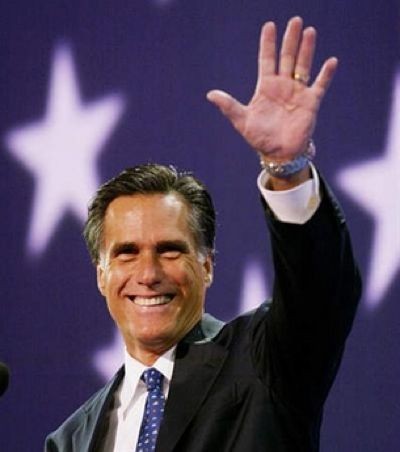
Don’t go Akin my Heart: Todd Akin Earns the Ire of Mitt

Irony Personified

When one can’t think of anything else to do a political candidate should be like the Governor in The Best Little Whorehouse in Texas played by Charles Durning. One should dance around subjects and not say really stupid things, especially about things as sensitive topic as rape, which according to law and morality is a violent crime.  However there is no law against political stupidity. Good politicians know how to “Dance a little side step.” Stupid ones don’t know when to shut up.

Dance a Little Sidestep 

Todd Akin, until this morning a Tea Party favorite U.S. Congressman running for Senate in Missouri is obviously the kind of man who doesn’t know when to shut up or when not to try to play medical expert. While defending his anti-abortion position which gives no exemptions for rape he made one of the most bone-headed comments I have ever heard from a politician since Republican Texas candidate for Governor Clayton Williams did in 1990. Williams said that since rape is inevitable like bad weather that rape victims should “just relax and enjoy it.” Williams’ little off the cuff gaffe cost him the election as he was leading Democrat candidate Ann Richards with just a few weeks prior to the election by a hefty margin. I was a Republican in Texas at that time and was so disgusted that I couldn’t vote for the man.

Yesterday while being interviewed by a local news station Akin said: “If it’s a legitimate rape, the female body has ways to try to shut that whole thing down.”

I wasn’t watching much news yesterday and had been taking most of the day away from the computer spending time with Judy on her visit to the Island Hermitage. So when I head about late in the evening when making a quick check of headlines I was rather dumbfounded. I really thought that I had to be misreading it so I went to bed after finishing an episode of Boston Legal season four on my DVD. Then listening to The Morning Joe on my Sirius radio on the way to work I was really taken aback. I couldn’t believe that he actually said what he said.

I have dealt with a lot of rape victims in my time as a military chaplain as well as a civilian hospital chaplain. To quote the President who said the same thing that that  thought when I heard the comment: “Rape is rape.” So what is the difference between “legitimate rape” and “rape?” Is there such a thing as “illegitimate rape?”

Akin’s comments have drawn the fire of many of his backers including Mitt Romney, Paul Ryan who co-sponsored legislation basically saying the same thing as did Senate Minority Leader Mitch McConnell. Romney called the comments “insulting, inexcusable and frankly wrong.” Karl Rove’s Super-PAC Crossroads GPS which had spent $5 million in Missouri, withdrew it’s funding from the state. Radio talk-show host Sean Hannity and pundit Ann Coulter have all called on Akin to withdraw from the race, Coulter saying “for the good of the country.” He has been asked not to attend next week’s GOP convention in Tampa and the National Chairman of the GOP pretty much told him to withdraw from the race. Even major anti-abortion groups condemned the remarks. The Rev. Patrick Mahoney, a long term anti-abortion activist and head of the Christian Defense Coalition called the remarks “offensive, repugnant and troubling.” But Akin, at least as of tonight is rebuffing their calls and claiming that he is staying in the race. Republicans are running from Akin like vampires from the sun despite having for the past number of years endorsed similar ideas.

I find the whole thing politically inept. I am not going into the politics of abortion on either side of the line. I am just commenting on the political ineptness of a candidate that has dropped a bomb on his party and his soon-to-be Presidential nominee the week before the nominating convention. It is not like that Romney himself has been great on the campaign trail routinely blowing himself up with unbelievable gaffes. It is also true that Romney is not liked by much of his own party, the only thing that many of his supporters find endearing is he is not Obama, who in the words of Hank Williams Jr. “they hate.”

Akin’s comments yesterday and actions today have taken the wind out of Mitt Romney’s campaign.   Romney now has to take his message off of the economy and defend a view that while popular among the conservative-Christian base is at odds with the majority of the electorate, even among those that support some restrictions on abortion. I fall into that category. In a close election which will be decided by a narrow minority of swing voters, especially women this could doom Romney’s campaign despite many people’s unhappiness with the Obama presidency and the continuing problems of the economy.

Regardless of what one thinks about abortion the political fact is that Akin has blown himself away and hurt his party’s nominee who has named an ideological clone of Akin as his running mate. It was a politically inept and stupid move by Akin. If the Republicans are smart they find a way to get him out of the race before he can cause more damage to their national campaign. Democrats of course are praying that Akin digs in and gives them a wedge issue that could give President Obama a slight edge and lessen support for Romney. Even Mahoney, who certainly has “street cred” among pro-life activists commented that if Akin stayed in the race “these comments will follow the Congressman throughout the entire campaign.”

He also may have driven a wedge into his own party as his supporters at the Family Research Council and American Family Association are digging in to support Akin, even making veiled threats at the campaigns of Akin’s Republican detractors such as Senator Scott Brown of Massachusetts.

Akin is breakin’ their hearts. We’ll see how long this goes. I think he will be gone from the race by Tuesday night but I do believe that the damage is done. He has given the Obama campaign and the re-election campaign of Senator Claire McCaskill a gift.

Peace

Padre Steve+

Update as of 2100 hours 21 August: I was wrong. Akin is digging in and the panic is only beginning. Even Rush Limbaugh is against him but he tweeted that the “liberal media” was out to get him. From my viewpoint I think that they want him to remain in the race while his conservative friends want him gone yesterday.

2 Comments

Filed under News and current events, Political Commentary

Flip-Flops in Florida: Who was Before it Before they were Against it Before they said that They Weren’t? I Sure the Hell Don’t Know

We are done with debates for a month and not a moment too soon especially for Newt Gingrich who got his ass handed to him tonight. Unlike in South Carolina where Gingrich was the clear winner Newt seemed to be flat footed in his answers to questions posed by Wolf Blitzer and audience members and in his responses to Romney. Romney seemed much more comfortable attacking Newt tonight. However I think that he was hurt by Rick Santorum who I think won the debate.

Despite beating Gingrich Romney certainly did not help himself for the general election should he be the nominee. Newt’s campaign as well as all of his huge Mitt-stakes over the past month have taken their toll. Even Rupert Murdoch thinks that Romney’s tax issue alone could keep him from winning in November.  Romney is certainly a shrewd businessman and as he calls himself a “winner.”  However he comes across as both arrogant and unprincipled, a flip-flopper of the worst kind as does Gingrich.

These debates and the campaign since Iowa have been a bloodbath in which Romney and Gingrich have done everything that they can do the ensure that neither of them becomes President. These guys are doing the best that they can to destroy each other every hour of the day and then claim ignorance. I am amazed with the alacrity with which they misrepresented each other and themselves.

I know that people wear flip-flops on Florida’s beaches but these guys put the flip in flop.    Both were for it before they were against it before someone pointed out that they were for it and they had to defend being for what they are now against or really are for but can’t admit it and get the nomination.

I am really getting confused and I know it’s not just my Mad Cow causing this. I don’t think that either man actually believes a word that they that they say even before they denied that they believed it.  Both Gingrich and Romney came across as absolutely disingenuous and consumed with destroying each other on the way to getting the nomination.

In my opinion it was Rick Santorum that was the most effective debater tonight and was very impressive. He was much more impressive than either Romnich or Gingney and I think Santorum cleaned Romney’s clock. Unfortunately for him it is probably too little too late regarding the getting the nomination but anything is possible now. Ron Paul made some points but did not have the impact tonight as did Santorum. Santorum hurt Romney on “Romneycare” and taxation aligning himself with none other than Ronald Reagan on the upper bracket tax rates.  He was also the only candidate that spoke directly about the industrial base and the workers that were the Reagan Democrats and recognized that President Obama had made that point in the State of the Union.

While anything is possible in this race I think that it is pretty certain that Romney will now win Florida. I thought that Gingrich might steal it but he didn’t help himself at all tonight. He was way off his game and he needed to reprise what he did in South Carolina in order to win Florida.  He now has to work doubly hard to try to win this or run a close second.

However this race has show that nothing is what it was even four years ago. I think that it will drag on and that anti-Romney forces will ensure that it does. I think that all things being equal that Romney probably wins the nomination but like I have been saying since Iowa that he will be so damaged that he will not be able to win in November.  He may have the support of the GOP elites but he certainly is not winning the hearts of people that he will need to support him in November.

A recent poll said that 33% of Republicans wished that there was another candidate in the race. Likewise President Obama’s positive numbers which were dismal are going up even as Romney’s favorable ratings collapse. I say this only to show just how volatile the electorate is this year and how dissatisfied most Americans seem to be with the status quo and the people running for the nation’s highest office.

This is not like anything that I have ever seen. So many things can happen between now and next week when Florida votes and the the General Election on November 6th that could influence the election it boggles the mind. I know that my mind is boggled. I feel like I am watching the two Republican front-runners do their best to ensure that their party cannot win in November. What do you think?

Peace

Padre Steve+

1 Comment

Filed under News and current events, Political Commentary

The Lost Art

“Politics is the art of the possible, the attainable … the art of the next best.” Otto von Bismarck

I did my yearly duty of enduring the State of the Union Address.  I have done this every year when not deployed, at sea or in the field since I was in college. I have learned over the years that regardless of who the President is or what party they belong does not make the watching of this speech any less of an ordeal.

Some Presidents were marvelous orators and others not.  Typically the rebuttal to any President’s State of the Union is always a critique of whatever the President said and why the opposition and its ideas or policies are better.  Thus when Presidents like Ronald Reagan, Franklin Delano Roosevelt, Bill Clinton and even President Obama use   lofty language and rhetoric it is hard for the opposition to sound like anything other than less than exciting.  Now this says nothing about the substance of the ideas or even the truth of what is being spoken by either side especially in an election year. Bismarck so adroitly put it “People never lie so much as after a hunt, during a war, or before an election.” 

Call me a cynic but I guess I am now old enough to have see that the speeches really don’t matter that much unless the leaders of both parties are willing to work together for the good of the country.  There are policies and positions in both parties that I agree with and those that I disagree with. I don’t think either party has a lock on truth nor have the answers to all of the challenges that we face totally contained in their ideology or party platform.

The speech by President Obama was an excellent speech and the response by Indiana Governor Mitch Daniels was not bad. Again I am not going into specific details of what either said but rather the tone of both. There were differences and Daniels was pugnacious but not disrespectful and Daniels even found places of agreement with the President. Unfortunately that is rare among the rest of his party.

Maybe I have been in the military too long but some of the things done by leaders, elected leaders and pundits of both parties over the past 10 years since George W Bush was elected turn my stomach. I want the country to do well and for whoever the President is at the time to meet with success.  I may not support all of their agenda but they have the job of President and I don’t.  I believe in the teamwork embodied by the military and particularly that of SEAL Team 6 and the supporting units who killed Osama Bin Laden that the President emphasized so well.

When Nancy Pelosi said of President Bush “Why should we put a plan out? Our plan is to stop him. He must be stopped” I was appalled. When Mitch McConnell said that “the single most important thing we want to achieve is for President Obama to be a one-term president” I was equally appalled. That is no way to help the country.

Otto Von Bismarck was was quite the pragmatist. He understood that there is an art to politics. Ronald Reagan understood the same and was able to work with the opposition as much as he could get of his agenda passed and make deals including raising taxes to get it done. Unfortunately the Unholy Trinity of Politicians Pundits and Preachers on both sides of the political chasm have somehow come to the conclusion that it is a winner take it all game.  I’m glad that President Obama and Governor Daniels despite their differences did not use tonight to demonize their opponents. Maybe that is a start.

Of course this is an election year and the country is bitterly divided. We have practically been at war with each other for at least that long, probably longer. I just hope that somehow we as a people can rally around the country and whatever our politics not forget that we are all Americans and are in this boat together.  As Abraham Lincoln said in his second inaugural address at the close of the Civil War:

“With malice toward none, with charity for all, with firmness in the right as God gives us to see the right, let us strive on to finish the work we are in, to bind up the nation’s wounds, to care for him who shall have borne the battle and for his widow and his orphan, to do all which may achieve and cherish a just and lasting peace among ourselves and with all nations.” 

Peace

1 Comment

Filed under History, News and current events, philosophy, Political Commentary

Party Like it’s 1996: Romney Wins the Granite State but…

Mitt Romney Unloved Frontrunner?

Mitt Romney as most believed won the New Hampshire primary by a comfortable margin and now the fight moves south to South Carolina where Romney will face a big challenge. Despite the wins in Iowa and New Hampshire most Republicans and Independents are not in love with him his record will cause him problems in the South, especially in regard to Romney’s record on abortion.

Romney is the first GOP candidate to win both Iowa and New Hampshire which many analysts are saying is significant. However I don’t see it as significant as some would. He won New Hampshire handily but against a significantly weaker GOP field than he and John McCain faced in 2008.  On the other hand Ron Paul polled nearly three times the number of votes that he received in 2008.  To further complicate the matter in actual number of votes cast the two social conservatives Rick Santorum and Newt Gingrich have more combined votes than 2008’s social conservatives led by Mike Huckabee.

Wild Card: Ron Paul and his True Believers

Despite his success in New Hampshire Romney may have great difficulty in the south. Many Republicans, especially those of the Tea Party and Libertarian factions may see Romney as someone that might be able to defeat President Obama but may not want to surrender their party to a man that they really do not trust for the next 8 years.  That is something that I do not hear many people saying.  Buying Romney now means buying him until 2020 and I do not think that Tea Party, Libertarian or Social Conservatives will be willing to do that even if it means 4 more years of Barak Obama. They can run against Obama but once Romney is President it will be much harder for them to get him out.

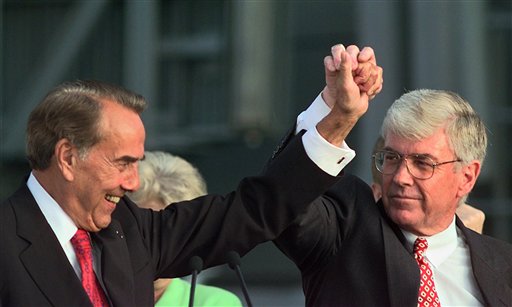
This could well be like 1996 where the Republicans nominated Bob Dole but despite their hatred of Bill Clinton and desire to see him defeated could not rally behind Dole.

Romney has not helped himself with numerous gaffes and comments that are easily taken out of context and have been put into sound bites by his opponents in the GOP and will be by the Democrats when the battle is truly joined.  He sounds great behind the teleprompter but not very good in the moment. In that aspect he is much like President Obama in style.

No one is leaving the race and all the candidates are heading to South Carolina which is much more a predictor of the eventual nominee than either Iowa or New Hampshire. This is Republican campaign is going to be bloody as it is personal especially for Gingrich who now has massive amount of money to spend and willingness to use it to sink Romney. Romney has a comfortable lead in the last poll over the divided social conservatives in South Carolina and probably wins the state. This will probably take out one or more of his opponents but could lead to the social conservatives to unite behind one candidate, most likely Rick Santorum but possibly and this is a stretch Rick Perry.

I believe that Ron Paul and his supporters will leave the party because they are in no mood to compromise with Romney who they see as “Obama Lite.”  Social conservatives  especially Evangelicals that in their hearts believe that Romney’s Mormon faith makes him a cultist may sit out the election or support Paul or splinter social conservative parties such as the Constitution Party.  This weekend the most prominent of the social conservatives are getting together to see if they can find a conservative alternative to Romney.

When all is said and done I do think Romney wins South Carolina and will get the nomination. Some of his opponents in the GOP will fall in line but ideology matters now in the GOP whether it is social conservatism or libertarianism. However he will look like a ship that survived a Kamikaze attack. He’ll survive but he will be so wounded that he will lose in November despite the weaknesses and unpopularity of President Obama.  The question will be will the GOP galvanize itself behind a candidate that few really like and many view with great suspicion and distrust on a multitude of issues to defeat President Obama?

Back to the Future? Bob Dole and Jack Kemp in 1996

A few months ago I thought that Romney was sure not only to win the nomination but to go on and defeat President Obama in the fall but while I’m pretty sure that he will win the nomination I can easily see him now going the way of Bob Dole.  Party like it’s 1996 because it could be back to the future.

Peace

Padre Steve+

2 Comments

Filed under Political Commentary

Padre Steve’s Year in Review and Predictions for 2012: The Best Jibber-Jabber on the Web

Once again it is that time of the year when I look back at the events of the last 12 months and say “that was some year.” And what a year it was.  So many things happened at home and around the world that it makes one’s head do the Linda Blair 360.  Yes the year was crammed full of events too numerous to mention and full of the jibber-jabber of “expert” analysis of news commentators, pundits, politicians and preachers.

Every major news agency and many writers publish what they believe to be the major stories of the year about this time and sometimes prognosticate about the coming year. Mostly these articles are so much jibber jabber and I don’t claim this to be inclusive of everything that happened but these are what I think are some of the highlights of the events that occurred in 2011.  Call it my end of year jibber-jabber.

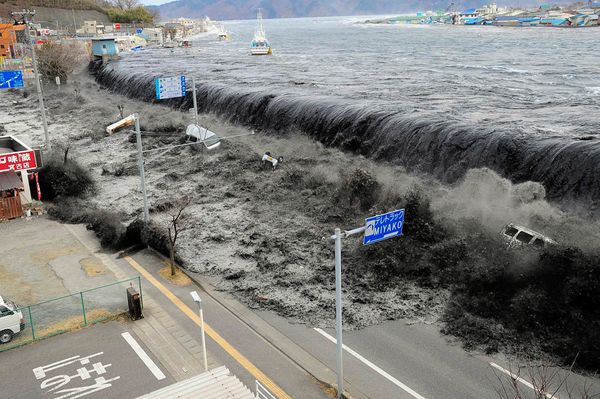
The Environment: Yes there is an environment and whether one wants to assign credit or blame to God, the Devil, Mother Nature or the theory that “shit happens” it has been a year full of natural disasters.  We begin with the 9.1 earthquake and Tsunami in Japan which triggered a nuclear disaster when the Fukishima nuclear plant melted down. There was Hurricane Irene which though only a category one storm was so big and slow moving that it that caused massive damage to the East Coast, especially North Carolina. I got to experience Irene.  Even more frightening was the massive F5 Tornado that pretty much wiped the city of Joplin Missouri off the map. There was a series of wildfires in Texas that burned nearly 4 million acres of land and one fire around Bastrop Texas that destroyed over 1600 homes.  Over in Asia there was flooding that put Bangkok underwater for an extended period of time.

Prediction for 2012: Cable News networks will continue to rake in the bucks covering human misery in all parts of the nation and the world as natural disasters occur.  I predict that there will be major earthquakes, fires, famine and flood, hurricanes  and that many will be really bad.  Sure that’s rather generic but I can be surge that I am not wrong in making this prediction.

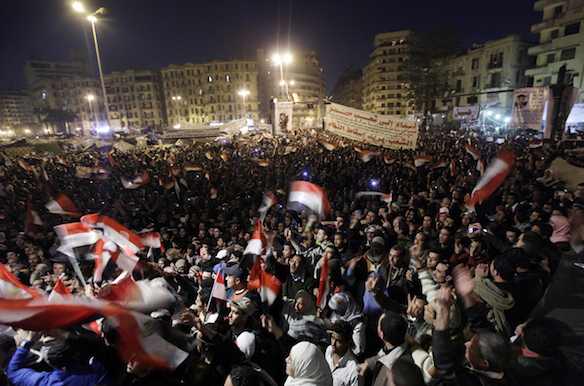
World Events: Overseas there was the Arab Spring revolts that brought about the fall of dictatorships in Tunisia, Egypt and Libya and quite probably Yemen. Syria appears to be on the brink of civil war and Bahrain with the help of Saudi Arabia put down its own Arab Spring revolt.  Jordan and other Arab states are quite nervous and the situation in Egypt which began with so much hope has deteriorated as the military faces off against demonstrators as Islamic parties make headway in elections.

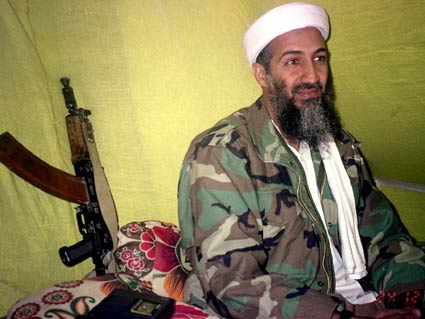
Who would have thought that in 2011 that Moammar Ghadaffi would be overthrow and killed by his own people, that Osama Bin Laden would meet his end at the hands of US Navy SEALS and that Kim Jong Il, the nutty leader of North Korea would die.  The European Union looks like its days could well be numbered as the contagion of economic crisis which began in Greece has spread to much of the EU.  The United States withdrew its forces from Iraq just in time for the Iraqis to start to undo everything that their soldiers and ours had fought to achieve since 2005, Iran continues to build nukes and attempt to provoke the United States, Western Europe and Israel while the Israelis prepare to whack Iran. The war in Afghanistan grinds on and Pakistan is more of a pain in the ass than it ever has been.

Padre Steve’s Prediction: You thought things were bad in 2011… they will really be sporty in 2012.

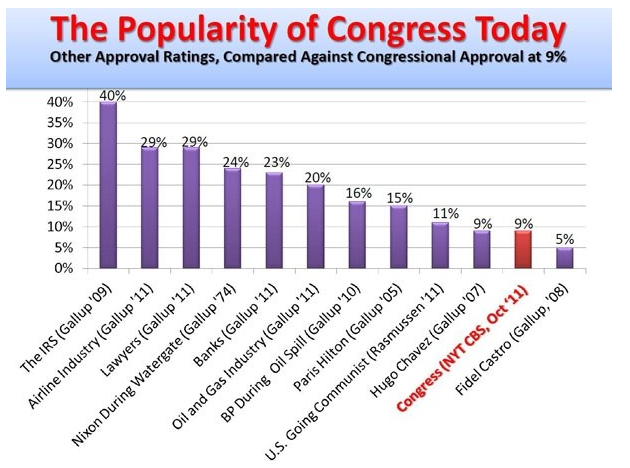
United States Domestic Politics: The United States has had its own political and economic problems as the government seems pretty much to have become a parody of itself.  The President has had an approval rating below 50% for almost the whole year and the Congress God bless them has an approval rating of just 11% a new record which will undoubtedly be broken in 2012.  President Obama is unchallenged in the Democratic primaries and the Republican candidates seem to be doing all that they can to ensure that whoever wins the nomination will lose the general election next year as each takes his or her turn to give their followers hope and then implode.  I mean really, despite all of our economic problems the United States would, if our politicians could get their collective shit together have a bright future compared to the EU and the “new” economies in China, India and Brazil which despite all their success are dependent on us to buy their stuff.

Meanwhile the Tea Party movement has become the kingmaker in conservative politics and the Occupy Wall Street movement gathered steam before going into winter hibernation.

Padre Steve’s Predictions: Expect that both the Tea Party and OWS movements despite being on opposite sides of the political spectrum to continue to influence both major political parties. In 2012 the Congress will sink to even lower lows and for President, Congress and Presidential candidates to do even more stupid things to get just enough of the vote to be elected in November. You thought that 2011 was bad…well it was just the warm up for 2012.

Sports: The sporting world produced its share of excitement and agony as great team and individual accomplishments were overshadowed by scandals. Baseball had a most amazing end to its season in which the St Louis Cardinals defied all odds in winning the World Series after being written off as dead in late August. The Red Sox went from the sure thing to win the World Series to greatest regular season collapse ever seen which resulted in manager Terry Francona and GM Theo Epstein leaving the team.  A potential scandal has come up with the alleged positive test for some kind of performance enhancing drug by National League MVP Ryan Braun. The Los Angeles Dodgers filed for Bankruptcy amid the McCourt family feud and Albert Pujols collected his halo as well as about 260 million dollars for the next 10 years from the Angels.

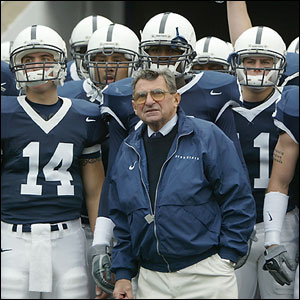
The NFL endured a strike and player lockout by the owners which threatened the beginning of the season but the NFL’s stupidity was totally blown away by the actions of NBA players and owners in their strike and lockout. There were scandals in college sports outside the SEC the most notable being the sexual abuse scandal that shook the nation at Penn State University which brought about the inglorious end to the career of the legendary coach Joe Paterno. The BCS Bowl system appears to have gone from controversial to nearly pathetic in the selection of teams for the BCS bowls.

Padre Steve’s Prediction: The Chicago Cubs will not win the World Series and thereby prove that those that believe that the world will end in 2012 wrong. So as bad as everything seems it could be worse.

So with all that said there was so much more that I could mention but I have to stop somewhere.  I won’t go into the lives and scandals of celebrities because frankly though sometimes titillating they really don’t matter a hill of beans, unless it is your hill and they are your beans.  Likewise the year isn’t over yet and who knows maybe something will happen that will cause me to have to revise this article.

Until then and until tomorrow…

Peace

Padre Steve+

Leave a comment

Filed under News and current events

Why the Libyans were able to Overthrow Gaddafi and what We can learn from It: A Lesson from the work of T E Lawrence

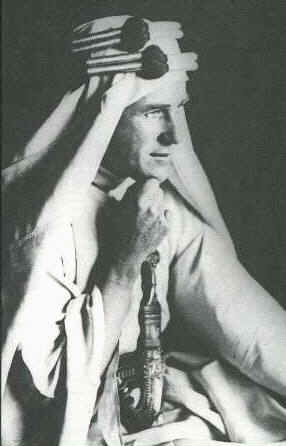
T E Lawrence

“Do not try to do too much with your own hands. Better the Arabs do it tolerably than that you do it perfectly. It is their war, and you are to help them, not to win it for them. Actually, also, under the very odd conditions of Arabia, your practical work will not be as good as, perhaps, you think it is.” T. E. Lawrence

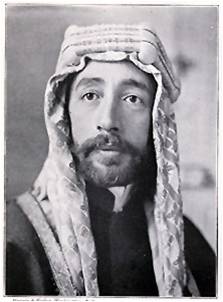
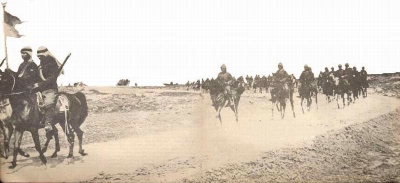
Lawrence with Arab fighters at Aqaba and Emir Faisal Hussein (below)

The Libyan revolution succeeded in overthrowing Moammar Gaddafi and his 42 year tyranny because the West did not turn it into an American or NATO war. By limiting involvement to airpower, coastal interdiction and tiny numbers of advisers the United States and NATO avoided the costly trap of putting large numbers of troops on the ground.  Such action would have been counterproductive in Libya and in the Arab world. While the action certainly would have ridded the world of Gaddafi and his regime much more quickly it would have emasculated the Libyans who had taken up arms against Gaddafi by turning it into our war, a war which would have been seen by many Libyans and Arabs as just more Western Imperialism.  Critics can always find fault in any military operation but for once in the Post Cold War era the United States and NATO knew their limitations and that the revolution had to be the work of the Libyans themselves.

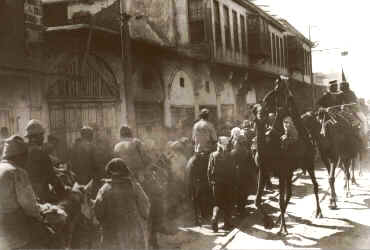
Lawrence and Hussein’s troops pass Ottoman prisoners at Damascus in 1918

T E Lawrence understood the Arab mind more than most westerners ever will.  Living with and helping lead the Arab tribes that revolted against the Ottoman Empireduring the First World War he learned the culture as well as came to understand the strengths and weaknesses of the Arab tribes.  One thing that can be said is that most Americans like many of Lawrence’s counterparts in the British political leadership, military and diplomatic services is that far too few have taken the time to either understand or respect the Arabs. When I was in Iraq the senior Iraqi Officers that I met were amazed and impressed that I knew their history and culture because so few people did. When I mentioned their victory at Al Kut Amara, or their capture of the Al Faw peninsula at the end of the Iran-Iraq war they beamed with pride.

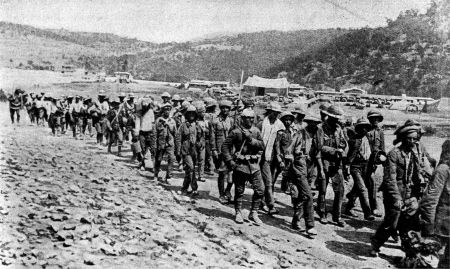
Ottoman troops in Mesopotamia 

One of the things that Lawrence understood was the profound sense of personal pride and honor which imbued the Bedouin.  He understood that the various Bedouin tribes had no love for the Ottoman Turks who treated them with distain.  He also understood that they needed to be the ones that defeated the Turks.

The campaign waged by Lawrence and the Bedouin confounded the Turks. Working with Emir Faisal the son of Sherif  Hussein of Mecca he convinced his force of Arab irregulars not to make a direct assault on the city of Medina which was heavily garrisoned by the Turks.  Instead he expanded the battlefield by exploiting the natural weakness of the Turks, the need for constant supply via the Hejaz Railway.  In doing so he tied up large numbers of Ottoman troops that could have been used against the forces of General Allenby that were waging a conventional campaign and which was very successful in defeating the Ottomans.

While Lawrence was a part of a much larger effort his work in helping the Arab revolt was of great importance to the success of the British efforts against the Ottomans.  Unfortunately the good will that Lawrence and others like him built did not last. The British and French governments did not respect treaties that supported Arab independence and instead dividing the region between them under the terms of the 1916 Sykes-Picot Agreement. They left an isolated and abandoned Hashamite kingdom in the Hejaz which was conquered by the Saudis to whom the British had shifted their support.

British prisoners at Kut al Amara

A few hundred miles away the British did not take advantage of indigenous Arab resentment of the Ottomans in Mesopotamia.  The British invaded Mesopotamiain 1914 expecting to defeat the Turks easily.  However the British did precious little to enlist the support or help the Iraqi Arabs.  The campaign was long and included the worst defeat of a British Army during the war at the Siege of Kut Al Amara in 1916 at the hands of a largely Iraqi Ottoman 6th Army.  Some 30,000 British and Indian soldiers were killed or died of disease and 13,000 captured many who did not survive captivity.  After the war Lawrence remarked “The people of England have been led in Mesopotamia into a trap from which it will be hard to escape with dignity and honor. They have been tricked into it by a steady withholding of information.”

Faisal would go on to be elected as the new Kingdom of Syria by the Syrian National Congress in March of 1920 but kicked out by the French who enforced the Mandate of Syria in July.  In 1922 after the British brutally suppressed an Iraqi independence movement they appointed Faisal as the King of Iraq. When the British “gave” the Iraqis their independence in 1932 Faisal was the head of state.  He died in 1933 and the British maintained a tight grip on the country and put down another Iraqi nationalist revolt led by the Army in 1941.  The British would remain in Iraq until 1958 when a military coup which is known as the “14 July Revolution” overthrew the government and killed king Faisal II.

Libya Rebels

In Libya there was great temptation and political pressure for the United States to begin an early air campaign without significant support in the international community.  Some say that this caused more casualties and suffering for the Libyans, but it helped in the long run because Libyans saw it as their war to win even when NATO began its air campaign against Gaddafi.  The air campaign was a great help to the newly proclaimed National Transitional Council in Benghazi and probably saved them from being defeated but it was the courage of Libyans on the ground who sacrificed themselves against a better armed and trained force to retake the country.

The revolt restored the pride of an oppressed people, something that could not have taken place had the campaign been led by the United States and NATO with boots on the ground.  People forget that in 2003 the majority of Iraqis welcomed US forces as liberators.  This lasted until Paul Bremer unilaterally dissolved Iraqi military, police and civil servants that were actively helping us, turning them into enemies overnight.  The liberated Iraqis felt betrayed and dishonored by the United States just as they had been by the British following the First World War.  Bremer did this without ensuring that the Iraqi Army weapons depots were secure thereby providing Sunni and Shia insurgents with vast amounts of weapons.  These weapons were turned against American and coalition soldiers and even the UN and NGOs which were just beginning to helpIraqrebuild.  The result of Bremer’s was a protracted insurgency and civil which cost us nearly 4500 soldiers killed and over 32000 wounded and hundreds of thousands of Iraqis killed, wounded or displaced.  If one wants an answer as to why the Iraqis rose up against the United States occupation in late 2003 they need to look no farther than this. The Iraqis only want to be independent and saw the Bremer’s actions in the lens of their history with the British.

The author with Iraqi General Sabah Ramadi 2007

The decision of President Obama, French President Sarkozy and British Prime Minister Cameron to work through the UN and NATO was the correct one. It enabled the Libyans to overthrow Gaddafi and it kept our military involvement to a minimum.  While it cannot be a template for all future military operations in the Arab world as every Arab country is different it does have lessons for us. Libya was a perfect place to use this method. It had a population that wanted Gaddafi gone and were willing to die trying to overthrow him.  It had no huge urban population centers teaming with uneducated and poverty stricken people with little hope.  It has substantial oil wealth and an oil infrastructure which unlike Iraq was not destroyed during the war or in bad repair due to years of sanctions. It also enjoyed a key geographic location which made NATO air intervention much easier than almost anywhere in the Middle East because we did not need bases in Libya or its neighbors to run the operation. It was conducted from Europe and platforms at sea.   This is not possible in most other Arab countries. The task would be much more difficult if the target was Syria.

Now is the time to help the Libyans in rebuilding their country and letting them continue to regain their pride by letting them do as much as possible.  They won’t do it the way we would but that is okay. They will make mistakes but given time the people that shed their blood together to rid themselves of Gaddafi can work together to build a free country.  Those that go to Libya to assist the Libyans need to keep this in mind if they really want to see a strong, robust and successful Libyan democracy take hold.  Let’s also make sure that the good feelings that the Libyans have for us now remain by simply treating them as we would like to be treated.  Simply put we have to stop treating them as vassal states that we only value for their natural resources while we disrespect their people, history and culture.

As for the future it would be a wise investment to ensure that diplomatic, military and NGO personnel be trained and educated to understand and appreciate the Arabs and other cultures that are different than ours in the West.  The West has much to overcome in its relationship with the Arabs most of which is self inflicted. But we can try to start again.

Peace

Padre Steve+

3 Comments

Filed under Foreign Policy, History, middle east, Military

Yet another Meaningless Debate and Looking back to the Best Debate Parody Ever

Tonight is yet another in a series of rather meaningless Presidential debates for the Republican-Tea Party.  It should be relatively predicable unless Rick Perry was to draw his gun and shoot Michelle Bachmann.  Apart from something like that it should be about the same as the last two debates.  Everybody will attack Perry and Perry will shoot back hopefully in a figurative sense and beat on his chest about all of his Texas accomplishments while painting President Obama as a Commi Pinko Socialist who needs to face some Texas justice.

The rest will either be variations on the theme “Obama is evil and I am less like Obama than the rest of these dumb asses” or “if you elect me President I will wear a tri-corner hat at my inauguration and usher in utopia.”

Let’s face it, the debates we have now are simply time for every candidate to create his or her truth and sell it to us even if it is a complete lie. But then to quote Seinfeld’s George Costanza “It’s not a lie if you believe it.”  This is true of the candidates of both major parties.  Right now it just happens to be the Republicans in the spotlight.  However the title could be the 1992 same as the Saturday Night Live 1992 Presidential Debate “The Challenge to Avoid Saying Something Stupid”  and we know that is always a distinct possibility.

Of course there is the hope that Michelle Bachmann will say that Rick Perry supports illegal immigration which benefits Herman Cain’s Godfather’s Pizza chain and that Ron Paul sells marijuana to debate newcomer Gary Johnson from an illegal lemonade stand outside of Rick Santorum’s house while Newt Gingrich ogles her ass even as he accuses Mitt Romney of secretly wanting to marry John Huntsman in Massachusetts in a ceremony presided over by Barak Obama or something like that.

Unfortunately none of that will happen and we will be treated to the usual just on a different channel than last time.  For that reason I have my television on the MLB Channel and probably will put on season four of Boston Legal where Rick Perry’sBoston alter ego Denny Crane is played by William Shatner. As or the debate itself I will simple catch the lowlights later.

Unfortunately I cannot find the video of the 1992 Bush-Clinton-Perot debate anywhere on the web I will post the script here.  As you will see it is far more entertaining than anything that will be said tonight.

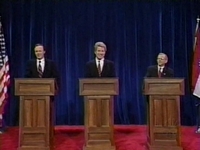
Saturday Night Live Debate ’92

Jane Pauley…..Julia Sweeney
Bernard Shaw…..Tim Meadows
Sam Donaldson…..Kevin Nealon
Bill Clinton…..Phil Hartman
President George Bush…..Dana Carvey
Ross Perot…..Dana Carvey (on tape)

Announcer: NBC’s “Saturday Night Live” will not be seen tonight, so that we may bring you this NBC News Special: “Debate ’92: The Challenge to Avoid Saying Something Stupid”. And now, here is your moderator, Jane Pauley.

Jane Pauley: Good evening. I’m Jane Pauley, and welcome to St. Louis for the first in our series of three presidential debates. Tonight’s debate among President George Bush, Arkansas governor Bill Clinton, and diminutive Texas billionaire Ross Perot will begin in just a moment. But first, let me introduce my fellow panelists, CNN anchor Bernard Shaw and ABC News political correspondent Sam Donaldson. Now, let’s meet the candidates. Gentlemen. [ the three candidates enter the arena and stand behind their respective podiums ] The first question will be asked by Sam Donaldson.

Sam Donaldson: Governor Clinton, let’s be frank. You’re running for president, yet your only experience has been as the governor of a small, backward state with a population of drunken hillbillies riding around in pickup trucks. The main streets of your capital city, Little Rock, are something out of L’il Abner, with buxom underage girls in their cutoff denims prancing around in front of Jethro and Billy Bob, while corncob-pipe-smoking, shotgun-toting grannies fire indiscriminantly at runaway hogs.

Bill Clinton: I’m sorry, Sam, do you have a question?

Sam Donaldson: My question is: How can you stand it? Don’t you lose your mind living down there?

Bill Clinton: Sam, you must have watched too many of my opponent’s TV spots. I’m tired of the Bush campaign trying to portray my home state as some sort of primitive Third World country. The fact is, Arkansas did have a long way to go, but we’ve made progress. When I started as governor, we were fiftieth in adult literacy, and last year, I’m proud to say, we shot ahead of Mississippi. We’re #49, and we’re closing fast on Alabama. Watch out, Alabama – we got your number!

George Bush: Can I say something here? Two years ago, I went on a fishing trip in Arkansas with Baker, Fitzwater, Quayle, myself. We were chased and assaulted by a couple of inbred mountain people. I was sworn to secrecy as to those events, but suffice it to say, they felt that Dan Quayle – and I quote – “sure had a purty mouth.” Now, if that’s the kind of progress Bill Clinton brought to Arkansas.. I don’t think we need it in the White House!

Bill Clinton: That’s not fair. Just this year we passed Mississippi to become 41st in the prevention of rickets.

Ross Perot: Can I jump in here? Why are we talking about Arkansas? Hell, everybody knows that all they got down there is a bunch of ignorant inbred crackerheads! Peckerwoods, catch me? now, can we talk about the deficit? While we’ve been jabbering, our deficit has increased by half a million dollars. That’s enough to buy a still and a new outhouse for every family in Little Rock!

Bill Clinton: Will you shut up!

Ross Perot: Hold it there, cracker boy, I’m not finished!

George Bush: See that right there? Kind of makes you wonder whether these men have the temperament to be president. Would you tell Prime Minister Major to shut up? Would you call Boris Yeltsin a “Crackerhead”? Who wouldn’t you tell to shut up? Because you see, this election is about who can take the heat, who you want there when that secured phone in the White House rings at 3 AM. Do you want someone who will answer the phone politely: “Hello, this is the President. Speak slowly and clearly and tell me what the problem is.” Or do you want someone who’s cranky, who says, “This better be important,” or “Do you realize what time it is?” or simply says, “Shut up!” hangs up the phone and sleeps like a baby while the world burns!

Jane Pauley: Thank you, gentlemen. Now, Bernard Shaw has a question for Governor Clinton.

Bernard Shaw: Yes, Governor Clinton. If Kitty Dukakis were raped and murdered, would you favor the death penalty for her assailant?

Jane Pauley: Mr. Shaw, really. You don’t have to answer that, Governor Clinton.

Bill Clinton: No, no, I’m happy to answer that. Obviously, none of us want to see Kitty Dukakis raped and murdered, but if she had to be murdered I would hope it would be in Arkansas – because no state is tougher on crime. Last year we passed Florida to become #2 in executions by lethal injection, and first in crushed by heavy stones.

Jane Pauley: Mr. Perot? Rebuttal.

Ross Perot: I was hoping we’d get into the issues, but if this is the way the game is played – fine. So, if somebody were to lay a finger on Kitty Dukakis, I wouldn’t kill him right away. That’d be too easy. I’d wait for a hot Texas day, see? Tie him to a stake, get an ant trail going. You know, Texas red ants, inch long! Just love to bite into human flesh, catch what I’m saying here? See, they’re eating him alive, nice and slow like. And I’d sit with him in the shade under an umbrella, maybe with a lemonade, sit back and say to the fella, “How do you like them apples?” And he’ll be screaming, “When am I gonna die?” and I’d say, “I don’t know exactly, and frankly, I resent your question.” Catch my drift?

Jane Pauley: THank you. Now, let’s turn to the deficit. President Bush, during your term, the deficit has grown by over a trillion dollars.

George Bush: I know.

Jane Pauley: Honestly now, don’t you feel some kind of tax hike will be needed to reduce the deficit?

George Bush: Jane, the answer is no! I will never raise taxes again! Never, ever, ever, ever.. never, ever again! And I mean never, ever, ever, ever, never ever..!!

Jane Pauley: Thank you, Mr. Presi..

George BushNever, ever, ever!

Jane Pauley: Mr. President, please..

George BushEver, ever again!

Jane Pauley: Sam Donaldson, with a question for Governor Clinton.

Sam Donaldson: Governor Clinton, this week the big story has been your 1969 trip to Moscow, and your involvement in antiwar activities. Some have ven suggested that while in Moscow, you had meetings with KGB agents. Isn’t it fair to say that you haven’t really told the American people the full story?

Bill Clinton: Sam, this kind of attack shows how desperate the Bush campaign has become. Yes, I did go to Moscow by train in 1969. And while on the train, I struck up a conversation with a man in the seat next to me. He gave me a package to take to Moscow and instructed me to leave it folded in a newspaper in a kiosk across from Lenin’s tomb. I’ve explained this many times. Yes, the KGB did subsequently pay my way through law school, but that was the last contact I had with the KGB until years later when Hillary and I were having problems, and it was a KGB agent, Nikolai Kuznetsov, who let me stay at his place for a while until we patched things up.

Sam Donaldson: But isn’t it true that during one of the peace demonstrations you burned an American flag in Red Square?

Bill Clinton: I tried to burn an American flag once. I didn’t like it. It gave off toxic fumes, so I didn’t inhale.

Ross Perot: Can I say something here?

Jane Pauley: Mr. Perot.

Ross Perot: I think that’s just sad.

Jane Pauley: President Bush?

George Bush: Once again, it all comes down to trust. Who’s been there? I’ve been with Mitterand, I’ve met with Major, I know the White House. I know the door outto the Rose Garden doesn’t lock unless you pull it. I know the toilet in the Lincoln Bedroom will run all night unless you jiggle that handle. It’s not enough to flush it, you’ve got to jiggle it! I know Air Force One. I know that seat 8G does not fuly recline. If we are flying the Prime Minister of Canada to a trade conference, I alone can say, “Mr. Mulroney, seat 8G does not fully recline, I suggest you use another!”

Jane Pauley: All right, Mr. Bush, our time is up. Each candidate will be allowed a brief closing statement. Governor Clinton?

Bill Clinton: Thank you, Jane. We’ve talked about many issues tonight. But this election is really about one thing – change. Over the last twelve years, more and more Americans have found themselves working longer and harder for less and less. [ President Bush glances at Clinton and sees the vision of a hippy standing behind the podium ] We need to invest in our people again. Because together, all of us, pulling as a team, we can do it! Thank you.

Jane Pauley: President Bush?

George Bush: My fellow Americans, this election is about leadership and trust. Now, our opponents have tried to portray us as the party of the rich and privileged, ignoring the fact that our economic program has created more opportunity for more Americans than in any twelve-year period in history. [ Clinton glances at President Bush and sees the vision of an old lady standing behind the podium ] Well, let me tell you something: I’m not worth $3.3 billion, and I wasn’t educated at Oxford. But I know how to lead this country to victory in the Persian Gulf, and I can do it again here at home!

Jane Pauley: Mr. Perot?

Ross Perot: This whole thing fascinates me, really. See, you don’t have to be a Ph.D. at Harvard to know that our kids are going to inherit a $4 trillion deficit, and that’s just a crime. [ Clinton and President Bush glance at Perot and see the vision of a munchkin from “The Wizard of Oz” ] Now, if I’m president, we start cleaning up this mess on Day One. It’s gonna take some sacrifice, no doubt about it. But I know the American people are ready to sacrifice as long as it’s fair. This is your country, let’s take it back.

Jane Pauley: Thank you, Mr. Perot, don’t you have one last thing to say?

Ross Perot: No, I can’t. I’m on tape. [ looks at Bush ] Why don’t
you do it, live-boy?

George Bush: “Live, from New York, it’s Saturday Night!

2 Comments

Filed under Just for fun, Political Commentary, purely humorous

Follow the Money: The Real Motives behind those Seeking to Radically Change the Military Retirement System

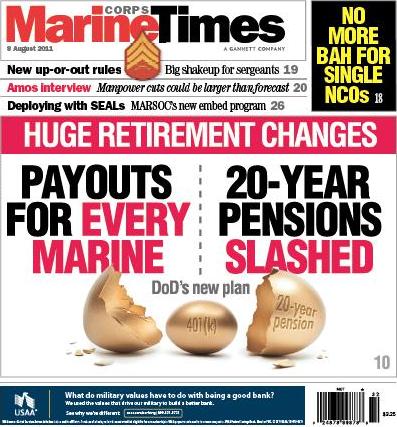
The Military Times put it on the Front Page last Week: Wednesday Secretary of Defense Leon Panetta announced at the National Defense University that no changes were coming soon. Despite that Military personnel should be on guard as the Defense Business Board continues to push for retirement changes that are bad for the service member, bad for keeping the best people in the military but that are great for Wall Street and Defense Contractors

There is much talk amid the current debate on the National Debt and the budget crisis of changing the military retirement system.  Of course the argument now being used by the most fervent advocates of change is that military retirement is a “rich entitlement program” which is draining the Defense Budget and keeping us from buying weapons, to quote Defense Business Board member Richard Spencer “What are you going to trade off — a rich entitlements program, or boots and bullets for the troops?”

Now on the surface that seems logical but in truth it is simply a way for American business and financial corporations to gain control of military retirement for their own gain.  The way they propose is to eliminate the current program and institute a 401K based system as used in many businesses.  However they fail to mention that military service in time of war, which if anyone hasn’t noticed we have been at for 10 years is quite different than working in the civilian world, the little things like long deployments, family separation and need I say getting shot at by bad guys and watching your friends and comrades be killed our maimed do tend to make military service more arduous than 99% of those that work in the civilian world.

The ideas put out by the Defense Business Board gut the military retirement system.  These plans are not in any sense of the word an “overhaul” of the system but a complete scrapping of a system that has worked.  The members of the board seem to believe that the problem with the military budget is that military personnel make too much money and that their retirement if they get to 20 years is breaking the budget.  The members of the board blame cutbacks in weapons systems on the personnel budget ignoring that most of the weapons systems cancelled or cut back were due to the massive cost overruns charged by defense contractors and the failure of those contractors to deliver the systems that they promised on time on budget or for that matter operational.

That list includes the grounded F-22 Raptor of the Air Force, the mechanically challenged LPD-17 San Antonio class amphibious ships, the under armed, undermanned and corrosion prone Littoral Combat ships which are actually two distinctly different classes of ship increasing the cost of the project.  Then there is the FA-35 Joint Strike Fighter which is way over budget and far behind schedule and despite all efforts none are in operational units yet and those in test units were grounded last week.  The Marine Corps lost the much touted but never produced Expeditionary Fighting Vehicle, the planned replacement for its Assault Amphibian Vehicle when the troubled and expensive program was cancelled by former Secretary of Defense Robert Gates.  The Army had to cancel their Future Combat Systems Manned Vehicle project in 2009.  The list can go on and on and on all the while the contractors that were involved made a mint off of the military.  Much was due to the fact that all of these systems were over budget, behind schedule and often under performing what they were designed to do.

Something else that the Defense Business Board ignores is the massive cost of the wars in Iraq and Afghanistan and the money being paid to civilian defense contractors such as Halliburton, Kellogg Brown and Root, the former Blackwater and hundreds of other players in the dash for Defense Department cash. They also fail to mention that the financial industry which a number of heavy hitters on the board represent ran our and the world economy onto the rocks back in 2008.

The Defense Business Board was established by former Defense Secretary Donald Rumsfeld in 2001.  All of the members are appointed by the Secretary of Defense and all of the current board members were appointed by Rumsfeld or Robert Gates.

So who are the members of this board and who do they work for?

John B. Goodman, Chairman: Serves as managing director of the U.S. Defense portfolio for Accenture, a global management consulting, technology services and outsourcing company.

Mark H. Ronald, Vice Chairman: As senior advisor to Veritas Capital Management is a private equity fund that invests in a broad range of middle market companies through buyouts, growth capital investments, and leveraged recapitalizations. Veritas Capital invests in companies that provide outsourced services to the government – primarily in the areas of defense and aerospace, security, and infrastructure. It has also earned a reputation as a niche defense investor and for turning around troubled defense contractors.

Fernando Amandi: The former Chief Operating Officer for Citibank Consumer Bank International inLatin America, President of Motorola International Network Ventures based in London, England and Senior Vice President and General Manager of the American Express Consumer Financial Services Division in Latin America.  At present, he is the President of Fanta Real Estate Investments, LLC.  He served for 6 years as an enlisted member of the Florida Army National Guard.

Owsley Brown II: Retired chairman and CEO of Brown-Forman Corporation. He served from 1966 to 1968 as an Army intelligence officer at the Pentagon.

Pierre A. Chao: Managing Partner and co-founder of Renaissance Strategic Advisors. The company website gives this description “Renaissance Strategic Advisors is focused on the global defense, space, government services, homeland security and commercial aerospace market. Our clients are typically senior decision makers at the Board of Directors, CEO, CFO, sector president or investment partner level. We work with firms up and down the value chain, from component manufacturers to prime contractors to private equity/venture capital firms. Our clients span the full life cycle from early stage startup firms to industry leaders.”

Patrick W. Gross: Chairman of  the Lovell Group, a private investment and advisory firm, where he works with a portfolio of venture capital backed private technology and internet commerce companies. He is currently a director of four public companies: Capital One Financial Corporation, Career Education Corporation, Liquidity Services, Inc., and Mobius Management Systems, Inc. In the 1960’s he worked in the Pentagon as one of “McNamara’s Whiz Kids.”

Lon Levin: President of Sky Seven Ventures, which works with, helps manage, and invests in new technology companies, particularly space-based businesses, including Sentinel Satellite (CEO), Transformational Space (Chief Strategic Officer), Slacker Radio (Senior Advisor to CEO and Board), Integral Systems, Terrestar Networks, and Near Earth LLC.

Bonnie Cohen: A consultant specializing in management and financial issues.  Ms. Cohen serves on the Board of Cohen & Steers Mutual Funds, a $20 billion dollar family of mutual funds. Ms. Cohen is a member of the Cosmos Club and on the Endowment Investment Committee.

Mel M. Immergut: Chairman of Milbank, Tweed, Hadley & McCloy LLP “a global law firm, with approximately 550 lawyers who provide a full range of financial and business legal services to many of the world’s leading financial, industrial and commercial enterprises, as well as governments, institutions and individuals.”

Edward A. Powell Jr.: President and CEO of the USO World Headquarters.

David H. Langstaff: President & Chief Executive Officer TASC, Inc. A technology and intelligence services a subsidiary of Northrop Grumman and Litton industries, both major Defense contractors.

Phil Odeen: Non-executive Chairman of AES, an international energy company and Convergys, a leading outsourcing company.  Convergys is one of the leading firms that help companies in the United States and  Western Europe outsource jobs overseas.

Arnold Punaro: Chief executive officer of the Punaro Group, LLC, a Washington-based firm offering government relations, strategic planning, federal budget and market analysis, communications, crisis and emergency management, business development and sensitive operations consulting.  Punaro retired from the Marine Corps Reserve as a Major General and unlike the rest of the board served in combat as a Rifle Company Platoon Commander where he was awarded the Bronze Star for Valor and the Purple Heart Medal.  He was mobilized for the Gulf War, the Bosnia operations and again at the beginning of Operation Enduring Freedom.  Since his retirement he has been a consistent critic of the military retirement system.

Richard Spencer: Managing Director of Fall Creek Management LLC a privately held management consulting company. He was the former Vice Chairman and Chief Financial Officer of Intercontinental Exchange, Inc. (NYSE-ICE) which according to its website “operates leading regulated exchanges, trading platforms and clearing houses serving global markets for agricultural, credit, currency, emissions, energy and equity index markets. ICE operates three futures exchanges including London-based ICE Futures Europe, which hosts trading in half of the world’s crude and refined oil futures contracts traded each day. ICE Futures U.S. and ICE Futures Canada list agricultural, currency and Russell Index futures and options markets. ICE also provides trade execution, processing and clearing services for the over-the-counter (OTC) energy and credit derivatives markets.”  Spencer served as a Marine Corps Aviator from 1976-1981.

Bobby Stein: President of the Regency Group, a family holding company located in Jacksonville,Florida. The Regency Group has invested in many businesses including the water, sewer and waste, real estate, mortgage service, and fast food industries.

Robert I. Toll: is Chairman and Chief Executive Officer of Toll Brothers, Inc., the leading builder of luxury homes

Atul Vashistha: Founder & Chairman, neoIT Founder & Chairman, NEOGROUP. According to the Defense Business Board website he is “a leading proponent and practitioner of globalization and futurizing enterprises. He is recognized globally as one of the leading advisors on globalization and outsourcing. He founded Neo Group (Formerly neoIT) in 1999 with the mission of helping enterprises grow their business and improve operations by leveraging outsourcing and globalization. Neo also advises government and trade bodies on how to be better destinations for outsourcing. Neo also help enterprises manage and monitor supply relationships, risks and governance.”

Kevin Walker: Chief Operating Officer of Iberdrola USA a public utility company and subsidiary company of the Spanish Electric Company Iberdrola. Walker is a 1985 graduate of theUnited States Military Academy and served as a Field Artillery Officer from 1985-1991 including a tour during Operation Desert Shield and Desert Storm.

Joe Wright: Senior Advisor to the Chart Group, L.P. which is a merchant banking firm investing in both venture and growth capital companies that also provides senior level advice and capital access to corporate clients. According to the company website it “is a merchant banking firm organized in 1994 to sponsor alternative investments and provide discreet, senior level advice and capital access to corporate clients.”

Jack Zoeller: Chairman and CEO of Bank of Virginia, a subsidiary of  which he co-founded in 2009 to bring new capital and management to troubled community banks in the Eastern U.S. He has also served as CEO of Cordia Bancorp, Capital Risk Management Corporation, ComFed Bancorp Incorporated, North American Company Health and Life Insurance Company, and AtlantiCare Risk Management Corporation.  Zoeller is a Military Academy graduate and former Infantry Officer who served with the 82nd Airborne Division.

John Hamre Chairman of the Defense Advisory Board and Chairman of the Defense Science Board serve in an ex-officio status.

Senior Fellows:

Neil F. Albert: President and CEO of MCR, LLC, a company specializing in management consulting, business analysis and forecasting, and information systems.

Barbara Barrett: Former Ambassador to Finland until 2009.  She is an international business and aviation attorney. CEO of Triple Creek Guest Ranch, a Montana Hideaway resort.

Denis Bovin: Co-Chairman and Co-CEO of Stone Key Partners LLC, a strategic and financial advisory investment bank which “offers mergers and acquisitions advisory services.” Prior to forming Stone Key Partners, Mr. Bovin was Vice Chairman –Investment Banking, Senior Managing Director and Chairman of the Global Technology, Media and Telecom Group at Bear Stearns & Co. He was a member of the team that directed Bear Stearns’ Investment Banking activities and had direct responsibility for a wide variety of the Firm’s key domestic and international investment banking clients.

Frederic W. Cook: Founding Director of Frederic W. Cook & Co., an independent consulting firm providing advice to corporate boards and compensation committees on executive compensation matters.  The company website says that they provide “consulting assistance to corporations in order to develop compensation programs for senior executives, key employees, and board of directors.” Prior to forming the firm in 1973, Fred was a principal in Towers, Perrin, Forster & Crosby, a firm which he joined in 1966 following four years of service as an infantry officer in the U.S. Marine Corps.

Madelyn Jennings: A Founder of the Cabot Advisory Group, President of the McGregor Links Foundation, and Co-Chair of the Executive Committee of the Freedom Forum. She is the retired Senior Vice President of Personnel at the Gannett Co., the largest newspaper company in the U.S., publisher of USA TODAY. Previously she was Vice President of Human Resources at Standard Brands Inc.

Jim Kimsey: Created America Online, Inc. He currently serves as Chairman Emeritus. He attended theUnited StatesMilitaryAcademy atWest Point.  He served three combat tours as an airborne ranger, two in Vietnam, earning various awards for service and valor.


William R. Phillips: Principal in Charge of KPMG’s Federal Advisory unit, located inMcLean,Virginia. In this role he is responsible for the development and execution of the unit’s business strategy, client services and business operations. His team supports clients across the Federal Government, representing most all agencies, including the Departments of Treasury, Energy, Defense, and Homeland Security, in addition to the intelligence community. Services include financial management improvement, strategy, IT security and internal controls, and supply chain management. Prior to joining KPMG, Mr. Phillips was a Vice President at IBM responsible for their services to the global defense community.  While Mr. Phillips was not involved his company KPMG has been the focus of several major criminal and civil investigations. In early 2005, theUnited States member firm, KPMG LLP, was accused by the United States Department of Justice of fraud in marketing abusive tax shelters. KPMG LLP admitted criminal wrongdoing in creating fraudulent tax shelters to help wealthy clients avoid $2.5 billion in taxes and agreed to pay $456 million in penalties in exchange for a deferred prosecution agreement. KPMG LLP would not face criminal prosecution if it complied with the terms of its agreement with the government. On January 3, 2007, the criminal conspiracy charges against KPMG were dropped.

Dov S. Zakheim: Senior Adviser at the Center for Strategic and International Studies at the CNA Corporation a non-profit research organization that operates the Center for Naval Analyses and the Institute for Public Research. Previously he was Senior Vice President of Booz Allen Hamilton, where he was a leader in the Firm’s global defense practice. During the 2000 presidential campaign, he served as a senior foreign policy advisor to then-Governor Bush. From 2001 to April 2004 he was Under Secretary of Defense (Comptroller) and Chief Financial Officer for the Department of Defense.  He chairs the National Intelligence Council’s International Business Practices Advisory Panel, and is a member of the Commission on Wartime Contracting in Iraq and Afghanistan; the Defense Business Board, which he helped establish.

Consultants:

John M. B. O’Connor: Chairman of J.H. Whitney Investment Management, LLC, which according to its website “pursues high absolute risk adjusted returns in a limited number of highly specialized investment strategies in the public markets. Our specific areas of excellence are Asian markets, Global Commodity and Macro markets, the US Equity Volatility complex and US Small Capitalization deep value equities.”

Leigh Warner: Senior Advisor to business leaders and government officials.  Her biography on the DBB website is very vague as to what corporations that she worked for or managed except that she did at one time serve as Director for Marketing of Kraft Foods.

Admiral Vernon Clark USN Retired: Former Chief of Naval Operations sacrificed 30,000 Navy personnel and decommissioned dozens of ships early in order to “recapitalize” the fleet, something that never occurred. Current CEO of SRI International  “an independent, nonprofit research institute conducting client-sponsored research and development for government agencies, commercial businesses, foundations, and other organizations. SRI also brings its innovations to the marketplace by licensing its intellectual property and creating new ventures.” On Board of Directors of Raytheon Company, Rolls Royce North America, Horizon Lines, and the World Board of Governors of the USO. He is a Distinguished Professor atRegentUniversity and serves as a Trustee at RegentUniversity,Vanguard University and Air University. He is a senior advisor with Booz Allen Hamilton, and is on advisory boards with the Defense Policy Board, Fleishman-Hillard, Northrop Grumman, Robertson Fuel Systems LLC, Cubic Defense Applications, Inc., and the Executive Committee of Military Ministry.

General Michael Carns USAF Retired: Served as Vice Chief of Staff of the Air Force from 1991-1994. In 1995 he withdrew his nomination to become director of the CIA when it was revealed that he had failed to properly compensate a young Filipino who legally accompanied his family to the United States, an act he said that was an “innocent mistake.” He currently serves as the Vice Chairman of Priva Source, Inc., a small software firm specializing in the security and de-identification of large, sensitive databases, in Weston, Massachusetts and serves on the Board of Directors for Virtual Agility, Inc.

Putting it all Together

Everyone knows that our country needs to put its financial house in order.  However let us put a few things in perspective.

The 50% of Pay Retirement Myth: The 50% myth is widely circulated and most people wrongly assume that a military member that retires at 20 years gets 50% of their pay when they retire.  First the 50% is actually the average of their highest three years of base pay, usually amounting to about 47% rather than 50%.  A lot of people talk about the 38 year old retiree getting 50% of his or her pay for life.  First only a fraction of enlisted members can retire that early and most of those are in the pay grades of E6 and E7.  Many more especially officers, warrant officers and those that reach the E8 to E9 level stay longer meaning that they enter civilian life at a point where their age becomes a factor against them.  Additionally all lose special pays and things like the Basic Allowance for Housing, combat pay and other benefits. This means that the average service member is only receiving about 35% of their active duty pay and allowances when they retire.  Add to this the fact that many have incurred injuries including combat related injuries that follow them well past retirement.  The board is also recommending cutting medical benefits with General Punaro calling them a “GM type benefit” that cannot be sustained.

Reserve Retirement: Reservists that qualify for retirement receive that pay at the age of 60 and only receive a fraction of what they would if they had 20 active years. Reserve retirement is calculated on actual days of active duty, points for inactive duty training (drills) and points for being in a drilling status.  To have a “good year” for retirement a reservist has to accumulate 50 retirement points which can be any of the above plus points for correspondence or online courses offered by the military.  Most reservists spend many more hours and days in unpaid status in order to maintain their qualifications and ensure that their units are able to do their mission.

Many Military job specialties do not have a civilian equivalent: Here is another fact that the Board and other civilian critics of the military compensation like to ignore.  The way they market their proposal is to basically say that military retirement puts one on easy street and that veterans walk right into great jobs when they leave the military.  The unemployment rate for veterans is far higher than the national average as are medical and psychological problems related to their service.

What would replace the current system? A mandated program similar to a 401K which invests the service member’s contributions estimated at about 16% a year into mutual funds and the stock market.  The Board’s plan reduces retired pay 5% for each year before age 57 (17 years x 5% = 85% reduction), yielding only $3,600 a year at age 40 for an E7 at current pay rates.  At age 60, the retiree would begin drawing money from the 401(K)-type plan. Using their assumptions that project a 7% return on the investment, the retiree would draw $13,600 more per year until age 85. If the member wanted to withdraw money after age 85, the annual withdrawal amount would be reduced.  Now the plan would provide a limited benefit to those that leave the service before the 20 year mark and that is a plus for those service members.

Retaining Qualified People: The retirement system is a huge part of our military’s success.  It encourages well qualified people who could be making more money in the civilian world to stay in the military.  Back in the 1980s Congress passed a retirement reform plan that reduced the 20 year retirement benefit to 40% of the high three years. Secretary of Defense Weinberger said that it would make it hard to retain qualified people. Congress passed it and during the Clinton administration had to return to the 50% high-three plan because we were losing too many of our best people.  To use a rather quaint term “you get what you pay for.”

Follow the Money:

The crux of the Defense Business Board’s proposal is to make military retirement like civilian retirement.  The only problem is that civilian firms generally don’t have a “retirement plan” anymore.  Instead they make minimal investments in 401K programs which leave their “retirees” at the mercy of the economy and the markets.  I know many people in their 60s and 70s that have seen their nest eggs blow away in the latest market turmoil.  This is not exactly a secure investment especially when these same retirees will certainly face the reduction or elimination of their Social Security benefits that they like all people (except the miniscule number that can opt-out of it) contribute.

So it really isn’t the service member that benefits from this plan. Likewise if you admit that like in the 1980s and 1990s we will lose a lot of our best people if the retirement benefit is removed or substantially reduced with the resultant loss in experience and expertise and the effect on combat power.

So who benefits? Follow the Money: The reason that I put all the board member names and who they work for and what their connections are is so you can follow the money.  I have not seen any other articles or blogs that really trace this to the source.  Almost every single member, fellow or advisor has significant ties and relationships with major defense contractors or Wall Street forms that deal in mutual fund management, investment and businesses that focus on outsourcing. All were appointed by either Secretary of Defense Rumsfeld or Gates and represent institutions that are closely allied with the business interests of the Republican Party. Those that say that “Obama is threatening to cut military retirement” either are ignorant or lying.

Since none of the Board members are employees of the government and only are reimbursed for their per diem they are not fair arbiters.  They represent the very firms on Wall Street and the Defense Industry that will gain the most from this plan.  Almost all are so deeply enmeshed in what Dwight D. Eisenhower called the Military Industrial Complex that their ultimate loyalty is to those that they work for, those very firms that have swindled and cheated the government by their mismanagement and inefficiency in building weapons systems that are over budget, behind schedule and often cannot be fielded, have to be cancelled or truncated or are failures that cannot perform the mission that they were designed to do.  Likewise they represent the major financial interests that were hat in hand responsible for the financial meltdown of 2008, our record unemployment and possible double dip recession.  The firms that these men and women represent would receive a cash infusion of major proportions coming from the forced contributions by a million and a half active and reserve military members.

To his credit the new Secretary of Defense Leon Panetta said on Wednesday that there would be no changes coming soon and any changes will have to be passed by Congress.

Conclusion: We have been at war for 10 years and in various states of war or peace making operations for 20 years.  During that time only about one half of one percent of the American population served in the military at any given time.  To insinuate that the military personnel who have borne the brunt of these wars are greedy, overpaid or self serving is obscene and to imply that they veteran’s organizations that go to bat for the serviceman or women are working against our national security by fighting for military personnel is unconscionable. For the members of this board to suggest that somehow what military personnel receive in compensation is too much and the benefits too generous should look in the mirror.  The retired military members of the Board have not given up their retirement and are all connected with the major defense contractors and financial institutions that would benefit the most from this plan.  Many of the corporate members have been living off of other people’s money and government contracts almost all of their professional lives.  They are the people that pay lobbyists to ensure that they get tax breaks even as they collect every government contract and service that they can take.

I do not know any of the people on the board and many are philanthropists and some donate time and money to organizations that honor the military.  I am not saying that these are bad people. I simply am saying that they represent their interests and those of the corporations that they run or that employ them.  It is what is called “crony capitalism.”

Follow the money my friends follow the money.

Peace

Padre Steve+

Note: All information in this article regarding the members of the committee comes from the Defense Business Board website, the corporate websites of the various organizations that employ them and various business periodicals and publications on the web.  

6 Comments

Filed under Military, national security, Political Commentary

Why History Matters: The Disastrous Effects of Long Insurgency Campaigns on the Nations that Wage them and the Armies that Fight Them

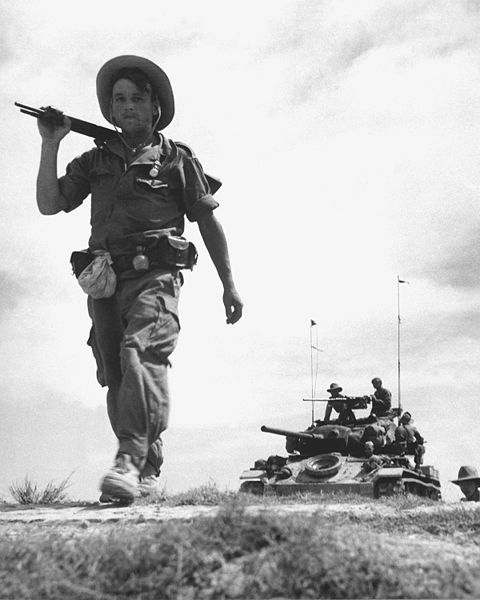
French Mobile Group in Indochina

“Any future defense secretary who advises the president to again send a big American land army into Asia or into the Middle East or Africa should ‘have his head examined,’ as General [Douglas] MacArthur so delicately put it.” Secretary of Defense Robert Gates

The effects of the wars Indo-China, Algeria and Vietnam on the French and American military organizations internally and in relationship to their nations piqued my interest in 2005. The wars in Iraq and Afghanistan forced me to start asking the question of what short and long term effect that these wars might have on the U.S. military. As such I wondered what historical precedent that there was for the question. My interest was furthered by my deployment with Marine and Army advisors to Iraqi Army and Security forces in 2007-2008. My search led to the French experiences in Indo-China and Algeria and the American experience in Vietnam. Recently with the Iraq war winding down and ongoing war in Afghanistan which has gone from apparent victory to mounting concern that we are losing the war in Afghanistan as Taliban and Al Qaida have regained momentum amid widespread corruption by the Afghan government and weakness of NATO forces.
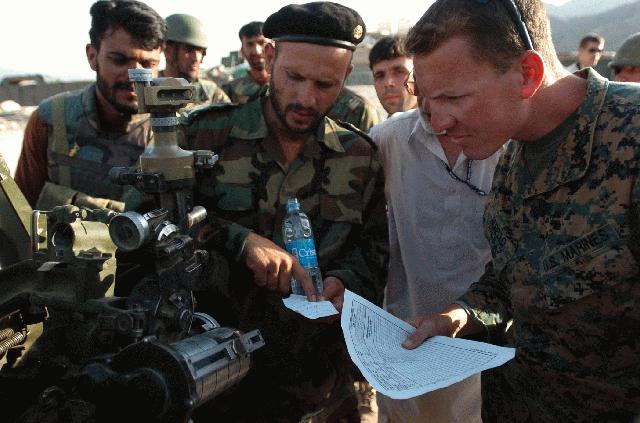
The counterinsurgency campaigns conducted by the French and American militaries in Vietnam and Algeria had deep and long lasting effects on them as did the Soviet war in Afghanistan. The effects included developments in organization and tactics, relationship of the military to the government and people, and sociological changes. The effects were tumultuous and often corrosive. The French Army in Algeria revolted against the government. The US Army, scarred by Vietnam went through a crisis of leadership and confidence which eventually resulted in end of the draft and formation the all volunteer military. The Soviet not only lost their war but they saw their country collapse and the military with it. The effects of the Iraq and Afghanistan wars are yet unknown but could result in similar situations to the militaries and governments involved.

French Surrender at Dien Bien Phu

There is a wealth of data regarding these wars. There are several types of materials. The accounts of soldiers, diplomats and reporters who experienced these events contained in memoirs and diaries. The best include David Hackworth’s About Face and Steel My Soldiers Hearts; and General Harold Moore’s We Were Soldiers Once… and Young. French works include Jules Roy’s The Battle of Dien Bien Phu and General Paul Aussaresses’ The Battle of the Casbah. There are innumerable popular accounts written by NCOs and junior officers. These accounts may contain a wealth of information, but are limited by a number of factors. First, the authors, veterans of the wars, only saw part of the overall picture and first-hand experience in war can skew a writer’s objectivity. Those who have been through the trauma of war interpret war through their own experience. Physical and psychological wounds can have a major impact on the interpretation of these writers as can their experience and political ideology. Finally few of these writers are trained historians. Despite this they can be a valuable resource for the historian.

Viet Minh Main Force Soldiers

Another source is found in the official histories written by the military forces involved in the wars. Often these incorporate unit histories and individual narratives and analyze specific battles and the wider campaigns, but do little in regard to broader conditions that affected operations. While a good source, many are not as critical of their institutions as they should be.

Histories by trained historians and journalists provide another view. The most insightful of the journalist accounts include Bernard Fall’ Street Without Joy and The Siege of Dien Bien Phu: Hell in a Very Small Place. A limitation of all of these is that they are often heavily influenced by the political and societal events. This means that earlier accounts are more likely to be reactive and judgmental versus critical and balanced. Later accounts have the benefit of access to the opposing side and documents not available to earlier writers. Alistair Horn in A Savage War of Peace provides one of the most informative and balanced accounts of the war in Algeria. Martin Winslow does the same regarding Dien Bien Phu in The Last Valley.

Foreign Legion in Algeria

Another source is the writings of participants who critically examine their participation in the wars. Many of these, French and American provide insights into the minds of leaders who are reflective and critically examine what happened to their military institutions in these wars. The best of these is French Colonel David Galula whose books Pacification in Algeria 1956-1958 and Counterinsurgency Warfare: Theory and Practice provide first-hand accounts of the subject combined with critical reflection. Galula’s works have been important to John Nagl, General David Petreus and others who helped write the U.S. Army and Marine Corps Counterinsurgency manual. Andrew Krepinevich in The Army and Vietnam provides a critical analysis of the U.S. Army in Vietnam. Other sources, both online and print, such as RAND, provide excellent analysis of selected topics within the scope of this essay, especially COIN.

Battles in the Streets of Algiers

The ability to dispassionately and critically examine and evaluate these sources over a period of several years was and integrate them with my own experience has been a critical to me. It has changed the way that I look at sources, and caused me to be much more aware of bias, the limitations of sources and the need to have a multiplicity of sources and points of view and to be suspicious of contemporary reports and accounts of the war in Afghanistan regardless of the source.

The conflicts in French Indo-China, Algeria and Vietnam had major effects on the French and American military institutions. These effects can be classified in a number of ways. First, the manner in which each military waged war, including tactics employed and use and development of weapons systems was changed. The use of airpower, especially helicopters and use of riverine forces provided an added dimension of battlefield mobility but did not bring victory. As John Shy and Thomas Collier noted regarding the French in Indo-China: “French mobility and firepower could take them almost anywhere in Vietnam, but they could not stay, and could show only wasted resources and time for their efforts.”[1]

Assassination and Terrorism in Algiers

The use of intelligence and psychological warfare, including the use of torture became common practice in both the French and American armies. The wars had an effect on the institutional culture of these armed services; neither completely embraced the idea of counterinsurgency and for the most part fought conventionally. Galula notes how the “legacy of conventional thinking” slowed the implementation of proper counterinsurgency tactics even after most commanders learned that “the population was the objective.”[2] Krepinevich notes that “any changes that might have come about through the service’s experience in Vietnam were effectively short-circuited by Army goals and policies.”[3] Finally the wars had a chilling effect on the relationship between the both militaries and the state, veterans from each nation often felt betrayed or disconnected from their country and people. Unfortunately instances of all of these have occurred or can be seen in the current wars in Iraq and Afghanistan.

US Army in Vietnam

The French Army had the misfortune of fighting two major insurgencies back to back. The French military was handicapped even before it went into these wars. The Army came out of World War II defeated by the Germans, divided by loyalties to Vichy or one of the Free French factions. They were humiliated by the Japanese in Indo-China, while in Algeria France’s crushing defeat was devastating. “Muslim minds, particularly sensitive to prestige and baraka, the humiliation made a deep impression.”[4] French society was as divided as the Army; the economy in shambles, the government weak and divided. The Viet-Minh had prepared well making use of time and training to get ready for war. “Once full-scale hostilities broke out, the French, for budgetary and political reasons could not immediately make the large scale effort to contain the rebellion in the confines of small-scale warfare.”[5]

Paras of the 1st Colonial Parachute Regiment jump in Algeria

In both Indo-China and Algeria the French attempted to fight the budding insurgencies in a conventional manner. This was particularly disastrous in Indo-China when on a number of occasions battalion and regimental combat team sized elements were annihilated by Viet-Minh regulars. Between October 1st and 17th 1950 every French garrison along the Chinese border was over-run. The French lost over 6000 troops and enough equipment to outfit “a whole additional Viet-Minh division.” It was their worst colonial defeat since Montcalm at Quebec.[6] In Algeria when the fight began in earnest France’s “ponderous ponderous N.A.T.O forces found themselves at an impossible disadvantage,”[7] unable to have any influence off the main roads.

Marcel Bigard: One of the most effective French commanders in Indochina and Algeria

In Vietnam the French did not absorb the lessons of fighting a well established insurgent force. French forces hoped to draw the Viet-Minh main forces into battles of attrition where their superior firepower could be brought to bear. Such was the case at Na San in December 1952 where the French established an “Air ground base” deep in Viet-Minh territory to draw Giap’s forces into open battle. This worked, but just barely. General Giap, short of artillery and not planning on a long battle frittered away his troops in mass charges. However, the French, because of Na Son assumed they had found the key to victory. In their embrace of the “air ground base concept, French staff officers were following an intellectual tradition that had long been prone to seduction by elegant theories.”[8] The result was the disaster at Dien Bien Phu the following year. The destruction of the elite Group-mobile 100 near Pleiku in 1954 was the coup de grace. In Indo-China the French made limited use of helicopters, used paratroops widely, and developed riverine forces. One thing they were critically short of was significant tactical air support.[9]

Roger Trinquier helped develop tactics in Indochina which helped turn the tide in Algeria, until the French Government ended the war leaving their soldiers to feel betrayed

The most inventive French creation in Indochina was the GCMA/GMI forces composed of mountain tribesmen led by French NCOs and Junior Officers. They were designed to provide “permanent guerilla groups rooted in remote areas” to harass and interdict Viet-Minh forces.[10] Trinquier noted that at the time of the Dien Bien Phu defeat that these forces had reached over 20,000 trained and equipped maquis in the Upper Region of Tonkin and Laos. These forces achieved their greatest success retaking Lao Cai and Lai Chau May 1954 as Dien Bien Phu fell.[11] Trinquier stated that “the sudden cessation of hostilities prevented us from exploiting our opportunities in depth.”[12] The GMI units and their French leaders were abandoned fighting on for years after the defeat. One account noted a French NCO two years after the defeat cursing an aircraft patrolling the border “for not dropping them ammunition so they could die like men.”[13] In the end the French left Indo-China and Giap remarked to Jules Roy in 1963 “If you were defeated, you were defeated by yourselves.”[14]
Algeria was different being part of Metropolitan France; there the French had support of European settlers, the pieds-noir. Many French soldiers had come directly from Indo-China. There French made better adaptations to local conditions, and realized that they had to win the population and isolate the insurgents from it and outside support. As Galula said, victory is the destruction of the insurgent’s political and military structures, plus “the permanent isolation from the population, not forced upon the population, but by and with the population.”[15] The lessons learned by the French in both Algerian and Indo-China were lost upon the Americans.

US Armored Cavalry in Vietnam

The United States military, especially the Army approached the Vietnam War with a conventional mindset, referred to as the “Army concept.” [16] It not only approached the war in this manner, but it trained and organized the South Vietnamese forces, ARVN into the American model. Americans re-organized ARVN into divisions “based upon the U.S. divisional force structure.”[17] Due to the imposition of an American template and organizational structure upon it, ARVN was not structured appropriately for the threat that it faced.”[18] The results were as to be expected. Large numbers of American troops poured in taking the lead against the North Vietnamese and Viet Cong . The American method of counterinsurgency was costly. It was “almost a purely military approach”[19] which ignored political and social realities on the ground. Instead of focusing on protecting the Vietnamese people and denying the Communists a safe haven the Army in particular believed that massive firepower was the best means to be “utilized by the Army to achieve the desired end of the attrition strategy-the body count.”[20] In the end the American defeat was a “failure of understanding and imagination.”[21] The one shining success was the Marine Corps experimentation with “Combined Action Program” platoons which lived in the villages with militia for long periods of time. This program produced great results “in eliminating local guerillas”[22] but was killed by the Army.

US and ARVN Soldiers in Joint Operation

These wars tore the heart out French and American armies. For the French the defeats inflicted a terrible toll. In Indo-China many French career soldiers felt that the government’s “lack of interest in the fate of both thousands of missing French prisoners and loyal North Vietnamese…as dishonorable.”[23] Divisions arose between those who served and those who remained in France or Germany and created bitter enmity between soldiers. France would endure a military coup which involved many who had fought in Vietnam and Algeria. Having militarily won that war, were turned into what Jean Lartenguy called The Centurions had been turned into liars.”[24] They were forced to abandon those who they had fought for and following the mutiny, tried, imprisoned, exiled or disgraced. Colonial troops who remained loyal to France were left without homes in their “independent” nations. They saw Dien Bien Phu as the defining moment. “They responded with that terrible cry of pain which pretends to free a man from his sworn duty, and promises such chaos to come: ‘Nous sommes trahis!’-‘We are betrayed.’”[25]

War Protests in the United States 

The U.S. Army left Vietnam and returned to a country deeply divided by the war. Vietnam veterans remained ostracized by the society until the 1980s. As Harold Moore recounts “in our time battles were forgotten, our sacrifices were discounted, and both our sanity and suitability for life in polite American society were publically questioned.” [26] The Army endured a massive reorganization that resulted in the formation of the All-Volunteer force, which would redeem itself and emerge from the ashes in the Gulf War.

Taliban in Afghanistan

The Americans would not learn the lessons of revolutionary warfare and counterinsurgency until forced to do so in Iraq in 2004-2007. These lessons however were not applied to Afghanistan and the Taliban which seemed to have been defeated have regained the initiative, policy is being debated amid discord in the west and there are reports of American and NATO forces becoming discouraged by the course of the war and concern that their efforts will be in vain. This is a dangerous situation to be in and if we learn from anything from our own history as well as that of foreign military forces in Afghanistan we need to be very careful in implementing strategy to get whatever we do right.

US Advisers with Afghanistan National Army Troops

The greatest success of the war was finally killing the leader of Al Qaeda, Osama Bin Laden at his Pakistani hide-out. That did not occur in Afghanistan and was the result of smart work by the CIA and other American intelligence services and the superb conduct of the mission by Navy SEAL Team Six. It was not the product of our costly counter-insurgency and nation building campaign in Afghanistan. There are many professional think tank “experts” that now urge continuing the Afghan mission indefinitely despite its massive cost and questionable strategic value. The costs of the war which are over 2 billion dollars a week are staggering with little to be shown from the hundreds of billions already spent in Afghanistan, much of which is spent on projects where corrupt Afghan government officials and tribal leaders are the only ones to benefit. Likewise the long term health of the military is imperiled. The money that should go to modernizing the force and replacing equipment worn out by war as well as the enormous costs in lives and the continuing care needed by military personnel wounding in body, mind and spirit remaining on active duty and those in the Veteran’s Administration system are imperiled.

Remote Training Team Base in Afghanistan

The effects of the wars in French Indochina, Algeria and Vietnam on the French and American military establishments were long lasting and often tragic. The acceptance of torture as a means to an end sullied even the hardest French officers. Men like Galula and Marcel Bigeard refused to countenance it, while others like Paul Aussaresses never recanted. Americans would repeat the tactic at Abu Ghraib rallying the Iraqis against them and nearly losing the war because of it.

Soviet Paratroops in Afghanistan

For the Americans, the effects of Vietnam continued at home. Race riots tore at the force while drug addictions and criminal activities were rampant. Many incompetent leaders who had “ticket punched” their careers kept their jobs and highly successful leaders who became whistle blowers like Hackworth were scorned by the Army institution. The years following Vietnam were a severe test of the US Military and took years for the military to recover. Likewise it took years before either the French or American veterans again felt a part of their countries. They ended up going to war, and when it was over; feeling abandoned, their deepest bonds were to their comrades who had fought by their side.

Osama Bin Laden leading Mujaheddin in 1984 

If this is not enough we have the experiences of the Soviet Union, the British Empire and others that have attempted to rule Afghanistan as plumb lines to gauge our effectiveness. Others have tried and failed miserably at this. The Soviets learned the hard way and found that Afghanistan was one of the major reasons for the collapse of the Soviet Union. Reading the history of Soviet operations in Afghanistan is frighteningly like reading the history of our campaign.

Two Soviet Mi-24 “Hind” attack helicopters flying in an Afghan Valley

The Soviets invaded Afghanistan in 1979 they used their 40th Army which initially was composed of “two motorized rifle divisions, an airborne division, an air assault brigade and separate motorized rifle regiments.”[27] These forces totaled about 52,000 troops and were “considered sufficient to guarantee the viability of Afghanistan.”[28] The 40th Army was a standard Cold War Soviet Combined Arms Army designed for high tempo conventional operations. It was not designed for nor trained in counterinsurgency operations or what the Soviets and Russians class as “anti-guerilla operations.” It was poorly suited to mountain and dessert combat and at the beginning “not only had no practical skills in the conduct of counter-guerilla warfare, they also did not have a single well-developed theoretical manual, regulation or tactical guideline for fighting such a war.”[29]

Downed Soviet Mi-4 “Hound” with Mujaheddin 

The Soviets did not expect to be involved in combat operations and the Afghan population reacted to their presence with resistance which spread across the country both against their own government which they viewed as a puppet of the Soviets but also against the Soviet Forces. As time went on the Soviets attempted to use raids and large scale operations to attempt to bring Mujahidin forces to battle, however the insurgents were very skillful and the Soviets attempted to increase the training of their forces as well as their numbers. By 1986 the numbers on the ground had increased to 108,000 personnel in four divisions, five separate brigades, four separate regiments and six separate battalions.[30] In the nearly 10 years of operations over a half million Soviet soldiers and support personnel served in Afghanistan. Tours for enlisted personnel who were primarily conscripts served 12-18 months in country and officers 2 years. Few returned for subsequent tours meaning that the 40th Army had few personnel very familiar with the country, its people and the challenges faced by Soviet forces. According to official sources the 40th Army suffered 13,833 killed in action or died of wounds, 49,985 wounded and 311 missing in action a figured of 1 in 8 Soviet Soldiers being casualties. 14.3 percent of the casualties were officers.[31] Of course the official figure is doubted many believing the number killed in action or died of wounds to be closer to 26,000.[32]

Soviet T-62 Tank guarding a convoy in a mountain pass

Like their American and French counterparts the Soviet veterans have experienced the unhealed wounds of war and a country that does not understand their experiences. The stigma of war wounds and PTSD haunt many Soviet veterans and were compounded by the collapse of the Soviet Union and Warsaw Pact in 1989. They returned home, lost their country and were by and large abandoned by their countrymen. A good number of these men and women travel to one of 5 centers across the country where according to one of the veterans come to for “social and psychological help.” He said that “The best thing about this place is that it provides us with a chance to share our Afghan memories with comrades who understand what we are talking about.” That camaraderie of being able to share their experiences with others that understand is helping some to return to something akin to “normal” life. They are joined by the soldiers that have experienced similar things in Chechnya. Russian veterans of the Afghan War are still so closely linked to it that they refer to themselves as “Afghans.”

Soviet Mi-8 “Hip” Helicopters in Afghanistan preparing for a mission

The Soviet Forces supported the Army of the Democratic Republic of Afghanistan which numbered at their peak on average between 120,000-150,000 soldiers.[33] The Afghan forces, then as now were at the mercy of tribal, familial and communist party affiliations. Over 70 percent of the DRA was conscripted, desertions averaged 1,500 to 2,000 soldiers a month and units were usually optimistically 25-40 percent under their TO&E strength.[34]Limitations on training and leadership meant that typically DRA units could not conduct large scale missions without Soviet help. As such most of the fighting was done by Soviet formations.

Soviet Troops preparing to leave Afghanistan

Many of these problems have plagued the United States and ISAF throughout the first 9 years of the current Afghan War. As former Afghanistan Commander General Stanley McChrystal noted in his assessment “ISAF is a conventional force that is poorly configured for COIN, inexperienced in local languages and culture, and struggling with the challenges inherent to coalition warfare. These intrinsic disadvantages are exacerbated by our current culture and how we operate.”[35]

We should have learned. A retired Red Army Colonel who served in Afghanistan from 1986-1988 who learned the Dari language in order to negotiate with the Afghan Mujahedeen warned what will happen when the Americans and NATO leave the country and the mistake that we made in entering Afghanistan. Frants Klinsevich now a member of the Russian Parliament comment to reporters at a wreath laying ceremony at a veteran’s convention that “they (NATO and the United States) are 100 percent repeating the same mistake we made by entering into a war in that country” and that “As soon as the Americans and Europeans leave, the Taliban will crack down on everything.” Klinsevich noted that he understood the American desire to tame Afghanistan but that “the problem of radical Islam will not be solved there, its violence cannot be solved. It is simply unsolvable.” He said that he wished that the United States had consulted the Russians about Afghanistan saying “they should have invited Russian specialists, involved Russia, really studied how they could use Russia. But unfortunately Americans think they know everything.” The former Russian commander understands far more that the majority of American policy makers on this subject. [36]

The fact is that we are hamstrung by the ongoing wars which limit our ability to respond to rapidly changing situations. We are in a similar situation to the Germans in 1942 and 1943 overcommitted, overstretched and lacking true strategic depth to respond to unanticipated situations as are now occurring across the Middle East. In 1942 and 1943 the Germans were always just short of the forces that would have turned the tide. Like the Germans our economy is laboring on the verge of collapse and we have to honestly answer the question “What is the strategic value in continuing to wage war in Afghanistan in the way that we are doing?”

What are the lessons to be learned from these campaigns as well as from the various accounts? Andrew Krepinevich prophetically noted that the failure to learn the lessons of Vietnam “represents a very dangerous mixture that in the end may see the Army again attempting to fight a conventional war against a very unconventional opponent.”[37] Obviously, there are lessons to be learned, especially in understanding the nature of revolutionary war as well as the culture and history of our opponents. The U.S. has made some improvement in this regard but there is still much to be learned, especially since after the war the Army was “erecting barriers to avoid fighting another Vietnam War.”[38] From these wars we learn that nations and incompetent governments who mismanage wars can alienate themselves from the soldiers that they send to fight, with serious consequences. As far as historiography we learn that certain historical fallacies are evident when one reads the accounts critically and recognize the bias and limitations of the various sources.

The fact is that we have learned little about such wars and are paying a terrible price for it. The debate now is should we continue the war as it is with minor withdraws of troops or begin a rapid exit in order to preserve and rebuild our force and to reduce the cost of these operations. But that debate and decision are well above my pay grade. But then maybe we need to remember what Field Marshall Gerd Von Rundstedt told his staff in September of 1944 when asked how to recover from the disastrous collapse of the German front following the Allied breakout from Normandy and dash across France. “Make peace you fools.” http://www.youtube.com/watch?v=ch56NAL1C-I

Peace
Padre Steve+
________________________________________
[1] Shy, John and Collier, Thomas W. “Revolutionary War” in Makers of Modern Strategy from Machiavelli to the Nuclear Age,” Peter Paret editor. Princeton University Press, Princeton N.J. 1986 p.849
[2] Galula, David. Counterinsurgency in Algeria: 1956-1958. RAND Corporation, Santa Monica, CA. 2006. First published by RAND in 1963. p.244
[3] Krepinevich, Andrew F. “The Army and Vietnam,” The Johns Hopkins University Press, Baltimore and London, 1986 p.213
[4] Horn, Alistair. “A Savage War of Peace: Algeria 1954-1962,” a New York Review Book published by the New York Review of Books, New York, 1977, 1987, 1996, and 2006 p 41
[5] Fall, Bernard B. “Street Without Joy: The French Debacle in Indochina.”Stackpole Books, Mechanicsburg PA, 2005, originally published by Stackpole Publications 1961 p.27
[6] Ibid. p.33
[7] Horn. p.100.
[8] Windrow, Martin. “The Last Valley: Dien Bien Phu and the French Defeat in Vietnam,” Da Capo Press, Novato, CA 2006, originally published by Weidenfeld and Nicholson, London 2004 p.63
[9] Fall, Bernard B. “The Siege of Dien Bien Phu: Hell in a Very Small Place.” Da Capo Press, New York an unabridged reprint of the 1st Edition reprinted in arrangement with Harper and Row Publishers, New York. 1967 pp. 456-457 Fall discusses in depth the lack of French Air support and the antecedents that led to the shortage following World War II.
[10] Pottier, Philippe(2005)’Articles: GCMA/GMI: A French Experience in Counterinsurgency during the French Indochina War’, Small Wars & Insurgencies,16:2,125 — 146http://dx.doi.org/10.1080/09592310500079874
[11] Simpson, Howard K. “Dien Bien Phu: The Epic Battle America Forgot,”Potomac Books Inc. Washington DC 2005, originally published by Brassey’s Inc. 1994 pp. 170-171
[12] Trinquier, Roger. “Modern Warfare: A French View of Counterinsurgency,” translated from the French by Daniel Lee with an Introduction by Bernard B. Fall. Praeger Security International, Westport CT and London. 1964 and 2006. Originally published under the title “La Guerre Moderne” by Editions Table Ronde. p.87
[13] Windrow. p.652.
[14] Roy, Jules. “The Battle of Dien Bien Phu” Carrol and Graf Publishers, New York 1984. Translated from the French by Robert Baldrick. English translation copyright 1965 by Harper and Row Publishers, New York. p.xxx
[15] Galula, David. “Counterinsurgency Warfare: Theory and Practice.”Praeger Security International, Westport CT 1964 and 2006 p. 54
[16] Krepinevich. p.213
[17] Ibid. p.24
[18] Nagl, John A. “Learning to East Soup with a Knife: Counterinsurgency Lessons from Malaya and Vietnam,” University of Chicago Press, Chicago and London, 2005 p.138
[19] Shy. p.856
[20] Krepinevich. p.202
[21] Spector, Ronald H. “After Tet: The Bloodiest Year in Vietnam,” Vintage Press, a division of Random House, New York, 1993 p.314
[22] Millett, Allan R. and Maslowski, Peter. “For the Common Defense: A Military History of the United States of America.” The Free Press, a division of Macmillian, Inc. New York, 1984 p.555
[23] Windrow. p.655
[24] Ibid. p.657
[25] Ibid.
[26] Moore, Harold G and Galloway, Joseph L. “We were Soldiers Once…and Young: Ia Drang: The Battle that Changed Vietnam,” Harper Collins Publishers, New York NY 1992 p. xx
[27] The Russian General Staff. The Soviet Afghan War: How a Superpower Fought and Lost” translated and edited by Lester A. Grau and Michael A. Gress, University Press of Kansas, Lawrence KS 2002 p.17.
[28] Ibid. p.18
[29] Ibid. p.43
[30] Ibid. p.28
[31] Ibid. p.309
[32] Ibid. p.xix
[33] Ibid. p.48
[34] Ibid. pp.48-51
[35] McChrystal, Stanley. “Commander’s Initial Assessment Commander International Security Assistance Force Afghanistan” dated 30 August 2009 pp. 1-2
[36] “Russian veteran warns of Afghan violence.” Reuters 16 May 2011. Edited by Paul Tait and Daniel Magnowski obtained 11 June 2011 at http://www.trust.org/alertnet/news/interview-russian-veteran-warns-of-unsolvable-afghan-violence/
[37] Krepinevich. p.275
[38] Ibid. p.274

3 Comments

Filed under Foreign Policy, History, iraq,afghanistan, middle east, Military, Political Commentary, vietnam, world war two in europe

Adjusting Strategy to Reality

Taliban Fighters

“The core goal of the U.S. strategy in the Afghanistan and Pakistan theater remains to disrupt, dismantle, and eventually defeat al-Qa’ida in the region and to prevent its return to either country…” US Strategy in Afghanistan for 2011

“The aim of war should be the defeat of the enemy.  But what constitutes defeat?  The conquest of his whole territory is not always necessary, and total occupation of his territory may not be enough.” Carl Von Clausewitz

Strategic goals cannot remain fixed on geographic objectives which have lost their strategic importance because it is no longer the enemy’s center of gravity. On September 11th 2011 the Taliban ruled Afghanistan which harbored Osama Bin Laden’s Al Qaeda terrorist organization became the central front in the new “War on Terrorism.”  For about a year Afghanistan remained the central focus of United States efforts against Al Qaeda until President Bush and his administration changed the primary effort to the invasion of Iraq and the overthrow of the Saddam Hussein regime.

The effect of switching the American strategic focus from Afghanistan where we were making headway despite the limited resources provided to Iraq was a mistake of epic proportions that only became evident when Iraq did not go the way that the Bush administration led by Vice President Dick Cheney. Secretary of Defense Donald Rumsfeld and Paul Bremer the head of the Coalition Provision Authority planned.  Instead of a quick withdraw a series of mistakes and miscalculations turned the majority of the Iraqi people who had welcomed US Forces with open arms against us and an insurgency which claimed over 4000 American military personnel deaths and over 30,000 wounded became our primary focus.  We are still trying to figure out how to end our involvement in that country hoping that Iraq will not sink into another civil war.

Contrary to expectations Iraq became a front which consumed U.S. Forces and limited strategic flexibility in other regions of the world including Afghanistan.  In that country the indigenous Taliban which had been driven from power in 2001 began a gradual and deliberate return to political and military viability which was finally noticed by the United States in 2008 and 2009.  The Taliban were supported by the Pakistani Taliban, elements of the Bin Laden organization and in many cases duplicitous elements within the Pakistani military and intelligence services which were using the situation to support their own strategic goals of gaining influence in Afghanistan while strengthening their position against their perceived mortal enemy India.  Throughout the war the Pakistanis acted in their own interest while placating American demands to do more against the Taliban and Al Qaeda operating in Pakistan proper.

The Obama administration attempted to regain the initiative with a “surge” of 30,000 additional troops which raised the overall commitment of the United States to a force of over 100,000 troops assisted by NATO Allies and the corrupt, ill-trained and often Taliban Afghan Army and Police.  The surge was controversial and marked with controversy was the US Commander General Stanley McCrystal was relieved of command after an article in the Rolling Stone magazine which made it appear that he held the Obama administration in contempt. Since McCrystal recently returned to the Administration in a civilian capacity one wonders if the administration discovered that the article was meant to discredit McCrystal. McCrystal was relieved by his superior CENTCOM Commander General David Petreaus who had helped devise the strategy which in conjunction with the Anbar Awakening turned the tide against Al Qaeda and indigenous Iraqi insurgents in 2007-2008.  It achieved some success but even the United States recognizes that whatever success has been wrought is fragile and could easily be erased.

Unfortunately while the United States and its Allies continue to reinforce the campaign in Afghanistan their efforts are often undercut by the corrupt and duplicitous regime of Mohammed Karzai as well as our supposed Pakistani allies.  The Karzai regime hunkered down in Kabul has little influence outside the Presidential Palace except in its dealing in the Opium trade which helps finance the Taliban. The Pakistanis have over the 10 year duration of the war failed to maintain the security on their side of the border and often have clandestinely supported the Taliban and according to some may have given sanctuary to Al Qaeda.  The most recent setback came today when the Pakistani Chief of the General Staff General Ashfaq Parvez Kayani and Chief of Intelligence Ahmed Shuja Pasha issued a demand for the US to stop Predator Drone strikes in the border regions, cut Special Forces and CIA Staff and give the Pakistani Intelligence Service, the ISI visibility on CIA operations.  This has been long in the works but came to a head with the arrest of a CIA contractor under the suspicion of murdering two Pakistanis.  The incident created quite a rift in US and Pakistani relations in part brought about by internal Pakistani politics.  Of course the ISI has long been a source of aid to the Taliban so the United States has good reason not to trust the ISI with information that could endanger American lives.

Protests in Bahrain: The Arabian Peninsula as the new Center of Gravity

The fact is without full Pakistani cooperation and substantial Afghani political reform to end corruption and provide real security to Afghani people there is no way to set conditions for a US withdraw that would leave Afghanistan a less dangerous place for its own people and for US and Western security interests. After all no one wants another 9-11 attack.  The US plans to begin withdrawing forces this year but the mission has been extended to at least 2014 at a cost of 119.4 billion dollars per year at the estimated 2011 rate and has increased exponentially since the US involvement began in 2001. The cost of the Afghanistan war in human, material and economic terms has imperiled other strategic priorities and limits the flexibility of the United States in other more vital regions.

Afghanistan is now an expensive sideshow in a larger war where the strategic center of gravity has shifted decisively to the Arabian Peninsula, North Africa and the Eastern Mediterranean where Al Qaeda seeks to use democratic revolts against autocratic despots to further its own ends. The key countries are Yemen, Saudi Arabia, Bahrain and Egypt with Lebanon, Syria, Jordan and the Israeli-Palestinian conflict boiling over.  While all of these crises grow on what seem to be a daily basis the United States and its Allies are mired in Afghanistan reinforcing failure.  Our troops on the ground have not lost a battle but like our brothers in Vietnam could “lose” the war.

This is the point where political and military leaders have to count the cost of the operation and weigh them against our actual strategic interests. The fact is if we withdrew the bulk of our ground combat forces and shifted to a lower footprint special operations and CIA campaign with a goal of ensuring that Al Qaeda cannot operate in Afghanistan with impunity as they did before 9-11 that we would likely be no worse off than we are now and have a greater amount of strategic flexibility to deal with other crises, political, military and humanitarian around the world.

The real crux of the issue is that Afghanistan is much like Stalingrad to the Germans in 1942. It has become a psychological more than a military campaign. We have invested so much in it that we do not believe that we can withdraw even though a scaled back presence would do much to improve our overall strategic situation.  Hitler denuded more important areas to attempt to capture Stalingrad and lost everything. Yes Al Qaeda used Afghanistan as its base to attack us in 2001 but they have moved on and Al Qaeda in Yemen and the Arabian Peninsula is a far greater strategic danger simply because of the oil supplies and strategic waterways in the area.

We simply need to look at all components of national strategy and decide where to concentrate.  Sometimes a strategic withdraw is necessary and actually vital to recover the initiative and set the stage for long term success. In Afghanistan this is not an admission of defeat but rather an acknowledgement that the central focus of the war and our strategic interests are elsewhere.  Our enemies would love to have us continue the campaign in Afghanistan in its current form, they know that our commitment drains our military, imperils our overall strategy and bleeds us dry economically all the while providing propaganda grist for them in their war against us.

However despite the cost the political situation in the United States keeps President Obama invested in Afghanistan. If he withdraws his opponents will say that he lost the war. Unfortunately the war in Afghanistan was ceded to the Taliban in 2003 when we decided that Iraq was more important. Now we reap the terrible consequences of that decision.  Now we have to decide how to make something positive out of this unenviable strategic position. But as Napoleon Bonaparte said “In order to govern, the question is not to follow out a more or less valid theory but to build with whatever materials are at hand. The inevitable must be accepted and turned to advantage.”

Peace

Padre Steve+


2 Comments

Filed under Loose thoughts and musings