Tag Archives: Cemetery Hill

The King of Battle at Gettysburg: Union and Confederate Artillery Types and Organization

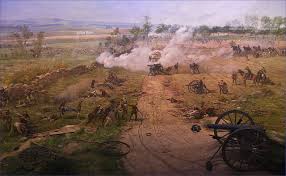
cemeteryridgearty

Note to my friends at Padre Steve’s World: This is another in my articles on Gettysburg that I am preparing for my next “Staff Ride” for the incoming class at the Staff College where I teach. Eventually I will have a page with a tab at the top of this site for my readers to access all of those articles.

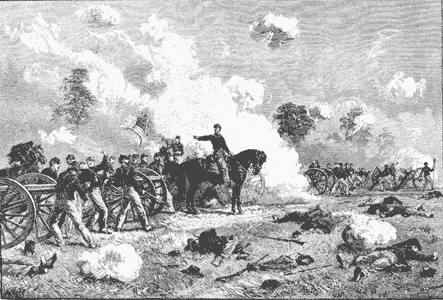
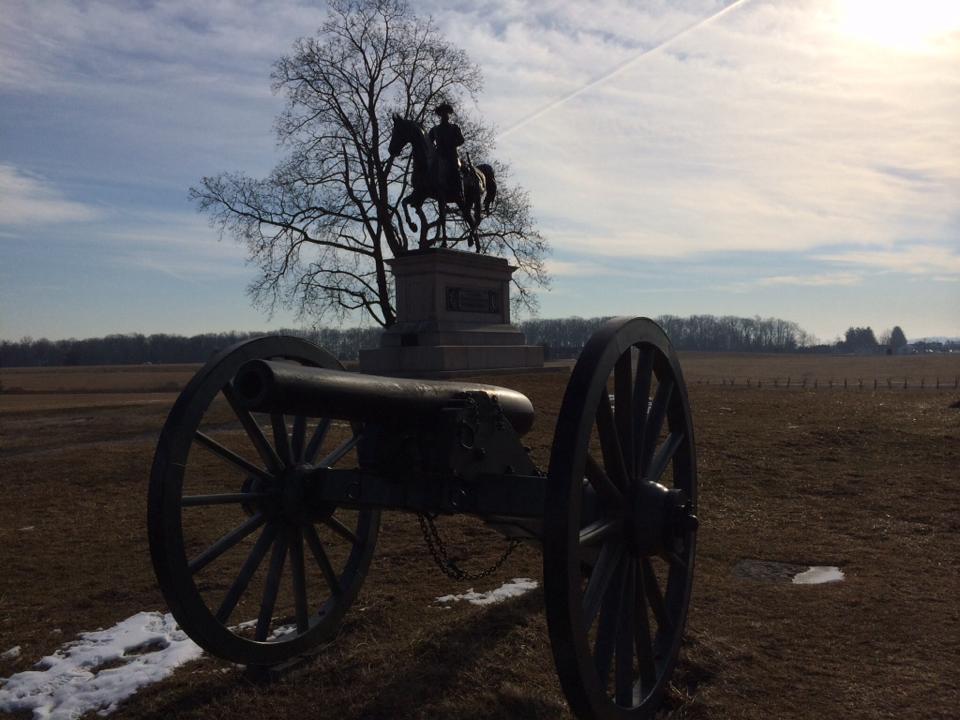
The Artillery of the Army of the Potomac at Gettysburg proved that it was the “King of Battle” and a key part of Union commanders and their use of combined arms. The superiority of the Federal artillery at Gettysburg over their Confederate counterparts was not simply due to the numbers of guns employed, it was in the manner that they were employed and the manner that Federal commanders employed the artillery under their command.
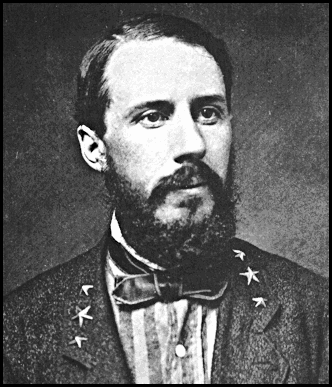
porteralexanderColonel Porter Alexander

This is not to say that the Confederate artillerymen were inferior to their Federal counterparts, Porter Alexander, who commanded First Corps artillery under Longstreet was an excellent artillery commander, although Brigadier General Henry J. Hunt was by far superior to his Confederate Counterpart Brigadier General William Pendleton. The problems lay in equipment, ammunition and their employment by their carious Corps and division commanders.
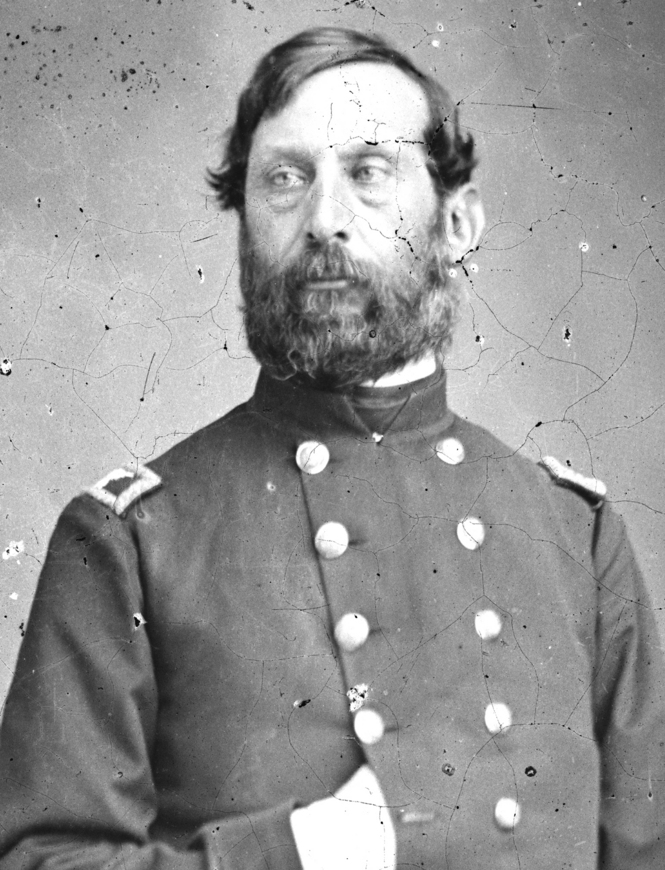
henryhuntBrigadier General Harry Hunt

Hunt and Pendleton were both graduates of the West Point, however Pendleton had left active service in the 1830s to become an Episcopal Priest and had no combat experience. Hunt remained in the Army, served in Mexico and at the beginning of the war was the the chief artillery instructor at West Point. His treatise on the use of artillery Instructions for Field Artillery published by the War Department in 1861 was the primary instruction for all Union artillery units.
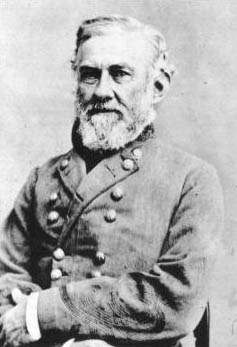
WNPendeltonBrigadier General William Pendleton

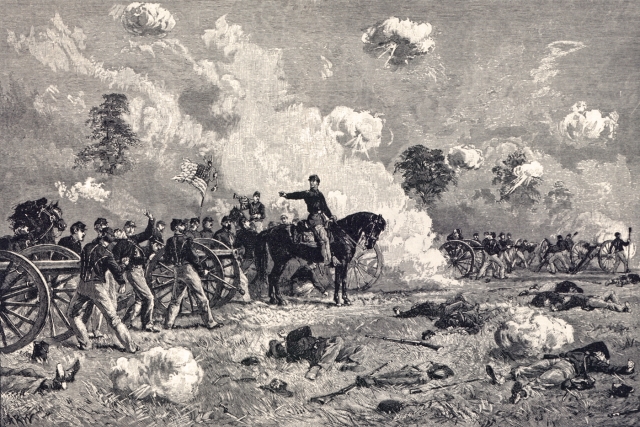
Union and Confederate organizations differed. Hunt was instrumental in reorganizing Union artillery organizations. Brigades retained their assigned batteries for direct support of those units. Divisions and Corps lost their artillery which was brought into an Artillery Reserve for greater flexibility on the battlefield. As such the Artillery Reserve became the instrument of of the Army commander and served as what we would now call “general support” artillery. The organization allowed Meade to better manage his artillery at Gettysburg and employ it where he needed at the time where it was most required. This ensured that Meade and his subordinate commanders had a good command of fires throughout the battle.
HD_WilkesonBattery_z.preview

Hunt and his subordinates sought to concentrate their artillery but also to employ cross fires on advancing enemy infantry. During the battle Union artillery was particularly effective during Buford’s delaying action where its skillful employment caused Heth and Pender’s Divisions large number of casualties on July 1st. At Cemetery Hill on the evening of July 1st where Howard’s positioning of batteries on that hill with Steinwehr’s Division ensured that it held.  On July 2nd it was used with great effect during the savage fighting at the Peach Orchard, the Wheat Field, Devil’s Den and Little Round Top. However its greatest effect was in decimating Pickett’s Division and supporting units on July 3rd. 

The Confederate Artillery was assigned to each Army Corps and although Pendleton was Lee’s Artillery Chief he had little influence on the battle. Instead that authority was dispersed to the artillerymen serving under each Corps commander. While this worked well at the corps level it ensured that Lee had no way of effectively coordinating fires throughout the battle. As such on the third day Porter Alexander, a battalion commander and Longstreet’s senior artilleryman was limited to his First Corps batteries and whatever artillery was lent by A. P. Hill’s Third Corps as the artillery of Second Corps was unavailable and on the wrong side of the battlefield when needed.

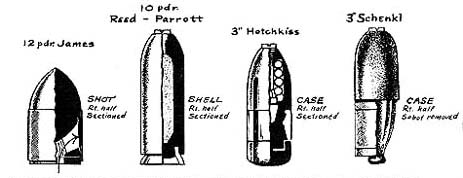
At the battery level Union artillery was on the whole organized by type in six gun batteries. Confederate artillery units were organized in four or six gun batteries in which types of guns were often mixed, leading to supply problems and inconsistency in rates of fire and range. Union batteries also had better quality ammunition and gunpowder supplies.

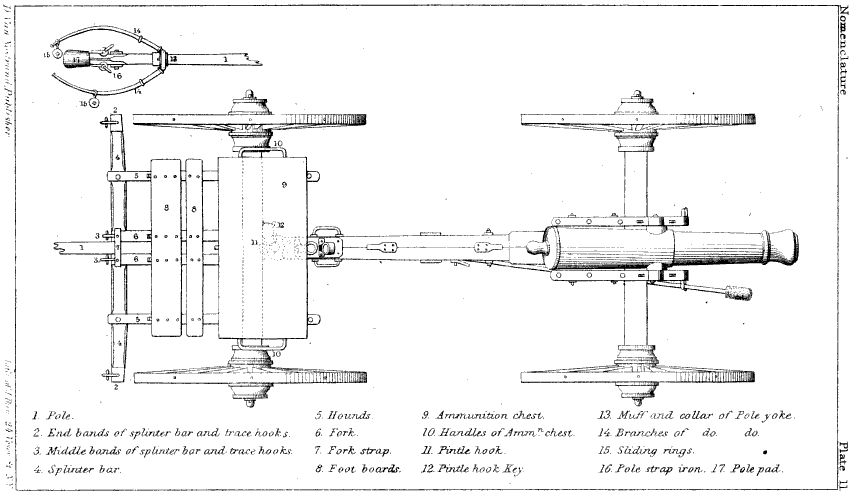
smoothboreammorifledammo6pdrcarriagetravelcaisson-and-limber
Field Artillery batteries were of two types. Foot Artillery which accompanied the Infantry and Horse Artillery which accompanied the Cavalry. The crews of the Foot Artillery either marched alongside their guns or rode on the caissons. The crews of the Horse Artillery rode horses in order to better keep up with the Cavalry Units they supported.
Parrott-Answer-LRESM

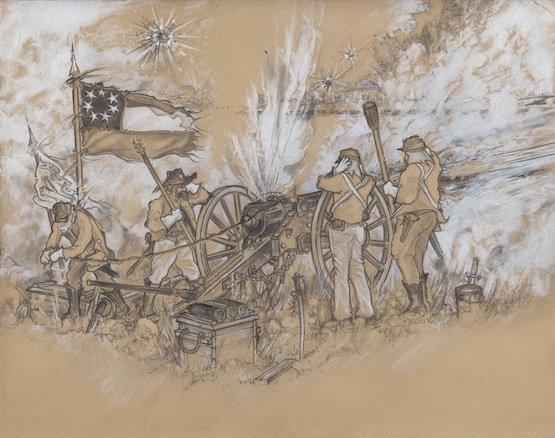
All the field artillery weapons were line of sight weapons. They had neither the range nor the fire direction capability for indirect fire. Ammunition included solid shot, exploding shells and canister which was used at short range against infantry.

The increase in range and effectiveness of rifled muskets made the job of the artilleryman more dangerous than it had been in previous wars. Thus when employed in the offense or during close assaults artillerymen were exposed to musket fire resulting in heavier casualties among the gun crews.

At Gettysburg the Army of the Potomac about 360 guns, the total number of guns available to Lee and the Army of Northern Virginia varies depending on the source between 262 and 241 guns.

The Union for the most part used weapons made in the United States, whereas the Confederates having few ordnance factories of their own were limited and attempted to obtain weapons from Europe. At Gettysburg it had two of the 2.75 inch Whitworth Breechloading Rifles were the most modern and long range weapons on the battlefield and prefigured the field artillery weapons that would dominate the battlefield in the Twentieth Century.

cannons

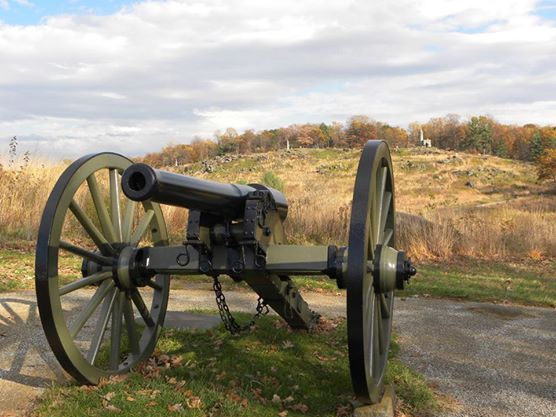
There were three basic types of cannon used at Gettysburg. Rifled cannon, Smoothbores and Howitzers. The bulk of Federal Artillery was made up of rifled cannon, especially the 3” Ordnance Rifle of which Meade had 146 at Gettysburg. There were also 142 of the M 1857 12 pound smoothbore “Napoleon’s” named after Emperor Napoleon III of France. Forty to forty-four percent of the guns available to Lee’s Army of Northern Virginia were Napoleons, of which they had 107 at Gettysburg. The technical details of each type are listed below.

Rifled Cannon
 999130_10152038135167059_1801660138_n

10-Pounder Parrott Rifle, M ’63

Bore Diameter             3.0 in (7.64 cm)
Tube Material              Cast and Wrought Iron
Tube Length                78 in (198 cm)
Tube Weight                890 lb (404 kg)
Powder Charge           1 lb (0.45 kg)
Range (5° Elevation)   2,000 yd (1,829 m)

10-Pounder Parrott Rifle, M ’61

Bore Diameter             2.9 in (7.37 cm)
Tube Material              Cast and Wrought Iron
Tube Length                78 in (198 cm)
Tube Weight                890 lb (404 kg)
Powder Charge           1 lb (0.45 kg)
Range (5° Elevation)   2,000 yd (1,829 m)

At Gettysburg (total M61 and M63)
60 Union; 42 Confederate

20-Pounder Parrott Rifle

Bore Diameter                 3.67 in (9.32 cm)
Tube Material                  Cast and Wrought Iron
Tube Length                    89 in (226 cm)
Tube Weight                    1,750 lb (794 kg)
Powder Charge                2 lb (0.91 kg)
Range (5° Elevation)        2,100 yd (1,920 m)
At Gettysburg 24 Union

3.67-Inch Navy Parrott Rifle

Bore Diameter                 3.67 in (9.32 cm)
Tube Material                  Cast and Wrought Iron
Tube Length                    89 in (226 cm)
Tube Weight                    1,750 lb (794 kg)
Powder Charge               2 lb (0.91 kg)
Range (5° Elevation)       2,100 yd (1,920 m)
At Gettysburg                  4 Confederate
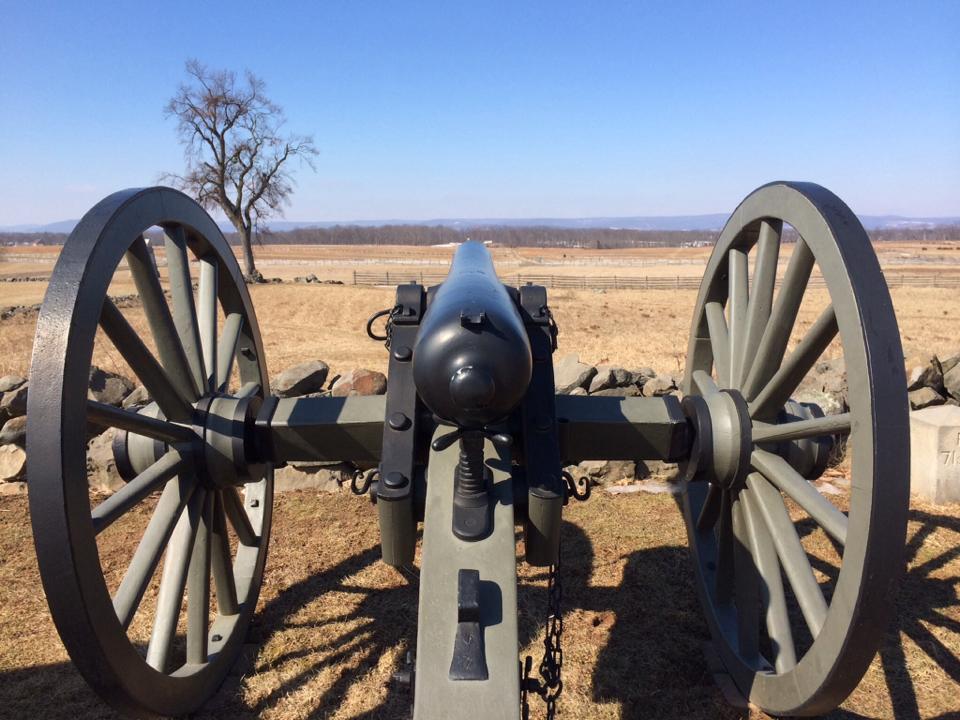
cemeteryridge
3-Inch Ordnance Rifle

Bore Diameter                 3.0 in (7.62 cm)
Tube Material                  Wrought Iron
Tube Length                    73 in (185 cm)
Tube Weight                   816 lb (370 kg)
Powder Charge              1 lb (0.45 kg)
Range (5° Elevation)      1,835 yd (1,678 m)
At Gettysburg                 146 Union; 73 Confederate

14-Pounder James Rifle

Bore Diameter                3.80 in (9.65 cm)
Tube Material                 Bronze
Tube Length                   65 in (165 cm)
Tube Weight                   918 lb (416 kg)
Powder Charge              0.75 lb (0.34 kg)
Range (5° Elevation)     1,700 yd (1,554 m)
At Gettysburg                4 Union

12-Pounder (2.75 Inch) Whitworth Breechloading Rifle

Bore Diameter                2.75 in (7 cm)
Tube Material                 Iron and Steel
Tube Length                   104 in (264 cm)
Tube Weight                   1,092 lb (495 kg)
Powder Charge              1.75 lb (0.79 kg)
Range (5° Elevation)      2,800 yd (2,560 m)
At Gettysburg                  2 Confederate

Blakely Rifle

Bore Diameter                 3.4 in (8.64 cm)
Tube Material                  Steel
Tube Length                    59 in (150 cm)
Tube Weight                    800 lb (363 kg)
Powder Charge               1 lb (0.45 kg)
Range (5° Elevation)       1,850 yd (1,691 m)
At Gettysburg                   3 Confederate

Smoothbore
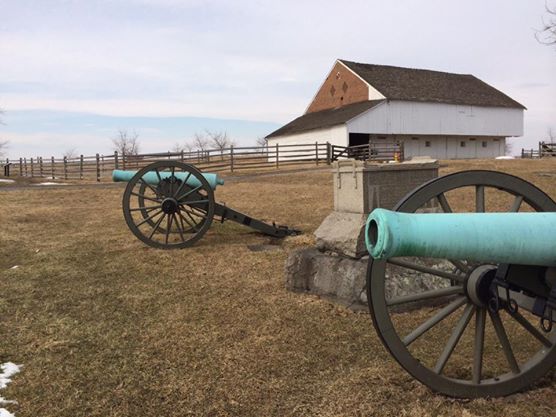
1497705_10152329726382059_1343167358_n

12-Pounder Napoleon-Federal Manufacture

Bore Diameter               4.62 in (11.73 cm)
Tube Material                Bronze
Tube Length                  66 in (168 cm)
Tube Weight                 1,227 lb (557 kg)
Powder Charge            2.5 lb (1.13 kg)
Range (5° Elevation)    1,619 yd (1480 m)
At Gettysburg               142 Union

12-Pounder Napoleon-Confederate Manufacture

Bore Diameter              4.62 in (11.73 cm)
Tube Material               Bronze
Tube Length                 66 in (168 cm)
Tube Weight                 1,227 lb (557 kg)
Powder Charge            2.5 lb (1.13 kg)
Range (5° Elevation)    1,619 yd (1480 m)
At Gettysburg               107 Confederate

6-Pounder Field Gun

Bore Diameter              3.67 in (9.32 cm)
Tube Material               Bronze
Tube Length                 60 in (152 cm)
Tube Weight                 884 lb (401 kg)
Powder Charge            1.25 lb (0.57 kg)
Range (5° Elevation)    1,523 yd (1,393 m)
At Gettysburg                1 Confederate

Howitzers

12-Pounder Field Howitzer

Bore Diameter              4.62 in (11.73 cm)
Tube Material               Bronze
Tube Length                 53 in (135 cm)
Tube Weight                788 lb (357 kg)
Powder Charge           1 lb (0.45 kg)
Range (5° Elevation)   1,072 yd (980 m)
At Gettysburg               2 Union; 26 Confederate

24-Pounder Field Howitzer
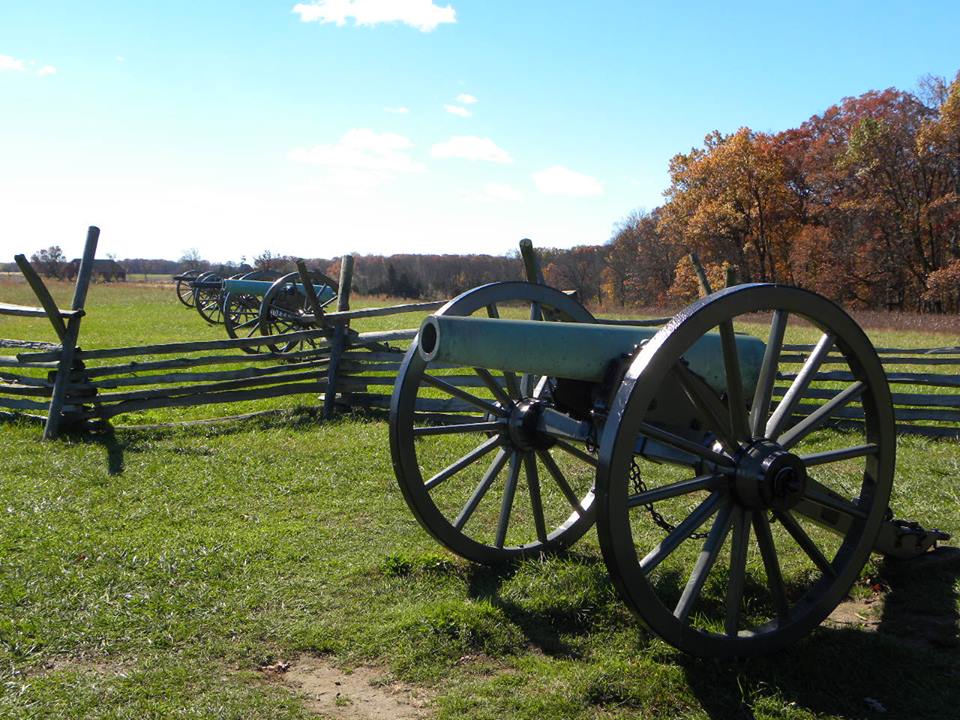
1454601_10152040914857059_709344690_n

Bore Diameter               5.82 in (14.78 cm)    
Tube Material                Bronze
Tube Length                  65 in (165 cm)
Tube Weight                  1,318 lb (598 kg)
Powder Charge             2 lb (0.91 kg)
Range (5° Elevation)     1,322 yd (1,209 m)
At Gettysburg                4 Confederate
20140308-231743.jpg

So until tomorrow,

Peace

Padre Steve+
1 Comment

Filed under civil war, History, Military

Remembering Gettysburg and the New Birth of Freedom

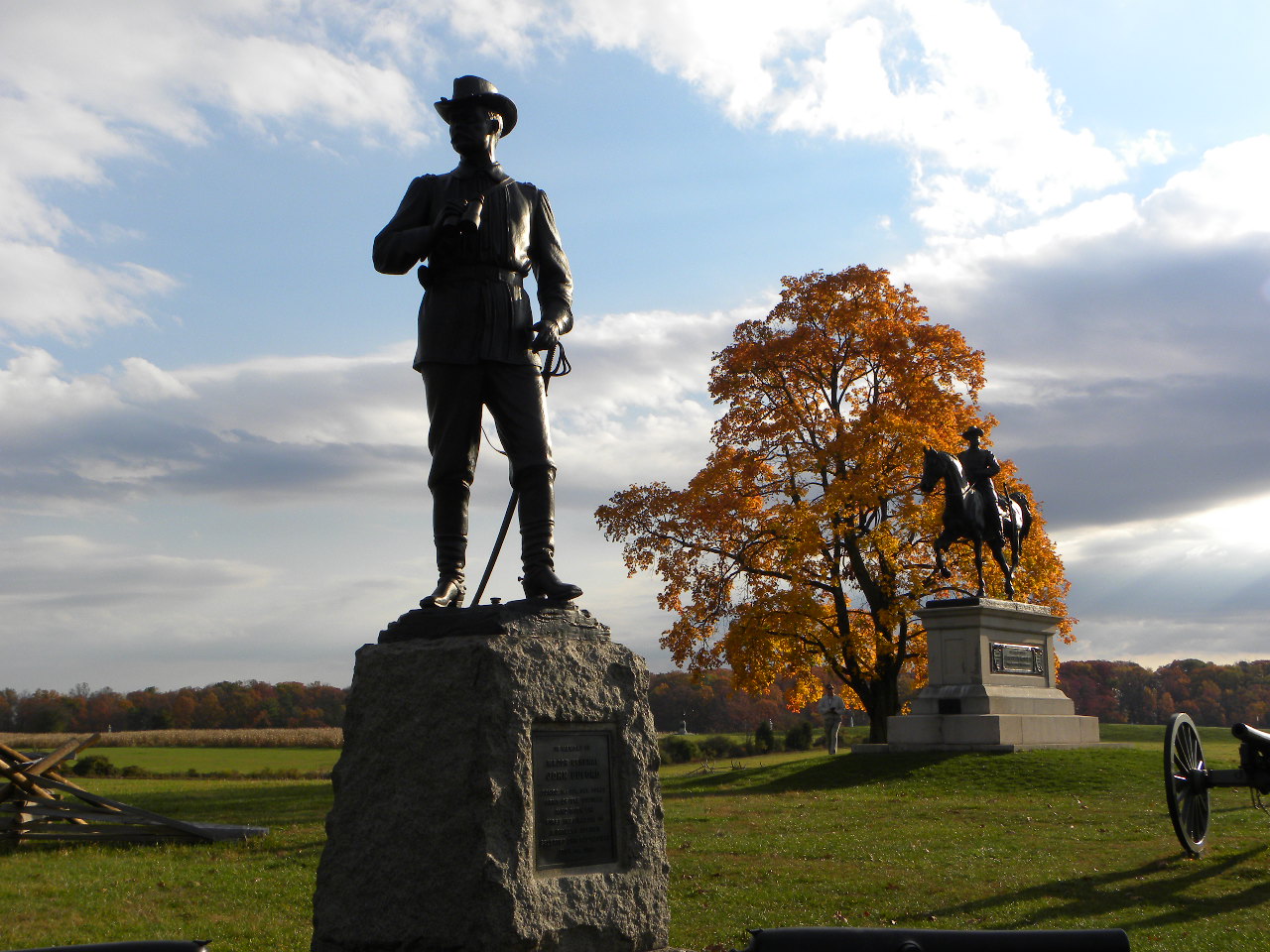
reynoldsmemorial

I am always humbled when I travel to Gettysburg as I did this weekend.  It is hard to believe in that now peaceful pastoral setting that over 157,000 Americans, almost 82,000 Union and 75,000 Confederate met in a three day battle. In those three days over 28,000 Confederates and 23,000 Union soldiers were killed, wounded, missing or captured. It was the greatest number of casualties inflicted in one battle on American soil in history.

I left on Friday with students from our Staff College and returned home this evening. It was my first time leading a Staff Ride like this though I have participated in them at other battlefields and led less extensive visits to Gettysburg when I was stationed at Fort Indiantown Gap Pennsylvania in 1997-1998. I have a good group of students, Army, Navy and Air Force Officers of much experience. In addition to simply examining the battlefield and telling the story of the battle, I have been working over the past two months to build a foundation that enables them to learn the enduring and timeless lessons of leadership, command, control, communication, the linkage between national strategy objectives, the operational art, operational objectives and tactical objectives.  Unlike other visits I added a final stop at the Gettysburg Soldiers’ Cemetery where President Abraham Lincoln delivered the Gettysburg Address.

irishbrigadememorial

The places that the battle was fought have become legendary, for they are “hallowed ground” as Lincoln so eloquently put it. The places, McPherson’s and Herr’s Ridge, Seminary Ridge, the Railroad Cut, Barlow’s Knoll, Cemetery Hill, Culp’s Hill, The Wheat Field, Devil’s Den, the Peach Orchard, Little Round Top, Cemetery Ridge, the Apse of Trees, the Angle and the High Water Mark are in a sense holy, or hallowed. They were consecrated by those who struggled there, those who lived and those who gave the last full measure of devotion to their country.

I think about those men of both sides and how they came to serve. In 1863 the majority of those who fought were volunteers. Some were motivated by their convictions, fully convinced of the rightness of their cause. Other went to war with mixed feelings. Some fought for family, or their homes, or because they felt that they could do no otherwise, and some even fought against the cause that their families or states believed in.

devilsden

But no matter what their reason for going to war they  That being said when I go there though my family predominantly fought for the Confederacy my heart is drawn to those men who remained loyal to the Union and those who answered the call of Abraham Lincoln to serve in a cause greater than their own interests, the great and the small alike.

highwatermark

Lincoln was a masterful orator who managed to rally the Union and bring hundreds of thousands of men volunteer before Gettysburg. They came for an ideal an ideal which Lincoln’s oratory was probably the most effective at articulating in a way that men would volunteer to suffer hardship, fight and die to bring about. It was well put in the movie Gettysburg where Colonel Joshua Chamberlain said:

“This is a different kind of army. If you look at history you’ll see men fight for pay, or women, or some other kind of loot. They fight for land, or because a king makes them, or just because they like killing. But we’re here for something new. This has not happened much, in the history of the world: We are an army out to set other men free. America should be free ground, all of it, from here to the Pacific Ocean. No man has to bow, no man born to royalty. Here we judge you by what you do, not by who your father was. Here you can be something. Here is the place to build a home. But it’s not the land. There’s always more land. It’s the idea that we all have value, you and me. What we’re fighting for, in the end… we’re fighting for each other…”

joshua_l-1._chamberlain_at_little_round_top

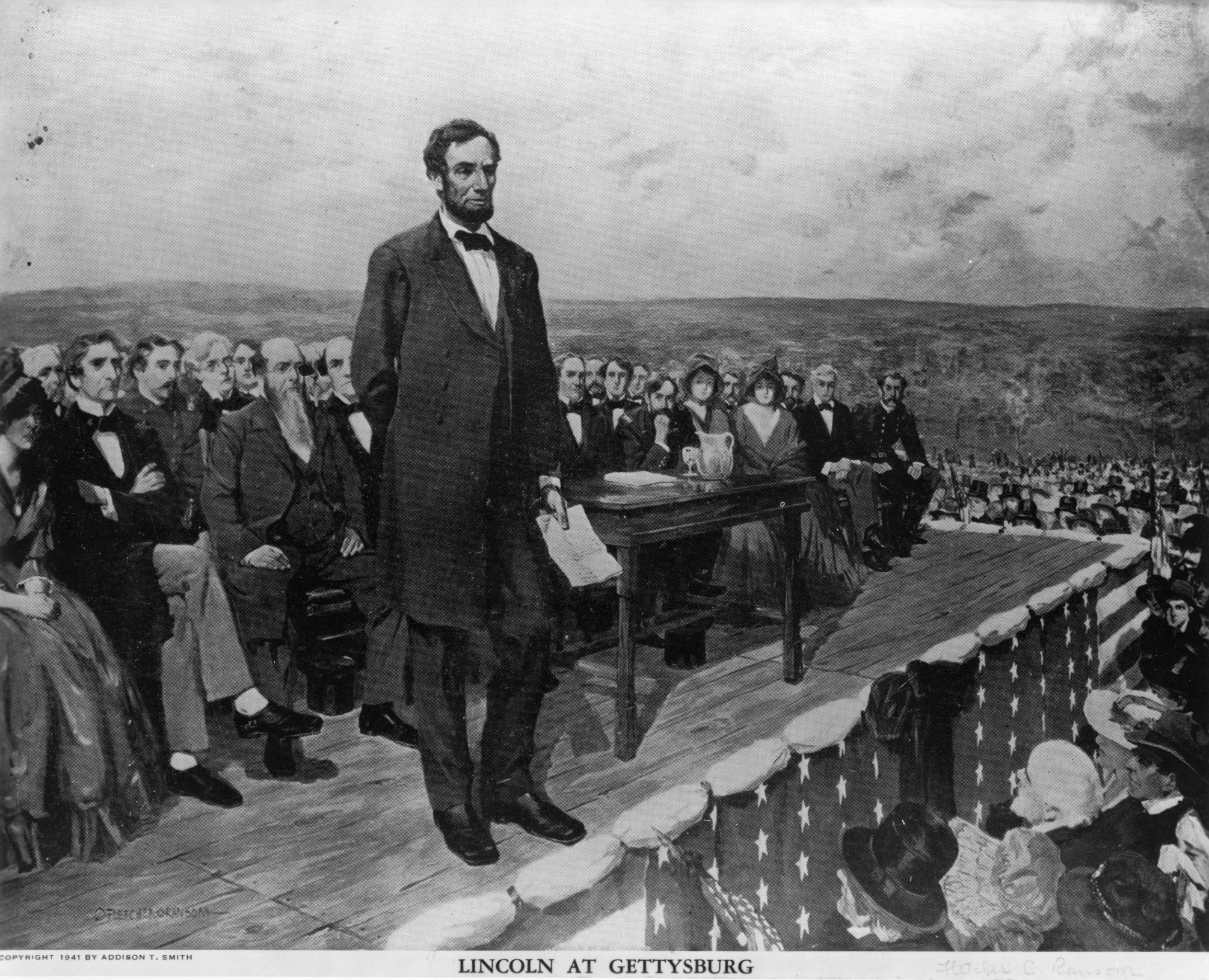
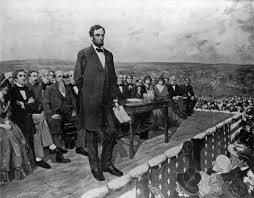
On November 19th 1863 Lincoln delivered a “few words” at Gettysburg which were in all practical aspects a benediction at the dedication of the battlefield cemetery. Lincoln was the second speaker at the ceremony following former Pennsylvania Congressman Edward Everett who spoke for more than two hours, a typical speech from the period. The 270 words of Lincoln’s address are perhaps the most important of any speech or document in American history save the Declaration of Independence and the Constitution of the United States.

The speech was so powerful that Everett wrote Lincoln the next day:

“Permit me also to express my great admiration of the thoughts expressed by you, with such eloquent simplicity & appropriateness, at the consecration of the Cemetery. I should be glad, if I could flatter myself that I came as near to the central idea of the occasion, in two hours, as you did in two minutes.”

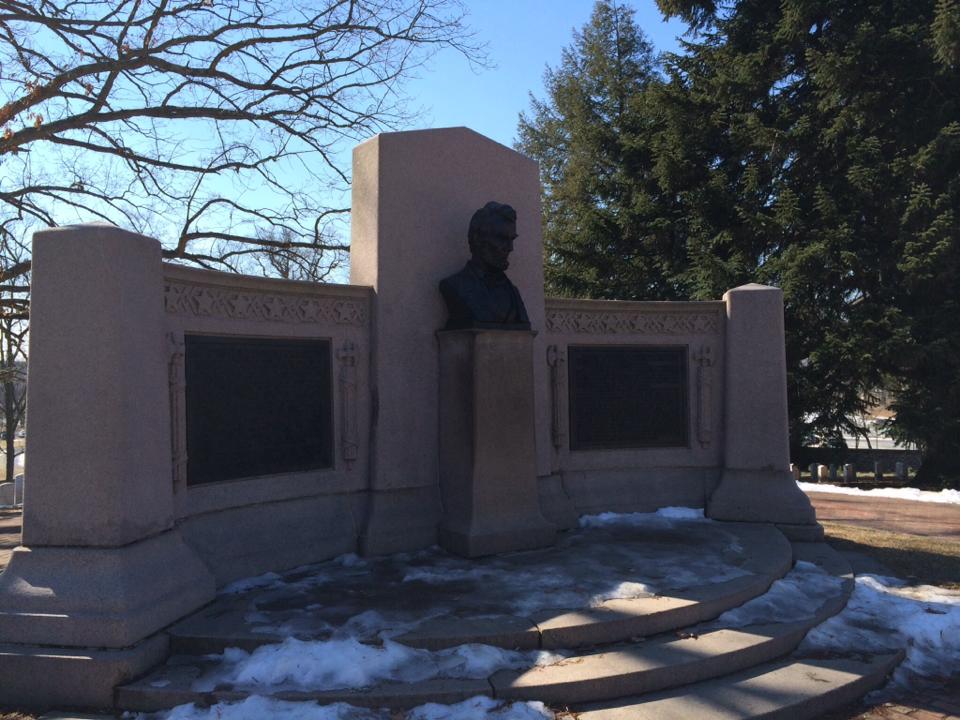
gburgaddressmemorial

The speech is short, but it’s eloquence is unmatched. Lincoln wrapped ideas, concepts and ideals that men have written volumes about into a speech so powerful that many have memorized it.

But few realize the context that it must be placed. Though the Union had defeated Lee’s Army at Gettysburg and Grant had taken Vicksburg to cut the Confederacy in half the North was growing war weary. There were those in the North, the Copperheads who were willing even after Gettysburg and Vicksburg to end the war on terms favorable to the Confederacy, even granting Confederate independence and the continuation of slavery. Likewise Lincoln was sick when he delivered the address having what was mostly likely a mild form of Smallpox when he gave the address. Thus the tenor, simplicity and depth are even more remarkable. It is a speech given in the manner of Winston Churchill’s “Blood sweat toil and tears” address to Parliament upon being appoint Prime Minister in 1940.

In a time where many are wearied by the foibles and follies of our politicians, even wondering about our form of government can survive Lincoln’s words matter. Dr Allen Guelzo, Professor of Civil War Studies at Gettysburg College wrote in the New York Times on the 150th anniversary of the Address:

“The genius of the address thus lay not in its language or in its brevity (virtues though these were), but in the new birth it gave to those who had become discouraged and wearied by democracy’s follies, and in the reminder that democracy’s survival rested ultimately in the hands of citizens who saw something in democracy worth dying for. We could use that reminder again today.”

GAFac1

Dr Guelzo is quite correct. Many people in this country and around the world are having grave doubts about our democracy. I wonder myself, but I am an optimist. I do believe that we will recover because for the life of me I see no nation anywhere else with our resiliency and ability to overcome the stupidity of politicians, pundits and preachers.
The amazing thing was that in spite of everything the Union survived. Lincoln was a big part of that but it was the men who left lives of comfort and security like Joshua Chamberlain and so many others who brought about that victory.

Gettysburg Address

Throughout the war, even to the end Southern political leaders failed to understand that Union men would fight and die for an ideal, something greater than themselves, the preservation of the Union and the freedom of an enslaved race. For those that volunteered it was not about personal gain, loot or land,it was about something greater. It was about freedom.
Now I for one do not think that we are currently living up to the ideals enunciated by Lincoln that day at Gettysburg. I can understand the cynicism disillusionment of Americans as well as those who have for over 200 years looked to us and our system as a “city set on a hill.” That being said, when I read these words and walk that hallowed  ground I am again a believer that we can realize the ideal.

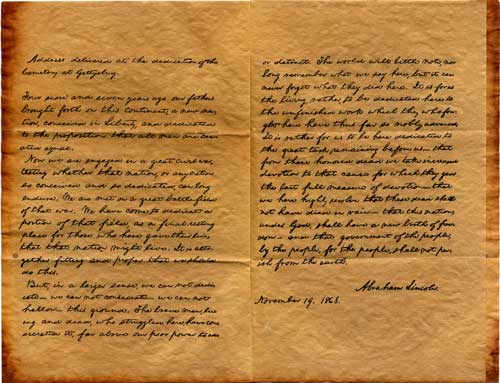
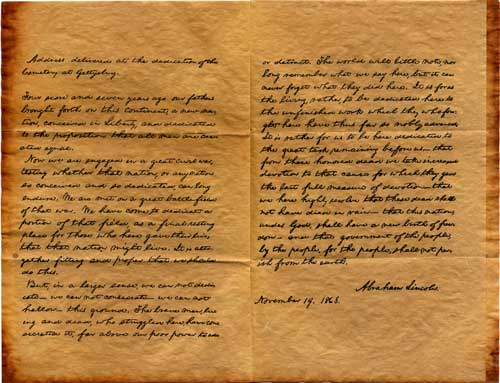
Four score and seven years ago our fathers brought forth on this continent, a new nation, conceived in Liberty, and dedicated to the proposition that all men are created equal.

Now we are engaged in a great civil war, testing whether that nation, or any nation so conceived and so dedicated, can long endure. We are met on a great battle-field of that war. We have come to dedicate a portion of that field, as a final resting place for those who here gave their lives that that nation might live. It is altogether fitting and proper that we should do this.

But, in a larger sense, we can not dedicate — we can not consecrate — we can not hallow — this ground. The brave men, living and dead, who struggled here, have consecrated it, far above our poor power to add or detract. The world will little note, nor long remember what we say here, but it can never forget what they did here. It is for us the living, rather, to be dedicated here to the unfinished work which they who fought here have thus far so nobly advanced. It is rather for us to be here dedicated to the great task remaining before us — that from these honored dead we take increased devotion to that cause for which they gave the last full measure of devotion — that we here highly resolve that these dead shall not have died in vain — that this nation, under God, shall have a new birth of freedom — and that government of the people, by the people, for the people, shall not perish from the earth.

In the hope that we again realize those ideals and help bring about “a new birth of freedom,” I wish you a good night.
Peace

Padre Steve+

Leave a comment

Filed under civil war, History, leadership, Political Commentary

“For God’s Sake Forward!” John Reynolds at Gettysburg

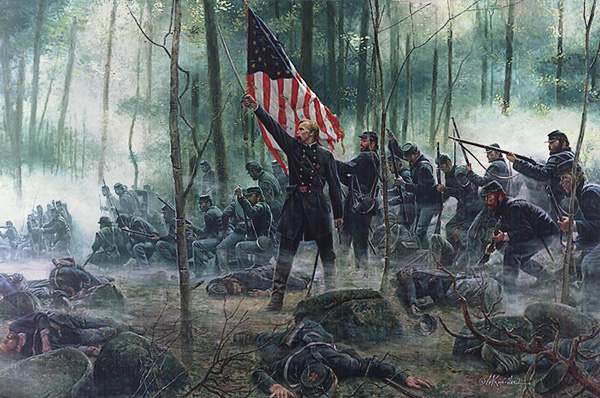
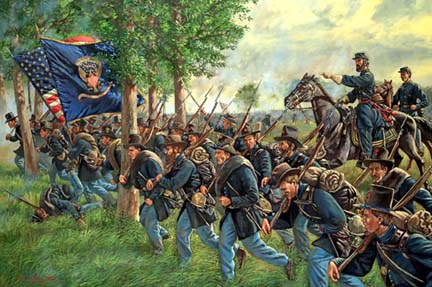
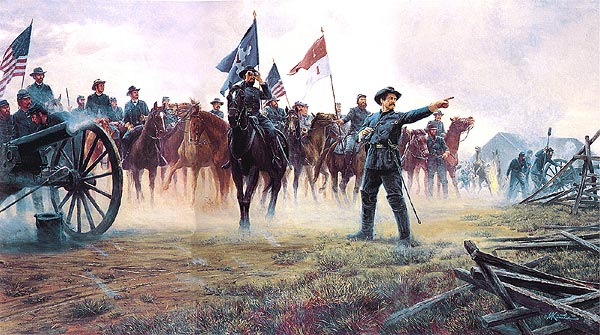
reynoldsz_maritato_ironbrigadeforward

Iron Brigade Forward! Battle of Gettysburg, PA – July 1, 1863 by Mark Maritato

“…by his promptitude and gallantry he had determined the decisive field of the war, and he opened brilliantly a battle which required three days of hard fighting to close with a victory.” Major General Harry Hunt, Chief of Artillery, Army of the Potomac on the actions of Major General John F Reynolds at Gettysburg

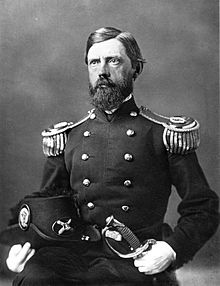
Major General John Reynolds was one of the finest commanders on either side during the Civil War. He graduated in the middle of his class at West Point in 1841 and served in the artillery. He fought during the war with Mexico and was promoted for bravery twice, to Captain at Monterrey and Major at Buena Vista. Following the war he remained in the army serving in the west and as Commandant of the Corps of Cadets at West Point from 1860 to June of 1861 when he was appointed as Colonel of the 14th U.S. Infantry regiment. However before he could take command of that unit he was promoted to Brigadier General.

Reynolds commanded a brigade of Pennsylvania volunteers on the Peninsula and was captured on June 27th but was released in a prisoner exchange on August 15th. He fought as a Division commander at Second bull Run where his Division held firm as much of the army retreated. He missed Antietam as he was called to train Pennsylvania militia when Lee invaded Maryland. he commanded I Corps at Fredericksburg and again at Chancellorsville.

Reynolds now held command of his troops on his home soil. A native of Lancaster Pennsylvania  Reynolds was the senior Corps commander in the Army of the Potomac. Considered by his peers and superiors to be the best commander in the Army he had been given command of a wing of the Army, his own I Corps, Oliver Howard’s XI Corps and John Sedgewick’s III Corps. He also had John Buford’s 1st Cavalry Division under his command.

Early in June Abraham Lincoln had offered command of the Army of the Potomac to Reynolds. However according to some credible reports Reynolds set a condition which Lincoln in the political climate of the time could not grant. Reynolds insisted he would be free from the political interference which had beset previous Army commanders. Both Reynolds’ request and Lincoln’s response are understandable.

Reynolds was not a fan of Major General Joseph Hooker and opposed Hooker’s decision to retreat at Chancellorsville. When Hooker was relieved of command of the Army by Lincoln, Major General George Meade, commander of V Corps another Pennsylvanian took his place. Reynolds, a friend of Meade supported the decision and Meade, who trusted Reynolds’ judgement and abilities kept him in his key role as commander of the Left Wing.

Reynolds’ wing of three Infantry corps and Buford’s Cavalry division acted as the advance elements of the Army. Late in the afternoon of June 30th Buford’s troops observed Johnston Pettigrew’s brigade of Harry Heth’s division near Gettysburg. Pettigrew on detecting Buford’s cavalry refused to engage. Buford chose to take the good high ground west of Gettysburg and hold it. He sent word to Reynolds that he would hold the ground to give Reynolds time to arrive.

800px-John_Reynolds_death_2

The Death of Reynolds (Waud)

Buford sent messages late in the evening to both Reynolds and the Union Calvary Corps commander, Major General Alfred Pleasanton describing the situation. Reynolds’ units were south of Emmitsburg moving north. Early on the morning of the 1st of July Reynolds brought his troops up as Buford and his cavalry troopers engaged Heth’s division in a very successful delaying action.

Reynolds rode ahead and briefly met Buford at the Lutheran Seminary where Buford ensured Reynolds that his troopers could hold. With that Reynolds ordered his First Corps and the lead division under the command of Abner Doubleday to advance to the action at the double-quick. Reynolds sent a message to Meade through a staff officer stating “Tell the General that we will hold the heights to the south of the town, and that I will barricade the streets of the town if necessary.” Reynolds had an acute eye for the situation and rapidly brought his corps as well as Howard’s XI Corps to the field.

GenJFRenyoldsAs his units arrived into an already raging battle Reynolds directed them to key areas of the battlefield. With Confederate troops moving toward the high ground Reynolds directed the “Iron Brigade” into position in Herr’s (McPherson’s) Woods. Reynolds exhorted the men forward.“Forward! men, forward! for God’s sake, and drive those fellows out of the woods!” As he said these words he was struck by a bullet at the base of his skull and died instantly.

The Federal troops, I Corps under the command of Doubleday and XI under Major General Oliver Howard withdrew through Gettysburg to Cemetery Hill, where Howard had wisely placed two brigades as well as a significant amount of artillery earlier in the day. Reynolds’ old friend Major General Winfield Scott Hancock of II Corps arrived on the field to take command on the order of George Meade.

Hill’s troops entered the town but did not attempt to take the hill, he did not believe that his exhausted and disorganized troops were in a position to combat fresh troops in good defensive positions. Likewise Ewell passed on an opportunity to take nearby Culp’s Hill as his corps was not fully up and the divisions which had been in action were now in disarray and he recognized the strong position occupied by the Federal forces.

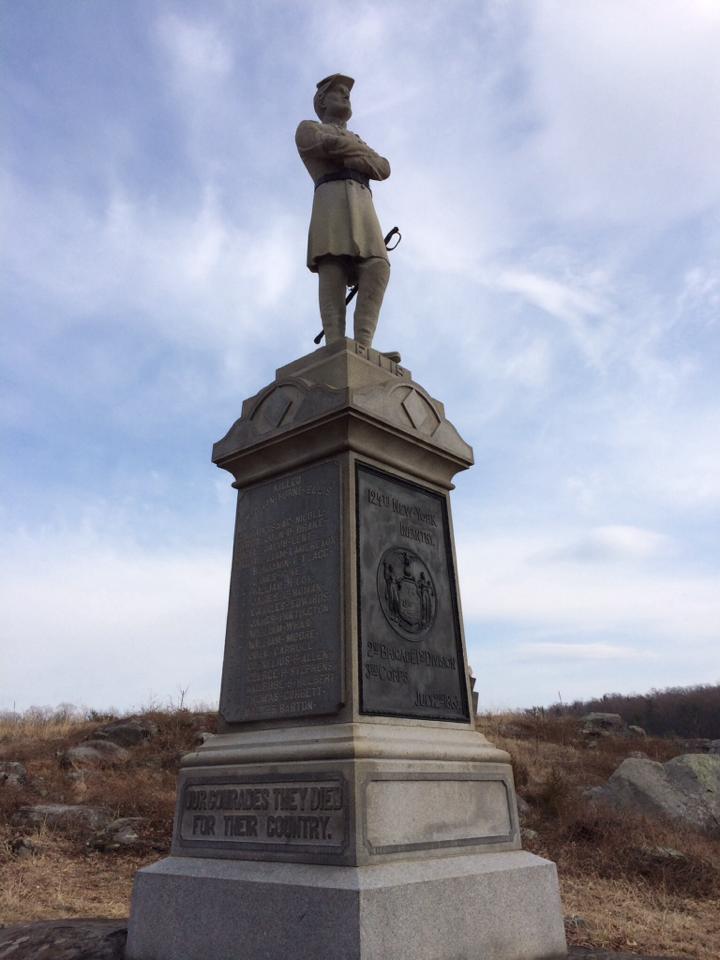
DSCN8774Monuments to Buford and Reynolds at McPherson’s Ridge

The first day ended with the Army of the Potomac holding the high ground in an easily defensible position on interior lines. Lee’s Army was spread out and the defense mounted by Buford and Reynolds had disrupted Hill’s Corps causing significant casualties to the Confederates and denying them the opportunity to take the high ground.

Buford is to be given much of the credit for choosing the ground of the battle and fighting a stellar delaying action against superior forces. But had Reynolds not brought his units up in the expeditious manner in which he did and then all of Buford’s efforts might have been in vain. The two men, bound by their professionalism and commitment to duty and their oath helped save the Union on that first day of July 1863.

Peace

Padre Steve+

Leave a comment

Filed under civil war, History, leadership, Military

Lee Blunders into Battle: Day One at Gettysburg

Railroad_CutBetween Heth’s Divsion and I Corps at the Railroad Cut-Dale Gallon

The Army of Northern Virginia commanded by Robert E Lee was now deep in Union territory and nearly blind to the location of the Federal Army of the Potomac. On the 30th advanced units of Dick Ewell’s Second Corps had gone nearly as far as Harrisburg while most of the Army was on the road around Chambersburg. J.E.B. Stuart and his cavalry was far away encumbered by a large captured Federal wagon train around Hanover and not in position to report on Union troop movements.

As reports from the spy Harrison came to Longstreet he reported them to Lee. Lee was surprised but quickly began to concentrate the Army around Cashtown. As the rest of the army gathered General A.P. Hill sent Johnston Pettigrew’s Brigade of Harry Heth’s Division to Gettysburg on the 30th. Pettigrew observed the Federal cavalry of Buford’s 1st Cavalry Division as they took up positions on Seminary Ridge. Since it was late he declined to engage and reported the Federal concentration to Hill, believing it to be nothing more than militia and cavalry.

427_2Buford Defending McPherson’s Ridge Mort Kunstler

On the morning of July 1st Hill ordered Harry Heth’s to advance his division to Gettysburg without the benefit of cavalry support or reconnaissance. Hill believed that the troops reported by Pettigrew could be nothing more than local militia. As they advanced the leading brigades under Brigadier General James Archer and Joseph Davis met Federal forces. Heth first became embroiled in a fight with Buford’s cavalry, which forced him to deploy and held up his advance along McPherson’s and Herr’s Ridge. Lee’s “laxness with respect to reconnaissance and his lack of control of Hill’s movements caused him to stumble into battle.” For the master of so many battlefields it was an inauspicious beginning.

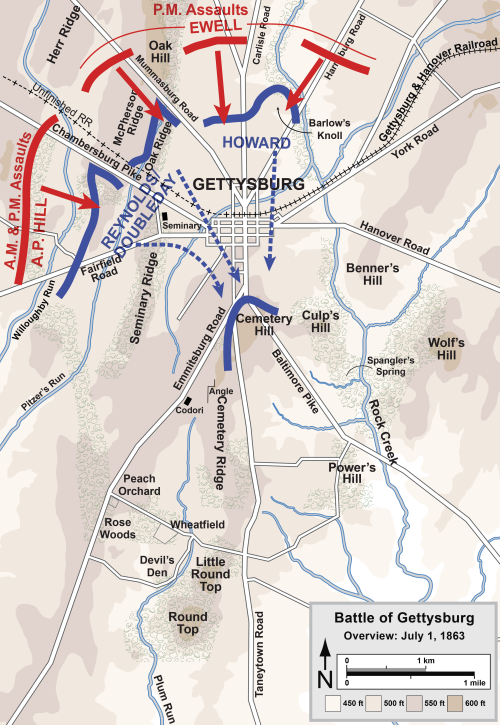
Heth had been surprised and then suffered heavy casualties when lead elements of the Federal 1st Corps under the command of Major General John Reynolds arrived. In the ensuing fight both Archer’s and Davis’ brigades were mauled with Archer being captured and Davis wounded. As the fight continued the Federal XI Corps under Oliver Howard arrived, extended the Right of the Federal line and emplaced troops on the hills to the east of the town. Unfortunately Howard’s dispositions were faulty and the choice of his First Division commander Barlow to advance to an exposed area of high ground proved to be nearly disastrous to the Federal position.

gettysburg_battle_map_of day1Gettysburg Day One (Map by Hal Jespersen, http://www.posix.com/Com)

Lee was surprised by the engagement and though he chastised Heth for getting involved but committed his army to the attack the Federals. Reynolds was killed early in the engagement but the fight was bitter, the Iron Brigade exacted a fearful toll on Archer and Davis’s brigades.

The attack by Heth was helped immensely when the lead elements of Ewell’s 2nd Corps in the form of Robert Rodes’ division arrived. Rodes’ division hit the right flank of the I Corps where it joined XI Corps and was joined by part of Jubal Early’s Division to his right. They overwhelmed the division of Francis Barlow who was wounded and captured, as well as other elements of XI Corps which was deployed on bad ground for defense.

The attack was well conceived but poorly executed, in part due to the failures of some of the subordinate brigade commanders. However, the attack threw the Federal line into confusion and the Federals shifted to meet the attack. Heth sought and got permission from Lee to renew his attack and the combination forced the Federal troops to withdraw through Gettysburg and up to Cemetery Ridge, where two brigade’s of Steinwehr’s division and the tough survivors of the Iron Brigade were already in place.

800px-First_day_at_gettysburgPender’s Division Goes into Action

In making the attack Lee acted against his own directions to his commanders. Though he only had a fraction of his army on the field and was unaware of the strength and location of the bulk of the Federal Army, Lee committed himself to a general engagement. In the process he placed his army at a disadvantage. Unless he could break the Federal line and take Cemetery Hill he would leave the Army of the Potomac with the high ground and with the ability to fight on interior lines, while his forces would be spread out over a long arcing line.

leeindexLee with A.P. Hill and Heth Bradley Schmehl

Ewell’s arrival was fortuitous because it temporarily tilted the balance to Lee, but the advantage was short lived, once again due to a vague order from Lee. This time it was an order to Ewell and like many things about Lee’s conduct of the battle this too is shrouded in controversy.

Lee’s report describes the order:

“General Ewell was, therefore, instructed to carry the hill occupied by the enemy, if he found it practicable, but to avoid a general engagement until the arrival of the other divisions of the army…”

But Lee had already committed himself to a general engagement in pursuing the attack during the afternoon. Although it appeared that Federal forces in turmoil as Reynold’s was dead and elements of XI Corps in retreat the situation was serious but the Confederates were not in a perfect or even completely advantageous position. Howard was able to rally his troops on Cemetery Hill taking advantage of his earlier deployment of Steinwehr’s division. Abner Doubleday who had succeeded Reynold’s brought his tropes back to reinforce the line as well as occupy Culp’s Hill to the right.

bogbayardwilkesonwebAbner Doubleday directs his troops on Day One

When Meade learned of Reynold’s death he dispatched Winfield Scott Hancock of II Corps to take command of all Federal Forces. Though he was junior to Howard, Hancock was able to work out a command arrangement with Howard and take command. Howard had to his credit Federal command position was strengthened.

Hancock doncemeteryhilljuly1_zps512a40faHancock Arrives on the Battlefield

Hancock was authorized by Meade to select where the Army would make its stand. Hancock told Howard “But I think this is the strongest position by nature upon which to fight a battle that I have ever saw…and if it meets your approbation I will select this as the battlefield.” Howard agreed and both men set off to rectify their lines.

Despite their success Ewell and his Corps were disorganized and not in a good position to take advantage of their earlier success. Likewise he was limited in the forces that he had available to continue the attack. Both his and A.P. Hill’s Corps only had two of their divisions in the field. Hill reported that his divisions “were exhausted by some six hours of hard fighting (and that) prudence led me to be content with what had been gained, and not push forward troops exhausted and necessarily disordered, probably to encounter fresh troops of the enemy.” Ewell reported that “all the troops with me were jaded by twelve hours’ marching and fighting.” Lee’s report of the battle indicated that the four divisions involved were “already weakened and exhausted by a long and bloody struggle.”

As such a night assault would have been exceptionally risky. Ewell would have only had the tired and disorganized survivors of four brigades at his disposal with no support from A.P. Hill on his right.

Early's_Charge_on_East_Cemetery_Hill

Ewell has often been criticized by the defenders of Lee and the legend of the Lost Cause for his failure to press the attack on Cemetery Ridge or Culp’s Hill. Critics cite that Federal forces were still disorganized and he could have easily attacked and driven the Federal Forces form the hills. Much is made of the protests of Major General Isaac Trimble as well as General John Gordon who were with Ewell. However as Edwin Coddington noted that these men concentrated their efforts on Ewell’s action to determine what went wrong at Gettysburg. In large part this was due to their inability to criticize Lee. Trimble’s account made its way into Michael Shaara’s classic novel of Gettysburg, the Killer Angels and were acted with conviction by Morgan Shepperd in the film adaptation of the book Gettysburg. Coddington correctly observed that “they forgot, however, the exact circumstances that kept the move from being “practicable” at the time.”

Rodes after battle report supported Ewell’s decision. He wrote before “the completion of his defeat before the town the enemy had begun to establish a line of battle on the heights back of the town, and by the time my line was in condition to renew the attack, he displayed quite a formidable line of infantry and artillery immediately in my front, extending smartly to my right, and as far as I could see to my left in front of Early.” Unfortunately for historians Rodes was killed in action at the Third Battle of Winchester in September 1864.

The Army of Northern Virginia came very close to sweeping Federal forces from the field on July 1st in spite of Lee’s lack of planning and clear commanders intent. But close was not enough. His forces which were committed in a piecemeal manner were unable to follow up their initial success. His orders to Ewell, to take the high ground “if practicable” were correctly interpreted by Ewell. Thus Federal corps under the command of Howard and Hancock were able to regroup, dig in and be reinforced by the rest of the Army on good ground of their choosing with interior lines.

Whether Lee intended to engage the Army of the Potomac at Gettysburg so early in the campaign is debated. His multiple and contradictory strategic aims left his commanders acting much on their own. His lack of clear commander’s intent to his subordinate commanders created confusion on the battlefield and paved the way to many controversies in the years following the war as Southerners sought to explain the failure of the Lost Cause, for which Lee could not be blamed.

Much of the controversy comes from Lee’s own correspondence which indicates that he might have not fully understood his own intentions. Some correspondence indicates that Lee desired to avoid a general engagement as long as possible while other accounts indicate that he wanted an early and decisive engagement. The controversy was stoked after the war by Lee’s supporters, particular his aides Taylor and Marshal and generals Gordon and Trimble, men like Longstreet and were castigated by Lee’s defenders for suggesting that Lee made mistakes on the battlefield.

Lee’s actual misunderstanding of his situation can be seen in the account of Isaac Trimble, traveling with Lee at the beginning of the invasion of Pennsylvania. He wrote:

“We have again outmaneuvered the enemy, who even now does not know where we are or what our designs are. Our whole army will be in Pennsylvania day after tomorrow, leaving the enemy far behind and obliged to follow by forced marches. I hope with these advantages to accomplish some single result and to end the war, if Providence favors us.”

The vagueness of Lee’s instructions to his commanders led to many mistakes and much confusion during the battle. Many of these men were occupying command positions under him for the first time and were unfamiliar with his command style. Where Stonewall Jackson might have understood Lee’s intent, even where Lee issued vague or contradictory orders, many others including Hill and Ewell did not. Lee did not change his command style to accommodate his new commanders.

That lack of flexibility and inability to clearly communicate Lee’s intent to his commanders and failure to exercise control over them proved fatal to his aims in the campaign. Stephen Sears scathing analysis of Lee’s command at Gettysburg perhaps says it the best. “In the final analysis, it was Robert E. Lee’s inability to manage his generals that went to the heart of the failed campaign.”

The vagueness of Lee’s intent was demonstrated throughout the campaign and was made worse by the fog of war. Day one ended with a significant tactical victory for Lee’s army but without a decisive result which would be compounded into a strategic defeat by Lee’s subsequent decisions on the 2nd and 3rd of July.

Peace,

Padre Steve+

2 Comments

Filed under civil war, History, leadership, Military

A New Birth of Freedom: The Gettysburg Address at 150

mkholrt

I am always humbled when I travel to Gettysburg as I did just two weeks ago. It is hard to believe in that now peaceful pastoral setting that over 157,000 Americans, almost 82,000 Union and 75,000 Confederate met in a three day battle. In those three days over 28,000 Confederates and 23,000 Union soldiers were killed, wounded, missing or captured. It was the greatest number of casualties inflicted in one battle on American soil in history.

The places that the battle was fought have become legendary, for they are “hallowed ground” as President Abraham Lincoln so eloquently put it. The places, McPherson’s and Herr’s Ridge, Seminary Ridge, the Railroad Cut, Barlow’s Knoll, Cemetery Hill, Culp’s Hill, The Wheat Field, Devil’s Den, the Peach Orchard, Little Round Top, Cemetery Ridge, the Apse of Trees, the Angle and the High Water Mark are in a sense holy, or hallowed, consecrated by those who struggled there, those who lived and those who gave the last full measure of devotion to their country.

gal9vfvf1

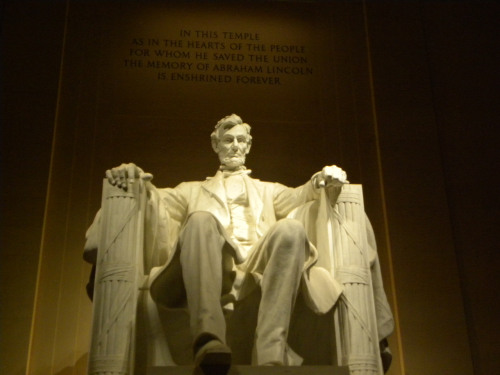
I think about those men of both sides, fully convinced of the rightness of their cause who fought valiantly in the struggle. That being said when I go there though my family predominantly fought for the Confederacy my heart is drawn to those men who remained loyal to the Union and those who answered the call of Abraham Lincoln to serve in a cause greater than their own interests, the great and the small alike.

DSCN8774

Lincoln was a masterful orator who managed to rally the Union and bring hundreds of thousands of men volunteer before Gettysburg. They came for an ideal an ideal which Lincoln’s oratory was probably the most effective at articulating in a way that men would volunteer to suffer hardship, fight and die to bring about. It was well put in the movie Gettysburg where Colonel Joshua Chamberlain said:

“This is a different kind of army. If you look at history you’ll see men fight for pay, or women, or some other kind of loot. They fight for land, or because a king makes them, or just because they like killing. But we’re here for something new. This has not happened much, in the history of the world: We are an army out to set other men free. America should be free ground, all of it, from here to the Pacific Ocean. No man has to bow, no man born to royalty. Here we judge you by what you do, not by who your father was. Here you can be something. Here is the place to build a home. But it’s not the land. There’s always more land. It’s the idea that we all have value, you and me. What we’re fighting for, in the end… we’re fighting for each other…”

images-61

On November 19th 1863 Lincoln delivered a “few words” at Gettysburg which were in all practical aspects a benediction at the dedication of the battlefield cemetery. Lincoln was the second speaker at the ceremony following former Pennsylvania Congressman Edward Everett who spoke for more than two hours, a typical speech from the period. The 270 words of Lincoln’s address are perhaps the most important of any speech or document in American history save the Declaration of Independence and the Constitution of the United States.

The speech was so powerful that Everett wrote Lincoln the next day:

“Permit me also to express my great admiration of the thoughts expressed by you, with such eloquent simplicity & appropriateness, at the consecration of the Cemetery. I should be glad, if I could flatter myself that I came as near to the central idea of the occasion, in two hours, as you did in two minutes.”

The speech is short, but it’s eloquence is unmatched. Lincoln wrapped ideas, concepts and ideals that men have written volumes about into a speech so powerful that many have memorized it.

18640903.nashcartoon

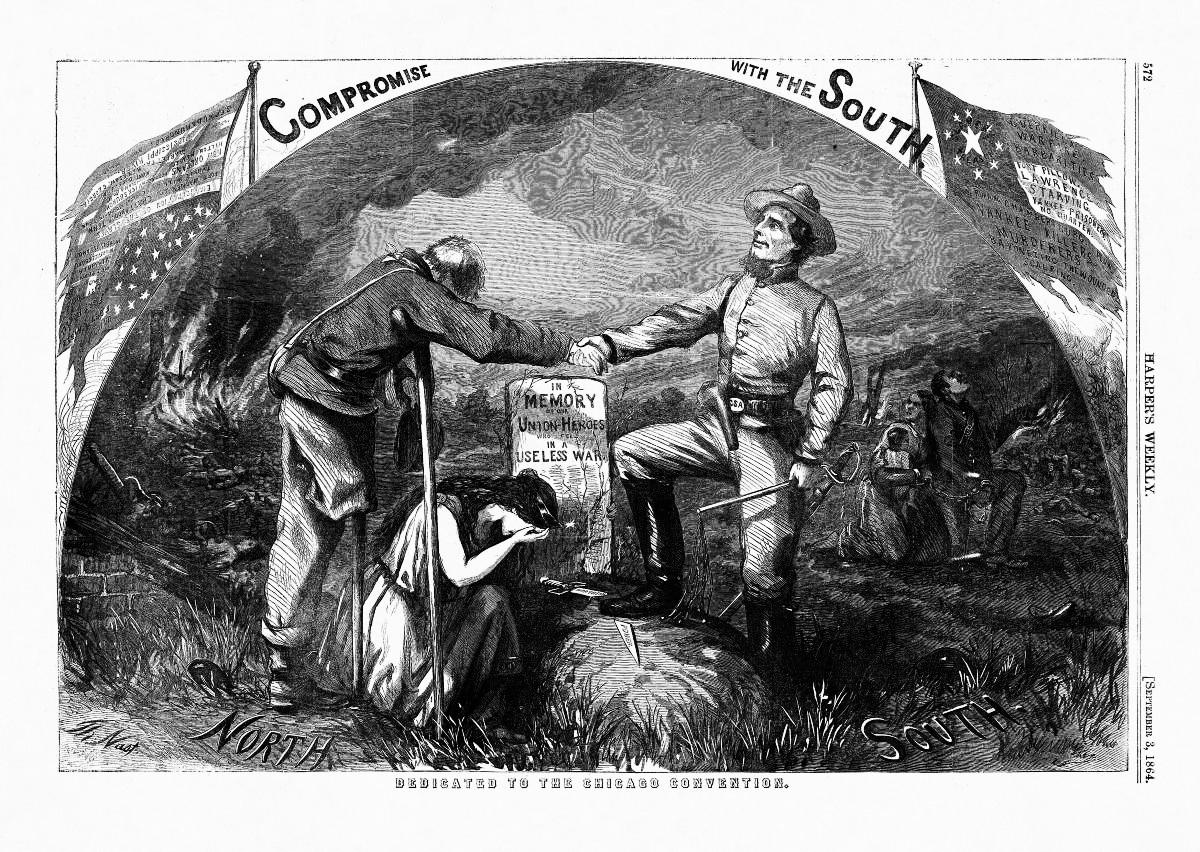
But few realize the context that it must be placed. Though the Union had defeated Lee’s Army at Gettysburg and Grant had taken Vicksburg to cut the Confederacy in half the North was groining war weary. There were those in the North, the Copperheads who were willing even after Gettysburg and Vicksburg to end the war on terms favorable to the Confederacy, even granting Confederate independence and the continuation of slavery. Likewise Lincoln was sick when he delivered the address having what was mostly likely a mild form of Smallpox when he gave the address. Thus the tenor, simplicity and depth are even more remarkable. It is a speech given in the manner of Winston Churchill’s “Blood sweat toil and tears” address to Parliament upon being appoint Prime Minister in 1940.

cropped-dscn88191.jpg

In a time where many are wearied by the foibles and follies of our politicians, even wondering about our form of government can survive Lincoln’s words matter. Dr Allen Guelzo, Professor of Civil War Studies at Gettysburg College wrote in the New York Times today:

“The genius of the address thus lay not in its language or in its brevity (virtues though these were), but in the new birth it gave to those who had become discouraged and wearied by democracy’s follies, and in the reminder that democracy’s survival rested ultimately in the hands of citizens who saw something in democracy worth dying for. We could use that reminder again today.”

Dr Guelzo is quite correct. Many people in this country and around the world are having grave doubts about our democracy. I wonder myself, but I am an optimist. I do believe that we will recover because for the life of me I see no nation anywhere else with our resiliency and ability to overcome the stupidity of politicians, pundits and preachers.

The amazing thing was that in spite of everything the Union survived. Lincoln was a big part of that but it was the men who left lives of comfort and security like Joshua Chamberlain and so many others who brought about that victory. Throughout the war, even to the end Southern political leaders failed to understand that Union men would fight and die for an ideal, something greater than themselves, the preservation of the Union and the freedom of an enslaved race. For those that volunteered it was not about personal gain, loot or land,it was about something greater. It was about freedom.

GAFac1

Now I for one do not think that we are currently living up to the ideals enunciated by Lincoln that day at Gettysburg. I can understand the cynicism disillusionment of Americans as well as those who have for over 200 years looked to us and our system as a “city set on a hill.” That being said, when I read these words and walk that hallowed  ground I am again a believer that we can realize the ideal.

Four score and seven years ago our fathers brought forth on this continent, a new nation, conceived in Liberty, and dedicated to the proposition that all men are created equal.

Now we are engaged in a great civil war, testing whether that nation, or any nation so conceived and so dedicated, can long endure. We are met on a great battle-field of that war. We have come to dedicate a portion of that field, as a final resting place for those who here gave their lives that that nation might live. It is altogether fitting and proper that we should do this.

But, in a larger sense, we can not dedicate — we can not consecrate — we can not hallow — this ground. The brave men, living and dead, who struggled here, have consecrated it, far above our poor power to add or detract. The world will little note, nor long remember what we say here, but it can never forget what they did here. It is for us the living, rather, to be dedicated here to the unfinished work which they who fought here have thus far so nobly advanced. It is rather for us to be here dedicated to the great task remaining before us — that from these honored dead we take increased devotion to that cause for which they gave the last full measure of devotion — that we here highly resolve that these dead shall not have died in vain — that this nation, under God, shall have a new birth of freedom — and that government of the people, by the people, for the people, shall not perish from the earth.

dscn0061

In the hope that we again realize those ideals and help bring about “a new birth of freedom,” I wish you a good night.

Peace

Padre Steve+
Leave a comment

Filed under civil war, History, leadership, Political Commentary