Tag Archives: civil rights

War What is it Good For? Sometimes Something: The Context of War

cropped-the_storming_of_ft_wagner-lithograph_by_kurz_and_allison_1890a.jpg

Friends of Padre Steve’s World,

Today something different. Yesterday I did a post about the Gettysburg Address and the importance of the proposition that of democracy that all men are created equal. It is a radical proposition that since the writing of the Declaration of Independence, the Emancipation Proclamation, the Gettysburg Address, the Thirteenth, Fourteenth, Fifteenth and Nineteenth Amendments, the Voting Rights Act of 1964 and Civil Rights Act of 1965, as well as Supreme Court decisions in Brown v. Board of Education and Obergfell v. Hodges, has grown in or country to encompass civil rights for African Americans and other racial minorities, Women, and Gays. But those liberties had to be fought for, and would most likely never happened had not Abraham Lincoln and others in the North understood that neither liberty or Union could survive if the South succeeded. In fact, all of us owe our continued freedom to that understanding and the necessity of total war to achieve it.

However, yesterday I had a Twitter troll snipe at me, this time a left-wing troll who claimed to be a “liberal progressive.” However, his remarks were so ignorant of history and reality that I am sure the the had no clue how his words betrayed his alleged beliefs. So in a few words I told him that he was basically ignorant and blocked him. Most of the time when this happens to me it comes from supposed “conservatives,” or “white nationalists” of various flavors, to include the KKK and Neo-Nazi types. But the fact that this came from a self-proclaimed “liberal and progressive” proves that ignorance is not confined to any ideology. That is a sad commentary on our time.

So what I am posting today is an updated and slightly edited portion of the first chapter of my Civil War and Gettysburg text. The entire chapter is close to 150 pages and is probably going to become a book in its own right, but I think it is important for my readers to understand, that sometimes liberty only comes with great sacrifice and the complete defeat of those who want to deny it. That does not matter if it was the Confederacy, Nazi Germany, or even the so-called Islamic State.

As a man who came back changed by war I can only say that I hate it. That being said, though I am a progressive and liberal, I am a realist and understand that as evil as war is, that surrendering liberty to those who believe in “liberty for the few, and slavery for all others.” 

The section of the book may seem a bit wonkish, but it is important. I understand that some of my readers will disagree, but one cannot escape reality.

So anyway, that being said I wish you a good day.

Peace,

Padre Steve+

Richard Evans wrote something in the preface to his book The Third Reich in History and Memory that those who study military history often forget. He noted: “Military history, as this volume shows, can be illuminating in itself, but also needs to be situated in a larger economic and cultural context. Wherever we look, at decision making at the top, or at the inventiveness and enterprise of second rank figures, wider contextual factors remained vital.” [1] Thus while this work is an examination of the Gettysburg campaign it is important to understand the various issues that were formative for the men who directed and fought the battle. One cannot understand the determination the determination of Robert E. Lee to maintain the offensive, the dogged persistence of Joshua Chamberlain or Strong Vincent to hold Little Round Top, what brought John Buford to McPherson’s Ridge, what motivated Daniel Sickles to move Third Corps to the Peach Orchard, and what motivated the men of Pickett’s division to advance to their death on Cemetery Ridge, without understanding the broader perspective of culture, politics, economics, religion, sociology, and ideology that shaped these men.

The American Civil War was the first modern war. It was a watershed event in an era, which introduced changes in new types of weapons, more lethal versions of older weapons, tactics, army organization, logistics, intelligence and communications. Though the war did not change the essential nature of war, which Clausewitz says is “is an act of violence to compel our opponent to fulfill our will” [2] it expanded the parameters of war and re-introduced the concept of “total war” to the world and “because its aim was all embracing, the war was to be absolute in character.” [3] In a sense it was a true revolution in military affairs.

The Civil War was truly a revolution in military affairs. The war changed the character of war, as it had been known for centuries, since the Peace of Westphalia and the end of the Thirty Years War. In the American Civil War, the character of war changed from a limited war waged between opposing armies into a war that at times bordered on Clausewitz’s understanding of absolute or total war. This conflict was waged between two people who shared much in common but were divided by an ideology which encompassed politics, economics, society, law, and even religion.

The war was revolutionary in other ways, and brought about a host of social, philosophical, economic, and political changes which continue to impact the lives of people in the United States and around the world even today. Some of these, especially those regarding the abolition of slavery and emancipation, as well as the beginnings of the Women’s Rights movement have had a ripple effect in matters of political and social equality for other previously disenfranchised groups of citizens. One writer noted in regard to the social impacts that “The Civil War uprooted institutions, transformed our politics, influenced social relationships of half a continent, and wrought changes that echo down the generations.” [4] Mark Twain wrote in 1873 that the war “uprooted institutions that were centuries old, changed the politics of a people …and wrought so profoundly upon the national character that cannot be measured short of two or three generations.” [5]

In a sense, when Abraham Lincoln proclaimed “a new birth of freedom” in his Gettysburg address it served as a watershed moment in American history because it brought to the forefront the understanding of Jefferson and the other signers of the Declaration of Independence that all men are created equal. That statement, flowing from the Declaration was key to Lincoln’s understanding of human rights and dignity, and from it came the Emancipation Proclamation and the Thirteenth Amendment, which abolished slavery. Those would be followed by the Republican Congresses’ passage of the Fourteenth Amendment, which overturned the Dred Scott Decision, which denied all citizenship to blacks across the country, and by Ulysses S. Grant’s Fifteenth Amendment, which gave African American men to right to vote. That is the human and political context by which we have to understand the American Civil War.

Thus it is important to study the Gettysburg campaign in the context of the Civil War because the campaign of 1863 in the east cannot be divorced from what was happening in the west at Vicksburg, nor the Union blockade, nor the diplomatic, economic and informational aspects of the war. Likewise the Gettysburg campaign cannot be separated from its relationship to the broader understanding of the nature and character of war. To do this one must examine the connection between them and policies made by political leaders; to include the relationship of political to military leaders, diplomats, the leaders of business and industry and not to be forgotten, the press and the people. Likewise we must understand the various contexts of war, to include the social, political, ideological and even the religious components of war, how they impacted Civil War leaders and why civilian policy makers and military leaders must understand them today.

While the essential nature of war remains constant, wars and the manner in which they are fought have changed in their character throughout history, and this distinction matters not only for military professionals, but also policy makers. The changing character of war was something that military leaders as well as policy makers struggled with during the American Civil War much as today’s military leaders and policy makers seek to understand the character of warfare today. British military theorist Colin Gray writes “Since the character of every war is unique in the details of its contexts (political, social-cultural, economic, technological, military strategic, geographical, and historical), the policymaker most probably will struggle of the warfare that is unleashed.” [6] That was not just an issue for Abraham Lincoln and Jefferson Davis, both of whom struggled with the nature of the war which had been unleashed, but it is one for our present political leaders, who as civilian politicians are “likely to be challenged by a deficient grasp of both the nature of war as well as its contemporary context-specific character.” [7]

In addition to being the first modern war, or maybe I should say, the first war of the Industrial Age, the Civil War prefigured the idea of total war written about by Clausewitz that occurred in the World Wars of the Twentieth Century. The war combined a massive number of technological advances, which both preceded and occurred during it, in which the philosophical nature of the Industrial Revolution came to the fore.

Likewise, the enmity of the two sides for one another had been fostered by a half century of relentless and violent propaganda that ushered from the mouths of politicians, the press and even from the pulpit brought the element of hatred to the fore of the conflict. A Confederate Captain wrote his wife to teach his children “a bitter and unrelenting hatred of the Yankee race” that had “invaded our country and devastated it…[and] murdered our best citizens…. If any luckless Yank should unfortunately come my way he need not petition for mercy. If he does I will give him lead.” A soldier from a Wisconsin regiment wrote to his fiancée after the assault on Resaca, Georgia that his unit had captured twenty-three Confederates and “or boys asked if they remembered Fort Pillow and killed them all. Where there is no officer with us, we take no prisoners…. We want revenge for our brother soldiers and will have it…. Some of the [rebels] say they will fight as long as there is one of them left. We tell them that is what we want. We want to kill them all off and cleanse the country.” [8]

As such there were many times the American Civil War came close to Clausewitz’s understanding of absolute war in its in character, and it prefigured the great ideological wars of the twentieth century. J.F.C. Fuller noted “for the first time in modern history the aim of war became not only the destruction of the enemy’s armed forces, but also of their foundations- his entire political, social and economic order.” [9] It was the first war where at least some of the commanders, especially Ulysses S. Grant and William Tecumseh Sherman were men of the Industrial Age, in their thought and in the way that they waged war, in strategy, tactics even more importantly, psychologically. Fuller wrote:

“Spiritually and morally they belonged to the age of the Industrial Revolution. Their guiding principle was that of the machine which was fashioning them, namely, efficiency. And as efficiency is governed by a single end- that every means is justified- no moral or spiritual conceptions of traditional behavior must stand in its way.” [10]

Both men realized in early 1864 that “the South was indeed a nation in arms and that the common European practice of having standing armies engaged each other in set-piece battles to determine the outcome of a war was not enough to win this struggle.” [11] Though neither man was a student of Clausewitz, their method of waging war was in agreement with the Prussian who wrote that “the fighting forces must be destroyed; that is, they must be put in such a position that they can no longer carry on the fight” but also that “the animosity and the reciprocal effects of hostile elements, cannot be considered to have ended so long as the enemy’s will has not been broken.” [12]

William Tecumseh Sherman told the mayor of Atlanta after ordering the civilian population expelled that “we are not only fighting hostile armies, but a hostile people, and must make the old and young, the rich and poor, feel the hard hand of war.” [13] Sherman was one of the first American military leaders to understand that a civil war could not be waged according to the limited war doctrines most American officers had been taught. He not only “carried on war against the enemy’s resources more extensively and systematically than anyone else had done, but he developed also a deliberate strategy of terror directed against the enemy’s minds.” [14] While some might find this troubling, the fact remains that it was Sherman’s Southern sweep of all that lay before him that broke the back of the Confederacy.
vincent

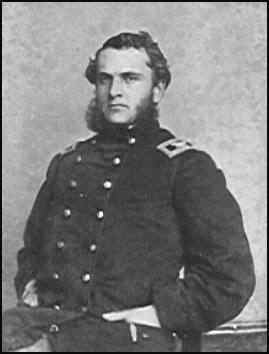
Strong Vincent

But Sherman and Grant were not alone in understanding the problem of fighting a limited war against the Confederacy. In the fall of 1862 a twenty-five year volunteer Colonel serving with McClellan’s army in Virginia who would be instrumental in throwing back Hood’s assault on Little Round Top, and die leading the defense of that edifice, by the name of Strong Vincent, understood what had to happen if the Union were to overcome the rebellion of the Confederacy.

“We must fight them more vindictively, or we shall be foiled at every step.  We must desolate the country as we pass through it, and not leave a trace of a doubtful friend or foe behind us; make them believe that we are in earnest, terribly in earnest; that to break this band in twain is monstrous and impossible; that the life of every man, yea, of every weak woman or child in the entire South, is of no value whatever compared with the integrity of the Union.” [15]

To most modern Americans who have no experience of war other than seeing it as a video spectator, the words of Vincent and Sherman seem monstrous and even inhuman. However, those who persist in such thinking fail to understand the nature and context of war. While some wars may be fought in a limited manner, others, especially ones driven by militant and uncompromising ideologies, often backed by fanatical religious beliefs cannot be limited, and those that fight such wars must, to paraphrase the words of Strong Vincent, “must fight them more vindictively, or be foiled at every step.” It would have been interesting to see what Vincent might have achieved had he not been cut down by Confederate bullets on Little Round Top.

Abraham Lincoln came to embrace the eternal nature of war as well as the change in the character of the war over time. Lincoln had gone to war for the preservation of the Union, and initially pursued the war in a limited way, seeking to defeat Confederate armies in the field while sparing the people of the Confederacy from total destruction.

But in his quest to preserve the Union, something that for him was almost spiritual in nature, as is evidenced by the language he used in both of his inaugural addresses and the Gettysburg Address, he found that Confederacy would only return to the Union if conquered, and he became convinced that the South’s peculiar institution, that of slavery, must be destroyed in the process. Thus, instead of a war to simply re-unite the Union and let bygones be bygones, Lincoln changed the narrative of the war when he signed the Emancipation Proclamation. When this happened the war not only became a war to restore the Union, but the a war for the liberation of enslaved African Americans, After January 1st 1863 when the Emancipation Proclamation went into effect, Lincoln “told an official of the Interior Department, “the character of the war will be changed. It will be one of subjugation…The [old] South is to be destroyed and replaced by new propositions and ideas.” [16] That too was a modern understanding of war.

Of course, the revolution in military affairs that characterized the Civil War took time, but it was the political and military leaders of the North who better adapted themselves and their nation to the kind of war that was being fought. “Lincoln’s remarkable abilities gave him a wide edge over Davis as a war leader, while in Grant and Sherman the North acquired commanders with a concept of total war and the determination to make it succeed.” [17]

At the beginning of the war the leaders and populace of both sides still held a misguided and unrealistic romantic idea of war. Most people in the North and the South held on to the belief that the war would be over in a few months and that would be settled by a few decisive battles and that casualties would be comparatively light. This included most politicians as well as many military officers on both sides. There were some naysayers who believed that the war would be long and costly, like the venerable and rather corpulent General Winfield Scott, but politicians and the press mocked Scott and other doubters who even suggested that the war would be long, hard, and bloody. Of course those who predicted a short, easy, and relatively bloodless war were the ones proven wrong, though it would take the leaders and the people of both sides over a year to understand. When it was done the American Civil War became the bloodiest war ever waged by Americans, and it was against other Americans.

Notes

[1] Evans, Richard J. The Third Reich in History and Memory Oxford University Press, Oxford and New York 2015 p.ix

[2] Clausewitz, Carl von. On War Indexed edition, edited and translated by Michael Howard and Peter Paret, Princeton University Press, Princeton NJ 1976 p.75

[3] Fuller, J.F.C. The Conduct of War 1789-1961 Da Capo Press, New York 1992. Originally published by Rutgers University Press, New Brunswick N.J p.99

[4] Lowry, Thomas P. The Stories the Soldiers Wouldn’t Tell: Sex in the Civil War Stackpole Books, Mechanicsburg PA 1994 p.176

[5] McPherson, James The War that Forged a Nation: Why the Civil War Still Matters Oxford University Press, Oxford and New York 2015 p.48

[6] Gray, Colin S. Fighting Talk: Forty Maxims on War, Peace, and Strategy Potomac Book, Dulles VA 2009 p.36

[7] Ibid. Gray Fighting Talk p.36

[8] Ibid. McPherson The War that Forged a Nation pp.49-50

[9] Fuller, J.F.C. A Military History of the Modern World, Volume Three: From the Seven Days Battle, 1862, to the Battle of Leyte Gulf, 1944 Minerva Press 1956 p.88

[10] Ibid. Fuller A Military History of the Modern World, Volume Three p.88

[11] Flood, Charles Bracelen, Grant and Sherman: The Friendship that Won the War, Harper Perennial, New York 2005 p.238

[12] Ibid. Clausewitz p.90

[13] McPherson, James. The Battle Cry of Freedom: The Civil War Era Oxford University Press, Oxford and New York 1988 p.809

[14] Weigley, Russell F. The American Way of War: A History of United States Military History and Policy University of Indiana Press, Bloomington IN, 1973 p.149

[15] Nevins, James H. and Styple, William B. What Death More Glorious: A Biography of General Strong Vincent Belle Grove Publishing Company, Kearney NJ 1997 p.57

[16] Ibid. McPherson The Battle Cry of Freedom p.558

[17] Ibid. McPherson The Battle Cry of Freedom p.857
Leave a comment

Filed under civil rights, civil war, ethics, History, Military, Political Commentary

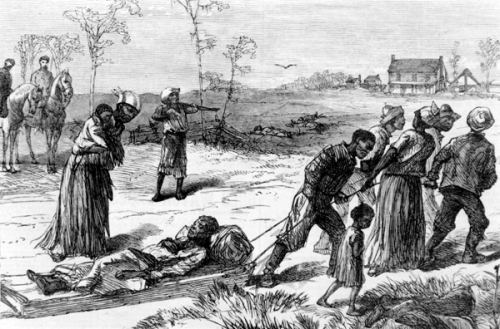
The Colfax Massacre

blacks at colfax

Friends of Padre Steve’s World,

Yesterday I posted an article about the surrender at Appomattox and the words, actions and attitudes of four unique Americans in attempting to end a war and reunite a country. Sadly, within months of that action there were men trying to reestablish an old order of tyranny based on White Supremacy. Their actions became bolder and bloodier in the years that followed. One of the most despicable acts of violence was occurred in Colfax Louisiana on the night of April 13th 1873.

This is the story of that massacre which I cover as part of my Civil War and Gettysburg text.

Peace

Padre Steve+

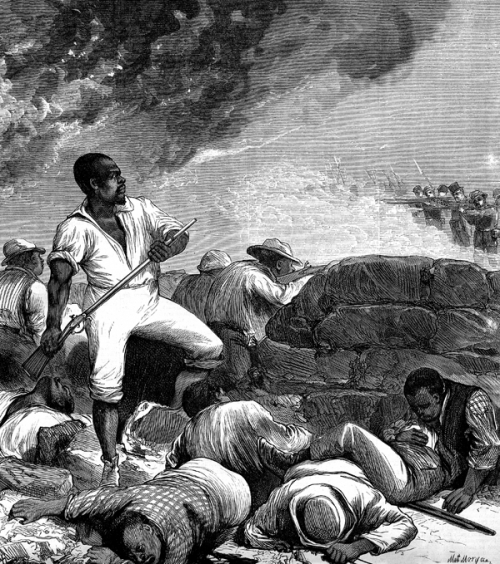
The violence against Southern blacks escalated in the wake of the passage of the Fourteenth and Fifteenth Amendments and with the increasing number of blacks being elected to office in some Southern states during the elections of 1872. In Louisiana a Federal court ruled in favor of Republican Reconstruction candidates following a Democrat campaign to interfere with the vote which included attacks on polling sites and the theft of ballot boxes. As a result the Louisiana Democrats “established a shadow government and organized paramilitary unit known as the White League to intimidate and attack black and white Republicans.” [1]

The White League in Louisiana was particularly brutal in its use of violence. he worst massacre committed by the White League occurred Easter Sunday 1873 when it massacred blacks in Colfax, Louisiana. Colfax was an isolated nondescript hamlet about three hundred fifty miles northwest of New Orleans, it sat on the grounds of a former plantation whose owner, William Calhoun worked with the former slaves who were now freedmen. The town itself “composed of only a few hundred white and black votes” [2] was located in the newly established Grant Parish. The “parish totaled about 4,500, of whom about 2,400 were Negroes living on the lowlands along the east bank of the Red.” [3] Between 1869 and 1873 the town and the parish were the scene of numerous violent incidents and following the 1872 elections, the whites of the parish were out for blood.

White leaders in Grant Parish “retaliated by unleashing a reign of terror in rural districts, forcing blacks to flee to Colfax for protection.” [4] The blacks of parish fled to the court house seeking protection from a violent white mob following the brutal murder of a black farmer and his family on the outskirts of town. The people, protected by just a few armed black militiamen and citizens deputized by the sheriff took shelter in the courthouse knowing an attack was coming. As the White League force assembled one of its leaders told his men what the day was about. He said, “Boys, this is a struggle for white supremacy….There are one hundred-sixty-five of us to go into Colfax this morning. God only knows who will come out. Those who do will probably be prosecuted for treason, and the punishment for treason is death.” [5] The attack by over 150 heavily armed men of the White League, most of whom were former Confederate soldiers, killed at least seventy-one and possibly as many as three-hundred blacks. Most of the victims were killed as they tried to surrender. The people, protected by just a few armed men were butchered or burned alive by the armed terrorist marauders. It was “the bloodiest peacetime massacre in nineteenth-century America.” [6]

The instigators of the attack claimed that they acted in self-defense. They claimed that “armed Negroes, stirred up by white Radical Republicans, seized the courthouse, throwing out the rightful officeholders: the white judge and sheriff” and they claimed that the blacks had openly proclaimed “their intention to kill all the white men, they boasted they would use white women to breed a new race.” [7] The claims were completely fabricated, after sending veteran former army officers who were serving in the Secret Service to investigate, the U.S. Attorney for Louisiana, J.R. Beckwith sent an urgent telegram to the Attorney General:

“The Democrats (White) of Grant Parish attempted to oust the incumbent parish officers by force and failed, the sheriff protecting the officers with a colored posse. Several days afterward recruits from other parishes, to the number of 300, came to the assistance of the assailants, when they demanded the surrender of the colored people. This was refused. An attack was made and the Negroes were driven into the courthouse. The courthouse was fired and the Negroes slaughtered as they left the burning building, after resistance ceased. Sixty-five Negroes terribly mutilated were found dead near the ruins of the courthouse. Thirty, known to have been taken prisoners, are said to have been shot after the surrender, and thrown into the river. Two of the assailants were wounded. The slaughter is greater than the riot of 1866 in this city. Will send report by mail.” [8]

Nine white men were arrested by Federal authorities in the wake of the massacre and three were “convicted of violating the Enforcement Act of 1871.” [9] white Democrats appealed the convictions and using the best lawyers they could get with nearly unlimited financial backing the appeal reached the Supreme Court.

colfax-the-louisiana-murders--1288

Colfax Blacks recovering their Dead and wounded

The attack, and the court cases which followed, notably United States v. Cruickshank which dealt with the men responsible for the Colfax Massacre led to a “narrowing of Federal law enforcement authority” and were “milestones on the road to a “solid” Democratic South.” [10] The decision of the court in United States v. Cruikshank was particularly perverse in its interpretation of constitutional rights and protections. The court ruled in favor of the terrorists and declared that “the right of the black victims at Colfax to assemble hand not been guaranteed because they were neither petitioning Congress nor protesting a federal law. Assembling for any other cause was not protected.” [11] The Cruikshank decision amounted to a Supreme Court endorsement of violence against blacks, and made it “impossible for the federal government to prosecute crimes against blacks unless they were perpetrated by a state and unless it could prove a racial motive unequivocally.” [12]

Other massacres followed across the South, aimed at both blacks and their white Republican allies. Another White League detachment southwest of Shreveport “forced six white Republicans to resign their office on pain of death – and then brutally murdered them after they had resigned.” [13] The violence, now protected by the courts ensured that neither would last long in the post-Reconstruction South and that the freedom of African Americans in those states would amount to a cruel illusion.

Notes

[1] Ibid. Foner Forever Free p.151

[2] Ibid. Langguth After Lincoln p.312

[3] Ibid. Lane The Day Freedom Died p.42

[4] Ibid. Goldfield America Aflame p.493

[5] Ibid. Lane The Day Freedom Died p.91

[6] Ibid. Goldfield America Aflame p.493

[7] Ibid. Lane The Day Freedom Died p.11

[8] Ibid. Lane The Day Freedom Died p.22

[9] Ibid. Goldfield America Aflame p.494

[10] Ibid. Lane The Day Freedom Died p.251

[11] Ibid. Langguth After Lincoln p.314

[12] Ibid. Goldfield American Aflame p.494

[13] Ibid. McPherson The War that Forged a Nation p. 185

2 Comments

Filed under civil rights, civil war, History, Political Commentary

Dedicated to a Proposition: Super Tuesday & the New Birth of Freedom 


Friends of Padre Steve’s World

I have returned from my time teaching at Gettysburgt and today is Super Tuesday, a day that will most likely establish who will be the Democratic and Republican nominees for President. Thus it is an important day and like any Election Day one that we should approach with a matter of solemn responsibility.

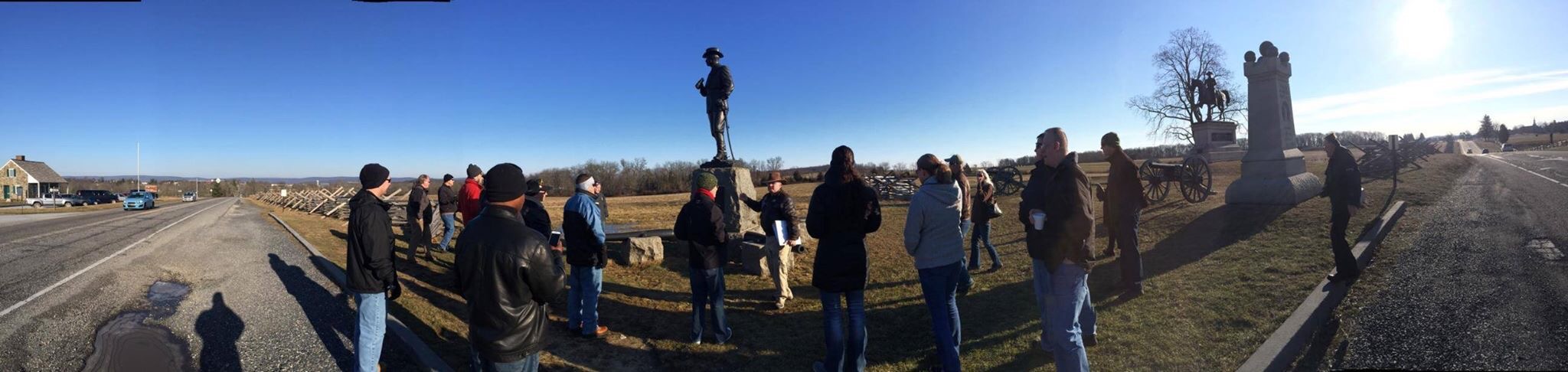
When I go to Gettysburg I always learn more than I teach. Part of this is because I am always reading, researching, writing, and exploring the subject so when I get there I look for things that I might have missed in previous visits. I enjoy the time with my students, not just on the battlefield staff ride, but in our table talk at ouch, dinner, and at the bar. But I think most importantly I am touched with the sense that what happened on that hallowed ground still matters today. At least I think that it should matter today if we honestly believe the words spoken by Abraham Lincoln in his Gettysburg Address:

“Four score and seven years ago our fathers brought forth on this continent, a new nation, conceived in Liberty, and dedicated to the proposition that all men are created equal.” 

Those words, spoken on the site were Federal soldiers turned back the invading Confederate Army just a few months before were as revolutionary as when Thomas Jefferson penned the words “We hold these truths to be self-evident, that all men are created equal, that they are endowed with certain unalienable rights, that among these are Life, Liberty, and the pursuit of happiness. – That to secure these rights governments are instituted among men….” 

Of course when Jefferson wrote them they were revolutionary, but they only guaranteed the rights of white men, primarily those who owned property, which in many cases in those early days included the human property of African American slaves. But just a year prior to speaking at Gettysburg, Lincoln issued the provisional Emancipation Proclamation, giving the Confederacy a last chance to end the war and free their slaves. This was followed by the issuance of the proclamation on January 1st 1863. Lincoln’s action was even more revolutionary than that of Jefferson, for he began the process of univerasalizing the understanding that “all men are created equal.” He followed this with the passage of the 13th Amendment. His allies in Congress passed the 14th Amendment after his assassination over the strident objections of President Andrew Johnson, and Ulysses Grant followed this by ensuring that the 15th Amendment was passed.

  
Of course it took many years of struggle to see the “proposition that all men are created equal” was extended to Native Americans, Women, and most recently Gays and Lesbians. Even so many people according to one recent survey said that they thought that some 13% of Americans disagreed with the Emanicaption Proclamation while 17% weren’t sure. Many others despise the 14th Amendment that provided citizenship rights to African Americans, the 15th Amendment which gave Blacks the right to vote, as well as the 19th Amendment which gave women the right to vote, and most recently the Oberfell v. Hodges decision which gave Gays the right to marry. Of course the precedent for most of the after decisions was found in the 14th Amendment.

emancipation

Today our country is nearly as divided as it was before and during the Civil War, Lincoln said, “Now we are engaged in a great civil war, testing whether that nation, or any nation so conceived and so dedicated, can long endure.” There are politicians, pundits and preachers who are intent on rolling back or eliminating the rights of others in order to preserve their privilege, and to crush the rights of others in doing so for the flimsiest of reasons. That my friends frightens me, but I do believe that the wrong will fail. Even so I do get concerned, but then I remember Lincoln’s words:

“It is for us the living, rather, to be dedicated here to the unfinished work which they who fought here have thus far so nobly advanced. It is rather for us to be here dedicated to the great task remaining before us — that from these honored dead we take increased devotion to that cause for which they gave the last full measure of devotion — that we here highly resolve that these dead shall not have died in vain — that this nation, under God, shall have a new birth of freedom — and that government of the people, by the people, for the people, shall not perish from the earth.”


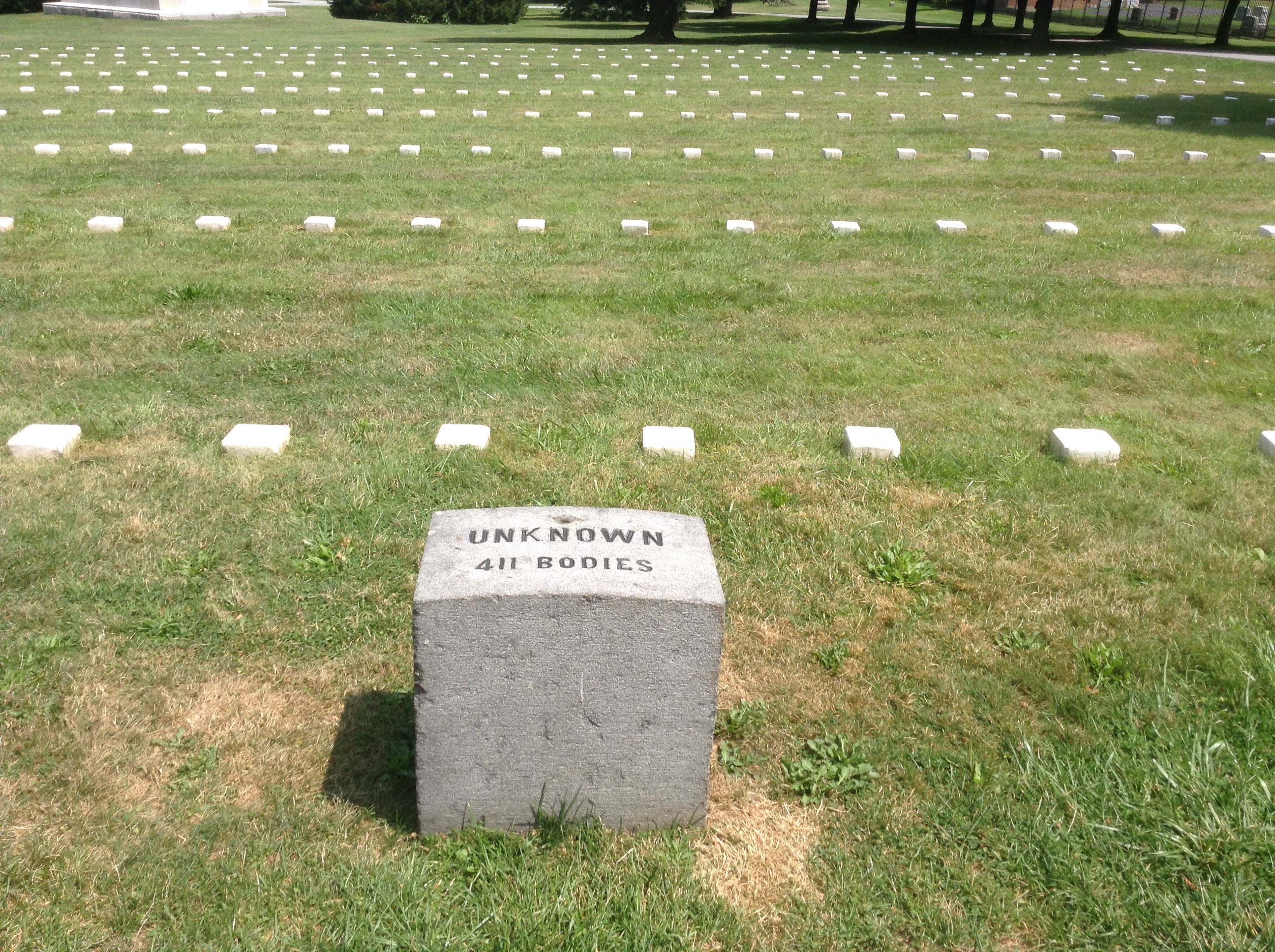
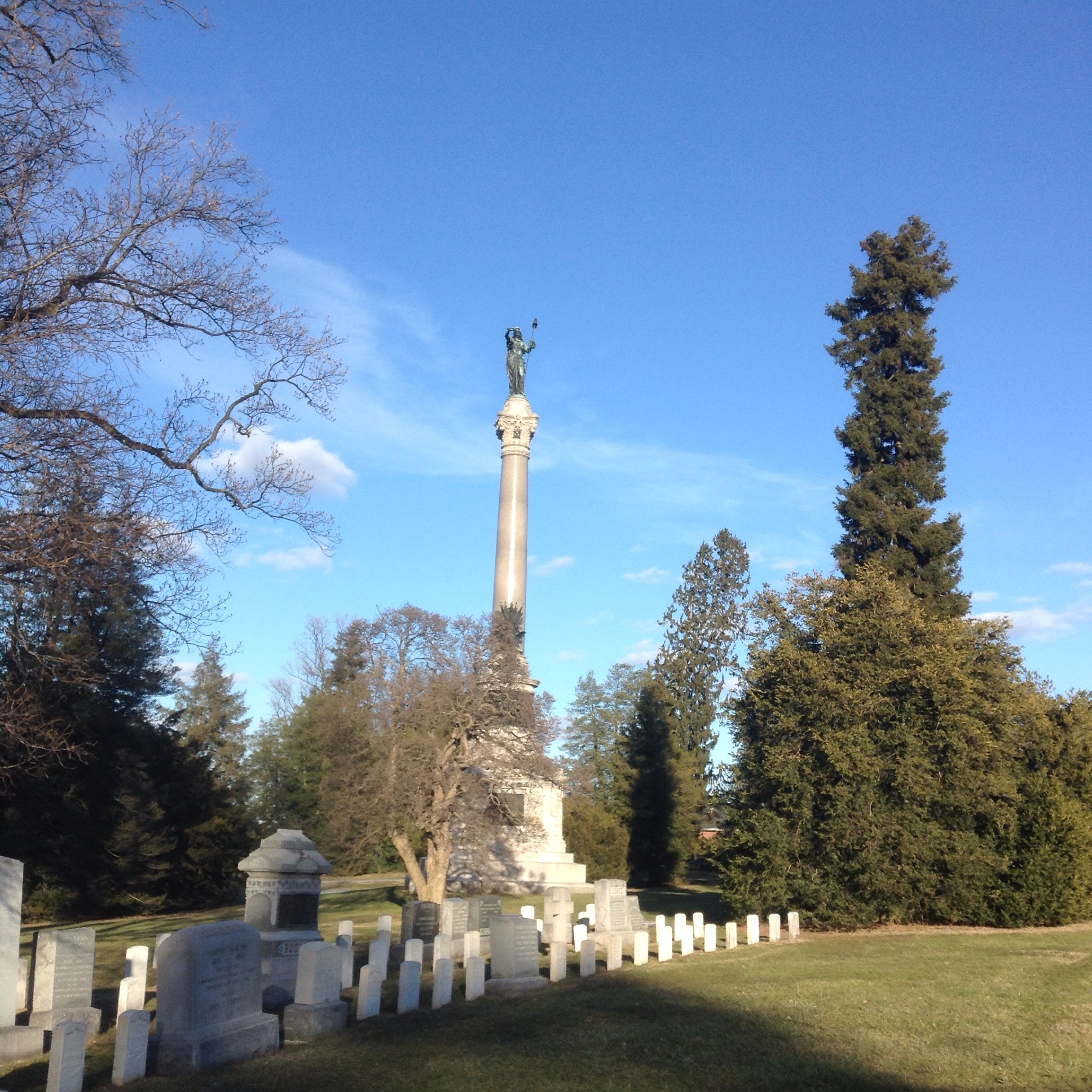
When I walked among the graves the men men who fought and died to ensure those rights over the weekend I again felt that call, the call to embrace and fight for the new birth of freedom that Abraham Lincoln so eloquently spoke. Yes my friends, it is for us the living to be dedicated to the proposition that all men are created equal. If we do not do so what good are we?

Peace,

Padre Steve+


Leave a comment

Filed under civil rights, civil war, History, leadership, News and current events, Political Commentary

More Equal than Others

101111-national-civil-rights-act-1875.jpg

Friends of Padre Steve’s World,

Last year while I was leading my students from the Staff College on our Gettysburg Staff Ride, something remarkable and troubling occurred. I always end the staff ride by taking the students to the National Soldier’s Cemetery. There we talk about terrible human cost of the battle and I introduce them to a number important topics related to the cemetery. I talk about the rural cemetery movement and the Greek revival in America in the 1820s, which is culturally important to us. Then I move on the dedication of the Soldier’s Cemetery. I discuss the layout of the cemetery and how it was designed so that the grave of every soldier is of equal importance and then I read some of the comments of the keynote speaker, Edward Everett. Following this I discuss the writing of the Gettysburg Address, the way Lincoln used it to universalize the Declaration of Independence and then I recite it, and remind my students, especially my American officer students why this is so important to us as we remember our oath of office and our duty.

While we were gathering near the spot where Lincoln gave his address, an elderly white couple, who appeared to be in their early eighties, were sitting on a bench where my students gathered. I invited them to stay if they wanted and let them know why we were there. They were very attentive as were my students and when we concluded and my students began to head back to our vans or to their own vehicles for the trip back to Norfolk, the man approached me and asked directions on how to get to the Chambersburg Road which I gladly gave him; and then he said: “You know that when they say that “all men are created equal” that some are more equal than others.”

I was stunned and attempted to deflect the man’s obvious racist comment with humor, referring to the rivalry of UCLA where I did my Army ROTC training about thirty-three years ago with that of the University of Southern California. The man looked at me and said that he was from Georgia and that he “wished that California would just drop off into the ocean,” and then walked away.

I thought to myself: “you corpulent old racist bastard.” I was really tempted to follow him and confront him, but I backed off. I realized based on his age, and that he probably opposed everything about the civil rights movement and supported Jim Crow and that there was nothing that could change his mind. He was old enough that he may have actually taken part in some of the anti-civil rights actions of the 1950s and 1960s. I don’t know, but it is possible.

But even so his words, his body language, and his facial expressions were troubling. The man was not joking. As I think about many things I hear said during the political campaign stating those same ideas, I am reminded of the words of George Fitzhugh, a Southern planter in eastern Virginia who owned many slaves. Fitzhugh, like many today, argued against the concept of human equality in 1856 he wrote that “the concept of human equality…is practically impossible, and directly conflicts with all government, all separate property, and all social existence.”

Speaking of the necessity for slavery, as well as limitations on the equality of human beings no matter what their race or sex, Fitzhugh penned words that explained that human relationships were not to be seen in terms of individual liberty, “but in relations of strict domination and subordination. Successful societies were those whose members acknowledged their places within that hierarchy.”

Fitzhugh was quite blunt when he discussed the real implications of his philosophy:

“We conclude that about nineteen out of twenty individuals have “a natural and inalienable right” to be taken care of and protected, to have guardians, trustees, husbands or masters; in other words they have a natural and inalienable right to be slaves. The one in twenty are clearly born or educated in some way fitted for command and liberty.”

He concluded his essay with the words, “Liberty for the few – slavery in every form, for the mass.”

Sadly, there are a lot of people in this country who believe exactly what that man voiced. Some are racist, and not just towards African Americans but to Latinos, Native Americans, Asians, Arabs and others, including poor Whites. There are those who believe that women and gays are not equal. Many of these people are leading politicians at the federal, state and local levels, media personalities and corporate leaders who have significant political and economic clout and if they ever had complete power would overturn or nullify every law that protects the civil rights of those they believe are less than equal, in some extreme case even less than human.

There are many reasons that people use to justify these attitudes; some pseudo-scientific, some religious, some economic, and many based on a crude Social Darwinism emphasizing the “survival of the fittest.” I heard someone in a restaurant say exactly that when they were talking about the poor, the poor had no rights, because they were poor. Again, lest we want to simply use this to beat on Southerners, this is not simply an attitude confined to the South; it is all over the country, and that was, and still is often the case throughout our American history.

It really does grieve me when I see this. The ghosts of our past intrude on so many parts of our national life, condemning the living to have to relive them in our own time. Historian George Santayana said it so well: “Those who cannot remember the past are condemned to repeat it.”

Have a good day.

Peace

Padre Steve+

1 Comment

Filed under civil rights, History, LGBT issues, Political Commentary

When Faith is Destroyed by Hate

WCPO_Fort_Thomas_Kim_Davis_rally5_1441659156589_23696760_ver1.0_640_480

Friends of Padre Steve’s World,

Atticus Finch, the hero of the book and film To Kill a Mockingbird said: 

“Sometimes the Bible in the hand of one man is worse than a whisky bottle in the hand of (another)… There are just some kind of men who – who’re so busy worrying about the next world they’ve never learned to live in this one, and you can look down the street and see the results.”

I think that most people like to believe that religion is a benign or positive influence in the world. As much as I want to believe the positive aspects I have to admit based on the historical and sociological evidence that this is not so, especially during unsettled times of great change. We live in such an era and when it comes to identity, God is the ultimate trump card.

If one wonders why the most fanatical individuals and groups on earth are tied to religions, whether it is the Islamic State and Al Qaeda, Boko Haram, Hezbollah, Orthodox Jews, radical Hindus and Buddhists as well as militant Christians. Of course all of these groups have different goals, but their thought and philosophy are quite similar.

Robert Heinlein wrote:

“Almost any sect, cult, or religion will legislate its creed into law if it acquires the political power to do so.”

Heinlein, the author of the classic Starship Troopers was absolutely correct. Just look at any place in any time where any religion, sect or cult has gained control of a government. They are not loving, they are not forgiving and they use the police power of the state to persecute any individual or group that is judged to be in error, or even worse has the gall to question their authority.

Since the Christian groups tend to thrive in the West, they only speak in terms of violence, most, with the exception of Russian Orthodox Christians, do not have a government to translation of those words into action. Many, especially conservative Catholics and some Evangelical and Charismatic Protestants seem for a long for the day when they can assume control of a theocratic government.

Samuel Huntington wrote in his book The Clash of Civilizations:

“People do not live by reason alone. They cannot calculate and act rationally in pursuit of their self-interest until they define their self. Interest politics presupposes identity. In times of rapid social change established identities dissolve, the self must be redefined, and new identities created. For people facing the need to determine Who am I? Where do I belong? Religion provides compelling answers….In this process people rediscover or create new historical identities. Whatever universalist goals they may have, religions give people identity by positing a basic distinction between believers and non-believers, between a superior in-group and a different and inferior out-group.”

Huntington was right, you see the true believers, those who follow their religion without question and believe that it is superior to all others also believe that their religion entitles them to be atop the food chain, others who don’t believe like them be damned, if not in this life, the next. That is the certitude of the true believer, especially the religious one. Secular or atheistic fanatics could care less about the next life, for this life is all that they have. But the religious “true believers” are not only interested in destroying someone in this life, but ensuring that in the next that they suffer for eternity, unless they believe in the annihilation of the soul after death, which really spoils the whole Dante’s Inferno perspective of the damned in the afterlife.

The great American philosopher, Eric Hoffer wrote:

“The impression somehow prevails that the true believer, particularly the religious individual, is a humble person. The truth is the surrendering and humbling of the self breed pride and arrogance. The true believer is apt to see himself as one of the chosen, the salt of the earth, the light of the world, a prince disguised in meekness, who is destined to inherit the earth and the kingdom of heaven too. He who is not of his faith is evil; he who will not listen will perish.”

That is why they, the religious true believers of any faith are capable of such great evil, and why such people can murder innocents in the most brutal manner simply because they do not believe correctly.

Please do not get me wrong. I am a Christian, a priest, a historian and a theologian, but I also know just how insidious those who hold their religion over those of others can be. While I hold faith dear, I know that it can be abused for the claim of some to have God as their final authority is a sort of trump card with which they are able to justify the most obscene and evil acts against others.

One of my heroes of religious liberty is John Leland, a Baptist whose passionate defense of religious freedom prevented Virginia from re-establishing a state church after the American Revolution and whose influence was key in the decision of Madison and Jefferson to amend the Constitution with the Bill of Rights, particularly the First Amendment. In fact, late in life, well after his success in working with Madison and Jefferson Leland wrote:

“The liberty I contend for is more than toleration. The very idea of toleration is despicable; it supposes that some have a pre-eminence above the rest to grant indulgence; whereas all should be equally free, Jews, Turks [Muslims], Pagans and Christians. Test oaths and established creeds should be avoided as the worst of evils.”

Like Leland, I contend for more than tolerance and I contend for acceptance. But that acceptance ends when any person or group is willing to use their religion to enslave, murder, or otherwise dominate other people in the name of their God, not just in this life, but in the next. This is especially true of those who use the police power of the state to enforce their beliefs and hatred on others.  I will do whatever I can to expose them for what they are, regardless of the “faith” they supposedly represent.

I guess that is why I am even more frightened of religious true believers than non-religious true believers. While the non-religious true believer may sacrifice everything for the sake of power and control in this life, and may in fact commit the most heinous crimes against humanity, their hatred is bounded in space and time to this earth. The religious true believer is not content with that; their enemies must be damned and punished in this life, but for eternity, without hope of salvation.

That is why they are so dangerous for their hatred is unbounded by time, or space, it lasts for eternity.

With that I wish you a good day.

Peace,

Padre Steve+

4 Comments

Filed under faith, Political Commentary, Religion

The Dream: Remembering Dr. Martin Luther King Jr.

index

Friends of Padre Steve’s World,

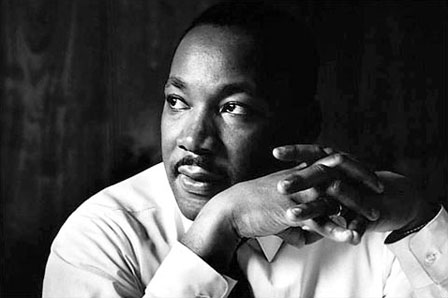
Dr. Martin Luther King Jr. has always been one of my heroes. This time of year I always ponder the importance of his life and work for civil rights, and I wonder what might have been had this man of peace not been cut down in cold blood at the young age of 39 by James Earl Ray on April 4th 1968. He was an amazing and courageous man whose memory should not be let to one day a year. We have to ensure, though our words and actions that it is not allowed to die.

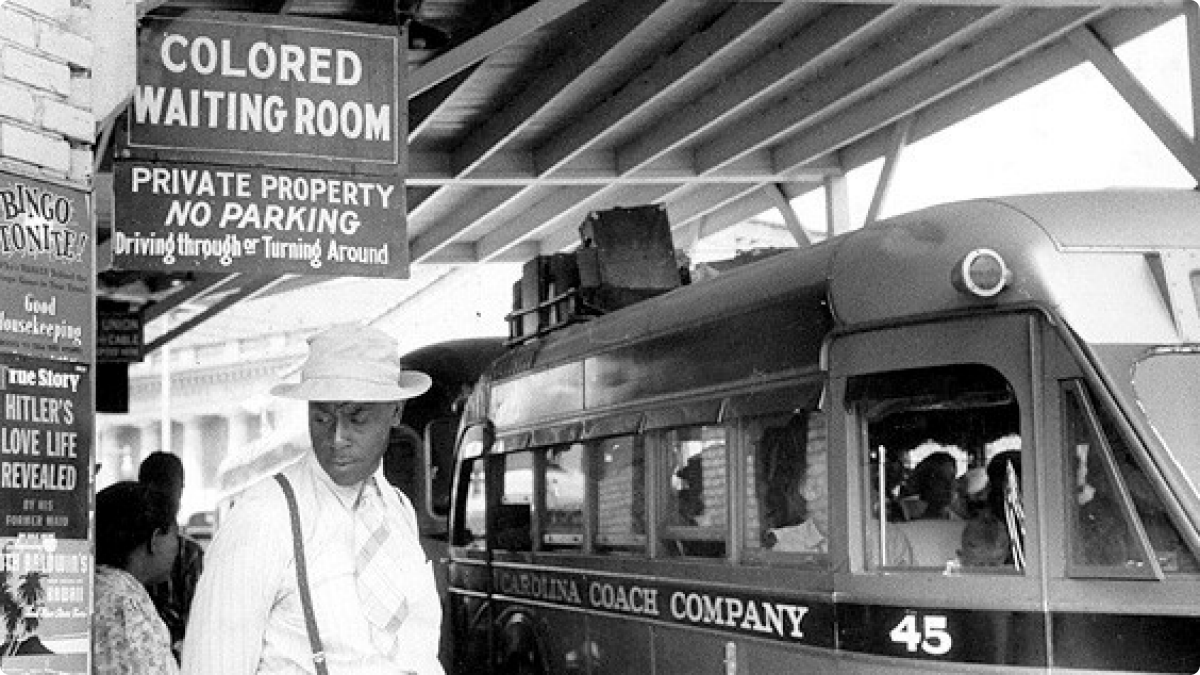
King was a man of courage, a man of honor, a man of conviction. But he came of age in a time when many people were willing to maintain the status quo and play things safe, like many clergy, even African-American clergy. Many pastors of the era, remained quiet about the conditions of segregation, and the racism of the day. Their lack of action did not mean they were bad people, they just understood that if they spoke up, their lives, and the lives of their families and congregations could be in danger. As such many pastors just hoped to see things slowly improve, without rocking the boat, and without endangering themselves or their families. They had seen what happened to blacks who spoke up or confronted the evil, lynching’s, cross burnings, threats and murder. They had contented themselves with just trying to get along. At the beginning of the movement, many pastors did not support or gave only lukewarm support to Dr. King, Andrew Young, Fred Shuttlesworth, and Ralph Abernathy going into that critical year of 1963.

lossless-page1-560px-Rosa_Parks_(detail).tiff

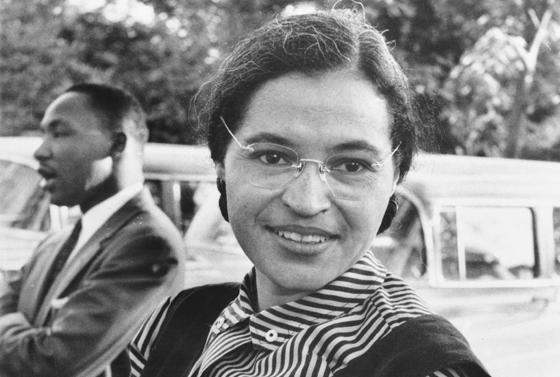
King did not start out to become a Civil Rights leader. However, he was inspired to actively join the movement through the example of Rosa Parks, who defiance of the law for blacks to sit “in the back of the bus” in 1955. He led the Montgomery Bus Boycott which lasted for 385 days. The reaction among segregationists to King and his protest was against violent. King’s house was bombed, and his life threatened. But he refused to stand down.

King’s leadership of the boycott brought the young pastor to national prominence. However, by 1963 much of the Civil Rights movement and the African American community was despairing of the lack of progress. Many people had become disenchanted with King, not considering him bold enough despite his rhetorical abilities.

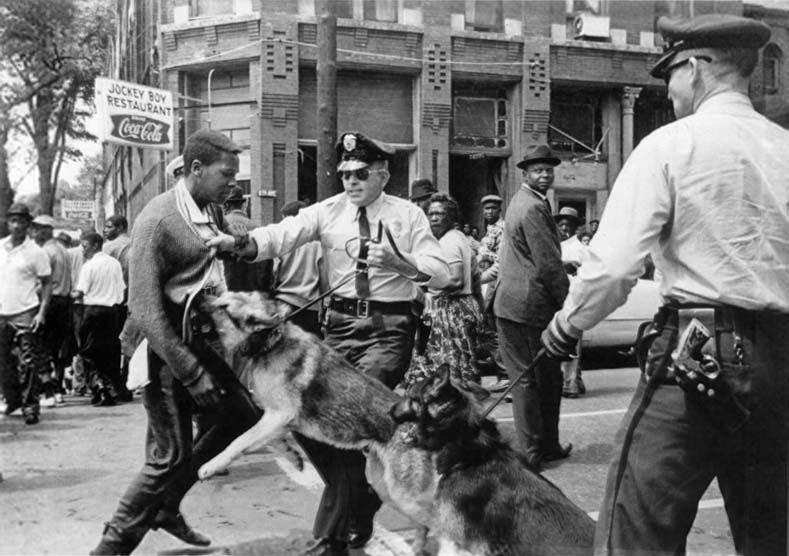
But in April 1963, working with other Civil Rights leaders in Birmingham Alabama King relit the fires of the movement. Montgomery Police Chief “Bull” Conner used his police force to violently attack the demonstrators. Conner ordered his men to unleash their police dogs on the protestors, and used high pressure water cannon against them, including women, children and the elderly. The violent reaction to the protests shocked much of America and the world.

King was arrested and in the Birmingham jail composed one of his most famous works, the Letter from the Birmingham Jail.  The letter was a social, political and theological masterpiece. It was some of his harshest criticism was of white liberals, as well as black moderates:

“I have almost reached the regrettable conclusion that the Negro’s great stumbling block in his stride toward freedom is not the White Citizen’s Councilor or the Ku Klux Klanner, but the white moderate, who is more devoted to “order” than to justice; who prefers a negative peace which is the absence of tension to a positive peace which is the presence of justice; who constantly says: “I agree with you in the goal you seek, but I cannot agree with your methods of direct action”; who paternalistically believes he can set the timetable for another man’s freedom; who lives by a mythical concept of time and who constantly advises the Negro to wait for a “more convenient season”

King continued his activism until his assassination. In August 1963 he led the March on Washington for Jobs and Freedom, where before a crowd of an estimated 200,000-300,000 he gave his I Have a Dream Speech.

http://www.americanrhetoric.com/speeches/mlkihaveadream.htm

The crescendo of the speech was remarkable and is perhaps one of the most remembered speeches in American history.

Let us not wallow in the valley of despair, I say to you today, my friends.

And so even though we face the difficulties of today and tomorrow, I still have a dream. It is a dream deeply rooted in the American dream.

I have a dream that one day this nation will rise up and live out the true meaning of its creed: “We hold these truths to be self-evident, that all men are created equal.”

I have a dream that one day on the red hills of Georgia, the sons of former slaves and the sons of former slave owners will be able to sit down together at the table of brotherhood.

I have a dream that one day even the state of Mississippi, a state sweltering with the heat of injustice, sweltering with the heat of oppression, will be transformed into an oasis of freedom and justice.

I have a dream that my four little children will one day live in a nation where they will not be judged by the color of their skin but by the content of their character.

I have a dream today!

I have a dream that one day, down in Alabama, with its vicious racists, with its governor having his lips dripping with the words of “interposition” and “nullification” — one day right there in Alabama little black boys and black girls will be able to join hands with little white boys and white girls as sisters and brothers.

I have a dream today!

I have a dream that one day every valley shall be exalted, and every hill and mountain shall be made low, the rough places will be made plain, and the crooked places will be made straight; “and the glory of the Lord shall be revealed and all flesh shall see it together.”2

This is our hope, and this is the faith that I go back to the South with.

With this faith, we will be able to hew out of the mountain of despair a stone of hope. With this faith, we will be able to transform the jangling discords of our nation into a beautiful symphony of brotherhood. With this faith, we will be able to work together, to pray together, to struggle together, to go to jail together, to stand up for freedom together, knowing that we will be free one day.

And this will be the day — this will be the day when all of God’s children will be able to sing with new meaning:

My country ’tis of thee, sweet land of liberty, of thee I sing.

Land where my fathers died, land of the Pilgrim’s pride,

From every mountainside, let freedom ring!

And if America is to be a great nation, this must become true.

And so let freedom ring from the prodigious hilltops of New Hampshire.

Let freedom ring from the mighty mountains of New York.

Let freedom ring from the heightening Alleghenies of Pennsylvania.

Let freedom ring from the snow-capped Rockies of Colorado.

Let freedom ring from the curvaceous slopes of California.

But not only that:

Let freedom ring from Stone Mountain of Georgia.

Let freedom ring from Lookout Mountain of Tennessee.

Let freedom ring from every hill and molehill of Mississippi.

From every mountainside, let freedom ring.

And when this happens, and when we allow freedom ring, when we let it ring from every village and every hamlet, from every state and every city, we will be able to speed up that day when all of God’s children, black men and white men, Jews and Gentiles, Protestants and Catholics, will be able to join hands and sing in the words of the old Negro spiritual:

                Free at last! Free at last!

                Thank God Almighty, we are free at last!

King knew the dangers and the risks of appealing to a strategy of non-violence based on love of his enemies. King spoke to the world when he accepted the Nobel Peace Prize in 1964:

“Here and there an individual or group dares to love, and rises to the majestic heights of moral maturity. So in a real sense this is a great time to be alive. Therefore, I am not yet discouraged about the future. Granted that the easygoing optimism of yesterday is impossible. Granted that those who pioneer in the struggle for peace and freedom will still face uncomfortable jail terms, painful threats of death; they will still be battered by the storms of persecution, leading them to the nagging feeling that they can no longer bear such a heavy burden, and the temptation of wanting to retreat to a more quiet and serene life. Granted that we face a world crisis which leaves us standing so often amid the surging murmur of life’s restless sea. But every crisis has both its dangers and its opportunities. It can spell either salvation or doom. In a dark confused world the kingdom of God may yet reign in the hearts of men.”  http://www.nobelprize.org/nobel_prizes/peace/laureates/1964/king-lecture.html 

Dr. King understood how easy hatred could consume people and movements and urged  people not to follow the course of hate, he wrote:

“Returning hate for hate multiplies hate, adding deeper darkness to a night already devoid of stars. Darkness cannot drive out darkness; only light can do that. Hate cannot drive out hate; only love can do that. Hate multiplies hate, violence multiplies violence, and toughness multiplies toughness in a descending spiral of destruction.”

https://www.youtube.com/watch?v=IDl84vusXos

The day before his assassination in Memphis, Dr. King still recognized what he might face. His “I have been to the Mountaintop” speech http://www.americanrhetoric.com/speeches/mlkivebeentothemountaintop.htm recounted many of the things that he had encountered, including an assassination attempt in 1958 which had come close to killing him. It was an amazing speech and one wonders if having lived under threat so long that he almost had a premonition of his death the next day.

And then I got into Memphis. And some began to say the threats, or talk about the threats that were out. What would happen to me from some of our sick white brothers?

Well, I don’t know what will happen now. We’ve got some difficult days ahead. But it really doesn’t matter with me now, because I’ve been to the mountaintop.

And I don’t mind.

Like anybody, I would like to live a long life. Longevity has its place. But I’m not concerned about that now. I just want to do God’s will. And He’s allowed me to go up to the mountain. And I’ve looked over. And I’ve seen the Promised Land. I may not get there with you. But I want you to know tonight, that we, as a people, will get to the promised land!

Dr. King’s dream is not dead and we who live today cannot allow it to die. There is still much work to see justice done for all Americans as well as those suffering from violence, persecution, discrimination and poverty around the world.

It is 2016. It has been 53 years since Dr. King sat in the Birmingham jail. Sadly, there are some who long for a return to the day of Jim Crow. In some states there have been and there are ongoing attempts to return it by stealth, especially through restrictions on voting that predominantly impact African Americans and the poor. Racism is not dead, nor are so many other “isms.” As Dr. King told us, “Now is the time to make real the promises of democracy,” and “It would be fatal for the nation to overlook the urgency of the moment.”

Dr. King and many of the leaders of the Civil Rights Movement have passed on. Likewise, many people today are complacent about the injustices present in our society, injustices experienced by many people. We need a generation of new men and women with hearts like Dr. King’s, who will be the conscience of the nation and confront these injustices.

Birmingham_campaign_dogs

Representative John Lewis, one of the original Freedom Riders was beaten numerous times during those protests. When leading the march across the Pettus Bridge in Selma, Lewis had his skull fractured by a State Trooper when he stopped to pray.  Lewis’s words call us to action today:

“If not us, then who? If not now, then when?” 

We cannot let Dr. King’s dream die.

Peace

Padre Steve+

Leave a comment

Filed under civil rights, laws and legislation, Political Commentary

Separate Ideology & Religion from Sworn Duty: The Legacy of Dr. C. Everett Koop

c-everett-koop-1db591308d7eb474

“At the beginning of the AIDS epidemic many Americans had little sympathy for people with AIDS…. The feeling was that somehow people from certain groups ‘deserved’ their illness. Let us put those feelings behind us. We are fighting a disease, not a people.” C. Everett Koop, Surgeon General 1986

Friends of Padre Steve’s World,

I have mentioned that I have been reflecting on many things over the past few weeks and months. Of course if you follow my writings you know what I think about public officials who refuse to do their duty to follow the law and protect the rights of other citizens, even of those that they happen to disapprove. This came to a head recently with the case of the anti-marriage equity county clerk, Kim Davis. I am not going to revisit her case as I have been worn out by it and have no need to waste any more time on her.

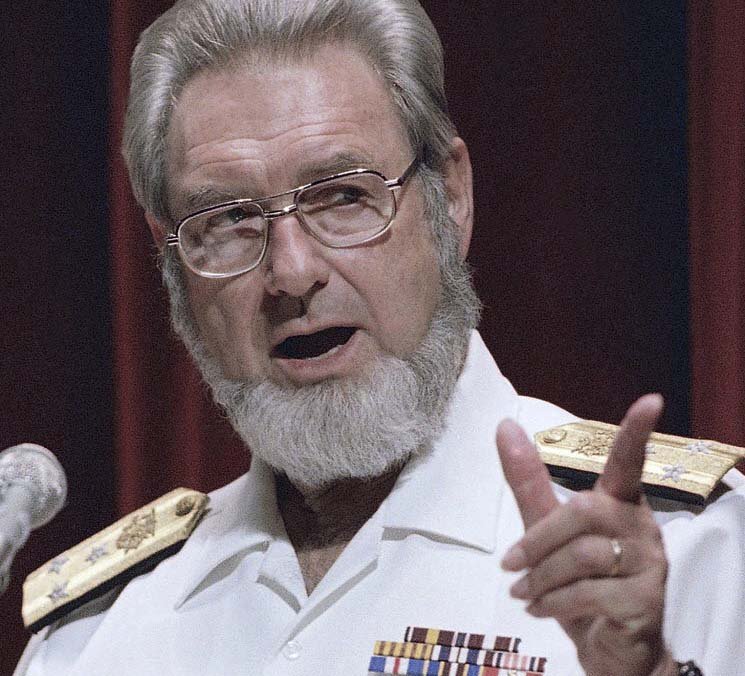
That being said I can point out the case of a public official, a conservative, pro-life, Evangelical Christian who served as Surgeon General under President Reagan, Dr. C. Everett Koop. In an era of extreme intolerance and hatred for those infected with HIV, Dr. Koop became one of the leading proponents of compassionate and responsible care for victims of HIV/AIDS, most of whom were homosexual men. He met opposition within the administration, where despite his impressive credentials he was marginalized and was vilified by conservative Christians.

Dr. James Dobson and Dr. D. James Kennedy, early leaders of the political religious right were particularly vindictive. These unscrupulous leaders helped spread much disinformation about HIV from the a book published by a charlatan named Gene Antonio who wrote what was then a popular book called “The AIDS Cover Up,” They claimed that AIDS could be spread by kissing, mosquito bites or even by touching surfaces that had been touched by those infected. These men were bolstered by their allies in the Reagan White House, Secretary of education Bill Bennett and his assistant Gary Bauer who were the official administration spokesmen regarding AIDS.

They marginalized the Surgeon General; Dr. C. Everett Koop who noted in the early days of the epidemic was “completely cut off from AIDS” by Bennett and others in the Reagan Administration. They were so wrong that Koop, who was by no means a liberal took them to task on their hateful, dishonest and un-Christian proclamations. Koop told a journalist:

“the Christian activity in reference to AIDS of both D. James Kennedy and Jim Dobson is reprehensible. The first time that Kennedy ever made a statement about AIDS, I saw it on television. It was so terrible, so homophobic, so pure Antonio that I wrote him a letter.”

Koop said of Dobson, who he had worked with earlier on HIV/AIDS: “I don’t know what happened to him. He changed his mind, and last August in his paper he attacked me for two pages as leading people down the garden path. But again his arguments were full of holes. I just cannot believe the poor scholarship of so many Christians.”

Despite the opposition and attacks on his character by leaders of the Christian Right, Dr. Koop was undeterred and had no problem taking on these men and women. Some of these supposedly Christian leaders still are with us and spout the same hatred for homosexuals that they did in the 1980s. Dr. Koop realized that many of his fellow Christians really didn’t care about people, and believed that HIV was God’s judgment against people that they already despised and had in their theology condemned to Hell. He also realized that many of these leaders would resort to poor scholarship and even inflammatory statements to influence public opinion.

For doing so Dr. Koop was condemned by fanatical extremists like Phyllis Schlafly who said that Koop’s recommendations in his report about preventing AIDS looked “like it was edited by the Gay Task Force” and Schlafly, ever the loving, honest and ethical Christian that she is accused Koop of advocating that third-graders learn the rules of “safe sodomy.”

Koop replied in a very courageous manner to Schlafly, who in my view is one of the most loathsome people to ever unite religion and politics: “I’m not surgeon general to make Phyllis Schlafly happy. I’m surgeon general to save lives.”

Dr. Koop understood the oath that he took as a physician and the oath that he took when he became Surgeon General; sadly Mrs. Davis and many in the Christian Right will never understand that. In 1988 Dr. Koop said something that most people in positions of any public responsibility, be they public health officials, medical professionals, politicians or even the most partisan political preachers should abide: “I separate ideology, religion and other things from my sworn duty as a health officer in this country.”

Dr. Koop’s words should be heeded by any Christian in public office, but sadly, those who do will be treated with the same scorn and hatred as Dobson, Kennedy, Bauer, and Schlafly heaped on him.

I can understand Dr. Koop’s plight. I have been set upon by some of the disciples of Bauer, Dobson, Schlafly, Kennedy and others for simply defending people’s rights under the Constitution and obeying the oath of office that I took in 1981 and have continued to affirm since. Sadly, the truth is that many so-called Christians will attempt to destroy the lives, reputation and careers of other Christians who do not tow their ideological line, and sadly this has become much worse than it was in the 1980s.

I will write more about this but for now I will wish you a good day.

Peace

Padre Steve+

1 Comment

Filed under christian life, civil rights, ethics, faith, healthcare, History, laws and legislation, leadership, LGBT issues, News and current events, Political Commentary

Justice & Liberty Die Quietly

IMG_2140

Friends of Padre Steve’s World,

Just a short thought today. I am travelling in Germany and Austria and will not get a chance to write much. But I wanted to share this thought, from the late Charles Morgan Jr. I wrote about his comments in regard to what he said after the bombing to the 16th Street Baptist Church in Birmingham Alabama some 52 years ago earlier a few days ago.

Morgan was a well off young Southern gentleman, a lawyer, and a man with a conscience. He was a defender of the civil liberties of many people during his life, most of which were incredibly unpopular when he made his strand.

Morgan made a comment that really stuck in my brain because it is so true. He said,

“It is not by great acts but by small failures that freedom dies. . . . Justice and liberty die quietly, because men first learn to ignore injustice and then no longer recognize it.”

The truth is that it those small failures; first to turn our backs on justice and to ignore it, and then finally, to fail to even recognize it when justice is being trampled. That is how freedom dies. Sadly, those who most often trample freedoms, usually in the name of God or religion are the last to recognize their complicity in that loss of freedom. Judge Learned Hand spoke these words; “If we are to keep our democracy, there must be one commandment: Thou shalt not ration justice.”

Sadly, there are too many who will do just that, all to often in the name of their God, or their religion. If we ration justice so that only a few; the rich, and the well off are able to afford it, then we will succeed in standing idly by as injustice becomes the norm.

If you post a comment and I either do not respond or do not approve it is most likely due to my ability to do so. If nothing else I will do so when I return.

Peace

Padre Steve+

1 Comment

Filed under civil rights, laws and legislation, philosophy

Kim Davis’s 15 Minutes Are Up

kim davis flag

Friends of Padre Steve’s World

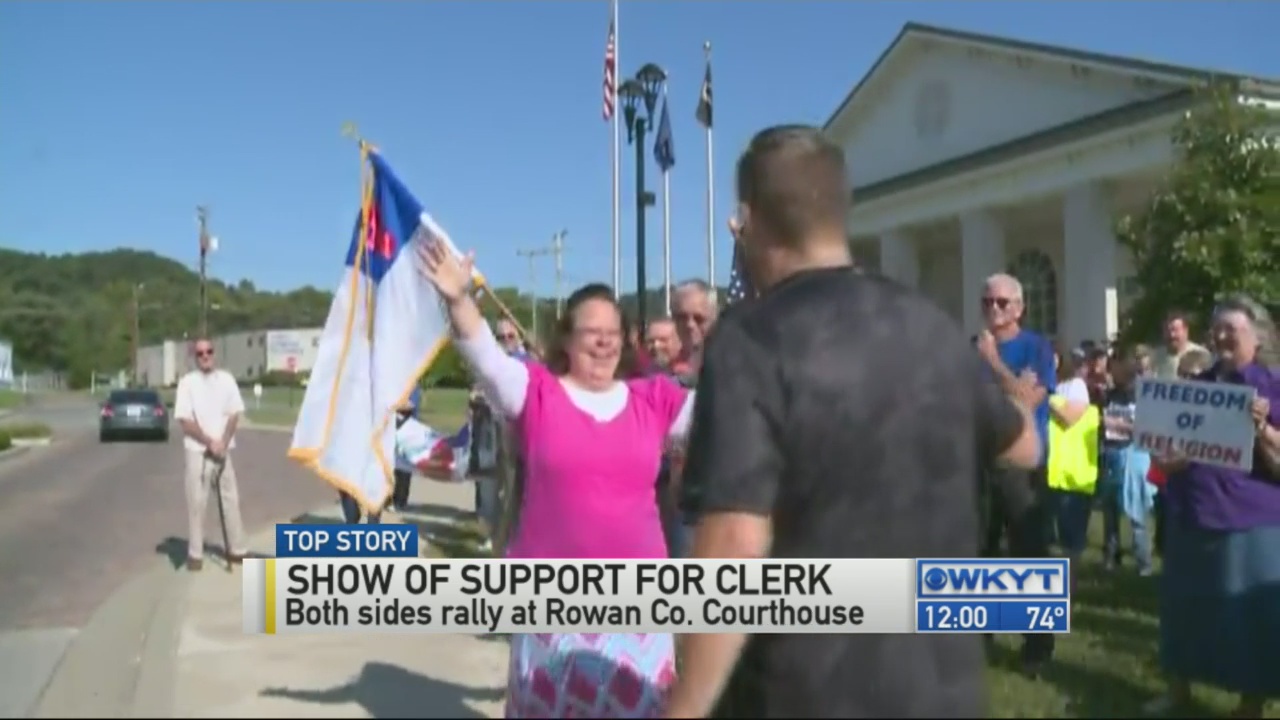
I am busy today, a lot going on, so just a quick note about the soon to be irrelevant and already mostly forgotten Recalcitrant County Clerk of Rowan County Kentucky; Mrs. Kim Davis.

Mrs. Davis went back to work Monday, still claiming to be persecuted but not interfering with the five deputy clerks in her office who are issuing marriage licenses to all couples, including same-sex couples. She and her hack job lawyers are claiming that the licenses issued without her name on them may be invalid, a claim rejected by Kentucky’s Governor, Attorney General and the Federal Court.

Going back to work Davis was defiant and again played the victim, though it was she who used her office to deny the rights of others. She asked, “Are we not big enough, a loving enough and a tolerant enough state to find a way to accommodate my deeply held religious convictions?”  But why was she not big enough to find a way to accommodate the legal and civil rights of people whose lives that she does not approve? The irony is rich; especially when you understand the nature of the oaths of office that she swore to uphold nine short months ago, one that stipulated that she would “faithfully execute the duties of my office without favor, affection or partiality.”

The answer is readily apparent to anyone who has any discernment: Mrs. Davis was stupid enough to listen to politically motivated hack lawyers who used the case to fill their bank accounts with the donations of well-meaning people who neither understand history, the law, or the Constitution. For her decision she became a tool of unscrupulous politicians like Mike Huckabee and Ted Cruz, and ended up in jail.

What will happen next is that she will do her job without interfering with her five deputies; the Kentucky legislature will do their job under the state Religious Liberty Restoration Act that they passed to create an exemption that will not compromise Mrs. Davis’s “deeply held religious convictions”; and her lawyers and supporters will abandon her. She is getting  religious liberty award from the Family Resesrch Council, an organization listed as a hate group by the Southern Povert Law Commission at their upcoming Values Voters Summit.  After that she and her husband may get a few appearances on the television programs of some televangelists and maybe a book deal which will net her little money; but she will be yet another casualty in the culture war that these politicians, preachers and pundits are waging. Sadly, she will not be the last. Her fifteen minutes of infamy are over and I though I am tempted to feel bad for her, I don’t. They may have encouraged her, but she made the decision. Call it schadenfreude.

Peace

Padre Steve+

3 Comments

Filed under christian life, civil rights, faith, LGBT issues, News and current events, Religion

Who is Guilty? Racism & the Birmingham Church Bombing

SixteenthStBaptistBomb05

Friends of Padre Steve’s World

On September 16th 1963 a young Southern White lawyer in Birmingham Alabama spoke these words after a black church was bombed and the police attacked peaceful protesters:

“from anger and despair, from frustration and empathy. And from years of hopes, hopes that were shattered and crumbled with the steps of that Negro Baptist Church.”

Most Americans will not recognize the names and I would dare say that many do not even know about what happened in Birmingham Alabama 52 years ago today. At 10:22 in the morning on September 15th 1963 a bomb exploded during the worship service at the 16th Street Baptist Church. It was one of the most brazen attacks against a church in the modern era, and men who claimed to be “Christians” committed it.

MCNAIR ROBERTSON COLLINS WESLEY

Four young girls, three 14 year olds and one 13 year old were killed. Addie Mae Collins, Denise McNair, Carole Robertson and Cynthia Wesley lost their lives that day. Twenty-two other church members were wounded in an attack, which was carried out by members of the KKK and tacitly approved of by many political leaders including Alabama Governor George Wallace. Why were they killed and why were the others wounded? For the crime of being black and the crime of their church serving as a focal point of the Civil Rights movement.

Likewise, most people, including many blacks do not know that before that beginning in 1955 there had been 19 other bombings of black churches and the homes of black leaders in Birmingham before this one. But even before that outbreak of violence, Birmingham had become known as “Bombingham” because over 50 bombing attacks against blacks, black churches and black institutions in the years after the First World War.

The church had served as a focal point of the Freedom Summer where Civil Rights activists and students from around the country had met, trained and organized to register blacks to vote. This made it a prominent target for violence.

1179981

Early in the morning of September 15th four members of the United Klans of America Frank Bobby Cherry, Thomas Blanton, Herman Cash and Robert Chambliss placed a box of 10 sticks of dynamite under the church steps near the basement. A time delay detonator was set o ensure that the church was filled when the bomb went off. The blast occurred as children were entering the to listen to a sermon, ironically entitled “The Love that Forgives.”

The attack was a heinous crime and an act of cold-blooded premeditated murder that maybe a number of years before might not have made the news in much of the country. But this was 1963 and over the preceding months of the Freedom Summer opened the eyes of people across the nation to what was happening in the South. The brutal attacks on many blacks, civil rights workers and student volunteers during that time raised the profile of the Civil Rights Movement and shown the ugly hatred towards blacks held by many Southerners hidden underneath the veneer of polite Southern hospitality.

315

Blacks protested and were met with a massive police response coordinated by Governor Wallace that brought about more violence, and more dead blacks. A day later a young white lawyer, Charles Morgan Jr.; a true Southerner by right and heritage spoke to the White Businessman’s club of Birmingham. His words were forceful and to the point. Instead of simply asking why, the young man began his speech with this poignant remark:

“Four little girls were killed in Birmingham yesterday. A mad, remorseful worried community asks, “Who did it? Who threw that bomb? Was it a Negro or a white?” The answer should be, “We all did it.” Every last one of us is condemned for that crime and the bombing before it and a decade ago. We all did it.”

He continued, A short time later, white policemen kill a Negro and wound another. A few hours later, two young men on a motorbike shoot and kill a Negro child. Fires break out, and, in Montgomery, white youths assault Negroes. And all across Alabama, an angry, guilty people cry out their mocking shouts of indignity and say they wonder, “Why?” “Who?” Everyone then “deplores” the “dastardly” act. But you know the “who” of “Who did it” is really rather simple.”

Not only was the attack heinous, but, the response of many in law enforcement at the local level and even at the office of FBI Director J. Edgar Hoover was criminal. Hoover refused to investigate, and although a witness identified Chambliss, he was not charged with the bombing; instead he was charged for having a case of dynamite without a permit. He was fined $100 and given a six-month jail sentence.

765026275

Thought FBI agents had investigated the crime and discovered evidence against all four men, Hoover ordered the evidence not be provided to local or Federal prosecutors. So for eight years the crime was covered up.

However in 1971 Bill Baxley was elected Attorney General of Alabama. Baxley re-opened the case and requested the FBI files, which had been suppressed by Hoover, who had died in 1972. In 1977 Chambliss was indicted and convicted of first degree murder, he died in prison. Blanton was tried in 2001, convicted of four counts of murder and sentenced to life in prison. Cash died in 1994 with ever having been charged with a crime and Cherry was convicted in 2002, sentenced to life in prison and died in 2004.

The attack and the deaths of the four girls served as a catalyst in the Civil Rights Movement. In 1964 President Lyndon Johnson signed the Civil Rights Act. However it did not end the fight for equality, and others would die in its aftermath, including Dr. Martin Luther King Jr. who died at the hands of an assassin’s bullet less than 4 years later.

Since the passage of the Civil Rights Act of 1964 and the Voters Rights Act of 1965 many blacks have been elected to local, state and federal offices or served in some of the highest ranks of the military, judiciary, and at the Cabinet level. Two, Colin Powell and Condoleezza Rice have served as Secretary of State, two, Eric Holder and Loretta Lynch, as Attorney General of the United States; one, Clarence Thomas, as a Justice of the Supreme Court; and one, Barak Obama elected as President of the United States. Black sports stars, actors and singers are celebrated as heroes among much of society.

But despite these advances, racism is still quite prevalent. One of my former co-workers from Georgia, a white Southern Baptist minister and retired military chaplain noted that many whites may not be explicitly racists in interpersonal relationships with blacks, but have an attitude that blacks still need “to stay in their place.” He noted that he thinks that quite a few believe that many whites believe that this is a large part of the reason that President Obama is opposed and even hated by so many whites. It is not just politics or ideology. While politics may play a role the root of the hatred is racism because I cannot for the life of me imagining any white Democrat, including Hilary Clinton getting this kind of treatment.

But the sad truth is there still is an undercurrent of unrepentant racism in the country and not just the South. In fact many places in the South have seen greater advances in racial relations than other parts of the country. That is not to say that there are those who would attempt to disenfranchise blacks, some of the voting laws recently passed are designed to ensure that significant parts of the black population, specifically the elderly and students living away from home have greater difficulty voting. It is actually a more insidious method than past Jim Crow laws because the drafters of these laws hope to keep just enough black and other poor or minority voters from voting to ensure that they maintain power. Some of those who drafted or supported these state laws designed to disenfranchise voters have openly admitted that fact.

Not only is racial prejudice experienced by blacks, it is experienced by many Americans of Hispanic origins, some of Asian descent but also by those of Middle Eastern, Iranian, Pakistani or Indian descent. And yes, people of all races, including racial, ethnic and religious minorities can be as racist and violent as the men who bombed the 16th Street Baptist Church 52 years ago. Racism is an ugly part of our human condition and no matter whom it is targeted against, and who does the targeting, it is wrong and needs to be fought.

The Southern Poverty Law Center http://www.splcenter.org lists 784 active hate groups of all types operating across the country, including neo-Nazis, Klansmen, white nationalists, neo-Confederates, racist skinheads, black separatists, border vigilantes and others. (See the Hate Map here https://www.splcenter.org/hate-map) The number is down from recent because a number of more the virulent White Supremacist and militia groups have gone underground, shut down websites and social media pages.

Too many people have died in this struggle to stop now. If today you read this before or after going to church, remember those four little girls who died at the hands of four murdering, racist Klansmen. Likewise remember that there are others out there full of hate who would not hesitate to do the same again and others who would actively support those efforts. Sometimes even in the name of God.

As for me I will fight it no matter whom it is against.

Charles Morgan Jr. closed the speech which brought about death threats against him and his family and forced him to leave Birmingham with these words.

“And who is really guilty? Each of us. Each citizen who has not consciously attempted to bring about peaceful compliance with the decisions of the Supreme Court of the United States, every citizen who has ever said “they ought to kill that nigger,” every citizen who votes for the candidate with the bloody flag, every citizen and every school board member and schoolteacher and principal and businessman and judge and lawyer who has corrupted the minds of our youth; every person in this community who has in any way contributed during the past several years to the popularity of hatred, is at least as guilty, or more so, than the demented fool who threw that bomb.”

10morgan01-190

Charles Morgan Jr.

Charles Morgan died in 2009, but after he left Birmingham he went on to lead a remarkable life, especially in his commitment to Civil Rights and Justice. The New York Times obituary noted:

“Among his many cases as a civil rights lawyer, Mr. Morgan sued to desegregate his alma mater, the University of Alabama; forced a new election in Greene County, Ala., that led to the election of six black candidates for local offices in 1969; and successfully challenged racially segregated juries and prisons. After the civil rights movement began to subside, Mr. Morgan, as a leader of the American Civil Liberties Union, fought three celebrated court cases involving protests against the Vietnam War.

He represented Muhammad Ali in his successful court fight to avoid being drafted. He represented the civil rights activist Julian Bond in the early stages of an ultimately successful lawsuit after Mr. Bond had been denied a seat in the Georgia legislature because of his antiwar views. And he defended an officer when he was court-martialed for refusing to help instruct Green Berets headed for Vietnam.”

We cannot ever let ourselves forget that it was supposedly Christian men who bombed a church and killed those four little girls, and that as long as all of us fail to live up to our responsibilities such things will happen again. If we do not, we are as guilty as those who throw the bombs, shoot the bullets, and those preachers, pundits and politicians who deny the fact that these things are still commonplace.

Yes, my friends, we will be at least as guilty as the brazen killers who continue to try to kill the dreams of those who are not like them. As for me, I hope that I will be as committed to stand for the rights of the oppressed and for justice as did Charles Morgan.

Peace

Padre Steve+

1 Comment

Filed under christian life, civil rights, crime, History, Political Commentary