Tag Archives: General William Tecumseh Sherman

The Day After Veteran’s Day

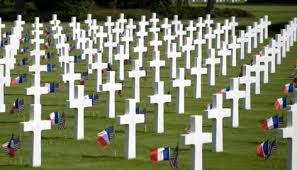
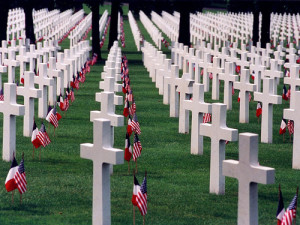
american cemetery

Friends of Padre Steve’s World,

It is the day after Veteran’s Day and I still am in a reflective mood about it. Of course if there were no war, if war had become a thing of the past, a sad chapter in the course of human history, the day would be less personal. It would simply be a day where people looked back in time possibly honoring ancestors, but not to their left or right, remembering their family members, friends, and neighbors who fight the wars that most people avoid. Herman Wouk, in his classic novel War and Remembrance wrote:

“In the glare, the great and terrible light of this happening, God seems to signal that the story of the rest of us need not end, and that the new light can prove a troubled dawn. 

For the rest of us, perhaps. Not for the dead, not for the more than fifty million real dead in the world’s worst catastrophe: victors and vanquished, combatants and civilians, people of so many nations, men, women, and children, all cut down. For them there can be no new earthly dawn. Yet thought their bones like in the darkness of the grave, they will not have died in vain, if their remembrance can lead us from the long, long time of war to the time for peace.”

The First World War was supposed to be the war to end all war, instead became war to end all peace. That war ended at the eleventh day, of the eleventh month, and the eleventh day of 1918. However, the subsequent turmoil after that first “Armistice Day” which ended the fighting of the First World War, has birthed war without end. The Treaty of Versailles and the Sykes-Picot agreement ensured that war would be part of the last century and will be a part of life for the foreseeable future. Agatha Christie, the great English author who served as a volunteer nurse in the First World War, wrote, “One is left with the horrible feeling now that war settles nothing; that to win a war is as disastrous as to lose one.”

General Robert E. Lee wrote his wife Mary Custis Lee in 1864 as the bloodshed of the Civil War came to a climax, “What a cruel thing is war: to separate and destroy families and friends, and mar the purest joys and happiness God has granted us in this world; to fill our hearts with hatred instead of love for our neighbors, and to devastate the fair face of this beautiful world.”

As I noted, Veteran’s Day 2015 is over but I have not stopped reflecting on war and its cost. Having served in combat myself, and having stood over the wounded in field hospitals in Iraq and having seen the devastation of war up close and personal I have a hard time reducing war to the technology, the tactics and trivia that seem to satisfy the consumers of war porn. Call me whatever you want but I cannot get around the human cost of war. William Tecumseh Sherman reflected, “It is only those who have neither fired a shot nor heard the shrieks and groans of the wounded who cry aloud for blood, more vengeance, more desolation. War is hell.” 

One of my favorite historians of the Second World War, Cornelius Ryan who wrote the magnificent accounts of D-Day, The Longest Day, Operation Market Garden, A Bridge Too Far, and the Battle of Berlin, The Last Battle said about his accounts: “What I write about is not war but the courage of man.” I think that writing about courage is appropriate and I do a lot of that. But I think in addition to courage that we also must write about the frailty and fallibility of human beings, especially the leaders who plan and conduct war, as well as the ordinary men and women who serve during war.

When I teach or write about military history I find it important to make sure that the people who made that history are not forgotten.  After all, as the British military theorist Colin Gray says, “people matter most” when we deal with history, policy, or politics, especially in the matter of war. He is right of course; people are the one constant in war. Weapons and tactics may change, but people do not.

Likewise we cannot forget that war, even wars for the most excruciatingly correct and even righteous reasons are always tragic. The cost of war, even so called “good wars” is devastating. Ernest Hemingway wrote, “Never think that war, no matter how necessary, nor how justified, is not a crime.” To the war porn addicts the words of Sherman or Hemingway surely are offensive, but they provide a necessary warning to the politicians, pundits and preachers who cannot get enough war to satiate their bloodlust and need for power. Sadly, most of the men and women who revel in war without end have neither served in combat or have any skin in the game regarding the wars that they support and those which they work so hard to bring about. Maybe if they did then they would not be so quick to send young men and women to war.

Those who follow me on this site know that I write about war a lot, some might say too much, but I cannot help that. My life has been forever changed by war.  If you look back through my archives you can see how my writing has evolved when it comes to dealing with war and part of that is because I do not want the sacrifices of the men and women who fought those wars to be forgotten or cheapened by a society which from the very beginning of our history has done so. Lieutenant General Hal Moore who co-authored the book “We Were Soldiers Once, and Young” wrote: “in our time battles were forgotten, our sacrifices were discounted, and both our sanity and suitability for life in polite American society were publicly questioned.” By continuing to write and teach I hope to ensure that this does not happen. Maybe I am “pissing into the wind,” but I cannot stand by silently and pretend that war can be glamorized and glorified for the benefit people who never serve.

I am a combat veteran, I have seen the devastation of war, I have lost friends in war, men and women who did not come home. I have seen other friends struggle in the aftermath of war, and I have seen some lose that struggle. Because I am a military historian as well as a priest, I feel a sacred duty to ensure that people know the real cost of war.

I do this in my official capacity teaching ethics and leading the Gettysburg Staff Ride for the Staff College where I have the honor to serve as faculty. This itself is interesting as I am spending the final few years of a three and a half decade military career teaching the men and women who in not too long of time will be our nation’s senior military leaders. That is a responsibility that I take most seriously. Thus I always, whether it is in teaching the ethics of war, or about the Battle of Gettysburg I attempt to impress this on my students. I preach from day one to every class that their decisions in the planning process, their recommendations to senior political and military leaders, and their decisions on the battlefield impact real people, their soldiers, the people in the lands that they fight and on the home front.

I have been writing a text for the Gettysburg Staff Ride, which I believe, will eventually become at least two and maybe more books. I tie a lot of biographic material in with the text, again in order to make what could be a dry and mechanical affair more real to my students and readers. That is one of the reasons that I find going to Gettysburg and walking that hallowed ground so important.

I find that the lives, beliefs, motivations, relationships, and experiences of people to be paramount to understanding events. People are complex, multi-layered and often contradictory. All of my heroes all have feet of clay, which in a sense makes their stories even richer, and the events that they helped bring about far more fascinating. By not denying their humanity, by understanding and appreciating their flaws, even the flaws in their character, I gain a more holistic perspective and develop a greater appreciation and empathy for them and a deeper understanding of my own flaws. As T.E. Lawrence wrote, “Immorality, I know. Immortality, I cannot judge.” 

The complex and contradictory nature of humanity leads to a lot of confusion for people who see the world through the black and white lens of cosmic dualism where there is only good and evil and “if you’re not for us, you’re against us.”  Human nature shows us that things are much more complex, nuanced and blurry, there are far more than fifty shades of gray when it comes to humanity and the participation of men and women in war.

Because of this otherwise good and honorable people can find themselves for any number of reasons, fighting for an evil cause, while people who are more evil than good can end up fighting for a good cause. Now if you are one of those people who are trapped by an absolute ideological or religious certitude that cannot allow for such contradictions, that statement may confuse or even offend you. For that I do not apologize and I hope that you are offended enough to face the truth, for that is the human condition, and that my friends is what history, and especially that dealing with the most destructive and consequential issues involving humanity must deal with.

So I will continue to write about war and try in the process to humanize it for my readers and to tell the stories of the tragedy that is war in such a way that even those who have not been to war, can imagine it and in doing so make wise decisions if they are to send other people’s children to fight their wars. The subject is far too important to be left to the purveyors of war porn who seek to satiate the bloodlust of others. Thus I write to ensure people remember, so that those who do not know war will never have to experience it.

As for the form of my writing, I am becoming much more deliberate in trying to craft the story. Barbara Tuchman wrote something that I am now beginning to appreciate as I write my own book on Gettysburg and the Civil War, and other works that I plan on writing, “I have always felt like an artist when I work on a book. I see no reason why the word should always be confined to writers of fiction and poetry.” 

Anyway, that is all for today.

Peace

Padre Steve+


Leave a comment

Filed under books and literature, History, philosophy

They Thanked Us Kindly: Reflections on Veteran’s Day 2015

481801_10151367001287059_1003164983_n1

Friends of Padre Steve’s World,

As a career military officer and veteran of the Iraq campaign as well as Operation Enduring Freedom I get very reflective around Veteran’s Day. For me it is a melancholy time. I remember those who have gone to war, those who did not come home, and those who came home, especially those who came home wounded in body, mind, or spirit; those who were forever changed by their experience of war.

One of my heroes is T.E. Lawrence, the immortal Lawrence of Arabia. After World War One ended and the politicians, diplomats, and business leaders betrayed those who served, as well as the people of many nations with a terrible peace, Lawrence wrote, “We were fond together because of the sweep of open places, the taste of wide winds, the sunlight, and the hopes in which we worked. The morning freshness of the world-to-be intoxicated us. We were wrought up with ideas inexpressible and vaporous, but to be fought for. We lived many lives in those whirling campaigns, never sparing ourselves: yet when we achieved and the new world dawned, the old men came out again and took our victory to remake in the likeness of the former world they knew. Youth could win, but had not learned to keep, and was pitiably weak against age. We stammered that we had worked for a new heaven and a new earth, and they thanked us kindly and made their peace.”

One hundred and one years ago, in November 1914, millions of soldiers were fighting in horrible conditions throughout Europe. From the English Channel to Serbia, Poland and Galicia; French, British, German, Austro-Hungarian, Serbian and Russian troops engaged each other in bloody and often pointless battles. Often commanded by old men who did not understand how the character of war had changed, millions were killed, wounded, maimed or died of disease.

After four years, with the Empires that were at the heart of the war’s outbreak collapsing one after the other there was an armistice. On the eleventh hour, of the eleventh day, of the eleventh month the shooting stopped and the front lines quieted. By then over 20 million people, soldiers and civilians alike had died. Millions more had been wounded, captured, seen their homes and lands devastated or been driven from there ancestral homelands, never to return.

The human cost of that war was horrific. Over 65 million soldiers were called up on all sides of the conflict, of which nearly 37.5 million became casualties, some 57.5% of all soldiers involved. Some countries saw the flower of their manhood, a generation decimated. Russia sustained over 9 million casualties of the 12 million men they committed to the war, a casualty rate of over 76%. The other Allied powers suffered as well.  France lost 6.4 million of 8.5 million, or 73%, Great Britain 3.1 million of nearly 9 million, 35%; Italy 2.2 million of 5.6 million, 39%. Their opponents, Germany, Austria-Hungary and the Ottoman Empire suffered greatly. Germany sustained 7.1 million casualties of 11 million men called up, or nearly 65%, Austria 7 million of 7.8 million, 90% and the Ottoman Empire 975,000 of 2.8 million or 34% of the soldiers that they sent to war.

It was supposed to be the War to end all War…but it wasn’t, it was the mother of countless wars.

It has been a century since that bleak November of 1914, and ninety-six years since the time where for a brief moment, people around the world, but especially in Europe dared to hope for a lasting and just peace. But that would not be the case…

The victors imposed humiliating peace terms on the vanquished, be it the Germans on the Russians, or the Allies on Germany and her partners. The victors divided up nations, drew up borders without regard to historic, ethnic, tribal or religious sensibilities. But then, it was about the victors imposing themselves and their quest for domination, expanding colonial empires and controlling natural resources rather than seeking a just and lasting peace. The current war against the Islamic State is one of the wars spawned by the Sykes-Picot agreement which divided the Middle East between the French and the British at the end of the war. It was a war that keeps on giving.

Of course we have known the disastrous results of their hubris, a hubris still carried on by those who love and profit by war…war without end which continues seemingly with no end in sight.

I am a veteran of Iraq and Operation Enduring Freedom, as well as the Bosnia mission and the Cold War. My dad was a Vietnam veteran who enlisted during the Korean War. I serve because it is the right thing to do, not because I find war romantic or desirable. It is as General William Tecumseh Sherman said “Hell.” If called to go back to Iraq, where I left so much of my soul, I would go in a heartbeat.

This week as we do every year we will pay our homage to honor our veterans, especially in the United States, Great Britain, Canada and France. But sometimes it seems so hollow, for in all of our countries those that serve are a tiny minority of those eligible to serve, who are much of the time ignored or even scorned by those that feel that providing for them after they have served is too much of a burden on the wealthy who make their profits on the backs of these soldiers, sailors, marines and airmen.

I have walked about since returning from Iraq often in a fog, trying to comprehend how a country can be at war for so long, and there is such a gap between the few who serve and the vast majority for whom war is an abstract concept happening to someone else, in places far away, and whose experience of war is its glorification in video games. Personally I find that obscene, and feel that I live in a foreign world. Erich Maria Remarque wrote in All Quiet on the Western Front: 

“I imagined leave would be different from this. Indeed, it was different a year ago. It is I of course that have changed in the interval. There lies a gulf between that time and today. At that time I still knew nothing about the war, we had been only in quiet sectors. But now I see that I have been crushed without knowing it. I find I do not belong here any more, it is a foreign world.”

Similarly Guy Sajer wrote in his classic The Forgotten Soldier: 

“In the train, rolling through the sunny French countryside, my head knocked against the wooden back of the seat. Other people, who seemed to belong to a different world, were laughing. I couldn’t laugh and couldn’t forget.”

Major General Gouverneur Warren wrote to his wife two years after the American Civil War:

“I wish I did not dream that much. They make me sometimes dread to go to sleep. Scenes from the war, are so constantly recalled, with bitter feelings I wish to never experience again. Lies, vanity, treachery, and carnage.”

Sometimes I find it obscene that retailers and other corporations have turned this solemnity into another opportunity to profit. But then why should I expect different? Such profiteers have been around from the beginning of time, but then maybe I still am foolish enough to hope for something different. Please don’t get me wrong, I do appreciate the fact that some businesses attempt in at least some small way to thank veterans. I also know there are many businesses and business owners who do more than offer up tokens once a year, by putting their money where their mouth is to support returning veterans with decent jobs and career opportunities; but for too many others the day is just another day to increase profits while appearing to “support the troops.”

As Marine Corps legend and two-time Medal of Honor winner Major General Smedley Butler Wrote:

“What is the cost of war? what is the bill? “This bill renders a horrible accounting. Newly placed gravestones. Mangled bodies. Shattered minds. Broken hearts and homes. Economic instability. Depression and all of its attendant miseries. Back -breaking taxation for generations and generations. For a great many years as a soldier I had a suspicion that war was a racket; not only until I retired to civilian life did I fully realize it….”

But the marketers of war do not mind, almost Orwellian language is used to lessen its barbarity. Dave Grossman wrote in his book On Killing:

“Even the language of men at war is the full denial of the enormity of what they have done. Most solders do not “kill,” instead the enemy was knocked over, wasted, greased, taken out, and mopped up. The enemy is hosed, zapped, probed, and fired on. The enemy’s humanity is denied, and he becomes a strange beast called a Jap, Reb, Yank, dink, slant, or slope. Even the weapons of war receive benign names- Puff the Magic Dragon, Walleye, TOW, Fat Boy, Thin Man- and the killing weapon of the individual soldier becomes a piece or a hog, and a bullet becomes a round.”

There is even a cottage industry of war buffs, some of who are veterans seeking some kind of camaraderie after their service, but most of whom have little or know skin in the real game, and at no inconvenience to themselves. As far as the veterans I understand, but as for the others I can fully understand the words of Guy Sajer, who wrote:

“Too many people learn about war with no inconvenience to themselves. They read about Verdun or Stalingrad without comprehension, sitting in a comfortable armchair, with their feet beside the fire, preparing to go about their business the next day, as usual…One should read about war standing up, late at night, when one is tired, as I am writing about it now, at dawn, while my asthma attack wears off. And even now, in my sleepless exhaustion, how gentle and easy peace seems!”

It was to be the War to end all war” but I would venture that it was the war that birthed countless wars, worse tyrannies and genocides; That war, which we mark the end of today, is in a very real and tragic sense, the mother of the wars that have followed. Today, war threatens in so many places; the Middle East, Ukraine, Asia, and Africa. Terrorism has apparently returned with a vengeance. War without end, amen.

As so to my friends, my comrades and all that served I honor you, especially those that I served alongside. We are a band of brothers; no matter what the war profiteers do, no matter how minuscule our number as compared to those who do not know what we do, and those who never will.  We share a timeless bond and no one can take that away.

I close with the words of a German General from the television mini-series Band of Brothers which kind of sums up how I feel today. The American troops who have fought so long and hard are watching the general address his troops after their surrender. An American soldier of German-Jewish descent translates for his comrades the words spoken by the German commander, and it as if the German is speaking for each of them as well.

Men, it’s been a long war, it’s been a tough war. You’ve fought bravely, proudly for your country. You’re a special group. You’ve found in one another a bond that exists only in combat, among brothers. You’ve shared foxholes, held each other in dire moments. You’ve seen death and suffered together. I’m proud to have served with each and every one of you. You all deserve long and happy lives in peace.

In hopes of peace,

Padre Steve+

5 Comments

Filed under History, iraq,afghanistan, Military, Political Commentary, shipmates and veterans, Tour in Iraq, War on Terrorism

Try to Understand: The Kindest, Noblest, & Best Thing You Will Ever Do

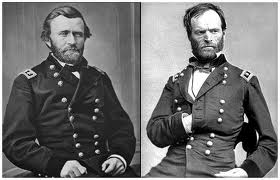
grant and sherman

Grant and Sherman

Friends of Padre Steve’s World,

The great American Civil War general William Tecumseh Sherman once said of his relationship with Ulysses S. Grant, “Grant stood by me when I was crazy, and I stood by him when he was drunk. Now we stand together.” Having been both crazy, and at times drunk, I can relate to both men, both of whom also often suffered from severe and often disabling depression at different points in their lives.

Yesterday I wrote an article about depression and I decided to follow it up with another on the same subject. Yesterday I mentioned the late Iris Chang and her comments about how depression is not rational, and C.S. Lewis who talked about how mental pain is harder to deal with than physical pain. During my worst phases of depression in the years after I came back from Iraq, I fought every day to find something to hold onto, something to keep me from ending my life. If you have never experienced real depression, the kind that slowly eats away the very fabric of your being, you might not understand. In fact it was something that I really didn’t understand until I went through years of it.

Depression is far different than being sad. It is like the difference between having a cold, which you know should pass, and having an insidious cancer which even if it goes into remission lurks for another chance to strike again.

I think that Elizabeth Wurtzel, the author of the book Prozac Nation, hit what I am describing on the head, “That’s the thing about depression: A human being can survive almost anything, as long as he sees the end in sight. But depression is so insidious, and in compounds daily, that it’s impossible to ever see the end.”

In a similar manner, J.K. Rowling, the author of the Harry Potter books noted, “Depression is the most unpleasant thing I have ever experienced. . . . It is that absence of being able to envisage that you will ever be cheerful again. The absence of hope. That very deadened feeling, which is so very different from feeling sad. Sad hurts but it’s a healthy feeling. It is a necessary thing to feel. Depression is very different.”

I have to agree with both of these writers, depression is the worst. I can live with insomnia, and night terrors, even with anxiety, but depression is the worst, it never seems like it will end. I was fortunate that I got through my most difficult times, including a period just over a year ago where I was nearly suicidal after very bad treatment in the Mental Health Department at the local naval medical center. It took the intervention of my former commanding officer, a doctor named David Lane, who had just been selected for promotion to admiral to get me the help that I needed, but not everyone has that kind of ace in the hole. I wouldn’t have thought of asking him, but his Command Master Chief, and my friend Ed Moreno, intervened, told him of how bad I was doing and that made all the difference. Ed didn’t try to fix me, he just stood beside me and when I needed help, he came through as a friend, and he is still a friend. That is what friends do.

I still struggle, sometimes with depression, but more often the nightmares and night terrors associated with my PTSD. Last night my wife woke me up when in one of my high definition nightmares I was thrashing around trying to defend myself from an enemy insurgent in Iraq. Now mind you, I was never in a close combat situation, but I took part in a number of missions where we didn’t know who the good guys or bad guys were and I was unarmed. But I can live with that, depression without end is far different.

In my worst times I had a lot of people tell me what I needed to do to get out of being depressed. Most were well meaning but didn’t have a clue as to what I really needed. I didn’t need someone to fix me. I didn’t need a checklist of things to make me well. I didn’t need to pray more, or read my Bible more. I didn’t need to work ungodly numbers of hours in ICUs where lives of people were hanging in the balance… all I needed was people who would say I love you, I care for you, and I value you for who you are, not what I want you to be, and will be there for you no matter what, or maybe, let me buy you a beer. Thankfully, there were a few people who did all of those things, and they have been there for me since I emerged from that darkness.

As for the others, who seemed more like “Job’s helpers” it is sometime embarrassing to come across them. Of course I am polite and I do not avoid them. That being said, once you have gone through this, you can see just how uncomfortable that they are to be around you. So those encounters tend to be brief and uncomfortable, as Job’s helpers quickly move along to avoid the awkwardness of the situation. The interesting thing is now I am perfectly fine with their discomfort.

I think that some of the best advice for those who live with, work with, or are friends with a person struggling with depression was written by English comedian Stephen Fry, who said, “Try to understand the blackness, lethargy, hopelessness, and loneliness they’re going through. Be there for them when they come through the other side. It’s hard to be a friend to someone who’s depressed, but it is one of the kindest, noblest, and best things you will ever do.” That is empathy in action.

I have a number of friends; classmates, and other people I have served with in the military who this very day just hope to stay alive, to find something to live for. The depression that they feel is often overwhelming. They are wonderful, talented and gifted people, people who have a strong amount of empathy for others, but they are enveloped by a darkness and fog which makes it hard for them to see any sign that the depression will ever lift. I have been there, and now I try to be there for them. For me it comes back to what Sherman said about Grant, If I don’t stand with those who suffer from depression after what I have been through, what good would I be?

Peace

Padre Steve+

2 Comments

Filed under faith, healthcare, mental health

A Christian & an Enthusiast: General Oliver O. Howard

Friends of Padre Steve’s World,

A change of pace as I get ready for a new class and a section of my Gettysburg Text about Major General Oliver O. Howard. Howard is interesting because alone of senior Union generals his Christian Faith guided his actions and he was maligned by some for that faith. 

This section is only biographic sketch before his Eleventh Corps went into action at Gettysburg. Likewise it does not discuss his very successful command of a corps and army in the West under William Tecumseh Sherman, nor his post war service. I think that he makes an interesting character study; after all, the one constant in history is humanity. We learn from men like Howard and that is important.

Peace

Padre Steve+

Oliver-Otis-Howard-9345101-1-402

Major General Oliver O. Howard, U.S. Army

With John Reynolds dead and Abner Doubleday directing First Corps in its defense west of Gettysburg Major General Oliver O. Howard, commander of Eleventh Corps assumed command of the Federal forces around Gettysburg. Howard was one of the more unusual characters in the senior leadership of the Army of the Potomac, and later when he served under William Tecumseh Sherman’s command in the west, mostly because of his strong Evangelical Christian religious convictions and the fact that he did not drink. Sherman remarked to a group of generals who were mocking Howard’s temperance, “Let Howard alone! I want one officer who don’t drink!” [1]

“A Christian and an Enthusiast”

The thirty-three year old Howard was from Maine, his father had died when he was ten and in 1846 at the age of sixteen he entered Bowdoin College. He graduated from Bowdoin in 1850 near the top of his small class, and education, far from being something simply to prepare himself for a career was important of itself, and he told his mother, “Education is my first aim…. I seek not money, but a cultivated and enlightened mind, becoming & corresponding with the age in which we live.” [2] During his time at Bowdoin Howard was introspective and frequently mused on his own shortcomings and failures. He also showed little interest in world or national events, including the war with Mexico, but in his first year at Bowdoin he did take an interest in the cousin of a classmate, Elizabeth Ann Waite, or Lizzie who eventually became his wife.

While he was finishing his time at Bowdoin he was still uncertain of what he would do. It was then that his uncle, Congressman John Otis who had help to raise him following the death of his father secured for him an appointment to West Point. He did very well academically but at times struggled with some of his fellow students, some of who considered him “priggish, self-righteous, and opinionated.” [3] This was most likely due to a number of reasons, first his moderate abolitionist views, which were unpopular with many cadets, his active participation in the Bible class, which some classmates ridiculed, and his high academic standing, which provoked the jealousy of others. Howard was also resented by some for his friendship with Sergeant Warren Lothrop, a Mexican War veteran, a childhood friend who was “the son of a close friend of his own father” [4] as well as maintaining a friendship with a cadet “who had been “cut” – shunned – by the corps.” [5] While he stood by the cadet, he was forbidden to maintain the friendship by the Commandant of Cadets due to rules on fraternization, but in the eyes of some classmates, the damage had been done. One cadet who never accepted Howard was Custis Lee, an academic rival and the son of Robert E. Lee.

Despite a rough start Howard became friends with many cadets, including some who had shunned him early in his West Point experience. However, one friend who stood by Howard throughout was a cadet from Virginia named J.E.B. Stuart, who he knew from the Bible class. Howard wrote of that friendship, “I can never forget the manliness of J.E.B. Stuart…. He spoke to me, he visited me, and we became warm friends, often, on Saturday afternoons, visiting the young ladies of the post together.” [6] Howard’s friends included cadets from north and south, and never appeared to let political or ideological differences influence his choice of friends.

He graduated fourth in the class of 1854 and commissioned as a Brevet Second Lieutenant in the highly technical Ordinance Corps. He married Lizzie the following year and held a number of assignments in his corps before being assigned to Florida at the tail end of the Seminole Wars where as an Ordinance officer he saw no action. However, during his time in Florida he experienced his conversion to Evangelical Christianity, following his attendance of a number of Methodist revival meetings and his future life would bear evidence of the influence of the founder of Methodism, John Wesley. His faith became a facet of his life that he would never waver from incurring the praise as well as the criticism of various contemporaries. He wrote Lizzie:

“I then bore hat the text above in mind, & said in my heart oh! My Saviour, I know that thou canst save me! I made an effort to fully believe that my sins were washed in the blood of the Lamb, that my dear Saviour had actually saved me at that moment, i.e. had pardoned all my transgressions of the laws of God, & all the wickedness of a corrupt heart – The fullness of the glow of happiness came into my heart, the tugging & burning left me – the choking sensation was gone…my mind is as clear as when making out an Ordinance Return…” [7]

Following his conversion he led prayers and Bible studies, had enlisted me to his quarters for morning devotions and even considered leaving the army for the ministry. It was fortunate for Howard that his commander, an elderly Colonel, Gustavus Loomis, was a devout Christian who had first taken him to the Methodist revival meetings, for many other senior officers would have not approved of such overtly evangelical behavior.

Howard was transferred back to West Point in September of 1857 where now as a First Lieutenant he was assigned as an instructor in Mathematics, and was able to again be with Lizzie and their children. At West Point he continued his religious activities, leading Bible studies and became the superintendent of a Sunday school for the children of enlisted men and briefly explored the possibility of entering the ministry with a local Episcopal priest and even studied Hebrew for a time.

During his time as an instructor at West Point the young officer, like many devout converts to any religion, wrestled with his faith. Always introspective Howard became even more so, do much soul-searching and with two issues that he recognized in himself, vanity and pride. He wrote: “the pride & haughtiness of my heart is more than pen can tell, but I believe God will so school me, by failures when I act without Christ, by disappointments & afflictions, as to bring my miserably foolish soul into full subjection to himself…. I fear if God would give me success with my heart as it is now, that I would be puffed up with pride & thus lose the countenance of my blessed Saviour.” [8] That struggle to harmonize the tension between his desire to excel in the army and life, with his concerns for his soul should he become consumed by ambition and vanity would become more pronounced within a few very short years.

As he had for most of his life Howard took little interest in political questions and the growing movement toward secession. This was not surprising because Howard, whose religious commitment was continuing to grow was planning to take a leave of absence from the army to attend Bangor Theological Seminary, where his brother, Charles was already a student. However, when Fort Sumter was fired on Howard “abandoned the plan to enter the ministry and determined to stay as a regular or volunteer until the war was over.” [9]

As the officers who made their choice to remain loyal to the Union were now confronted with the decision to remain in the Regular Army or join the new volunteer regiments being formed by Northern states. For many, loyalty and the desire to fight to protect the Union was mixed with a certain amount of pragmatic ambition. Remaining in the relatively small Regular Army might leave them in the position of assisting the training of new volunteer units, or involved with the administration or organizing and equipping them, possibly with limited promotion opportunity while taking a volunteer commission could lead to rapid promotion, command of a regiment or even a brigade.

But initially “the was “a prevalent opposition to regular officers accepting commissions in the volunteers,” [10] but soon the reality that the Regular army was insufficient to bring the rebellious states back into the Union caused the army to allow officers to serve with the volunteers. Howard’s fellow Mathematics instructor, Lieutenant Gouverneur Warren was one of the first young officers at West Point to accept a volunteer commission in the Fifth New York Infantry, the Duryea Zouaves. Howard wrote to Maine’s governor, Israel Washburne offering his services to the State, and after an initial rebuff was offered command of the Third Maine Volunteer Infantry. When he received the offer from Maine Howard took it to Lieutenant Colonel John Reynolds, the Commandant of Cadets and told Reynolds of the offer and asked, “I’ve had the tender, or what amounts to it, of a Maine Regiment. What answer would you give, colonel?’ Reynolds replied, “You’ll accept, of course, Howard,” [11] and then preceded to give the young officer a lesson on what colonels needed to know.

One thing Howard had settled in his mind was the legitimacy of war. As a cadet at West Point he had studied the works of Henry Wager Halleck, who wrote one of the first comprehensive books on strategy by an American and who included in his work a synopsis of the traditional Just War Theory. Halleck, like Howard, was a devout Christian and in his book he wrote “The prevention and punishment of crime causes much human suffering; nevertheless the good of the community requires that crime should be prevented and punished. So, as a nation, we employ military officers to man our ships and forts, to protect our property and our persons, and to repel and punish those who seek to rob us of our life, liberty, and pursuit of happiness…” [12] When Fort Sumter was attacked and other Federal installations in the South being overrun Howard believed that “it was a citizen’s duty to defend his country just as a father would defend his wife and children from an assassin.” [13] When the regiment arrived in New York on its way to Washington it was presented a flag by patriotic Maine citizens living there. Upon receiving it, Howard thanked them and his words reflected his thoughts about war and duty, as well as his religious faith: “I was born in the East, but I was educated by my country. I know no section; I know no party; I never did. I know only my country to love it, and my God who is over my country. We go forth to battle in defense of righteousness and liberty, civil and religious. We go strong in muscle, strong in heart, strong in soul, because we are right…” [14]

Howard’s faith would be a source of personal strength throughout the war and while some like Joseph Hooker ridiculed his faith saying “He was always taken up with Sunday Schools and the temperance cause. Those things are all very good, you know, but have little to do with commanding an army corps. He would command a prayer meeting with a good deal more ability than he would an army.” [15] Likewise his “reputation as a Christian “hampered his acceptance by both fellow officers and enlisted men.” [16] Despite this, many soldiers and officers in every unit Howard commanded came to admire him

Despite this Howard did eventually succeed and became the only officer of his West Point class of 1854 to become a Major General in the Regular Army of the United States. It was not always an easy road, but Howard displayed a resiliency in the face difficulty and even defeat, a resiliency that enabled him to grow as an officer and commander as the war went on.

Shortly after the Third Maine joined the army at Washington Howard was made a brigade commander. His brigade was involved in the final attack at Bull Run were it was caught up in the disaster that overtook the army of Irvin McDowell. He was promoted to brigadier general and commanded a brigade during McClellan’s inept Peninsular Campaign and “at Fair Oaks on June 1, he was hit twice in the right arm while leading a charge; a second bullet shattered the bone near the elbow, and the arm had to be amputated.” [17] Howard’s bravery in the face of the enemy was noted, especially after having received the first wound he continued to lead his men despite having three horses shot from under him. One of his regimental commanders wrote, “The General was the only Brigadier that I saw on the field who led his men into battle & handled them there – He acted with a bravery bordering on rashness & nobly sustained his reputation as a brave and efficient officer.” [18]

Within two months Howard was back with the army, his former officers writing McClellan to recommend that Howard be given command of a division. He did not immediately get that, but was given command of a brigade of Pennsylvania Reserves, the Philadelphia Brigade in John Sedgwick’s division. He took command of that division when Sedgwick was wounded at Antietam. He commanded the division when it was thrown into General Ambrose Burnside’s ill-advised and doomed assault of Marye’s Heights at the Battle of Fredericksburg. Though his division could not break the Confederate line he was commended by Major General Charles Sumner and Major General Darius Couch for his actions. Sumner noted Howard’s “judicious disposition” in driving the Confederates from Fredericksburg” while “Couch, in speak of the corps losses, stated: “Howard, coming up late, lost 700 men, besides 150 on the 11th. He did well in the part assigned to him.” [19]

During the winter following Burnside’s relief and the appointment of Major General Joseph Hooker to command the Army of the Potomac, Howard remained in command of his division. The vanity that he wrestled with in his spiritual life got the better of him when Daniel Sickles, a political general with no formal military training was appointed to command the Third Corps. Howard, who was senior to Sickles protested to Hooker and was promised the newly arrived Eleventh Corps. The corps, which had just become part of Hooker’s army was never “accepted as a true part of the Army of the Potomac,” where it was viewed as a “foreign contingent,” [20] “and was looked upon by the older units with some distain, despite its having seen considerable action.” [21] The previous Corps commander, Major General Fritz Sigel had just left the army after a disagreement regarding not receiving a larger command during the reorganization of the army. When he left many of the corps’ soldiers remained very loyal to their old commander, and “thought Howard was being advanced at Sigel’s expense.” [22]

But Hooker had created a problem for himself. Eleventh Corps was the only large unit in the Federal Army with a high concentration of Germans. Many of the soldiers had enlisted to serve under men that they knew and trusted, Fritz Sigel and Carl Schurz. When Sigel left command Hooker could have appointed Carl Schurz to command the corps, but “Hooker had little use for Schurz’s generalship,” [23] and bluntly told Secretary of War Stanton that he would not appoint Schurz to corps command. For Howard, this was not good, for “in his anxiety to receive a command commensurate with his rank he had failed to consider all the consequences.” [24]

Howard took command of Eleventh Corps barely a month before Hooker launched his offensive against Robert E. Lee’s Army of Northern Virginia, which culminated in the Battle of Chancellorsville. Howard struggled to gain the acceptance of the German soldiers of his new command, many of whom were resentful of having to serve under a non-German officer who did not understand them. Howard’s overtly Evangelical Christian approach to command and stress on temperance, which included the distribution of religious tracts did not endear him to the Germans, many of who were Catholics, free-thinkers and beer drinkers. While Howard’s piety was appreciated many soldiers of English and Scottish descent with Protestant roots, the “Germans of the Eleventh Corps, many of whom were freethinkers, the activities of “Old Prayer Book” were not welcome…. The Eleventh Corps would go on campaign under a general it neither liked nor trusted, and Howard was marching quite out of step with his command.” [25] Some understood this, Colonel Charles Wainwright, commander of the First Corps artillery wrote, “Howard, who succeeds Sigel in the Eleventh is brave enough, and a most perfect gentleman. He is a Christian and an enthusiast, as well as a man of ability, but there is some doubt as to his having snap enough to manage the Germans, who require to be ruled with a rod of iron.” [26]

In the ensuing battle Howard’s Eleventh Corps was taken in the flank by Stonewall Jackson’s troops which outnumbered his badly situated corps by nearly three-to-one, his only reserve brigade having been taken by Hooker to support Sickle’s Third Corps. The ensuing action was a disaster as regiment after regiment was rolled up by the rapidly advancing Confederate phalanx.

Blame could be assigned to both Hooker and Howard, Hooker for leaving Eleventh Corps unsupported and isolated on the flank without a reserve, and Howard for not taking better precautions to secure his right flank from a surprise attack. Neither Howard, nor his senior division commander Brigadier general Charles Devens “personally investigated any of the reports of Rebel activity on their front, and Howard compounded his negligence by leaving his command for two critical hours.” [27] Only Carl Schurz took any action to protect the corps flank and rear by quietly facing three of his regiments west. When the night was over Howard admitted “I wanted to die…. That night I did all in my power to remedy the mistake, and I sought death everywhere I could find an excuse to go to the field.” [28] However, Jackson’s victory was more tactical than strategic and as one historian noted “the corps had generally acquitted itself well in a nearly hopeless situation and delayed Confederate progress until dark,” [29]at which time the Confederates experienced the loss of Stonewall Jackson who was mortally wounded in the darkness by his own troops as he tried to push his corps forward.

However, the morale of the Eleventh Corps was crushed and it would not get a chance to redeem itself during the rest of the Chancellorsville campaign. When Hooker lost his nerve, refused to counter-attack, and then decided to withdraw he was opposed by Howard, George Meade, Darius Couch and John Reynolds who advocated a renewal of the offensive against Lee who they knew to have taken heavy casualties and had to be outnumbered by the Army of the Potomac.

The ever insightful Charles Wainwright wrote, “Some of the papers are very severe on Hooker, and insist upon that he was drunk, which I do not believe. Others go quite as far the other way, and try to screen him from all blame, seeking to throw it on one or the other of his subordinates. The attacks on General Howard are outrageous. He had been in command of the Eleventh Corps but a month before the fight, and was previously unknown to its officers and men…. He is the only religious man of high rank I know in this army, and, in the little intercourse I have had with him, shewed himself the most polished gentleman I have met. I know that he was very anxious to attack Lee on Monday, and together with Couch, Reynolds, and Meade was decidedly opposed to our withdraw on Wednesday night…” [30]

But the damage to the Eleventh Corps had been done. In the search for blame the old line prejudice and sentiment of the “Know nothings” against the immigrant Germans was once again unleashed. Inside and outside the Army of the Potomac, the Eleventh Corps was given the derisive nickname of “the flying Dutchmen” despite the fact that approximately half of its soldiers were of old line Yankee stock. The Eleventh Corps was not without good soldiers or good leaders, the real issue came from “the prejudice of Americans and the defensive attitude of the Germans…” [31] The soldiers of the corps had to endure the mocking of soldiers of other units and the scorn of the press, which “spoke of the “unexampled conduct” of the Eleventh Corps and how “the whole failure of the Army of the Potomac was owing to [its] scandalous poltroonery.” [32] In defense of the Corps Brigadier General Alexander Schimmelpfennig wrote “It would seem a nest of vipers had but waited for an auspicious moment to spit out their poisonous slanders upon this heretofore honored corps…. I have been proud to command the brave men in this brigade; but I am sure that unless these infamous falsehoods be retracted and reparations made, their good will and soldierly spirit will be broken…” [33]

Like his army commander, Fighting Joe Hooker, Howard never “conceded that he was in any way negligent, but he once hinted that at Chancellorsville he was inexperienced and that he had learned a lesson. “When I was a lad, a larger boy gave me a drubbing, but I grew in size and strength till he could do it no longer. The war experience of some of us was like that.” [34] To his credit, Howard did learn from his mistakes and never was surprised again as Eleventh Corps commander or the Commander of the Army of Tennessee under the command of William Tecumseh Sherman. However, Hooker, not only refused to take any blame, but proceeded to blame “squarely upon three of the army’s eight corps commanders…” [35] Howard, John Sedgwick and cavalry corps commander George Stoneman.

The troops were discouraged and resentful of their treatment; one officer wrote of the corps’ withdraw from Chancellorsville “I recrossed with a heavy heart, and… I felt tears rolling down my cheeks. I was ashamed of the battle, and deplored the sad experience of the Eleventh Corps…” while Howard noted, “there was no gloomier period during the great war than the month which followed the disasters at Chancellorsville.” [36] Carl Schurz wrote “The spirit of this corps is broken, and something must be done to revive it.” [37] It was in this depressed environment, commanding a corps that was defeated and demoralized that Oliver Howard advanced into Gettysburg on July 1st 1863.

Notes

[1] Hebert, Walter H. Fighting Joe Hooker University of Nebraska Press, Lincoln and London 1999. Originally published by Bobbs-Merrill, New York 1944 p.178

[2] Carpenter, John A. Sword and Olive Branch: Oliver Otis Howard Fordham University Press, New York 1999 p.3

[3] Thomas, Emory M. Bold Dragoon: The Life of J.E.B. Stuart University of Oklahoma Press, Norman OK 1986 and 1999 p.24

[4] Ibid. Carpenter Sword and Olive Branch p.8

[5] Ibid. Thomas Bold Dragoon p.24

[6] Ibid. Thomas Bold Dragoon p.25

[7] Ibid. Carpenter Sword and Olive Branch p.17

[8] Ibid. Carpenter Sword and Olive Branch p.20

[9] Ibid. Carpenter Sword and Olive Branch p.21

[10] Jordan, David M. Happiness is Not My Companion: The Life of G.K. Warren Indiana University Press, Bloomington Indiana 2001 p.34

[11] Howard, Oliver O. Autobiography of Oliver Otis Howard, Major General, U.S. Army Volume 1 The Baker and Taylor Company, New York 1907 Made available by the Internet Achieve through Amazon Kindle location1627 of 9221

[12] Halleck, Henry Wager. Elements of Military Art and Science Or, Course Instruction In Strategy, Fortification Tactics of Battles, &c. Embracing the Duties of Staff, Infantry, Cavalry, Artillery, and Engineers, Adapted for the Use of Volunteers and Militia Third Edition D. Appleton & Company, New York and London 1862 Amazon Kindle edition location 149 of 6332

[13] Ibid. Carpenter Sword and Olive Branch p.21

[14] Ibid. Howard Autobiography of Oliver Otis Howard location 1983 of 9221

[15] Girardi, Robert I. The Civil War Generals: Comrades, Peers, Rivals in Their Own Words Zenith Press, MBI Publishing, Minneapolis MN 2013 p.92

[16] Ibid. Carpenter Sword and Olive Branch p.25

[17] Tagg, Larry The Generals of Gettysburg: The Leaders of America’s Greatest Battle Da Capo Press Cambridge MA 1998 Amazon Kindle Edition p. 121

[18] Ibid. Girardi The Civil War Generals: Comrades, Peers, Rivals in Their Own Words p.91

[19] Ibid. Carpenter Sword and Olive Branch p.41

[20] Ibid. Hebert Fighting Joe Hooker p.178

[21] Ibid. Carpenter Sword and Olive Branch p.43

[22] Ibid. Hebert Fighting Joe Hooker p.178

[23] Sears, Stephen W. Chancellorsville Houghton Mifflin Co. Boston and New York 1996 p.64

[24] Ibid. Carpenter Sword and Olive Branch p.43

[25] Ibid. Sears Chancellorsville p.65

[26] Wainwright, Charles S. A Diary of Battle: The Personal Journal of Colonel Charles S. Wainwright 1861-1865 edited by Allan Nevins, Da Capo Press, New York 1998 p.183

[27] Ibid. Sears Chancellorsville p.270

[28] Ibid. Sears Chancellorsville p.286

[29] Greene, A. Wilson. From Chancellorsville to Gettysburg: O. O. Howard and Eleventh Corps Leadership in The First Day at Gettysburg edited by Gallagher, Gary W. Kent State University Press, Kent Ohio 1992 p.57

[30] Ibid. Wainwright A Diary of Battle p.210

[31] Coddington, Edwin B. The Gettysburg Campaign: A Study in Command, A Touchstone Book, Simon and Schuster New York, 1968 p.306

[32] Ibid. Green From Chancellorsville to Gettysburg: O. O. Howard and Eleventh Corps Leadership p.58

[33] Ibid. Green From Chancellorsville to Gettysburg: O. O. Howard and Eleventh Corps Leadership p.58

[34] Ibid. Carpenter Sword and Olive Branch p.49

[35] Sears, Stephen W Gettysburg Houghton Mifflin Company, New York 2003 pp.193-194 and Coddington p.20

[36] Ibid. Green From Chancellorsville to Gettysburg: O. O. Howard and Eleventh Corps Leadership p.57

[37] Ibid. Sears Gettysburg p.37

Leave a comment

Filed under civil war, Gettysburg, History, leadership, Military

Truth and Un-sanitized History

10570298_10152872503382059_5058681841617456899_n

Friends of Padre Steve’s World,

I have spent the last couple of days introducing to new readers to things that I have come to believe. Since I am a historian I will continue to do that today.

I have a passion for truth, especially in the realm of historical thought, in fact over the past few years this passion has deepened to a level of profoundness that I never dreamed. In fact for me this passion has become a duty, a duty to truth; an un-sanitized, warts and all examination of subjects attempting to strip away the veneer of myth in order to find truth. This is not easy, but it is what my life has become, knowing that in the long run I will not discover all truth, but hopefully point others to examine history, the sciences, philosophy and even theology to find truth. The process can be uncomfortable, especially when confronted by facts, documents, scientific and archeological data which shows what we used to think was truth, as either incomplete, romantic myth, or even complete lies, untruths and fabrication. Oscar Wilde once wrote,“The truth is rarely pure and never simple.”

Barbara Tuchman once wrote: “The reality of a question is inevitably more complicated than we would like to suppose.” That is the nature of truth. It does not matter if it is truth about history, biography, philosophy and religion, science, politics, economics or any part of life. To actively seek truth means that one must open up themselves to the possibility of doubting, as Rene Descartes wrote: “If you would be a real seeker after truth, it is necessary that at least once in your life you doubt, as far as possible, all things.” I admit that this is not comfortable, but it is necessary.

As a historian I have a tremendous passion for truth, and for unsanitized history and for me this means looking at what we know with a critical eye, to compare and examine sources to question what we or others knew before. Far too often what we believe about our own history is often more preserving myth more than by asking hard questions and applying reasoned critical study. To do this is dangerous, because to do so we have to admit that what we know today could be proven wrong at some time in the future when new facts, documents, archeological finds or other historical or scientific are discovered. To those content with half-truth, partial truth or even myth this is disconcerting, and those of us who attempt to unravel myth from fact and present things in a new way are called “revisionists” as if that is somehow a bad thing. The sad thing is we are having to revise in many cases, supposed history that was revised by people who needed to propagate myth, such as with those who promoted the myth of the Lost Cause, the romantic, noble Confederacy which for well over a half century was propagated as historical truth. This myth was sold to the American public in such in film, television and books, fiction and non-fiction alike, to the point that much of white America, even outside the South accepted the myth of the Lost Cause as truth. Films like Birth of a Nation, Gone with the Wind and even Disney’s Song of the South, helped ingrain the myth as truth, and even today when so much more is known, many people hold on to the myth and attack those who differ. 

A lot of my readers may wonder why I write so much about the American Civil War as well as the ante-bellum and Reconstruction eras of American history. For me they are very important for a couple of reasons; first they are eras, that for good and bad define us as a nation and people. Second, they still have relevance to what happens today, especially in the understanding of liberty, civil rights and race relations.

I have a passion for this. The American Civil War and the Battle of Gettysburg are intrinsic parts of who we are as Americans today. The events of that war and this battle continue to reverberate in many aspects of our political, social and national life. Thus for me teaching about this event and what happened on the “hallowed ground” of Gettysburg, as Abraham Lincoln called it, and even 150 years later it matters far more than most of us realize.

Civil War hero Joshua Chamberlain is an icon of the Civil War and American history. A professor of Rhetoric and Natural and Revealed Religions at Bowdoin College he volunteered to serve with the 20th Maine Infantry, his military career in the Civil War has been depicted in movies such as Gettysburg and Gods and Generals and written about in biographies and even historical fiction. Chamberlain was one of the heroes of Gettysburg, and his story has a myth like quality, but he too was a complex, contradictory and sometimes flawed character. However, Chamberlain attached a great importance to passing down the stories of people who did noble deeds and who lived exemplary lives. He wrote, “The power of noble deeds is to be preserved and passed on to the future.”

I sincerely believe what Chamberlain said and I am getting ready to lead another Staff Ride for students from our Staff College to Gettysburg next month.  I do beleive that the power of noble deeds needs to be preserved and passed on to the future.  Even the deeds of less than perfect, often contradictory and sometimes even scandalous  individuals. That is part of the task of the historian. I do this in what I teach and what I write, both in the academic setting as well as on this website.

We live in a time of great cynicism, some of which I can understand. We also live in a time where many people and our institutions operate in a “zero defect” culture, those who fail in any way are shunted aside, punished or even chastised or ostracized. However, when I look at the men who fought at Gettysburg, or for that matter almost any individual who has accomplished great things, none are perfect people and many have great flaws in character, or supported causes or ideologies that were evil. That being said, even less than perfect people can rise to do great deeds, deeds that need to be remembered, passed down and told to succeeding generations.

Many great leaders, or other men and women that we consider today to be great, influential or important were or are quite fallible. Even those who did great things often made gross mistakes, had great flaws in their character, and some lived scandalous lives. Such deeds may tarnish their legacy or take some of the luster away from their accomplishments. But I think that these flaws are often as important as their successes for they demonstrate the amazing capacity of imperfect people to accomplish great things, as well as the incredible complexity of who we are as people. No one is perfect. There are degrees of goodness and even evil in all of us. It is part of the human condition. That is the beauty of un-sanitized history, that is the beauty of stripping away myth to discover the humanity of people, and to recognize who they are, who we are, the good, the bad and even the ugly.

When I look at the perfection that imperfect people expect of others I am reminded of something that William Tecumseh Sherman said about his relationship with Ulysses Grant. These were flawed men, but they were in large part responsible for the Union victory in the Civil War. However, to be honest, neither man would never reach the level of command that they rose to in our current military culture, nor would they rise to the top in corporate America. They are too flawed. Sherman said it well, “Grant stood by me when I was crazy, and I stood by him when he was drunk, and now we stand by each other.” 

That is a part of my passion about Gettysburg and my appreciation and admiration of the brave men who fought in that battle. As I continue to write about that battle and about those men I hope that my readers will gain a new appreciation of their complex and contradictory natures, as well as think about what that means to us today, as individuals and as a society, for it is only when we strip away the myth and seek the truth. Marcus Aurelius wrote:

“If someone is able to show me that what I think or do is not right, I will happily change, for I seek the truth, by which no one was ever truly harmed. It is the person who continues in his self-deception and ignorance who is harmed.”

Those truths can be scientific, they can be historical or literary, and quite often the truth can also be quite personal.

As John F Kennedy said at Yale in 1962: “The great enemy of truth is very often not the lie–deliberate, contrived and dishonest–but the myth–persistent, persuasive and unrealistic. Too often we hold fast to the cliches of our forebears. We subject all facts to a prefabricated set of interpretations. We enjoy the comfort of opinion without the discomfort of thought.”

So until tomorrow, have a thoughtful night.

Peace

Padre Steve+


1 Comment

Filed under civil war, History, philosophy

Writing About War

IMG_0535

“What a cruel thing is war: to separate and destroy families and friends, and mar the purest joys and happiness God has granted us in this world; to fill our hearts with hatred instead of love for our neighbors, and to devastate the fair face of this beautiful world.” Robert E. Lee in a letter to his wife 1864

Memorial Day weekend is over but I have not stopped reflecting on war and its cost. Having served in combat myself, and having stood over the wounded in field hospitals in Iraq and having seen the devastation of war up close and personal I have a hard time reducing war to the technology, the tactics and trivia that seem to satisfy the consumers of war porn. Call me whatever you want but I cannot get around the human cost of war. William Tecumseh Sherman reflected that “It is only those who have neither fired a shot nor heard the shrieks and groans of the wounded who cry aloud for blood, more vengeance, more desolation. War is hell.” 

One of my favorite historians of the Second World War, Cornelius Ryan who wrote the magnificent accounts of D-Day, The Longest Day, Operation Market Garden, A Bridge Too Far, and the Battle of Berlin, The Last Battle said about his accounts: “What I write about is not war but the courage of man.” I think that writing about courage is appropriate and I do a lot of that. But I think in addition to courage that we also must write about the frailty and fallibility of human beings, especially the leaders who plan and conduct war.

When I teach or write about military history I find it important to make sure that the people who made that history are not forgotten.  After all, as the British military theorist Colin Gray says “people matter most” when we deal with history, policy, or politics, especially in the matter of war. He is right of course, people are the one constant in war. Weapons and tactics may change, but people do not. 

Likewise we cannot forget that war, even wars for the most excruciatingly correct and even righteous reasons are always tragic. The cost of war, even so called “good wars” is devastating. Ernest Hemingway wrote “Never think that war, no matter how necessary, nor how justified, is not a crime.” To the war porn addicts the words of Sherman or Hemingway surely are offensive, but they provide a necessary warning to the politicians, pundits and preachers who cannot get enough war to satiate their bloodlust and need for power. Sadly, most of the men and women who revel in war without end have neither served in combat or have any skin in the game regarding the wars that they support and those which they work so hard to bring about. Maybe if they did then they would not be so quick to send young men and women to war.

Those who follow me on this site know that I write about war a lot, some might say too much, but I cannot help that. My life has been forever changed by war.  If you look back through my archives you can see how my writing has evolved when it comes to dealing with war and part of that is because I do not want the sacrifices of the men and women who fought those wars to be forgotten or cheapened by a society which from the very beginning of our history has done so. Lieutenant General Hal Moore who co-authored the book We Were Soldiers Once, and Young wrote: “in our time battles were forgotten, our sacrifices were discounted, and both our sanity and suitability for life in polite American society were publicly questioned.” By continuing to write and teach I hope to ensure that this does not happen. Maybe I am pissing into the wind so to speak, but I cannot stand by silently.

I am a combat veteran, I have seen the devastation of war, I have lost friends in war, men and women who did not come home. I have seen other friends struggle in the aftermath of war, and I have seen some lose that struggle. Because I am a military historian as well as a priest and I have a sacred duty to ensure that people know the real cost of war.

I do this in my official capacity teaching ethics and leading the Gettysburg Staff Ride for the Staff College where I have the honor to serve as faculty.This itself is interesting as I am spending the final few years of a three and a half decade military career teaching the men and women who in not too long of time will be our nation’s senior military leaders. That is a responsibility that I take most seriously. Thus I always, whether it is in teaching the ethics of war, or about the Battle of Gettysburg I attempt to impress this on my students. I preach from day one to every class that their decisions in the planning process, their recommendations to senior political and military leaders, and their decisions on the battlefield impact real people, their soldiers, the people in the lands that they fight and on the home front. 

I have been writing a text for the Gettysburg Staff Ride which I believe will eventually become at least two and maybe more books. I tie a lot of biographic material in with the text, again in order to make what could be a dry and mechanical affair more real to my students and readers. That is one of the reasons that I find going to Gettysburg and walking that hallowed ground so important.

I find that the lives, beliefs, motivations, relationships, and experiences of people to be paramount to understanding events. People are complex, multi-layered and often contradictory. All of my heroes all have feet of clay, which in a sense makes their stories even richer, and the events that they helped bring about far more more fascinating. By not denying their humanity, by understanding and appreciating their flaws, even the flaws in their character, I gain a more holistic perspective and develop a greater appreciation and empathy for them and a deeper understanding of my own flaws. As T.E. Lawrence wrote “Immorality, I know. Immortality, I cannot judge.” 

The complex and contradictory nature of humanity leads to a lot of confusion for people who see the world through the black and white lens of cosmic dualism where there is only good and evil and “if you’re not for us, you’re against us.”  Human nature shows us that things are much more complex, nuanced and blurry, there are far more than fifty shades of gray when it comes to humanity and the participation of men and women in war.

Because of this otherwise good and honorable people can find themselves for any number of reasons, fighting for an evil cause, while people who are more evil than good can end up fighting for a good cause. Now if you are one of those people who are trapped by an absolute ideological or religious certitude which cannot allow for such contradictions, that statement may confuse or even offend you. For that I do not apologize and I hope that you are offended enough to face the truth, for that is the human condition, and that my friends is what history, and especially that dealing with the most destructive and consequential issues involving humanity must deal with.

Over the weekend I did a series on this site about the tragedy of the British Battlecruiser HMS Hood and the German Battleship Bismarck which transpired over the course of a week in May 1941. In that week the two largest and most powerful warships of their day were sunk taking over 3600 of the roughly 3750 sailors aboard to a watery grave in the North Atlantic. While doing this I had the opportunity to go aboard the USS Wisconsin here in Norfolk, a ship that is roughly the same size of those two doomed warships. As I walked the passageways surrounded by massive armor plating It helped me, a sailor who has served aboard a modern Guided Missile Cruiser and other warships to appreciate the life and death of the sailors on those ships. I thought of the Hood’s who with the exception of three sailors being annihilated as the massive ship exploded, and then I thought about the crew of the Bismarck who had nearly half a day to contemplate their end before the British shells turned their ship into a funeral pyre.

So I will continue to write about war and try in the process to humanize it for my readers and to tell the stories of the tragedy that is war in such a way that even those who have not been to war, can imagine it and in doing so make wise decisions if they are to send other people’s children to fight their wars. The subject is far too important to be left to the purveyors of war porn who seek to satiate the bloodlust of others.

As for the form of my writing, I am becoming much more deliberate in trying to craft the story. Barbara Tuchman wrote something that I am now beginning to appreciate as I write my own book on Gettysburg and the Civil War: “I have always felt like an artist when I work on a book. I see no reason why the word should always be confined to writers of fiction and poetry.”

Anyway, that is all for tonight. Over the coming week I should be putting out my next chapter revision to my Gettysburg text and some other articles.

I wish you all the best.

Peace

Padre Steve+

2 Comments

Filed under History, Military, philosophy

They Shall Not Have Died in Vain: Memorial Day 2015

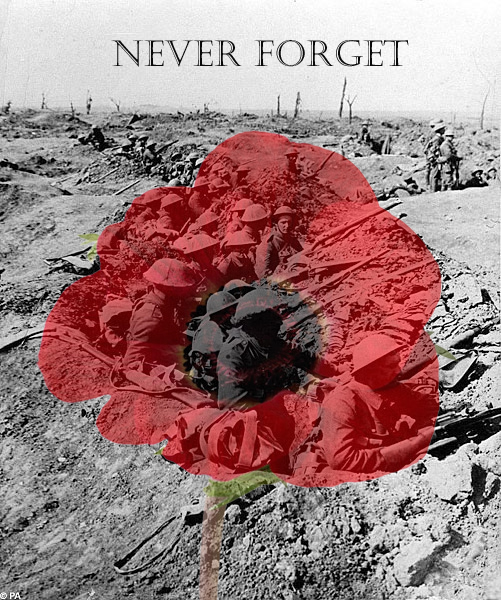
Remembrance_Day___Poppy_Day_by_daliscar

In Flanders Fields

John McCrae, 1915.

In Flanders fields the poppies blow

Between the crosses, row on row

That mark our place; and in the sky

The larks, still bravely singing, fly

Scarce heard amid the guns below.

We are the Dead. Short days ago

We lived, felt dawn, saw sunset glow,

Loved and were loved, and now we lie

In Flanders fields.

Take up our quarrel with the foe:

To you from failing hands we throw

The torch; be yours to hold it high.

If ye break faith with us who die

We shall not sleep, though poppies grow

In Flanders fields.

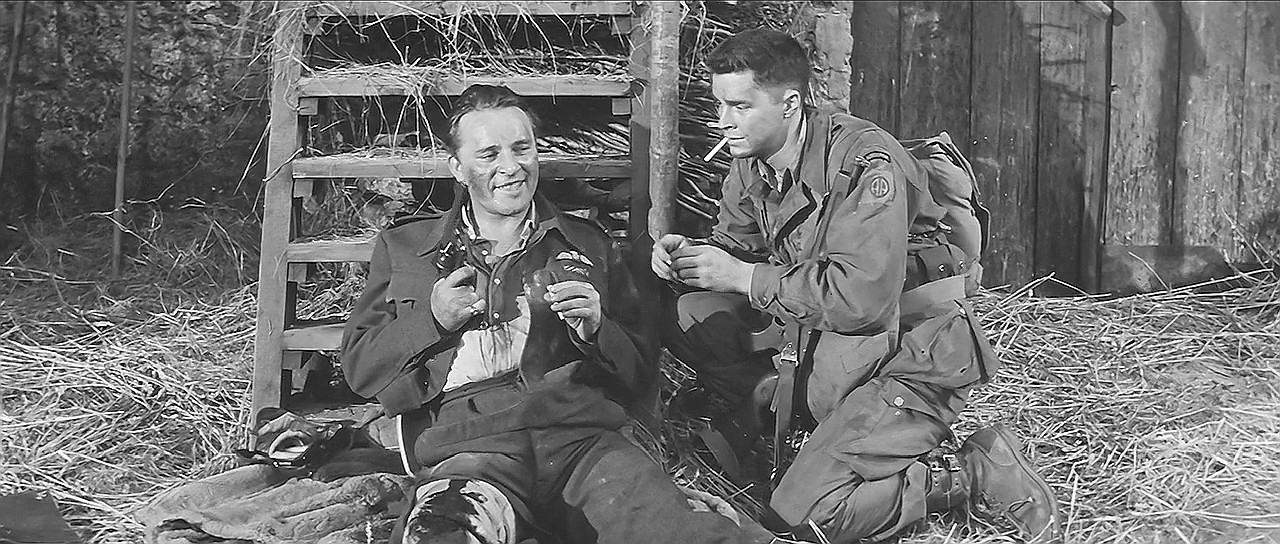
There is a poignant scene in the film The Longest Day in which Richard Burton, playing the wounded British Royal Air Force Flying Officer David Campbell looks at the body of a dead German soldier and says to an American paratrooper who is lost from his unit: 

“It’s funny isn’t it. He’s dead, I’m crippled, you’re lost. Suppose it’s always like that. I mean war.” 

LD20

Back when the movie was filmed in the early 1960s there were still many World War II veterans around and the United States and most Western European nations still had some form of draft or conscription which ensured that most people still had some connection with the military. It’s not like that now. In the United States far these than 1% of the population is serving in the military, and this includes the National Guard and reserves. The numbers are similar throughout Western Europe. Those who have served in combat or even deployed to combat theaters are far fewer. As a result the people of the United States and Western Europe as a whole are so disconnected from military service, not to mention the terrible human cost that is war. As William Tecumseh Sherman said: War is Hell. 

I came back a different man from Iraq. It seems that for me with every passing year Memorial Day becomes more of a melancholy observance. It is a weekend and observance that I feel deeply having lost friends in war and served in Iraq as well as Operation Enduring Freedom. It is also a day in which I feel more and more disconnected from the vast majority of my fellow Americans. I don’t know, but just from my observation it seems that for most Americans the weekend serves as not much more than the end of the school year and the beginning of the summer holiday and vacation season.

Now I could be wrong, but it seems to me that for most Americans, the vast majority who have themselves never served a day in uniform and who have no more than a passing relationship with anyone who is either serving in our current wars or has served in any war, that war is at best a spectator sport.

This is an attitude that has been nurtured by our politicians of all parties, political pundits and preachers for decades. As a result there is a grave disconnect between the society at large and the men and women who serve in the military and in our wars.

To be fair I don’t think it is a matter of ordinary people not caring, not that at all. Many do and I am thankful to them. That being said there are many who though they say they support the troops find war to be some sort of sporting event where we send our heroes out to do battle against the enemies of freedom, while making no sacrifices themselves and even call military health care, retirement benefits and disability pensions “entitlement programs” which need to be reigned in. Yes, that is right. Send the volunteers to war and then abandon them. Sadly, with the exception of the end of World War Two, this is always how this nation has treated its veterans and their families.

The real fact of the matter is that the wars that we have fought since World War II have not been national affairs. If they were we would not be continually fighting wars that most people neither understand and which in many if not most cases we would be better off staying out of completely. That being said I am appreciative of those who do things to care for and honor our veterans, honor our fallen and do practical things for the survivors. There are some really wonderful people, many who have never served who do what they can for those who fight and die in or come back forever changed from these misbegotten and unpopular wars.

At the same time there are a lot of what I call War Porn addicts, especially the pundits, politicians and preachers who cannot get enough of war. As a Christian I hate to say that many of the worst of the war porn addicts are the supposedly Christian pundits, politicians and preachers who cannot seem to find enough new wars to get us involved in even as we struggle to deal with what is on our plate already. If you ask me these sons-of-bitches are traitors who do not love the troops, do not love this country and should be forced into the front line so they can see, smell and taste death.

What I find the most offensive are the war mongers and profiteers who have never served. I feel this way about those who did all that they could to avoid serving in the military and those who did the very minimum to satisfy outward appearances of service while avoiding anything difficult, especially deployment to combat zones. Of the latter I can think of five to six currently serving and very outspoken conservative members of the House of Representatives and the Senate that fit the description. I shan’t mention the members of the previous Presidential administration who through their outright lies caused the deaths of nearly 4500 American military personnel in Iraq. I speak about men who in their writings, their appearances on news networks and their think tanks and corporations that do nothing but profit off of war. Some are current or former politicians, others supposedly “academics” and others men who smell a profit in war. 

memorial-day1-300x225

I find such people to be loathsome and wonder how on Memorial Day weekend they can show their faces. But then they are rather shameless. Sometimes their actions make me wonder if the sacrifices made by those who serve are in vain. However, I strive to resist that and pray that our sacrifices will not be in vain. While they profit from war others pay the bill and it has always been this way. Marine Corps Major General Smedley Butler, a two time winner of the Congressional Medal of Honor wrote after World War One in his book War is a Racket:

“This bill renders a horrible accounting. Newly placed gravestones. Mangled bodies. Shattered minds. Broken hearts and homes. Economic instability. Depression and all of its attendant miseries. Back -breaking taxation for generations and generations. For a great many years as a soldier I had a suspicion that war was a racket; not only until I retired to civilian life did I fully realize it….”

481801_10151367001287059_1003164983_n-1.jpg

Maybe I feel this way because I grew up in a military family where my dad was frequently deployed and served in Vietnam, a place where some of my friends fathers died, and because I have been in the military 32 years between the Army and the Navy. Maybe it is partly because I am a military historian, theologian, priest and chaplain who has seen the horrors of war and the wounds that remain for life in the bodies, minds and spirits of those that fight in them. I cannot speak of how my heart feels when I see young men and women, wounded in war, their lives forever changed bravely struggling to go on even as the war mongers, war profiteers and chicken-hawks profit off of their suffering. As I said before, these people are traitors and if I had my way we would drive them at bayonet point into the arms of the Islamic State so they can taste what war is all about. Maybe then these sons-of-bitches would think twice before sending another young American to die so they might make a profit.

So for me this is a rather melancholy time. A time where I struggle a time when I get so angry. That being said I also echo the words of Civil War Veteran and Supreme Court Justice Oliver Wendell Holmes who spoke these words in 1895:

“even if those who come after us are to forget all that we hold dear, and the future is to teach and kindle its children in ways as yet unrevealed, it is enough for us that this day is dear and sacred…. nevertheless, the generation that carried on the war has been set apart by its experience. Through our great good fortune, in our youth our hearts were touched with fire. It was given to us to learn at the outset that life is a profound and passionate thing. While we are permitted to scorn nothing but indifference, and do not pretend to undervalue the worldly rewards of ambition, we have seen with our own eyes, beyond and above the gold fields, the snowy heights of honor, and it is for us to bear the report to those who come after us.”

175

I honor the fallen, my brothers and sisters who have given the last full measure of devotion in serving this country, those that I know personally or have served with and those who did so before I was every born. Why you might ask? 

The reason is simple and I think that Abraham Lincoln said it best as he closed his Gettysburg Address:

“It is for us the living, rather, to be dedicated here to the unfinished work which they who fought here have thus far so nobly advanced. It is rather for us to be here dedicated to the great task remaining before us — that from these honored dead we take increased devotion to that cause for which they gave the last full measure of devotion — that we here highly resolve that these dead shall not have died in vain — that this nation, under God, shall have a new birth of freedom — and that government of the people, by the people, for the people, shall not perish from the earth.”

Peace

Padre Steve+

3 Comments

Filed under History, iraq, iraq,afghanistan, Military, News and current events, Political Commentary, PTSD, Tour in Iraq, vietnam, War on Terrorism, world war one, world war two in europe

Obedience to the Powers that Be: John Reynolds

220px-GenJFRenyolds

Friends of Padre Steve’s World

I am continuing to periodically intersperse and publish short articles about various commanders at Gettysburg on the site. These all are drawn from my student text and may become a book in their own right.  The reason is I am going to do this is because I have found that readers are often more drawn to the lives of people than they are events. As I have noted before that people matter, even deeply flawed people, and we can learn from them.

This article deals with Major General John Fulton Reynolds who in large part is responsible for bringing about the Battle of Gettysburg and whose actions on that field in the opening hours of the engagement helped decide the course of the Civil War. This segment does not include the details of that battle, those are reserved for the rest of this chapter which I am currently revising for the student text.

I have come to admire Reynold’s more and more and I hope that in this brief treatment of his life and career leading to Gettysburg that you will be inspired by his single dovotion to the Union and the humanity compassion that he treated the victims of war.

Peace

Padre Steve+

There is much written about the supposed superiority of Robert E. Lee and the generals of the Army of Northern Virginia over those of the Army of the Potomac. Their eventual defeat is often blamed on the Union’s superior manpower and attrition with scant recognition of times where the Union commanders, particularly at Gettysburg out-generaled them. Not only did Harry Heth have the misfortune of battling John Buford and John Reynolds, but division, brigade and regimental leaders who performed their duties magnificently. Despite being greatly outnumbered by the Confederates these men and their soldiers turned back the initial Confederate assaults and shattering Confederate infantry formations.

Likewise if chance plays a role in war, the Army of the Potomac had good fortune smiling upon it that fateful morning of July 1st 1863. Part of that good fortune was having Major General John Fulton Reynolds, one of the finest commanders on either side during the Civil War directing its operations. During the engagement Reynolds, his subordinates and his successor in command Abner Doubleday dealt with the unforeseen elements of this engagement far better than any Confederate General on the battlefield that morning. Reynolds exemplified the indispensable qualities described by Clausewitz regarding commanders who must deal with the role of chance and the unforeseen elements that so often cloud the battlefield:

“first, an intellect that, even in the darkest hour, retains the glimmerings of the inner light which leads to truth; and second, the courage to follow this faint inner light wherever it may lead.” [1]

John Reynolds was a native Pennsylvanian, born in Lancaster to descendants of Irish Protestants. His maternal grandfather, Samuel Moore fought as a Captain in the Continental Line during the American Revolution. Reynold’s father, was a lawyer and moved to Lancaster where he “owned and published the Journal.” The elder Reynolds had served two terms in the Pennsylvania legislature and in the early 1830s was a political ally and friend of Senator and later President James Buchannan for whom “he was attending to local business affairs” in Lancaster. [2] Buchannan helped one of Reynold’s brother William gain an appointment to the Naval Academy and in 1837 obtained the appointment to West Point.

The young Pennsylvanian graduated from West Point in 1841, twenty-sixth in a class of fifty-two and was commissioned as a Brevet Second Lieutenant in the artillery. Among his classmates were the future Union generals Israel Richardson, Don Carlos Buell and Horatio Wright and Confederate generals Richard Garnett and J.M. Jones. Graduating in the class ahead of him was a man who would become a lifelong friend, William Tecumseh Sherman. He graduated at a time of military cutbacks, the Army was about to be reduced from 12,000 to 9,000 the following year. Chances for promotion were so bad, especially from First Lieutenant to Captain, “so unlikely that in a single year 117 officers resigned.” [3] Many of these officers would find their way back to the army but even so, army life did not promise much.

Despite this Reynolds found army life to his liking. He served in Florida during the Seminole War, as well as in Mexico “where he was cited for bravery at Monterey and Buena Vista.” [4] During the campaign in Mexico he served with the army commanded by General Zachary Taylor and in the artillery battery commanded by the future Confederate general, Captain Braxton Bragg. He acquitted himself well and also had compassion for the Mexican soldiers that he fought against. Visiting Mexican wounded who had been left with “little medical care and less food” he gave them money to help with their needs. At Buena Vista a number of senior officers wrote official citations praising the artillery and Reynolds by name. General John Wool wrote

“Without our artillery,” he said, “we could not have maintained our position a single hour,” and also: “…a section of artillery, admirably served by Lieutenant Reynolds, 3rd Arty, played an important part in checking and dispersing the enemy in the rear of our left. They retired before him whenever he approached them.” [5]

Those actions brought him fame and two brevet promotions for bravery, [6] to Captain at Monterrey and Major at Buena Vista. However, Reynolds saw little value in them if the army’s promotion system was not fixed. He wrote his brother Jim “The system is a complete humbug and until it changes I believe it is to be rather more of a distinction to be passed over than to be breveted…that is, amongst us who know facts.” [7]

Reynold’s skill as an artilleryman would be used to great effect on the morning of July 1st 1863 on McPherson’s Ridge at Gettysburg. Following the war he remained in the army predominantly with the artillery. He served in field and coastal batteries and like John Buford had “participated in the Utah Expedition.” [8] The Utah expedition is little known and nearly forgotten incidents in United States history which involved the territory of Utah, and it left a bitter taste in the mouths of many of the officers and soldiers who served in it, including John Reynolds.

The Territory of Utah had been created after the Compromise of 1850 and President Millard Fillmore named Mormon leader Brigham Young as Governor. The Mormons settled Utah after having been driven out of Illinois and Missouri as a result of their religious beliefs which included polygamy and well as the political concept Theodemocracy, which had been formulated by Mormon founder Joseph Smith Jr. Theodemocracy was a concept which is a blend of theocracy and republican principles. Though it largely died out after the replacement of Young as Governor it has many similarities with theology, political ideology and goals of the leaders of the current Christian Dominion concepts of the leaders of what is called The New Apostolic Reformation which has gained much power among the leadership of the current Republican Party.

In Illinois Smith had “founded an autonomous community, with its own militia, where Smith was eventually called “King of the Kingdom of God.” [9] Smith believed that it was a necessary step until a true theocracy could be established. Smith had taught his ruling Council of Fifty, which included a few non-Mormons “that in the initial stages of the millennium the council would participate in concert with men of differing religious and political persuasions” and the earth would still have a pluralism of governments and religions in the early part of those thousand years…” [10] Tensions between Smith, the Mormon community and surrounding communities grew and “eventually, an unruly mob lynched the prophet and one of his followers.” [11]

Two years after the territory was formed Young “declared that Smith had a vision, until then kept secret, reinstituting polygamy.” [12] To be fair, Young did not require this of his followers, but the introduction produced a furor among many Americans. The situation with Utah was complicated further by the actions of Congress which in throwing out the Missouri Compromise that Utah and New Mexico “when admitted as a State or States…shall be received into the Union, with or without slavery, as their constitution may prescribe at the time of their admission.” [13]

The combination of a growing theocracy, the introduction of polygamy and the possibility of slavery brought many tensions. The 1856 convention of the new Republican Party condemned “the twin relics of barbarism” – slavery and polygamy.” Midwesterners who joined that part remembered their clashes with the Mormons and “few voters were sympathetic to the Mormons” [14] or their growing power in the Utah Territory. In 1857 this tension led to President James Buchannan to appoint a non-Mormon Governor for the territory which led to conflict between Young’s government and its militias and the United States. Young considered U.S. Troops to be those of a “foreign power” and prepared for war “insisting as strongly on the independence of his people from Washington as the capital insisted on its jurisdiction over the territory.” [15]

Like many officers and Americans in general, Reynolds had negative views of the Latter Day Saints. Some were gained in his introduction to the territory, where he found that as a “gentile” he was treated as an outsider by the Mormon community. His initial bad disposition was only deepened through his interactions with Governor Brigham Young. The most important of these to Reynolds was an attempt to bring to justice the Indians who had massacred a party of army engineers under the command of Captain Gunnison the previous summer. Reynolds for that the Mormon led government, particularly Governor Young had convicted the Indians of manslaughter and sentenced them to prison for manslaughter. This act angered Reynolds. He wrote his sisters:

“They have been since tried by the Mormons and found guilty of manslaughter, tho’ the proof was positive and clear. But their jury was counseled by Brigham Young as to their verdict and perjured themselves. May God have mercy upon them, they would hang two Indians for killing two Mormon boys last summer when there was scarcely any proof at all, but when a Gentile is murdered it is only manslaughter!! I cannot write the truth about these people here – but will sometime later.” [16]

After Utah Reynolds served in Kansas and briefly in the Pacific Northwest. During that time he developed a dislike for radical abolitionists who he believed were responsible for much of the division of the country.

But with tensions growing in 1860 Reynolds was appointed as Commandant of the Corps of Cadets at West Point. During the interregnum of the election of Abraham Lincoln and his inauguration he “hoped for a moderate course that might avoid war.” [17] However, the Confederate seizure of U.S. facilities and siege of Fort Sumter and the tensions building between Southerners and Northerners at the Academy weighed on Reynolds and soon brought about a break with his family’s longtime political ally and benefactor President James Buchannan. Though normally not outspoken about his political beliefs on thing was sure, he valued the Union and as with the Mormons opposed those who sought to undermine it. He wrote his sister Ellie about his feelings for the President at his administration:

“What will history say of us, our Government, and Mr. B’s Administration makes one wish to disown him….”I have said but little, except among ourselves here, on the present difficulties that surround the Government but a more disgraceful plot, on the part of our friend B’s cabinet and the leading politicians of the South, to break up our Government, without cause, has never blackened the pages of history in any nation’s record.” [18]

However, Reynolds’s harshest and most bitter words were reserved for Jefferson Davis who he had served with in Mexico:

“…Who would have believed that when I came here last September and found Mr. Jeff Davis laboring with a Committee of Congress and civilians to re-organize the Academy; our national school! Whose sons, never until the seeds sown by his parricidal hand had filled it with the poisonous weed of secession, had known any other allegiance than the one to the whole country, or worshipped any other flag, than that which has moved our own youthful hopes and aspirations and under which we marched so proudly in our boyish days – who! I dare say, would have believed, that he was brooding over his systematic plans for disorganizing the whole country. The depth of his treachery has not been plumbed yet, but it will be.” [19]

Reynolds served at the Academy until June of 1861 when it graduated its final class before the war began. Departing West Point he was initially appointed as Lieutenant Colonel of the 14th U.S. Infantry regiment. [20] He would have preferred the artillery but wrote that he “could not refuse this promotion offered me under any circumstances, much less at this time, when the Government has a right to my services in any capacity.” [21] How much different was Reynolds than another politically moderate and illustrious soldier, Robert E. Lee, who barely a month after accepting a promotion to full Colonel in the Regular Army resigned his commission to serve his state of Virginia and the Confederacy rather than lead an army “in an invasion of the Southern States” whatever Virginia decided.” [22]

Before Reynolds could take command of the 14th United States, he was promoted to Brigadier General. He commanded a brigade of Pennsylvania volunteers during the Peninsula Campaign and was captured on June 28th after leading his troops successful at Gaines Mill, as McClellan began his withdraw from the gates of Richmond. He spent six weeks in Confederate captivity but was released in a general prisoner exchange on August 15th 1862. [23] Despite being captured Reynolds’s performance during the Seven Days was praised by friend and foe alike and even his Confederate enemies in the city of Fredericksburg petitioned Richmond to release Reynolds who they said:

“when inasmuch as we were prisoners in the hands of General Reynolds we received from him a treatment distinguished by a marked and considerable respect for our opinions and feelings, it becomes us to use our feeble influence in invoking for him, now a prisoner of our Government as kind and as considerate as was extended by him to us. We would therefore hope that he might be placed on parole…” [24]

In doing so they returned to the Army of the Potomac the man who would help decide the fate of the Confederacy barely ten months later.

Reynolds returned to command a division at Second Bull Run where his division held firm as much of the army retreated. Reynolds missed the battle of Antietam as he was called to “the fruitless and frustrating task of trying to organize Pennsylvania’s militia” [25] by Governor Curtin. He returned to the Army of the Potomac and again commanded First Corps at Fredericksburg and again at Chancellorsville.

Reynolds was reportedly offered command of the Army of the Potomac by Lincoln in early June of 1863 but declined it. He went to the White House when he heard that he was under consideration for the post and ensured that he would not get the job by stating the his conditions for taking it. However, he did “urge the president to appoint Meade in Hooker’s place.” [26] He told his artillery chief Colonel Wainwright that he “refused it because he would have been under the same constraints as Burnside and Hooker.” [27] Colonel Wainwright believed that it was in large part due to “Reynolds’s recommendation that General Meade received his appointment.” [28]

The Army of the Potomac’s senior leadership had been the source of much political consternation during 1862 and 1863 for Abraham Lincoln. It was split among Lincoln’s supporters and detractors, Radical Republican abolitionists and moderate Democrats. To complicate matters some of senior leaders of the Army of the Potomac including McClellan, Hooker and Sickles had their own, scarcely hidden aspirations for the presidency.

However, Reynolds was of a different character than the politically connected and conniving commanders who used their position in the army to advance their career. Reynolds was a moderate Pennsylvania Democrat and prior to the war had been no supporter of Lincoln, once comparing him to a “baboon.” That opinion being noted, Reynolds did not allow his political beliefs and opinions to influence the manner in which he upheld his oath to the nation in time of civil war. Lincoln was President and was attempting to hold the Union together against forces that Reynolds found decidedly treacherous. It was a tribute to Reynold’s personal manner of keeping politics out of his command, which allowed him, a moderate Democrat to successfully command a corps whose divisions “were commanded by some of the Army’s most fervent abolitionists – Abner Doubleday, James S. Wadsworth, and John Cleveland Robinson.” [29]

Reynolds was “a serious unbending professional, who unlike McClellan, actually lived by the principle of “obedience to the powers that be.” [30] The Pennsylvanian was “universally respected” in the army “for his high character and sterling generalship” [31] it was noted that unlike others who so quickly interjected themselves into the political turmoil which had embroiled the nation that Reynolds had a policy of holding back. He stood “stoutly aloof from all personal or partisan quarrels, and keeping guardedly free from any of the heart-burnings and jealousies that did so much to cripple the usefulness and endanger the reputation of many gallant officers.” [32]

Oliver Howard noted that unlike many commanders that Reynolds was a commander “who had a steady hand in governing, were generous to a fault, quick to recognize merit, trusted you and sought to gain your confidence, and, as one would anticipate, were the foremost in battle.” [33] George McClellan noted that Reynolds was “remarkably brave and intelligent, an honest, true gentleman.” [34] In his autobiography Howard wrote about Reynolds:

“From soldiers, cadets, and officers, junior and senior, he always secured reverence for his serious character, respect for his ability, care for his uniform discipline, admiration for his fearlessness, and love for his unfailing generosity.” [35]

On the night of June 30th Reynolds was awash in reports, some of them conflicting and even though he was without Meade’s course of action for the next day “concluded that Lee’s army was close by and in force.” [36] He spent the night at his headquarters “studying the military situation with Howard and keeping in touch with army headquarters.” [37] Howard noted Reynolds anxiety and “received the impression that Reynolds was depressed.” [38] After Howard’s departure Reynolds took the opportunity to get a few hours of fitful sleep before arising again at 4 a.m. on July 1st.

When morning came, Reynolds was awakened by his aide Major William Riddle with Meade’s order to “advance the First and Eleventh Corps to Gettysburg.” [39] Reynolds studied the order and though he expected no battle that morning, expecting “only moving up to be in supporting distance to Buford” [40] took the prudent and reasonable precautions that his Confederate opponents A.P. Hill and Harry Heth refused to take as they prepared to move on Gettysburg.

His troops were in fine spirits that morning even though it had been busy. After a breakfast of hardtack, pork and coffee the troops moved out. An officer of the Iron Brigade noted that the soldiers of that brigade were “all in the highest spirits” while Lieutenant Colonel Rufus Dawes of the “placed the fifes and drums at the head of the Sixth Wisconsin and ordered the colors unfurled” as the proud veterans marched forward into the sound of the raging battle to the tune of “The Campbell’s are Coming.” [41]

Though Reynolds was not expecting a fight he organized his march in a manner that ensured if one did happen that he was fully prepared. The precautionary measures that he took were those that any prudent commander having knowledge that strong enemy forces were nearby would take. Reynolds certainly took to heart the words of Napoleon who said “A General should say to himself many times a day: If the hostile army were to make its appearance in front, on my right, or on my left, what should I do?” [42]

This was a question that A.P. Hill and Harry Heth seemed not to consider on that warm and muggy July morning when Heth was committing Lee’s army to battle on his own authority. Reynolds was also about to commit the Army of the Potomac to battle, but unlike Heth who had no authority to do so, Reynolds “had at least been delegated the authority for making such a decision.” [43] While Meade was unaware of what was transpiring in the hills beyond Gettysburg he implicitly trusted the judgement of Reynolds, and he been with the advanced elements of Reynold’s wing Meade too “probably would have endorsed any decision he made.” [44]

Reynolds placed himself with the lead division, that of Wadsworth, and “had directed Doubleday to bring up the other divisions and guns of the First Corps and had ordered Howard’s Eleventh Corps up from Emmitsburg.” [45] Reynold’s also understood the urgency of the situation and “wanted all the fighting troops to be up front, so he instructed Howard not to intermingle his supply wagons with his infantry. Similar instructions had been given to Abner Doubleday; to ensure that the First Corps wagons would wait until the Eleventh Corps foot soldiers had passed.” [46]

Instead operating in the normal fashion of rotating units on the march, Reynolds opted to save time. Since the First Division under the command of James Wadsworth was further advanced than other I Corps divisions, Reynolds instructed it to move first with Cutler’s brigade in the lead followed by the Iron Brigade under Colonel Solomon Meredith. In doing so he countermanded the order of the acting corps commander Doubleday who had ordered that division to allow the other divisions of First Corps to pass his before advancing. Reynolds told Wadsworth that Doubleday’s order “was a mistake and that I should move on directly.” [47]

He went forward with Wadsworth’s division and gave Doubleday his orders for the coming engagement. Doubleday later recalled that when Reynolds arrived to discuss the situation that Reynolds:

“read to me the various dispatches he had received from Meade and Buford, and told me that he should go at once forward with the leading division – that of Wadsworth – to aid the cavalry. He then instructed me to draw in my pickets, assemble the artillery and the remainder of the corps and join him as soon as possible. Having given me these orders, he rode off at the head of the column, and I never saw him again.” [48]

Reynolds ordered Howard’s XI Corps to follow and according to Doubleday directed an aid of Howard to have Howard “bring his corps forward at once and form them on Cemetery Hill as a reserve.” [49] While some writers that he directed Oliver Howard to prepare Cemetery Hill as a fallback position [50] there is more evidence that points to Howard selecting the that commanding hill himself. [51]

Likewise Reynolds ordered Sickles’ III Corps to come up from Emmitsburg where that corps had bivouacked the previous night. [52] Sickles had heard the guns in the distance that morning and sent his senior aide, Major Henry Tremain to find Reynolds. Reynolds told Tremain “Tell General Sickles I think he had better come up” but the order left Sickles in a quandary. He recalled “he spend an anxious hour deciding what to do” [53] for he had “been ordered by Meade to hold his position at Emmitsburg” [54] and Sickles sent another rider to Reynolds and awaited the response of his wing commander instead of immediately advancing to battle on 1 July and it would not be until after 3 P.M. that he would send his lead division to Gettysburg.

Reynolds’ intention according to Doubleday was “to fight the enemy as soon as I could meet him.” [55] Reynolds rode forward with some of his staff into the town as the infantry of I Corps and XI Corps moved advanced. In the town they were met by “a fleeing, badly frightened civilian, who gasped out the news that the cavalry was in a fight.” [56] When he came to the Lutheran Seminary he came across Buford. It was a defining moment of the Civil War, a moment that shaped the battle to come. It has been recounted many times and immortalized on screen in the movie Gettysburg, a time “when the entire battle would come down to a matter of minutes getting one place to another.” [57]

As the rough and tumble Kentuckian, Buford, and Reynolds, the dashing Pennsylvanian, discussed the situation they had to know that odd that they were facing. With close to 32,000 rebels from the four divisions of Hill’s and Ewell’s corps closing in from the west and the north with only about 18,000 men of First Corps, Eleventh Corps and Buford’s cavalry division the odds did not favor them, but unlike other battles that the army of the Potomac faced, this time the army and its commanders were determined not to lose and not to retreat.

Reynolds and Buford committed their eighteen thousand men against Lee’s thirty-two thousand in a meeting engagement that develop into a battle that would decide the outcome of Lee’s invasion. Likewise it was a battle for the very existence of the Union. Abner Doubleday noted the incontestable and eternal significance of the encounter to which Buford and Reynolds were committing the Army of the Potomac:

“The two armies about to contest on the perilous ridges of Gettysburg the possession of the Northern States, and the ultimate triumph of freedom or slavery….” [58]

Notes

[1] Ibid. Clausewitz On War p.102

[2] Nichols, Edward J. Toward Gettysburg: A Biography of John Fulton Reynolds Pennsylvania State University Press, Philadelphia 1958. Reprinted by Old Soldier Books, Gaithersburg MD 1987 p.4

[3] Ibid. Nichols Toward Gettysburg p.13

[4] Tagg, Larry The Generals of Gettysburg: The Leaders of America’s Greatest Battle Da Capo Press Cambridge MA 1998 Amazon Kindle Edition p.10

[5] Ibid. Nichols Toward Gettysburg pp.43-44

[6] Pfanz Harry W. Gettysburg: The First Day University of North Carolina Press, Chapel Hill and London 2001pp.47-48

[7] Ibid. Nichols Toward Gettysburg p.46

[8] Ibid. Pfanz Gettysburg: The First Day p.48

[9] Gonzalez, Justo L. The History of Christianity Volume 2: The Reformation to the Present Day Harper and Row Publishers San Francisco 1985 p.259

[10] Ehat, Andrew” It Seems Like Heaven Began on Earth”: Joseph Smith and the Constitution of the Kingdom of God in BYU Studies Vol 20. No 3 1980) retrieved from https://ojs.lib.byu.edu/spc/index.php/BYUStudies/article/view/5144/4794 20 May 2015 p.258

[11] Ibid. Gonzales p.259

[12] Ibid. Gonzales p.259

[13] Potter, David M. The Impending Crisis: America before the Civil War 1848-1861 completed and edited by Don E. Fehrenbacher Harper Collins Publishers, New York 1976 p.158

[14] Goldfield, David. America Aflame: How the Civil War Created a Nation Bloomsbury Press, New York 2011 p.122

[15] Ibid. Nichols Toward Gettysburg p.58

[16] Ibid. Nichols Toward Gettysburg p.58

[17] Ibid. Nichols Toward Gettysburg p.73

[18] Ibid. Nichols Toward Gettysburg p.73

[19] Ibid. Nichols Toward Gettysburg p.73

[20] Ibid. Pfanz Gettysburg: The First Day p.48

[21] Ibid. Nichols Toward Gettysburg p.75

[22] Korda, Michael. Clouds of Glory: The Life and Legend of Robert E. Lee Harper Collins Publishers, New York 2014 p.228


[23] Foote, Shelby, The Civil War, A Narrative. Volume One Fort Sumter to Perryville Random House, New York 1958 p.493

[24] Ibid. Nichols Toward Gettysburg p.100

[25] Ibid. Pfanz Gettysburg: The First Day p.48

[26] Sears, Stephen W. Controversies and Commanders Mariner Books, Houghton-Mifflin Company, Boston and New York 1999 p.162

[27] Sears, Stephen W. Gettysburg. Houghton Mifflin Co. Boston and New York 2003 pp. 40-42

[28] Nevins. Allan editor. A Diary of Battle: The Personal Journals of Colonel Charles Wainwright 1861-1865 with an introduction by Stephen W. Sears Da Capo Press, New York 1998 p.229

[29] Guelzo, Allen C. Gettysburg: The Last Invasion Vintage Books a Division of Random House, New York 2013 p.30

[30] Ibid. Guelzo Gettysburg: The Last Invasion pp.29-30

[31] Ibid. Sears, Gettysburg. p. 34

[32] Ibid. Guelzo, Gettysburg: The Last Invasion p.30

[33] Howard, Oliver O. Autobiography of Oliver Otis Howard, Major General, U.S. Army Volume 1 The Baker and Taylor Company, New York 1907 Made available by the Internet Achieve through Amazon Kindle location 5908 of 9221

[34] Wert, Jeffry D. The Sword of Lincoln: The Army of the Potomac Simon and Schuster, New York and London 2005 p.101

[35] Ibid. Howard Autobiography of Oliver Otis Howard location 5908 of 9221

[36] Ibid. Pfanz Gettysburg: The First Day p.48

[37] Ibid. Coddington The Gettysburg Campaign: A Study in Command p.261

[38] Ibid. Pfanz Gettysburg: The First Day p.48

[39] Ibid. Coddington The Gettysburg Campaign: A Study in Command, p.261

[40] Ibid. Sears, Gettysburg. p. 158

[41] Nolan, Alan T. The Iron Brigade: A Military History Indiana University Press, Bloomington IN, 1961 and 1994 pp.233-234

[42] Napoleon Bonaparte, Military Maxims of Napoleon in Roots of Strategy: The Five Greatest Military Classics of All Time edited by Phillips, Thomas R Stackpole Books Mechanicsburg PA 1985 p.410

[43] Ibid. Sears, Gettysburg. p. 165

[44] Ibid. Pfanz Gettysburg: The First Day p.49

[45] Ibid. Nolan The Iron Brigade p.233

[46] Trudeau, Noah Andre. Gettysburg: A Testing of Courage, Harper Collins Publishers, New York 2002 p.159

[47] Ibid. Trudeau, Gettysburg: A Testing of Courage p.156

[48] Doubleday, Abner Chancellorsville and Gettysburg: Campaigns of the Civil War VI Charles Scribner’s Sons, Bew York 1882 pp.70-71

[49] Ibid. Doubleday Chancellorsville and Gettysburg p.71

[50] Ibid. Pfanz Gettysburg: The First Day p.76

[51] Green, A. Wilson. From Chancellorsville to Gettysburg: O. O. Howard and Eleventh Corps Leadership in The First Day at Gettysburg edited by Gallagher, Gary W. Kent State University Press, Kent Ohio 1992 p. 70

[52] Ibid. Sears, Gettysburg. p. 158

[53] Keneally, Thomas American Scoundrel: The Life of the Notorious Civil war General Dan Sickles Anchor Books, a Division of Random House, New York 2003 p.275

[54] Swanberg, W.A. Sickles the Incredible Copyright by the author 1958 and 1984 Stan Clark Military Books, Gettysburg PA 1991 p.202

[55] Ibid. Trudeau, Gettysburg: A Testing of Courage p.156

[56] Ibid. Sears, Gettysburg. p. 165

[57] Ibid. Guelzo, Gettysburg: The Last Invasion p.142

[58] Ibid. Doubleday Chancellorsville and Gettysburg p.68


Leave a comment

Filed under civil war, History, leadership, Military

As Brave & Dashing as Any Officer: John Bell Hood and the Limitation of Ability

Friends of Padre Steve’s World

I am continuing to periodically intersperse and publish short articles about various commanders at Gettysburg on the site. These all are drawn from my student text and may become a book in their own right.  The reason is I am going to do this is because I have found that readers are often more drawn to the lives of people than they are events. As I have noted before that people matter, even deeply flawed people, and we can learn from them.

Today’s article is about Major General John Bell Hood who commanded a division in Longstreet’s First Corps at the Battle of Gettysburg. As a brigade and division commander he was as good as any in either army. However, after Gettysburg he was promoted, eventually to army command in Georgia and Tennessee in which position he failed miserably. His story is interesting because it shows that all of us probably have some limitations, that while we may excel in one arena or level, that we may very well not be suited for other things, especially high command or senior management. As Harry Callahan so wisely noted “A man’s got to know his limitations.” I do hope that you enjoy this.

Peace

Padre Steve+

HD_hoodJB1

Lieutenant General John Bell Hood. C.S.A.

John Bell Hood was born in Owingsville Kentucky in 1831. He attended West Point where he was a classmate of the future Union Generals James McPherson and Phillip Sheridan, and graduated fortieth of the fifty-one in the class of 1853. Hood desired a commission in the newly formed cavalry but “his low class standing resulted him entering service as a second lieutenant in the 4th U.S. Infantry Regiment.” [1] However, Hood was persistent and continued to lobby for an appointment to the cavalry service, even directly corresponding with then Secretary of War Jefferson Davis. The young officer’s perseverance paid off and in 1855 he received orders to serve with the 2nd U.S. Cavalry.

Hood served as a cavalry officer under Lee’s command with the 2nd Cavalry in Texas. There he gained a stellar reputation as a leader and Indian fighter, though he only fought in one minor engagement. He was physically imposing and “stood six feet, two inches and had a powerful chest and a giant’s shoulders.” [2]

In 1860 “he received orders to report to West Point to serve as an instructor of cavalry.” [3] His secessionist sympathies were displayed when upon receipt of the orders and went5 directly to the War Department where he told the Adjutant General that “he did not want the position, since he “feared that was would soon be declared between the States, in which event I preferred to be in a position to act with complete freedom.” [4]

When his home state of Kentucky did not secede he attached himself to his adopted state of Texas. He resigned his commission and began the war as a lieutenant of cavalry in the Confederate army. In his resignation the officer was something of a realist concerning the coming war, noting, “seeing no hope of reconciliation or adjustment, but every indication of a fierce and bloody war.” [5] Lee assigned him to Magruder on the Peninsula where he quickly developed as a reputation as a fighter and was given the task of tasking independent cavalry companies into a regiment. He was soon was given the task of forming Texans then in Virginia into a fighting regiment, the 4th Texas, which was assigned to “join a Texas brigade under ex-Senator Louis T. Wigfall.” [6] After Manassas Hood was promoted to Brigadier General and given command of Wigfall’s brigade, the only Texas brigade in the east. He took temporary command of a division during the reorganization of the army that followed the Seven Days.

Over the course of the next year he had built a “combat record unequalled by any in the army at his level.” [7] And the “reputation gained as commander of the Texas Brigade and as a division commander made him both a valuable general officer and a celebrity who transcended his peers.” [8] After his performance at Antietam Lee worked the personnel system to get Hood promoted to Major General and assigned to command of an enlarged division which he would command at Gettysburg. Lee wrote of him “Hood is a good fighter, very industrious on the battle field, careless off, & I have had no opportunity of judging his action, when the whole responsibility rested on him. I have a high opinion of his gallantry, earnestness & zeal.” [9]

After Gettysburg Hood went on to succeed Joseph E. Johnston in Georgia as an army commander, but in this capacity he was out of his league. Johnston had fought a defensive campaign and was deemed by Jefferson Davis to be not aggressive enough in battling the combined armies of William Tecumseh Sherman.

However, Hood’s new responsibilities were beyond his capacity, at heart he “was an executive officer, not a strategist.” [10] Hood was overly aggressive and his offensive campaigns were all marked by failure. Hood saw his army shattered at the Battles of Franklin and Nashville. Afterward he asked to be relieved of command and “reverted to his permanent rank of Lieutenant General” in January 1865. [11]

He returned to Richmond to draft his reports on his campaigns and foreseeing the collapse and defeat of the army around Richmond “advocated that the three Confederate filed armies concentrate in central Tennessee and Kentucky.” [12] Though it was a reasonable suggestion from a strategic point of view, it was impossible for a number of reasons and rejected by Jefferson Davis. He requested another field command but instead was ordered to return to Texas. While on the way he learned of the surrenders of the various Confederate armies and “surrendered himself at Natchez, Mississippi.” [13]

After the war Hood married Anna Maria Henson and their marriage produced eleven children, who some jokingly referred to as “Hood’s brigade.” He remained in contact with James Longstreet and when Longstreet spoke to him about supporting Reconstruction and Negro suffrage Hood warned his former commander “that if he supported the congressional program that “the Southern press and people will vilify you and abuse you.” [14] While nothing is known about his own views on the subject Longstreet believed that the mirrored his own, though Hood would not publicly utter them.

He began working in the insurance business and writing his memoirs and campaign narratives, but in 1879 he business interests failed and in August of that year he, his wife and one of his children died in a Yellow Fever outbreak, he was just forty-eight years old.

As good of Brigade and division commander as he was under the direction of Longstreet, Hood was out of his league as an Army commander. John B. Gordon, as judicious of judge of command ability of any on the Confederate side noted:

“To say he was as brave and dashing as any officer of any age would be the merest commonplace tribute to such a man; but courage and dash are not the only or even the prime requisites of the commander of a great army.” [15]

Hood is highly regarded in Texas to this day. Units of the Texas Army National Guard including some that I served in during the 1980s and 1990s trace their lineage to the regiments of Hood’s Brigade. Likewise, Fort Hood, the largest post in the United States Army is named after him.

Notes

[1] Bohannon, Keith S. “A Bold Fighter” Promoted Beyond His Abilities: John Bell Hood in Leaders of the Lost Cause: New Perspectives on the Confederate High Command edited by Gallagher, Gary W. and Glatthaar, Joseph T. Stackpole Books, Mechanicsburg PA 2004 p.250

[2] Ibid. Freeman Lee’s Lieutenants p.121

[3] Ibid. Bohannon “A Bold Fighter” p.251

[4] Ibid. Bohannon “A Bold Fighter” p.251

[5] Ibid. Bohannon “A Bold Fighter” p.252

[6] Ibid. Freeman Lee’s Lieutenants p.121

[7] Ibid. Tagg The Generals of Gettysburg p.224

[8] Pfanz, Harry F. Gettysburg: The Second Day. University of North Carolina Press, Chapel Hill 1987 p.161

[9] Girardi, Robert I. The Civil War Generals: Comrades, Peers, Rivals in Their Own Words Zenith Press, MBI Publishing, Minneapolis MN 2013 p.219

[10] Ibid. Freeman Lee’s Lieutenants p.38

[11] Ibid. Warner Generals in Gray: Lives of Confederate Commanders p.143

[12] Ibid. Bohannon “A Bold Fighter” p.276

[13] Ibid. Warner Generals in Gray: Lives of Confederate Commanders p.143

[14] Ibid. Bohannon “A Bold Fighter” p.278

[15] Ibid. Girardi The Civil War Generals p.219

Leave a comment

Filed under civil war, Gettysburg, History, leadership, Military

War is Cruelty

481801_10151367001287059_1003164983_n-1.jpg

Destroyed Tombstone at the British Cemetery: Habbinyah Iraq  

I am a career military officer, an Iraq veteran and an anti-war liberal, but I am also a realist in terms of the world. I have no illusions about the world. I do not believe that the United States always acts with honor and I know in my heart of hearts that much of the chaos that we are seeing in the world, particularly the Middle East comes from years of American intrigue and intervention. But I also know that once you have let the genie of war and chaos out of the bottle that it seldom returns to it without creating more chaos, death and destruction. Since I am a realist, I understand that whether I want it or not, and regardless of who is President that this war will remain part of our lives, maybe for a generation or more. Thus we have to understand that this war is not a movie, it is not a video game, and it has the potential to change all of our lives, and not for the better.

I fully agree with two time Medal of Honor Winner and Marine Corps Major General, Smedley Butler who wrote in his book War is a Racket:

“What is the cost of war? what is the bill?…This bill renders a horrible accounting. Newly placed gravestones. Mangled bodies. Shattered minds. Broken hearts and homes. Economic instability. Depression and all of its attendant miseries. Back -breaking taxation for generations and generations. For a great many years as a soldier I had a suspicion that war was a racket; not only until I retired to civilian life did I fully realize it….”

Today I am taking some time to write about the nature of war. It is something that the vast majority of Americans have only vicariously experienced in news accounts, movies, television shows and video games which desensitize people to the horror of war as they kill virtual enemies in often the most violent ways. Abraham Lincoln noted “There’s no honorable way to kill, no gentle way to destroy. There is nothing good in war. Except its ending.”

This is amazing since we have been at war for over thirteen years now. This war has been extended indefinitely by the actions of the Islamic State and the announced intentions of President Obama to fight. Sadly, it will become much worse than people want to believe regardless of whether it is a long or a short war and believe me it will not be a short war. The Islamic State seems to up the ante every day with new atrocities against the peoples of the areas that they control, desecration of religious shrines and the destruction of irreparable historical sites and artifacts.

Americans have grown up for the past twenty years with hi-tech wars that with a few exceptions of terrorism inflicted on American civilians have been waged by a comparatively small professional military; a military that at any given time over the last 20 years has comprised less than one percent of the American population. As such war is a spectator sport for most Americans, we watch it on television, or on You Tube videos on the internet, but it is a distant thing, happening to others that doesn’t touch us too deeply because most of us think that we have no skin in the game. In fact people that bet on baseball have more skin in the game than most Americans do in the current war, but that will probably change.

Since I have written much about that military at its sacrifices in the war that began on September 11th 2001 I am not going to belabor that today. Instead I am going to go back to the nature of war, even wars that may be fought in self-defense and with just cause. It was General William Tecumseh Sherman who wrote:

“You cannot qualify war in harsher terms than I will. War is cruelty, and you cannot refine it; and those who brought war into our country deserve all the curses and maledictions a people can pour out…

Chris Hedges wrote: “Violence is a disease, a disease that corrupts all who use it regardless of the cause,” and as Clausewitz noted of war’s nature, that it is: “a paradoxical trinity-composed of primordial violence, hatred and enmity…”

We try to use language to soften war; to make it more palatable, but to do so is an Orwellian charade that is deceptive and destructive to the soul. Dave Grossman, the army infantry officer who has spent his post military life writing about the psychology of war and killing wrote:

“Even the language of men at war is the full denial of the enormity of what they have done. Most solders do not “kill,” instead the enemy was knocked over, wasted, greased, taken out, and mopped up. The enemy is hosed, zapped, probed, and fired on. The enemy’s humanity is denied, and he becomes a strange beast called a Jap, Reb, Yank, dink, slant, or slope. Even the weapons of war receive benign names- Puff the Magic Dragon, Walleye, TOW, Fat Boy, Thin Man- and the killing weapon of the individual soldier becomes a piece or a hog, and a bullet becomes a round.”

Likewise Thucydides wrote:

“Words had to change their ordinary meaning and to take that which was now given them. Reckless audacity came to be considered the courage of a loyal supporter; prudent hesitation, specious cowardice; moderation was held to be a cloak for unmanliness; ability to see all sides of a question incapacity to act on any….”

Such language gives those who have never been to war but cannot live without it to bring it on, but as Sherman noted: “It is only those who have neither fired a shot nor heard the shrieks and groans of the wounded who cry aloud for blood, more vengeance, more desolation. War is hell.”

President Obama in his address to the nation, and the world on the eve of September 11th talked of a war against the Islamic State, using far more diplomatic, restrained and less warlike language than did Vice President Biden who said:

“As a nation we are united and when people harm Americans we don’t retreat, we don’t forget. We take care of those who are grieving and when that’s finished, they should know we will follow them to the gates of hell until they are brought to justice because hell is where they will reside. Hell is where they will reside.”

I commend the President for his humanity and desire to fight the Islamic State with a matter of restraint. That restraint will last so long as the Islamic State is unable or unwilling to strike at American civilians in the American homeland, or in a country that is not in the war zone, or an American ship or military installation at home or abroad. But once that happens, and it will the pretense of restraint will drop and what the Vice President said will become our goal, even if we do not officially say it. But once those restraints are passed, the war will get really messy. Michael Walzer wrote in his book Just and Unjust Wars:

“We don’t call war hell because it is fought without restraint. It is more nearly right to say that, when certain restraints are passed, the hellishness of war drives us to break with every remaining restraint in order to win. Here is the ultimate tyranny: those who resist aggression are forced to imitate, and perhaps even to exceed, the brutality of the aggressor.”

The problem with this war is that it has lasted so long already, and such long wars are detrimental to the nations and peoples that fight them, as Sun Tzu wrote: “There is no instance of a nation benefitting from prolonged warfare,” as such the longer we drag this war against the Islamic State and other similar groups out, the longer the war continues, the crueler it will become and the more damage it will do to our civil liberties, our economy and even more importantly to the spirit of our nation. One can only look at the Patriot Act and related measures undertaken in the name of national security after 9-11-2001 and recall the words of President John F Kennedy who said in respect to the epidemic of loyalty oaths and restrictions on civil liberties enacted in the 1950s:

“We have also seen a sharpening and refinement of abusive power. The legislative investigation, designed and often exercised for the achievement of high ends, has too frequently been used by the Nation and the States as a means for effecting the disgrace and degradation of private persons. Unscrupulous demagogues have used the power to investigate as tyrants of an earlier day used the bill of attainder.

The architects of fear have converted a wholesome law against conspiracy into an instrument for making association a crime. Pretending to fear government they have asked government to outlaw private protest. They glorify “togetherness” when it is theirs, and call it conspiracy when it is that of others.”

Thus the place that we now find ourselves is not good. On one hand by using restraint the war goes on and on, war without end, and if we embrace Sherman’s realism and admit that “War is cruelty. There’s no use trying to reform it. The crueler it is, the sooner it will be over” is that we will imitate or exceed the brutality of the Islamic State. Either way, we lose something of ourselves.

My hope is that somehow, when this is war is done, maybe in our time or in another generation or two, that we will be able to establish peace by making our enemies our friends.

Peace

Padre Steve+

3 Comments

Filed under Foreign Policy, History, iraq,afghanistan, middle east, Military, national security, News and current events