Tag Archives: General William Tecumseh Sherman

Hell is Where they will Reside: The Expanding War Against ISIL

image.adapt.960.high

“This war differs from other wars, in this particular: We are not fighting armies but a hostile people, and must make old and young, rich and poor, feel the hard hand of war.” William Tecumseh Sherman

Note: Please know, I have been to war, I have seen its devastation and heartache and I came back changed from the experience. I hate it. I served in Iraq with the Iraqis in support of our advisors to them. For me the war is personal, I left a huge part of my soul in that unfortunate nation. 


That being said, despite being a progressive who hates war, I am also a realist. I am not one that finds any romance or glory in war, but I know that sometimes it becomes unavoidable. In the past few months I have written about the nature of war, the kind of war we are now engaged in with ISIL and some of the ethical and moral compromises that could easily be made in such a war.

Likewise I realize that we as Americans must take responsibility for the mess that the Bush administrated created in Iraq. We cannot hope to have any peace with justice, nor succeed in the current war against the Islamic State, unless we are honest about the lies that were told to get us into Iraq, and the horrible policy decisions after we succeeded in toppling Saddam Hussein that brought about the collapse of order, the insurgency and the Iraqi Civil War that brought Al Qaeda into Iraq, a country that they had not previously been welcome. 

Thus what I write here is a continuation of those thoughts and I encourage you to look at those articles which can be found at the following links on this page: 

Iraq, ISIS and Al Qaeda: Sowing the Wind…

Iraq 2014: A Disaster Long in the Making

9-11-2014 War Without End…

The Islamic State and the New, Old Nature of War

War is Cruelty, and You Cannot Refine it… The War Against ISIL

Prepare for a Long and Brutal Ideological War Against the Islamic State

Can you Live With It? The Moral Costs of the War Against the Islamic State

Iraq and the Middle East 2013: Lessons from T. E. Lawrence

ISIL: A Generational Problem in Which the Enemy Gets a Vote

Inshallah Iraq (إن شاء الله) Maybe Someday things will be Better
isis3-840x550

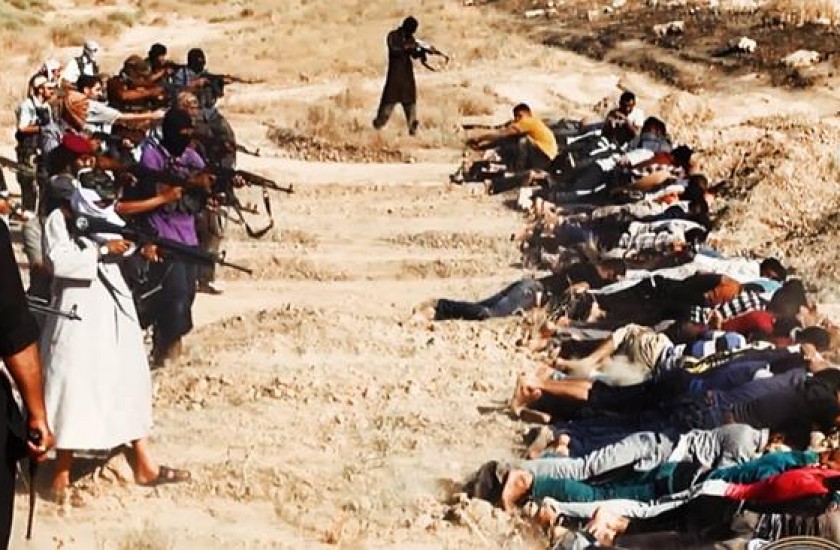
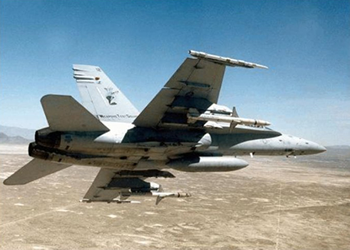
The American war against the Islamic State is entering a more sustained mode. Air strikes are occurring daily, thousands of advisors have arrived, backed by Army aviation assets to protect American interests at Baghdad International Airport and the U.S. Embassy complex, and the Chairman of the Joint Chiefs of Staff has again alluded to the possibly of American ground troops engaging ISIL at the side of Iraqi troops.

Whether most of want to admit it or not, and the latter is more descriptive of the vast bulk of Americans, we are at war.  It is a war which we have been fighting  for over thirteen years now. President Obama had hoped that our involvement in Iraq was at and end that that the Iraqis could handle their own affairs. But the hope was misplaced, and now this war has been extended indefinitely by the actions of the Islamic State and the announced intentions of President Obama to fight it. It will become much worse than people want to believe that it will, regardless of whether it is a long or a short war, and even a “short” war will likely extend into the next Presidential administration.
us-fa-18-meask

Americans have grown up for the past twenty years with hi-tech wars that with a few exceptions of terrorism inflicted on American civilians have been waged by a comparatively small professional military; a military that at any given time over the last 20 years has comprised less than one percent of the American population. As such war is a spectator sport for most Americans, we watch it on television, or on You Tube videos on the internet, but it is a distant thing, happening to others that doesn’t touch us too deeply because most of us think that we have no skin in the game. In fact people that bet on baseball have more skin in the game than most Americans do in the current war, but that will probably change.
ISIS-MAP

Since I have written much about that military at its sacrifices in the war that began on September 11th 2001 I am not going to belabor that today. Instead I am going to go back to the nature of war, even wars that may be fought in self-defense and with just cause. It was General William Tecumseh Sherman who wrote:

“You cannot qualify war in harsher terms than I will. War is cruelty, and you cannot refine it; and those who brought war into our country deserve all the curses and maledictions a people can pour out…”

Chris Hedges wrote: “Violence is a disease, a disease that corrupts all who use it regardless of the cause,” and as Clausewitz noted of war’s nature, that it is: “a paradoxical trinity-composed of primordial violence, hatred and enmity…”

We try to use language to soften war; to make it more palatable, but to do so is an Orwellian charade that is deceptive and destructive to the soul. Dave Grossman, the army infantry officer who has spent his post military life writing about the psychology of war and killing wrote:

“Even the language of men at war is the full denial of the enormity of what they have done. Most solders do not “kill,” instead the enemy was knocked over, wasted, greased, taken out, and mopped up. The enemy is hosed, zapped, probed, and fired on. The enemy’s humanity is denied, and he becomes a strange beast called a Jap, Reb, Yank, dink, slant, or slope. Even the weapons of war receive benign names- Puff the Magic Dragon, Walleye, TOW, Fat Boy, Thin Man- and the killing weapon of the individual soldier becomes a piece or a hog, and a bullet becomes a round.”

Likewise Thucydides wrote:

“Words had to change their ordinary meaning and to take that which was now given them. Reckless audacity came to be considered the courage of a loyal supporter; prudent hesitation, specious cowardice; moderation was held to be a cloak for unmanliness; ability to see all sides of a question incapacity to act on any….”

Such language gives those who have never been to war but cannot live without it to bring it on, but as Sherman noted: “It is only those who have neither fired a shot nor heard the shrieks and groans of the wounded who cry aloud for blood, more vengeance, more desolation. War is hell.”

President Obama in his address to the nation, and the world on the eve of September 11th talked of a war against the Islamic State, using far more diplomatic, restrained and less warlike language than did Vice President Biden who said:

“As a nation we are united and when people harm Americans we don’t retreat, we don’t forget. We take care of those who are grieving and when that’s finished, they should know we will follow them to the gates of hell until they are brought to justice because hell is where they will reside. Hell is where they will reside.”

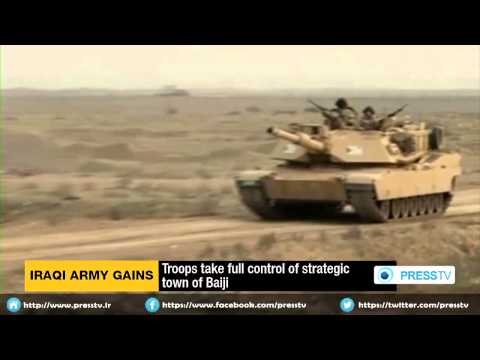
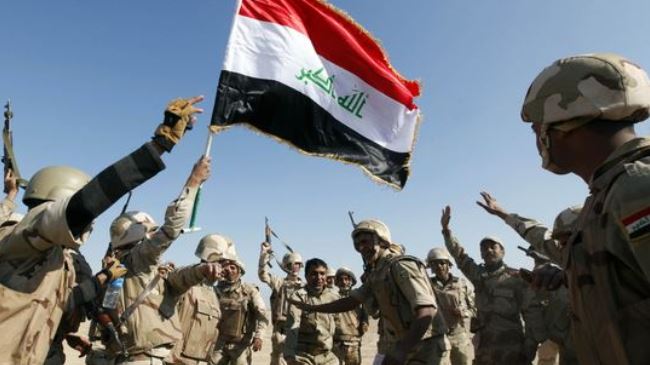
I commend the President for his humanity and desire to fight the Islamic State with a matter of restraint, and though our efforts have been limited to air strikes and reengaging with the Iraqi military to retrain it for the fight, it does appear that at least in Iraq the policy is showing signs of working. ISIL troops are having a hard time moving about the battlefield and their more conventional units are taking a beating from the air, while Iraqi and Kurdish forces are slowly beginning to have more success, the Iraqi military having just relieved the beleaguered garrison of the massive Baiji oil refinery complex.
Iraqarmybaiji

This in a sense is part of ISIL’s conundrum, they desire to conquer territory and subjugate people. To do that they need to be able to use conventional military tactics and equipment, not simply using terrorist strikes and the element of surprise to overwhelm unsuspecting or demoralized Iraqi security forces. It is possible that they are now overextend and have reached what Clausewitz termed their “culminating point.” We will have to see if that is the case, and only time will tell.

air strike footage

U.S. Air Strike on ISIL Position 

However, American restraint, particularly with a hawkish, newly elected Republican Congress, of whom many new members are highly militant Christians who will have no compunction in killing Moslems, be they good Moslems or terrorist thugs like ISIL or Al Qaeda; will last as long as the Islamic State is unable or unwilling to strike at American civilians in the American homeland, American interests in a country that is not in the war zone, or an American ship or military installation at home or abroad.

But once that happens, and it will eventually happen, the recent attacks in Canada serving as a foretaste of what will happen here, the pretense of restraint will drop, and what Vice Biden President said will become our goal, even if we do not officially say it. But once those restraints are passed, the war will get really messy. Ethicist and philosopher Michael Walzer wrote in his book Just and Unjust Wars:

“We don’t call war hell because it is fought without restraint. It is more nearly right to say that, when certain restraints are passed, the hellishness of war drives us to break with every remaining restraint in order to win. Here is the ultimate tyranny: those who resist aggression are forced to imitate, and perhaps even to exceed, the brutality of the aggressor.”

The problem with this war is that it has lasted so long already, if we consider American involvement in Iraq as going back to 2003. Long wars such as these are detrimental to the nations and peoples that fight them, as Sun Tzu wrote: “There is no instance of a nation benefitting from prolonged warfare.”

As such the longer we drag this war against the Islamic State and other similar groups out, the longer the war continues, the crueler it will become, the more damage it will do to our civil liberties, our economy, and even more importantly to the spirit of our nation. One can only look at the Patriot Act and related measures undertaken in the name of national security after 9-11-2001 and recall the words of President John F. Kennedy who said in respect to the epidemic of loyalty oaths and restrictions on civil liberties enacted in the 1950s:

“We have also seen a sharpening and refinement of abusive power. The legislative investigation, designed and often exercised for the achievement of high ends, has too frequently been used by the Nation and the States as a means for effecting the disgrace and degradation of private persons. Unscrupulous demagogues have used the power to investigate as tyrants of an earlier day used the bill of attainder.

The architects of fear have converted a wholesome law against conspiracy into an instrument for making association a crime. Pretending to fear government they have asked government to outlaw private protest. They glorify “togetherness” when it is theirs, and call it conspiracy when it is that of others.”

Thus the place that we now find ourselves is not good. On one hand by using restraint the war goes on and on, war without end, but if we embrace Sherman’s realism and admit that “War is cruelty. There’s no use trying to reform it. The crueler it is, the sooner it will be over” is that we will imitate or exceed the brutality of the Islamic State. Either way, we lose something of ourselves. But as Abraham Lincoln said “There’s no honorable way to kill, no gentle way to destroy. There is nothing good in war. Except its ending.”

The young Union hero of Little Round Top at the Battle of Gettysburg, Colonel Strong Vincent wrote his wife about how he believed the Union had to defeat the Confederacy. His words were much like Sherman’s and in dealing with ISIL I would hope that the American, Iraqi and coalition forces will take them to heart in combating ISIL: Vincent wrote:

“We must fight them more vindictively, or we shall be foiled at every step.  We must desolate the country as we pass through it, and not leave a trace of a doubtful friend or foe behind us; make them believe that we are in earnest, terribly in earnest…” 

d41be44594

Lawrence with Bedouin after capturing Aqaba 

That is an uncomfortable thought and philosophy, it goes against the grain, it seems terribly brutal; but it is the only philosophy of war that the leaders and jihadists of the Islamic State understand. We may not yet understand it, but I think that in time we and the Iraqis will. However, the lead cannot be taken by us or even if we are “successful” in defeating ISIL, another group will be back and doing the same things; just as ISIL filled the vacuum left by the collapse of Al Qaeda Iraq in 2008.
IRAQ_-_1115_-_Stato_islamico

Iraqi Soldiers after retaking Baiji

That is a danger that T.E. Lawrence advised his fellow British officers serving with the Bedouin during the Arab Revolt in 1917 and 1918. It is advice that we need to remember as we assist the Iraqis and Kurds in their fight. That is why this must be an Iraqi and Kurdish fight. When and if the Iraqis and Kurds embrace this philosophy of total war against ISIL, if they are willing to fight ISIL vindictively and desolate every ISIL stronghold, will they bring peace to their country. We can aid them in thee fight, but we cannot win this for them. Lawrence wrote:

“Do not try to do too much with your own hands. Better the Arabs do it tolerably than that you do it perfectly. It is their war, and you are to help them, not to win it for them. Actually, also, under the very odd conditions of Arabia, your practical work will not be as good as, perhaps, you think it is.”

bettertimes

The Author with Bedouin on Syrian Border December 2007

My hope is that somehow, when this is war is done that there will be peace and reconciliation. I would like to see this in my lifetime, but it may take another generation or two that we will finally be able to establish peace by making those who are our enemies our friends. I hope for such a day, because I know that Chris Hedges is all too correct about the corrupting and devastating effect of violence on all that rely on it to achieve their goals and Sun Tzu’s wisdom in noting that prolonged warfare benefits anyone. As Major General Smedley Butler wrote:

“What is the cost of war? what is the bill? This bill renders a horrible accounting. Newly placed gravestones. Mangled bodies. Shattered minds. Broken hearts and homes. Economic instability. Depression and all of its attendant miseries. Back -breaking taxation for generations and generations.”

If you ask me I do not think that we or the people of Iraq can keep adding to that bill.

Peace

Padre Steve+
1 Comment

Filed under ethics, History, iraq,afghanistan, Military, News and current events

Prepare for a Long and Brutal Ideological War Against the Islamic State

“This war differs from other wars, in this particular: We are not fighting armies but a hostile people, and must make old and young, rich and poor, feel the hard hand of war.” William Tecumseh Sherman

Note: Please know, I have been to war, I have seen its devastation and heartache and I came back changed from the experience. I hate it. That being said, despite being a progressive who hates war, I am also a realist. I am not one that finds any romance or glory in war, but I know that sometimes it becomes unavoidable. In the past few articles I have written about the nature of war, the kind of war we are now engaged in with ISIL and some of the ethical and moral compromises that could easily be made in such a war. Thus what I write here is a continuation of those thoughts and I encourage you to look at those articles. 

President Obama came into office as a President determined to end the wars that the United States was engaged in and usher in an era of peace. That did not happen. The genie of war and chaos that was unleashed when President Bush stopped pursuing Al Qaeda and attacked Saddam Hussein’s Iraq refused to go back into its bottle. The new and more violent terrorist groups spawned from the loins of Al Qaeda in Iraq are now the dogs of war that have been unleashed on the region, threatening all of the peoples there.

This menace to the people of the region as well as to the West, known as the Islamic State of Iraq and the Levant is different than Al Qaeda.  It is a terrorist group to be sure, but it is also an embryonic state which is conquering territory, subduing people, butchering its enemies and murdering innocents in cold blood. They boast in their atrocities and believe what they are doing is blessed by their God. They have grown up and been nurtured by a culture of victimhood which they believe that past or present oppression justifies their actions. Eric Hoffer wrote something that is quite poignant if we are to understand the mindset of ISIL:

“It is doubtful if the oppressed ever fight for freedom. They fight for pride and power — power to oppress others. The oppressed want above all to imitate their oppressors; they want to retaliate.”

The leaders and fighters of ISIL are people of the 12th Century living in the 21st Century. Prisoners of their doctrine they are incapable of negotiation, seeing it as only weakness and a way to impose their will on those unable to, or unwilling to resist them. Hoffer described their mindset well in his book  The True Believer:

“A doctrine insulates the devout not only against the realities around them but also against their own selves. The fanatical believer is not conscious of his envy, malice, pettiness and dishonesty. There is a wall of words between his consciousness and his real self.”

Thus this war will be something different, something that we in the West do not want to comprehend. We want any war to be neat, fast and comparatively bloodless, but this will not be the case in the war against ISIL. Such wars may be possible against traditional nation states with weak militaries. But to believe that it can be with ISIL is wrong headed and dangerous because it ignores the nature of that group. Carl Von Clausewitz noted that:

“Kind-hearted people might of course think there was some ingenious way to disarm or defeat the enemy without too much bloodshed, and might imagine this is the true goal of the art of war. Pleasant as it sounds, it is a fallacy that must be exposed: war is such a dangerous business that the mistakes which come from kindness are the very worst.”

Ultimately, despite the fact that I almost always counsel that war should be avoided and peaceful solutions found to resolve conflict, there are times that wars must be fought. If ISIL was a true nation-state with a conventional understanding of diplomacy and the relationship between nations it would be conceivable that the United Nations or perhaps the Arab League could help broker a deal. But ISIL is neither your father’s terrorist organization, nor a real nation-state. It is a hybrid which is not driven by realpolitik but rather a fanatical religious belief in their cause.  This allows them to dispense with diplomatic niceties and allows them no compromise with those they believe are the enemies of their God; including other Moslems.

Their war has been raging for some time in both Syria and Iraq. What they are doing is further destroying the mosaic of peoples who are part of the Arab heritage in both countries. The atrocities committed by ISIL against Shi’ite Moslems, secular Sunnis, Yidazi and Christians have been displayed around the world. Mass executions, beheadings and the destruction of historic sites which are important parts of the Christian, Moslem and Jewish heritage are only part of their crimes.

Some of those images inflamed people in the West, but it was the images of American and British hostages being beheaded amid dire threats to kill others and bring vengeance on the Western Infidels that finally got our attention.  The only condition for peace given by ISIL to those it considers the enemy is “convert or die.”  Whether we like it or not, war is now unavoidable. President Obama, the “peace President,” and some of his peers in Western Europe have reluctantly decided to fight ISIL and are now gaining international support for their efforts, even in the Arab world.

Some politicians and pundits seem to think that this will be easy, simply destroy ISIL where they stand. But that belief is illusory. ISIL and its sympathizers may seem to be concentrated in Iraq and Syria, which is enough of a problem for us, but their supporters, financial supporters and sympathizers are world wide. Interestingly Pope Francis noted that:“Even today, after the second failure of another world war, perhaps one can speak of a third war, one fought piecemeal, with crimes, massacres, destruction….”

That being said there is a warning that all must remember about this war. It is at its heart ideological, and it will be long and brutal and very importantly, the Islamic State believes that it can and will win it.

Winston Churchill said:

“Never, never, never believe any war will be smooth and easy, or that anyone who embarks on the strange voyage can measure the tides and hurricanes he will encounter. The statesman who yields to war fever must realize that once the signal is given, he is no longer the master of policy but the slave of unforeseeable and uncontrollable events…. Always remember, however sure you are that you could easily win, that there would not be a war if the other man did not think he also had a chance.”

Thus in this war we cannot waver, and we must believe in our ideals of freedom, justice, equality and the value of a single human life. We must do this even though our practice of them often makes a mockery of them. But they are still ideals that are worth fighting for, because without them we lose something of our already flawed humanity. Carl Clausewitz recognized this and wrote:

“If the mind is to emerge unscathed from this relentless struggle with the unforeseen, two qualities are indispensable: first, an intellect that, even in the darkest hour, retains some glimmerings of the inner light which leads to truth; and second, the courage to follow this faint light wherever it may lead.”

It was said by Barbara Tuchman that “War is the unfolding of miscalculations.” For over a century the leaders of the West as well as Arab leaders throughout the region have miscalculated far too many times, and what is going on now is the tragic and bloody result of all of those miscalculations. The suffering and the human cost will be great.

Pray my friends for peace, but remember reality, peace is not possible when the kind of religious extremism that motivates ISIL is the driving force. That kind of ideology cannot be negotiated with, it has to be defeated.

It has been a long time since we in the West have had to wage that kind of war and it will come at some cost to our psyche and it will take some getting used to, if you can ever get used to the evil, the carnage, the suffering and the devastation that is the essence of war. As William Tecumseh Sherman said “War is Hell.”

Peace

Padre Steve+

5 Comments

Filed under ethics, Foreign Policy, History, history, middle east, Military, Religion, War on Terrorism

War is Cruelty, and You Cannot Refine it… The War Against ISIL

Iraq-unrest

The war that we are in, and please let’s call it that, which we have been in for over thirteen years now; and which has been extended indefinitely by the actions of the Islamic State and the announced intentions of President Obama to fight it will become much worse than people want to believe regardless of whether it is a long or a short war.

Americans have grown up for the past twenty years with hi-tech wars that with a few exceptions of terrorism inflicted on American civilians have been waged by a comparatively small professional military; a military that at any given time over the last 20 years has comprised less than one percent of the American population. As such war is a spectator sport for most Americans, we watch it on television, or on You Tube videos on the internet, but it is a distant thing, happening to others that doesn’t touch us too deeply because most of us think that we have no skin in the game. In fact people that bet on baseball have more skin in the game than most Americans do in the current war, but that will probably change.

Since I have written much about that military at its sacrifices in the war that began on September 11th 2001 I am not going to belabor that today. Instead I am going to go back to the nature of war, even wars that may be fought in self-defense and with just cause. It was General William Tecumseh Sherman who wrote:

“You cannot qualify war in harsher terms than I will. War is cruelty, and you cannot refine it; and those who brought war into our country deserve all the curses and maledictions a people can pour out…

Chris Hedges wrote: “Violence is a disease, a disease that corrupts all who use it regardless of the cause,” and as Clausewitz noted of war’s nature, that it is: “a paradoxical trinity-composed of primordial violence, hatred and enmity…”

We try to use language to soften war; to make it more palatable, but to do so is an Orwellian charade that is deceptive and destructive to the soul. Dave Grossman, the army infantry officer who has spent his post military life writing about the psychology of war and killing wrote:

“Even the language of men at war is the full denial of the enormity of what they have done. Most solders do not “kill,” instead the enemy was knocked over, wasted, greased, taken out, and mopped up. The enemy is hosed, zapped, probed, and fired on. The enemy’s humanity is denied, and he becomes a strange beast called a Jap, Reb, Yank, dink, slant, or slope. Even the weapons of war receive benign names- Puff the Magic Dragon, Walleye, TOW, Fat Boy, Thin Man- and the killing weapon of the individual soldier becomes a piece or a hog, and a bullet becomes a round.”

Likewise Thucydides wrote:

“Words had to change their ordinary meaning and to take that which was now given them. Reckless audacity came to be considered the courage of a loyal supporter; prudent hesitation, specious cowardice; moderation was held to be a cloak for unmanliness; ability to see all sides of a question incapacity to act on any….”

Such language gives those who have never been to war but cannot live without it to bring it on, but as Sherman noted: “It is only those who have neither fired a shot nor heard the shrieks and groans of the wounded who cry aloud for blood, more vengeance, more desolation. War is hell.”

President Obama in his address to the nation, and the world on the eve of September 11th talked of a war against the Islamic State, using far more diplomatic, restrained and less warlike language than did Vice President Biden who said:

“As a nation we are united and when people harm Americans we don’t retreat, we don’t forget. We take care of those who are grieving and when that’s finished, they should know we will follow them to the gates of hell until they are brought to justice because hell is where they will reside. Hell is where they will reside.”

I commend the President for his humanity and desire to fight the Islamic State with a matter of restraint. That restraint will last so long as the Islamic State is unable or unwilling to strike at American civilians in the American homeland, or in a country that is not in the war zone, or an American ship or military installation at home or abroad. But once that happens, and it will the pretense of restraint will drop and what the Vice President said will become our goal, even if we do not officially say it. But once those restraints are passed, the war will get really messy. Michael Walzer wrote in his book Just and Unjust Wars:

“We don’t call war hell because it is fought without restraint. It is more nearly right to say that, when certain restraints are passed, the hellishness of war drives us to break with every remaining restraint in order to win. Here is the ultimate tyranny: those who resist aggression are forced to imitate, and perhaps even to exceed, the brutality of the aggressor.”

The problem with this war is that it has lasted so long already, and such long wars are detrimental to the nations and peoples that fight them, as Sun Tzu wrote: “There is no instance of a nation benefitting from prolonged warfare,” as such the longer we drag this war against the Islamic State and other similar groups out, the longer the war continues, the crueler it will become and the more damage it will do to our civil liberties, our economy and even more importantly to the spirit of our nation. One can only look at the Patriot Act and related measures undertaken in the name of national security after 9-11-2001 and recall the words of President John F Kennedy who said in respect to the epidemic of loyalty oaths and restrictions on civil liberties enacted in the 1950s:

“We have also seen a sharpening and refinement of abusive power. The legislative investigation, designed and often exercised for the achievement of high ends, has too frequently been used by the Nation and the States as a means for effecting the disgrace and degradation of private persons. Unscrupulous demagogues have used the power to investigate as tyrants of an earlier day used the bill of attainder.

The architects of fear have converted a wholesome law against conspiracy into an instrument for making association a crime. Pretending to fear government they have asked government to outlaw private protest. They glorify “togetherness” when it is theirs, and call it conspiracy when it is that of others.”

Thus the place that we now find ourselves is not good. On one hand by using restraint the war goes on and on, war without end, and if we embrace Sherman’s realism and admit that “War is cruelty. There’s no use trying to reform it. The crueler it is, the sooner it will be over” is that we will imitate or exceed the brutality of the Islamic State. Either way, we lose something of ourselves. But as Abraham Lincoln said “There’s no honorable way to kill, no gentle way to destroy. There is nothing good in war. Except its ending.”

My hope is that somehow, when this is war is done, maybe in our time or in another generation or two, that we will be able to establish peace by making our enemies our friends.

Peace

Padre Steve+
3 Comments

Filed under History, iraq,afghanistan, middle east, Military, national security, News and current events, Political Commentary, War on Terrorism

The Islamic State and the New, Old Nature of War

bilad ash shaam

I am a realist when it comes to human nature and the reality of the evil that human beings can do. I have been to war, and personally I can think of nothing worse than more war. For me war is part of the reality that I live with, and which I am reminded of every time I try to sleep. That being said, a new war is gaining in intensity and threatening to blow away what is left of the old world order.

For most modern Americans and others living in the West, war is an often abstract concept regulated to small bodies of professionals fighting actions far away, of which we only catch occasional glimpses of on television or the internet. For most Americans and others in the West, modern war has become a spectator sport, and one far less interesting to most than either American or European football matches.

We in the West have been protected from the savage nature of war for the better part of six decades, with the sole possible exception being Vietnam, when the press had nearly unfettered access to the battlefields and the troops fighting the war. That war was a staple of the six o’clock news on a daily basis for a decade, bringing the war home in almost real time, and that coverage as well as the large numbers of Americans killed and wounded coming home from the war triggered a public backlash against it that helped bring the American involvement to an end.

The government and the military changed the way that war has been covered since, now reporters are vetted and closely supervised, even when they are imbedded with the troops. When the war in Iraq began to go bad, even the return of those killed in action was largely off limits. During the Iraq War many news programs took on the character of cheerleaders as Saddam was toppled. The media only slowly adjusted to the reverses brought about by the failed strategy of the Bush administration in Iraq as the falsehoods that brought about the invasion were revealed and the Iraq Civil War and insurgency spread like wildfire.

As such most people, including political, business, media elites, and even military theorists fail to understand the essential and unchanging, character, nature and complexity of war. As British theorist Colon S. Gray so bluntly points out: “Some confused theorists would have us believe that war can change its nature. Let us stamp on such nonsense immediately. War is organized violence threatened or waged for political purposes.” 1 If we fail to understand that we cannot understand the ongoing wars, to include that being waged by the Islamic State, or Caliphate in Iraq and Syria.

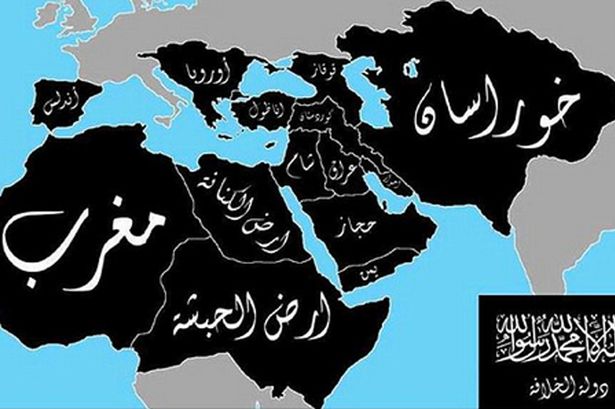
This war that the Islamic State is waging is bigger than most of us understand or want to believe. It is not simply about toppling the Assad regime, nor even taking Baghdad, or even about gaining control of the oil of the Middle East, though each is a goal for the Islamic State.

The larger and much more ambitious goal of the ISIS leadership; that of toppling the Saudi monarchy, which ISIS feels is corrupt and heretical, and the occupation of Mecca, Medina and ultimately Jerusalem, the three most holy sites in Islam. The Puritanical and violent Wahhabi Islam practiced by ISIS rightly understands as so many other Wahhabi fundamentalists have throughout the years; that the possession of these sites, especially Mecca and Medina, give them both legitimacy and standing as the preeminent Islamic government in the World.

The House of Saud allied itself with the founder of Wahhabi Islam in the 1700s, but it was not until the 1920s when the British Indian Office backed the Saudi against the other tribes of the Arabian Peninsula that Wahhabi Islam had a stable base to reach out and touch the rest of the world. As the Saudis became more affluent and connected to the world through oil and the global economy some leading Saudis have tried to moderate their Wahhabi beliefs, modernize the Kingdom, even allowing women a few rights, and to accommodate more progressive beliefs. In the 1970s this brought about the assassination of King Faisal in March 1975 and the seizure of the holy sites of Mecca by extremists in November of 1979. That, coupled with their military alliance with the United States after the Gulf War brought about more opposition from the more radical Wahhabi including Osama Bin Laden whose Al Qaeda network spawned ISIS.

ISIS has found its greatest success in exploiting failures of many of the despotic and totalitarian leaders of Arab states, divisions in Islam, foreign influences and the seemingly hopeless plight of Arabs to overcome poverty and oppression in those countries to advance their cause and promote their ideology. Their brand of Islam which teaches that almost anything is an idol enables them to destroy historical sites, cemeteries, houses of worship and archeological treasures belonging to Christians, Jews, Buddhists and even to other Moslems.

Terrorism and terrorist groups have not generally been non-state actors in the world wide political drama, however, that being said, even non-state actors have strategic, ideological and political goals to which their violence is directed. The unique nature of ISIS is that what most of us assumed to be yet another non-state terrorist group is becoming an embryonic state with its own economic assets, media arm coupled with defined military and political-religious goals, both against other Moslems and the West. Is is morphing before our very eyes from a non-state entity to a hybrid entity with character traits of a non-state and a state actor, especially as it takes control of more and more territory in the Tigris-Euphrates basin of Syria and Iraq.

The message of ISIS to all, including other Moslems, is to convert to their understanding of Islam or die. It is the same kind of message that other religious extremists at the helm of governments have used for millennia, sadly including many Christians.

The fact that the Islamic State is aspiring to become not just a non-state actor, but to place itself as a dominant power on the world stage makes it different. It has the capability of operating in the open where it physically controls cities or regions, as well as in the shadows in countries viewed by them as the enemy. It will most likely adapt its tactics as the situation dictates. Against weaker, or politically unstable neighbors, it will use more conventional means and asymmetrical warfare. However, against enemies who have the power to strike them from afar such as the United States, they will use the asymmetrical means of various types of terrorism; traditional bombings, kidnappings, hijackings and assassinations, the use of any kind of WMD that they can obtain and even cyber-terrorism to attack financial institutions or critical infrastructure.

The war that the Islamic State is preparing for is a throwback to the heady days of Moslem conquest from the 7th to the 15th Centuries. But unlike those days where early Moslems were interested in such things as classical Greek learning, the preservation of historic sites or advances scientific or mathematical learning, the Islamic State is bent on destroying all vestiges of other peoples, groups or religions. Because their absolutist and apocalyptic beliefs allow no compromise, they can and will ruthlessly pursue their religious, ideological and political goals using terror as a tool.

We in the West have not faced something like this in a very long time. War is not just a military and political endeavor, “it is social and cultural… and must reflect the characteristics f the communities that wage it.” 2 The leaders of the Islamic State understand this fact all too well, that is a major reason why they are attracting new Jihadists around the world. However, we in the United States in Europe are on the whole, so detached from such matters that we do not understand the savage nature of war, or the motivations groups like the Islamic State. To us they are barbarous and a throwback to times where our ancestors waged wars of religion and ideology to conquer, convert and enslave unbelievers.

There are many politicians that seem to believe that the Islamic State can be crushed quickly by US and allied forces. However, history shows that such religious-political-ideological movements do not die easily, even when mercilessly attacked by superior military forces.

Those that think a series of surgical strikes by aircraft, cruise missiles or drones; or attacks by Special Forces will eliminate ISIS as a threat do not understand the nature of that beast. We have become enamored of the technology that we use to make war, and we often forget the preeminence of the human dimension. Technology changes rapidly, the nature of the people that employ it seldom changes.

The West must, for human rights and freedom and not for imperialist, economic or even the mission of spreading democracy, we must be prepared for a long and difficult war that will be waged in the most brutal of manners by all sides. We must realize that there will be a terrible cost such a war, economic and human to be sure, people will die and economies will suffer, but worse there will be a cost to our individual and corporate psyche.  This war will eventually have a profound effect on all  us.

We must realize as Helmuth Von Molkte told Kaiser Wilhelm II in 1906 that the next war “will be a national war which will not be settled by a decisive battle but by a long wearisome struggle with a country that will not be overcome until its whole national force is broken, and a war which will utterly exhaust our own people, even if we are victorious.” Von Molkte’s tragic mistake was that he did nothing to “follow through the logic of his prophecy” 3 and allowed his country to enter a war that it was not prepared to wage, and which caused its collapse.

Ultimately, despite our protestations this war, which has already started will become a war without mercy to use the words of John Dower. The West will be slow to move, and half measures will provoke more attacks and a further spread of the Islamic State. Alliances will have to be made with nations that we may despise, but who are also threatened by the Islamic State. Such is nothing new, the United States and Great Britain allied themselves with the Soviet Union to defeat Hitler.

However, when ISIS successfully attacks a major European or American city causing great loss of life, which they very probably will do, the gloves will finally come off. Then the only words to describe how the West will wage the war will be those of William Tecumseh Sherman who said: “You cannot qualify war in harsher terms than than I will. War is cruelty, and you cannot refine it and those who brought war into our country deserve all the curses and maledictions a people can pour out….” 4 The Islamic State is sowing the wind, and they will reap the whirlwind.

We must look to history, our own as well as Islamic and Arab to understand the new era we are entering, for in truth, despite all the technological advances and changes in strategy and tactics, the fact is that as Colin Gray writes “what changes about war and warfare, although it can be very obvious and can even seem dramatic, is actually overmatched by the eternal features of war’s nature.” 5

T.E. Lawrence wrote a memorandum to the British Foreign Office warning of what we are seeing today: “A Wahabi-like Moslem edition of Bolshevism is possible, and would harm us almost as much in Mesopotamia as in Persia…” T.E. Lawrence, Memorandum to Foreign Office 15 September 1919

Well, that vision is upon us, and with that I will close for today.

Peace

Padre Steve+

4 Comments

Filed under History, history, iraq,afghanistan, middle east, national security, News and current events, philosophy

The Importance of Citizen Soldiers: Strong Vincent and Joshua Chamberlain at Little Round Top and American Military Sociology

dont give an inch

“As soldier and citizen, today’s armed forces officer is a champion of both the nation’s defense and the principles upon which the nation was founded. Taking an oath to support and defend the Constitution means swearing to uphold the core values that define the essence of American citizenship; the armed forces officer is first and foremost a citizen who has embraced the ideals of the nation—only then can he or she defend those principles with true conviction.” [1]

While the professional Gouverneur Warren through himself into the battle to save Little Round Top, as did many others the story of the battle dictates that we must discuss the actions of two “citizen soldiers” without whom the battle may have been lost, Colonel Strong Vincent and Colonel Joshua Chamberlain. Both are depicted and immortalized in the film Gettysburg which is based on Michael Shaara’s Pulitzer Prize winning novel The Killer Angels. As such their actions are known more than many others that are covered in this account of the Battle of Gettysburg.

Within the U.S. Army the example of Chamberlain at the Battle of Little Round Top has occupied a prominent place in Army leadership manuals including FM 22-100 and its successor FM 6-22, however, that being said even those that learn about Chamberlain from this seldom delve deeper into his character, development as a leader and significance, at Little Round Top, Appomattox and after the war, likewise the examples of both Warren and Vincent which are key to Chamberlain and his regiment even being on the hill are ignored in that publication.

It is important to discuss Vincent and Chamberlain for more than their direct contributions to the battle. Those are widely known and in a sense have become part of the myth that is our understanding of Gettysburg. While discussing those actions it is also necessary to put them into context with the character of both men, the cause that they fought. Likewise it is important to address in this age of the professional all volunteer force the importance of Citizen Soldiers in any kind of democracy or representative republic, a sociological question that military professionals as well as our elected officials and citizenry would do well to revisit.

This is particularly important now as various elected leaders, think tanks, defense contractors and lobbyists are all questioning the economic “liabilities” of the All-Volunteer force as well as the disconnect between the broader military and society at large. This means that there will be efforts to determine how the military will be manned, trained and employed, and if military leaders are ignorant of our history, the vital connection between the military and the citizenry and the contributions of Citizen Soldiers then we will be caught flat footed and unprepared in the coming debates. If that happens those decisions could be made by “bean counters” with little appreciation for what military professionalism and readiness entails, as well as think tanks and lobbyists for the defense industry who have their own motivations for what they do, often more related to their profits, power and influence than national security.

The armies that fought the Civil War for the most part were composed of volunteers who of a myriad of reasons went off to fight that war. Gouverneur Warren is a character whose life and career before and after the Civil War was much more like currently serving regular officers and to some extent the much more professional and hardened by war officer corps of the Reserve Components of each of our Armed Services, in particular the much active and deployed Army National Guard and Army Reserve. The reserve components still do reflect much of the Citizen Soldier tradition but that being said between deployments, other activations and required schooling, those assets are much more on par with their active counterparts than they ever have been in our history.

“American defense policy has traditionally been built upon pluralistic military institutions, most notably a mix force of professionals and citizen soldiers.” [2] Warren represented what until the beginning of the Cold War was the smaller pillar of that pluralistic institution that of the long term professional while Vincent and Chamberlain represented the volunteer citizen soldier who enlisted to meet the crisis.

Until World War II and the advent of the Cold War these dual pillars existed side by side. Following the Second World War along with the small-wars that went along as part of it the world changed, and the wars that occurred, such as Korea and Vietnam “occurred on a scale too small to elicit a sustained, full-fledged national commitment, yet too large for a prewar-style regular army to handle.” [3] Because of this “military requirements thus became a fundamental ingredient of foreign policy, and military men and institutions acquired authority and influence far surpassing that ever previously possessed by military professionals on the American scene.” [4] General Tony Zinni noted that the foreign policy results of this transformation have resulted in the United States becoming “an empire” [5] something that no American living in 1863 could have ever contemplated.

This was part of a revolution in military affairs far more important than the application of technology which brought it about, the Atomic Bomb; it was a revolution in national strategy which fundamentally changed American thinking regarding the use of the military instrument in relationship to diplomacy, and the relationship of the military to society at large. Russell Weigley noted: “To shift the American definition of strategy from the use of combats for the object of wars to the use of military force for the deterrence of war, albeit while still serving the national interests in an active manner, amounted to a revolution in the history of American military policy….” [6]

The policy worked reasonably well until Vietnam and the inequities of the system showed its liabilities and brought about a change from politicians. Lieutenant General Hal Moore wrote of the Vietnam era: “The class of 1965 came out of the old America, a nation that disappeared forever in the smoke that billowed off the jungle battlegrounds where we fought and bled. The country that sent us off to war was not there to welcome us home. It no longer existed.” [7]

The debacle of Vietnam and the societal tidal wave that followed brought about the end of the selective service system, by which the large army needed to fight wars was connected to the society at large and the creation of the All-Volunteer force by President Nixon in 1974. The ethos that every citizen was a soldier was destroyed by Vietnam and even men like General William Westmoreland who warned that “absent “the continuous movement of citizens in and out of the service,…the army could “become a danger to our society-a danger that our forefathers so carefully tried to preclude.” [8]

This cultural shift is something that none of the professional officers of the small ante-bellum army like Warren would have ever imagined much less men like Vincent or Chamberlain who were true citizen-soldiers. Thus for currently serving officers it is important to recognize this key change as it applies to American military strategy as well as the place the military occupies in our society. This makes it important to our study as we examine the actions of Vincent and Chamberlain outside of myth and legend and see the implications that they can have not only on the battlefield but in our relationship to the American citizenry and society. It is to put in in classic terms a return to understanding the relationship between the military and the people so powerfully enunciate in Clausewitz’s Trinity.

While Warren represents the Strong Vincent and Joshua Chamberlain represented that important part of our military tradition that really, except in the case of young men and women that volunteer to serve and leave the military after their obligated service really no longer exists. We no longer have a system that allows, nor do we actively encourage men like Vincent and Chamberlain to leave lucrative civilian employment or academia to serve alongside the professionals in positions of responsibility leading regiments or brigades or serving as senior staff officers unless they are already part of the military in our reserve components.

vincent

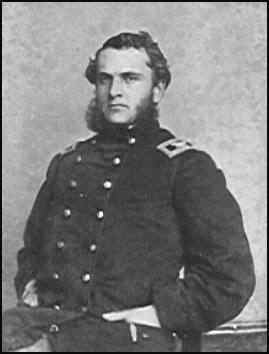
Colonel Strong Vincent was a 26 year old Harvard graduate and lawyer from Erie Pennsylvania. Vincent enlisted and then was appointed as a 1st Lieutenant and Adjutant of the Erie Regiment because of his academic and administrative acumen. He married his wife Elizabeth the same day. Vincent like many young northerners believed in the cause of the Union undivided, and he wrote his wife shortly after after the regiment went to war on the Peninsula:

“Surely the right will prevail. If I live we will rejoice in our country’s success. If I fall, remember you have given your husband to the most righteous cause that ever widowed a woman.”[9]

Vincent was commissioned as a Lieutenant Colonel in the 83rd Pennsylvania September 14th 1861. The young officer learned his trade well and was considered a “strict disciplinarian and master of drill.” [10] That being said one enlisted man remarked that “no officer in the army was more thoughtful and considerate of  the health and comfort of his men.” He assumed command of the regiment when the commander was killed during the Seven Days in June of 1862 where he learned lessons that he would help impart to his fellow officers as well as subordinates, including Chamberlain. Following a bout with a combination of Malaria and Typhoid that almost killed him, he took command of the regiment. He commanded the regiment at Fredericksburg and was promoted to command the 3rd Brigade when its commander was killed at Chancellorsville in May 1863. Vincent was offered the chance to serve as the Judge Advocate General of the Army of the Potomac in the spring of 1863 after spending three months on court-martial duty. But refused the offer in order to remain in the fight commanding troops. [11]

Unlike most other brigade commanders, Vincent was still a Colonel, and he, like many others would in his place hoped that going into action to save Sickles’ command “will either bring me my stars, or finish my career as a soldier.” [12] On July first, Vincent, a native Pennsylvanian came to Hanover and learning that battle had been joined, ordered “the pipes and drums of the 83rd Pennsylvania to play his brigade through the town and ordered the regiments to uncover their flags again….” [13] As the brigade marched through the town Vincent “reverently bared his head” and announced to his adjutant, “What death more glorious can any man desire than to die on the soil of old Pennsylvania fighting for that flag?” [14]

Vincent was known for his personal courage and a soldier of the 83rd Pennsylvania observed “Vincent had a particular penchant for being in the lead….Whenever or wherever his brigade might be in a position to get ahead…, he was sure to be ahead.” [15] That courage and acumen to be in the right place at the right time was in evidence when he led his brigade into battle on July second.

On July 2nd Barnes’ division of V Corps, which Vincent’s brigade was a part was being deployed to the threat posed by the Confederate attack of McLaws’ division on the Peach Orchard and the Wheat Field to reinforce Sickles’ III Corps. While that division marched toward the Peach Orchard, Vincent’s 3rd Brigade was the trail unit. When Gouverneur Warren’s aide, Lieutenant Randall Mackenzie [16] came toward the unit in search of Barnes he came across Vincent and his brigade near the George Weikert house on Cemetery Ridge awaiting further orders. [17] Vincent intercepted him and demanded what his orders were. Upon being told that Sykes’ orders to Barnes were to “send one of his brigades to occupy that hill yonder,” [18] Vincent, defied normal protocol assuming that Barnes was drunk [19] told Mackenzie “I will take responsibility of taking my brigade there.” [20]

It was a fortunate thing for the Union that he did. His quick action to get his brigade, clear orders to his subordinate commanders and skilled analysis of the ground were a decisive factor in the Union forces holding Little Round Top. He ordered Colonel James C. Rice of the 44th New York to lead the brigade up to the hill while he and his aide went forward to scout positions as the brigade moved forward at the double quick “across the field to the road leading up the north shoulder of the hill” with Chamberlain’s 20th Maine in the lead. [21] Looking at the ground which had the valley and Devil’s Den, occupied by the end of Sickles’ line, he chose a position along a spur of the hill running from the northwest to the southeast to place his regiments where they could intercept the Confederate troops of Hood’s division which he could see advancing toward the hill.

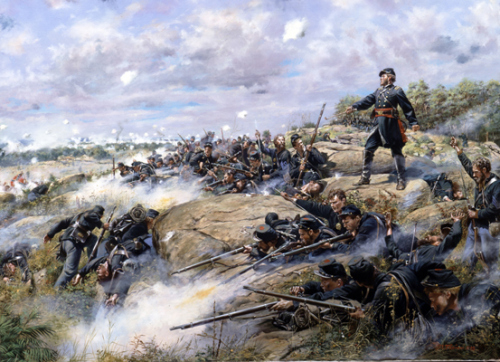
The 16th Michigan, his smallest regiment was placed on the right of the brigade. That section of the line was located on massive boulders that placed it high above the valley below, making it nearly impregnable to frontal attack. He deployed the 83rd Pennsylvania and 44th New York, known as Butterfield’s Twins to their left at the request of Rice who told him “In every battle that we have engaged the Eighty-third and Forty-fourth have fought side by side. I wish that it might be so today.” [22] Those units were deployed below the crest among the large number of boulders; the 83rd was about two-thirds of the way down the way down the slope where it joined the right of the 44th, whose line angled back up the slope to the southeast.

Vincent deployed the 20th Maine on his extreme left of his line, and in fact the extreme end of the Union line. Vincent knew that if this flank was turned and Chamberlain overrun that it would imperil the entire Union position. Vincent came up to Chamberlain who remembered that Vincent said “in an awed, faraway voice. “I place you here….This is the left of the Union line. You understand. You are to hold this ground at all costs.” [23]

chamberlain

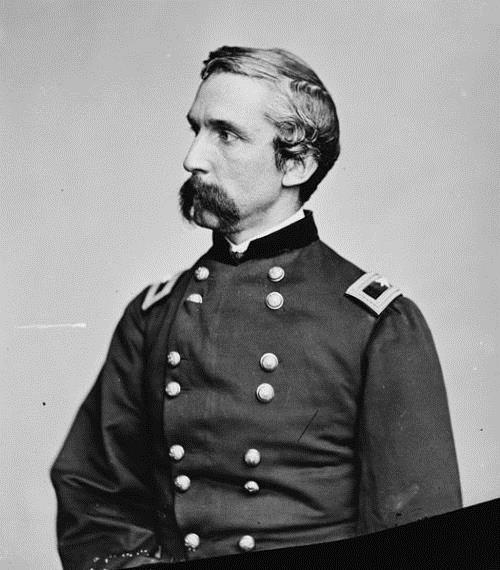
Colonel Joshua Chamberlain was another one of the citizen soldiers whose performance and leadership on Little Round Top saved the Union line that hot July evening. A graduate of Bowdoin College and Bangor Theological Seminary, Chamberlain was fluent in nine languages other than English. He was Professor of Rhetoric at Bowdoin before seeking an appointment in a Maine Regiment without consulting either the college or his family. He was offered command of the 20th Maine but asked to be appointed as a Lieutenant Colonel which he was in August 1862. He fought at Fredericksburg and was named commander of the regiment when Colonel Adelbert Ames, his commander was promoted following Chancellorsville.

Like Vincent, Chamberlain was also a quick student and rapidly adapted to being a soldier, officer and commander of troops in combat. On receiving his orders Chamberlain deployed his small regiment halfway down the southern slope facing the small valley between Little and Big Round Top. As a result of his experience in battle and the tenacity of the Confederate army he became an advocate of the tactics that William Tecumseh Sherman would later employ during his march to the sea in 1864. He wrote his wife before Chancellorsville:

“We must fight them more vindictively, or we shall be foiled at every step.  We must desolate the country as we pass through it, and not leave a trace of a doubtful friend or foe behind us; make them believe that we are in earnest, terribly in earnest; that to break this band in twain is monstrous and impossible; that the life of every man, yea, of every weak woman or child in the entire South, is of no value whatever compared with the integrity of the Union.”

Since Chamberlain’s account is so important I will forgo a discussion of his tactics and instead quote the sections of his after action report that explains his actions. Chamberlain wrote:

“On reaching the field at about 4 p.m. July 2d, Col. Vincent commanding the Brigade, placing me on the left of the Brigade and consequently on the extreme left of our entire line of battle, instructed me that the enemy were expected shortly to make a desperate attempt to turn our left flank, and that the position assigned to me must be held at every hazard.

I established my line on the crest of a small spur of a rocky and wooded hill, and sent out at once a company of skirmishers on my left to guard against surprise on that unprotected flank.

These dispositions were scarcely made when the attack commenced, and the right of the Regt. found itself at once hotly engaged. Almost at the same moment, from a high rock which gave me a full view of the enemy, I perceived a heavy force in rear of their principal line, moving rapidly but stealthily toward our left, with the intention, as I judged, of gaining our rear unperceived. Without betraying our peril to any but one or two officers, I had the right wing move by the left flank, taking intervals of a pace or two, according to the shelter afforded by rocks or trees, extending so as to cover the whole front then engaged; and at the same time moved the left wing to the left and rear, making a large angle at the color, which was now brought to the front where our left had first rested.

This hazardous maneuvre was so admirably executed by my men that our fire was not materially slackened in front, and the enemy gained no advantage there, while the left wing in the meantime had formed a solid and steady line in a direction to meet the expected assault. We were not a moment too soon; for the enemy having gained their desired point of attack came to a front, and rushed forward with an impetuosity which showed their sanguine expectations.

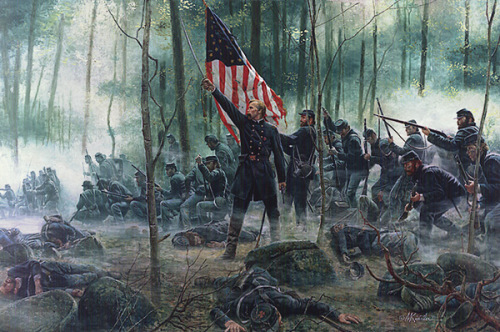
Their astonishment however was evident, when emerging from their cover, they met instead of an unsuspecting flank, a firm and ready front. A strong fire opened at once from both sides, and with great effect, the enemy still advancing until they came within ten paces of our line, where our steady and telling volleys brought them to a stand. From that moment began a struggle fierce and bloody beyond any that I have witnessed, and which lasted in all its fury, a full hour. The two lines met, and broke and mingled in the shock. At times I saw around me more of the enemy than of my own men. The edge of conflict swayed to and fro -now one and now the other party holding the contested ground. Three times our line was forced back, but only to rally and repulse the enemy. As often as the enemy’s line was broken and routed, a new line was unmasked, which advanced with fresh vigor. Our “sixty rounds” were rapidly reduced; I sent several messengers to the rear for ammunition, and also for reinforcements. In the mean time we seized the opportunity of a momentary lull to gather ammunition and more serviceable arms, from the dead and dying on the field. With these we met the enemy’s last and fiercest assault. Their own rifles and their own bullets were turned against them. In the midst of this struggle, our ammunition utterly failed. The enemy were close upon us with a fresh line, pouring on us a terrible fire. Half the left wing already lay on the field. Although I had brought two companies from the right to its support, it was now scarcely more than a skirmish line. The heroic energy of my officers could avail no more. Our gallant line withered and shrunk before the fire it could not repel. It was too evident that we could maintain the defensive no longer. As a last desperate resort, I ordered a charge. The word “fix bayonets” flew from man to man. The click of the steel seemed to give new zeal to all. The men dashed forward with a shout. The two wings came into one line again, and extending to the left, and at the same time wheeling to the right, the whole Regiment described nearly a half circle, the left passing over the space of half a mile, while the right kept within the support of the 83d Penna. thus leaving no chance of escape to the enemy except to climb the steep side of the mountain or to pass by the whole front of the 83d Penna. The enemy’s first line scarcely tried to run-they stood amazed, threw down their loaded arms and surrendered in whole companies. Those in their rear had more time and gave us more trouble. My skirmishing company threw itself upon the enemy’s flank behind a stone wall, and their effective fire added to the enemy’s confusion. In this charge we captured three hundred and sixty eight prisoners, many of them officers, and took three hundred stand of arms. The prisoners were from four different regiments, and admitted that they had attacked with a Brigade.” [24]

Colonel William Oates of the 15th Alabama would give Chamberlain and his regiment the credit for stopping his attack. Oates wrote: “There have never been harder fighters than the Twentieth Maine and their gallant Colonel. His skill and persistency and the great bravery of his men saved Little Round Top and the Army of the Potomac from defeat.” [25]

chamberlain lrt

As with any firsthand account, aspects of Chamberlain’s accounts are contested by others at the scene. Oates notes that he ordered the retreat and that there were not as many prisoners taken, one of Chamberlain’s company commanders disputes the account of the order of the bayonet charge however the fact is that Chamberlain who was outnumbered nearly two to one by the 15th and 47th Alabama regiments “offset this superiority with strength of position, iron determination and better tactics.” [26] Also a factor was the fatigue of the Confederates, these regiments and their parent unit, Law’s brigade of Hood’s division had conducted a grueling 28 mile march to get to the battlefield and were exhausted by the time that they arrived.

Vincent was mortally wounded while leading the defense of the hill. While he was standing on a large boulder with a riding crop ordering the men of the 16th Michigan who were beginning to waiver he cried out “Don’t yield an inch now men or all is lost,[27]he was struck by a bullet which hit him in the groin. As he was being carried from the field to the hospital where he died on July 7th, “This is the fourth or fifth time they have shot at me…and they have hit me at last.” [28]

As Vincent lay dying he was visited by many comrades, visited by Sykes and Barnes he told them “I presume… I have dune my last fighting.” Meade recommended Vincent for posthumous promotion to Brigadier General, but the request was lost.

Two months after his death his wife gave birth to a baby girl. The baby would not live a year and was buried next to him. One wonders what heights of leadership the young colonel might have achieved had he not died at Gettysburg. He was a man who understood the nature of total war, an excellent leader and skilled tactician.

Chamberlain survived the war to great acclaim being wounded three times and receiving the surrender of the Army of Northern Virginia at Appomattox on April 9th 1865.

The examples of these two citizen soldiers demonstrate the importance of this legacy, which is still to some extent carried on by the reserve components of the United States military service. That being said, in the coming years military professionals will have to engage lawmakers and the bureaucracy of the Pentagon as the shape of the future military, especially the land components is debated and decided upon by politicians. Thus, it is of the utmost importance of revisiting the tradition of the citizen soldier and how it can be renewed in the coming years.

Chamberlain’s words about the men that he served alongside like his commanding officer, Strong Vincent are a fitting way to close.

“It is something great and greatening to cherish an ideal; to act in the light of truth that is far-away and far above; to set aside the near advantage, the momentary pleasure; the snatching of seeming good to self; and to act for remoter ends, for higher good, and for interests other than our own.” [29]

Notes

[1] _______. The Armed forces Officer U.S. Department of Defense Publication, Washington DC. January 2006 p.2

[2] Millet, Allan R. and Maslowski, Peter, For the Common Defense: A Military History of the United States The Free Press a Division of Macmillan Inc. New York, 1984 p.xii

[3] Bacevich, Andrew J. Breach of Trust: How Americans Failed their Soldiers and Their Country Metropolitan Books, Henry Holt and Company, New York 2013 Kindle Edition Amazon Edition p.50

[4] Huntington, Samuel P. The Soldier and the State: The Theory and Politics of Civil-Military Relations, The Belknap Press of Harvard University Press, Cambridge MA and London 1957 p.345

[5] Zinni, Tony. The Battle for Peace: A Frontline Vision of America’s Power and Purpose Palgrave McMillian, New York 2006 p.4

[6] Weigley, Russell F. The American Way of War: A History of United States Military History and Policy University of Indiana Press, Bloomington IN, 1973 pp.367-368

[7] Moore, Harold G. and Galloway Joseph L We Were Soldiers Once…And Young Harper Perennial Books, 1992 pp. xix-xx

[8] Ibid. Bacevich Breach of Trust p.58

[9] ________. Erie County Historical Society http://www.eriecountyhistory.org/wp-content/uploads/2008/10/strongvincent.pdfretrieved 9 June 2014

[10] Golay, Michael. To Gettysburg and Beyond: The Parallel Lives of Joshua Lawrence Chamberlain and Edward Porter Alexander Crown Publishers Inc. New York 1994 p.129

[11] Leonardi, Ron Strong Vincent at Gettysburg Barringer-Erie Times News retrieved June 9th 2014 from http://history.goerie.com/2013/06/30/strong-vincent-at-gettysburg/

[12] Guelzo, Allen C. Gettysburg: The Last Invasion Vintage Books a Division of Random House, New York 2013 p.264

[13] Pfanz, Harry F. Gettysburg: The Second Day. University of North Carolina Press, Chapel Hill 1987 p.51

[14] Ibid. Guelzo Gettysburg: The Last Invasion Vintage p.159

[15] Tredeau, Noah Andre. Gettysburg: A Testing of Courage, Harper Collins Publishers, New York 2002 p.305

[16] Some such as Guelzo believe this may have been Captain William Jay of Sykes staff.

[17] Ibid. Tredeau, Gettysburg: A Testing of Courage p.327

[18] Ibid. Guelzo Gettysburg: The Last Invasion Vintage p.262

[19] Ibid. Guelzo Gettysburg: The Last Invasion Vintage p.262

[20] Ibid. Tredeau, Gettysburg: A Testing of Courage p.327

[21] Coddington, Edwin B. The Gettysburg Campaign: A Study in Command, A Touchstone Book, Simon and Schuster New York, 1968 p.389

[22] Ibid. Pfanz, Gettysburg: The Second Day. p.213

[23] Ibid. Golay To Gettysburg and Beyond p.157

[24] Chamberlain, Joshua Lawrence. Official Narrative of Joshua Chamberlain of July 6th 1863, Maine Military Historical Society, Inc., Augusta, Maine, copyright 1989 U.S. Army Combat Studies Institute Reprint, retrieved from http://usacac.army.mil/cac2/cgsc/carl/download/csipubs/chamberlain.pdf June 15th 2014

[25] Oates, Willam C. and Haskell, Frank A. Gettysburg Bantam Books edition, New York 1992, originally published in 1905 p.98

[26] Ibid.Coddington The Gettysburg Campaign: A Study in Command p.393

[27] Ibid. Guelzo Gettysburg: The Last Invasion Vintage p.272

[28] Ibid. Tredeau, Gettysburg: A Testing of Courage p.361

[29] Chamberlain, Joshua Lawrence. Chamberlain’s Address at the dedication of the Maine Monuments at Gettysburg, October 3rd 1888 retrieved from http://www.joshualawrencechamberlain.com/maineatgettysburg.php 4 June 2014

Leave a comment

Filed under civil war, History, leadership, Military, national security

The Power of Noble Deeds and the Fallibilty of those that Do Them

12 pound napoleon

“The power of noble deeds is to be preserved and passed on to the future.” Joshua Chamberlain

Today I was at the Gettysburg battlefield leading a Staff Ride for students from our Staff College. Today’s portion of the Staff Ride encompassed the first two days of the battle. We will continue it tomorrow with the actions of the night of July second 1863 at Culp’s Hill and the climatic event we know as Pickett’s Charge.

The Staff Ride is a optional trip for our students and the get no academic credit for it. However since I have taken it over I have been working to connect it to aspects of what they are learning in our courses, issues of campaigning, mission command and the diplomatic, information, military and economic aspects of war. I am working with our academic course developers and directors to turn this into an actual elective that students can receive academic credit for in addition to the chance to go the the battlefield.

I have a passion for this. The American Civil War and the Battle of Gettysburg are intrinsic parts of who we are as Americans today. The events of that war and this battle continue to reverberate in many aspects of our political, social and national life. Thus for me teaching about this event and what happened on this “hallowed ground” matters for more than the fact that it is interesting history and a fascinating battle.

As someone who has served in the military for most of my life, coming up on 33 years I feel like Joshua Chamberlain, the hero of Little Round Top that “The power of noble deeds is to be preserved and passed on to the future.” I do this in what I teach and what I write, both in the academic setting as well as on this website.

We live in a time of great cynicism, some of which I can understand. We also live in a time where many people and our institutions operate in a “zero defect” culture, those who fail in any way are shunted aside, punished or even chastised or ostracized. However, when I look at the men who fought at Gettysburg, or for that matter almost any individual who has accomplished great things, very few are perfect people.

Many great leaders, or other men and women that we consider today to be great, influential or important were quite fallible. They made many mistakes and even had great flaws in their character, some even did things in their lives that were not good and in some cases scandalous. Such deeds may tarnish them or take some of the luster away from their accomplishments. But I think that from a historical as well as pastoral point of view that these flaws are often as important as their successes. They demonstrate the amazing capacity of imperfect humanity to accomplish great things, as well as the incredible complexity of who we are as people. No one is perfect. There are degrees of goodness and even evil in all of us. It is part of the human condition. Thus the personal failures of those men and women should not detract from their great accomplishments.

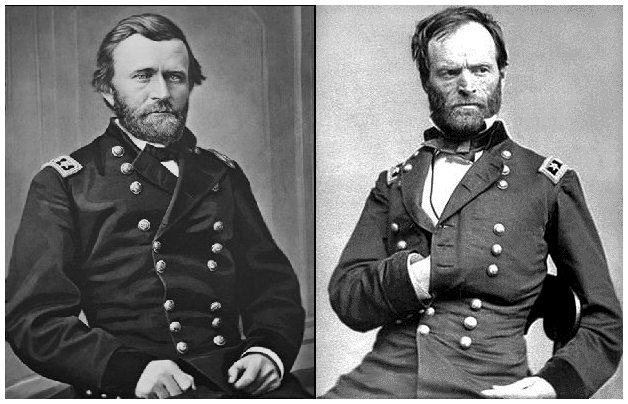
When I look at the perfection that imperfect people expect of others I am reminded of something that William Tecumseh Sherman said about his relationship with Ulysses Grant. The fact is that neither man who were in large part responsible for the Union victory in the Civil War would never reach the level of command that they rose to in our current military culture, nor would they rise to the top in corporate America. Sherman said: “Grant stood by me when I was crazy, and I stood by him when he was drunk, and now we stand by each other.”

That s one of the enduring facts of being human and being in relationship with others. Neither Grant or Sherman were at Gettysburg, they were at Vicksburg preparing to receive the surrender of that city as the Battle of Gettysburg ended. However, what Sherman said is true and needs to be more a part of our lives today.

That being said, even less tan perfect people can rise to do great deeds, deeds that need to be remembered, passed down and told to succeeding generations. That is a part of my passion about Gettysburg and my appreciation and admiration of the brave men who fought in that battle.

Have a great night.

Peace

Padre Steve+

Leave a comment

Filed under civil war, History

Ending the Stigma: PTSD, TBI and Moral Injury in Senior Leaders

295_26911892058_4301_n

Yesterday I wrote about the death of my former Commodore at EOD Group Two, Captain Thomas Sitsch who committed suicide on Monday outside a New Hampshire Hospital. Captain Sitsch was another casualty of the longest wars this nation has engaged.

Many senior leaders in the military, officers and senior enlisted of every service have frequently deployed to Iraq, Afghanistan as well as other locations in the war on terror. Since the war has been going over 12 years many have spent over half of their careers preparing for, engaging in, or recovering from wartime deployments. Many have suffered physical injuries as well as the unseen injuries of war, PTSD, Traumatic Brain Injury and Moral Injury. Unfortunately they are often the last people to seek help.

In the past few years I have personally known or know of a number of senior officers and senior enlisted personnel who have committed or attempted suicide or had their careers destroyed because of their actions. Some like Captain Sitsch were diagnosed with PTSD, others displayed some or all of the indicators but either refused help or put getting help aside in order to “stay in the fight.”

In the past couple of years the Commanding Officer of a deployed SEAL Team committed suicide in Afghanistan, two Marine Expeditionary Unit commanding officers were relieved after incidents that probably have their genus in PTSD, or Moral Injury. I would almost bet that some of the issues that some of our senior leaders have been relieved of their duties for are also the result of untreated PTSD, TBI, Combat Stress Injury or Moral Injury.

dallaire-rwanda

Retired Canadian General Romeo Dallaire still suffers from PTSD following his command of the UN Rwanda force in the middle of that country’s genocide. He attempted suicide in 2000 and still suffers. Last month he was involved in a car accident on his way to work in the Canadian Senate when he fell asleep at the wheel of his car. He had not slept the previous night due to reliving the horrors of that experience. As someone who still suffers chronic insomnia related to my PTSD I understand how this can happen.

The PTSD of T. E. Lawrence’s experience of war in the Middle East in the First World War shows in the pages of his classic Seven Pillars of Wisdom and various letters. Lawrence, who could have risen to high rank in the military or the foreign service basically went underground under an assumed name to serve in the ranks of the Royal Air Force in the 1920s. He wrote to Eric Kennington in 1935 not long before his death in a motorcycle accident:

“You wonder what I am doing? Well, so do I, in truth. Days seem to dawn, suns to shine, evenings to follow, and then I sleep. What I have done, what I am doing, what I am going to do, puzzle and bewilder me. Have you ever been a leaf and fallen from your tree in autumn and been really puzzled about it? That’s the feeling.”  

That is a part of our military culture. Leaders are under a great deal of pressure to accomplish often impossible missions and to take care of their troops. Many have been exposed to repeated combat trauma and had to bury more than one of their troops, often after the person commits suicide. Many anguish over the deaths, blame themselves and heap guilt on top of grief on top of traumatic or moral injury.

As I said many do not seek help due to an overwhelming cultural stigma against getting help, or “going to the wizard.” Likewise they know that that the reality is that if they seek help them may never command or be assigned to sensitive career enhancing billets again. As one senior leader told me “its hard when they say if you have issues and they are known that you can still have a successful career, but you will never be promoted or selected to a critical position, again.” 

1517080376

A few senior leaders have admitted to suffering from the symptoms of Combat Stress Injury and sought treatment. The most senior was General Carter Ham who began to suffer symptoms following his deployment to Mosul Iraq in 2004. Major General Gary Patton has also sought help for PTSD. Lieutenant General Peter Chiarelli, now retired has taken up the cause to reduce the stigma seeking to have PTSD renamed Post Traumatic Stress Injury instead of “disorder” because it is an injury.

110119-D-9880W-005.JPG

I wish I had an answer. For me it took a complete crash to get help as well as the assistance of two fine EOD officers, Admiral Frank Morneau and Captain Sitsch. Even with that initial assistance I still feel a certain stigma. My experience is that senior leaders who admit to this and seek treatment often become radioactive. I feel this most often around other chaplains. I am sure that senior leaders probably feel the same way when they are around others who either do not have the experience or who are trying to bury theirs.

One thing that I do think would be helpful is that instead of promoting stigma would be to stand alongside each other. Relationships are key to this and while professional help is good the only thing that can take away the stigma is to get back to standing beside each other in crisis rather than abandoning those who struggle. We are the willing participants in a zero defect culture which sees struggle as weakness and a mark of failure. The sad thing is that under our current system many of the greatest military leaders in history would not be promoted. It is no wonder the leaders who we have invested so much in developing and have sacrificed so much of themselves do not seek help.

grant-and-sherman-122304

I like the example of Ulysses Grant and William Tecumseh Sherman. Both had significant problems after they left the Army after the Mexican War and in the early days of the Civil War. Grant struggled with drinking and Sherman suffered terrible depression. Sherman said of their relationship: “Grant stood by me when I was crazy, and I stood by him when he was drunk, and now we stand by each other.”

The reality is that in today’s more corporate military culture that neither of these men would have ever been promoted to high command. They would have been shunted aside.

Something has to change if we are to end this terrible scourge. I hope that General Ham and General Chiarelli are working with mental health professionals are able to help change the culture, but then by themselves they cannot. That has to start as we say in the Navy “at the deck plates.” It is up to us to change our culture, to be warriors who look after our fellow warriors in their time of need and who by our actions take away the stigma that keeps our brothers and sisters from getting help.

Peace

Padre Steve+

2 Comments

Filed under iraq,afghanistan, Military, News and current events, PTSD

All In or Stay the Hell Out: Syria, the United States NATO and the Middle East, the Guns of August All Over Again

hi-syria-gas-rtx12sc9

The Balkans aren’t worth the life of a single Pomeranian grenadier.”  Otto Von Bismarck

The terrible civil war in Syria appears to be reaching its crescendo as someone, probably the Assad Regime or its allies, or possibly the Syrian rebels are using Chemical weapons to kill non-combatants and rebel combatants. The evidence that the weapons have been used is apparently convincing enough for the UN to send in inspectors and for the US Secretary of State John Kerry to state that it is certain that they have been used.

Now NATO allies as well as representatives of Jordan and the Gulf States are meeting to decide what to do in response. Since most experts believe that the Assad regime is culpable for these attacks the belief is that the United Sates, NATO and the Arab Allies could be preparing for some kind of attack Syria. The Russians, long time supporters of Syria are pushing back against this and the Syrians are promising that any attack will result in a war that envelopes the region.

Chaos-in-Syria

What is happening in Syria is a tragedy and must be stopped. War crimes have certainly been committed by all sides in Syria and the direct involvement of Hezbollah and Iran on the side of the Assad regime and Al Qaeda affiliates on the side of the rebels complicate any response. However, that being said the question must be asked “just whose responsibility is to stop it?”

Some say the United States and NATO, others the Arab League while others the various factions of Syrians themselves.

My heart cries out for intervention in Syria if for nothing else but on humanitarian grounds. But the fact is intervention in Syria has to be much more thought out and organized than intervention that we have conducted since the fall of the Berlin Wall. It will not be a cake walk and quite likely will lead to consequences far worse than the average citizen or boneheaded Congressman has never given a cogent thought.

Syria is an incredibly complicated country. It is multi-ethnic and multi-religion. Arabs, Kurds, Druze and others live in patchwork communities and regions even as various sects of Sunni, Shia, Sufi and Salafist Moslems vie for power while the divided Christian minority , Catholics, Orthodox, Anglicans and others hope to live and remain in their own country.

As far as others in the Region besides Iran and Hezbollah, various Sunni and Shia Iraqi insurgents have crossed over into Syria, while Israel teeters on the bring of being drawn in to the conflagration.

No matter what happens there will be no winners in what is happening in Syria. There is a high probability that the Syrian civil war will overflow the borders of that unfortunate country and drag the region and possibly major world powers into the war. If that happens there are no winners, only losers. The biggest question is who will be the biggest loser?

That being said even tonight there are reports of military movements in the region even as NATO and Arab coalition partners gather to discuss a response. I am resigned to the fact that the Syrian Civil war will overflow Syria’s borders and draw in the powers of many countries. Just who I am not exactly sure at this time. In the US there is a marked tepid feeling among voters about getting involved. That may be a good thing. It may temper our response and make us deliberate the consequences of military action or inaction.

Bertrand Russell once said that “War does not determine who is right – only who is left.” I wonder if anyone in any of the nations currently involved or possibly that might be engaged in the war actually things about what Russell said.

The fact is that what is going on in Syria is the proverbial “Tar Baby.” There is no clean easy solution to the situation. Lobbing in a few hundred cruise missiles and launching airstrikes in support of the rebels is unlikely to have a profound strategic affect. Instead, unless NATO and its allies are willing to risk an actual ground war after the missile and air strikes then the fact of the matter is that those strikes will have little long term effect. If a ground invasion happens it will be bloody and not the cake walk that so many in Western Governments, media and populations that rely on a very small number of military professionals to fight their wars think it will be.

If by some chance the United States and its allies get drawn into the Syrian Civil War than all of them had better think of what the consequences of that involvement will be, for the region, the world and our own countries. The fact is that a major war in Syria will drag the rest of the region into it. This is not 2003 Iraq or 2011 Libya. The fact is that Syria is heavily splintered into various regional, ethnic and religious groups, most who have lived among each other for millennia and most of whom hate each other.

I cannot speak for other governments around the region and the world, allied to the United States or not. However I do know that our Constitution has in it the formula of who should committed the country to war and that, despite our recent history is not the President by his executive authority Commander in Chief but by Congress after due deliberation and a vote to declare war.

My thoughts are that if we in the United States are serious about this, that we believe that Syria and Assad need to be taken down then fine. Let us call Congress back to Washington now and have them debate the issue. If they vote for war then they need to do two things, the first is that Congress needs to be called away from its vacation and get to work debating the issue. If the President backed by a declaration of war from Congress and a repeal of the sequester that is gutting the country and the military.

If they cannot do this then let’s stop the bullshit and tell the work that the situation in Syria is terrible but the consequences of going to war without either an end in mind or analysis of the costs involved is criminal. Bismarck said it well in regard to the Balkans and his comments should be taken to heart by the United States and its allies.

The situation in Syria cries out for action, but that action must be action that helps the people of Syria, the region and the world and is not just an action to salve our collective consciousness and say that we did something. Simply throwing some cruise missiles at Syria accomplishes nothing unless there is a plan of what we intend to see happen. William Tecumseh Sherman said: “It is only those who have neither fired a shot nor heard the shrieks and groans of the wounded who cry aloud for blood, more vengeance, more desolation. War is hell.”

My thoughts on this are to make going to war difficult. If the President and his cabinet determines that they believe in consultations with our allies that war is the last and best of the worst case options, the Congress needs to cut short its vacation. Republican and Democrat leaders need to gather and a decision has to be made. If we go to war it can no longer be done under the very loose and terribly vague rules of the War Powers Act because any attack on Syria will certainly escalate beyond a short term military strike done “on the cheap.”

There is no cheap or easy to Syria. If military action is the only way to solve the problem then Congress must convene, make a formal declaration of war and also repeal sequestration. A war in Syria will be costly in blood and treasure and will likely pull in many other countries. The human costs in the region, not just Syria will be beyond imagination while the costs to the world economy will be severe and quite possibly push the world into another recession or possibly depression.

The military power alone of the United States has been used far too many times as our governments under successive Republican and Democrat leadership have opted not to use the full measure of our diplomatic, intelligence, military and economic power to solve problems. Instead we fall back to the easiest and most ready means to satiate our need for a quick solution to complex problems, the military option. Military power alone, especially if it is incapable of ending the conflict and bringing a just peace is not an answer in Syria.

Syria03_GQ_07Dec12_getty_b_642x390

The fact is that we Americans do not know the world nor do we understand it. Americans have become simple and lazy when it comes to dealing with complex issues. We deal in sound bites and tweets, the more fiery the better even as we stick our heads in the sand as to what is happening in the world. Ask how many people are more interested in the beginning of the College and Pro-Football seasons in the next couple of weeks versus those interested in really important issues of war and peace and you will get your answer on our priorities as Americans. We have no sense of history and are quite ignorant of the world around us and the political, cultural, religious, philosophical, ideological and economic factors that make up our world so our first response is almost always the sword.

If the President and Congress feel that it is absolutely necessary to go to war over the atrocities being committed in Syria let them make that decision, but only after considerable debate, consultations with allies, the United Nations and the Arab League followed by a vote on an actual declaration of war, the repeal of sequestration and a major stimulus to prevent the economy from tanking when the cost of oil goes through the roof and cripples the world economy.

Winston Churchill cautioned leaders “Never, never, never believe any war will be smooth and easy, or that anyone who embarks on the strange voyage can measure the tides and hurricanes he will encounter. The statesman who yields to war fever must realize that once the signal is given, he is no longer the master of policy but the slave of unforeseeable and uncontrollable events.” 

images-56

To paraphrase Bismarck, Syria is not worth the life of one American or Allied Soldier unless our governments are willing to do it right. All in or stay the hell out and don’t go in without counting the real and the potential costs.

Peace

Padre Steve+

2 Comments

Filed under middle east, Military, national security, Political Commentary

To Iraq and Back: Prelude: I was Born for This

295_27076757058_7361_n-1

Me in 1982 

This is the first actual chapter in my series “To Iraq and Back: Padre Steve’s War and Return.” I wrote last night that I was going to be doing this and I figure that there is no time like the present to start. Just about 6 years ago I was preparing to deploy to Iraq as an individual augment supporting the US Marine and Army advisors to Iraqi Army and Security Forces in Al Anbar Province. After 6 years I think I can finally complete my literary account of my experiences in Iraq, my return and subsequent struggle with Post Traumatic Stress Syndrome (PTSD). 

Though I am not certain, I do think that many of us were born for what we feel called to do. As bit of a theologian I can honestly say that I am not a Calvinist or strict Augustinian who believes that we are simply playing out some predetermined role or fate on earth. Neither am I a fatalist but I really do feel, that whether it was something God ordained, something genetic or a product of my environment growing up, that I was born to do what I do.

As one who has some training as well in psychology and pastoral care I also understand that the human mind is a very complicated lump of gray matter. I know that we as human being as products of our genetic make up, our upbringing and environment, education, spiritual formation, relationships ad infinitum, ad nauseum.

So I know what I believe about my calling to serve in the military and the priestly vocation cannot be scientifically proven. That being said, I believe and that belief in my calling survived even in my times of unbelief.  A paradox for sure, belief and unbelief coexisting at the same time in the same person, but Father Andrew Greeley said it well in his novel The Bishop and the Beggar Girl of St Germain: “Most priests, if they have any sense or any imagination, wonder if they truly believe all the things they preach. Like Jean-Claude they both believe and not believe at the same time.”

My tour in Iraq in a sense was the culmination of my calling, a call that I felt at a very early age, to serve in the military and later to be called to serve as a Priest in the military. I have long figured that to have served a full career in the military in time of war and not to have gone forward into danger to do what I have trained all my life to do.

I have a hard time not remembering when I wanted to serve in the military and serve in combat. That may sound strange but for some reason, even though I was not encouraged to follow this path it was something that growing up as the son of a Navy Chief Petty Officer who served at the Battle of An Loc in the Vietnam War that I felt was my destiny. Maybe it is faith, maybe it is some sort of mysticism or even fatalism, but I do believe that for good or for bad that I am doing what I was born to do.

George Patton commented: “A man must know his destiny. if he does not recognize it, then he is lost. By this I mean, once, twice, or at the very most, three times, fate will reach out and tap a man on the shoulder. if he has the imagination, he will turn around and fate will point out to him what fork in the road he should take, if he has the guts, he will take it.”

I am sure that my family and my earliest friends can testify to my love of all things military and the nearly romantic calling that soldiering had on my life. At nearly every turn in life I have responded to the military calling by volunteering for assignments that would place me closest to the action. There were times that my wishes were thwarted and my desires placed on hold, but they never died.

I served on the Fulda Gap in the Cold War and missed serving in ht First Iraq War because I had left active duty to attend seminary and my National Guard unit just missed being mobilized. I did support the Bosnia operation as a mobilized Army Reserve Major and during that mobilized period of service was told that I was not a place for me in the Regular Army. However, a few months after my last active reserve posting I was given the chance to apply for active duty as a Navy Chaplain. Less than 7 weeks after the first talk with the Navy I resigned my Army Reserve commission as a Major and accepted a lower rank, that of a Navy Lieutenant to enter active duty in February 1999.

The Marine unit that I was serving with in 1999 came very close to being sent to the Kosovo crisis and had Slobodan Milosevic not made a last minute peace deal after a 70 day air campaign I am sure I would have ended up there.

555306_316970661755579_1118848704_n

With my Boarding Team, April 2002 aboard USS Hue City

However it was 9-11-2001 that changed everything. I was in Camp LeJeune North Carolina with the 2nd Marine Division when the hijacked aircraft hit the Twin Towers and the Pentagon. Shortly after those attacks I was transferred to the USS Hue City, a Aegis Guided Missile Cruiser. My first wartime deployment was in 2002 aboard Hue City supporting Operation Enduring Freedom and Southern Watch. On that deployment I served as an advisor to one of our boarding teams and took part in over 70 boarding party operations against Iraqi and other oil smugglers who were breaking the United Nations oil sanctions against Iraq.

We were in the yards when Operation Iraqi Freedom began and in the fall of 2003 I was assigned to the Marine Security Force Battalion. In my time at Security Forces I travelled around the world and often to the Middle East and Europe, but not to Iraq or Afghanistan. Because the elements that we sent to Iraq were too small to rate an organic chaplain I did not deploy with them, though I heard about the experiences of many of those Marines and Navy Corpsmen as they came to me for counsel when they came home.

Despite having spent time of the boarding teams and having deployed numerous other places in my career there were times that I felt like William Tecumseh Sherman, who missed the war with Mexico having been sent to California who wrote: “I have felt tempted to send my resignation to Washington and I really feel ashamed to wear epaulettes after having passed through a war without smelling gun-powder.”

In October 2006 I was assigned to Navy EOD Group Two and shortly thereafter my life which had been very active with more time spent away from home than with my wife since my call up in 1996 to support the Bosnia operation became much more complicated. While at EOD I was supporting very skilled sailors most of whom had deployed multiple times in the always dangerous work of defusing and defending against Improvised Explosive Devices, or IEDs, the signature weapon of the wars in Iraq and Afghanistan. I also was called to support sailors either preparing to go to Iraq or Afghanistan as Individual Augments or those that were returning home.  As I heard their stories, especially those serving as advisors with Iraqis or Afghani soldiers I knew that was what I needed to be doing.

In early 2007 a call went out seeking chaplains to serve in Iraq and Afghanistan in various roles that were not supported by unit chaplains. With the permission of my supervisory Chaplain, Captain Deborah McGuire who was at the Navy Expeditionary Combat Command I put my name in the hat and was notified that I would be sent overseas. I explained to Judy that despite her misgivings that I felt that Nelson and I were the most ready, qualified and prepared team to take on the mission. Needless to say that did not assuage her fears and concerns and an emotional distance began to grow between us.

Initially we thought it would be sent to Iraq, then it was Afghanistan, and finally the first week of June 2007 the orders came down for Iraq. My faithful assistant, Religious Program Specialist Nelson Lebron would go with me. It was the first time that an existing Religious Ministry Team had been tagged to take on an independent mission of this nature.

Our orders were to support Marine Corps and Army advisors in Al Anbar Province, a mission that was new because when the advisory teams were first formed no one thought about organic religious or spiritual support. It was assumed that chaplains from nearby units would suffice but the Army and Marines learned that the assumption was wrong and that the advisors needed their own chaplain support.

The next few weeks would be a whirlwind as we prepared to go. They would be weeks that were trying both individually and for our families and neither of us would realize how much we would be impacted by our time in Iraq, but in June of 2007 that was still a part of our yet uncharted future.

Peace

Padre Steve+

Next: The Preparations


Leave a comment

Filed under PTSD, to iraq and back, Tour in Iraq

Not Alone: The Real Warriors Campaign

“Grant stood by me when I was crazy, and I stood by him when he was drunk, and now we stand by each other.” William Tecumseh Sherman 

When I returned from Iraq in February 2008 it began the most difficult period of my life. Suffering from PTSD and a crisis in faith I felt alone, isolated, suffered terrible depression, anxiety was hyper-vigilant and angry. I felt abandoned by my former church as well as God. When I think about it now I can get still feel the deep emotions of those years. I am doing better now compared to how I was doing then.  Thankfully I have some friends that are to me what Grant was to Sherman.

Life is about living in the real world. Dietrich Bonhoeffer wrote from prison “I discovered later, and I’m still discovering right up to this moment, that is it only by living completely in this world that one learns to have faith. By this-worldliness I mean living unreservedly in life’s duties, problems, successes and failures. In so doing we throw ourselves completely into the arms of God, taking seriously, not our own sufferings, but those of God in the world. That, I think, is faith.”

When I started getting help after I fell apart in the summer of 2008 I was really struggling and the first person that asked about how I was doing with God was my therapist Dr. Elmer Maggard. It was during those initial months when I discovered that there were others out there like me that I decided that I could not be silent. Those that have followed this blog since its early days have followed me as I detailed my struggles, experience and tried to be as transparent as possible within the limits of my emotional state at any given time.  I was helped by a number of friends especially by my friends Greg and David, both Chaplains who have experienced things similar to me and without whom I would have been hard pressed to make it through my difficult times.

That was hard to do because I am a pretty introverted and private person.  So I wrote what I could when I could. Sometimes very raw and unfiltered emotions came to the front, other times I was able to get back into my comfort zone and write from a more detached point of view, a particular virtue and failing of being a historian. I wrote an article in September 2010 titled Raw Edges: Are there other Chaplains out there Like Me?  The next day I was asked to leave my former church although the two were not directly linked being ask to leave a day after I was talking to people about them not being alone even if they felt abandoned by God, their church or faith community or even the military.

A few months later in March of 2011I was interviewed by Hope Hodge of the Jacksonville Daily News after their editor had read that article and found that I was at camp LeJeune.  The article appeared on the front page of their print edition and online. This was a big step for me because by doing it I allowed someone else to write the story. Now Hope and the editors at the Daily News handled it very well and I felt that they produced a very good article.

A couple months later I was asked by the good folks at the Real Warriors Campaign which is an initiative of the Defense Centers of Excellence for Psychological Health and Traumatic Brain Injury (DCoE) if I would share my story to a wider audience. I wrestled with that because things like this are scary, I am not a televangelist I don’t go in front of a camera for a living. I was helped by our public affairs officer Raymond Applewhite and the team that did the filming handled it well.

The video was released on the Real Warriors website as one of a number of videos featuring veterans sharing their stories of war and return.  The video is found at this link http://www.realwarriors.net/multimedia/profiles/dundas.php and I viewed the final draft a couple of weeks ago before it went online.

My hope is that others struggling will be encouraged and know that there are indeed others out here that know something of their experience and that there is light at the end of the tunnel. My story is still being written. I am doing much better than I was but I am changed by war and while I still struggle that is not necessarily a bad thing. I have like Bonhoeffer so well put it that it is “only in living completely in the world that one learns to have faith.” Sometimes that faith comes at great cost and certainly is not something that is something that is done without help, spiritual, emotional and from people that are willing to suffer with you.  The cost to families and relationships is difficult.  My wife Judy has had to struggle with my issues and I know that what happens in war affects those that we love in profound and often painful ways. Bonhoeffer said:

“In normal life we hardly realize how much more we receive than we give, and life cannot be rich without such gratitude. It is so easy to overestimate the importance of our own achievements compared with what we owe to the help of others.” 

There are a number of people who have helped me through very dark times. To those that struggle, especially those struggling with faith and God following experience the trauma of war I just want to say that you are not alone.

Peace

Padre Steve+


4 Comments

Filed under faith, iraq,afghanistan, Military, PTSD, Tour in Iraq