Tag Archives: iraq war

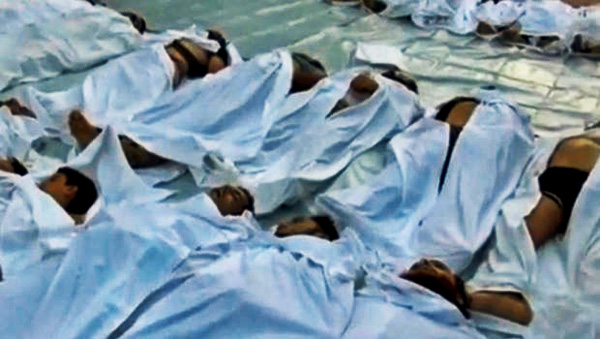
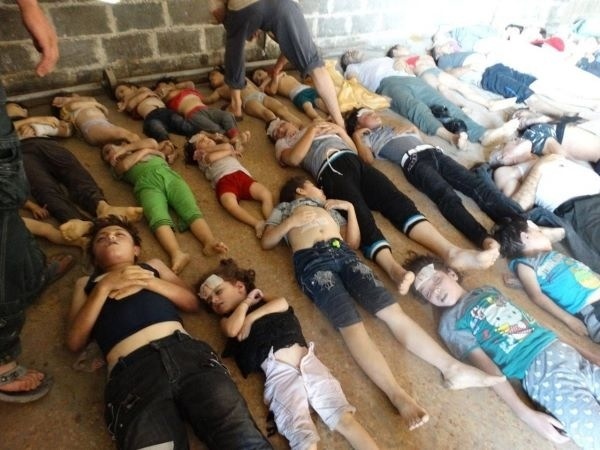
Injustice in Syria and the Impotence of the World

syria-unleashes-massive-gas-chemical-attack-on-damascus

“There may be times when we are powerless to prevent injustice, but there must never be a time when we fail to protest.”  Ellie Wiesel 

I do not think that any surgical strike against Syrian military forces and chemical weapons facilities by a handful of US Navy ships and submarines will stop the unrelenting bloodbath that is the Syrian Civil War. It would be nice if it would but realistically it will not.

What is going on in that country fits every definition of war crimes and crimes against humanity as defined by Nuremberg, the Hague and Geneva Conventions, the Geneva protocols of 1925 which Syria is a signatory to specifically state that “the use in war of asphyxiating, poisonous or other gases, and of all analogous liquids, materials or devices, has been justly condemned by the general opinion of the civilized world.” This message was strengthened in the Chemical Weapons Convention of 1992, a document that 98% of the nations of the world are signatories to, although Syria  is not one of them.

There are strong moral and legal arguments to be made for intervention in Syria. Unfortunately morality and legal arguments against crimes against humanity seem to have very little weight in the world. But then they never have. It is only when nations decide that the threat extends beyond the deaths of unfortunate people that they really could not care less who lived or died, but directly threaten the economic and security interests of the great powers then the vast majority of people and nations would rather not get involved.

This is especially true after the American led coalition invaded Iraq on the basis of the threat of Weapons of Mass Destruction. The intelligence about the threat has been widely discredited, Iraq remains devastated, Iran empowered and the United States military hamstrung by 12 years of war. The Iraq War and its aftermath, the casualties, the costs and the loss of credibility of the United States as a result of it haunt the actions of the Obama Administration and will haunt future presidencies. As Harry Callahan noted “there are always results.” 

As Barbara Tuchman so well put it: “An event of great agony is bearable only in the belief that it will bring about a better world. When it does not, as in the aftermath of another vast calamity in 1914-18, disillusion is deep and moves on to self-doubt and self-disgust.” 

That was the result of the Iraq war. Though the vast majority of Americans had no direct link to the war that was fought by a small minority of military personnel the effects linger. Our politicians, pundits and preachers talk about us being “war weary” but that really can only be applied to the tiny number of men and women who have served in Iraq or Afghanistan and in numerous other places that no one knows or cares about. I think that people are less war weary than they are apathetic to anything that they do not believe directly effects them.

Bertold Brecht wrote:

“The first time it was reported that our friends were being butchered there was a cry of horror. Then a hundred were butchered. But when a thousand were butchered and there was no end to the butchery, a blanket of silence spread. 

When evil-doing comes like falling rain, nobody calls out “stop!”

When crimes begin to pile up they become invisible. When sufferings become unendurable the cries are no longer heard. The cries, too, fall like rain in summer.”

That being said the consequences of a military action that not only does not destroy the Assad regime’s military capacity to kill innocents could make matters even worse than they are now, a thought that is hard to imagine. Likewise the possibilities of the action going awry  and the situation escalating and even expanding outside the borders of Syria bringing are quite high.

The arguments against intervention as far as military consequences and the low probabilities of success of surgical strikes is a strong argument for non-intervention. Realistically unless there is the participation of major military forces from many nations back by the UN, the Arab League and NATO with boots on the ground to find, secure and destroy the chemical weapons a military strike may achieve a modicum of success but most likely fail in its ultimate goal. The result would be that the situation would continue to escalate and a broader intervention ensue.

I am not happy with the way this has played out. The moral thing would have been for the UN Security Council take strong action against the Syrian regime and the world join in. However that will not happen, too many nations see this as an opportunity to advance their own agendas in the region using both the Syrian government and the rebel forces, some of which are allied with the Al Qaida organization. Some of the Syrian Rebels are as bad as Assad when it comes to indiscriminate killing of innocents and the commission of war crimes.

This week there will be votes in the Senate and House of Representatives regarding a Senate resolution for limited military action against the Assad regime requested by the Obama White House. The political posturing of many opponents as well as supporters of intervention has been nothing but shameful. In many cases it is not about actual foreign policy but on politics dictated by gerrymandered districts and the politics of mutual assured destruction. There is a good chance that the resolutions will not pass and one or both houses of Congress. However there is a strong chance that even without Congressional approval that the Obama administration will most likely attempt to do the morally right thing with inadequate means.

I am torn on this. I do think that as Secretary of State John Kerry said this week that we are at a “Munich moment.” The consequences of inaction and limited action alike are potentially disastrous. The hope of many for the Arab Spring has turned into a nightmare. The question is how bad the nightmare will get.

Honestly I cannot say what is I think should be done. I can make the case for intervention based on moral, legal and ethical grounds and I can make the case against based on realpolitik.

All that being said, for the sake of humanity echo the words of Ellie Wiesel“For the dead and the living, we must bear witness.”

Peace

Padre Steve+

2 Comments

Filed under ethics, Foreign Policy, History, national security

Syria: The History and the Really Hard Questions for All of Us

20130831-164635.jpg

Today President Obama called on the U.S. Congress to take up and debate an authorization for the use of military force in Syria. From any moral viewpoint his words on the use of chemical weapons by the Syrian government his words were correct. Likewise his calling to account of the international community, 98% of whom are signatories to treaties outlawing the use of these weapons against anyone to support this action was correct. The fact that he also demanded that Congress come into session and do its job was correct.

In spite of all of that the use of military force to attempt to force a change in the way that the government of Bashir Assad is problematic and fraught with danger. The chances of escalation and the involvement of other nations and non-state actors are great and even a “successful” operation could lead to subsequent events detrimental to the United States, the West, the region and even to Syria and its people.

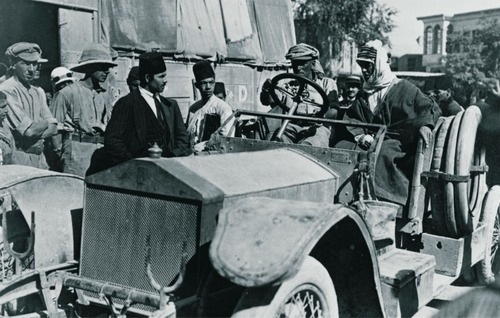
A big part of this is due to the complexity of Syria itself and its history. Syria is a complicated mosaic of cultures, peoples and religions often at odds with one another. The fact that the Assad regime has remained in power is because of its brutality and willingness to play off the various factions against each other. The Assad family is of the minority Alawite sect of Shi’a Moslems from the western region of the country. One needs to read T. E. Lawrence’s 1915 report on Syria to get a glimpse of the complexity of Syria and to understand that one has to proceed carefully when dealing with any faction. http://www.telstudies.org/writings/works/articles_essays/1915_syria_the_raw_material.shtml

20130831-171258.jpg

The fact is that the best chance for a stable Syria disappeared in 1920 when the French, emulating the British in Mesopotamia (Iraq) overthrew the government of Emir Faisal Hussein. Lawrence wrote a powerful essay about this http://www.telstudies.org/writings/works/articles_essays/1920_france_britain_and_the_arabs.shtml and when one examines the actions of the British and the French in Syria and Iraq one has to look at history. The British were willing to support the U.S. invasion of Iraq because of history, the same is true of why the French are willing to stand with the United States in Syria. The Germans for their own part frustrated by imperial ambitions in the Middle East in the First World War and a failed attempt to support an Iraqi uprising against the British in 1941 have no interest in a war that might bring disorder and terrorism among the many Moslems that reside in their country. The Turks of course have no love for the Arabs and once counted Syria as a valuable part of the Ottoman Empire. Disorder in Syria is dangerous to them but ultimately they could benefit since they have been shouldering much of the humanitarian burden.

The Jordanian royal family has no love for Syria being the descendants of Faisal Hussein while the Israelis see Syria as a mortal enemy. Lebanon which was carved out of Syria after the First World War is hopelessly divided and with Hezbollah, the erstwhile ally of Iran in de-facto control of the country in danger of becoming a front in the ongoing Syrian Civil War. Iran being the close ally of Syria has great opportunity to expand its power and should a military strike occur might become directly involved although the more likely scenario is that they would allow their Hezbollah allies to shoulder the burden of strikes against Israel and United States or other Western interests in the region. One cannot leave out the Russians who are behaving much as the Tsarist Regime did regarding the region in the First World War when they signed on to the Sykes-Picot agreement.

If the United States does nothing Assad wins. He shows that he and anyone like him who conduct themselves outside the norms of international law and human rights can get away it it. If we intervene it might strengthen his grip, likewise if our strikes were successful enough to weaken his grip and allow the rebels to take power the results could be even worse since the Al Qaeda ally Al Nursa is the strongest and most militarily effective part of the rebel forces.

In a sense the Obama administration is damned if it does, damned if it doesn’t and damned if it does no matter what the outcome. It sucks for him because he is the President and it is his job he will get the blame. This despite the fact that his freedom of action in large part is undermined by the actions of the Bush Administration in the Iraq lead up and invasion. There are always results in foreign policy decisions. The invasion of Iraq has harmed our interests in more ways than its architects ever imagined, it was a foreign policy disaster of the first order that impacts everything that we do today in the Middle East.

That is why before a single cruise missile is launched the United States Congress must debate the action and go all in or stay out. The fact is that if we do this, and I hope, we don’t we have to do it right. We have to understand the consequences and do what we can under our system of government to debate the issue, look at the ramifications, not just in the region but to our own economy and national power.

If we do it the Sequester has to be repealed in all parts, you cannot wage war on the cheap and expect a military that is worn out by 12 years of war to keep taking on more war without funding it. The Tea Party Republicans who are attempting to hold the government hostage through the Sequester and a possible government shutdown cannot have it both ways. It is irresponsible of them to continue this madness until we can get out of Afghanistan and avoid involvement in Syria or other conflicts.

20130831-175304.jpg

That my friends is the hard truth about Syria. So before you get too caught up in the opening of the College and NFL football seasons forgetting that a dangerous world exists take some time to ponder and if you have the civic decency to write your Congressman and Senator on the subject. Pro or con tell them what you think and demand accountability. If you don’t do that don’t blame President Obama for what happens because you have failed your country as citizens.

Sorry I guess that might hurt. But we didn’t do that in Iraq. Today the 4486 dead American military personnel as well as all the other dead and wounded, American, Allied and Iraqi alike and those like me afflicted with chronic PTSD demand that you do it now. It is a moral responsibility of the first order of much greater importance than your fantasy football league.

Peace

Padre Steve+

Leave a comment

Filed under Foreign Policy, History, middle east, Military, Political Commentary

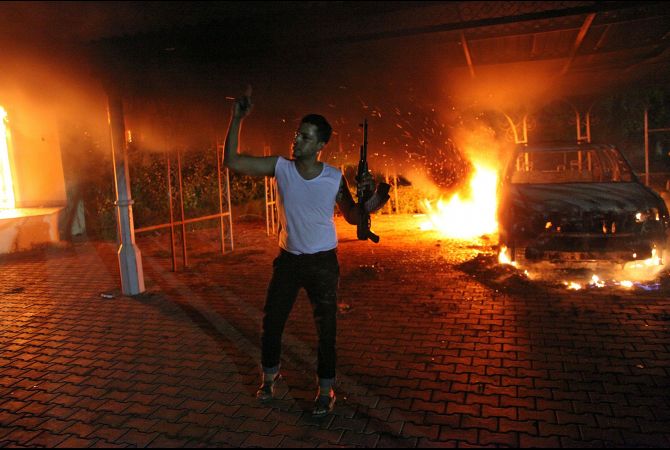
The Inconvenient Truth About Iraq and Benghazi

benghazi_attack_us_politics_2012_09_12

“The first duty of every Starfleet officer is to the truth, whether it’s scientific truth or historical truth or personal truth! It is the guiding principle on which Starfleet is based. And if you can’t find it within yourself to stand up and tell the truth about what happened, you don’t deserve to wear that uniform!” Captain Jean Luc Picard to Wesley Crusher Star Trek the Next Generation “The First Duty” 

I was talking with a conservative friend the other day and he ended up bring up the subject of Benghazi and the tragic loss of Ambassador Chris Stevens and 3 other State Department personnel at the consulate last September 11th. He was talking about the scandal of this and the political impact that he hoped it would have on Hillary Clinton in 2016.

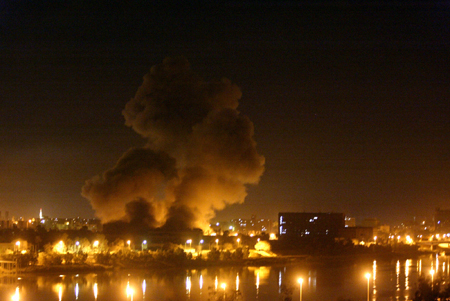
450_shock_and_awe

I was actually shocked that he said this so for once I decided to actually say something and mention the 4486 official US military deaths in Iraq. My friend who I really do like and respect commented that they were “the result of what happened in war.”

It stunned me when he said that because he is a military brat, but then I realized that he had bought the lie about Iraq and was so solidly partisan that he could not see the moral, ethical and even legal discrepancy in what he was saying. For me the question was far less about whatever impact it might have on Hillary’s campaign should she decide to run but about the truth.

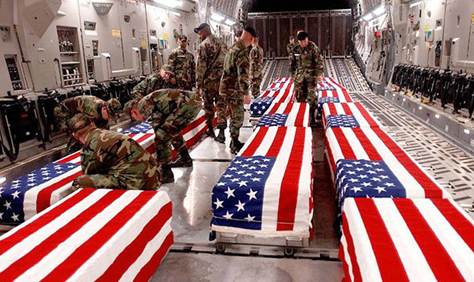
g-cvr-090217-dover-coffins-3a.grid-6x2

When I confronted him about it I was stunned by how easily he dismissed all of the dead and wounded and other casualties of Iraq but was so insistent on some kind of conspiracy to cover up Benghazi. But this is how so many people think today thanks to the constant bombardment of ignorance on Fox News and other partisan outlets. It is not about the truth, it is about the nastiest kind of politics.

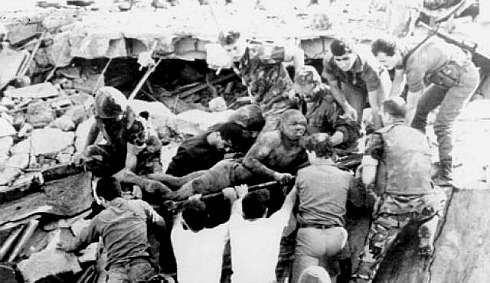
Barracks_bombing_2

I too am upset about Benghazi, but likewise I am upset about the 241 Marines, Sailors and Soldiers killed at Beirut in October 1983 when the Reagan Administration ignored warnings about putting US troops into Lebanon while taking sizes in that county’s civil war. I am upset about the nearly 3000 killed on 9-11-2001. I am upset about dozens of other terrorist attacks that occurred under both Republican and Democratic administrations in which DOD, the State Department and other agencies made mistakes that cost lives.

Some attacks could have been prevented and others probably not. However they were terrorist attacks committed by our enemies, not an illegal undeclared war of preemptive choice conducted by a United States administration against the will and recommendations of many of our closest allies. That is the inconvenient truth.

What has happened over the past decade is that many on the political right cannot admit that they were wrong about Iraq. This despite the fact that President Bush, Karl Rove and almost every senior member of the the Bush administration have admitted that the reasons that they took us into war with Iraq were wrong. There were no weapons of mass destruction, the nuclear program was a shambles and Iraq was not working with Al Qaida, which like most secular military dictatorships in the Middle East loathed. That is the inconvenient truth.

The fact that so many people on the political right go into a nearly toxic lather about four people lost in Benghazi while shucking off the deaths of nearly 5000 Americans who died in a war that was not only a mistake but violated the very laws that we helped establish at Nuremberg infuriates me. This is no longer about national security to them, it is about politics. This is not about ethics for those that led us into Iraq have none. It is not about justice for if there was justice those who made the decision to attack Iraq would be tried for war crimes.

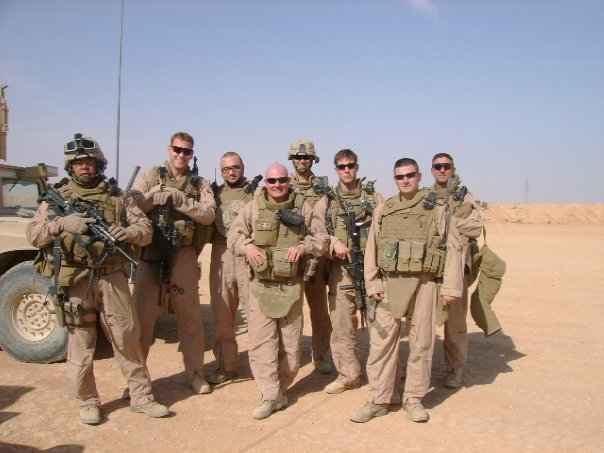
295_26912097058_4309_n

I served in Iraq and was fortunate that I served with our advisors and the Iraqis in Al Anbar during the time of the Anbar Awakening. I saw a different war than many people observed and for that I am glad because it busted my illusions about what we did in Iraq forever. I needed that. I may have come back thoroughly goofed up with PTSD and at times I am sure certifiably crazy, but I needed it to see the truth.

The fact is that unlike Benghazi the war in Iraq has crippled this country. Nearly 5000 dead, 30,000 wounded and trillions of dollars of national treasure dumped into the abyss. Hundreds of thousands of Iraqis were killed, wounded or driven into exile, many who greeted us as liberators.  Of course that was before the Bush Administration put the kleptocrats of the Chalabi group rape and pillage the country.

Likewise it was after the Coalition Provisional Authority under Paul Bremer, a man who had never in his career served in the Middle East threw out ever carefully orchestrated plan of DOD and CENTCOM for a peaceful transition in the country thus bringing misery to Iraq and triggering the anti US-Coalition insurgency and Iraqi Civil War. The great military theorist Carl Von Clausewitz said: “No one starts a war–or rather, no one in his senses ought to do so–without first being clear in his mind what he intends to achieve by that war and how he intends to conduct it.” The fact is that the Bush Administration was not only not clear, but they were inept and lawless in invading Iraq.

Additionally the invasion cost the United States the goodwill and trust of many allies and friends. No one will ever see us in the same light again. Instead of being a liberating power and “light to the nations” we are seen in much of the world as a rogue, lawless and imperialist state. Otto Von Bismarck put it so well when he said “preventive war is like committing suicide out of fear of death.”

I don’t know about you but I am sure that is not the vision of our founders. I was told on my first day in the Army back in 1981 that “there are attaboys and aww shits and it takes 2000 attaboys to make up for one aww shit.” The Bush Administration’s lawless invasion of Iraq and incredibly inept occupation was a disaster for the United States, Iraq and most of the region, except maybe for Al Qaida and Iran. By the way let us not forget the crippling effects of the Iraq invasion on the campaign in Afghanistan which allowed both the Taliban and Al Qaida time to regroup, consolidate and regain the advantage in that God forsaken land.To the 4486 we can add a couple of thousand more deaths in Afghanistan thanks to the decision to invade Iraq. That is the inconvenient truth.

For people to ignore a war that defies American and International Law as well as common sense which cost us and the world so much while making cheap political points by exploiting the deaths of four men is a disgrace. Had the men who started the invasion of Iraq been tried for by Justice Robert Jackson at Nuremberg they would have been convicted as war criminals and sent to the gallows. That is the inconvenient truth.

Justice Jackson said at those trials:

“If certain acts of violation of treaties are crimes, they are crimes whether the United States does them or whether Germany does them, and we are not prepared to lay down a rule of criminal conduct against others which we would not be willing to have invoked against us.” Justice Robert Jackson International Conference on Military Trials, London, 1945, Dept. of State Pub.No. 3080 (1949), p.330.

My closing thought is that those that want to make political hay out of Benghazi need to take a serious look at Iraq. What’s fair is fair. 4486 dead and over 30,000 wounded not counting another 100,000 or so with PTSD or TBI versus 4 dead and no wounded. I don’t make light of any of the deaths of Americans serving this country at any time or in any place.  I would not dishonor their memory by playing politics with their deaths. But the truth is indeed terribly inconvenient and those who do this must be called out regardless of their political orientation.

If there were mistakes or cover ups by Obama administration officials regarding Benghazi, so be it let them be investigated fairly an impartially not with an eye to political advantage and those that partake of this cup must be willing to drink of the cup of crimes committed by the Bush Administration in Iraq. The same is true when Democrats do the same to Republicans.

Truth matters too much to be sacrificed on the altar of politics even while those doing it ignore far greater crimes of far more epic dimensions committed by members of their political party.

Truth is terribly inconvenient and even when painful should never be sacrificed on the altar of political advantage by partisans of any party.

Peace

Padre Steve+

3 Comments

Filed under ethics, History, iraq,afghanistan, middle east, Military, national security

When Will We Ever Learn? Looking at 12 Years of Unending War

peloponnesian-war

War is the province of chance. in no other sphere of human activity must such a margin be left for this intruder. it increases the uncertainty of every circumstance and deranges the course of events.- Karl von Clausewitz

We are coming up on the beginning of the 13th year of our current wars. Wars that when they began were believed to be easy and uncomplicated and since they were being waged against enemies that were “backward” and not hi-tech. Thus we were promised that they would be short in duration, low in cost and casualties. We elected the war option as the quick and easy way to win, neglecting the words of the venerable Chinese strategist Sun Tzu who said “To fight and conquer in all your battles is not supreme excellence; supreme excellence consists in breaking the enemy’s resistance without fighting.”

images-54

In 2001 and early 2002 the Bush Administration pursued the Al Qaeda terrorists to Afghanistan, toppling the unpopular Taliban regime but failing to kill or capture Bin Laden. But by 2002 those in that Administration sought to widen the scope of the war. An “Axis of Evil” comprised of Iraq, Iran and North Korea was identified, even though none of those nations had links to Al Qaeda, and two of which, Iran and Iraq were hostile to Al Qaeda, each for their own reasons, Saddam Hussein because he only embraced Islam when it suited his strategic purposes and Iran because the Shia there were and are mortal enemies with the ultra-Fundamentalist Sunni Wahhabi Islam of Al Qaeda.

al-qaeda

The undeclared war against Al Qaeda became the Global War on Terrorism. It was an amorphous term that allowed the government to play fast and loose with facts even as it by fully “legal” means restricted the rights and invaded the privacy of American citizens through the Patriot Act and expansion of the FISA laws and a massive expansion of electronic surveillance against our enemies, against our allies, even long tern NATO allies and our own citizens.

All of these ideas seemed like good ideas at the time. The United States had been hit by the most well planned, executed and devastating terrorist attack ever conducted and it had been done by those who many believed incapable of doing it. We forgot however the words of Clausewitz that war is the provence of chance.

But then our leaders, regardless of political party over the past 50 years since our entry into Vietnam have been pretty inept at understanding history and understanding the consequences of their actions. The Greek historian Thucydides understood this, he saw what happened to Athens when it allowed itself to become enmeshed in the Peloponnesian War, a war that it entered as the premier economic and military power of its time and ended in disaster. He wrote:

“Think, too, of the great part that is played by the unpredictable in war: think of it now, before you are actually committed to war. The longer a war lasts, the more things tend to depend on accidents. Neither you nor we can see into them: we have to abide their outcome in the dark. And when people are entering upon a war they do things the wrong way round. Action comes first, and it is only when they have already suffered that they begin to think.” 

It seems strange now after so long of war that our openness, freedoms and liberties were not destroyed by the actions of Al Qaeda but by our own government in the Patriot Act a title so Orwellian that it defies logic. The sad fact is that the Patriot Act was only the beginning and the actions and legislative accomplishments those that seek to broaden the war and broaden the powers of the government to restrict freedom, speech and privacy of otherwise law abiding citizens has only increased.

As I listen to the words of some legislators, or both parties I might add I am frightened because for many it seems that the only answer they have to national security issues is the hammer of military force, force that over the years of this war has been eroded and which due to their legislative negligence in the Sequester will only further erode. They seem to forget, or maybe they never learned what is taught to military officers at Command and Staff College that national power is based on the DIME, the diplomatic, intelligence, military and economic power of a nation and not on military power alone.

Our legislators, the talking heads of the media and their political allies of various “think tanks” act as though their decisions have no consequences. Thucydides noted the same in his time:

“Some legislators only wish to vengeance against a particular enemy. Others only look out for themselves. They devote very little time on the consideration of any public issue. They think that no harm will come from their neglect. They act as if it is always the business of somebody else to look after this or that. When this selfish notion is entertained by all, the commonwealth slowly begins to decay.”

Those who think this way frequently praise those that they send to fight their wars. They pound their chests in praise of “the brave soldiers” but as far as the soldier is concerned they care not, thus when through their own political negligence hard budgetary choices need to be made neither the troops or the actual security of the nation matters, only the profits of their financial contributors, those who profit from war and suffering matter.

Two time Medal of Honor winner and Marine Corps Major General Smedley Butler wrote in 1932: “What is the cost of war? what is the bill? This bill renders a horrible accounting. Newly placed gravestones. Mangled bodies. Shattered minds. Broken hearts and homes. Economic instability. Depression and all of its attendant miseries. Back -breaking taxation for generations and generations. For a great many years as a soldier I had a suspicion that war was a racket; not only until I retired to civilian life did I fully realize it….”

Unfortunately despite the hopes of some in the Obama administration and in the country this undeclared “war on terrorism” will not end. It has taken on a life of its own and neither political party will end it. It like Athen’s misadventure in the Peloponnesian War, and so many other nations that ventured into “unending” wars that span generations will be our undoing if we are not take action now to figure out a way to extricate ourselves from it while still keeping our people safe. Somehow I think that our former freedoms, our liberties, transparency and openness are not weaknesses but strengths which at one time were embraced by us and many around the world who loved them and hoped to bring them to fruition in their own countries.

afghanistan_war

I think bout it now. Many of the 18 year old men and women enlisting in the Army, Marine Corps, Air Force and Navy today knowing that they could end up at war were only 5-7 years old on September 11th 2001. That a war should last this long is not only unwise and destructive to liberty but criminal in the fact that we should have known better. Thomas Jefferson wrote to President James Monroe advising him to stay clear of European conflicts saying: “They are nations of eternal war. All their energies are expended in the destruction of the labor, property, and lives of their people.” James Madison wrote to Jefferson in 1798 “The loss of liberty at home is to be charged to the provisions against danger, real or imagined, from abroad.” 

These are dangerous times, the fact is that more war is beckoning and there are those anxious for their own reasons, power, profit or even religion seek to continue and expand the. They care not a whit about those that fight them, those that die in them nor the ultimate costs in blood, treasure and freedom and home. The ends justify their means. Hannah Arendt said: “Although tyranny…may successfully rule over foreign peoples, it can stay in power only if it destroys first of all the national institutions of its own people.”

Peace

Padre Steve+

Leave a comment

Filed under History, iraq,afghanistan, national security, News and current events

Letter to a New Military Chaplain: Part Two The Minefields of the Heart

295_27076892058_2637_n-1

This is second part of a response to a question I had from a new Navy Chaplain. I have decided to post it here without any identification of the chaplain because I know that many men and women who are new to the military chaplaincy or who are exploring the possibilities of becoming a chaplain have the same questions. I was fortunate to have had a number of chaplains who at various points in my decision process and formation as a minister, Priest and Chaplain in both the Army and the Navy help me with many of these questions. Likewise I learned far too much the hard way and blew myself up on some of the “land mines” that almost all who serve as chaplains experience in their careers. This is the second of several parts to the letter and is my attempt to systematically explain my understanding of what it is to be a Chaplain serving in the military and in particularly the Navy. The first part is linked here:

Letter to a New Military Chaplain: Part One

“There is a twilight zone in our hearts that we ourselves cannot see. Even when we know quite a lot about ourselves-our gifts and weaknesses, our ambitions and aspirations, our motives and our drives-large parts of ourselves remain in the shadow of consciousness. This is a very good thing. We will always remain partially hidden to ourselves. Other people, especially those who love us, can often see our twilight zones better than we ourselves can. The way we are seen and understood by others is different from the way we see and understand ourselves. We will never fully know the significance of our presence in the lives of our friends. That’s a grace, a grace that calls us not only to humility, but to a deep trust in those who love us. It is the twilight zones of our hearts where true friendships are born.”Henri J. M. Nouwen

Dear Chaplain

The next section of our discussion is about the “minefields” that we so often encounter as Chaplains and to some degree as Ministers, Priests or Rabbis or other religious leaders. As I noted in the first section I am dividing these “minefields” into three major areas; the personal, the behavioral and the professional.

This section is about the “personal” minefields which I call the “Minefields of the Heart.” I call it this because it seems from the Christian and Jewish Scriptures the heart is the figurative locus of what we are, good and bad alike as human beings.

Of course there is always some spillage between the areas personal, behavior and professional areas and our behaviors and professional relationships are certainly influenced by the things that we hide deep in our hearts. As human beings we may try to compartmentalize our life to keep things apart such as keeping our personal life separate from our professional life, or hide behaviors from our friends, families, peers or co-workers; but the cold hard fact is whether we are aware of it or not each area impacts the other. If we are not aware of this fact, if we have little self awareness, if we have self awareness but try to live our lives with the illusion that we can separate our lives into neat little boxes we will most undoubtedly hurt ourselves, and as spiritual leaders harm those that come to us.
q_who

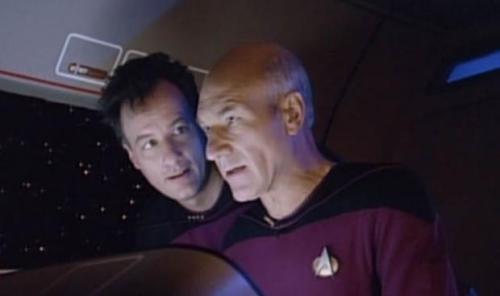
There is a scene of the last episode of Star Trek the Next Generation entitled “All Good Things” that comes to mind.  In it the being known simply as “Q” helps Captain Picard discover how his actions influence human history.

Q: You just don’t get it, do you, Jean-Luc? The trial never ends. We wanted to see if you had the ability to expand your mind and your horizons. And for one brief moment, you did.

Capt. Picard: When I realized the paradox.

Q: Exactly. For that one fraction of a second, you were open to options you had never considered. That is the exploration that awaits you. Not mapping stars and studying nebulae, but charting the unknown possibilities of existence.

You may wonder where I am going with this but it has to do with the personal minefields, those that exist inside of us, those that lurk beneath the surface which if we are unaware wreak havoc on everything else that we do. In the episode of Star Trek that I am referring to Captain Picard is allowed by Q to see the effects of his actions and to see how limited his thinking was.  The challenge for us is chaplains are to be aware of what Nouwen calls “the twilight zone in our hearts” and how what is at the depth of our heart impacts everything else that we do.

Too often though, mostly because of our own personal limitations and serious lack of real theological and pastoral formation involving self reflection and exploration we fail to see them. Like an uncharted minefield we are unaware of them until we either discover their existence through accident and “blow ourselves and others up” or until we listen to those that can see those twilight zones, those minefields better than we ourselves. Of course the latter, especially when it comes from those who love us, care for us and have our best at heart is the preferable method to learn about these things.
943043_10151694525692059_632653331_n

However, that being said part of this can be done through reading. A lot of us simply read “how to” type books when it comes to ministry. We seek direct easy answers in how to run our programs be it in the church, in a para-church ministry or in the chaplaincy. Believe me there are plenty of those kinds of books out there, not only that but a plethora of “self help” books that tell us the “three things we must know” the “five whatever’s to success” or the Seven Habits of Highly Defective People.” The sad thing is, even when these books contain nuggets of truth, they serve it like fast food and reduce it to the lowest common denominator. In a sense, even the most well intentioned of these “how to” or “self help” books promote a reductionist view of faith, spirituality, psychology and in some cases ethics and doctrine.

Reading is important, especially the hard stuff, philosophy, history, moral theology, but also things that you might not expect science fiction for example. In addition classic literature from antiquity and from non-western traditions also sheds light on those personal minefields. Heck we can even find truth in television and film, note my continued references to Star Trek. I find that God can speak to us in many ways.

As Christians we may also find lessons, insights and inspiration from the Bible that can be quite helpful. Unfortunately most of us have so many theological filters in place that we often miss the very things that would be most helpful to us. They can serve as blinders that keep us from sensing what the Spirit of God is trying to teach us. Our church, denominational or theological traditions as well as our hermeneutical methods often cloud our minds to what God is trying so hard to say. It was a problem that the religious establishment of his time had with Jesus, and often with the various prophets that preceded him whose stories we read about in the Old Testament.
1905_50393137058_7454_n

I am sure that others who are not Christians can say similar things about their faith, traditions and holy books. I remember an Iraqi General who I met who took the time to show me his well worn and read Arabic-English Bible. He was a Moslem, but he said that he learned so much from it because it was different than what was in the Koran and he meant no disrespect of his own faith by saying that. He had opened his mind to truth that others turn a blind eye to.

Some of the personal issues that prove to be deadly include what we don’t know about ourselves, usually dating back to childhood, how were raised, how we see God, if we perceive ourselves to be worthy of God’s love or worthy of the love and respect of others.  Those attitudes, especially those created as a result of negative relationships or even physical, emotional or sexual abuse, abandonment and rejection are powerful. Many of us like to pretend that we have gotten past those things but few of us actually do. Unfortunately there is a tendency for those issues to raise their heads in often very ugly ways as we minister as Chaplains.

For example: Let us say that we are distrustful of authority because of having an abuse parent, that we fear that no matter how well we do that there is always someone waiting to take us down. Let us say that we had previous experiences in the church, at work or maybe in prior military service where we were mistreated by those in authority.

I have found that if that condition is not dealt with that in a hierarchical organization such as the Chaplain Corps and the military that it is almost always fatal to the ability of the chaplain to minister in the organization. That is because the military is based on trust, our lives and mission depend on it. We have to trust the chain of command, we have to trust those that serve alongside of us and we have to trust our subordinates. There may be times when the chain of command fails and things don’t go right. There are toxic leaders and there are also toxic chaplains, one has to be aware that they are out there, know how to deal with them or survive under their command but one cannot presume that everyone is like that, trust is essential.

father

I find it interesting that Jesus commended the faith of the Roman Centurion when instead of asking Jesus to come to his house and heal his servant simply said “But just say the word, and my servant will be healed. For I myself am a man under authority, with soldiers under me. I tell this one, ‘Go,’ and he goes; and that one, ‘Come,’ and he comes. I say to my servant, ‘Do this,’ and he does it.”Matthew 8: 8b-9 Jesus told the people around that “he had not seen such faith in all of Israel.” Jesus saw the virtue of the Centurion, a virtue that many of his own people were lacking.

That is just one of a myriad of personal issues that can trip up a Chaplain in the military. The fact is that issues of the heart those things that we don’t like to admit are true about us, things that we are unaware about or in outright denial about in our lives are the things that go to the “heart” of who we are.

As fa as the minefields of my heart, they too are many. However the one that gets me time and time again is my passion for justice and my visceral reaction to those that I believe are bullies. That comes from my childhood. As a Navy brat I was always the new kid in town, and being that I was kind of the short, shy and introverted kid I was also kind of a nerd, or geek. I was not gifted with speed or great athletic abilities and it took me a while to find my academic prowess. That meant that I often didn’t fit in and though I was generally well liked that I would on occasion be bullied and I learned to defend myself, not very well at times but well enough to as the Klingons say “to die an honorable death.”

Jeremiah the prophet, who admittedly was most certainly clinically depressed if you look at his writings did note that “The heart is deceitful above all things and beyond cure. Who can understand it?” Jeremiah 17:9 Depressed or not Jeremiah did seem to understand that what he and many writers of scripture call “the heart” is hard to understand, especially when it is our own.

Thus I go back to Nouwen’s comment about the “twilight zone of the heart” that we cannot see. That it is why as Chaplains we have to develop relationships with people who can help us see what is in the twilight zone of our hearts and lovingly come alongside of us, not just as colleagues but as friends.

Those people may be clergy or other chaplains, but then they may not be. Perhaps they are senior enlisted personnel, long time friends, teachers, spiritual directors, counselors or our God forbid our spouses, I jest about the latter because my wife can see things about things about me that I cannot see, she is incredibly wise.

The minefields that exist in our hearts are so varied, so diverse and so treacherous. They have the potential to affect so many other parts of our lives. Thus for us as chaplains if we are not careful they can be destructive not only to us, but to those that we serve as well as those that we presume to love.

295_26912097058_4309_n

When I look back at my career and I am honest about it, I can say without a doubt that most of the things that hurt me were a direct reflection of the minefields that were already present in my heart. When things that happened that I felt were unjust or threatening I reacted and quite often my reactions caused problems greater than what I was reacting to. All they needed was something to set them off. What I have come to understand is even though I have had a very successful and that I am now a Senior Officer that what lies in my heart can still blow me up and that I need to always be careful of those minefields that exist in the twilight zone of my heart.

Lao Tzu said: “Watch your thoughts; they become words. Watch your words; they become actions. Watch your actions; they become habit. Watch your habits; they become character. Watch your character; it becomes your destiny.”

That is the key, those things that emanate from the deepest recesses of our hearts are full of minefields and we need to guard our hearts and minds in this ministry that we are privileged to have as military chaplains.

Peace

Padre Steve+


4 Comments

Filed under christian life, faith, Military, ministry, Pastoral Care, philosophy, Tour in Iraq, US Navy

Mementos and Memories: The Symbols of the Tapestry of Life

550094_10151467282032059_222295451_n-1

“Abruptly the poker of memory stirs the ashes of recollection and uncovers a forgotten ember, still smoldering down there, still hot, still glowing, still red as red.” William Manchester

One thing about military life is that when you serve a long time you collect mementos of your service. Some are earned, some are things you got just for showing up and some are items given to you by those that served with you. I have collected many in my 32 years and four decades of service. In those years I have come to cherish the the most the mementos that were given to me by the people that I served alongside, especially the ones with personal messages inscribed on them.

I have been moving things out of my office in preparation for my move back to Virginia for about a week now. Most of the things that I took back to my apartment before today were books, papers and articles of clothing and a few small mementos.

Today though I was different. Today I took down the mementos, my pictures, going away gifts, plaques and a few other articles. Among them were items inscribed by former Navy shipmates, Marines and Soldiers who I have served alongside dating back to 1985.

With the passage of years and assignments what I display in my office has changed. In my younger days my office was cluttered with citations for various awards, certificates, qualifications and academic degrees. In a sense it was the quintessential “I love me” wall.

When I came to Camp LeJeune three years ago that changed. I packaged up every award except for the citation to the Defense Meritorious Service Medal signed by General Raymond Odierno that I earned in Iraq. It has a great deal of meaning to me because of how much impact Iraq and my service there made on me. It changed my life and made me a different man with a new understanding of life. But unlike a dozen other personal awards I do not have it framed, it is still in the simple blue award folder that it was presented to me in Iraq.

I do not have any of my commissioning certificates, or ordination papers displayed. Of my academic degrees only my Masters Degree in Military History is displayed, like the DMSM it too is in the folder that it was presented. Of my military education I only display my certificate from the Marine Corps Command and Staff College the Army Medical Service Corps Officer Basic Course and the Army Junior Officer Maintenance Course. Both of the latter is certificates are battered and in a very ramshackle frames.

Most of what I display now are things that were given to me by the people that I served something to do with baseball, Cold War era East German or Soviet militaria or pictures of family and my dogs. I have a couple of pictures and religious symbols, I have a copy of the picture “Madonna of Stalingrad” painted by a German Army doctor who was also a pastor, a small San Damiano crucifix and a bronze St Rupert Cross from Salzburg Austria.

Each item represents part of my life, career and things that I hold dear or which provide special memories, even if some come from times that were not always pleasant. But even the painful memories are part of the tapestry of my life. Haruki Murakami wrote:

“Most things are forgotten over time. Even the war itself, the life-and-death struggle people went through is now like something from the distant past. We’re so caught up in our everyday lives that events of the past are no longer in orbit around our minds. There are just too many things we have to think about everyday, too many new things we have to learn. But still, no matter how much time passes, no matter what takes place in the interim, there are some things we can never assign to oblivion, memories we can never rub away. They remain with us forever, like a touchstone.” 

However in general what I now display has a lot less to do with me than the people, places and experiences that are important to me. They are my touchstones. Thus what I experienced today was different than other times that I took down my “mementos.”

As I took each one down various emotions flowed through me, happiness, joy, sadness and even in some cases pain. I read the various well wishes inscribed by various people on the mattes of various pictures, from junior enlisted personnel, Chiefs and non-commissioned officers, officers former commanders to people like General Peter Pace and former Secretary of State Madeline Albright as well as German officers that I have served alongside.  It is amazing the feelings

It is hard to put a finger on but it is almost like there is a metaphysical connection when I read, look at or touch some of those items. It is like I have gone back in time. In a sense maybe I have. That is the symbolic power of mementos. They are more than trinkets, more than awards or accomplishments they symbolize the ongoing power of relationships past, present and future. They are links to a past existing in the present and pointing to the future.

None of them are worth much money and to most other people they would mean nothing. But to me they are worth a great deal. They are reminders of my past and in a sense part of the tapestry that is me and hopefully on someone’s wall, on a card or a note what little I contributed will be remembered by others. As William Faulkner said:

“What matters is at the end of life, when you’re about to pass into oblivion, that you’ve at least scratched ‘Kilroy was here,’ on the last wall of the universe.”

Peace

Padre Steve+

Leave a comment

Filed under philosophy

Monday Musings: The War at Home

me contemplative

Last week was quite challenging at work with sequester and other things going on. Needless to say I was busy but it was at the same time quite rewarding, though not without pain of seeing a number of people that I know, respect, care for and even love go through their own various hell on earth. That I guess is part of ministry, being connected to people in good times and in bad and even when you have no answers, can provide no healing or effectively change their situation. All I could do in each case was to be there for them, with them and where possible provide assistance however limited.

The events of the week coupled with my own impending transfer to a new duty assignment have left me even more introspective than usual. I have been thinking about those times in my life where things were happening that I had little control of, or where maybe even my my choices or decisions brought about difficult times.

I began to think about the time just before I reported to my current billet. I was still struggling with PTSD and though faith had returned it was still quite fragile. I was selected for promotion on the 22nd of June, my dad died of complications of Alzheimer’s Disease on the 23rd, we had his memorial in California on the 26th and the day before I returned to Virginia I was told that I was coming to Camp LeJeune and that I had no choice in the matter. Promotion sometimes brings unexpected change.

At the time I really didn’t want to come. I wanted to finish my last year at the old billet and move on to a ship or possibly something that would get me to Afghanistan, where I believed that I would be “back in the fight.” Instead I went from one hospital serving as a staff chaplain to another serving as the director of Pastoral Care. It was a move up, but not the one that I wanted.

However I was in the front lines, just in a different way. Camp LeJeune and the Marines and Sailors who serve aboard it has been part of the war since the beginning. We have many wounded warriors, men and women, wounded in mind, body and spirit. To see the young men and women with prosthetic limbs, walking in pain with canes or crutches, others with facial disfigurement, blindness, massive scars from burns is humbling. To see these young men and women wearing the Purple Heart Medal, or awards with a “V” device for valor in combat action is truly humbling. To see others suffering in mind and spirit, many struggling with PTSD, TBI, and dealing with various forms of depression, despair and sometimes succumbing to alcohol or drug abuse, including prescription pain medications for chronic pain and even attempting or completing suicide has shown me that the effects of war extend far beyond the battlefield and that this war will go on far longer than the wars in Iraq or Afghanistan.

Major General Smedley Butler wrote in 1932:

“But the soldier pays the biggest part of this bill.

If you don’t believe this, visit the American cemeteries on the battlefields abroad. Or visit  any of the veterans’ hospitals in the United States….I have visited eighteen government hospitals for veterans. In them are about 50,000 destroyed men- men who were the pick of the nation eighteen years ago. The very able chief surgeon at the government hospital in Milwaukee, where there are 3,800 of the living dead, told me that mortality among veterans is three times as great as among those who stayed home.” 

Yes this will be with us a very long time.

In a sense I was again in the front lines, this time seeing a part of war that will need to be addressed for a very long time. It has made me much more sensitive to the victims of war and suspicious of people who have no “skin in the game” who constantly advocate war as first response. This will be with me and influence my life and ministry for the rest of my life even after I retire from the Navy in a few years.

I am down to a few weeks left in this assignment before I go to teach mid-grade and senior officers going on to important Joint billets, men and women who have been likewise in the fight for the past dozen years and many of whom will rise to senior leadership before their careers are over. It is a once in a lifetime opportunity. I hope to make the most of it.

Anyway, I have an earlier than normal day tomorrow I shall close for the night.

Until tomorrow,

Peace

Padre Steve+

1 Comment

Filed under iraq,afghanistan, leadership, Military, ministry, Pastoral Care, PTSD, Tour in Iraq

Relearning Ministry Again For the First Time

198177_10151361204842059_1890411795_n

“Ministry means the ongoing attempt to put one’s own search for God, with all the moments of pain and joy, despair and hope, at the disposal of those who want to join this search but do not know how.” Henri Nouwen 

It was over 20 years ago that I graduated from seminary. I was a very good student and took every opportunity to learn, even when what I learned challenged my assumptions. Thus in a Southern Baptist seminary I basically came out as an Anglo-Catholic or progressive Vatican II type Catholic. But even so I was was still quite limited in my understanding of ministry.

My time in a Clinical Pastoral Education Residency a year after I graduated from seminary was filled with more discovery, much of it very painful as I confronted many of my own demons, But even what I learned there was just a chip off the top of the iceberg. While it was valuable it was something that took many more years to begin to fully grasp.

In each of these places and times of learning I discovered much, but like any novice my actual understanding of what I learned with limited by my own strengths as an analytical thinker and intuitive personality type. I was quite convinced of my competencies, skills and abilities, particularly in history and theology. I could wear people out picking apart arguments that I thought were flawed. Likewise on the occasions people came to me for advice I often would fall back on my strengths in analyzing their situation and giving them an answer. I was so obnoxious about it Judy would sometimes call me “the Great White One Who Knows it All.”

At various points in my life, seminary, preparation for the ordination to the Priesthood, during Clinical Pastoral Education and in the various military Chaplain school course that I have attended had to write and sometimes present a philosophy or theology of ministry. As I think about them most did talk about being present, but much more focus was on  programs and methods of teaching or even counseling from a cognitive behavioral theory method, but little to do with just being present and listening, presence was more about showing my face and being known that it was actually being with people. The changes in my “philosophy or theology of ministry” were honed in the crucibles of critical care ministry in hospital Trauma Departments and ICUs, and at war, deployed on ship or in Iraq. In those places I learned that between life and death that sometimes what matters most is just being there and not avoiding the pain by giving advice, offering a prayer, no matter how sincere and getting out of Dodge before the hard questions got asked.

I have found that young ministers or those new to ministry regardless of their age are often quite zealous and even when quite sincere often run roughshod over others. I think that is not so much a human failing but rather a result of our theological and ministerial training process. We focus on everything but being with real people, and among the professions we often are those among the least likely to truly listen to people before we diagnose a situation and give an answer. If we come from or are influenced by a tradition where what we believe that we are accurately discerning what the Holy Spirit is saying, or that we have the authoritative interpretation of Holy Scripture or that our theological premise is more correct than the others out there.

Please know this is not an attack on any particular denomination or theological school of thought. It just happens to be very common across the board in the way we do ministry as American Christians regardless of our denominational affiliation or whether we are liberal or conservative. It was bad enough when we all pretty much attended seminary in residence with other people and had to physically interact with other students or professors, some of whom challenged our views.

I believe that in the present reality of theological education in America, where online seminary programs are flourishing that an overall lack of contact and isolation is making the overall quality of ministry worse.  Simply put this is because we spend our time in a theological cocoon of our own making, deviod of relationships with people who really know us.  The result is that we become less attentive to others and more convinced of our own correctness and often suffer from a dangerous amount of narciscistic behaviors which are quite often displayed for the world to see.

 I wonder at times if the Jesuit formation process than anything that we do here.  While the 12 years long process done by the Jesuits is difficult and maybe even unworkable for some, I wonder if it is actually a better model for ministry.  I also wonder wonder if possibly we can learn from Buddhism. From what I see there appear many practices in it that are not antithetical to the Christian faith and may actually help us to be better spiritual directors, guides and care givers. I read a book by Wolfhart Pannenberg years ago about commonalities and where Christians and Buddhists could learn from each other. I still have it and when I return home I will have to take the time to re-read it. Part of my curiousity lies in the fact that I am also a military historian and theoritician and much as I see much complementary thought in the military theories of Sun Tzu and Carl Von Clausewitz, one who was Eastern in thought and the other a product of Classic Western Liberal thought and philosphy. Both understood the human dimension of life, war and statesmanship and as such their military theories are timeless. Could it be that Christians could learn from Buddhists. I know that some do and I wonder if because our God is bigger than our conception that his grace allows people outside the Christian tradition to understand his will better than us sometimes. I think of the encounters of Jesus with Roman officials who he complimented saying “I have not seen such faith in all of Israel.”

I know this because I lived my ministerial life in this manner for many years. In a sense I remained a novice so long as I thought that I knew everything. The late and great Hall of Fame Manager of the Baltimore Orioles, Earl Weaver said “It’s what you learn after you know it all that counts.” 

For me it took falling apart and feeling abandoned by peers, colleagues, the church institution and even God that took me to a new place ministry. Of course that came through the pain of loss, madness and abandonment that basically left me questioning everything, even the existence of God, I was for all practical purposes an agnostic. Coming back from war changed and suffering from PTSD and its effects makes more of an impact on faith than you can imagine. Since I have written about this part of my experience many times before so I won’t go into detail here.

295_27076762058_7573_n

Needless to say five years ago I began a journey that challenged my beliefs and changed me quite a bit as a Priest and Navy Chaplain. I won’t bore you with those changes either because I have written about them at length.

What I have learned and over the past five years is that Henri Nouwen who I quoted at the beginning of this article was correct. We as ministers frequently fail in this, instead we feel the need to say something, when often saying little or nothing but simply being with people and fully engaged in hearing them and whether through their words, expressions, tears or silence stay with them. Our words, suggestions and advice, even when theologically correct and in accordance with good counseling theory often are not heard by the suffering person because we are not listening and instead offering a diagnosis. Dietrich Bonhoeffer stated this Christian conundrum well:

“Christians, especially ministers, so often think they must always contribute something when they are in the company of others, that this is the one service they have to render. They forget that listening can be a greater service than speaking.”

I cannot tell you how many times that I have met people who have been hurt by well meaning ministers who simply cannot shut up and need to give advice. Let’s face it, the temptation is by virtue of our calling, our ordination or commissioning that we believe that words are essential. St. Francis of Assisi said “preach the Gospel at all times, use words when necessary.” Actions do speak louder than words and one of those actions is listening and maintaining a holy silence as we allow the Spirit of God to work in a life even as we remain present. Henri Nouwen wrote:

“Somewhere we know that without silence words lose their meaning, that without listening speaking no longer heals, that without distance closeness cannot cure.” 

n671902058_1153804_6925

For me though I have continued to evolve in ministry I do often feel like a novice. I have to fight the temptation to simply diagnose and give advice every day. That being said I am much more comfortable with listening and being present even more than I was a year ago. A lot of this credit goes to my Command Master Chief Ed Moreno, who I spend many hours a week with. He is a very spiritual person, a good listener and patient man who in a sense is a companion and fellow traveller on this spiritual journey.

For me it is almost as if I am relearning everything about ministry for the first time.

Well, that is enough for tonight. It is time that I shut up.

Blessings and Peace,

Padre Steve+

Leave a comment

Filed under christian life, faith, Pastoral Care, philosophy, PTSD, Religion

To Iraq and Back: Days at the Deployment Processing Center

295_27076832058_495_n

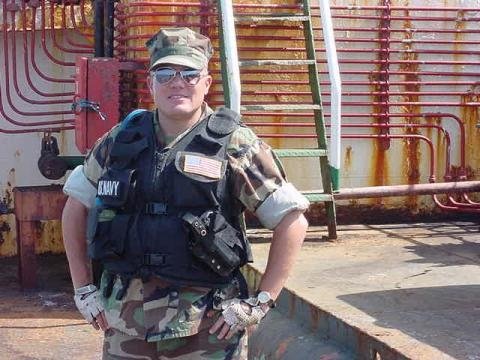
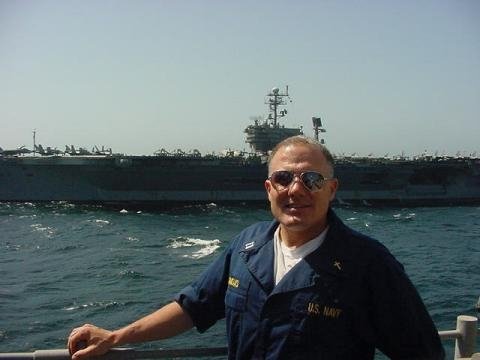
Me Aboard an Iraqi Oil Smuggler in 2002

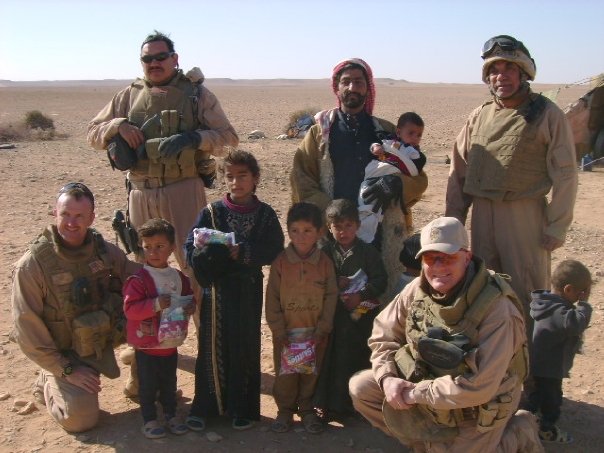
This is another installment of my account of my account of mine and RP1 Nelson Lebron’s deployment to Iraq in 2007.

By the time the first day had ended there were nearly 120 of us being processed to serve in individual augment positions in Iraq, Afghanistan, Kuwait and Djibouti. Most of us were going to Iraq at this time since the “surge” was at its peak.

NMPS was just the first stop on the way to Iraq, for us it was the initial administrative processing that we would receive on the to Iraq. Most of our compatriots, save a few Seabees or Medical types who had served with the Marines had neither been on a deployment like this, been trained for land warfare of had served in a combat zone except aboard ship. After Norfolk we would receive more specific training and equipment at Fort Jackson South Carolina and then Kuwait.

603036_10200446098660478_1730640134_n

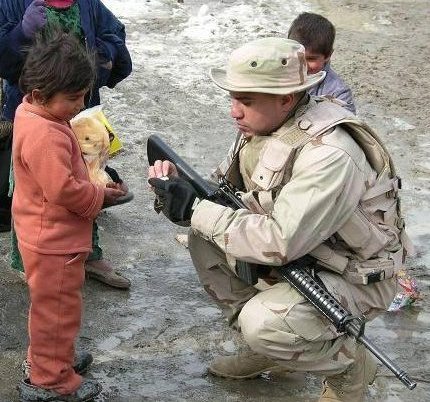
Nelson with an Afghani child in 2005

When compared to many of our fellow sailors Nelson and I had a lot of experience. I had served in the Army and both of us had served in infantry units of the Fleet Marine Force. Additionally Nelson had served with Naval Special Warfare Group Two, and the Marine 3rd Recon Battalion. He had previously served in Iraq, Afghanistan and Lebanon. I had much field experience with the Army and Marines and had been a part of a boarding team from the USS HUE CITY which conducted boarding operations supporting the UN Oil Embargo on Iraq in 2002. Likewise, Nelson is an accomplished martial artist, boxer, kick boxer and MMA fighter who has competed at many levels, while I am a military historian and theoretician  with much advanced education in both on top of my theological and pastoral care training and experience.

Our mobilization processing proceeded the next couple of days as we received our immunizations, were issued DCUs and other clothing needed for the deployment.  Nelson and I of course were already well outfitted by our unit, EOD Group Two, much more so than our counterparts reporting from other fleet units or the reserves.

In spite of this we drew additional DCU uniforms, brown t-shirts, socks and a host of miscellaneous gear. Thankfully as I have mentioned, EOD had outfitted us well including boots of our choosing, not the standard uncomfortable Army issue desert boots being provided to the rest of the sailors. I had a pair of Blackhawks and a pair of Magnum 5.11’s, both much more comfortable than those being issued. As far as other gear we already had much of it, and because it was EOD issue it was superior quality to  much of what was being issued.

Wills and powers of attorneys were drawn up by JAG officers. We updated our “page 2s” the record of who we wanted notified in the event of our demise were verified. Additionally new dog tags ordered and a myriad of forms were filled out, in typical military fashion often for the second or third time.

Of course even before we reported to NMPS we had we had completed numerous online pre-deployment courses on Navy Knowledge Online or NKO to orient us to operations, health and safety issues and for Nelson classes on the M-16A2 and M9 Pistol. Some were good but many were of dubious value especially in the online format.I could have taught many of them. Obviously some contractor got rich selling them to the Navy, but such is war and the activities of war profiteers who make their living inferior products to the military.

Both of us had the additional advantage of living in the Norfolk area so we could spend times with friends or family.

At the end of each day we were able to go home while our companions who had come from other locations were staying in transient quarters on base.

Since we had the 4th of July off we would both take advantage of it.

Peace

Padre Steve+
4 Comments

Filed under iraq,afghanistan, middle east, Military, to iraq and back, Tour in Iraq, US Navy

What Goes Around…The Problem of Trolls

troll_2

I find it amazing just how nasty some people can be in cyberspace. The behavior of some towards people that they know nothing about on sites like Facebook, Twitter and even comments on news articles or blogs is mind boggling in terms of outright rudeness.

A lot of people refer to such purveyors of hate and ignorance, and that is really what it is, as Trolls.

The sad thing is that most of the Trolls that I am accosted by claim to be Christians or those who are claim to be family values type conservatives or anti-government types. Actually it makes me tired.

It has been a while since I had any of these, but today I got hit on Twitter by someone who decided to insult first and then not ask questions later. I gave a short terse response, then blocked and ignored him. I looked at his Twitter profile and he kind of fit the conservative anti-government mold. I know that some conservatives experience similar behaviors from some people on the political left so I don’t think that it is limited to any particular group. Anti-social and rude behavior is common to humanity and has been made worse by our wonderful technology.

Unfortunately that is the common denominator of Trolls regardless of their politics, religion. ideology or alma mater. Personally I don’t know how people can be so angry and it does cause me great concern.

As a historian it kind of scares me. It reminds me of what I read about the United States in the 1850s before the Civil War and after Reconstruction, or Weimar Germany.

185615_1857288397412_3950321_n

Likewise from my experience in Iraq I learned from Iraqi officers just how they felt about the extremists, especially the religious types both Sunni and Shia who helped drive that country into a civil war. A civil war that is threatening to again envelop that unfortunate country that we helped destroy. In fact though they had billets for Imam’s in thier units most Iraq commanders would not fill them because the Imam’s and Mullahs of both sides were seen to be a big part of the problem. It is a warning that our religious leaders who want to establish their religion above all others should heed. But I digress…

The fact is that for all its wonders the world of cyberspace has removed many of the boundaries and filters that many people used to take for granted. Most people would never say the things to someone in person that they do on the internet. I believe that this has made us a much less civil society and in fact it is a cancer that will destroy us if we are not careful.

Oh well, Karma is a bitch. Though I will not be the one to take matters in my own hands, the truth of the matter is that Trolls will see that what goes around comes around.

Peace

Padre Steve+

Leave a comment

Filed under Loose thoughts and musings, philosophy