Tag Archives: okinawa

Death of the Yamato

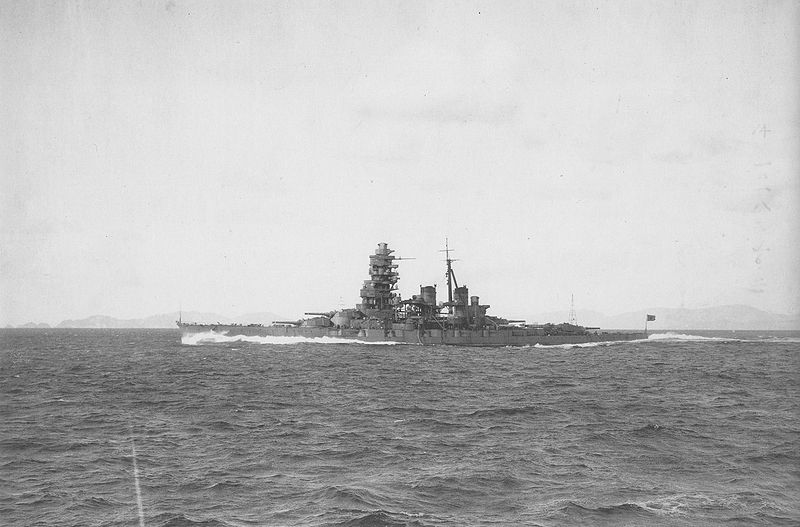
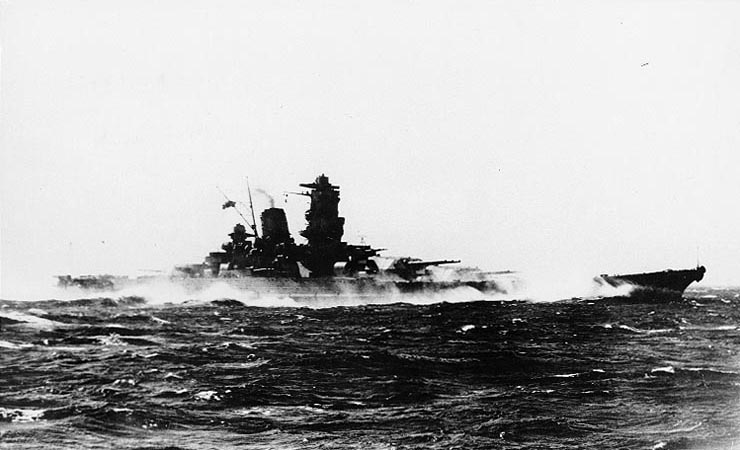
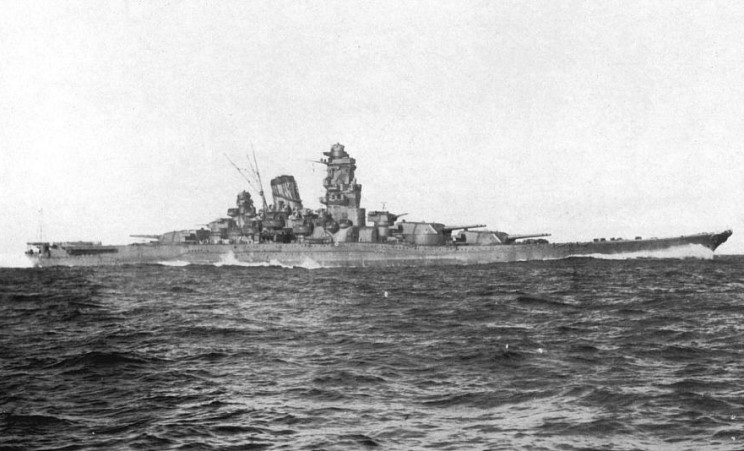
Yamato_sea_trials_2

As dawn broke on April 7th 1945 the great Super-Battleship Yamato, the pride of the Japanese Imperial Navy and nine escorts steamed toward Okinawa on a suicide mission. It was literally the end of empire and the end of a navy. What had begun on December 7th 1941 was now winding down as the Imperial Navy launched its last offensive operation against the United States Navy.

The Imperial Navy was already at the end of its tether. Following the disasters at the Battle of the Philippine Sea which decimated the carrier air arm of the Imperial Navy; the subsequent losses in the defense of Formosa which used up the majority of any remaining carrier aircraft and crews; and the Battle of Leyte Gulf which decimated the surface forces of the navy what remained was a pitiful remnant of a once dominant fleet.

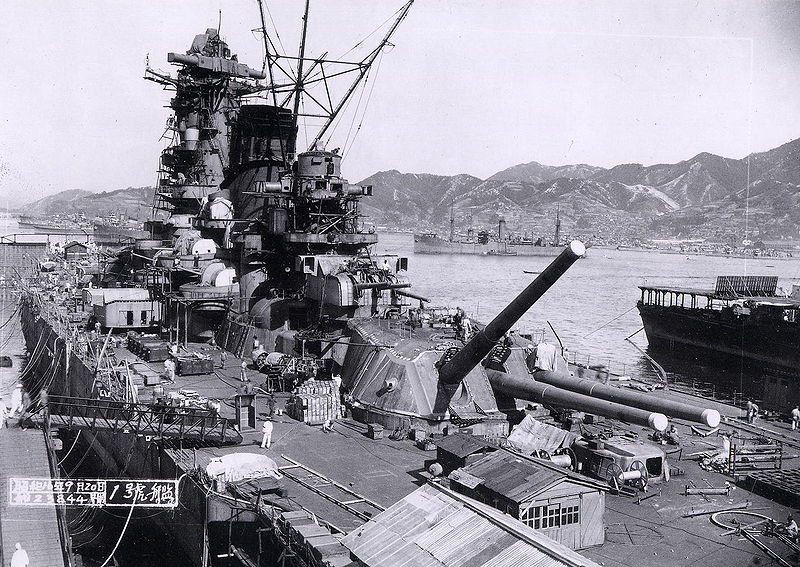
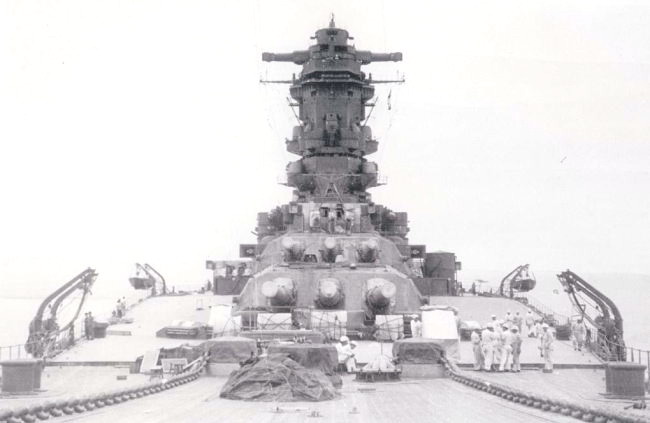
The great battleship Yamato and her sister ship Musashi were the largest warships ever built until the advent of the USS Enterprise CVN-65. Displacing over 72,000 tons 863 feet long and 127 feet in beam these ships mounted the largest artillery battery ever placed on a warship. Their nine 18.1” guns mounted in three triple turrets each weighing over 2500 tons weighed as much or more than the largest destroyers of the time. They could fire their massive shells 26 miles and had the capability of firing a special anti-aircraft shell known as the Sanshiki or beehive round.

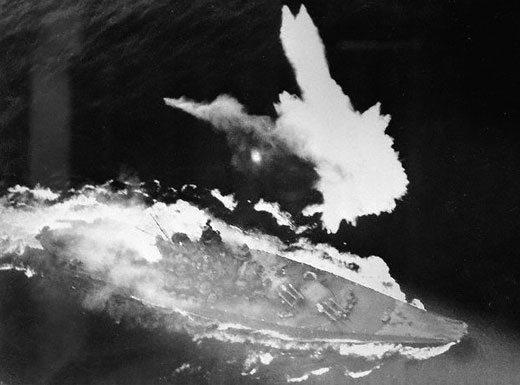
Battleship_Yamato_under_air_attack_April_1945

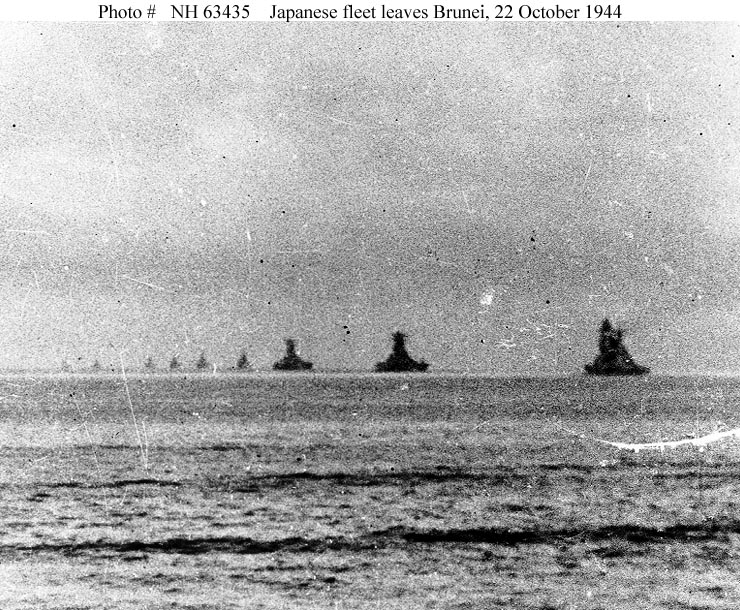
Musashi was sunk during the Battle of the Sibuyan Sea at Leyte Gulf on October 24th 1944 after being hit by 19 ariel torpedoes and 17 bombs. Yamato engaged the American Escort Carriers and destroyers of Taffy-3 at the Battle off Samar the following day but was prevented by the audacity of the inferior American destroyers and timidity of the Japanese commander Vice Admiral Takeo Kurita from achieving any notable success.

The remains of the Imperial Navy were hampered by a lack of fuel, air power and training time. When the United States attacked Iwo Jima in February 1945, barely 700 miles from the home islands of Japan not a single Japanese surface ship sortied to challenge the American Navy.

However when the American attacked Okinawa on April 1st the Navy launched Operation Ten-Go. In spite of overwhelming American superiority in both naval air and surface forces the tiny task force was to fight its way to Okinawa, beach their ships and once the ships were destroyed the crews were to join Japanese Army forces on the island.

The doomed sortie was in part due to the insistence of the Imperial Army which derided the Imperial Navy for its failures at Philippine Sea and Leyte Gulf and pressure from Emperor Hirohito who asked “But what about the Navy? What are they doing to assist in defending Okinawa? Have we no more ships?” In response the Naval High command devised what amounted to a suicide mission for Yamato and her escorts. The plan was opposed by many in the Navy and leaders of the task force who saw it as a futile mission. Only the insistence of Admiral Kusaka who told the reticent commanders that the Emperor expected the Navy to make its best effort to defend Okinawa persuaded the Captains of the doomed force to accept the mission.

g313714

At about 1600 on April 6th the ships of the task force weighed anchor and departed their anchorage at Tokuyama hoping to take advantage of approaching darkness to mask their departure. They were detected and shadowed by American submarines which provided real time information on the course and speed of the Japanese ships to the American leadership.

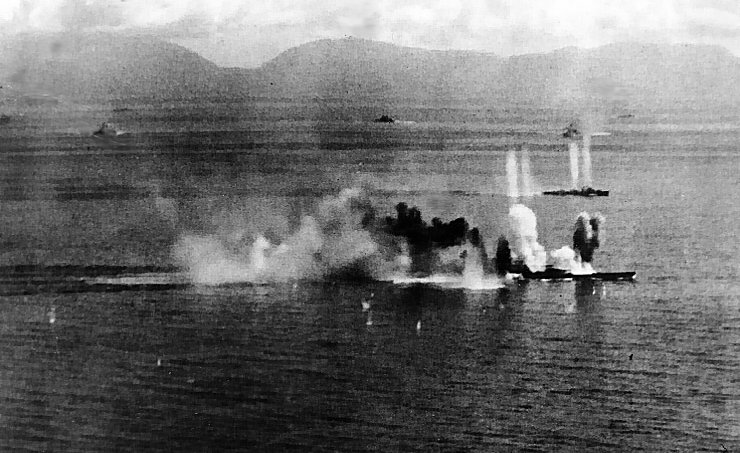
The next morning the task force was spotted by patrol planes and its position relayed to the American fleet commander, Admiral Raymond Spruance, the victor of Midway. Spruance ordered the six fast battleships battleships, accompanied by two battlecruisers, seven cruisers and 21 destroyers engaged in shore bombardment to intercept the Japanese force. However, Admiral Marc Mitscher of Task Force 58, the fast carriers launched a massive air strike of over 400 aircraft against the Japanese.

Steichin-48

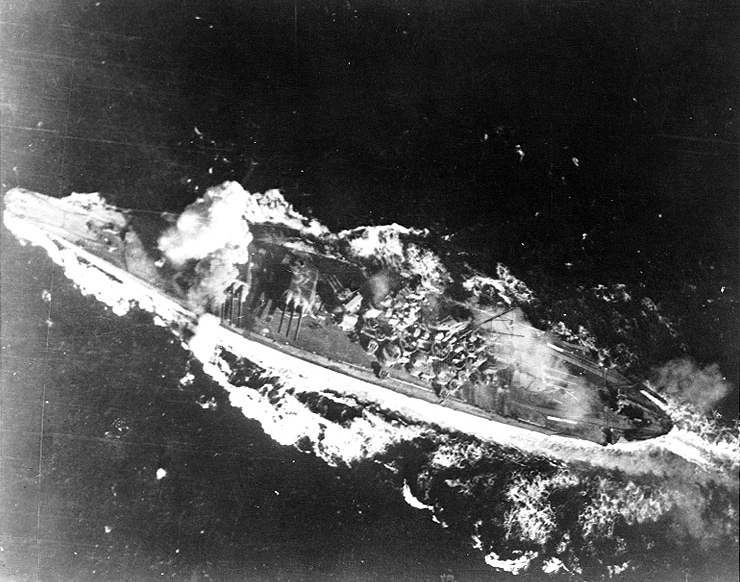
At 1232 the first wave of American aircraft began their attacks on the doomed Japanese force. As the succeeding waves of American aircraft attacked Yamato was hit by 15 bombs and at least 8 torpedoes, almost all of which struck her port side created an imminent risk of capsizing. The damage control teams counter flooded the starboard engine and boiler rooms which kept the ship from turning turtle, but which also further reduced her speed.
images

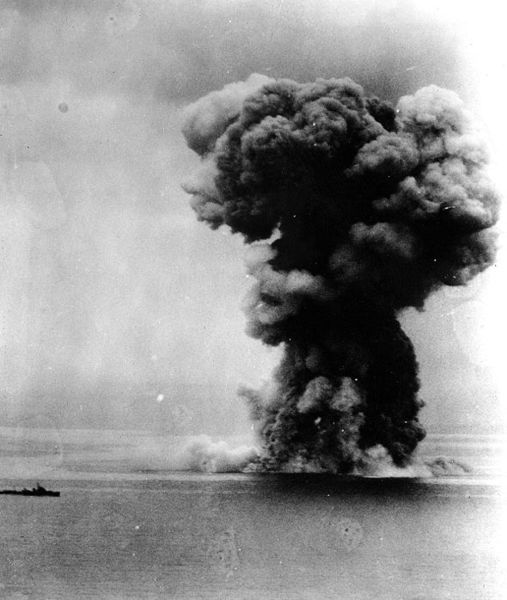
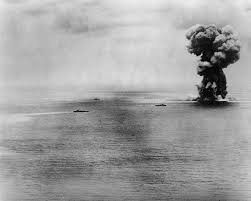
By 1405 the great ship was dead in the water and just minutes before her commander had ordered the crew to abandon ship. At 1420 she capsized and began to sink and at 1423 she blew apart in a massive explosion that was reportedly heard and seen 120 miles away and created a mushroom cloud that reached 20,000 feet.

Captain Tameichi Hara of the light cruiser Yahagi which had already sank described the demise of the great ship in his book Japanese Destroyer Captain:

“We looked and saw Yamato, still moving. What a beautiful sight. Suddenly smoke belched from her waterline. We both groaned as white smoke billowed out until it covered the great battleship, giving her the appearance of a snow-capped Mount Fuji. Next came black smoke mingled with the white, forming to a huge cloud which climbed to 2000 meters. As it drifted away we looked to the surface of the sea again and there was nothing. Yamato had vanished. Tremendous detonations at 1423 of that seventh day of April signaled the end of this “unsinkable” symbol of the Imperial Navy.”

Only 280 men of the estimated 3000 crew members were rescued by the surviving escorts. Of her escorts, the Yahagi and four destroyers were also sunk. The Americans lost a total of ten aircraft and 12 men. Never again would the surface forces of the Imperial Navy threaten U.S. forces or take any meaningful part in the war.

The sacrifice of Yamato and her escorts was a futile was of lives and though many in Japan revere their sacrifice as noble it served no purpose. The loss of Yamato, named after the ancient Yamato province in a sense was symbolic of the demise of the Japanese Empire.

I cannot help but think of gallantry of the doomed crews of these ships, sacrificed for the “honor” of leaders that did not really value their sacrifice.

It is a commentary that is timeless.

Peace

Padre Steve+
2 Comments

Filed under History, Military, Navy Ships, world war two in the pacific

Salvaging the Fleet: Salvage Efforts after the Attack on Pearl Harbor

h55061

One of the more interesting aspects of the Pearl Harbor attack were the efforts of the US Navy to salvage and return to duty the ships sunk or so heavily damaged that they were thought to be irreparable after the attack. 21 ships were sunk or damaged during the attack, roughly 20% of the fleet present.

BB-37_Oklahoma052org

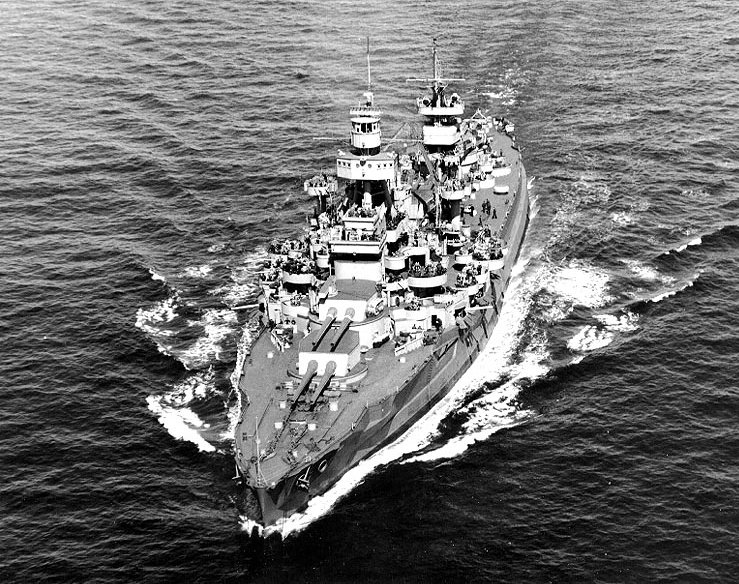
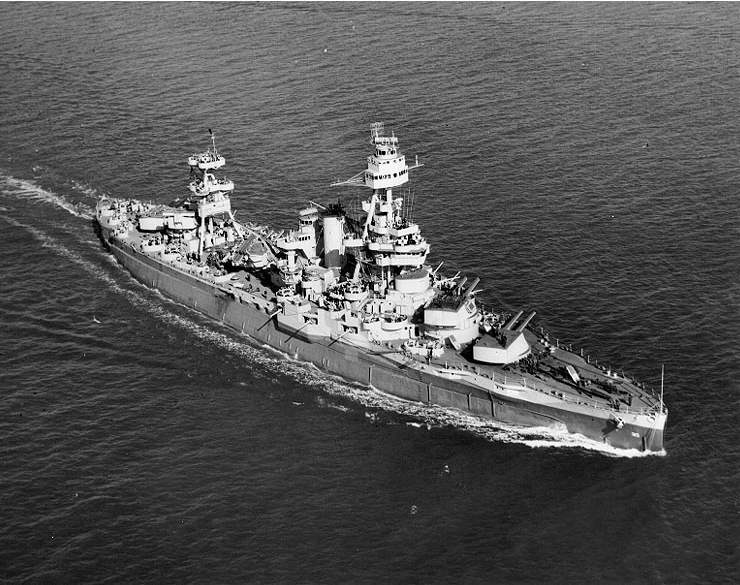
Of these were battleships, the USS Arizona sunk by a cataclysmic explosion, her broken hulk with her collapsed foremast the iconic symbol of the attack. USS Oklahoma was capsized on Battleship Row.  USS Nevada was grounded and sunk off Hospital Point after an abortive attempt to sortie during the attack. USS California and USS West Virginia lay upright on the bottom of Pearl Harbor, their superstructure, distinctive cage masts and gun turrets visible above the oily water.

nh83059

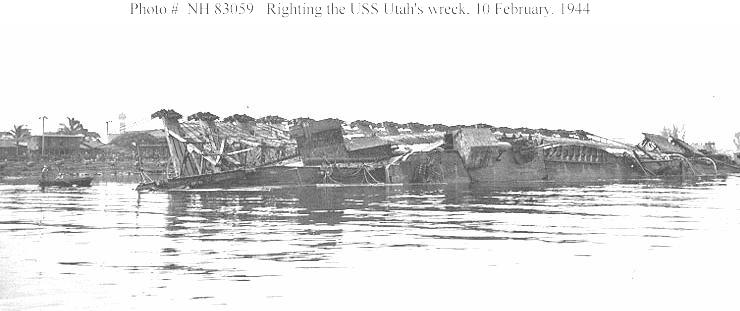
The former battleship USS Utah lay capsized on the far side of Ford Island while the light cruiser USS Raleigh was fighting for her life barely afloat near Utah.  The ancient Minelayer USS Oglala was laying on her side next to the light cruiser USS Helena at the 1010 Dock. She was not hit by a bomb or torpedo but was said to have “died of fright” when Helena was hit by a torpedo, the blast which opened the seams of her hull. The destroyers USS Cassin and USS Downes were wrecks in the main dry dock. USS Shaw was minus her bow in the floating dry dock after exploding in what was one of the more iconic images of the attack. Other ships received varying amounts of damage.

BB-37_Oklahoma105c

As the engineers, damage control and salvage experts looked at the damage they realized that every ship would be needed for the long term fight. The building program of the US Navy was just beginning to pick up steam and it would be some time before new construction could not only make up for the losses but also be ready to fight a Two Ocean War. The decision was made to salvage and return to duty any ship deemed salvageable.

salvage10

Even the seemingly less important ships needed to be rapidly salvaged. Some which initially appeared to be unsalvageable needed at the minimum to be cleared from dry docks and docks needed by operational or less damaged ships. Likewise equipment, machinery and armaments from these ships needed to be salvaged for use in other ships.

h63917

Even by modern standards the efforts of the Navy divers and salvage experts and the civilians who worked alongside them were amazing. In the end only three of the 19 ships never returned to service. The work began quickly and on December 14th Commander James Steele began to direct the salvage operations on the sunken hulks. Captain Wallin relieved Steele on January 9th 1942. Wallin formed a salvage organization of Navy officers and civilian contractors.The civilian contractors were instrumental in the operation. Many had experience in salvage operations that exceeded the military personnel.

h64493

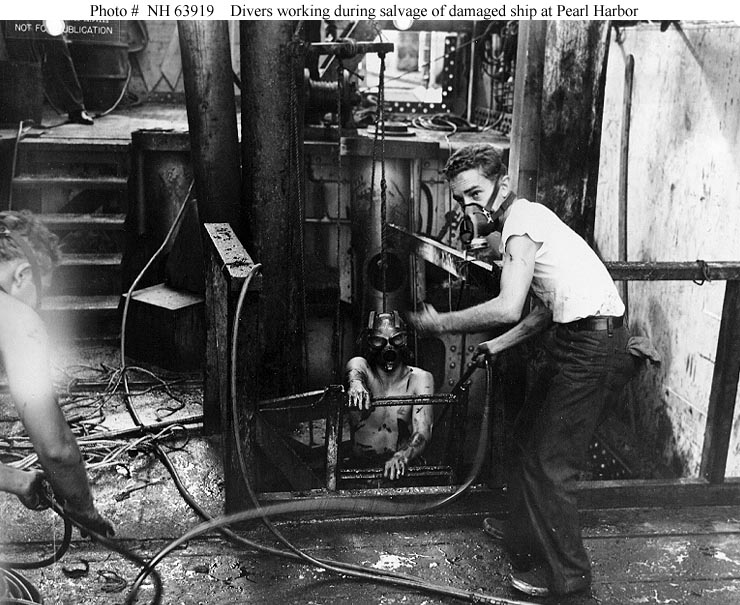
Wallin prioritized the tasks of his organization working to recover items that could be of immediate use to the fleet such as anti-aircraft guns and to salvage less damaged ships in order to return them to service. They worked at the task through 1944. The divers faced extraordinary dangers, poisonous gas, unexploded ordnance, treacherous tides and the uncertainty of the destruction of the ships below the surface that could not be ascertained apart from diving on the wrecks.

salvage09

The divers recovered bodies whenever possible, salvaged equipment, removed weapons and ammunition, made temporary repairs and help rig the ships for righting or re-floating. In each case the salvage experts, divers and engineers faced different challenges.

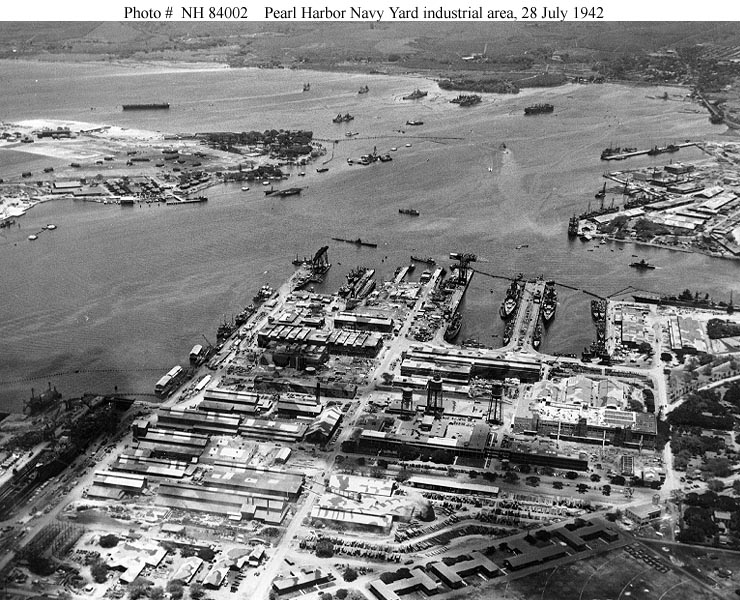
h84002

Arizona was never raised. Her superstructure was cut down, main battery and some anti-aircraft guns removed. The main batter guns were delivered to the Army Coastal Artillery for use as shore batteries but none reached an operational status before the end of the war. The dives aboard were so dangerous that eventually the attempts to recover bodies ceased as several divers lost their lives in the wreck.  Over the years the National Parks Service has continued to dive on the wreck to assess it as a war grave and memorial.

h63921

Utah too was not raised. She was righted in 1942 but efforts to do more were halted because the elderly wreck had no remaining military value. Her wreck along with that of Arizona are war graves, many of their crew members, including over 1000 of Arizona’s men forever remain entombed in their ships. When I visited Pearl Harbor in 1978 as a Navy Junior ROTC Cadet and visited both memorials I was humbled at what  saw. They are haunting reminders of the cost paid by sailors during wartime.

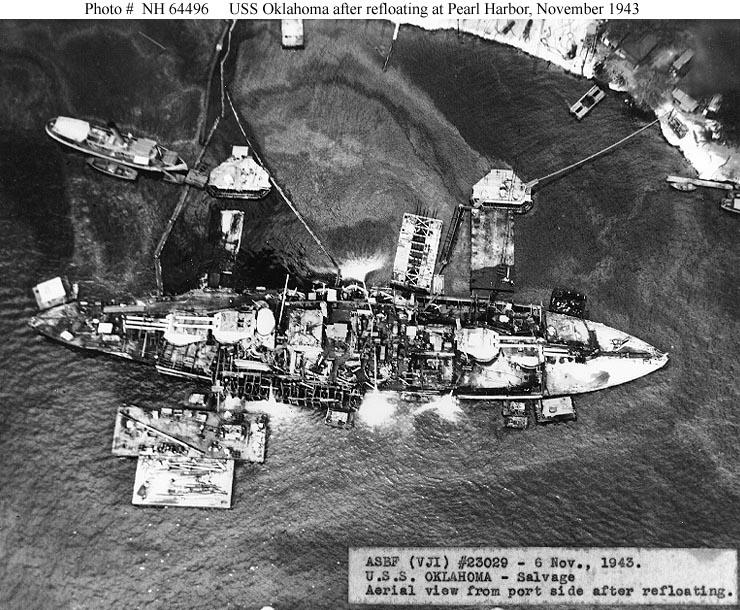
h64496

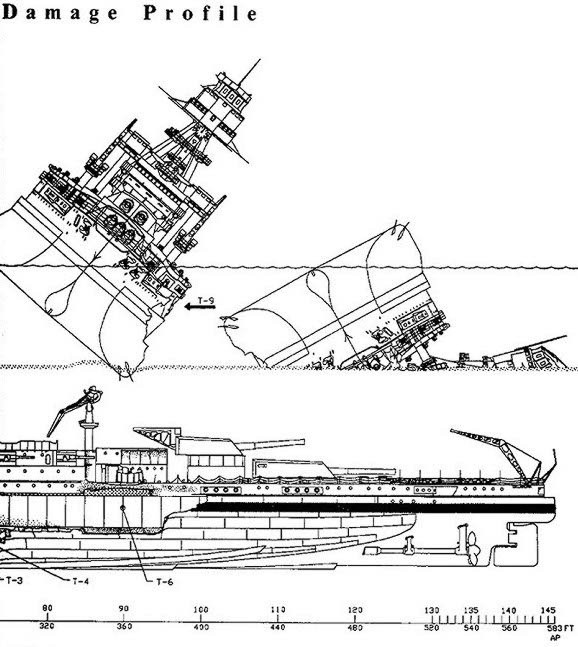
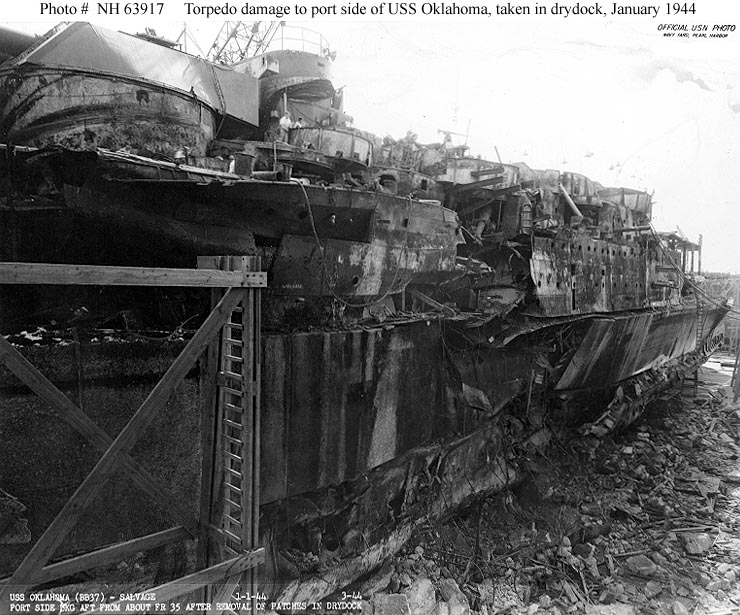
The salvage of the Oklahoma was one of the more challenging endeavors faced by Wallin’s men. Hit by at least five torpedoes during the attack the great ship capsized, her tripod masts digging deep into the mud of the harbor as she settled. Over 400 over her crew lay dead inside the ship. Since it was apparent that the ship was a total loss the salvage operations did not commence until the middle of 1942. The primary goal of the operation was to clear needed space for berthing large ships along Battleship Row. The operation involved making the ship as watertight as possible, solidifying the bottom of the harbor around her to enable her to roll and emplacing a massive system of righting frames, anchor chains and shore mounted winches and cables. The process involved cutting away wrecked superstructure, removing ammunition, weapons and the bodies of those entombed in their former home. She was completely righted in July 1943, and floated again in November. Moved to a dry dock in December she was made watertight and moored in another part of the harbor. Following the war she was being towed to a scrap yard but sank in a storm in May 1947.

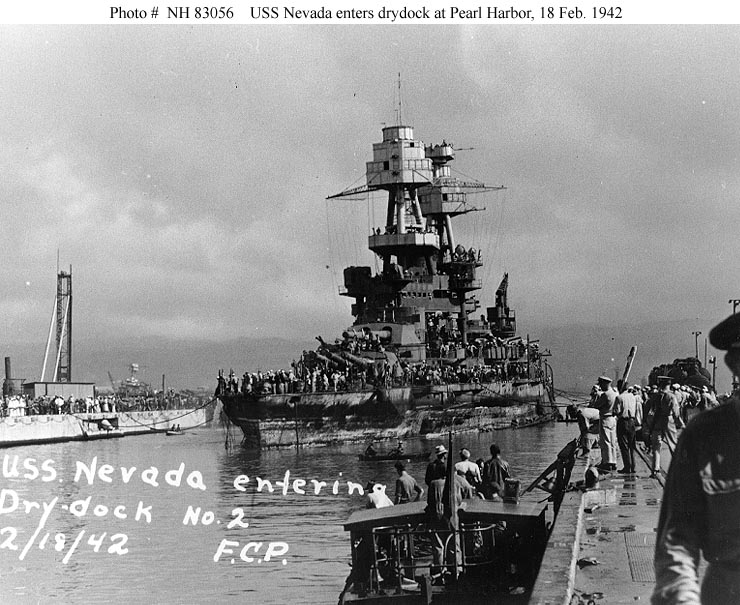
h83056

Nevada was the first major ship salvaged. She was re-floated in February 1942 and after temporary repairs sailed to the West Coast on her own power. After repairs and a significant modernization of her anti-aircraft systems was complete she returned to action in 1943 in the invasion of Attu Alaska. She participated in many amphibious operations including Normandy, Southern France, Iwo Jim and Okinawa. She survived the Atomic Bomb tests in 1946 but wrecked and radioactive she was sunk as a target off Hawaii in 1948.

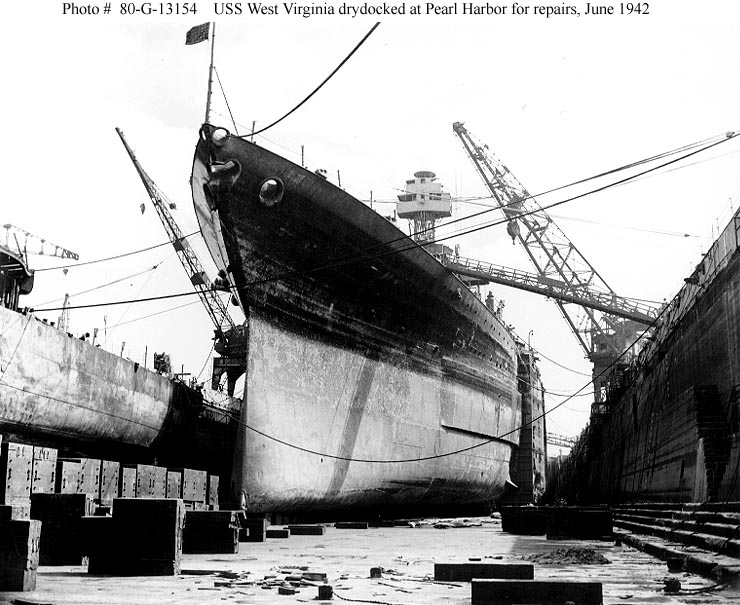
g13154

h55038

California was raised in March and after temporary repairs sailed under her own power to the West Coast. Her repairs and modernization were a major undertaking. Fully reconditioned and modernized to standards of most modern battleships she returned to service in January 1944. She served in retaking Saipan, Guam, Tinian as well as Leyte Gulf were she had a significant part in the Battle of Surigao Strait. Hit by a Kamikaze she was repaired and returned to action at Okinawa and support the occupation operations of the Japanese Home Islands. She was decommissioned in 1947 and sold for scrapping in 1959.

h64474

West Virginia suffered the most severe damage of the battleships returned to duty. She was raised in July 1942 and after repairs sailed to Puget Sound Naval Shipyard. Like California she was completely rebuilt and returned to action in October 1944 in time to take the lead role in destroying the Japanese Battleship Yamashiro. She served throughout the remainder of the war in the Pacific at Iwo Jima, Okinawa and the occupation of Japan.

h54564

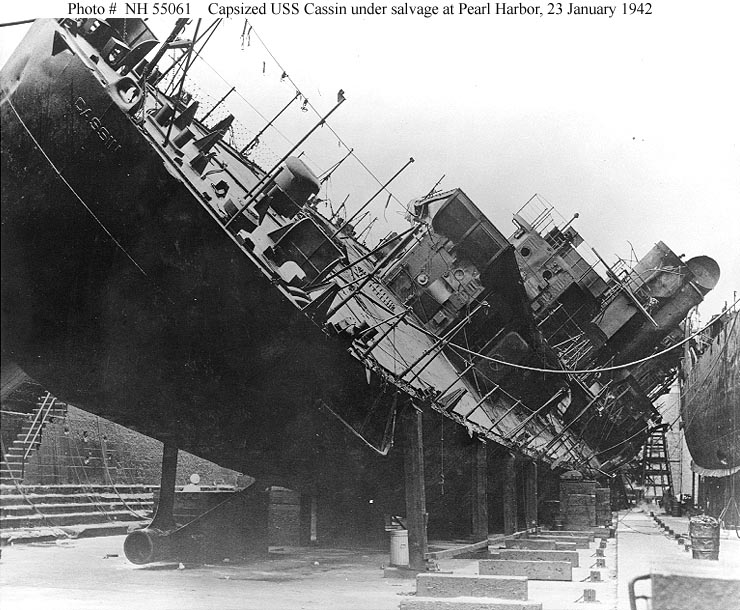
The Mahan Class destroyers Cassin and Downes were so badly damaged sitting in the Dry Dock Number One with Pennsylvania that initially they were believed beyond salvage. However after closer inspection it was determined that the hull fittings, main weapons systems and propulsion machinery on both ships were worth salvaging. These items were removed, shipped to Mare Island Naval Shipyard and installed on new hulls being constructed. The hulks of the old ships were scrapped at Pearl Harbor. Those ships were commissioned as the Cassin and Downes and served throughout the war.

h55063

Both were decommissioned in 1945 and scrapped in 1947. Their sister ship Shaw which had blown up in the floating dry dock was wrecked from her bridge forward. However the rest of the ship including her engineering spaces were intact. A temporary bow was fashioned and the ship sailed to Mare Island under her own power. Completely overhauled she was back in service by July 1942. She was decommissioned in 1945 and scrapped in 1946.

h50005

The ancient minelayer Oglala was raised in July and sent back to the West Coast where she was repaired and recommissioned as an internal combustion engine repair ship. She survived the war was decommissioned and transferred to Maritime Commission custody. She was a depot ship at the Suisun Bay Reserve Fleet until 1965 when she was sold for scrap.

h64492

The salvage feat to return these ships to duty was one of the most remarkable operations of its type ever conducted. Not only were most of the ships salvaged but most returned to duty. While none survive today many played key roles during the war. Artifacts of some of the ships are on display at various Naval Bases, Museums and State Capitals. They, their brave crews and the Navy Divers and civilian diving and salvage experts who conducted this task exhibited the finest traditions of the US Navy. The successors of the Navy divers at Mobile Diving Salvage Units One and Two still carry on that tradition today.

Peace

Padre Steve+

11 Comments

Filed under History, Military, Navy Ships, US Navy, world war two in the pacific

The Doomed Fleet: The Ships of the Kido Butai and Their Fates After Pearl Harbor

pearl-harbor

“We won a great tactical victory at Pearl Harbor and thereby lost the war.” Captain Tadaichi Hara 

Note: I have written this article as a compliment to The Ships of Pearl Harbor: A Comprehensive List with Short Histories of Each Ship

415px-Isoroku_Yamamoto

Isoruku Yamamoto 

The 22 surface warships of Japanese Task Force that struck Pearl Harbor on December 7th 1941 turned west after the last aircraft were recovered. No ships were lost or damaged in the attack. Only 29 aircraft and 55 aircrew were lost. Additionally 5 midget submarines and their 10 crew members were lost, one became the first Japanese Prisoner of War when his sub beached off Diamond Head.

Though the Japanese had heavily damaged the Pacific Fleet, sinking or damaging all 8 battleships that were in port at Pearl Harbor on December 7th the victory was incomplete. Pearl Harbor’s fleet support facilities, dry docks and fuel tank farms remained allowing the fleet to maintain it as a base. Likewise no carriers were in port and they as well as the submarine force were soon in action against the now vastly superior Imperial Navy which after Pearl Harbor wreaked havoc on US, British, Dutch and Australian forces in the Western Pacific and Indian Ocean.

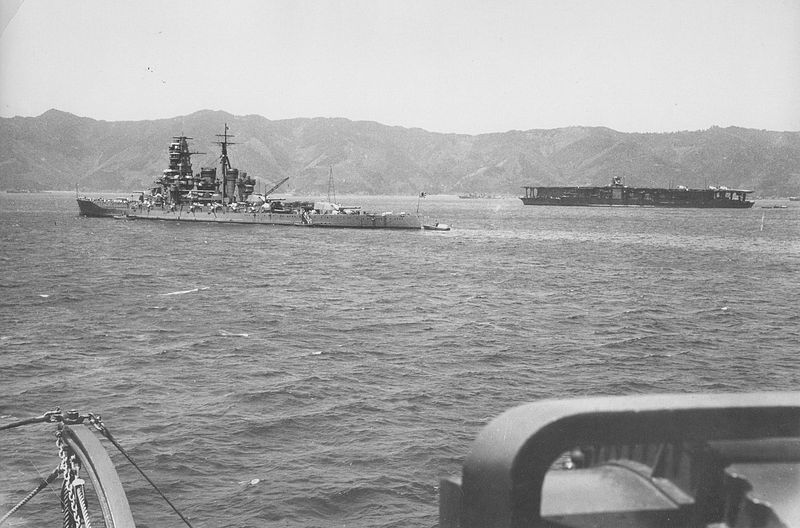
800px-Kirishima_and_Akagi_at_Tsukumowan_1939

Kirishima and Akagi 

Little did the heady Japanese expect that in less than six months that four of the six carriers that carried out the attack would be at the bottom of the Pacific and another heavily damaged. That was only the beginning. When the Japanese forces encountered the American carriers at Coral Sea and Midway the tide turned in the Pacific. Yamamoto’s remarks to Matsumoto and Konoe were more prophetic than even he might have imagined. Less than 18 months later Yamamoto himself would be dead, killed when a Betty bomber carrying him was ambushed and shot down near Buin New Guinea.

Of the 22 surface ships involved in the attack only one, the Fubuki Class Destroyer Ushio survived the war. What follows is what happened to the other ships in the order of their loss.

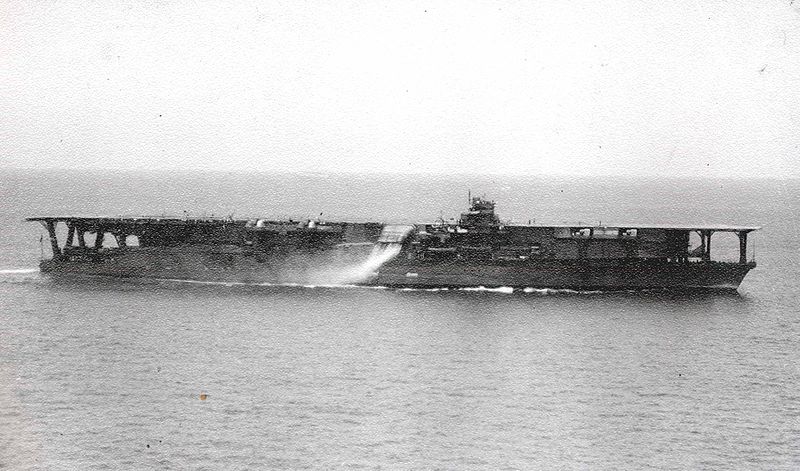
800px-Japanese_Navy_Aircraft_Carrier_Kaga

Kaga

The aircraft carrier Kaga was designed as a battleship but converted to an aircraft carrier during construction as part of the 1922 Washington Naval Treaty. She was active throughout the 1930s in the war against China and participated in every major action of the 1st Air Fleet until she was sunk at Midway on June 4th 1942. Hit by at least 4 bombs  by dive bombers from the USS Enterprise while her flight deck was crowded with fueled and armed aircraft and decks strewn with bombs and torpedoes that in the rush of battle had not been returned to her magazines. That evening with the fires still burning her survivors were taken off and she was scuttled by torpedoes fired by destroyer Hagikaze. Over 800 of her crew of over 1700 including her Captain and most senior officers were lost.

soryu02

Soryu

The Aircraft carrier Soryu at 18,800 tons was roughly the same size as the American Yorktown Class. She was commissioned in 1937 and after Pearl Harbor fought as a unit of the First Air Fleet. She was present at Midway and sunk by dive bombers from the USS Yorktown. Hit by 3 bombs she was ordered abandoned within 15 minutes and sunk   on the evening of June 4th taking down 711 of over 1100 crew members.

Japanese_aircraft_carrier_Akagi_01-2

Akagi

The aircraft carrier Akagi was the Flagship Vice Admiral Nagumo of the 1st Air Fleet at Pearl Harbor and during the operations against Allied forces in the Western Pacific. She retained that role at Midway when on the morning of June 4th 1942 she was hit by a 1000 pound bomb from one of three attacking aircraft from Scouting Six from the Enterprise. With her aircraft on deck fully armed and fueled for a strike against the American carriers she was highly vulnerable. The explosion triggered a chain reaction as fuel and ordnance turned the great ship into a blazing inferno. Admiral Nagumo transferred his flag to the light cruiser Nagara. Damage control teams fought a losing battle against the conflagration but the next morning Admiral Yamamoto ordered his former ship scuttled. 267 Japanese sailors died on Akagi.

800px-Hiryu_burning

Hiryu damaged at Midway

The carrier Hiryu, a close sister of Soryu also participated in the success of the First Air Fleet up to Midway. As flagship of of Carrier Division 2 avoided damage in the initial strike. Her aircraft heavily damaged Yorktown but she suffered the same fate as the other carriers that evening. Hit by four 1000 pound bombs from dive bombers from Enterprise she burned throughout the night and was scuttled on June 5th with the loss of 389 sailors and aviators.

800px-Asashio_II

Asashio Class

The 2000 ton Asashio class destroyer Arare was torpedoed and sunk by the submarine USS Growler on July 5th 1942 off Kiska Harbor Alaska with the loss of 104 of her crew. At the time of her loss she was escorting seaplane tender Chiyoda on a supply mission.

800px-Hiei_TsukugewanHiei

The Kongo Class battleship Hiei was sunk during the first Naval Battle of Guadalcanal. She was the first Japanese battleship sunk during the war. Heavily damaged during a close quarters surface engagement she was sunk by aircraft from Enterprise off Savo Island on November 13th 1942. 188 of her crew were lost with the ship.

03_kirishima

Kirishima

The Battleship Kirishima, a sister ship of Hiei was present with Hiei in the First Naval Battle of Guadalcanal. She survived that fight and was attached to another surface raiding group. The next night while engaging the USS South Dakota, Kirishima was targeted by the Battleship USS Washington and sunk by gunfire. 212 crewmen went down with the battleship.

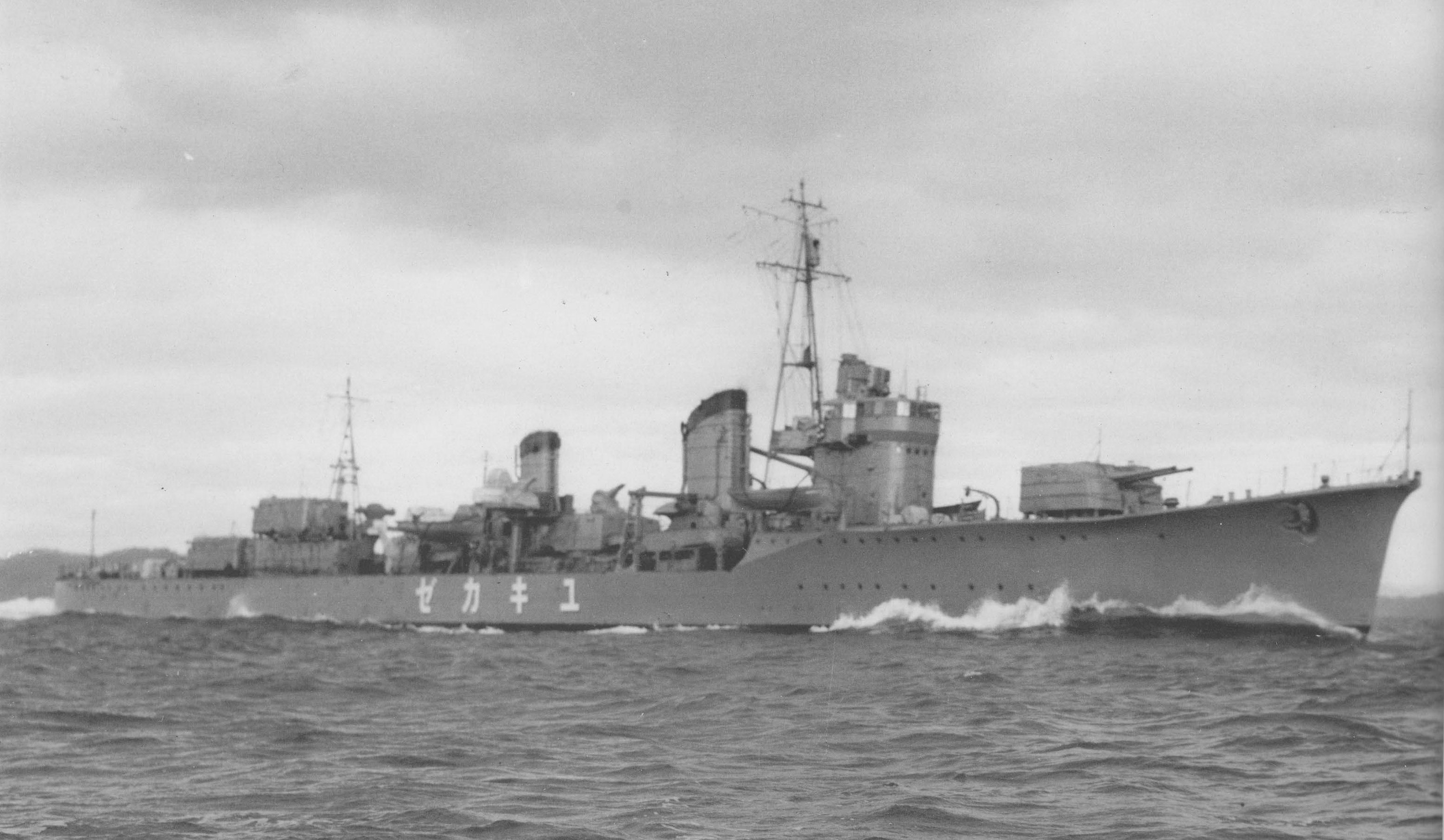
Yukikaze_2

Kagero

The destroyer Kagero, the lead ship of her class was among the most deadly destroyer types produced in the war. Armed with six 5” guns and 8 24” Long Lance Torpedo tubes she and her sisters wrought fearful damage on allied surface forces in many of the vicious battles in the South Pacific. During a supply run Kagero stuck a mine and was disabled. Unable to maneuver she was sunk by US aircraft on May 7th 1943 off Rendova with the loss of 18 sailors.

The Kagero’s sisters also suffered. Akigumo was torpedoes and sunk by the submarine USS Redfin on April 11th 1944 off Zamboanga the Philippines. Tanikaze was torpedoed and sunk by USS Harder on June 9th 1944 with the loss of 114 sailors.

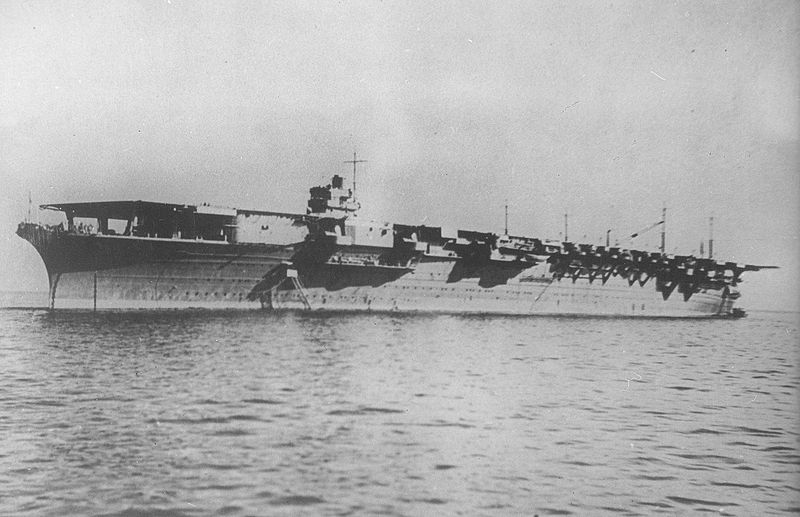
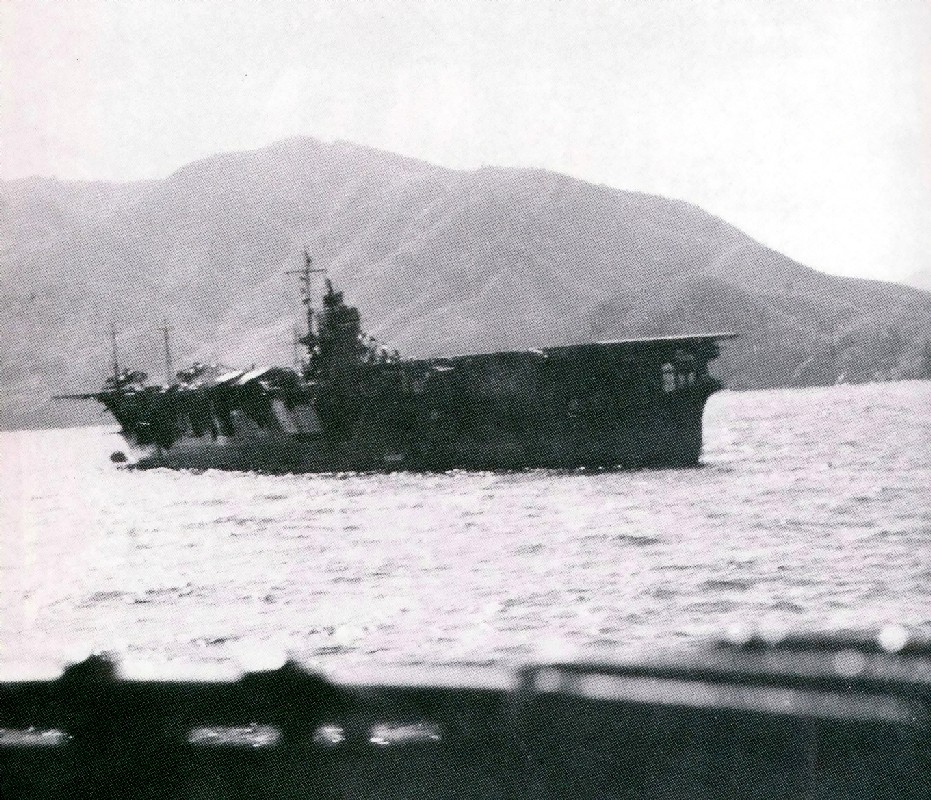
800px-Japanese.aircraft.carrier.zuikaku

Shokaku

The 27,000 ton carrier Shokaku was one of the newest and most modern carriers in the fleet at Pearl Harbor. She was heavily damaged at Coral Sea and missed the Midway operation. At the Battle of Eastern Solomons her aircraft damaged the Enterprise. At the Battle of Santa Cruz she was again damaged but her aircraft mortally wounded the USS Hornet which was sunk by destroyers. She was part of a reconstituted carrier strike force at the Battle of the Philippine Sea. While sailing to the battle she was struck by 3 torpedoes from the USS Cavalla on June 19th 1944 with the loss of 1272 of over 1800 souls on board.

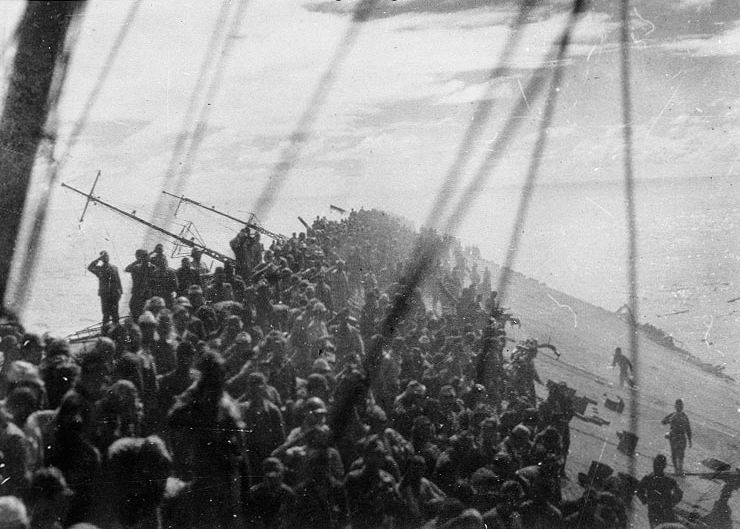
Lowering_the_flag_on_Zuikaku

Zuikaku’s crew saluting the colors before abandoning ship

The Battle of Leyte Gulf accounted for many of the surviving ships of the Kido Butai. Carrier Zuikaku, sister of Shokaku had fought at Coral Sea, as well as Eastern Solomons and Santa Cruz. She was damaged and lost most of her air group at Philippine Sea. Repaired she was assigned to Admiral Ozawa’s decoy group of four carriers with very few aircraft at Leyte Gulf. Hit by seven torpedoes and nine bombs the gallant ship sunk with the loss of 842 of her crew of over 1700.

745px-HIJMS_Chikuma-2

Chikuma

The Heavy Cruiser Chikuma was served mostly as an escort to the carrier forces and was at Midway as well as Eastern Solomons and Santa Cruz. On October 25th at Leyte Gulf she succumbed to multiple bomb and torpedo hits delivered by US carrier aircraft in the Battle off Samar. Nearly all of her survivors rescued by destroyer Nowaki were lost when that ship was sunk the next day.

Abukuma_cl1941

The elderly Nagara Class light cruiser Abukuma was torpedoed and heavily damaged by a torpedo fired by the US PT-137 at the Battle of Surigao Strait and disabled. She was bombed and sunk by US Army Air Force Aircraft off Negros on October 26th with the loss of 250 sailors.

The Kagero Class destroyer Shiranui had a long and distinguished career and survived a torpedo hit from USS Growler in July 1942 which blew off her bow. She was bombed sunk with the loss of all hands on October 27th 1944 after surviving the Battle of Surigao Strait.

The Fubuki Class destroyer Akebono was sunk at pier side at Cavite Naval Yard, Manila Bay by US Army Air Corps bombers on November 27th 1944.

498px-Hamakaze_II_film

Hamakaze 1941 and Isokaze below

800px-Japanese_destroyer_Isokaze_II

Three of the survivors were sunk during the last offensive sortie of Japanese warships. On April 7th the Kagero Class Isokaze and Hamikaze and Asashio Class Kasumi were sunk by US carrier aircraft while escorting the battleship Yamato on her suicide mission at Okinawa.

ToneWreckage1945

Wreck of Tone at Kure

The Heavy Cruiser Tone, sister of Chikuma survived many battles and was sunk at anchor in Kure harbor by US carrier aircraft on July 24th 1945. Her hulk was scrapped between 1947 and 1948.

Japanese_destroyer_Ushio_1946

Ushio after the war

Only Fubuki Class destroyer Ushio survived the war. A survivor of many battles she helped sink the submarine USS Perch in 1942. Surrendered to the US Navy she was scrapped in 1948.

Admiral Yamamoto was right when he told cabinet minister Shigeharu Matsumo to and Japanese prime minister Fumimaro Konoe “In the first six to twelve months of a war with the United States and Great Britain I will run wild and win victory upon victory. But then, if the war continues after that, I have no expectation of success.” 

Peace

Padre Steve+

3 Comments

Filed under History, Military, Navy Ships, world war two in the pacific

To Iraq and Back: A Last Night Together and a Kiss Goodbye

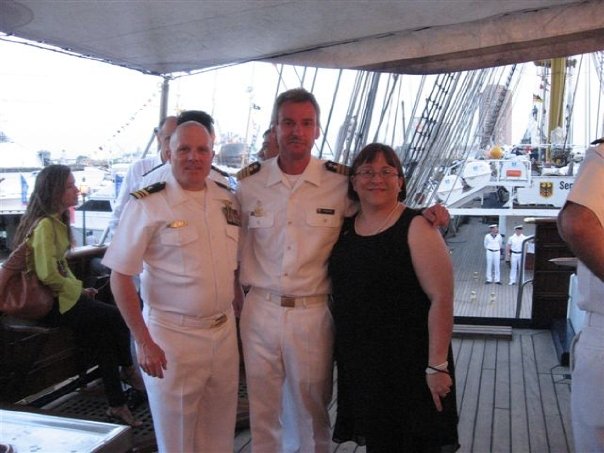
295_27076787058_8676_nJudy and I on the German Sail Training Ship Gorch Fock at the Norfolk Harbor Fest a couple of weeks before deployment

This is another of my “To Iraq and Back” articles about my deployment to Iraq in 2007 and 2008 with RP1 Nelson Lebron. 

Now the time has come to leave you
One more time Let me kiss you
And close your eyes and I’ll be on my way
Dream about the days to come, When I won’t have to leave alone
About the times, That I won’t have to say

Oh, kiss me and smile for me
Tell me that you’ll wait for me
Hold me like you’ll never let me go
Cause Im leavin’ on a jet plane
Don’t know when I’ll be back again
Oh babe, I hate to go

From “I’m Leaving on a Jet Plane” by John Denver

http://www.youtube.com/watch?v=vLBKOcUbHR0

The night before leaving on deployment and the actual day of departure are some of the hardest that any military couples or families experience. In time of war it is even more difficult. Judy and I have done this too many times in peace and war.

As I went through all of my preparations to go to Iraq in some was it was a replay of past pre-deployment situations. However, this time I was not merely deploying on a peacetime assignment or supporting a peace making operation, or even deploying on a ship and being part of a boarding team after the 9-11-2001 attacks. In that last instance  Judy did not know that I was part of the boarding team until about halfway through the deployment.

But this time going boots on ground into the most bitterly of Iraq’s contested provinces, Al Anbar. That lent at certain dark pallor to the occasion.

Our last night together was rather somber to put it mildly. Judy and I went out to dinner on Friday night. Since I knew that I would not be having a good beer for quite some time we went to the Gordon Biersch Brewery Restaurant in Virginia Beach. For us Gordon Biersch is generally a good time kind of place, it has become over the years our version of Cheers a place where everyone knows our name.

That last Friday before the deployment to Iraq it was not a festive occasion, it was almost a wake. Judy and I were both quite subdued. In between the silence Judy talked about her fears about the deployment while I tried to reassure her that everything would be fine. I am a man who is somewhat Vulcan in my use of logic. I figured that even though things were bad in Iraq that my chances of returning were quite high, even of something happened to me. I tried to be calm and reassuring and no matter what I tried it didn’t work, human emotions are quite intense at times.

I also reasoned that since I had taken out the extra life insurance that I would be okay.  For me such logic makes sense. I kind of believe that if I don’t get it I will need it and if I do get it I won’t. It’s kind of like Yogi Berra’s logic when he said “You should always go to other people’s funerals; otherwise, they won’t come to yours.”

After dinner and several half liter glasses of Gordon Biersch Märzen amber lager we went back home. Judy watched quietly while I finalized my packing. I ensured that all my field gear, uniforms and clothing were packed and rechecked my EOD issue protective gear.

I then packed my Mass kit, Bible, Prayer Book and my Marine Pattern camouflage reversible desert/woodland stole. The stole was special as Judy had made me a few years back from woodland and desert pattern shirts which were way too big for me. They are one of a kind items. I have seen similar, but what Judy made were far better than any others that I have seen. I still use that stole even when I am not deployed. It is simple but quite exquisite, adorned with an embroidered Maltese Cross in tan on the desert side and black on the woodland side it is unique and I treasure it.

The last items I packed were my books on counterinsurgency, a few DVD movies, music CDs and my hygiene items. It is funny to think that now all of this would be stored on my iPad which if I ever make such a deployment again will significantly simplify my life.

I wrestled the big bags down the stairs and put them in the back of my Honda CR-V so I wouldn’t have to fight them in the morning. That accomplished Judy and I just sat together, she was feeling pretty low, the look one of despair.

On the other hand I was a mix of conflicting emotions. I was excited by knowing that I was going to get to do what I had trained all of my life to do. However I was very cognizant of the reality that it would be tough on Judy and that it was a dangerous deployment.

My last couple of deployments had been very tough on her. When I deployed to support the Bosnia mission as a mobilized Army Reservist and newly ordained Priest three of my relatives in Huntington West Virginia where we were living died. One was my maternal grandmother “Ma Maw” who Judy had become very close to over the past couple of years. They had become buddies and Ma Maw had taken Judy in not as my wife, but as “her” granddaughter.

Ma Maw’s death hit Judy very hard and my mom and uncle in the midst of their grief over the loss of their mom they did not understood the depth of the relationship between Judy and Ma Maw. As a result, I was absent and there was much tension, misunderstanding and hurt feelings between them. In the week before Ma Maw’s death Judy tried repeatedly to get her to go to the doctor only to be ignored. The morning Ma Maw died Judy called me in Germany. She was frantic that I call Ma Maw and insist that she go to the doctor. I made the call and insisted that she go to the Emergency Room but she refused and said she would call her doctor. That night she died. I had lost my grandmother and could not go back to help and Judy had lost a woman who had become closer to her than her own grandmothers ever had been.

In 2001 during my deployment with 3rd Battalion 8th Marines to Okinawa, Japan and Korea we lost our 16 ½ year old Wire Haired Dachshund Frieda. Judy did her nest to keep Frieda alive for me, but there was nothing that could be done and finally with Judy being worn down to nothing herself, she was persuaded to have Frieda put down. The interesting thing is that after Frieda died she visited me in Okinawa and Judy about the same time in dreams. Frieda was always a weird animal and even in death has continued to find ways to remind us of her presence.

My 2002 deployment on USS HUE CITY to the Middle East and Horn of Africa came less than six months after my return from my deployment with 3/8. That deployment, coming on the heels of the 9-11-2001 attacks was also very difficult on her. In the space of 6 years we had been apart almost 4 1/2 years. Much of the time following that last deployment was spent on the road as I travelled to visit Marine Security Force and Navy EOD Mobile Units in the Middle East, Europe, the Far East and the Continental United States. In a four year period I averaged 1-3 weeks a month away from home.

With all of this in the background we spent our last night together. That night neither of us slept very well. When we got up I had a light breakfast and then accompanied by a friend from Judy’s Church choir we drove to the base.

Saturday morning traffic is generally not too bad so our trip was uneventful, but tense.  You could cut the tension between us by now with a knife.  It was about the time that we were nearing the base Judy said something about our relationship that I took really wrong. I sarcastically snapped back “Well I’ll just get blown up by an IED then.”

That sarcastic comment really hit her hard and I knew immediately that I had blown myself up with it. The words were harsh and devastating. I should have known better and should have kept my moth shut. After all I’d deployed a lot and taught pre-deployment classes talking about the emotional cycle of deployments. I was supposed to be an expert at this sort of thing, but instead my comment was very cruel.

To be sure the stress on both of us the preceding weeks had taken its toll and both of us were on edge.  For two months we had each in our own way imagined the deployment, me as a great adventure and her as a threat to our mutual existence. I wondered just what I would face when I got to Iraq and those were unanswerable questions. Judy’s great fear that something might happen to me and that she would be alone, not just for the time of the deployment but for the rest of her life.

That is one of the tensions in a military marriage that many people who have not lived it fail to understand. It is not just the wartime deployments it is the cumulative effects of multiple short and long term separations on the health of a relationship.

We got to the base pretty quick, maybe 15-20 minutes but the tension made me feel that the trip was three times as long. As we pulled up in a parking spot near the baggage drop off area we sat there for a few minutes. I got out of the car as did Judy.  I asked if she wanted to wait a while with me and with tears in her eyes said that she couldn’t handle the wait.

I unloaded my gear with the help of Nelson. He looked at Judy and said, “Don’t you worry ma’am we’ll do good and I’ll keep him safe.” Judy gave a soft “thanks” and gave him a hug.

With my gear unloaded I went back to Judy.  We looked at each other, embraced and kissed each other, each of us wondering if it was possibly the last time. We parted our embrace, and she the turned and walked back to the car, handed her friend the keys and they drove off.  It was a moment that I will not forget as long as I live. As she left I said a prayer under my breath and asked God to keep her safe while I was gone.  Then I turned to Nelson and said, “Okay partner, let’s get this done.”

Peace

Padre Steve+
2 Comments

Filed under iraq,afghanistan, marriage and relationships, Military, to iraq and back, Tour in Iraq

To Iraq and Back: Reporting for Duty

183241_1857288917425_1495714_n

In July 2007 my assistant at EOD Group Two, RP1 Nelson Lebron and I began our Iraq adventure.  This is one of a series of posts which will be published periodically to tell our story.  While they will not be daily posts, they will be sprinkled in on this site on a regular basis.  Hopefully they will be something that will help those who have not been in the remote parts of either Iraq or Afghanistan what it is for Navy personnel to go to war, not as ship’s company, not with their own unit, but as individual augments to other commands.  This is a different way to go to war…this is our story.

July 2nd 2007: I rolled into the parking lot for the Naval Mobilization Processing Site (NMPS) Norfolk.  As usual parking on Norfolk Naval Station was a bitch to find.  It had been a number of months since I had to make this commute.  I transferred from the Marine Security Force Battalion where I had served from 2003 to October 2006 and had not made the trip since. Thankfully I remembered to leave early because traffic was as gooned up as ever going down I-264, I-64 and I-564 to head into the base.

As I looked for a parking space I really missed my designated parking spot back at Security Forces. I drove around for a while and finally found a spot, then after wandering around a found the NMPS offices.

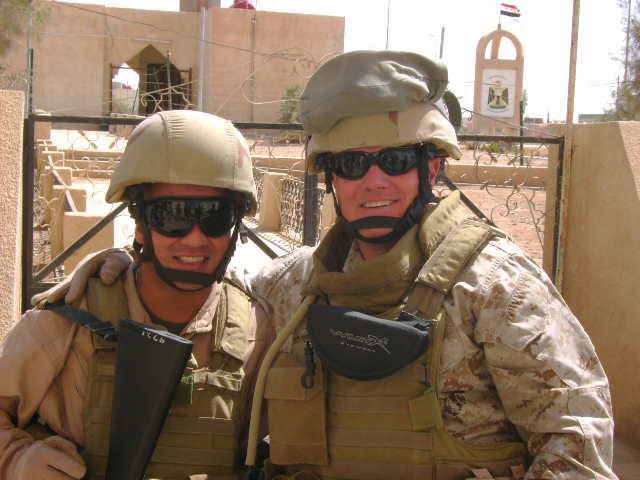
I walked upstairs to the classroom in which we were to meet was located and found it empty, save for a couple of NMPS staff members.  I reported there in my DCU’s, or Dessert Camouflage Uniform issued to me by EOD Group Two. They are an older type uniform similar to the old BDUs and unlike the Marine Pattern Digital Camouflage are not wash and wear. I still have a few sets in my deployment bag but figure that if I every get deployed to such a situation again that I will be wearing whatever Army or Marine Corps uniform the Navy sailors are wearing unless serving with the Seabees, Naval Special Warfare or an actual Navy command.

295_26911967058_7489_n-1

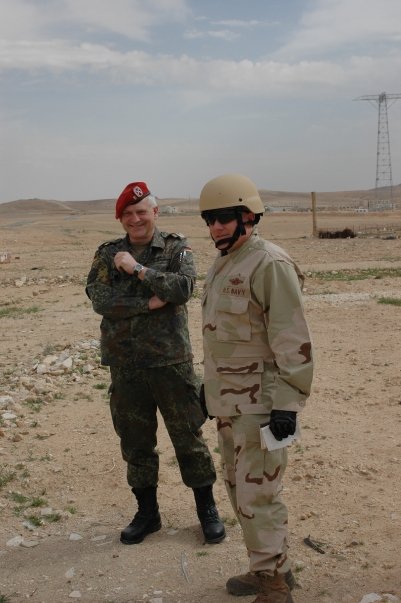
Camp Zarqa Jordan March 2007

I had worn them in March when I went to Jordan for the Jordanian Army/ UN Peace Operations Training Center course on Iraqi Culture, Religion, Politics and Language. Until the Marines came out with their digital uniforms they were common to all of the services. Now in 2013 I think there are 10 different camouflage uniforms in use among the armed forces and Congress is about to force us in the military to find a common uniform again. Not a bad idea if you ask me.

I looked around the empty classroom with every table stacked with folders filled with a huge amount of paperwork.  I found a seat which is not hard to do with so many to empty seats choose from and sat down. I took an aisle seat about three rows back and plunked my EOD issue Blackhawk backpack down, grabbed my Book of Common Prayer and did the morning office before anyone else arrived while drinking the large cup of black coffee I had gotten across the street.

Shortly thereafter other people began to arrive in twos and threes, most enlisted dressed in utilities (the successor to dungarees) while most of the Chiefs and officers were dressed in khakis. A few Seabees had woodland BDUs on and a couple of folks wore DCUs which were obviously from previous deployments to the sandbox.  RP1 Lebron, then an RP2 then showed up and we waited for the orientation and administrative stuff to start moving.  We surveyed the situation and looking upon our fellow sailors realized that this would be a different deployment.

What we noticed as we talked the varying ranks and uniforms really jumped out at both of us.  Most of our fellow sailors had never been deployed even in peacetime in such a manner.  Most of those who had deployed had done so on ship with the exception of the Seabees and a Corpsman or two.

The sailors spanned the spectrum of age, rank and rating. There were the officers, mainly Lieutenants, Lieutenant Commanders and Commanders, Surface Warfare, Aviators, Supply Corps, Civil Engineering Corps and Medical Officers.  The highest ranking officer was a Navy Captain. I was the only Chaplain.

The enlisted sailors also spanned the spectrum of the Navy. Fire Control Technicians, Operations Specialists, Gunners Mates, Boatswains, Yeomen and Storekeepers, Intelligence Specialists, Corpsmen, and even Culinary Specialists.  They had qualifications as Submariners, Enlisted Surface Warfare, Aviation Warfare among others.  Some like me and Nelson had volunteered, others were voluntold. The one that brought us all together was that we were US Navy Sailors and going to war and not with the Navy or our shipmates. We were strangers to each other and would be strangers to Soldiers, Airmen, Marines and Sailors that we would serve with overseas.

Nelson and I have deployed a lot. We had served together in Okinawa and at EOD where I did a “drug deal” with his chaplain and the RP detailer to get him to EOD.  The guy is a hero. I think he has deployed about 10 times in his 20 year career from which he will retire this fall.

The year and a half prior to our deployment Nelson had been deployed to Afghanistan where he as an E-5 was awarded the Defense Meritorious Service Medal.  On his way back from Afghanistan he was pulled off of his flight to the states and sent back to his old ship, the USS Trenton to assist in the evacuation of Americans and others from Beirut.

I think to some extent his frequent deployments actually hurt his career since the biggest part of making rank as a Navy enlisted man is to do well on the advancement exam. Unfortunately there were many times when he was forbidden to test because he was deployed, and when eventually allowed to test during a deployment was not provided the appropriate materials to study. That would happen again during the coming deployment and lead to a pretty funny incident on one of our trips in Iraq, but that story will be told later.

Nelson is a NY Rican and both a New York Golden Gloves boxing champ, a high school valedictorian, a full contact  kick boxer, martial artist, MMA fighter and has fought on Team USA and won the 2005 Arnold Schwarzenegger Classic.   He is the real deal.  Proficient in many weapons systems from his service with the 3rd Recon Battalion, 4th Marine Regiment and Naval Special Warfare he is the ideal body guard for any Chaplain going to do the job we had been given to do, to work with Marine and Army advisers supporting two Iraqi Divisions.  Our mission would evolve and expand once we got there, but we didn’t know that yet.

As people filed in a Chief Petty Officer brought us to attention and the processing site Commanding Officer came. He spoke with us a few minutes and then led us in the Sailors Creed. With that we set down and began to get our orientation to how our mobilization, training and movement would unfold as we got ready to go to Iraq.

Peace

Padre Steve+
Leave a comment

Filed under iraq,afghanistan, Military, to iraq and back, Tour in Iraq, US Navy

Going to the Brink: Kim Jong Un Pushes the Envelope

20130403-203858.jpg

The young and seemingly not very smart ruler for life of the Democratic People’s Republic of Korea, sometimes know as North or “Yankee” Korea has been pushing the envelope of sanity lately. In fact he is causing many people in the International community to long for the “good old days” when Kim Jong Il “Big Daddy” was the “Beloved Leader” of the Happiest Country on Earth.

One has to admit that when Big Daddy Kim (his Hip-Hop name) was the Supreme Leader of North Korea that he was extremely good at going to the brink but pulling back. However his Swiss educated son doesn’t seem to have his father’s knack for pushing to the brink and pulling back.

20130403-205641.jpg

Big Daddy Kim was a master at this, threaten something, create a provocation of some kind, even kill some South Koreans if need be but then pull back from the brink. He was a sane nutcase. Now his son seems to lack the finesse of Big Daddy. The young boy named Kim seems to have a need to outdo daddy in the lack of sanity department.

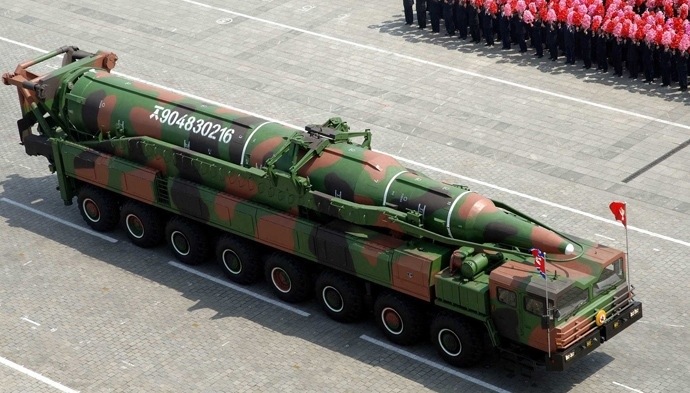
His actions are really becoming annoying and not just to the United States, South Korea and Japan. But now even the Chinese Communists and Russians seem to be tiring of Lil’ Kim. In fact they did not object to the US deployment of B-2 stealth bombers, F-22 fighters, Aegis Guided Missile Destroyers equipped with ballistic missile defense systems and submarines to the region. Nor have they challenged the deployment of the THAAD missile defense system on Guam. Normally they would be telling the US to back off. Instead they are not blocking United Nations sanctions. Likewise the Chinese who normally see any kind of US military concentration around the Korean Peninsula as threatening to them are publicly stating that the US moves are not seen as hostile or threatening.

20130403-211532.jpg

In the past few weeks it has seemed that Lil’ Kim has been making at least one major provocation a week.

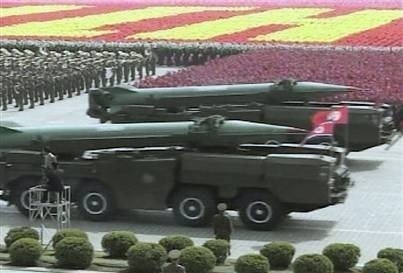
These have included with an ICBM missile test and in the past week alone Lil’ Kim or his minions have declared the Armistice between the Koreas over, announced a state of war, announced that the DPRK military has the authorization to attack the United States with a diverse nuclear attack, threatened, South Korea with devastation.

If these were isolated incidents I think that people would pretty much blow the threats off. But this is not the old Big Daddy Kim that we are dealing with. In addition to the missile tests and nuclear weapons tests the North Koreans closed a joint economic zone on the border to the South. They also announced that the plutonium reactor and Yongbyon would be re-started. The US-Korea Institute at Johns Hopkins University believes may have already begun. Personally I think the boy is playing poker with a pinochle deck and unlike Big Daddy Kim may accidentally on purpose take the region to war despite the high level negotiations Lil’ Jim had with former NBA star Dennis Rodman which evidently ended in failure.

A war now would be bad. I mean really, really bad. I mean where would all the Hyundai, Kia and Samsung owners get replacement parts, new cars or electronic devices if Kim accidentally on purpose gets all of us into a war?

Of course that is the ugly Capitalist and cynic in me saying that but even if that were not the case any war on the Korean Peninsula or attack on US installations in the Pacific would kill lots of people and do huge damage.

Now no one really thinks that North Korea can strike the Continental United States with any missile that they currently own but when it comes to them who the hell knows?

I hate to say it but I think that Lil’ Kim Number One is very capable of accidentally on purpose plunging the region into war.

20130403-220347.jpg

Now the military of the Republic of Korea or South Korea as most of it know it is formidable even without the troops of the US Army based near the DMZ and the air and naval power of US and Japan in the region. (See my articles on the North Korean and South Korean orders of battle to get an idea of how things stack up.)

I have served in Korea and been on the DMZ spending time being serenaded by North Korean propaganda broadcasts each night while sleeping in a tent. I even would do my PT by running to the DMZ and through the paths in the minefields between South Korean machine gun pits, dug in tanks and fortifications. A North Korean attack across the DMZ would cause a huge loss of life before they were stopped and their country destroyed. I have seen the fortified zones that fill South Korea between the DMZ and Seoul. They too are formidable and the South Korean military is superior to the North in many ways. But if war comes the North will certainly employ thousands of special operations soldiers as well as spies, saboteurs and South Korean collaborators to spread chaos in the South. Likewise they may be able to hit US Forces stationed in Okinawa, Japan proper and Guam.

My guess is that if Kim the Younger keeps pushing that he will overstep and accidentally on purpose take the region into war. Some analysts think it could happen soon.

Perhaps the younger Kim is taking the wrong lessons from Iraq and Afghanistan. Maybe he thinks that the US struggles against insurgents show we are vulnerable. If he thinks that he is buying the wrong war. A conventional war where firepower, mobility and technology are applied with devastating effect is the kind of war that the American military excels at fighting.

My hope is that Lil’ Kim and the leaders of the North Korean military will come to their collective senses before anything bad happens. However with each passing escalation by the North and counter move by the US and the South that hope is replaced by a sense of foreboding.

I wonder if the words of Barbara Tuchman that war is the unfolding of miscalculations” may be unfolding before our eyes.

Pray for Peace,

Padre Steve+

2 Comments

Filed under Military, national security, News and current events

Requiem of Empire: The Yamato Class Battleships

Emperor Hirohito on Musashi in 1943

The is a long delayed installment of my series on Battleships. Previous were about the Battleships constructed under conditions of the London Naval Conference.  These have dealt with the British King George V Class, French Dunkerque and Richelieu Classes, Italian Vittorio Vento Class and the American North Carolina and South Dakota ClassesI then wrote an introduction to the Post Treaty Super-Battleships. This article is the first in that series which will include articles on the German Bismarck and Tirpitz, British Vanguard and American Iowa Class.

They were the largest and most heavily armed battleships ever built. Shrouded in secrecy by the Imperial Japanese Navy and Government the ships were designed to offset projected American numerical superiority. Their names were symbolic of Japan’s history. Yamato was named after Yamato Province, the ancestral home of the Yamato People, the dominant native ethnic group in Japan. Musashi was named after Musashi Province in which lays Tokyo Prefecture.  A third ship of the class, Shinano, was named after Shinano Province in central Japan which was the home of the prestigious Taketa Shingen family during the Senguku period.

The Conning Tower and Bridge of Musashi

The secrecy surrounding their design and construction was unprecedented. Those charged with their deign and construction were thoroughly checked out by Japan’s secret police and sworn to an oath of secrecy. The oath sworn by builders of Musashi at the Mitsubishi Heavy Industries  Nagasaki Shipyard were sworn to the oath shown below:

I am aware that all work work involving the construction of the No. 2 Battleship is vital to national security. I will make utmost effort to maintain the  secrecy of the project, and swear that I will leak no information relating to the said battleship, even to relatives and close friends. In the event I violate this oath,  I will submit to the punishment determined by the company and the Navy.  

Yamato during Consrtuction

Security measures around the shipyards where Yamato and Musashi were constructed  were immense. At Nagasaki where there was a large foreign business and missionary population where the shipyard was visible from most of the city at hemp screen of 75,000 square meters was constructed to shield the ship from prying eyes and spies.

Musashi under Construction

When actual preparations for construction were taken in 1937 secret police swept the areas of foreign, especially Chinese workers. Security was increased inside and outside the shipyard, all blueprints accounted for and placed under strict guard while all shipyard workers were photographed with any having knowledge of the plans or supervising the construction sworn to the secrecy oath.

When a top secret blueprint went missing in 1938 at Nagasaki an intense investigation that included the torture of numerous suspects and the jailing of a blueprinter who accidentally swept the document into the trash was sentenced to 3 years in prison.

Armor and Protection of Yamato Class

Few pictures exist of the ships and Japanese Naval Officers destroyed many of the records of the ships design and construction just prior to the end of the Second World War. Throughout their existence they were a mystery to the American Navy. During the war the U.S. Navy estimated them to carry nine 16” guns and displace between 40,000-57,000 tons. Even the highly regarded Jane’s Fighting ships listed them at just 45,000 tons.

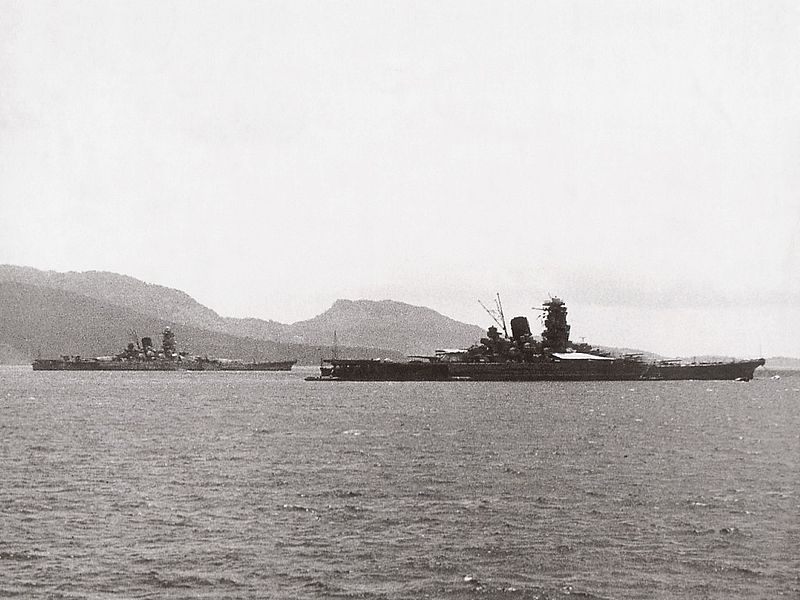
Yamato and Musashi together in 1943

Preliminary design work began in 1934 and progressed rapidly following Japan’s withdraw from the League of Nations and renunciation of the Washington and London Naval Treaties and withdraw from the 1936 naval talks in London. The early designs varied in the caliber of guns, size and armor, propulsion systems and endurance. Gun calibers ranged from 16” to 18.1” and a combined diesel-turbine system was considered but rejected in favor of traditional steam turbines.

The final design was for a class of five ships. Each would displace 64,000 tons standard displacement and 72,000 tons at full load. They were 862 feet long with a beam of 127 feet.  They were so large that the docks they were built needed to be expanded and special extra large launch platforms had to be built.  At Nagasaki the dock at to be expanded by cutting into the hill adjacent to it.

They were armed with nine 18.1 inch guns in triple turrets which could fire a projectile weighing over a ton. The secondary armament consisted of 12 6.1 inch guns mounted in triple turrets formerly mounted on the Mogami Class cruisers when those ships were equipped with 8” guns. Anti-aircraft defense included twelve 5” guns and twenty-four 25mm anti-aircraft guns. During the war two of the 6.1 inch turrets were removed and replaced with twelve more 5” guns and the 25mm battery was raised to 162 guns. Fire control systems were designed in such a way that the ships could engage multiple surface targets at the same time.

The ships were protected by a massive armored belt ranging from 16 inches to 8 inches with 26 inch armor on the face plates of the main gun turrets. The armor was advanced with excellent sloping but had a flaw where the upper and lower belts connected just below the waterline which exposed them to damage from torpedoes.

Yamato and Musashi viewed beside Battleship Nagato (foreground) just before the Battle of Leyte Gulf

They were powered by 12 Kampon boilers which powered 4 steam turbines and four three bladed propellers. These developed 150,000 shp and could drive the ship at a top speed of 27 knots.

Yamato

Construction of Yamato began on November 4th 1937 at Kure Naval Shipyard. Musashi on March 28th 1938. Traditionally such events were large public ceremonies but these were limited to just a few Naval Staff and Shipyard executives.  Yamato was Launched on August 8th 1940 and commissioned on December 16th 1941, just 9 days after Pearl Harbor. Musashi was launched on November 8th 1940 and commissioned on August 5th 1942 just two days before the U.S. Marines invaded Guadalcanal and two months after the disaster at the Battle of Midway.

Yamato served as Admiral Yamamoto’s flagship at Midway where she saw no action. The next two years she was and Musashi alternated as fleet flagship and conducted operations with Battleship Division One in operations between Mainland Japan and the major Japanese base at Truk. On December 25th 1943 while escorting a convoy she was torpedoed by the submarine USS Skate and suffered heavy damage which flooded a magazine.  On March 29th while underway Musashi was struck near the bow by a torpedo from the USS Tunny.

Musashi Under Attack at the Battle of Sibuyan Sea

Both ships participated in the Battle of the Philippine Sea and were part of Vice Admiral Takeo Kurita’s Central Force in the Battle of Leyte Gulf. Musashi was sunk by U.S. Navy Carrier aircraft from the Third Fleet on October 24th 1944 during the Battle of the Sibuyan Sea. Hit by 17 bombs and 19 torpedoes she sank with the loss of nearly 1100 of her crew of almost 2400 men. The survivors were rescued by destroyers and disembarked at Corregidor. Some were sent by troop transport to Japan but one of the ships was torpedoed and sunk leaving her survivors adrift for 19 hours before rescue. Those who reached Japan were isolated from the population while about half of the survivors remained in the Philippines where 117 of 146 of those assigned to the defense of Manila were killed in action.

Yamato or Musashi under air Attack

Yamato saw action in the surface engagement on October 25th against the Escort Carriers and Destroyers of Taffy-3 during the Battle off Samar. Her guns helped sink the Escort Carrier USS Gambier Bay but was forced away from the action by torpedo attacks from the valiant destroyers of Taffy-3.

Yamato under Attack April 7th 1945

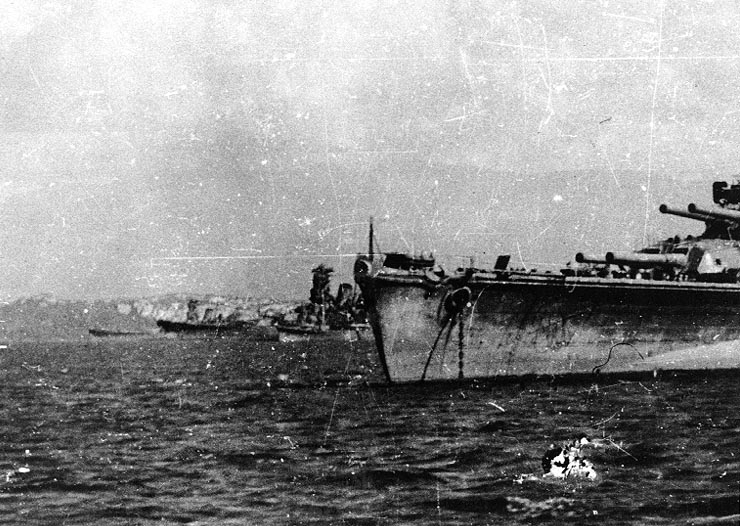
By April 1944 Japan’s Navy was decimated and U.S. Naval Forces were raiding Mainland Japan. When the United States landed on Okinawa the Japanese Navy and air force launched wave after wave of Kamikaze attacks on the ships in the waters around the island. Yamato, along with Light Cruiser Yahagi and eight destroyers were designated the Surface Special Attack Force and loaded with a full load of ammunition but only enough fuel for a one way trip got underway on April 6th. The mission was for Yamato to reach Okinawa, beach herself and serve as an “unsinkable” gun battery until she was destroyed. The force was spotted by U.S. Navy flying boats hours after their departure and on April 7th over 400 aircraft launched from Task Groups 58.1 and 58.3. The first wave began its attack at 1230 and by 1400 the ship was mortally wounded. Stuck by at least 8 torpedoes and 11 bombs she was dead in the water and began to capsize at 1405. At 1420 she turned turtle and at 1423 exploded when her forward blew up sending up a mushroom cloud nearly 20,000 feet.  Under 300 of her crew of nearly 2400 were rescued.

The End: Yamato Explodes

The ships were the largest battleships ever built, designed when naval experts planned for a war where the battleship would rule and aircraft carriers play a supporting role. Instead both never faced enemy battleships in combat and both were destroyed by the weapon that the battleship admirals had discounted. It is somewhat fitting that each was commissioned shortly after the triumphs of Japanese and American Naval air power at Pearl Harbor and Midway. However they have attained an almost mythic status in naval lore and are symbols to many Japanese of the sacrifice and futility of the war. Both of the cities where the ships were constructed were destroyed by Atomic bombs. They are tragic reminders of the cost of war in human lives, suffering, economic cost and destruction.

In a sense their poetic names and the myth ascribed to them are a tragic requiem to the Japanese Empire and the cost of war. They and their brave sailors were sacrificed when the war was already for all intents and purposes lost. They, especially the Yamato were sacrificed for no military purpose save a convoluted sense of honor.

Let us pray that it never happens again.

Peace

Padre Steve+
3 Comments

Filed under Military, Navy Ships, world war two in the pacific

The Battleships of D-Day

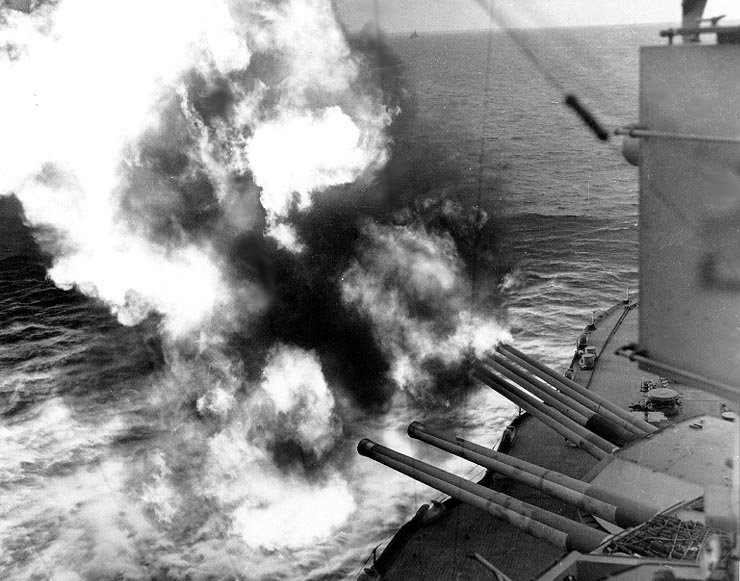
The 14″ Guns of USS Nevada in action at Normandy

On June 6th 1944 Allied Forces landed on the beaches of Normandy. Six American, British and Canadian Infantry Divisions, three Airborne Divisions and numerous supporting units came ashore in landing craft or were airdropped into Normandy. Backing them was an immense Naval Task Force which provided naval gunfire support, screened the force from German U-Boat or surface naval forces and transported the massive ground force.  It was an amazing armada.

HMS Rodney bombarding German positions off Caen

It was an armada that also is forgotten by many who read about Normandy or whose only exposure to the landings are films such as Saving Private Ryan. Today I think it is fitting to remember Battleships that served at Normandy, USS Arkansas, USS Texas, USS Nevada, HMS Warspite, HMS Ramillies and HMS Rodney.

USS Arkansas off Omaha Beach

The naval gunfire support force included Battleships, Cruisers and Destroyers as well as specialized gunfire support ships.  The largest and most powerful ships were the six American and British Battleships.  These ships were important in providing the heavy firepower needed to destroy the strongest fortifications and shore batteries and to fire at targets far beyond the shoreline that were vital for German reinforcements.

However the ships involved were not the modern behemoths which were built in the 1930s and since the beginning of the war but rather among the oldest ships still active in either the United States or the British Royal Navy. At one time they had all been the hearts for their navies but now old, slow and with less than modern armament and fire control systems they were regulated to supporting amphibious forces or escorting convoys.

USS Arkansas BB-33

The oldest of these venerable ships was the USS Arkansas BB-33 which was commissioned in 1912. A Wyoming Class Battleship she mounted twelve 12” guns in six twin turrets, two forward, two aft and two midships. She displaced just over 27,000 tons. She had spent most of the war escorting convoys in the Atlantic before being assigned to the Normandy landings. She stood off Omaha Beach dueling with German shore batteries and pounding the German troops who were making Omaha a living hell for the men of the US 1st and 29th Infantry Divisions.  She would continue her valuable service off of Normandy and would do the same in to support the landings in Southern France before steaming to the Pacific where she would do the same at Iwo Jima and Okinawa.

USS Texas BB-35

The USS Texas, BB-35 of the New York class had been in commission since 1914. She mounted ten 14” guns in 5 twin turrets, two forward, two aft and one midships and was slightly larger than the Arkansas.  More modern she was more extensively modernized between the wars than was Arkansas and was one of the first US ships to carry experimental radar sets.  She also conducted convoy operations but was used to bombard Vichy French troops and positions during Operation Torch, the Allied invasion  of North Africa.  At D-day she was in the western sector of Omaha and bombarded Point Du Hoc and cruised to within 3000 yards of the beach to clear the western exits of the beach near Vierville.  She remained in the area a number of days and would subsequently support the attack on Cherbourg, the invasion of South France and then serve in the Pacific at Iwo Jima and Okinawa.

USS Nevada BB-36

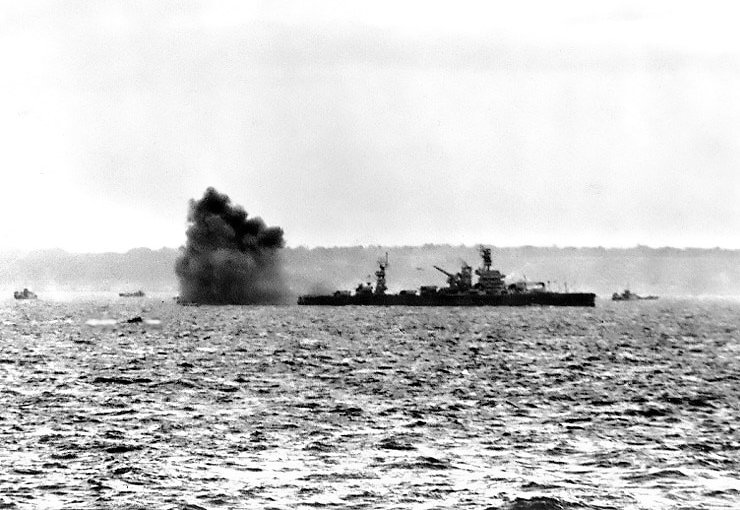
The USS Nevada BB-36 was the first of a new class of battleships which set the basic pattern of US Battleship design through the ratification of the Washington Naval Treaty. Her main battery of ten 14” guns was mounted in four turrets, mounted fore and aft two triple and 2 twin turrets.  She was he powered by oil fired boilers as opposed to coal and   was designed with a longer cruising radius to meet the demands of War Plan Orange.  Nevada received major upgrades between the wars and on December 7th 1941 was moored on Battleship Row when Peal Harbor was attacked by the Japanese. The only Battleship to get underway during the attack Nevada was set upon by Japanese aircraft as she steamed toward the harbor entrance. Heavily damaged she was grounded off Hospital Point. She was re-floated and sailed to the United States where she was heavily modernized with a modern AA battery of twin 5” 38 caliber guns, and fire direction radars. She was modernized to the point that she no longer resembled the ship sunk at Pearl Harbor. After her repair and modernization she participated in the invasion of Attu Island and did convoy escort duty before reporting for the invasion of Normandy. Nevada supported the US 4th Infantry Division at Utah Beach and subsequently served with Texas and Arkansas in South France before going to the Pacific to support the invasions of Iwo Jima and Okinawa. Had the war continued she would have been involved in the invasion of the Japanese Mainland.

HMS Warspite

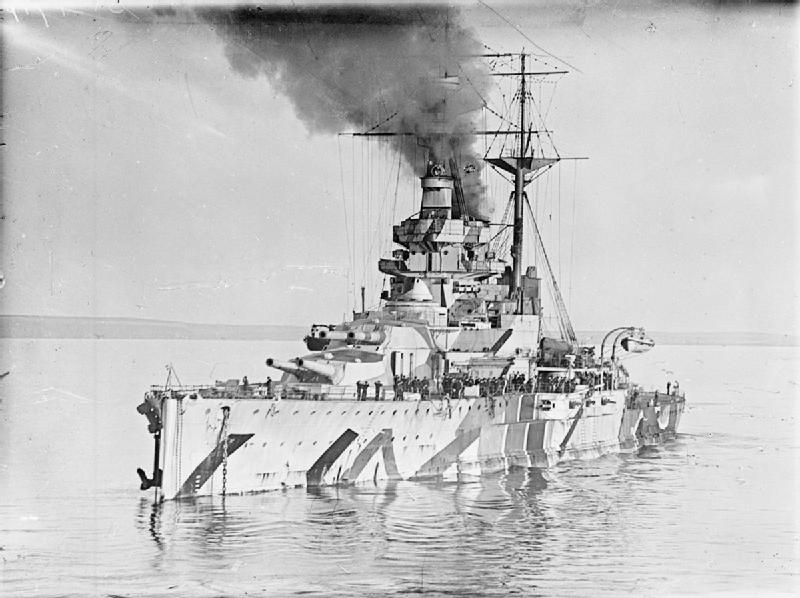
The Royal Navy Battleships of D-Day were also elderly veterans. The eldest was the heroic HMS Warsipte commissioned in 1915 and a veteran of the Battle of Jutland and numerous actions during the Second World War including the slaughter of the German Destroyers at Narvik, the Battle of Cape Matapan and the invasion of Sicily and Italy.  The Queen Elizabeth Class Battleship mounted eight 15” guns in twin turrets and was extensively modernized between the wars. At Salerno Warspite was hit by three of the earliest guided missiles, the Fritz-X type launched by Luftwaffe Aircraft. She was heavily damaged and required major repairs before returning to service at Normandy. She supported British troops at Sword Beach and later Gold Beach. She again was heavily damaged by a magnetic mine and received temporary repairs to allow her to continue bombardment duties against German positions France and Belgium before being placed in reserve in January 1945.

HMS Ramillies

The HMS Ramillies was a Revenge Class Battleship commissioned in 1917. These ships were a compromise design that was smaller, slower and cheaper than the Queen Elizabeth Class but had the same main battery of eight 15” guns.  The compromises prevented them from receiving significant upgrades between the wars and limited their employment. Ramillies operated as a convoy escort and was also involved in action in  the Mediterranean and Indian Ocean. She participated in the hunt for the German Pocket Battleship Graf Spee and shielded Convoy HX-106 from the Scharnhorst and Gneisenau and later took part in the hunt for the Bismarck. However she but was not engaged against any of the German ships but her presence prevented Admiral Lutjens from risking Scharnhorst and Gneisenau to attack the convoy. She took part in the initial battle between the Royal Navy and the Italians at the Battle of Cape Spartivento getting off several salvos before her slow speed forced her out of the action. She was heavily damaged by a torpedo from a Japanese mini-submarine in Diego Suarez harbor during the invasion of Madagascar in May 1942. Following repairs and the addition of extra deck armor and modern anti-aircraft guns she returned to action at Normandy were she supported British troops ashore and drove off an attack by German Destroyers. She stayed in action firing over 1000 shells at Normandy before supporting the invasion of Southern France. Too slow to be of use in the Pacific she was placed in Reserve in January 1945.

HMS Rodney

The youngest of the Battlewagons at Normandy on June 6th was the HMS Rodney which was commissioned in 1927. She and her sister ship HMS Nelson were to be the first of the post WWI super battleships and was designed as a larger and more powerful ship. With the limitations of the Washington Naval Treaty the ships were “cut down” and reduced in size and speed. Her armament made her one of the most powerful battleships of period but her engineering plant was not always reliable. Since she was relatively modern she did not receive any major refits before the war and apart from a repairs to her engines in Boston in 1941 (before the US entry into the war) and a brief refit in 1942 she received no further refits during the war. With the HMS King George V she helped sink the Bismarck and would escort convoys and participate in the Allied invasions of North Africa, Sicily and Salerno before being assigned to the Normandy invasion force attacking targets near Caen.  Her sister HMS Nelson was held in reserve and joined the battle on June 10th but she was not present on D-Day.

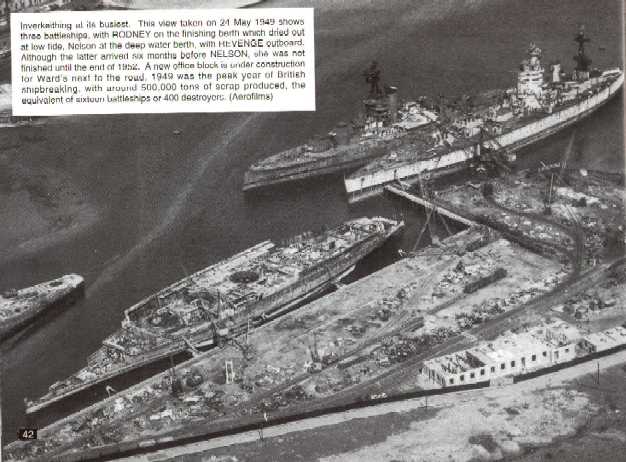
Warspite aground and Rodney being scrapped (below)

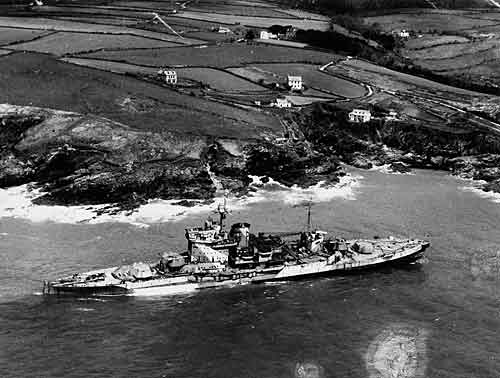
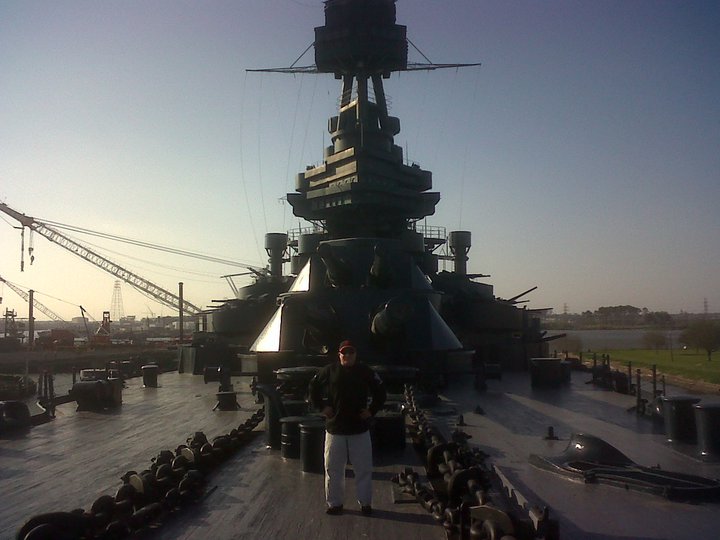
Despite their age and limitations all of these ships and their performed heroically during the war. The post war period was not as kind to the ships. Arkansas and Nevada were used in the Atomic Bomb tests at Bikini Atoll. Nevada survived and was expended as a target in 1948. All of the British ships were scrapped following the war due to their age, wear and damage incurred during the war. Warspite was being towed to the breakers when she broke a tow line and went aground. She ended up being partially scrapped in place.  Mementos of all these ships remain including a gun from Ramillies at the Imperial War Museum. The lone survivor was the USS Texas which became a museum ship and memorial at the San Jacinto battlefield in 1948. She is the last of the Dreadnought ships remaining. Other more modern US Battleships have been preserved but only Texas remains from those ships that at one time ruled the waves and pounded the Germans at Normandy.

The author aboard USS Texas in March 2011

The fire support provided by these proud ships and their consorts ensured the success of the Normandy landings. Without them it is very possible that the landings would not have succeeded and many more Allied soldiers would have died and the war extended.

To these great ships and all their heroic crews…

Peace

Padre Steve+

28 Comments

Filed under History, Military, Navy Ships, US Navy, world war two in europe

Semper Fidelis! Happy 236th Birthday Marine Corps!

In 1775 a committee of the Continental Congress met at Philadelphia’s Tun Tavern to draft a resolution calling for two battalions of Marines able to fight for independence at sea and on shore.  The resolution was approved on November 10, 1775, officially forming the Continental Marines. The first order of business was to appoint Samuel Nicholas as the Commandant of the newly formed Marines. Robert Mullan the owner and proprietor of the said Tun Tavern became Nicholson’s first captain and recruiter. They began gathering support and were ready for action by early 1776.  They served throughout the War for Independence and like the Navy they were disbanded in April 1783 and reconstituted as the Marine Corps in 1798. The served on the ships of the Navy in the Quasi-war with France, against the Barbary Pirates where a small group of 8 Marines and 500 Arabs under Lieutenant Presley O’Bannon made a march of 500 miles across the Libyan Desert to lay siege Tripoli but only reached Derna. The action is immortalized in the Marine Hymn as well as the design of the Marine Officer’s “Mameluke” Sword. They served in the War of 1812, the Seminole Wars and in the Mexican-American War where in the storming of the on Chapultepec Palace they continued to build and enduring legacy. In the months leading up to the Civil War they played a key role at home and abroad.  In October 1859 Colonel Robert E. Lee led Marines from the Marine Barracks Washington DC to capture John Brown and his followers who had captured the Federal Armory at Harper’s Ferry.

The Corps would serve through the Civil War and on into the age of American Expansion serving in the Spanish American War in the Philippines, Puerto Rico and Cuba where they seized Guantanamo Bay at the battle of Cuzco Wells.  The would serve in China and be a key component of the international force that defended foreign diplomats during the Boxer Revolt as well as the international force that would relieve the diplomatic compound in Peking (Beijing).  In World War One the Marines stopped the German advance at Chateau Thierry and cemented their reputation as an elite fighting force at Belleau Wood where legend has it that the Germans nicknamed them Teufelhunden or Devil Dogs, a name that they Marines have appropriated with great aplomb.

During the inter-war years the Marines were quite active in the Caribbean and Asia and also developed amphibious tactics and doctrine that would be put to use in the Pacific Campaign.  During the war the Marines served in all theaters but won enduring fame at Wake Island, Guadalcanal, Tarawa, Iwo Jima, Okinawa and numerous other battles in the Pacific war. Marine Aviators flew in some the most desperate actions in the war to support the Navy and amphibious operations ashore.

After the war the Truman Administration sought to eliminate the Marine Corps but the Corps was saved by the efforts of Americans across the country and Marine supporters in Congress.  That was a good thing because the Marines were instrumental in keeping the North Koreans from overrunning the South during the Korean War on the Pusan Perimeter, turned the tide at Inchon and helped decimate Communist Chinese forces at the Chosin Reservoir.  After Korea the Marines would serve around the World in the Caribbean and Lebanon and in Vietnam where at Da Nang Keh Sanh, Hue City, Con Thien fighting the North Vietnamese and their Viet Cong allies.  The Marines took the initiative to implement innovative counter insurgency measures such as the Combined Action Platoons which enjoyed tremendous success until they were shut down by the Army high command.  These lessons would serve the Marines well in the new millennium during the Anbar Awakening in Iraq which changed the course of that insurgency and war.

The Marines would again be involved around the World after Vietnam serving in the Cold War, in Lebanon and the First Gulf War which was followed by actions in Somalia, the Balkans and Haiti. After the attacks of September 11th 2001 the Marines were among the first into Afghanistan helping to drive the Taliban from power. In the Iraq Campaign the Marines had a leading role both in the invasion and in the campaign in Al Anbar Province.  After theirwithdraw from Iraq the Marines became a central player in Afghanistan where today they are engaged around Khandehar and in Helmand Province.

The Marines are elite among world military organizations and continue to “fight our nations battles on the air and land and sea.” The Corps under General John LeJeune institutionalized the celebration of the Marine Corps Birthday and their establishment at Tun Tavern. General LeJeune issued this order which is still read at every Marine Corps Birthday Ball or observance:

MARINE CORPS ORDER No. 47 (Series 1921)
HEADQUARTERS
U.S. MARINE CORPS Washington, November 1, 1921

The following will be read to the command on the 10th of November, 1921, and hereafter on the 10th of November of every year. Should the order not be received by the 10th of November, 1921, it will be read upon receipt.

On November 10, 1775, a Corps of Marines was created by a resolution of Continental Congress. Since that date many thousand men have borne the name “Marine”. In memory of them it is fitting that we who are Marines should commemorate the birthday of our corps by calling to mind the glories of its long and illustrious history.

The record of our corps is one which will bear comparison with that of the most famous military organizations in the world’s history. During 90 of the 146 years of its existence the Marine Corps has been in action against the Nation’s foes. From the Battle of Trenton to the Argonne, Marines have won foremost honors in war, and in the long eras of tranquility at home, generation after generation of Marines have grown gray in war in both hemispheres and in every corner of the seven seas, that our country and its citizens might enjoy peace and security.

In every battle and skirmish since the birth of our corps, Marines have acquitted themselves with the greatest distinction, winning new honors on each occasion until the term “Marine” has come to signify all that is highest in military efficiency and soldierly virtue.

This high name of distinction and soldierly repute we who are Marines today have received from those who preceded us in the corps. With it we have also received from them the eternal spirit which has animated our corps from generation to generation and has been the distinguishing mark of the Marines in every age. So long as that spirit continues to flourish Marines will be found equal to every emergency in the future as they have been in the past, and the men of our Nation will regard us as worthy successors to the long line of illustrious men who have served as “Soldiers of the Sea” since the founding of the Corps.

JOHN A. LEJEUNE,
Major General
Commandant

I have had the privilege of serving with the Marines in peace and war and the most memorable Marine Corps Birthday celebrations for me were in Ramadi with the Marine advisors to the Iraqi 7th Division and with the Marine Security Force Company at Guantanamo Bay Cuba. The highlight of my career was serving with the Marines in Iraq and I wear my Iraq Campaign Medal with pride.  The Marines have helped my professional development as an office through the Amphibious Warfare Course, Command and Staff College and the Fleet Marine Force Officer Qualification. I count my Marines as some of my most enduring friends.

Happy Birthday Marines. Thank you for all you do.

Peace

Padre Steve+

1 Comment

Filed under History, Military

Veterans Day 2011: Giving Thanks for the Veterans in my Life

My Dad Aviation Storekeeper Chief Carl Dundas aboard USS Hancock CVA 19 around 1971 or 1972

I always become a bit more thoughtful around Veterans Day and Memorial Day.  I’ve been in the military for over 30 years now.  I enlisted in the National Guard while in college and entered Army ROTC back on August 25th 1981.  Since then it has been to quote Jerry Garcia “a long strange trip.”  During that trip I learned a lot from the veterans who I am blessed to have encountered on the way.

I come from a Navy family. My dad served twenty years in the Navy.  Growing up in a Navy family in the 1960s and 1970s was an adventure for me and that Navy family that surrounded us then remained part of my family’s life long after.  My mom and dad remained in contact with friends that they served with or were stationed with, and now many of them are elderly and a good number have passed away.  Even so my mom, now a widow stays in regular contact with a number of her Navy wife “sisters.”

My dad retired in 1974 as a Chief Petty Officer and did time surrounded in the South Vietnamese city of An Loc when it was surrounded by the North Vietnamese for 80 days in 1972.  He didn’t talk about it much when he came back; in fact he came back different from the war.  He probably suffered from PTSD.  All the markers were there but we had no idea about it back then, after all he was in the Navy not the Army.  I had friends whose dad’s did not return fromVietnamand saw howVietnamveterans were treated by the country as a whole including some members of the Greatest Generation.  They were not welcomed home and were treated with scorn.  Instead of being depicted a Americans doing their best in a war that few supported they were demonized in the media and in the entertainment industry for many years afterwards.

My dad never made a big deal out of his service but he inspired me to pursue a career in the military by being a man of honor and integrity.

It was the early Navy family experience that shaped much of how I see the world and is why I place such great value on the contributions of veterans to our country and to me.  That was also my introduction to war; the numbers shown in the nightly news “body count” segment were flesh and blood human beings.

LCDR Jim Breedlove and Senior Chief John Ness

My second view of war came from the Veterans of Vietnam that I served with in the National Guard and the Army.  Some of these men served as teachers and mentors.  LCDR Jim Breedlove and Senior Chief John Ness at the Edison High School Naval Junior ROTC program were the first who helped me along.  Both have passed away but I will never forget them.  Commander Breedlove was someone that I would see every time that I went home as an adult. His sudden death the week before I returned from Iraqshook me.  I have a post dedicated to them at this link.  (In Memorium: Chief John Ness and LCDR Jim Breedlove USN )

Colonel Edgar Morrison was my first battalion commander.  He was the most highly decorated member of the California National Guard at that time and had served multiple tours inVietnam.  He encouraged me as a young specialist and officer cadet and showed a tremendous amount of care for his soldiers.  Staff Sergeant’s Buff Rambo and Mickey Yarro taught me the ropes as a forward observer and shared many of their Vietnam experiences. Buff had been a Marine dog handler on the DMZ and Mickey a Forward Observer.

The Senior NCOs that trained me while in the Army ROTC program at UCLA andFortLewishad a big impact. All were combat veterans that had served inVietnam.  Sergeant First Class Harry Zilkan was my training NCO at the UCLA Army ROTC program.  He was a Special Forces Medic with 7th Group inVietnam.  He still had part of a VC bayonet embedded in his foot.  He received my first salute as a newly commissioned Second Lieutenant as well as a Silver Dollar.  I understand that after the Army he became a fire fighter.  He had a massive heart attack on the scene of a fire and died a few years later from it.  Sergeant Major John Butler was our senior enlisted advisor at UCLA.  An infantryman he served with the 173rd Airborne inVietnam.  Sergeant First Class Harry Ball was my drill sergeant at the ROTC pre-commissioning camp at Fort Lewis Washington in 1982.  He was a veteran of the Special Forces and Rangers and served multiple tours inVietnam.  Though he only had me for a summer he was quite influential in my life, tearing me apart and then building me back up.  He was my version of Drill Sergeant Foley in An Officer and a Gentleman. Like Zack Mayo played by Richard Gere in the movie I can only say: Drill Sergeant “I will never forget you.”

As I progressed through my Army career I encountered others of this generation who also impacted my life. First among them was First Sergeant Jim Koenig who had been a Ranger in the Mekong Delta.  I was the First Sergeant that I would measure all others by.  Once during an ARTEP we were aggressed and all of a sudden he was back in the Delta. This man cared so much for his young soldiers in the 557th Medical Company.   He did so much for them and I’m sure that those who served with him can attest to this as well as me. Jim had a brick on his desk so that when he got pissed he could chew on it.   He was great.  He played guitar for the troops and had a song called “Jane Fonda, Jane Fonda You Communist Slut.” It was a classic.  He retired after he was selected to be a Command Sergeant Major because he valued his wife and family more than the promotion.  It hurt him to do this, but he put them first. Colonel Donald Johnson was the commander of the 68th Medical Group when I got to Germany in January 1984.  Colonel “J” as well all called him was one of the best leaders I have seen in 28 years in the military.  He knew everything about everything and his knowledge forced us all to learn and be better officers and NCOs.  On an inspection visit you could always find him dressed in coveralls and underneath a truck verifying the maintenance done on it.  He served a number ofVietnamtours.  He died of Multiple Myeloma and is buried at Arlington.  Chaplain (LTC) Rich Whaley who had served as a company commander in Vietnam on more than one occasion saved my young ass at the Army Chaplain School.  He remains a friend and is the Endorsing Agent for the Church of Jesus Christ of Latter Day Saints. As a Mormon he was one of the most “Christian” men that I have ever met.  I know some Christians who might have a hard time with that, but Rich demonstrated every trait of a Christian who loved God and his neighbor.

Me with Major General Frank Smoker USAF (ret) and Colonel Tom Allmon US Army at Colonel Allmon’s Change of Command at Ft Myer Virginia 2005 

When I was the Installation Chaplain at Fort Indiantown Gap PA I was blessed to have some great veterans in my Chapel Parish.  Major General Frank Smoker flew 25 missions as a B-17 pilot over Germany during the height of the air war in Europe. He brought his wonderful wife Kate back from England with him and long after his active service was over he remained a vital part of the military community until his death in 2010.  Sergeant Henry Boyd was one of the 101st Airborne soldiers epitomized in Band of Brothers. He had a piece of shrapnel lodged next to his heart from the Battle of the Bulge until the day he died and was honored to conduct his funeral while stationed at Indiantown Gap. Colonel Walt Swank also served in Normandy.  Major Scotty Jenkes was an Air Force pilot in Vietnam flying close air support while Colonel Ray Hawthorne served several tours both in artillery units and as an adviser in 1972 and was with General Smoker a wonderful help to me as I applied to enter the Navy while CWO4 Charlie Kosko flew helicopters in Vietnam.  All these men made a deep impact on me and several contributed to my career in very tangible ways.

Me with my boarding team on USS HUE CITY CG-66 2002

My life more recently has been impacted by others. Since coming into the Navy I have been blessed to serve with the Marines and Sailors of the 2nd Combat Engineer Battalion and Lieutenant Colonel T D Anderson, 1st Battalion 8th Marines and Lieutenant Colonel Desroches, 3rd Battalion 8th Marines and Colonel Lou Rachal and Headquarters Battalion 2nd Marine Division and Colonel, now Major General Richard Lake.   My friends of the veterans of the Battle of Hue City including General Peter Pace, Barney Barnes, Tony “Limey” Cartilage, Sergeant Major Thomas and so many others have become close over the years, especially after I did my time inIraq. They and all theVietnam vets, including the guys from the Vietnam Veterans of America like Ray and John who manned the beer stand behind the plate at HarborPark all mean a lot to me.  My friends at Marine Security Forces Colonel Mike Paulovich and Sergeant Major Kim Davis mean more than almost any people in the world.  We traveled the globe together visiting our Marines.  Both of these men are heroes to me as well as friends, Colonel Paulovich was able to administer the oath of office to me when I was promoted to Commander.

With advisers to 1st Brigade 1st Iraq Army Division, Ramadi Iraq 2007

Finally there are my friends and brothers that I have served with at sea on USS HUE CITY during Operation Enduring Freedom and the advisers on the ground in Al Anbar mean more than anything to me. Perhaps the most important is my RP, RP2 Nelson Lebron who helped keep me safe and accompanied me all over the battlefield.  Nelson who has doneIraq3 times,Afghanistan,Lebanon and the Balkans is a hero.  The men and women of Navy EOD who I served with from 2006-2008 have paid dearly in combating IEDs and other explosive devices used against us in Iraq and Afghanistan are heroes too.  There is no routine mission for EOD technicians.  Then there are the friends that I serve with in Navy Medicine, medical professionals who care for our Sailors, Marines, Soldiers and Airmen, family members and veterans at home and in the thick of the fighting in Afghanistan.

I give thanks for all them men that I mention in this post, especially my dad. For the countless others that are not mentioned by name please know that I thank God for all of you too.

I do hope that people will remember the Veterans that impacted their lives this and every day.  Some may have been the men and women that we served with, perhaps a parent, sibling or other relative, maybe a childhood friend, a teacher, coach or neighbor. As we pause for a moment this Friday let us honor those who gave their lives in the defense of liberty in all of the wars of our nation. They have earned it.

Peace

Padre Steve+
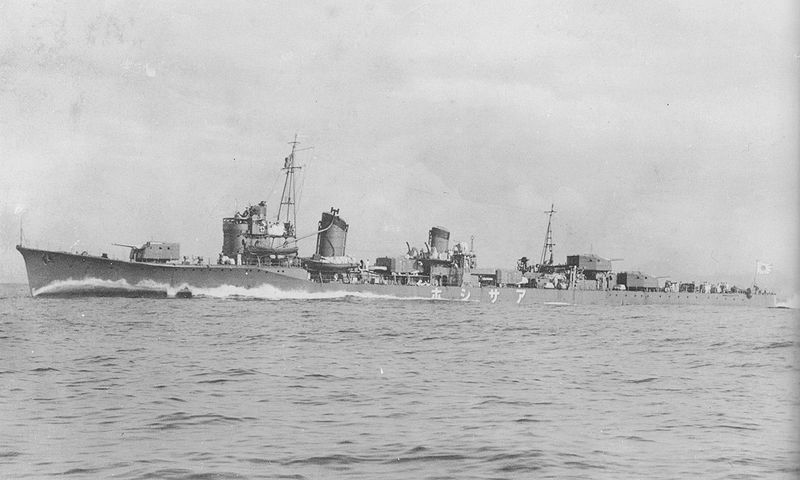
1 Comment

Filed under Loose thoughts and musings