

Friends of Padre Steve’s World,
This is Memorial Day Weekend, a weekend where we remember those who died in the service of our country. It is not a day to thank the living veterans, that day is Veteran’s Day. Nor is it the day to thank those men and women who currently wear the uniform and fight the wars of our country. This weekend I am reposting a number of articles from past years to remind my regular readers and those new to my writings about how important this remembrance is, not just to me, but to all of us. I do not say that lightly. Memorial Day is the offspring of the families of the American Civil War dead, when people who lost loved ones in the cause of liberty and the defense of the Union honored their loved ones.
No matter what your political views, ideology, or religious beliefs, please take time to remember the high human cost of freedom this weekend, especially on Monday when we observe Memorial Day.
Peace,
Padre Steve+

Abraham Lincoln said that “It is for us the living, rather, to be dedicated here to the unfinished work which they who fought here have thus far so nobly advanced…” Likewise, Joshua Chamberlain, the hero of Little Round Top at Gettysburg said, “Heroism is latent in every human soul – However humble or unknown, they (the veterans) have renounced what are accounted pleasures and cheerfully undertaken all the self-denials – privations, toils, dangers, sufferings, sicknesses, mutilations, life-”
Sometimes it is best to remember that people that lived long before us have profound things to say about subjects that we often address in rather cheap and banal ways. It is easy to do this; in fact many people, especially ideologues and pundits simply quote the great men and women of history simply to buttress what they want to say in much the same manner that preachers from all sides of the theological spectrum will comb the Bible or the Church Fathers to find support for often decidedly un-Christian ideas. Of course unscrupulous preachers of other religions do the same with their sacred texts so it tends be a universal problem.
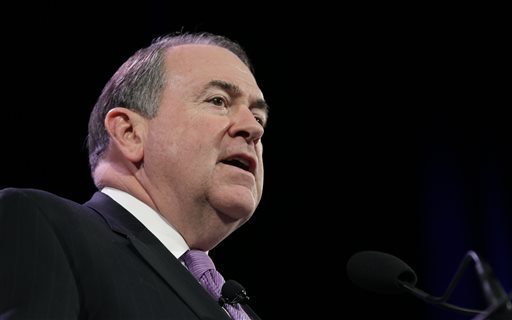
Of course we should know better than to do this but all of us do it to one degree or another. Even worse are those that will misquote people either to bolster their arguments or to tear down the person that they quote. It should not be that way on Memorial Day. The sacrifices of those that gave “the last full measure” in defense of their homeland, principles and those that they loved are too great to trivialize by using the sacrifices of the fallen to promote themselves as they prepare to launch political campaigns as was recently done by a prominent politician at an annual event which honors veterans in Washington DC.
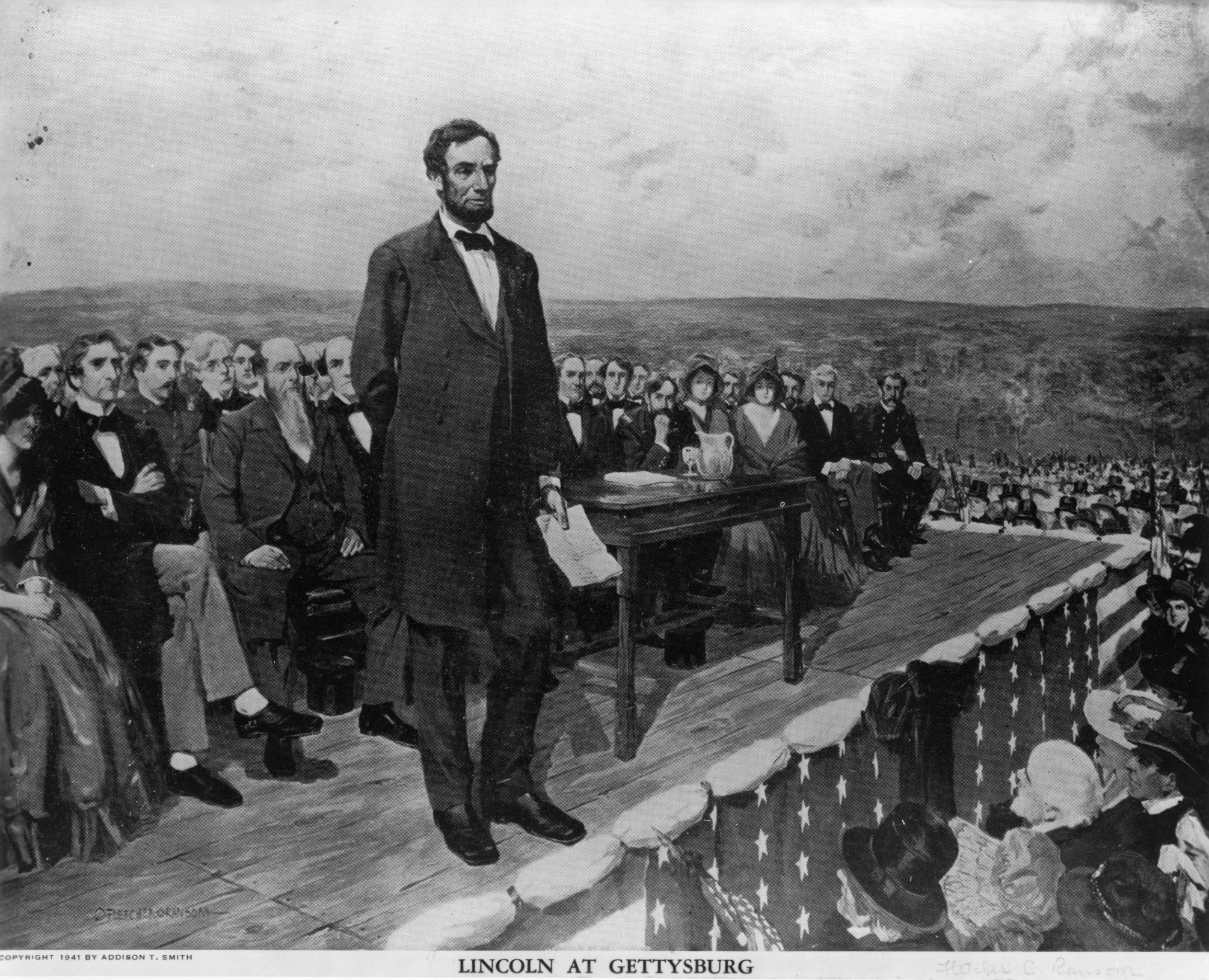
I think that Abraham Lincoln eulogized the fallen better than almost anyone in the history of our nation when he traveled to Gettysburg and gave a refreshingly short speech for a politician. Lincoln considered the speech a failure but history shows it to be one of the most remarkable ever made by any American public figure.
“Four score and seven years ago our fathers brought forth on this continent, a new nation, conceived in Liberty, and dedicated to the proposition that all men are created equal.
Now we are engaged in a great civil war, testing whether that nation, or any nation so conceived and so dedicated, can long endure. We are met on a great battlefield of that war. We have come to dedicate a portion of that field, as a final resting place for those who here gave their lives that that nation might live. It is altogether fitting and proper that we should do this.
But, in a larger sense, we cannot dedicate—we cannot consecrate—we cannot hallow—this ground. The brave men, living and dead, who struggled here, have consecrated it, far above our poor power to add or detract. The world will little note, nor long remember what we say here, but it can never forget what they did here. It is for us the living, rather, to be dedicated here to the unfinished work which they who fought here have thus far so nobly advanced. It is rather for us to be here dedicated to the great task remaining before us—that from these honored dead we take increased devotion to that cause for which they gave the last full measure of devotion—that we here highly resolve that these dead shall not have died in vain—that this nation, under God, shall have a new birth of freedom— and that government of the people, by the people, for the people, shall not perish from the earth.”
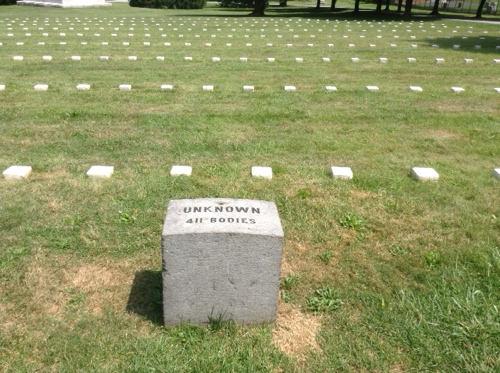
Supreme Court Justice Oliver Wendell Holmes gave a speech in 1884 twenty years after his service in the 20th Massachusetts Regiment in the Civil War. A veteran of Antietam and other major engagements he made these remarks in a speech so powerful that it was a key factor in Theodore Roosevelt’s decision to nominate him for the Court.
“Every year–in the full tide of spring, at the height of the symphony of flowers and love and life–there comes a pause, and through the silence we hear the lonely pipe of death. Year after year lovers wandering under the apple trees and through the clover and deep grass are surprised with sudden tears as they see black veiled figures stealing through the morning to a soldier’s grave. Year after year the comrades of the dead follow, with public honor, procession and commemorative flags and funeral march–honor and grief from us who stand almost alone, and have seen the best and noblest of our generation pass away…
But grief is not the end of all. I seem to hear the funeral march become a paean. I see beyond the forest the moving banners of a hidden column. Our dead brothers still live for us, and bid us think of life, not death–of life to which in their youth they lent the passion and joy of the spring. As I listen, the great chorus of life and joy begins again, and amid the awful orchestra of seen and unseen powers and destinies of good and evil our trumpets sound once more a note of daring, hope, and will.”
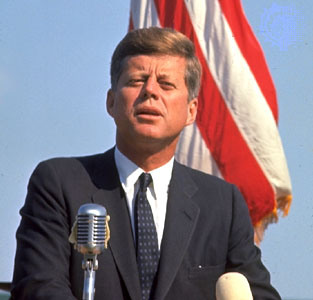
In his inaugural address President John F. Kennedy a combat veteran of the Solomons Campaign provided a message which though not directly related to Memorial Day certain echoed the themes of the sacrifices of our fallen but also call us to the highest ideals of our nation. As a Naval Officer in command of PT 109 his boat was rammed and sunk by a Japanese destroyer after which his leadership and courage was a deciding factor in the survival of most of his crew. Kennedy was a child of privilege but he volunteered for the arduous duty of service on the tiny PT Boats. The speech is considered one of the premier speeches by an American President.
“In your hands, my fellow citizens, more than mine, will rest the final success or failure of our course. Since this country was founded, each generation of Americans has been summoned to give testimony to its national loyalty. The graves of young Americans who answered the call to service surround the globe.
Now the trumpet summons us again — not as a call to bear arms, though arms we need — not as a call to battle, though embattled we are — but a call to bear the burden of a long twilight struggle, year in and year out, “rejoicing in hope; patient in tribulation,”² a struggle against the common enemies of man: tyranny, poverty, disease, and war itself….
In the long history of the world, only a few generations have been granted the role of defending freedom in its hour of maximum danger. I do not shrink from this responsibility — I welcome it. I do not believe that any of us would exchange places with any other people or any other generation. The energy, the faith, the devotion which we bring to this endeavor will light our country and all who serve it. And the glow from that fire can truly light the world.
And so, my fellow Americans, ask not what your country can do for you; ask what you can do for your country.
My fellow citizens of the world, ask not what America will do for you, but what together we can do for the freedom of man.
Finally, whether you are citizens of America or citizens of the world, ask of us here the same high standards of strength and sacrifice which we ask of you. With a good conscience our only sure reward, with history the final judge of our deeds, let us go forth to lead the land we love, asking His blessing and His help, but knowing that here on earth God’s work must truly be our own.”
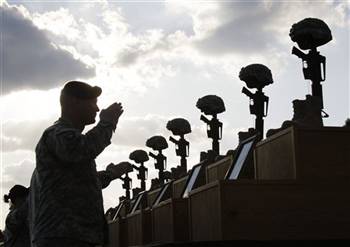
In 1984 President Ronald Reagan visited Omaha Beach in Normandy, the site of the bloodiest of the D-Day landings on June 6th 1944. Reagan was a master of rhetoric and understood the importance of his visit to this hallowed site at the apex of the Cold War. At that time it was unimaginable to most people that the Soviet Union would be no more barely 5 years hence and Reagan used the speech to link the sacrifices of those who fought and died at Normandy to those that served in his day. While his focus was on the sacrifice of America and its British, Canadian and French allies that landed on the beaches of Normandy he recognized the sacrifices of the Soviet Union which lost 20 million soldiers and civilians in the war against the Nazis. Reagan said of those who went ashore in Normandy:
“The men of Normandy had faith that what they were doing was right, faith that they fought for all humanity, faith that a just God would grant them mercy on this beachhead or on the next. It was the deep knowledge — and pray God we have not lost it — that there is a profound, moral difference between the use of force for liberation and the use of force for conquest. You were here to liberate, not to conquer, and so you and those others did not doubt your cause. And you were right not to doubt.
You all knew that some things are worth dying for. One’s country is worth dying for, and democracy is worth dying for, because it’s the most deeply honorable form of government ever devised by man. All of you loved liberty. All of you were willing to fight tyranny, and you knew the people of your countries were behind you….The men of Normandy had faith that what they were doing was right, faith that they fought for all humanity, faith that a just God would grant them mercy on this beachhead or on the next. It was the deep knowledge — and pray God we have not lost it — that there is a profound, moral difference between the use of force for liberation and the use of force for conquest. You were here to liberate, not to conquer, and so you and those others did not doubt your cause. And you were right not to doubt.
You all knew that some things are worth dying for. One’s country is worth dying for, and democracy is worth dying for, because it’s the most deeply honorable form of government ever devised by man. All of you loved liberty. All of you were willing to fight tyranny, and you knew the people of your countries were behind you.”
President Barak Obama made these remarks a few years ago to conclude his speech following the solemn duty that all Presidents have in laying a wreath at the Tomb of the Unknowns at Arlington National Cemetery. Obama who is vilified by his most extreme opponents, as was Reagan for that matter ended his speech with these comments in which he eloquently expressed what the nation must do for its military, veterans and those killed in action or missing as well as the highest example of the brotherhood that those of us who have served in harm’s way feel for our fellow Soldiers, Marines, Sailors, Airmen and Coast Guardsmen:
“Our nation owes a debt to its fallen heroes that we can never fully repay. But we can honor their sacrifice, and we must. We must honor it in our own lives by holding their memories close to our hearts, and heeding the example they set. And we must honor it as a nation by keeping our sacred trust with all who wear America’s uniform, and the families who love them; by never giving up the search for those who’ve gone missing under our country’s flag or are held as prisoners of war; by serving our patriots as well as they serve us — from the moment they enter the military, to the moment they leave it, to the moment they are laid to rest.”
That is how we can honor the sacrifice of those we’ve lost. That is our obligation to America’s guardians — guardians like Travis Manion. The son of a Marine, Travis aspired to follow in his father’s footsteps and was accepted by the USS [sic] Naval Academy. His roommate at the Academy was Brendan Looney, a star athlete and born leader from a military family, just like Travis. The two quickly became best friends — like brothers, Brendan said.
After graduation, they deployed — Travis to Iraq, and Brendan to Korea. On April 29, 2007, while fighting to rescue his fellow Marines from danger, Travis was killed by a sniper. Brendan did what he had to do — he kept going. He poured himself into his SEAL training, and dedicated it to the friend that he missed. He married the woman he loved. And, his tour in Korea behind him, he deployed to Afghanistan. On September 21st of last year, Brendan gave his own life, along with eight others, in a helicopter crash.
Heartbroken, yet filled with pride, the Manions and the Looneys knew only one way to honor their sons’ friendship — they moved Travis from his cemetery in Pennsylvania and buried them side by side here at Arlington. “Warriors for freedom,” reads the epitaph written by Travis’s father, “brothers forever.”
The friendship between 1st Lieutenant Travis Manion and Lieutenant Brendan Looney reflects the meaning of Memorial Day. Brotherhood. Sacrifice. Love of country. And it is my fervent prayer that we may honor the memory of the fallen by living out those ideals every day of our lives, in the military and beyond. May God bless the souls of the venerable warriors we’ve lost, and the country for which they died.
Sometimes our fallen are eulogized by the less notable and sometimes oft vilified people. One of these men was Robert Ingersoll, a politician, orator and lecturer as well as an agnostic in a time when that was not a popular belief. Ingersoll was the son of a Congregationalist minister who often preached for revivalist Charles Finney. Ingersoll was also a veteran of the Civil War where he raised and commanded the 11th Illinois Cavalry Regiment which fought at Shiloh. remarked:
“These heroes are dead. They died for liberty – they died for us. They are at rest. They sleep in the land they made free, under the flag they rendered stainless, under the solemn pines, the sad hemlocks, the tearful willows, and the embracing vines. They sleep beneath the shadows of the clouds, careless alike of sunshine or of storm, each in the windowless Place of Rest. Earth may run red with other wars – they are at peace. In the midst of battle, in the roar of conflict, they found the serenity of death. I have one sentiment for soldiers living and dead: cheers for the living; tears for the dead.”
As we look forward this Memorial Day let us remember those who have given the last full measure of duty for our nation, those who have served those that continue to serve and the friends and loved ones who cherish the lives and memories of each one. Let us remember as a nation, as fellow citizens and never let our own agendas, ambitions or even our baser instincts sully their memory. May we choose the higher calling of service to our country and each other as Americans, the ideals of which are woven in the lives and sacrifices of those that we honor today and as Lincoln said to finish “the great task remaining before us—that from these honored dead we take increased devotion to that cause for which they gave the last full measure of devotion—that we here highly resolve that these dead shall not have died in vain—that this nation, under God, shall have a new birth of freedom— and that government of the people, by the people, for the people, shall not perish from the earth.”











 The Inglorius Padre Steve's World
The Desegregation of Baseball and Its Importance Today
John Jorgensen, Pee Wee Reese, Ed Stanky and Jackie Robinson on opening day 1947
“Jackie, we’ve got no army. There’s virtually nobody on our side. No owners, no umpires, very few newspapermen. And I’m afraid that many fans will be hostile. We’ll be in a tough position. We can win only if we can convince the world that I’m doing this because you’re a great ballplayer, a fine gentleman.” Branch Rickey to Jackie Robinson
My friends, in just a few days pitchers and catchers report for the 2015 Baseball Spring Training and it is time to reflect again on how Branch Rickey’s signing of Jackie Robinson helped advance the Civil Rights of Blacks in the United States. What Rickey did was a watershed, and though it took time for every team in the Major Leagues to integrate, the last being the Boston Red Sox in 1959, a dozen years after Jackie Robinson broke the color barrier.
Branch Rickey shook the foundations of America when he signed Jackie Robinson to a Major League deal in 1947, a year before President Truman desegregated the military and years before Jim Crow laws were overturned in many states.
Robinson and the early pioneers of the game did a service to the nation. They helped many white Americans see that Blacks were not only their equals as human beings, and as it was note about Ernie Banks and others that soon “little white boys wanted to grow up and be Ernie Banks.”
Charles Thomas
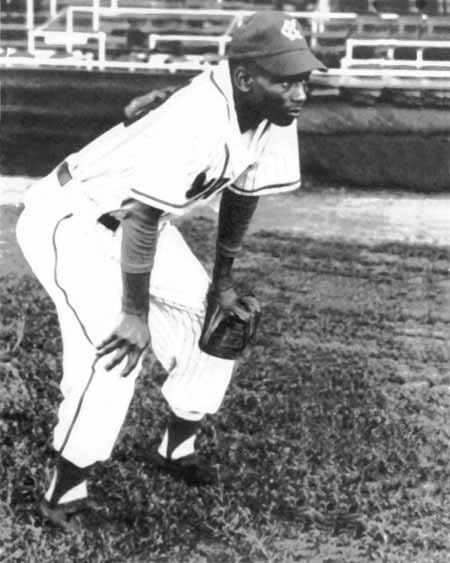
But for Rickey the crusade to integrate baseball began long before 1947. In 1903, Rickey, then a coach for the Ohio Wesleyan University baseball team had to console his star player, Charles Thomas when a hotel in South Bend Indiana refused him a room because he was black. Rickey found Thomas sobbing rubbing his hands and repeating “Black skin. Black skin. If only I could make them white.” Rickey attempted to console his friend saying “Come on, Tommy, snap out of it, buck up! We’ll lick this one day, but we can’t if you feel sorry for yourself.”
The Young Branch Rickey
Thomas, encouraged by Rickey was remembered by one alumnus who saw a game that Thomas played in noted that “the only unpleasant feature of the game was the coarse slurs cast at Mr. Thomas, the catcher.” However, the writer noted something else about Thomas that caught his eye: “But through it all, he showed himself far more the gentleman than his insolent tormentors though their skin is white.”
Baseball like most of America was not a place for the Black man. Rickey, a devout Christian later remarked “I vowed that I would always do whatever I could to see that other Americans did not have to face the bitter humiliation that was heaped upon Charles Thomas.”
In April 1947 Rickey, now the owner of the Brooklyn Dodgers had one African-American ballplayer at the Dodgers’ Spring Training site in Daytona Beach Florida. The South was still a hotbed of racial prejudice, Jim Crow was the law of the land and Blacks had no place in White Man’s baseball. That player was Jackie Robinson.
Jackie Robinson and Branch Rickey
The Dodgers had been coming to Florida for years. Rickey moved the Dodgers from Jacksonville to Daytona Beach in 1947 after Jacksonville had refused to alter its segregation laws to allow an exhibition game between the Dodgers International League affiliate the Montreal Royals, for whom Robinson starred.
That was the year that Rickey signed Robinson to a minor league contract with the Royals. When Rickey called up Robinson 6 days prior to the 1947 season, it was Robinson broke the color barrier for the Dodgers and Major League Baseball. However it would take another 12 years before all Major League teams had a black player on their roster.
It is hard to imagine now that even after Jackie Robinson had broken the color barrier that other teams did not immediately sign black players. However Rickey and Robinson broke the color barrier a year before Harry Truman had integrated the Armed Forces and seven years before the Supreme Court ruled the segregation of public schools illegal. But how could that be a surprise? The country was still rampant with unbridled racism. Outside of a few Blacks in the military and baseball most African Americans had few rights. In the North racism regulated most blacks to ghettos, while in the South, Jim Crow laws and public lynchings of progressive or outspoken Blacks.
But Jackie Robison and Branch Rickey helped bring about change, and soon other teams were following suit.
Larry Doby (above) and Satchel Paige signed by the Indians
The Cleveland Indians under their legendary owner Bill Veeck were not far behind the Dodgers in integrating their team. They signed Larry Doby on July 5th 1947. Doby would go on to the Hall of Fame and was a key player on the 1948 Indian team which won the 1948 World Series, the last that the storied franchise has won to this date.
Hank Thompson and Roy Campanella
The St. Louis Browns signed Third Baseman Hank Thompson 12 days after the Indians signed Doby. But Thompson, Robinson and Doby would be the only Blacks to play in that inaugural season of integration. They would be joined by others in 1948 including the immortal catcher Roy Campanella who signed with the Dodgers and the venerable Negro League pitcher, Satchel Paige who was signed by the Indians.
Monte Irvin (Above) and Willie Mays
It was not until 1949 when the New York Giants became the next team to integrate. They brought up Monte Irvin and Hank Thompson who they had acquired from the Browns. In 1951 these men would be joined by a young, rookie Willie Mays to become the first all African-American outfield in the Major Leagues. Both Mays and Irvin would enter the Hall of Fame and both are still a key part of the Giants’ story. Despite their age have continued to be active in with the Giants and Major League Baseball.
Samuel “the Jet” Jethroe
The Boston Braves were the next to desegregate calling up Samuel “the Jet” Jethroe to play Center Field. Jethroe was named the National League Rookie of the Year in 1950.
Minnie Minoso
In 1951 the Chicago White Sox signed Cuban born Minnie Minoso who had played for Cleveland in 1949 and 1951 before signing with the White Sox. Minoso would be elected to 9 All-Star teams and win 3 Golden Gloves.
Ernie Banks (above) and Bob Trice
The Chicago Cubs and Philadelphia Athletics integrated at the end of the 1953 season. The Cubs signed Shortstop Ernie Banks who would go on to be a 14 time All-Star, 2 time National League MVP and be elected to the Hall of Fame in 1977 on the first ballot. The Athletics called up pitcher Bob Trice from their Ottawa Farm team where he had won 21 games. Trice only pitched in 27 Major League games over the course of three seasons with the Athletics.
Curt Roberts
Four teams integrated in 1954. The Pittsburgh Pirates acquired Second Baseman Curt Roberts from Denver of the Western League as part of a minor league deal. He would play 171 games in the Majors. He was sent to the Columbus Jets of the International League in 1956 and though he played in both the Athletics and Yankees farm systems but never again reached the Majors.
Tom Alston
The St. Louis Cardinals, the team that had threatened to not play against the Dodgers and Jackie Robinson in 1947 traded for First Baseman Tom Alston of the Pacific Coast League San Diego Padres. Alston would only play in 91 Major League games with his career hindered by bouts with depression and anxiety.
Nino Escalara (above) and Chuck Harmon
The Cincinnati Reds brought up Puerto Rican born First Baseman Nino Escalera and Third Baseman Chuck Harmon. Harmon had played in the Negro Leagues and had been a Professional Basketball player in the American Basketball League. Harmon who was almost 30 when called up played just 4 years in the Majors. Both he and Escalera would go on to be Major League scouts. Escalera is considered one of the best First Baseman from Puerto Rico and was elected to the Puerto Rican Baseball Hall of Fame. Harmon’s first game was recognized by the Reds in 2004 and a plaque hangs in his honor.
The Washington Senators called up Cuban born Center Fielder Carlos Paula from their Charlotte Hornets’ farm team in September 1954. Paula played through the 1956 season with the Senators and his contract was sold to the Sacramento Salons of the Pacific Coast League. He hit .271 in 157 plate appearances with 9 home runs and 60 RBIs. He died at the age of 55 in Miami.
Elston Howard
In April 1955 the New York Yankees finally integrated 8 years after the Dodgers and 6 years after the Giants. They signed Catcher/Left Fielder Elston Howard from their International League affiliate where he had been the League MVP in 1954. Howard would play 13 years in the Majors with the Yankees and later the Red Sox retiring in 1968. He would be a 12-time All Star and 6-time World Series Champion as a player and later as a coach for the Yankees. He died of heart disease in 1980. His number #32 was retired by the Yankees in 1984.
The Philadelphia Phillies purchased the contract of Shortstop John Kennedy from the Kansas City Monarchs of the Negro League at the end of the 1956 season. Kennedy played in just 5 games in April and May of 1957.
Ozzie Virgil Sr.
In 1958 the Detroit Tigers obtained Dominican born Utility Player Ozzie Virgil Sr. who had played with the Giants in 1955 and 1956. Virgil would play 9 seasons in the Majors with the Giants, Tigers, Athletics and Pirates and retire from the Giants in 1969. He later coached for 19 years in the Majors with the Giants, Expos, Padres and Mariners.
The last team to integrate was the Boston Red Sox who signed Infielder Pumpsie Green. Green made his debut on 21 July 1959 during his three years with the Red Sox was primarily used as a pinch runner. He played his final season with the New York Mets in 1963. He was honored by the Red Sox in 2009 on the 50th anniversary of breaking the Red Sox color barrier.
It took 12 years for all the teams of the Major Leagues to integrate, part of the long struggle of African Americans to achieve equality not just in baseball but in all areas of public life. These men, few in number paved the way for African Americans in baseball and were part of the inspiration of the Civil Rights Movement itself. They should be remembered by baseball fans, and all Americans everywhere for their sacrifices and sheer determination to overcome the obstacles and hatreds that they faced. It would not be until August of 1963 that Martin Luther King Jr. would give his I Have a Dream speech and 1964 that African Americans received equal voting rights.
Spring training for the 2015 season is about to begin in Florida and Arizona, in what are called the Grapefruit and Cactus Leagues. It is hard to believe that only 68 years ago that only one team and one owner dared to break the color barrier that was, then, and often today is still a part of American life.
However in those 68 years despite opposition and lingering prejudice African Americans in baseball led the way in the Civil Rights Movement and are in large part responsible for many of the breakthroughs in race relations and the advancement of not only African Americans, but so many others.
We can thank men like Charles Thomas, Jackie Robinson and Branch Rickey for this and pray that we who remain, Black and White, Asian, and Latin American, as well as all others who make up our great nation will never relinquish the gains that have been won at such a great cost.
President Obama throwing out the First Pitch for the Washington Nationals
Today we have a Black President who has the same kind of racial epitaphs thrown at him every day by whites who as they did to Charles Thomas, Jackie Robinson and so many other pioneers, Frankly such behavior can only be called what is it, unrepentant, unabashed, and evil racism. The fact is that such people don’t think that any Black man should hold such high an office, just as they did not think that Blacks should be allowed to play integrated baseball. It is anathema to them, and that is why their unabashed hatred for Obama runs so deep. They may disagree with his policies, but I guarantee if Obama was white, their opposition to him would be far more civil and respectful. But because he is half-black, and has a funny name they hate him with a passion, a passion that scares me, because words and hateful beliefs can easily become actions.
Racism still exists, but one day thanks to the efforts of the early ball-players as well as pioneers like President Obama, and the undying commitment of decent Americans to accept people regardless of race, ethnicity, gender, religion, or even sexual orientation, we will see a new birth of freedom.
Peace
Padre Steve+
Share this:
Leave a comment
Filed under Baseball, civil rights, History, political commentary
Tagged as 1964 civil rights act, Baseball, bob trice, boston braves, boston red sox, branch rickey, brooklyn dodgers, carlos paula, charles thomas, chicago cubs, chicago white sox, chuck harmon, cincinnati reds, civil rights, cleveland indians, curt roberts, elston howard, equal rights, ernie banks, hank thompson, harry truman, i have a dream speech, integration of baseball, jackie robinson, jim crow laws, john kennedy baseball player, larry doby, martin luther king jr, minnie minoso, monte irvin, new york giants, new york yankees, nino escalera, ossie davis, ozzie virgil sr, pee wee reese, philadelphia athletics, pittsburgh pirates, president barak obama, pumpsie green, racism, roy campanela, samuel jethroe, satchel paige, spring training, st louis cardinals, st. Louis browns, tom alston, voting rights act of 1964, washington senators, willie mays